Blue bathrooms are having a major moment in 2026, and it’s easy to see why. From soft powder hues that feel like a breath of fresh air to dramatic midnight tones that command attention, blue offers endless versatility for bathroom design. Whether you’re drawn to coastal vibes, moody sophistication, or retro charm, there’s a shade and style that can transform your space into something truly special. Americans are searching Pinterest for blue bathroom inspiration more than ever, looking for ways to add personality and calm to one of the most personal rooms in the home. In this article, you’ll discover beautiful ideas that showcase how blue can work in bathrooms of every size, style, and budget.
1. Serene Pale Blue Walls with White Fixtures
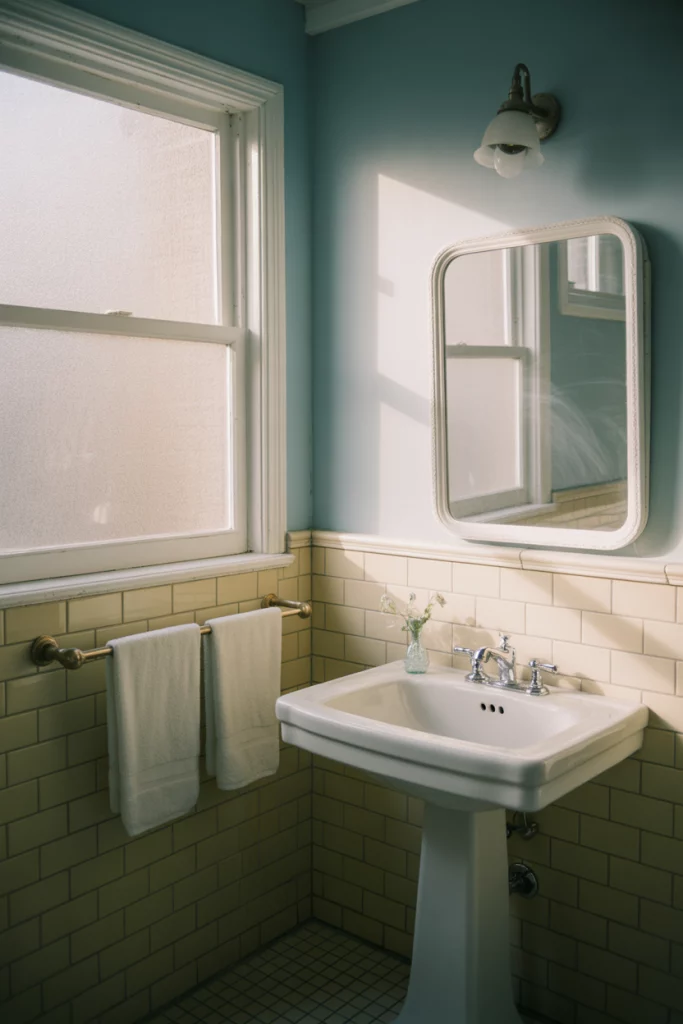
A pale blue bathroom creates an instantly calming atmosphere that feels both classic and current. This light shade works beautifully in bathrooms with limited natural lighting, as it reflects what brightness is available while maintaining a sense of spaciousness. Paired with crisp white and chrome fixtures, pale blue walls offer a timeless backdrop that won’t overwhelm smaller powder rooms or guest baths. The color reads as sophisticated without being overly bold, making it an ideal choice for homeowners who want color but appreciate restraint. 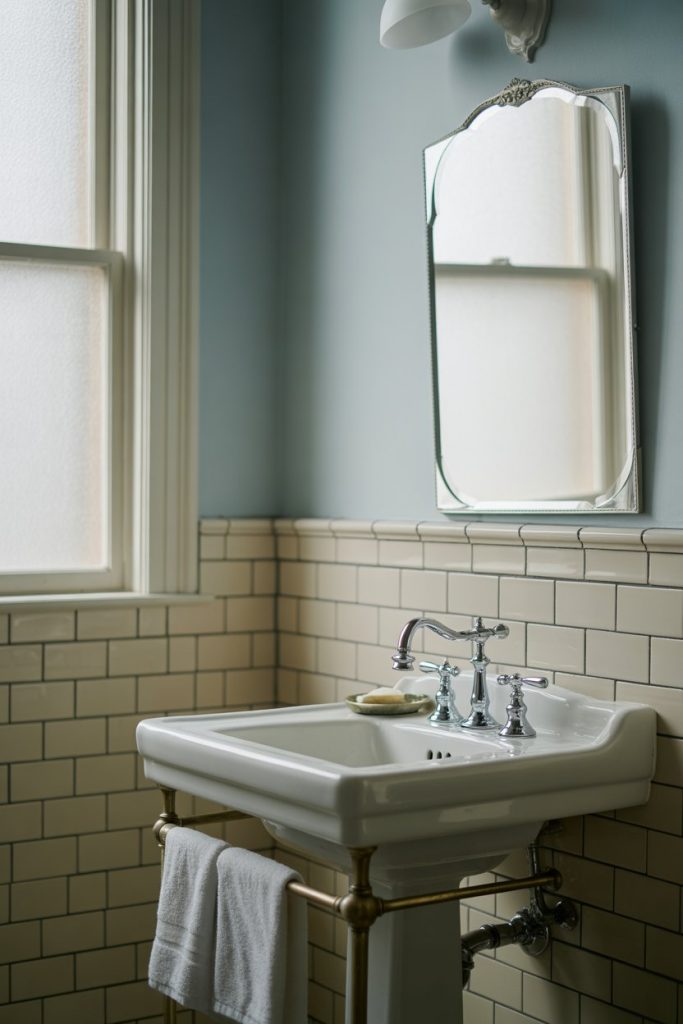
This approach works best in homes built before 1960, where the pale blue complements original tilework and vintage fixtures. If you’re working with a tight budget, painting existing walls is one of the most affordable ways to completely refresh a bathroom’s look. Just be sure to use a paint formulated for high-humidity spaces to prevent peeling and mildew. Many homeowners make the mistake of choosing a blue that’s too gray, which can feel cold rather than serene.
2. Navy Blue Vanity as a Statement Piece
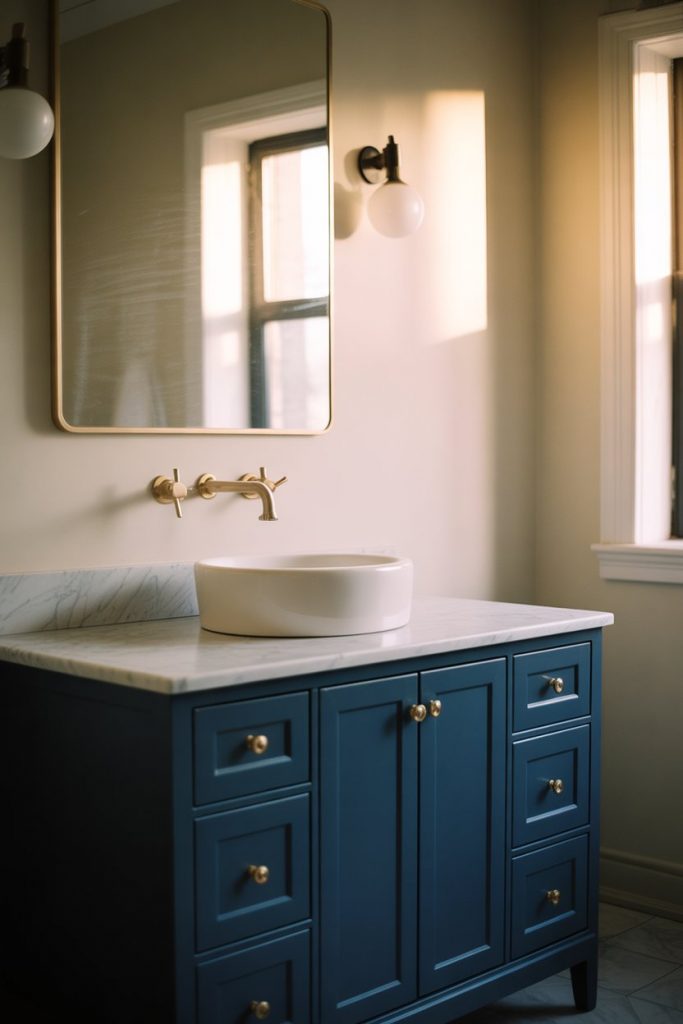
A navy blue vanity anchors the room with rich, intentional color while leaving walls neutral for balance. This dark choice has become increasingly popular in American bathrooms, especially in open-plan homes where the bathroom connects visually to adjacent spaces. Navy reads as both traditional and contemporary depending on hardware choices—brass pulls lean classic, while matte black feels modern. The deep tone hides water spots and wear better than lighter cabinetry, making it practical for busy family bathrooms. 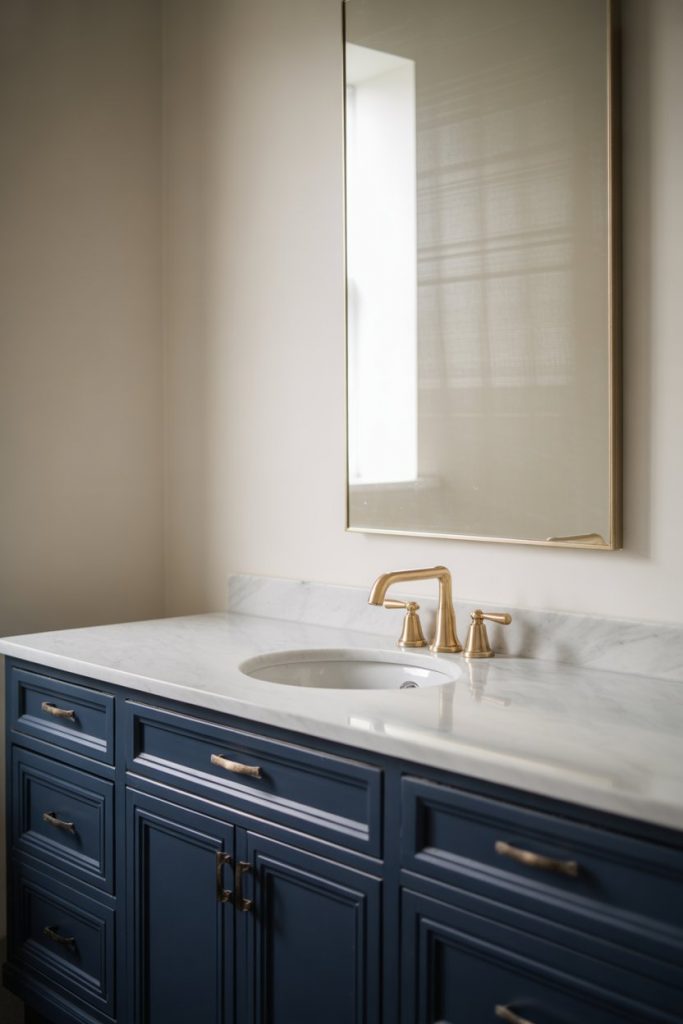
In the Pacific Northwest, where natural wood and deep colors dominate interior trends, navy vanities have become nearly standard in bathroom renovations. The color pairs beautifully with nearly any countertop material, from white quartz to butcher block to terrazzo. One common mistake is choosing navy that’s too purple-toned, which can clash with standard bathroom metals and tiles. Test samples in your actual bathroom lighting before committing to a gallon of paint or a custom cabinet order.
3. Dusty Blue Subway Tile Shower
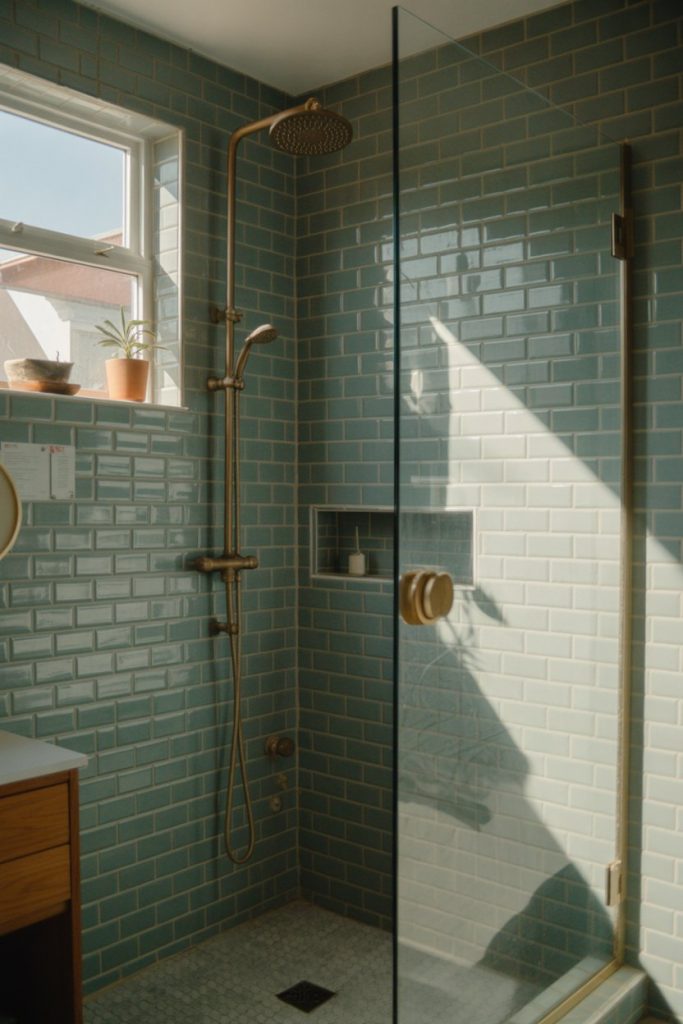
A shower clad in dusty blue subway tile brings subtle color without the commitment of painted walls. This muted shade sits beautifully between gray and blue, offering a sophisticated neutral that feels warmer than pure gray. The tile format itself is endlessly versatile—run it in classic offset brick pattern, vertical stack, or herringbone depending on your aesthetic. Dusty blue works particularly well in bathrooms with warm wood tones or brass fixtures, where cooler grays might feel too stark. 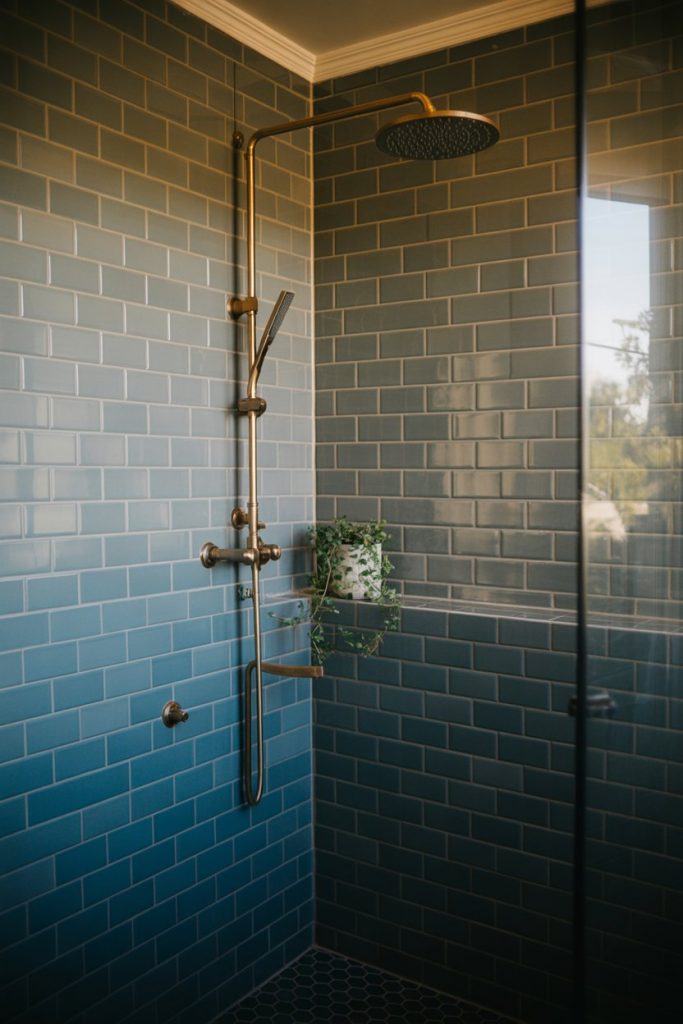
Installing tile yourself can cut costs significantly if you’re comfortable with the learning curve, though hiring a professional ensures waterproofing is done correctly. Dusty blue tile typically costs between $8 and $15 per square foot for quality ceramic options, with installation adding another $10 to $20 per square foot in most American markets. This investment pays off in longevity—properly installed tile can last decades, unlike paint which needs refreshing every few years in high-moisture environments.
4. French Blue Powder Room with Brass Accents
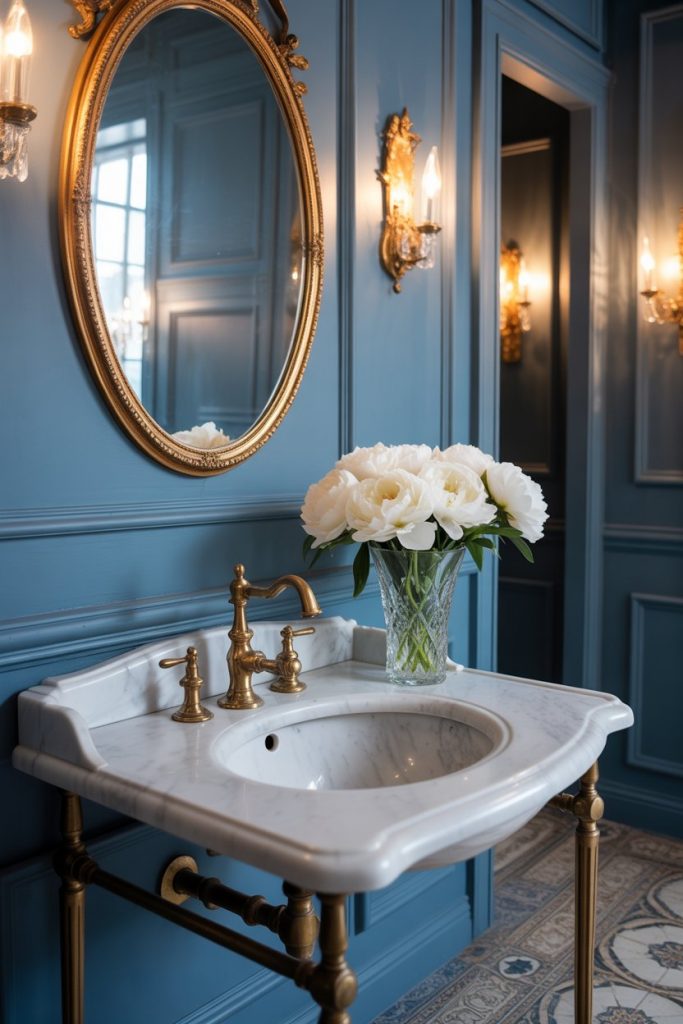
A French blue powder room embraces elegance in a small footprint, where bolder choices feel intentional rather than overwhelming. This particular shade of blue—slightly grayed, slightly soft—evokes European sensibility while remaining accessible to American tastes. Paired with warm brass fixtures, antique mirrors, and perhaps a small crystal chandelier, the space feels collected and refined. Powder rooms offer the perfect opportunity to experiment with color since they’re used briefly and don’t require the same practical considerations as full bathrooms. 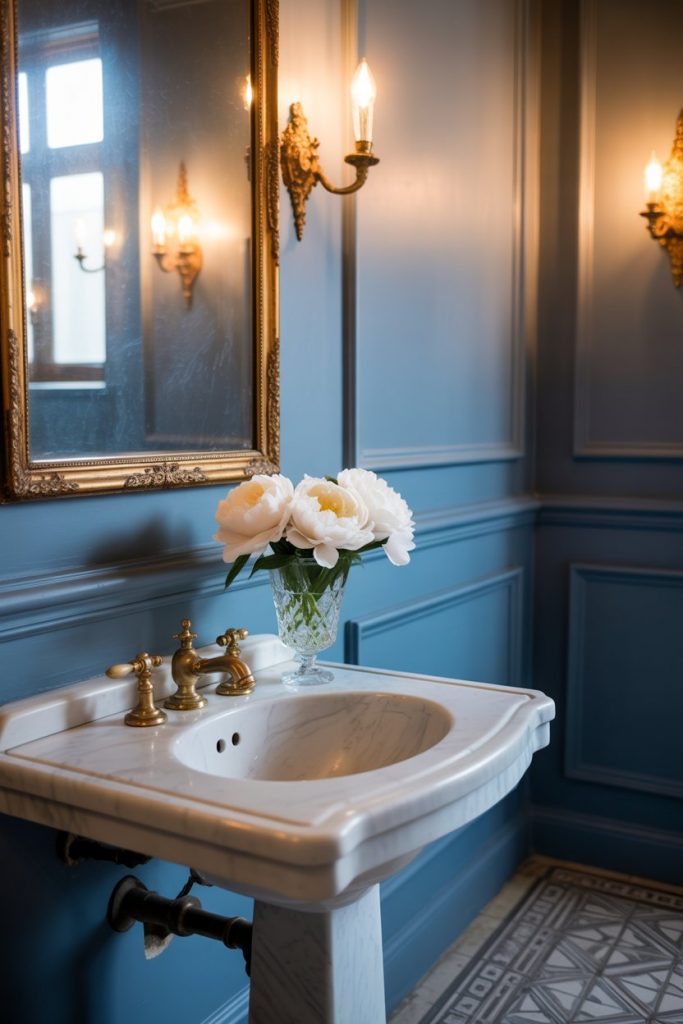
My friend renovated her 1920s bungalow powder room with French blue walls and vintage brass fixtures sourced from an architectural salvage yard. She spent under $800 total by doing the painting herself and hunting for secondhand treasures. The result looks like it cost thousands more. Don’t overlook the power of statement lighting in a small powder room—even a modest vintage fixture can elevate the entire space when the color palette is this cohesive.
5. Coastal Blue and White Striped Walls
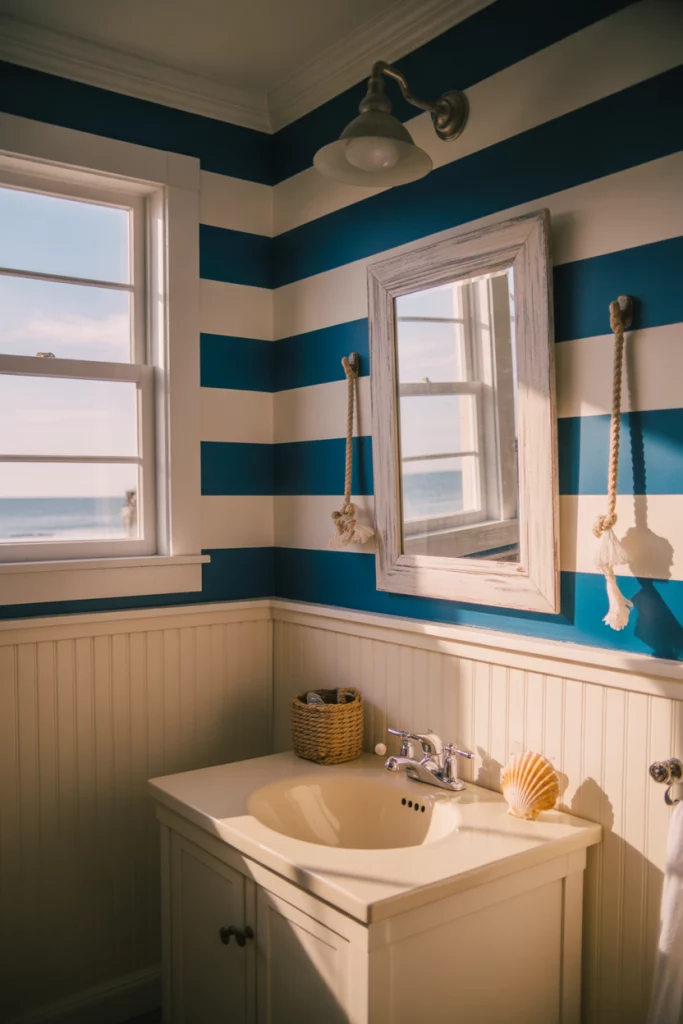
Horizontal stripes in coastal blue and white and crisp whites create visual interest while maintaining a breezy, relaxed feeling. This pattern works particularly well in beach houses, lake cottages, or any bathroom where you want to evoke waterside living. The stripe width matters—wider bands feel more contemporary and calming, while narrow stripes can read as busy in a small space. Coastal bathrooms often incorporate natural textures like rope, rattan, or weathered wood to complete the look. 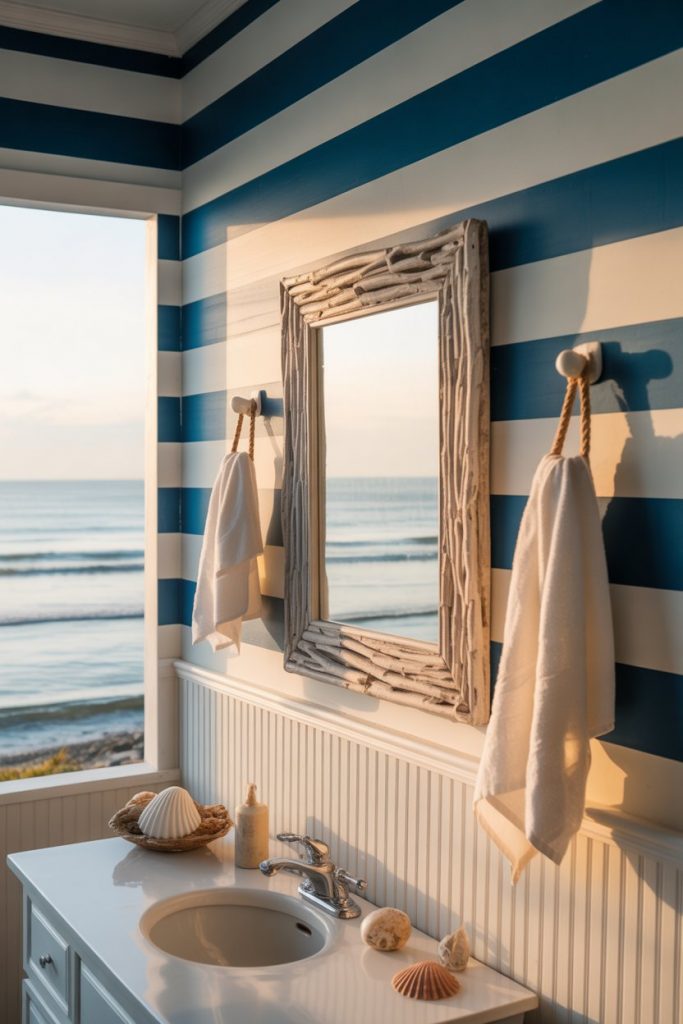
Along the Carolina coast and in New England, this treatment appears in vacation rentals and primary residences alike. The pattern creates movement without pattern overload, and it pairs beautifully with simple white fixtures and natural fiber rugs. If you’re painting stripes yourself, invest in quality painter’s tape and remove it while the paint is still slightly wet to prevent peeling. Many DIYers rush the taping process and end up with wavy lines that undermine the crisp, clean aesthetic they’re after.
6. Moody Midnight Blue Bathroom Sanctuary
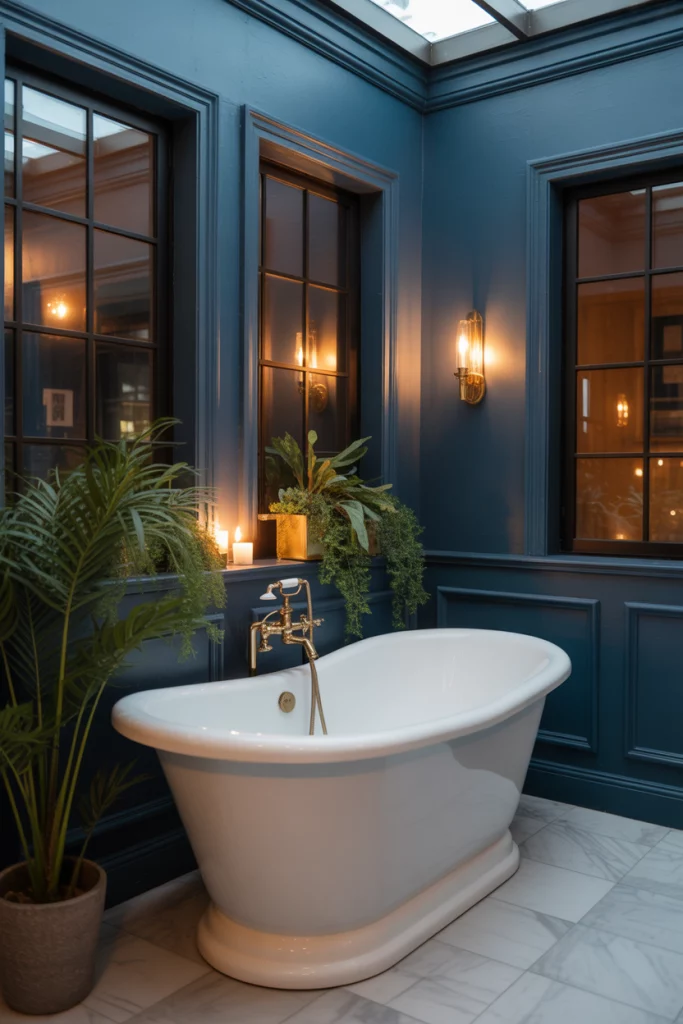
A moody midnight blue bathroom transforms the space into a dramatic retreat that feels more like a spa than a utilitarian room. This near-black shade works best in bathrooms with good ventilation and either natural light or excellent artificial lighting to prevent the space from feeling cave-like. The dark walls create an enveloping effect that many find deeply relaxing, especially when combined with warm metallics, plush towels, and candlelight. Midnight blue reads as far more sophisticated than standard black while offering similar depth. 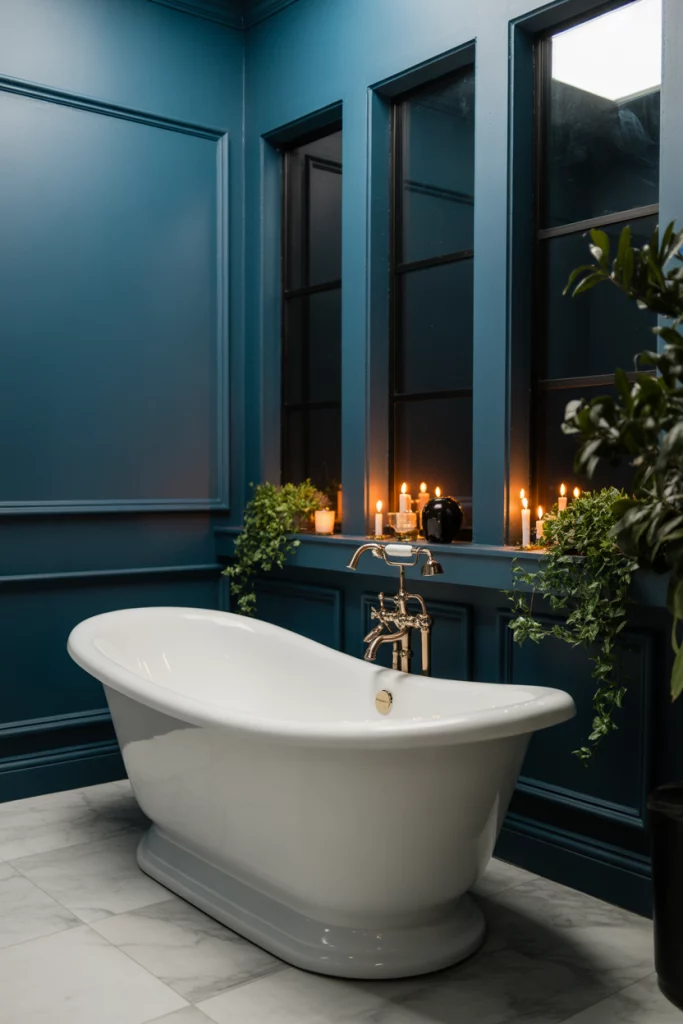
This works best in primary bathrooms where adults are the main users and dramatic design is welcome. Surprisingly, dark walls can make a small bathroom feel more intimate and intentional rather than cramped, though you’ll want to balance with lighter fixtures and reflective surfaces. Expert designers often point out that moody bathrooms benefit from layered lighting—a combination of overhead, task, and ambient sources prevents the space from feeling flat or gloomy despite the deep color.
7. Retro Blue Hexagon Floor Tiles
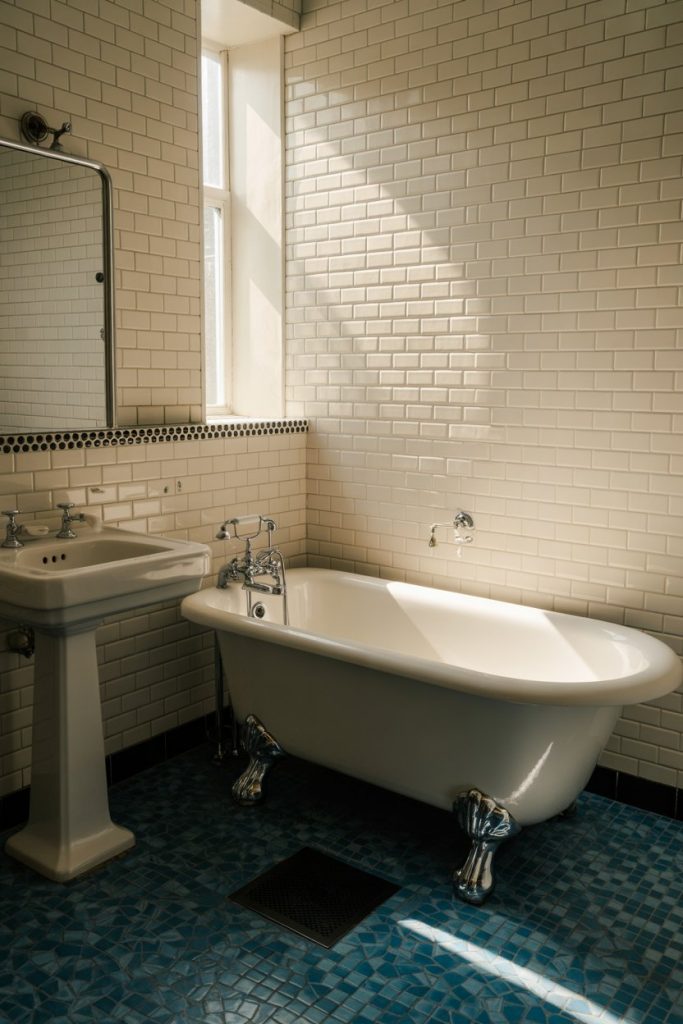
Classic hexagon floor tile in a retro blue shade brings vintage charm that works in both period-appropriate and eclectically modern bathrooms. This geometric pattern has been a bathroom staple since the early 1900s, and its resurgence speaks to our collective appreciation for timeless design. The small-scale pattern hides dirt and wear exceptionally well, making it practical for high-traffic family bathrooms. Retro blue hex tiles pair beautifully with white subway walls and chrome or nickel fixtures for an authentic mid-century feel. 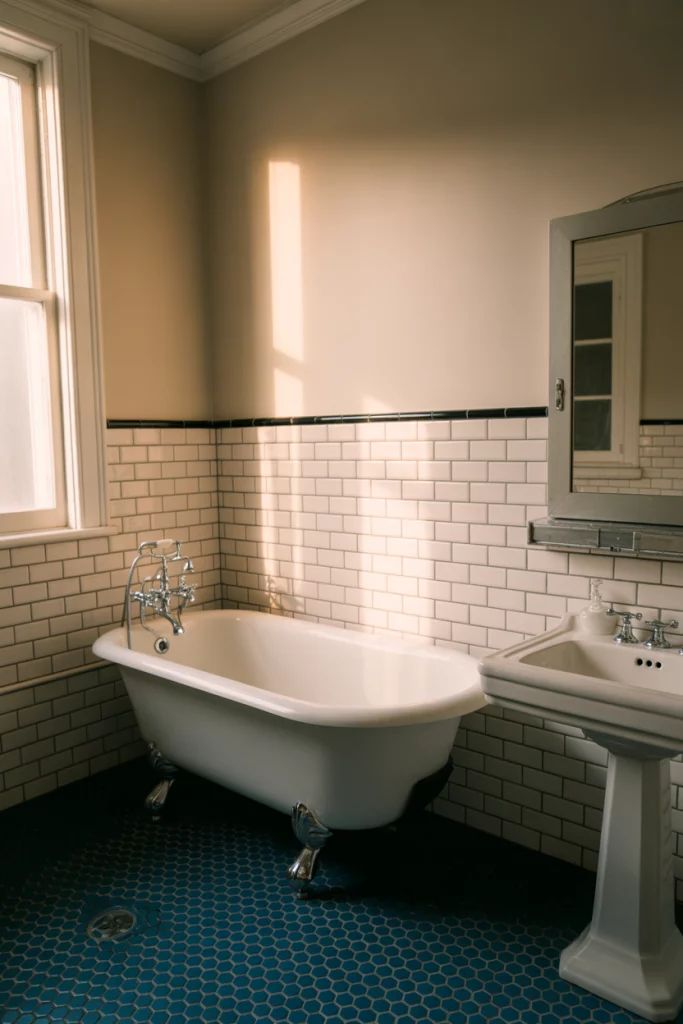
In cities like Portland, Austin, and Brooklyn, homeowners are restoring vintage bathrooms with period-appropriate hexagon tiles or installing new ones that capture that same nostalgic appeal. The installation requires precision—the small tiles mean many grout lines, and poor workmanship shows immediately. Budget around $12 to $18 per square foot for quality porcelain hex tiles, with skilled installation adding another $15 to $25 per square foot in most metropolitan areas.
8. Blue and Pink Color Blocking
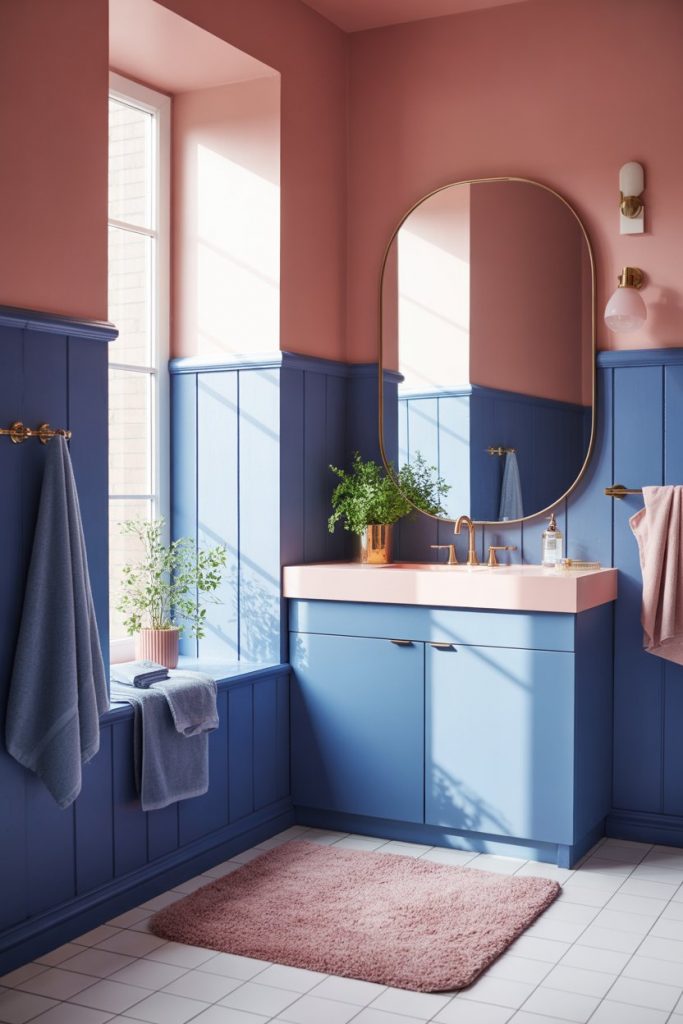
Pairing blue with pink and soft blush creates a playful yet sophisticated color scheme that’s been trending heavily on design platforms. This combination works because the colors share similar tonal qualities—neither is overly saturated, allowing them to coexist without competing. The key is choosing the right shades: dusty blue with dusty rose, or navy with peachy pink, rather than primary versions of each color. This aesthetic particularly resonates with younger homeowners looking for something fresh and personal. 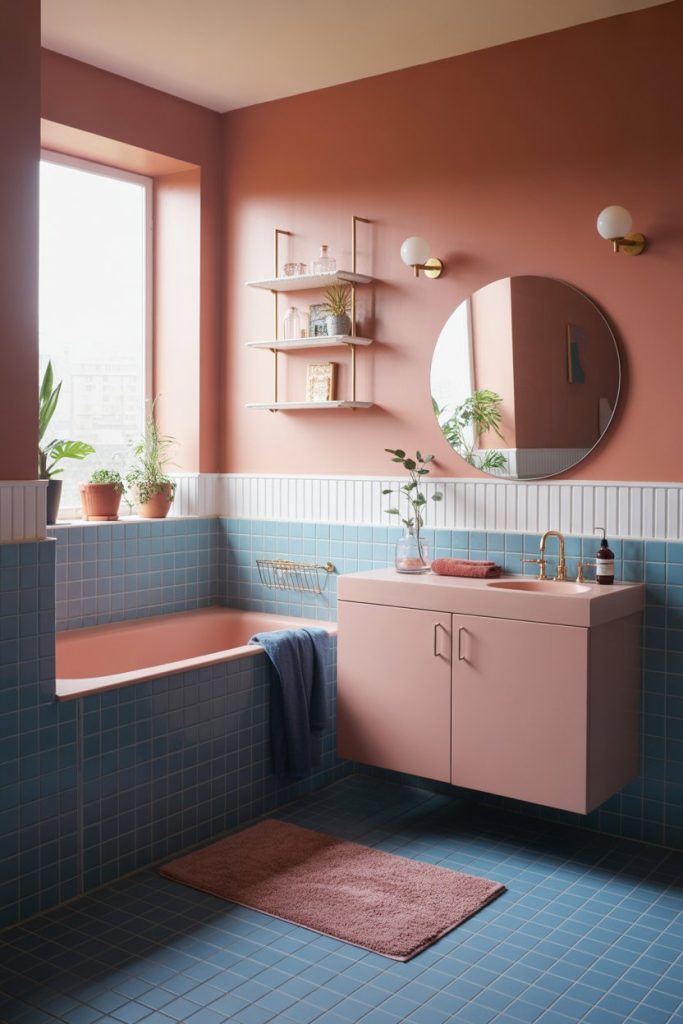
I’ve seen this color combination work beautifully in kids’ bathrooms and powder rooms where conventional neutrals feel too safe. The blocking can happen horizontally with a chair rail divider, or you could paint opposing walls in each color for a more subtle approach. Avoid the temptation to add too many additional colors—white fixtures and minimal accessories keep the focus on your intentional blue-pink palette without tipping into overly saccharine territory.
9. Modern Grey and Blue Geometric Tile
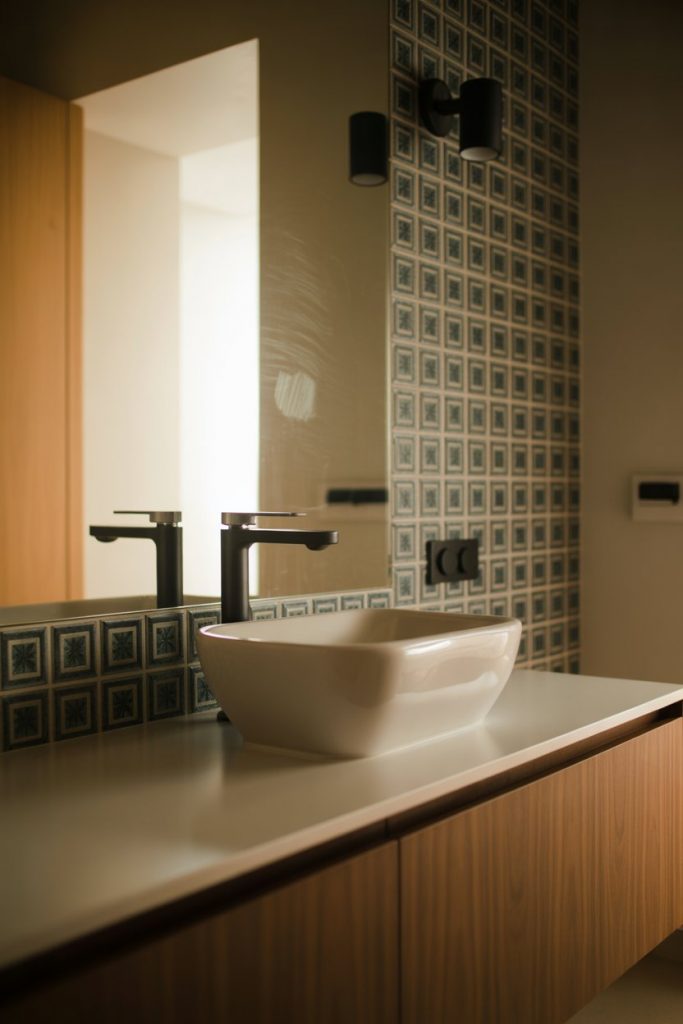
Combining grey and blue in a geometric tile pattern adds visual complexity while maintaining a calming, neutral-leaning palette. This approach works particularly well as a shower accent wall or behind a vanity, where pattern can shine without overwhelming the entire room. The modern geometric shapes—think diamonds, chevrons, or Moroccan-inspired patterns—bring contemporary energy to the space. Grey grounds the blue, making it feel less pastel or juvenile and more sophisticated. 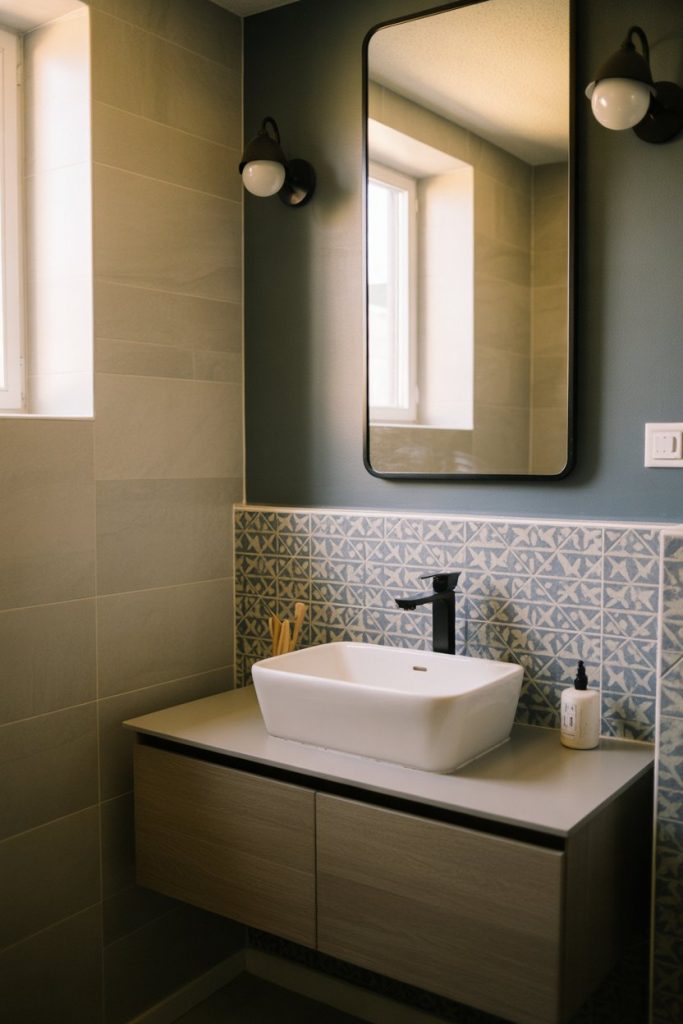
These patterned tiles typically run $15 to $30 per square foot depending on whether you choose ceramic, porcelain, or cement tiles. The investment makes sense when used strategically—a 4-foot by 6-foot accent wall can completely transform a bathroom’s personality without the expense of tiling every surface. Installation costs are higher for patterned tiles since alignment matters significantly, so factor in professional labor unless you’re experienced with tile work.
10. Vintage Blue Cabinets with Original Hardware
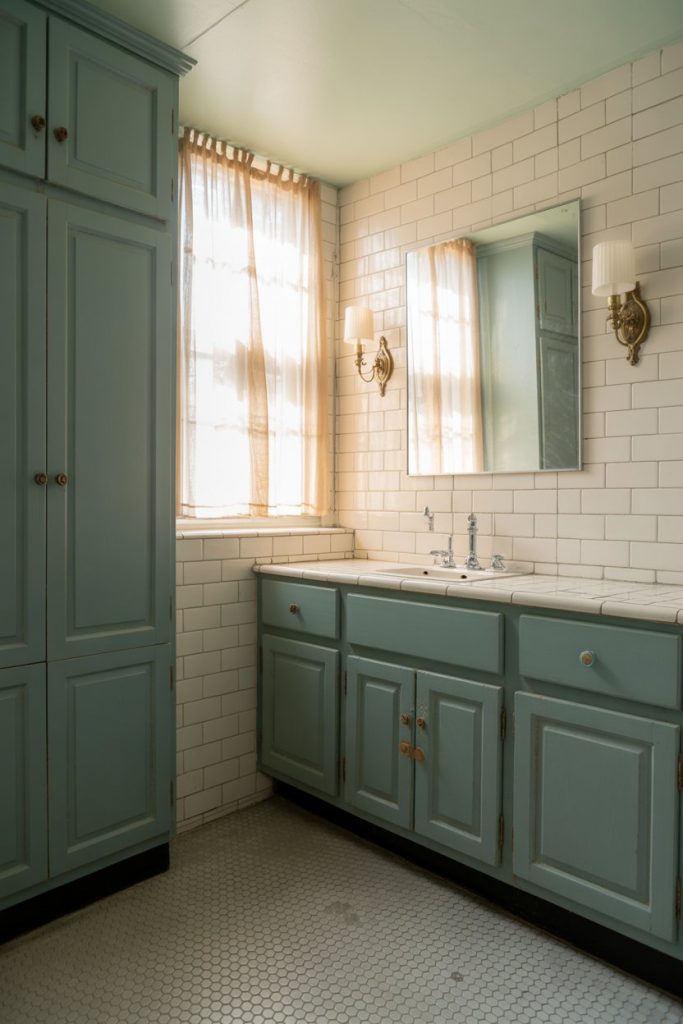
Restoring or painting existing cabinets in a vintage blue shade preserves character while updating the look. Many mid-century and earlier bathrooms featured built-in cabinets in wood tones that have darkened or feel dated, but the bones of these pieces are often solid and worth keeping. A soft, slightly grayed blue paint can completely transform these fixtures while honoring their original craftsmanship. Vintage brass or chrome hardware adds to the period-appropriate feel, or you can source original pieces from salvage shops. 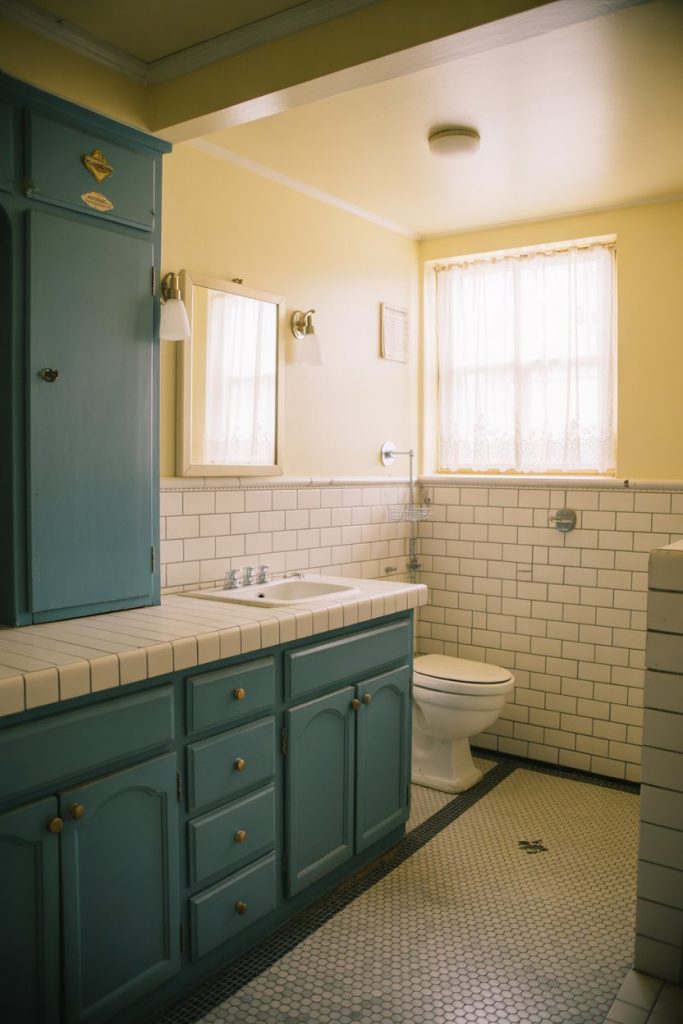
A neighbor refinished her 1940s bathroom cabinets herself using chalk paint and clear wax, spending less than $60 total. The project took a weekend but saved the estimated $2,500 it would have cost to replace the built-ins with new cabinetry. Common mistakes include skipping proper surface prep, which leads to paint adhesion problems, and choosing modern hardware that clashes with the vintage aesthetic of the cabinets themselves.
11. Light Blue Shiplap Accent Wall
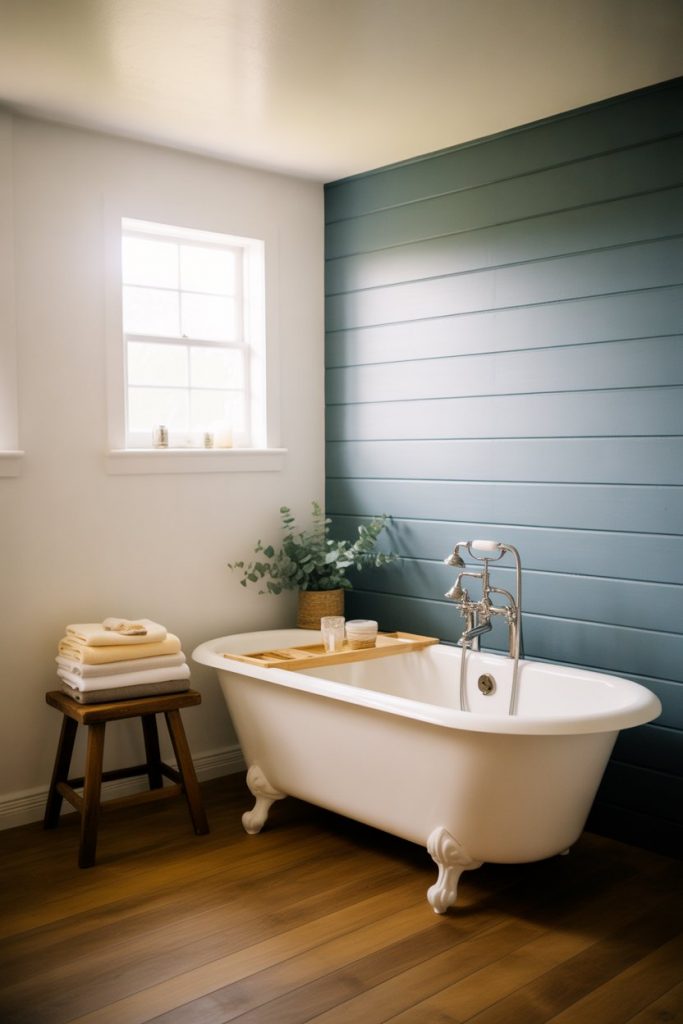
Light blue shiplap creates texture and interest while maintaining an airy, farmhouse-inspired aesthetic. This treatment works particularly well as an accent wall behind a freestanding tub or across from the vanity, where it creates a focal point without overwhelming the space. The horizontal lines of shiplap make bathrooms feel wider, which is especially helpful in narrow spaces. Light blue in this context feels fresh rather than babyish when paired with mature fixtures and thoughtful decor. 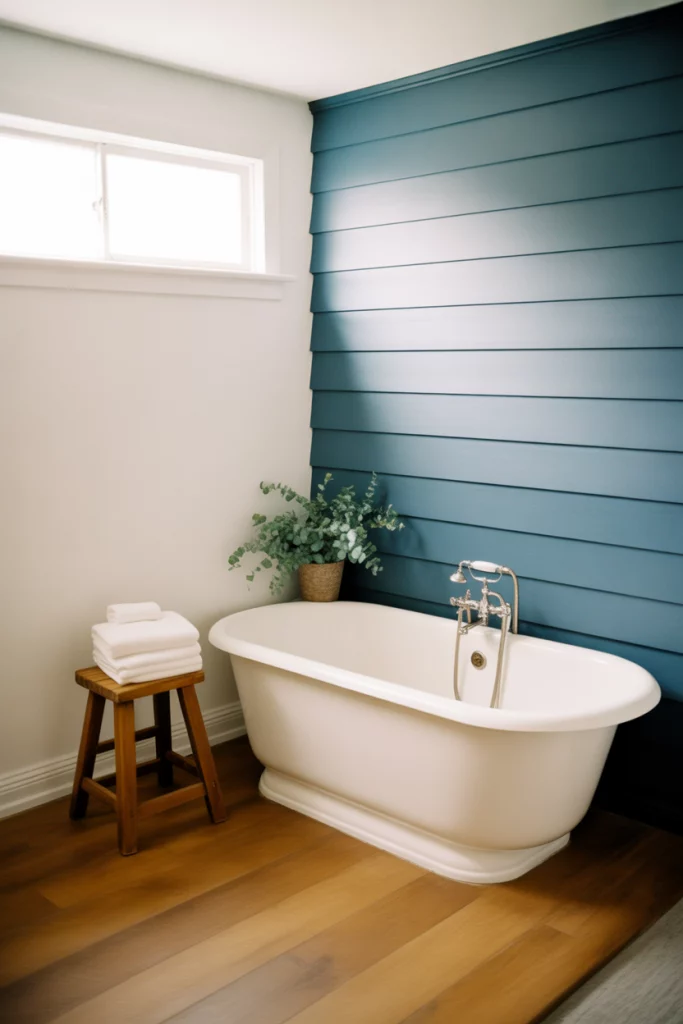
In Southern and Midwestern homes, this look has become almost ubiquitous in farmhouse-style renovations. Real shiplap installation requires carpentry skills and proper moisture barriers in bathrooms, but tongue-and-groove paneling or even high-quality planks can achieve a similar effect. Expert contractors recommend sealing any wood treatment in bathrooms with multiple coats of polyurethane or marine-grade sealant to prevent water damage and warping over time.
12. Blue and Green Nature-Inspired Palette
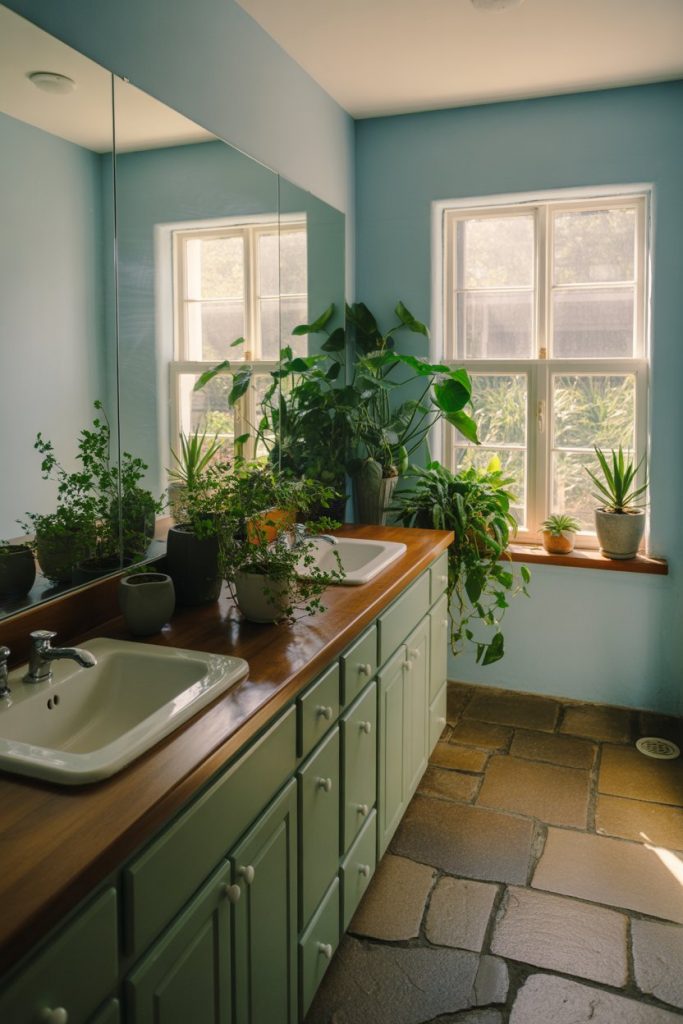
Combining blue with green and natural elements creates a bathroom that feels connected to the outdoors. This color combination mimics landscapes—sky meeting forest, or ocean meeting moss-covered rocks—making it inherently calming and biophilic. The key is choosing shades that exist together in nature: sage green and soft periwinkle, or deep teal with emerald accents. Adding actual plants, natural wood, or stone elements reinforces the organic aesthetic and improves air quality. 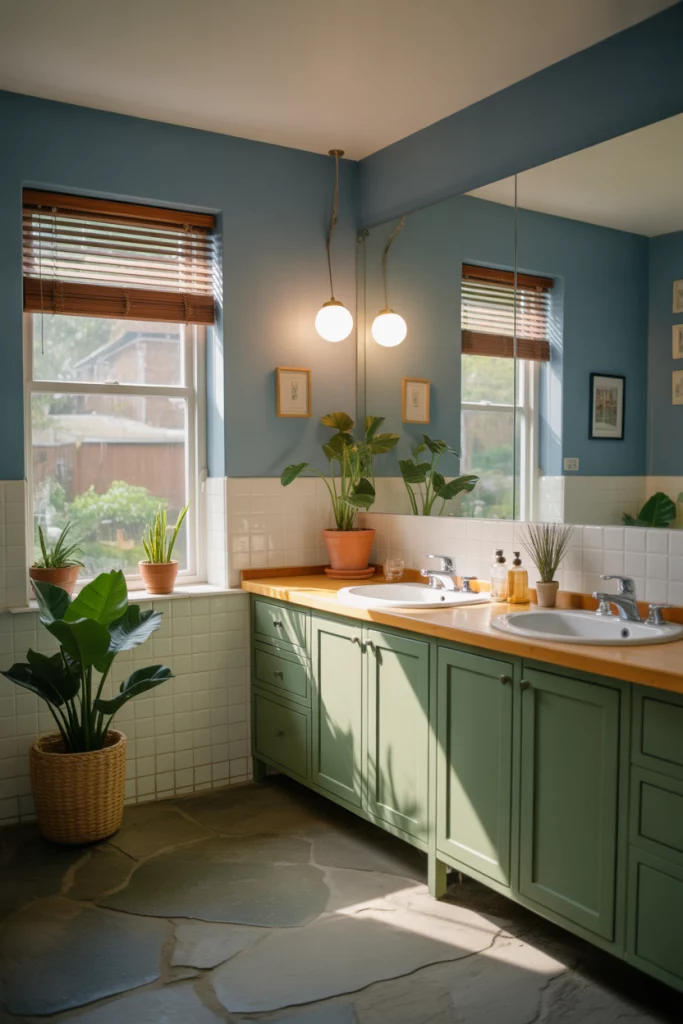
This palette works best in bathrooms with natural light and adequate ventilation for live plants. Many homeowners successfully keep pothos, snake plants, or ferns in bathrooms since these species tolerate humidity and lower light conditions. If you’re hesitant about maintaining live plants, high-quality faux options have improved dramatically and can still contribute to the nature-inspired aesthetic without the care requirements.
13. Dark Blue Beadboard Wainscoting
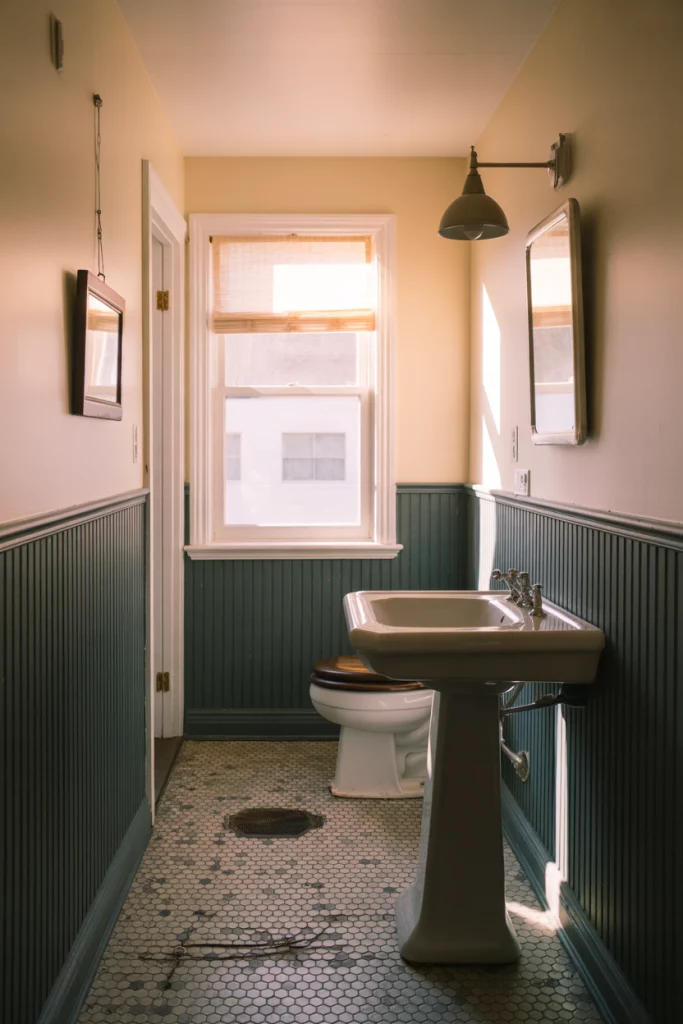
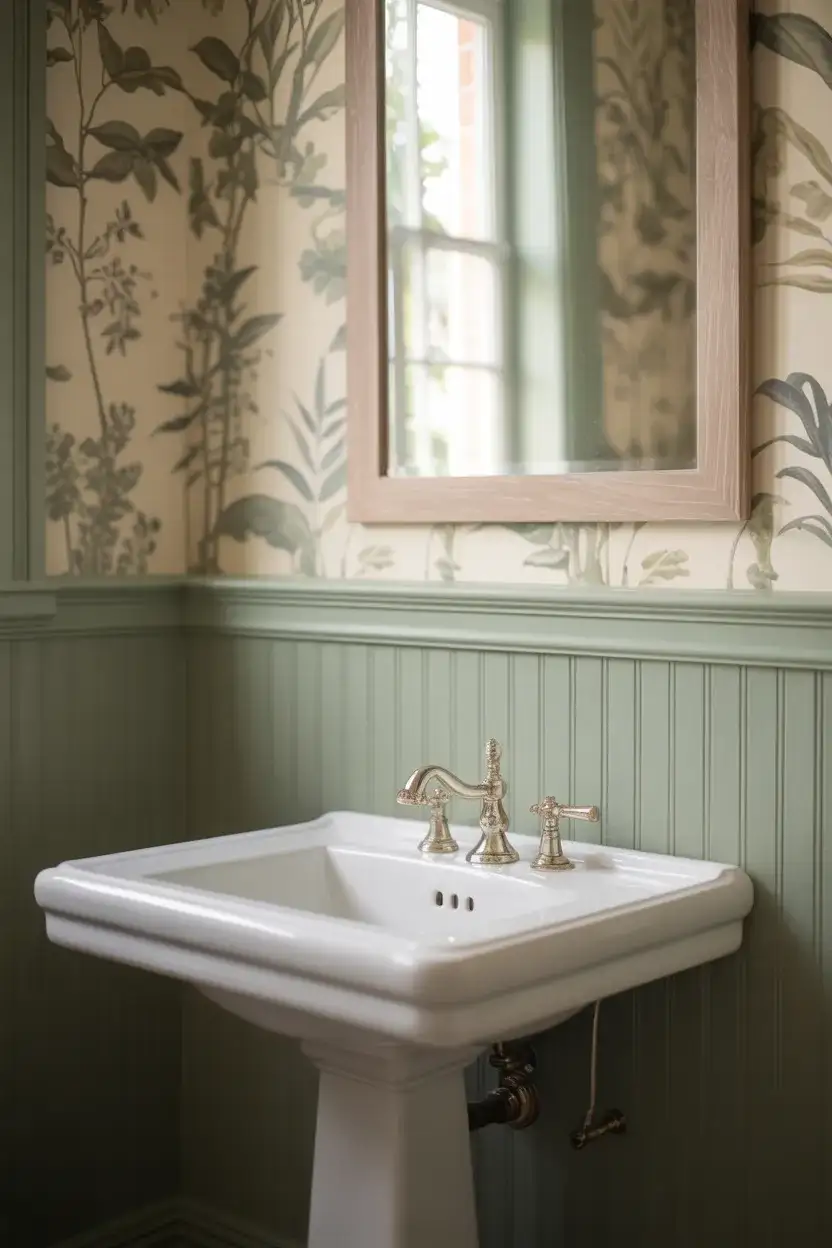
Dark blue beadboard wainscoting adds traditional architectural detail while protecting walls from moisture and wear. This treatment typically extends three to four feet up from the floor, with painted or wallpapered walls above creating visual interest. The vertical grooves of beadboard add subtle texture that catches light beautifully, and the dark lower portion hides splashes and scuffs better than lighter colors. This approach feels equally at home in coastal cottages and traditional suburban homes. 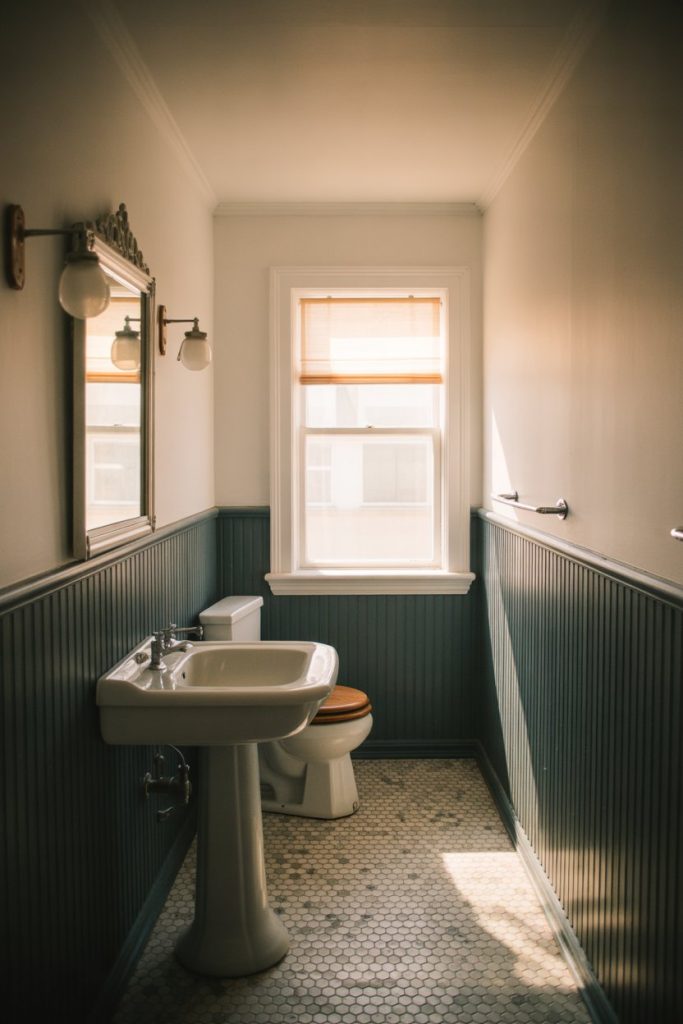
Beadboard is relatively affordable and DIY-friendly—pre-finished panels start around $1 per square foot, and installation is straightforward for anyone comfortable with a saw and nail gun. The wainscoting serves a practical purpose in bathrooms used by children, where walls take particular abuse. One mistake homeowners make is stopping the wainscoting at an awkward height—it should typically align with the top of the sink or vanity for the most visually pleasing proportion.
14. Modern Blue Penny Tile Shower Floor
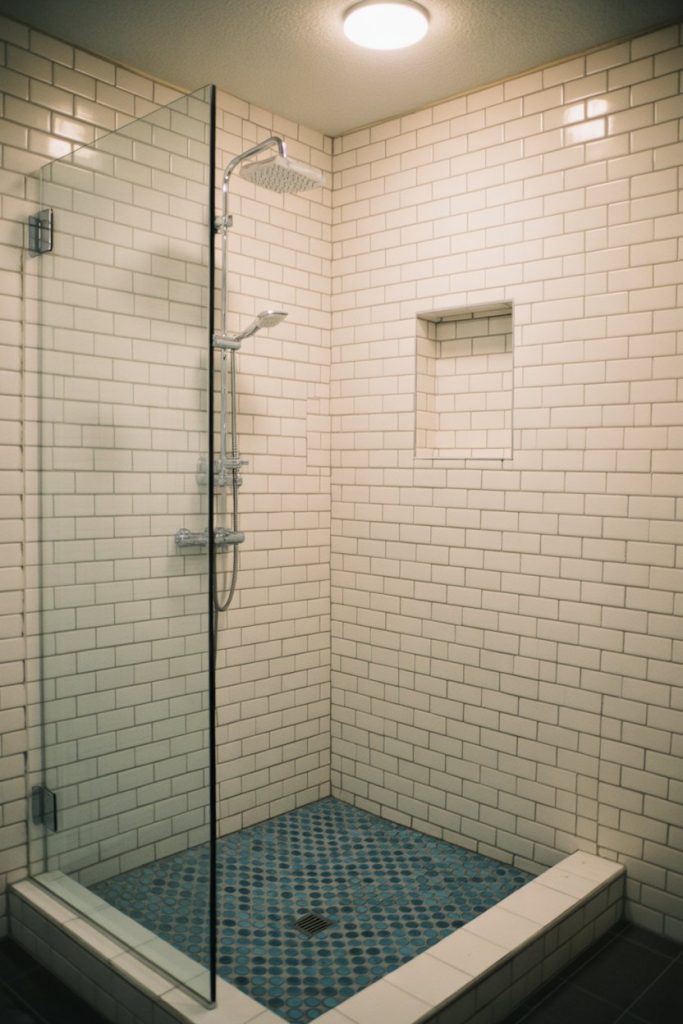
A shower floor covered in modern blue penny tile provides necessary texture for slip resistance while serving as an unexpected design element. These small circular tiles create a gentle, organic pattern that contrasts beautifully with larger wall tiles or painted surfaces. The numerous grout lines offer excellent traction when wet, making this both a beautiful and practical choice. Blue penny tiles range from soft sky blue to deep cobalt, allowing you to control how much visual impact the floor has. 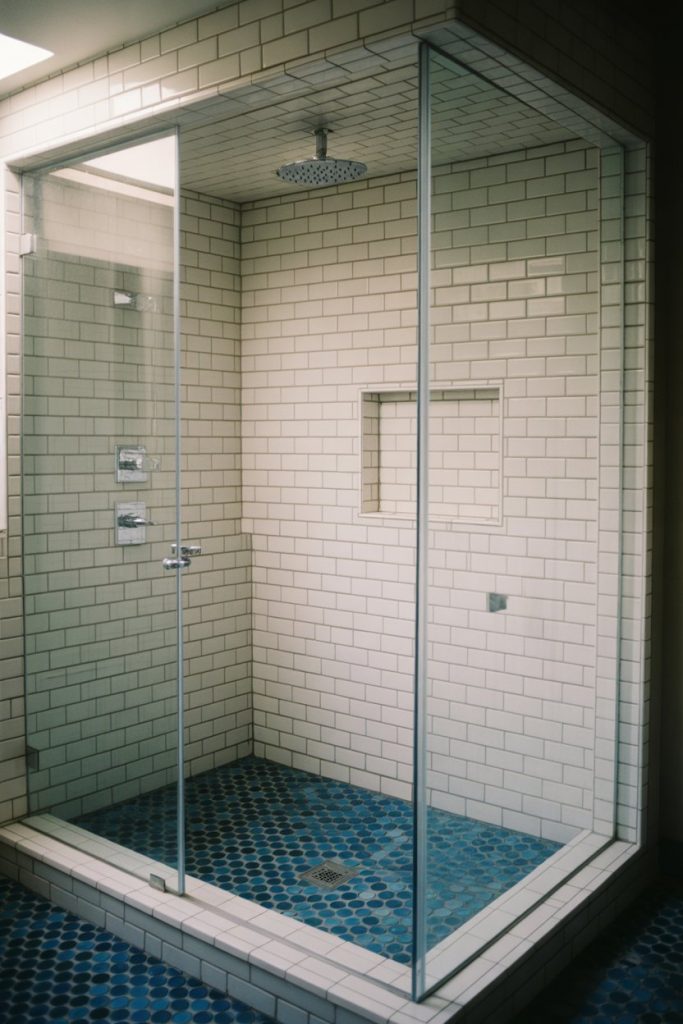
Across the Sunbelt where tile showers dominate over tub-shower combos, penny tile floors have become a popular upgrade during renovations. The installation is time-intensive due to the small tile size, but mesh-backed sheets make the process more manageable than individual pieces. Sealing the grout properly is essential—unsealed grout in a shower floor will discolor and harbor mildew, undermining the fresh look you’ve worked to create.
15. Blue Bathroom Decor on White Canvas
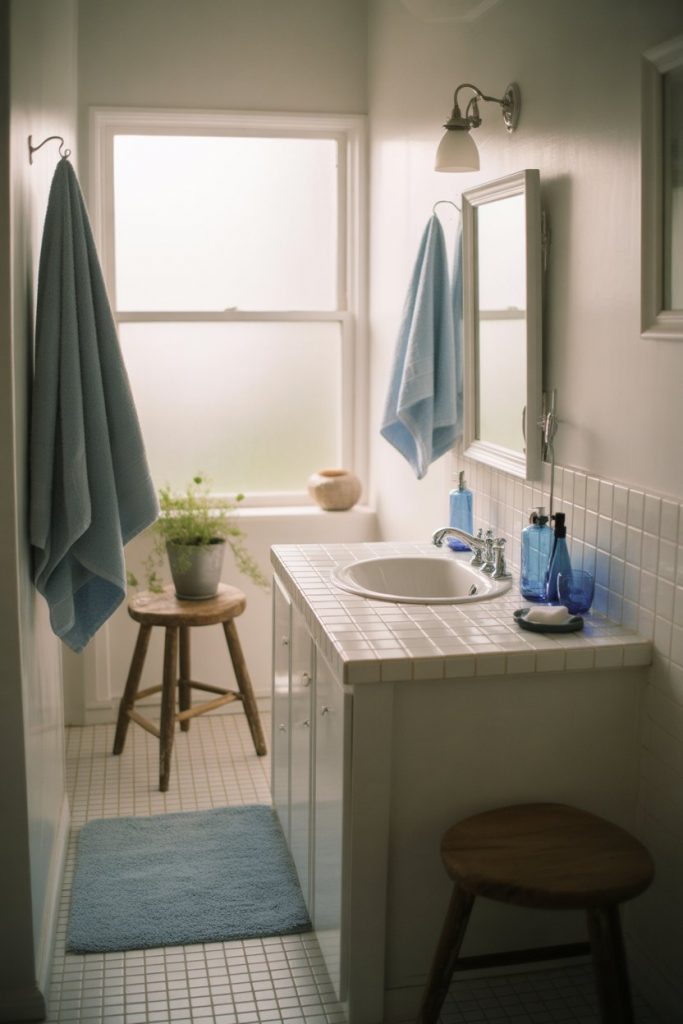
Keeping walls and fixtures neutral white while layering in blue through decor offers flexibility and lower commitment than permanent color choices. This approach allows you to shift shades seasonally or as trends evolve—swap towels, rugs, shower curtains, and accessories without repainting or retiling. Decor-driven color works particularly well in rental bathrooms or spaces you’re not ready to fully renovate. Choose quality pieces in your preferred blue shade and the room will feel cohesive and intentional rather than temporary. 
Real homeowners often start with decor as a way to test color before committing to paint or tile. You might discover that the navy you thought you loved actually feels too dark in your specific bathroom’s lighting, or that a lighter blue brings more joy. This trial approach costs less than $200 for towels, a rug, and a few accessories, compared to thousands for a full renovation. The flexibility to change your mind is valuable when you’re still figuring out your design preferences.
16. Pale Blue Ceiling Treatment
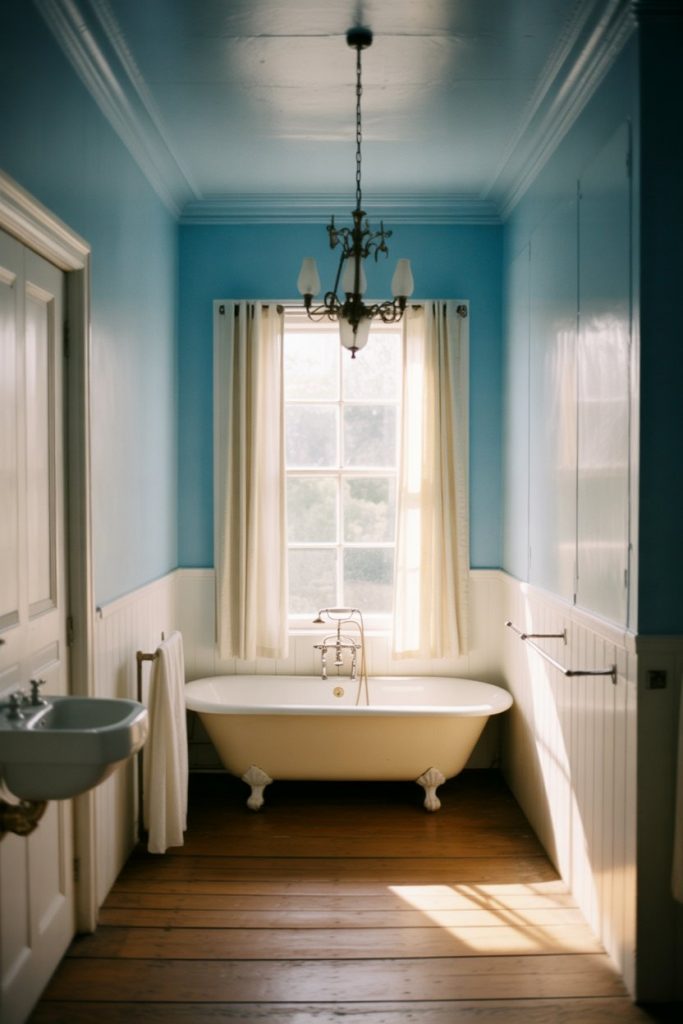
A pale blue ceiling creates the illusion of open sky while leaving walls free for other treatments or neutral tones. This often-overlooked surface offers an opportunity for subtle color that impacts the room’s entire atmosphere. The ceiling naturally catches light, making pale blue shimmer slightly and feel ethereal rather than flat. This technique has roots in historical architecture—porch ceilings in the American South were traditionally painted “haint blue” to ward off spirits and deter insects. 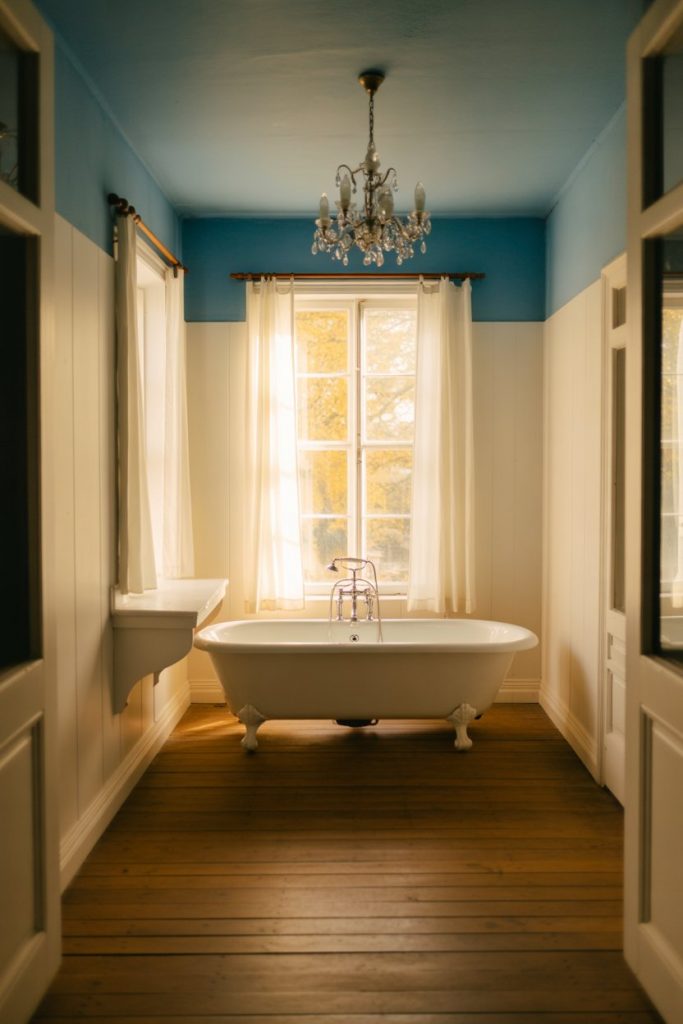
Many people overlook ceilings entirely, leaving them builder white by default, but a painted ceiling adds an extra layer of design sophistication. The project requires minimal paint—a bathroom ceiling might need just a quart—and is typically easier to paint than walls since you’re working with an uninterrupted surface. Expert painters recommend using a flat or matte finish on ceilings to minimize imperfections and reduce glare from bathroom lighting.
17. Navy and White Striped Roman Shade
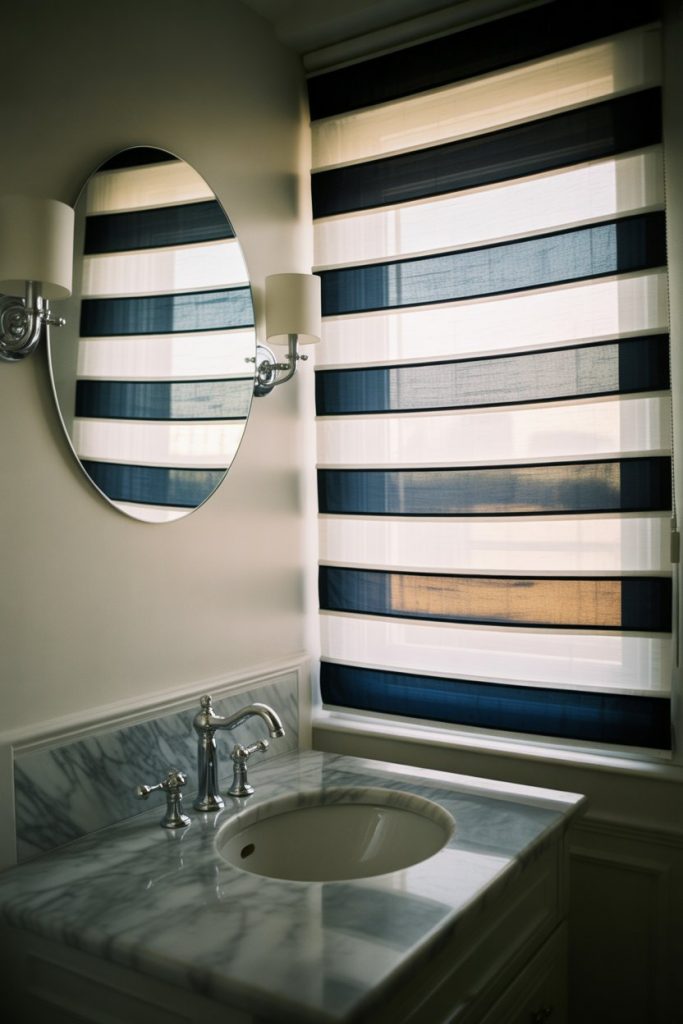
A navy and white and striped Roman shade brings pattern and privacy while maintaining a clean, tailored aesthetic. Window treatments in bathrooms serve important practical purposes—privacy, light control, and moisture management—and stripes add visual interest without the fussiness of florals or complex patterns. The structured folds of a Roman shade feel more polished than a standard roller shade but more modern than curtains. Navy grounds the white, preventing the window treatment from disappearing into white walls. 
Custom Roman shades typically cost between $200 and $600 depending on size and fabric quality, though ready-made options from retailers like Pottery Barn or Restoration Hardware run $100 to $250 for standard bathroom window sizes. Choose a fabric rated for high-humidity environments—moisture-resistant or outdoor fabrics prevent mildew and maintain their shape better than standard decorator fabrics. Avoid the temptation to use materials that require frequent laundering, as repeated cleaning will shorten the shade’s lifespan.
18. Blue Mosaic Tile Vanity Backsplash
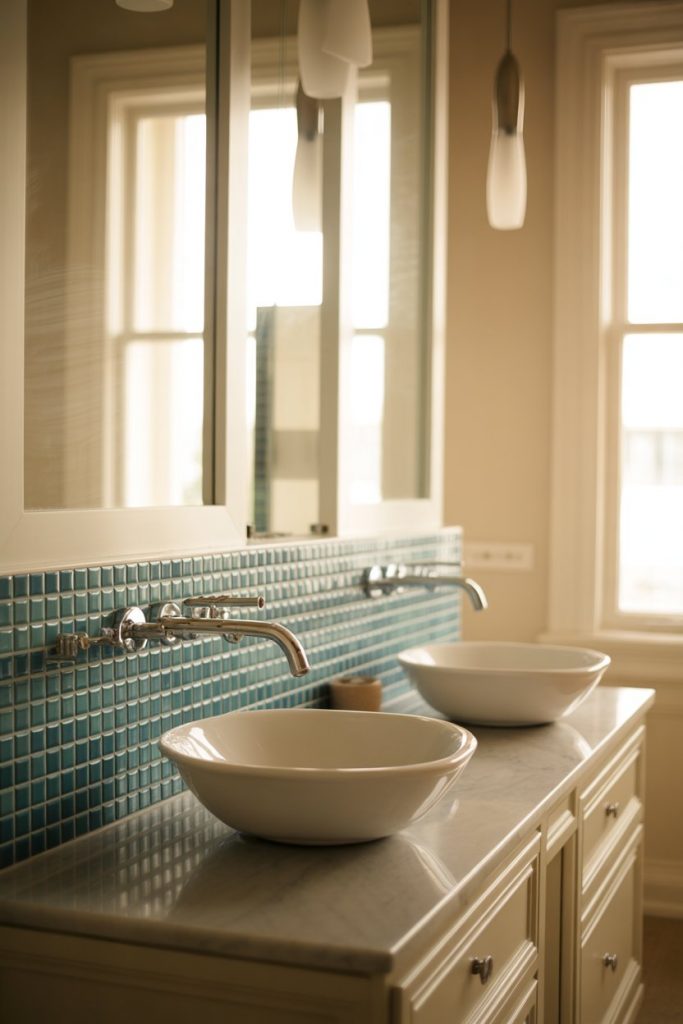
A blue mosaic tile backsplash behind the vanity adds artisanal detail and protects walls from water damage. These small-format tiles create intricate patterns and visual texture that serve as functional art in the bathroom. The backsplash area requires less tile than a full shower, making it a budget-friendly place to splurge on handmade or imported options. Blue mosaic tiles come in countless variations—glass, ceramic, stone, or mixed materials—each offering different reflective qualities and depth. 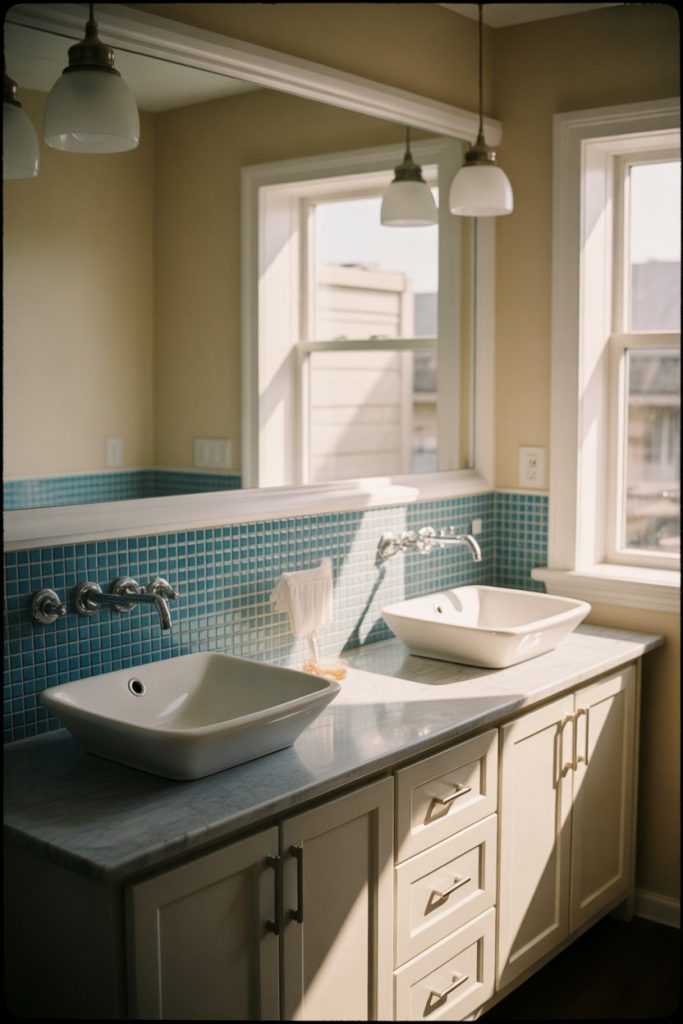
Where this works best is in bathrooms where the vanity is a visual focal point—primary baths or powder rooms where guests will notice the detail. Glass mosaic tiles typically range from $15 to $40 per square foot, while handmade ceramic or stone versions can reach $50 to $100 per square foot. The small scale means even a luxury tile option won’t break the budget when used just as a backsplash. Installation requires precision and patience, so this is worth hiring a professional for unless you have tile experience.
19. Dusty Blue Freestanding Bathtub

A freestanding bathtub in dusty blue makes an unexpected statement while maintaining sophistication. While most tubs come in standard white, specialty manufacturers now offer colored options, or you can refinish an existing tub with professional-grade coatings. The dusty blue shade feels softer than navy but more interesting than pastels, creating a piece that draws the eye without overwhelming the space. This works especially well when the rest of the bathroom maintains relative neutrality in walls and tile. 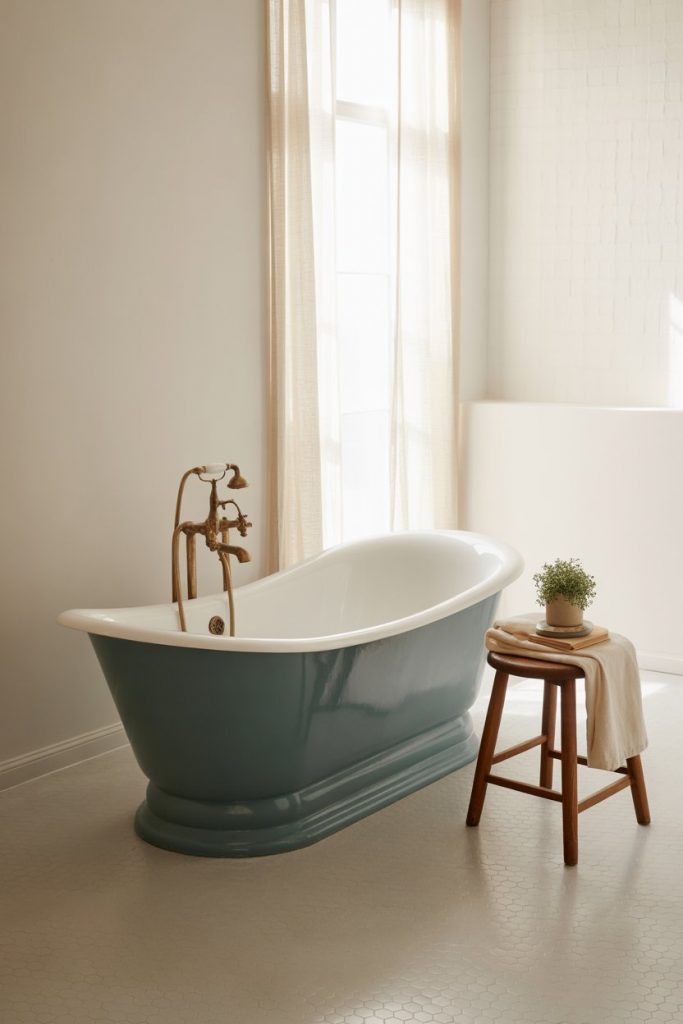
Colored tubs are still relatively uncommon in American bathrooms, which means this choice will set your space apart from standard renovations. The investment is significant—colored acrylic tubs start around $1,500, while cast iron versions can exceed $3,000 before installation. Professional refinishing of an existing tub costs $400 to $600 and can achieve similar results if you already have a tub you love. The bold choice means the tub becomes the room’s focal point, so ensure your bathroom layout actually showcases it.
20. Modern Blue Terrazzo Flooring
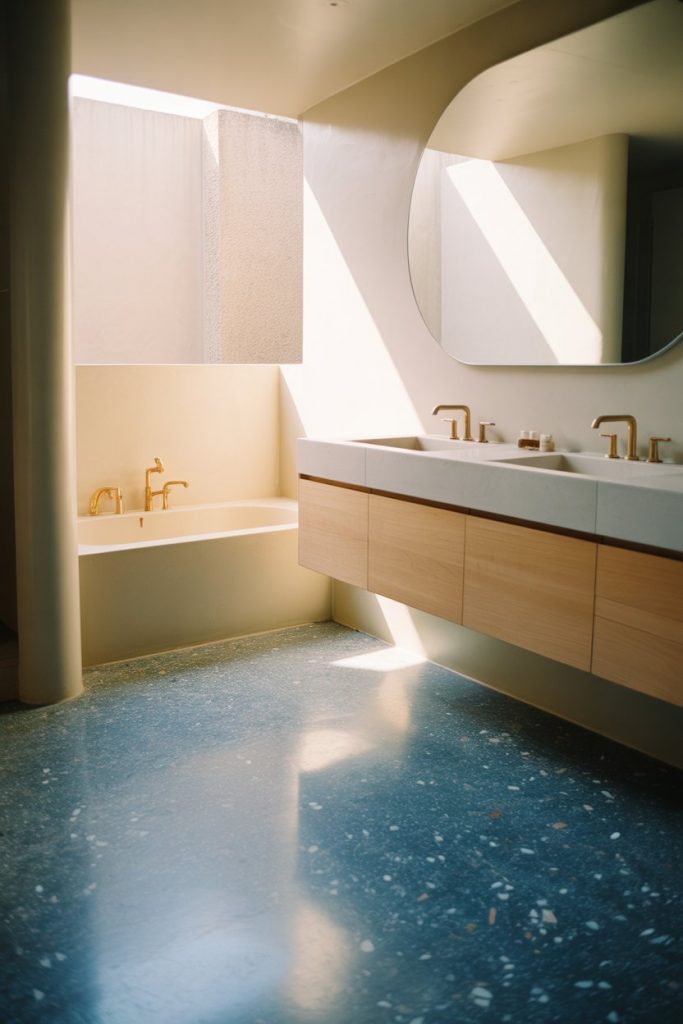
Modern blue terrazzo flooring brings retro charm with contemporary coloring and durability that outlasts most other flooring options. Traditional terrazzo featured neutral chips in cement, but today’s versions incorporate colored chips in various sizes, creating custom patterns. A blue terrazzo with white and gray chips creates movement and interest while hiding dirt remarkably well. The material is expensive upfront but lasts indefinitely, making it a sound long-term investment for bathrooms that see heavy use. 
Terrazzo installation requires skilled professionals and runs $50 to $100 per square foot including materials and labor, making it one of the pricier flooring options. However, the material is nearly indestructible, water-resistant, and timeless in appeal. In cities like Miami, Los Angeles, and New York, terrazzo has experienced a major resurgence in both residential and commercial spaces. Common mistakes include choosing chip sizes that are too uniform, which looks less organic, or skipping the proper sealing that prevents staining.
21. Soft Blue Linen Shower Curtain
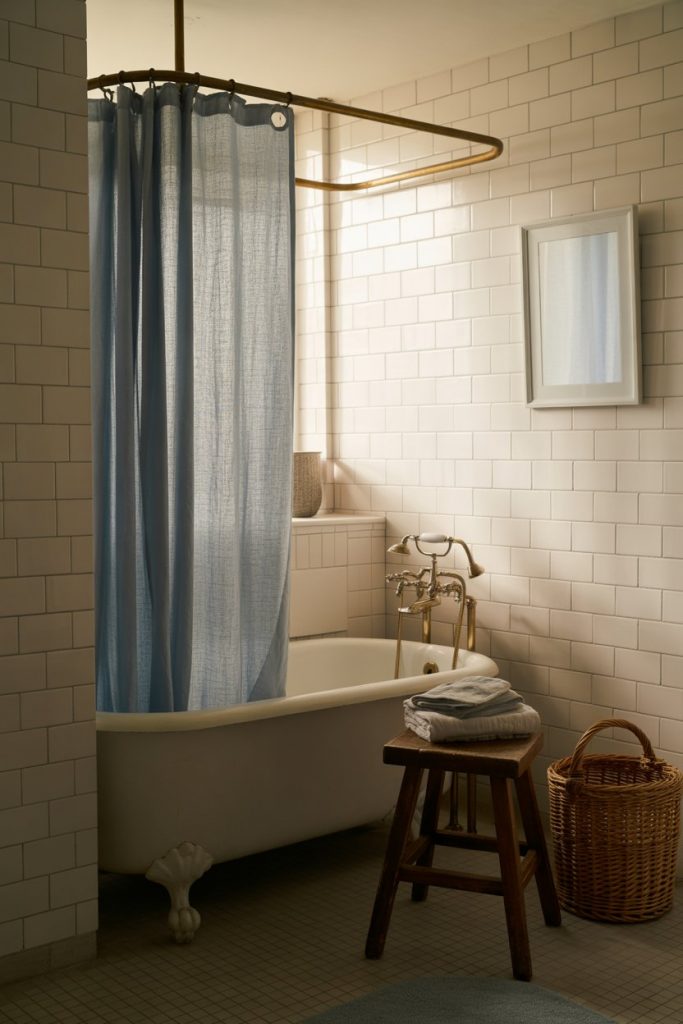
A soft blue linen shower curtain brings warmth and texture that plastic or polyester versions can’t match. Natural linen has a relaxed drape and subtle texture that elevates the entire bathroom without reading as fussy or overly decorated. The fabric breathes better than synthetic options and can be machine washed, though you’ll want a separate waterproof liner to protect the linen itself. Light blue linen catches natural light beautifully, creating gentle shadows in its folds. 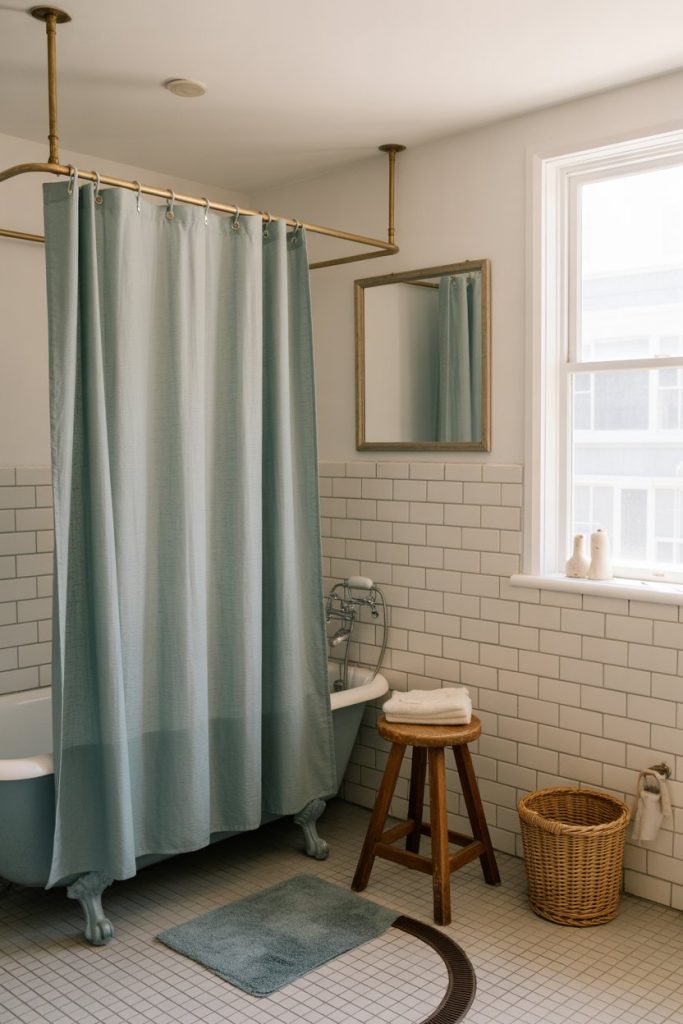
Linen shower curtains range from $60 to $200 depending on quality and source. Higher-thread-count Belgian or French linen will cost more but also drape more beautifully and last longer through repeated washings. Real homeowners report that linen curtains need refreshing every 18 to 24 months in a frequently used bathroom, as the moisture exposure eventually causes some degradation. Budget for replacements accordingly, or rotate two curtains to extend their collective lifespan.
22. Blue and White Patterned Floor Tiles
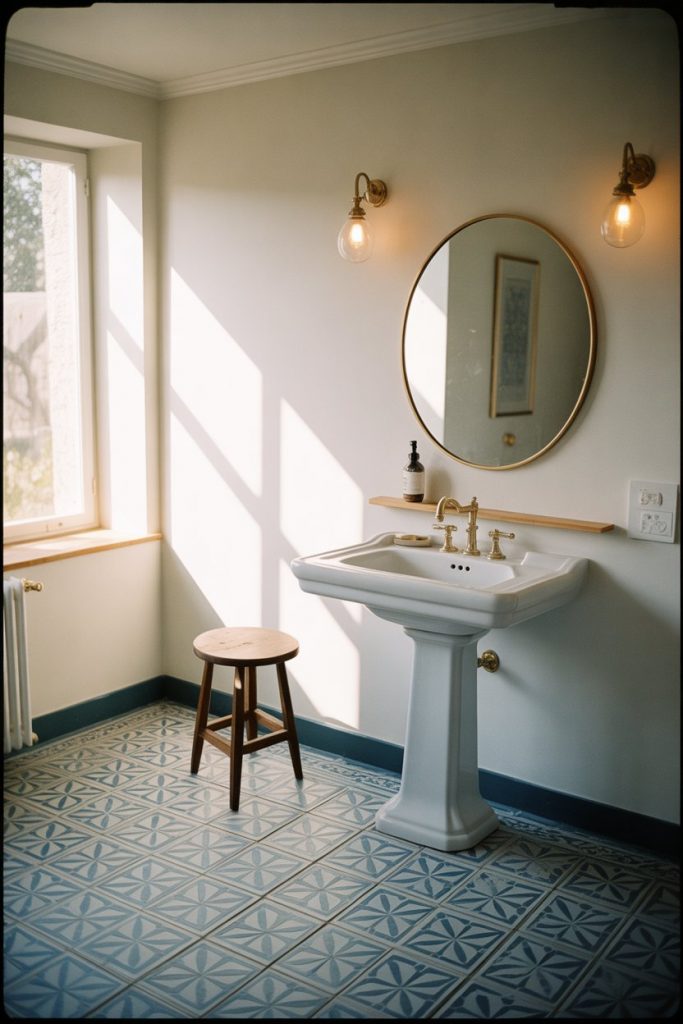
Bold patterned floor tiles in blue and white create instant character and visual complexity that transforms plain bathrooms into memorable spaces. These cement or ceramic tiles often feature Moroccan, Spanish, or Portuguese-inspired patterns that have been popular for centuries. The busy floor pattern allows you to keep walls simple—plain white or soft neutral paint—so the room doesn’t become overwhelming. White and blue is a classic combination that feels fresh regardless of shifting design trends. 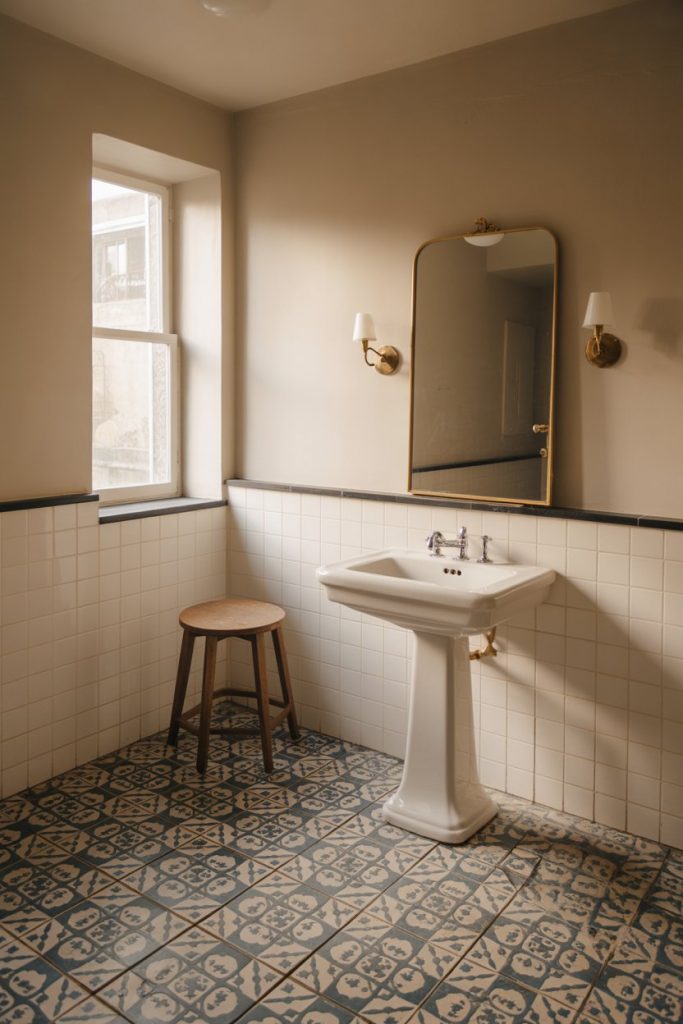
A couple I know installed these tiles in their 1910 bungalow bathroom and said it was the single decision that made the biggest impact on the space’s personality. Patterned cement tiles run $8 to $20 per square foot for standard designs, with custom or imported versions reaching $30 per square foot or more. Installation costs are higher since pattern alignment matters, and mistakes are obvious. Sealing is essential to prevent staining—unsealed cement tiles will absorb anything that spills on them.
23. Navy Blue Tongue and Groove Walls
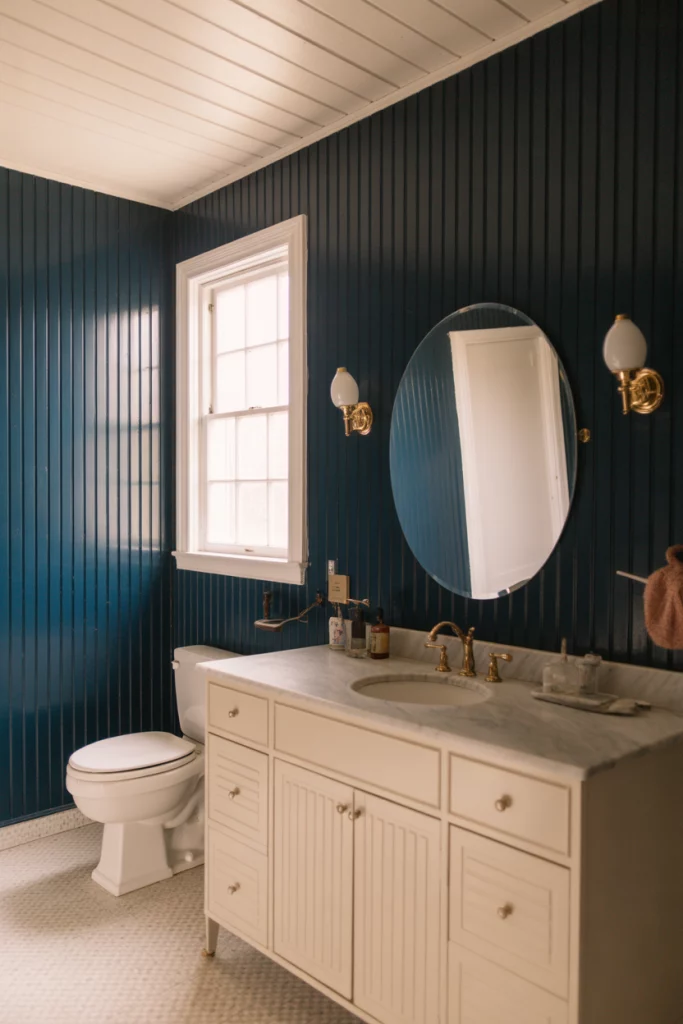
Navy painted tongue and groove walls create cozy architectural texture while adding rich color from floor to ceiling or wainscot height. This treatment has roots in cottage and cabin design but translates beautifully to urban and suburban bathrooms when executed with attention to detail. The vertical lines make ceilings feel higher, which helps in bathrooms with standard eight-foot heights. Navy in this context feels sophisticated rather than heavy when balanced with adequate lighting and white or light fixtures. 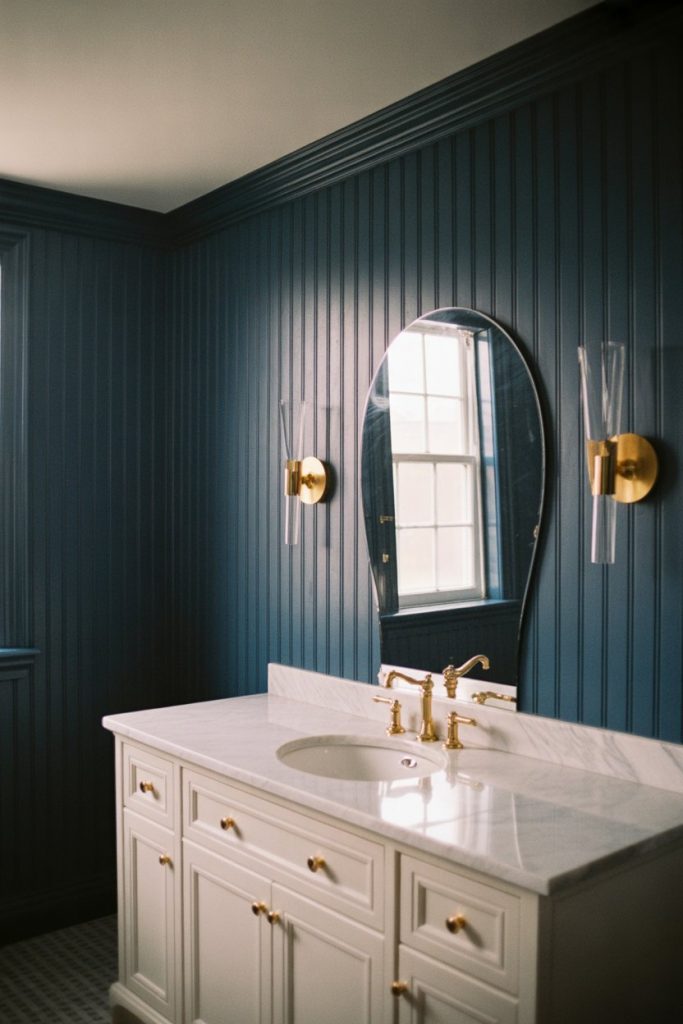
This approach works best in bathrooms where you’re looking to add architectural interest without the expense of custom millwork. Tongue and groove paneling is relatively affordable at $2 to $5 per square foot for pine, and painting adds minimal additional cost. Make sure to prime properly and use bathroom-appropriate paint that resists moisture and mildew. Many homeowners forget to paint or treat the back of the boards before installation, which can lead to warping in humid bathroom environments.
24. Light Blue Glass Vessel Sink
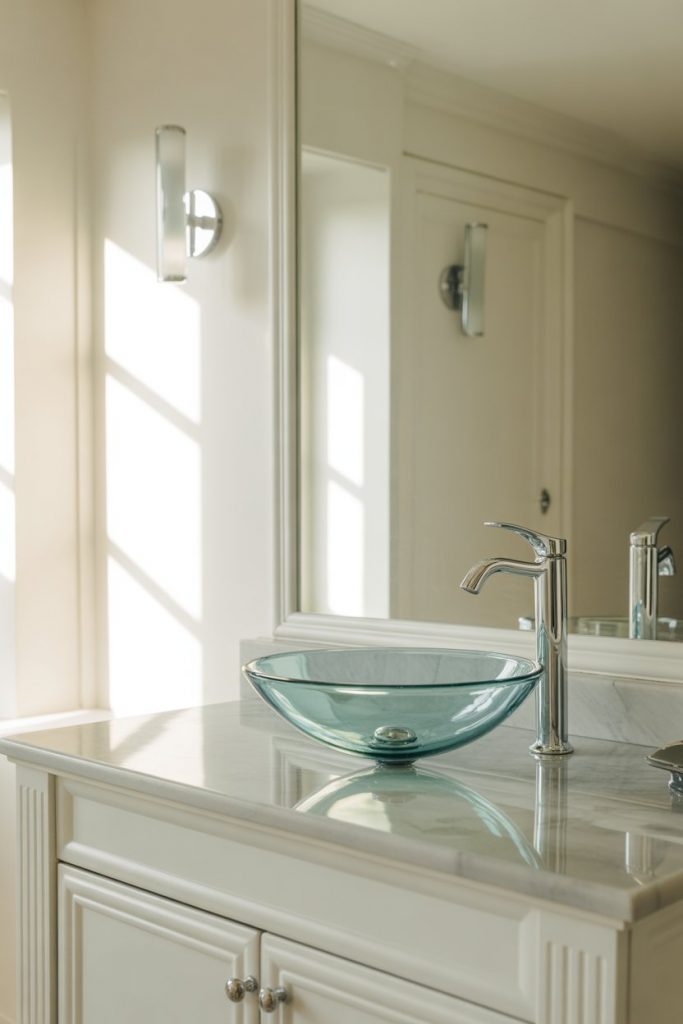
A light blue glass vessel sink serves as functional sculpture on your vanity, catching light and adding an unexpected artistic element. These sinks sit atop the counter rather than dropping in, making them a focal point that’s visible from across the room. The translucent quality of light blue glass creates depth and shimmer that shifts throughout the day as natural light moves through the space. This works particularly well in powder rooms or guest baths where a statement piece makes sense and countertop space isn’t at a premium. 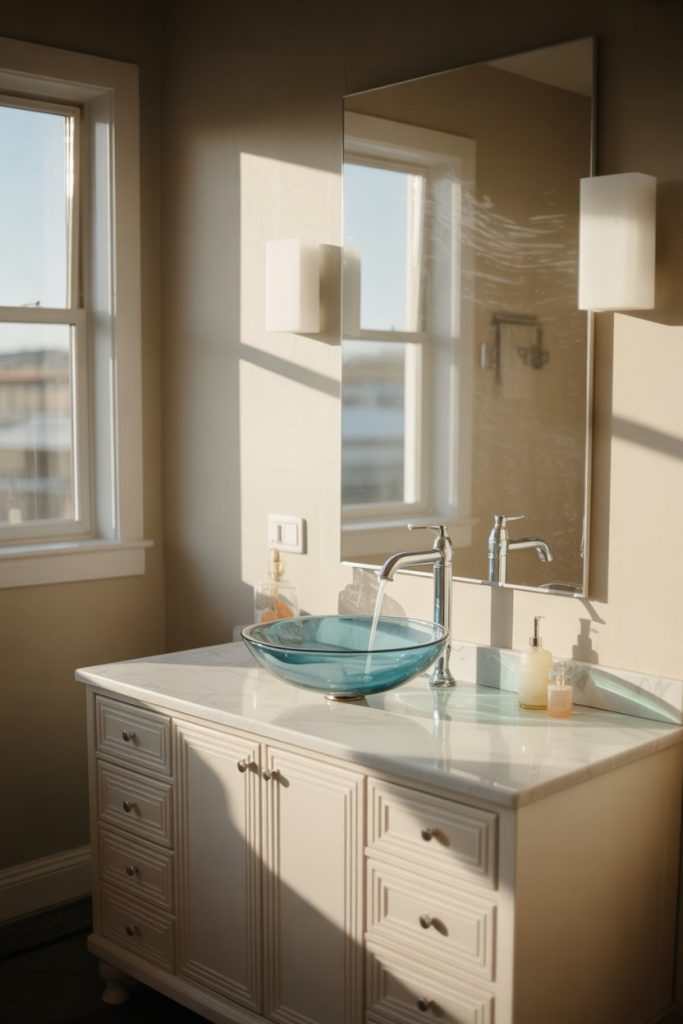
Glass vessel sinks require special faucets—typically wall-mounted or tall waterfall styles—which adds to the total investment. Quality glass sinks range from $200 to $800, with artisan handblown versions commanding even higher prices. Installation is straightforward but requires ensuring the vanity can support the weight and that plumbing is properly configured. One common mistake is choosing a vessel sink for a bathroom that gets heavy use from children, where a more durable undermount sink makes better practical sense regardless of aesthetics.
Conclusion
Blue bathrooms in 2026 offer something for every taste, from subtle coastal vibes to dramatic moody sanctuaries. Whether you’re ready for a full renovation or simply want to refresh your space with new towels and accessories, these ideas prove that blue is one of the most versatile and timeless colors for bathroom design. What’s your favorite blue bathroom idea? Share your thoughts and your own blue bathroom projects in the comments below.