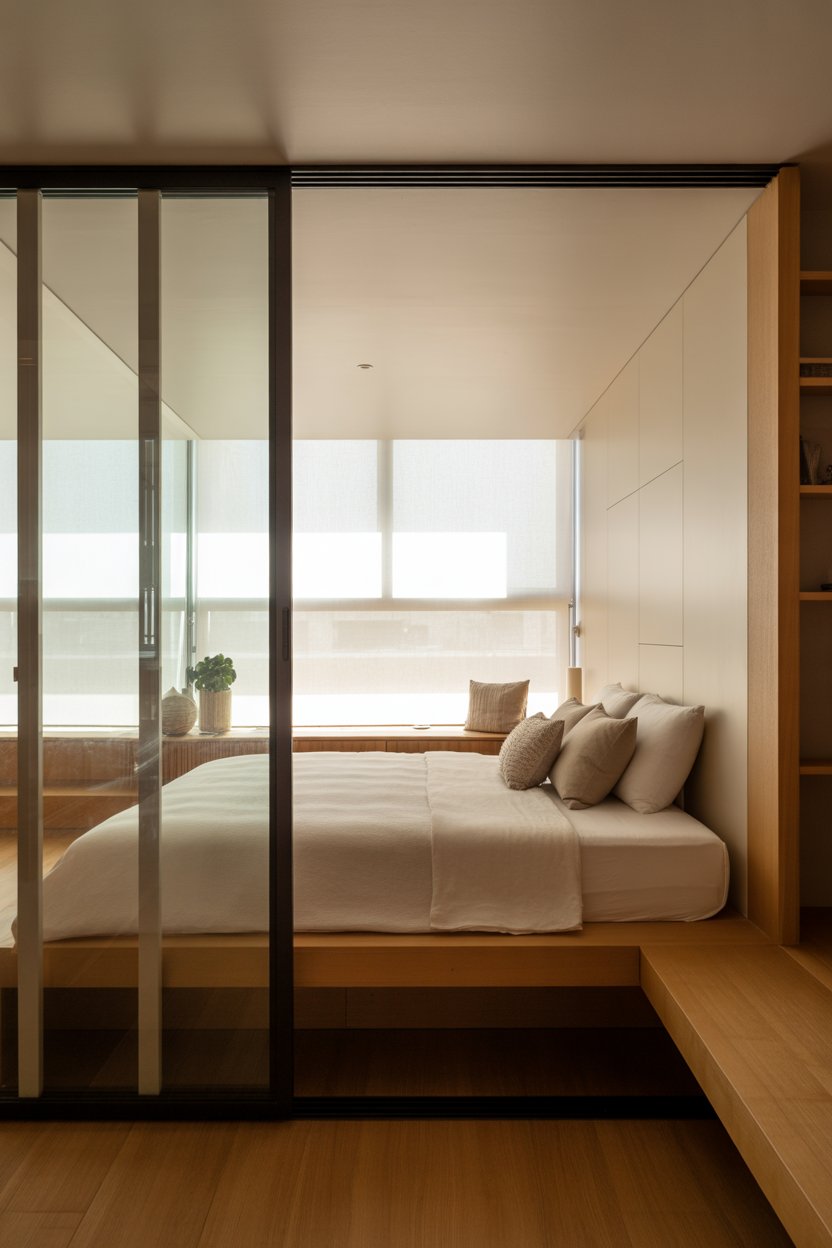
Bedroom makeovers have become one of the most searched home improvement topics on Pinterest in 2026, especially among Americans looking to refresh their personal spaces without breaking the bank. Whether you’re renting and need renter-friendly solutions, working with a budget, or simply craving cozy inspiration for your master suite or guest room, this year’s trends emphasize approachable style and real-world functionality. From aesthetic transformations to simple swaps that make a huge impact, these ideas prove you don’t need a complete renovation to create a space that feels brand new. Below, you’ll find twenty-two practical, beautiful bedroom makeover concepts tailored to different styles, budgets, and living situations—all designed to help you turn visual inspiration into reality.
1. Soft Neutral Palette with Layered Textures
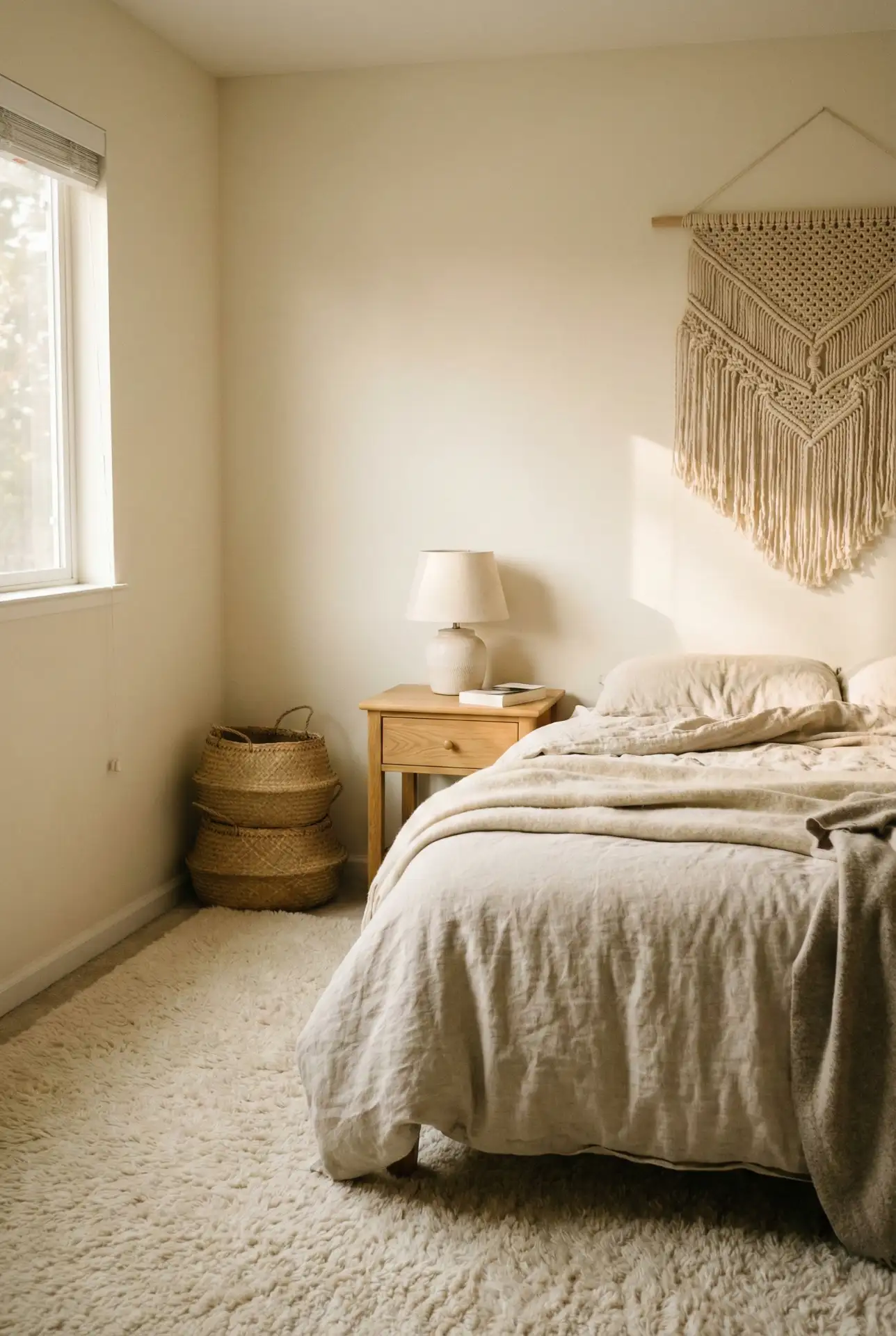
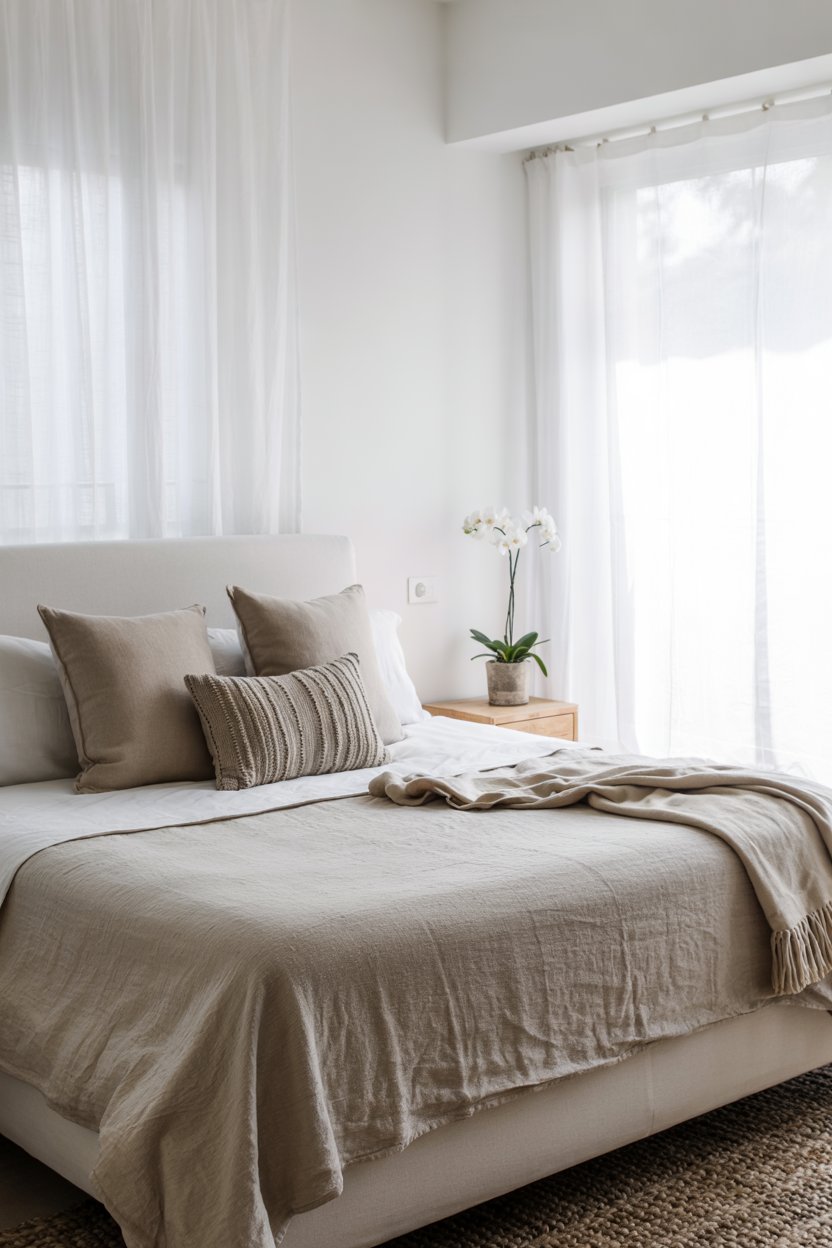
A neutral color scheme is one of the simplest ways to refresh a bedroom while keeping it timeless and cozy. Think warm whites, soft beiges, and gentle grays layered with linen bedding, chunky knit throws, and woven baskets. This approach works beautifully in rental properties where wall color changes aren’t allowed, since the transformation happens entirely through textiles and accessories. The key is variety in texture rather than color—mixing matte and glossy finishes, smooth cottons with nubby wools, and natural wood with ceramic accents creates visual interest without overwhelming the senses.
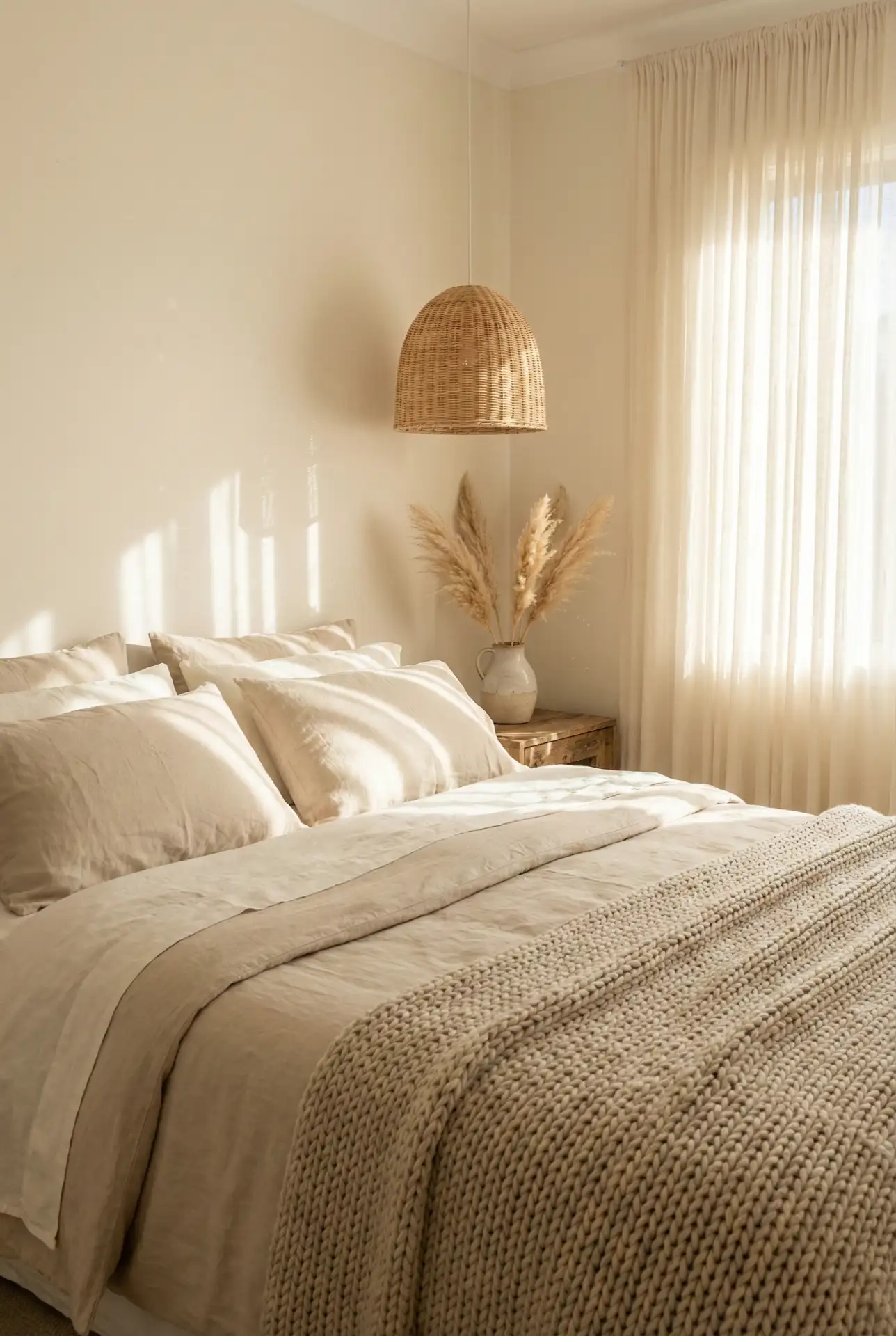
This style works particularly well in smaller bedrooms where too many colors can make the space feel cluttered. Americans in urban apartments have embraced this look because it photographs beautifully for social media while remaining deeply functional. Adding personal touches like framed family photos in matching frames or a small collection of vintage books keeps the space from feeling generic. The layered texture approach also means you can swap out seasonal elements—lighter cottons in summer, heavier wools in winter—without changing the overall aesthetic.
2. Bold Accent Wall with Peel-and-Stick Wallpaper
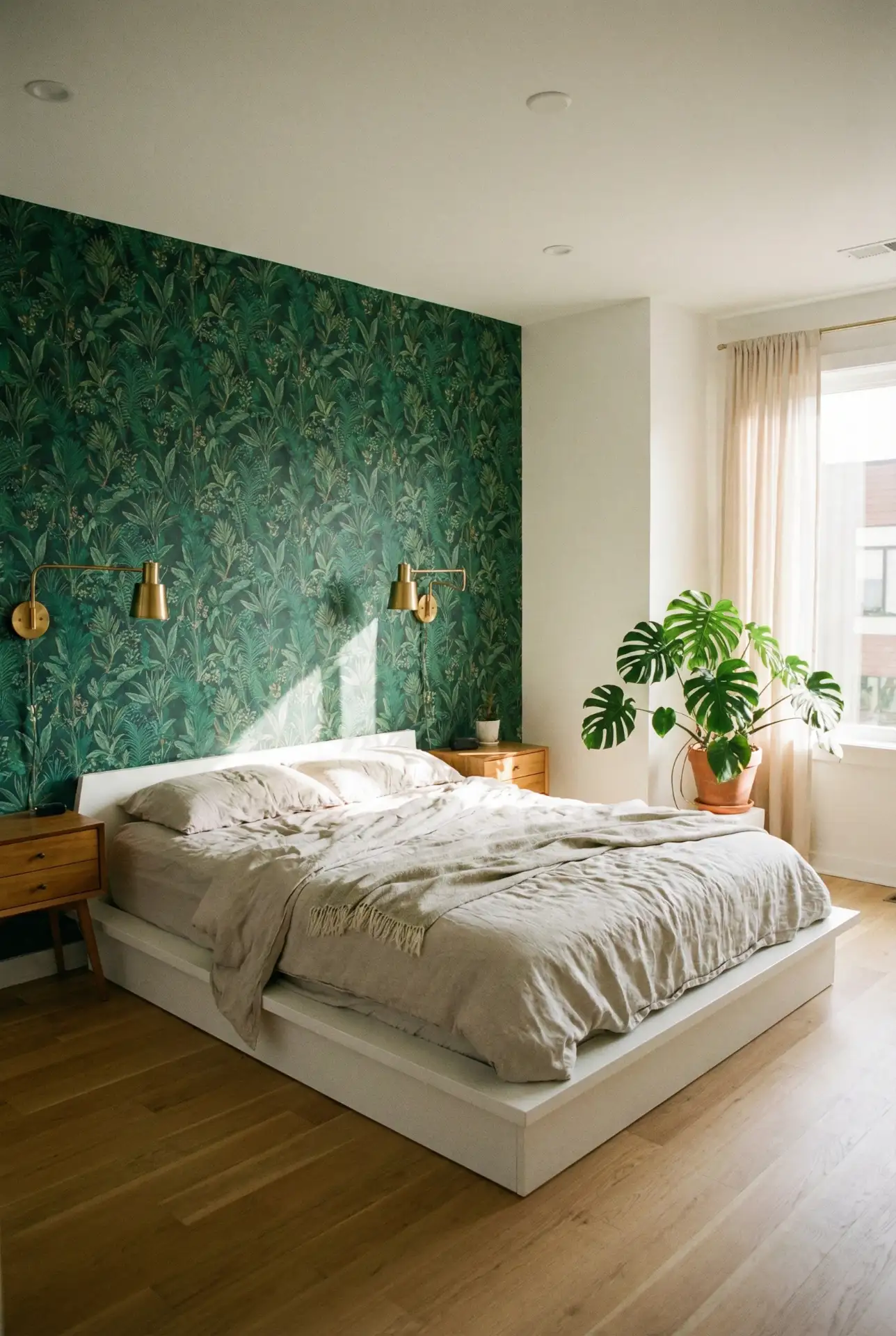
Peel-and-stick wallpaper has revolutionized renter-friendly bedroom makeovers, offering the drama of a statement wall without the permanence of paint or traditional wallpaper. Available in thousands of patterns—from botanical prints to geometric designs—this DIY solution can be installed in an afternoon and removed without damaging walls. Focus on the wall behind your bed for maximum impact, choosing a design that complements your existing bedding and furniture. Popular choices in 2026 include oversized florals, vintage-inspired toile, and abstract watercolor patterns that add personality without overwhelming the space.
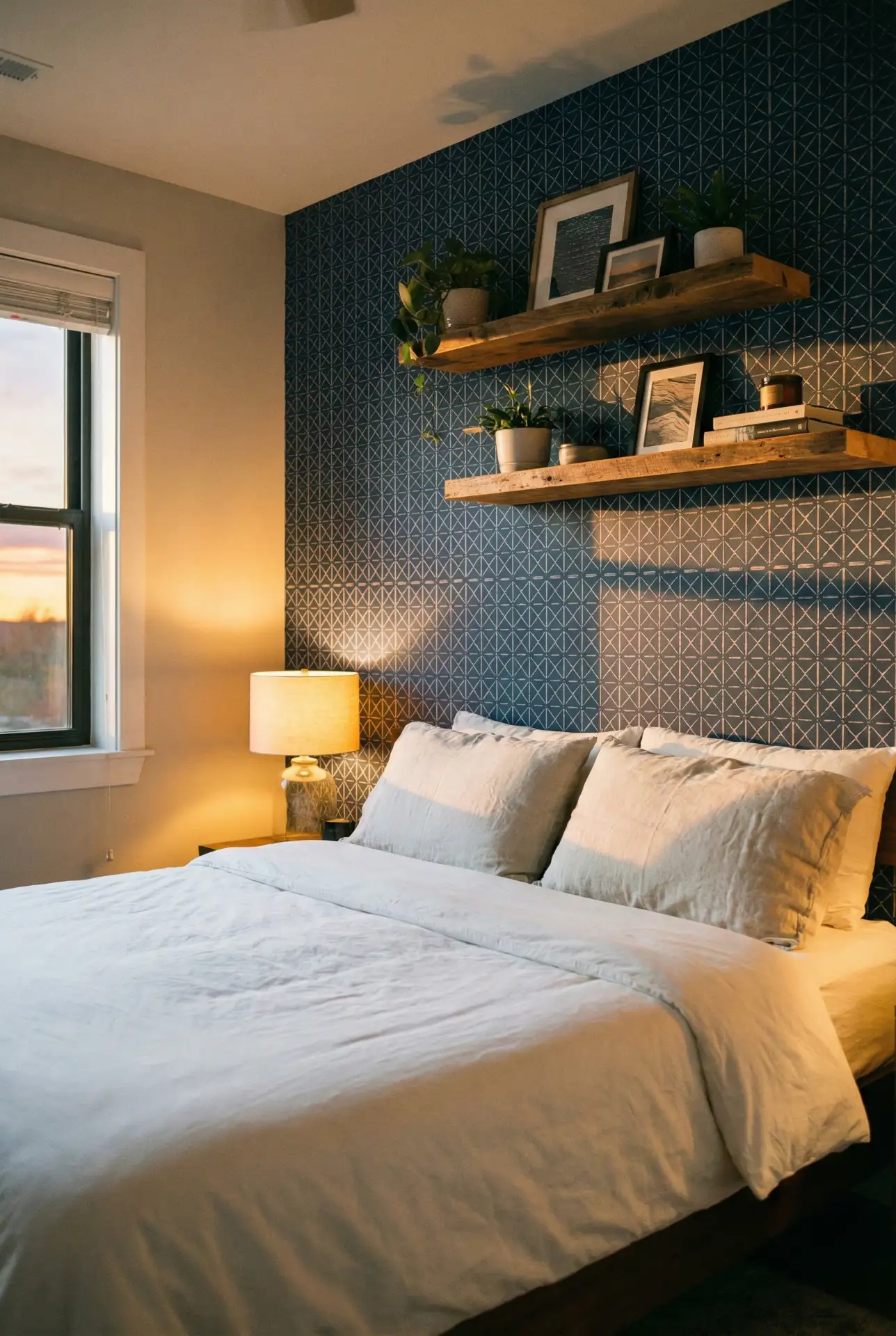
The biggest mistake people make with peel-and-stick wallpaper is not properly preparing the surface—walls need to be clean, smooth, and completely dry for optimal adhesion. Many renters report successful installations that lasted their entire lease period when applied correctly. This makeover typically costs between $80 and $200 depending on your wall size and chosen pattern, making it an accessible option for those working with a budget. The removable nature also means you can experiment with bolder patterns you might not commit to with paint.
3. Vintage Thrift Store Furniture Revival
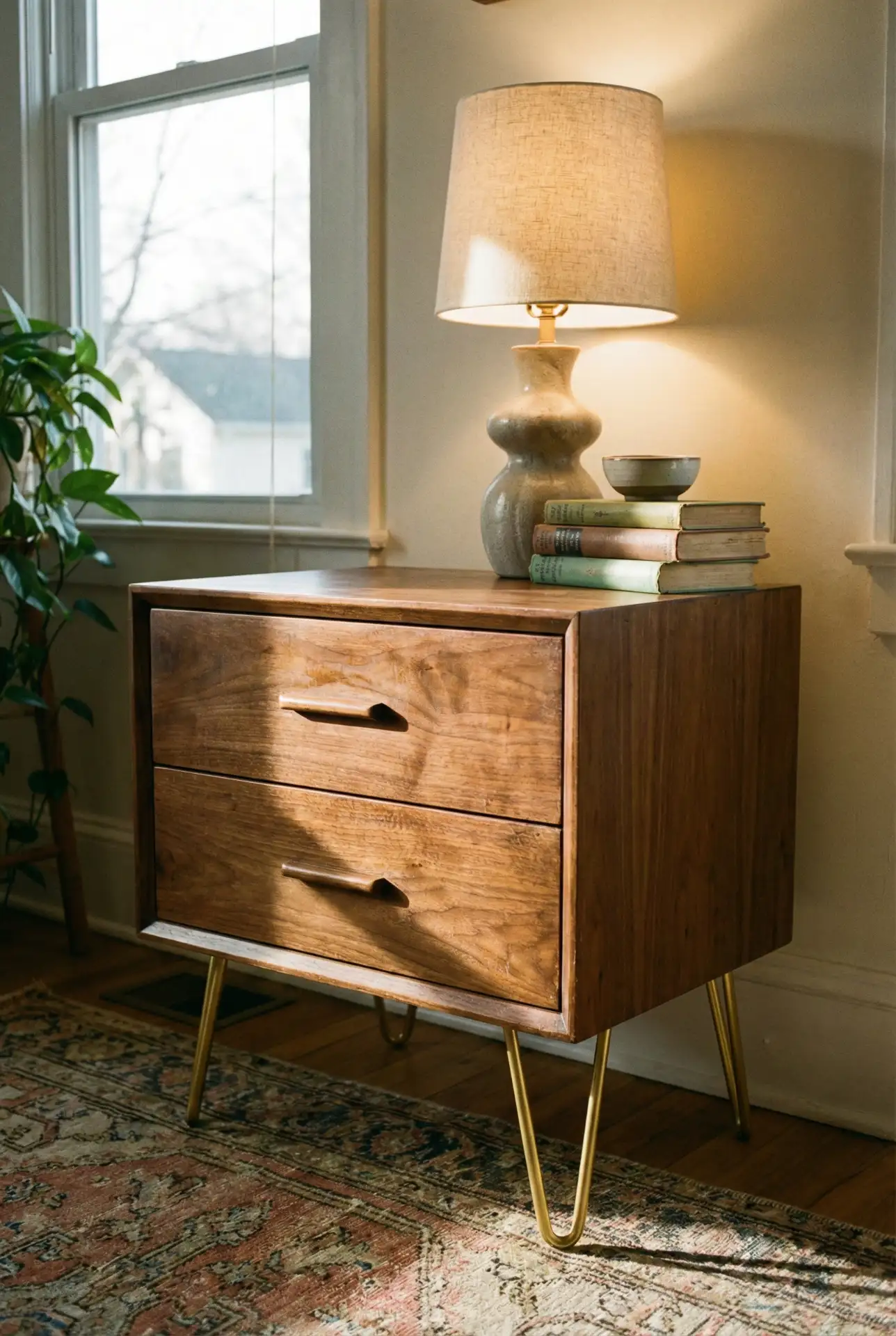
Scouring thrift stores and estate sales for solid wood furniture pieces has become a favorite cheap makeover strategy for Americans seeking character and quality. A dated dresser can be transformed with fresh paint, new hardware, and perhaps some decorative contact paper lining the drawers. Look for pieces with good bones—dovetail joints, real wood construction, and interesting details like curved legs or carved drawer fronts. The DIY process of sanding, priming, and painting takes time but costs a fraction of buying new furniture, and you’ll end up with a one-of-a-kind piece that adds personality to your bedroom.
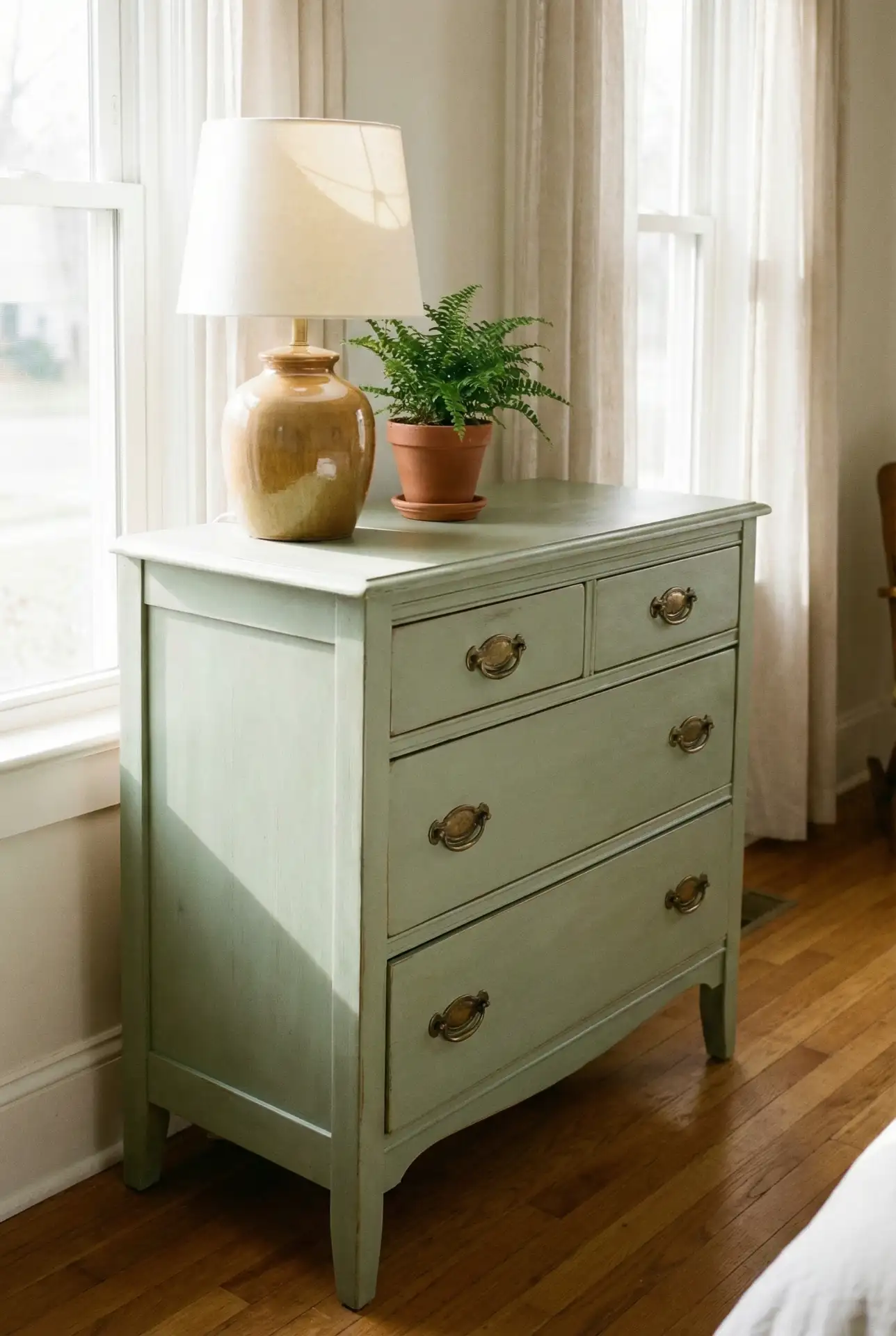
In the Midwest and South, where estate sales are particularly abundant, homeowners report finding incredible deals on solid mahogany and walnut pieces that would cost thousands new. The key is patience—checking local Facebook Marketplace, Craigslist, and estate sale listings weekly until the right piece appears. Popular paint choices include chalky matte finishes in soft blues, greens, and blush tones, though many people are also embracing the natural wood look by simply refinishing with tung oil or furniture wax. This approach aligns perfectly with sustainable living values while creating a truly unique bedroom aesthetic.
4. Floating Shelves for Functional Art Display
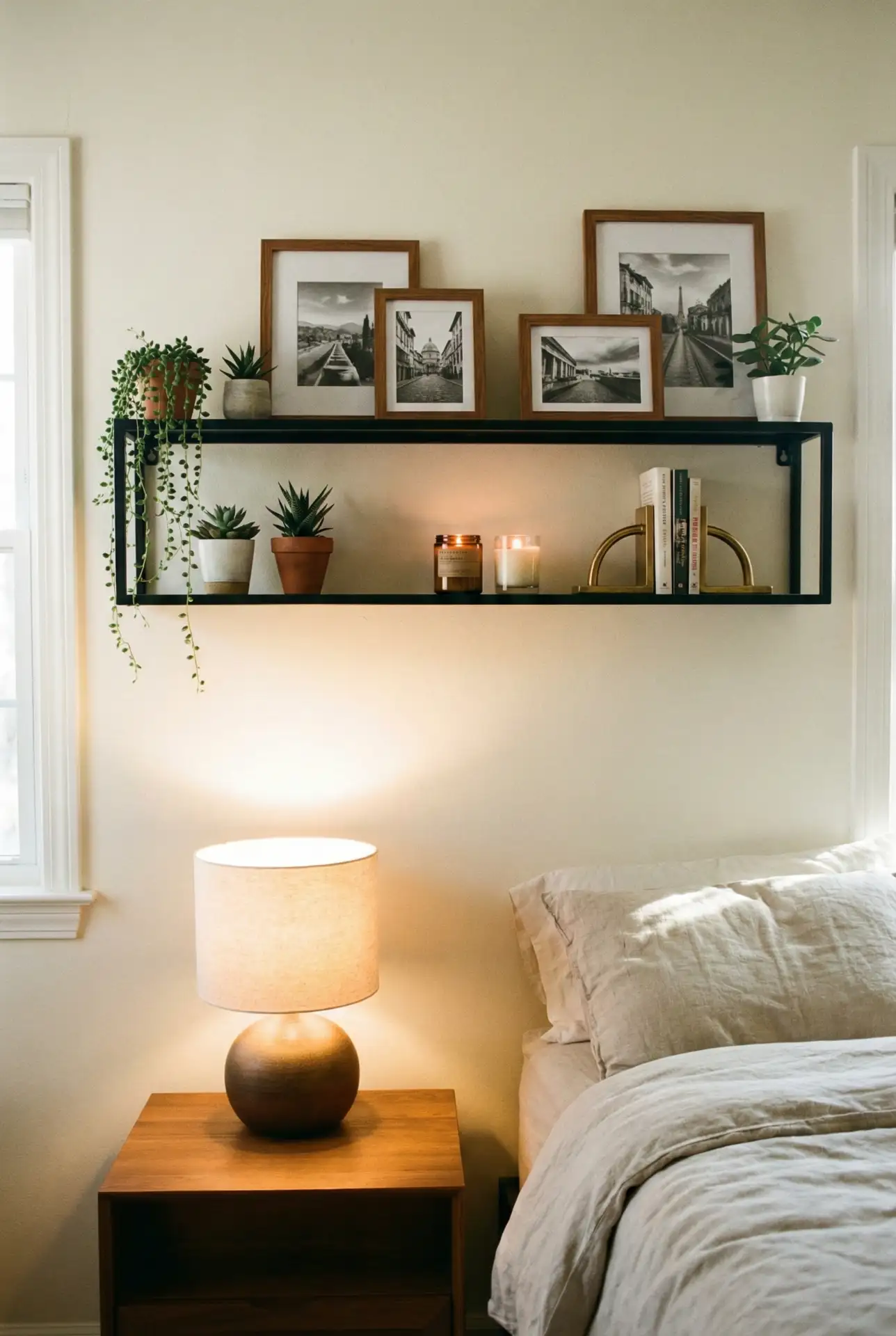
Installing floating shelves transforms blank wall space into both storage and visual interest, making them ideal for small room makeovers where floor space is precious. Choose shelves in natural wood, white, or black to match your existing decor, and style them with a mix of books, small plants, framed photos, and decorative objects. The beauty of this simple upgrade is that it’s completely customizable—you can arrange and rearrange items seasonally or whenever you need a refresh. In bedrooms, floating shelves work particularly well flanking the bed as an alternative to traditional nightstands or above a desk area to keep supplies organized and accessible.
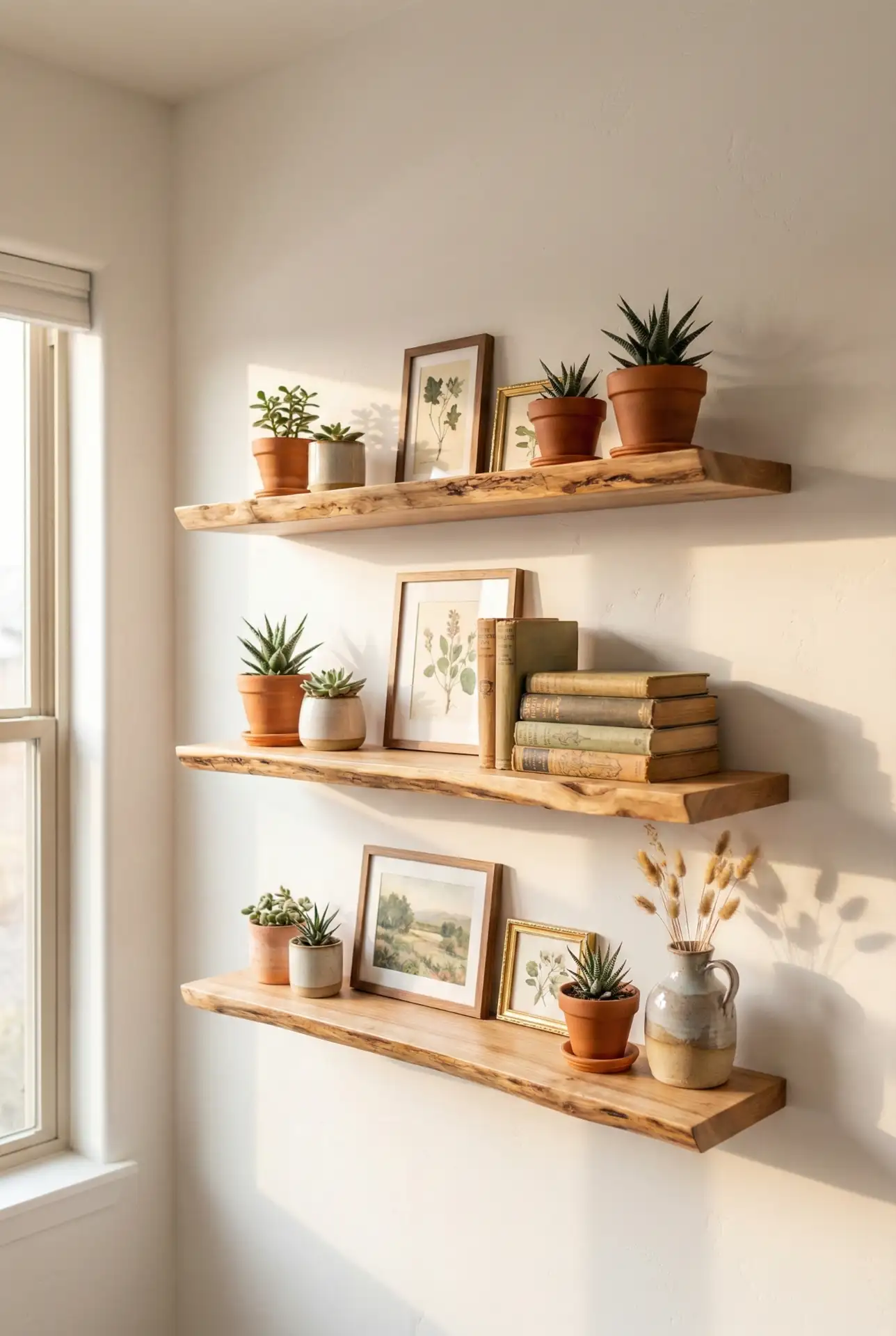
Most floating shelf systems cost between $20 and $60 per shelf depending on size and material, making this a genuinely budget-friendly update. Installation typically requires basic tools—a drill, level, and stud finder—though many renters successfully use heavy-duty adhesive strips for lighter-weight shelves. The functional aspect matters just as much as aesthetics; shelves near the bed can hold your current read, phone charger, and water glass, eliminating bedside table clutter. Americans in studio apartments particularly appreciate this solution because it draws the eye upward, making ceilings feel higher and rooms feel larger.
5. Luxe Hotel-Inspired Bedding Layers
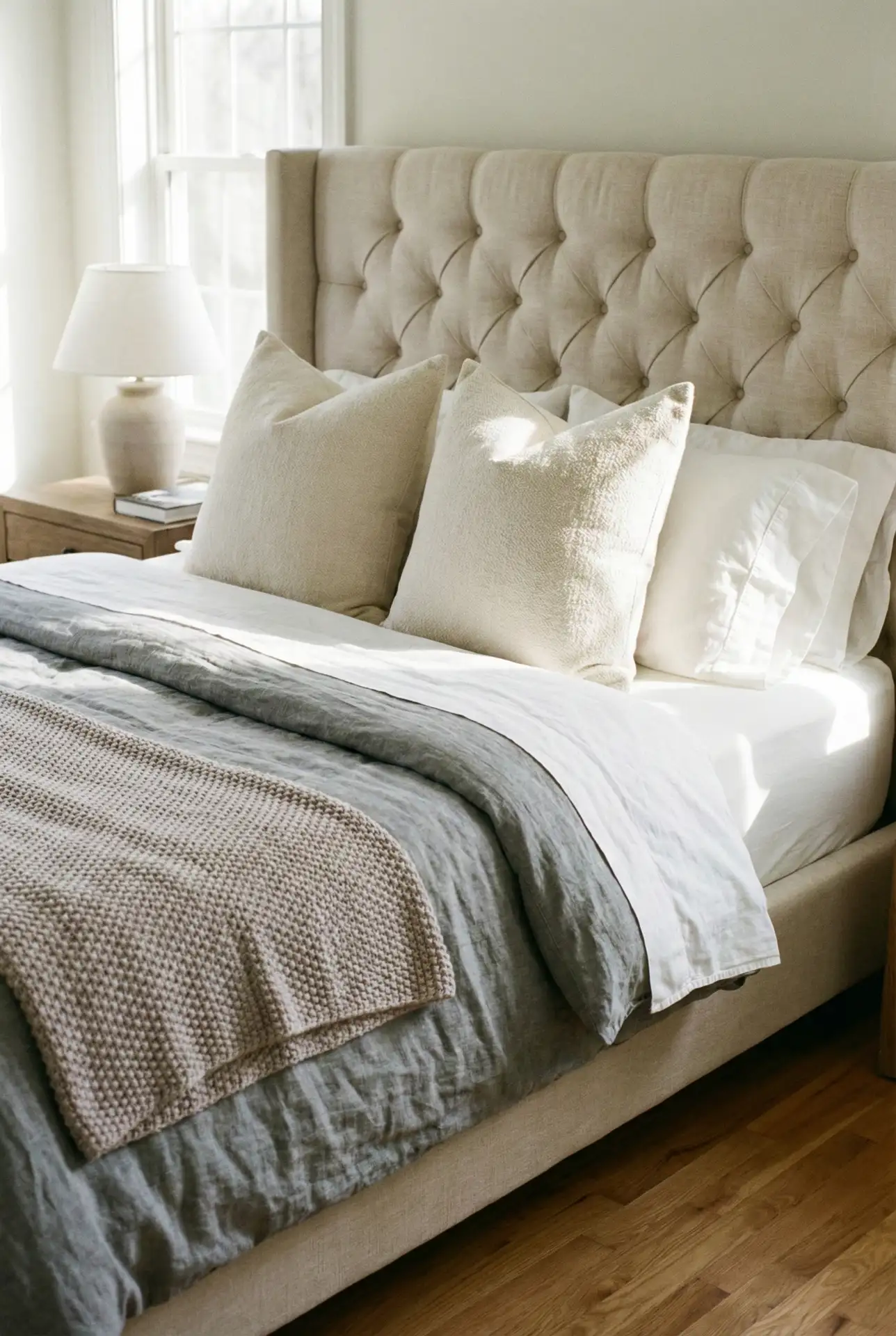
Recreating that five-star hotel bed feeling at home requires strategic layering rather than expensive purchases. Start with crisp white or neutral sheets in a percale or sateen weave, add a lightweight blanket for warmth, then top with a duvet in a textured cover—linen, waffle weave, or velvet depending on the season. The signature hotel look comes from generous pillows: two sleeping pillows per person, plus two to four decorative euro shams and accent pillows in complementary colors. This cozy and aesthetic approach transforms the bed into a focal point that feels indulgent every single night, not just when you’re traveling.
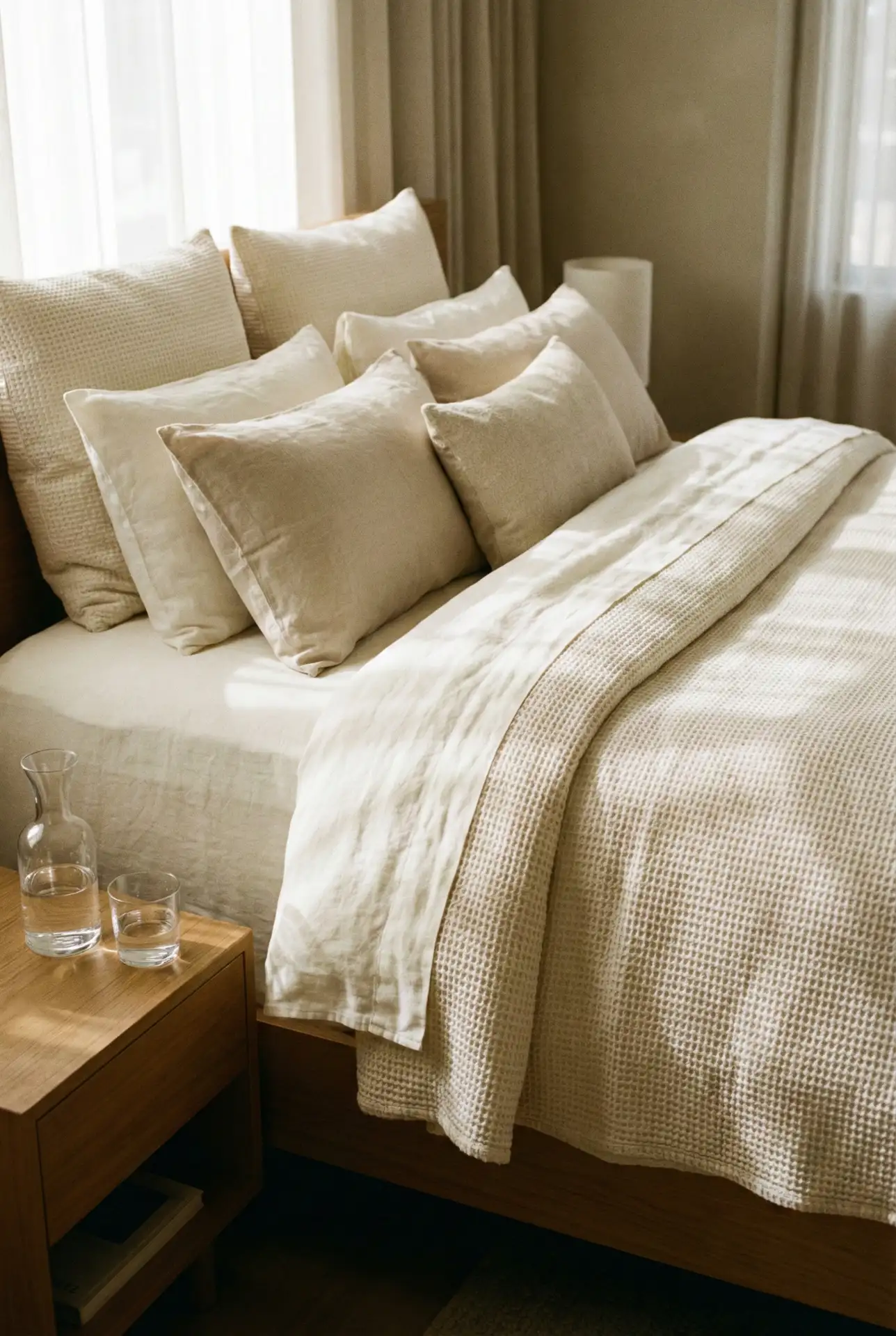
Surprisingly, you can achieve this look on a budget by shopping end-of-season sales at retailers like Target, West Elm, and Pottery Barn, where quality bedding often goes 40-60% off. The investment pays off in both aesthetics and comfort—quality sheets last years longer than cheap alternatives and improve with washing. A friend who works as a hotel consultant shared that the real secret isn’t thread count (anything above 400 becomes marketing fluff) but rather the quality of the cotton itself; look for 100% long-staple cotton like Egyptian or Supima. Making your bed every morning with all these layers takes just two minutes and completely changes how your bedroom feels throughout the day.
6. Gallery Wall of Personal Photography
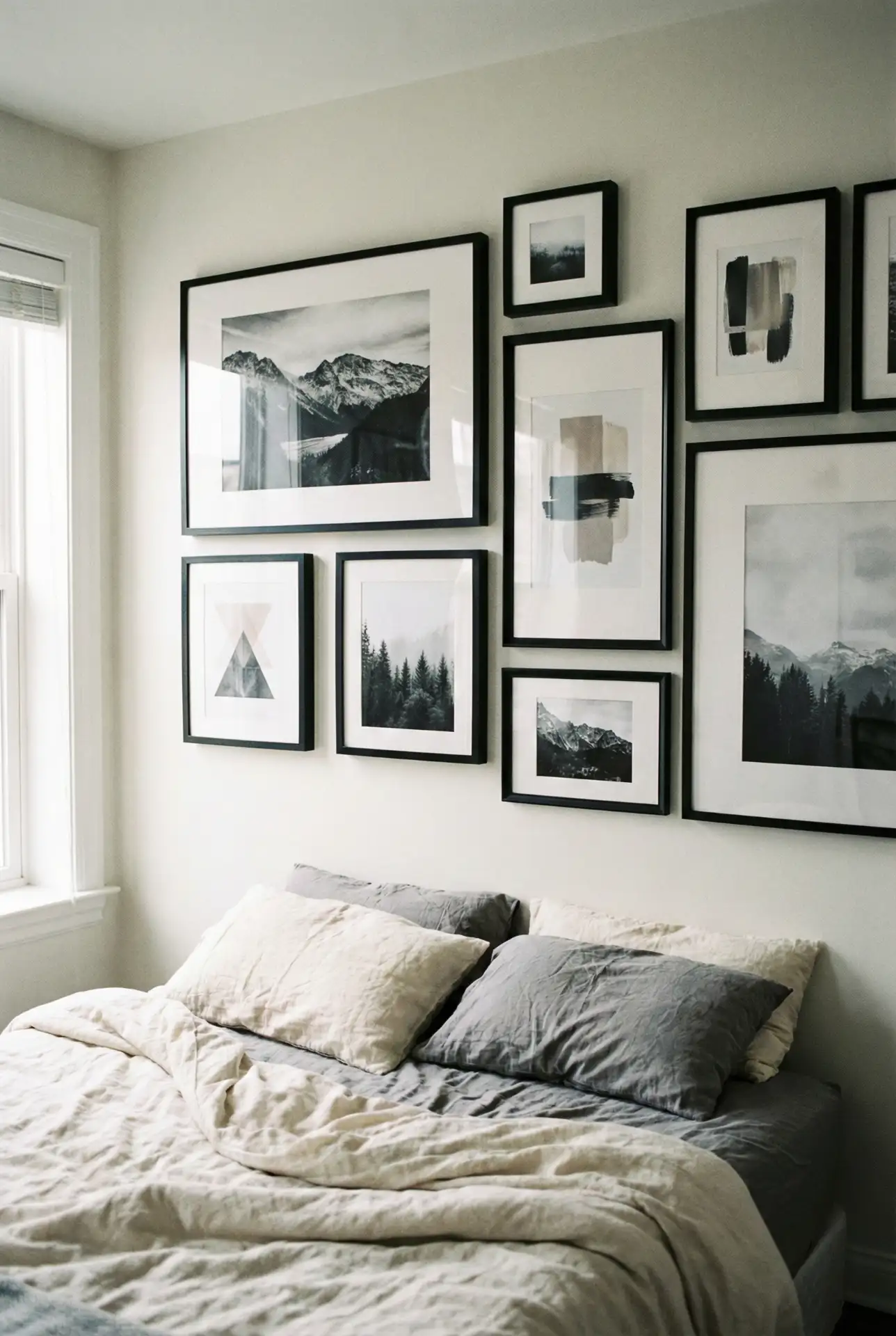
Creating a gallery wall with your own photography and meaningful prints adds instant personality while remaining thoroughly rental friendly when using damage-free hanging systems. Start by selecting 5-12 images that share a common thread—color palette, theme, or emotional tone—then choose frames in matching finishes, whether that’s all black, all natural wood, or all white. Lay out your arrangement on the floor first, measuring and adjusting until the composition feels balanced, then transfer that layout to your wall using painter’s tape as guides. This deeply personal touch transforms a bedroom from generic to genuinely yours, showcasing travel memories, family moments, or artistic photography you’ve collected.
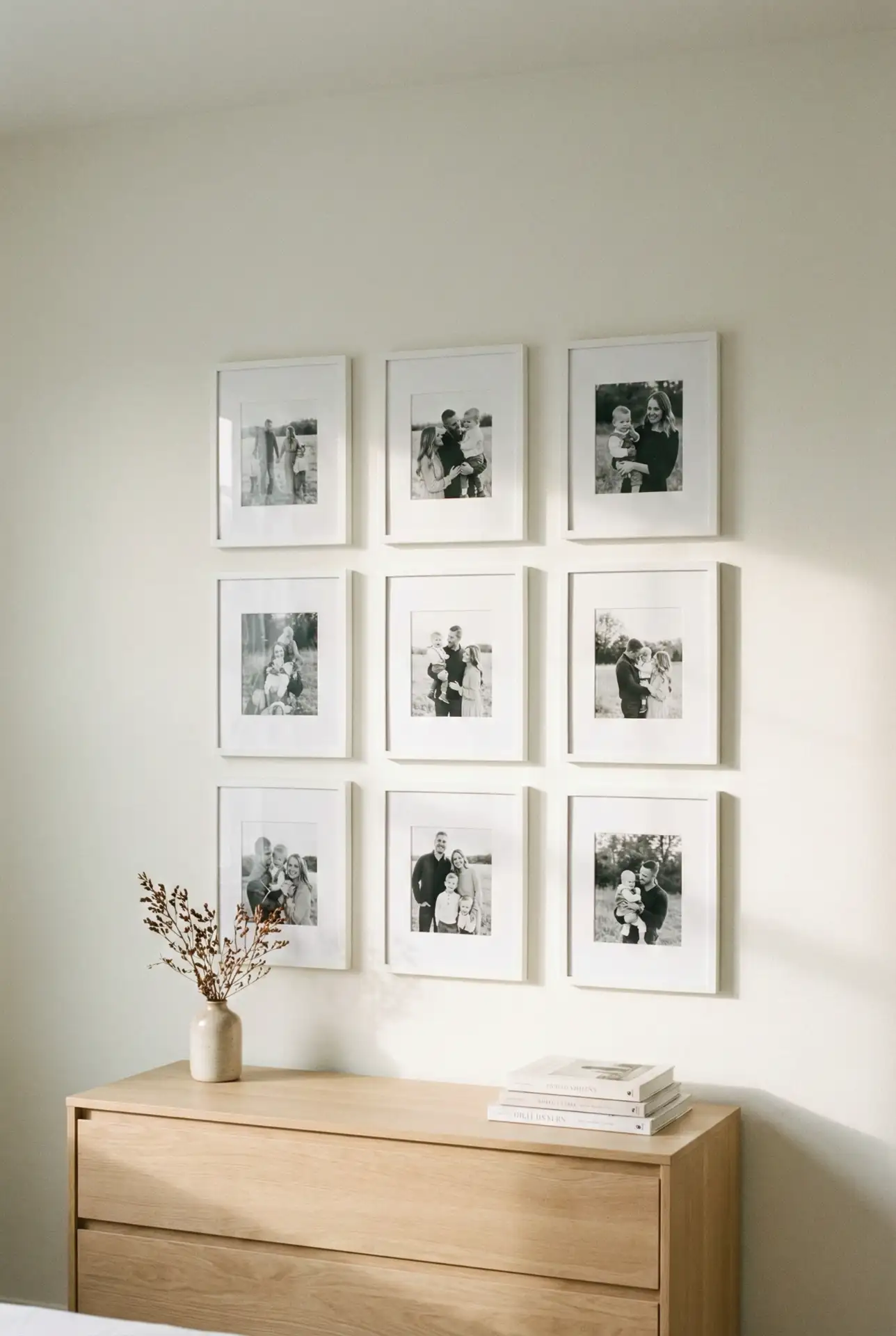
This makeover works best when you commit to quality printing rather than standard drugstore prints—professional online printing services like Mpix or Nations Photo Lab offer archival-quality prints starting around $1-3 per 8×10. Command picture hanging strips have become the go-to for renters, supporting up to 16 pounds per set and removing cleanly when you move. The common mistake is hanging everything too high; the center of your gallery should be at eye level, typically 57-60 inches from the floor. Many Americans refresh their gallery walls seasonally, swapping in new photos from recent trips or family events, keeping the display dynamic and current.
7. Mood Lighting with Dimmable Options
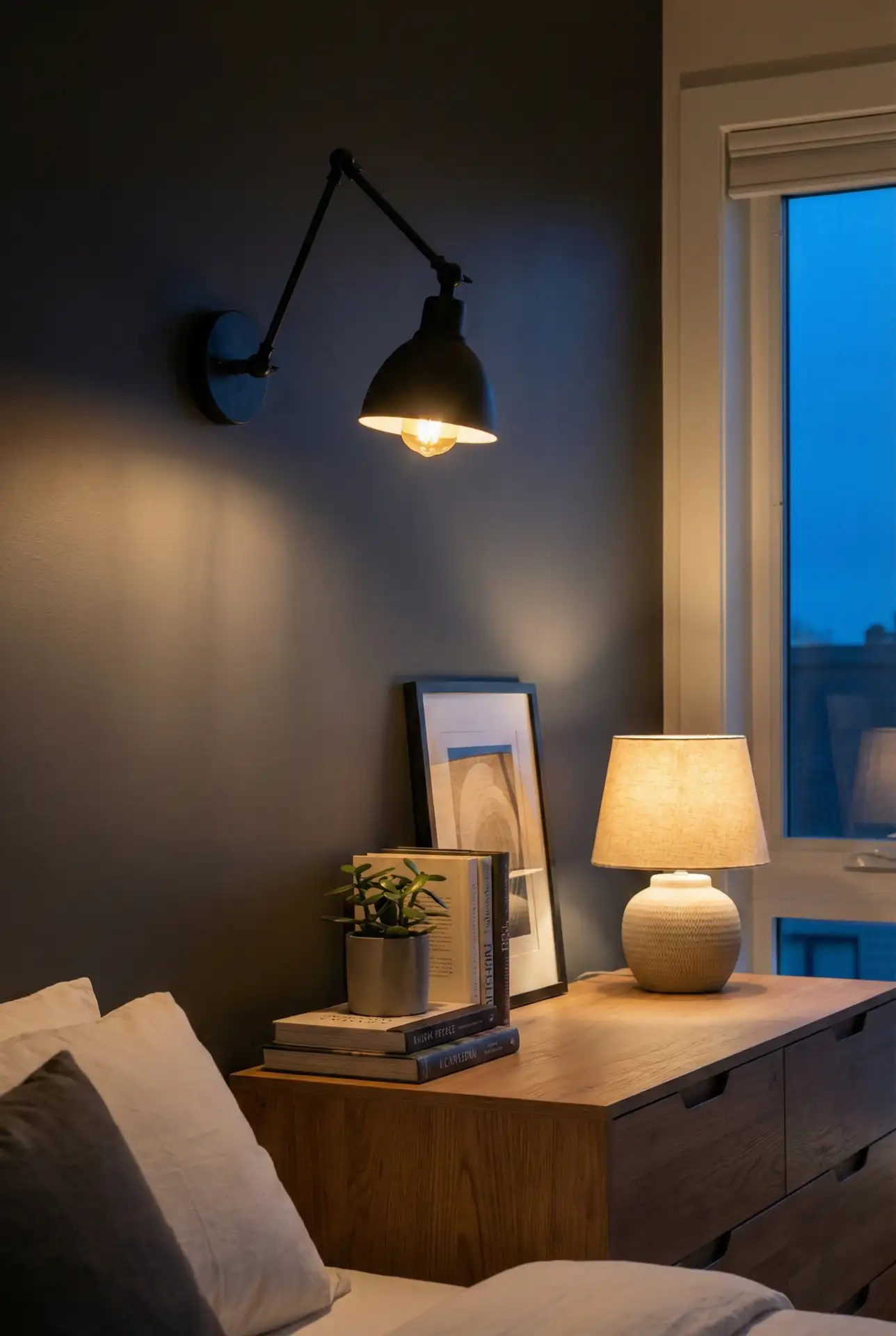
Upgrading your bedroom lighting might be the single most impactful cheap change you can make, shifting harsh overhead lighting to warm, adjustable options that support both reading and relaxation. Install dimmer switches on existing fixtures (or use smart bulbs if you can’t modify wiring), add bedside lamps with three-way bulbs, and consider LED strip lighting behind headboards or under floating shelves for ambient glow. The goal is to have multiple light sources at different heights and intensities so you can customize the mood for any activity—bright for getting dressed, medium for reading, and low for winding down before sleep.
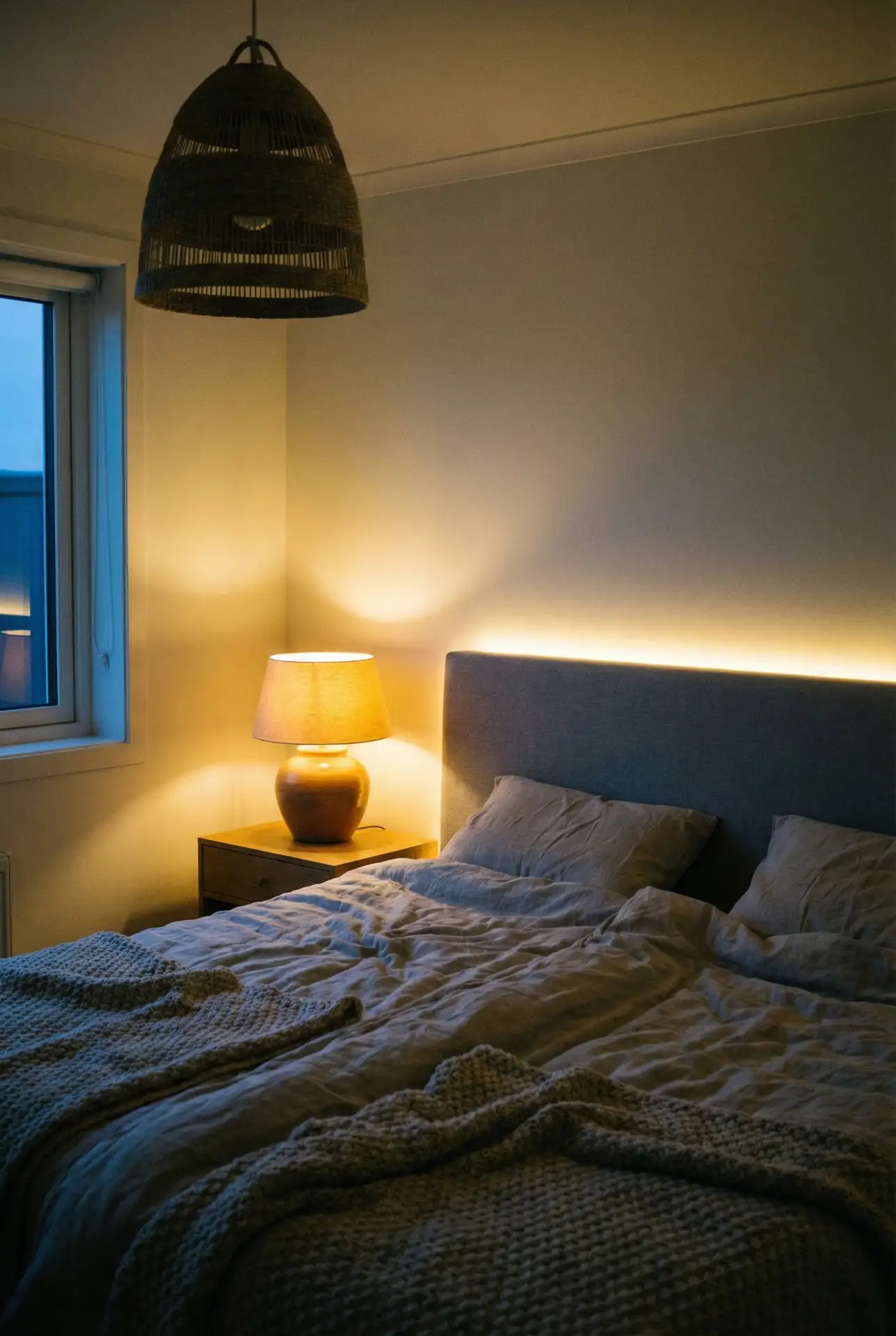
Smart bulbs from brands like Philips Hue or LIFX allow complete lighting control from your phone, including scheduling lights to gradually dim at bedtime—mimicking natural sunset and supporting better sleep cycles. In regions with long winter nights like the Pacific Northwest and upper Midwest, Americans particularly value this level of lighting control for seasonal mood management. Standard dimmer switches cost $15-25 and take about 20 minutes to install if you’re comfortable with basic electrical work, while smart bulbs require no installation beyond screwing them into existing fixtures. The difference in bedroom ambiance is immediate and dramatic, making spaces feel more cozy and intentionally designed.
8. Maximalist Pink and Pattern Mix
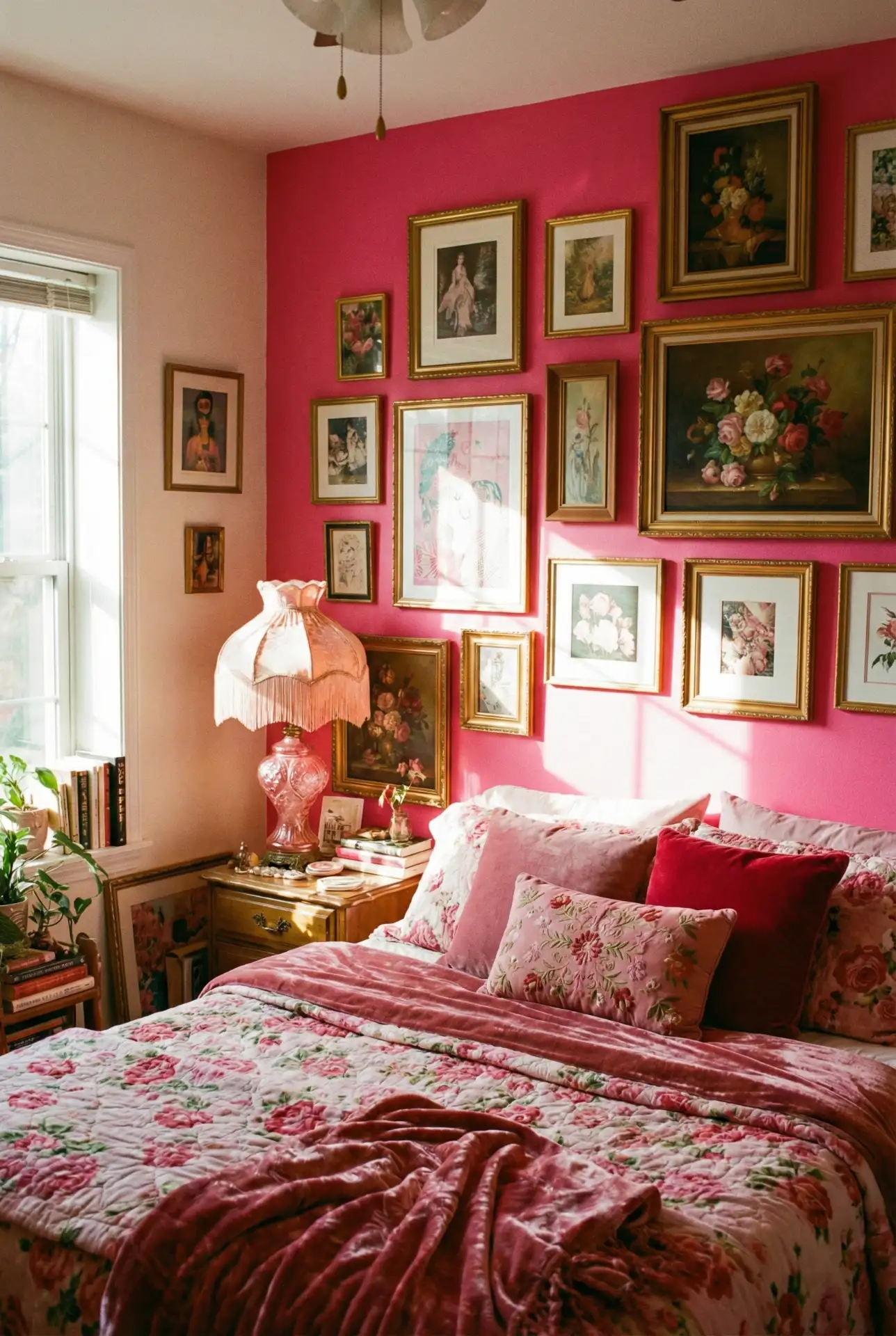
For those craving aesthetic inspiration beyond minimalism, a maximalist pink bedroom celebrates color, pattern, and joyful abundance. Layer multiple patterns—florals, stripes, and geometric prints—in varying scales, unified by a cohesive pink color palette ranging from blush to coral to hot pink. The trick is balancing busy patterns with solid blocks of color, using pink as both an accent and a dominant hue. This bold approach works surprisingly well in tiny bedrooms where embracing the coziness rather than fighting it creates an enveloping, jewel-box effect that feels intentional and glamorous.
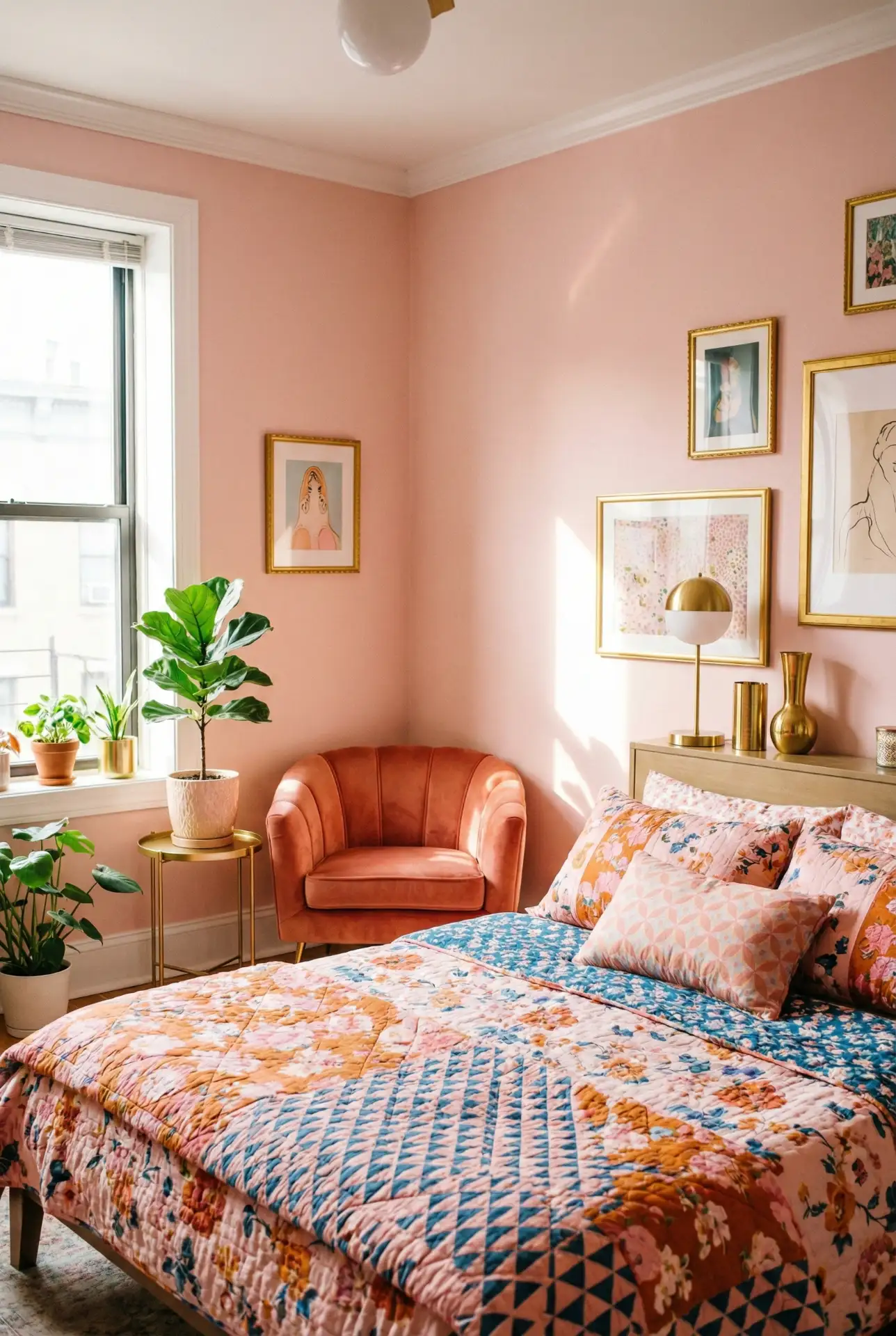
Younger millennials and Gen Z homeowners on the East and West coasts have particularly embraced this confident design direction, treating their bedrooms as personal sanctuaries that reflect their personalities unapologetically. Start small if you’re nervous—pink bedding and curtains against white walls—then gradually add patterned wallpaper, artwork, and accessories as your confidence grows. Thrifted pink glassware, vintage floral prints, and DIY painted furniture in complementary pink shades keep costs manageable while building a collected-over-time look. The key is trusting your eye and adding what genuinely brings you joy rather than following rigid rules.
9. Built-In Storage Headboard Solution
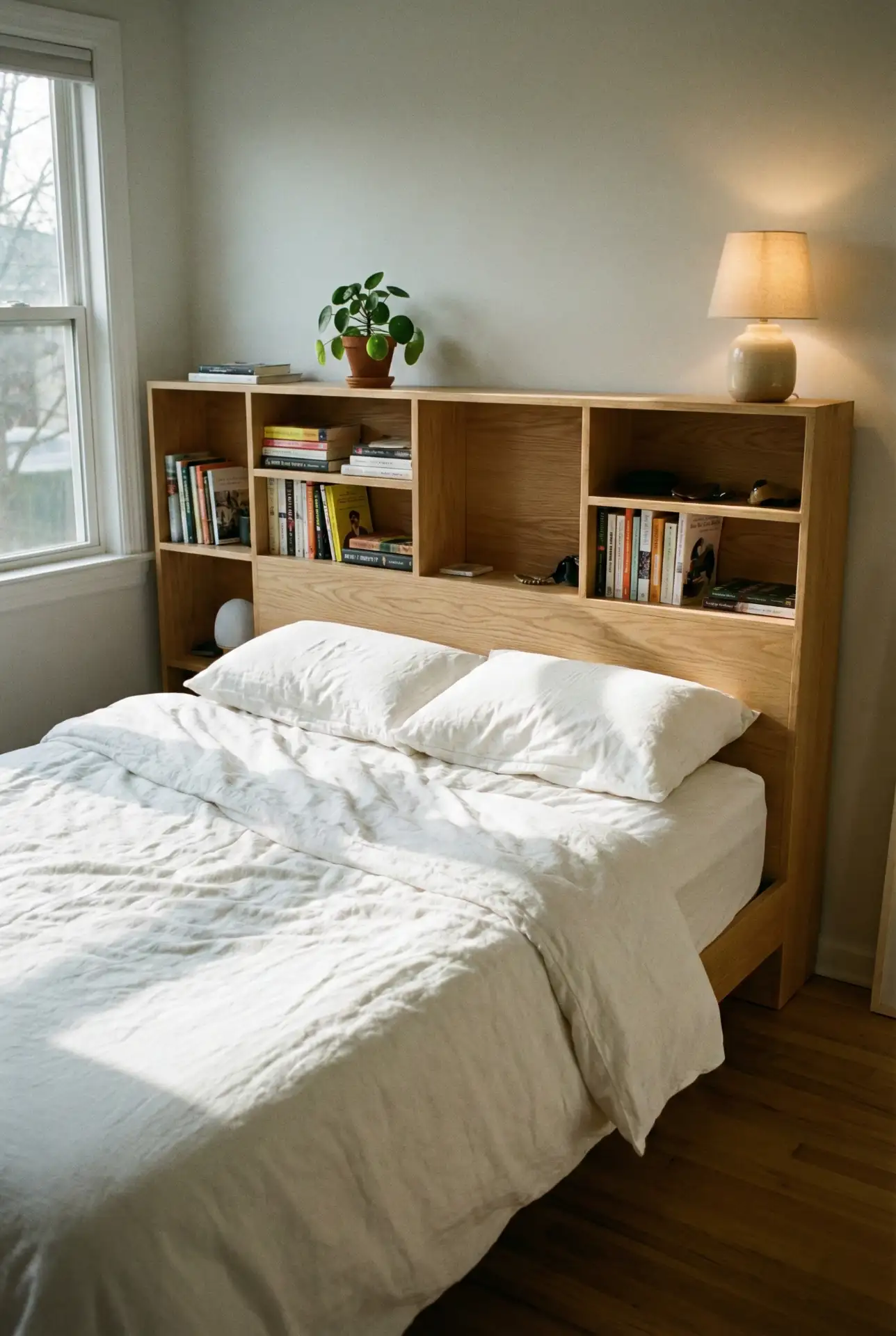
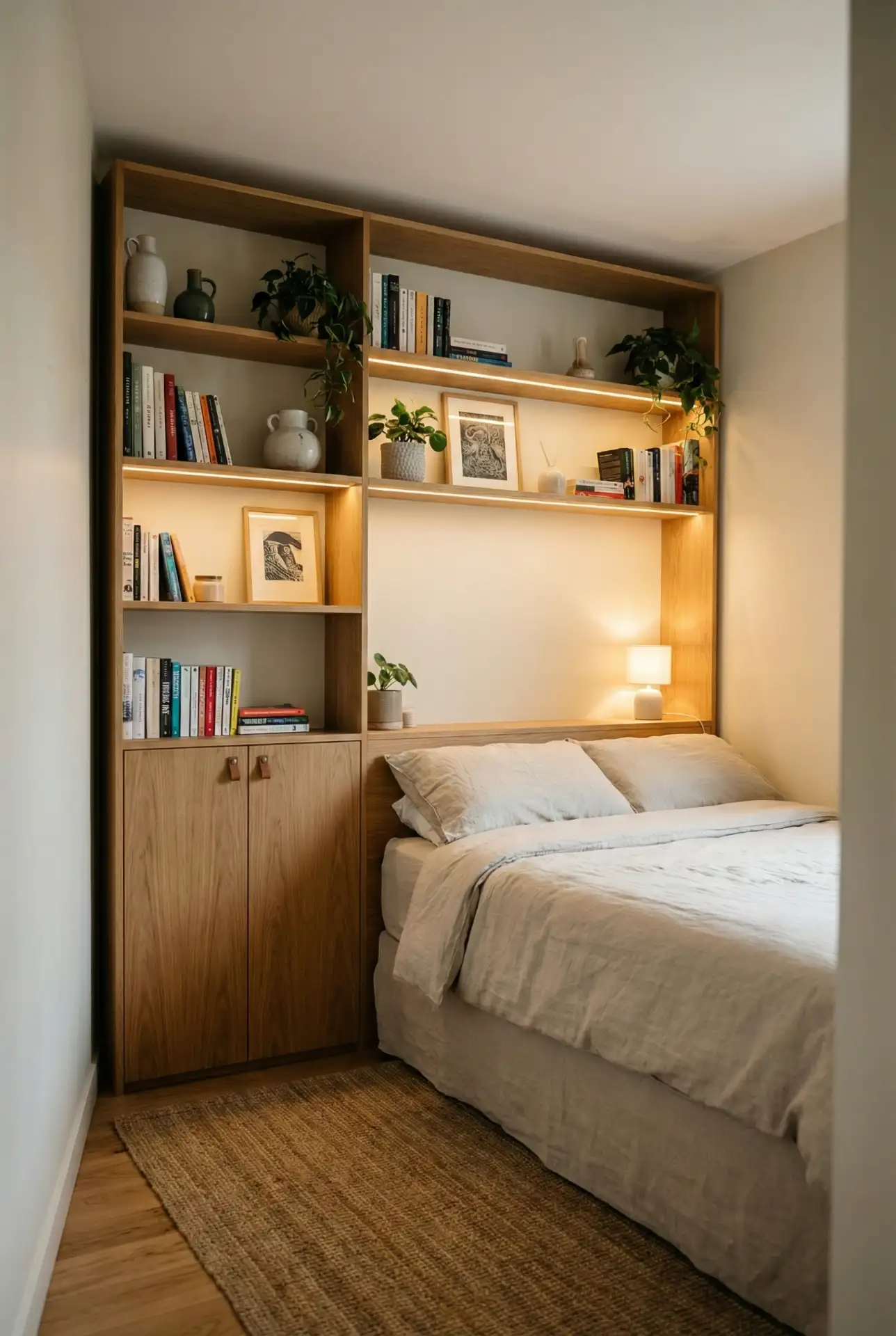
A storage headboard maximizes space in small room scenarios by combining the headboard function with shelving, cubbies, or cabinets for books, alarm clocks, and bedside essentials. You can purchase ready-made options from IKEA or build a DIY version using wall-mounted shelving units positioned around and above the bed, creating a custom built-in look. This solution eliminates the need for separate nightstands, freeing up valuable floor space while keeping everything you need within arm’s reach. Choose a design that complements your room’s style—sleek and modern with clean lines, or rustic with reclaimed wood shelves and industrial pipe brackets.
Urban apartment dwellers in cities like New York, San Francisco, and Chicago particularly appreciate this space-efficient approach where every square foot counts. A DIY version using IKEA KALLAX units costs around $150-250 in materials and takes a weekend to assemble and secure to the wall properly, while pre-made storage headboards range from $300 to $800 depending on size and quality. The functionality extends beyond just storage—many designs incorporate reading lights, USB charging ports, and even small workspace areas for those working from bedrooms. Ensure any wall-mounted components are properly anchored to studs for safety, especially in earthquake-prone regions.
10. Natural Fiber Rug for Warmth and Texture
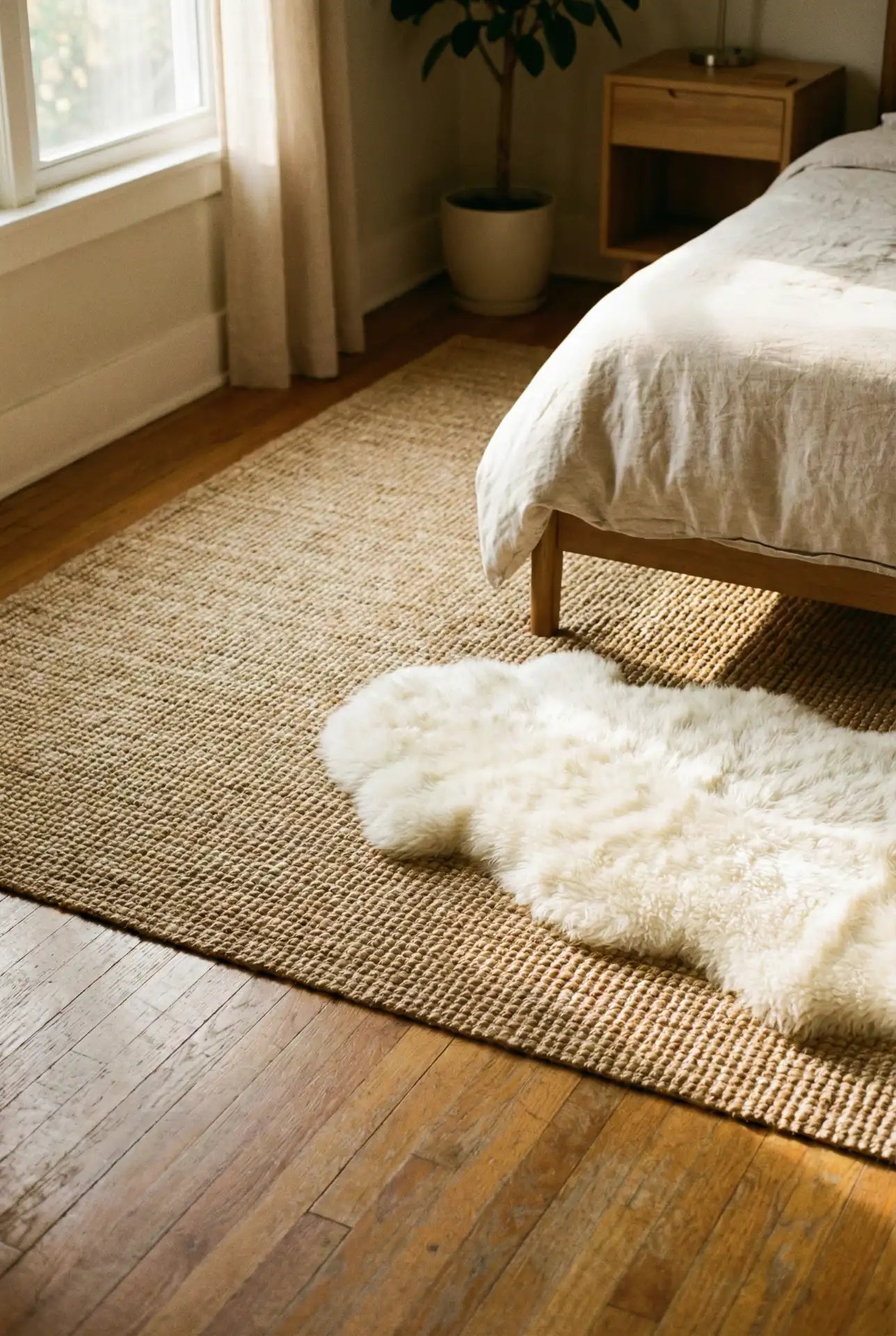
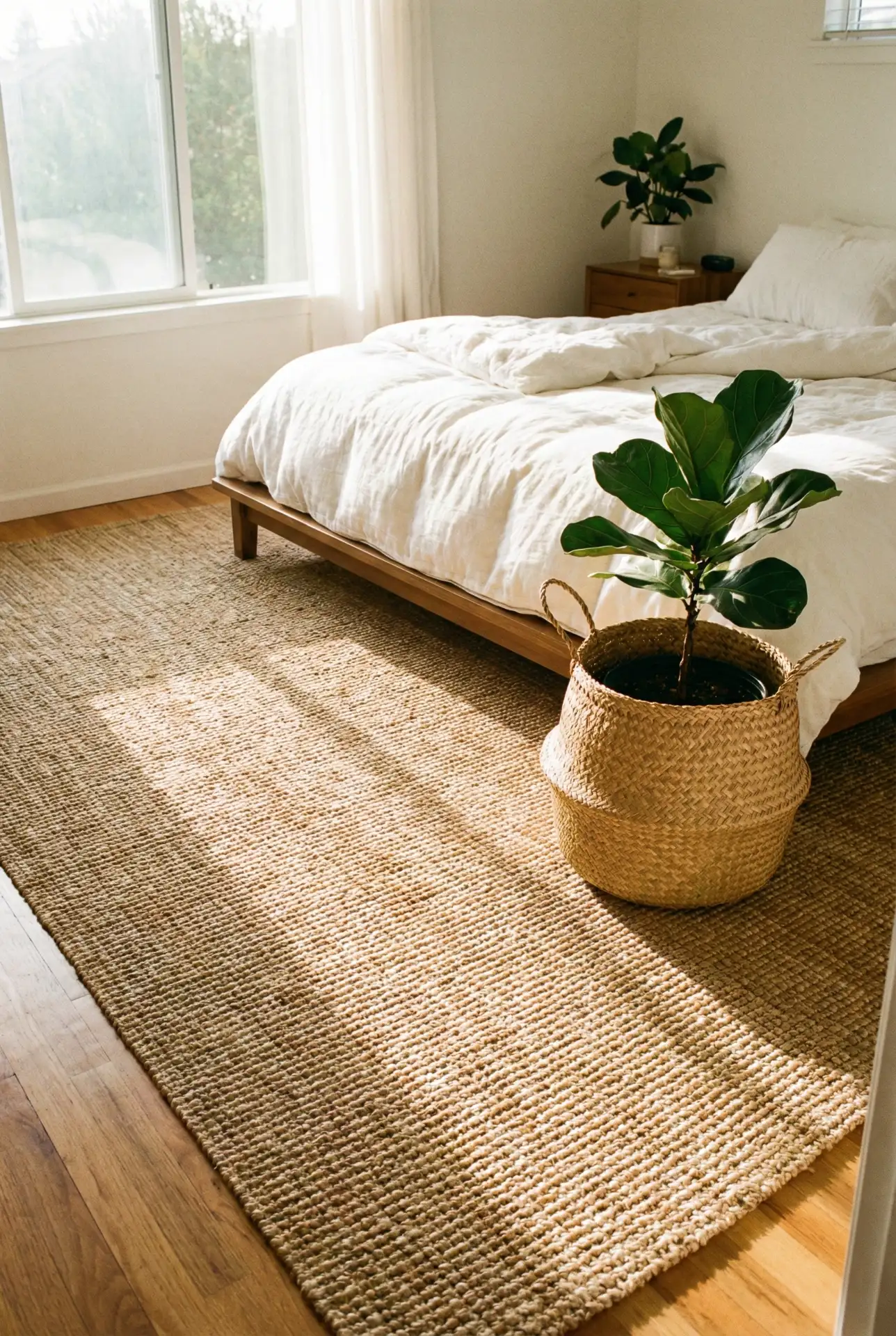
Adding a natural fiber rug—jute, sisal, or seagrass—instantly grounds a bedroom while introducing organic texture that softens hard flooring. Size matters here; the rug should extend at least 18-24 inches beyond each side of the bed so your feet land on something soft when you wake up. These rugs work beautifully in aesthetic spaces ranging from coastal to modern farmhouse to bohemian, and they’re surprisingly durable and cheap compared to wool alternatives. Layer a natural fiber rug with a softer, smaller rug at the bedside for extra comfort, or embrace the slightly rougher texture as part of the natural, earthy vibe.
Natural fiber rugs typically cost $100-400 for bedroom-appropriate sizes (8×10 or 9×12), making them accessible for most budget levels. They’re also low-maintenance—regular vacuuming keeps them looking fresh, and most spills can be spot-cleaned with mild soap and water. The slight texture underfoot takes some getting used to, so test-feel them in stores if possible before buying. Many homeowners in warmer climates like the Southwest and Southeast prefer these rugs year-round for their cooling, breathable properties, while those in colder regions often swap them for plush wool rugs in winter months.
11. Vertical Garden or Plant Corner
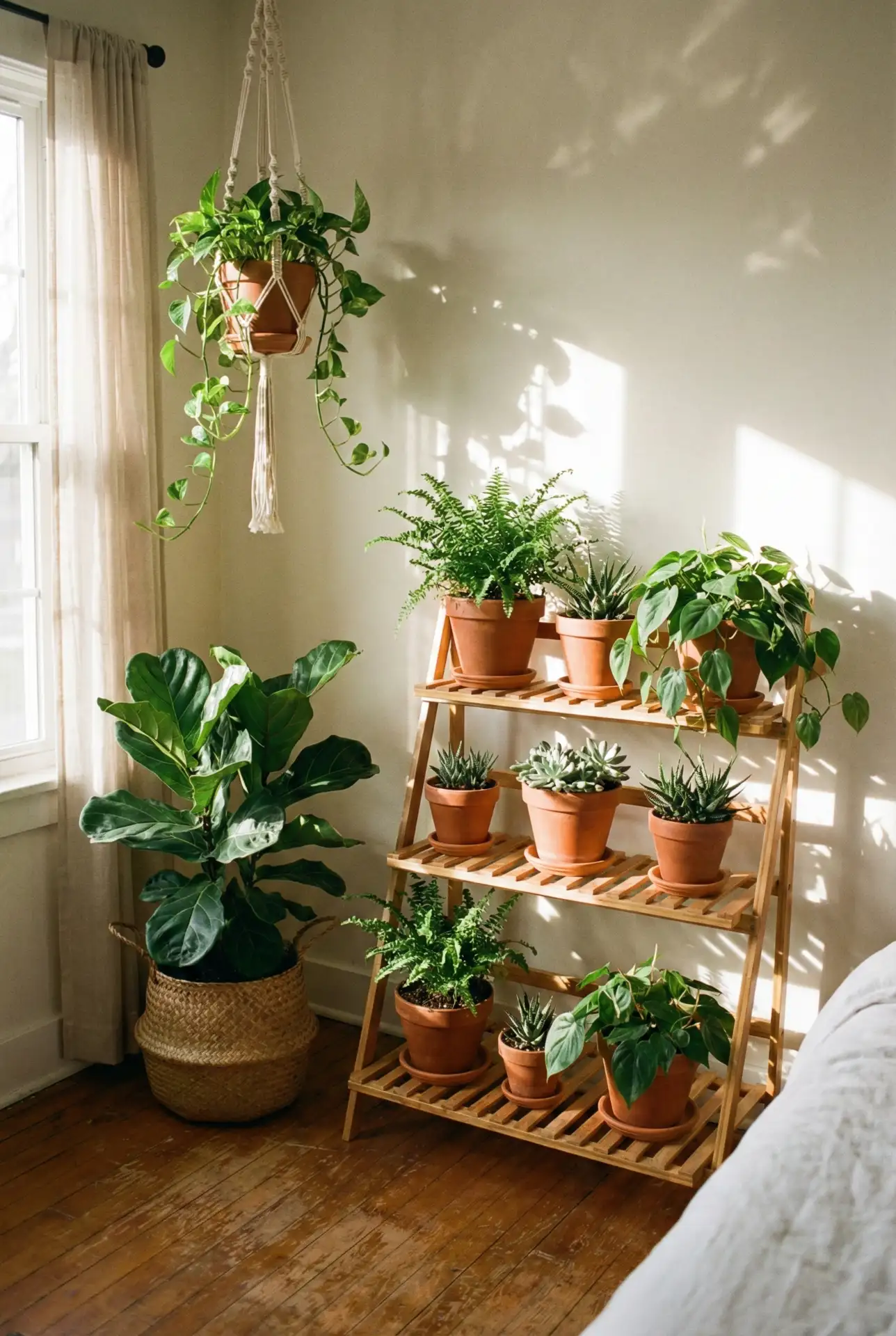
Dedicating a corner or wall to indoor plants creates a living, breathing focal point that improves air quality and brings nature into your cozy bedroom sanctuary. Use a combination of hanging planters, wall-mounted shelves, and floor-standing plant stands at varying heights to create dimension and visual interest. Choose low-maintenance plants like pothos, snake plants, or ZZ plants if you’re new to plant parenthood, or embrace higher-maintenance options like fiddle leaf figs and monsteras if you have a green thumb. This simple makeover element adds color, texture, and life to any space, and it’s infinitely customizable as your collection grows.
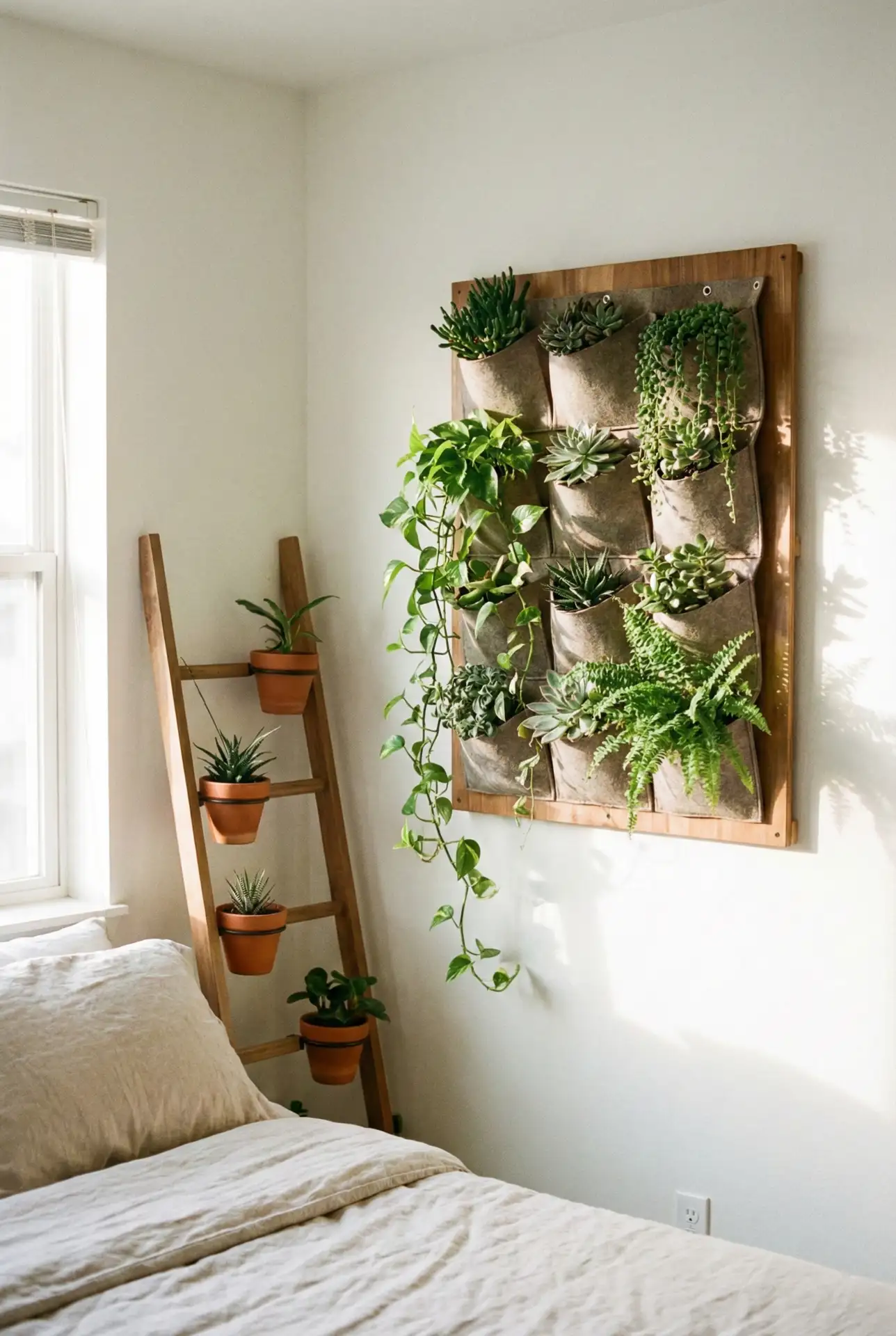
Start with just 3-5 plants and expand from there—jumping straight to 20 plants often leads to overwhelm and plant casualties. Local plant swaps, Facebook Marketplace, and even grocery store plant sections offer affordable options, with most common houseplants costing $8-25. The vertical element is crucial in smaller bedrooms where floor space is limited; wall-mounted planters and macrame hangers draw the eye upward while keeping surfaces clear. Americans living in naturally humid regions like the Pacific Northwest and Southeast have particular success with ferns and tropical varieties, while those in drier climates often choose drought-tolerant succulents and cacti.
12. Upholstered Headboard DIY Project
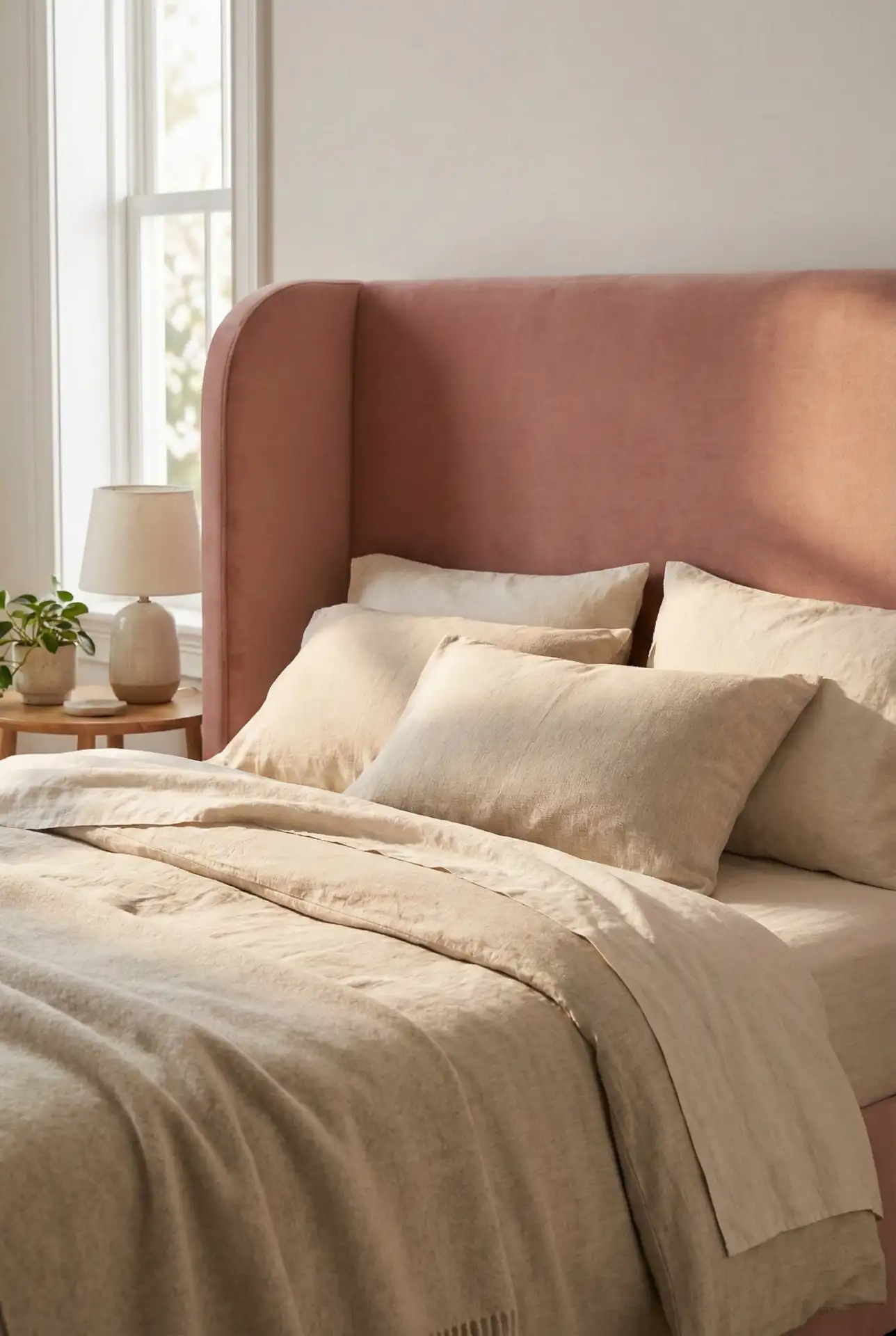
Creating your own upholstered headboard is a surprisingly achievable DIY weekend project that delivers major visual impact on a budget. You’ll need a piece of plywood cut to size, foam padding, batting, your chosen fabric, and a staple gun to secure everything to the back of the board. Select durable upholstery-weight fabric in a color or pattern that complements your bedding—velvet, linen, and performance fabrics all work beautifully. The finished headboard can be mounted directly to the wall or attached to your bed frame, and the soft, padded surface makes reading in bed far more comfortable than leaning against a hard wall.
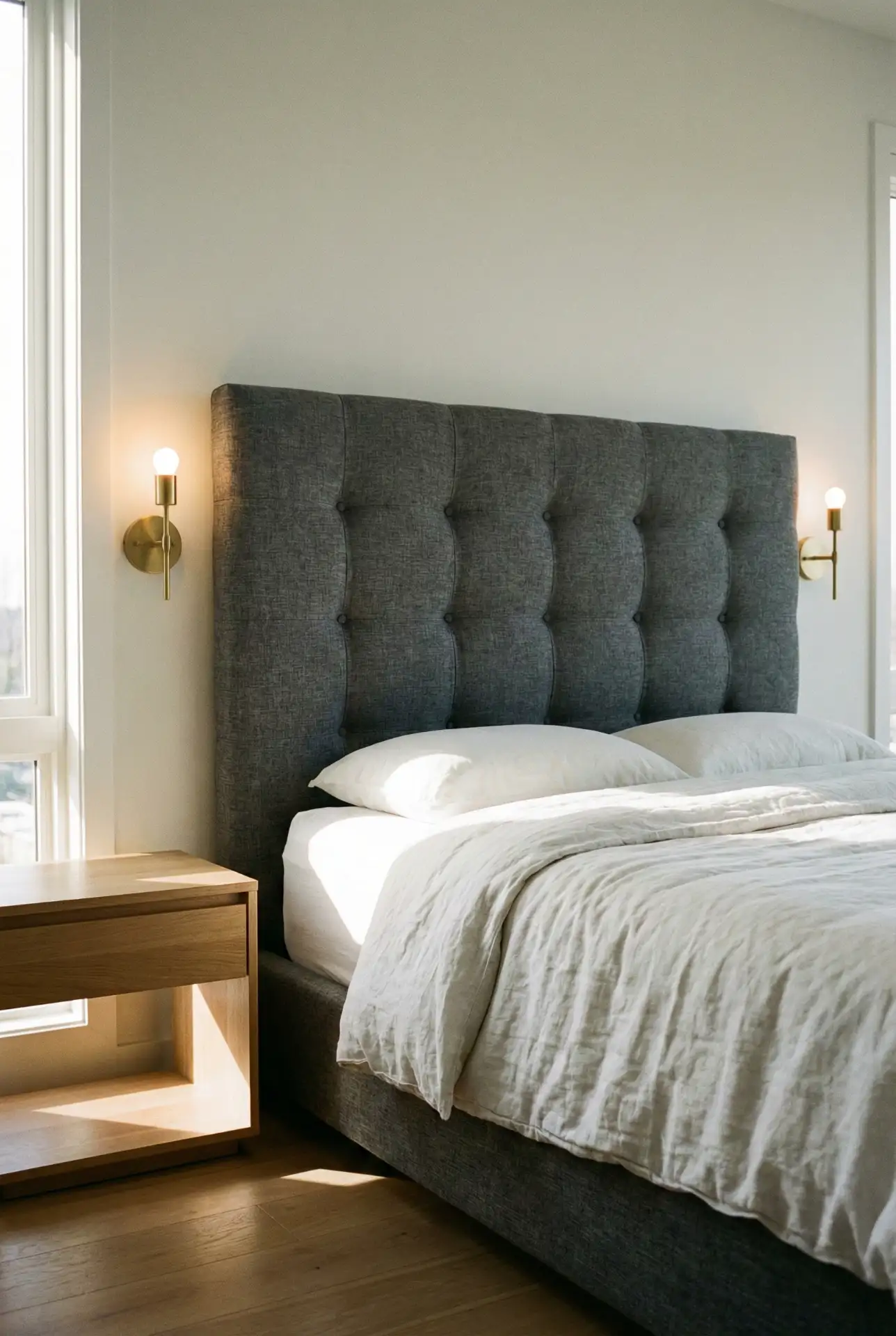
Total material costs typically run $75-150 depending on your fabric choice and headboard size, compared to $300-1000+ for store-bought upholstered headboards. Fabric stores often have remnant sales where you can score designer upholstery fabric at significant discounts—you’ll need about 3-4 yards for a queen-size headboard. The trickiest part is getting the fabric smooth and taut without wrinkles, which requires patience and systematic stapling from the center outward. Many DIYers add decorative trim or nailhead details for a more finished, custom look. This project is particularly rewarding because the result looks incredibly professional and high-end when completed carefully.
13. Curtain Upgrade for Softness and Privacy
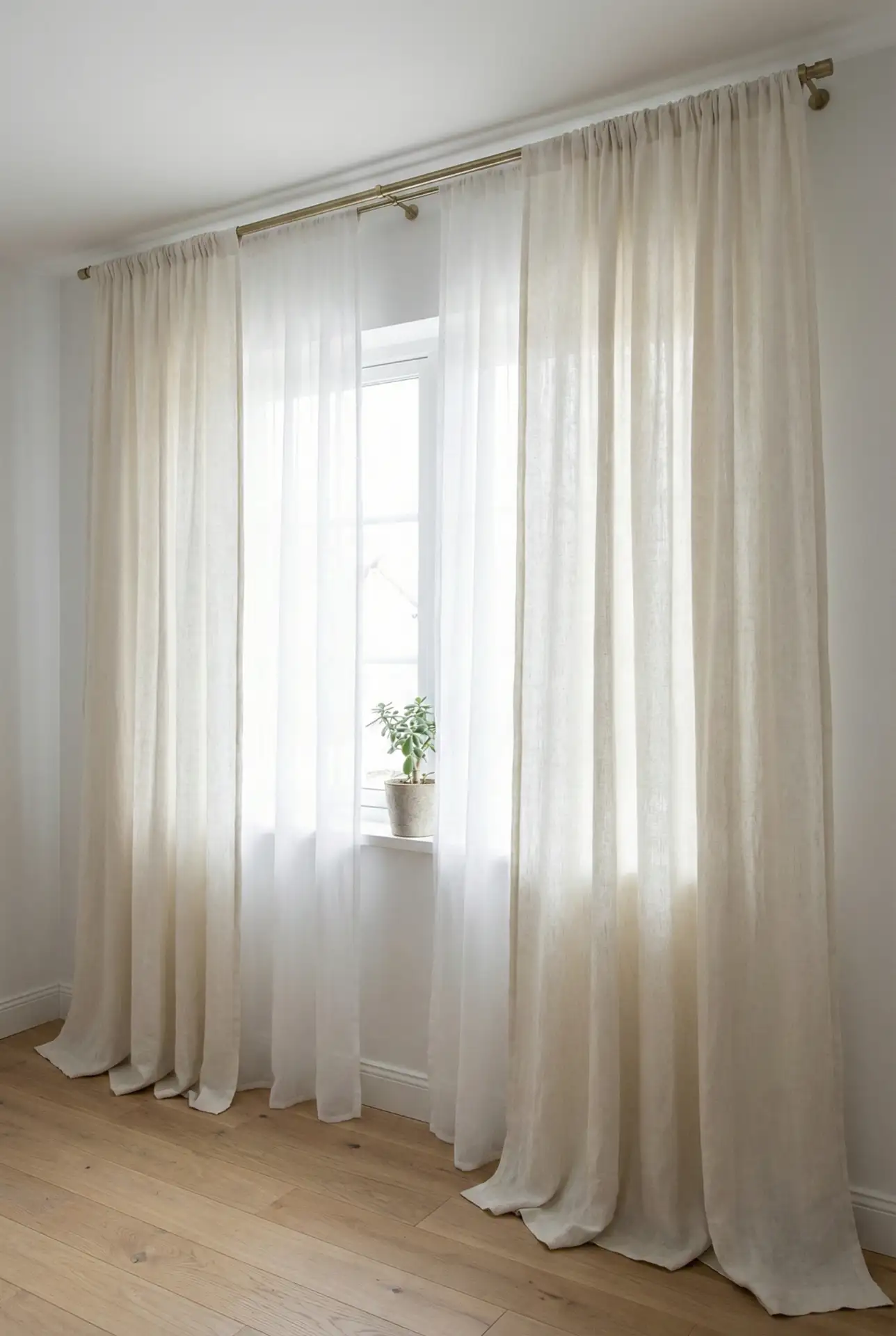
Replacing basic blinds with floor-length curtains softens a bedroom’s aesthetic while providing better light control and privacy, making this a particularly valuable upgrade for rental spaces. Hang curtain rods as close to the ceiling as possible and extend them 6-12 inches beyond the window frame on each side—this creates the illusion of larger windows and taller ceilings. Choose blackout-lined curtains if you’re a light-sensitive sleeper, or opt for sheer linen or cotton for a breezy, aesthetic look that filters light beautifully during the day. The color and pattern you select dramatically impact the room’s overall feel, so consider whether you want curtains to blend seamlessly or serve as a statement element.
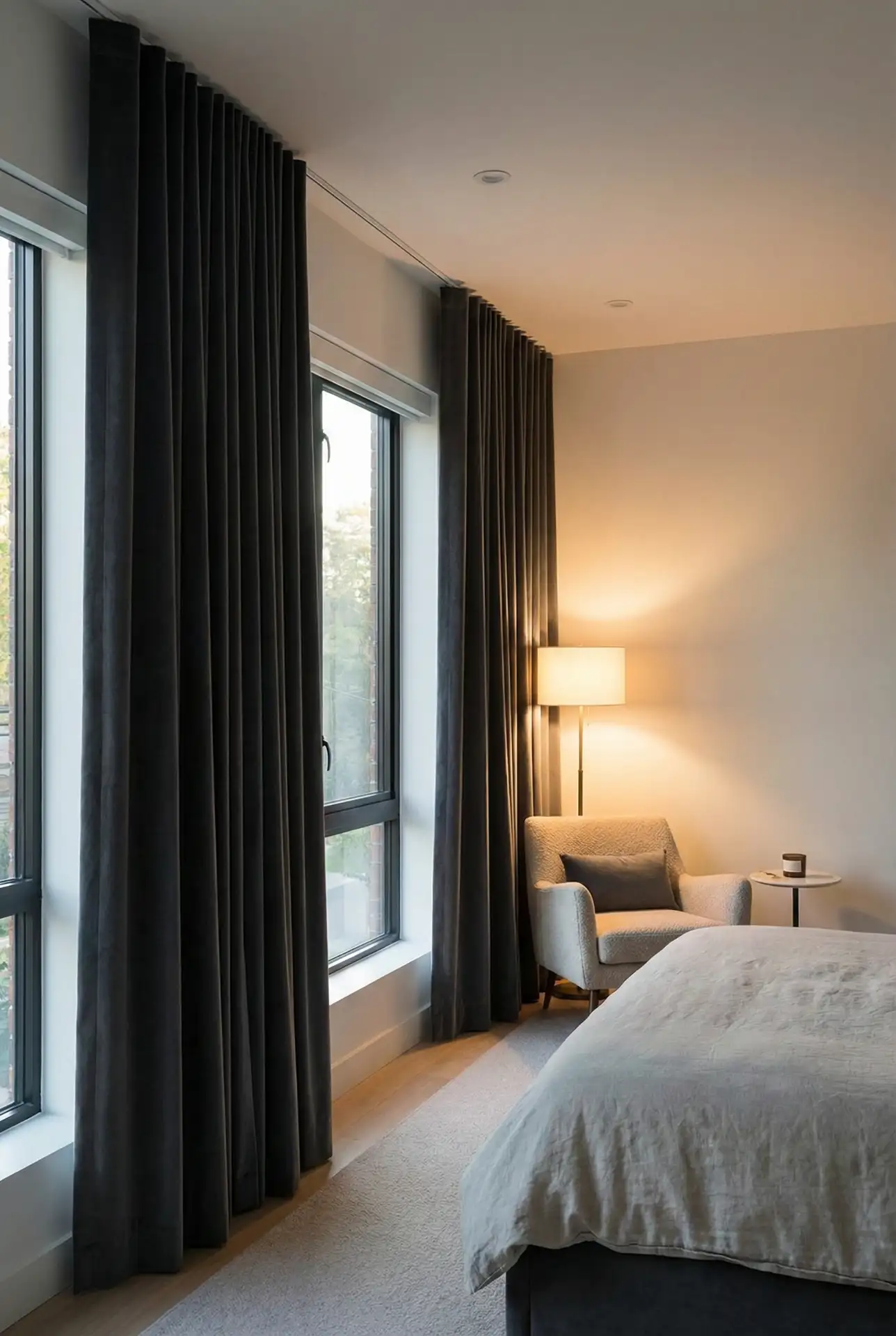
Ready-made curtain panels from retailers like Target, IKEA, and West Elm range from $20 to $100 per panel, while custom curtains start around $200-300 and go up from there. Most windows need two panels, though wider windows may require three or four for proper fullness. The common mistake is buying curtains that are too short—they should either just kiss the floor or puddle slightly (an extra 1-2 inches) for a luxurious look. Americans in sunny regions like Arizona, Southern California, and Florida particularly value blackout curtains for sleeping past sunrise and keeping rooms cool during brutal summer afternoons.
14. Minimalist Capsule Wardrobe Closet
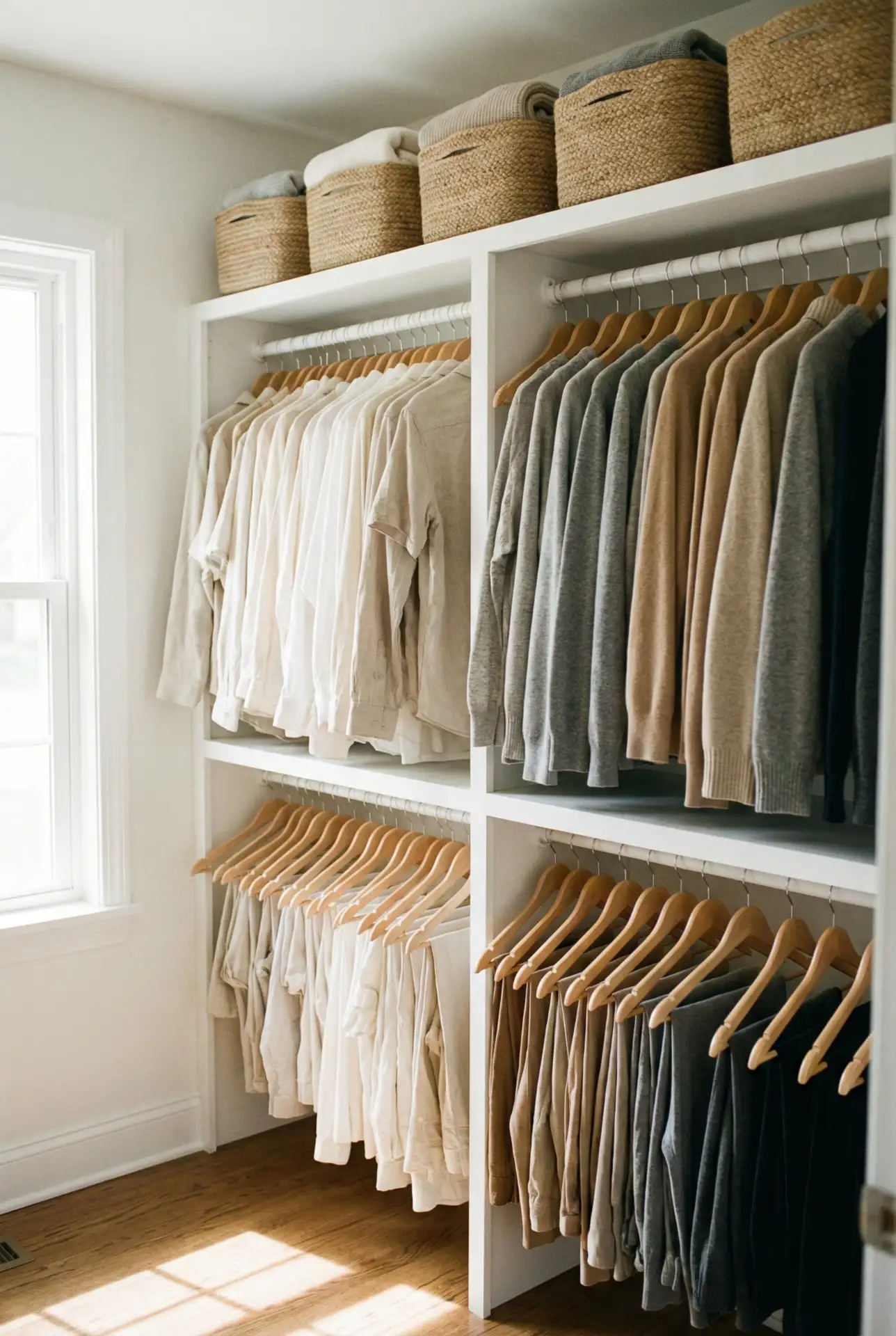
Transforming your closet into a curated, minimalist space impacts your entire bedroom’s energy, reducing visual clutter and morning decision fatigue. Edit your wardrobe down to pieces you actually wear and love, then organize them by category and color using matching hangers—slim velvet or wooden hangers create a cohesive, boutique-like appearance. Add closet organization elements like shelf dividers, hanging organizers, and labeled bins for accessories, keeping everything visible and accessible. This simple makeover extends beyond aesthetics into functionality, making your daily routine smoother and helping you appreciate the clothes you own rather than constantly feeling like you have nothing to wear.
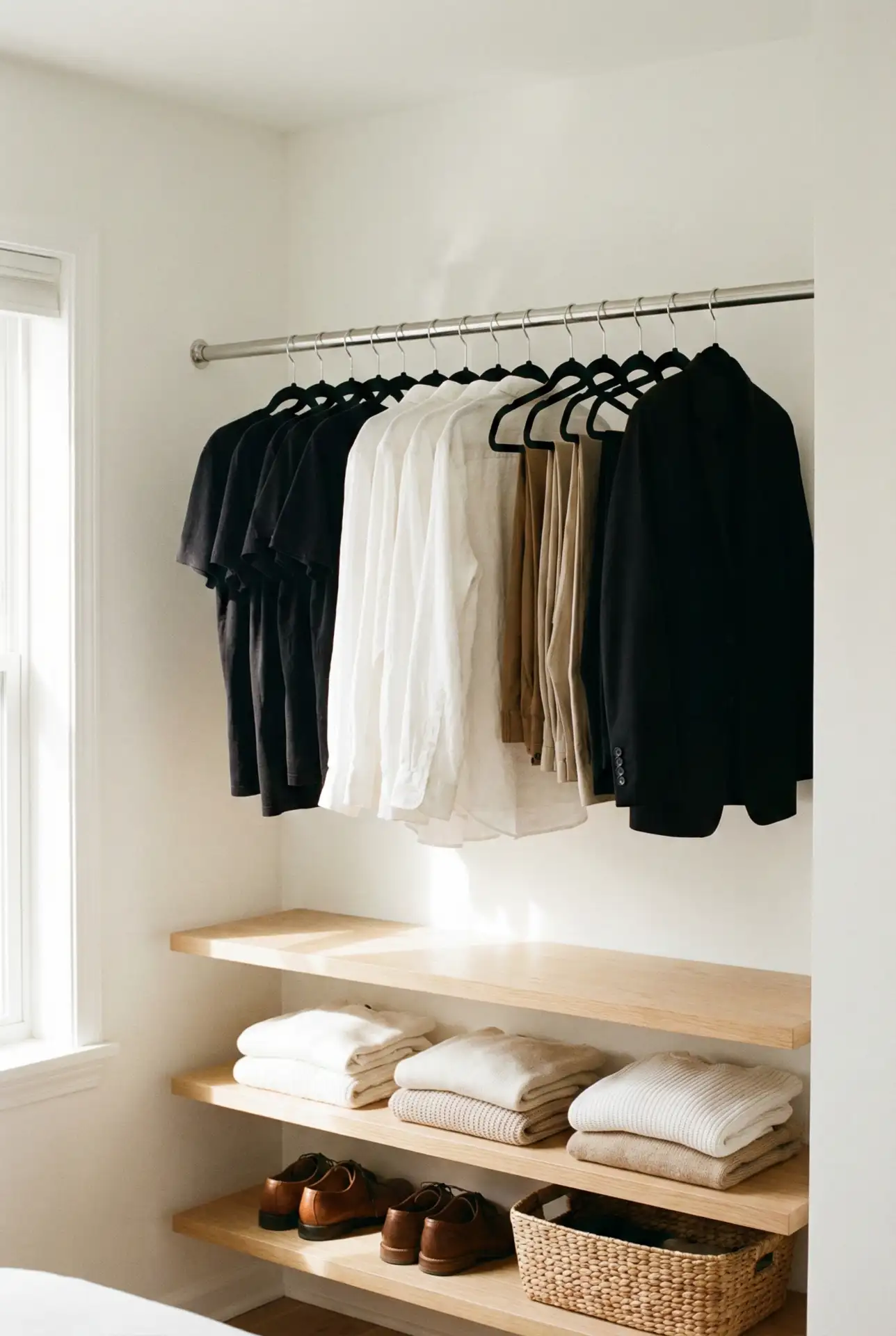
The initial clothing purge is emotionally difficult for many people—set aside several hours and be honest about what you actually wear versus what you keep out of guilt or aspiration. Donation centers, consignment shops, and clothing swaps with friends are all good options for items in good condition. Quality matching hangers cost around $20-40 for a set that will outfit most closets, and additional organizational elements like acrylic shelf dividers and hanging sweater organizers run $5-25 per piece. This organizational system is particularly valuable for those in tiny apartments or homes without walk-in closets, where maximizing every inch of storage space matters significantly.
15. Statement Mirror for Light and Space
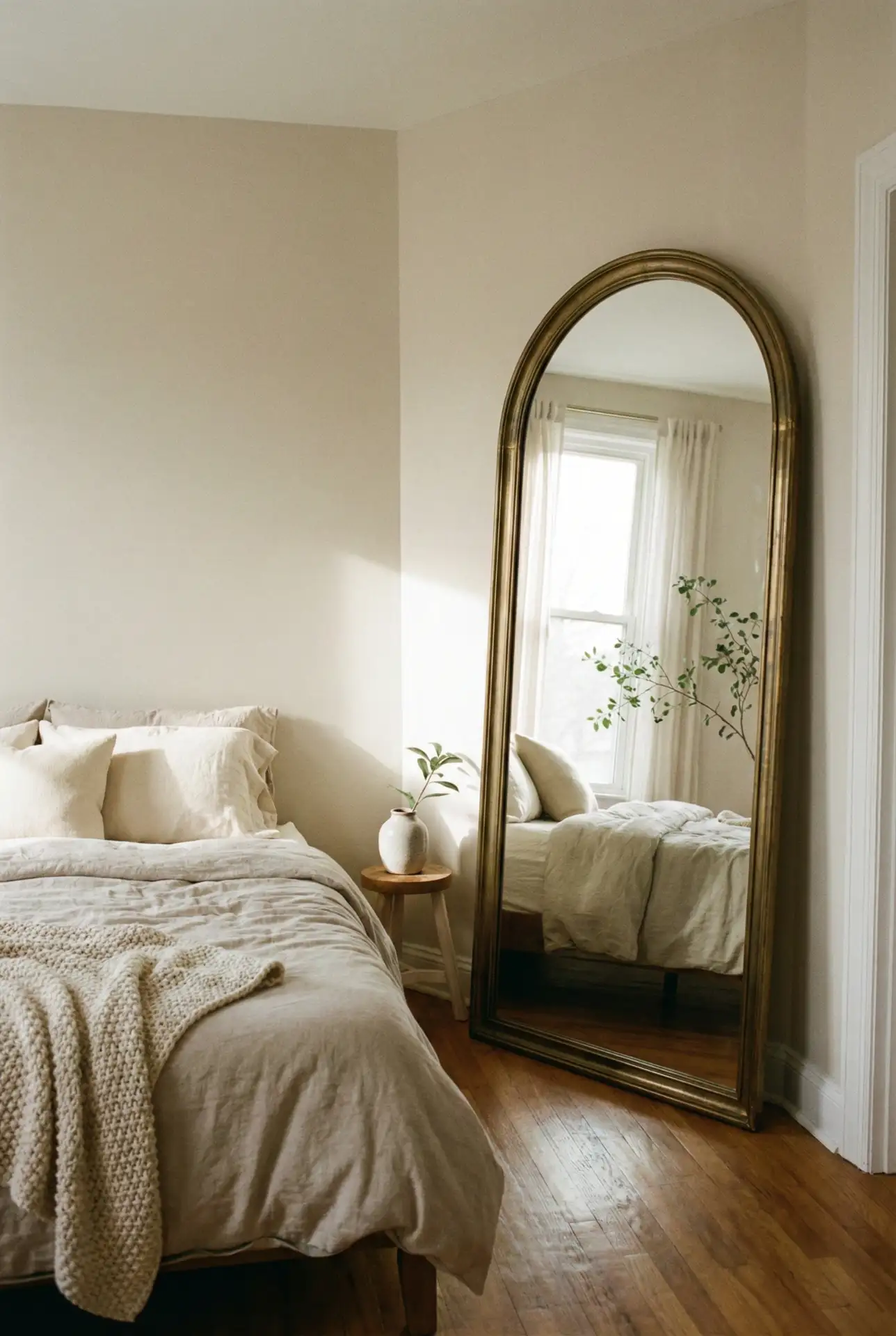
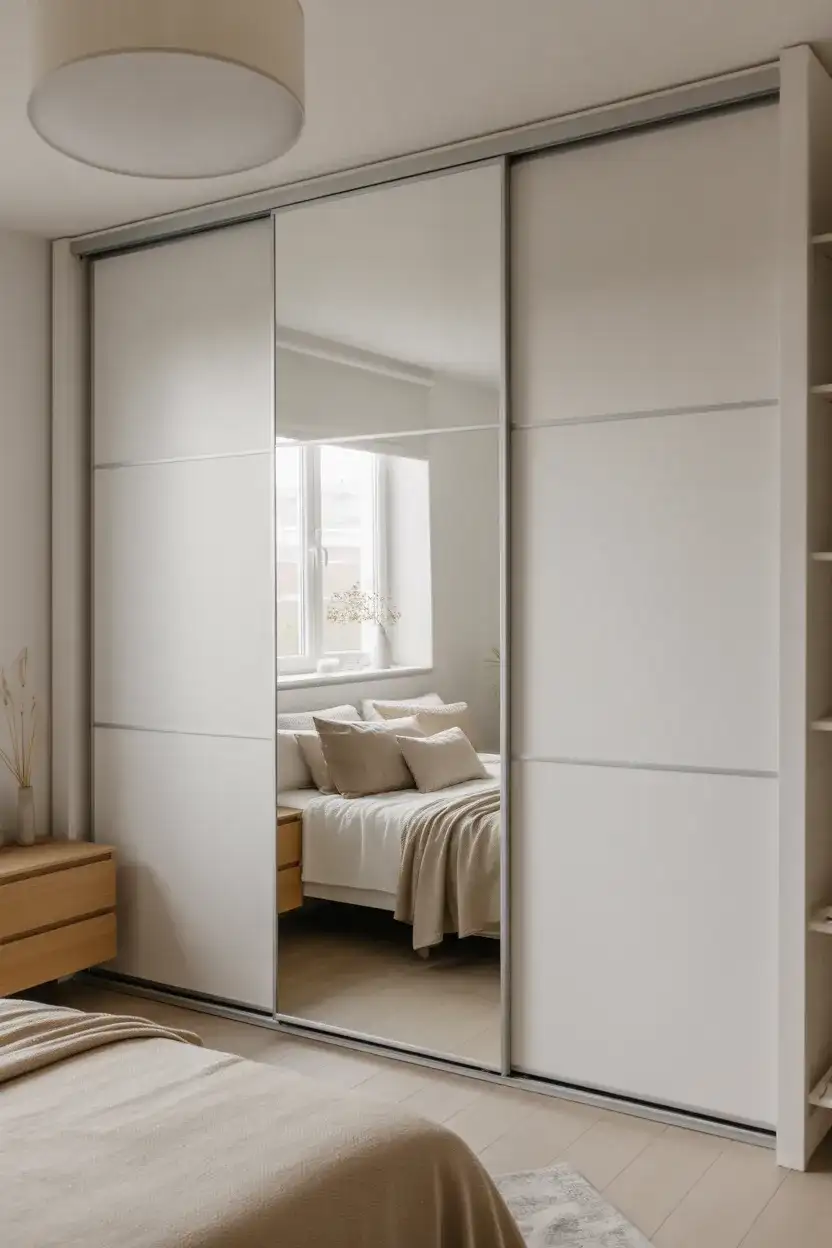
A large, well-placed mirror can completely transform a bedroom’s sense of space and brightness, making it especially valuable in darker, tiny rooms that need help feeling more open. Position your mirror across from or adjacent to a window to maximize natural light reflection throughout the day, or lean an oversized floor mirror against a wall for a casual, aesthetic look that doesn’t require wall mounting. The frame style matters—ornate vintage frames suit traditional or eclectic spaces, while simple black or natural wood frames work in modern or Scandinavian-inspired bedrooms. Beyond the practical function, mirrors serve as art, adding a focal point that’s both beautiful and useful.
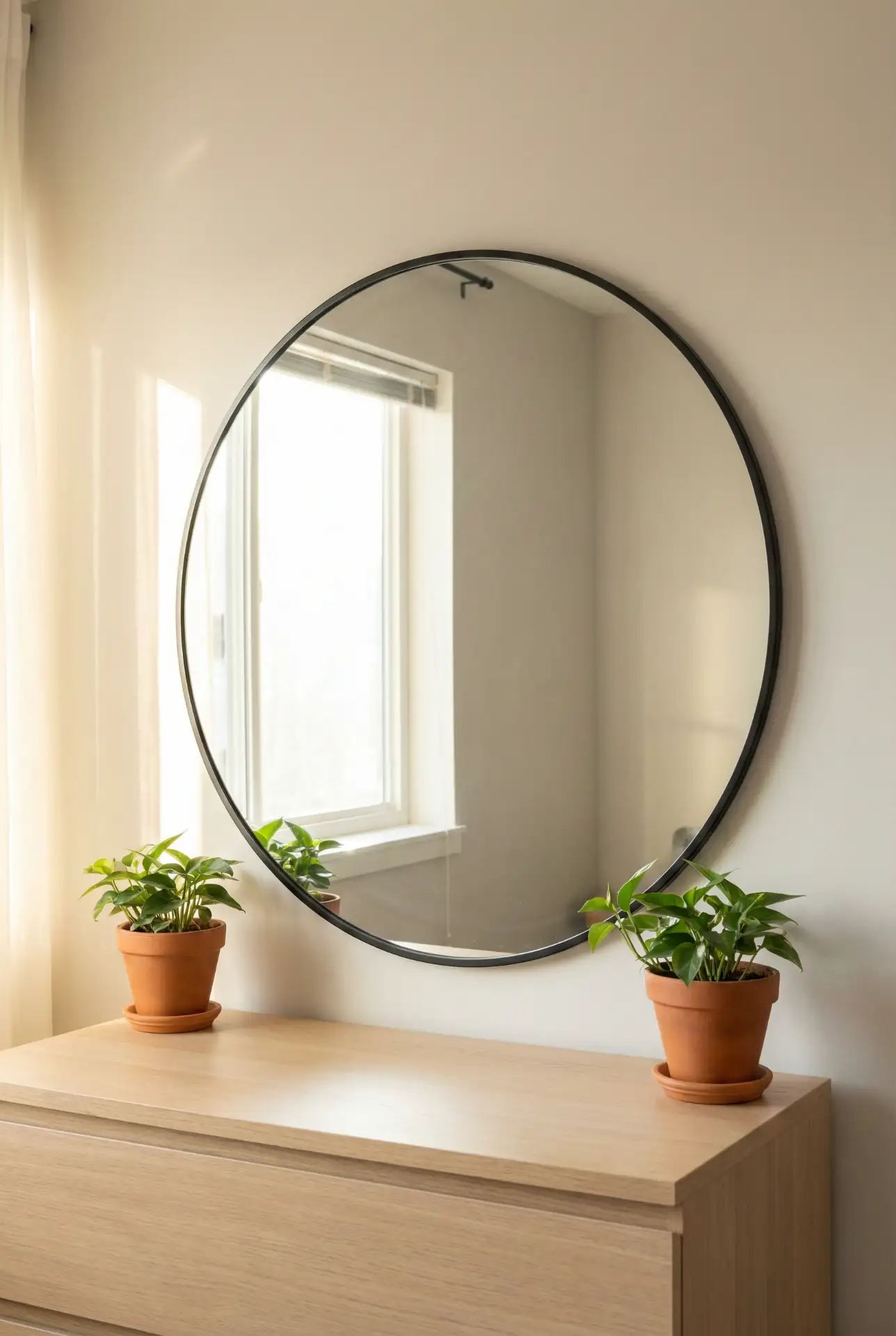
Oversized mirrors (5-7 feet tall) from retailers like CB2, West Elm, or even HomeGoods range from $150 to $600, while vintage mirrors from thrift stores and estate sales can be found for $30-100 if you’re patient and willing to hunt. The floor-leaning approach is particularly popular among renters since it requires no wall damage and moves easily. Ensure heavy mirrors are properly secured to prevent tipping—either with wall anchors if mounting or furniture straps if leaning. The light-bouncing effect is most dramatic in rooms with limited natural light, such as north-facing bedrooms or basement sleeping spaces common in older Northeastern and Midwestern homes.
16. Canopy or Fabric Draping for Romance
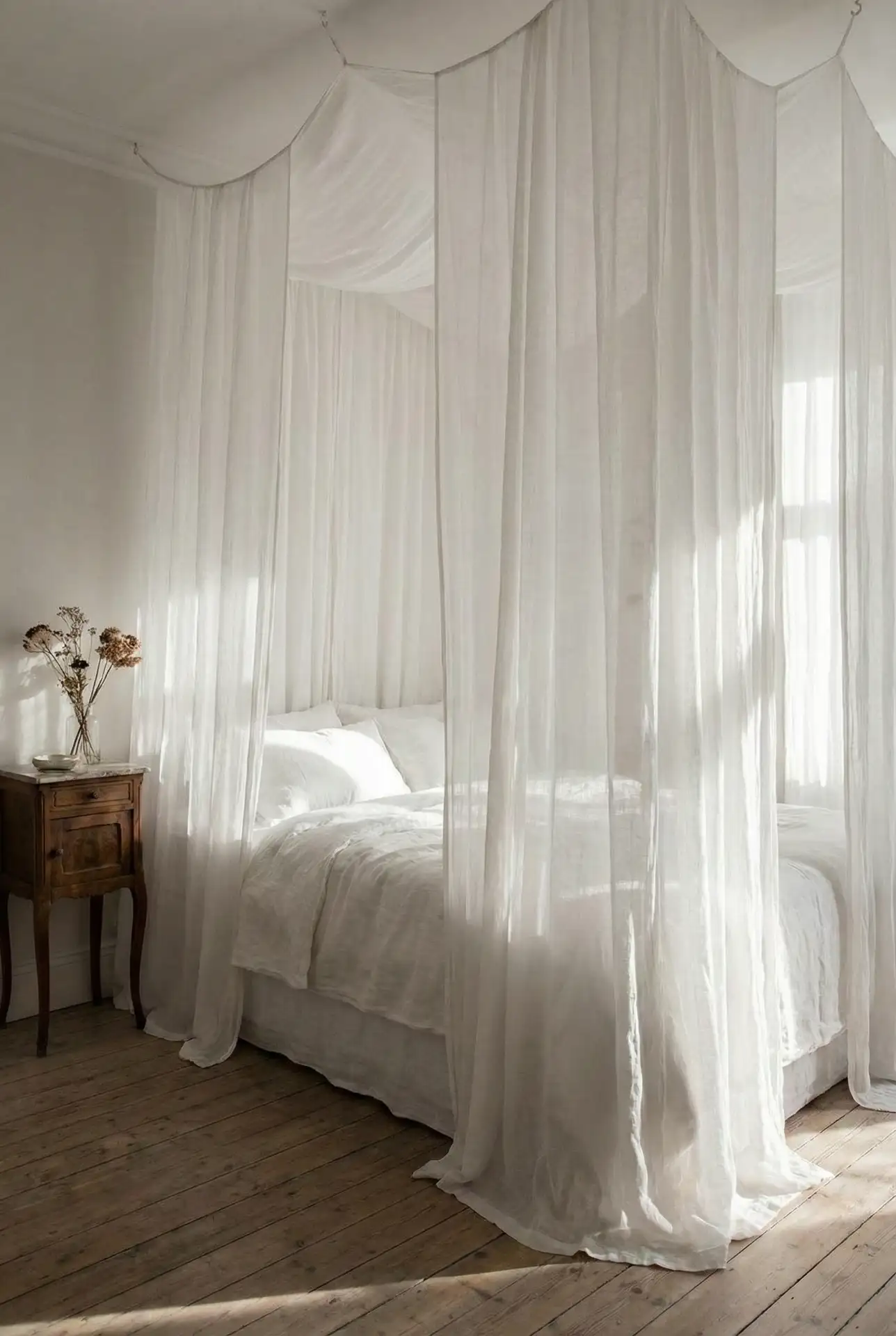
Creating a canopy effect with flowing fabric transforms an ordinary bed into a romantic focal point that feels special and enveloping. Install a ceiling-mounted curtain rod or decorative ceiling hook directly above the bed’s center, then drape sheer or lightweight fabric over it to cascade down on either side. This works particularly well in rooms with high ceilings where the vertical drama can be fully appreciated, though even standard 8-foot ceilings can accommodate a modest drape. Choose breathable fabrics like cotton voile, linen, or mosquito netting for the aesthetic without creating a stuffy sleeping environment, and keep the fabric light enough to move gently with air circulation.
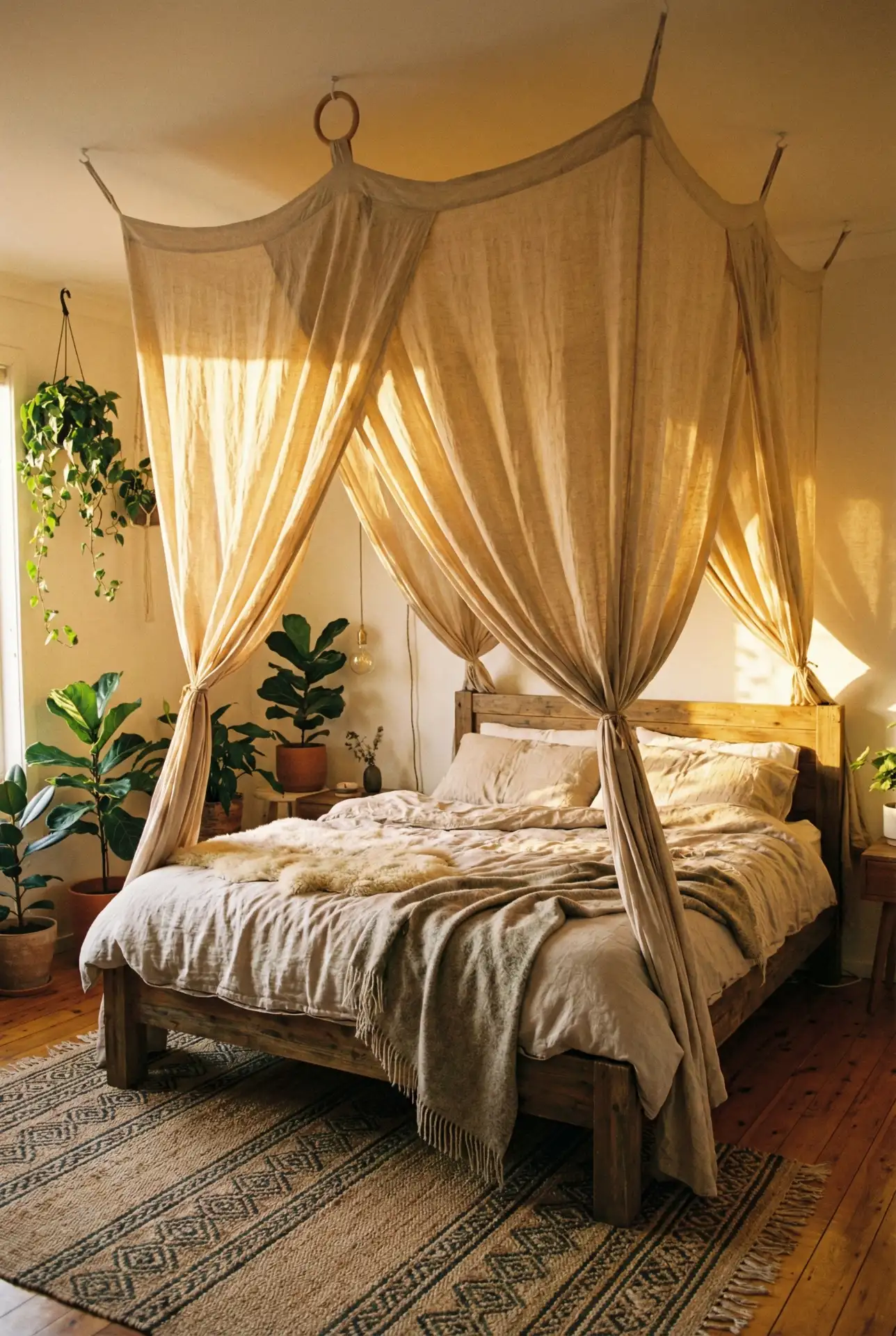
This DIY project costs as little as $30-60 if you use basic sheer panels from fabric stores, or up to $200+ for specialty fabrics with interesting textures or patterns. The installation requires locating a ceiling joist for secure mounting, which can be tricky in older homes—a stud finder is essential. Some renters create a similar effect using tension rods positioned against opposite walls above the bed, though this doesn’t achieve the same graceful draping. The look is particularly popular in cozy cottage-style bedrooms and coastal spaces, where the light, airy fabric complements the overall relaxed vibe.
17. Functional Reading Nook Corner
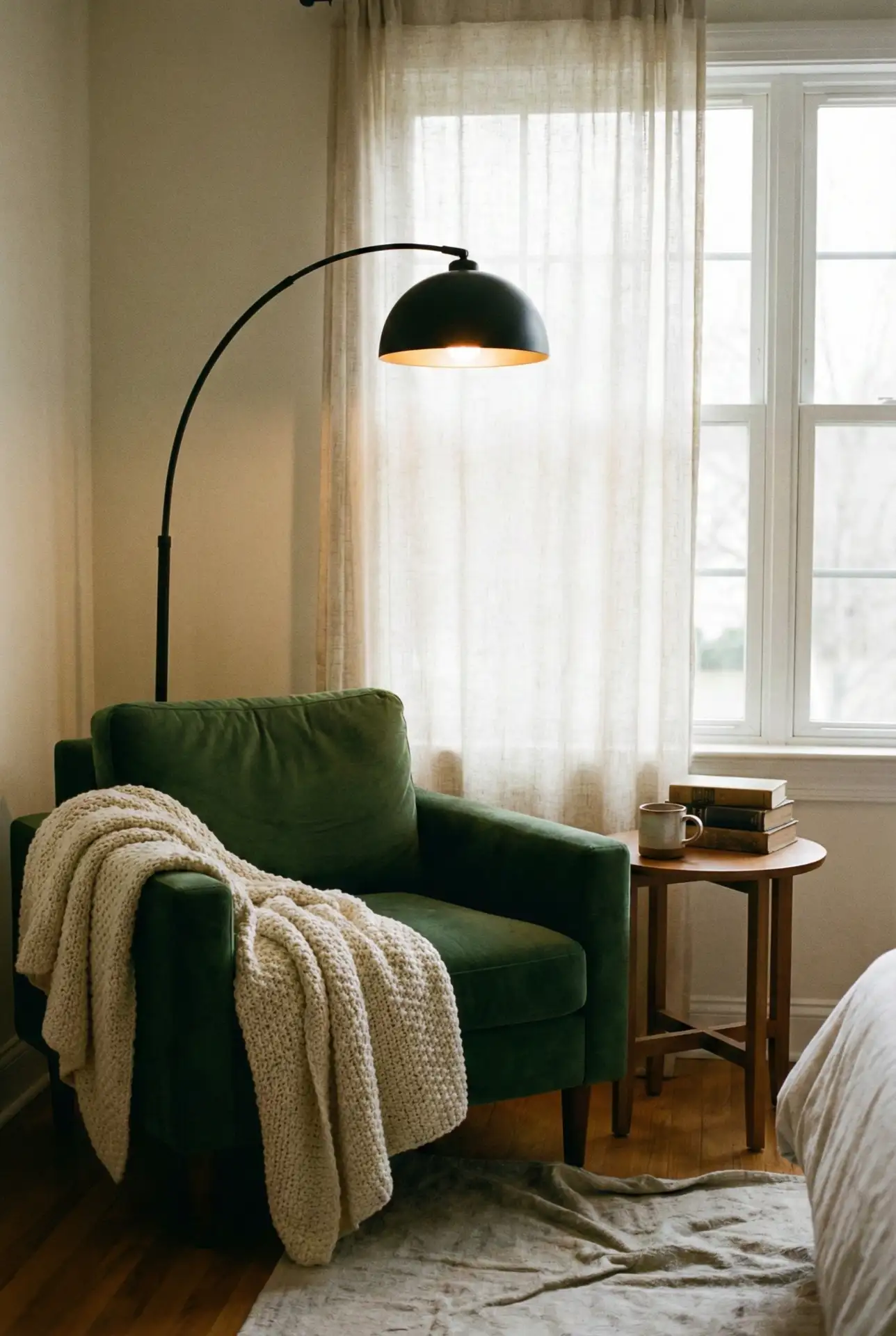
Carving out a dedicated reading nook in your bedroom creates a separate zone for relaxation beyond just sleeping, making the space more multifunctional and cozy. All you need is a comfortable chair—think upholstered armchair, hanging egg chair, or even a cushioned window seat—paired with good lighting and a small side table for books and beverages. Position your nook near a window if possible to take advantage of natural light during the day, then add a floor lamp or adjustable reading light for evening use. Layer in comfort elements like a soft throw blanket, a small footstool, and a nearby bookshelf or basket for storing your current reading stack.
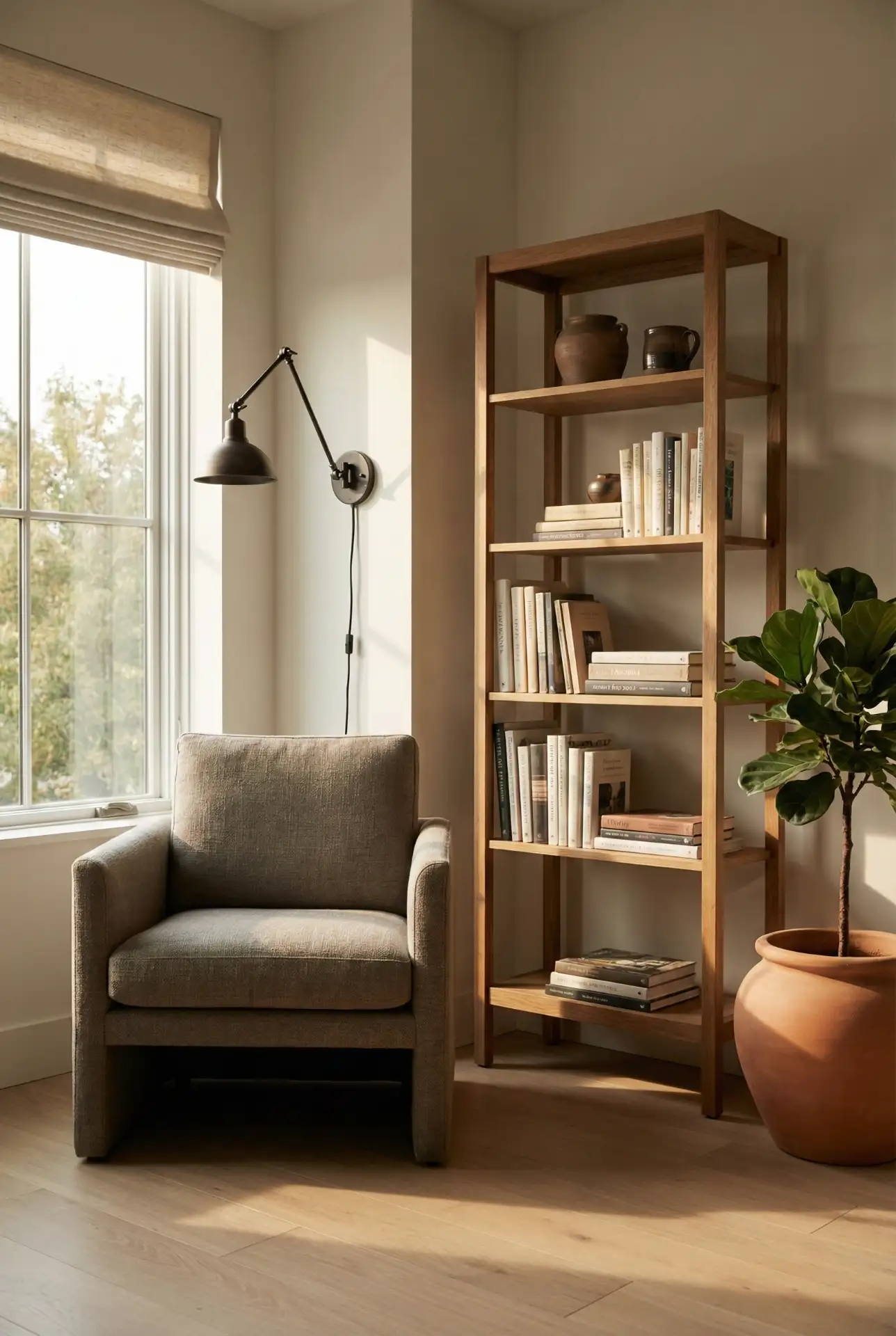
Even in a small room, a compact reading chair takes up just 2-3 square feet and adds significant functionality. Thrifted chairs can be found for $50-150 and reupholstered or simply refreshed with a slipcover if needed, while new accent chairs from retailers like Article or AllModern start around $300. The psychological benefit of having a designated spot for reading rather than always being in bed improves both reading focus and sleep quality by maintaining better sleep hygiene. Americans working from home particularly appreciate this additional seating option for taking video calls or working on a laptop outside of bed.
18. Chalkboard or Cork Board Organization Wall
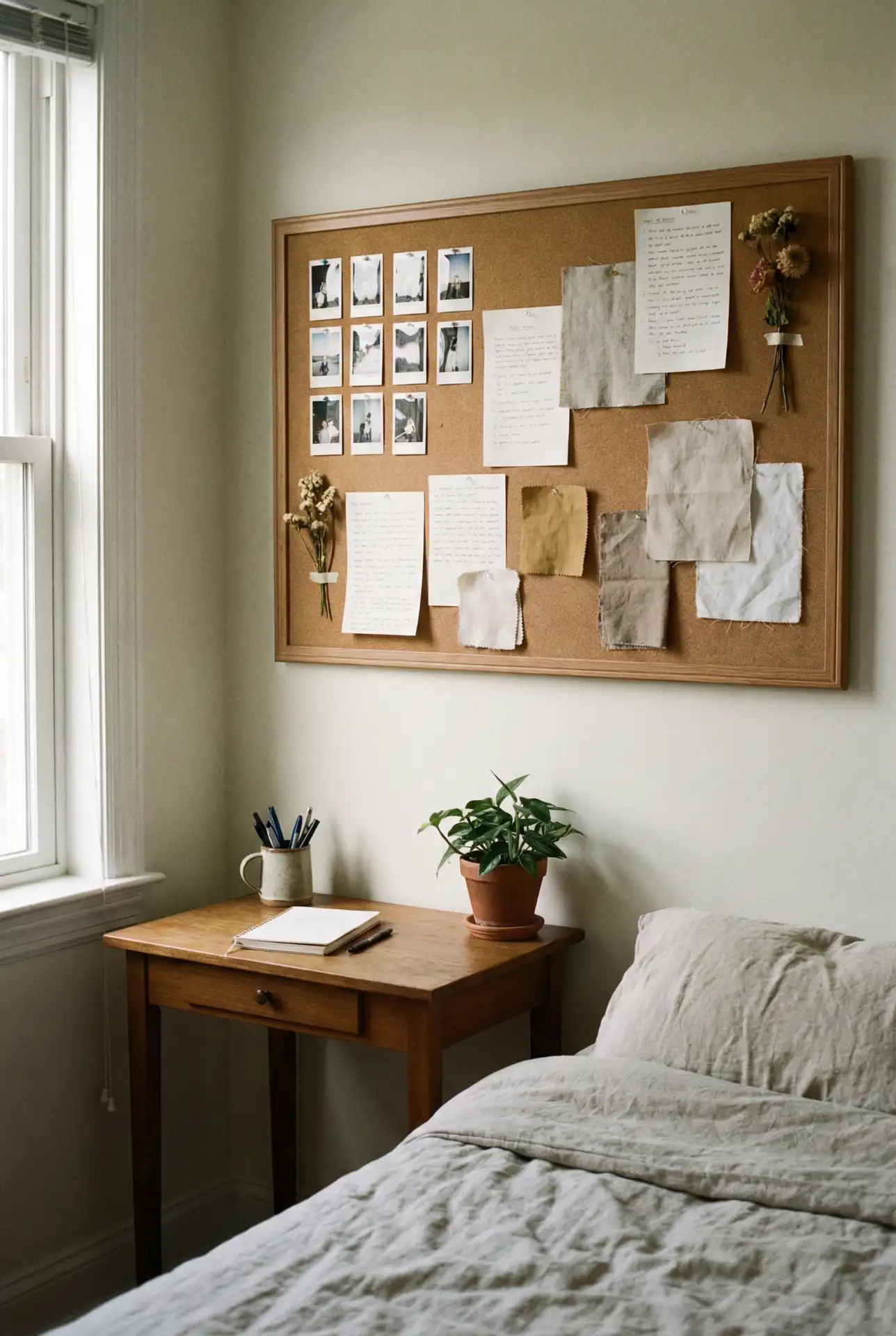
Installing a large chalkboard or corkboard in your bedroom creates a functional command center for to-do lists, inspiration, and visual planning while adding textural interest to your walls. Frame a piece of cork or chalkboard paint an entire wall section if you’re bold, creating an interactive surface that changes with your needs and mood. This works wonderfully for inspo collection—pinning fabric swatches, paint samples, photographs, or magazine tear-outs while planning future makeover phases. It’s also practical for busy individuals who need visible reminders and planning space, keeping mental clutter out of your head and onto a manageable visual surface.
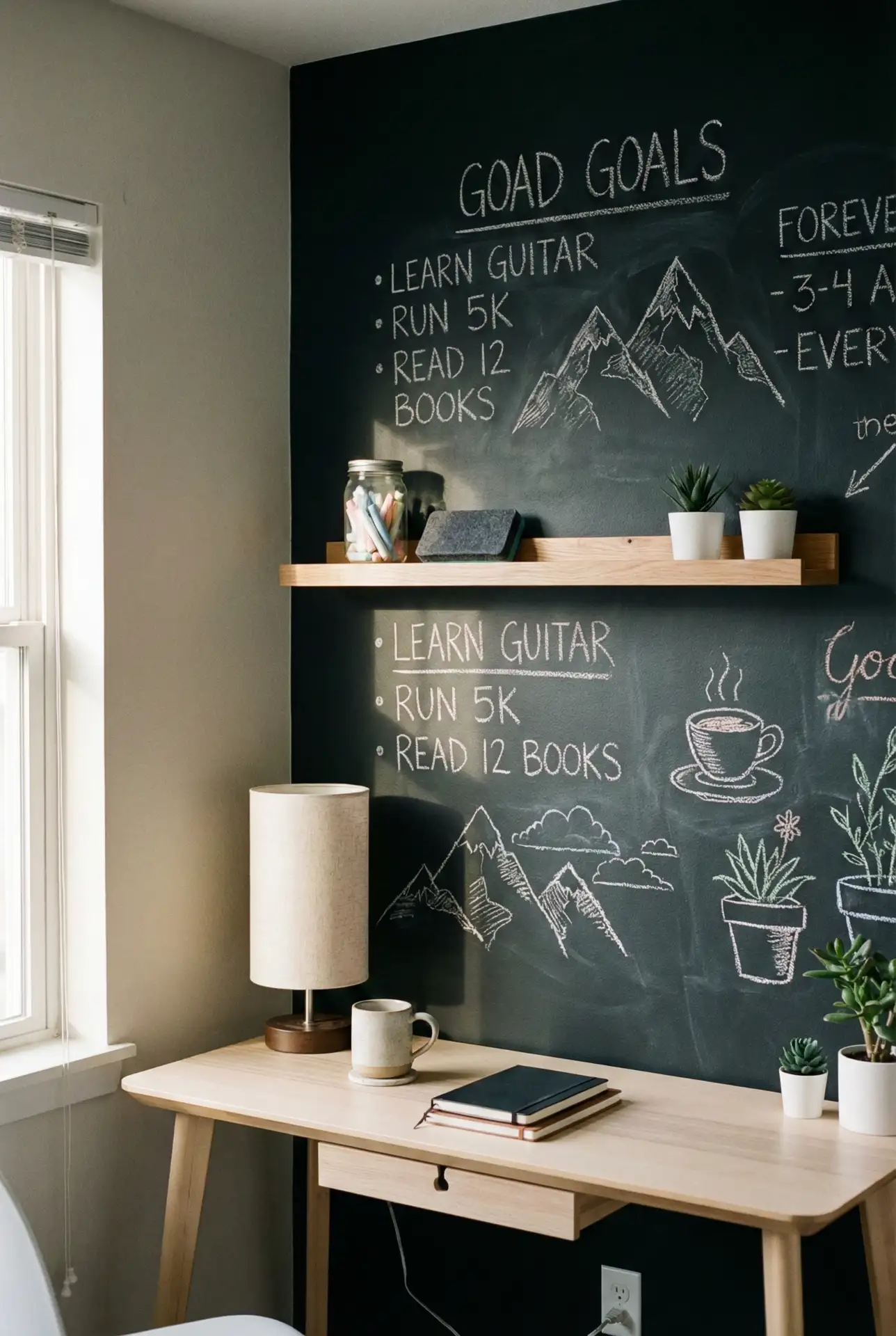
Chalkboard paint costs around $15-25 per quart and covers approximately 75 square feet, while large corkboard sheets (4×6 feet) run $40-80 and can be cut to fit your space perfectly. For a more polished look, frame the cork or chalkboard surface with decorative molding painted to match your trim. This organizational solution is particularly popular among students, creative professionals, and anyone who thinks visually rather than in lists. The rental-friendly version uses large framed boards that hang like artwork and can move with you, avoiding any permanent wall modifications.
19. Monochromatic Color Scheme for Calm
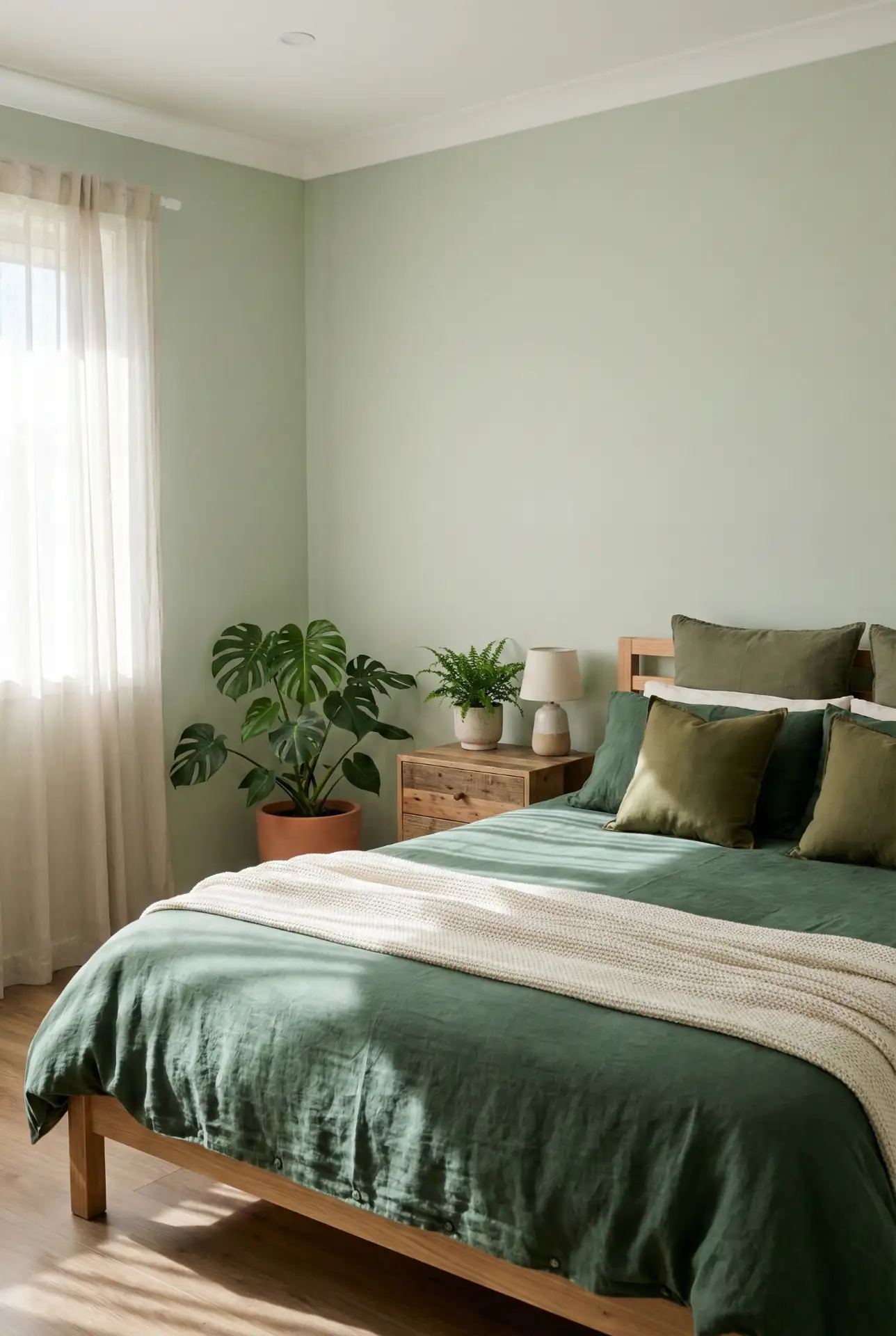
Committing to a monochromatic color palette—varying shades of a single hue—creates a sophisticated, serene bedroom that feels cohesive and intentionally designed. Choose your base color (popular options include soft blues, warm grays, sage greens, or terracotta tones), then layer lighter and darker versions throughout the space via walls, bedding, curtains, and accessories. This simple approach to color eliminates the stress of coordinating multiple colors and creates a restful environment that’s easy on the eyes. The subtle tonal variations provide depth and interest without the visual complexity that can make bedrooms feel busy or overwhelming.
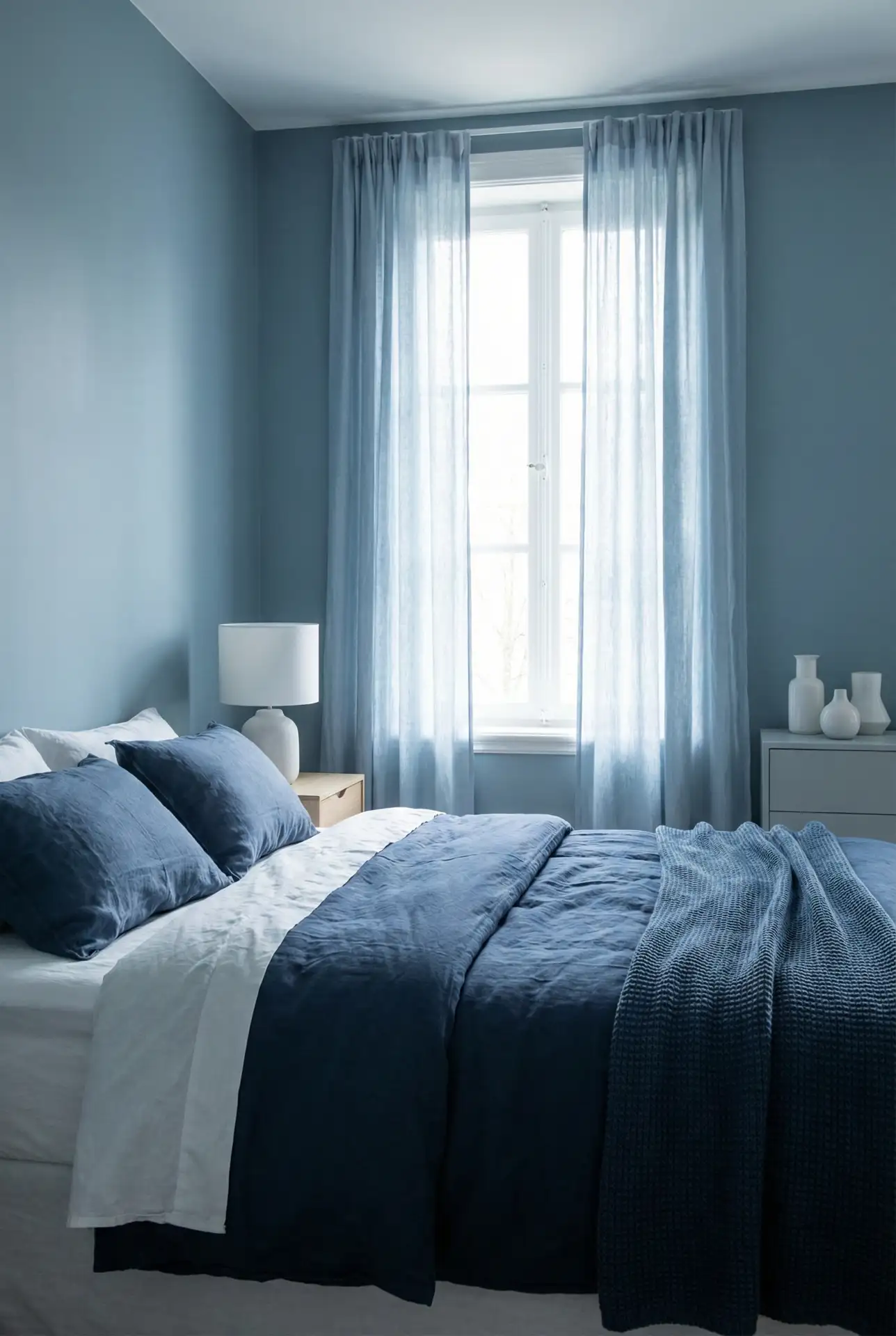
This approach works on any budget since you’re not necessarily replacing everything at once—start with paint and bedding, then gradually swap out accessories and textiles as budget allows. The key is collecting paint swatches or fabric samples in your chosen color family to compare and ensure they work harmoniously together before making purchases. Interior designers often recommend this strategy for clients who feel overwhelmed by color decisions, as it simplifies choices dramatically while still creating a pulled-together look. The monochromatic approach photographs beautifully too, making it popular among those who share their spaces on social media or Pinterest.
20. Vintage Trunk for Character and Storage
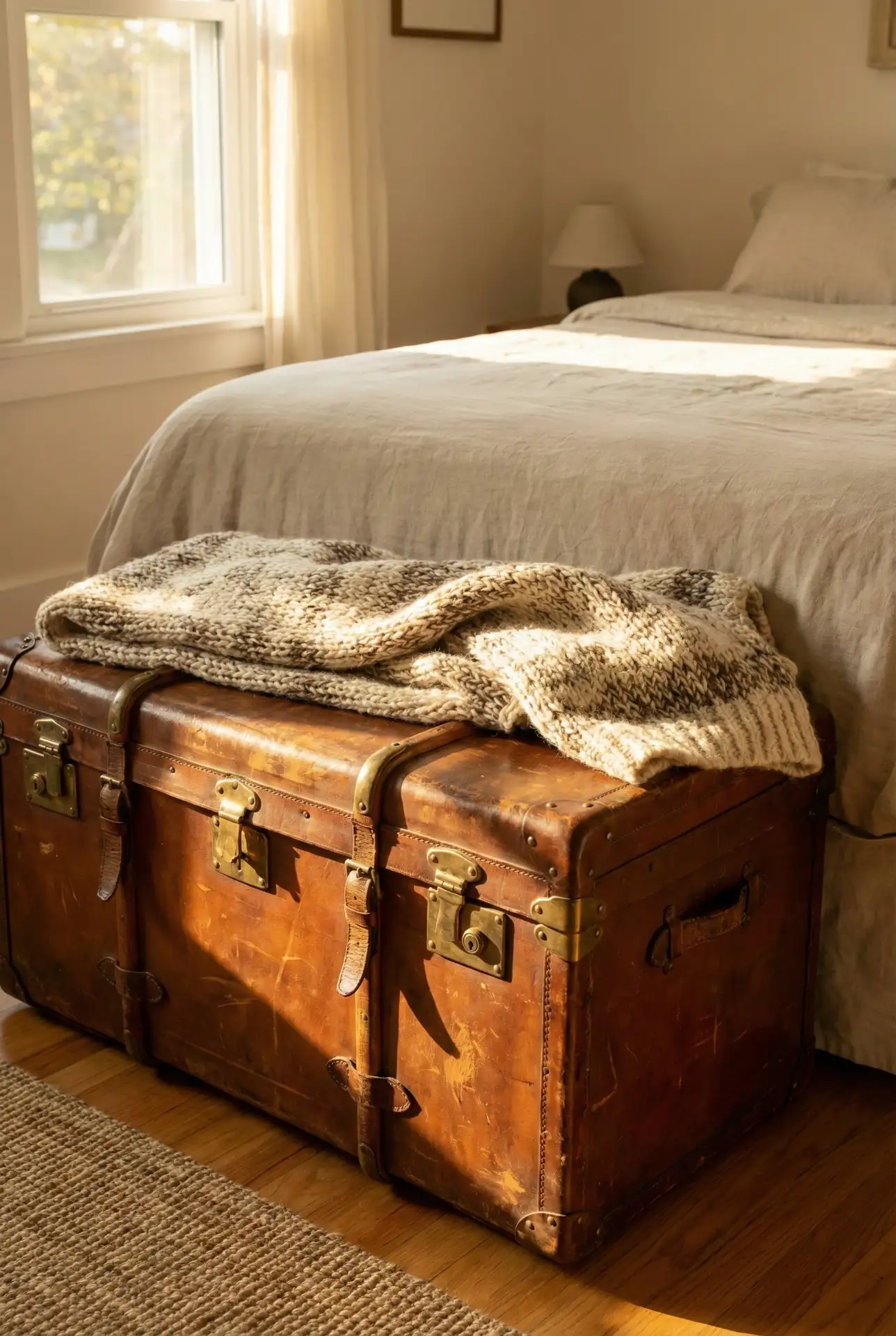
A vintage trunk positioned at the foot of your bed or in a corner serves triple duty as storage, seating, and character-filled decor that tells a story. Hunt for old steamer trunks, military footlockers, or wooden storage chests at antique stores, estate sales, or online marketplaces, looking for pieces with interesting details like leather straps, brass hardware, or travel stickers. Use the trunk to store extra bedding, out-of-season clothes, or bulky items you don’t need daily access to, keeping bedroom storage tidy and out of sight. This is a particularly cheap solution since vintage trunks often cost less than new furniture while offering exponentially more personality and history.
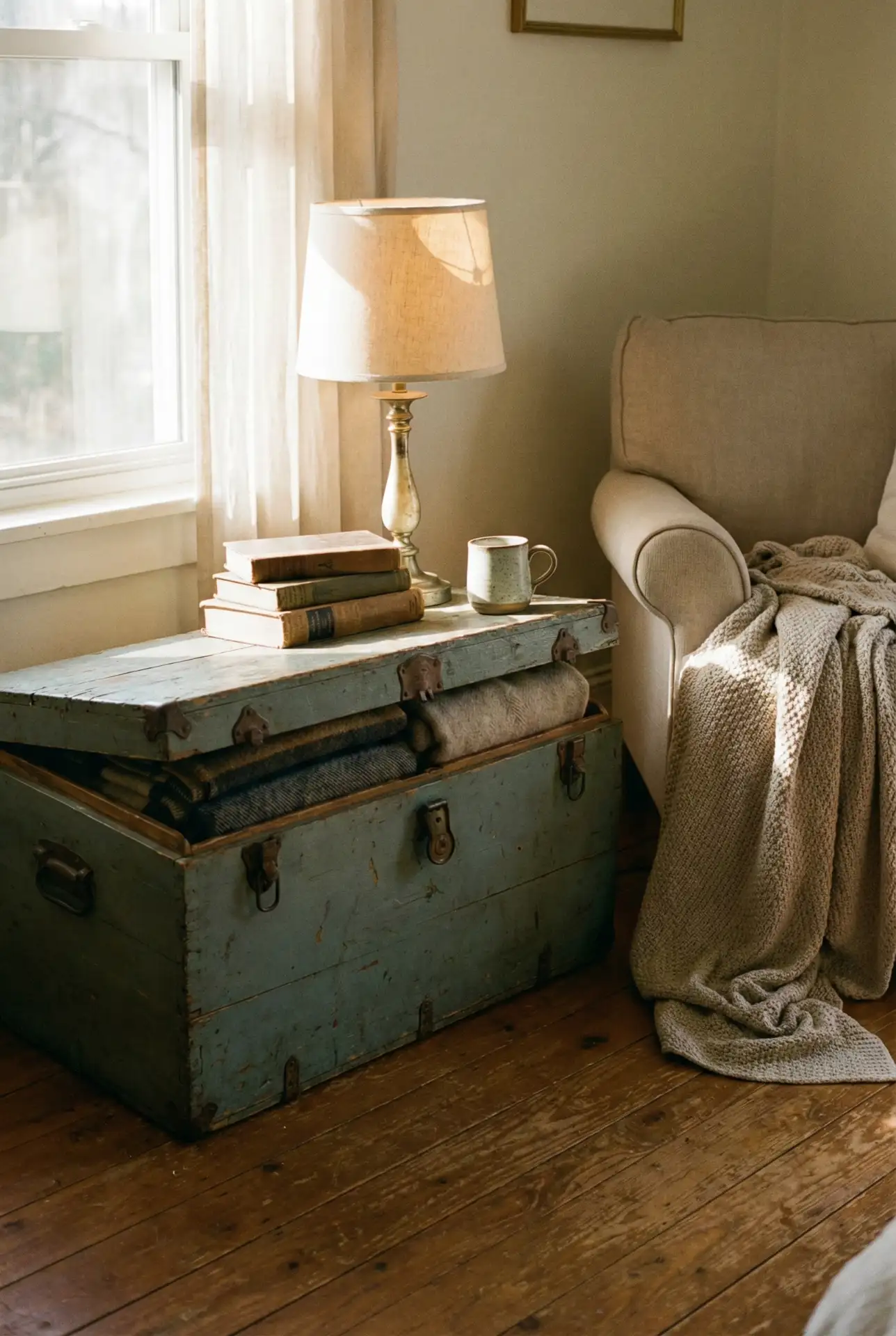
Pricing varies wildly based on condition and provenance—basic trunks start around $50-75, while rare or pristine examples can reach $300-500. Many people paint or refinish trunks to better match their bedroom aesthetic, though purists argue the worn, aged finish adds to the charm and authenticity. The flat top surface is sturdy enough to support a tray with decorative items, extra seating for guests, or even a spot for folding laundry. This aesthetic element particularly appeals to those creating eclectic, collected-over-time bedroom styles that mix old and new rather than matching furniture sets.
21. Textured Wall Treatment with Wood Planks
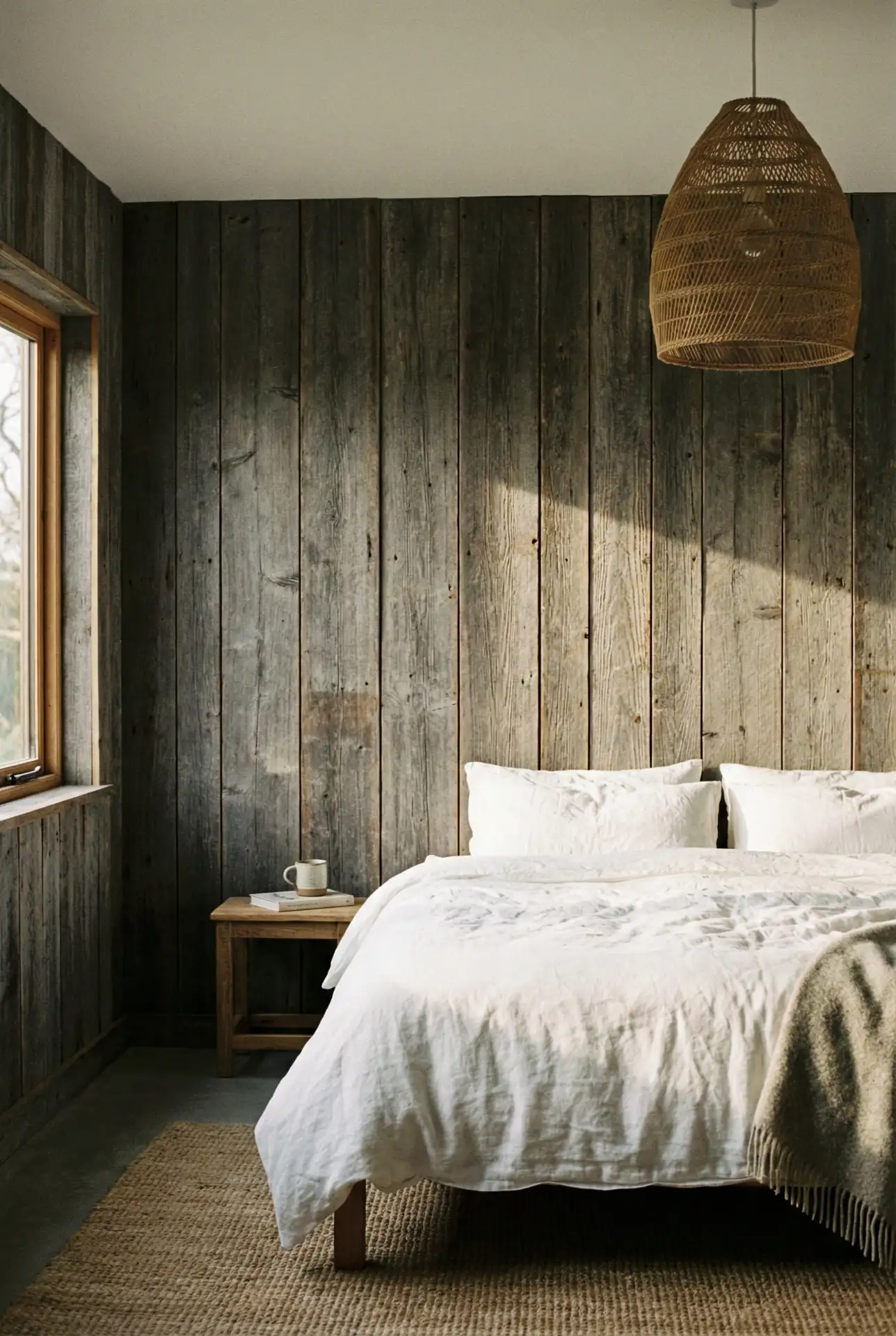
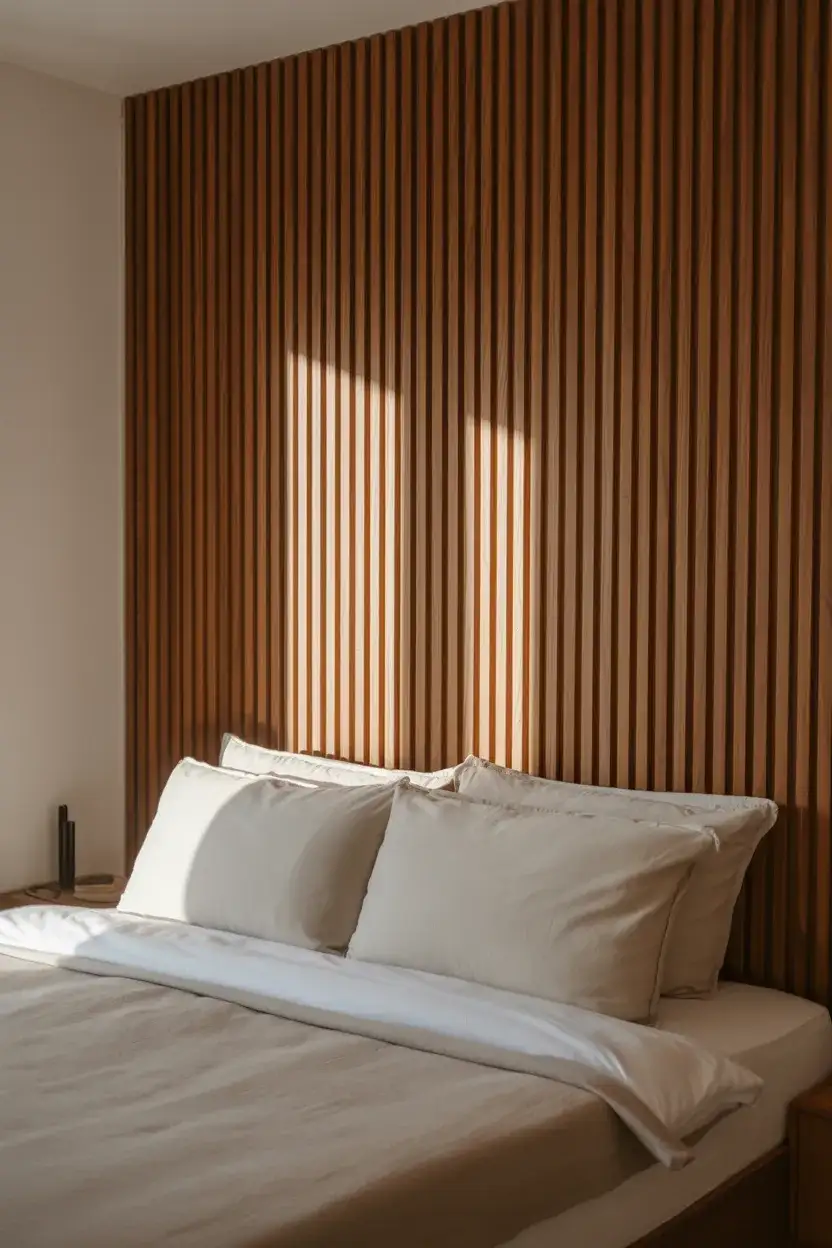
Adding a wood plank accent wall introduces natural texture and architectural interest that elevates a bedroom from basic to custom-looking. Choose from shiplap for a modern farmhouse vibe, reclaimed barn wood for rustic character, or vertical planks for a Scandinavian aesthetic, installing them on the wall behind your bed for maximum impact. This DIY project requires basic carpentry skills—measuring, cutting, and nailing or adhering planks to the wall—but transforms a space more dramatically than paint alone. Pre-finished planks are available at home improvement stores, or you can save money by purchasing raw lumber and applying your own stain or paint finish.
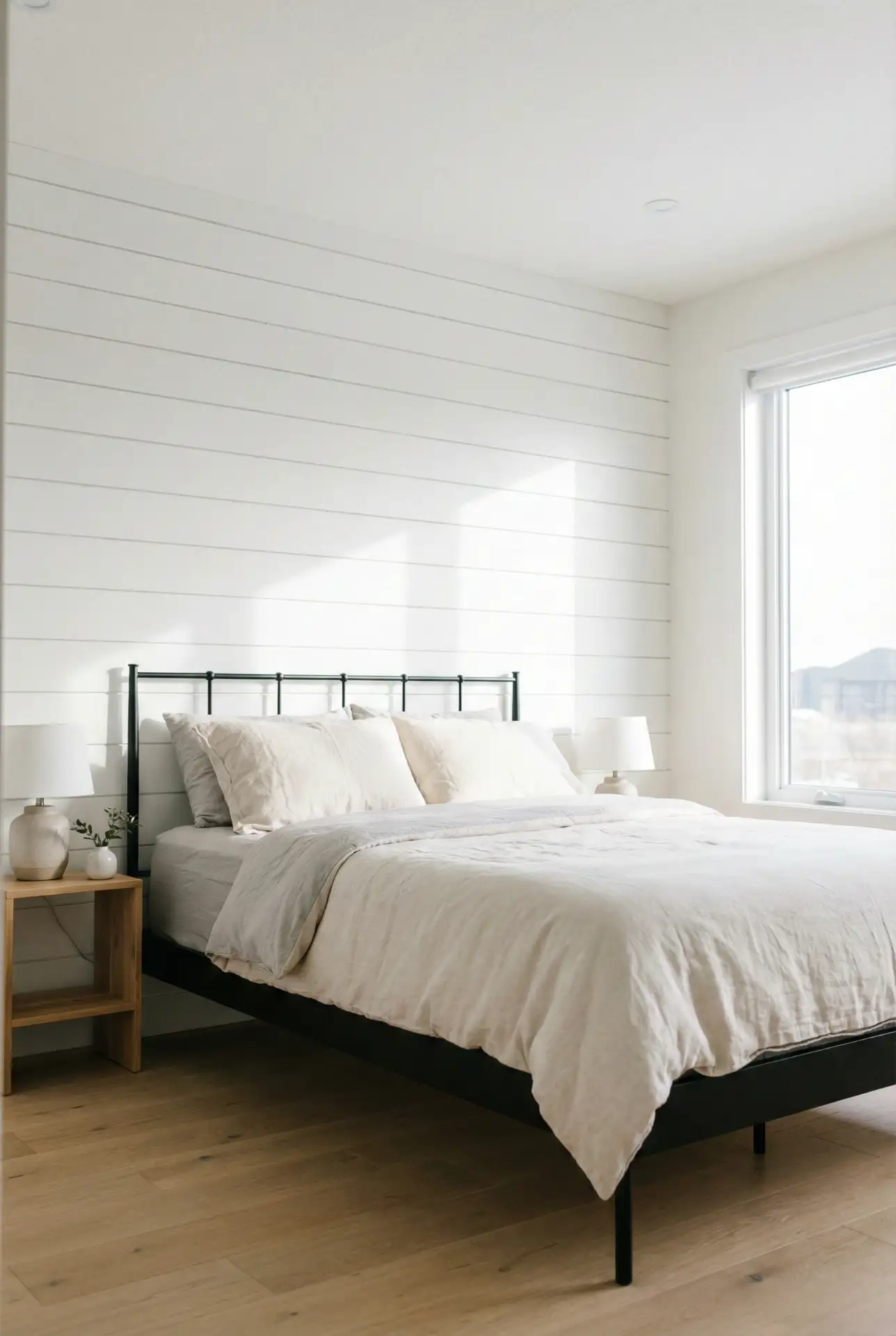
Material costs run $200-600 for an average bedroom accent wall depending on wood type and finish choices, plus tool rental if you don’t own a miter saw and nail gun. The installation process typically takes a full weekend for first-timers, though it moves faster once you establish a rhythm. In regions with strong historical building traditions like New England and the Pacific Northwest, reclaimed wood from old barns and buildings is more readily available and often cheaper than new materials. For truly renter-friendly versions, some companies now make peel-and-stick wood plank wallpaper that mimics the look without permanent installation, though the effect isn’t quite as dimensional or authentic-feeling.
22. Personalized Camper or RV Bedroom Refresh
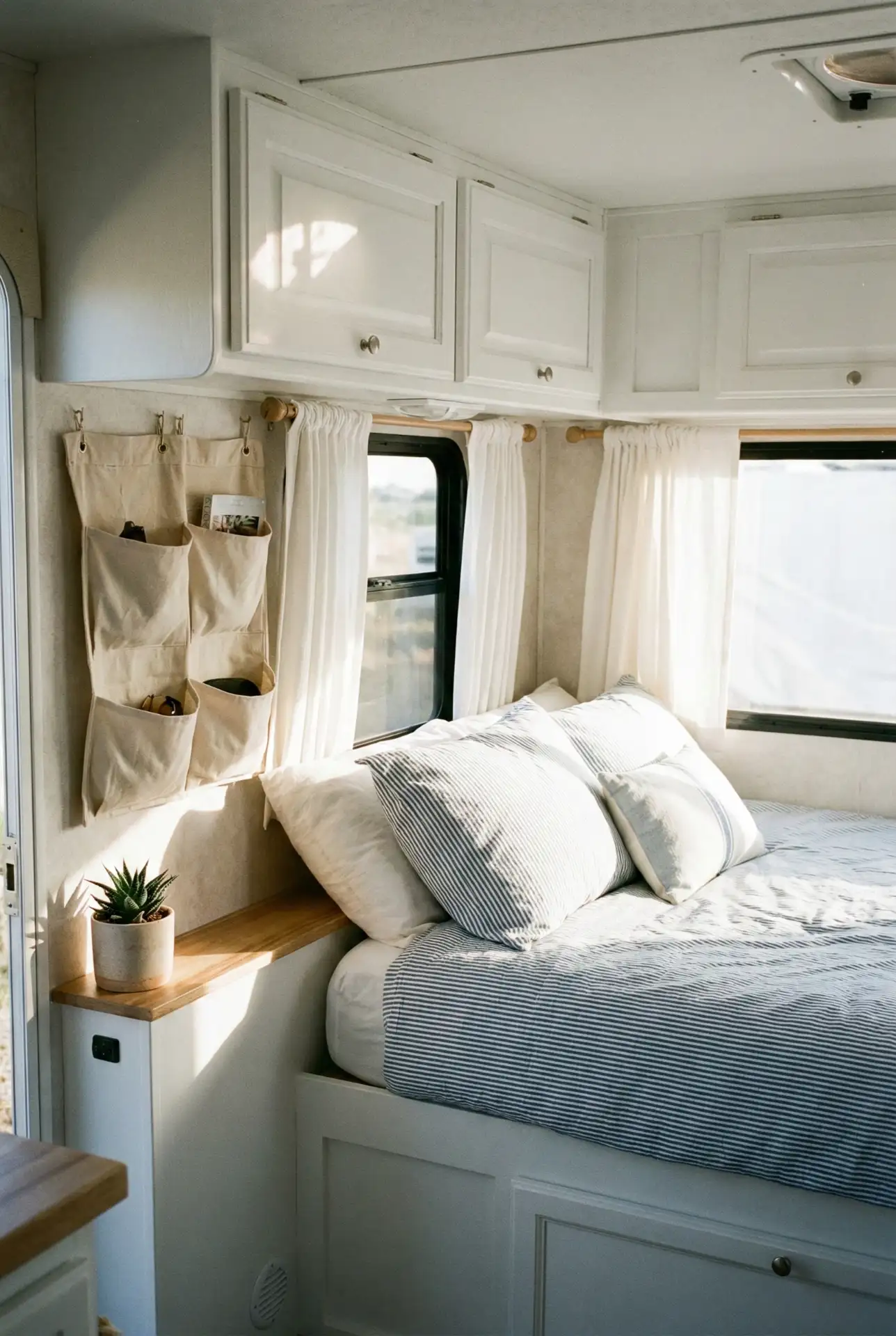
For Americans living or traveling in campers and RVs, making over the bedroom space requires creative solutions for limited square footage and built-in furniture. Replace heavy, dated curtains with lightweight fabric in modern patterns, swap out old bedding for space-saving options like sleeping bag-style duvets, and add removable wallpaper or contact paper to dated cabinetry. Maximize vertical storage with hanging organizers, over-door hooks, and magnetic strips for small items, keeping surfaces clear and the space feeling open despite tight quarters. Choose a cohesive color scheme that makes the space feel intentional rather than just making do with what came with the RV.
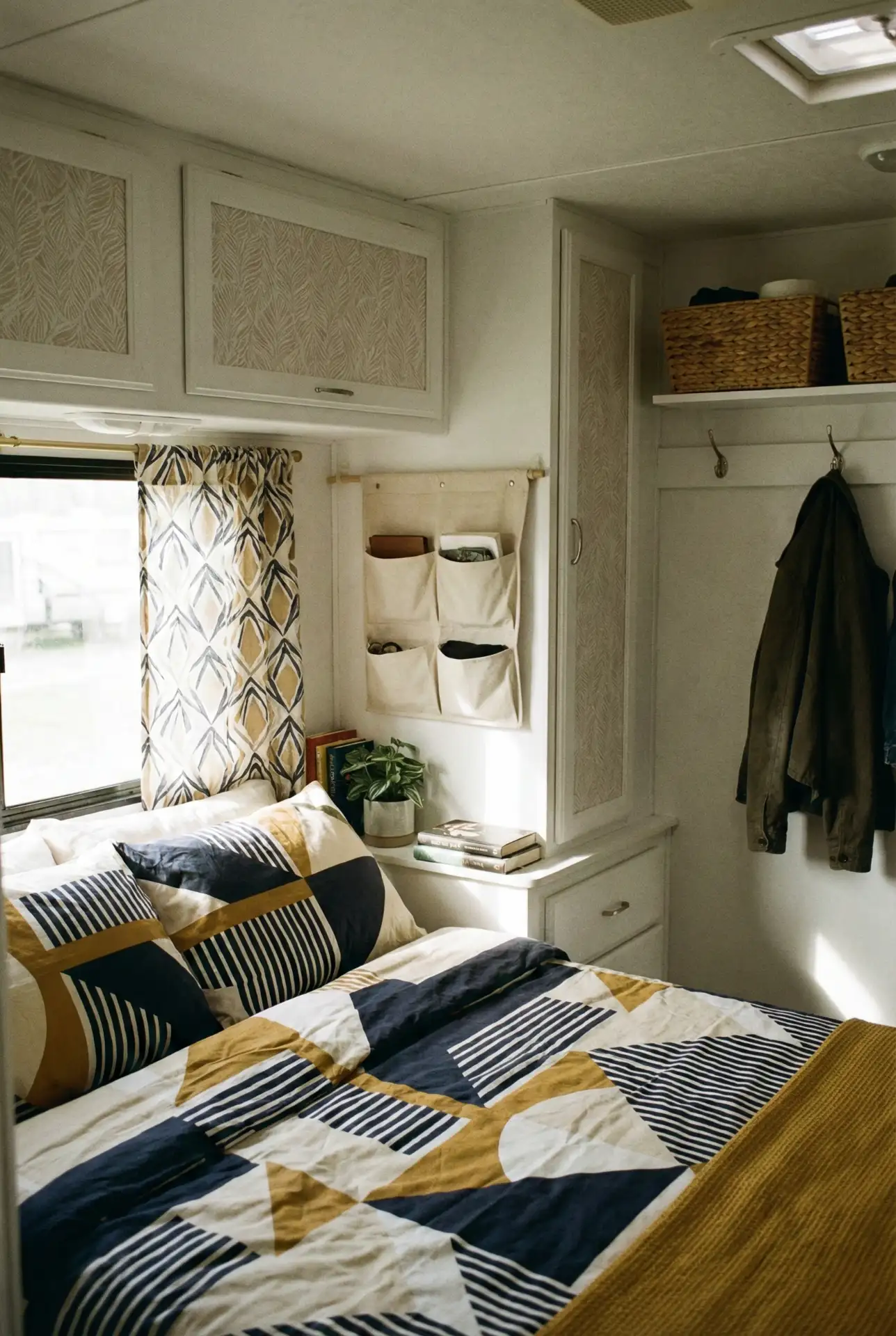
Weight and storage considerations are paramount in RV makeovers—every item needs to earn its place by being both functional and lightweight. The full-time RV community, particularly strong in states like Arizona, Texas, and Florida, shares extensive tips online about securing items for travel while maintaining a homey aesthetic. Budget-conscious updates like painting existing cabinetry ($30-50 in supplies), replacing hardware ($20-40), and adding battery-operated LED strip lighting ($15-30) create significant visual improvements without adding weight or requiring electrical modifications. The result is a bedroom space that feels custom and welcoming rather than generic and temporary.
Conclusion
Creating a bedroom that truly reflects your style and meets your needs doesn’t require a complete overhaul or unlimited funds—it just takes intentional choices and a willingness to experiment with what works for your space and lifestyle. These twenty-two ideas offer starting points across every budget level, room size, and aesthetic preference, proving that meaningful transformation is accessible to everyone. We’d love to hear which ideas resonated with you or what bedroom makeover projects you’re planning for 2026—share your thoughts, questions, and inspiration in the comments below.