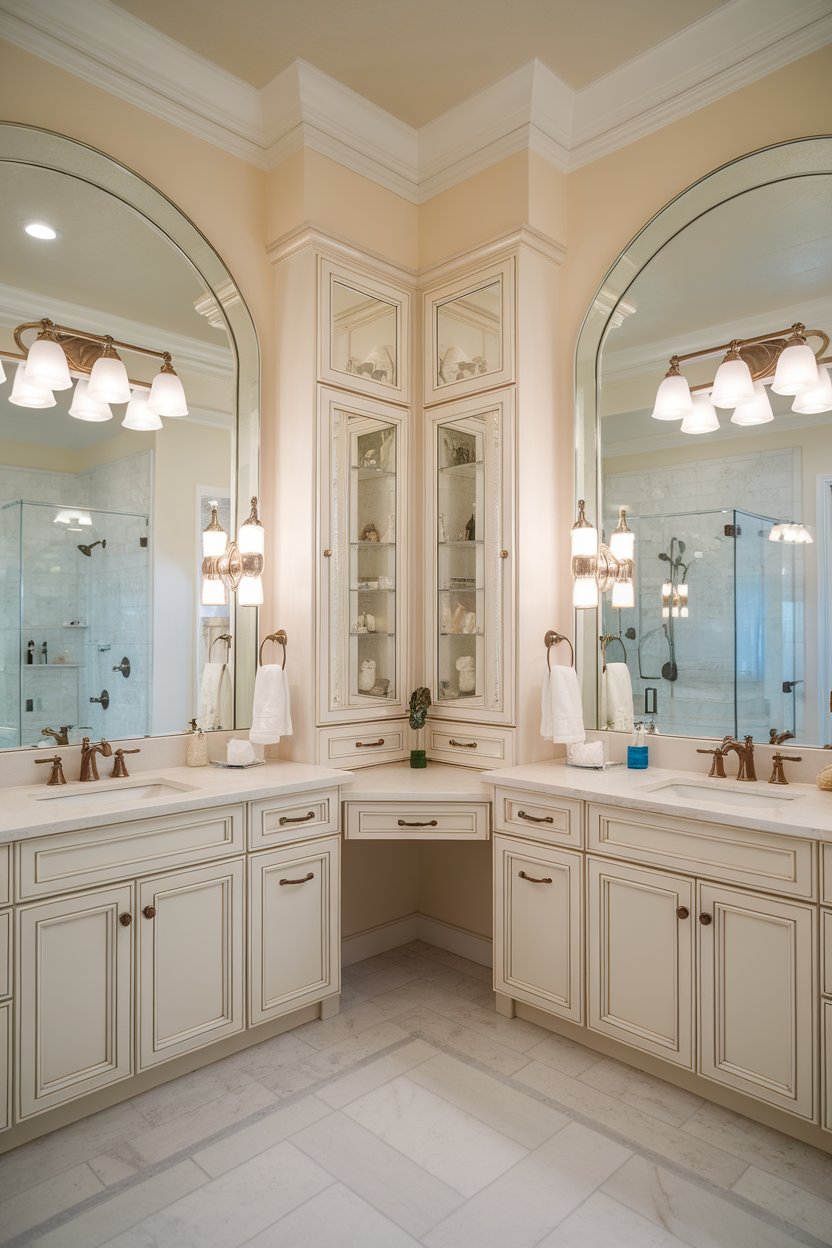
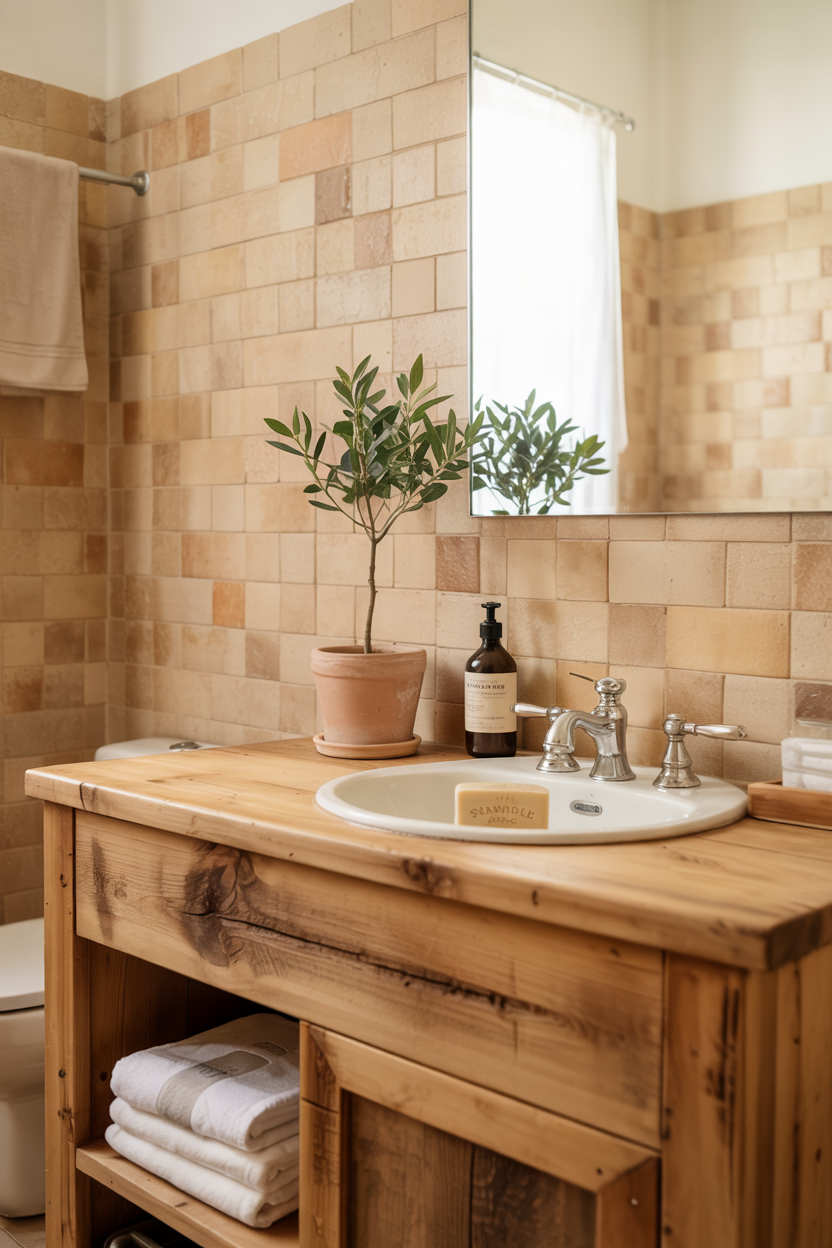
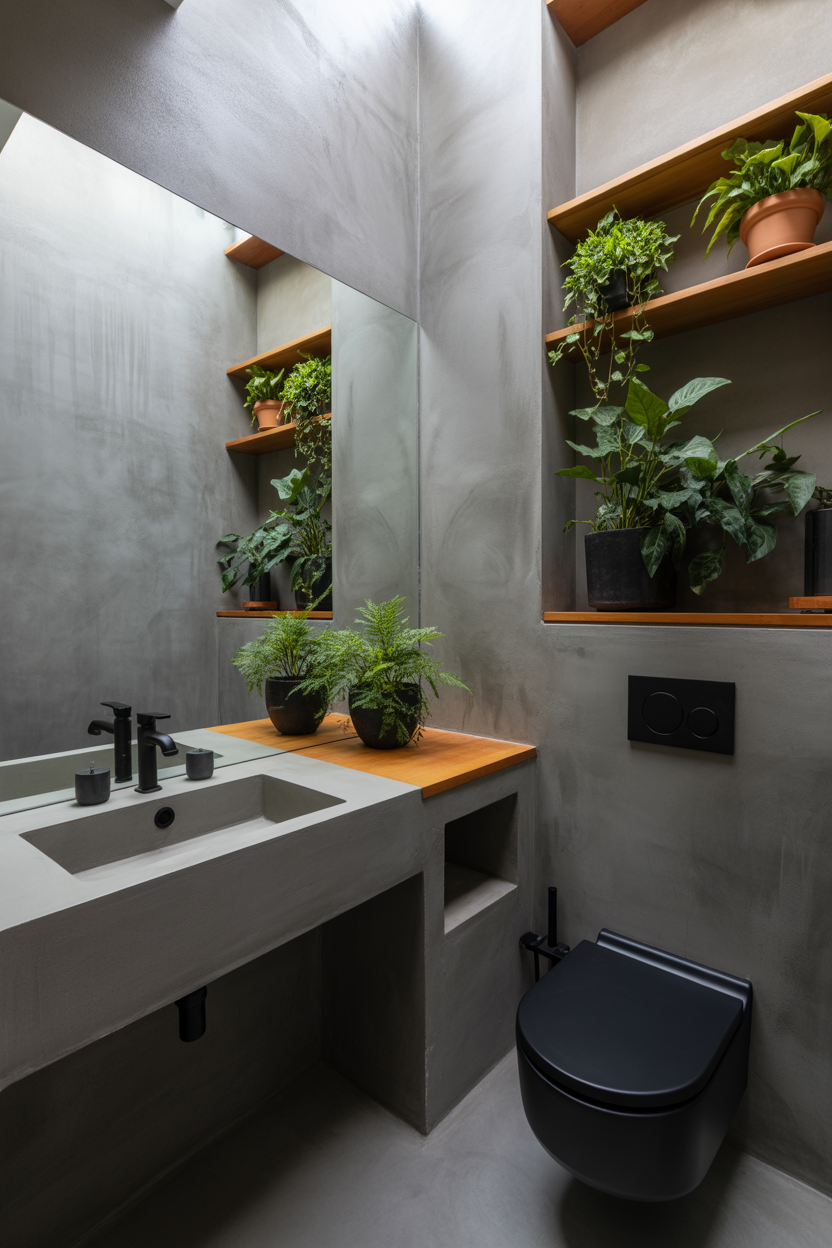
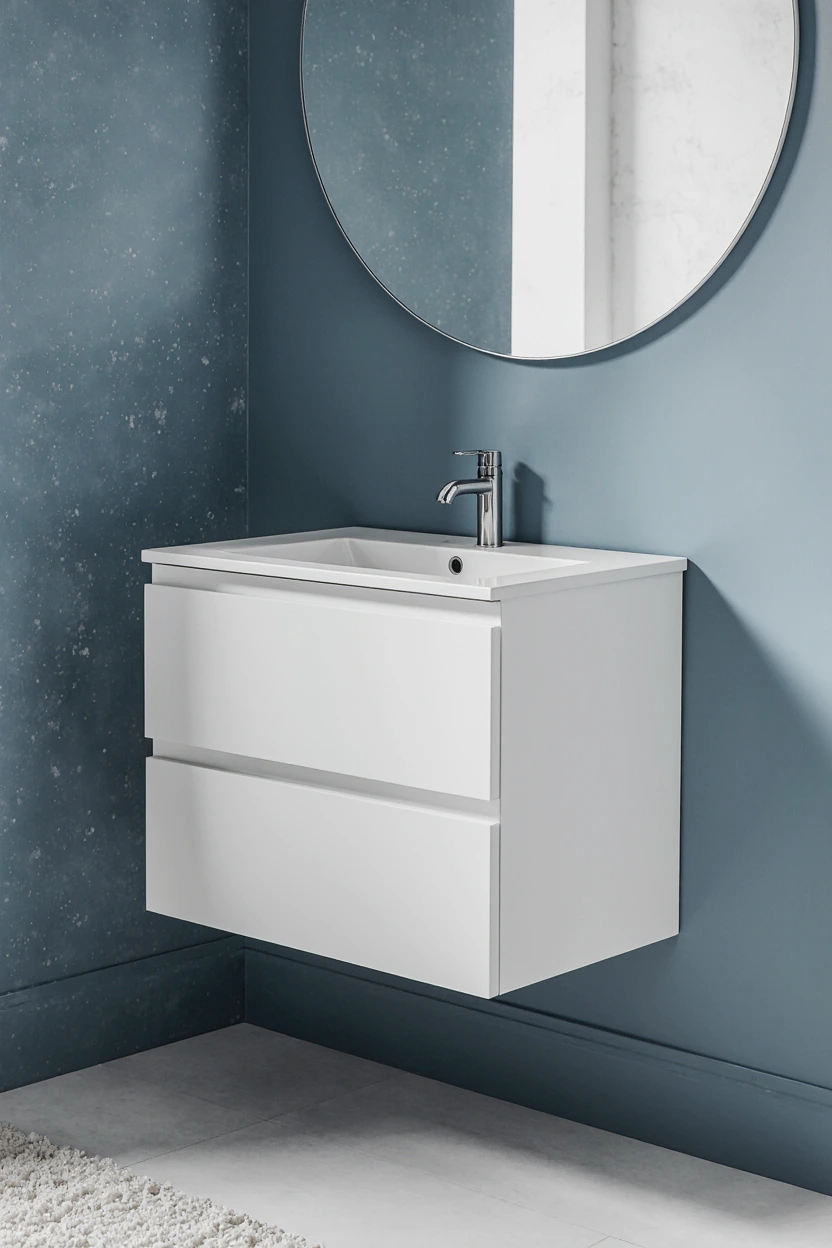
Bathroom design is evolving faster than ever, and 2026 is shaping up to be a year where tile takes center stage. Whether you’re renovating a small powder room or dreaming up a luxurious master bath retreat, the right tile choice can completely transform the space. Americans are turning to Pinterest in droves for inspiration that balances beauty with practicality—think durable materials that look stunning in natural light and work with real-life routines. From coastal vibes to farmhouse charm, vintage character to sleek modern lines, this guide covers fresh bathroom tile ideas that reflect what homeowners are actually searching for right now. You’ll find options for every style, budget, and room size, along with expert-level insights to help you make choices you’ll love for years to come.
1. Timeless White Subway Tiles with Dark Grout
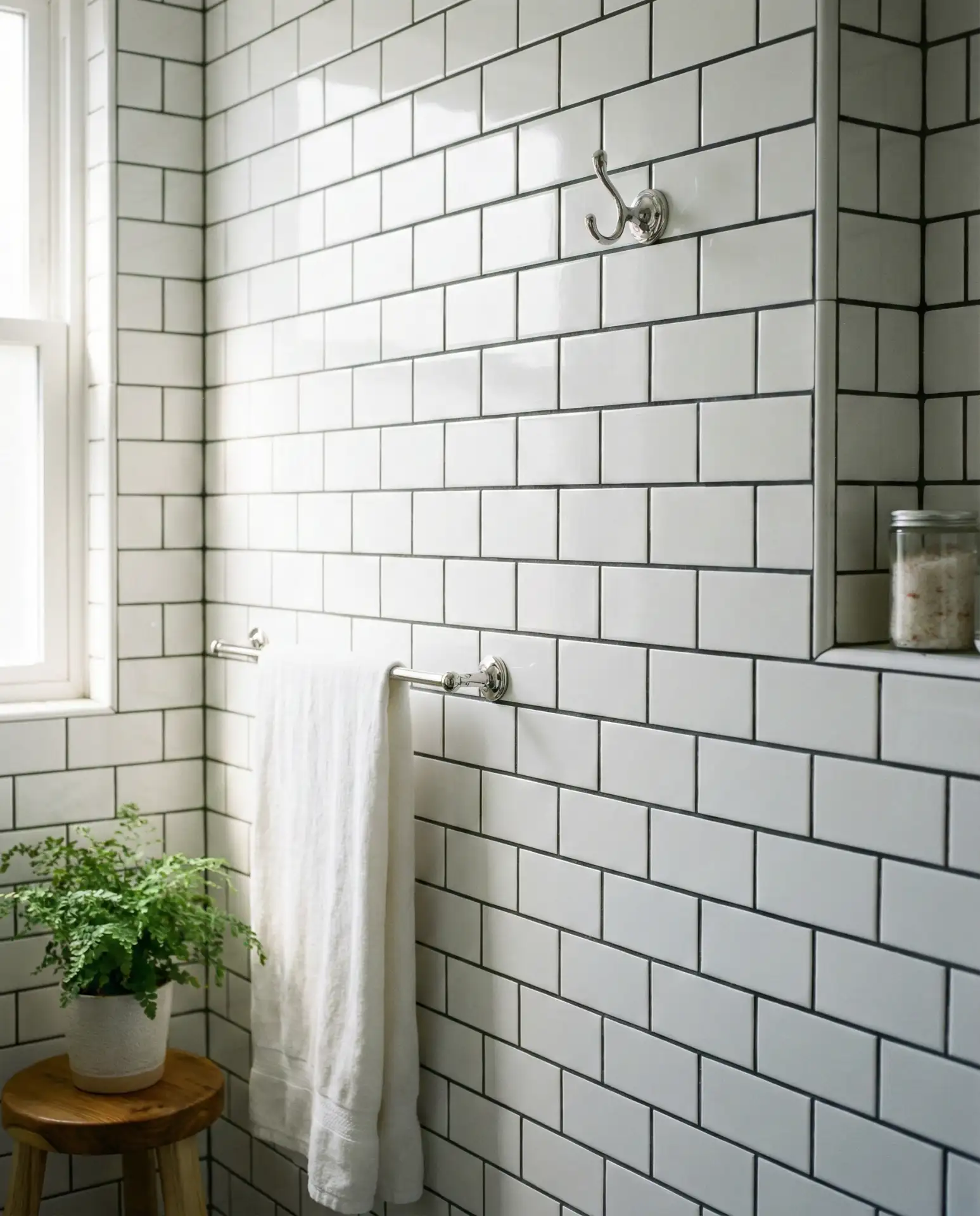
Classic white subway tiles remain a go-to choice for small bathrooms because they visually expand the space while offering a clean, bright backdrop. When paired with charcoal or black grout, the grid pattern becomes a design feature rather than disappearing into the background. This approach works beautifully in guest baths where you want something fresh but not overly trendy, and it complements nearly any fixture finish from brushed nickel to matte black.
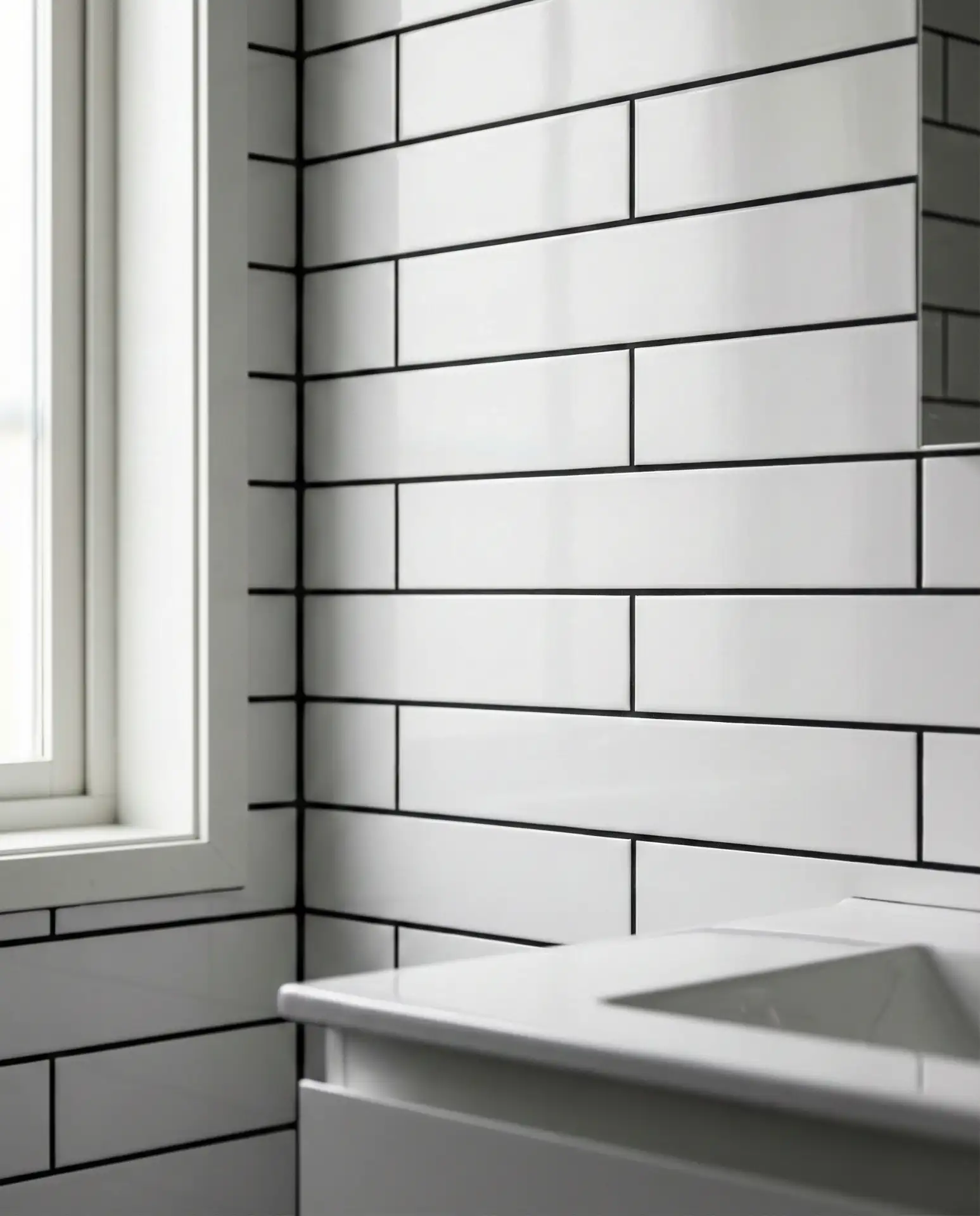
One common mistake is choosing grout that’s too light, which shows every water spot and soap residue within weeks. A darker grout not only hides everyday wear but also adds definition that makes the tile installation look more intentional and custom. This combination is also budget-friendly—subway tiles are widely available and competitively priced, and the bold grout elevates the look without adding material costs.
2. Large-Format Beige Porcelain for a Spa-Like Feel
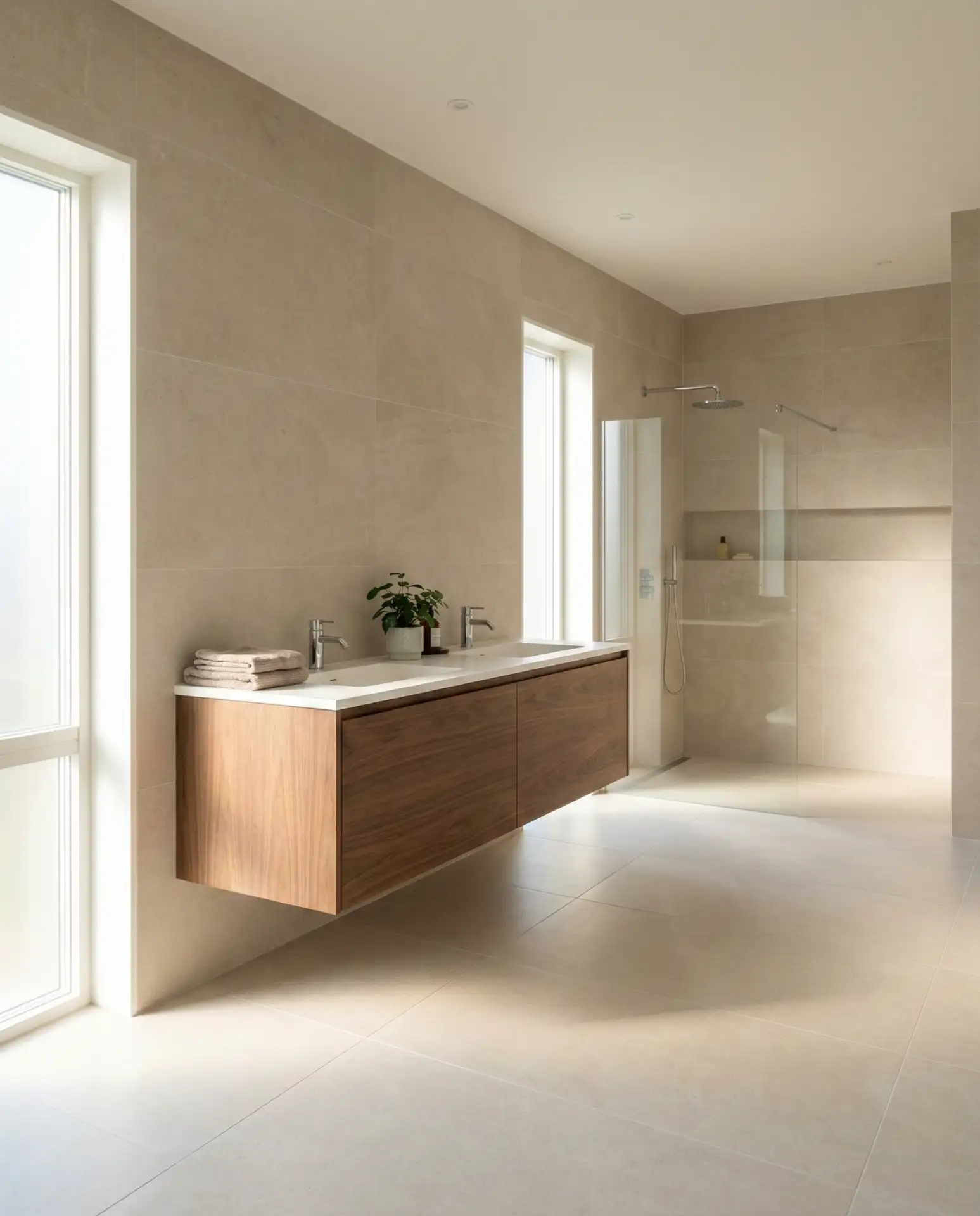
Large-format tiles in warm beige tones create a serene, uninterrupted surface that’s perfect for modern bathrooms aiming for a spa-inspired retreat. These oversized slabs—often 24×48 inches or larger—minimize grout lines, making the room feel more expansive and easier to clean. The neutral palette works beautifully with natural wood vanities, linen textiles, and soft ambient lighting.
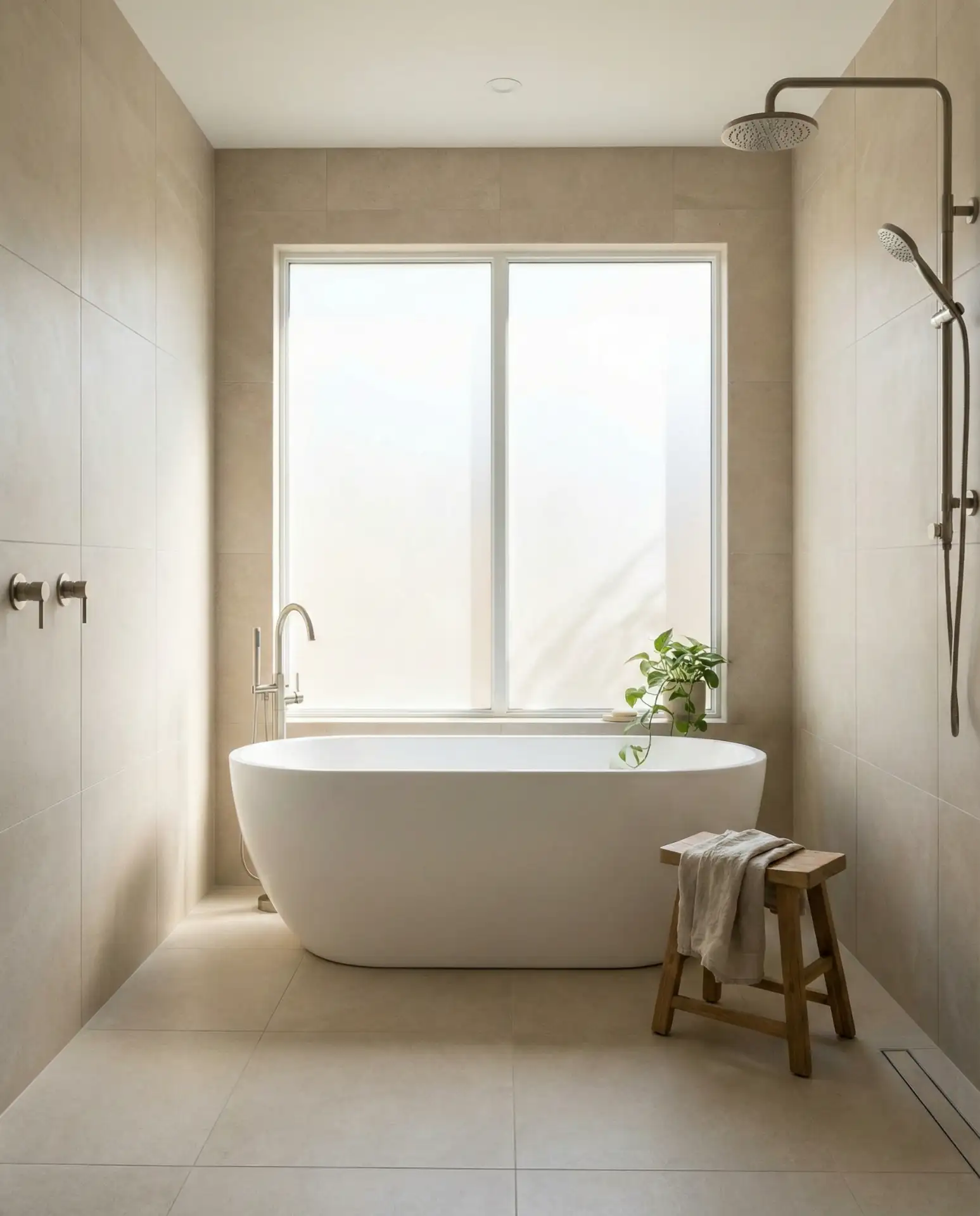
This style works best in master bathrooms where square footage allows the tiles to shine without overwhelming the space. Homeowners in warmer regions like Arizona and Southern California gravitate toward these tones because they complement the natural desert palette and don’t absorb heat the way darker tiles can. Porcelain is also incredibly durable and water-resistant, making it a smart long-term investment.
3. Coastal Blue Subway Tiles with White Fixtures
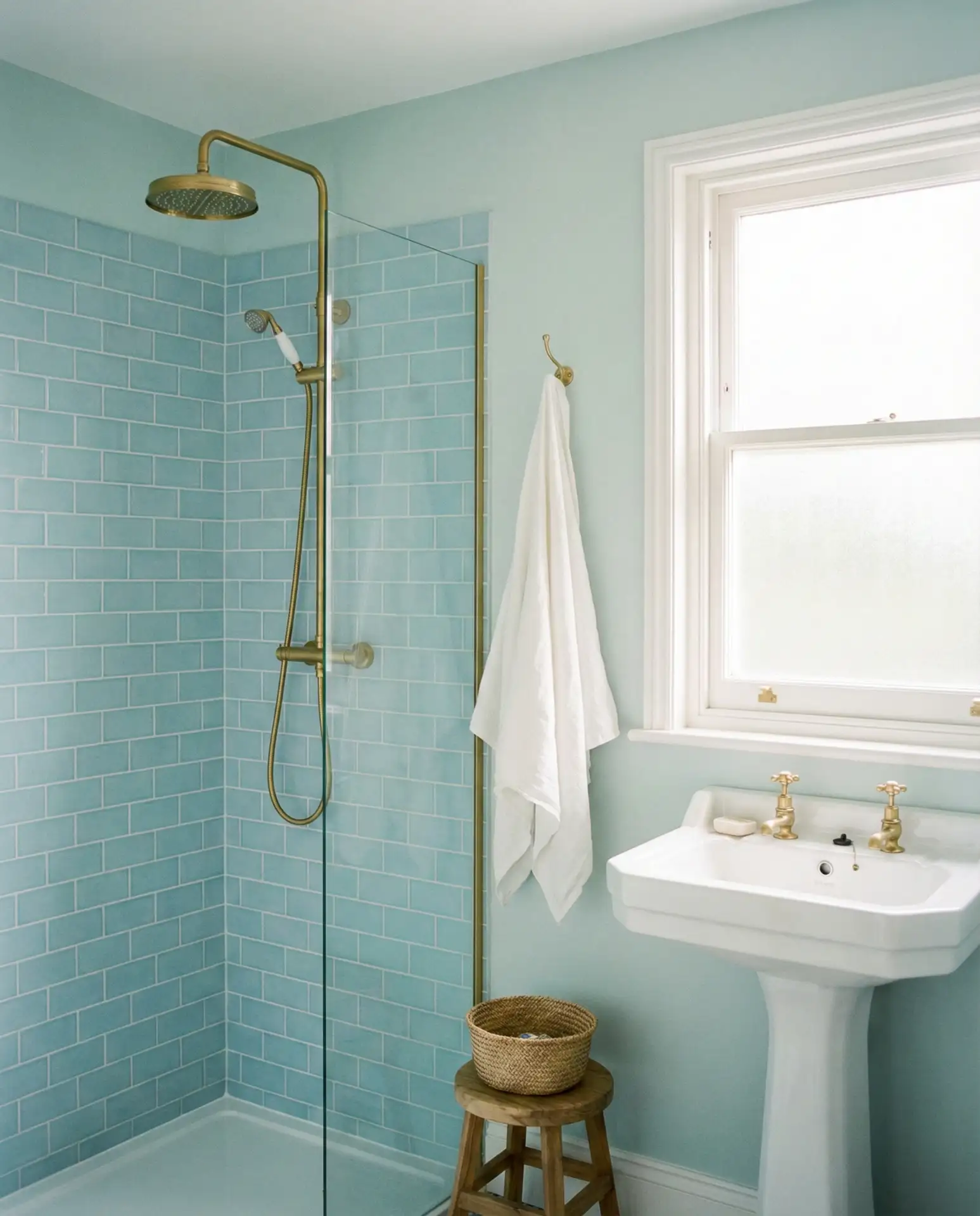
Soft blue subway tiles bring a refreshing coastal vibe into bathrooms, evoking calm waters and breezy beach mornings. This color choice is especially popular in homes near the ocean or in neighborhoods where homeowners want to capture that relaxed, vacation-home aesthetic. Paired with crisp white fixtures and brass or brushed gold hardware, the look feels both timeless and on-trend for 2026.
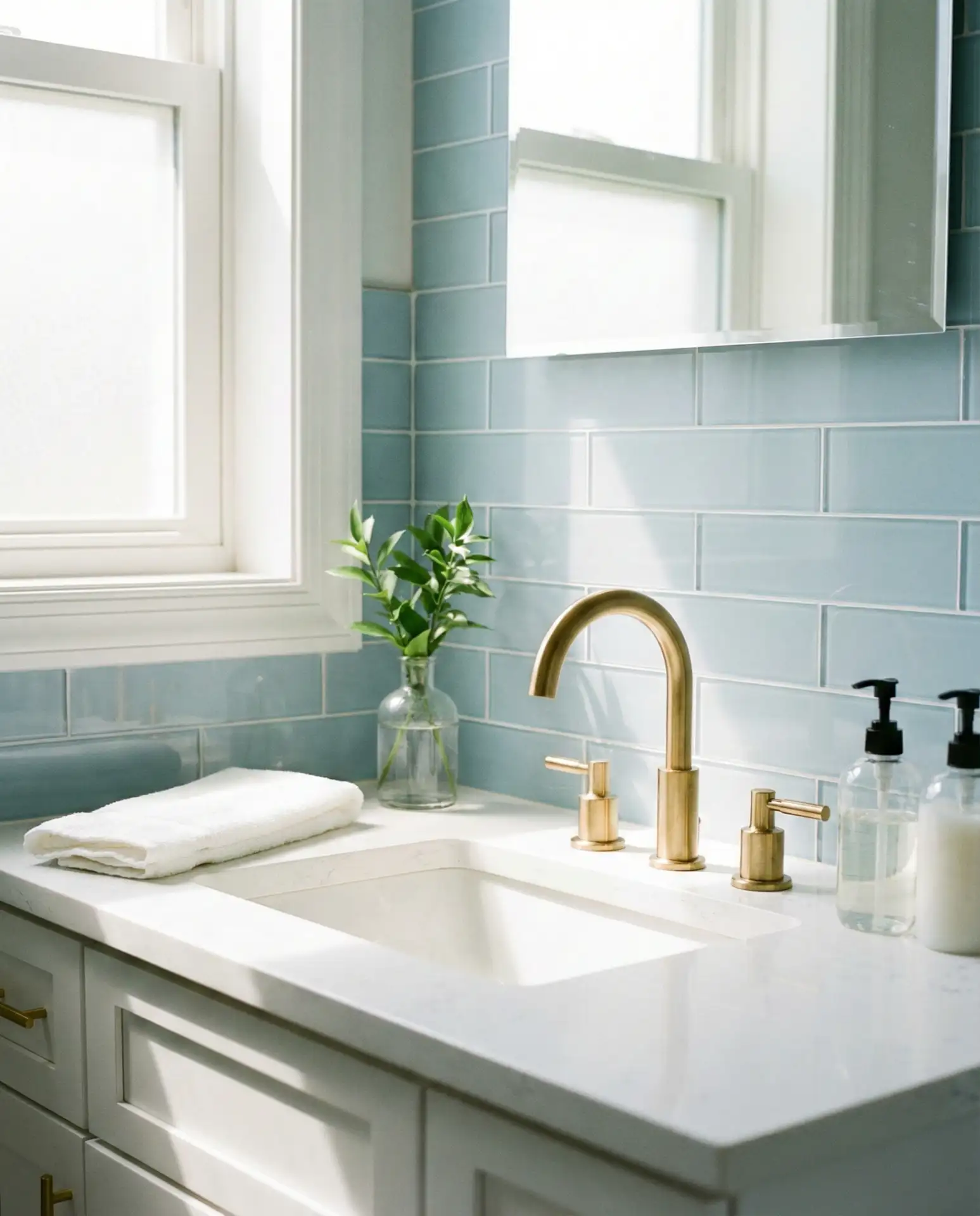
A designer I know once mentioned that blue tiles can make a small bathroom feel larger because the color visually recedes, creating the illusion of more depth. It’s a subtle psychological effect, but homeowners consistently report that their blue-tiled bathrooms feel more open and breathable than spaces with warmer or darker palettes.
4. Terrazzo Floor Tiles for Retro-Modern Charm
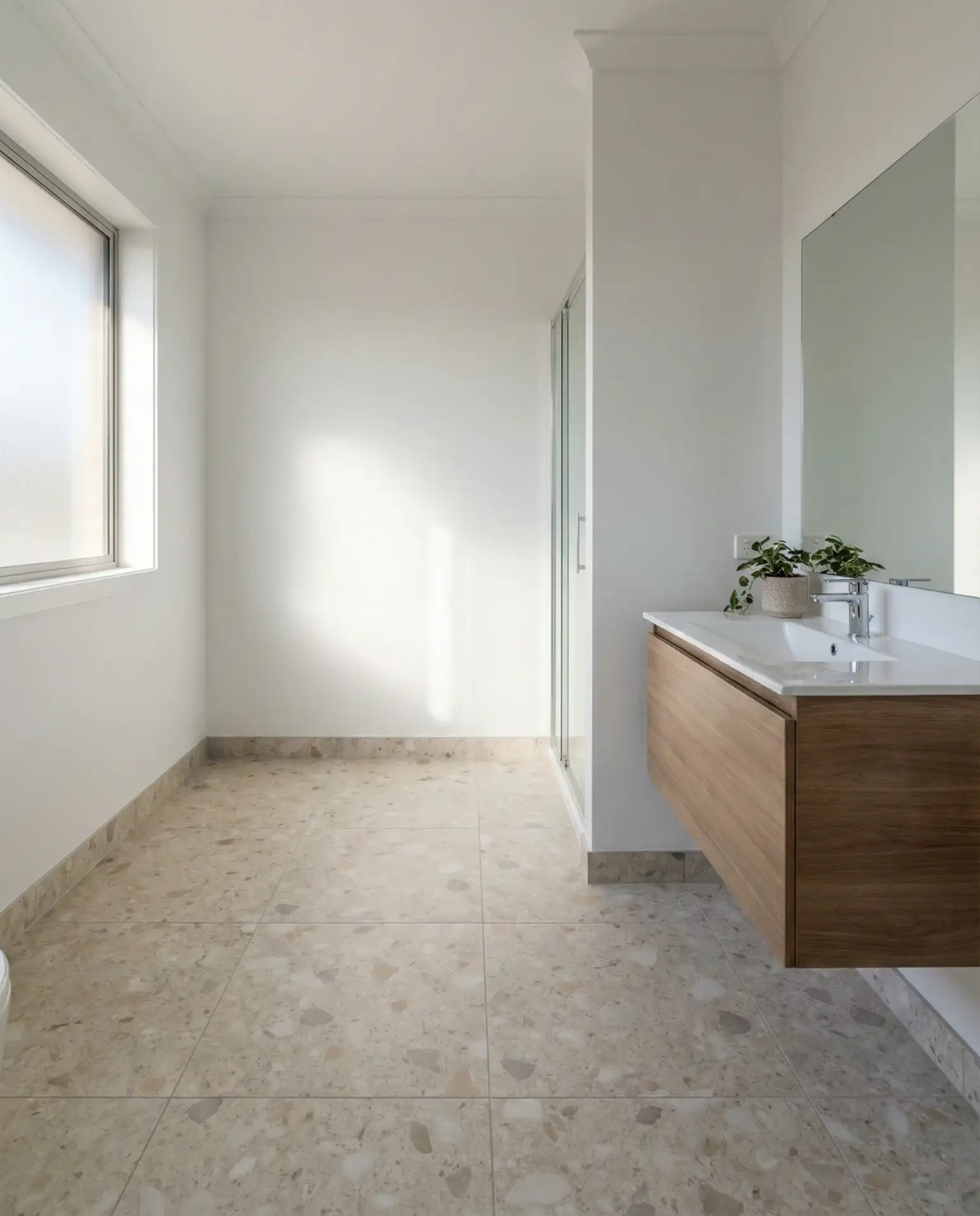
Terrazzo is making a major comeback, and it’s easy to see why—the speckled, playful pattern adds personality without feeling overly busy. These tiles work beautifully on floors, offering a durable, easy-to-clean surface that hides imperfections and brings a touch of vintage charm. Modern versions come in softer, neutral colorways with white, gray, and beige chips that fit seamlessly into contemporary bathrooms.
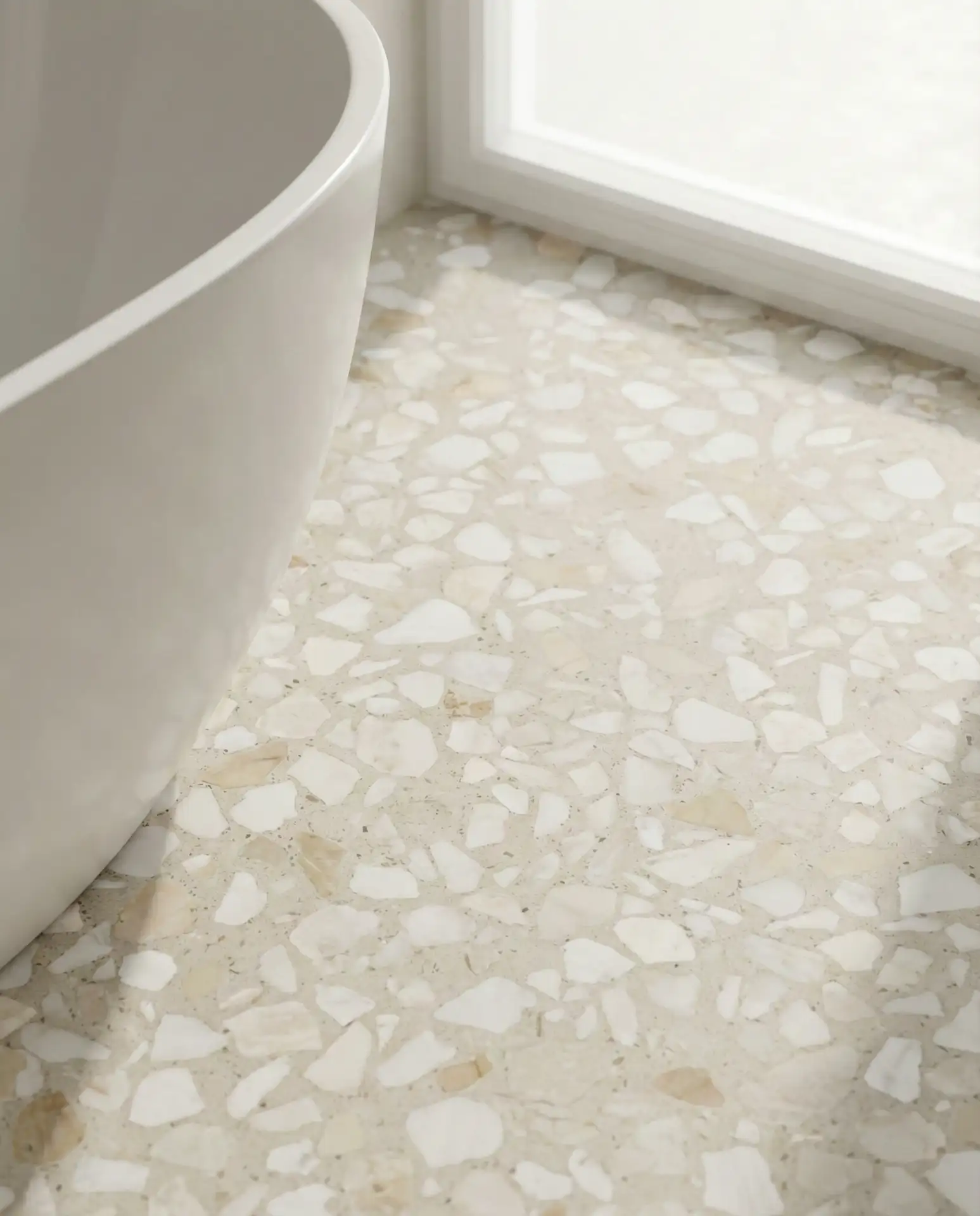
Terrazzo works best in bathrooms with good natural light, where the chips can catch and reflect the sun throughout the day. It’s particularly popular in urban lofts and mid-century modern homes where homeowners want to nod to design history while keeping the space feeling current. Expect to pay a bit more than standard porcelain, but the visual impact and longevity make it worth the investment.
5. Black and White Checkerboard Floors
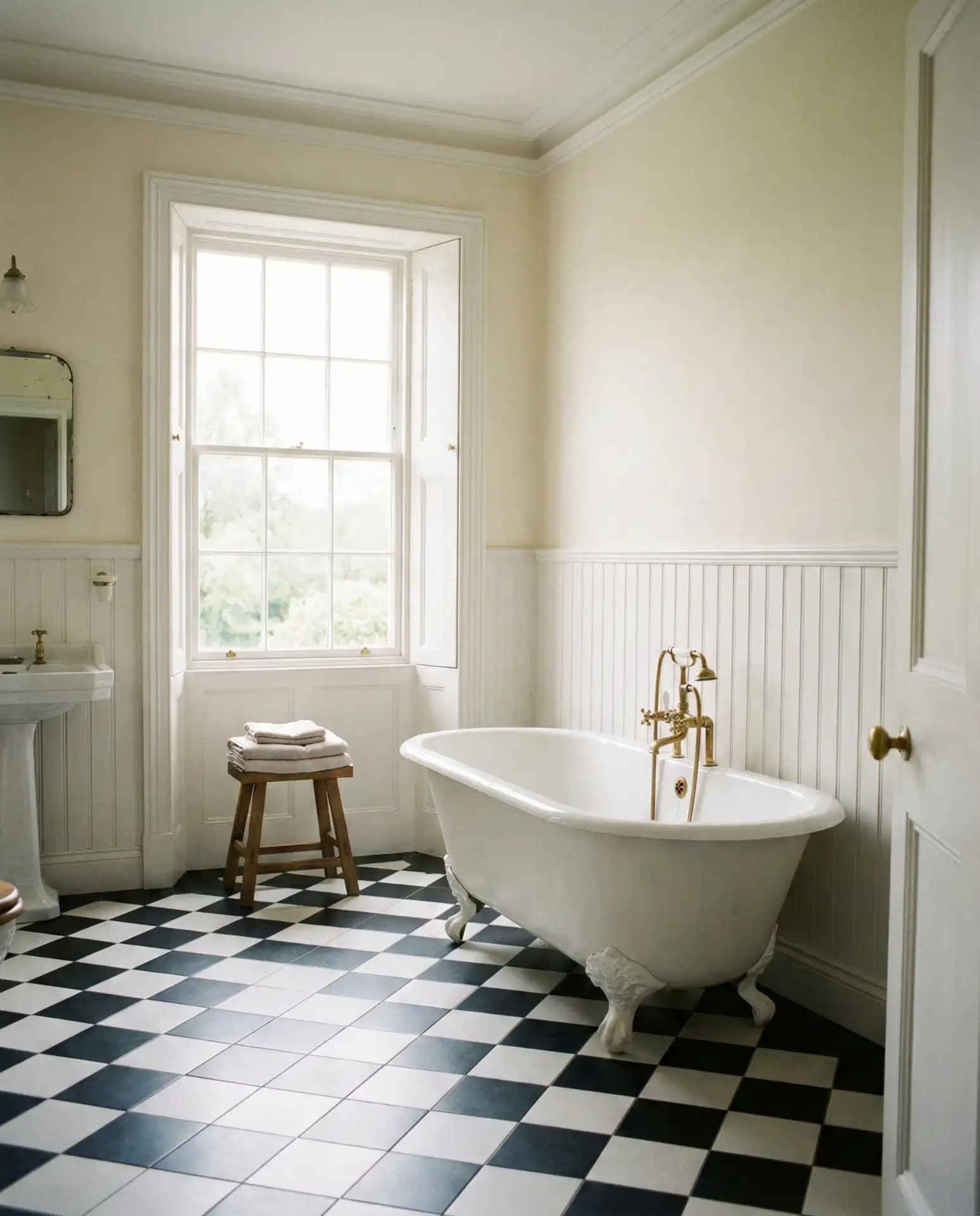
The classic black and white checkerboard floor never goes out of style, and it’s having a moment again as homeowners seek bold, graphic statements. This pattern works especially well in vintage-inspired or traditional bathrooms, but it can also feel fresh and modern when paired with sleek fixtures and minimal décor. The high contrast adds energy to the space and draws the eye downward, which can make ceilings feel taller.
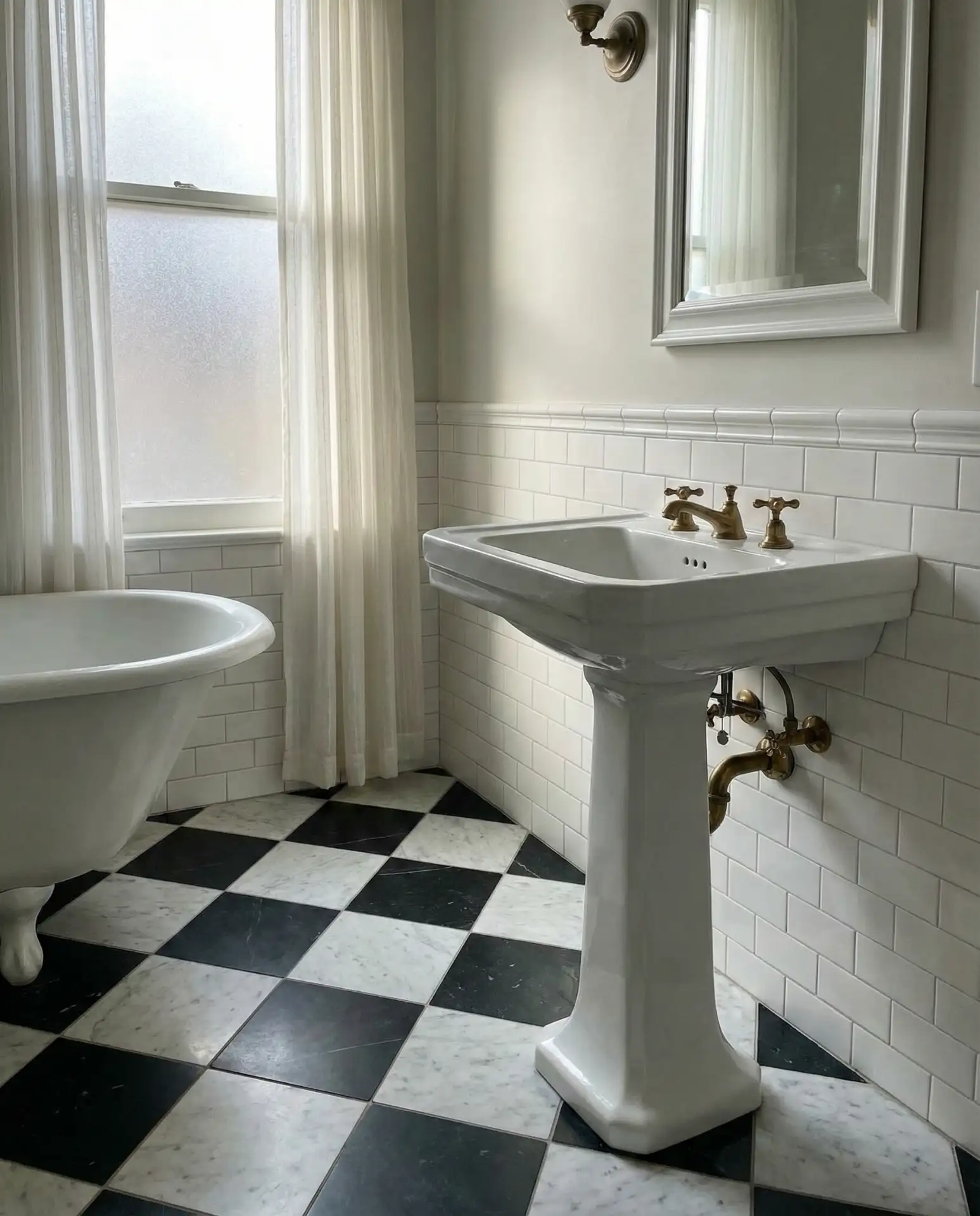
Real homeowners often install checkerboard floors in powder rooms or half baths, where the smaller square footage makes the bold pattern feel playful rather than overwhelming. It’s a design choice that signals confidence and a willingness to take risks, and it pairs beautifully with white subway walls or painted beadboard for a cohesive, timeless look.
6. Gray Hexagon Tiles for Modern Texture
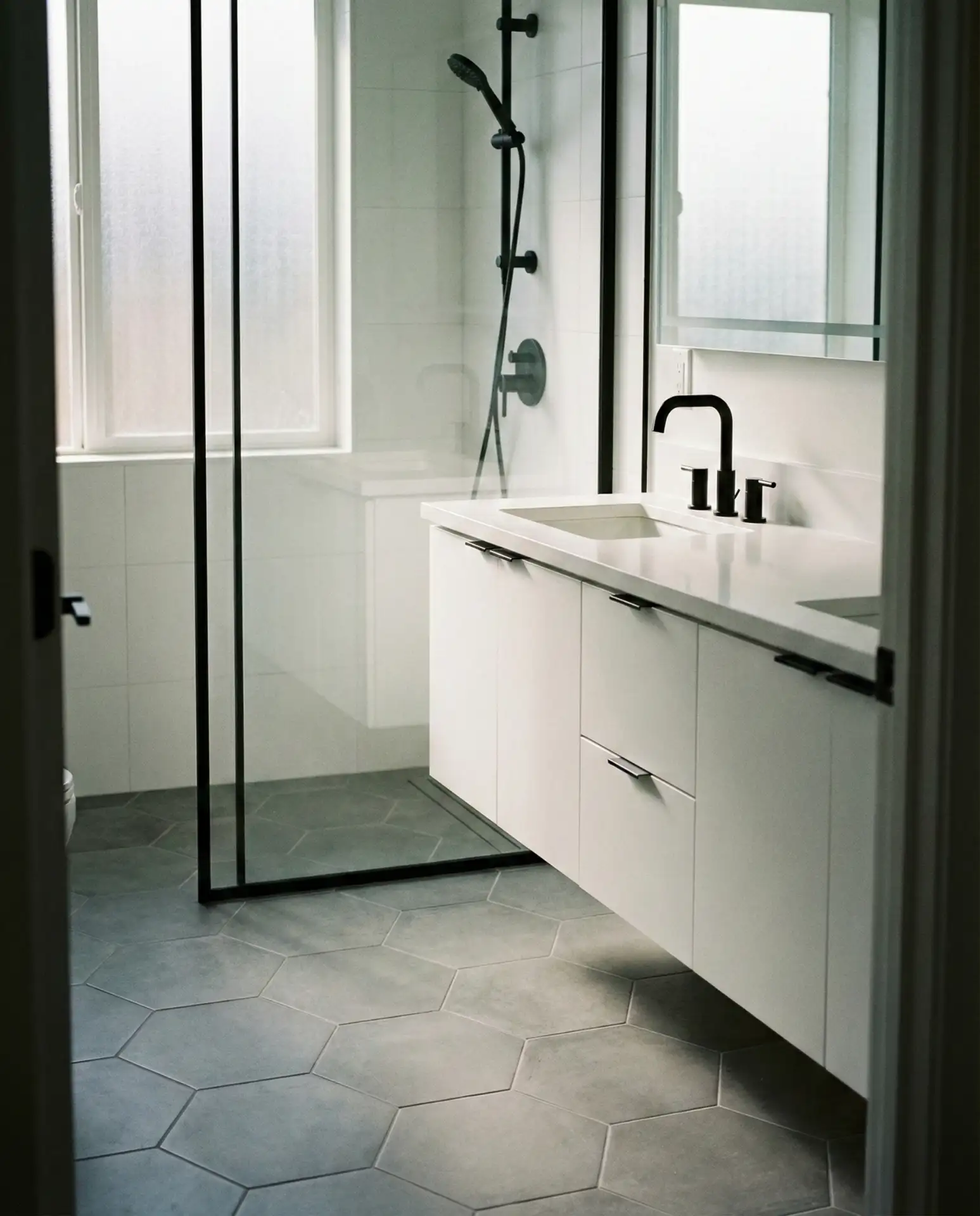
Hexagon tiles in muted gray tones bring geometric interest and a contemporary edge to modern bathrooms. The shape itself creates visual movement without needing color variation, and the neutral palette ensures the design won’t feel dated in a few years. These tiles work equally well on floors or as a feature wall in a shower surround.
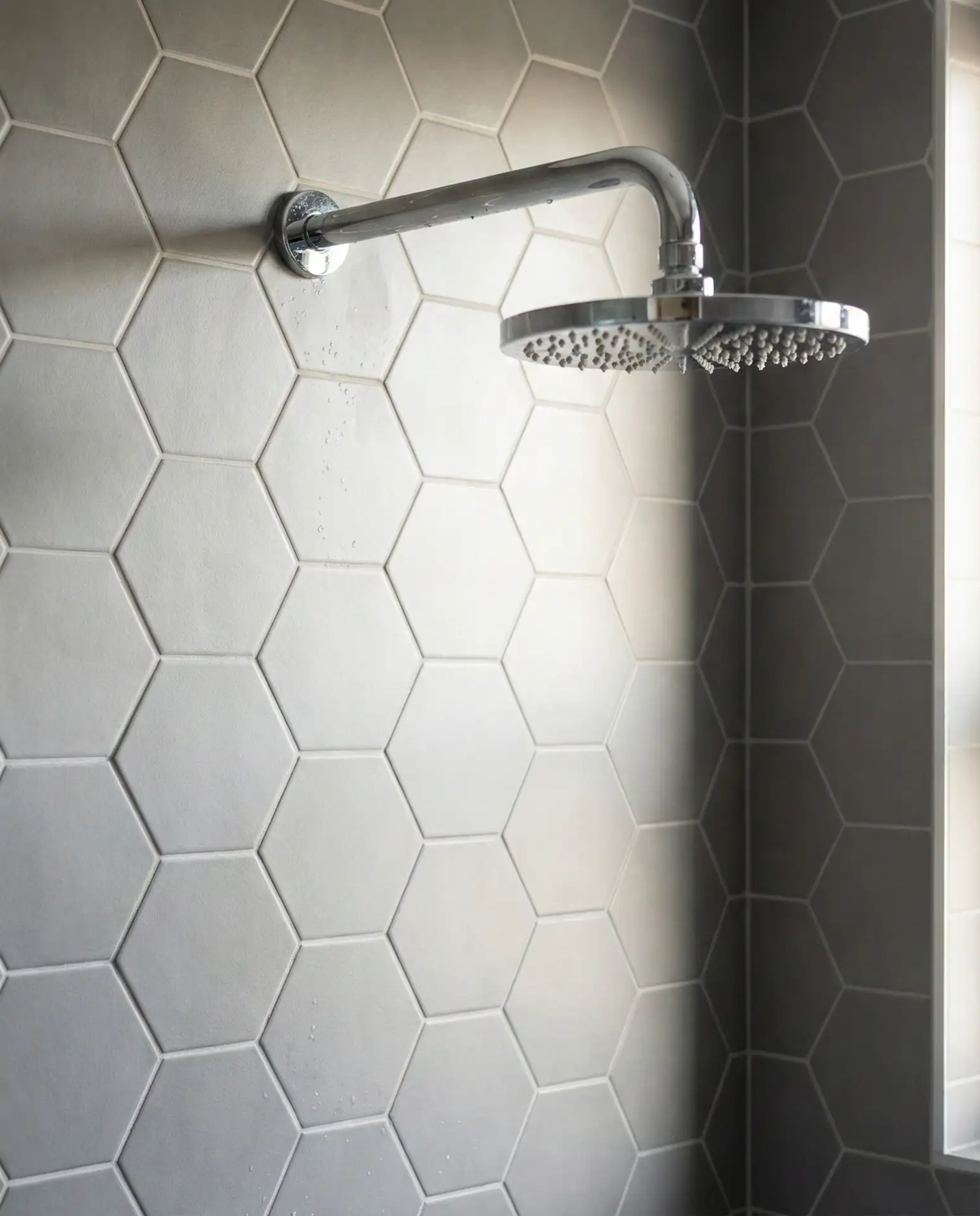
One practical insight: hexagon tiles create more grout lines than larger formats, which means a bit more cleaning effort, but they also offer better slip resistance on wet floors. Many homeowners choose them for walk-in showers where safety is a priority, and the added texture underfoot makes a real difference in preventing slips.
7. Green Zellige Tiles for Artisan Appeal
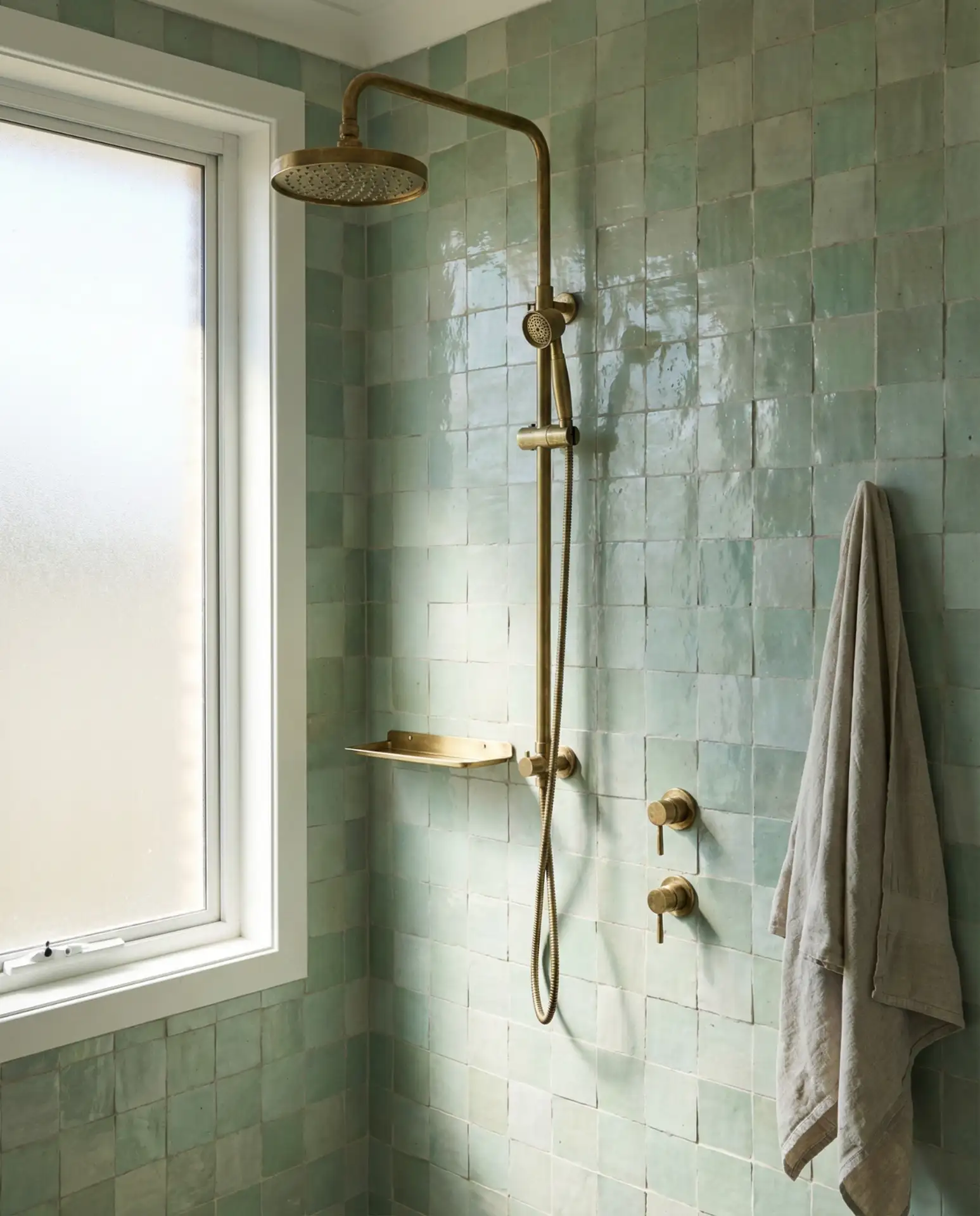
Handcrafted Moroccan zellige tiles in soft green shades bring warmth, depth, and an artisan quality that feels worlds away from mass-produced options. The slightly irregular surface and color variations are part of the charm, creating a living, organic look that catches light beautifully. These tiles are perfect for shower walls or vanity backsplashes in modern or eclectic bathrooms.
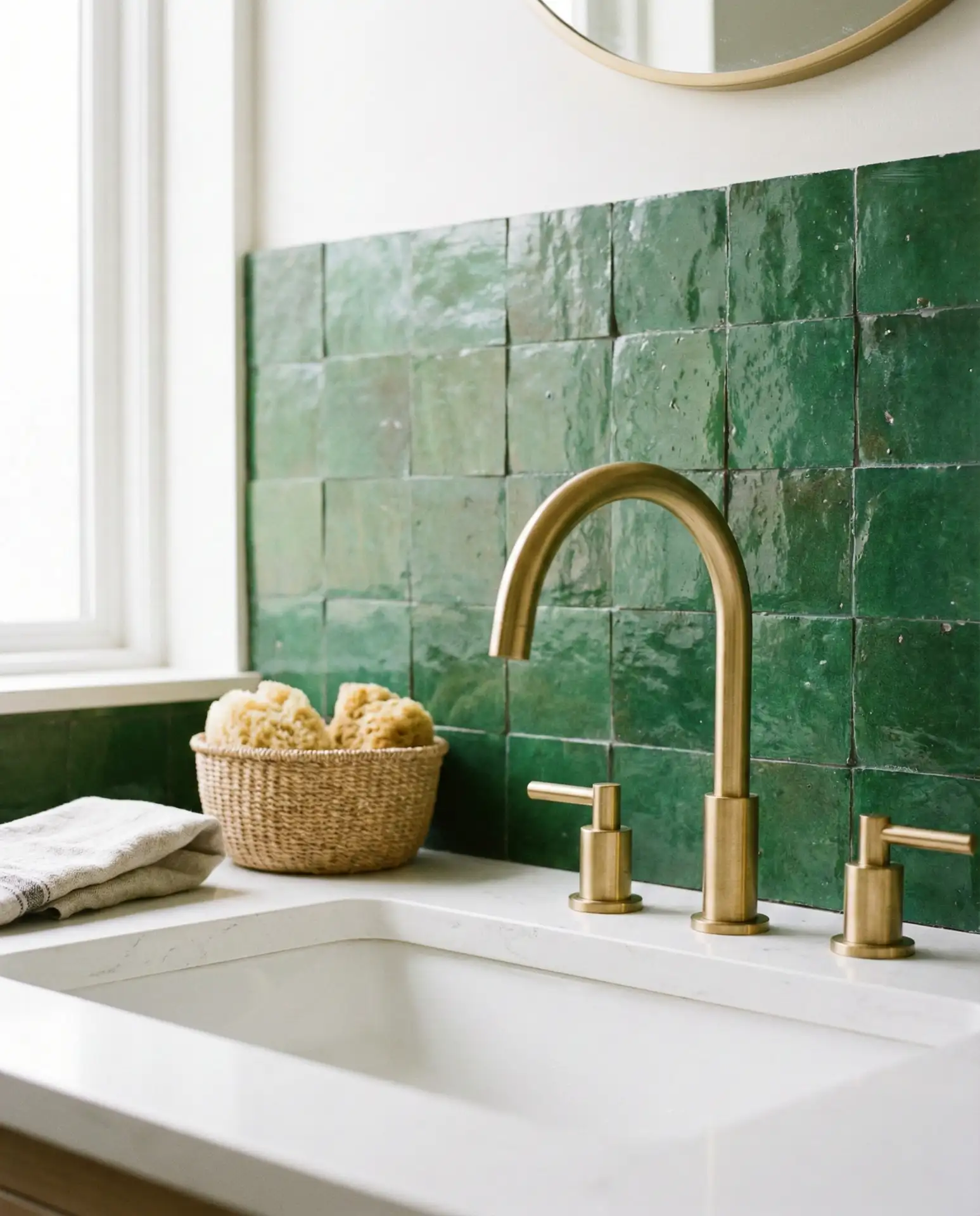
In the Pacific Northwest and New England, where homeowners lean into natural, earthy palettes, green zellige has become a favorite for adding color without overwhelming the senses. The tiles pair beautifully with natural wood, stone countertops, and vintage-inspired fixtures, creating spaces that feel curated and intentional.
8. Rustic Ceramic Tiles with Weathered Finish
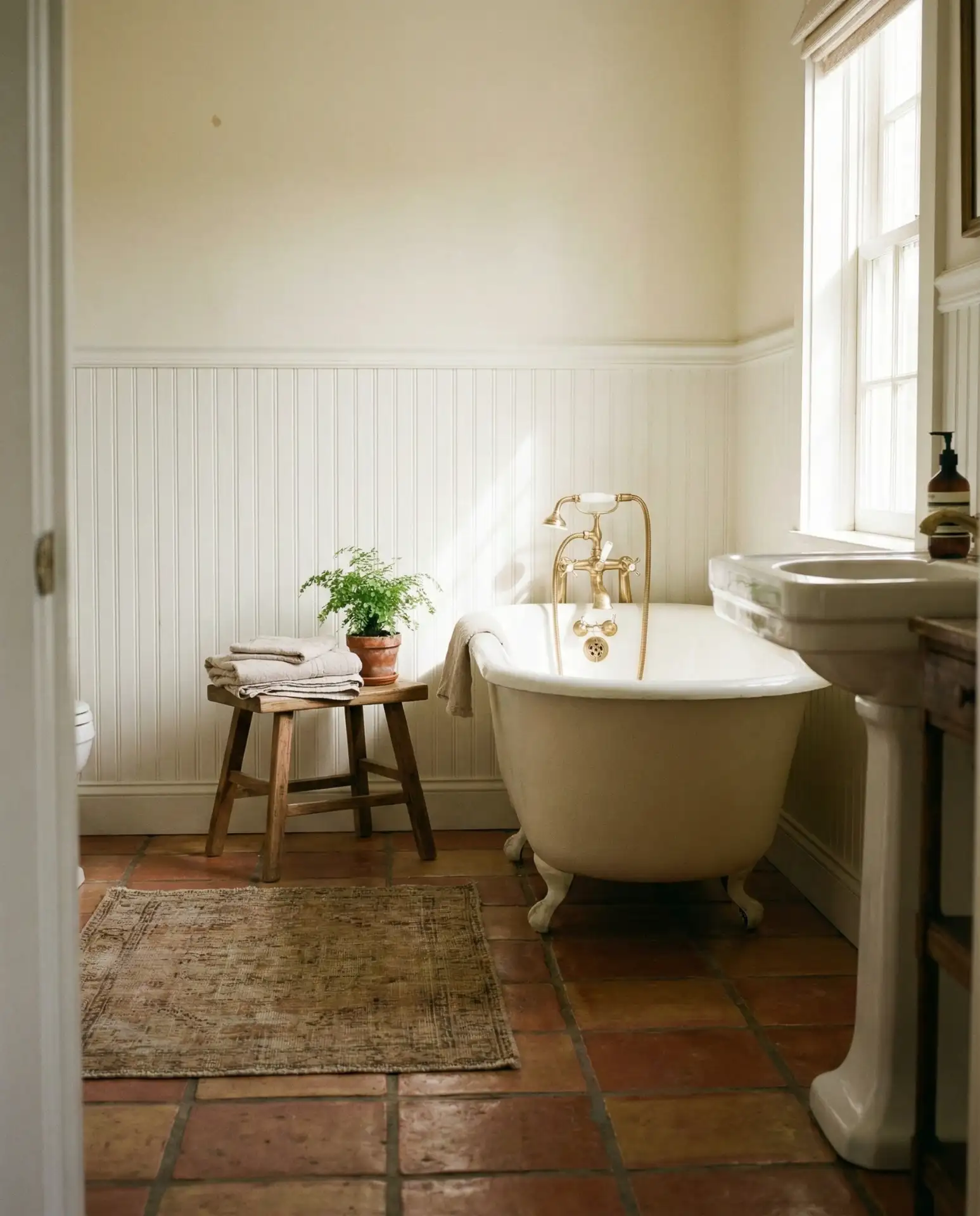
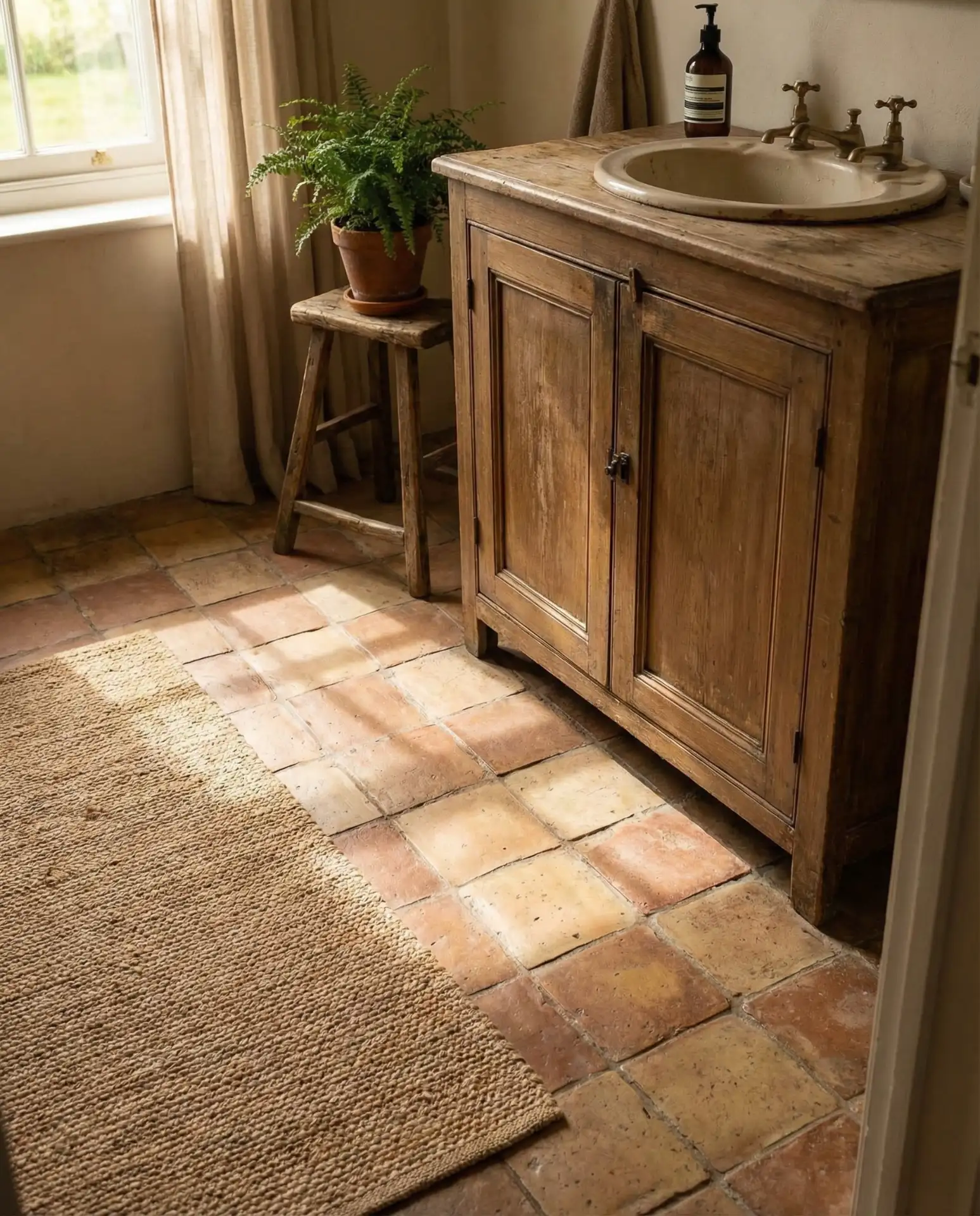
Rustic ceramic tiles with a weathered or distressed finish bring Old World charm and a sense of history to farmhouse or traditional bathrooms. These tiles often feature earthy tones—terracotta, cream, and soft brown—and subtle texture that mimics age and wear. They’re ideal for floors or wainscoting in spaces where you want a cozy, lived-in feel.
Ceramic tiles are generally more affordable than porcelain or natural stone, making them a smart choice for homeowners working within a tighter budget. The weathered finish also hides minor chips or scratches better than glossy tiles, which means they’ll continue to look good even with daily family use and the occasional dropped shampoo bottle.
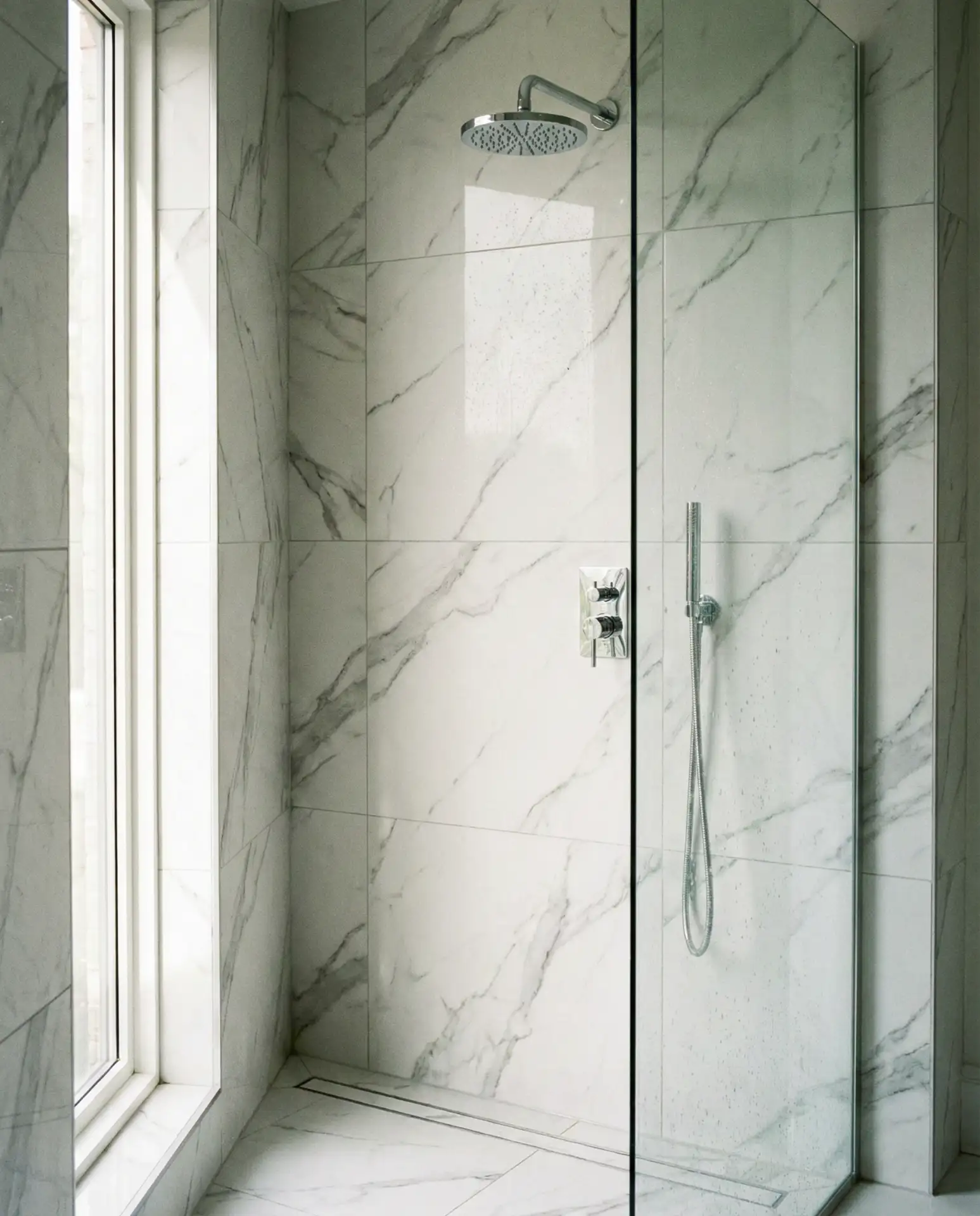
9. Marble-Look Porcelain for Luxury on a Budget
Porcelain tiles that mimic the veining and elegance of natural marble deliver high-end style without the maintenance headaches or cost. These tiles are perfect for large master bathrooms or shower surrounds where you want a luxurious aesthetic but need something more durable and stain-resistant. The neutral palette works with virtually any design direction, from modern to traditional.
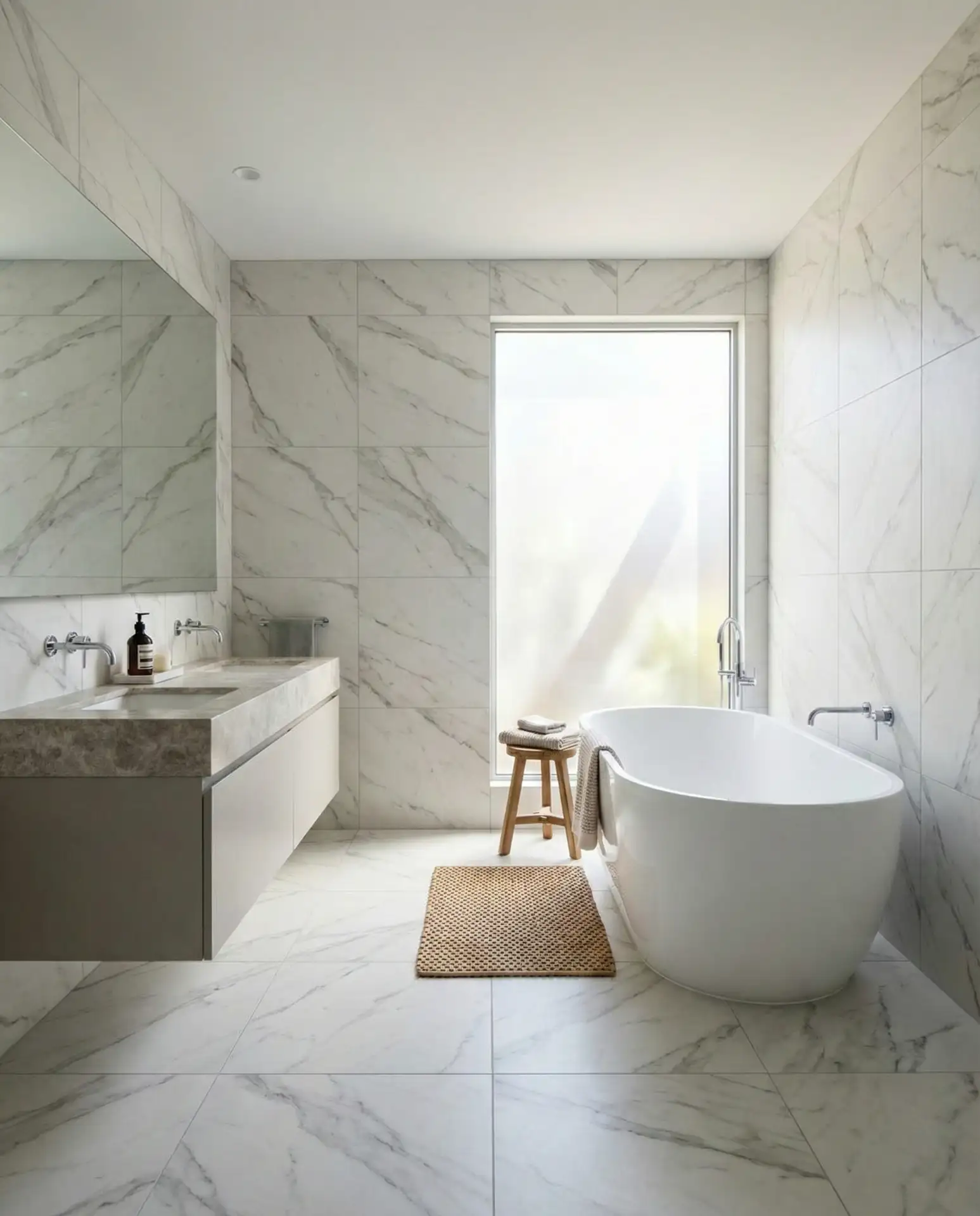
A friend who renovated her bathroom last year chose marble-look porcelain after struggling with real marble in her kitchen—she loved the look but hated how quickly it stained and etched. The porcelain delivered the same visual elegance with none of the stress, and she’s been recommending it to everyone since.
10. Penny Round Tiles for Vintage Bathrooms
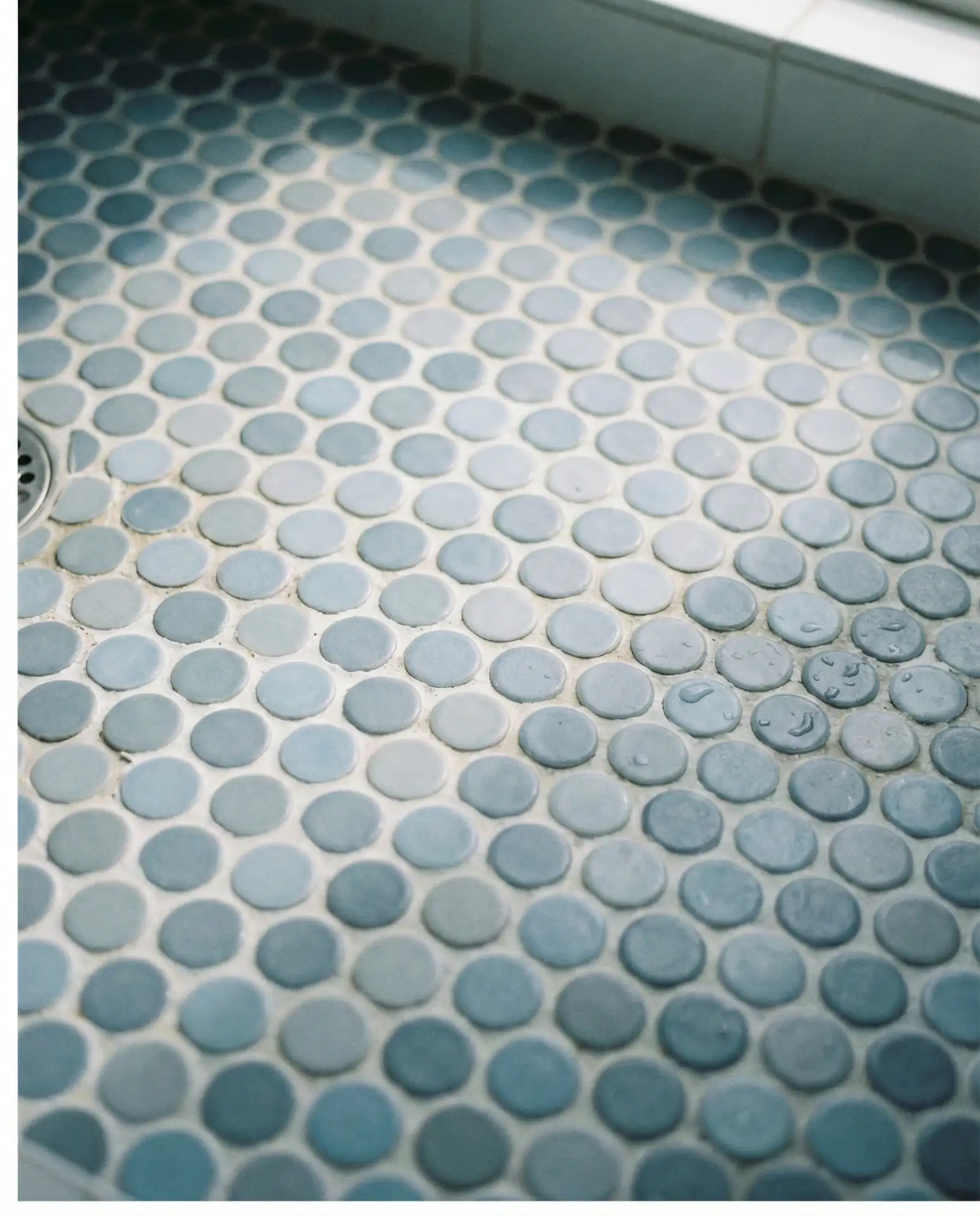
Tiny penny round tiles evoke the charm of early 20th-century American bathrooms, and they’re experiencing a resurgence among homeowners who love vintage or traditional design. These small, circular tiles are typically used on floors or in shower pans, where their texture provides excellent slip resistance. Classic white remains the most popular choice, but soft pastels or black and white mixes add personality.
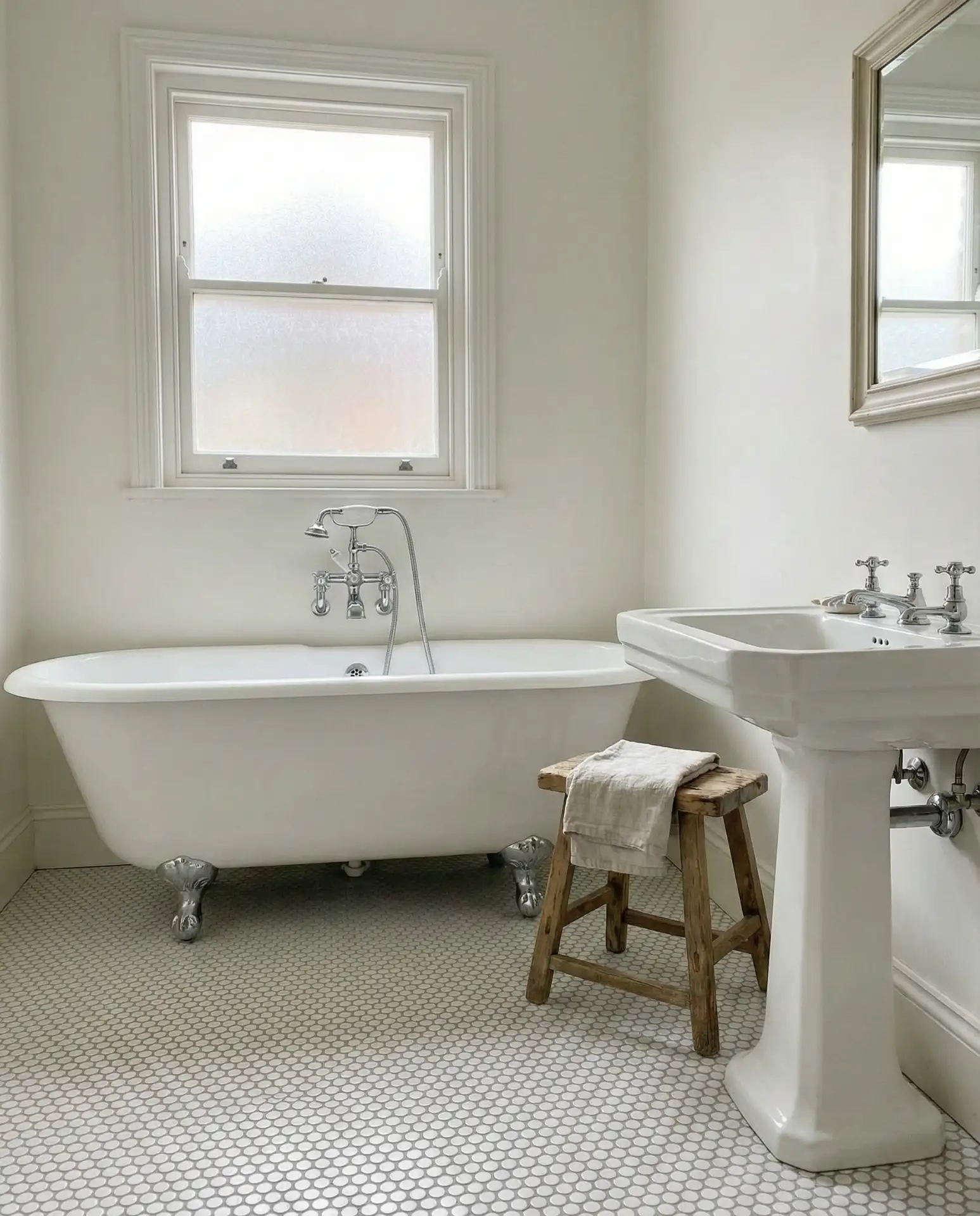
Penny tiles work best in smaller bathrooms or powder rooms where the intricate pattern doesn’t become visually overwhelming. They’re also a favorite in historic home renovations across the Northeast and Midwest, where homeowners want to honor original architectural details while updating for modern function and durability.
11. Wood-Look Tile for Farmhouse Warmth
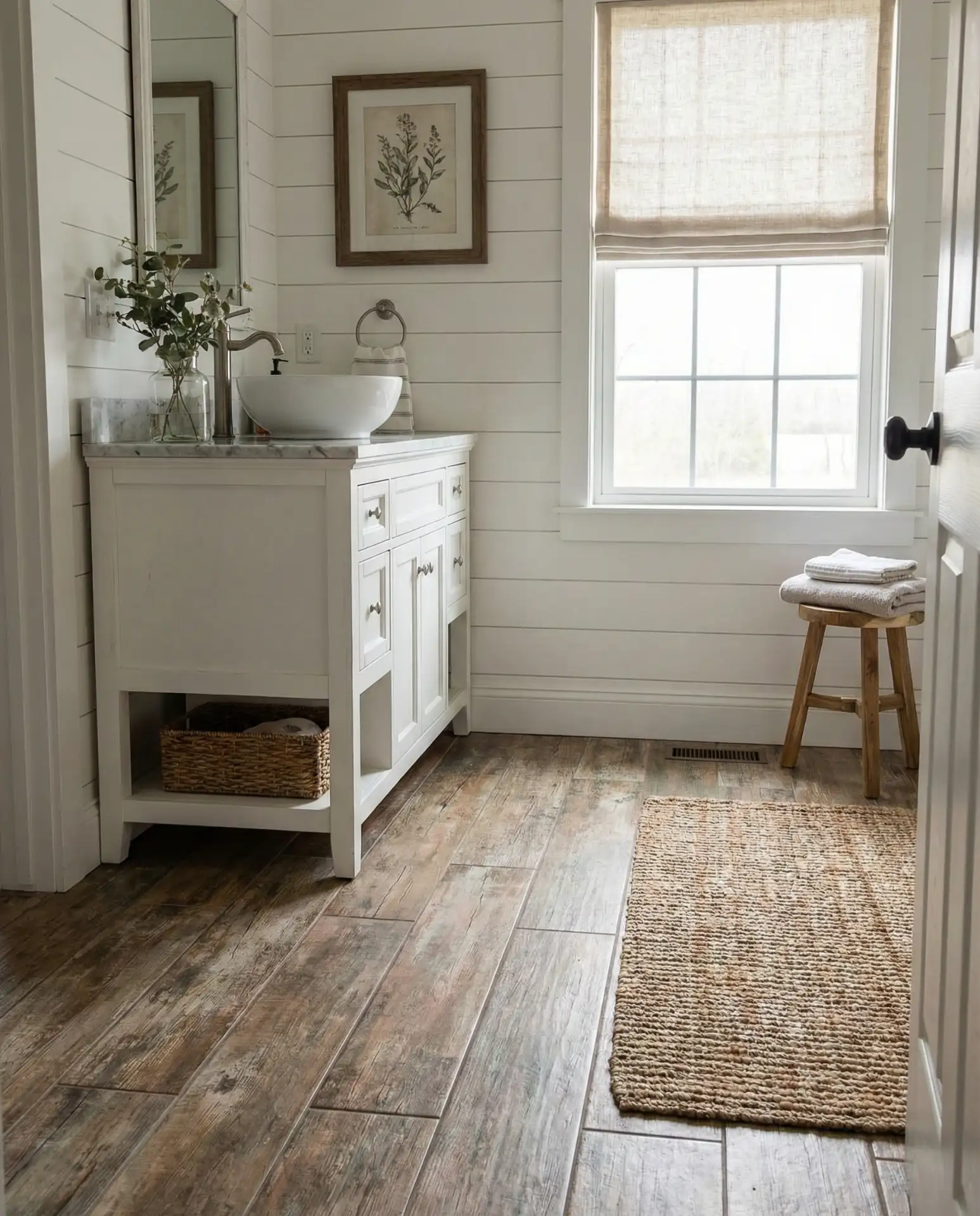
Porcelain or ceramic tiles that replicate the look of reclaimed wood bring the warmth and character of a farmhouse aesthetic without the worry of water damage. These tiles are perfect for floors in bathrooms where you want the cozy feel of wood but need the practicality of tile. They pair beautifully with shiplap walls, vintage fixtures, and neutral color schemes.
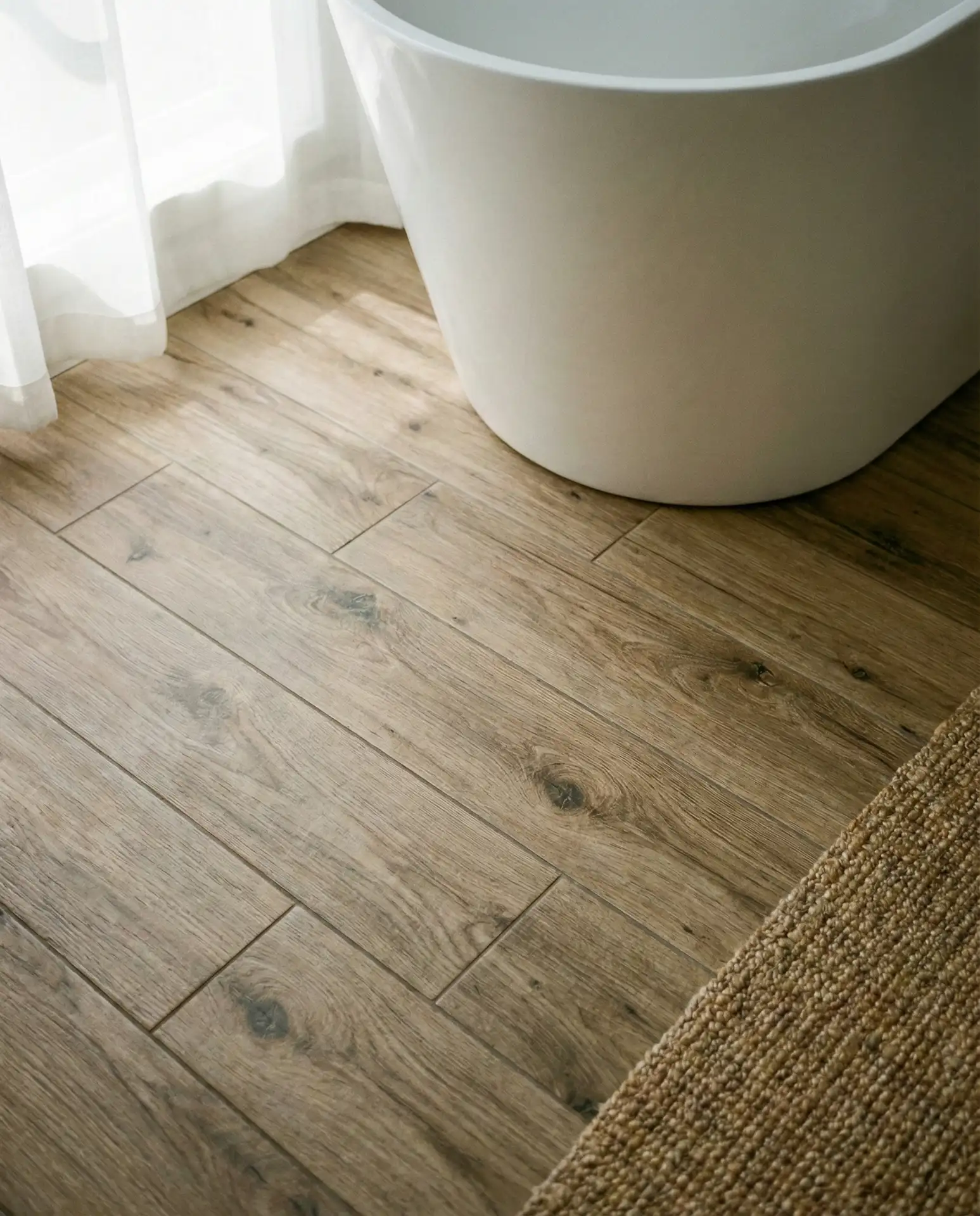
Avoid installing these tiles with perfectly uniform spacing—real wood has natural variation, so slightly irregular grout lines actually enhance the illusion. Many installers recommend using a mix of tile lengths from the same collection to mimic the randomness of actual hardwood planks, which makes the final result far more convincing.
12. Glossy White Ceramic for Small Bathrooms
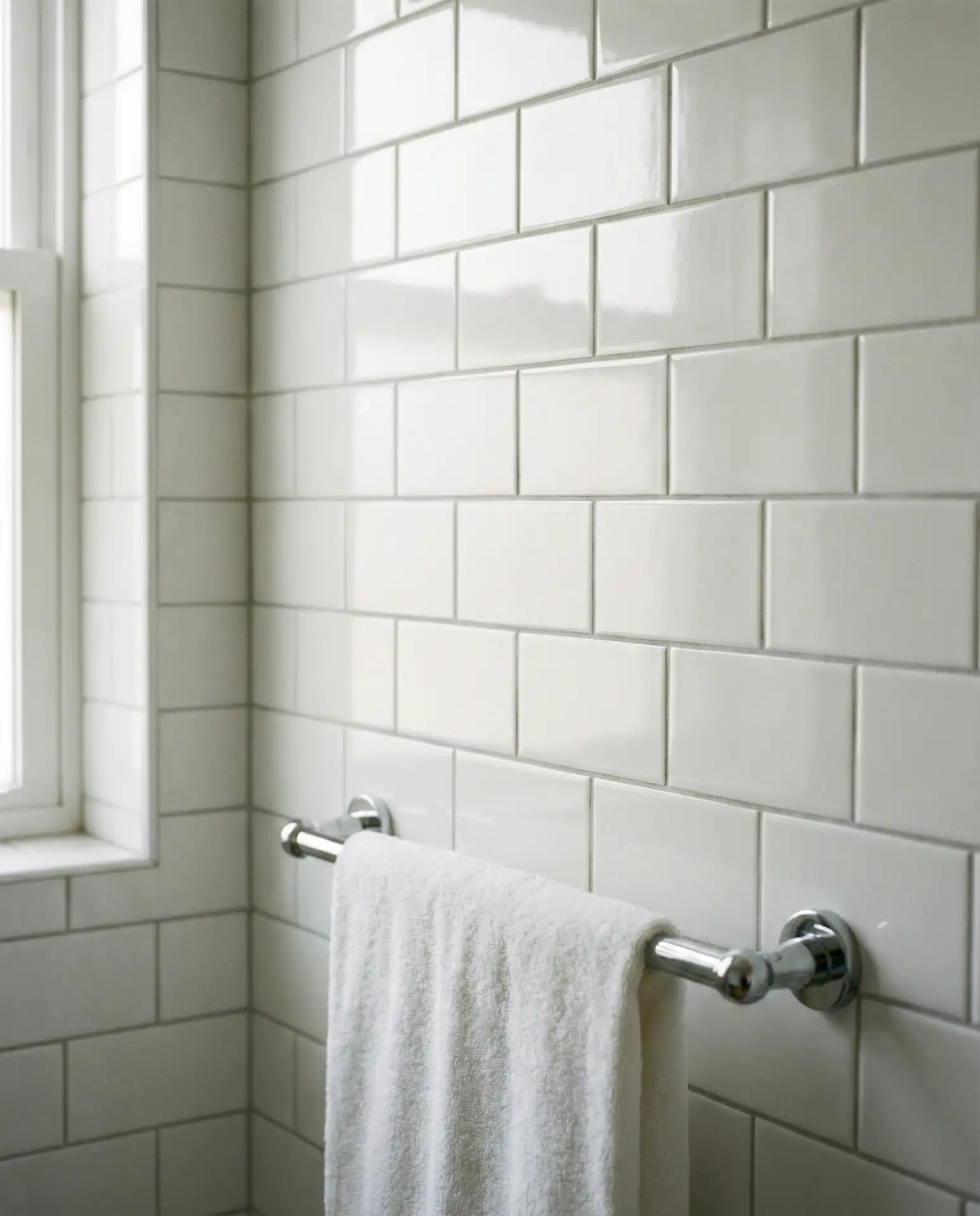
High-gloss white ceramic tiles are a smart choice for small bathrooms because they reflect light and make compact spaces feel brighter and more open. The shiny finish bounces natural and artificial light around the room, creating an airy, clean vibe that’s perfect for guest baths or powder rooms. Simple and affordable, these tiles deliver maximum impact with minimal fuss.
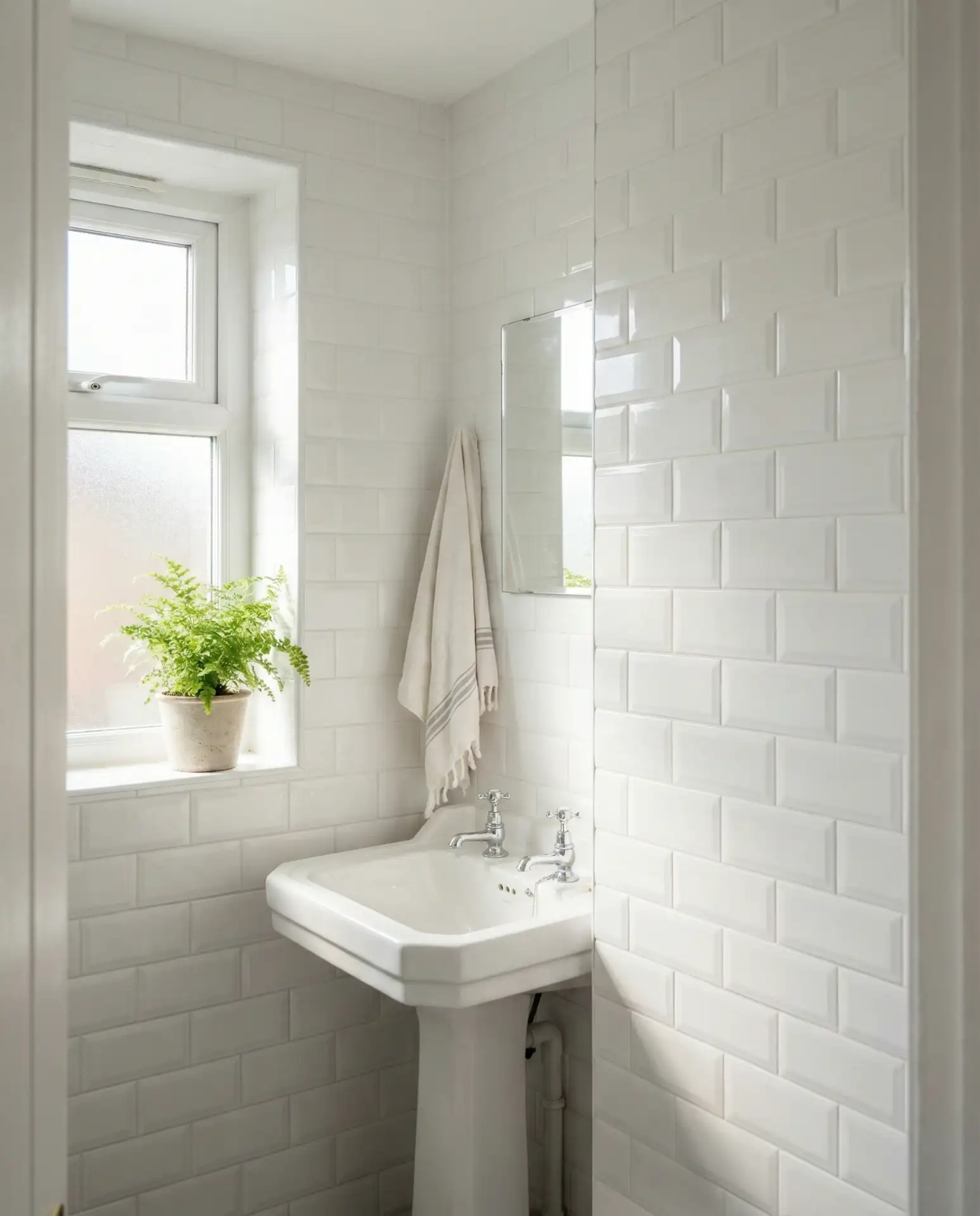
From a budget perspective, glossy white ceramic tiles are among the most affordable options on the market, and they’re widely available at big-box stores like Floor & Decor and Home Depot. Installation is straightforward, and replacement tiles are easy to source if you ever need to make repairs down the line.
13. Matte Black Floor Tiles for Bold Contrast
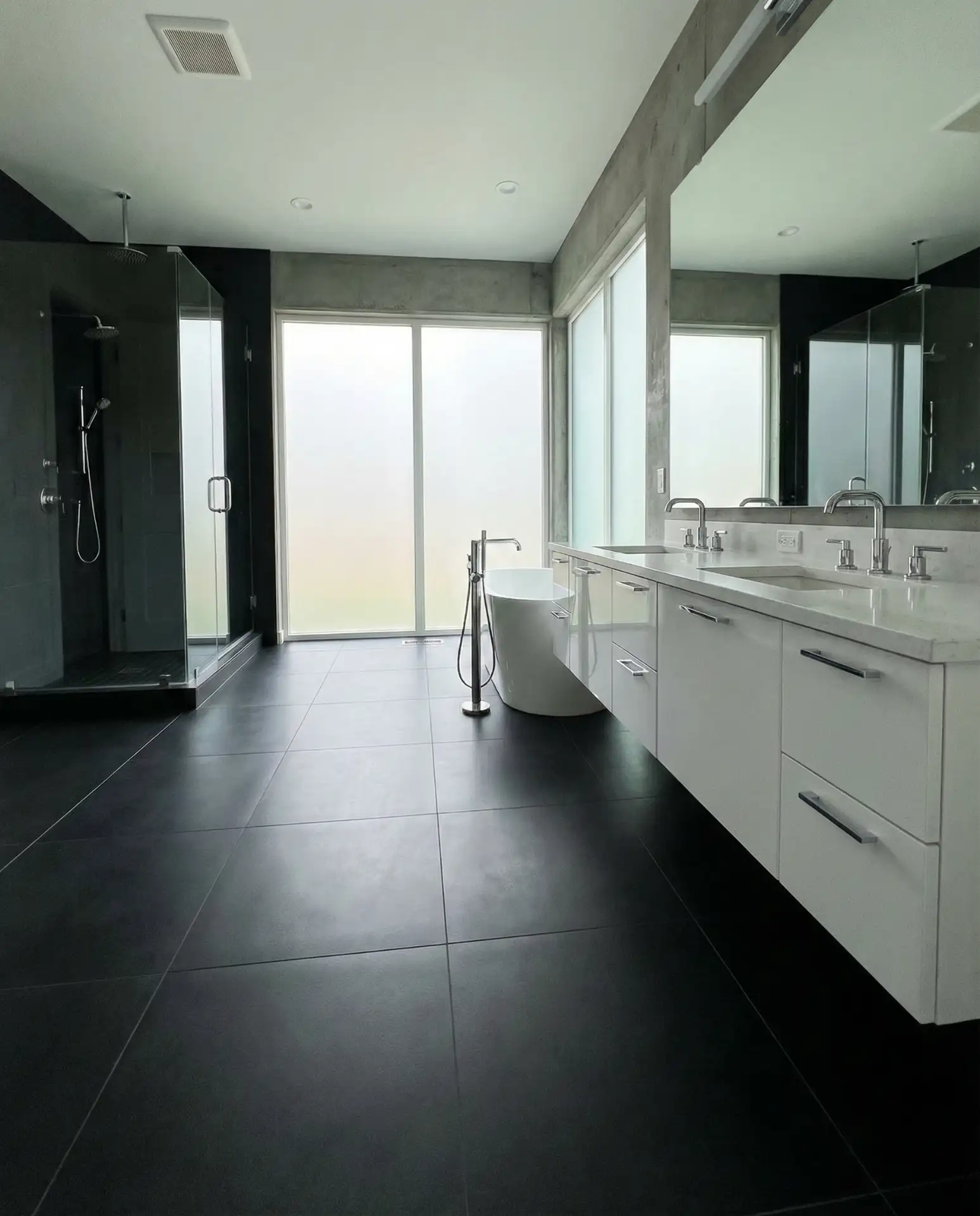
Matte black floor tiles create dramatic contrast and ground a modern bathroom with sophistication and edge. When paired with white walls or fixtures, the effect is striking and contemporary, drawing the eye down and creating a strong visual anchor. These tiles work especially well in large bathrooms where the dark color won’t make the space feel cramped.
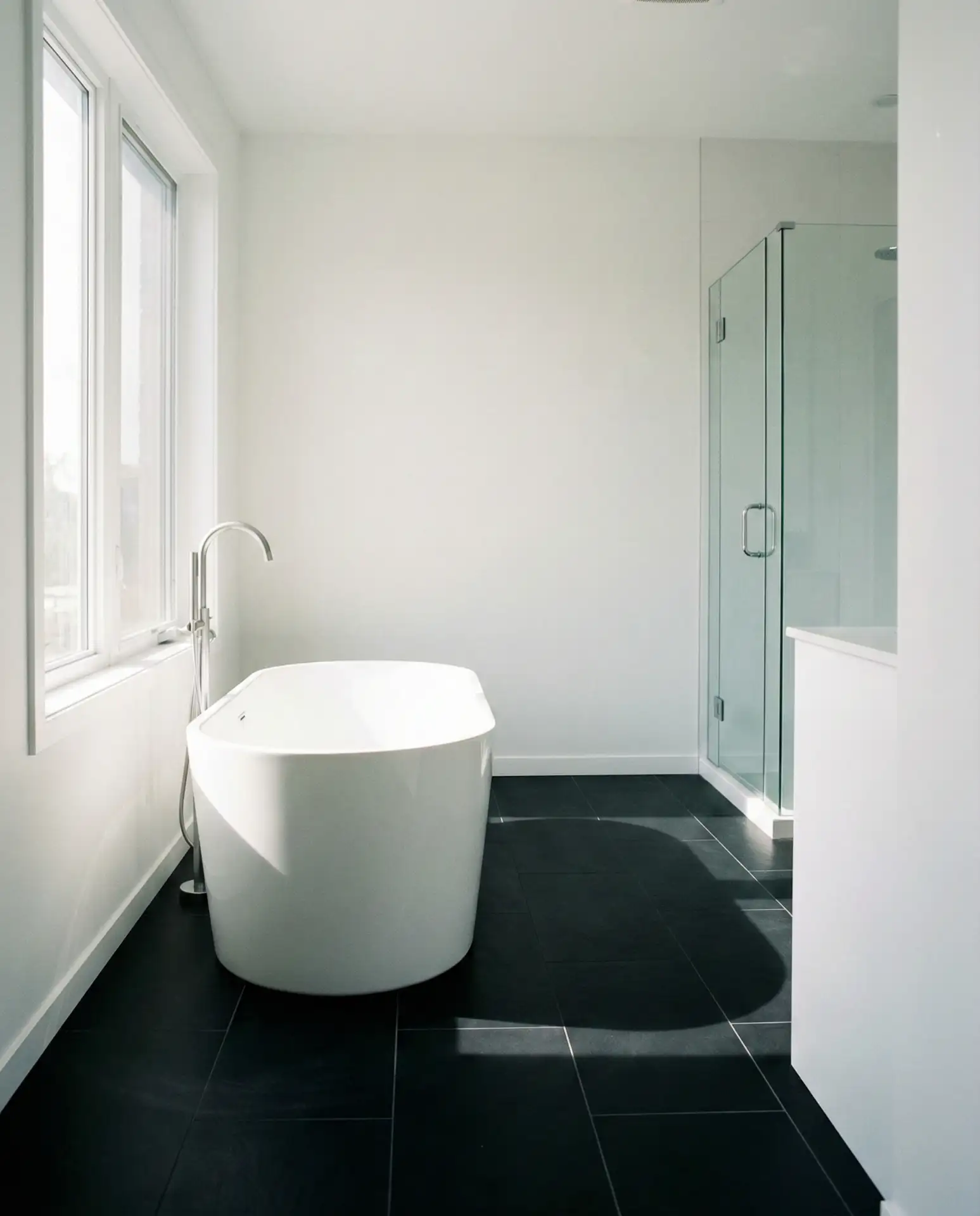
Expert designers often recommend matte finishes over glossy for black tiles because they hide water spots and fingerprints far better, keeping the floor looking cleaner between washes. This is especially helpful in high-traffic family bathrooms where maintenance time is limited and you want the space to look polished with minimal effort.
14. Patterned Cement Tiles for Half Baths
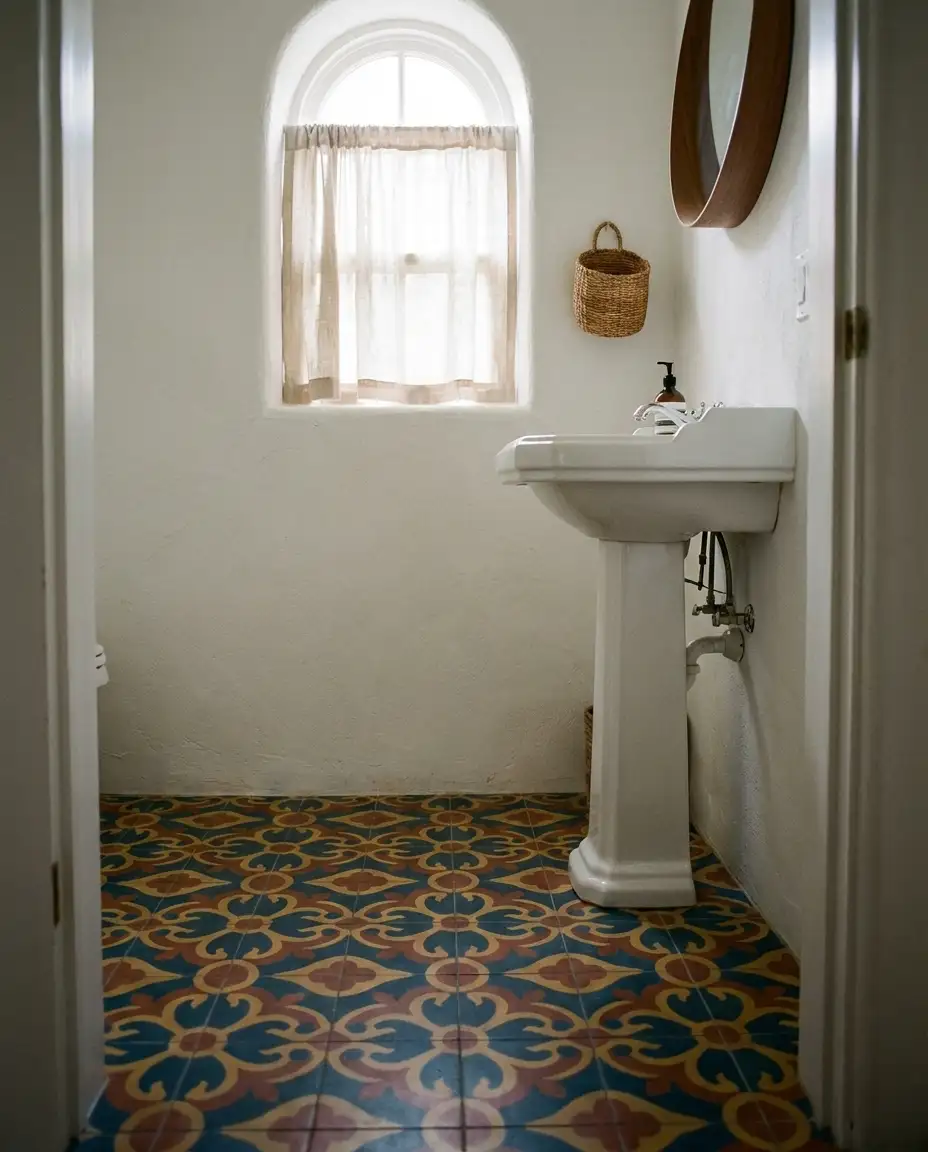
Bold, graphic cement tiles with intricate patterns are perfect for half baths or powder rooms where you can afford to take design risks without overwhelming the rest of the home. These tiles bring color, personality, and a sense of craftsmanship, and they pair beautifully with simple white walls and fixtures to keep the focus on the floor. The durability of cement tile makes it a practical choice despite its artistic appeal.
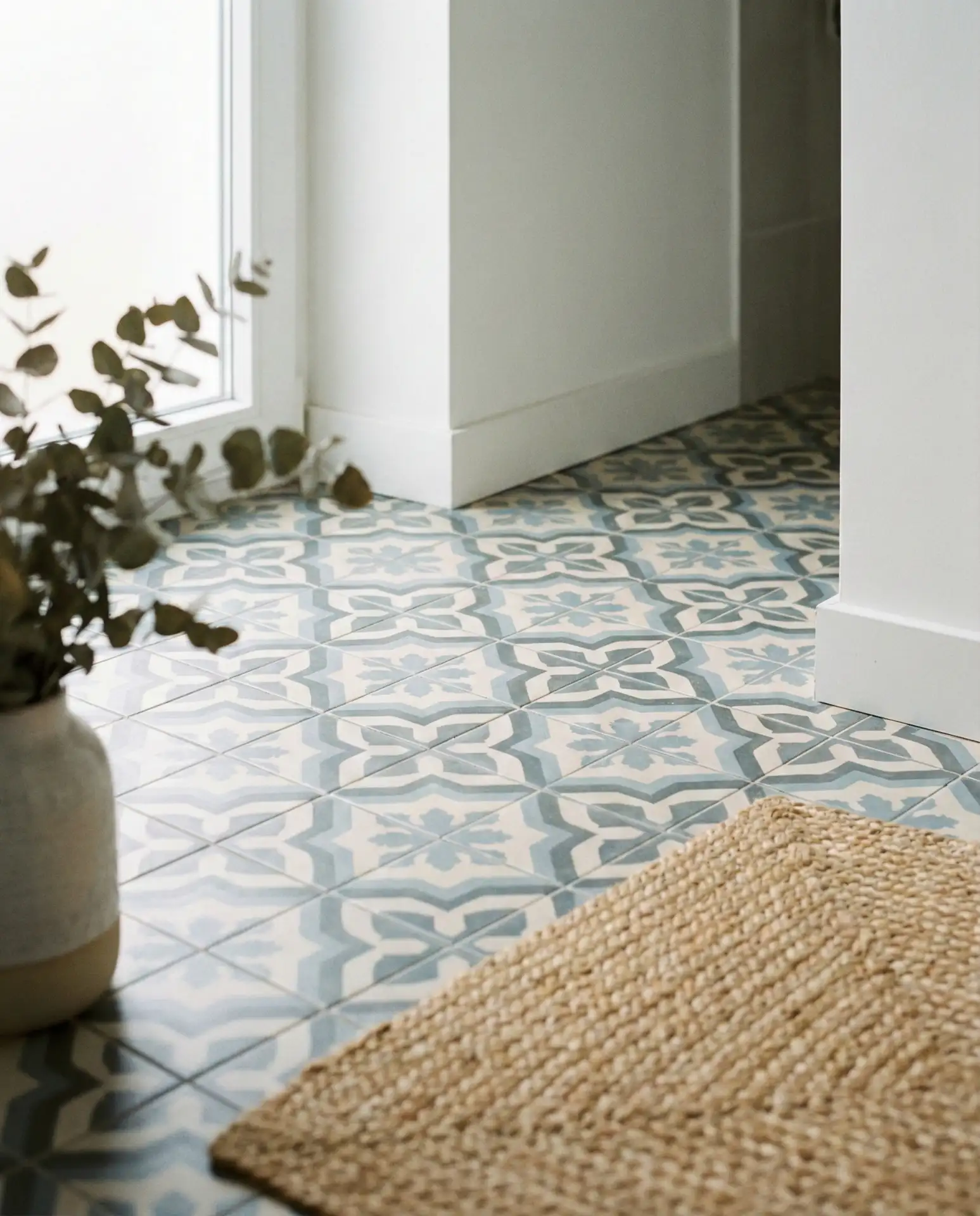
Cement tiles do require sealing to protect against stains, so factor in that maintenance step before committing. However, once sealed, they’re incredibly resilient and develop a beautiful patina over time that only adds to their character. Homeowners in Austin, Portland, and Brooklyn have embraced these tiles for their blend of old-world craftsmanship and modern design sensibility.
15. Soft Gray Subway Tiles for Neutral Inspiration
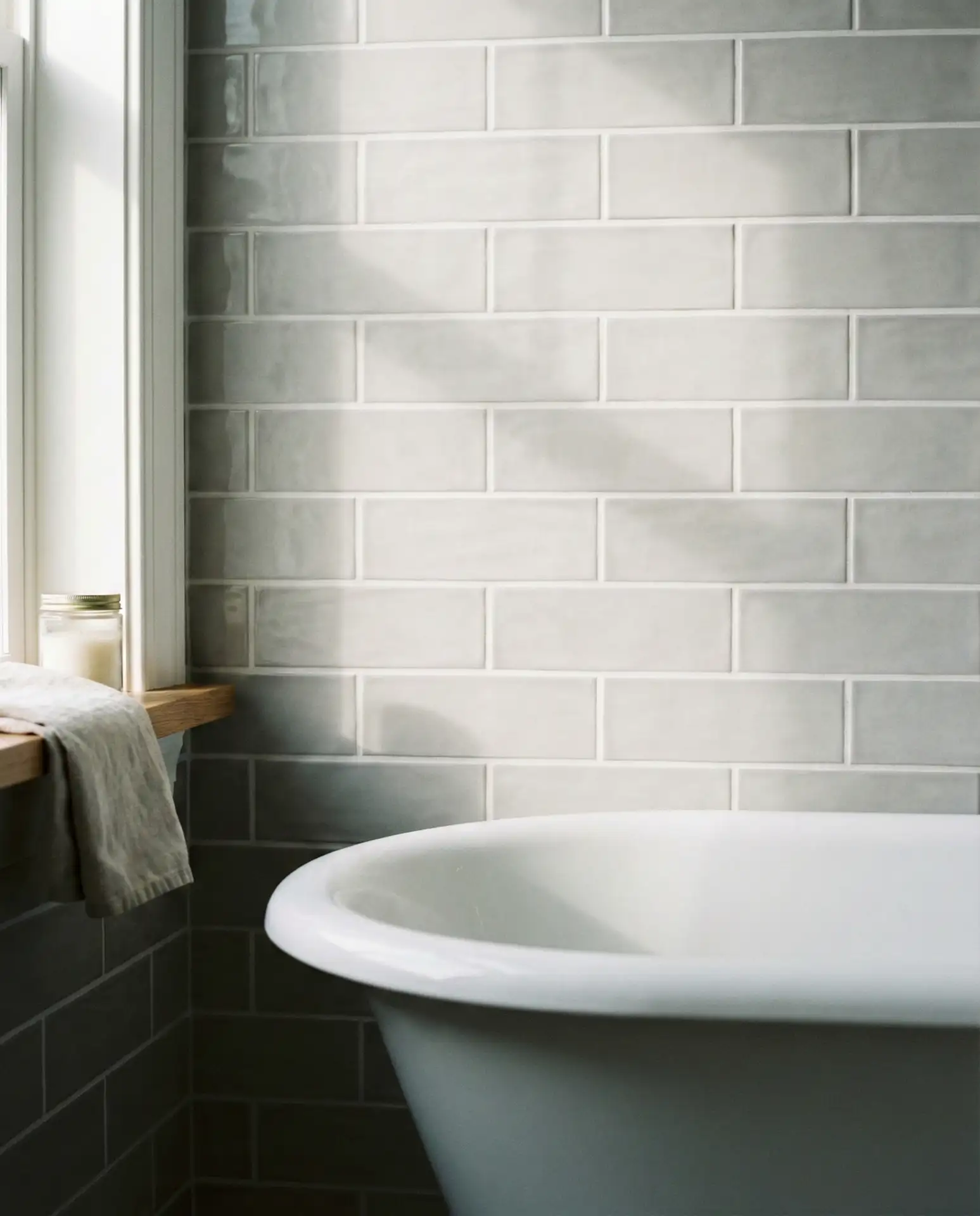
Soft gray subway tiles offer a sophisticated alternative to stark white, bringing warmth and depth to neutral bathroom designs. This shade works beautifully in master bath spaces where you want a calming, spa-like atmosphere without veering into cold or clinical territory. The modern aesthetic pairs well with brushed nickel, chrome, or matte black fixtures.
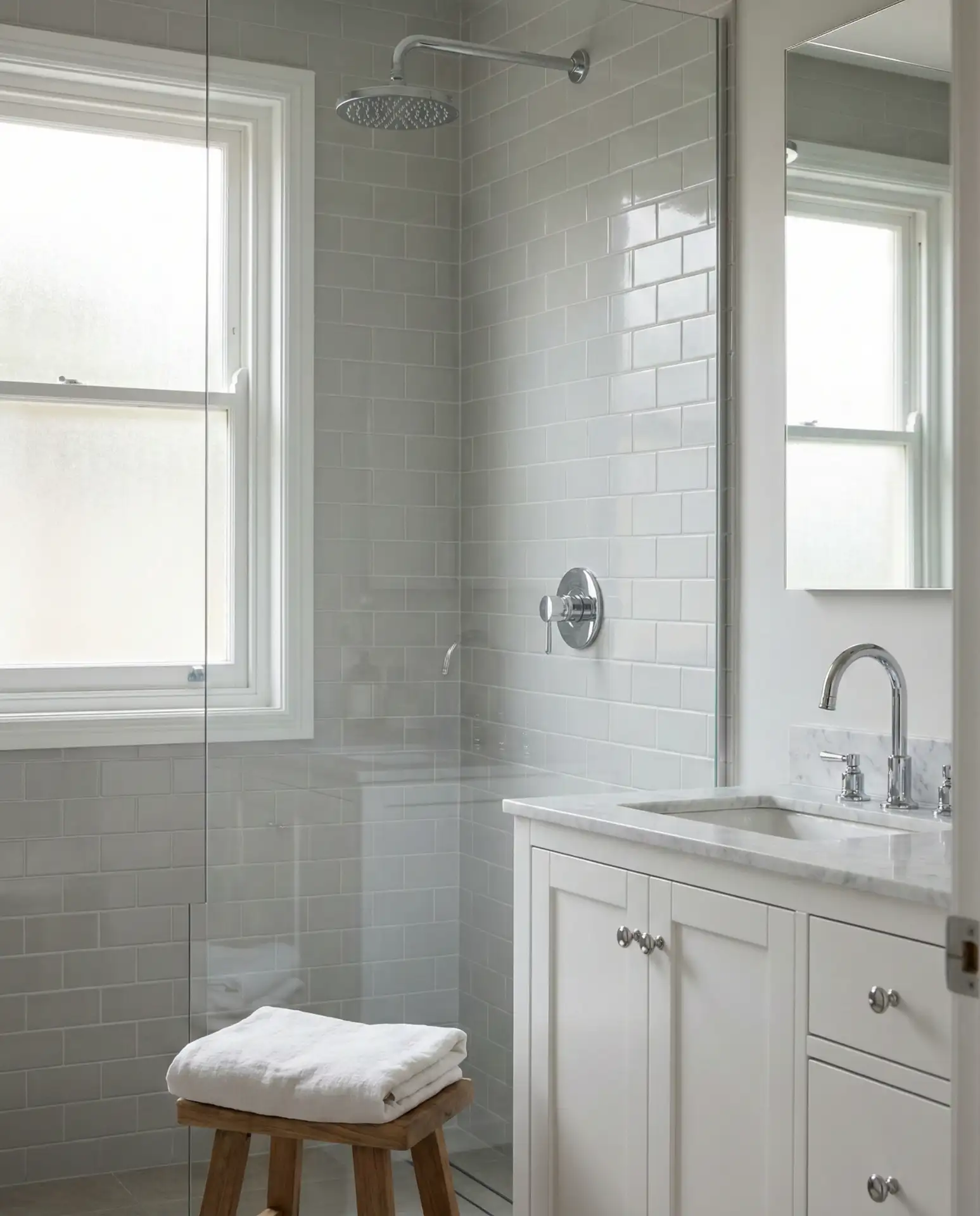
One practical advantage is that gray shows less discoloration from hard water and soap scum compared to pure white, making it a low-maintenance choice for busy households. It’s also versatile enough to accommodate changing décor—you can swap out towels, rugs, and accessories without worrying about clashing with the tile.
16. Textured Stone-Look Tiles for Walk-In Showers
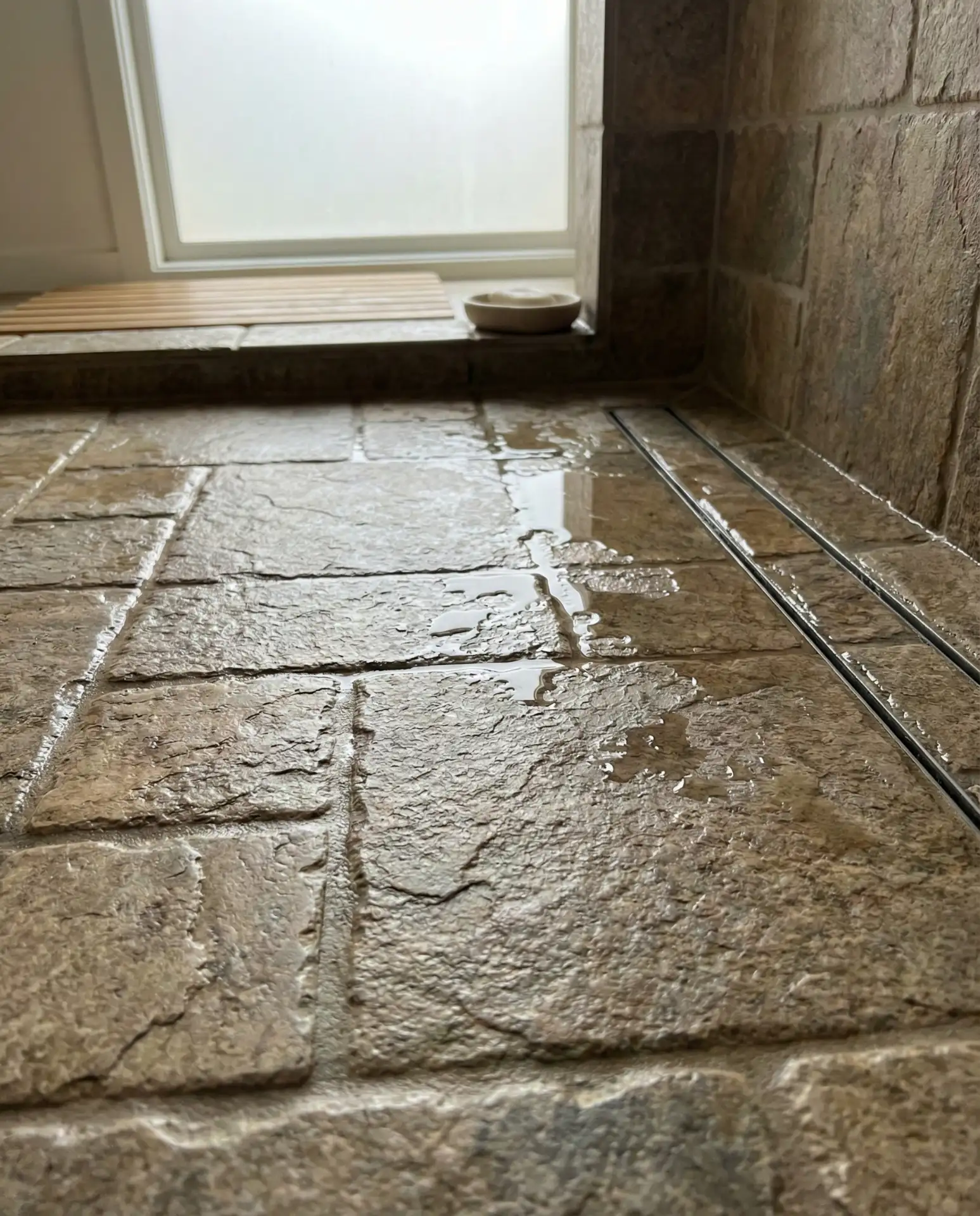
Textured tiles that mimic natural stone bring an organic, spa-inspired feel to shower walk-in designs. The surface variation provides slip resistance underfoot, which is both practical and reassuring, especially in curbless or barrier-free showers. These tiles often come in neutral tones—taupe, sand, and warm gray—that create a soothing, grounded environment.
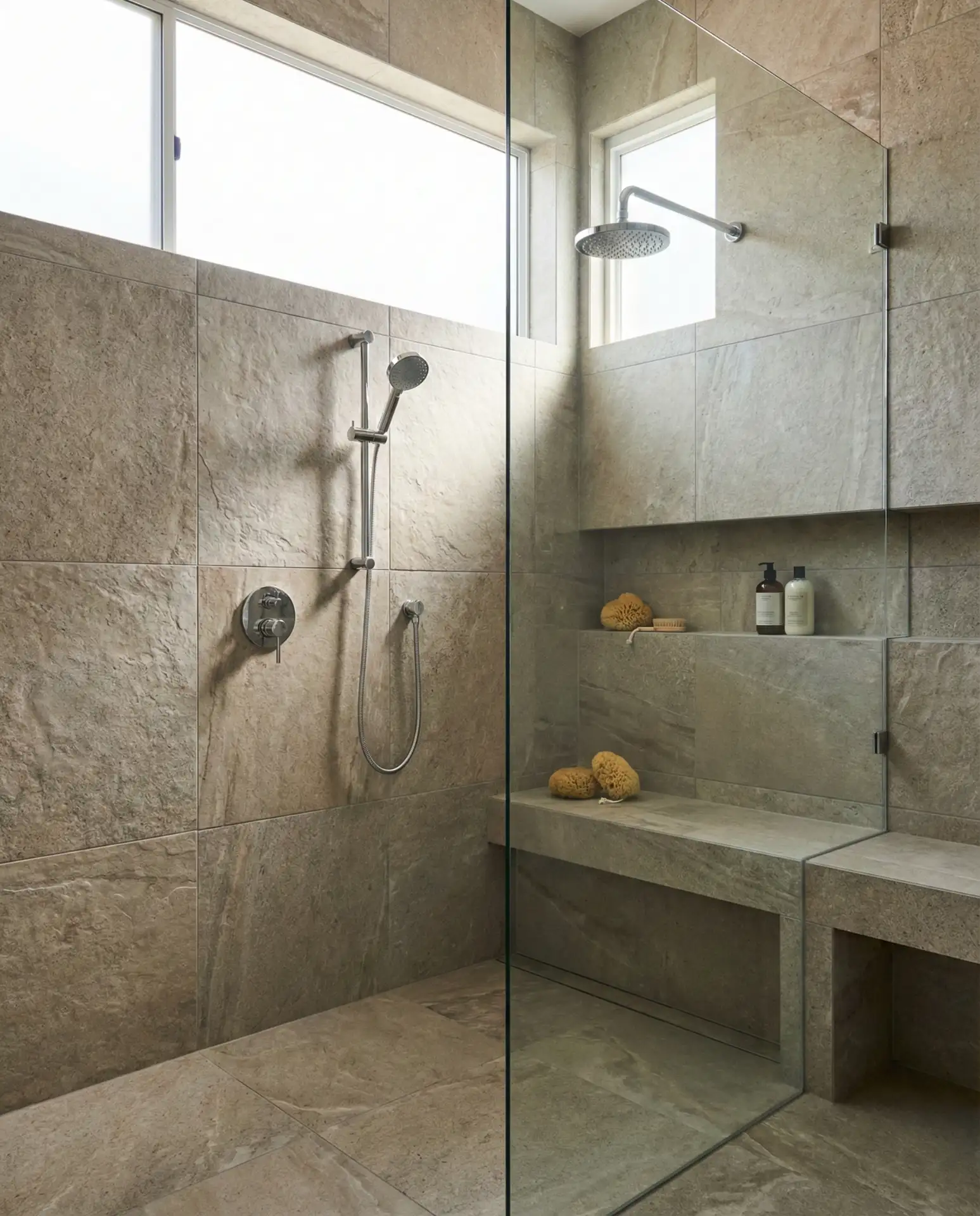
Homeowners who invest in aging-in-place renovations or universal design features often choose these tiles for their safety benefits without sacrificing aesthetics. The natural look also complements a wide range of bathroom styles, from rustic to contemporary, making it a safe bet for long-term enjoyment.
17. Classic Basketweave Tile Pattern
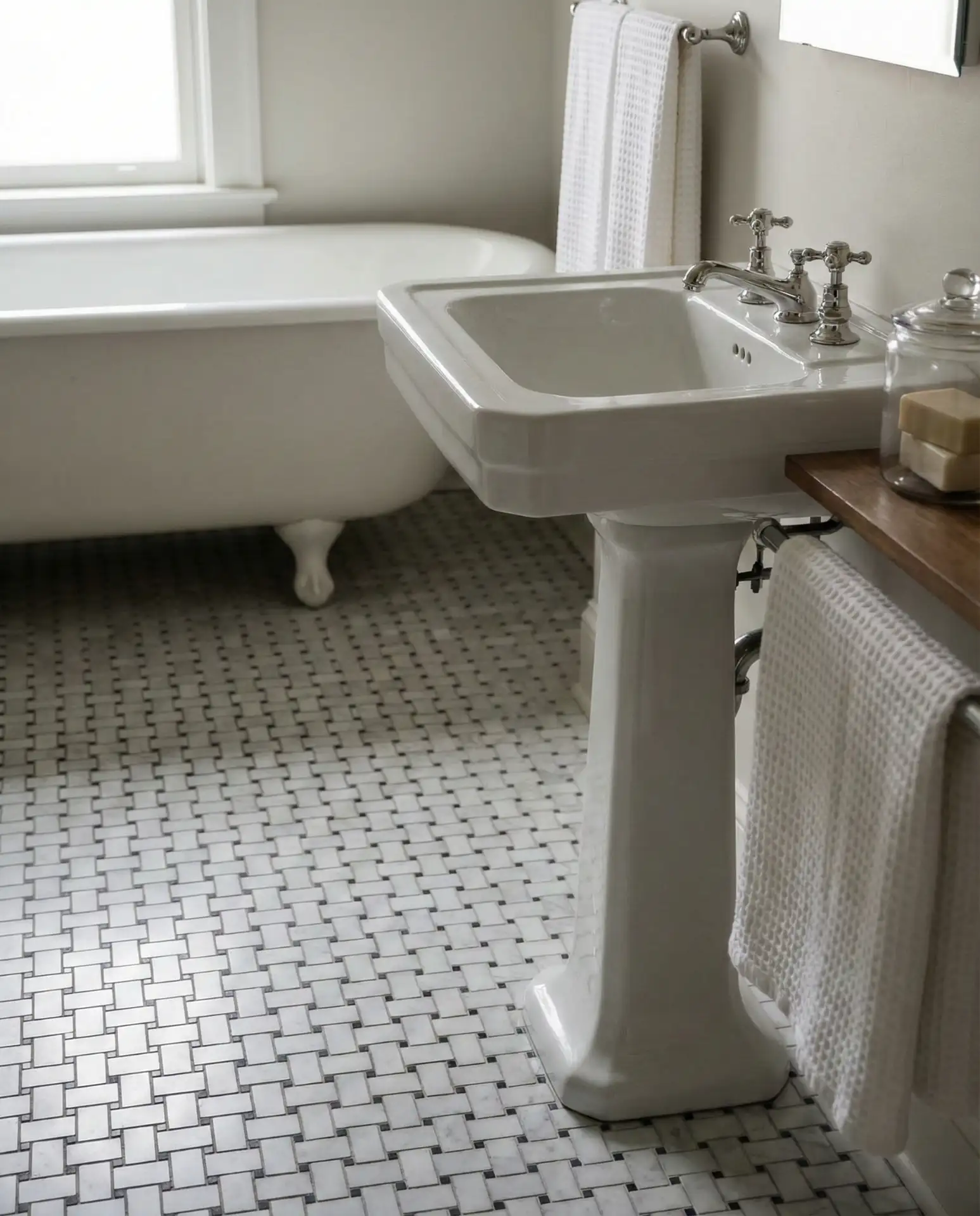
The basketweave pattern, created by alternating rectangular tiles in a woven-like arrangement, brings timeless elegance to traditional or vintage bathrooms. This layout works beautifully with white or neutral tiles and adds visual interest without relying on color or bold patterns. It’s a subtle way to elevate a simple tile choice into something special.
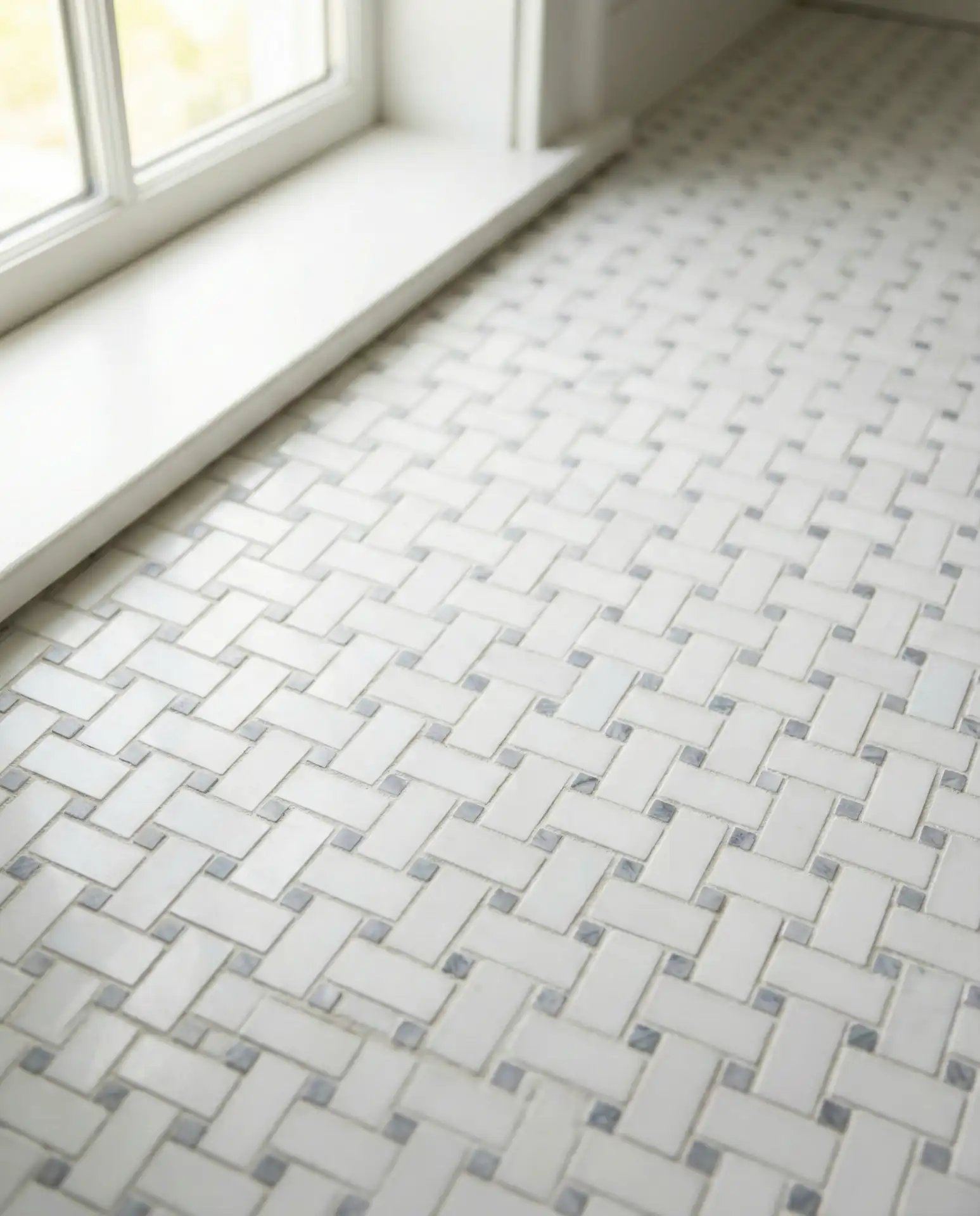
This pattern works best in bathrooms where you want to honor classic design principles—think Craftsman bungalows, Colonial Revivals, or Victorian-era homes. It’s also a favorite in upscale hotels and bed-and-breakfasts, where the goal is to create a sense of refined, understated luxury that feels welcoming rather than stuffy.
18. Blue-Green Ceramic Tiles for Coastal Bathrooms
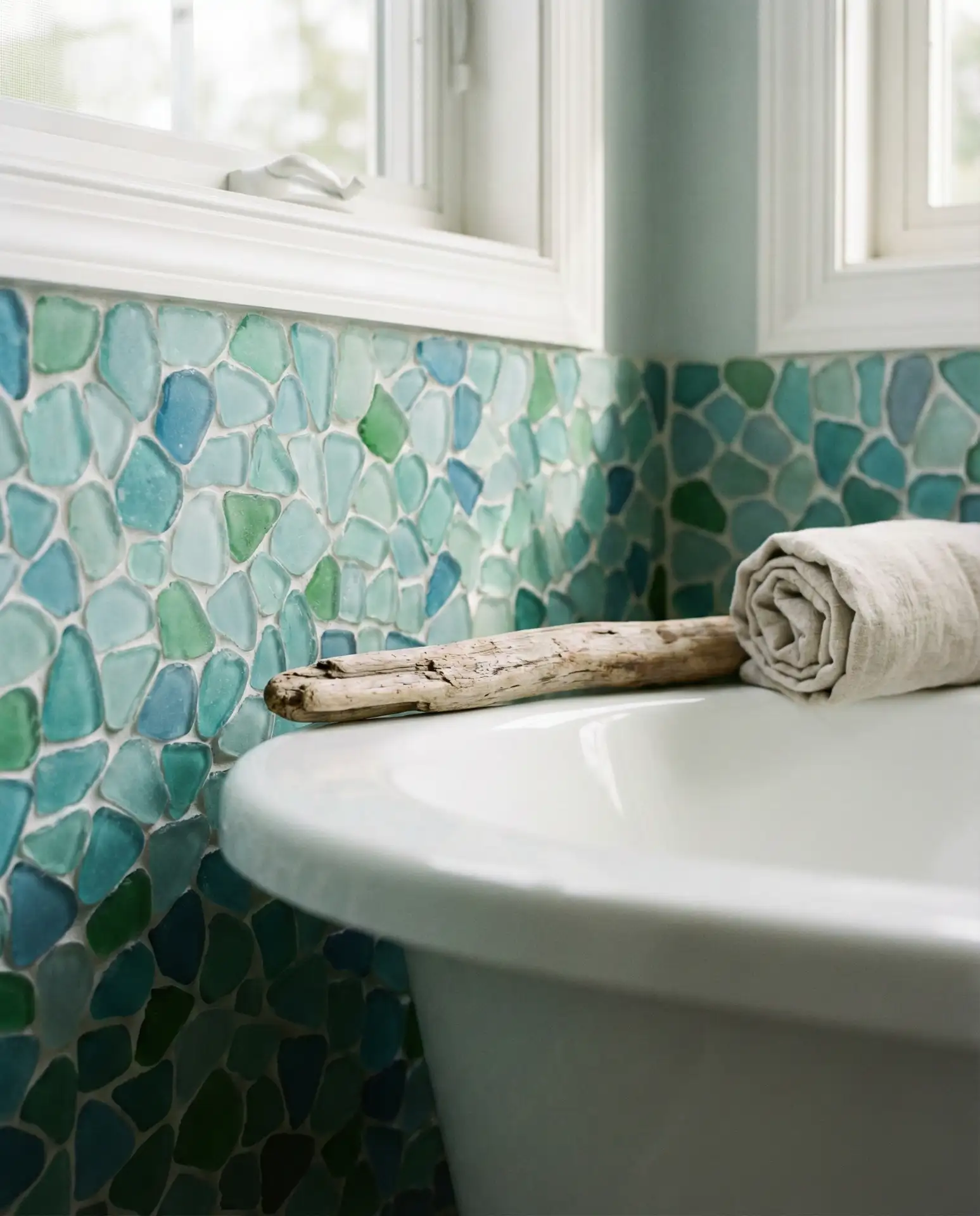
Soft blue-green ceramic tiles evoke the colors of sea glass and ocean water, making them a natural fit for coastal-inspired bathrooms. These tiles can be used on shower walls, vanity backsplashes, or even as a feature accent in an otherwise neutral space. The soothing color promotes relaxation and pairs beautifully with white, driftwood tones, and natural textures.
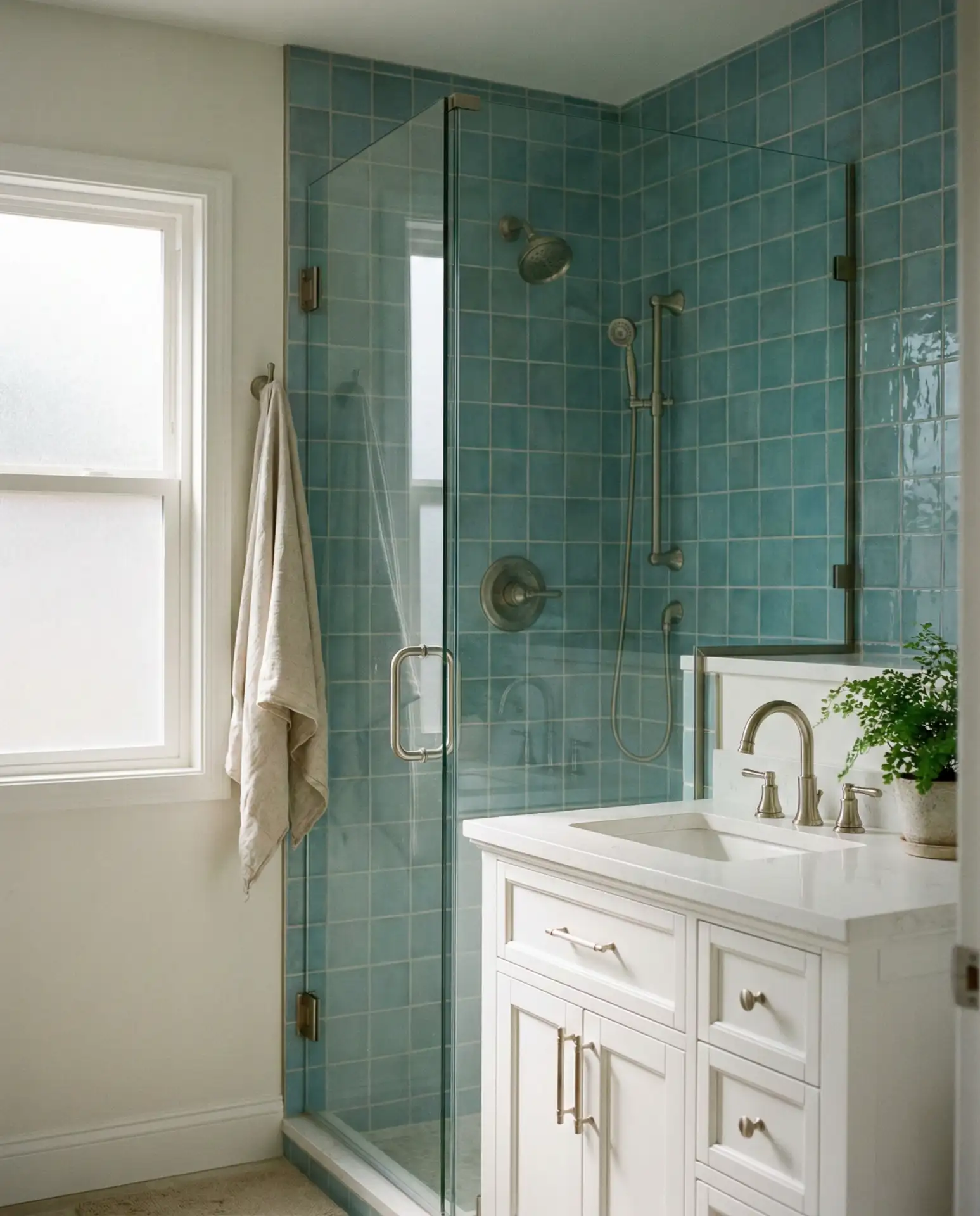
A common mistake is choosing tiles that are too bright or saturated—soft, muted tones create a more authentic coastal feel and won’t overwhelm the space. Look for tiles with slight color variation from piece to piece, which mimics the natural irregularities of the ocean and adds depth and character to the installation.
19. Beige Travertine for Warm Traditional Style
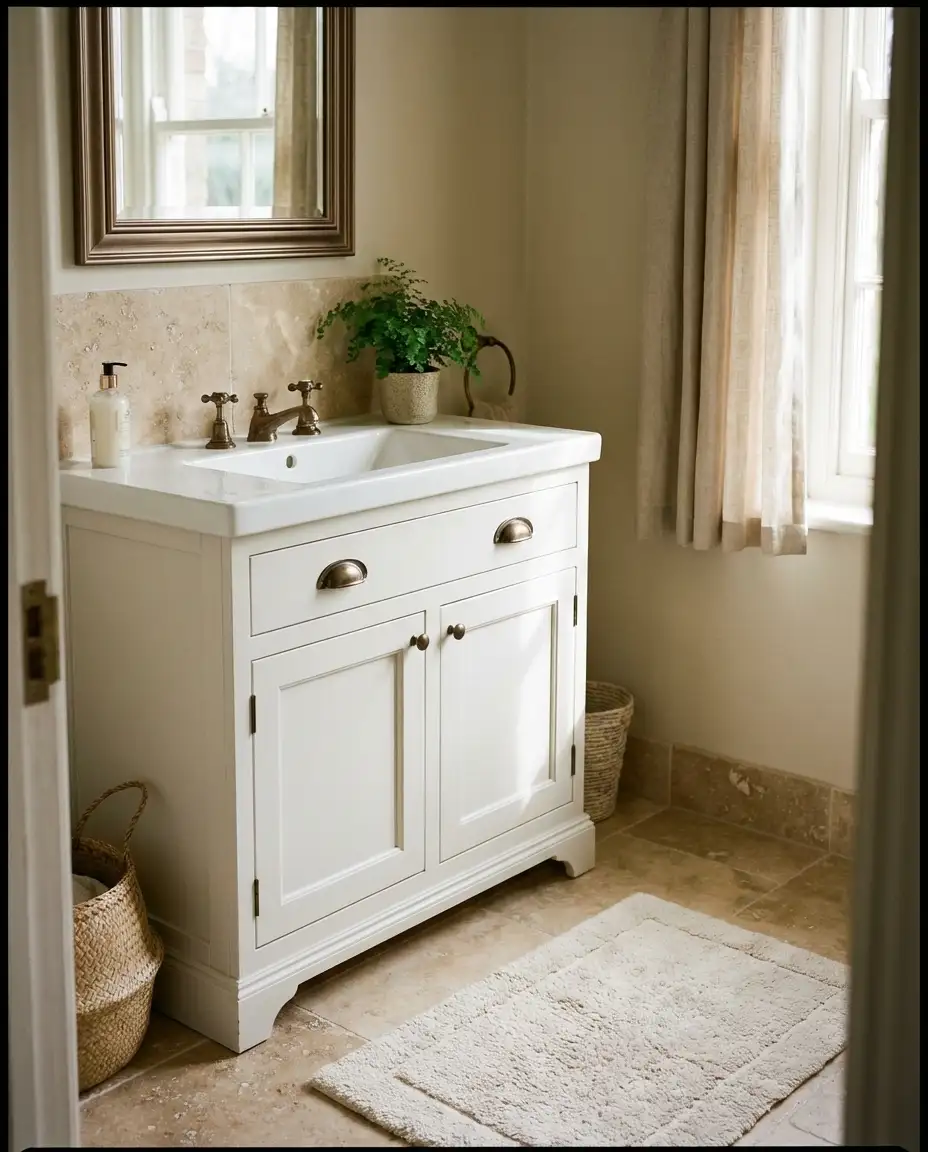
Natural beige travertine tiles bring warmth, texture, and a sense of Old World elegance to traditional bathrooms. The stone’s natural pitting and veining create visual interest, and the warm neutral tones work beautifully with bronze or brass fixtures. These tiles are often used on floors or shower walls in larger, more formal bathrooms.
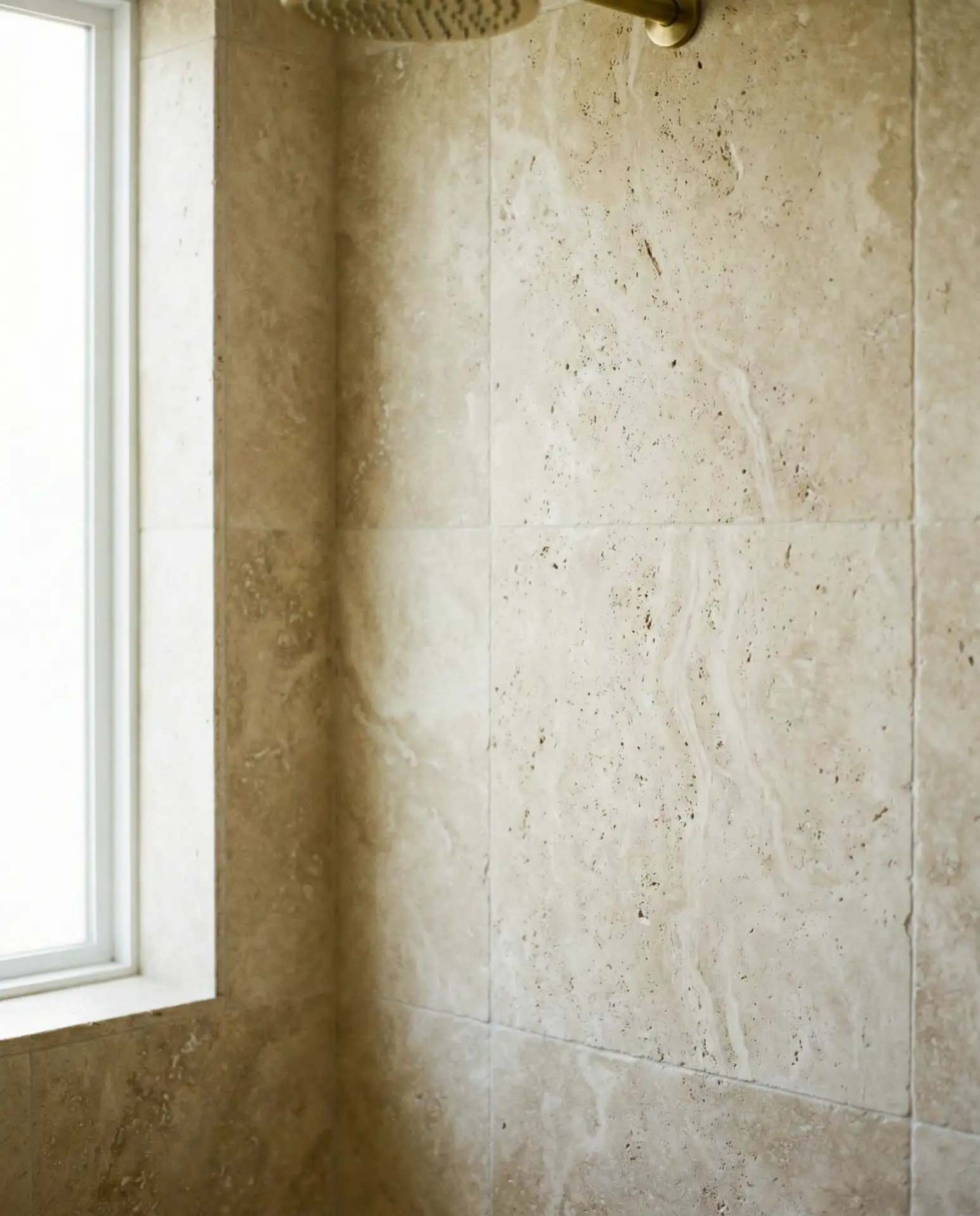
Travertine does require regular sealing to protect against moisture and staining, so it’s best suited to homeowners who don’t mind a bit of upkeep in exchange for natural beauty. In regions like the Southwest and Mediterranean-style homes in California, travertine is a popular choice that complements the architectural vernacular and regional aesthetic.
20. Sleek Large-Format Gray Tiles
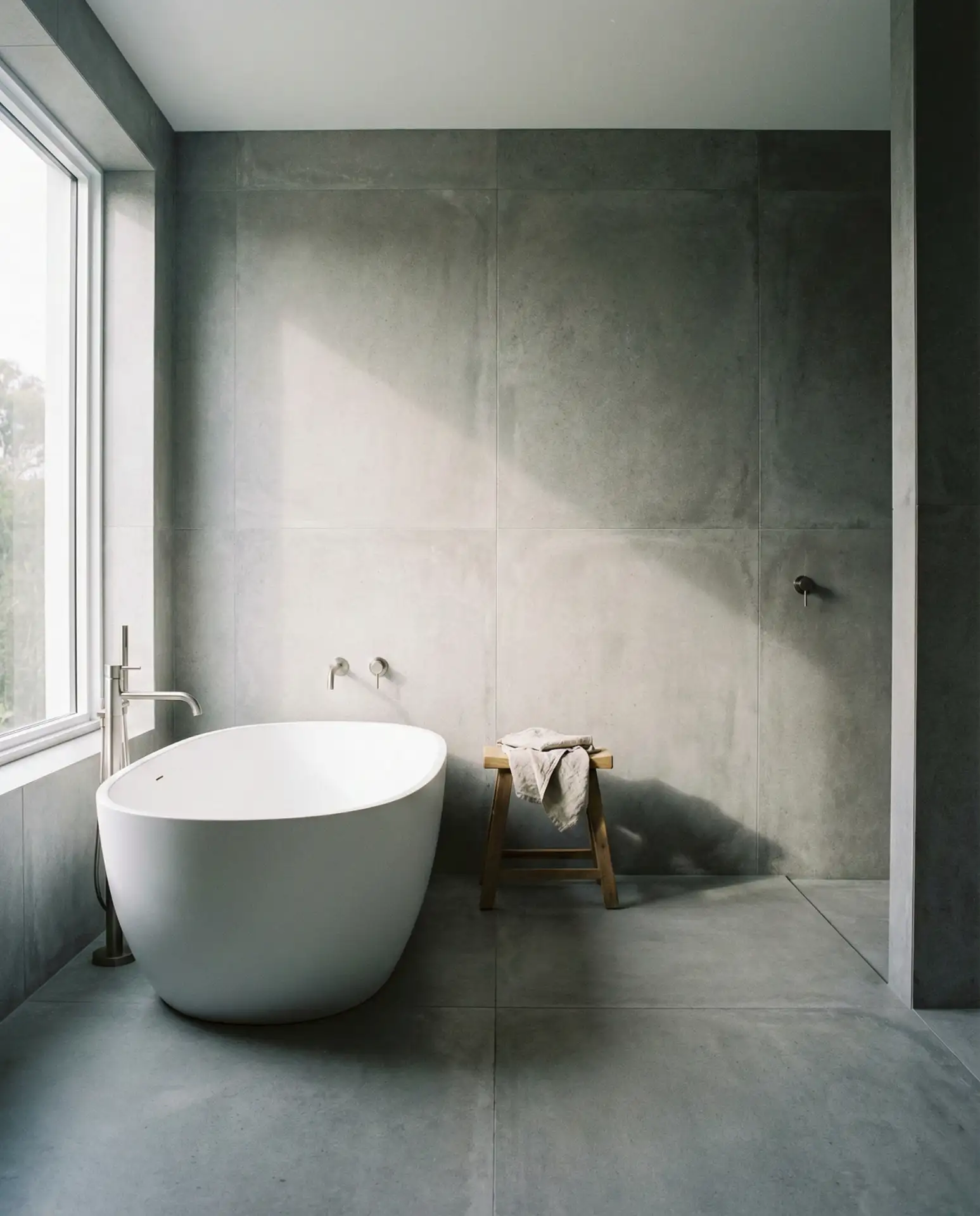
Large-format gray tiles create a sleek, continuous surface that’s perfect for modern bathrooms aiming for a minimalist, high-end look. The oversized slabs reduce grout lines, making the space feel more expansive and easier to clean. This approach works beautifully in master bathrooms, walk-in showers, and wet rooms where you want a seamless, architectural quality.
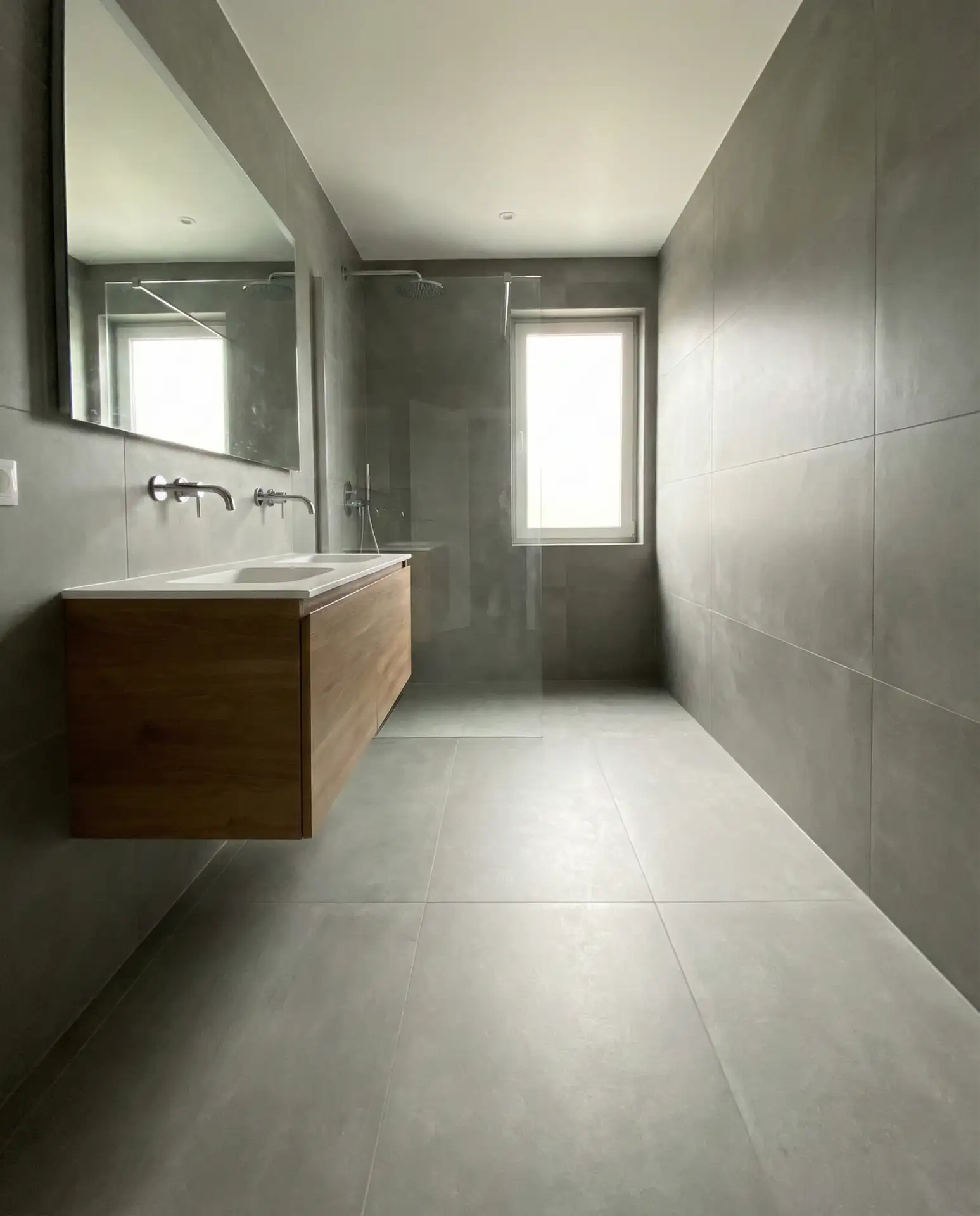
These tiles work best in bathrooms with ample square footage—at least 60 square feet—where the large slabs can be appreciated without feeling overwhelming. Homeowners in urban lofts and contemporary new builds gravitate toward this style for its clean lines and ability to make even modest bathrooms feel like luxury spa retreats.
21. Subway Tiles with Contrasting Grout for Shower Surrounds
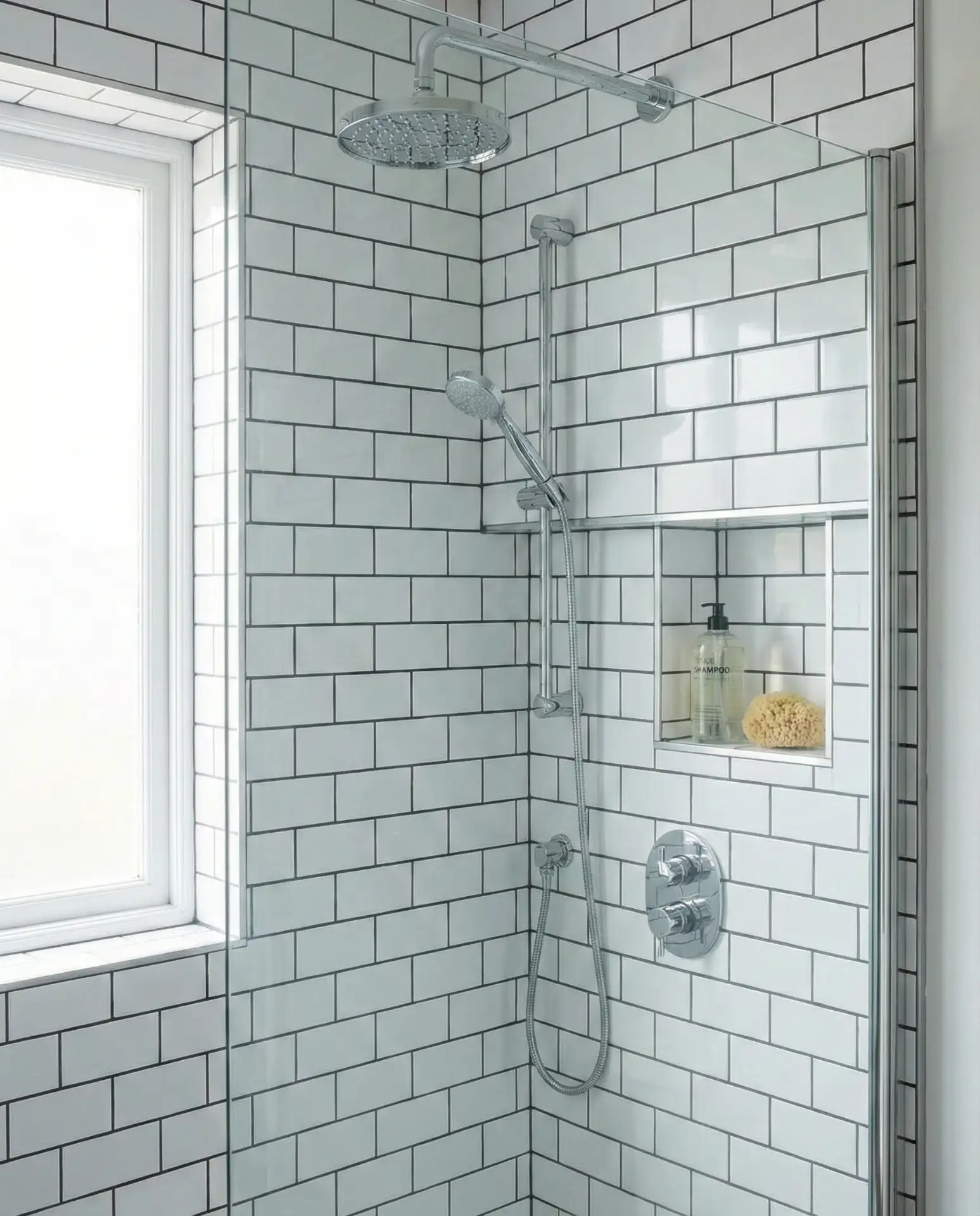
White or light neutral subway tiles paired with dark grout create a graphic, modern look that’s perfect for shower tub surround half walls. The contrasting grout lines turn the tile grid into a design feature, adding definition and visual interest without requiring patterned or colored tiles. This is a cost-effective way to make a standard subway tile installation feel more custom and intentional.
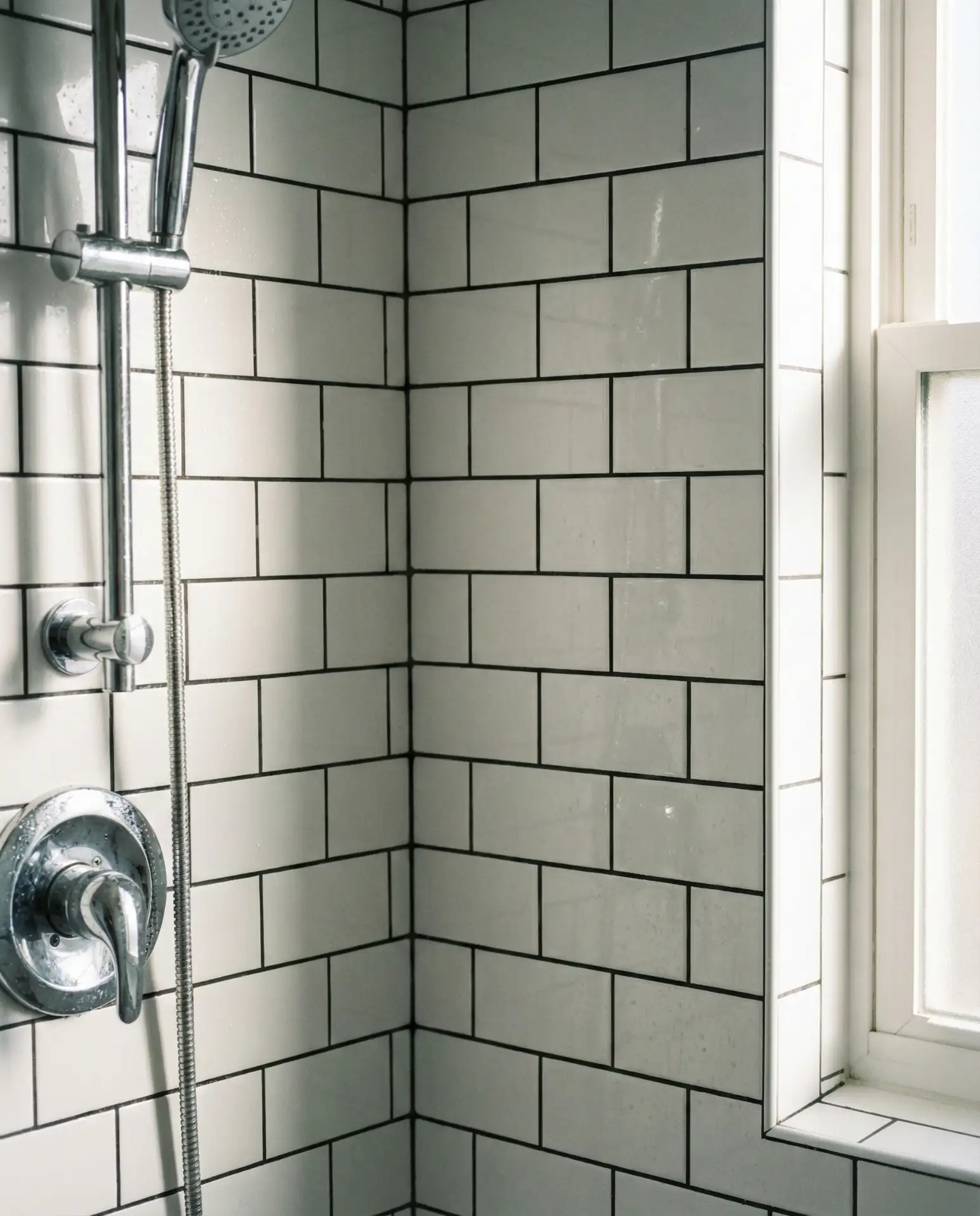
Dark grout is far more forgiving than white in terms of showing mildew and discoloration, which is a huge practical advantage in high-moisture areas like showers. It’s also easier to maintain over time, requiring less frequent cleaning and touch-ups, which makes it a smart choice for busy families or anyone who wants their bathroom to look fresh with minimal effort.
22. Warm Terracotta Tiles for Rustic Charm
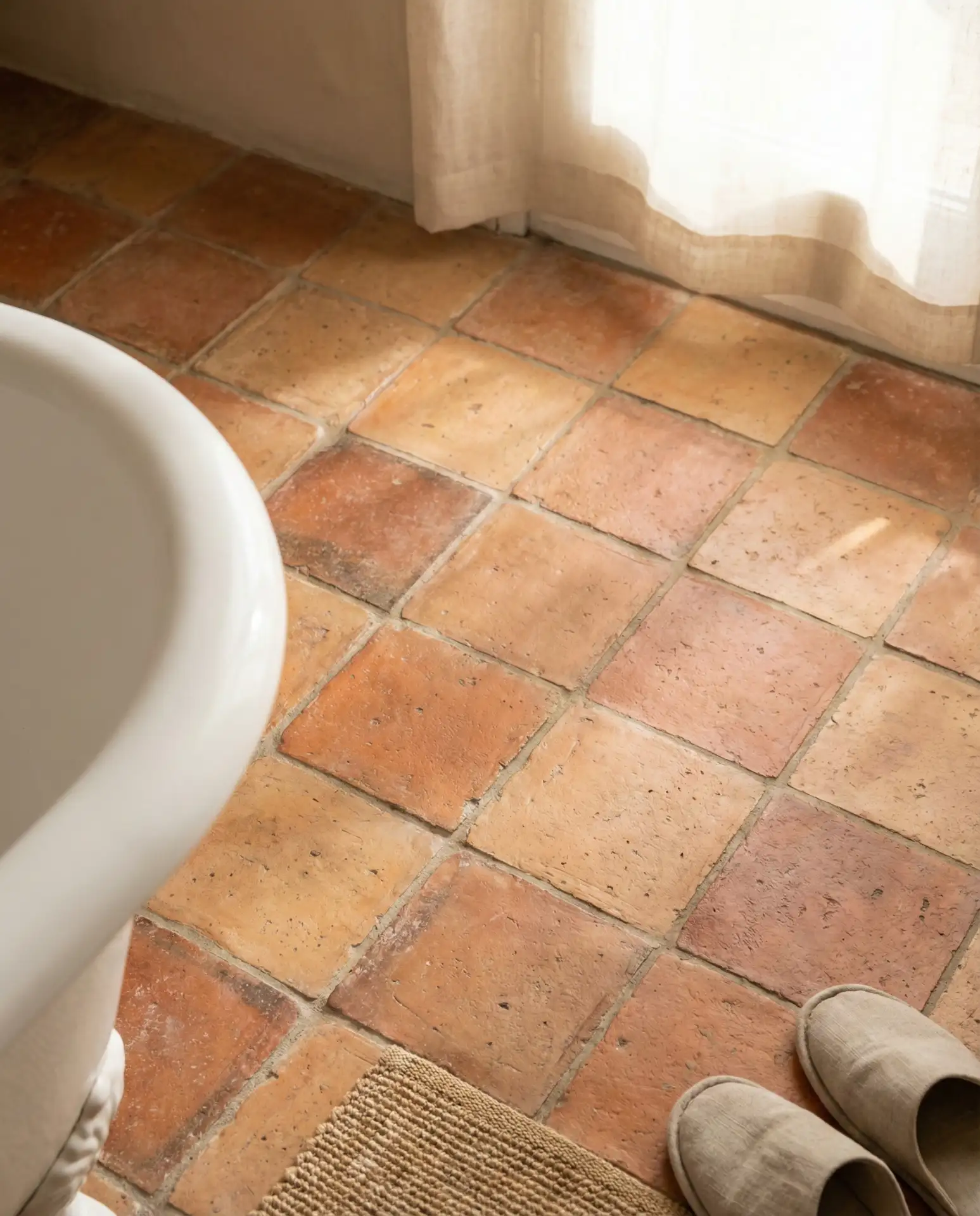
Earthy terracotta tiles bring warmth, texture, and a rustic Mediterranean vibe to farmhouse or eclectic bathrooms. The natural orange-red tones create an inviting, sun-baked feel that pairs beautifully with white walls, natural wood, and wrought iron fixtures. These tiles work especially well on floors in larger bathrooms where the color can be balanced with lighter elements.
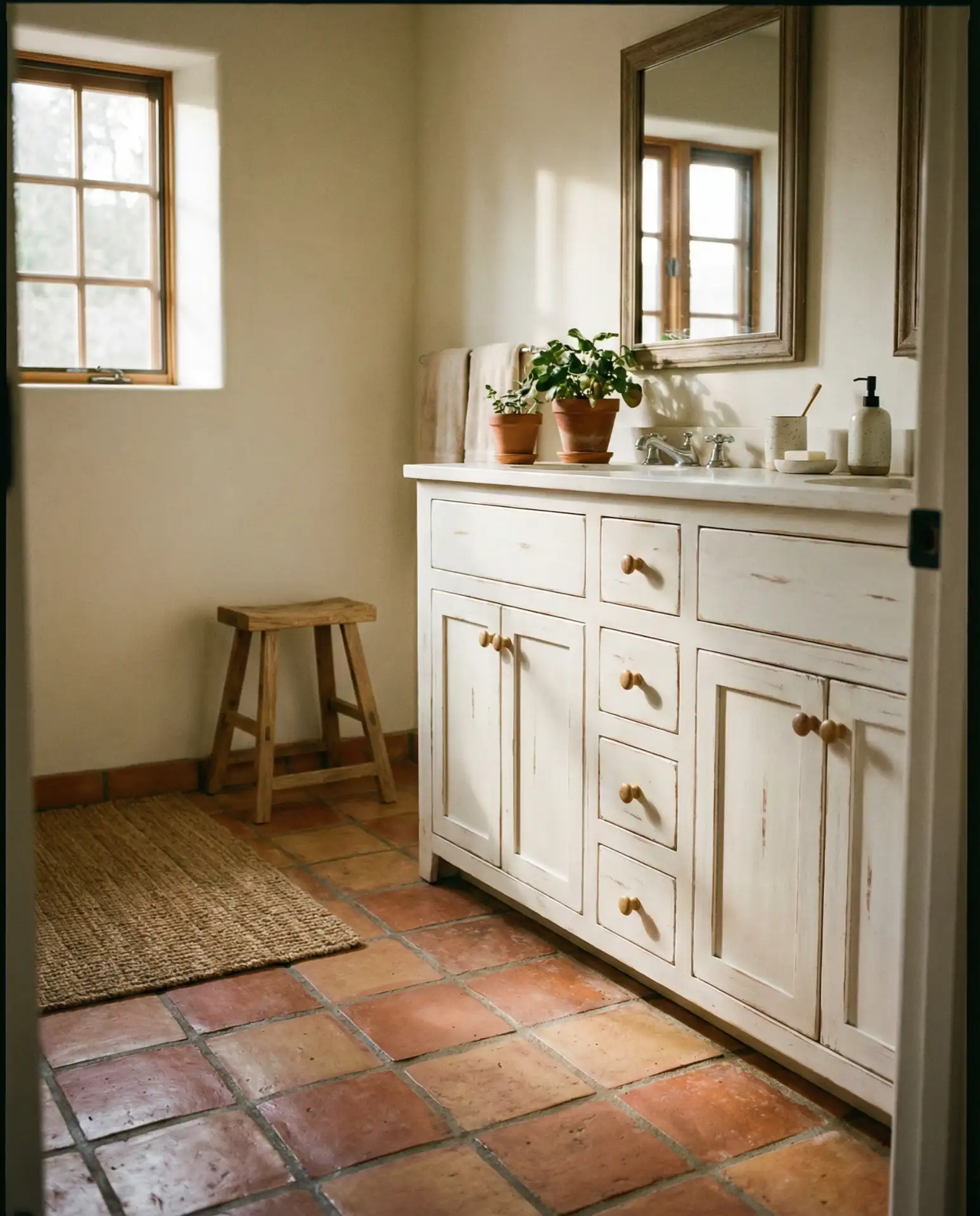
Terracotta tiles are particularly popular in the Southwest, Southern California, and parts of Florida, where the climate and architectural traditions align with Mediterranean and Spanish Colonial styles. Homeowners appreciate the way these tiles age gracefully, developing a rich patina that only enhances their character over time.
23. Monochrome Geometric Tiles for Modern Half Baths
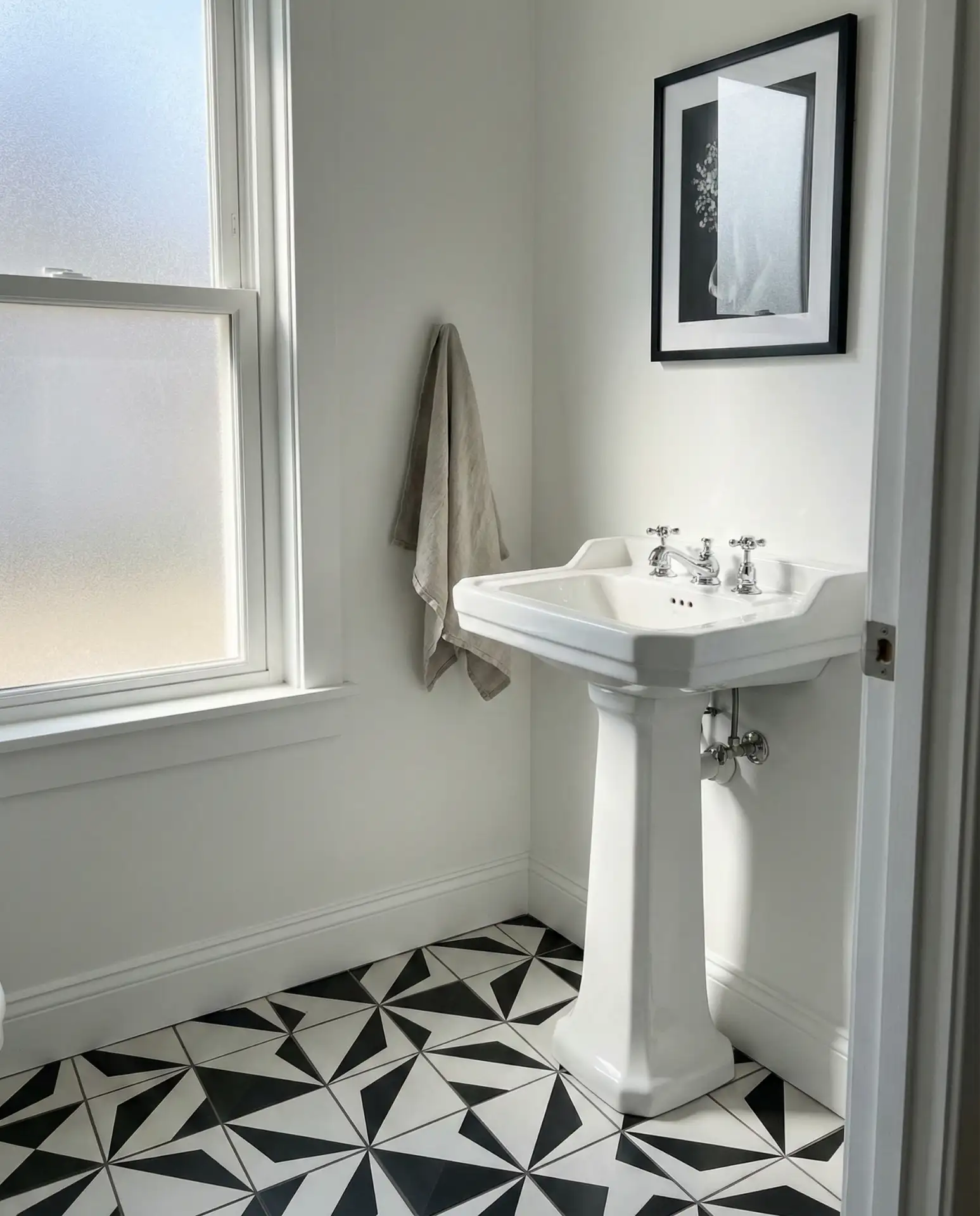
Bold geometric tiles in black and white bring graphic punch to half baths and powder rooms. These statement floors create instant visual impact and give small spaces a design-forward edge. The monochrome palette keeps the look from feeling overwhelming while still delivering plenty of personality and style.
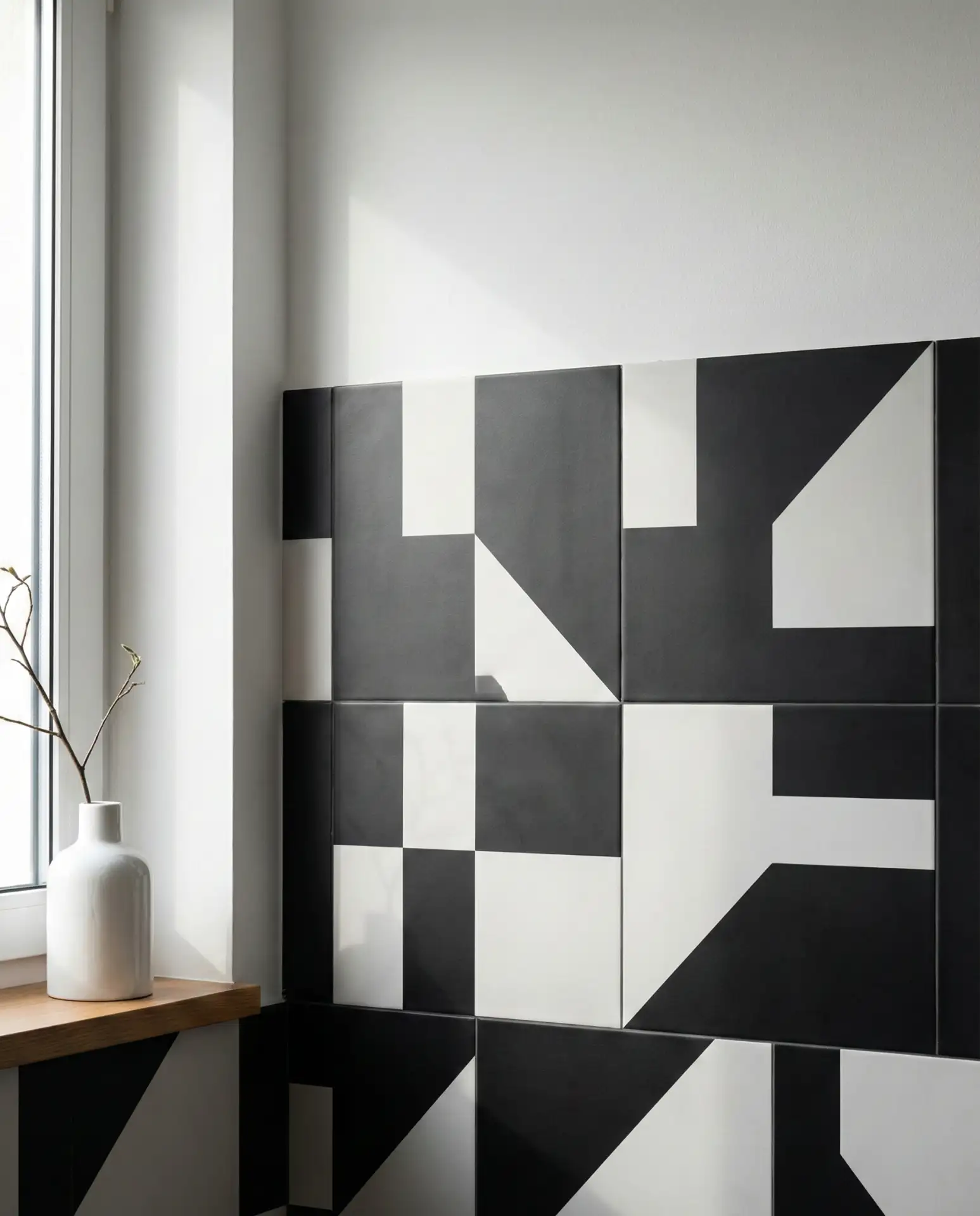
Since half baths are often the smallest rooms in the house, they’re the perfect place to take design risks and experiment with bold patterns that might feel too intense in larger spaces. Guests notice and appreciate the extra design effort, and the small square footage keeps material costs manageable even for pricier specialty tiles.
24. Soft White and Gray Marble Mix for Timeless Appeal
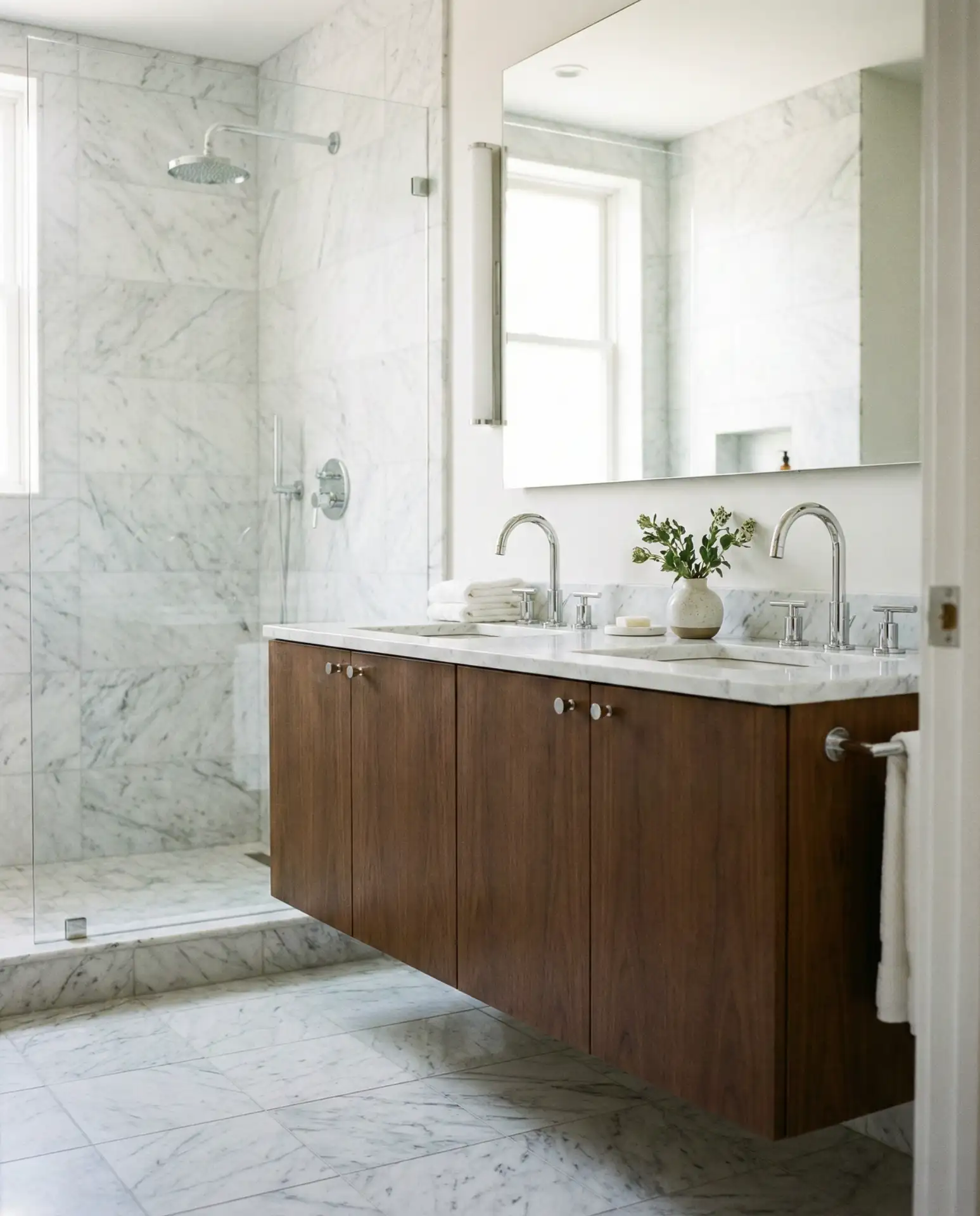
A mix of soft white and gray marble (or marble-look porcelain) creates a timeless, elegant backdrop for traditional or transitional bathrooms. The subtle veining adds movement and interest without overwhelming the space, and the neutral palette complements virtually any fixture finish or décor choice. This approach works beautifully in master bath spaces or guest bathrooms where you want a polished, refined look.
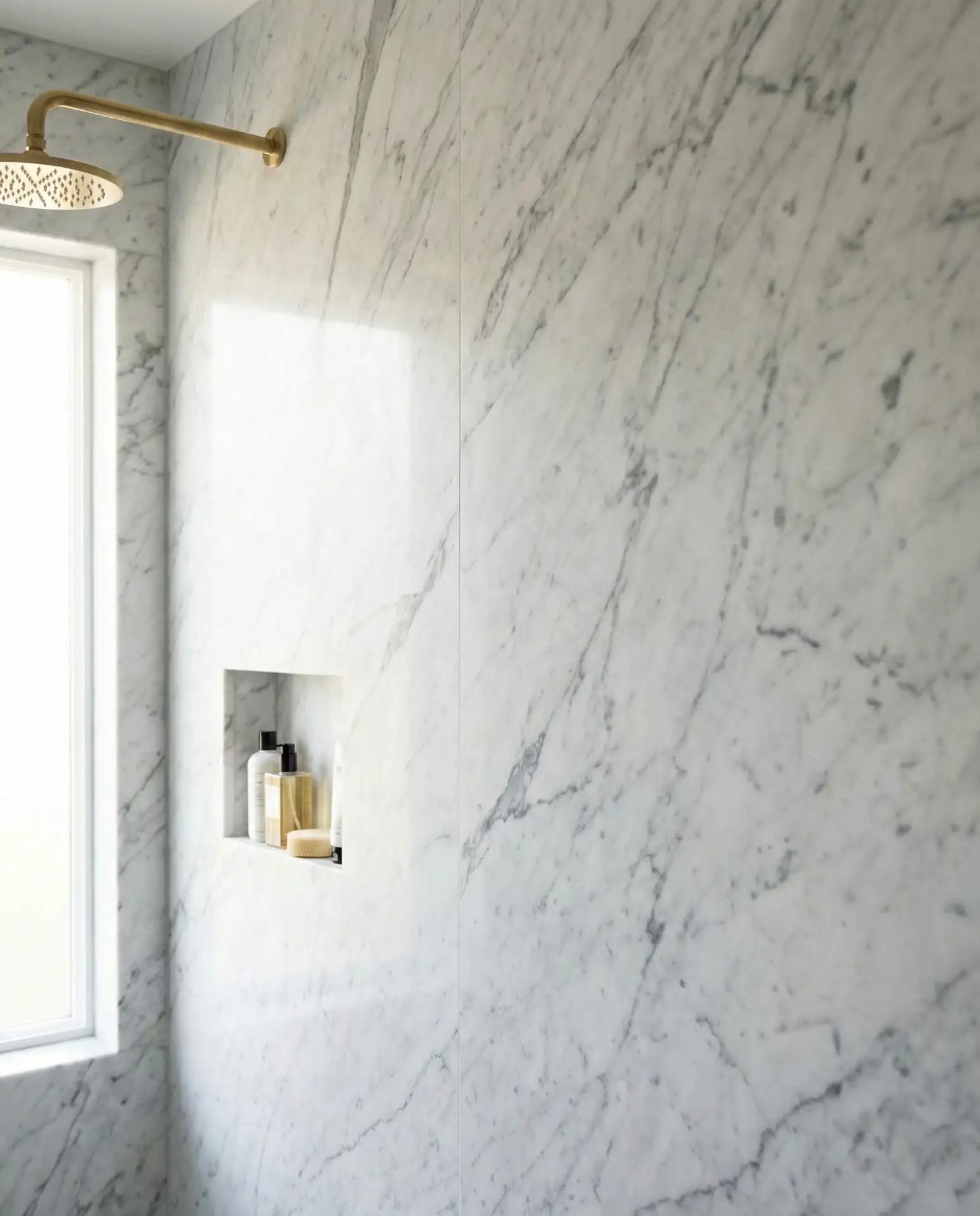
One real advantage of mixing white and gray tones is that it hides dirt and water spots far better than pure white alone, making maintenance easier while still delivering a bright, clean aesthetic. Homeowners who choose this palette often report that their bathrooms feel fresh and welcoming even years after installation, with no sense of the design feeling dated or tired.
Conclusion
Choosing the right bathroom tile is one of the most impactful decisions you’ll make during a renovation, and the options in 2026 are more exciting and accessible than ever. Whether you’re drawn to the clean simplicity of white subway tiles, the bold personality of patterned cement, or the natural warmth of wood-look porcelain, there’s a solution that fits your style, budget, and practical needs. We’d love to hear which ideas inspired you most—drop a comment below and let us know what you’re planning for your own bathroom transformation.