Basement bedrooms are no longer forgotten afterthoughts tucked beneath the main floor—they’ve become some of the most creative, functional, and surprisingly stylish spaces in American homes. Whether you’re converting an unfinished lower level into a cozy guest retreat, carving out a teen sanctuary with personality, or designing a serene master suite away from household noise, the possibilities are as varied as the basements themselves. With Pinterest driving a surge in basement inspiration searches throughout 2026, homeowners are discovering that limited natural light, low ceilings, and quirky layouts aren’t obstacles—they’re opportunities. This guide walks you through thoughtful, trend-aware basement bedroom ideas that balance aesthetics, comfort, and real-world practicality for every style and budget.
1. Bright White Walls With Maximum Window Light
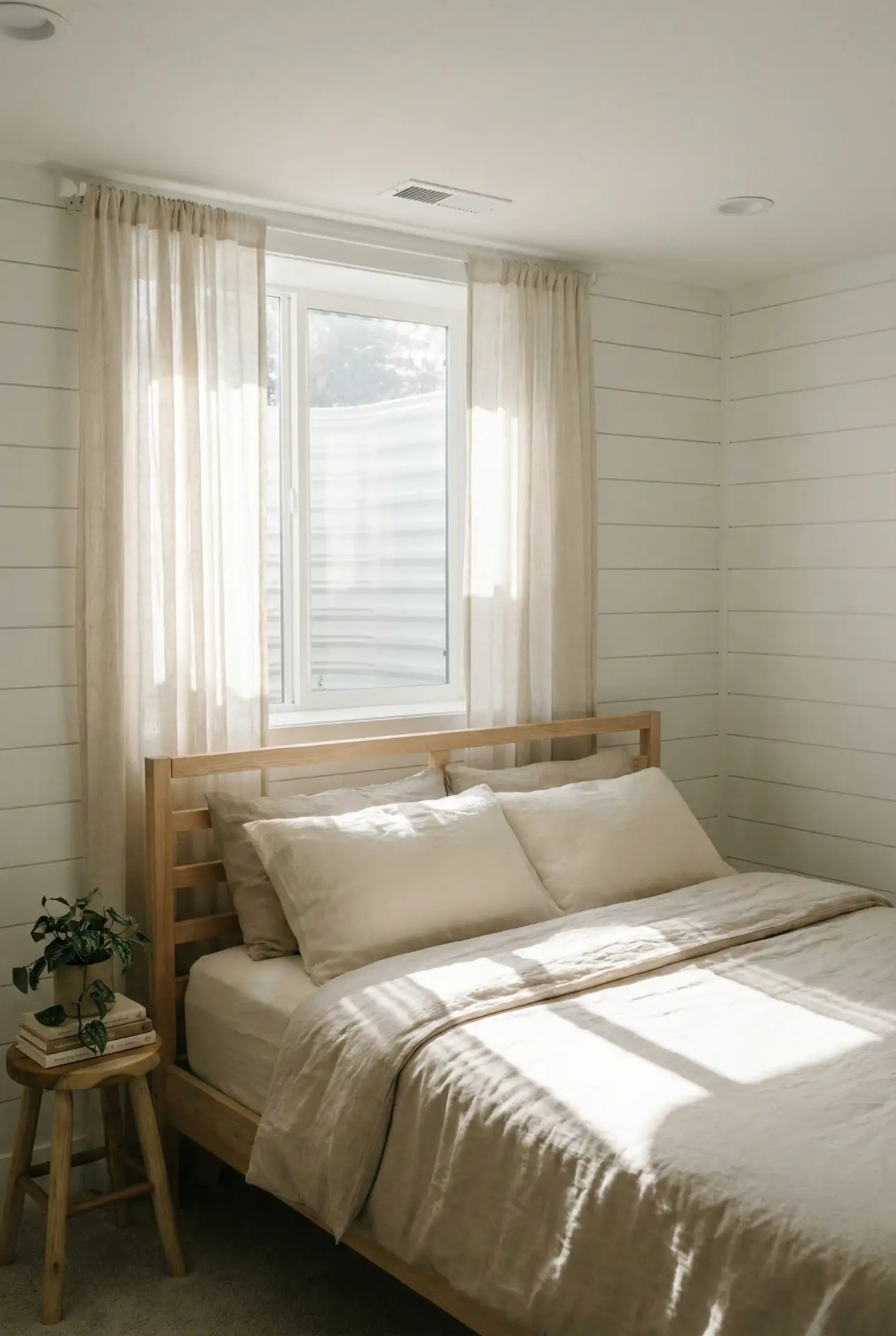
When your basement bedroom comes equipped with windows, don’t underestimate the power of crisp white walls to amplify every ray of daylight. This approach works beautifully in small window scenarios where natural light is precious but limited. Pair white shiplap or smooth drywall with sheer linen curtains and pale wood furniture to create an airy, open feel that defies the basement stereotype. The reflective quality of white surfaces bounces light deeper into the room, making even compact spaces feel breathable and inviting.
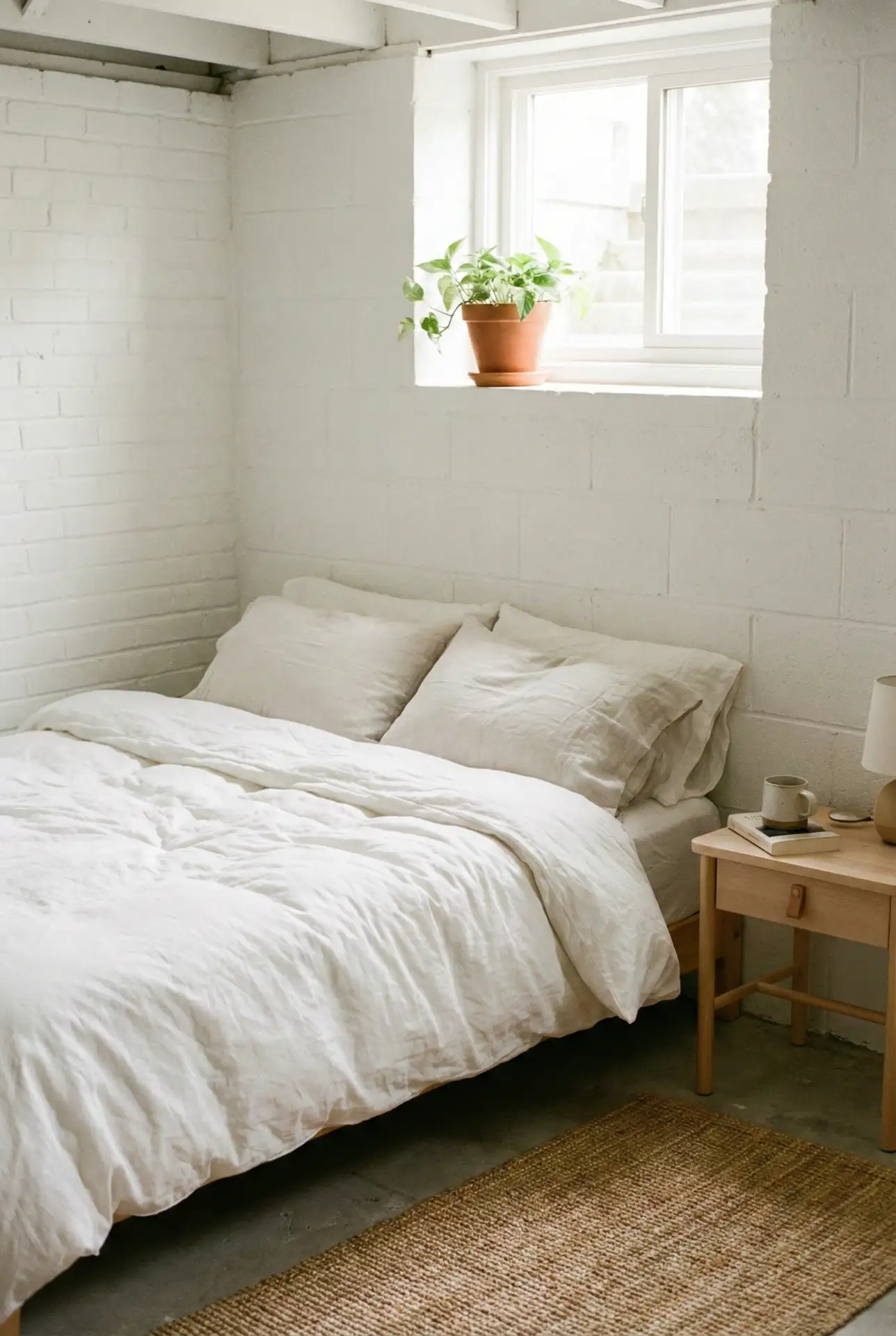
This strategy is especially effective in suburban ranch homes and split-levels across the Midwest and Northeast, where walk-out or daylight basements offer generous window access. White walls also provide a neutral backdrop that adapts as tastes evolve—perfect for homeowners who redecorate seasonally or plan to rent out the space. Keep window treatments light and layered so you can control privacy without sacrificing brightness during the day.
2. Exposed Beam Ceiling In An Unfinished Layout
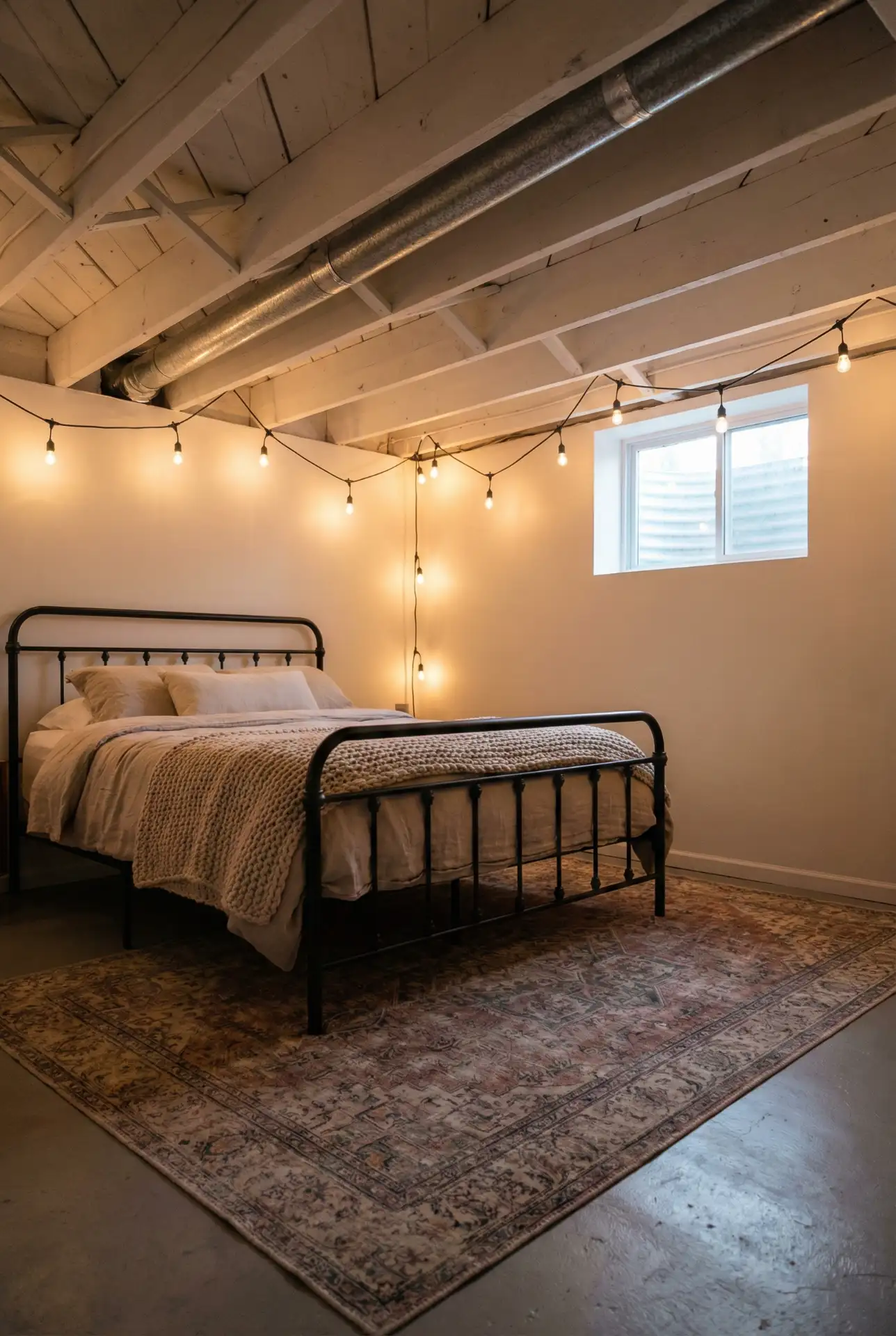
An unfinished basement doesn’t have to stay raw forever, but sometimes leaving structural elements visible adds unexpected character. Painted or stained ceiling beams, exposed ductwork wrapped in matte black, and poured concrete floors create an industrial-chic vibe that’s surprisingly warm when paired with soft textiles and warm lighting. This look is ideal for young professionals or creatives who want a budget-friendly bedroom that feels intentional rather than incomplete.
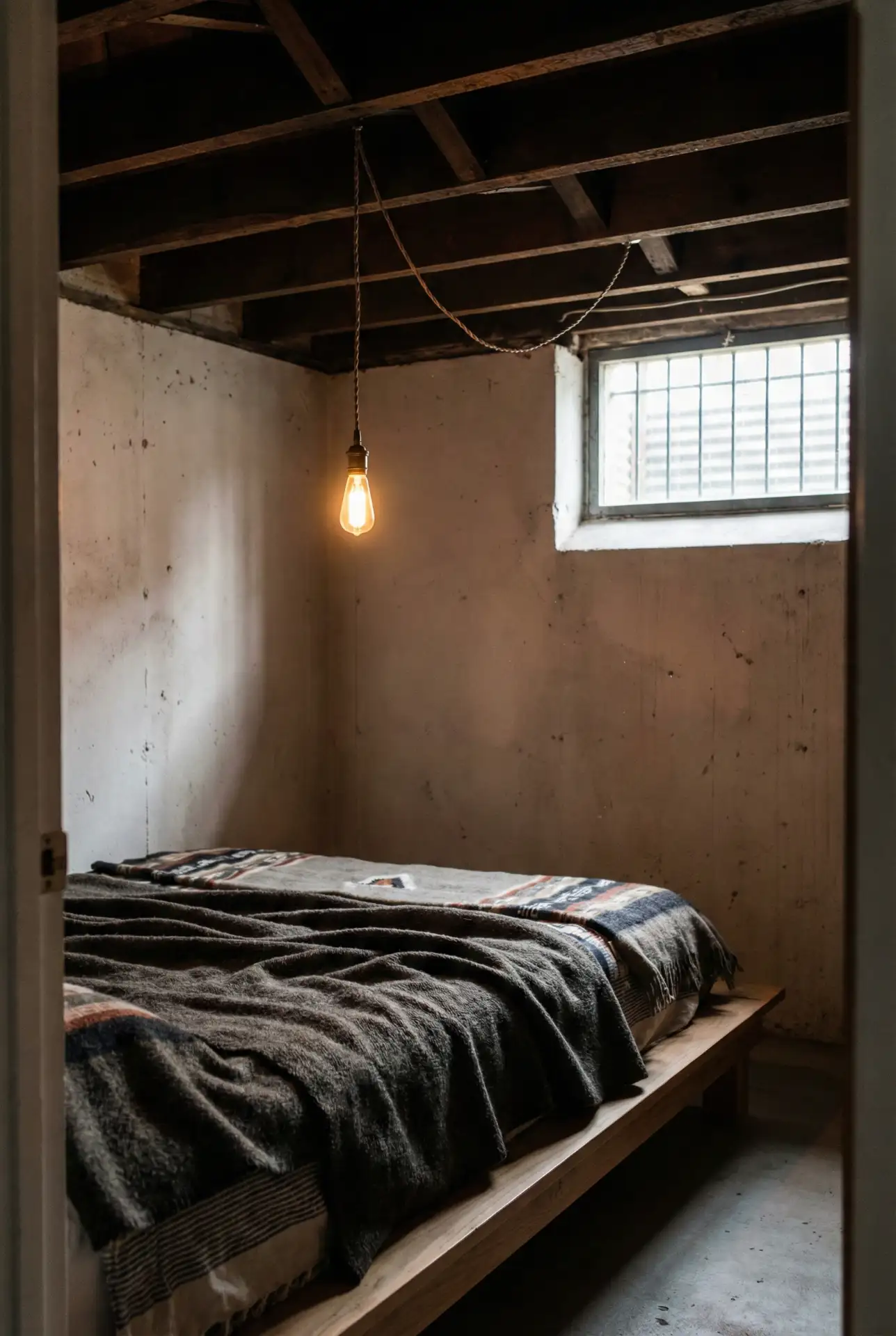
A common mistake here is leaving everything too raw—balance exposed structure with comfort by layering in plush bedding, thick rugs, and dimmable lighting. The contrast between hard surfaces and soft furnishings is what makes this style work. It’s also a smart choice if you’re phasing renovations over time, letting you enjoy a functional bedroom now while planning future upgrades.
3. Moody Dark Walls For A Cozy Retreat
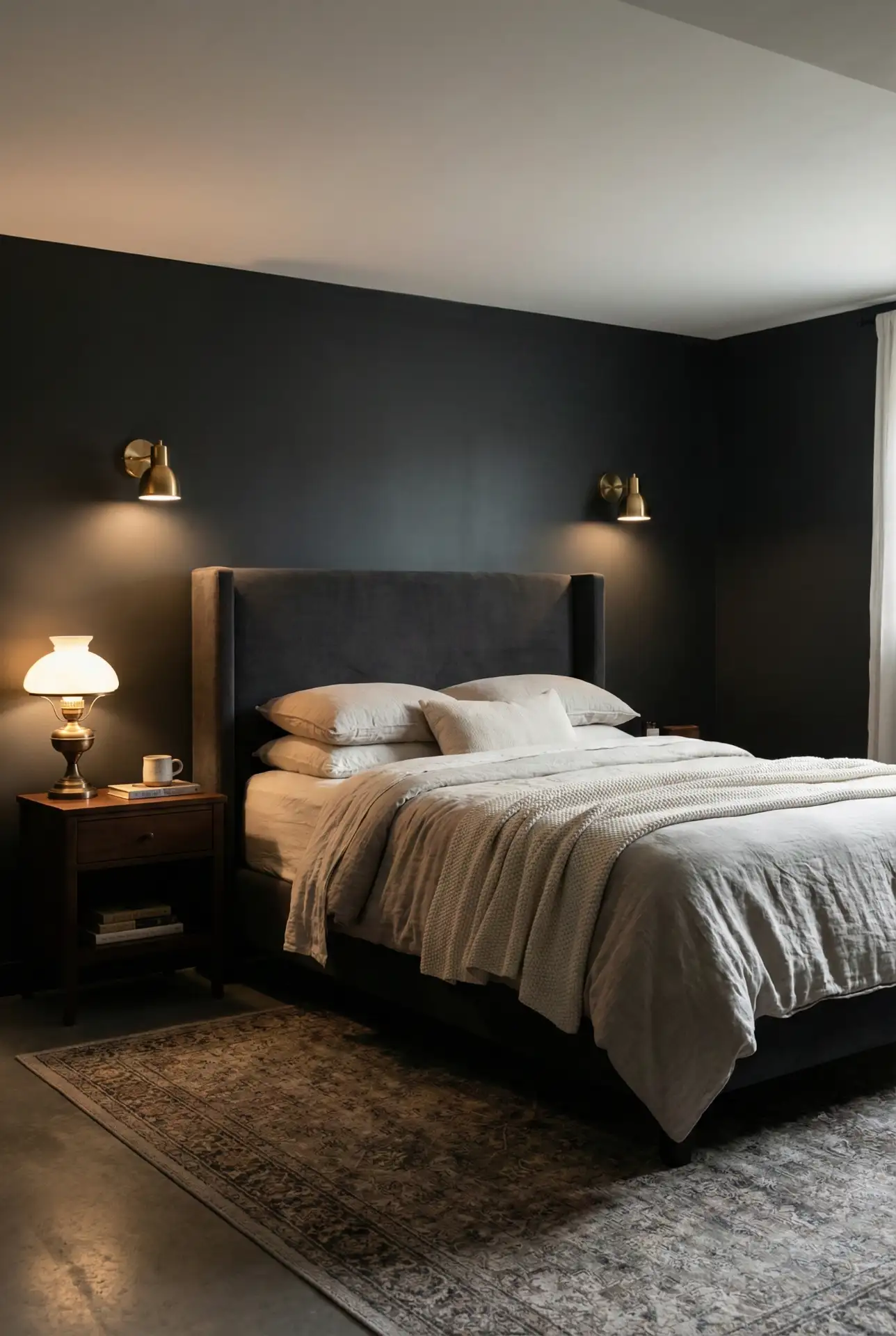
Embrace the natural darkness of a basement by painting walls in deep charcoal, navy, or forest green to create a cozy, enveloping sanctuary. This approach is particularly effective in dark basements with minimal natural light, where fighting the shadows often feels futile. Layer in warm-toned lighting, brass or gold fixtures, and rich fabrics like velvet or linen to prevent the space from feeling cold or cavernous. The result is a bedroom that feels like a high-end boutique hotel rather than a forgotten lower level.
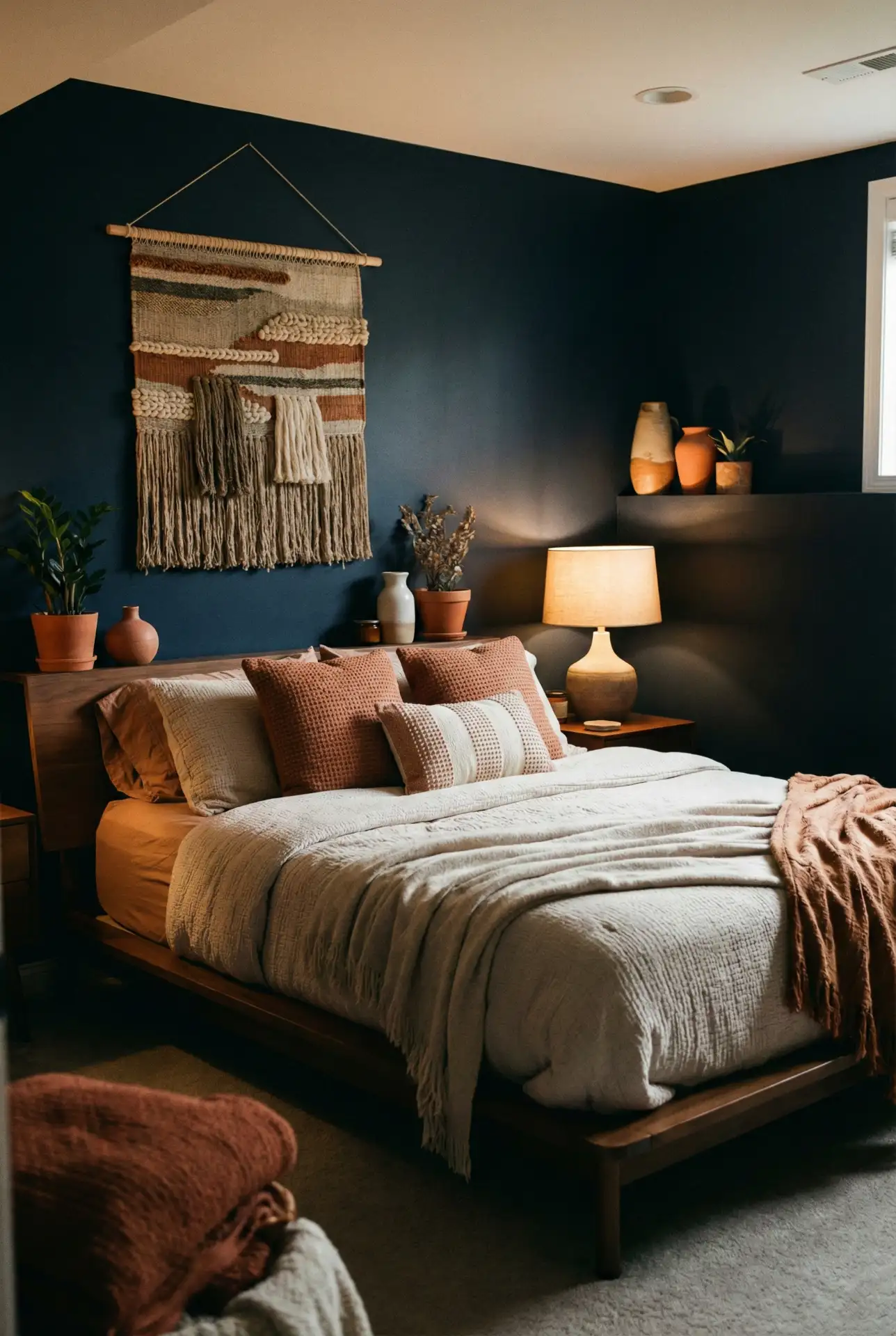
Where this works best: urban townhomes and condos where basement bedrooms serve as guest suites or private escapes for couples. Dark walls also hide imperfections in older foundations better than light colors, making them a practical choice for homes built before the 1980s. Just ensure you have enough layered lighting—overhead, task, and accent—to keep the space functional and inviting.
4. Built-In Storage For Tiny Footprints
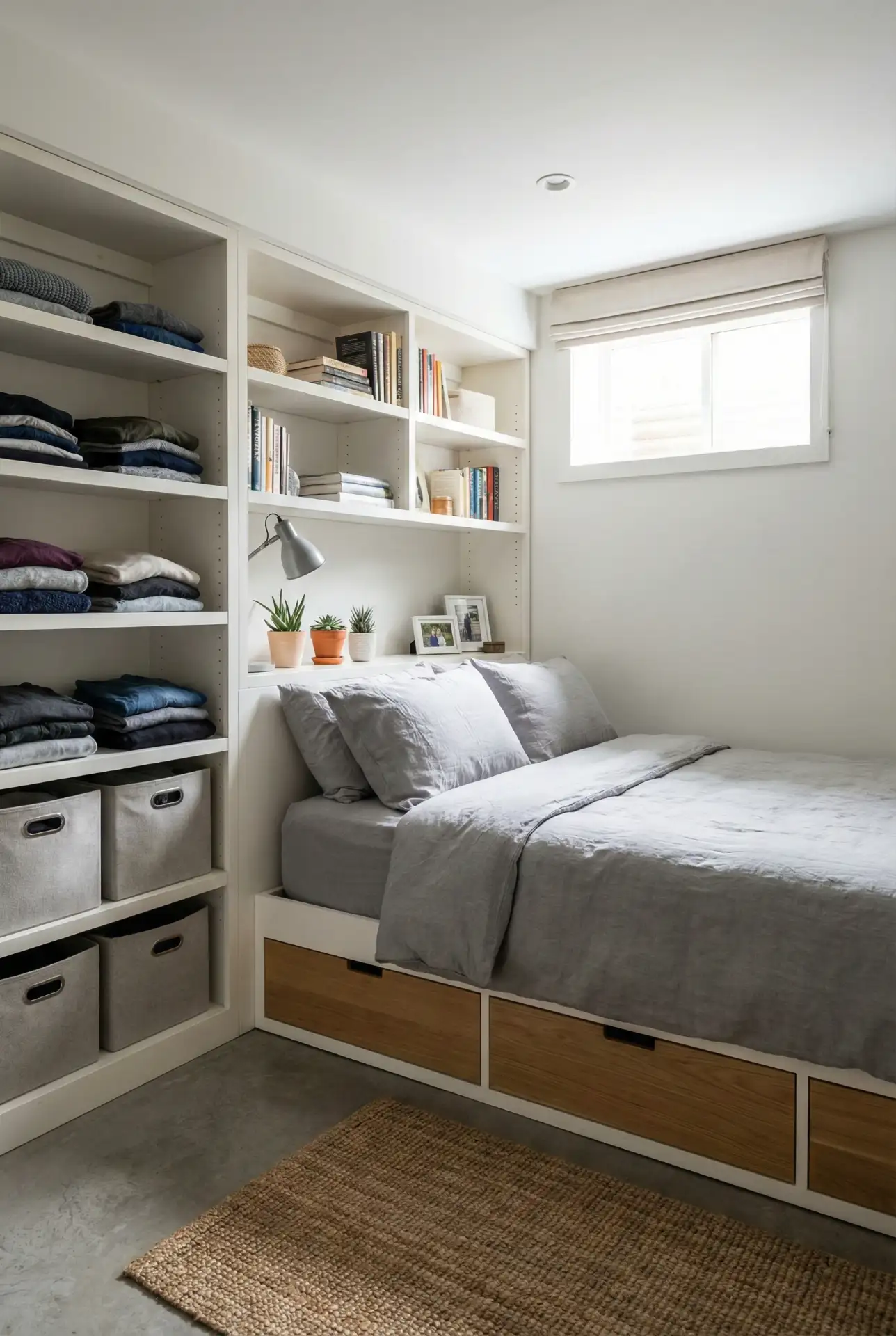
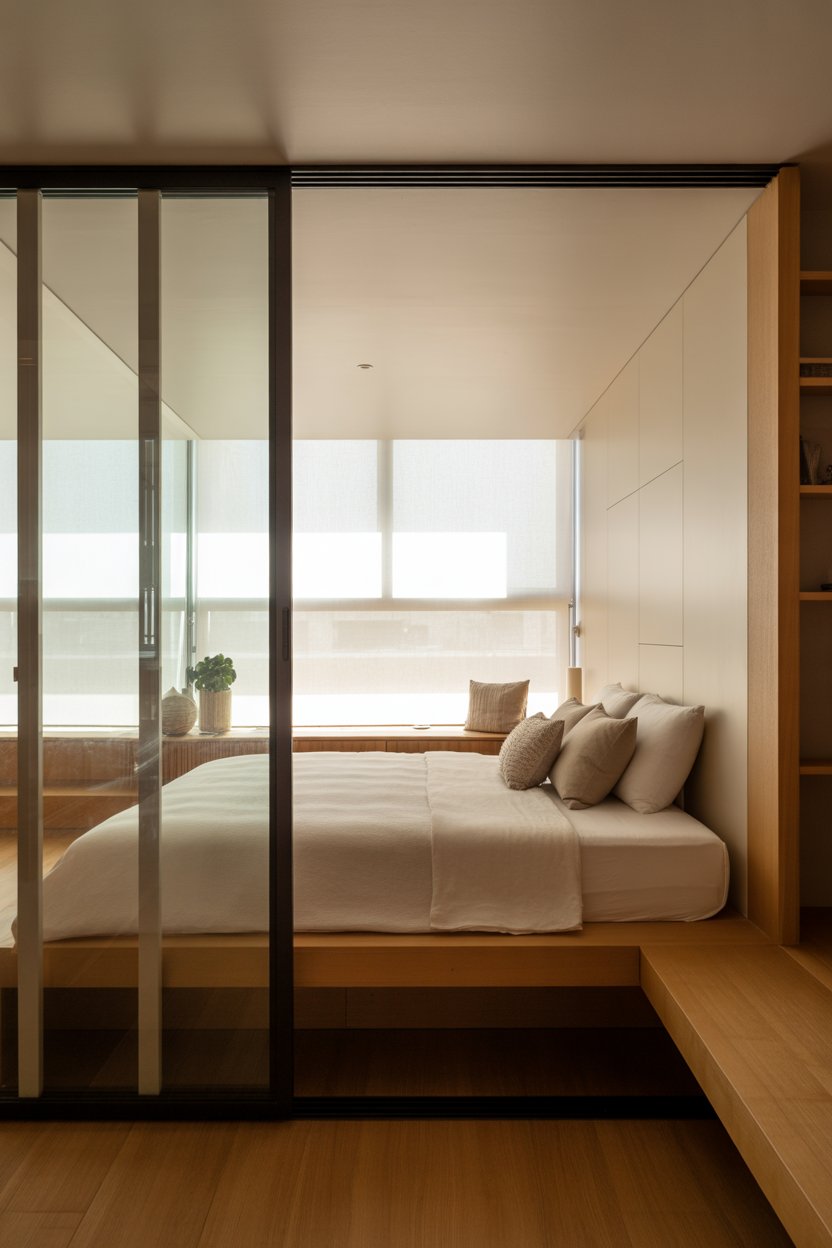
In a tiny basement bedroom, every square foot counts, and built-in storage transforms awkward nooks into highly functional zones. Consider platform beds with drawers underneath, floor-to-ceiling shelving along one wall, or custom closets that tuck into sloped ceilings. This strategy is essential in homes where the basement bedroom doubles as overflow storage or a multipurpose space for guests who stay frequently. Smart storage also keeps the room visually clean, which is critical in small spaces where clutter quickly overwhelms.
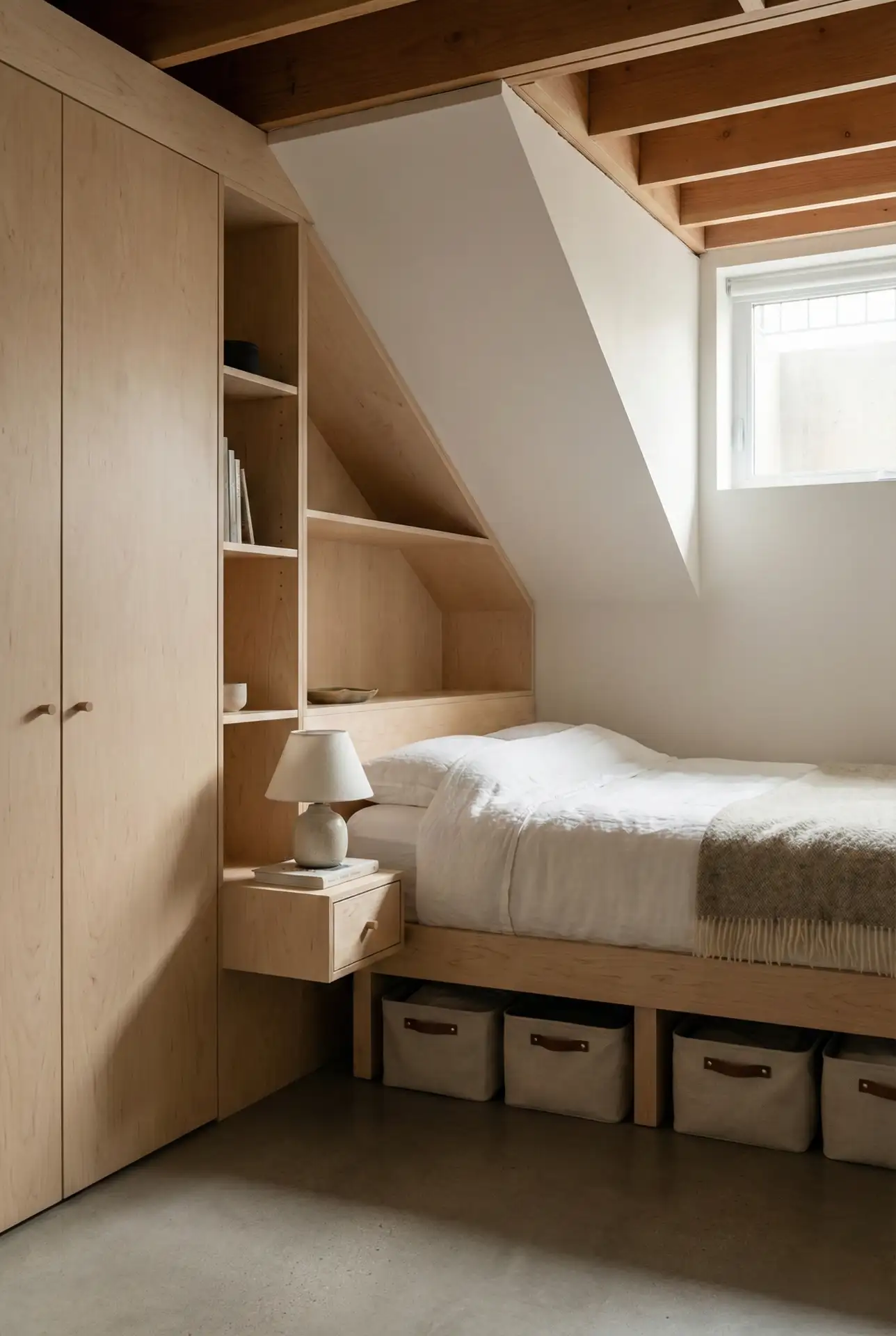
Real homeowners often underestimate how much usable storage can be carved from a basement’s unique architecture. Measure twice before ordering furniture—custom or semi-custom solutions often cost less than you’d think and yield far better results than trying to force standard pieces into odd dimensions. This approach also future-proofs the space if you eventually convert it into a nursery, home office, or rental unit.
5. Teen-Approved Gallery Wall And Personal Zones
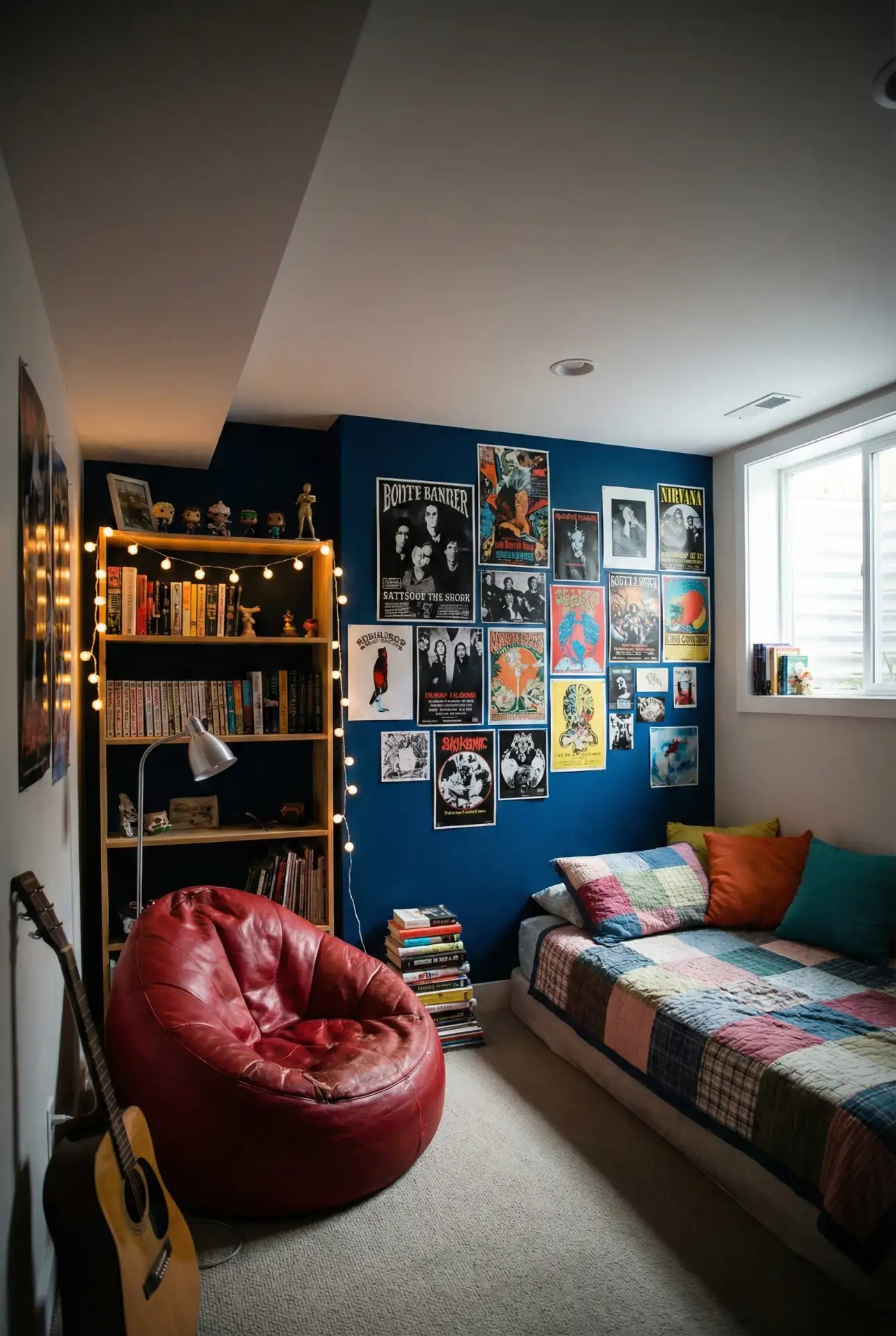
A basement bedroom for teens should balance privacy, personality, and flexibility as tastes evolve rapidly. Start with a large, curated gallery wall that mixes framed posters, photos, and DIY art—this gives them ownership of the space while keeping things visually cohesive. Add a small desk zone for homework, a reading nook with floor cushions, and modular storage that adapts as needs change. Teens crave spaces that feel distinct from the rest of the home, and basements naturally offer that separation.
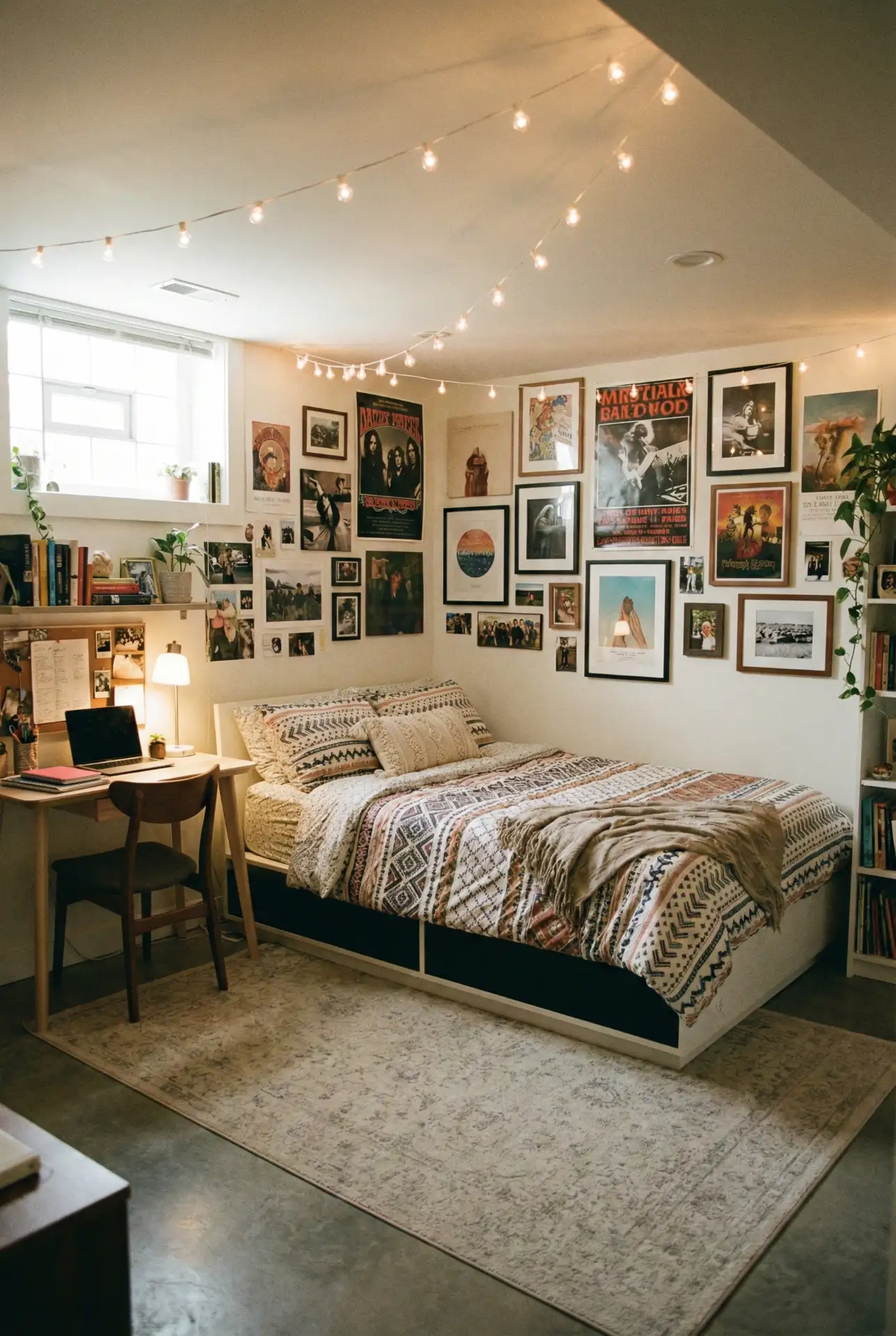
Across suburban America, basement bedrooms have become the default teen space, especially in families with multiple children. The key is involving them in design decisions—let them choose paint colors, bedding, and wall art within a reasonable budget. Avoid overly themed or permanent installations; teens outgrow trends quickly, and a neutral base with swappable accents keeps the room relevant longer.
6. Low Ceiling Solutions With Recessed Lighting
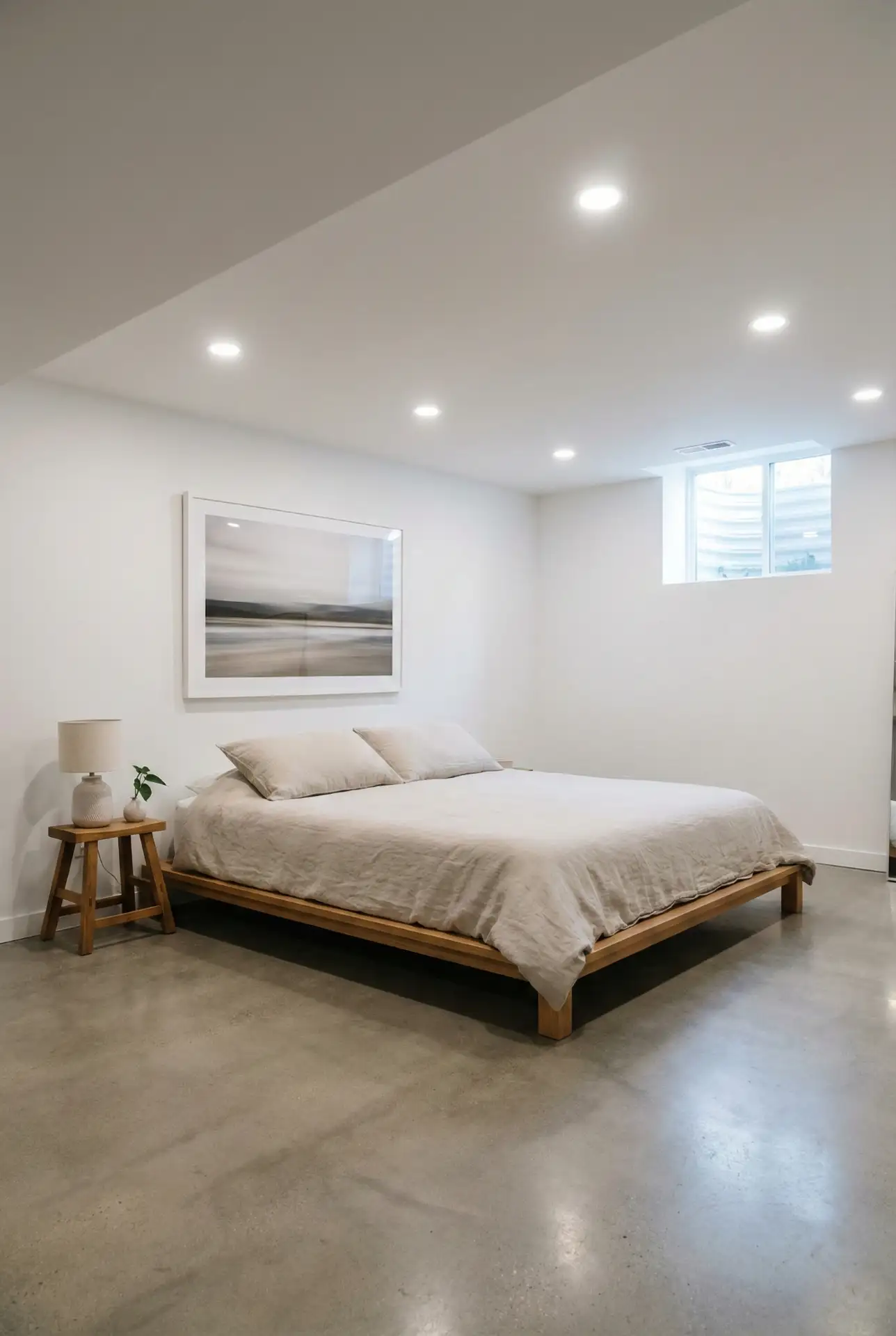
Basements with low ceilings often feel cramped, but recessed lighting and horizontal design elements can create the illusion of height. Skip bulky chandeliers and opt for flush-mount or recessed LED fixtures that distribute light evenly without dropping into headspace. Paint the ceiling the same color as the walls to blur boundaries, and choose low-profile furniture—platform beds, leggy nightstands, and wall-mounted shelves—to keep sightlines open and airy.
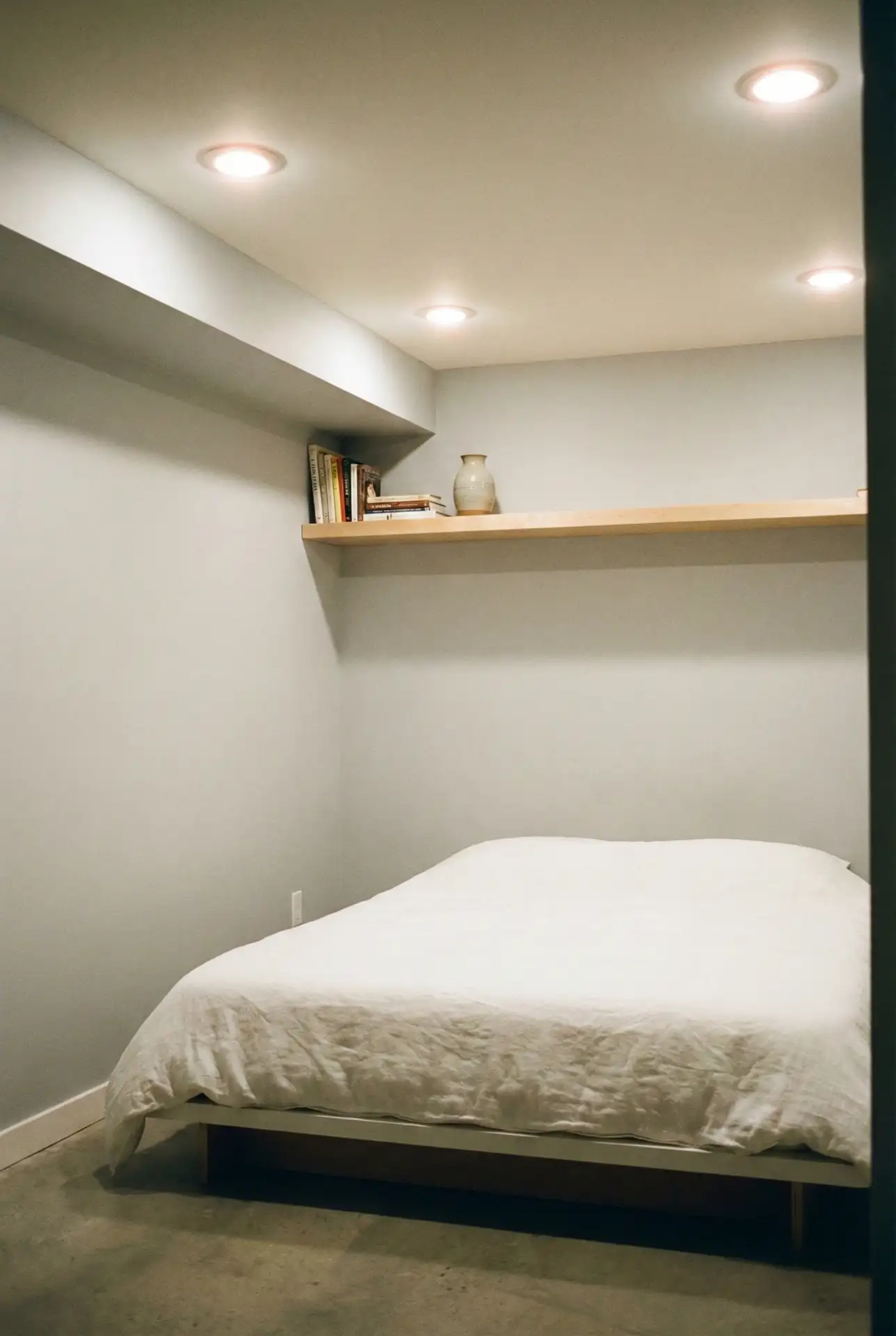
One practical insight: if your basement ceiling measures less than seven feet, consult local building codes before converting it into a legal bedroom—many municipalities require minimum ceiling heights for egress and safety. That said, plenty of homeowners use these spaces as flexible guest rooms or media lounges without formal permitting. Recessed lighting also adds resale value, signaling that the basement has been thoughtfully finished.
7. Masculine Industrial Aesthetic for Men’s Spaces
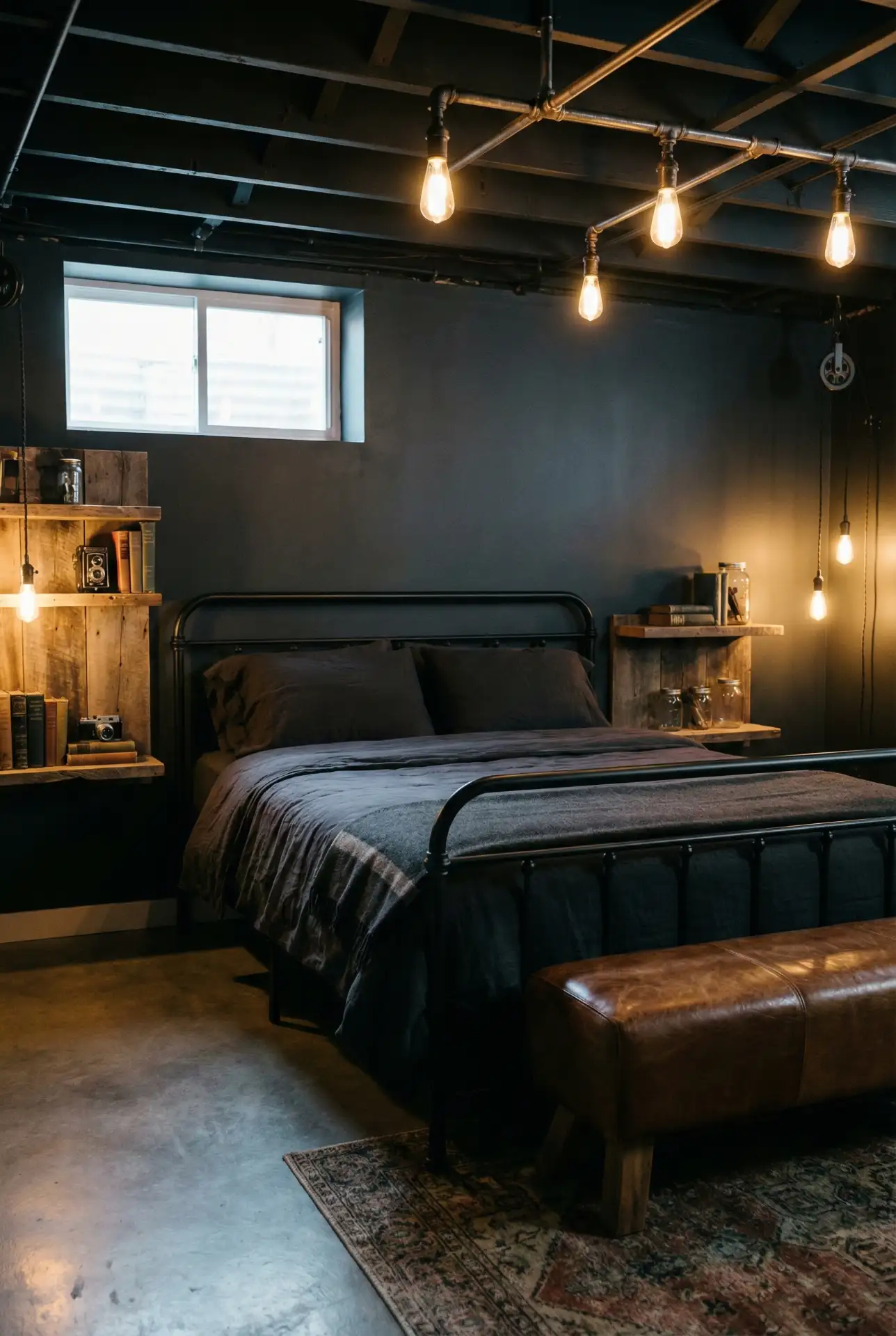
A man’s basement bedroom thrives on clean lines, muted tones, and functional design. Think charcoal walls, black metal bed frames, leather accents, and open shelving made from reclaimed wood. This style skews industrial but avoids feeling cold by incorporating warm lighting—Edison bulbs, matte black sconces, or even a vintage desk lamp. Keep décor minimal but intentional: a single piece of abstract art, a well-worn rug, or a curated bookshelf adds personality without clutter.
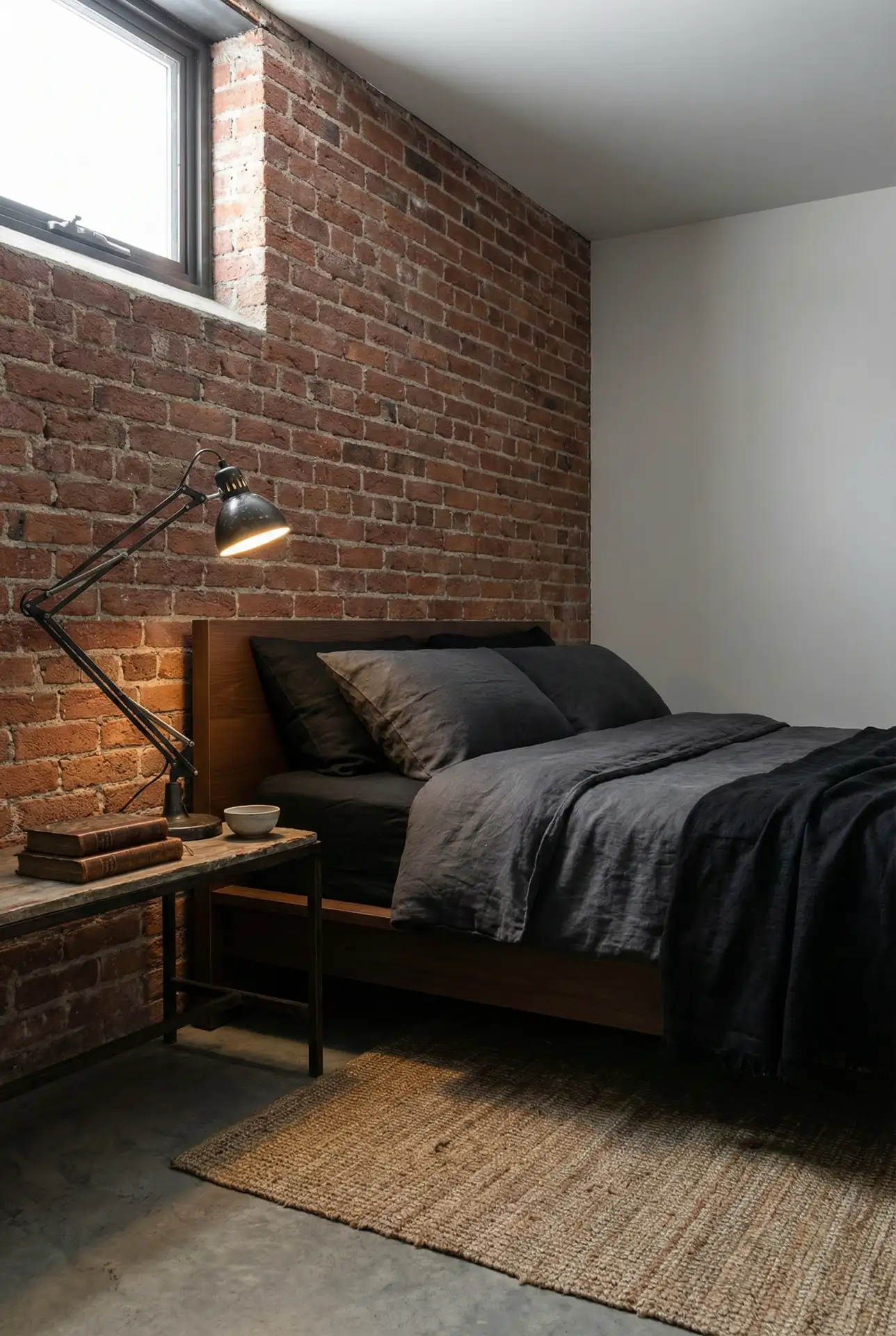
This approach works especially well in urban lofts or converted basements in older homes where exposed brick or concrete already exists. Many single professionals or young couples use basement bedrooms as secondary guest rooms or private retreats, and this aesthetic signals maturity and intention. Budget-wise, industrial style is forgiving—thrifted metal furniture, DIY shelving, and secondhand finds blend seamlessly.
8. Finished Elegance With Crown Molding And Trim
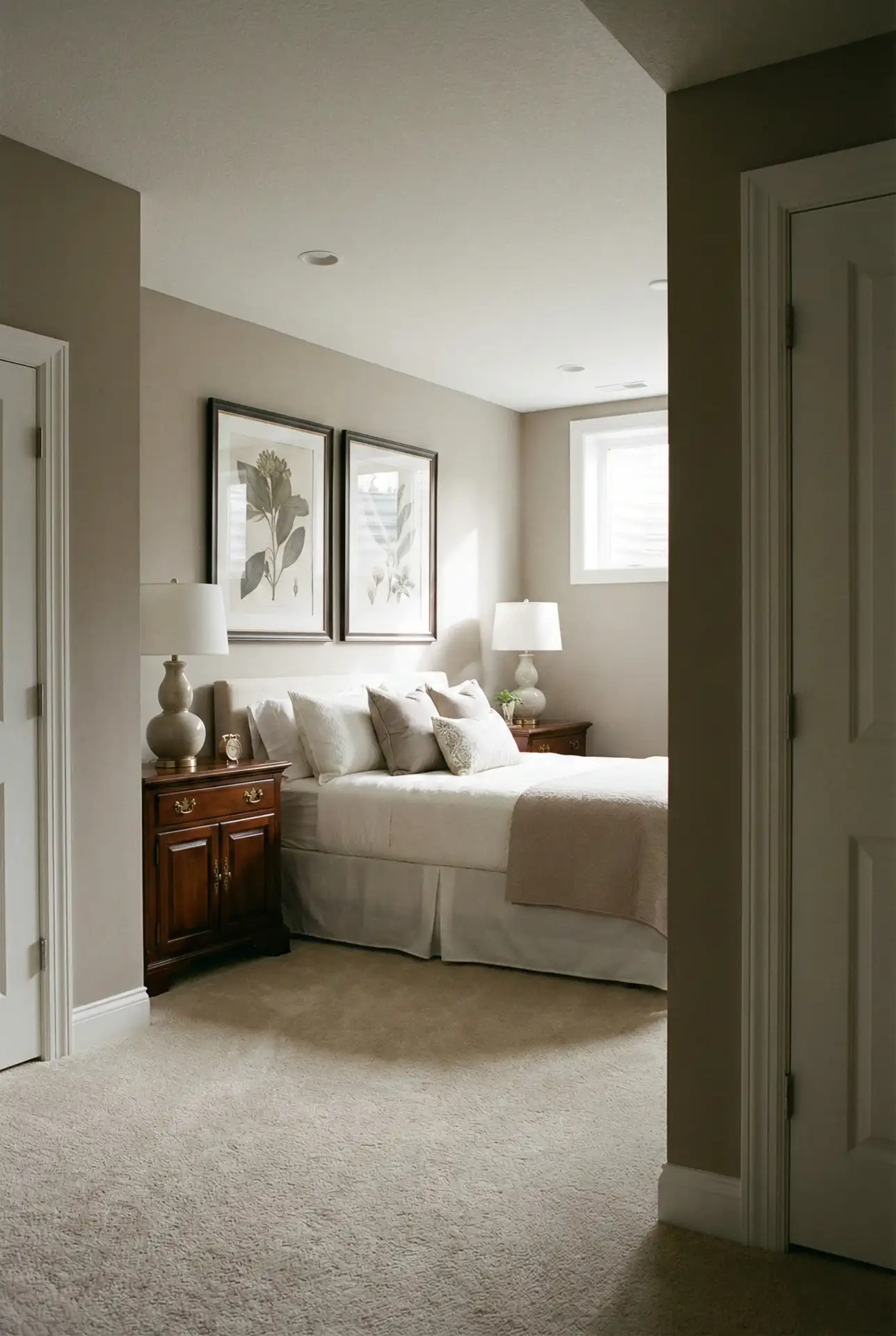
A fully finished basement bedroom feels indistinguishable from upstairs spaces when you add architectural details like crown molding, baseboards, and door casings. These touches elevate the room from “converted storage” to “intentional suite,” especially in traditional or colonial-style homes where consistency matters. Pair white or off-white trim with soft wall colors—sage, dusty blue, or warm taupe—and invest in quality flooring like engineered hardwood or plush carpet to complete the upscale feel.
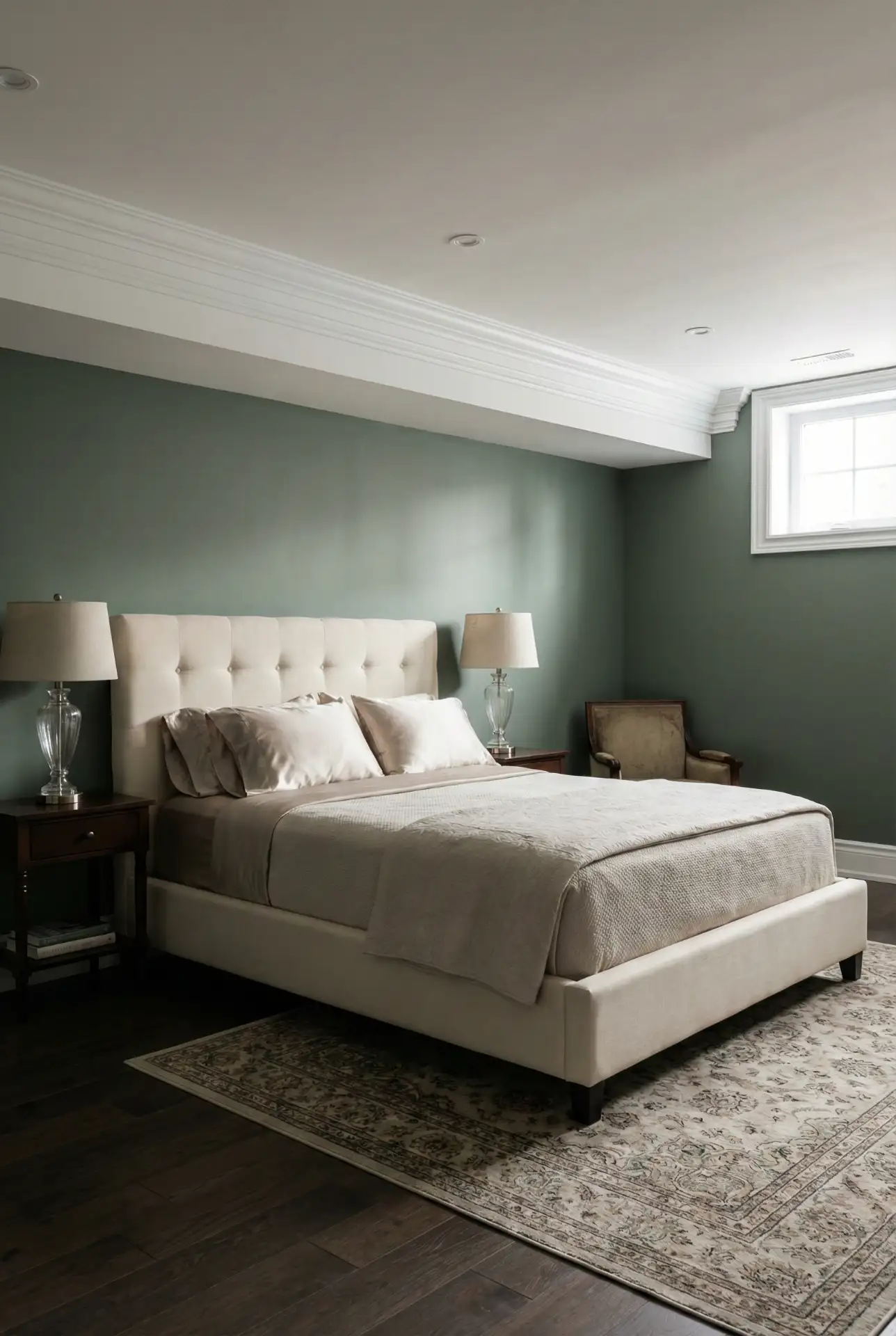
Homeowners often skip trim and molding to save money, but these details dramatically impact perceived value and resale appeal. If you’re planning to list your home within five years, a finished basement bedroom with architectural character can justify a higher asking price. Even DIY-friendly options like peel-and-stick molding or primed MDF trim make a noticeable difference without requiring professional carpentry.
9. Open Layout With Defined Sleep And Lounge Zones
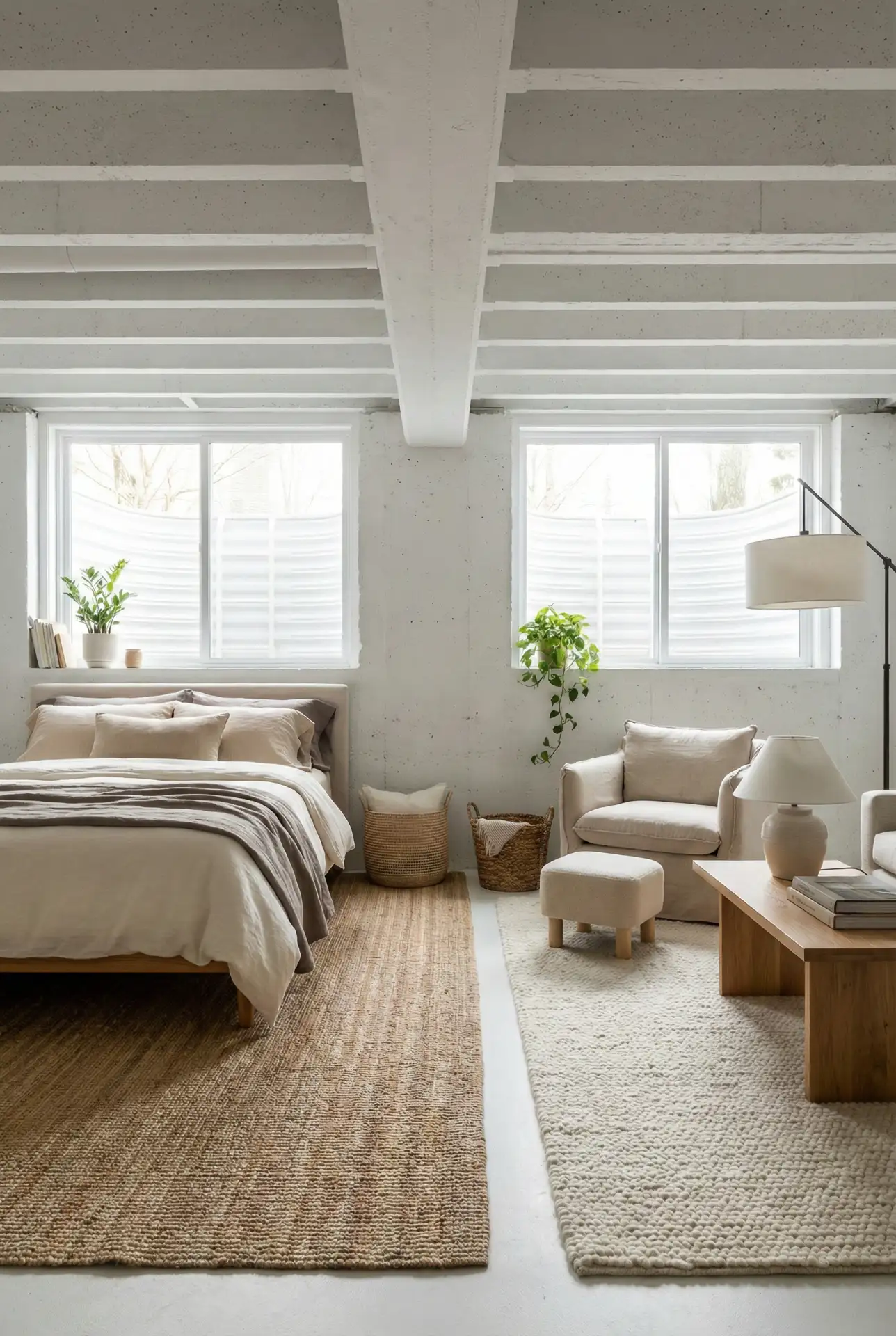
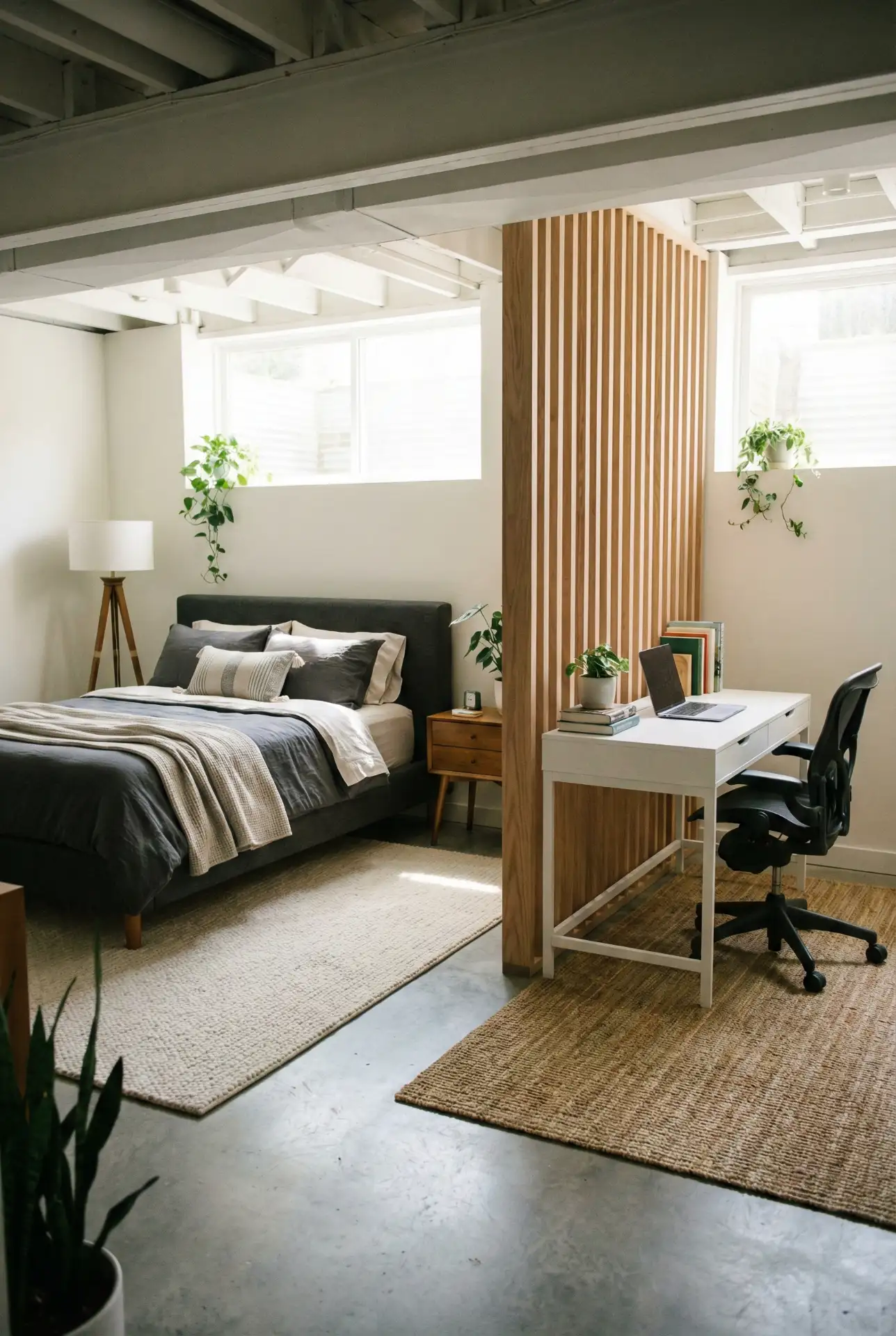
An open basement bedroom benefits from strategic zoning—use area rugs, partial walls, or furniture placement to delineate sleeping, lounging, and storage areas without closing off the space. This layout works beautifully in large basements where square footage allows for breathing room and multiple functions. A low bookshelf or a sofa positioned perpendicular to the bed can visually separate zones while maintaining flow and light. The key is avoiding heavy partitions that make the space feel chopped up or claustrophobic.
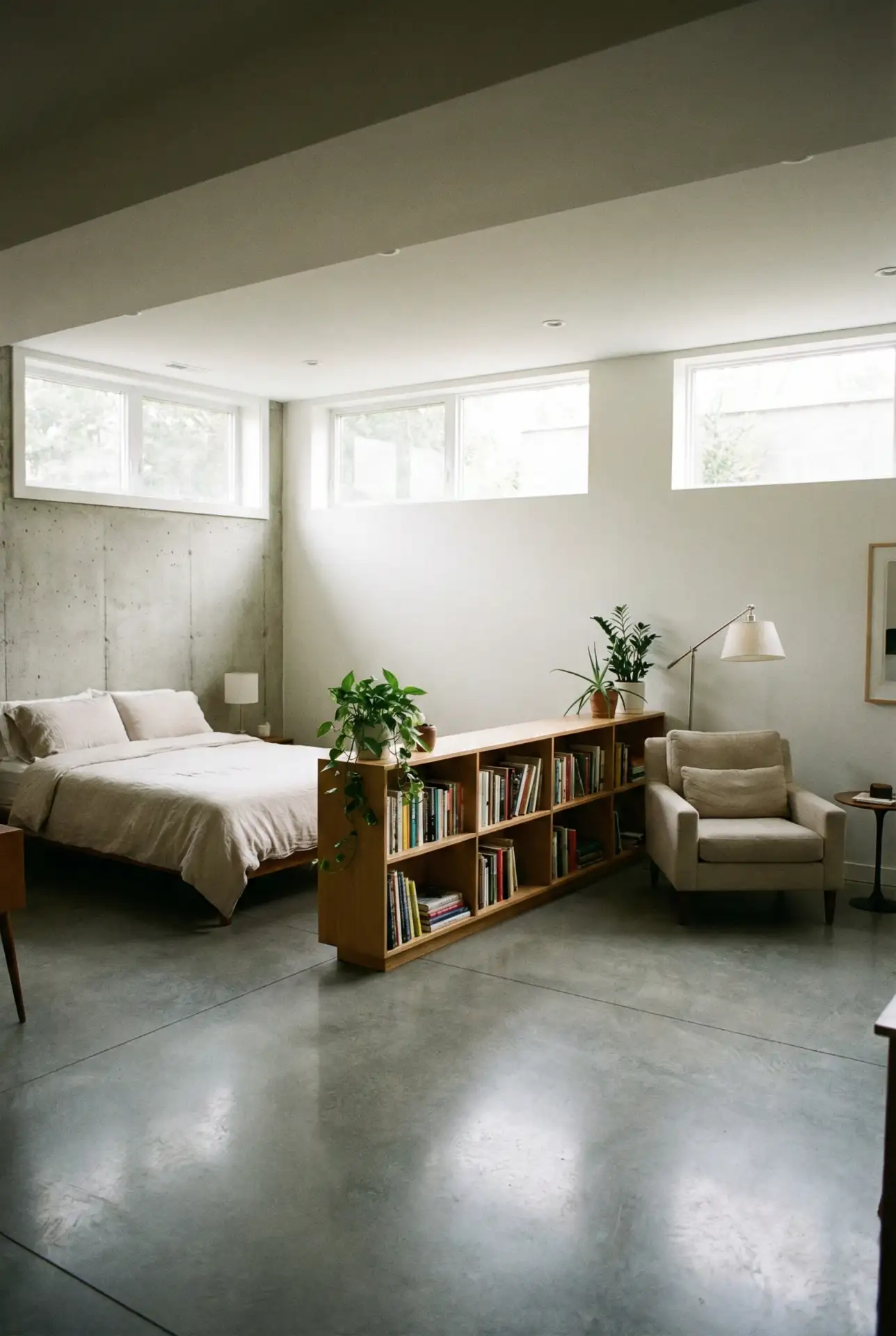
In the Pacific Northwest and parts of California, where basements are less common but often expansive when they exist, open layouts maximize the feeling of luxury and possibility. Couples or empty-nesters frequently use these spaces as secondary master suites or in-law apartments. If you’re zoning an open basement, keep furniture proportional—oversized pieces overwhelm, while appropriately scaled items maintain balance.
10. Master Suite Layout With Ensuite Bath Access
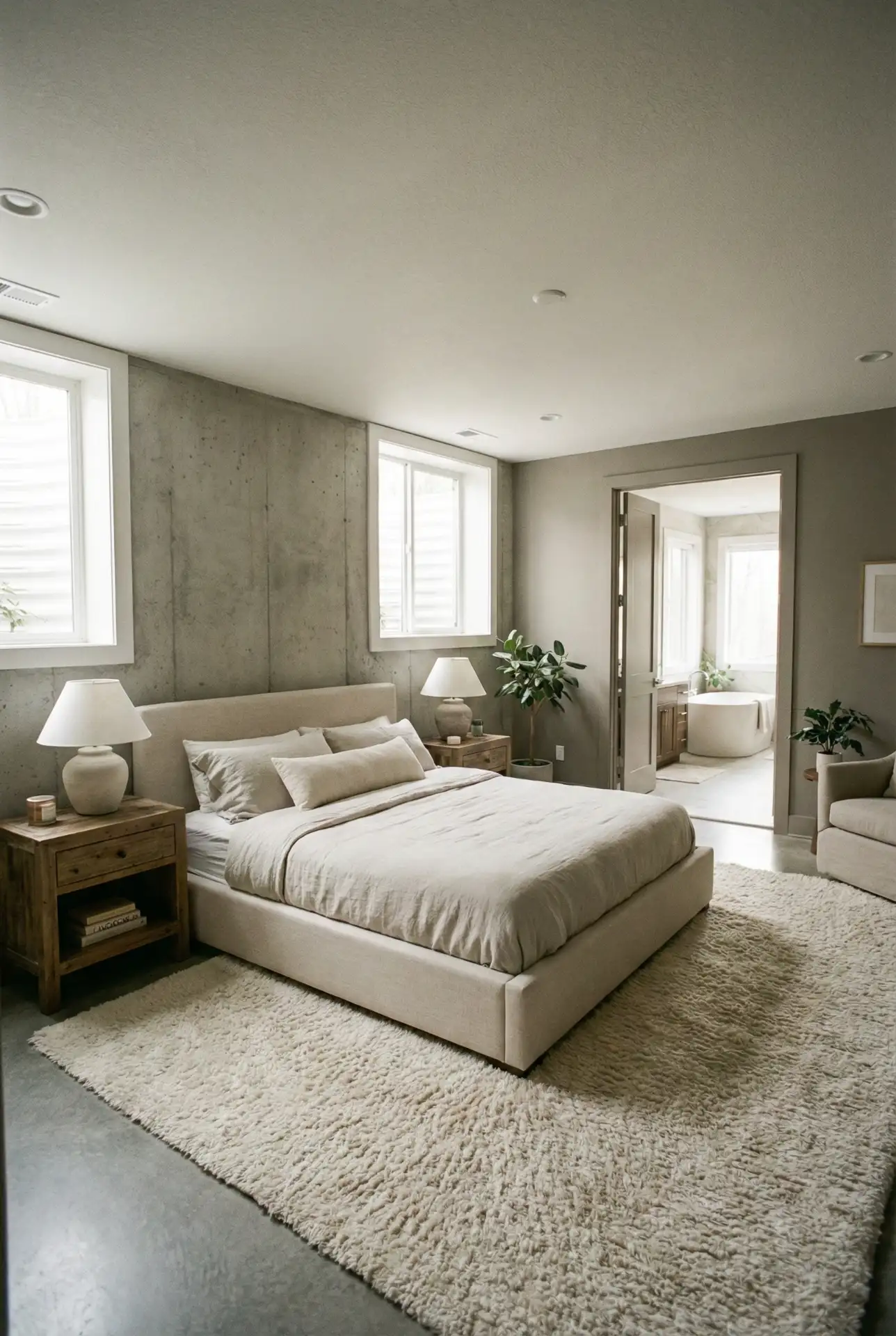
A basement master suite layout with private bath access offers unparalleled privacy, making it ideal for multigenerational households or couples seeking separation from kids’ bedrooms upstairs. Position the bed to face the bathroom entrance or a feature wall, and include a seating area if space allows—a small loveseat or pair of armchairs near a window creates a resort-like retreat. Invest in soundproofing and quality HVAC to ensure comfort, since basements can feel isolated if poorly ventilated or prone to noise transfer.
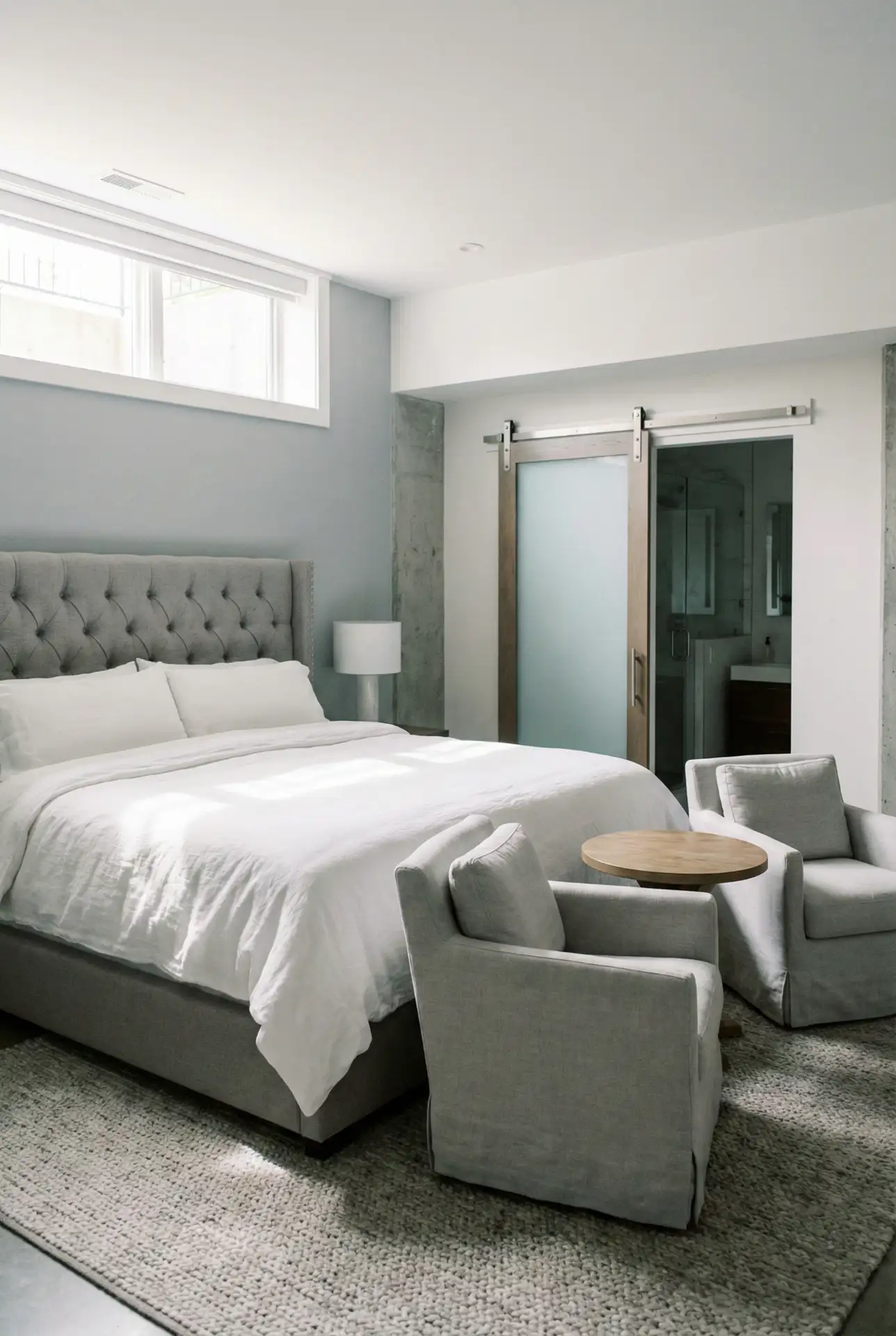
Real homeowner behavior shows that basement master suites are most successful when they feel genuinely separate from daily household chaos—not just physically distant but acoustically and climatically comfortable. If you’re converting a basement into a master suite, prioritize egress windows, proper insulation, and dehumidification. These upgrades aren’t glamorous, but they determine whether the space feels like a sanctuary or a compromise.
11. Guest-Friendly Neutral Palette And Comfort
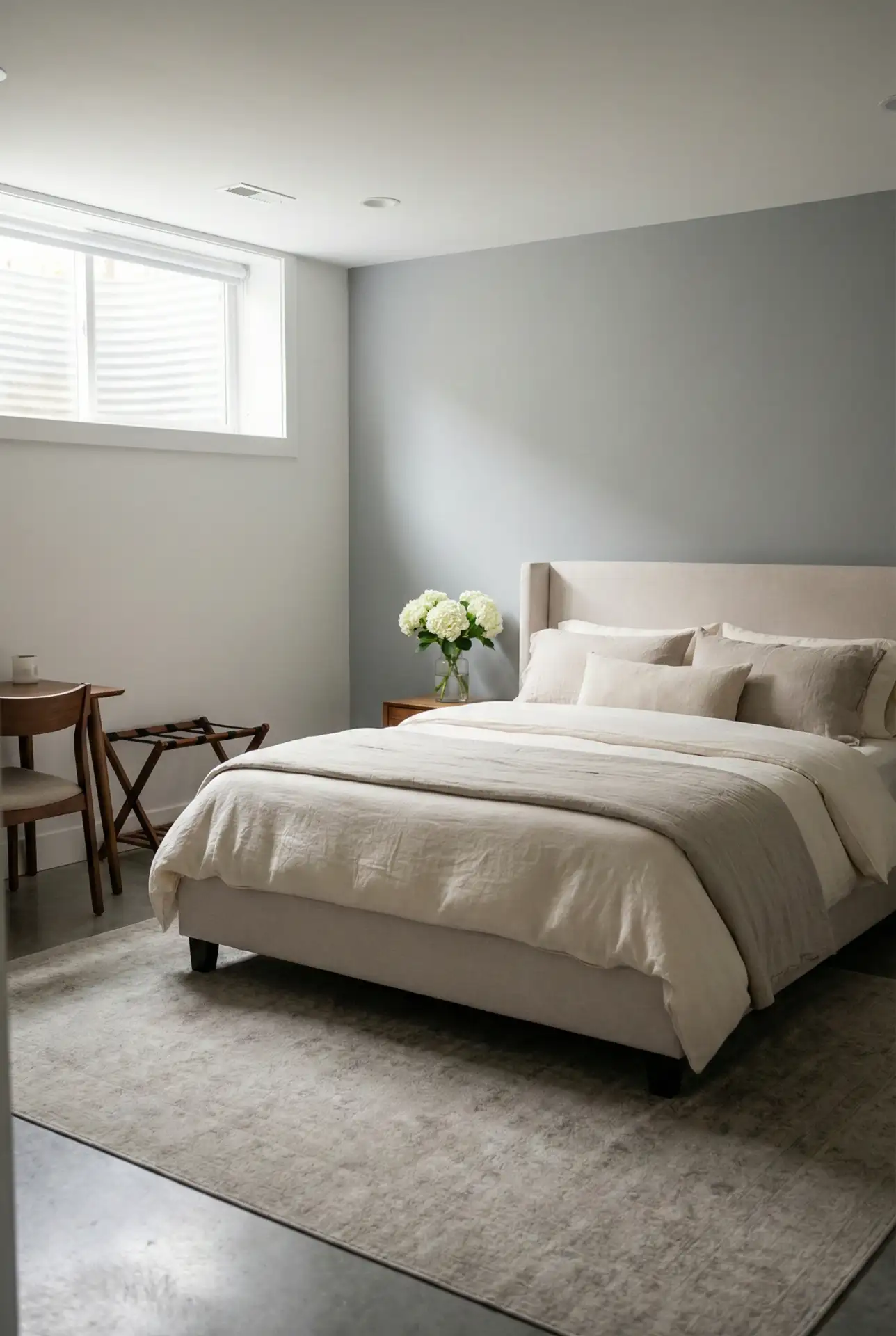
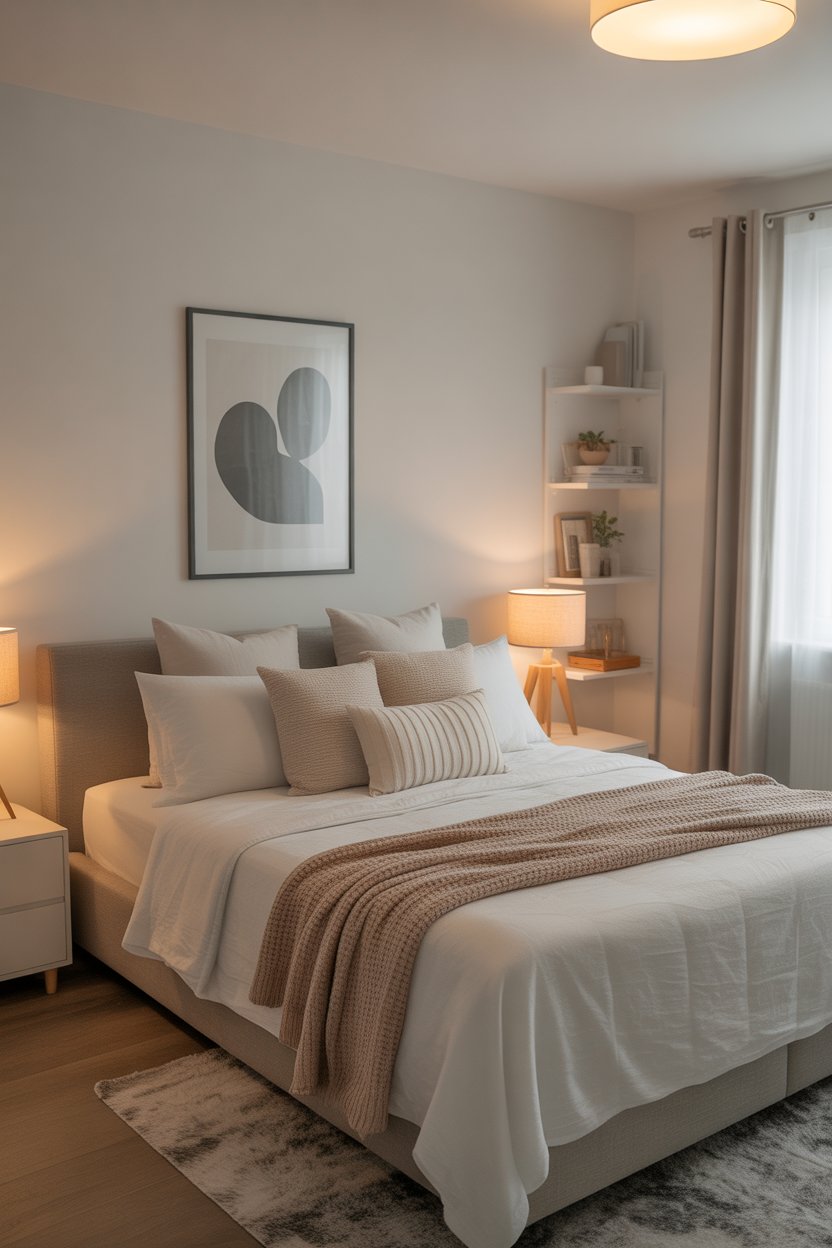
A guest-friendly basement bedroom prioritizes universal appeal and comfort over personal taste. Stick to soft neutrals—white, beige, and warm gray—and layer in texture through bedding, pillows, and throws. Include thoughtful touches like bedside charging stations, blackout shades, a luggage rack, and a small basket of essentials (water bottles, tissues, and a phone charger). The goal is a hotel-like experience that makes visitors feel genuinely welcomed rather than tucked into a forgotten corner.
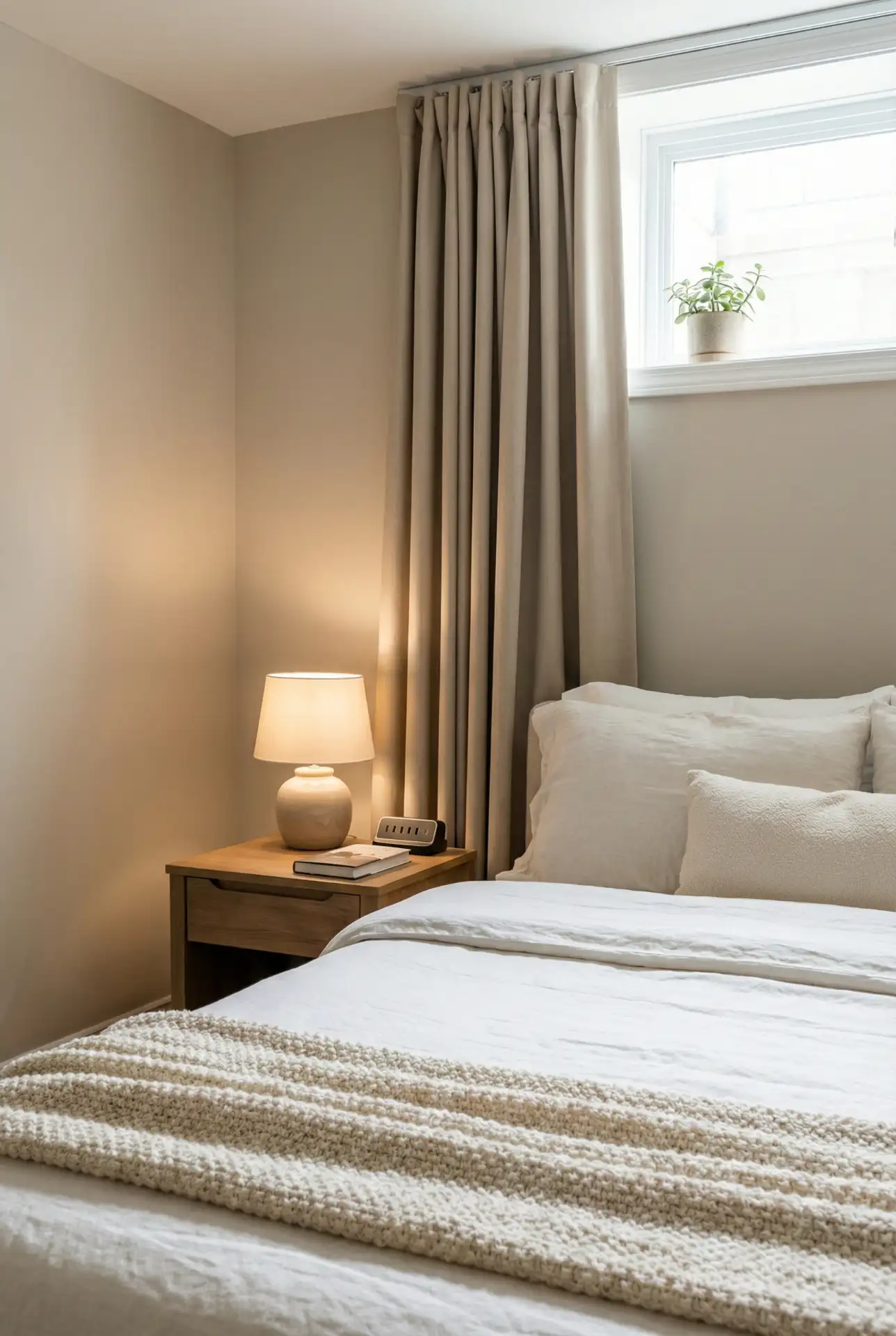
This setup is particularly popular in the South and Midwest, where hospitality and extended family visits are cultural cornerstones. Expert-style commentary: guests remember comfort and convenience more than décor, so prioritize a quality mattress, adequate lighting, and temperature control. A well-executed guest bedroom also serves as a backup workspace or private retreat when not occupied, making it a versatile investment.
12. DIY Painted Accent Wall On A Budget
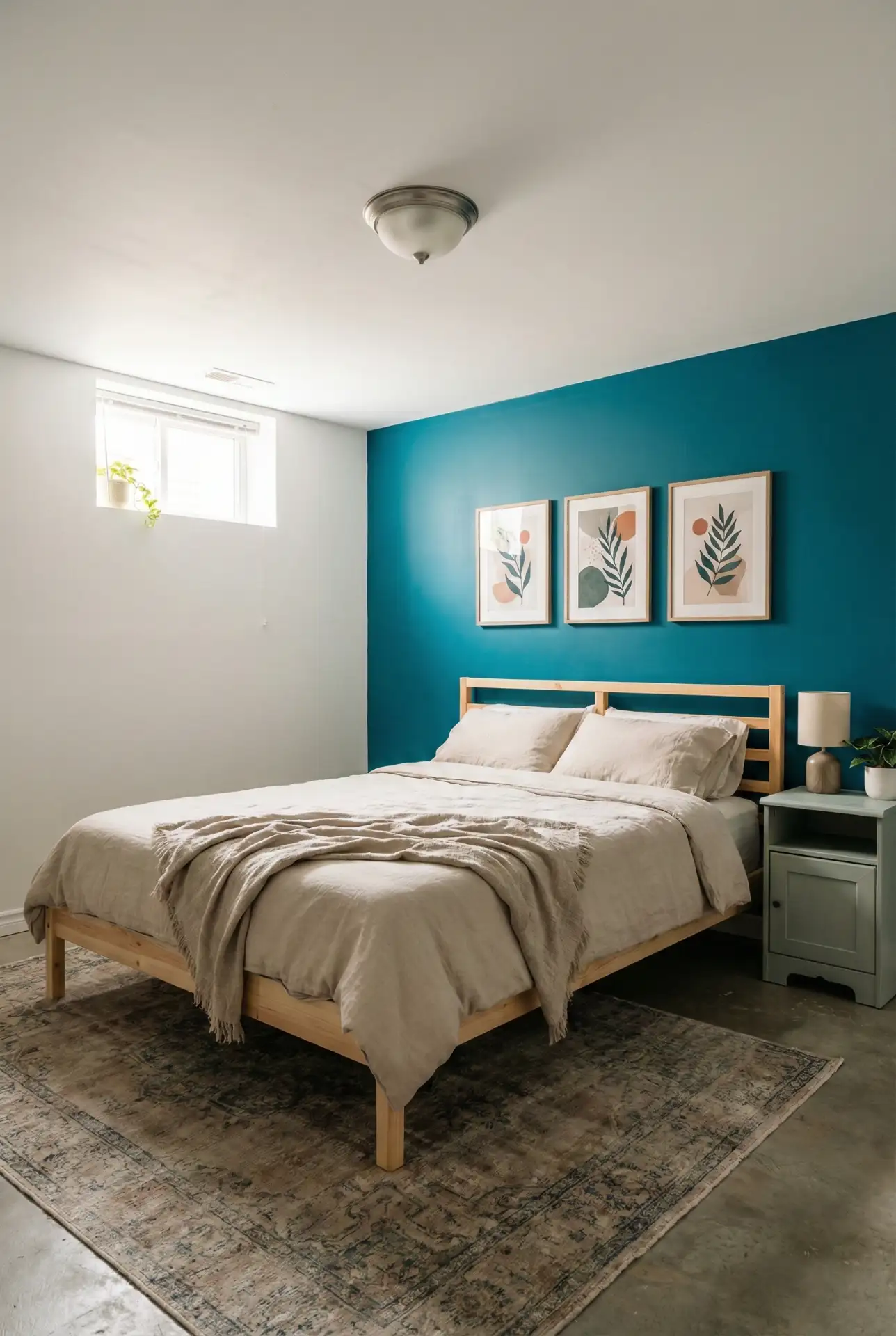
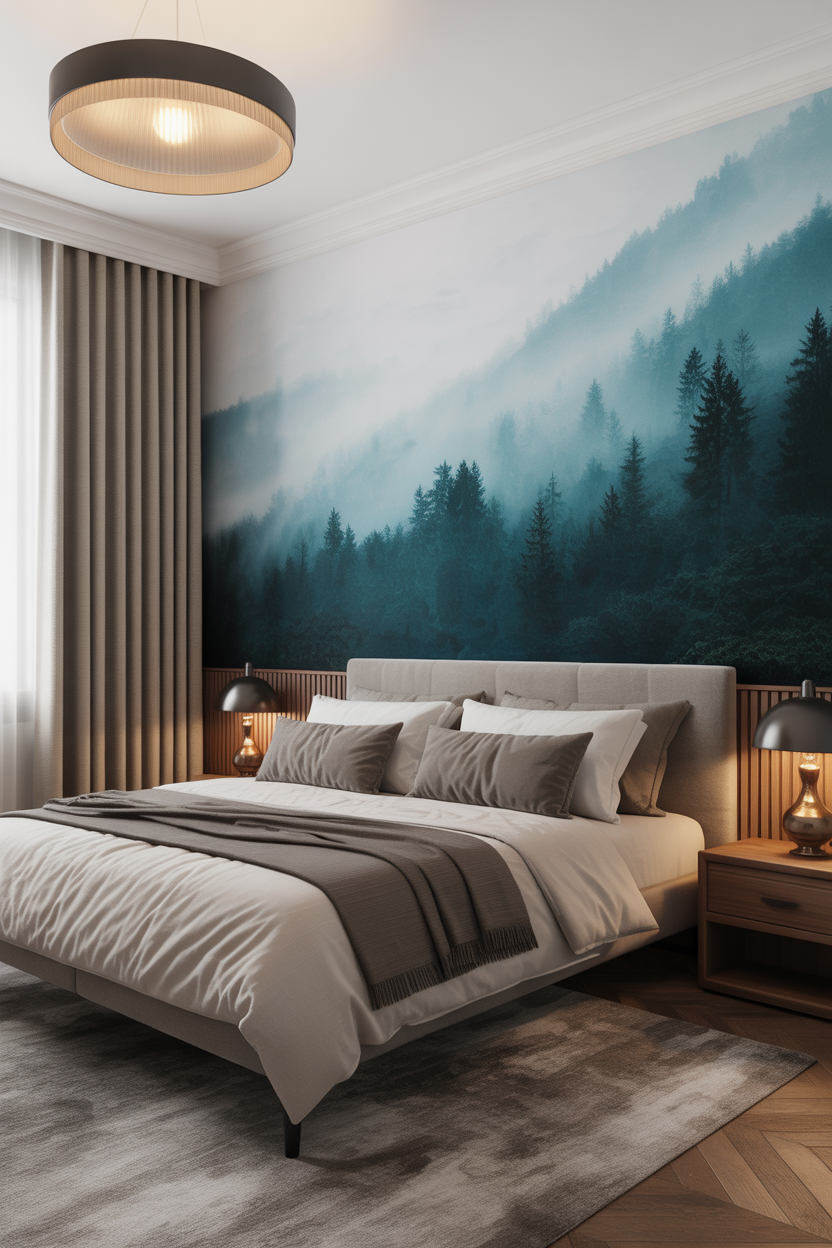
A single DIY painted accent wall adds instant character to a basement bedroom without requiring professional help or significant expense. Choose a bold color—deep teal, terracotta, or charcoal—and paint the wall behind the bed to anchor the space visually. This approach is perfect for renters or budget-conscious homeowners who want maximum impact with minimal investment. One gallon of quality paint costs under $50 and takes just a few hours to apply, making it one of the most cost-effective upgrades available.
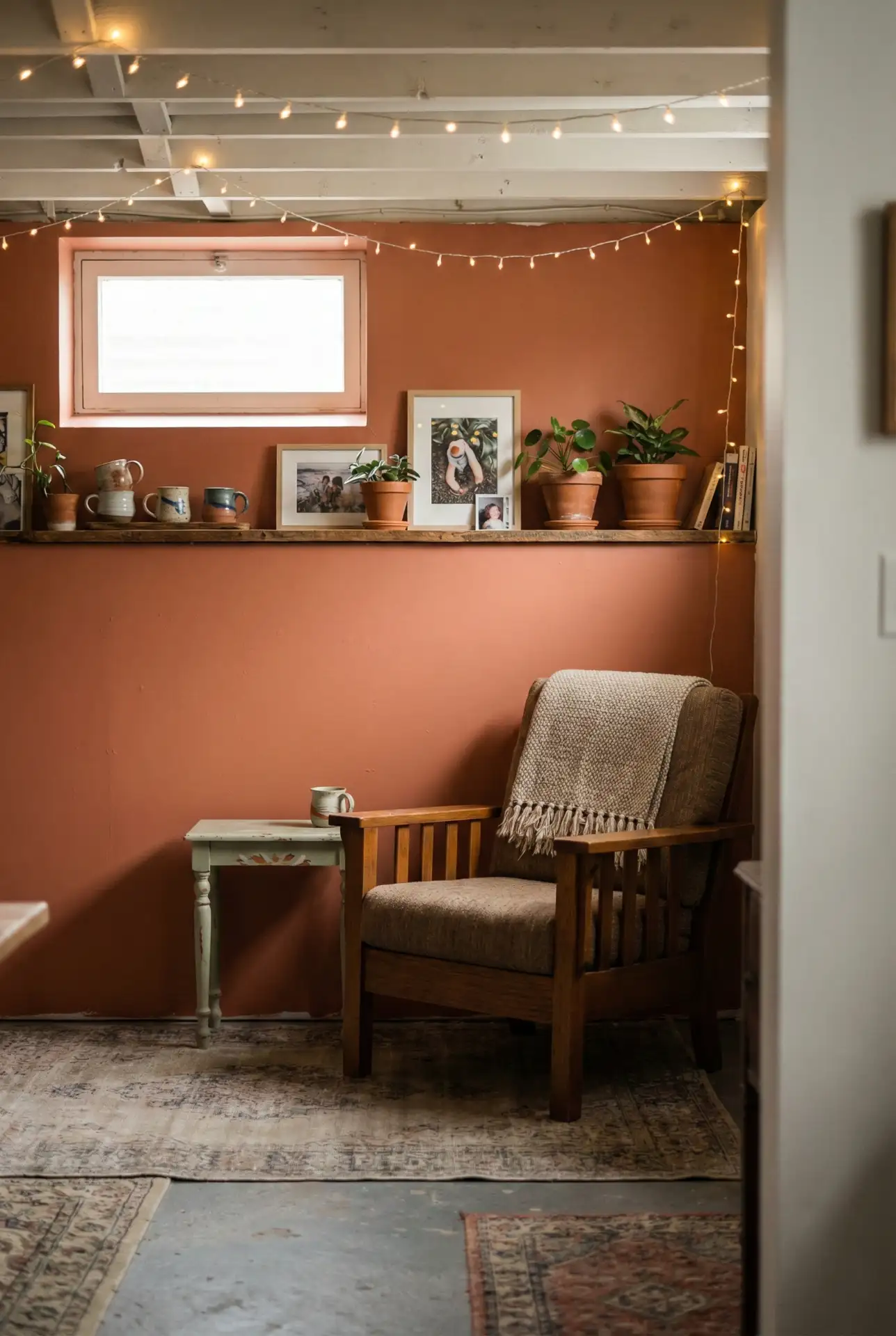
A common mistake is choosing a color that’s too dark or too bright without testing it first. Buy sample pots and paint large swatches on the wall, observing how they look at different times of day. Basement lighting—especially if artificial—can dramatically shift how colors appear. Once you commit, use painter’s tape and drop cloths to protect floors and trim, and apply two coats for even coverage.
13. Rustic Wood Paneling And Natural Textures
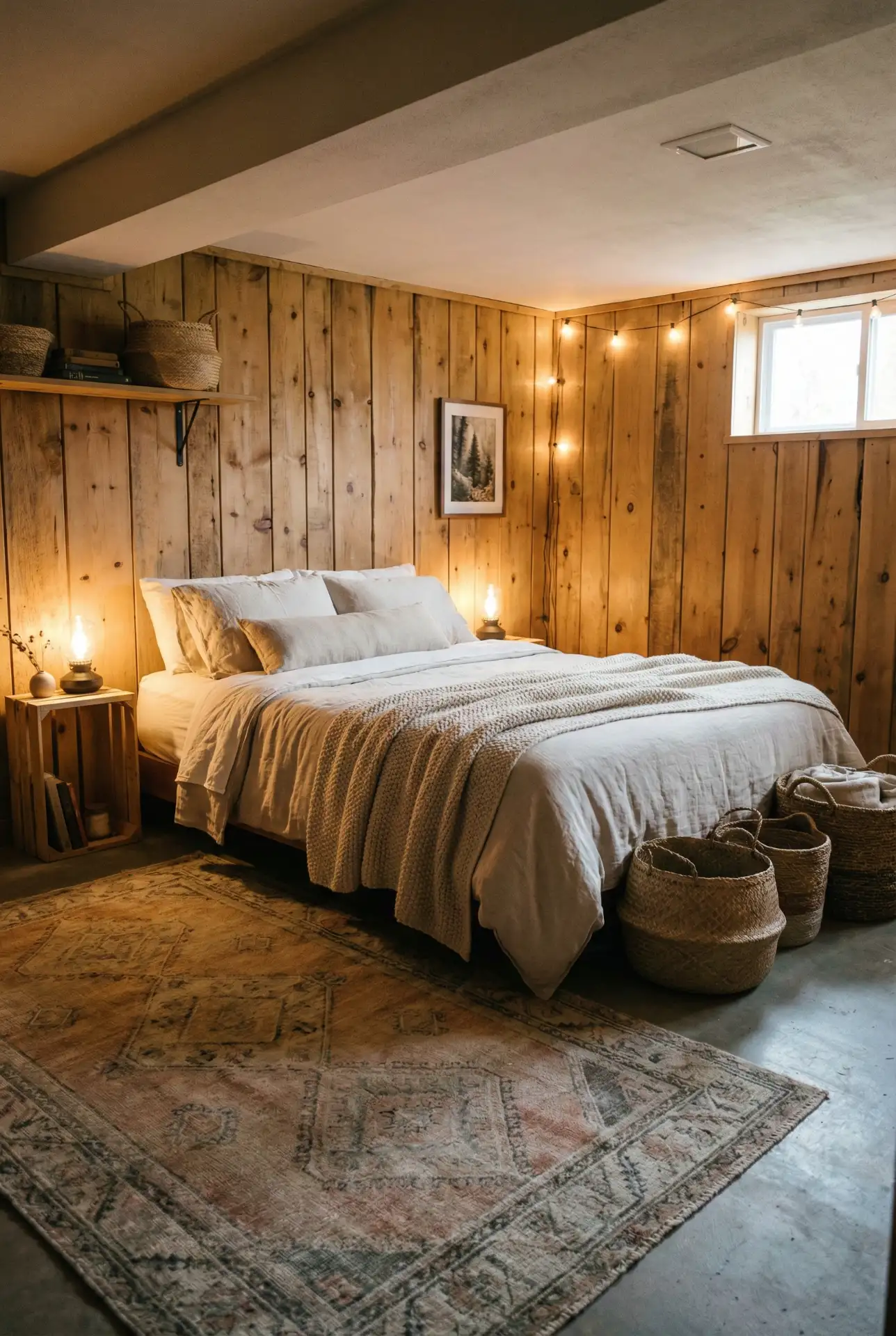
Warm wood paneling brings a rustic cabin feel to a basement bedroom, making it ideal for homes in mountain regions or rural areas. Install tongue-and-groove pine or reclaimed barnwood on one or all walls, leaving the wood natural or staining it in warm honey or weathered gray tones. Pair with linen bedding, woven baskets, and vintage rugs to complete the look. This style works especially well in basements that already feel cool or damp, as wood adds both visual and tactile warmth.
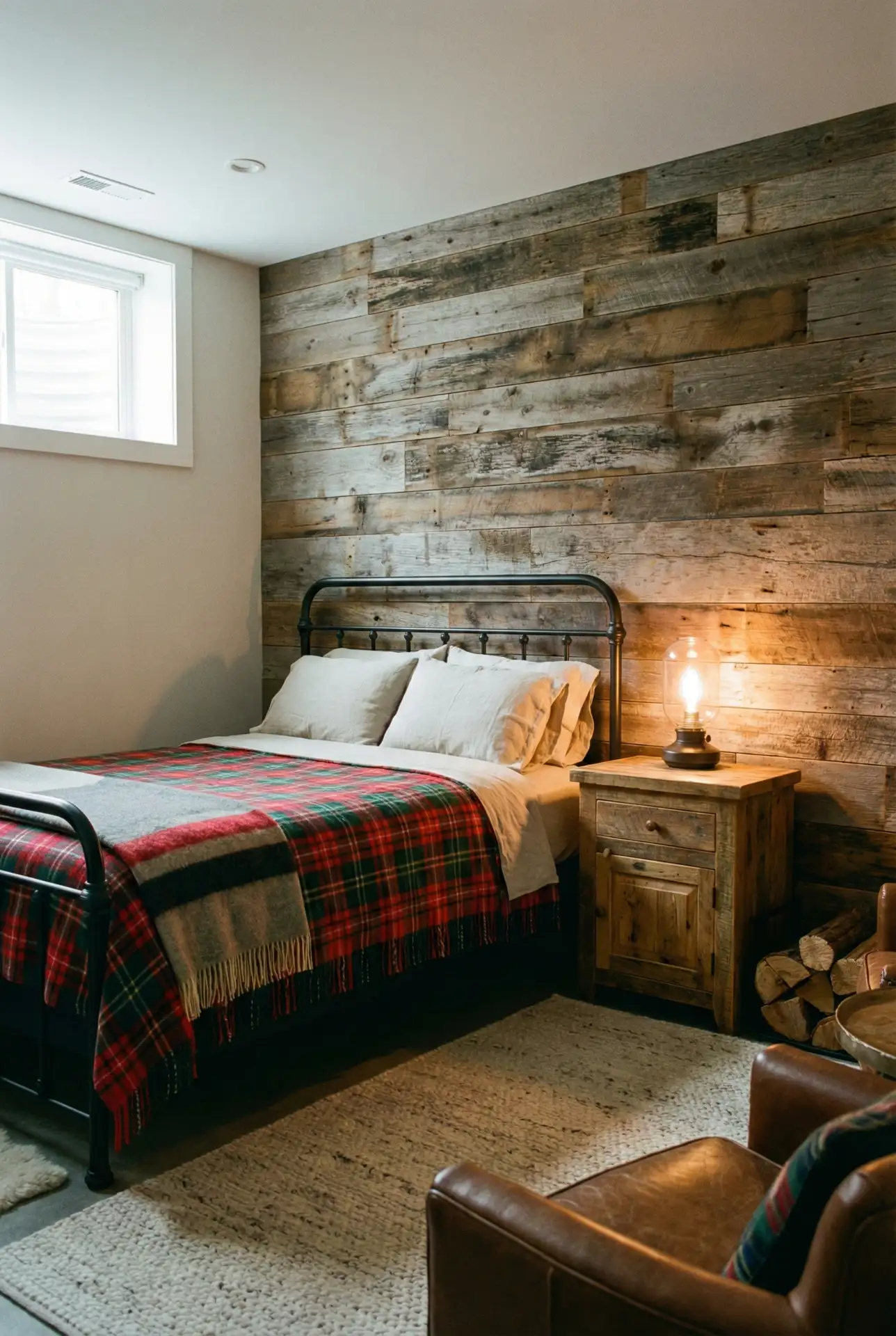
Where this works best: lake houses, ski chalets, and homes in the Rockies or Appalachians where rustic aesthetics align with regional character. Wood paneling also has practical benefits—it hides foundation imperfections and adds insulation. Just ensure proper ventilation and moisture barriers behind the wood to prevent mold or warping, especially in humid climates.
14. Couples Retreat With Layered Lighting Design
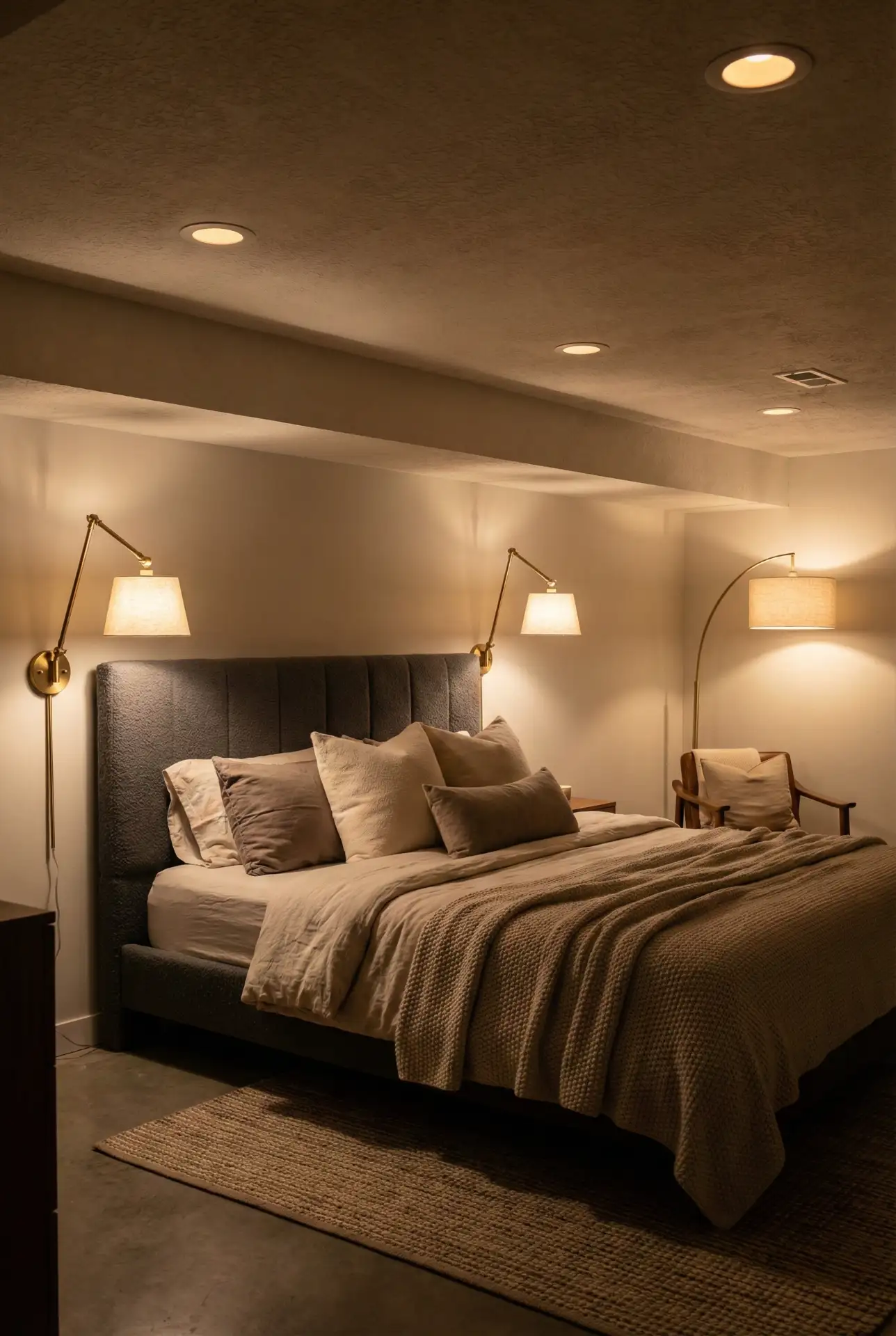
A basement bedroom designed for couples should prioritize intimacy, comfort, and flexibility through layered lighting. Combine overhead recessed lights with bedside sconces, a floor lamp in a reading nook, and perhaps a string of Edison bulbs or LED strips for ambiance. Dimmable switches allow you to adjust brightness for different moods—bright for mornings, soft for evenings, and fully dim for sleep. This layered approach transforms a basement from utilitarian to luxurious without requiring structural changes.
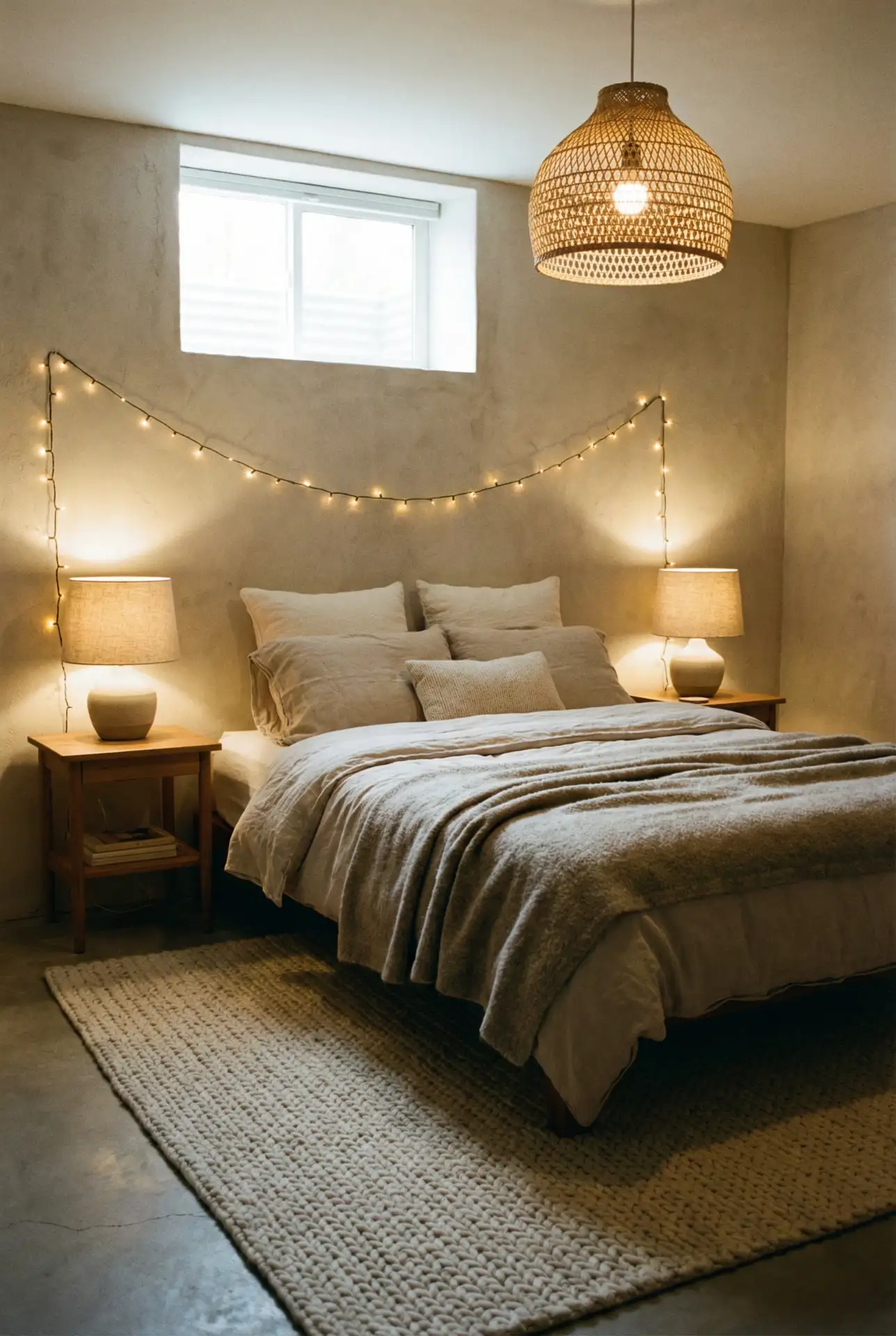
Real homeowners frequently overlook lighting until the room feels flat or uninviting. Invest in quality fixtures and smart bulbs that adjust color temperature—cool white for daytime, warm amber for evening. Layered lighting also increases functionality, allowing one person to read while the other sleeps. This strategy is especially important in windowless basements where natural light never factors into the equation.
15. Windows With Aesthetic Sheer Drapes
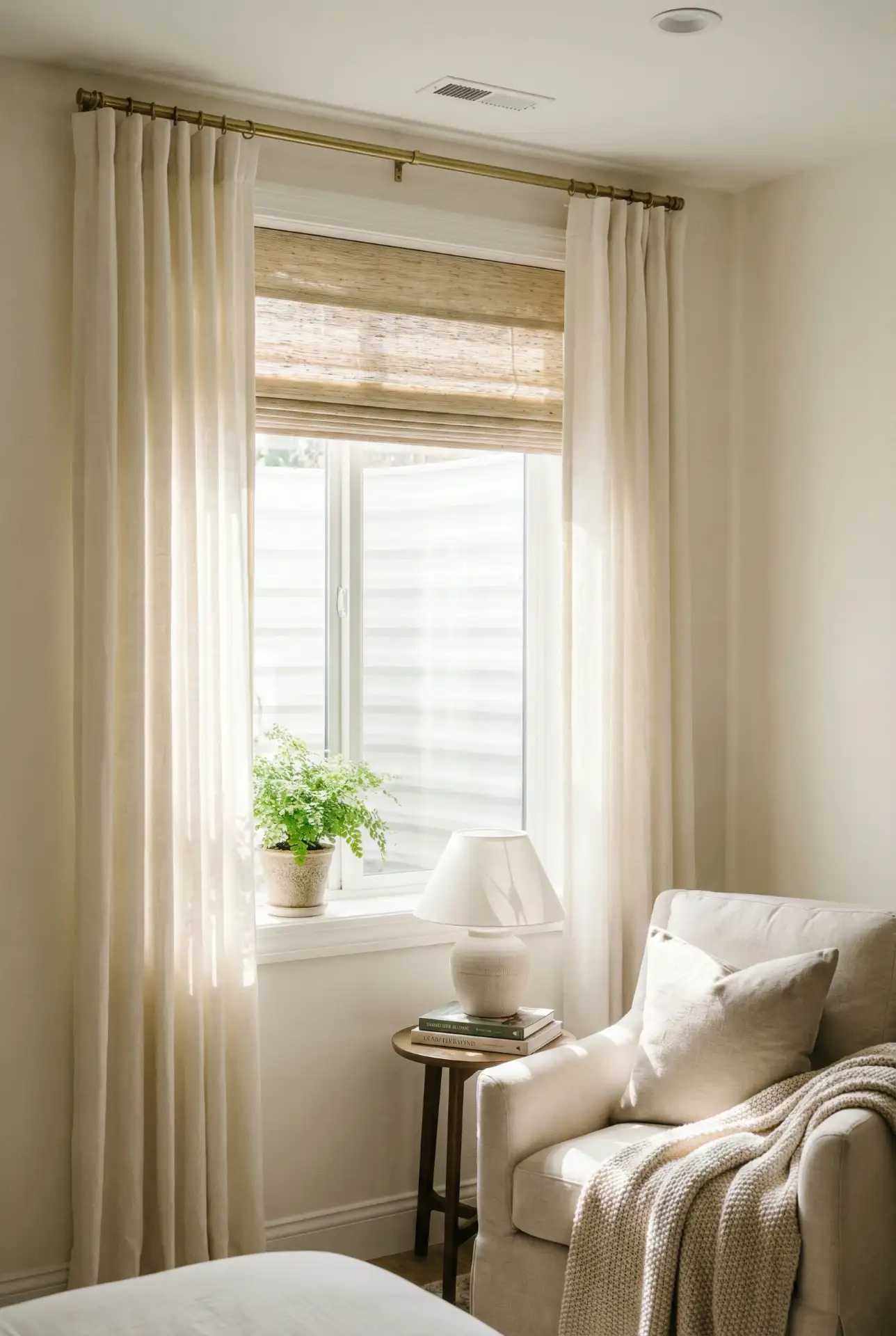
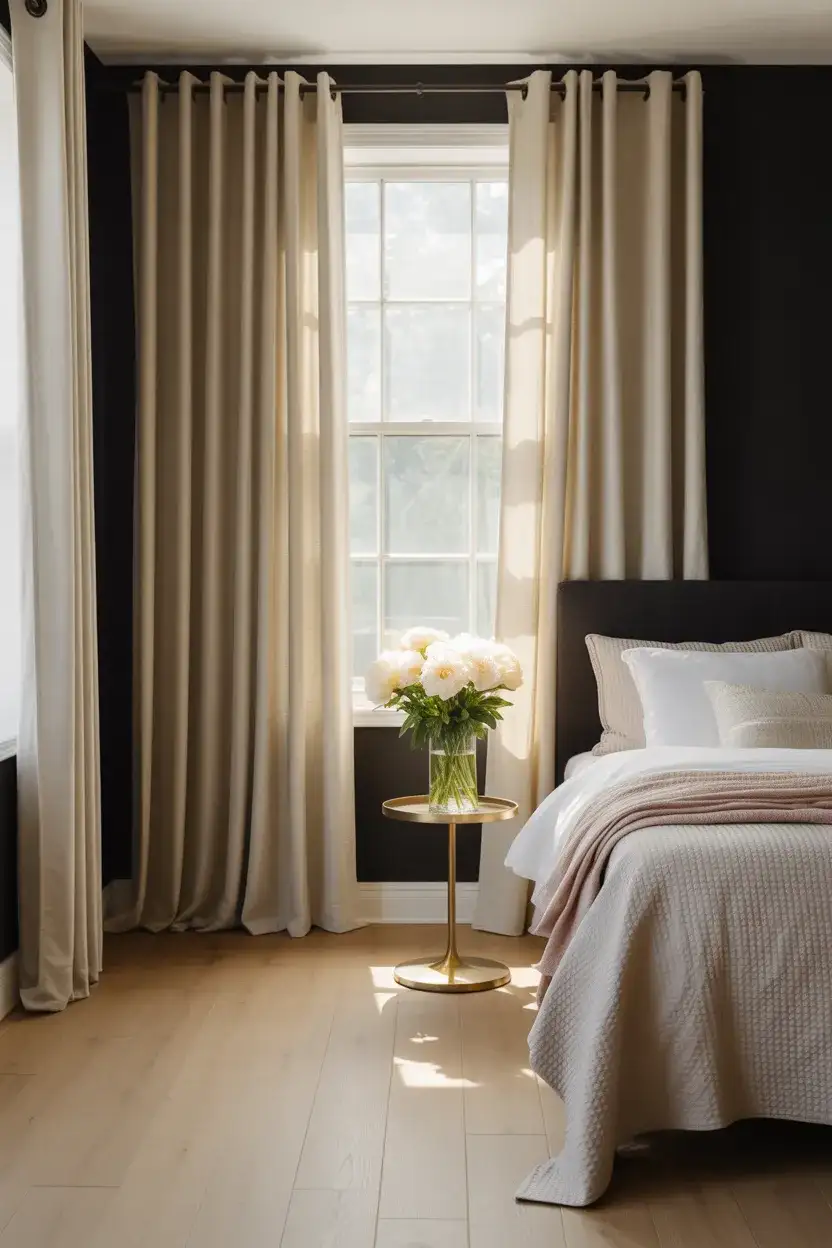
When your basement bedroom features windows with aesthetic potential, enhance them with floor-to-ceiling sheer drapes in soft white, ivory, or blush tones. These treatments diffuse natural light beautifully while maintaining privacy, creating an ethereal, romantic look that’s especially popular on Pinterest. Mount curtain rods as high as possible to draw the eye upward and make ceilings feel taller. Layer sheers with blackout shades or blinds for nighttime privacy and light control without sacrificing daytime softness.
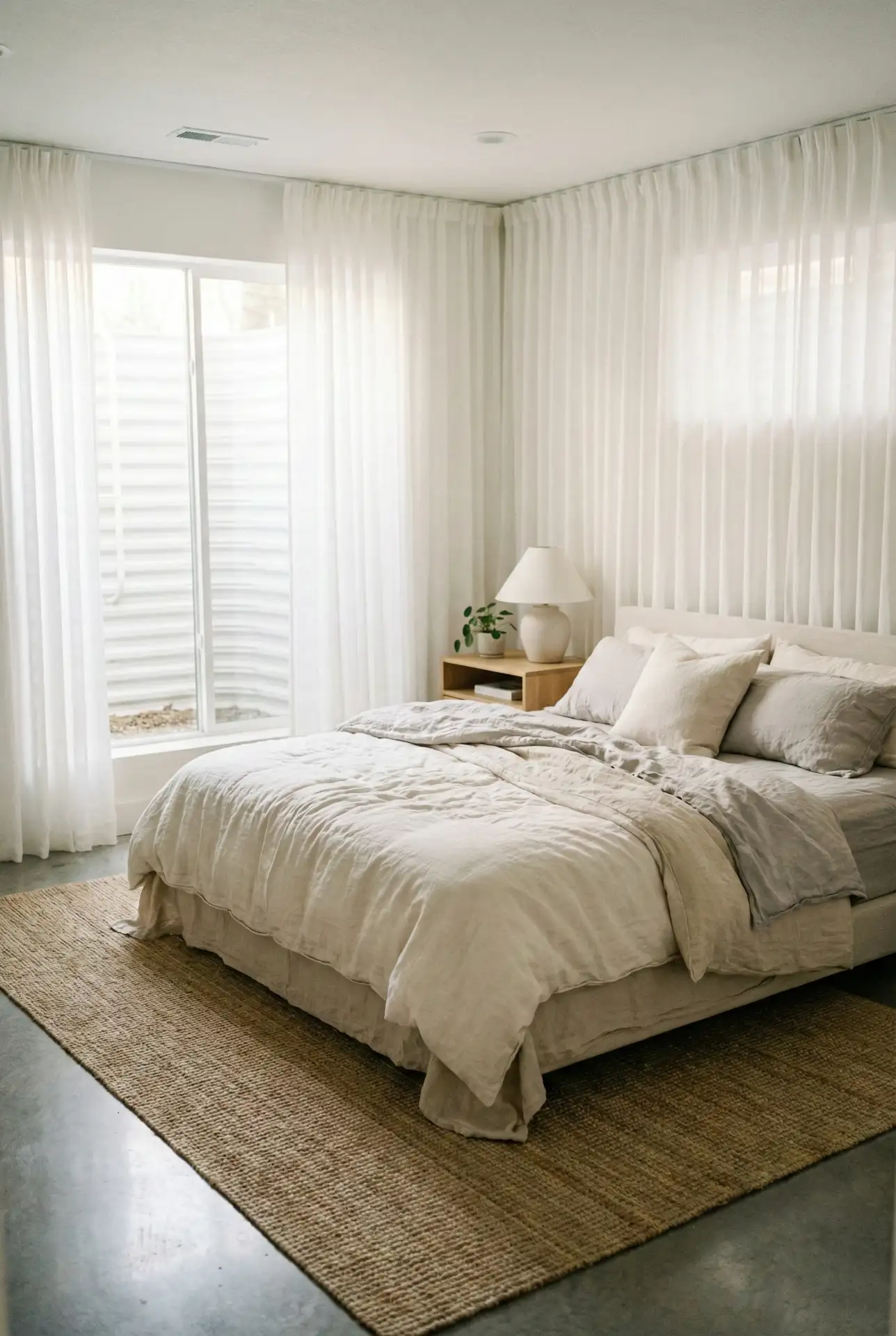
This approach is particularly effective in suburban split-levels and daylight basements across the Mid-Atlantic and New England, where window wells or walk-out access provide generous natural light. Sheer drapes soften architectural lines and add a touch of elegance that elevates the entire space. Avoid heavy, dark curtains in basement bedrooms—they exacerbate the cave-like feel many people want to avoid.
16. Teen Boys’ Man Cave With Gaming Setup
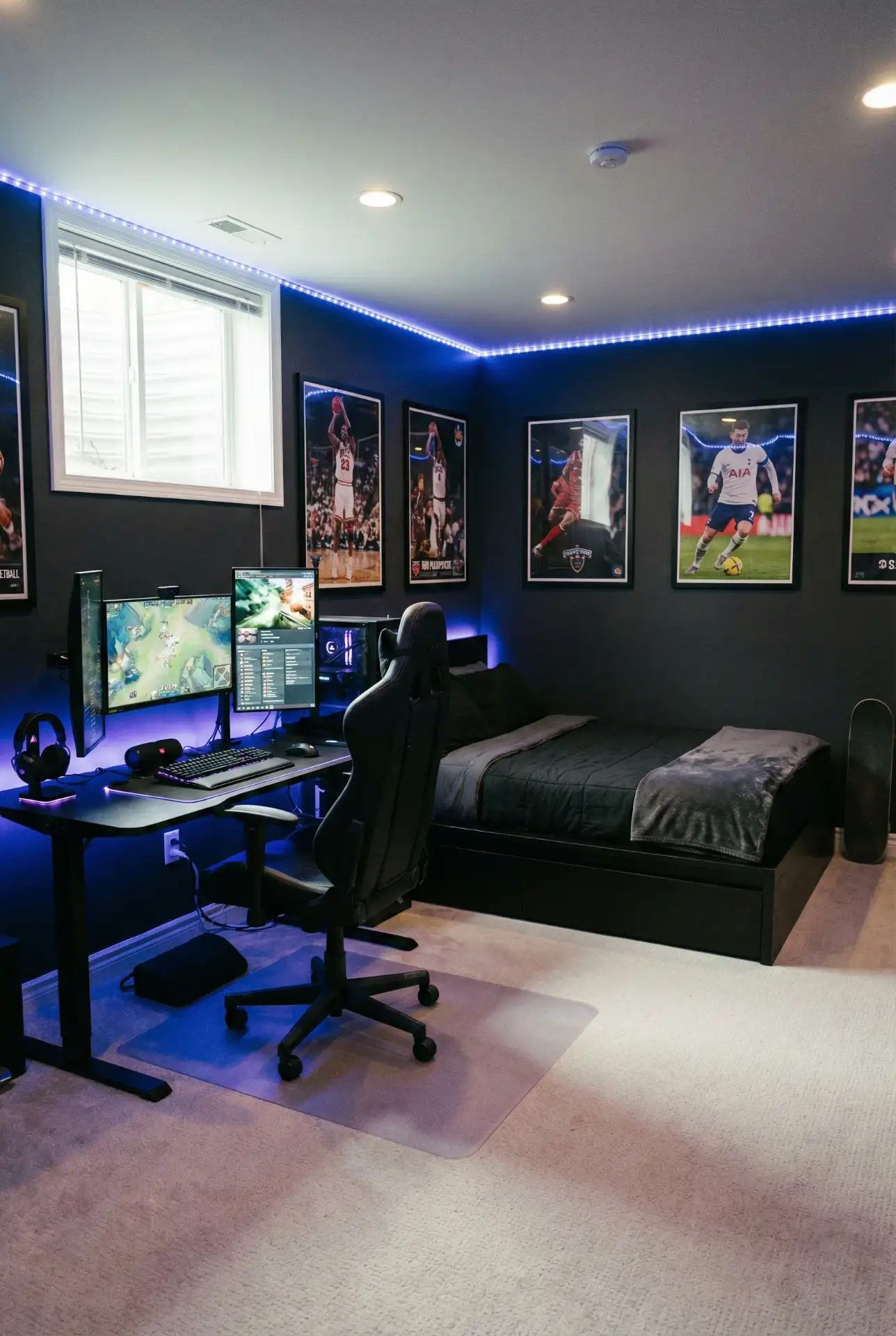
A basement bedroom for teen boys’ man cave enthusiasts should embrace functionality and personality through dedicated zones for sleep, gaming, and hanging out. Include a sturdy desk with cable management for consoles or a PC setup, a comfortable gaming chair, and open shelving for controllers and collectibles. Keep the color palette bold but not overwhelming—charcoal, navy, or olive green walls with pops of neon or team colors. Add posters, LED strip lights, and a mini-fridge if budget allows, transforming the space into a true teenage sanctuary.
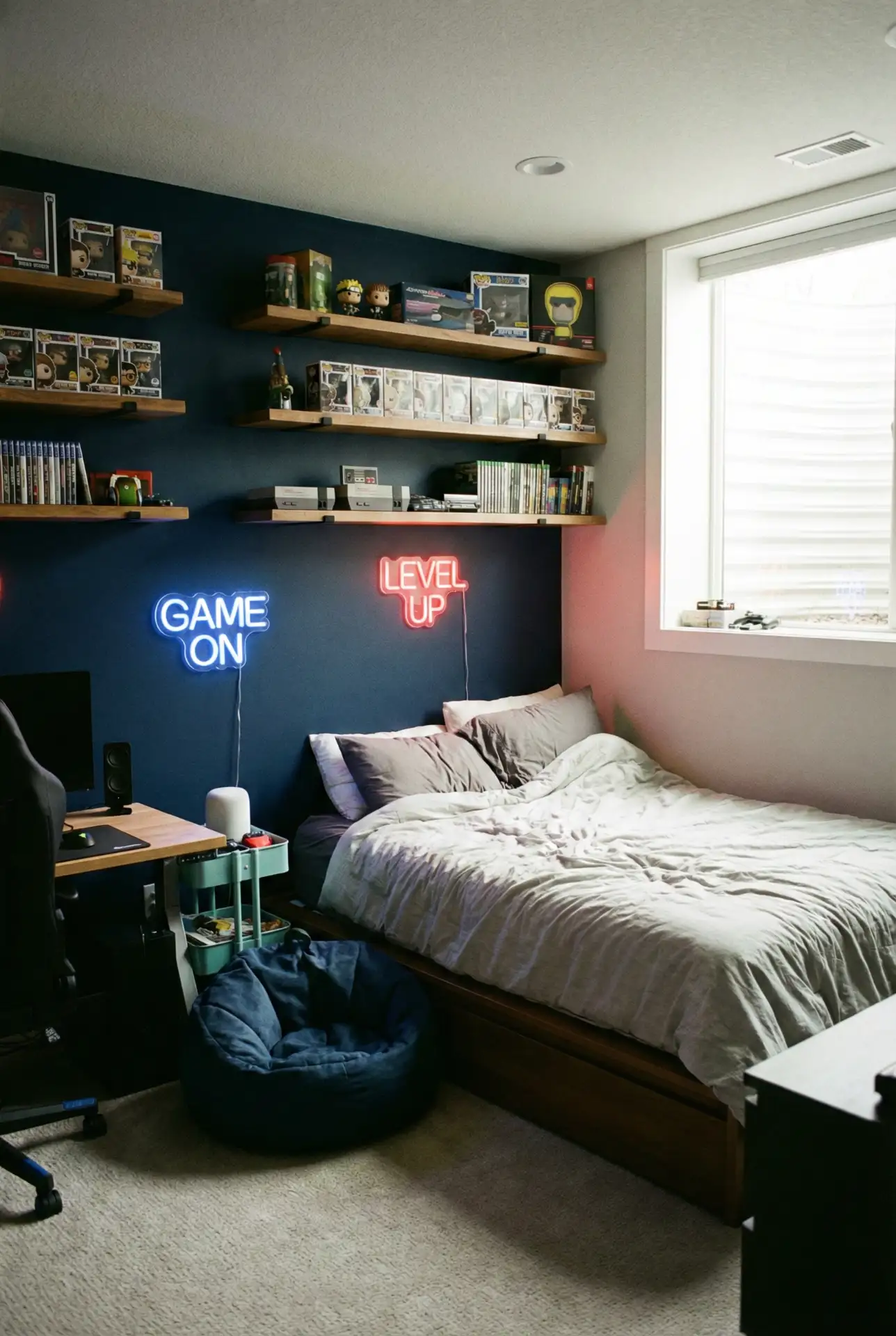
Across American suburbs, basement bedrooms have become default teen territories, especially for boys who crave independence and space to host friends. Balance their desire for autonomy with practical considerations like adequate ventilation, egress windows for safety, and limits on noise levels if other family members are upstairs. Let them take ownership of the design while you guide decisions around durability and long-term functionality.
17. Aesthetic Cozy Nook With String Lights
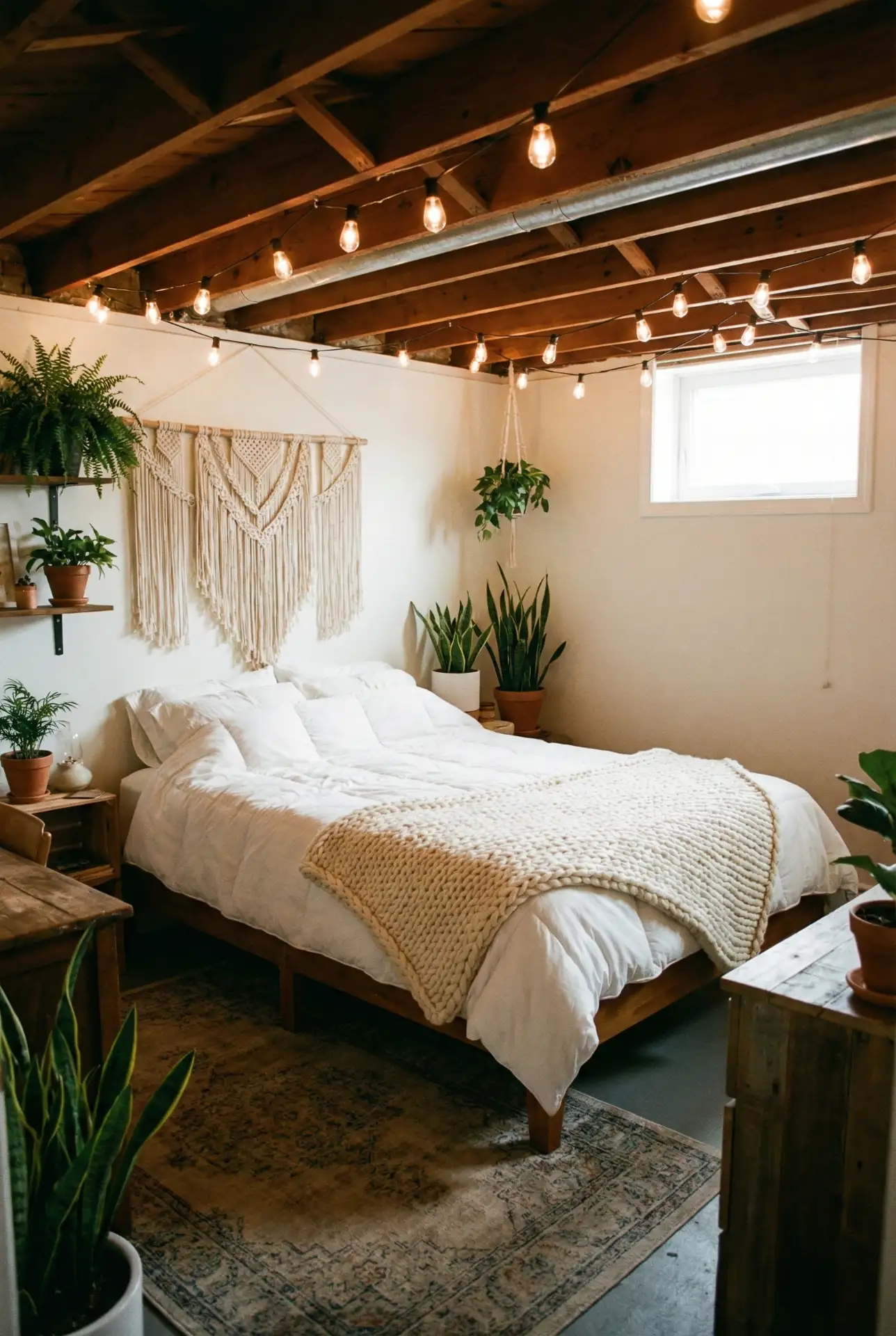
An aesthetic cozy basement bedroom leans into soft textures, warm lighting, and Pinterest-perfect styling. String lights draped along walls or around windows create a dreamy, intimate glow that’s especially appealing to younger homeowners and renters. Layer in plush throws, textured pillows, macramé wall hangings, and potted plants to build visual warmth. This style thrives on intentional imperfection—slightly rumpled bedding, stacked books, and personal touches that make the space feel lived-in rather than staged.
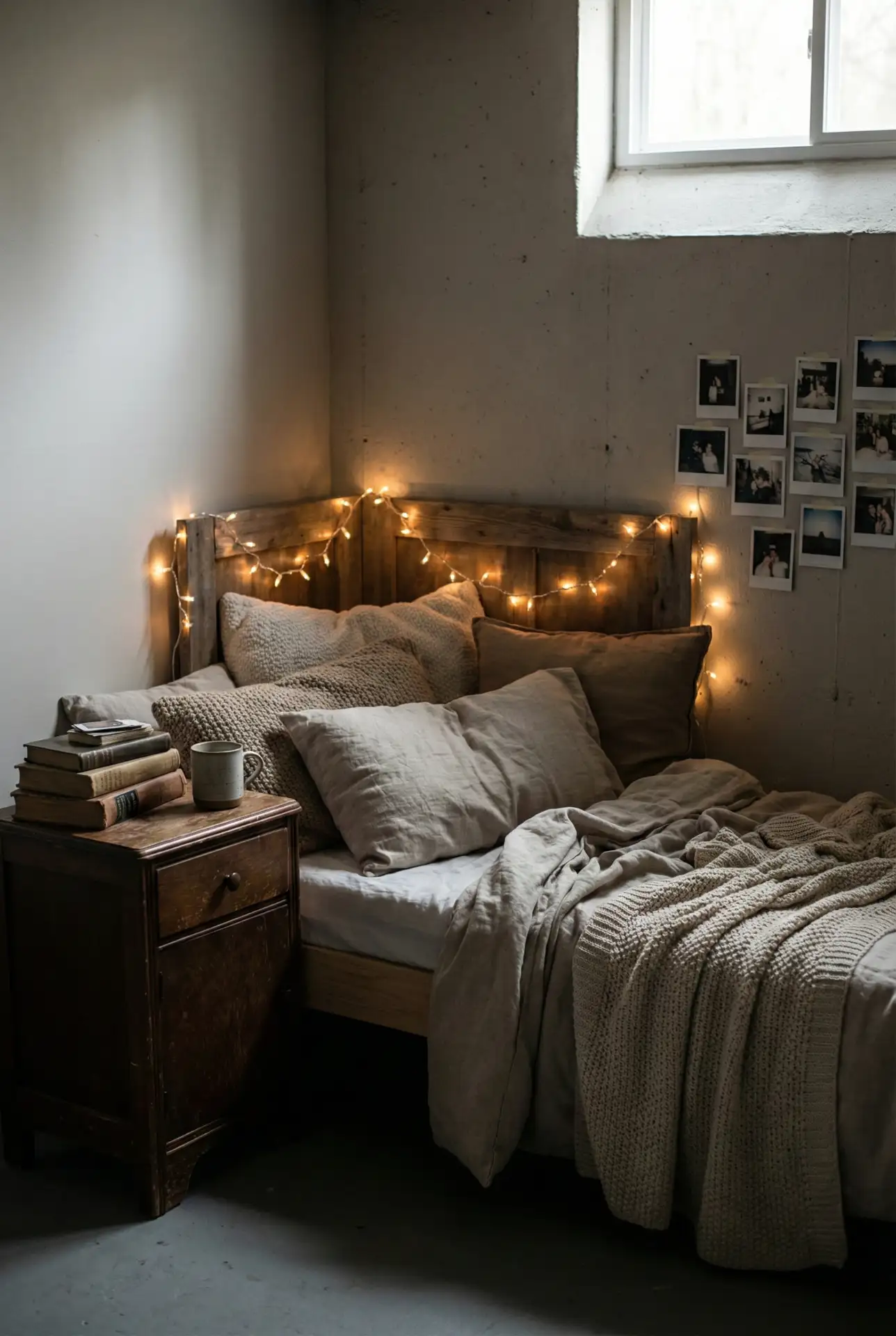
Where this works best: small urban apartments or starter homes where the basement serves as a primary bedroom for young adults. String lights are budget-friendly (often under $20) and instantly transform even the plainest space. Just avoid overloading circuits or using lights not rated for extended use—safety should never be sacrificed for aesthetics. This style also photographs beautifully, making it a favorite for social media and design inspiration boards.
18. Kid-Friendly Playful Colors And Storage
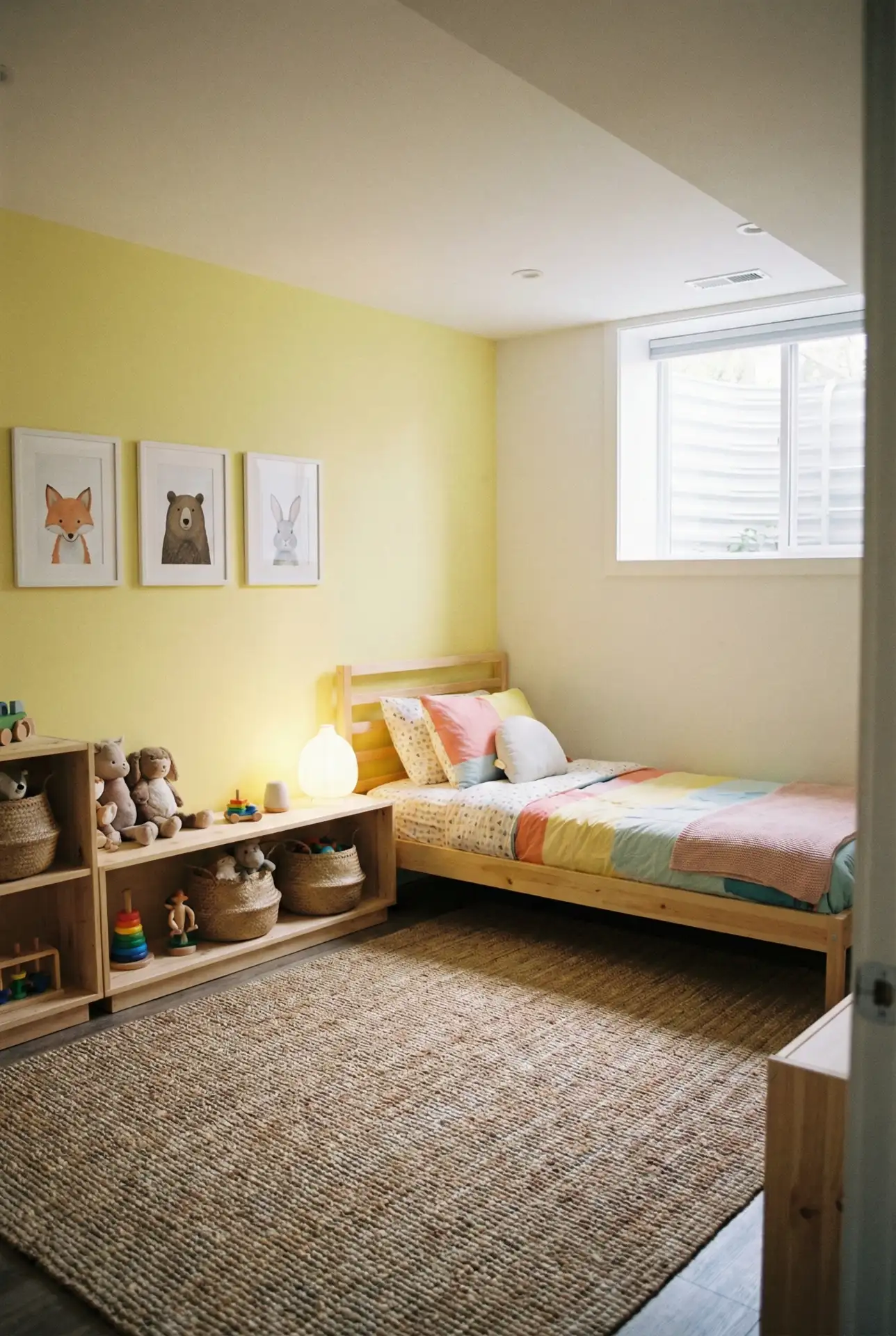
A kid-friendly basement bedroom should balance fun, safety, and practicality. Choose durable, washable finishes and incorporate playful colors—soft pastels, primary brights, or nature-inspired greens and blues. Include ample low-height storage like bins, cubbies, and toy chests that kids can access independently. Add a chalkboard wall, reading tent, or craft corner to encourage creativity. Safety is paramount: ensure egress windows meet code, avoid sharp furniture edges, and use non-toxic paints and finishes throughout.
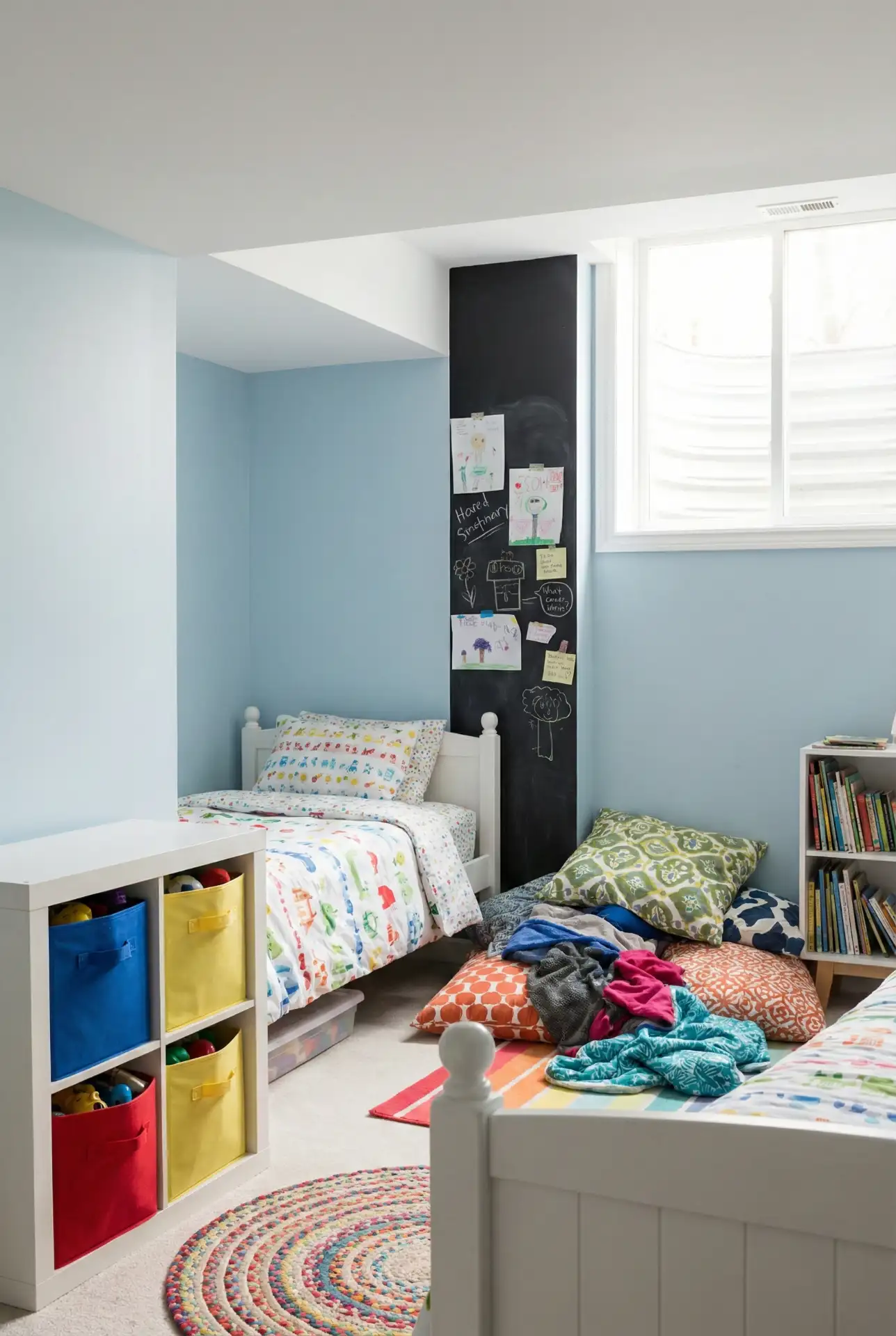
In family-heavy regions like the Midwest and South, basement bedrooms often house multiple kids or serve as overflow when guests visit. Design with flexibility in mind—modular furniture, removable wall decals, and neutral base colors allow the room to grow with the child. Avoid overly themed designs (princess castles, superhero lairs) that quickly feel dated. Instead, let bedding, art, and accessories carry the theme, making updates affordable and easy.
19. Teens’ Layout With Study And Sleep Separation
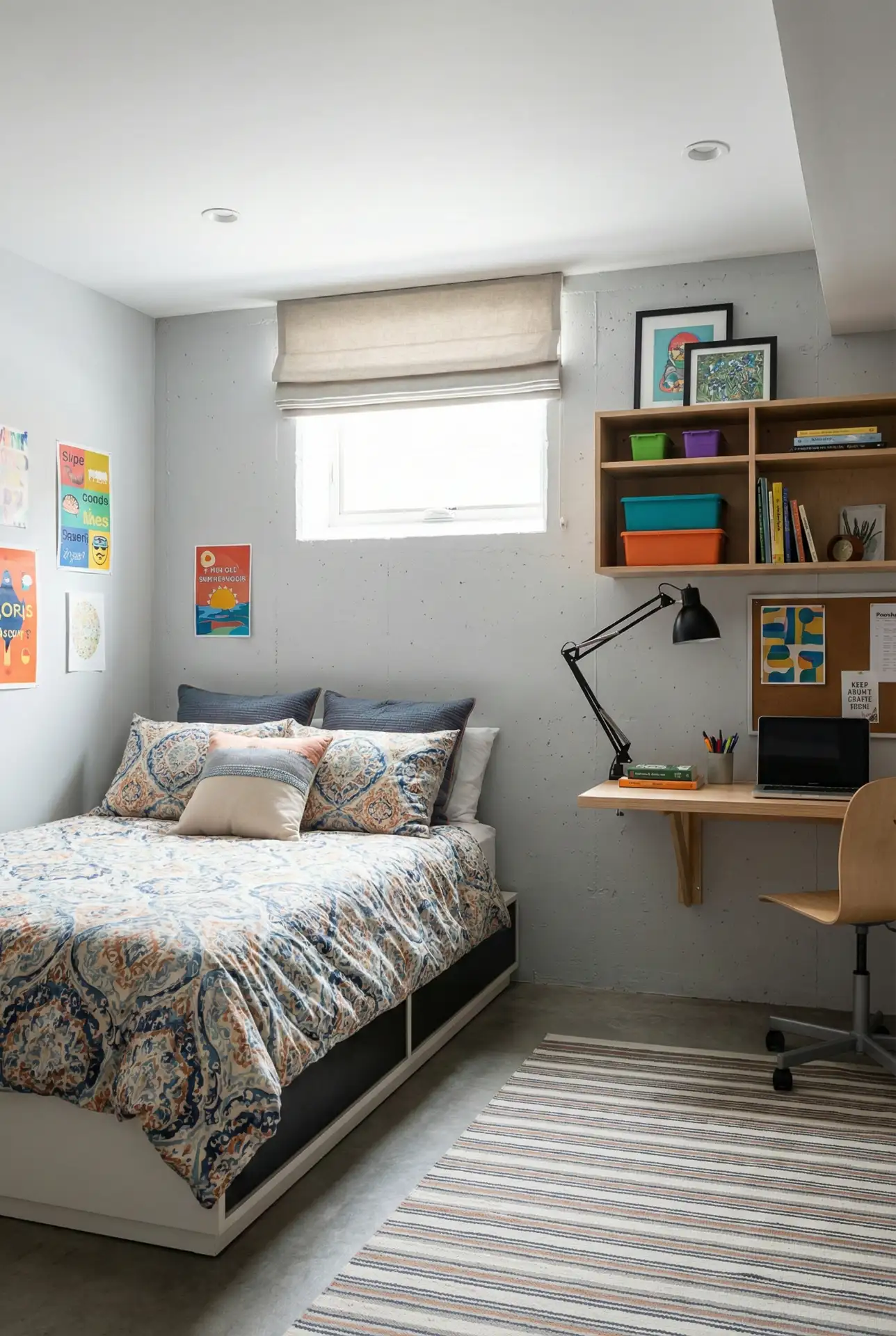
A thoughtful teen’s layout divides the basement bedroom into distinct study and sleep zones, supporting both focus and rest. Position the bed along one wall with nightstands and cozy lighting, then place a desk perpendicular to it—ideally facing a window or wall rather than the bed, which helps mentally separate “work mode” from “sleep mode.” Include task lighting, a comfortable chair, and storage for school supplies. This layout teaches organizational skills while respecting their need for independence and privacy.
Expert-style commentary: teens perform better academically when their sleep and study environments are visually and spatially distinct. This layout also prepares them for dorm life or first apartments, where multifunctional spaces are the norm. If the basement is small, use furniture placement and lighting rather than physical dividers to create separation—a bookshelf or desk positioned strategically can imply boundaries without closing off the room.
20. Large Bedroom Suite With Sitting Area
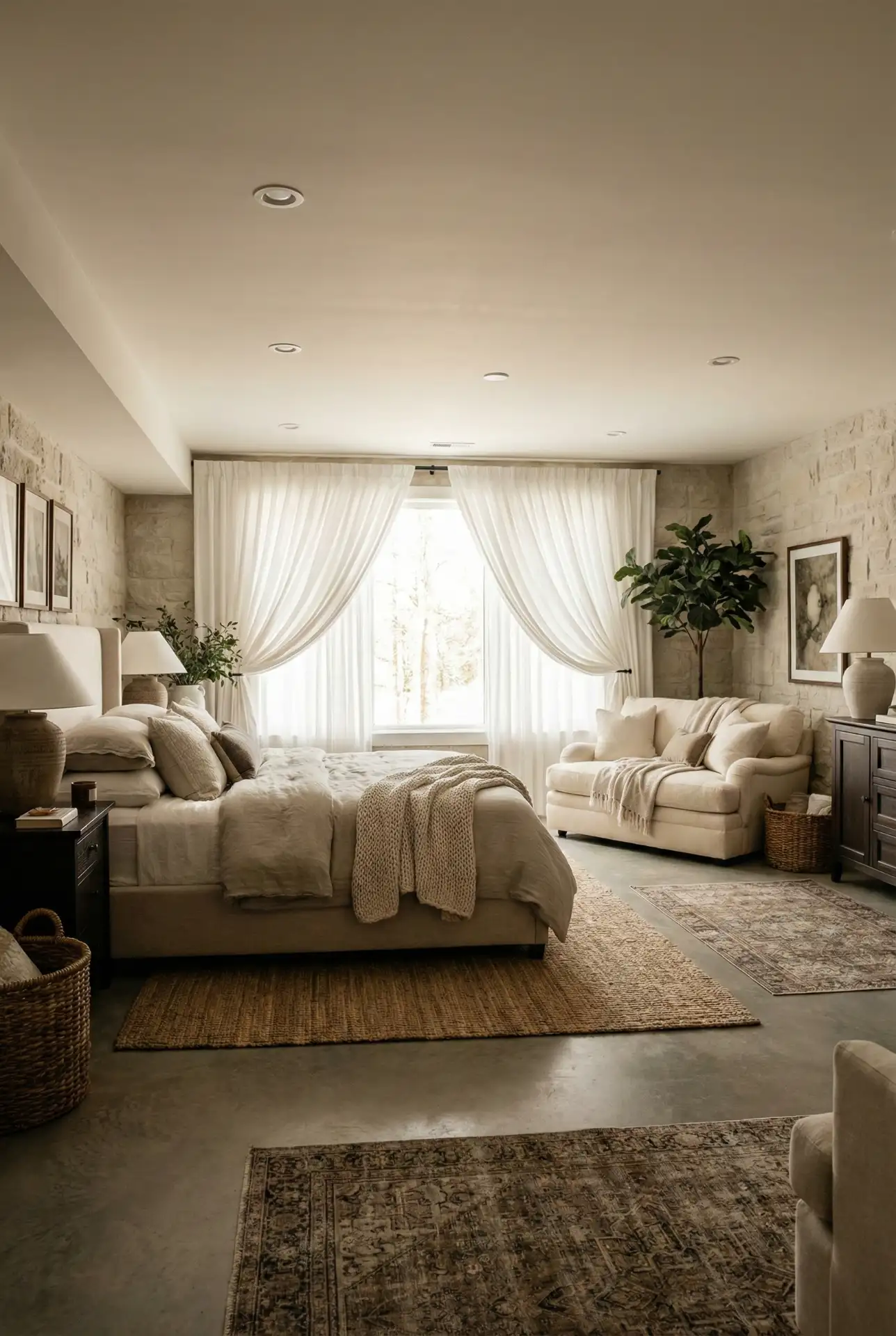
A large basement bedroom with square footage to spare deserves a dedicated sitting area—think two armchairs flanking a small side table, a loveseat beneath a window, or even a built-in bench with storage. This zone invites relaxation beyond the bed, making the space feel more like a true suite. Choose furniture that complements the room’s style but offers comfort and functionality, such as reading chairs with good back support or a chaise lounge for afternoon naps. This setup is particularly appealing to empty-nesters or couples who use the basement as a primary retreat.
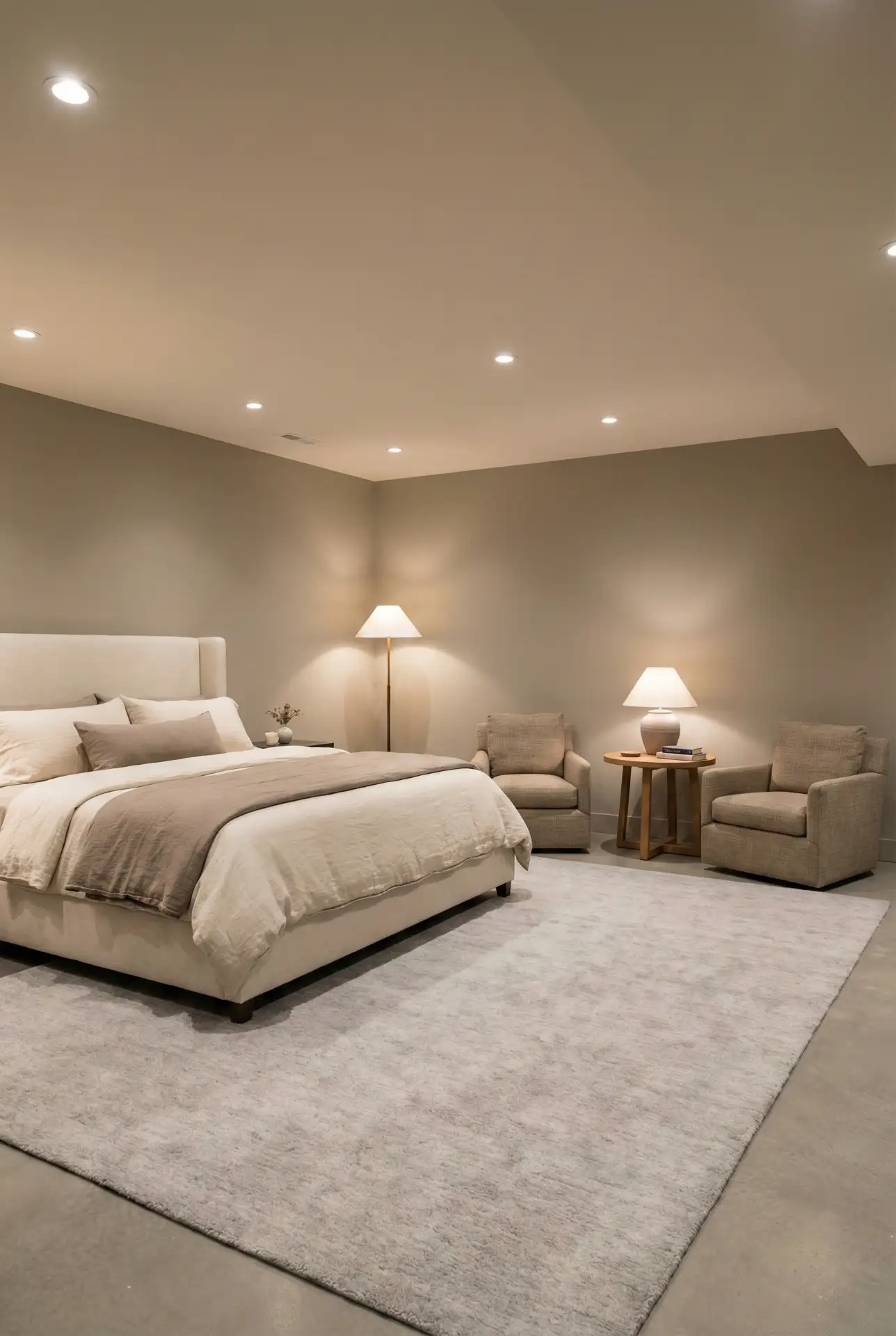
This approach is especially common in the Pacific Northwest and California, where finished basements are less typical but often generous when they exist. A sitting area also increases resale value by signaling a thoughtfully designed multi-use space. If budget allows, add a gas fireplace or electric insert to anchor the sitting area, creating a cozy focal point that elevates the entire room.
21. Narrow Space Maximized With Built-In Murphy Bed
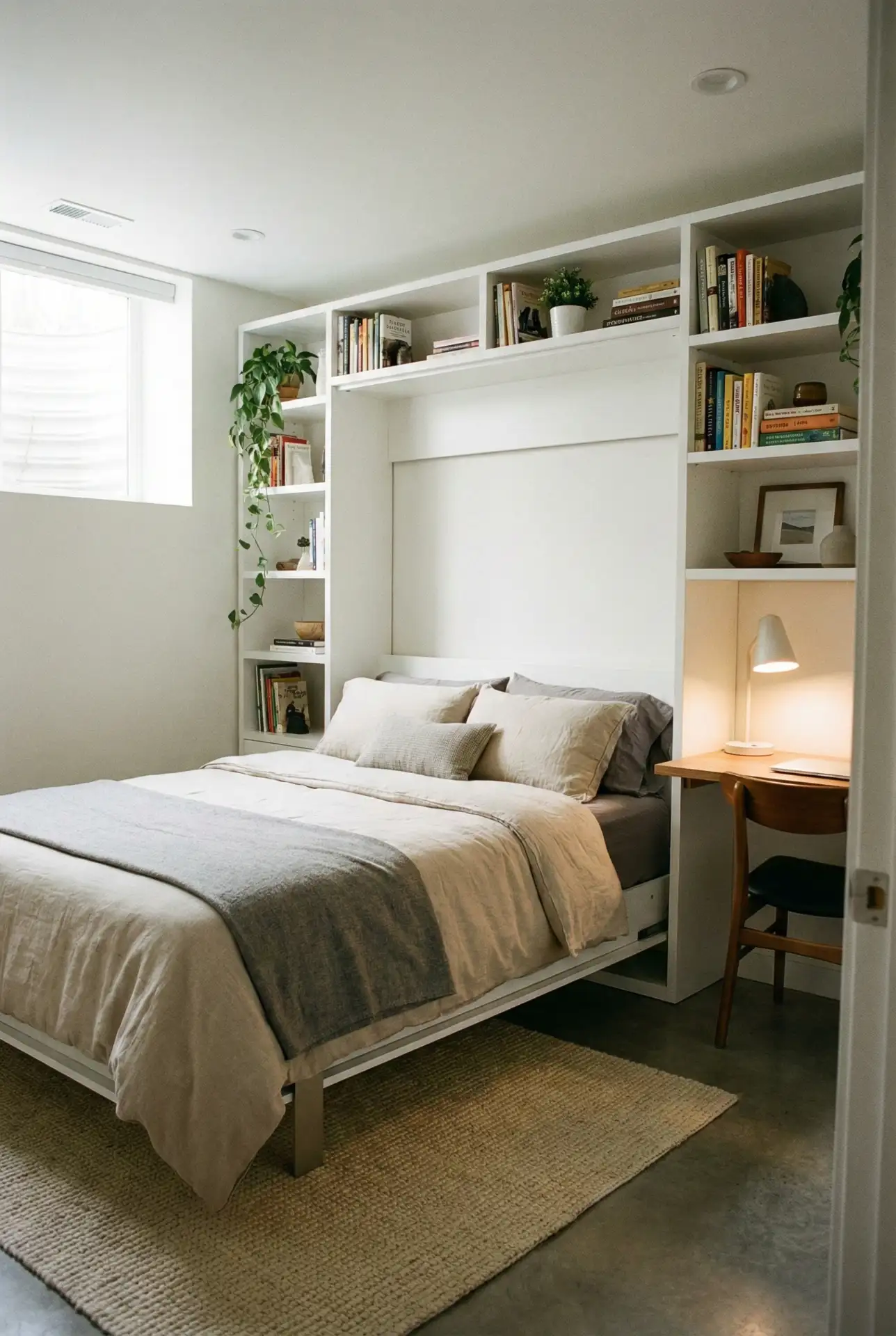
In a truly tiny basement bedroom, a Murphy bed that folds into the wall during the day reclaims precious floor space for other uses. This solution is ideal for multipurpose rooms that serve as guest bedrooms, home offices, or workout spaces. Modern Murphy beds come with integrated shelving, desks, and even sofas, making them far more stylish and functional than the clunky versions of decades past. Pair with wall-mounted lighting and floating furniture to maintain an open, uncluttered feel even when the bed is deployed.
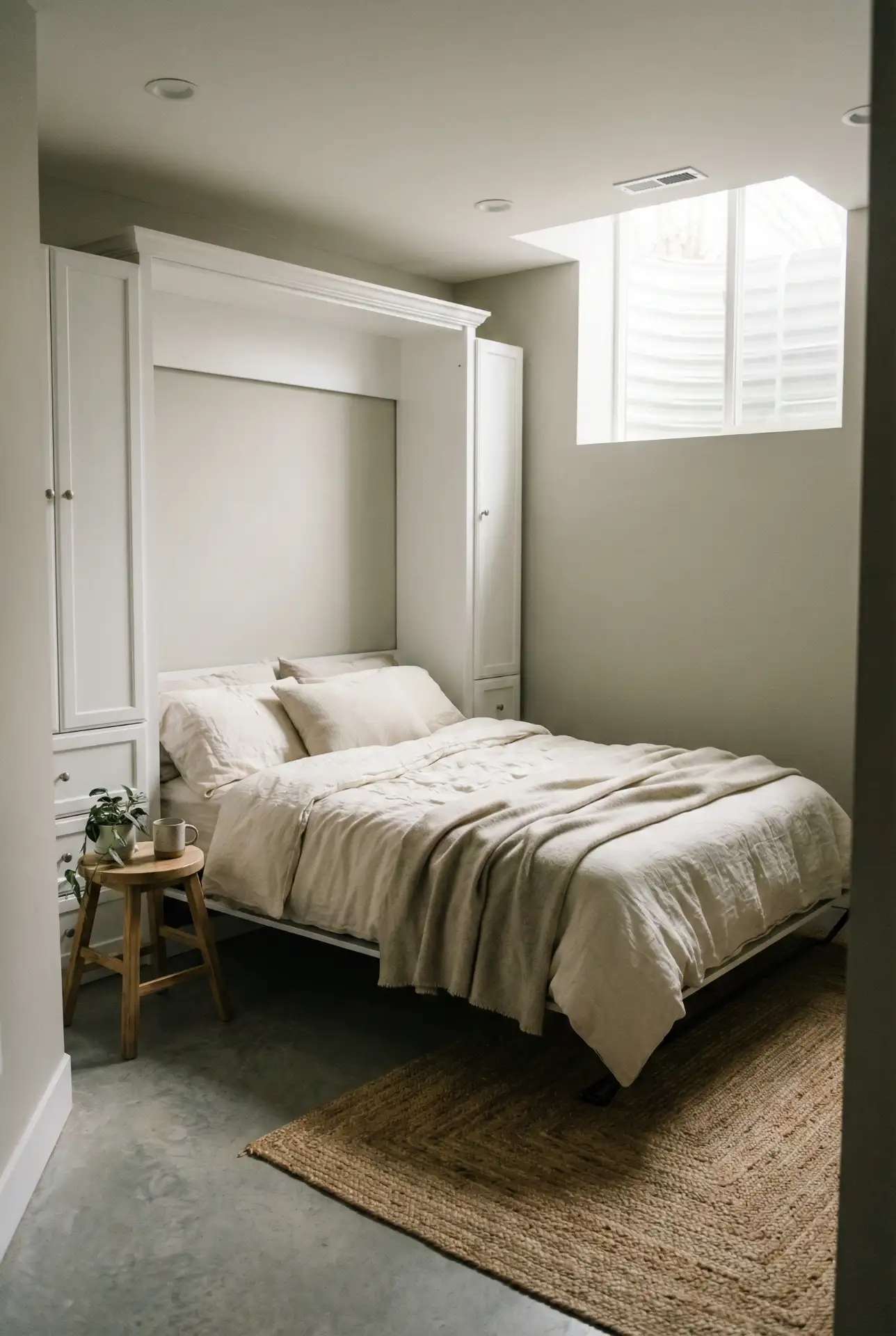
A common mistake is assuming Murphy beds are only for ultra-small spaces. They’re also valuable in larger basements where you want the flexibility to host guests occasionally without dedicating a full room to a bed year-round. Installation typically requires professional help and costs between $1,500 and $5,000 depending on features, but the payoff in versatility and functionality is substantial.
22. Minimalist Scandinavian White And Wood
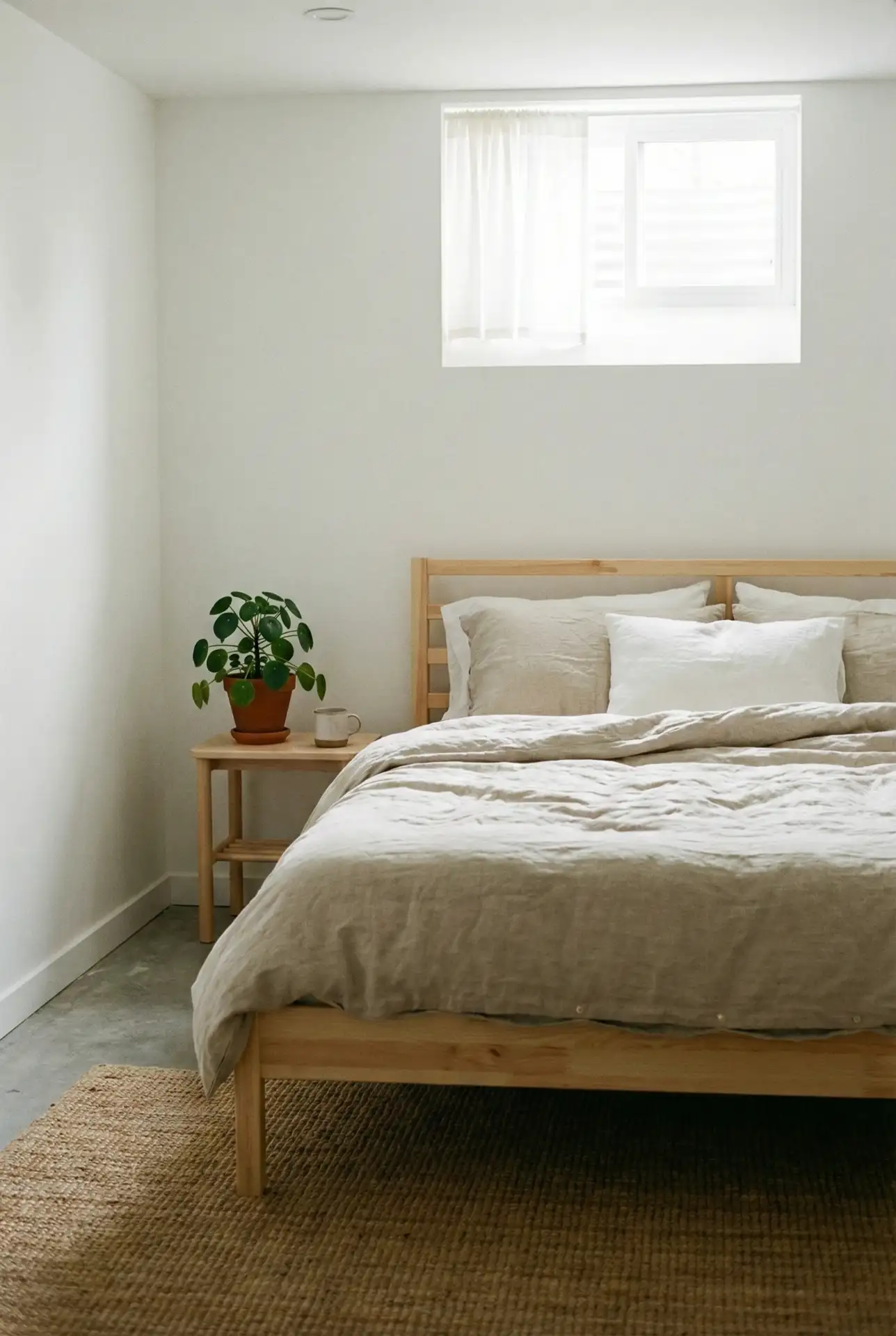
A Scandinavian-inspired basement bedroom prioritizes simplicity, natural materials, and light. Paint walls in soft white or pale gray, choose light wood furniture (birch, ash, or pine), and keep décor minimal—a single potted plant, a woven basket, or a black-and-white print. This aesthetic works beautifully in small basement windows because the light palette maximizes whatever natural light exists. Layer in cozy textiles like wool throws and linen duvet covers to keep the space from feeling cold or sterile.
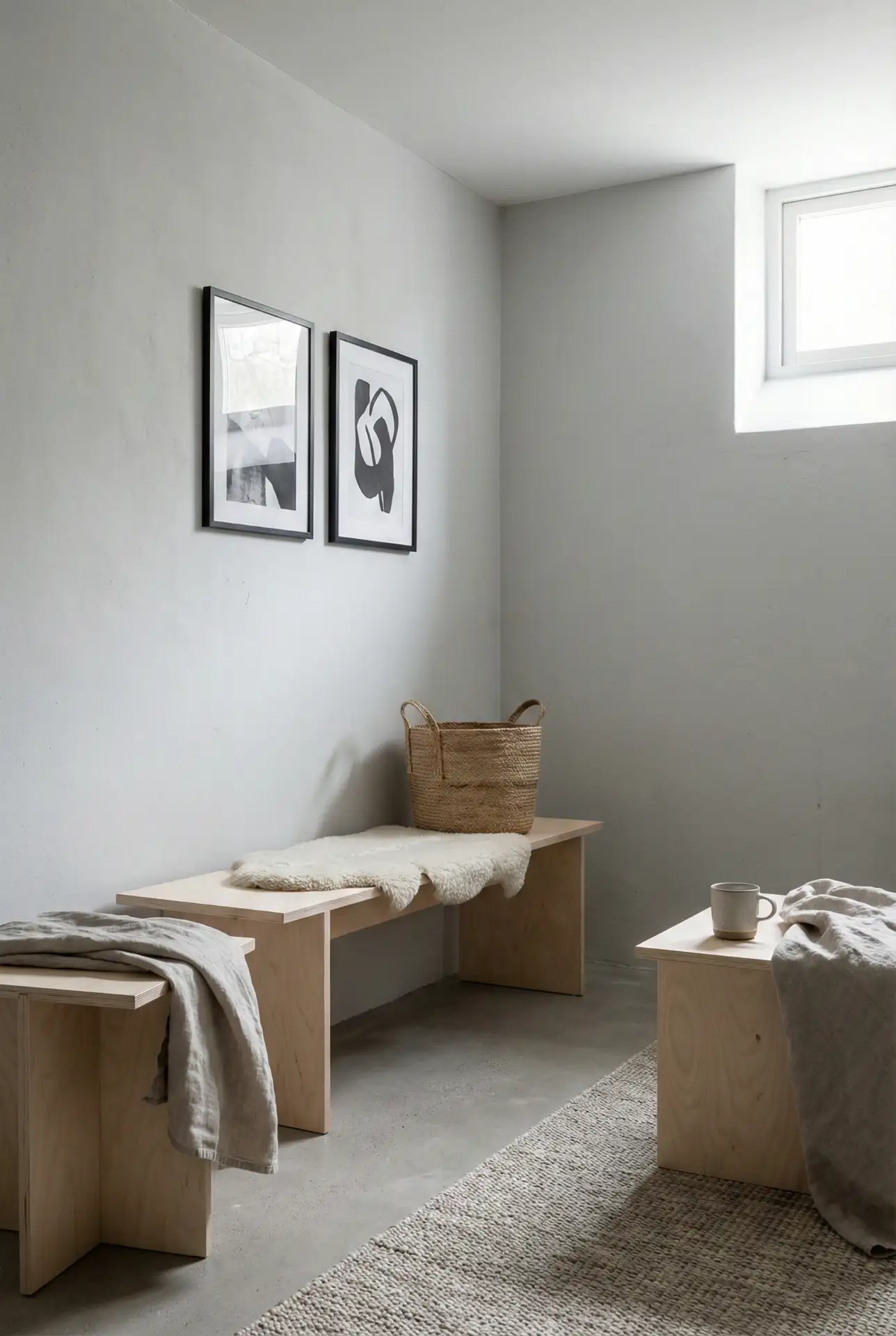
This style is particularly popular among millennials and Gen Z homeowners who value clean, uncluttered spaces and sustainability. Scandinavian design also ages well—it doesn’t feel dated or overly trendy, making it a safe choice for long-term satisfaction. Budget-wise, it’s forgiving since the focus is on quality over quantity, and thrifted or DIY pieces often fit seamlessly into the aesthetic.
23. Vintage Eclectic Mix Of Patterns And Eras
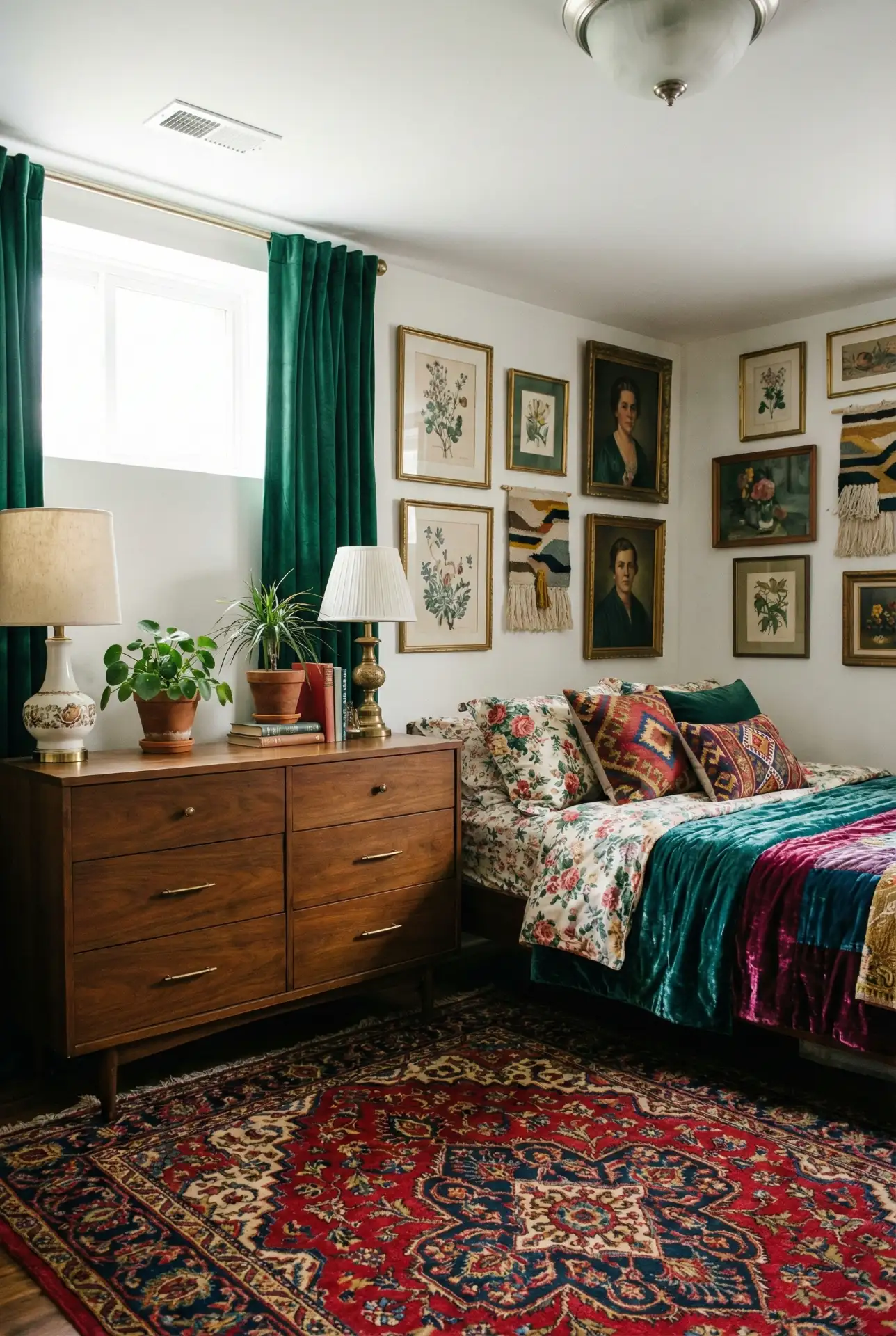
An eclectic basement bedroom celebrates personality and storytelling through a curated mix of vintage furniture, bold patterns, and unexpected colors. Pair a mid-century dresser with a bohemian rug, layer floral and geometric pillows, and hang mismatched artwork in vintage frames. This style works best when you follow a loose color palette—say, jewel tones or earth tones—that ties disparate elements together. The result feels collected over time rather than purchased all at once, giving the space warmth and individuality.
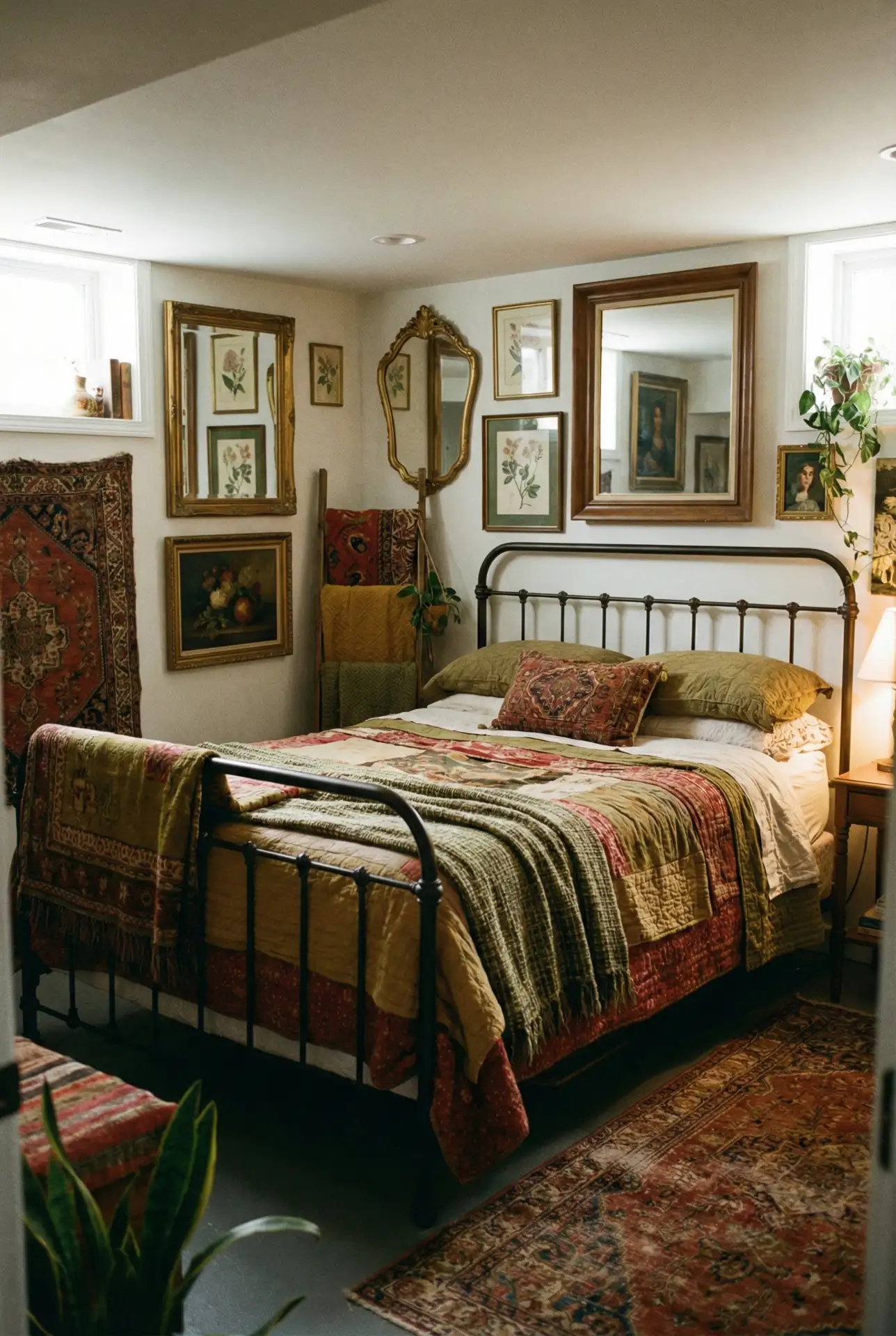
Real homeowner behavior shows that eclectic spaces feel most successful when they’re built gradually—collect pieces you love rather than buying everything at once. Thrift stores, estate sales, and online marketplaces are treasure troves for vintage finds at a fraction of retail prices. This style also allows for easy updates: swap out one pillow, change a piece of art, and the room feels refreshed without a full overhaul.
Conclusion
From embracing natural light with strategic window treatments to maximizing every square inch with smart storage, these basement bedroom ideas prove that lower-level spaces can rival any upstairs retreat in style, comfort, and functionality. Whether you’re working with a tight budget, a quirky layout, or ambitious design dreams, the key is approaching your basement bedroom with intention and creativity. Take inspiration from these concepts, adapt them to your home’s unique architecture and your family’s needs, and don’t be afraid to experiment. What’s your favorite idea from this list—or do you have a basement bedroom transformation story to share? Drop your thoughts in the comments below, and let’s keep the conversation going.