Backyard landscaping is evolving rapidly as American homeowners seek outdoor spaces that balance beauty, functionality, and sustainability. In 2026, Pinterest feeds are flooded with searches for fresh takes on patios, fire pits, pool areas, and low-maintenance gardens that suit busy lifestyles. From desert-friendly xeriscaping in Arizona to tropical poolside retreats in Florida, these ideas reflect regional climates, family needs, and modern design sensibilities. Whether you’re working with a sloped yard, looking for dog-friendly solutions, or dreaming of a simple DIY transformation, this guide offers twenty-one practical, inspiring concepts to help you reimagine your outdoor living space.
1. Tiered Stone Patio with Built-In Seating
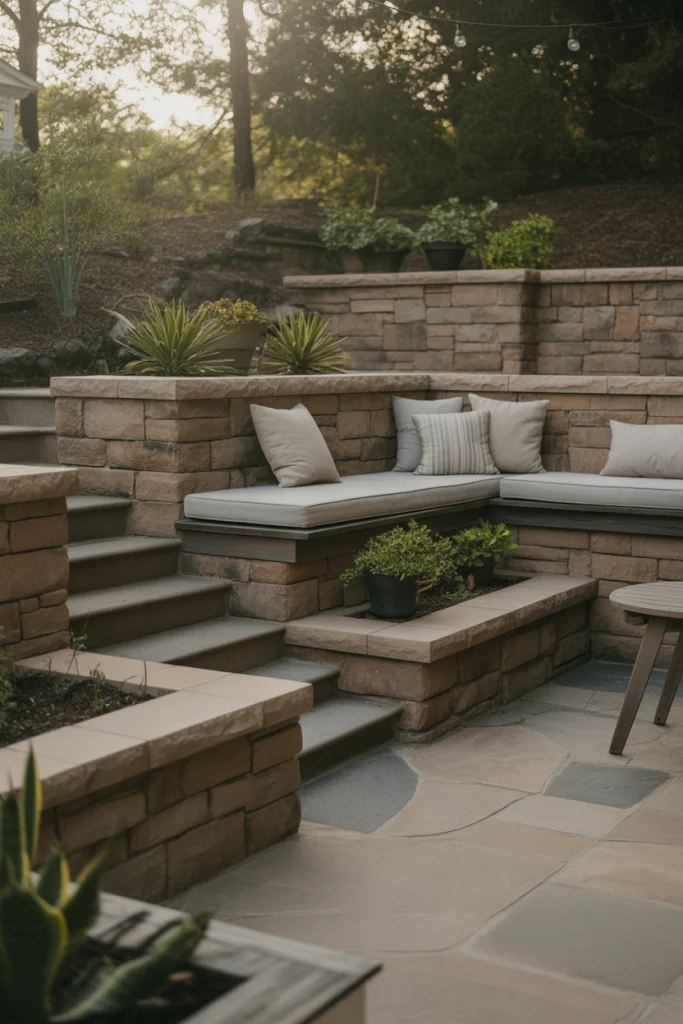
A sloped backyard doesn’t have to limit your outdoor entertaining options. Tiered stone patios create distinct zones for dining, lounging, and grilling while managing elevation changes naturally. This layout works beautifully in hilly regions like California’s Bay Area or the Pacific Northwest, where homeowners want to maximize usable space without extensive grading. Flagstone or bluestone steps connect each level, and built-in bench seating along the retaining walls eliminates the need for bulky furniture. 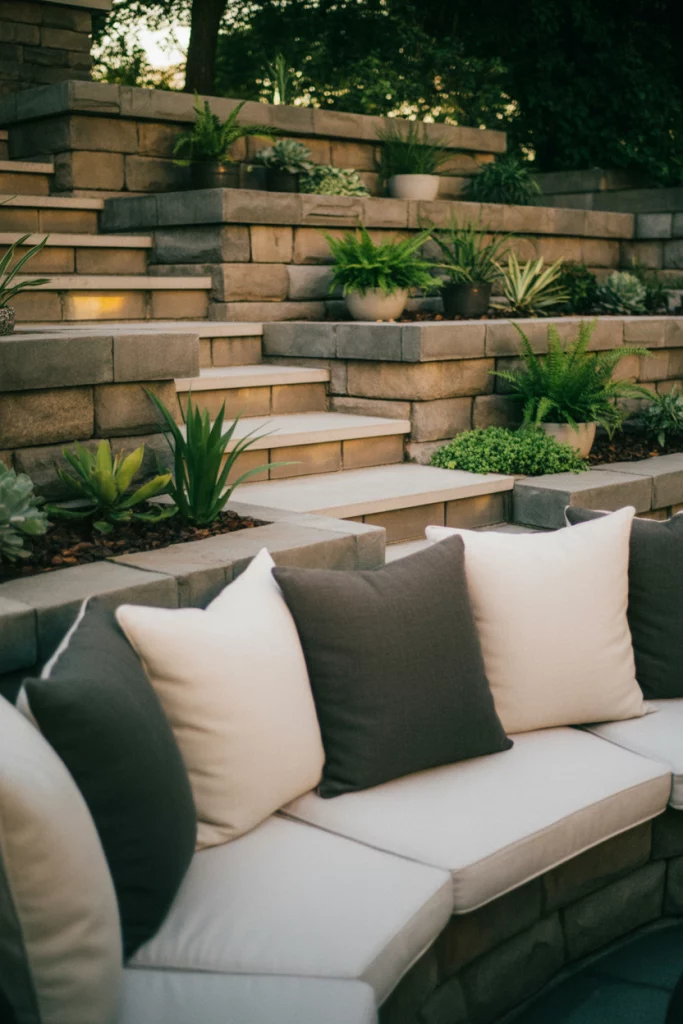
This design particularly suits properties with ten to fifteen feet of elevation change. Install low-voltage LED strip lighting along the risers for safe nighttime navigation, and plant low-growing herbs like thyme or sedum between the stones for a cottage-garden effect. The multi-level approach also improves drainage naturally, directing water away from your home’s foundation during heavy rains.
2. Minimalist Gravel Garden with Native Plantings
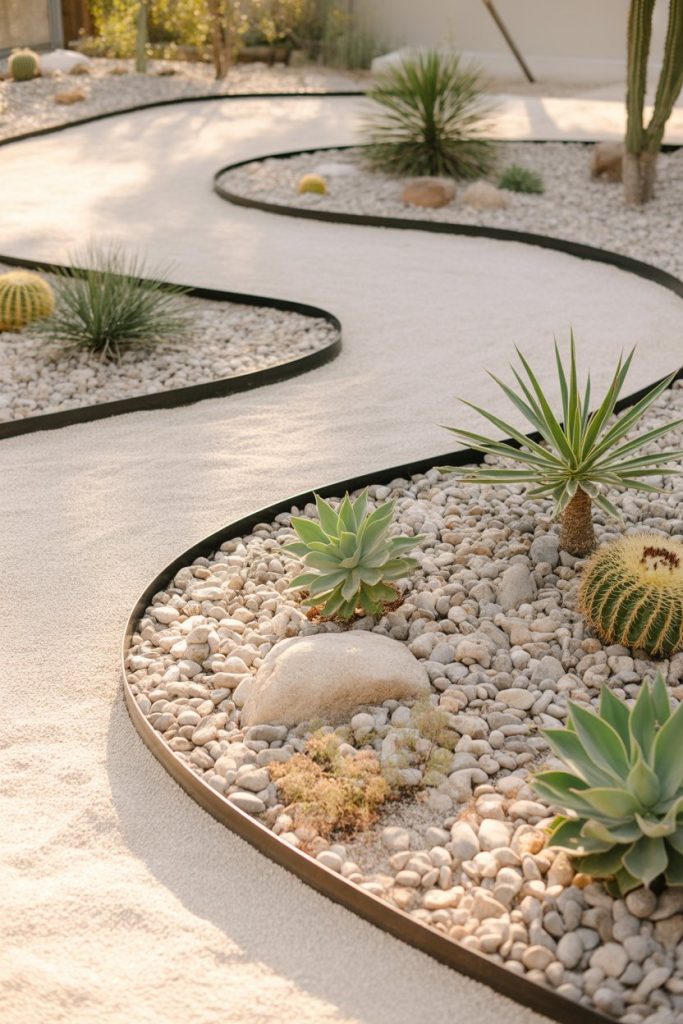
If you’re tired of weekend mowing and constant watering, a low maintenance gravel garden offers year-round appeal with minimal effort. Replace traditional lawn areas with decomposed granite or pea gravel, then punctuate the space with drought-tolerant native plants suited to your region. In Arizona, this might include ocotillo, palo verde, and desert marigold; in coastal California, consider California poppy, sage, and buckwheat. The result is a natural landscape that supports local pollinators and requires little more than seasonal pruning. 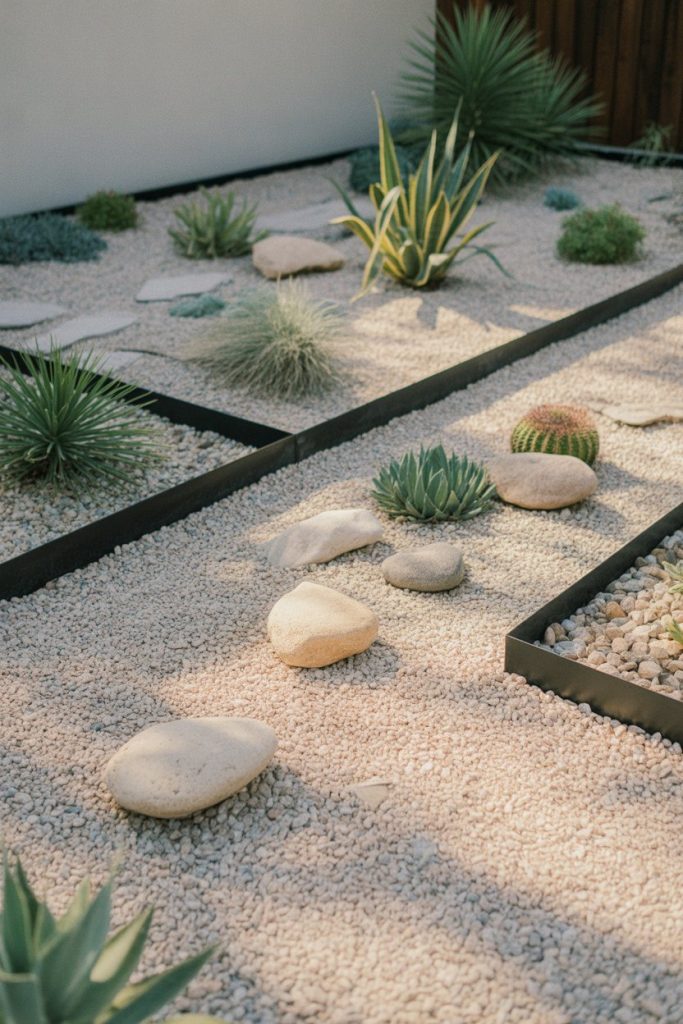
A common mistake is skipping the weed barrier fabric beneath the gravel, which leads to constant maintenance battles. Lay commercial-grade landscape fabric first, overlap seams by at least six inches, and top with three to four inches of gravel. Edge the garden beds with steel or aluminum strips to keep gravel contained. This setup typically costs $3–5 per square foot installed, far less than sod or artificial turf over time.
3. Sunken Fire Pit with Curved Bench Walls
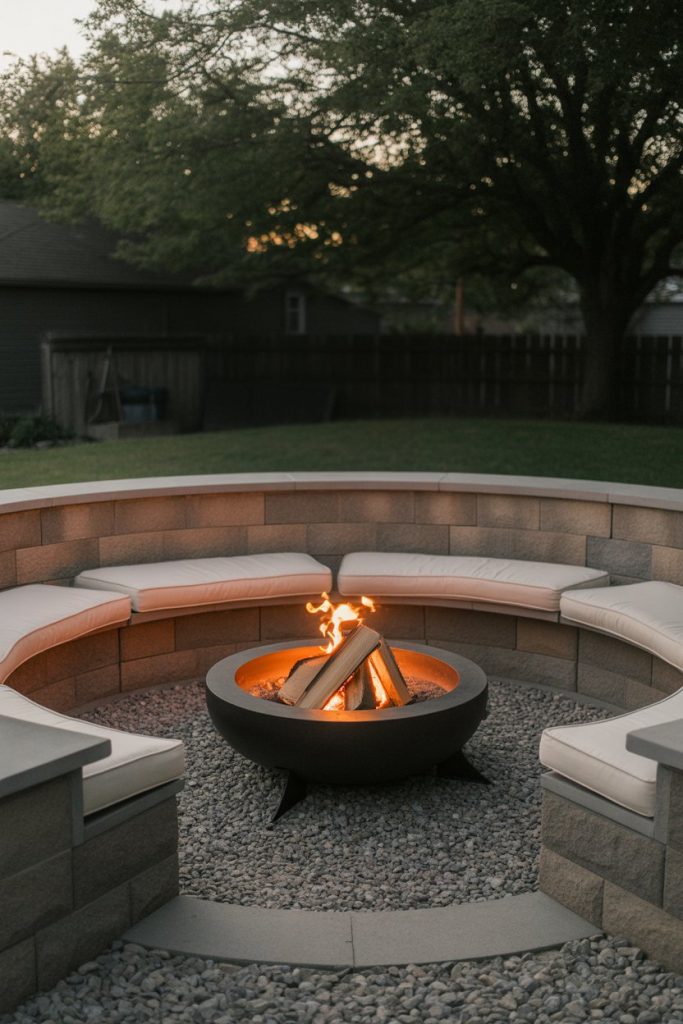
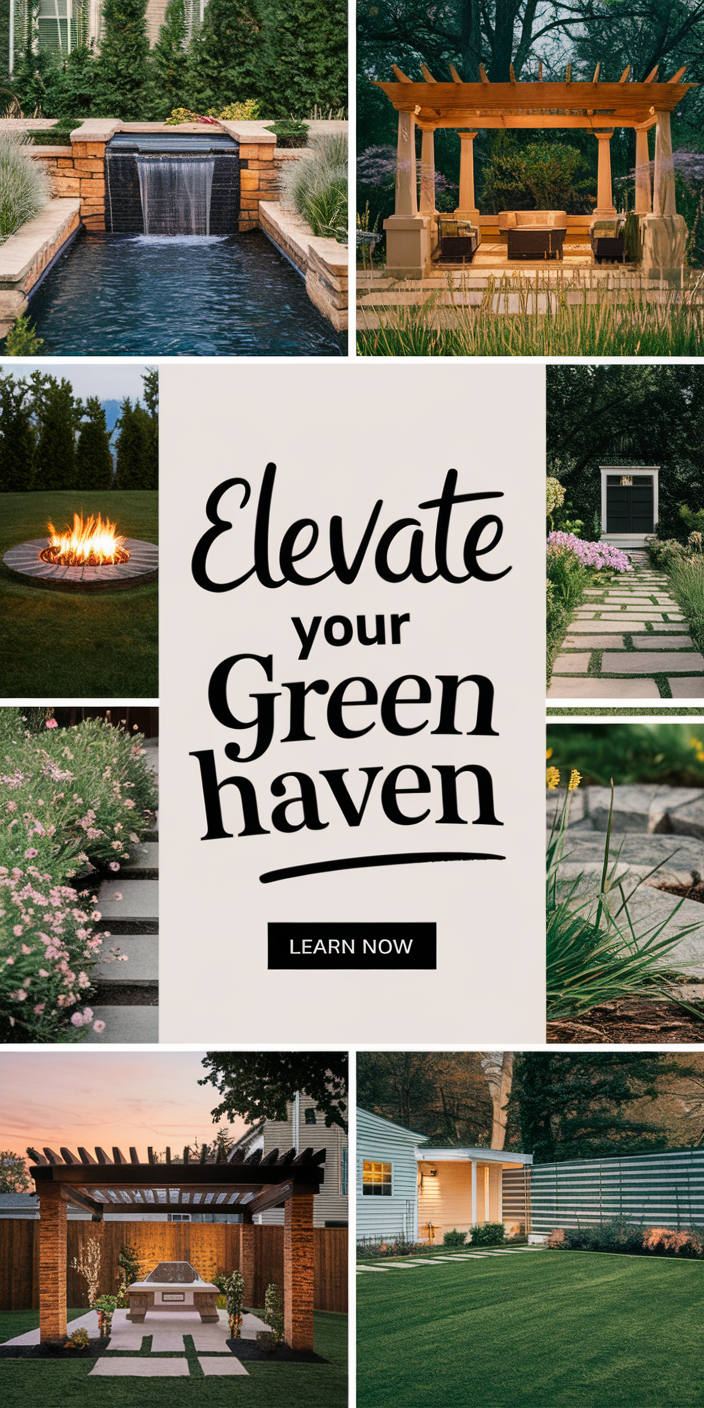
A sunken fire pit creates an intimate gathering spot that feels sheltered from wind and neighbors’ sightlines. Excavate eighteen to twenty-four inches below grade, then line the pit with stacked stone or poured concrete walls that double as bench seating. This design works exceptionally well on flat lots where you want to add dimension without building upward. Add thick outdoor cushions in weather-resistant fabrics, and you’ve got a conversation area that accommodates eight to twelve people comfortably. 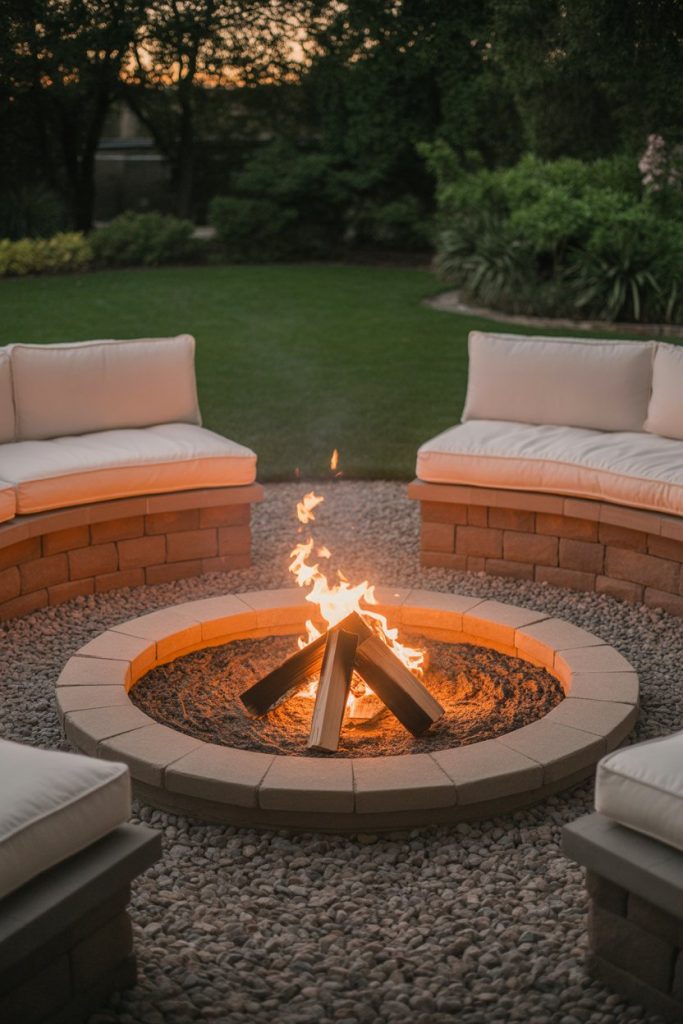
In regions with heavy clay soil or high water tables, you’ll need to install a French drain system around the perimeter to prevent water pooling. Most homeowners report using their sunken fire pits three to four times more often than traditional above-ground models because the lower profile feels cozier and blocks wind more effectively. Check local fire codes before construction—some municipalities require specific clearances from structures and property lines.
4. Permeable Paver Driveway Extension
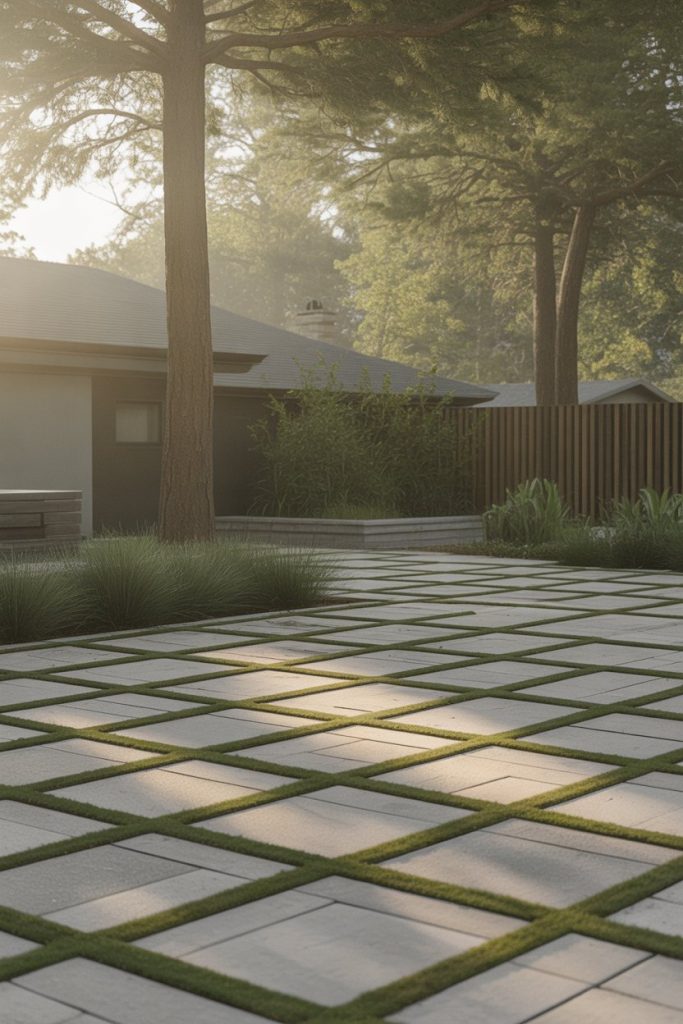
Extend your driveway or create a secondary parking pad using permeable pavers that allow rainwater to filter through rather than running off into storm drains. This contemporary approach addresses both practical needs and environmental concerns, especially in areas with strict stormwater management regulations. Choose pavers with wide joints filled with gravel or plant grass varieties like mondo grass in the gaps for a softer, greener look. The layout can accommodate RVs, boats, or extra guest parking without creating an asphalt heat island. 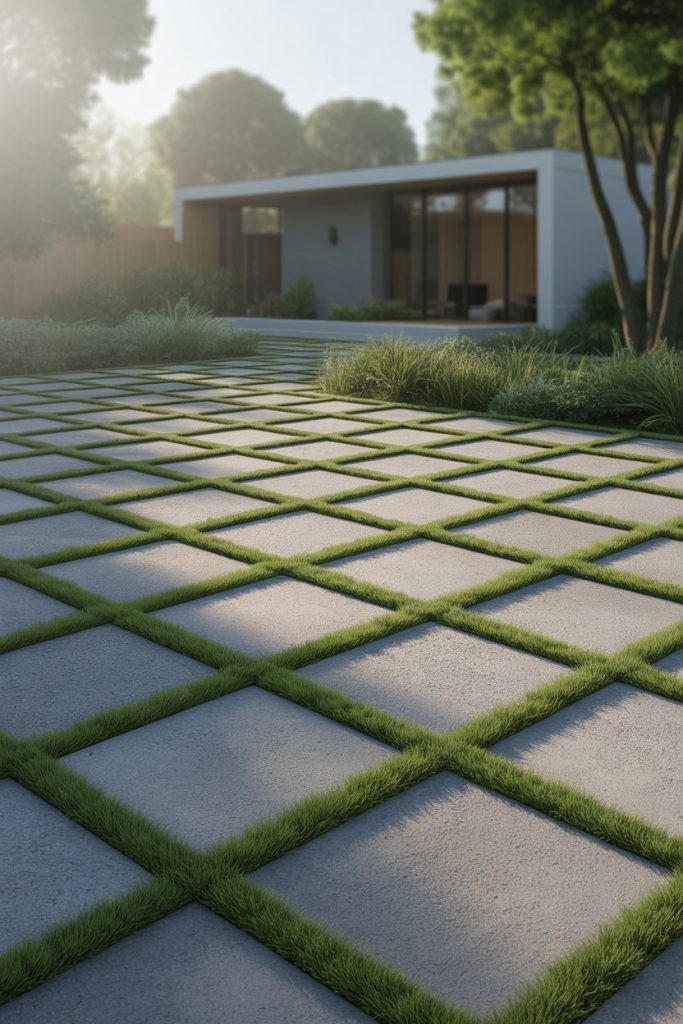
Where permeable pavers work best: properties with moderate drainage where you want to reduce runoff without sacrificing vehicle access. Installation runs $12–18 per square foot, roughly double the cost of standard concrete, but many municipalities offer rebates for stormwater management improvements. The base preparation is critical—you’ll need six to eight inches of open-graded aggregate beneath the pavers to handle water infiltration properly.
5. Compact Herb Spiral Garden
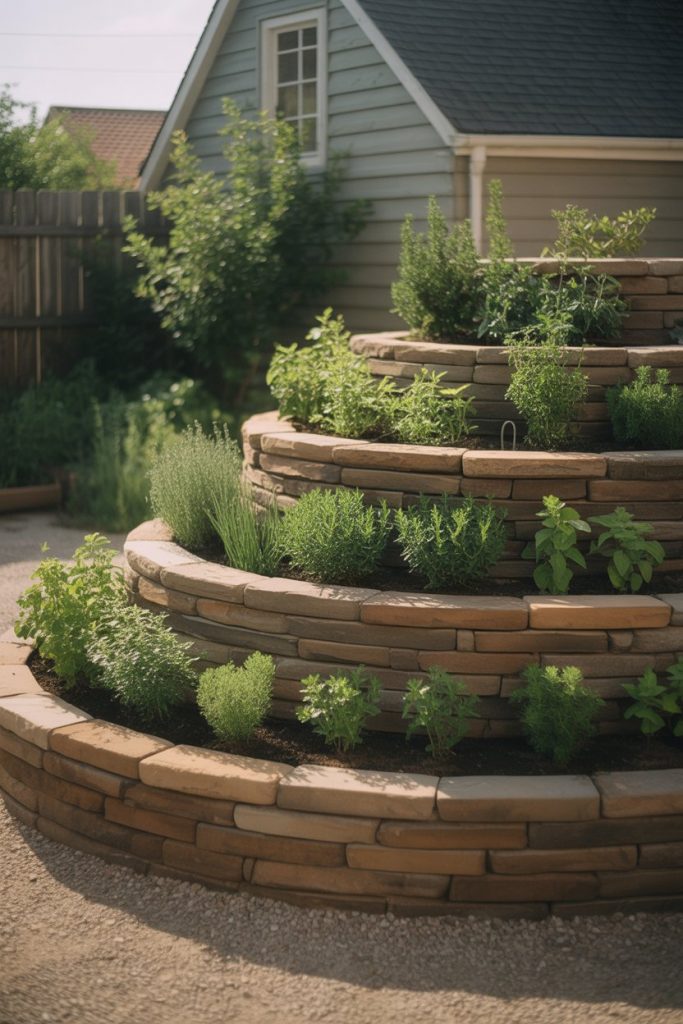
An herb spiral packs maximum growing area into minimal square footage, making it ideal for small urban yards or tight side-yard spaces. Build a spiral-shaped raised bed using stacked stone, starting low on the north side and rising to about three feet on the south. This creates multiple microclimates—plant moisture-loving herbs like parsley and cilantro at the base, Mediterranean varieties like rosemary and thyme at the dry, sunny peak. The vertical design is both sculptural and functional, turning an unused corner into a productive focal point. 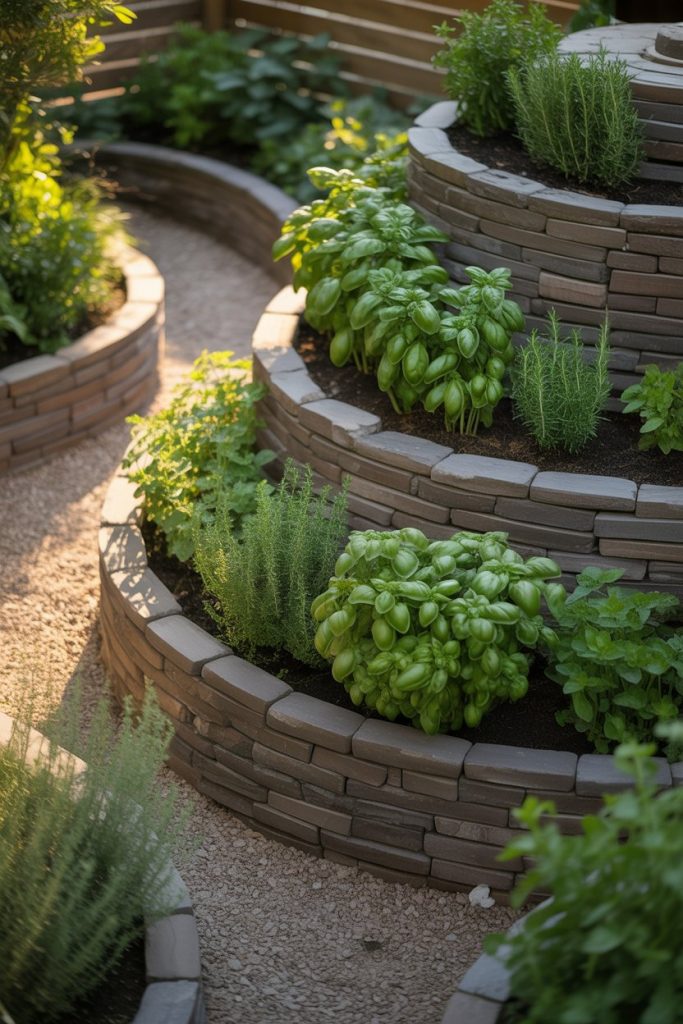
A neighbor of mine installed one of these last spring and harvests fresh herbs for dinner almost daily, even though her yard is only twenty by thirty feet. The spiral design naturally sheds water from top to bottom, so you’ll water less frequently than with traditional flat beds. Budget about $200–300 in materials if you’re sourcing stone locally and building it yourself over a weekend. Position the spiral where it gets at least six hours of sun daily for best results.
6. Covered Outdoor Kitchen with Pizza Oven
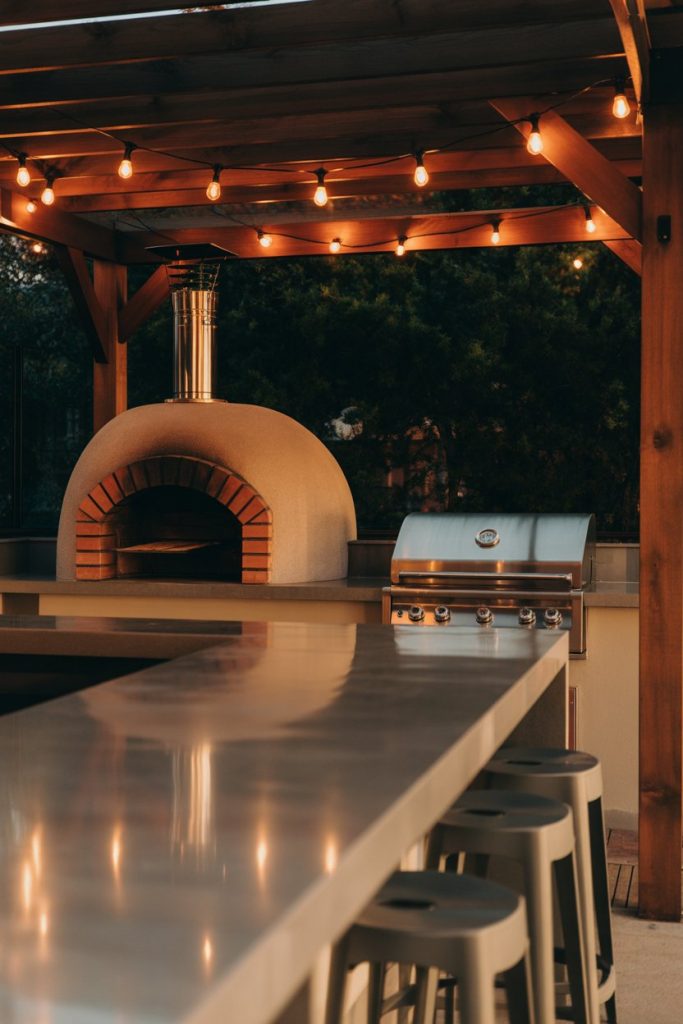
A dedicated outdoor kitchen transforms backyard entertaining, especially in warm-climate states where you can cook outside year-round. Build a simple structure with a metal or wood-beam pergola overhead, then install a pizza oven, built-in grill, and prep counter with weatherproof cabinetry below. Concrete countertops or porcelain tile surfaces withstand heat and weather better than granite. Include a small beverage fridge and sink with hot water if your budget allows—these upgrades make the space genuinely functional rather than decorative. 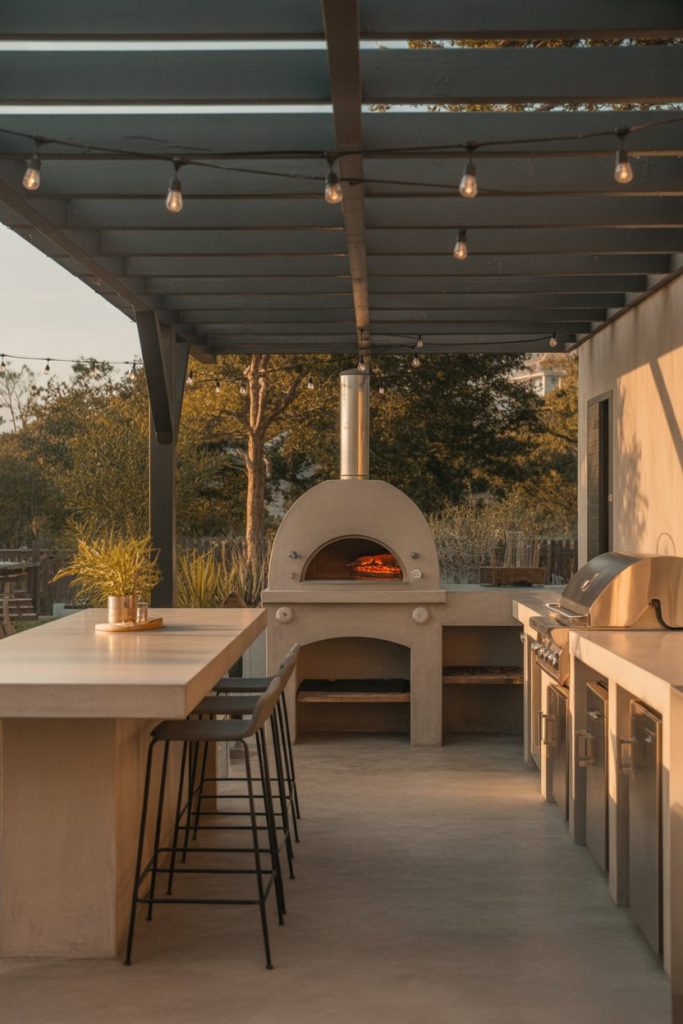
This setup works particularly well in California, Texas, and Florida, where outdoor cooking extends beyond summer months. A mid-range outdoor kitchen runs $8,000–15,000 installed, with the pizza oven adding $2,000–4,000 depending on whether you choose a prefab or custom masonry model. Many homeowners underestimate the importance of proper ventilation—even outdoor cooking areas benefit from a vent hood to prevent smoke from drifting into the house or neighbors’ yards.
7. Raised Garden Beds with Drip Irrigation
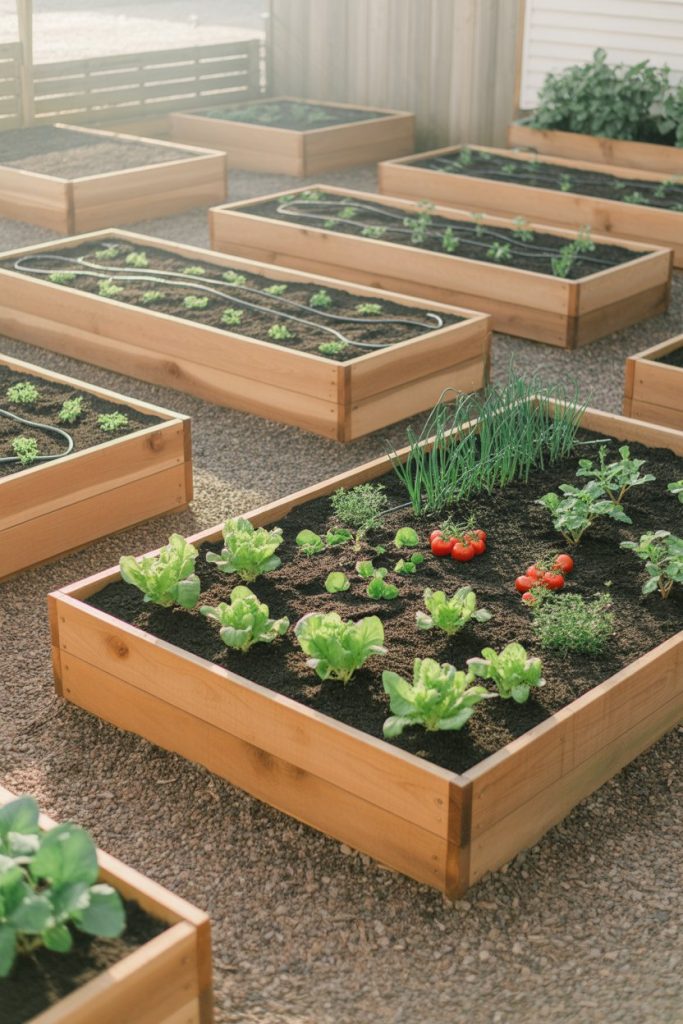
Raised beds solve multiple problems at once: they improve drainage, warm up faster in spring, reduce back strain, and give you complete control over soil quality. Build them from rot-resistant cedar or composite lumber, sized at four feet wide for easy reach from either side. Install drip irrigation lines beneath a layer of mulch to deliver water directly to root zones, cutting water use by thirty to fifty percent compared to overhead sprinklers. This low maintenance approach is perfect for growing vegetables, cutting flowers, or even a small berry patch. 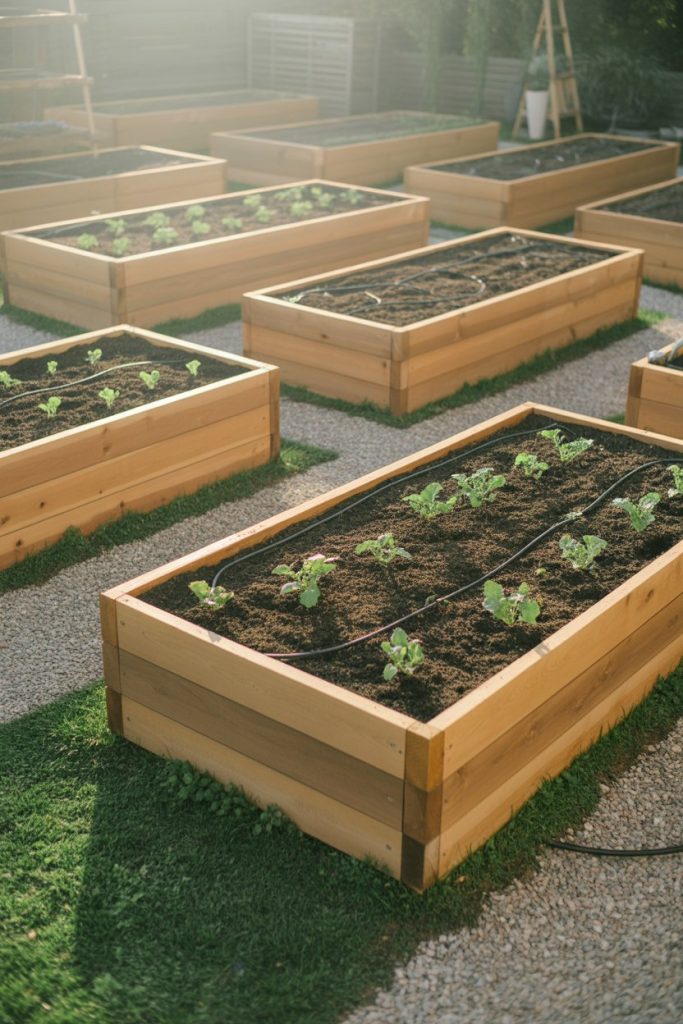
Expert gardeners recommend building beds at least twelve inches deep for vegetables, eighteen inches for root crops like carrots or potatoes. The drip system connects to a battery-powered timer at the hose bib, so you can water consistently even when traveling. Material costs run about $150–250 per 4×8-foot bed, but the improved yields and reduced water bills pay back the investment within two growing seasons.
8. Artificial Turf Play Zone with Padding
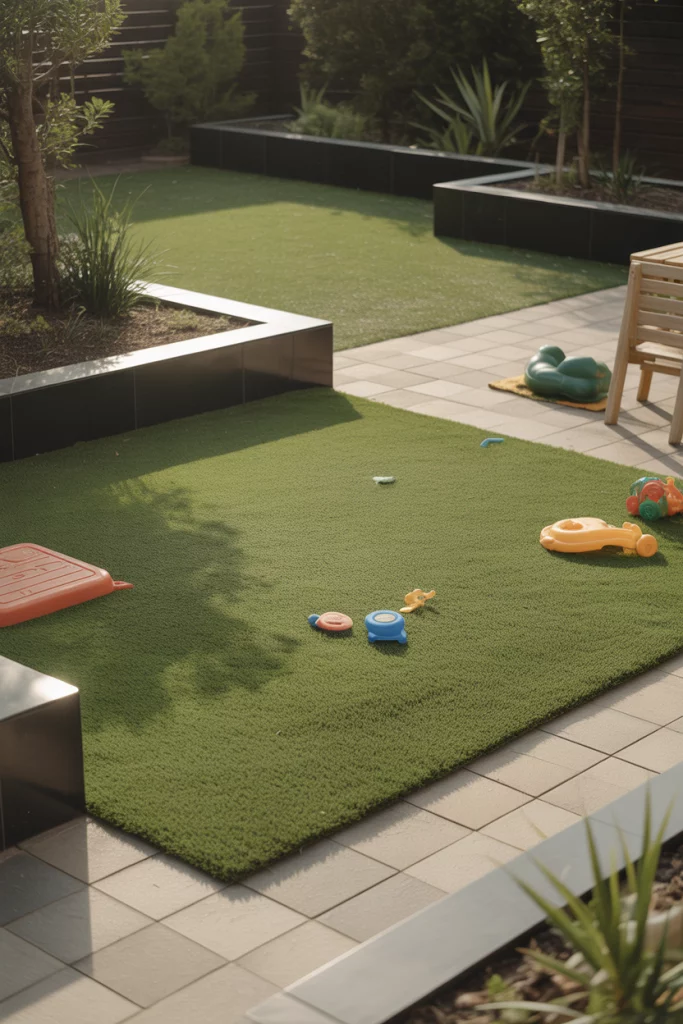
For families with active kids or energetic dogs, a dog friendly artificial turf area provides a clean, mud-free play surface that drains quickly after rain. Modern turf products look remarkably realistic and include antimicrobial backing to prevent odors. Install it over a base of crushed rock and decomposed granite, with shock-absorbing foam padding underneath if young children will be playing there. Edge the turf with flexible plastic bender board or aluminum strips to keep it secure. This solution is especially popular in California drought-affected regions where water restrictions make natural grass impractical.
The biggest mistake is skipping proper base preparation—without adequate drainage, turf can develop unpleasant odors or uneven settling. Plan on spending $8–12 per square foot installed for quality turf with padding. Most products carry eight to fifteen-year warranties, and many homeowners report the turf looking nearly new after five years of heavy use. Rinse it occasionally with a hose to remove dust and pet waste residue.
9. Living Privacy Fence with Mixed Evergreens
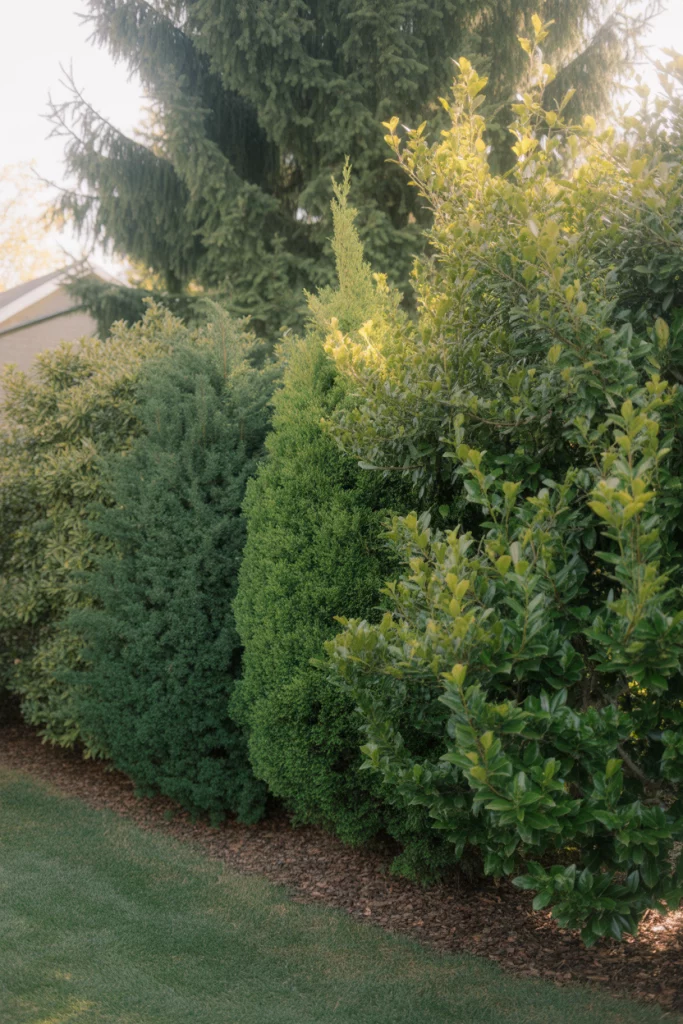
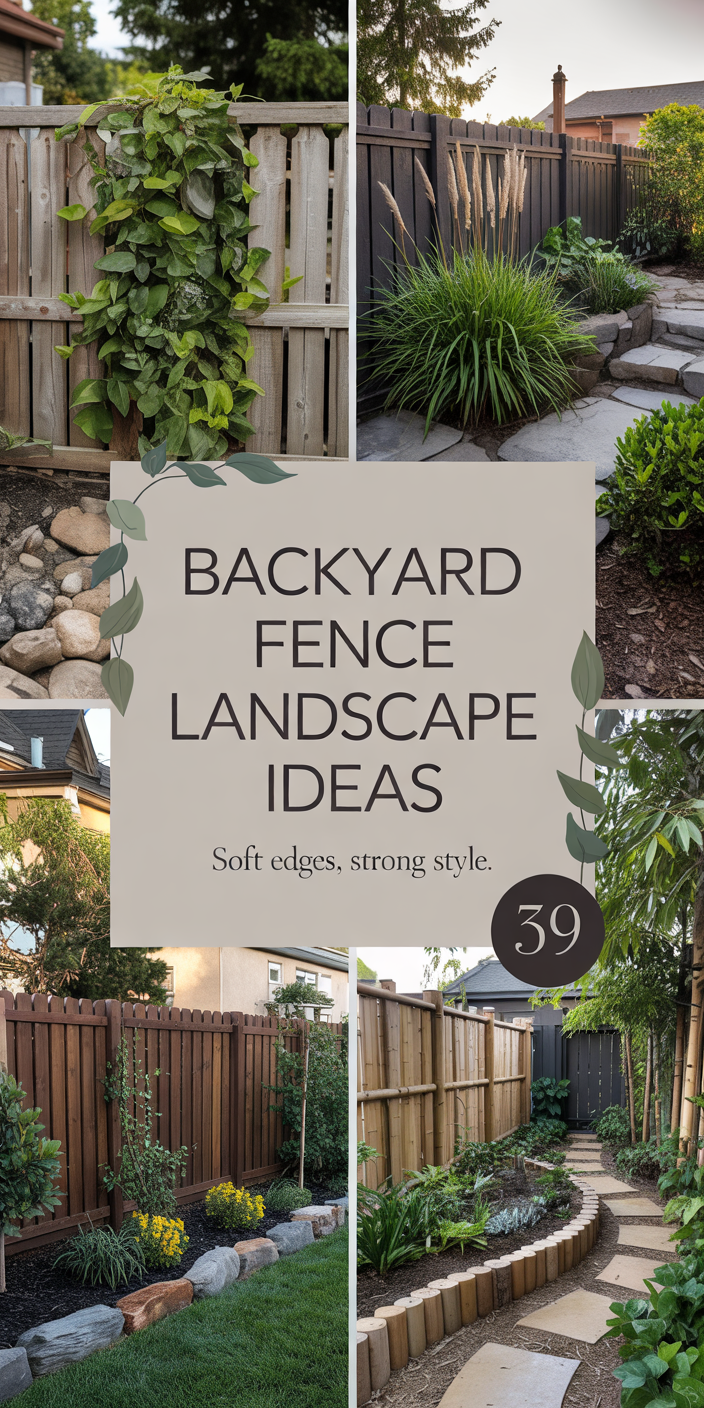
Instead of a solid wood or vinyl fence, plant a living screen using a mix of evergreen shrubs and small trees. Choose varieties with different textures and seasonal interest—boxwood, holly, arborvitae, and flowering evergreens like camellia create year-round privacy while attracting birds and beneficial insects. Space plants three to four feet apart for faster coverage, and install temporary lattice panels between them for immediate screening while they mature. This natural approach softens property lines and typically costs less than professional fence installation. 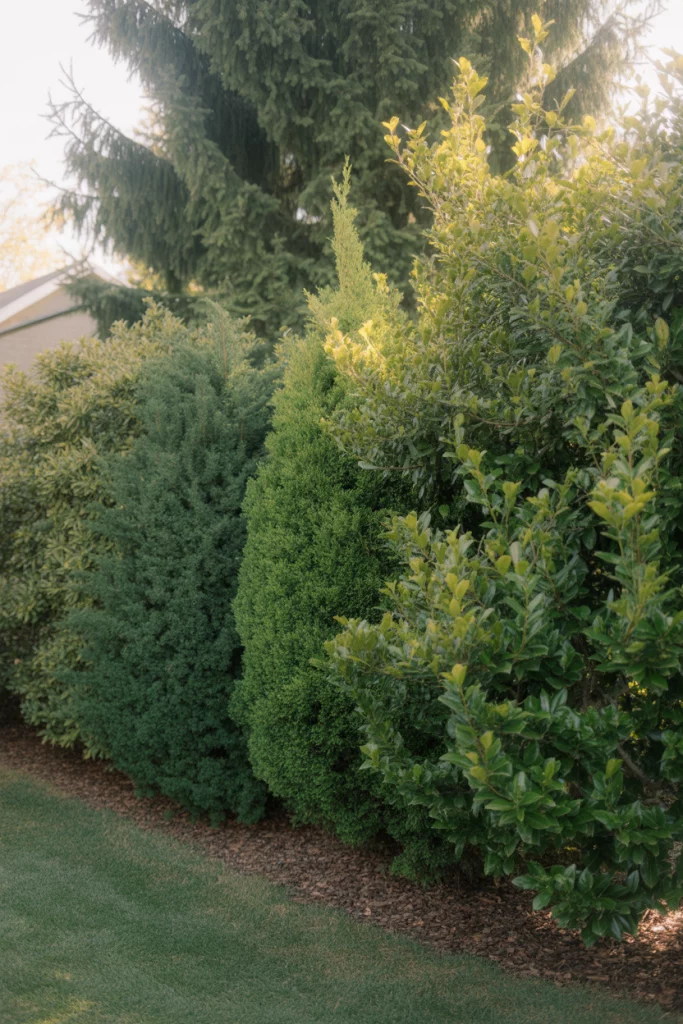
Living fences work best in areas with adequate rainfall or where you’re willing to irrigate during establishment. Expect three to five years before plants reach full screening height, depending on species and your climate zone. In the meantime, the lattice panels give you privacy while looking intentional rather than makeshift. Budget $15–25 per linear foot for plants and materials if you’re DIYing the installation, roughly half the cost of a six-foot cedar fence.
10. Decomposed Granite Pathways with Steel Edging
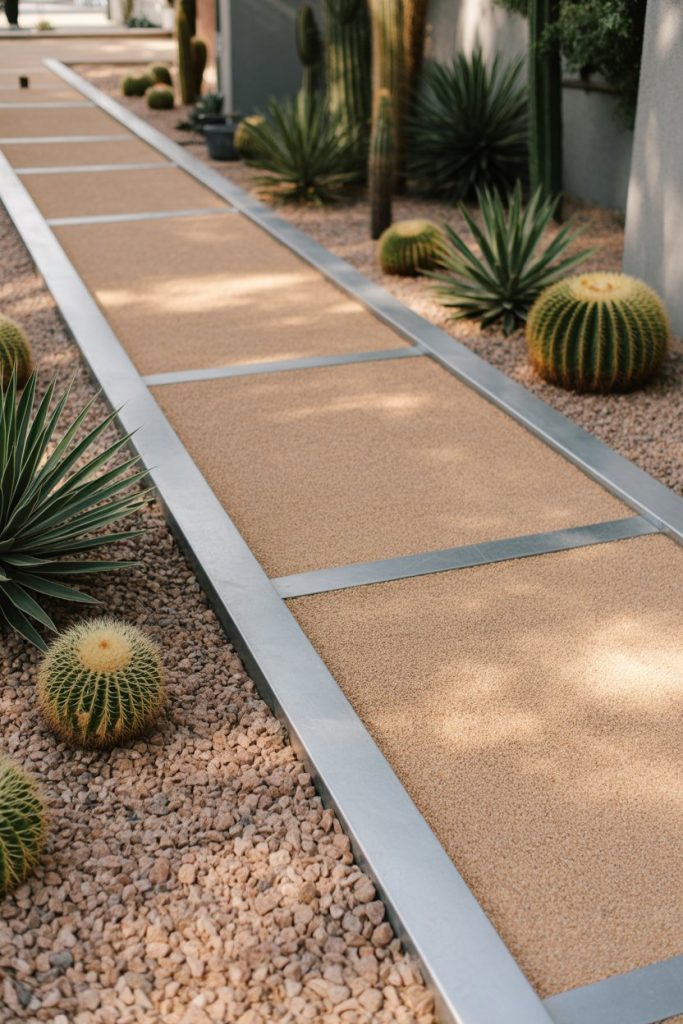
Decomposed granite (DG) creates firm, permeable pathways that blend seamlessly into contemporary and desert-style landscapes. Choose stabilized DG, which includes a natural binder that hardens when compacted and watered, preventing the dusty, loose texture of untreated material. Edge paths with quarter-inch steel or aluminum strips for clean, modern lines that prevent the DG from migrating into planting beds. This simple treatment works beautifully in arid climates where traditional concrete feels harsh and lawn paths require constant upkeep. 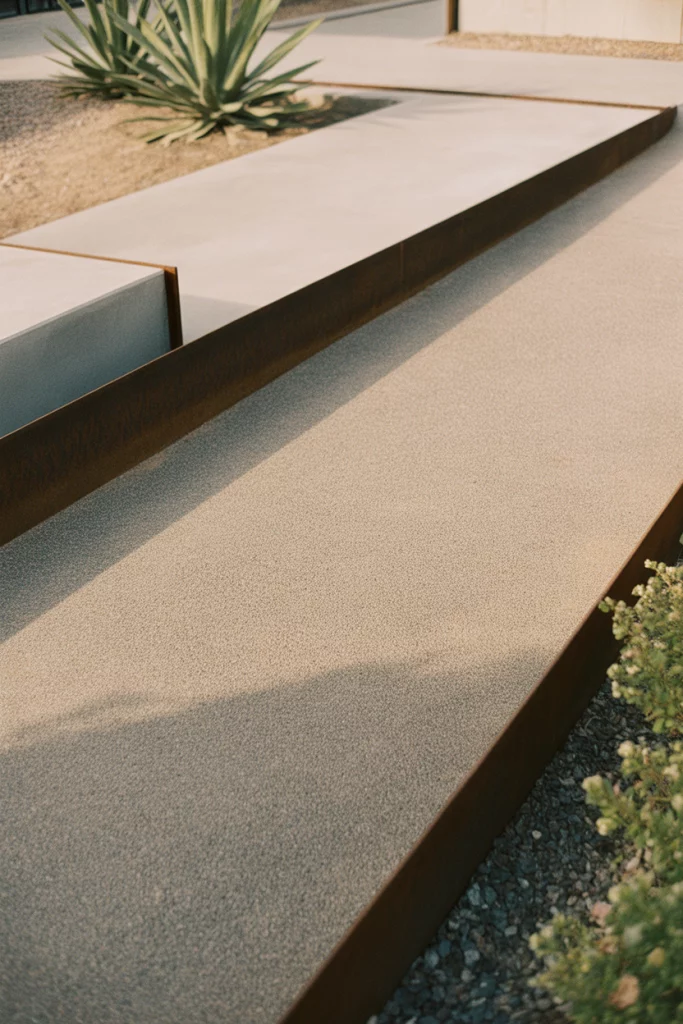
Real homeowner behavior: most people initially choose DG for its low cost ($2–4 per square foot installed) and then discover they love how cool it stays underfoot compared to concrete or pavers in summer heat. The material does require occasional top-dressing every three to five years as it gradually erodes, but this is a simple DIY maintenance task. Avoid using DG on slopes steeper than 5% gradient, as it tends to wash during heavy rains.
11. Tropical Pool Deck with Mixed Palms
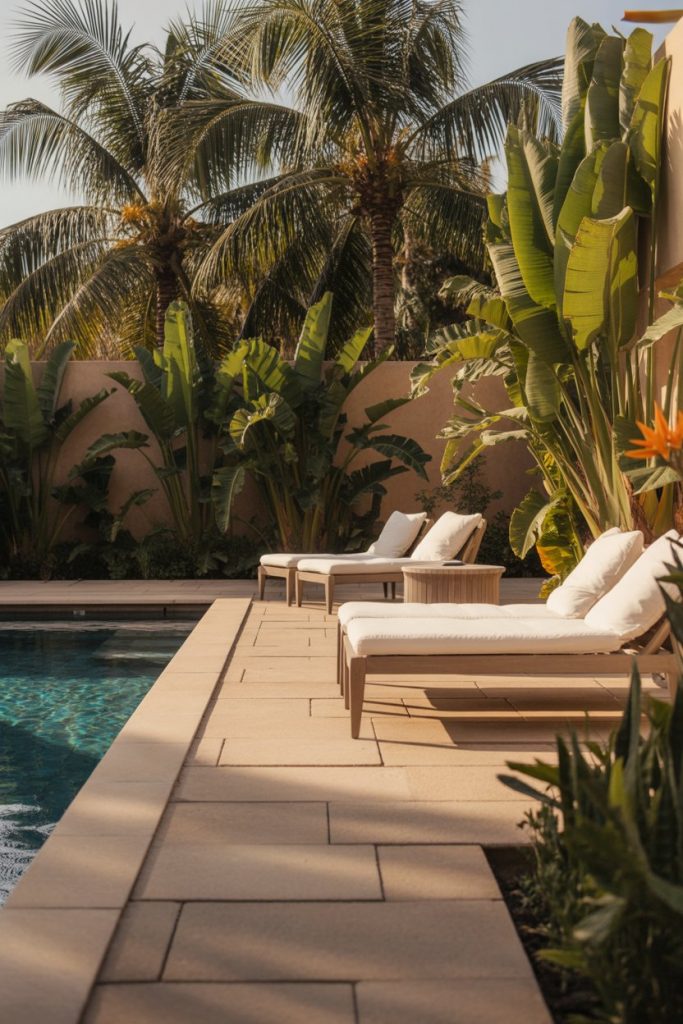
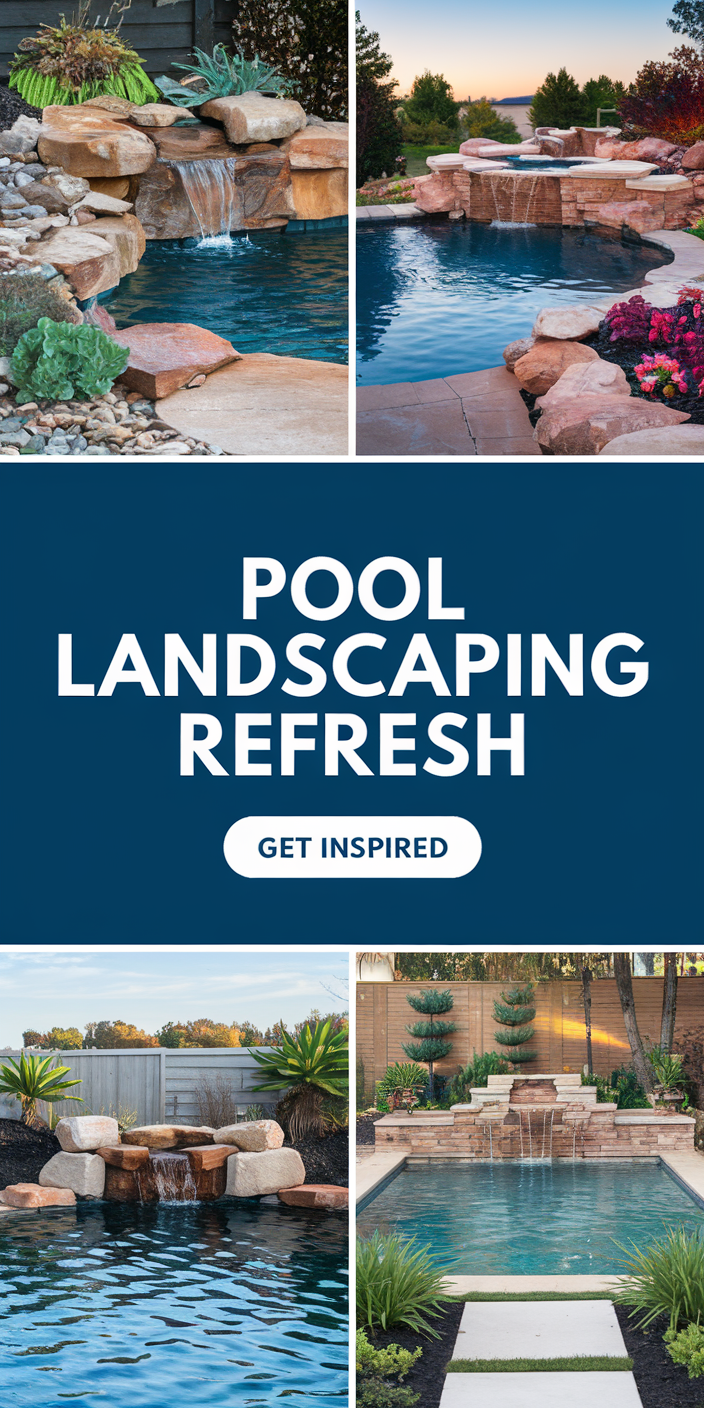
Transform a standard swimming pool area into a resort-style retreat by layering tropical plantings around the deck. Mix several palm varieties—queen palms for height, sago palms for mid-level structure, and clustering bamboo palms for lush texture—with broad-leafed companions like elephant ears and bird of paradise. Use large-format porcelain pavers in warm earth tones for the deck surface; they stay cooler than concrete and resist pool chemical staining. Add a sail shade or pergola over the lounge area to create pockets of shade. This tropical aesthetic thrives in humid climates like Florida, the Gulf Coast, and Southern California. 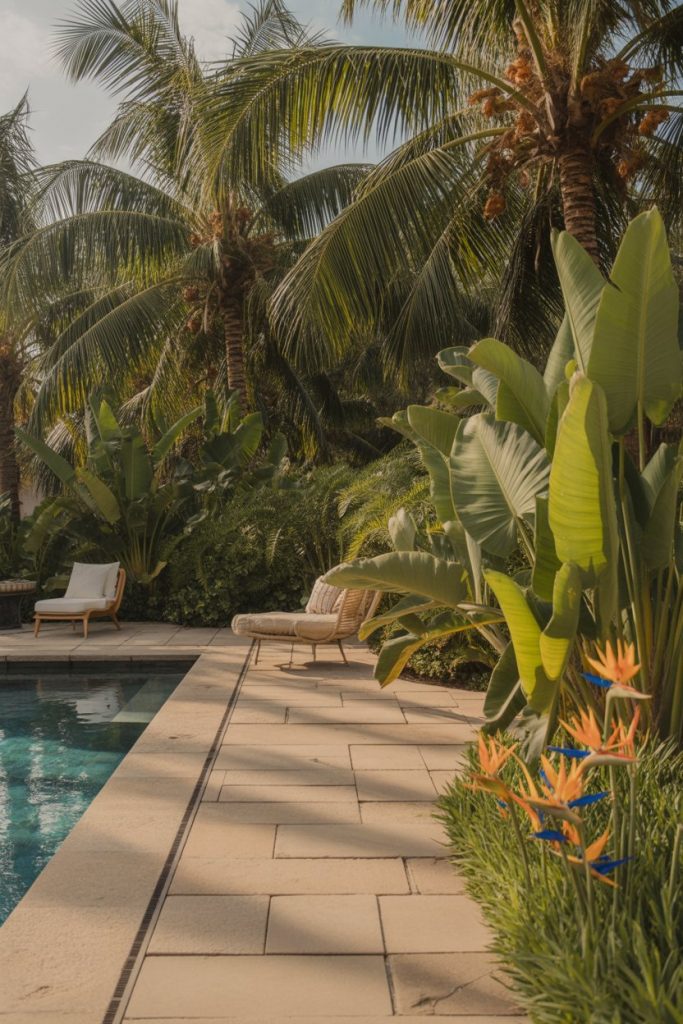
Many homeowners make the mistake of planting palms too close to the pool, leading to constant debris cleanup. Position larger palms at least ten feet from the water’s edge, and use container plantings of smaller varieties on the deck itself so you can move them as needed. Budget $3,000–6,000 for a complete tropical transformation around a standard residential pool, including mature specimens that provide immediate impact rather than waiting years for growth.
12. Rustic Cedar Arbor with Climbing Roses
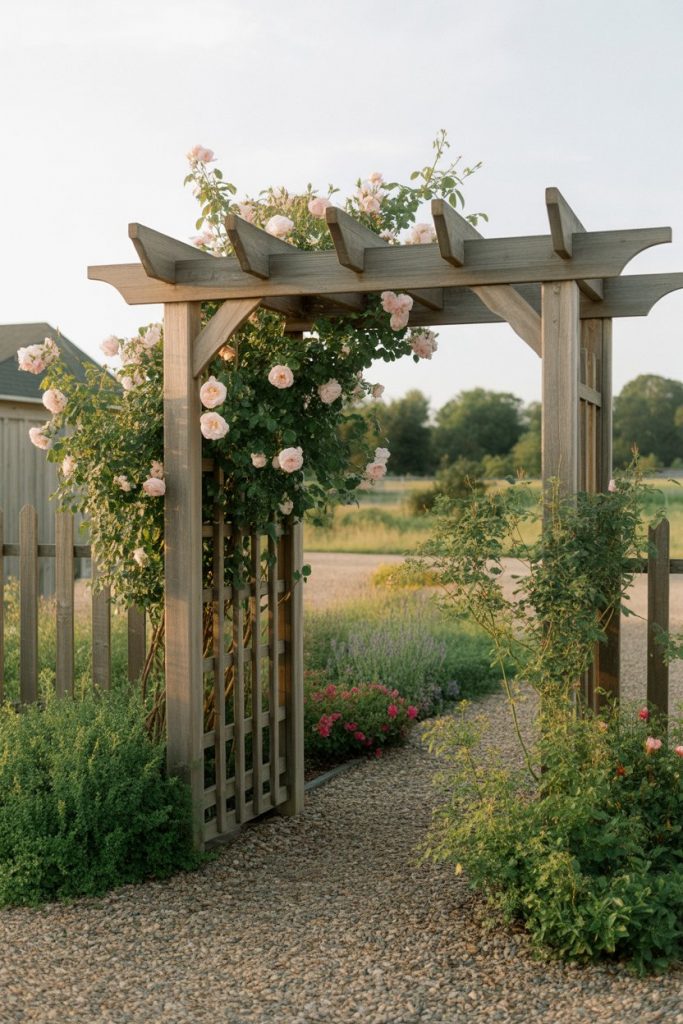
A simple cedar arbor marks the transition between different yard zones while adding vertical interest and seasonal color. Build it from rough-sawn cedar posts and beams, leaving the wood to weather naturally to silvery gray, or apply a clear sealant to maintain the warm honey tones. Train climbing roses, clematis, or jasmine up the sides and across the top beam. Position the arbor over a pathway or at the entrance to a vegetable garden for maximum visual impact. This traditional design suits cottage-style and farmhouse landscapes particularly well. 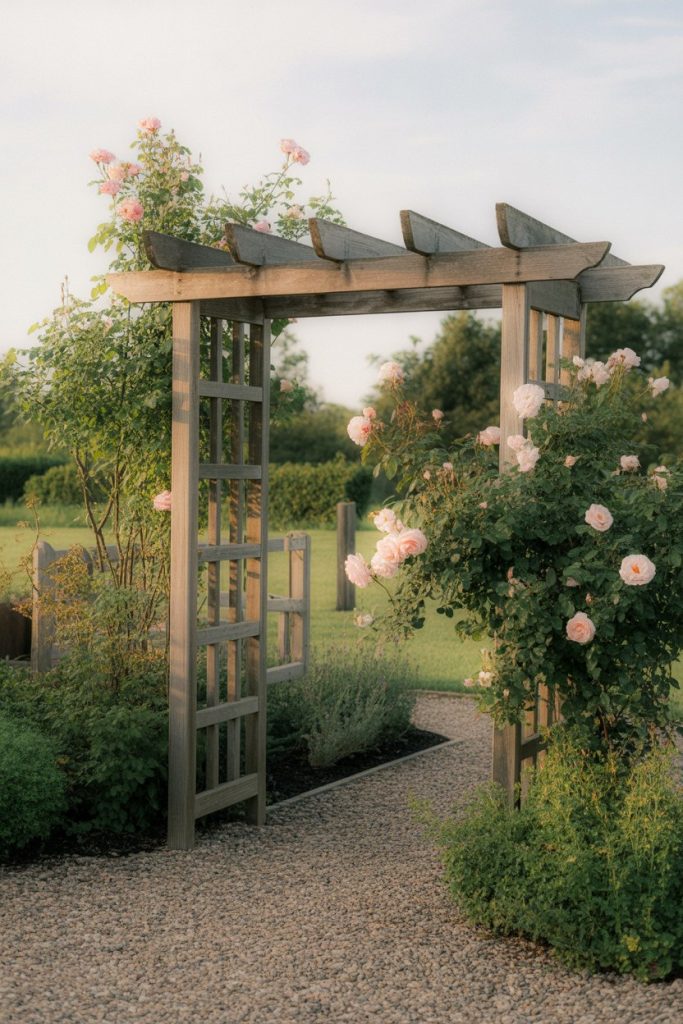
An arbor like this typically costs $300–600 in materials for a six-foot-wide by eight-foot-tall structure, and most DIYers can complete it in a weekend with basic carpentry skills. Set the posts in concrete footings at least eighteen inches deep to prevent frost heaving in cold climates. Choose disease-resistant rose varieties like ‘New Dawn’ or ‘Zephirine Drouhin’ that thrive with minimal spraying—important for keeping maintenance low once the initial structure is built.
13. Dry Creek Bed for Drainage Management
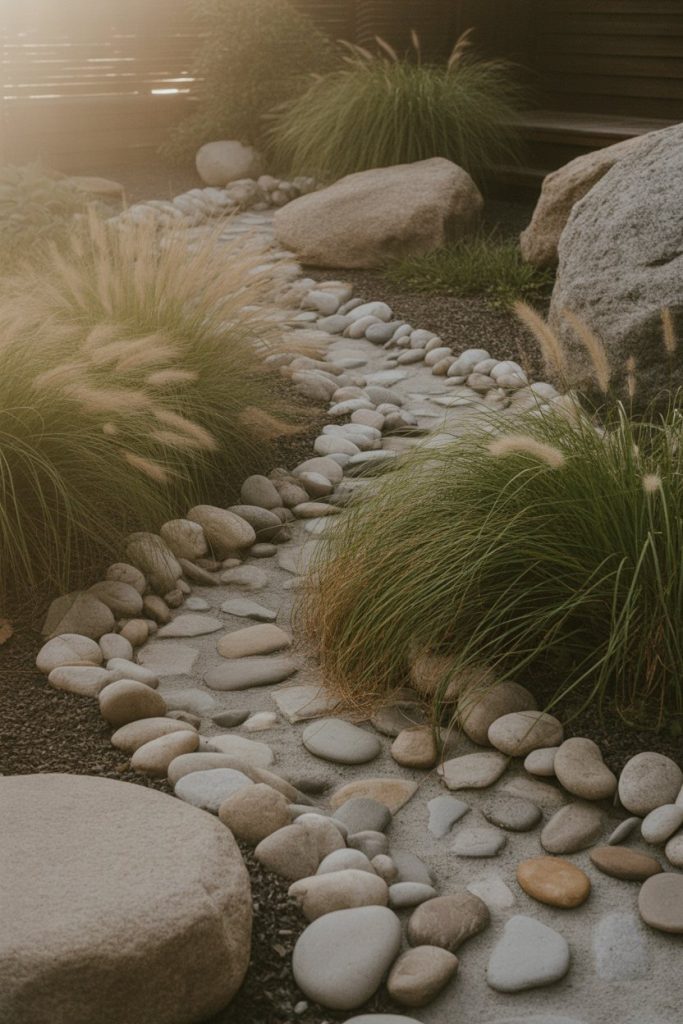
A dry creek bed solves drainage problems while adding natural texture to the landscape. Excavate a gently curving channel following your yard’s natural water flow, line it with landscape fabric, then fill it with river rocks in graduated sizes—larger boulders at the edges, smaller cobbles in the center. Plant the banks with moisture-tolerant perennials and ornamental grasses that can handle occasional flooding. During heavy rains, water flows through the channel; the rest of the time, it reads as an attractive landscape feature. This technique works beautifully on sloped properties where runoff erodes soil or creates muddy channels. 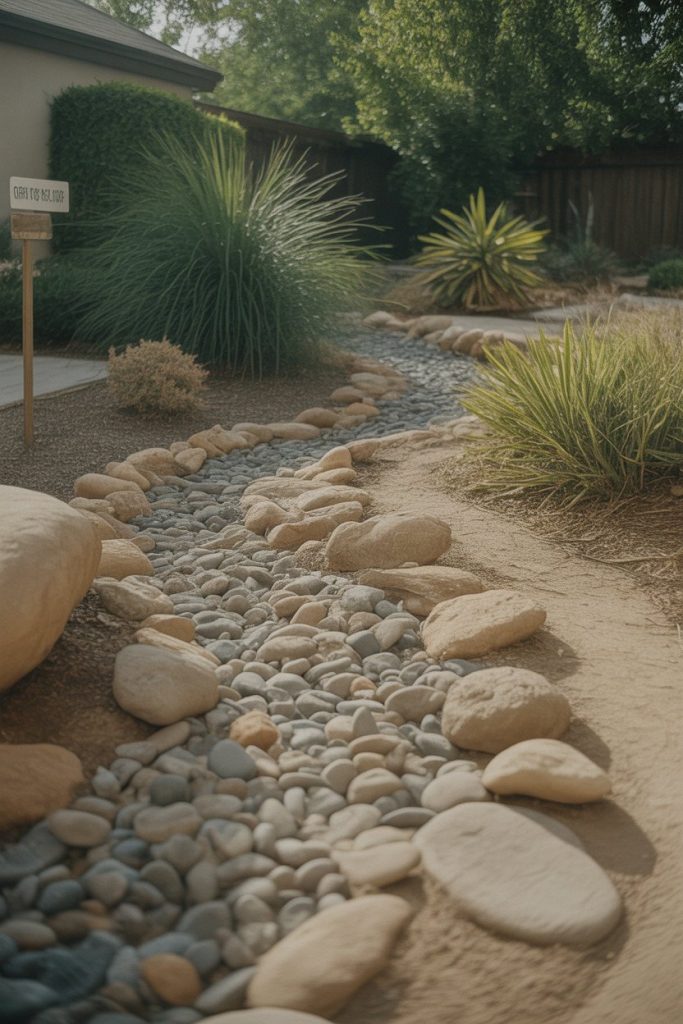
Where it works best: properties with moderate slopes (3–8%) where water sheet-flows during storms but you want to avoid the expense of underground drainage systems. The creek bed guides water away from structures while recharging groundwater rather than sending it to storm sewers. Material costs run $200–500 for a twenty-foot run, depending on rock type and availability in your region. Many homeowners underestimate how many rocks they’ll need—plan on roughly one ton per ten linear feet of creek bed.
14. Composite Deck with Hidden Fasteners
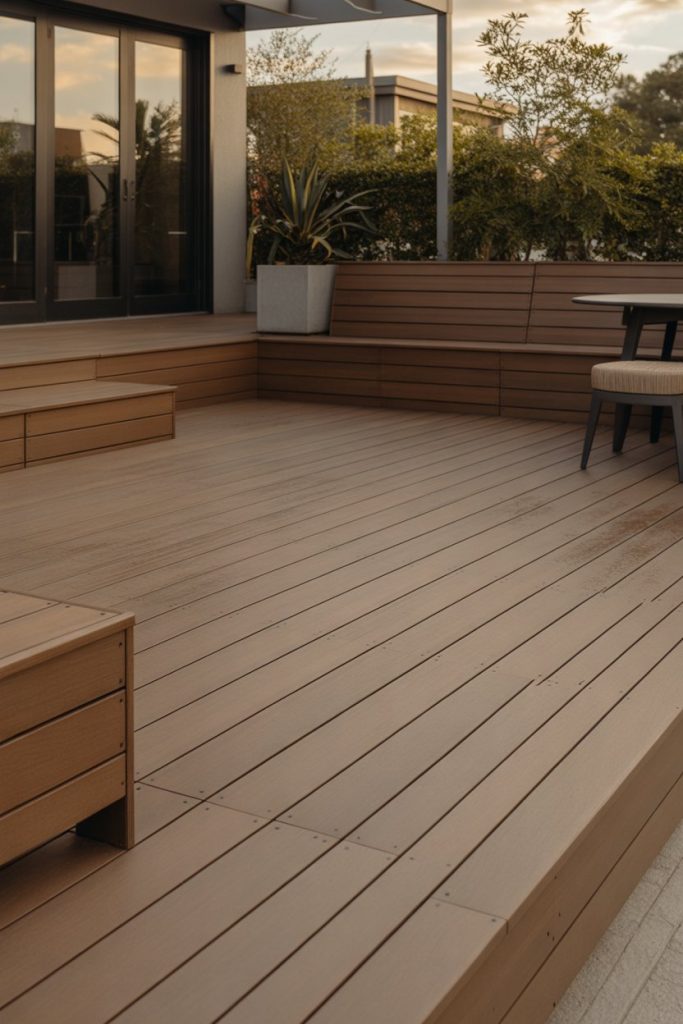
Modern composite decking eliminates the annual sanding and staining ritual while delivering a consistently beautiful surface that resists splintering, fading, and insect damage. Choose hidden fastener systems that attach boards from underneath, creating a seamless look without visible screws. Contemporary composite products convincingly mimic wood grain and come in sophisticated grays, warm browns, and weathered tones. Build the deck with subtle level changes or integrated bench seating to add architectural interest. This low maintenance solution particularly appeals to busy homeowners who want to spend weekends enjoying their deck rather than maintaining it. 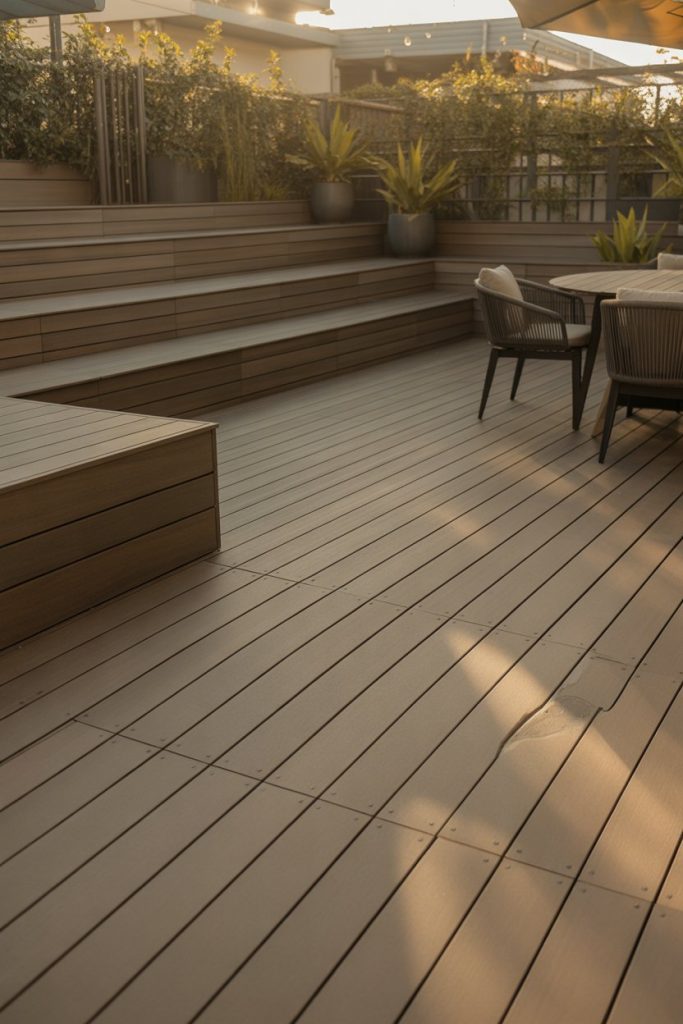
Practical insight: quality composite decking costs $8–12 per square foot installed, roughly double the price of pressure-treated lumber but with virtually zero annual maintenance. The boards stay cooler underfoot than traditional composite products from ten years ago, though they still heat up more than wood in direct sun. Most manufacturers offer twenty-five-year warranties covering staining and fading, making this a genuinely set-it-and-forget-it option for backyard living spaces.
15. Citrus and Fruit Tree Mini-Orchard
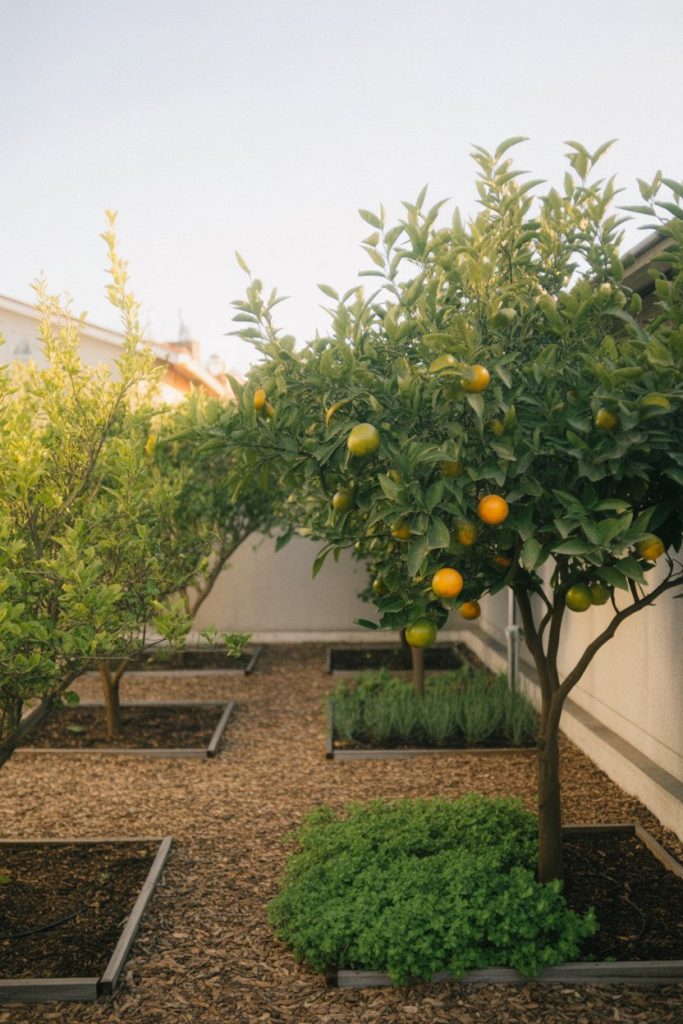
Even a small yard can accommodate fruit trees when you choose dwarf varieties grafted onto size-controlling rootstock. Plant a mini-orchard with four to six trees spaced eight to ten feet apart—consider mixing citrus varieties in warm climates (Meyer lemon, Persian lime, tangerine) or stone fruits and apples in temperate regions. Underplant with low-growing herbs like thyme or strawberries that thrive in dappled shade. This layout delivers fresh fruit seasonally while creating a productive landscape feature that’s more interesting than a standard lawn. Espaliered trees trained flat against a fence or wall save even more space. 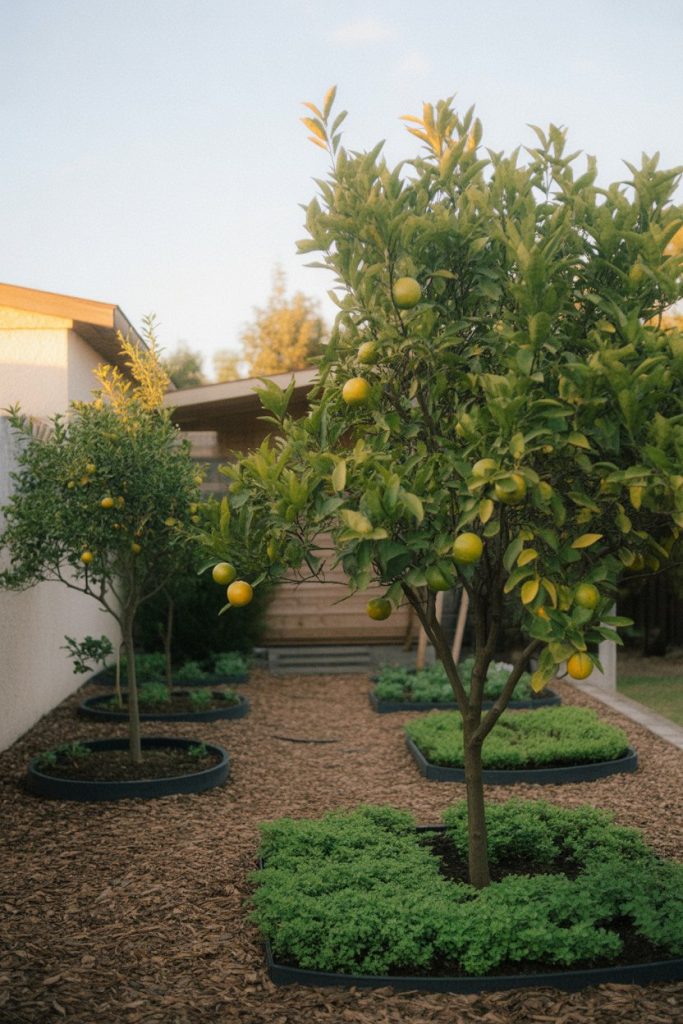
In California’s Central Valley and Southern regions, citrus trees produce nearly year-round with minimal care beyond occasional watering and fertilizing. Dwarf varieties stay six to eight feet tall, making fruit easy to harvest without ladders. Budget $40–80 per tree for healthy two to three-gallon specimens from a reputable nursery. The common mistake is planting too close to structures or property lines—remember that even dwarf trees need adequate air circulation and sunlight to fruit productively.
16. Outdoor Shower with Cedar Privacy Walls
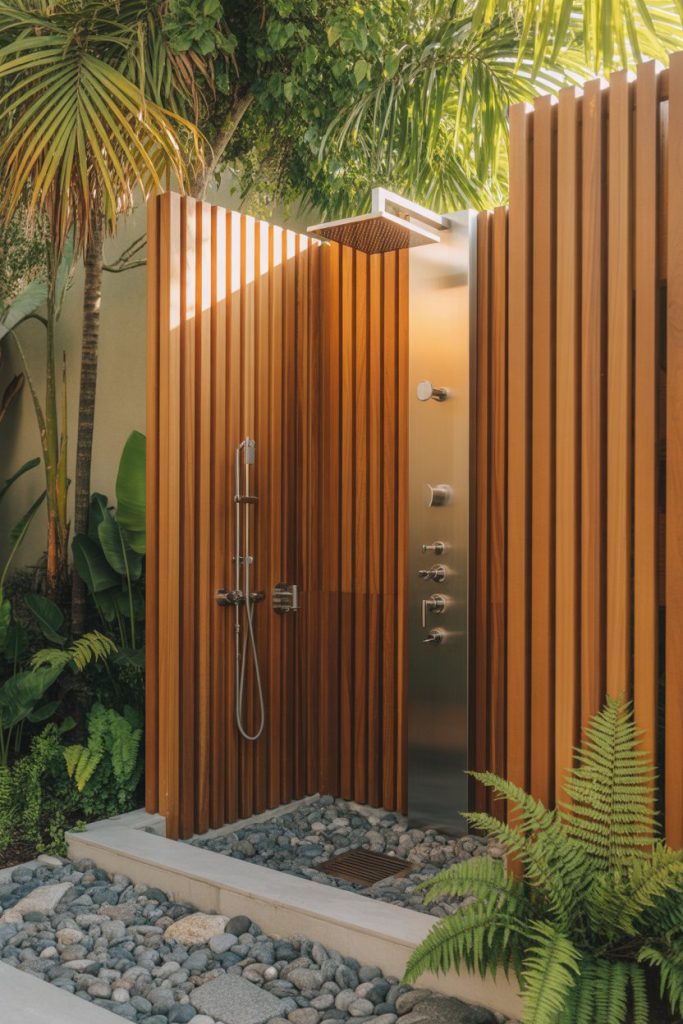
An outdoor shower extends your home’s functional space while adding a luxury resort element to the backyard. Build a simple enclosure using vertical cedar slats spaced an inch apart for privacy and airflow, then install a basic hot/cold shower valve plumbed from your home’s water supply. Add a teak platform or decorative river rock floor for drainage. This feature is especially practical near swimming pools or in coastal homes where sandy feet and wet swimsuits are daily realities. Position the shower where it gets afternoon sun for naturally warmed rinses and quicker drying. 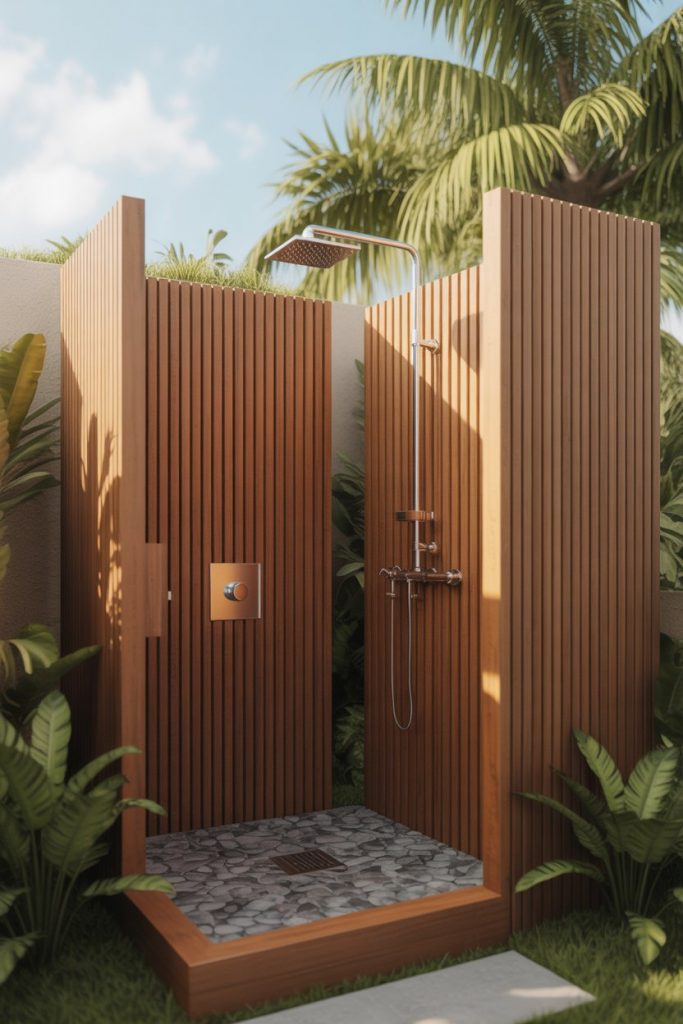
A friend installed one of these last summer near her pool, and it’s become the most-used feature in her backyard—even her teenagers prefer it to the indoor bathrooms for quick rinses after swimming. Basic installations run $800–1,500 DIY or $2,500–4,000 professionally installed with quality fixtures and proper drainage. Check local building codes, as some jurisdictions require permits for outdoor plumbing additions. Connect the drainage to your existing sewer line or create a French drain system if codes allow graywater dispersal.
17. Boulder Seating Circle Around Fire Feature
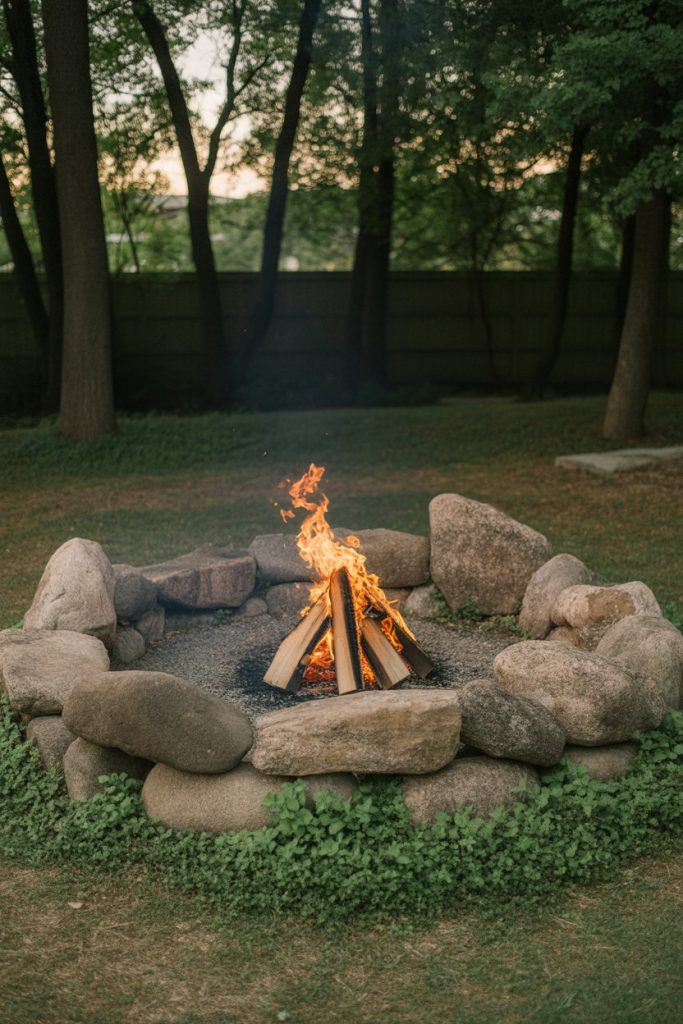
Large natural boulders arranged in a circle create organic seating around a central fire pit without the formal structure of built walls or manufactured furniture. Source moss-covered or weathered boulders with relatively flat tops, positioning them twelve to fifteen feet from the fire center for comfortable heat. Fill gaps with smaller rocks and plant low groundcovers like creeping thyme or sedum between them. This natural approach works beautifully in wooded settings or mountain properties where you want the gathering space to feel like it emerged from the landscape rather than being imposed upon it. 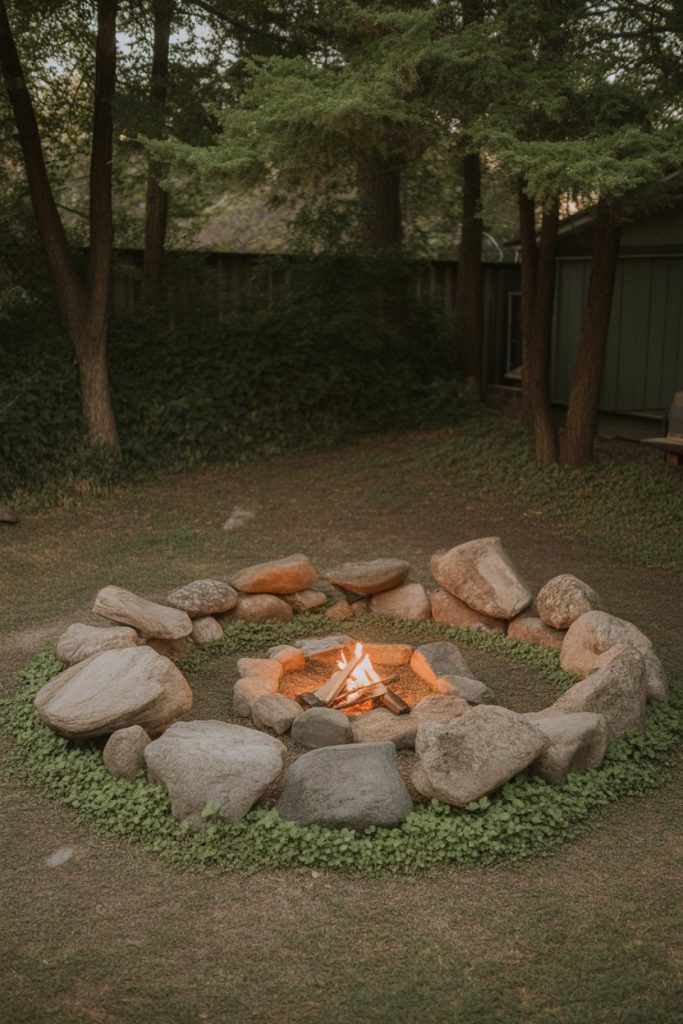
Where this works best: rural or suburban lots with mature trees where you want a gathering spot that feels secluded and connected to nature. Boulders large enough for seating (three to four feet across) are heavy—you’ll need equipment to position them unless you’re willing to work with a landscaper who has the necessary machinery. Many stone yards sell boulders by the ton ($100–250 per ton), and a typical seating circle requires four to eight tons depending on boulder size and circle diameter.
18. Dog Run with Artificial Turf and Shade
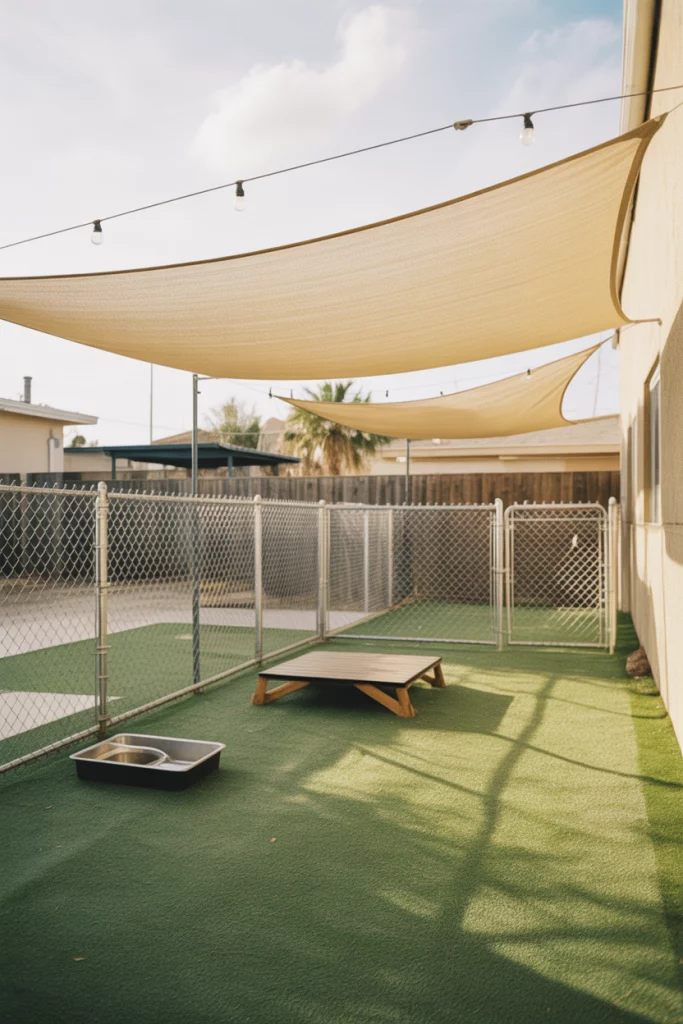
A dedicated dog run keeps your main yard pristine while giving pets a designated space to play and relieve themselves. Build a dog proof enclosure using welded wire fencing or chain link (minimum five feet tall for large breeds), then install dog friendly artificial turf with antimicrobial backing to prevent odors. Add a shade sail or pergola over at least half the run so dogs can escape direct sun, and include a raised bed or platform for lounging. Position the run where you can see it from indoor living spaces so pets don’t feel isolated. This setup is standard practice among trainers and busy pet owners across suburban America. 
Common mistakes include making the run too small (plan for at least 100 square feet for small dogs, 200+ for large breeds) and failing to provide adequate shade in hot climates. The turf should have drainage holes every few inches and be installed over a gravel base so urine drains quickly. Rinse the area weekly with a hose, and use an enzymatic cleaner monthly to eliminate any lingering odors. Total cost for a 10×20-foot run with quality turf: $2,000–3,500.
19. Modern Horizontal Slat Fence
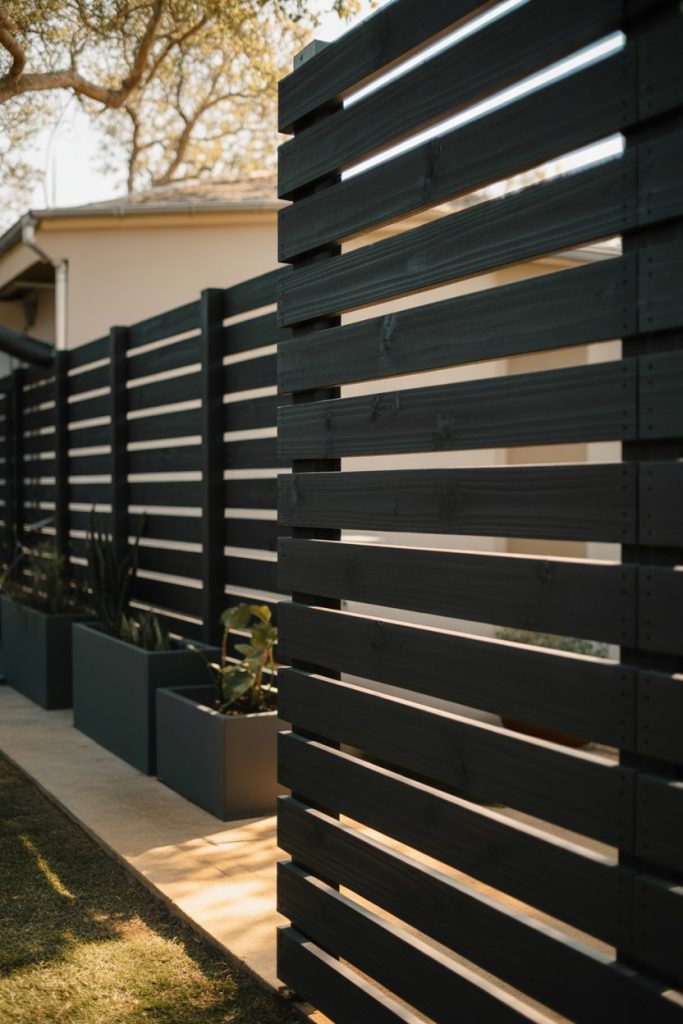
Horizontal fence slats deliver clean, contemporary curb appeal that’s become hugely popular in modern and mid-century neighborhoods. Use one-by-six cedar or composite boards with quarter-inch gaps between each slat, attaching them to vertical posts every six to eight feet. The horizontal orientation makes yards feel wider and creates interesting shadow patterns throughout the day. Stain the fence a warm charcoal or leave cedar natural to silver over time. This design works particularly well in urban settings where you want privacy without the closed-in feeling of solid panels. 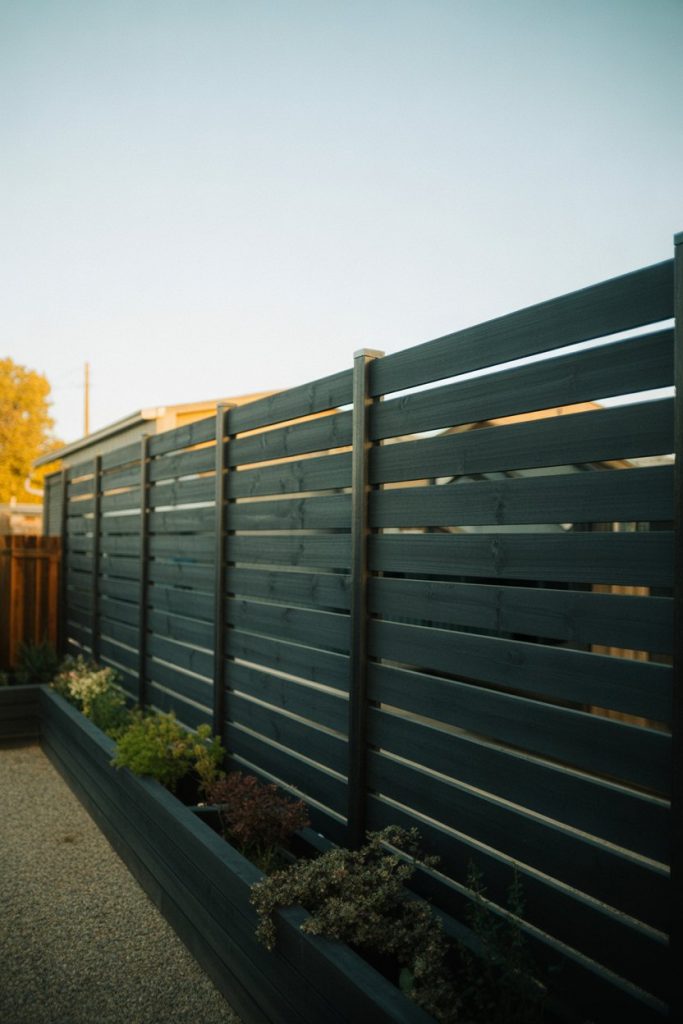
On a budget: horizontal fencing typically costs $30–50 per linear foot installed, roughly 20% more than vertical board-on-board styles because of the extra framing required. The look justifies the premium for many homeowners seeking that designer aesthetic. If you’re DIYing, use a spacer jig to keep gaps consistent and ensure boards are perfectly level—even small variations become glaringly obvious with horizontal installations. Seal or stain immediately after installation to prevent uneven weathering.
20. Rain Garden with Native Wildflowers
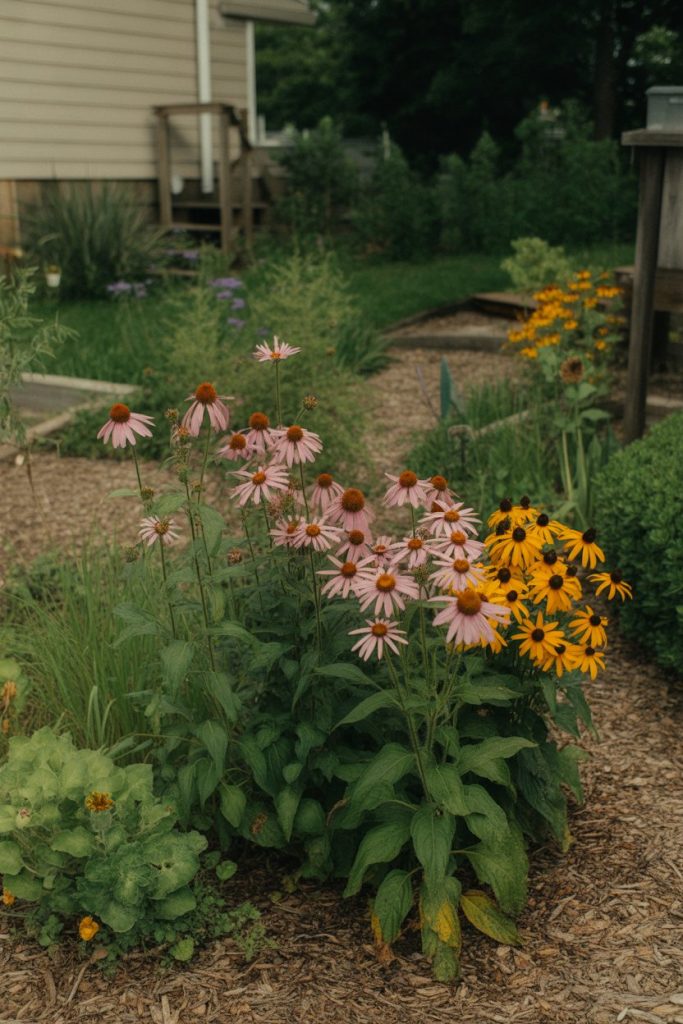
A rain garden captures and filters stormwater runoff while creating a seasonal wildflower display that supports pollinators and birds. Excavate a shallow depression (six to twelve inches deep) in a low spot where water naturally collects, amend the soil with compost, then plant native species suited to both wet and dry conditions—coneflowers, black-eyed Susans, Joe Pye weed, and cardinal flower are reliable performers across much of the U.S. The garden floods briefly during heavy rains, then drains within twenty-four hours. This simple natural feature reduces pressure on storm sewers while adding seasonal color and wildlife habitat to previously underutilized yard areas. 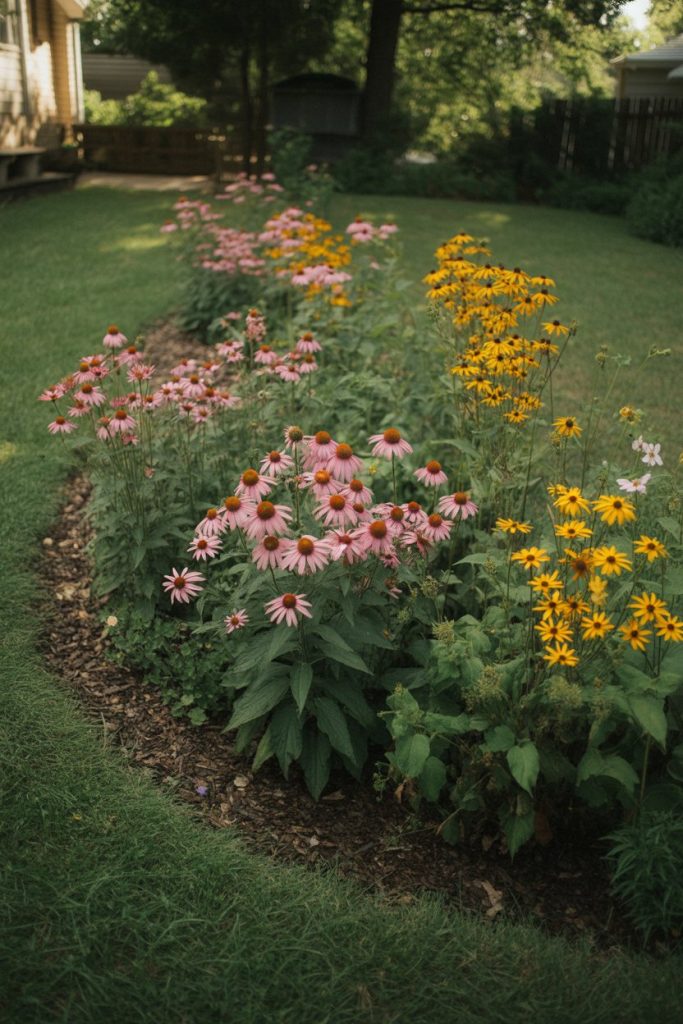
Expert-style commentary: size the rain garden to capture runoff from your roof or driveway by calculating approximately ten percent of the impervious surface area. For a 1,500-square-foot roof, that’s a 150-square-foot rain garden. Native plants establish quickly and require no fertilizer or supplemental watering once mature, making this truly low maintenance. Most municipalities offer free rain garden design consultations and sometimes even rebates for installation, as these features significantly reduce strain on aging stormwater infrastructure.
21. Hammock Garden with Shade Trees
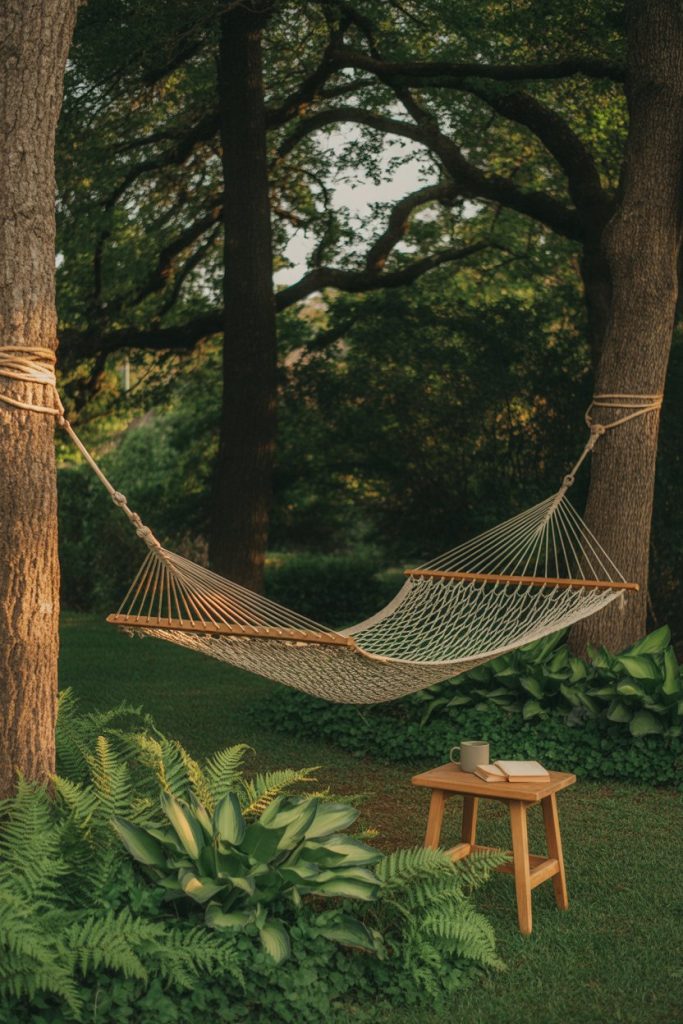
Create a dedicated relaxation zone by planting two shade trees fifteen to twenty feet apart, then hanging a hammock between them once trunks reach six inches in diameter. Choose fast-growing species like red maple, river birch, or tulip poplar in temperate zones, or live oak and camphor in the South. Underplant with shade-loving perennials and groundcovers—hostas, ferns, astilbe—that create a lush, cooling effect. Add a small side table and outdoor lanterns to make the space fully functional for afternoon reading or evening stargazing. This easy upgrade transforms an unused lawn corner into the most coveted spot in your yard.
Real homeowner behavior: people who install hammock gardens use them constantly during warm months, often more than traditional patio furniture. The gentle motion and cocoon-like feeling create genuine relaxation in a way that chairs simply don’t. When shopping for trees, invest in larger caliper specimens (two to three-inch trunk diameter) if your budget allows—they’ll be hammock-ready within two to three years rather than five to seven for smaller whips. Total project cost: $200–400 for two trees plus hammock and basic plantings.
Conclusion
Whether you’re drawn to the clean lines of modern design, the practical needs of pet ownership, or the environmental benefits of native plantings, these ideas offer starting points for your own backyard transformation. The best landscapes evolve over time as you discover how you actually use the space, so start with one or two projects that excite you most. Share your favorite ideas in the comments below, and let us know which concepts you’re planning to tackle first—we’d love to hear how these designs inspire your outdoor living vision.