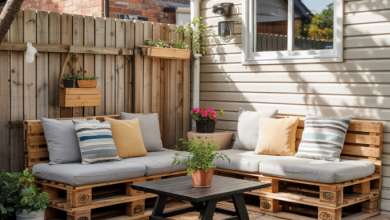
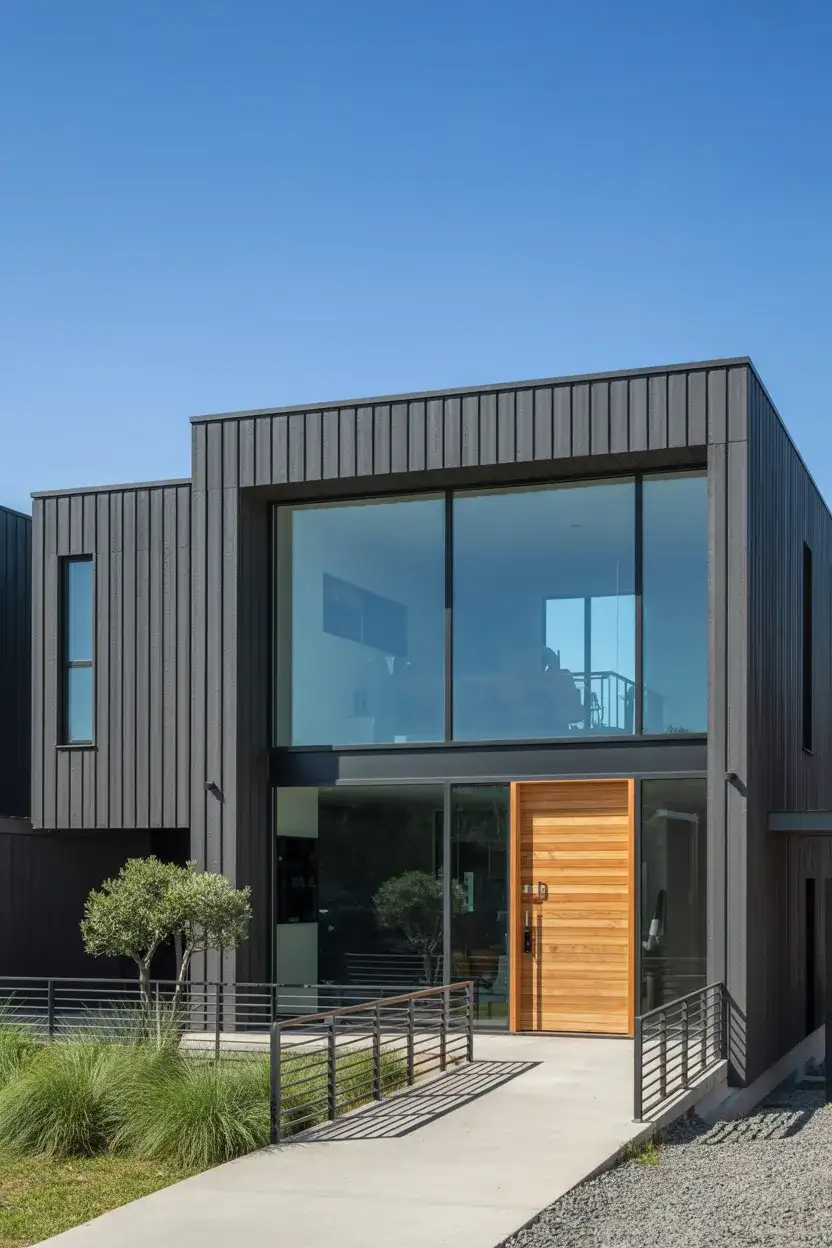
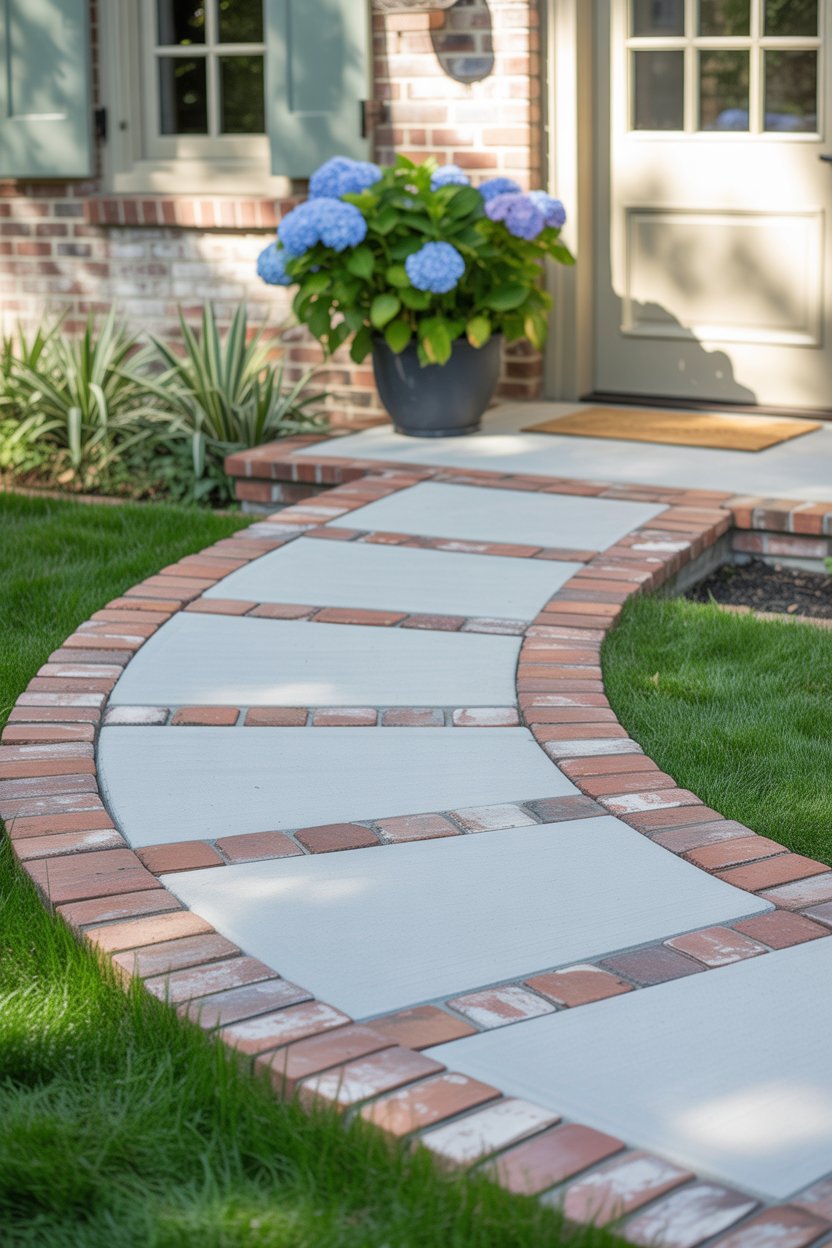
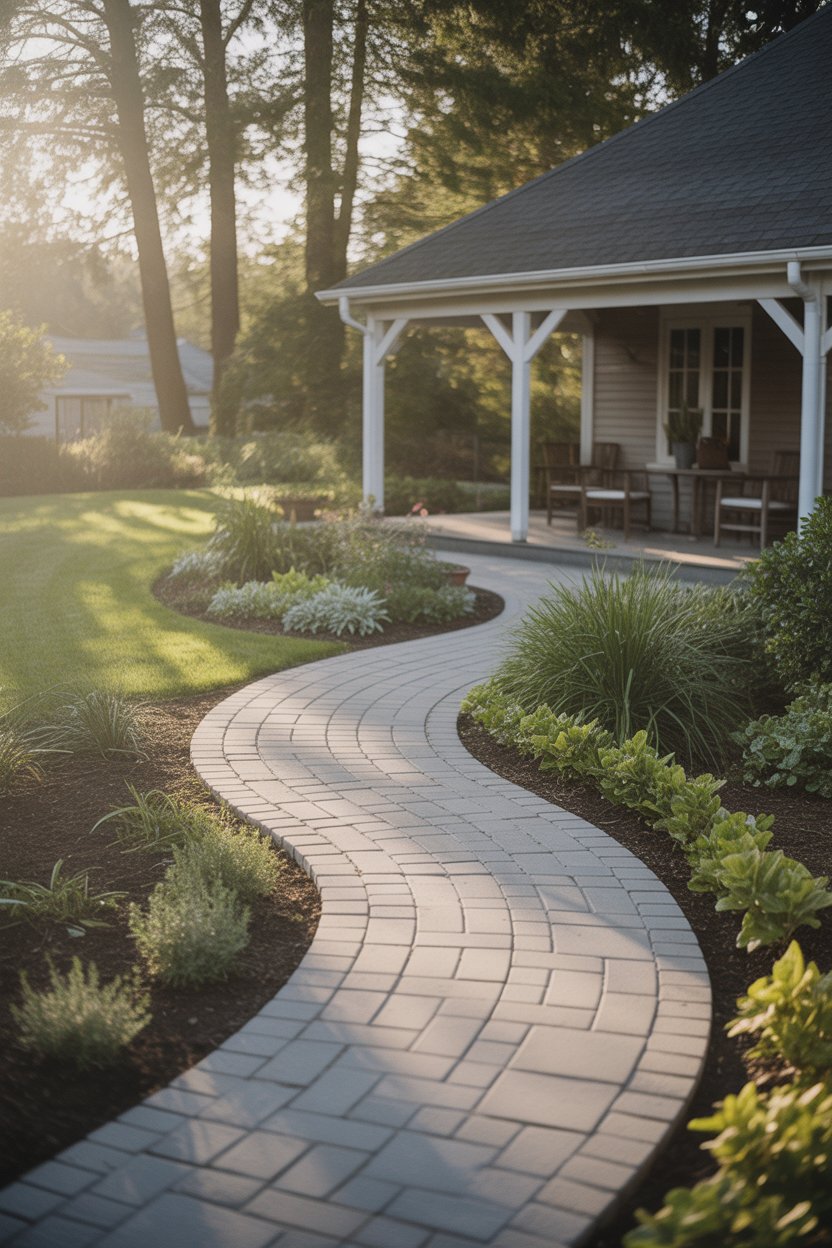
Backyard landscaping is entering a transformative era in 2026, blending aesthetic beauty with practical living spaces that reflect how Americans truly use their outdoor areas. Whether you’re drawn to sleek minimalist designs, dreaming of a resort-style pool, or working with a compact yard that needs creative solutions, this year’s trends prioritize low-maintenance materials, seamless indoor-outdoor flow, and personalized touches that make your backyard an extension of your home. Pinterest users searching for inspiration are discovering that great landscaping doesn’t require acres of land or unlimited budgets—it’s about smart planning, purposeful design, and choosing elements that fit your lifestyle. In this guide, you’ll find twenty-one fresh ideas that address everything from dog-friendly layouts to DIY projects, modern minimalism to dreamy garden retreats.
1. Minimalist Courtyard with Gravel and Specimen Trees
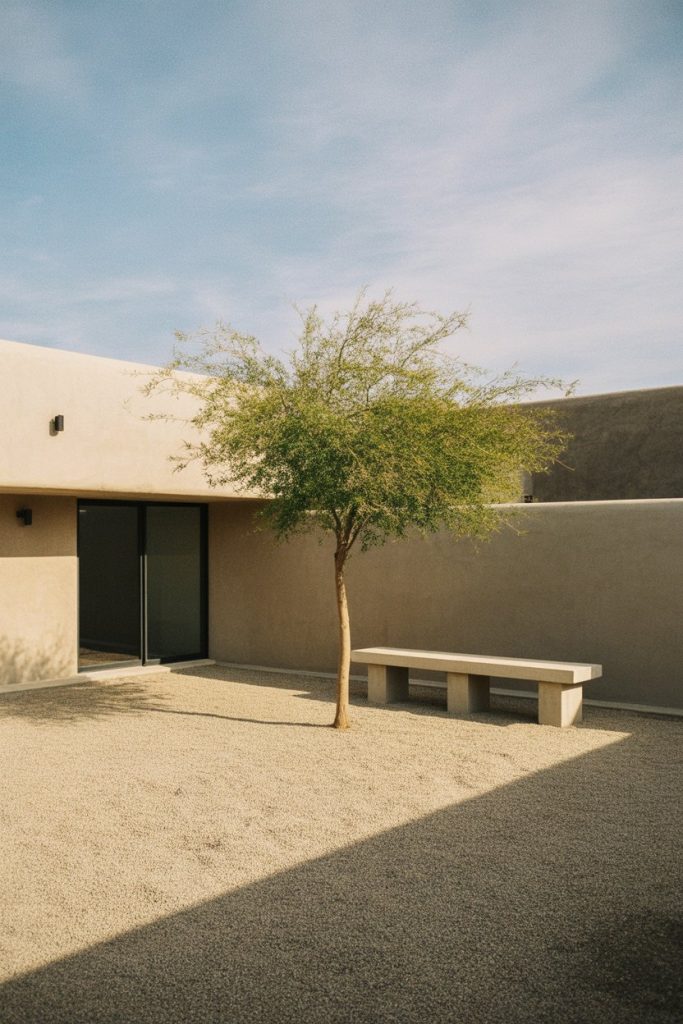
A minimalist courtyard design strips away unnecessary clutter, focusing on clean lines, neutral tones, and a few carefully chosen plants. This approach works beautifully for small yard settings where every square foot matters, using pale gravel as a low maintenance ground cover that defines pathways and seating areas. Specimen trees—perhaps a Japanese maple or desert willow—become sculptural focal points that provide shade without overwhelming the space. 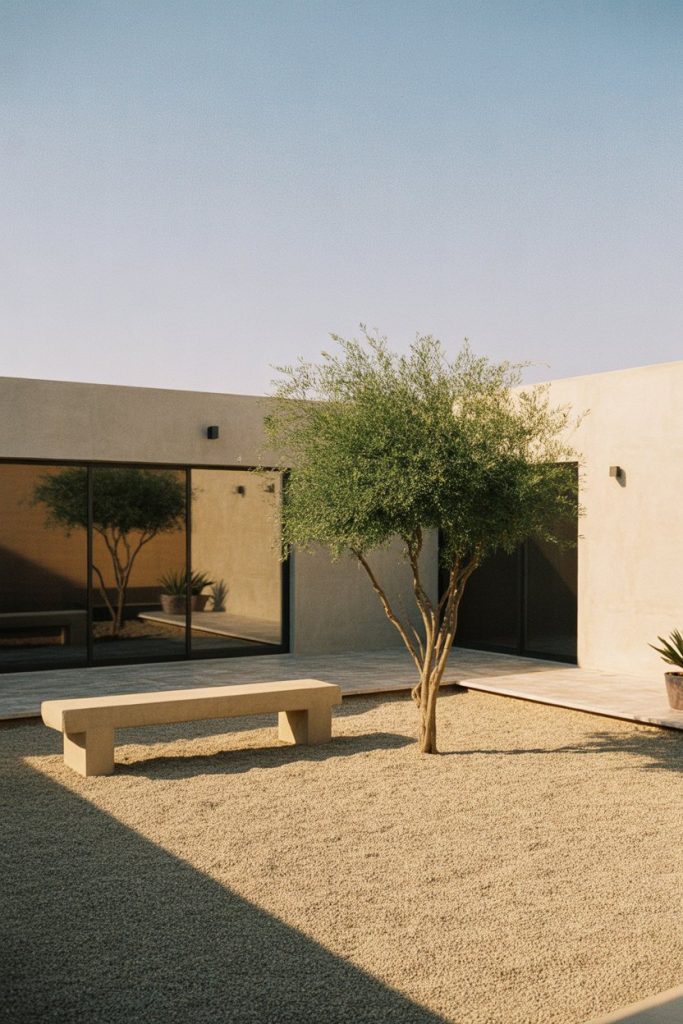
This design thrives in arid climates like Arizona or Southern California, where water conservation meets contemporary style. Homeowners often underestimate how much visual impact a single well-placed tree can create—it anchors the entire composition while requiring minimal upkeep. The gravel eliminates mowing, and the sparse planting palette means less trimming, feeding, and fussing, leaving more time to actually enjoy your outdoor space.
2. Ground Pool Oasis with Natural Stone Coping
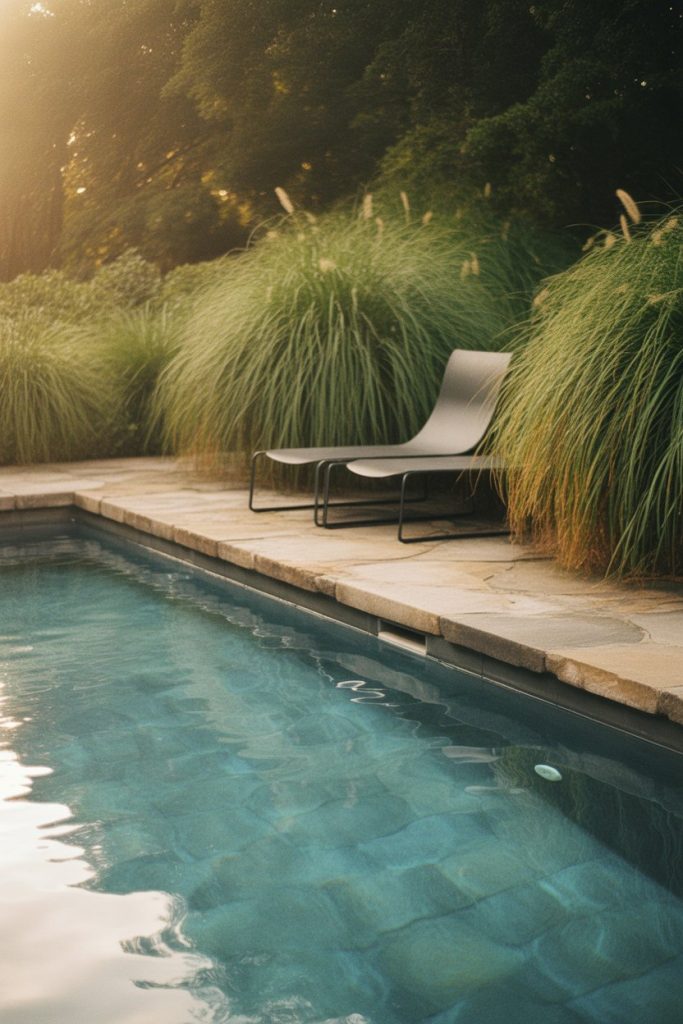
A ground pool built at grade level creates a seamless connection between deck and water, eliminating the traditional above-ground barrier and making the backyard feel more expansive. Natural stone coping in warm limestone or travertine adds organic texture while staying cool underfoot during summer heat. This pool style works exceptionally well in modern landscapes where horizontal lines and uninterrupted sightlines are priorities. 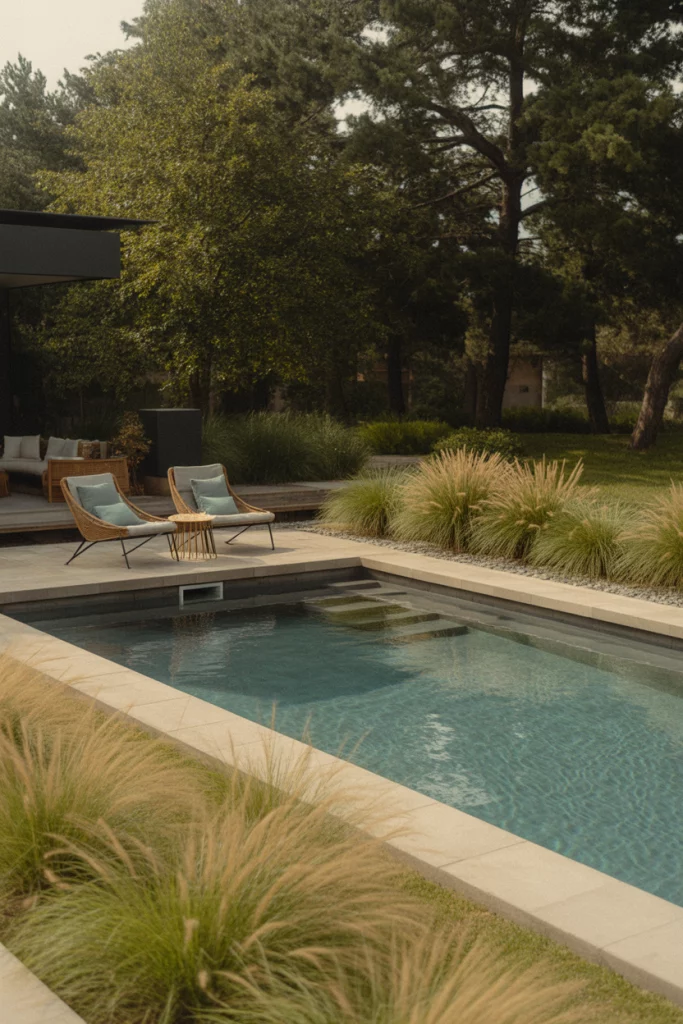
Expert pool designers note that ground pools often integrate better with surrounding landscaping because plants can grow right up to the edge, softening hard surfaces. The key mistake homeowners make is skimping on drainage planning—without proper grading, rainfall can create muddy areas around the pool. Budget roughly $45,000–$75,000 for a quality ground pool installation in most American markets, with stone coping adding another $8,000–$12,000 depending on material choice.
3. Outdoor Living Room with Covered Pavilion
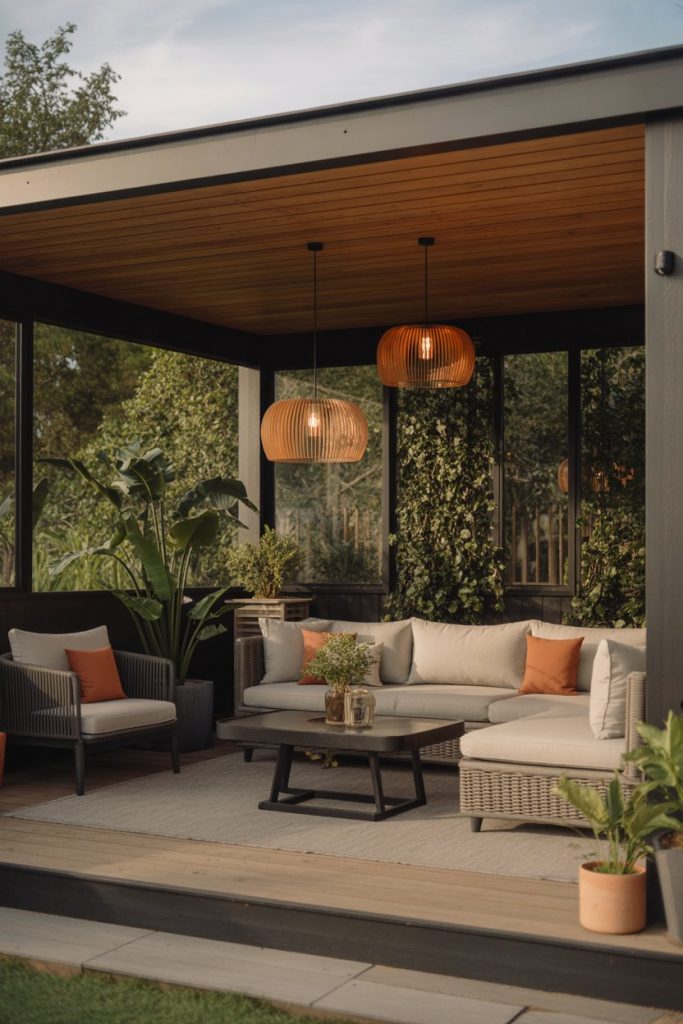
An outdoor living pavilion extends your home’s footprint, creating a weather-protected zone for dining, lounging, and entertaining year-round. Modern designs feature flat roofs with integrated lighting, ceiling fans, and even outdoor heaters for cooler evenings. This approach transforms a backyard into a true second living space, complete with comfortable seating, coffee tables, and decorative elements that mirror your interior style. 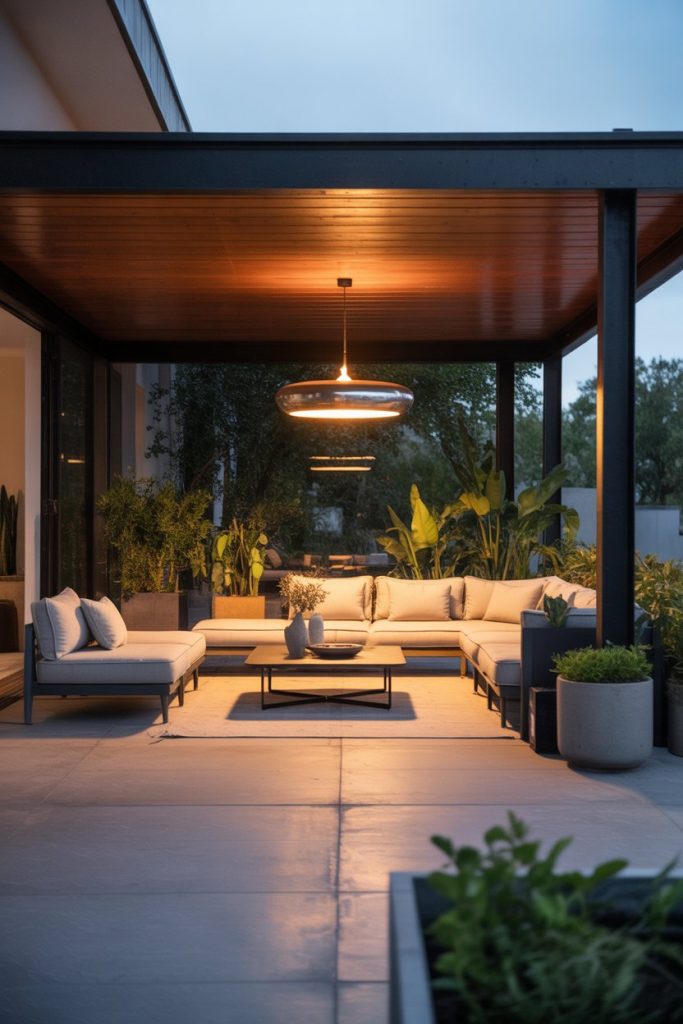
In the Pacific Northwest and Northeast, where rain is frequent, pavilions see daily use from spring through fall. One common mistake is installing furniture that’s too delicate for outdoor conditions—even under cover, humidity and temperature swings take their toll. Look for all-weather wicker, powder-coated aluminum frames, and quick-drying cushion fabrics. A well-designed pavilion becomes the most-used room in your home during pleasant weather months.
4. Simple Raised Bed Vegetable Garden
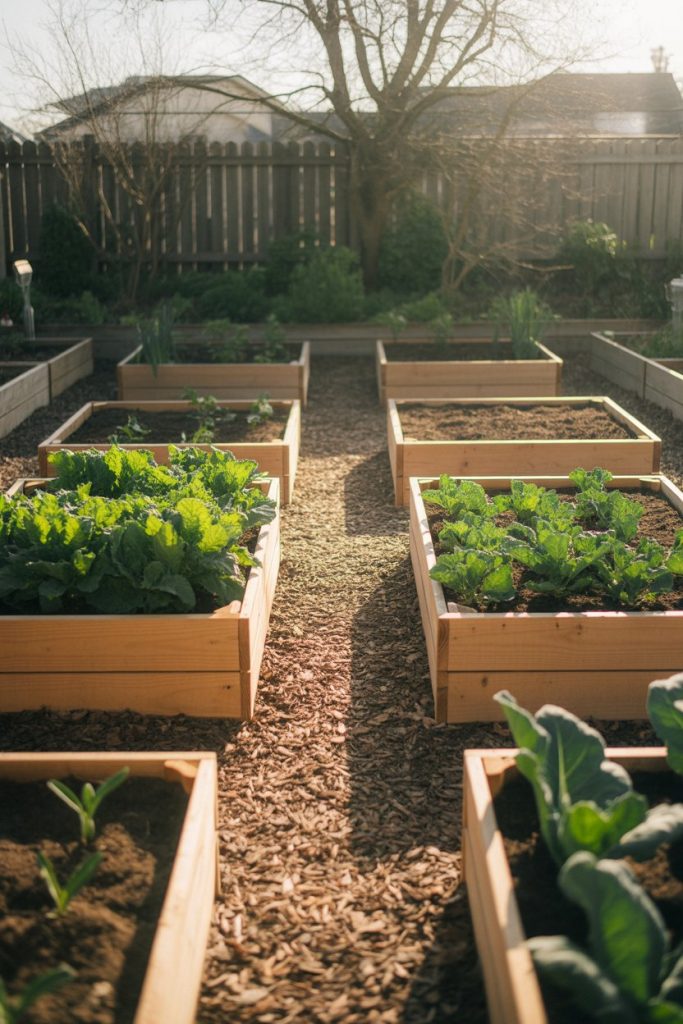
A simple raised bed garden brings food production into your backyard with minimal fuss, using cedar or composite lumber frames filled with quality soil mix. This garden ideas for small spaces solution maximizes yield in limited square footage, allowing you to grow tomatoes, herbs, lettuce, and peppers without tilling existing soil. The elevated height reduces bending and makes maintenance easier, while also improving drainage and extending the growing season. 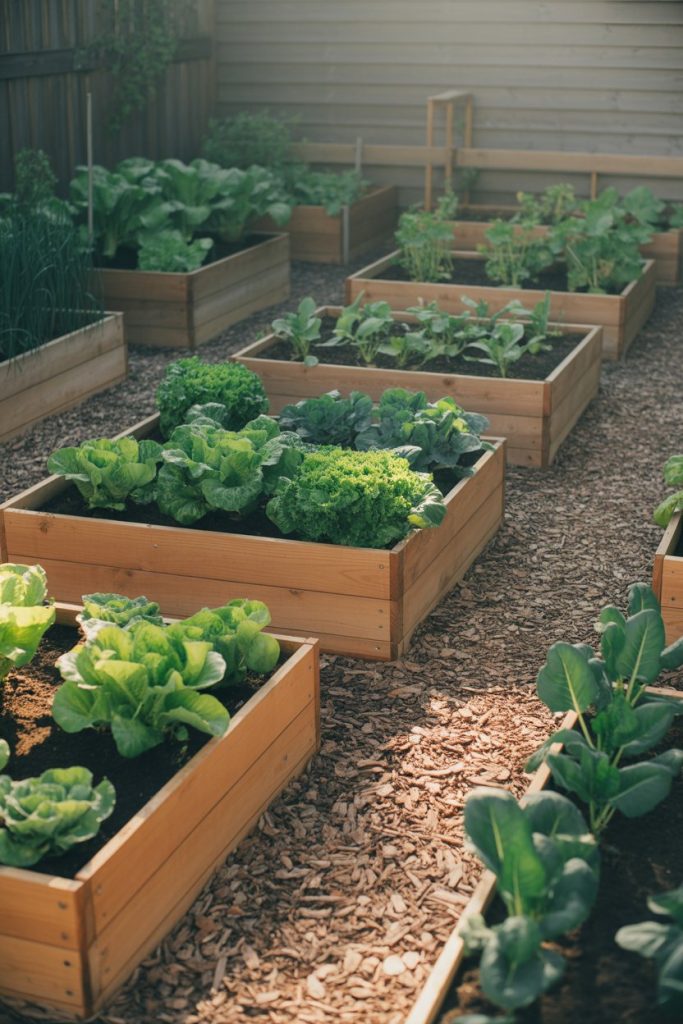
Where it works best: sunny yards with at least six hours of direct light, particularly in suburban neighborhoods where homeowners want fresh produce but lack farmland. Position beds near your kitchen door for easy access when cooking. Many gardeners start with just two 4×8 beds, which can produce hundreds of pounds of vegetables throughout the season while requiring only 30 minutes of daily care during peak summer.
5. Modern Linear Fire Pit Lounge
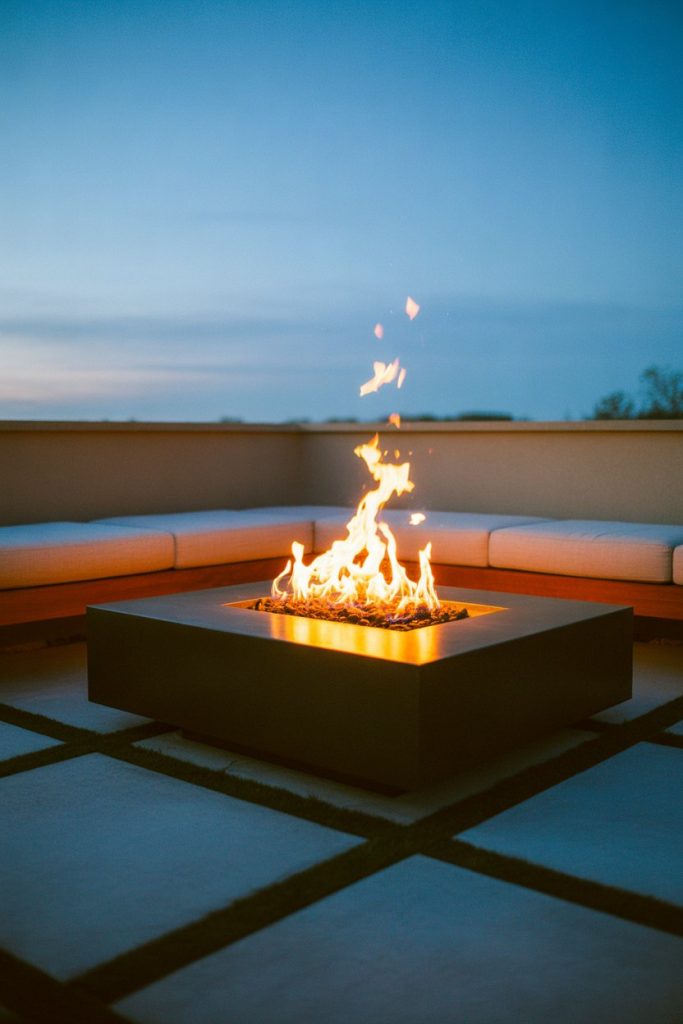
A modern linear fire pit creates a contemporary gathering space with clean geometric lines, often using rectangular fire bowls filled with glass beads or lava rock. This layout works particularly well in minimalist designs, where the fire feature becomes sculptural art that also provides warmth. Built-in seating or freestanding lounge chairs arranged around the fire pit establish an intimate conversation zone. 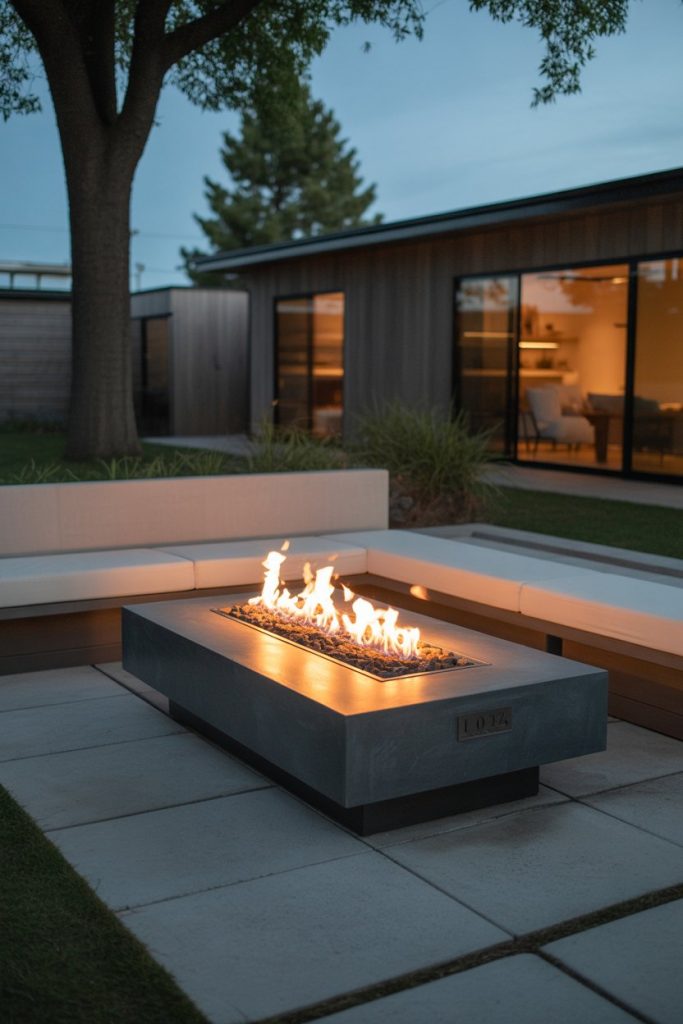
A real homeowner behavior worth noting: people consistently underestimate how much they’ll use a fire pit. In temperate climates like California, Colorado, and the Mid-Atlantic, fire pits extend outdoor season by months. Choose propane or natural gas models for convenience—no wood hauling, no ash cleanup, instant ignition. The fire pit becomes a natural gathering point for casual weeknight relaxation and weekend entertaining alike.
6. Dog-Friendly Turf and Digging Zone
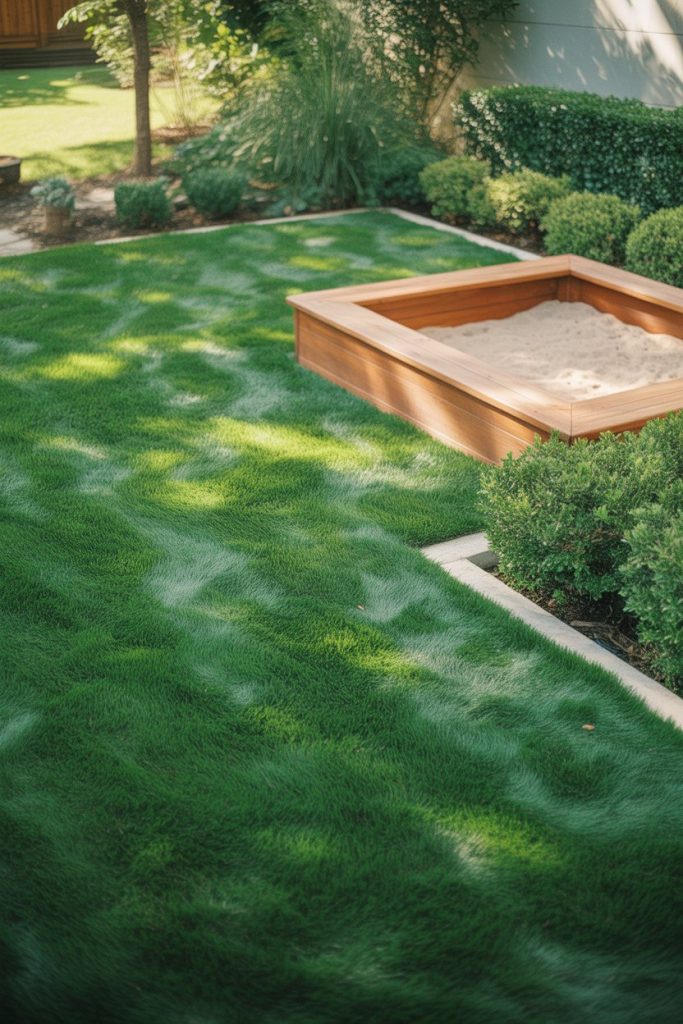
A dog friendly backyard balances your pet’s needs with attractive design, incorporating durable artificial turf that withstands constant paw traffic and a designated digging area filled with sand or loose soil. This thoughtful layout prevents destructive behavior while giving your dog appropriate outlets for natural instincts. Raised planters keep delicate flowers safe from curious snouts, while sturdy shrubs like boxwood and ornamental grasses can handle occasional brushes. 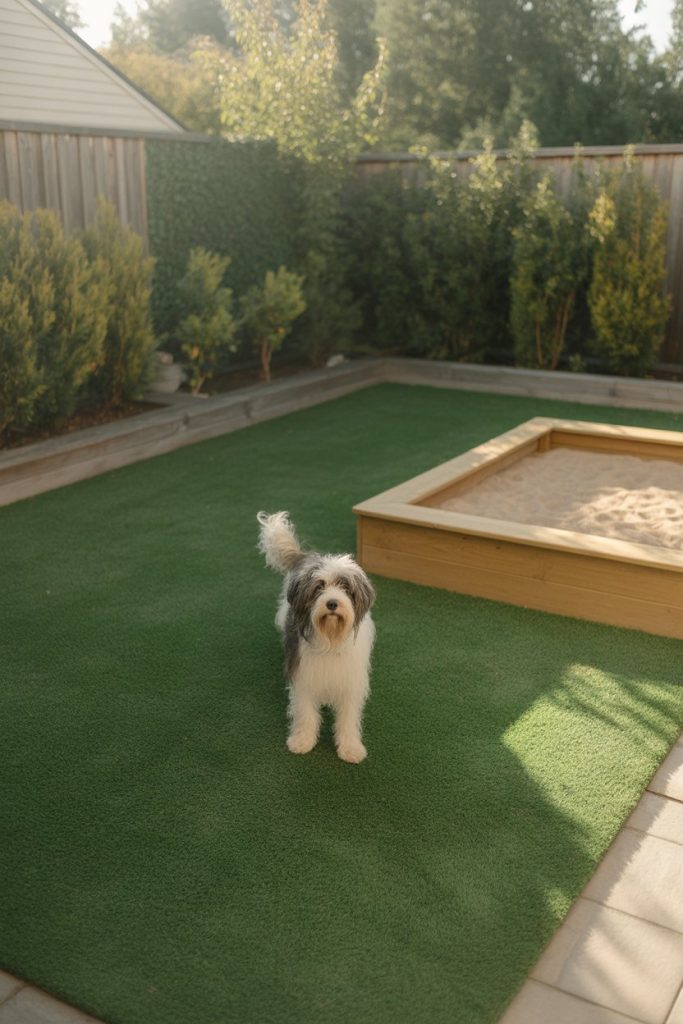
The most common mistake dog owners make is choosing budget artificial turf that develops odors in hot weather. Invest in premium infill-free turf with antimicrobial backing and plan for a slight slope toward drainage areas. Across American suburbs, veterinarians and trainers recommend creating clear “yes” zones where dogs can run and play freely, reducing anxiety and territorial behavior. The digging zone particularly helps terriers and other breeds bred to burrow, giving them an acceptable outlet that protects your lawn and garden beds.
7. Budget Paver Patio with DIY Installation
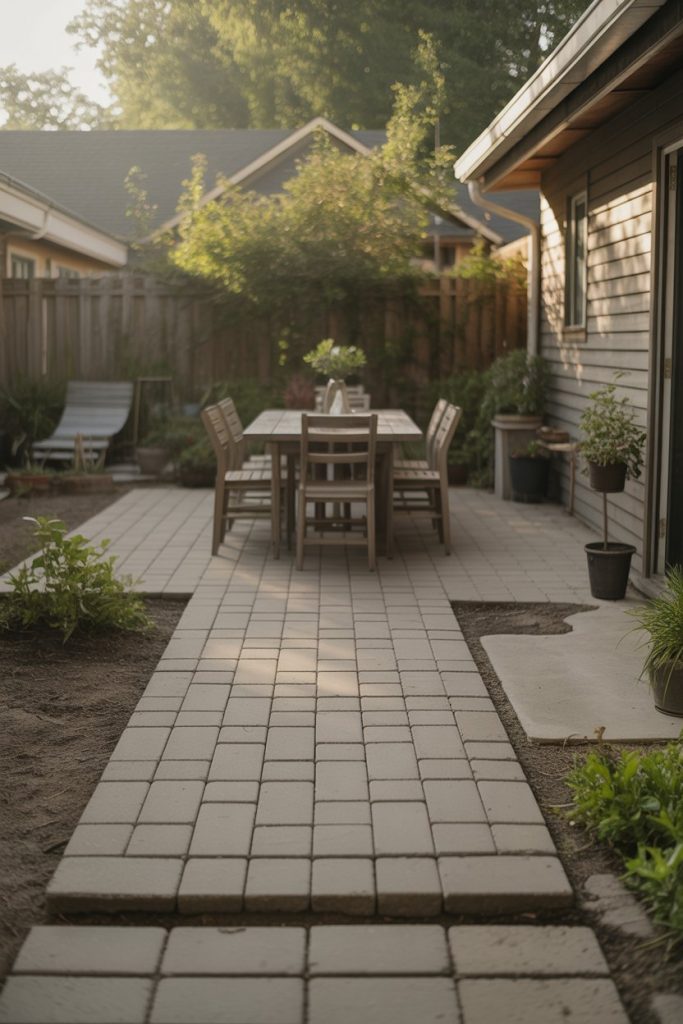
A budget paver patio delivers professional-looking results through DIY installation, using concrete pavers that cost $2–$4 per square foot compared to $15+ for natural stone. The key is careful ground preparation—a compacted gravel base topped with sand creates a stable foundation that prevents shifting. This approach lets homeowners create a 200-square-foot patio for under $1,000 in materials, transforming a basic grass yard into usable outdoor living space. 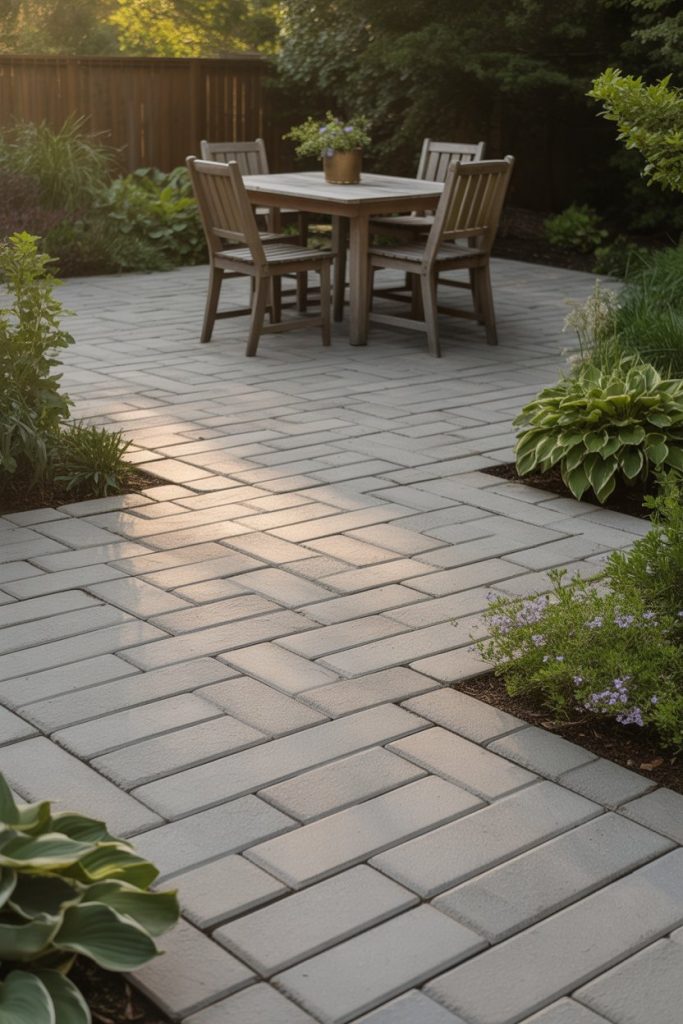
This project works beautifully for first-time homeowners in suburbs and smaller cities where labor costs make professional installation prohibitive. Practical insight: rent a plate compactor from a home improvement center rather than buying—it’s essential for proper base preparation but costs only $60–$80 for a weekend rental. YouTube tutorials have democratized paver installation, with motivated DIYers completing patios over three-day weekends. The satisfaction of building something permanent and useful yourself adds intangible value beyond the money saved.
8. Large Modern Pool with Infinity Edge
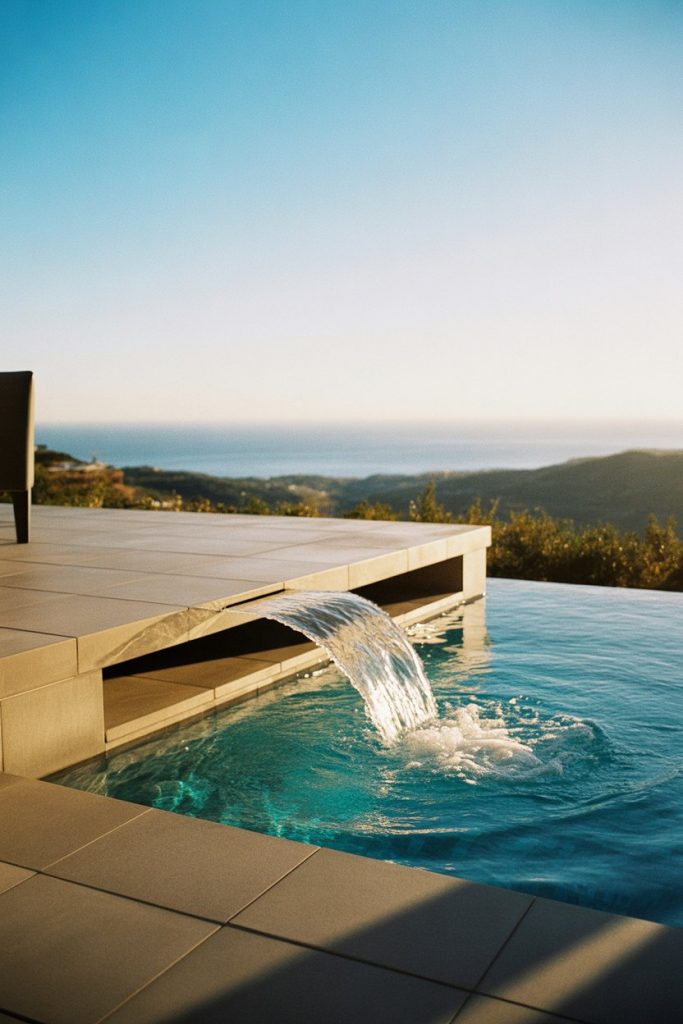
A large modern infinity edge pool creates a dramatic visual effect where water appears to spill over one edge, merging with the horizon or landscape beyond. This luxury feature works best on sloped properties where the disappearing edge can showcase distant views—ocean vistas in coastal California, mountain ranges in Colorado, or city skylines in hillside neighborhoods. The layout typically includes a catch basin below the vanishing edge that recycles water back to the pool. 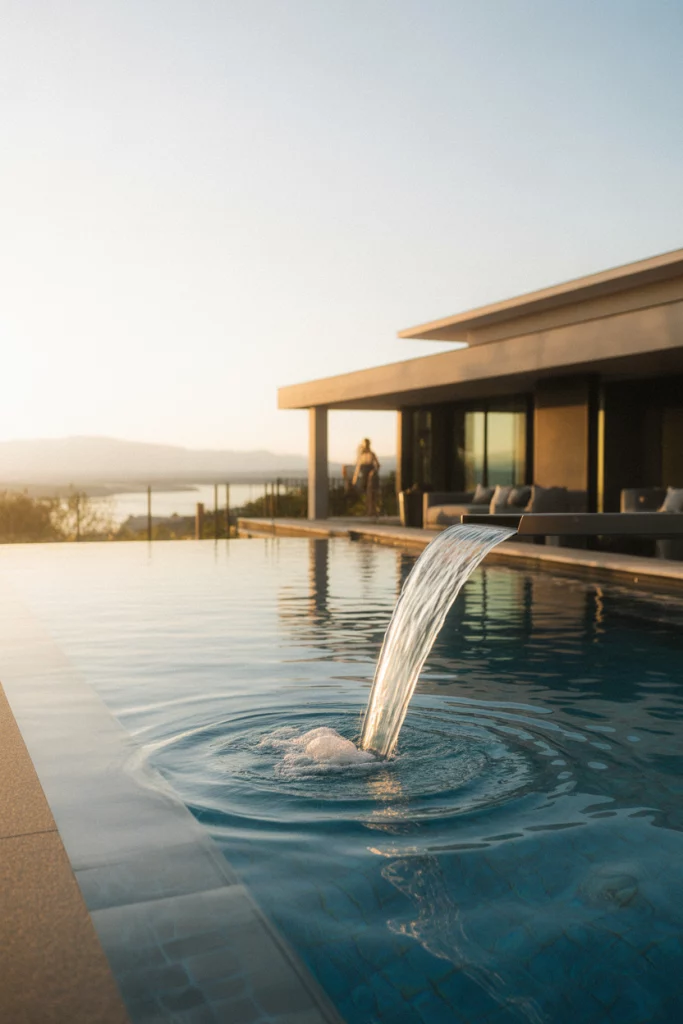
Budget for $85,000–$150,000+ depending on size and site complexity—the infinity edge alone adds $15,000–$30,000 to standard pool costs due to specialized construction and additional pumping systems. Where it works best: properties with natural elevation changes and dramatic views that justify the investment. Pool builders note that proper engineering is critical; the catch basin must be sized correctly, and the infinity edge needs precise leveling to create that seamless water-meets-sky effect. This is not a DIY-friendly project.
9. Villa-Inspired Courtyard Garden
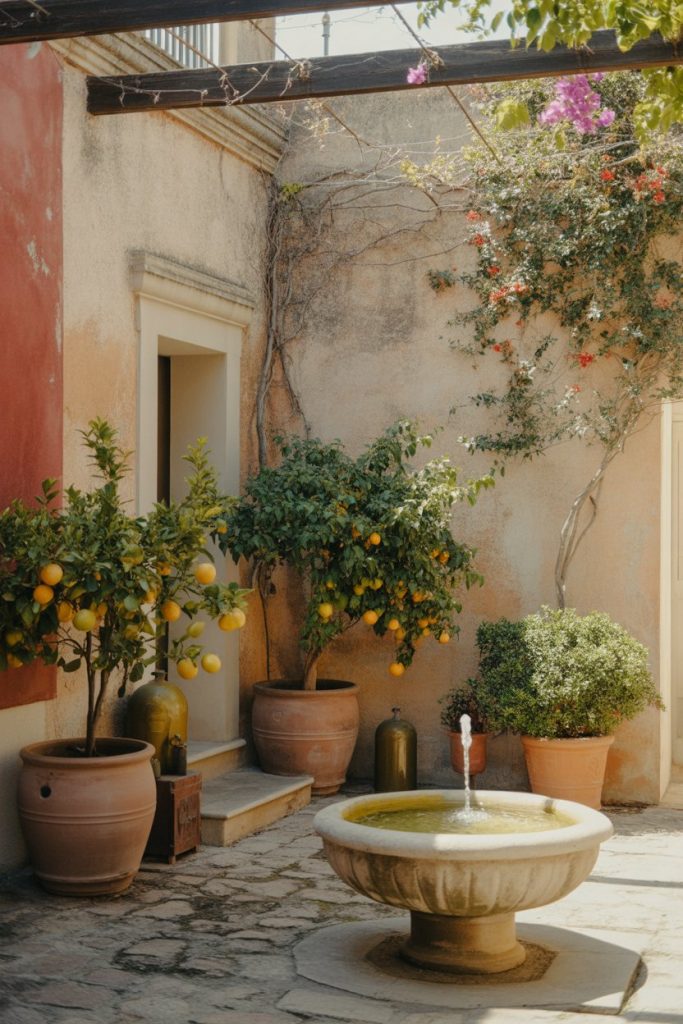
A villa courtyard brings Mediterranean romance to American backyards, featuring stucco walls, terra cotta containers, climbing jasmine, and a central fountain or water feature. This enclosed garden design creates privacy and intimacy, transforming even small yard spaces into personal retreats. Gravel pathways wind between planted urns, while overhead trellises support flowering vines that provide dappled shade. 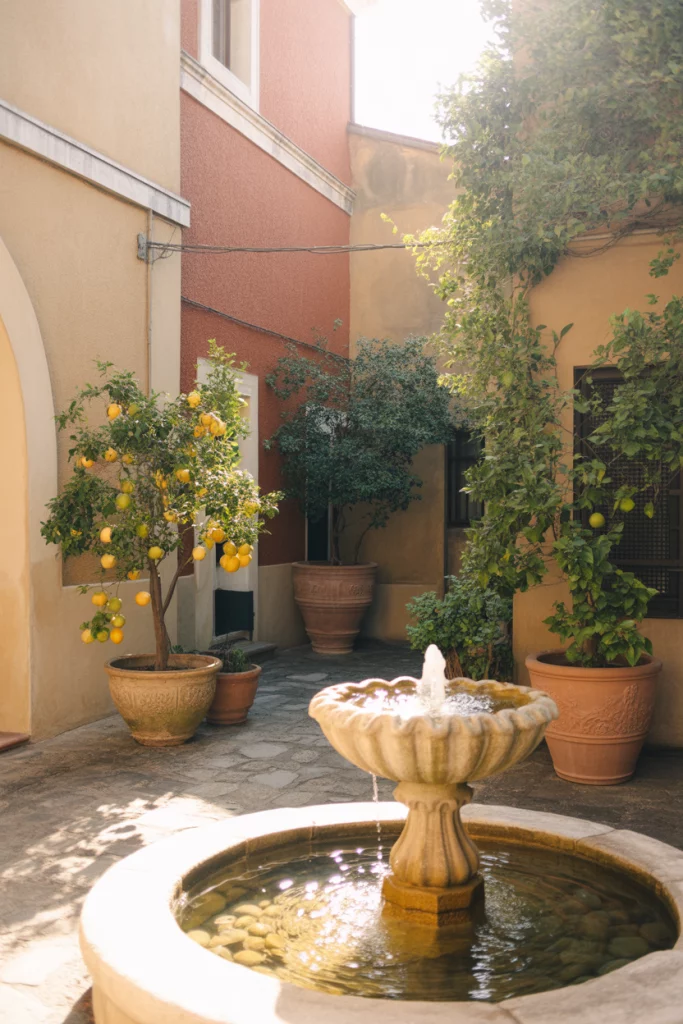
My neighbor in Phoenix installed a villa courtyard three years ago, and it’s become her favorite space for morning coffee and evening reading—completely transforming how she experiences her home. The key is choosing drought-tolerant plants that match the Mediterranean climate: lavender, rosemary, oleander, and citrus. In regions with harsh winters, adapt the concept using cold-hardy evergreens and hardy herbs. The courtyard’s walls create a microclimate several degrees warmer than open yards, extending outdoor season and protecting tender plants.
10. Tennis Court with Landscape Buffer
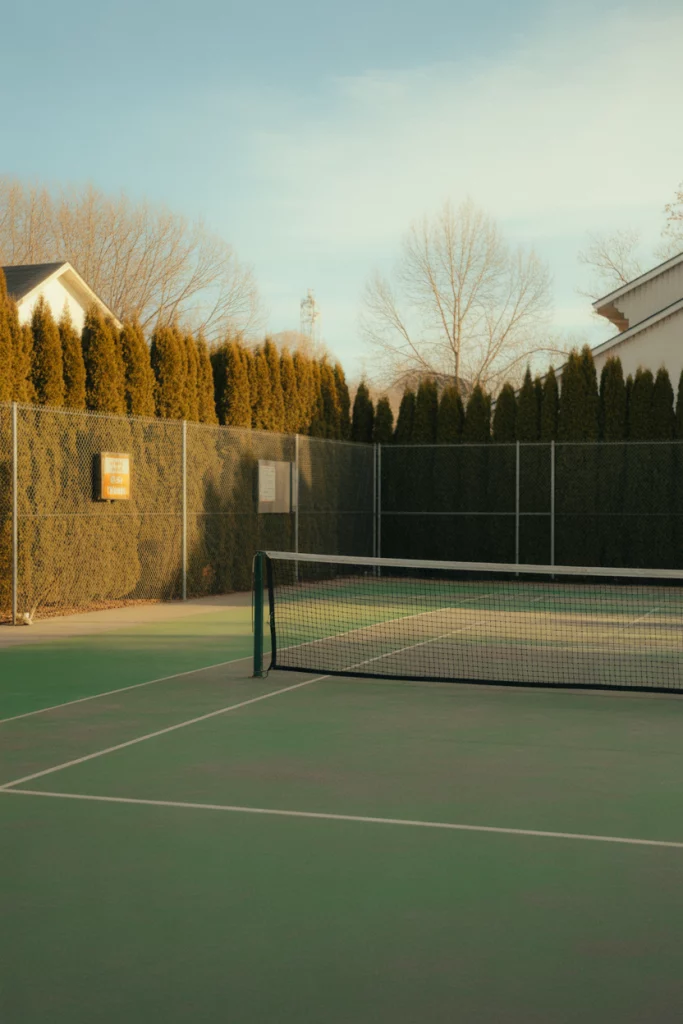
A backyard tennis court demands significant space—typically 60×120 feet including buffer zones—but transforms a 1 acre property into a private athletic retreat. The fence surrounding the court, usually 10–12 feet high, benefits from landscape screening using tall evergreens like arborvitae or bamboo that soften the industrial look. Color choices matter: many homeowners now choose clay-court terra cotta or forest green surfaces instead of traditional blue, creating better visual harmony with surrounding gardens. 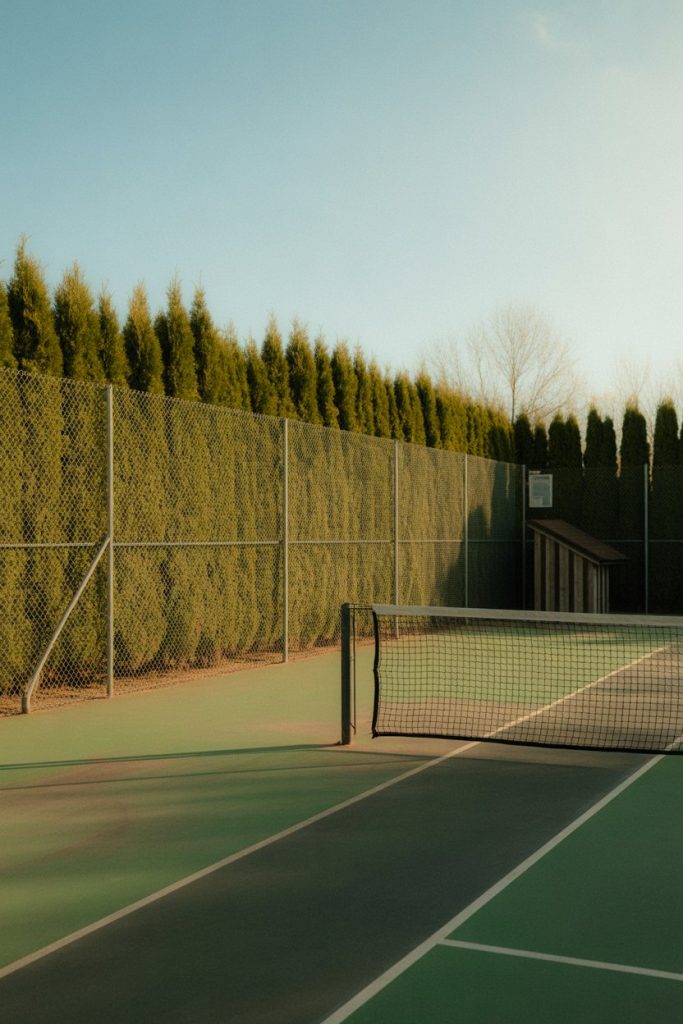
Installation costs run $30,000–$60,000 for post-tension concrete or asphalt bases with acrylic surfaces, with ongoing maintenance including periodic resurfacing every 5–8 years. Real homeowner behavior reveals that families with teens get tremendous use from courts, hosting neighborhood matches and developing serious skills. However, empty-nesters often regret the space allocation—consider future flexibility before committing 7,200 square feet to a single-purpose amenity. In suburban Atlanta, Dallas, and other tennis-loving regions, a court can boost property value, but it’s a niche feature that appeals to specific buyers.
11. Minimal Grass Modern Desert Landscape
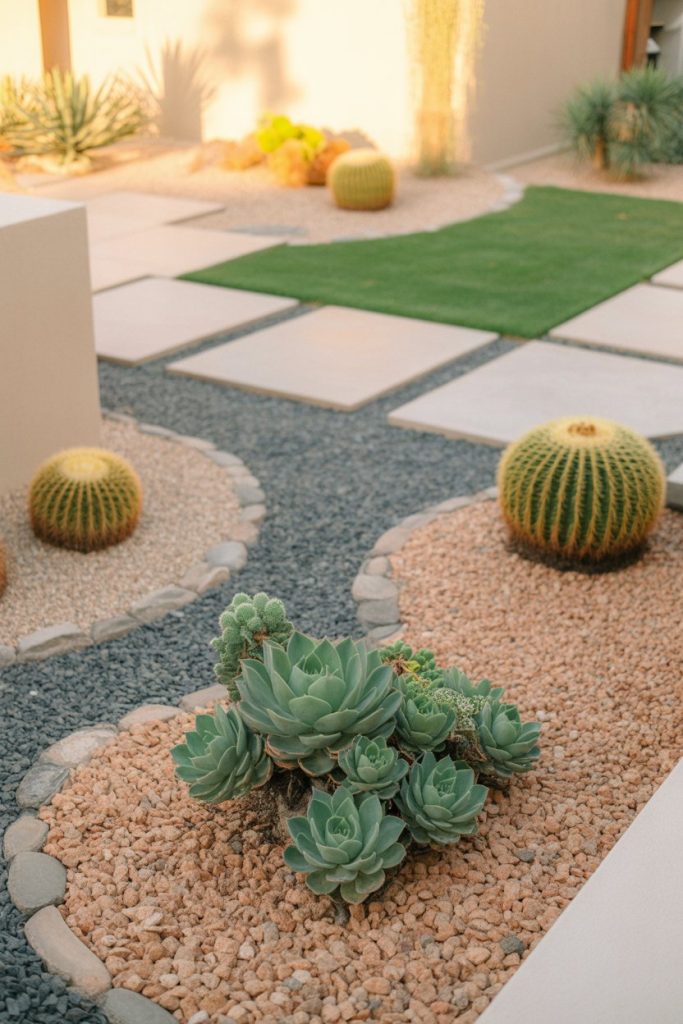
A minimal grass landscape embraces xeriscaping principles, replacing thirsty lawn with decomposed granite, river rock, and drought-tolerant plantings. This modern approach reflects growing water consciousness across the American West, where municipalities offer rebates for lawn removal. Bold architectural plants like agave, yucca, and ornamental grasses create sculptural interest, while swaths of colored gravel define different zones—dining, lounging, pathways—without requiring irrigation or mowing. 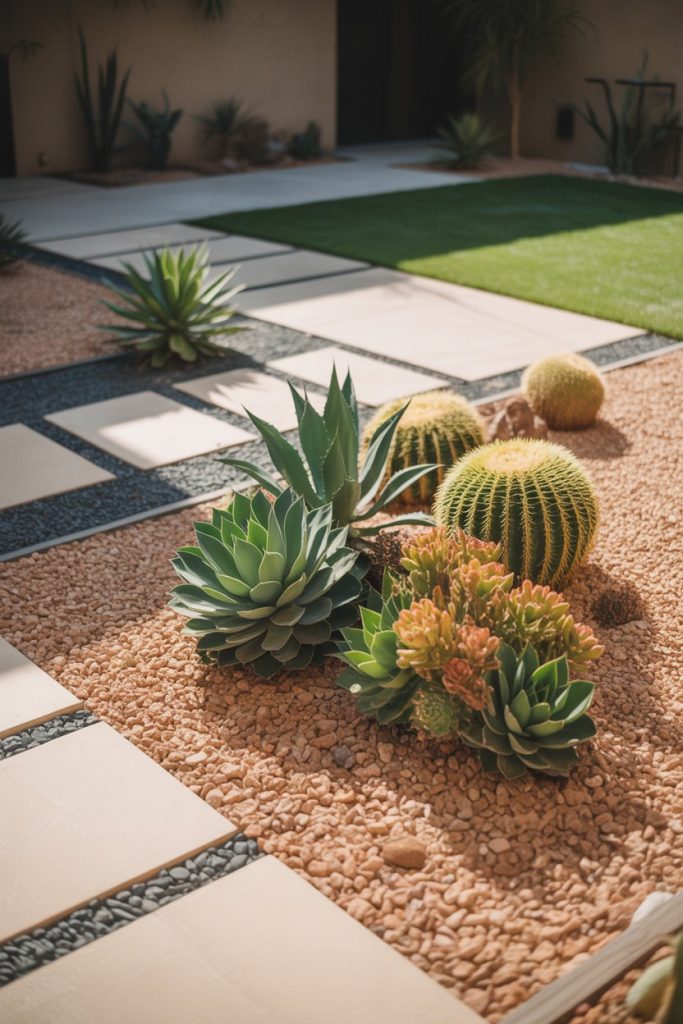
Expert commentary from landscape designers: the biggest transformation happens in maintenance time. Homeowners replacing 2,000 square feet of lawn with gravel and native plants reduce weekly yard work from 3–4 hours to under 30 minutes. The common mistake is using landscape fabric under gravel—it prevents healthy soil biology and eventually shows through as gravel shifts. Instead, apply 3–4 inches of gravel directly over leveled, weed-free soil, and plan for occasional hand-weeding. Water districts in California, Nevada, and Arizona offer rebates of $2–$3 per square foot of removed turf, often covering 50%+ of conversion costs.
12. Dream Garden Secret Pathway
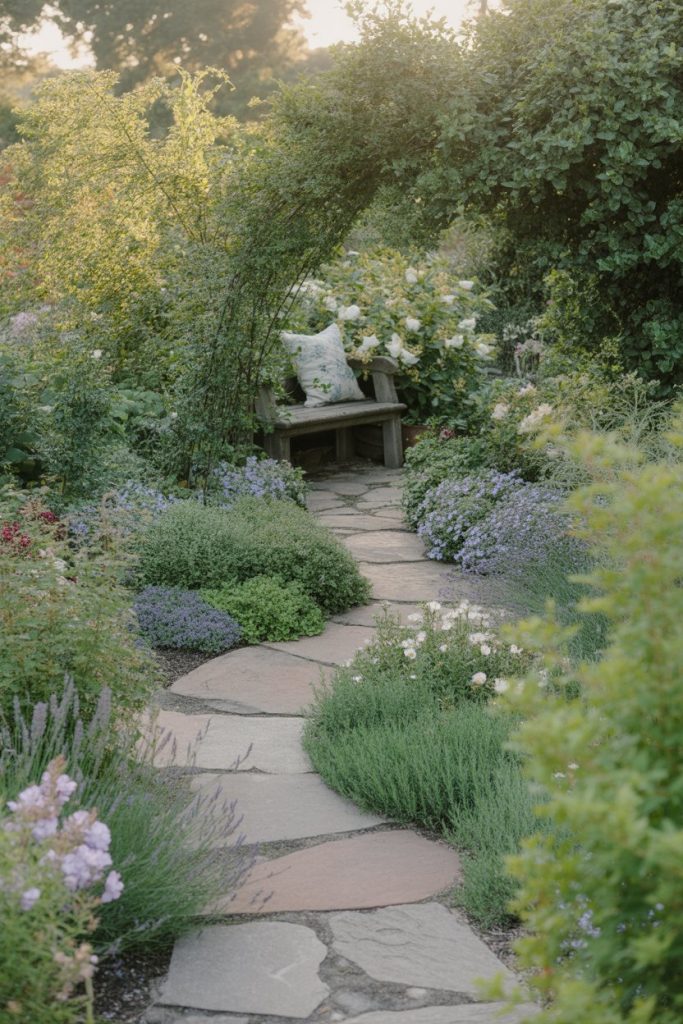
A dream garden secret pathway creates wonder and discovery, winding through layered plantings toward a hidden destination—a bench, sculpture, or small water feature. Stepping stones set in groundcover like creeping thyme or Irish moss invite exploration, while arching shrubs and perennial borders create the feeling of moving through garden rooms. This romantic layout turns even modest yards into journeys, encouraging slow movement and close observation of plants. 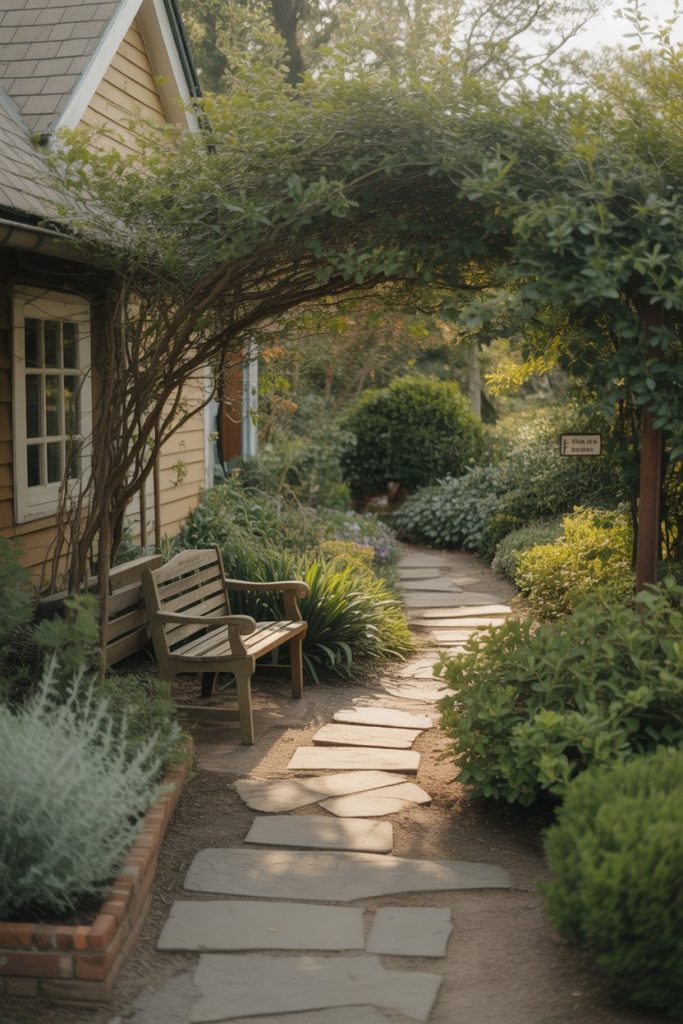
Where this works best: longer, narrower yards where the path can curve and disappear from view, creating anticipation. The psychological impact is remarkable—visitors and homeowners alike slow down, notice details, and feel transported from everyday stress. One designer I spoke with noted that secret pathways work beautifully in subdivisions where neighboring houses are close; the curved, enclosed route creates privacy and the illusion of much larger grounds. Maintenance stays manageable if you choose perennials suited to your zone and light conditions.
13. Simple Modern Concrete Patio with Built-In Planters
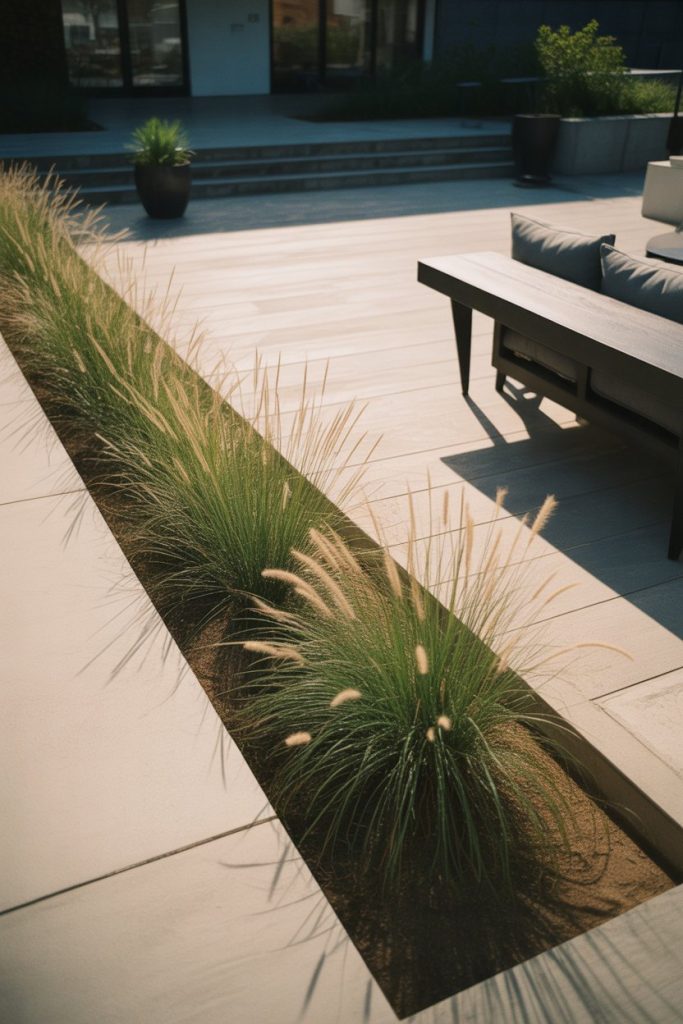
A simple modern concrete patio with integrated planters demonstrates how industrial materials create warm, livable spaces. Troweled concrete in warm gray tones forms the main surface, while rectangular cutouts filled with soil become built-in garden beds for ornamental grasses, lavender, or small shrubs. This minimalist approach reduces clutter—no scattered pots—while the concrete’s thermal mass absorbs daytime heat and radiates it during cool evenings, extending comfortable outdoor hours. 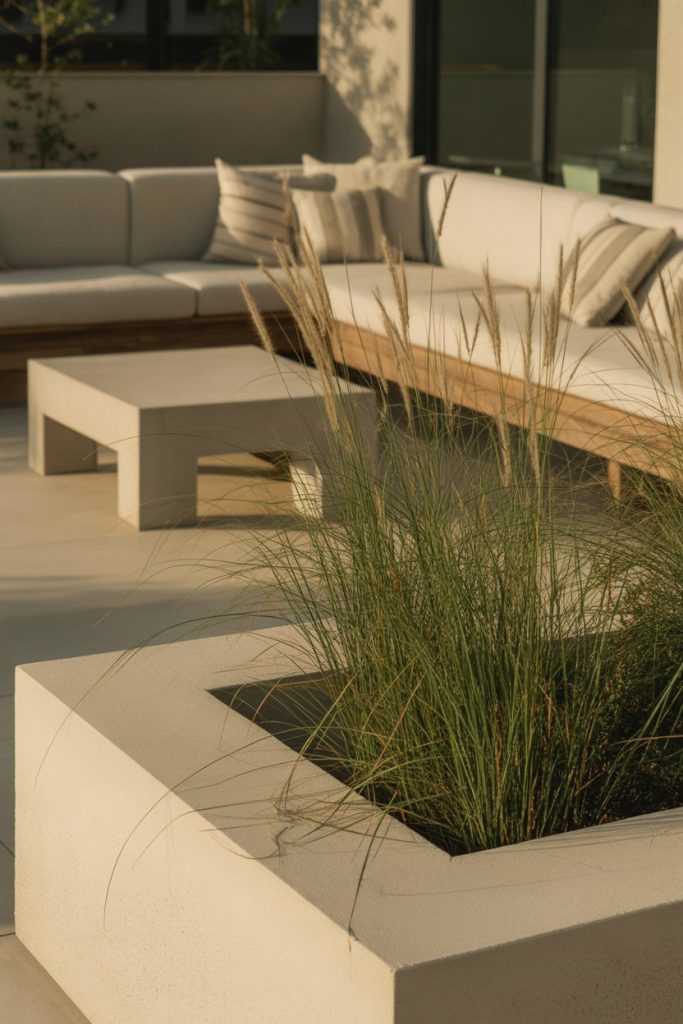
Practical insight from contractors: stamped or colored concrete adds $2–$4 per square foot to standard gray, while broom-finished concrete offers excellent slip resistance at no upcharge. Built-in planters save money compared to large decorative containers—concrete is poured monolithically, eliminating the need for expensive pots. The aesthetic works particularly well in urban and modern suburban settings where clean geometry complements contemporary architecture. One caution: ensure proper drainage holes in planter bases to prevent waterlogged roots during rainy seasons.
14. One-Acre Estate Landscape with Zoned Gardens
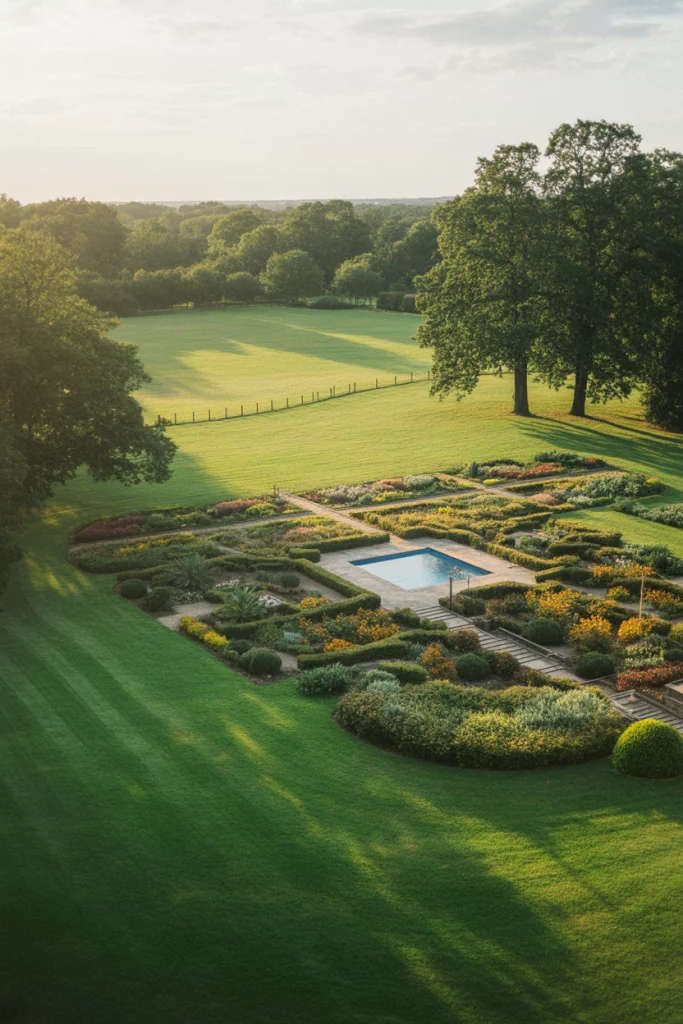
A full 1 acre property allows for distinct garden zones—entertaining patio near the house, vegetable garden mid-yard, naturalized meadow or orchard at the back edge. This layout plan creates functional separation while maintaining visual flow through repeated materials and plant palettes. The scale permits ambitious features like a pool, sport court, and extensive perennial borders without feeling crowded, while leaving room for future additions as family needs evolve. 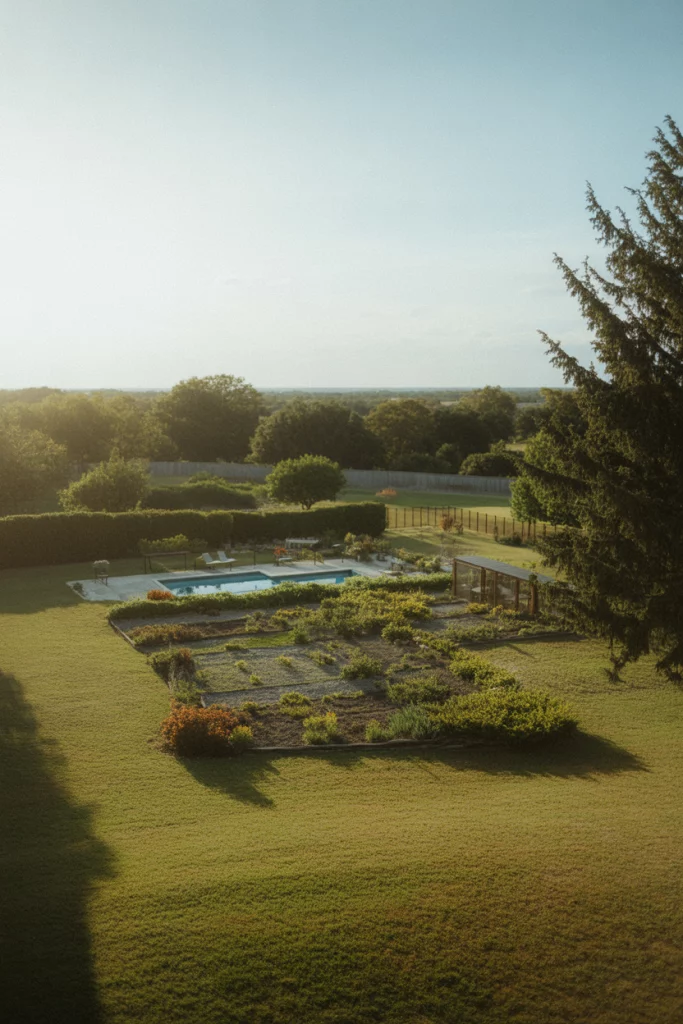
The common mistake on large properties is trying to landscape everything at once, leading to budget exhaustion and half-finished projects. Smart homeowners phase development over 3–5 years: year one focuses on hardscape and basic plantings near the house, year two adds the pool or major feature, year three completes outlying beds and trees. This approach spreads costs—typically $80,000–$150,000 total for comprehensive landscaping—and lets you learn how you actually use the space before committing to permanent features. Regional context matters: an acre in suburban Atlanta might include extensive lawn, while the same acreage in Phoenix would emphasize native desert plants with minimal turf.
15. Small Yard Vertical Garden Wall
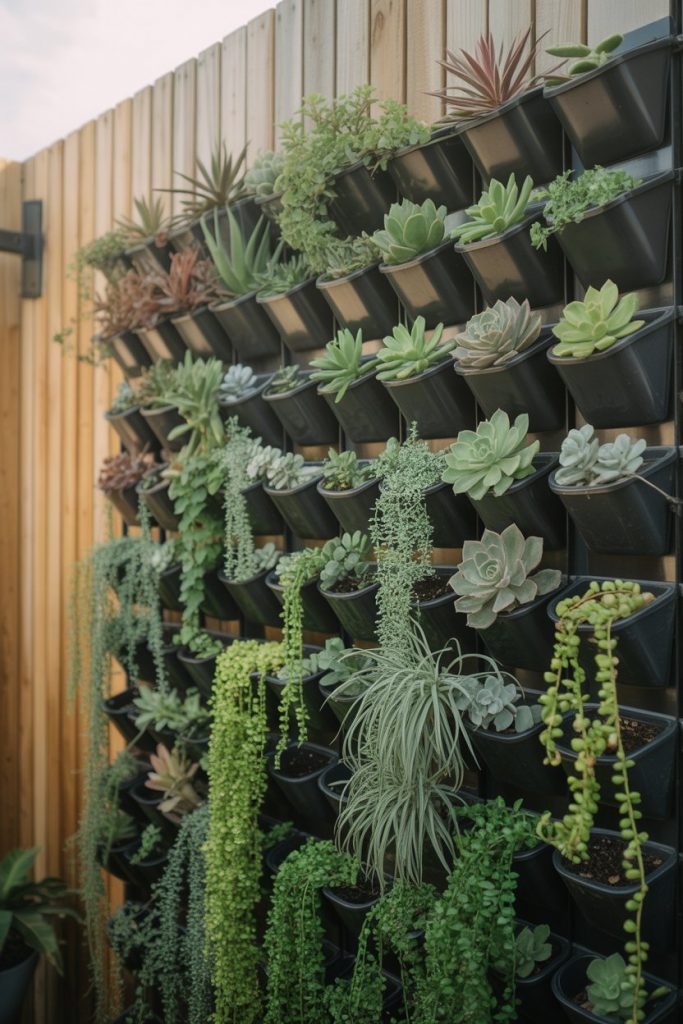
A vertical garden wall maximizes planting space in small yard settings where horizontal square footage is limited. Modular planting panels attach to fences or exterior walls, creating living tapestries of herbs, succulents, or ferns. This garden ideas for small spaces solution adds dramatic visual impact while keeping ground-level areas open for seating or pathways. Modern systems include built-in irrigation, making maintenance simpler than managing dozens of individual hanging baskets. 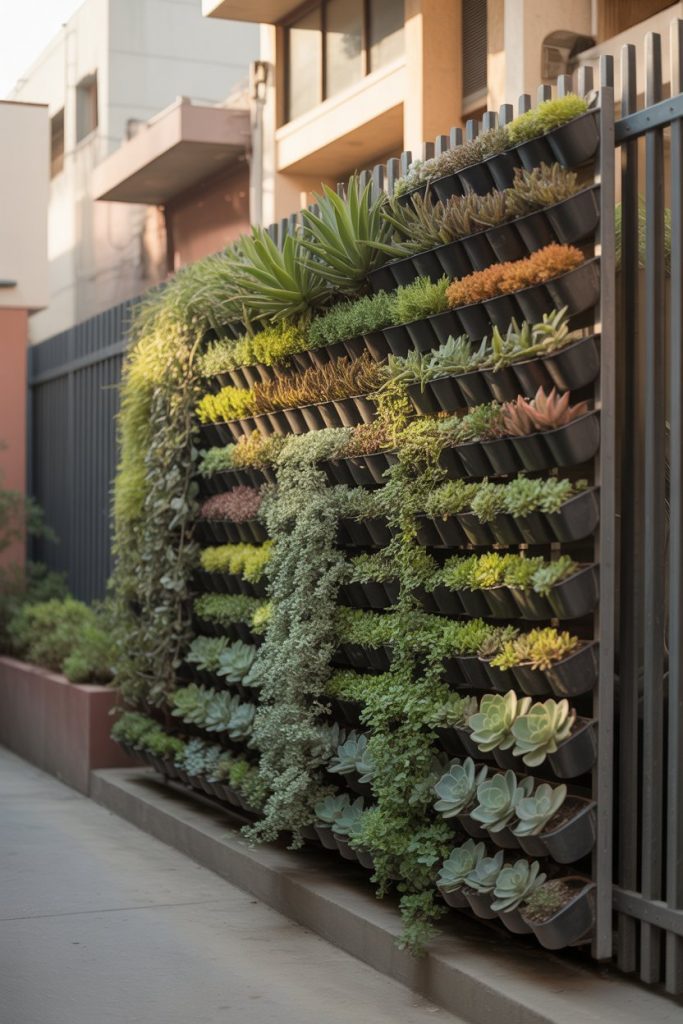
Installation costs range from $150–$400 for DIY modular systems to $3,000+ for professional installations with automated drip irrigation. The key mistake is choosing plants with incompatible water needs in the same panel—group succulents separately from ferns and leafy herbs. In dense urban areas like Brooklyn, San Francisco, and Seattle, vertical gardens transform narrow side yards and small concrete patios into green sanctuaries. Real homeowners report that herb walls positioned near kitchen doors get used constantly, adding fresh basil, oregano, and thyme to weeknight cooking.
16. Outdoor Living with Pool and Kitchen
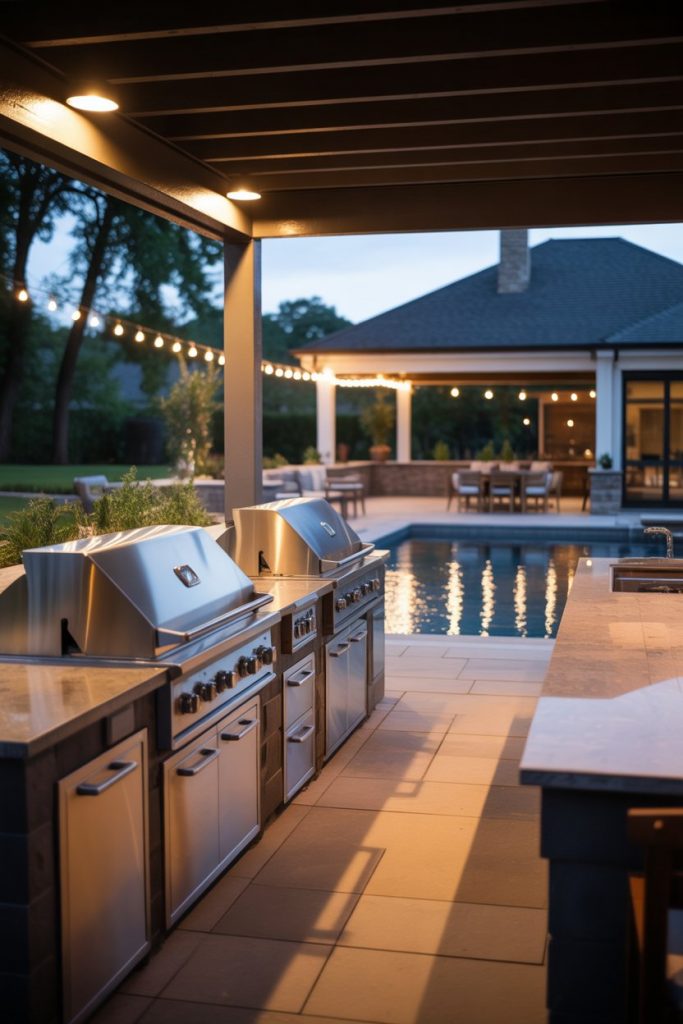
An outdoor living complex integrating pool, kitchen, and lounge areas creates resort-style functionality in residential settings. The layout positions the cooking zone upwind from seating to keep smoke away from guests, while the pool occupies a sunny exposure for warmth. This comprehensive approach requires significant investment—$100,000–$200,000+ for quality execution—but transforms backyards into true lifestyle centers where families spend summer days and evenings entirely outdoors. 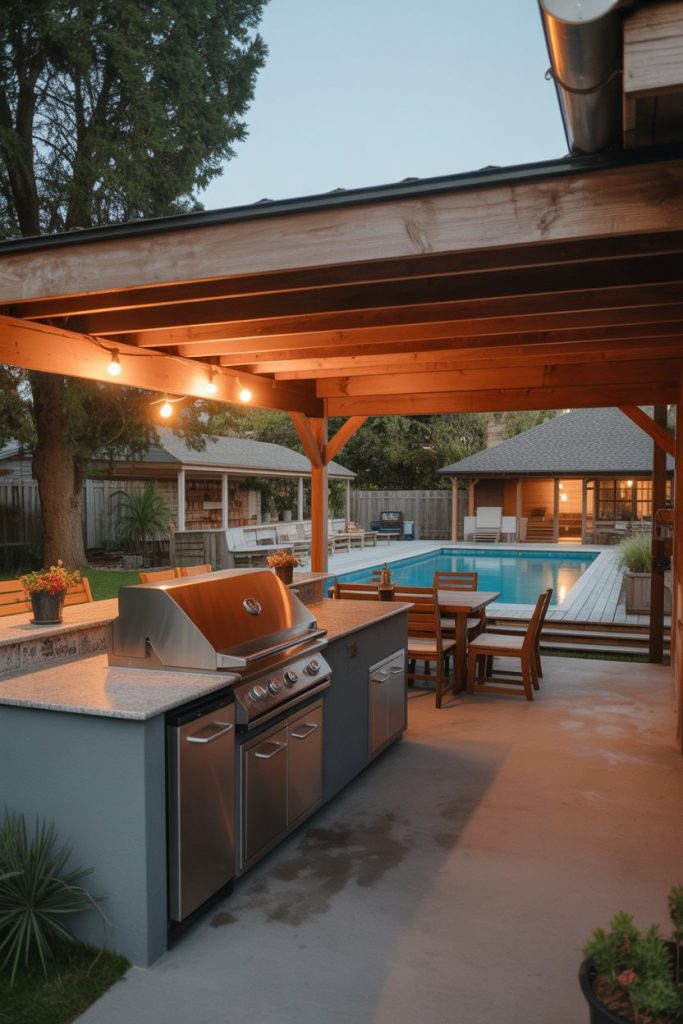
Where this works best: warm climates with extended outdoor seasons—Southern California, Arizona, Texas, Florida—where the investment gets year-round use. One practical consideration often overlooked: run electricity, gas, and water lines during initial pool installation to avoid costly trenching later. Homeowners who added kitchens as afterthoughts spent 30–40% more on utilities due to difficult access. The most successful layouts create distinct zones with subtle separations—a change in paving material, a low planter wall—so each area feels purposeful while maintaining open flow for parties and gatherings.
17. Low-Maintenance Gravel Garden with Perennials
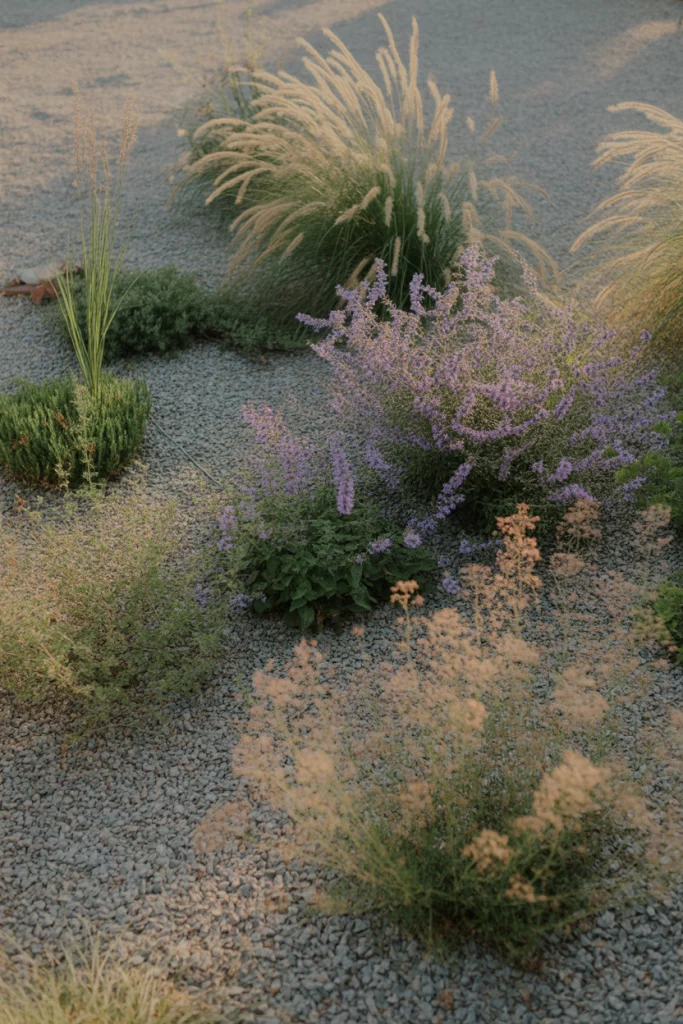
A low maintenance gravel garden combines coarse pea gravel with tough perennials like Russian sage, coneflower, and ornamental grasses, creating a naturalistic simple landscape that needs minimal intervention. This garden design mimics dry Mediterranean hillsides or prairie remnants, where plants are spaced generously and allowed to self-seed and spread naturally. The gravel mulch suppresses weeds, eliminates mowing, and provides excellent drainage that most perennials prefer. 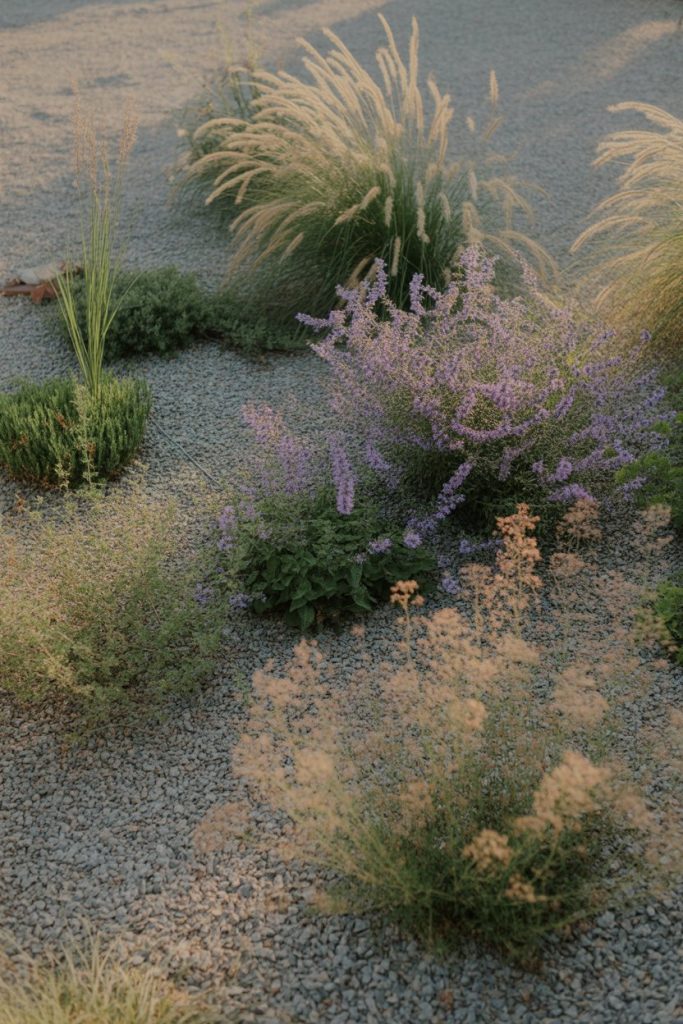
A couple in Colorado Springs installed this style three years ago and now spend less than two hours monthly on garden maintenance, compared to eight hours weekly with their previous lawn and annual beds. Expert designers recommend starting with 70% gravel coverage, allowing perennials to gradually colonize more space through natural reseeding. The common mistake is planting too densely—give each plant 18–24 inches of space for mature spread. This approach costs $4–$7 per square foot installed, significantly less than traditional landscaping, while delivering a timeless, effortless aesthetic that improves with age.
18. Modern Layout Plan with Geometric Zones
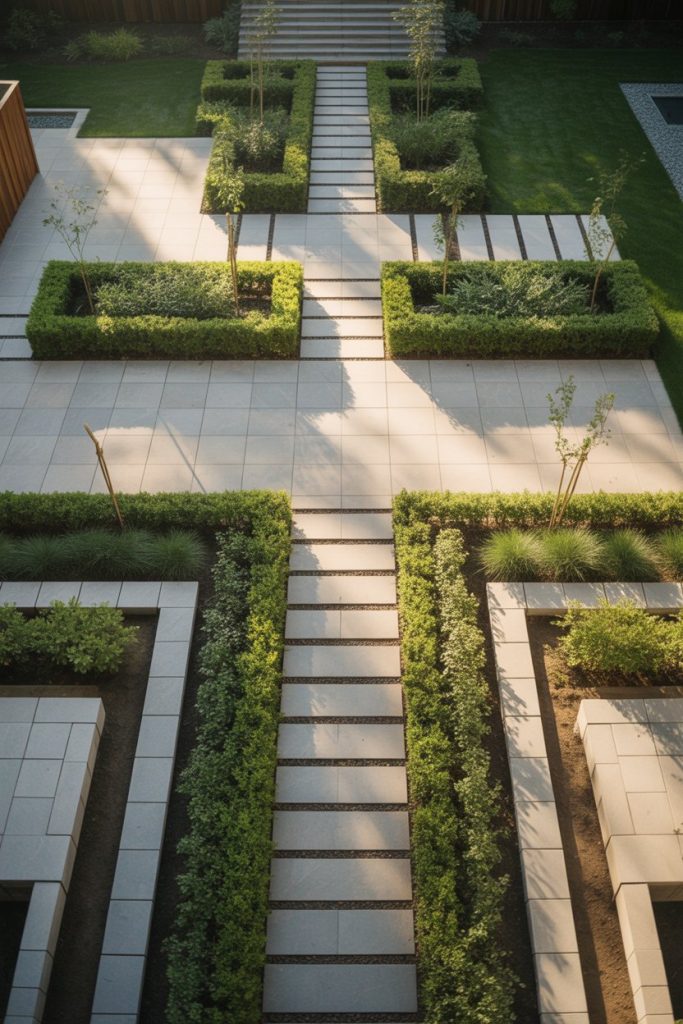
A modern layout plan uses geometric precision to organize backyard space into rectangular or circular zones connected by linear pathways. This architectural approach creates visual order and clearly defines purpose—dining terrace, fire pit lounge, kitchen garden—through repeated materials like concrete pavers, steel edging, and identical planting beds. The minimalist aesthetic relies on limited plant palette and crisp edges that emphasize form over ornament. 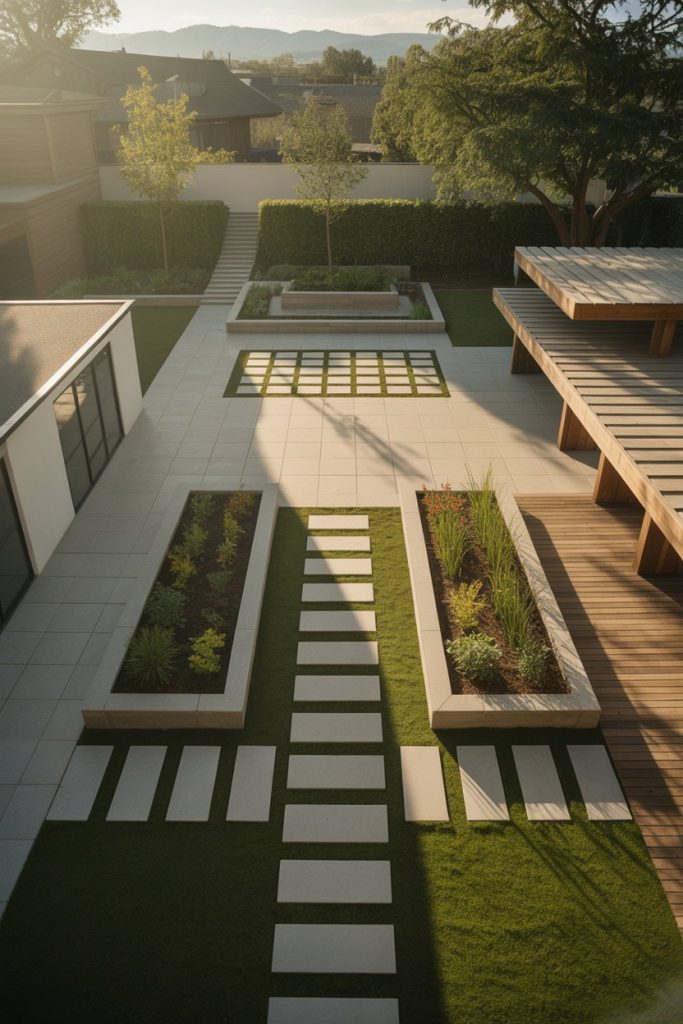
This design philosophy originated in mid-century California and remains popular in contemporary architecture today. The practical advantage is intuitive navigation—guests immediately understand how to move through and use the space. Budget-wise, geometric designs can actually save money because standardized shapes reduce custom cutting of pavers and edging materials. However, the rigid structure requires precise installation; even small alignment errors become obvious, so professional installation is recommended for the main hardscape elements while homeowners can handle planting and finishing touches themselves.
19. DIY Fence Upgrade with Horizontal Slats
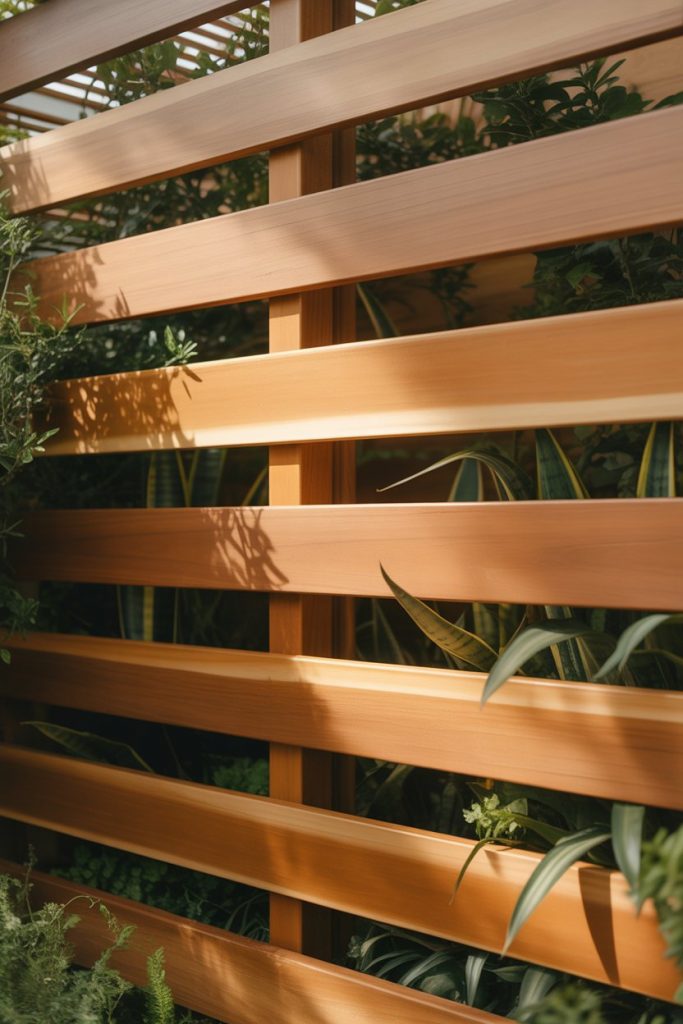
A DIY horizontal slat fence transforms basic yard perimeters into modern architectural statements using standard lumber and basic carpentry skills. The horizontal orientation creates visual width—making small yards feel more spacious—while 1–2 inch gaps between boards provide airflow and filtered views. This simple project typically costs $25–$35 per linear foot for materials, compared to $50–$80+ for professional installation of similar styles. 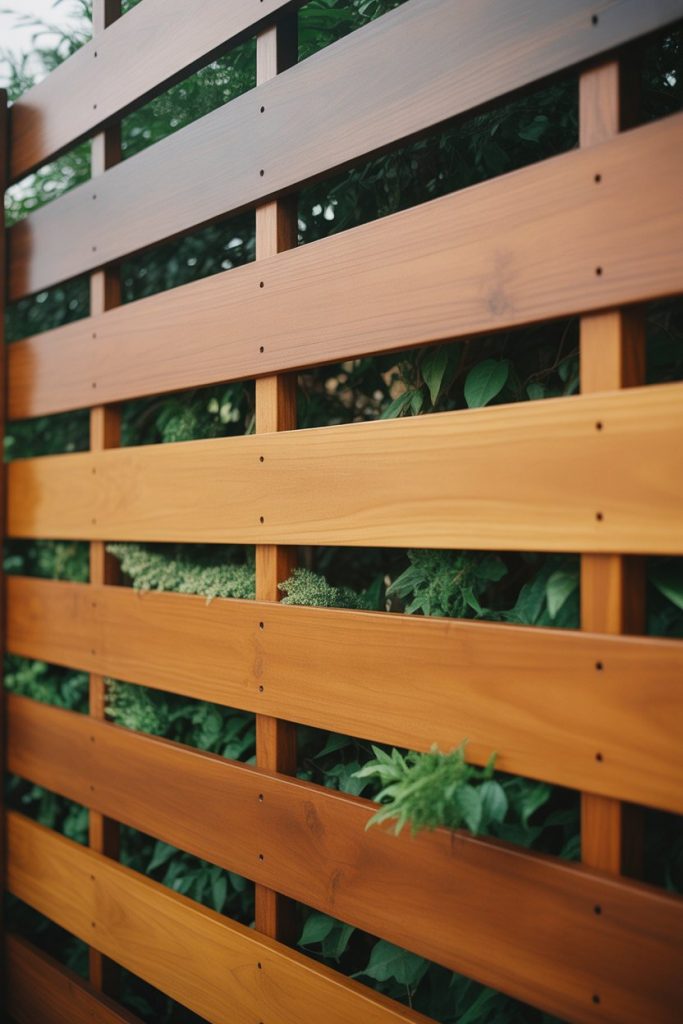
Real homeowners often tackle fence upgrades as weekend projects, completing 100 linear feet over two or three Saturdays. The common mistake is using untreated lumber in ground contact—always choose pressure-treated posts and consider cedar or composite boards for the horizontal slats to avoid rapid decay. In suburban neighborhoods, fences set the tone for your entire landscape; a fresh, well-built fence instantly elevates property appearance and provides the backdrop for garden beds and seating areas. Check local codes for height restrictions—most areas allow 6 feet in backyards without permits, though corner lots may have additional sight-line requirements.
20. Ideas Pool with Beach Entry and Boulder Accents
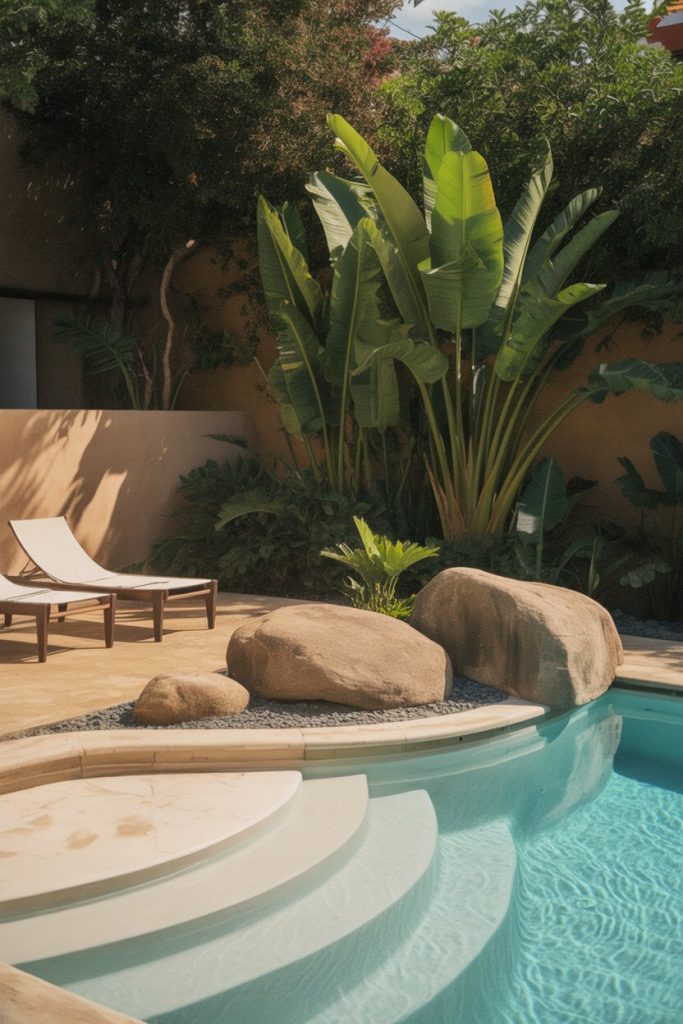
A pool with beach entry features a gradual slope into shallow water, mimicking natural shorelines and providing safe, accessible entry for all ages and abilities. Boulders positioned at the entry’s edges create organic, resort-style aesthetics while providing structural support and hiding pool mechanics. This ideas transforms standard rectangular pools into naturalistic water features that blend seamlessly with surrounding garden design elements like ornamental grasses and flowering perennials. 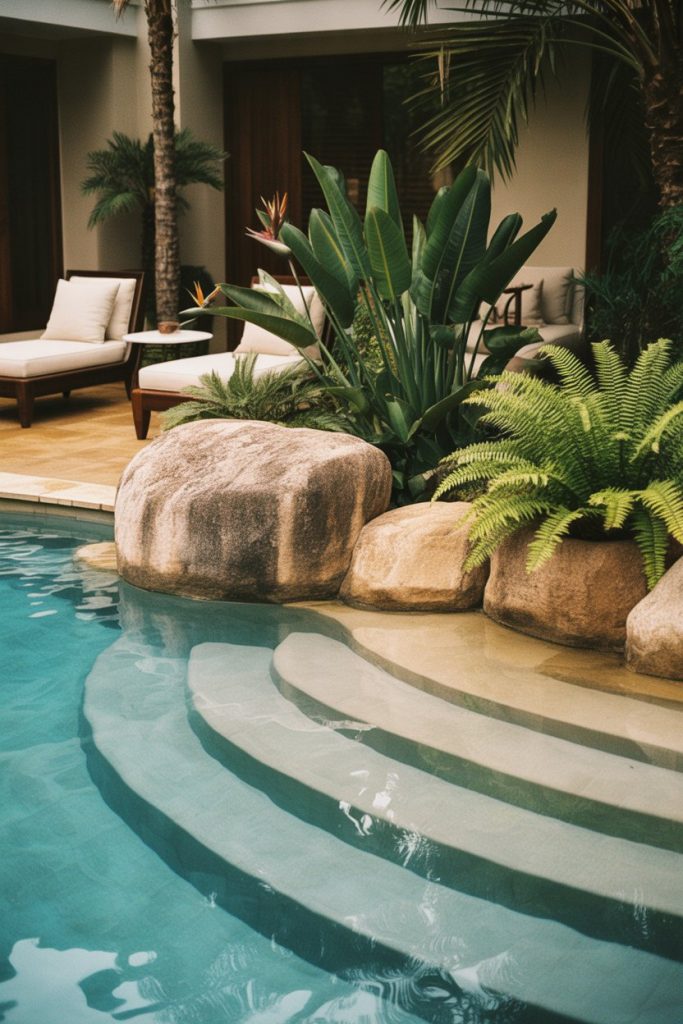
Beach entries add roughly $8,000–$15,000 to pool construction but dramatically expand usability—toddlers wade safely, seniors enter without ladder struggles, and the shallow area becomes a social hub for games and conversation. Regional context shows these features particularly popular in family-oriented suburbs across Texas, Florida, and the Carolinas. One practical insight: the sloped entry consumes pool volume, so plan for slightly larger overall dimensions to maintain adequate deep-end swimming space. Boulders should be locally sourced when possible; shipping massive stones across the country adds thousands to costs with minimal aesthetic benefit over regional stone types.
21. Garden Design Layout Modern Raised Deck
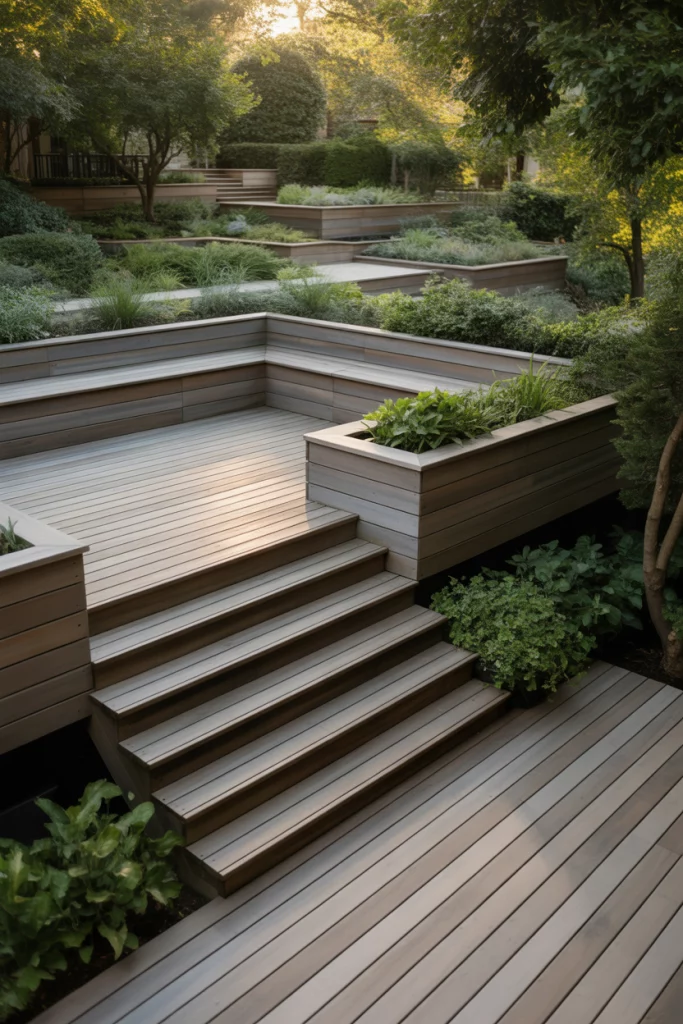
A garden design layout incorporating a modern raised deck creates distinct elevation changes that add architectural interest and define separate activity zones. The elevated platform—often 18–30 inches above grade—provides a commanding view of the yard while creating storage or planting space underneath. This layout plan works particularly well on sloped lots where the deck can nestle into the hillside, reducing excavation costs while maximizing usable flat space. 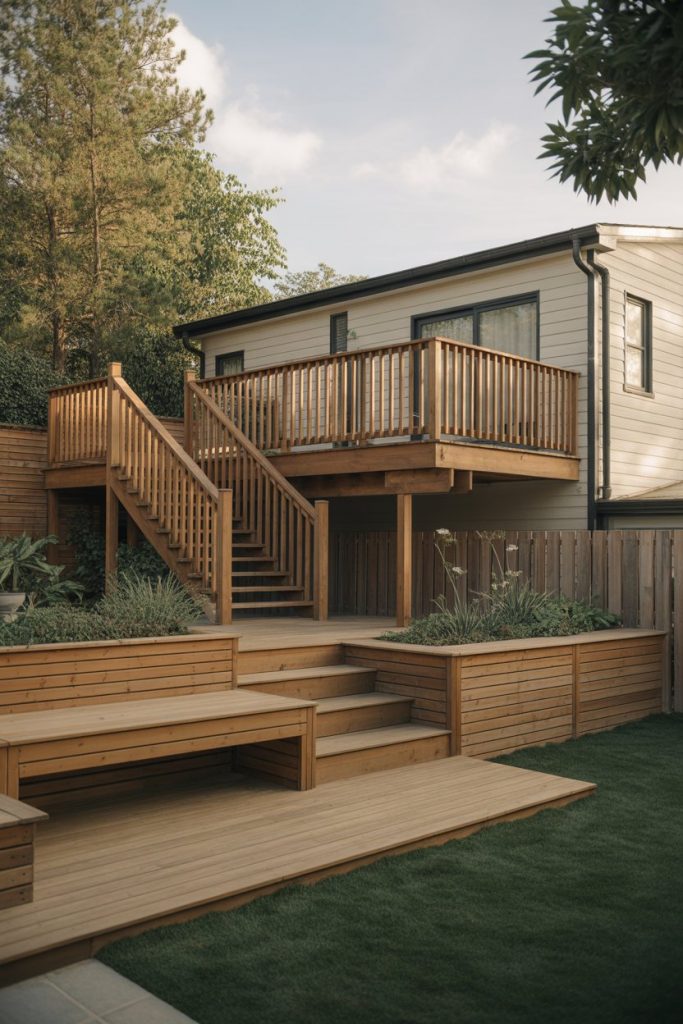
Where it works best: properties with natural slopes or where raising the deck to match a second-story door creates seamless indoor-outdoor flow. Material choices impact budget and maintenance—pressure-treated lumber costs $30–$45 per square foot installed, while composite decking runs $45–$65 but requires no staining or sealing. The space beneath raised decks often becomes wasted storage for lawn equipment and debris; smart homeowners screen this area with lattice and use it for shade-loving plantings like hostas and ferns, effectively doubling the landscape’s visual impact. Building codes require railings on decks over 30 inches high, so factor this into design planning and budgets.
Conclusion
These twenty-one landscaping ideas offer starting points for your 2026 backyard transformation, whether you’re working with a compact urban lot or an expansive estate property. Mix elements that match your lifestyle, climate, and budget to create outdoor spaces that feel uniquely yours. What’s your favorite trend from this collection, and which ideas are you considering for your own backyard? Share your thoughts and plans in the comments below—we’d love to hear how you’re reimagining your outdoor living spaces.