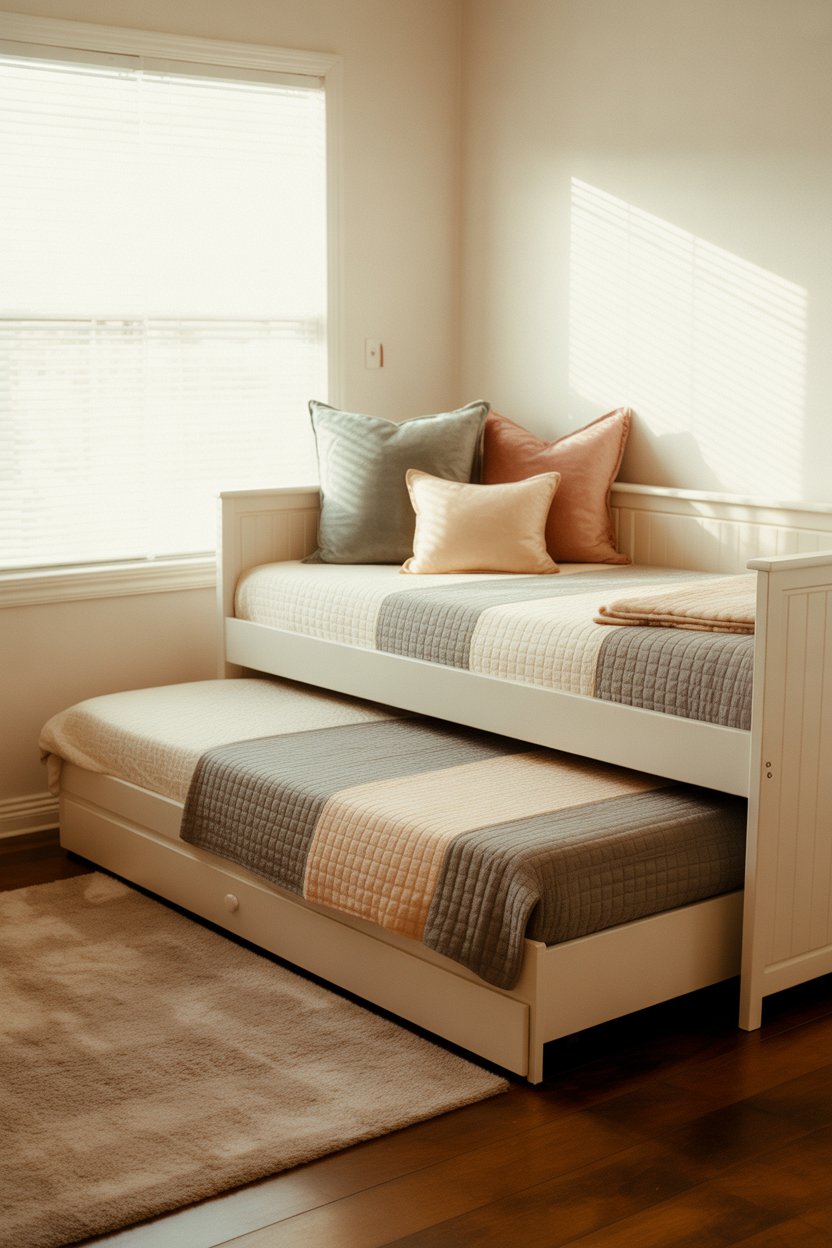
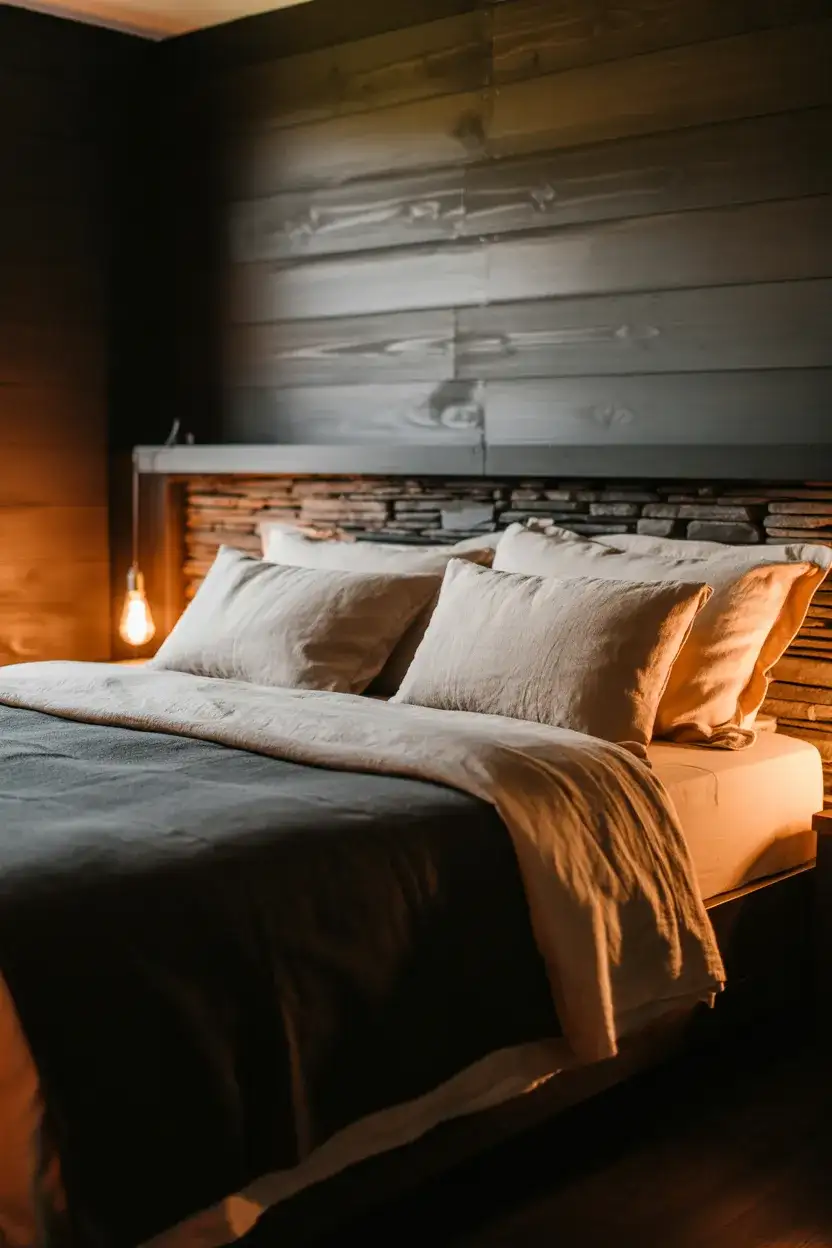
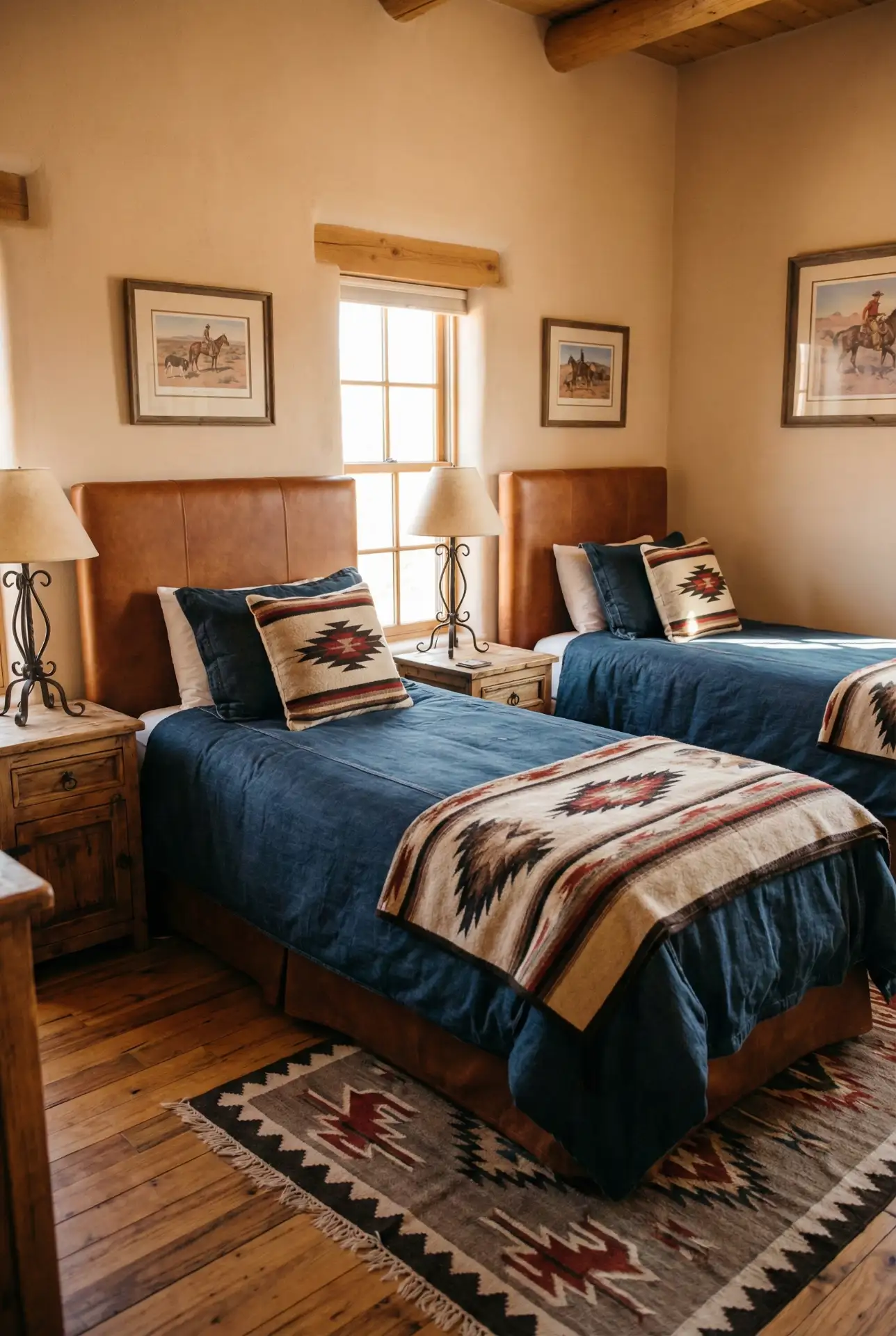
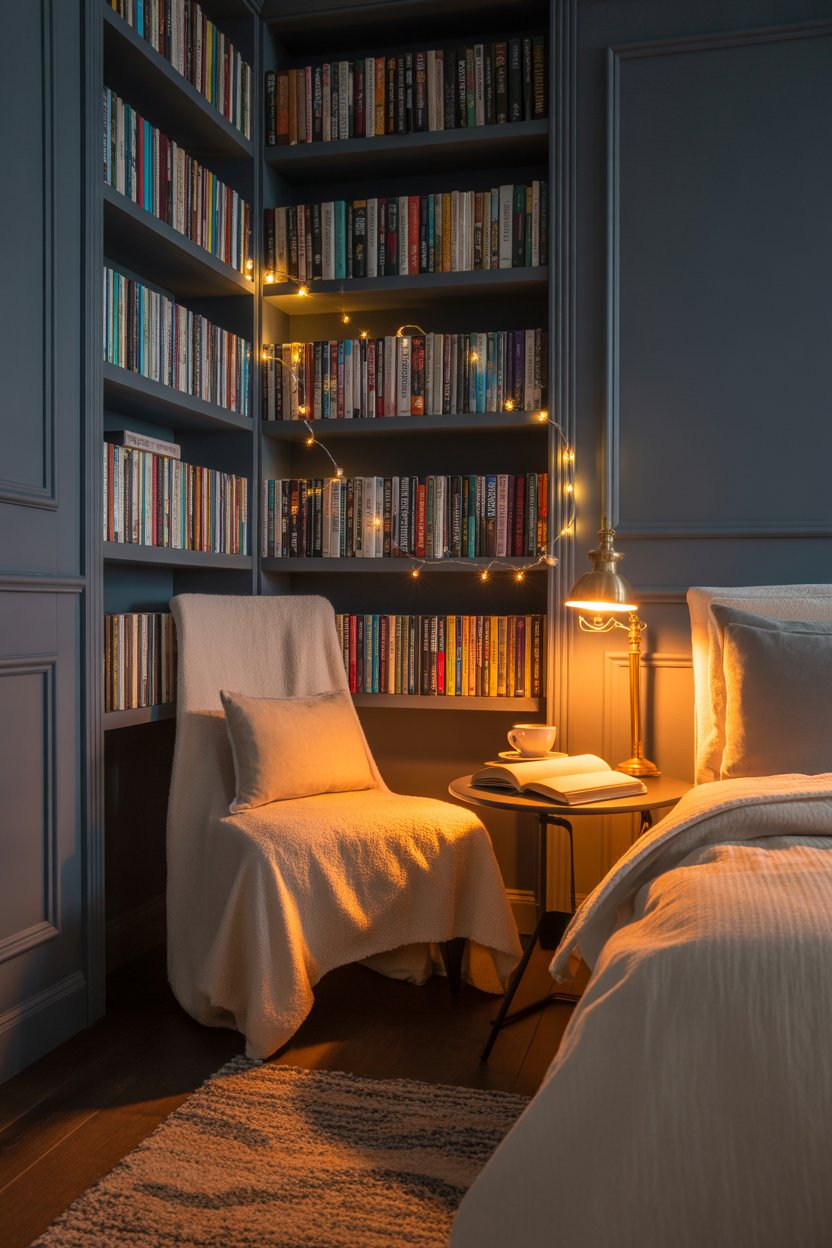
Attic bedrooms are having a major moment in 2025, and Pinterest boards are overflowing with creative ways to transform these often-overlooked spaces into stunning retreats. Whether you’re dealing with sloped ceilings, tight dimensions, or awkward angles, the right design approach can turn architectural quirks into standout features. American homeowners are increasingly drawn to attic conversions as a way to add functional square footage without the cost of a full addition. In this guide, you’ll discover fresh ideas that embrace everything from cozy nooks to airy master suites, proving that attic bedrooms can be just as stylish and comfortable as any other room in the house.
1. Embrace the Slanted Ceiling as a Design Feature

Instead of fighting against slanted ceilings, let them define the room’s character. Paint them in a contrasting color or use wood paneling to draw the eye upward and create visual interest. This approach works especially well in attic bedroom ideas master suites where you want a sophisticated, intentional look. The angles add architectural drama that flat ceilings simply can’t match, and when you lean into them rather than hide them, the space feels purposefully designed rather than compromised. 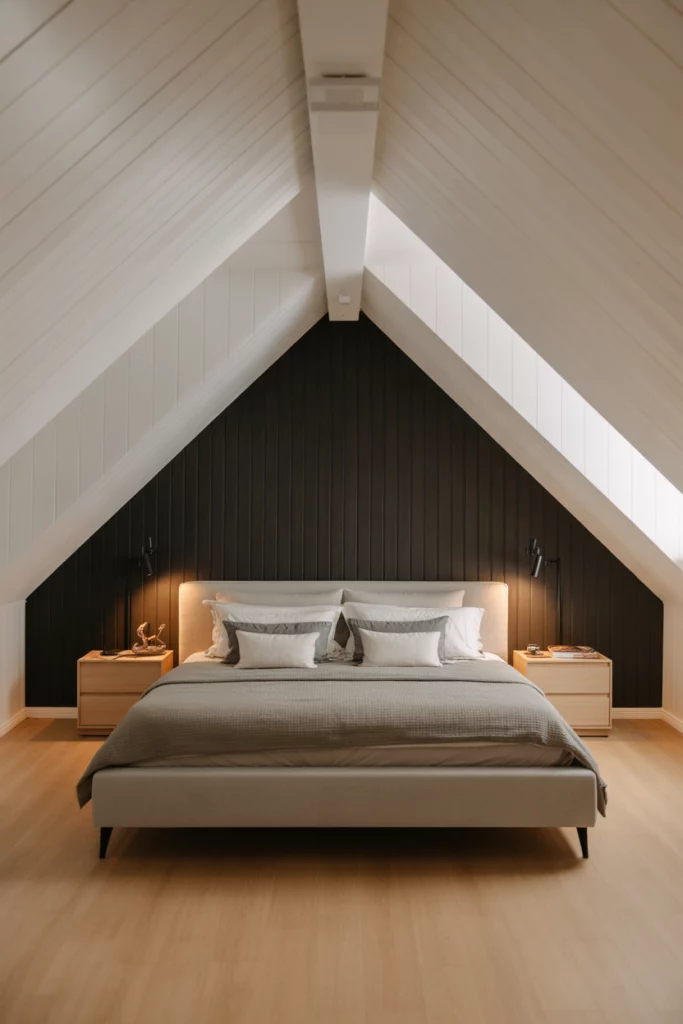
The key is choosing a bed placement that respects the ceiling height—nobody wants to bump their head getting up in the morning. Position your bed where the ceiling is tallest, or tuck it under the eaves if you prefer a cozier sleeping nook. Add recessed lighting along the slope to eliminate dark corners and make the room feel larger. This strategy turns what could be a challenge into the room’s most memorable feature.
2. Create a Cozy Reading Nook Under the Eaves
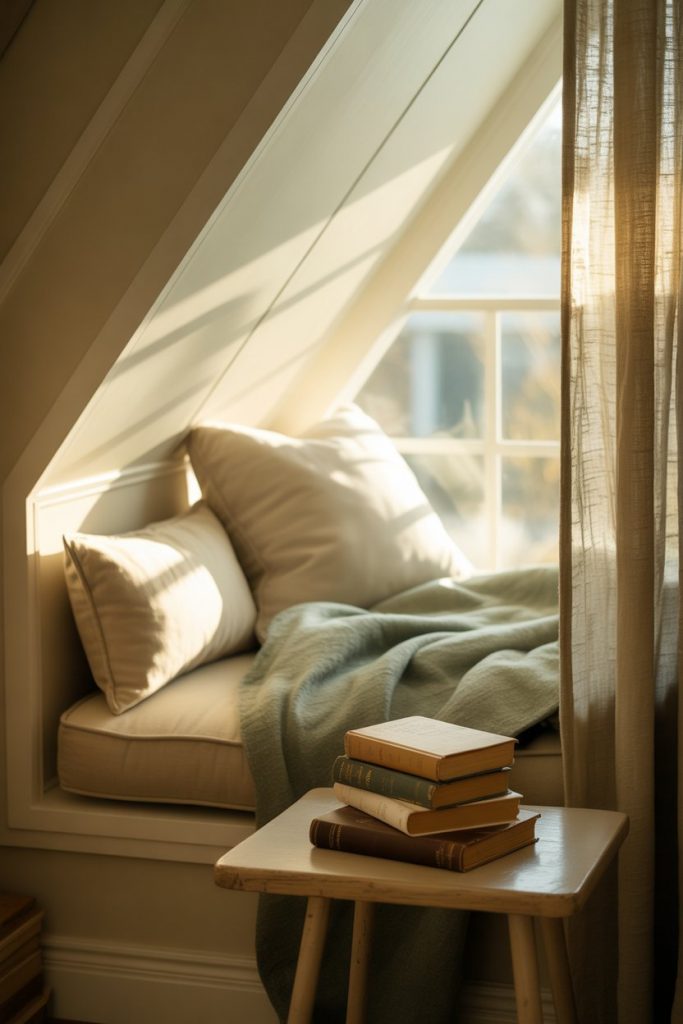
The low ceiling areas that feel awkward for standing become perfect for sitting. Build in a window seat or place a floor cushion where the roofline dips lowest, and you’ve got an instant retreat within a retreat. This works beautifully in cozy attic bedrooms where maximizing every square foot matters, and it gives you a designated spot that feels separate from the sleeping area without requiring walls. 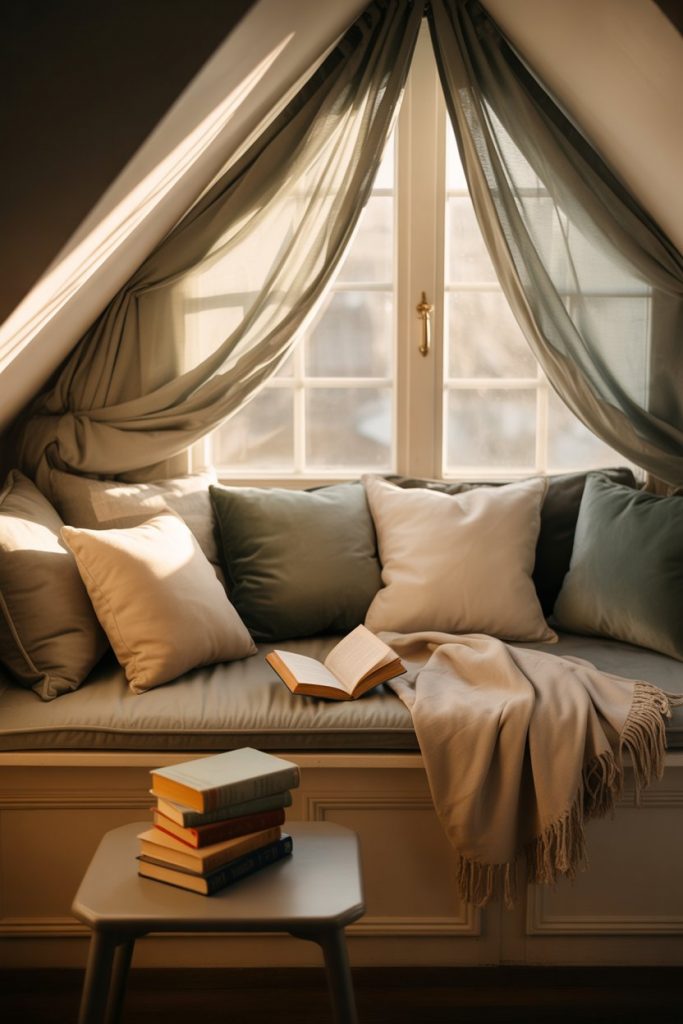
In the Midwest and Northeast, where winter afternoons beg for a warm corner with a book, this setup becomes the most-used spot in the house. Layer in soft textures—a chunky knit throw, velvet pillows, a small reading lamp—and you’ve created something that feels like a secret hideaway. It’s one of those design moves that looks intentional in photos but also genuinely improves how you live in the space daily.
3. Go Bold with Angled Ceiling Paint Colors
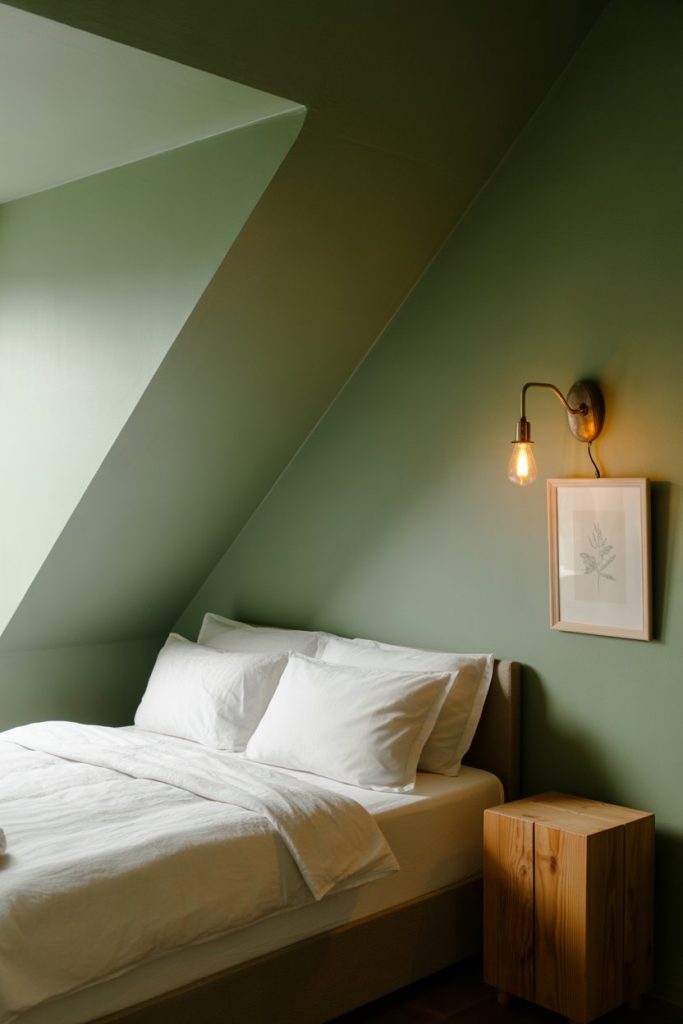
Don’t default to white just because the ceiling slopes. Angled ceilings paint colors in deep blues, warm terracotta, or even charcoal can make the room feel wrapped and intimate rather than choppy. When you paint the ceiling the same color as the walls, you eliminate the visual breaks that make low spaces feel smaller, and instead create a cohesive envelope that actually feels more spacious. 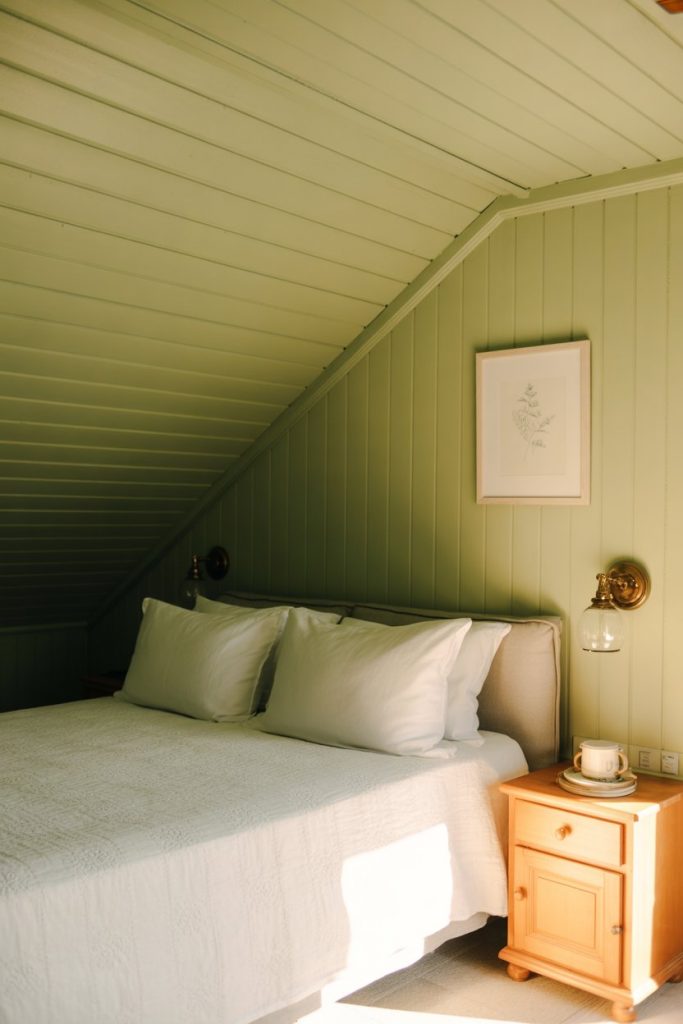
Where this works best: rooms with good natural light that can handle darker colors without feeling cave-like. If your attic has multiple dormers or skylights, you have the luxury of going dramatic. A common mistake is painting only the flat ceiling portions while leaving the slopes white—this chops up the space visually. Commit to the color across all ceiling planes for a polished, professional result.
4. Install Skylights for Natural Light and Height
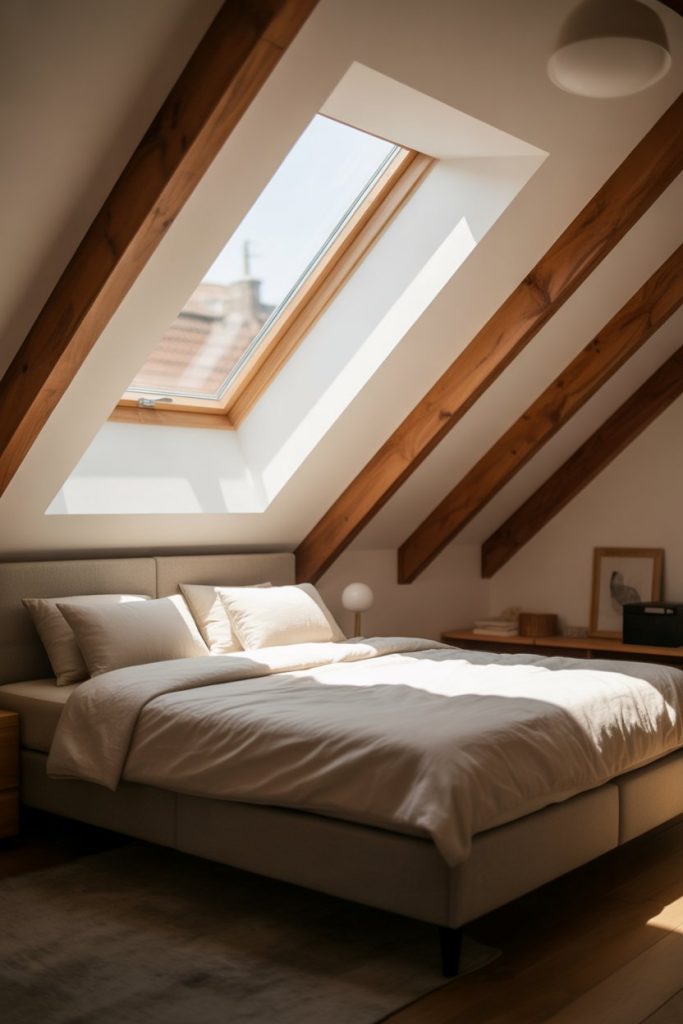
Nothing transforms an attic bedroom faster than cutting in a skylight or two. They bring in light from above without sacrificing wall space, and they make angled ceilings feel like an advantage rather than a limitation. For master bedrooms, consider operable skylights that provide ventilation during warm months—attics can get stuffy, and fresh air makes a huge difference in comfort. 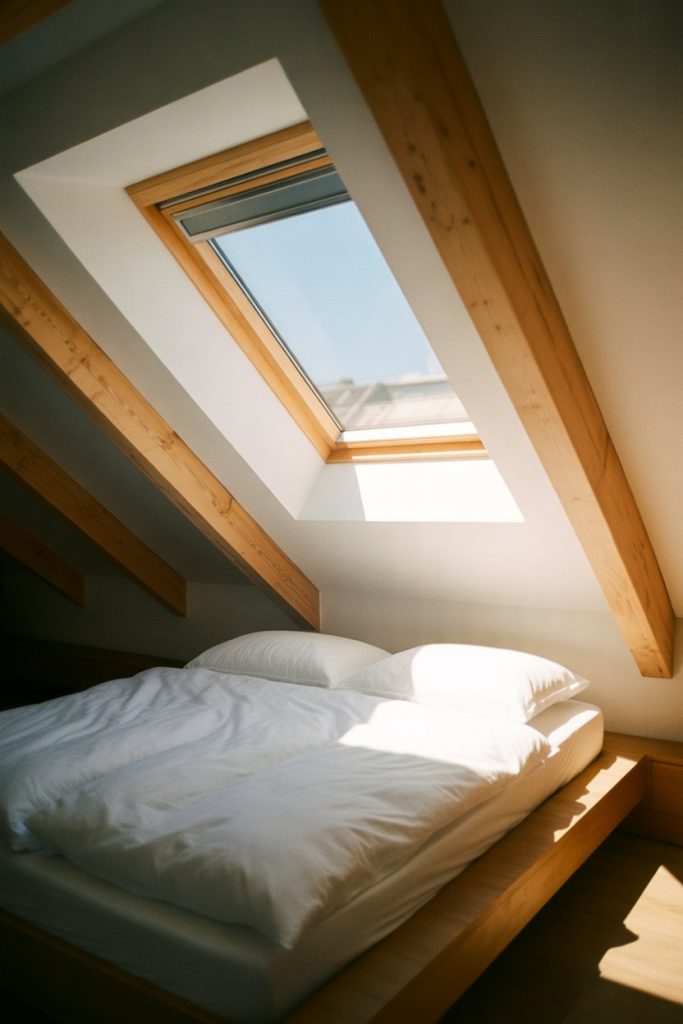
Installation typically runs $1,500 to $3,000 per skylight including labor, but the return on investment shows up immediately in how the room feels and functions. You’ll use less artificial light during the day, and the connection to the sky makes even compact attics feel airy. If budget is tight, prioritize one larger skylight over multiple small ones—the impact is greater and the cost per square foot of light is better.
5. Design a Playful Kids Attic Retreat
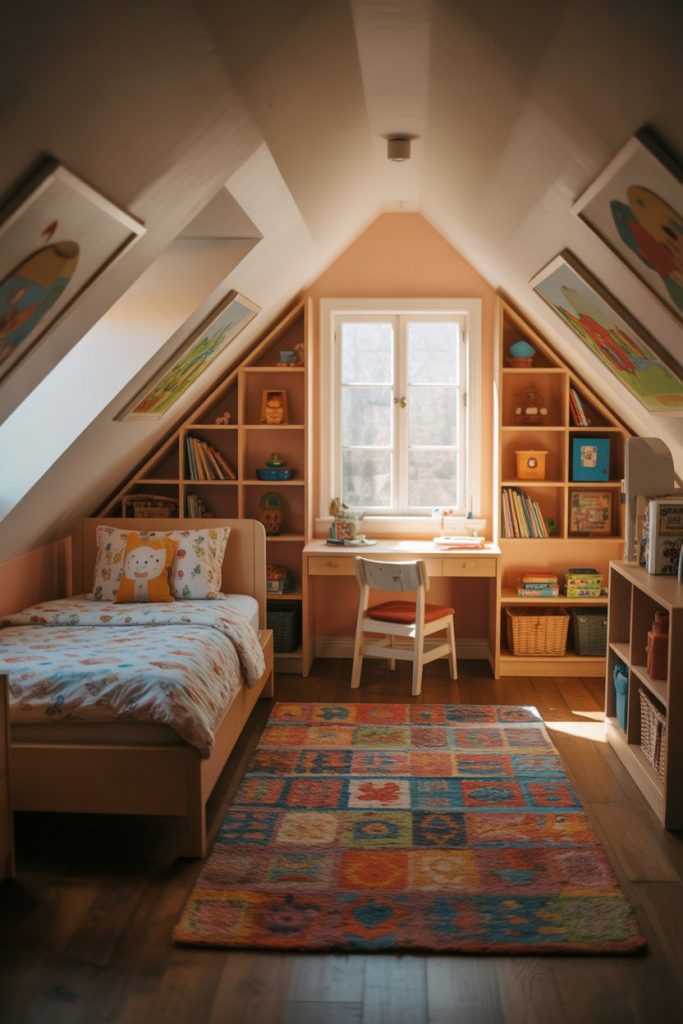
Kids love the adventure of an attic bedroom, and the quirky proportions that adults find challenging become part of the fun. Use the slanted ceiling interior design to create zones: a low area for floor play, a taller section for the bed, built-in cubbies under the eaves for storage. The space naturally encourages imagination—it feels like a treehouse or secret fort without any additional effort. 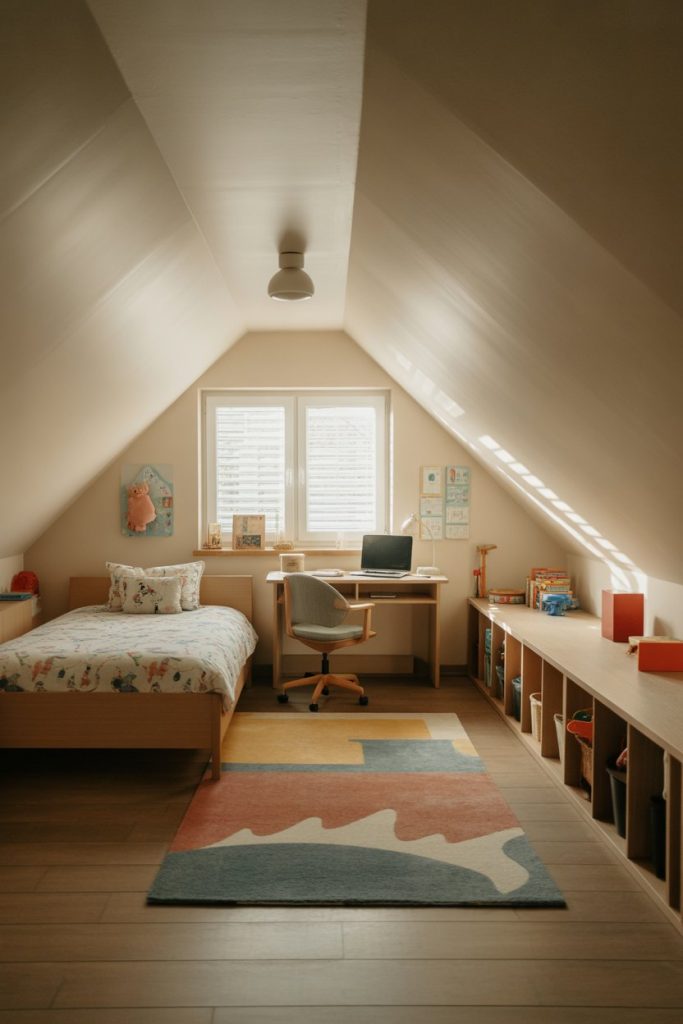
Parents often worry about safety with sloped ceilings, but the reality is that kids adapt quickly and learn the contours of their space faster than adults do. Add soft corner guards if you’re concerned, and choose low-profile furniture that fits comfortably under the angles. One family in Portland told me their daughter specifically requested the attic room over a larger traditional bedroom because it felt “more special”—that sense of uniqueness is real value.
6. Maximize Storage with Built-In Solutions
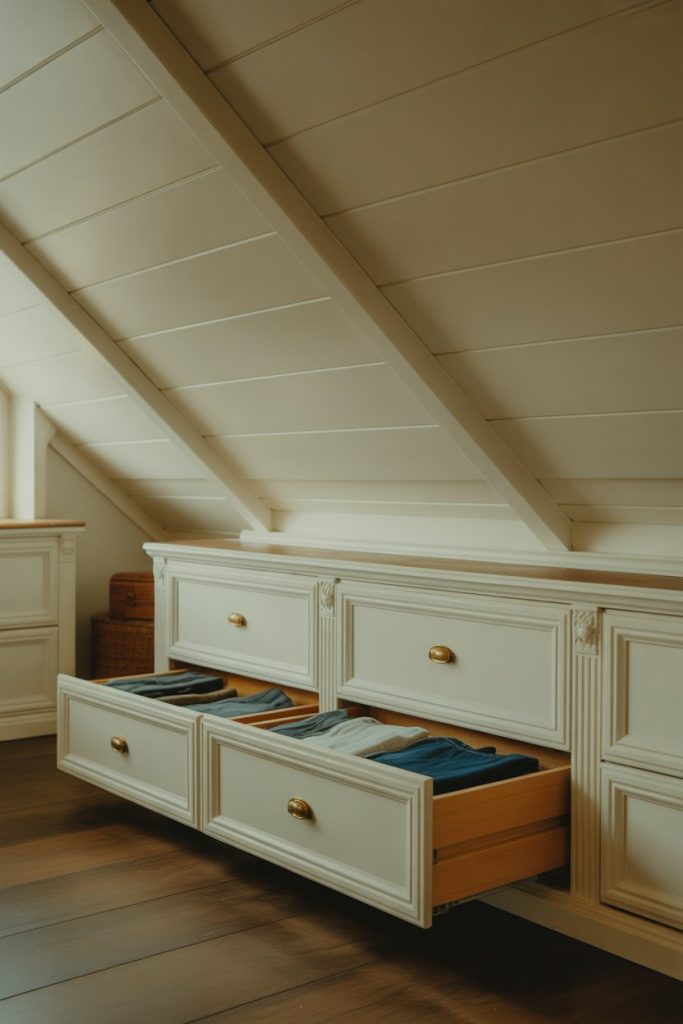
The unusable space under slanted rooflines is actually prime real estate for custom storage. Built-in drawers, cabinets, or open shelving that follows the slope turns wasted square footage into highly functional organization. This is especially valuable in tiny attic bedrooms where every inch counts and freestanding furniture would create awkward gaps. 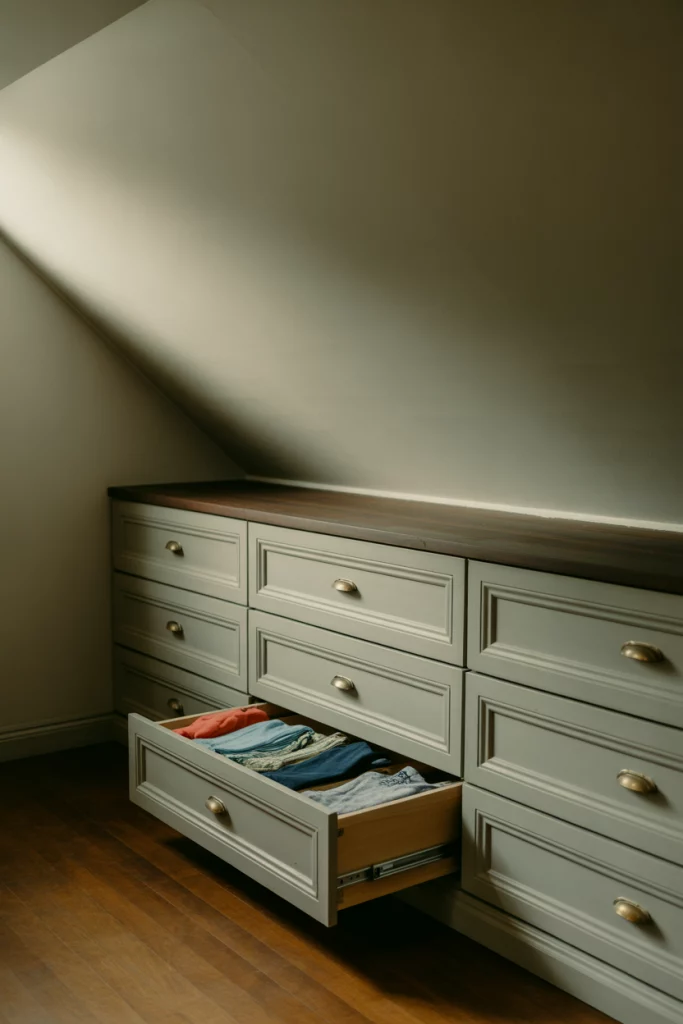
A practical insight: measure carefully and consider hiring a carpenter for the build rather than trying to adapt standard pieces. The investment in custom work pays off in functionality—properly fitted built-ins use 100% of the available space instead of the 60-70% you’d get with off-the-shelf furniture. Include lighting inside deeper cabinets so you can actually see what you’re storing, and plan for both hanging and folded storage if this is a primary bedroom.
7. Create an Aesthetic Grunge Teen Haven
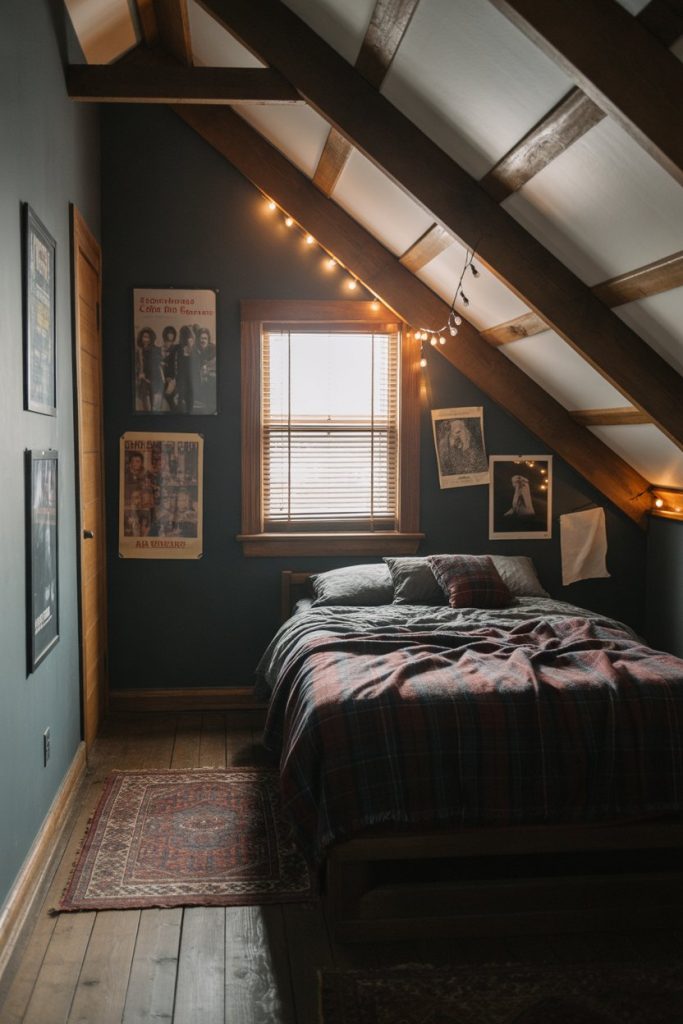
Teens gravitate toward attic bedrooms because they offer privacy and separation from the rest of the house. For an aesthetic grunge vibe, lean into darker colors, exposed brick or wood, string lights, and vintage finds. The raw, unfinished quality that often comes with attic spaces actually supports this style better than a pristine bedroom would. 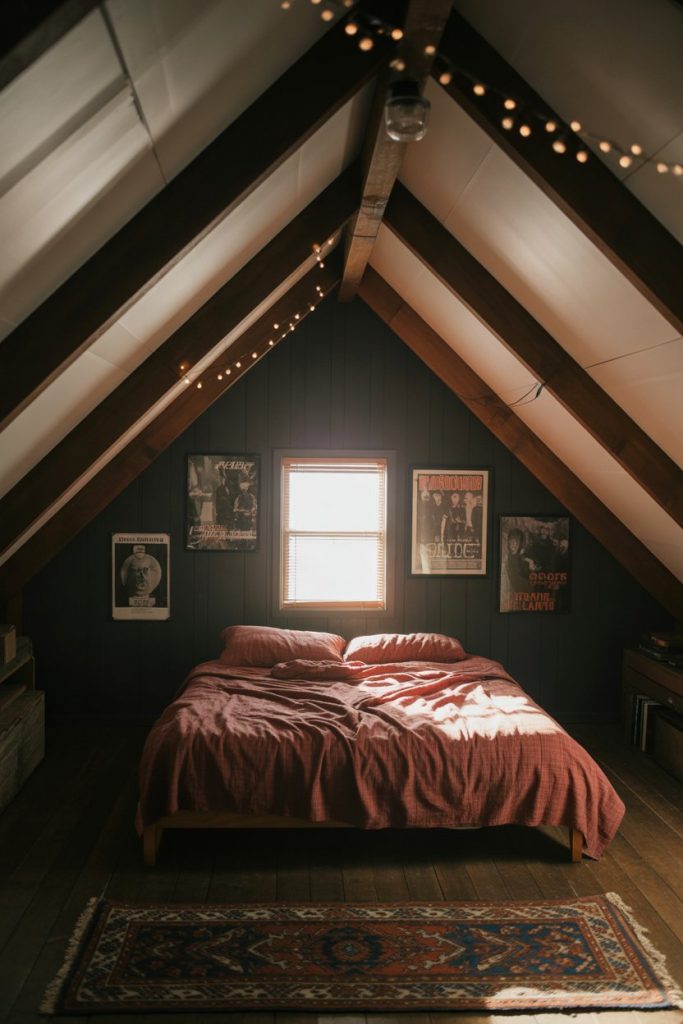
Let them own the space and make design decisions—within reason and budget. This autonomy matters more to teenagers than adults often realize, and an attic room provides natural boundaries for their self-expression. Keep the structural changes neutral (paint is easy to change later), but give them freedom with accessories, lighting, and layout. The separation from main living areas also means late-night music or phone calls are less disruptive to the household.
8. Use Vertical Stripes to Emphasize Height
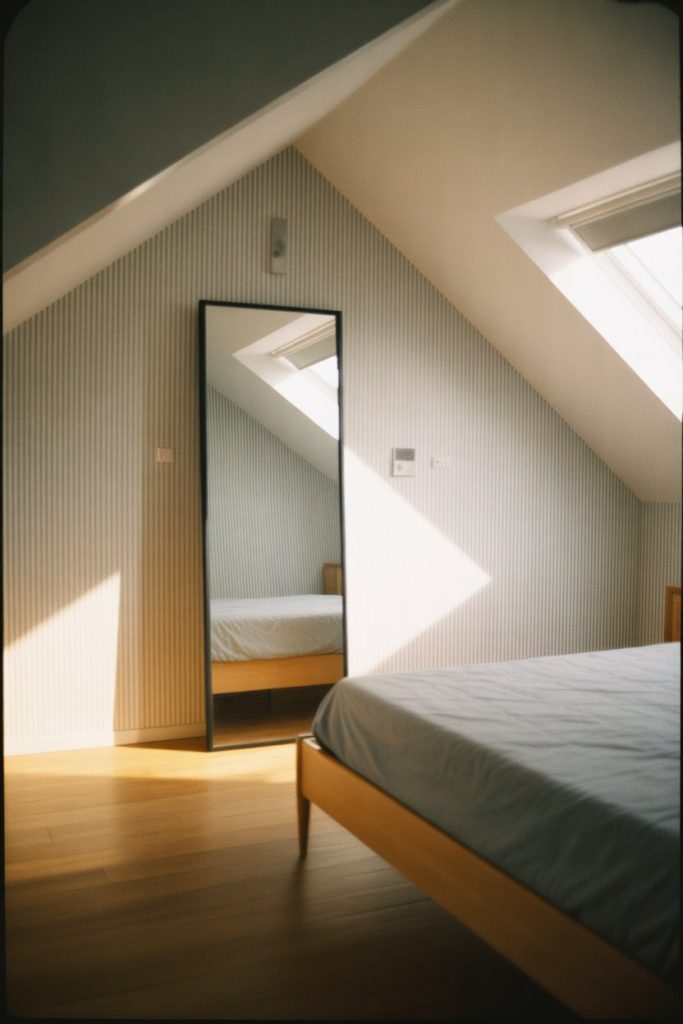
In rooms with low ceiling points, vertical elements draw the eye upward and create the illusion of more height. Consider wallpaper with vertical stripes on the tallest wall, or floor-to-ceiling curtains at dormer windows. This simple trick makes angled ceilings feel less oppressive and adds a sense of elegance that horizontal patterns can’t achieve in tight spaces. 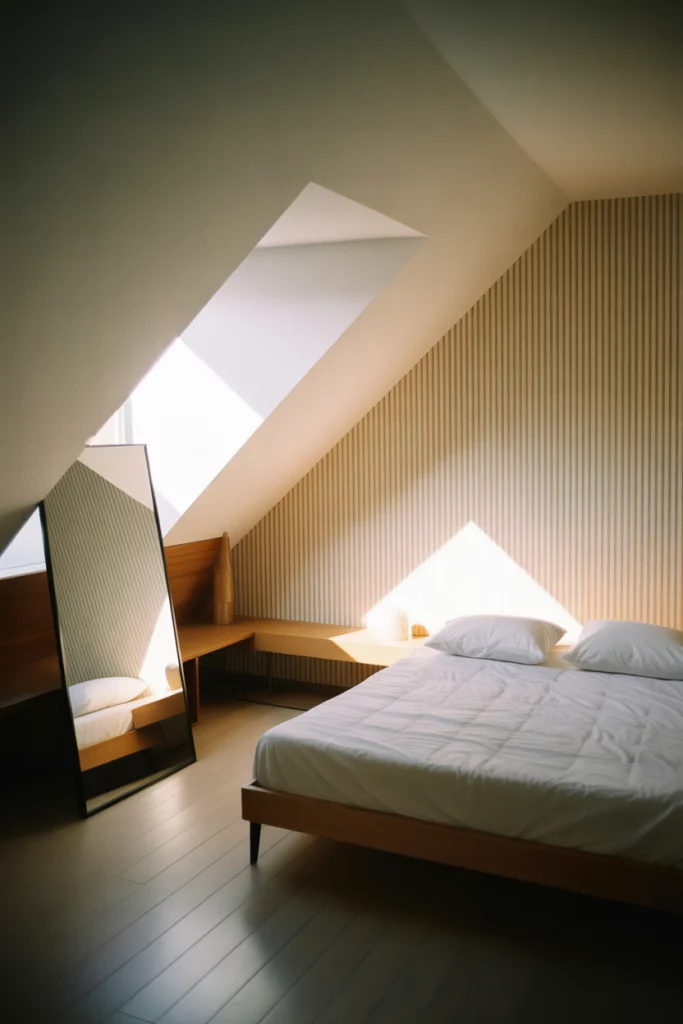
This works best in attics with at least one full-height wall—typically the gable end. The contrast between the vertical emphasis and the sloped ceilings actually makes the architecture more interesting rather than fighting it. Avoid busy patterns; subtle tone-on-tone stripes or even just a single painted vertical accent panel can do the work without overwhelming the space.
9. Design a Large Master Suite with Sitting Area
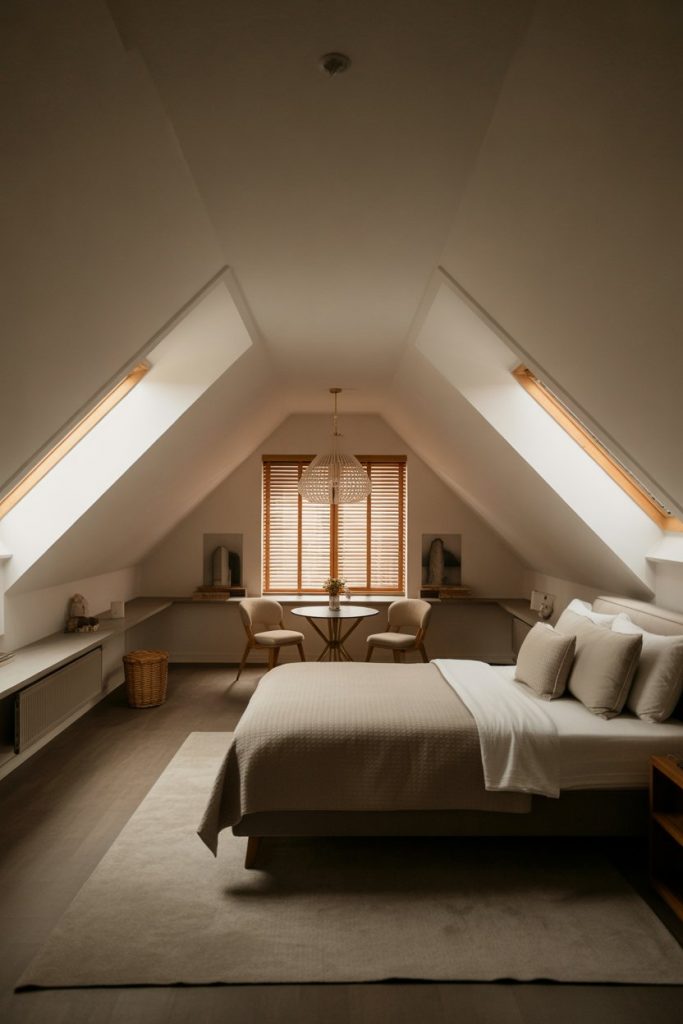
If you have a large attic footprint, divide it into zones rather than leaving it as one open box. A master suite might include a sleeping area under the peak, a sitting area or desk space where the ceiling is lower, and a walk-in closet tucked under the eaves. The varied ceiling heights actually help define these zones without requiring walls.
In Southern California and the Southwest, where year-round comfort matters, adding a mini-split AC unit to an attic master makes the space genuinely livable rather than just tolerable. Insulation is critical—attics can be 20 degrees hotter than the rest of the house in summer without proper insulation and ventilation. Budget for both heating and cooling solutions, and your attic master will feel as comfortable as any bedroom in the house.
10. Add Texture with Exposed Beams
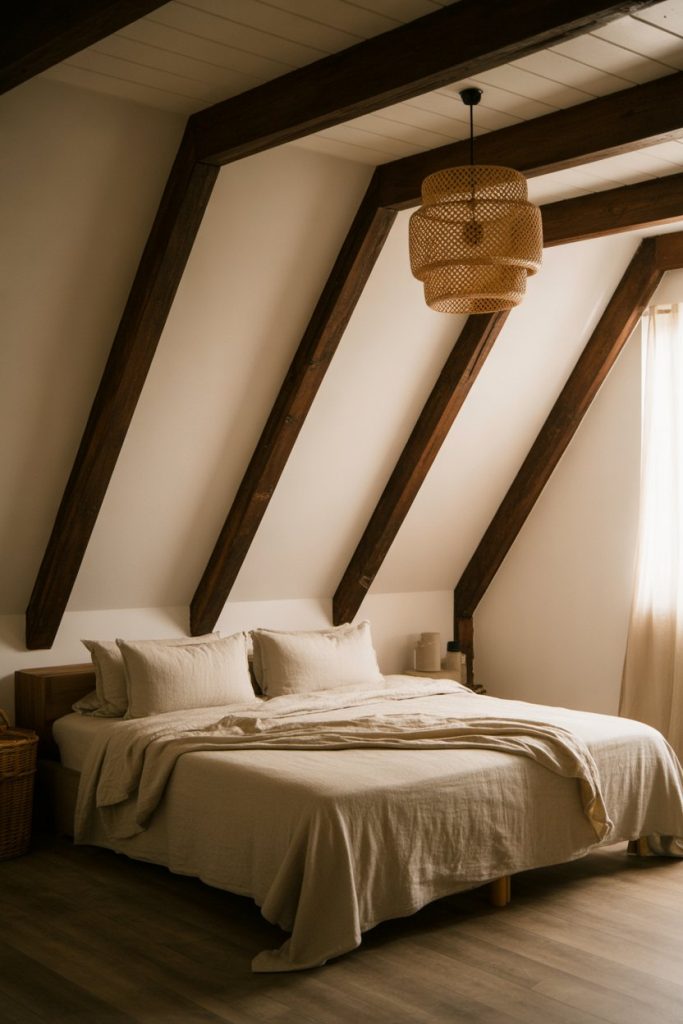
If your attic has structural beams, exposing them adds instant character and warmth. Leave them natural wood or paint them to match your palette—either approach works. The beams provide visual breaks that make slanted ceiling interior design more interesting, and they give you convenient spots to hang plants, artwork, or lighting. 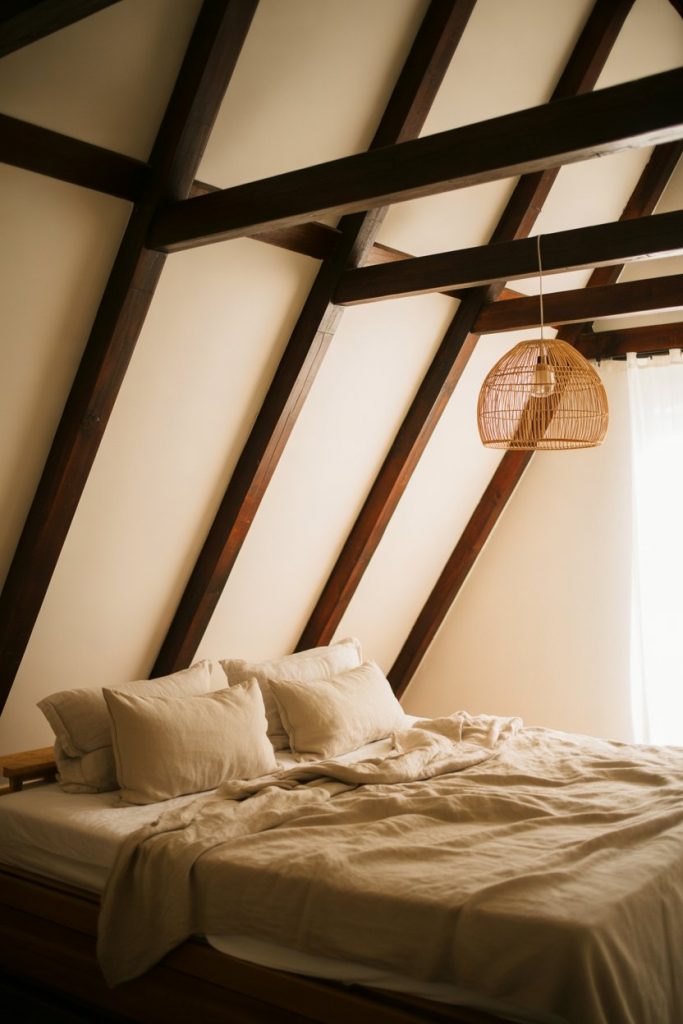
A common mistake is painting beams the same color as the ceiling, which eliminates their visual impact. If you want a cohesive look, go one or two shades darker or lighter instead—just enough contrast to let the beams register as architectural features. This is especially effective in cottages, farmhouses, or any home where a bit of rustic charm fits the overall aesthetic.
11. Install an Angled Ceiling Accent Wall
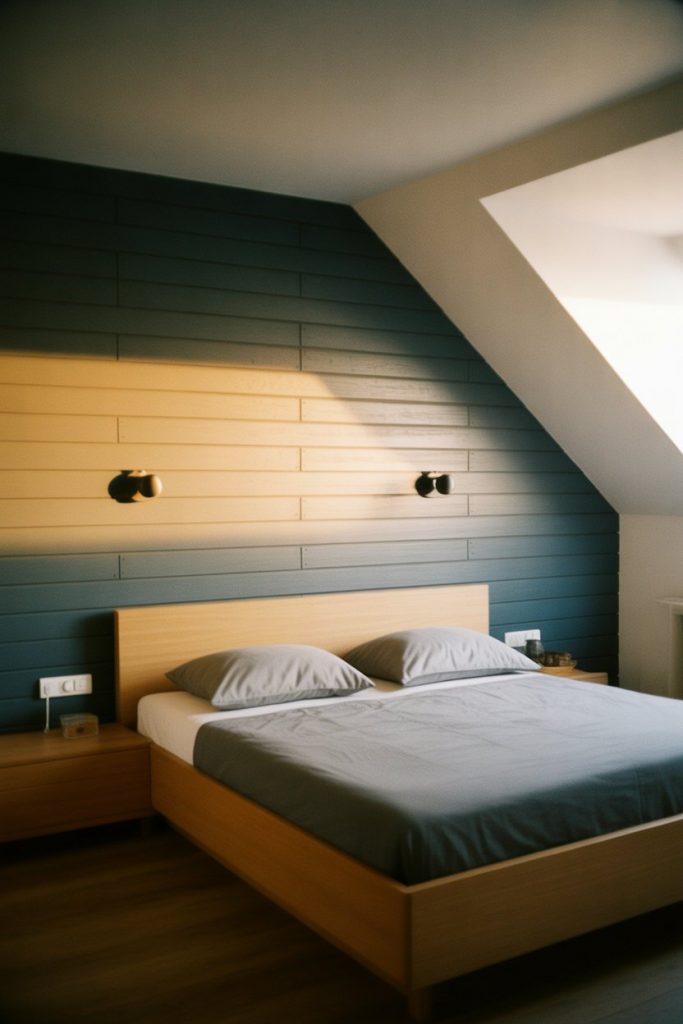
Choose one sloped section and make it a focal point with an angled ceilings accent wall treatment. This could be board-and-batten, reclaimed wood, bold wallpaper, or even a mural. The key is selecting the surface behind or above the bed so it anchors the room and gives you something interesting to look at. This strategy is particularly effective in aesthetic spaces where visual impact matters. 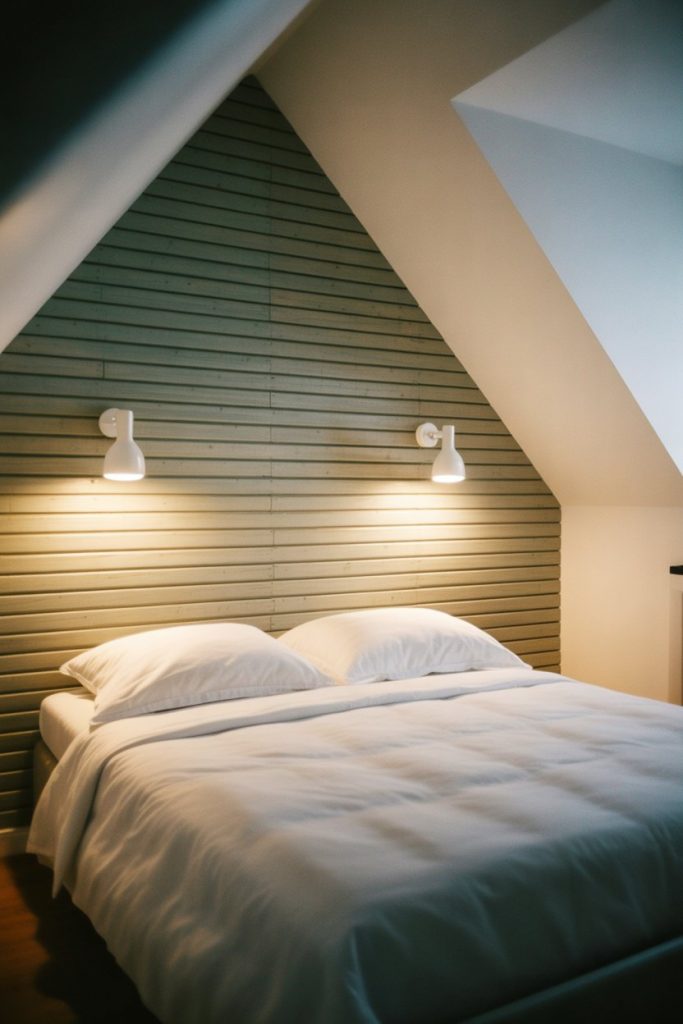
Where this works best: rooms where you want to add personality without overwhelming the space. A single dramatic wall keeps the room from feeling too busy, which is important when you’re already working with complex angles. It’s also a budget-friendly way to make an impact—you’re only treating one surface instead of the entire room, so you can afford higher-end materials or professional installation.
12. Go Soft and Feminine with Pink Accents
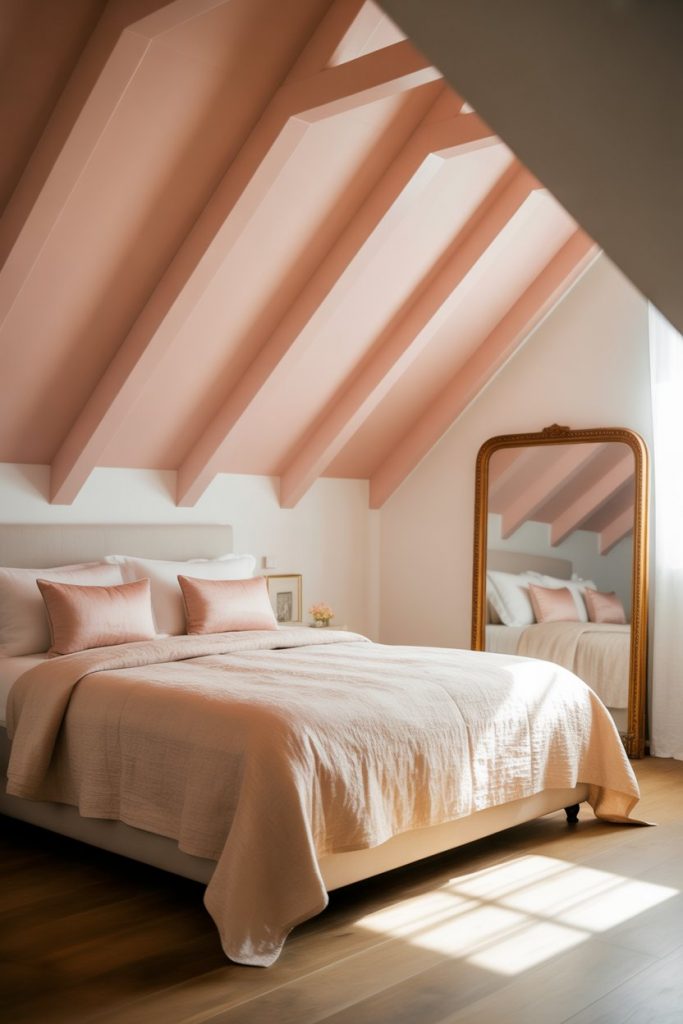
A pink attic bedroom doesn’t have to feel juvenile—dusty rose, blush, or terracotta pinks create a sophisticated, warm atmosphere. Use pink on textiles, artwork, or a single painted slope while keeping the rest of the palette neutral. This approach works beautifully in cute spaces that want to feel grown-up and intentional rather than overly sweet. 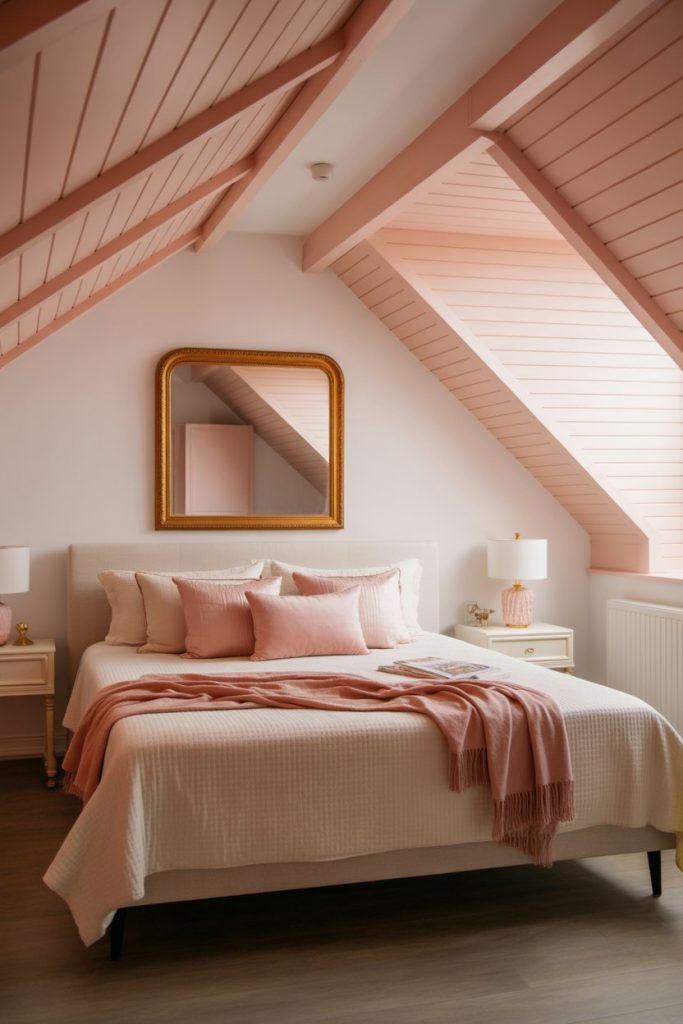
Real homeowner behavior shows that adults are increasingly comfortable with pink in their bedrooms when it’s executed in muted, complex tones rather than bright primaries. Pair it with natural materials like linen, wood, and brass to keep it grounded. If you’re hesitant to commit to pink paint, start with a pink upholstered headboard or curtains—you can always expand if you love it or dial back if it feels like too much.
13. Create a Minecraft-Inspired Room for Young Gamers
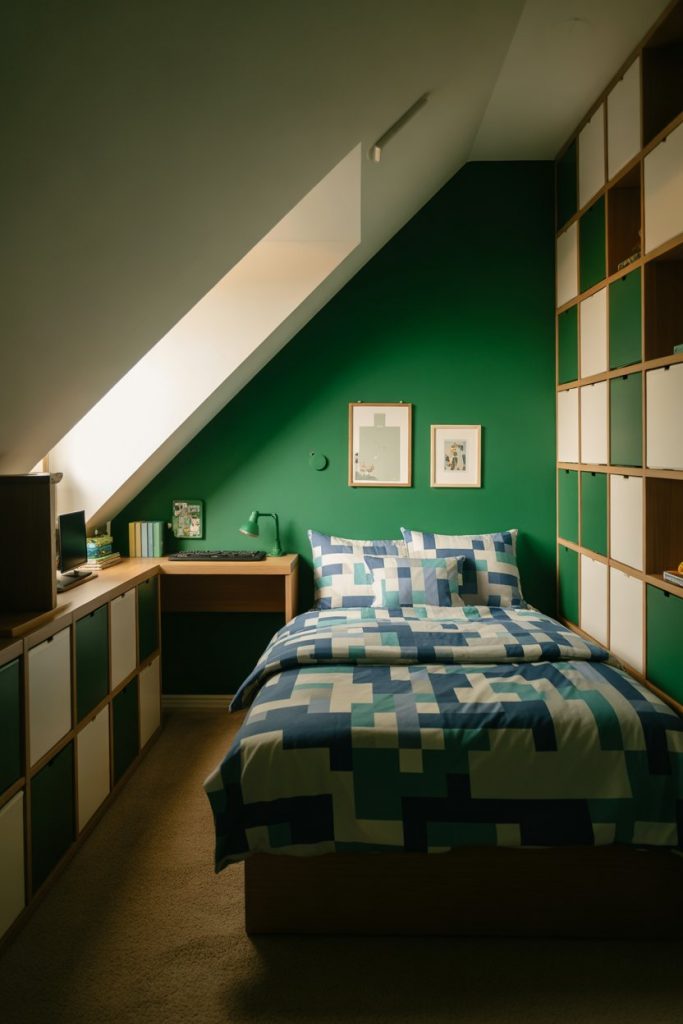
The blocky, geometric nature of Minecraft aesthetics actually suits attic architecture surprisingly well. Use the triangle shapes created by sloped ceilings as part of the design language, incorporate pixelated patterns in bedding or wall art, and add LED strips for that gaming setup glow. Kids who love the game will appreciate the themed space, and the geometric approach keeps it from feeling too literal or babyish. 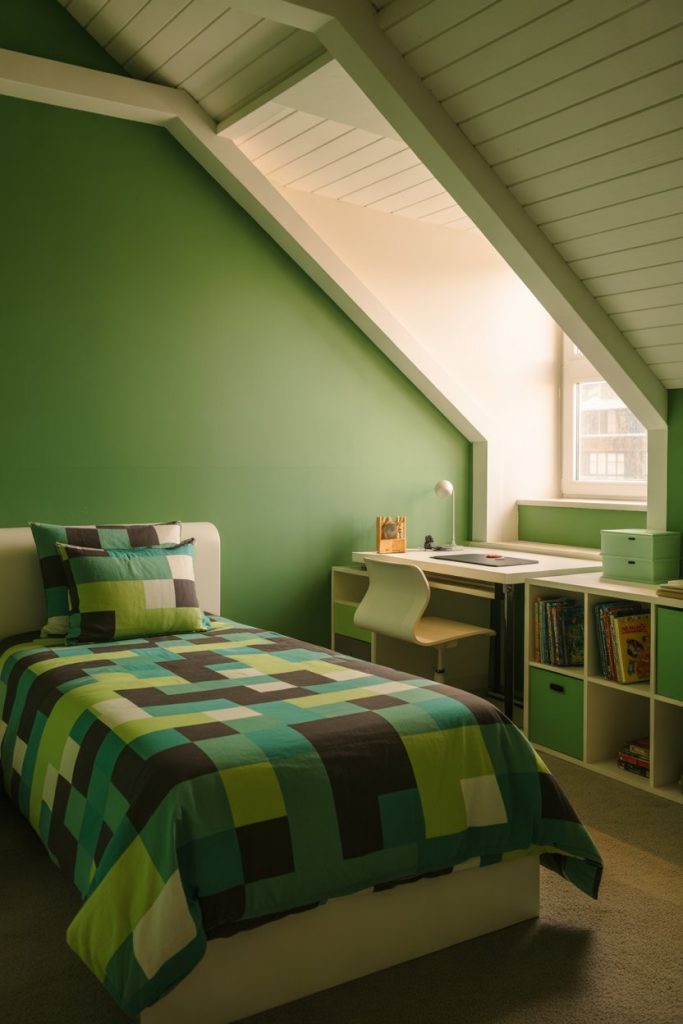
Keep the permanent elements neutral—you can always paint over an accent wall when interests change, but you can’t easily undo major structural theming. Focus the Minecraft elements on removable items like posters, bedding, and accessories. This gives kids the room they want now while maintaining flexibility for the inevitable shift in interests that comes with growing up.
14. Embrace Hygge in a Cozy Aesthetic Space
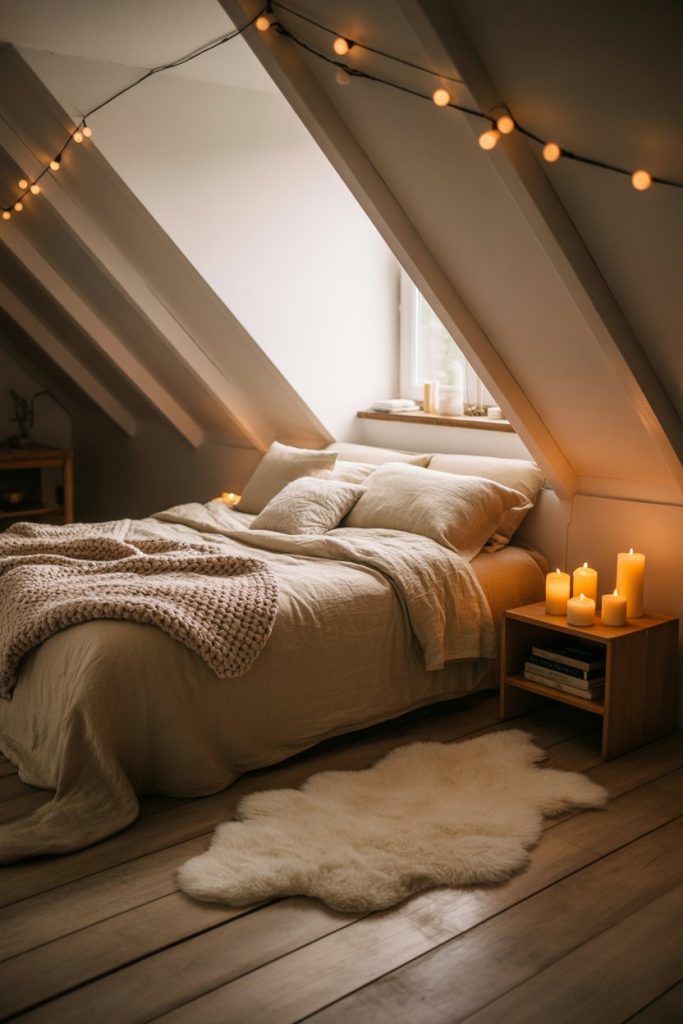
The cozy aesthetic trend and attic bedrooms are natural partners. Layer soft textures, warm lighting, natural materials, and a restrained color palette to create a space that feels like a permanent retreat. The low ceilings that might feel cramped in other contexts actually support the cocooning effect that makes hygge-inspired spaces so appealing. 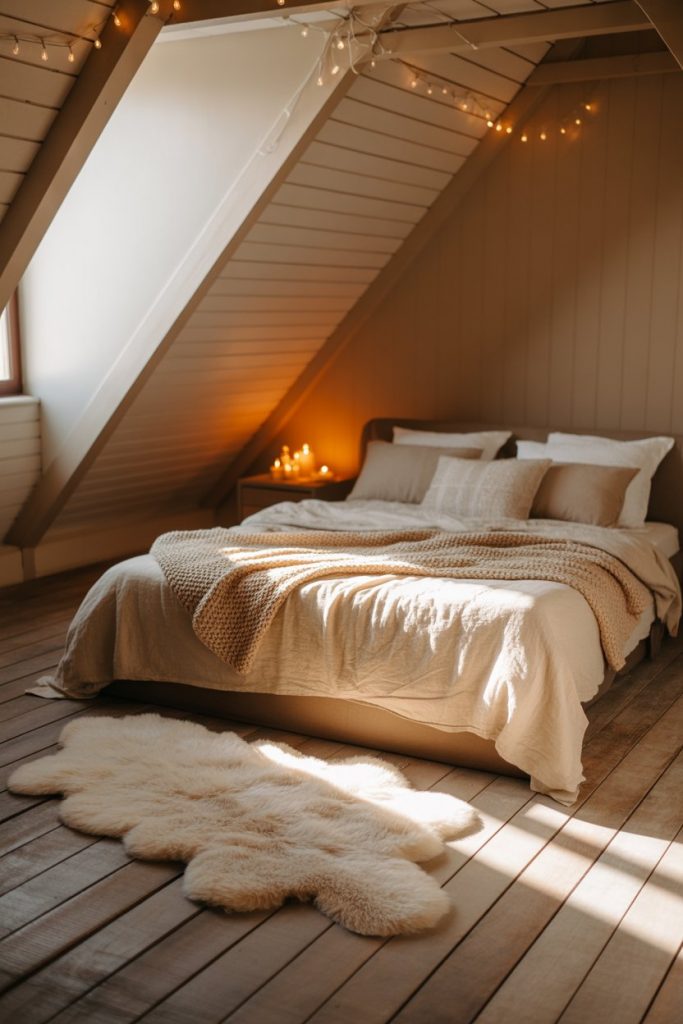
An expert-style tip: invest in quality bedding and multiple layers of soft lighting rather than expensive furniture. In a cozy aesthetic space, the sensory experience—how things feel and how the light looks—matters more than impressive furniture pieces. Dimmer switches are essential; overhead lighting at full brightness kills the mood you’re trying to create. Add 3-4 light sources at different levels so you can adjust the ambiance based on time of day and activity.
15. Work with Half-Height Walls Strategically
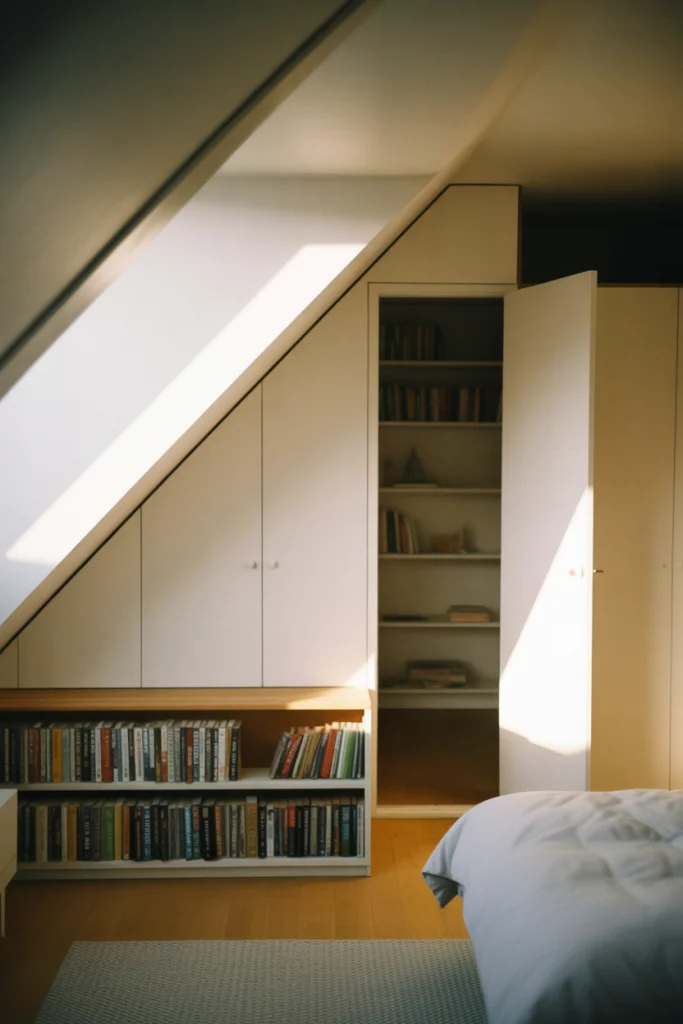
Many attics have half-height knee walls where the roof meets the floor. Instead of treating these as problems, use them to your advantage. They’re perfect for low bookcases, radiators, or built-in benches. The space behind them can become valuable storage accessed through small doors or drawers. This is especially useful in tiny bedrooms where maximizing every dimension matters. 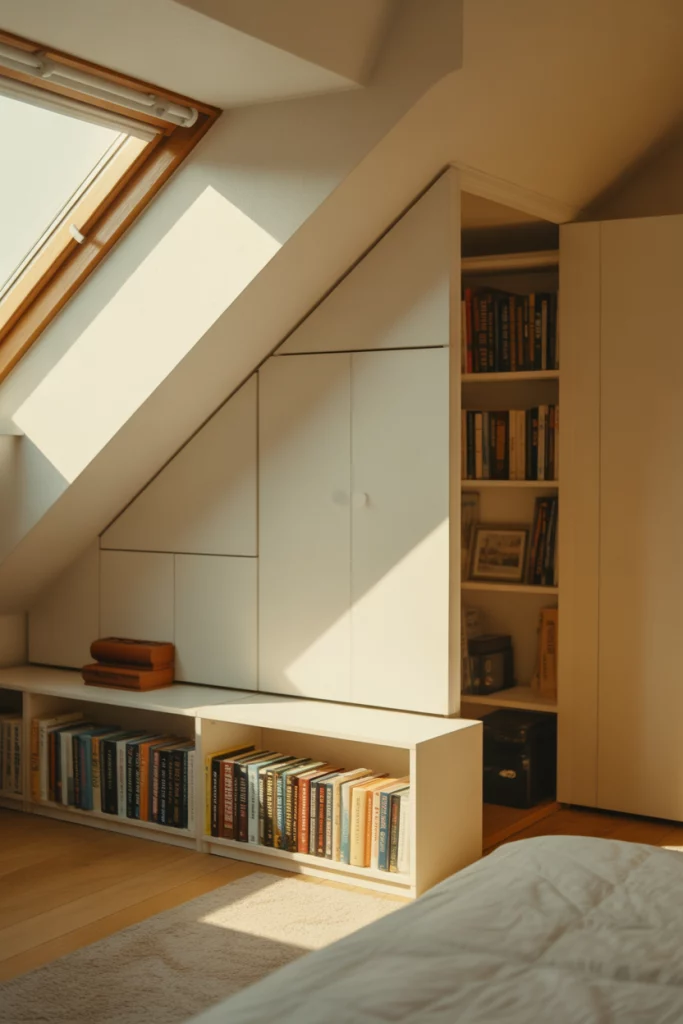
In New England homes, where attic bedrooms are common in older houses, contractors often recommend insulating the knee wall space separately from the main room—it’s a thermal boundary that can significantly impact comfort and energy bills. If you’re planning built-ins, coordinate with your insulation plan to ensure you’re not creating cold spots or reducing the effectiveness of your climate control.
16. Design a Long, Narrow Attic with Zones
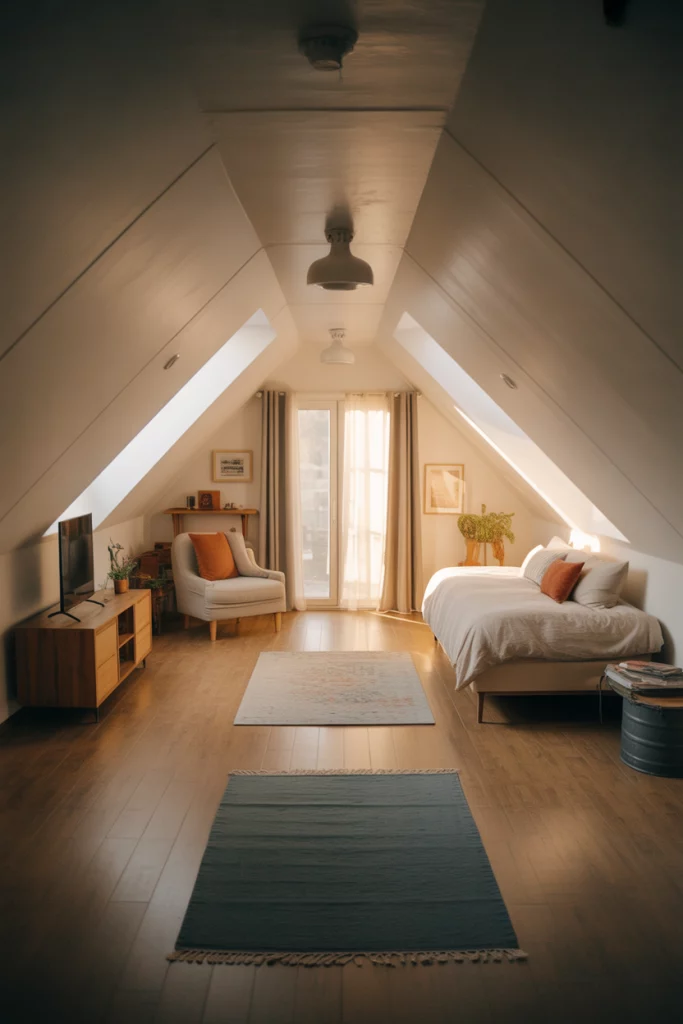
A long attic bedroom needs intentional zoning to avoid feeling like a hallway with a bed in it. Create distinct areas using rugs, lighting changes, or partial-height furniture like a bookcase or dresser positioned perpendicular to the length. This breaks up the tunnel effect and makes the space feel purposeful rather than accidental. 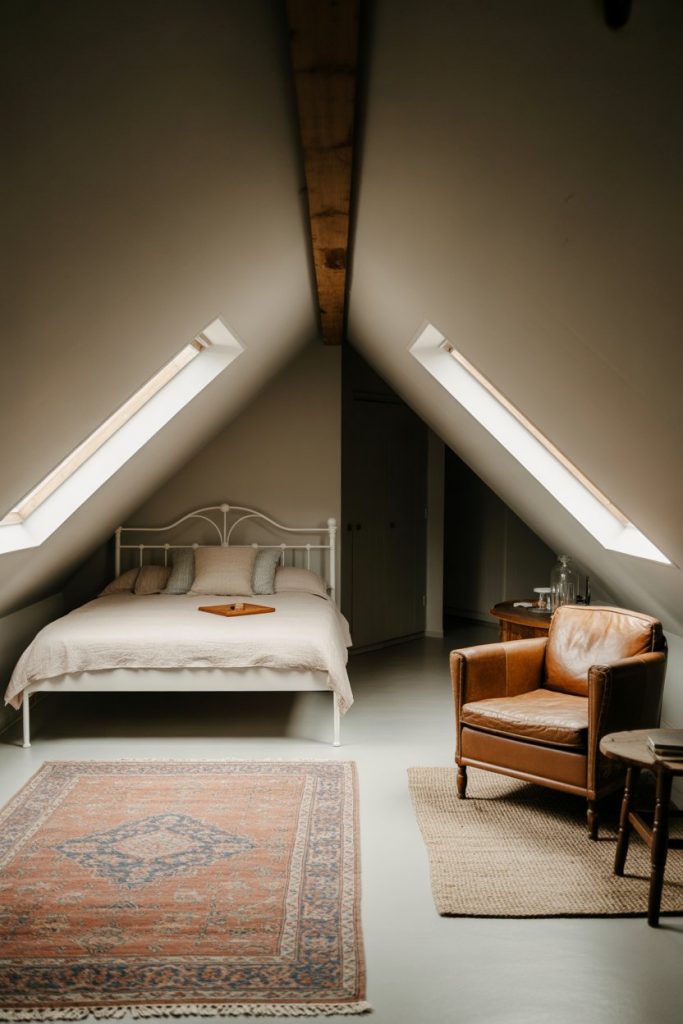
A common mistake is pushing all furniture against the long walls, which emphasizes the narrowness. Instead, pull the bed away from the wall slightly if space allows, or position it at one end of the room to create a more typical bedroom proportion. Use the length as an opportunity to include elements you wouldn’t have room for in a square bedroom—a reading chair, a full-length mirror, a small desk—without feeling crowded.
17. Paint Sloped Ceilings White for Airiness

While bold colors can work beautifully, there’s something to be said for keeping sloped ceilings white, especially in smaller attics. White reflects light, makes the space feel larger, and provides a clean backdrop for colorful furniture and accessories. It’s the safe choice that almost never looks wrong, and it gives you maximum flexibility as your style evolves. 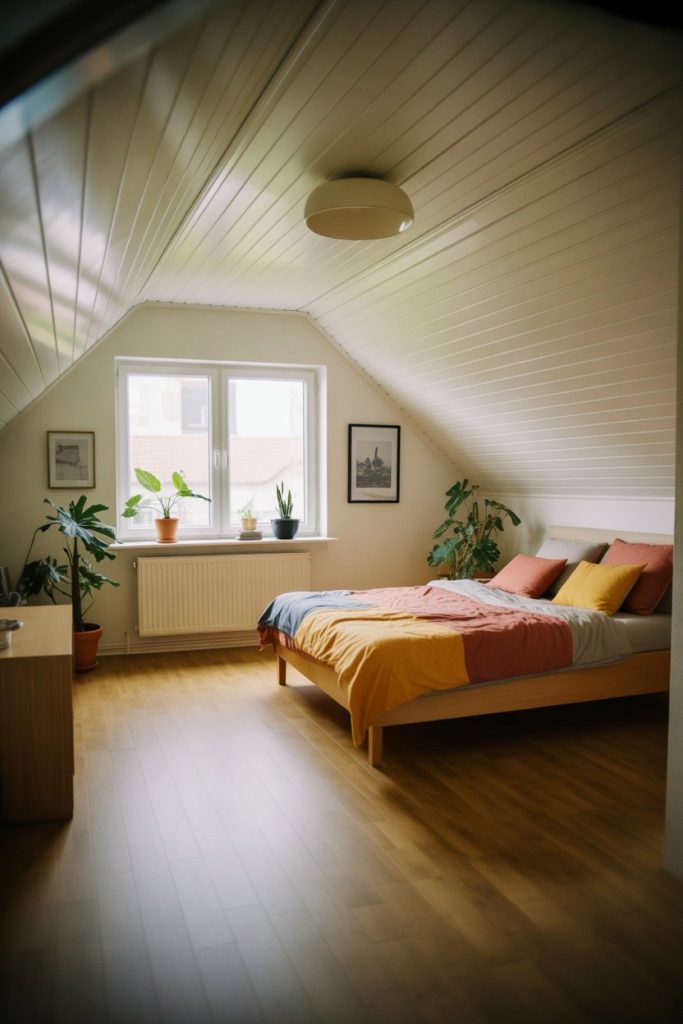
This approach works best in attics with limited natural light or in homes where you want a consistent, neutral backdrop throughout. The white ceiling allows you to experiment with bolder choices on walls or in furnishings without the space feeling overwhelming. It’s also the most rental-friendly option if you’re converting an attic in a property you don’t own—white paint is universally acceptable and easy to touch up.
18. Create a Grunge Music-Inspired Retreat
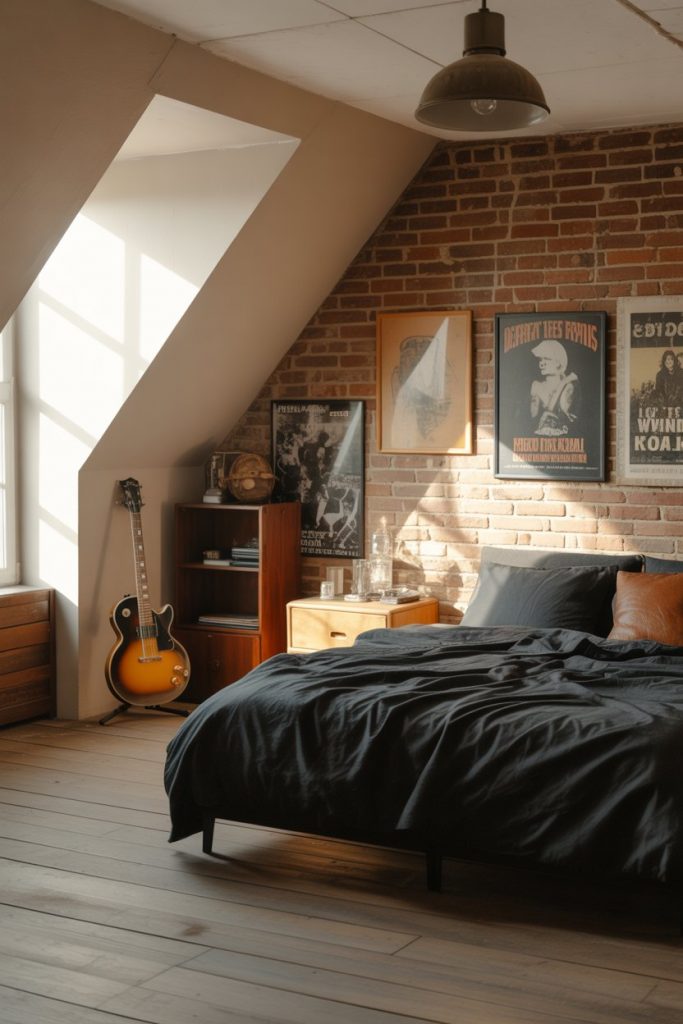
The grunge aesthetic—think Seattle in the ’90s—translates surprisingly well to attic bedrooms. Exposed elements, raw materials, vintage finds, and a slightly undone quality all work with the inherent roughness of attic architecture. Layer in dark colors, worn textiles, and personal collections to create a space that feels authentic rather than designed. This is particularly appealing to teens and young adults who want a space that reflects their personality. 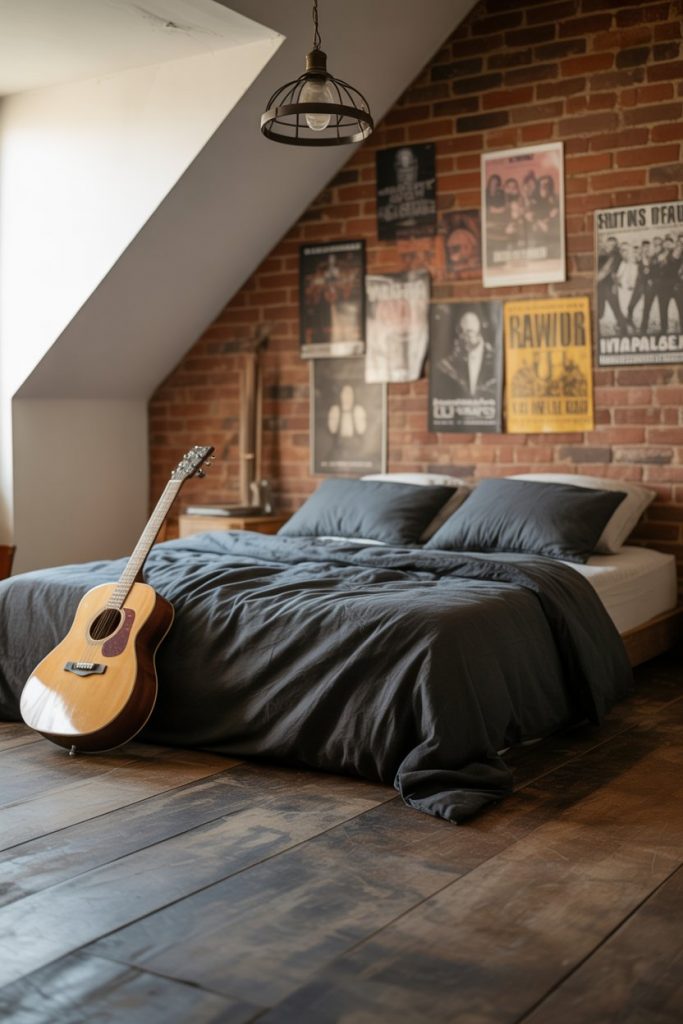
Real homeowner behavior in cities like Portland, Austin, and Brooklyn shows that grunge-inspired spaces often evolve organically rather than being planned from the start. Start with a few key pieces—a vintage rug, some meaningful posters, a good sound system—and let the room develop its character over time. This style actually benefits from looking a bit messy and collected rather than perfectly curated, which makes it more forgiving and easier to live with.
19. Use Low-Profile Furniture for Low Ceilings
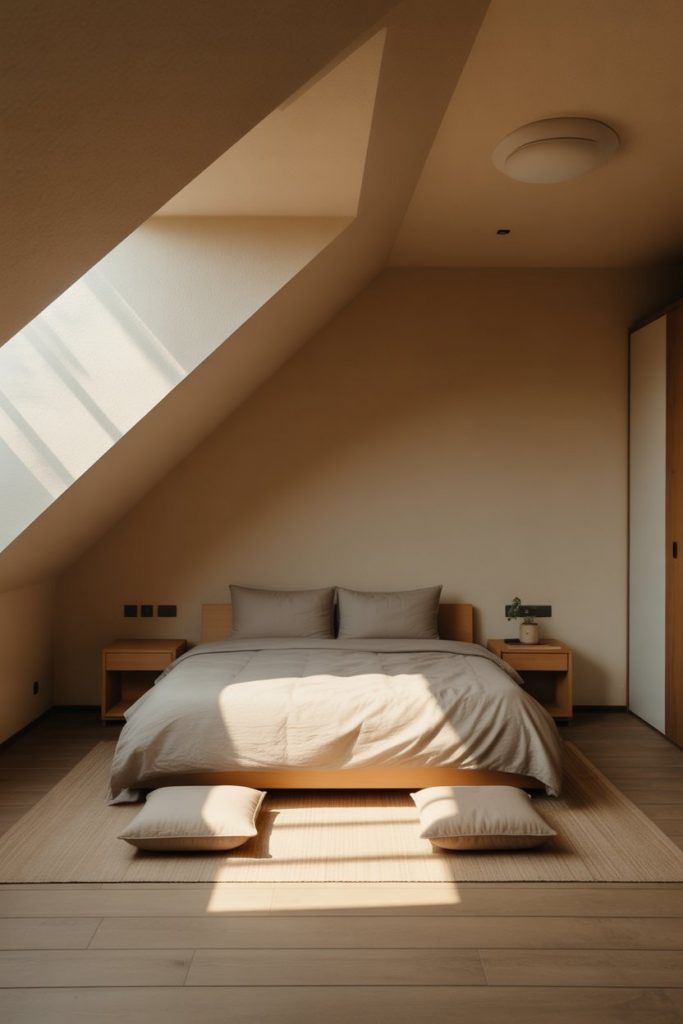
In attics with genuinely low ceiling sections, choose platform beds, floor cushions, and low-slung seating that doesn’t fight the vertical limitations. This Japanese-inspired approach makes the room feel intentionally minimal rather than accidentally cramped, and it actually uses the space more effectively because you’re not wasting vertical inches on tall furniture legs and frames. 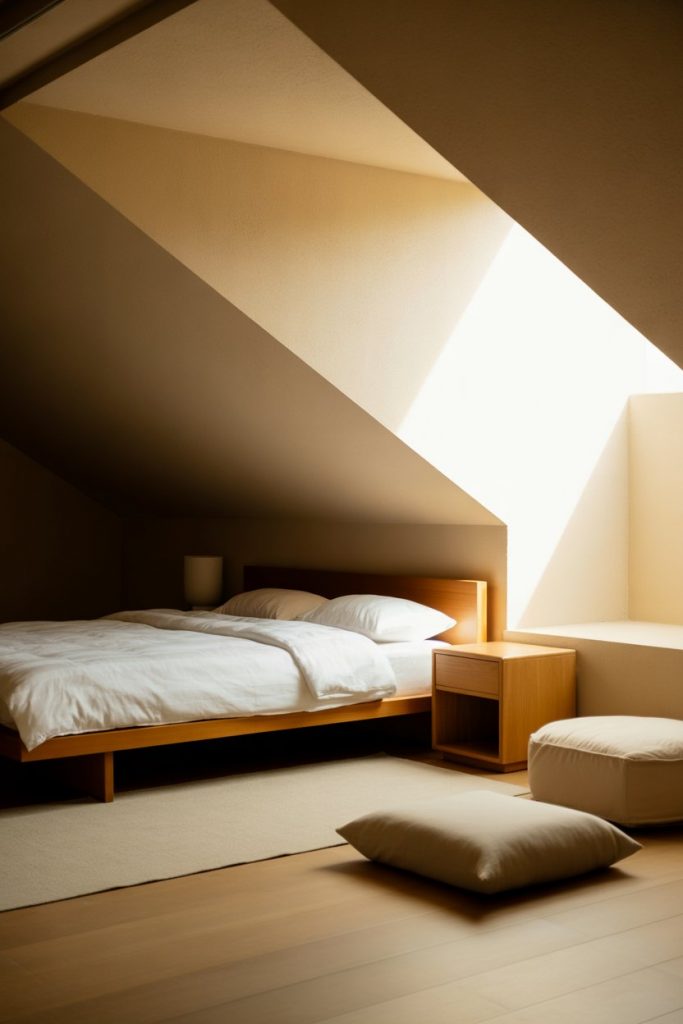
Where this works best: modern or minimalist homes where the low furniture aligns with the overall aesthetic. It’s a harder sell in traditional or maximalist spaces where low furniture might feel out of place. Consider your sight lines—when you’re lying in bed, what do you see? Low furniture keeps your view unobstructed to windows and architectural features, which makes the room feel more open even when the ceiling is close.
20. Transform a Half Attic with Smart Layout
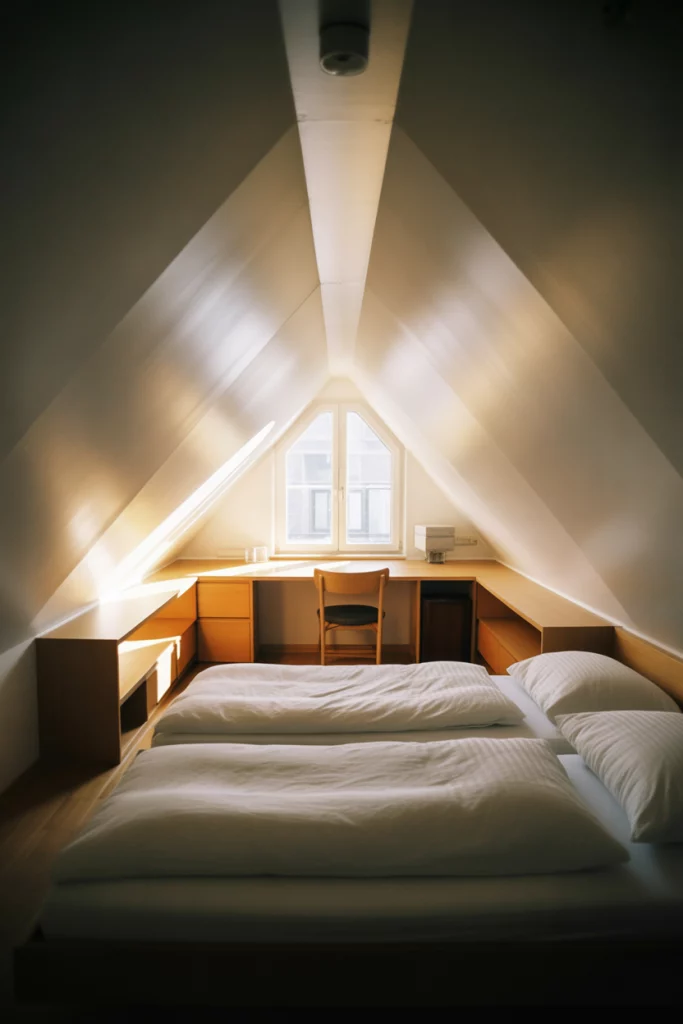
A half attic—where only part of the floor has adequate ceiling height—requires thoughtful furniture placement. Put the bed and other low-use areas (storage, occasional seating) under the lowest sections, and reserve the tall areas for standing activities like dressing or moving around. This maximizes usable space without requiring expensive structural changes. 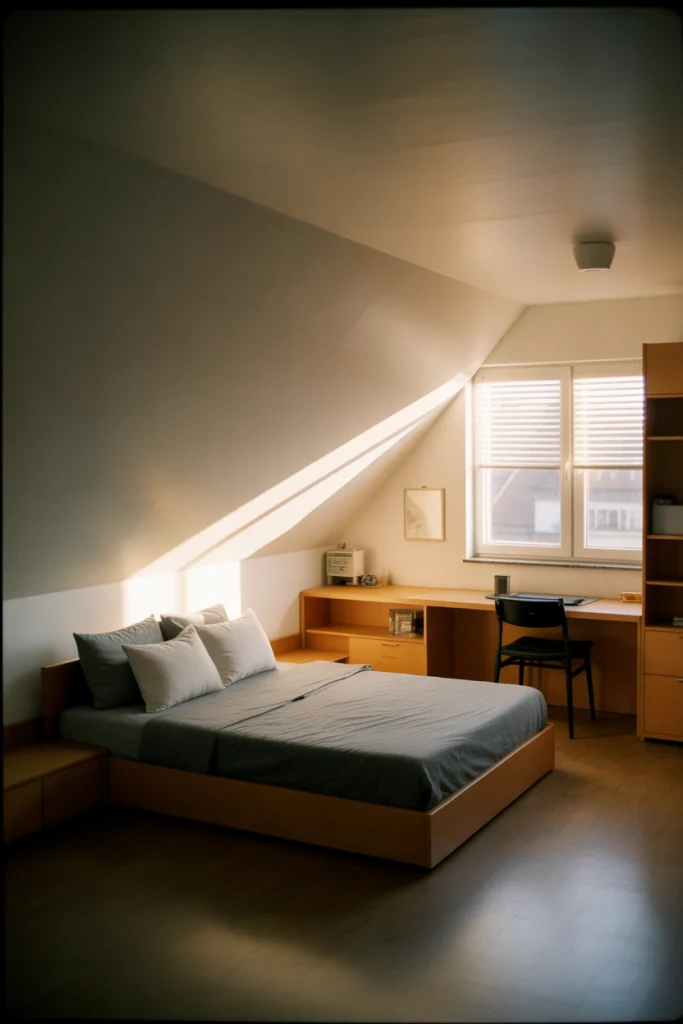
Budget-conscious homeowners often ask if they should raise the ceiling or work with what they have. Unless you have both the money and plans to stay in the house long-term, working with the existing structure makes more financial sense. A well-planned layout in a half attic can be just as functional as a full-height room and costs a fraction of what structural changes would run. Focus your budget on good lighting, ventilation, and finishing details rather than expensive framing work.
21. Blend Form and Function in an Aesthetic Cozy Master
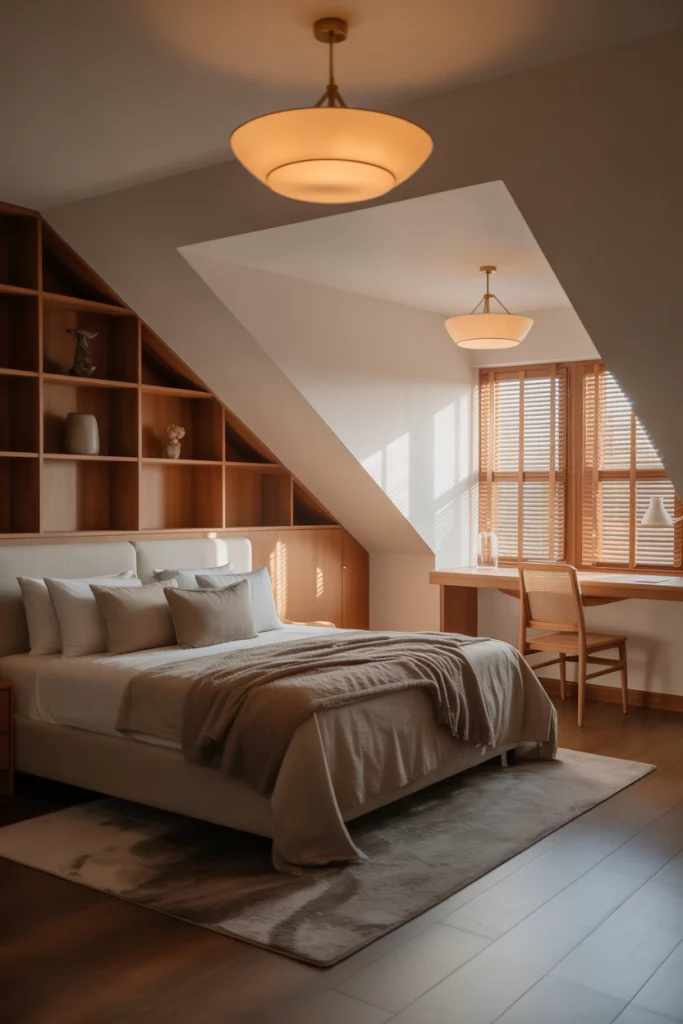
The ultimate aesthetic cozy attic bedroom ideas master suite combines visual appeal with genuine livability. This means beautiful lighting that’s also task-appropriate, attractive storage that actually holds your belongings, and a color palette that looks good in photos but also feels restful to wake up in daily. The angled ceilings become part of the charm rather than something to apologize for. 
Avoid the trap of designing only for appearance—Instagram-worthy doesn’t always mean comfortable to actually live in. Test furniture placement before committing, live with lighting schemes for a few days before finalizing, and prioritize your actual routines over theoretical ideas of how a bedroom should work. The best attic bedrooms are ones that look beautiful but also support your real life: where you can read comfortably, store your clothes accessibly, and wake up feeling rested rather than claustrophobic.
Conclusion
Whether you’re working with a sprawling master suite or a compact space for kids, attic bedrooms offer unique opportunities to create something truly special. The ideas above show that slanted ceilings and awkward angles aren’t limitations—they’re features waiting to be highlighted. We’d love to hear which approach resonates with you or if you’ve tackled an attic bedroom project of your own. Share your thoughts and experiences in the comments below.