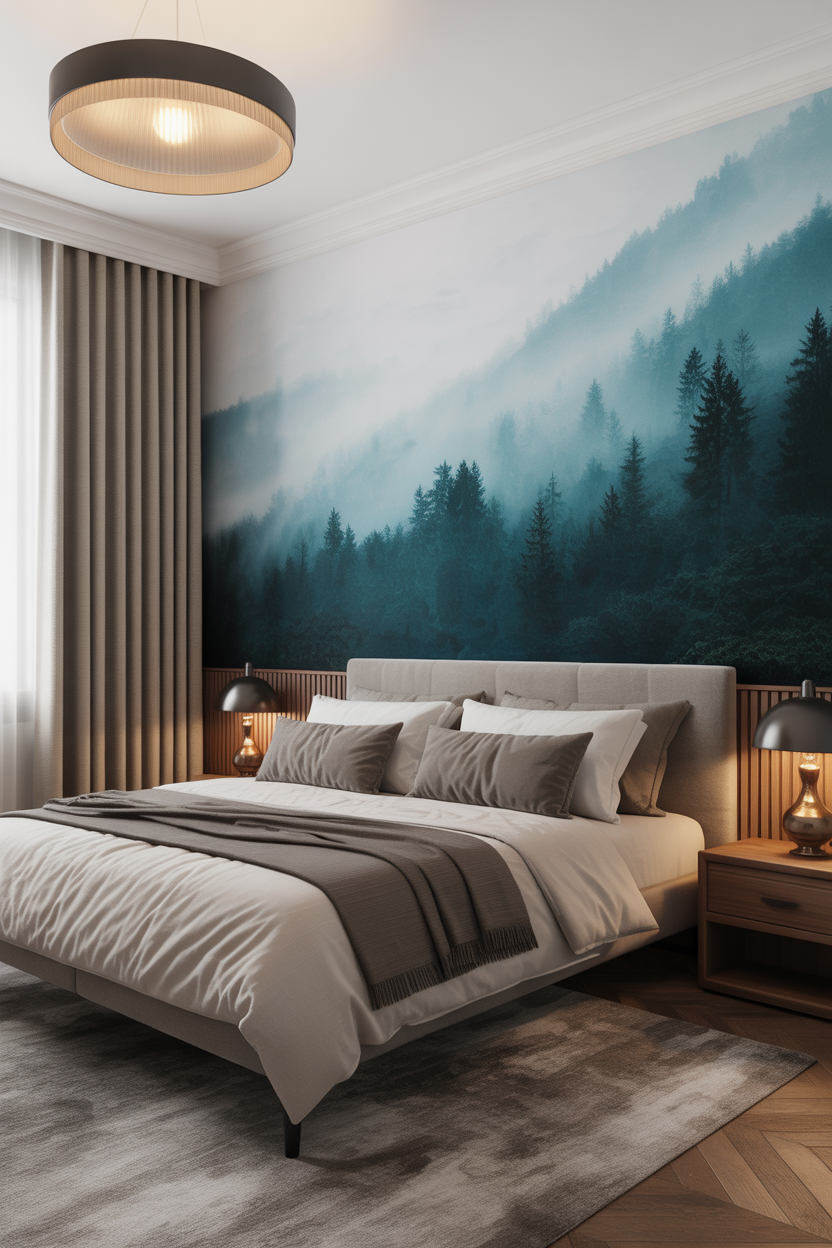
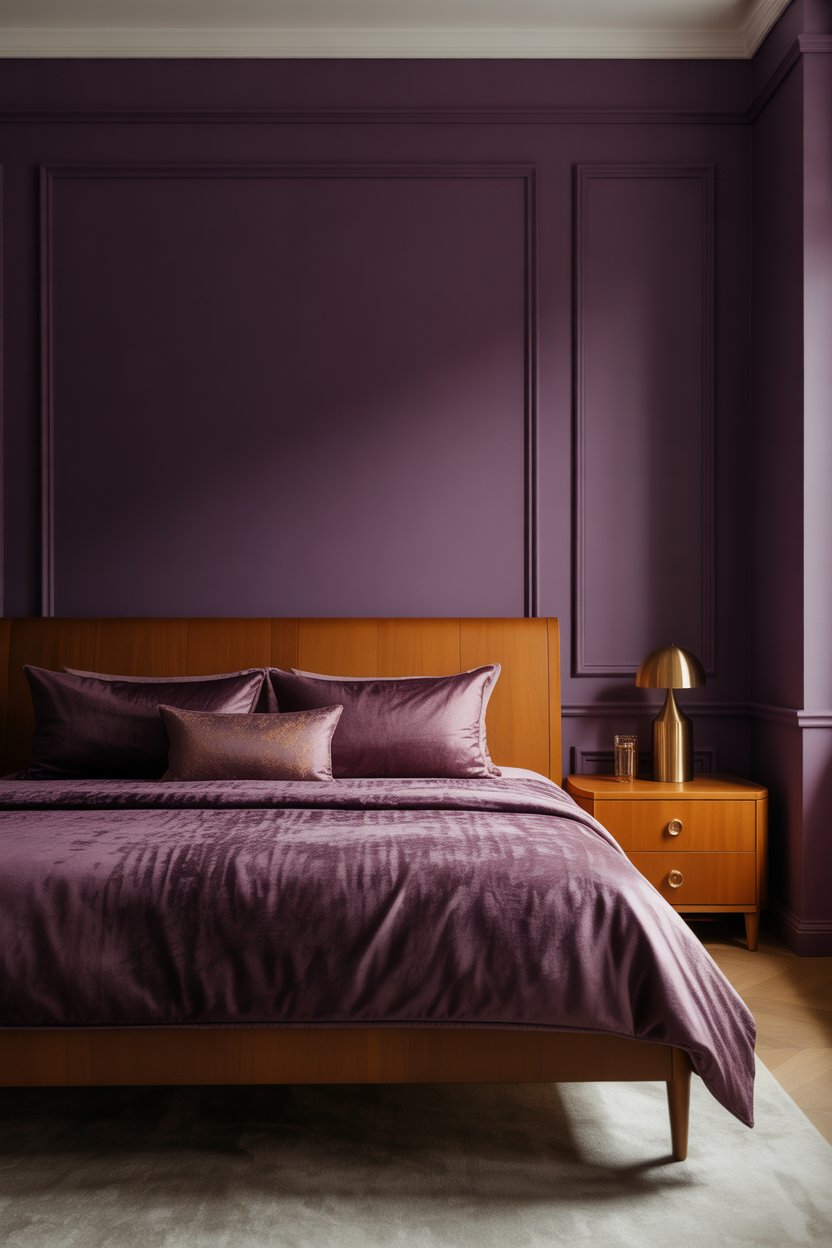
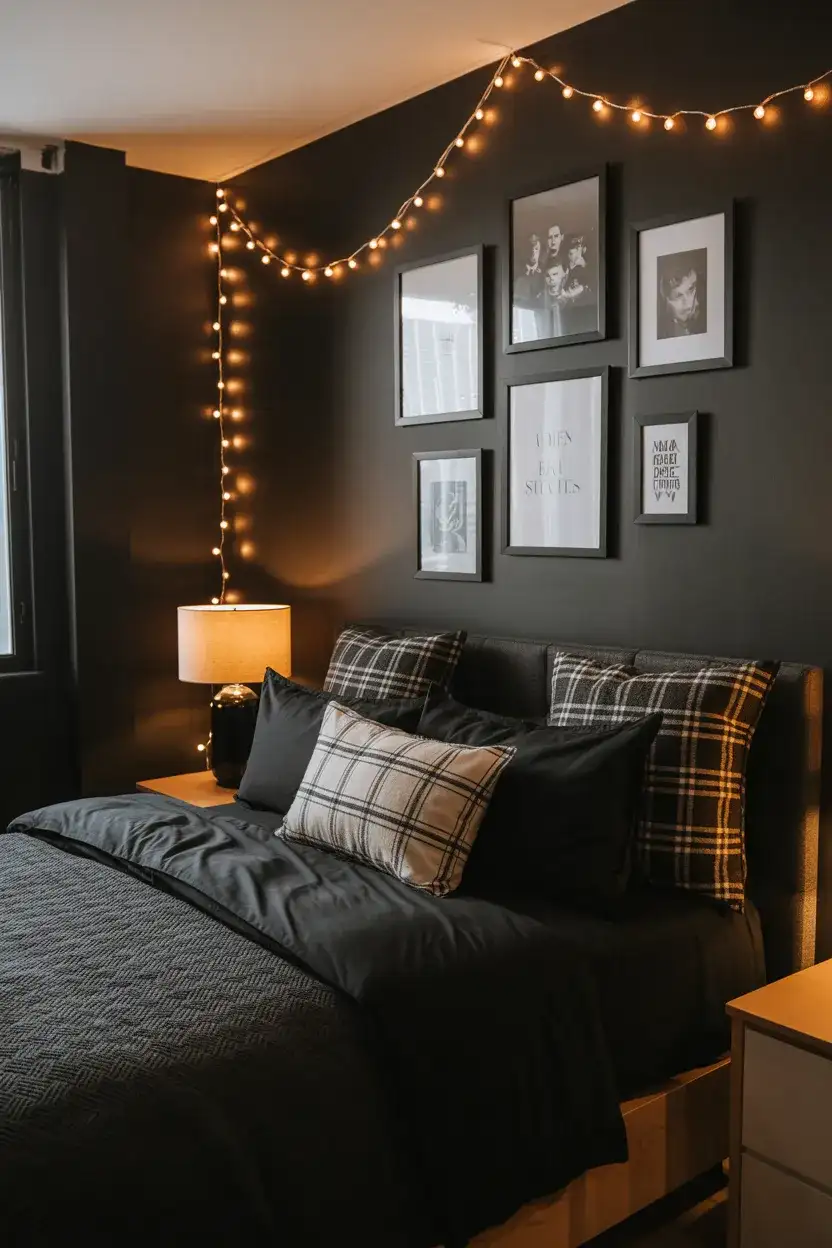
Bedroom storage in 2026 is all about smart function meeting clean design—especially for people living in smaller homes, renting, or working with awkward architectural details like sloped ceilings or narrow guest rooms. Americans browsing Pinterest are no longer just looking for more closet space; they’re seeking creative, aesthetic solutions that fit real-life constraints without sacrificing style. Whether you’re dealing with a cramped studio, want to maximize vertical space, or need hidden storage that doesn’t scream “clutter,” this guide walks you through practical, trend-forward ideas that actually work in everyday American bedrooms.
1. Floating Shelves Along Sloped Ceilings
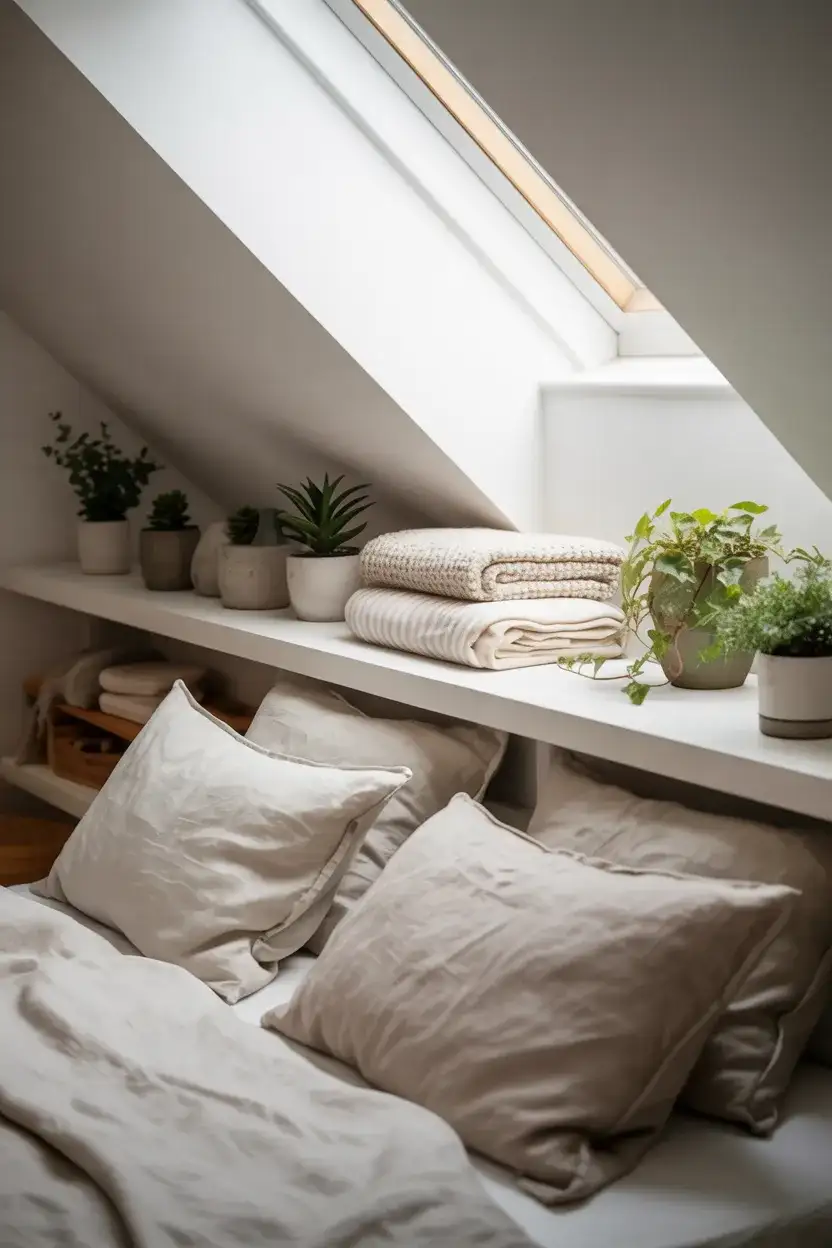
Attics and lofts with angled walls often leave dead zones that feel impossible to furnish. Sloped ceiling bedrooms benefit hugely from custom or adjustable shelves that follow the roofline, turning wasted vertical inches into display and storage. These work beautifully for books, plants, or folded linens, and the floating style keeps the look light and modern rather than boxed-in.
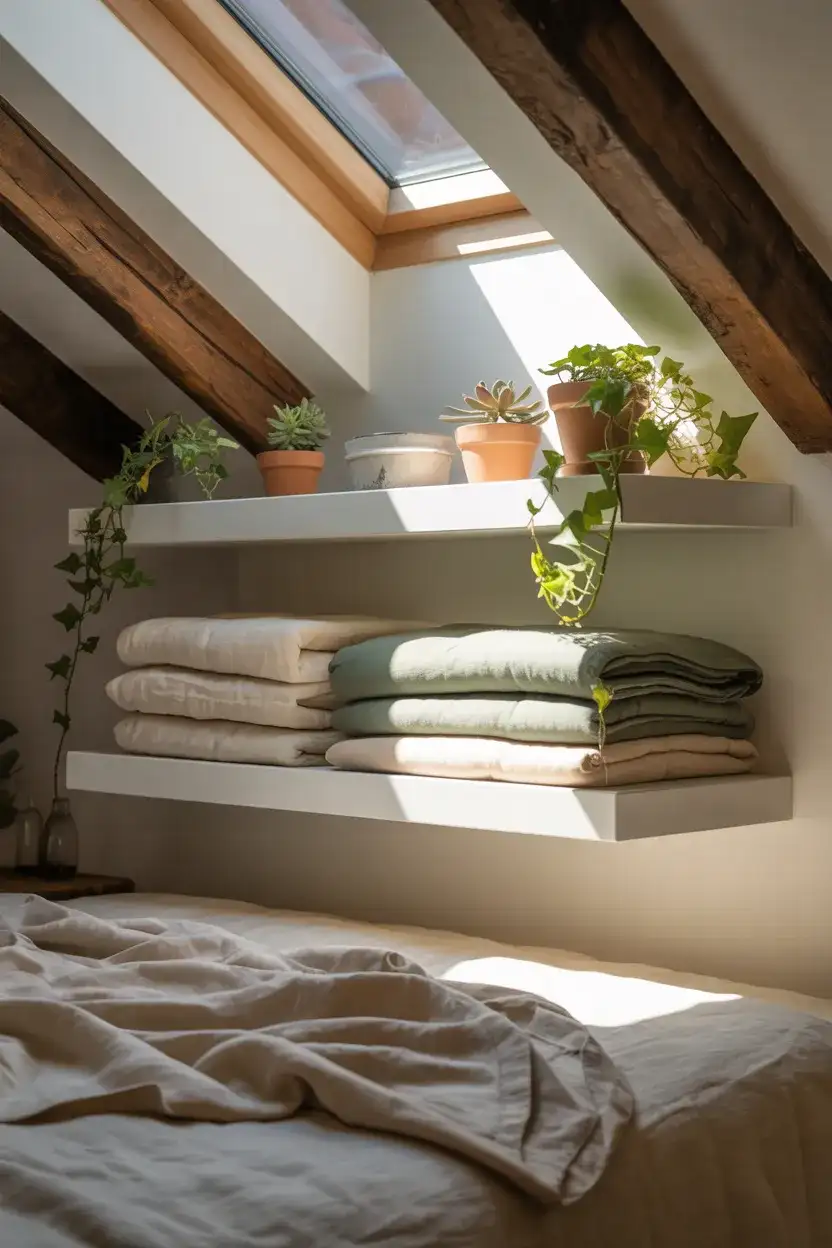
In older American homes—especially Cape Cods and bungalows—attic bedrooms are common but tricky to furnish. Floating shelves custom-cut to fit the angle prevent that “nothing fits here” frustration. They’re also easier to install than built-ins and far more flexible if you move or want to repaint. Just make sure to anchor into studs, especially if you’re storing anything heavier than pillows.
2. Under-Bed Drawer Systems for Small Rooms
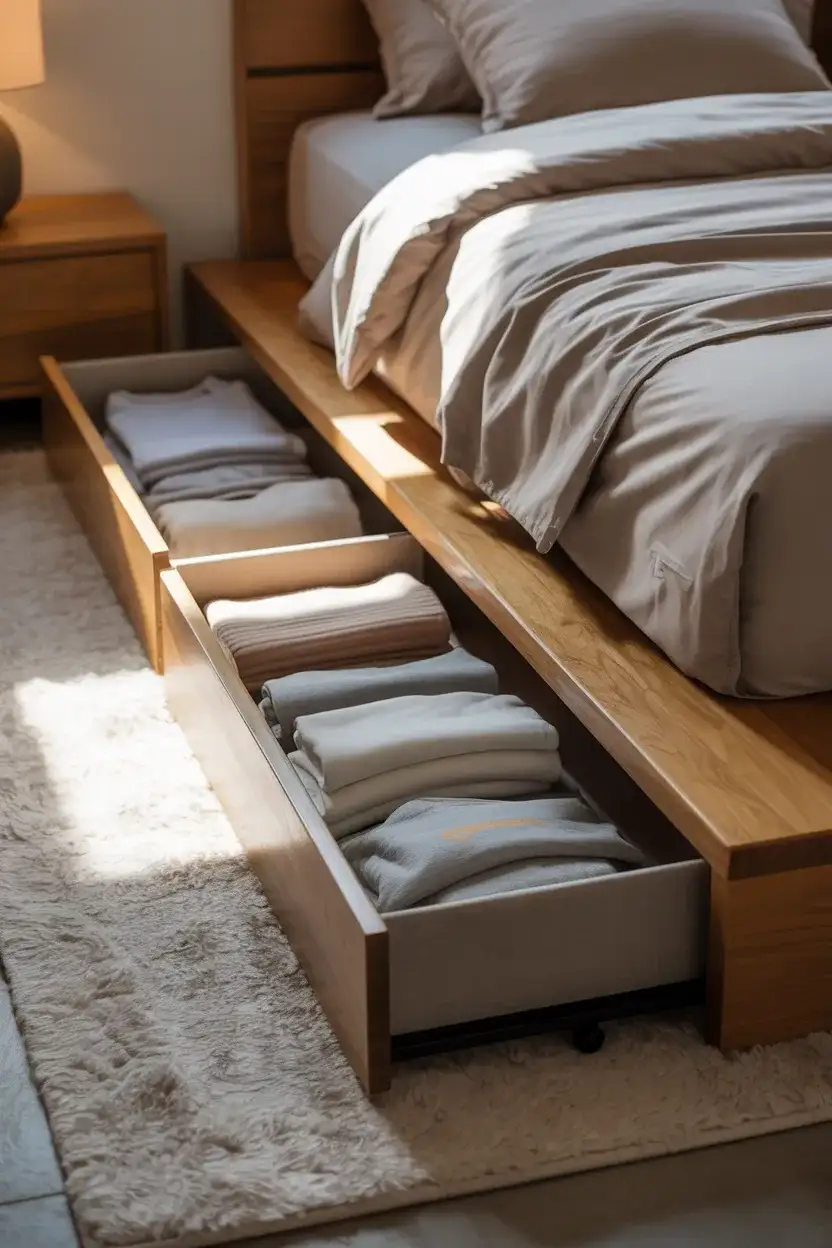
If you’re living in a small room or studio, the space under your bed is prime real estate. Rolling drawer systems—whether store-bought or DIY—let you stash off-season clothes, shoes, or extra bedding without requiring a separate dresser. Look for low-profile options with smooth casters so they glide easily on carpet or hardwood, and choose neutral finishes that blend with your bed frame.
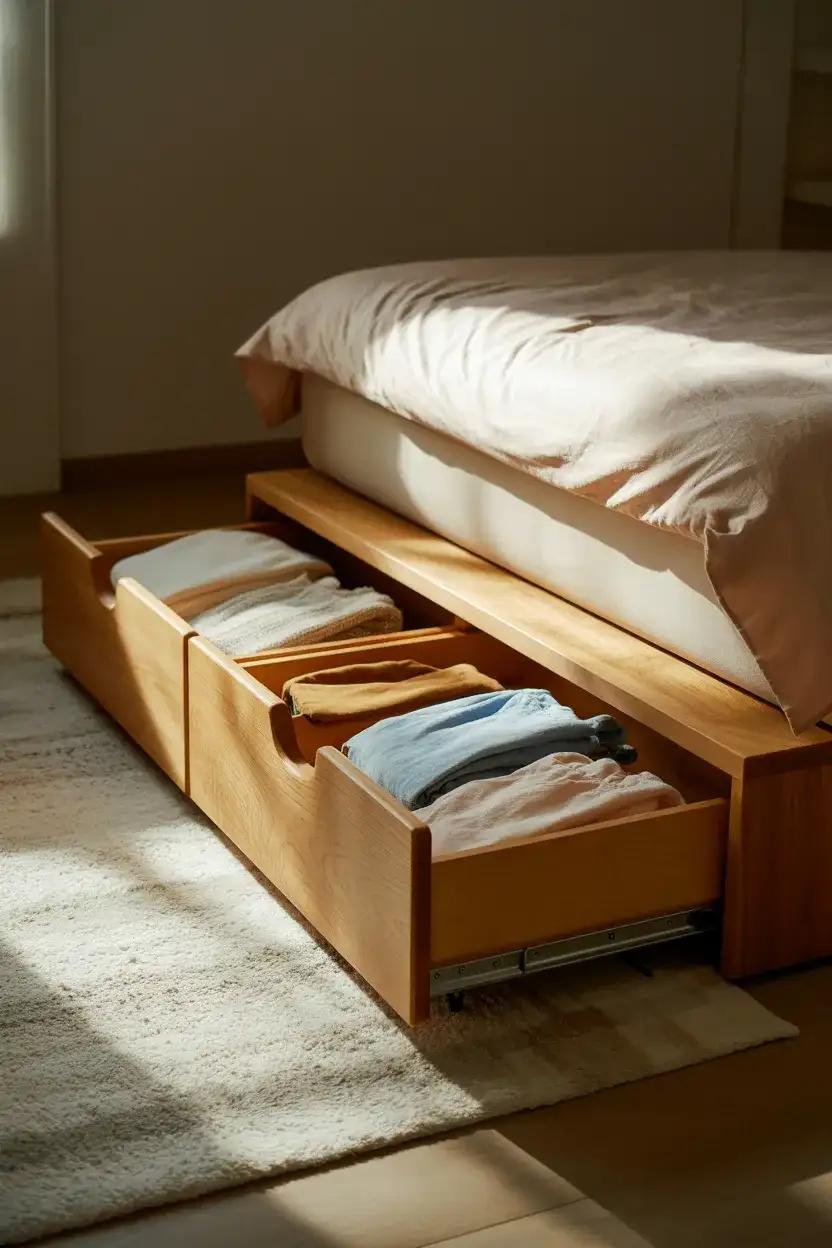
A common mistake is buying drawers that are too tall for the bed clearance, leaving them stuck halfway out or scraping the floor. Measure your bed height first—ideally, you want at least 8 inches of clearance for standard drawers. If you’re handy, building your own with plywood and casters is surprisingly affordable and lets you customize the dimensions perfectly for your space.
3. IKEA PAX Wardrobe as a Built-In Closet
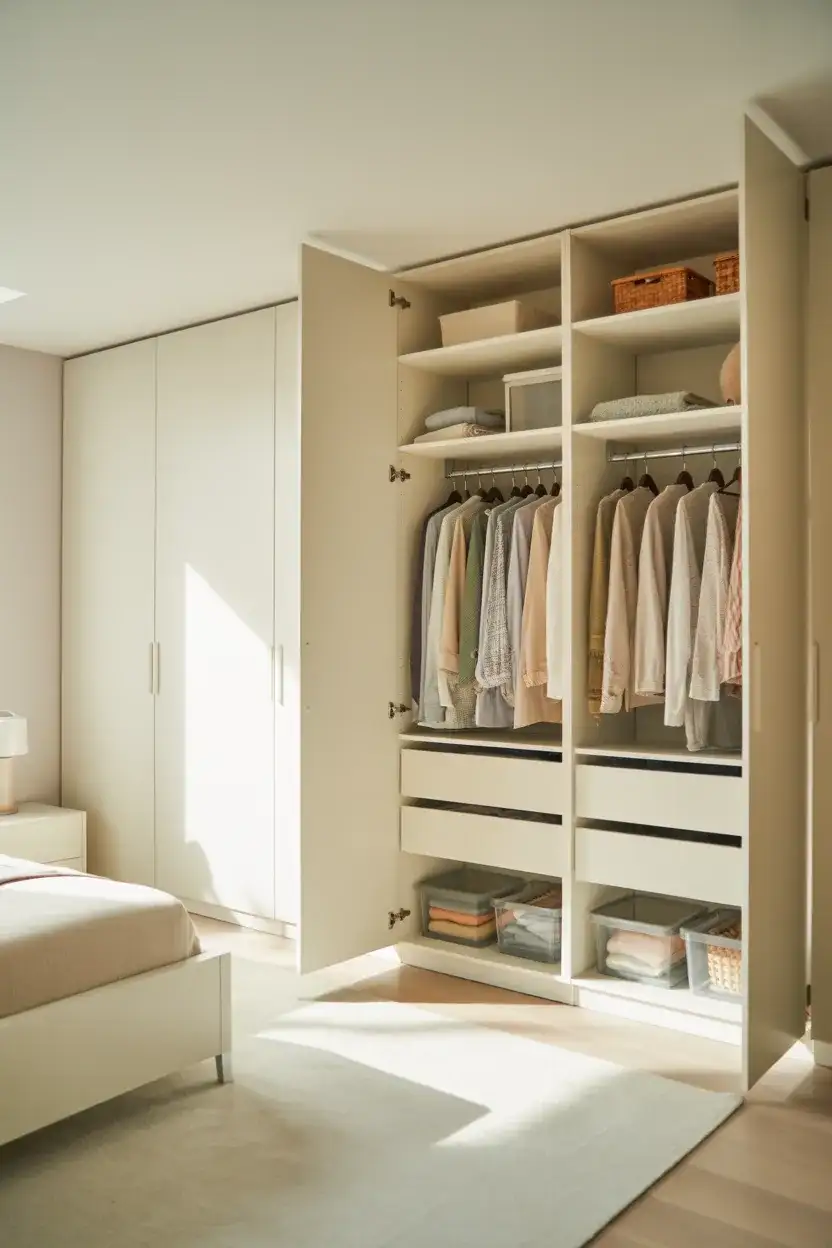
For renters or homeowners without built-in closets, IKEA’s PAX system offers a modular, semi-permanent solution that looks custom when installed correctly. You can configure interior shelving, drawers, and hanging rods to suit your wardrobe, and the frames come in widths that fit most bedroom walls. Paint or trim the exterior to match your baseboards, and it reads like millwork rather than flat-pack furniture.
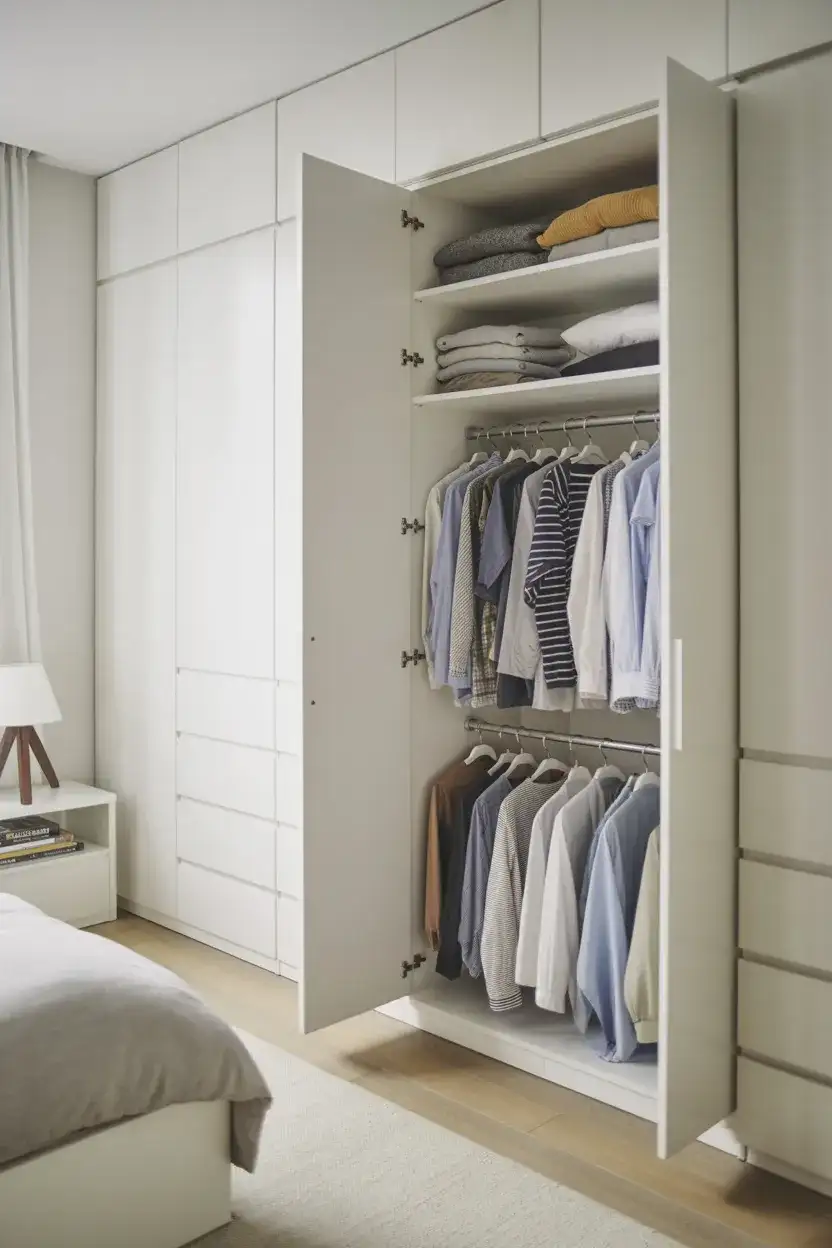
Where it works best: older apartments in cities like Chicago, Boston, or San Francisco, where closets are either tiny or nonexistent. PAX units are especially popular in prewar buildings where adding actual built-ins would require landlord approval and serious carpentry. The key is anchoring them to the wall for safety and stability, especially in earthquake-prone areas like California.
4. Overhead Storage Above the Door Frame
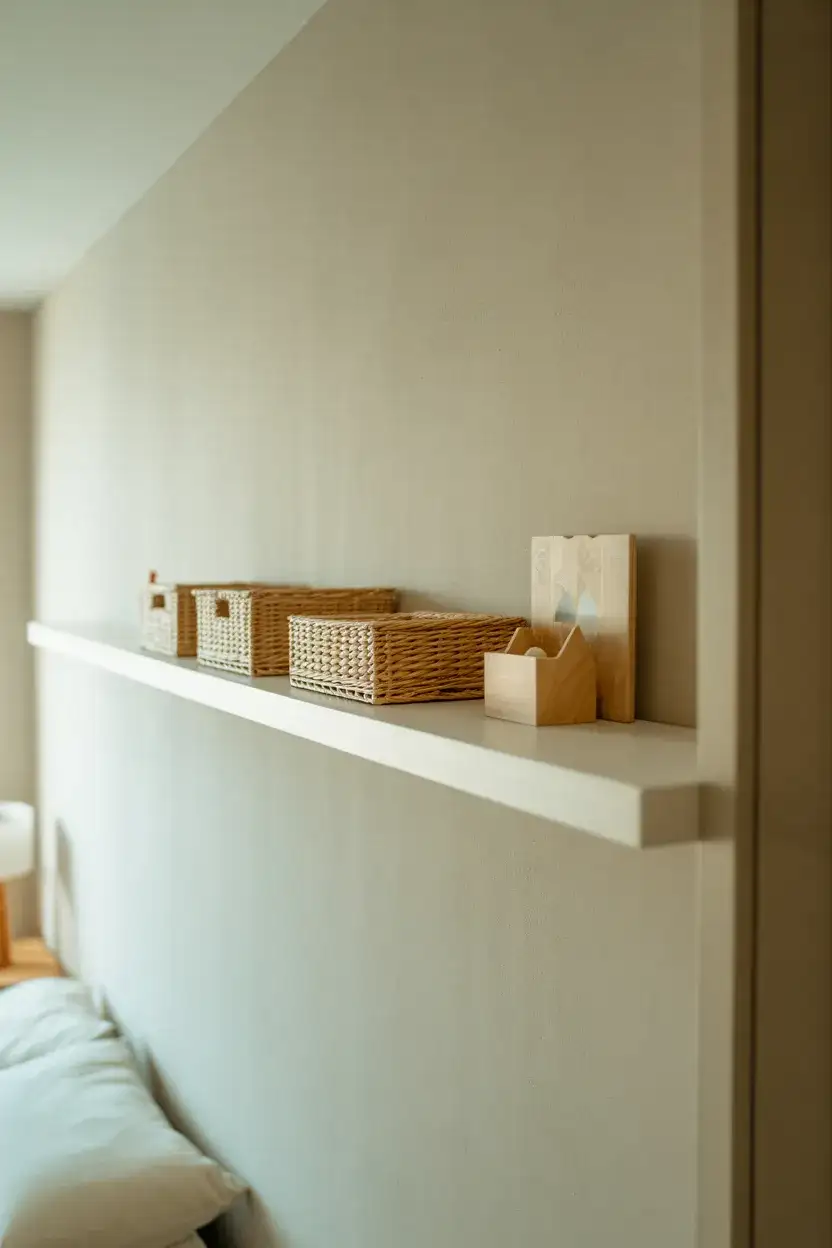
Most bedrooms have at least 12 inches of unused wall space above the door—a perfect spot for overhead shelving that holds rarely used items like luggage, seasonal decor, or archived paperwork. A simple floating shelf or a shallow cabinet keeps things accessible but out of sight, freeing up closet and floor space. This is especially useful in tiny bedrooms where every square foot counts.
One interior designer I spoke with mentioned that clients often overlook this zone entirely, even when they’re desperate for more storage. The trick is keeping the shelf shallow—6 to 8 inches deep—so it doesn’t feel like it’s closing in on the doorway. Use matching bins or baskets to keep the look cohesive and prevent visual clutter from above.
5. Aesthetic Open Clothing Racks for Curated Wardrobes
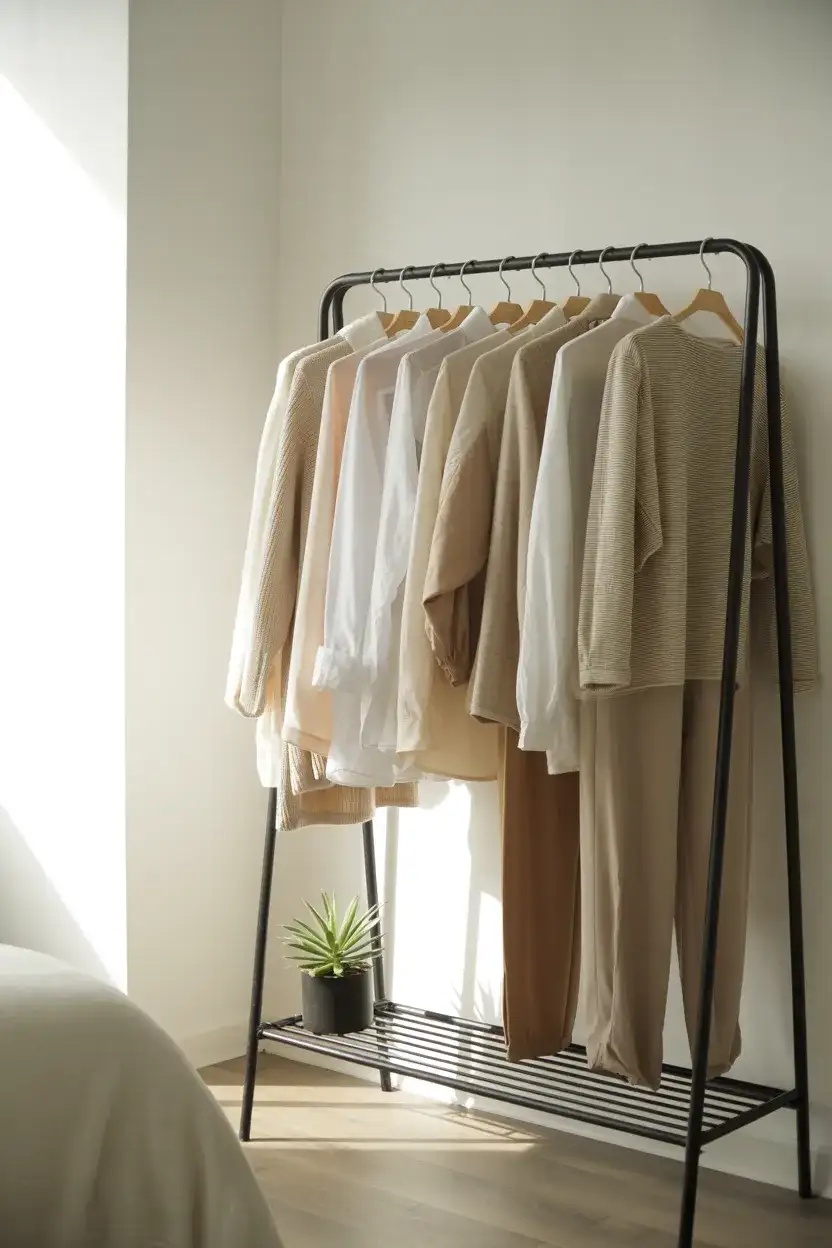
If your wardrobe is small and intentional—or you simply love the look of open storage—a freestanding aesthetic clothing rack can double as decor. Choose a sleek metal or wood frame that complements your bedroom’s style, and limit what you hang to create a boutique vibe. This approach works best when paired with ideas for clothes Rotation: keep only current-season pieces on display, and store the rest elsewhere.
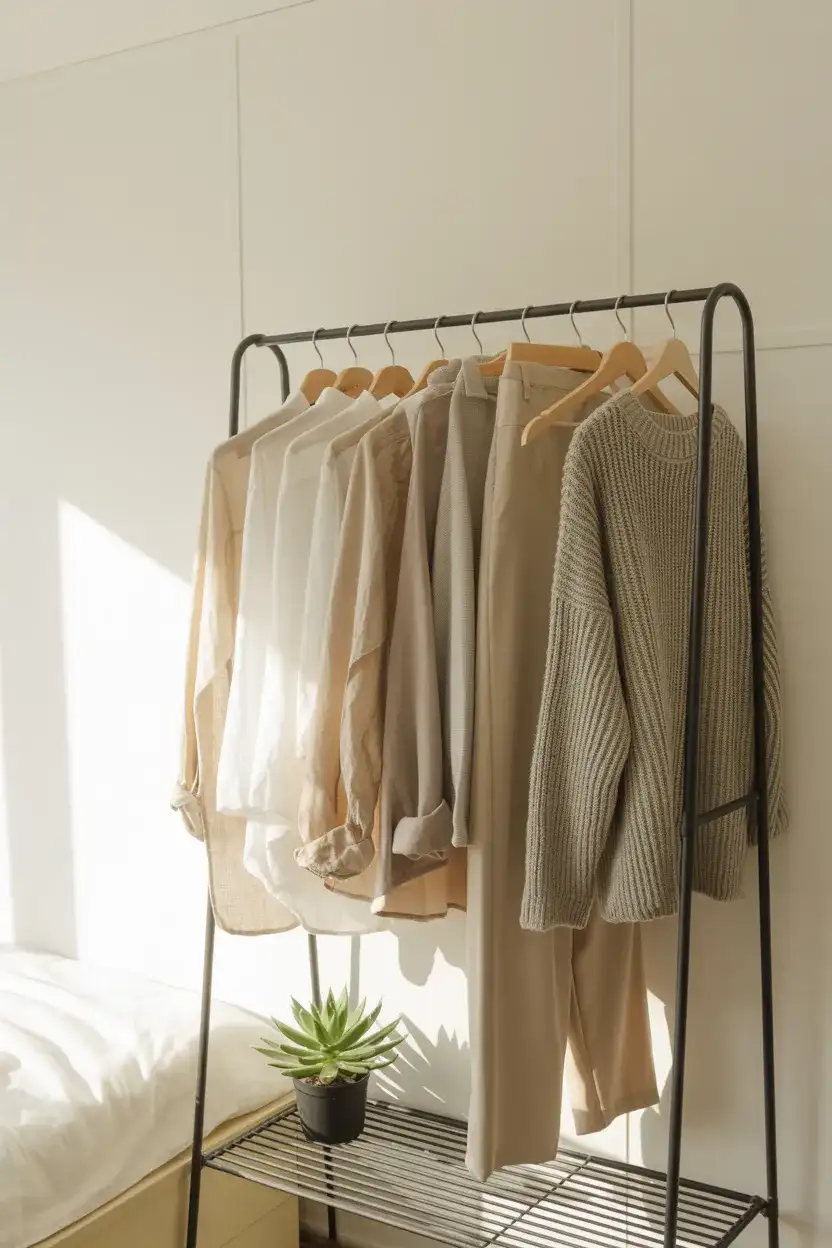
Open racks are trendy on Pinterest, but they require discipline. If you tend to accumulate laundry or impulse-buy fast fashion, an open system can quickly look chaotic. The key is treating the rack like a gallery: only hang what you actually wear and love, and use matching hangers for a cohesive look. This setup is popular in urban lofts and studio apartments where space is tight but style matters.
6. Built-In Window Seat with Lift-Top Storage
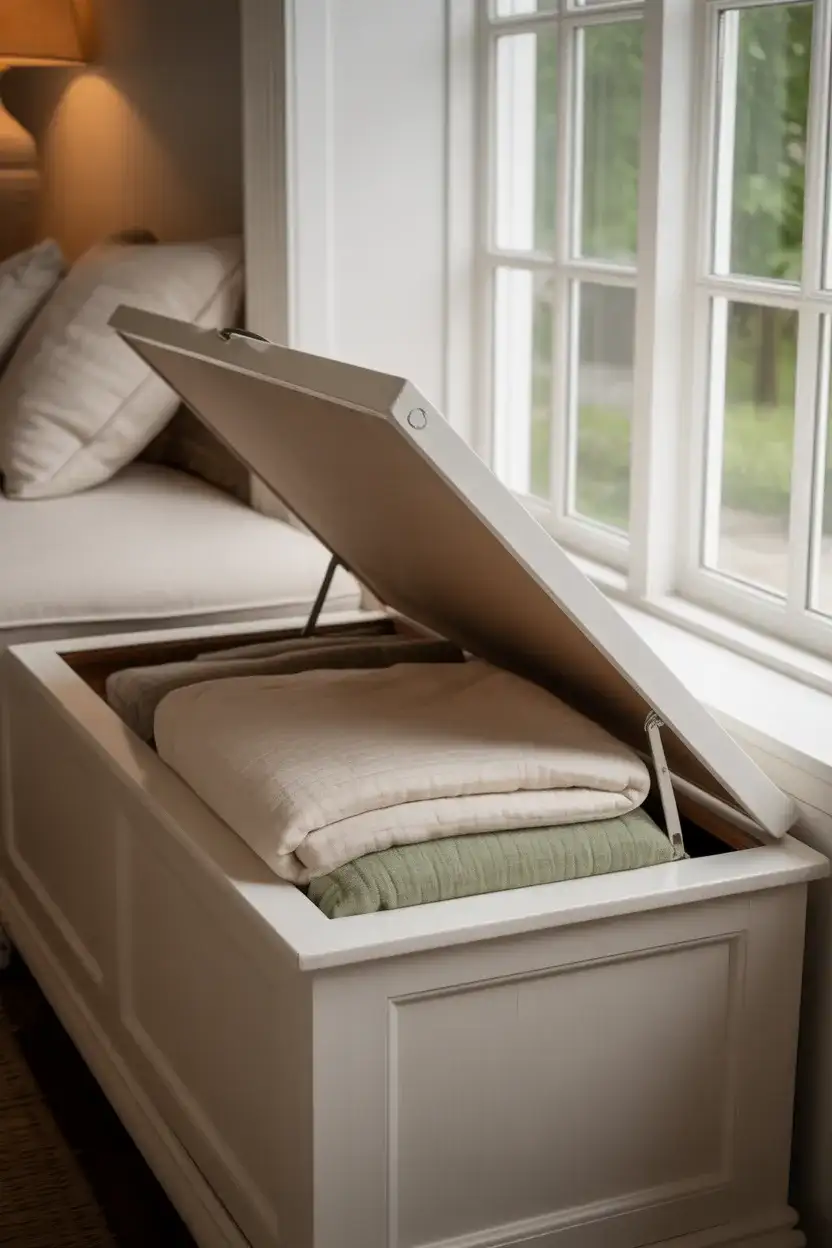
A bench under a bedroom window isn’t just cozy—it’s an opportunity for serious hidden storage. Lift-top designs let you stash extra pillows, blankets, or out-of-season clothing while providing a built-in reading nook. If you’re renovating or have basic carpentry skills, this is one of the most high-impact DIY projects you can tackle, especially in older homes with deep window sills.
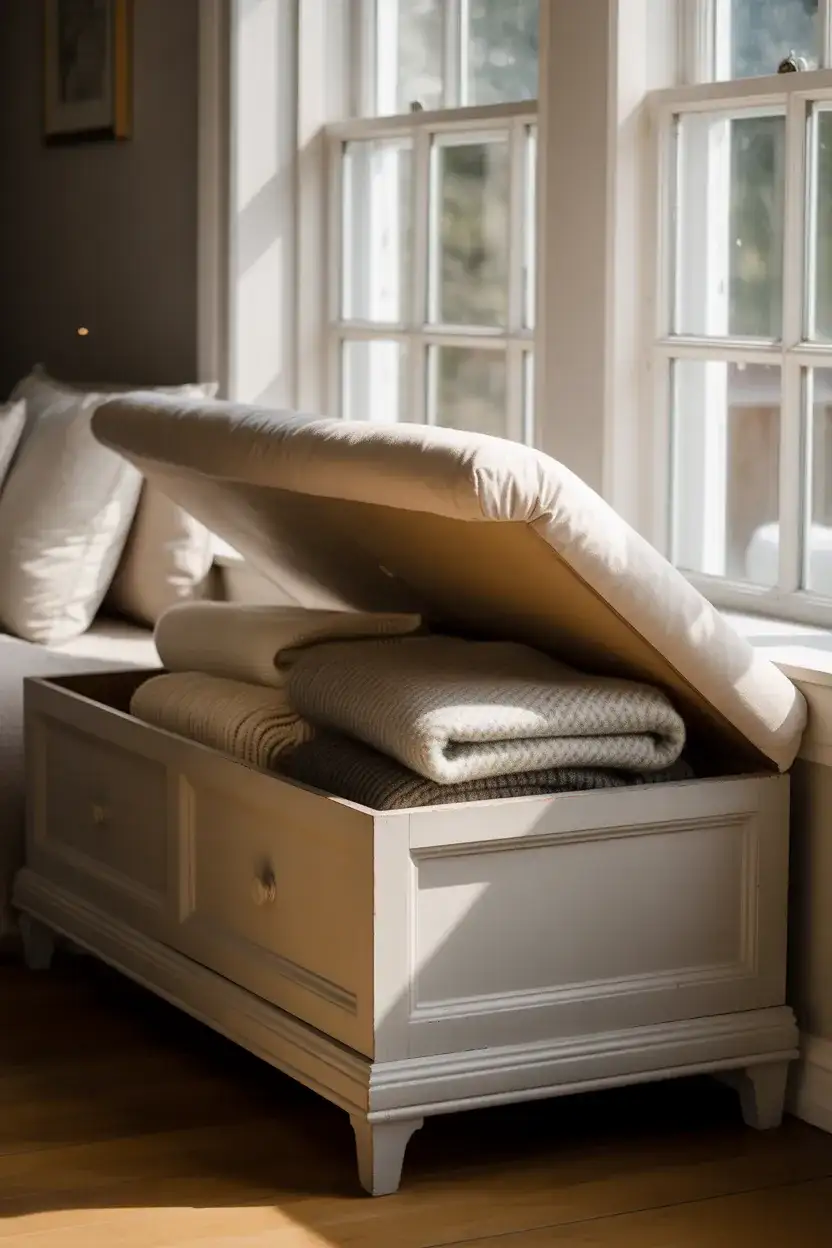
Budget-wise, a professional built-in can run $800 to $2,500 depending on materials and labor, but DIY versions using IKEA kitchen cabinets as a base cost closer to $300 to $600. Either way, it’s a smart investment in homes where closet space is limited, and it adds resale appeal in family-friendly neighborhoods where extra storage is always a selling point.
7. Vertical Pegboard Wall for Accessories and Jewelry
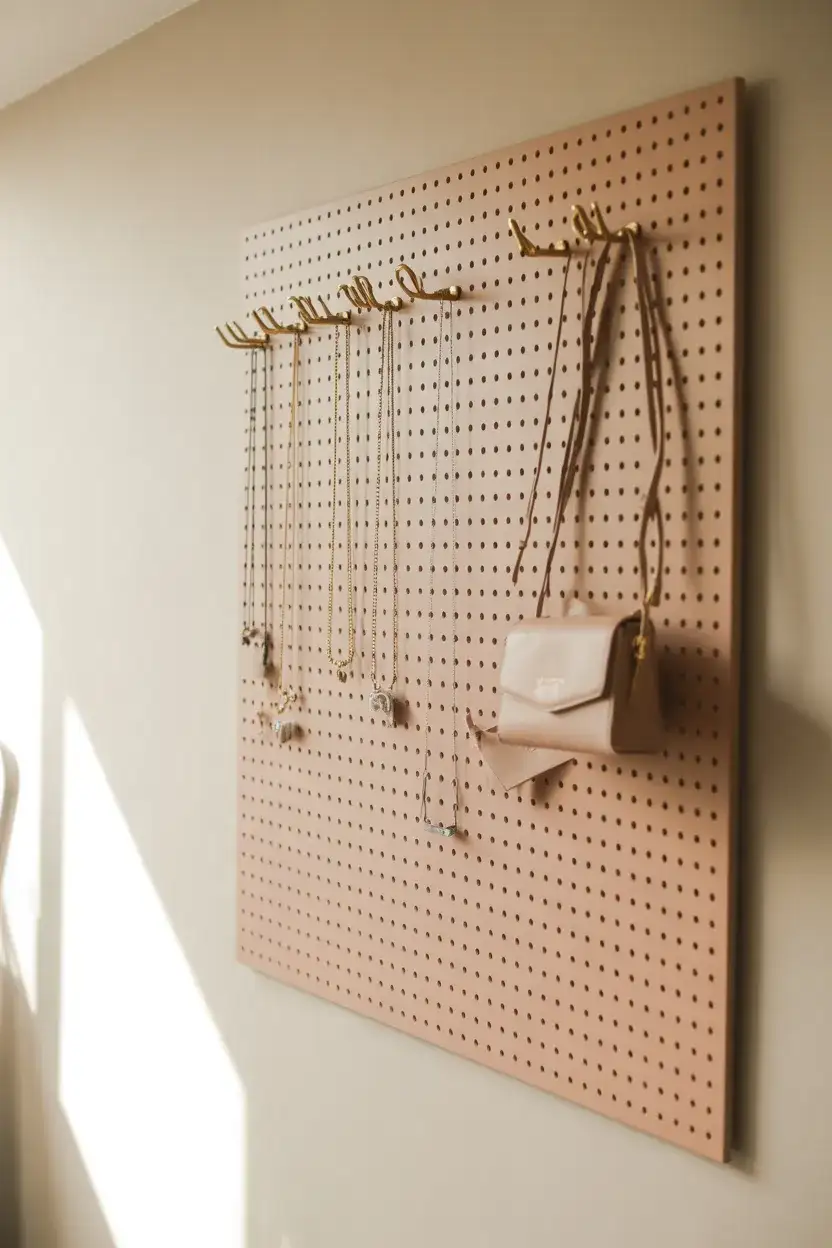
Pegboards aren’t just for garages anymore—painted in a soft color and outfitted with brass or wood pegs, they become a creative and highly functional way to organize jewelry, hats, scarves, and bags. Mount one behind your dresser or on an empty wall, and you’ll free up drawer space while keeping your accessories visible and easy to grab. This is a popular hack for small bedrooms where traditional storage furniture feels too bulky.
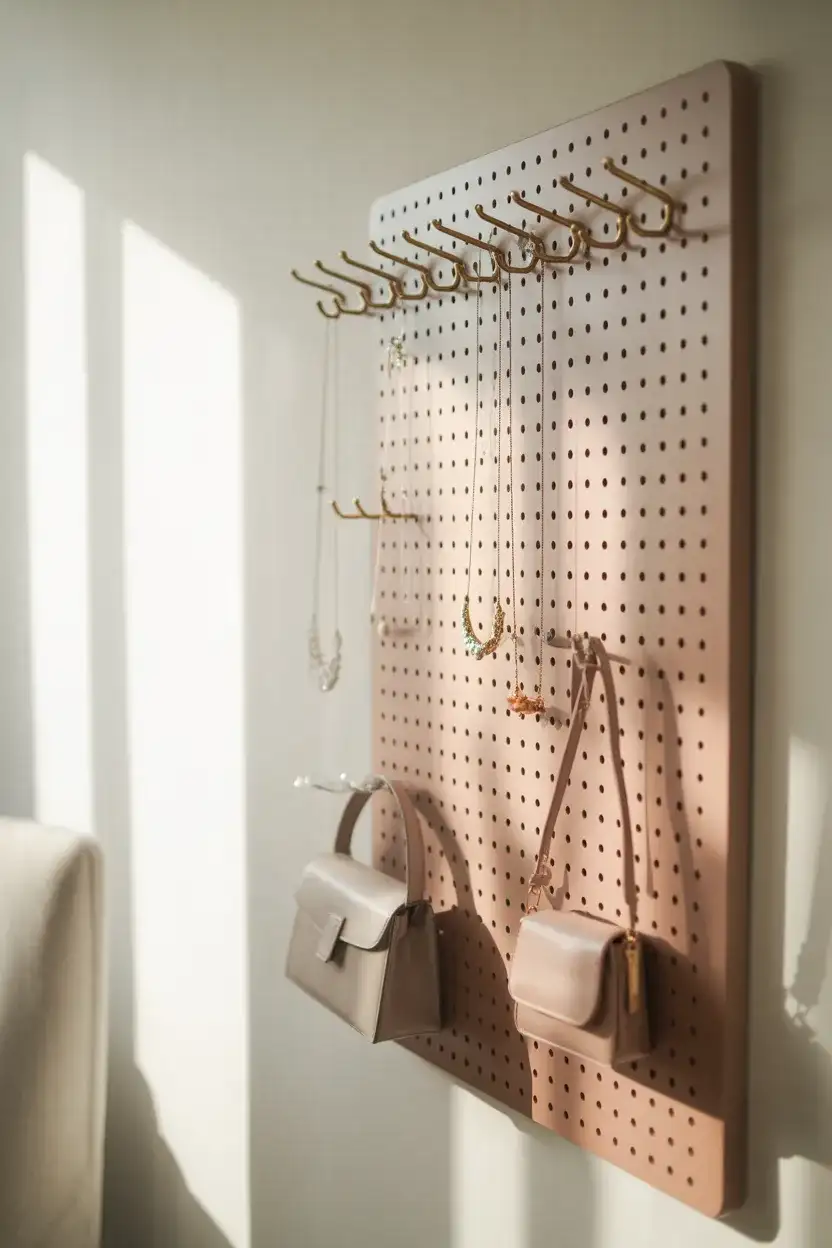
Real homeowner behavior: people love the Instagram look of a pegboard wall but often don’t maintain it. If you’re not someone who naturally hangs things back up, this system will end up messy fast. It works best for people who already have routines around putting things away—or who keep a minimal accessory collection and want everything on display.
8. Under-Stair Nook Converted to Closet Space
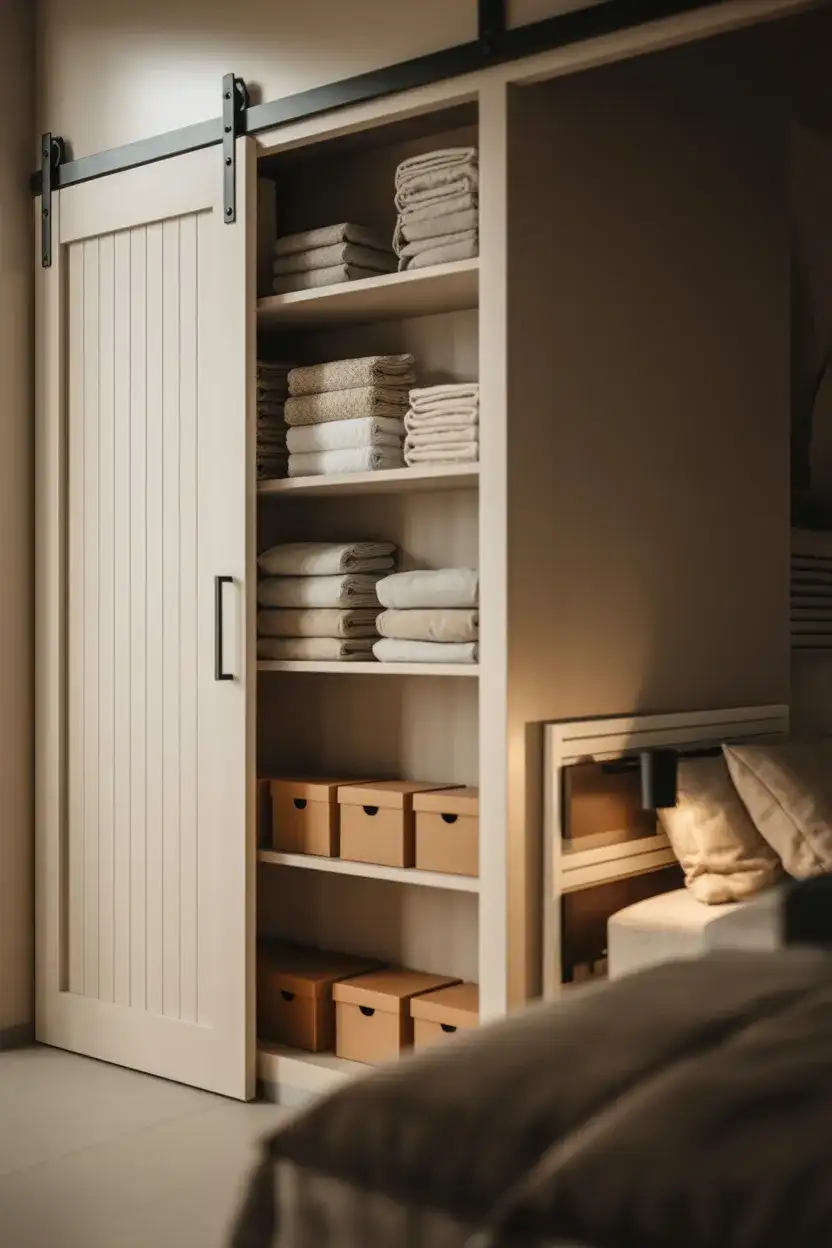
If your bedroom is in a split-level or loft-style home with stairs nearby, the space underneath can be transformed into smart storage for shoes, folded clothes, or linens. Add a curtain, sliding door, or even a hinged panel to keep it hidden, and you’ve just created a closet where there wasn’t one before. This is especially useful in attic bedrooms or bonus rooms where traditional closets don’t exist.
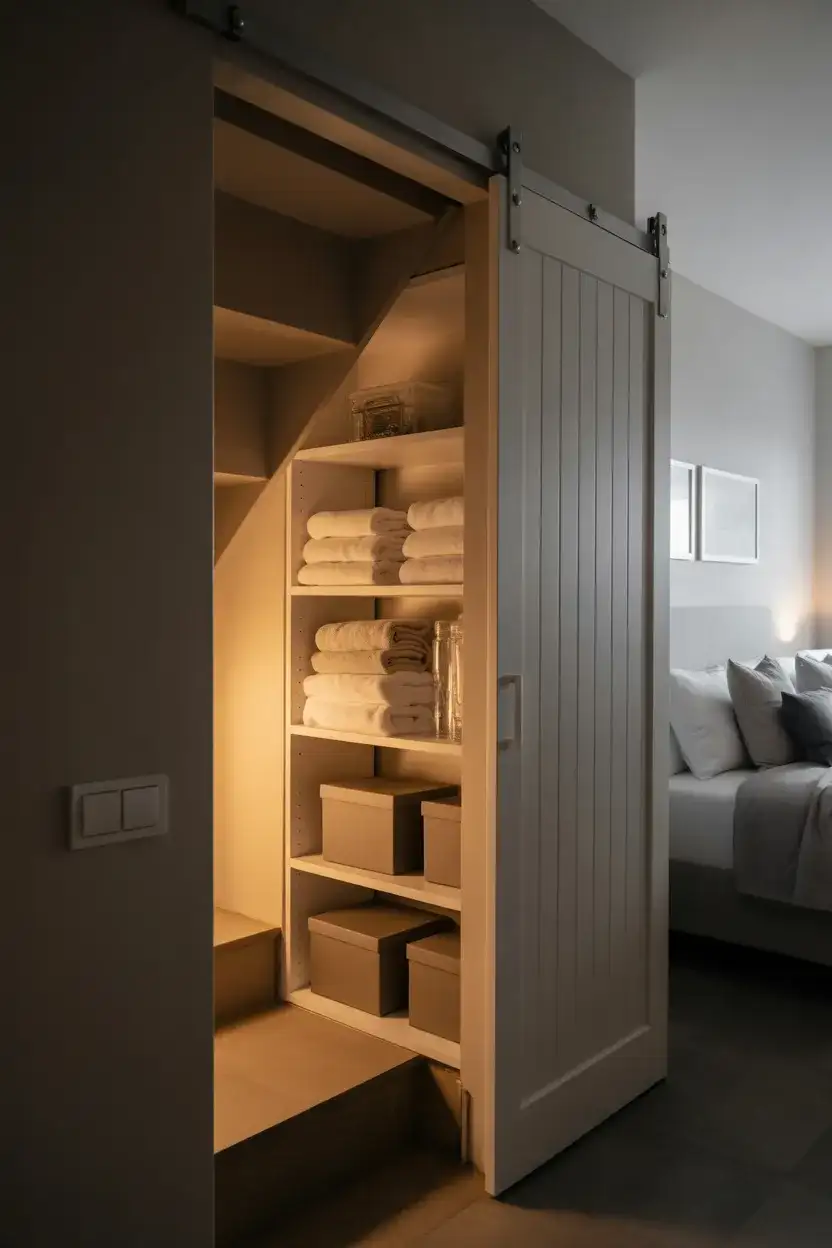
This solution is common in older American homes—especially Victorian-era houses and 1920s bungalows—where stairways cut through living spaces and bedrooms. The tricky part is dealing with the angled ceiling, but custom shelving or adjustable organizers can make the most of even the shortest sections. It’s also a great spot for long-term storage, like archived files or holiday decor.
9. Modular Cube Organizers for Kids’ Rooms
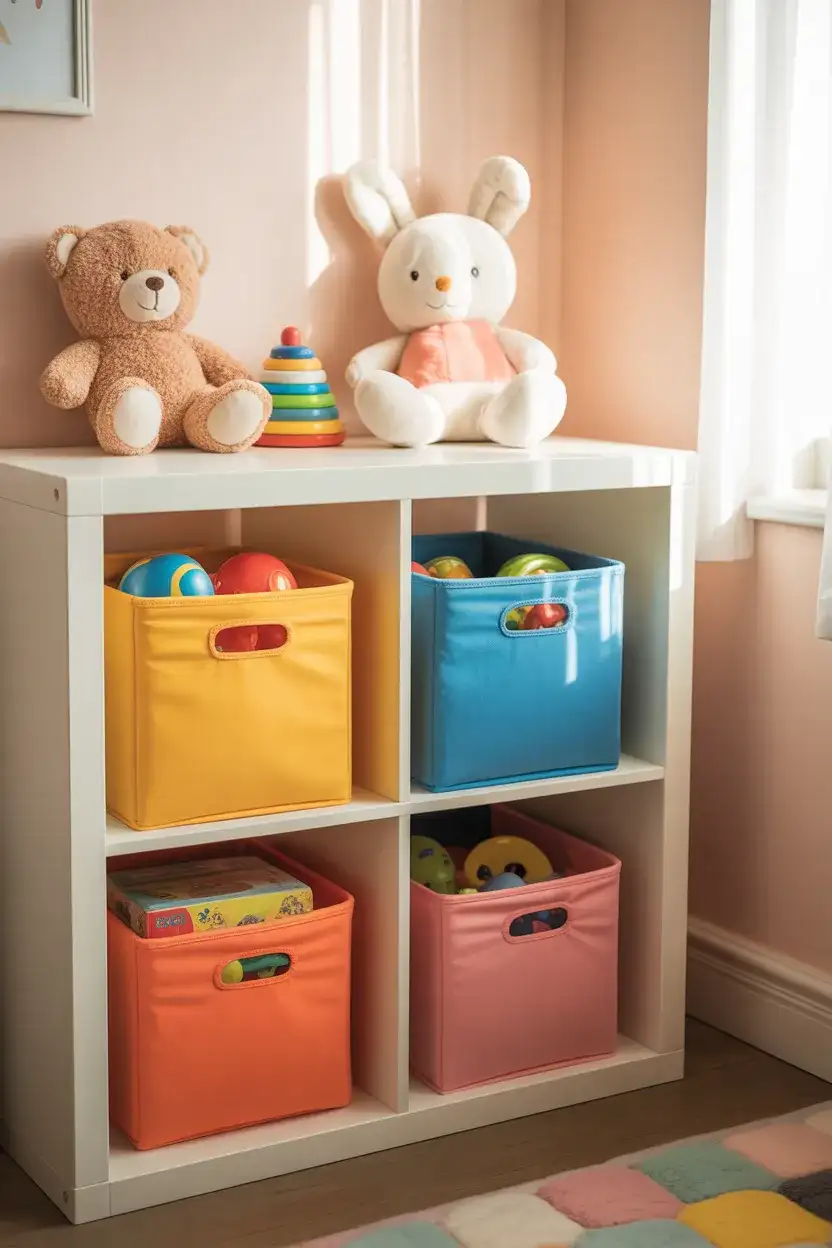
Cube shelving systems—like the IKEA Kallax—are a staple in small kids’ bedrooms because they’re low enough for children to reach, modular enough to grow with them, and easy to reconfigure as needs change. Use fabric bins for toys and books, and leave a few cubes open for display. These units also work horizontally as a low room divider in shared bedrooms, giving each child a sense of their own zone.
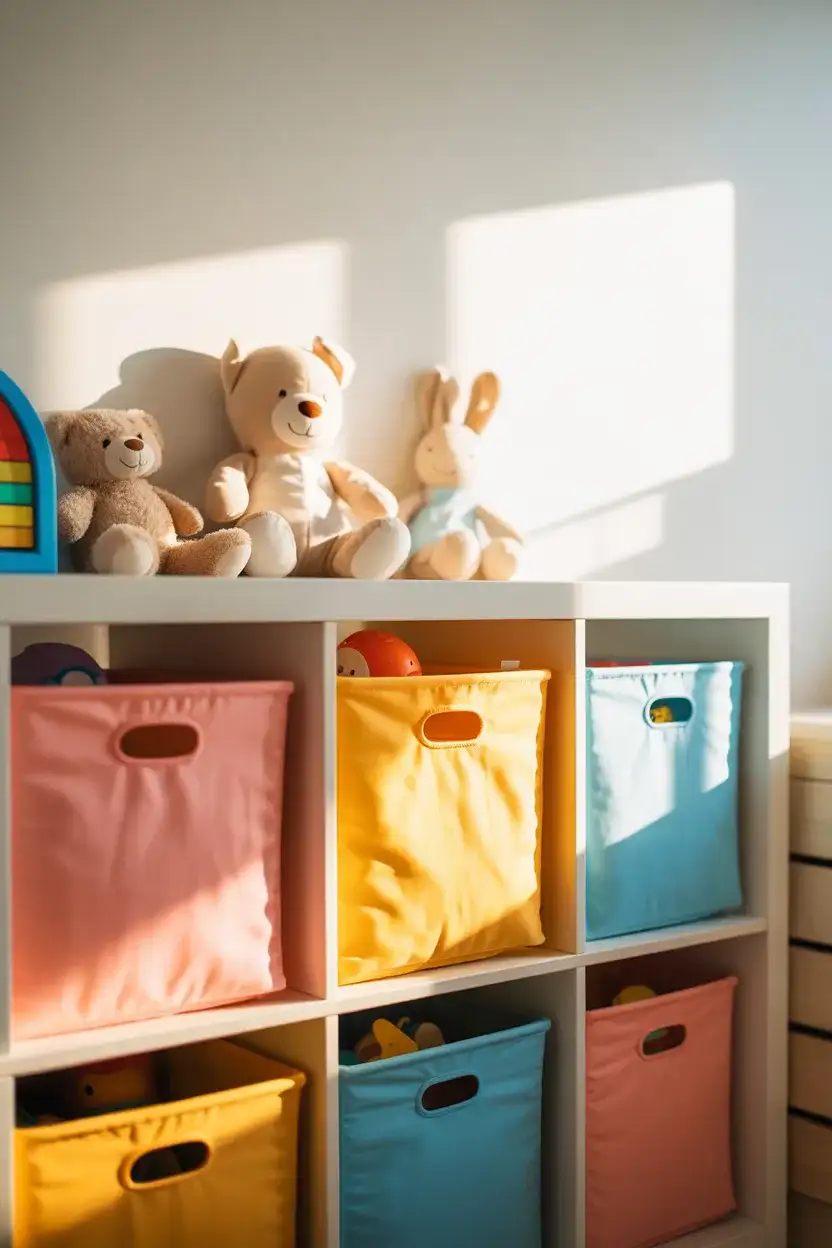
One practical insight: label each bin with a picture and word (e.g., “blocks,” “dolls”) to help younger kids learn to put things away independently. This small step makes cleanup less of a battle and teaches organizational habits early. Cube systems are also budget-friendly—most run $50 to $150—and can be resold or repurposed once kids outgrow them.
10. Hidden Storage Behind Headboard Panels
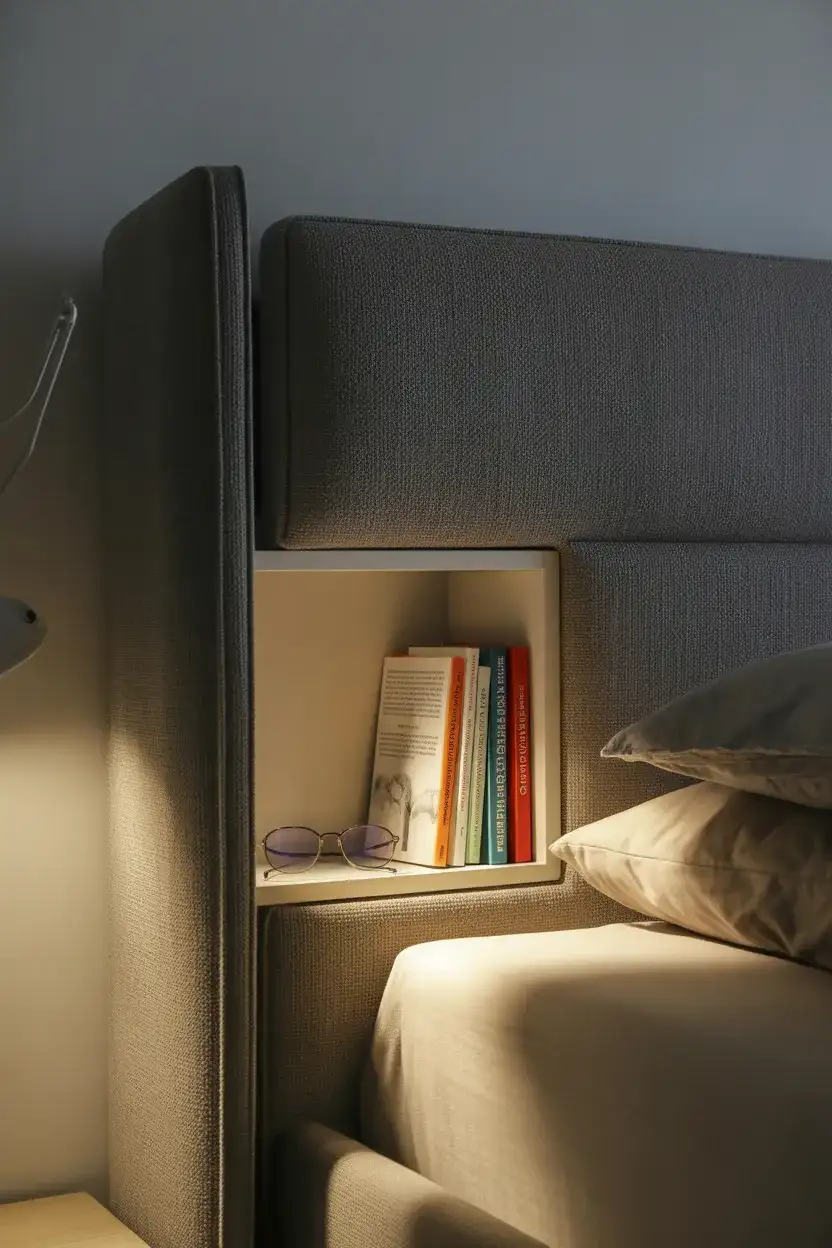
A clever way to add storage without cluttering sightlines is to build or buy a headboard with hidden compartments. Some designs feature lift-up panels or side shelves that tuck books, charging cables, or small personal items out of view. This is ideal for minimalist bedrooms where visible storage would disrupt the clean aesthetic, and it works especially well in guest rooms where you want to provide storage without permanent furniture.
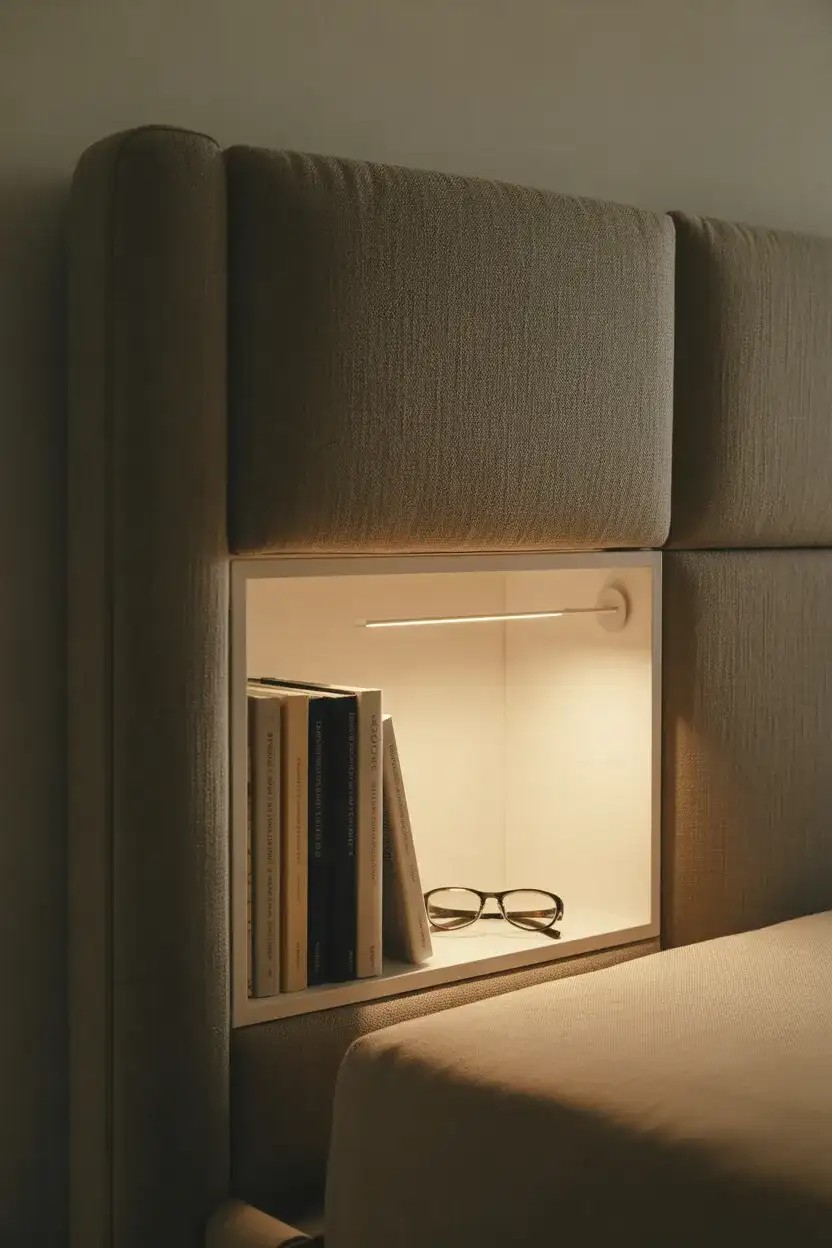
Common mistake: buying a headboard with storage that’s too shallow to be useful or too deep to access easily from a sitting position in bed. Before purchasing or building, test the depth—ideally around 6 to 8 inches—and make sure you can comfortably reach in without straining. Soft-close hinges are also worth the extra cost if you’re a light sleeper.
11. Corner Shelving Units to Maximize Awkward Spaces
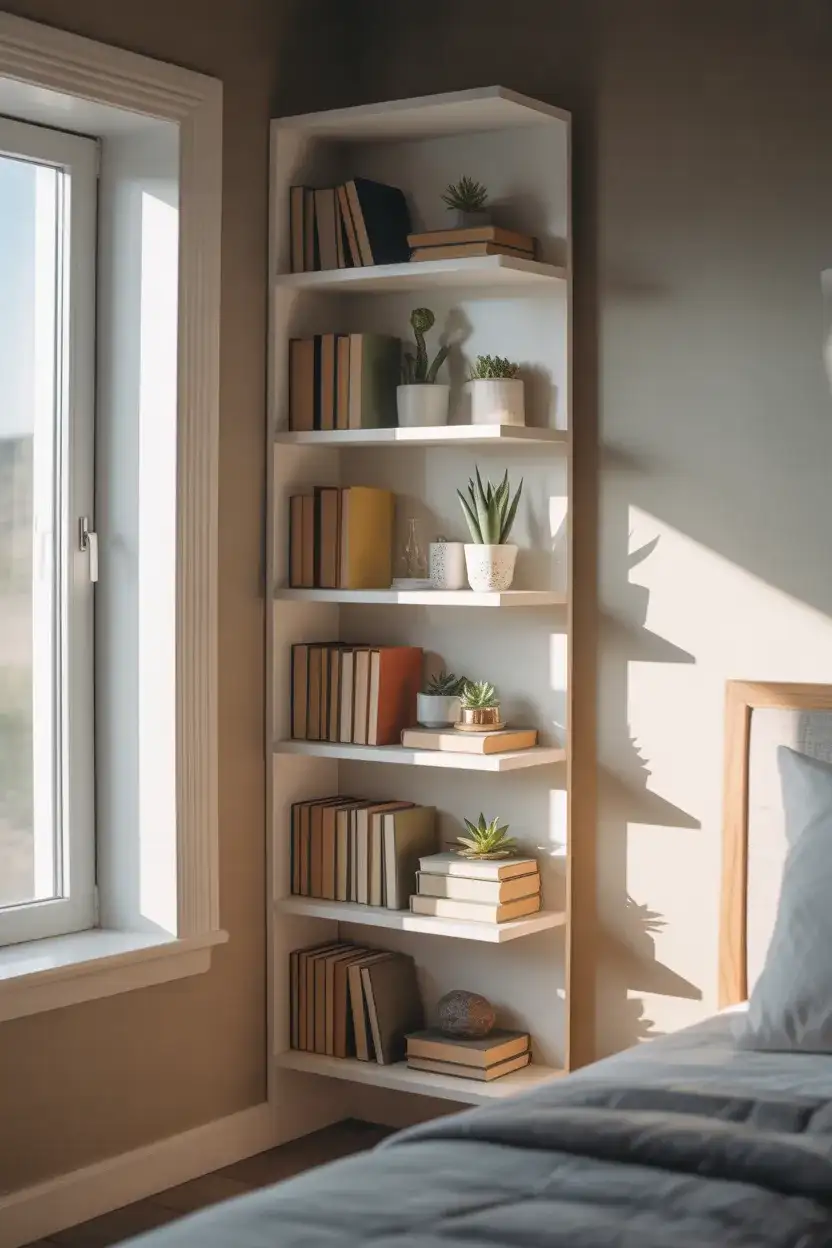
Dead corners in bedrooms often go unused, but a tall corner shelf can turn that wasted space into functional storage. Look for units with a small footprint that climb vertically, offering multiple tiers for books, plants, or folded clothes. This is a smart move in small spaces where floor area is limited but you have ceiling height to spare.
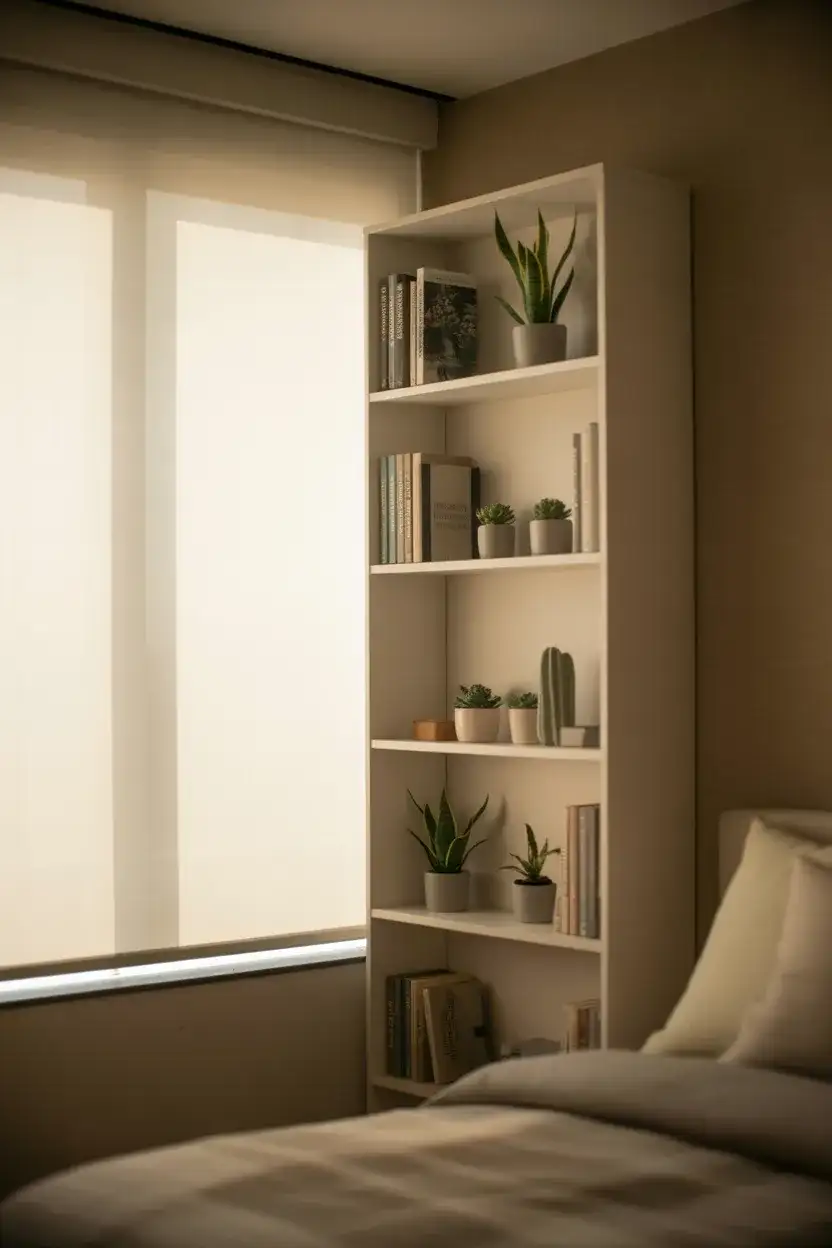
In American apartments, especially in older buildings with irregular layouts, corner shelves can make a huge difference. They’re also relatively inexpensive—$40 to $120 for most freestanding models—and require no installation beyond placing them in position. Just be mindful of stability; taller units should be anchored to the wall, especially in homes with children or pets.
12. Rolling Garment Rack with Lower Shoe Storage
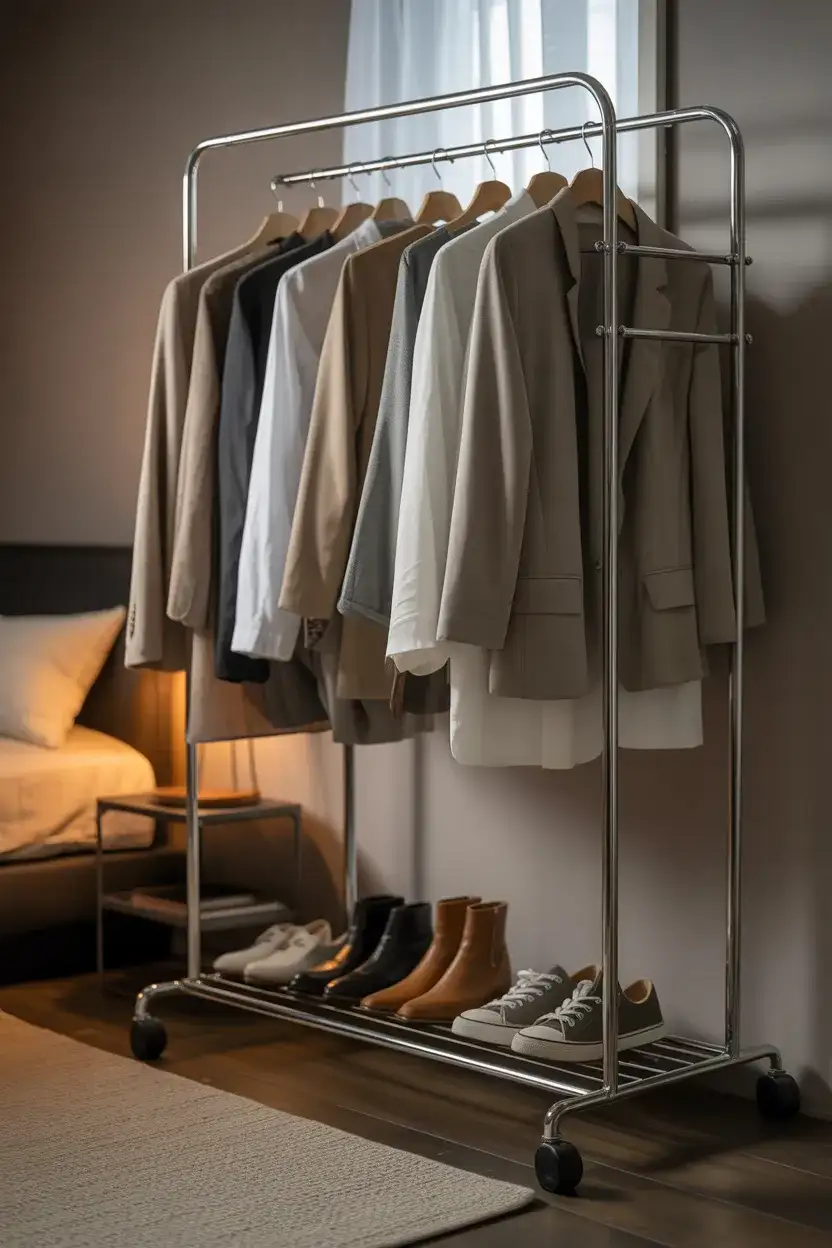
For renters or anyone who likes to rearrange frequently, a wheeled clothing rack with a bottom shelf for shoes is a flexible solution that adapts to your needs. Use it as overflow storage during seasonal transitions, or position it as a primary closet alternative in a tiny bedroom. The mobility means you can tuck it into a closet or corner when not in use, keeping the room feeling open.
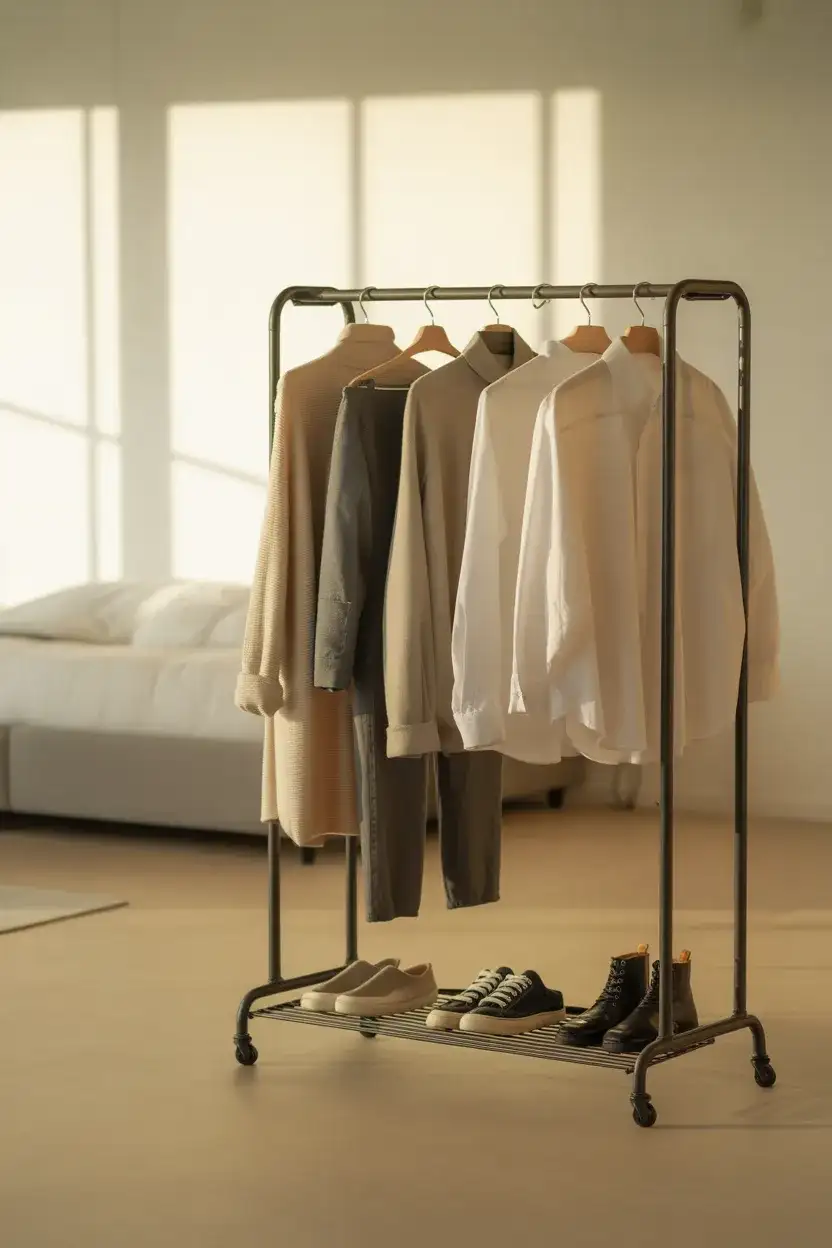
Expert-style commentary: Interior organizers recommend this setup for people who work from home and need to quickly transition their bedroom from “sleep mode” to “work mode.” Roll the rack into a closet or behind a screen during video calls, and bring it back out when you need to pick an outfit. It’s especially useful in studio apartments where every piece of furniture needs to multitask.
13. Recessed Wall Niches for Nightstand Storage
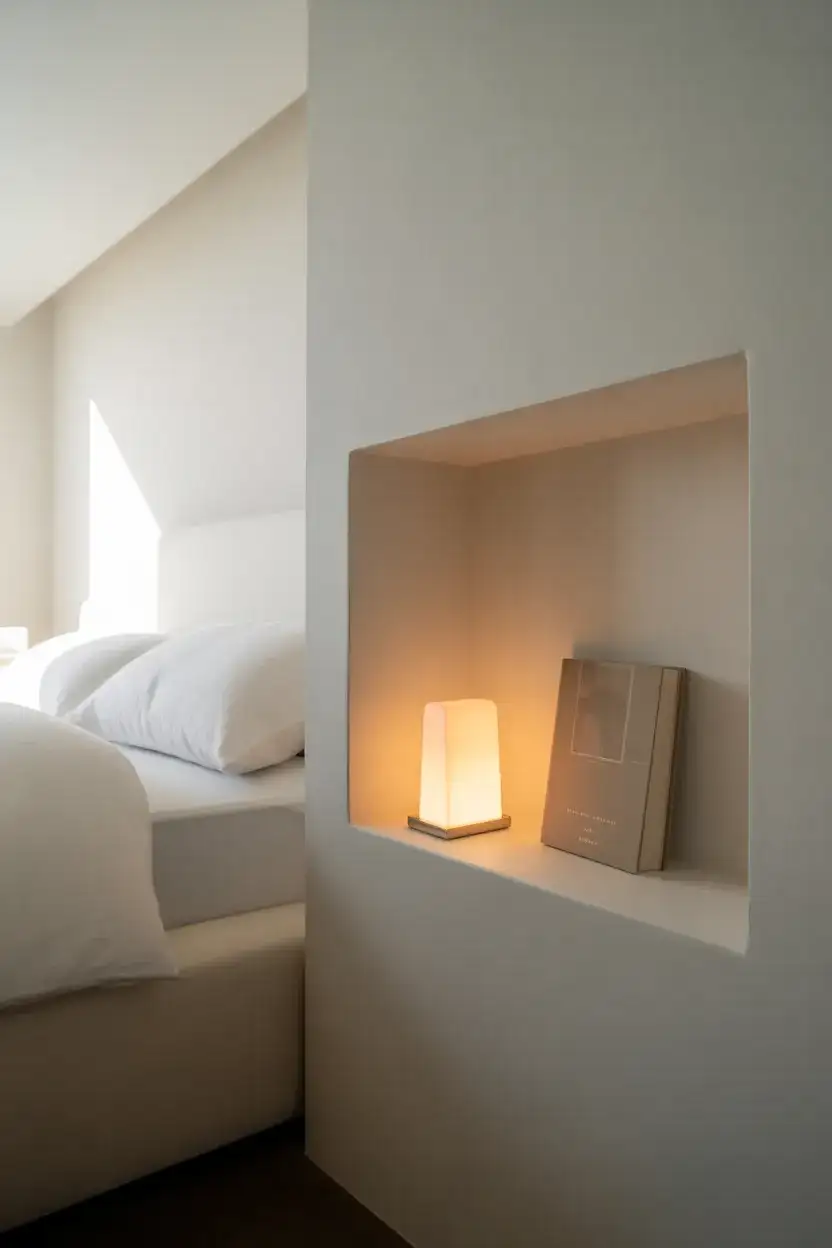
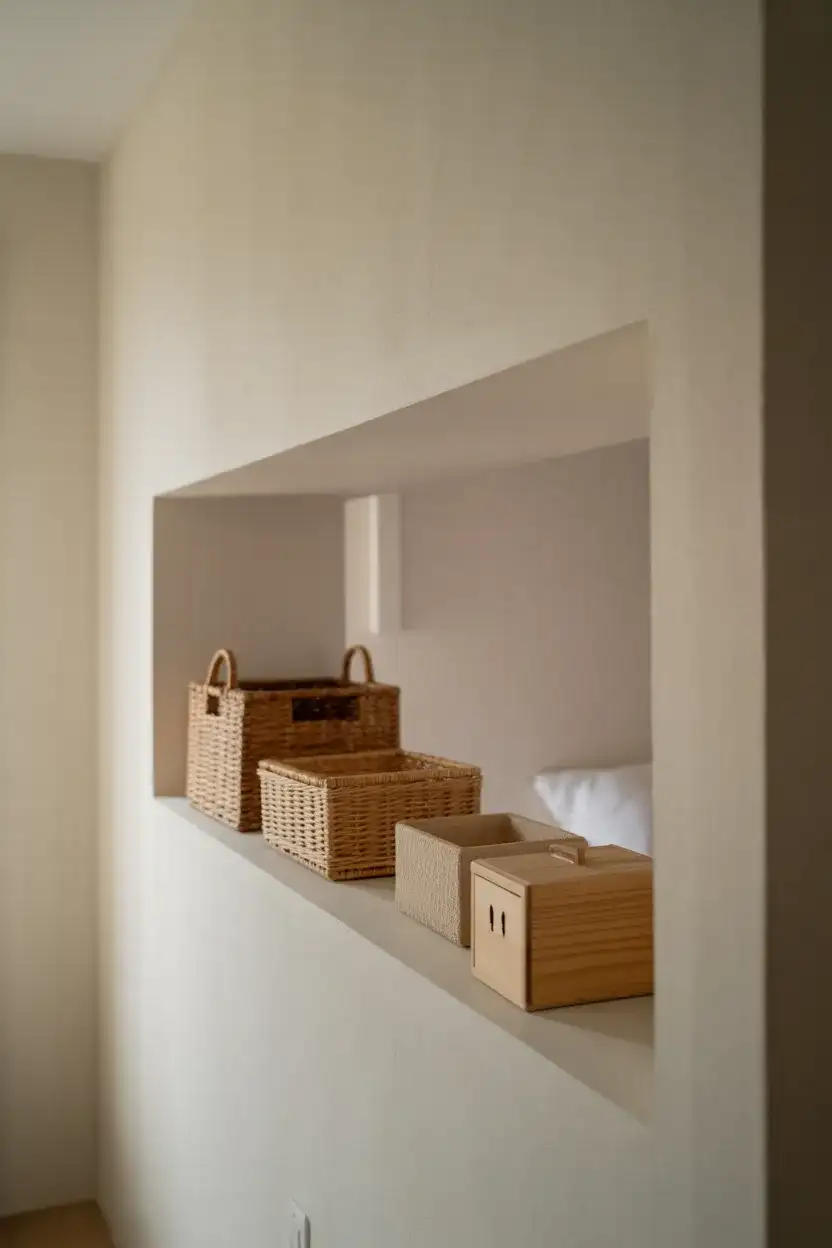
If you’re renovating or your bedroom walls have enough depth, recessed niches carved into the wall beside the bed eliminate the need for traditional nightstands. This is a high-end design move that creates a floating, minimal look while providing a spot for books, glasses, and your phone. It works especially well in modern or contemporary interiors where clean lines and uncluttered surfaces are a priority.
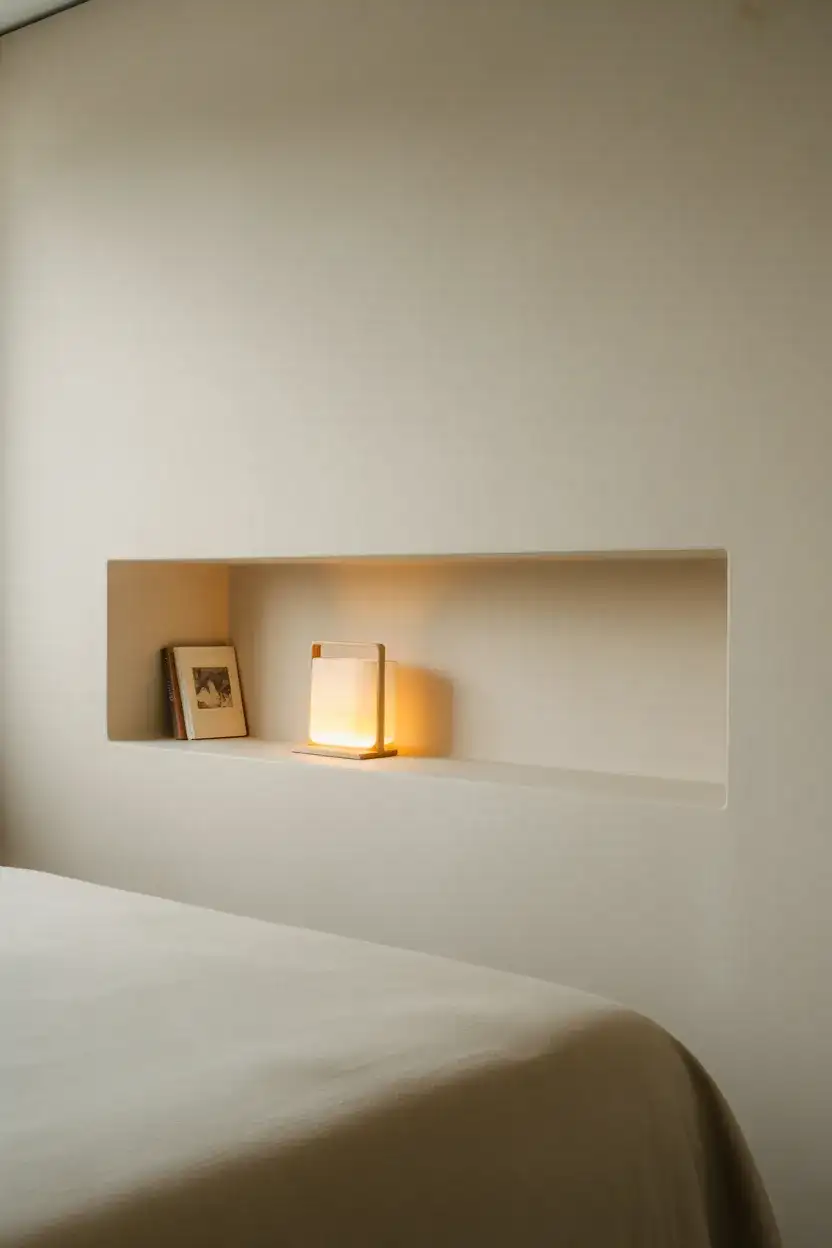
This approach is most common in new construction or gut renovations, where wall cavities can be planned from the start. In older homes, you’ll need to check for plumbing, wiring, and studs before cutting into walls. Budget-wise, expect to pay $200 to $600 per niche if hiring a contractor, but the payoff is a sleek, space-saving feature that adds resale value.
14. Armoire with Mixed Hanging and Drawer Space
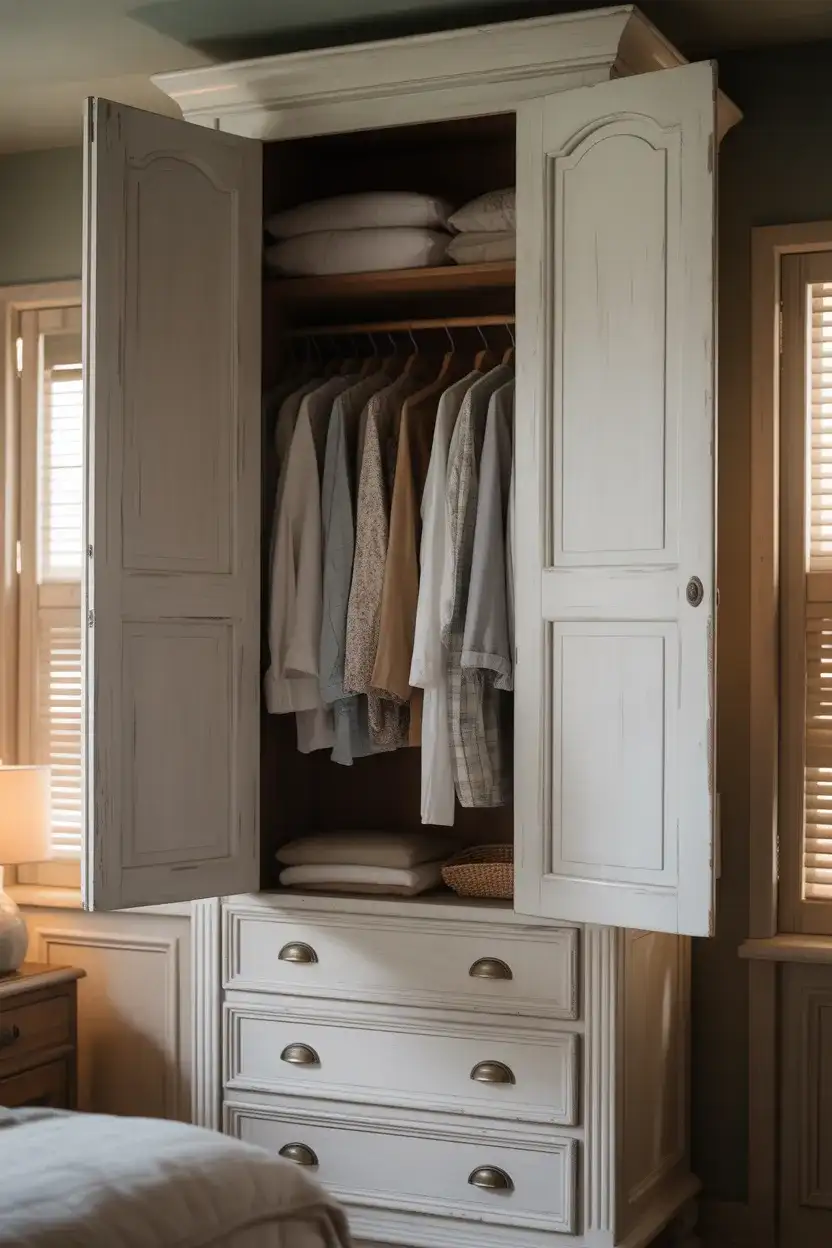
A standalone armoire is a classic solution for bedrooms lacking built-in closets, offering both hanging rods and drawer space in one piece. Choose a style that matches your decor—farmhouse wood, painted cottage, or sleek modern—and use the top for display or seasonal storage bins. This is particularly popular in historic homes and older apartments where closets were either small or nonexistent.
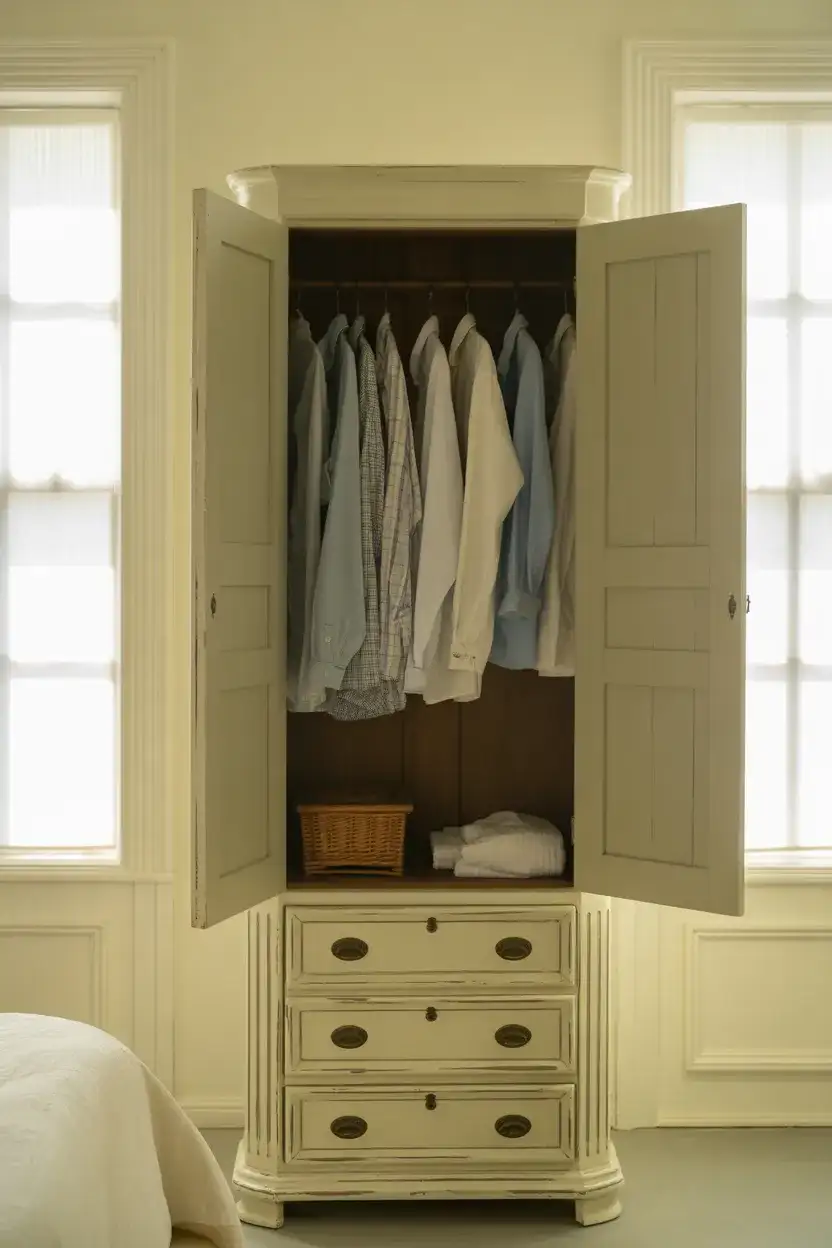
In regions like New England and the Mid-Atlantic, armoires are a staple in older homes where closet retrofitting is expensive or architecturally challenging. The downside is they take up significant floor space, so they’re best for larger bedrooms or when you can forgo a separate dresser. Look for vintage pieces at estate sales—they’re often better built than modern equivalents and cost less.
15. IKEA Hacks: MALM Dresser with Drawer Dividers
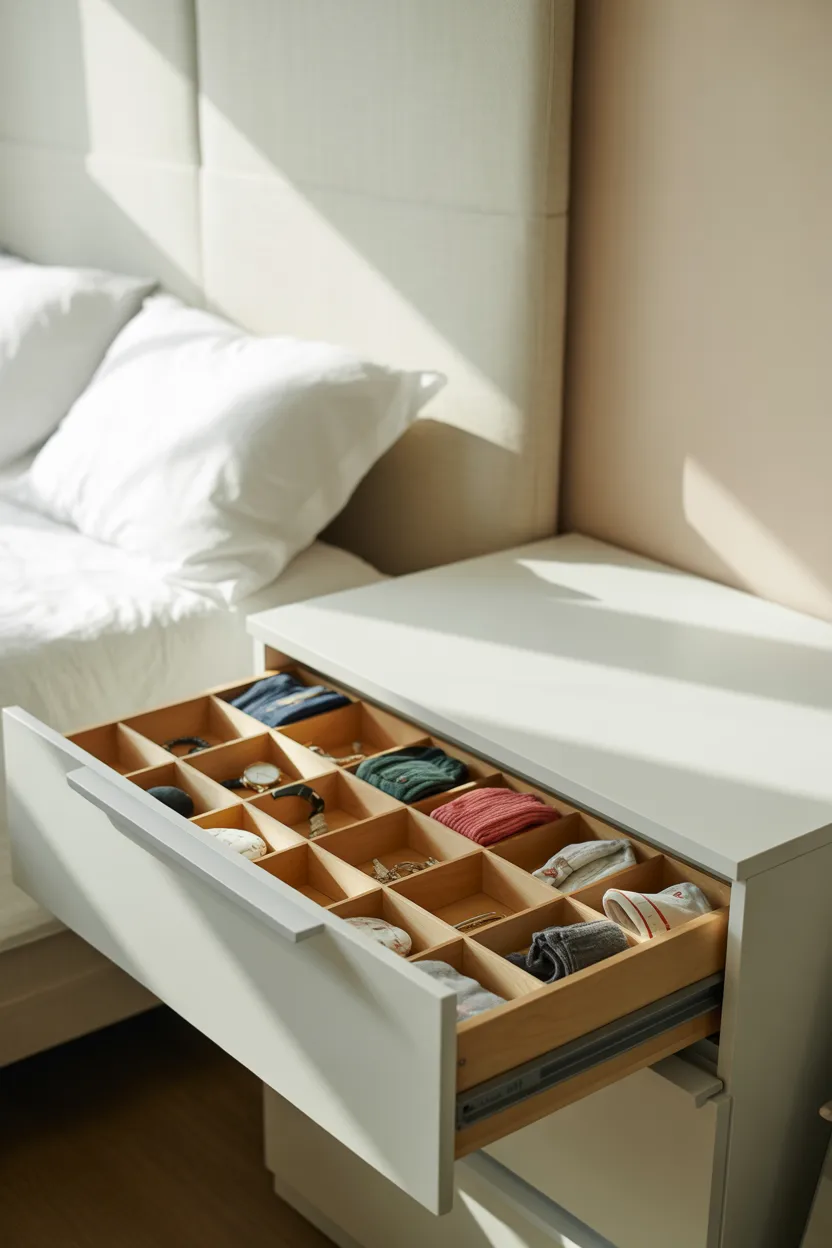
The IKEA MALM dresser is a workhorse in American bedrooms, but adding custom drawer dividers or small bins inside transforms it into a truly organized system for ideas for clothes storage. Use dividers for socks, underwear, and accessories to keep everything visible and prevent the dreaded “junk drawer.” This simple IKEA hack upgrade costs under $20 and makes a huge difference in daily function.
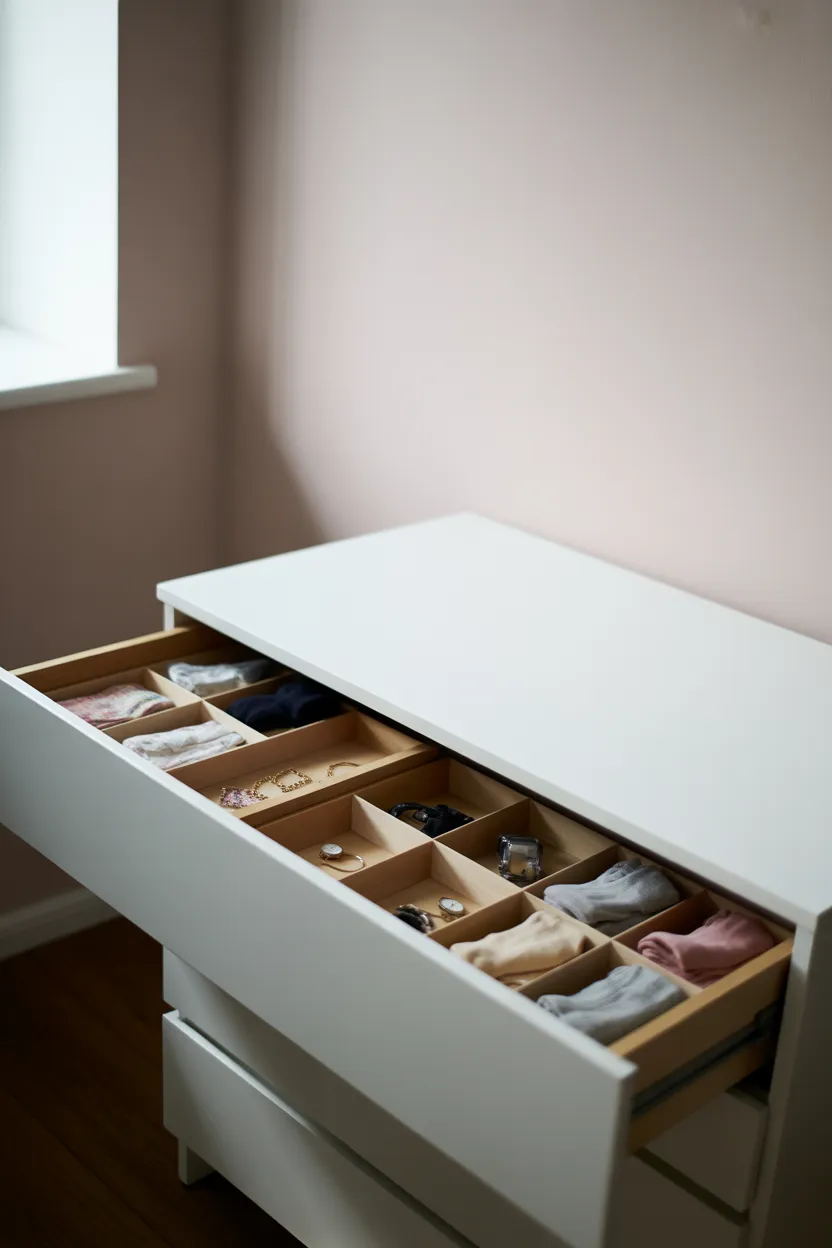
Where it works best: small urban apartments and college dorms, where IKEA furniture is already the standard and residents are looking for low-cost ways to improve organization. The MALM is also wide enough to double as a TV stand or entryway piece, making it a versatile choice for multipurpose rooms or studios where furniture needs to serve multiple roles.
16. Fold-Down Wall Desk with Hidden Compartments
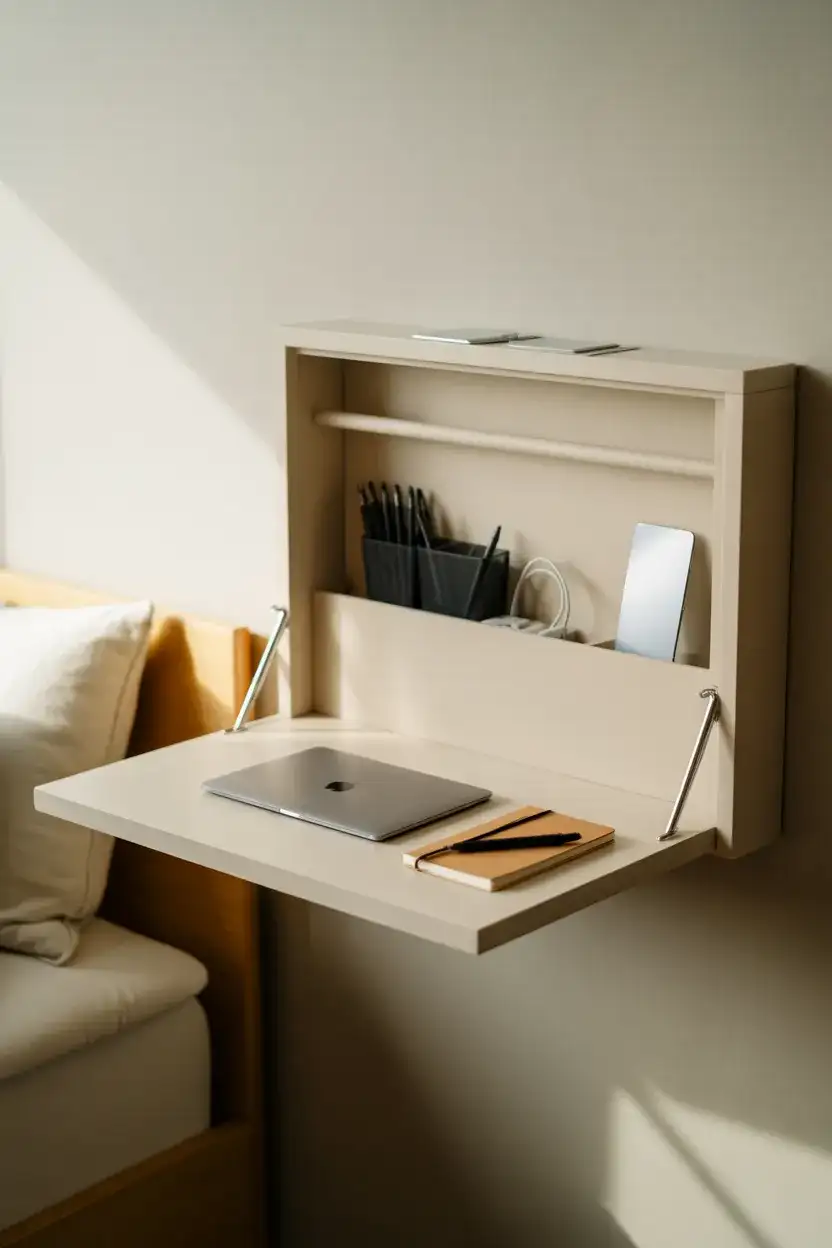
In bedrooms that double as home offices, a wall-mounted fold-down desk with internal storage keeps work supplies tucked away when not in use. This is a smart choice for guest rooms or multi-use spaces where you don’t want a permanent desk taking up floor space. Look for models with small shelves or slots for pens, chargers, and notebooks, so everything stays organized even when the desk is closed.
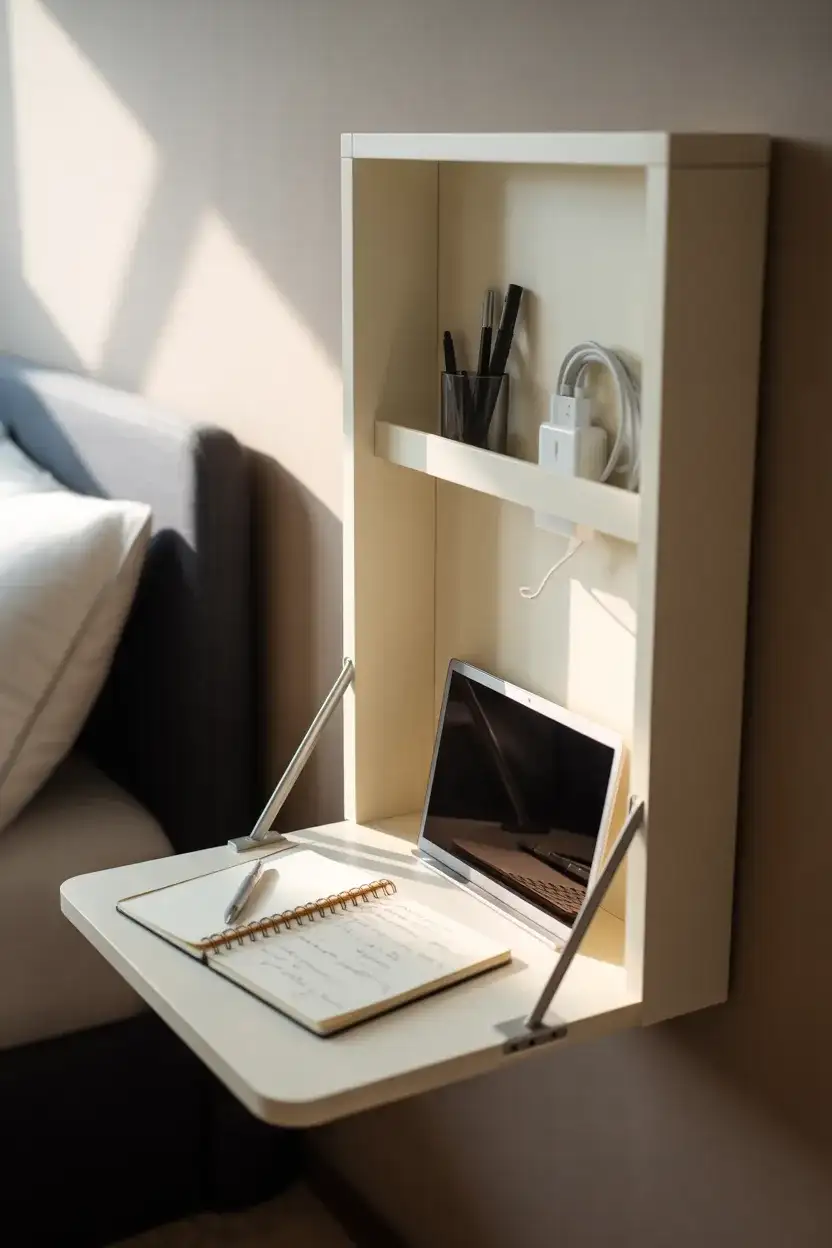
Real homeowner behavior: people love the idea of a fold-down desk but often leave it open all the time, defeating the space-saving purpose. If you’re someone who works from your bedroom daily, consider whether you’ll actually fold it up at the end of the day. If not, a small traditional desk might be more practical. The fold-down design shines when you only need a workspace occasionally.
17. Tall Bookshelf as a Room Divider with Storage
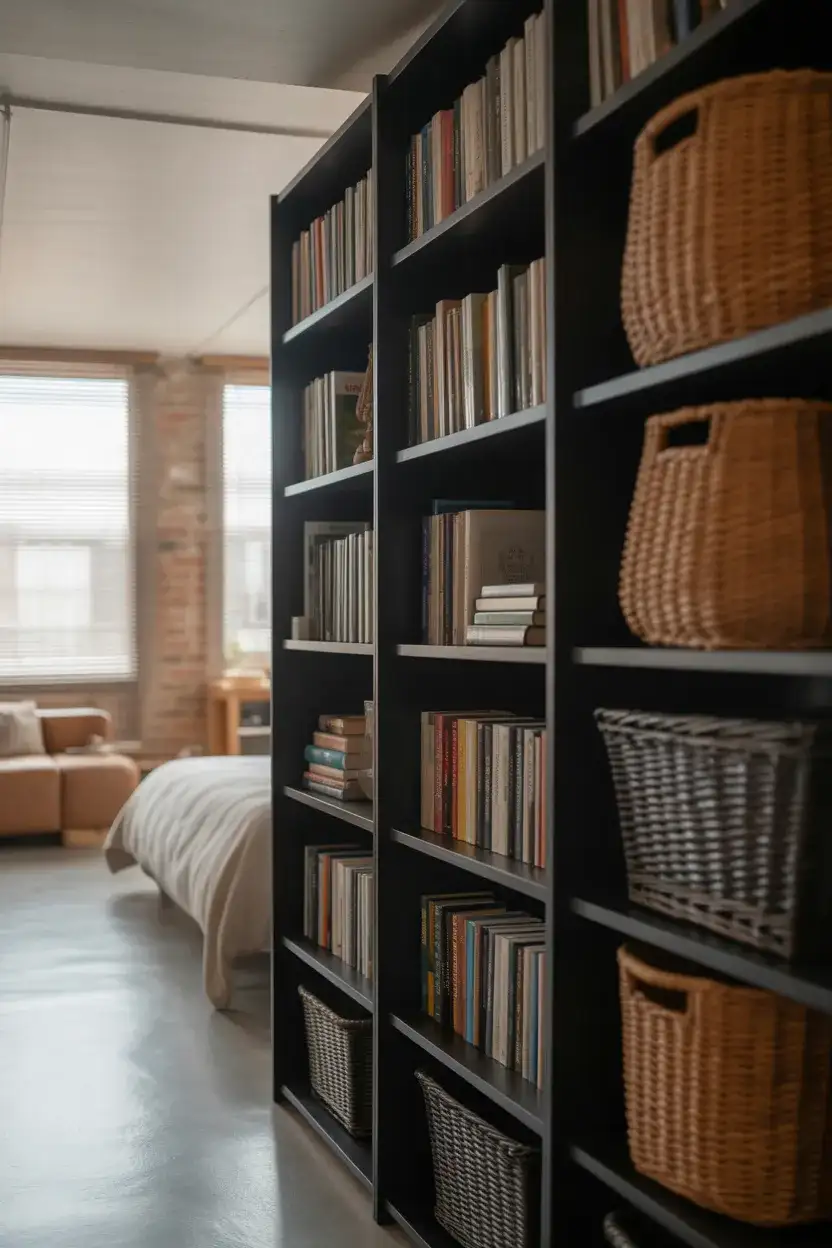
In open-plan studios or large shared bedrooms, a tall, open-back bookshelf can serve as both a room divider and double-sided storage. Fill it with books, baskets, and decorative objects, and you’ve created distinct zones without blocking light or airflow. This is a popular creative approach in loft apartments and converted industrial spaces where walls are minimal and every piece of furniture needs to earn its place.
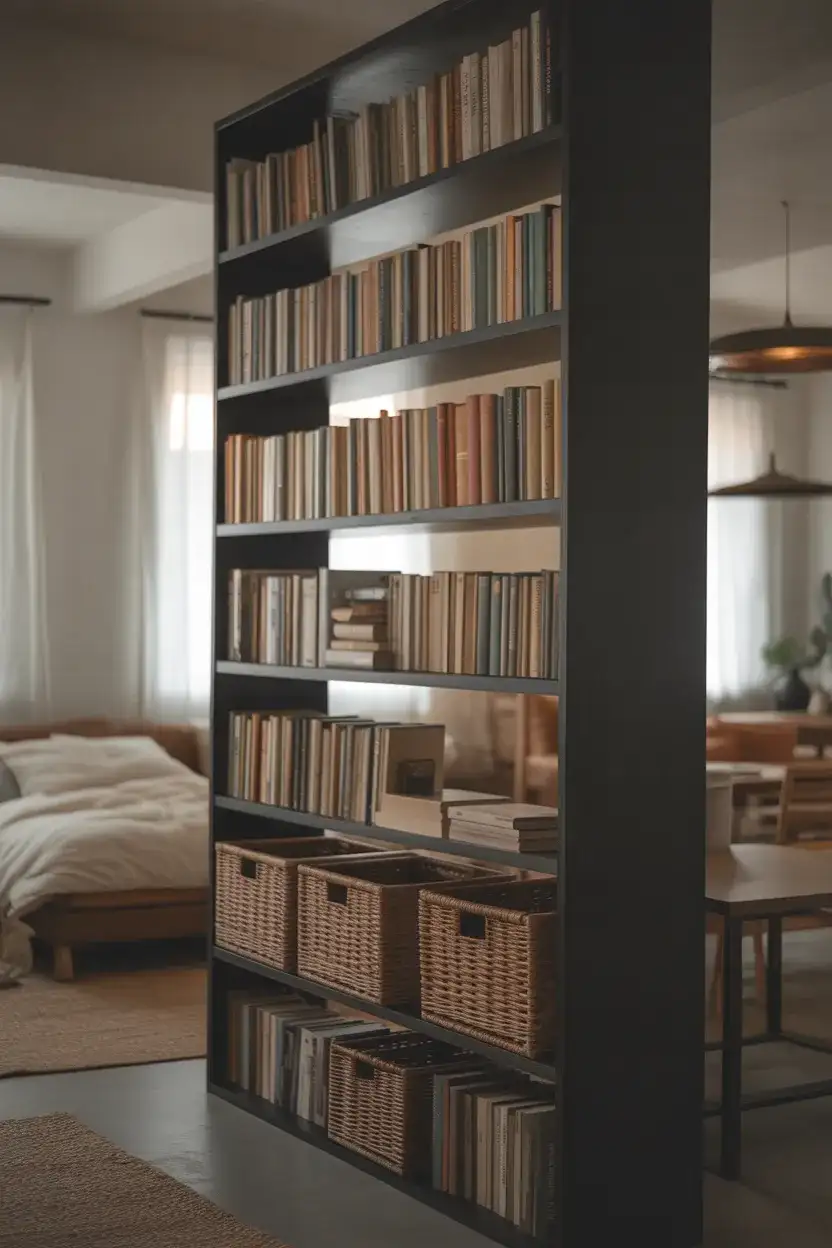
One practical insight: anchor the bookshelf to the wall or ceiling, even if it’s freestanding, to prevent tipping. This is especially important in earthquake-prone areas like California or in homes with children and pets. Choose a unit that’s at least 6 feet tall to provide meaningful visual separation but not so tall that it feels oppressive in a room with standard 8-foot ceilings.
18. Hanging Closet Organizers for Vertical Space
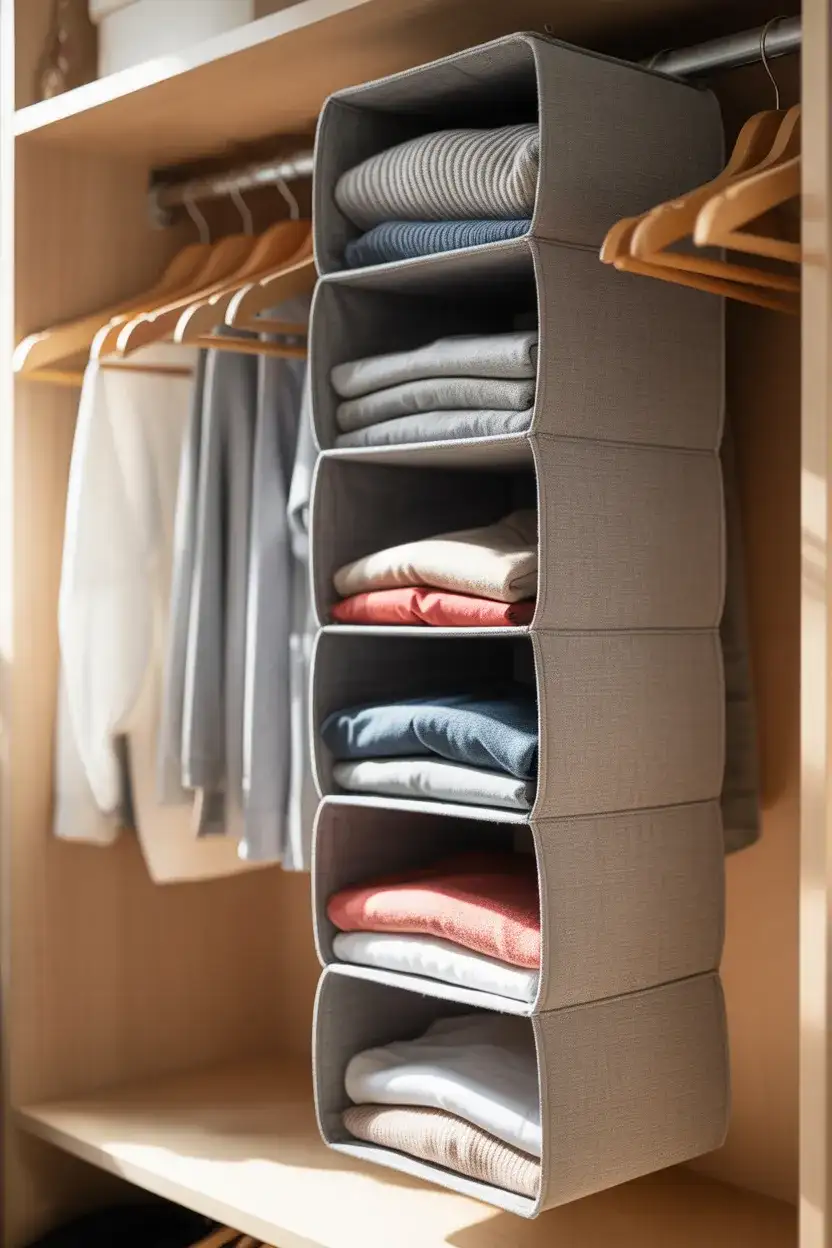
Fabric or canvas hanging organizers with multiple shelves are a quick hack for maximizing vertical closet space without installing permanent fixtures. These are especially useful in rental bedrooms where you can’t add shelving hardware, and they work for everything from folded sweaters to shoes to accessories. Just hang them from your existing closet rod, and you’ve instantly doubled your storage capacity.
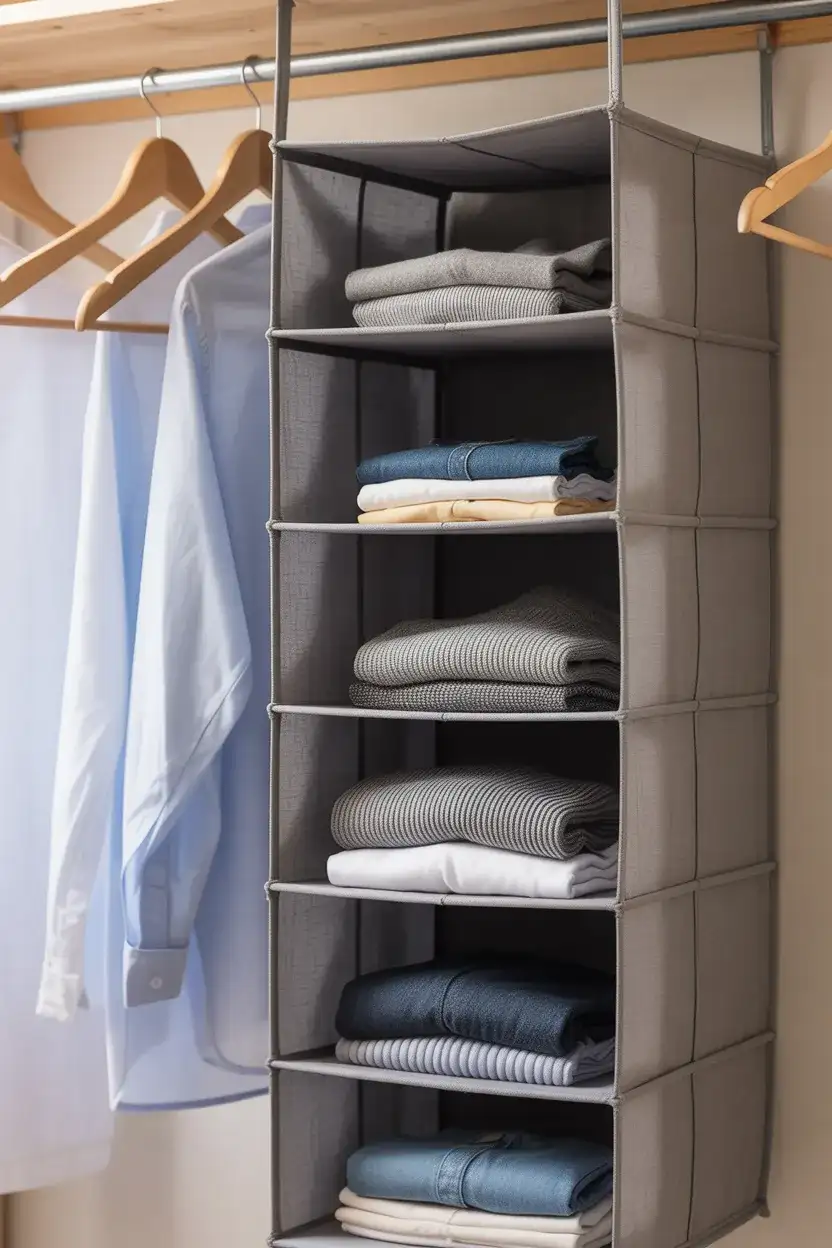
Common mistake: overloading hanging organizers until they sag and pull the closet rod down. Check the weight limits and distribute heavier items (like jeans or sweaters) across multiple shelves rather than stacking them all in one. Also, look for organizers with reinforced seams and sturdy hooks—cheap versions fall apart after a few months of daily use.
19. Nightstand Caddy for Charging and Small Items
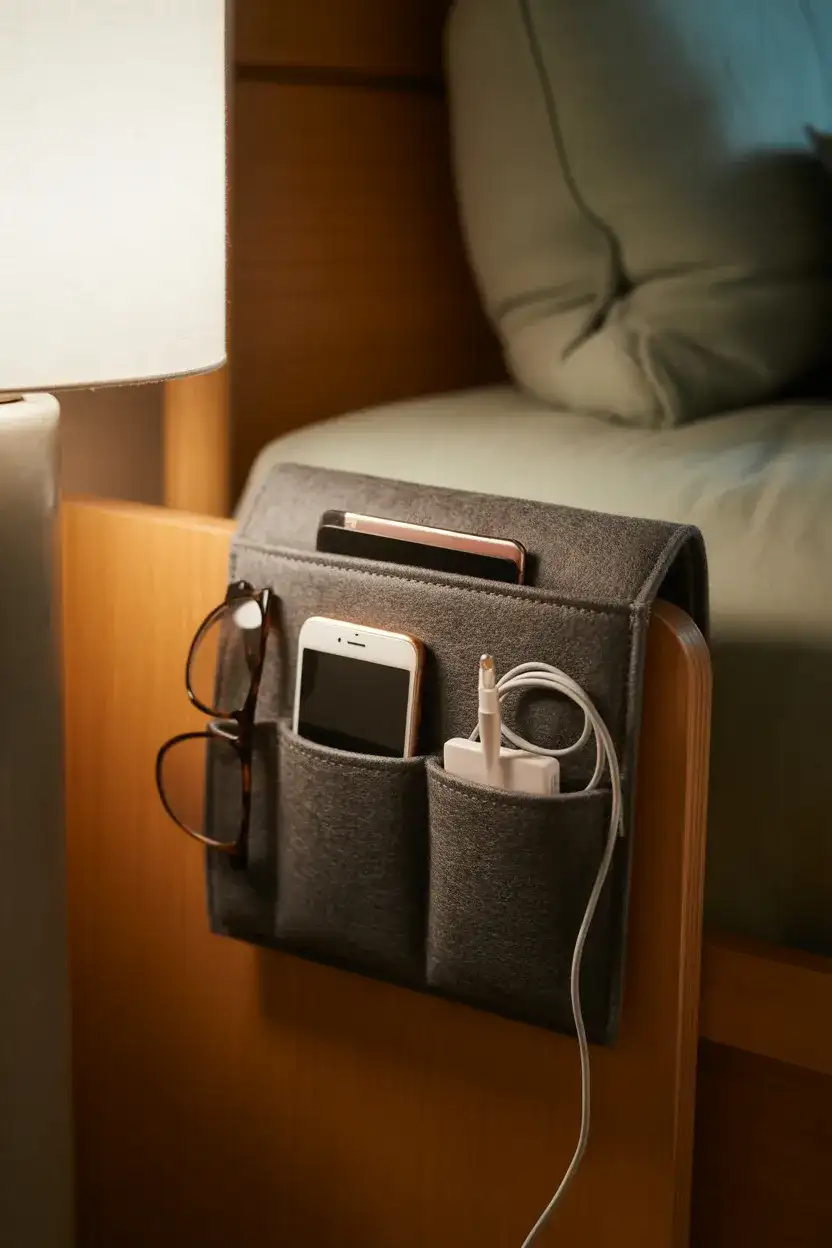
A bedside caddy that hangs off the edge of your nightstand or mattress keeps your phone, glasses, remote, and chargers within arm’s reach without cluttering the surface. This is a clever low-cost fix for small spaces where nightstands are narrow or nonexistent. Choose one with multiple pockets and a cable passthrough so you can charge devices overnight without tangled cords.
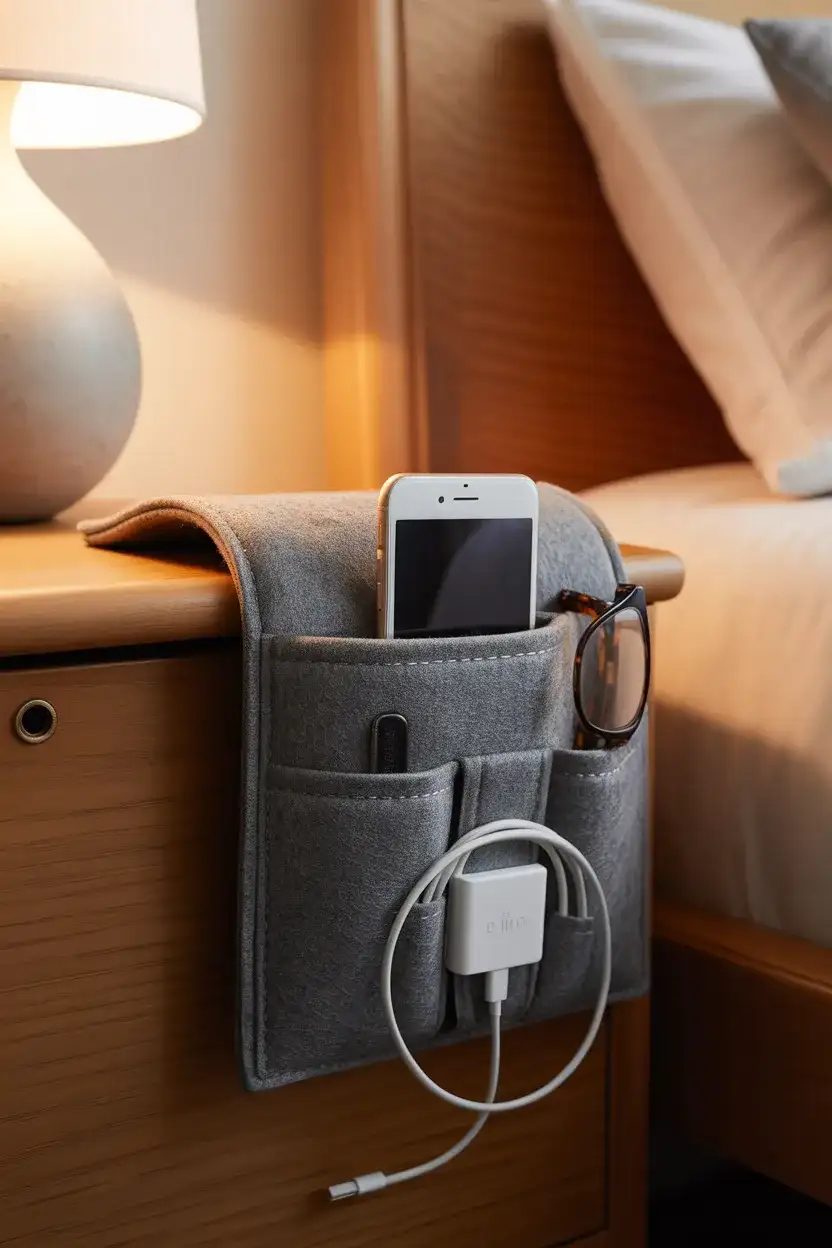
Budget angle: most bedside caddies cost between $10 and $25, making them one of the most affordable storage upgrades you can make. They’re especially popular among college students and young renters who move frequently and want portable, damage-free solutions. Just make sure the caddy you choose fits the width of your nightstand or bed frame to prevent sliding or tipping.
20. Mirrored Wardrobe Doors to Reflect Light and Space
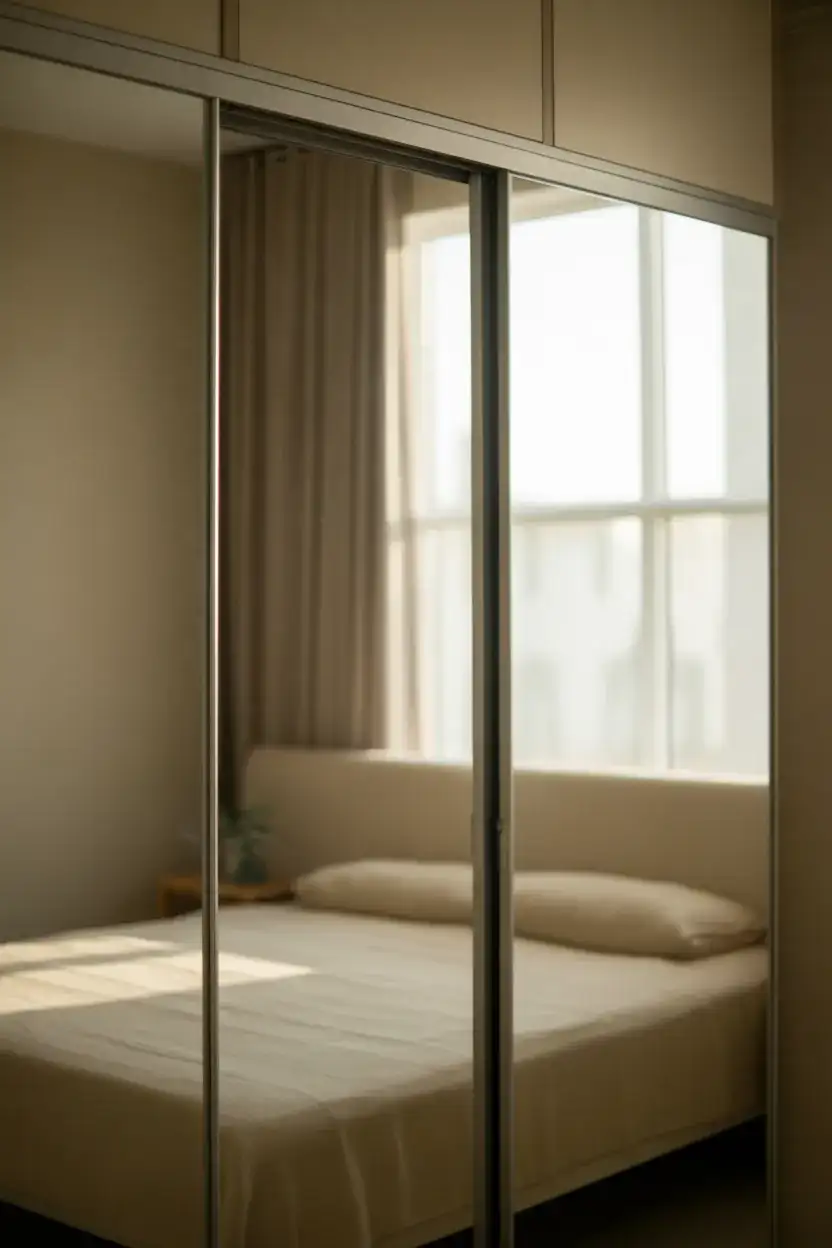
Sliding mirrored doors on a wardrobe or closet make a small room feel larger by reflecting light and creating visual depth. They also eliminate the need for a separate full-length mirror, saving wall space. This is a classic design trick in tight bedrooms, and it’s common in American condos and apartments built from the 1980s onward. If you’re replacing old closet doors, mirrored options are widely available and relatively affordable.
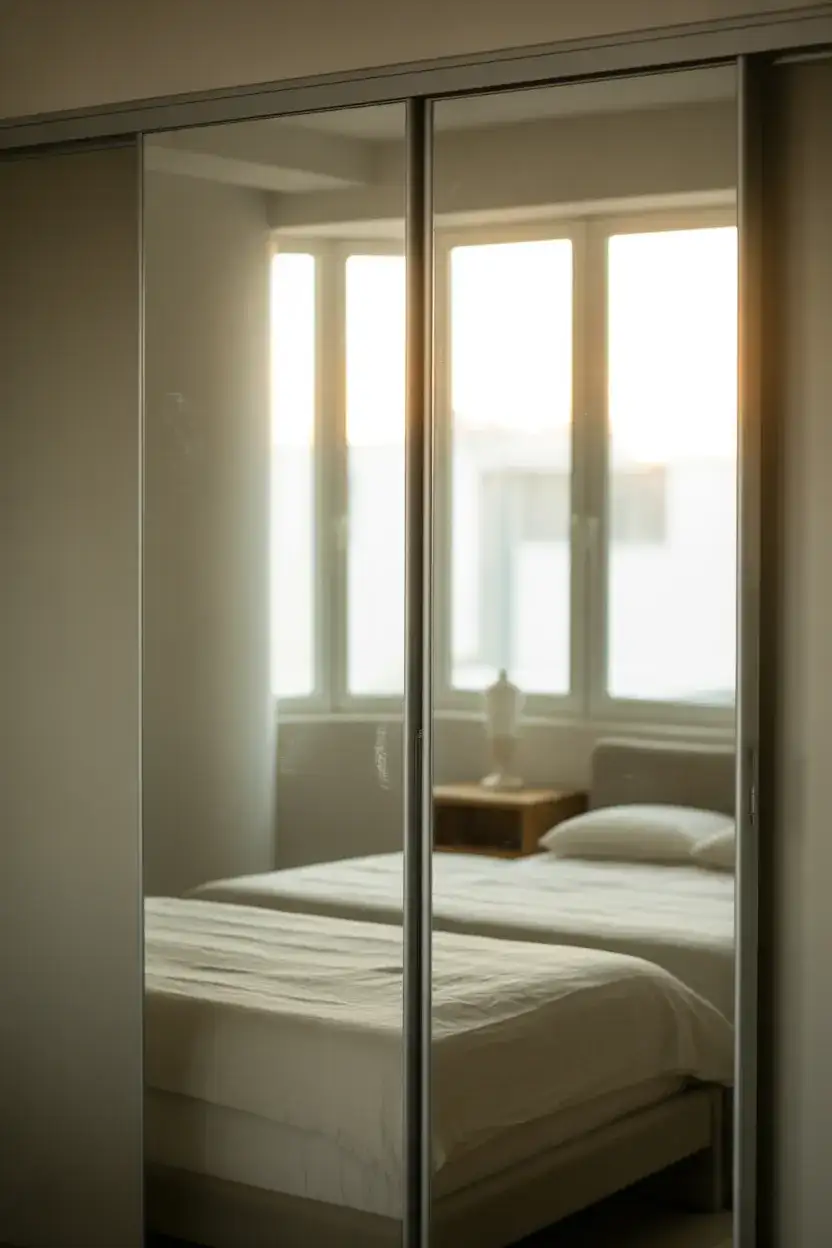
Where it works best: urban apartments and smaller suburban homes where bedrooms are under 150 square feet. The mirrors amplify natural light and make the room feel less cramped, which is especially valuable in north-facing bedrooms or basement guest rooms. Just be prepared to clean them frequently—mirrors show fingerprints and dust more than solid doors.
21. Woven Baskets on Open Shelving for Soft Storage
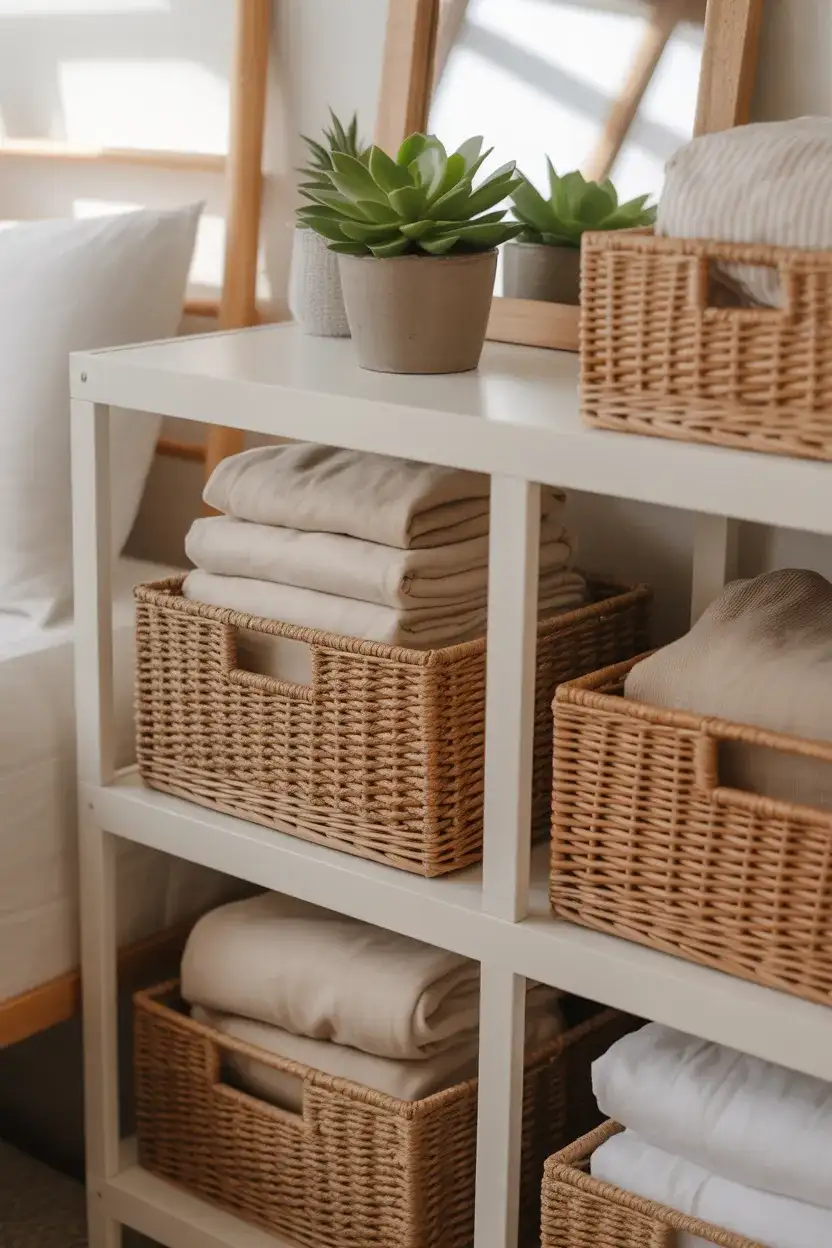
Open shelves are great for visibility, but they can look chaotic if not styled carefully. Adding woven baskets or fabric bins gives you aesthetic storage that hides clutter while maintaining a warm, textured look. This approach works beautifully in bohemian, farmhouse, or coastal bedrooms, and it’s easy to swap out baskets seasonally to refresh the space without spending much money.
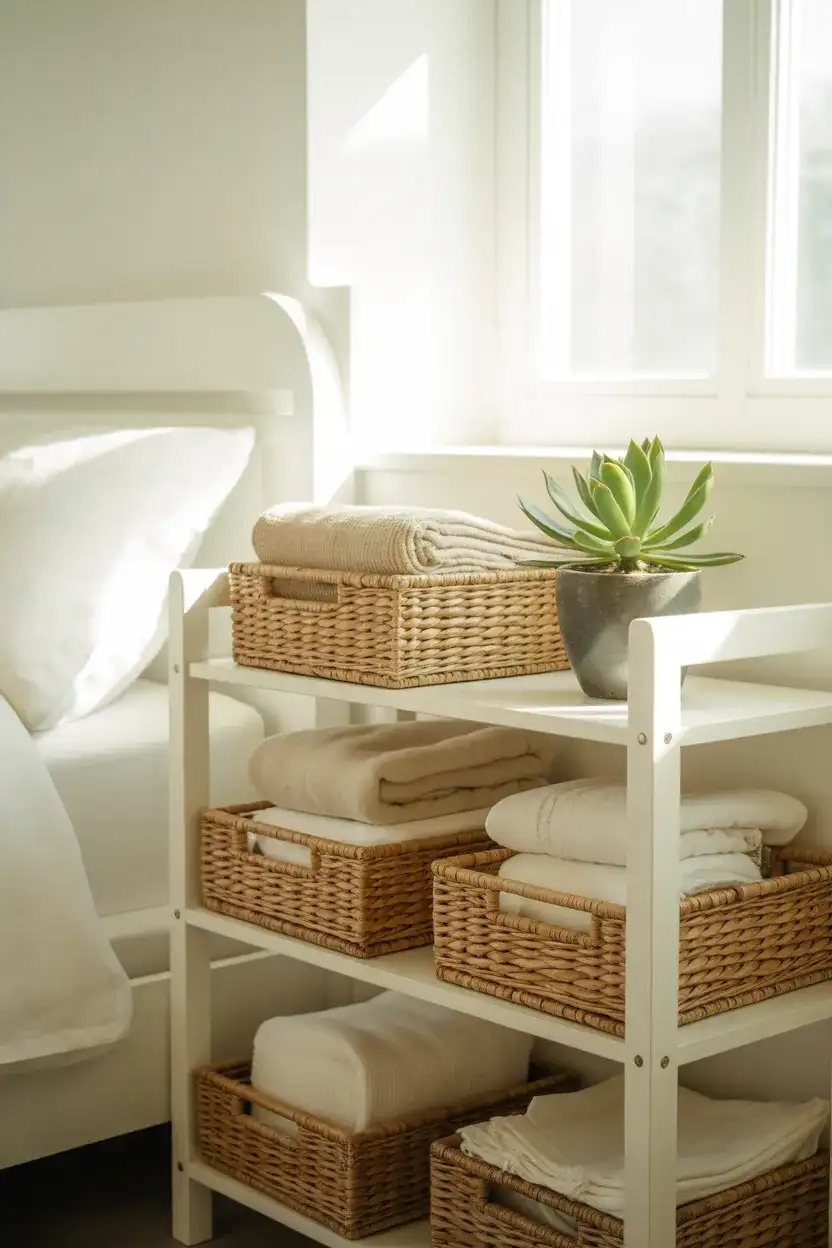
Expert-style commentary: designers recommend labeling baskets if you share a bedroom or have multiple people accessing the same shelves. A small chalkboard tag or printed label keeps everyone on the same page about what goes where, reducing the chance that the baskets become dumping grounds for random items. It’s a small detail that makes a big difference in long-term organization.
22. Multi-Tiered Clothing Valet for Daily Use
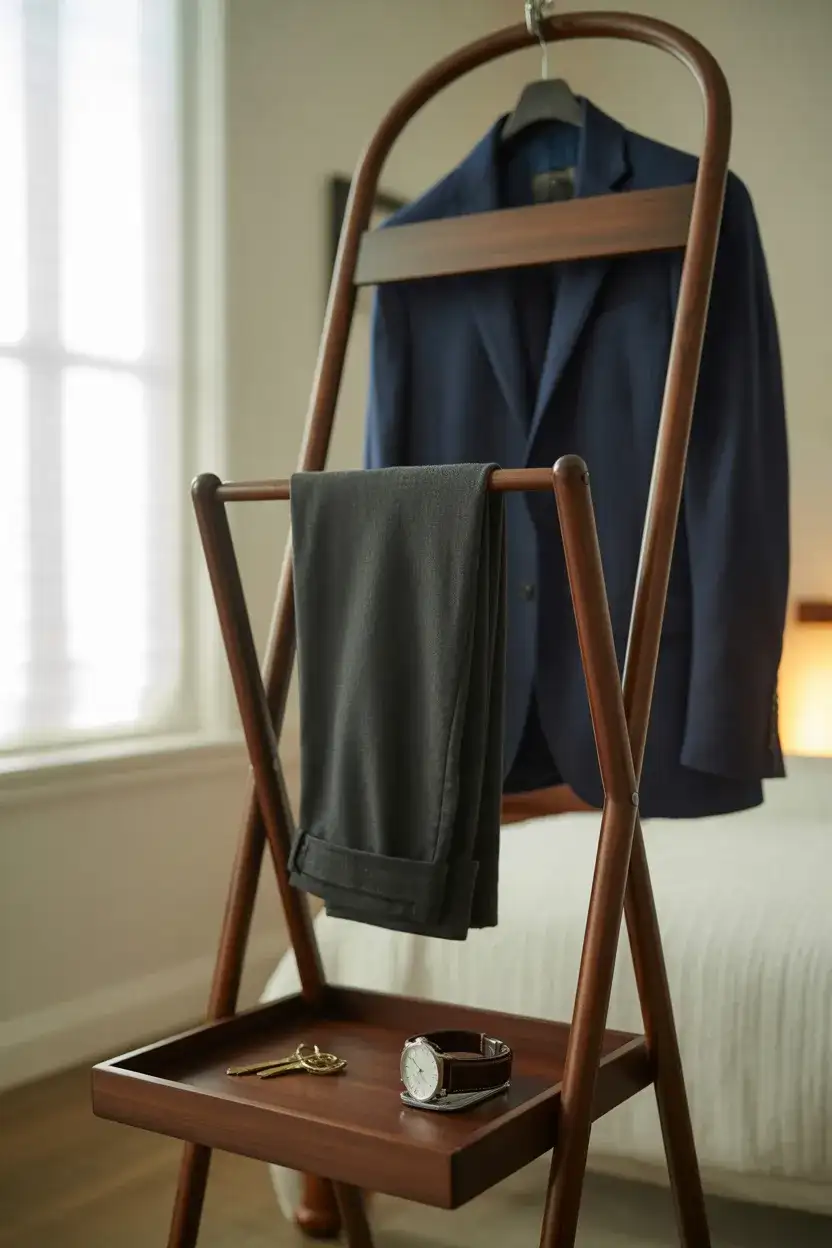
A standing valet—also called a clothes valet or dressing stand—keeps tomorrow’s outfit, your jacket, and accessories organized and off the floor. This is a clever solution for people who plan outfits the night before or who tend to drape clothes on chairs. Choose a style with hooks, a tray for keys and wallets, and a pant bar, and you’ve got a functional piece that encourages better habits without taking up much floor space.
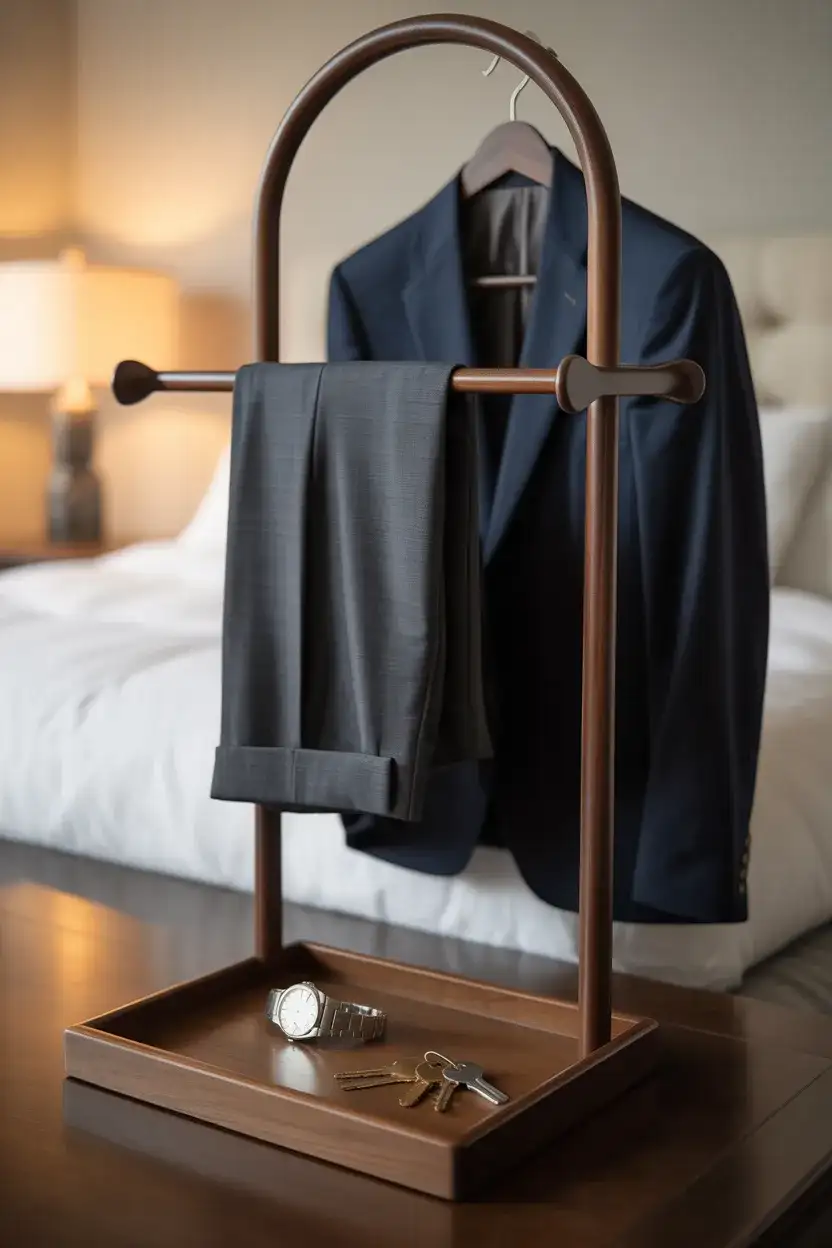
Real homeowner behavior: Valets work best for people who already have organizational routines. If you’re not in the habit of laying out clothes the night before, the valet will just become another surface to pile things on. It’s most popular among professionals with business attire who need to keep suits and dress shirts wrinkle-free and in households where one partner gets dressed early and wants to avoid waking the other by rummaging through drawers.
Conclusion
Whether you’re working with a sloped attic ceiling, a guest room that needs to stay flexible, or a tiny apartment where every inch counts, smart bedroom storage in 2026 is about choosing solutions that fit your real life—not just your Pinterest board. Try one or two of these ideas, see what sticks, and don’t be afraid to mix DIY hacks with store-bought pieces until you land on a system that actually works for you. Drop a comment below with your favorite storage win or the challenge you’re still trying to solve.