Paver patios are having a major moment in 2026, especially among American homeowners looking to transform their outdoor spaces into beautiful, functional retreats. With platforms like Pinterest fueling endless inspiration, more people are searching for creative ways to combine style, durability, and budget-friendly solutions that work for everything from cozy small yards to sprawling backyard escapes. Whether you’re drawn to the timeless appeal of brick and stone or curious about modern concrete layouts, paver designs offer incredible versatility. In this guide, you’ll discover fresh paver patio ideas that blend practical design with visual impact, helping you create the perfect outdoor sanctuary.
1. Classic Brick Herringbone with Border
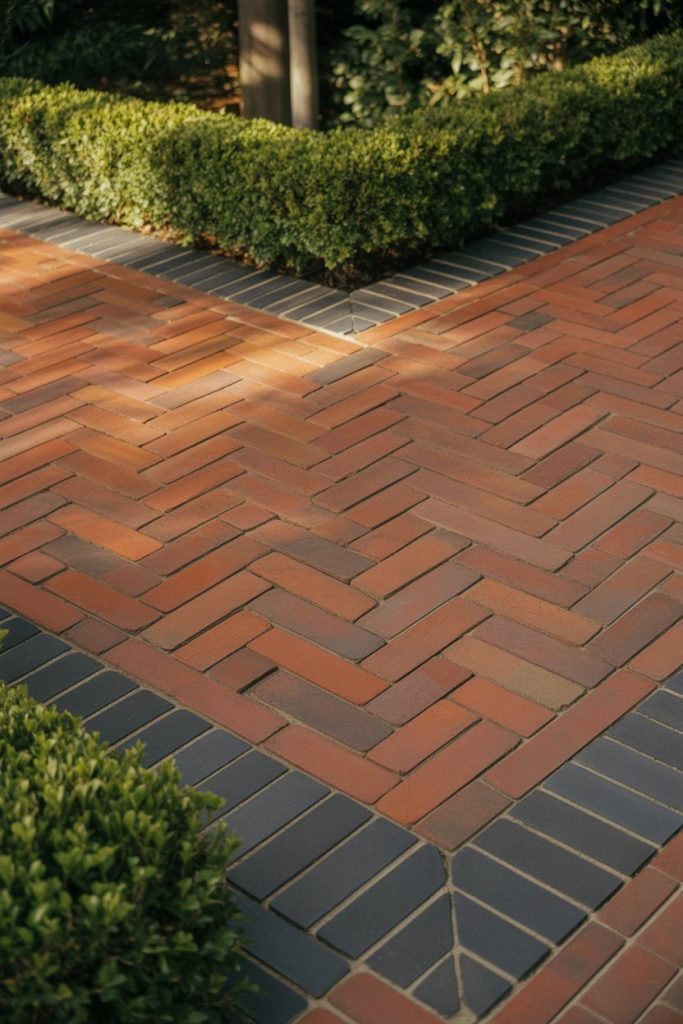
This timeless brick pattern brings Old World charm to any backyard while offering exceptional durability. The herringbone layout creates visual movement that makes even small yard patios feel more expansive, and adding a contrasting border in soldier-course brick defines the space beautifully. It’s a versatile choice that works equally well with traditional colonial homes and modern farmhouse styles across the country. 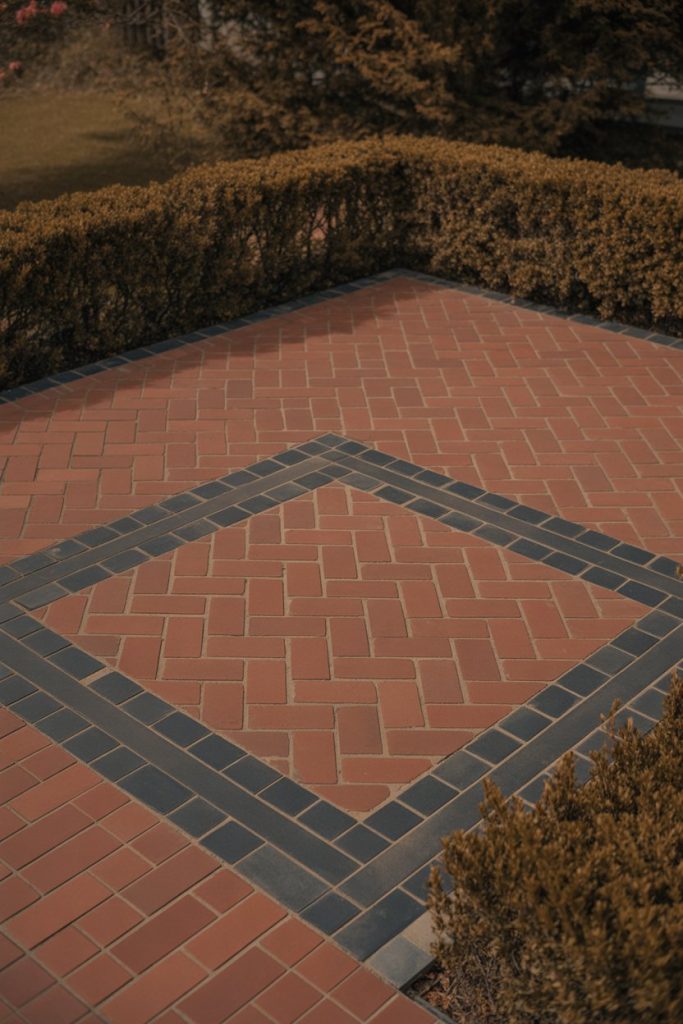
One common mistake is skipping the proper base preparation—many homeowners underestimate how crucial a well-compacted gravel foundation is for preventing shifting and settling. Without at least four inches of compacted base material, even the most beautiful brick pattern will develop uneven spots within a year or two. Take the extra time upfront to excavate properly and use landscape fabric to prevent weed growth between pavers.
2. Budget-Friendly Concrete Pavers with Gravel Infill
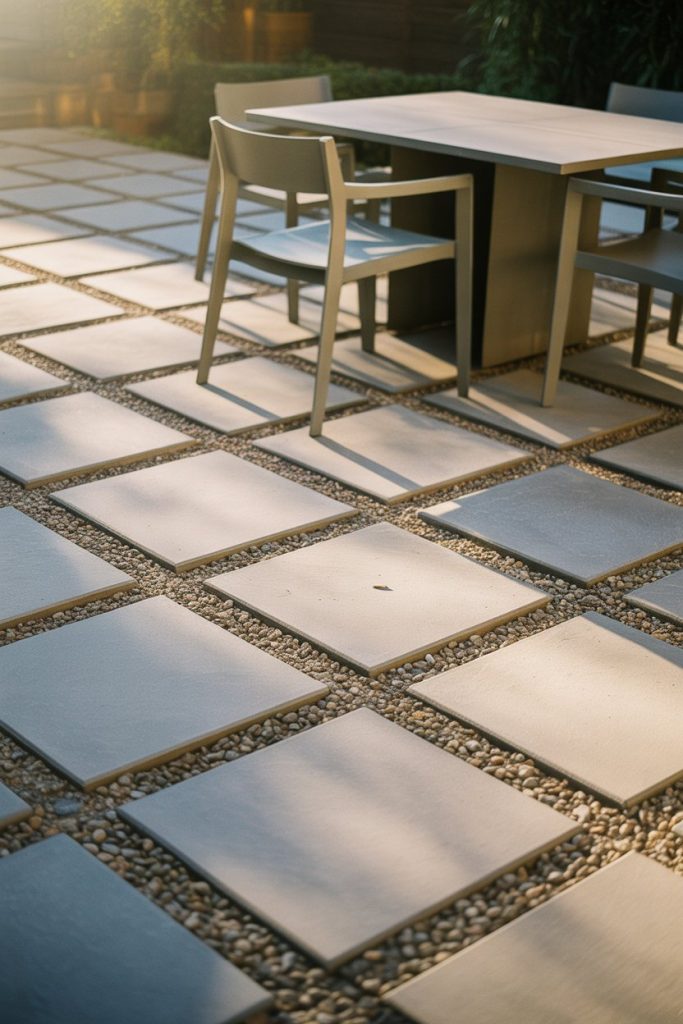
For those watching their wallet, concrete pavers combined with pea gravel create an incredibly cheap yet stylish solution. This approach uses larger 24×24 concrete slabs spaced apart with gravel filling the gaps, cutting material costs significantly while adding textural interest. The grid pattern offers a contemporary aesthetic that’s perfect for modern minimalist homes throughout suburban America. 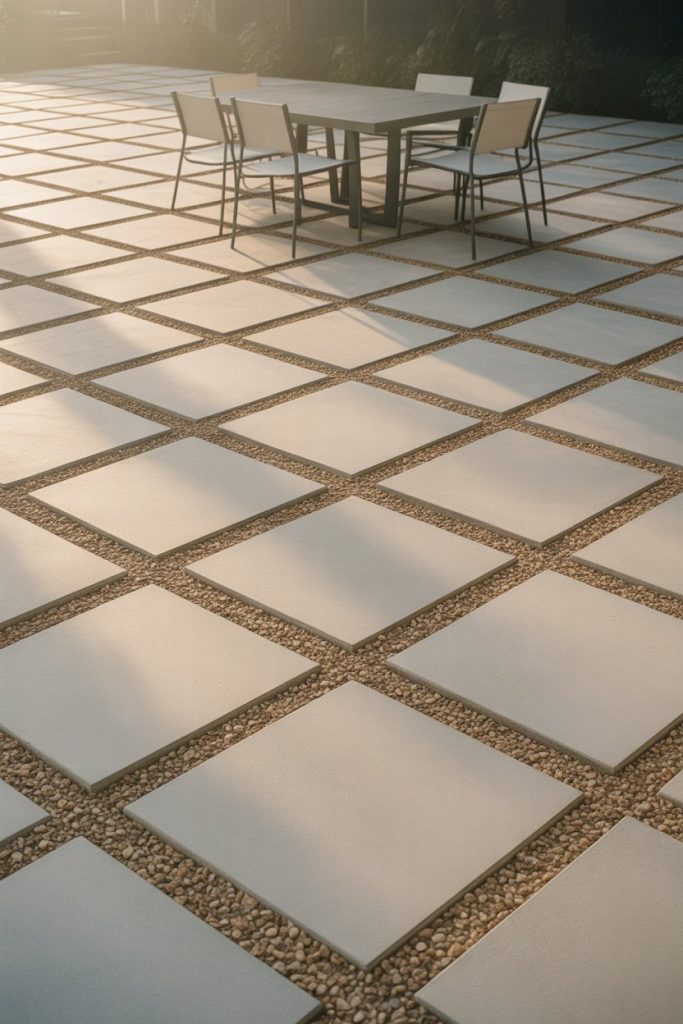
In regions like the Pacific Northwest and Northeast, this design works exceptionally well because the gravel provides excellent drainage during rainy seasons. The open-joint system prevents water pooling that’s common with traditional mortared patios, making it a smart choice for areas that experience heavy precipitation. Plus, homeowners in cities like Seattle and Portland appreciate the permeable surface that helps with stormwater management requirements.
3. Multi-Level Stone Entertaining Zone
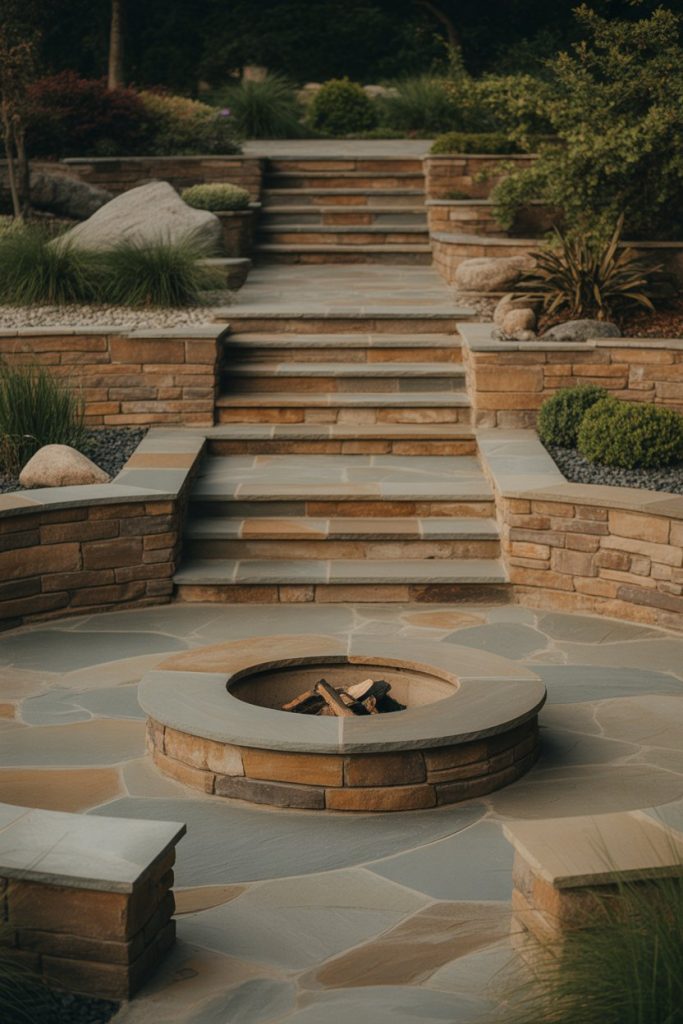
Creating distinct zones with stone pavers at different elevations transforms your outdoor space into a dynamic entertaining area. This design typically features a main dining level, a step-down fire pit lounge area, and perhaps a third tier for a cooking station. The elevation changes add architectural drama while naturally organizing activities without the need for walls or dividers. 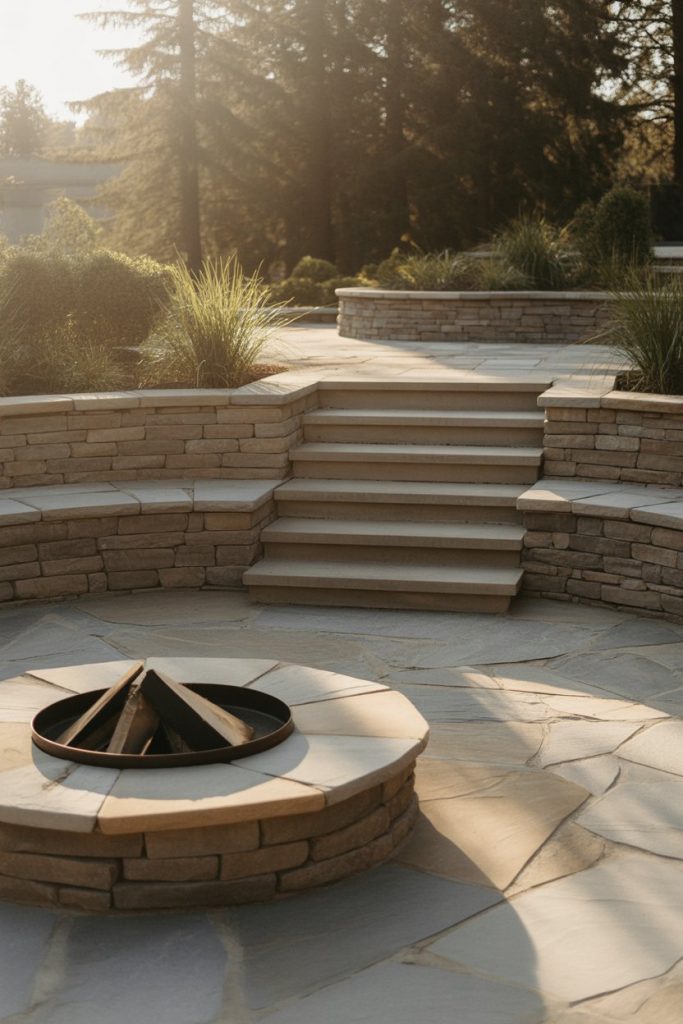
A landscape architect from Austin once shared that tiered patios increase perceived square footage by up to 30% compared to single-level designs—people psychologically register each level as a separate “room.” This makes the approach particularly valuable for homeowners trying to maximize the functionality of limited outdoor space without expanding the actual footprint.
4. Circular Fire Pit Focal Point
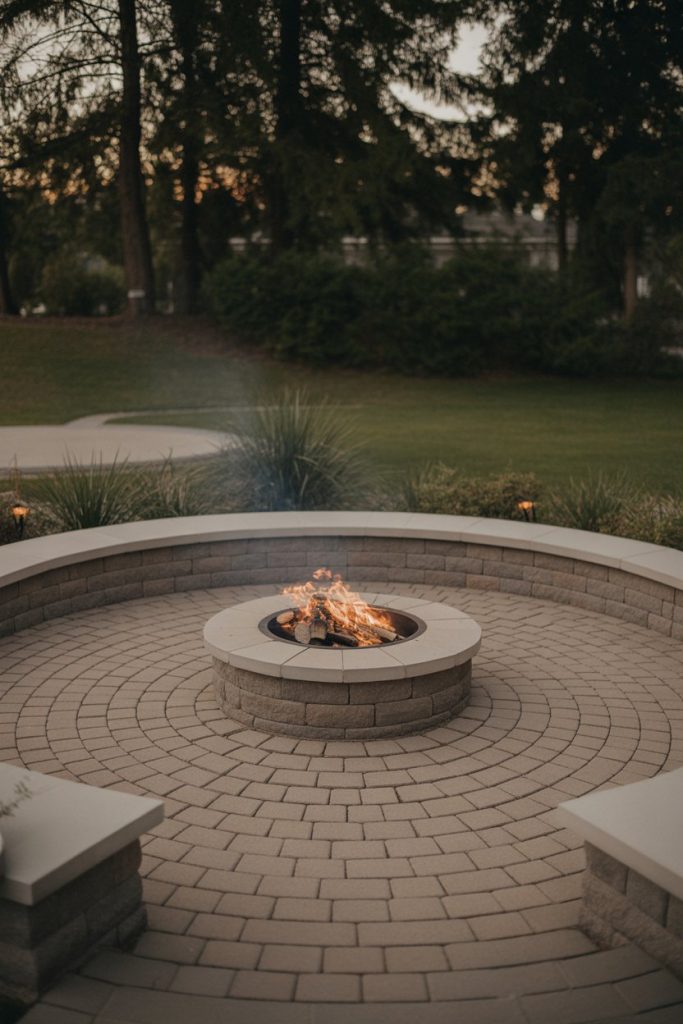
A circle pattern radiating from a central fire pit creates an inviting gathering spot that draws people together naturally. Using paving stones in concentric rings with alternating colors adds movement and visual interest, while the curved layout softens the geometric lines of typical rectangular yards. This design has become increasingly popular in Midwestern backyards where outdoor fire features extend the usable season well into fall. 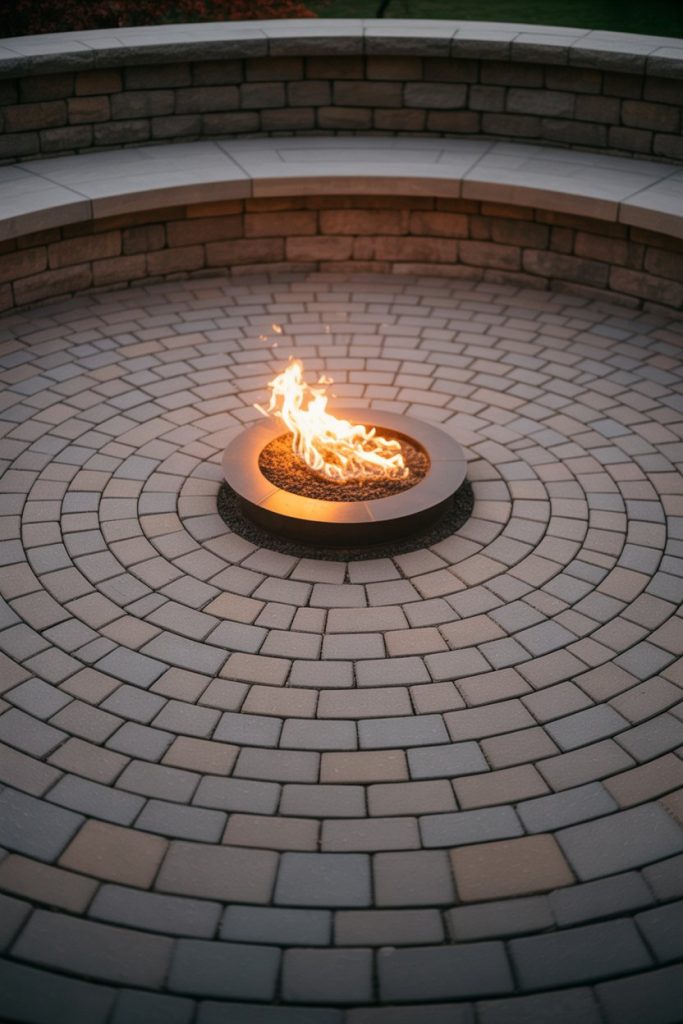
The circular layout offers a practical advantage many homeowners don’t initially consider: it eliminates awkward corner spaces where furniture never quite fits. Every seat around a circular patio has an equally good view and access to the fire, creating a more democratic entertaining space where no guest feels stuck in a “bad spot” away from the warmth and conversation.
5. DIY-Friendly Square Grid Simplicity
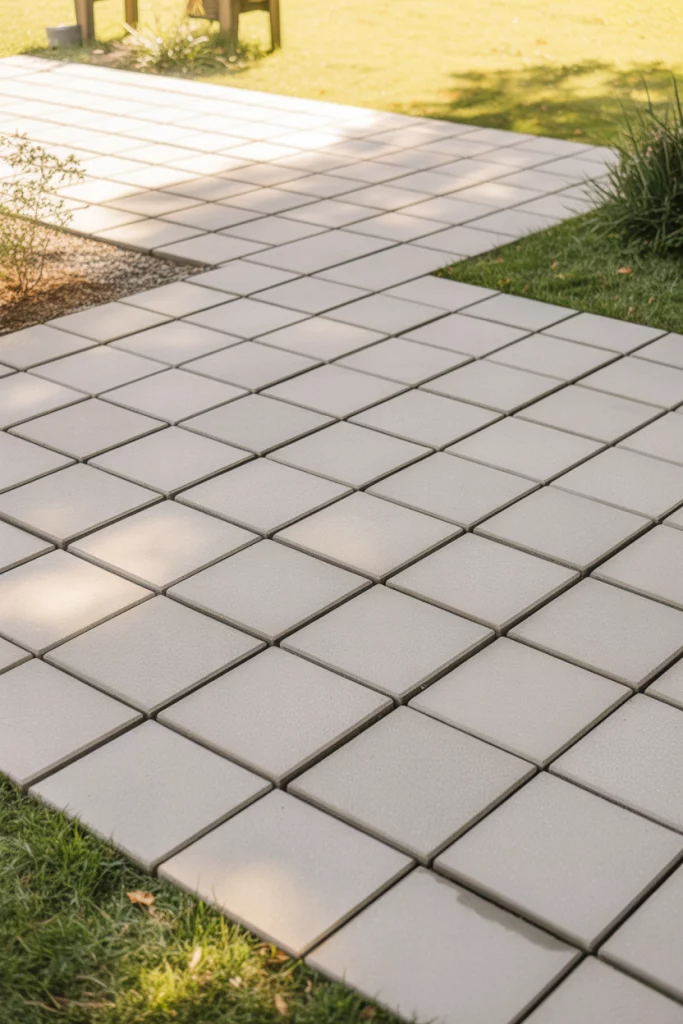
The straightforward square grid using 12×12 or 16×16 pavers is the ultimate DIY project for weekend warriors. This pattern requires minimal cutting, uses basic tools, and creates a clean contemporary look that complements virtually any home style. It’s become the go-to choice for first-time patio builders across American suburbs who want professional results without professional installation costs. 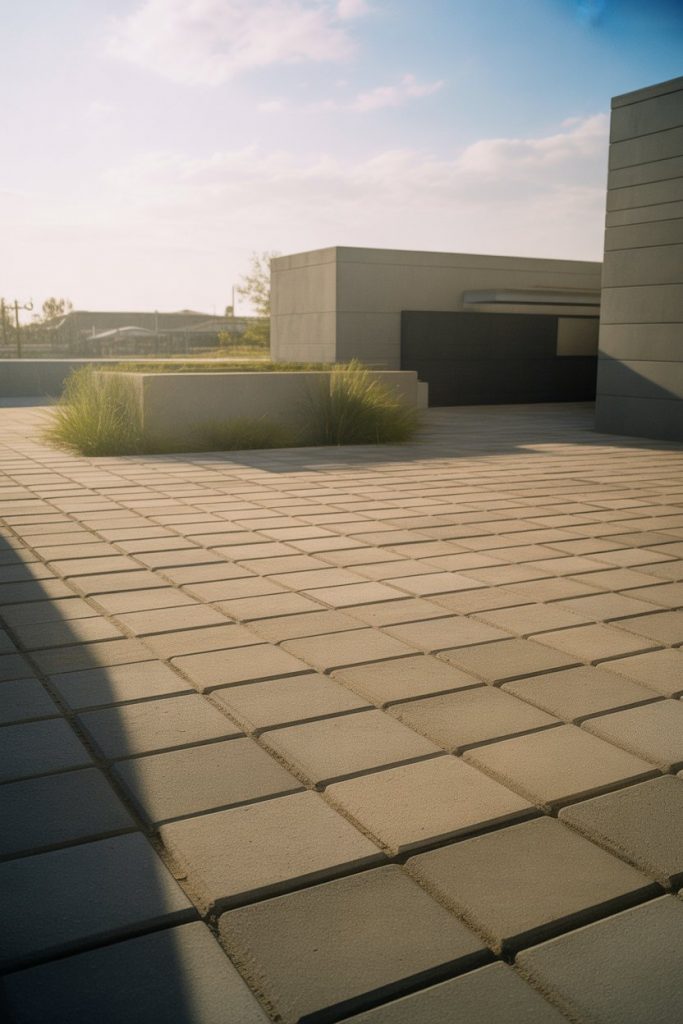
Budget-wise, you’re looking at roughly $8-12 per square foot for materials when tackling this yourself, compared to $15-25 per square foot for professional installation of the same design. The savings become substantial on a typical 200-square-foot patio—potentially $1,400 to $2,600 in your pocket. Just remember to rent a plate compactor for about $80/day rather than relying on hand tamping, which rarely achieves adequate base compression.
6. Pebble Mosaic Accent Borders
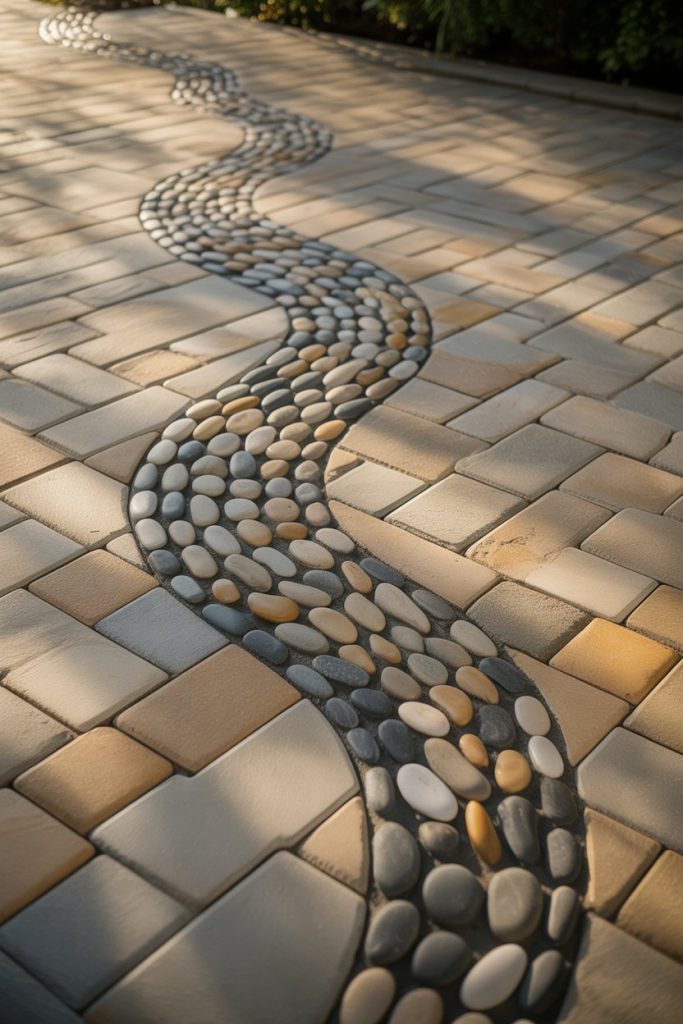
Incorporating pebble mosaic borders into your layout adds artisanal character that elevates the entire patio design. This technique involves setting smooth river rocks in decorative patterns along edges or as medallion inserts within the main paver field. The contrast between smooth pebbles and geometric pavers creates textural richness that photographs beautifully—exactly what Pinterest-browsing homeowners crave. 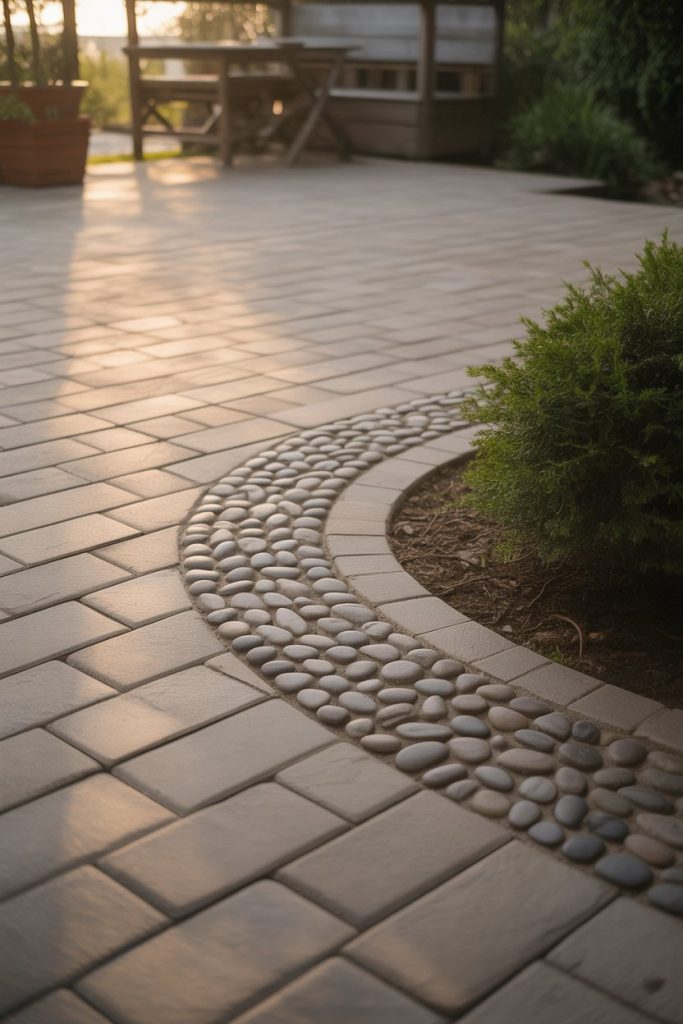
Many homeowners successfully complete pebble borders as a weekend enhancement project after their main patio is installed. The technique requires patience more than skill—you’re essentially creating a small concrete base, pressing pebbles into the surface in your desired pattern, then letting it cure before grouting. It’s a forgiving project where imperfections add to the handcrafted charm rather than detracting from the overall appearance.
7. Integrated Pool Deck Transition
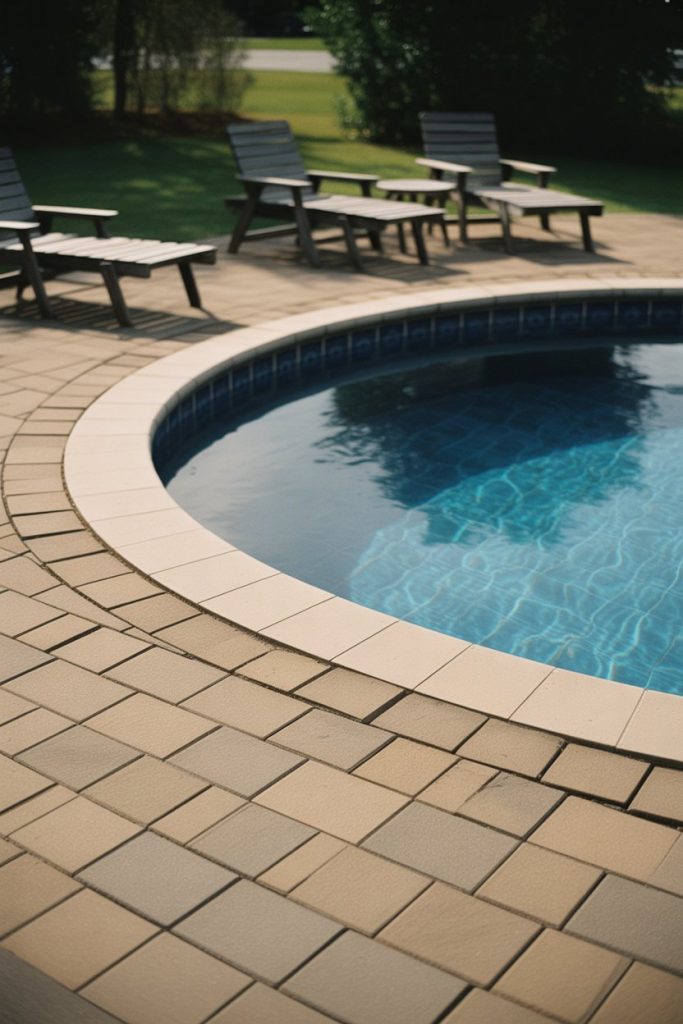
Designing your paver patio to seamlessly flow around an above ground pool creates a cohesive backyard resort experience. Using large format pavers like 24×24 sizes minimizes joint lines and speeds installation around the pool’s curved perimeter. The key is selecting slip-resistant pavers with textured surfaces that remain safe when wet—a critical consideration for families with children. 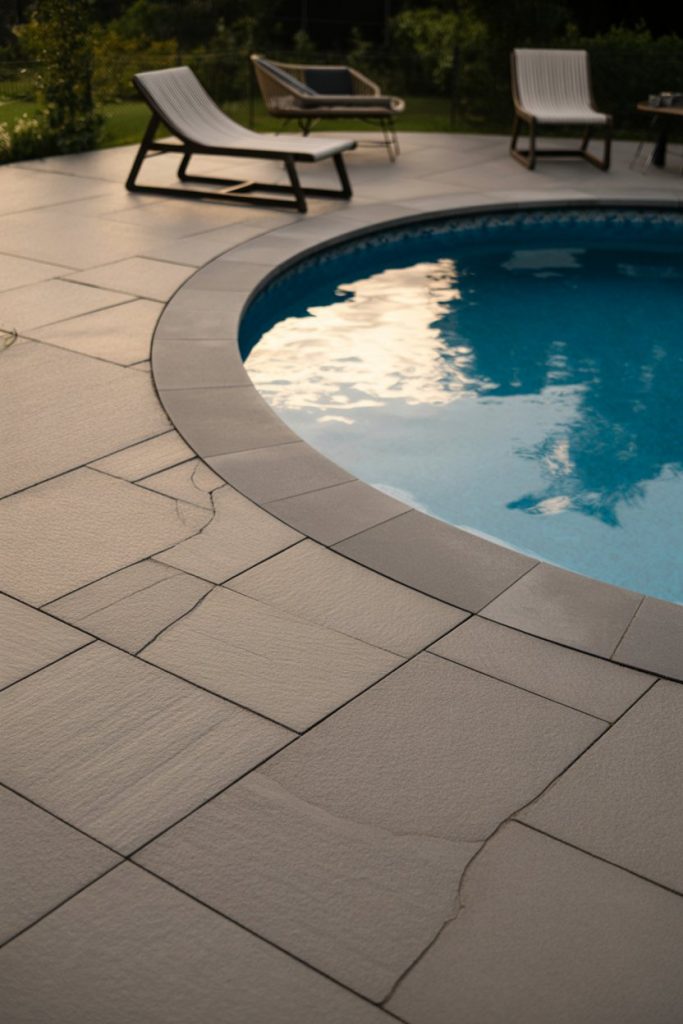
In sun-belt states like Arizona, Florida, and Texas, homeowners increasingly choose travertine or specialized concrete pavers that stay cooler underfoot despite intense sun exposure. These materials can run 20-30% more expensive than standard concrete pavers, but anyone who’s scorched their feet on traditional pavers during a 95-degree afternoon will tell you the investment is absolutely worth it for comfortable barefoot lounging.
8. Rock and Paver Combo for Natural Flow
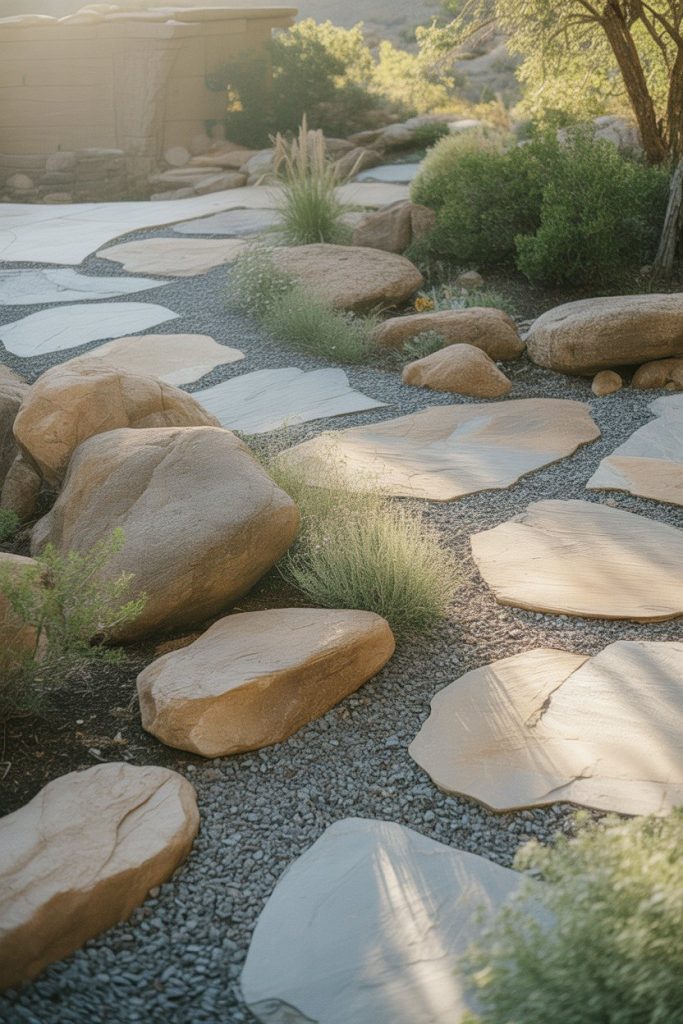
Blending rock and pavers creates an organic transition between hardscape and landscape that feels collected rather than contrived. This approach might use paving stones for the main patio surface while incorporating boulders as natural seating elements and crushed stone pathways radiating outward. It’s particularly effective in Rocky Mountain and Pacific Northwest settings where the design echoes the surrounding natural environment. 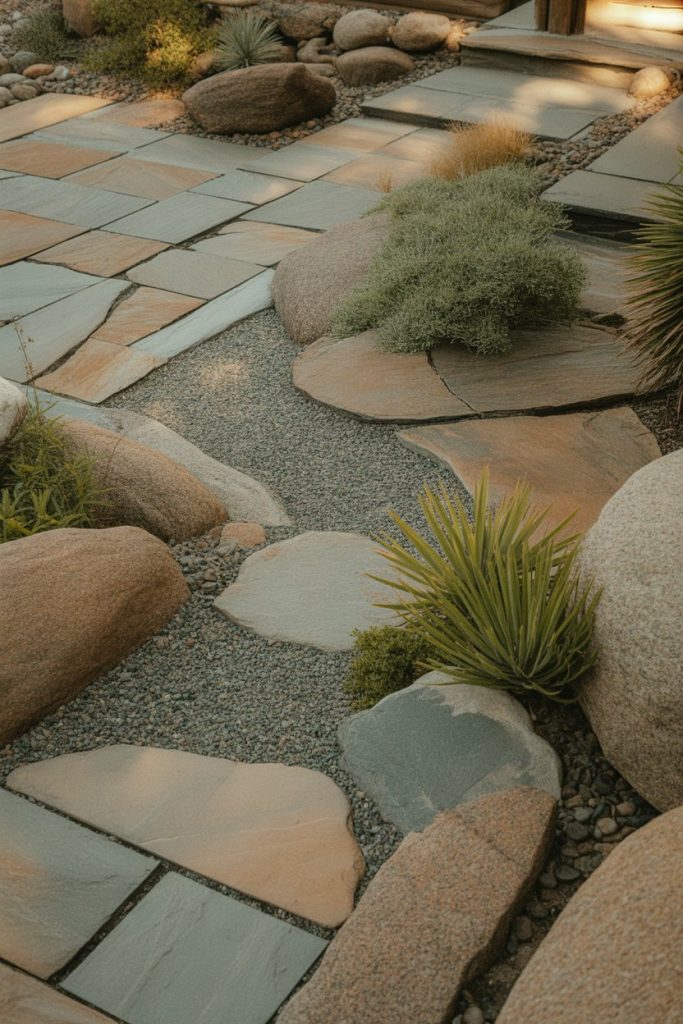
A Colorado-based designer mentioned that mixing materials typically adds 15-20% to project costs compared to single-material installations, but the investment pays dividends in visual interest and longevity. The varied textures and heights create micro-climates within your patio space—some areas stay cooler, others warm faster—giving you options throughout the day and season. Plus, the irregular layout disguises small imperfections that would stand out starkly in uniform paver installations.
9. Walkway Extensions for Garden Circulation
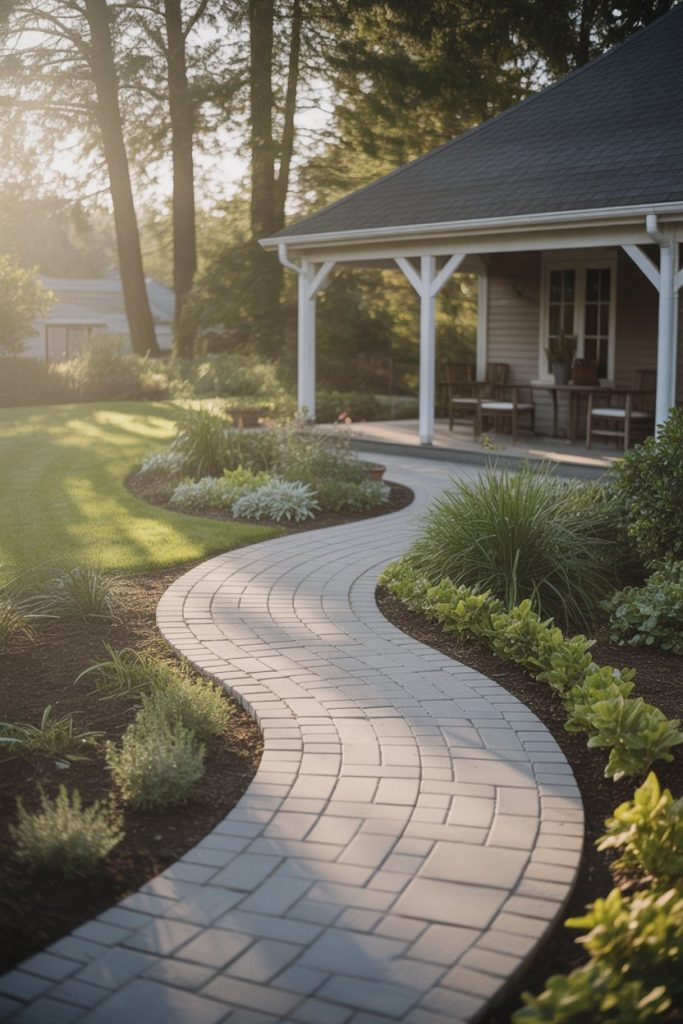
Extending your main patio with walkways garden paths using matching pavers creates cohesive circulation throughout your entire yard. These secondary paths can be narrower—perhaps just two 12×12 pavers wide—leading to garden beds, side gates, or shed access. The connected system makes your outdoor space feel intentionally designed rather than accidentally assembled over time. 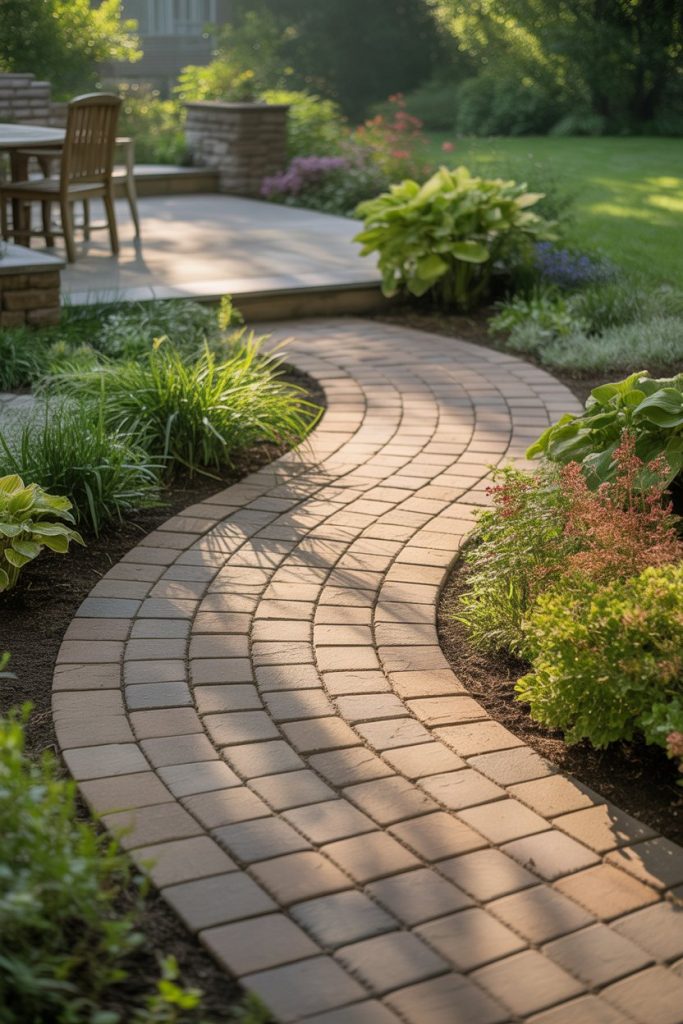
The walkway extension works best when planned during the initial patio installation rather than added later—you’ll save significantly on base preparation and material delivery charges. Most homeowners find that adding 50-75 linear feet of 3-foot-wide pathway costs roughly $600-1,200 in additional materials but dramatically improves the functionality and flow of their outdoor space, especially in larger suburban lots common throughout the Southeast and Midwest.
10. Classic Red Brick Traditional Elegance
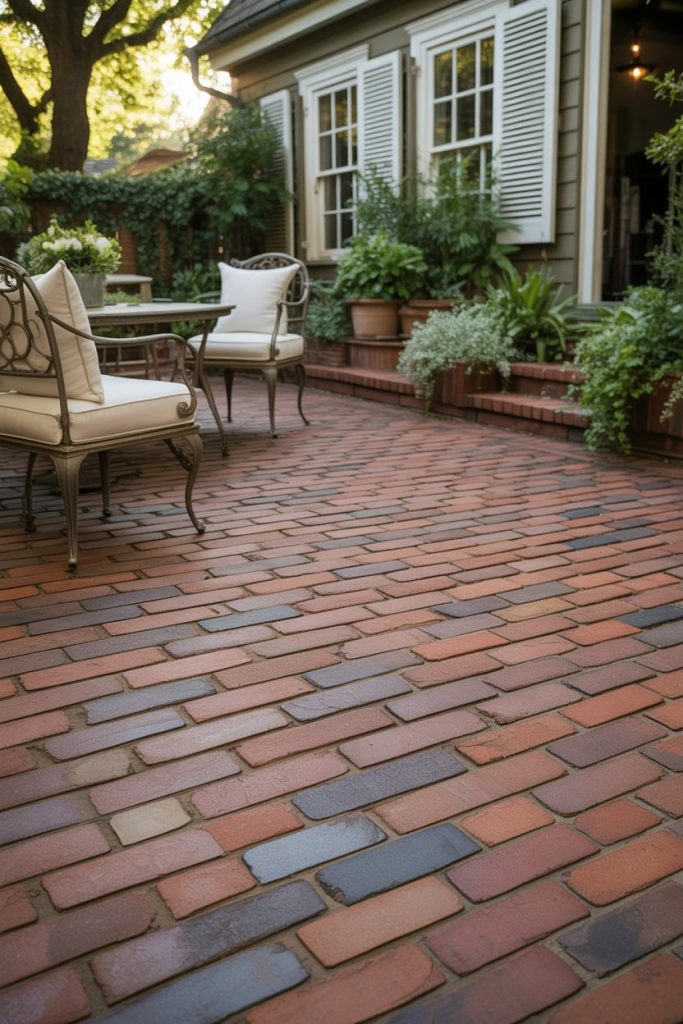
The enduring appeal of red brick pavers connects contemporary homes with American architectural heritage dating back centuries. This material choice works beautifully in traditional neighborhoods throughout New England, the Mid-Atlantic, and historic Southern cities where brick complements existing architecture. The warm terracotta tones create an inviting atmosphere that ages gracefully, developing a rich patina that actually enhances its character over decades. 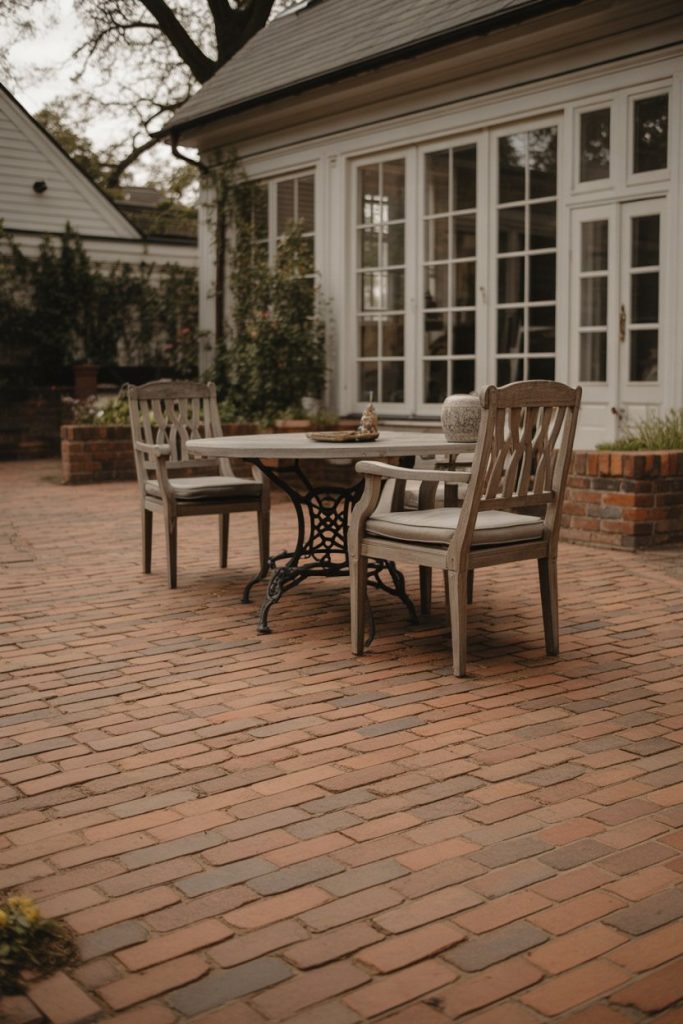
Brick patios require surprisingly little maintenance compared to wood decks or natural stone—an occasional power washing and joint sand replenishment every few years keeps them looking fresh. The real advantage shows up during resale; real estate agents in traditional markets like Charleston, Philadelphia, and Boston consistently report that quality brick hardscaping adds 5-8% to perceived home value because buyers recognize it as a permanent improvement rather than a temporary feature.
11. Modern Minimalist Concrete Slabs
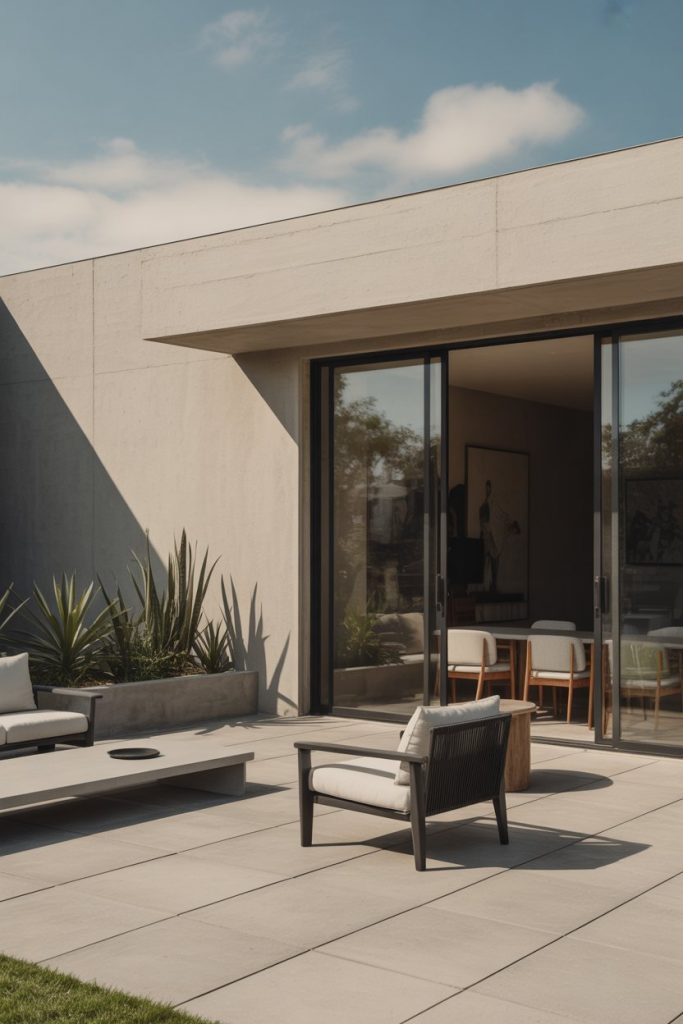
Ultra-contemporary homes demand equally modern hardscaping, and oversized concrete slabs in large formats deliver exactly that aesthetic. Using 24×24 concrete pavers or even larger custom-poured sections creates clean horizontal planes with minimal visual interruption. This layout has become signature for mid-century modern renovations in California and minimalist new builds throughout trendy urban neighborhoods. 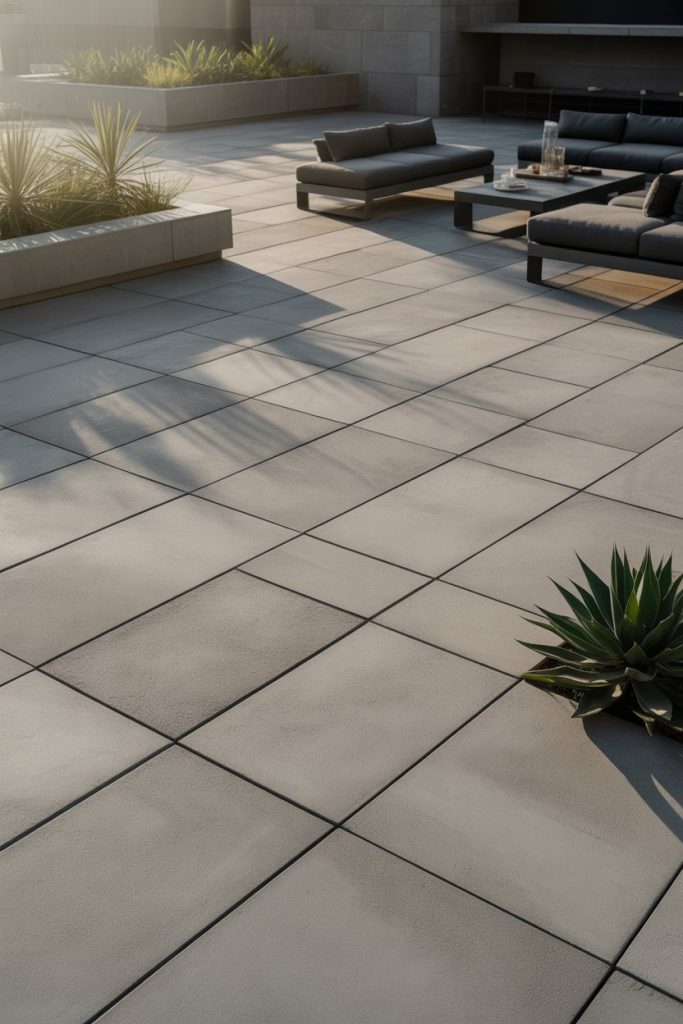
Expert designers emphasize that minimalist doesn’t mean boring—the key lies in perfecting proportions and embracing negative space. A well-executed modern concrete patio uses precisely controlled joint spacing (often 1/4 inch rather than the standard 1/2 inch) and pays obsessive attention to level surfaces. This precision requires professional installation, typically running $18-28 per square foot, but the resulting clean lines and seamless appearance justify the investment for design-focused homeowners.
12. Cottage-Style Irregular Flagstone
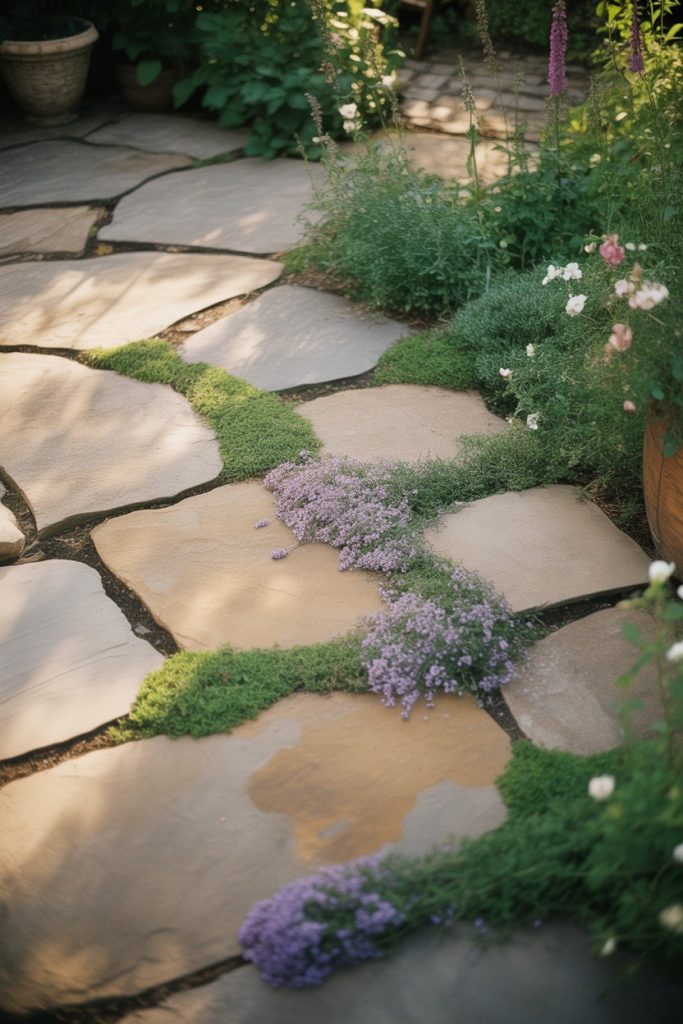
For homeowners drawn to relaxed, organic aesthetics, irregular stone flagstone creates the perfect cottage-garden atmosphere. This paving stones approach uses natural stone pieces in varying sizes fitted together like a puzzle, with gaps filled using either gravel or groundcover plants. The informal pattern suits small yard settings particularly well, as the irregular shapes create visual interest without overwhelming limited square footage. 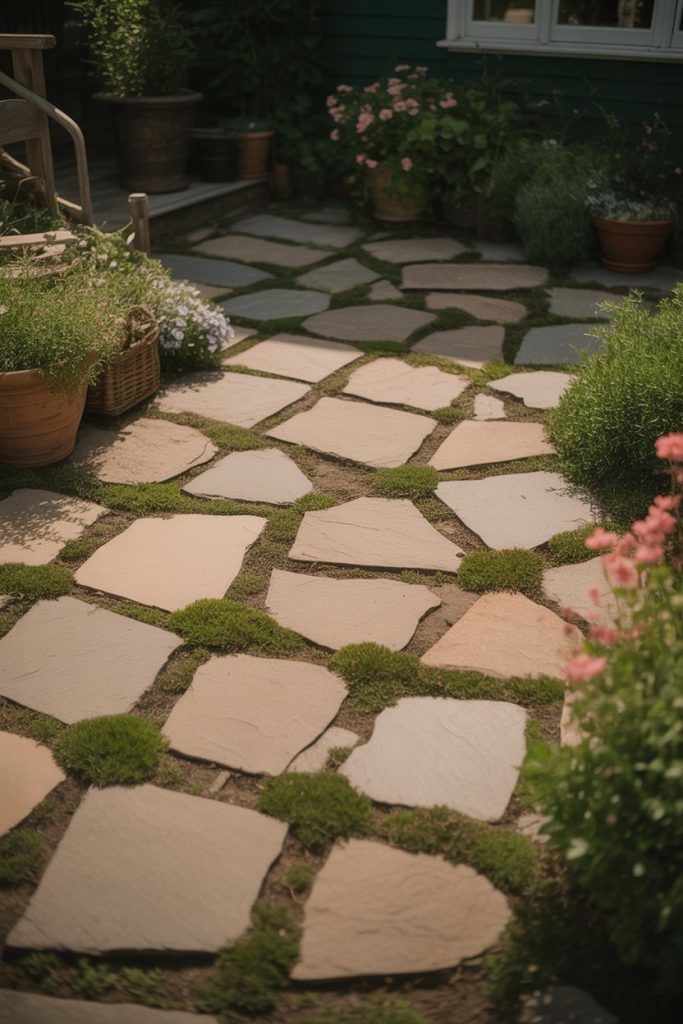
This style works best in regions with distinct seasons—the Mid-Atlantic, Midwest, and Pacific Northwest—where the naturalistic design harmonizes with changing landscape colors throughout the year. Real homeowners often start with just the stone installation and add the inter-planting later as a second-phase project, which spreads out the budget and allows them to experiment with different groundcover varieties before committing to the entire surface.
13. Mediterranean Terracotta Warmth
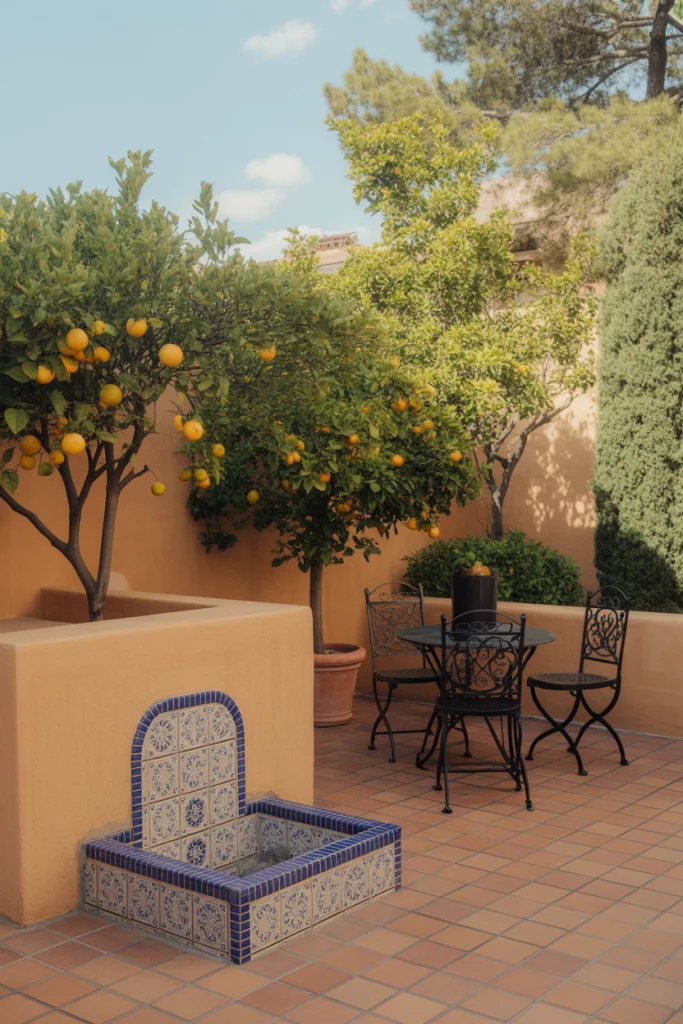
Terracotta-toned pavers bring Mediterranean villa vibes to American backyards, especially in Southwestern and California settings where the climate supports the aesthetic year-round. These warm-hued paving stones pair beautifully with stucco homes, wrought iron furniture, and drought-tolerant landscaping. The color palette ranges from soft peachy tones to deep burnt orange, offering options that complement various architectural styles while maintaining that sun-drenched European courtyard feeling. 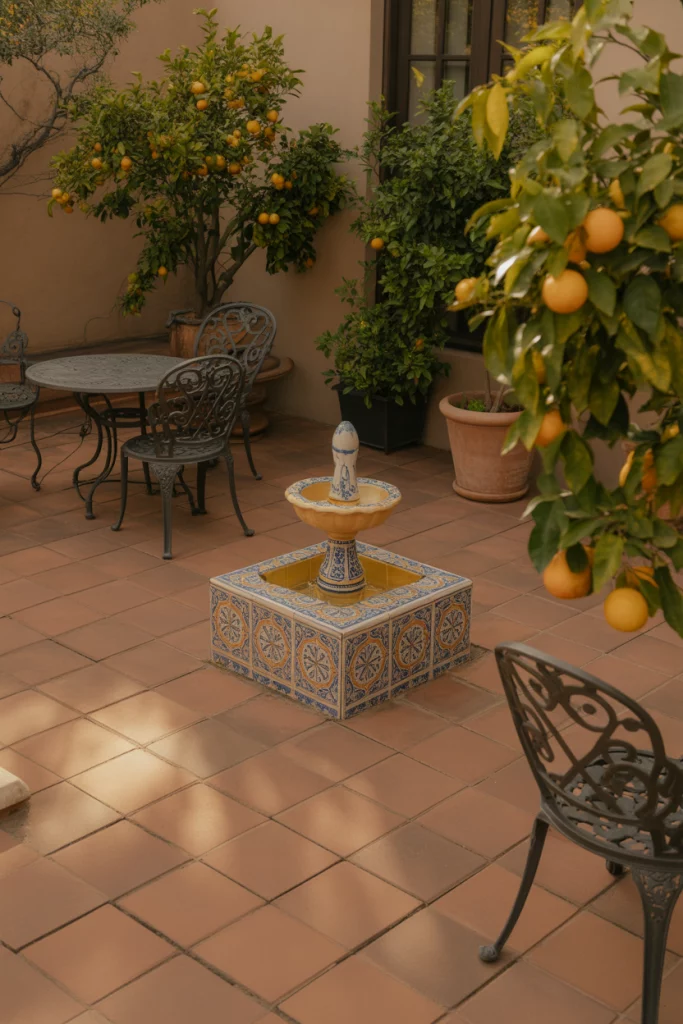
A common mistake with terracotta pavers is choosing overly uniform coloring—authentic Mediterranean patios feature subtle color variation that develops naturally over time. Higher-quality paver brands now offer “tumbled” or “antiqued” finishes that replicate this aged appearance from day one, though they typically cost $3-5 more per square foot than standard smooth finishes. The textural depth and color complexity they provide make that premium worthwhile for achieving an authentic rather than artificial Mediterranean look.
14. Permeable Paver Grid System
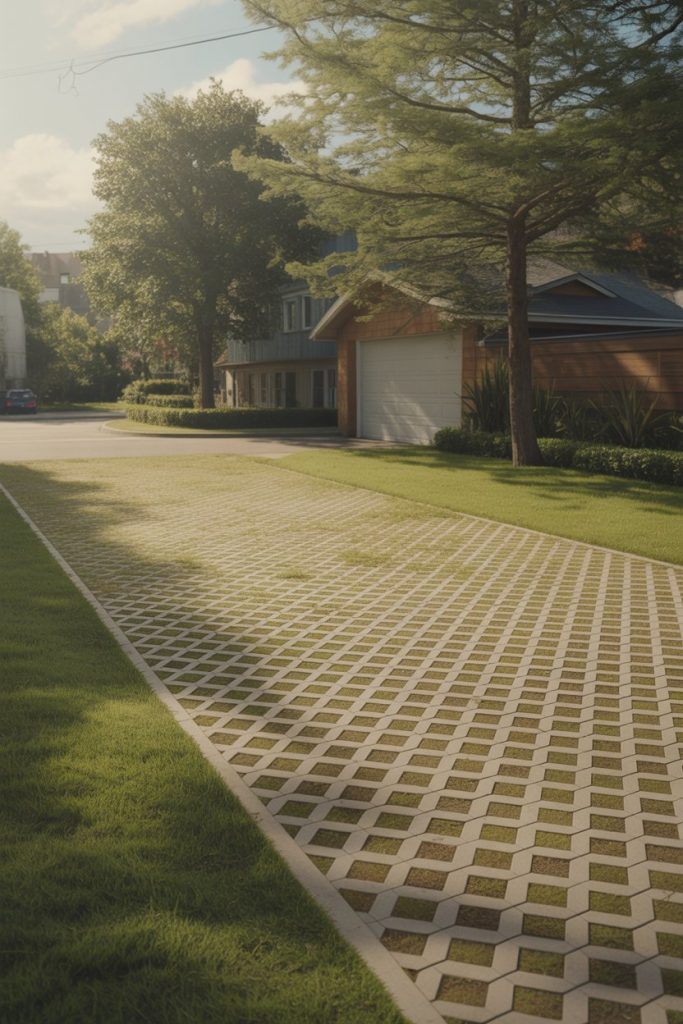
Environmental consciousness meets functionality with permeable paver systems that allow rainwater to filter through rather than creating runoff. These specialized concrete or plastic grid pavers work exceptionally well in areas with strict stormwater management codes, increasingly common in coastal regions and progressive municipalities. The open-cell design can be filled with gravel or planted with hardy grass varieties, creating a budget-friendly green solution. 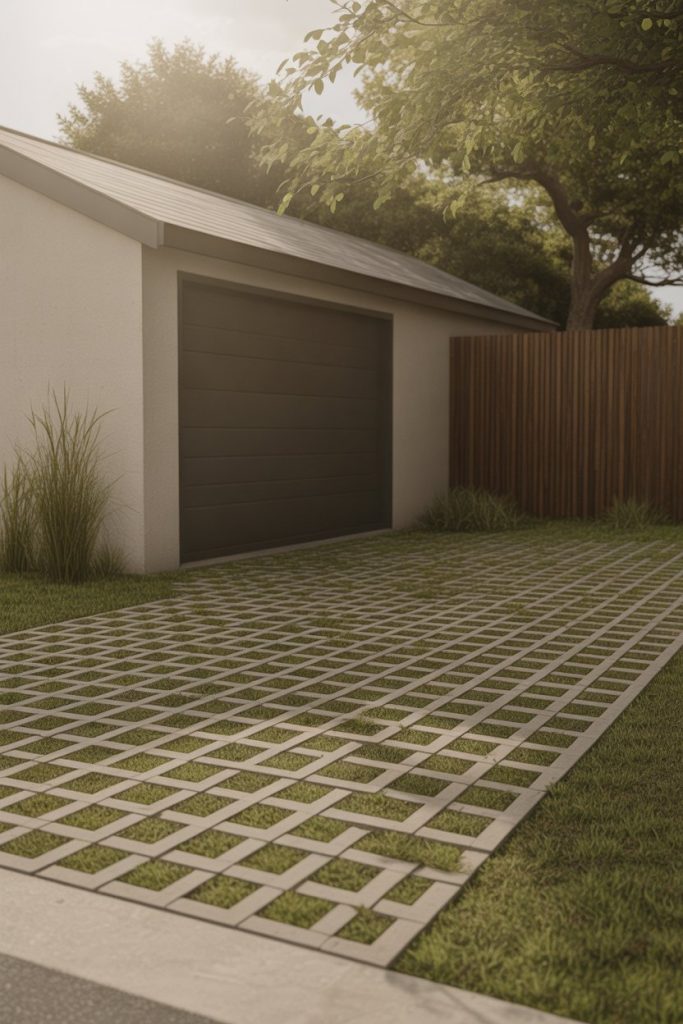
Where this design really shines is in regions like the Chesapeake Bay watershed, Portland metro area, and parts of Florida where homeowners may receive stormwater management credits or even rebates for installing permeable surfaces. Some municipalities offer $2-4 per square foot in credits, which can offset 30-40% of installation costs. Beyond financial incentives, the ecological benefit of reducing runoff pollution and supporting groundwater recharge appeals to environmentally minded homeowners nationwide.
15. Rustic Reclaimed Brick Character
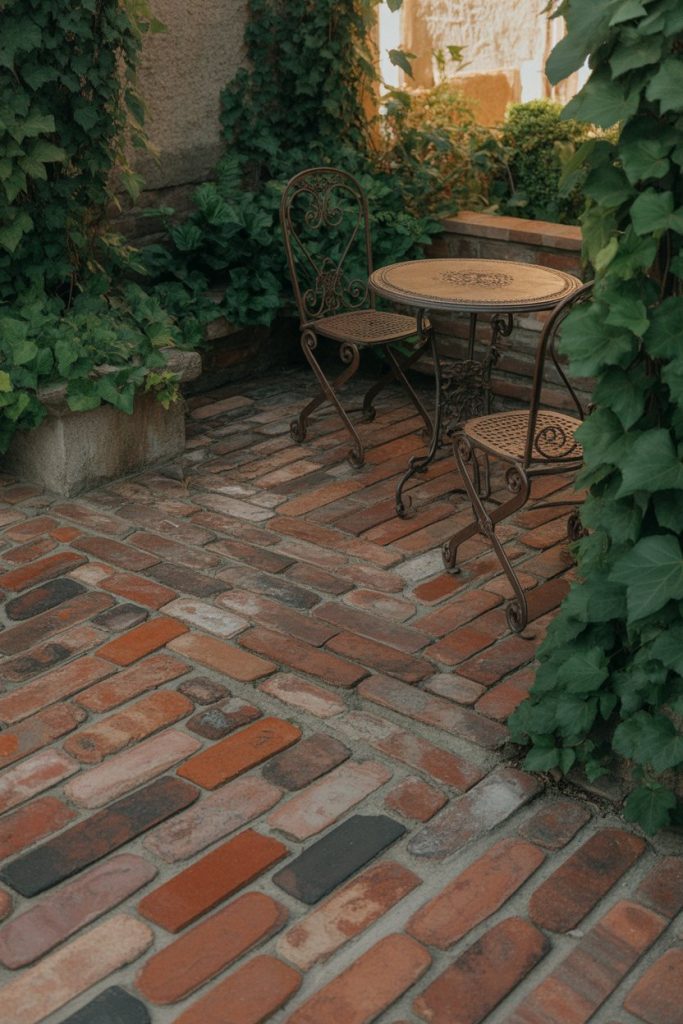
Sourcing reclaimed brick from demolished buildings or industrial sites brings unmatched authenticity and historical character to new patios. Each salvaged brick carries unique weathering, color variation, and sometimes even the maker’s stamp from 19th-century kilns. This approach has gained serious traction in revitalized urban neighborhoods and historic districts where homeowners want their outdoor renovations to honor the area’s architectural heritage. 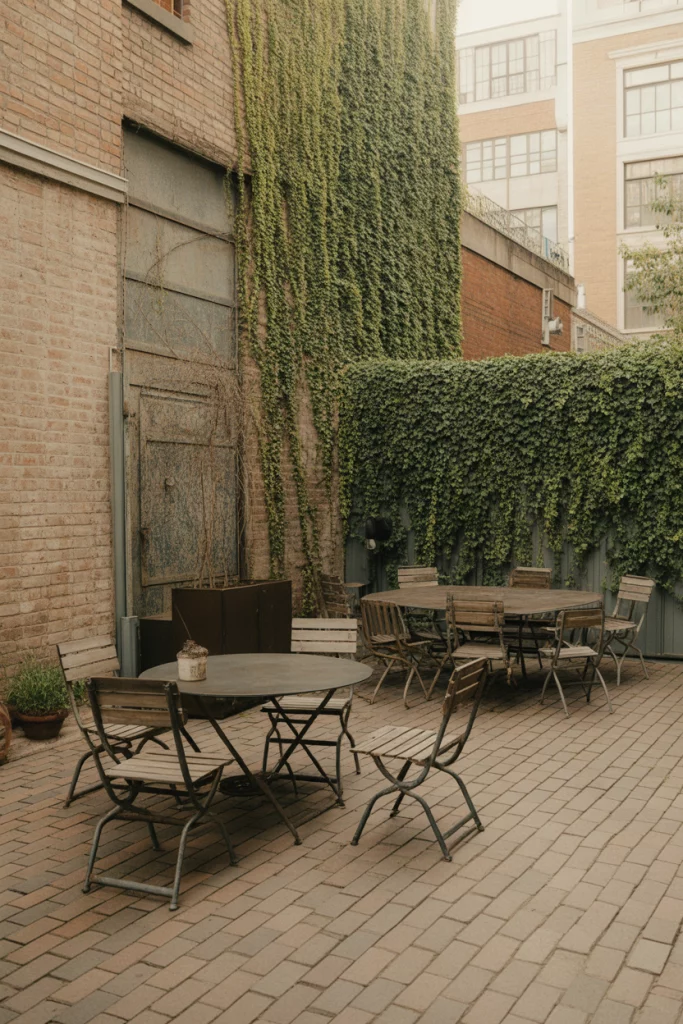
Practically speaking, reclaimed brick costs roughly $1.50-3.00 per brick compared to $0.50-1.00 for new pavers, but the architectural salvage yards where you’ll find them—concentrated in cities like Baltimore, Chicago, and Philadelphia—often sell in bulk lots that bring per-unit costs down. Installation can be trickier because thickness varies, requiring extra sand leveling, but experienced DIYers handle this challenge successfully. The result is a one-of-a-kind patio that new materials simply cannot replicate.
16. Compact Small Yard Solution
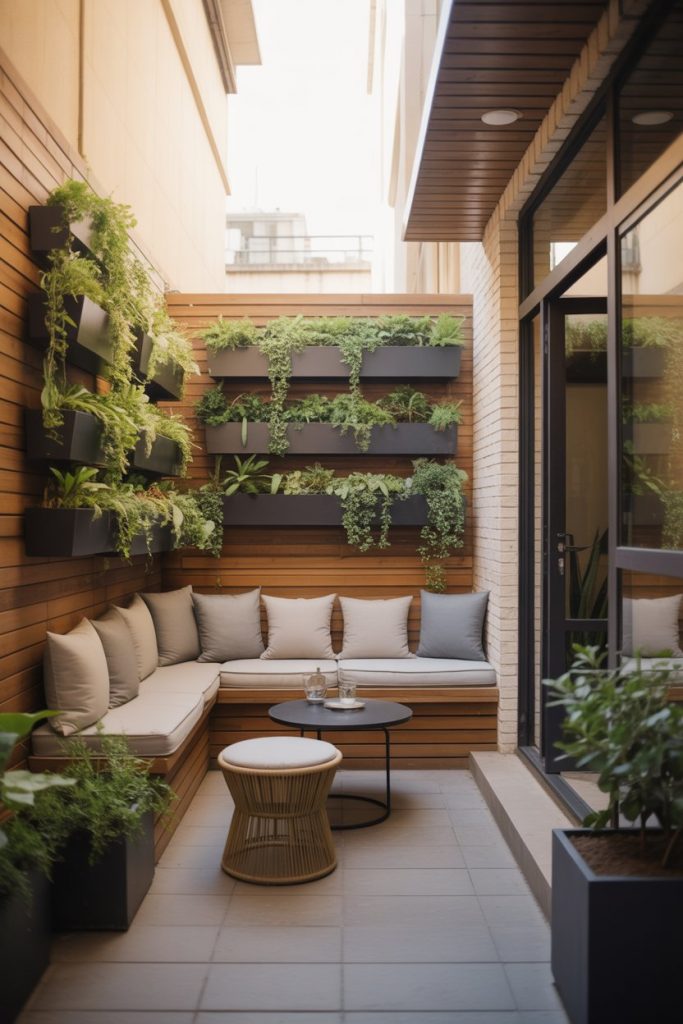
Maximizing a small yard requires strategic layout planning that creates distinct functional zones without visual clutter. Using a single paver type in varying patterns—perhaps 12×12 squares in the dining area transitioning to a running bond near the house—maintains material continuity while defining spaces. Built-in bench seating along property lines preserves floor space for movement while providing ample seating capacity. 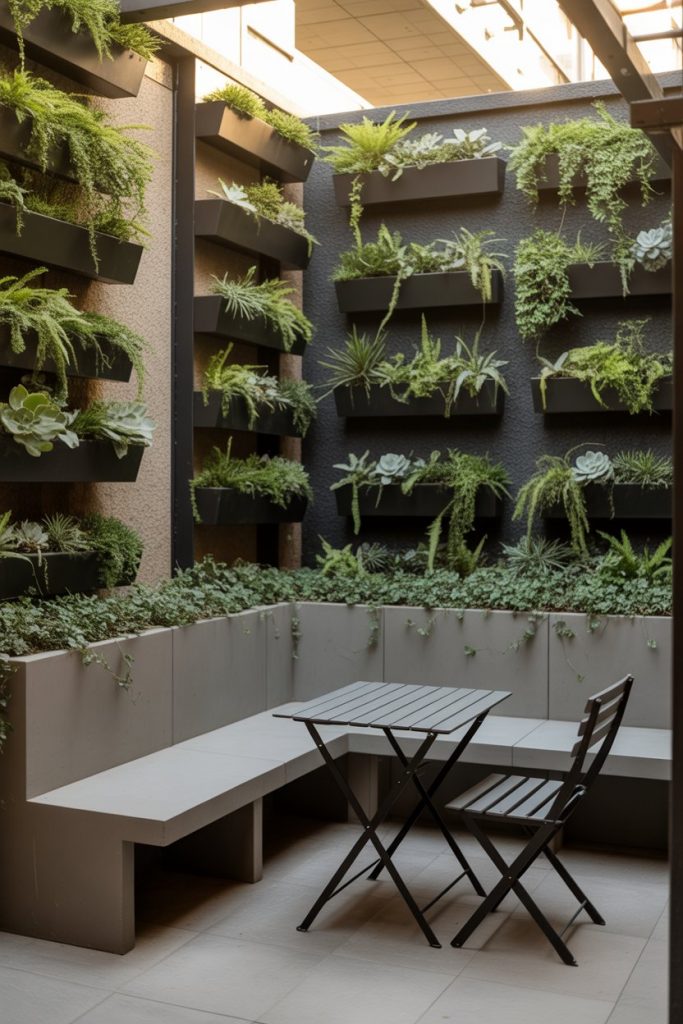
Urban homeowners in space-constrained cities like San Francisco, Seattle, and Boston have pioneered techniques that suburban dwellers are now adopting. The key insight is treating vertical space as valuable as horizontal—adding tall planters, wall-mounted lighting, and overhead pergola structures draws the eye upward and makes compact patios feel more expansive. This vertical emphasis also provides privacy screening without consuming precious floor area needed for furniture and circulation.
17. Round Intimate Conversation Area
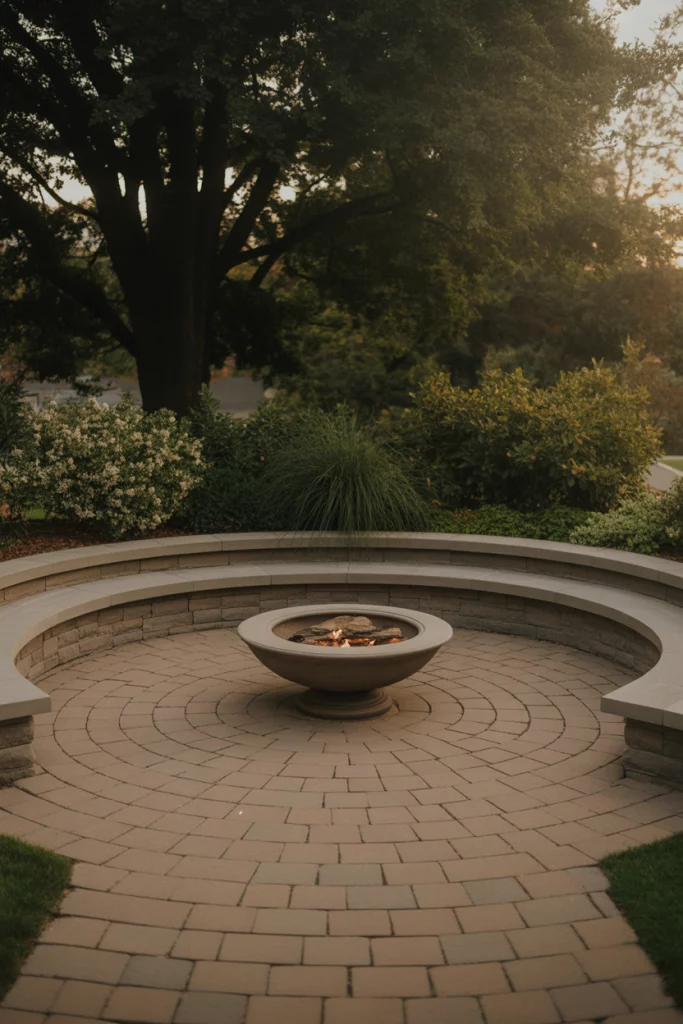
A round paver installation creates an intimate gathering space perfect for small yard settings where every square foot counts. The circular shape eliminates wasted corner space while the curved perimeter softens the typically angular lines of fenced yards. This geometry works particularly well for dedicated conversation areas separate from dining zones, perhaps featuring a central fire pit or fountain as the focal element. 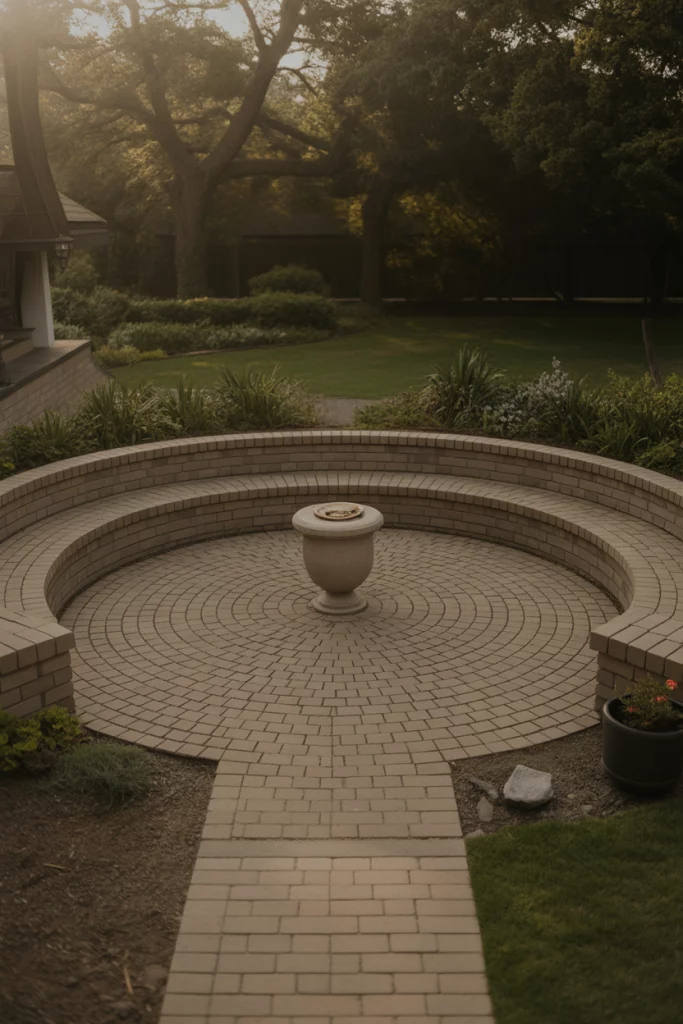
Installing a circular patio requires more skill than rectangular layouts—you’ll need to carefully calculate the radius and cut numerous pavers to achieve smooth curves. Most professional installers charge a 20-35% premium for circular designs compared to rectilinear patterns of the same square footage. However, the spatial efficiency often means you can achieve the same functional area with 15-20% fewer total square feet, partially offsetting the higher per-square-foot labor cost.
18. Industrial Chic Concrete Panels
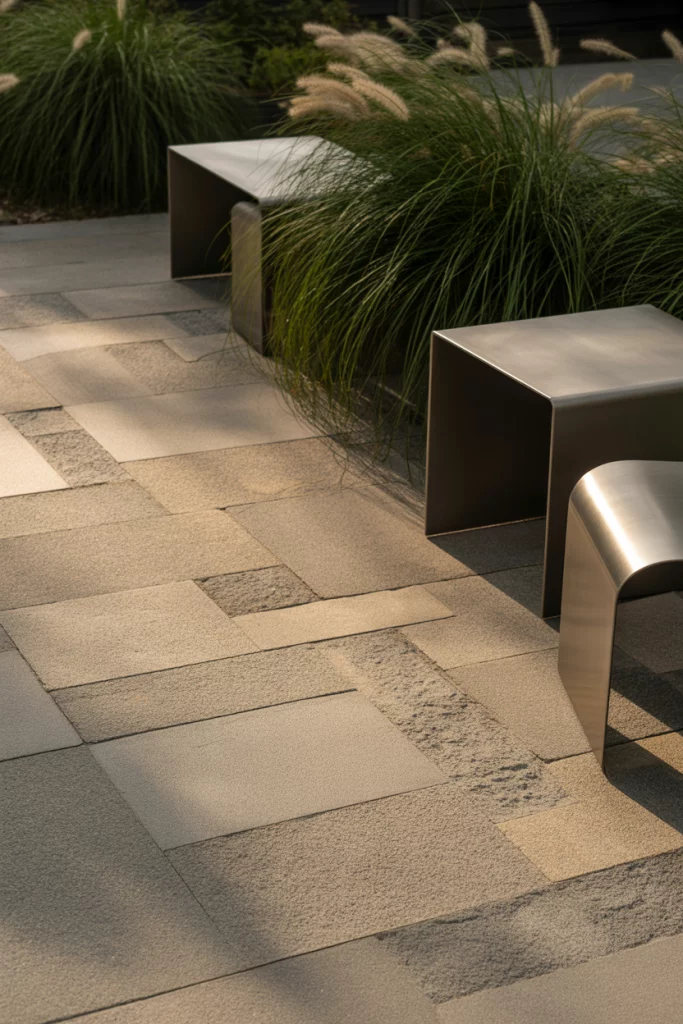
The industrial aesthetic translates beautifully to outdoor spaces using large concrete panels with exposed aggregate or polished finishes. This modern approach creates a gallery-like backdrop for contemporary outdoor furniture and architectural plantings. The style has migrated from trendy loft conversions in cities like New York and LA to mainstream suburban markets where homeowners want sophisticated, low-maintenance outdoor entertaining areas. 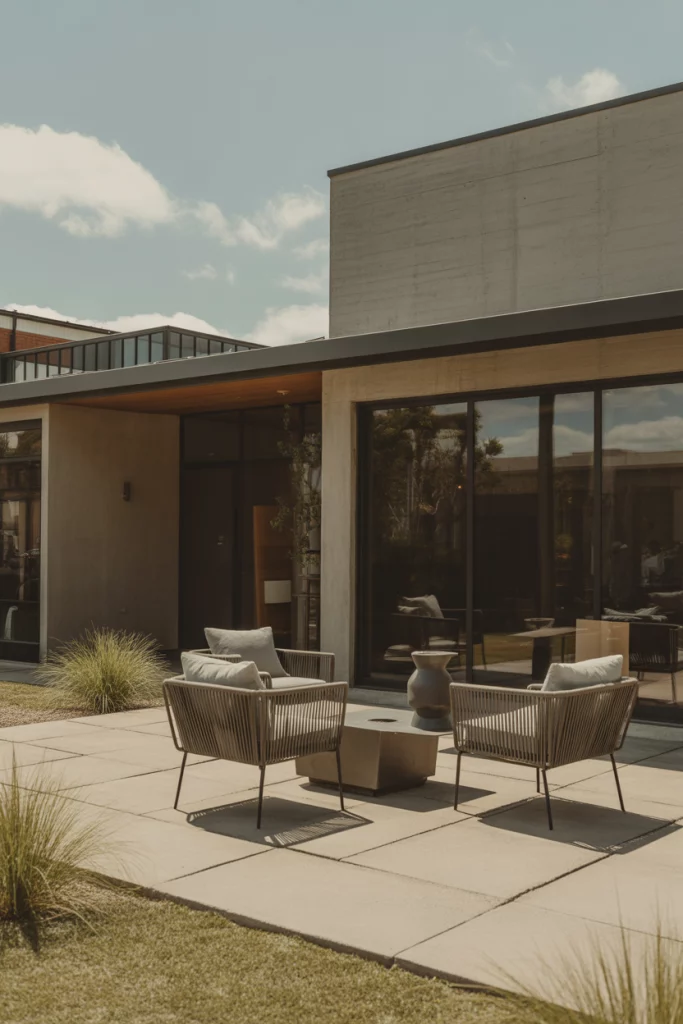
One practical advantage rarely discussed in design magazines: these large-format concrete installations develop far fewer weeds than traditional brick or smaller pavers because there are simply fewer joints for seeds to infiltrate. Homeowners in warm climates where weed pressure is constant—think Texas, the Southeast, and Southern California—appreciate spending less time on maintenance and more time actually enjoying their outdoor spaces. A quick annual pressure washing typically handles any minor moss or algae growth.
19. Natural Stone Dry-Laid Flexibility
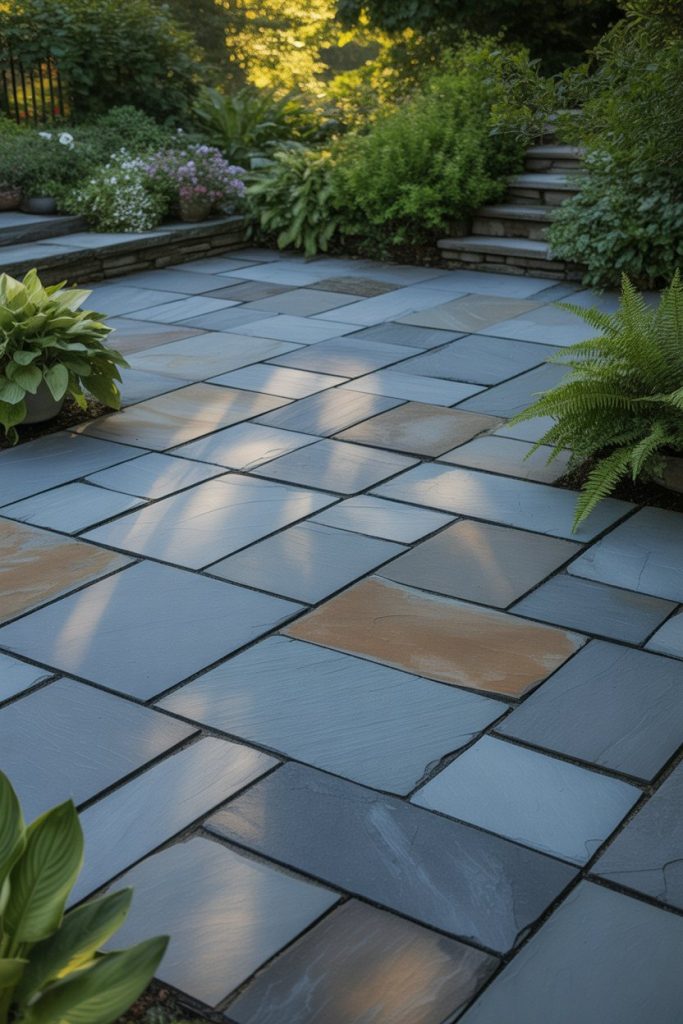
Dry-laid stone installation—setting pavers on sand rather than mortar—offers a surprisingly DIY-friendly approach that accommodates ground movement without cracking. This method works brilliantly in regions with freeze-thaw cycles where rigid mortared installations often fail within a few winters. Using irregular natural stone or dimensional bluestone creates a traditional appearance that complements historic homes throughout the Northeast and Midwest. 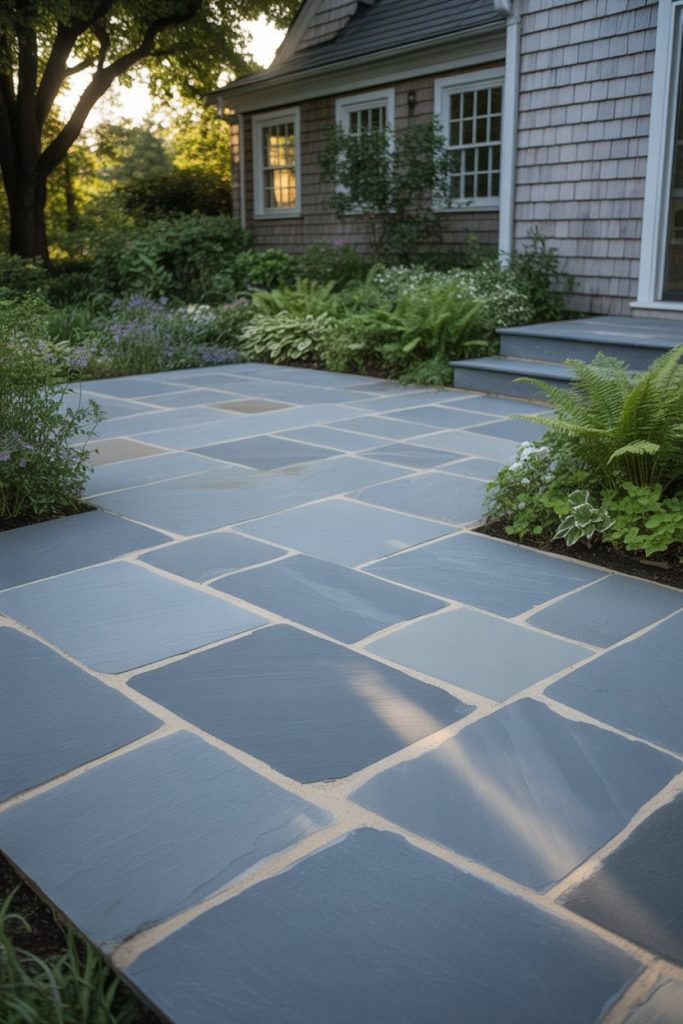
Experienced installers emphasize that dry-laid doesn’t mean haphazard—proper base preparation remains absolutely critical. You’ll need 4-6 inches of well-compacted gravel base, a 1-inch sand leveling layer, and careful attention to drainage slopes. The beauty of this method is its forgiveness; if a paver settles unevenly, you simply lift it, add sand, and reset it. This repairability makes dry-laid installations ideal for homeowners who prefer maintaining their own outdoor spaces rather than calling contractors for every minor adjustment.
20. Mixed-Size Modular Pattern
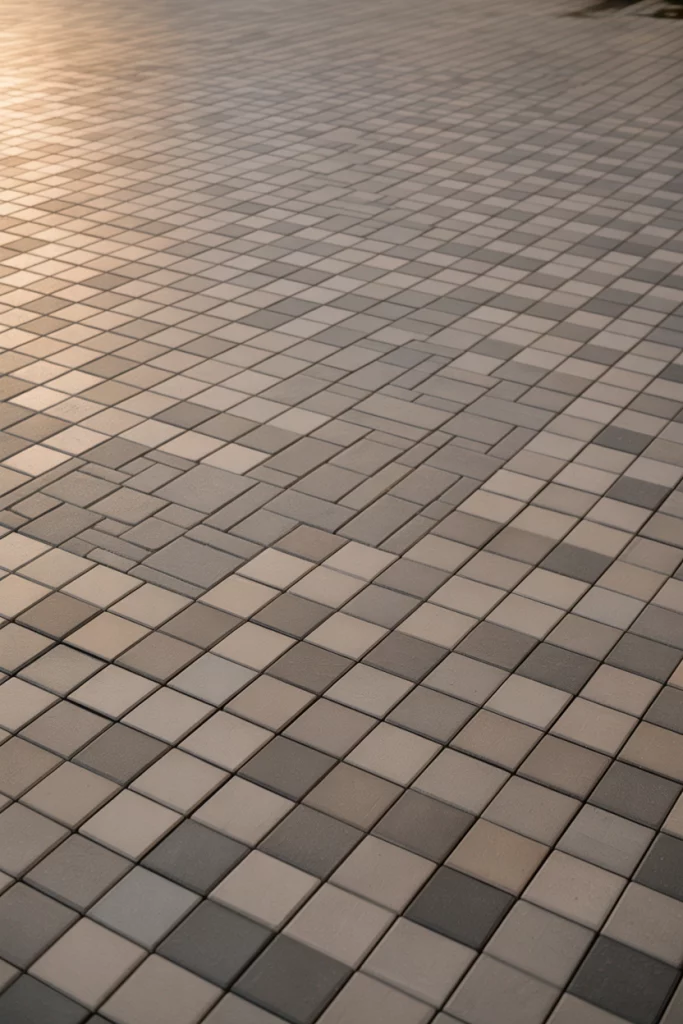
Creating visual complexity through mixed paver sizes—combining 12×12, 16×16, and 24×24 pieces—generates a custom-designed appearance while using standard stock materials. This modular approach allows cheap concrete pavers to mimic expensive natural stone installations when arranged thoughtfully. The varied module sizes break up visual monotony, making even simple square pavers look architecturally sophisticated. 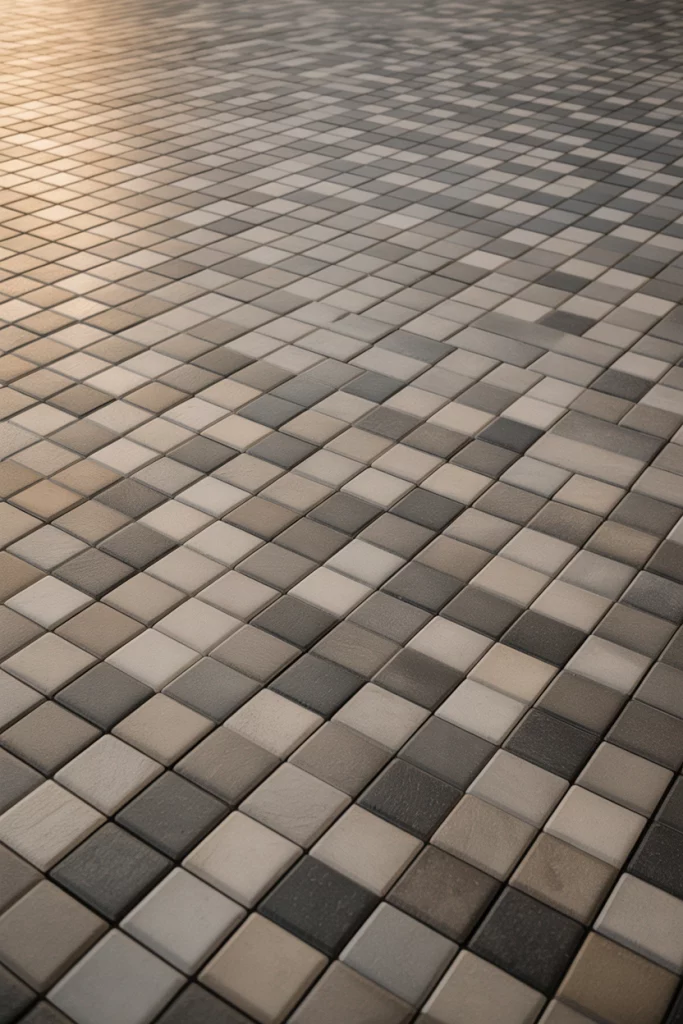
This design strategy works best when you purchase all pavers from the same manufacturer line to ensure consistent thickness and compatible color tones. Many homeowners successfully order “seconds” or slight imperfects at 30-50% discounts since minor color variations or small edge chips are completely invisible once pavers are installed in a complex mixed-size pattern. This budget-conscious sourcing approach can reduce total material costs from around $2,500 to as low as $1,200-1,500 for a typical 200-square-foot patio.
21. Integrated Lighting Drama
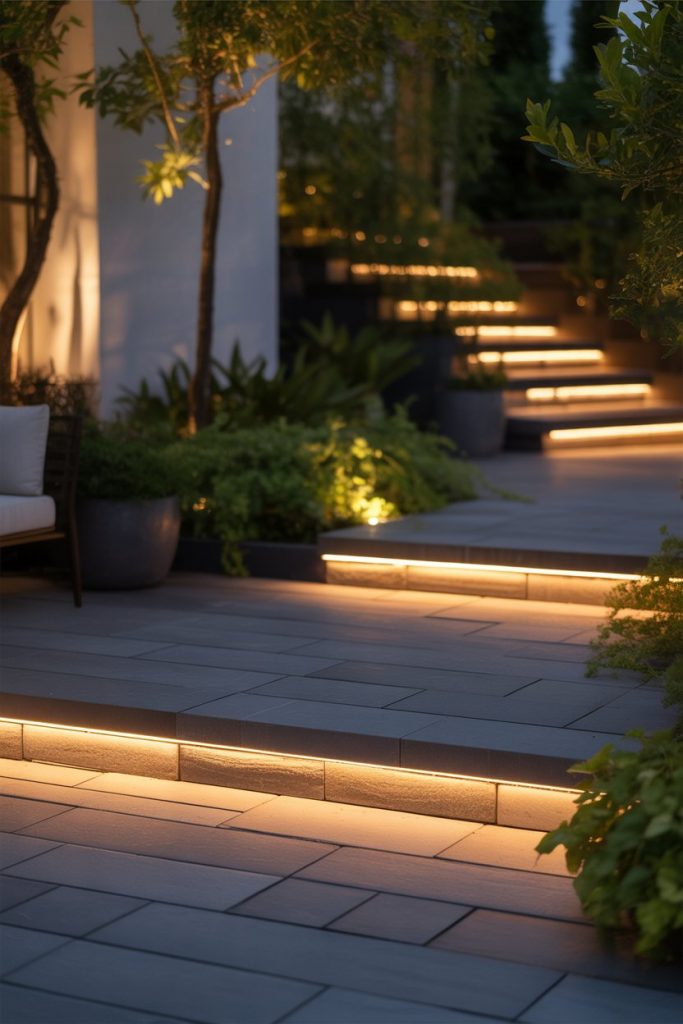
Planning for integrated lighting during initial paver installation elevates your patio from daytime-only space to true evening entertainment destination. Modern LED options include recessed lights between pavers along pathways, uplighting within stone walls, and low-voltage strips along step risers. This infrastructure planning works best when electrical lines are run during base excavation rather than retrofitted later through expensive trenching operations. 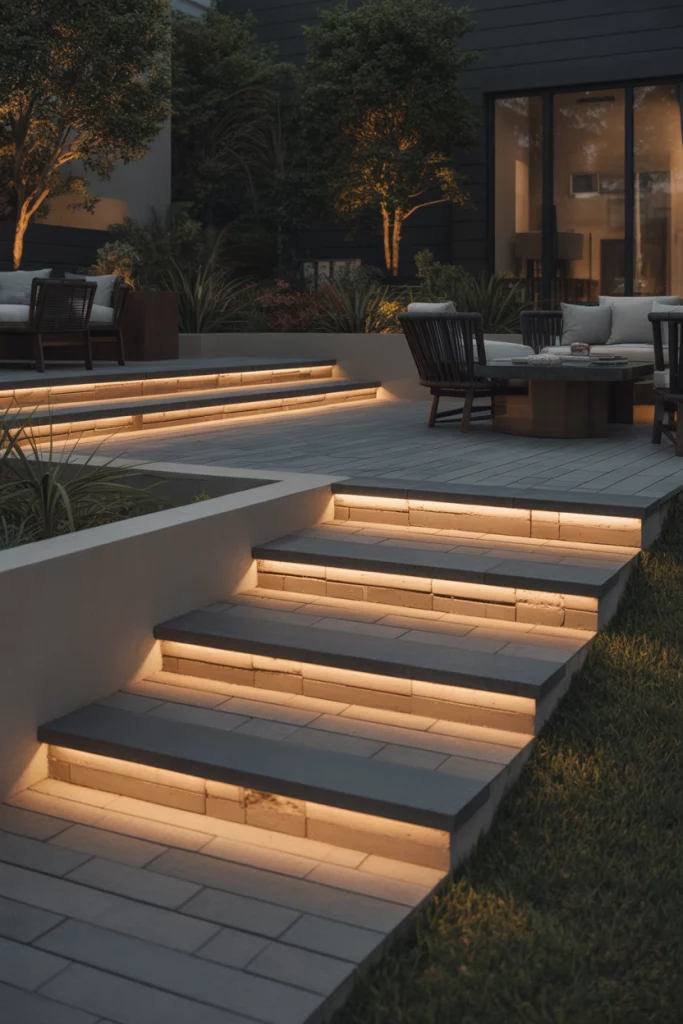
Americans living in mild-climate states like California, Arizona, and Florida use their outdoor spaces year-round, making proper lighting not a luxury but a necessity for maximizing their investment. The upfront cost to include lighting infrastructure during construction adds roughly $800-1,500 for a medium-sized patio, but retrofitting the same system later typically costs $2,000-3,000 due to the labor involved in disturbing finished hardscape. Smart homeowners view integrated lighting as essential infrastructure rather than optional decoration.
Conclusion
Now that you’ve explored these 21 paver patio ideas for 2026, you’re equipped with inspiration ranging from budget-friendly DIY projects to sophisticated entertaining spaces. Every backyard tells a different story, and your perfect patio design depends on your specific climate, lifestyle, and aesthetic preferences. We’d love to hear which ideas resonated with you—drop a comment below sharing your favorite design or any questions about bringing these concepts to life in your own outdoor space.