That feeling when you’re deep into a Pinterest scroll and you finally see it—the one kitchen floor that just clicks. You can picture making coffee on it, the kids doing homework at the island, the way the morning light hits it just right. But then you get stuck. What is it made of? Will it actually work in your space? We’ve been there. After sorting through what feels like a million options, we’ve curated the 31 most inspiring and genuinely practical kitchen floor ideas for 2026. This isn’t just another list of pretty pictures.
We’re diving deep into timeless checkerboard patterns, rustic terracotta, and modern stone looks that have real staying power. The trend for 2026 is all about choosing a foundation that reflects your personality, moving away from the one-size-fits-all gray floors of the past and embracing materials with character and warmth. And stay until the end—we break down the most common mistakes that can ruin these looks. 📌 Save this to Pinterest for later—you’ll want to revisit these ideas.
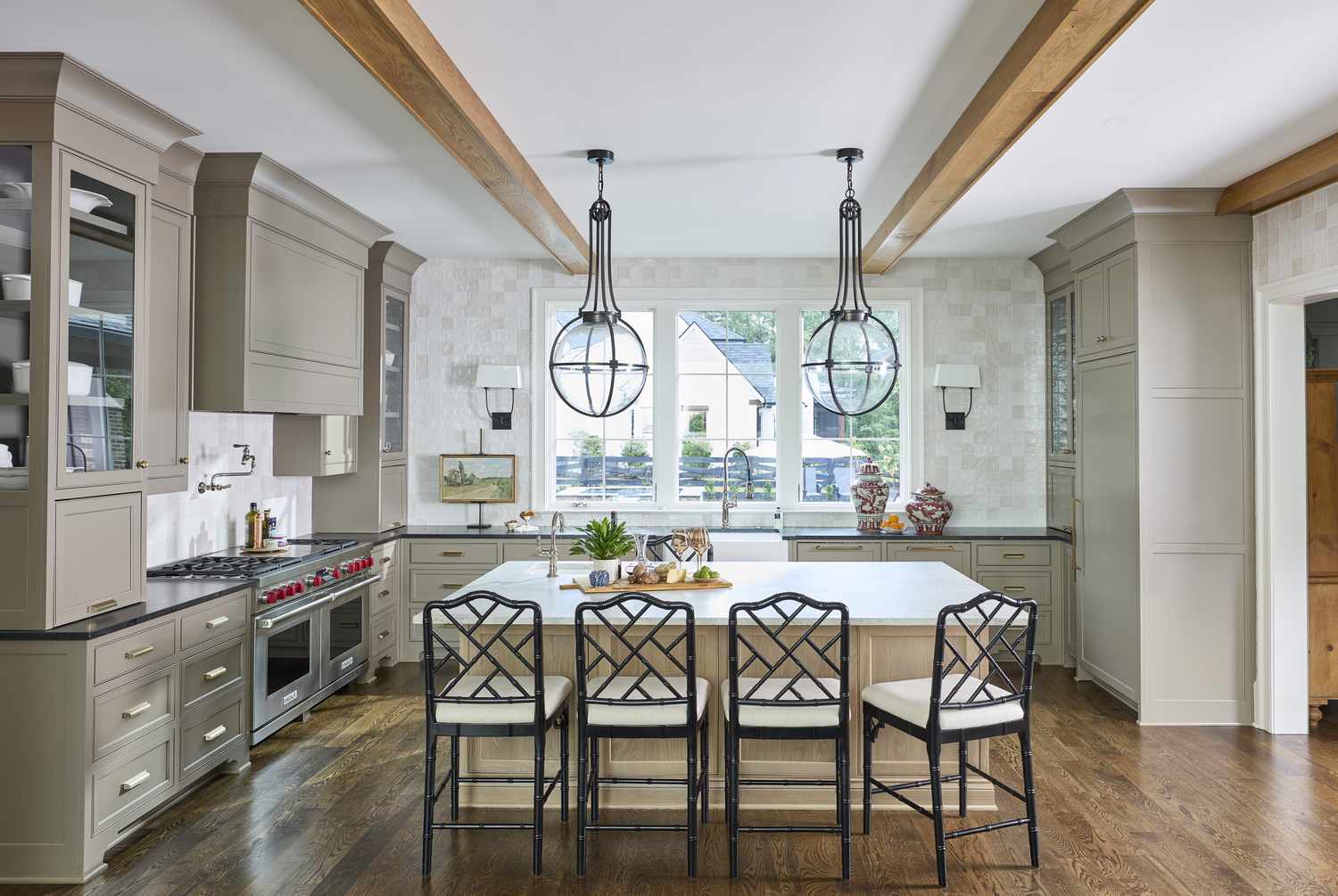
1. A Timeless Look: Warm Wood Flooring with Modern Accents
The magic here is all about balance. The dark stained hardwood floor provides a rich, grounding foundation that prevents the light gray cabinetry and white marble from feeling cold or clinical. It’s a classic material that adds instant warmth and history to the room. The contrast is what creates visual interest, making the space feel both expansive and cozy at the same time. The decision to use modern, spherical black metal pendants against the more traditional shaker cabinets and hardwood is a brilliant stroke—it keeps the design from feeling dated and adds a touch of contemporary edge.
📏 Scale Guide
Creating this specific, high-end look requires a good portion of the budget to be allocated to the materials and custom cabinetry. Here’s a realistic look at the potential costs:
- Main furniture (custom island, stools): $7,000 – $15,000
- Lighting (pendants, recessed): $1,500 – $4,000
- Textiles (window treatments, rugs): $500 – $1,500
- Flooring (hardwood installation): $5,000 – $12,000
- Paint & Wall Treatment (backsplash tile, paint): $2,000 – $5,000
- TOTAL: $16,000 – $37,500
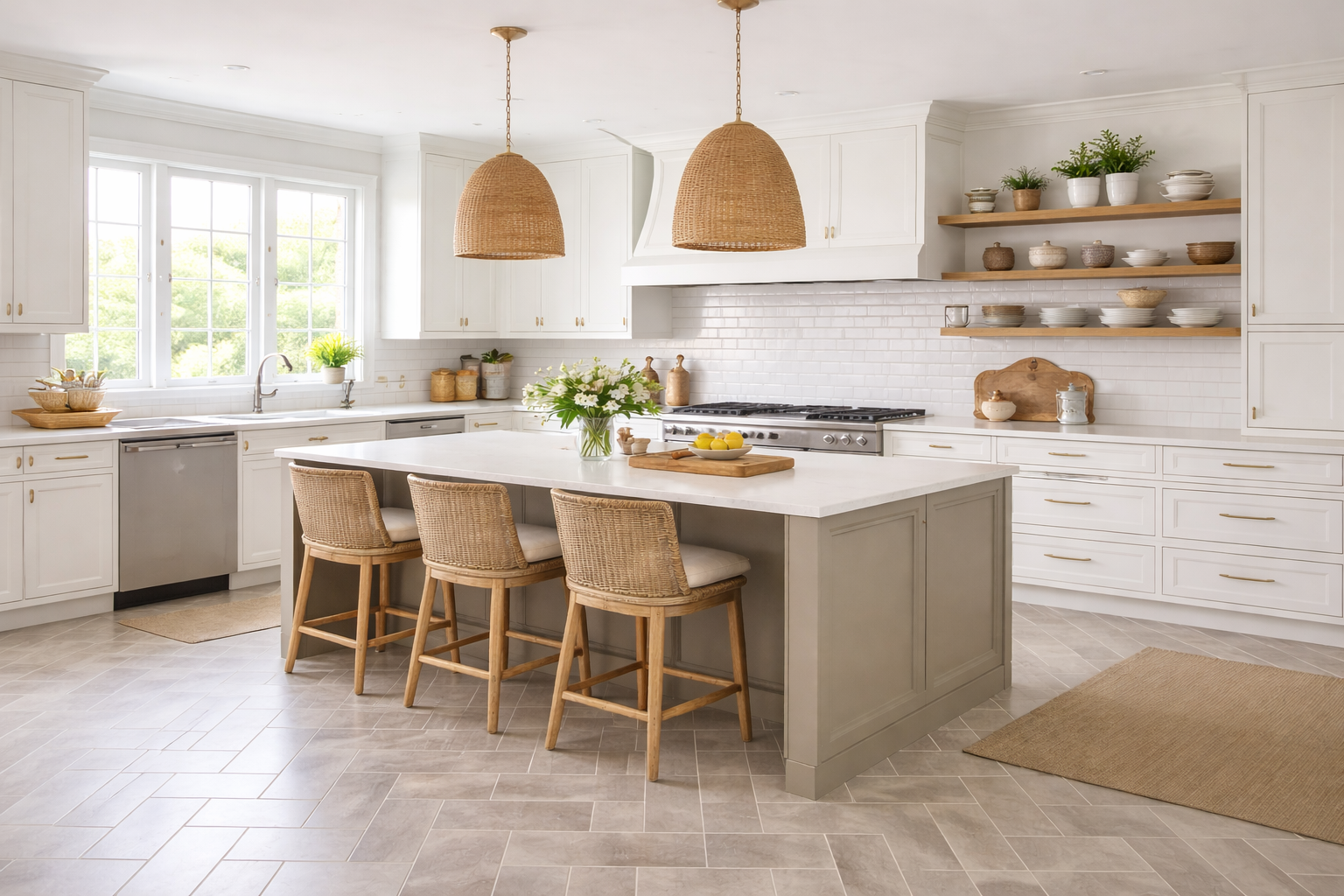
2. Subtle Sophistication with Herringbone Patterned Floor Tiles
The single element that defines this space is the herringbone pattern itself. If these same light gray tiles were laid in a simple grid, the effect would be clean but forgettable. The herringbone layout adds a sense of movement, texture, and bespoke detail without overwhelming the eye. It’s a choice that says “designer touch” and elevates a simple, durable material into something special. It proves you don’t need bold color or wild patterns to make a statement; sometimes, the most powerful tool is simply the way materials are arranged.
📐 Style Math
A floor like this is a dream for busy kitchens. The porcelain or ceramic material is inherently durable, resisting scratches, dents, and water damage. The light gray color with subtle variations is fantastic at hiding dust and minor crumbs. However, the one pain point will be the grout lines. A herringbone pattern means more grout lines than a simple large-format tile layout. Using a sealed, medium-gray grout is non-negotiable to prevent staining and make cleaning easier. A yearly deep clean and grout resealing will keep it looking pristine.
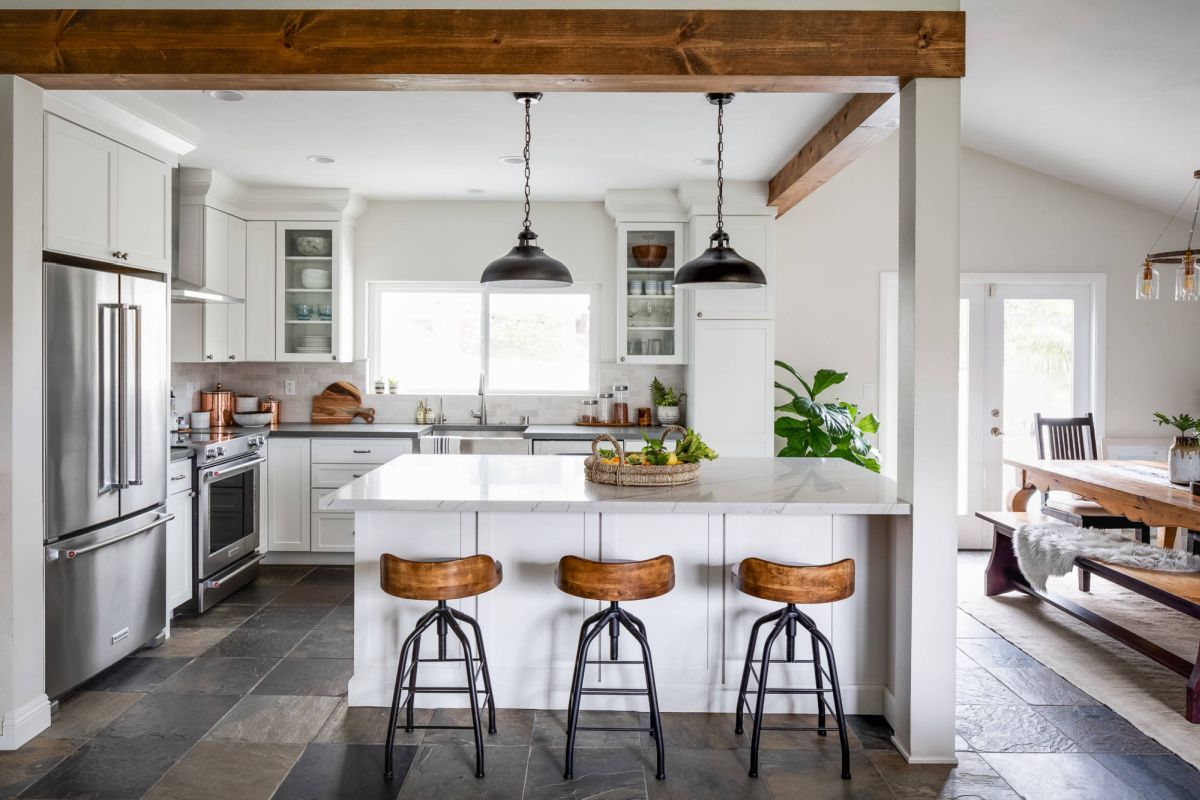
3. Dark Gray Slate Tile in a Bright, Rustic Kitchen
This design succeeds by mastering high contrast. The dark, multi-toned slate floor is a heavy, grounding element that could easily feel oppressive. But it works because it’s paired with an overwhelming amount of white—white cabinets, white walls, and white countertops. This abundance of light, reflective surfaces balances the visual weight of the floor. Furthermore, the introduction of rustic, dark wood ceiling beams and stool tops connects back to the floor’s earthy feel, ensuring the design feels cohesive and intentionally rustic rather than just starkly black and white.
🔧 How-To Brief
Natural slate tile is stunning, but it’s not for the faint of heart. Its naturally uneven, cleft surface can be tricky to clean, as mops can snag and debris can collect in the texture. It also needs to be sealed properly and periodically to prevent staining. If a bottle of olive oil or red wine spills and the seal isn’t perfect, you could be left with a permanent mark. Also, it’s a very hard surface; dropping a glass on it is a guaranteed shatter. While beautiful, it’s a commitment to a certain level of carefulness and maintenance.
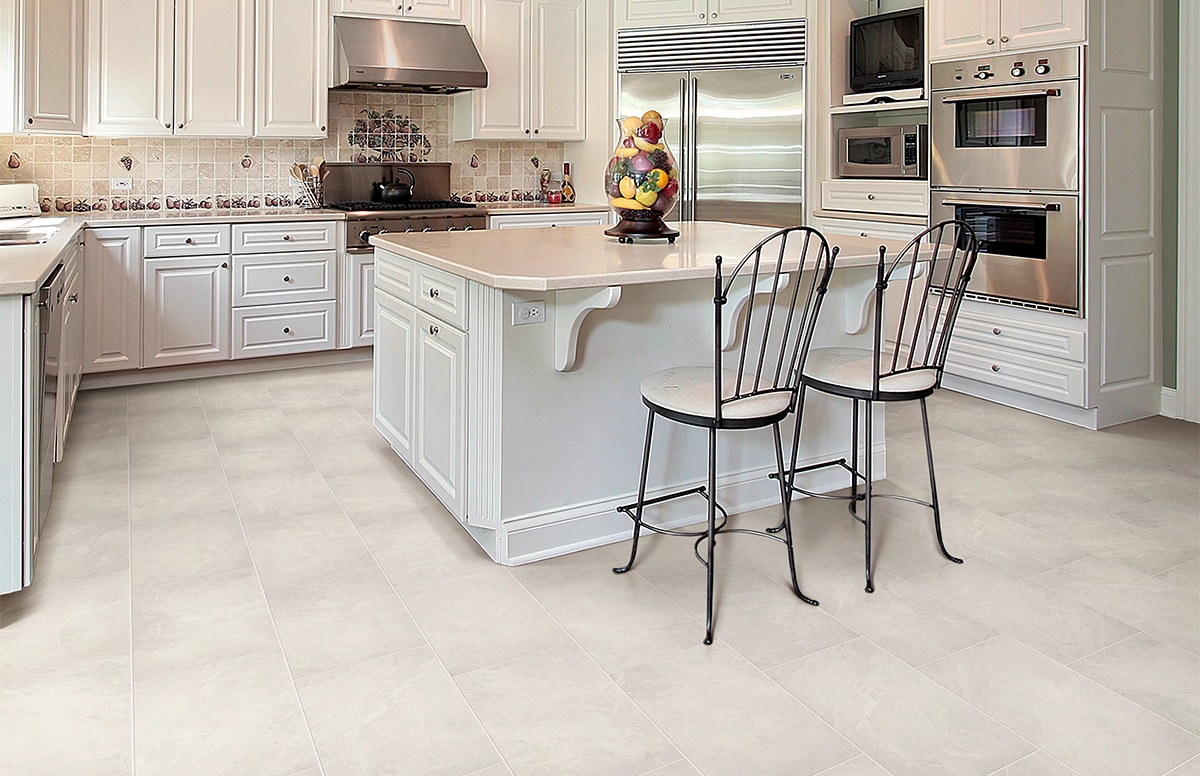
4. Light Beige Plank Tiles in a Classic White Kitchen
When you have a very traditional kitchen with classic white paneled cabinetry, choosing a floor tile that mimics wood planks is a savvy move. To keep it from looking like a wanna-be hardwood floor, select a porcelain plank tile that is at least 36 inches long. The extra length minimizes the number of grout lines, creating a more seamless and sophisticated look. For grout, don’t try to match the tile perfectly. Instead, choose a color that is one to two shades darker than the tile to subtly define the plank shape without looking too busy.
🔥 Trending Context
The formula for this timeless look is surprisingly simple and easy to adapt. Think of it as: 60% Classic White Base (cabinets, trim) + 30% Warm Neutral Floor (the beige plank tiles) + 10% Dark Accents (ornate stools, hardware). You could easily swap the beige floor for a light gray plank to cool down the palette or change the dark iron stools for polished nickel ones to lean more transitional. The core balance of a dominant neutral, a warm floor, and sharp accents remains the same, ensuring a graceful outcome.
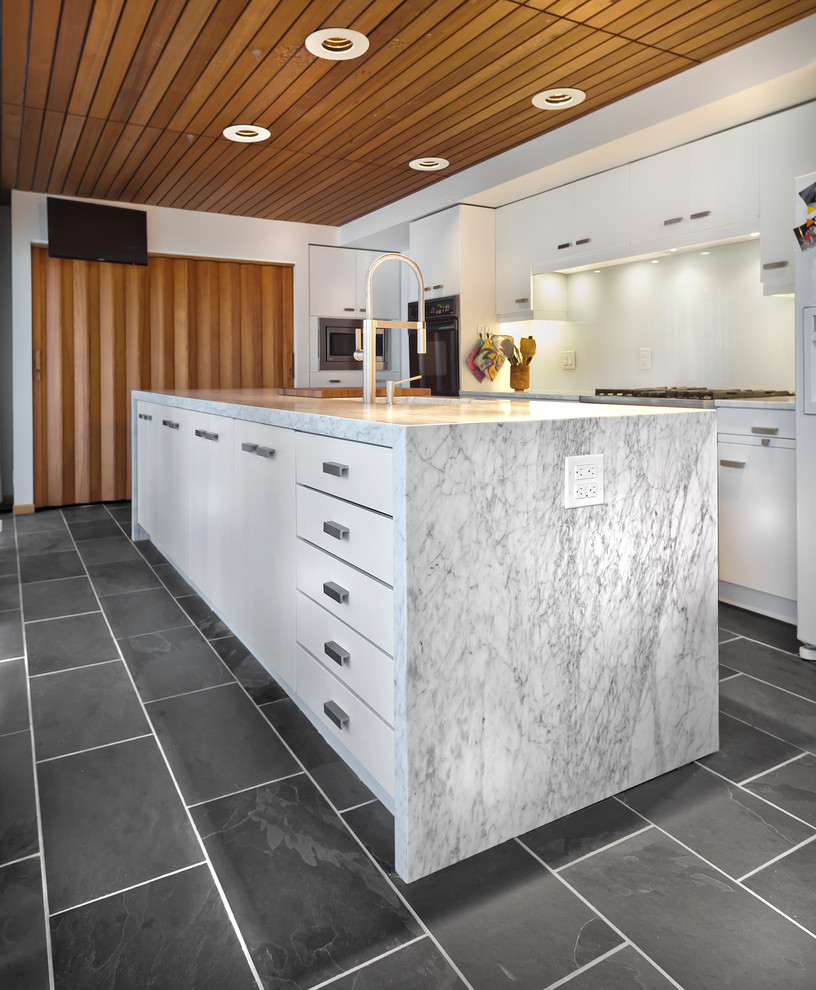
5. A Modern Statement with Dark Rectangular Floor Tiles
The light-colored grout is the hero of this design. Without it, the dark rectangular tiles would merge into a single, monolithic dark surface, losing their shape and rhythm. The contrasting grout lines create a crisp, graphic pattern that highlights the running bond layout and injects a dose of modern energy. It’s a small detail that does all the heavy lifting, turning a simple tile choice into a deliberate, impactful design feature that draws the eye and structures the entire room. This is also a perfect example of a more affordable alternative to the chevron patterns we see in Idea #2.
🧹 Maintenance Reality
Before you commit to this high-contrast look, run through this quick checklist to make sure it’s right for your space:
- Does your kitchen receive ample natural light? A dark floor can make a poorly-lit room feel like a cave.
- Are your cabinets and countertops a light color? This look relies on strong contrast to feel balanced and intentional.
- Are you prepared for grout maintenance? Light grout on a floor requires regular cleaning and sealing to prevent it from looking dingy.
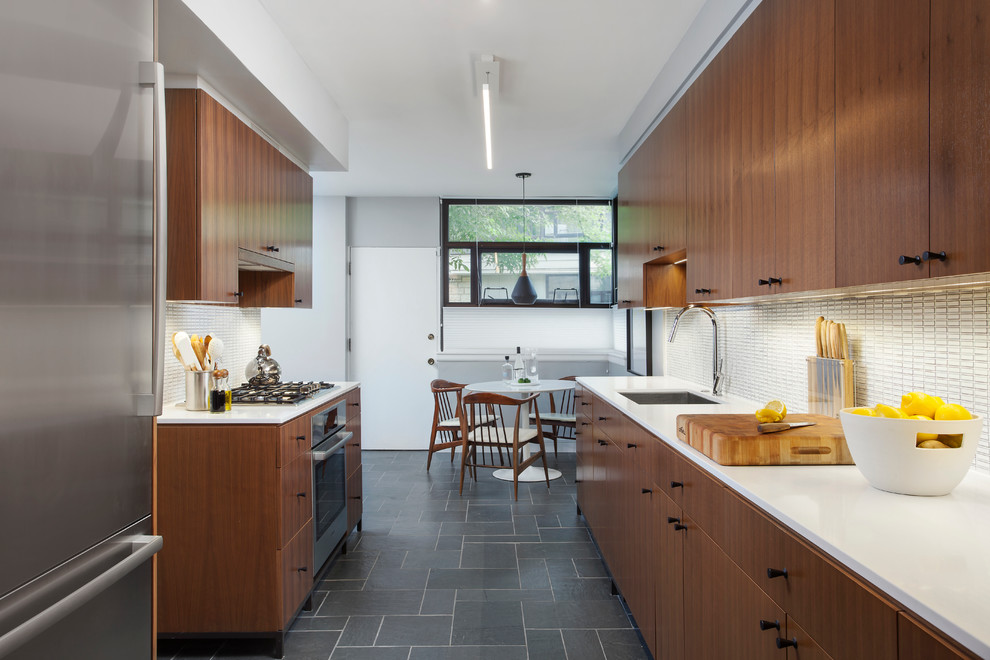
6. Dark Slate Flooring in a Streamlined Galley Kitchen
This flooring idea is ideal for galley kitchens or smaller rectangular spaces, typically from 80 to 150 square feet. The key is that the length of the room should be noticeably greater than the width. Laying the rectangular slate tiles so the longer side runs parallel to the length of the galley, as shown here, draws the eye forward and enhances the sense of depth, making the narrow space feel longer and more elegant. A minimum ceiling height of 8 feet is recommended to prevent the dark floor from making the room feel compressed.
💸 Get This Look For Less
What makes this kitchen work so well is the thoughtful layering of materials. The dark grey slate floor provides a durable and handsome base. Instead of creating a stark contrast with white, the design incorporates warm brown wood cabinets. This choice acts as a bridge between the dark floor and the crisp white countertops, softening the overall look. The streamlined, handle-free cabinet design and simple backsplash keep the focus on the quality of the core materials: slate, wood, and solid surface. It’s a study in quiet, functional elegance.
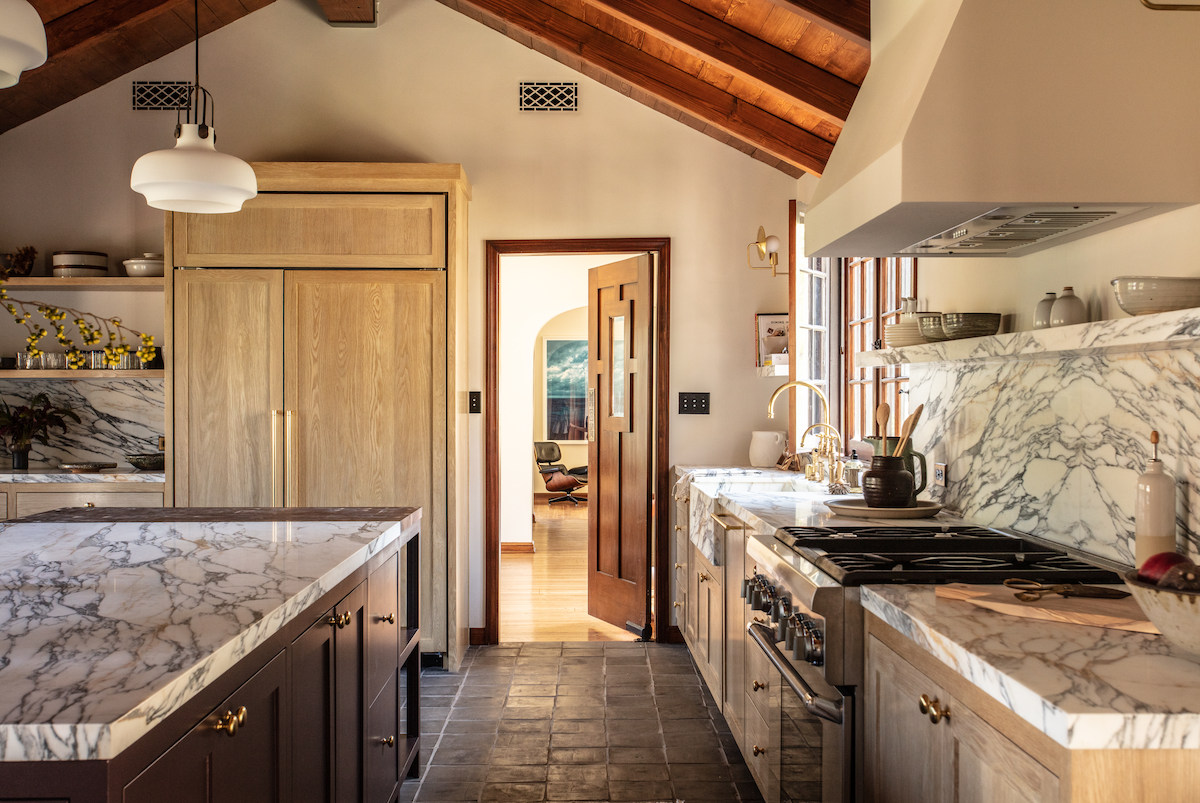
7. Rustic Tile Meets Refined Marble and Wood
This look taps directly into the “Modern European Farmhouse” trend that’s dominating Pinterest boards. Homeowners are moving away from the all-white, slightly sterile farmhouse look of the 2010s and embracing more authentic, material-rich designs. This kitchen is a perfect example: it pairs rustic elements (the dark floor tiles, the exposed ceiling beam) with refined ones (the heavily veined marble, the sleek brass hardware). It feels curated and personal, like a modern kitchen in an old Tuscan villa. This trend has staying power because it’s based on timeless, natural materials.
🎯 What Makes It Work
To achieve this effortless blend of rustic and refined, the key is in the details of the cabinetry. Specify a custom integrated refrigerator with panels that match the light wood cabinets exactly. This creates a seamless wall of wood, allowing the beauty of the grain to become a major design feature. It prevents a big block of stainless steel from interrupting the flow and disrupting the warm, organic aesthetic. Ask your cabinet maker to run the grain horizontally for a more modern touch.
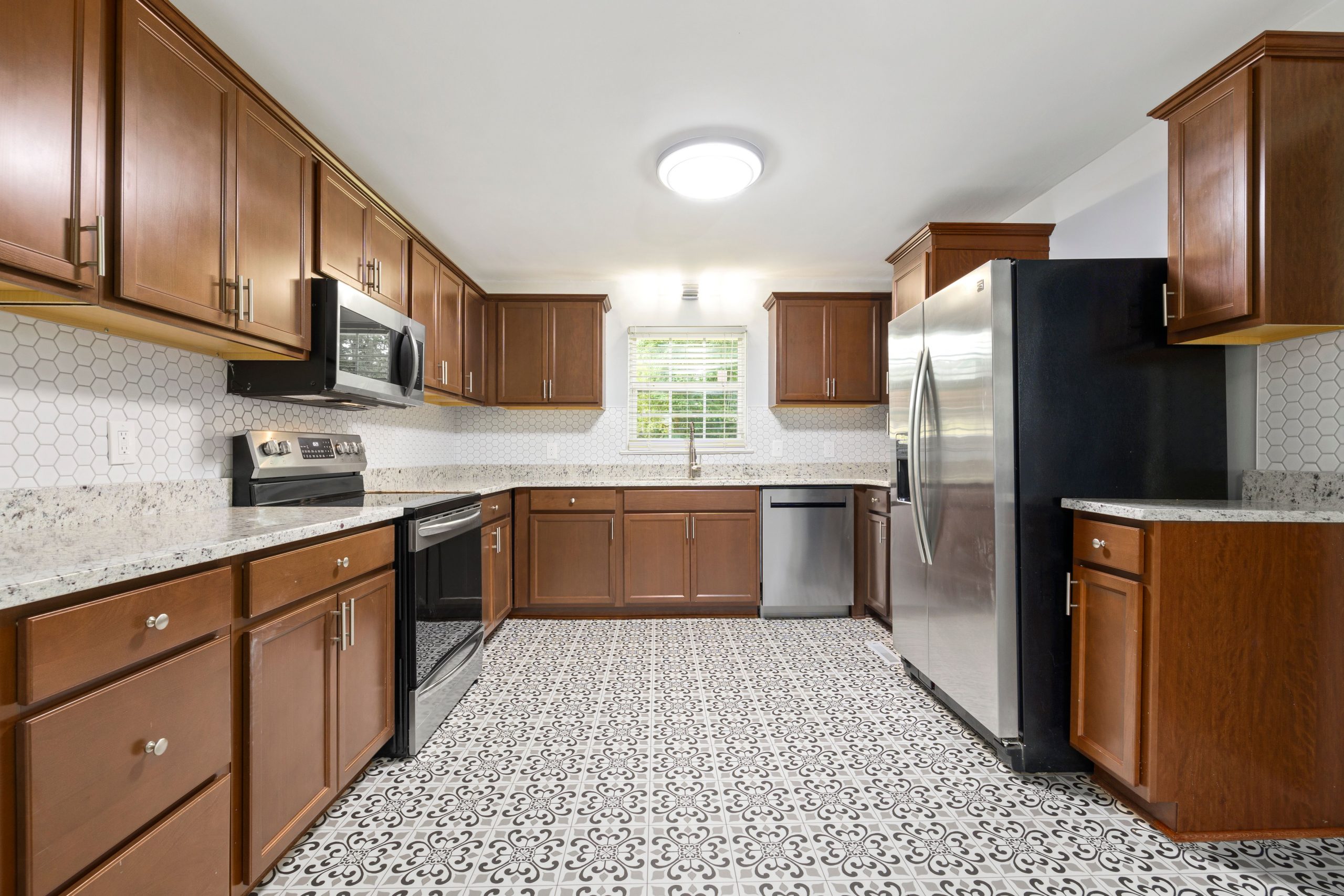
8. Geometric Patterned Floor with Warm Wood Cabinets
The visual recipe here is all about pattern play anchored by warmth. The formula is approximately: 50% Warm Wood + 30% Bold Pattern + 20% Quiet Neutral. The medium brown cabinets provide a substantial, warm base. The black, grey, and white patterned floor tiles inject energy and a strong graphic element. Crucially, the white hexagonal backsplash and light grey countertops act as the “quiet” elements that give the eye a place to rest, preventing the wood and the floor from clashing. You could swap the wood for a painted cabinet in deep green or navy and still have it work, as long as you keep the pattern and neutrals consistent.
✅ Before You Start
Want to recreate that perfect hexagonal backsplash with grey grout? Here’s the quick-and-dirty guide:
- Time: 4-6 hours (for a small-to-medium backsplash) | Cost: $150-$400
- Clean and prep your wall surface, ensuring it’s smooth and primed.
- Use a laser level to mark a perfectly straight starting line.
- Apply a thin-set mortar with a notched trowel in small sections.
- Press the hexagonal tile sheets into the mortar, using tile spacers for even gaps.
- After 24 hours, apply a pre-mixed dark grey grout, pressing it into the gaps.
- Wipe away excess grout with a damp sponge, polishing the tiles once dry.
9. A Compact Galley Kitchen with a Graphic Checkered Floor
A bold, large-scale checkerboard floor in a narrow galley kitchen is a daring move. While it can inject a ton of personality, be warned: it can also visually shrink the space and make the floor feel like it’s coming up to meet you. The reason it works here is because everything else is kept relatively simple at eye-level and below. Plain white lower cabinets and a simple wood countertop don’t compete with the floor. The dark brown walls actually help, creating a cozy, cocooning effect that feels intentional rather than just busy.
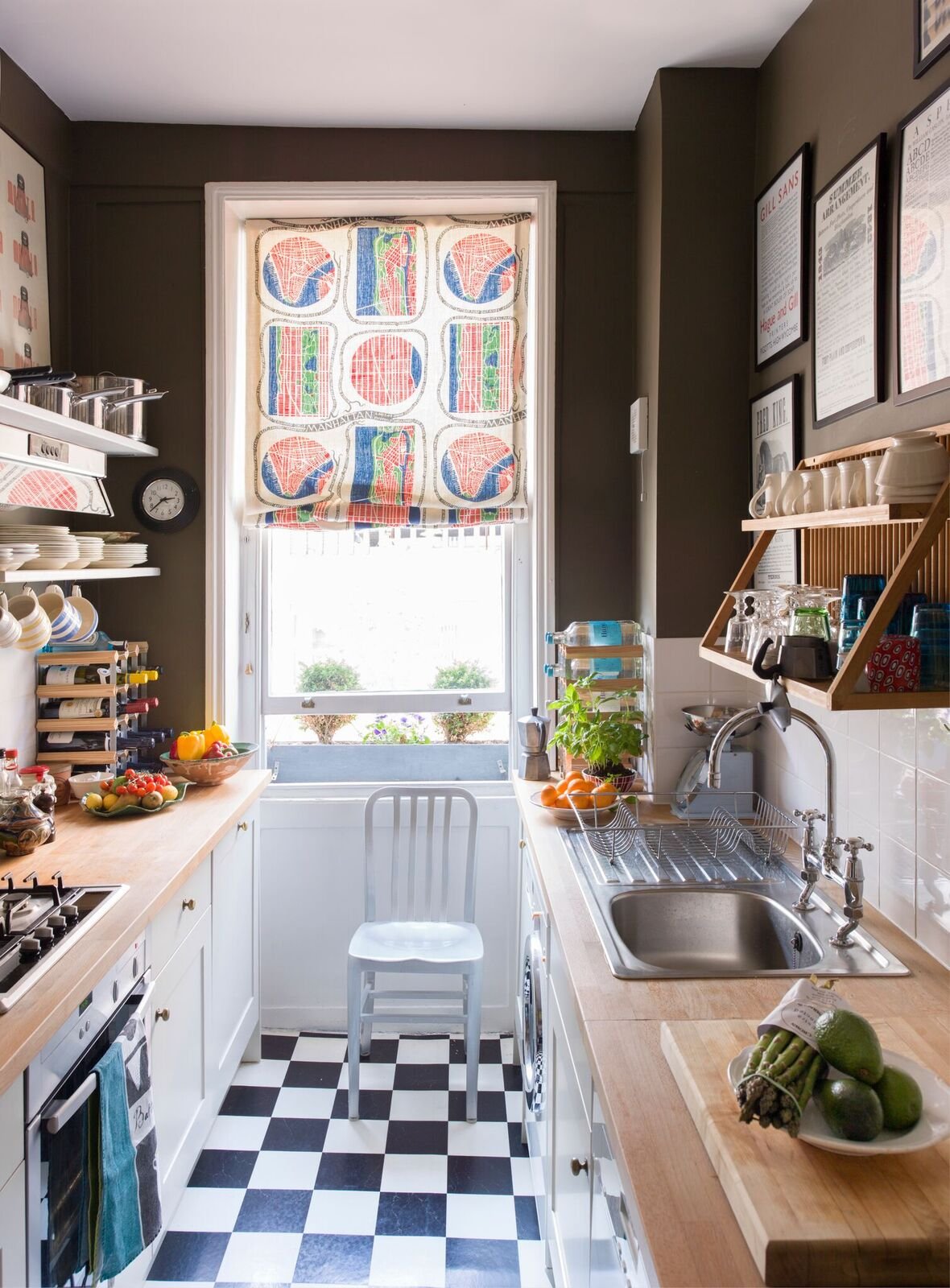
💰 Budget Breakdown
You don’t need a massive budget to get this eclectic, high-impact look. The checkerboard floor is the star, and you can achieve it for a steal. Instead of expensive tile, use peel-and-stick vinyl tiles from a big box store like Home Depot or Lowe’s, which can cost as little as $1-$2 per square foot. Pair them with IKEA’s affordable white cabinet fronts and a butcher block countertop. For the dark walls, a sample pot of a deep brown paint might be all you need for a small galley. This is a look where personality trumps price tag. Compare it with the more luxe version in Idea #13.
10. Modern Farmhouse with a Bold Checkerboard and Orange Counters
Without a doubt, the vibrant orange countertops are the single element that makes this kitchen unforgettable. The black and white checkerboard floor is a classic, but it’s the audacious choice of bright, saturated orange that elevates the entire design from familiar to fantastic. It’s a shot of pure energy and personality. If you replaced them with white or butcher block, the room would still be lovely, but it would lose its unique, joyful pulse. It’s a testament to the power of a single, fearless color choice.
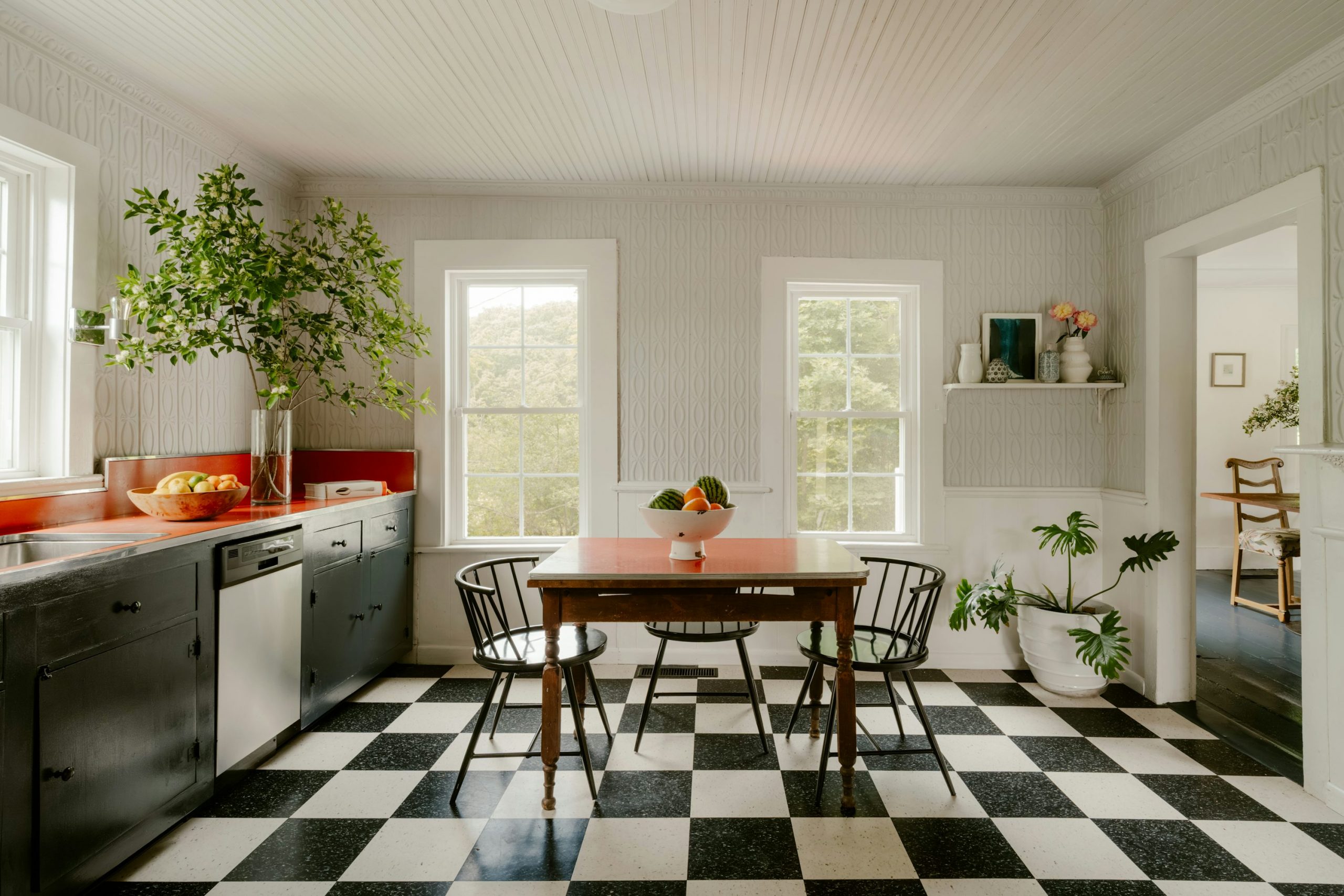
⚠️ Real Talk
This design is a masterclass in the principle of repetition and contrast. The strong black and white grid of the floor provides a graphic, orderly base. The black of the floor is repeated in the cabinetry and chair frames, creating a strong sense of cohesion. The vibrant orange countertops then introduce a powerful point of contrast that activates the entire space. The light, textured walls and white beadboard ceiling act as a neutral backdrop, allowing the floor and countertops to be the undisputed stars of the show without competition.
11. Retro Glam: A Checkered Floor with Glossy Brown and Gold Accents
When working with a classic black and white checkerboard floor, the finish of your accents makes all the difference. To achieve this chic, retro-glam vibe, the key is to mix finishes strategically. Commit to unlacquered brass for all your hardware—cabinet pulls, shelf brackets, and even the base of the dining chairs. This warm, living finish patinas over time and adds a layer of vintage soul. Then, contrast that with a high-gloss element, like the rich brown refrigerator. The combination of matte floor, living-finish brass, and glossy color is what makes the design feel curated and sophisticated.
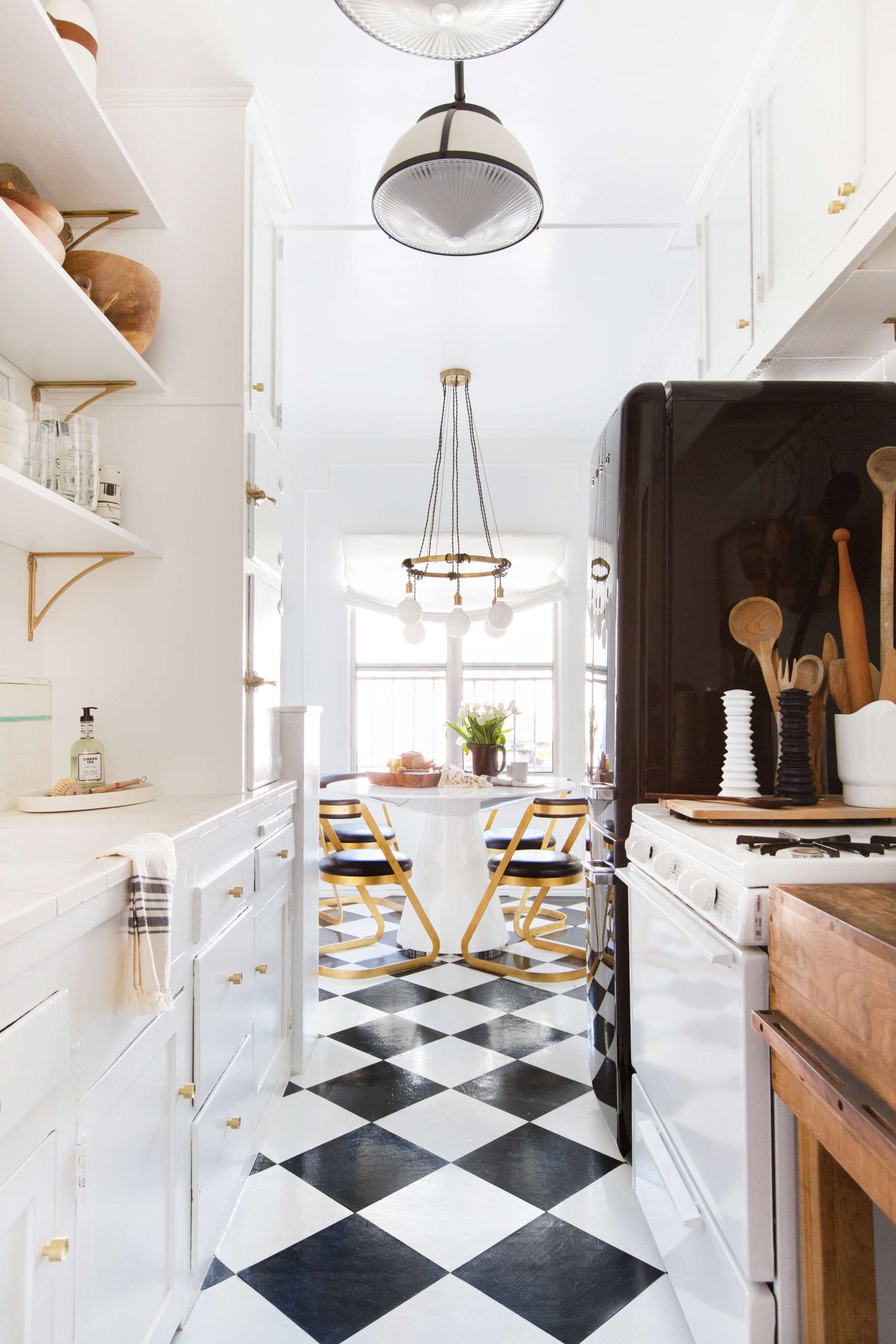
💡 Designer Tip
This look is a direct nod to the resurgence of 70s and 80s design, but with a modern, refined twist. We’re seeing a move towards warmer, earthier tones and glamorous finishes as a reaction against the cooler, more minimalist Scandinavian styles that have been popular. The glossy brown fridge, the gold accents, and the bold floor all speak to a desire for more personality and fun in our homes. This isn’t a fleeting trend; it’s part of a larger shift towards more expressive and individualistic interiors. A more playful take on this can be found in Idea #25.
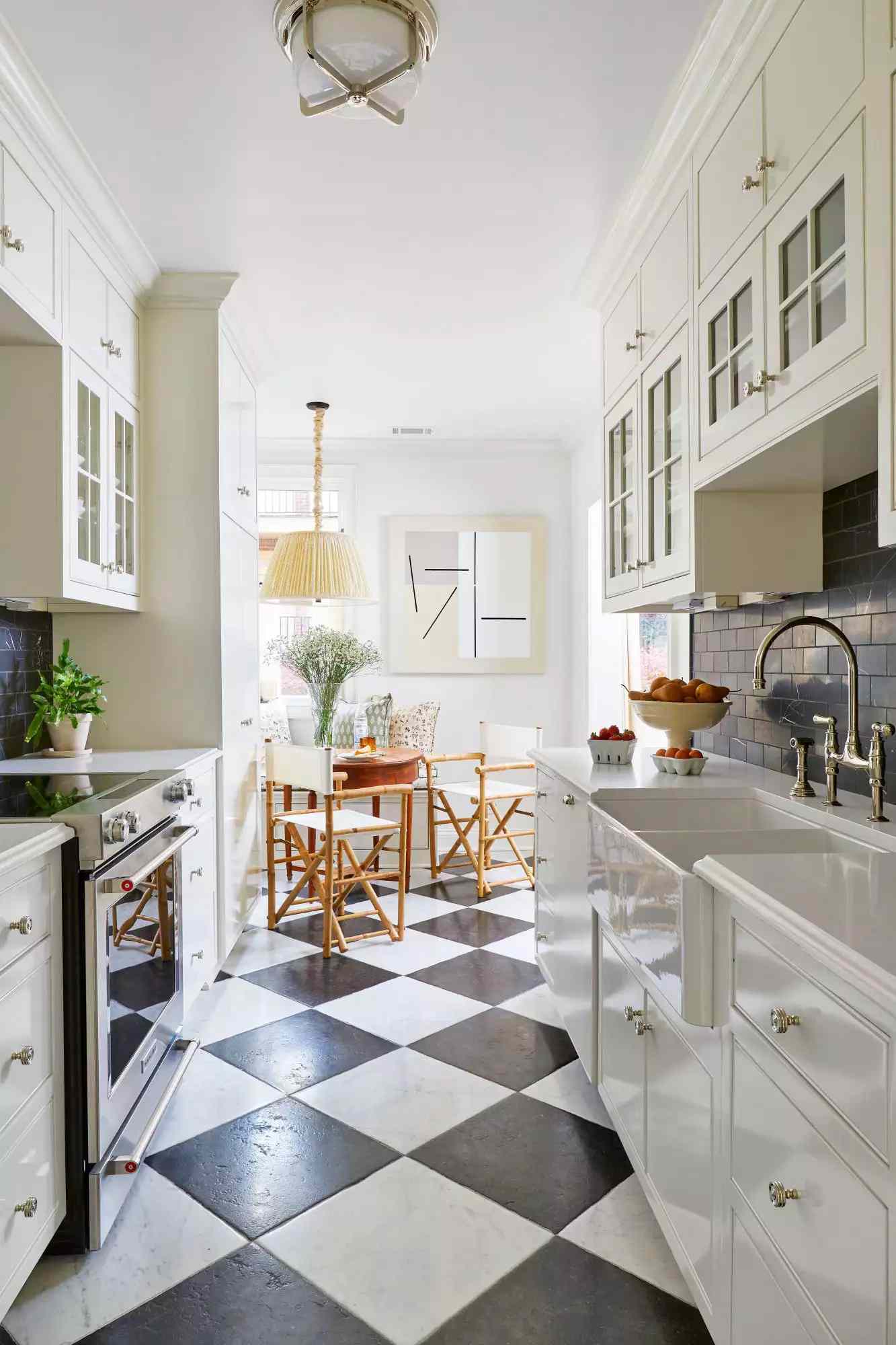
12. A Playful Twist: Diamond-Patterned Floor with Brass Hardware
Why does this feel so much more dynamic than a standard checkerboard? It’s all about orientation. By turning the black and white tiles 45 degrees to create a diamond pattern (also known as a harlequin pattern), the floor immediately develops a strong sense of direction and movement. The diagonal lines draw the eye down the length of the galley kitchen, making the narrow space feel longer and more dynamic. The crisp white cabinets and walls provide a clean canvas that allows the floor’s bold geometry to take center stage without feeling chaotic.
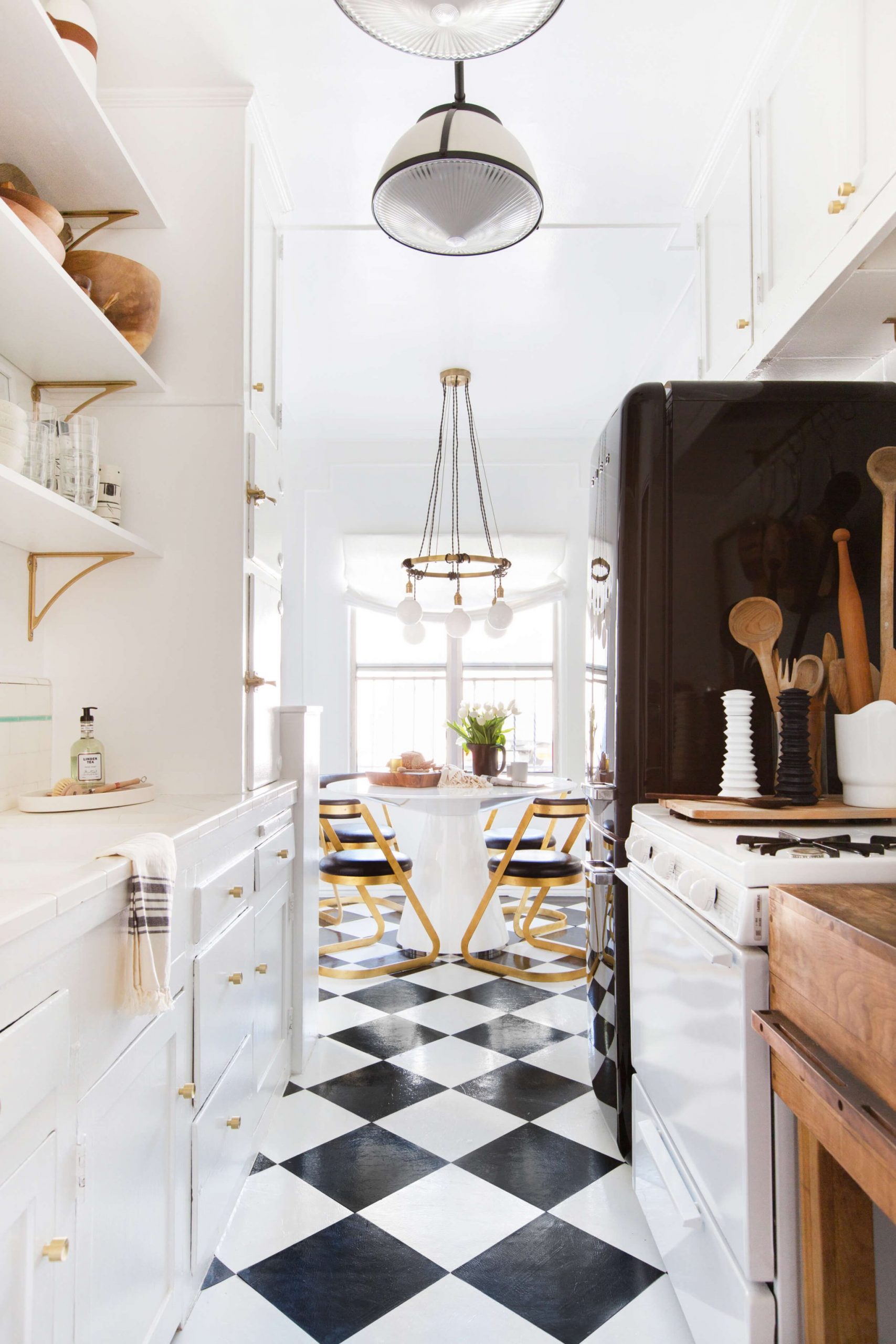
⭐ The One Thing
A bold, graphic floor like this is a major commitment. While it looks incredible, be honest with yourself about your tolerance for visual stimulation. This is not a quiet, serene backdrop. It’s a high-energy feature that will be the focal point of your kitchen forever. If you’re someone who likes to change up decor frequently with colorful rugs, art, and accessories, a floor this dominant can be difficult to style around. It demands to be the star, so everything else has to play a supporting role.
13. The Quintessential Classic: Checkers, Shakers, and a Farmhouse Sink
The element that truly anchors this kitchen in the “timeless classic” category is the large, white farmhouse sink paired with the polished brass gooseneck faucet. The checkerboard floor is graphic, and the shaker cabinets are versatile, but that specific sink-and-faucet combination evokes a sense of history, quality, and enduring style. It’s a nod to classic scullery kitchens of the past, but the polished brass finish keeps it feeling current and luxe. Removing it would fundamentally shift the room’s character towards something more generic.
📏 Scale Guide
Achieving this curated, classic aesthetic involves investing in quality fixtures and finishes that stand the test of time. The costs can vary widely based on the quality of cabinetry and appliances. Here’s a general breakdown:
- Main furniture (cabinetry): $8,000 – $20,000
- Fixtures (farmhouse sink, brass faucet): $1,500 – $4,000
- Flooring (tile and installation): $2,000 – $6,000
- Backsplash (subway tile): $500 – $1,500
- Appliances: $5,000 – $15,000
- TOTAL: $17,000 – $46,500
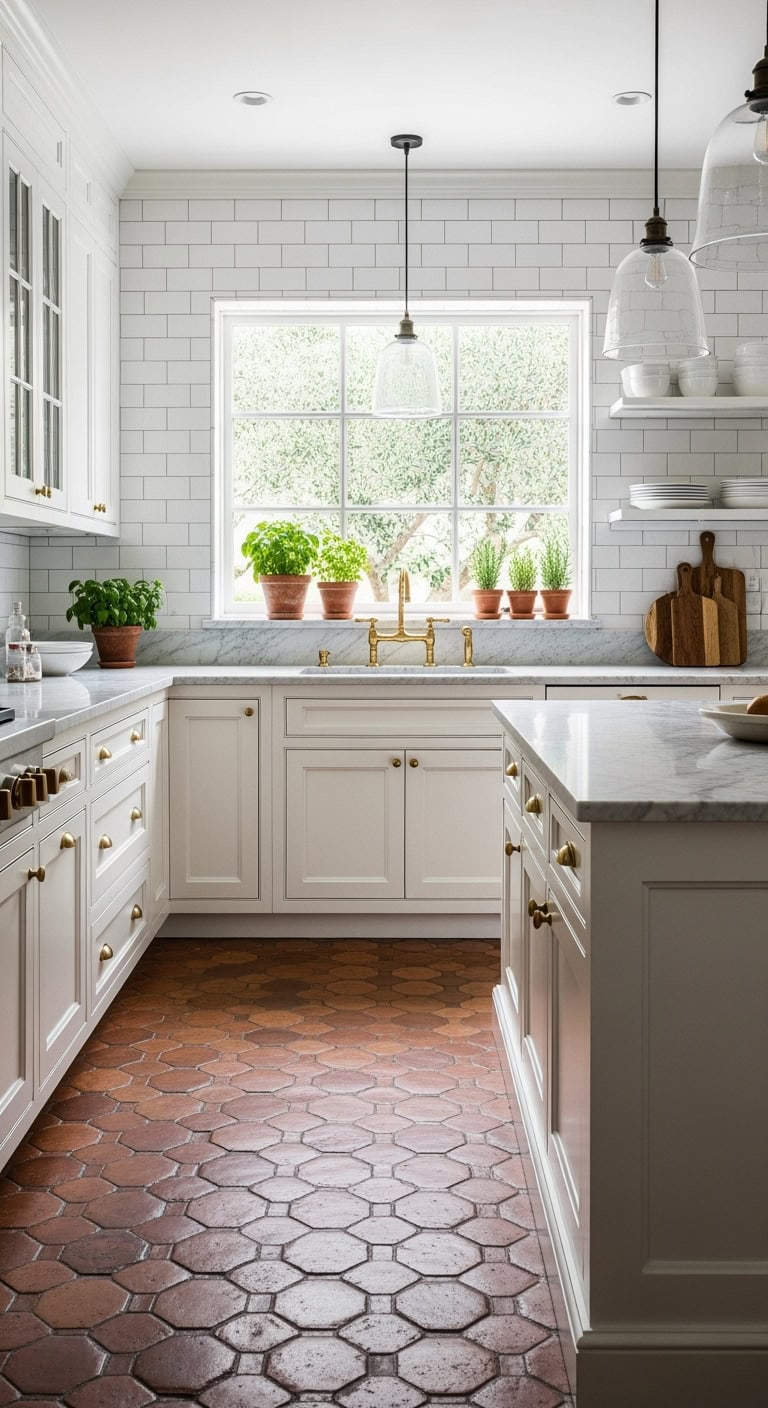
14. Warm Terracotta Hexagon Tiles in a Fresh White Kitchen
This kitchen is all about the interplay of texture and color temperature. The warm, earthy red-brown of the terracotta hexagonal tiles provides a beautiful, rustic foundation. The key to its success is pairing this warmth with the crisp, cool white of the shaker cabinets and subway tile backsplash. This color temperature contrast creates a vibrant, balanced look. The warm brass hardware acts as a bridge, tying the warm floor to the cool cabinets. Finally, the texture of the natural terracotta contrasts beautifully with the smooth marble and glossy tile, adding layers of interest.
📐 Style Math
Natural terracotta tile is gorgeous but porous. Sealing these tiles upon installation and then again every 1-2 years is absolutely critical. Unsealed terracotta will soak up spills like a sponge, leading to permanent stains from oil, wine, or even water. For cleaning, avoid harsh, acidic cleaners which can damage the sealer and the tile itself. A simple pH-neutral cleaner and a soft mop or cloth is all you need for regular upkeep. The beauty is worth the effort, but it’s a conscious choice for a material that requires care.
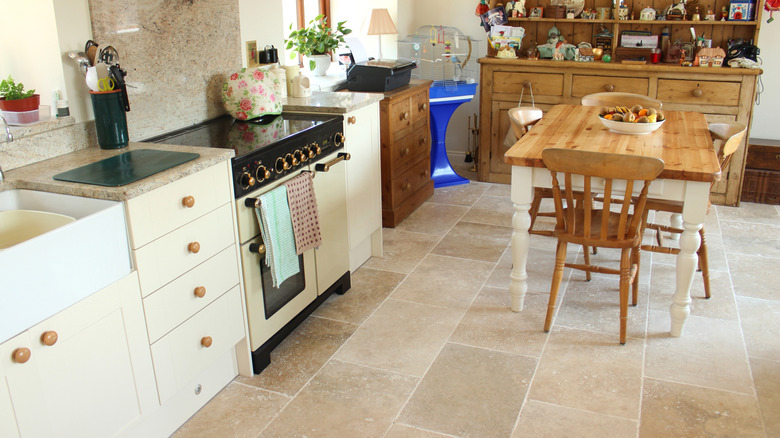
15. Cozy, Traditional Kitchen with Beige Tiling and Natural Wood
This warm, layered look works best in medium to large kitchens, ideally 150 square feet or more. The style relies on having enough space to accommodate freestanding furniture pieces like the wooden dresser and dining table without feeling cramped. A floor plan that is somewhat open or square, rather than a narrow galley, is preferable to allow the different furniture ‘zones’ to breathe. Ceiling height isn’t a major constraint, but ceilings of 9 feet or higher will enhance the airy, rustic European feel of the design.
🔧 How-To Brief
The cozy, collected formula here is: 40% Neutral Stone Floor + 50% Mixed Wood Tones + 10% Creamy Accents. The light beige irregular floor tiles provide a quiet, versatile canvas. The magic comes from mixing different wood pieces—a pine dresser, darker spindle-back chairs, a painted table base. This prevents the room from feeling like a matched set. The cream cabinets and warm walls tie it all together. This approach is much more forgiving than minimalist designs and is a great template for anyone who loves collecting furniture over time.
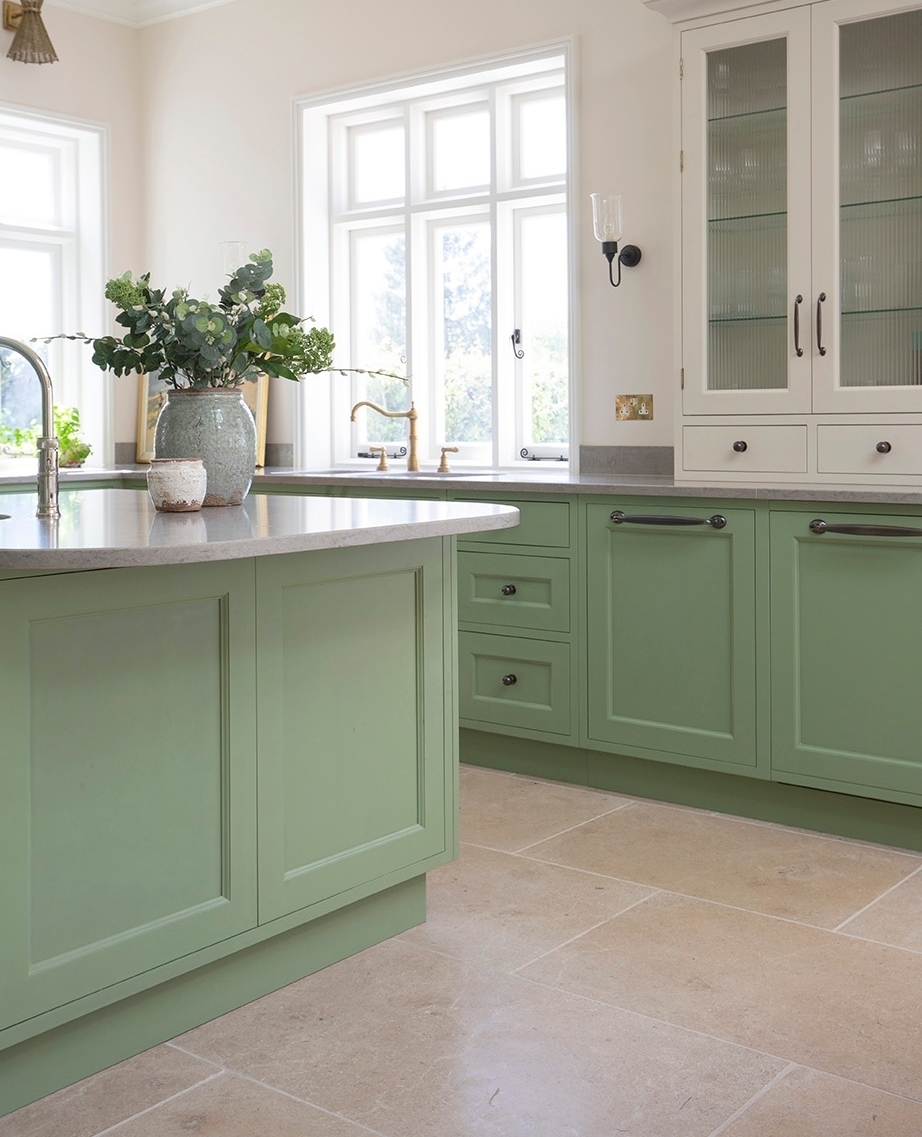
16. Earthy and Serene with Sage Green Cabinets and Beige Stone Floor
This design is perfectly aligned with the 2026 trend of ‘soft earth’ palettes. We’re seeing a collective desire for calming, nature-inspired colors in the home, and this kitchen is a prime example. The sage green is a sophisticated, muted color that feels both fresh and timeless, while the warm beige stone floor grounds the space with an earthy, organic feel. It’s a gentle move away from the cool grays and stark whites that have been popular, reflecting a shift towards creating restorative, serene home environments.
🔥 Trending Context
The single element that makes this kitchen feel so calming and cohesive is the large format of the stone tiles. By using large, rectangular tiles, the number of grout lines is significantly reduced. This creates a more serene and visually uncluttered floor plane, which allows the subtle color of the sage green cabinets to be the star. If this floor were made of small, busy tiles, the entire mood would shift from tranquil to fussy. The scale of the floor tile is the quiet, supporting hero of the design.
17. Vibrant and Playful with Terrazzo and Bold Color Blocking
This kitchen is a masterclass in fearless color and material mixing. The design works because it commits wholeheartedly to its playful aesthetic. The terrazzo, with its confetti-like mix of colors, acts as the bridging element that ties the bold teal, bright yellow, and light green floor together. The splashes of black in the faucet and barstool provide a necessary grounding point, keeping the look anchored and intentional. The key is that the individual colors are used in large, confident blocks, which feels graphic and modern rather than chaotic.
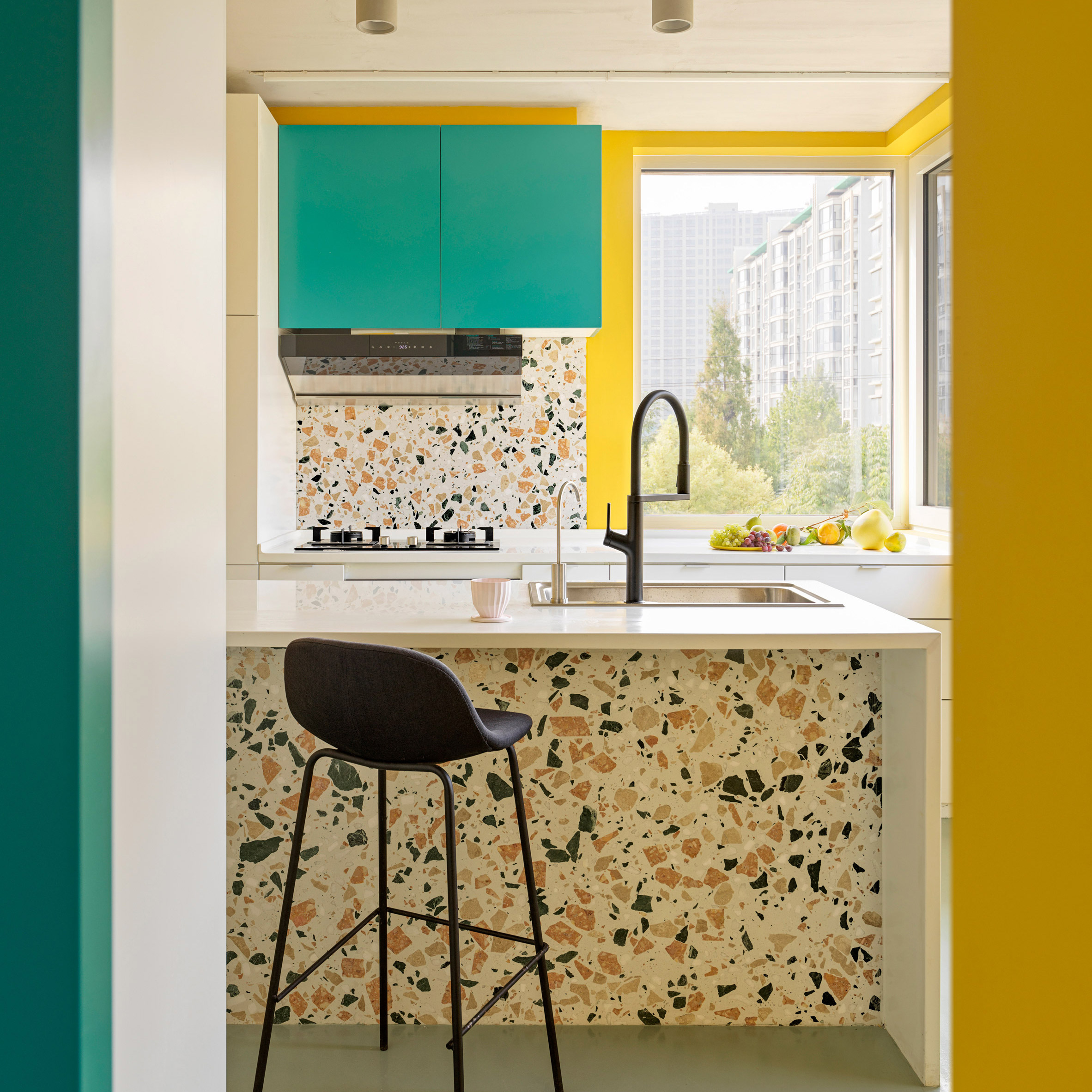
🧹 Maintenance Reality
A look this bold and colorful is not for everyone. While it’s incredibly fun and full of personality, it has a very specific aesthetic that you need to be sure you’ll love for years to come. A glossy light green floor is a statement. Teal cabinets are a statement. Terrazzo is a statement. It can be harder to redecorate around such strong choices, and its resale appeal might be more niche than a neutral kitchen. If you’re a color lover through and through, go for it! If you’re hesitant, consider introducing the color in more temporary ways, like paint.
18. A Clean, Modern Moment with Geometric Monochrome Tiles
Love this graphic, modern look but not the price of high-end cement tiles? This is one of the easiest styles to replicate on a budget. Many companies now produce ceramic or porcelain tiles with a nearly identical printed pattern for a fraction of the cost—often in the $5-$10 per square foot range. For an even more affordable option, look for peel-and-stick vinyl floor tiles with a similar geometric motif. You can find these at Target, Wayfair, or Amazon for as little as $2 per square foot, making this a high-impact, low-cost update for a small kitchen, pantry, or laundry room.
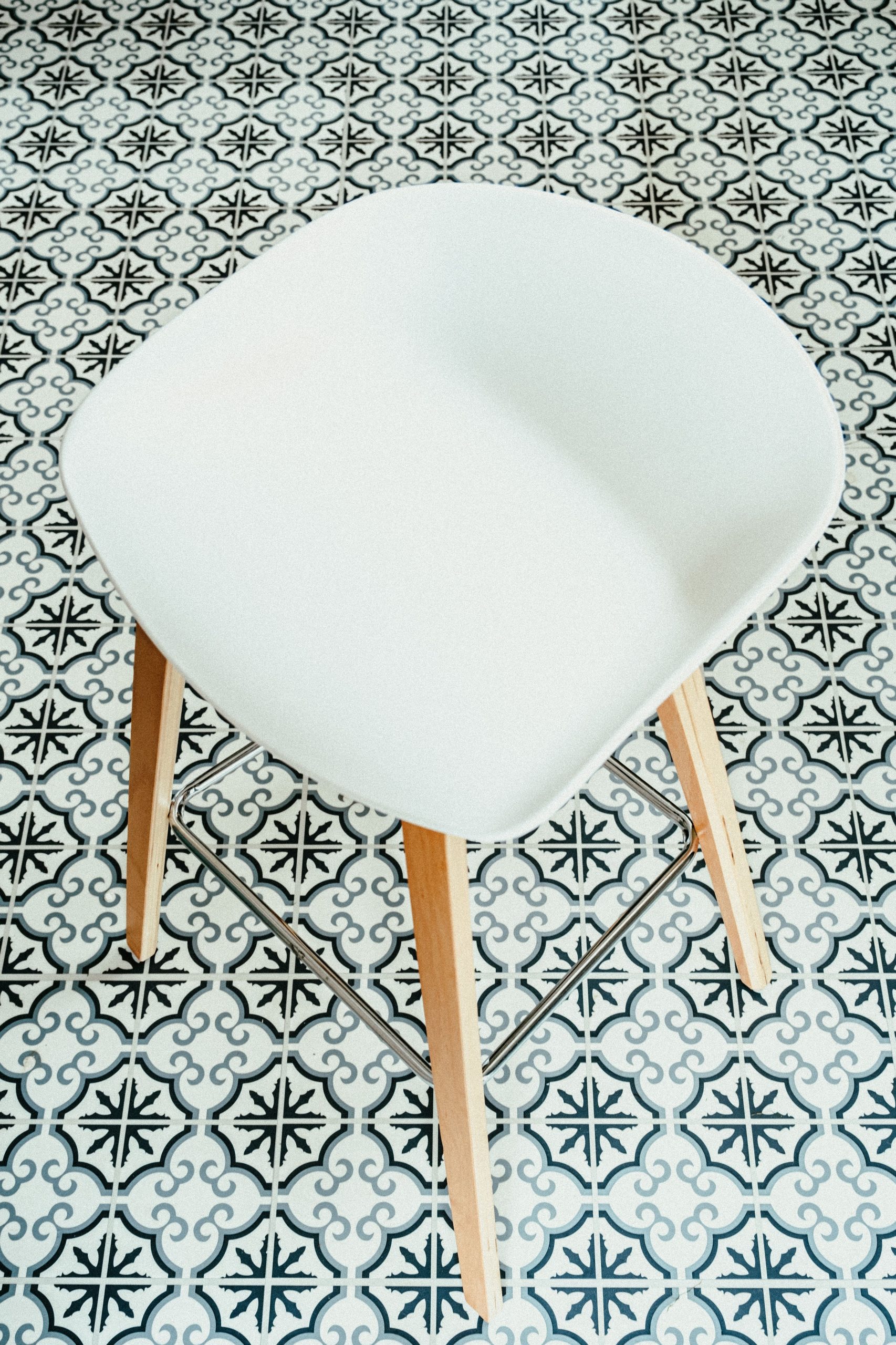
💸 Get This Look For Less
When you have a floor with a strong, repeating geometric pattern, the key is to let it be the star. Keep the surrounding elements simple and clean. As shown here, pairing the floor with furniture that has clean lines and a light color palette (white, light wood) prevents visual overload. For a kitchen, this means flat-panel cabinets, simple quartz countertops, and minimal hardware. The floor *is* the main accessory, so you don’t need much else to make the room feel complete.
19. Dark Wood-Look Floors in a Functional, Modern Kitchen
Dark wood-look flooring, especially luxury vinyl plank (LVP) or laminate, is a practical champion. It offers the visual warmth of hardwood, as seen in Idea #1, but with far greater durability and water resistance, making it perfect for a kitchen. However, be aware that dark, solid-colored floors tend to show everything—dust, crumbs, pet hair, and footprints. A matte finish will be more forgiving than a high-gloss one. Opting for a style with some grain variation and texture will also help to camouflage daily debris, reducing your need to constantly clean.
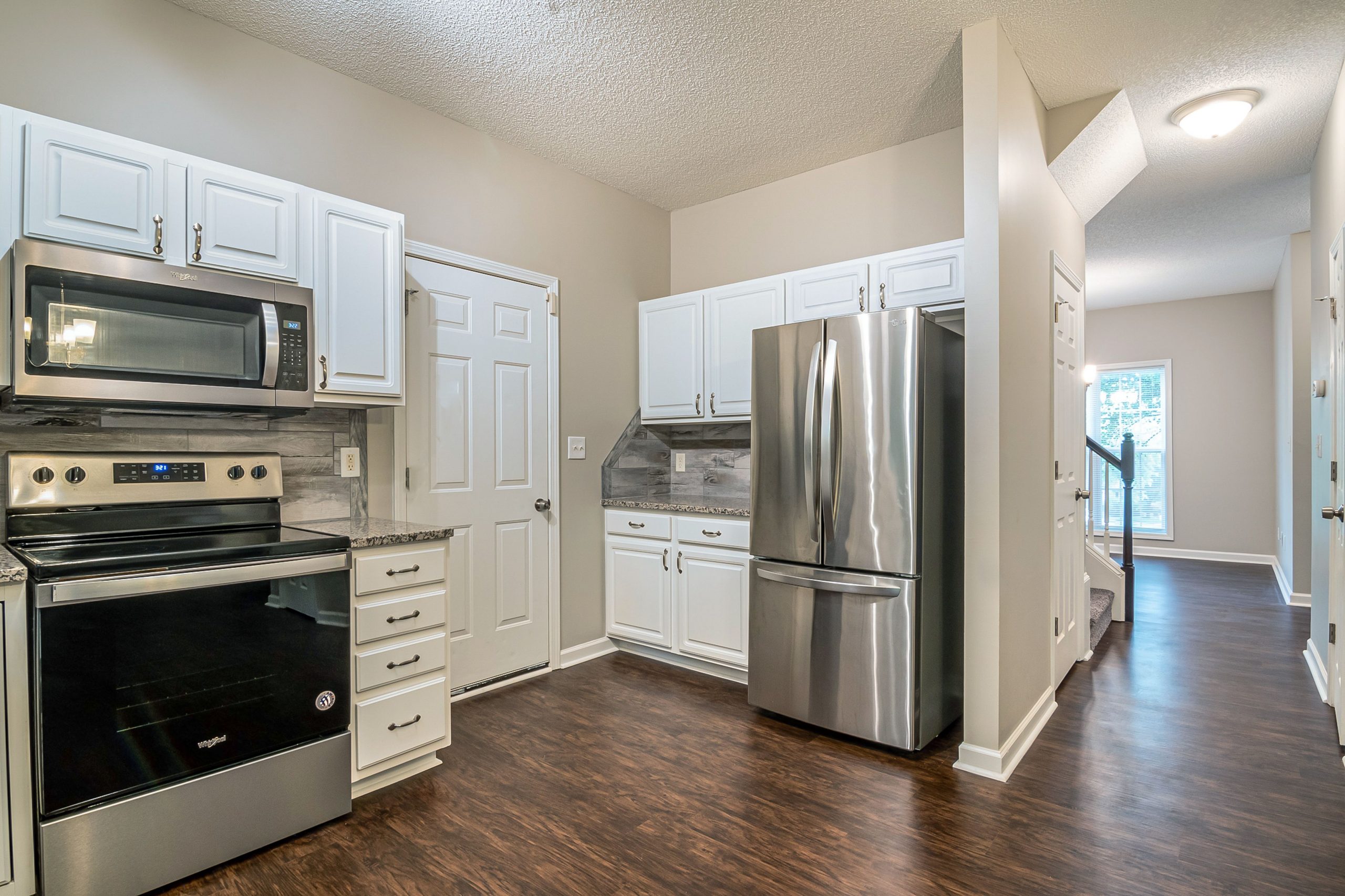
🎯 What Makes It Work
The success of this kitchen lies in its clean, contemporary interpretation of classic elements. It pairs the timeless combination of white cabinets and a wood-look floor with modern finishes. The speckled granite countertops add texture and hide crumbs, while the simple, rectangular gray tile backsplash provides a clean, horizontal line that is easy on the eyes. The dark bronze hardware is a smart choice, as it coordinates with the dark floor, tying the top and bottom of the room together for a cohesive look.
20. Grand and Formal with Light Beige Travertine Tile
This opulent look, with its large-scale travertine tiles in a patterned layout, is specifically designed for grand, double-height foyers or very large, open-concept kitchens (upwards of 300 square feet). The scale of the tile pattern needs a large expanse to be appreciated fully; in a small room, it would look truncated and awkward. This flooring choice makes a statement about formality and luxury, and it works best when paired with other generously-scaled architectural elements like the curved staircase and tall double doors seen here.
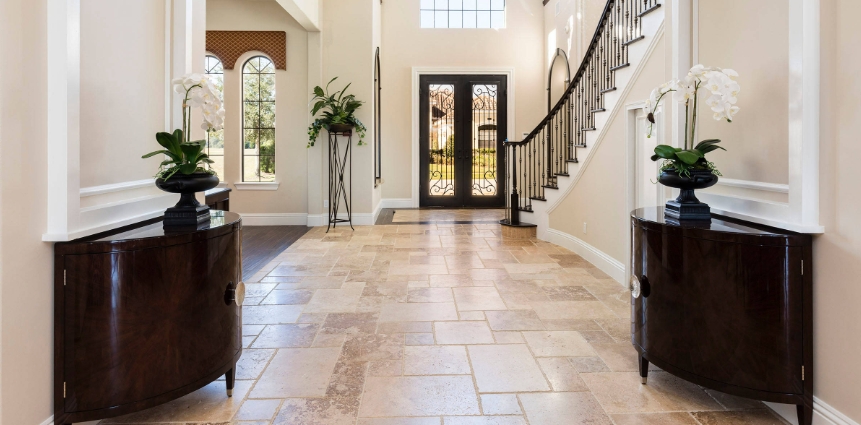
✅ Before You Start
Travertine is a beautiful, classic stone, but it has a diva-like temperament. It’s a type of limestone, which means it’s softer and more porous than granite or porcelain. It can be susceptible to scratching from high heels, pet claws, or dragged furniture. It’s also sensitive to acidic substances; a spilled glass of orange juice or wine could etch the surface if not wiped up immediately. Like slate, it requires regular sealing to protect against staining. It’s a high-class look with high-maintenance needs.
21. Earthy Farmhouse with Olive Cabinets and Beige Tile
The element that elevates this kitchen from simply ‘nice’ to ‘special’ is the cream-colored island with the natural wood countertop. It acts as a crucial bridge between the olive green cabinets and the light beige floor. Without it, the contrast between the green and beige might feel a bit abrupt. The island’s warmer, creamier tone softens the entire palette, while the wood top introduces a necessary rustic texture, connecting beautifully with the exposed ceiling beams. It makes the whole design feel more layered, thoughtful, and inviting.
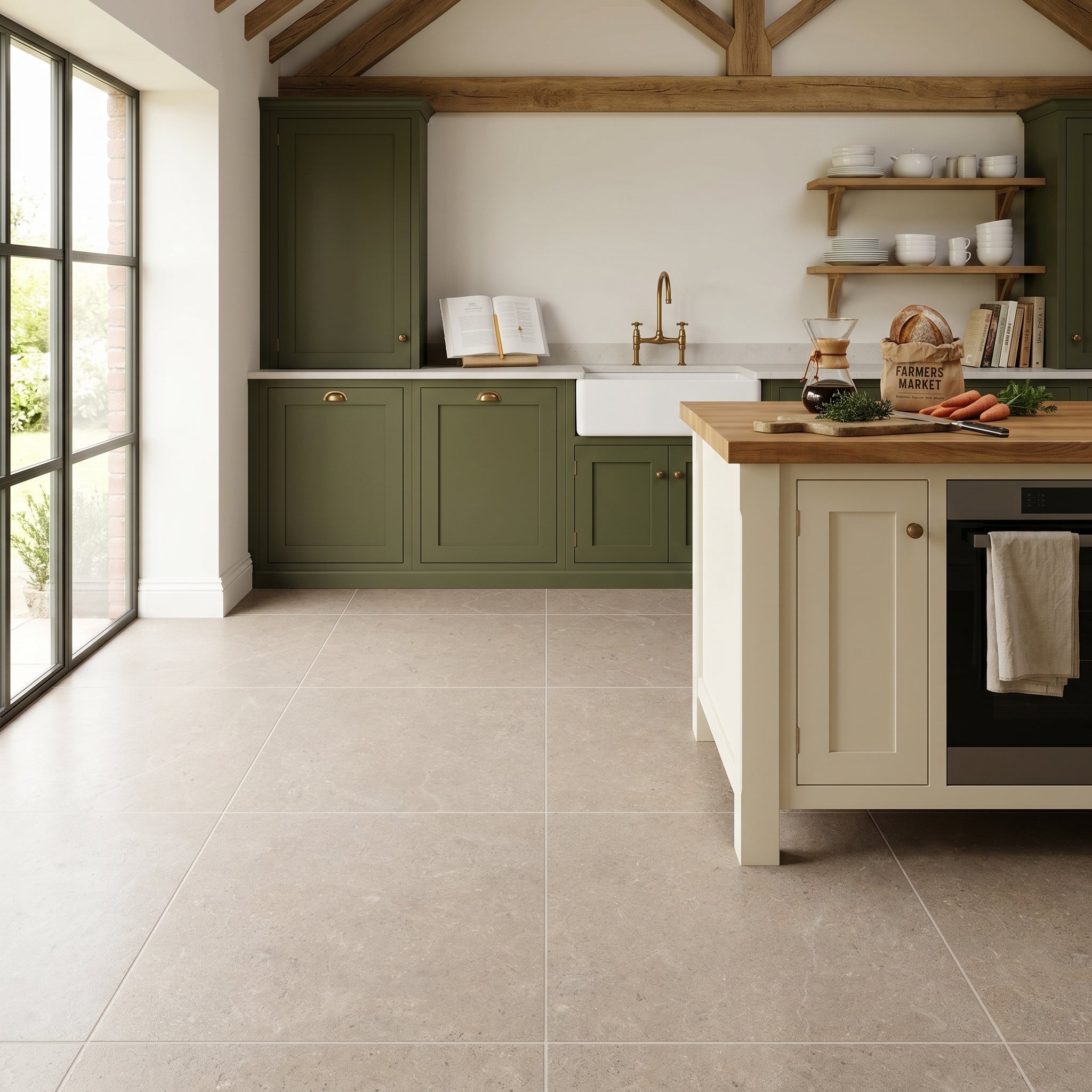
💰 Budget Breakdown
Recreating those rustic exposed ceiling beams can add immense character. Here’s a simplified approach for faux beams:
- Time: 1 weekend | Cost: $200-$600
- Measure your ceiling and decide on the placement and size of your beams.
- Purchase lightweight, hollow faux wood beams online or from a specialty lumber store. They come in various finishes.
- Create a mounting system by screwing 2×4 wood blocks securely into the ceiling joists along the line where your beam will go.
- Apply construction adhesive to the top edges of the faux beam.
- Lift the hollow beam into place over the mounting blocks.
- Secure the beam by screwing through its sides directly into the 2×4 blocks. Sink the screws and cover with matching wood filler.
22. Earthy Slate Floor with Cool Light Gray Cabinetry
This kitchen design is a perfect example of mixing color temperatures for a balanced, sophisticated look. The floor is comprised of slate tiles in a range of warm earth tones—browns, reds, and oranges. Pairing this overtly warm floor with cool, light gray cabinets is a bold move that pays off. The coolness of the gray prevents the earthy floor from making the room feel dated or heavy, while the warmth of the floor keeps the gray cabinets from feeling sterile. The crisp white countertops act as a clean dividing line, allowing both elements to shine.
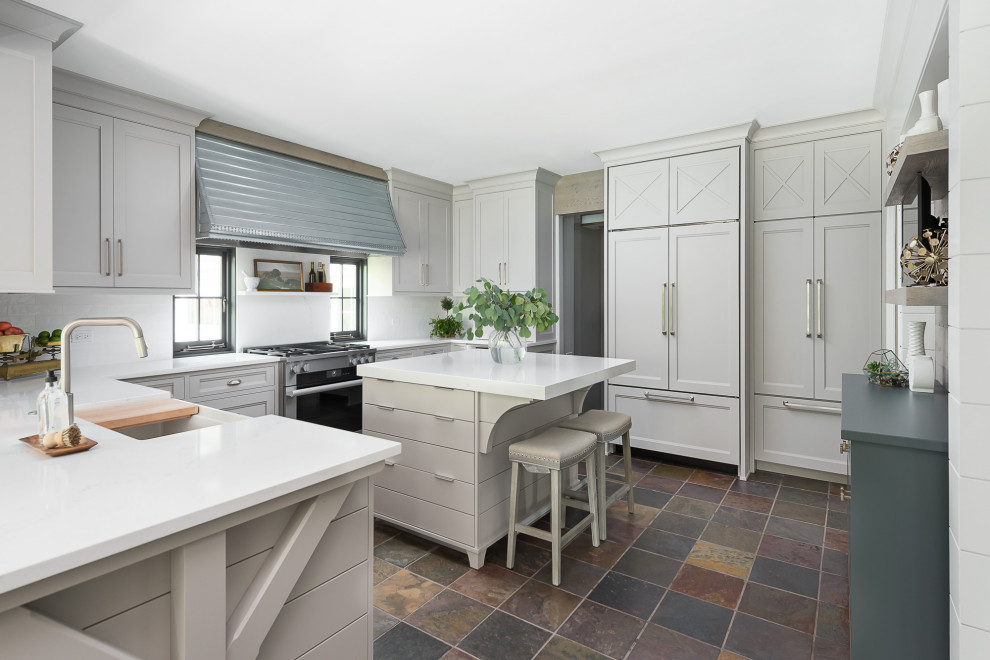
⚠️ Real Talk
A multi-colored slate floor makes a strong statement. Before you commit, make sure it’s the right foundation for your home’s overall style.
- Is your home’s aesthetic generally rustic, transitional, or traditional? This floor pairs best with these styles.
- Have you brought a sample box of tiles home? The color variation in natural slate can be dramatic. You need to see a wide sample in your own light to know if you love it.
- Is your subfloor perfectly level? Natural stone tiles like slate are rigid and can crack if installed over an uneven surface.
23. Modern Clean Lines Meet a Patterned Blue and Gray Floor
When using a floor with a multi-color pattern, pull your accent colors directly from the tile itself. In this kitchen, the light blue and medium gray within the floor pattern are repeated in other elements. Notice how the blue is echoed in the throw blanket on a nearby chair, creating a subtle but intentional link. To take it further, you could paint the kitchen island in the same medium gray as the tile. This technique ensures a cohesive and professionally designed look, rather than a random collection of colors.
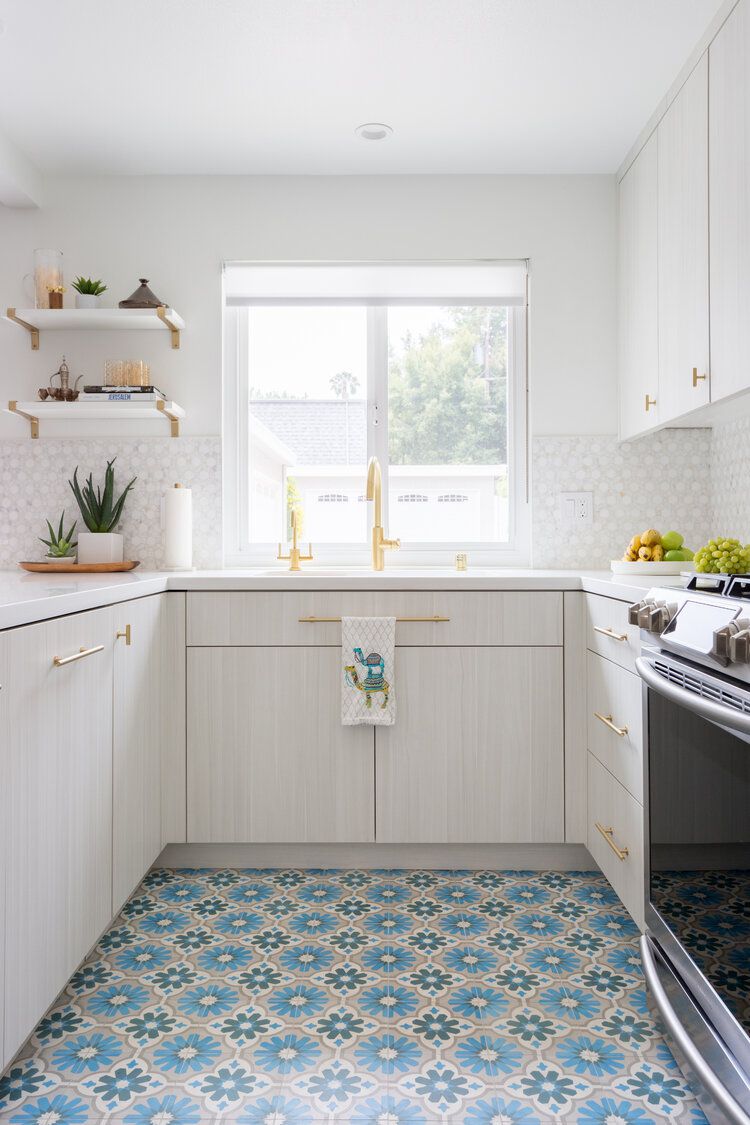
💡 Designer Tip
This look follows a clear modern formula: 60% Light & Neutral Structure + 30% Graphic Floor Pattern + 10% Metallic Accents. The light wood-grain cabinets and plain white countertops create a calm, neutral envelope. This is essential for allowing the busy floor to be the focal point without overwhelming the space. The gold-toned hardware and faucet are the ‘jewelry’, adding a touch of warmth and luxury. You could swap the gold for black or nickel, but the formula of a neutral shell, a patterned floor, and a single metallic finish remains key.
24. Classic Checkerboard Floor in a Sunlit, Minimal Space
The most powerful element in this image isn’t a piece of furniture—it’s the sunlight. The strong, angled light pouring into the space turns the classic checkerboard floor into a dynamic canvas of light and shadow. The crisp lines of the shadows echo the geometry of the tiles, creating a secondary layer of pattern and depth. It highlights the floor’s graphic nature and brings the entire room to life. Without the dramatic light, it would simply be a nice floor; with it, it becomes an architectural feature.
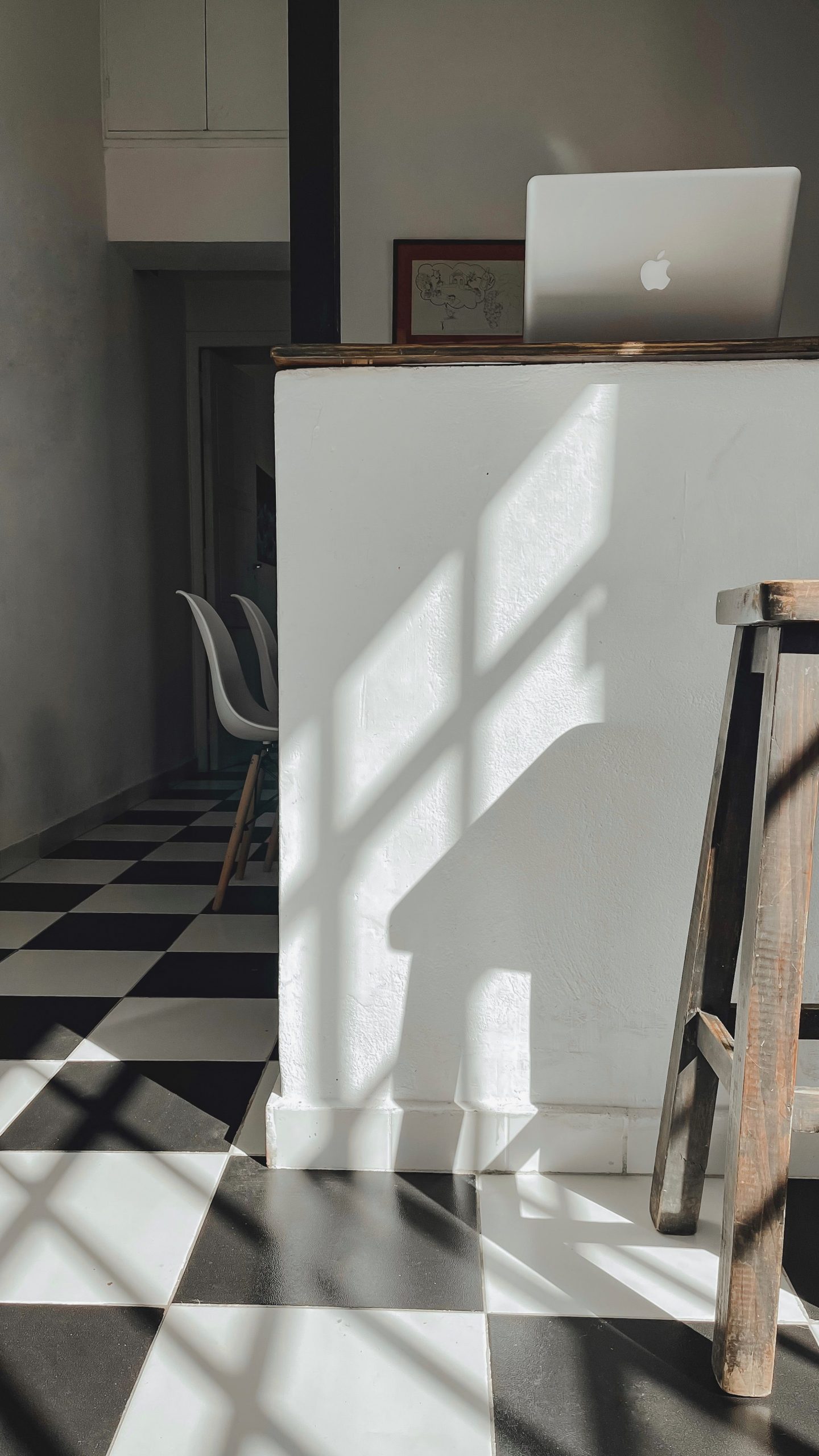
⭐ The One Thing
The timeless appeal of a black and white checkerboard floor is surprisingly accessible. For a high-traffic kitchen, the most budget-friendly and durable option is Vinyl Composite Tile (VCT). This is the same stuff used in schools and supermarkets, but don’t let that fool you. It’s incredibly tough, easy to clean, and costs as little as $1 per square foot for the tiles. You can get the 12×12 inch tiles in solid black and white and have a professional or a skilled DIY-er install them for a fraction of the cost of ceramic or stone. This is a look that delivers major style points for a minor investment. A similar high-impact budget look can be seen in Idea #9.
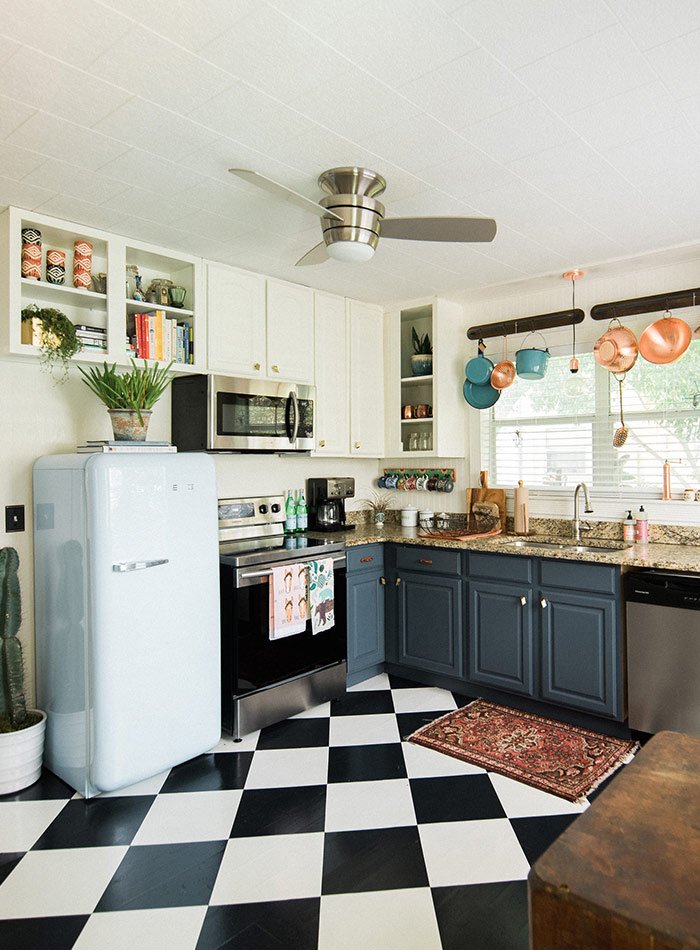
25. Eclectic Mid-Century Kitchen with a Checkerboard Floor
This kitchen’s eclectic charm works because it follows a ‘go big or go home’ philosophy while still adhering to some basic design rules. The black and white checkerboard floor provides a strong, graphic base. The design then layers color with confidence: a dark blue for the lower cabinets and a pastel light blue for the retro fridge. The repetition of blue creates harmony, even between different shades. The gold pulls and red rug are warm accents that pop against the cool blues, creating a balanced and vibrant composition. It feels personal and joyful, not chaotic.
📏 Scale Guide
A kitchen with this much personality is a joy to live in, but it requires a confident hand to pull off. The biggest risk is creating a space that feels visually cluttered or thematically confused. To avoid this, stick to a limited color palette (here it is blue, red, black, and white) and repeat those colors in at least two places. Also, be mindful of clashing patterns. The red rug works because it’s a small, contained accent. A patterned backsplash, however, would likely be too much when paired with the bold checkerboard floor.
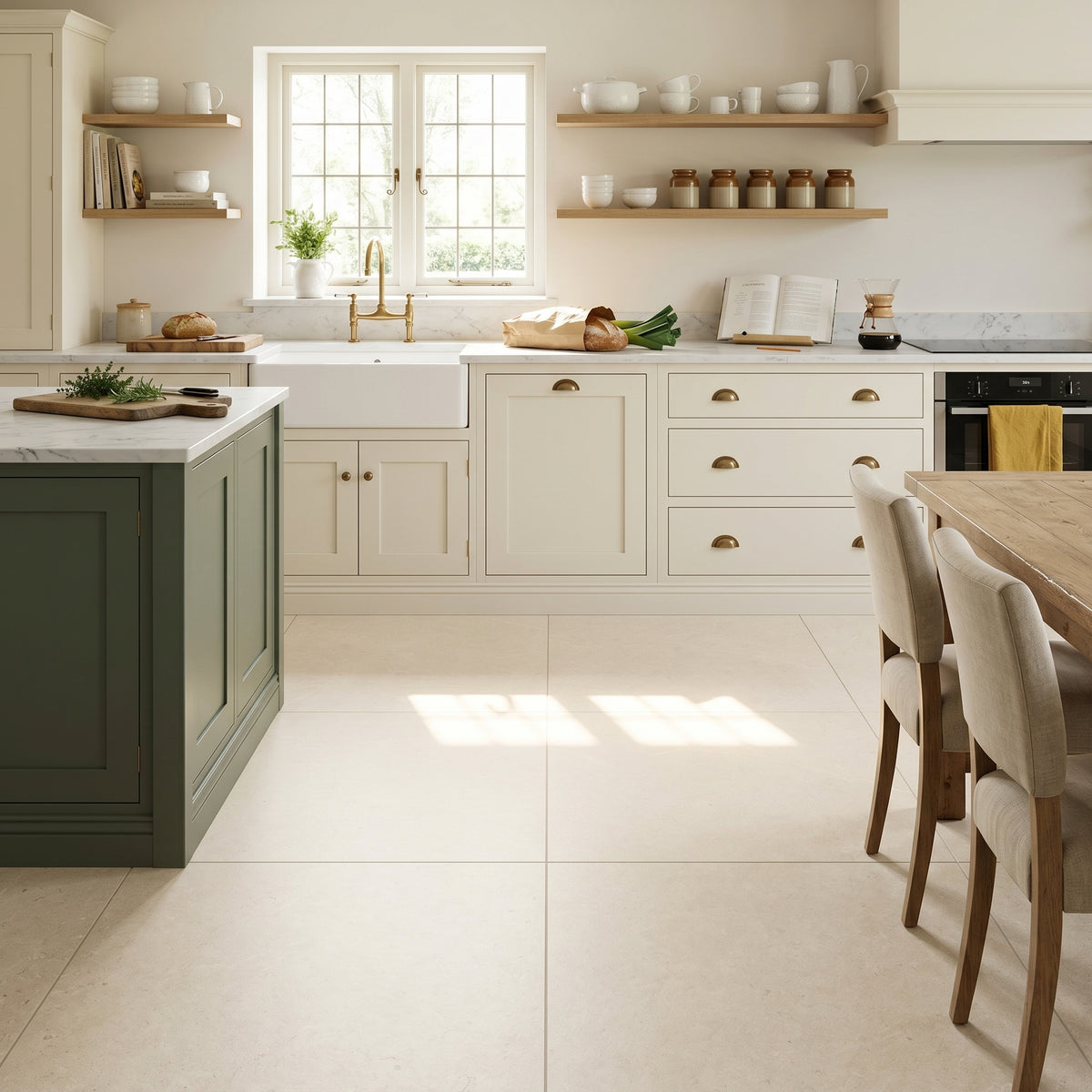
26. Calm and Airy with Muted Cream-Beige Square Floor Tiles
The defining feature of this floor is its muted, low-contrast color palette. The cream-beige tiles are very close in color to the light grey grout. This lack of strong contrast between tile and grout is a deliberate choice that results in a floor that reads as a single, serene surface rather than a busy grid. It creates a tranquil, unobtrusive foundation that allows the other elements in the room, like the olive green accents and warm wood table, to stand out gently. It’s the perfect choice for a calm, airy, and inviting kitchen.
📐 Style Math
This flooring idea is incredibly versatile and works well in almost any size kitchen, from a compact 100 square feet to a large, open-plan space over 300 square feet. Because the color is light and the pattern is simple, it visually expands a room, making it a great choice for smaller kitchens. In a larger space, it provides a quiet, neutral canvas that prevents the room from feeling too busy. A standard 8-foot ceiling is perfectly fine, but the light, airy quality of the floor will be enhanced by higher ceilings.
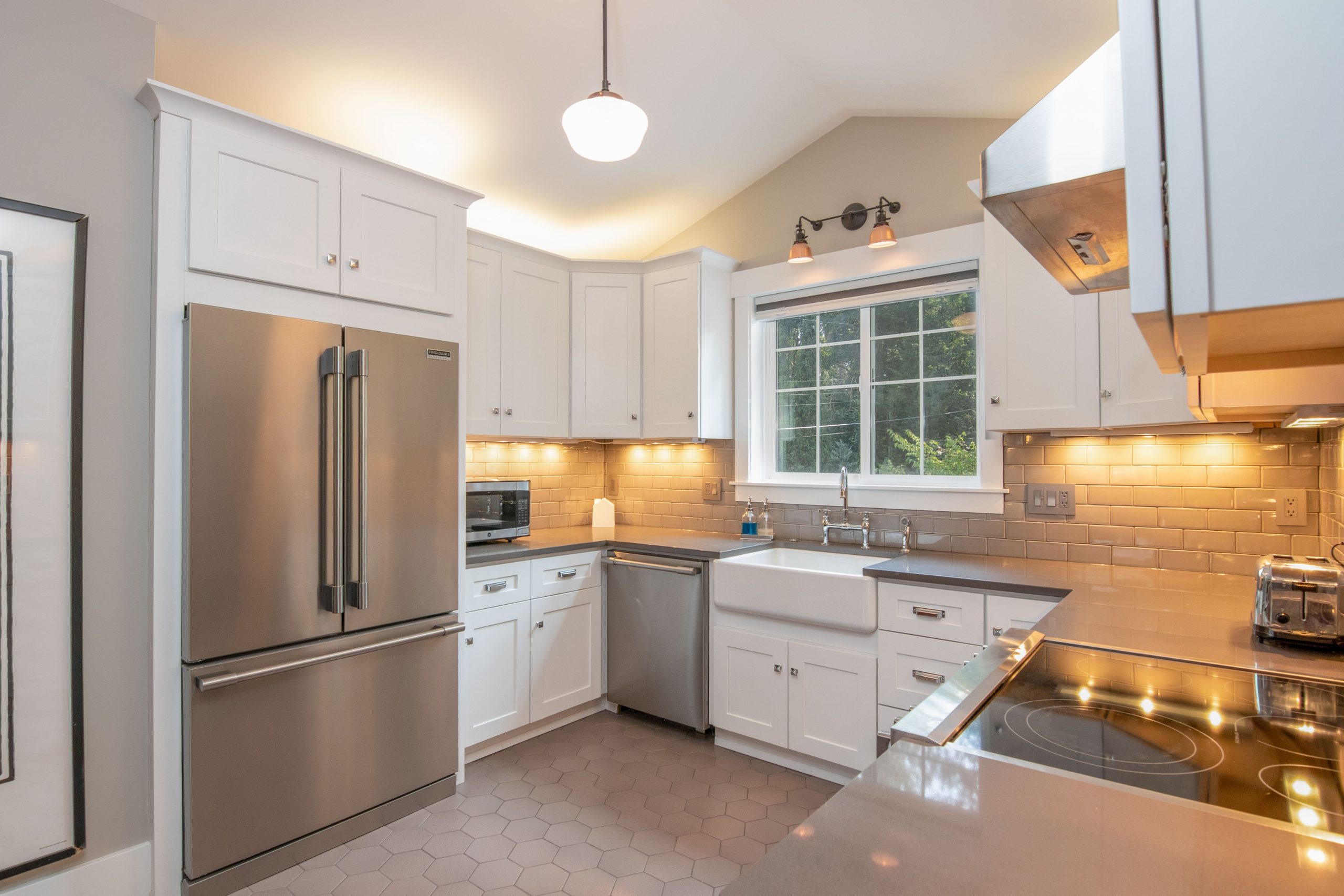
27. A Bright, Modern Kitchen with Gray Hexagon Floor Tiles
The visual formula for this clean, modern look is straightforward: 50% Crisp White + 40% Cool Gray + 10% Stainless Steel. The white shaker cabinets and farmhouse sink create a bright, dominant base. The gray is used in two different forms—the hexagon floor tiles and the subway tile backsplash—which adds textural interest without introducing a new color. Stainless steel appliances provide the sleek, functional 10% that solidifies the kitchen’s modern credentials. Swapping the gray for a soft blue or sage green would also work beautifully with this formula.
🔧 How-To Brief
Hexagon tiles have more grout lines per square foot than larger rectangular tiles, which means sealing the grout is paramount. In a kitchen, spills are inevitable, and unsealed grout will absorb oils and pigments, leading to discoloration. Choose a high-quality stain-resistant grout and have it sealed upon installation, and plan to re-seal it every 1-2 years. For daily cleaning, the mix of gray and white is great at hiding crumbs, but be sure to use a pH-neutral cleaner to protect the sealer’s integrity.
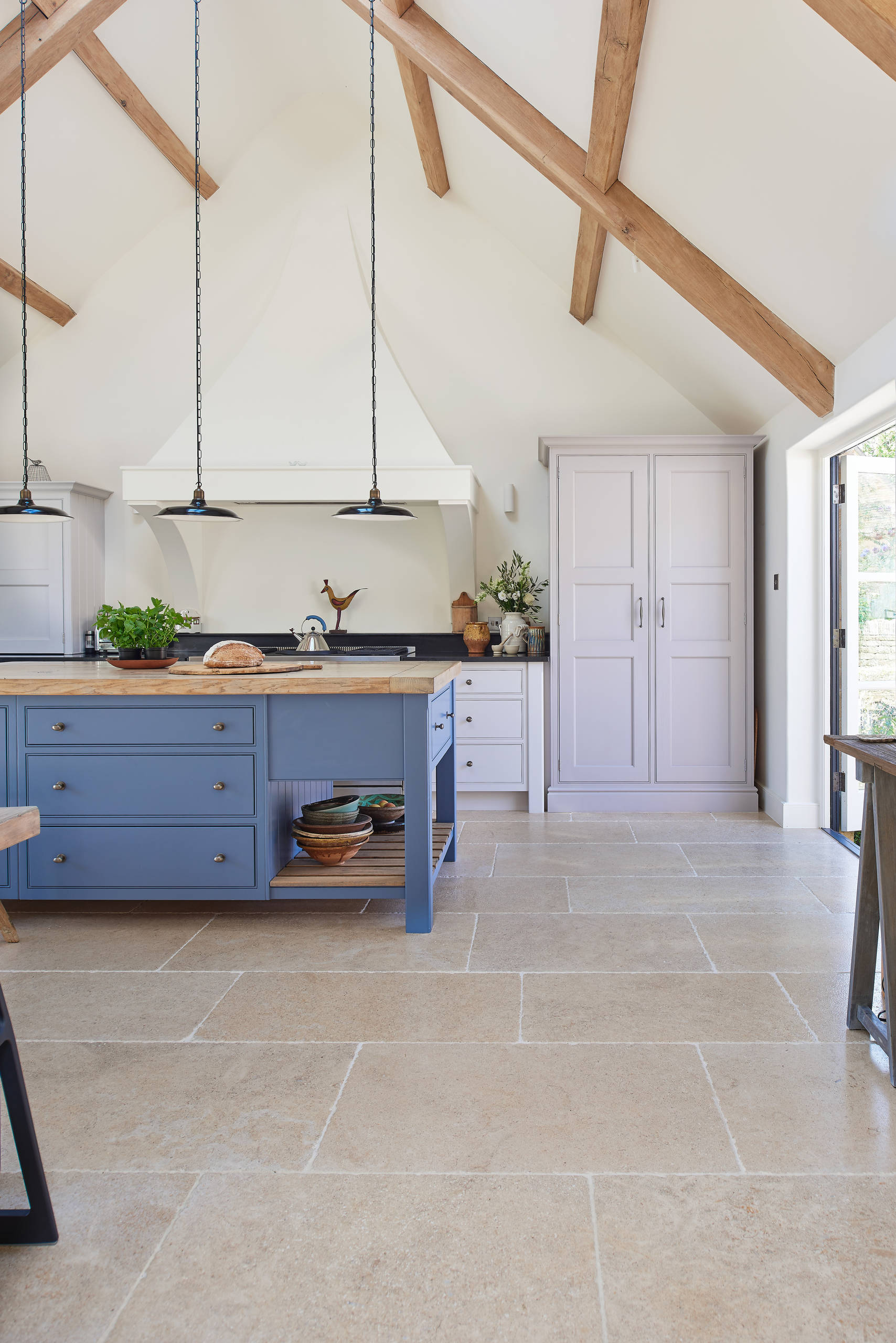
28. Airy Rustic Kitchen with Large-Format Stone Tile
When using large-format stone or porcelain tiles like these (e.g., 12×24 inches or larger), the grout color is a critical decision. To achieve this serene, expansive look, select a grout color that is an exact match to the main body color of the tile, or even one shade lighter. This minimizes the visibility of the grid pattern, allowing the floor to read as a continuous surface of natural stone. A dark, contrasting grout would chop up the space and completely undermine the airy, rustic aesthetic.
🔥 Trending Context
This kitchen feels so spacious and serene due to a principle called ‘tonal layering’. Instead of high-contrast colors, the design uses various shades and tones from the same neutral family. The light beige/cream of the stone floor, the off-white/light grey of the cabinets, and the natural wood of the beams and island top all exist in a similar warm, earthy palette. The only strong point of color is the periwinkle blue island, which provides a single, gentle focal point in an otherwise tranquil field of texture and tone.
29. A Neutral Foundation of Beige Rectangular Tiles
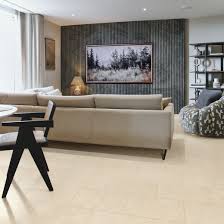
The most important—and often overlooked—feature of this flooring is its matte finish. In a room that likely gets a good amount of light, a glossy tile would create distracting reflections and glare. The matte finish absorbs light, giving the floor a soft, velvety appearance that contributes to the room’s calm and neutral feeling. It allows the subtle texture and color variations in the tile to be seen and appreciated without the visual noise of a shiny surface. This finish is what makes the floor feel modern and sophisticated.
🧹 Maintenance Reality
This clean, neutral look is one of the most budget-friendly styles to achieve. Light beige, rectangular porcelain tile is a staple product for nearly every major manufacturer and home improvement store. You can find excellent, highly durable options at Floor & Decor, The Home Depot, or Lowe’s for $2 to $4 per square foot. Because it’s such a common format, finding an installer is also typically easier and more affordable than for more complex patterns or materials. It’s a classic choice that offers incredible value without sacrificing style.
30. Modern Warmth: Wood Cabinets and a Marble Waterfall Island
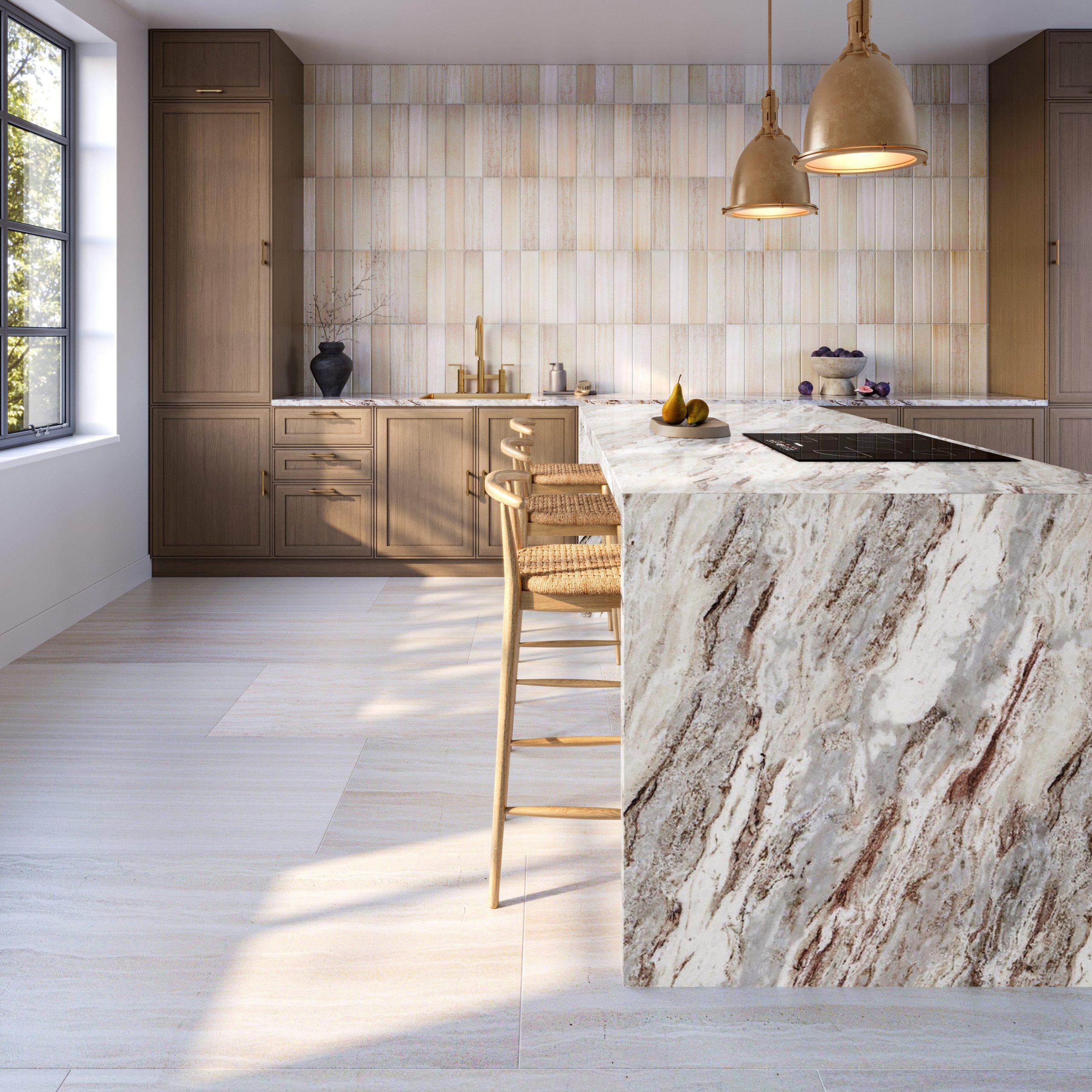
The success of this kitchen hinges on its expert blend of textures and sheens. The light wood cabinets have a natural, matte grain. This is contrasted by the dramatic, high-gloss polish of the marble waterfall island. The floor, a large-format light beige tile, has a subtle matte texture that mediates between the other two. Finally, the long, thin backsplash tiles have a slight sheen that catches the light differently than the marble. This layered approach to texture—from natural matte to high gloss—is what gives the room its sophisticated depth and visual interest.
💸 Get This Look For Less
This is a decidedly high-end look, with the budget heavily weighted towards the custom cabinetry and the statement marble island. A large slab of dramatic marble and the fabrication for a waterfall edge is a significant investment.
- Cabinetry & Hardware: $12,000 – $25,000
- Lighting (pendants, under-cabinet): $2,000 – $5,000
- Marble Waterfall Island (slab & fabrication): $10,000 – $20,000+
- Flooring (large format tile): $3,000 – $8,000
- Backsplash: $1,500 – $4,000
- TOTAL: $28,500 – $62,000+
31. Deep Teal Cabinets with Patterned Terracotta Tiles
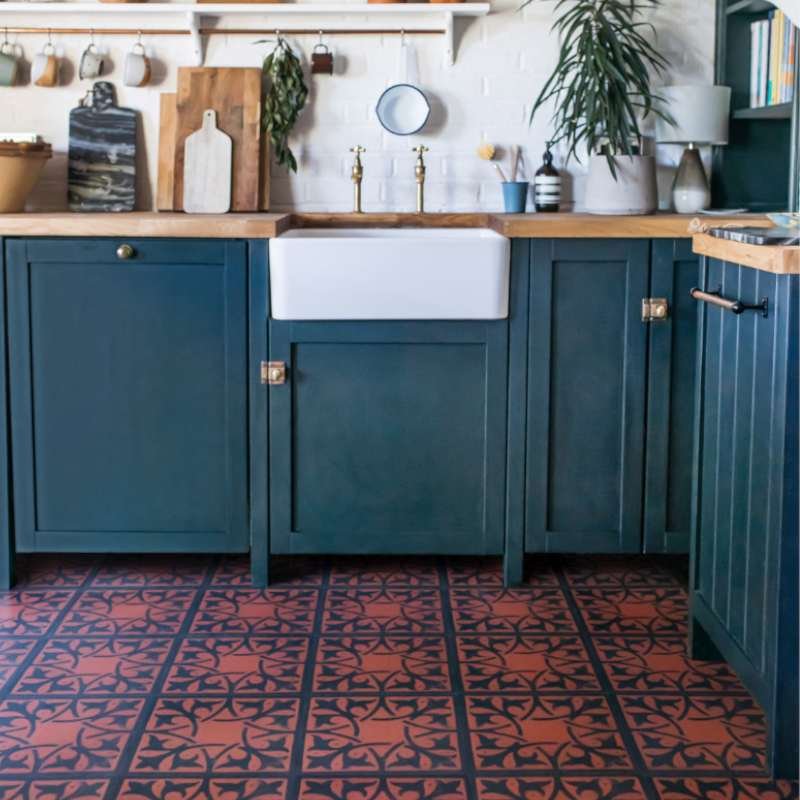
This kitchen perfectly captures the ‘New Mediterranean’ trend, a style that blends the rustic warmth of traditional materials with bold, saturated color. The patterned terracotta and black floor tiles feel historic and well-traveled, while the deep teal of the cabinets is a fresh, contemporary take on classic kitchen colors. The use of natural wood countertops and brass hardware further warms up the space. It’s a look that feels both grounded in tradition and excitingly current, which is why it’s resonating so strongly on Pinterest and in design magazines.
🎯 What Makes It Work
Achieving that perfectly painted shaker cabinet finish is all in the prep work. Here’s how to do it right:
- Time: 3-4 days | Cost: $200-$500 (for paint and supplies)
- Remove all doors and hardware. Label everything so you know what goes where.
- Clean all surfaces thoroughly with a degreasing cleaner like TSP.
- Scuff sand every surface with 120-grit sandpaper to remove the old sheen. Wipe clean.
- Apply one to two coats of a high-quality bonding primer. This is the most important step for durability.
- Apply two to three thin coats of a high-quality cabinet enamel (like Benjamin Moore ADVANCE) in your chosen teal, lightly sanding between coats with 220-grit paper for a smooth finish.
Your Kitchen Floor: The Foundation of Your Home’s Story
With 31 distinct ideas, from rustic slate to graphic checkers, the perfect foundation for your kitchen is no longer a mystery. The right floor sets the tone for everything else, so choose a material and style that you’ll be happy to walk on, cook on, and live on for years to come. Now, go build that dream kitchen inspiration board on Pinterest—you’ve got this.