You know that feeling when you finally find the floating staircase that looks exactly right for your space? It seems to just hang in the air, a perfect blend of architecture and art. But then reality hits—how do you actually make it happen? After filtering through hundreds of options from custom fabricators, artisan woodworkers, and architectural glass specialists, we narrowed it down to the looks that truly deliver. This isn”t just another photo dump; it”s a curated guide to the best floating staircase ideas for 2026, from spectacular high-end installations to clever, more accessible designs.
Inside, you”ll find 31 distinct ideas covering modern, minimalist, and industrial styles, each broken down with real-world advice. The move towards architectural minimalism and maximizing natural light in our homes is why these staircases feel so right, right now. They aren”t just for getting from one floor to another; they are statements about light, space, and clean lines. And stay until the end — we break down the most common mistakes that can ruin these looks.
📌 Save this to Pinterest for later — you”ll want to revisit these ideas.
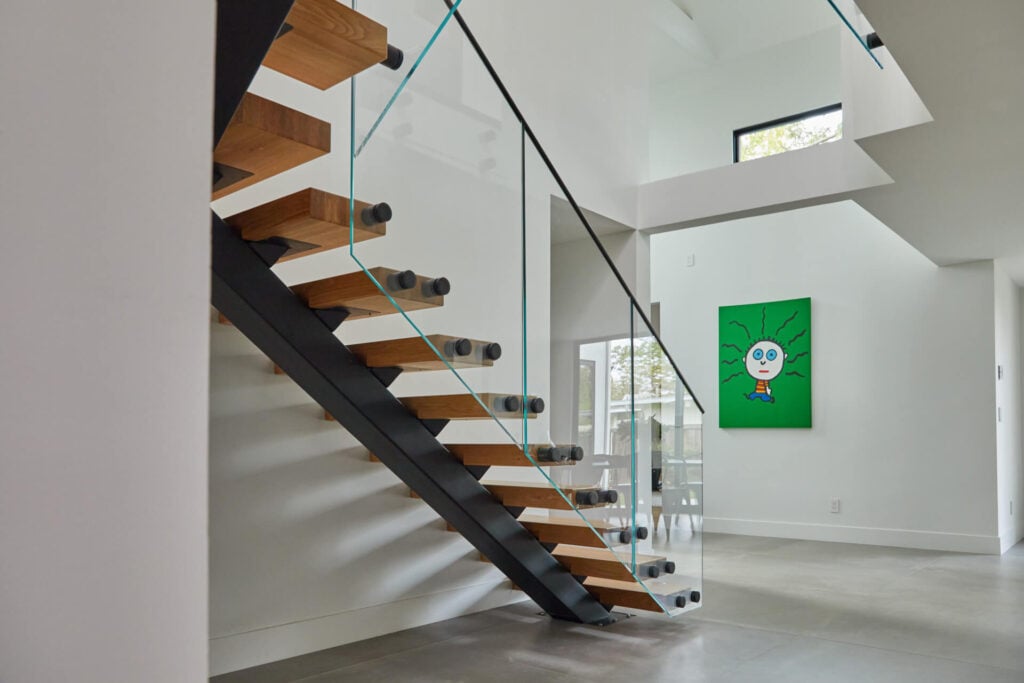
1. Light Wood Treads and Glass Railing with a Bold Art Moment
This design is a masterclass in balance. The visual lightness of the floating wood treads and clear glass railing is anchored by the strong, dark line of the metal stringer. This contrast creates a dynamic visual path for the eye to follow. The staircase itself is minimalist, which allows the vibrant green abstract artwork to become the undeniable focal point of the space. It proves that a functional element can also serve as the perfect neutral frame for a piece of statement art, preventing the room from feeling sterile or cold.
📐 Style Math
When specifying a glass railing, always ask for “low-iron” glass. Standard tempered glass has a noticeable green tint, especially on the polished edges, which can clash with a clean, neutral color palette. Low-iron glass is significantly more transparent and optically clear, giving you that truly invisible look. For a staircase like this, you should also ensure the panels are at least 1/2-inch (12mm) thick and properly tempered for safety and rigidity. It’s a small detail that makes a huge professional difference.
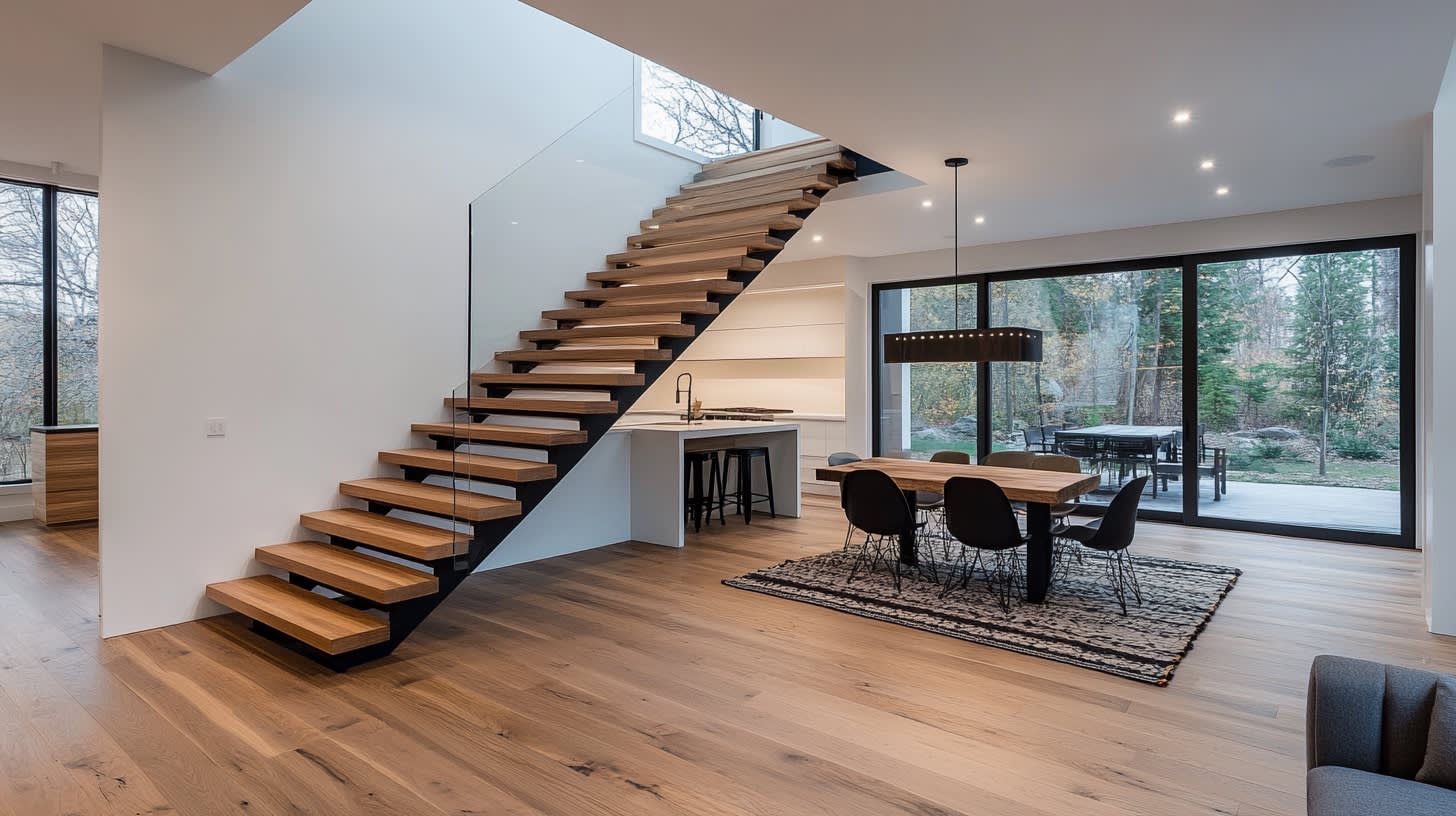
2. Cantilevered Treads Extending into an Open-Concept Living Space
The single most important element here is the seamless integration with the open-plan living area. The staircase isn”t just a utility; it”s a sculptural piece of furniture that defines the entire room. By using the same light wood on the treads as the floor and maintaining a transparent glass railing, it feels like an extension of the living space rather than a barrier within it. Removing this thoughtful continuity would turn it from a design feature into a simple, forgettable stair.
📏 Scale Guide
An open design like this is best suited for spaces with a generous footprint, ideally a main living area of at least 500-600 square feet with ceilings of 9 feet or higher. The goal is to maintain an airy, uncluttered feel, and a floating staircase can feel cramped in a smaller room. For narrower townhouses or spaces with lower ceilings, consider a design with a more compact footprint, like the vertical baluster style seen in Idea #19, to achieve a similar sense of openness without overwhelming the room.
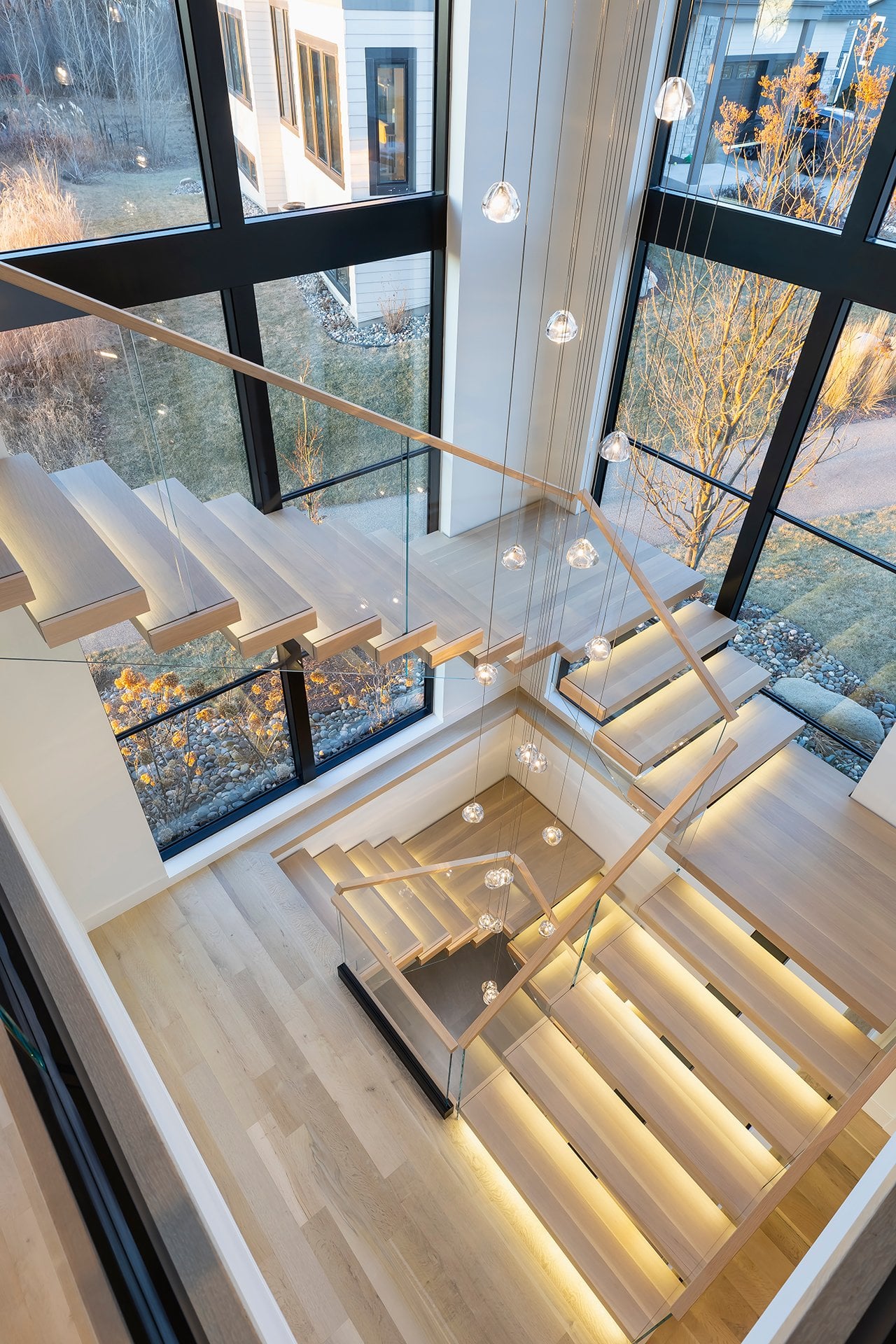
3. Illuminated Wood Treads Alongside Black-Framed Windows
- Main Furniture (Stair Treads & Handrail): $7,000 – $15,000
- Lighting (Integrated LEDs & Pendant): $3,000 – $6,000
- Textiles (Glass Railing): $8,000 – $14,000
- Decor/Accessories (Wall/Window Treatment): $5,000 – $10,000 (for large custom windows)
- TOTAL: $23,000 – $45,000
- Budget alternative: Skip the integrated lighting and large custom windows. Use standard-sized windows and opt for a cable railing system instead of glass to bring the cost down to the $10,000 – $18,000 range.
🎯 What Makes It Work
While the integrated under-tread lighting is stunning, be prepared for the complexity it adds. You aren”t just hiring a stair fabricator; you need a licensed electrician to run low-voltage wiring for every single tread. This needs to be planned *before* the drywall goes up. Future maintenance can also be a headache. If one LED strip fails in five years, accessing it for replacement might require deconstructing part of the tread or wall. It”s a beautiful, high-impact feature, but it”s not a low-maintenance one.
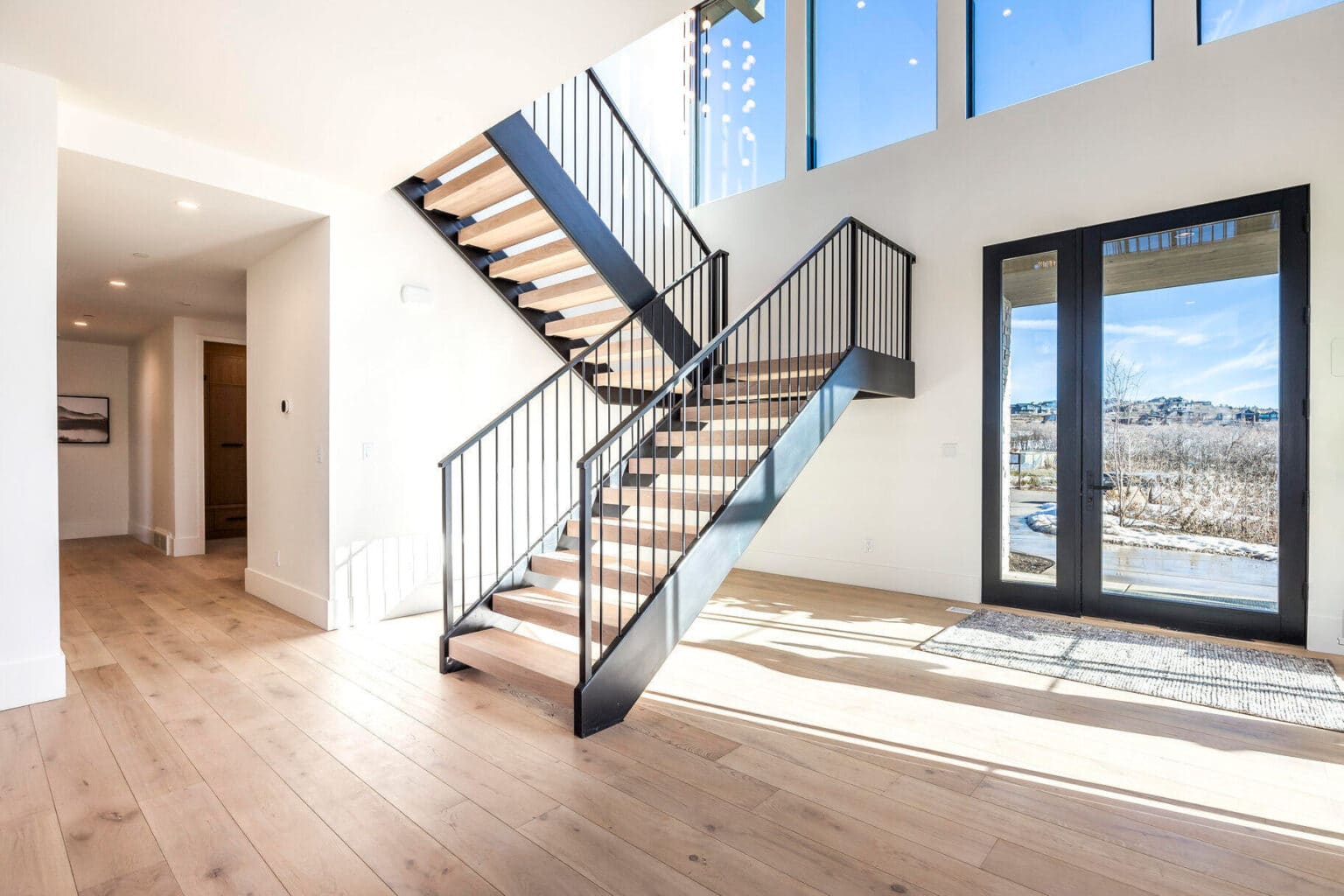
4. L-Shaped Floating Staircase with Black Metal Balusters
The success of this staircase lies in its clean, graphic quality. The repetition of the thin, black vertical balusters creates a strong visual rhythm that is both modern and orderly. This linearity contrasts beautifully with the warm, natural grain of the light wood treads. The design works because it embraces negative space—the “open-riser” design allows light and air to pass through, making the entire structure feel lighter and less imposing than a traditional, fully enclosed staircase would.
🔥 Trending Context
You can achieve this graphic, high-contrast look for significantly less. The key is simplifying the structure. Instead of custom-cantilevered treads, look for pre-fabricated “mono-stringer” stair kits from online suppliers, which can cost as little as $3,000-$5,000. For the railing, you can find stock black metal balusters at stores like Home Depot or Lowe”s for a few dollars each. Pair them with affordable pine treads stained to your desired finish, and you”ve captured the essence of this design on a much friendlier budget.
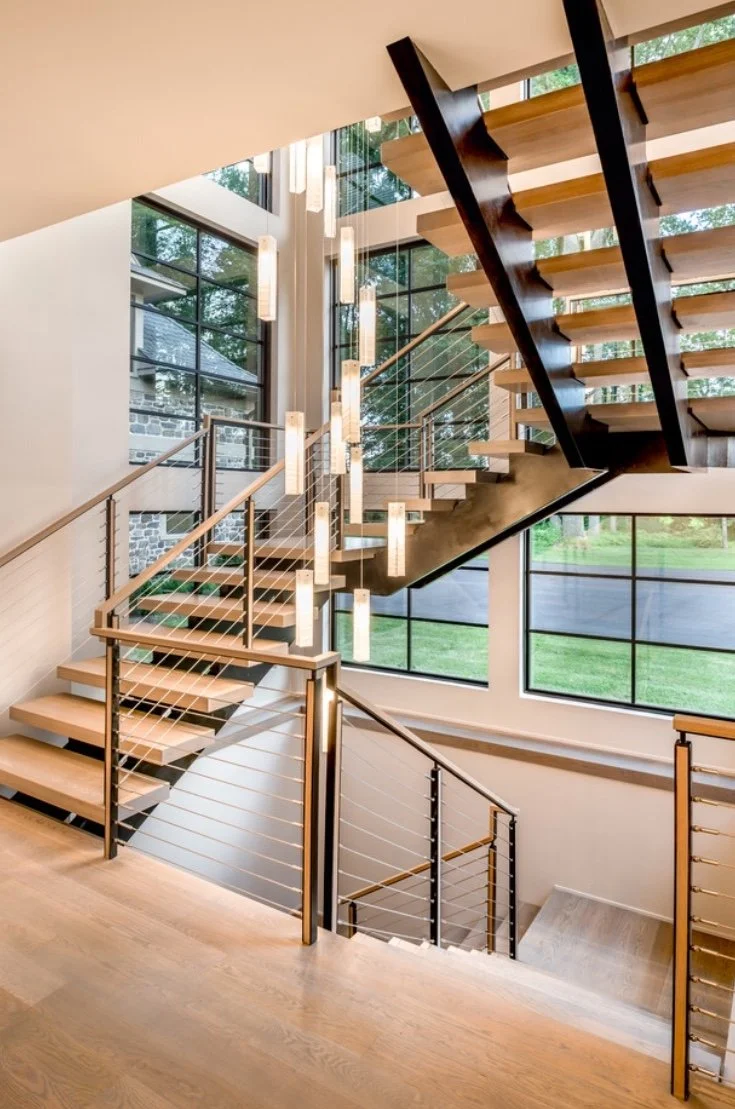
5. Multi-Story Stairwell with a Cascading Chandelier and Cable Railing
It’s the cascading chandelier, without a doubt. The staircase itself is beautifully executed, with its warm wood and industrial-chic cable railing. But the chandelier transforms it from a simple passageway into a grand experience. Its multi-level rectangular lights create a sense of verticality and drama, drawing the eye upward through the entire height of the space. It also provides functional light while serving as a piece of kinetic sculpture. Without it, the stairwell would be handsome but far less memorable.
🧹 Maintenance Reality
The visual formula here is a study in balanced textures. Think of it as: 50% warm natural wood + 30% crisp grid pattern (windows, chandelier shape) + 10% industrial metal (cable railing, stringers) + 10% soft ambient light. You could swap the materials while keeping the ratio for a different vibe. For example, replace the light wood with dark, ebonized oak and the black metal with satin brass. The staircase would feel more opulent and deco-inspired, but the underlying “Style Math” would still hold true, ensuring a cohesive result.
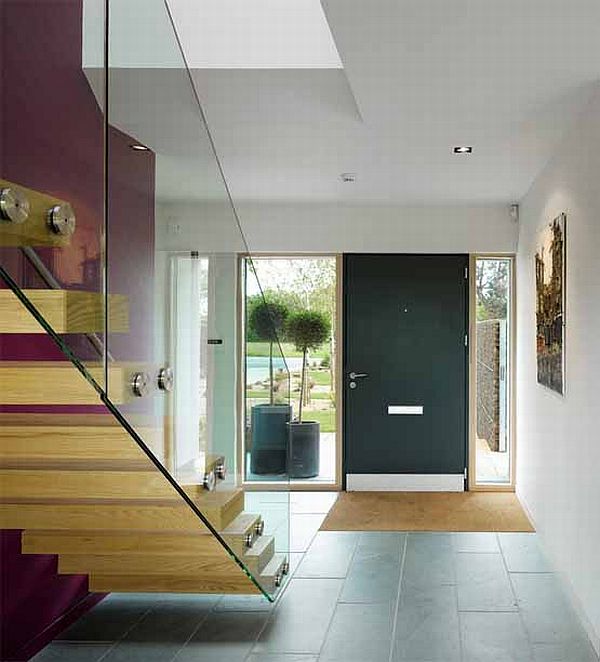
6. Airy Wood Treads Against a Dramatic Deep Plum Wall
When using a dark, saturated accent color like this deep plum, lighting is everything. To prevent the wall from feeling flat or heavy, use a paint with a subtle sheen, like eggshell or satin. A matte finish will absorb light and can make the color look muddy. Then, ensure the wall is washed with light, either from a nearby window as shown here, or by installing discreet spotlights from the ceiling. This creates highlights and shadows that give the color depth and life.
🔧 How-To Brief
This design works because it”s a high-stakes game of contrast. The deep, moody plum wall creates a dramatic backdrop that makes the light wood treads and transparent glass railing pop. The effect is almost like a piece of art being presented against a gallery wall. The minimalist components—simple treads, sleek glass, understated steel standoffs—keep the focus squarely on that powerful color choice. It’s a bold move that pays off by creating a truly memorable entryway. Compare this to the all-neutral approach in Idea #8 to see the difference color can make.
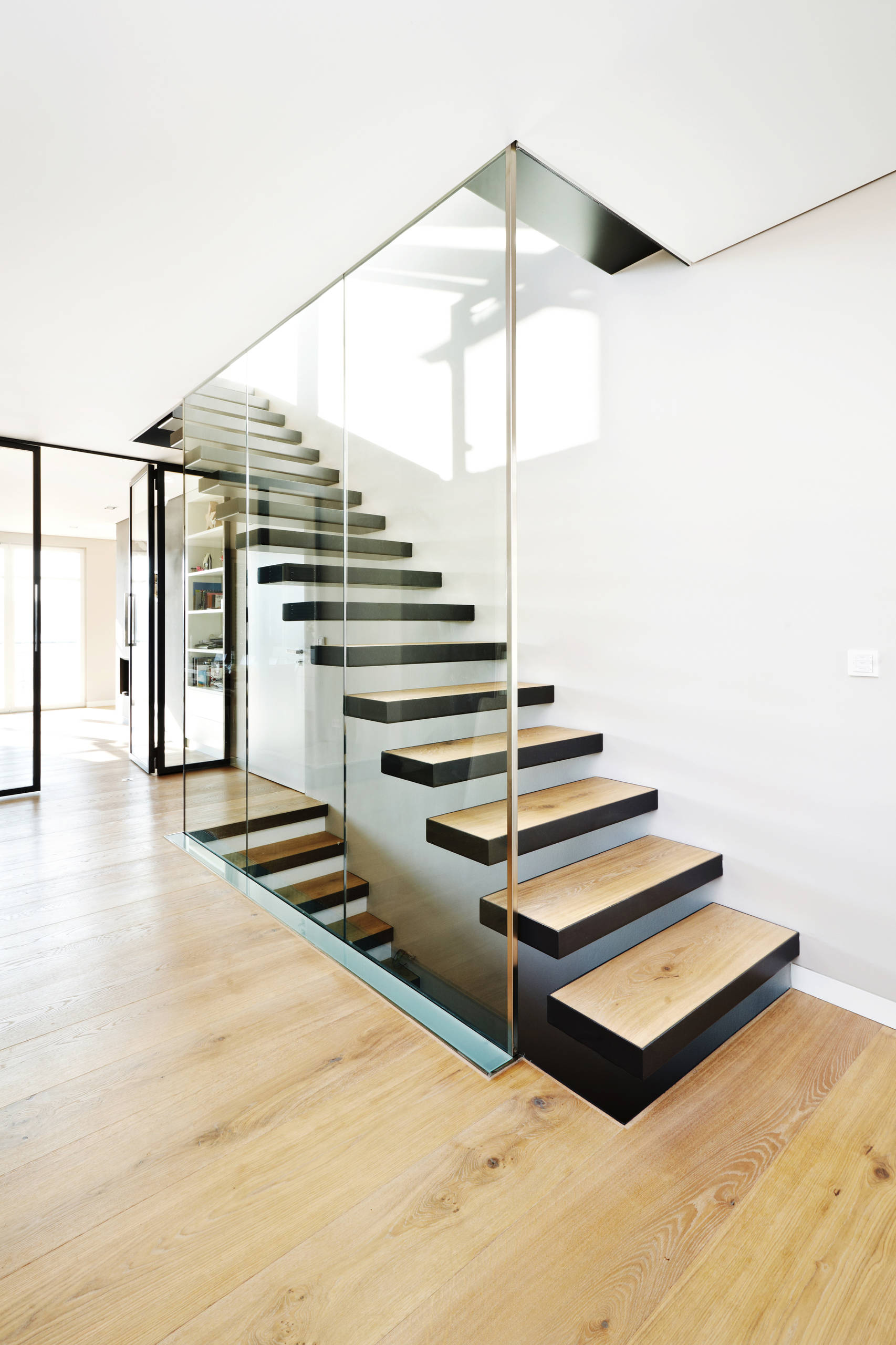
7. Floating Wood Treads Framed in Black Metal
A staircase with this much exposed wood and glass requires a simple but consistent cleaning routine. The glass railing will show every fingerprint and smudge, so plan for a weekly wipe-down with a microfiber cloth and a good glass cleaner. The wood treads, especially in a high-traffic home, should be dusted or vacuumed with a soft brush attachment every few days to prevent grit from scratching the finish. Spills on the wood should be wiped up immediately. It”s not intensive, but staying on top of it is key to keeping it looking sharp.
⭐ The One Thing
The dark frames around each individual tread are the detail that sets this staircase apart. Many floating designs mount the wood directly to the wall or stringer, but encasing each step in a slim black metal box gives it a more finished, intentional, and substantial look. It adds a graphic, almost puzzle-like quality to the design. This small-but-mighty detail elevates the entire structure, making it feel more like a custom piece of architectural metalwork than a standard installation.
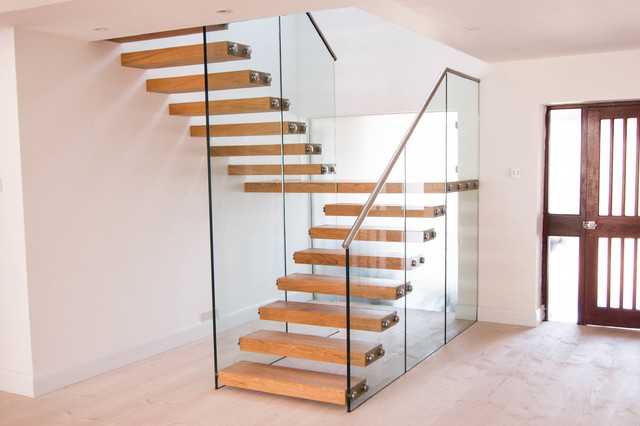
8. Minimalist Floating Treads with Full Glass Panel Balustrade
To achieve this ultra-clean look where treads appear to float between glass, the structure is key. Here”s a simplified overview of how it”s often done:
⚠️ Real Talk
- A heavy-duty steel stringer is bolted directly to the wall studs before any drywall is installed. This will be the hidden spine of the staircase.
- The glass panels are installed first, bolted through the flooring into the floor joists and secured at the top.
- Brackets or pins are welded or bolted to the concealed steel stringer, protruding through carefully cut holes in the drywall.
- The wooden treads, which have been pre-drilled, are then slid onto these pins.
- Finally, the handrail is attached to the top of the glass panels. This process requires incredible precision and is not a DIY-friendly project.
While a full glass balustrade is the epitome of minimalist chic, it comes with a few practical considerations. These large, heavy panels are expensive, not just for the material itself but for the specialized labor required for installation. They are also absolute magnets for fingerprints, smudges, and pet nose art, requiring frequent cleaning to look their best. If you have young children, be prepared for a constant battle to keep the glass looking pristine. This is a look that prioritizes aesthetics over low-maintenance living.
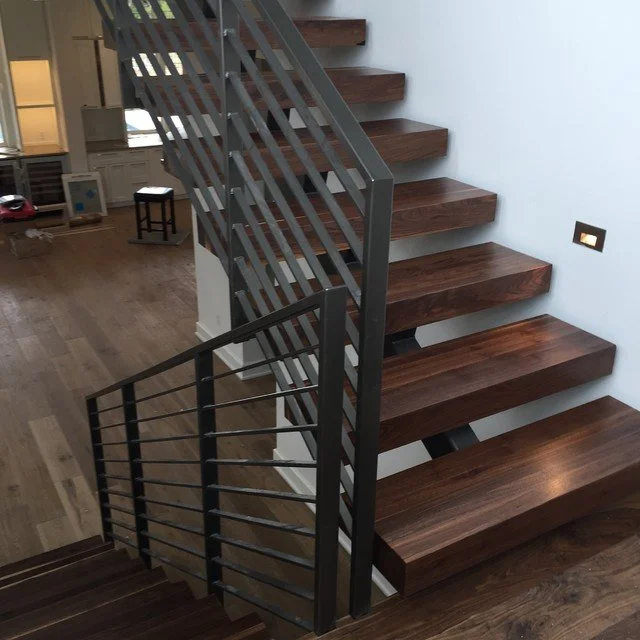
9. Thick Dark Wood Treads with Horizontal Metal Balusters
The visual weight of the thick, dark wood treads provides a satisfying sense of solidity and grounding, even as they “float” off the wall. This mass is balanced by the delicate, linear pattern of the horizontal metal railing. The design creates a powerful interplay between solid and void, heavy and light. The choice to run the balusters horizontally instead of vertically emphasizes the length and angle of the staircase, making the journey feel more dynamic.
💰 Budget Breakdown
Horizontal railings have been a staple in modern design for years, but their current popularity is tied to the broader trend of “Japandi” and organic modernism. The clean lines and grid-like structure resonate with Japanese design principles, while the combination of natural wood and dark metal feels both organic and industrial. This style has staying power because it’s not overly decorative; it’s rooted in the honest expression of materials and structure, a core tenet of enduring modernism.
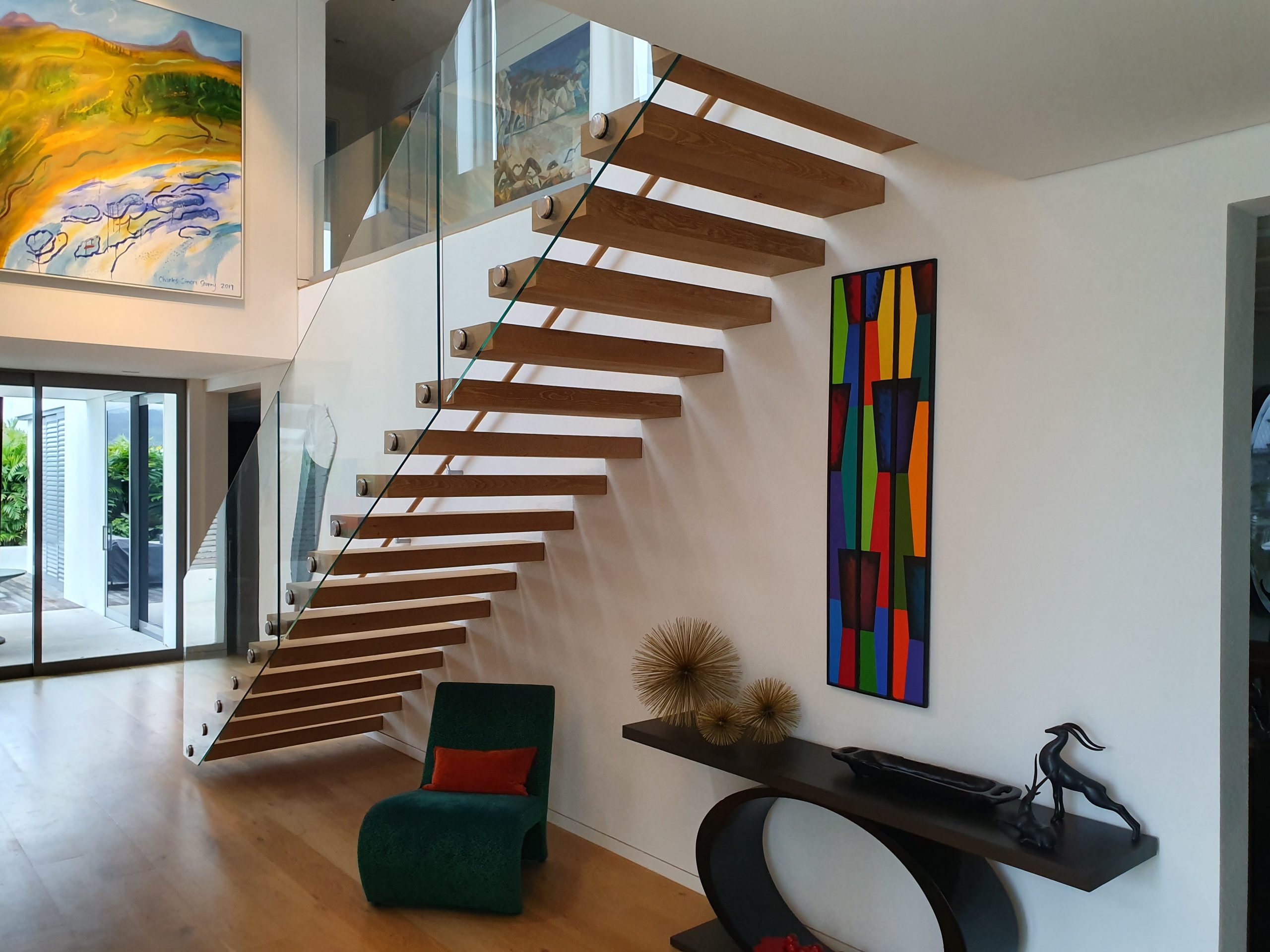
10. Art-Filled Nook Beneath Minimalist Floating Stairs
This corner is a perfect equation for a stylish moment: 60% minimalist architecture (the white walls and simple stairs) + 20% bold color (the green chair and vibrant art) + 20% organic texture (the wood console and orange pillow). The neutral background of the staircase allows the curated decor pieces to shine without competing. You could change the accent color from green to deep blue or even a warm terracotta, and the formula would still work perfectly because the foundational architecture is so clean and strong.
💸 Get This Look For Less
The space under a floating staircase is prime real estate for creating a design vignette, but the key is to avoid clutter. Choose one “hero” piece of furniture, like this accent chair, and build around it. Ensure your composition has varying heights—the low console, the taller chair, the artwork on the wall—to create a visually interesting, layered look. And most importantly, leave some breathing room! Don”t pack it full of stuff; the negative space is just as important as the objects themselves.
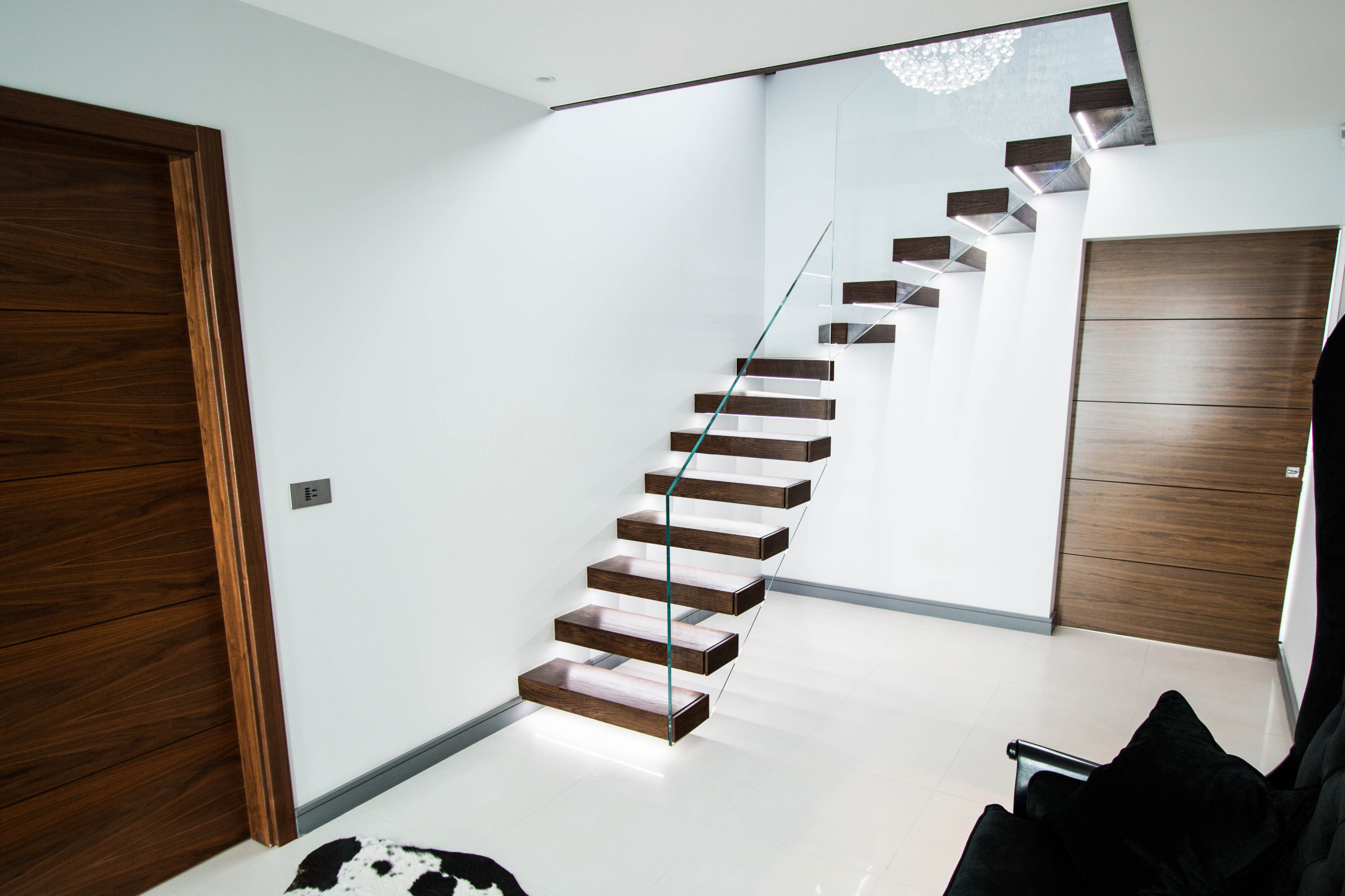
11. Dark Wood Treads with Integrated Lighting in a Crisp White Interior
This is a high-end, high-impact look with a price tag to match. The cost is driven by the integration of multiple trades—carpentry, electrical, and glazing.
💡 Designer Tip
- Custom Dark Wood Treads: $6,000 – $12,000
- Glass Balustrade: $8,000 – $15,000
- Integrated LED Lighting System: $4,000 – $7,000 (including wiring)
- Dark Wood Paneled Doors: $3,000 – $6,000
- TOTAL: $21,000 – $40,000
- Budget alternative: Get a similar contrast with stock dark wood treads, a standard wall-mounted handrail instead of glass, and use adhesive, battery-powered LED strips under the treads for a total cost closer to $5,000 – $9,000.
The sleek, high-gloss white tiled floor is central to this ultra-modern aesthetic, but it”s a choice to make with eyes wide open. White floors, especially polished ones, are notoriously difficult to keep clean. They will show every speck of dust, every stray hair, and every footprint. You”ll need to commit to a daily sweeping or vacuuming routine. Furthermore, while dramatic, the dark wood treads will highlight dust, so they”ll need frequent wiping. This is a stunning look for the meticulous homeowner.
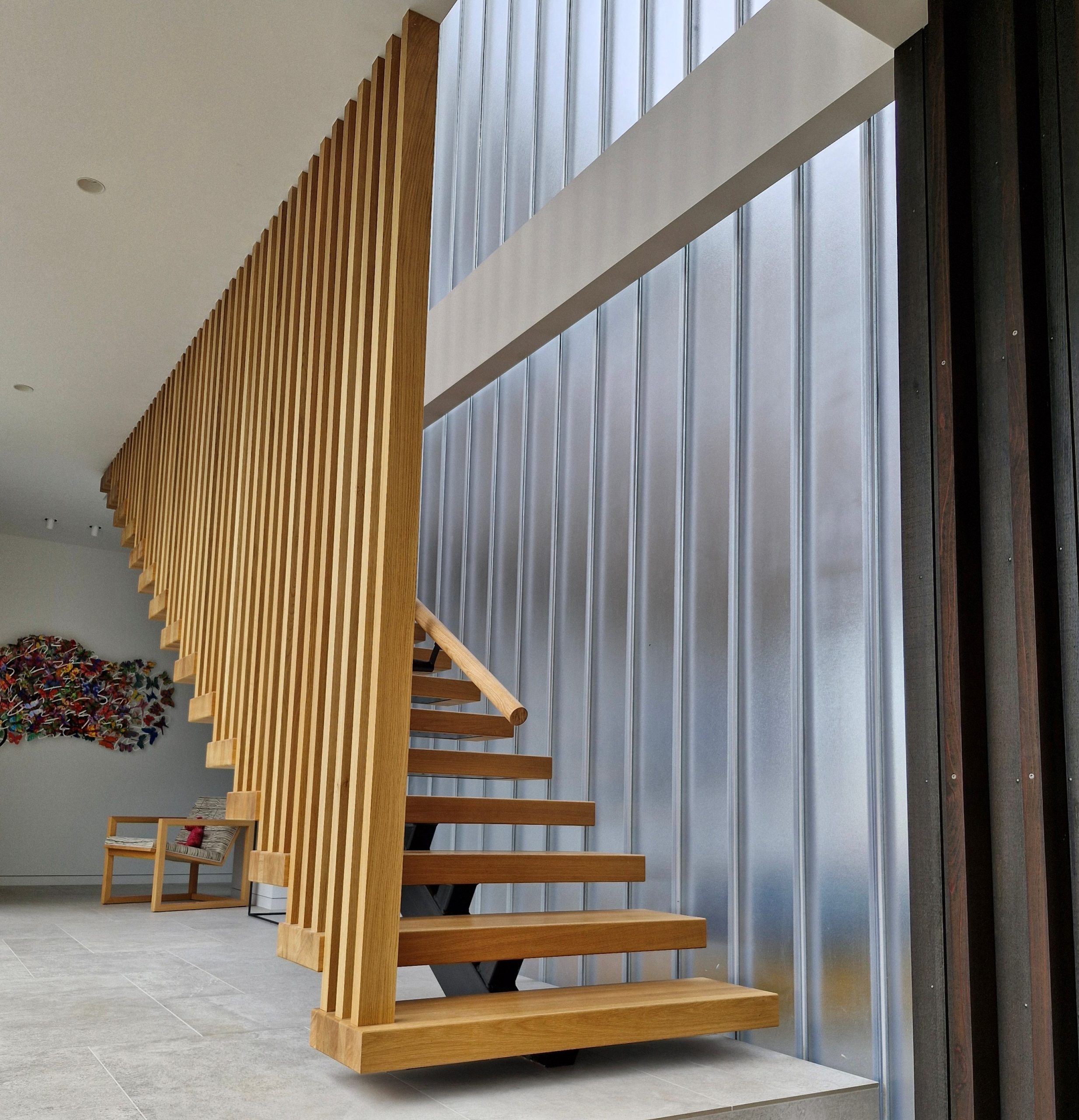
12. Floating Treads with a Slatted Wood Railing and Frosted Glass Wall
This design brilliantly solves the problem of creating privacy and separation without sacrificing light. The slatted wood railing provides a sense of enclosure and safety, while its vertical lines draw the eye upward, enhancing the feeling of height. The frosted glass wall is the true genius here; it obscures the view of the space beyond, creating a distinct zone, yet it allows diffused natural light to pour through, keeping the stairwell bright and airy. It”s a perfect marriage of transparency and texture.
✅ Before You Start
This idea works best in a space that needs some form of visual separation, like separating an entryway from a living room or creating a distinct path on an open-plan second floor. The ceiling height should be at least 9 feet to accommodate the full-height glass and prevent the slatted screen from feeling too heavy or cage-like. In spaces with standard 8-foot ceilings, you might consider a half-height slatted wall and regular drywall above to maintain a sense of openness.
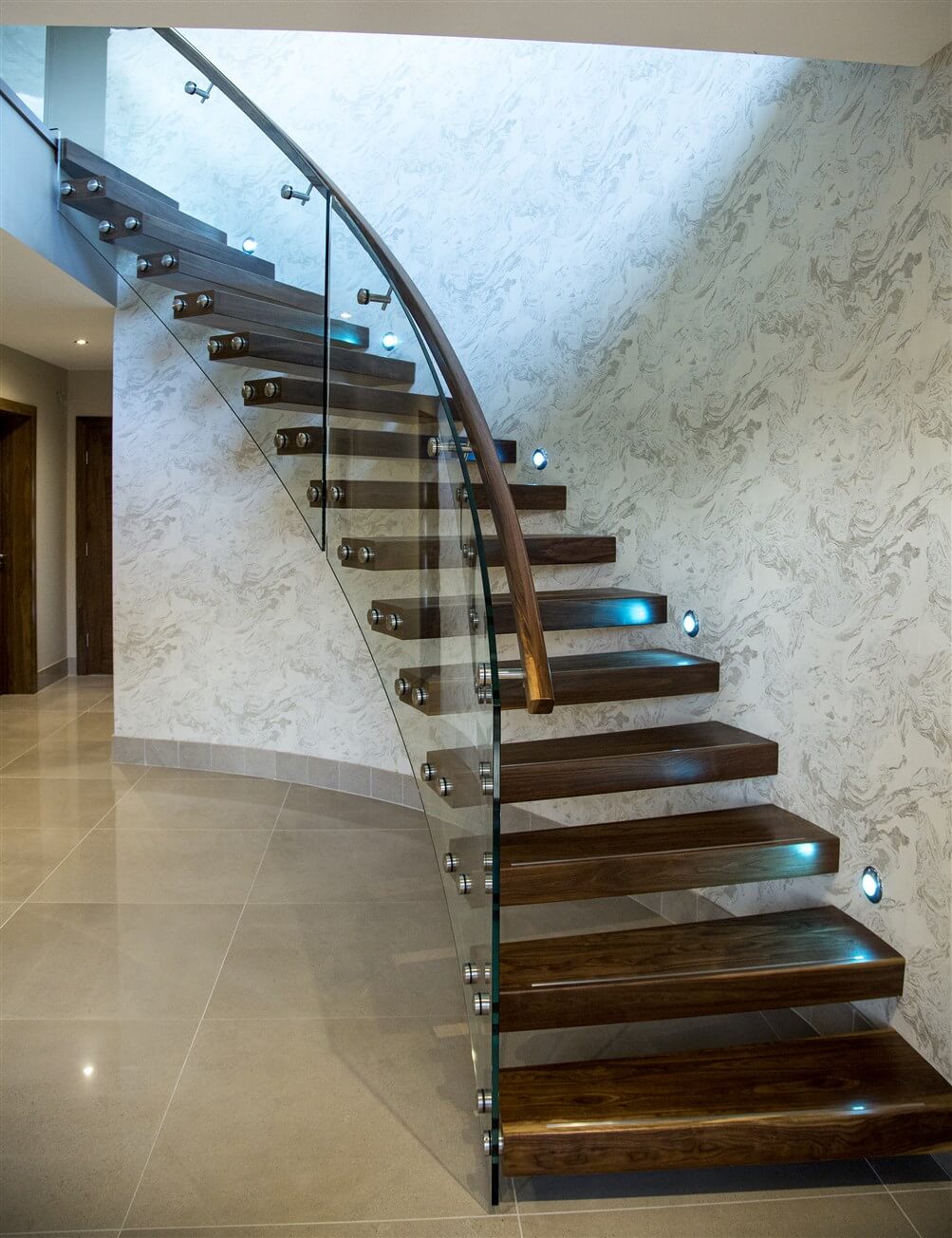
13. Curved Floating Staircase with Illuminated Treads
The curve is everything. A straight floating staircase is modern and clean, but curving it introduces a layer of organic elegance and complexity that is utterly captivating. It transforms the staircase from a simple functional object into a flowing, sculptural centerpiece for the entire home. The gentle arc is inherently more graceful and dramatic, creating a much more sophisticated and high-end architectural statement. The integrated lighting simply serves to highlight this beautiful, sinuous form.
📐 Style Math
A curved floating staircase is one of the most complex and expensive residential stair designs you can commission. The engineering required to make it structurally sound without visible supports is significant. Each tread, the glass panels, and the handrail must be custom-fabricated to a precise radius. This is not a project for a standard contractor; it requires a specialized firm with experience in curved stairs. Be prepared for a long lead time and a budget that can easily be 3-4 times that of a comparable straight staircase.
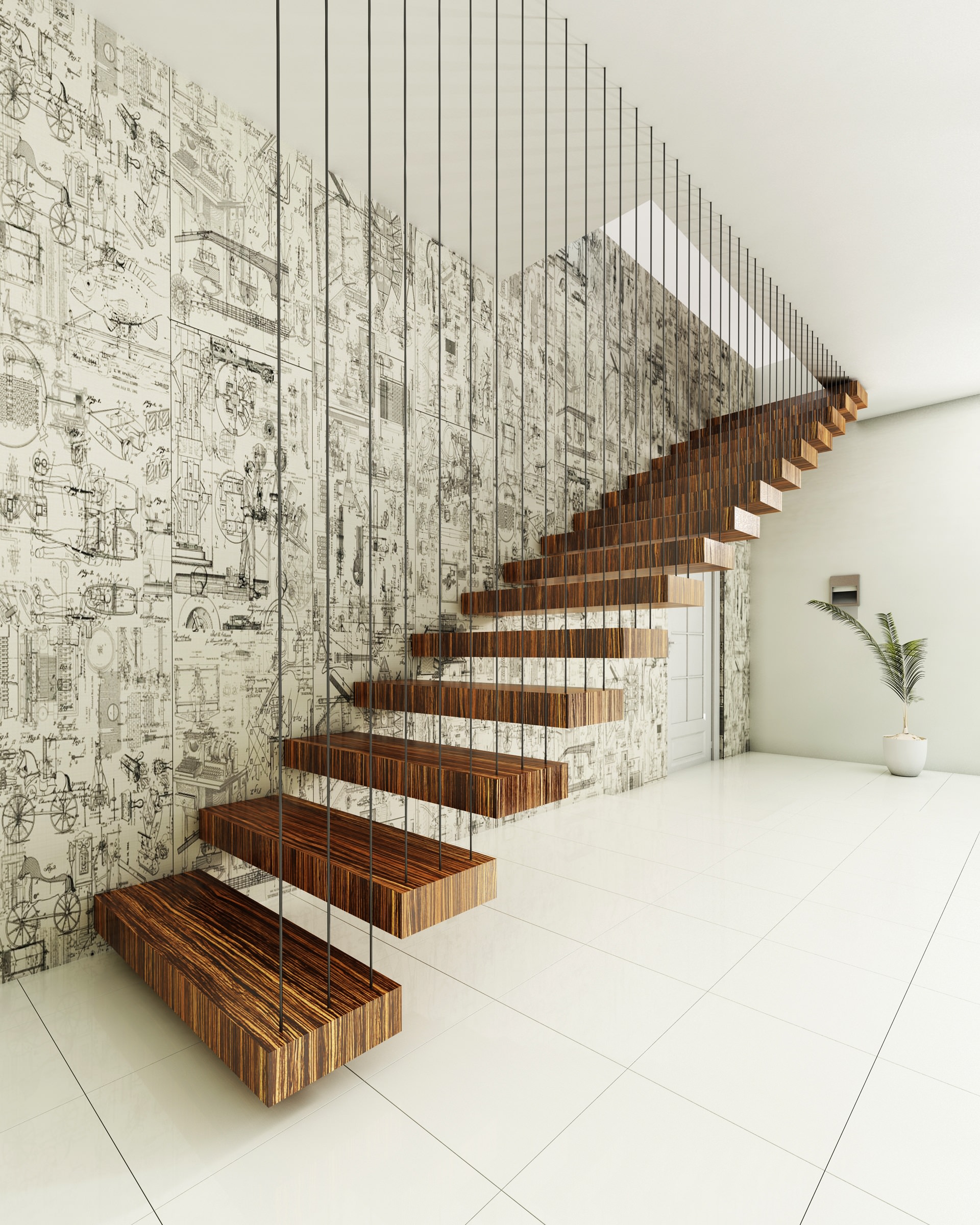
14. Floating Treads Suspended by Rods Against Blueprint Wallpaper
This design succeeds by fully committing to its theme. The engineering blueprint wallpaper isn”t just a random pattern; it speaks directly to the structure of the staircase itself. The thin black suspension rods echo the lines on the wallpaper, creating a cohesive, geek-chic aesthetic. By suspending the treads from the ceiling rather than cantilevering them from the wall, the design emphasizes verticality and creates the illusion that the stairs are hanging in space. It”s a clever, self-referential concept.
📏 Scale Guide
You don”t need a fully custom-engineered suspension system to get this look. You can create the illusion of suspended treads using a combination of a hidden wall-mounted stringer and non-structural, purely decorative “suspension rods” made from affordable black metal conduit or even painted wooden dowels attached to the ceiling and treads. Pair this with a similar blueprint wallpaper from a supplier like Spoonflower or MuralsWallpaper (around $5-$10 per square foot) to get 90% of the vibe for 20% of the cost. The look here is much more affordale than the intricate setup in Idea #12.
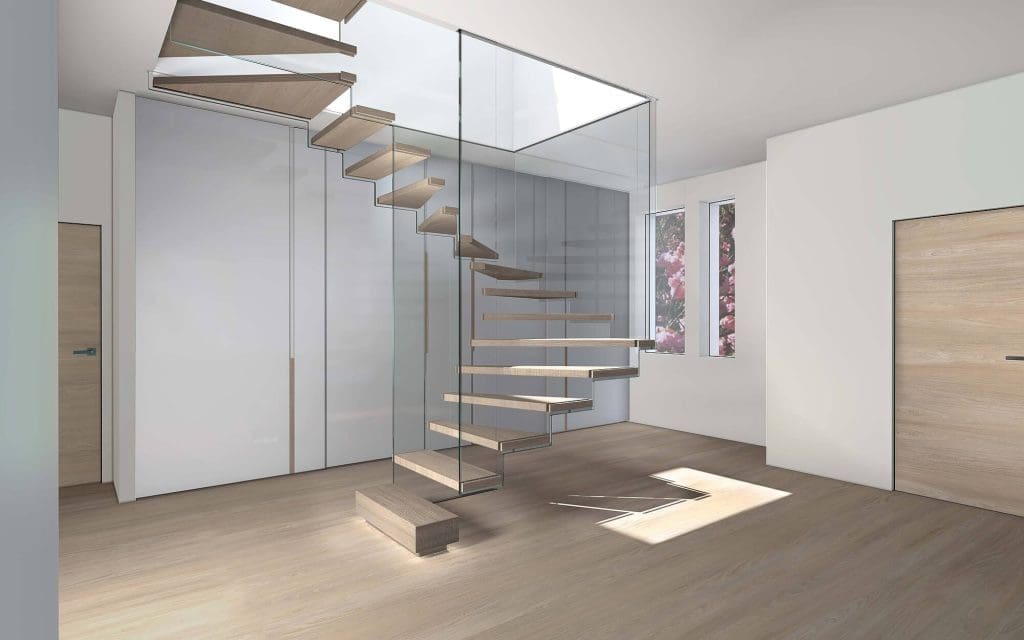
15. Minimalist Light Wood and Glass Staircase in a Cohesive Interior
To achieve this level of design cohesion, consistency in your wood tones is crucial. When selecting flooring, doors, and stair treads, bring samples of each to view together in your home”s actual lighting. “Light oak” can look very different from one manufacturer to another. The goal isn”t a perfect, factory-matched set, but rather a harmonious family of tones. A little variation is natural and adds depth, but you want to avoid a “light oak” floor that looks yellow next to a “light oak” door that looks pink.
🎯 What Makes It Work
The formula here is all about serene simplicity: 70% Neutral Base (white walls, light grey floors) + 25% Natural Wood Tone + 5% Unobtrusive Glass. The beauty is in its restraint. By keeping the main elements quiet and consistent, the space feels calm and uncluttered. That tiny pop of fuchsia from the blossoms outside the window becomes a powerful accent precisely because the rest of the palette is so controlled and minimalist.
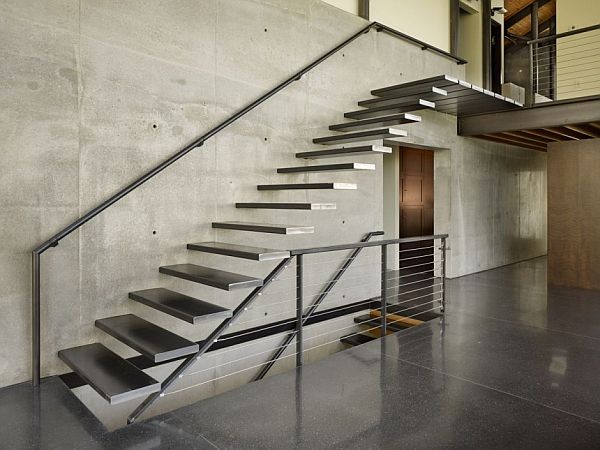
16. Floating Metal Treads Against a Raw Concrete Wall
This is a fantastic example of truth in materials. The design doesn”t try to hide its industrial nature; it celebrates it. The raw, textured concrete wall provides a powerful, tactile backdrop for the sleek, dark metal treads. The tension cable railing adds another layer of industrial chic, its fine lines contrasting with the mass of the concrete and treads. The beauty here comes from the honest and unapologetic use of structural materials as finished surfaces.
🔥 Trending Context
While this look is incredibly durable, “maintenance-free” isn”t quite accurate. Polished concrete floors, while tough, can be prone to showing scratches and may need to be professionally resealed every 2-5 years to maintain their sheen and resist staining, at a cost of $1.50-$3.00 per square foot. The textured concrete wall will be a dust magnet; plan to vacuum it with a brush attachment a few times a year. The metal treads and railings are the easiest part—just a simple wipe-down is all they need.
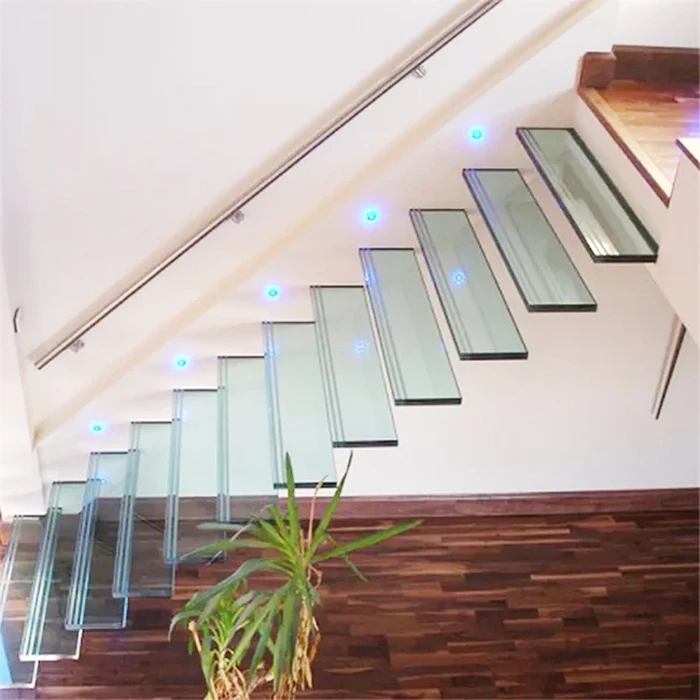
17. Ethereal Floating Glass Treads with Blue LED Accent Lighting
Let”s be honest: a staircase with glass treads is a bold aesthetic choice that comes with practical trade-offs. The transparency can be unnerving for some people, especially those with a fear of heights. They also offer zero privacy for anyone walking up or down the stairs. From a cleaning perspective, they are incredibly high-maintenance, showing every speck of dust, footprint, and scuff mark from shoes. This is a look best suited for a household with no kids, no pets, and a very dedicated cleaning routine.
🧹 Maintenance Reality
It’s all about the blue LED lights. Without them, this is a very clean, minimalist, but somewhat cold staircase. The addition of the colored light completely transforms the mood. It turns the functional act of climbing stairs into a futuristic, almost otherworldly experience. The light catches the edges of the glass treads, making them glow and emphasizing their “floating” quality in a way that regular white light just couldn”t achieve. It’s a pure, unapologetic design statement.
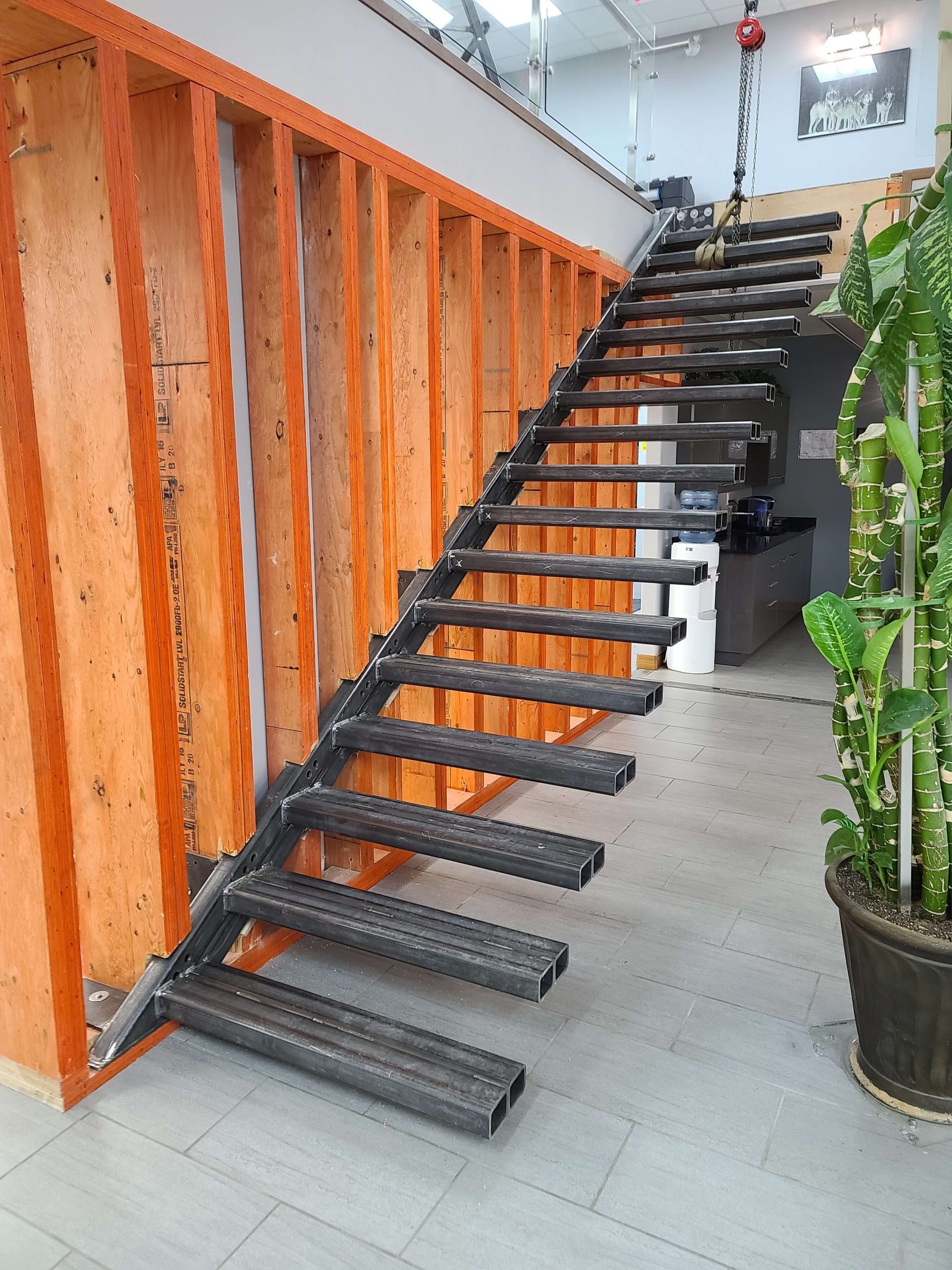
18. Raw Metal Floating Stairs in an Unfinished, Industrial Space
The “unfinished” or “deconstructed” look is a direct reaction against years of perfectly polished, impersonal design. It’s part of a larger cultural shift towards valuing authenticity, craftsmanship, and sustainability. Exposing the wooden wall studs and using raw, unpainted metal celebrates the process of construction itself. This aesthetic, seen often in loft conversions and warehouse-style homes, finds beauty in the bones of a building, a trend that has serious staying power for its honesty and character.
🔧 How-To Brief
This is essentially the most budget-friendly floating staircase you can get, because it uses basic construction materials as the final finish. You can buy raw steel C-channel for a stringer and flat bar for treads directly from a local metal supplier for a fraction of the cost of a finished, powder-coated staircase. Leaving wall studs exposed saves on drywall and finishing costs. This is the ultimate “get the look for less” because the look *is* less—in the most stylish way possible. A similar approach can be seen in Idea #16, but with a more refined concrete finish.
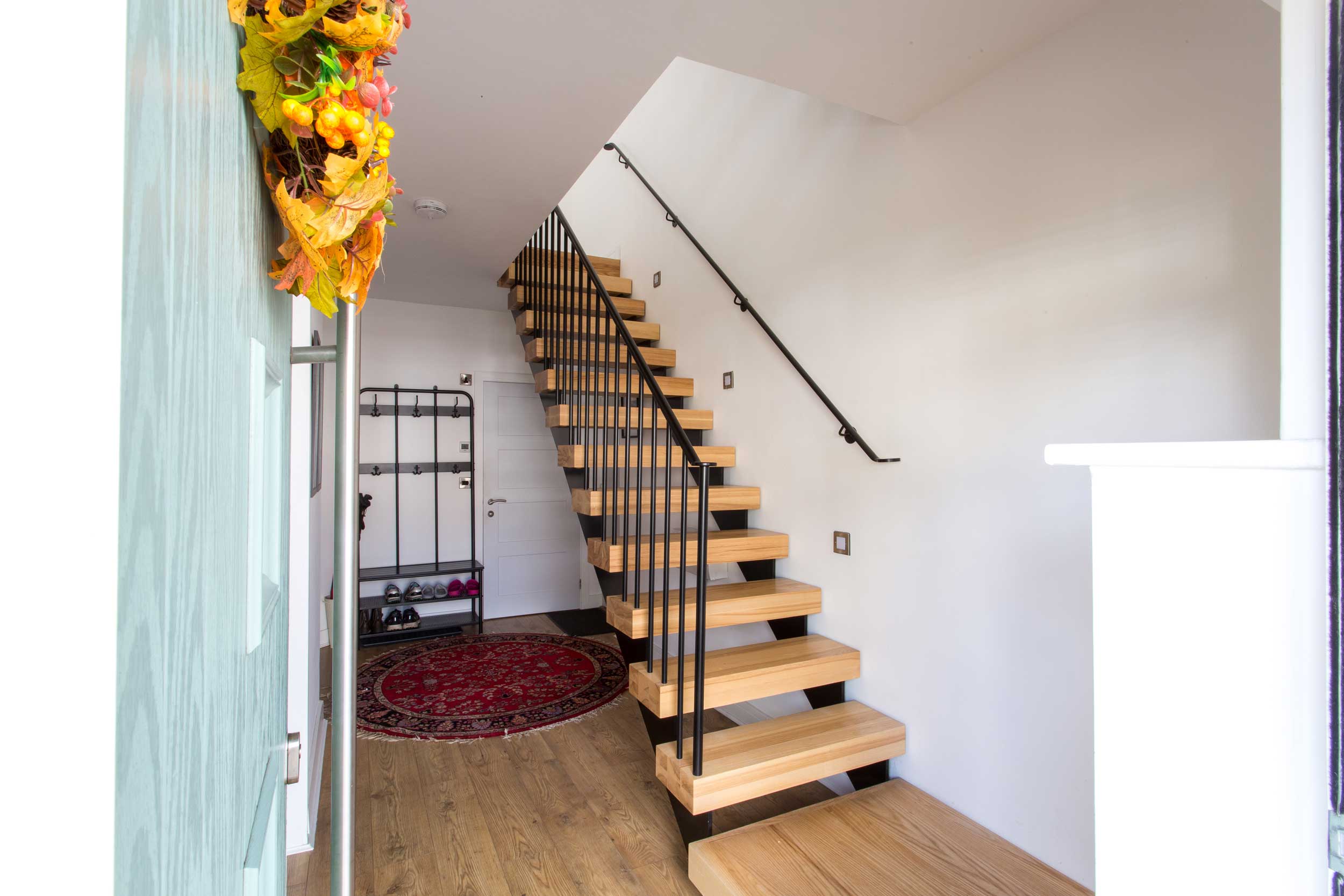
19. Clean Floating Treads with Black Vertical Balusters
This design is so successful because it perfectly balances openness and safety. The floating treads and lack of a bulky stringer keep the entryway feeling bright and airy. The thin, black vertical balusters provide the necessary safety barrier without creating a solid visual wall, allowing light and views to pass through. The repetition of black—in the balusters, the wall-mounted handrail, and the coat rack—sprinkles a strong graphic element throughout the space, tying it all together neatly.
⭐ The One Thing
Before you commit to a floating staircase that opens directly into an entryway, run through this checklist:
- Wall Structure: Can the wall next to the proposed staircase support a significant load? You will likely need to open the wall to add reinforced blocking between the studs.
- Building Codes: Check your local building codes for open-riser stairs. Many jurisdictions have specific requirements for the maximum gap allowed between treads to prevent fall-through hazards.
- Entryway Flow: Will the staircase impede the natural flow of traffic from your front door? Make sure there is ample clearance around the base of the stairs.
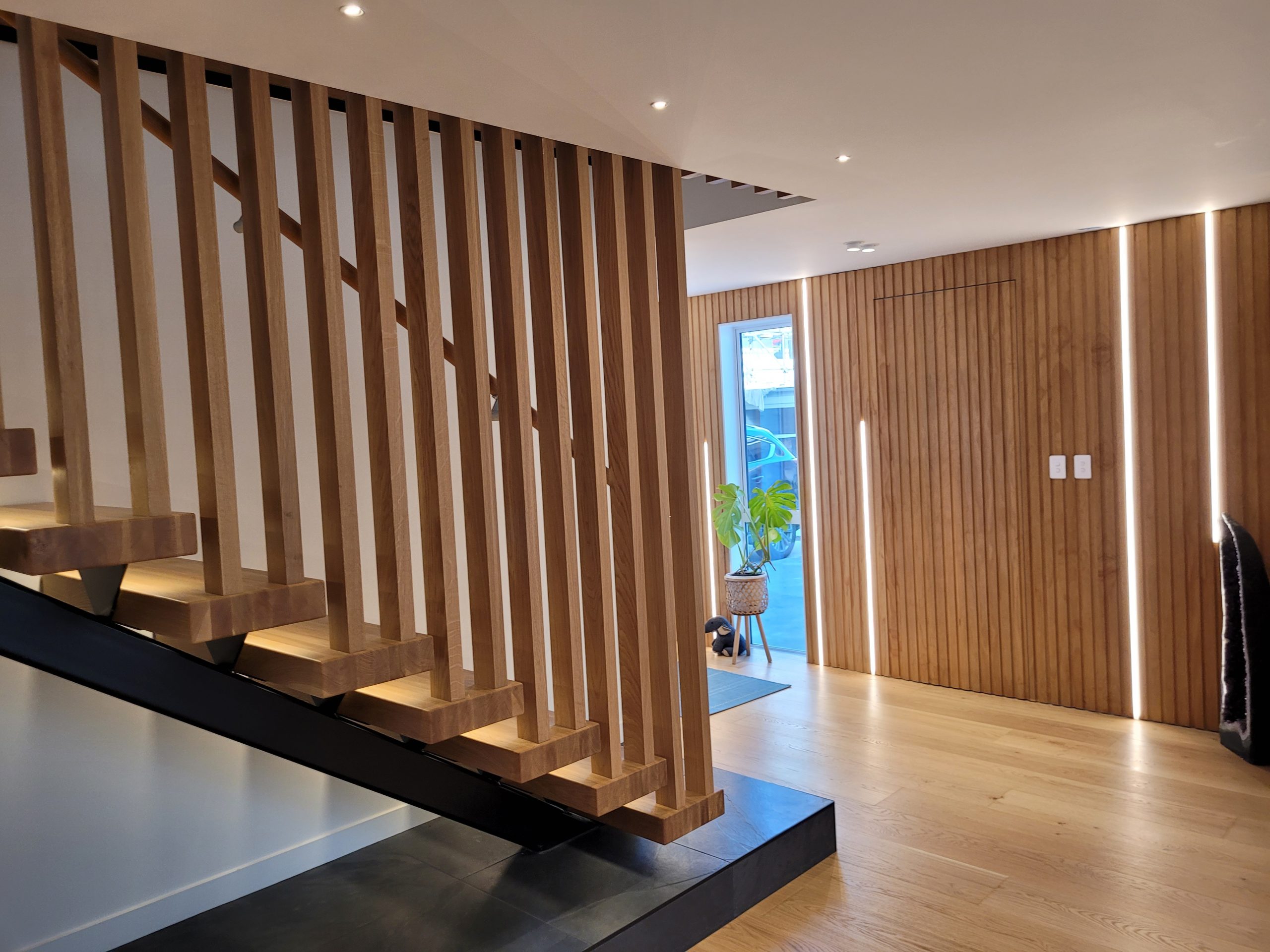
20. Vertical Wood Slat Staircase with Integrated Wall Lighting
Creating an integrated strip light effect within a wood-paneled wall is a high-detail job. Here is the basic process:
⚠️ Real Talk
- First, the electrician runs low-voltage wiring at the desired locations on the bare wall.
- A backing board (like MDF or plywood), painted black, is installed. This black background will make the gaps less noticeable.
- Aluminum channels for the LED strips are screwed into the backing board where the lights will be.
- The wood slats are installed on either side of the channels, leaving a precise gap.
- The LED strip lighting is then adhered into the channel, and the frosted plastic diffuser is snapped on top.
- Finally, the remaining wood slats are installed to complete the wall.
When designing a feature with vertical wood slats, the spacing is critical. For the balustrade part of the staircase, the gap between slats must be less than 4 inches to meet most building codes for safety. For the decorative wall paneling, you can have more freedom. A gap of 1/2 to 3/4 of an inch often looks best—it”s tight enough to create a cohesive ribbed texture but wide enough to provide definition. Make sure the spacing is perfectly consistent, as any irregularity will be immediately obvious.
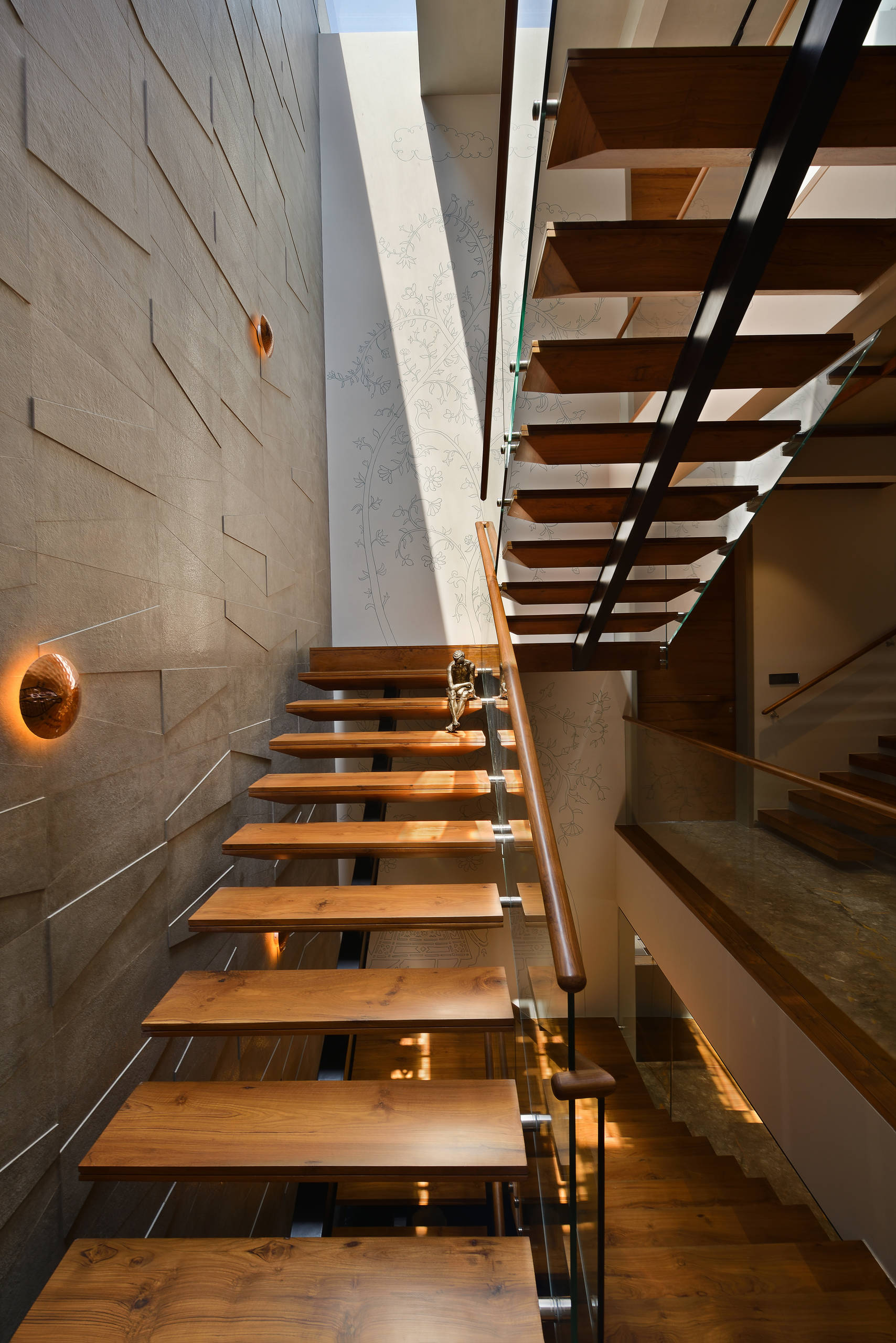
21. Mixed-Material Staircase with Geometric and Botanical Patterns
This design bravely throws the rulebook out the window, and it works because of a controlled color palette. Despite the mix of wood, glass, metal, textured geometric panels, and a botanical wallpaper, almost everything exists within a warm, neutral range of light browns, greys, and off-whites. This tonal harmony allows the different patterns and textures to coexist without descending into chaos. The copper sconces add a single, deliberate metallic accent that warms up the entire composition.
💰 Budget Breakdown
The single element that makes this work is the fearless use of multiple wall finishes. Most designs would commit to just one—the textured panels or the patterned wallpaper. Using both on opposing walls is a bold, maximalist-meets-modern choice. It creates a dynamic tension in the space. One wall is structured and geometric, the other is soft and organic. This juxtaposition is what gives the staircase its unique personality and sophisticated edge.
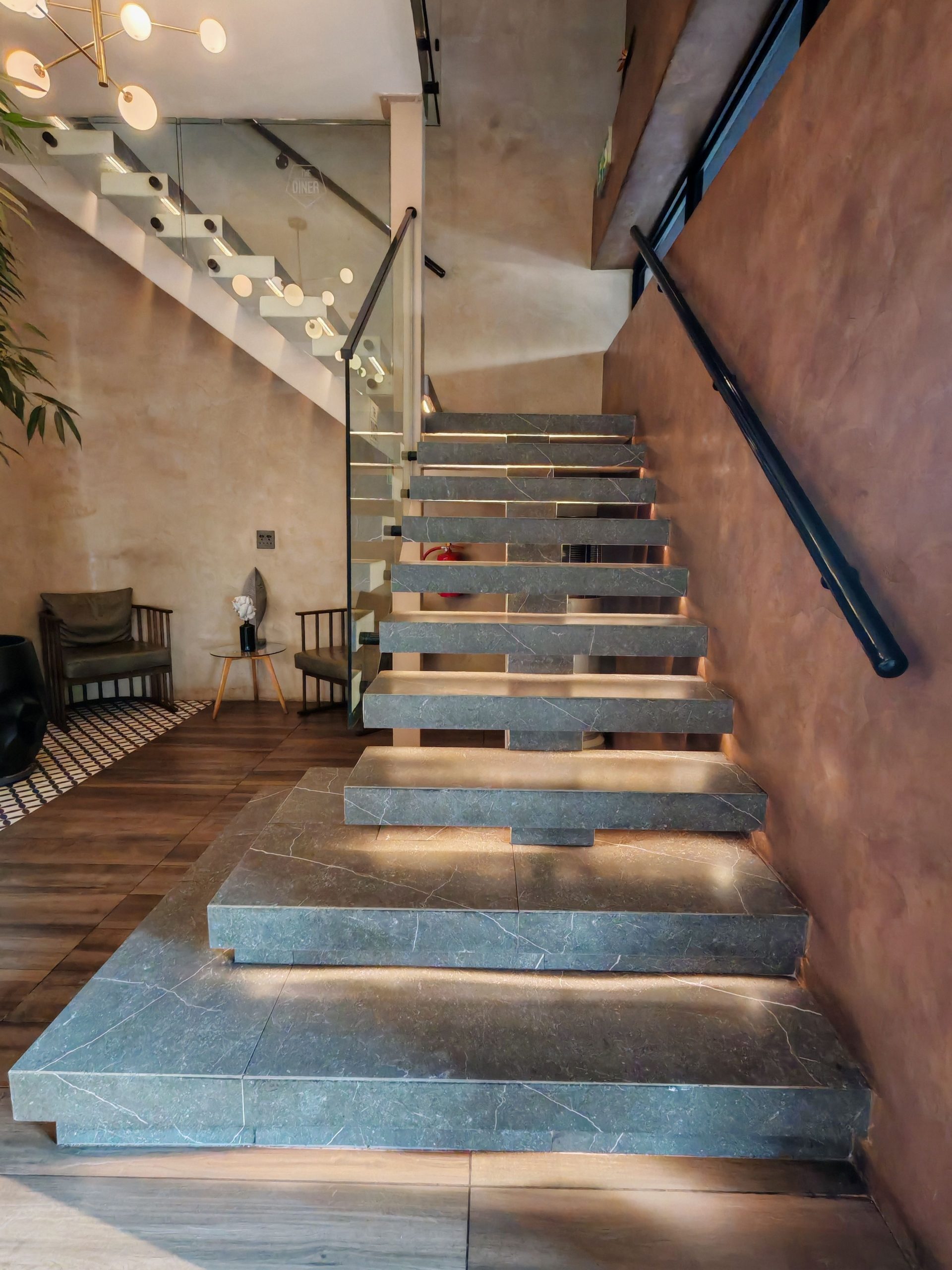
22. Floating Marble Steps with Integrated Lighting and Glass Railing
A floating staircase made of solid marble is the definition of luxury, and it has the fragility to match. Marble is a relatively soft, porous stone. It can be scratched by abrasive dirt on shoes, and it will stain easily if spills (especially anything acidic like wine or juice) aren”t wiped up immediately. The sharp, modern edges of the treads are also prone to chipping if struck by a hard object like a vacuum cleaner or a dropped suitcase. This is a stunning centerpiece for a careful, adults-only household.
💸 Get This Look For Less
The design formula here is all about luxurious, moody atmosphere: 40% dramatic stone (the veined marble) + 30% warm ambient light (the under-tread LEDs) + 20% rich texture (the brown wall and dark wood floor) + 10% sleek minimalism (the glass and black metal railing). This equation creates a look that feels like a high-end boutique hotel. Swapping the dark marble for a light travertine and the brown wall for a creamy plaster would create a brighter, more Mediterranean feel while using the same successful principle.
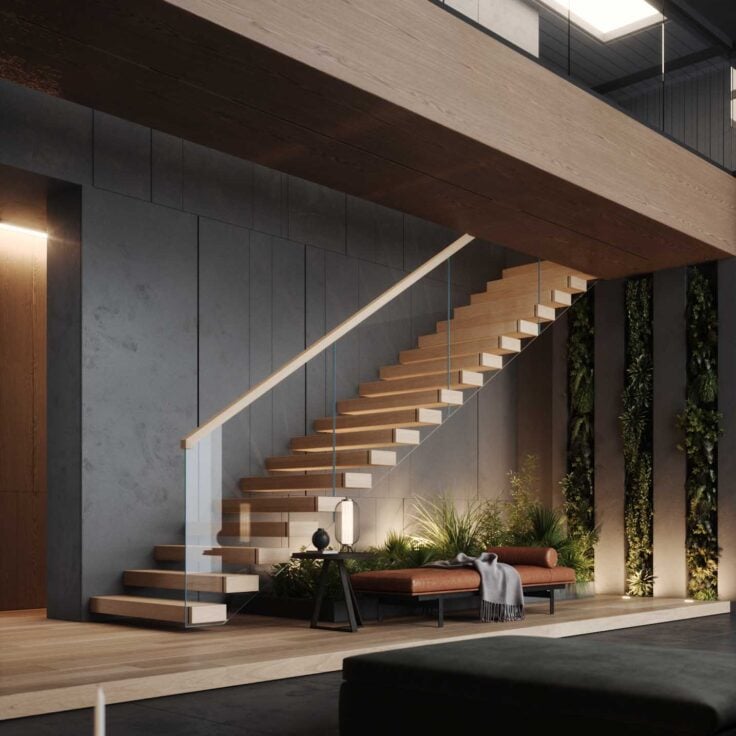
23. Minimalist Floating Treads with an Integrated Greenery Bed
This design is a prime example of “biophilic design,” which seeks to connect our built environments with nature. It works because the living greenery provides a soft, organic counterpoint to the hard, clean lines of the staircase and the dark, paneled wall. The strategic use of lighting—both backlighting for the plants and spotlights from above—adds depth and drama, turning the planter bed from a simple accessory into a lush, living feature. The contrast between the vibrant green and the dark charcoal wall is particularly effective.
💡 Designer Tip
An integrated planter is a stunning feature, but it requires a thoughtful maintenance plan. Ideally, the planter should have a built-in drainage system to prevent water from stagnating and damaging the structure of your home. You”ll also need to choose plants appropriate for the light levels of the space—low-light tolerant species like ZZ plants, snake plants, or pothos are often good choices. Be prepared for regular watering, pruning, and occasional pest management. For a lower-maintenance option, you could use high-quality artificial plants.
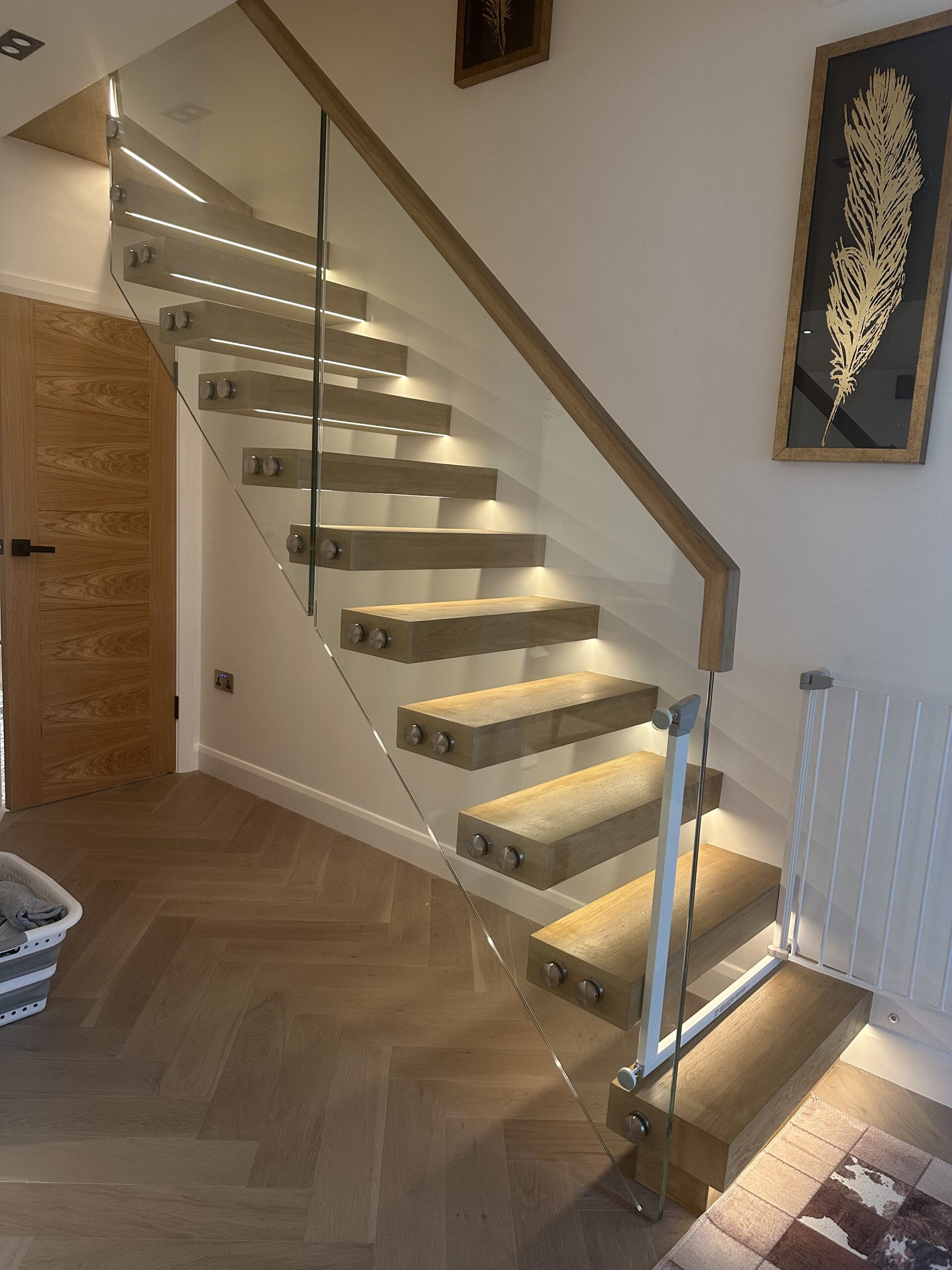
24. Illuminated Floating Treads with a Herringbone Wood Floor
When combining a patterned floor like this herringbone with a statement feature like a floating staircase, it”s crucial to keep the other elements simple. Notice how the walls are plain white, the glass is clear and unframed, and the wood of the treads matches the floor almost exactly. This allows the two main features—the illuminated stairs and the patterned floor—to shine without competing for attention. If the walls were a bold color or the railing was ornate, the whole look would become too busy.
✅ Before You Start
The success of this design lies in its sophisticated layering of light and texture. The stripe-like pattern of the under-tread lighting creates a modern, linear rhythm. This is placed directly against the classic, geometric V-shape of the herringbone floor. The combination works because both patterns, while different, share a sense of structure and repetition. The uniform, light oak wood tone acts as the unifying element that ties the treads and the floor together into a cohesive, elegant whole.
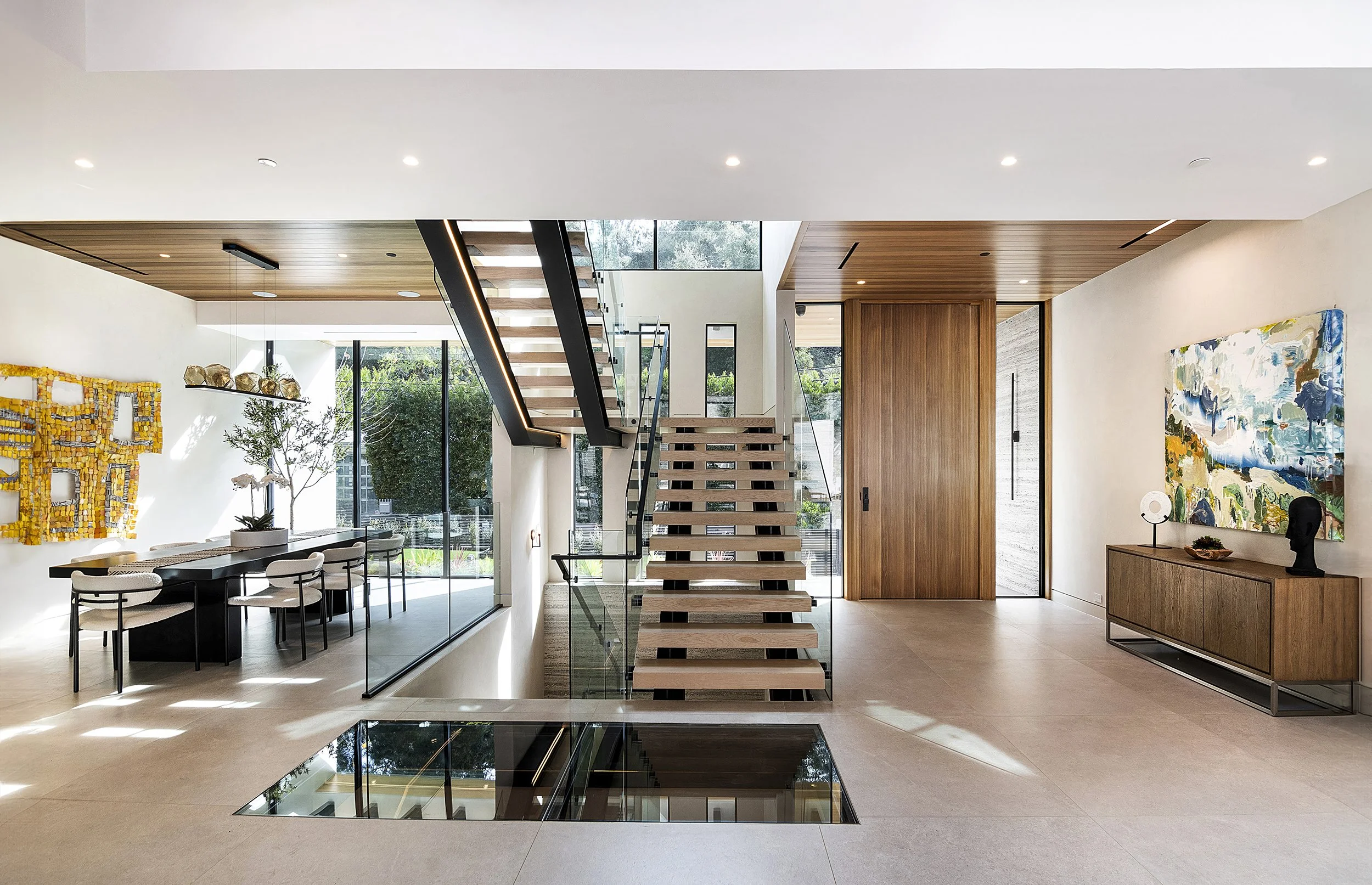
25. Open-Plan Living with Wood and Glass Staircase
A grand, open staircase like this one acts as a major space divider, so it”s best suited for a large, open-plan area of at least 700 square feet. The key is to have enough room on either side so that the dining and living zones feel distinct but not cramped. High ceilings (10+ feet) are also essential to maintain the sense of spaciousness and prevent the large wooden ceiling panels and staircase structure from feeling oppressive. This is an architectural choice that dictates the entire flow of the home.
📐 Style Math
The use of wood as a connecting thread is the one thing that makes this entire space feel coherent and resolved. The same light-toned wood appears on the staircase treads, the ceiling panels, the large entry door, and the console table. This repetition creates a visual rhythm that guides your eye through the different zones of the open-plan space. It warms up the otherwise neutral palette of white walls and beige tiles, adding a layer of natural texture and architectural integrity.
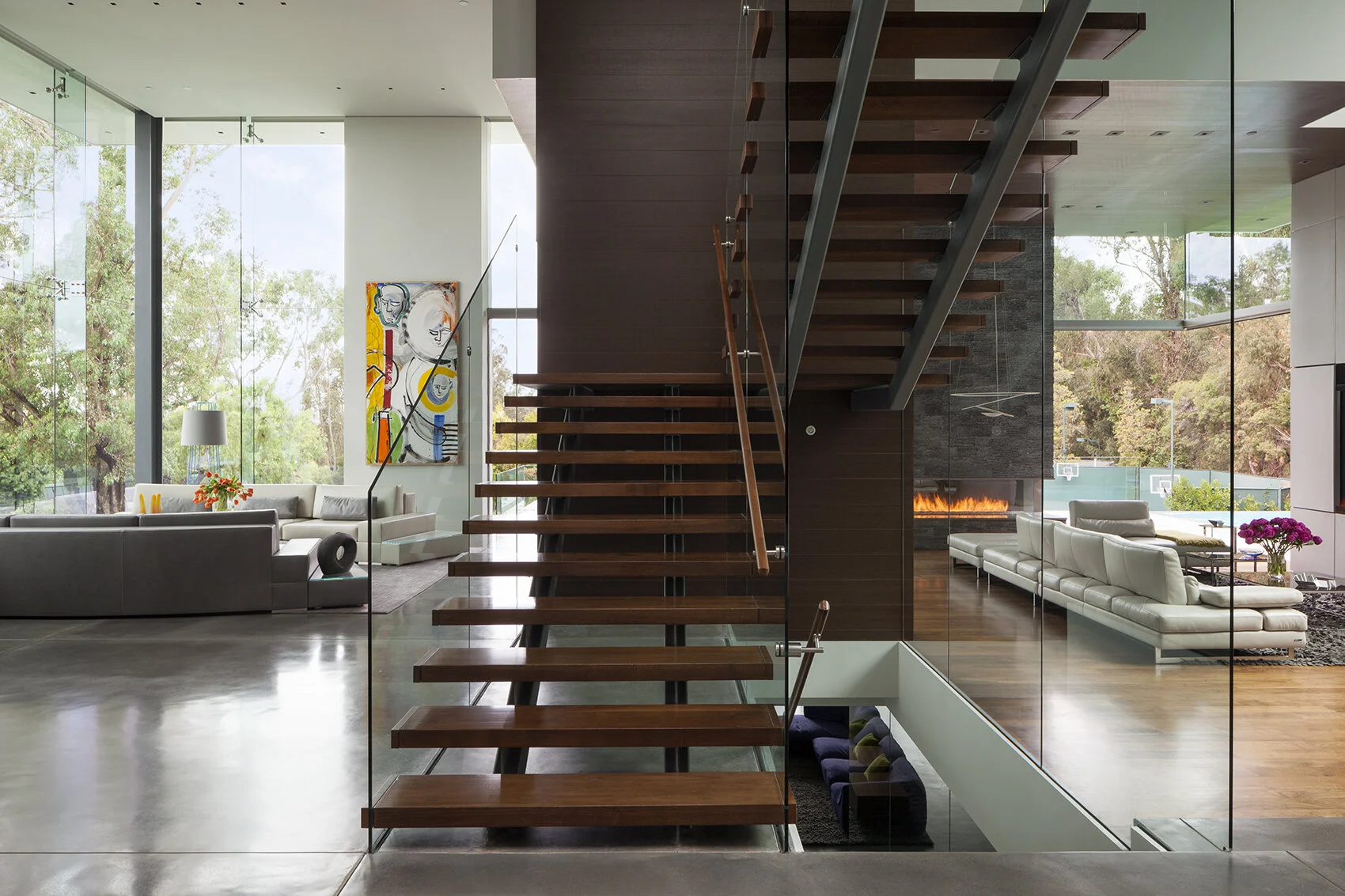
26. Expansive Modern Living Room with a Two-Story Floating Staircase
This design is all about commanding scale. The extra-wide wooden treads give the staircase a sense of grandeur and stability, making it feel more like a floating platform than a narrow walkway. This generous width is mirrored in the expansive floor-to-ceiling windows and the long, linear fireplace. The whole composition works because every element is proportioned to the vastness of the space. The glass railing is critical; a solid or even a metal railing would have visually cut the room in half.
📏 Scale Guide
A space this grand and open, with massive windows and hard surfaces like concrete and glass, can present significant acoustic challenges. Sound will bounce around, potentially creating an echoey, cold environment. To mitigate this, you would need to incorporate soft, sound-absorbing materials. Think large, thick-pile area rugs, upholstered furniture, heavy drapes (if desired), and even acoustic wall panels disguised as art. Without these softening elements, the room might look stunning but feel uncomfortably loud for everyday living.
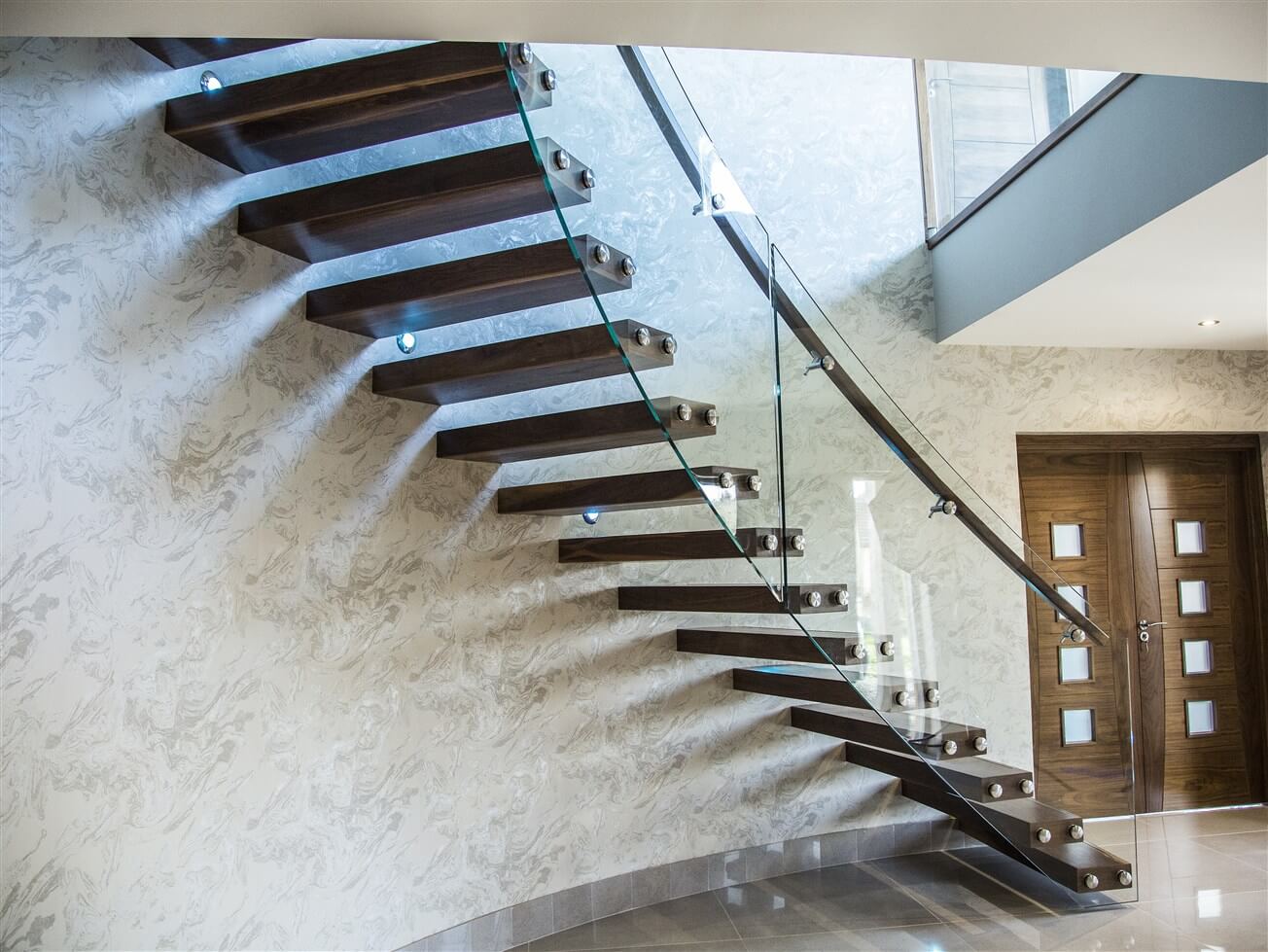
27. Dark Wood Floating Treads Against a Light Marble-Patterned Wall
This look channels the vibe of a luxury hotel lobby, with costs driven by the custom elements and lighting.
🎯 What Makes It Work
- Custom Dark Wood Stair Treads: $5,000 – $9,000
- Seamless Glass Balustrade: $9,000 – $16,000
- Under-Tread LED Lighting System: $3,000 – $6,000
- Wall Treatment (High-quality wallpaper or porcelain slab): $2,000 – $8,000
- TOTAL: $19,000 – $39,000
- Budget alternative: Get a similar high-contrast effect by painting the wall a light color, using a standard wall-mounted handrail in a dark finish, and installing affordable dark wood laminate treads ($2,000 – $5,000 total). This is a more approachable version of the luxury seen in Idea #22.
To get this seamless, large-format patterned wall look, consider porcelain slabs instead of real marble or wallpaper. Large-format porcelain slabs (up to 5×10 feet) can be printed with hyper-realistic marble patterns and have very few grout lines, giving a nearly monolithic appearance. They are also far more durable, less porous, and easier to maintain than real marble, and can be more cost-effective than covering a large wall in high-end wallpaper. It’s a pro trick for achieving a luxe look that lasts.
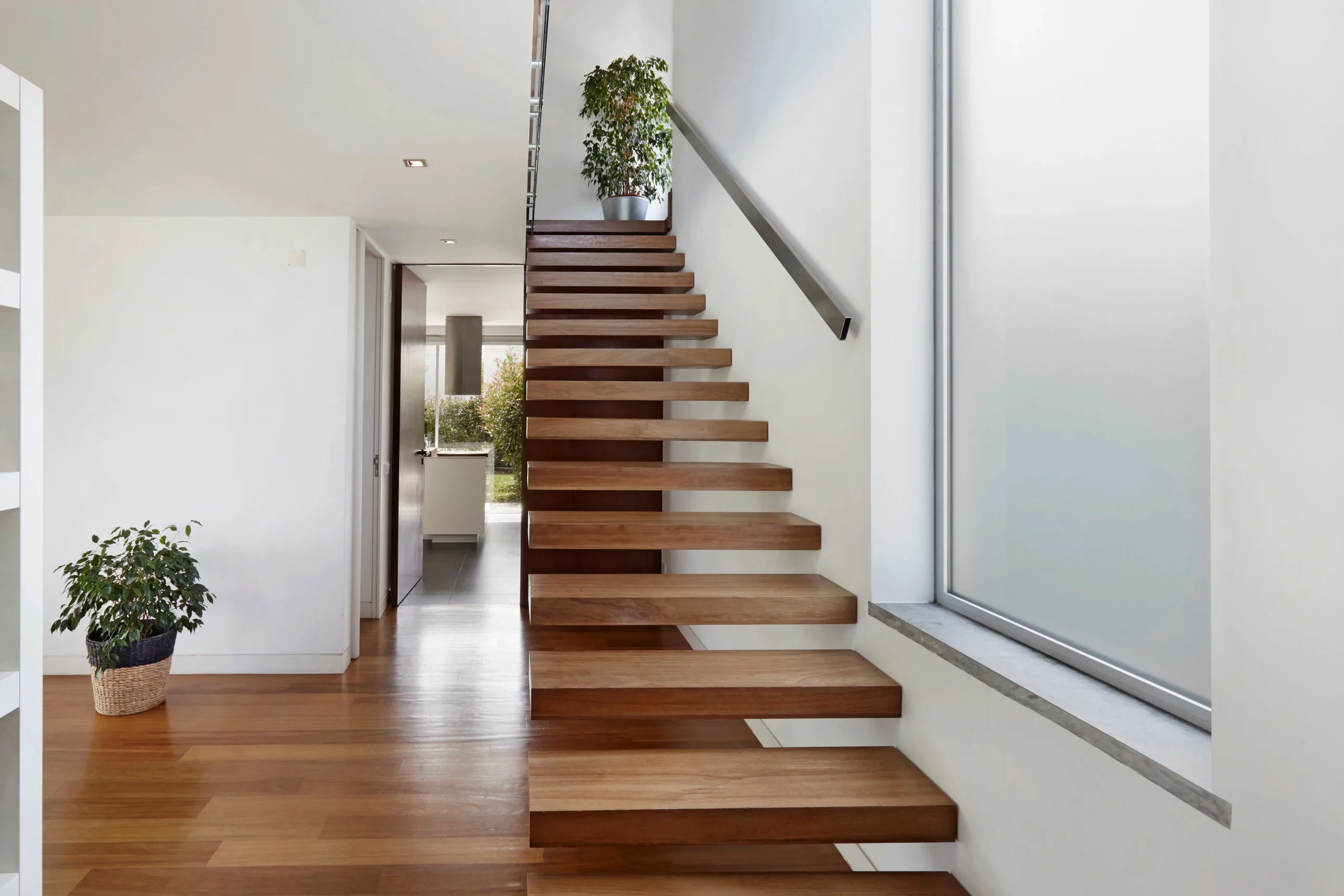
28. Minimalist Staircase with Thick Wooden Treads and a Frosted Window
Before committing to this beautifully simple design, take stock of your lighting and wall.
🔥 Trending Context
- Natural Light Source: This look relies heavily on the diffuse light from the frosted window. Does your stairwell have access to natural light? If not, you will need to plan for significant artificial lighting to prevent it from feeling like a dark tunnel.
- Wall Straightness: A floating staircase with treads mounted directly to the wall is unforgiving. Is your wall perfectly straight and plumb? Any bows or dips in the wall will be glaringly obvious once the ultra-straight lines of the treads are installed.
- Structural Support: Confirm with a contractor or engineer that you can add sufficient blocking inside the wall to support the entire load of the staircase.
The simplicity is the one thing that makes this design so powerful. There are only a handful of elements at play: warm wood treads, a plain white wall, a simple metal handrail, and soft, diffuse light. There are no fancy balusters, no complex stringers, no decorative elements. This restraint is a confident design choice. It strips the staircase down to its essential components, turning a functional object into a piece of minimalist sculpture. It’s a testament to the idea that good design is often about what you leave out.
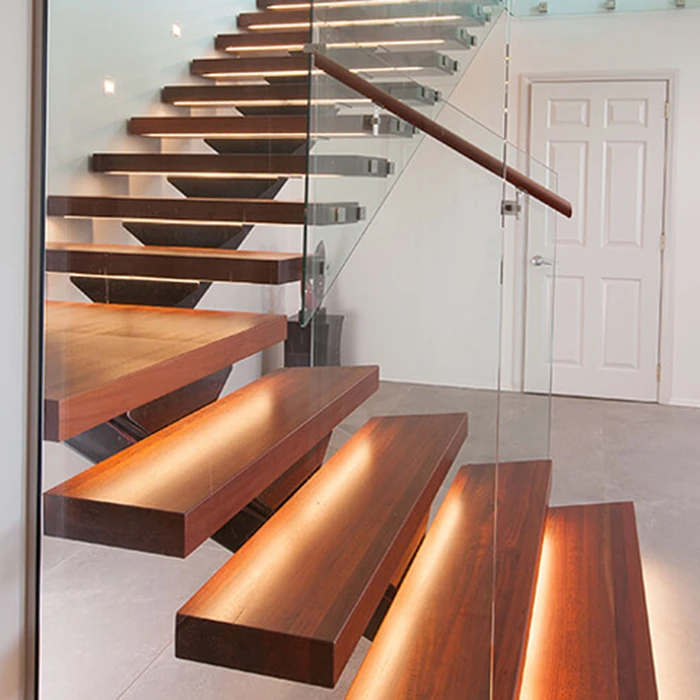
29. Thick, Illuminated Dark Wood Treads with a Glass Balustrade
This design masterfully balances feelings of substance and weightlessness. The dark wood treads are thick and substantial, conveying a sense of quality and permanence. However, by making them “float” away from the wall and illuminating them from below, they gain an ethereal, gravity-defying quality. The clear glass balustrade is the perfect partner, providing necessary safety without interrupting the illusion of lightness. It’s this satisfying contradiction that makes the design so compelling.
🧹 Maintenance Reality
You can break this look down into a simple formula: 50% Substantial Material (the thick, dark wood) + 30% Luminous Element (the under-tread lighting) + 20% Sheer Transparency (the glass panel). The dark wood handrail serves to visually “cap” the glass and tie back to the treads. You could apply this same math to different materials for a new effect: think thick concrete treads, under-tread lighting, and a fine black mesh railing for a more industrial interpretation.
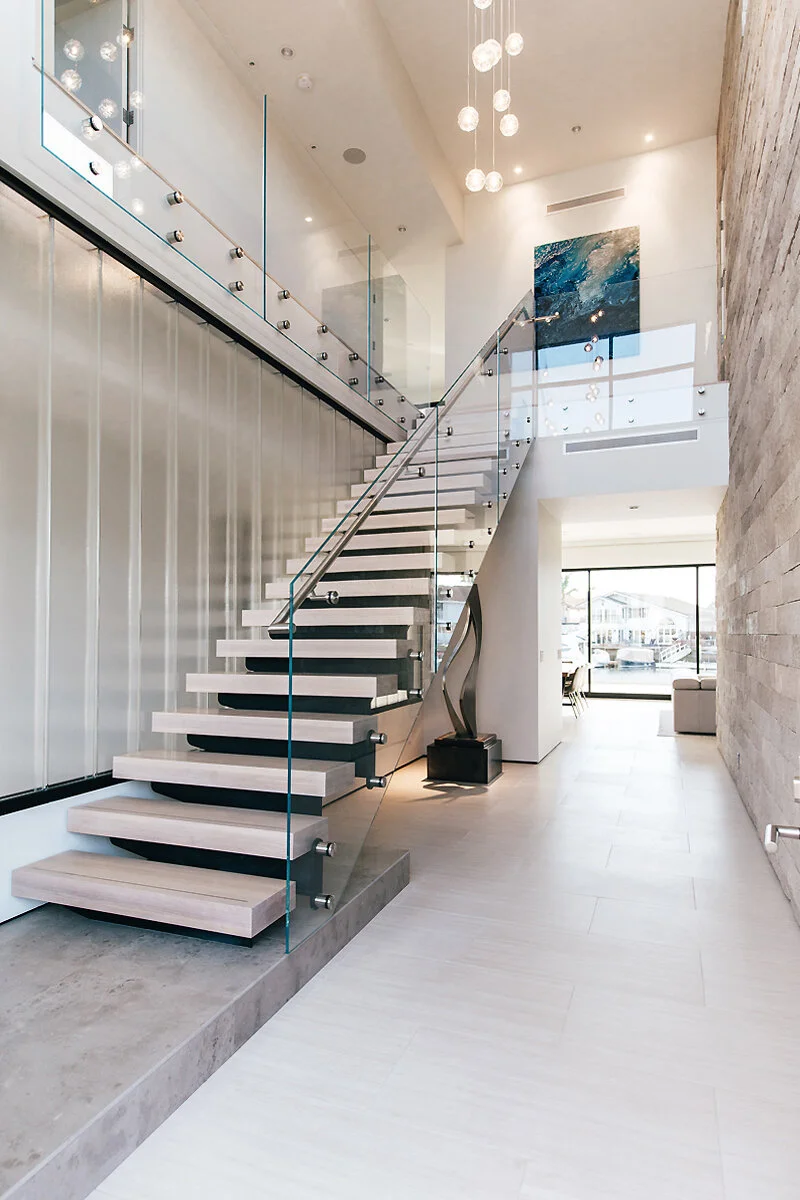
30. Two-Story Staircase with Backlit Fluted Paneling and Stone Wall
- Staircase Structure (Treads, Glass): $15,000 – $25,000
- Backlit Fluted Wall Panel Feature: $8,000 – $18,000
- Exposed Stone Wall Feature: $6,000 – $15,000
- Lighting (Chandelier and Backlighting): $4,000 – $9,000
- TOTAL: $33,000 – $67,000
- Budget alternative: Get a similar textured effect using MDF fluted panels (unlit) from a big-box store and a high-quality stone-veneer wallpaper. Combined with a more standard staircase, you could achieve a similar vibe for under $12,000.
🔧 How-To Brief
The backlit fluted paneling is, without question, the star of the show. While the floating stairs and stone wall are beautiful, the illuminated wall is a truly custom, high-impact architectural feature. It transforms the staircase from a simple transit path into a destination. The vertical lines create a sense of soaring height, while the soft backlighting provides a warm, ambient glow that feels incredibly luxurious. It’s a perfect fusion of texture, light, and form that elevates the entire home.
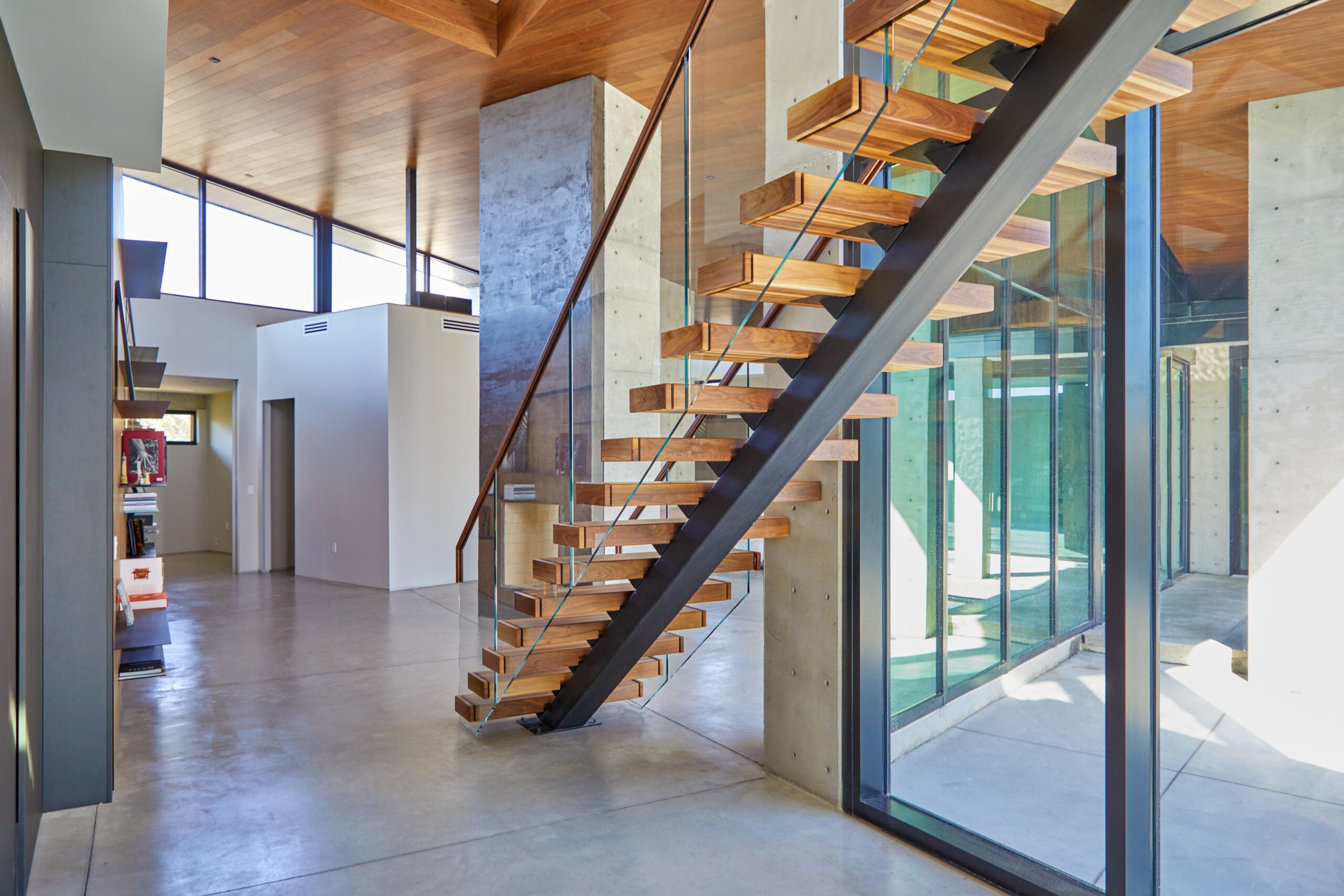
31. Floating Wood Treads with Concrete Walls and a Metal Stringer
This is a testament to the power of a “truth to materials” philosophy. The design finds its beauty in the inherent qualities of its components: the raw texture of the exposed concrete, the warm grain of the light wood, the industrial strength of the dark metal stringer, and the clarity of the glass. There is no paint or ornament to hide behind. It works because it so confidently showcases the contrast between these fundamental building materials, creating a look that is both rugged and refined.
⭐ The One Thing
This aesthetic, often called “Industrial Modern” or “Brutalism-lite,” is trending as homeowners seek spaces that feel authentic and long-lasting. After years of fast-fashion decor, there’s a growing appreciation for solid, substantial materials like concrete, steel, and wood used in their natural state. This approach feels permanent and honest. It suggests a home that is built to last, not just to follow a fleeting trend. As seen in Idea #16 and Idea #18, this industrial spirit can be adapted to be more or less refined.
Your Ascent into Modern Design Awaits
A floating staircase is more than just a way to get from one floor to the next—it’s a powerful architectural statement that can define your entire home. Whether you’re drawn to the warmth of illuminated wood or the sleek drama of glass and steel, the right design can create a daily sense of lightness and artistry. Ready to find the one? Start a Pinterest board and save your favorites. Your perfect staircase is waiting.