You know that feeling when you finally find the perfect wardrobe idea on Pinterest, the one that looks *exactly* right for your space? That’s what this is about. But instead of just a pretty picture, we’re giving you the real-world details. After filtering through hundreds of options from bespoke designers to IKEA and The Container Store, we narrowed it down to 31 standout ideas that genuinely work. We’ve covered every angle—from simple DIY-friendly setups to fully custom walk-in closets. And stay until the end — we break down the most common mistakes that can ruin these looks. 📌 Save this to Pinterest for later — you’ll want to revisit these ideas.
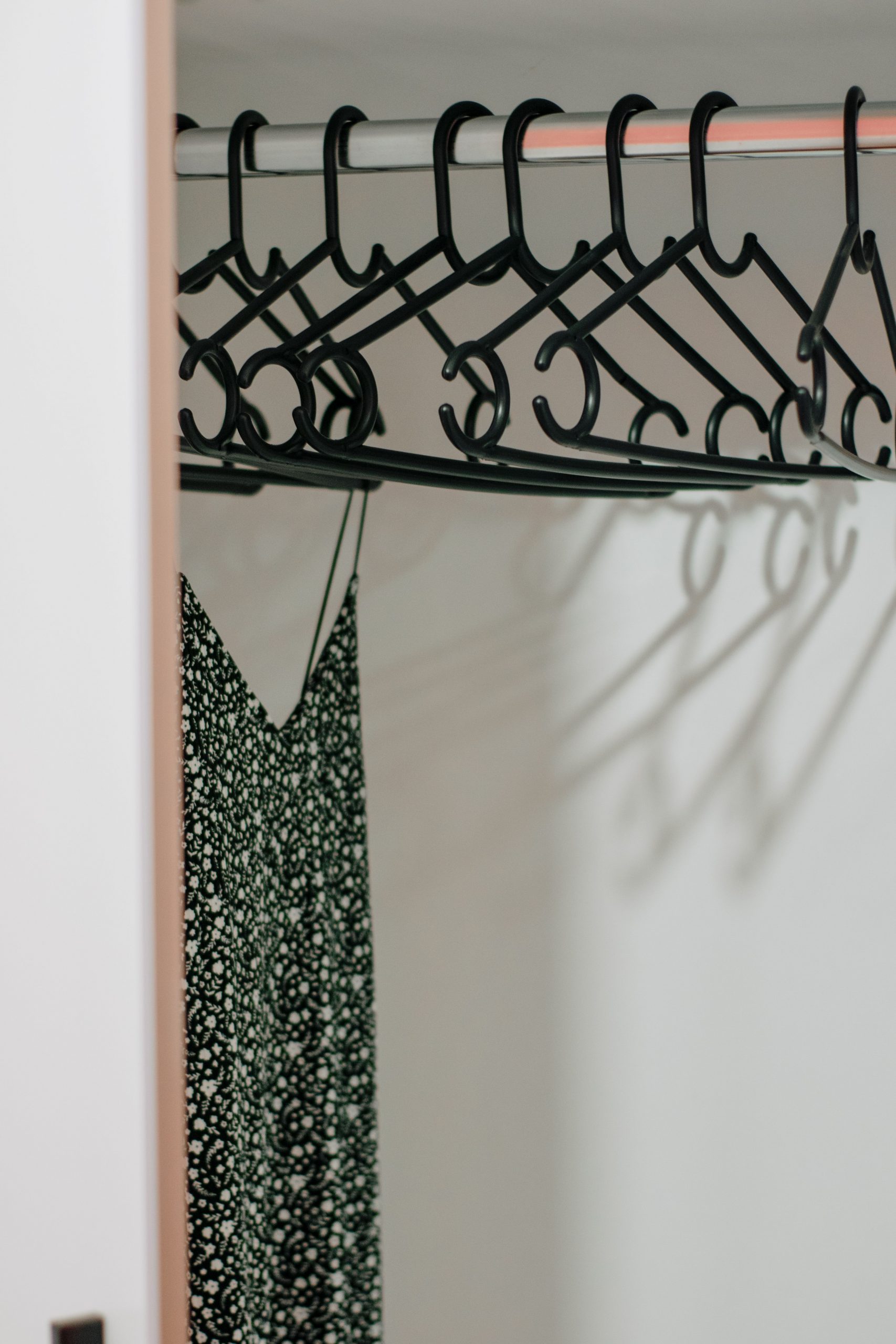
1. Peek Inside a Minimalist Wardrobe with Black Hangers
The single element that makes this work is the strict color discipline. It’s not just a white wardrobe; it’s a canvas. By using only black hangers, the focus shifts entirely to the items themselves. The hangers recede into a cohesive pattern, turning functional objects into a design feature. Remove that consistency—imagine a mix of wire, plastic, and wood hangers—and the entire serene, organized effect would be lost. It’s a small detail that makes all the difference, proving that true minimalism is about intentional choices, not just emptiness.
💡 Designer Tip
Think of this look as a simple visual equation: 70% crisp white + 20% matte black + 10% curated color. The white interior provides a gallery-like backdrop that makes everything feel clean and bright. The black hangers add sharp, graphic contrast and a sense of order. The final 10% is reserved for your clothes, like the pop of dark green here. You could easily swap the accent color—imagine a row of dusty rose, navy blue, or even all denim—and the formula would still hold perfectly, maintaining that minimalist balance.
2. Create a Seamless Wall with Built-in Wardrobes and a Vanity Nook
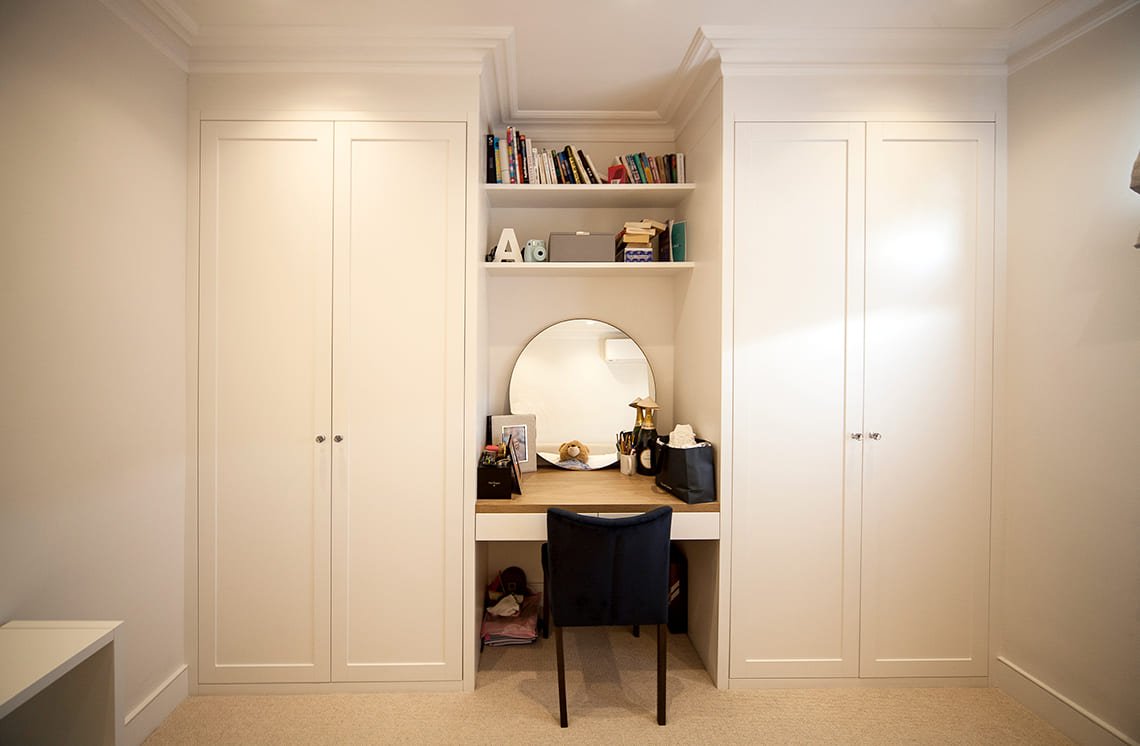
This design is so successful because it masters the art of integration. By using a single, light neutral color for the floor-to-ceiling wardrobe units, the storage blends into the wall, making the room feel larger and less cluttered. The recessed vanity, flanked by storage, creates depth and a designated functional zone without taking up extra floor space. The repetition of the wood tone on the desk and open shelves ties the whole concept together, adding warmth and preventing the uniform color from feeling flat or sterile.
⚠️ Real Talk
When integrating a vanity or desk into a wardrobe run, the standard desk depth of 24 inches can feel too bulky and disrupt the clean line of the closet. Aim for a shallower depth, between 18 to 20 inches. This is still perfectly functional for a laptop or for use as a dressing table, but it keeps the profile sleeker. To maximize usability, ensure you have at least 30 inches of horizontal knee space and pair it with a backless stool or a chair that can tuck completely underneath, as seen with the navy velvet chair here.
3. Let There Be Light with Internally-Lit Glass Wardrobes
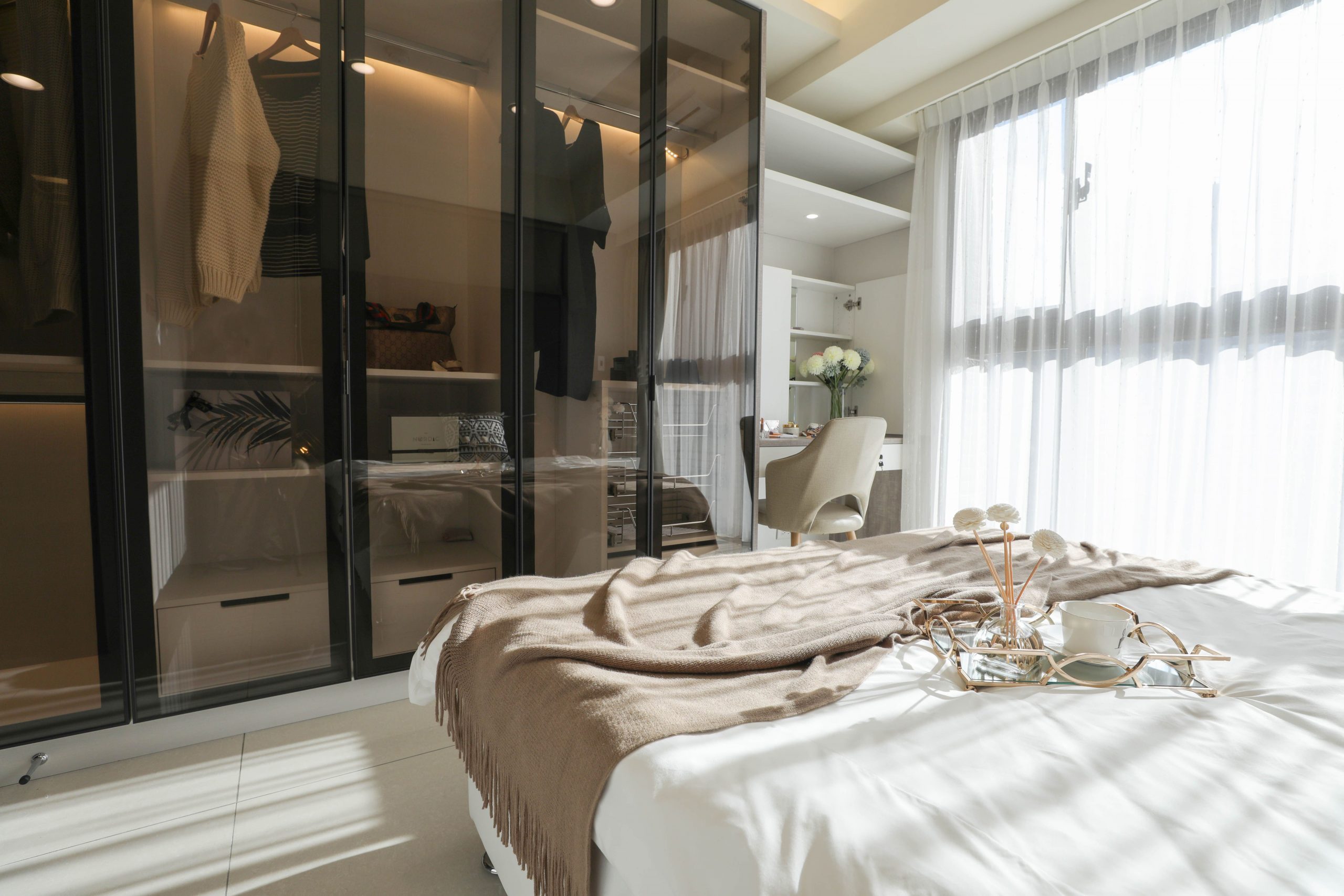
While beautifully modern, glass wardrobe doors require a certain level of commitment. Unlike solid doors that hide everything, these reveal all. This means you have to keep the interior impeccably organized at all times, otherwise, the look goes from chic showroom to cluttered chaos very quickly. Also, fingerprints and dust are much more visible on glass, especially when backlit. Be prepared for regular cleaning with a microfiber cloth to maintain that crisp, clear appearance. It’s a high-style choice with slightly higher-maintenance demands.
⭐ The One Thing
A wall of floor-to-ceiling glass wardrobes works best in rooms with ceilings at least 9 feet high. The verticality of the design emphasizes height, and in a room with standard 8-foot ceilings, it can feel a bit overwhelming or cramped. For this look to truly shine, you need a room with a minimum width of 12 feet. This allows enough clearance for the bed and walkway (at least 30-36 inches) so the reflective nature of the glass doesn’t make the space feel narrow or like a funhouse mirror. The effect is grand, not crowded.
4. Design Principles for a Spacious Modern Walk-In
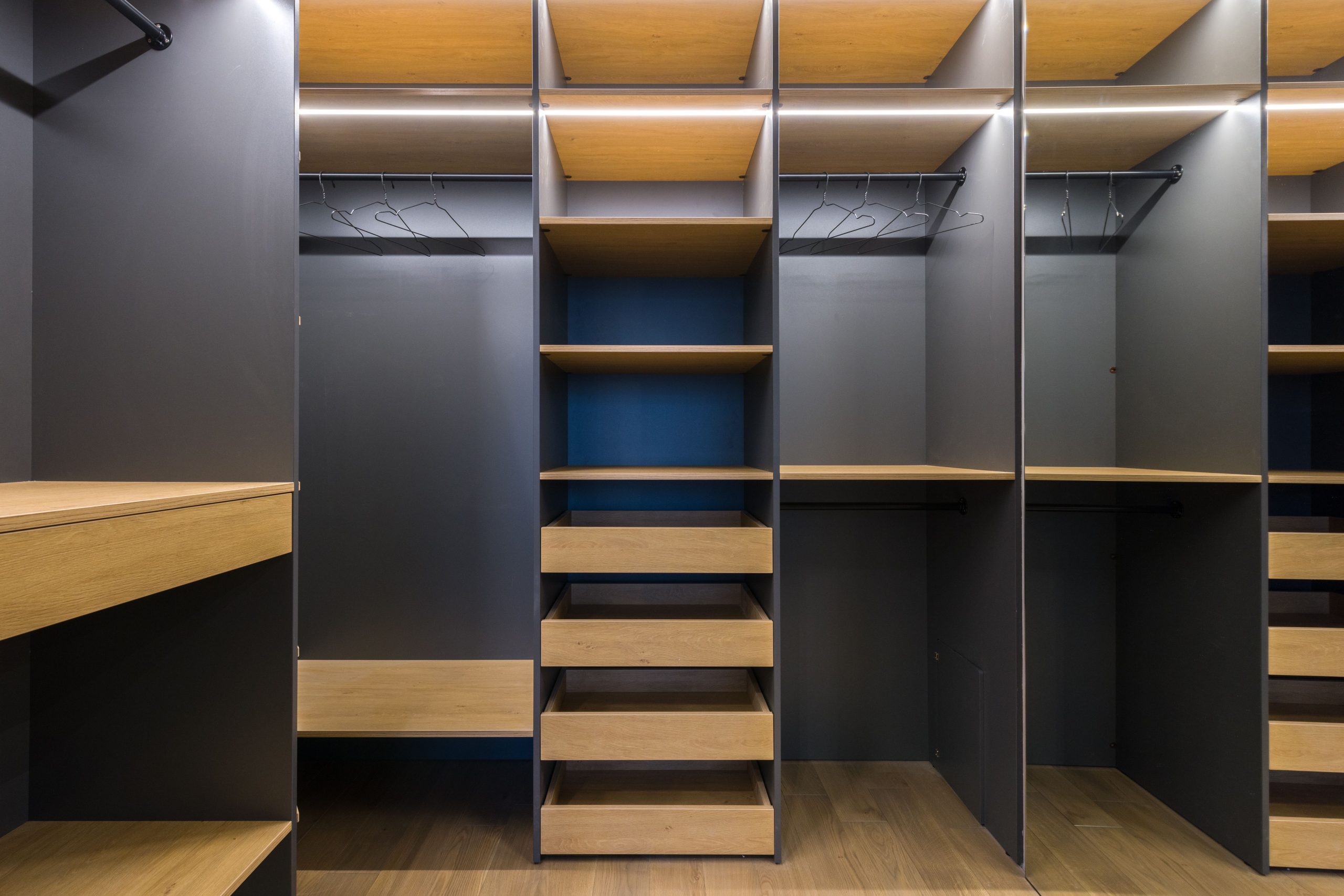
Before you commit to a full walk-in closet build-out, run through this essential checklist. These foundational questions will save you headaches and money down the line, ensuring the space is truly functional for your needs.
🎯 What Makes It Work
- Inventory your wardrobe: Do you have more hanging items or folded clothes? This determines the ratio of hanging rods to shelves and drawers you’ll need.
- Measure your longest garments: Ensure you have at least one section of full-height hanging space for dresses or long coats (typically 60-65 inches).
- Consider your workflow: Do you get fully dressed inside the closet? If so, plan for a full-length mirror and good lighting.
- Check for power: Do you need outlets for a steamer, charging station, or vanity lighting? Plan the electrical layout early.
You don’t need a custom millworker to achieve a spacious, modern walk-in. Recreate this look for a fraction of the cost using modular systems. IKEA’s PAX or BOAXEL systems are hero products for a reason. You can map out your entire closet online, combining drawers, shelves, and hanging rails for under $1,500. For a more robust feel, check out The Container Store’s Elfa or Avera lines. Look to places like Facebook Marketplace for people giving away high-end systems during a remodel—you can score incredible deals if you’re willing to handle disassembly and transport.
5. Combine Cool Gray Storage with a Warm Wood Slat Vanity
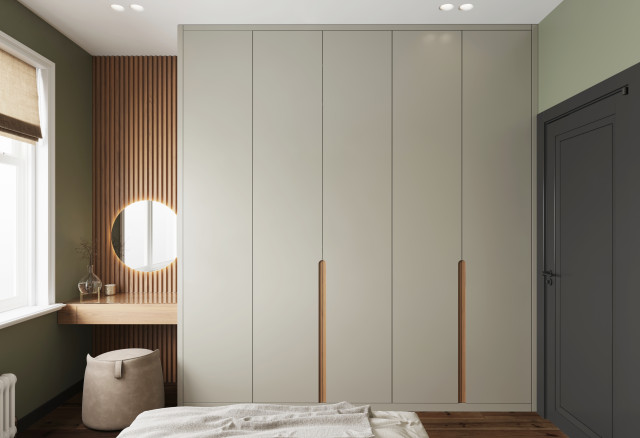
This design’s success lies in its masterful use of contrast—not just in color, but in texture. The smooth, matte finish of the light gray wardrobe doors provides a cool, serene backdrop. This is beautifully juxtaposed with the warmth and rich texture of the vertical wood slat panel in the vanity nook. This textural play elevates the entire wall from simple storage to a sophisticated architectural feature. The integrated vanity is a space-saving trick we also admire in Idea #2, but the slat wall here gives it a distinctly tactile, Japandi-inspired feel.
✅ Before You Start
You can create a feature slat wall like this yourself in a weekend. Here’s a quick guide:
- Time Estimate: 4-6 hours. Material Cost: $150-$400.
- Measure your wall area and purchase pre-made acoustic wood slat panels (they often come with a felt backing).
- Cut the panels to the desired height using a fine-toothed saw for clean edges.
- Apply a strong construction adhesive to the back of the felt backing on each panel.
- Press the first panel firmly against the wall, using a level to ensure it’s perfectly vertical.
- For extra security, you can nail through the felt backing into wall studs using black screws that will be invisible against the felt.
6. The Perfect Pairing: White Doors with a Warm Wood Interior
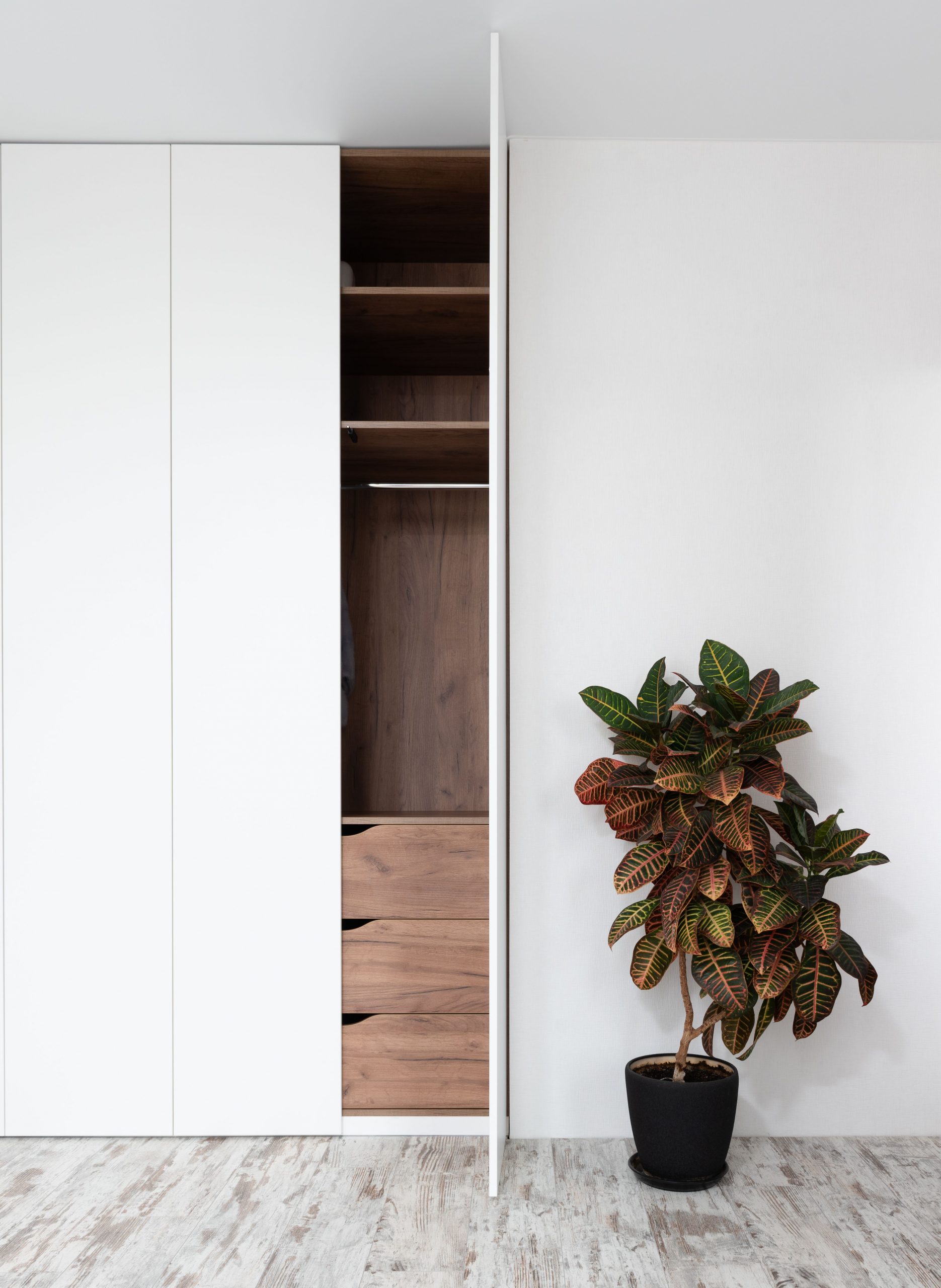
The single element that makes this design feel special is the surprise of the warm wood interior. From the outside, it’s a clean, minimalist white wardrobe that could be from any modern design store. But opening the door reveals a rich, wood-grain finish that feels custom and luxurious. This ‘business on the outside, party on the inside’ approach adds a layer of unexpected warmth and character. It turns the mundane act of opening your closet into a small, pleasing sensory experience every single day, making it feel personal and thoughtful.
💸 Get This Look For Less
A matte white finish is beautiful but can be prone to scuffs and fingerprints, especially near handles or push-to-open mechanisms. Keep a magic eraser sponge on hand for quick touch-ups. For the interior wood-grain laminate, the main enemy is dust. Wipe down shelves once a month with a dry or lightly damp microfiber cloth. Be cautious with belt buckles or metal on shoes, as these can scratch or chip the laminate finish on lower shelves over time. Avoid harsh chemical cleaners, which can dull the finish of both the exterior and interior surfaces.
7. Double Your Space (Visually) with a Sliding Mirror Wardrobe Door
If you’re using a full-length mirror door, placement is everything. The ideal spot is opposite a window. This will capture the natural light and bounce it around the room, making the entire space feel significantly brighter and larger. A second-best option is placing it opposite the entryway, which creates the illusion of a longer, more expansive room the moment you walk in. Avoid placing it directly opposite your bed if you’re easily distracted by movement or reflections while trying to sleep.
🔧 How-To Brief
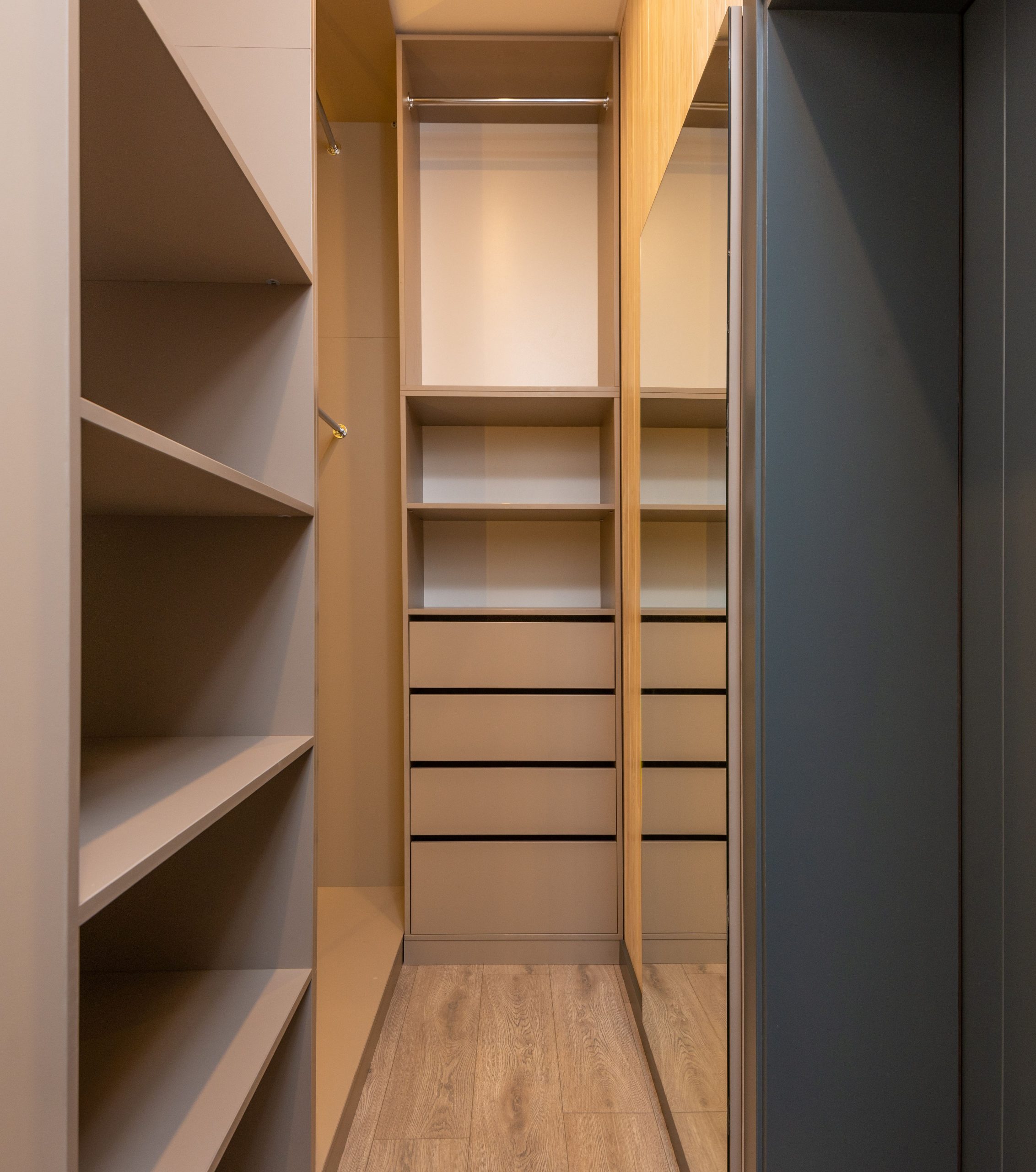
The visual formula here is about balance: 50% concealed storage + 30% reflective surface + 20% open display. The taupe closed sections provide the bulk of the storage, keeping visual clutter hidden. The large mirrored slider breaks up the solid block, adds depth, and serves a practical function. The open shelving, with its warm wood back panel, offers a spot for curated display, preventing the unit from feeling too monolithic. It’s a composition that feels both highly functional and visually light.
8. Add a Touch of Luxury with a Central Tufted Ottoman
Getting this luxurious walk-in closet look involves some key investments, primarily in custom or semi-custom cabinetry. Here’s a potential cost breakdown:
📏 Scale Guide
- Main Cabinetry: $7,000 – $15,000 (for semi-custom units in a cream finish)
- Lighting: $500 – $1,500 (for recessed ceiling lights and installation)
- Central Ottoman: $400 – $1,200
- Flooring: $600 – $2,000 (for quality carpeting)
- Decor & Accessories: $200 – $500 (hardware, decor items)
- TOTAL: $8,700 – $20,200
- Budget alternative: Use IKEA PAX frames ($3,000) and find a similar ottoman from Wayfair or HomeGoods ($250).
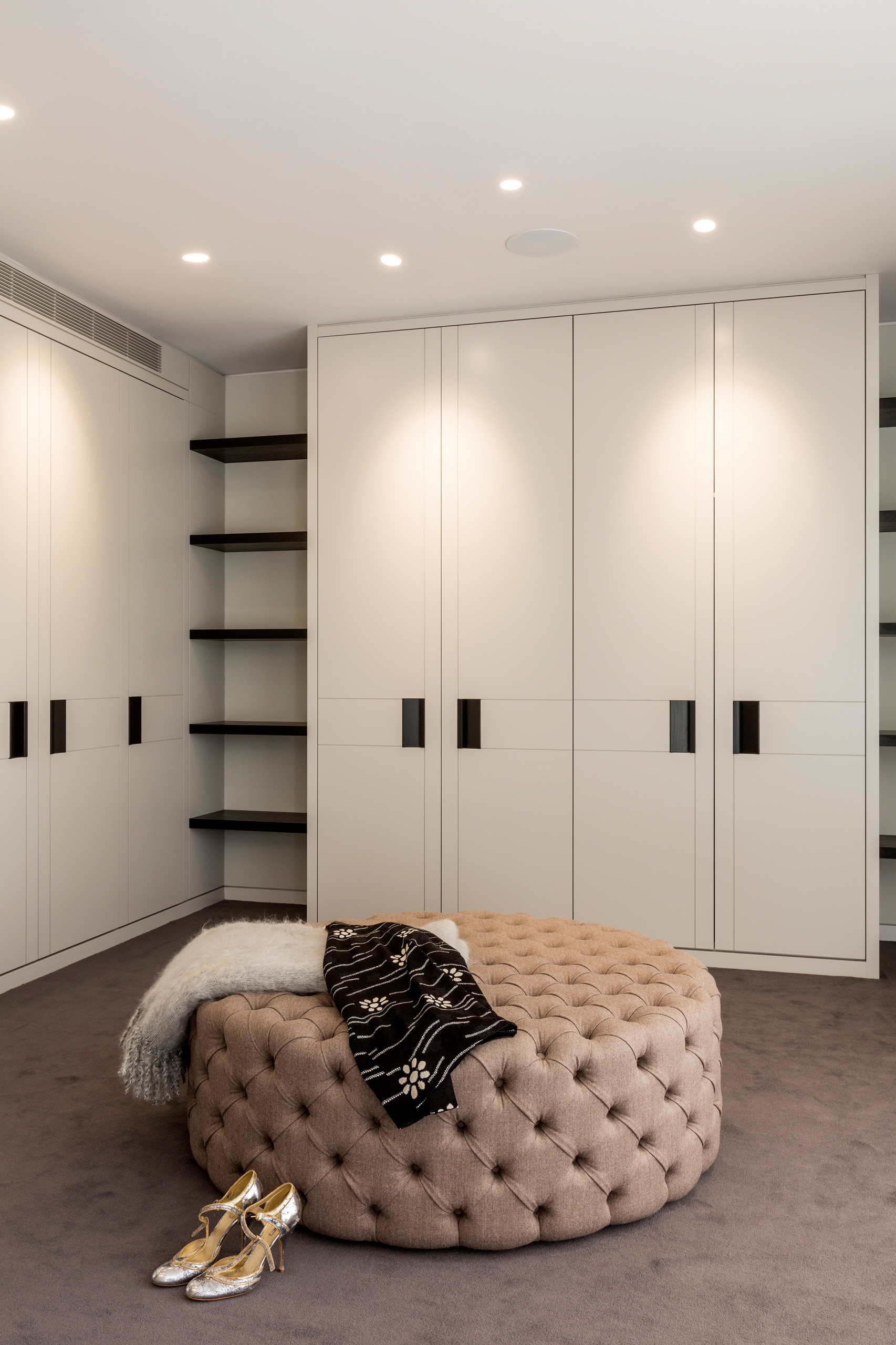
This space feels so elegant because of its confident symmetry and plush centerpiece. The floor-to-ceiling cabinets create a strong, grounding rhythm, while the open shelving in the middle prevents the wall of storage from feeling overwhelming. But the real hero is the large, round, tufted ottoman. It introduces a soft, sculptural element that contrasts with the hard lines of the cabinetry. It’s not just for looks; it provides a practical place to sit and put on shoes, turning a storage space into a true dressing room.
9. Go Bold with Dark Wood and Perforated Glass Doors
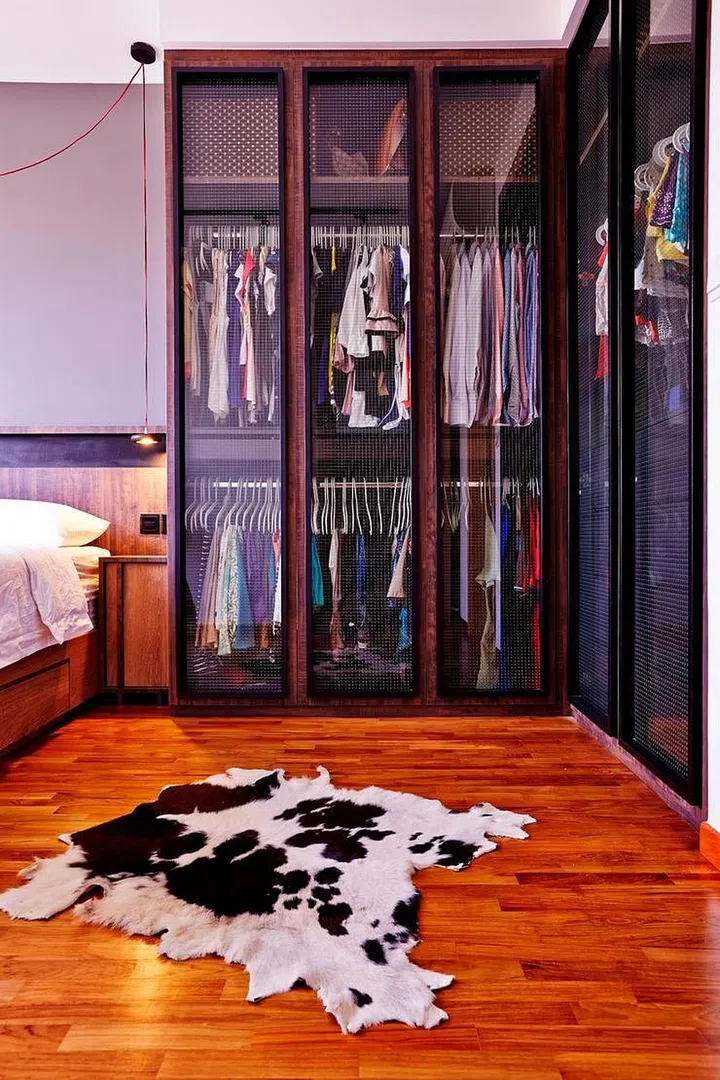
Be honest with yourself about your tidiness level before committing to this look. The perforated glass offers a muted, obscured view of your wardrobe’s contents, but it doesn’t hide them completely. A jumble of colorful clothes or messy stacks will still create visual noise behind the glass. This style works best for people who either have a color-coordinated wardrobe or are diligent about using uniform hangers and keeping things folded neatly. It’s a step up from clear glass, but not a complete get-out-of-jail-free card for clutter.
🔥 Trending Context
This design hits on several key trends we’re seeing right now. The dark wood frame speaks to the resurgence of warmer, more traditional materials, moving away from the all-white-everything aesthetic of the past few years. It has a touch of the ‘Modern Japandi’ and ‘Dark Academia’ vibes that are all over Pinterest. The use of textured or reeded glass is also a major trend, offering a hint of what’s inside without full exposure. It’s a sophisticated look that feels current yet has the bones of a timeless design that won’t feel dated in a few years.
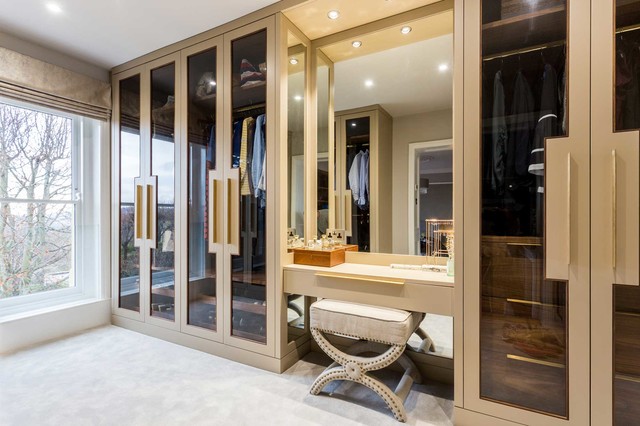
10. Achieve Modern Elegance with Taupe & Smoked Glass Wardrobes
A full wall of dark, monolithic storage like this needs room to breathe. This idea is best suited for a primary bedroom that is at least 14 feet long. This allows for proper clearance in front of the wardrobe (a minimum of 36 inches) for opening doors and using the integrated vanity without feeling cramped. The smoked glass helps, but it’s still a visually weighty look. In a smaller room, it could dominate the space and make it feel darker and more enclosed. Compare this to the lighter, brighter feel of Idea #3 which might be better for a more compact room.
📐 Style Math
Smoked glass is a fantastic choice for hiding clutter better than clear glass, but it’s a magnet for smudges and dust, which show up as a hazy film. Plan to wipe down the exterior panels weekly with a glass cleaner or a simple vinegar-water solution and a squeegee for a streak-free finish. The long, gold-toned pulls are gorgeous, but their finish can wear over time with frequent use, especially if you have rings on your hands. Clean them with a soft, damp cloth and avoid abrasive polishes to preserve their luster.
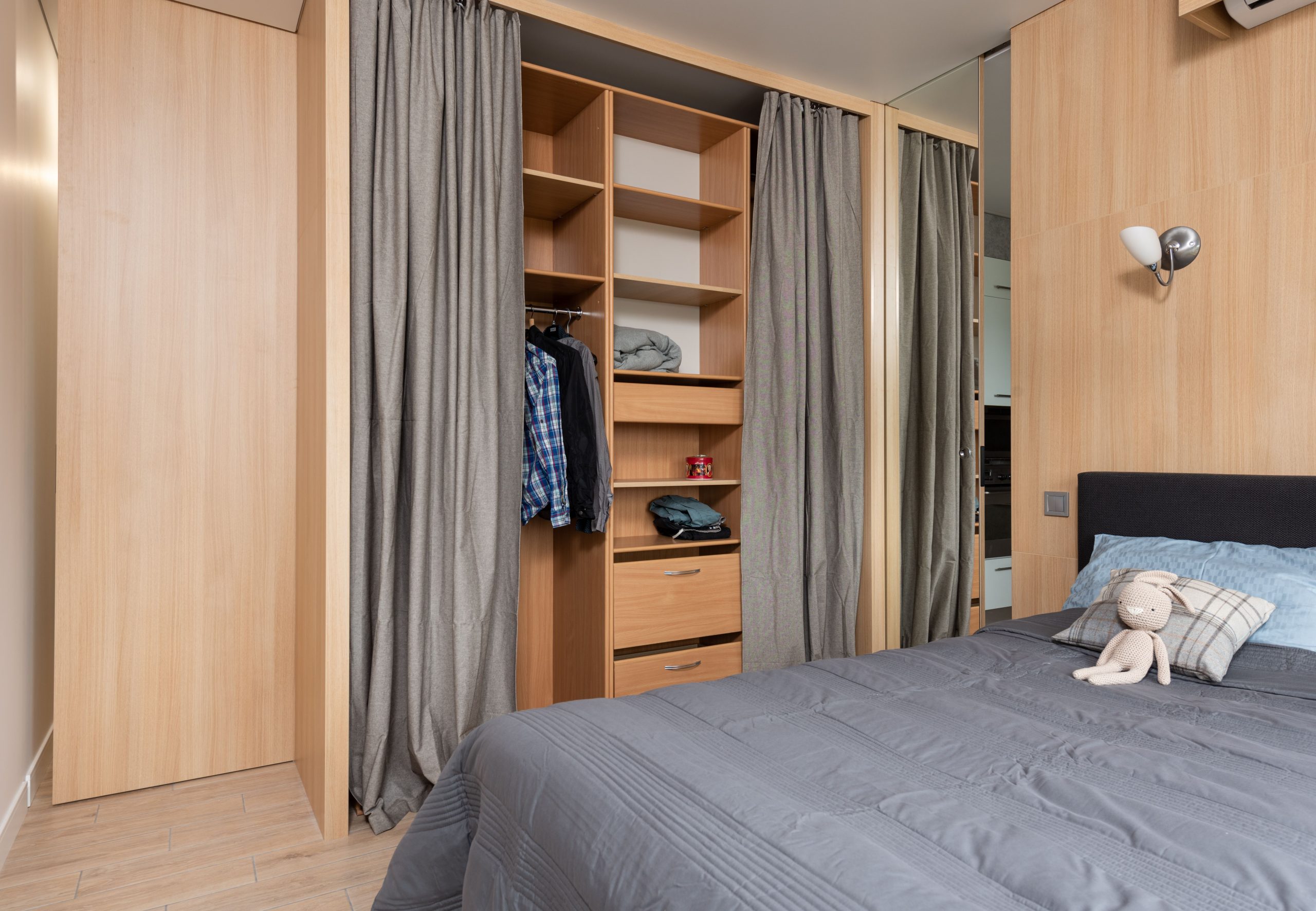
11. Use Gray Curtains for Soft, Flexible Wardrobe Storage
This is one of the most budget-friendly and adaptable wardrobe ideas out there. Instead of expensive custom doors, you can use a simple curtain rod and fabric to conceal storage. An IKEA VIDGA track system can be mounted to the ceiling for about $20, and a pair of their RITVA or HILJA curtains costs around $40. It’s a perfect solution for renters or for anyone wanting a softer, less ‘built-in’ look. The key is to choose a substantial, high-quality fabric that hangs nicely—a cheap, thin curtain will ruin the effect.
🧹 Maintenance Reality
This look is a beautiful exercise in material balance, following a formula of 50% warm wood + 30% soft gray textile + 20% mirror and metal. The pine wood structure provides a natural, sturdy frame and a feeling of warmth. The gray curtain introduces softness and texture, a welcome contrast to the hard surfaces. Finally, the mirrored panel and chrome hardware add a touch of sleek modernity and bounce light around. You could swap the pine for a darker oak or the gray curtain for a deep navy and the core balance would still work beautifully.
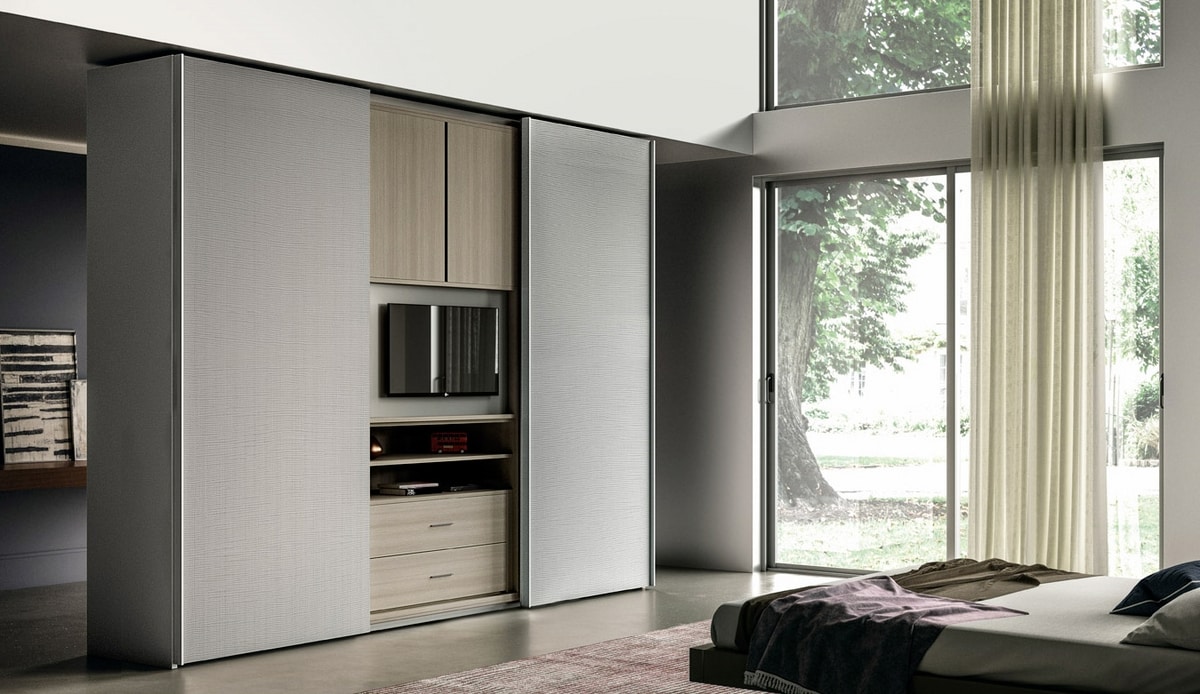
12. Hide a Media Console inside a Textured Sliding Wardrobe
The clear star of this design is its incredible dual functionality. It’s not just a wardrobe; it’s a complete media and storage hub. The ability to slide a door over and completely conceal the television and its associated clutter is a game-changer for creating a serene, multi-purpose bedroom. This elevates the wardrobe from a simple closet to a piece of dynamic, transformative furniture. It’s the ultimate solution for those who want a TV in the bedroom but don’t want it to be the focal point of the room. A brilliant blend of utility and minimalist aesthetics.
💰 Budget Breakdown
When integrating a TV into a wardrobe, ventilation is non-negotiable. Electronics generate heat, and trapping them in a sealed cabinet is a recipe for a shortened lifespan. Ensure there is at least a 2-3 inch gap on all sides of the television for air to circulate. It’s also wise to cut ventilation holes or install a small, silent fan in the back panel of the cabinet. Group all your wires and use cable management channels to keep the interior as tidy as the exterior—there’s nothing worse than revealing your hidden TV only to see a nest of wires.
13. Integrate a TV Seamlessly into a Classic White Wardrobe Wall
Planning the perfect TV recess within a built-in requires precision. It’s more than just leaving a hole. Here’s how to get it right:
- Time Estimate: 2-4 hours (planning phase). Cost: Part of the overall cabinetry project.
- Finalize your TV model *before* finalizing cabinet dimensions. Get the exact height, width, and depth from the manufacturer’s spec sheet.
- Add a 2-3 inch buffer on all four sides of the TV for air circulation and easy installation/removal. This prevents overheating.
- Plan your wiring. Run HDMI, power, and any other cables through the wall *before* the cabinets are installed for the cleanest look. Have an outlet placed directly behind where the TV will sit.
- Consider the viewing height. The center of the screen should be at eye level from your primary viewing position (usually your bed).
This design feels so classic and cohesive because it treats the wardrobe wall as a single piece of architecture rather than just furniture. The consistent use of white, the framing provided by the Shaker-style doors and drawers, and the elegant crown molding at the top all contribute to this built-in look. Recessing the TV, as opposed to just mounting it on the surface, makes it feel like a deliberate part of the design. This creates a calm, hotel-like vibe that’s much more restful than the media-centric setup we saw in Idea #12.
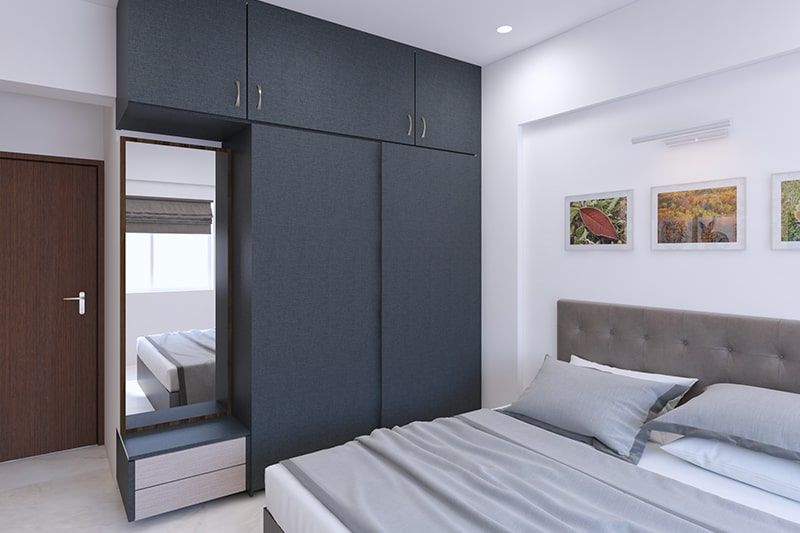
14. Get a Sleek Look with a Dark Gray Wardrobe and Integrated Mirror
When working with a dark, monochromatic color scheme like this charcoal gray, texture is your best friend. A flat, uniform dark surface can feel heavy and oppressive. Here, the textured matte finish on the main wardrobe doors adds subtle depth and catches the light in a much more interesting way than a simple gloss or satin would. This little detail breaks up the large surface area and gives it a tactile, sophisticated quality. When you go monochrome, always think about how you can introduce variety through texture and finish.
⚠️ Real Talk
A full wall of dark gray storage can make a small or poorly lit room feel like a cave. This look is stunning, but it requires either a generous amount of natural light or a very thoughtful lighting plan with multiple sources (ceiling, ambient, task). Notice how the bright white walls and light wood flooring in this room provide crucial contrast and keep the space from feeling gloomy. If your room is already dark, consider this same design in a lighter colorway to achieve a similar sleek, modern effect without sacrificing brightness.
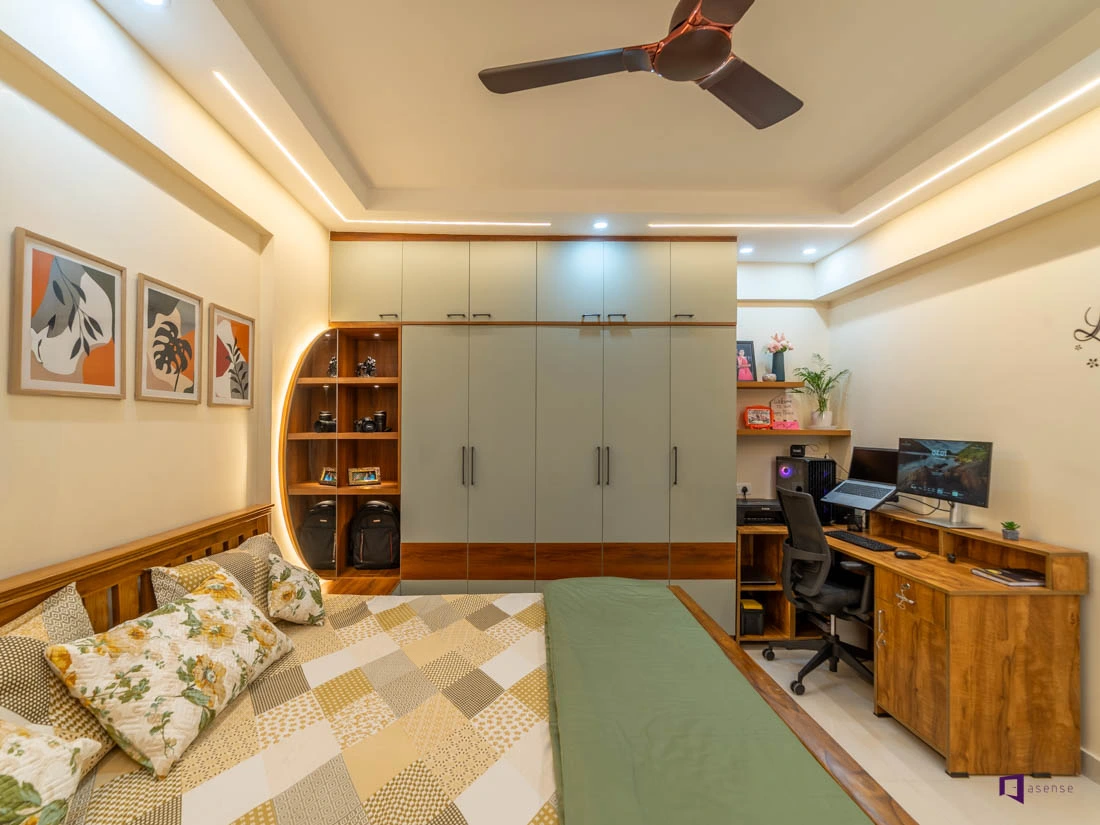
15. Use Sage Green and Wood for a Functional, Earthy Vibe
The genius of this design lies in its ‘zoning’. It’s not just a wardrobe; it’s a complete bedroom solution that carves out distinct areas for different activities within one cohesive unit. You have clothes storage, a display area in the circular nook, and a dedicated workspace. The use of sage green for the main doors clearly defines the storage zone, while the consistent use of the brown wood for the functional areas (desk, shelves, trim) ties it all together. It’s a masterclass in creating a multi-functional space that feels organized, not chaotic. For a similar approach with more separation, see Idea #26.
⭐ The One Thing
This all-in-one concept is ideal for small to medium-sized bedrooms, from 100 to 180 square feet, where you need to maximize every inch of a single wall. It’s a perfect fit for a studio apartment, a teenager’s room, or a guest room that needs to double as a home office. For this to work without feeling cramped, the wall it’s on should be at least 10-12 feet long to accommodate the distinct wardrobe, desk, and display sections comfortably.
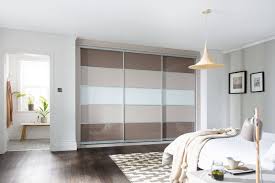
16. Play with Pattern Using Frosted and Lacquered Sliding Panels
The magic here is in the ratio of textures and tones: 40% solid lacquered panels + 40% frosted glass panels + 20% varied color. The solid panels provide a grounding, earthy feel, while the frosted glass adds lightness and a hint of translucency, breaking up the visual weight. The key is the asymmetrical mix of brown and beige tones, which creates a dynamic, custom look. You can adapt this formula with any color palette—imagine shades of gray and white, or even blues and greens—to match your room’s decor while keeping the same sophisticated energy.
🎯 What Makes It Work
High-end multi-panel sliding doors from brands like Komandor or MisuraEmme can cost thousands. To get a similar vibe for less, you can hack standard sliding doors. Use basic mirrored or plain white glass doors from a hardware store as your base. Then, apply different shades of high-quality vinyl film (like those from 3M DI-NOC) to create your own custom pattern of solid and ‘frosted’ look panels. It’s a more labor-intensive approach, but for a cost of a few hundred dollars in materials, you can achieve a truly bespoke appearance.
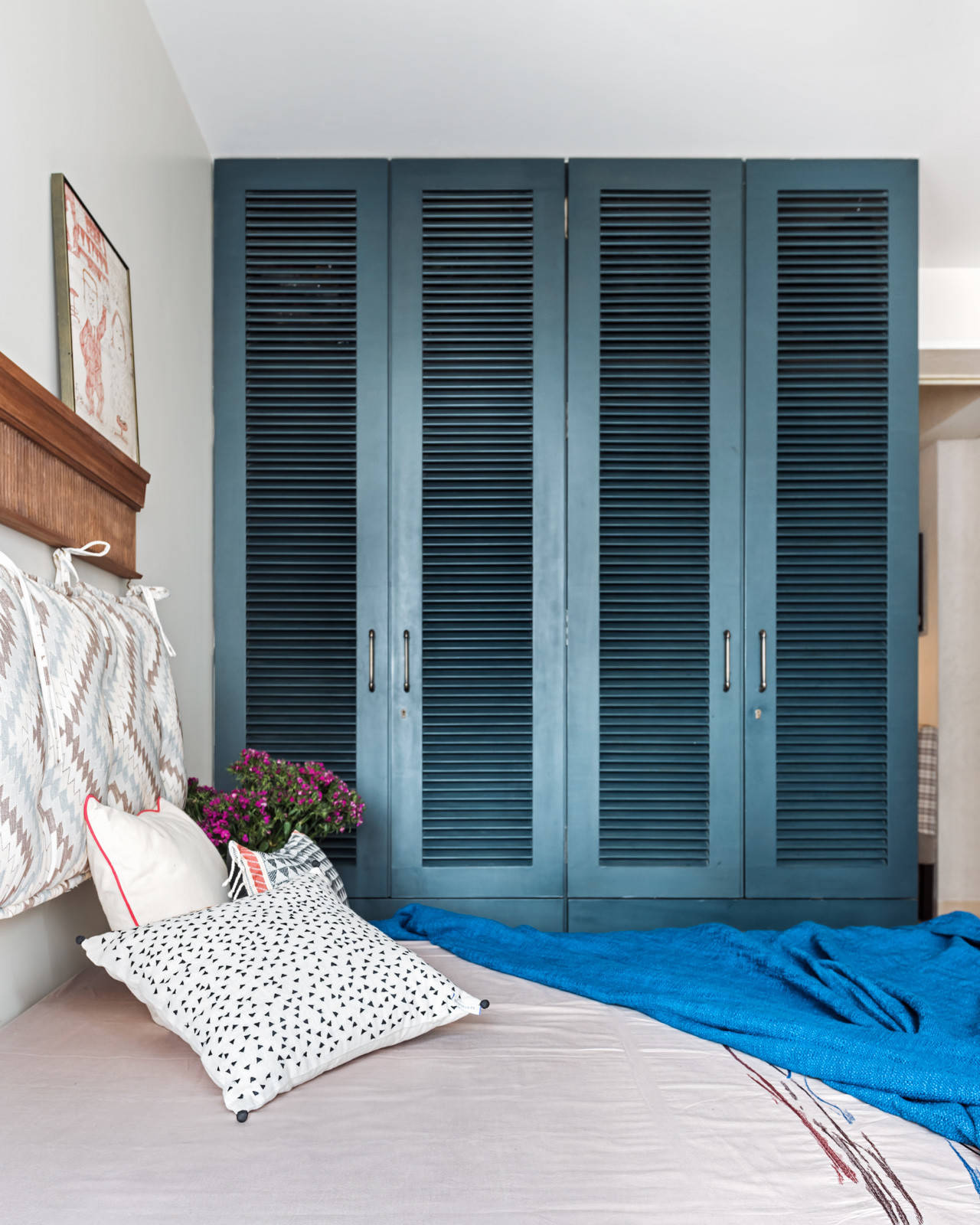
17. Make a Statement with a Bold Teal Louvered Wardrobe
We’re seeing a huge shift away from safe, neutral-only bedrooms. Homeowners are craving personality and joy in their private spaces, and a boldly colored piece of furniture is the perfect way to deliver that. Teal, in particular, is having a moment because it strikes a beautiful balance—it’s vibrant and energetic, but also has a deep, calming quality. The louvered texture adds a touch of coastal or bohemian flair, making it feel relaxed and approachable, not formal or stuffy. This is about making your storage a decorative focal point, not something to be hidden.
✅ Before You Start
The single element holding this entire eclectic room together is the audacious teal color of the wardrobe. It’s the undisputed hero piece. Without it, the mix of light bedding, a blue throw, patterned pillows, and a wooden shelf could feel a bit random. But the powerful, unifying color of the wardrobe acts as an anchor, giving all the other elements a central theme to relate to. It proves that you can be playful and mix styles as long as you have one strong, confident gesture to ground the space.
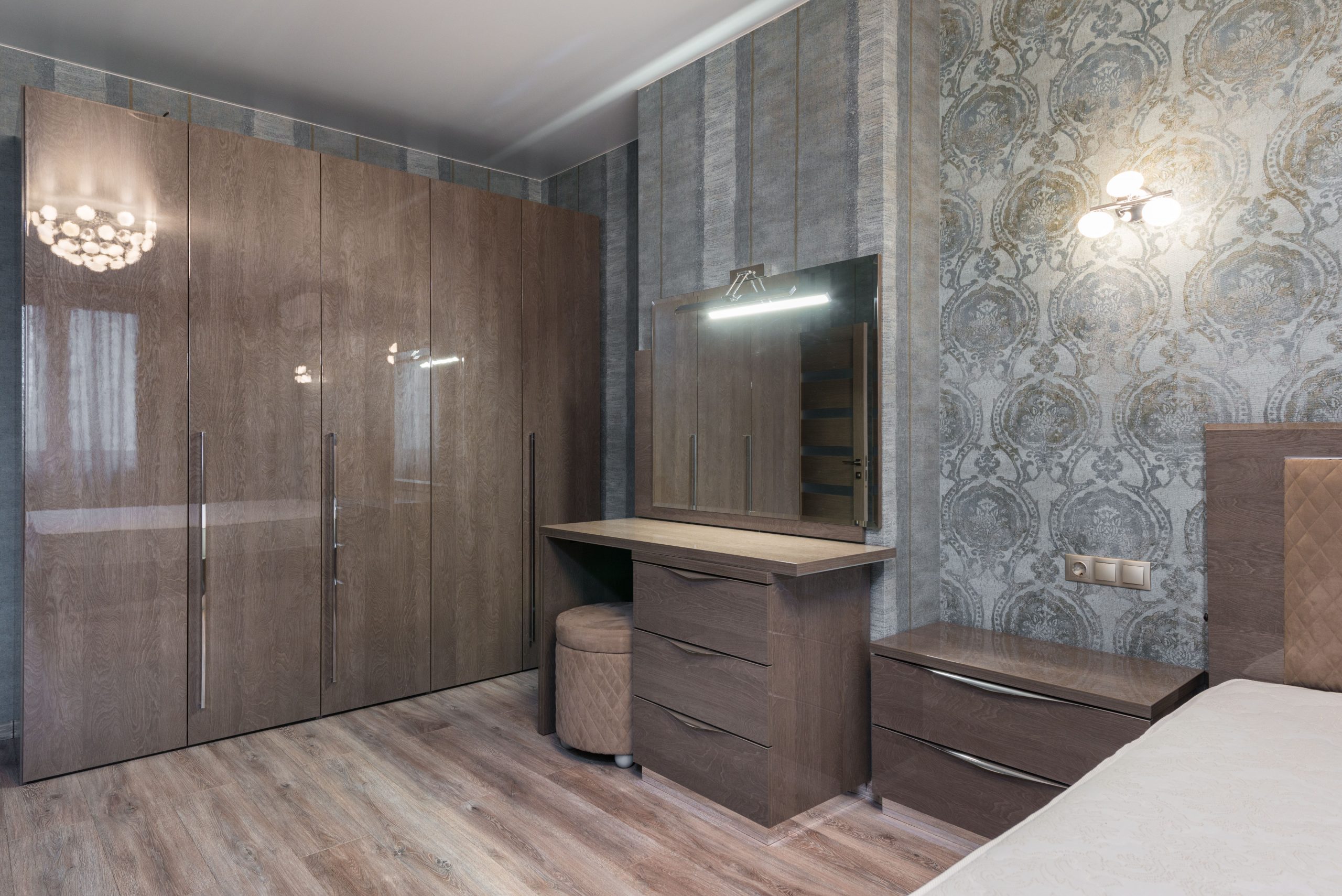
18. Unify Your Bedroom with a Glossy Wood Furniture Suite
Achieving this coordinated, suite-style look often means buying from a single collection. Here’s an estimated breakdown for a full set of glossy, matching furniture:
💸 Get This Look For Less
- Six-Door Wardrobe: $2,500 – $5,000
- Dressing Table with Mirror: $800 – $1,800
- Bedside Tables (pair): $600 – $1,200
- Bed Frame with Headboard: $1,000 – $2,500
- Stool: $150 – $400
- TOTAL: $5,050 – $10,900
- Budget alternative: Search for full vintage or second-hand bedroom sets on Facebook Marketplace or at consignment stores. You can often find high-quality wood sets for under $1,000.
This room feels so complete and intentional because of the power of repetition. The glossy dark wood finish is used consistently across the wardrobe, dressing table, and bedside tables, creating a strong sense of unity. The reflective quality of the gloss finish also helps to bounce light around the room, preventing the dark wood from feeling too heavy. Even the quilted texture is repeated on the stool and the headboard, further tying the space together. It’s a traditional approach, but it’s undeniably effective at creating a harmonious, put-together look.
19. Add Texture and Warmth with a Light Wood Reeded Wardrobe
Reeded or fluted details are a designer favorite for adding texture, and you can apply this to existing furniture. Here’s how to add it to plain drawer fronts:
- Time Estimate: 3-5 hours. Material Cost: $80-$200.
- Purchase pre-made reeded or pole wrap panels online or from a hardware store. They come in various wood tones.
- Remove your existing drawer fronts and hardware. Lightly sand the flat surface of the drawer fronts.
- Cut the reeded panel to the exact size of your drawer front using a fine-toothed saw or miter saw for precision.
- Apply wood glue to the drawer front and press the reeded panel firmly in place. You can use clamps or heavy weights to hold it while it dries.
- Once dry, reinstall the drawer fronts and add new, modern hardware to complete the look.
Reeded (or fluted) wood panels are gorgeous, but those little grooves are perfect little collectors for dust and debris. They will require more frequent cleaning than a flat-panel equivalent. A weekly pass with the brush attachment of your vacuum cleaner is the most efficient way to keep them clean. For a deeper clean, a soft, dry paintbrush can get into the grooves. Be mindful of spills, as liquid can be tricky to clean out of the channels once it seeps in. It’s a look that trades a little bit of cleaning convenience for a lot of textural impact.
20. Keep it Clean and Bright with Light Wood and White Shelving
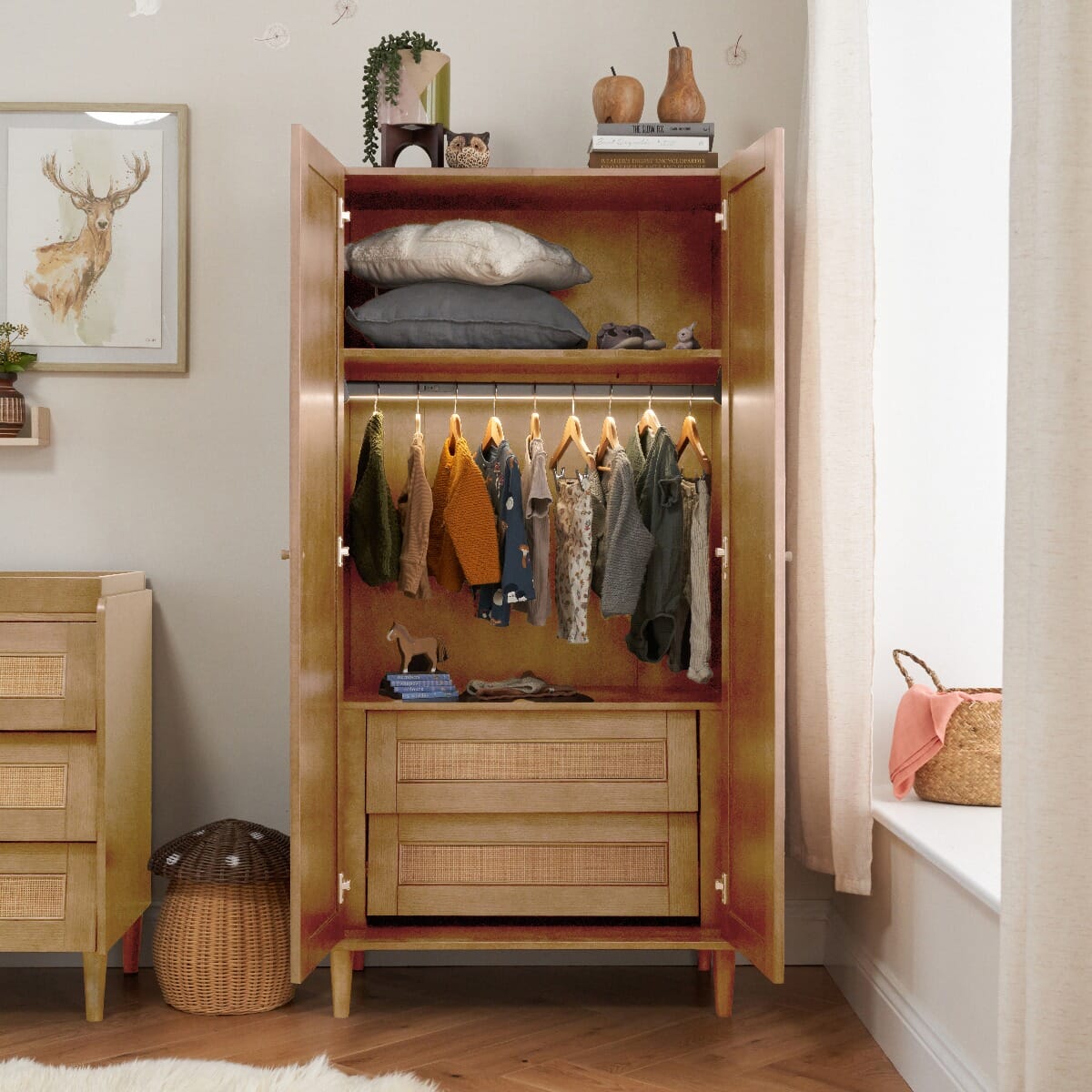
A light wood and white color scheme is beautifully minimalist and associated with Scandinavian and Japandi design. However, it’s not the most forgiving palette. Every dark-colored sock, bright t-shirt, or mismatched hanger will stand out in stark contrast against the clean backdrop. This system, with its combination of open and closed storage, is a good compromise. But be prepared to be disciplined about what you store on the open white shelves—they are best for neatly folded neutral items, books, or decorative objects.
📏 Scale Guide
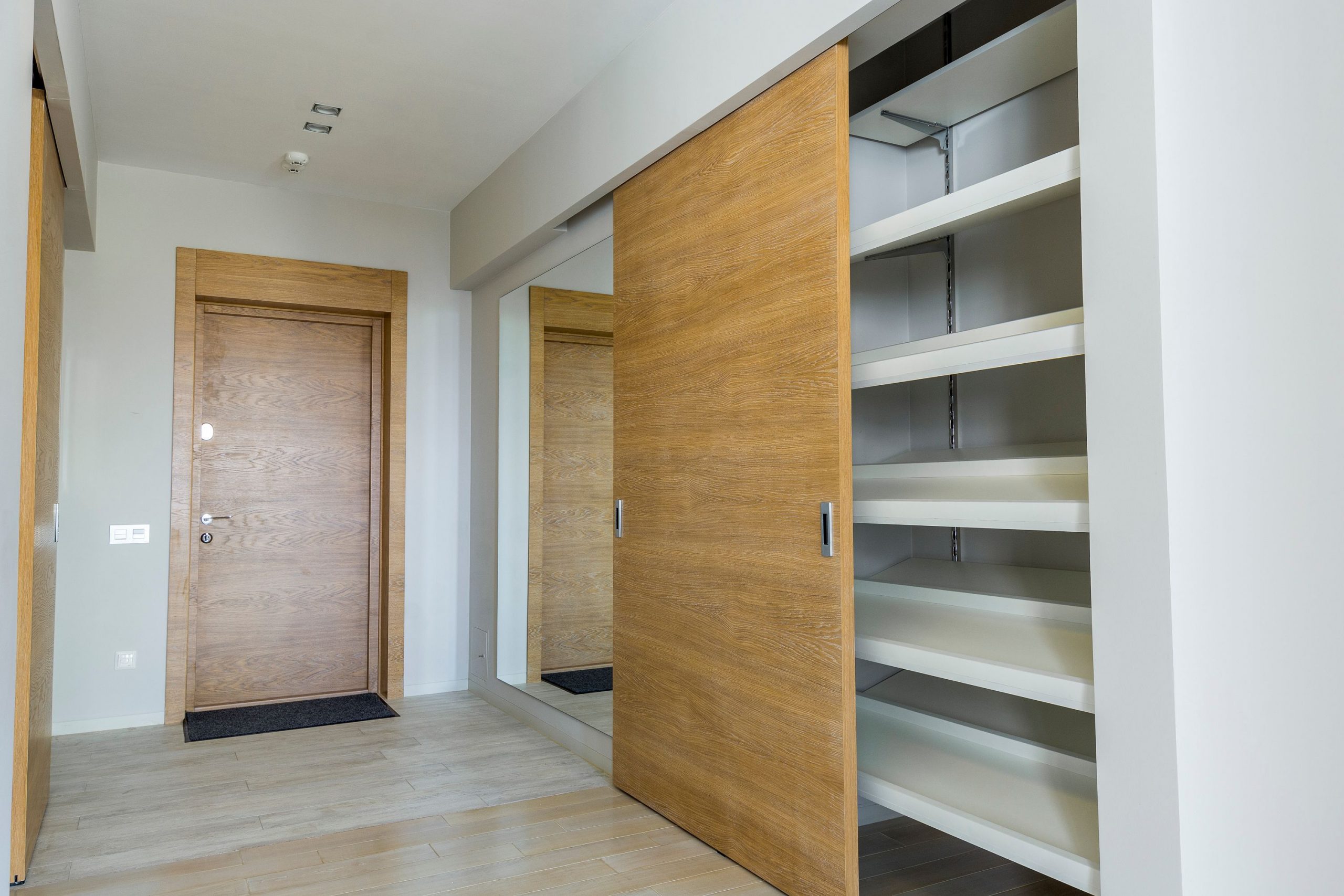
The secret to making a simple, built-in wardrobe system look expensive is adjustability. Notice the metal support strips with the repeating holes for shelf brackets. This isn’t just a practical feature; it adds a subtle, high-end technical detail. More importantly, it gives you the ultimate flexibility to change your storage layout as your needs evolve. You can move shelves to accommodate boots in the winter or add another rail for shirts. Always opt for adjustable shelving over fixed—it future-proofs your investment.
21. Create a Hotel-Luxe Vibe with Integrated Wall Panels
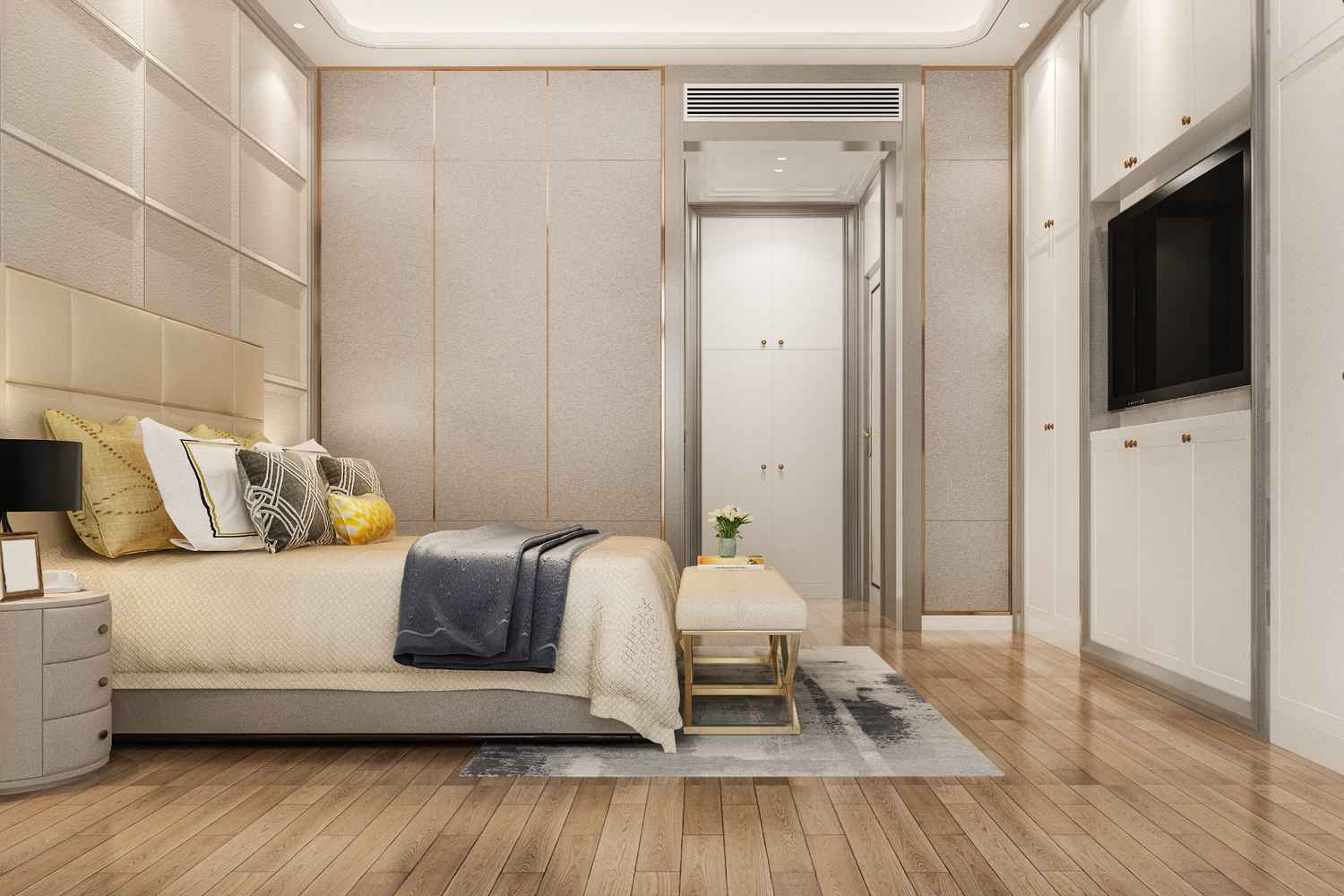
The defining feature here isn’t the wardrobe itself, but the fully integrated wall. The combination of upholstered headboard panels, sleek flat panels, and seamless white cabinet doors makes the entire wall feel like a single, custom-designed unit. This approach completely blurs the line between wall, headboard, and storage, resulting in an incredibly chic, high-end hotel look. The inset gold trim is the perfect finishing touch, adding a whisper of luxury and defining the different material zones without being loud. This isn’t just adding a wardrobe to a room; it’s designing the room *around* the storage.
🔥 Trending Context
A fully paneled wall with custom cabinetry is a significant investment. You can get a similar integrated feel on a budget. Use a standard IKEA PLATSA or PAX wardrobe system for the main storage. Then, create the ‘paneled’ headboard wall yourself. Build a simple 2×4 frame, wrap it in foam and neutral upholstery fabric, and mount it to the wall behind your bed. For the surrounding panels, use painted MDF or even high-quality peel-and-stick wallpaper in a coordinating color. Finish the look with metallic tape to mimic the gold inlay. It’s a lot of DIY, but it can save you thousands.
22. Showcase Your Collection with Dark Gray and Wood Open-Concept Storage
This wardrobe design feels like a high-end men’s boutique, and it’s all about the sophisticated interplay of materials and light. The dark gray structure provides a moody, dramatic frame. The light wood shelves and drawer fronts then pop against this dark background, creating beautiful contrast and warmth. The real key, however, is the integrated LED strip lighting. It doesn’t just illuminate the clothes; it turns them into a curated display, highlighting the texture and form of each item. This thoughtful lighting transforms the wardrobe from a mere storage space into a gallery of personal style.
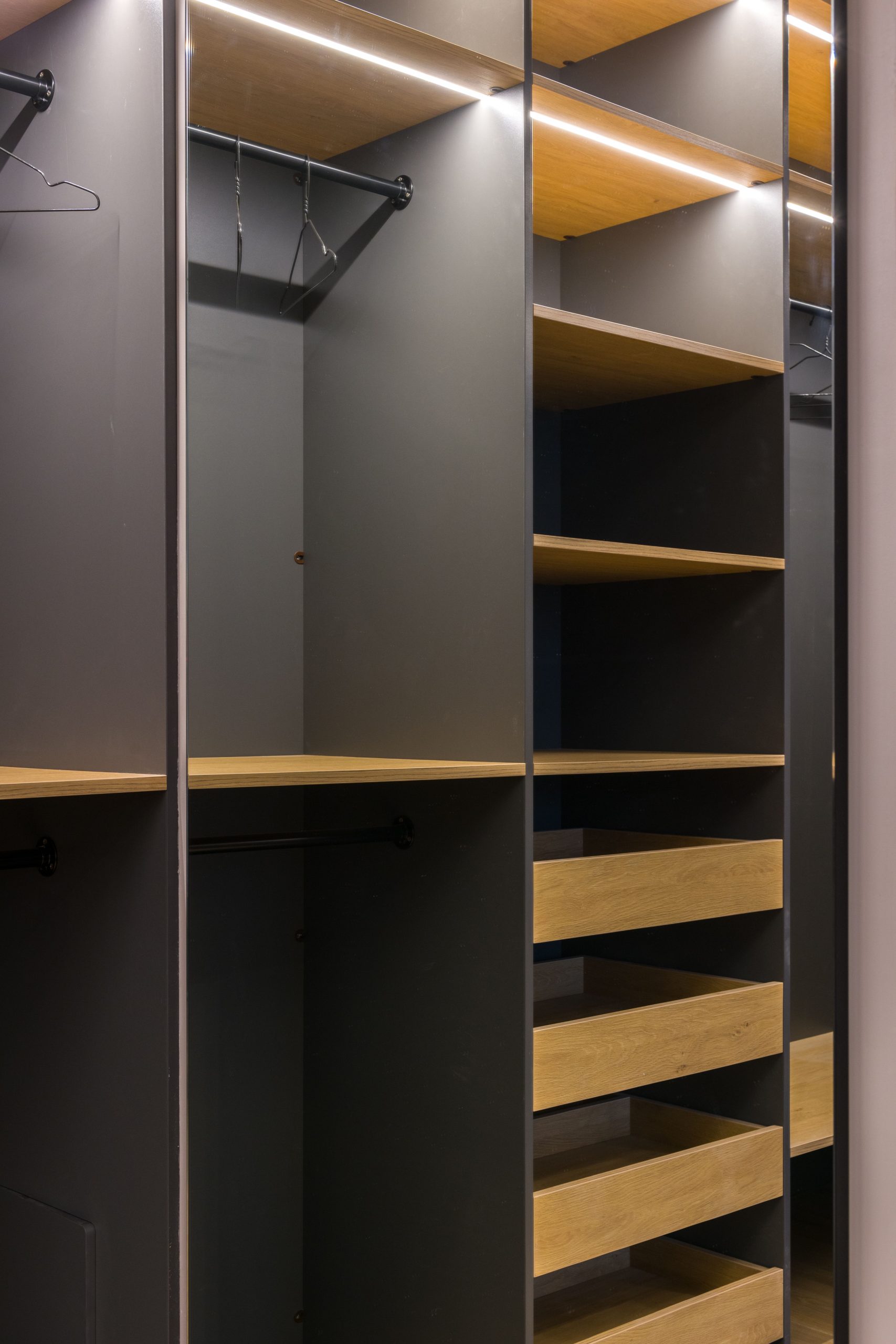
📐 Style Math
Open-concept closets like this are stunning but they offer zero forgiveness for dust. The dark gray and wood surfaces will show dust more readily than a lighter color. Plan for a quick dusting of all horizontal surfaces at least once a week. The integrated LED strips are generally very long-lasting (up to 50,000 hours), but when they do eventually fail, they can be more complicated to replace than a simple bulb, often requiring some basic electrical work. Check the replacement process for the specific lighting system you choose before you install it.
23. Maximize Storage with a Two-Tone Wall Wardrobe and Mirror
When you have a massive wall of storage, breaking it up visually is key to keeping it from overwhelming the room. Using a two-tone design is a perfect strategy. The trick is to use the darker color (here, the dark brown) more sparingly as an accent. Placing it on the upper cabinets draws the eye upward, enhancing the feeling of height. Using it for the central recessed stripe and the open shelving creates a strong horizontal line that grounds the piece. It’s a clever visual trick to add dimension and interest to a very large, functional object.
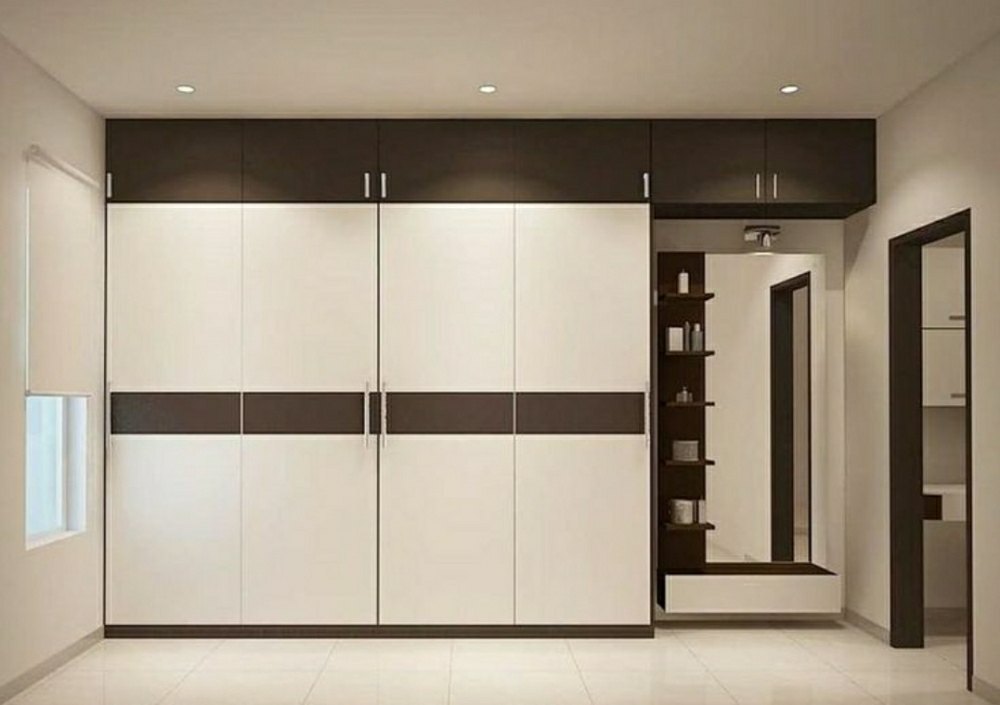
🧹 Maintenance Reality
This unit’s design follows a clear formula: 70% primary color (white) + 20% accent color (dark brown) + 10% functional void (the mirror and shelving nook). The dominant white keeps the large piece from feeling too heavy in the room. The dark brown adds sophisticated contrast and architectural definition. The recessed mirror and shelves serve a practical purpose while also breaking up the solid mass, creating a sense of depth and a place for personal styling. It’s a balanced equation that feels both sleek and incredibly useful.
24. Soften a Modern Wardrobe with Reeded Glass and Backlighting
The standout element here is undeniably the reeded glass. It’s a brilliant choice that bridges the gap between fully transparent and completely solid doors. It provides a beautiful, distorted texture that obscures the contents of the wardrobe just enough to hide any minor clutter, while still allowing light to pass through. This adds a layer of softness and visual interest that you just don’t get with standard glass or wood. When paired with the backlit mirror, it creates a luminous, almost ethereal glow that elevates the entire room. Contrast this with the sharper look of the perforated glass in Idea #9.
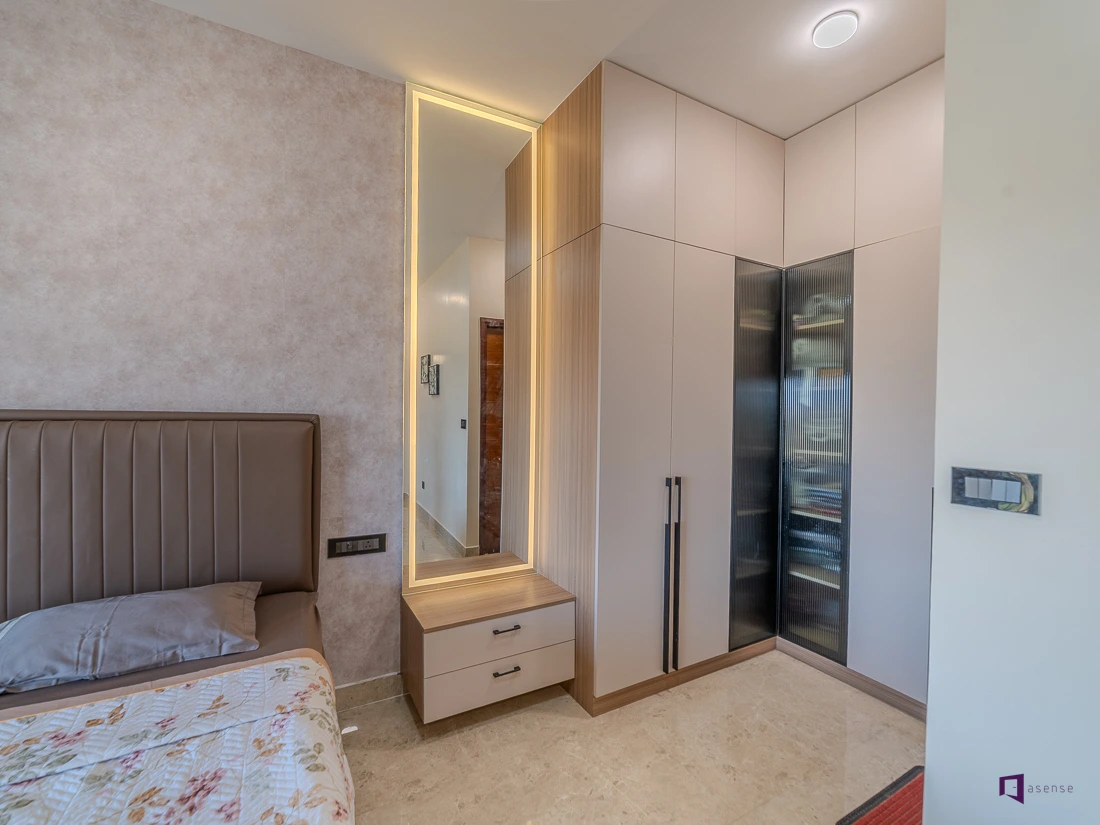
💰 Budget Breakdown
The use of ‘imperfect’ or textured glass is a huge trend in interior design, moving away from the flat, sterile look of perfect plate glass. Reeded, fluted, and frosted glass are all being used to add a touch of artistry and nostalgia to modern spaces. It recalls Art Deco and Mid-Century design but feels completely fresh in this contemporary context. It’s popular because it solves a practical problem—how to have the lightness of glass without the pressure of a perfectly curated display—while also adding a major decorative statement.
25. Carve Out a Serene Nook with a Walk-in Closet Window Seat
What makes this walk-in closet so inviting is its connection to the outdoors and its dual purpose. It’s not just a place to store things; it’s a place to *be*. The window seat transforms a purely functional space into a mini-retreat. It provides a place to pause, read a book, or just enjoy the natural light. This thoughtful addition, combined with the warm wood cabinetry and soft textiles, gives the closet the feeling of a complete room in its own right—a calm, organized sanctuary rather than a simple storage box.
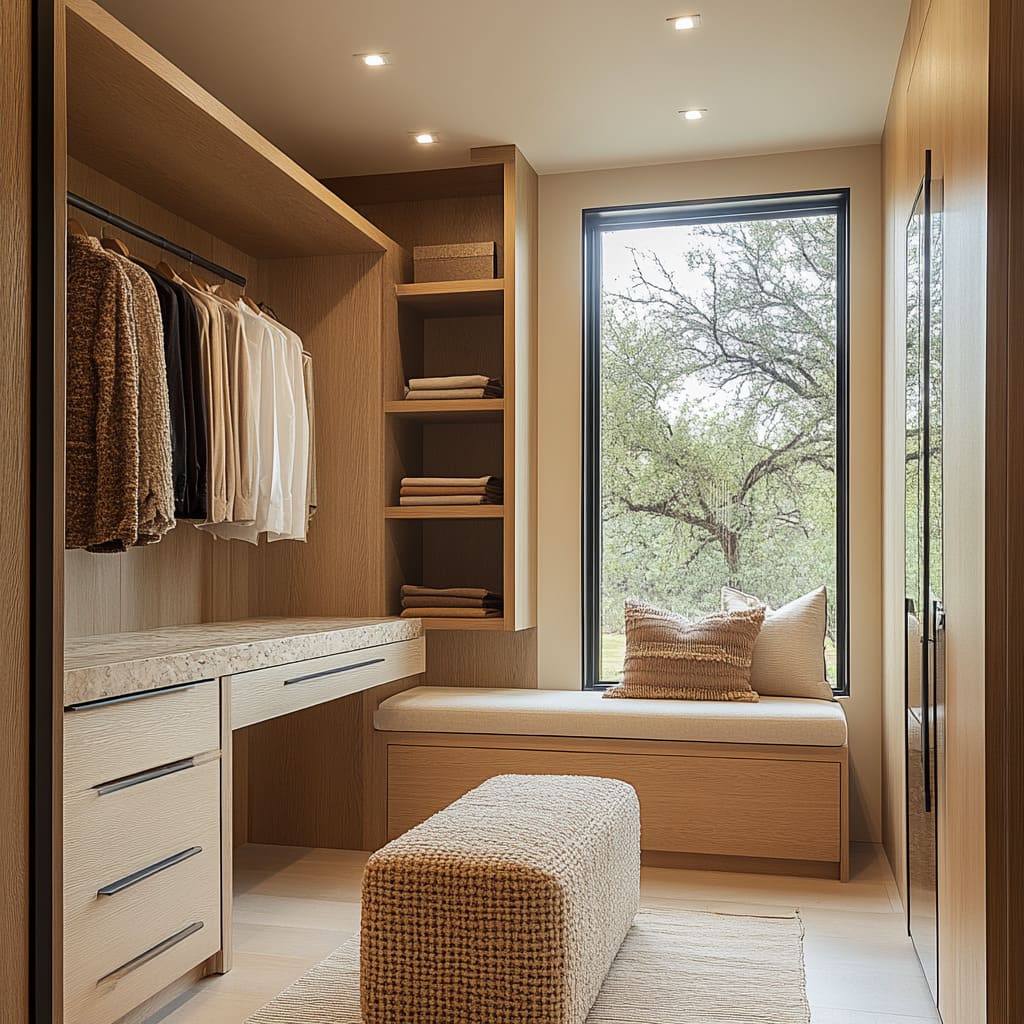
💡 Designer Tip
A window in a closet is a beautiful feature, but it comes with a major caveat: sunlight fades fabrics. Direct UV exposure can cause dark colors to lighten and vibrant hues to dull over time. If you have a window in your closet, it’s wise to invest in UV-blocking film for the glass. For your most precious or delicate items (like silk blouses or expensive suits), it’s best to store them behind solid cabinet doors or in an area of the closet that doesn’t receive direct sunlight. Enjoy the light, but protect your wardrobe.
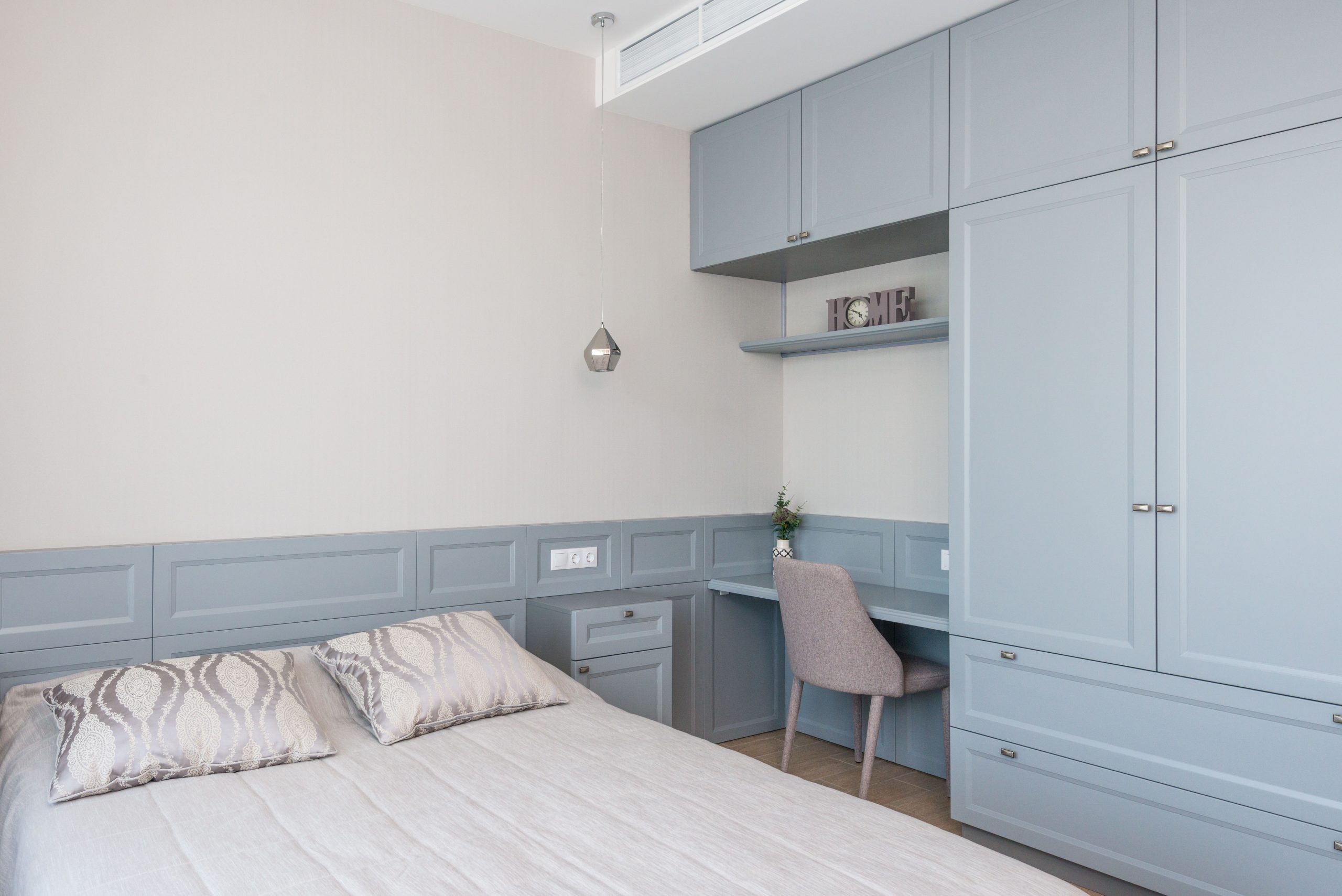
26. Design a Multi-Functional Wall with a Powder Blue Built-In Desk
The cohesive feel of this room comes from a disciplined color and texture formula: 60% calming color (the powder blue) + 30% neutral backdrop (the off-white walls) + 10% texture and metal (the grey chair, silver hardware, and geometric light). The powder blue is the hero, used on both the built-ins and the wainscoting to unify the room’s architecture. The off-white provides a soft, light-reflecting contrast, while the pops of grey and silver add modern sophistication. This structure ensures the room feels colorful but not chaotic, which is a similar strategy to what we saw in Idea #15.
⚠️ Real Talk
When you paint built-in furniture and wall paneling the same color, the paint finish is critical. Don’t use standard matte wall paint for the cabinetry. Furniture and trim require a more durable finish that can withstand nicks, scuffs, and cleaning. Opt for a high-quality satin or semi-gloss enamel paint for all the blue surfaces—the wainscoting, the desk, and the wardrobe. This will ensure a uniform color and sheen, creating that seamless, custom-built look, while also providing the durability needed for high-touch areas.
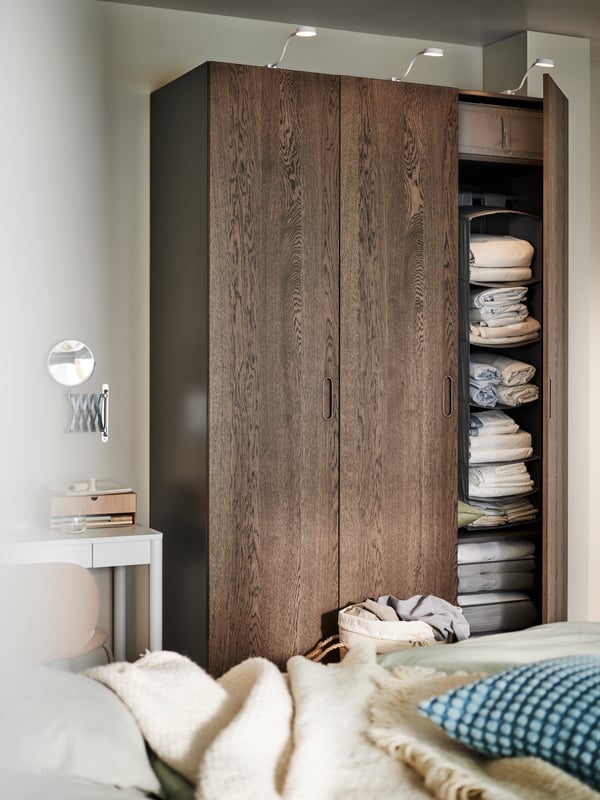
27. Spotlight Your Storage with Dark Wood and Gooseneck Lamps
The single most transformative element in this design is the use of external spotlights. While many modern wardrobes feature integrated interior lighting, this approach takes a different, more theatrical route. The adjustable white gooseneck lamps mounted on top of the wardrobe act like gallery lights, casting dramatic pools of light down the dark wood grain. This not only provides practical task lighting but also turns the wardrobe itself into an architectural feature. It’s a bold, confident choice that gives the entire setup a custom, industrial-chic feel.
⭐ The One Thing
This design works because it perfectly balances practicality with curated display. The bulk of the wardrobe consists of closed doors, allowing everyday clutter to be hidden away. However, leaving one section open to reveal neatly stacked linens and a woven basket creates a moment of styled, intentional organization. This prevents the large, dark unit from feeling like an oppressive block of wood. It suggests a space that is both lived-in and well-ordered, offering the best of both worlds: hidden storage and a pretty vignette.
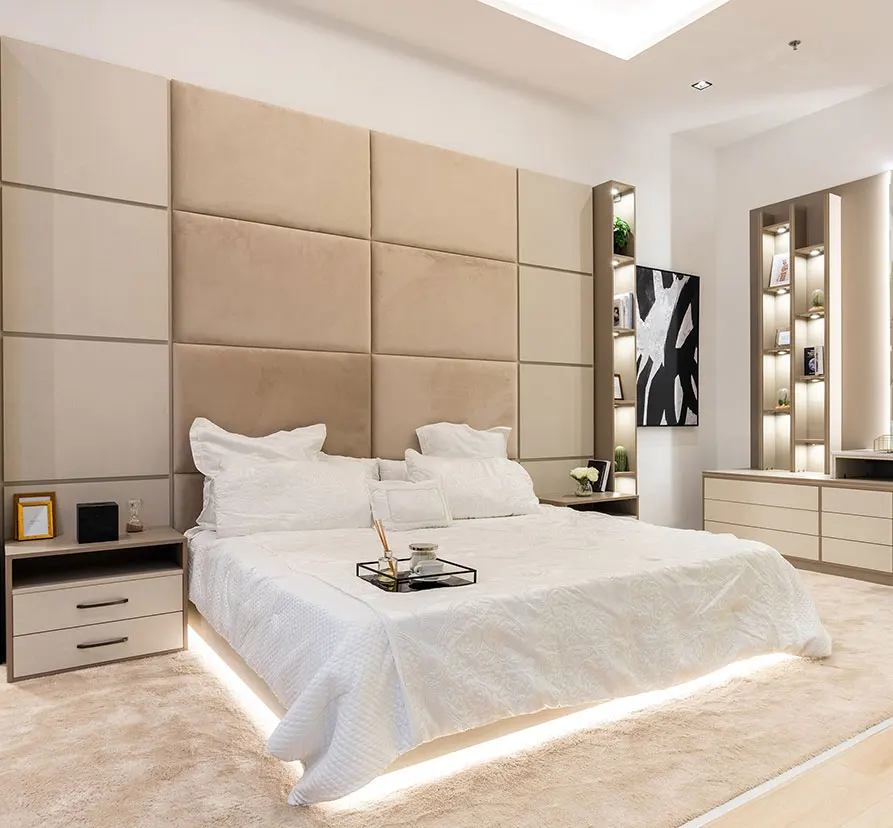
28. Blur the Lines with Upholstered Walls and Integrated Shelving
An upholstered wall is the height of luxury, but it comes with maintenance realities. Unlike a painted wall, you can’t just wipe it clean. Fabric panels can absorb dust, odors, and unfortunately, stains. This look is best for a relatively low-traffic primary bedroom, and probably not the best choice if you have pets who love to rub against walls or small children with sticky fingers. Regular vacuuming with an upholstery brush attachment is a must to keep it looking fresh. For any spots or stains, you’ll need to treat it like fine furniture, using a specialized fabric cleaner.
🎯 What Makes It Work
Creating a full feature wall with integrated panels and shelving is a space-hungry endeavor. The layering of upholstered panels, structured panels, and recessed shelving requires a depth of at least 6-8 inches off the original wall. This means it’s best suited for larger bedrooms where you can afford to sacrifice that floor space without making the room feel cramped. The wall itself should be at least 12 feet wide to allow for the bed, two nightstands, and the integrated shelving to feel balanced and not squished together.
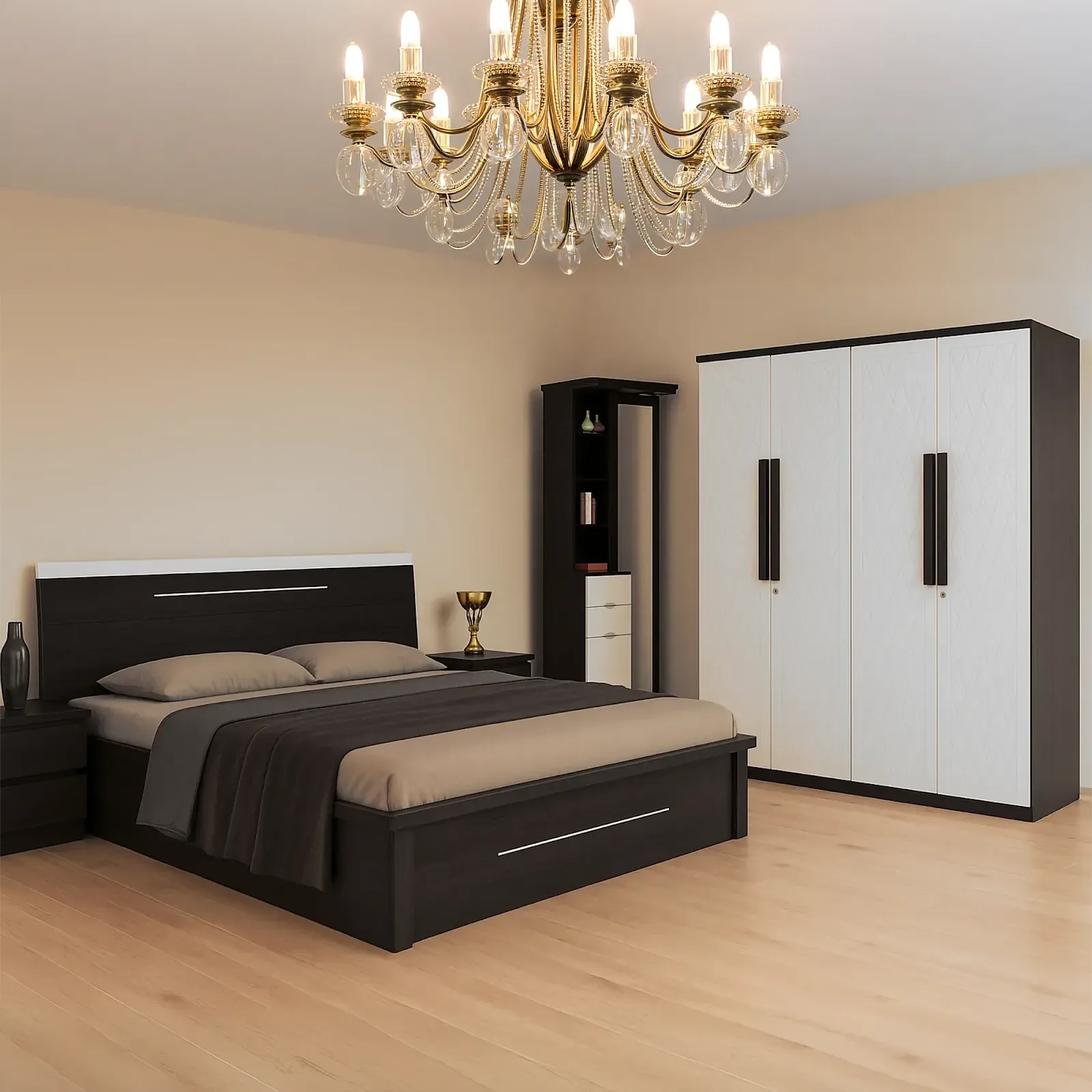
29. Mix Dark Wood and Light Panels for a Classic, Elegant Look
This bedroom strikes a beautiful balance between traditional and modern by using contrast to its advantage. The dark brown wood of the furniture frames provides a sense of classic weight and formality. However, the wardrobe doors feature light cream-colored panels, which lifts the entire unit and prevents the dark wood from feeling too heavy or dated. This high-contrast pairing, accented by the sparkle of the gold chandelier, creates a look of timeless elegance. It feels established and sophisticated without being stuffy.
✅ Before You Start
A full matching bedroom suite in dark wood can be costly. To get this high-contrast look for less, focus on finding individual pieces on a budget. Start with a simple, inexpensive bed frame and nightstands from Wayfair or IKEA in a dark wood finish. For the wardrobe, use a basic PAX system and customize the doors. You can create the paneled look by adding lightweight trim to flat door panels before painting them a warm cream color. The key is to find a chandelier that looks luxurious—check lighting-specific retailers or even Home Depot for crystal-accented fixtures that don’t break the bank.
30. Achieve a Minimalist Look with Sleek Gray Handleless Cabinets
The most critical element for achieving this ultra-modern aesthetic is the handleless design. By eliminating all external hardware, the wardrobe doors and drawers transform into a seamless, architectural surface. This choice is what pushes the design firmly into minimalist territory. The flat, uninterrupted gray panels create a calming, uncluttered effect, allowing the integrated desk nook with its warm lighting to become the sole focal point. With handles, this would just be a modern wardrobe; without them, it’s a statement of minimalist principle.
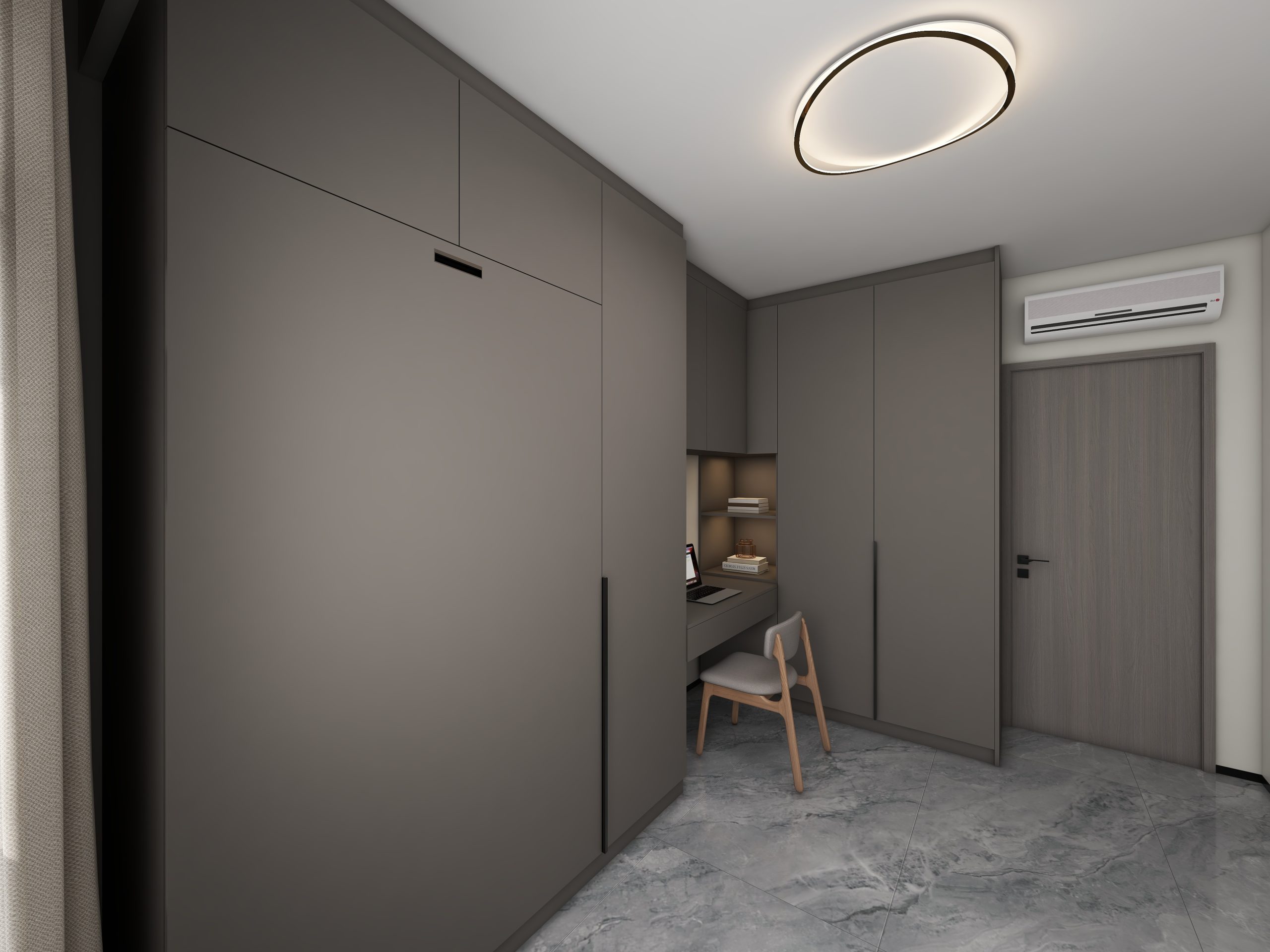
💸 Get This Look For Less
Creating that perfectly lit, recessed desk nook is a core part of this design. Here’s how to spec it out.
- Time Estimate: 2 hours for planning. Cost: $100-$300 for lighting.
- Plan the electrical before installation. You’ll need a junction box for the LED driver, ideally hidden inside an adjacent cabinet.
- Use a channel-mounted LED strip for a clean, dot-free line of light. Have your cabinet maker rout a groove for the channel to sit flush with the underside of the shelf.
- Choose a warm color temperature (2700K-3000K) for the light. It creates a cozy, inviting glow that contrasts beautifully with the cool gray cabinets.
- Wire the light to a switch that’s easily accessible from the desk area.
31. Create a Boutique Feel with a Rose Gold and Glass Walk-In
This design feels incredibly luxurious because it treats the wardrobe not as a closet, but as a room-within-a-room. The raised platform physically and visually separates the sleeping area from the dressing area, creating a distinct boutique-like space. The choice of rose gold frames and tinted glass for the sliding doors acts as a jewelry box, showcasing the contents within while adding a layer of warmth and glamour. It’s a design that celebrates the act of getting dressed. The glamour here is more overt than the integrated vanity in Idea #10, creating a true statement piece.
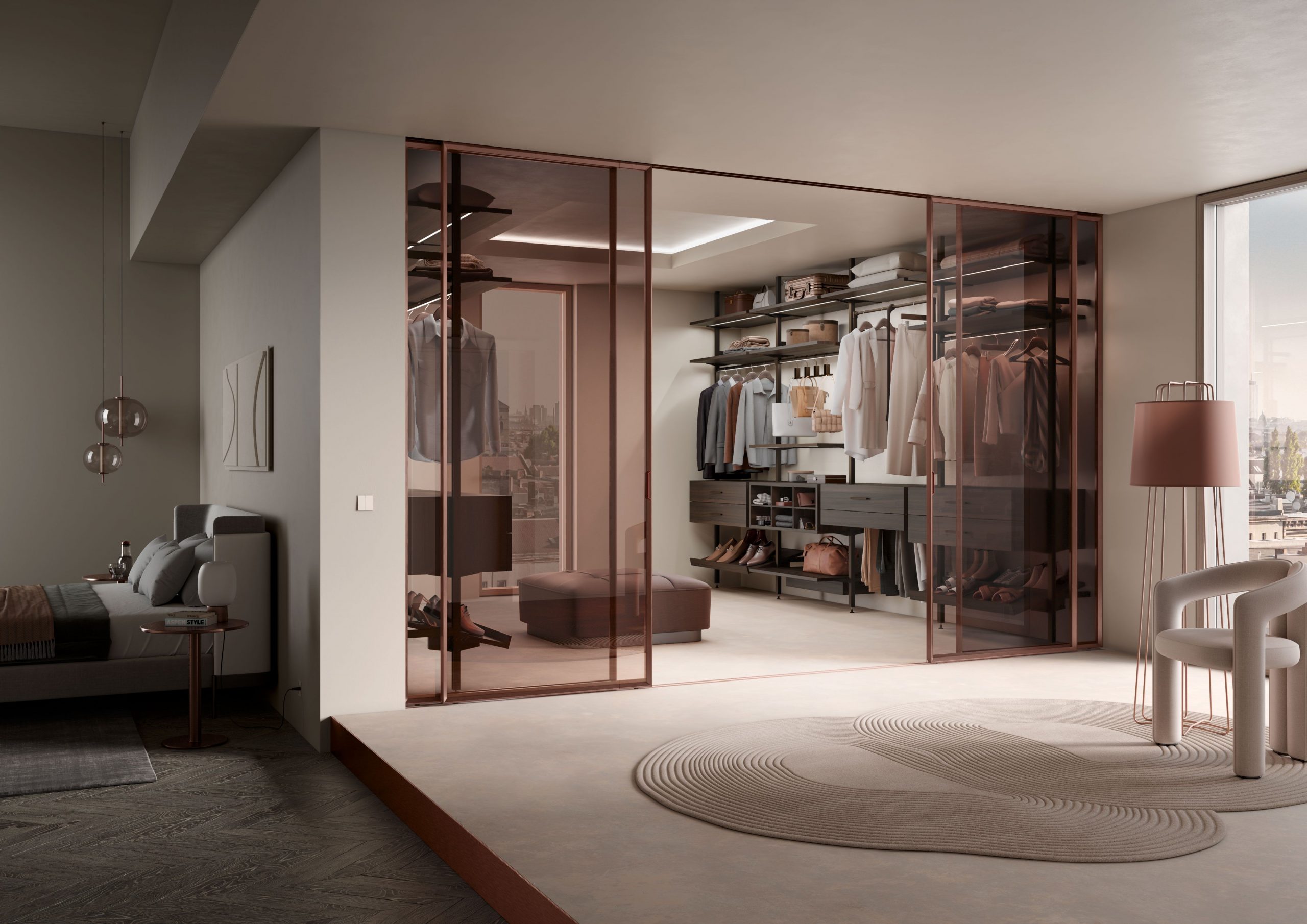
🔧 How-To Brief
A glass-enclosed closet is a stunning feature, but it’s not a decision to be made lightly. This is a significant structural and financial commitment. Custom glass and metalwork are expensive, and raising a section of the floor requires careful planning and construction. Furthermore, this is a very trend-specific look. While rose gold is beautiful now, it might feel dated in ten years. This isn’t an easily changeable feature, so you have to be absolutely certain you love the look and are willing to commit to it for the long haul. It’s less of a decorating choice and more of a permanent architectural feature.
Your Ultimate Wardrobe Awaits
That perfect, finally-sorted-out feeling is closer than you think. Whether your style is sleek and modern or warm and natural, the right wardrobe design can completely change how you feel about your space. Now the fun part begins: figuring out which one speaks to you. Happy designing!
Ready for more inspiration? Follow us on Pinterest for daily ideas and tips.