You know that feeling when you finally find the pet bedroom idea that looks *exactly* right for your space and your furry friend? That perfect little corner that feels like it was always meant to be theirs. We’ve all been there, endlessly scrolling Pinterest, saving pins that are beautiful but might not be practical. That’s why we did the heavy lifting for you.
After filtering through hundreds of options across Wayfair, IKEA, and Target, we narrowed it down to 30 incredible ideas that actually deliver on style and function. From cozy nooks to fully integrated furniture, these concepts work for every price point, from under $50 to over $2000.
In 2026, it’s all about seamlessly blending your pet’s comfort with your own interior design. The trend is moving away from standalone, clunky pet accessories and towards thoughtful, built-in solutions that feel like a natural part of the home. And stay until the end — we break down the most common mistakes that can ruin these looks.
📌 Save this to Pinterest for later — you’ll want to revisit these ideas.
1. A Sunny Reading Nook with a Designated Pet Zone
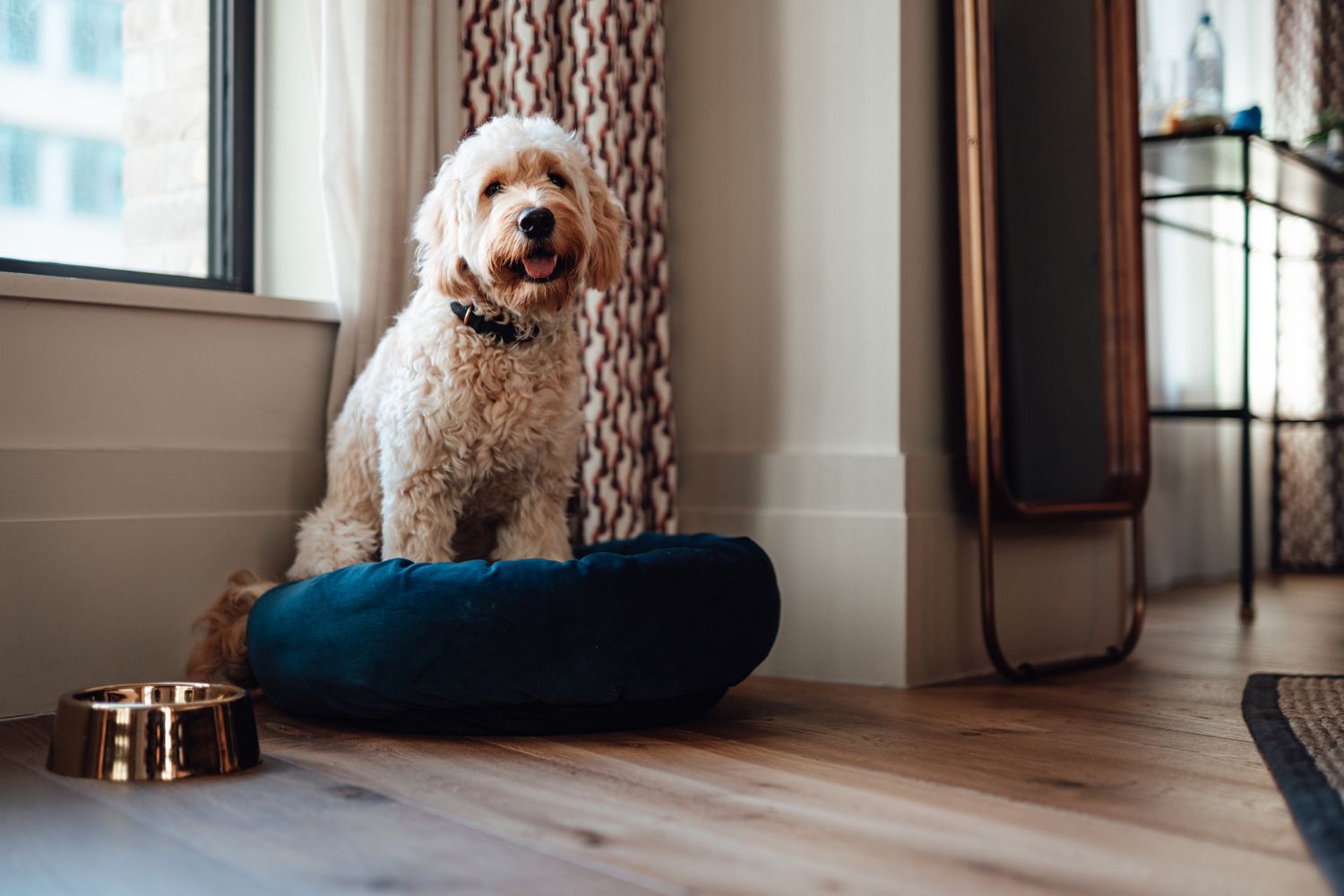
This little corner nails the concept of a shared space. By placing the deep blue pet bed right next to the window, the pet gets a prime spot for sunbathing without interrupting the human traffic flow. The key is the smart use of a corner—it establishes a boundary. The warm, light wood flooring ties the whole area together, while the golden food bowl adds an unexpected touch of glam that feels intentional, not like an afterthought. It works because it doesn’t try to hide the pet’s presence; it celebrates it with style.
🔧 How-To Brief
To make a pet corner feel truly integrated, pull a color from an adjacent pattern. Here, the deep blue of the bed could have been inspired by a color in a nearby rug or artwork, not just the curtains. When you create this color echo, the pet bed stops looking like a random accessory and starts feeling like part of a curated palette. For a high-traffic area, choose a bed with a removable, washable cover in a durable fabric like canvas or a tight-weave synthetic.
2. Triple the Fun with Coordinated Red Barrel Beds
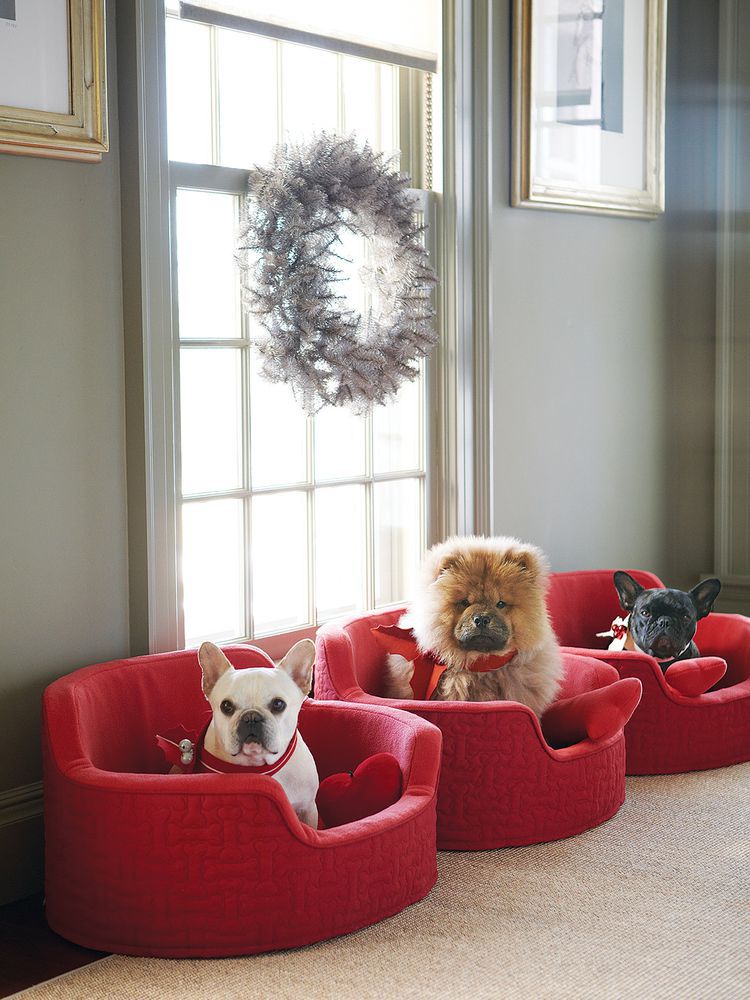
The success of this festive look comes down to a simple formula: 60% bold color + 30% calm neutral + 10% elegant accent. The vibrant, quilted red of the three barrel beds provides the energetic 60%. The calm backdrop of the light beige carpet and grey walls makes up the 30% neutral base, preventing the red from feeling overwhelming. Finally, the 10% of sparkle from the winter wreath and the gold-framed artwork adds just enough sophistication to elevate the entire scene from merely cute to chic.
⭐ The One Thing
While this setup is undeniably charming, orchestrating three pets for a perfect photo is one thing—living with them is another. Three separate beds take up significant floor space, especially in a smaller room. Before committing, measure out the footprint of all three beds to ensure you still have a clear walkway. Also, consider the upkeep. Light-colored carpets and pet-filled homes require a diligent vacuuming schedule and a good spot cleaner for inevitable mishaps.
3. Serene and Sophisticated: A Dog on a Neutral-Toned Bed
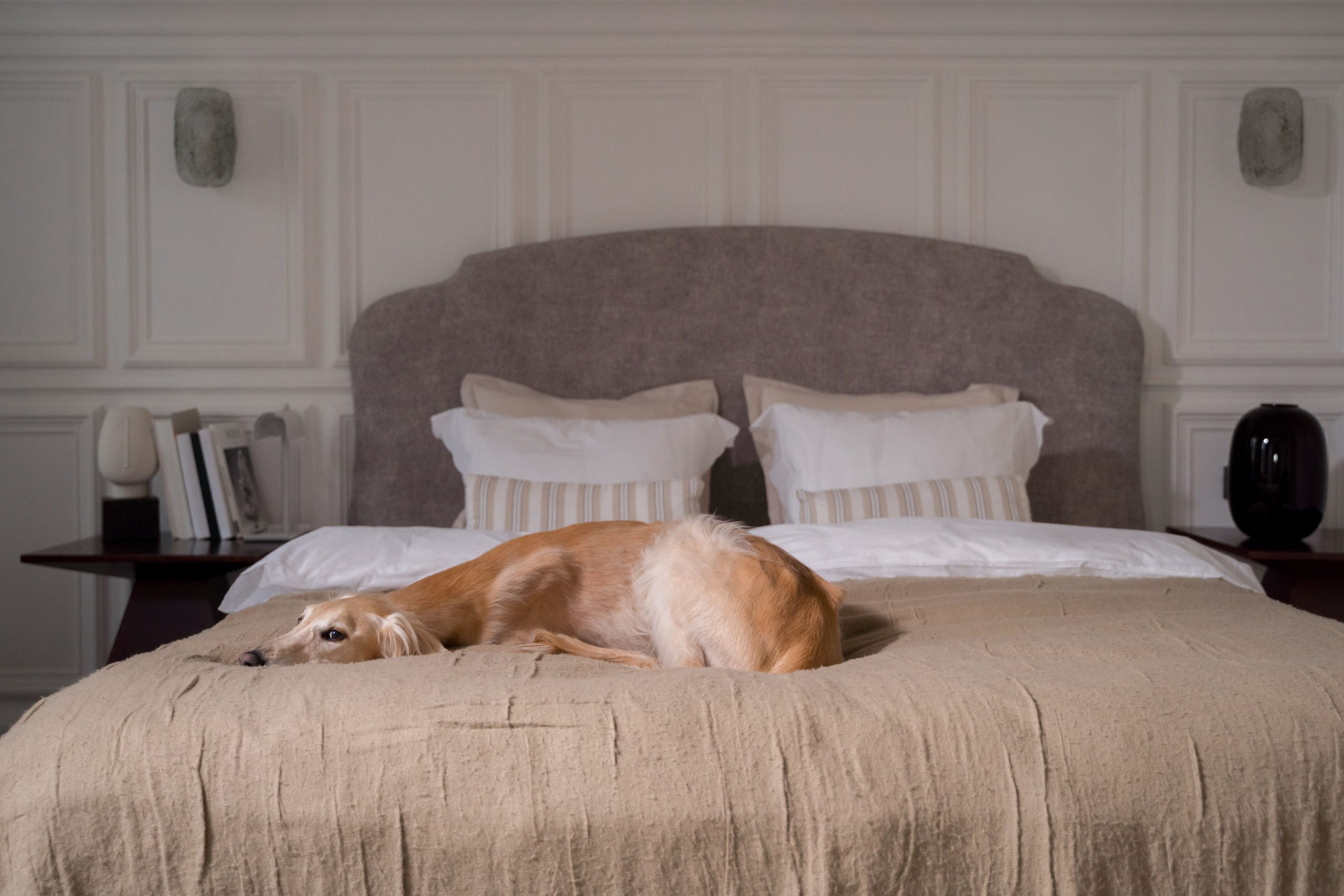
The panel molding on the wall is the single element that elevates this bedroom from simple to sophisticated. Without it, you’d have a nice, neutral bedroom. With it, you have architectural interest and a sense of timeless, traditional style. It creates a framework for the upholstered headboard, making the entire bed area feel like a deliberate, high-end focal point. This detail proves that the walls themselves are one of the most powerful tools for defining the character of a room. It adds a layer of texture and shadow that you just can’t get from paint alone.
🎯 What Makes It Work
This calm, layered look works best in a primary bedroom with at least 150 square feet. You need enough space to allow the dark wood side tables to breathe, with at least 24-30 inches on either side of the bed. The panel molding is most effective on walls with ceilings that are 8 feet or higher, giving the vertical lines enough room to make a statement without feeling cramped. For a smaller space, consider using the molding on just one feature wall behind the bed to avoid overwhelming the room.
4. Integrated Dog Crate in Blue Louvered Cabinetry
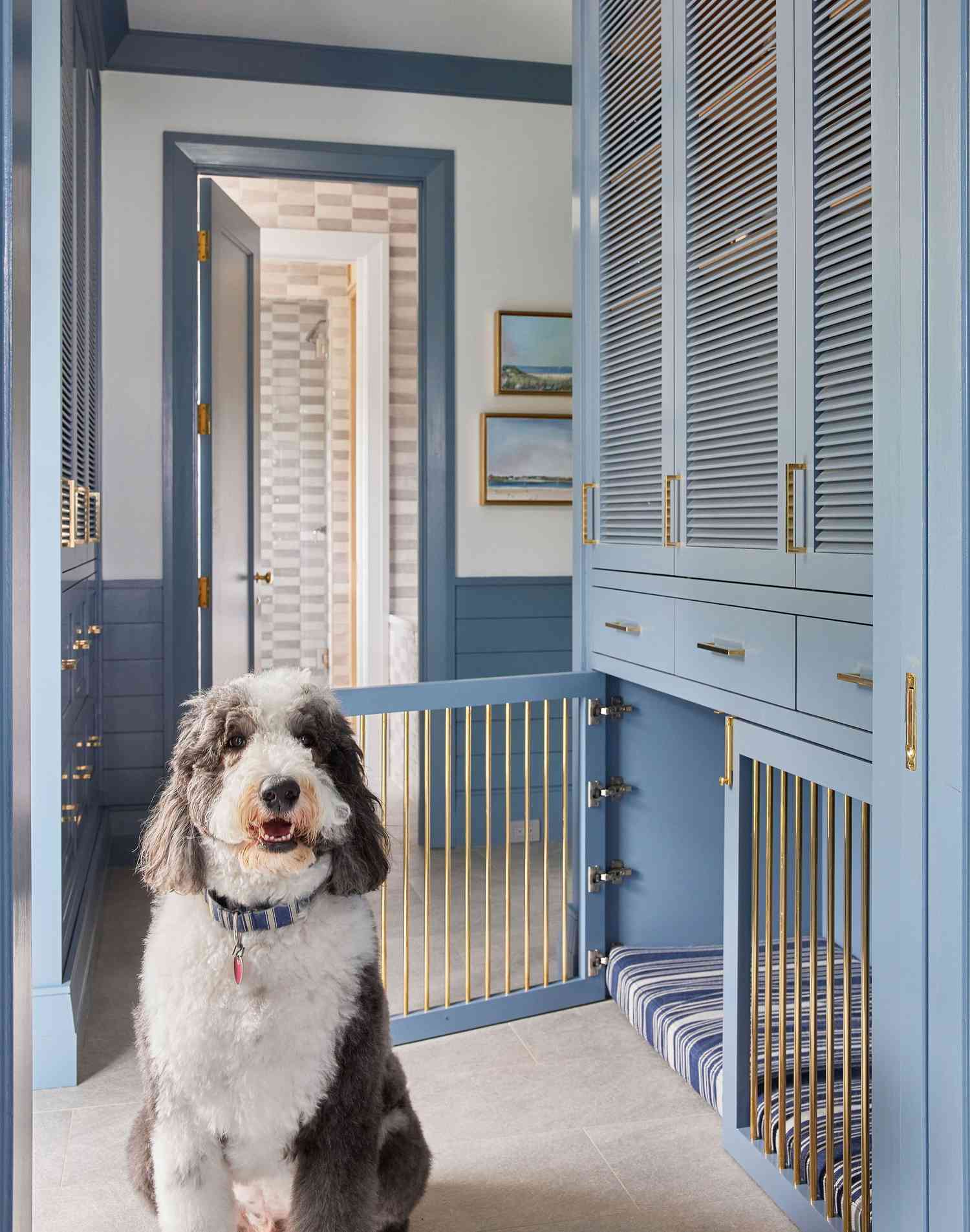
Recreating this custom look requires a significant investment, primarily in carpentry.
- Custom Cabinetry (design, build, install): $4,000 – $8,000
- Brass Hardware (gates, pulls): $300 – $700
- Paint & Finishing: $500 – $1,000
- Custom Bedding: $100 – $250
- TOTAL: $4,900 – $9,950
Budget Alternative: Achieve a similar feel for about 50% less by using pre-fabricated cabinetry from a big box store and hiring a local woodworker to build only the crate fronts to match. Or for a simpler take, check out Idea #5.
📏 Scale Guide
While stunning, this setup has specific cleaning needs. The louvered doors are notorious dust collectors; plan on a weekly wipe-down with a microfiber cloth or a brush vacuum attachment. The brass rod gates will develop a patina over time, which can be lovely, but if you prefer a high-shine look, they’ll need polishing every few months with a dedicated brass cleaner. The biggest challenge? A determined chewer could damage the wooden crate frame, a much more complicated fix than replacing a standard wire crate.
5. Disguise a Dog Crate Under a Skirted Console Table
This is a brilliant way to achieve the integrated-crate vibe of designs like Idea #3 on a shoestring budget. A simple wire dog crate ($50-$100) is the start. Find a rustic console table from Facebook Marketplace or a thrift store ($40-$80). The key is the fabric skirt. You can buy premade curtain panels from Target or IKEA ($20-$30) and attach them with simple tension rods or even velcro for an easy, no-sew solution. The total cost can easily be kept under $200, giving you a custom look for a fraction of the price.
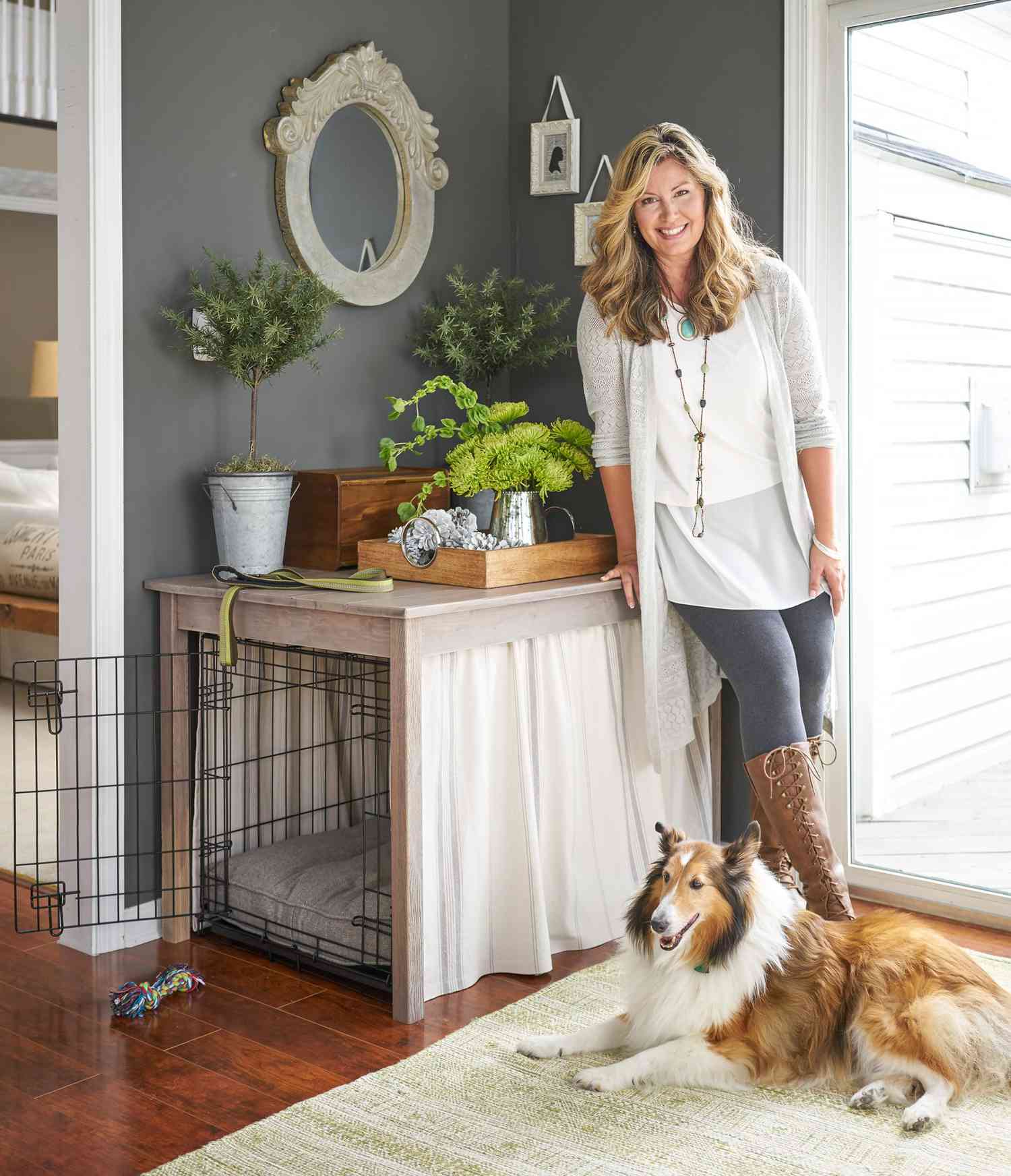
🧹 Maintenance Reality
Create a No-Sew Crate Skirt (Time: 30 mins, Cost: $25-$50)
- Measure your console table’s height and the width of the front opening.
- Buy two small tension rods and one pre-made curtain panel (like IKEA’s ‘HILJA’) that is at least twice the width of the opening for a nice gather.
- Cut the panel in half vertically to create two pieces. If needed, use iron-on hemming tape to finish the cut edges—no sewing machine required!
- Mount the tension rods inside the table legs at the very top.
- Simply loop the rod pocket of each curtain half onto the tension rods. Adjust the gathers for a relaxed, stylish finish.
6. Hide a Pet Crate in Plain Sight with a Custom Cover
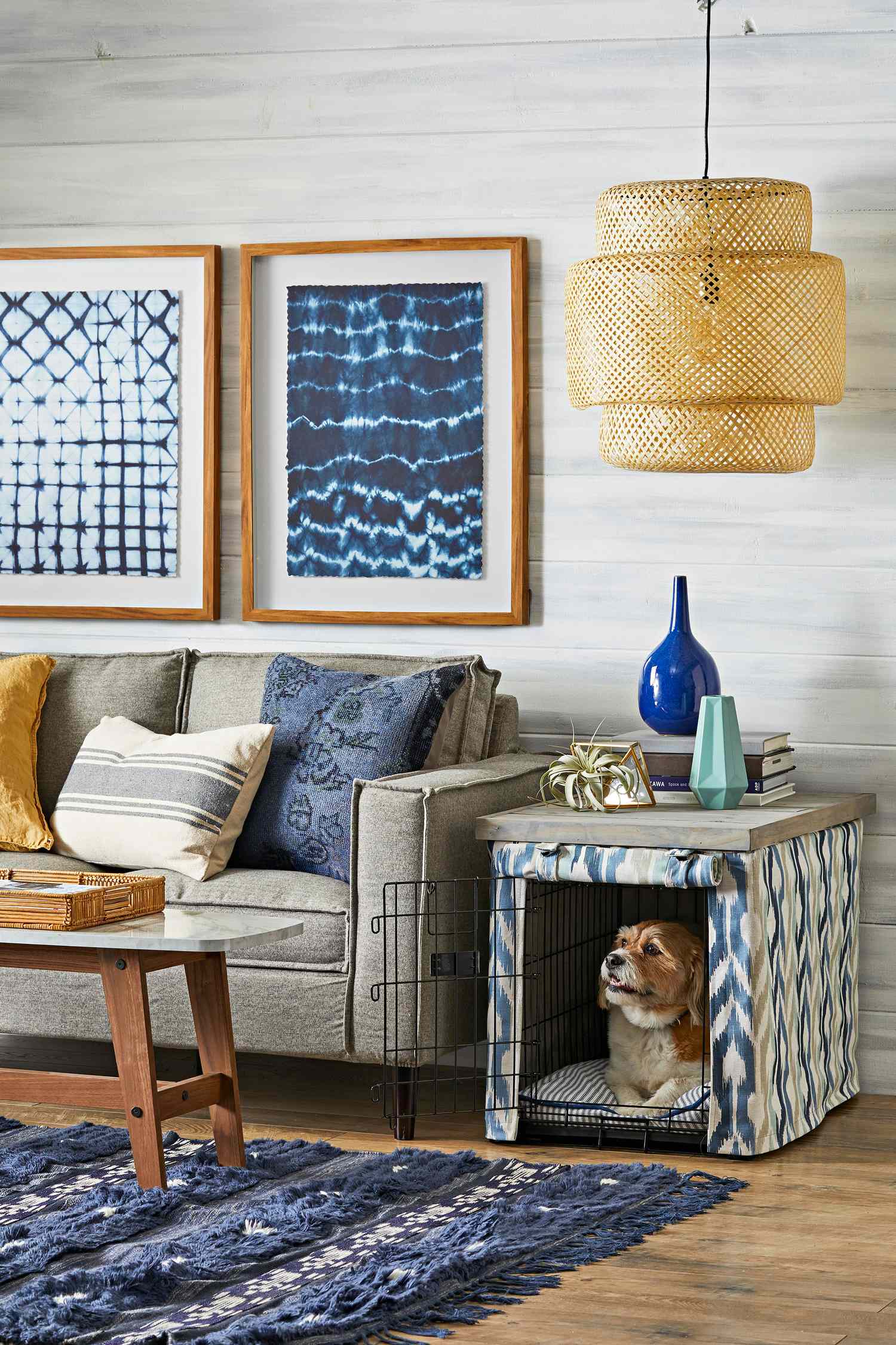
This cozy corner is all about clever camouflage. The wire crate, a typically utilitarian object, is transformed into a functional side table. The wooden top provides a durable surface for a lamp or books, while the patterned fabric ‘sleeve’ is the real hero. It softens the hard lines of the crate and integrates it into the living room’s eclectic decor. The striped pattern on the dog bed inside echoes the casual, layered feel of the room, proving that pet-friendly design can be both practical and stylish.
💸 Get This Look For Less
When choosing a fabric cover for a crate, think about both aesthetics and function. A medium-weight cotton or canvas is ideal as it holds its shape well. To prevent the cover from looking like a saggy sheet, make sure it’s tailored to the exact dimensions of your crate. For added stability, sew (or use iron-on tape) a few velcro tabs to the inside bottom of the cover to secure it to the crate wires, keeping it taut and tidy.
7. Bay Window Nook with an Integrated Dog Bed
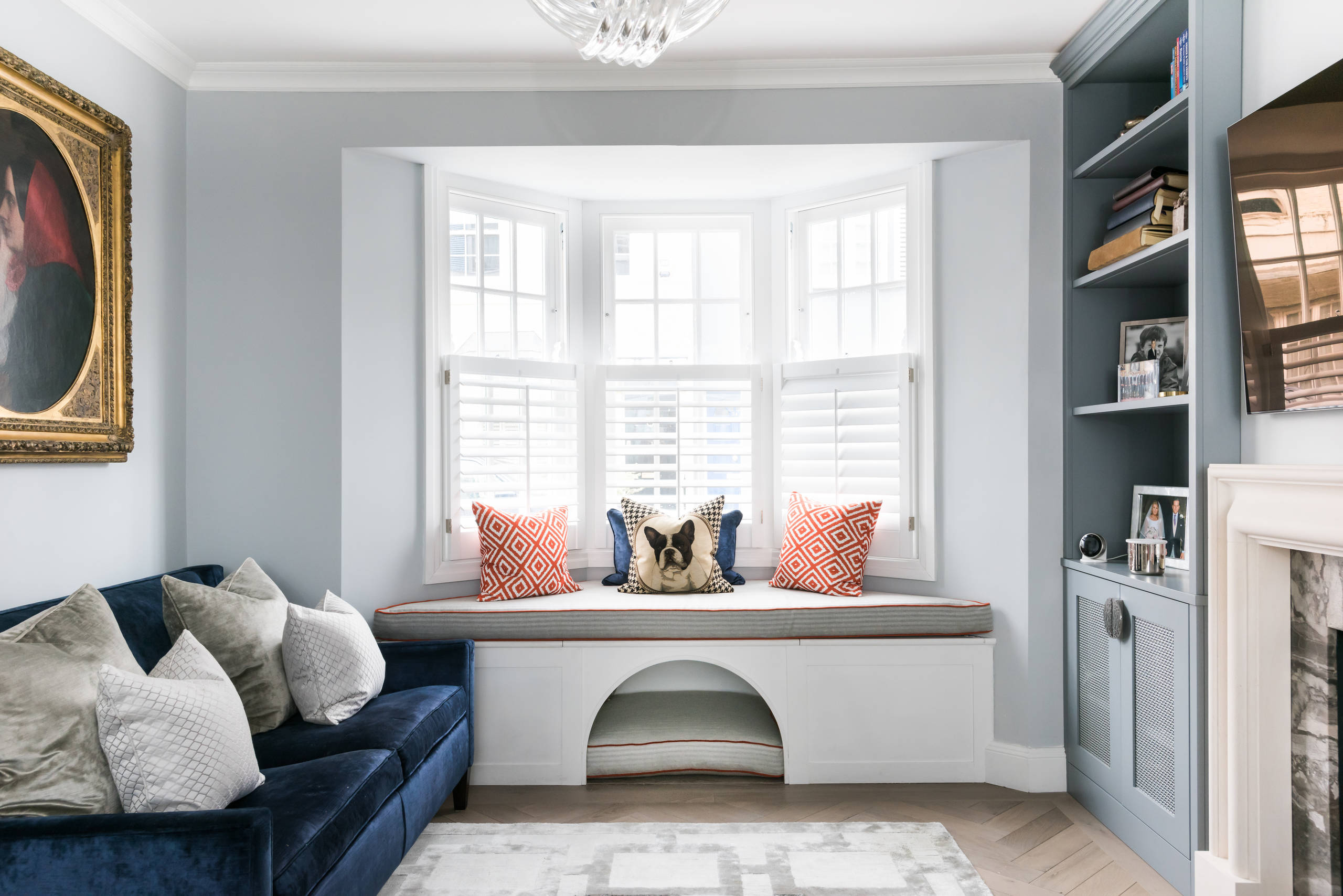
The custom gray cushion with its crisp orange piping is the element that ties this entire nook together. It’s a small detail with a huge impact. It elevates the integrated dog bed from a simple cutout to a bespoke piece of furniture. The orange piping adds a pop of personality and intentionally connects to other warm tones that might be in the room (like the herringbone wood floor), making the whole design feel cohesive and thoughtfully planned. It’s a perfect example of how small, tailored touches make a space feel professionally designed.
⚠️ Real Talk
A built-in window seat like this is a fantastic solution for rooms with awkward architectural features. It requires a bay or box window with a depth of at least 18-24 inches to be comfortable for seating and to accommodate a pet nook. The ideal seat height is around 18 inches (including the cushion). This idea is perfect for living rooms or bedrooms of 180+ square feet, where the built-in can become a destination without cramping the main living space.
8. A Clean White Hutch Featuring Built-In Dog Kennels
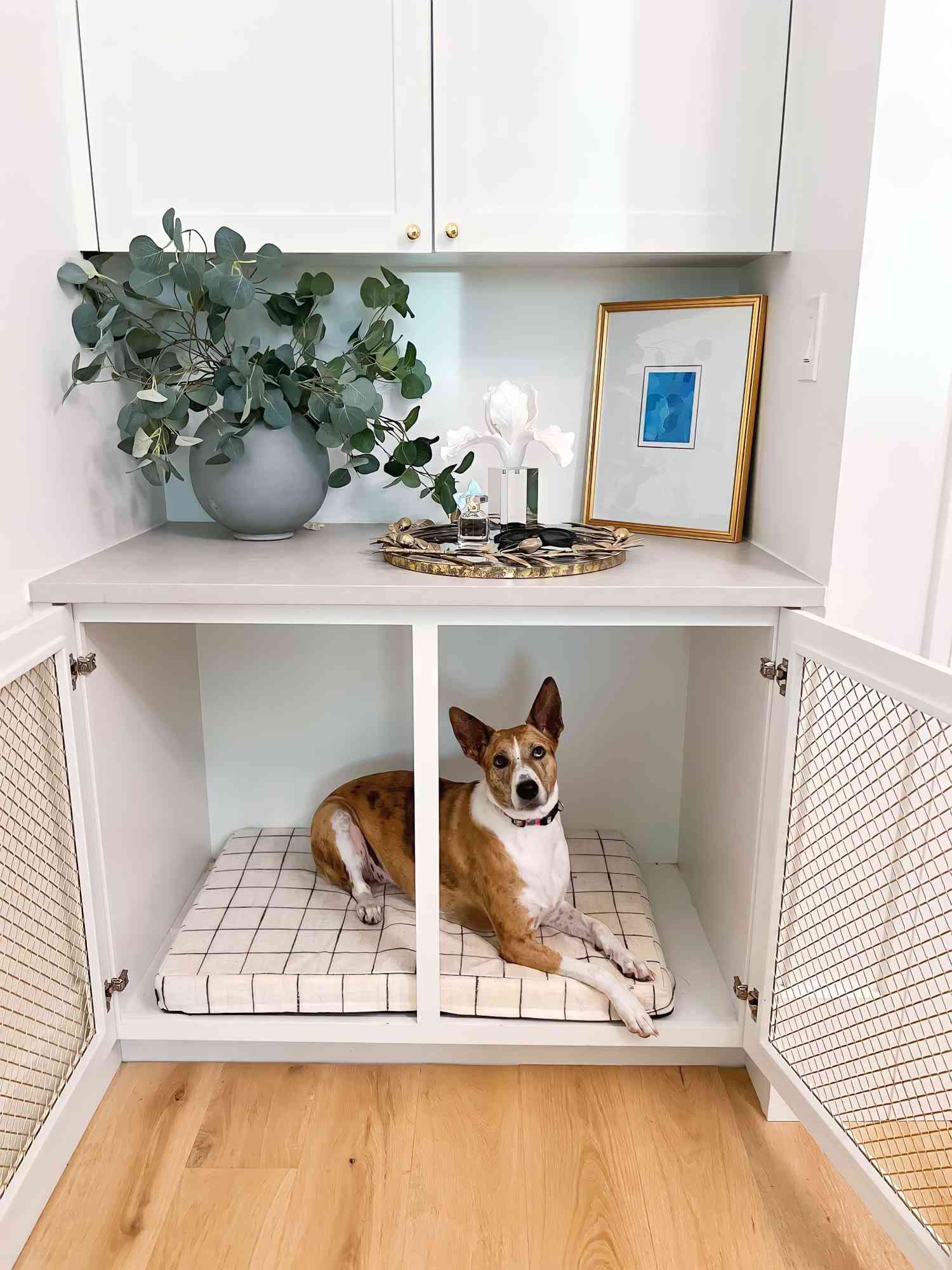
This look achieves its airy, organized feel with a formula of 70% crisp white + 20% natural texture + 10% curated color. The expansive white built-in cabinetry provides a bright, clean canvas (70%). The light wood flooring and the woven dog bed cushion introduce essential warmth and natural texture (20%). The final 10% comes from carefully chosen decor: the cool blue abstract art, the muted green of the eucalyptus, and the glint of the gold tray. This restrained use of color keeps the focus on the structure and cleanliness of the design.
🔥 Trending Context
A white built-in that houses pets is a commitment to cleanliness. Paws, noses, and the occasional splash from a water bowl mean the lower portion of this unit will need frequent wipe-downs. The mesh-inset doors provide great ventilation but can be tricky to clean if food or other debris gets stuck in the grid. Also, consider your dog’s personality. A calm, relaxed dog will thrive here, but a dog with separation anxiety prone to scratching or chewing could easily damage the doors or interior.
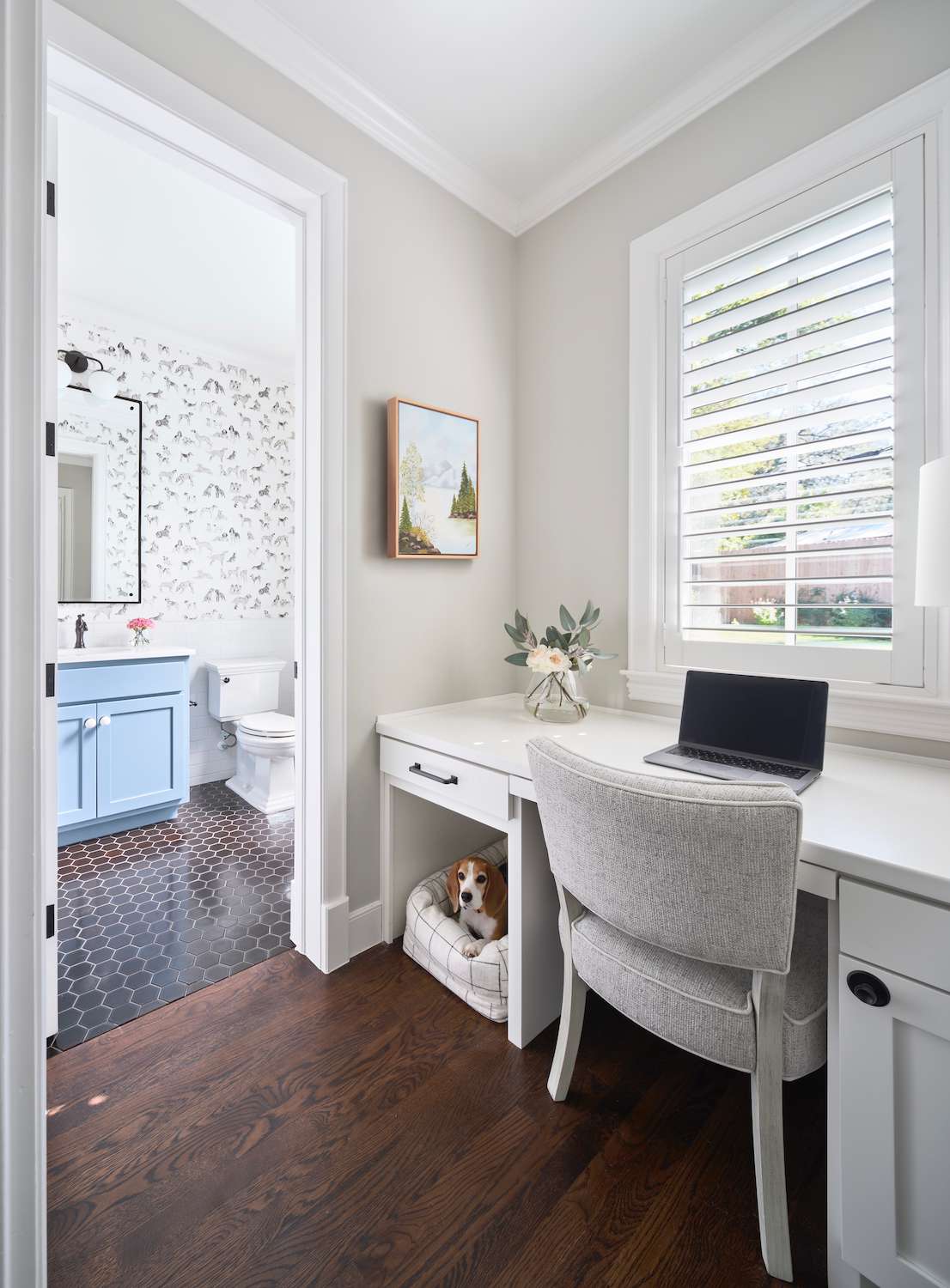
9. An Integrated Pet Bed Nook in a Neutral Home Office
As work-from-home becomes a permanent lifestyle for many, we’re seeing a huge trend in creating home offices that are as comfortable and personalized as the rest of the house. This includes making dedicated, stylish spaces for our ‘co-workers’. The integrated pet nook is the perfect 2026 update to the sad dog bed shoved in a corner. It acknowledges the pet’s presence and gives them a secure, den-like space without sacrificing a single inch of floor space, which is often at a premium in home offices.
💡 Designer Tip
The success of an under-desk nook lies in its dimensions. Ensure the opening is at least 4-6 inches taller and wider than the pet bed itself. This negative space is crucial; it prevents the nook from feeling like a tight squeeze and makes it easier to pull the bed out for cleaning. Also, use a low-profile, rectangular bed. A fluffy, overstuffed donut bed will look messy and spill out of the opening, defeating the purpose of the clean, built-in look.
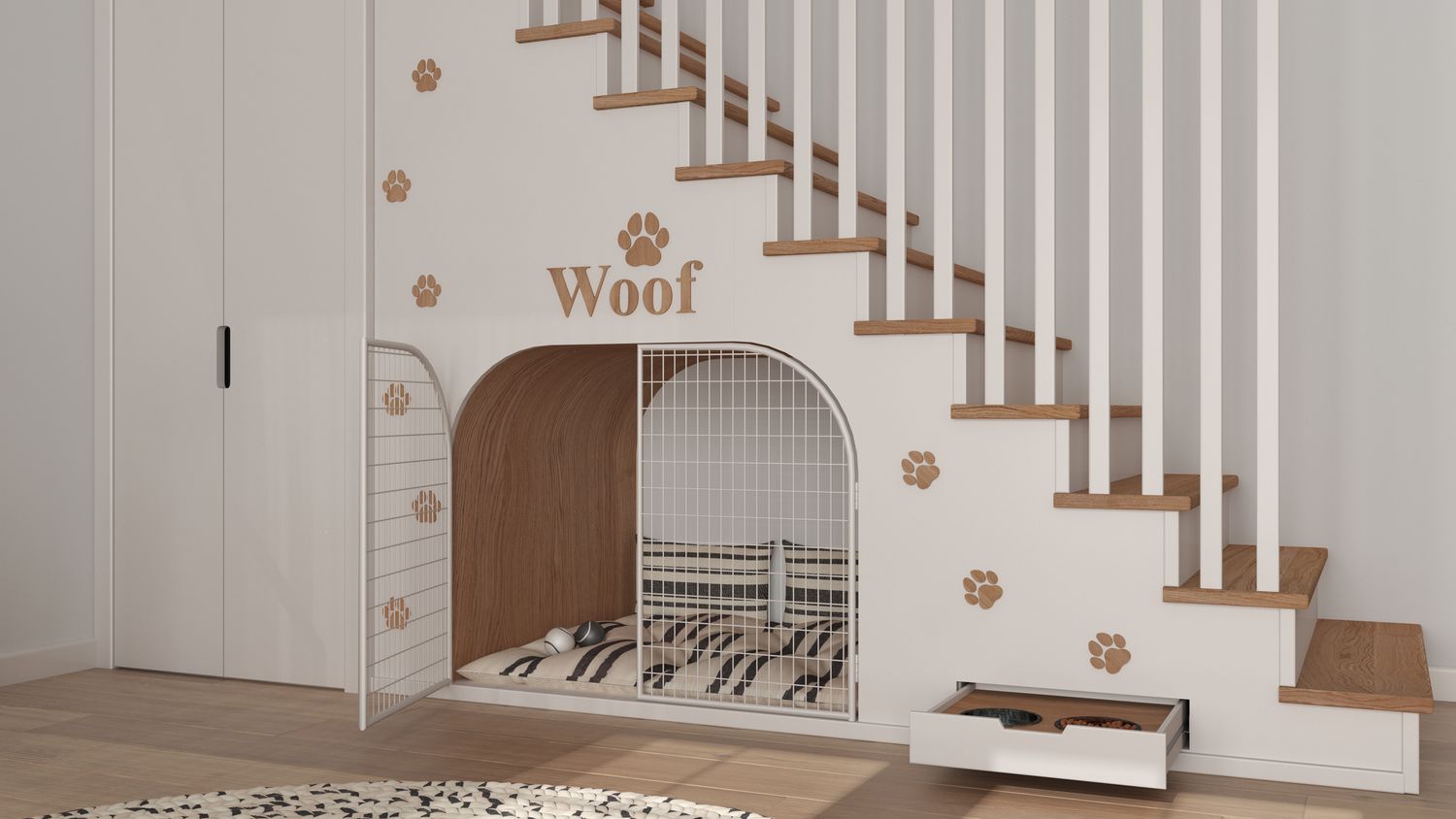
10. A Playful Under-Stair Nook with a Feeding Station
Create Paw Print Wall Decals (Time: 1 hour, Cost: $15-$25)
- Purchase a sheet of removable wall vinyl in your desired color (brown, in this case) and a paw print stencil.
- Roll out the vinyl on a flat surface and secure your stencil with painter’s tape.
- Using a craft knife, carefully trace and cut out the paw print shapes. Take your time to get clean edges.
- Plan your layout on the wall with painter’s tape to visualize the spacing before you stick them on.
- Peel the backing off each vinyl decal and apply it to the wall, smoothing it down firmly with a credit card to remove air bubbles.
- The best part? Because it’s removable vinyl, you can change the design whenever you want without damaging the wall.
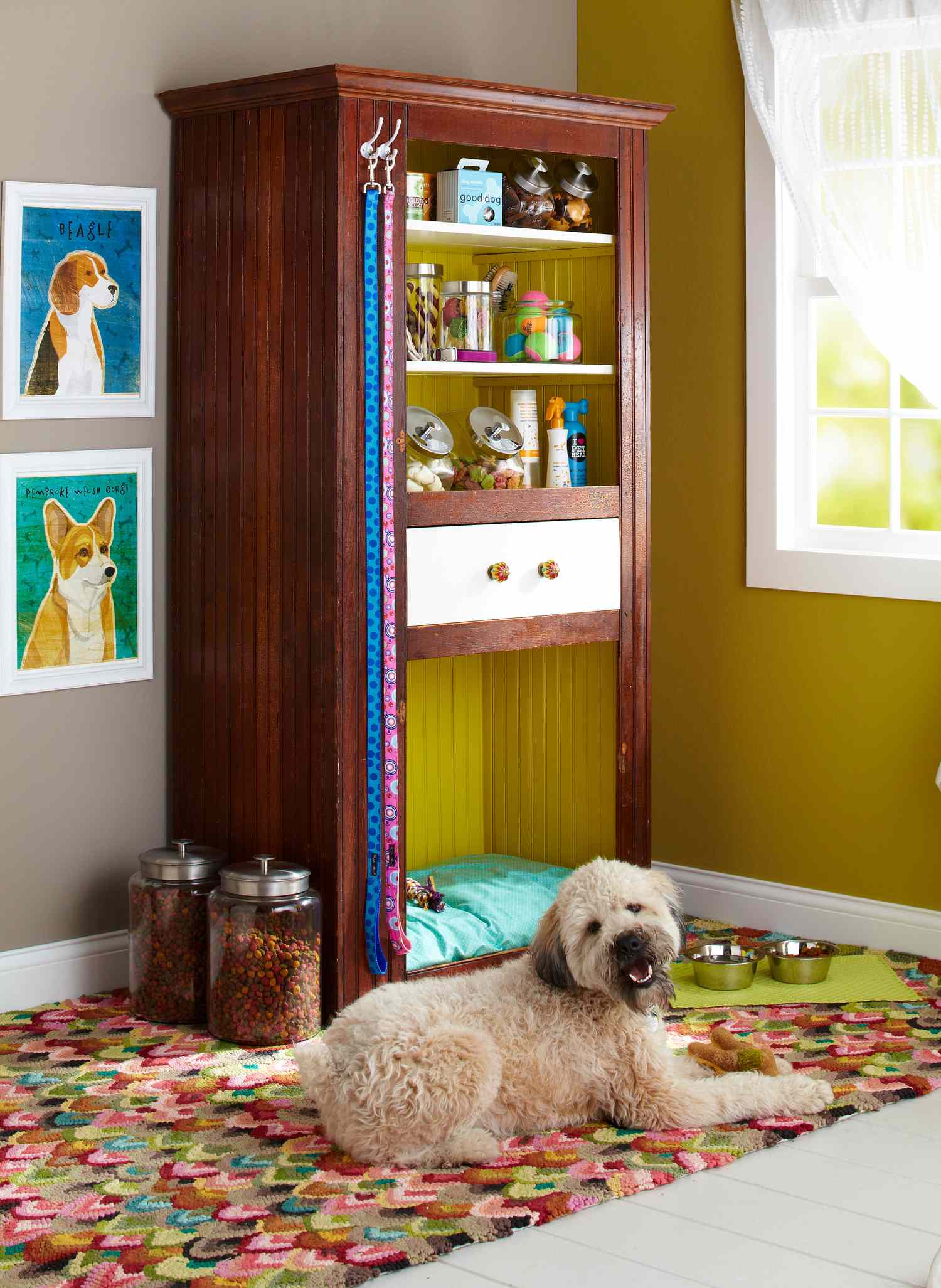
11. A Cheerful Pet Station with a Carved Wood Cabinet
That jolt of vibrant yellow inside the cabinet is everything. It’s a completely unexpected and delightful surprise. From the outside, you see a handsome, traditionally carved wooden cabinet. But the open nook reveals a sunny, beadboard-lined interior that adds a layer of custom, joyful personality. It proves you don’t need to paint a whole room to make a big color statement. This single design choice transforms the piece from just furniture into a conversation starter.
💰 Budget Breakdown
This space is a masterclass in controlled eclecticism. The traditional carved wood cabinet acts as a grounding, classic anchor. This allows the more playful elements—the bold yellow interior, the whimsical dog art, and the riotously colorful abstract rug—to coexist without creating chaos. The neutral gray wall is the quiet backdrop that lets all these competing personalities shine. It’s a delicate balance of classic, colorful, and modern that just sings.
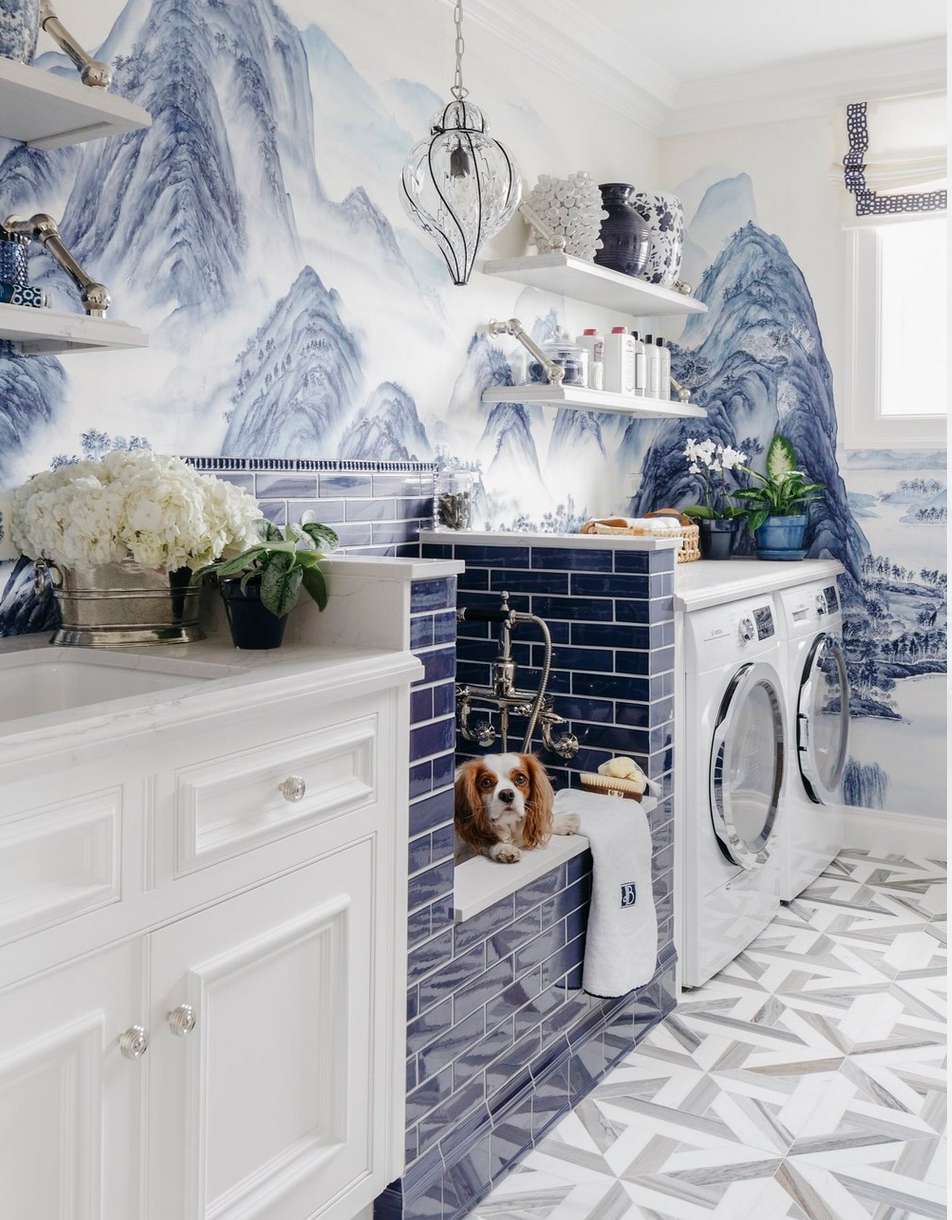
12. A Laundry Room Pet Wash with a Mountain Mural
Checklist:
- Plumbing Access: Confirm with a plumber that you can easily run hot and cold water lines and a drain to your desired location. This is the biggest potential cost and hurdle.
- Waterproofing: Plan for proper waterproofing behind and under the wash station. This includes a waterproof membrane (like Kerdi board) behind the tiles and a properly sloped basin.
- Ventilation: Laundry rooms can get humid. Ensure you have a good exhaust fan to handle the extra moisture from dog baths, which will protect your mural and prevent mildew.
- Mural Scale: Measure your wall precisely before ordering a mural. Ensure the most impactful part of the design won’t be covered by the washtub or appliances.
📐 Style Math
Creating a feature-wall pet spa is a mix of plumbing, tile work, and decorating.
- Plumbing Rough-In: $700 – $2,000
- Wall Mural & Installation: $400 – $1,200
- Tile & Installation (including waterproofing): $800 – $2,500
- Faucet and Fixtures: $200 – $600
- TOTAL: $2,100 – $6,300
Budget Alternative: Get a similar vibe by using a large-scale mountain decal instead of full wallpaper, and a simple, pre-fabricated utility sink instead of a custom tiled basin. This can bring the cost down by 60-70%.
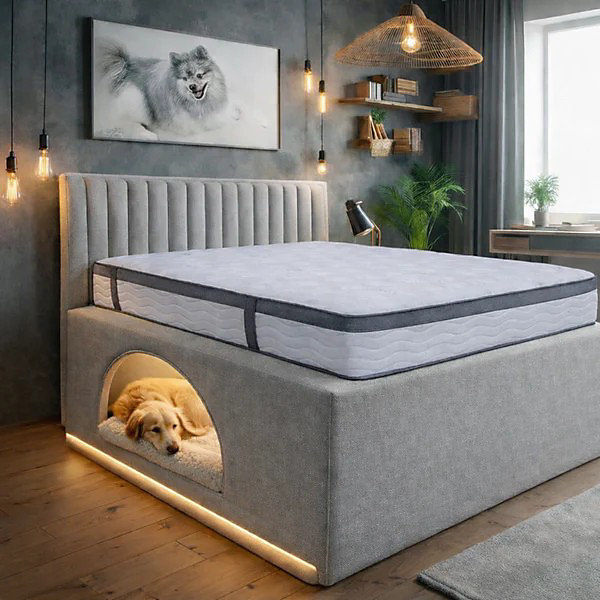
13. An Upholstered Bed with a Built-in, Lighted Dog Alcove
This dramatic look is a blend of 50% industrial edge, 40% modern comfort, and 10% personalized art. The industrial feel comes from the dark gray walls, distressed wood, and exposed bulb lighting. The modern comfort is all about the plush, channel-tufted upholstered bed frame. The final 10% is the oversized dog portrait, which injects personality and makes it clear who this special alcove is for. The under-bed lighting bridges both worlds, feeling both industrial and cozy.
🔧 How-To Brief
That under-bed strip lighting, while very cool, will highlight every speck of dust and dog hair that accumulates underneath. Plan for frequent sweeping or vacuuming. The light grey upholstery on the bed frame could be a magnet for dirt from a dog who likes to rub against furniture. If your dog is a ‘leaner’, consider treating the fabric with a protective spray like Scotchgard, and be prepared for regular spot cleaning to keep it looking fresh. The tufted headboard will also require occasional vacuuming with an upholstery brush.
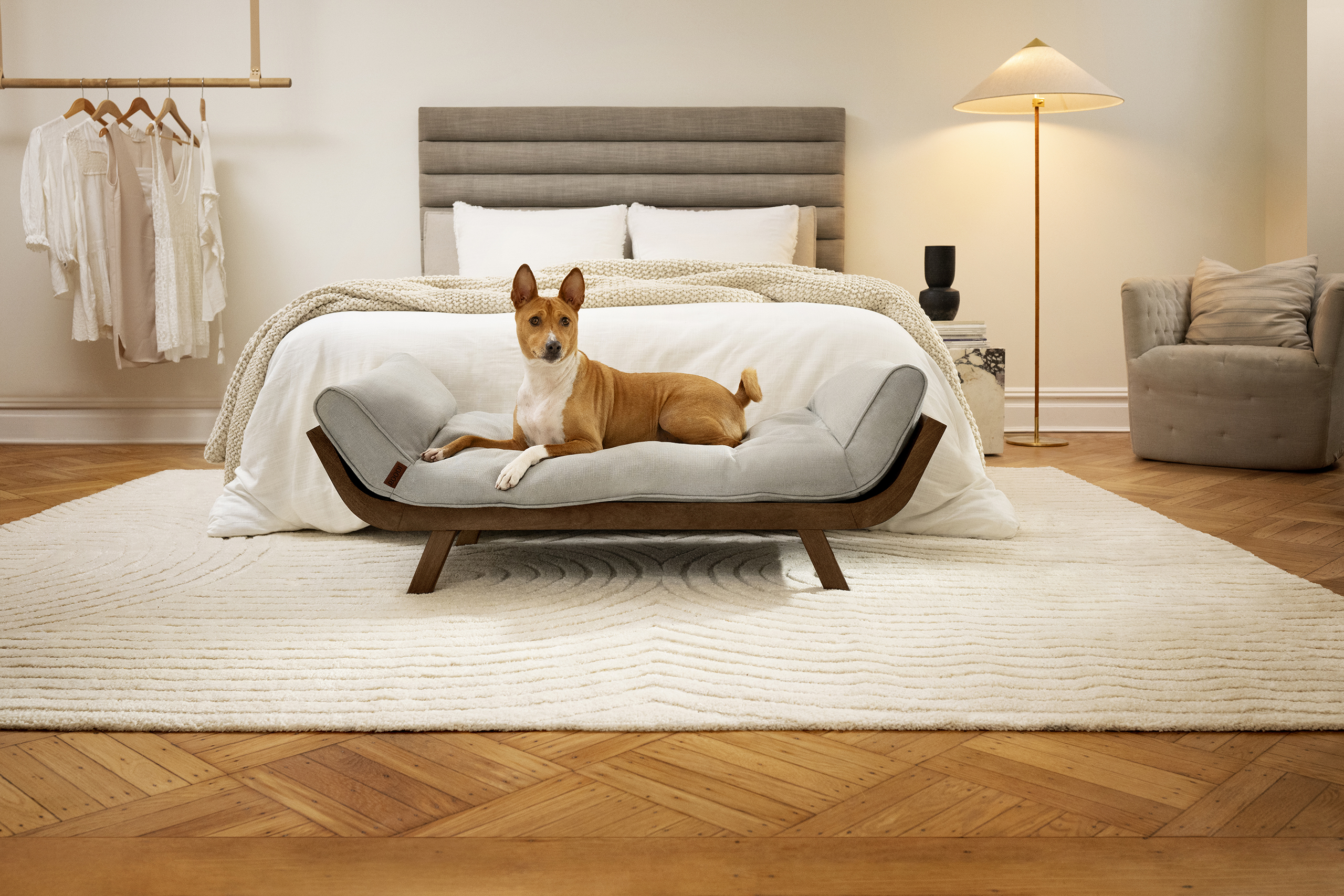
14. A Minimalist Bedroom Featuring a Pet Chaise Lounge
This serene, spacious look is best suited for larger bedrooms, ideally 200 square feet or more. The pet chaise lounge, while chic, has a footprint similar to a human armchair. You need ample space around the main bed and the chaise to avoid a cluttered feeling. A minimum of 36 inches of clearance for walkways is recommended. This generous scale is what makes the room feel so calm and luxurious. In a smaller room, a similar vibe could be achieved with a much lower profile, minimalist pet bed, like the one in Idea #23.
⭐ The One Thing
A pet chaise is a commitment. It’s a substantial piece of furniture, not just a pet bed you can toss in the wash. Before you buy, consider your pet’s habits. Do they chew furniture legs? Are they prone to accidents? Look for options with removable, washable cushion covers or fabrics designed for high-performance wear. A light grey fabric is beautiful but may not be the most practical choice for a pet who loves muddy paws. Be honest with yourself about the level of upkeep you’re willing to do.
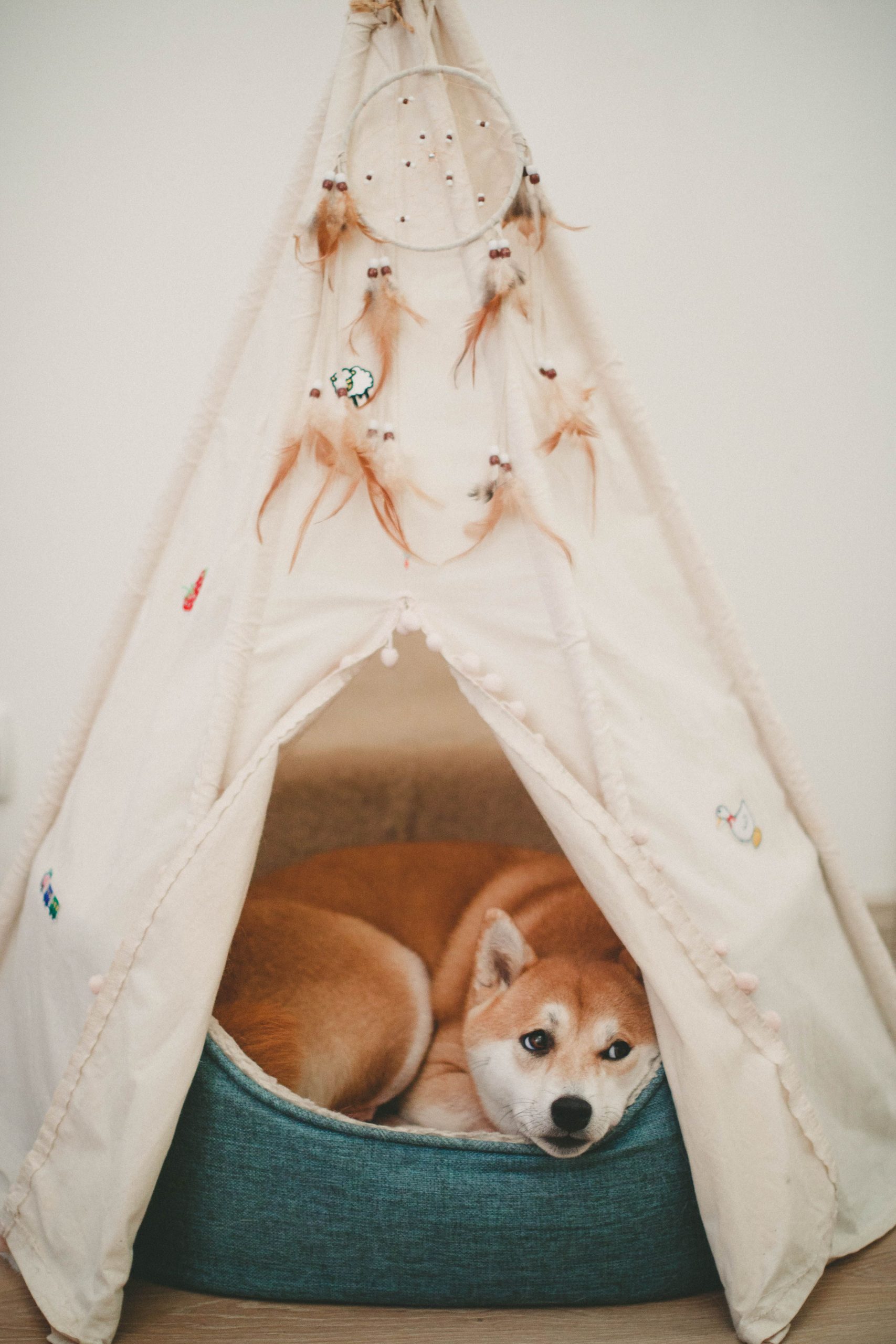
15. A Bohemian Teepee Pet Bed with Dreamcatcher Decor
The boho-chic aesthetic is incredibly accessible and budget-friendly. You can purchase a simple pet teepee from Amazon or Wayfair for $30-$50. The real magic is in the personalization. Find a small dreamcatcher at a craft fair or on Etsy for under $20. The fluffy teal bed inside can be a simple round bed from any pet store. The total look can easily be achieved for under $75, making it a super impactful and affordable way to create a special spot for your pet.
🎯 What Makes It Work
The rise of ‘CozyCore’ and bohemian decor on Pinterest and Instagram has made spaces like this incredibly popular. It’s all about creating soft, comforting, and personalized environments. The pet teepee fits perfectly into this trend. It’s not just a bed; it’s a miniature sanctuary. It provides the den-like security that dogs and cats crave, while the addition of personal touches like the dreamcatcher and pom-poms makes it a charming decor element that says a lot about the owner’s style.
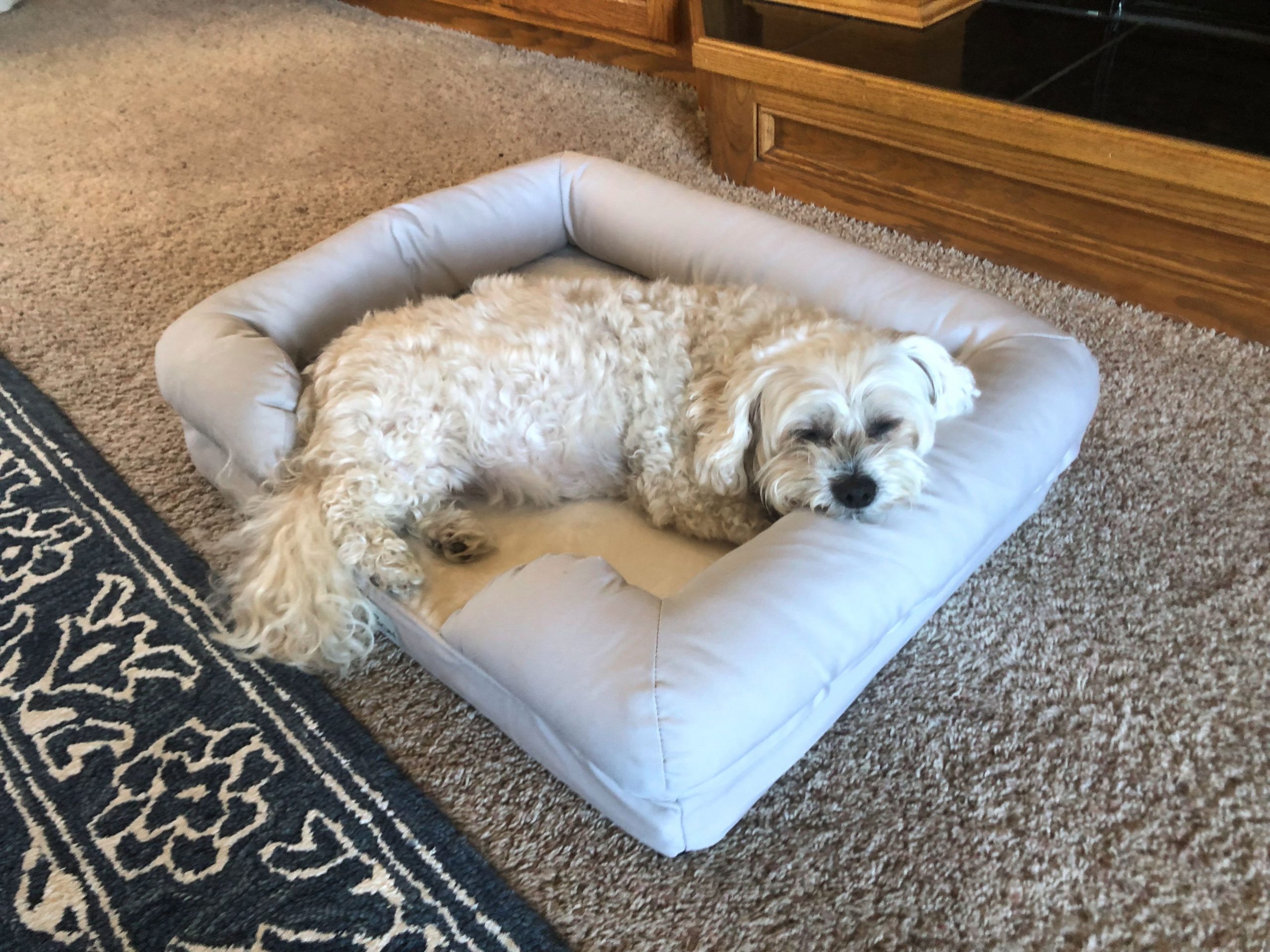
16. Simple Gray Pet Bed on a Plush Shag Carpet
This setup is all about texture layering. You have the soft, padded fabric of the pet bed, the deep, plush pile of the shag carpet, and the flatter weave of the patterned area rug. This combination creates a rich, tactile experience that screams comfort. The neutral color palette—light gray bed, light brown carpet, cream-and-blue rug—ensures the textures are the main story, preventing the space from feeling busy. It’s a simple, effective way to create a dedicated cozy zone without a lot of fuss.
📏 Scale Guide
When layering rugs, the secret to success is contrast in both pattern and pile height. Here, the solid, high-pile shag carpet acts as a soft, neutral base. The patterned, low-pile area rug on top adds visual interest without competing. For a stable setup, ensure the top rug is anchored by at least one piece of furniture. And always use a non-slip rug pad under the top rug to prevent it from bunching up or becoming a tripping hazard.
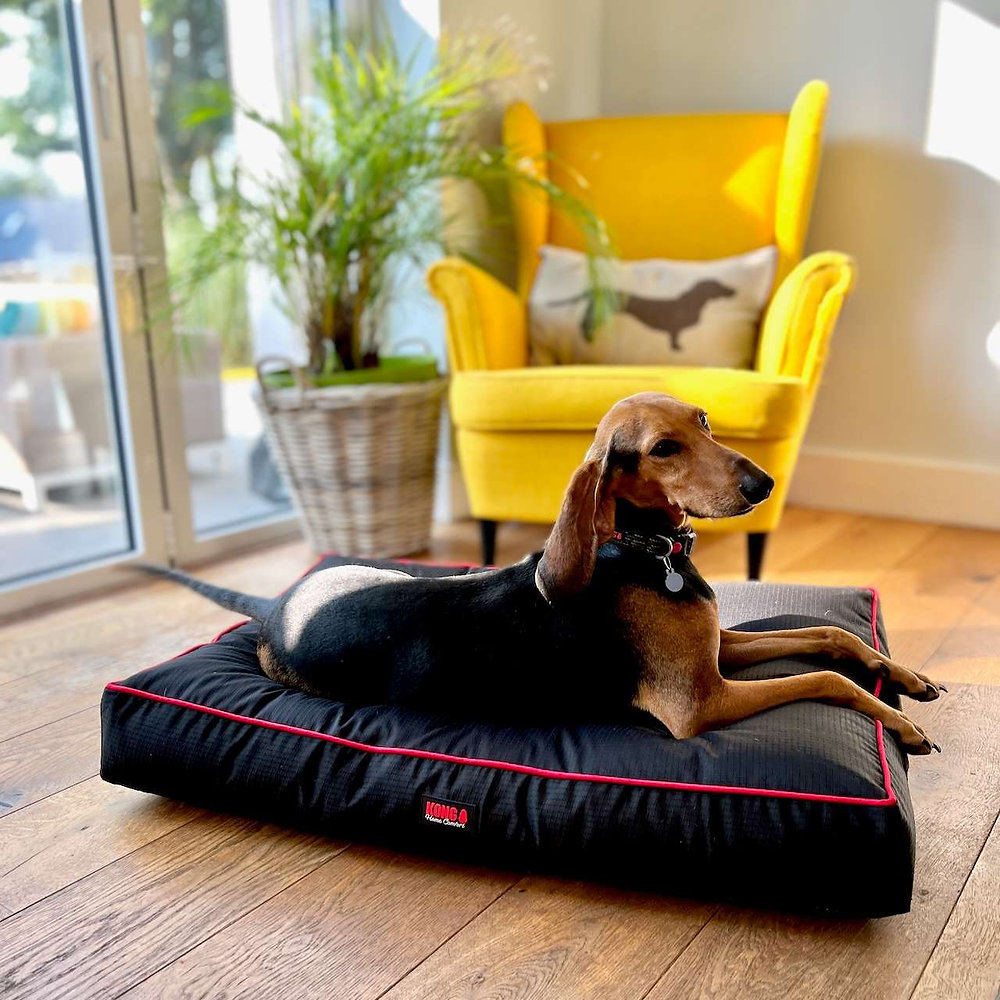
17. Modern Dog Bed with a Pop of Color from a Yellow Armchair
This bright, modern room follows a classic design ratio: 60% neutral foundation + 30% natural element + 10% bold accent. The light wood floors and white walls create a clean, neutral base (60%). The large potted plant in its woven basket brings in a crucial, grounding natural element (30%). The entire look is then electrified by the 10% accent: the vibrant yellow armchair. The red piping on the dog bed is a micro-accent that cleverly links back to the chair’s energy.
🧹 Maintenance Reality
The bright yellow armchair is the undeniable heart of this space. Remove it, and you have a pleasant, but fairly standard, modern room. With it, the room has personality, confidence, and a clear focal point. It injects a dose of pure joy and energy. The white pillow with the dog silhouette is a witty touch that connects the ‘human’ furniture to the pet’s space, making the whole room feel cohesive and fun.
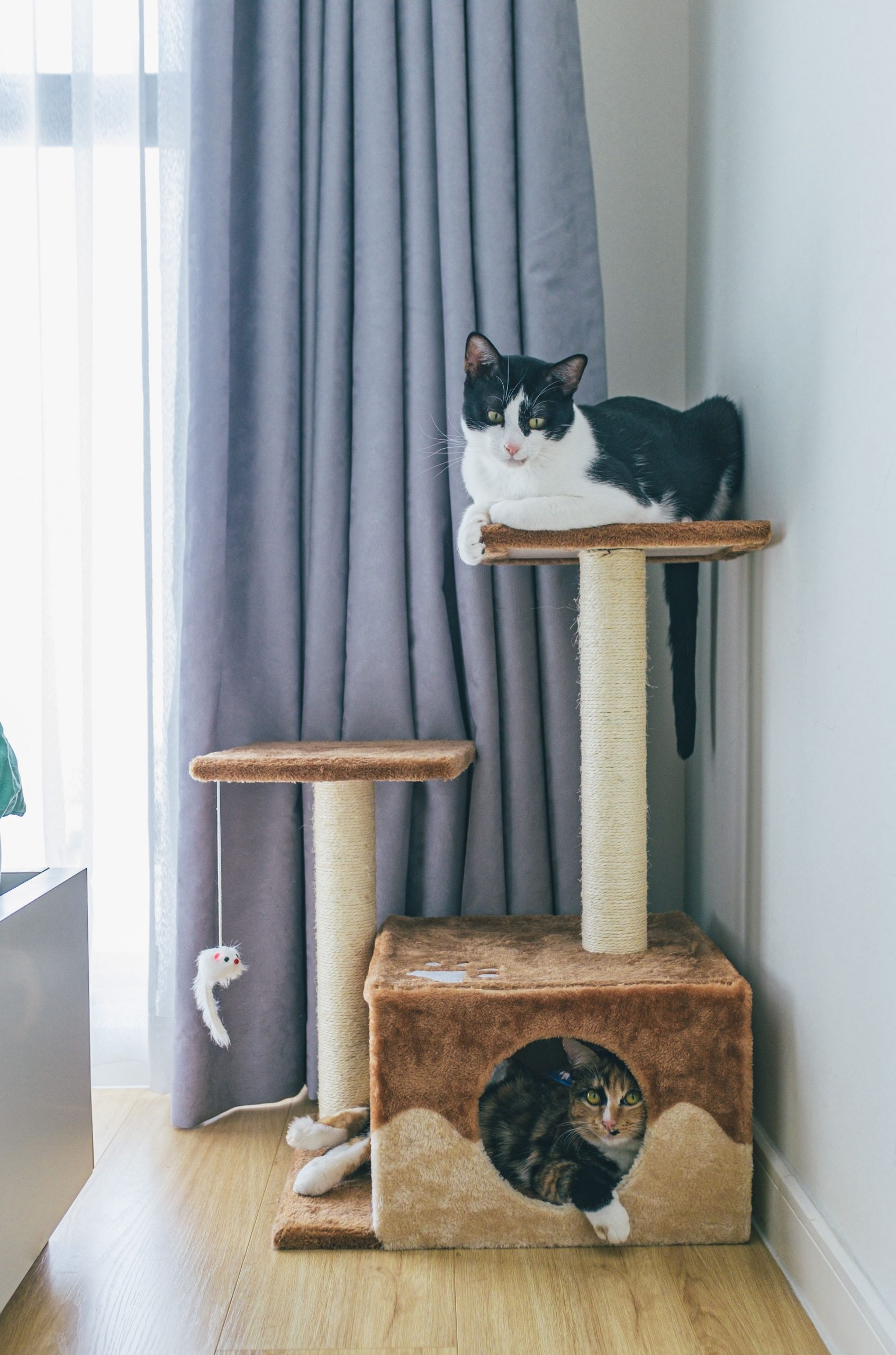
18. A Multi-Level Cat Tree for Play and Rest
Don’t underestimate the ‘shedding’ from a new cat tree. The sisal rope on scratching posts and the fuzzy carpet material can both shed fibers, especially when new and during enthusiastic scratching sessions. Place the tree on a hard floor rather than a rug for easier cleanup. Also, check the stability. A wobbly cat tree is a dangerous one. As you assemble it, make sure every bolt is tight, and consider placing a small weight on the base if you have particularly rambunctious cats.
💸 Get This Look For Less
Cat trees can get surprisingly expensive, but there are great budget options. Stores like Walmart, Chewy, and even Aldi (on occasion) have fantastic models for under $75. Feline territorial instincts aren’t brand-conscious! Focus on features over aesthetics: look for multiple levels, a mix of scratching surfaces (sisal and carpet), and at least one enclosed cubby for security. A simple, feature-rich tree will get far more use than a stylish one that doesn’t meet your cat’s needs.
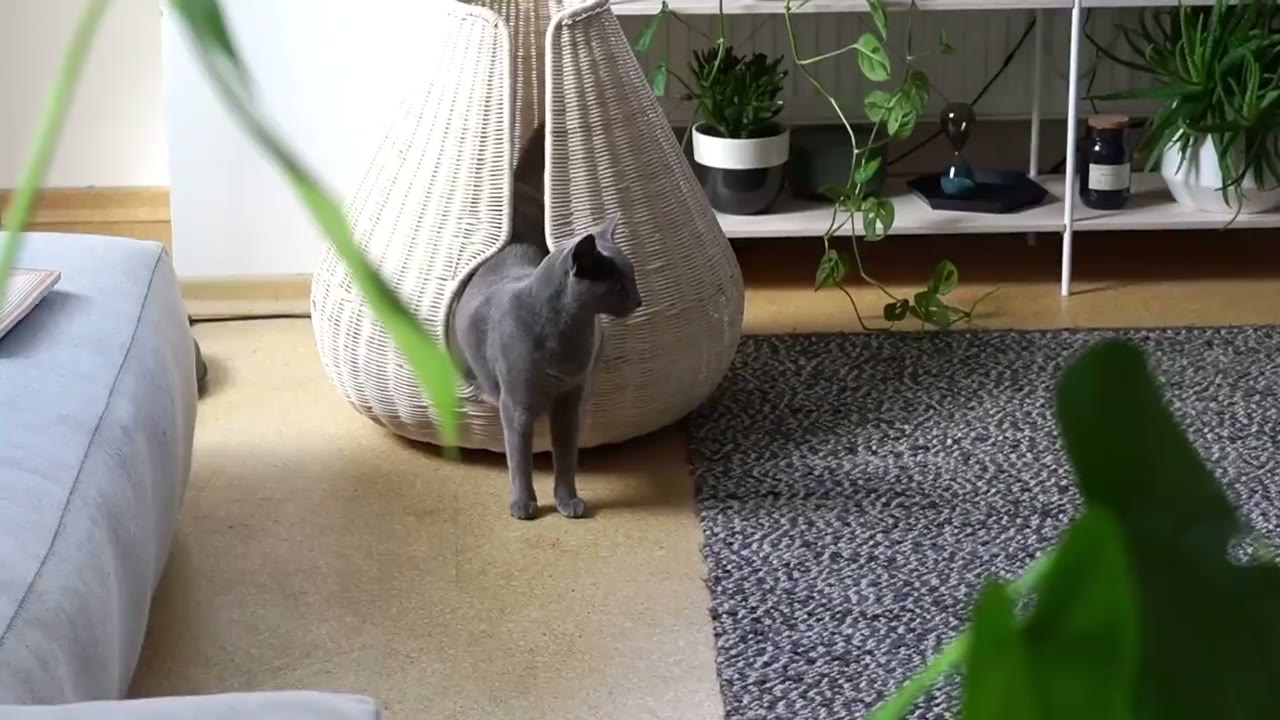
19. A Cozy Cat Nook Featuring a Woven Igloo Bed
This corner is a lovely demonstration of how to blend pet furniture into a natural, calming aesthetic. The woven igloo bed doesn’t scream ‘cat furniture’; its natural fibers and neutral tone harmonize perfectly with the light tan flooring and the nearby potted plants. The mix of textures—the woven pet bed, the nubby gray rug, the smooth leaves of the plants—creates a layered, sensory experience. It feels like a quiet, peaceful retreat for both the cat and its human.
⚠️ Real Talk
The key to the igloo bed is its location. Tucking it into a low-traffic corner next to another piece of furniture (like the shelving unit here) provides a sense of security cats crave. They feel protected on two or three sides. To encourage a hesitant cat to use a new bed, place a familiar blanket or an old t-shirt with your scent inside. The combination of a protected location and a familiar smell is often irresistible.
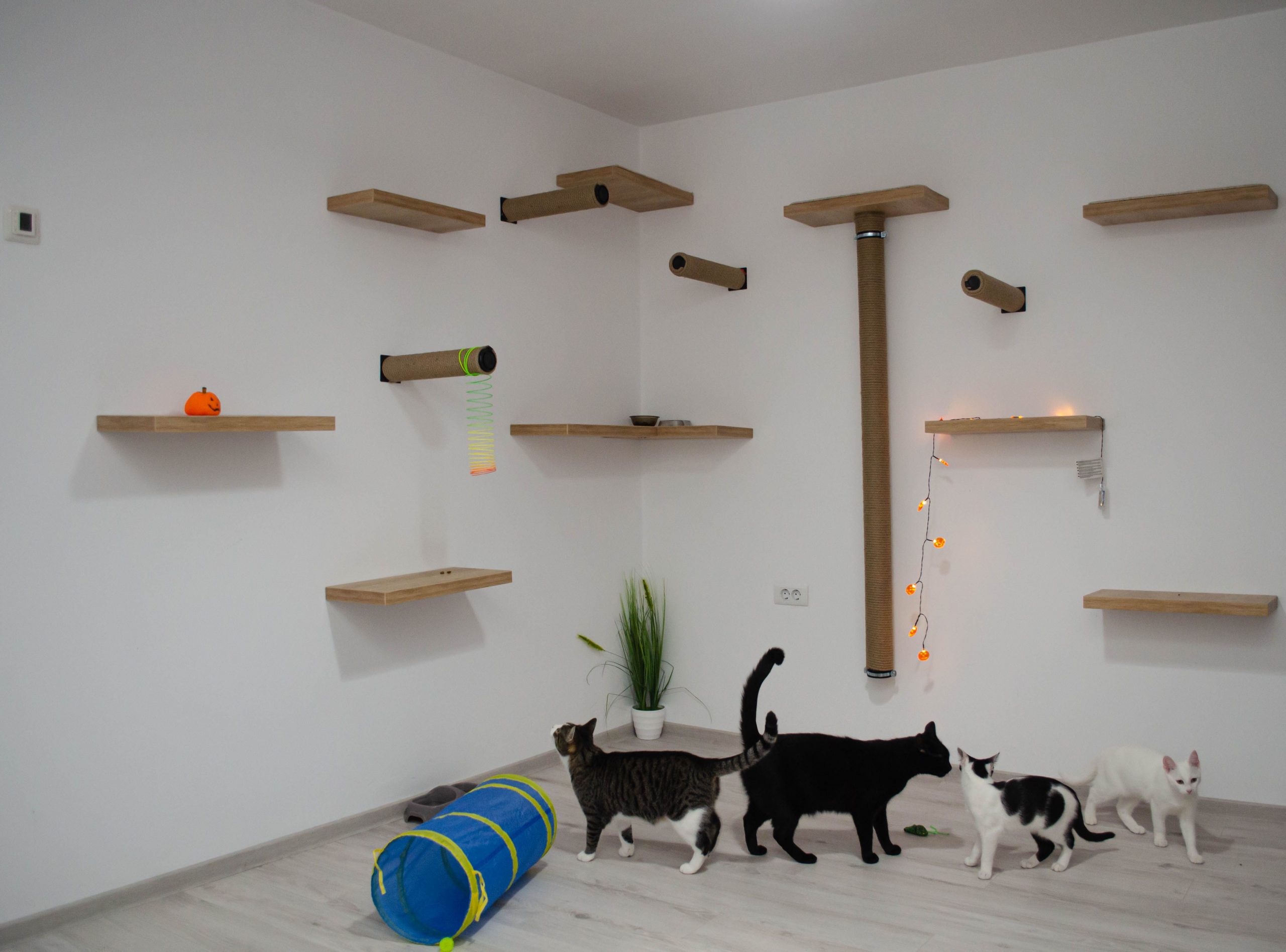
20. A Minimalist Cat Playground with Wall-Mounted Shelves
Installing a Wall-Mounted Cat Shelf (Time: 20 mins per shelf, Cost: $20-$40 per shelf)
- Locate the wall studs using a stud finder. This is non-negotiable for safety. Mark their locations lightly with a pencil.
- Hold the shelf bracket against the wall at your desired height, ensuring the screw holes align with a stud. Use a level to make sure it’s perfectly horizontal.
- Mark the screw holes with a pencil.
- Drill pilot holes into the stud at your marks. This makes driving the screws much easier and prevents the wood from splitting.
- Attach the bracket to the wall using the screws provided. Make sure they are tight and secure.
- Attach the wooden shelf to the bracket according to the product’s instructions. Test its sturdiness with firm pressure before letting your cat play.
🔥 Trending Context
A vertical ‘catio’ like this is a game-changer for smaller apartments or homes lacking floor space. It works in rooms of almost any size, as it utilizes unused vertical wall space. The key is ceiling height. You need at least an 8-foot ceiling to create a climbing path that’s interesting enough. For maximum fun, plan a path that allows your cat to climb up, traverse across the wall, and climb back down, with shelves spaced about 12-18 inches apart both vertically and horizontally.
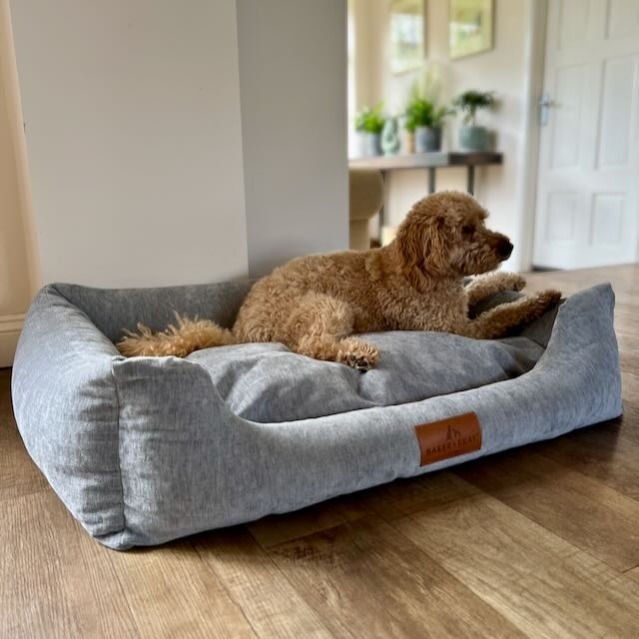
21. Classic Heather Grey Pet Bed on Light Wood Flooring
It’s the simplicity. In a world of over-the-top pet accessories, this bed’s power lies in its classic, understated design. The heather grey fabric is the furniture equivalent of a perfectly tailored grey suit—it’s timeless, versatile, and effortlessly chic. It doesn’t need loud patterns or gimmicky shapes. The clean lines and neutral color allow it to blend seamlessly into almost any decor style, from minimalist to modern farmhouse, making it a purchase that will last through years of design trends.
💡 Designer Tip
The beauty here is in the quiet contrast of color and texture. The soft, slightly nubby texture of the grey fabric bed provides a gentle contrast against the smooth, hard surface of the light wood plank flooring. The golden-brown fur of the dog introduces a crucial point of warmth into the otherwise cool-toned palette of grey, white, and light wood. This balance of warm and cool tones is what makes the scene feel so balanced and inviting.
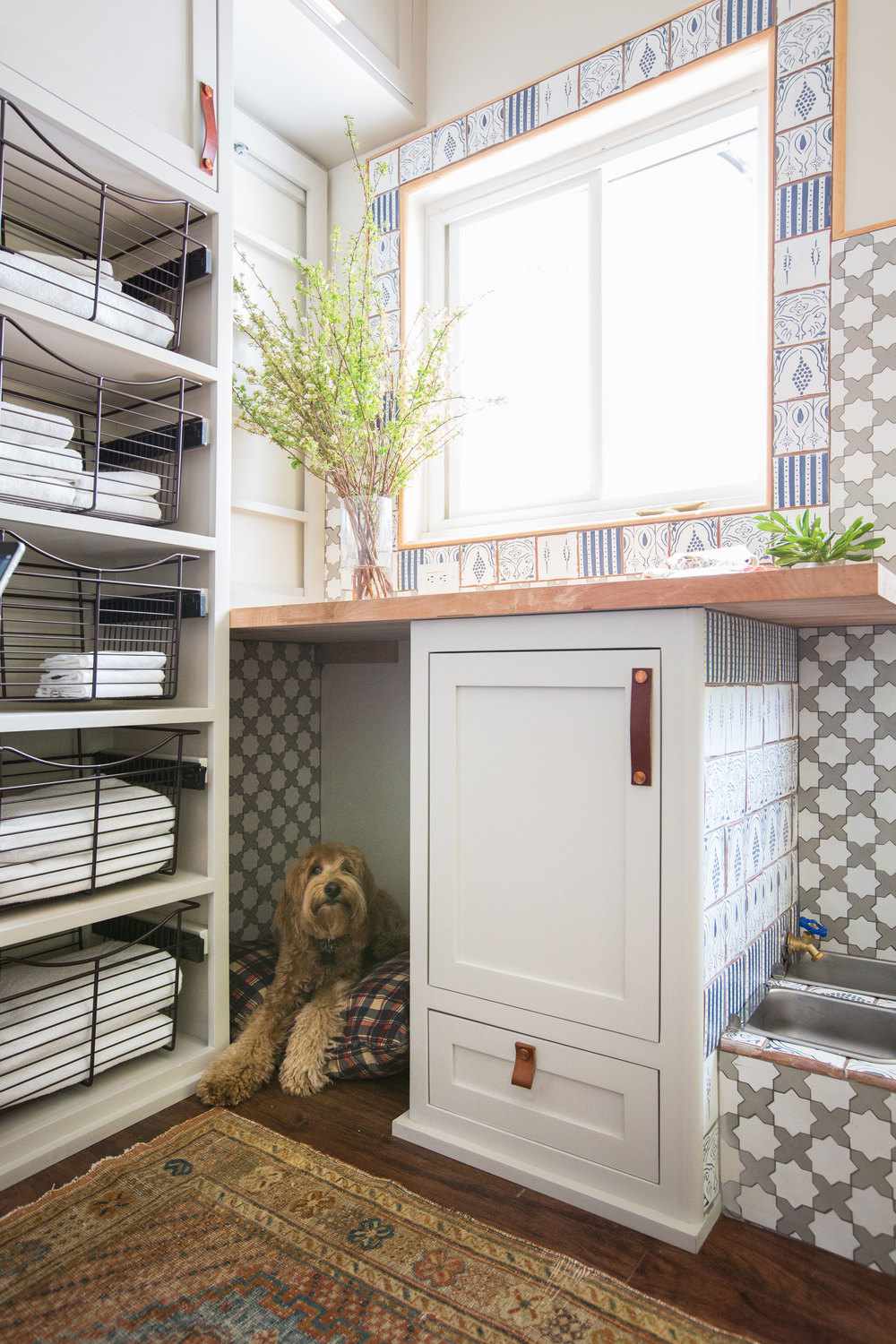
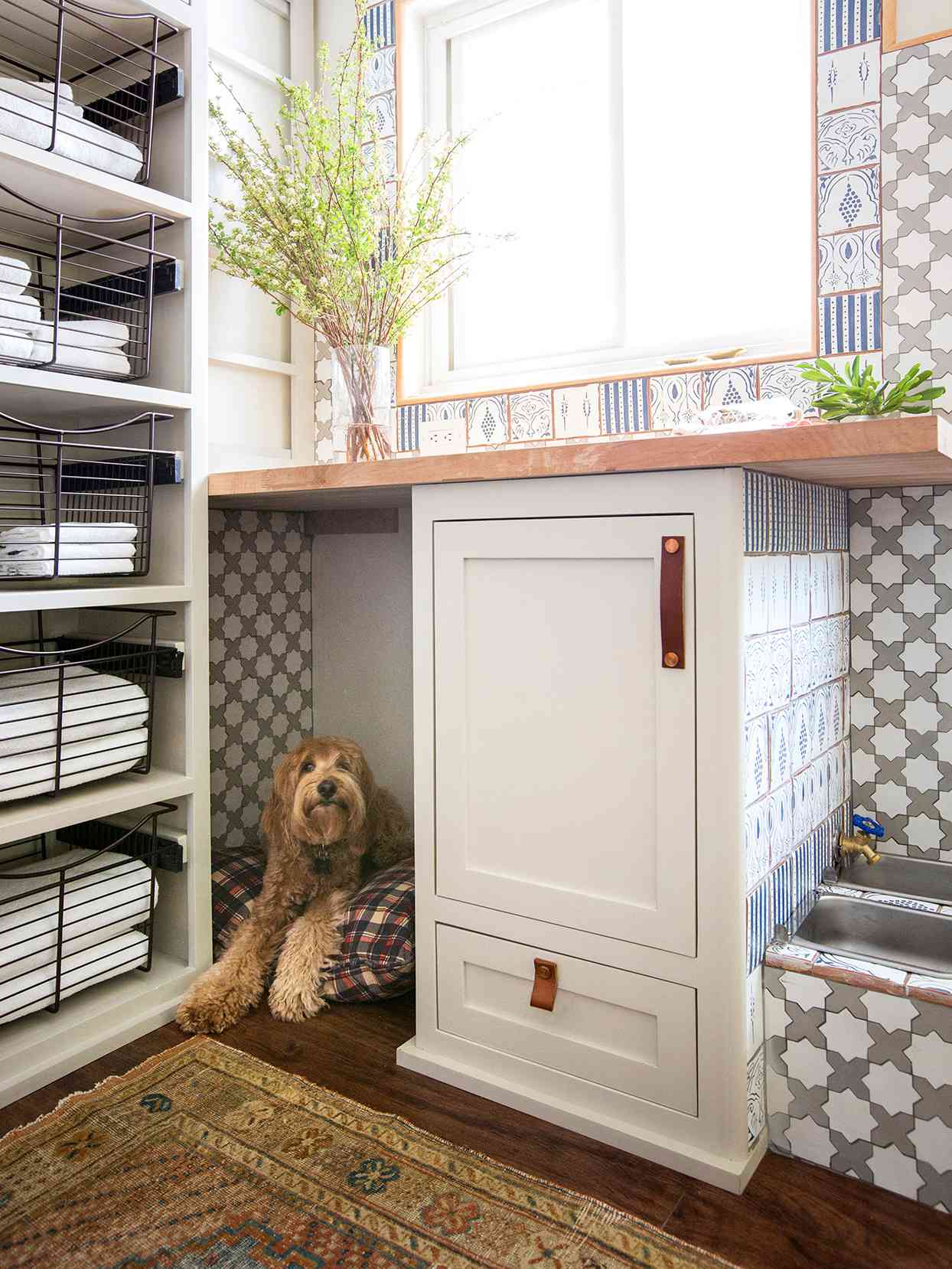
22. A Built-In Dog Bed with Cheerful Patterned Tile
This charming nook is 50% modern farmhouse, 30% playful pattern, and 20% industrial touch. The white cabinetry, wood countertop, and utility sink are pure modern farmhouse. The mix of the blue and white floral-style tiles with the gray and white geometric tiles adds a layer of bold, playful pattern that keeps the look fresh and personal. The industrial accents, like the wire baskets and brass faucet, provide a bit of functional edge that grounds the whole design.
✅ Before You Start
Mixing multiple strong patterns in a small space is a high-risk, high-reward strategy. It works beautifully here, but it could easily go wrong. The key to success is a unified color palette. Notice how the blue, white, and gray are repeated across both tile patterns and the plaid dog bed. If you introduce too many competing colors on top of competing patterns, the look can quickly devolve into chaos. When in doubt, stick to two patterns and one solid.
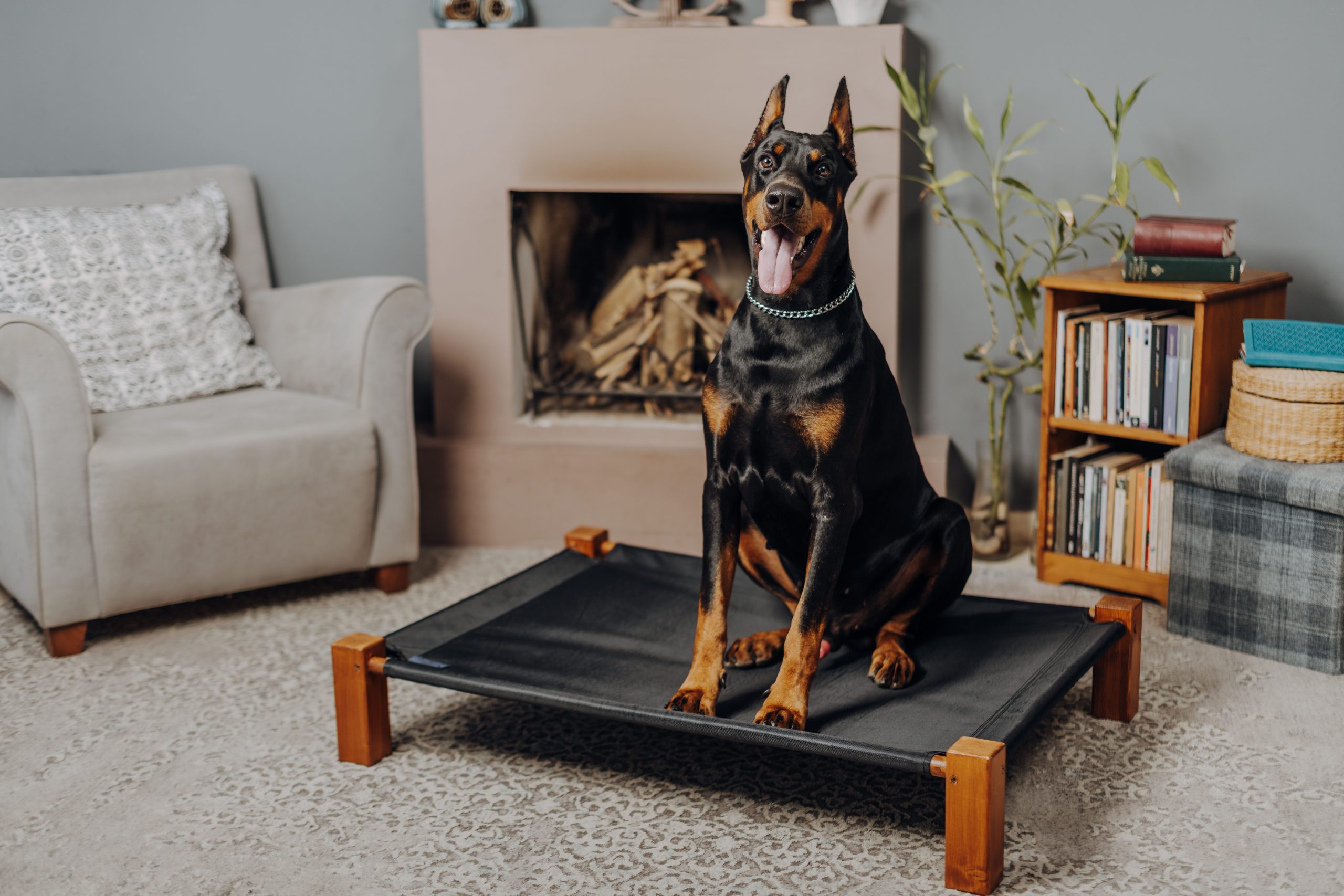
23. An Elevated, Modern Pet Bed with a Natural Wood Frame
Elevated pet beds are having a moment, and for good reason. The design world is leaning into furniture that feels lighter and less bulky, and this extends to our pets. Raising the bed off the floor creates a sense of spaciousness, allowing light and air to flow underneath. This makes a room feel larger and less cluttered. It also aligns with the biophilic design trend, which emphasizes natural materials like the simple, clean lines of this wooden frame.
💰 Budget Breakdown
The principle of ‘figure-ground’ is in full effect here. The dark fabric and defined wooden frame of the pet bed create a strong, clear shape (the ‘figure’) that stands out against the light gray patterned rug and pale wall (the ‘ground’). This contrast makes the pet bed a deliberate design element, not just a blob on the floor. The elevation adds to this effect, giving the bed its own distinct silhouette and presence in the room.
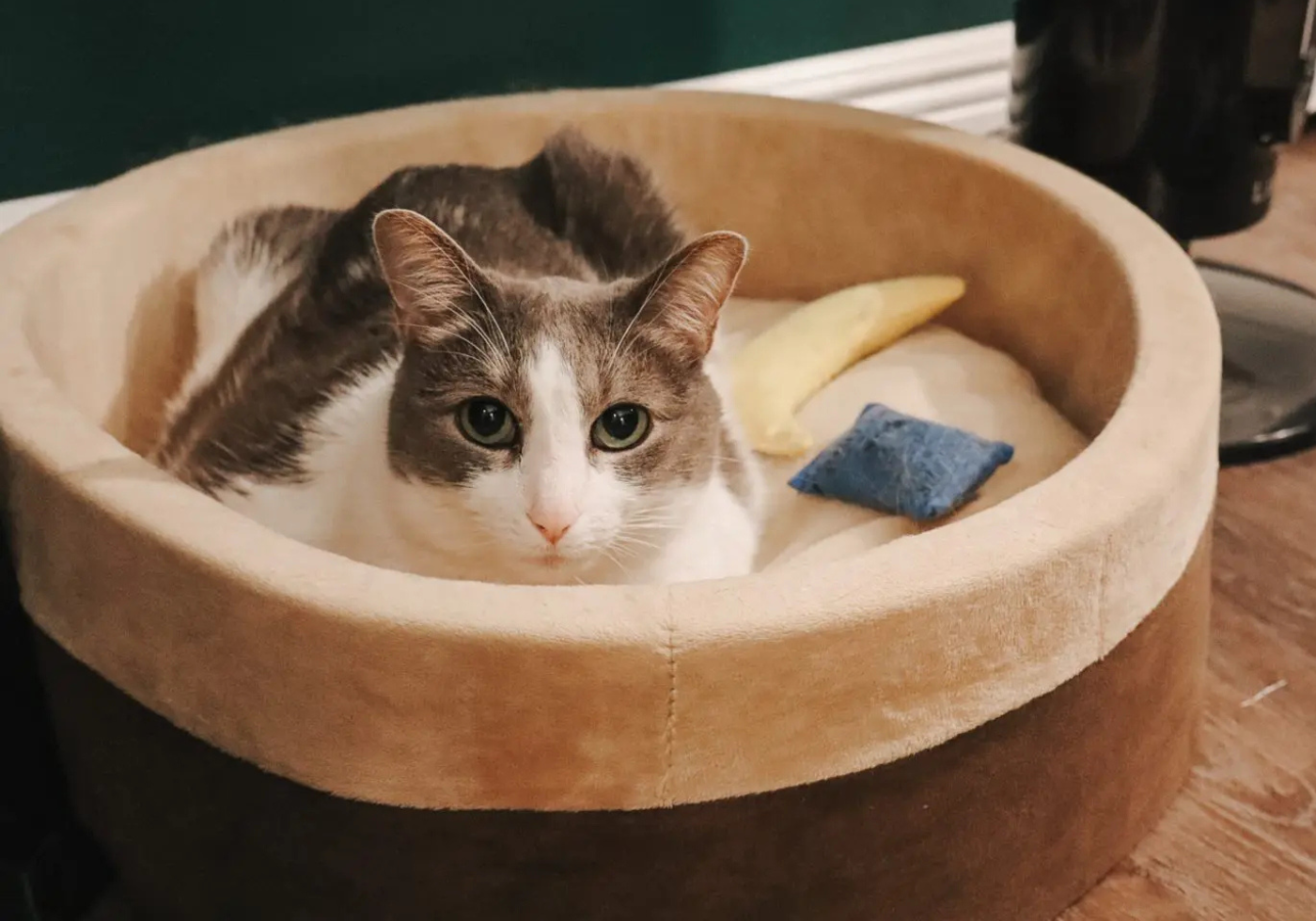
24. A Plush Two-Tone Pet Bed with Playful Toys
When choosing a pet bed, think about visual weight. This bed is a great example of smart design. The darker fabric on the bottom half grounds the piece, making it feel substantial and hiding minor scuffs or dirt. The lighter fabric on the rim and interior gives it a feeling of lightness and draws the eye inward, making it look extra plush and inviting. This two-tone approach is a clever trick to make a simple bed look more expensive and thoughtfully designed.
📐 Style Math
Cozy, plush pet beds are one of the best budget-friendly pet items you can buy. You don’t need to spend a fortune. Retailers like Target’s Boots & Barkley line, or even grocery stores with pet aisles, often have fantastic options for under $30. The key is the plush factor. Look for beds with a deep, soft cushion and raised sides that offer a sense of security. The fun toys, like the little banana seen here, can be found for just a few dollars and add that final touch of playful personality.
25. A Cozy Dog Nook with Mixed Tiles and Rustic Charm
This design succeeds by embracing a ‘more is more’ philosophy within a controlled palette. The mix of blue and white wall tiles could feel chaotic, but it’s grounded by the solid white of the cabinetry and the warmth of the wooden countertop. The antique-style rug introduces another pattern, but its terracotta and blue tones echo the colors already present in the tiles, creating harmony rather than discord. It’s a testament to the idea that if you stick to a consistent color story, you can mix patterns with confidence.
🔧 How-To Brief
The leather pull handles on the cabinets are the single detail that solidifies the nook’s rustic, slightly eclectic charm. Standard metal knobs or pulls would have made the space feel more like a conventional laundry room or kitchen. The warm, tactile quality of the leather, however, adds a layer of softness and a handcrafted feel. It’s an unexpected material choice that perfectly complements the wooden countertop and the antique rug, completing the cozy, lived-in aesthetic. It’s subtle, but it makes a world of difference. Compare it to the brass hardware in Idea #3 to see how hardware defines a space.
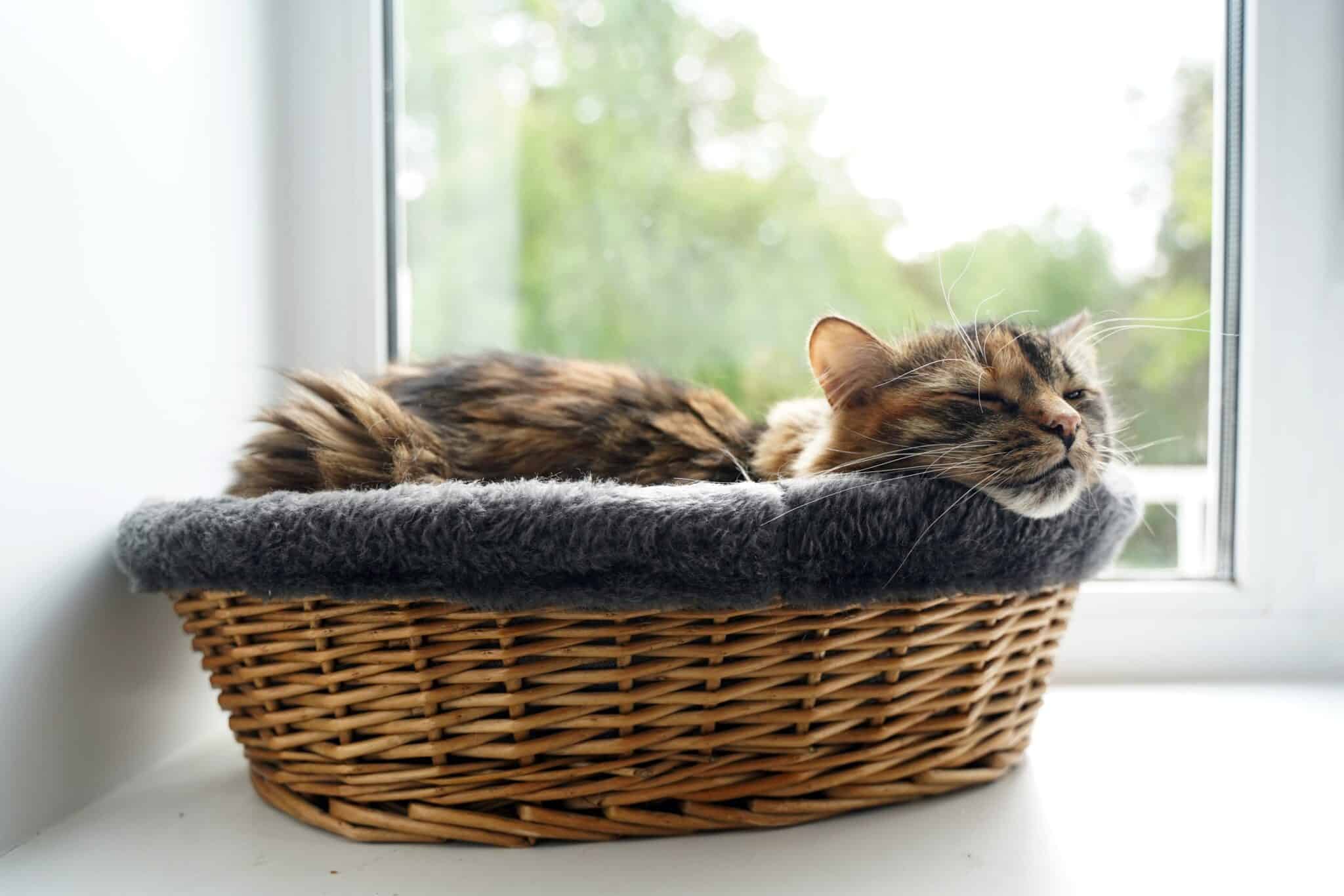
26. A Sunlit Cat Nap in a Woven Wicker Basket
The biggest mistake people make with cat beds is placement. Cats are solar-powered creatures constantly seeking warmth. A windowsill is prime real estate. To make a simple basket bed like this even more enticing, place it on the sunniest windowsill in your home—typically a south- or west-facing window. The combination of a soft surface and direct sunlight is practically guaranteed to make it your cat’s new favorite spot. On colder days, a microwavable heating pad tucked under the liner is a game-changer.
⭐ The One Thing
This is perhaps the easiest and most affordable pet ‘bedroom’ to create. You don’t need a specialty ‘pet bed’ at all. Head to a thrift store, Target, or IKEA and look for a shallow woven basket, like those meant for holding fruit or magazines. It will likely cost you $10-$20. Then, find a plush throw blanket or even an old, soft sweatshirt to line it with. The cat will care about the coziness and the sunbeam, not the price tag. Total cost: under $25.
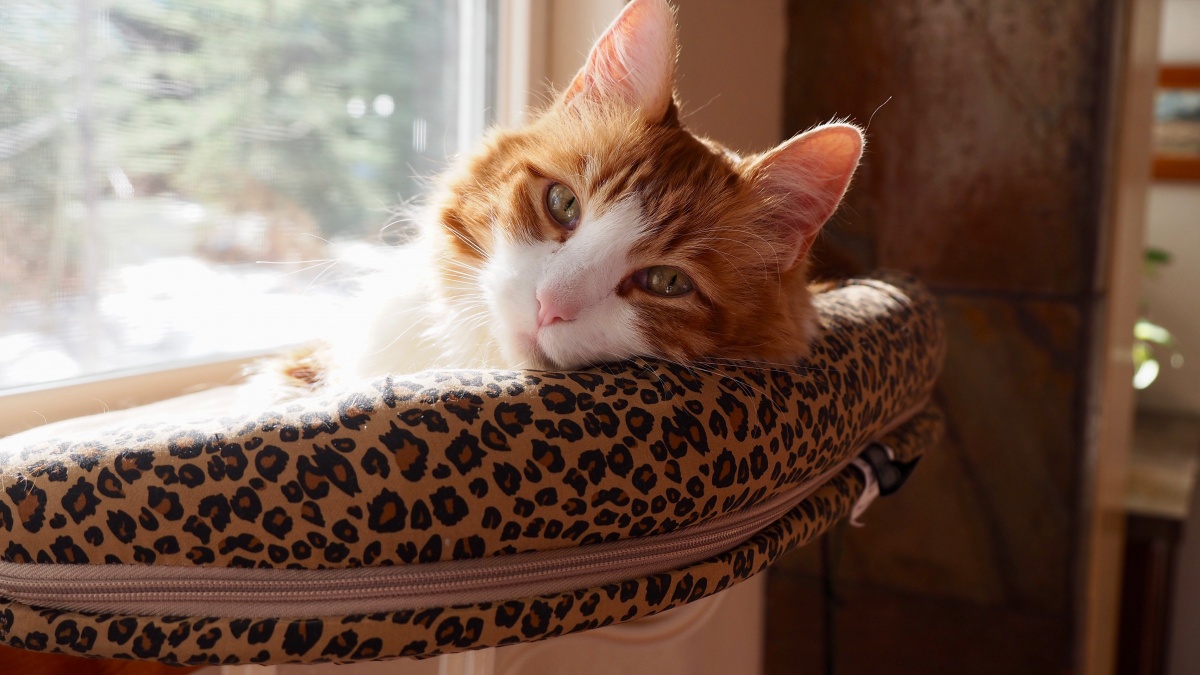
27. A Plush Leopard Print Window Perch for a Relaxing Cat
Window perches are fantastic, but safety is paramount. The suction cup models are popular, but they can and do fail, especially with temperature changes on the glass or if the cups get dirty. For any cat over 10 pounds, or for perches placed on high windows, strongly consider a more secure, screw-mounted shelf or a perch that braces against the window frame and sill. It might take a bit more installation effort, but the peace of mind is worth it. Always check the weight limit before you buy.
🎯 What Makes It Work
Revitalize Suction Cups (Time: 5 mins, Cost: $0)
- Over time, suction cups can get dirty and lose their grip. Remove them from the perch.
- Wash the suction cups thoroughly with warm water and a little bit of dish soap to remove any oils or dust.
- Rinse them completely and dry them with a lint-free cloth.
- Using a glass cleaner, meticulously clean the area of the window where you plan to stick the cups.
- For a super-strong hold, apply a tiny smear of petroleum jelly to the rim of the suction cup before pressing it firmly onto the clean glass.
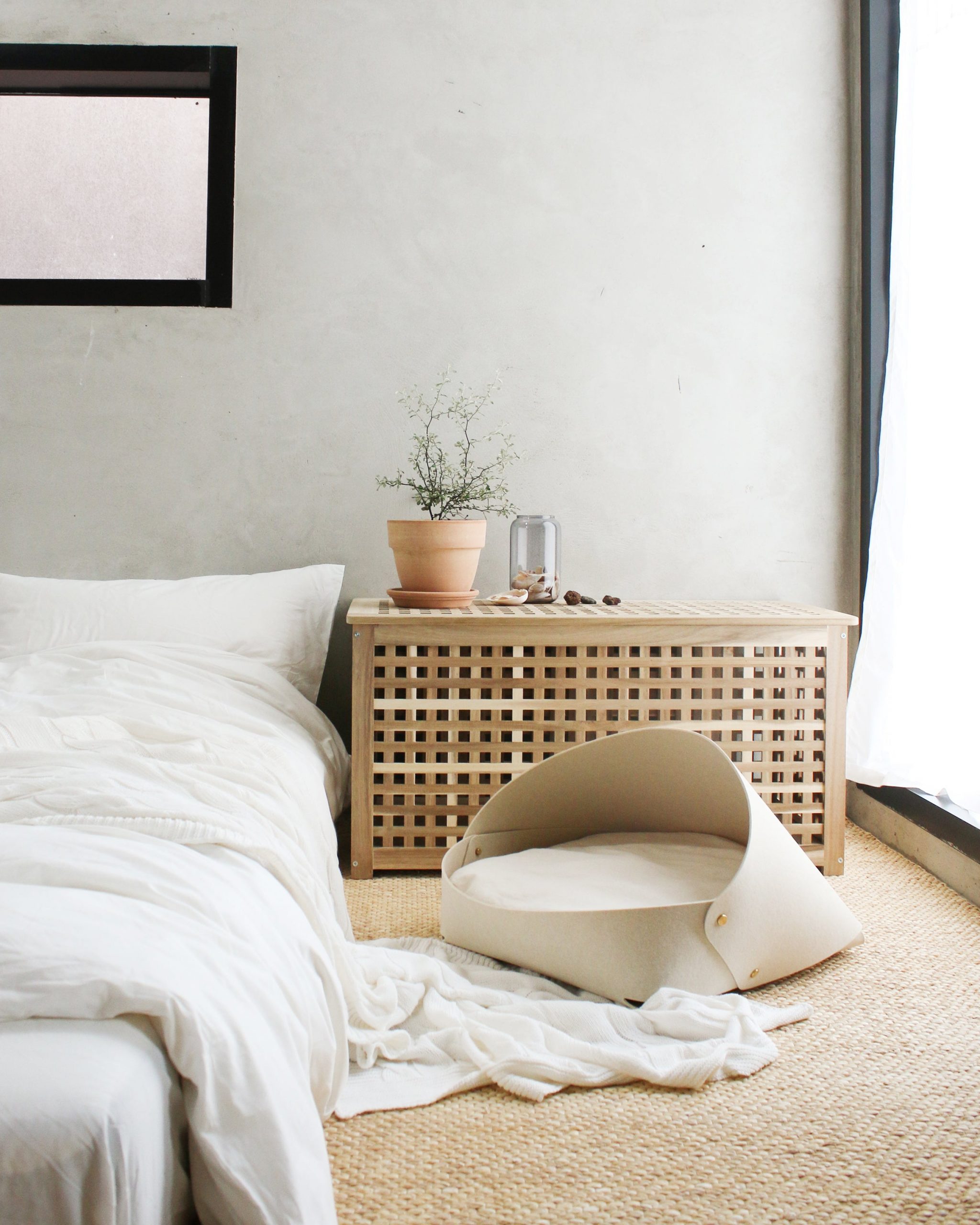
28. A Minimalist Pet Nook with Woven and Natural Textures
This space is a beautiful example of a monochromatic-adjacent color scheme that relies on texture for interest. The palette is an incredibly tight range of beige, cream, and off-white. What keeps it from being boring is the rich variety of textures: the smooth concrete wall, the plushness of the pet bed’s cushion, the coarse weave of the natural fiber rug, and the geometric lattice of the light wood cabinet. This textural conversation creates a sense of depth and warmth that color alone could not achieve.
📏 Scale Guide
This minimalist, natural approach is incredibly versatile and works well in rooms of all sizes. The key is the curated selection of items. In a small bedroom (around 120-140 sq ft), this setup next to a bed provides function and style without clutter. The use of a leggy cabinet and a low-profile pet bed keeps things feeling airy. The woven rug should be large enough to sit under the front legs of the bedside table and the pet bed, which unites them into a single, intentional vignette.
29. High-Contrast Minimalism with Natural Accents
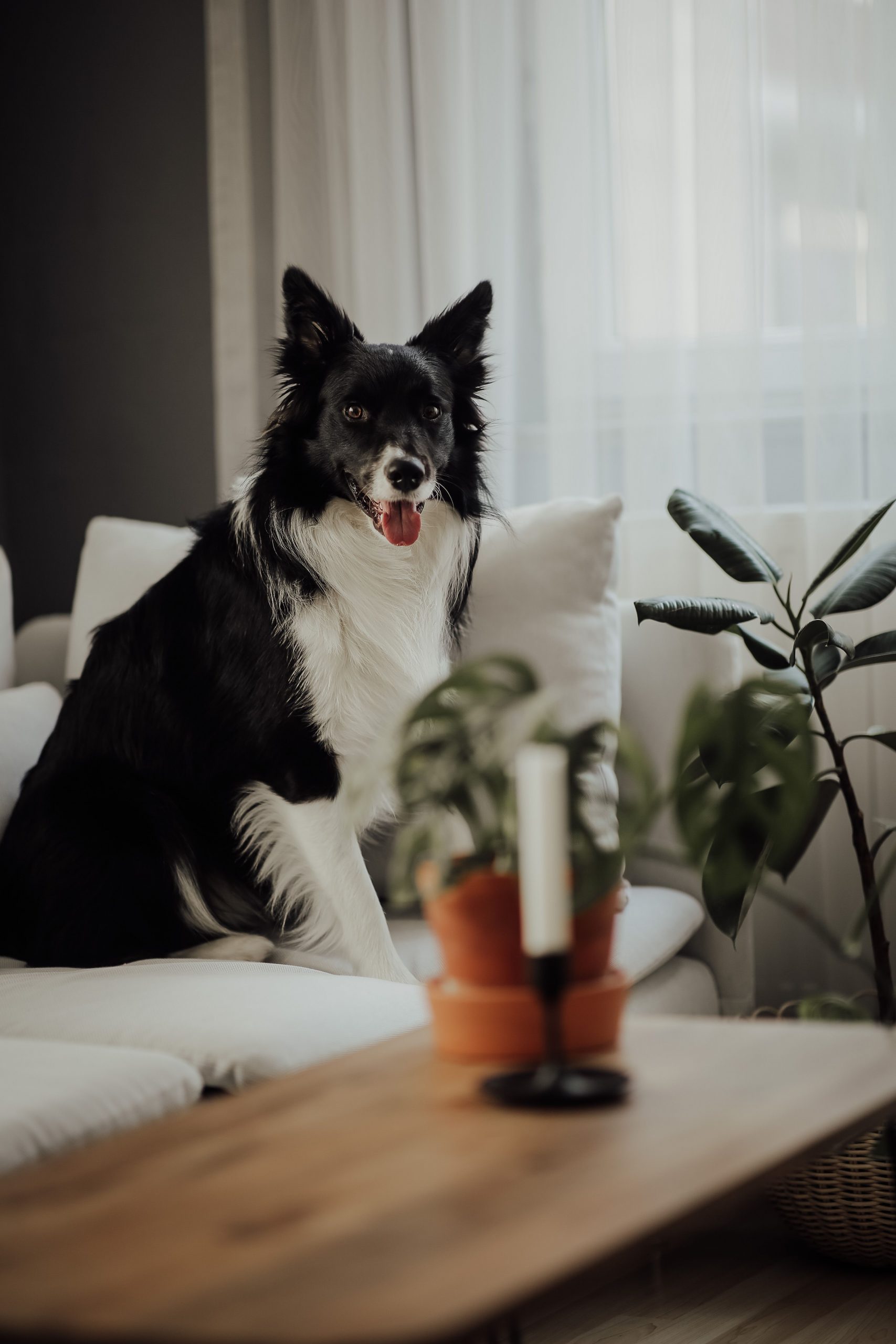
The high contrast between the black dog and the crisp white couch is the visual anchor of this entire scene. It’s a classic, bold pairing that creates immediate graphic impact. The minimalist setting—white walls, sheer curtains, simple wood furniture—allows this contrast to take center stage. The composition highlights the dog’s form and makes the space feel dramatic yet serene. It’s a brave choice that pays off in a big way.
🧹 Maintenance Reality
The formula for this serene space is 70% white space + 20% natural elements + 10% black accent. The white couch, walls, and sheer curtains create a bright, airy foundation (70%). The light wood of the coffee table and the deep greens of the potted plants provide the essential natural, grounding elements (20%). The final touch is the black accent (10%)—provided here by the dog itself, but which could also be a black pillow, a black frame, or a black decorative object—that gives the room its sharp, graphic edge.
30. A Peaceful Nap on a Dark Gray Cat Tree Perch
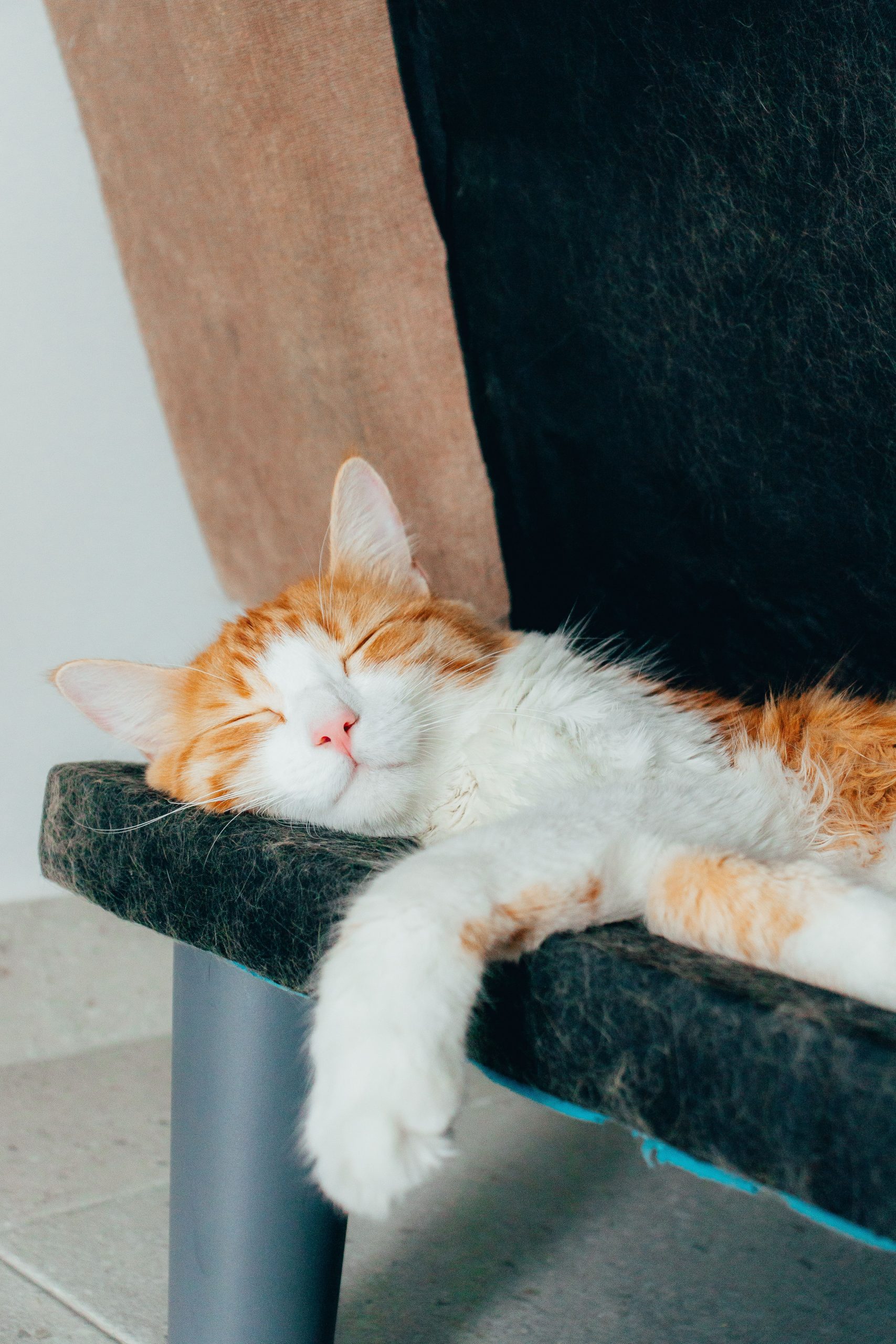
The feeling of peace in this image comes from an effective use of color theory. The warm orange of the cat’s fur is a complementary color to the muted blue-gray of the cat tree’s support pole. When complementary colors (opposites on the color wheel) are placed next to each other, they make each other appear more vibrant. However, because the blue is muted and the majority of the perch is a neutral dark gray, the effect is pleasing and balanced, not jarring. The result is that the sleeping cat becomes the undisputed, warm focal point.
💸 Get This Look For Less
If you’re stuck with a generic, beige cat tree that you don’t love, consider a DIY upgrade. You can re-carpet the perches with a remnant from a carpet store in a color that better suits your decor—dark gray, navy, or even a deep green can look very chic. Use a heavy-duty staple gun to attach it. You can also wrap the support poles in a colorful, thick rope from a craft store instead of the standard sisal. It’s a weekend project that can turn an eyesore into a feature.
It’s Their Home, Too
Creating a dedicated space for your pet isn’t just about giving them a bed; it’s about thoughtfully weaving their needs into the fabric of your home. Whether it’s a simple, sun-drenched basket or a fully integrated custom nook, the best solutions make both of you feel more comfortable and content.
Now, go take another look at your Pinterest board and see which of these ideas truly feels like home.