There’s a reason white oak kitchen cabinets keep showing up on every Pinterest board, every designer’s mood board, and every renovation wish list heading into the new year. The wood’s tight, cathedral-like grain pattern brings a warmth that laminate and painted MDF simply can’t replicate—and homeowners across the country are catching on. Whether you’re gutting a century-old brownstone in Brooklyn or refreshing a ranch house outside Austin, white oak delivers that rare combination of durability, character, and quiet sophistication. In this roundup, we’ve pulled together some of the most inspiring white oak cabinet ideas for kitchens in every style, size, and budget—complete with finish details, hardware pairings, and layout tips to help you pin your favorites and start planning.
1. Slim Shaker White Oak With Gold Hardware
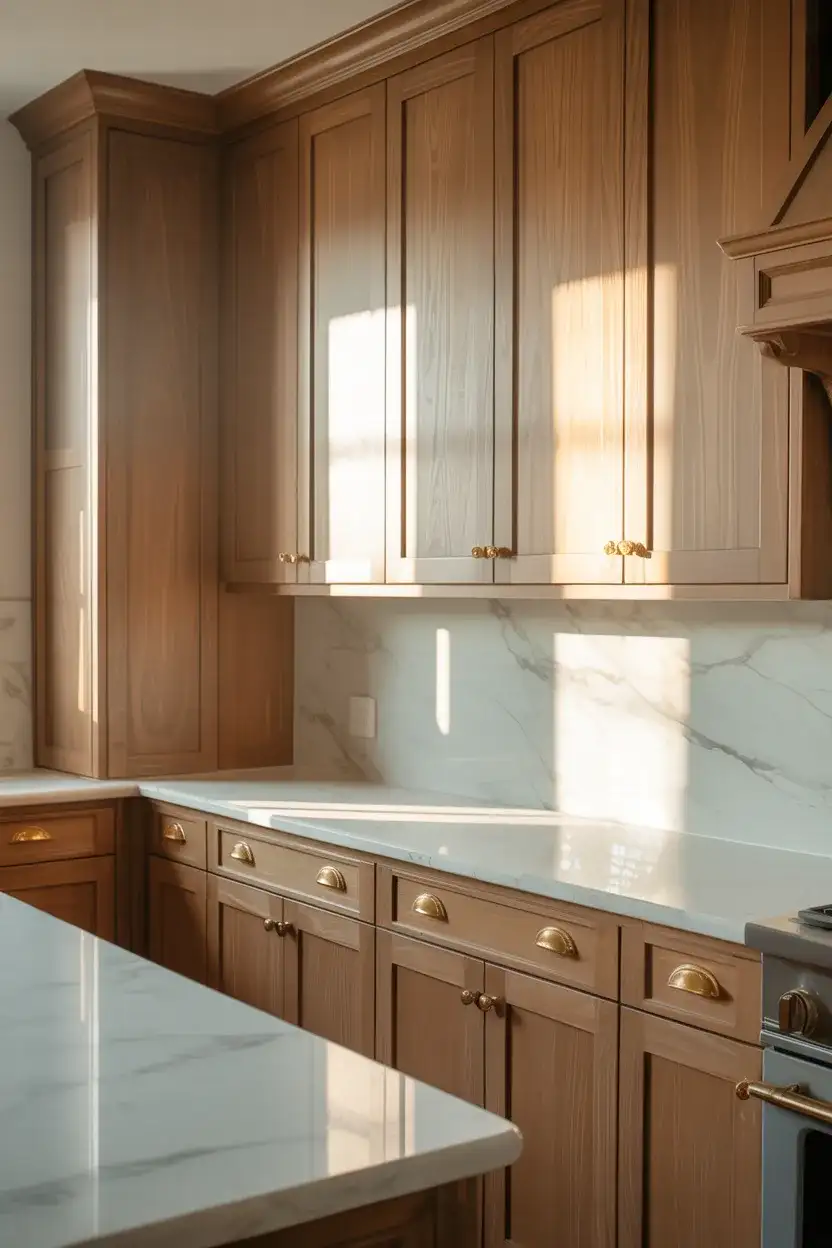
The slim shaker profile has quietly become the go-to door style for anyone who wants clean lines without going full flat-panel. Paired with gold hardware—think unlacquered brass pulls with a slight patina—it gives a white oak kitchen an elevated but never fussy personality. The narrower rails and stiles let more of the wood’s natural grain show through, which is exactly the point when you’re investing in real hardwood cabinetry. This combination works beautifully in transitional spaces where you want a nod to tradition without the heaviness of a full raised panel.
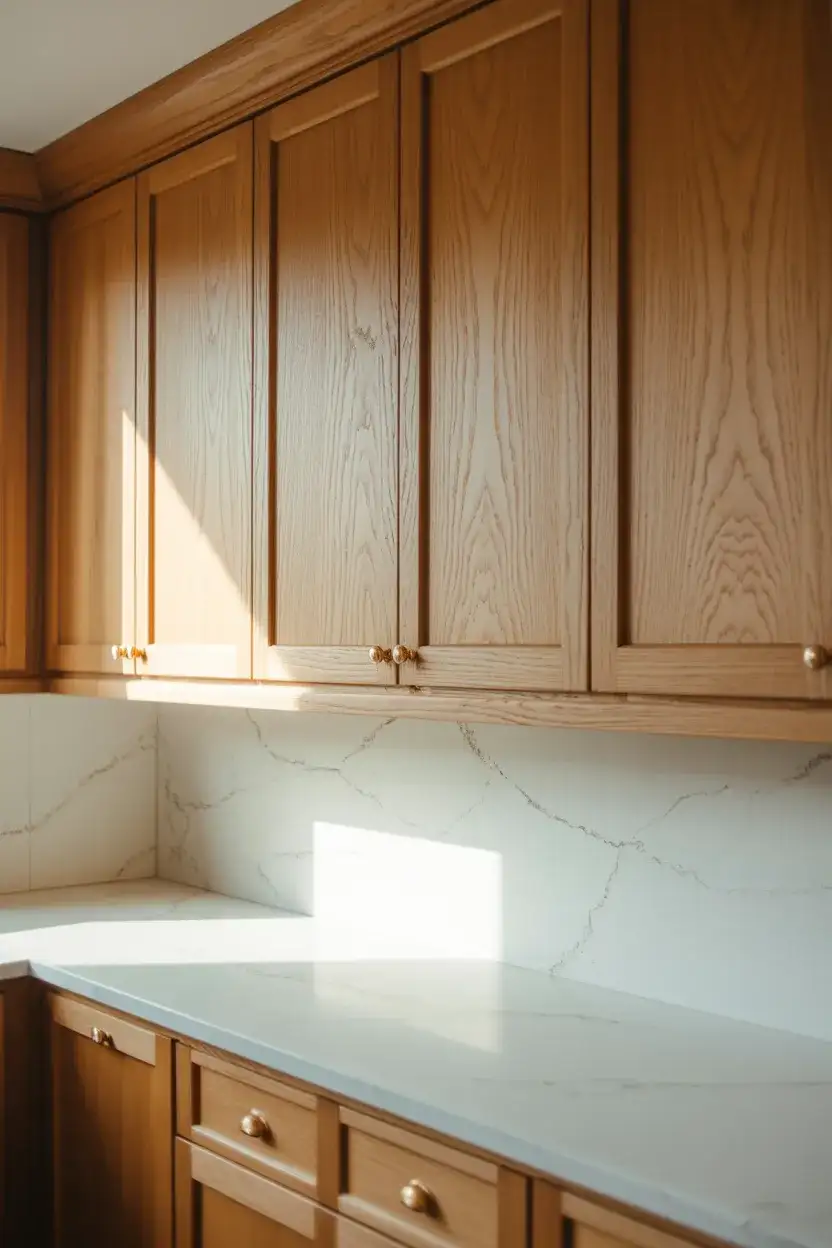
A designer friend in Nashville once told me she spec’d slim shaker doors on three consecutive projects—not because she was stuck in a rut, but because her clients kept requesting them after seeing photos on social media. The profile photographs incredibly well, which matters more than ever when homeowners want their kitchens to feel Pinterest-worthy in real life. If you’re on a moderate budget, slim shaker doors cost roughly the same as standard shaker, so the upgrade is essentially free. Just make sure your cabinet shop uses consistent rail widths so the proportions stay balanced across uppers and lowers.
2. Rift Sawn White Oak With Dark Counters
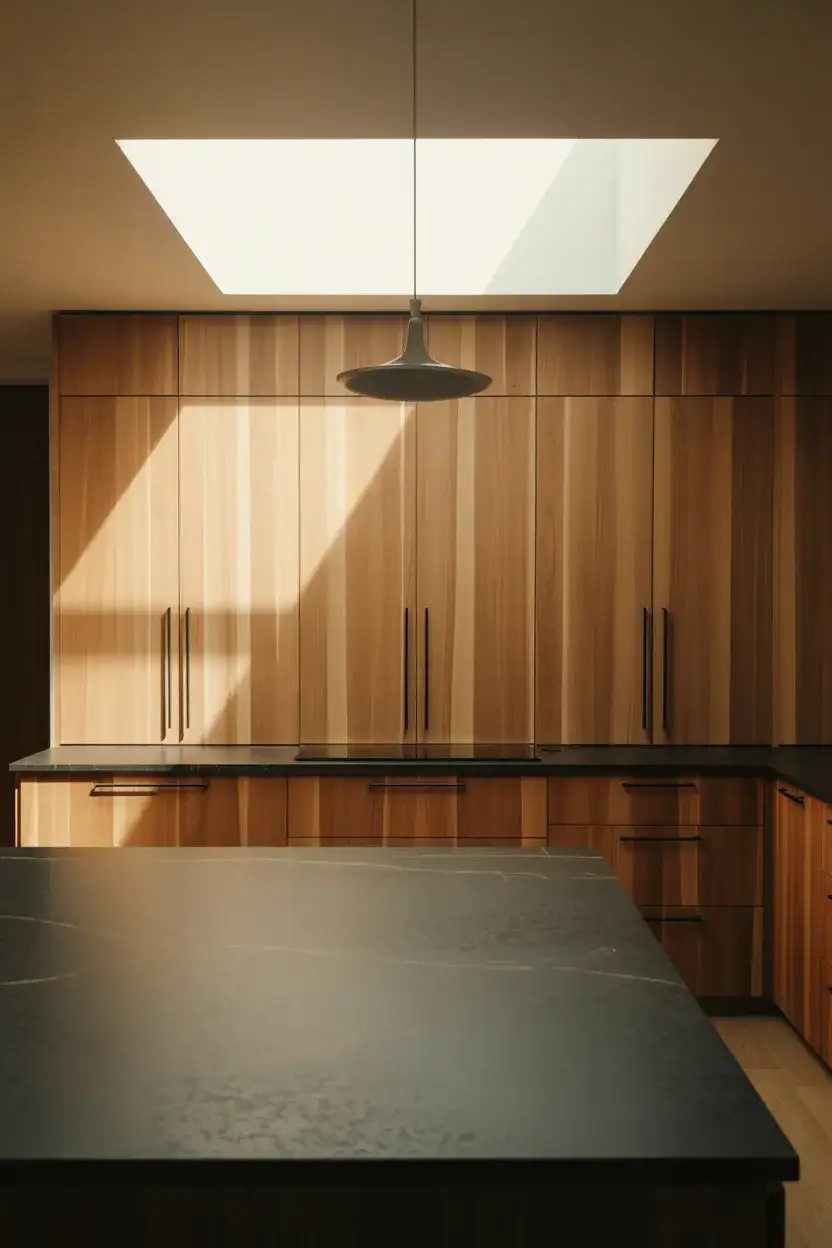
If you want a kitchen that feels like it belongs in an architecture magazine, rift-sawn white oak is your starting point. The straight, linear grain pattern—achieved by cutting the log at a specific angle—looks almost textile-like, giving cabinets a refined sophistication that cathedral-grain oak simply can’t match. Lay that against dark counters in honed black granite or soapstone, and the contrast is striking without being jarring. This pairing has been gaining serious momentum as homeowners move away from all-white kitchens and toward something with more depth and visual weight.
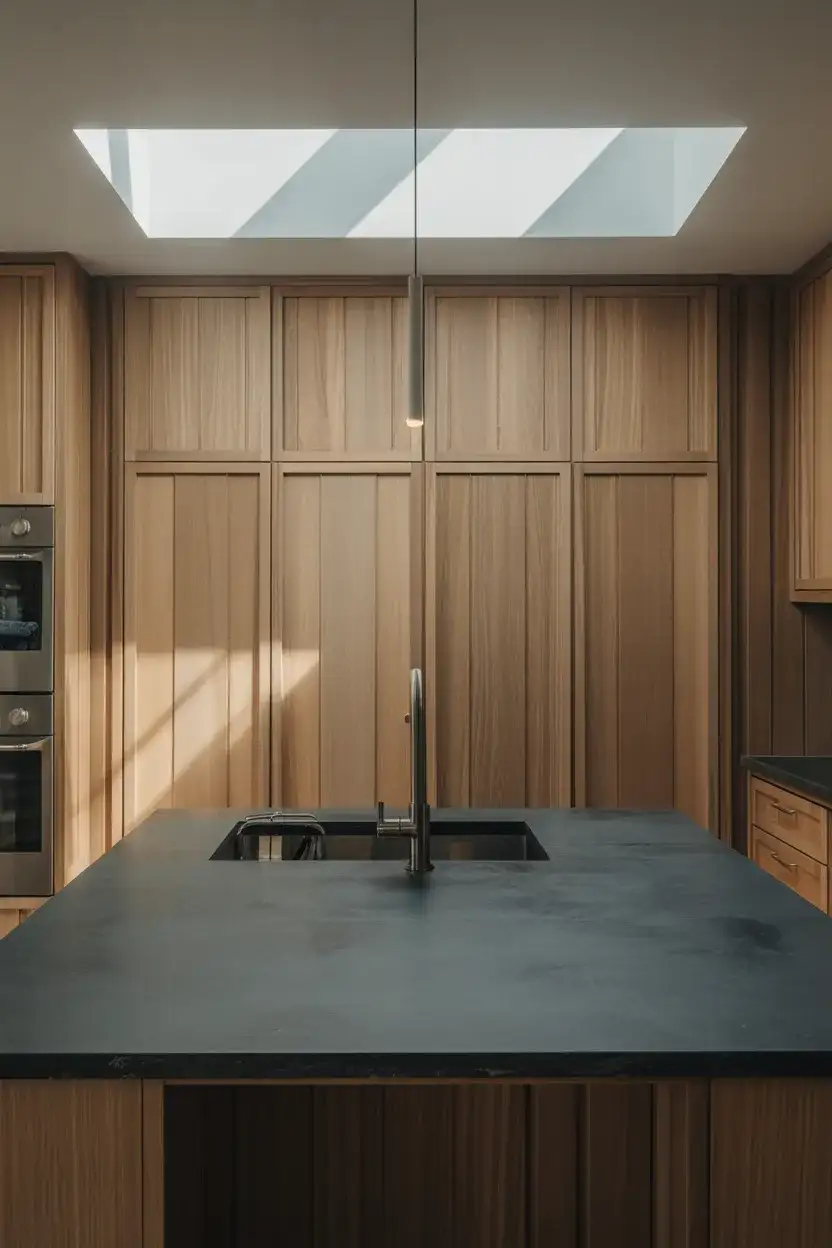
Where this look works best is in mid-century modern or Scandinavian-inspired homes where the architecture already favors horizontal lines and minimal ornamentation. The linear grain of rift-sawn oak reinforces that sense of order, while the dark counter grounds everything and keeps the wood from feeling too blonde or lightweight. If your kitchen gets a lot of natural light, the contrast becomes even more dramatic throughout the day. Homes in the Pacific Northwest and New England have been especially drawn to this combination, partly because the moody countertop feels right alongside grey skies and wooded landscapes.
3. Quarter Sawn Oak With Brass Hardware
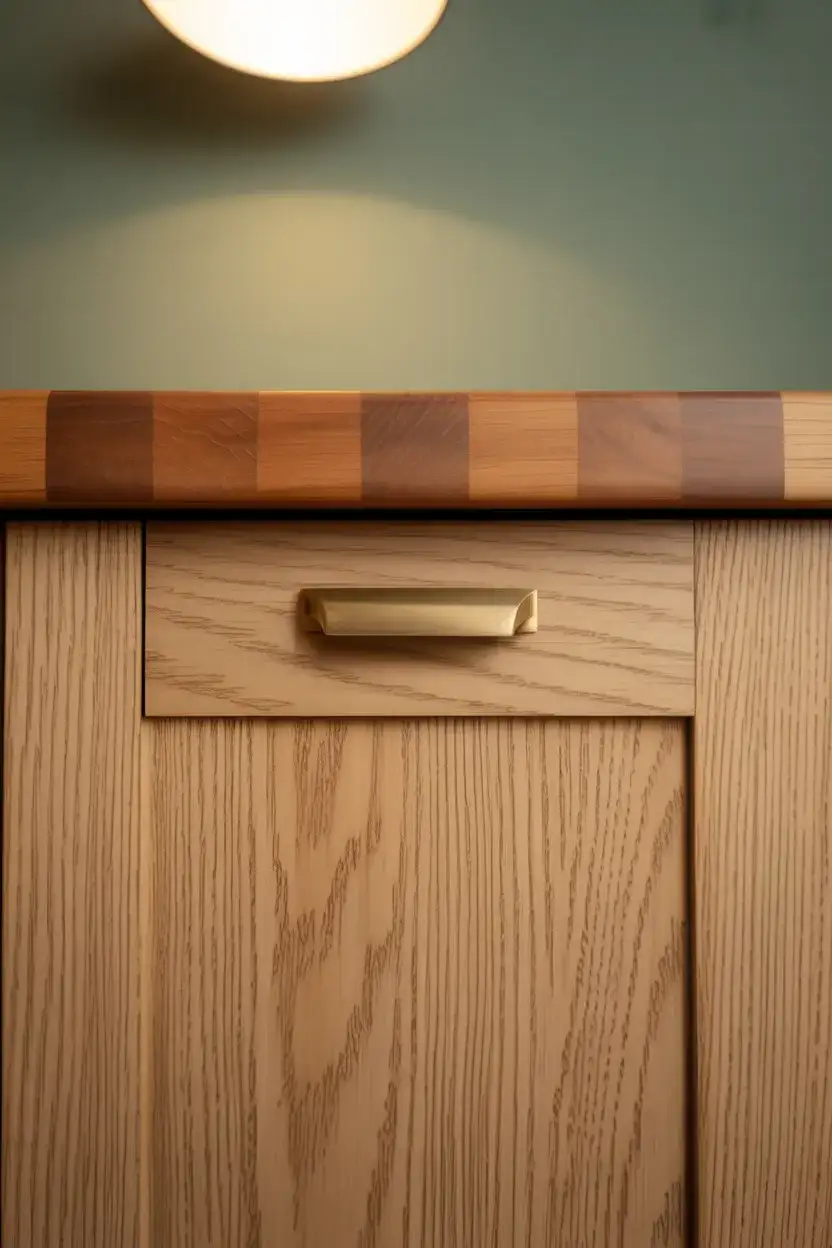
The distinctive fleck pattern of quarter-sawn white oak has a way of making cabinets feel like heirloom furniture—the kind of thing you’d expect to see in a well-loved Craftsman bungalow. Add brass hardware with a warm satin finish, and you land in a space that feels intentional and layered rather than decorated. The medullary rays that define quarter-sawn wood catch light differently throughout the day, creating a visual movement that flat-cut oak never achieves. It’s the kind of detail that rewards a closer look, which is exactly what makes it so popular on image-driven platforms.
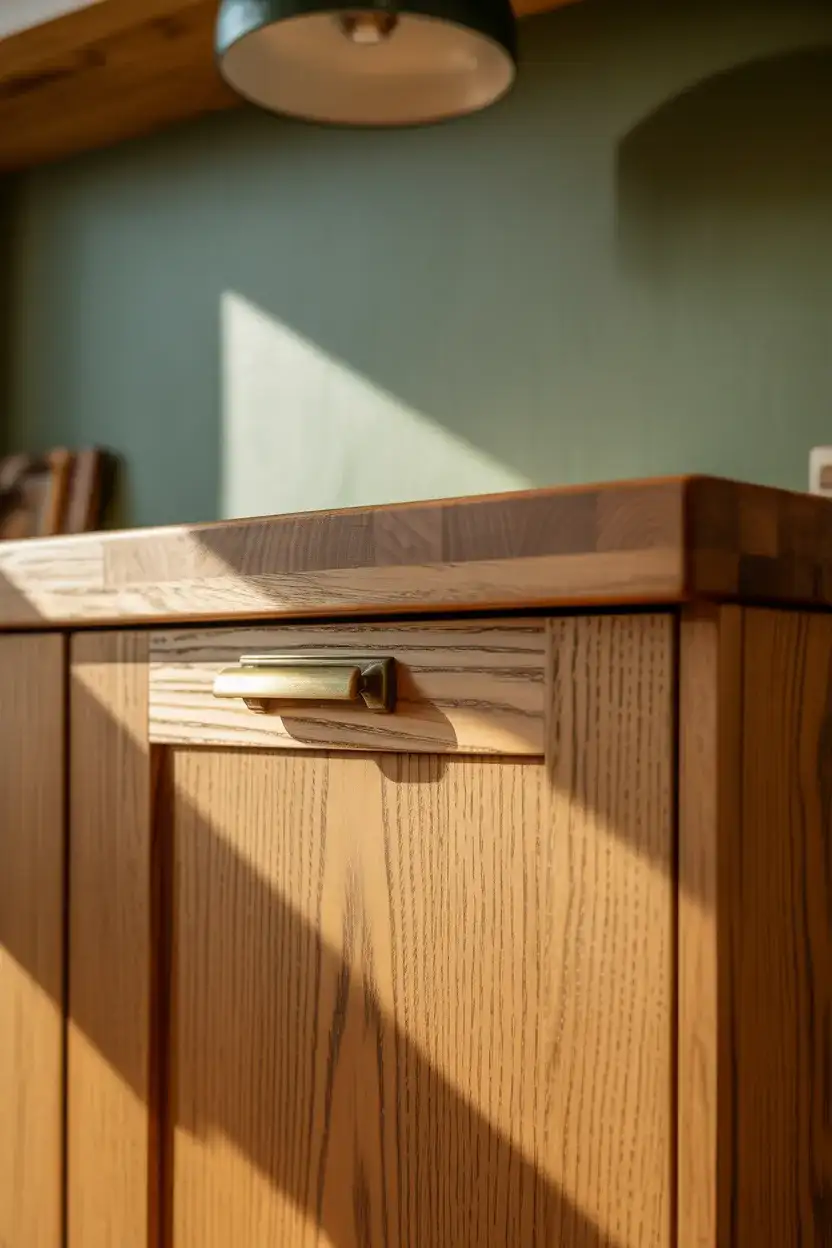
One of the most common mistakes homeowners make with quarter-sawn oak is staining it too dark, which hides the very fleck pattern that makes the cut special. If you’re paying the premium for quarter sawn—and it does cost more than plain sawn—you want a finish that lets those rays shine. A clear coat or a very light honey stain is usually the sweet spot. Brass hardware in a living finish will develop a patina over time that deepens alongside the wood, creating a kitchen that actually gets better with age rather than just older.
4. Black and White Oak Two-Tone Kitchen
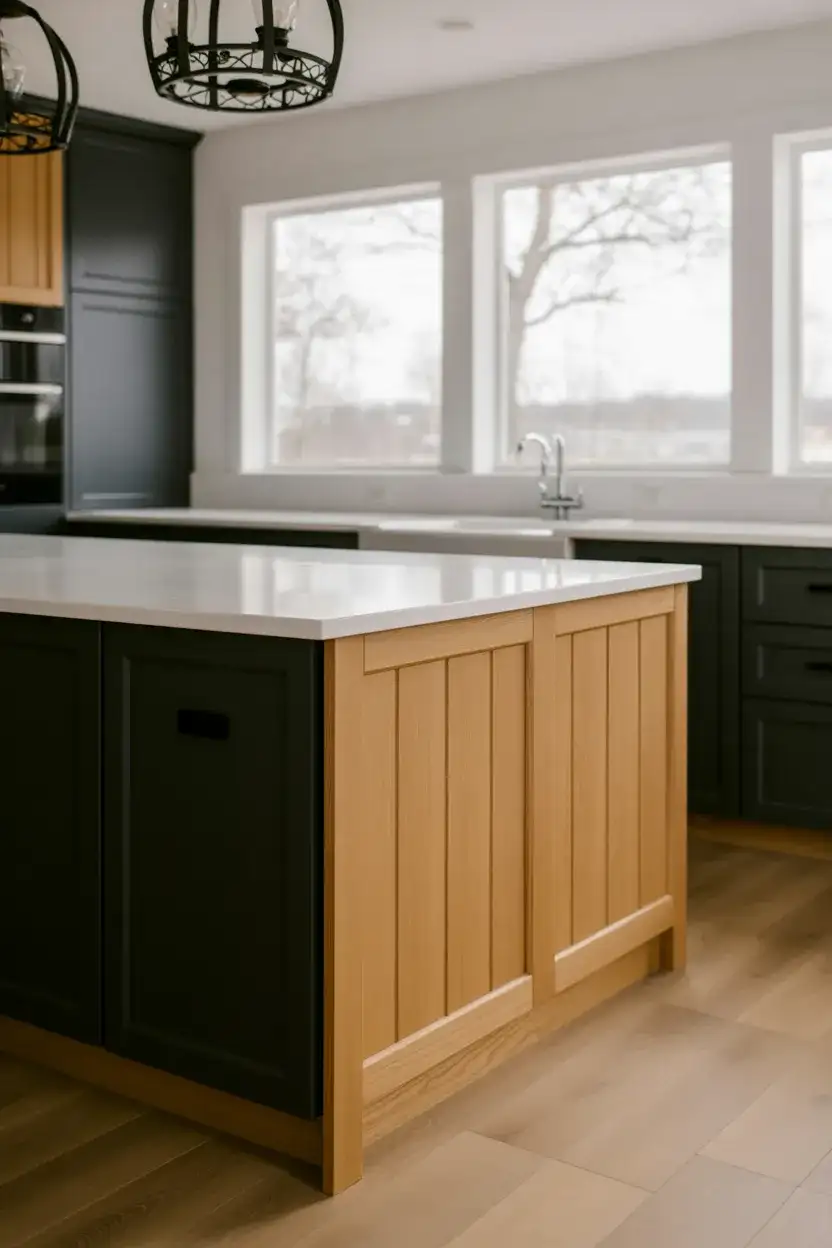
The black and white oak combination is one of those pairings that looks dramatic in photos but feels surprisingly livable in person. Typically, the formula is black-painted upper cabinets—or a black range hood—set against light white oak lowers, creating a grounded base that keeps the darkness from overwhelming the room. Some designers flip the script and use white oak on top with black below, though that approach requires careful planning with color schemes so the space doesn’t feel top-heavy. Either way, the contrast makes both materials look better than they would alone.
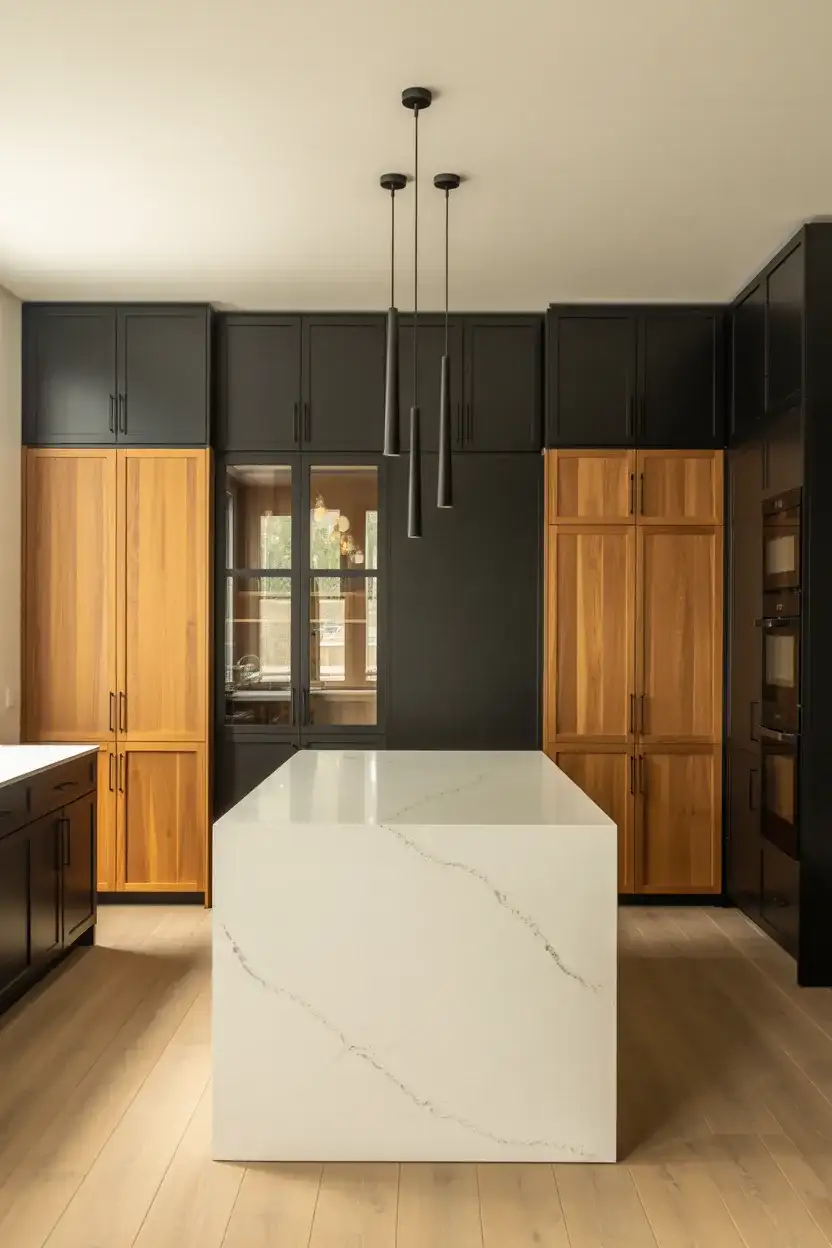
From a practical standpoint, the two-tone approach lets you manage your budget more strategically. Black-painted MDF uppers are significantly less expensive than solid white oak, so reserving the real wood for the lower cabinets—where your hands and eyes spend the most time—gives you the biggest visual impact per dollar spent. It’s a move that professional designers have been using for years in spec homes and flips, but it works just as well in a forever home. Just keep your black paint in a matte or eggshell finish to avoid fingerprint headaches around handles and near the stove.
5. White Oak Cabinets With Taj Mahal Quartzite
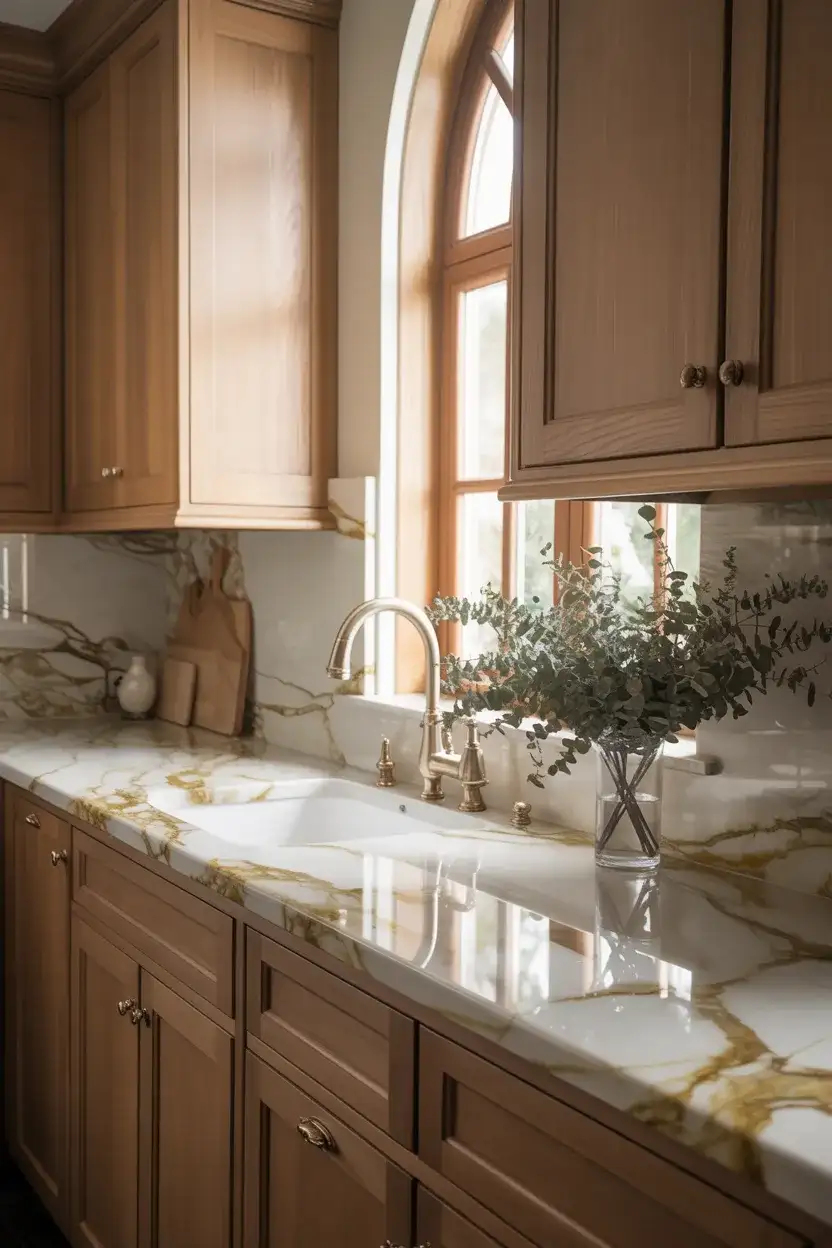
There’s a reason Taj Mahal quartzite keeps popping up alongside white oak on designer Pinterest boards—the stone’s soft gold veining mirrors the warm undertones in the wood, creating a pairing that feels almost predestined. Unlike the cooler tones of Calacatta marble, Taj Mahal leans honey and amber, which makes it an exceptionally flattering companion for natural white oak cabinets. The stone is also harder than marble, so it holds up better in a working kitchen where someone’s actually cooking dinner every night. This is a combination where the finish options on both the wood and the stone really matter.
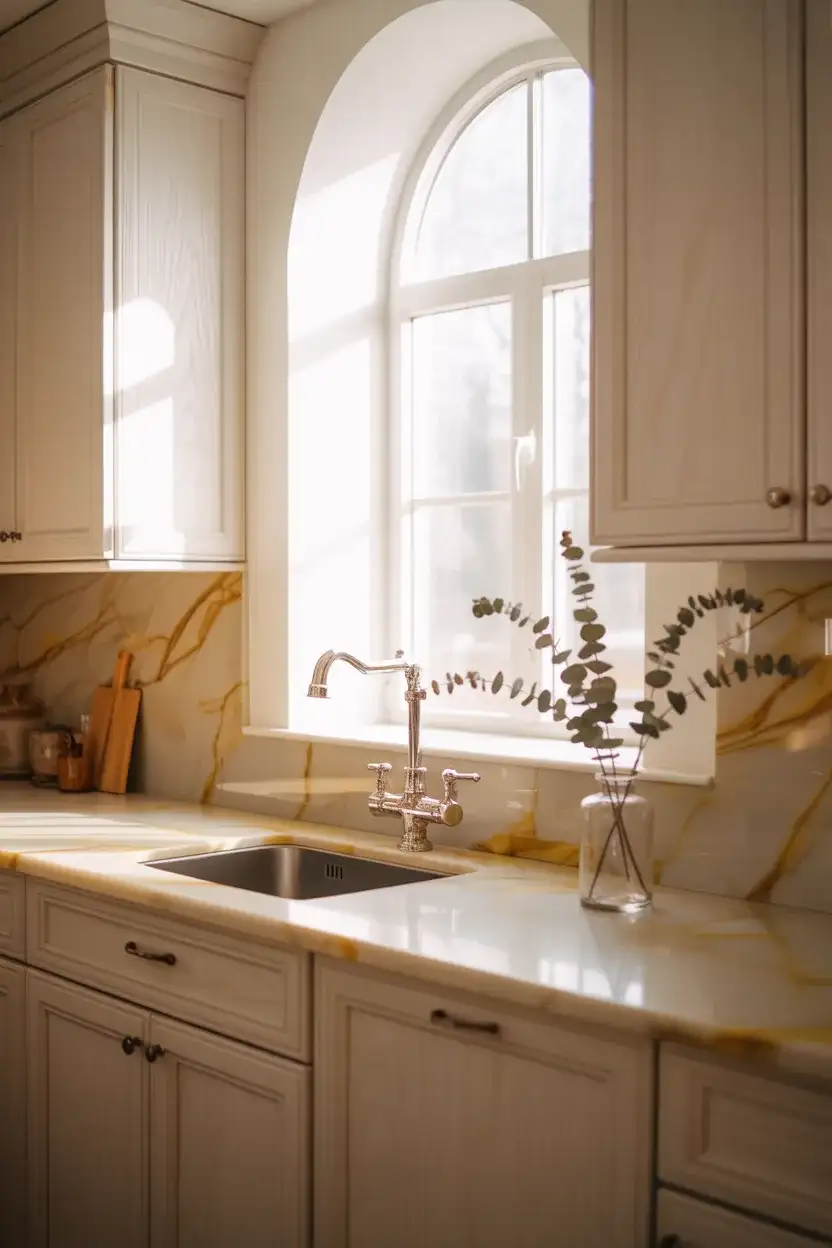
Budget is the elephant in the room here. Taj Mahal quartzite typically runs between sixty and one hundred twenty dollars per square foot installed, and when you pair it with custom white oak cabinets, you’re looking at a kitchen that can climb quickly into premium territory. The upside is longevity—both materials age gracefully, and neither goes in and out of style the way painted trends do. If you want to save, consider using Taj Mahal only on the island or perimeter and a complementary quartz on secondary surfaces. That way you get the hero moment without blowing past your renovation number.
6. Rustic White Oak With Terracotta Floor
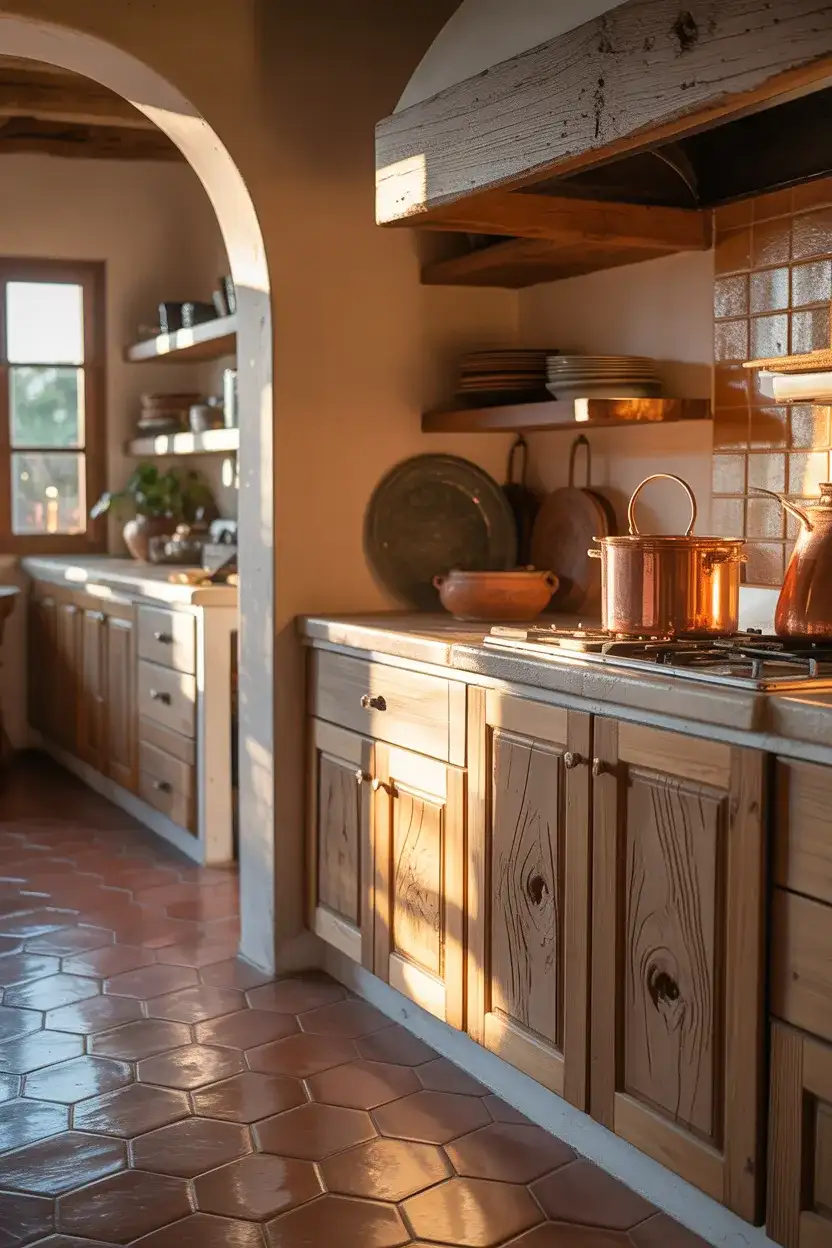
Something magical happens when rustic white oak cabinets—the kind with visible knots, mineral streaks, and a slightly rougher texture—meet a terracotta floor. It’s a look that channels the warmth of a Mediterranean farmhouse or a California hacienda, depending on how you style it. The earthy orange tones of the terracotta play against the golden warmth of the oak, and together they create a kitchen that feels genuinely rooted in place rather than assembled from a catalog. This combination is especially popular right now in the Southwest and along the southern coast, where warm-toned interiors just make sense against the landscape.
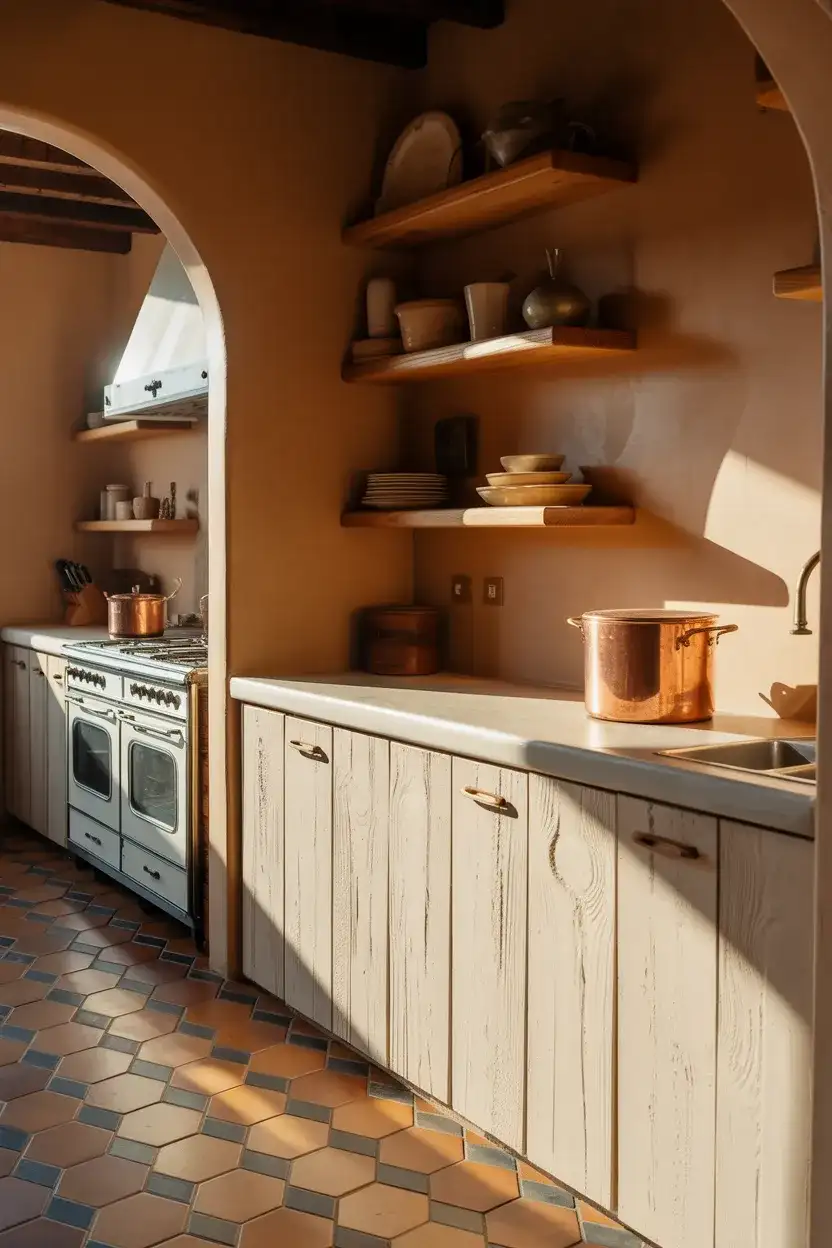
Real homeowners who’ve gone this route often say the same thing: the kitchen becomes the gathering spot, the room everyone drifts toward during a dinner party. There’s a psychological warmth to the combination of earth tones and natural wood that makes people want to linger. The key is sealing both the terracotta and the oak properly—terracotta is porous and stains easily, and rustic oak’s open grain needs protection too. A good penetrating sealer on the tile and a durable matte polyurethane on the cabinets will keep everything looking beautiful without adding unwanted sheen.
7. Green and White Oak Kitchen
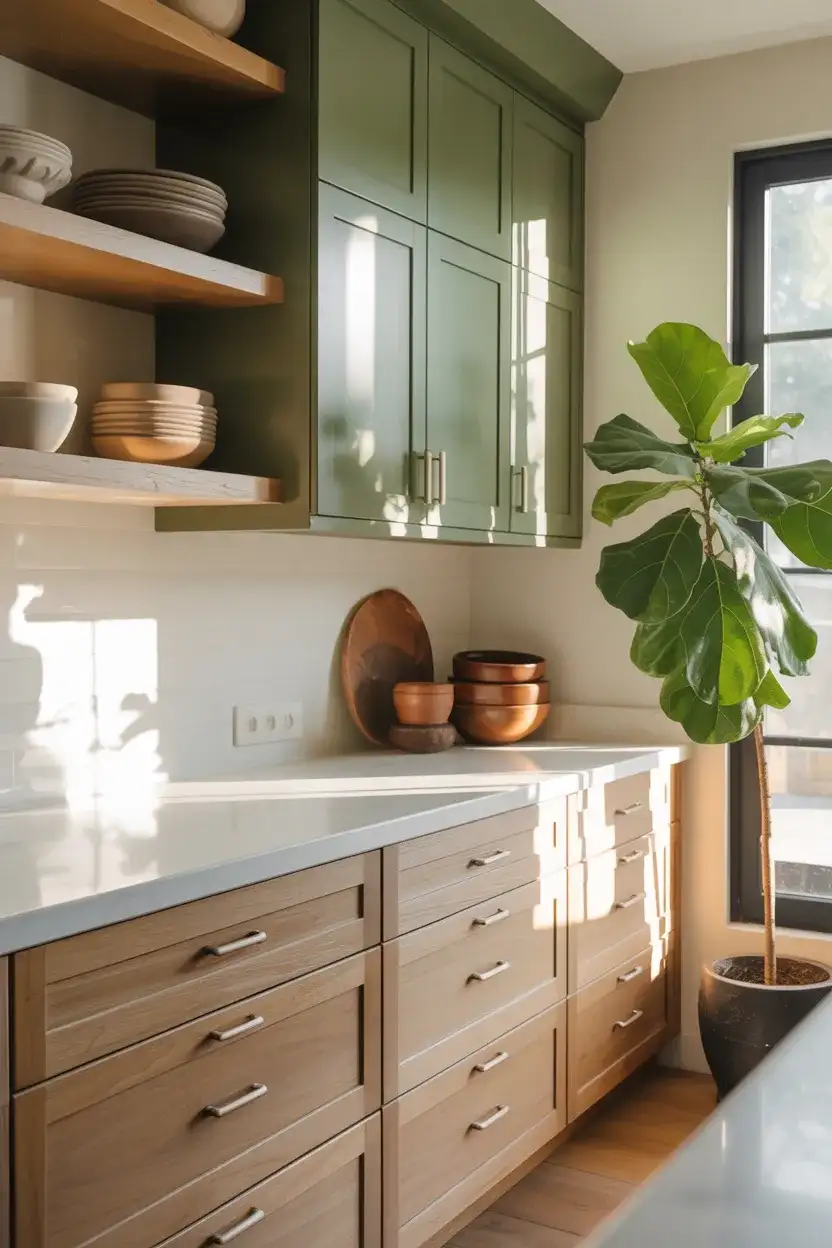
The green and white oak pairing has gone from niche to nearly mainstream, and it shows no signs of slowing down. Whether it’s a sage upper cabinet, an olive-toned island, or a deep forest green accent wall, green brings out the warm yellow undertones in white oak like nothing else. The trick is choosing the right shade—muted, earthy greens tend to look more sophisticated than bright or minty ones, which can tip the room into a retro direction you might not want. Layer in some silver hardware for a cooler counterpoint, and the whole thing sings.
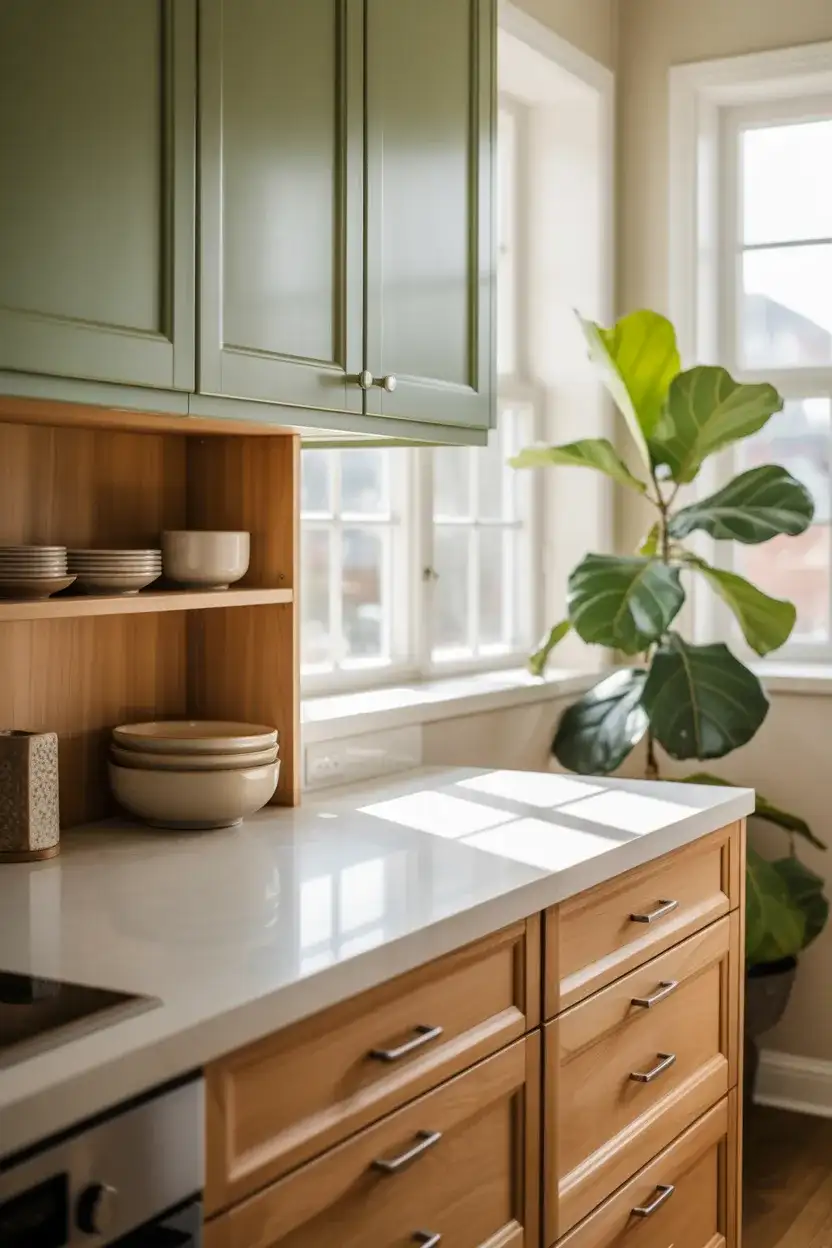
An interior designer I follow in Portland recently shared a project where she used Benjamin Moore’s Cushing Green on the island and left the perimeter cabinets in clear-coated white oak—and the response on social media was immediate. The lesson? Green is one of those rare colors that photographs well, looks good in person, and doesn’t clash with most existing home finishes. It works in farmhouses, in modern builds, and even in traditional colonials. If you’re nervous about committing, start with the island. It’s the easiest piece to repaint if you change your mind, and it makes a strong statement on its own.
8. Stained White Oak in Warm Honey
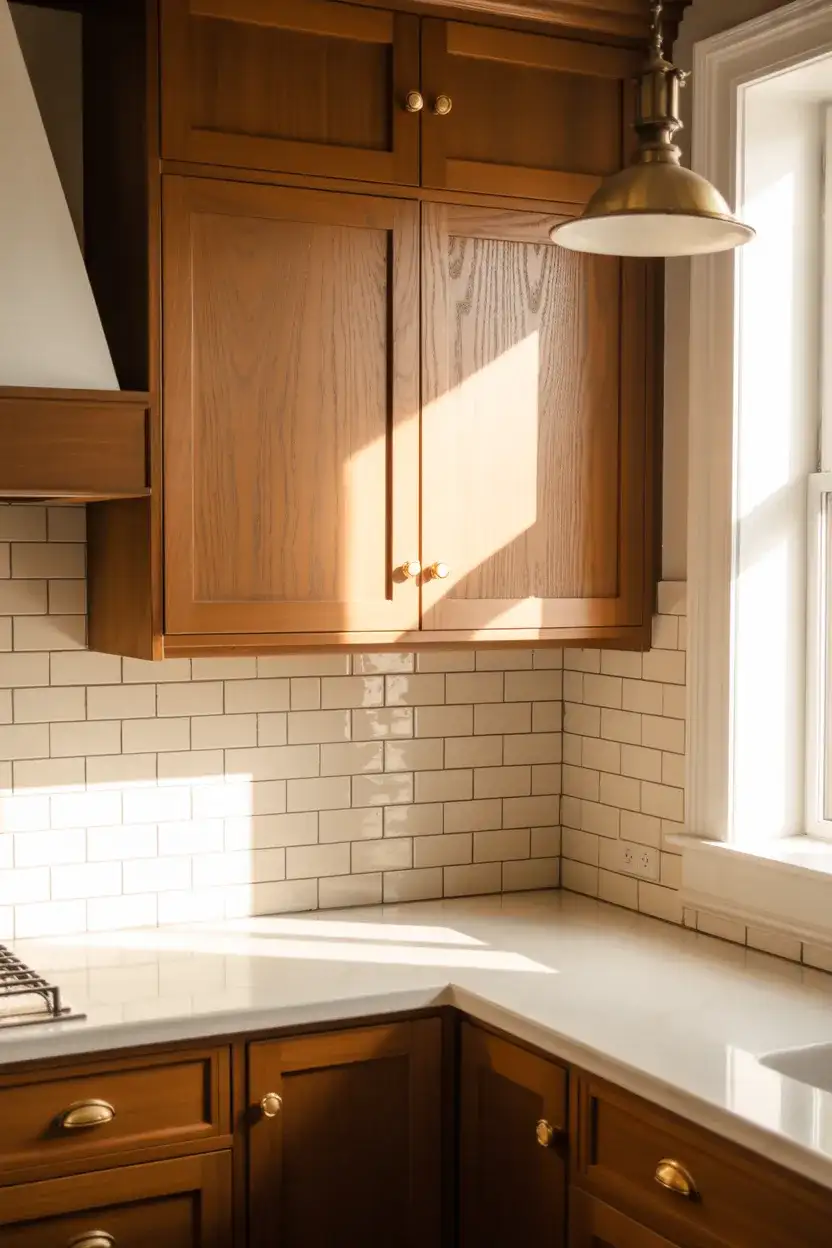
While many homeowners opt to leave white oak in its natural state, a well-chosen stain color can push the wood in a direction that feels more intentional and tailored. A warm honey stain—think golden amber, not orange—enhances the grain without masking it and gives stained white oak cabinets a richness that reads as timeless rather than trendy. Pair it with creamy white walls and soft textiles, and you’ve got a kitchen that feels like a warm hug. The key with any stain on white oak is testing on actual samples from your specific batch of wood, because grain density affects how the color absorbs.
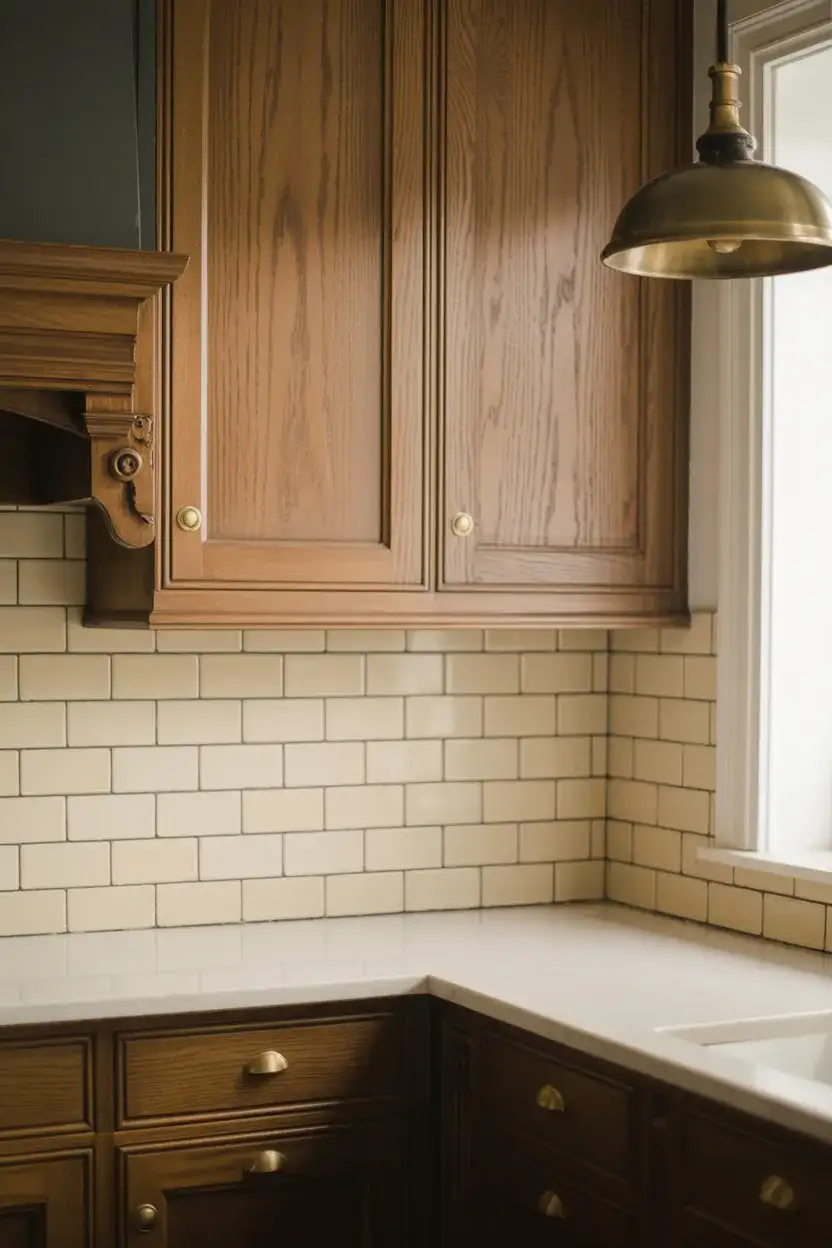
Here’s a piece of expert-level advice that most big-box stores won’t mention: white oak has a high tannin content, which means it reacts differently to stains than red oak or maple. Oil-based stains tend to bring out the warmth more evenly, while water-based formulas can raise the grain and create a slightly rougher texture if you’re not careful with sanding between coats. Always do a test panel—not just a small swatch—so you can see how the stain looks across a full door surface with its mix of heartwood and sapwood. That fifteen-minute step can save you from a very expensive redo.
9. White Oak With Dark Wood Floors
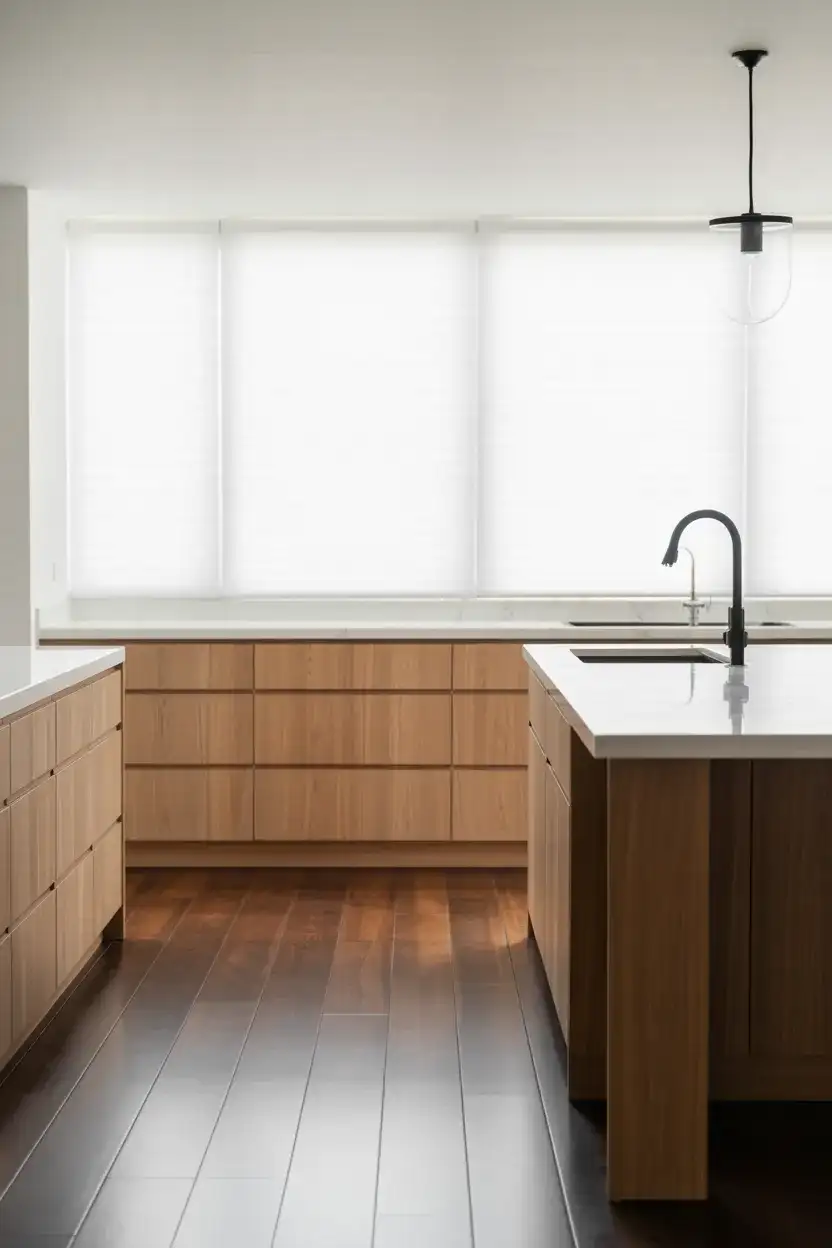
Mixing wood tones used to make people nervous, but dark wood floors paired with lighter white oak cabinets has become one of the most confident moves in kitchen design. The contrast gives each surface its own identity—the floor anchors the room with weight and drama, while the cabinets keep things airy above the counter line. Espresso-stained walnut or dark rift-sawn oak flooring creates a particularly handsome backdrop, especially when the cabinet wood is left natural or given just the lightest wash. The result is a layered, collected feel that avoids the one-note look of matching everything to the same species and shade.
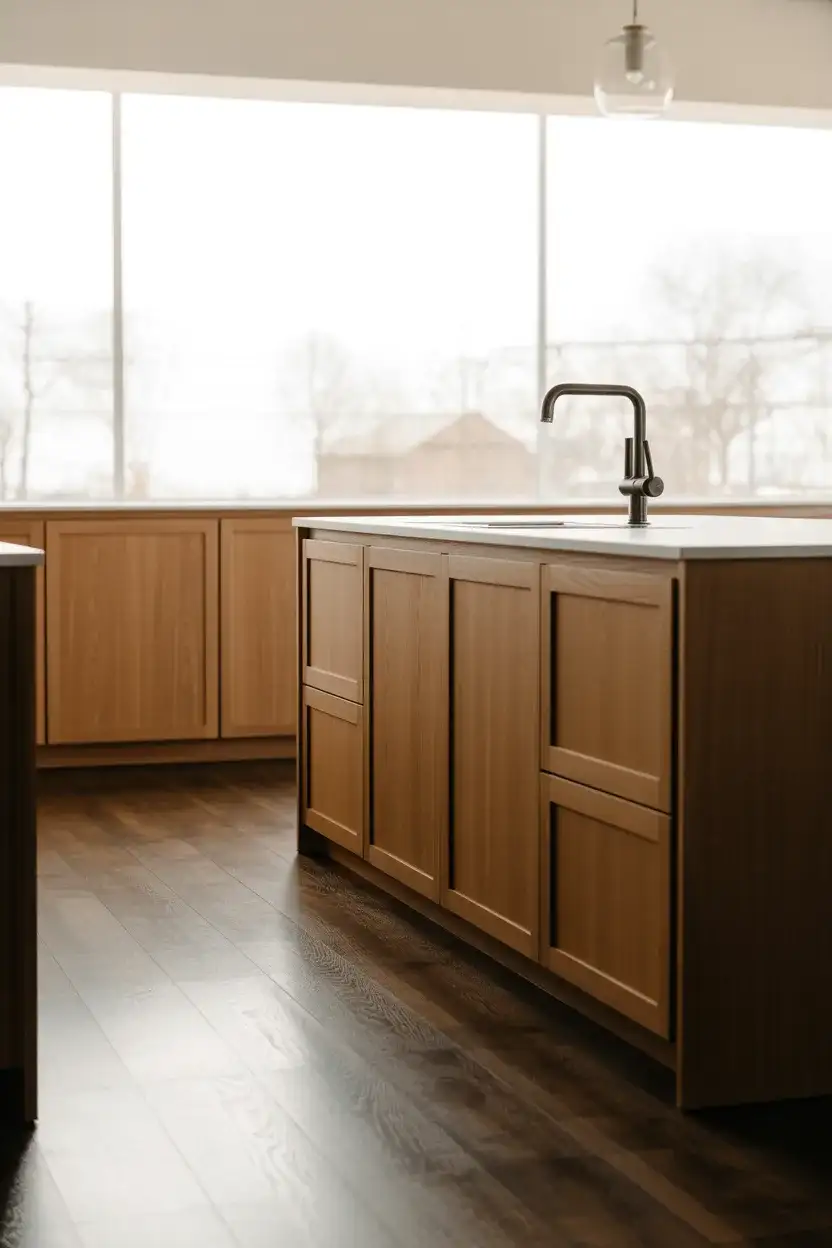
This is one of those combinations that works best in open-concept homes across the Midwest and Southeast, where the kitchen floor runs continuously into the living and dining areas. The dark floor creates a sense of cohesion across the whole ground plane, while the white oak cabinets mark the kitchen zone without needing a wall. If you’re worried about the dark floor showing every crumb and dust bunny—and that’s a valid concern—opt for a matte or wire-brushed finish that hides debris better than a high-gloss surface. Families with kids and pets tend to be happiest with hand-scraped or distressed dark floors for that exact reason.
10. White Oak Cabinets With Grey Floor
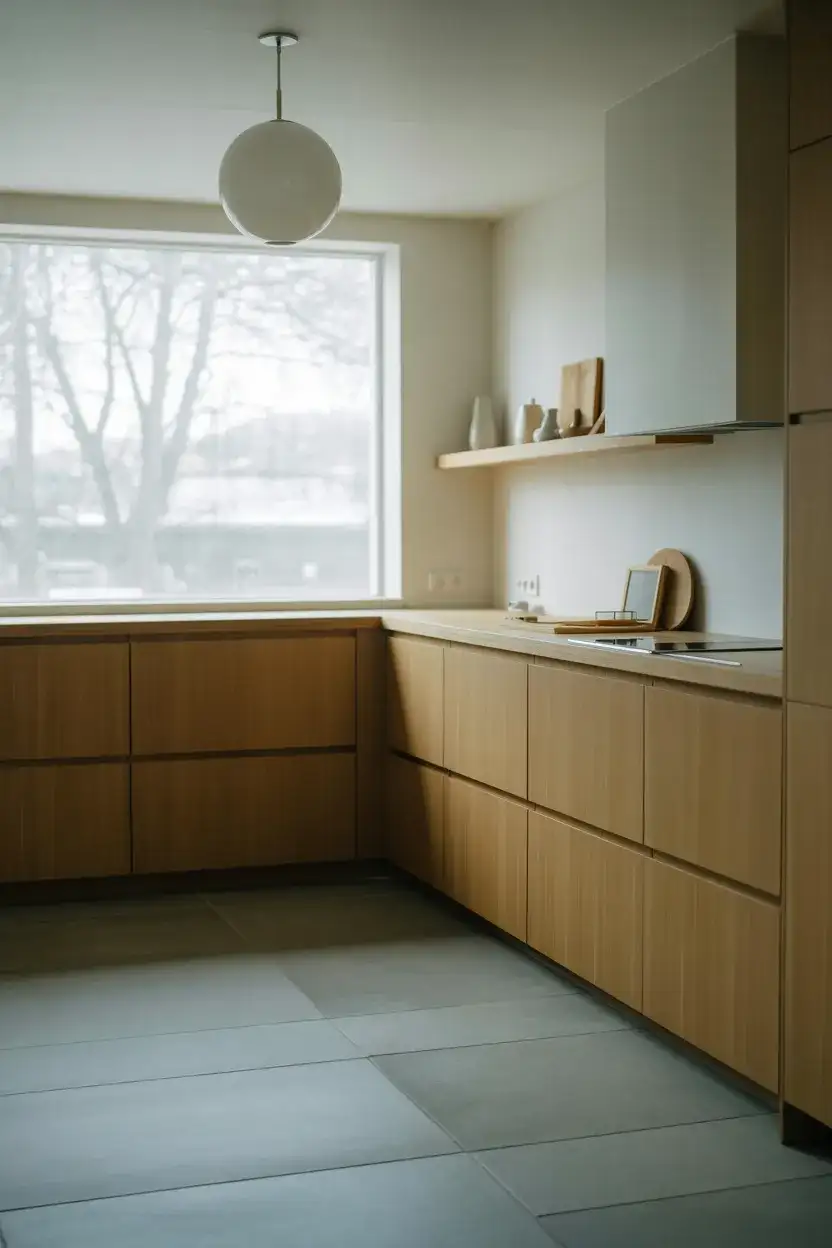
A gray floor—whether it’s polished concrete, large-format porcelain, or gray-washed hardwood—offers a cool, contemporary canvas that makes white oak cabinets pop. The warmth of the wood against the neutrality of grey creates a balanced tension that feels modern without being cold. This is a go-to palette in urban lofts and new construction where the architecture tends toward cleaner lines and open volumes. Add some light fixtures in simple geometric shapes, and the whole room takes on a Scandinavian sensibility that photographs beautifully for social media.
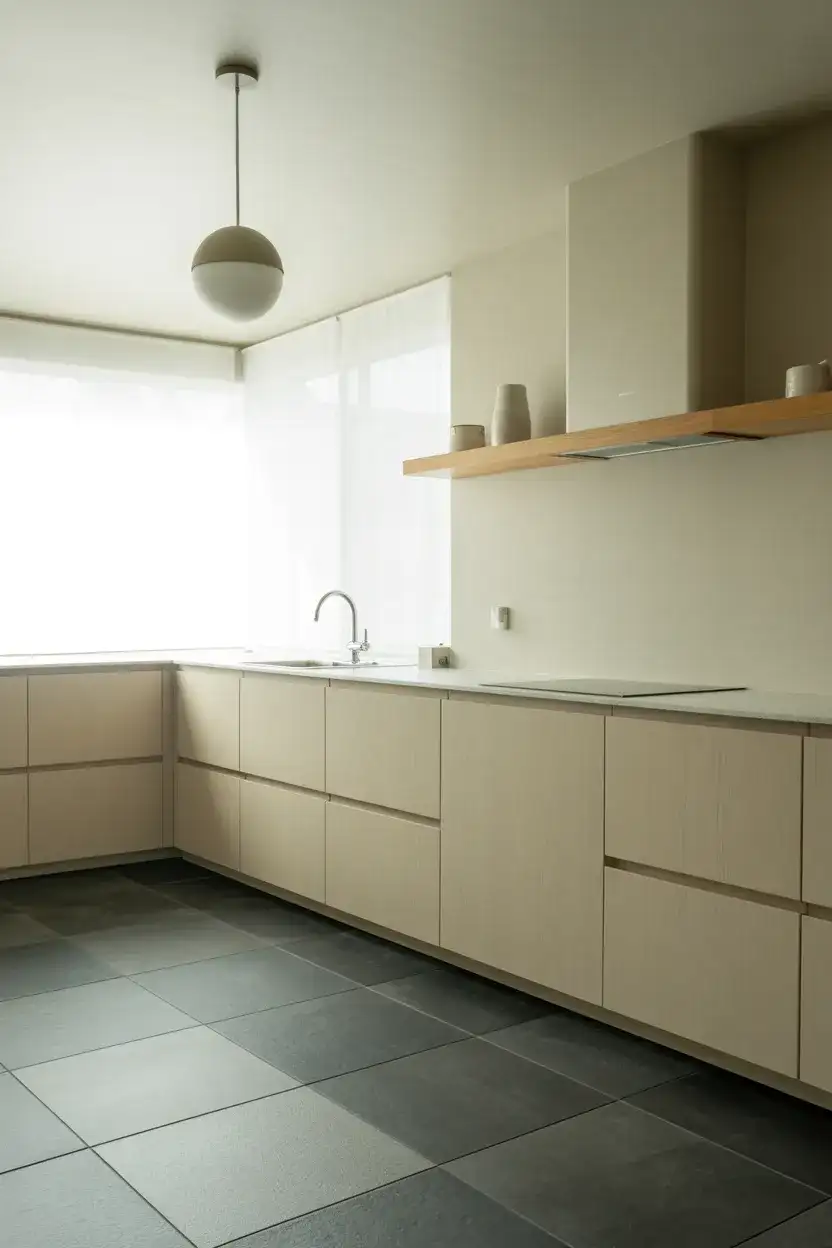
A common mistake people make when pairing grey floors with white oak is choosing a grey that has strong blue or purple undertones, which can clash with the yellow-gold tones in the wood. Stick to warm greys or true neutral greys, and always look at samples in your actual kitchen light—what looks perfect under showroom fluorescents can read completely different under your south-facing windows. If you’re using porcelain tile, a matte rectified edge gives you tight grout lines that keep the look sleek and let the wood cabinets take center stage.
11. White Oak With Black Counter and Backsplash
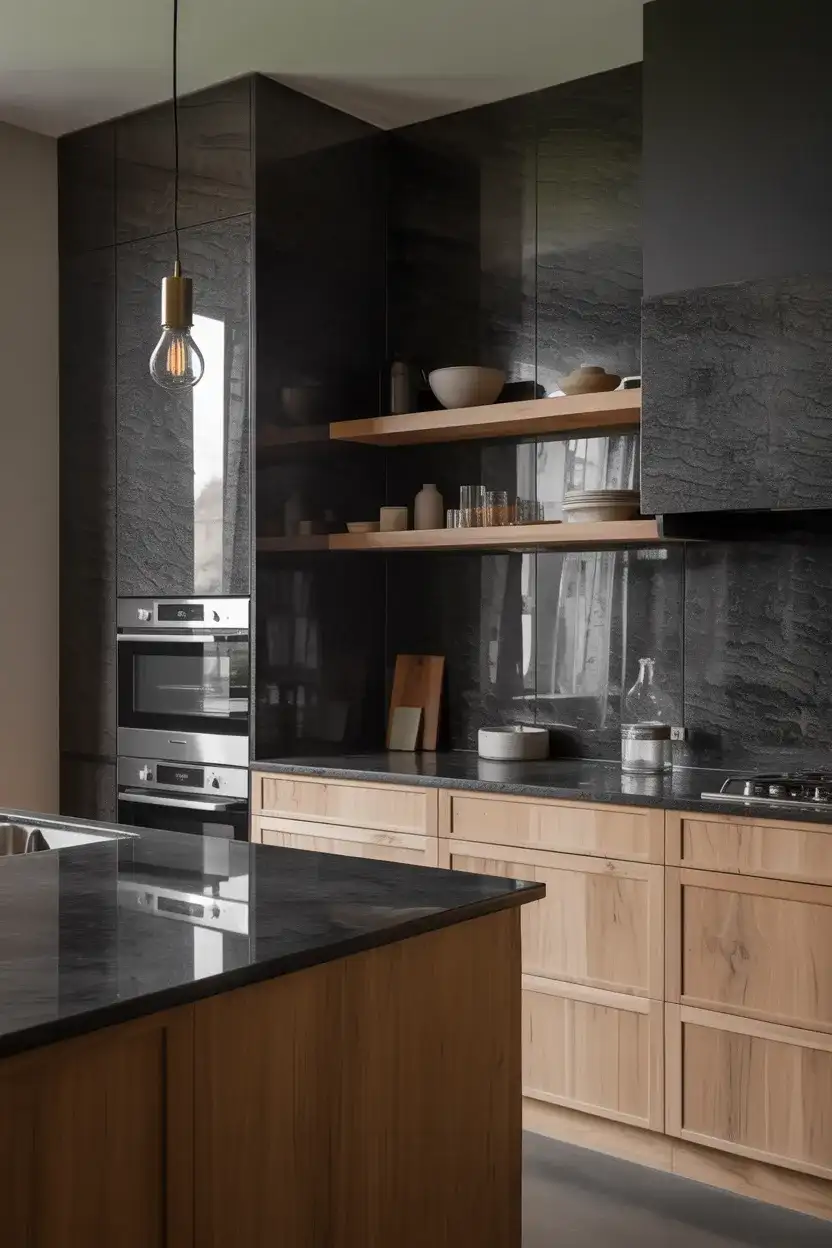
Taking the dark counter concept one step further, running the same black counter material up the wall as a full-height backsplash creates a monolithic backdrop that makes white oak cabinets practically glow. Honed black granite, leathered nero marquina marble, or even matte black porcelain slabs all work here—the idea is to create an unbroken dark surface behind and beneath the cabinets. The effect is architectural and bold, transforming an everyday kitchen into something that feels gallery-like. This approach has been trending heavily among younger homeowners who want statement kitchens that double as entertaining spaces.
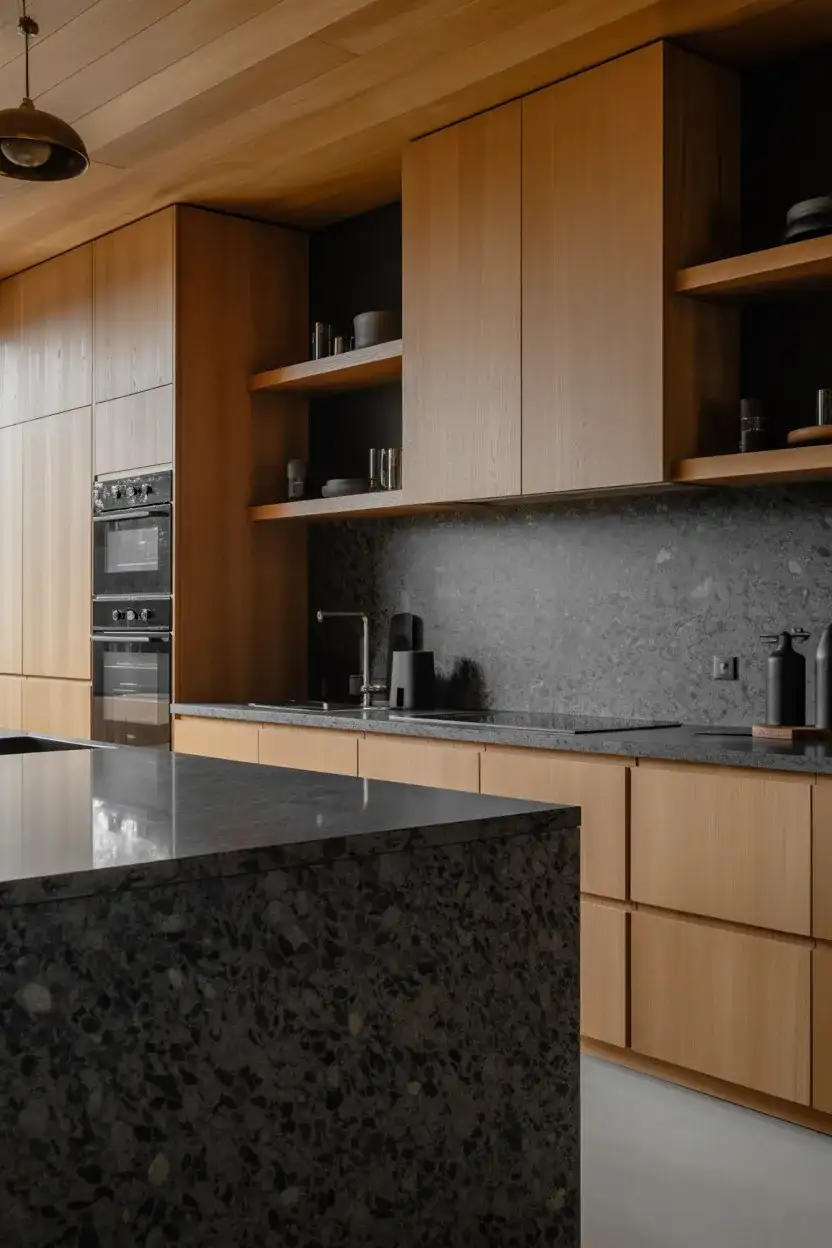
From a practical standpoint, a full-height slab backsplash eliminates grout lines entirely, which means fewer places for grease and food splatter to hide. That’s not a small thing in a kitchen where someone is actually cooking regularly. The cleaning advantage alone has convinced many homeowners to spend the extra money on slab installation versus individual tiles. If the cost of a natural stone slab feels steep, porcelain panels in a matte black finish can achieve nearly the same effect at roughly half the material cost, and they come in sizes large enough to cover most backsplash runs without seams.
12. Green Island With White Oak Perimeter
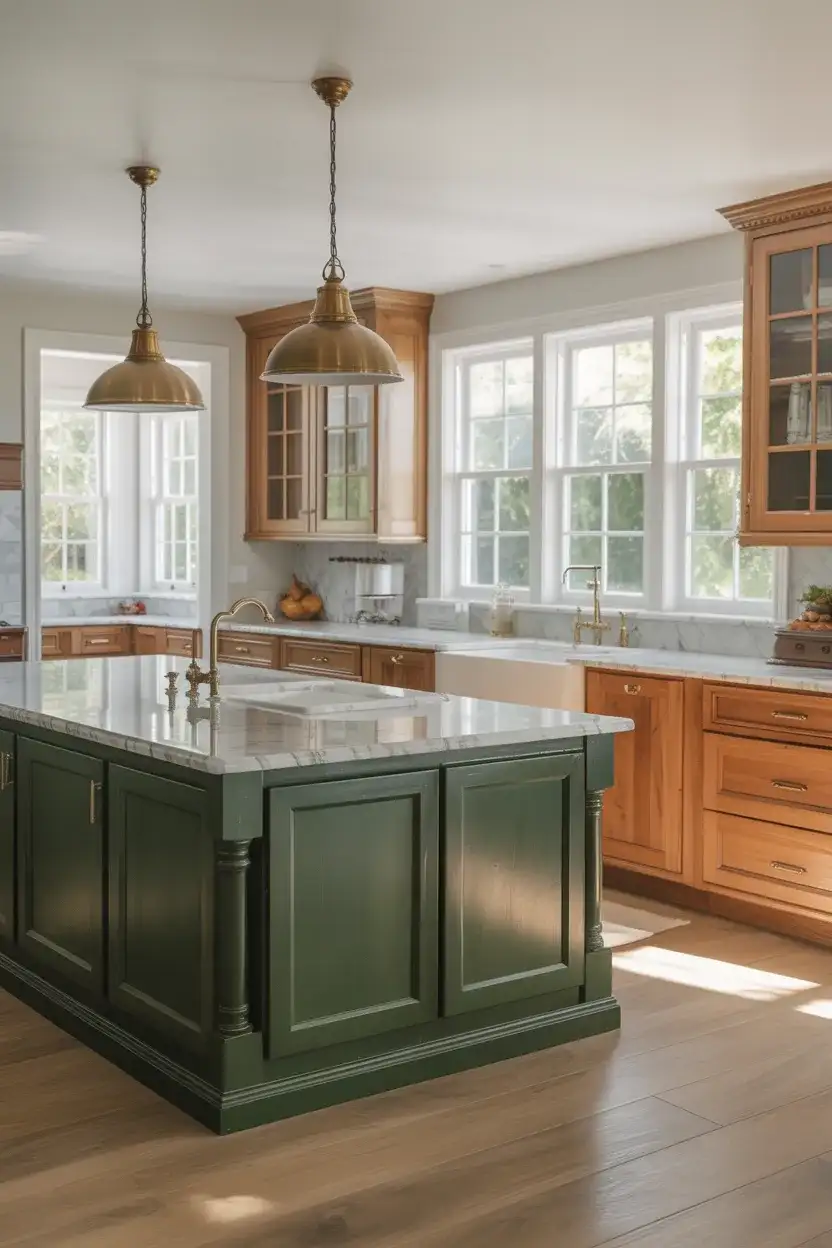
The green island trend has evolved from a subtle accent into a full-blown design statement, and it looks particularly striking when the rest of the kitchen wears natural white oak. A deep hunter green or a muted olive on the island creates a focal point that grounds the room, while the surrounding oak cabinets keep the space feeling warm and open. This layout gives you the best of both worlds—the color punch that social media loves and the timeless wood tones that won’t feel dated in ten years. It’s a smart hedge for anyone who craves color but worries about commitment.
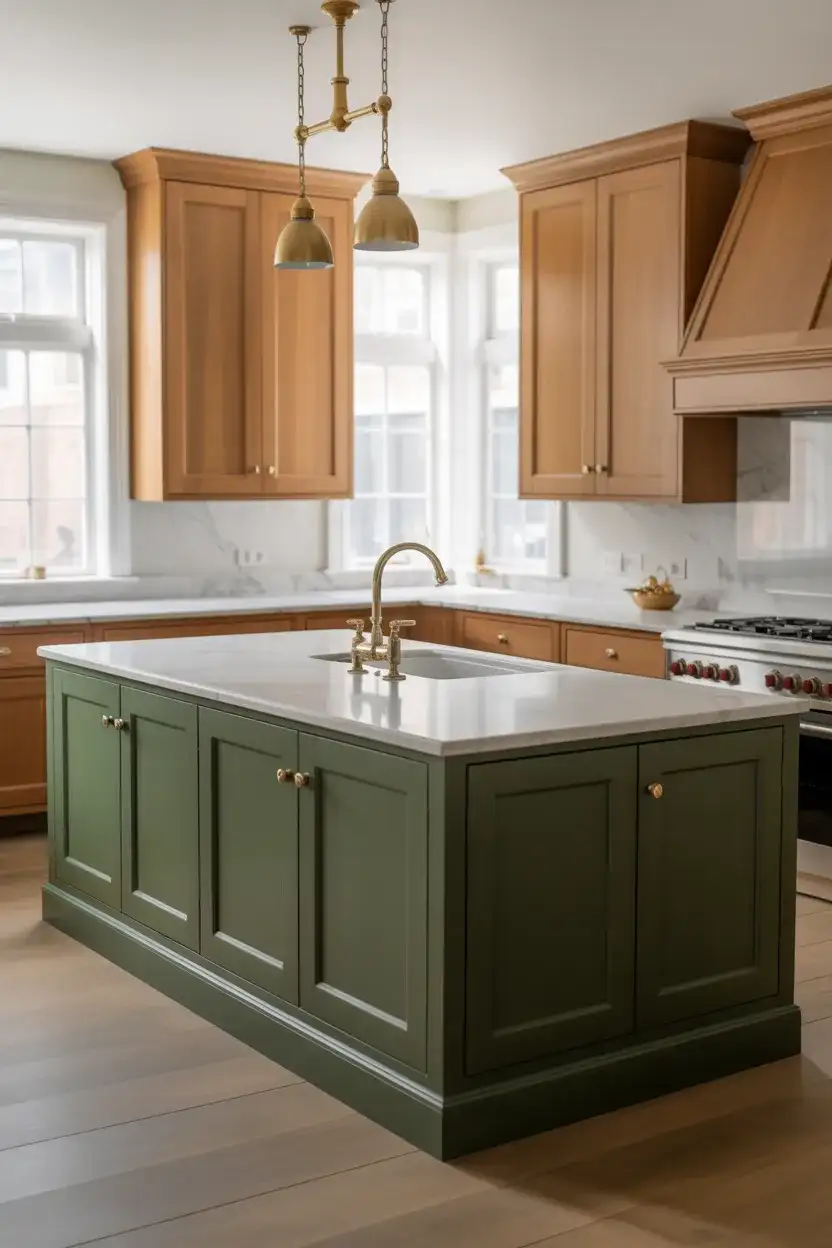
Here’s where real homeowner behavior tells an interesting story: many people who install a colored island plan to eventually repaint it if they tire of the shade, and that flexibility is part of the appeal. Because the island is a freestanding-feeling piece, repainting it is a weekend project rather than a full kitchen overhaul. Meanwhile, the white oak perimeter cabinets serve as the permanent foundation. It’s a strategy that gives you permission to take a bigger color risk than you might otherwise feel comfortable with, knowing the safety net is built right in.
13. White Oak With Backsplash Ideas in Zellige Tile
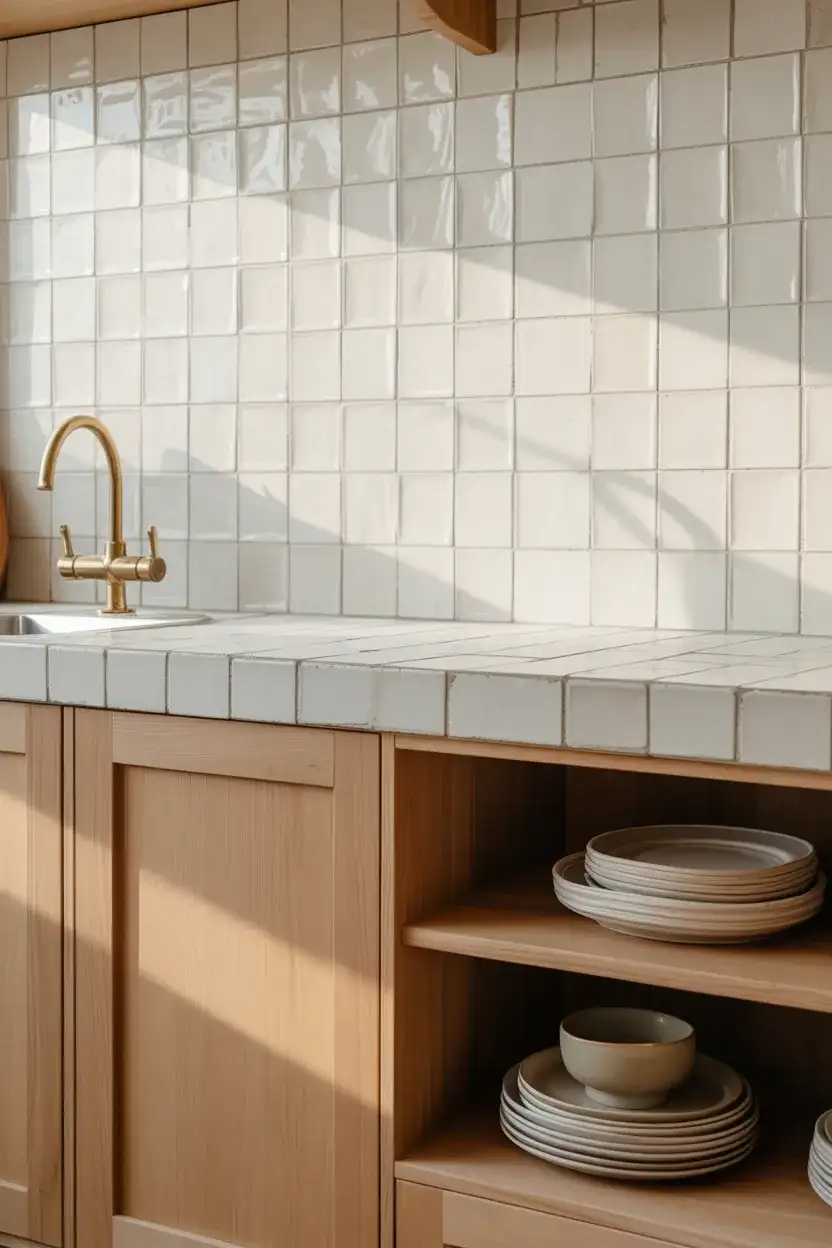
When it comes to backsplash ideas for white oak kitchens, handmade zellige tile has emerged as a front-runner. The slight imperfections and undulating surfaces of zellige catch light in a way that machine-made tile never will, and that handcrafted character pairs beautifully with the organic grain of white oak. Whether you choose a classic white, a soft clay, or a watery blue-green, the tile adds texture and dimension to the wall plane without competing with the cabinets. The irregular edges also give the kitchen a rustic warmth that feels collected over time rather than installed all at once.
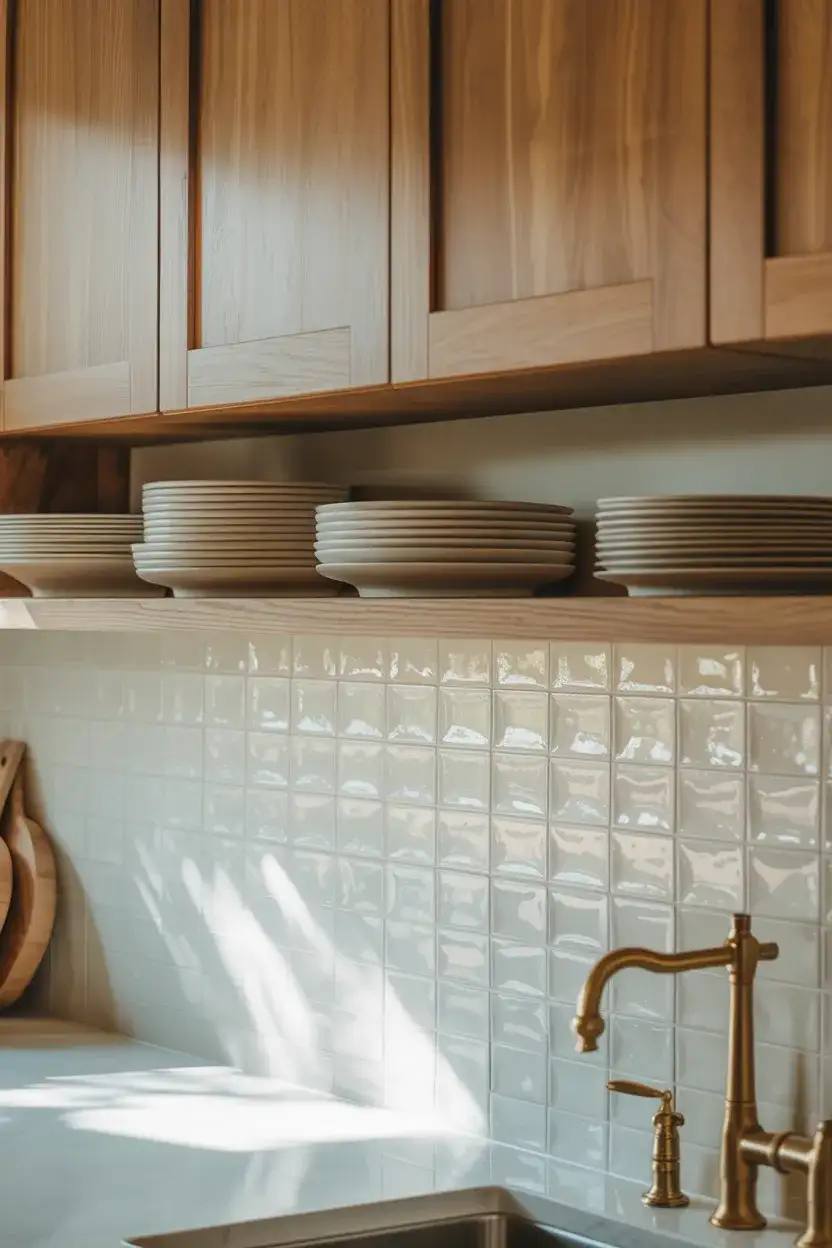
A practical insight worth knowing: zellige tile requires a skilled installer because the varying thickness means more thinset adjustment per piece. Budget an extra ten to fifteen percent over standard tile installation costs for labor. Also, most zellige is unsealed and somewhat porous, so you’ll want to apply a quality penetrating sealer before grouting and again after, especially near the stove and sink. The extra effort pays off in a backsplash that has a luminous, almost jewel-like quality that flat subway tile simply cannot replicate, and that luminosity is what makes these kitchens stop the scroll on Pinterest.
14. Dark Floors With Natural White Oak Uppers
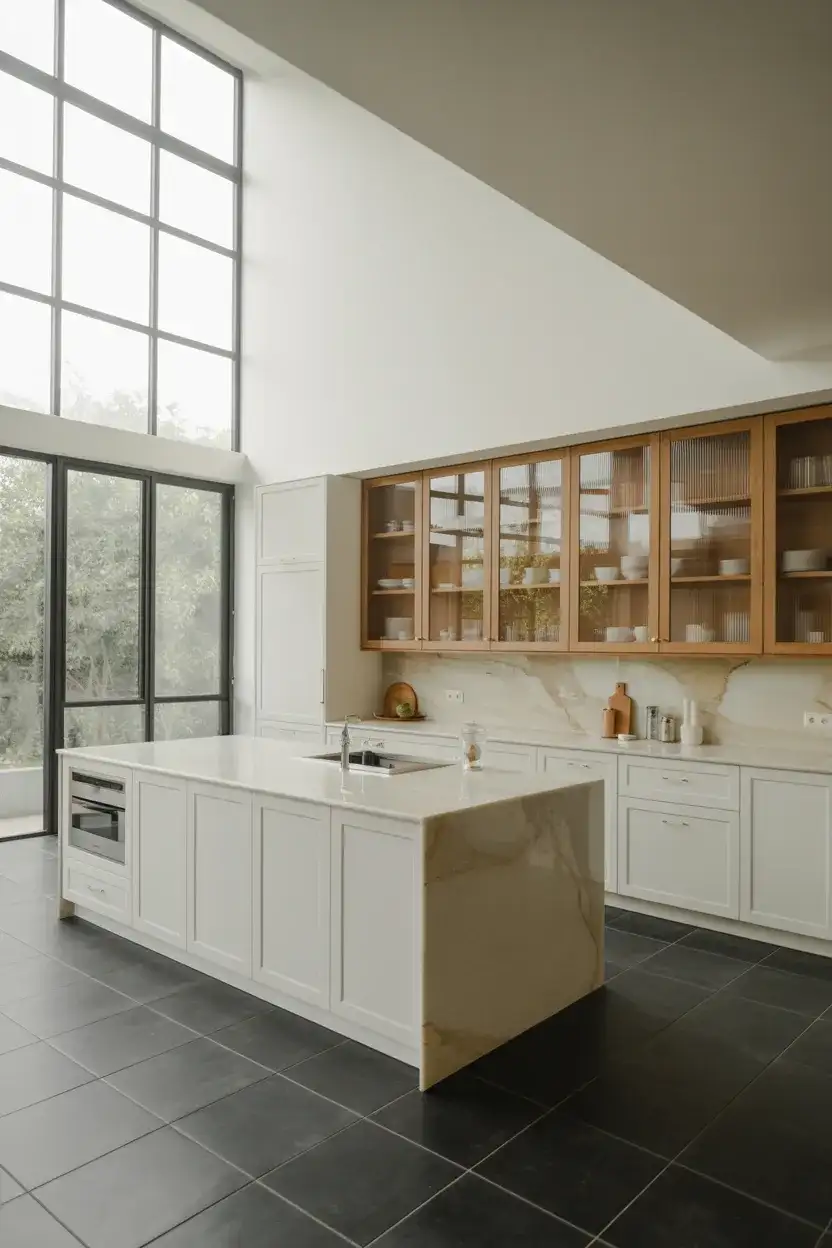
There’s a particular drama to dark floors meeting natural white oak upper cabinets that works especially well in kitchens with high ceilings or generous windows. The floor pulls the eye down and creates a sense of gravity, while the pale oak lifts the upper half of the room and keeps things from feeling cave-like. It’s a vertical contrast rather than a horizontal one, and that directionality is what makes the room feel taller and more intentional. Dark-stained hickory, ebonized oak, or charcoal porcelain tiles all serve as strong floor options beneath white oak uppers.
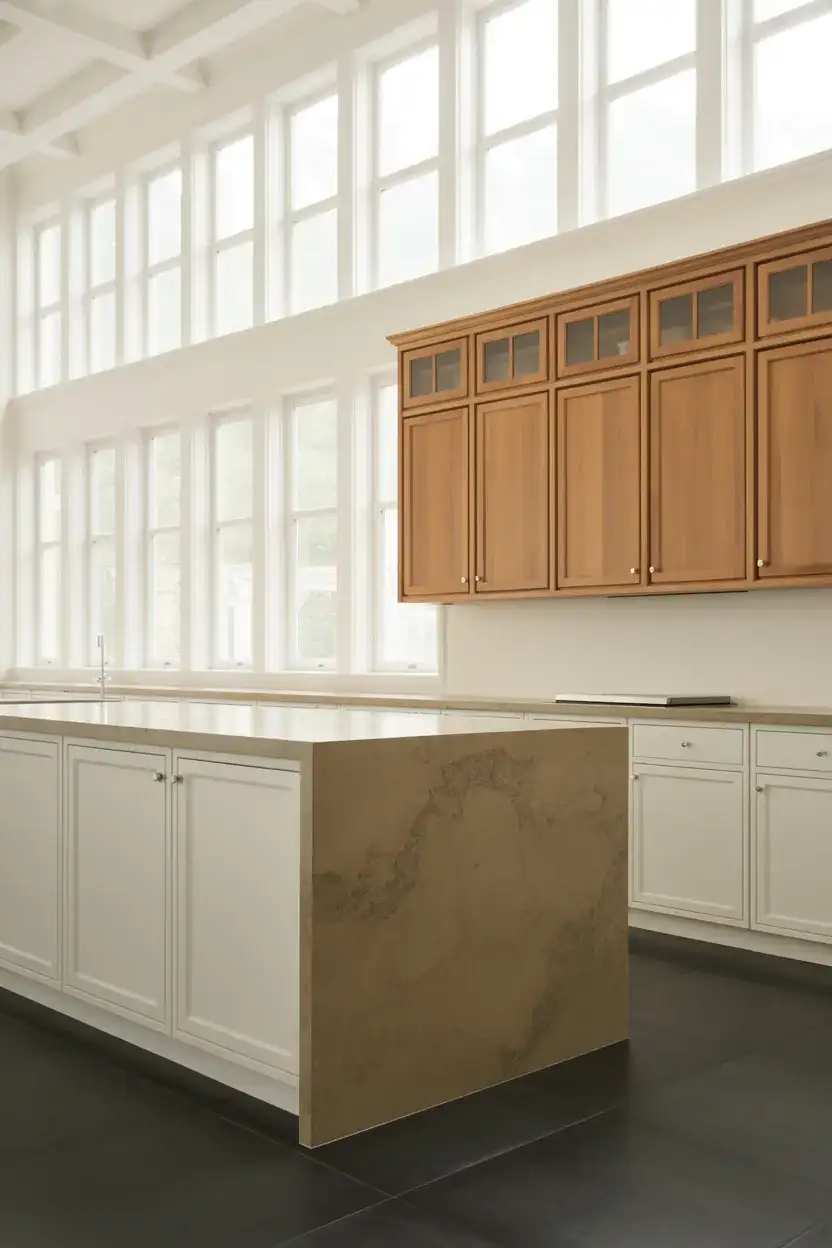
In homes across the American South—from Atlanta’s new-build neighborhoods to Austin’s remodeled mid-century ranches—this high-contrast approach has taken hold partly because of how it handles the region’s abundant sunlight. Dark floors absorb light rather than bouncing it around the room, reducing glare on summer afternoons. Meanwhile, the white oak uppers reflect just enough warmth to keep the space inviting. It’s a regional solution that looks great anywhere but happens to solve a very specific environmental challenge that Southern homeowners deal with daily.
15. White Oak Cabinets With Silver Hardware and Light Tones
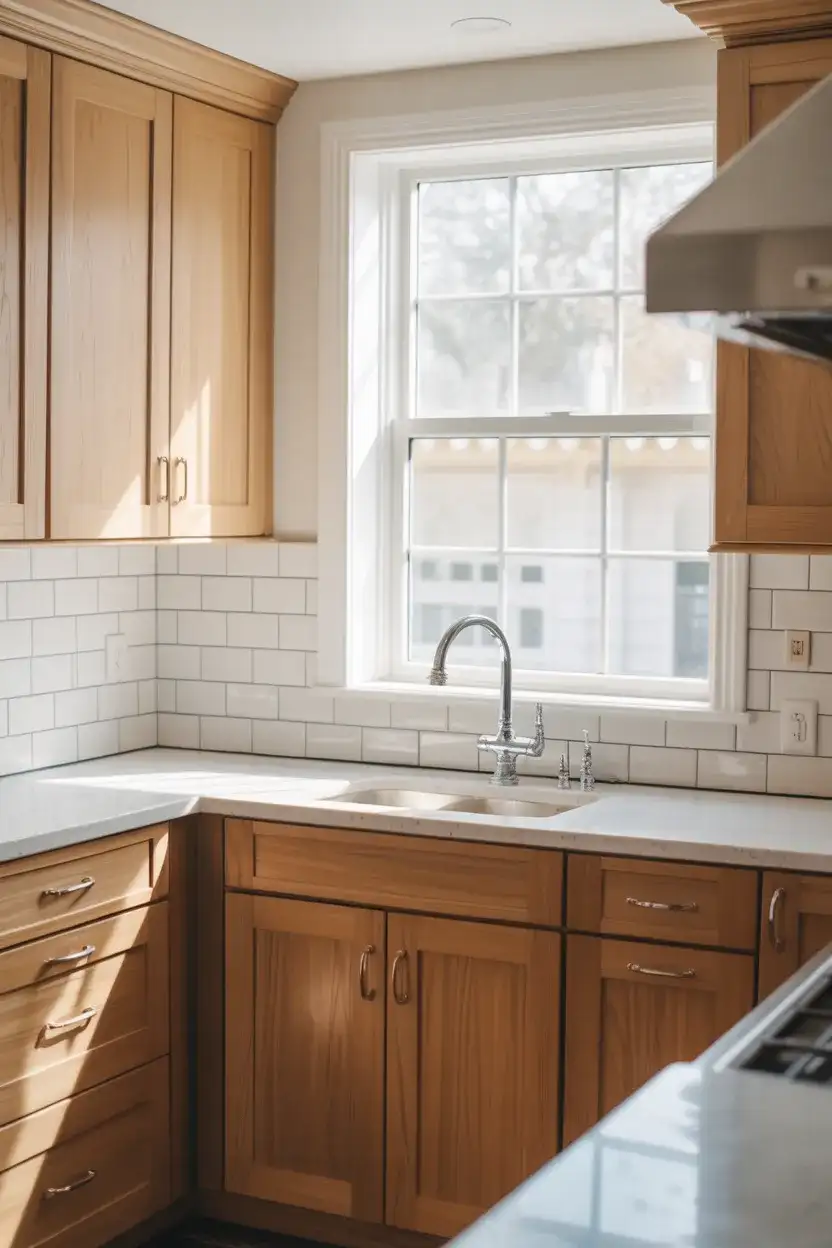
Not every kitchen needs contrast and drama—sometimes the most beautiful outcome is a tonal layering of light materials that whisper rather than shout. White oak cabinets paired with silver hardware in brushed nickel or polished chrome and a white or pale stone countertop create a kitchen that feels luminous and airy from every angle. The cool metallic finish of the hardware prevents the all-warm palette from tipping into yellowish territory, adding a crisp note that keeps the eye engaged. This approach is especially beloved in smaller kitchens and condos where maximizing the sense of space is a priority.
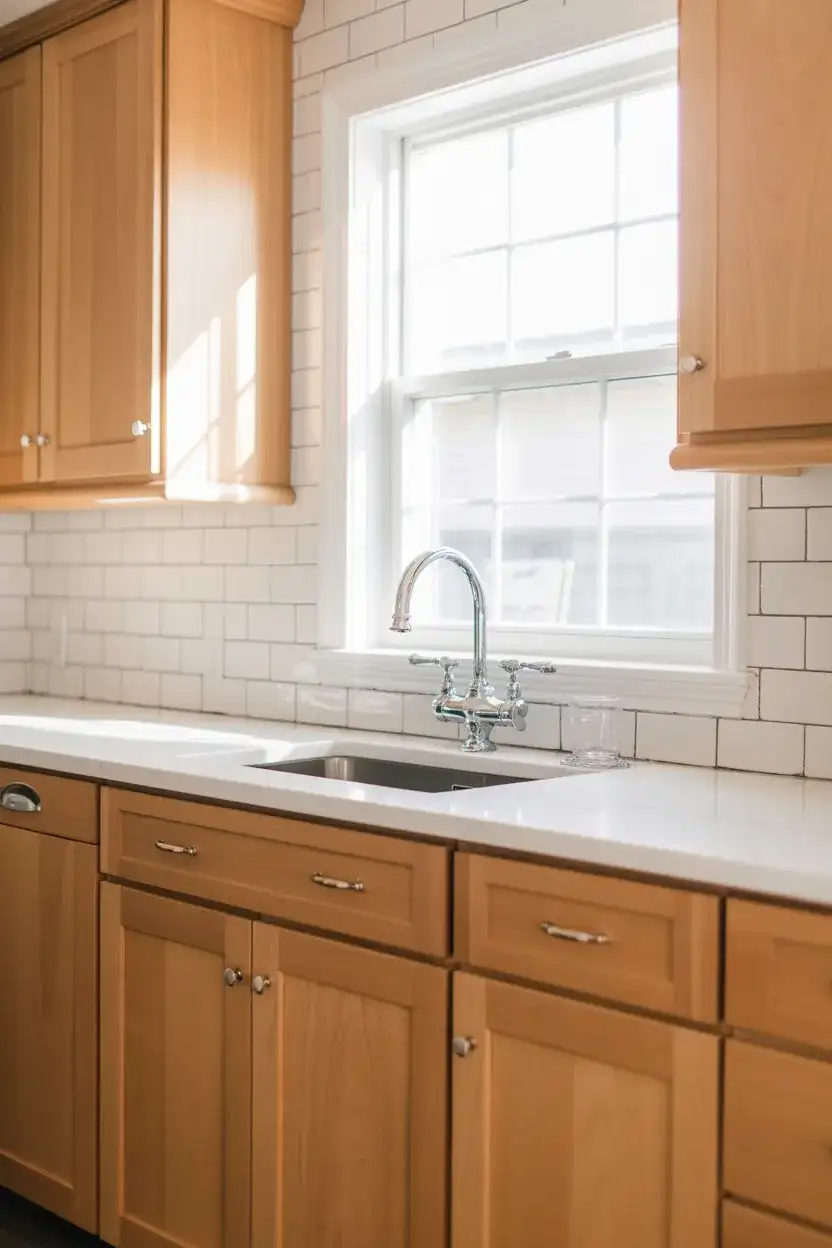
Where this look works best is in coastal-style homes, condominiums with limited square footage, and any kitchen that faces north or east where you want to capture every photon of available light. The tonal approach also tends to resonate with homeowners who plan to sell within five to ten years, because it’s universally appealing and doesn’t alienate buyers with strong color preferences. Think of it as the cashmere sweater of kitchen design—understated, quality-driven, and always appropriate. Just make sure to introduce some texture variation through the backsplash or countertop to prevent the room from looking flat in photographs.
16. Rift and Quarter Sawn Mix With Matte Finish
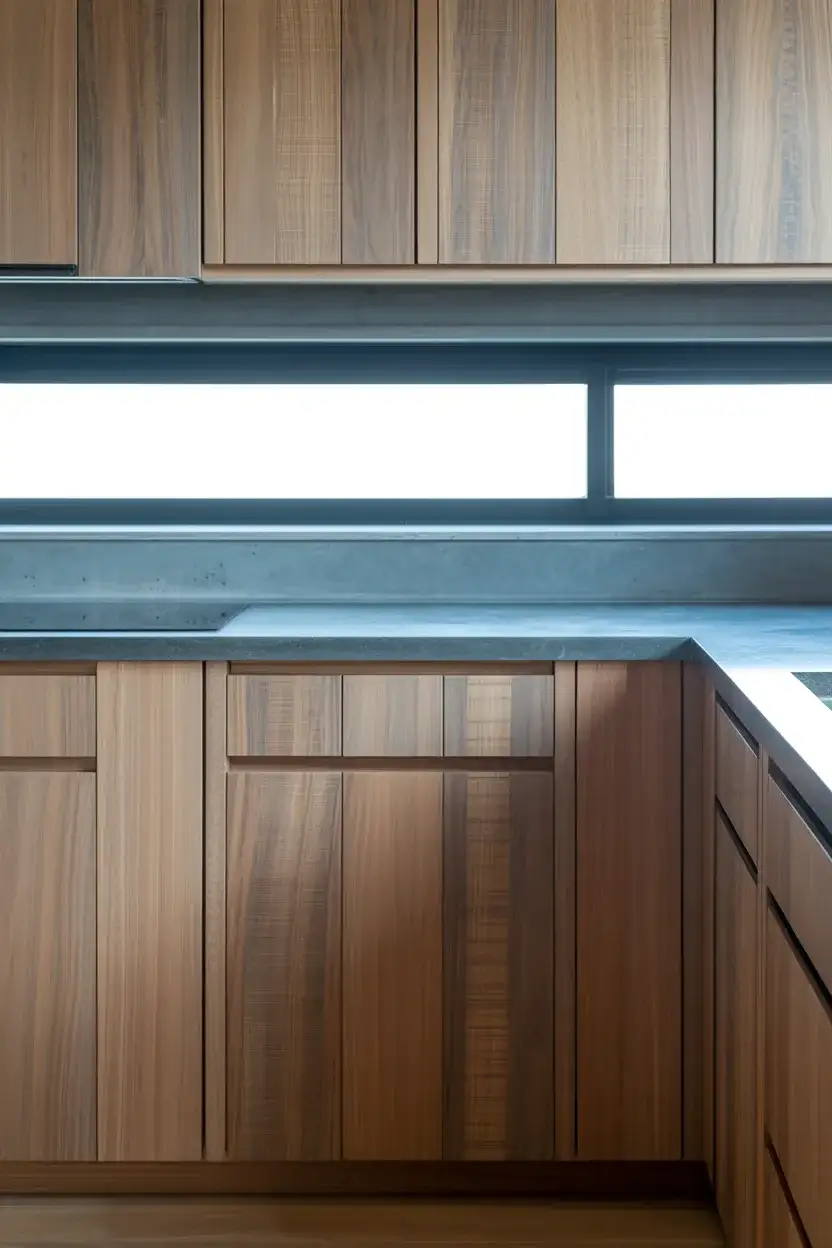
For the discerning homeowner who appreciates lumber like a sommelier appreciates wine, blending rift and quarter-sawn white oak in the same kitchen offers a subtle textural complexity that most visitors can feel even if they can’t name. The rift boards contribute those clean, parallel lines, while the quarter-sawn pieces bring the distinctive ray fleck. Finished in a flat matte clear coat—one of the most popular finish options right now—the wood retains its natural, tactile quality without any plasticky sheen. It’s a detail-forward approach that rewards careful looking.
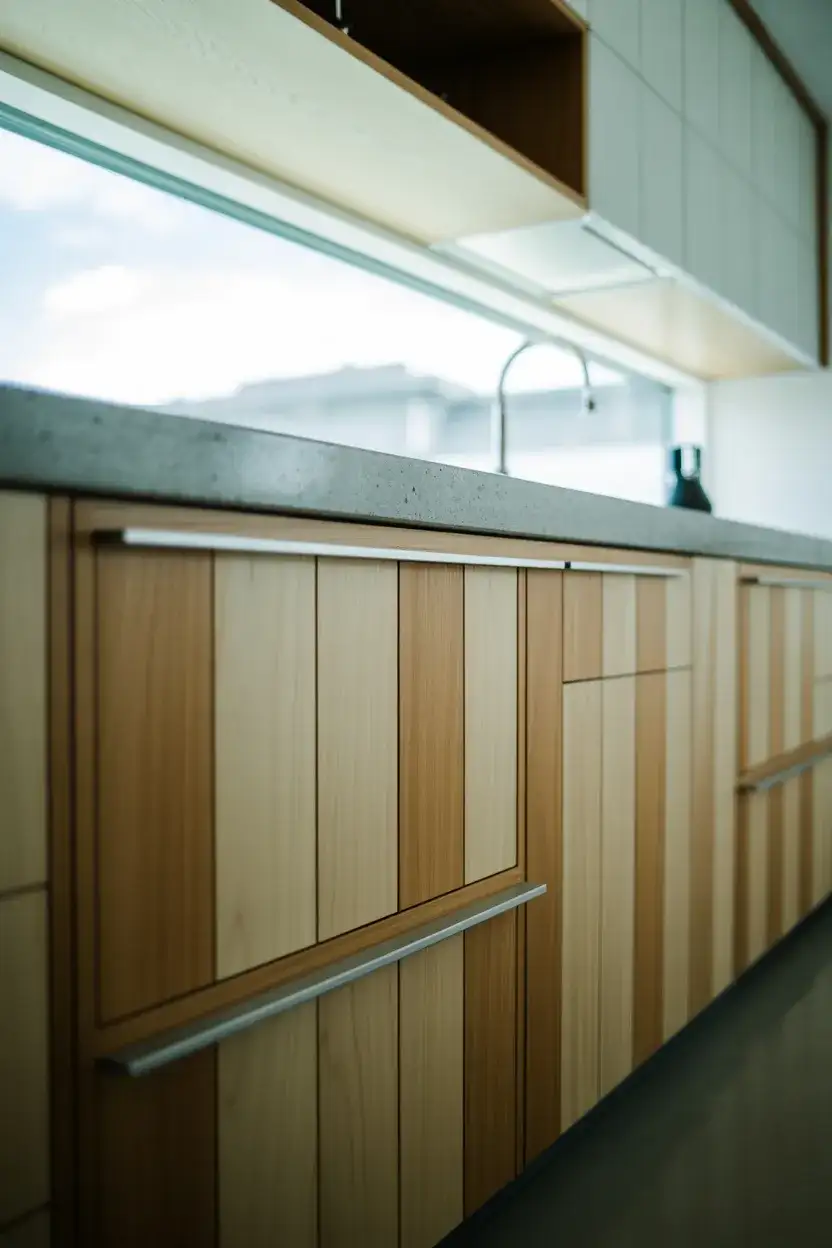
An expert commentary worth sharing: when you mix cuts, you need a cabinetmaker who understands how to distribute the boards so the variation looks intentional rather than random. The best approach is placing the more linear rift-sawn panels on larger surfaces like tall pantry doors and base cabinet runs, while using the more visually interesting quarter-sawn pieces on the island or upper feature sections. A conversation with your millwork provider early in the design process—before anything is milled—can make the difference between a kitchen that looks thoughtfully curated and one that just looks inconsistent.
17. White Oak Kitchen With Terracotta and Brass Accents
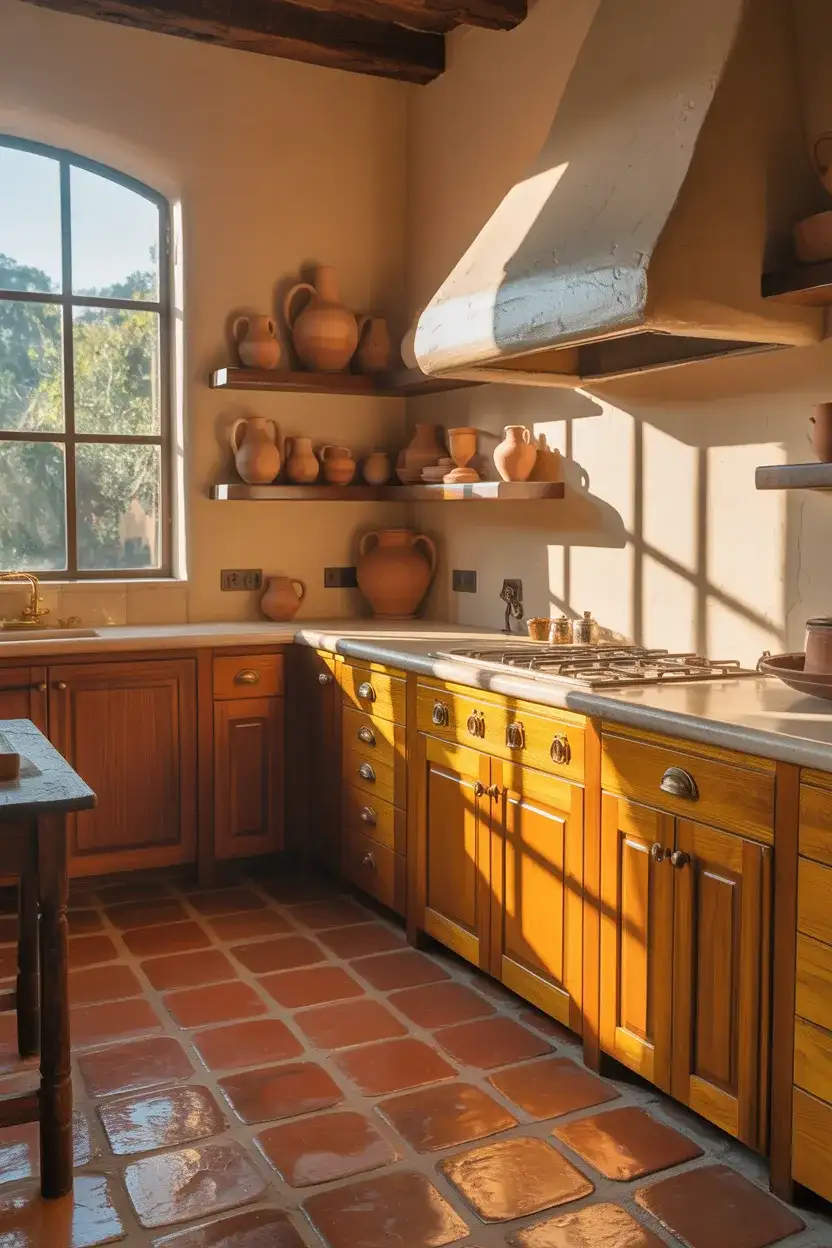
Building on the Mediterranean energy we explored earlier, this idea takes it a step further by combining white oak cabinets with terracotta floor tiles and brass hardware in a single cohesive palette. The three materials share a warm, golden DNA that makes them natural allies, and together they create a kitchen that feels like it was designed over decades rather than in a single meeting with a contractor. A stained white oak in a slightly deeper amber shade pulls the trio even closer together, creating a monochromatic warmth that’s enveloping without being monotonous.
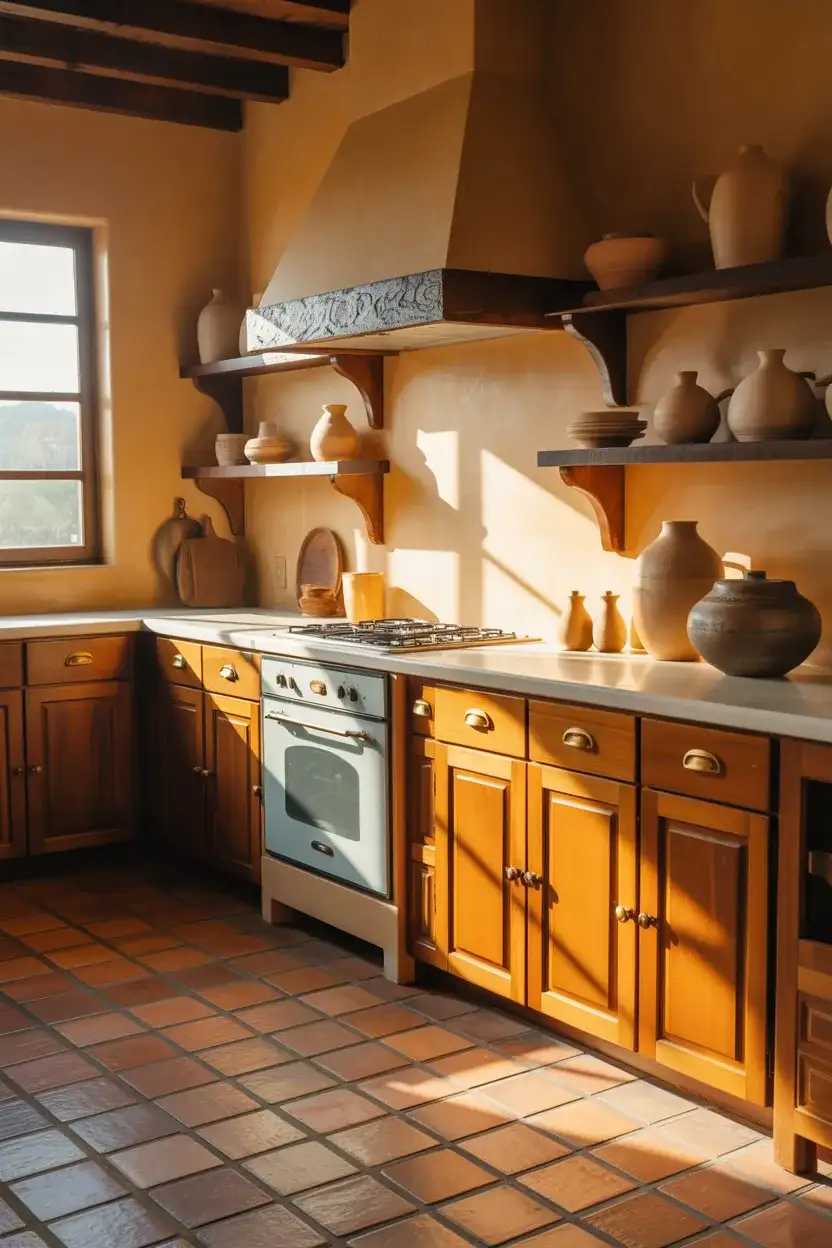
One mistake to avoid here is going too matchy-matchy. When all your materials live in the same warm zone, you need at least one cool or neutral element to provide relief—a white plaster range hood, a pale stone countertop, or even just white open shelving can do the job. Without that breather, the kitchen can start to feel closed in, especially in rooms without large windows. Think of the cool element as the white space in a painting—it gives the warm tones room to breathe and makes each individual material look richer by contrast.
18. Dark Stain Color on White Oak Cabinets
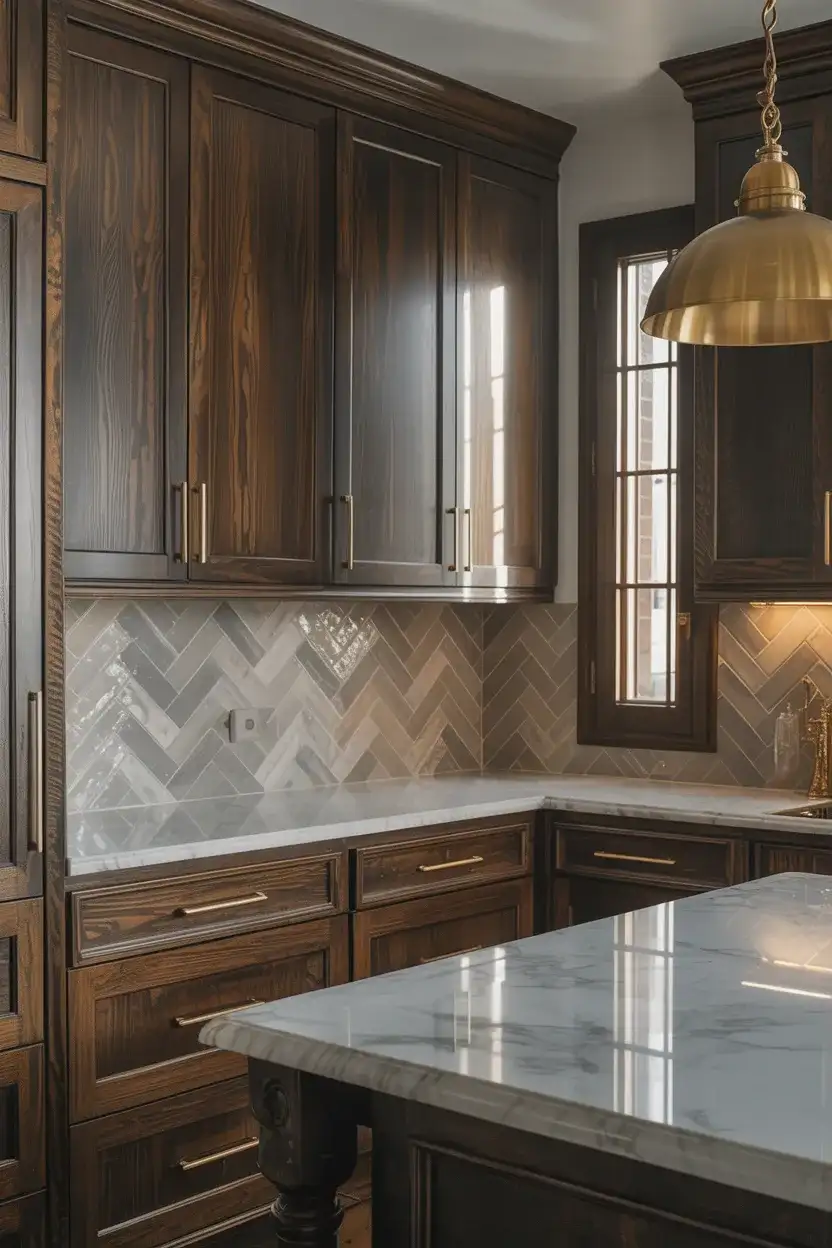
Taking white oak in the opposite direction, a deep stain color—walnut, espresso, or even a cool-toned charcoal—transforms the cabinets into something moody and sophisticated. The beauty of staining white oak dark rather than using an inherently dark species like walnut is that the grain pattern remains visible through the color, giving you depth and character that solid dark paint never provides. This look pairs exceptionally well with gold hardware that catches light against the dark surface and with light countertops that prevent the room from feeling too heavy. It’s a designer-level move that’s gaining ground in luxury and upper-midrange kitchens.
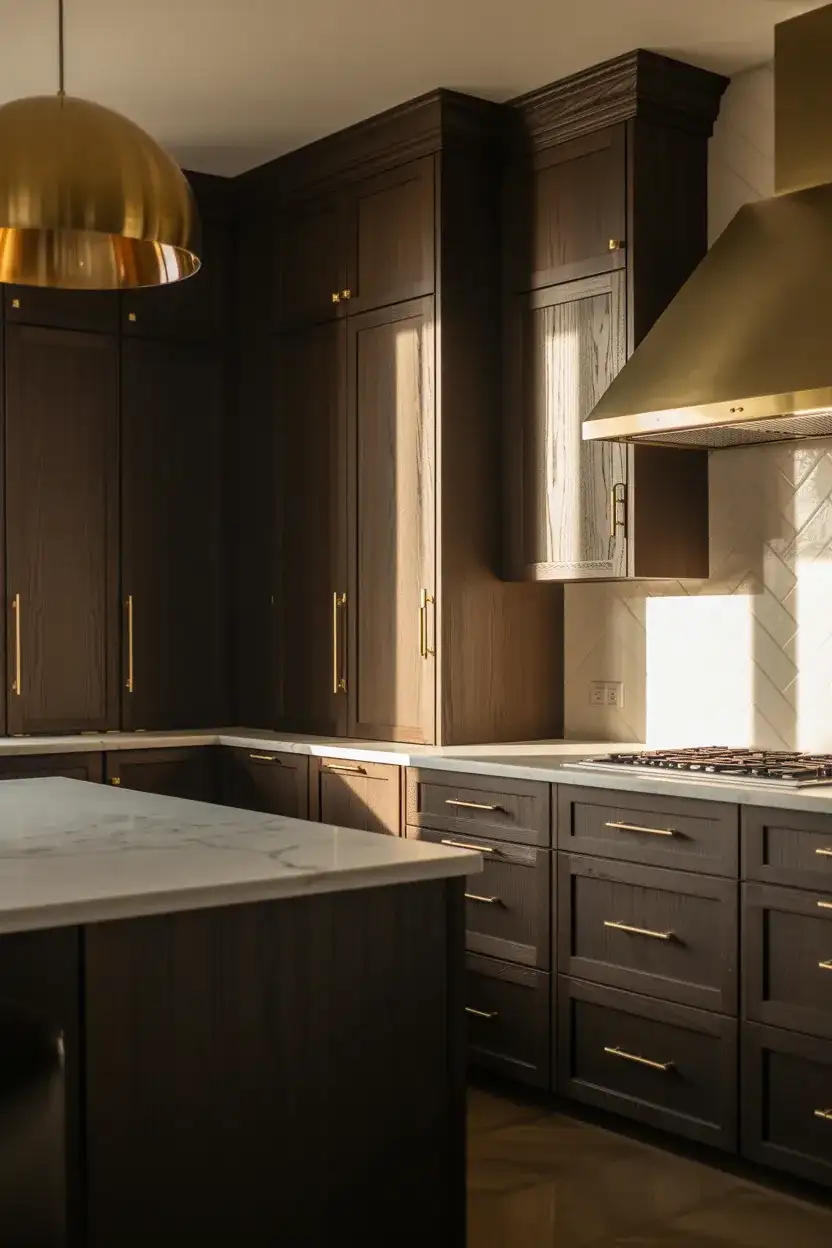
Here’s the budget angle worth knowing: dark-stained white oak lets you achieve a look very similar to genuine walnut cabinetry at a significantly lower material cost. Walnut lumber can run two to three times more per board foot than white oak, and the availability is more limited. By staining white oak to a walnut tone, you save on raw material while still getting a real wood cabinet with beautiful grain. The only caveat is that stained finishes show scratches and wear more readily than natural tones, so a quality topcoat—and gentle drawer-closing habits—become more important than ever.
19. White Oak Cabinets With Color Schemes in Warm Neutrals
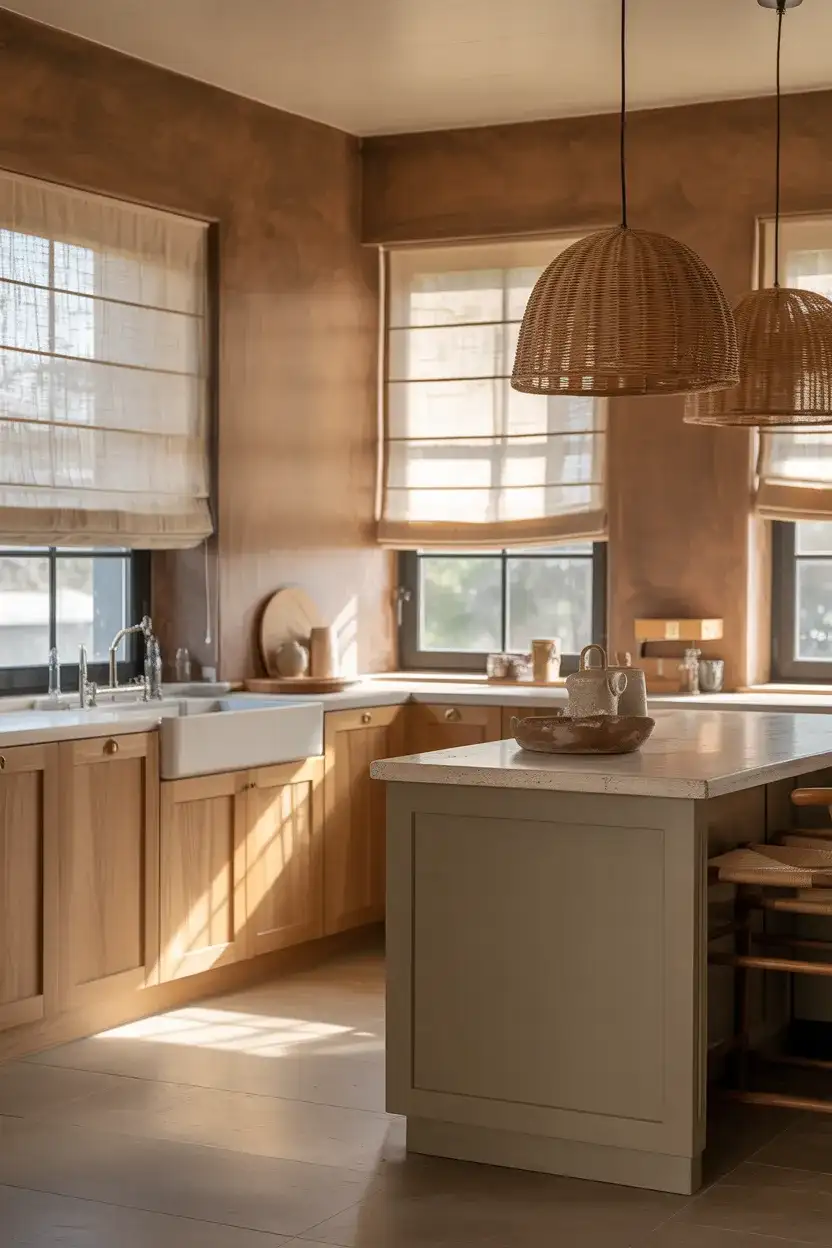
Choosing the right color schemes to surround white oak cabinets can make or break a kitchen, and warm neutrals—mushroom, linen, greige, and sand—are some of the safest and most elegant companions. These hues share the same warm base as the wood, creating a harmonious envelope that feels cocooning rather than stark. The trick is to vary the saturation levels across surfaces so you get depth: a lighter tone on the walls, a slightly richer shade on the island or trim, and the natural white oak splitting the difference. This tonal layering is what separates a thoughtfully designed kitchen from a room where someone just picked “beige” and called it a day.
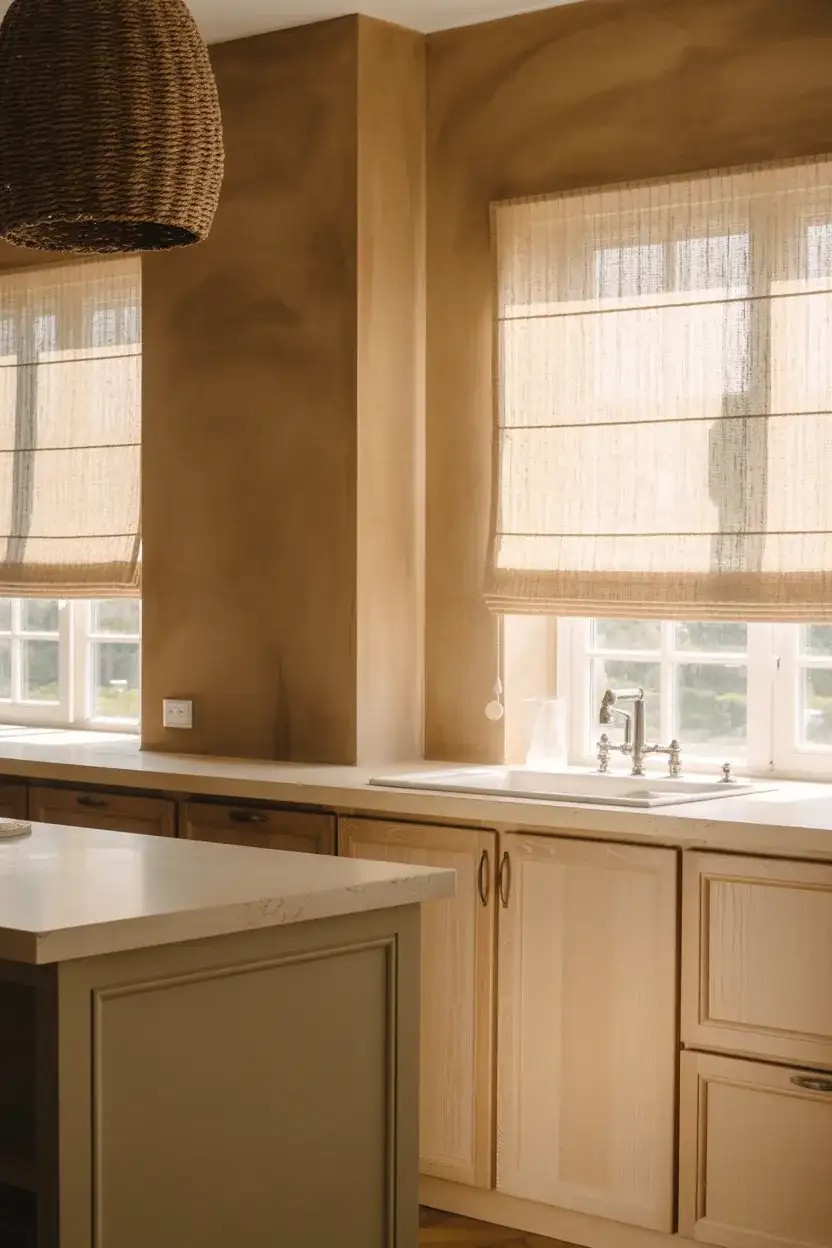
A helpful piece of expert-style commentary: when building a warm neutral scheme around white oak, avoid anything with pink or mauve undertones—those shades can make the oak look muddy or washed out. Stay in the yellow-to-tan family, and test every paint sample directly against a door sample from your cabinet maker, not against a random oak board from the hardware store. The specific undertones of your particular batch of white oak will determine which neutral shades look harmonious and which look off. It’s a subtle difference that most homeowners only catch once the paint is on the wall, so catching it at the sample stage saves a lot of frustration.
20. White Oak Cabinets With Slim Shaker Profile and Dark Counters
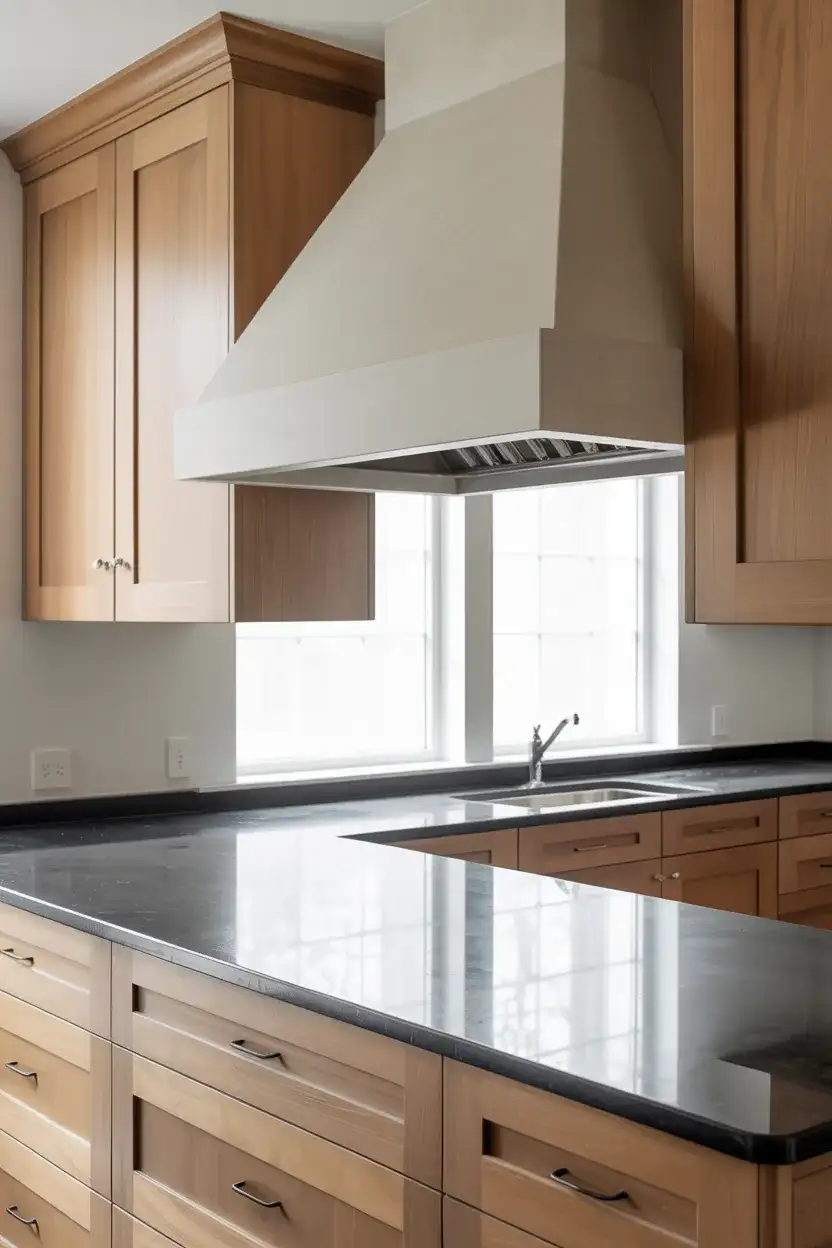
This idea combines two of the strongest trends we’ve covered—the slim shaker door profile and dark counters—into a single kitchen that’s clean-lined, warm, and grounded. The narrow frame of the slim shaker keeps the door looking crisp and modern, while the dark stone surface brings the visual weight that a kitchen this light-toned needs to feel anchored. Layer in a black counter material like honed absolute granite or black soapstone, and you’ve got a pairing that reads as effortlessly sophisticated. It’s the kind of kitchen that doesn’t try too hard but still turns heads.
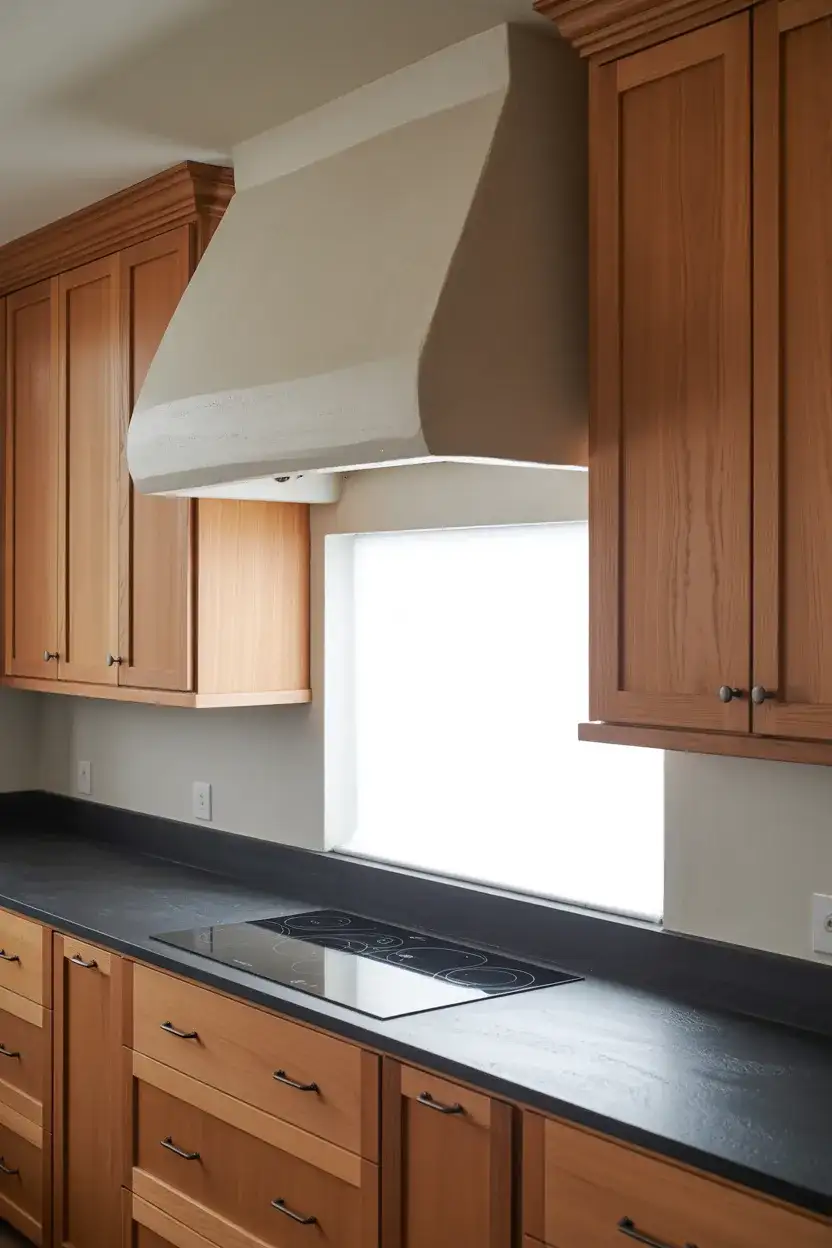
Homeowners who entertain often tend to gravitate toward this combination because the dark counters are incredibly forgiving when it comes to wine stains, oil drips, and the general chaos of cooking for a crowd. Honed finishes in particular hide water spots and fingerprints better than polished ones, which means less frantic wiping between guests arriving and appetizers being served. Meanwhile, the slim shaker doors wipe clean easily because there are fewer crevices for crumbs and grease to collect. It’s a kitchen designed for people who actually use their kitchens, which is the highest compliment a design can receive.
21. White Oak Cabinets With Backsplash Ideas in Vertical Stacked Tile
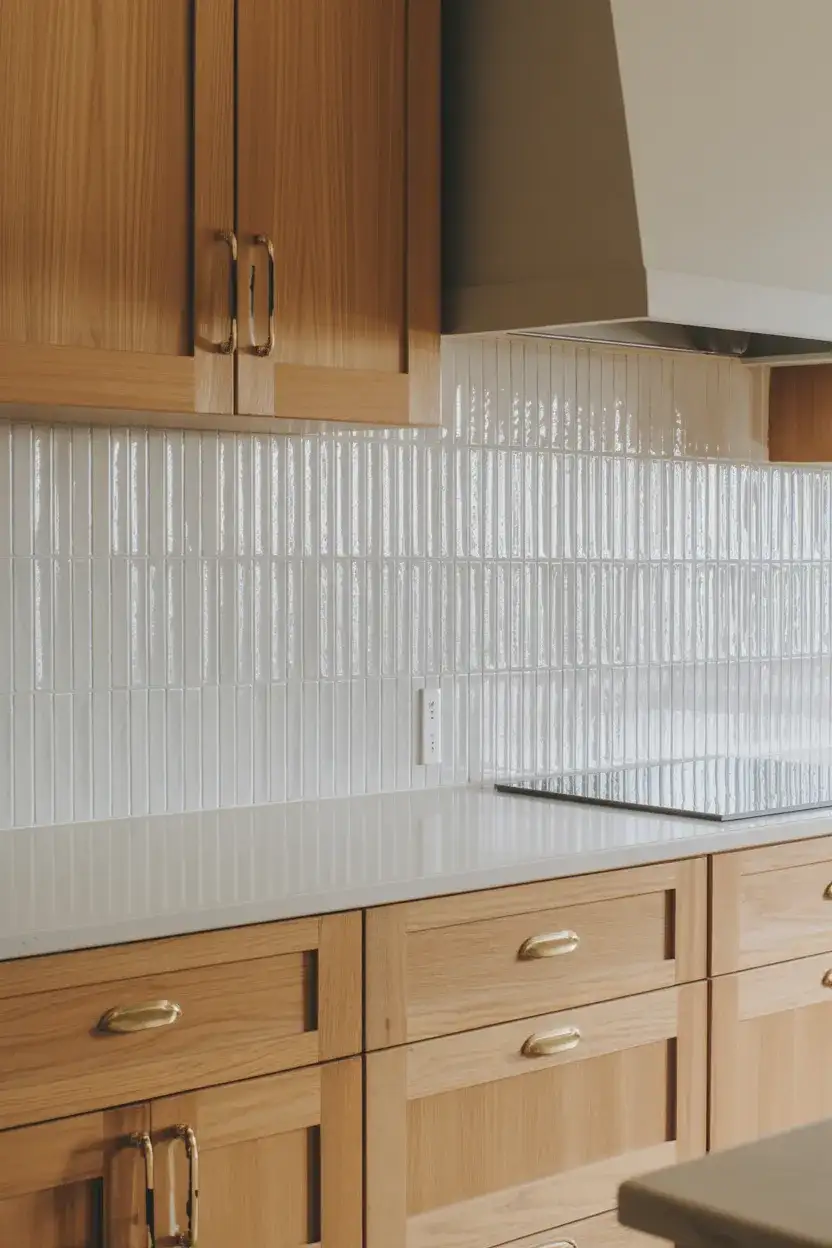
Among the many backsplash ideas circulating right now, vertical stacked tile has surged in popularity for its ability to add height and visual rhythm to a kitchen without overwhelming the cabinetry. When paired with white oak, the vertical lines play against the horizontal grain of the wood, creating an interplay that feels dynamic but orderly. A slender format—think two-by-eight or two-by-ten—in a neutral glaze works particularly well. Add brass hardware for warmth or silver hardware for a cooler edge, and adjust the grout color from white to grey depending on how much you want the tile pattern to stand out.
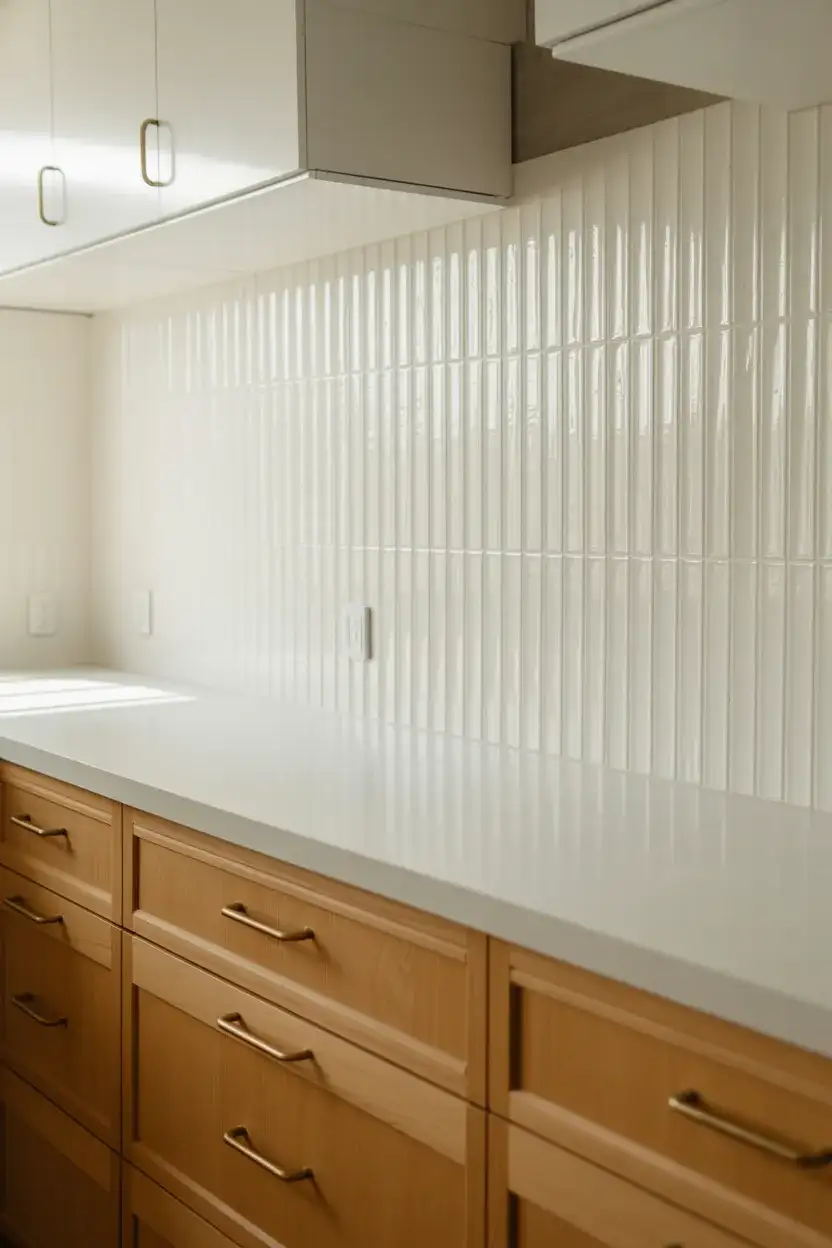
Vertically stacked tile is one of those installations that looks simple but demands precision—any deviation from plumb becomes glaringly obvious because the lines run straight up and down without the offset of a running bond pattern. Make sure your installer uses a laser level and checks alignment every few rows. The payoff is a backsplash that reads as both contemporary and classic, borrowing from mid-century design traditions while feeling entirely current. For white oak kitchens specifically, the vertical energy prevents the room from settling into a purely horizontal composition, which can happen when long runs of cabinet grain meet a wide countertop.
22. White Oak Kitchen Finished in Clear Matte With Mixed Metals
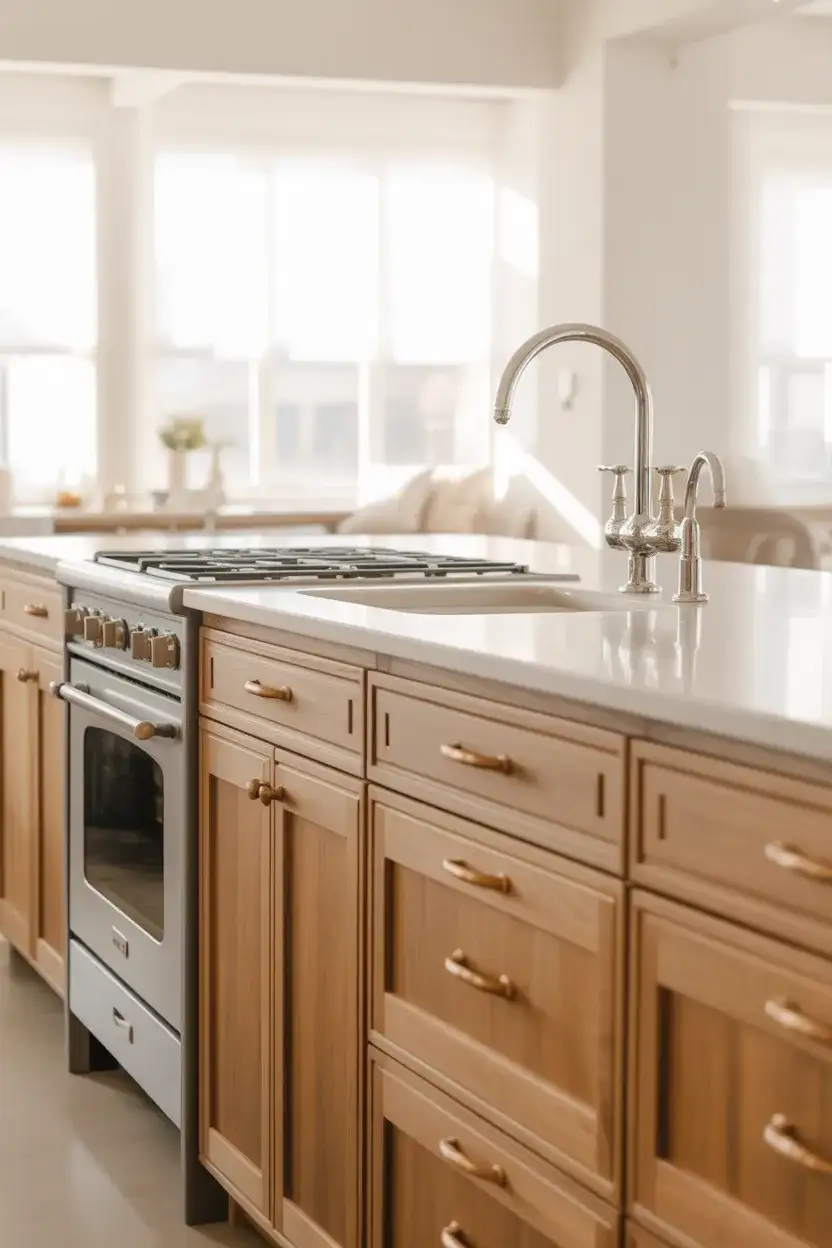
The simplest and perhaps most beautiful finish option for white oak is a clear matte topcoat that lets the wood look and feel exactly like what it is—real, warm, and alive. There’s no stain shifting the tone, no high-gloss coating trapping light on the surface. Just the pure expression of the grain under a protective layer that’s nearly invisible. In this final idea, that honest finish is paired with mixed metal accents—gold hardware on the drawers, silver hardware on the faucet at the sink, and perhaps a matte black range or hood. Mixing metals has become not only acceptable but expected, and it prevents a kitchen from looking like everything was ordered from one catalog page.
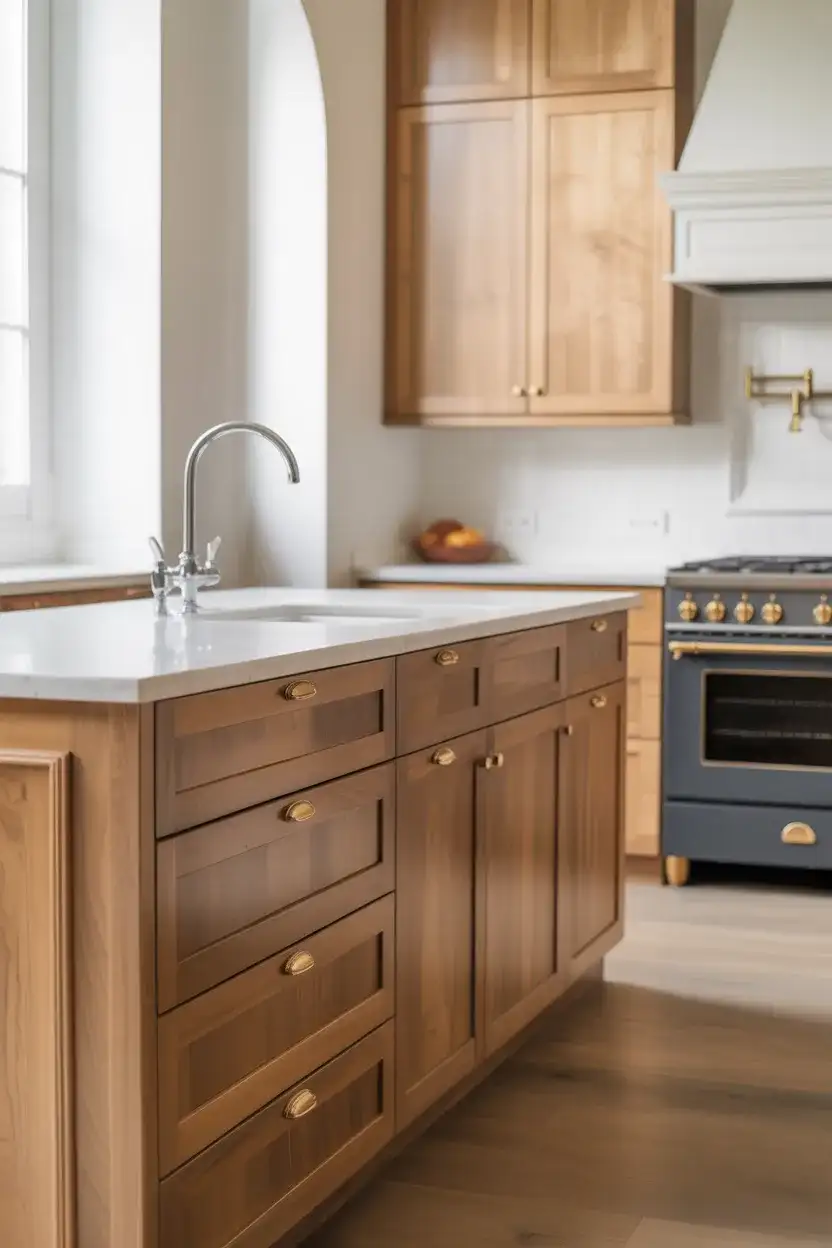
The biggest misconception about mixed metals is that they need to be in a strict ratio or follow some kind of rule—two brass elements for every chrome one, or whatever formula the internet has invented this week. In reality, it works best when it feels unplanned, like a kitchen that evolved over time. Let function guide the choice: pick the faucet finish you love most for its own sake, choose hardware that complements the wood, and let the appliances do their own thing. When the white oak is finished in honest clear matte, it acts as a warm, neutral bridge that ties every metal together without any of them clashing. That’s the beauty of real wood—it plays well with almost everything.
Conclusion
White oak kitchen cabinets have earned their place at the center of American kitchen design for good reason—they’re versatile enough to anchor a Mediterranean farmhouse mood or a sleek Scandinavian palette, durable enough for families who actually cook, and beautiful enough to stop the scroll on your favorite inspiration boards. We hope these twenty-two ideas have given you a starting point, a new direction, or maybe just the confirmation that the vision you already have is the right one. Drop a comment below and tell us which idea stopped you in your tracks—or share a combination we didn’t cover. Your fellow readers (and we) would love to hear what’s inspiring your next kitchen.