If you’ve spent any time on Pinterest lately, you’ve probably noticed the scroll-stopping walk-in shower transformations flooding every board. And honestly, it makes sense—Americans are rethinking their bathrooms like never before, trading cramped tub-shower combos for open, spa-worthy spaces that feel like a daily retreat. Whether you’re planning a full bathroom remodel or just daydreaming about your next renovation, walk-in showers have become the centerpiece of modern bathroom design. In this roundup, we’ve gathered 23 fresh ideas that cover everything from small bathroom solutions to luxurious master bath upgrades—each one designed to spark your next project.
1. Matte Black Rainfall Retreat
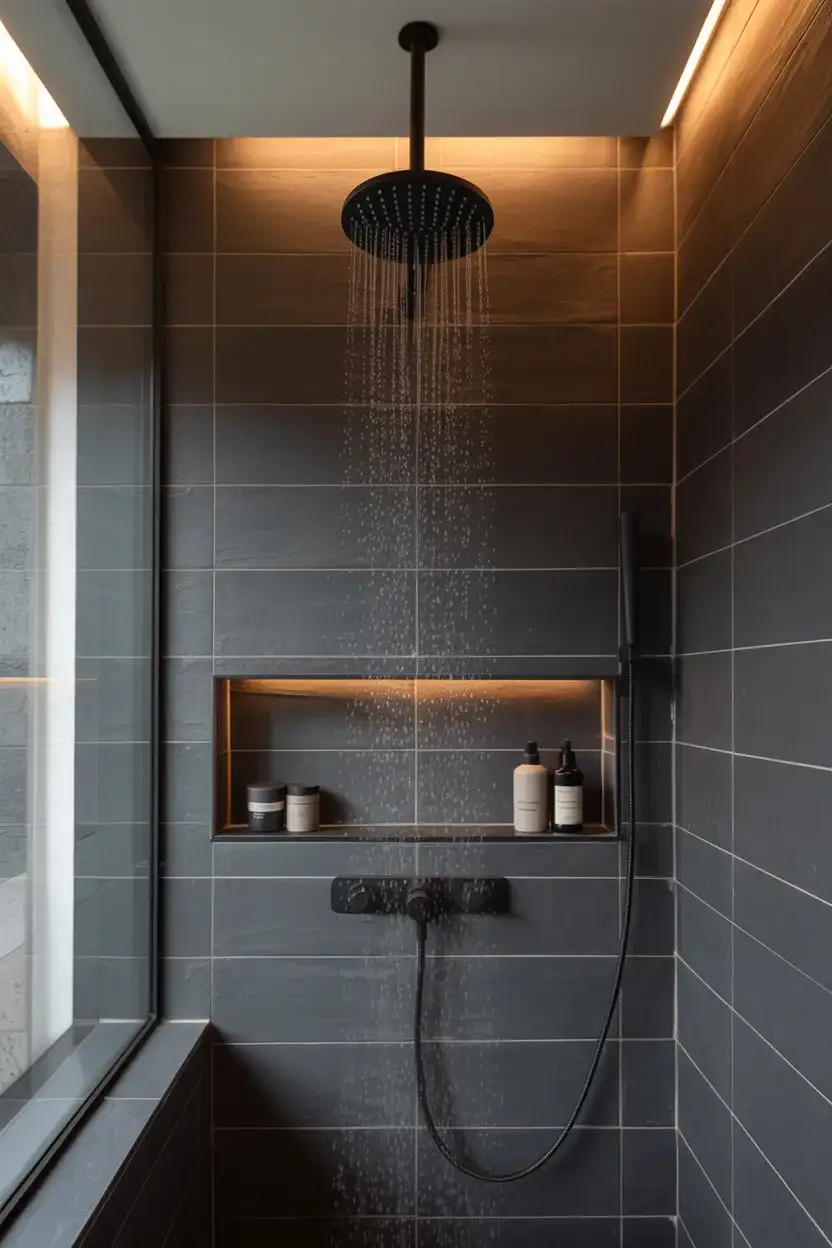
There’s something undeniably striking about a walk-in shower that commits fully to a black palette. This idea pairs matte black fixtures—rainfall showerhead, handheld wand, recessed niche trim—against large-format charcoal tile for a look that’s both dramatic and surprisingly easy to maintain. The effect is moody without feeling dark, especially when paired with warm LED lighting tucked into a ceiling cove. It works beautifully in a modern home where clean lines already dominate the design language, giving the bathroom a boutique-hotel edge that photographs like a dream.
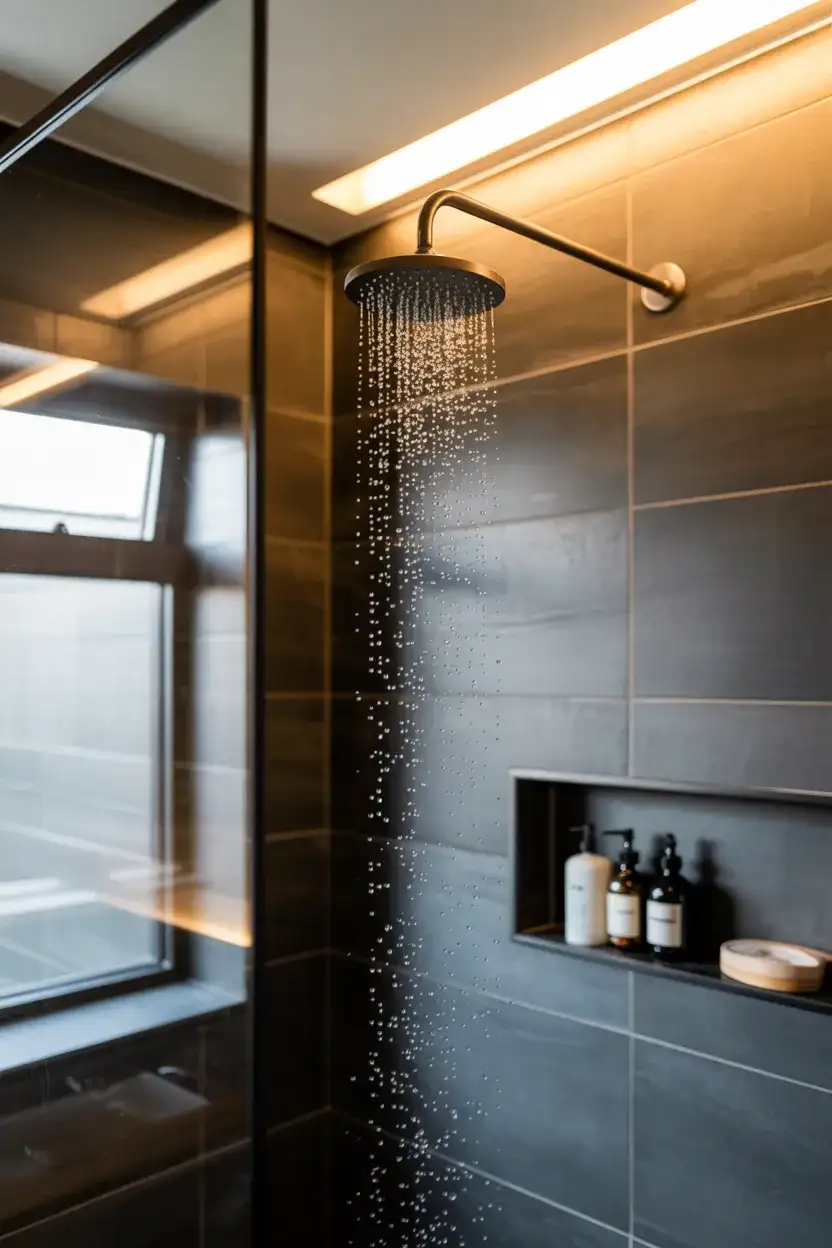
One thing worth knowing: matte black finishes have gotten significantly better in the last couple of years. Early versions showed every water spot and fingerprint, which drove homeowners crazy. Today’s PVD (physical vapor deposition) coatings resist spotting far more effectively, so you’re not constantly wiping things down. If you’re on the fence about going dark, start with the fixtures alone—a black showerhead and drain against lighter tile still deliver serious impact without the full commitment.
2. Rustic Stone Walk-In with Wooden Bench
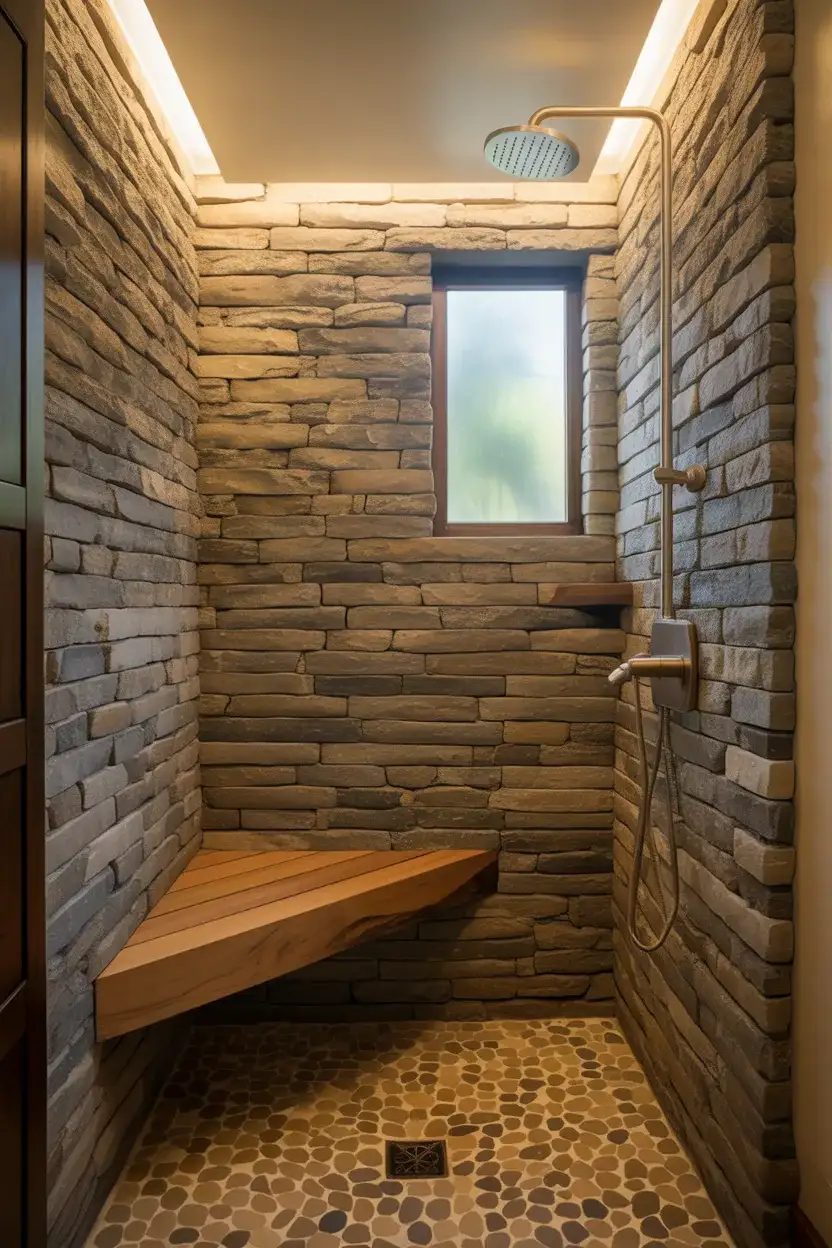
If your design instincts lean toward warmth and texture over sleekness, a rustic walk-in shower built from natural stone and anchored by a teak bench might be exactly your speed. Think stacked ledgestone walls in warm grays and tans, a pebble-mosaic shower floor that massages your feet, and a floating teak seat that ages beautifully with exposure to water. This style pulls heavily from mountain-lodge aesthetics and pairs naturally with exposed wood beams or reclaimed barn wood vanities elsewhere in the bathroom. It’s an earthy, grounding space that feels connected to nature.
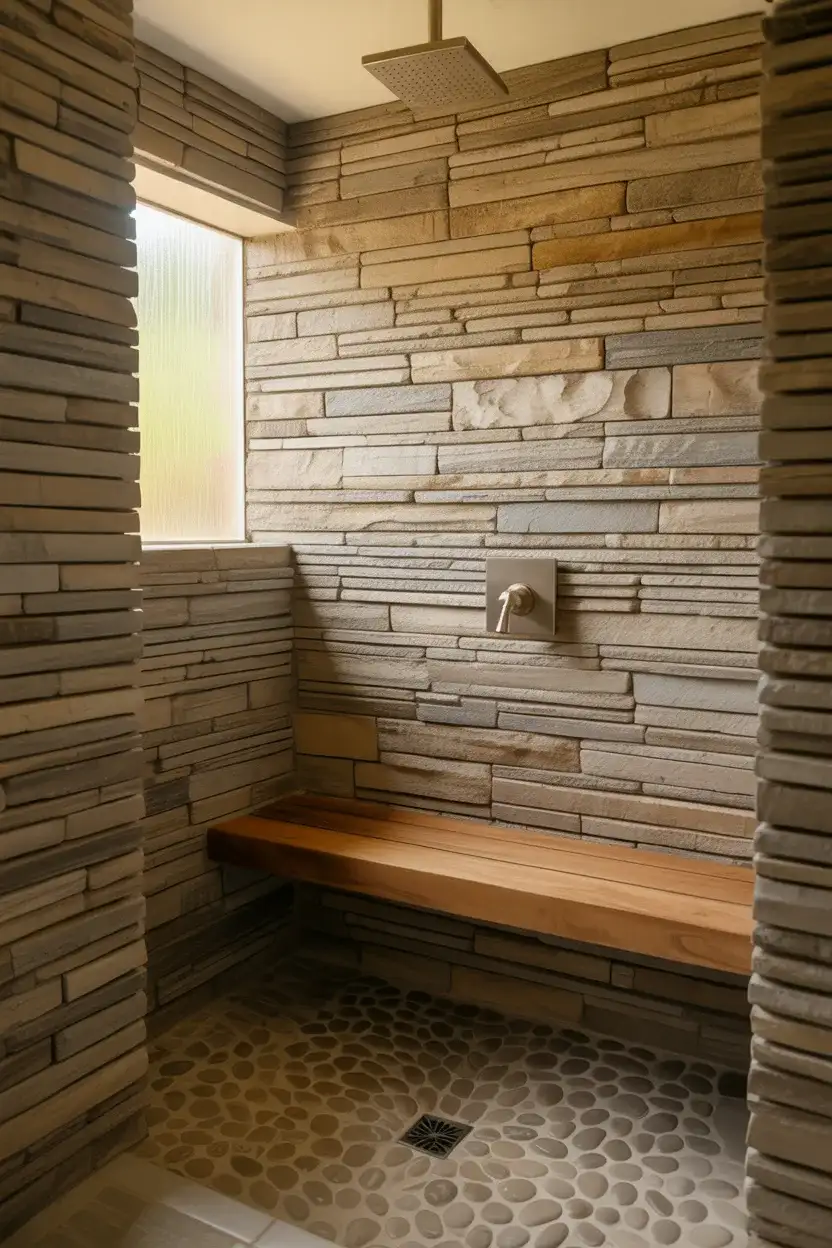
Where this works best: homes in Colorado, the Pacific Northwest, the Carolinas—anywhere that mountain or cabin vernacular already has a foothold. But you’d be surprised how well it adapts to suburban ranch homes, too. A contractor friend in Asheville told me his most requested shower style for the last two years running has been exactly this: natural stone with a teak seat. The bench isn’t just aesthetic, either—it’s genuinely useful for shaving legs, resting tired feet, or just sitting under hot water on a cold morning.
3. Frameless Glass Box in a Small Full Bathroom
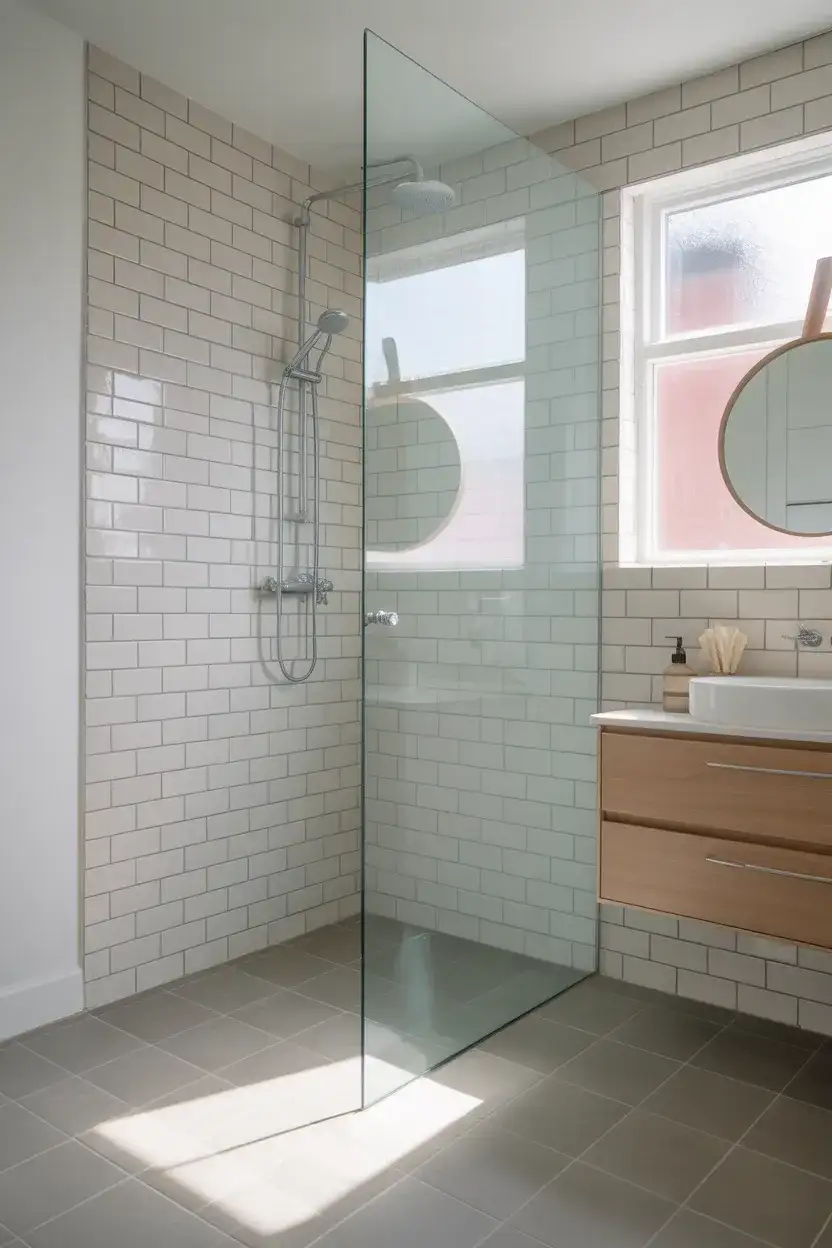
When square footage is tight, a glass enclosure is your best friend. In a small full bathroom—we’re talking 40 square feet or less—a frameless glass walk-in shower makes the room feel twice its actual size by letting sightlines travel uninterrupted from wall to wall. The trick is keeping everything transparent: clear glass panels, minimal hardware, and white or very light tile that bounces natural light around the space. Pair it with a wall-mounted vanity to free up even more visual real estate, and suddenly a bathroom that felt claustrophobic becomes genuinely airy.
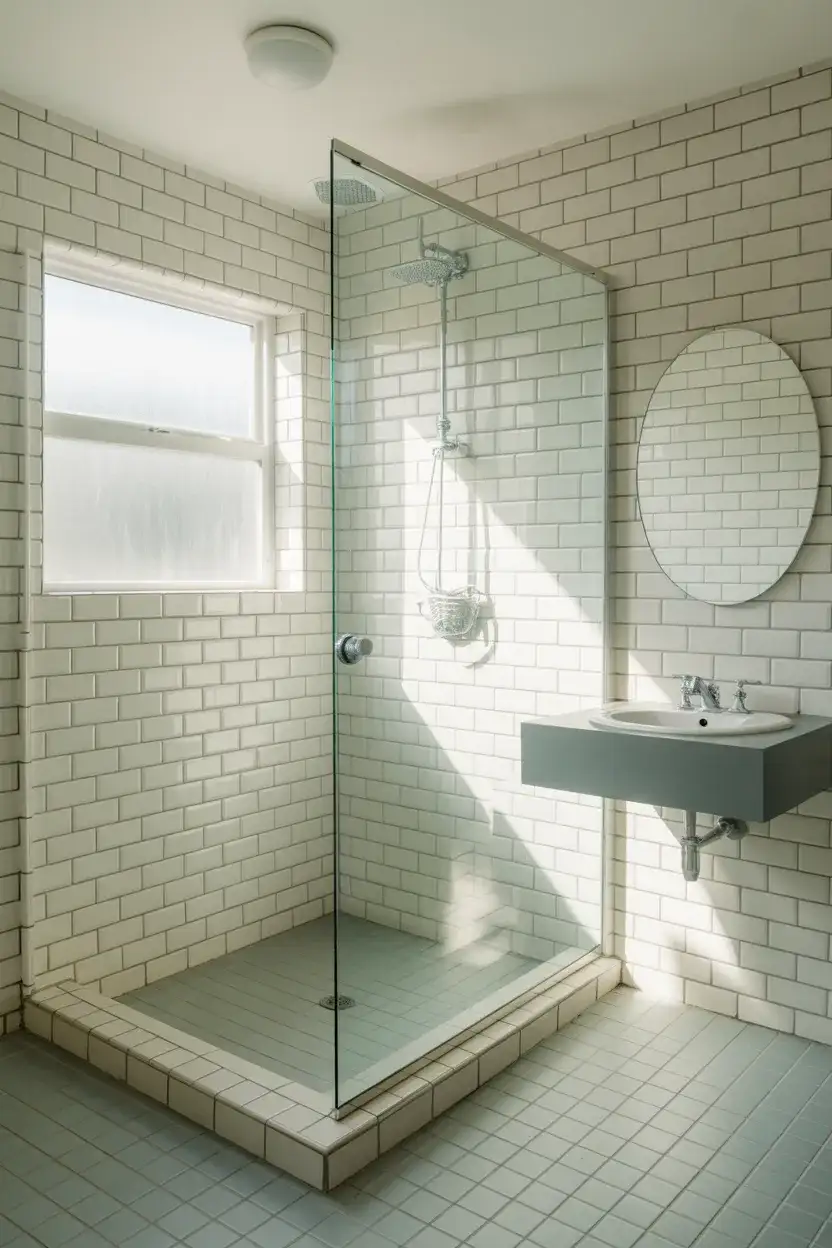
Budget-wise, frameless glass panels typically run between $900 and $2,500 installed, depending on your region and the thickness of the glass. That’s more than a curtain rod and liner, obviously, but the visual payoff in a small bathroom is enormous—and it’s one of the upgrades that appraisers consistently notice when evaluating home value. If a full frameless feels too pricey, a single fixed glass panel (no door) can achieve about 80% of the same effect at roughly half the cost.
4. Farmhouse Shiplap Walk-In
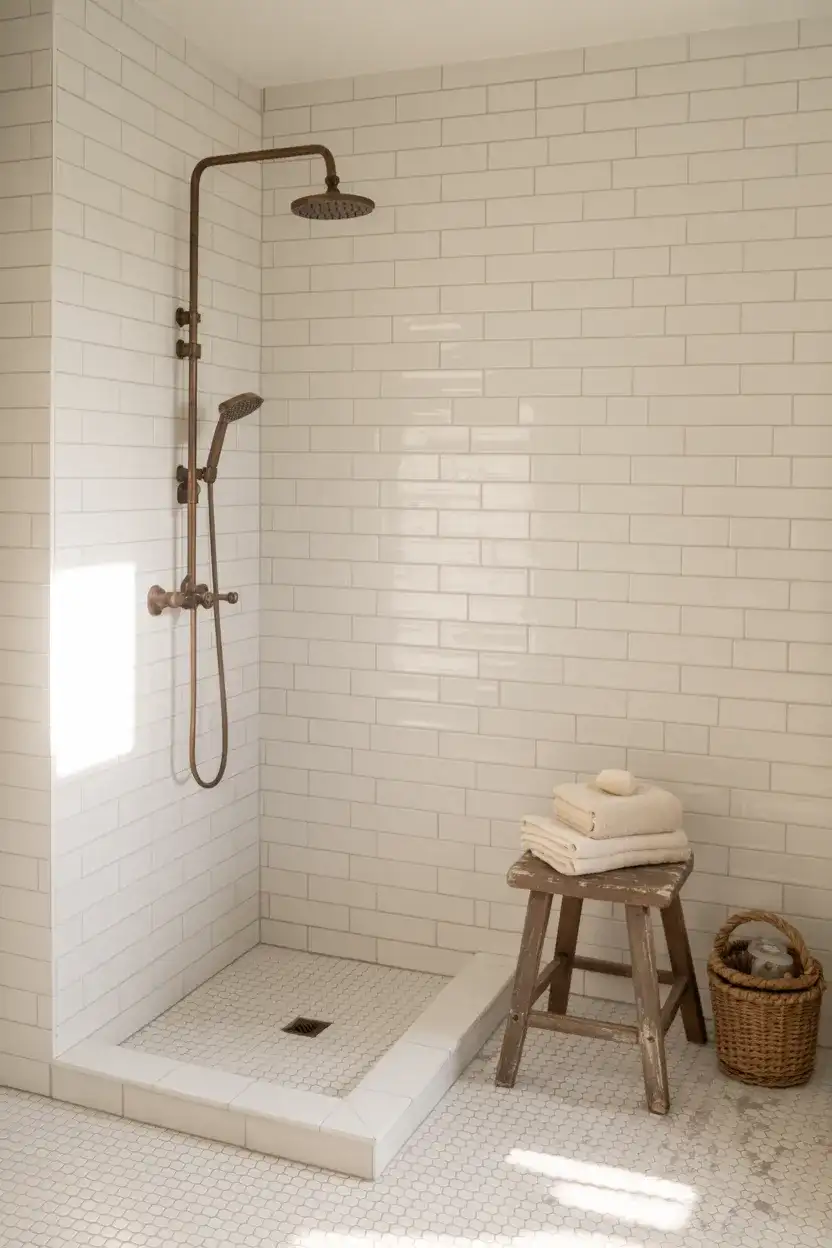
The farmhouse look hasn’t faded—it’s just evolved. Today’s version of a farmhouse walk-in shower swaps the overly distressed finishes for something cleaner: crisp shiplap-style tile in matte white, oil-rubbed bronze fixtures, and a simple curbless entry that keeps the whole bathroom feeling cohesive. Instead of literal wood planks (which, let’s be honest, don’t belong in a wet zone), porcelain tiles that mimic shiplap give you the same horizontal-line rhythm without any of the moisture concerns. It’s warm, it’s familiar, and it photographs beautifully for your Pinterest board.
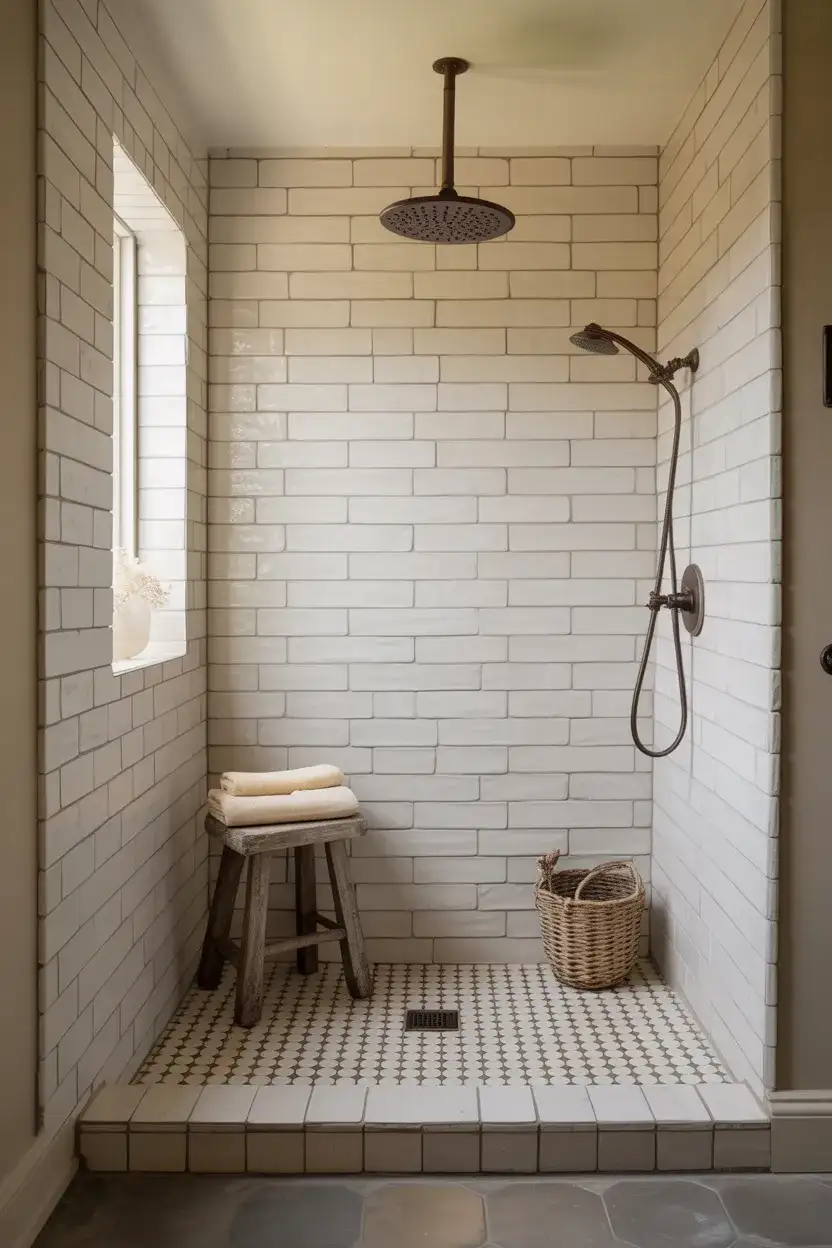
A common mistake with farmhouse showers is going too heavy on the theme—adding barn door hardware, mason jar soap dispensers, and faux-vintage signs all at once. It ends up feeling like a set piece rather than a real bathroom. The most successful farmhouse walk-ins let one or two elements carry the style (the shiplap tile and the bronze fixtures, for example) and keep everything else neutral. That restraint is what separates a bathroom you’ll love in five years from one that already looks dated next season.
5. Doorless Walk-In with Half Wall
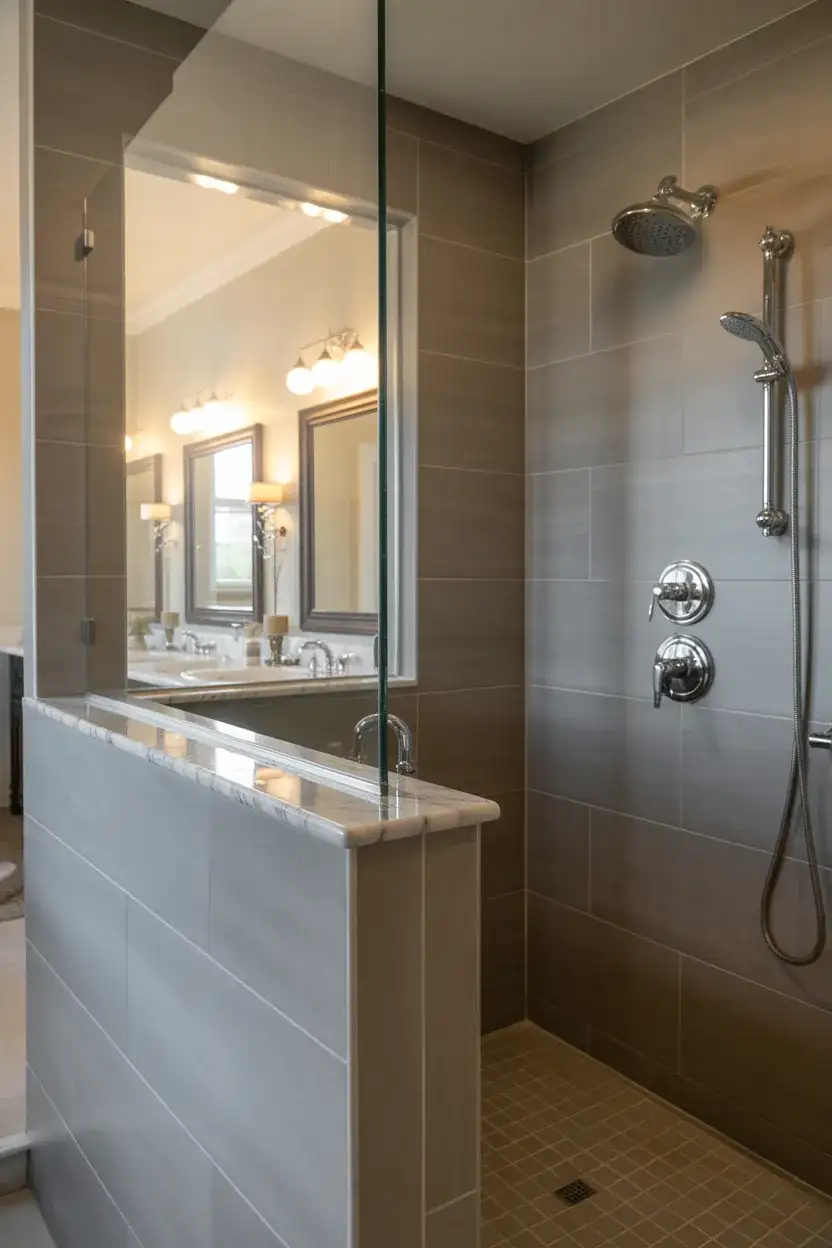
If you want the openness of a doorless shower but still need a splash barrier, the half wall is a perfect middle ground. Typically built to about 36 to 42 inches high and capped with a flat tile or stone ledge, a half wall contains water spray while keeping the shower visually connected to the rest of the bathroom. It doubles as a shelf for toiletries on the shower side and a display ledge on the bathroom side. This design works especially well in a master bathroom where you have enough room for a wider entry—typically at least 36 inches—so the walk-in still feels generous.
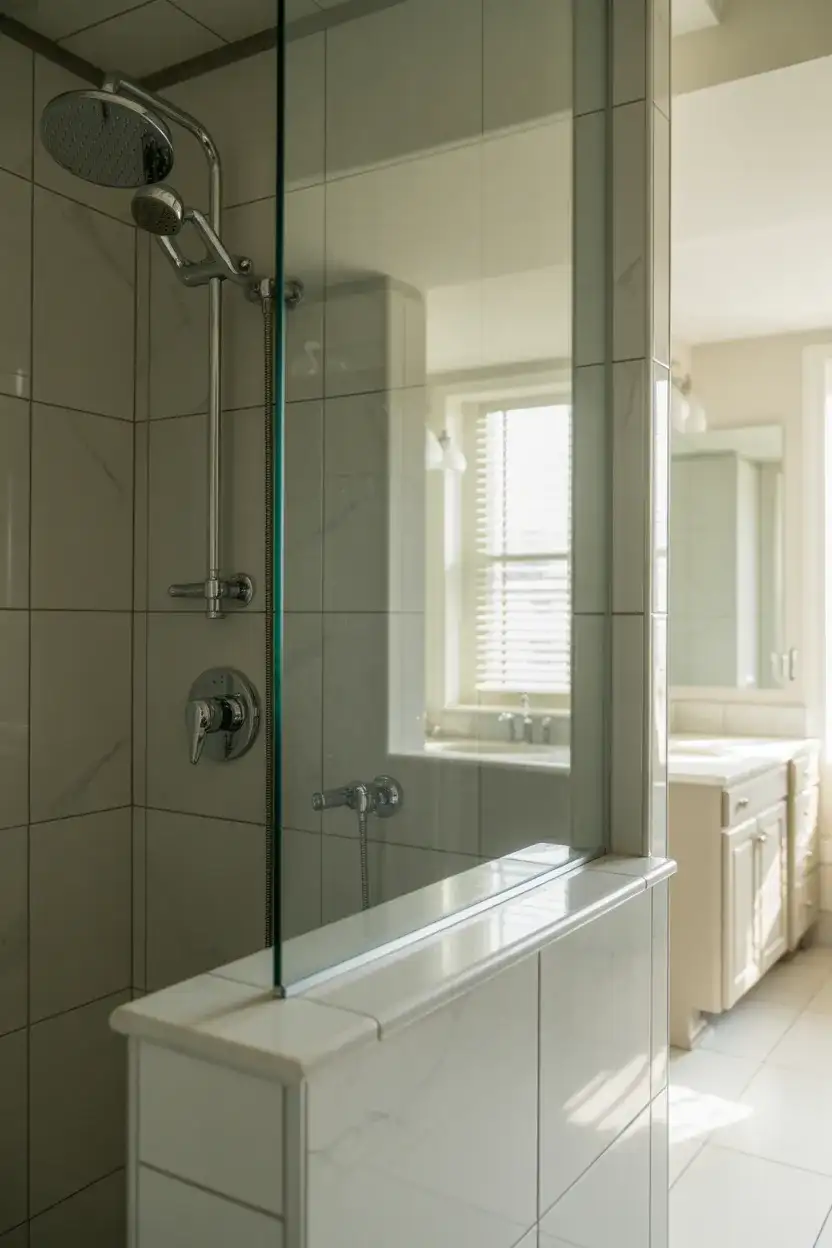
Real homeowner behavior tells a clear story here: people who install half walls almost always end up using that ledge far more than they expected. It becomes the landing spot for a coffee mug during a morning shower, a phone propped up playing a podcast, or a small plant that thrives in the humidity. Designers sometimes call it the most functional six inches in the bathroom. Just make sure the cap material is water-resistant—honed marble, quartz, or sealed concrete all work well.
6. Floor-to-Ceiling Marble Elegance
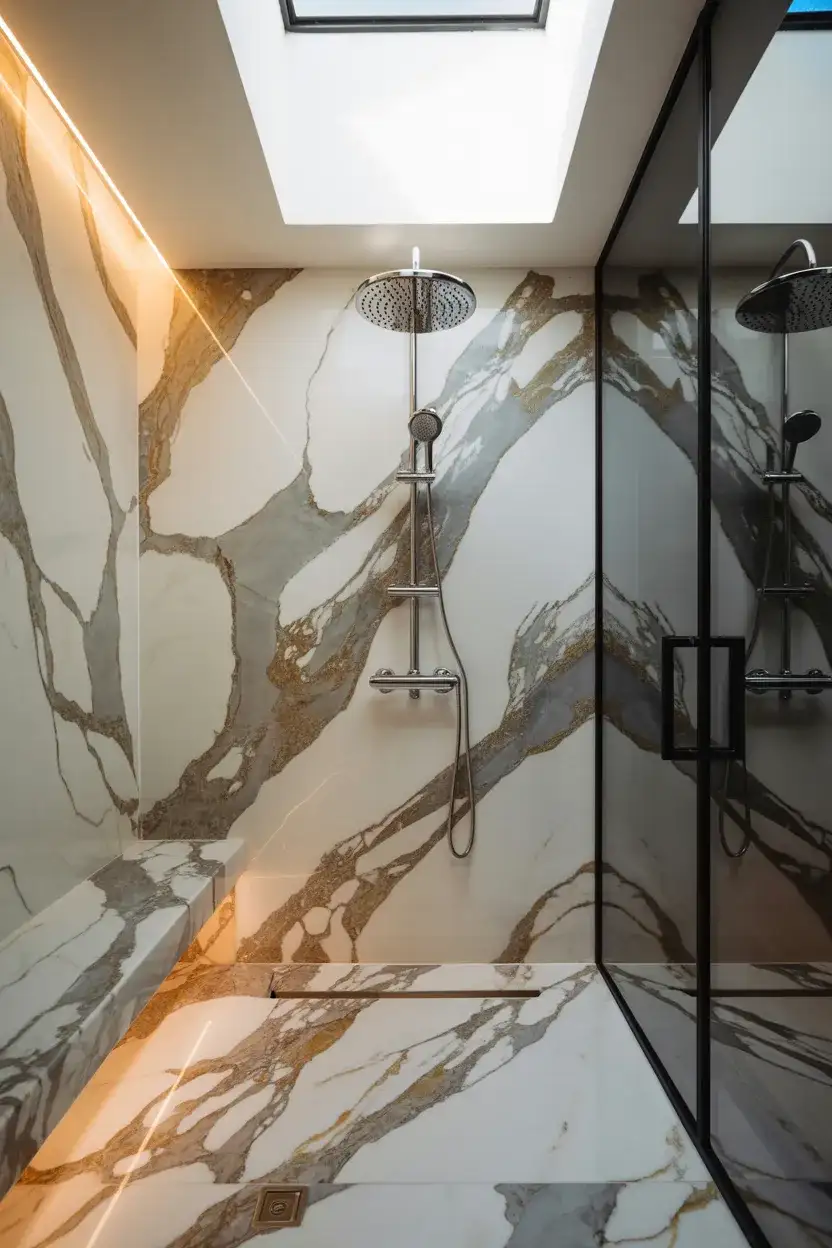
Nothing signals luxury quite like marble running floor to ceiling inside a walk-in shower. Calacatta, Statuario, or Carrara—each brings its own vein pattern and personality, but the effect is universally stunning. When the slabs are bookmatched (mirrored so the veining creates a symmetrical pattern), it elevates the space from a nice bathroom to a genuine showpiece. This look belongs in a large master bath where the shower can breathe—ideally at least 48 inches wide—and where the investment in natural stone gets the visual stage it deserves.
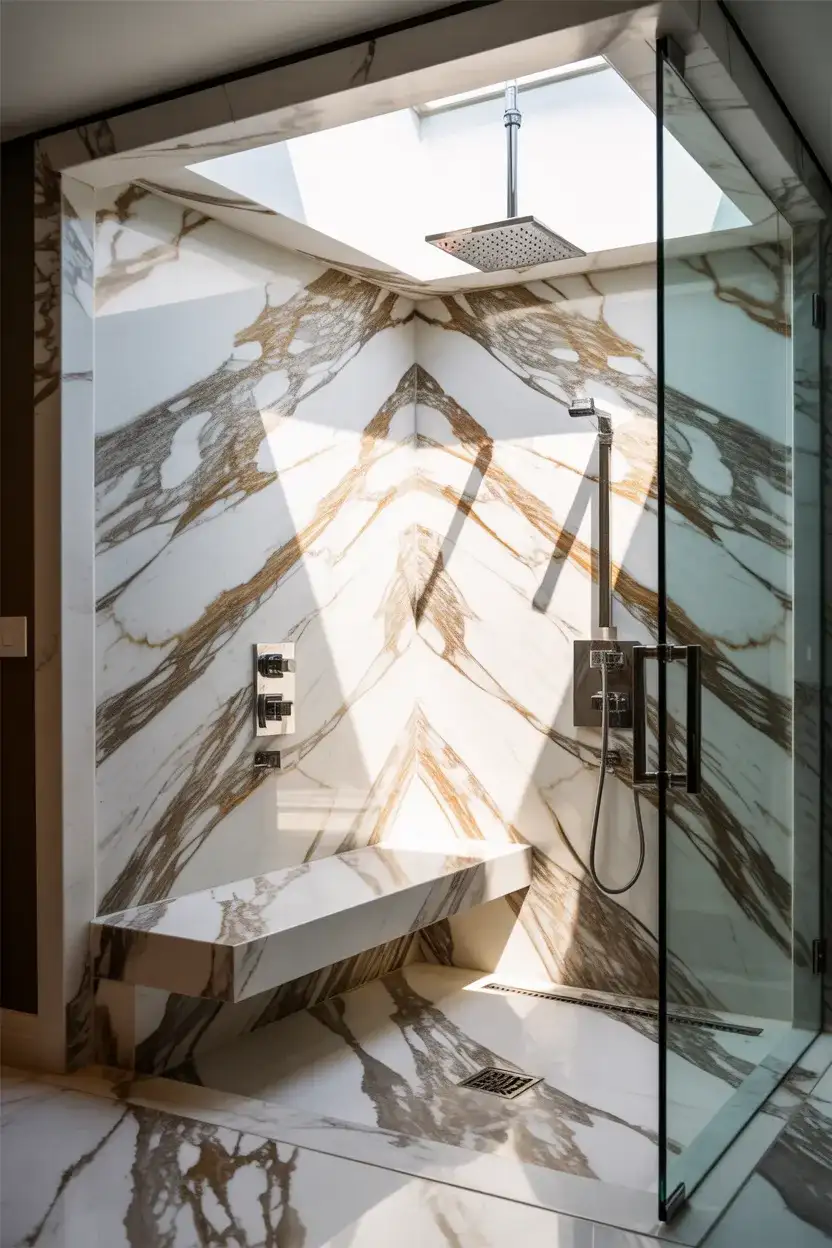
Here’s what the experts will tell you that Pinterest won’t: marble in a shower requires sealing—and not just once. You’ll want to apply a quality impregnating sealer before grouting, again after installation, and then annually going forward. Skip that step, and you’ll see etching and staining within months. The material cost for marble slabs runs roughly $40–$100 per square foot before installation, so this is a premium play. But for resale value in higher-end markets, it consistently ranks among the top bathroom investments.
7. Corner Walk-In for Awkward Layouts
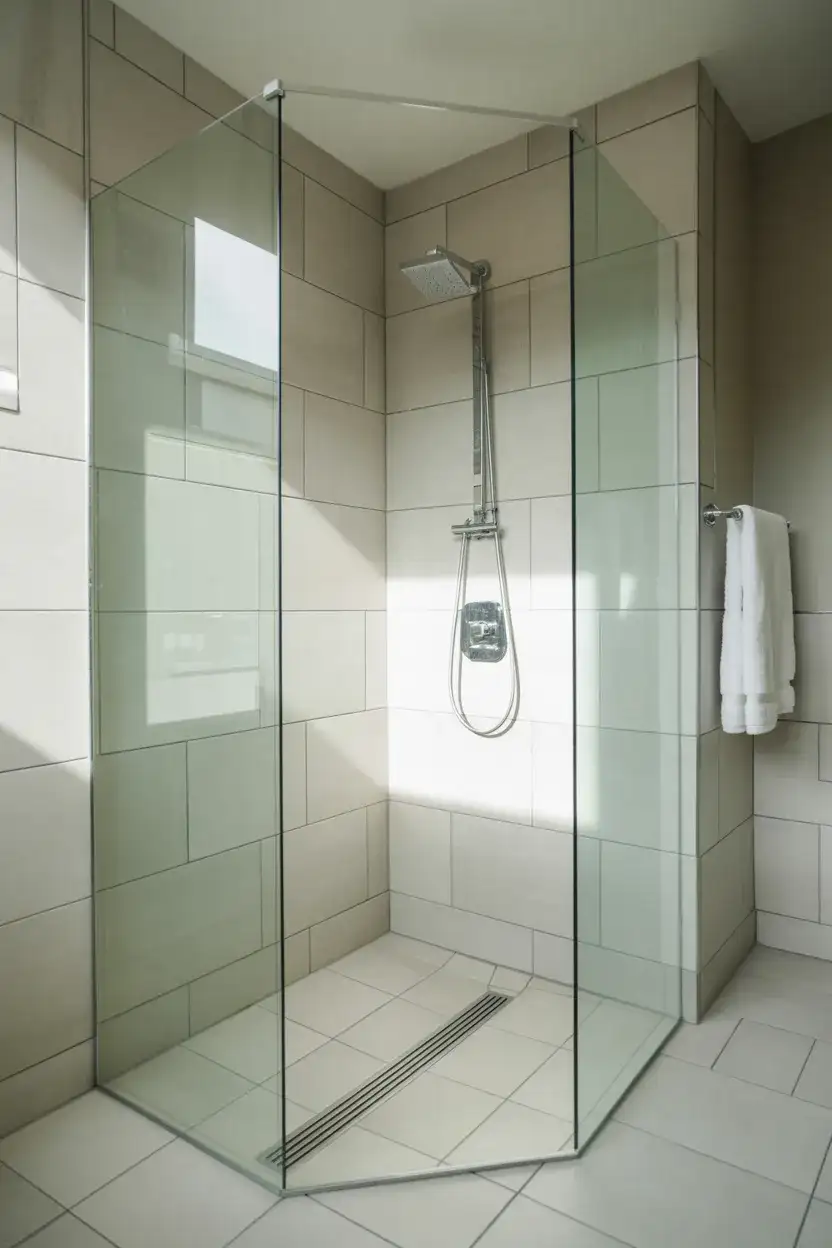
Not every bathroom has a clean, rectangular footprint—and that’s where a corner walk-in shower truly shines. By tucking the shower into a 90-degree corner and using angled or neo-angle glass panels, you can claim space that would otherwise be dead square footage. This approach is particularly effective in older American homes where bathroom layouts were designed around a standard five-foot tub and nothing else. A corner walk-in reclaims that geometry and gives you a shower that feels intentional rather than squeezed in, with tile choices that can make the nook feel surprisingly spacious.
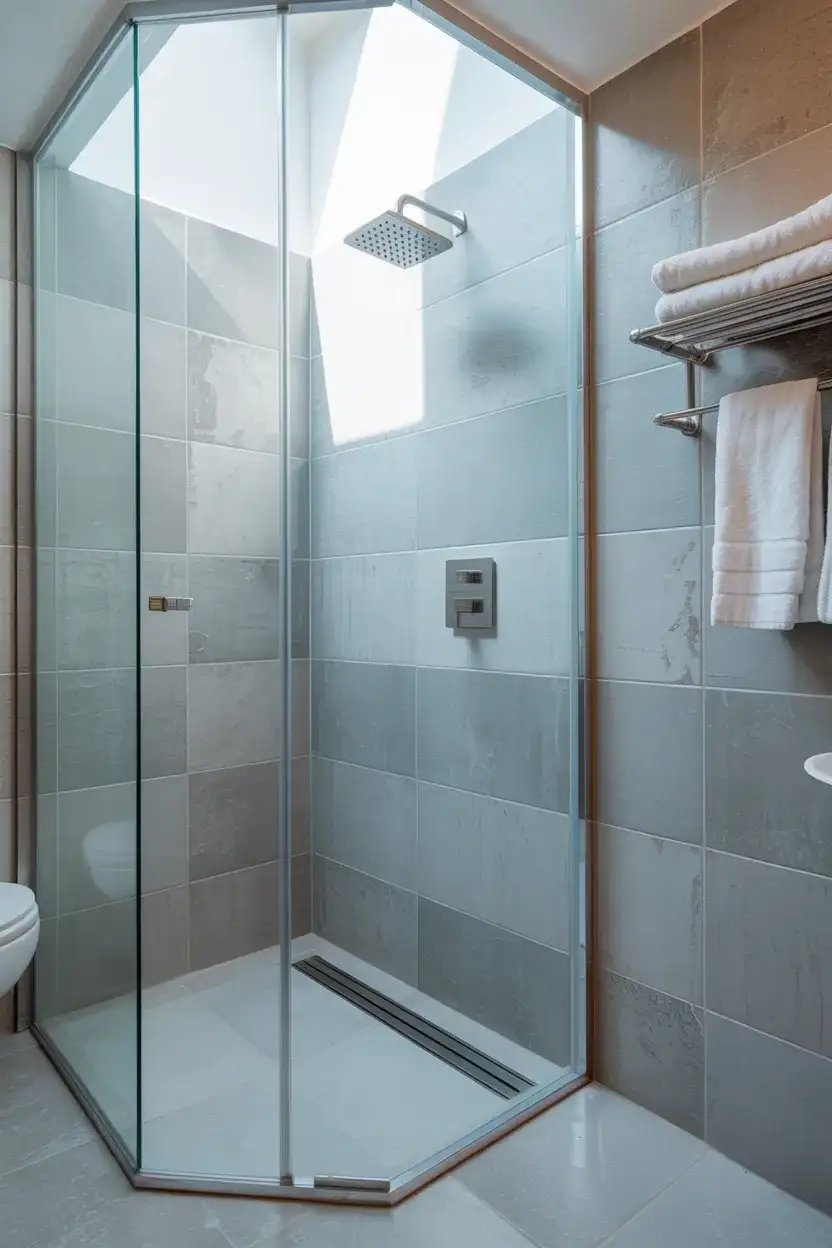
The American housing stock is full of oddly shaped bathrooms, especially in homes built between the 1940s and 1970s when plumbing was routed for efficiency rather than aesthetics. Corner showers solve a very specific problem in these homes, and contractors who specialize in older renovations often recommend them as the first option for tight spaces. If your bathroom has a dormer, a sloped ceiling, or a weird jog in the wall, a corner configuration lets you work with the architecture instead of fighting it.
8. Replace Tub with a Curbless Walk-In
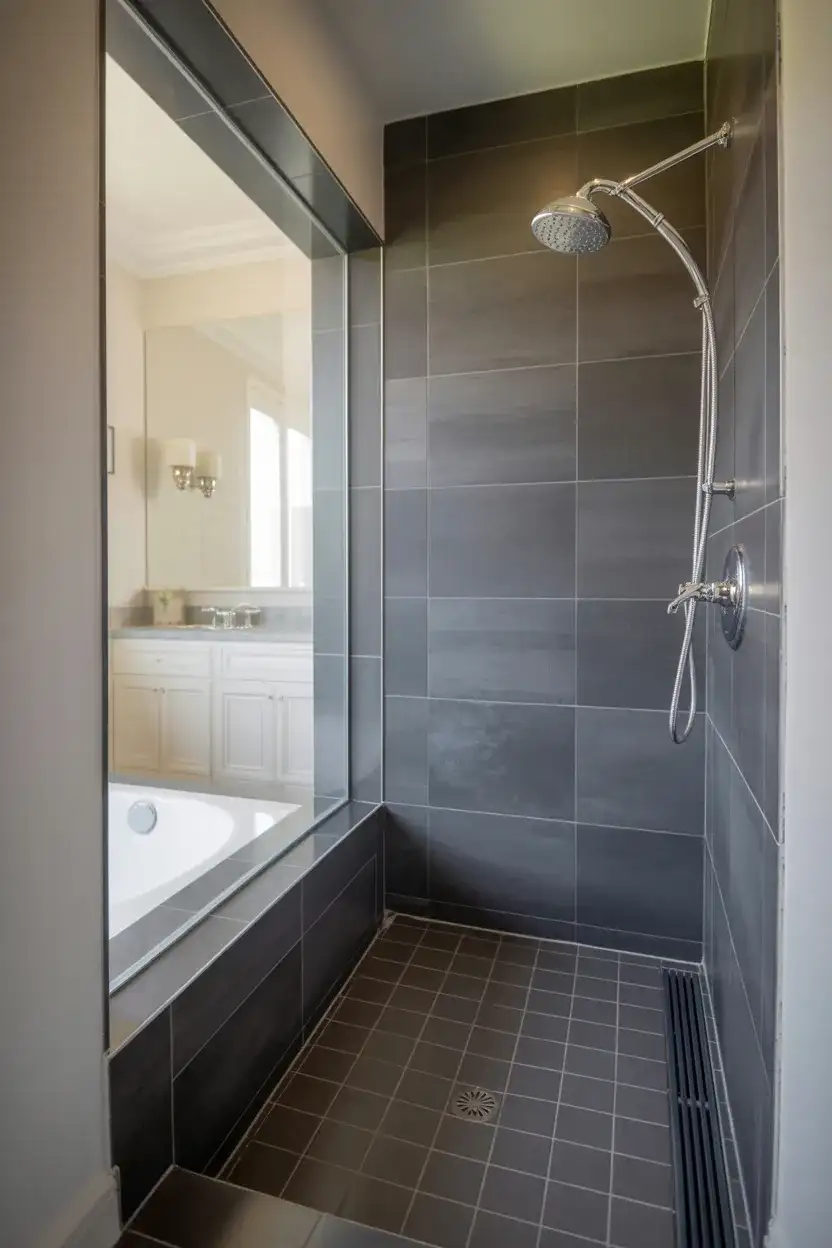
One of the most popular renovation moves in American bathrooms right now is to replace a tub with a sleek, curbless walk-in shower. The standard five-foot alcove tub—the one that came with nearly every home built after 1960 — is increasingly seen as wasted space by homeowners who never actually take baths. Removing it and installing a zero-threshold walk-in shower in the same footprint opens up the room dramatically. Combined with simple large-format tile and a fixed glass panel, the transformation is striking and surprisingly achievable within a moderate budget.
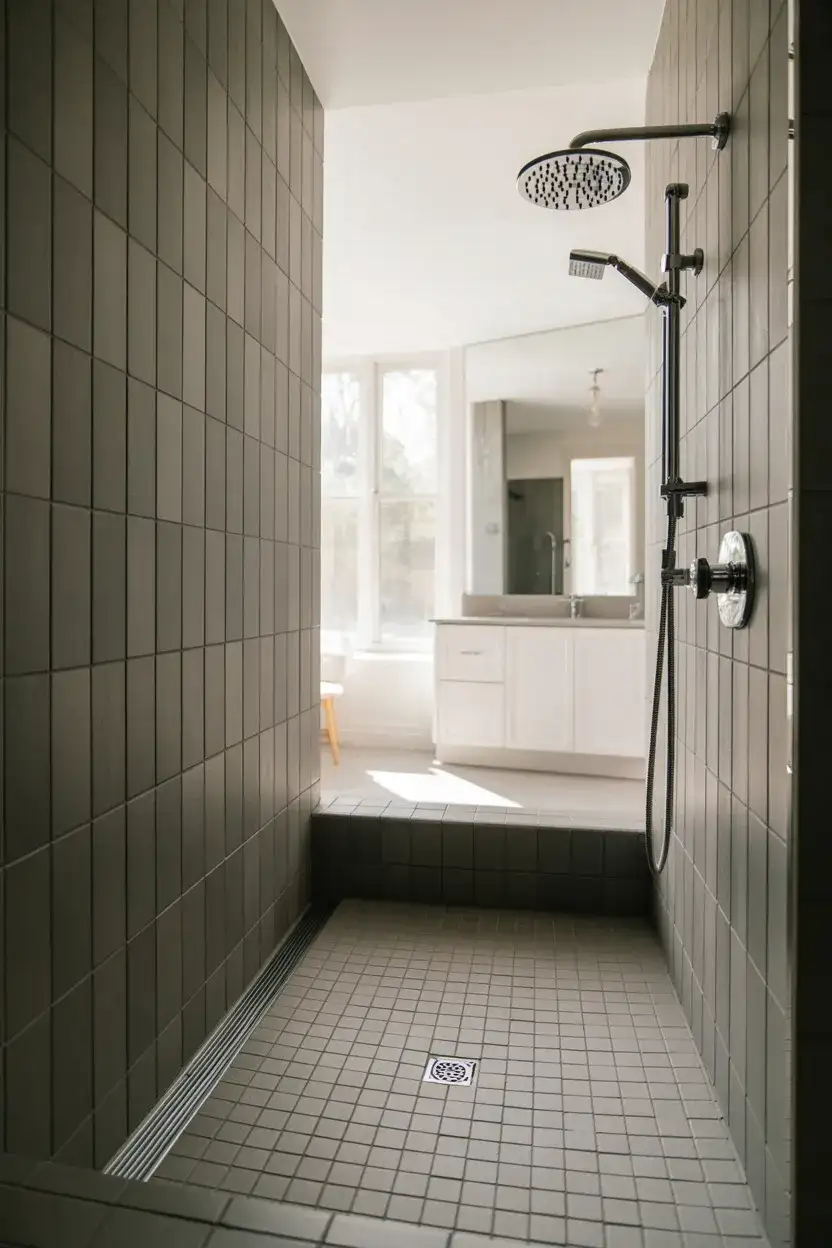
A quick note on resale: if you only have one bathroom in the house, many real estate agents advise keeping at least one tub for families with young children. But if you have two or more bathrooms, converting one tub to a walk-in is almost universally seen as a smart upgrade. The typical tub-to-shower conversion in the U.S. runs between $3,000 and $8,000 depending on your finishes and whether the subfloor needs reworking for proper drainage. It’s one of those projects where the daily quality-of-life improvement justifies every dollar.
9. Double Shower for the Master Suite
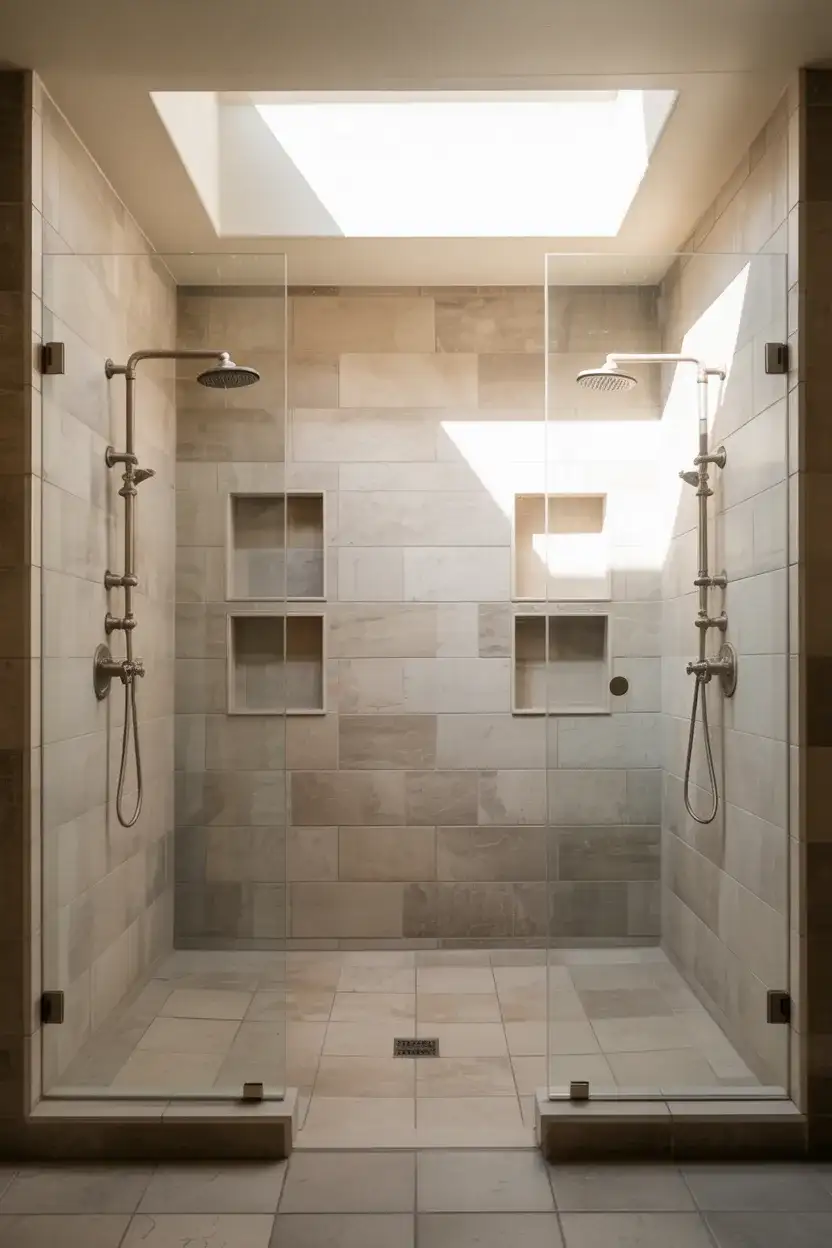
For couples who share a master bathroom and are tired of the morning rush, a double shower changes everything. Two showerheads—each with independent temperature controls—mounted on opposite walls create a side-by-side experience that’s both luxurious and genuinely practical. The shower itself needs to be wider than standard, usually at least 60 inches, to feel comfortable for two people simultaneously. Finished with matching glass panels on both ends, the result is an impressive, hotel-caliber feature that becomes the undeniable focal point of the master bath.
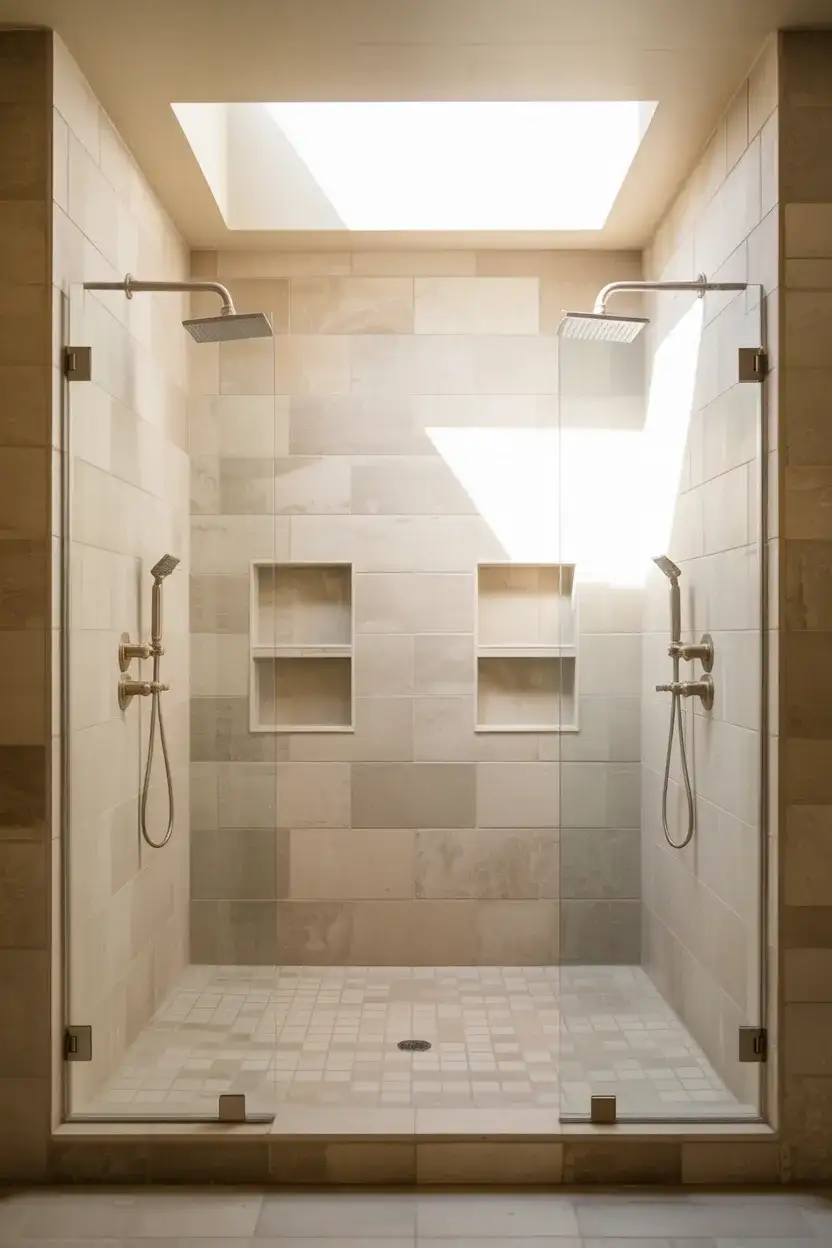
Here’s a practical insight most people miss until it’s too late: a double shower requires a larger hot water heater—or better yet, a tankless system. Running two showerheads simultaneously at comfortable temperatures demands significantly more hot water capacity than a single fixture. If you’re planning this upgrade, budget for a water heater evaluation at the same time. A plumber can calculate the GPM (gallons per minute) you’ll need and recommend the right unit, which typically adds $1,200–$3,000 to the project but prevents the frustrating scenario of lukewarm water every morning.
10. Small Bathroom Walk-In with Linear Drain
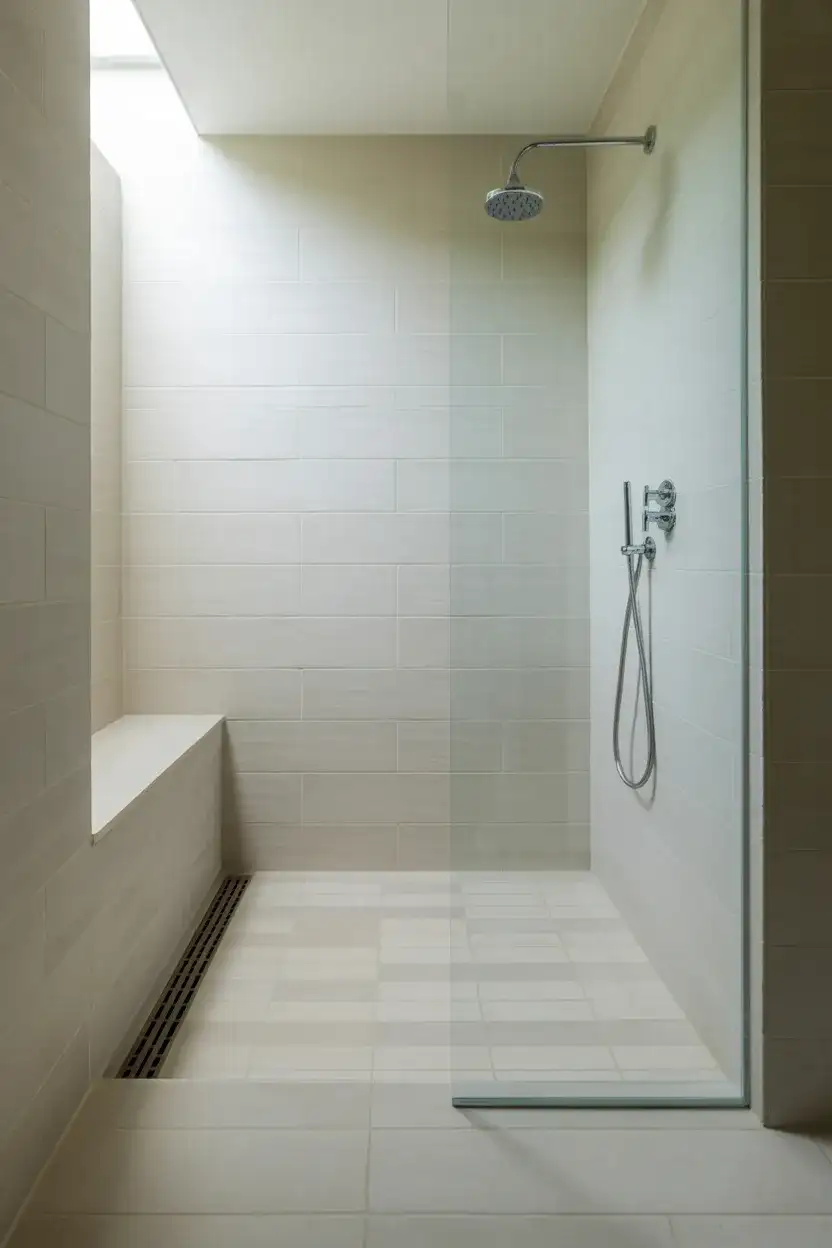
A small bathroom walk-in shower doesn’t have to feel like a compromise. One of the smartest moves for tight spaces is pairing a curbless entry with a sleek linear drain positioned along one wall. This eliminates the need for a center drain and the multi-directional floor slope that comes with it, allowing you to use larger floor tiles that make the room feel more expansive. In a small bathroom, every visual trick matters—and a clean, uninterrupted floor plane is one of the most effective. Add a fixed glass panel instead of a full enclosure, and you’ve got a shower that punches well above its square footage.
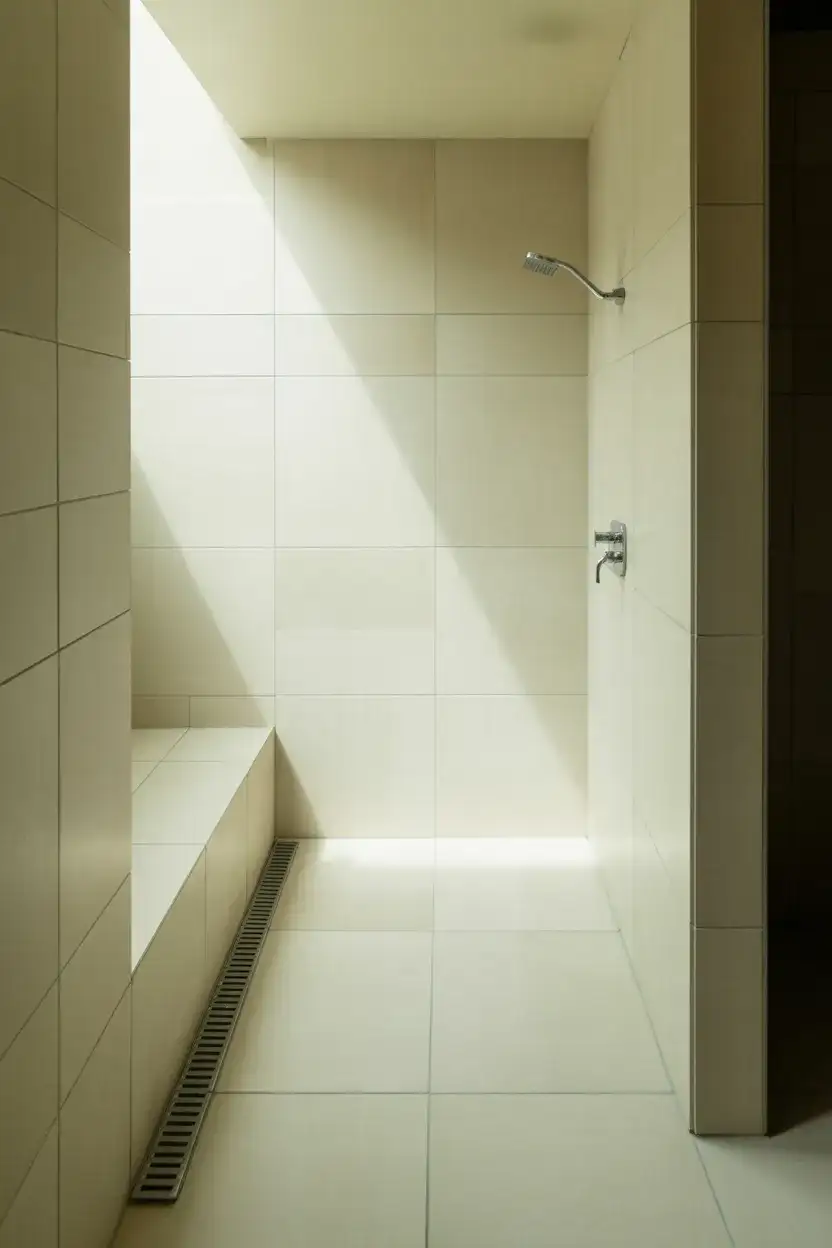
My neighbor renovated her 35-square-foot guest bathroom last spring and was convinced she’d have to keep the tub because “walk-ins don’t fit in small bathrooms.” Her contractor showed her a linear drain layout, and she was sold. The finished shower takes up the same footprint as the old tub alcove, but the room feels twice as big because there’s no bulky tub edge or shower curtain breaking up the space. She told me it was the single best decision of her entire renovation—and she’s renovated three houses.
11. Modern Minimalist with Large-Format Tiles
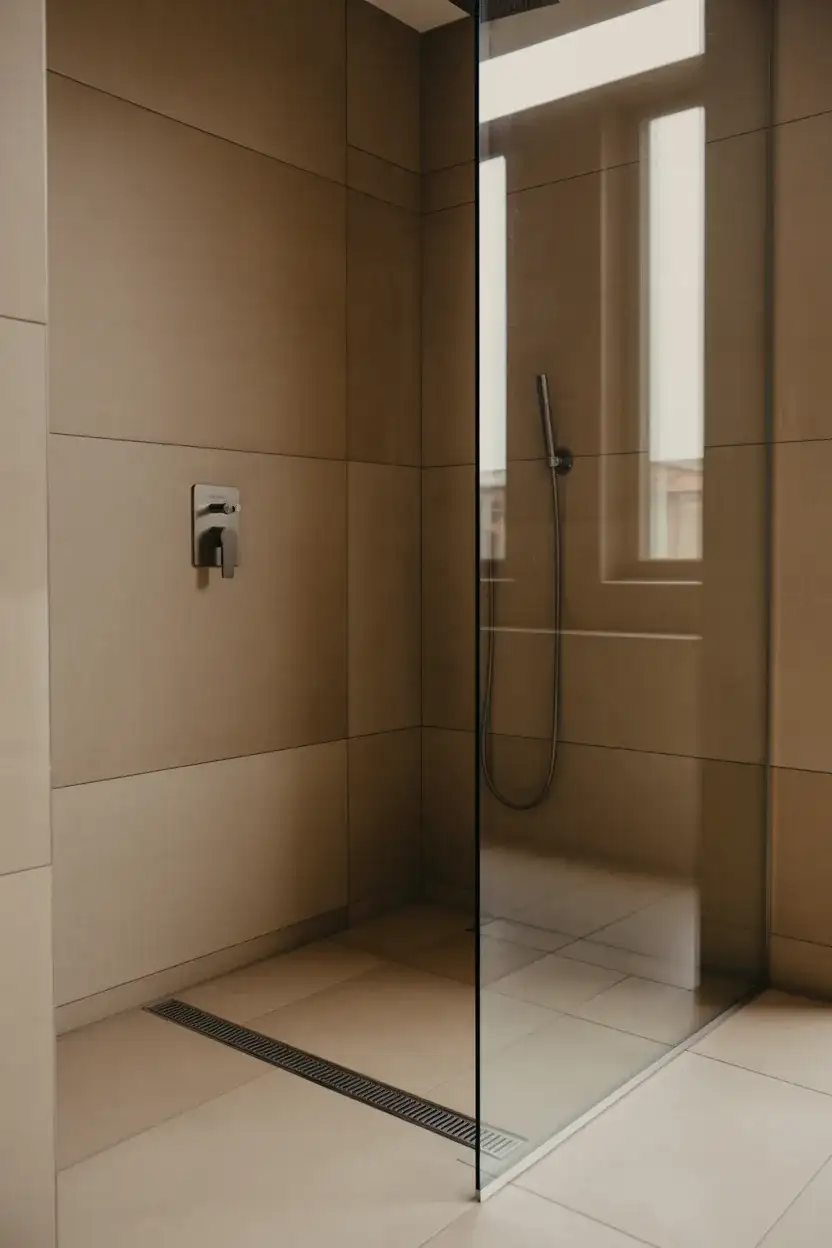
If “less is more” is your design philosophy, a modern walk-in shower clad in large-format tiles delivers that vision beautifully. We’re talking tiles that measure 24 by 48 inches or even bigger—slabs that minimize grout lines and create a seamless, almost monolithic surface. The effect is calm, architectural, and deeply satisfying to look at. Pair them with a concealed shower valve (no exposed pipes or handles protruding from the wall) and a flush-mounted door or frameless glass panel, and you’ve created a shower that feels like it was carved from a single piece of material.
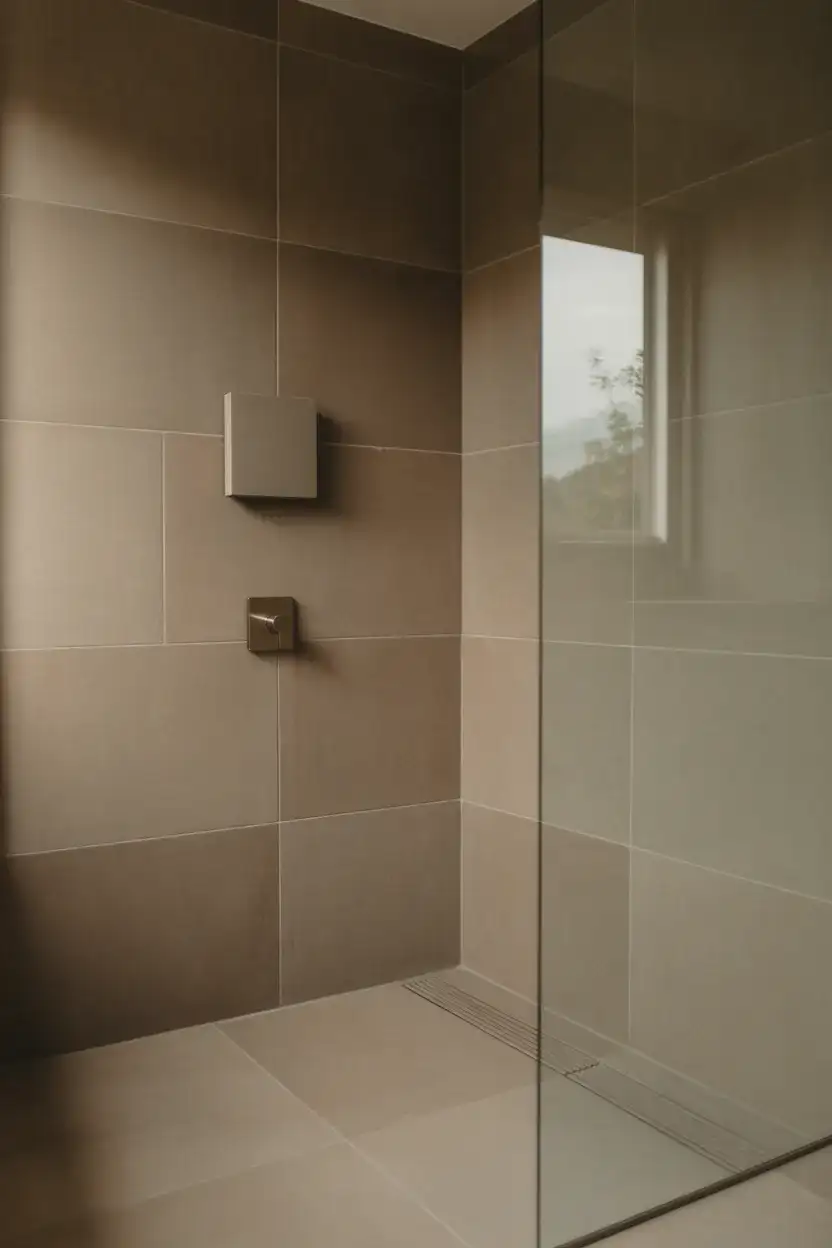
Here’s a mistake to avoid: choosing large-format tiles without verifying that your walls are perfectly flat first. Even a slight bow or bump in the substrate will be glaringly visible when you have three-foot-wide tiles with razor-thin grout lines. A good tile installer will skim-coat or use a leveling system before setting large tiles, and that prep work is critical. Skipping it is the fastest route to a finished shower that looks wavy instead of sleek. Ask your contractor specifically about wall preparation before committing to this look.
12. Walk-In Shower with Built-In Stone Bench
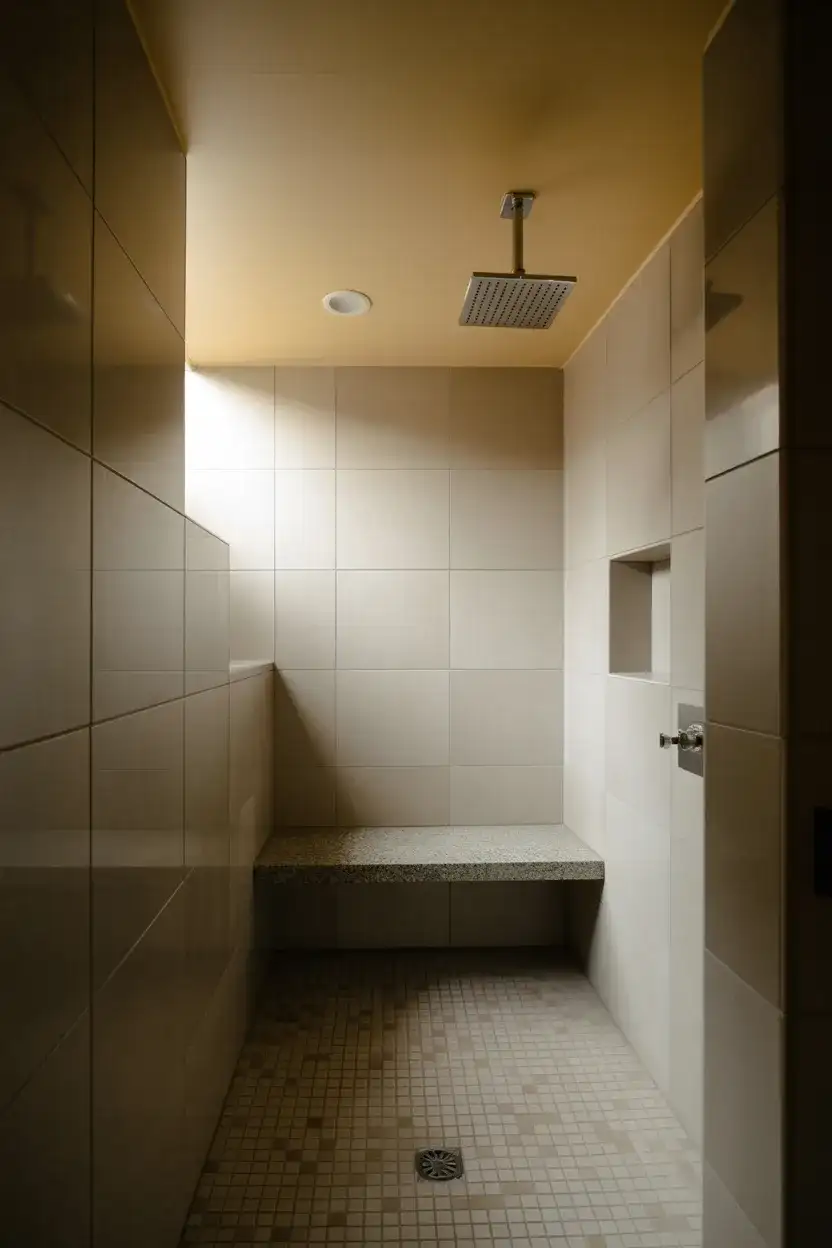
A built-in bench transforms a walk-in shower from a place you stand for five minutes into a place you actually want to linger. When clad in natural stone—honed granite, quartzite, or sealed slate—the bench becomes both a functional seat and a design statement. It can span the full width of the back wall or tuck into a corner as an L-shape, depending on your shower’s footprint. This feature is especially appreciated in a bathroom remodel designed for aging in place, where a secure, permanent seat adds safety without sacrificing a single ounce of style.
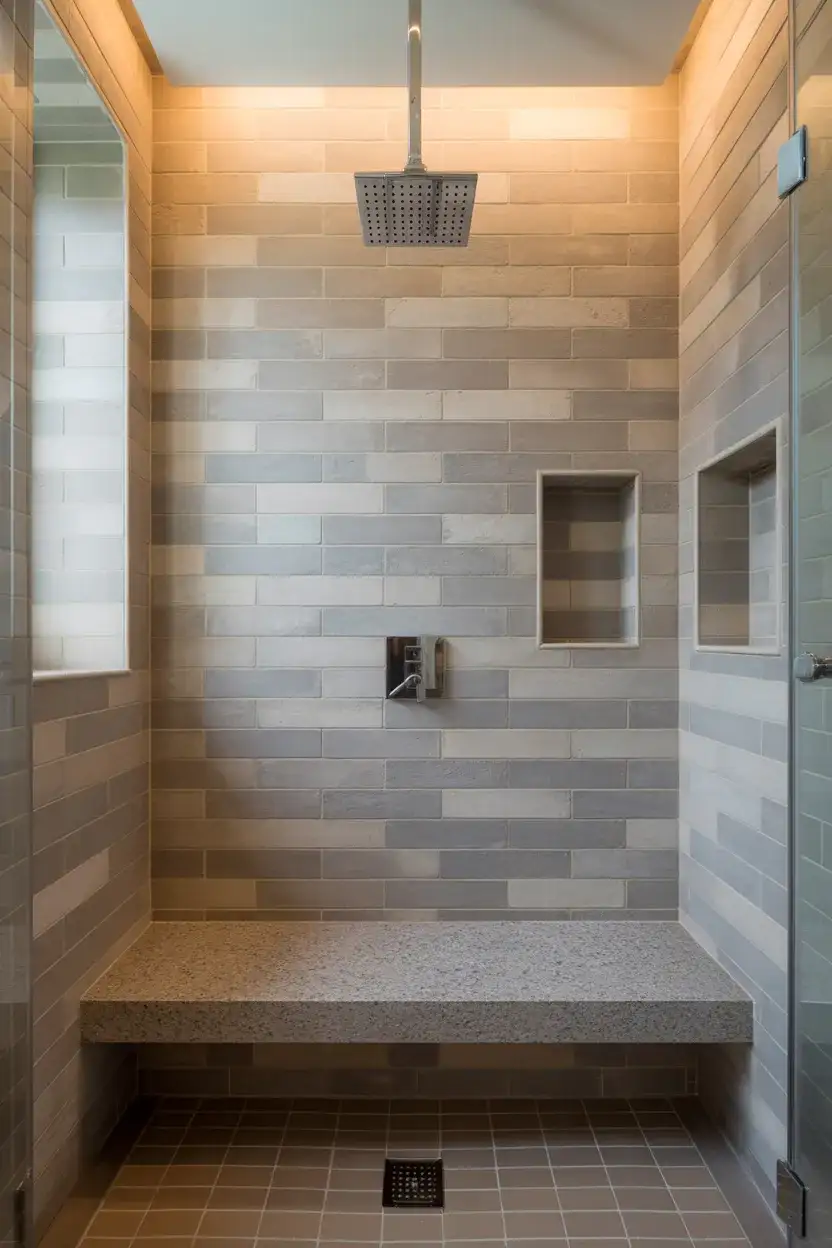
Across the Midwest and Southeast, where multi-generational households are increasingly common, built-in shower benches have become one of the most requested features in new construction and remodels alike. It’s not just about accessibility—though that matters enormously—it’s about creating a bathroom that works for a 30-year-old and a 70-year-old equally well. Builders in markets like Nashville, Charlotte, and Indianapolis report that shower benches now appear in more than half of all new primary bathroom plans, up from about 20 percent just five years ago.
13. All-White Spa Walk-In
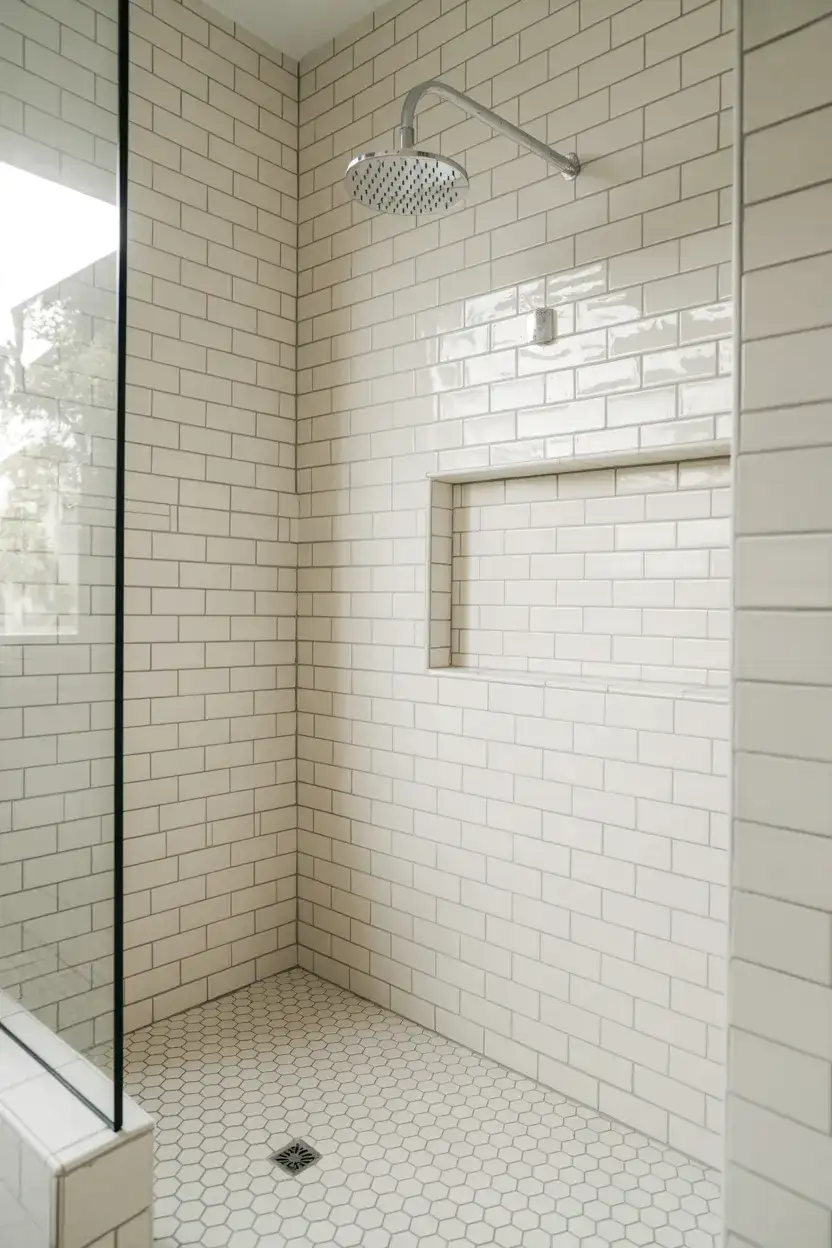
There’s a reason white never goes out of style in bathrooms: it’s clean, it’s bright, and it makes even a modest space feel like a spa. An all-white walk-in shower—white walls, white floor, white grout, white fixtures—creates a cocoon of calm that’s hard to achieve with any other palette. The key to keeping it from looking sterile is texture: subway tile in a herringbone pattern, handmade zellige tiles with their slightly uneven surfaces, or matte-finish ceramic with a subtle linen texture. Layering different white textures gives the space depth and warmth without introducing color.
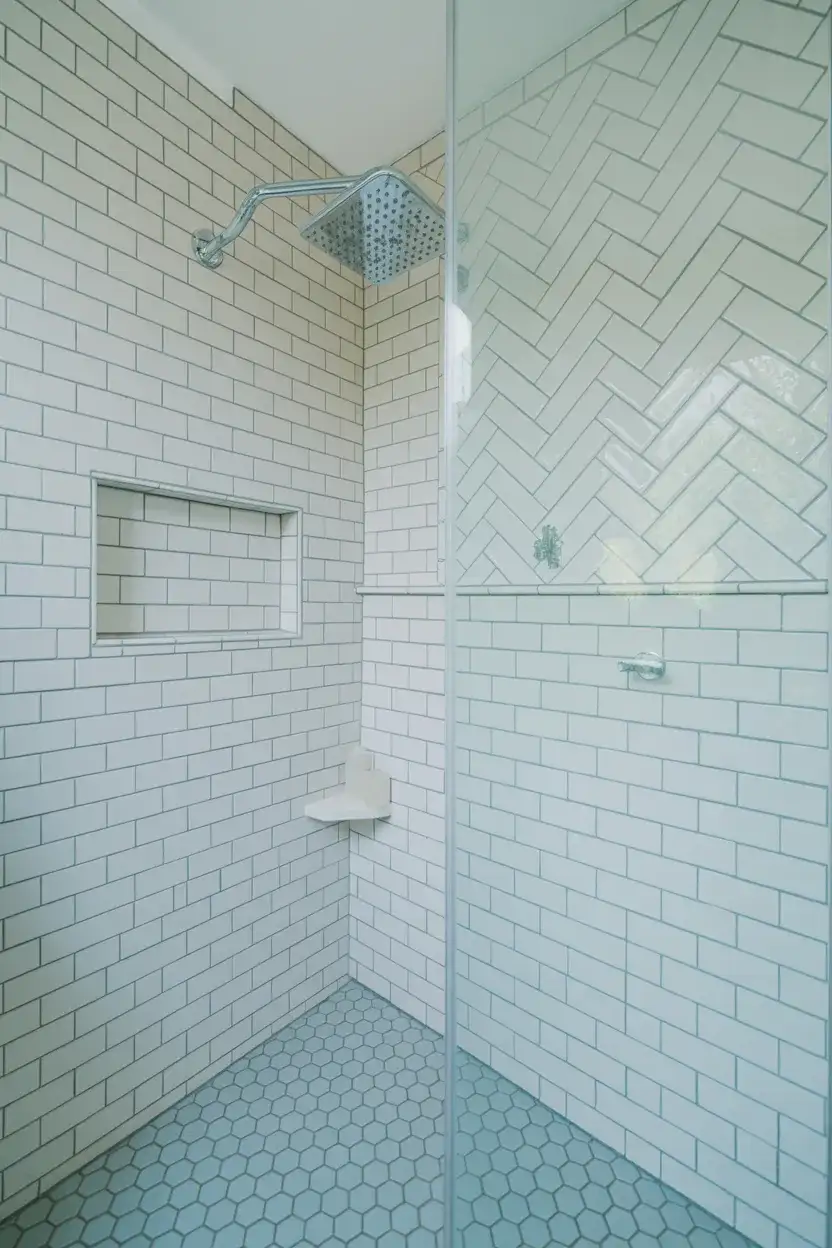
From a budget perspective, an all-white shower is one of the most affordable walk-in designs you can build. White subway tile starts at around $2 per square foot, and white ceramic in various formats rarely exceeds $8 per square foot. The real savings come from the fact that white tile is always in stock, never backordered, and available at every home improvement store in America. Your installer won’t charge a premium for tricky pattern-matching either, since the uniformity of white makes layout straightforward. It’s proof that restraint and elegance can coexist beautifully on a budget.
14. Doorless Walk-Through Shower
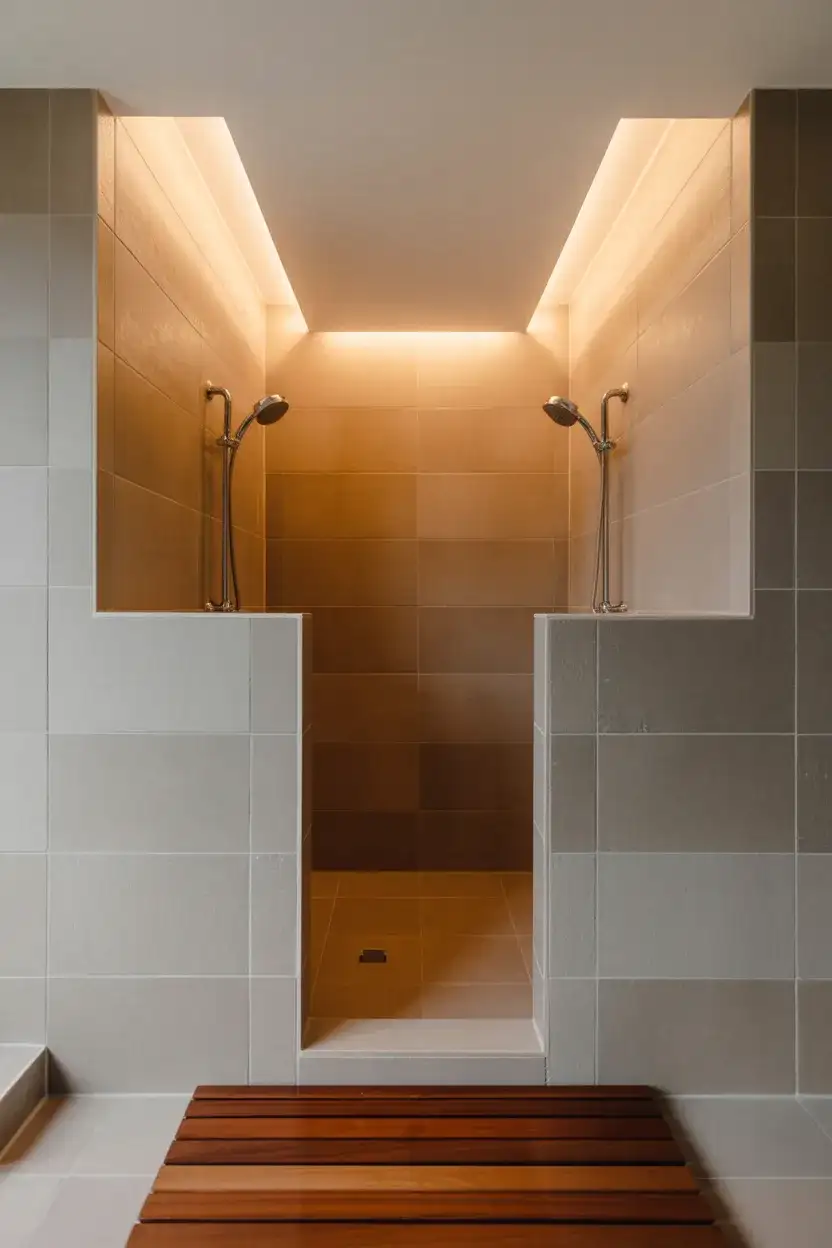
The doorless walk-through shower—where you literally walk in one side and could, if the layout allowed, walk out the other—is one of the most architecturally exciting ideas gaining traction in American homes. It requires more space than a traditional enclosure, usually a minimum of five feet deep to keep water from escaping, but the payoff is a shower that feels like a room within a room. Finished with floor-to-ceiling tile and open on at least one end, it eliminates the need for any glass door or panel entirely, which means nothing to clean, no hardware to corrode, and a silhouette that reads as pure luxury.
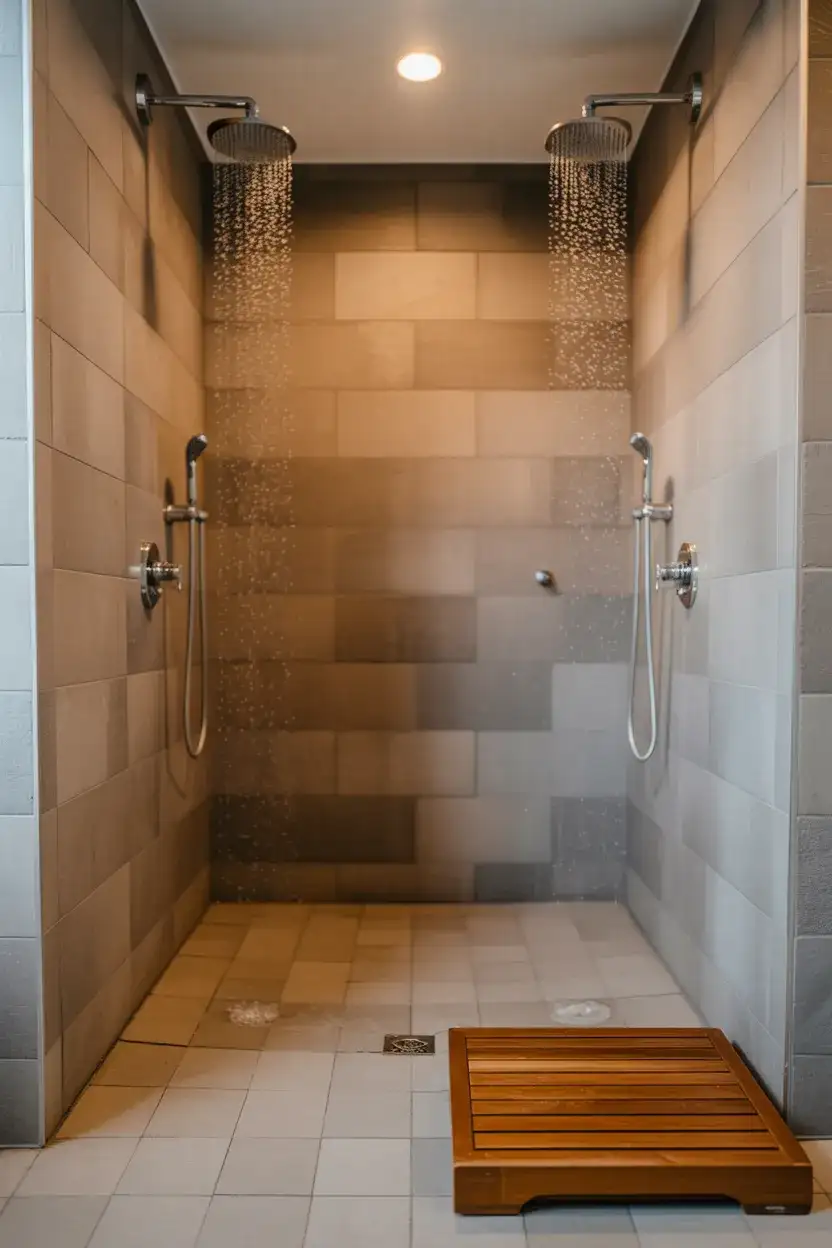
An interior designer based in Scottsdale once told me that doorless walk-throughs are “the convertible of bathrooms—you either love the openness or you want your roof back.” She wasn’t wrong. This style demands that you’re comfortable with an exposed shower space, and it works best in private master suites where the shower isn’t visible from a hallway or shared space. If you run cold easily, keep in mind that the open design allows more air circulation, which can make the shower feel cooler. A ceiling-mounted heat lamp or radiant floor heating solves that instantly.
15. Herringbone Tile Feature Wall
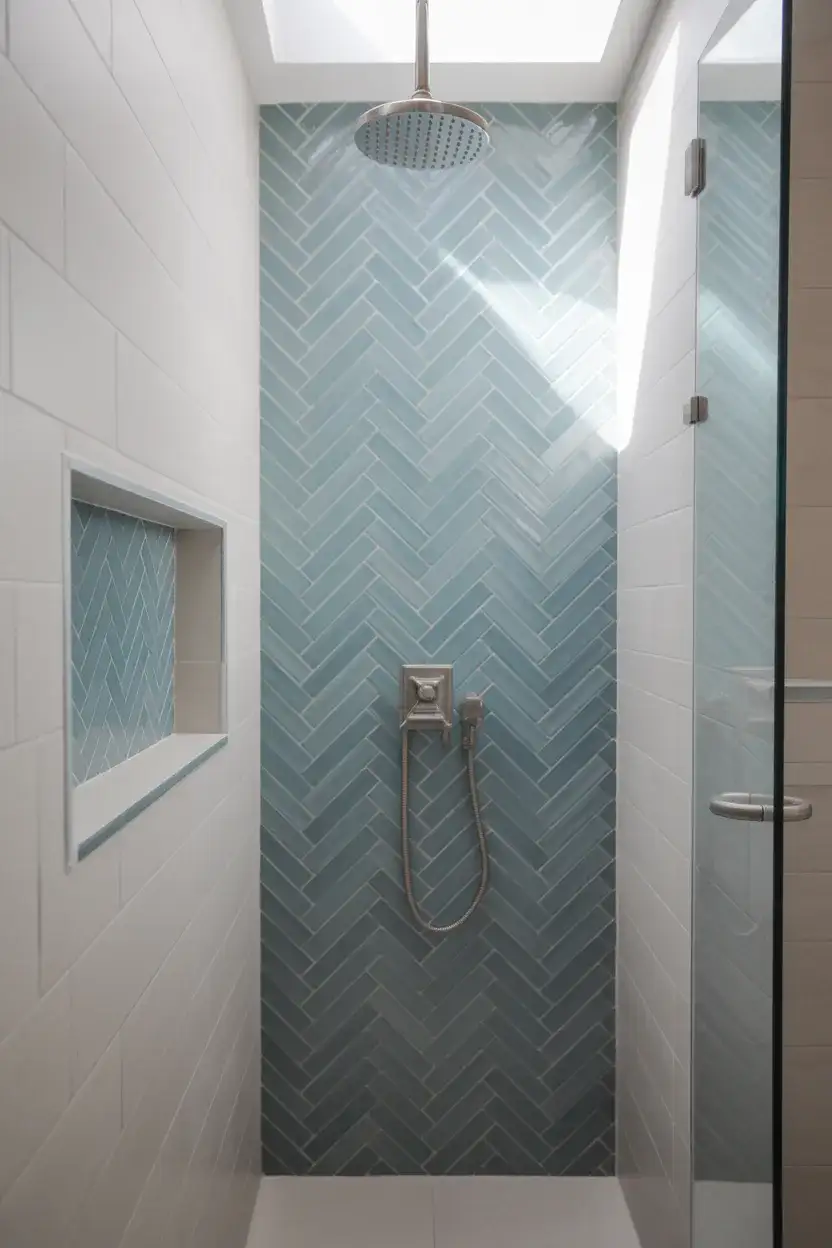
Sometimes one wall is all you need to make a walk-in shower feel completely custom. A herringbone-patterned tile feature wall—typically on the wall facing you as you enter—adds movement and visual interest without overwhelming the space. The V-shaped pattern creates a sense of height when laid vertically, making it a brilliant choice for small bathroom walk-in shower ideas where you want the ceiling to feel taller. Use it in a contrasting color or material against simple flat tiles on the remaining walls, and the feature wall becomes a natural focal point that draws the eye exactly where you want it.
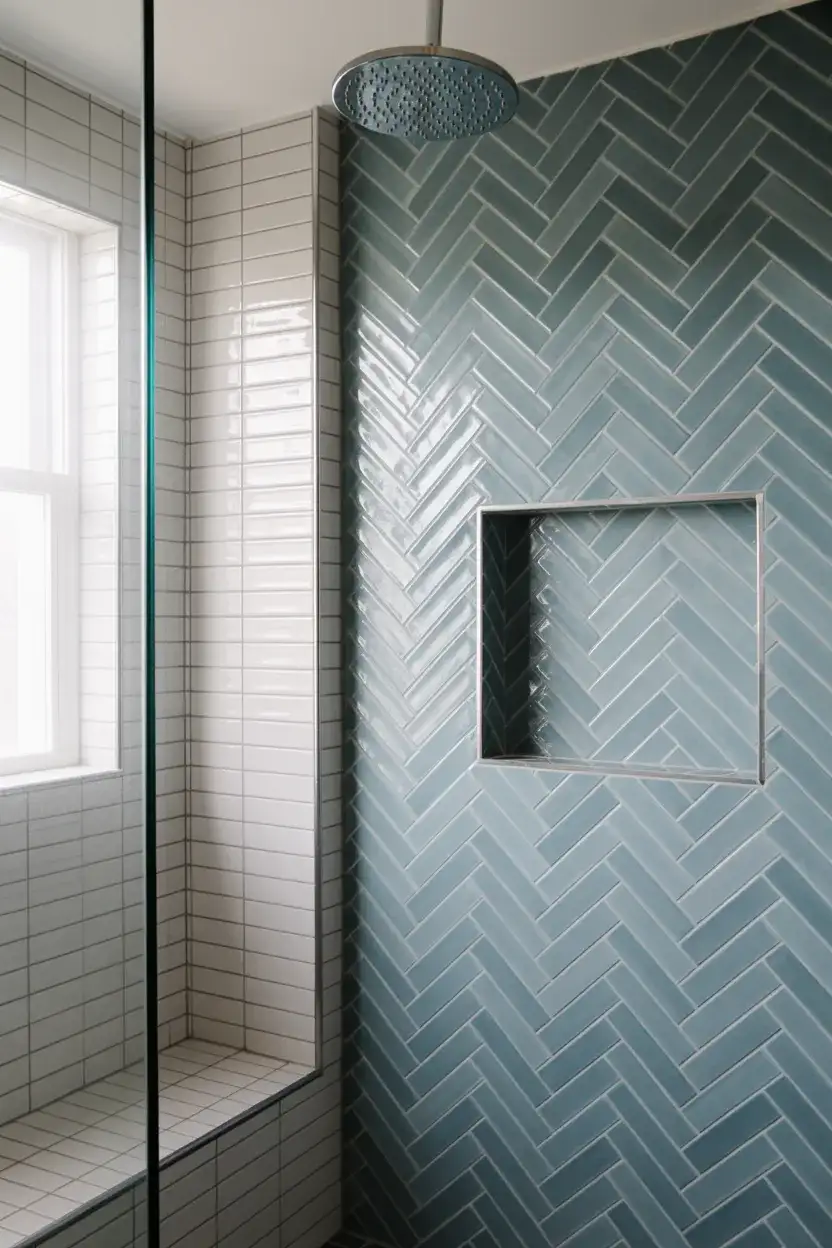
What makes this approach so effective from a design standpoint is contrast. The busier herringbone pattern only reads as special because it’s framed by quieter, simpler surfaces. If you tiled every wall in herringbone, the pattern would lose its punch entirely—it would just look busy. Think of it like an accent wall in a living room: the power is in the restraint. Most designers recommend keeping the feature wall on the largest uninterrupted surface and letting everything else play a supporting role.
16. Glass-Enclosed Walk-In with Brass Accents
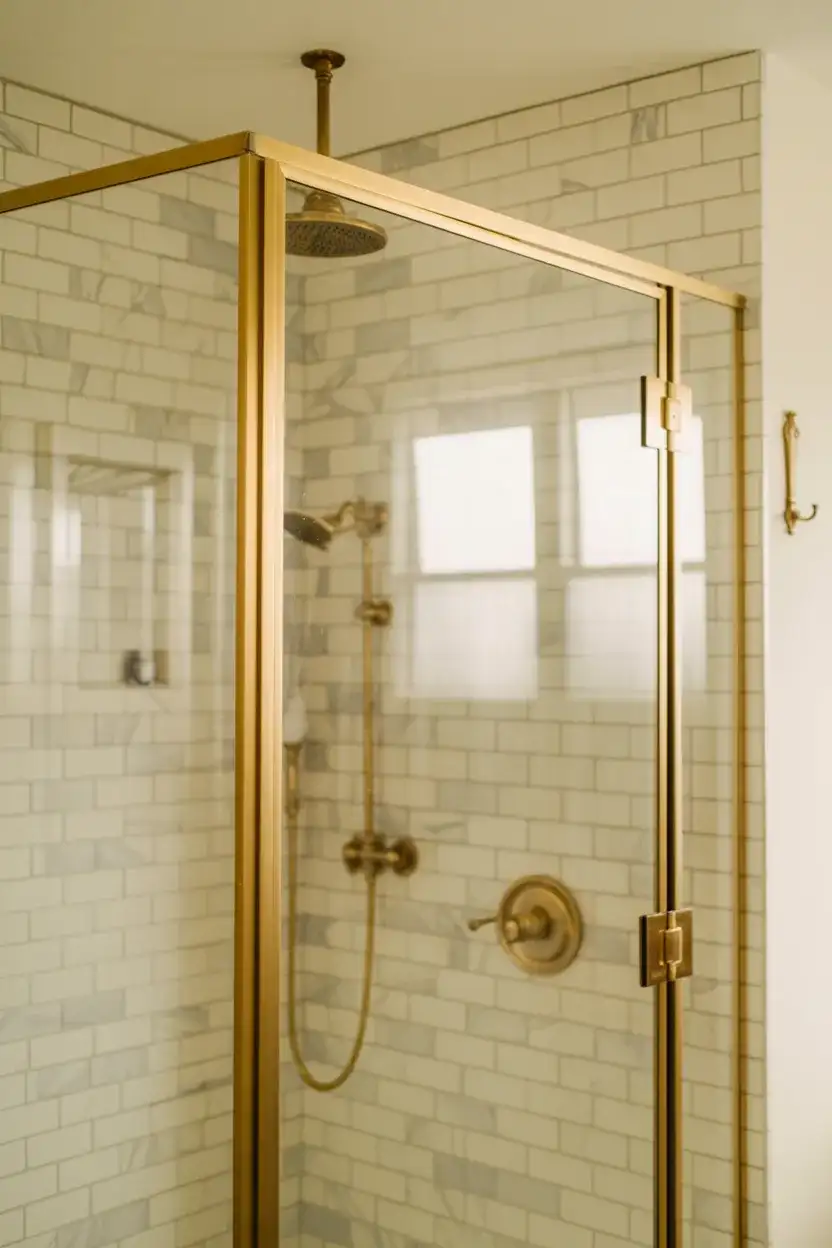
A fully glass-enclosed walk-in shower framed with warm brass hardware is one of those combinations that feels both timeless and very of-the-moment. The glass keeps the shower open and transparent, while the brass—hinges, handles, towel bar, even the shower drain cover—injects warmth and sophistication that chrome simply can’t match. It’s a look that pairs naturally with marble or neutral stone tile and works beautifully in both traditional and transitional bathroom settings. When the light catches those brass edges, the whole room takes on a golden warmth that’s incredibly inviting.
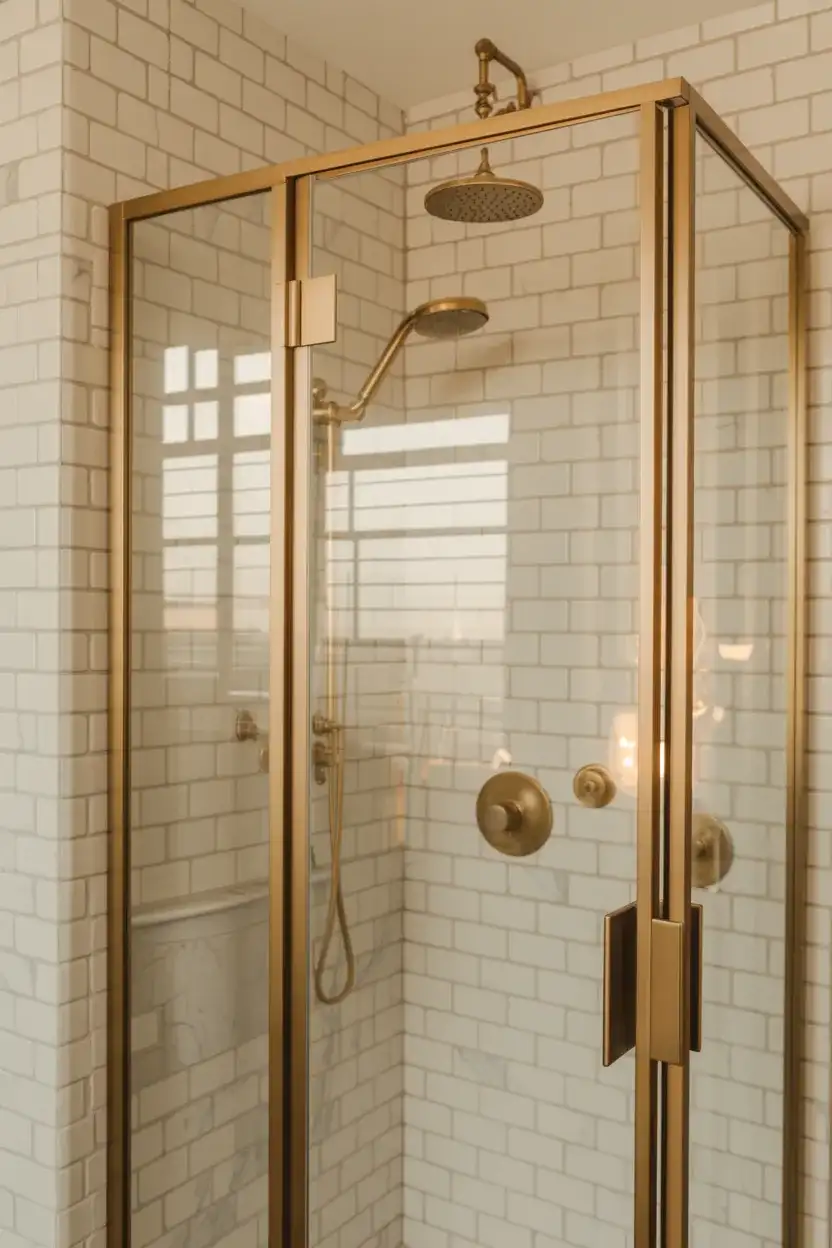
One thing to keep in mind: not all brass finishes age the same way. Unlacquered brass develops a natural patina over time—some people love this living finish, while others find it frustrating. If you want brass that stays consistently bright and golden, look for PVD-coated or lacquered options from brands like Kohler, Delta, or Newport Brass. The price premium is modest (usually 15–20% more than standard chrome), and the consistency over the years is worth it if you prefer that just-installed glow rather than an evolving antique character.
17. Walk-In Shower with Floor-Level Entry and Radiant Heat
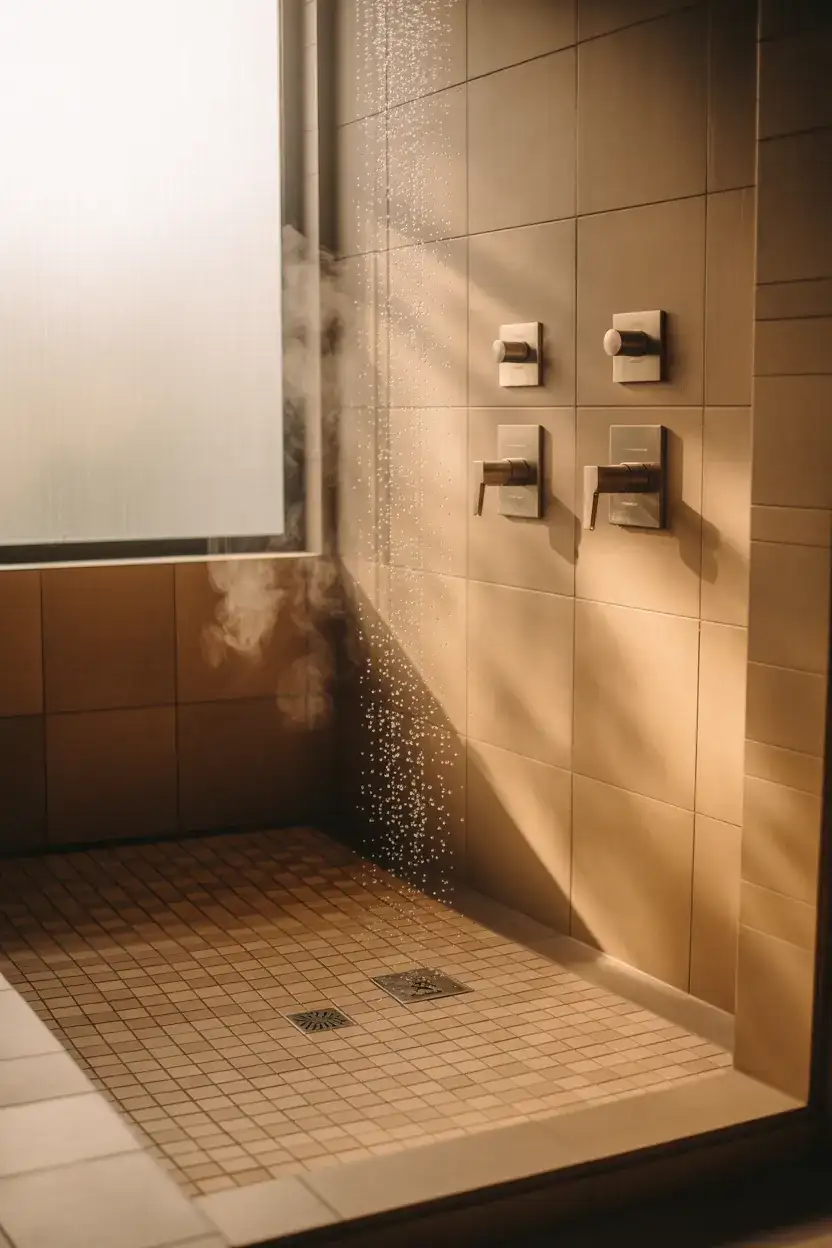
Stepping into a shower on a heated floor is one of those small luxuries that, once experienced, becomes non-negotiable. A floor-level (curbless) walk-in shower with electric radiant heating beneath the tile floor delivers warmth from the moment your feet touch the surface—no more gasping at cold ceramic on a winter morning. This combination has become wildly popular in northern states and throughout the modern home market, where comfort technology meets clean, barrier-free design. The heating element sits in a thin-set layer beneath the tile, invisible and silent, drawing just a few cents of electricity per use.
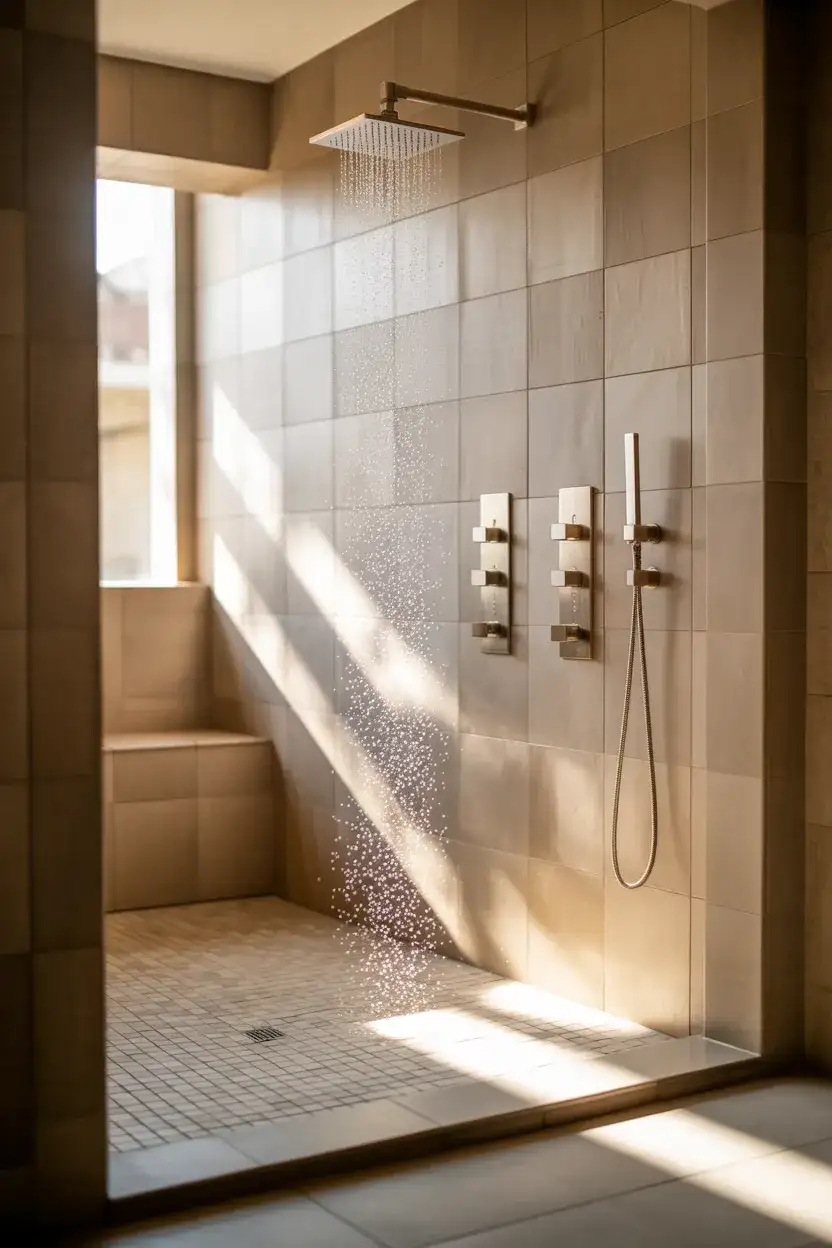
For homeowners in Minnesota, Wisconsin, Michigan, and the Northeast corridor, radiant floor heating in a shower has shifted from a luxury upgrade to practically expected in mid-range and above remodels. The cost is reasonable—electric mat systems from brands like Schluter DITRA-HEAT or NuHeat run about $10–$15 per square foot for materials, and most electricians can wire them in a couple of hours. When paired with a programmable thermostat, you can set the floor to warm up 30 minutes before your alarm goes off, making every winter morning just a little more bearable.
18. Dark and Moody Walk-In with Zellige Tile
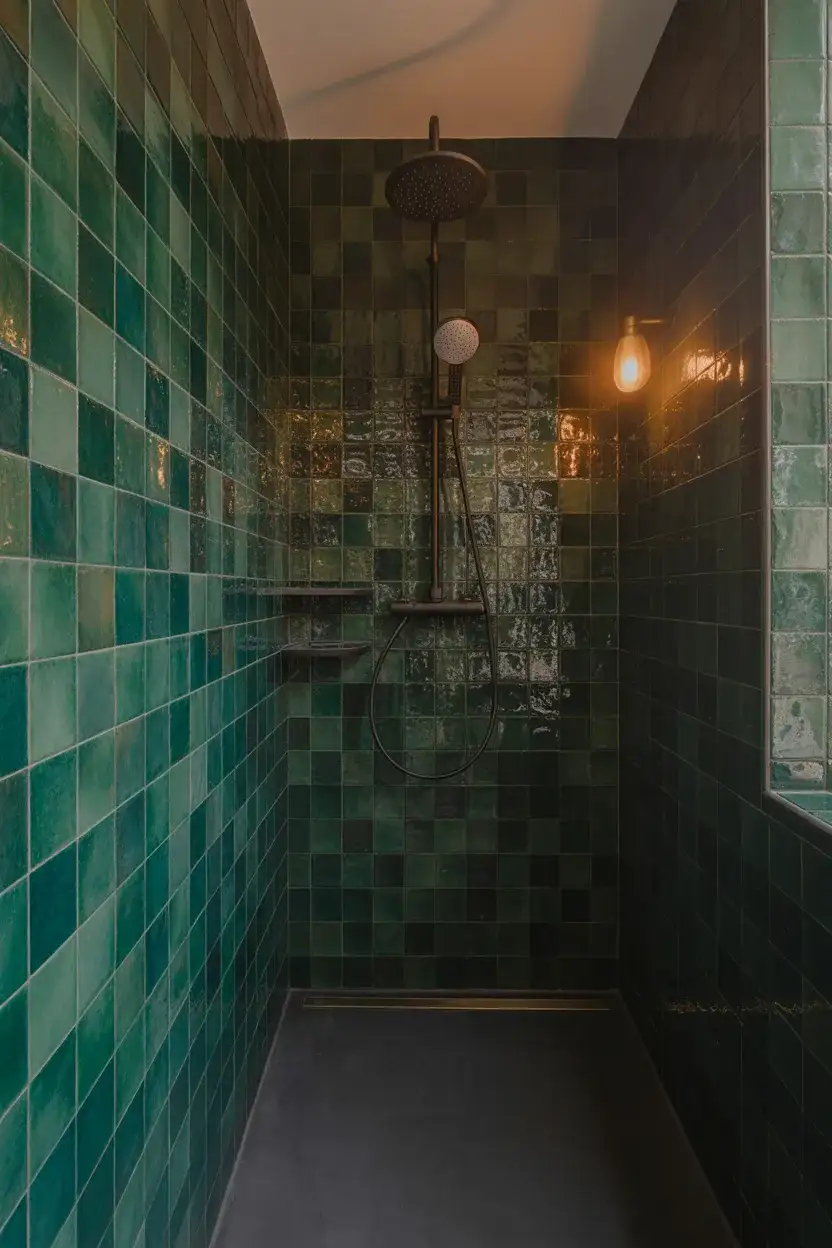
Dark bathrooms are having a serious moment, and a walk-in shower finished in deep-toned zellige tile is the pinnacle of that trend. Zellige—a handmade Moroccan clay tile with a slightly irregular, glossy surface—catches light in unpredictable ways, creating a shimmering, almost jewel-like effect that flat ceramic simply cannot replicate. In shades of deep forest green, midnight blue, or rich charcoal, it turns a walk-in shower into something genuinely artful. Combined with black fixtures and a glass enclosure, the mood is intimate, sophisticated, and entirely unlike the bright-and-airy default that dominates most American bathrooms.
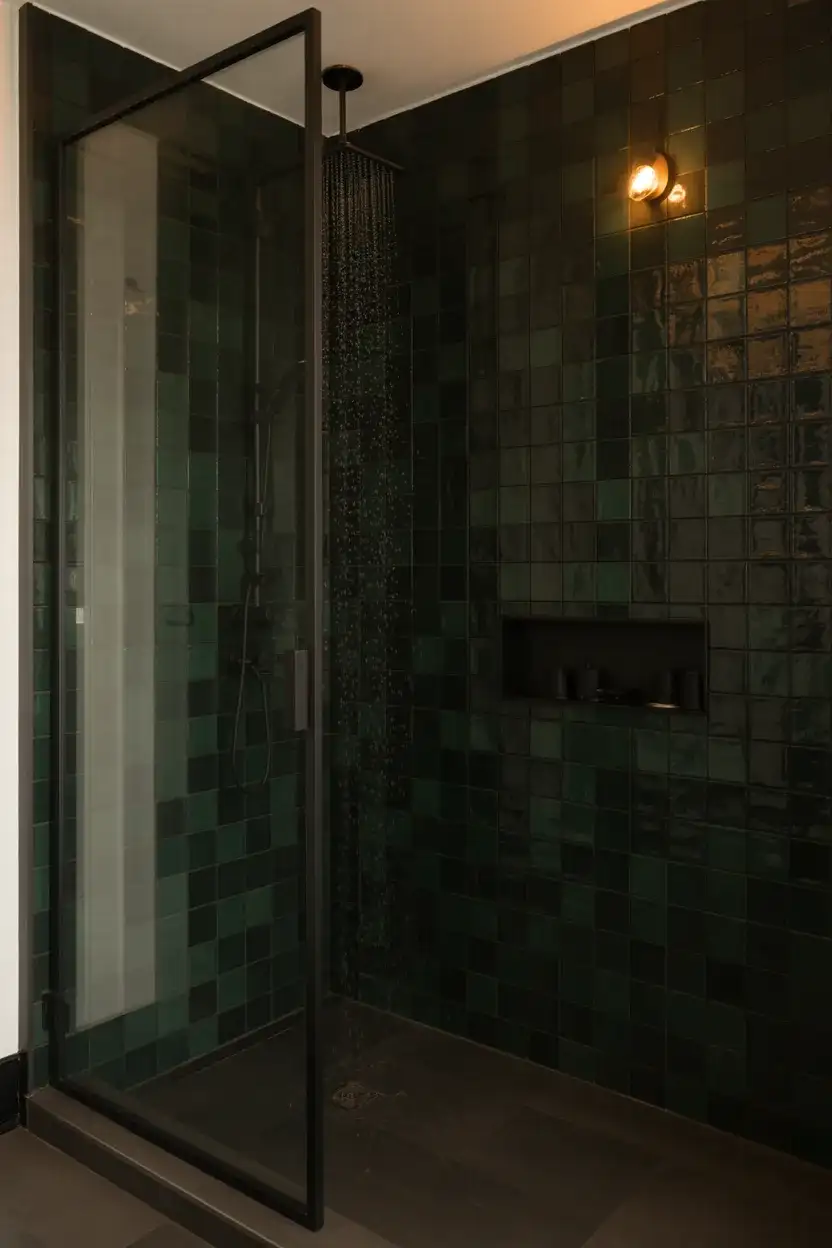
Real homeowner behavior around dark showers reveals an interesting pattern: people who choose them tend to be more design-confident and less worried about resale. They’re building the bathroom they want to live in, not the one they think a future buyer wants to see. And honestly? That confidence usually pays off. Dark, well-executed bathrooms consistently generate the most engagement on platforms like Instagram and Pinterest, which means they’re setting trends rather than following them. The caveat is maintenance—zellige’s irregular surface can trap soap scum more easily than flat tile, so a weekly wipe-down is essential.
19. Open-Concept Master Walk-In
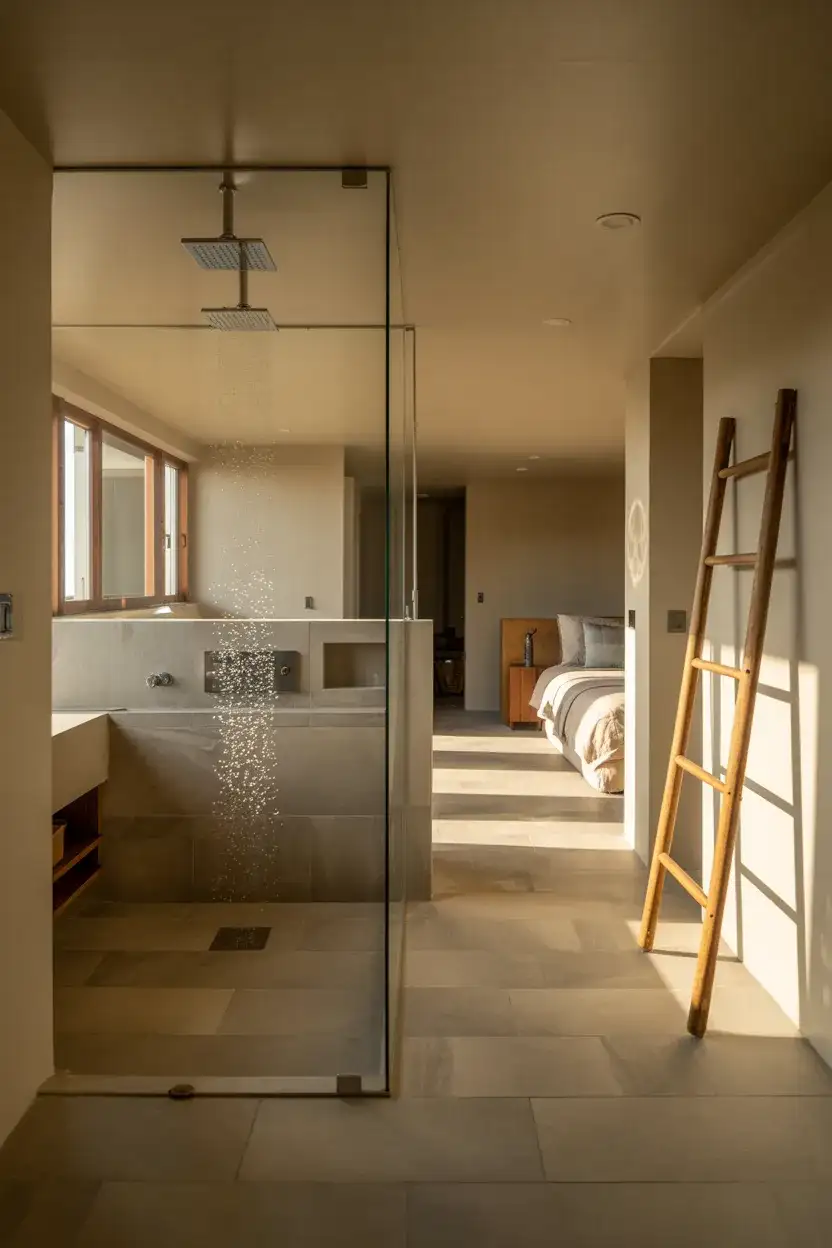
The open-concept shower—where the shower flows directly into the master bedroom or dressing area with minimal separation—has roots in high-end resort design, and it’s increasingly appearing in American master bath suites. Think of it as the ultimate integration of bathing and living space: no walls, no doors, just a tiled wet zone that transitions seamlessly into the broader room. It requires careful waterproofing and a thoughtfully sloped floor, but the result is a space that feels expansive, unconventional, and deeply personal. A large fixed rain showerhead mounted from the ceiling completes the resort feel.
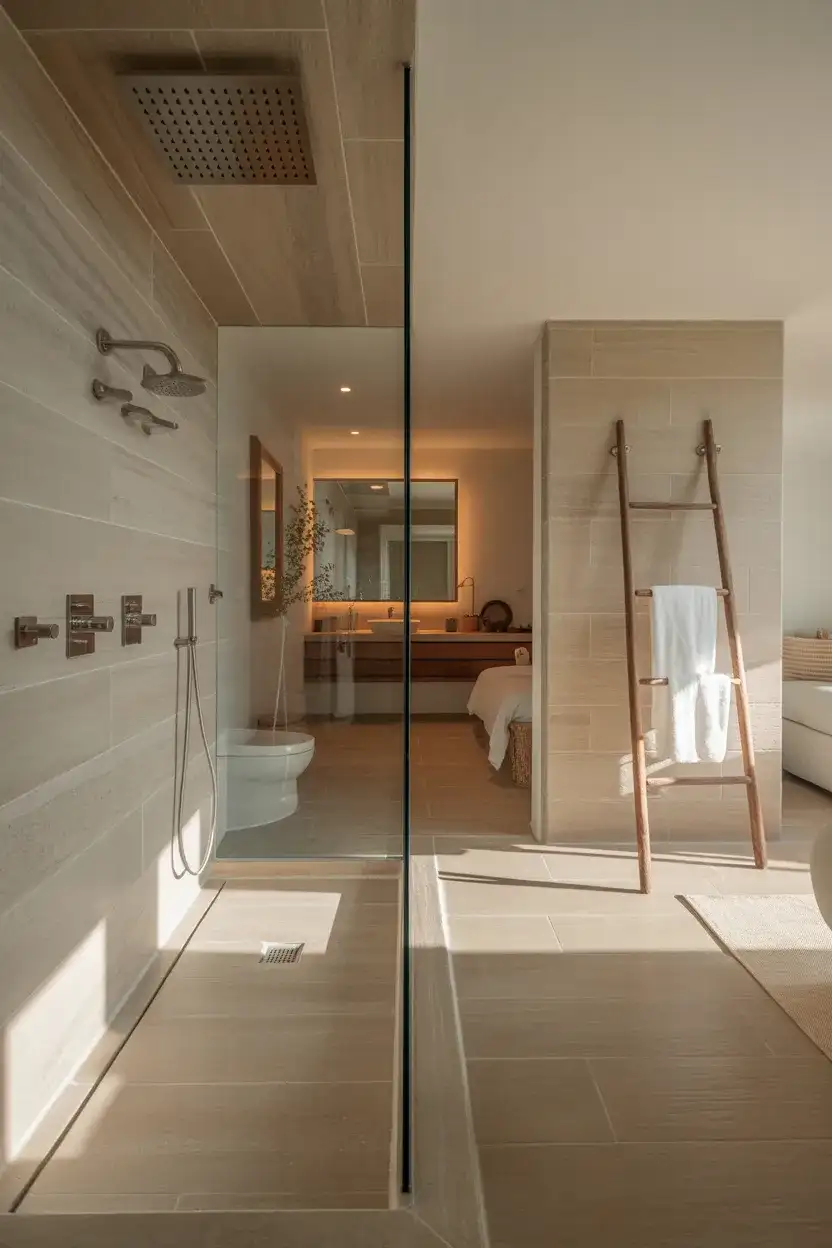
This design is polarizing, and that’s part of its appeal. It works best for couples who are fully comfortable sharing an open space and for homes where the master suite is a genuinely private retreat—not a room that guests wander through. Practically speaking, the key is ventilation: without an enclosed shower space to contain moisture, you need an oversized exhaust fan (rated for the entire room’s square footage, not just the shower zone) to prevent humidity from damaging finishes, furniture, and bedding in the adjacent bedroom.
20. Classic Subway Tile Walk-In
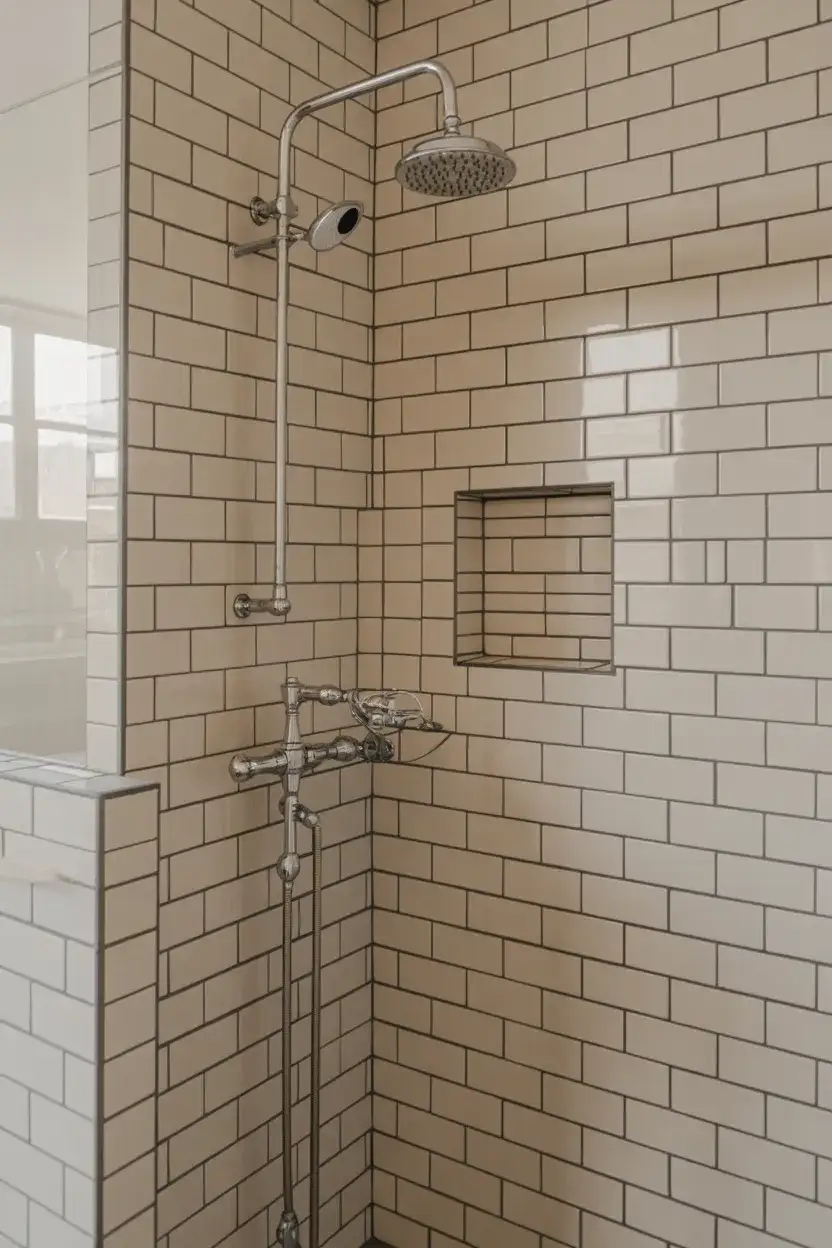
Sometimes the best design decision is the simplest one. A walk-in shower lined with classic 3-by-6-inch subway tile in a running bond pattern is as dependable as it gets—and it still looks fantastic. There’s a reason this format has survived over a century of design trends: it’s proportioned well, it catches light cleanly, and it pairs with literally any fixture finish from polished chrome to matte black. In a bathroom remodel where you want the shower to feel timeless rather than trendy, subway tile delivers that effortlessly. It’s the little black dress of shower design—always appropriate, never overdone.
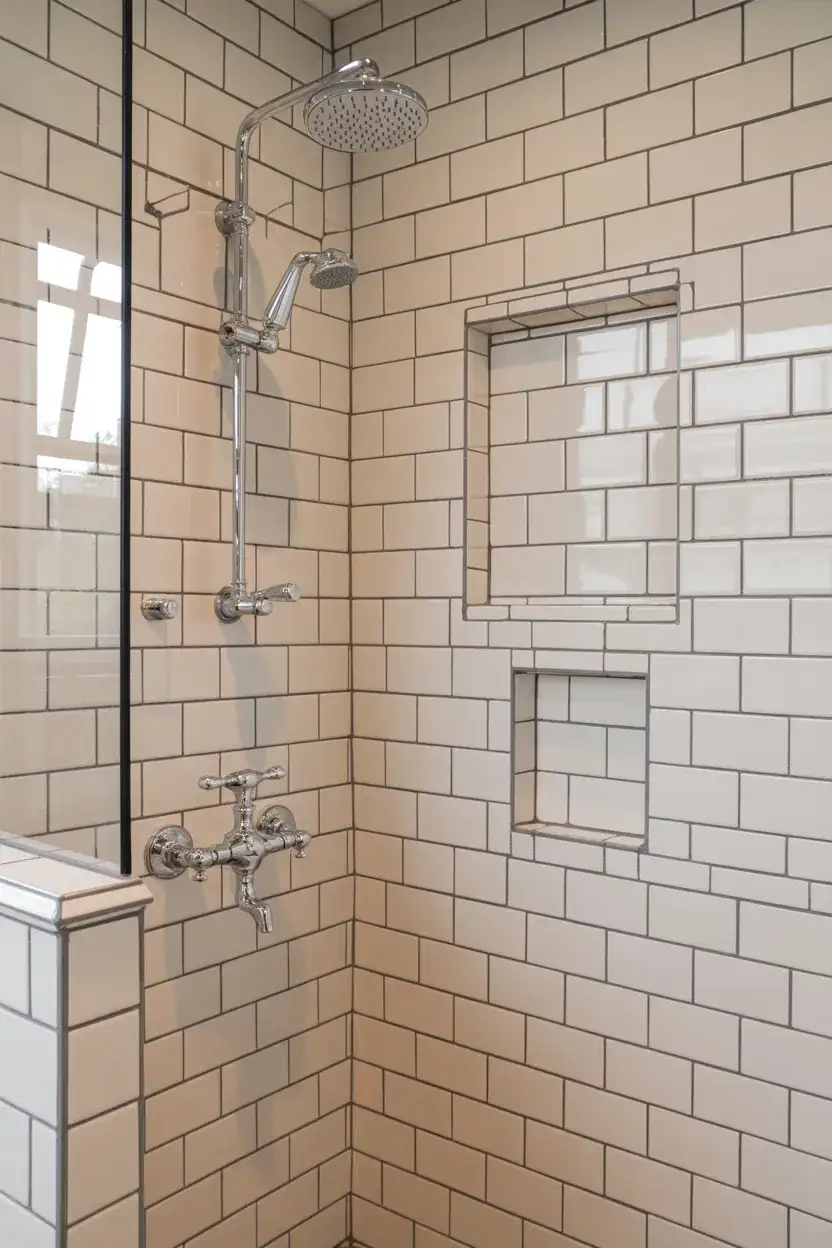
From a pure cost standpoint, it’s hard to beat subway tile. At $1.50 to $4 per square foot for basic white ceramic, the material cost for an average walk-in shower is often under $200. Even with labor, a full subway tile shower installation typically lands between $1,500 and $3,500 — making it accessible for first-time homeowners, rental property upgrades, and budget-conscious remodels alike. If you want to add a touch of personality without increasing the budget significantly, simply swap the grout color: black grout on white tile creates a graphic, modern look for zero additional material cost.
21. Walk-In Shower with Window and Natural Light
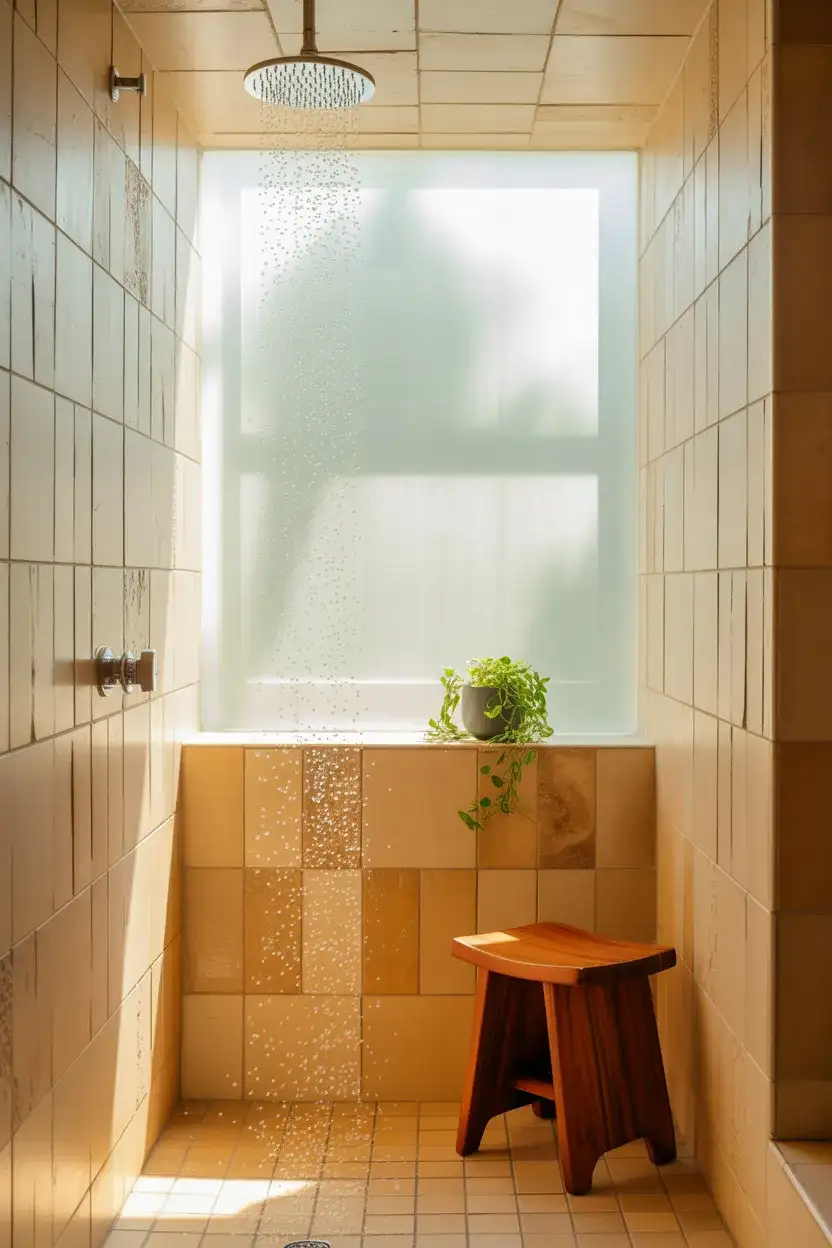
A window inside the shower is one of those features that transforms the entire bathing experience. Whether it’s a frosted pane for privacy or a clear one overlooking a private garden, natural light pouring into a walk-in shower makes tile colors come alive and turns a utilitarian space into something that feels connected to the outdoors. This works particularly well with stone or earth-toned finishes that respond beautifully to changing daylight throughout the day. In a farmhouse or transitional-style home, a steel-framed shower window adds character and becomes a genuine architectural moment in the room.
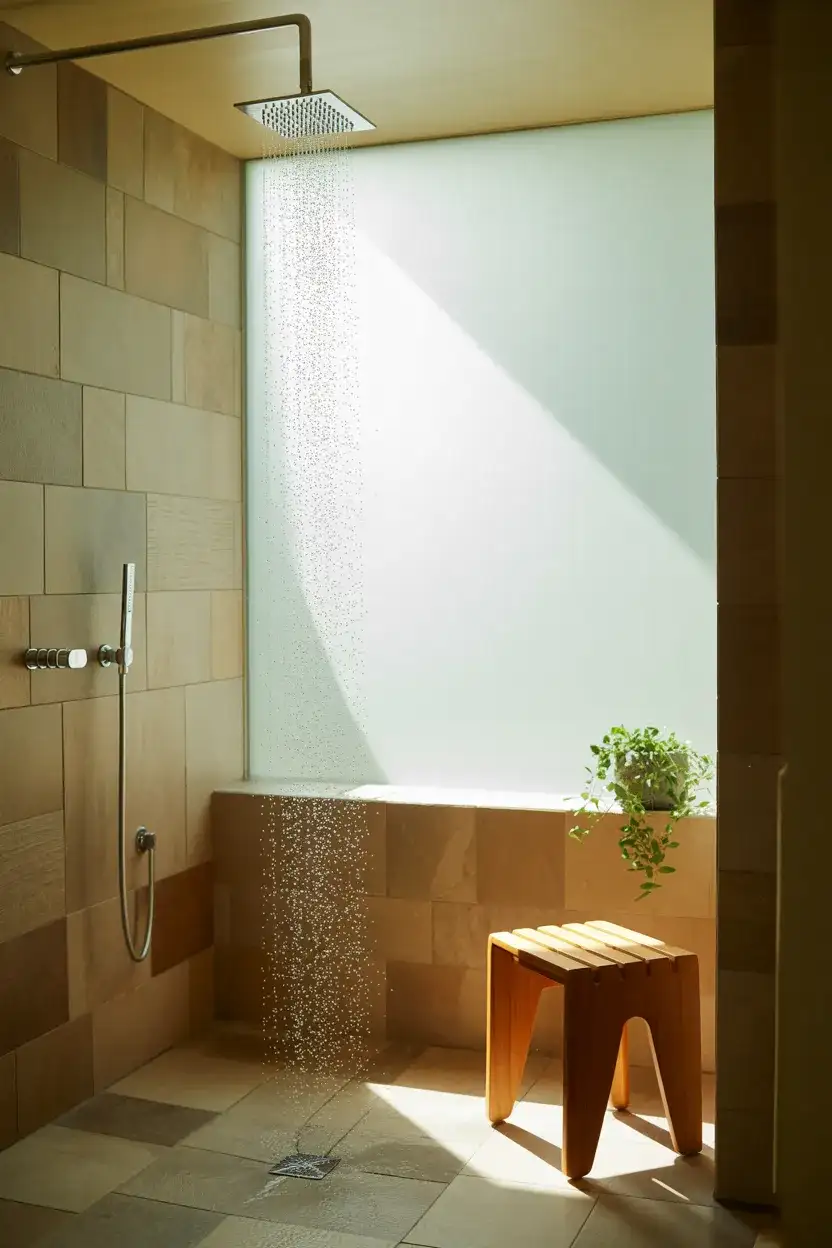
A common concern is whether a window in the shower will cause water damage or mold. The answer: not if it’s done correctly. The window frame needs to be made from water-resistant material (vinyl, fiberglass, or aluminum—never bare wood), and the sill should be tiled or clad in solid surface material with a slight outward slope for drainage. A good tile setter will wrap the window opening in waterproof membrane before tiling around it. Done properly, a shower window will last decades without a single issue, while adding a level of ambiance that no artificial light source can replicate.
22. Walk-In Shower Replacing a Closet Nook
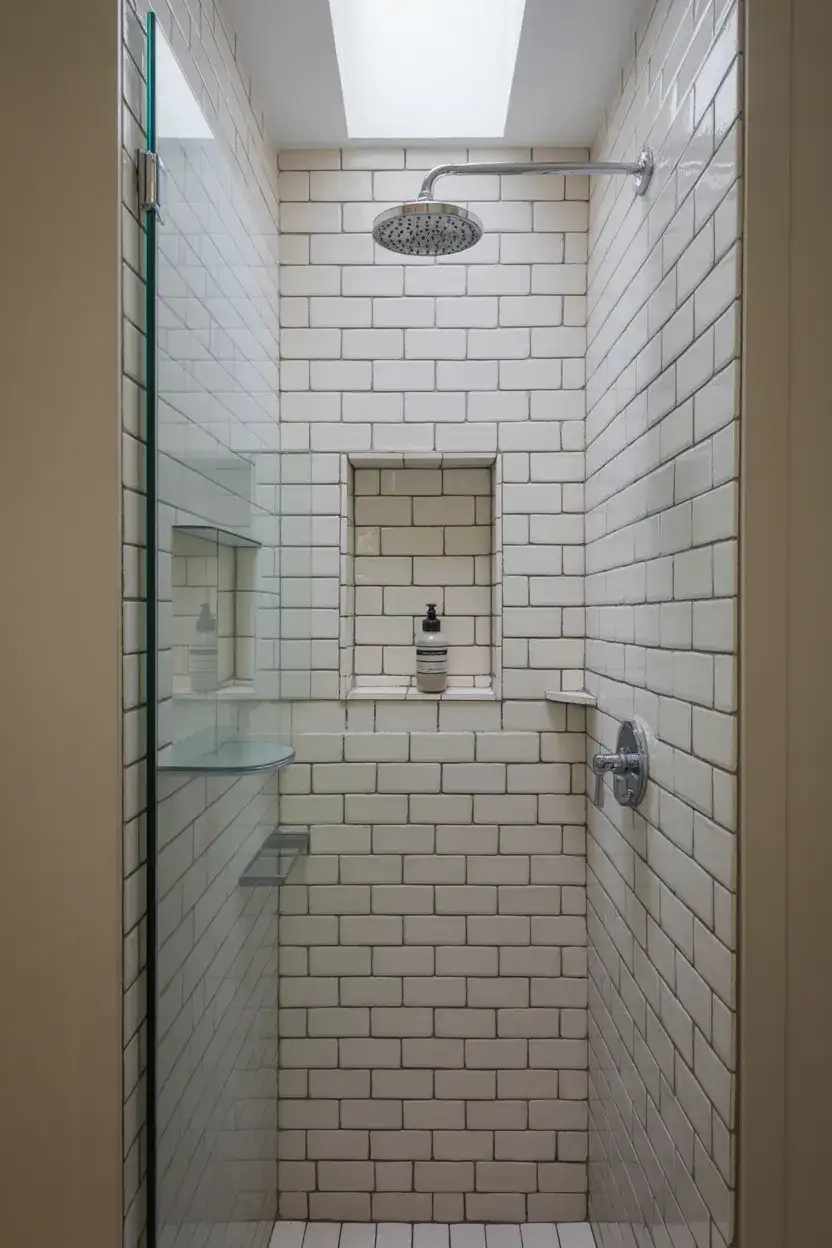
Here’s a creative trick that more homeowners are discovering: converting an unused linen closet or small hallway nook into a compact walk-in shower. In many American homes, there’s a closet adjacent to the bathroom that, when the wall is opened up, provides the perfect depth for a walk-in shower. The footprint doesn’t need to be large—even a 32-by-48-inch alcove can accommodate a comfortable walk-in shower with a simple glass panel at the entry. It’s a particularly clever solution in small bathroom renovations where adding square footage isn’t an option but reimagining existing space is.
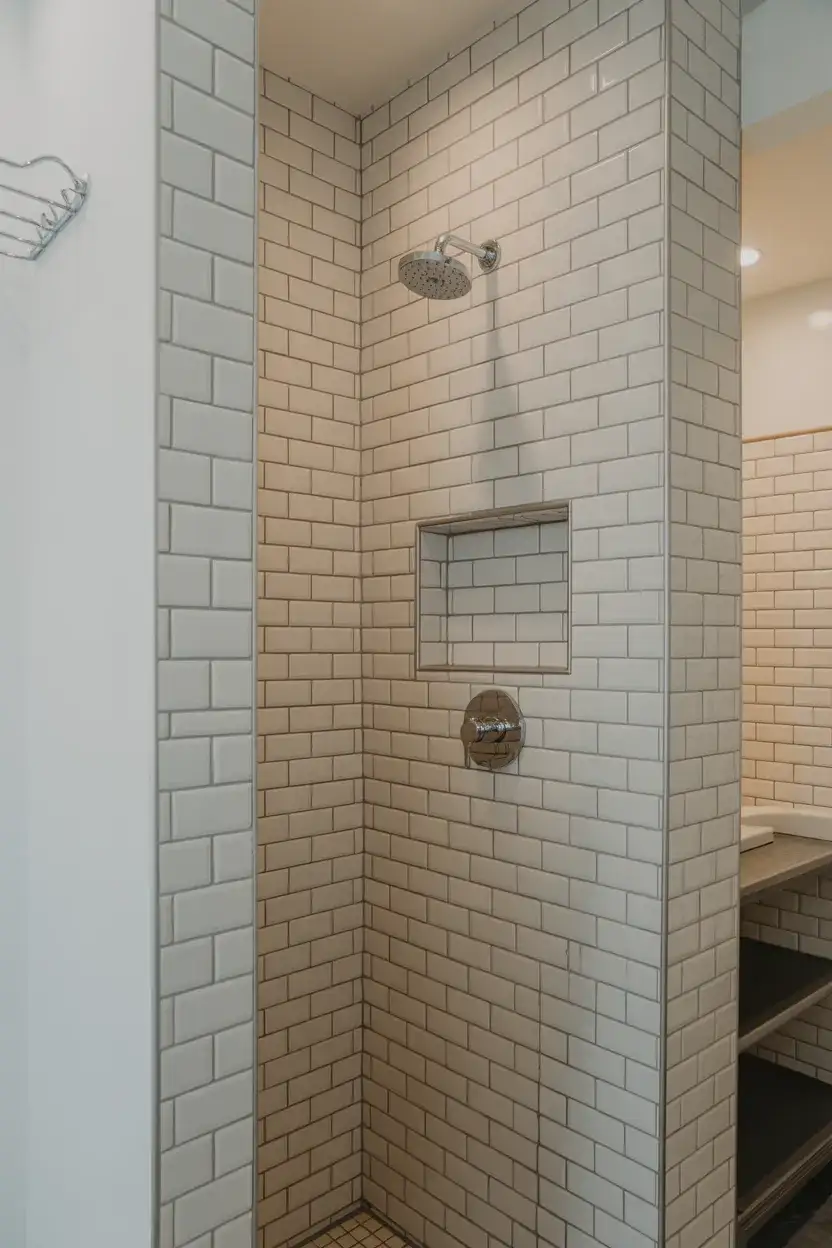
What makes this idea so appealing is the cost math. You’re not building an addition or moving exterior walls—you’re simply reconfiguring interior space that already exists. The plumbing run to a closet adjacent to an existing bathroom is usually short (since the wet wall is often shared), which keeps labor costs reasonable. Several contractors I’ve spoken with estimate that a closet-to-shower conversion typically costs 30–40% less than a ground-up shower build in a new location, making it one of the highest-value moves for homeowners working within a strict renovation budget.
23. Resort-Style Walk-In with Dual Showerheads and Greenery
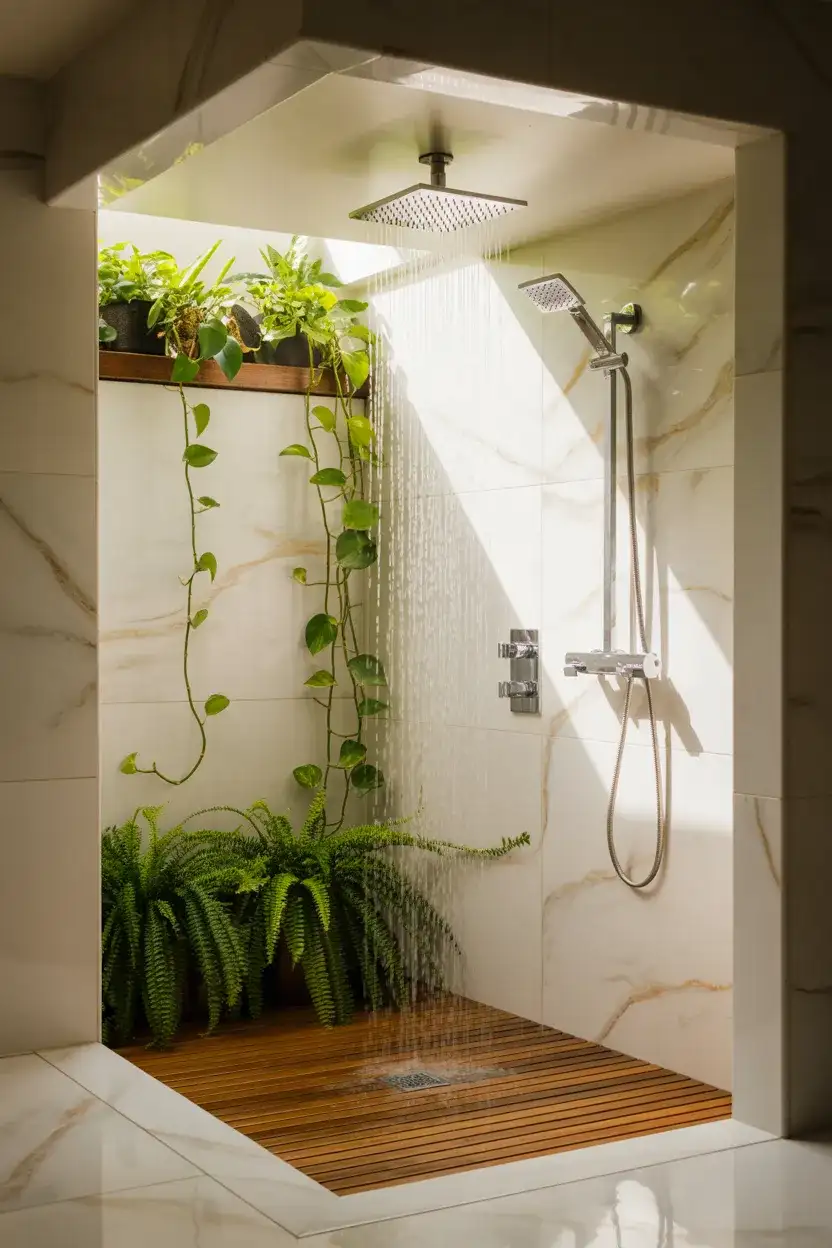
The final idea on this list is the one that makes people stop mid-scroll on Pinterest: a large, resort-style walk-in shower with double showerheads and living greenery integrated into the design. Think a ceiling-mounted rainfall head plus a wall-mounted handheld, surrounded by trailing pothos, ferns, or a mounted staghorn fern that thrives in the shower’s natural humidity. The walls might be marble or large-format porcelain in a warm neutral, and the entry is a wide, doorless opening that makes the whole space feel like an outdoor rain shower you’d find at a Bali resort. It’s ambitious, it’s beautiful, and it’s surprisingly achievable.
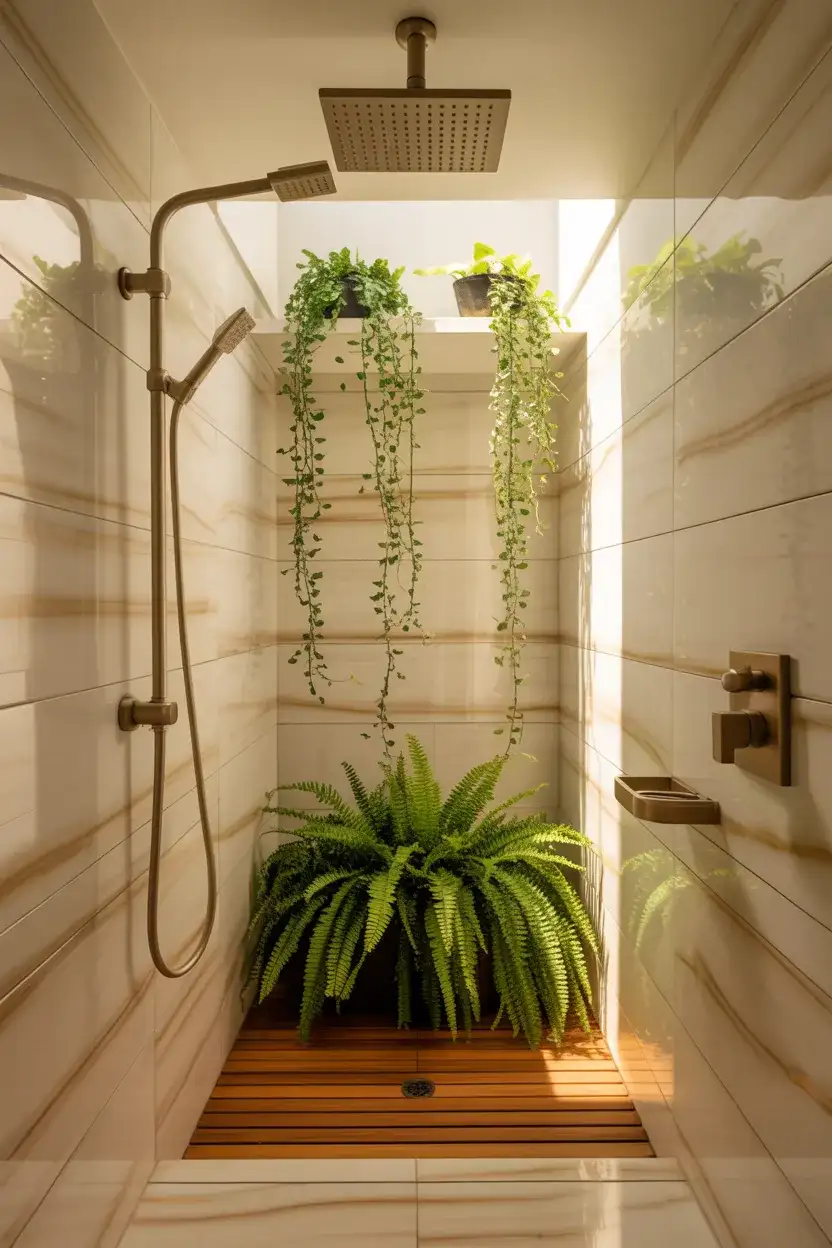
Plants in the shower sound high-maintenance, but the reality is the opposite—humidity-loving species like pothos, Boston ferns, and tillandsia (air plants) actually do better in a steamy shower environment than almost anywhere else in your home. The key is ensuring they get some indirect light (a nearby window or skylight helps enormously) and that their pots or mounts allow for drainage so roots don’t sit in standing water. A small mounted shelf or a hanging planter does the trick. It’s the kind of detail that makes guests say “wait, you have plants in your shower?”—and then immediately want to copy it.
Conclusion
Whether you’re drawn to the warmth of natural stone, the drama of dark zellige, or the clean simplicity of classic subway tile, the walk-in shower you choose should reflect how you actually live—not just how it looks in a photo. We hope these ideas have given you a starting point, a spark, or maybe even the push you needed to finally start planning. Drop a comment below and tell us which idea stopped you mid-scroll—we’d love to hear what’s inspiring your next bathroom project.