If you’ve spent any time scrolling Pinterest lately, you already know: teenage boys’ bedrooms are having a serious moment. Parents and teens alike are moving away from the generic sports-themed rooms of decades past and leaning into spaces that feel personal, layered, and genuinely cool. Whether your son is obsessed with Lego, gaming, sneakers, or Japanese aesthetics, the design world in 2026 has something that’ll speak his language. This guide rounds up bedroom ideas that go beyond the obvious—equal—equal parts practical and inspiring—so—so you can walk away with a real plan, not just a mood board full of rooms that look nothing like your house.
1. Dark Cozy Walls with a Gaming Setup
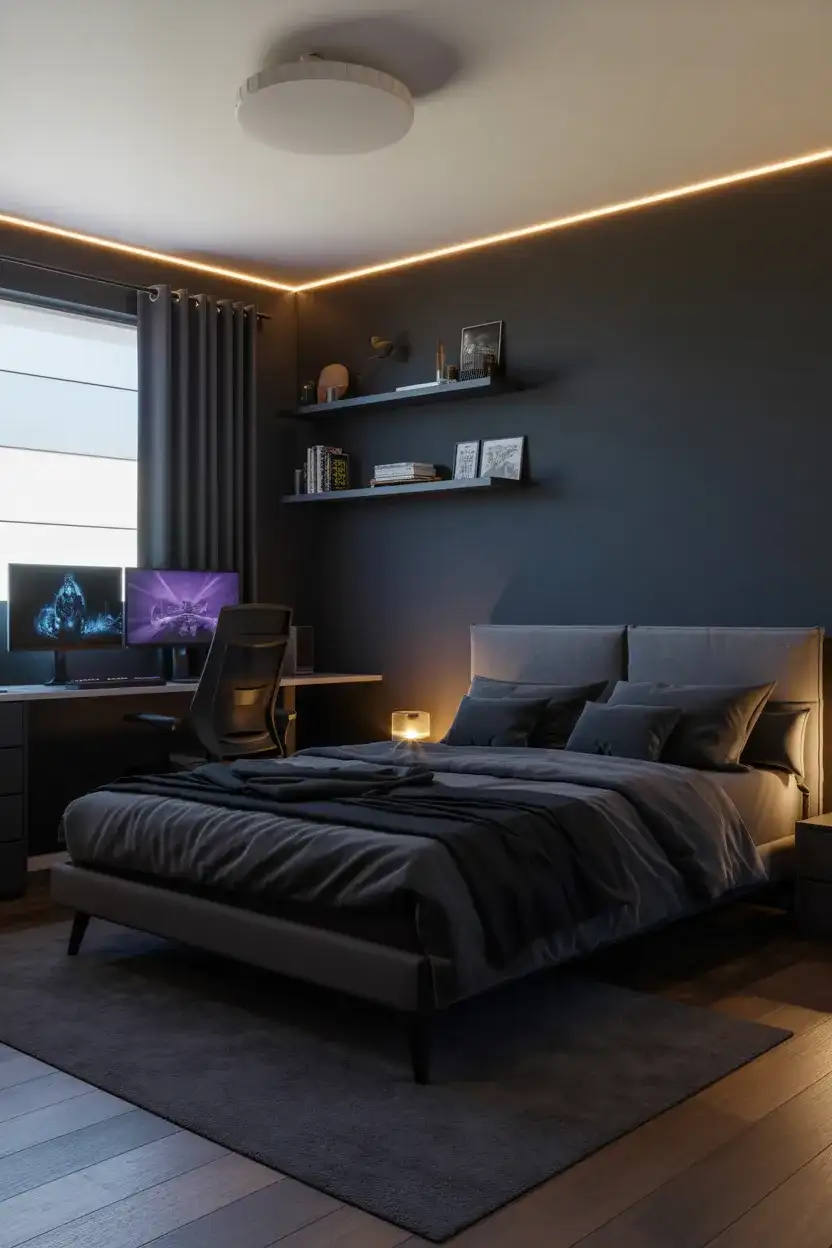
There’s a reason dark-walled rooms keep showing up on every design feed—they—they just feel immersive in a way that lighter rooms don’t. For a teenage boy who’s into gaming, a deep charcoal, navy, or near-black wall creates the perfect backdrop for LED strips, monitor glow, and all the tech that defines his world. This works brilliantly for emo and edgier aesthetics too, where moodiness is a feature, not a flaw. Add a low-profile platform bed, floating shelves, and a serious desk setup, and the room becomes a genuine retreat.
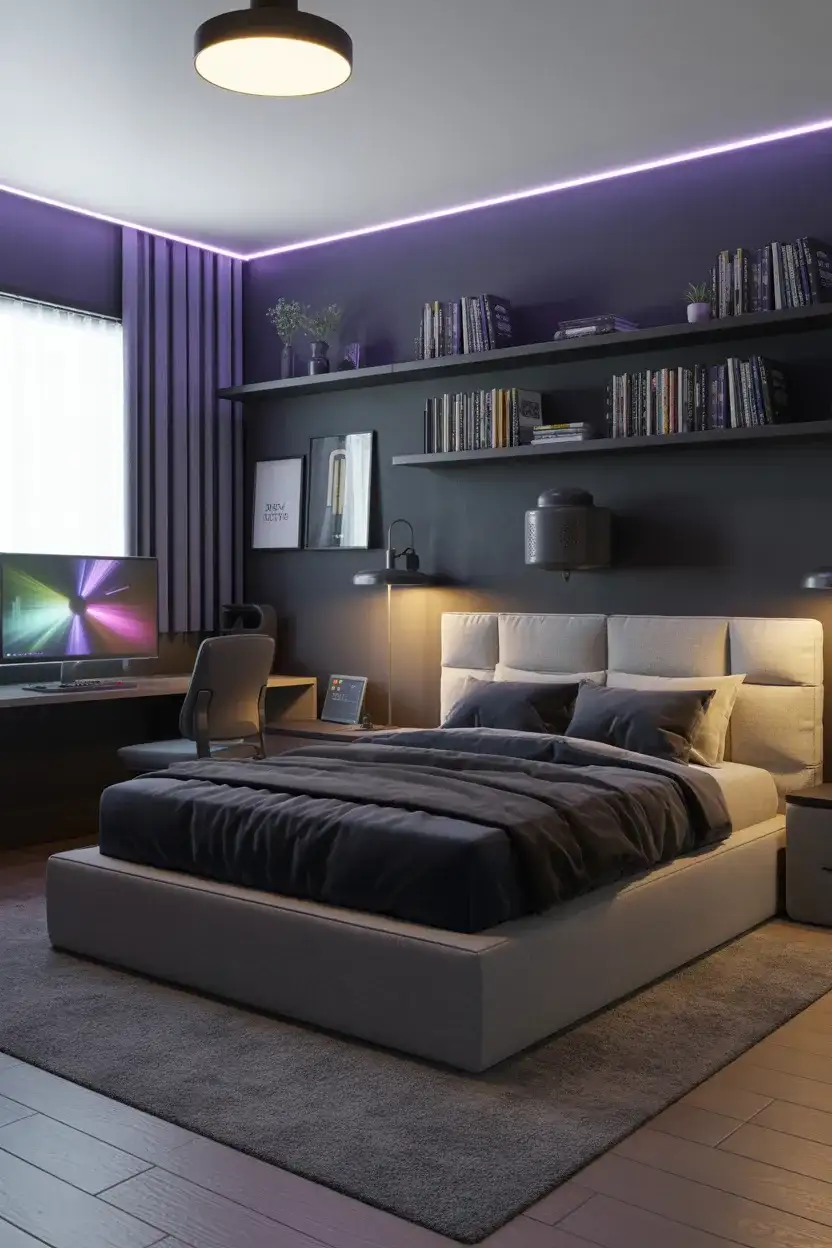
One of the most common mistakes parents make with dark rooms is going too dark everywhere and making the space feel oppressive. The fix is layering: use the dark color only on one or two walls, keep the ceiling lighter, and make sure you have at least two or three sources of ambient lighting beyond the overhead fixture. Task lighting at the desk and a warm bedside lamp go a long way. Dark rooms also hide clutter beautifully—a—a practical win when you’re dealing with a teenager.
2. Spider-Man Room for Kids and Tweens
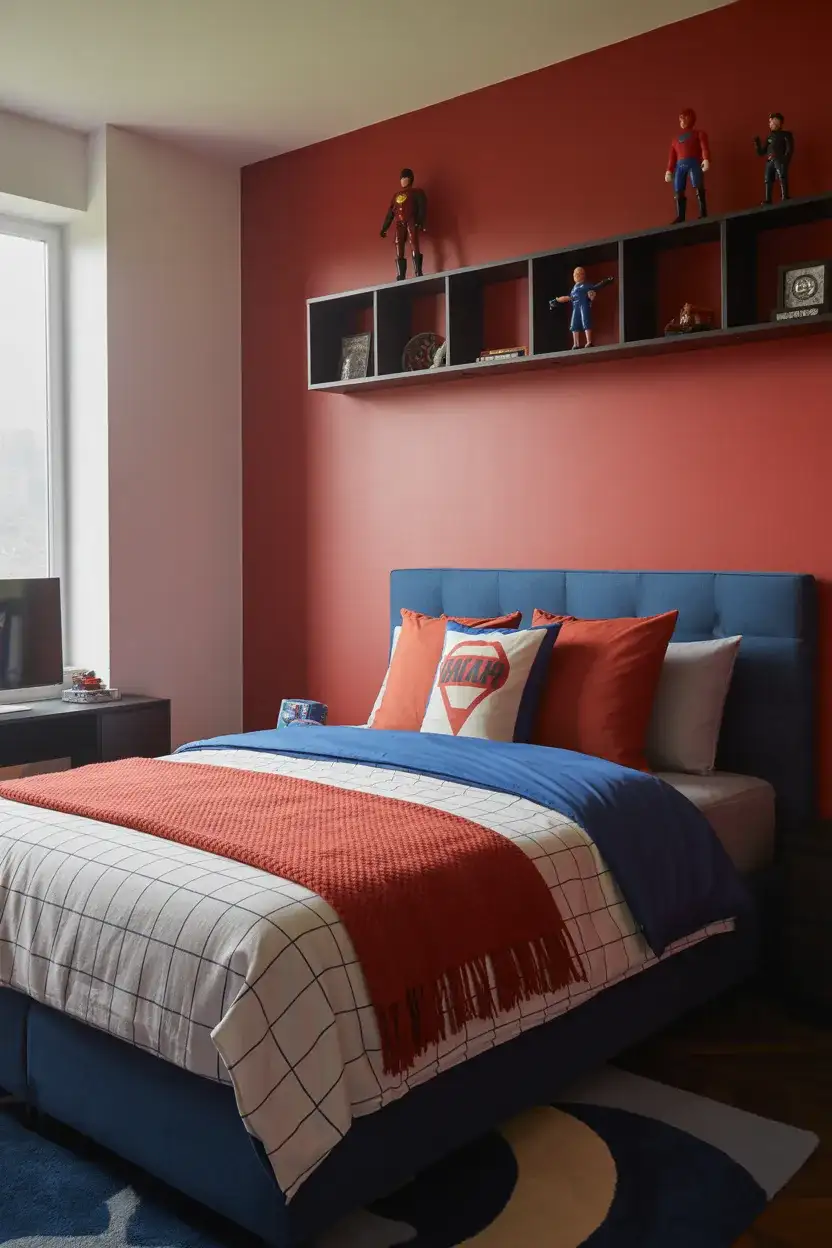
A Spiderman or superhero-themed-themed room doesn’t have to look like a store display. The best versions of this idea take the color palette—reds,—reds, blues, and blacks—and—and apply it to real furniture and thoughtful design choices rather than plastering every surface with licensed graphics. Think a bold red accent wall, a navy bed frame, web-pattern throw pillows, and a couple of well-placed framed prints. This works across a wide range of ages, from ideas forideas for 5-10 simple approaches for younger kids to more refined takes for preteens who still love the character but want a room that doesn’t scream “little kid.”
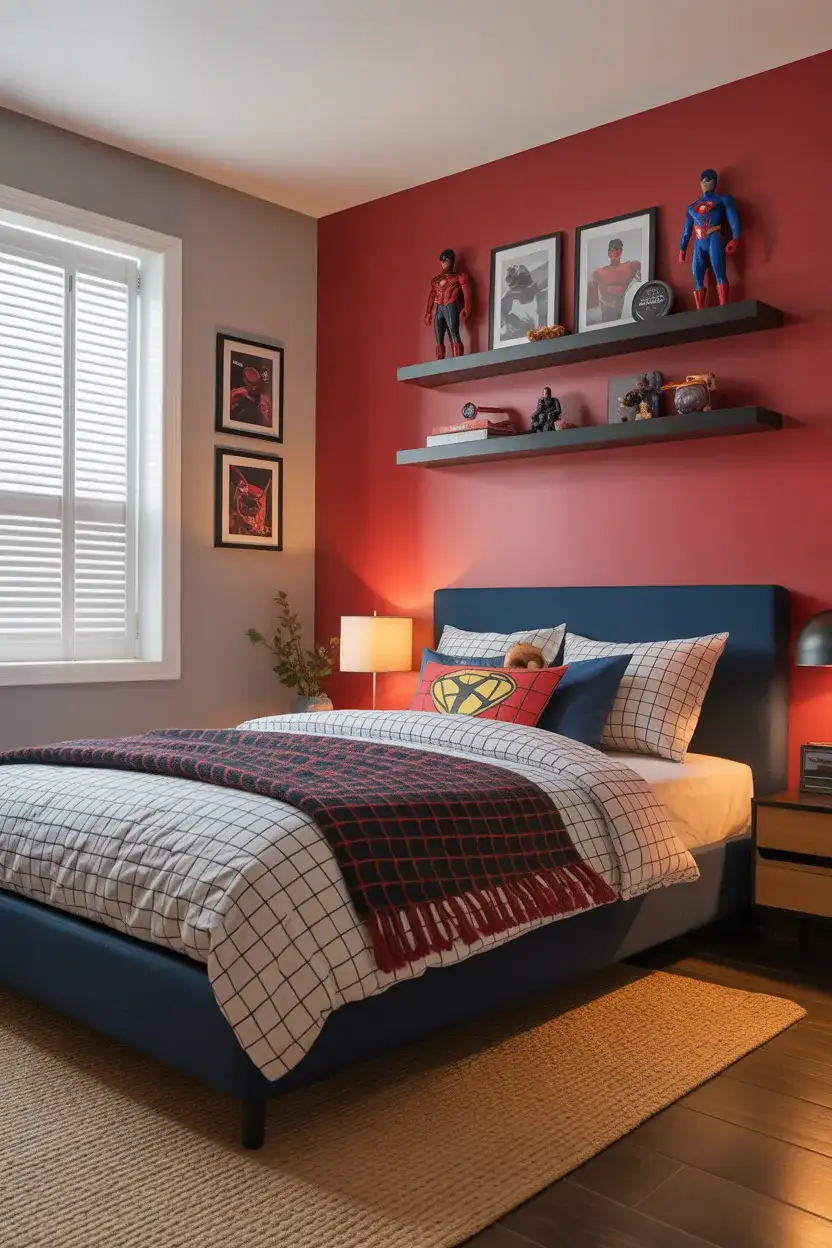
Real homeowners who’ve nailed this look say the trick is buying furniture first and then adding the themed accents on top—not—not the other way around. When you start with a quality bed frame and dresser in a neutral or brand-adjacent color, you can evolve the room as your son’s tastes change without replacing everything. Swap out the pillowcases, art, and accessories, and the bones of the room still hold up. It’s a design philosophy that saves real money over time.
3. Star Wars Bedroom with a Modern Edge
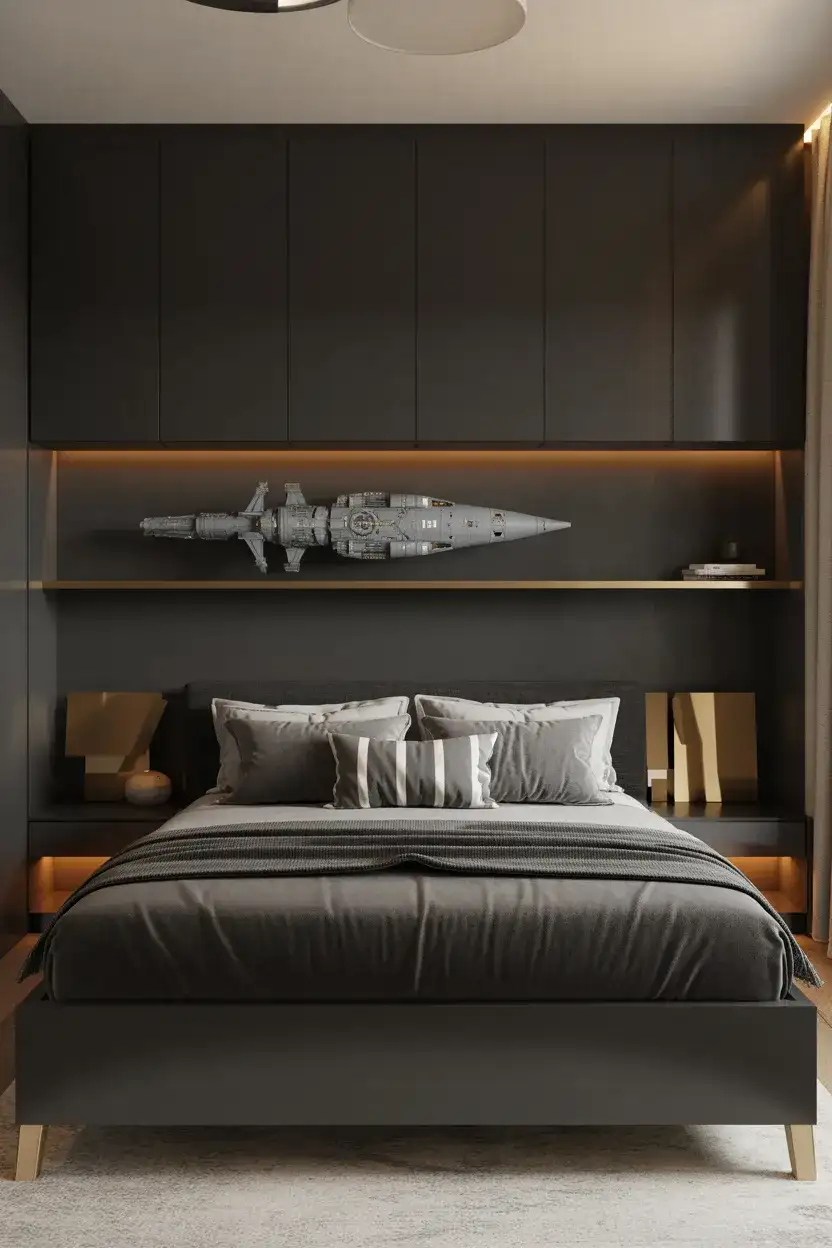
A Star Wars room in 2026 looks nothing like it did in 2010. Instead of cartoon Yoda bedding on a generic twin bed, think deep space blacks and warm metallics, with nods to the galaxy far, far away woven into the architecture of the room itself. This aesthetic skews closer to timeless design than you’d expect—a—a dark wall with a single Millennium Falcon model on a floating shelf reads as cool to a ten-year-old and a seventeen-year-old alike. The key is restraint: let two or three statement pieces do the heavy lifting instead of covering every surface.
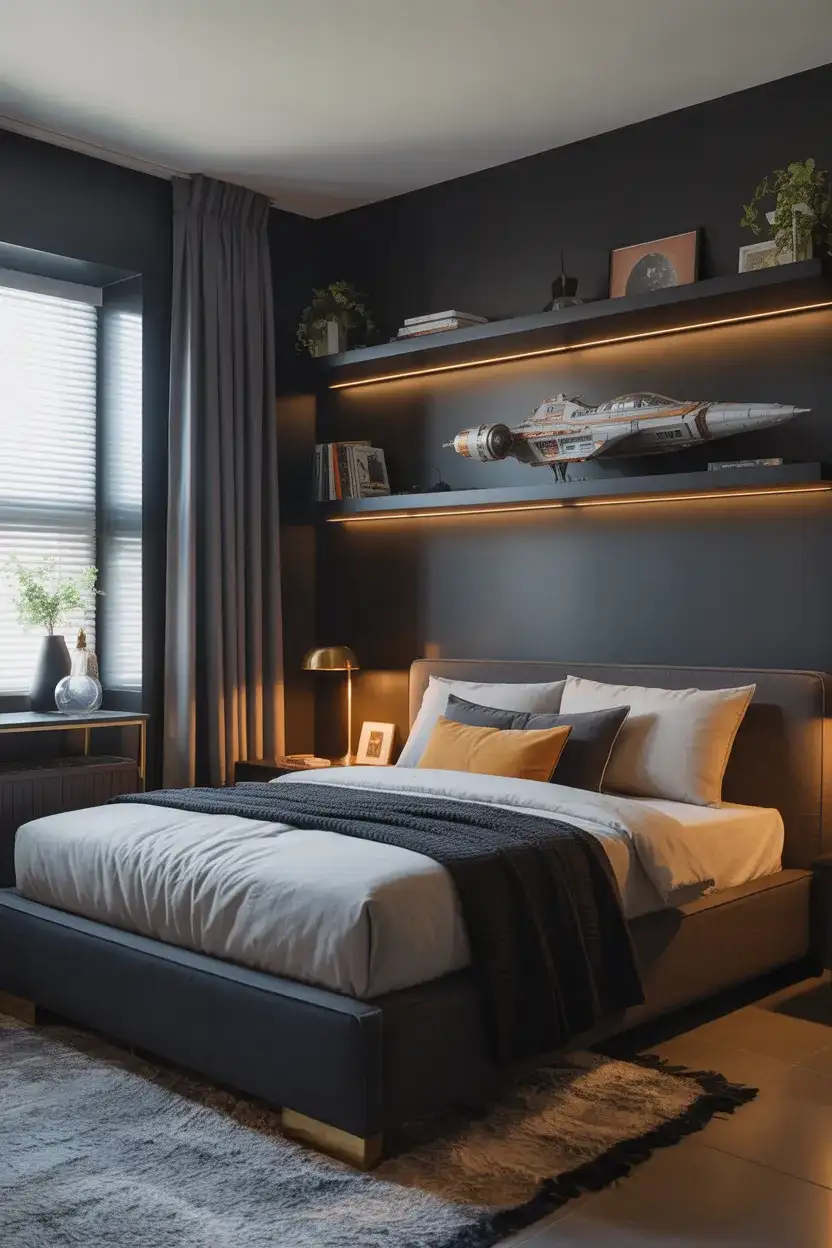
If you’re working with a smaller space, a muralist or a peel-and-stick starfield wallpaper on a single wall creates massive impact without overwhelming the room. Several Etsy artists now specialize in custom space murals for kids’ rooms, and prices typically run between $150 and $400 for a 10-foot wall depending on complexity. For parents on a budget, a deep navy or near-black paint on one wall achieves a similar effect for under $50 in materials.
4. Marvel-Inspired Teen Bedroom
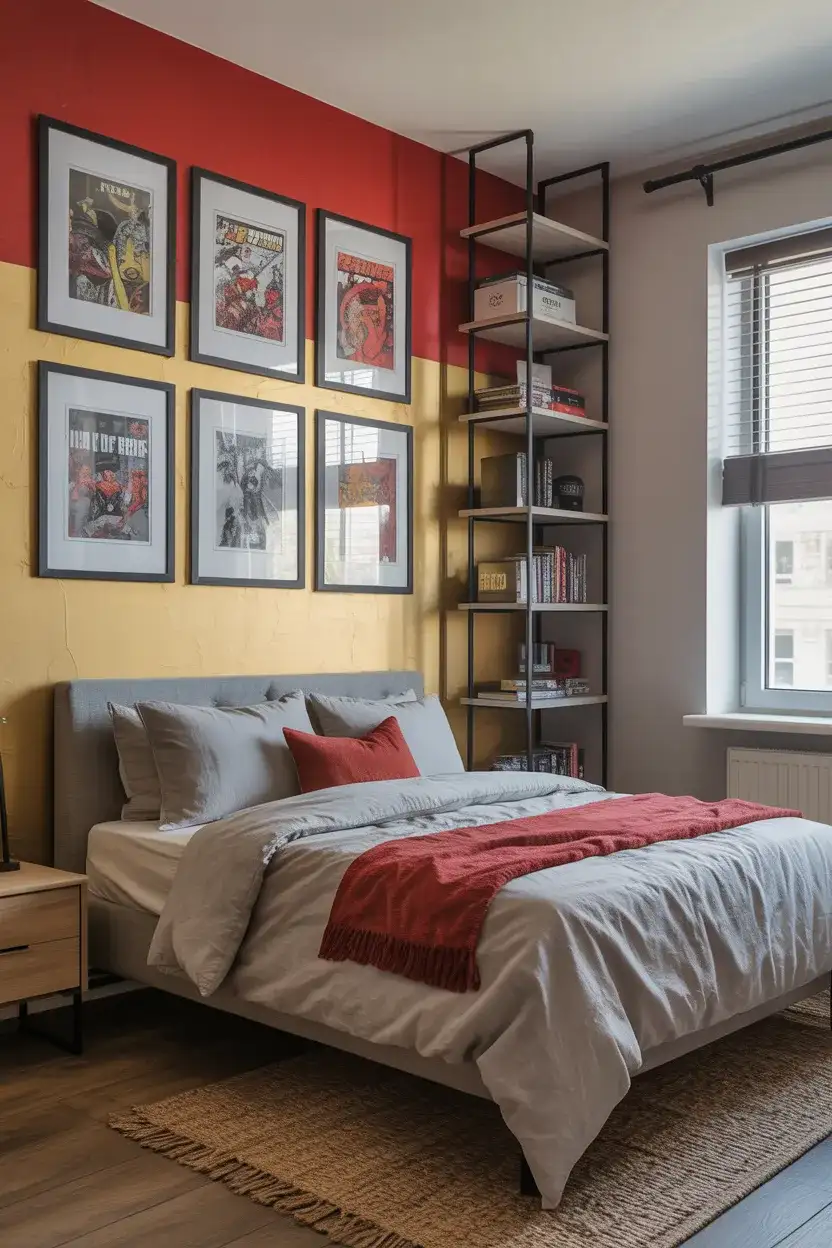
A Marvel bedroom can absolutely grow up with your kid—and—and the design world has caught on. The most sophisticated versions of this look pull the visual language of the comics (bold graphic shapes, primary colors with black accents, dynamic compositions) and translate them into actual room design decisions. A gallery wall of framed comic cover prints in matching black frames, a red or gold accent wall, and a neutral base in gray or white createcreate something that feels intentional and curated rather than assembled from a big-box store’s licensed section. This hits especially well in thethe 13-14 age ranges,ranges, where boys still love the franchise but want their room to feel mature.
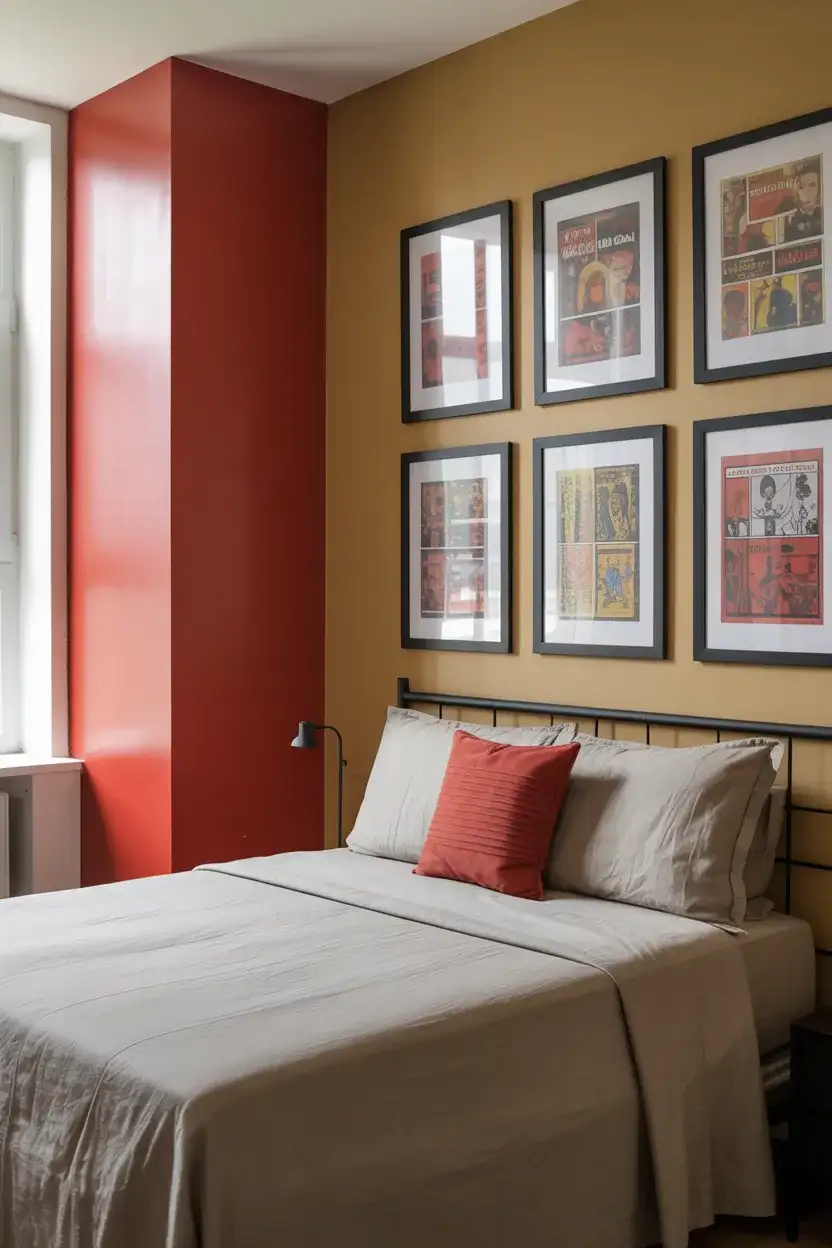
Design professionals who specialize in kids’ rooms often recommend what they call “the 80/20 rule” for themed spaces: 80% of the room should be a neutrala neutral or brand-adjacent color, with only 20% being explicitly themed. This keeps the room from feeling like a merchandise display and ensures it has a longer lifespan as the child grows. It also makes it far easier—and—and cheaper—to—to update the room over time by simply swapping out that 20%.
5. Japandi-Style-Style Teen Bedroom
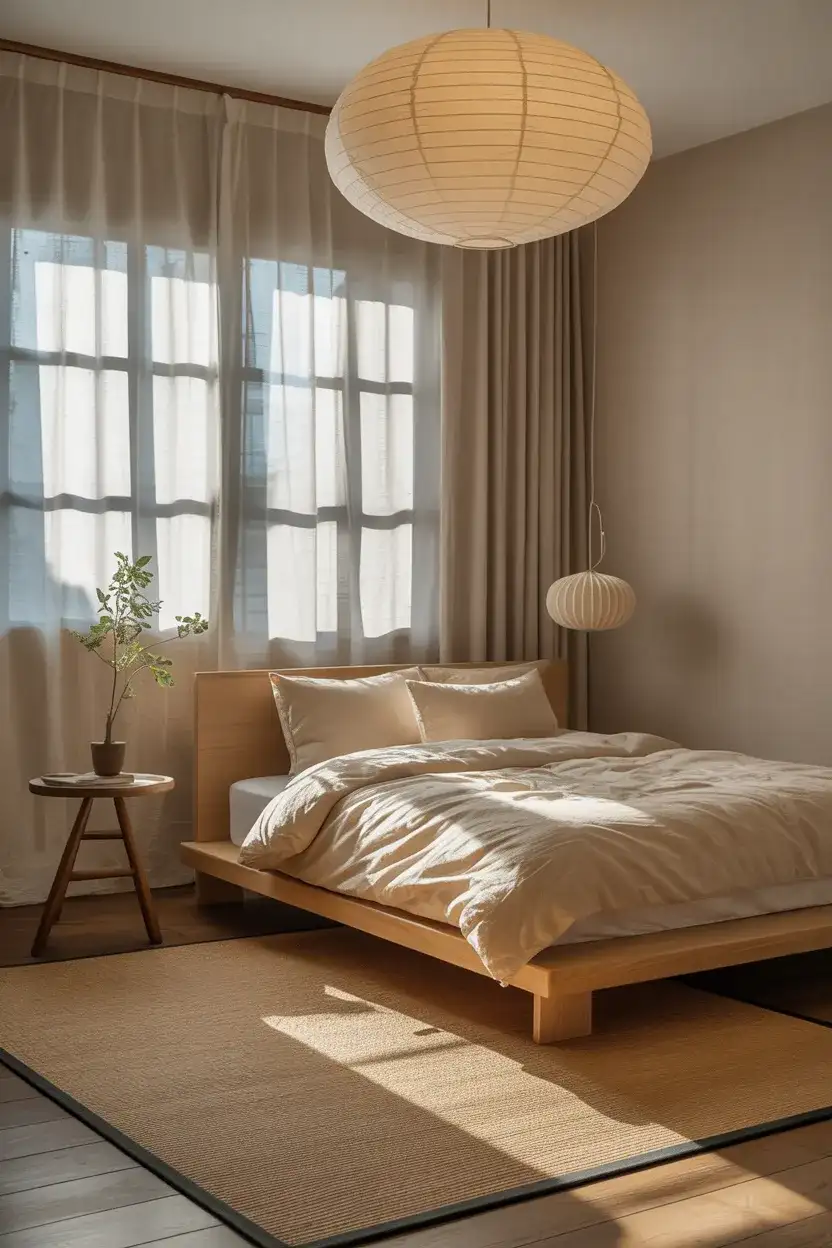
The Japandi aesthetic—that—that quiet, beautifully restrained hybrid of Japanese minimalism and Scandinavian warmth—has—has officially arrived in the teenage bedroom. And honestly? It makes a lot of sense for boys who want a calm space that doesn’t feel chaotic. Think low platform beds in natural oak or walnut, neutral linen bedding in warm taupes and creams, paper pendant lights, and a few carefully chosen objects displayed with breathing room around them. For teens who are into the soft side of interior design or who want a genuinely peaceful place to decompress after school, this aesthetic delivers.
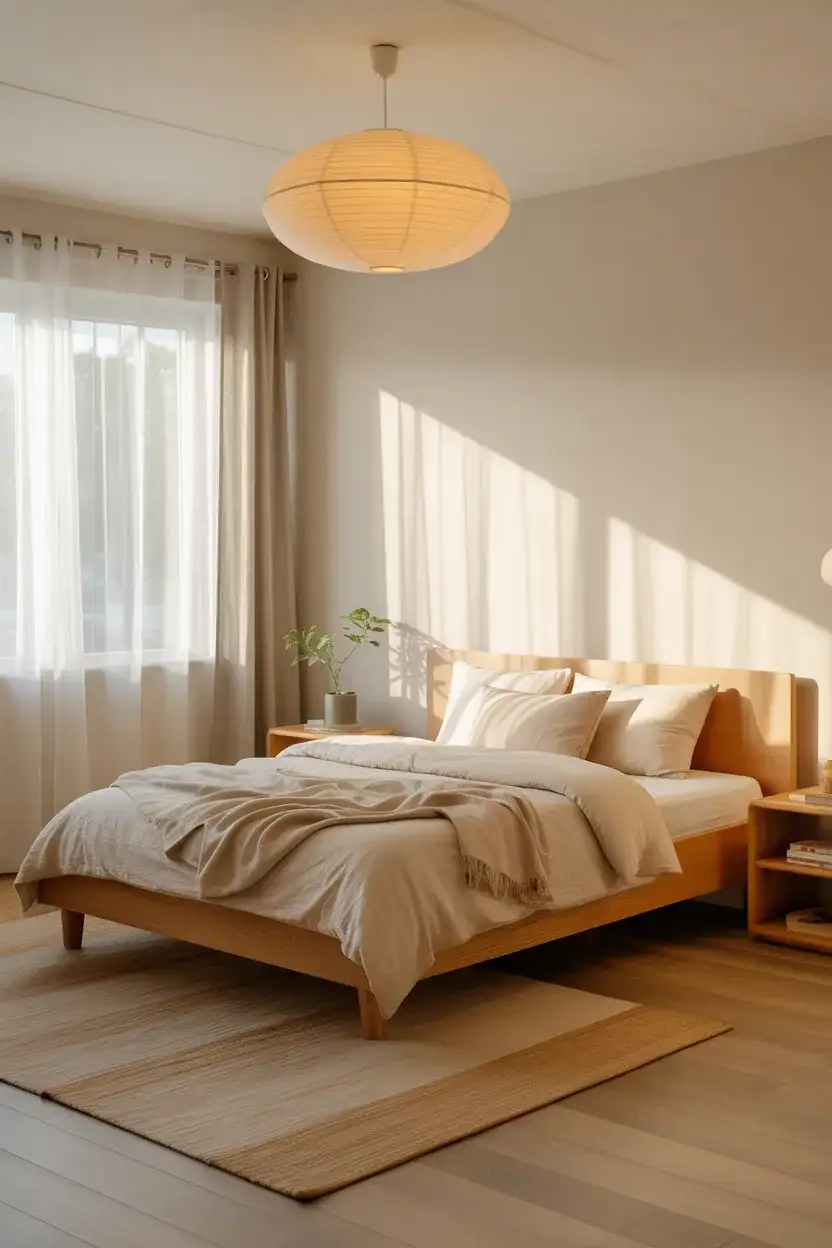
This style works best in rooms that get good natural light—the—the whole philosophy hinges on the interplay of materials and daylight. If the room faces north or doesn’t get much sun, warm-spectrum LED bulbs in the 2700K to 3000K range can replicate the effect beautifully. Japandi also tends to run more affordable than other design aesthetics since the guiding principle is having fewer, better things—which—which means less clutter and less stuff to buy overall.
6. Lego Display and Play Room
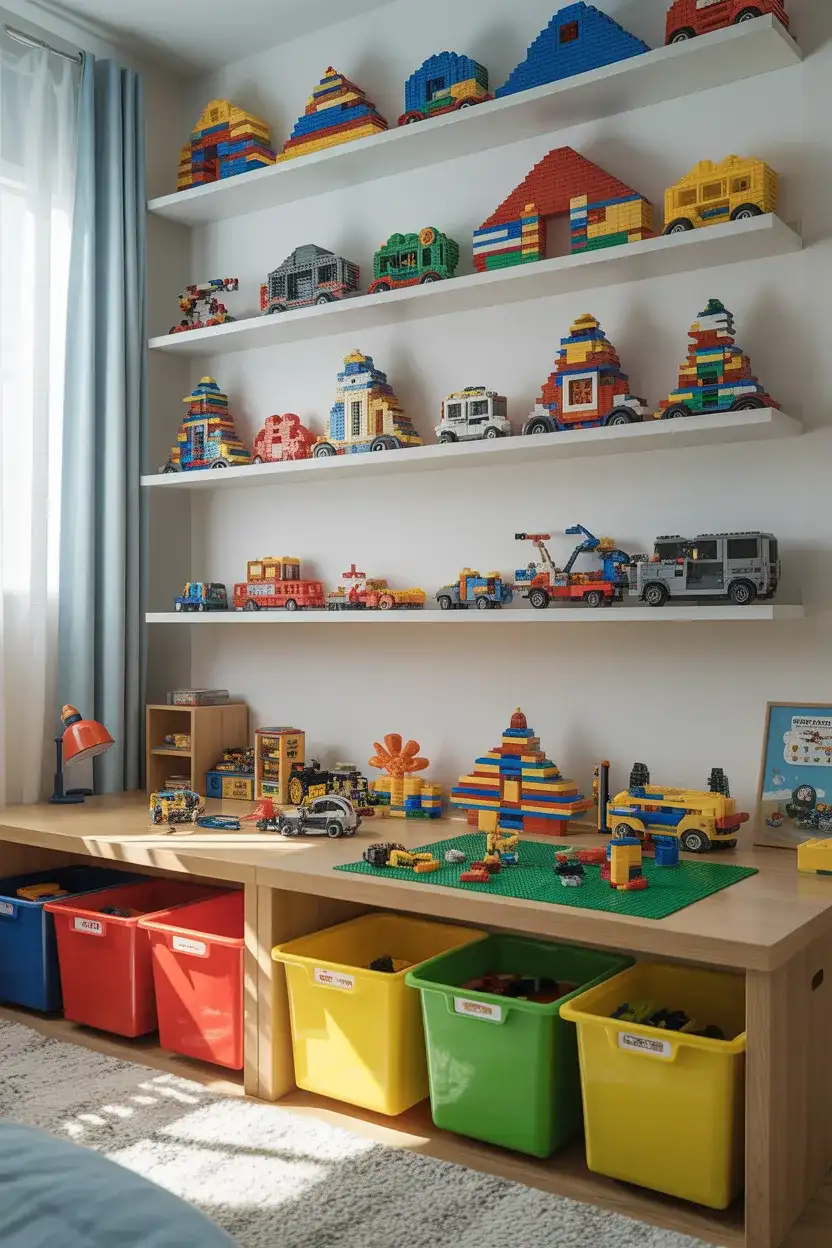
A bedroom designed around Lego is one of those ideas that sounds juvenile on the surface but, done well, looks genuinely stunning. The key is treating finished Lego sets like the display-worthy objects they are—arranging—arranging them on open shelving at varying heights, with proper lighting that shows off the detail. This works brilliantly for boys in the10-12 and up ageup age range who have accumulated serious collections. Think white or light wood floating shelves across an entire wall, a dedicated build table with built-in storage bins below, and good task lighting. The room becomes a workshop and a gallery at the same time.
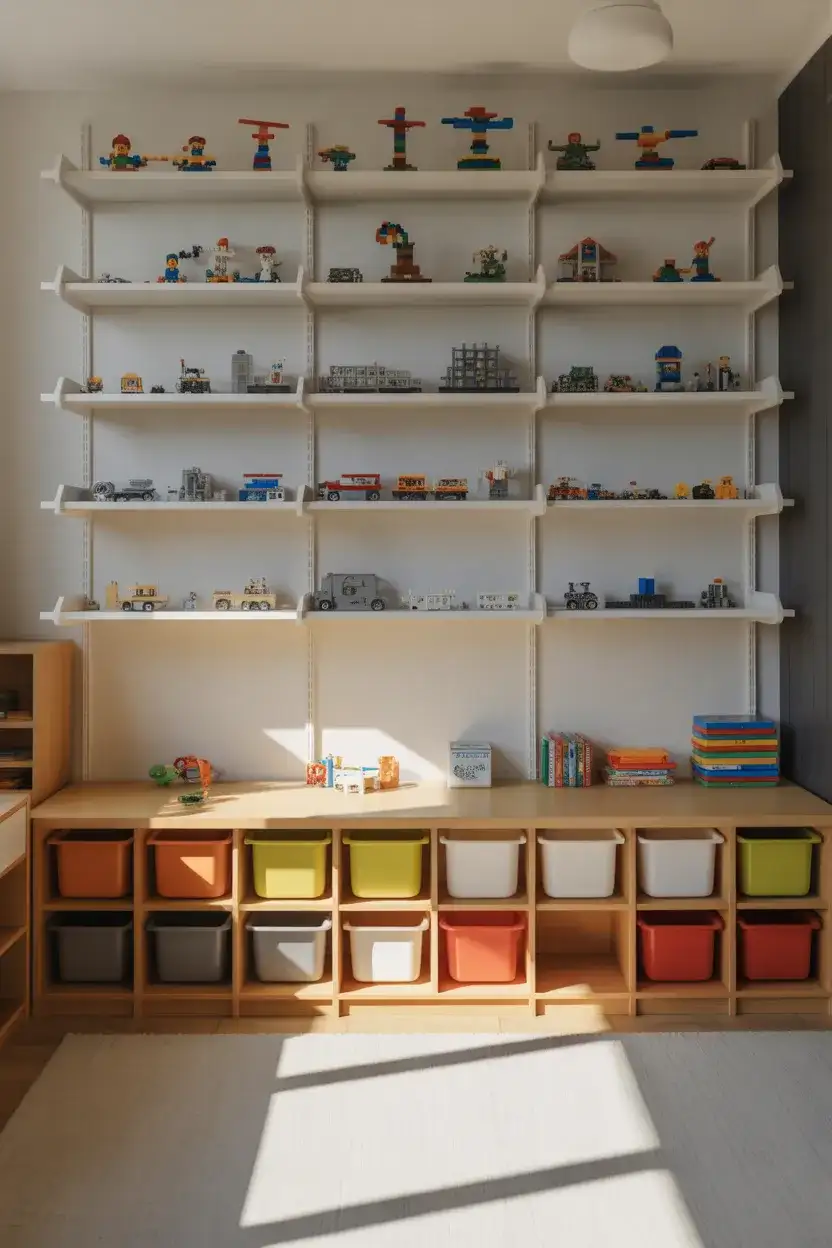
Sarah from suburban Ohio shared on a design forum that building an IKEA KALLAX wall specifically for her son’s collection was the single best upgrade they made to his room. At around $80 to $120 per unit, it’s an affordable system that grows with the collection, and the cubbies are perfectly sized for most standard sets. Her son went from having builds shoved under his bed to proudly displaying 40+ sets on a museum-worthy wall—and—and the room finally started feeling like his.
7. Nautical Theme with Grown-Up Appeal
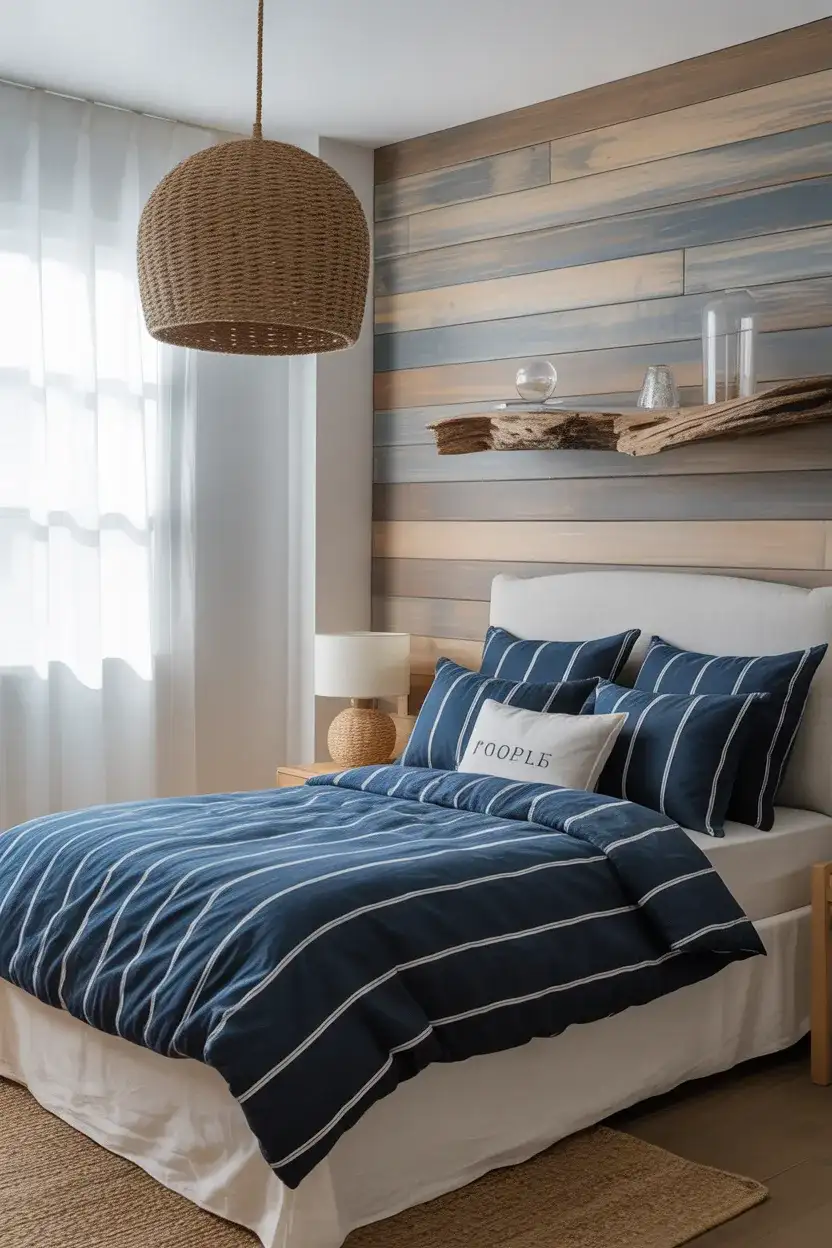
The nautical bedroom is a classic that keeps evolving. In 2026, it’s moved far beyond anchor-printed bedspreads and novelty rope knots—the—the modern nautical room for teenage boys is closer to a New England coastal retreat, all navy and natural linen, weathered wood accents, and clean stripes used sparingly. This is a timeless aesthetic in the truest sense: it looked good 30 years ago, it looks good now, and it’ll look good in another decade. It’s also particularly popular in coastal states like Florida, the Carolinas, and the Pacific Northwest, where parents are working with homes that already carry that maritime atmosphere.
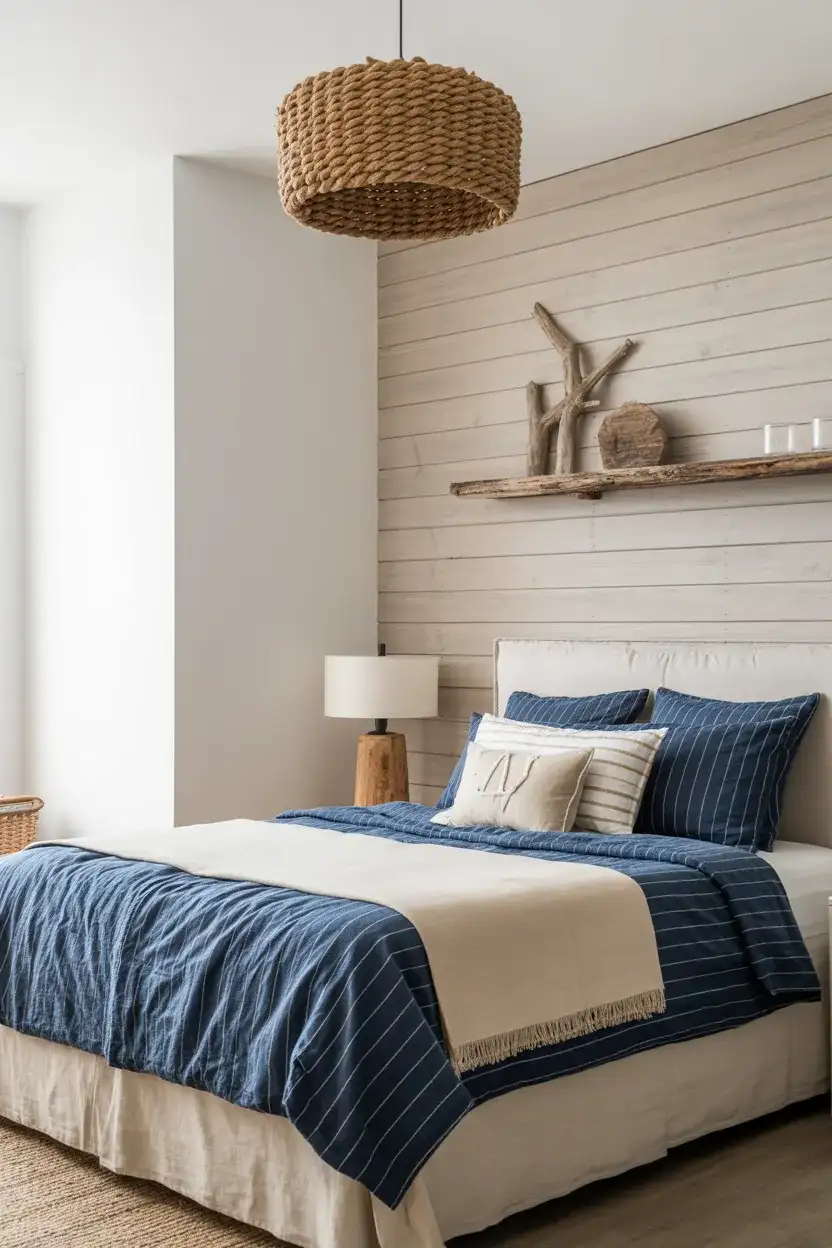
The nautical room thrives in spaces with good bones—if—if the room has wood floors or trim, lean into them. Where homeowners most often go wrong is over-theming: if you have ship wheels, rope accents, anchor pillows, AND striped curtains, the room stops feeling coastal and starts feeling like a bait shop. Pick two or three nautical motifs maximum and let the color palette—navy,—navy, white, andwhite, and natural wood—carry—carry the rest of the weight.
8. Studio McGee-Inspired Teen Room
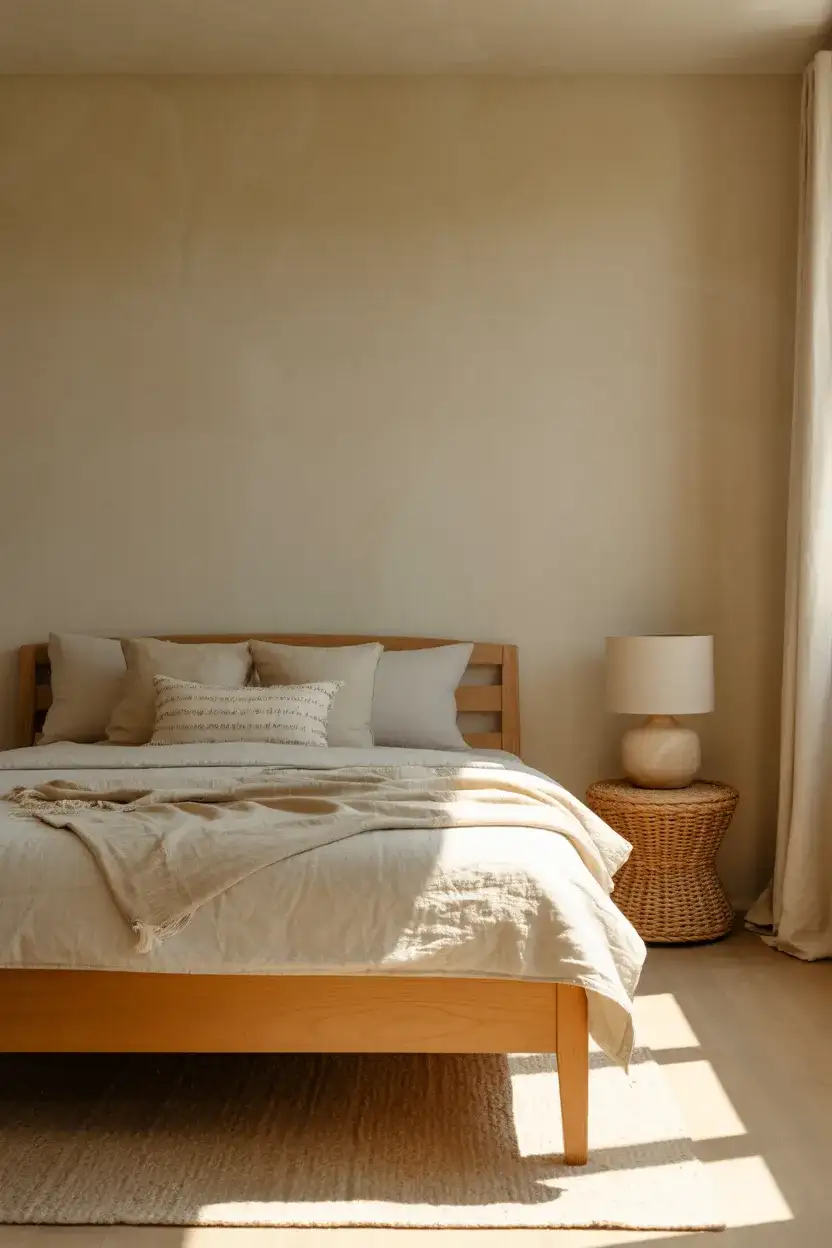
Yes, the Studio McGee aesthetic absolutely applies to teenage boys’ bedrooms—and—and it looks remarkable. Think warm neutrals (cream, warm white, honey-toned wood), textural bedding in organic cotton or waffle weave, clean-lined furniture with solid wood legs, and thoughtful layering of textiles. For boys in the 11-12 age11-12 age range and older who want a room that feels sophisticated without being sterile, this approach hits every mark. It’s also a favorite for mothers who want a space that photographs beautifully—which—which is exactly why it performs so well as a search category on Pinterest.
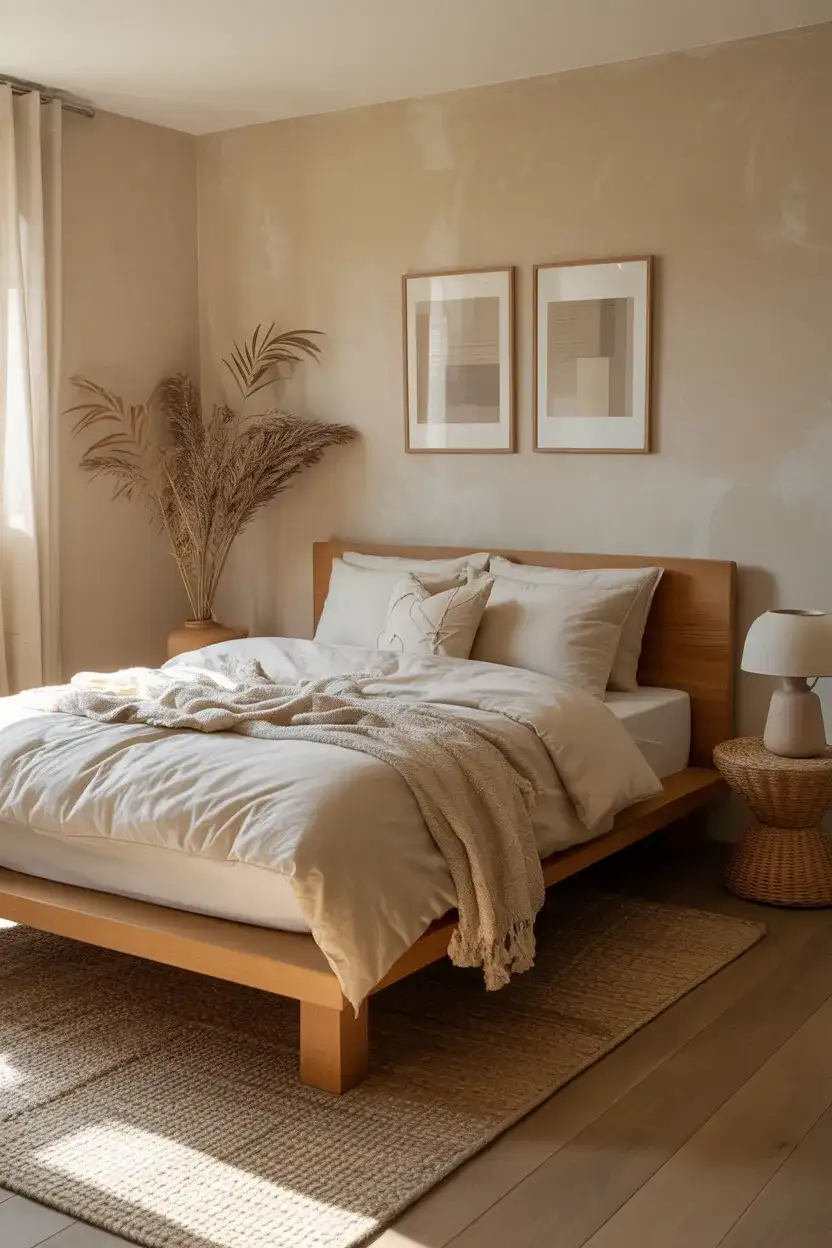
This aesthetic runs the gamut budget-wise: you can achieve a near-identical look shopping Pottery Barn Teen and West Elm, or you can piece it together from Target’s Threshold line and IKEA for a fraction of the price. The key purchases to splurge on are the bedding (it’s the focal point) and the light fixture (it defines the room’s character). Everything else can be sourced economically without compromising the overall effect.
9. Monster Truck and Extreme Sports Bedroom
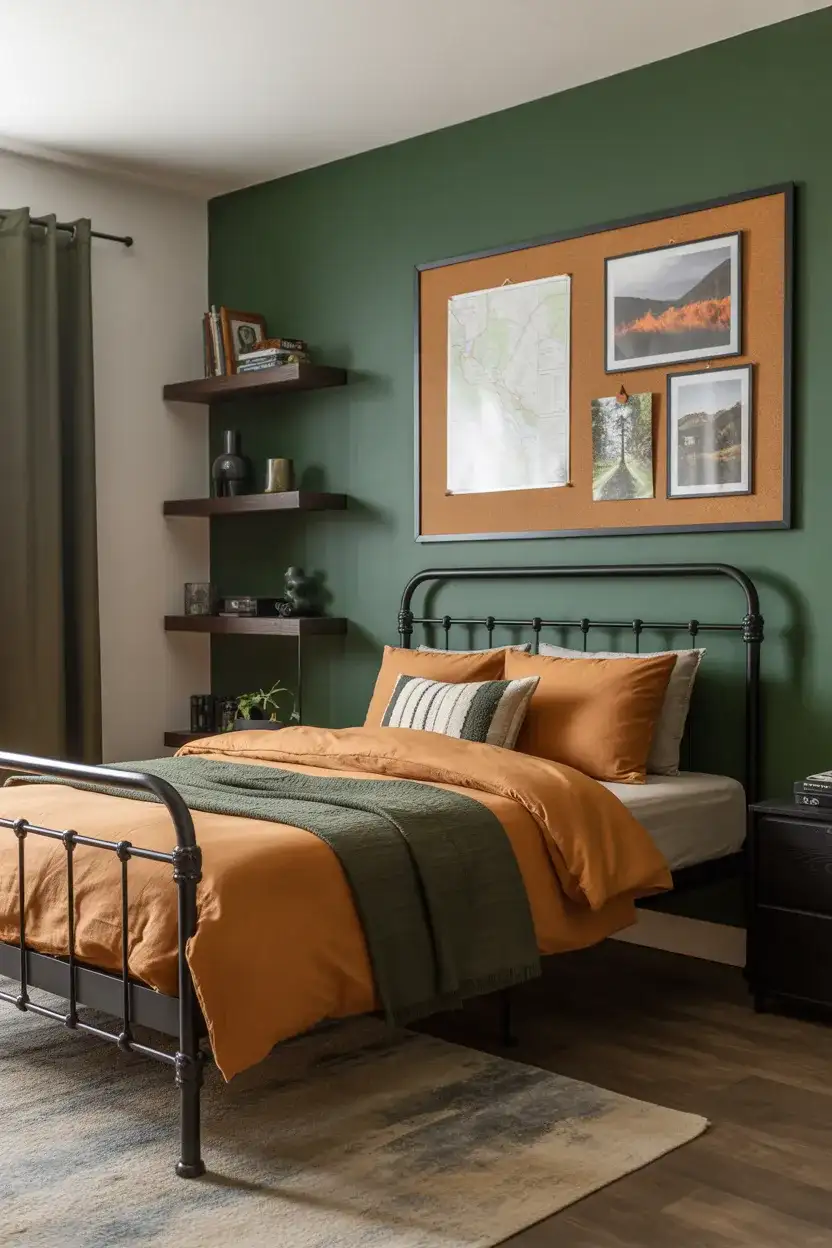
For the kid who lives for mud, speed, and everything loud, a monster truck or extreme sports bedroom can be designed in a way that’s exciting without being chaotic. The trick is grounding the theme in a strong color palette—think—think deep greens, burnt orange, matte black, and earthy brown—that—that feels outdoor and rugged rather than cheap and plasticky. This works especially well for younger boys in the5-10 simple range but can be made to scale with age by leaning more into the outdoorsy-adventure aesthetic as they get older. Swap licensed truck graphics for trail maps, landscape photography, and real gear on display.
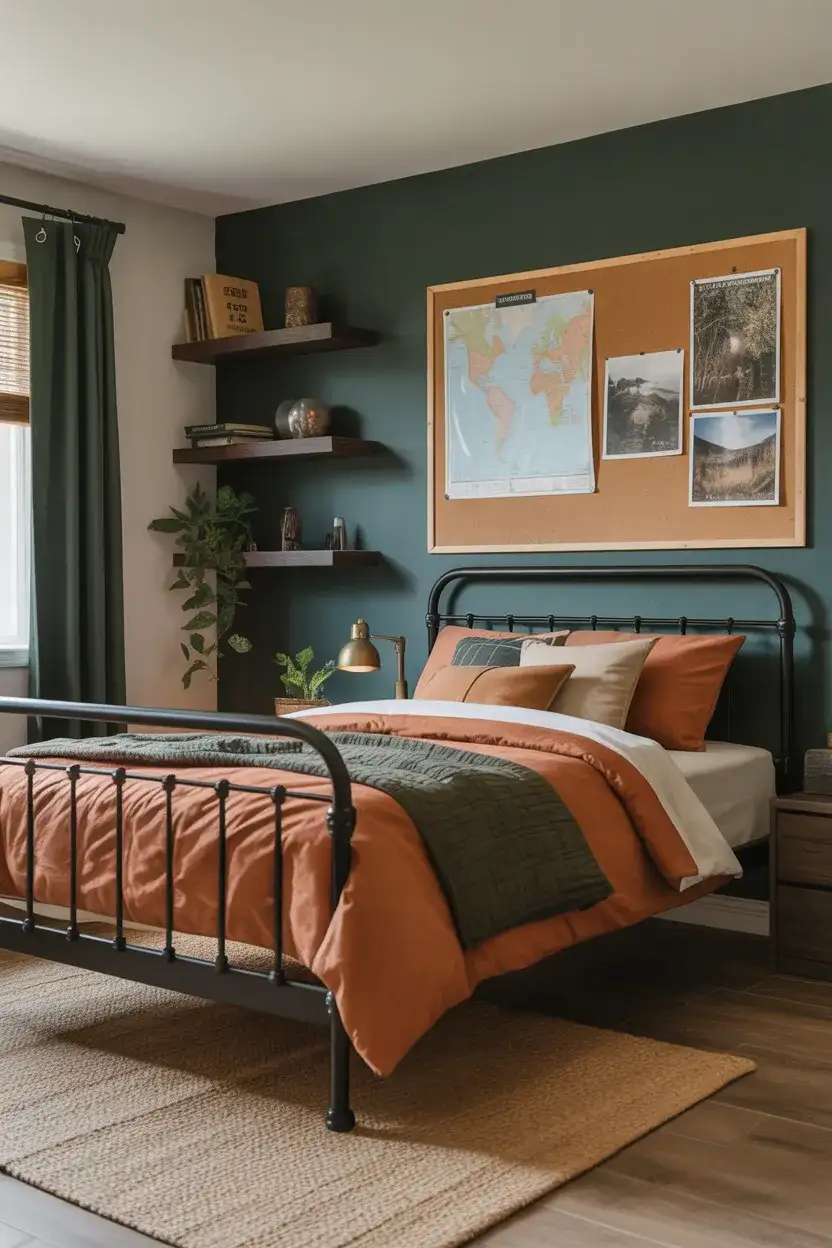
Rooms like this benefit enormously from dedicating one wall to a “display and store” system—pegboardsrange but work brilliantly here. Mounted in matte black or dark green, a pegboard wall lets a boy display die-cast models, helmets, or small equipment while keeping everything accessible and organized. It’s a solution that actually gets used and maintained, which is practically a miracle in a teenage boy’s bedroom.
10. Lightning McQueen Room for Young Boys
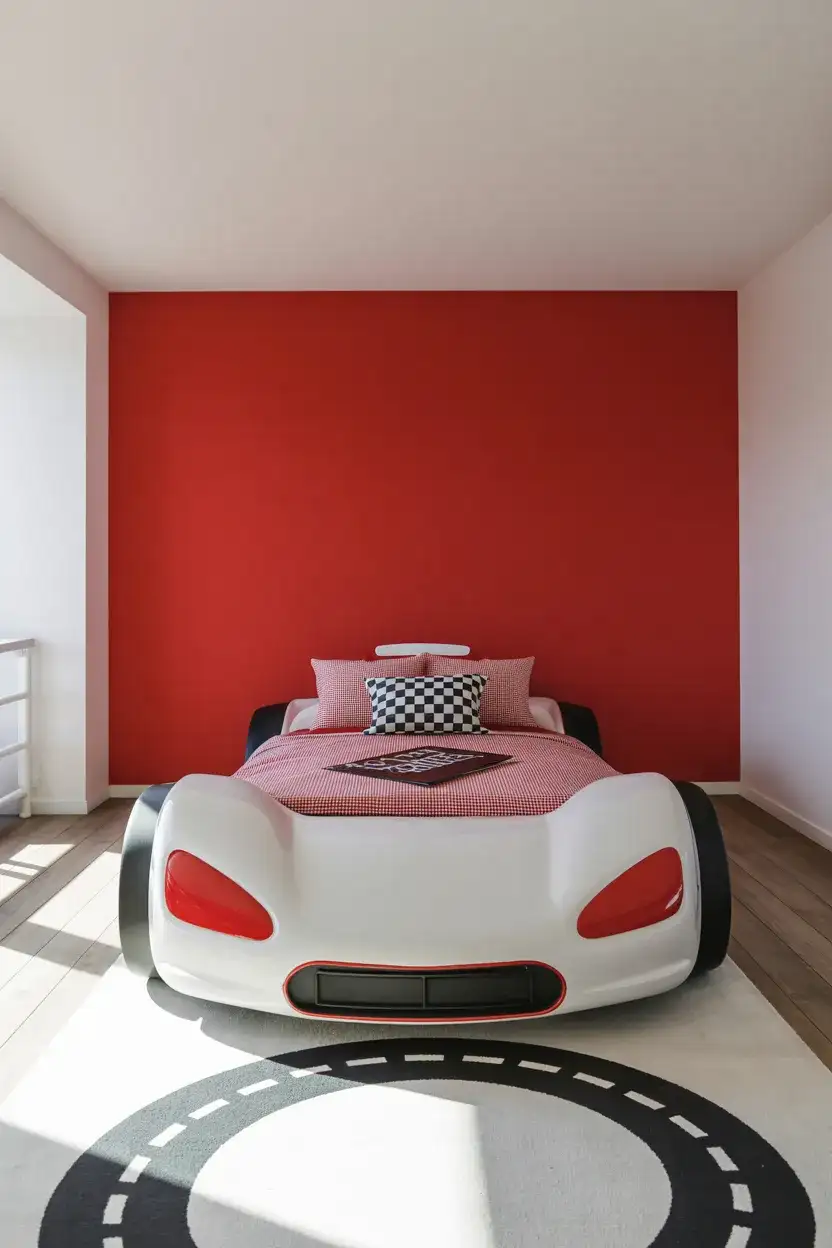
The Lightning McQueen room is a perennial request, and in 2026, the best approach is to make it feel like a pit stop rather than a toy commercial. Use the character’s signature red as a bold accent color—on—pegboards one wall, as the bed frame color, or in the rug—and—on pair it with crisp white and warm charcoal to ground the palette. Licensed bedding is fine for the youngest fans, but balance it with real furniture and non-licensed accessories. Racing-stripe wallpaper panels, checkered flag throw pillows, and a track-shaped rug work across a wider age range and let the room grow as the child transitions from pure Cars fandom to a broader love of racing and speed.
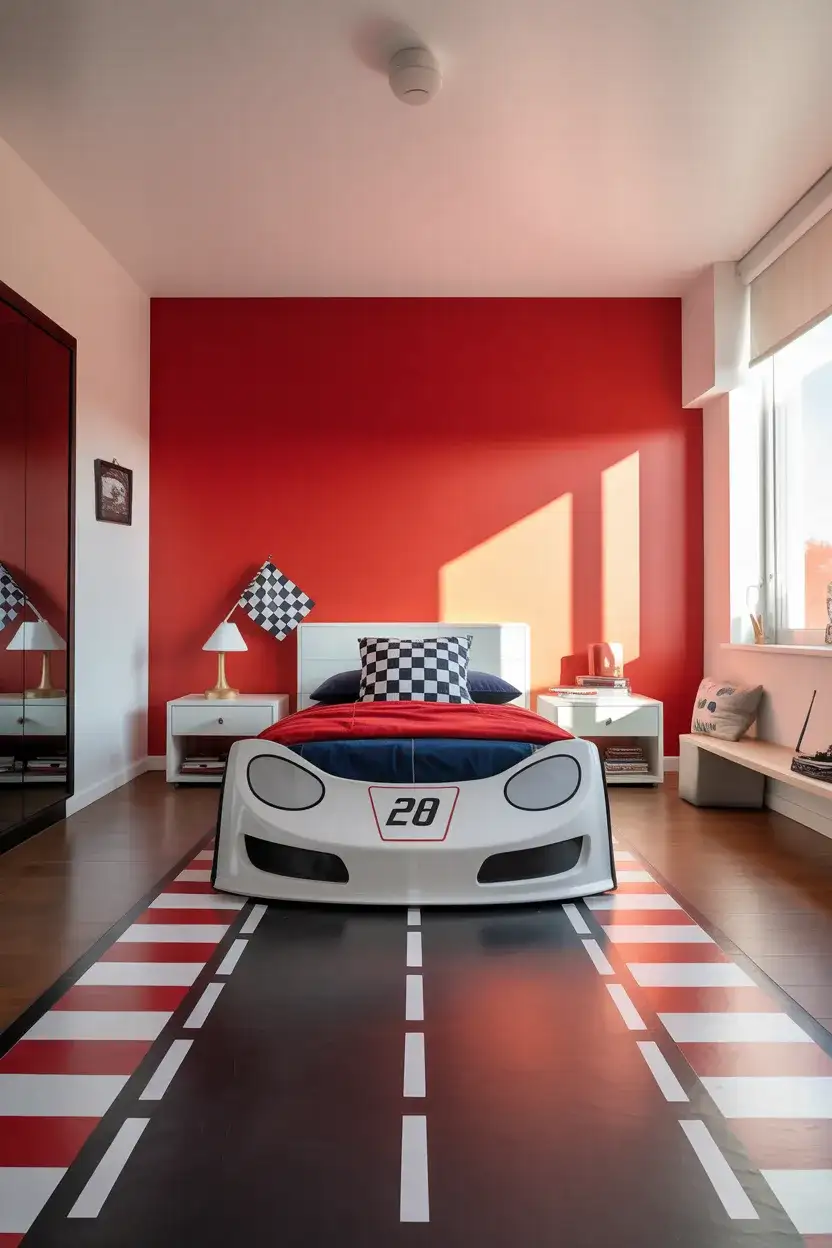
This is one of those rooms where buying quality the first time around pays off. A race car bed from a reputable children’s furniture maker—not—and the flimsy plastic versions—can—not hold up through multiple children,—can and resale values remain strong. American parents who invest in a solid wood race car frame often report being able to sell it for 40–60% of retail on Facebook Marketplace when their kids are ready to move on, making it a smarter buy than it initially seems.
11. Cottagecorechildren, for Boys
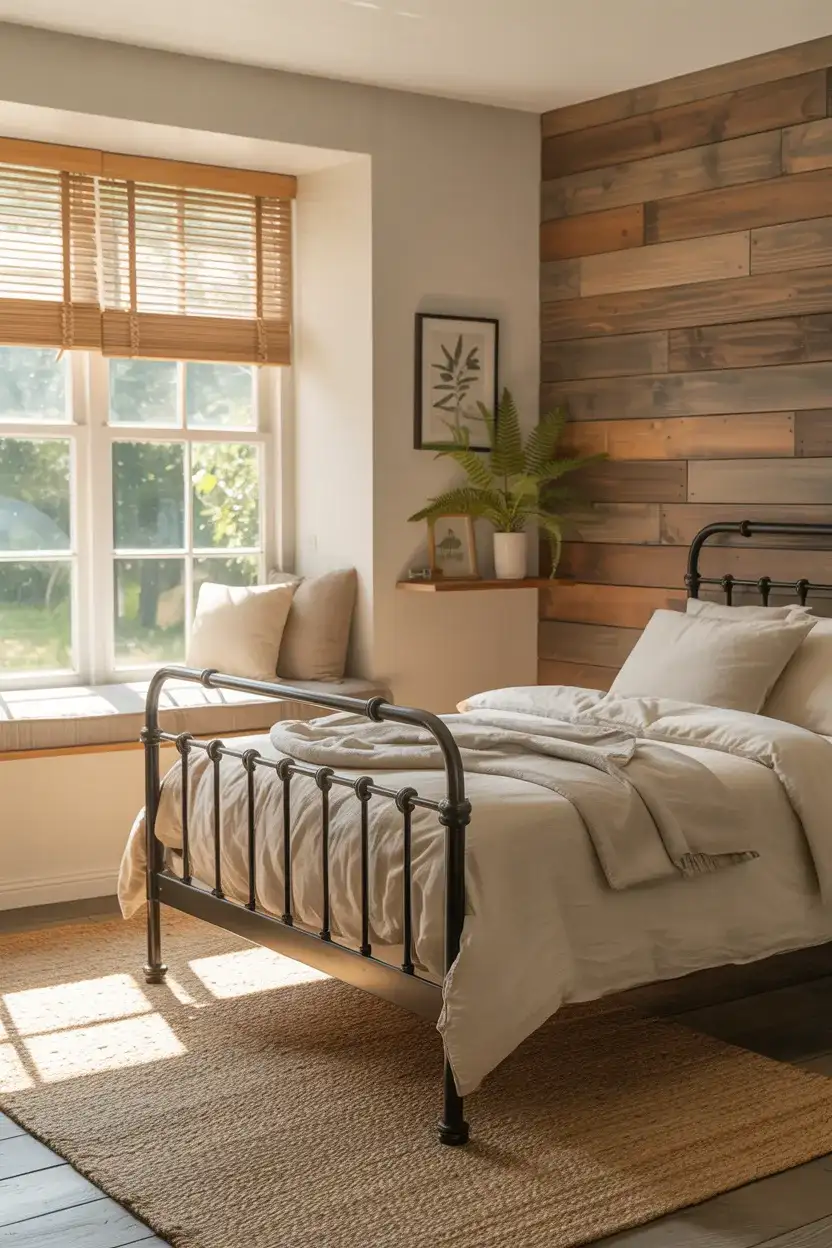
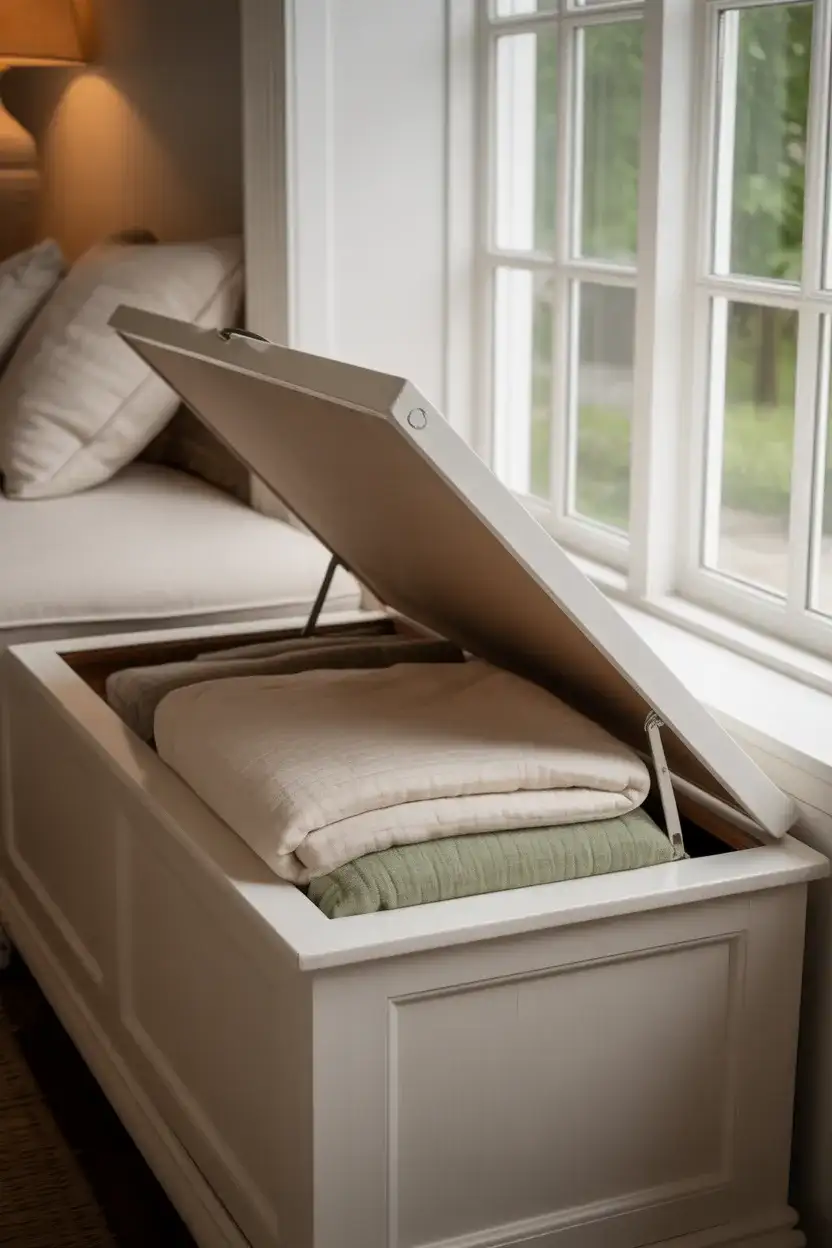
The cottage aesthetic has no gender, and forward-thinking parents are starting to apply it to boys’ bedrooms with stunning results. Think warm wood plank ceilings or an accent wall in tongue-and-groove, a cozy reading nook built beneath a window with a cushionedCottagecore storage bench, linen curtains, a braided rug, and a nature-inspired color palette of forest green, warm terracotta, and cream. This works especially beautifully in older American homes in the South and Northeast, where the architecture already has character that this style can lean into. For boys who love hiking, nature, or reading, this room becomes a haven.
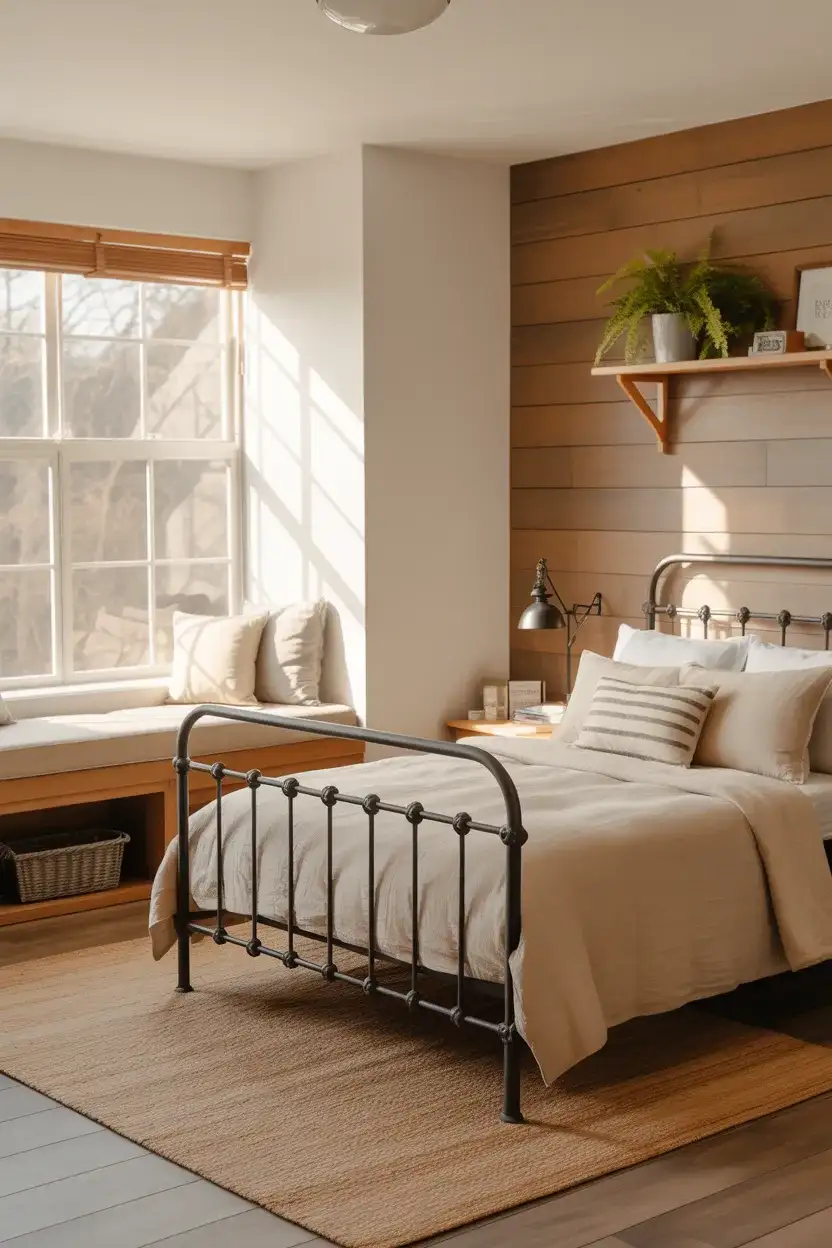
One designer who frequently works on boys’ rooms noted in an interview that “the cottage room is the one boys who’ve grown up in it are least likely to ask to change—becausea cushioned it never felt like a theme, it felt like a home.” That staying power is exactly what makes it worth considering even for parents who assume their son would prefer something trendier. The key is letting the boy contribute a few personal objects—a—because mounted trophy, a bookshelf with his own collection—so—a the room feels occupied rather than staged.
12. Sonic the Hedgehog Bedroom
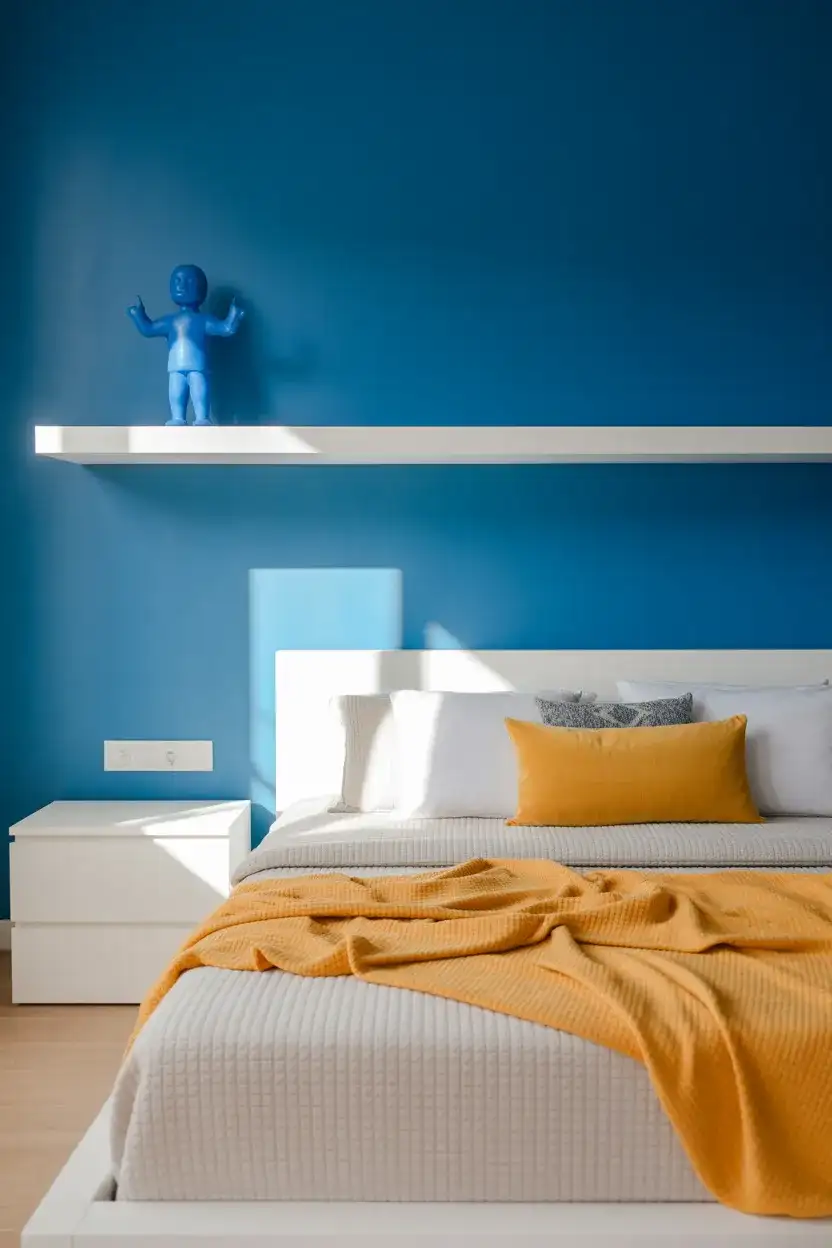
The enduring appeal of Sonic makes it one of the safest character bets for a themed bedroom—the—so franchise has survived decades and keeps pulling new fans with every game release and film. The visual palette here is electric: cobalt blue, bright yellow, and white against a dark background. The best Sonic rooms treat the color story first and the character second—a—the bold cobalt accent wall, white furniture, yellow accessories, and then a few well-chosen Sonic elements (a framed game poster, a plush or figure on a shelf) that don’t overwhelm. This lands especially well for the snap-generation kids who are nostalgic for the franchise even before they’re old enough to be nostalgic.
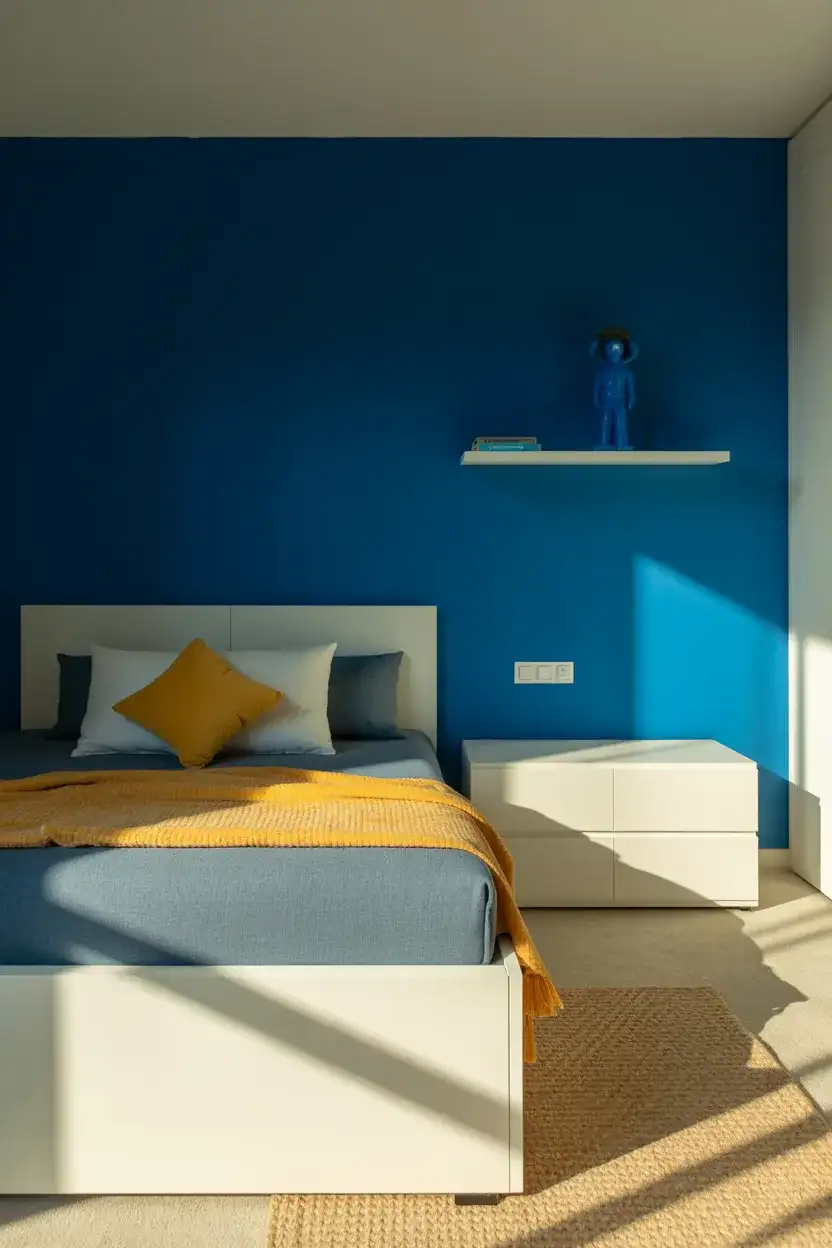
A common mistake in themed rooms like this is buying every licensed product you can find and ending up with something that feels messy rather than designed. Instead, limit yourself to three to five key pieces that carry the theme (one wall treatment, the bedding, and one or two accessories), and buy quality non-licensed furniture in white or navy that will serve the room for years regardless of whether the character theme eventually fades. The design backbone stays strong even when the enthusiasm eventually shifts.
13. Soft and Cozy Minimalist Room
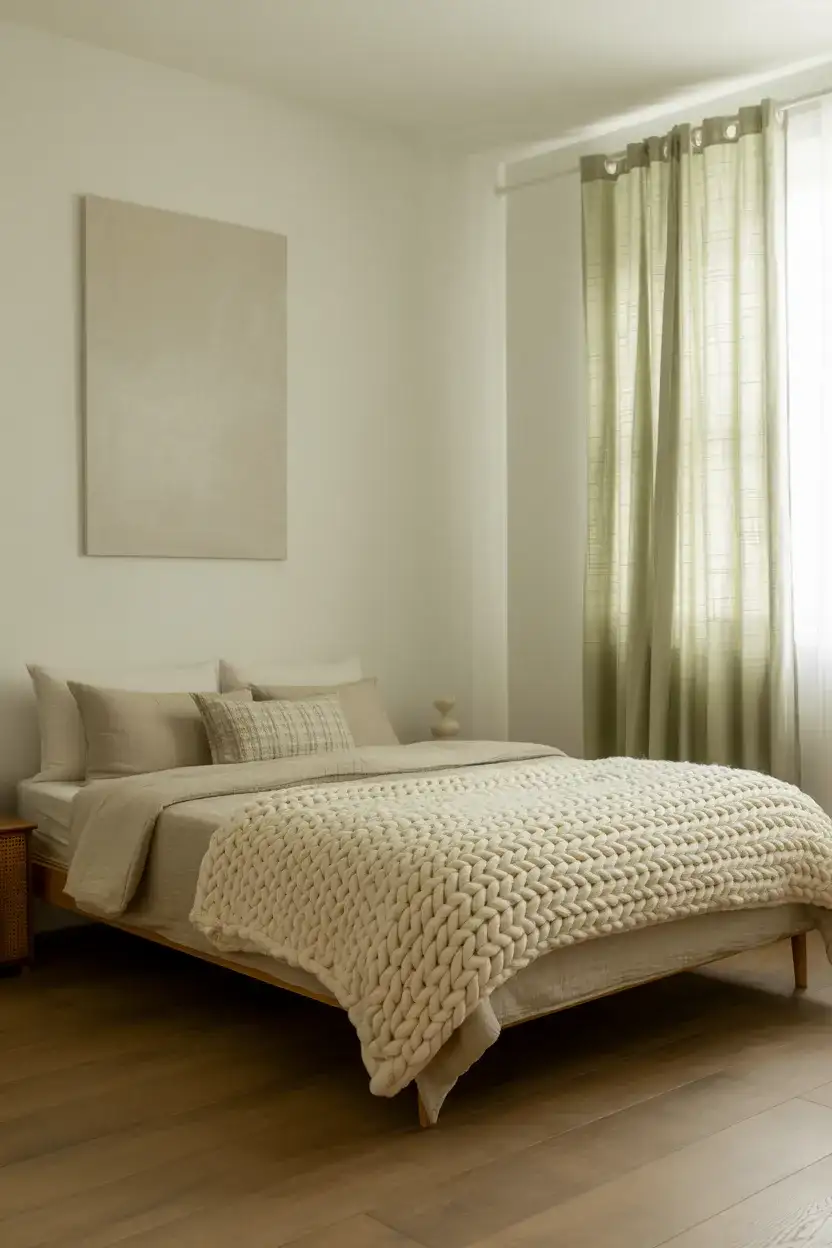
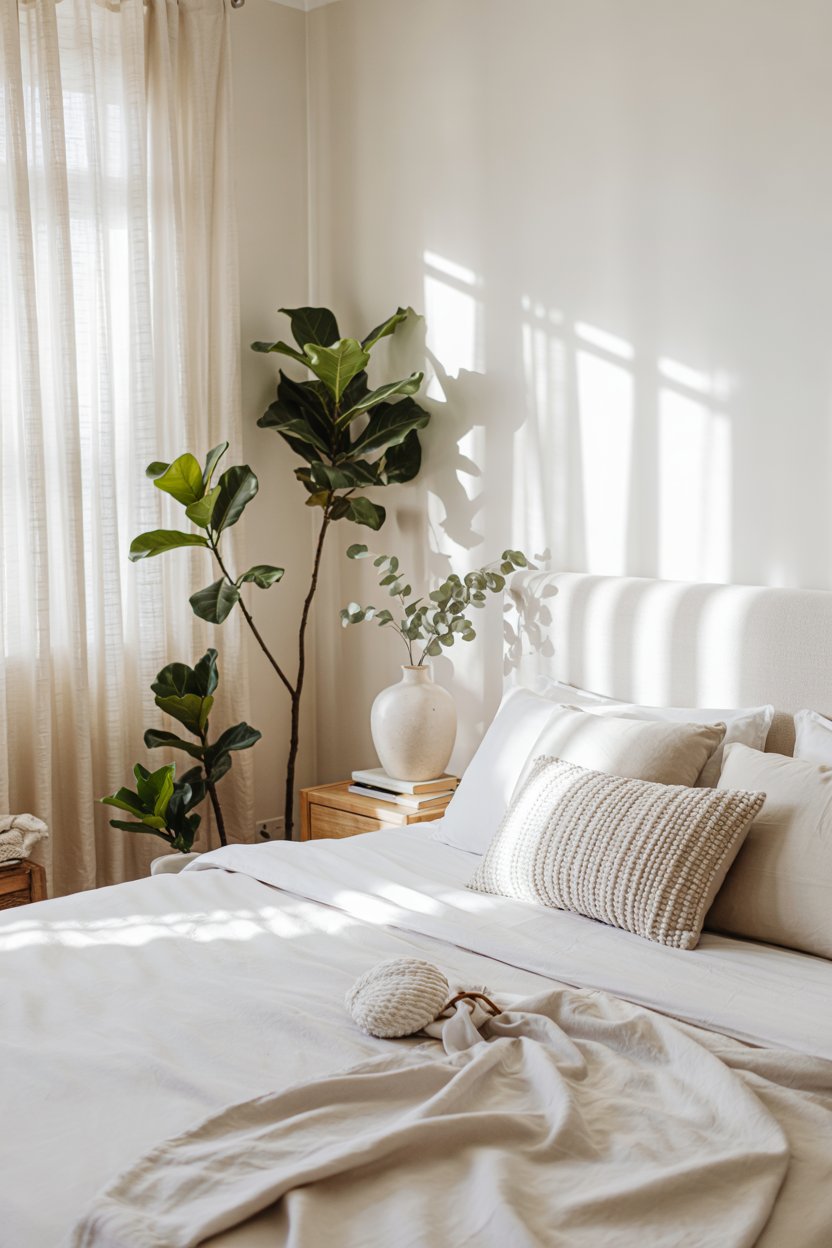
Not every teenage boy wants something loud and graphic, and the soft minimalist bedroom is finally getting its due recognition as a legitimate choice for boys. This approach favors warmth over edge: a platform bed in warm white or cream, a chunky knit blanket, curtains in a muted sage or warm gray, a single piece of abstract art above the bed, and absolutely nothing on the floor that doesn’t belong there. It reads calm, grown-up, and genuinely comfortable. For boys in the1—a3-14 age range who are starting to develop real aesthetic opinions and want a room that feels mature, this style resonates deeply.
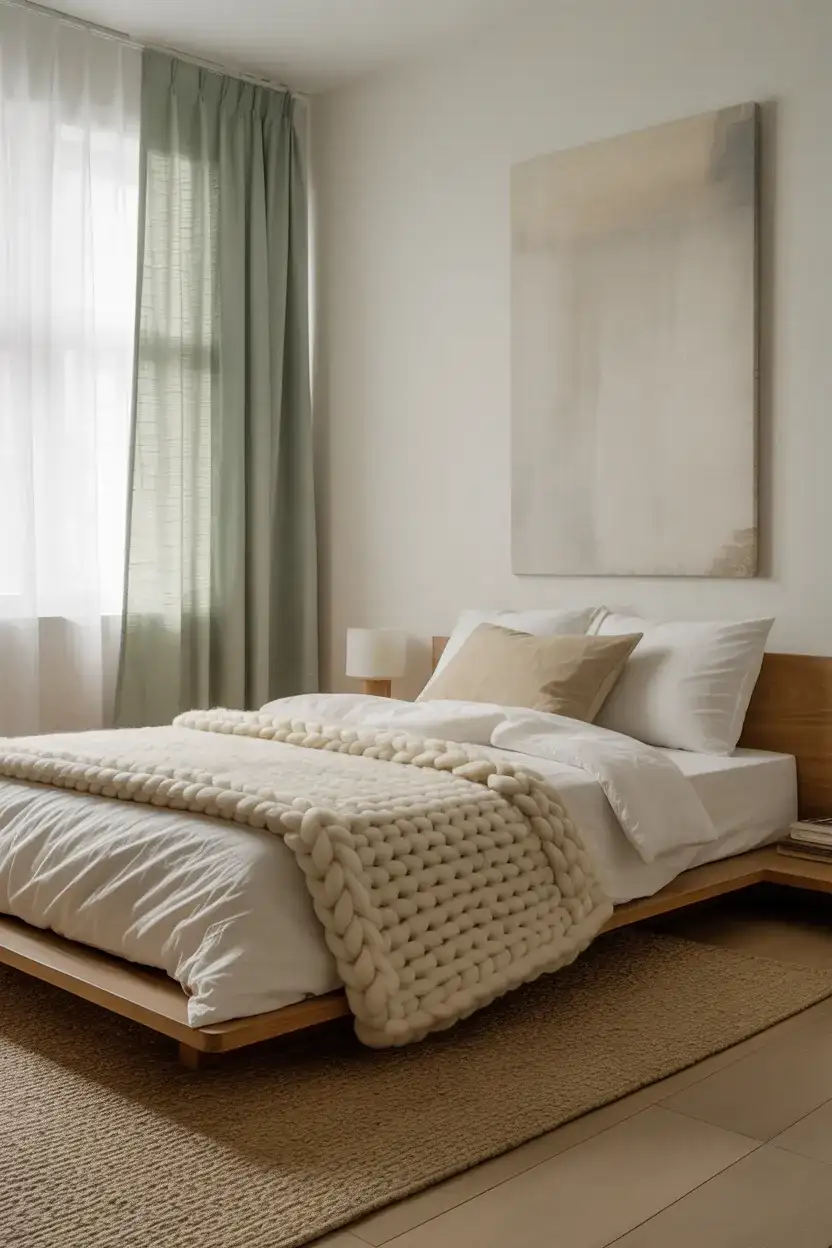
Rooms designed this way tend to stay cleaner over time—and—and there’s some real behavioral psychology behind that. When a space is designed with intention and has a clear visual logic, its occupant is more likely to maintain it because the contrast between “clean” and “messy” is much starker and more noticeable. Parents who’ve gone this route with teenage sons report that the room stays tidier with far less prompting than previous, more cluttered configurations did.
14. Roblox-Inspired Gamer Bedroom
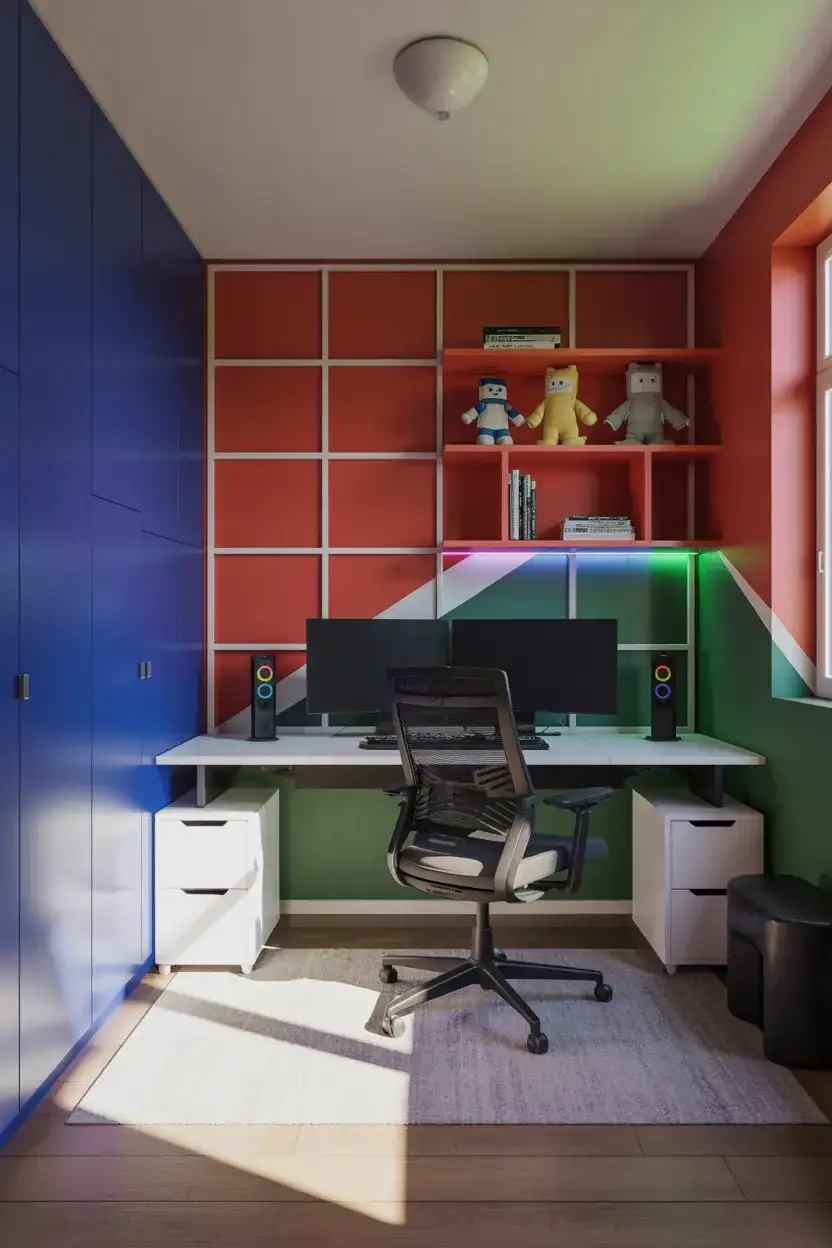
For the generation of kids who’ve grown up building worlds in Club Roblox and exploring user-generated universes, a bedroom inspired by that pixelated, blocky aesthetic has real sentimental weight. And the best versions of it are far more stylish than you’d expect. Use a bold primary color palette—cobalt,—cobalt, red, andred, and bright green—in—in geometric blocks of color on the walls (an actual painted grid or color-blocked sections), paired with a modern gaming setup, open shelving for plushies and figures, and LED lighting that can shift color with a controller. The room should feel like stepping inside a game—but—but one with good design principles.
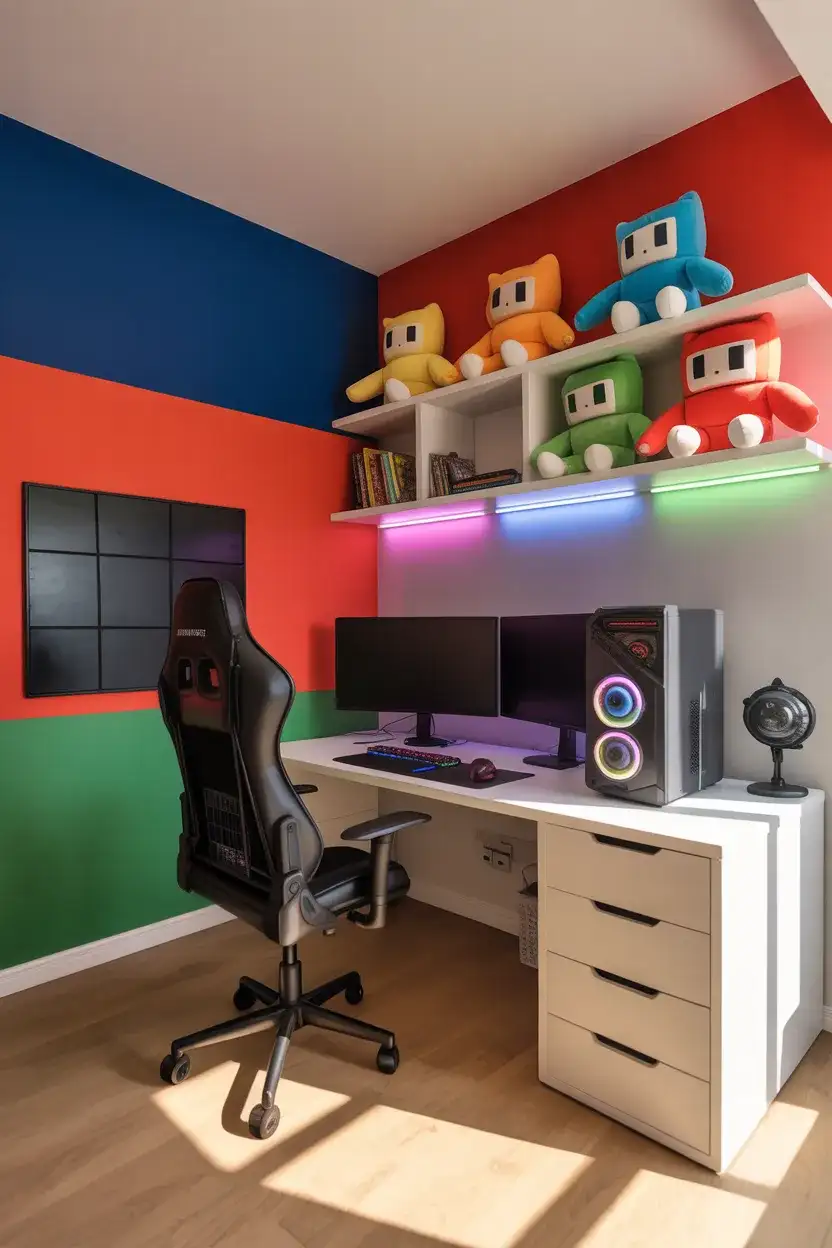
If a full Roblox color treatment sounds overwhelming, start smaller: a single color-blocked wall (painted in three horizontal bands of the game’s signature colors) behind the gaming desk creates the focal point without committing the entire room. It’s a weekend project that costs under $60 in paint and tape, and the result is genuinely striking in photos—which—which matters enormously to the Pinterest-and-social-media generation that’s going to want to show their friends.
15. Emo and Alternative Bedroom Aesthetic
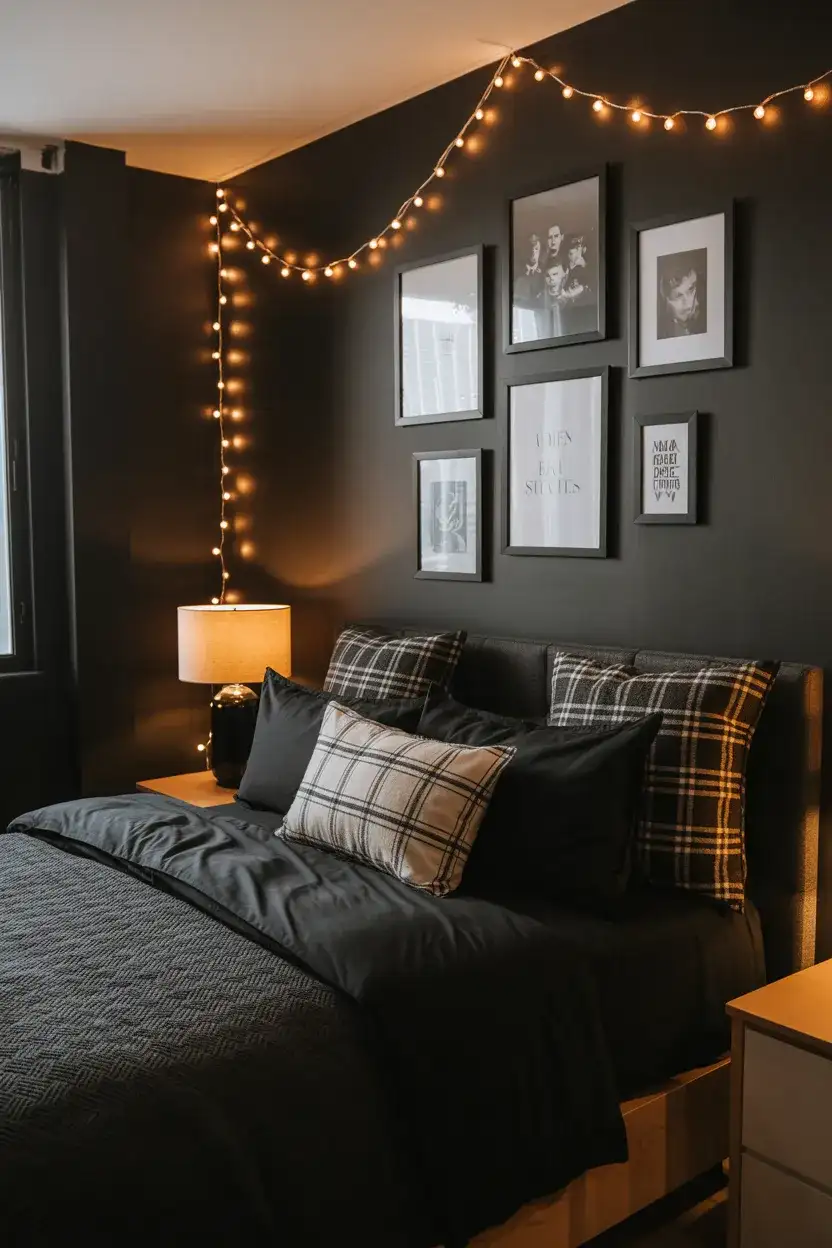
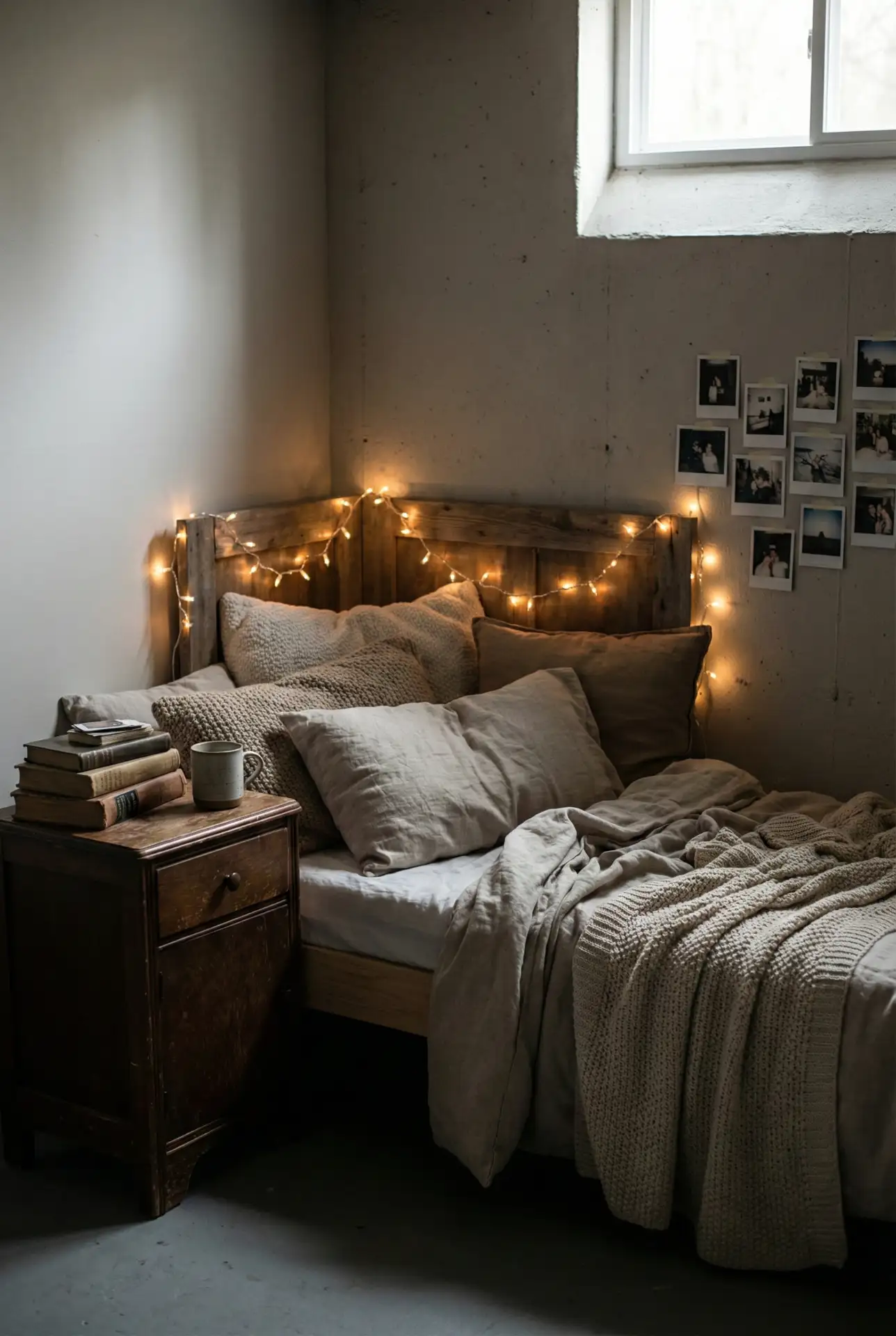
The emo bedroom aesthetic has undergone a genuine revival in 2026, driven partly by Gen Z’s love of Y2K nostalgia and partly by a new generation of teenagers who’ve discovered the emotional resonance of that particular visual language—dark—dark walls, band posters, fairy lights, layered textures, and unapologetically personal displays. This is one of the most authentic expressions of a teenager’s identity that a bedroom can hold, and parents willing to lean into it (within reason) often find their kid takes far more ownership of the space. The design bones are actually quite sophisticated: deep charcoal or black walls, moody lighting, layered fabrics, and a gallery wall that tells a story.
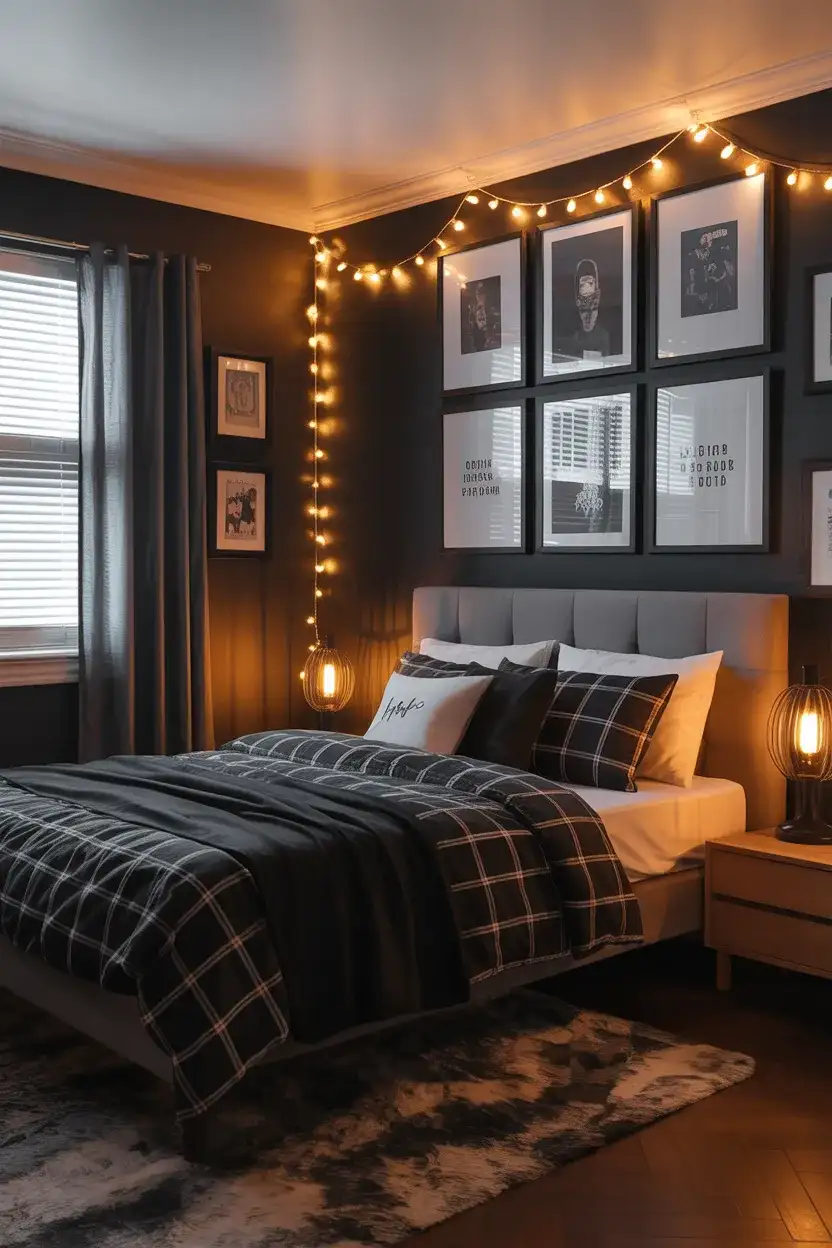
A micro anecdote worth sharing: a mom in Chicago told a home design community that she initially resisted letting her 14-year-old paint his room black butblack but eventually agreed—and—and it became the room all his friends wanted to hang out in. She noted that he kept it cleaner than any other room he’d had because,had because, in his words, “I actually care about this one.” Sometimes the most personal room is the most functional one too.
16. Toca Boca-Inspired Colorful Room
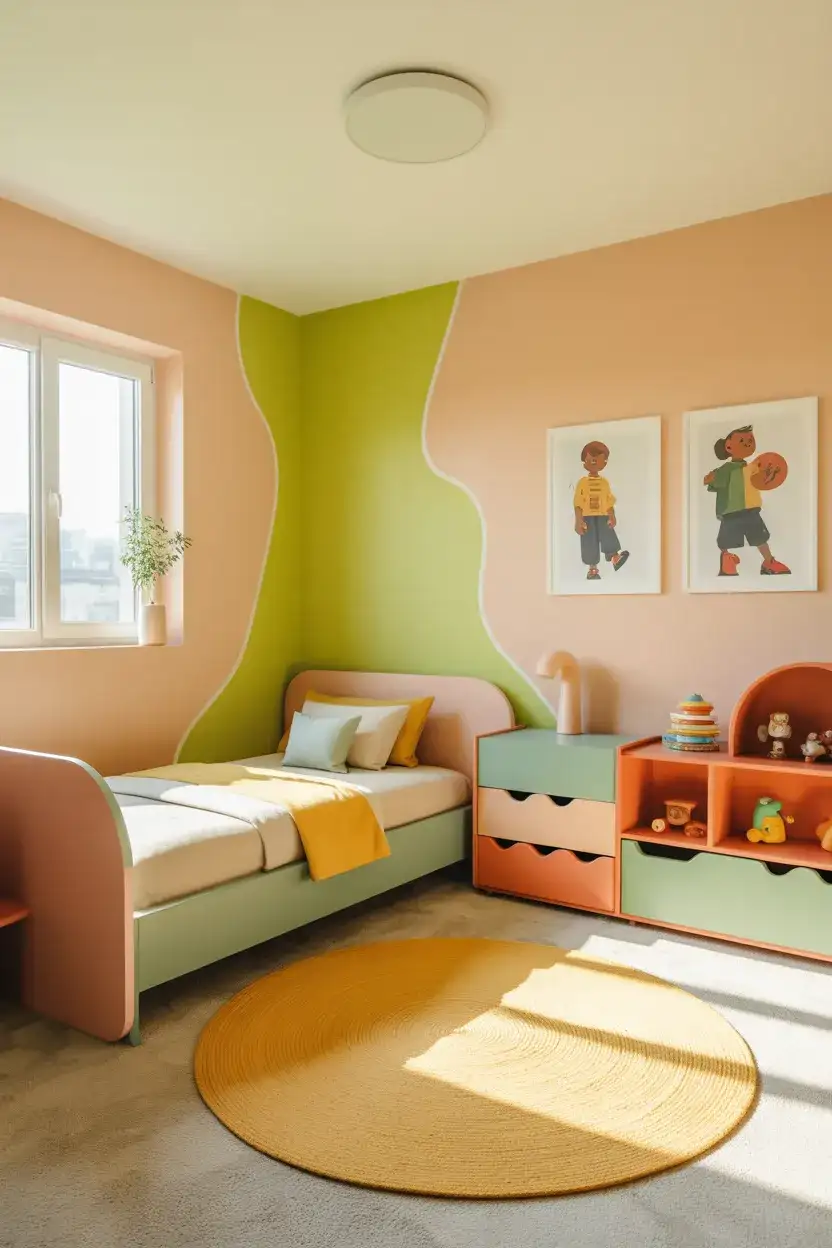
The Toca Boca visual world—those—those rich, flat, joyfully saturated colors and friendly rounded shapes—has—has inspired a genuinely charming bedroom aesthetic for younger boys who love the app world. Think candy-bright walls in peach, lavender, or lime green, paired with rounded furniture (a poufy chair, a circular rug, a bean bag in a pop color), open toy storage in matching hues, and illustrated or graphic prints that mirror the app’s visual style. This is pure joy as a design philosophy, and it works best for boys in that sweet spot of roughly 5 to 10 who are in peak Toca Boca mode.
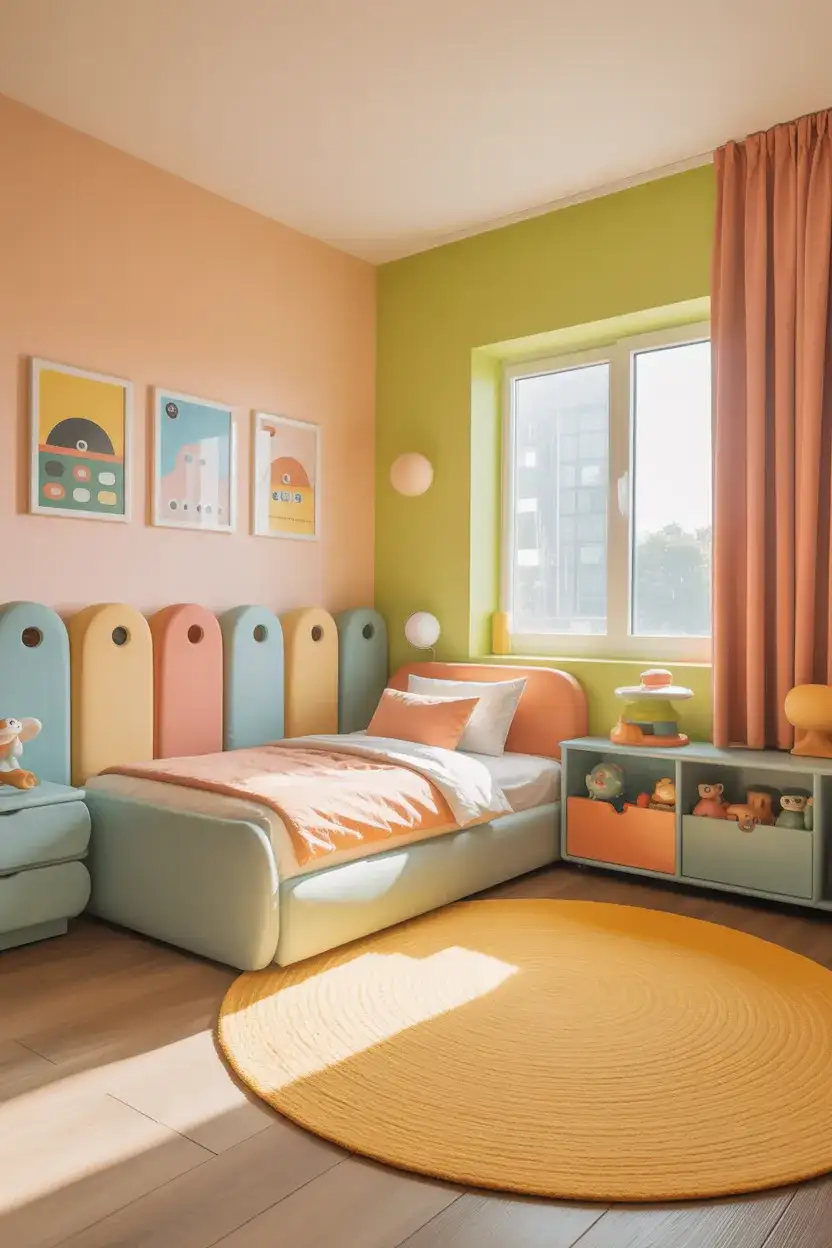
The challenge with bold-color-color rooms for young kids is planning for the inevitable. At some point—often—often between ages 8 and 11 — a child will announce that their beloved peach room is “babyish.” The solution is to design the room with that future conversation in mind: choose paint colors (which are cheap to change) for the bold moves, and invest in neutral-colored furniture that will survive the transition to the next design phase without a complete overhaul.
17. Sims 4 Teen Aesthetic Room
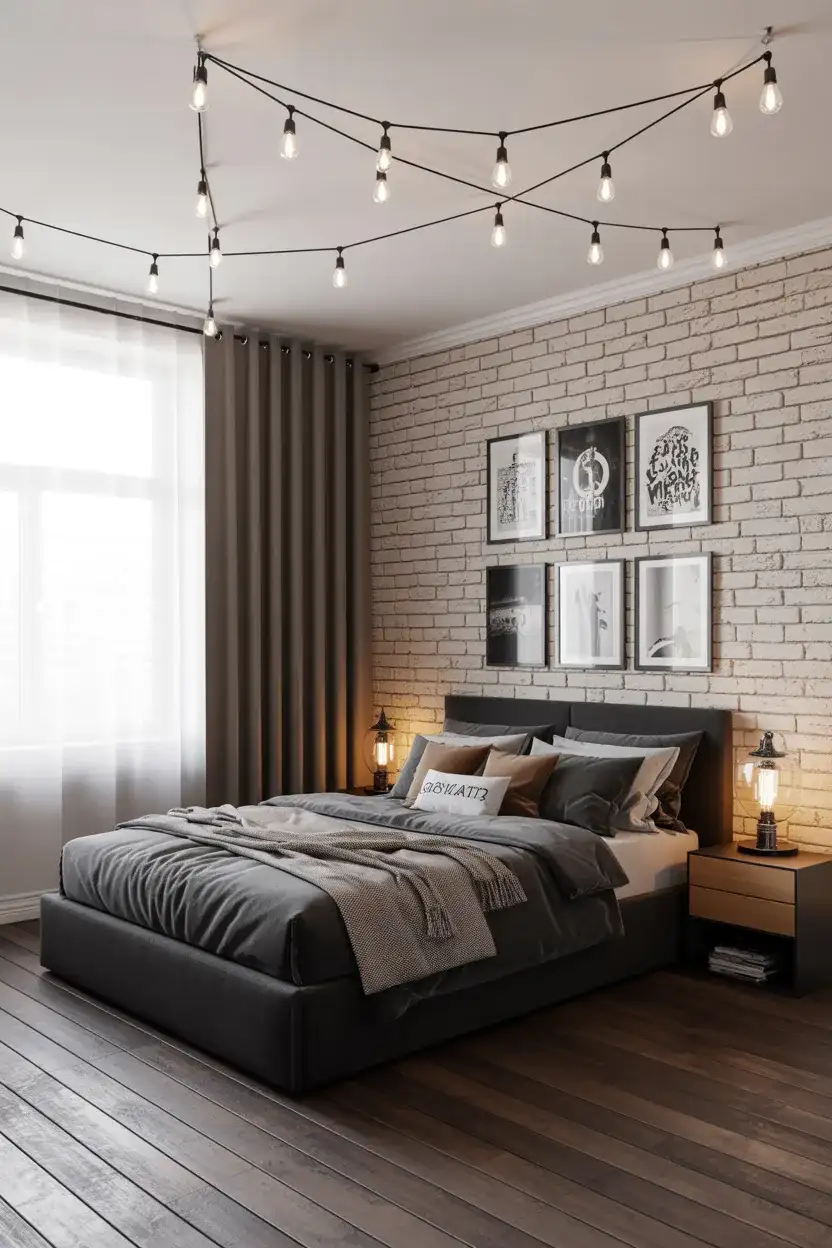
If you’ve ever watched a teenager design a room in Sims 4, you’ve witnessed something remarkable: most of them have genuinely good taste. The aesthetic they gravitate toward in-game—modern,—modern, layered, mixing moody and cozy—translates—translates directly into real bedroom design. Think an urban-loft vibe: exposed brick or brick-effect wallpaper on one wall, dark hardwood floors or a faux-wood plank floor, Edison bulb string lights, a gallery wall of mixed-media art, a platform bed in charcoal, and a mix of vintage and modern pieces. It reads creative and individualistic—which—which is exactly what teenagers are going for when they design their dream rooms in the game.
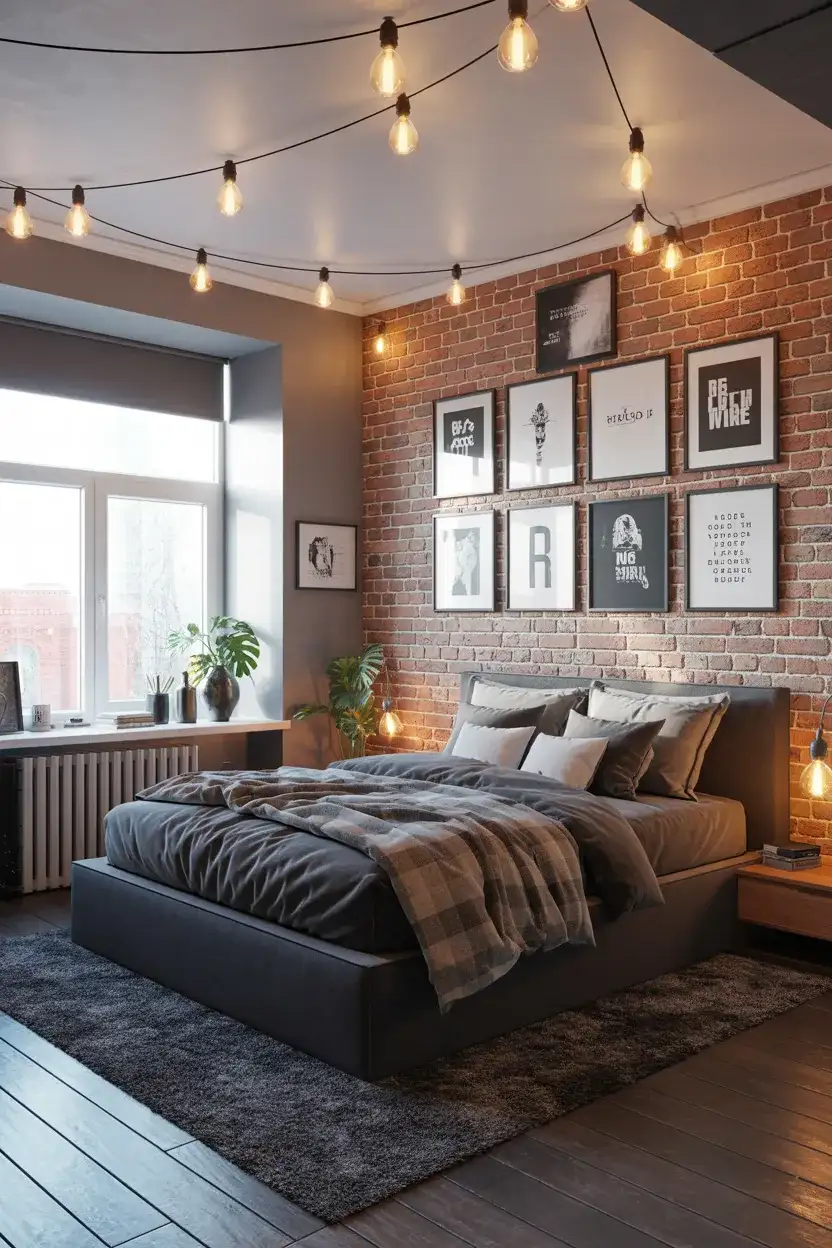
One very practical approach for parents working with a teen on this design: let them build the room in Sims 4 first. Seriously. It’s a free (or inexpensive) way to experiment with layouts, color combinations, and furniture placement before spending a cent. Several interior design professionals have started recommending gaming tools like this as low-stakes mood-board alternatives for clients who struggle to visualize from flat images. It also gives the teenager real buy-in and ownership over the result.
18. Timeless Blue and White Classic Room
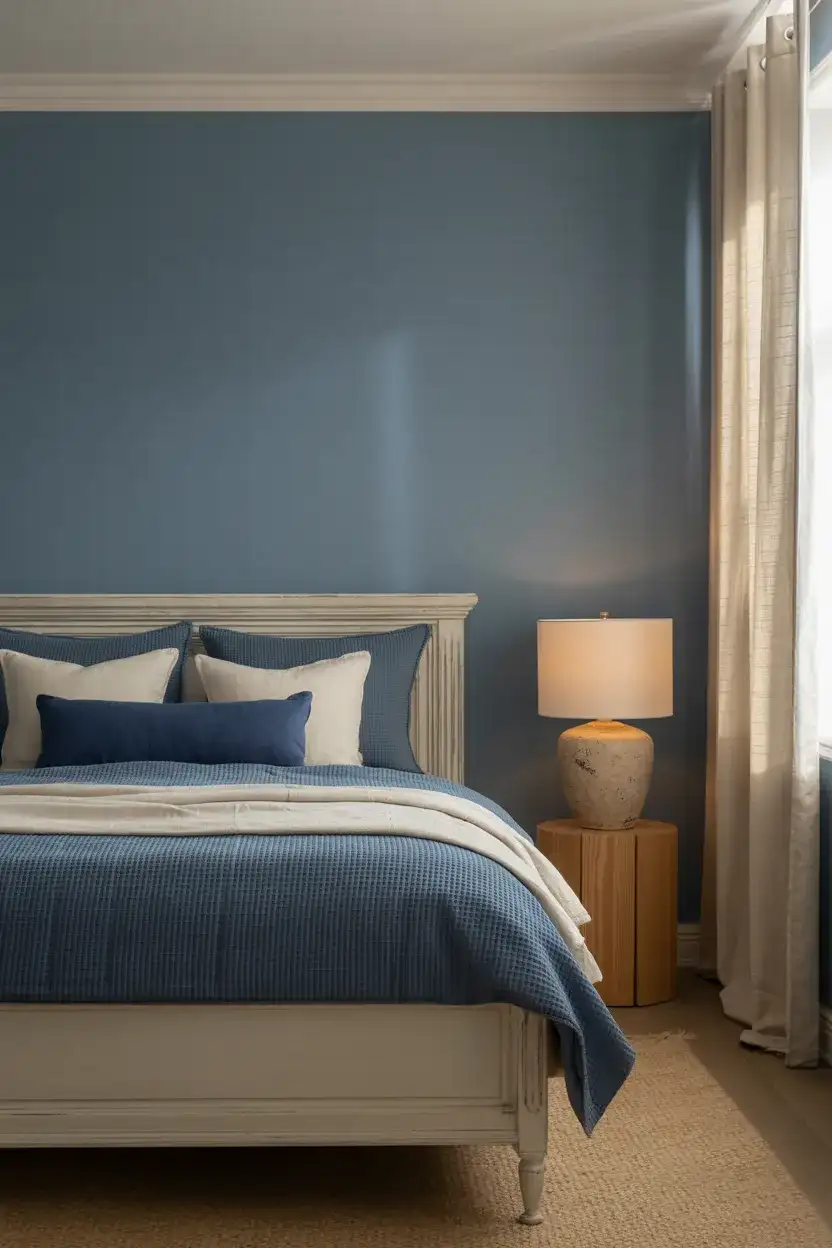
There’s a reason the blue-and-white combination has anchored boys’ bedrooms for generations—it—it genuinely works at every age and in every architectural context. The 2026 version of this timeless classic leans toward deeper, more complex blues (think slate blue, dusty indigo, or classic navy) paired with warm white rather than stark white, creating something that feels layered rather than preppy. For parents searching for ideas 11-12 or older, this palette grows with a child seamlessly: what reads as adventure-themed at 10 reads as sophisticated at 17 with only minor updates to accessories.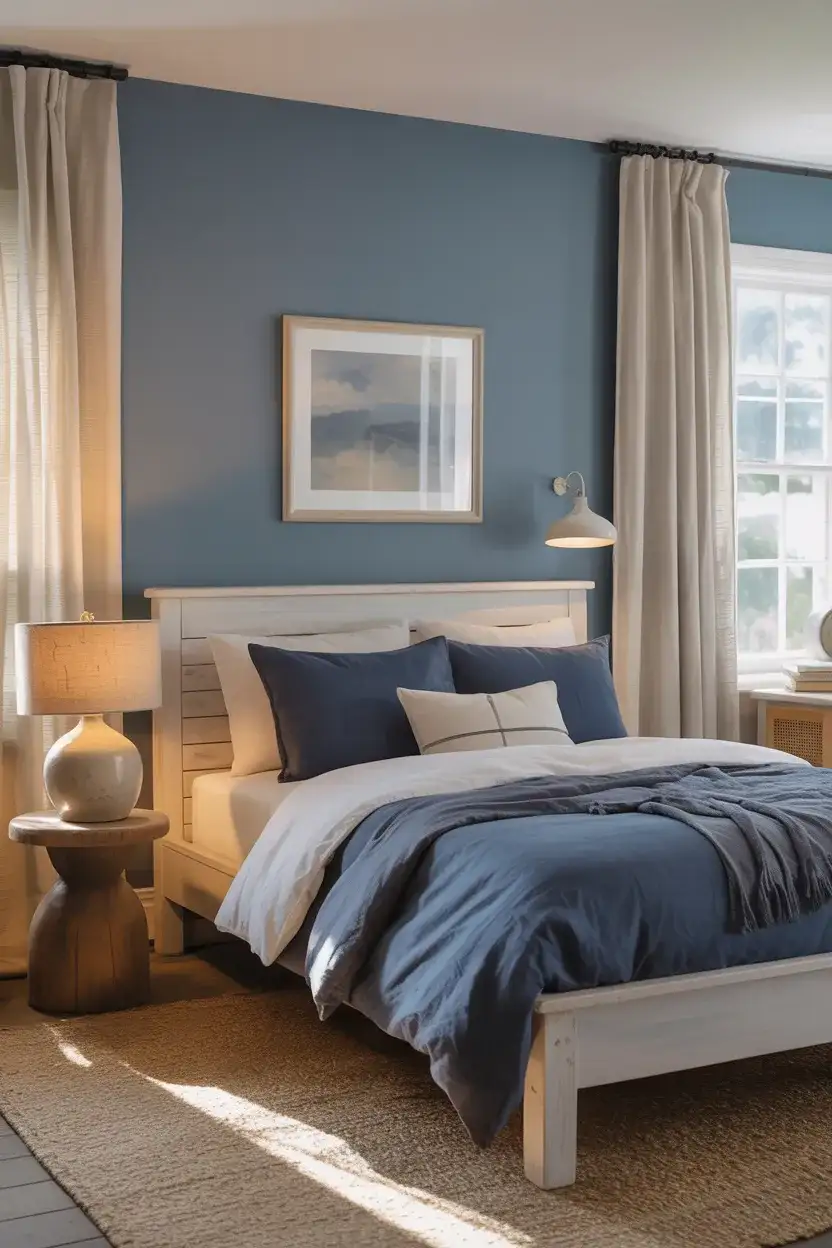
This works best in rooms that have at least one architectural feature worth highlighting—crown—crown molding, a window seat, built-in bookcases, or board-and-batten wainscoting. The blue-and-white palette makes those details pop in a way that a more neutral room sometimes can’t. If the room is architecturally plain, add character with a beadboard half-wall or simple picture-rail molding—both—both are affordable DIY projects that transform the space dramatically.
19. Superhero Command Center Bedroom
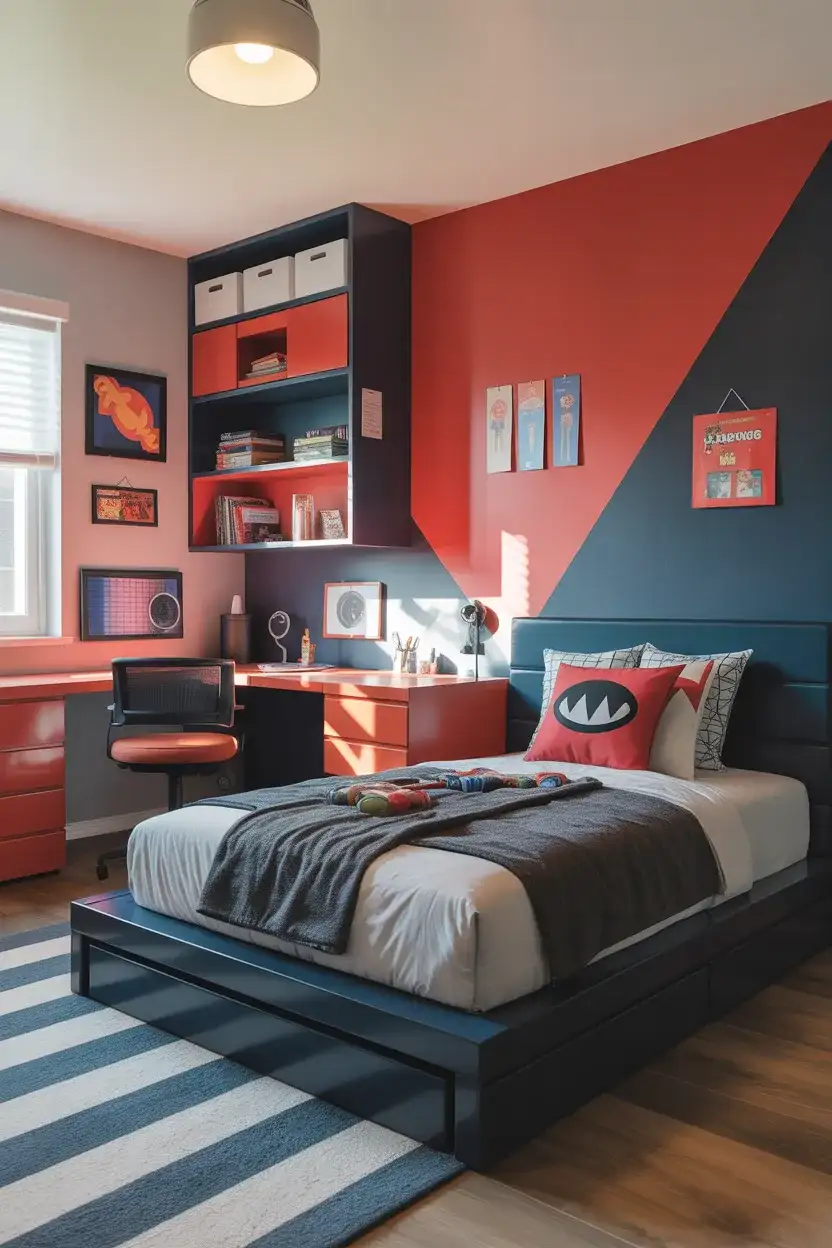
The superhero bedroom concept works best when it’s framed as a “command center”—a—a space where a young hero operates, trains, and rests—rather—rather than simply a room covered in merchandise. Think built-in storage that feels like mission equipment, a desk setup that looks like a high-tech workstation, a bold graphic focal wall in primary colors with geometric shapes, and a sleepinga sleeping space that feels like a capsule or pod. This concept bridges nicely between younger-focused spider man room ideas forideas for kids and more age-agnostic superhero aesthetics, because the “command center” framing grows with the child even as the specific characters on the walls change.
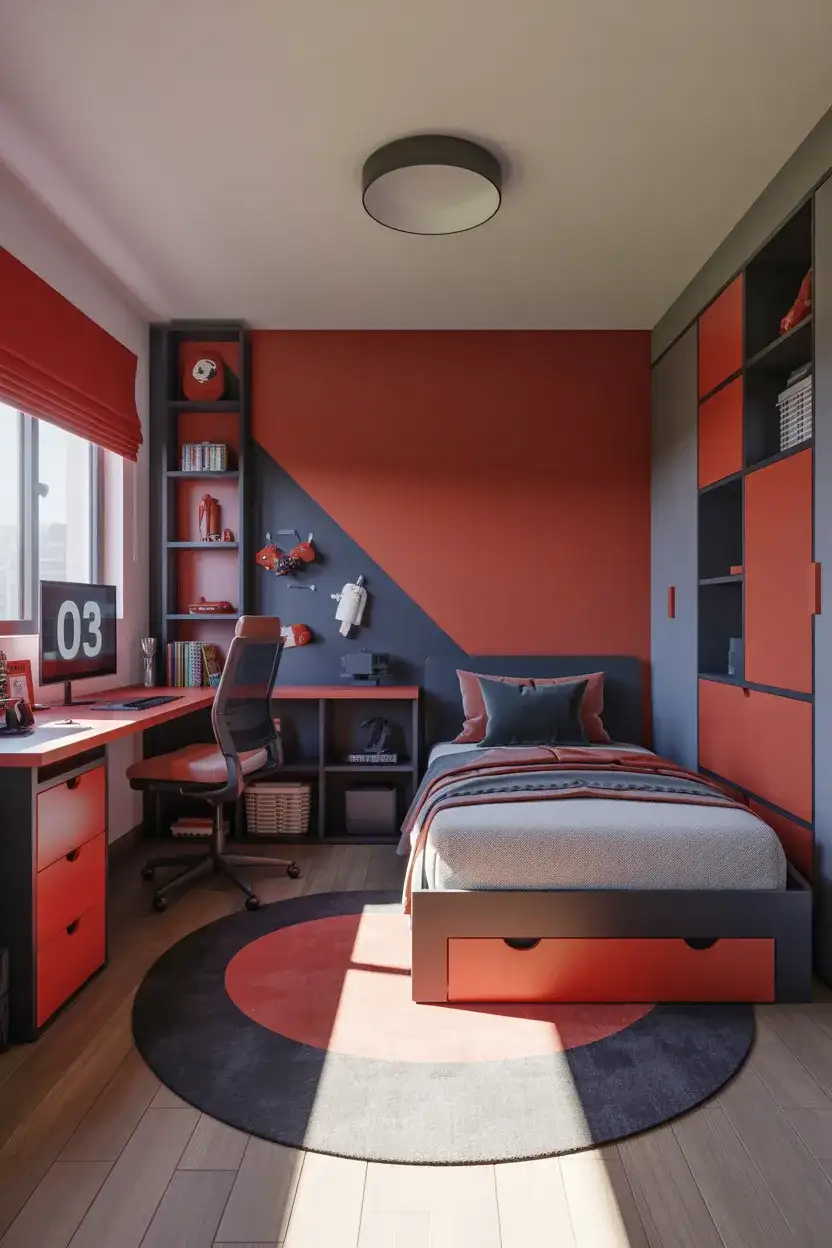
Parents who’ve built rooms like this consistently recommend planning for the tech infrastructure from the start. Running a cable management system through the desk setup, adding USB ports to the nightstand, and including proper task lighting over the desk aren’t superhero-specific upgrades—but—but they make the room genuinely functional for years in ways that the cape-and-mask decor can’t. The themed elements get replaced; the infrastructure stays useful forever.
20. Modern Small Space Teen Bedroom
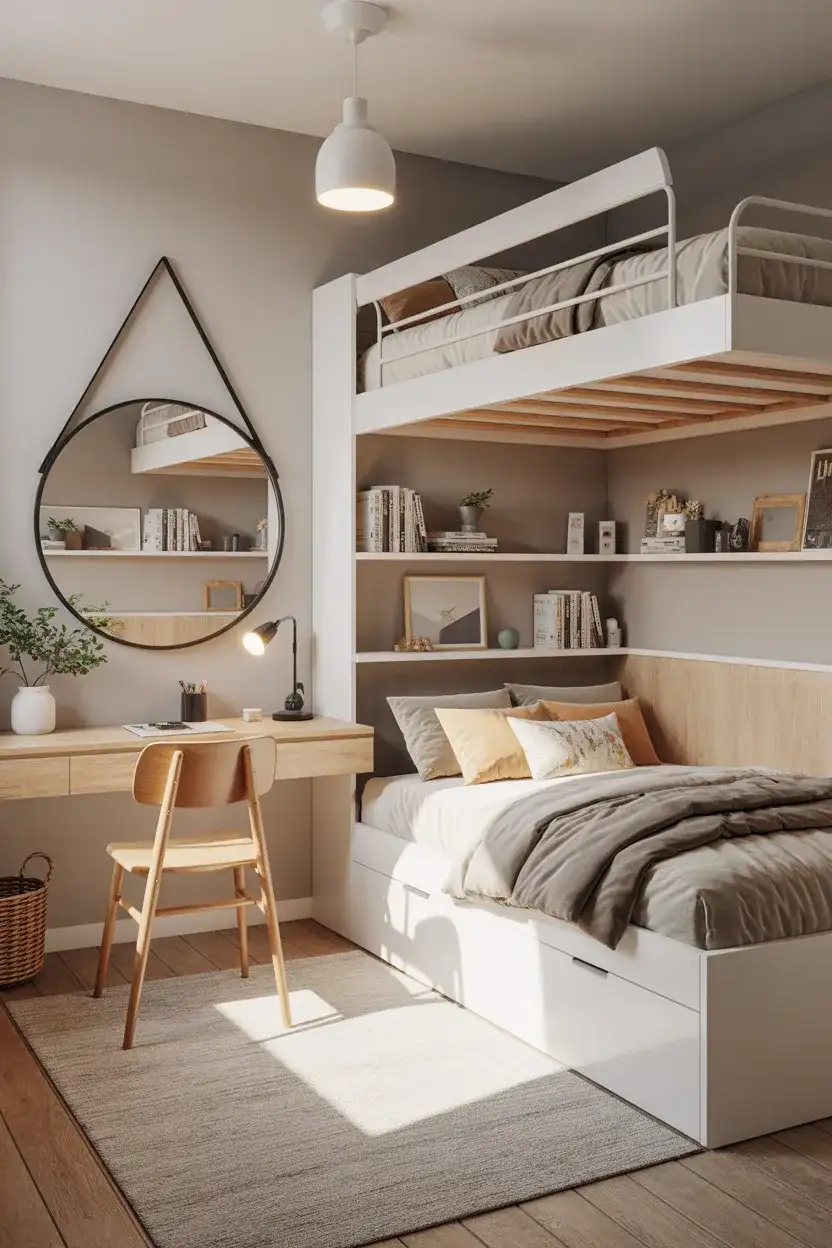
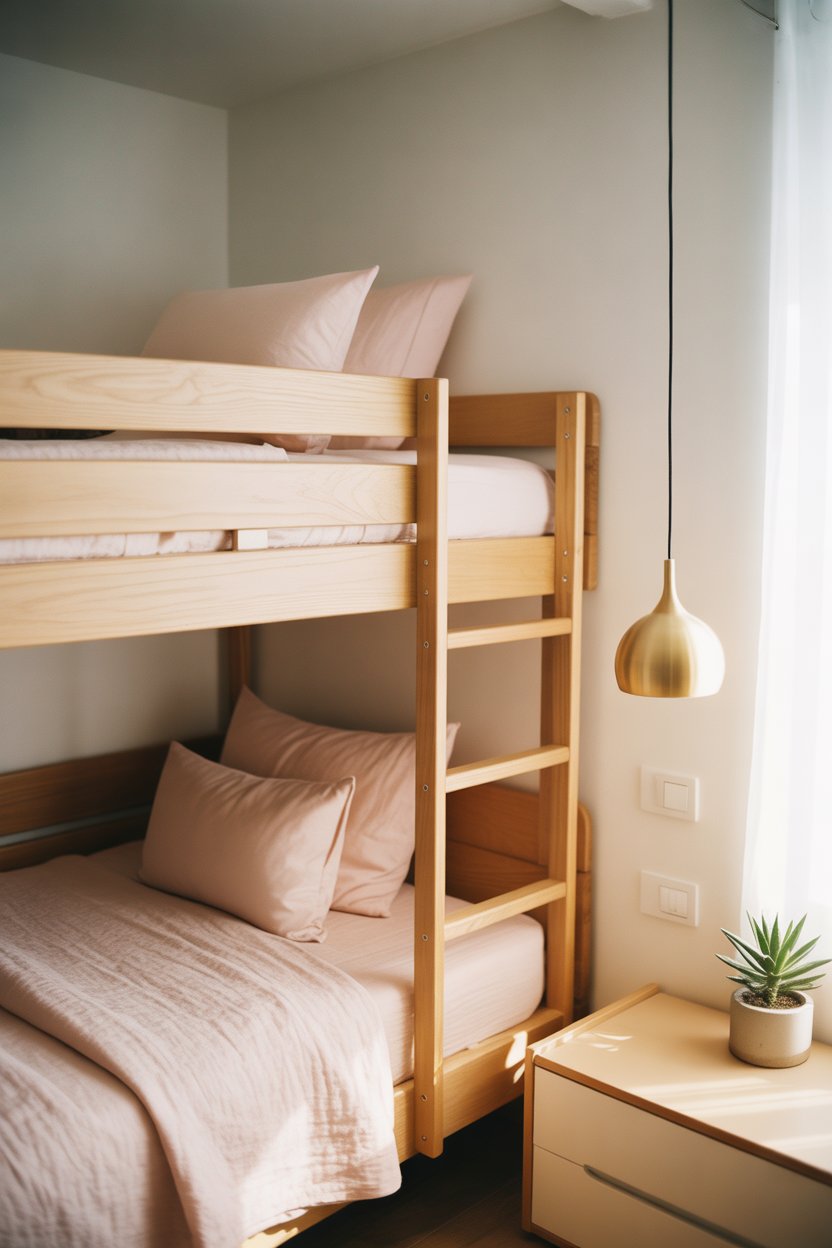
Small bedrooms are the norm in most American homes—and—and they’re not the limitation they used to be. With smart furniture choices and a clear design vision, a room under 100 square feet can feel genuinely expansive and deeply personal. The snap-generation teen especially benefits from a well-designed small room: they’re accustomed to maximizing small interfaces (a phone screen, a tablet) and often prefer focused, purposeful spaces over sprawling ones. A loft bed with a study zone below, wall-mounted shelving, a floating desk, and a mirror on one wall to expand the visual space are the foundational moves that make every square foot count.
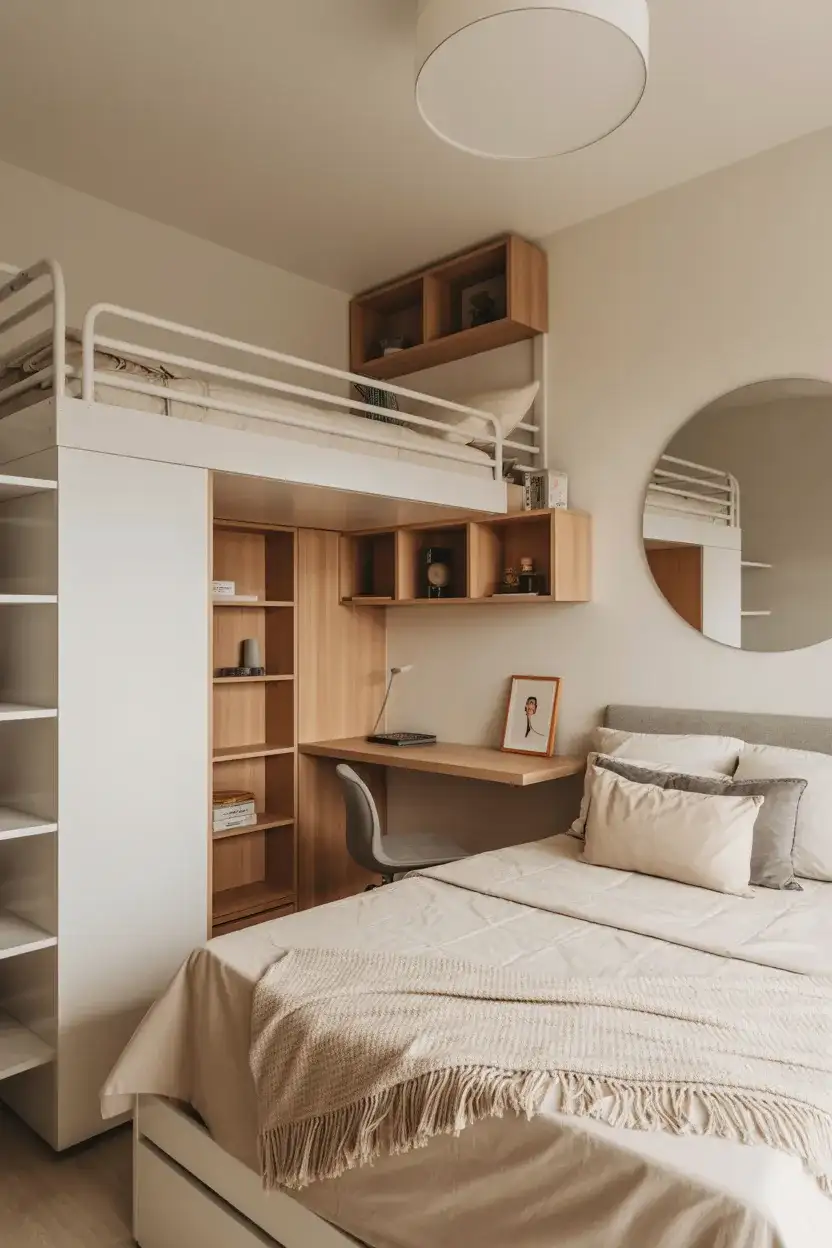
The single most impactful upgrade for a small teen room—by—by an overwhelming margin—is—is the loft bed. Going vertical frees up floor space that would otherwise be consumed by a traditional bed frame and turns that square footage into something usable: a study nook, a gaming chair spot, orspot, or a wardrobe zone. IKEA’s KURA and SVÄRTA loft beds are consistently the most recommended starting points for American families, with prices starting around $200 and hack-friendly construction that opens the door to major customization.
21. Snap-Worthy Teen Bedroom for Social Media
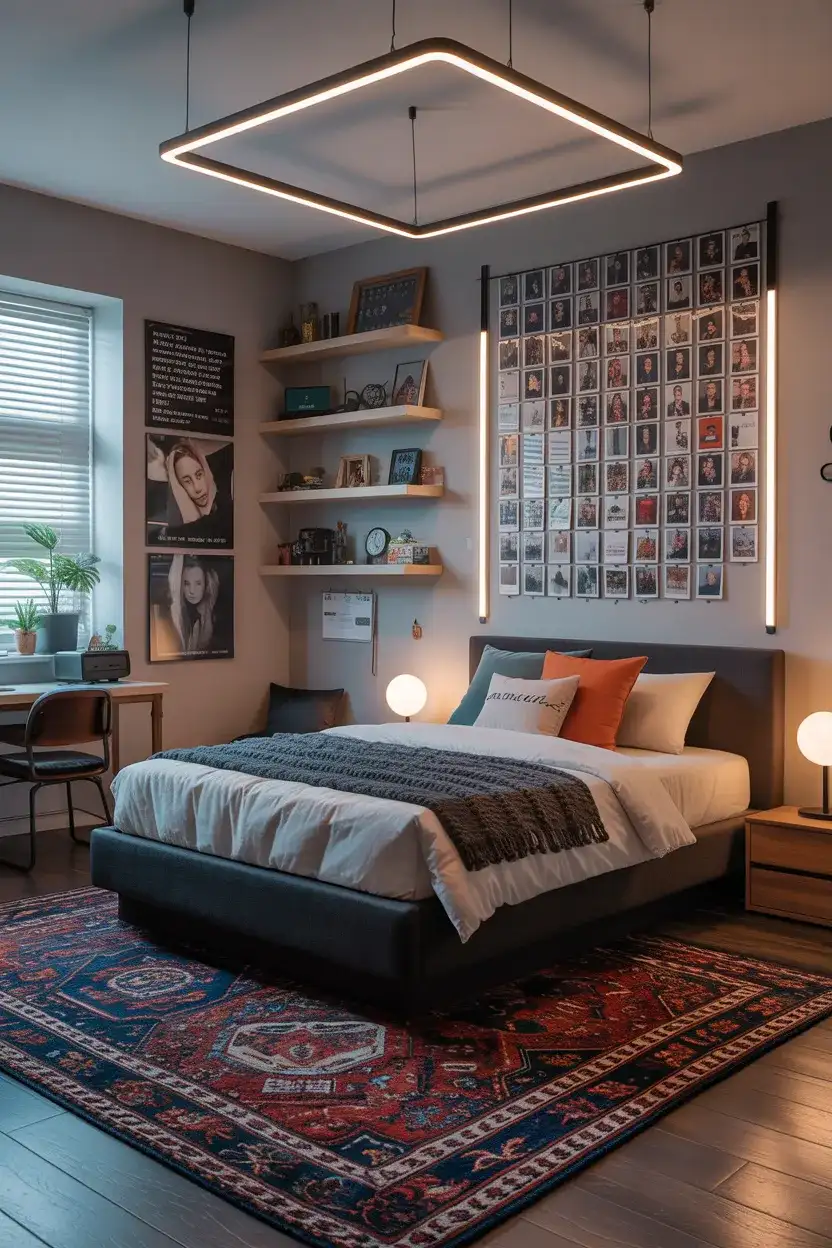
In 2026, teenagers design their rooms with one eye on how they’ll look on screen—and—and that’s not necessarily a bad thing. A snap-worthy bedroom is simply one with a strong visual identity: a clear focal point (usually the bed wall), a consistent color story, good lighting, and a curated collection of objects that tell a story without feeling like clutter. Think a neona neon sign above the bed (or an LED alternative), a grid-style photo display, floating shelves with intentional arrangements, and a rug that anchors the whole composition. This overlaps beautifully with the world of Sims 4 teen aesthetics—creative,—creative, layered, personal, and genuinely photogenic.
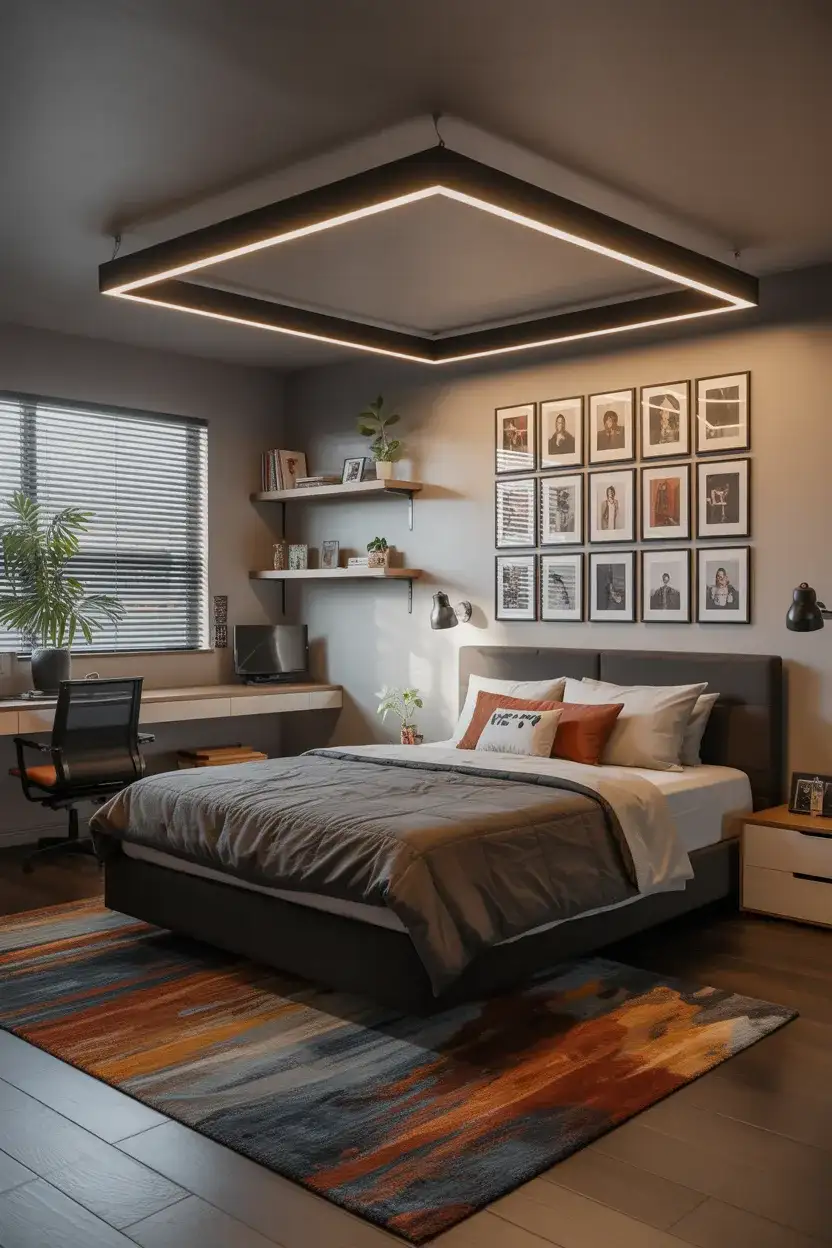
American families spending on teen bedroom redesigns in the social-media era often find that the budget goes further than expected on the elements that photograph best. LED strip lighting runs $15–$40 for a full room setup. A photo-clip wall display using printed 4×6 photos costs under $30 and creates enormous visual impact. The floating shelf arrangement—often—often the most “liked” element in before-and-after posts—typically—typically costs $50–$100 total. The most expensive element is usually the bed, andand it’s worth spending quality money onmoney on since it’s the room’s centerpiece.
22. Spider-Man Kids Room with Classic Comic Style
There’s a difference between a spider man room ideas kids approach and the broader superhero room—thisne goes all-in on the specific character with a classic comic book sensibility rather than a movie-era realism. Think panels: actual comic-book-panel-style wall art, maybe a custom mural divided into frames like a graphic novel page, red and blue bedding with web graphics, and open shelving shaped to display the action figure collection properly. The Marvel color language here is intentional—red, blue, black, and white—used in blocks and geometric shapes that echo the four-color print process of the original comics. It reads as art-directed rather than mass-produced.
Custom wall murals for themed kids’ rooms have become dramatically more accessible. Services like Photowall, Murals Wallpaper, and several Etsy artists now offer made-to-order panels in any dimension for $100–$400 depending on size. Alternatively, a local community college art student will often take on a commissioned mural for a child’s room at very reasonable rates—and you get something completely one-of-a-kind that can’t be found in any other home. It’s worth posting in local Facebook parenting groups to find artists in your area.
23. Japandi Meets Gamer: The Hybrid Teen Bedroom
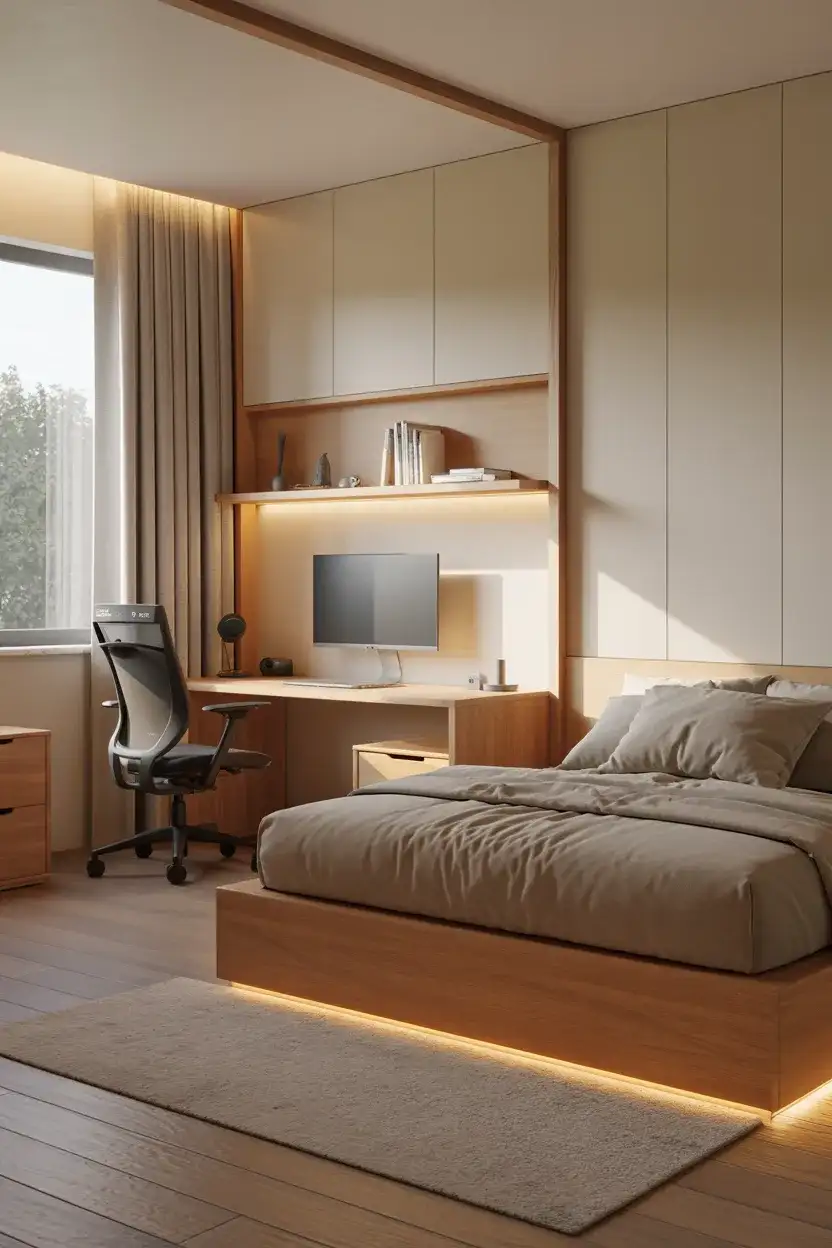
The most interesting bedrooms of 2026 aren’t purely one thing—they’re hybrids, and the Japandi-meets-gamer mashup might be the most compelling one. Imagine a room with all the calm material palette of Japandi (warm wood, cream linen, clean lines, natural textures) but with a fully integrated, beautifully disguised gaming setup: a monitor that folds away or is mounted flush with a minimalist desk, cable management that hides all the tech, and RGB lighting dialed to a warm amber that doesn’t fight the organic aesthetic of the room. This is the room for the thoughtful gamer—someone who wants both peak performance and genuine calm in their space.
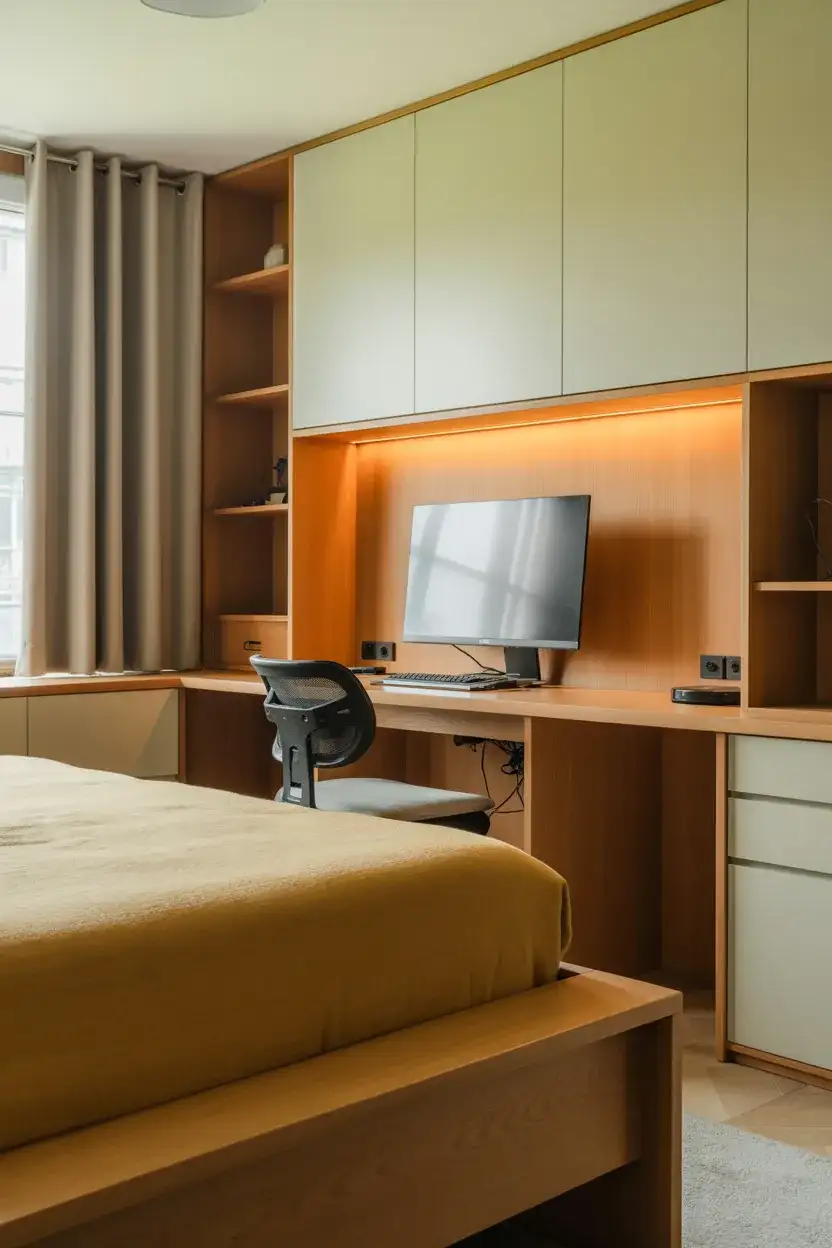
This hybrid concept is where the most exciting interior design thinking for teenage boys is happening right now. It acknowledges something real: teenagers who game aren’t just gamers—they’re full, complex people who want their room to serve multiple moods and uses. A space that’s peaceful enough to study and sleep in, functional enough to game in, and beautiful enough to feel proud of is the design holy grail for this age group. And in 2026, with the right choices, it’s genuinely achievable.
Conclusion
There’s something wonderful happening in teenage boys’ bedroom design right now—a genuine openness to personality, layering, and rooms that actually reflect who the person living in them is becoming. Whether you’re leaning into a strong theme or building something quieter and more enduring, the ideas here are meant to be a starting point, not a prescription. We’d love to hear what resonates with you: which of these rooms would your son actually love? Drop your thoughts in the comments—and if you’ve already tackled a teen bedroom redesign, share what you did. The real-life ideas from parents who’ve been through it are always the most helpful ones.