There’s something almost magnetic about a sunroom—that in-between space that’s neither fully indoors nor completely outside, yet somehow the most beloved room in the house. As we move through 2026, Americans are spending more time designing spaces that do double (even triple) duty: gathering room, plant sanctuary, reading nook, and seasonal showpiece all at once. It’s no wonder sunroom decorating ideas have become one of the most-searched and most-saved categories on Pinterest this year. Whether you’re starting from scratch or breathing new life into an underused glass-walled room, this guide covers 22 fresh, real-world ideas—from bohemian layering to coastal calm, modern minimalism to full-on vintage charm—with practical tips you can actually use.
1. The All-Season Cozy Corner
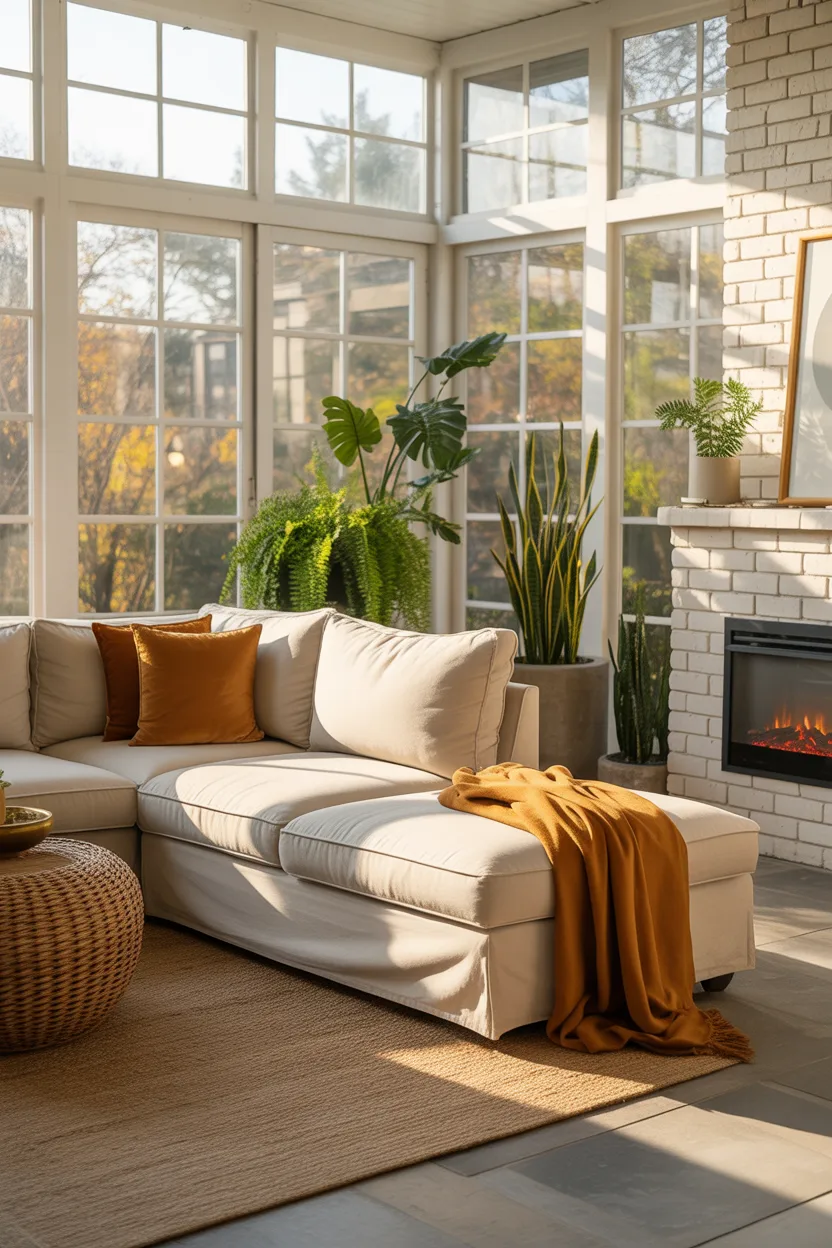
A cozy sunroom that works across all four seasons doesn’t happen by accident—it’s designed with intention. Think plush, oversized seating with removable slipcovers you can swap by season, thermal curtains that let light pour in during the day while trapping warmth at night, and a small electric fireplace or radiant heater tucked into a corner. For a true four-seasons room vibe, every material choice should bridge comfort and weather adaptability. Rattan, performance velvet, and washable cotton canvas are all strong contenders.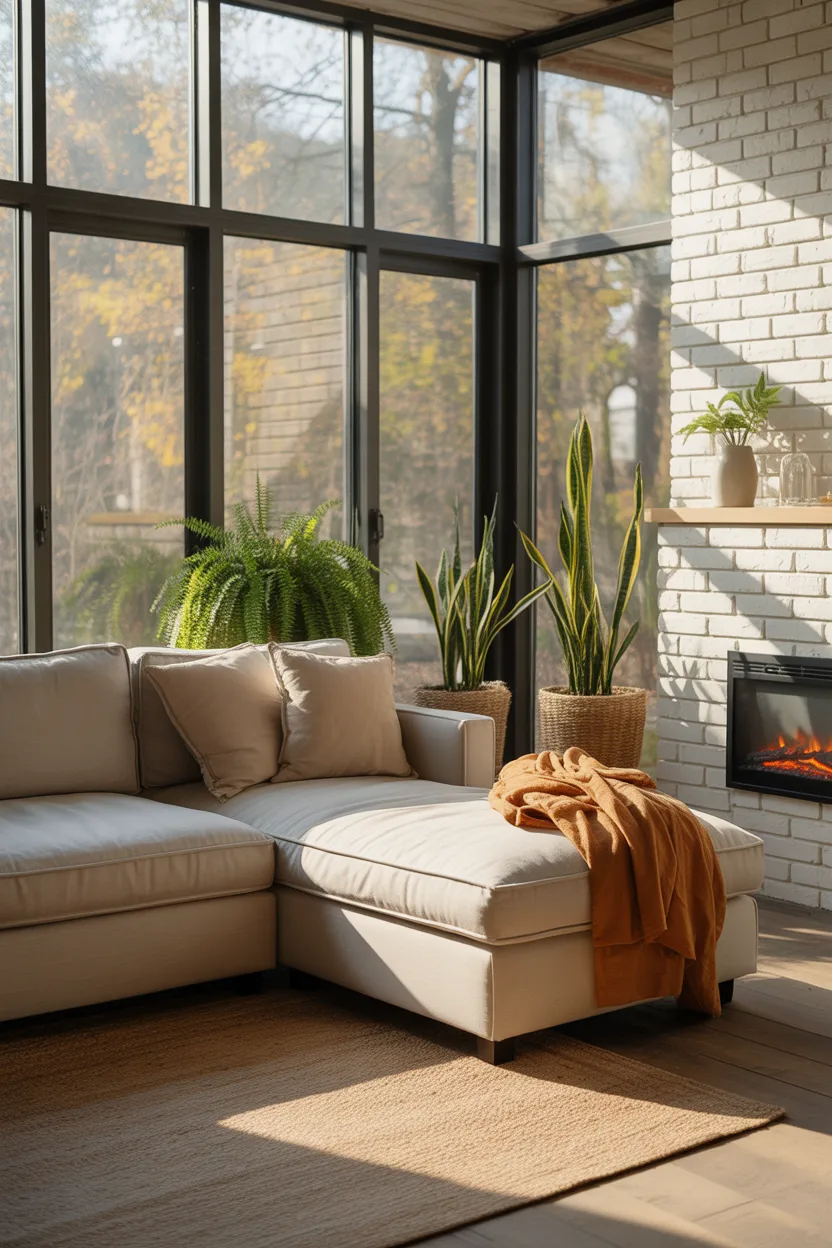
This setup works especially well in the Midwest and Northeast, where temperature swings are dramatic. Interior designers often note that the biggest mistake people make with sunrooms is treating them like “bonus rooms”—underinvested and underfurnished. Treat your sunroom like a true living room, and the whole vibe shifts. Consider a reversible daybed that doubles as extra guest sleeping in summer but becomes a deep-cushioned reading nest in January.
2. Bohemian Layers and Wanderlust Textures
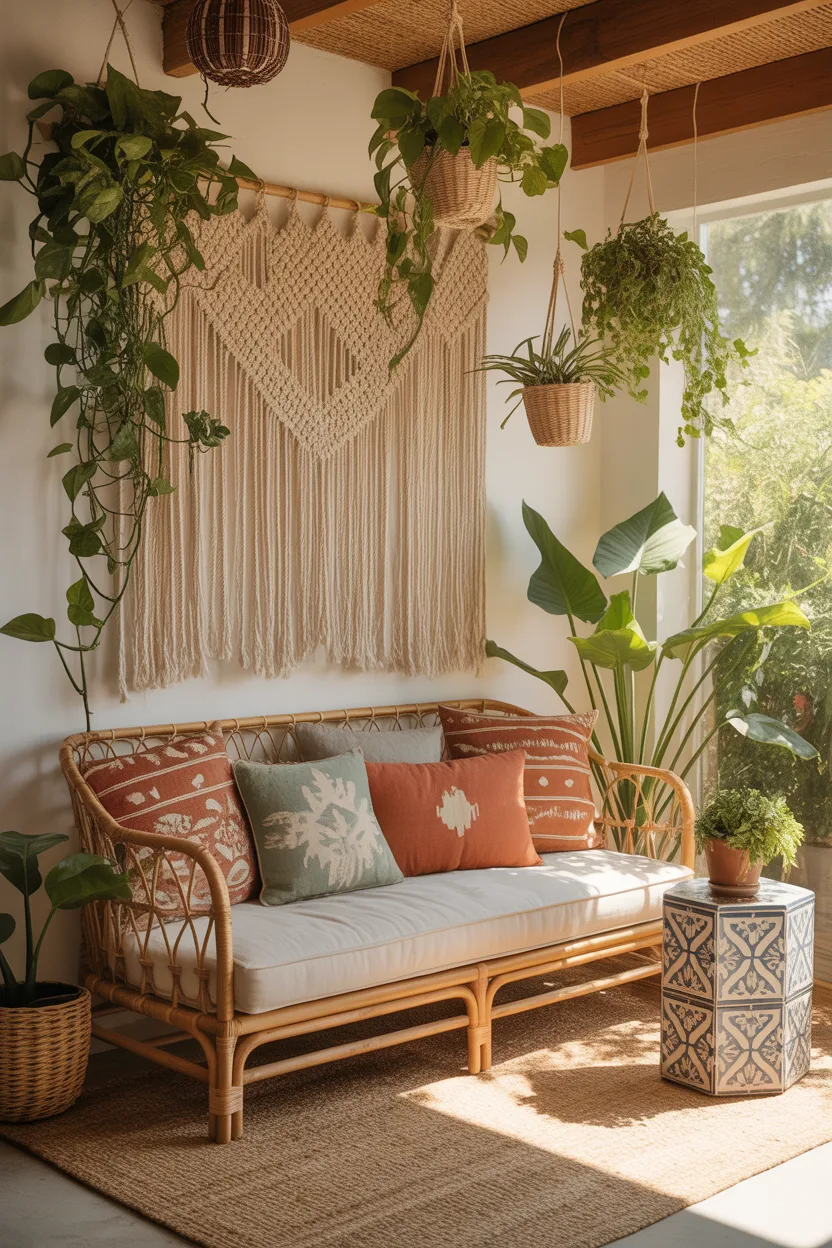
A bohemian sunroom is essentially a love letter to collected living—it’s the room where every trip, thrift find, and impulse plant purchase somehow comes together. The key is intentional layering: a macramé wall hanging here, a kilim runner there, and mismatched pillows in terra cotta, mustard, and dusty sage piled on a low-slung sofa. Boho style thrives in sunrooms because natural light is the ultimate flatterer for woven textures and earthy tones. Don’t be afraid to mix patterns—just keep the color palette grounded.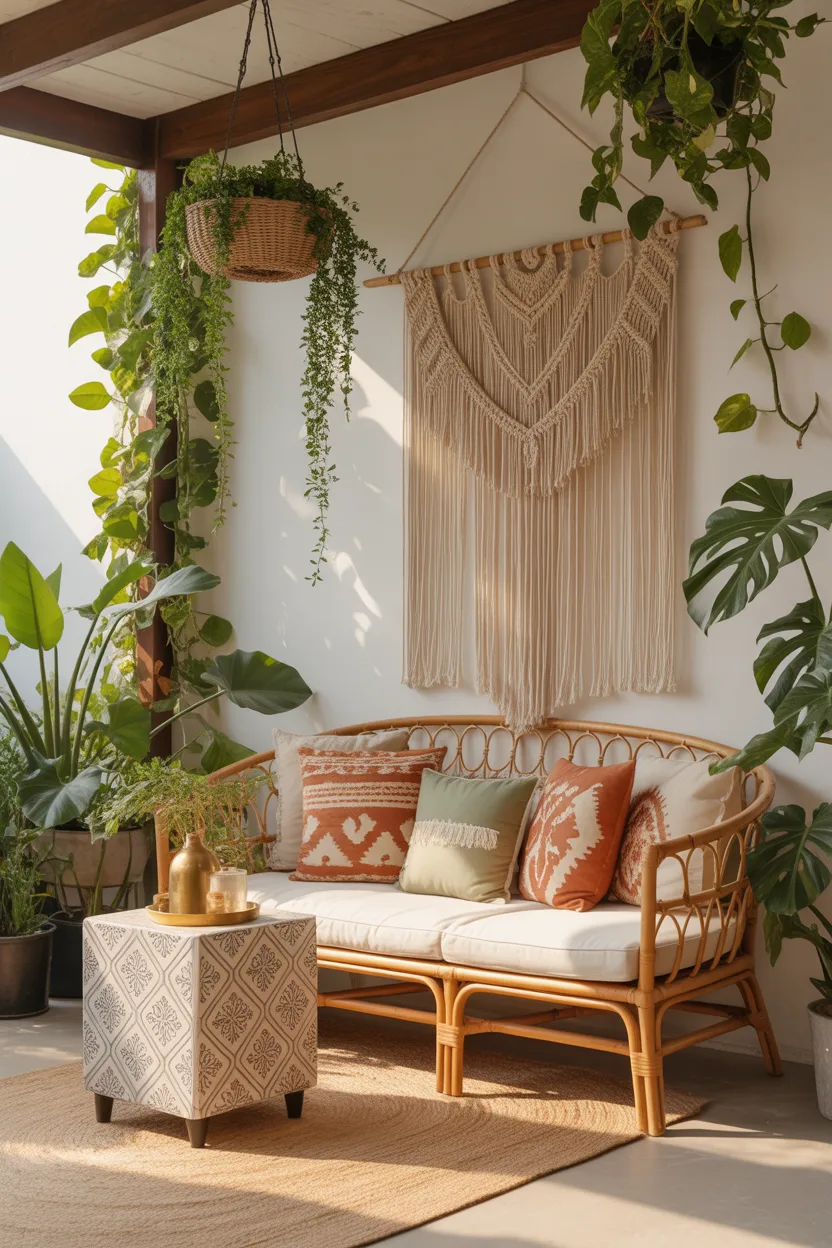
The best boho sunrooms have a “slow accumulation” feel—they look lived in and collected rather than styled in an afternoon. One real homeowner shared that she started her boho sunroom with just a single vintage rug from an estate sale and built the rest of the room around those colors over two years. That patient, organic approach is exactly what separates a soulful bohemian space from a Pinterest imitation.
3. Farmhouse Style with French Doors
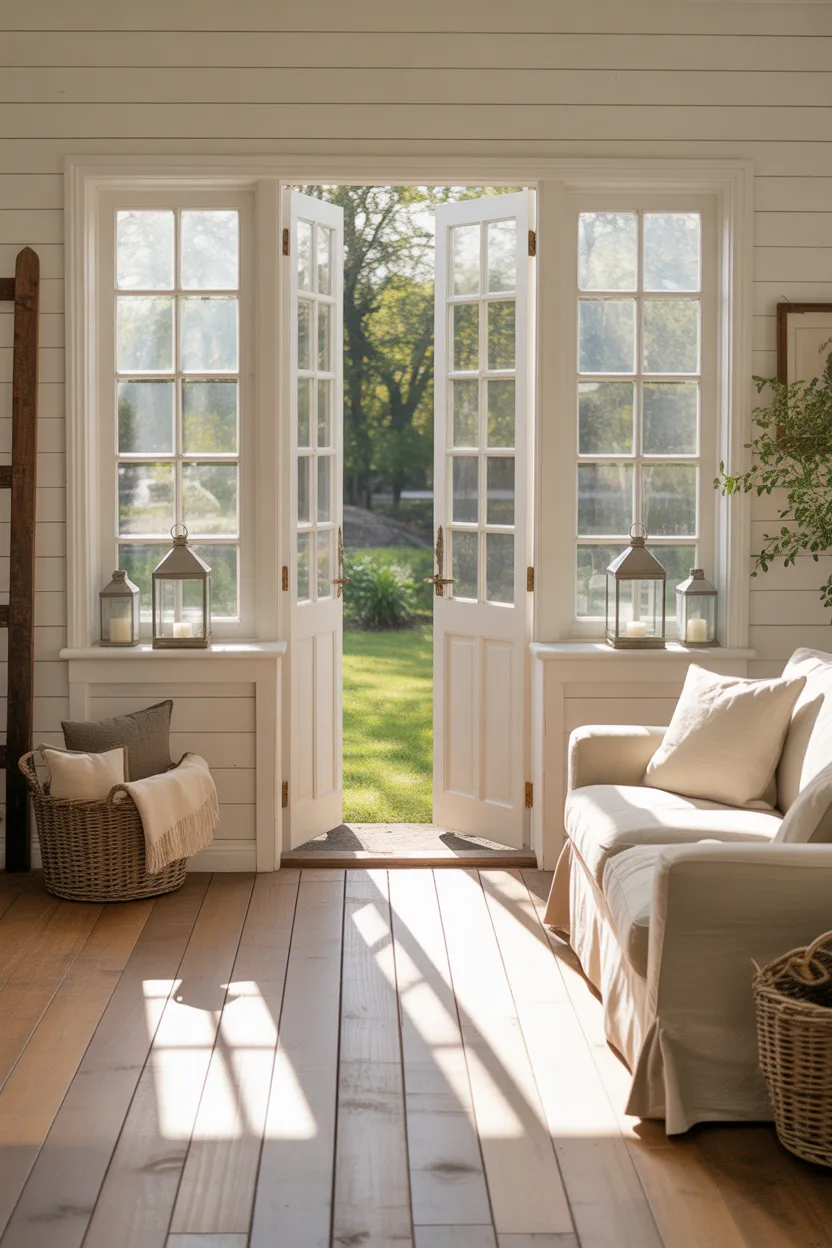
Pairing farmhouse style with the classic elegance of french doors is one of those combinations that just works—every time, in every part of the country. Shiplap walls or whitewashed wood paneling give the backdrop, while double French doors open onto a porch or garden and flood the space with daylight. Furniture in this scheme leans toward painted wood (chalk white or aged navy), linen upholstery, galvanized metal accents, and weathered oak floors. It’s a look that says “we’ve been here a while, and we love it.”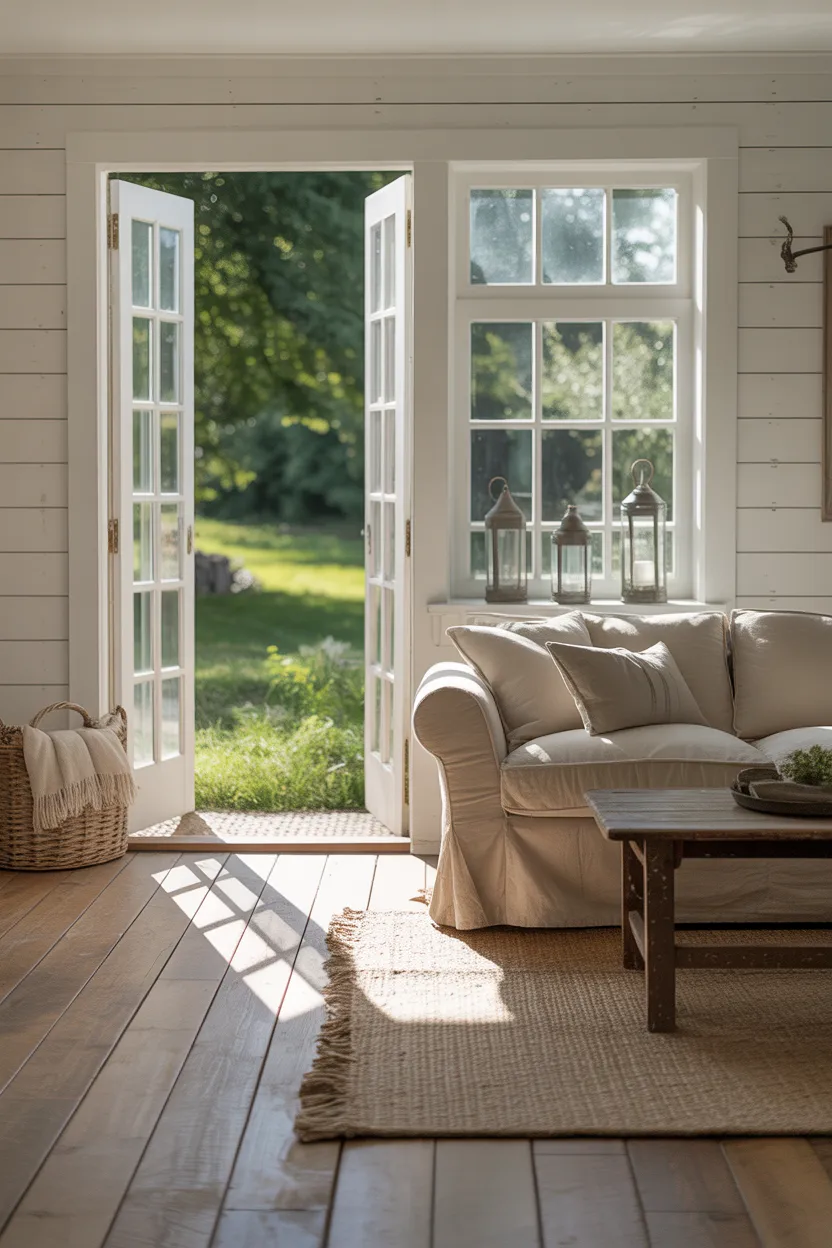
This aesthetic resonates particularly strongly in the American South and rural Midwest, where covered porches and indoor-outdoor living are part of the cultural fabric. French doors aren’t just beautiful—they’re also a practical investment. Properly sealed, they can significantly reduce energy loss while maintaining that classic look. Budget tip: if full replacement isn’t in the cards, even adding French-door-style trim hardware and divided light window film to existing sliding doors can approximate the look for a fraction of the cost.
4. Modern Minimalist Sunroom
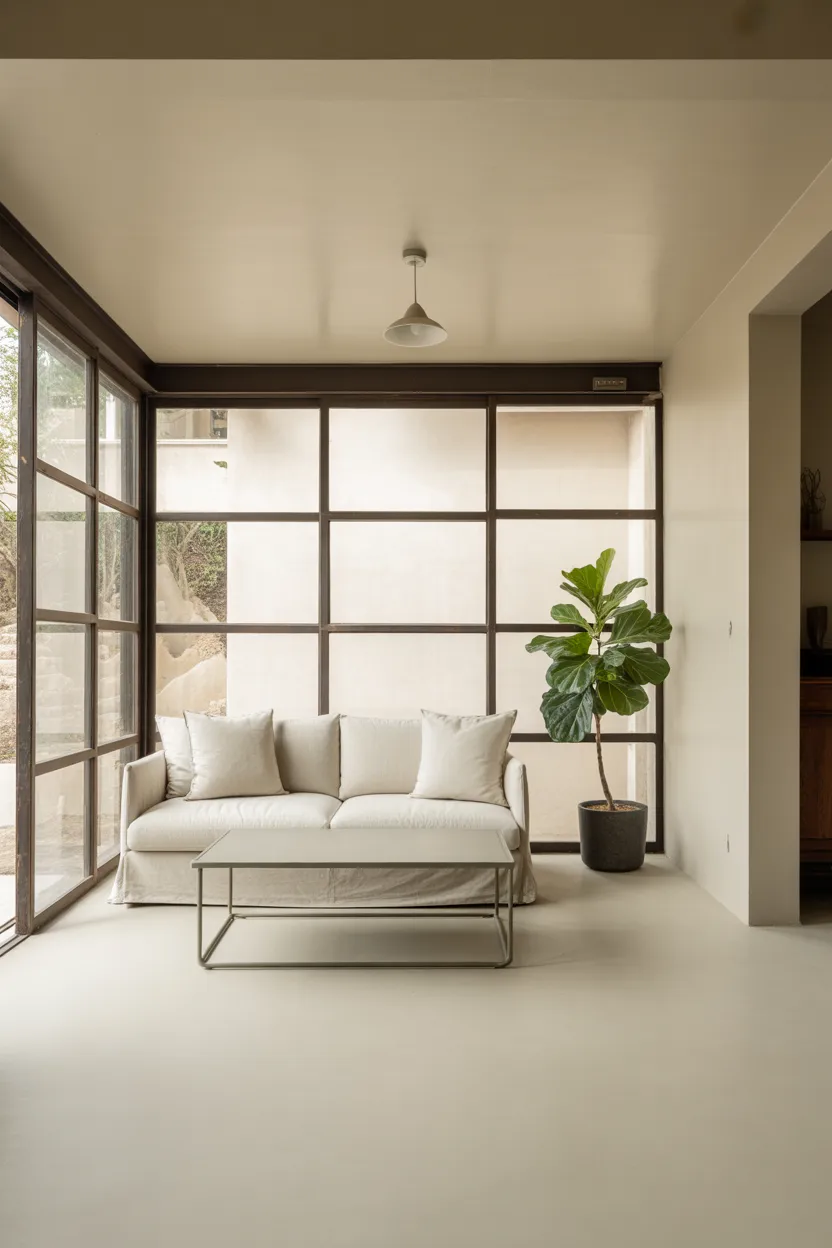
A modern sunroom is where clean lines meet glass—and the restraint is the point. Think furniture with low profiles, monochromatic color schemes anchored in white, warm gray, or greige, and negative space used purposefully. Ideas indoor modern sensibility calls for materials like powder-coated steel, concrete, pale oak, and linen in neutral tones. Clutter has no place here; instead, a single sculptural plant (a fiddle leaf fig or tall snake plant) or one bold ceramic vase becomes the focal point.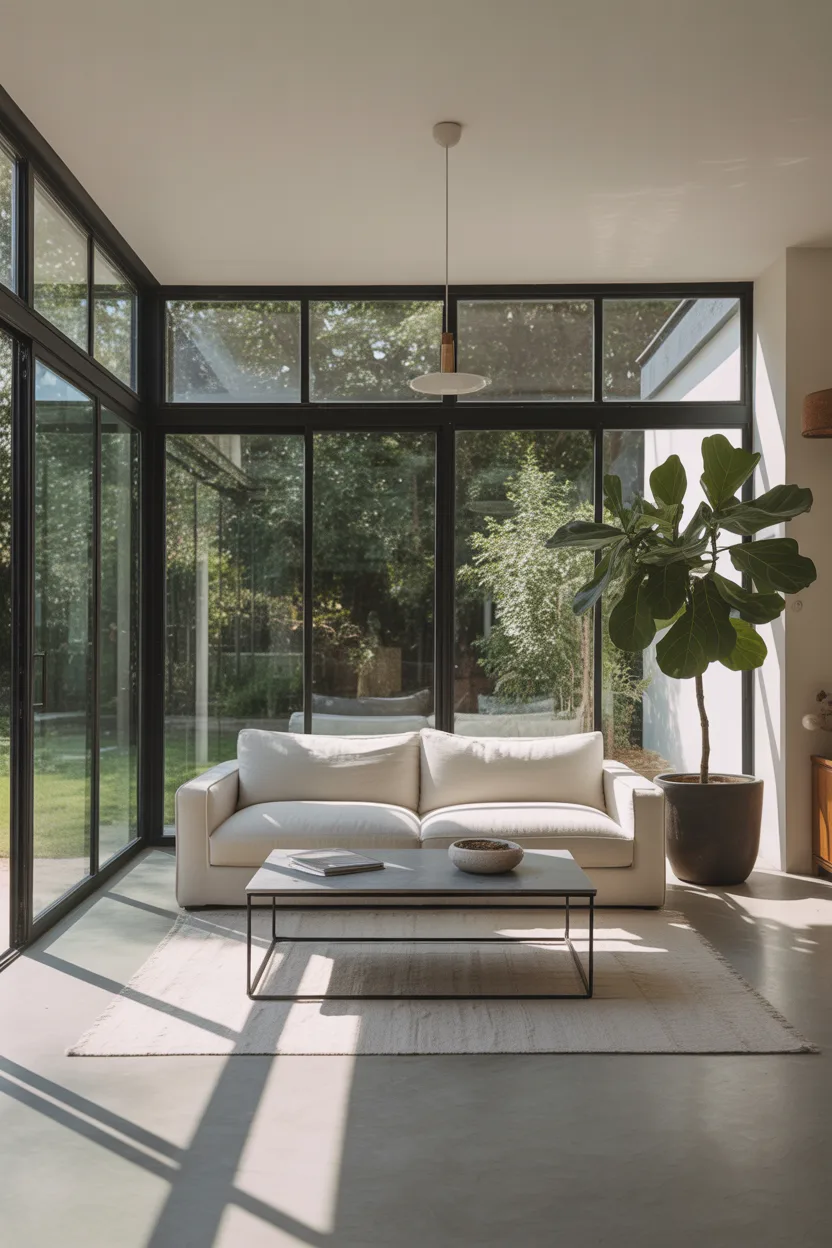
Where this style works best: in newer construction homes with open floor plans or in urban apartments with an enclosed balcony or glass-walled bonus room. The modern sunroom thrives when architecture does the heavy lifting—so if your space has beautiful bones (wide glass spans, tall ceilings), resist the urge to fill it. Experts in minimalist interior design often say the hardest part isn’t choosing what to put in; it’s having the confidence to leave things out.
5. Plant-Lover’s Indoor Greenhouse
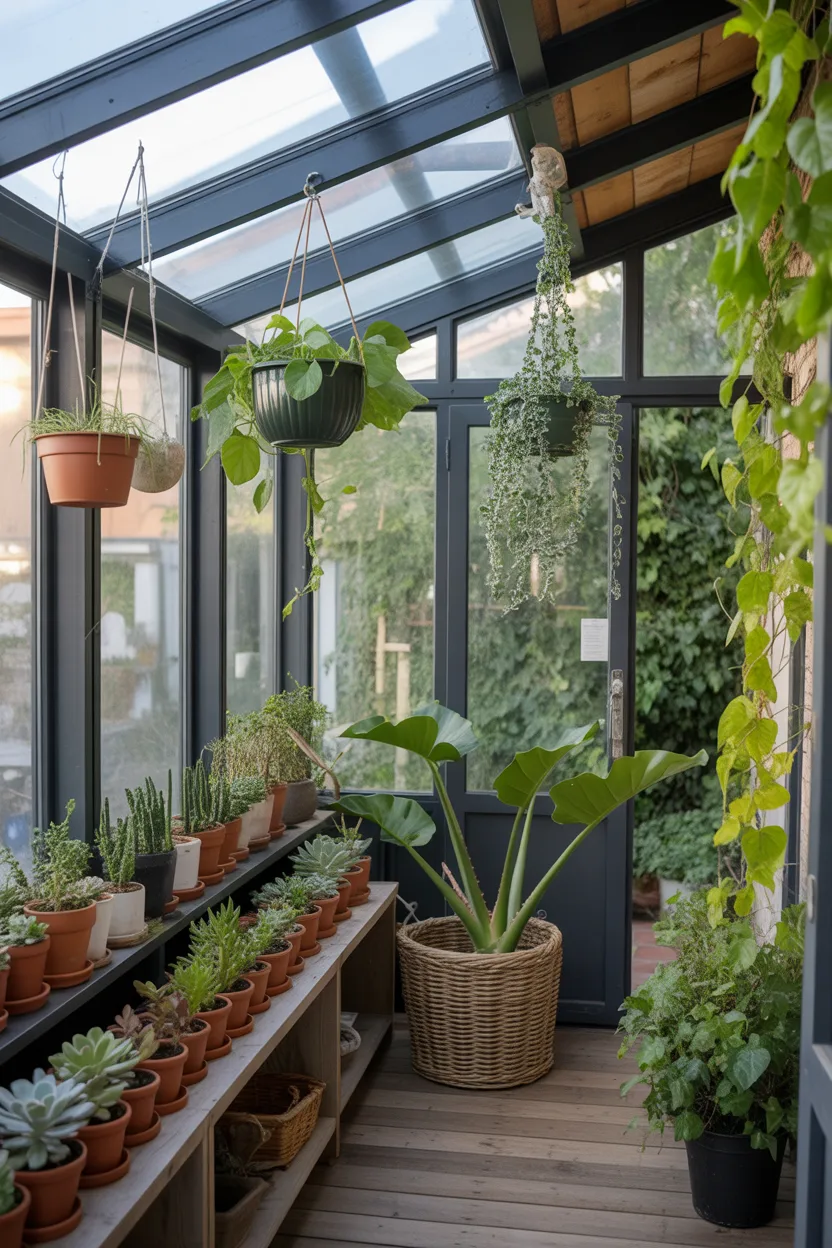
For many Americans, the sunroom has become the unofficial indoor greenhouse—a room where ideas and plants come to thrive rather than merely survive. The premise is simple: flood the space with greenery at every height. Hang pothos and string-of-pearls from ceiling hooks, line the windows with succulents and herbs in terracotta pots, anchor the floor with a statement monstera or bird of paradise, and fill the corners with tall fiddle leaf figs or bamboo palms. The effect is lush, calming, and endlessly photogenic.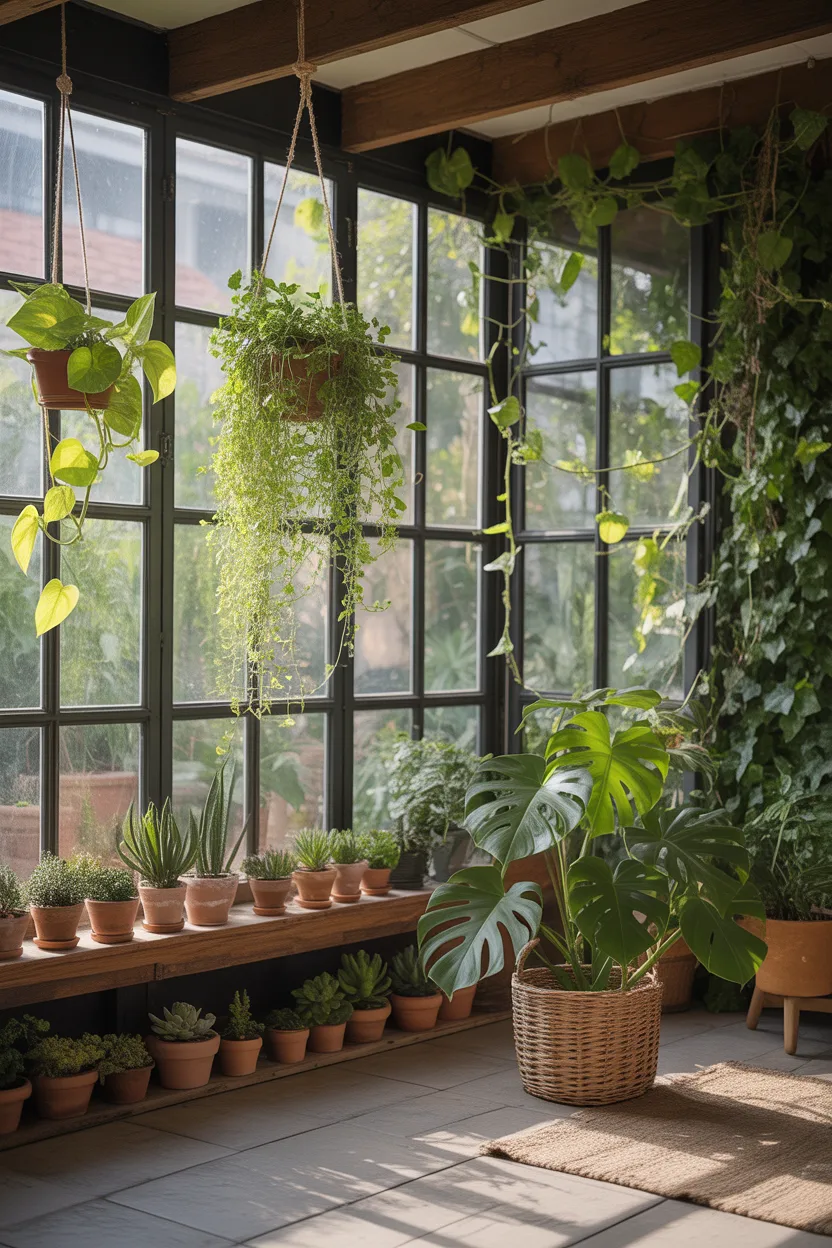
One common mistake with plant-forward sunrooms is choosing plants for looks without checking light requirements. South-facing sunrooms get intense, direct afternoon sun—perfect for cacti and succulents, but brutal for ferns and peace lilies. North- or east-facing rooms support shade-lovers beautifully. Get clear on your sunroom’s orientation before you shop, and you’ll save yourself a lot of dead plants (and heartbreak).
6. Coastal Calm Retreat
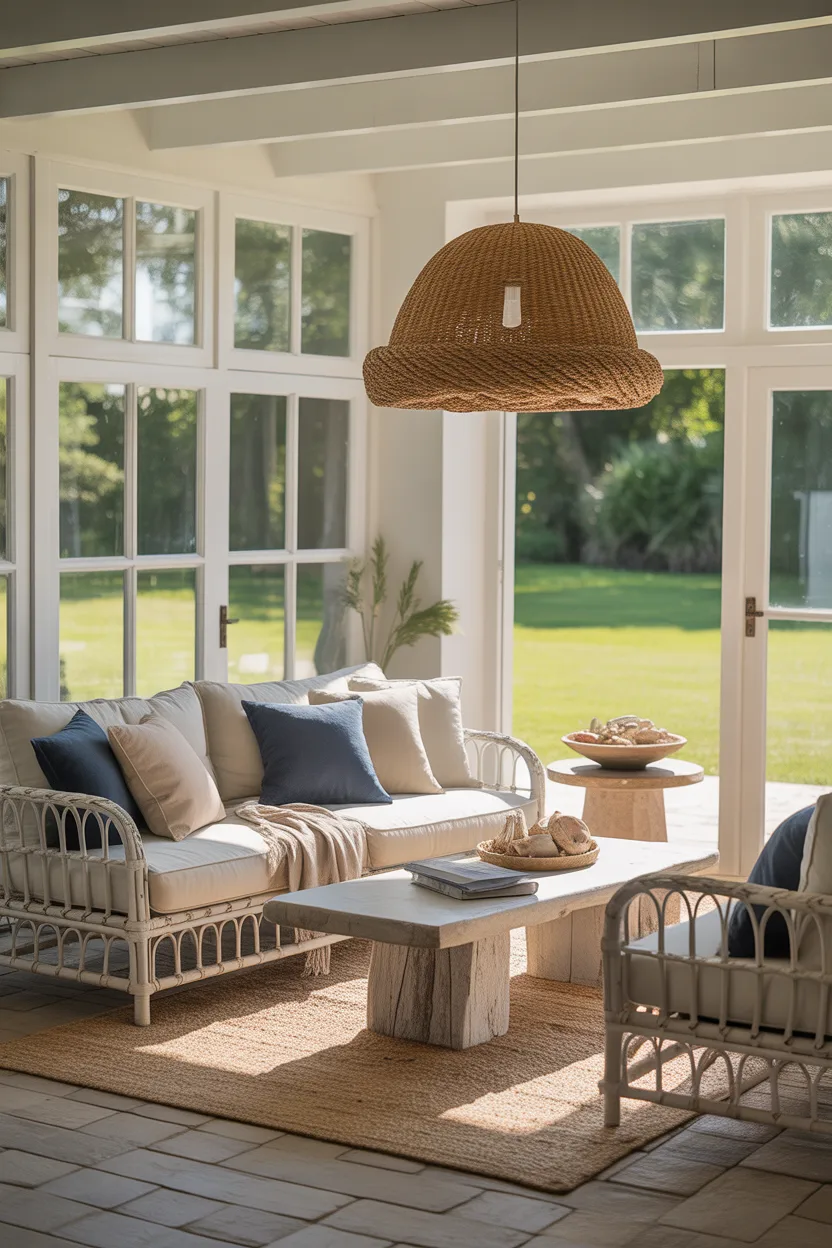
A coastal sunroom takes its cues from the beach house aesthetic—but you don’t need to live near the water to pull it off. The palette is all bleached driftwood whites, soft navy, weathered sage, and sandy beige. Materials lean maritime: rope, whitewashed rattan, seagrass, linen, and reclaimed wood. Inspiration here comes from the kind of relaxed, barefoot ease you’d find in a Cape Cod cottage or a Gulf Coast beach rental—and that feeling is entirely transferable to a sunroom in Ohio or Colorado.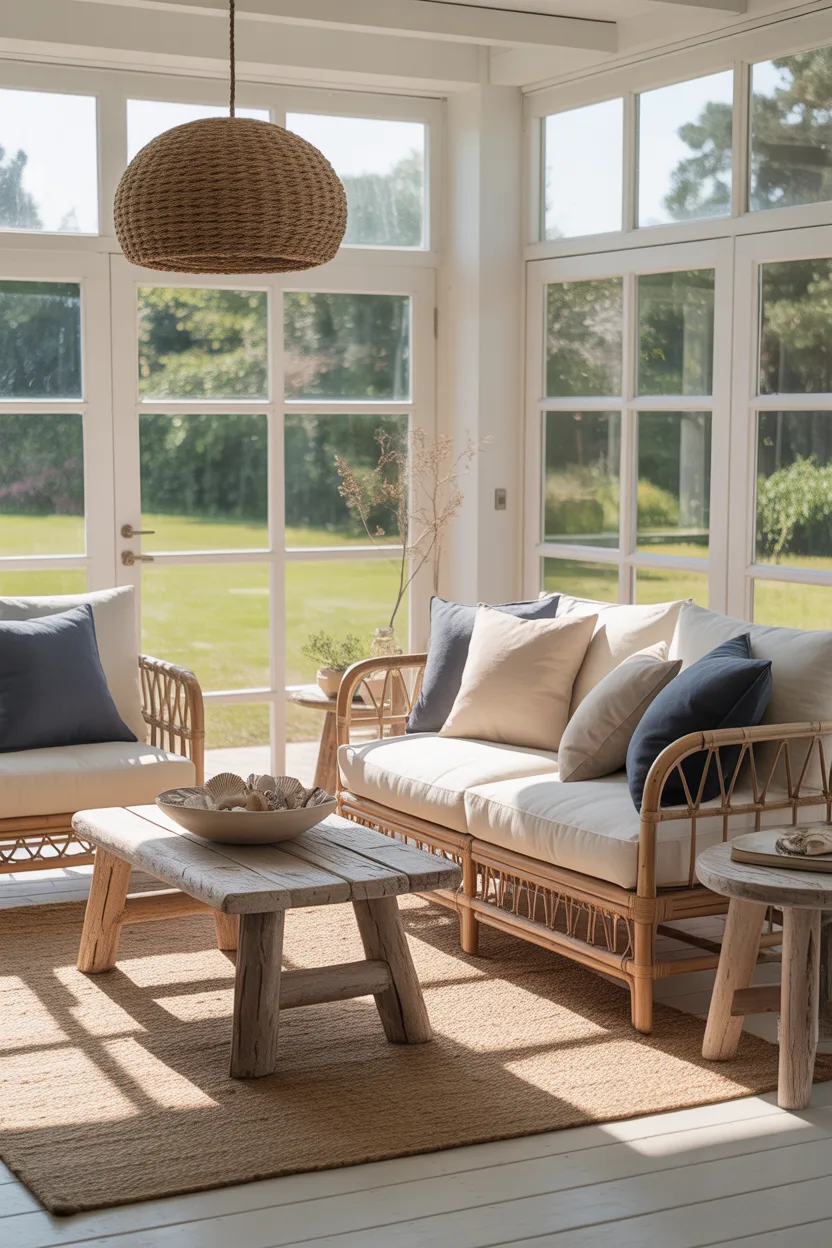
The coastal sunroom is especially practical for families because so many of its materials—performance fabrics, wicker, painted wood—are durable and easy to clean. Think of it as “vacation-proof” decorating: the kind of room you can enjoy with sandy feet and a glass of lemonade without worrying about the furniture. Real homeowners in humid Southern states often gravitate toward this style precisely because the materials breathe well and hold up beautifully in high-moisture environments.
7. Vintage Charm and Antique Finds
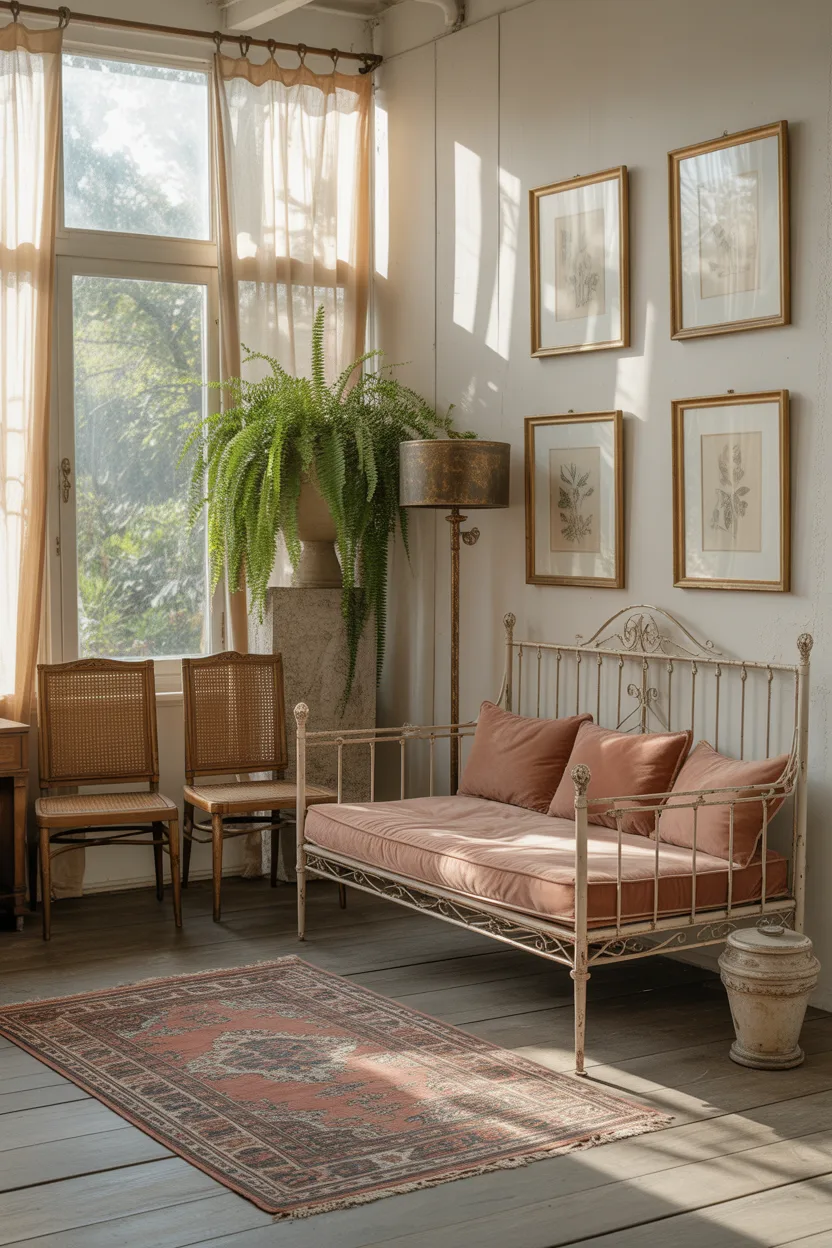
A vintage sunroom rewards patience and a love of the hunt. The bones of the style come from the past—a wrought-iron daybed, a set of cane-back chairs rescued from an estate sale, velvet cushions in dusty rose or emerald, and an ornate Persian rug layered over painted wood floors. The vintage approach doesn’t mean matchy or stale; it means curated, layered, and full of stories. Vintage sunrooms tend to feel like the best room in the house—warm, eccentric, and entirely their own.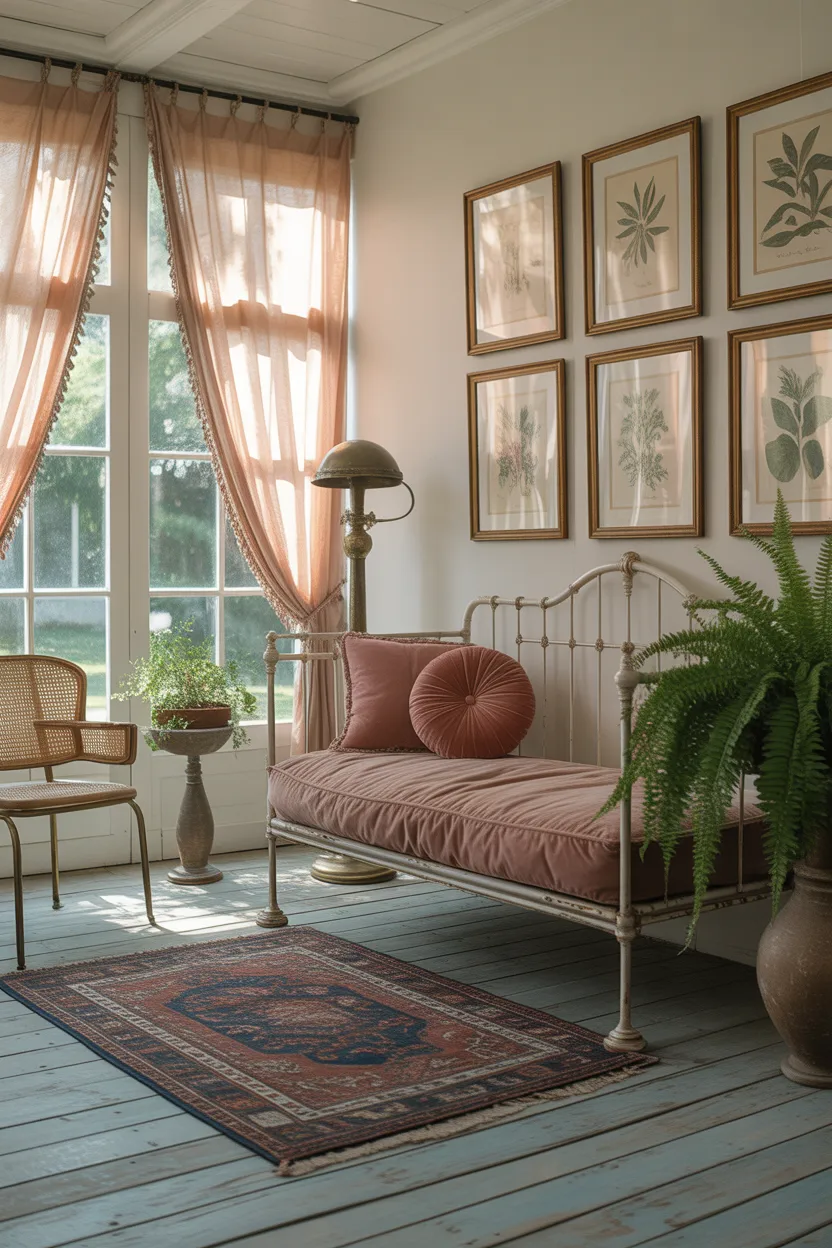
Americans have a deep, enduring affection for the vintage aesthetic—it taps into something nostalgic and grounding in a very fast-moving world. Regional antique fairs, Facebook Marketplace, and estate sales remain some of the richest sources for sunroom furniture. An expert tip: focus your vintage investment on one or two statement pieces (that iron daybed, that Victorian wicker armchair) and use affordable modern basics for the rest. The contrast actually makes both look better.
8. Rustic Sunroom with Natural Materials
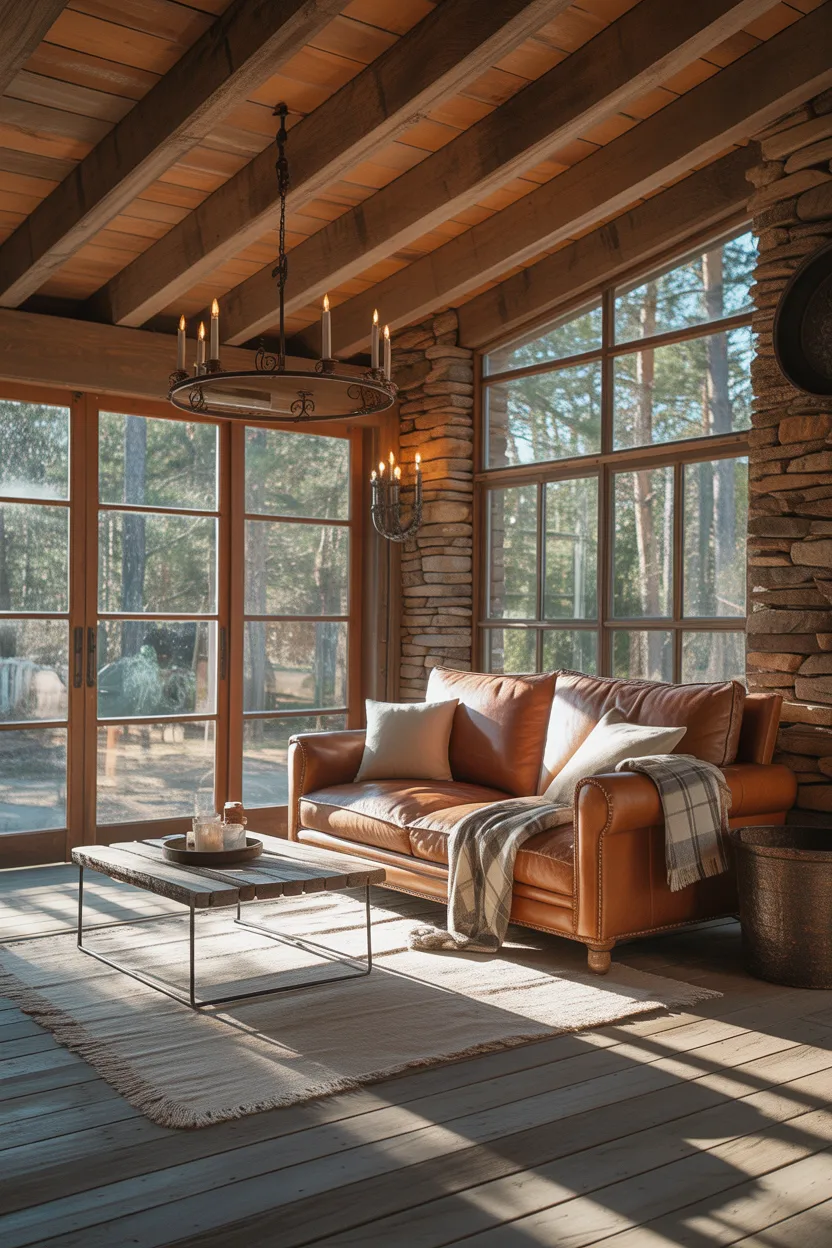
The rustic sunroom leans into raw, unpolished beauty—exposed wood beams overhead, river stone accent walls, cedar plank flooring, and furniture in weathered teak or reclaimed pine. It’s the aesthetic for people who want their indoor space to feel like a well-loved mountain cabin or a converted barn—warm, honest, and full of texture. Ideas for indoor cozy living come naturally here: this is the kind of room built for flannel blankets, woodsy candles, and mugs of coffee on a grey morning.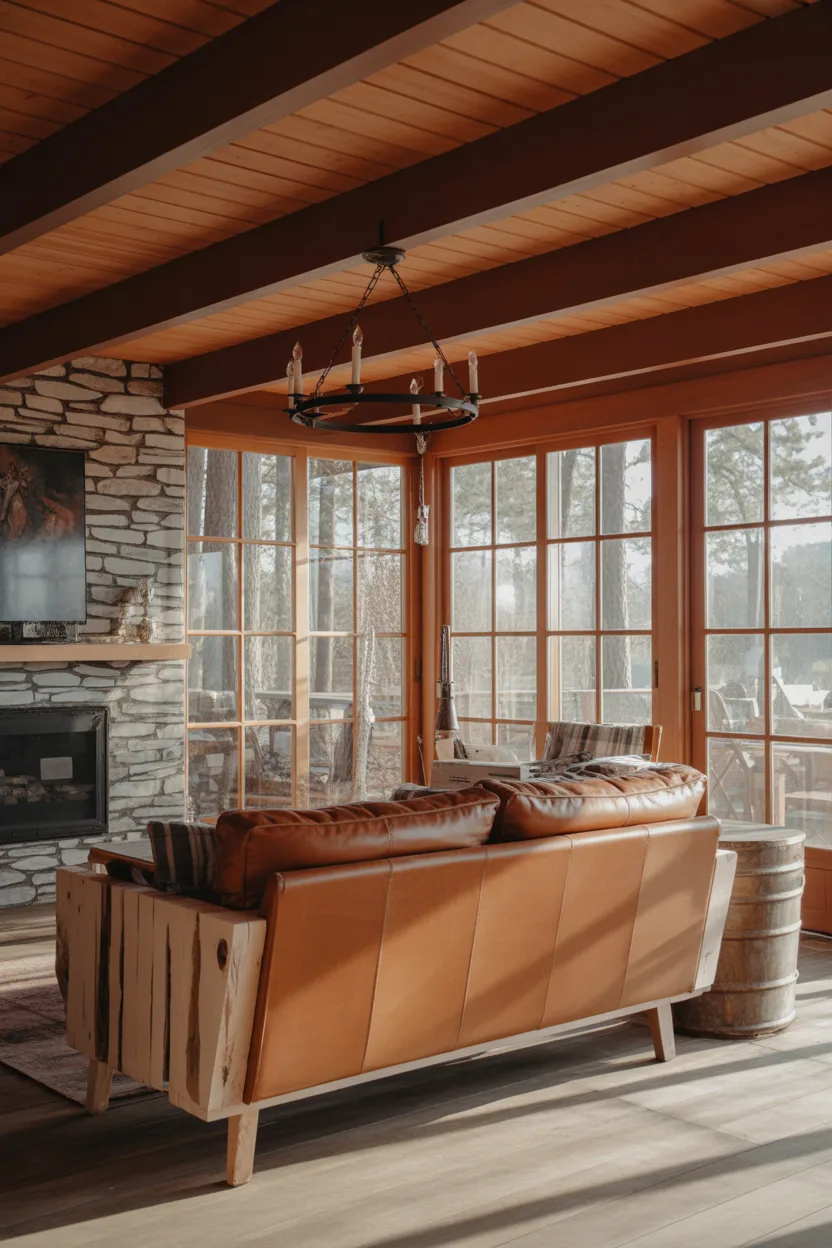
Where this style works best: sunrooms attached to log homes, craftsman-style houses, or any property with a Pacific Northwest, Appalachian, or Rocky Mountain character. Practically speaking, cedar and teak hold up beautifully in humid environments where other woods might warp or swell—making them a smart long-term investment for rooms with high sun exposure and temperature fluctuation. The rustic sunroom is also surprisingly budget-friendly when you source reclaimed materials locally.
9. Tropical Oasis Indoors
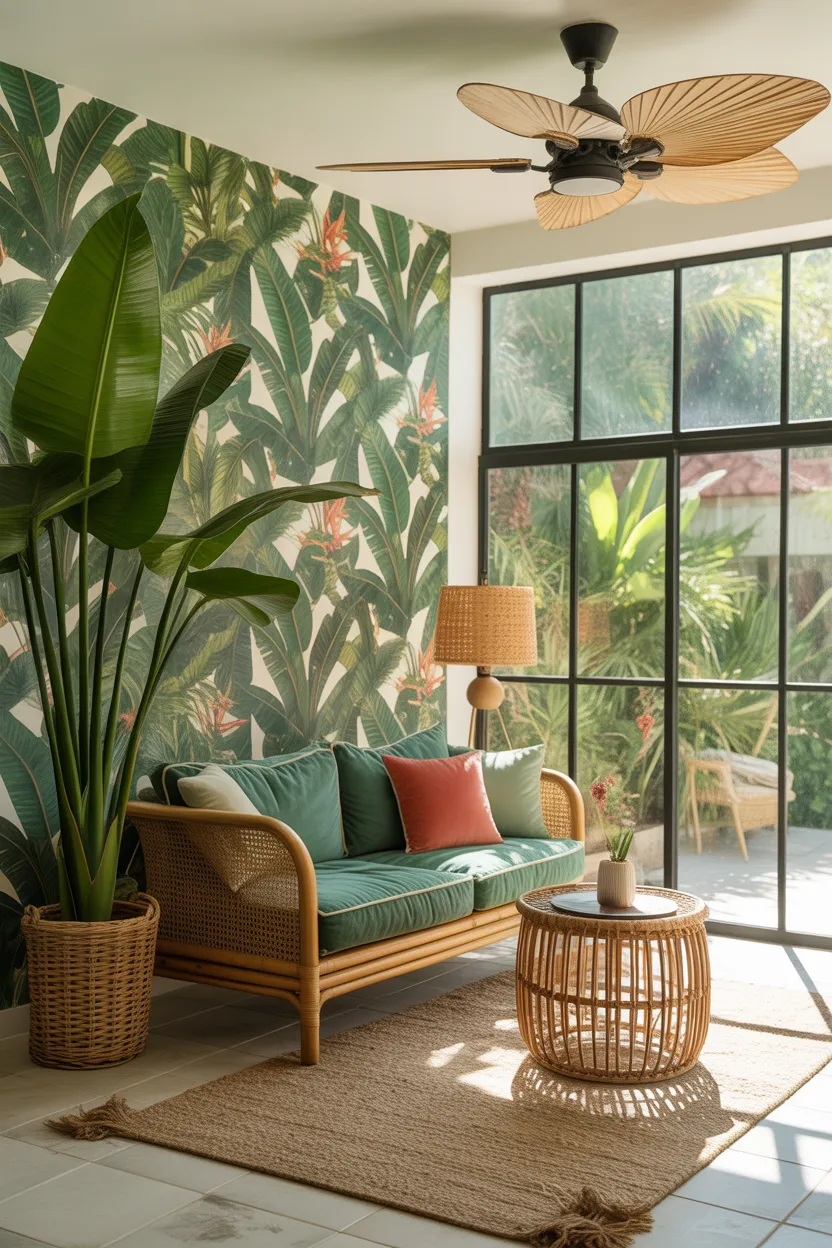
A tropical sunroom is joyful and unapologetically lush—it’s a room that says, “I live here, and I love it.” Bold banana leaf wallpaper or a painted jungle mural can set the scene, while the furniture goes rattan or caned, and cushions explode in palm leaf prints, emerald, coral, and golden yellow. The indoor tropical look doesn’t require a Florida zip code; in fact, some of the most striking examples are found in Minnesota homes, where the contrast between the frost outside and the paradise inside is part of the appeal.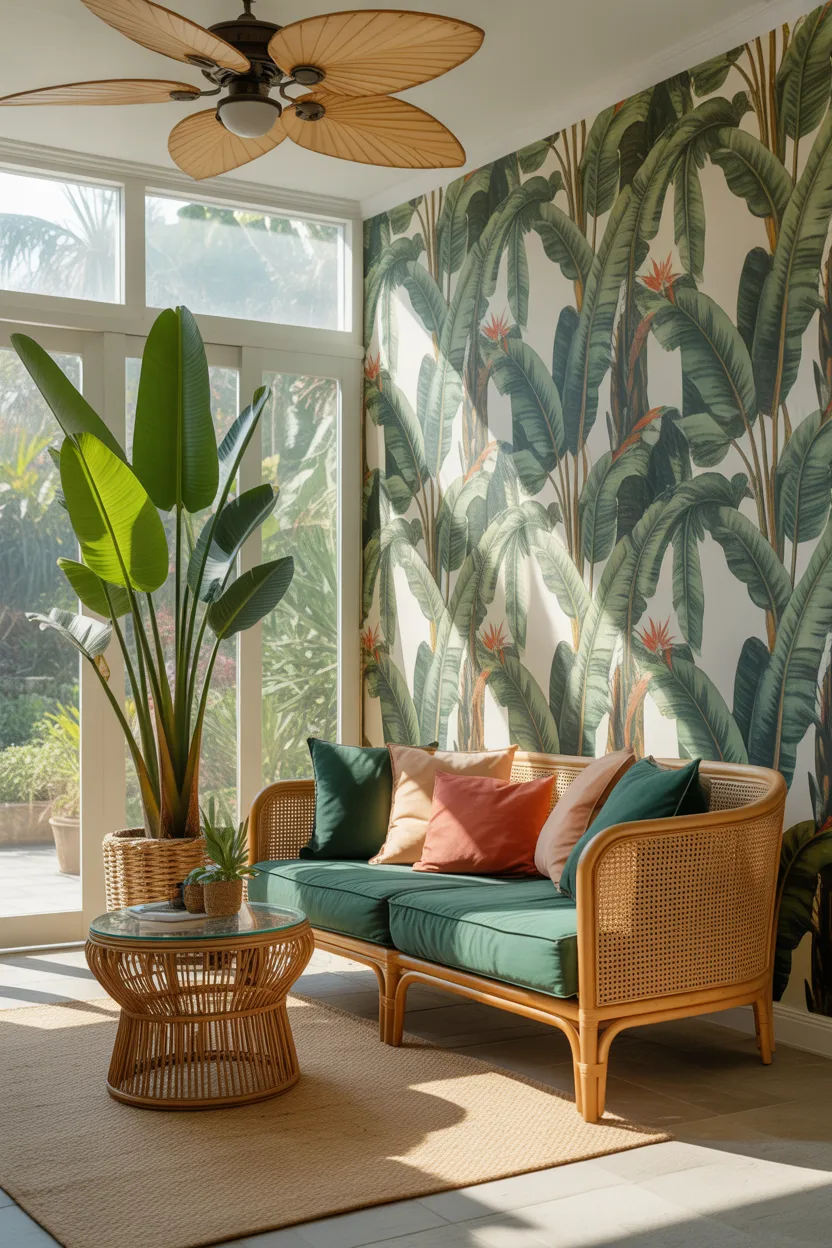
A micro anecdote that captures this style perfectly: a homeowner in Portland, Oregon, converted her rainy-day screened porch into a full tropical sunroom with palm wallpaper and rattan furniture during a particularly grey winter—and found herself in there every single morning for a full year, practically forgetting it was drizzling outside. That’s the power of a well-executed theme. Don’t underestimate the mood transformation that bold pattern and color can achieve.
10. Christmas and Holiday Sunroom Magic
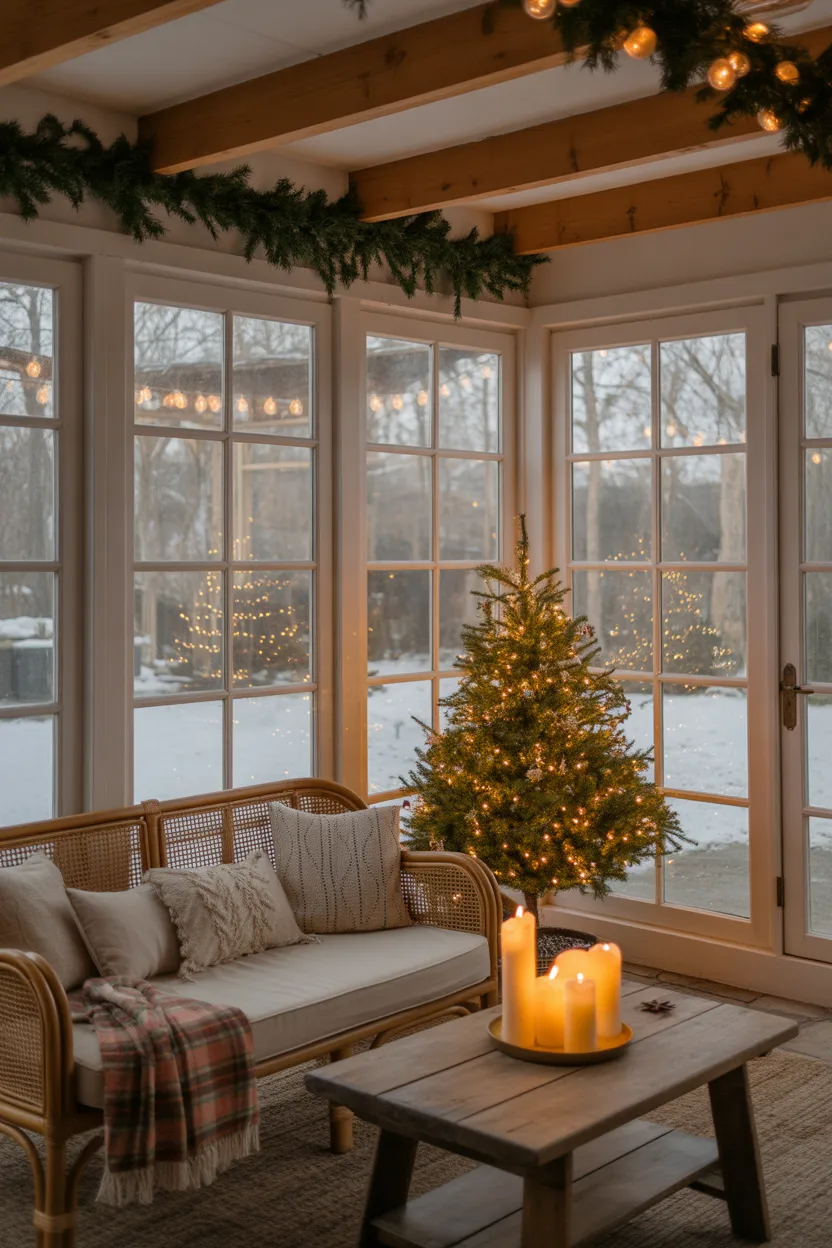
The Christmas sunroom is one of those seasonal moments that Pinterest absolutely loves—and for good reason. A glass-walled room dressed for the holidays is genuinely spectacular: string lights reflected in every pane, garlands of fresh pine draped across ceiling beams, and a small tree wrapped in warm white lights glowing against the night garden outside. The beauty of decorating a sunroom for the holidays is the amplification effect—glass walls multiply every glittering light source and make the space feel like a snow globe from the inside.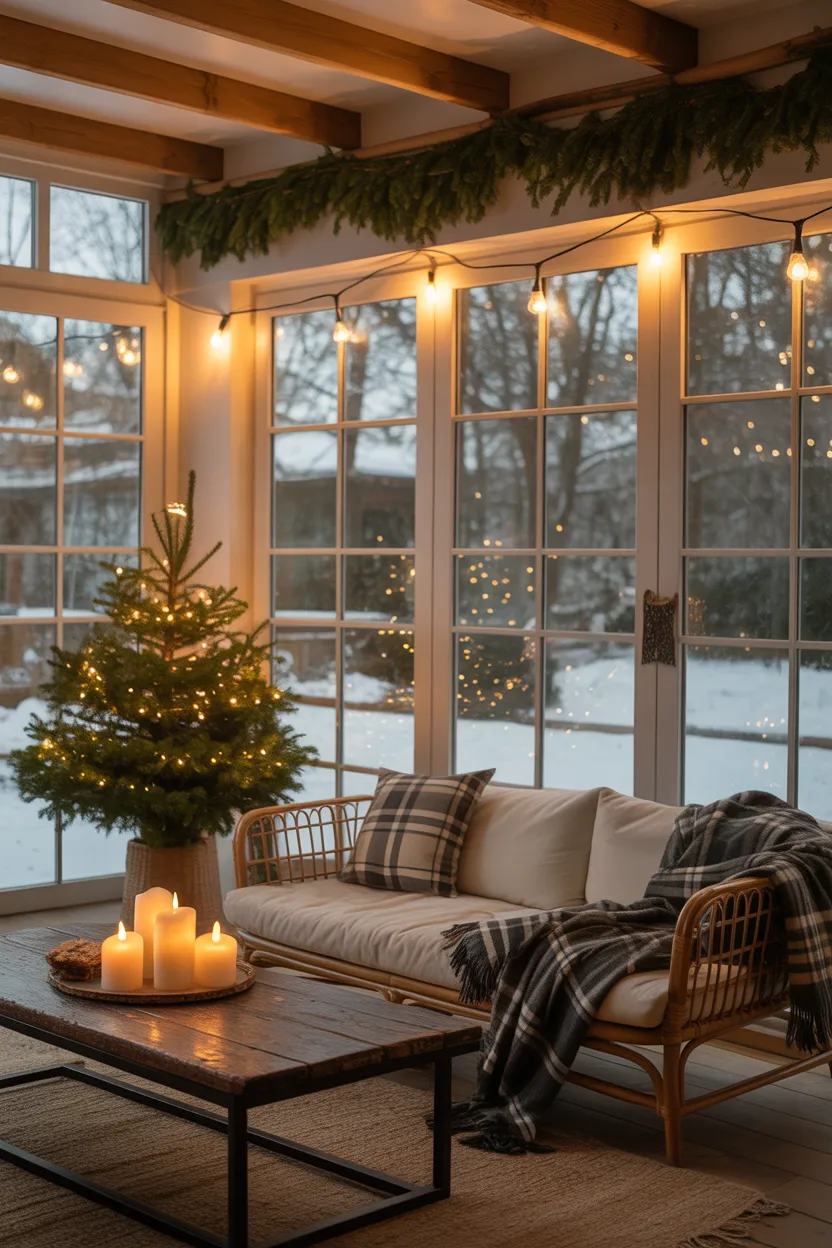
Real homeowner behavior here is telling: families who invest in a beautiful sunroom setup almost universally say the Christmas version becomes their favorite room in the house during December. Many set up the holiday sunroom as the spot for morning coffee and gift wrapping through the whole season. Practically, since sunrooms are often underheated compared to the rest of the home, layering with electric heated throw blankets and a small ceramic space heater makes the Christmas sunroom genuinely usable even in cold climates.
11. Boho-Coastal Hybrid Style
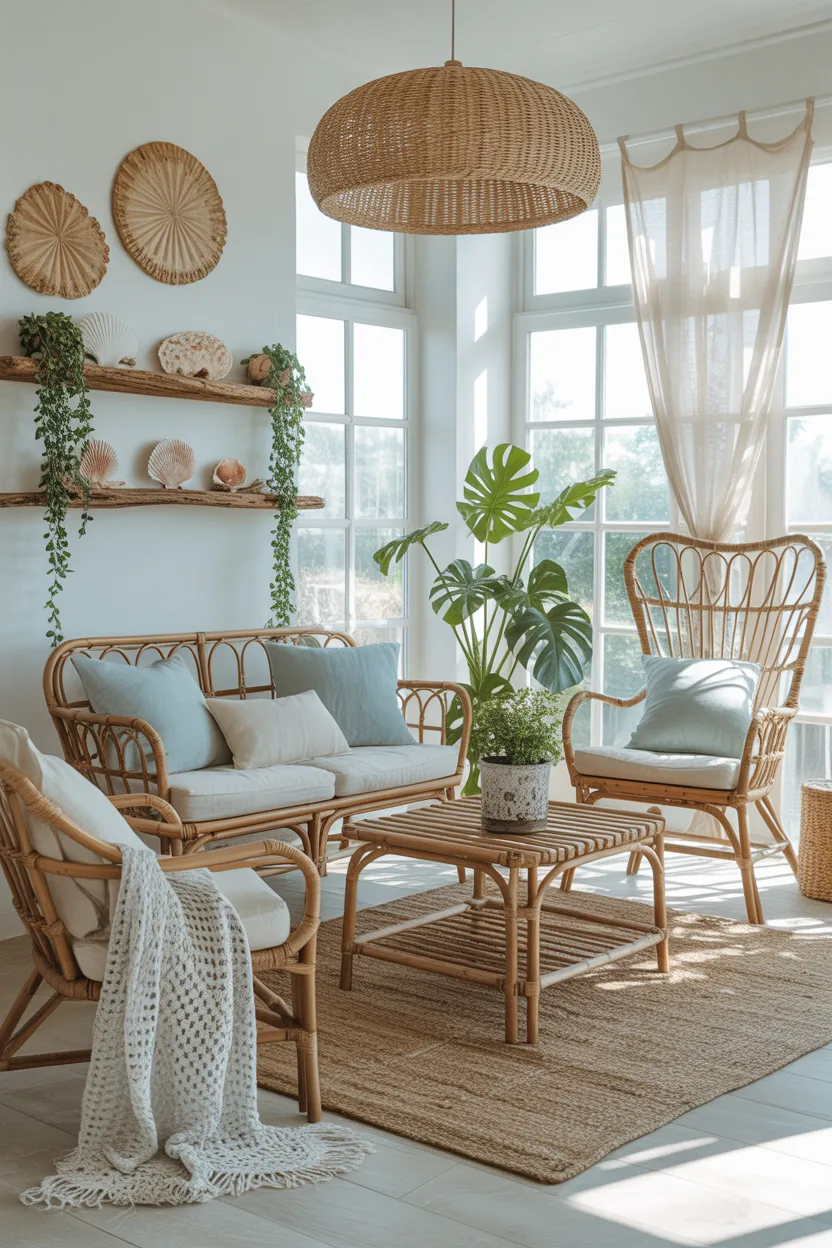
This hybrid brings together the relaxed, free-spirited layering of boho style with the breezy, sun-bleached palette of coastal living—and it might be the most naturally Pinterest-ready look of 2026. Imagine a whitewashed rattan chair draped in a crochet throw, a jute rug layered over whitewashed floorboards, and driftwood shelves holding a mix of shells, trailing plants, and woven baskets. The color story stays in sandy neutrals, ocean blues, and warm whites with occasional pops of terracotta or muted coral.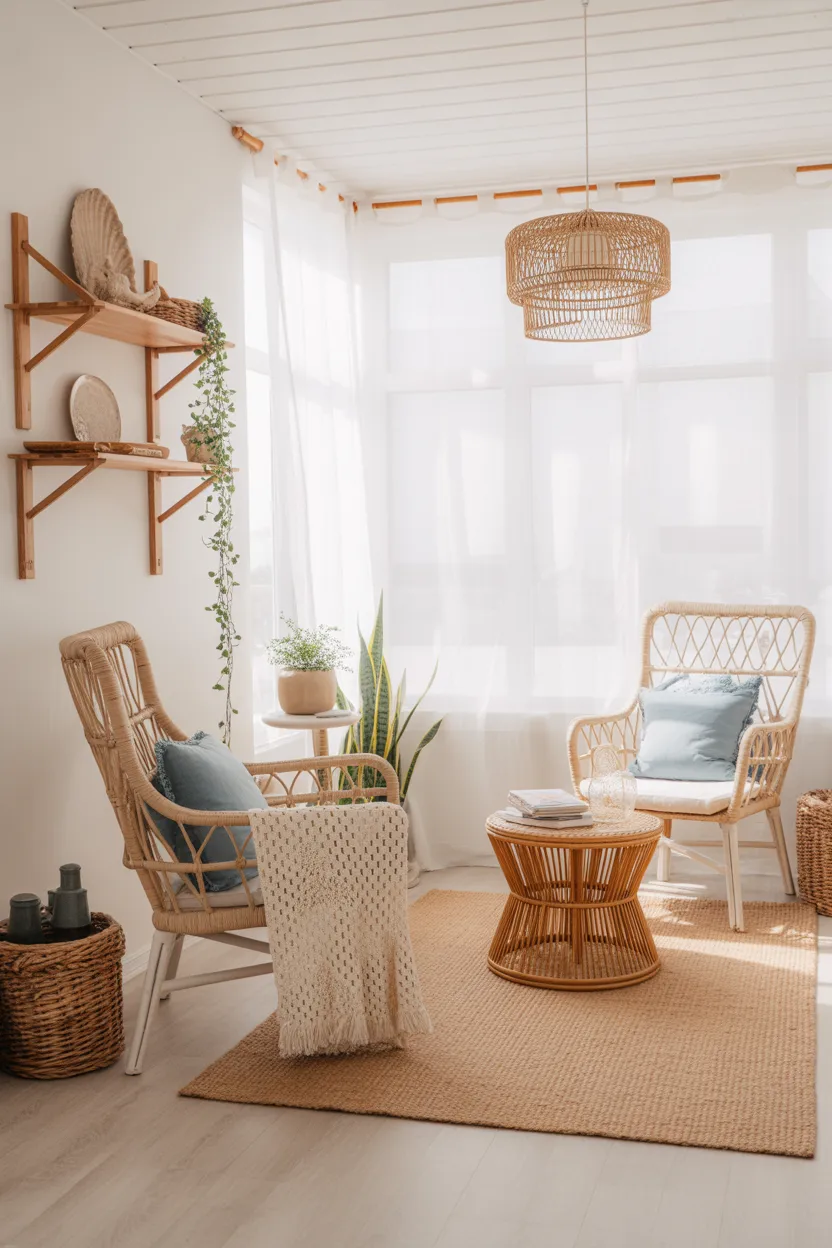
This aesthetic works in almost any sunroom orientation because the palette is inherently light-reflecting—sandy whites and ocean blues bounce sunlight around even in a north-facing room. It’s also one of the most forgiving styles for mixing budget pieces with splurge items. A $30 jute rug from a discount retailer can look completely at home next to a more expensive handmade ceramic vase, because the eclectic layering is the point. This is genuinely democratic decorating.
12. Sunroom as a Dedicated Reading Nook
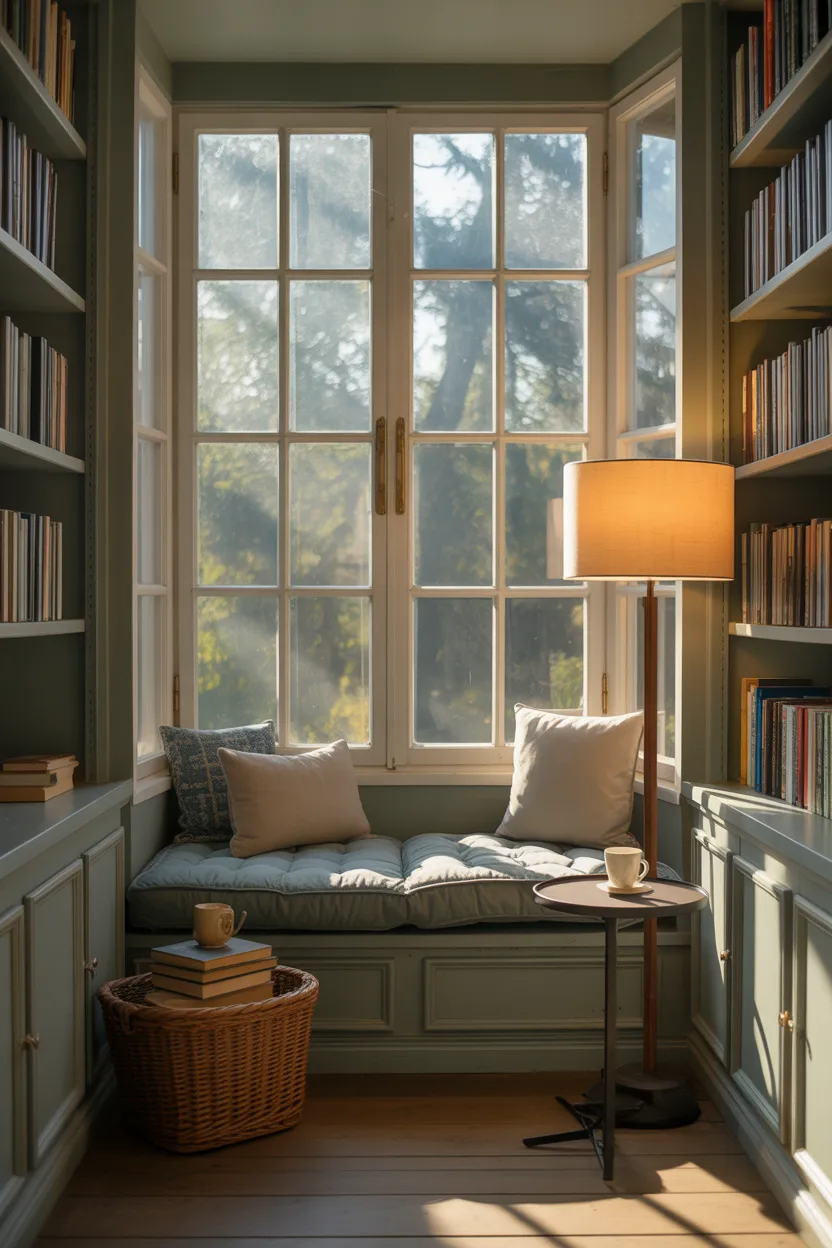
One of the coziest ideas for a small sunroom is dedicating it entirely to reading. A floor-to-ceiling built-in bookcase along the interior wall, a deeply cushioned window seat or chaise lounge facing the glass, a floor lamp with warm-toned bulbs, and a small side table sized exactly for a mug and a bookmark—that’s all you need. Ideally, apartment dwellers love this approach, especially because it carves out intentional purpose from a transitional space that might otherwise collect clutter.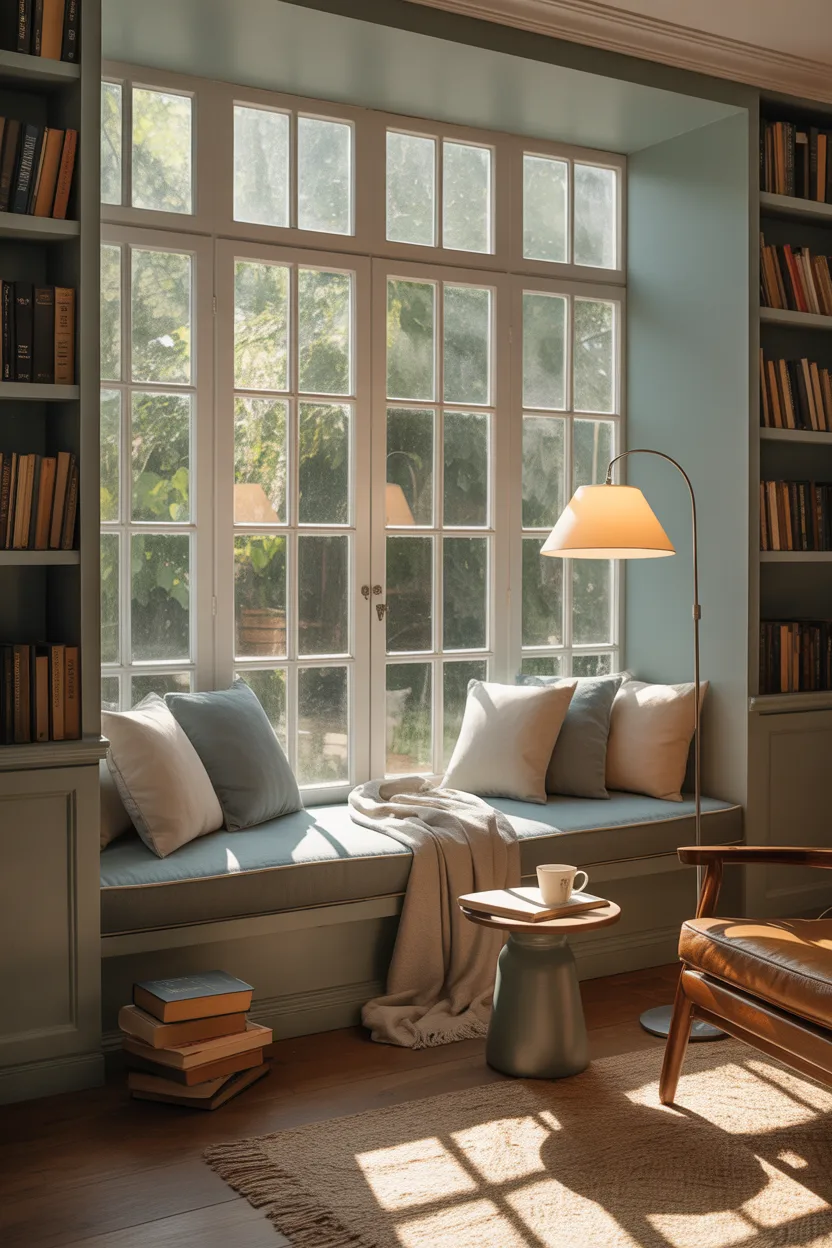
Americans are spending more on home reading spaces than at any point in recent memory—a cultural shift partly driven by a renewed love of physical books and partly by a desire to have screen-free zones in the home. An expert tip: if you’re creating a reading-forward sunroom, invest in UV-filtering window film or solar shades. These protect your books from sun damage while still maintaining that beautiful, light-filled feel. Your spines will thank you in five years.
13. Three-Season Room with Retractable Screens
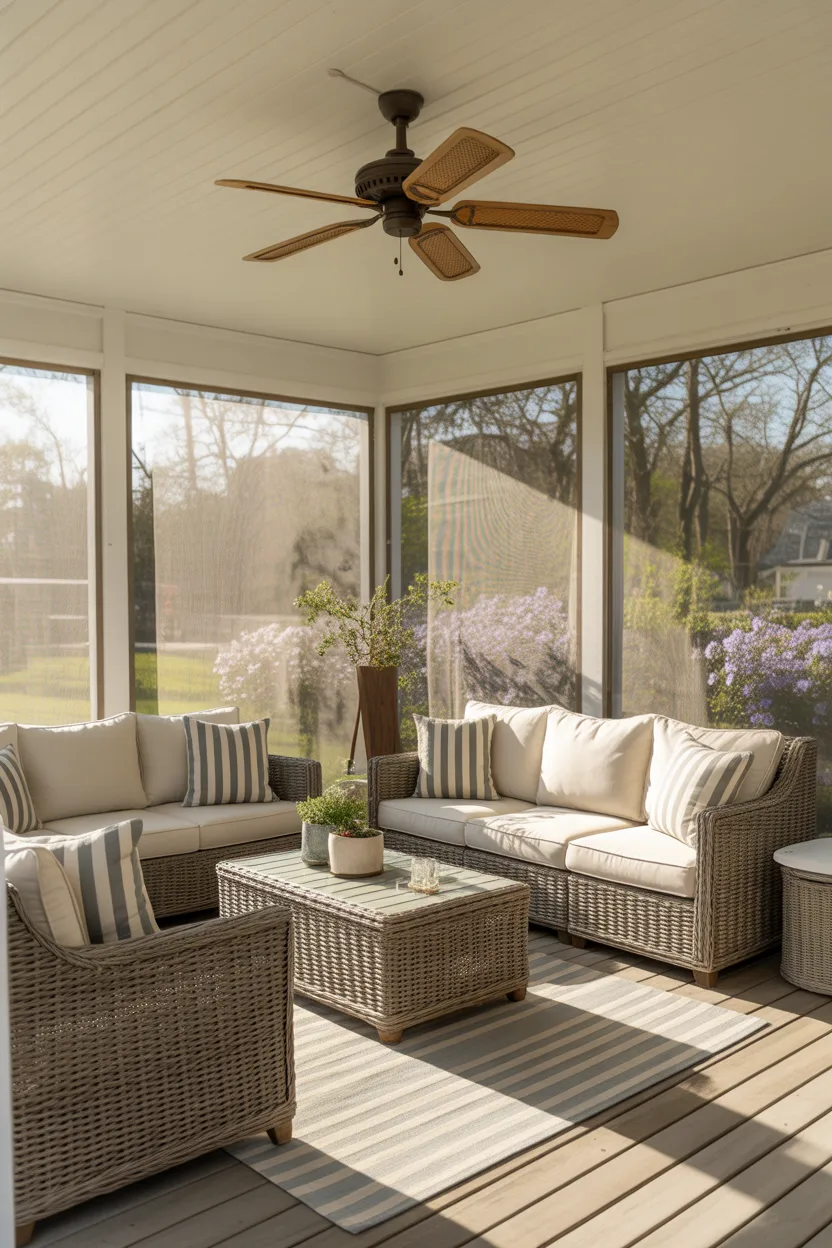
3-season rooms are one of the most practical and rapidly growing home additions across America right now—and in 2026, homeowners are putting serious design thought into them rather than treating them as afterthoughts. A screened or partially enclosed sunroom with retractable screens offers the best of outdoor living without the mosquitoes or the rain. Style it with weather-resistant upholstered furniture, a vintage-inspired ceiling fan, and easy-care outdoor rugs, and you’ve got a room that earns its keep from March through November.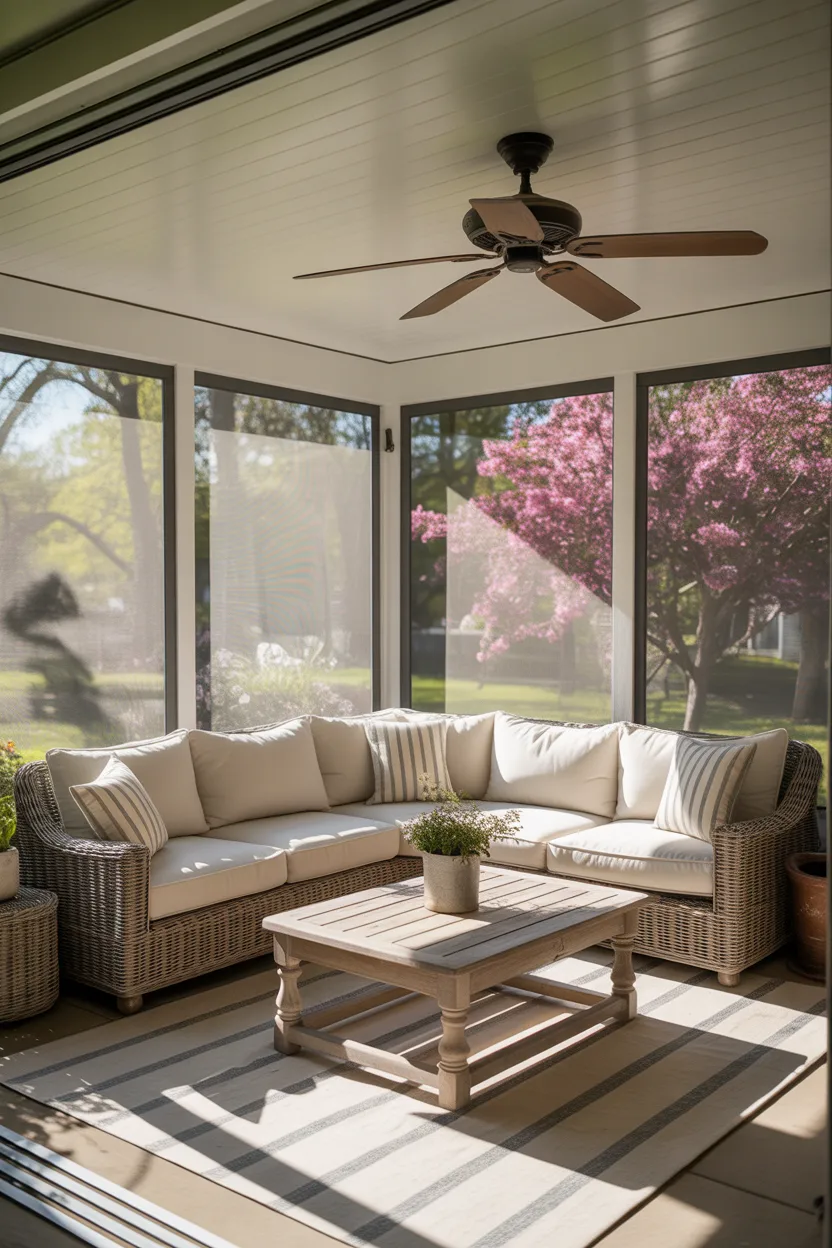
From a budget standpoint, a three-season room delivers a remarkable return on investment—it adds functional square footage to the home without the full cost of a true four-season addition (which requires HVAC and full insulation). Nationally, homeowners report average costs ranging from $8,000 to $25,000 for a well-finished three-season space, compared to $35,000 to $80,000 for a fully climate-controlled sunroom. For many families, the three-season version provides 90% of the enjoyment at 30–40% of the cost.
14. Sunroom Accessories That Make the Space
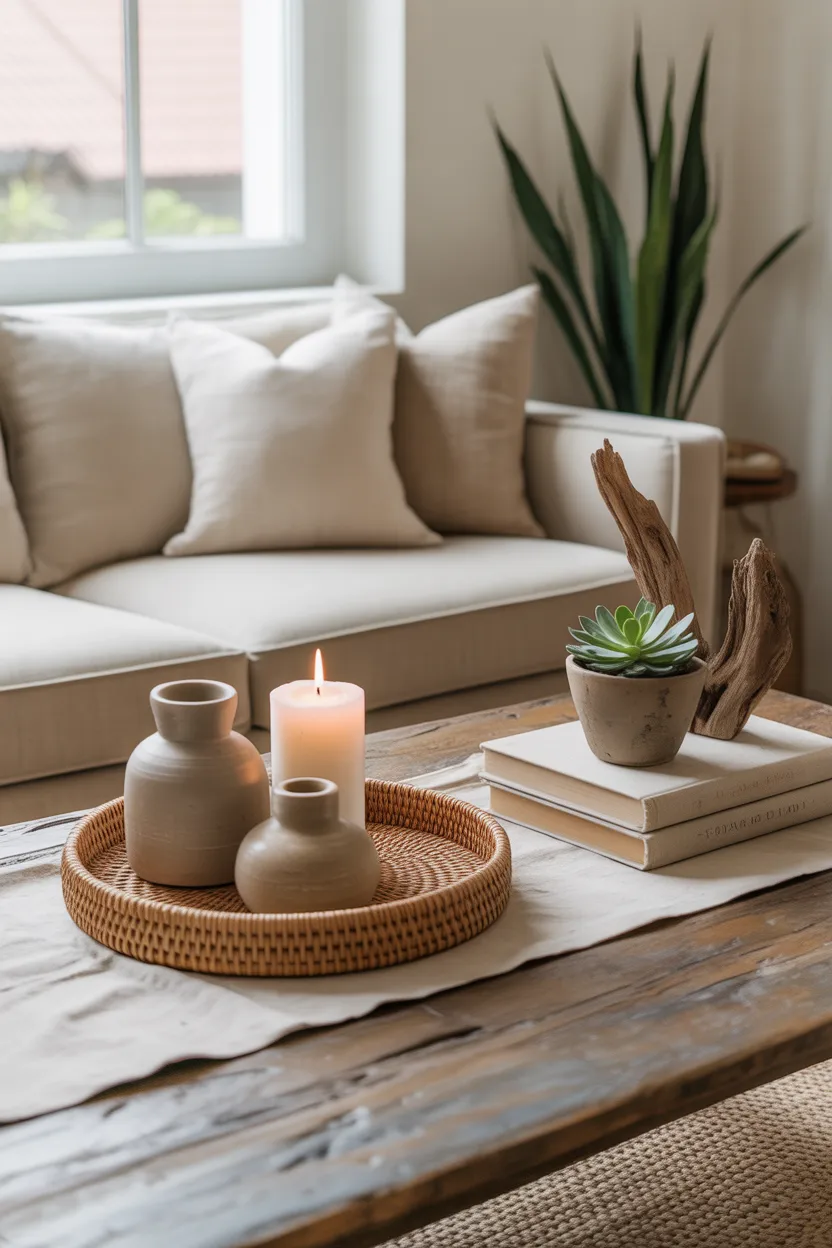
Great sunroom decorating often comes down to accessories—those layered details that transform a well-furnished room into a genuinely beautiful one. Think woven trays, ceramic pitchers, oversized candles in pillar holders, sculptural driftwood pieces, a stack of coffee table books, and an artful arrangement of plants in varying heights. The details should feel personal: a collection of vintage bottles on the windowsill, a hand-thrown mug on the side table. Inspiration for accessories often comes from nature itself—foraged branches, seed pods, and stones from a walk.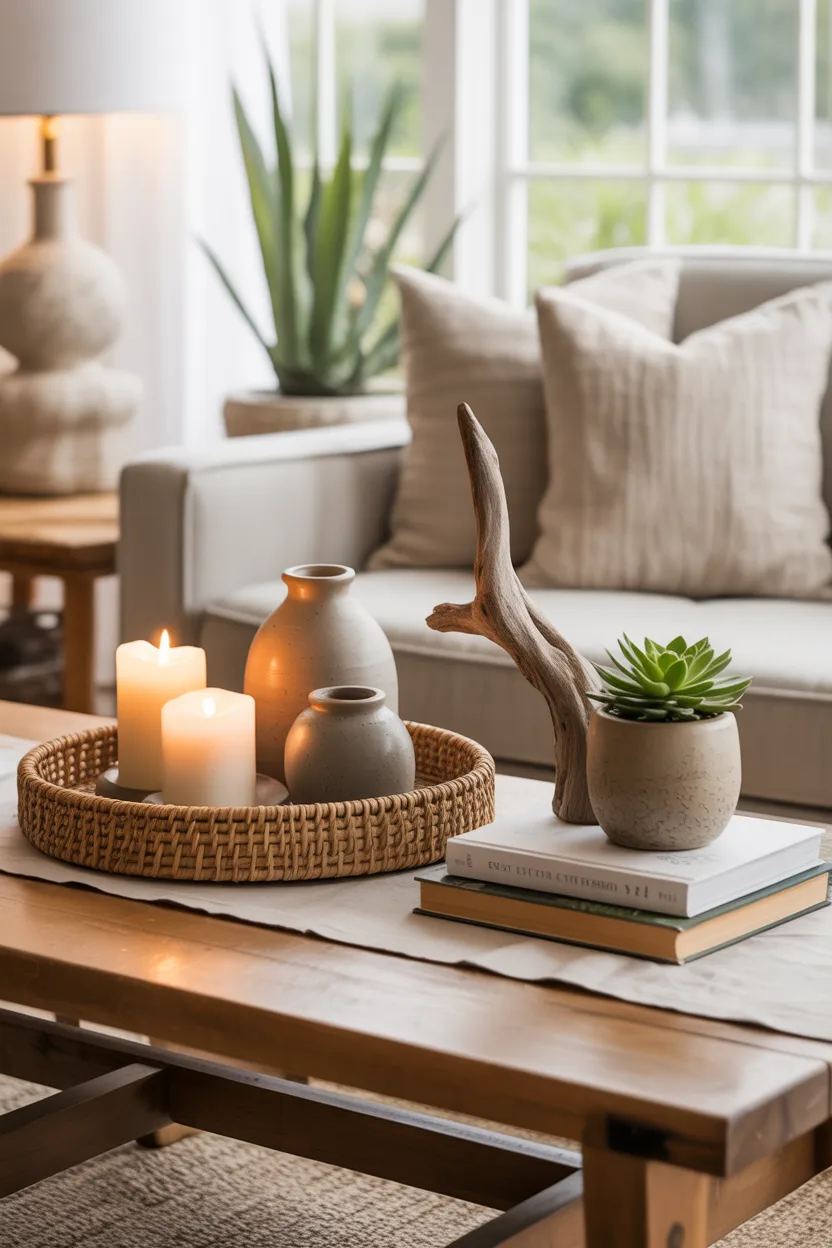
The most common accessory mistake in sunrooms: going too small. A single large statement piece—an oversized lantern, a sprawling monstera, a wide ceramic bowl—reads far better against the scale of glass walls and high ceilings than a collection of tiny items that visually disappear. Interior stylists call this “scaling up for the room,” and it’s especially important in sunrooms where the exterior view competes with your interior for attention. When in doubt, bigger and fewer wins.
15. Indoor Bohemian Garden Room
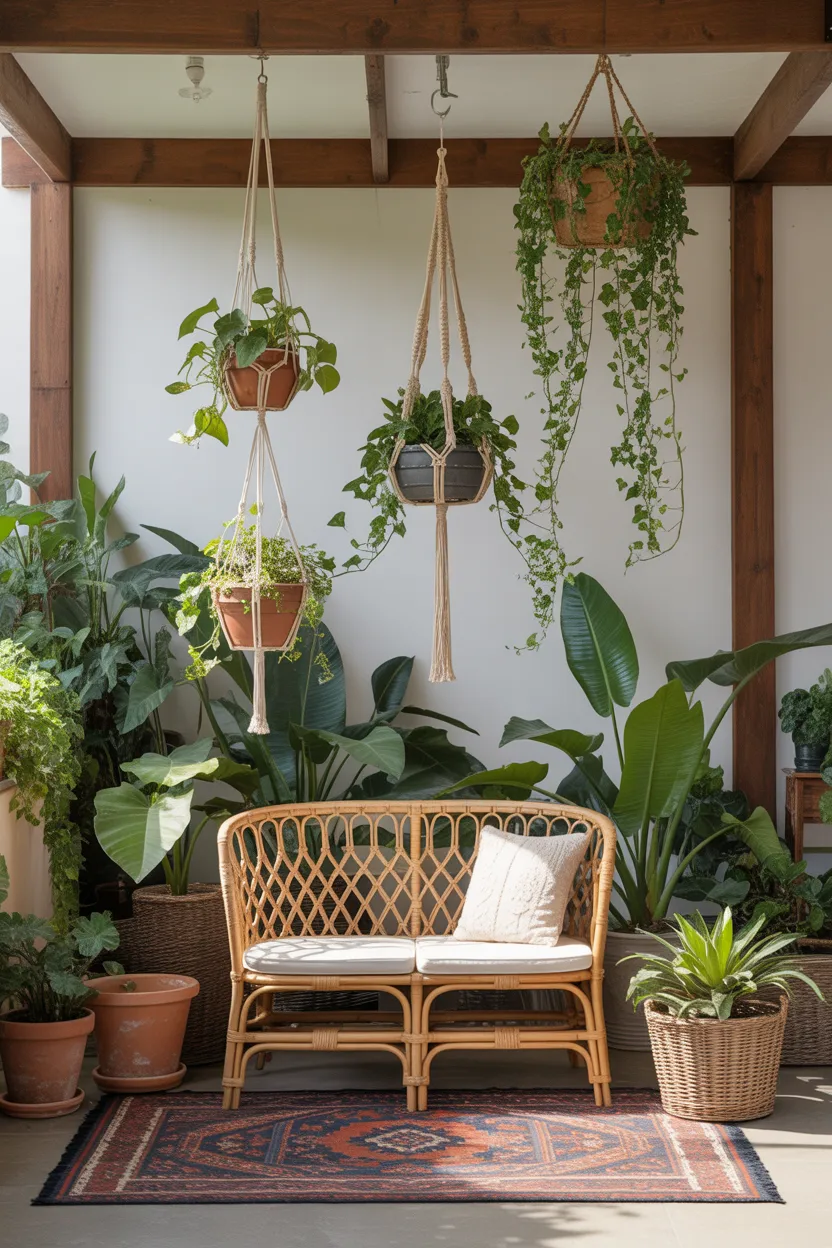
The indoor bohemian garden room takes the best elements of boho decorating and floods them with plants until the room feels more like a greenhouse than a living space—in the best possible way. Macramé plant hangers hold trailing ivy and spider plants at different heights, rattan furniture disappears into the greenery, and the floor is a layered patchwork of kilim rugs and terracotta pots. This is a style that appeals equally to dedicated plant parents and to anyone who finds the visual noise of greenery genuinely calming.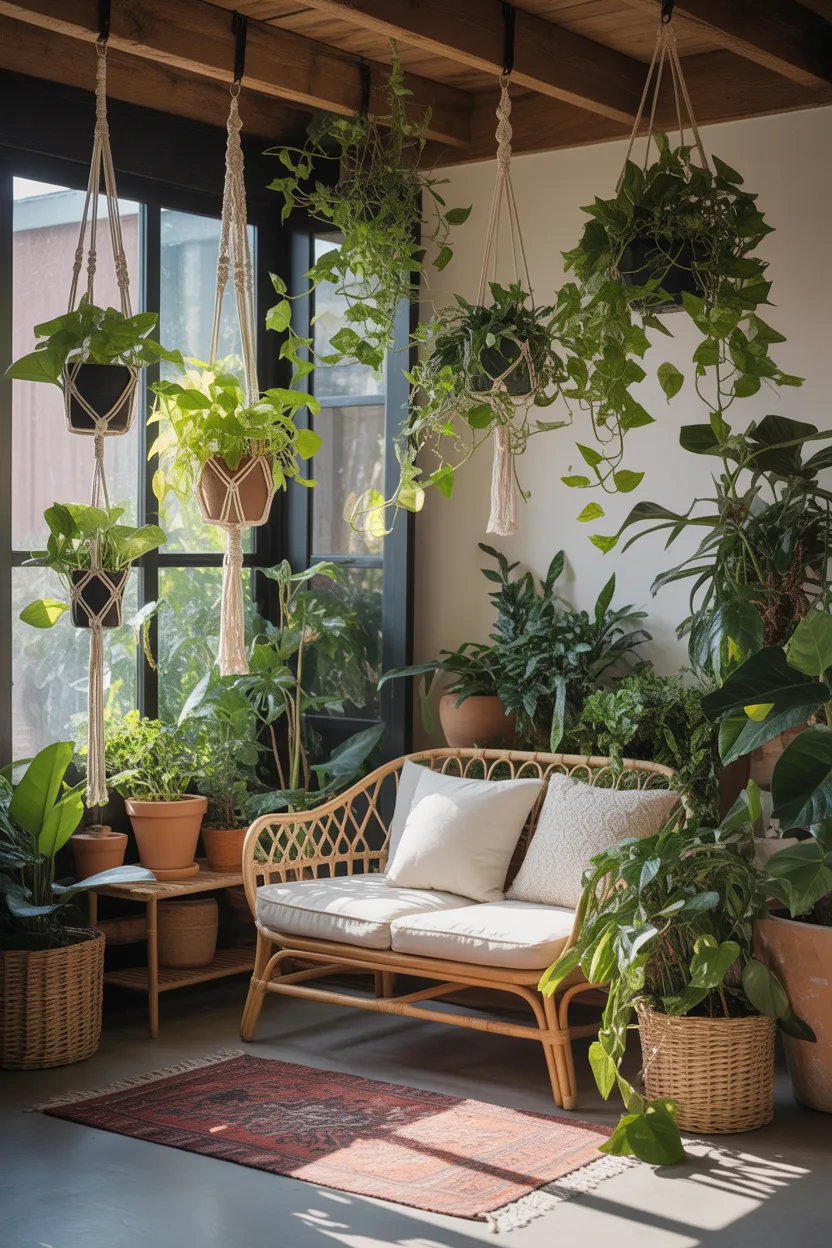
The indoor boho garden room is one of the most searched sunroom ideas among younger homeowners (ages 25–38) who come to Pinterest specifically for plant content. What makes this style particularly satisfying is that it’s inherently evolving—the room genuinely looks different as the plants grow, trail, and fill in. Every few months, you have a new room. That sense of living change is hard to replicate with static décor, and it’s a big part of why plant-forward interiors keep dominating social media year after year.
16. Modern Apartment Sunroom on a Budget
Not every sunroom is a grand glass addition—many city dwellers work with an enclosed balcony, a large bay window alcove, or a bright bonus room that functions as an apartment sunroom. The modern approach for these smaller spaces is smart: a bistro table and two sleek chairs, a few strategically placed floor plants, string lights along the frame, and a tightly edited palette of white and warm wood. Small doesn’t mean less—it means more intentional.
Budget angle: a full apartment sunroom refresh can happen for well under $500 if you shop strategically. A secondhand rattan chair ($40–$80 on Facebook Marketplace), a budget-friendly indoor plant or two ($20–$40 at a local nursery), solar-powered string lights ($15–$25), and a simple woven throw ($25–$50) can completely transform the space. The real investment here isn’t money—it’s editing. Resist the urge to fill every inch, and your small sunroom will always look curated rather than cramped.
17. The Vintage Bohemian Mix
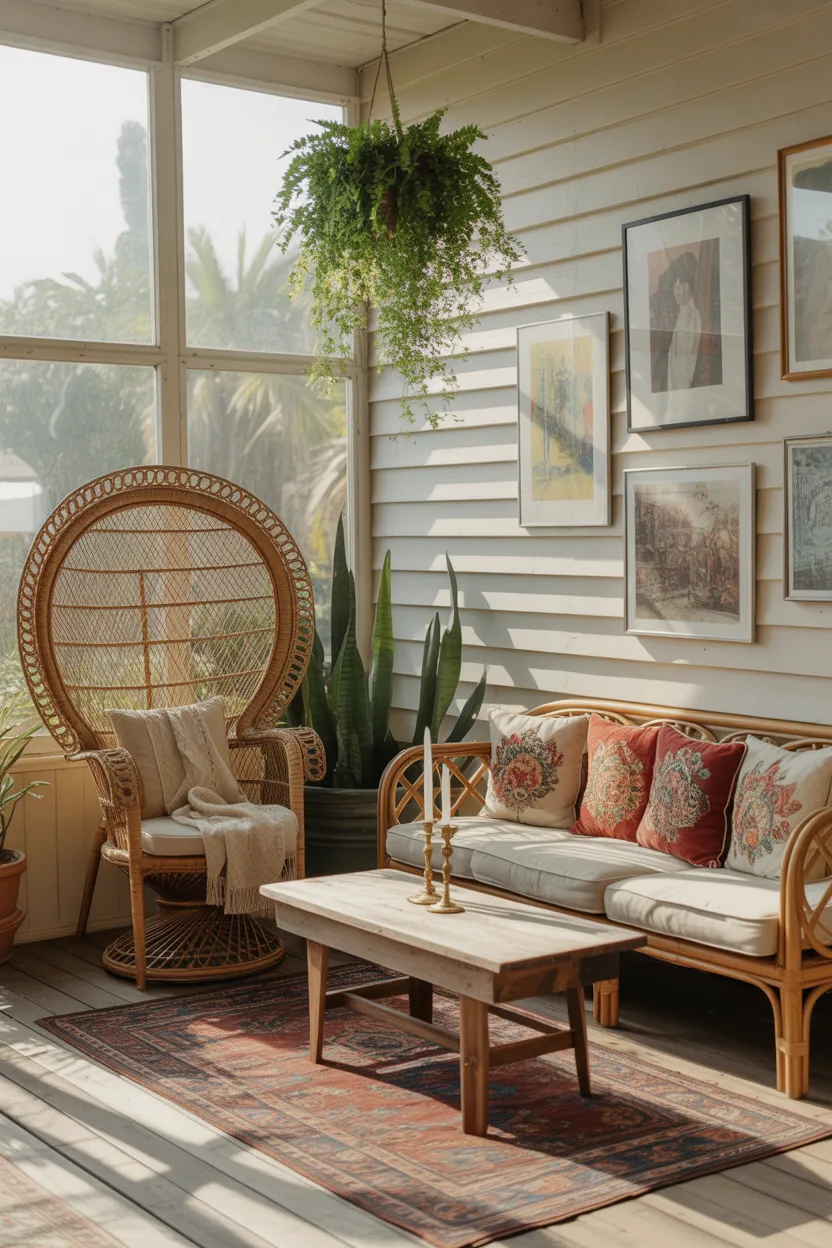
When vintage and bohemian sensibilities collide in a sunroom, the result is layered, characterful, and completely one-of-a-kind. Picture a 1960s cane peacock chair draped with a handwoven throw, beside a low rattan sofa topped with antique embroidered pillows. A faded Turkish rug anchors the floor, a collection of mismatched vintage brass candlesticks clusters on a reclaimed wood table, and the walls display a casual salon-style arrangement of eclectic art. Nothing matches—and everything works.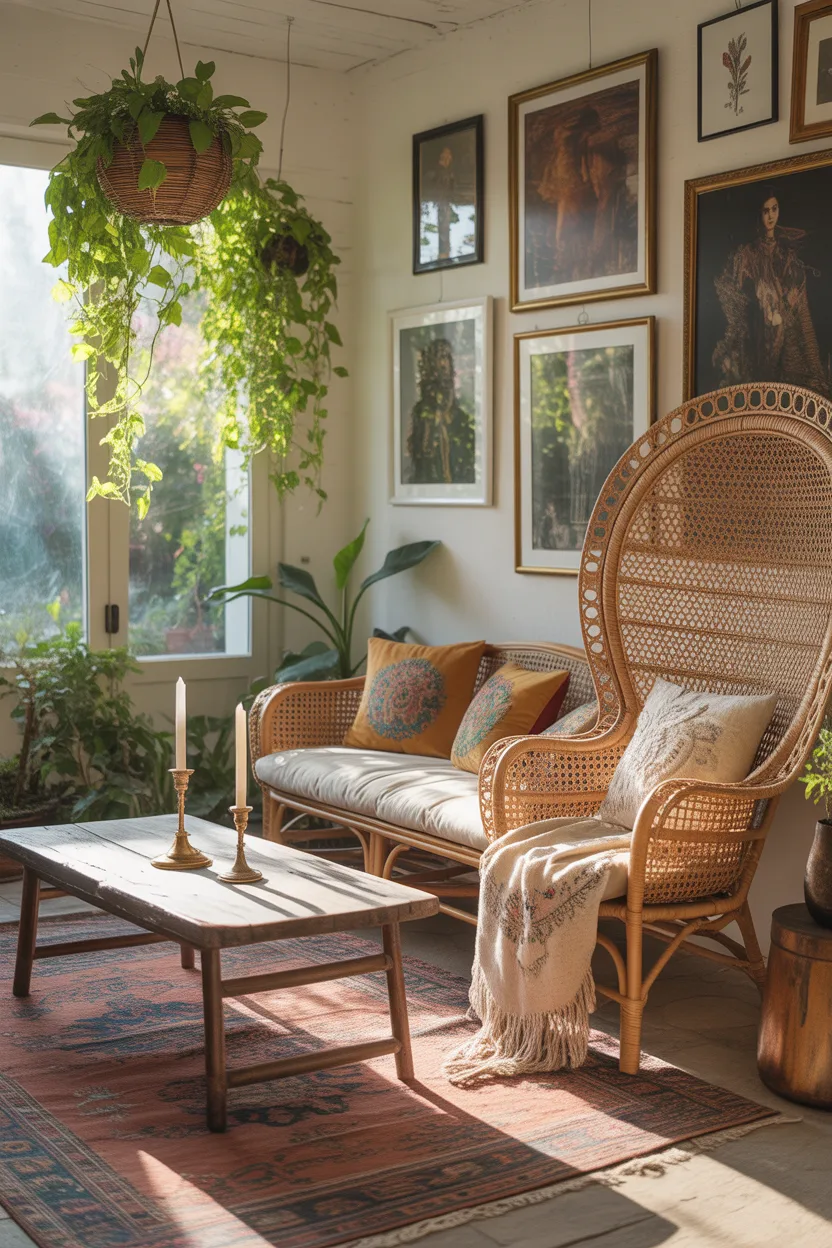
The American appetite for this mixed style is growing—partly as a reaction to years of very clean, very uniform “Instagram interiors.” People are craving rooms that feel individual, irreplaceable, and impossible to replicate. The practical challenge of vintage boho is knowing when to stop. A useful rule from experienced stylists: once the room makes you feel slightly overwhelmed when you walk in, remove three things. You’ve likely gone one layer too far, and restraint is what separates “collected” from “cluttered.”
18. Sunroom Inspired by Nature: Biophilic Design
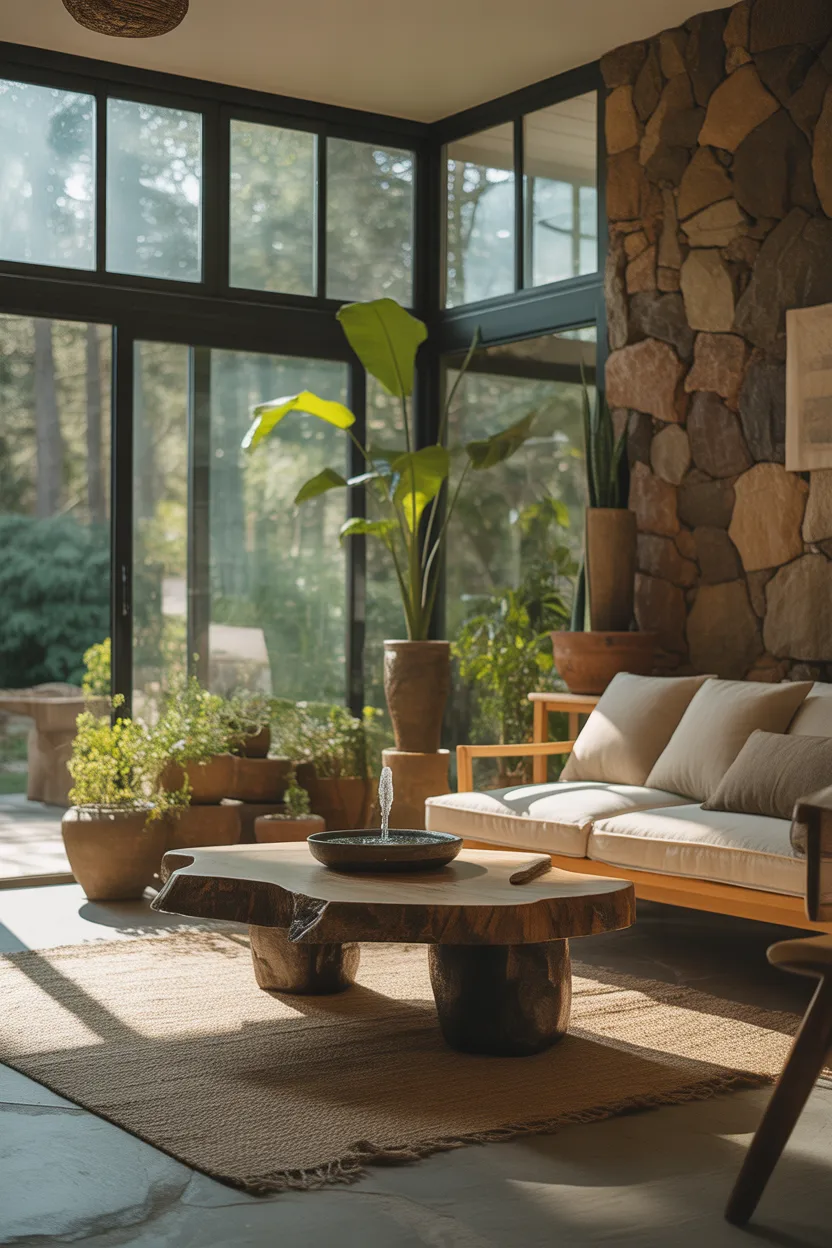
Biophilic design—the intentional integration of natural elements into living spaces—is one of the most talked-about interior trends of the decade, and the sunroom is its natural home. Here, the approach goes beyond just adding plants: it means using natural stone, unfinished wood, water features (a small tabletop fountain), raw linen, and materials with visible grain and texture. The palette comes entirely from nature: forest green, warm clay, stone gray, birch white, and soil brown. Ideas for indoor nature connection are the design brief.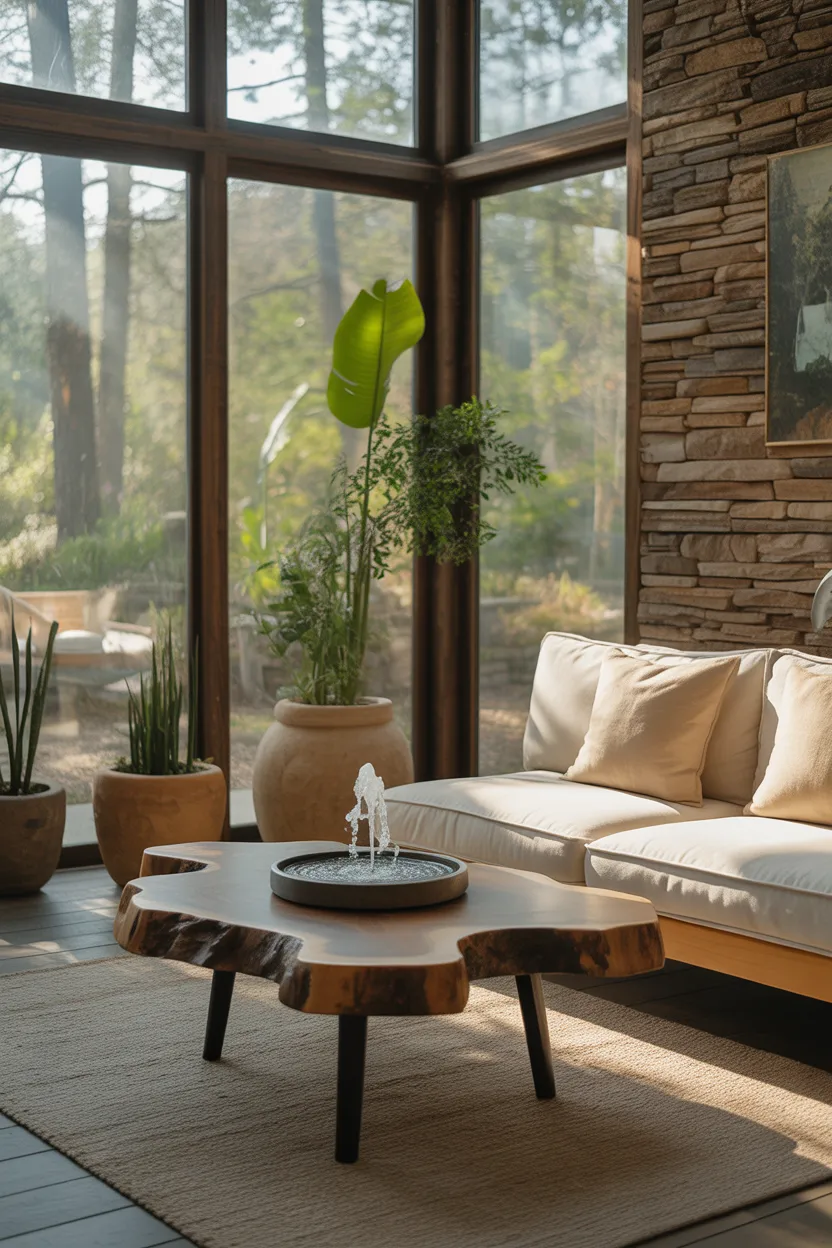
Research in environmental psychology consistently supports what anyone who’s ever sat in a plant-filled, sunlit room already intuitively knows: natural elements reduce cortisol, lower blood pressure, and improve focus and mood. In an American culture of chronic overscheduling and screen fatigue, the biophilic sunroom isn’t just decorating—it’s an act of intentional self-care. Design it like a space for restoration, not just aesthetics, and you’ll find yourself actually using it every single day.
19. Farmhouse Cozy with Reclaimed Wood
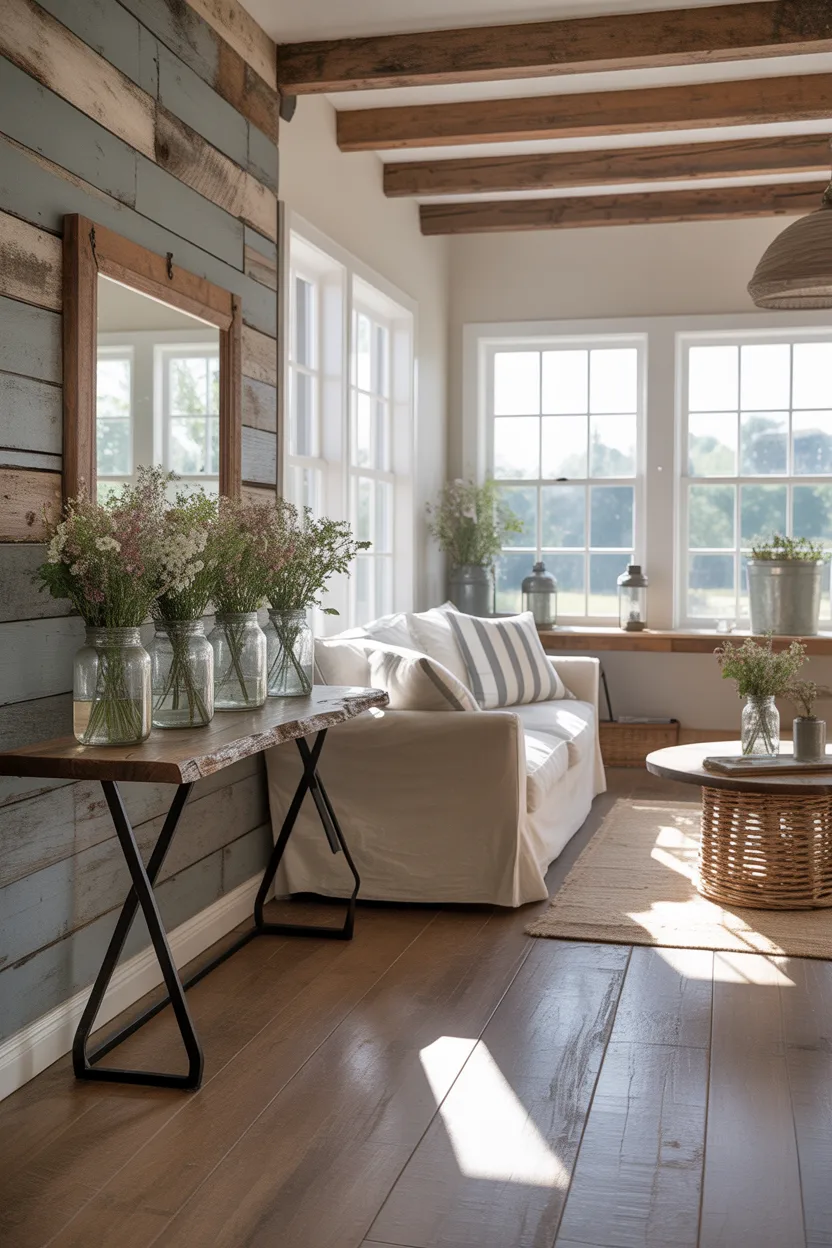
Take classic farmhouse style and dial up the warmth with reclaimed wood elements—a barn-door accent wall, a live-edge console table, and rough-hewn ceiling beams—and you get something deeply satisfying: a sunroom that feels like it grew there. Pair the reclaimed wood with soft white linen, cotton ticking stripe cushions, and iron hardware, and the result is cozy without being fussy. Mason jar vases, galvanized buckets of wildflowers, and worn leather accents complete the picture.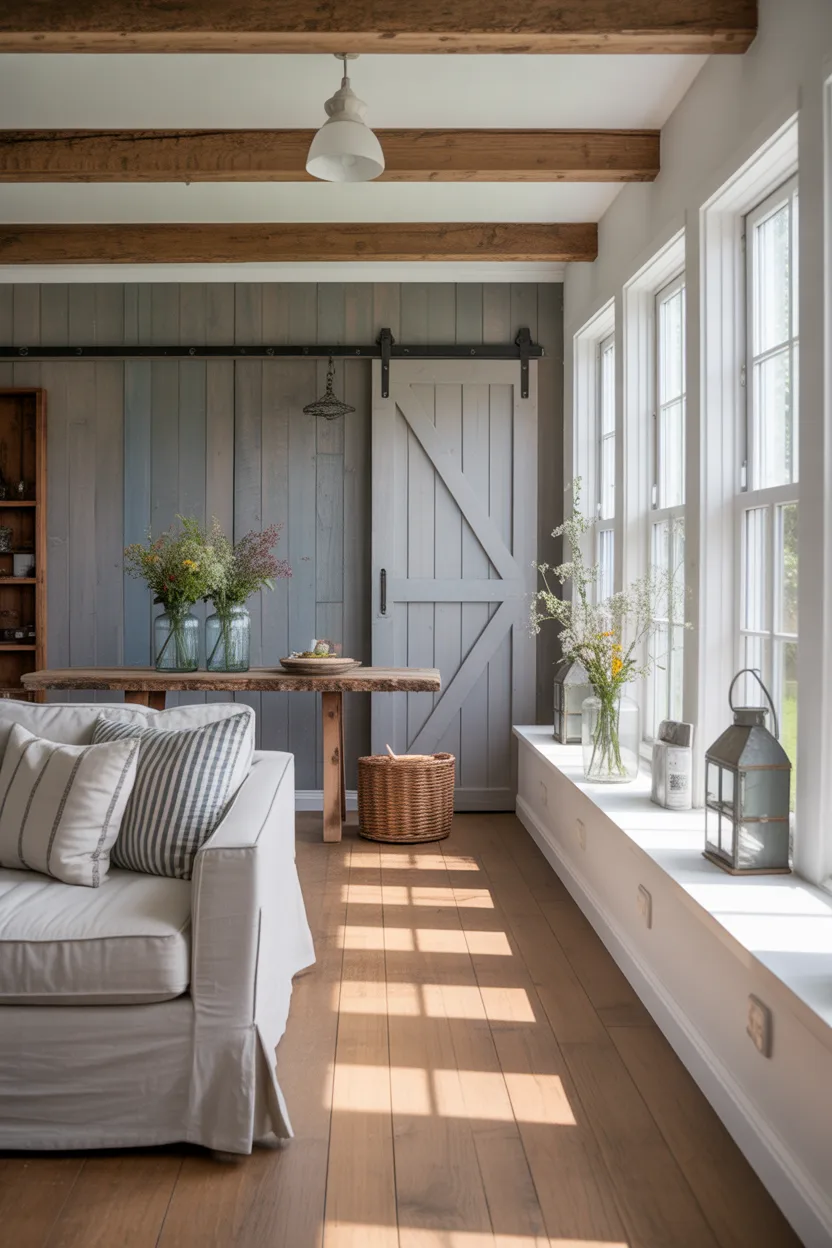
This style has an exceptionally broad demographic appeal—it resonates with homeowners from their late 20s through their 60s and across geographies from Vermont to Montana to Texas Hill Country. One thing to know before buying reclaimed wood furniture online: quality varies dramatically. If possible, purchase from a local salvage yard where you can inspect the material in person. True reclaimed wood should have nail holes, saw marks, and color variation—signs of genuine age rather than an artificially distressed finish.
20. Modern Tropical Meets Glass Architecture
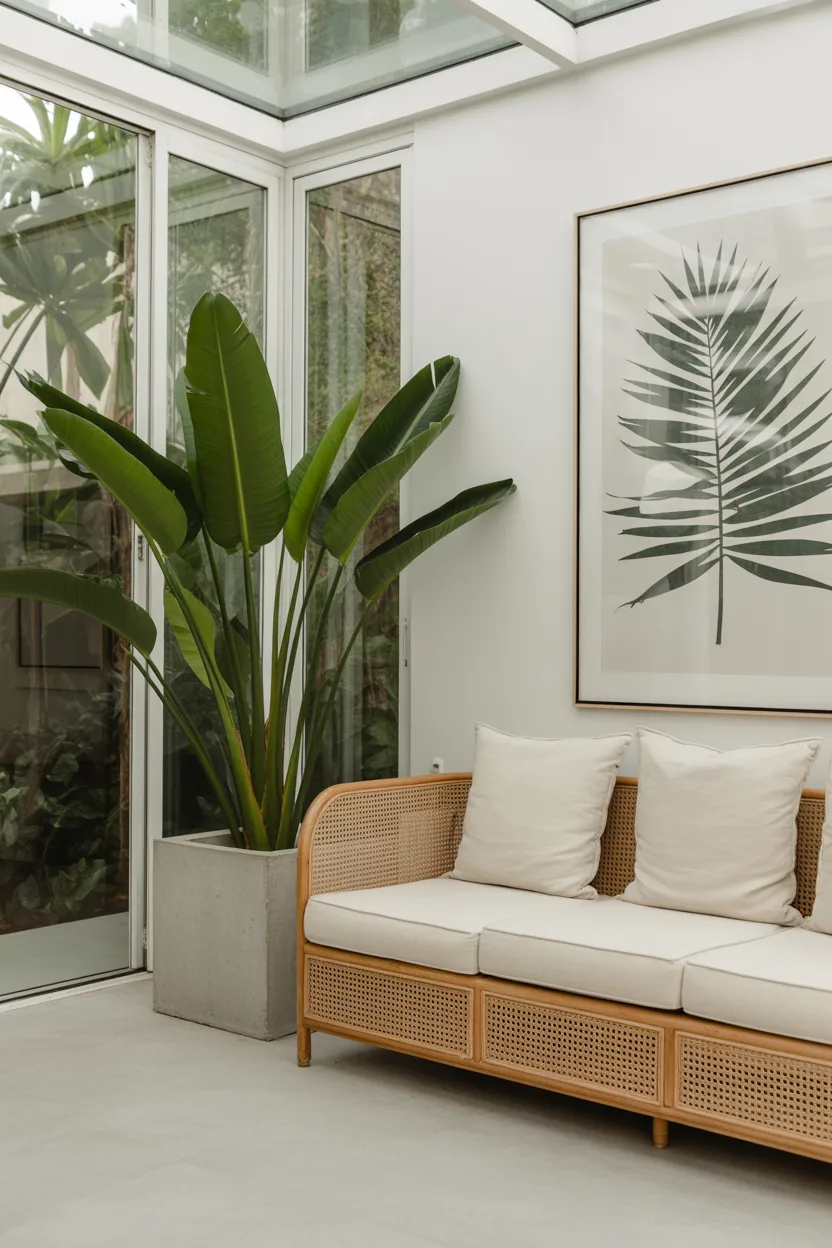
This is the elevated version of tropical design—where tropical maximalism meets ideas of modern restraint and glass architecture. Think a sculptural bird of paradise in a minimalist concrete planter, cane furniture in a natural finish (no bright cushions—just simple linen in cream or warm white), and a single statement palm-leaf art print on a crisp white wall. The plants do the talking; the furniture stays quiet. Floor-to-ceiling glass amplifies the outside-in effect, making the greenery feel endless.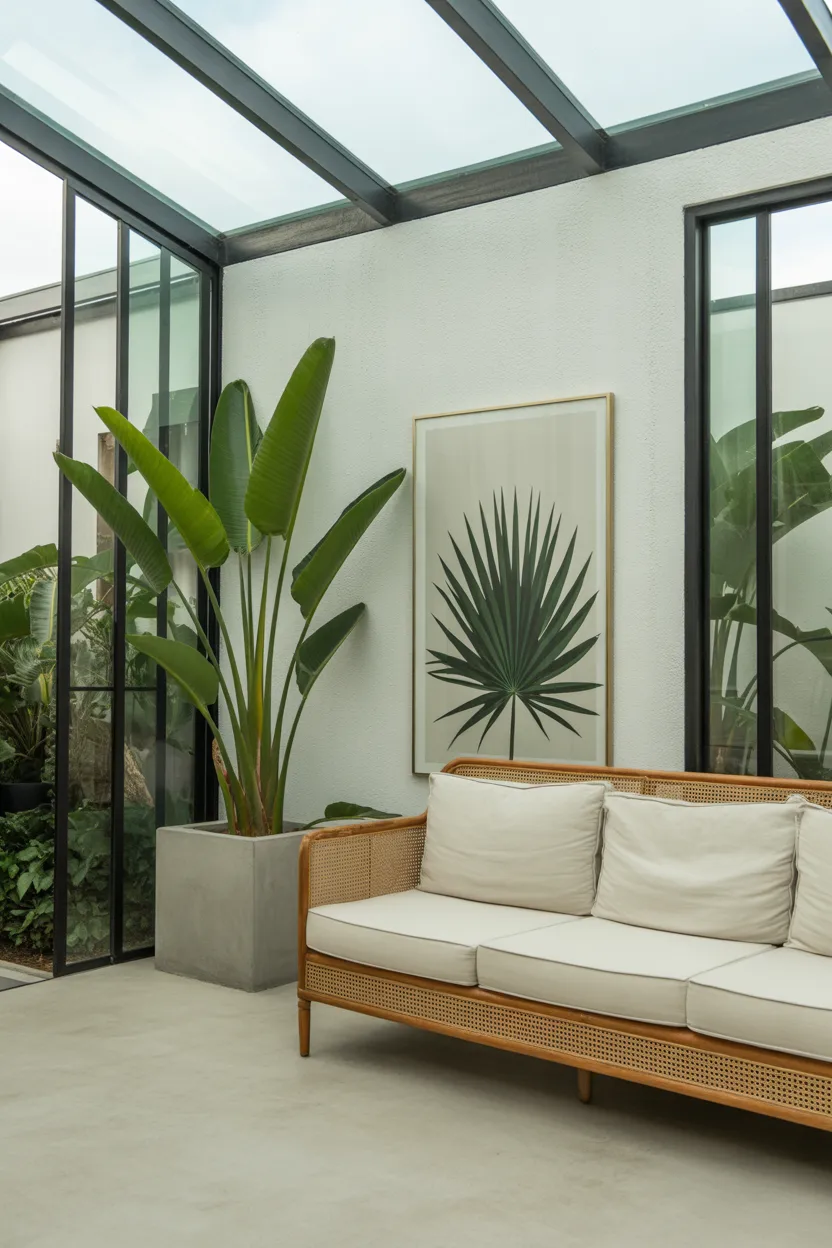
This is a style that particularly suits newer construction with large glass spans and minimal architectural detailing—spaces where too-busy décor would compete with the bones. A design principle worth noting: when you go “modern tropical,” commit to it. The look falls apart when you start adding farmhouse or boho accessories that fight the clean lines. The discipline is to let the plants be the pattern and the glass be the canvas. When you do that, the room practically designs itself.
21. The Vintage Industrial Sunroom
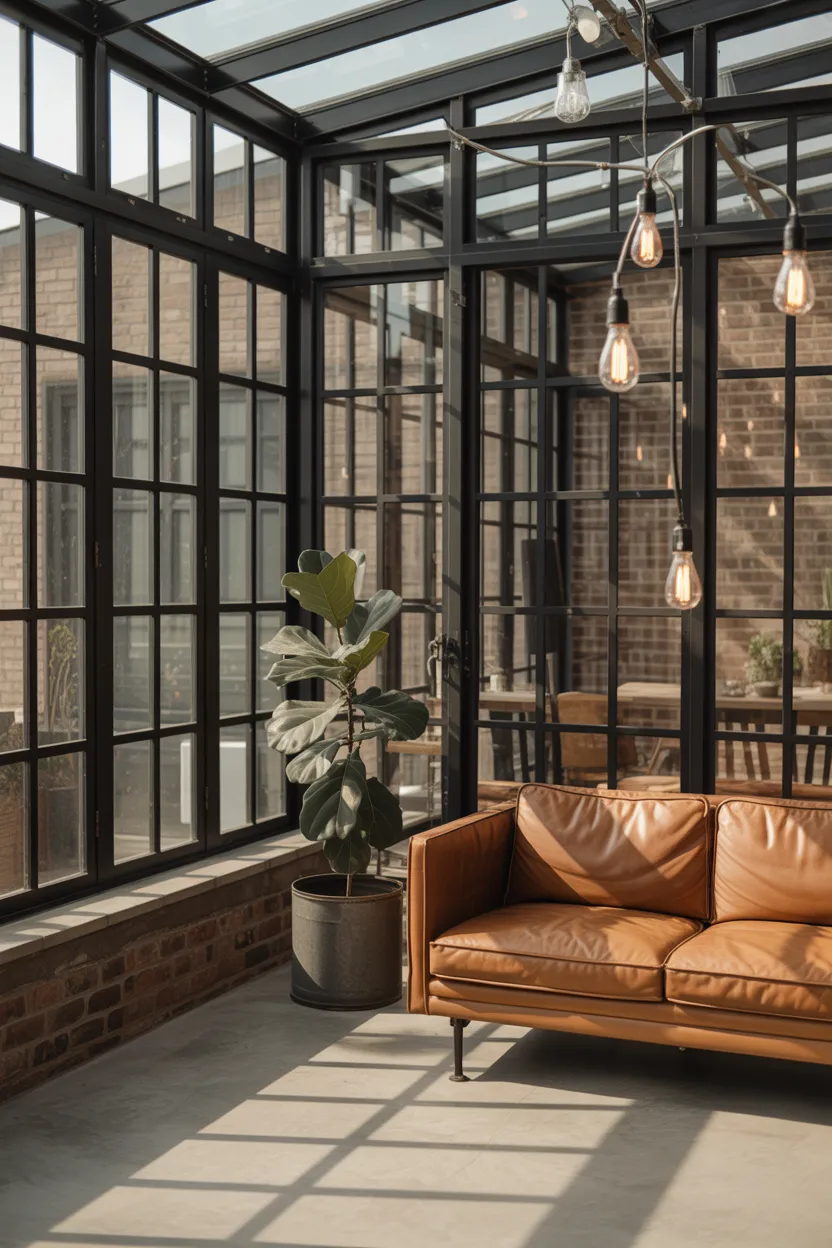
Industrial meets sunroom might sound unexpected—but a vintage industrial approach translates beautifully in a glass-walled space. Exposed black steel window frames (or steel-look trim applied to existing frames), a poured concrete or polished dark wood floor, Edison bulb pendant lighting, leather and metal furniture, and a few bold green plants against all that gray and black make for a sunroom that’s moody, sophisticated, and genuinely surprising. Think Brooklyn loft energy filtered through afternoon sun.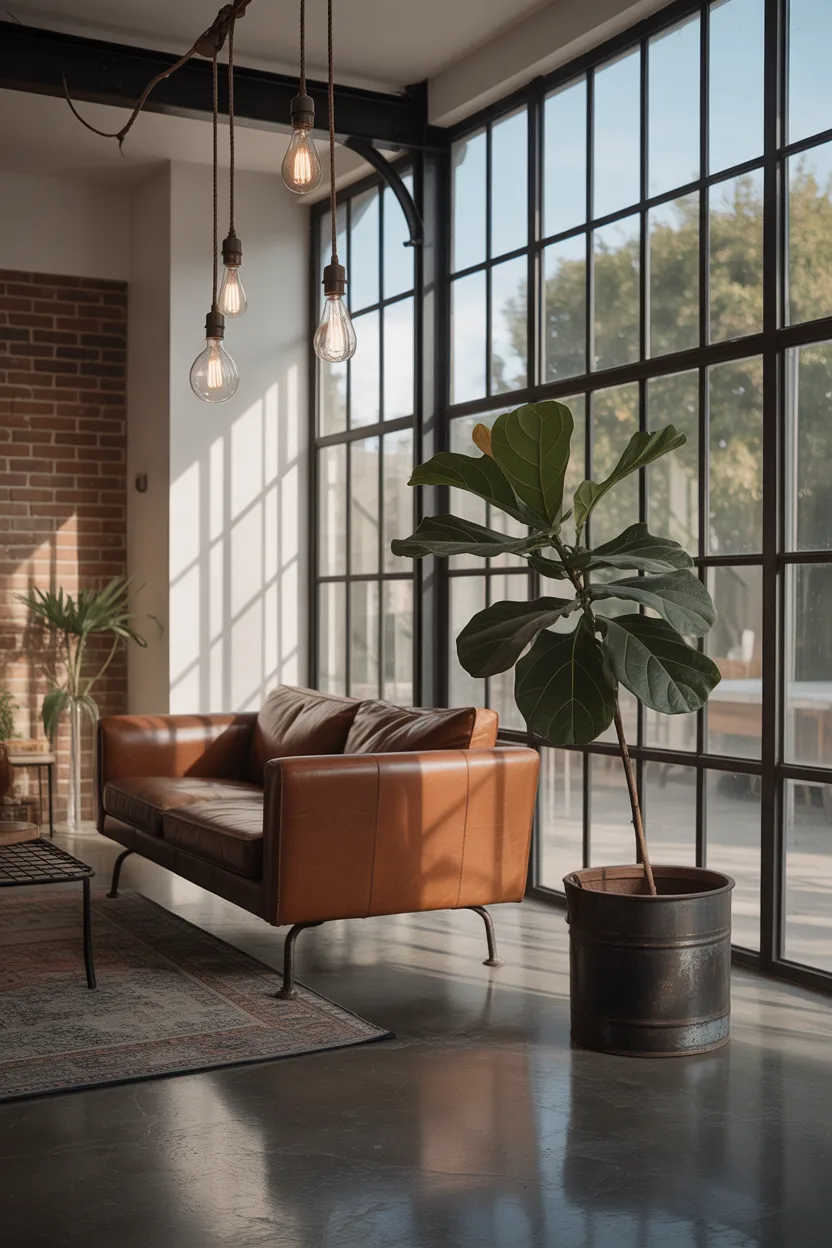
This style works best in urban or suburban homes where the surrounding architecture has a harder edge—think brick exterior, modern neighborhood, or industrial-influenced architecture. It’s also a great choice if your sunroom has older steel-framed windows that you can’t or don’t want to replace. Rather than fighting the hardware, lean into it. Those original steel frames become the most beautiful design element in the room when you style around them intentionally rather than trying to disguise them.
22. The Cozy Rustic Reading and Living Hybrid
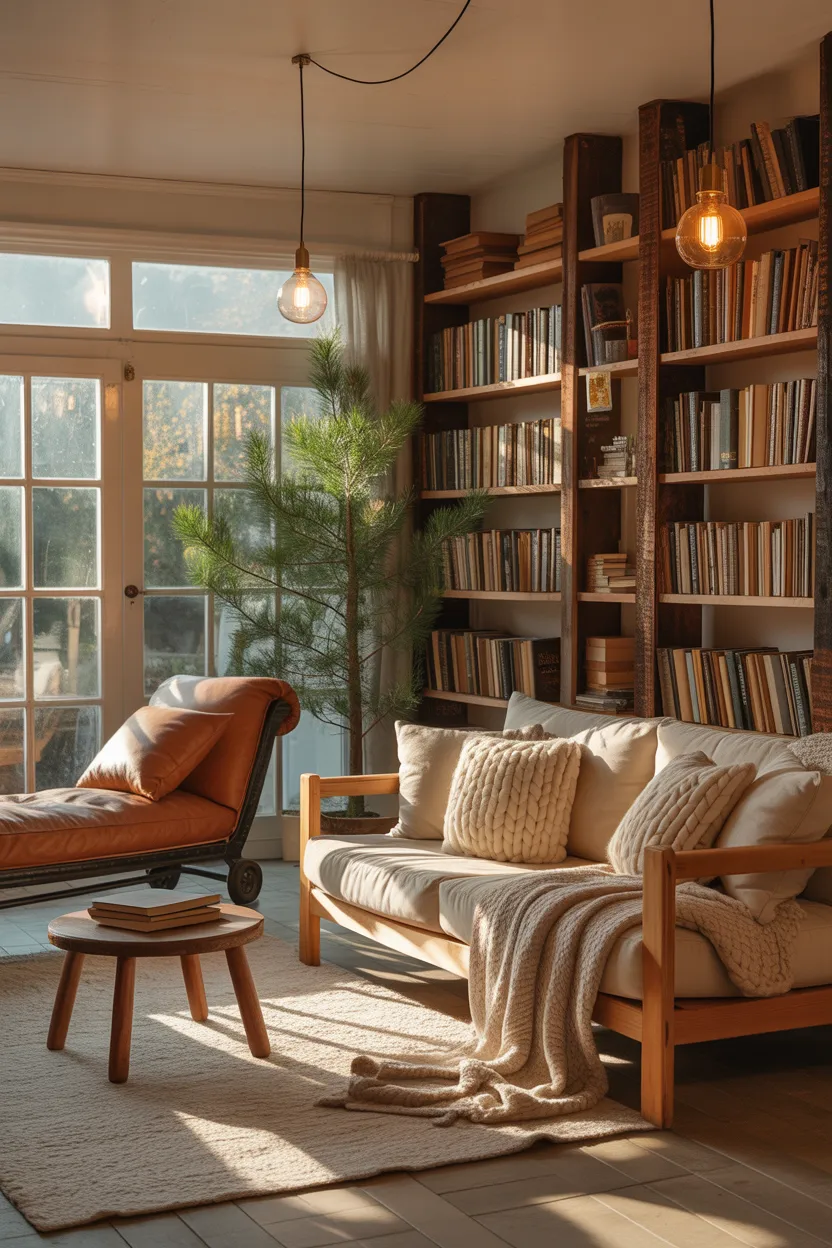
This final idea pulls together the most beloved qualities from across the list: the deep coziness of the rustic style, the purpose-driven calm of the reading room, and the year-round livability of a well-layered indoor living space. A sunroom that serves as both a social gathering spot and a solitary retreat needs flexible furniture (a sofa that can seat four and a chaise that’s for one), warm ambient lighting, bookshelves within reach, and enough plants to make the room feel alive. It’s the sunroom that earns the title “favorite room in the house.”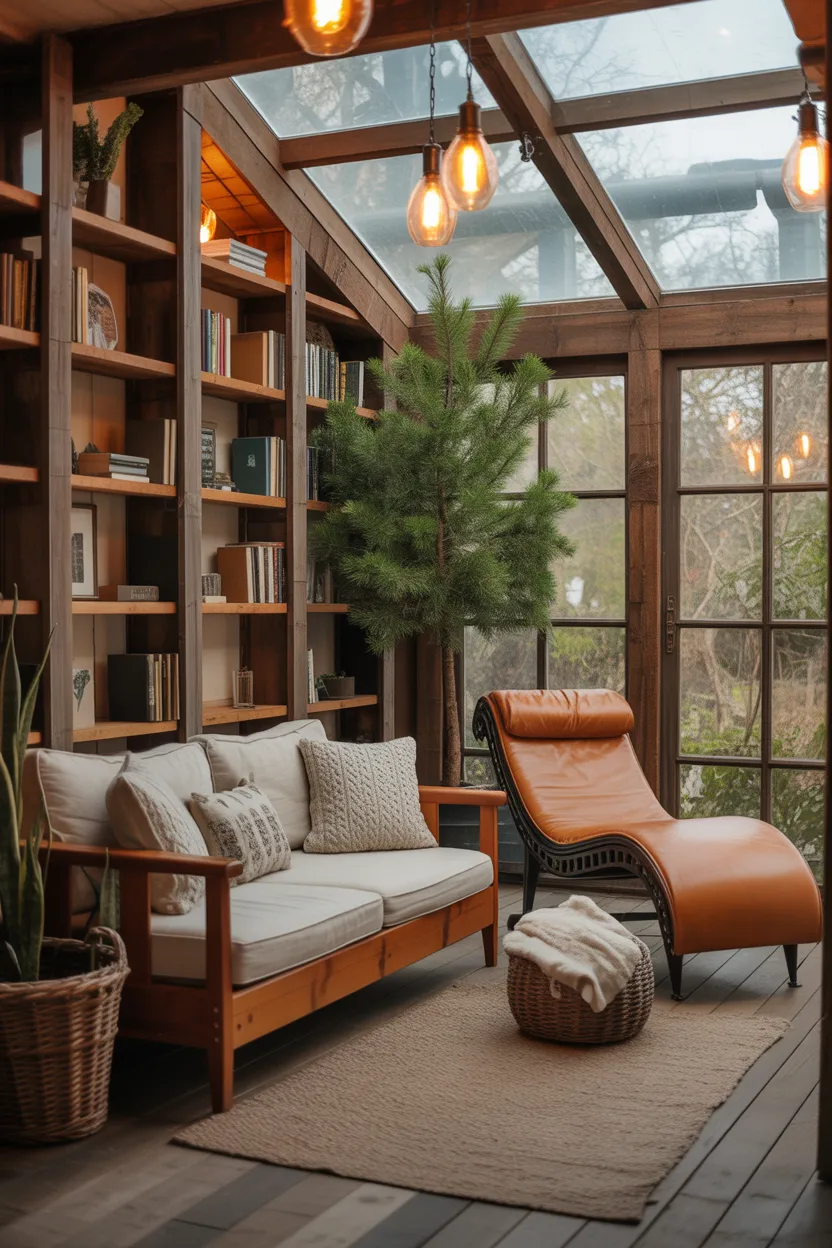
Real homeowners who’ve built this kind of hybrid space consistently report the same thing: the room transforms their daily habits. Morning coffee moves there. Weekend afternoons follow. Holiday gatherings naturally migrate toward the glass walls. When a room is designed to be genuinely comfortable across seasons, across moods, and across uses—that’s when it stops being a “bonus room” and becomes the heart of the home. A great sunroom is an investment in how you actually live, and that is always worth it.
Conclusion
There are so many ways to make a sunroom feel like the best room in your house—from a fully committed boho plant paradise to a sleek modern retreat, a cozy Christmas nook to a three-season haven for barefoot living. We’d love to hear which of these ideas spoke to you most. Share your sunroom plans, questions, or before-and-after stories in the comments below—your ideas might just inspire someone else’s dream space.