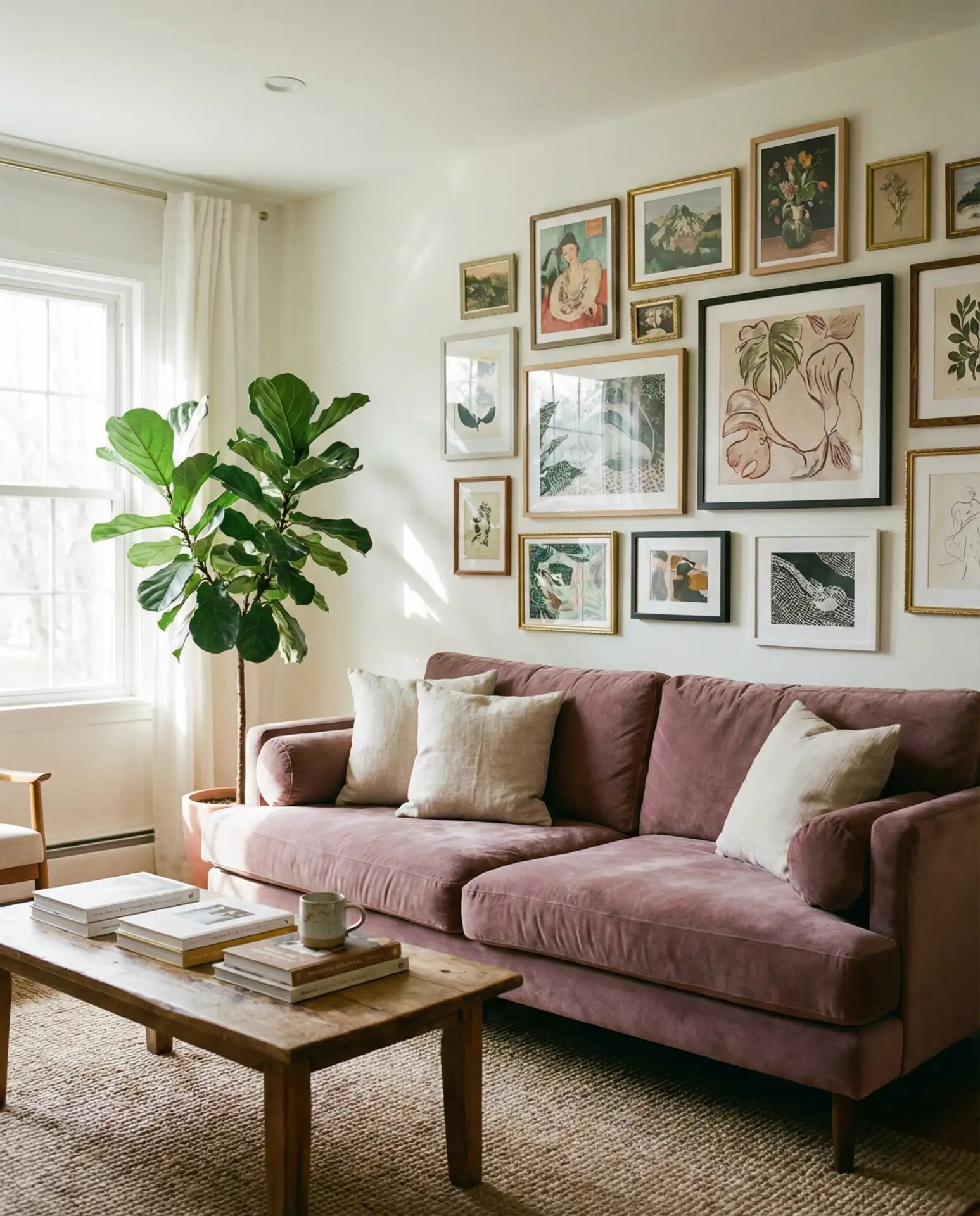
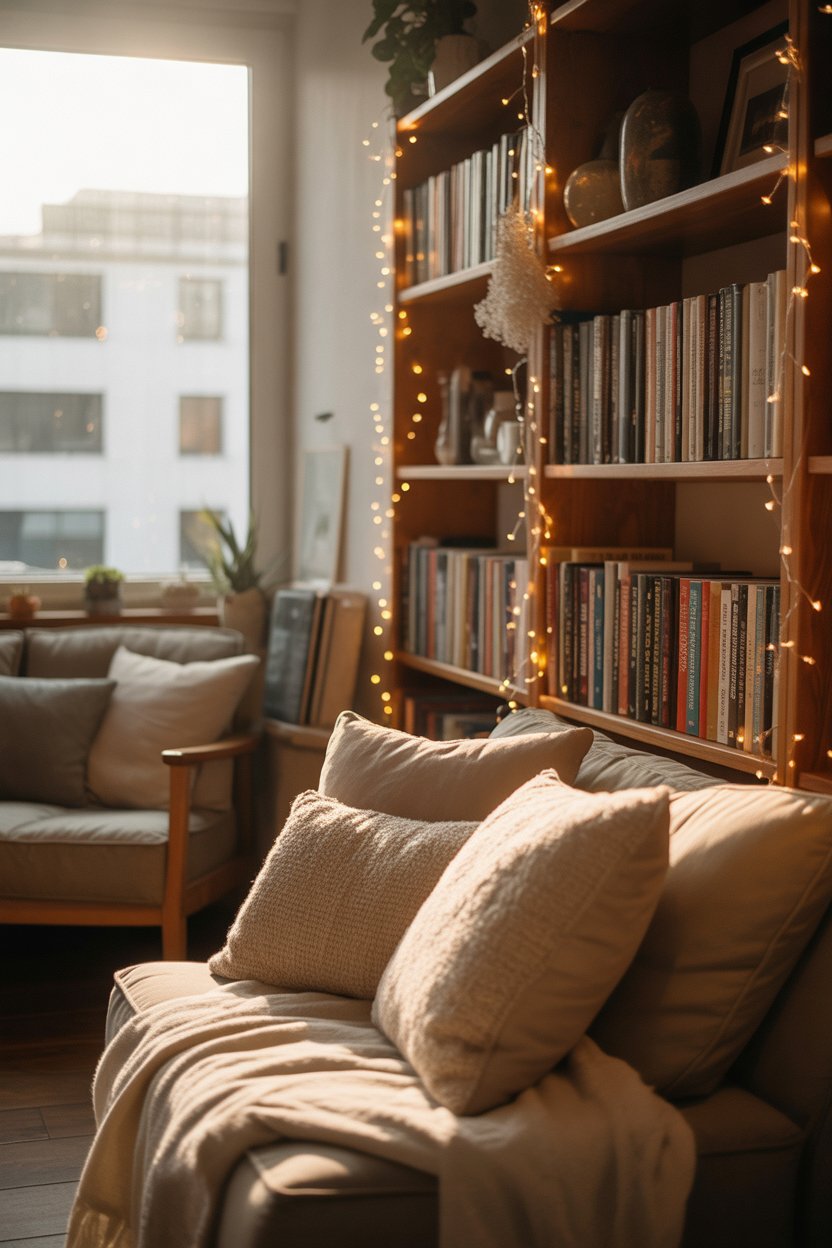
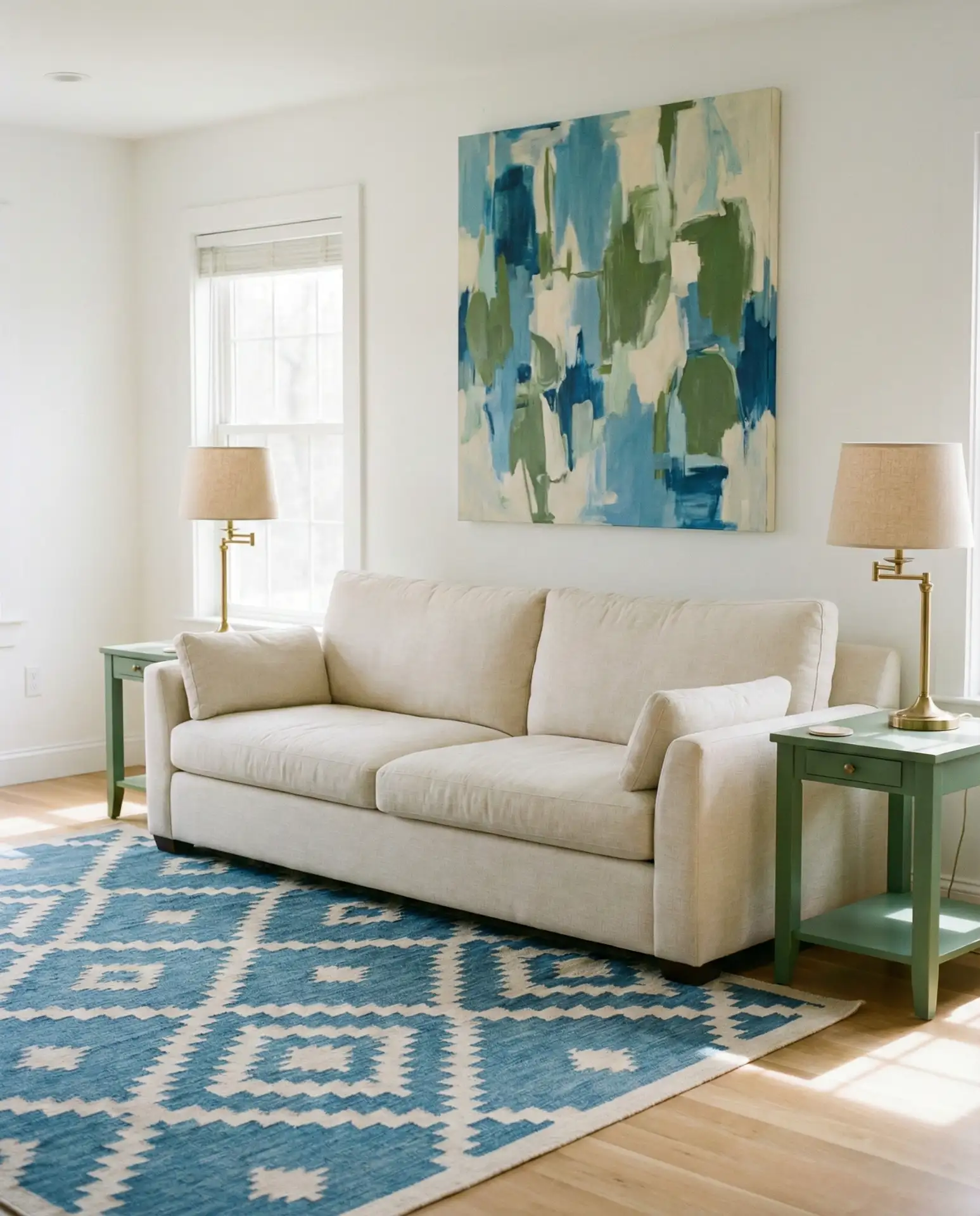
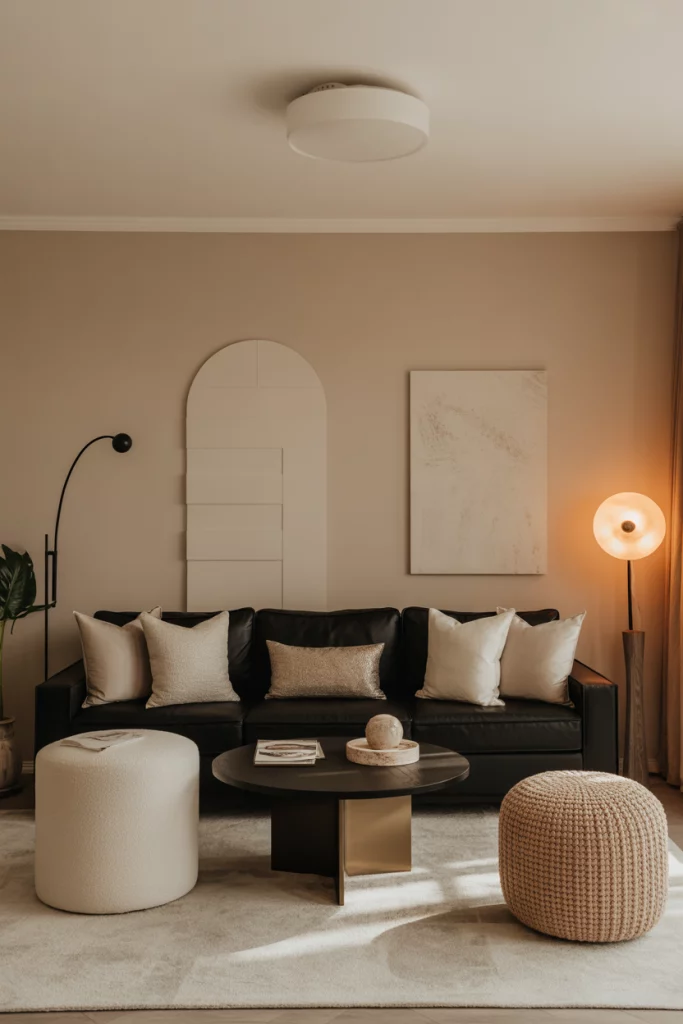
There’s a reason the open kitchen living room keeps dominating Pinterest boards year after year—and in 2026, the conversation has shifted in exciting new directions. Americans aren’t just knocking down walls anymore; they’re rethinking how shared spaces actually function for cooking, lounging, entertaining, and even working from home. Whether you’re renovating a century-old townhouse or planning a brand-new build, the way your kitchen flows into your living area says everything about how you actually live. In this guide, we’ve gathered fresh ideas that cover every style and budget, from airy Scandinavian layouts to clever small-apartment solutions. Bookmark the ones that speak to you—your next project starts here.
1. Warm Japandi Kitchen With Living Room Flow
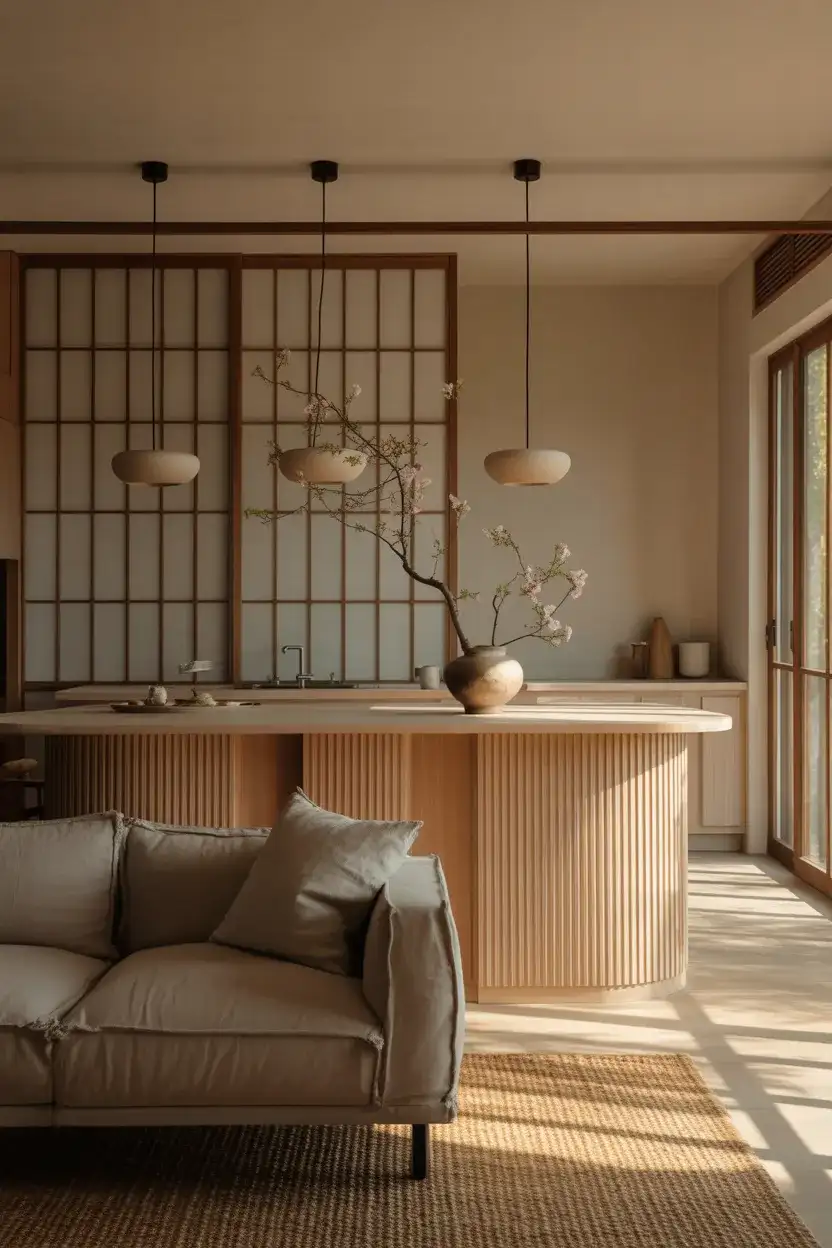
The Japandi movement has quietly become one of the most requested design directions for open-plan homes, and it’s easy to see why. This idea blends Japanese minimalism with Scandinavian warmth—think pale oak cabinetry, fluted details, and soft linen textures flowing from the cooking zone into the living room concept. The palette stays muted: warm whites, sand tones, and charcoal accents that let natural materials do the talking. There’s no visual clutter, yet it never feels cold or sterile.
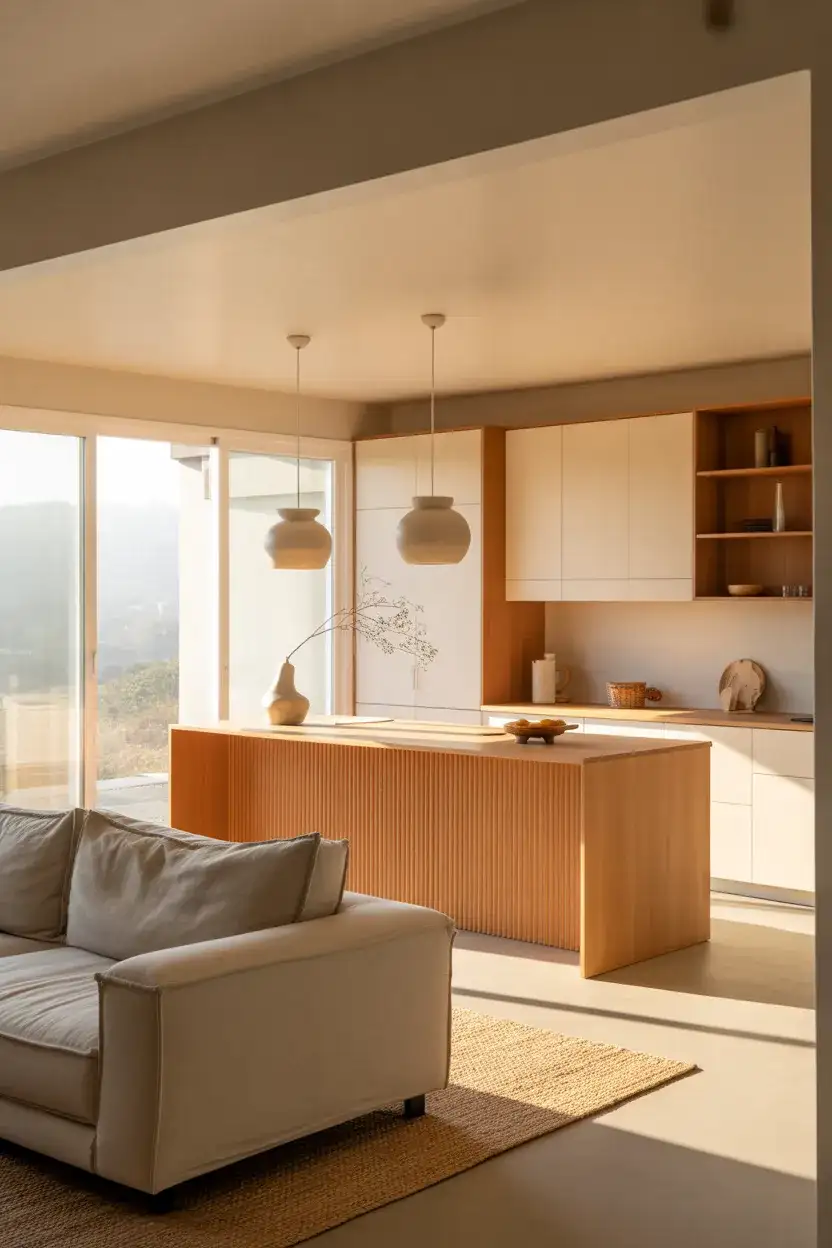
Where this look works best is in homes that already have good natural light and modest square footage. The Japandi approach doesn’t demand a massive footprint—it actually thrives in tighter spaces because every piece earns its place. A single statement pendant over the island, a low-profile sofa, and open shelving instead of upper cabinets can make even a 500-square-foot apartment feel considered and calm. If your instinct is to add more, resist it. That restraint is the whole point.
2. Scandinavian White Kitchen Open to a Cozy Den
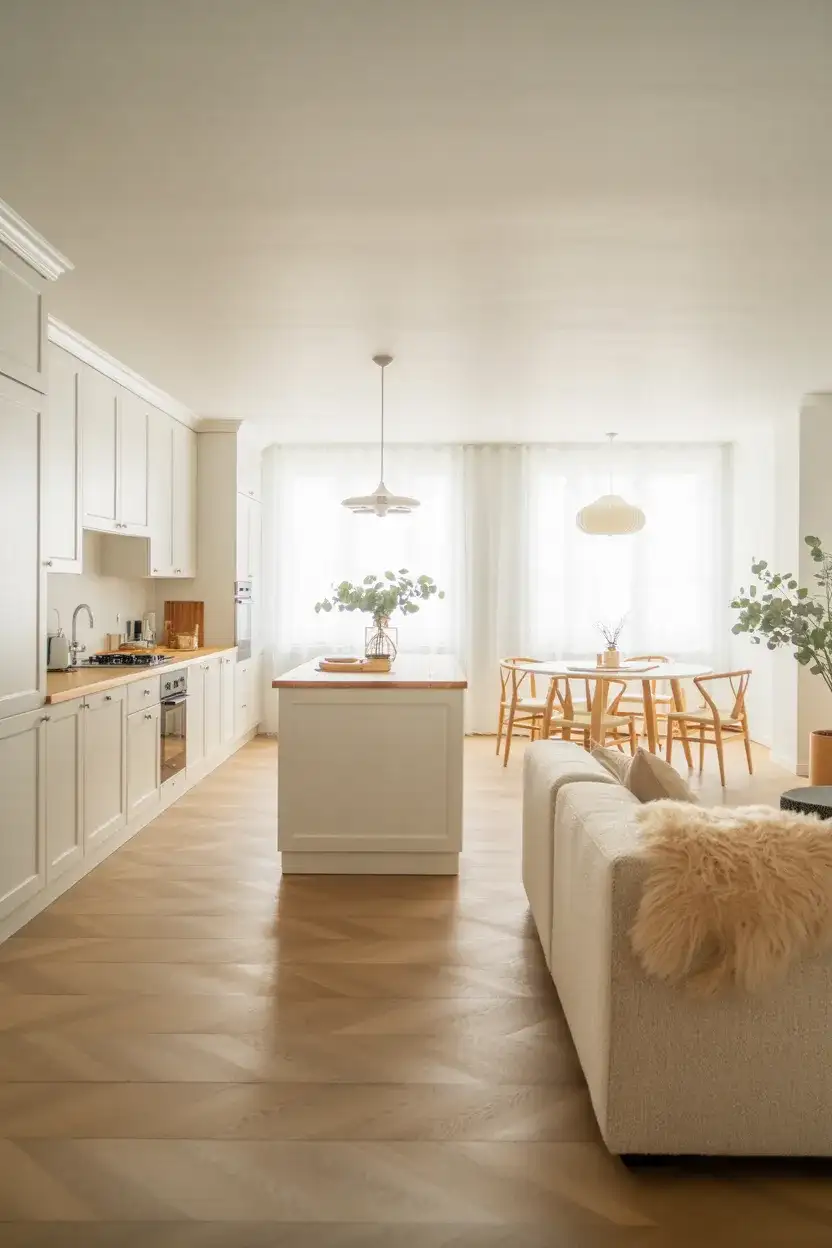
A bright Scandinavian kitchen that opens directly into a soft, layered living space remains one of the most pinned layout types on the platform—and for good reason. The formula works: white walls, blonde wood floors, and a few carefully chosen textiles that make the couch area feel like a warm hug. What sets the best versions apart is the way they handle the transition zone, often with a slim dining table or a peninsula that gently signals where cooking ends and relaxing begins.
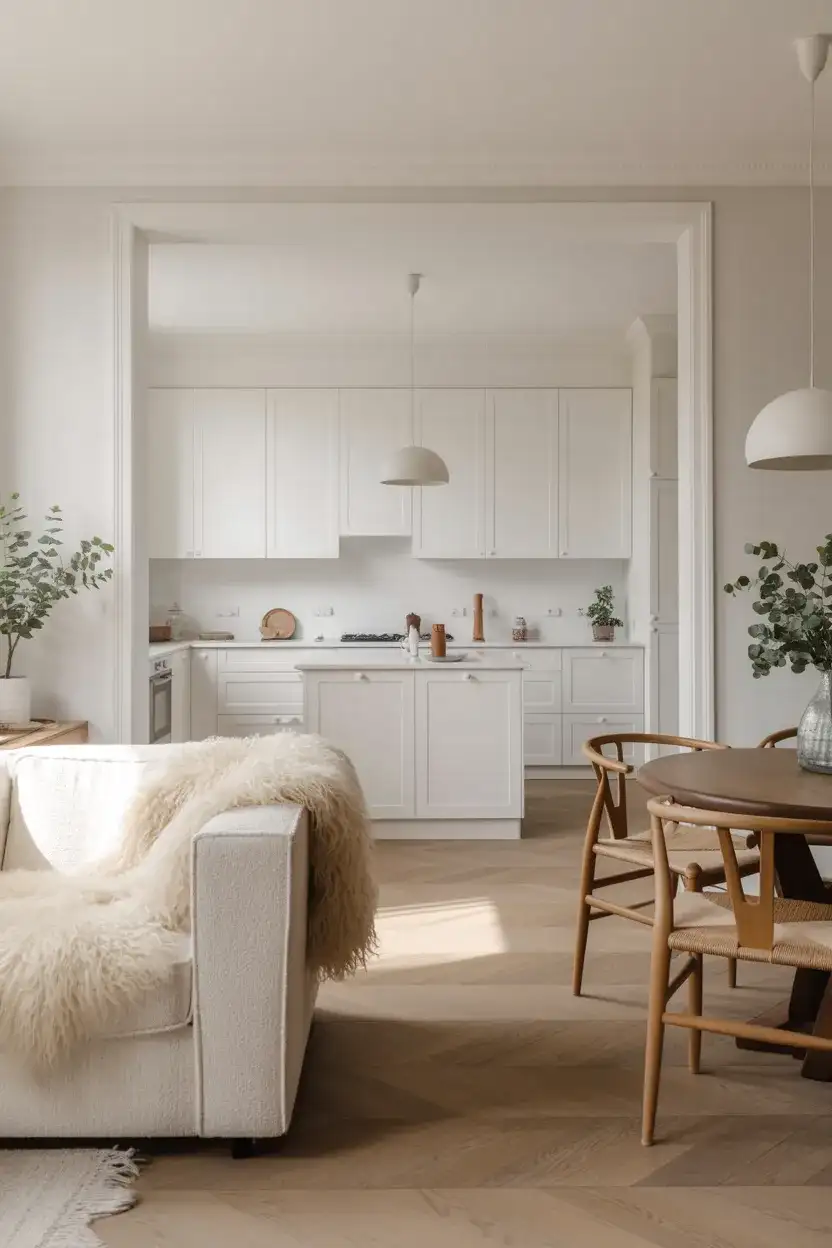
Budget-wise, this is one of the most approachable looks to pull off. White paint is cheap, IKEA’s kitchen line handles the cabinetry beautifully, and Scandinavian style practically demands that you buy less rather than more. A designer friend once told me the biggest expense in her own Scandi kitchen remodel wasn’t the cabinets or countertops—it was the wide-plank oak flooring. Everything else came in under five thousand dollars, and it still photographs like a magazine spread three years later.
3. Industrial Loft Kitchen Living Combo
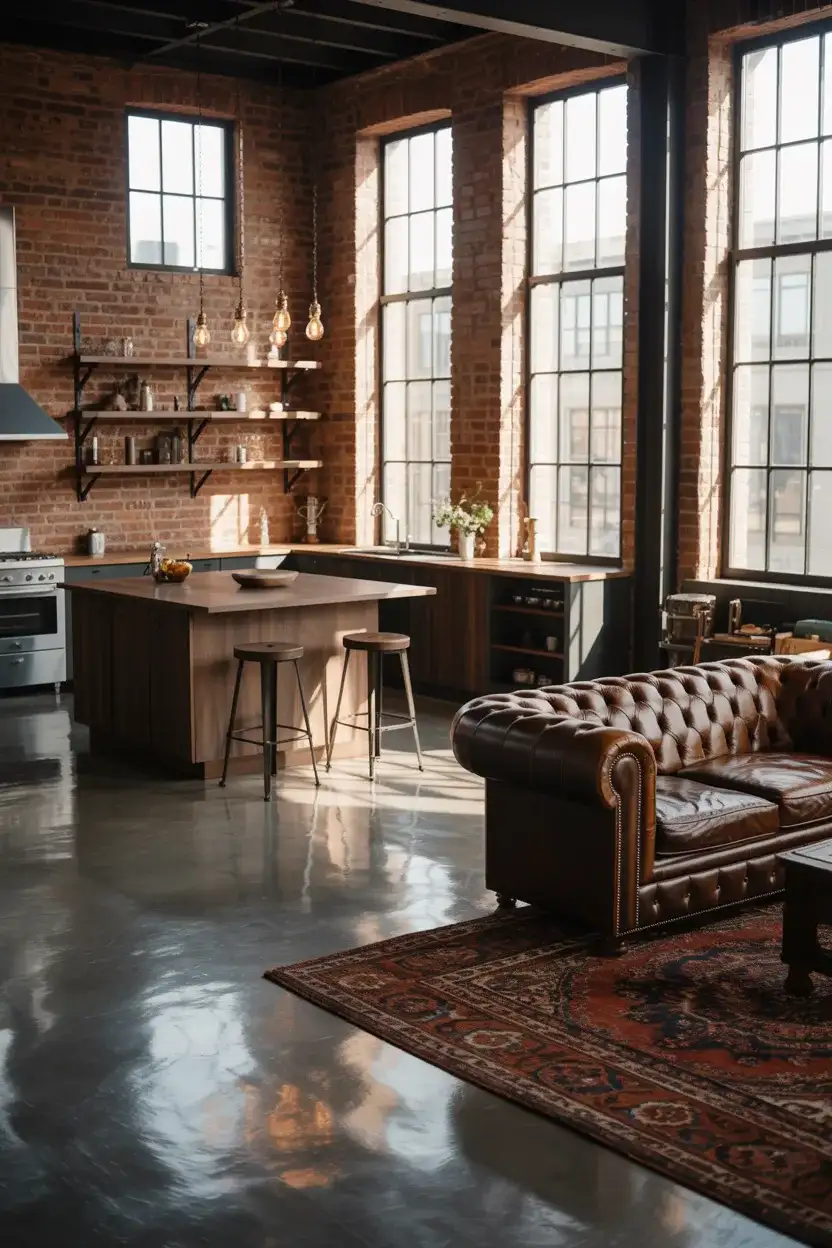
If you’ve ever walked into a converted warehouse apartment and immediately felt the energy shift, you understand why industrial open floor plan kitchens still have serious pull. Exposed ductwork, raw concrete, and blackened steel shelving give the cooking area a workshop quality, while the living room side softens things with a deep leather sofa and vintage textiles. The interior design trick here is balancing hardness with comfort so it doesn’t feel like you’re eating dinner inside a factory.
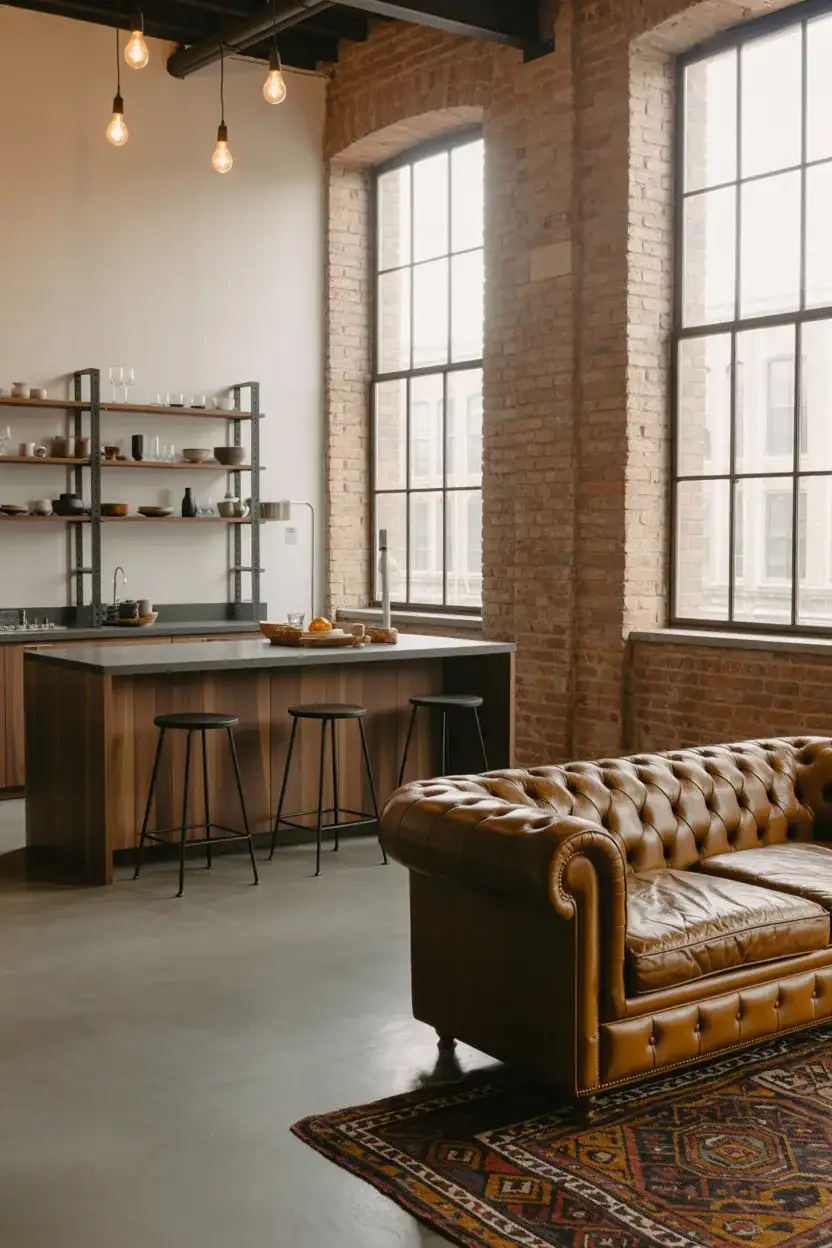
A common mistake people make with this style is going too hard on the industrial side and forgetting that someone actually has to curl up and watch a movie here. You need that counterweight—a chunky knit blanket draped over the armrest, a warm-toned rug underfoot, maybe a floor lamp with a linen shade. Without those softening layers, the space reads as unfinished rather than intentional, and no amount of cool exposed brick can fix that feeling.
4. Small Apartment Open Kitchen With Smart Storage
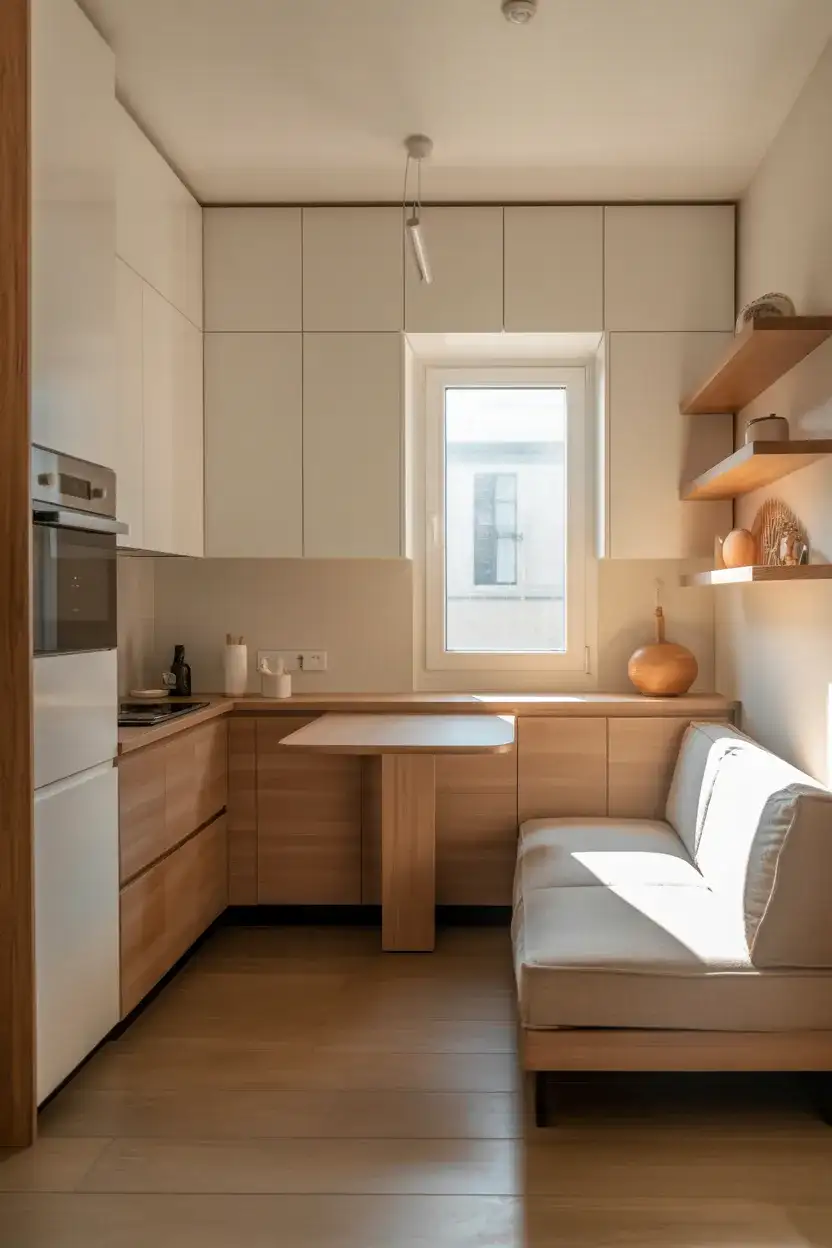
Living in a small apartment doesn’t mean you have to sacrifice the open-plan dream—it just means you have to be smarter about every square inch. This idea centers on a compact L-shaped kitchen that shares airspace with a tightly edited living zone, using vertical storage, fold-down surfaces, and built-in benches that double as hidden compartments. The small space actually becomes an advantage because there’s a coherence you rarely get in larger, sprawling rooms.
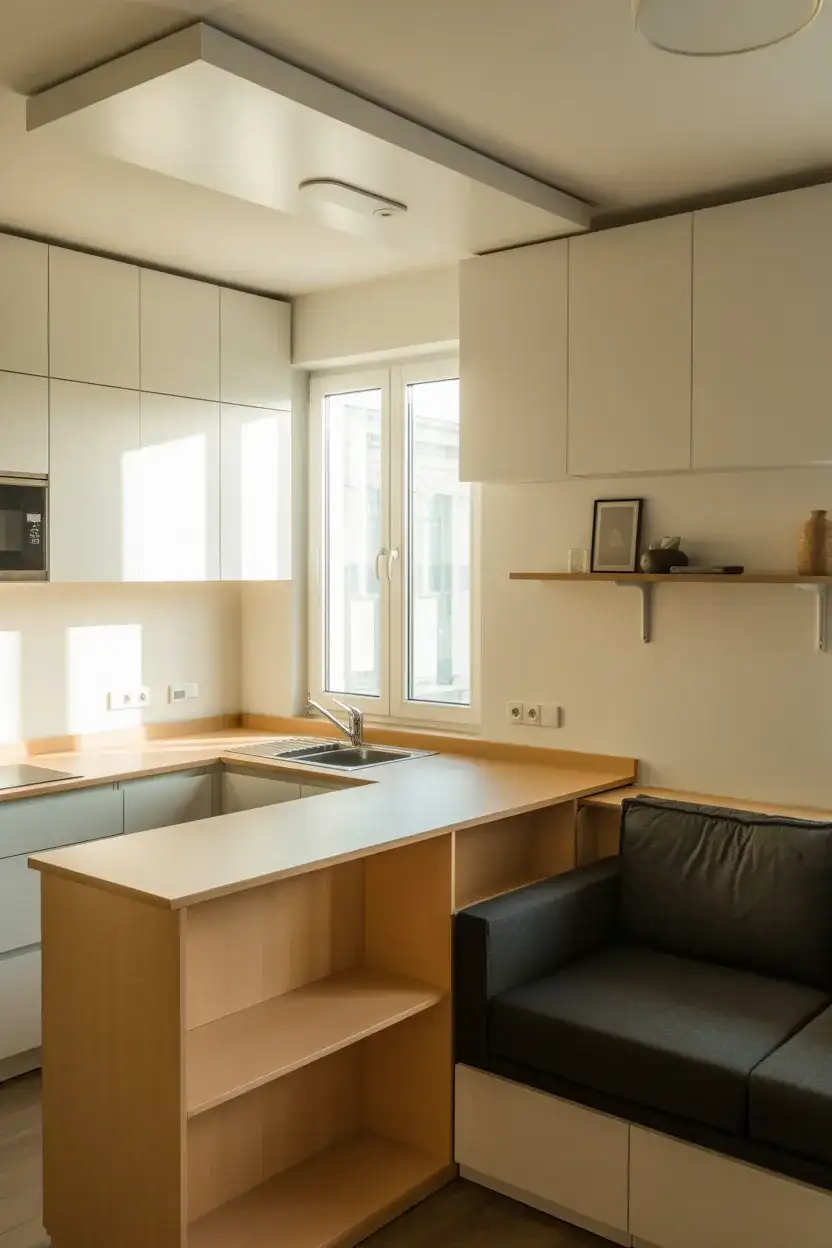
Real homeowners who’ve nailed this layout consistently mention one thing: the editing process was harder than the renovation itself. It’s not about buying clever storage products—it’s about owning fewer things in the first place. One couple in a 420-square-foot Brooklyn studio told me they did a full inventory of their kitchen items before construction even started, and that exercise alone cut their storage needs by a third. The build followed the life, not the other way around.
5. Open Concept Kitchen With Earthy Paint Colors
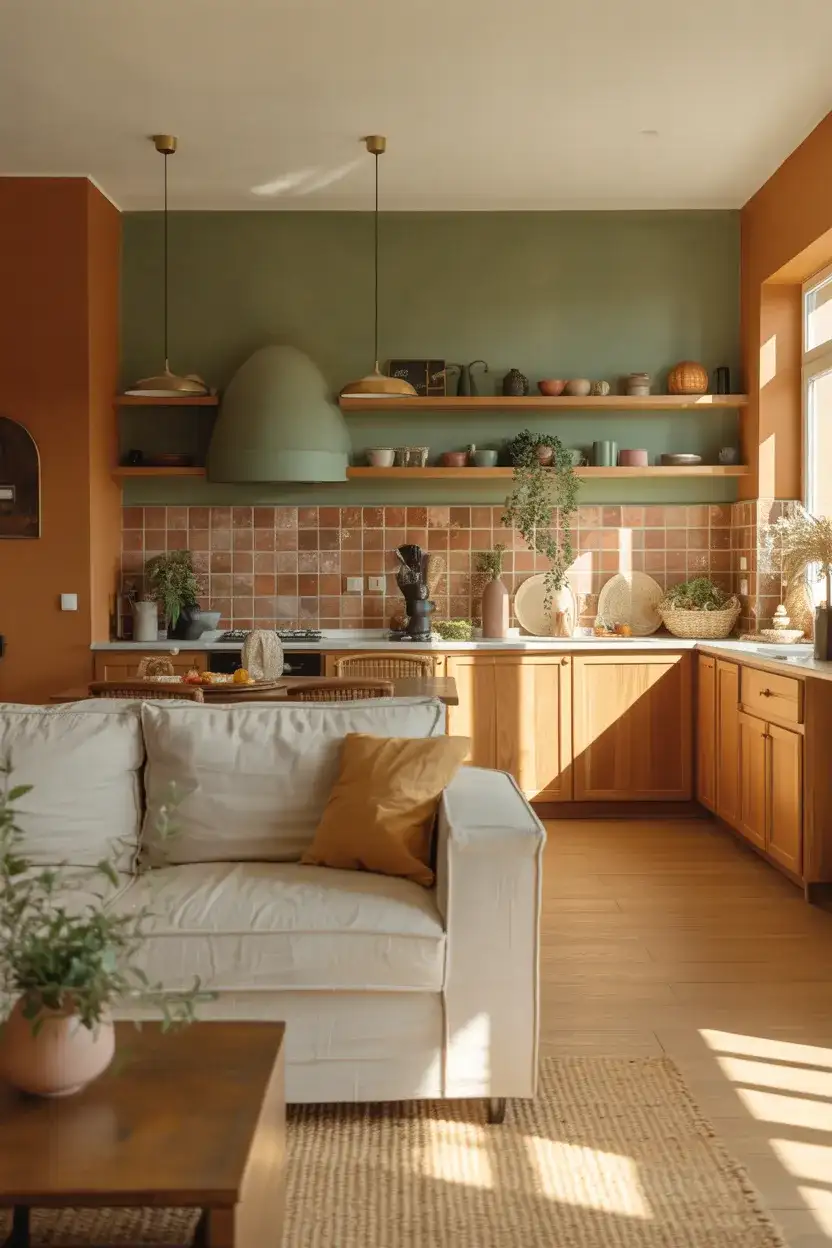
Color is making a serious comeback in open kitchens, and the paint colors leading the charge in 2026 lean earthy and grounded—sage greens, warm clay, terracotta, and deep mushroom tones. When your kitchen and living room share one continuous sightline, a cohesive paint story does the heavy lifting of making both zones feel intentional. This concept works especially well when you let one bold wall anchor the kitchen while the living side stays a shade or two lighter in the same family.
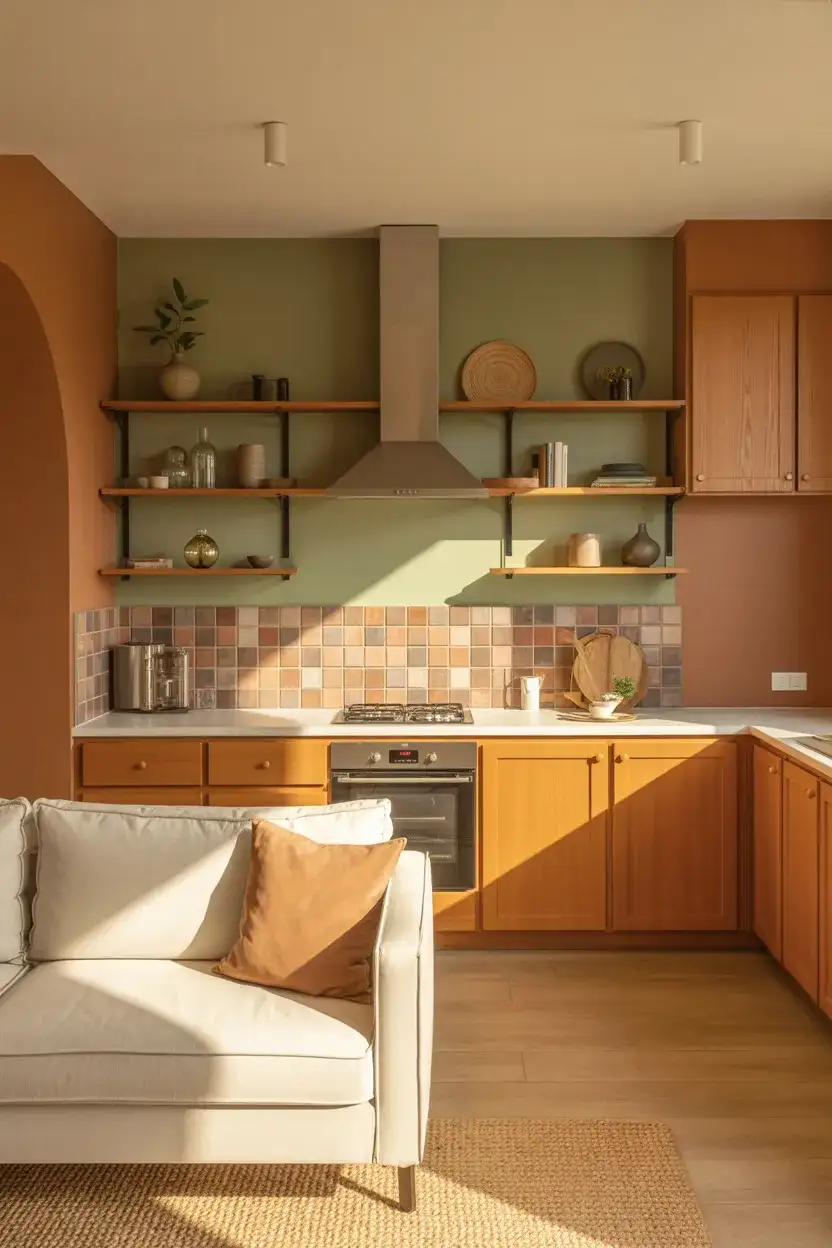
From an expert standpoint, the key principle here is tonal continuity rather than color matching. You don’t need the exact same shade on every wall—that actually flattens the space. Instead, pick three or four colors from the same earthy family and assign each one a job: one for the kitchen focal wall, one for the living room envelope, a lighter version for the ceiling, and a contrasting accent for trim or built-ins. This layered approach gives the open plan depth without visual chaos.
6. Townhouse Open Kitchen With Vertical Drama
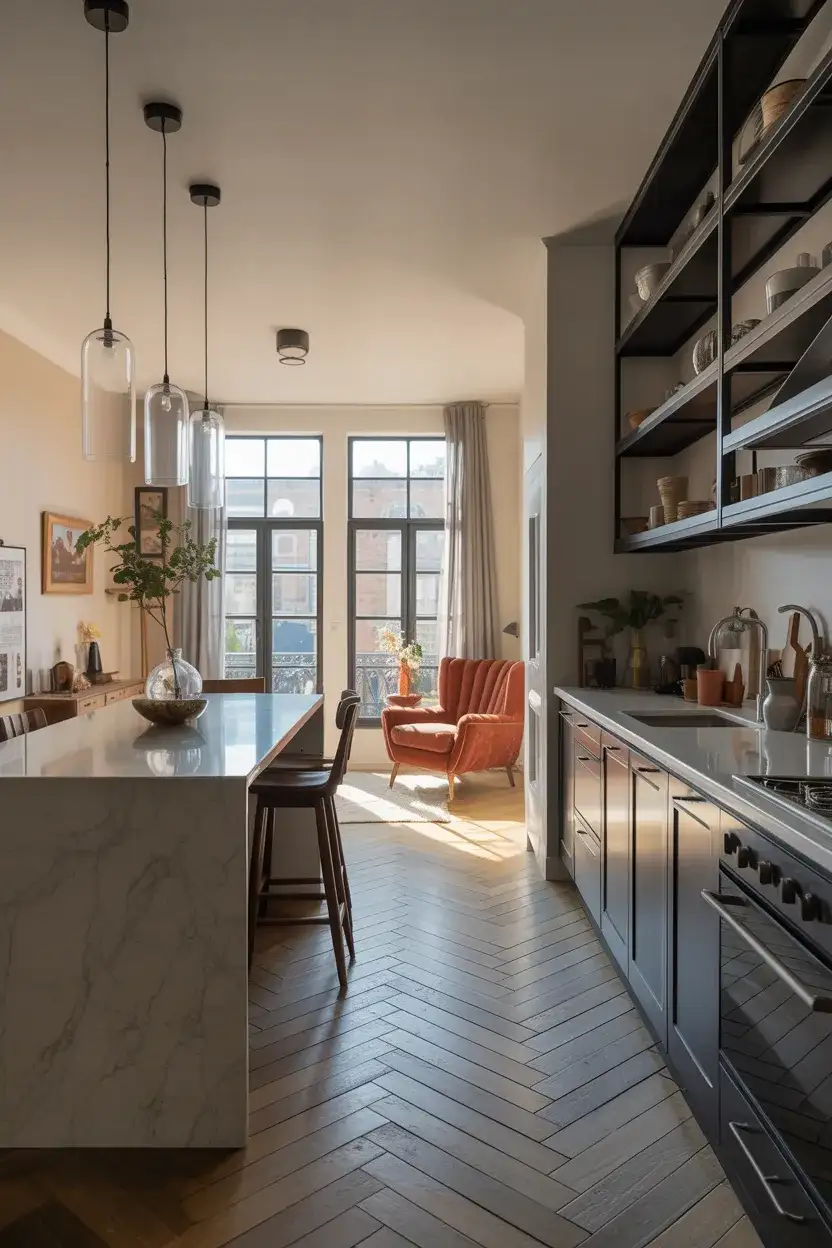
Narrow townhouse footprints can feel limiting until you look up. This idea takes advantage of high ceilings common in row homes—think floor-to-ceiling open shelving, tall statement pendants, and a visual axis that draws the eye upward from the kitchen island through to the living room beyond. The vertical emphasis makes even a twelve-foot-wide space feel surprisingly generous and deeply architectural in its layout.
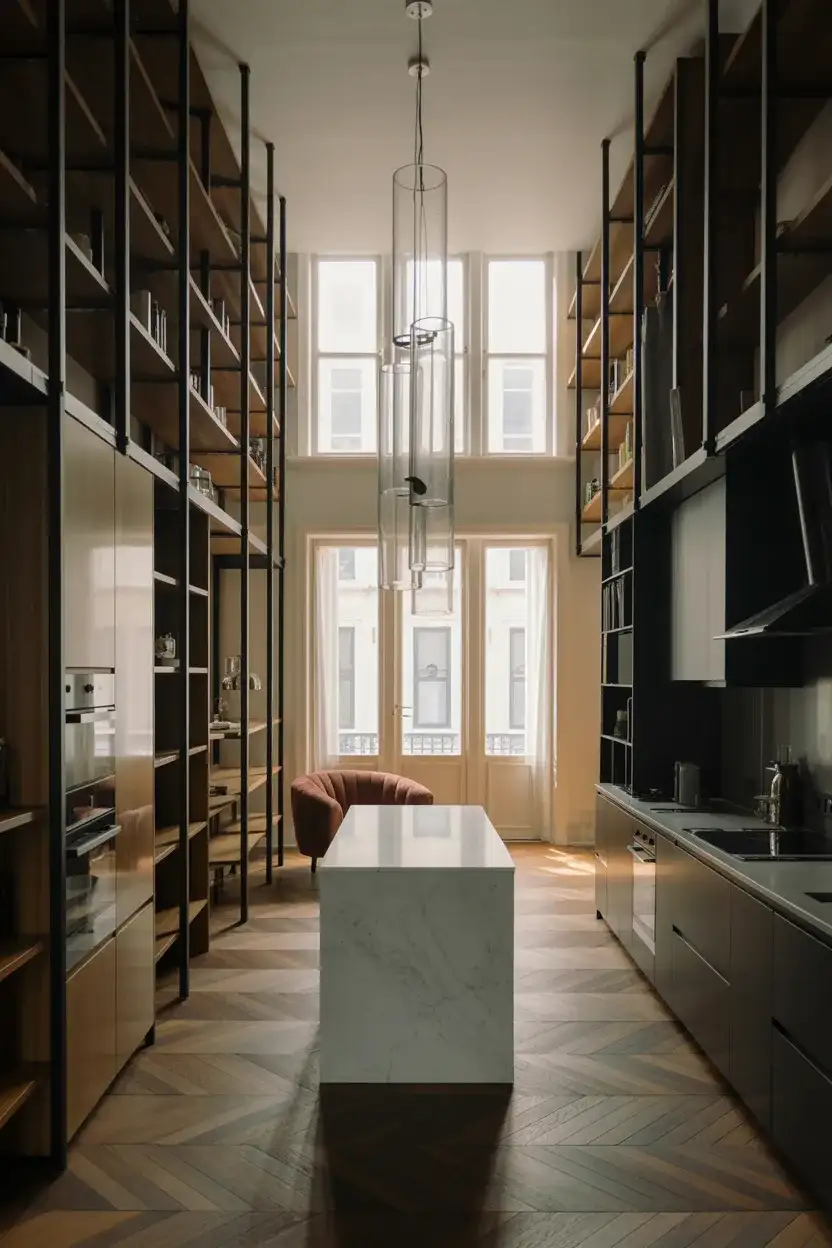
In the American context, townhouse living is surging in cities like Philadelphia, Baltimore, Chicago, and Brooklyn—places where row-home stock is plentiful and renovation budgets have to stretch. Opening the kitchen wall on the main floor is often the single most impactful change a townhouse owner can make, and it typically costs far less than a full addition. For many urban families, this one move transforms a choppy railroad layout into a home that finally breathes.
7. Barndominium Kitchen Living Great Room
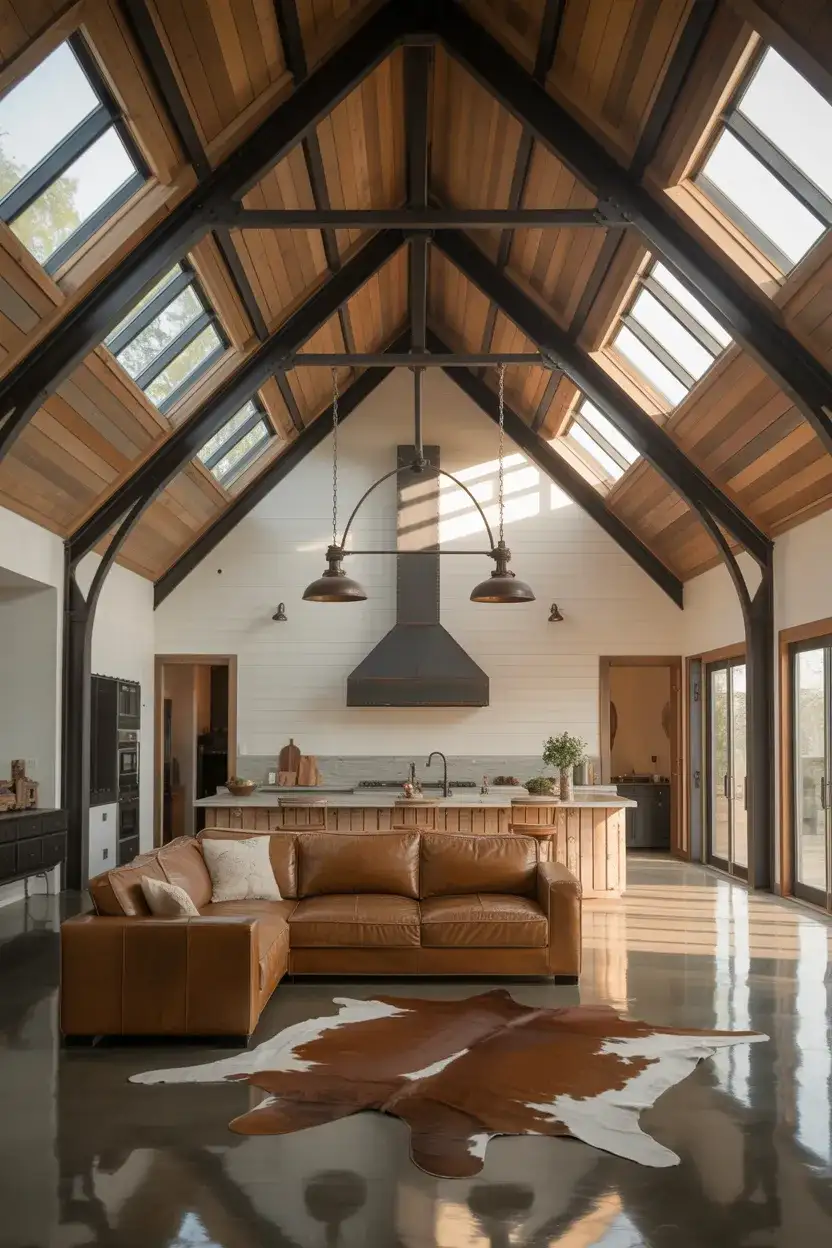
The barndominium trend keeps gaining ground across rural and suburban America, and the open kitchen-living great room is its beating heart. These metal-shell structures offer completely uninterrupted spans of space—no load-bearing interior walls to work around—which makes a massive open plan not just possible but almost inevitable. The design challenge is making all that openness feel warm rather than cavernous, and that’s where material choices like reclaimed wood beams and stone-clad islands come in.
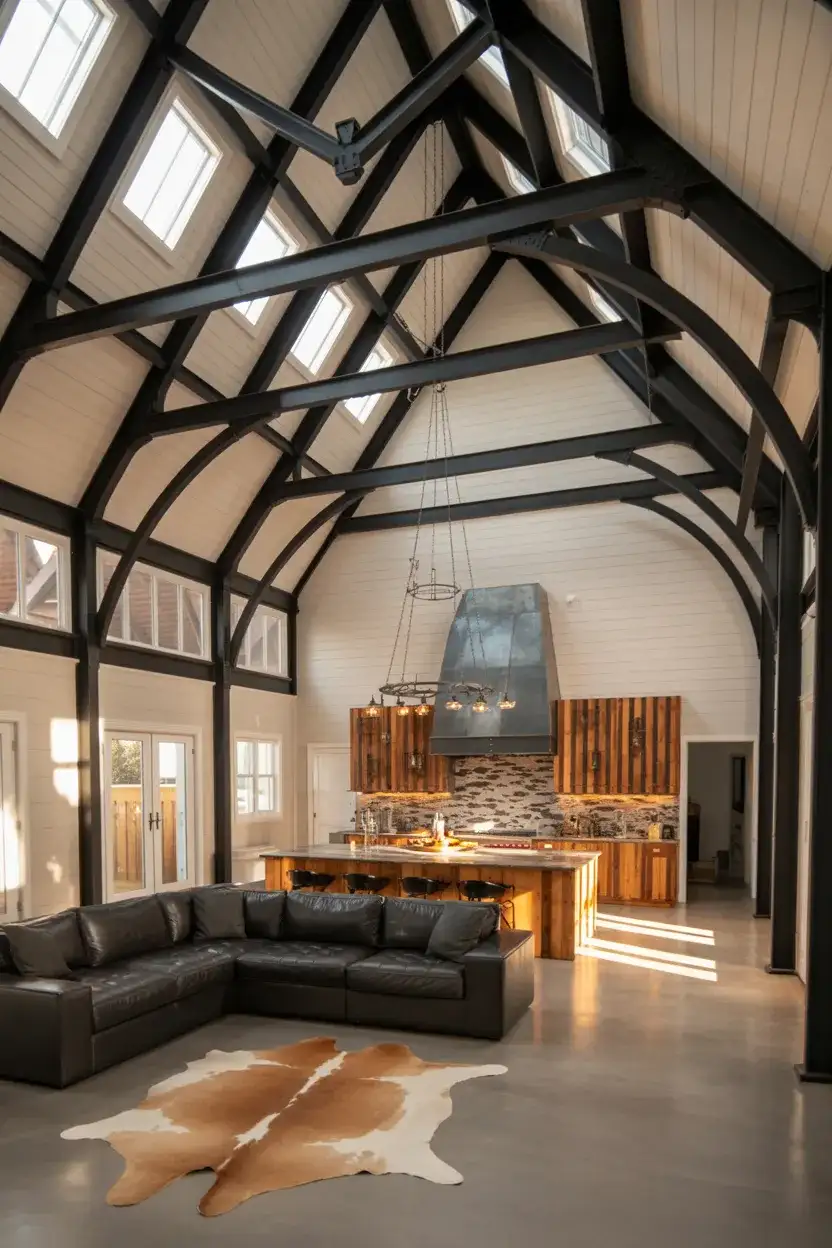
Practically speaking, a barndominium build lets you pour more of your budget into finishes and less into structural framing. Owners regularly report that the shell—metal walls, roof, and slab—comes in at roughly sixty to seventy dollars per square foot in many parts of Texas, Oklahoma, and the Carolinas. That leaves real money on the table for quality countertops, solid wood beams, and the kind of kitchen appliances that make an open great room truly livable rather than just large.
8. Semi-Open Kitchen With Glass Partition
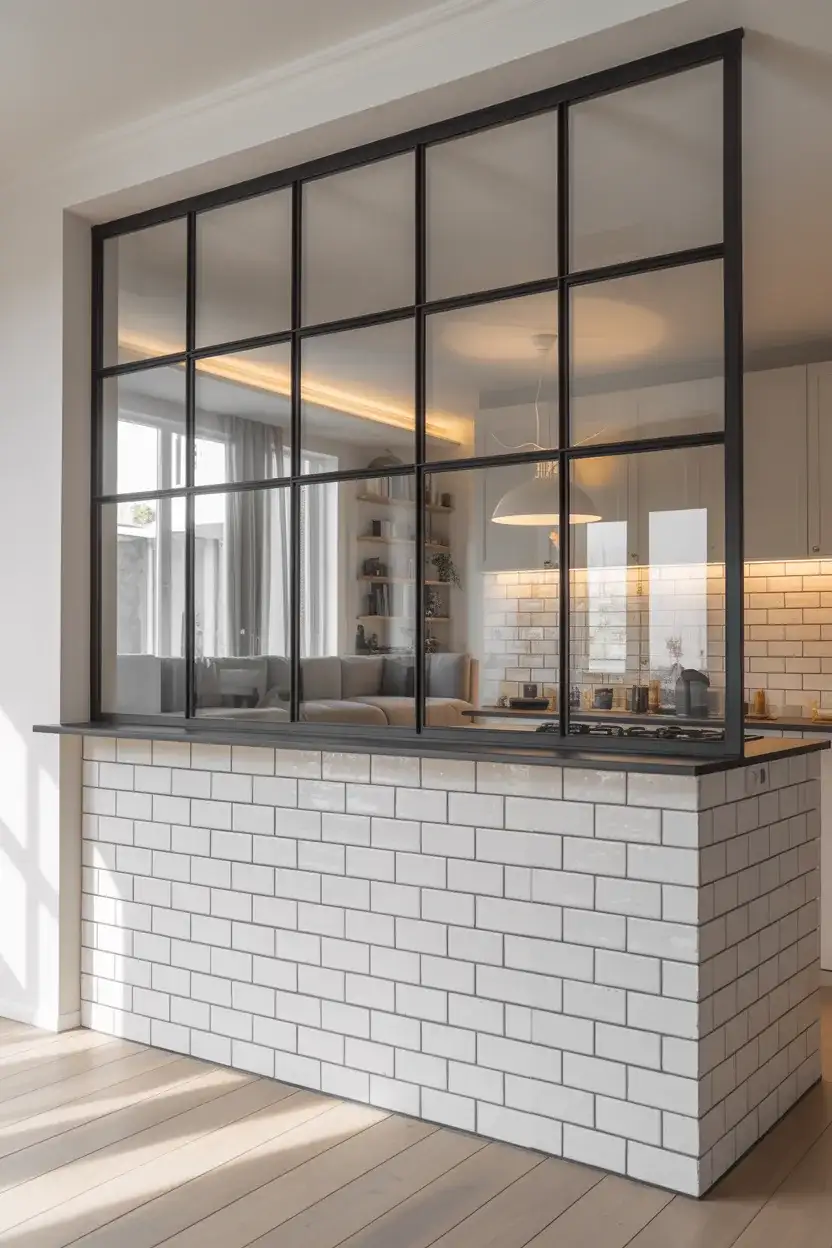
Not everyone wants a fully open kitchen—and that’s perfectly fine. The semi-open approach uses a glass partition, a half-wall, or a steel-framed window to maintain visual connection while keeping cooking smells, noise, and mess contained. This is a particularly smart solution for anyone who loves the idea of an open floor plan but also does serious cooking with strong spices, deep frying, or anything that generates real smoke. The glass keeps light flowing without compromise.
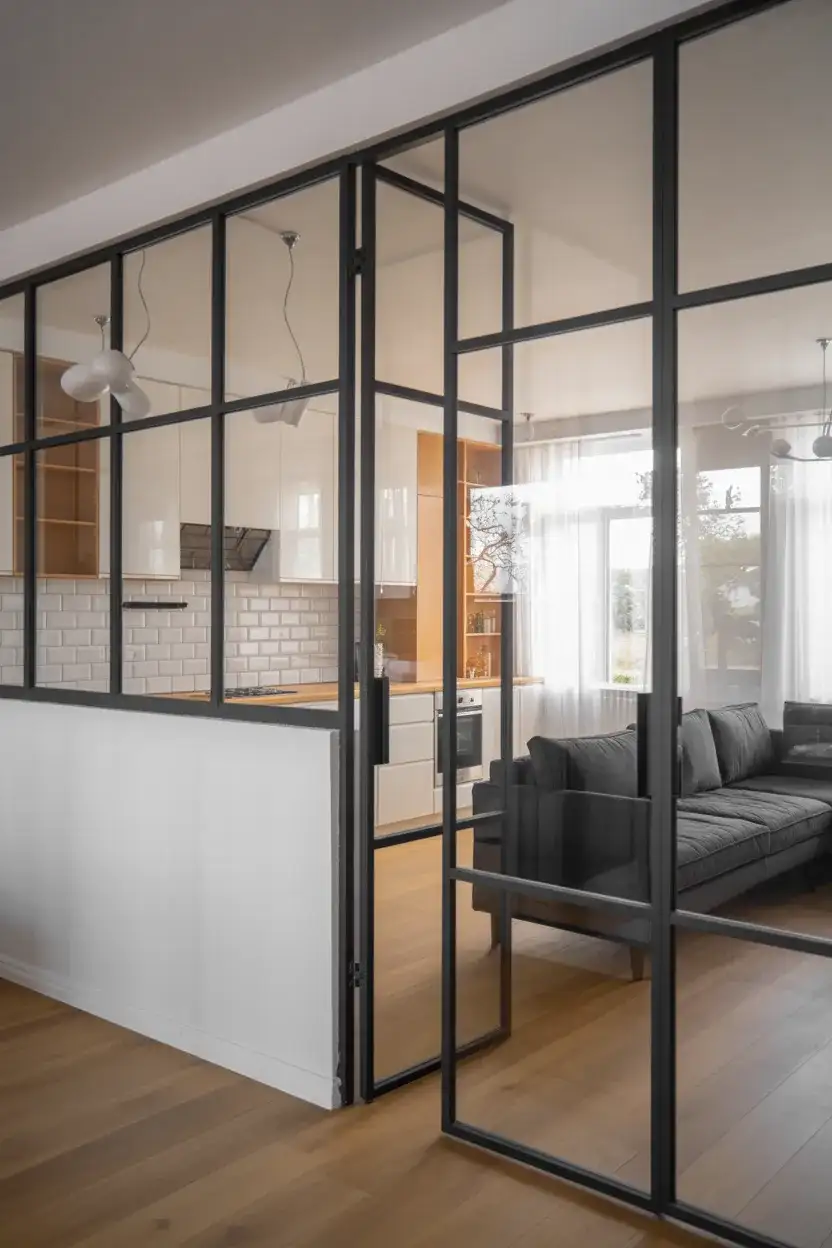
I spoke with a homeowner in Houston last year who installed a Crittall-style steel-and-glass wall between her kitchen and den, and she said it was the single best decision of her renovation. She cooks Indian food almost every night, and before the partition, the scent of turmeric and cumin would linger in the sofa cushions for days. Now the visual openness remains—her kids can see her from the couch—but the ventilation stays separate. It cost about four thousand dollars installed, and she’d do it again in a heartbeat.
9. IKEA-Powered Open Kitchen on a Budget
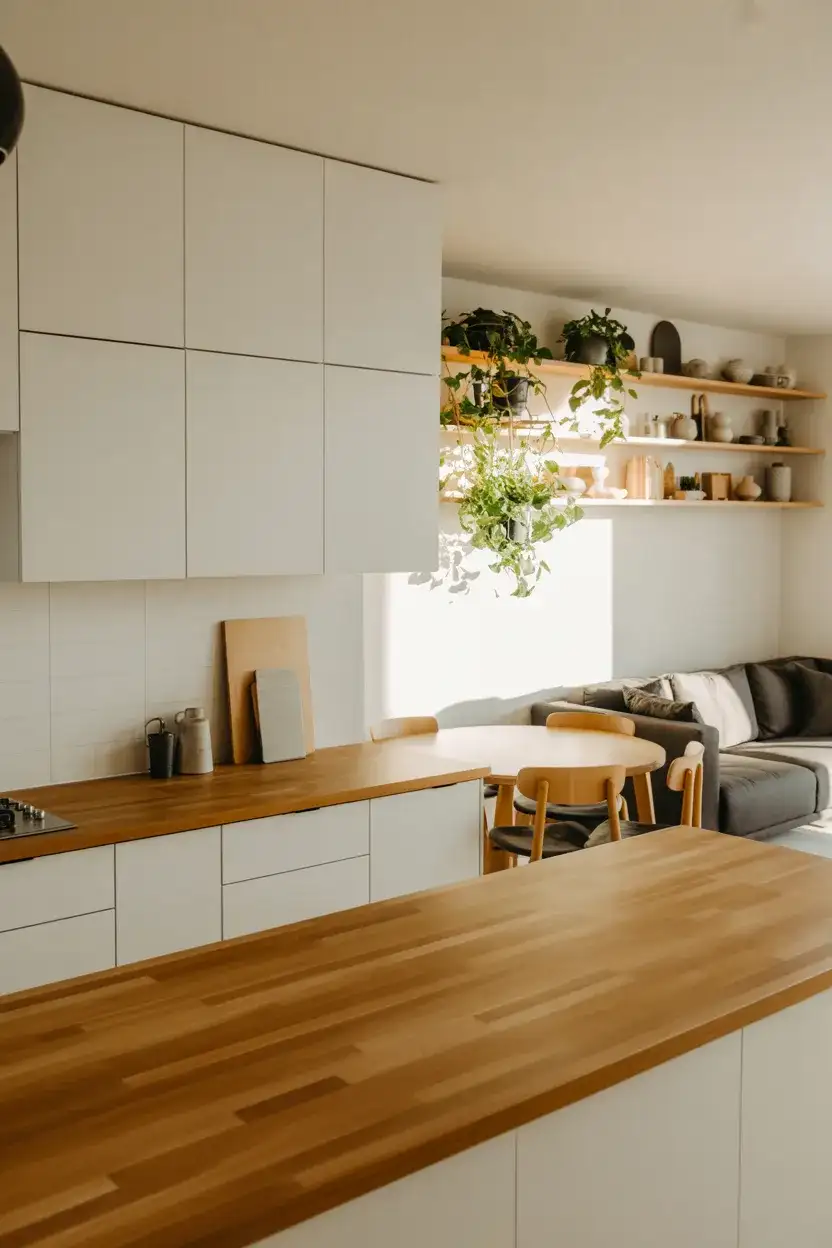
Let’s be real—Ikea has democratized good kitchen design in a way no other brand has matched, and their modular systems are practically built for the open layout. Combining a METOD or SEKTION frame with upgraded fronts from a third-party supplier gives you the look of a custom kitchen at a fraction of the price. Pair it with a simple dining table that bridges the two zones and a few well-chosen decor pieces, and you’ve got a space that punches far above its price tag.
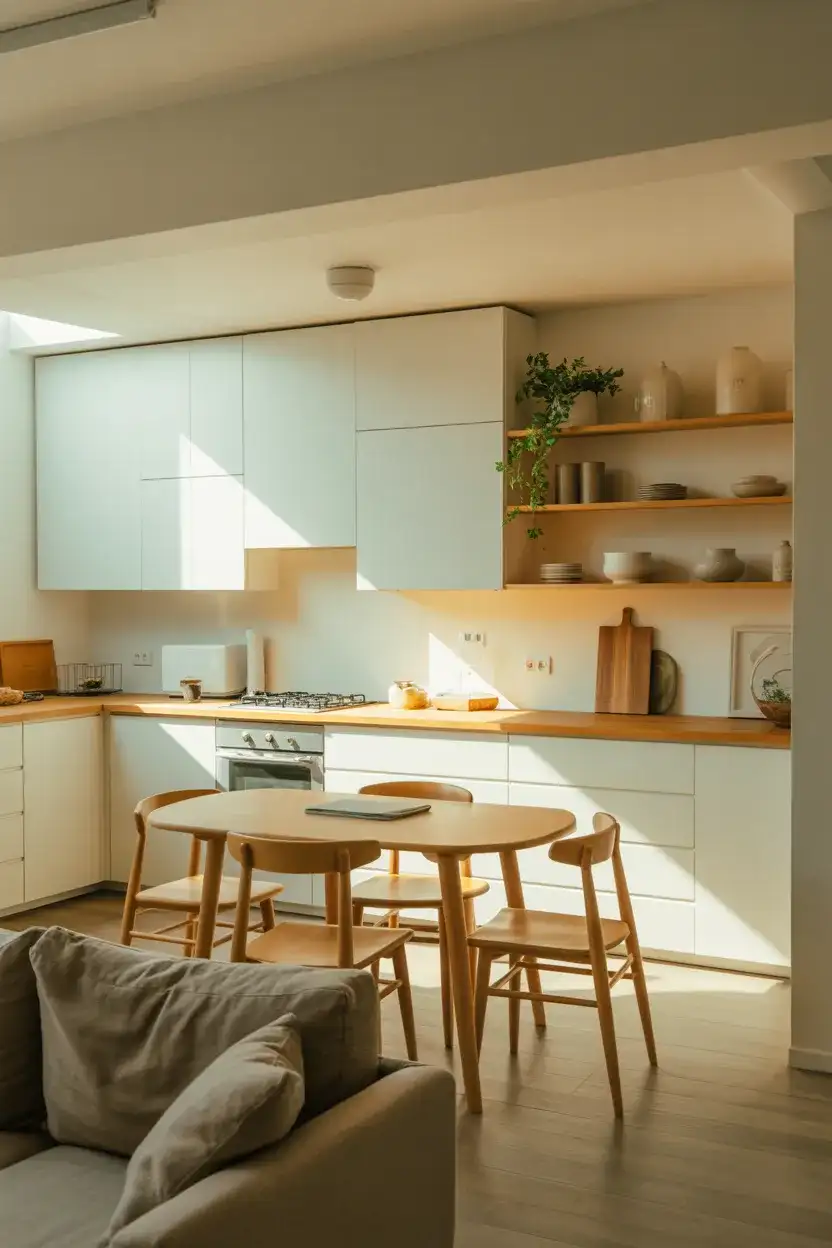
From a budget angle, a full IKEA kitchen, including cabinets, countertops, sink, and hardware, typically runs between three and eight thousand dollars depending on size and finish choices. Third-party fronts from companies like Semihandmade or Reform add another two to four thousand but deliver a look that reads completely custom. Compare that to a mid-range contractor-built kitchen averaging twenty-five to forty thousand dollars, and the math speaks for itself—especially for first-time homeowners stretching every dollar.
10. Open Kitchen With a Statement Dining Room Anchor
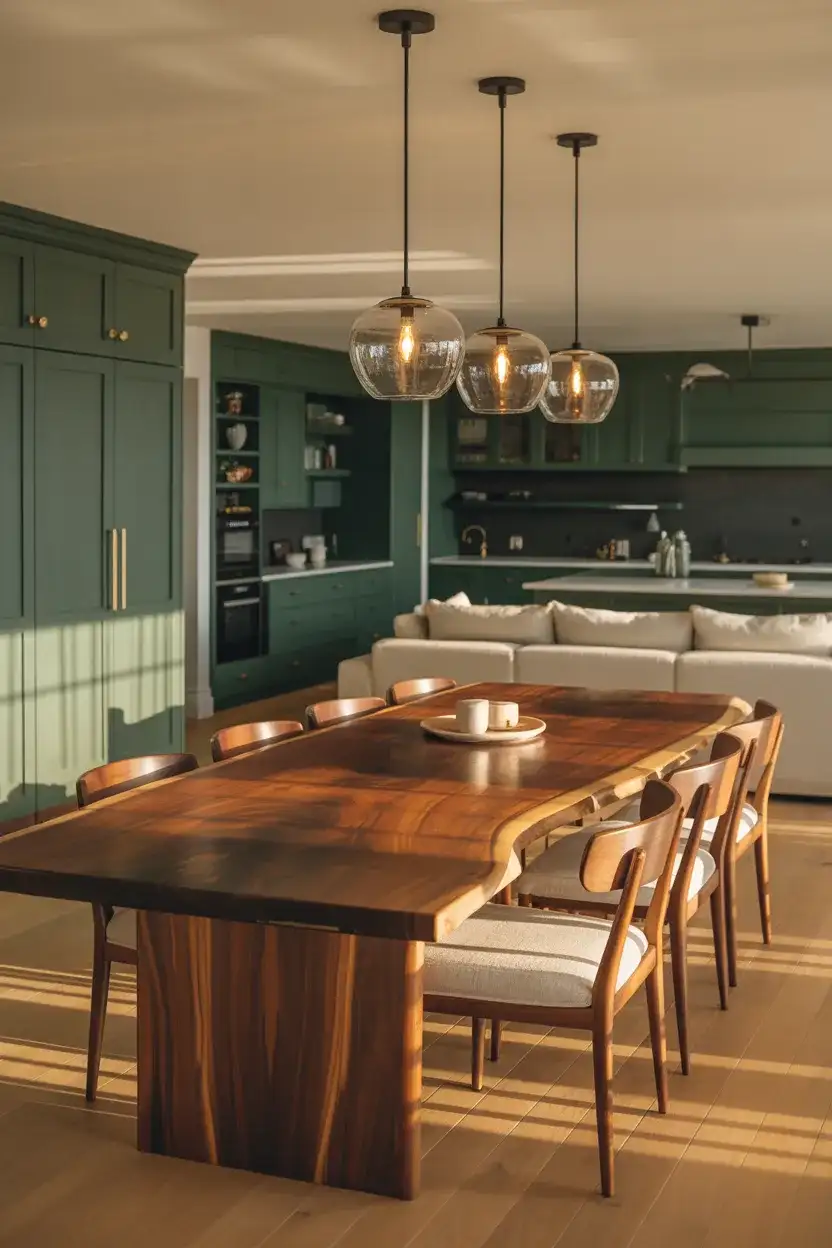
In an open-plan home, the dining room often becomes the unsung hero—the piece that visually holds the kitchen and living zones together. This idea places a large, sculptural dining table at the center of the shared space, turning it into an anchor that defines the rhythm of the entire room. Whether it’s a live-edge walnut slab or a sleek oval in white oak, the table becomes a gathering point that makes the open plan feel intentional rather than just empty.
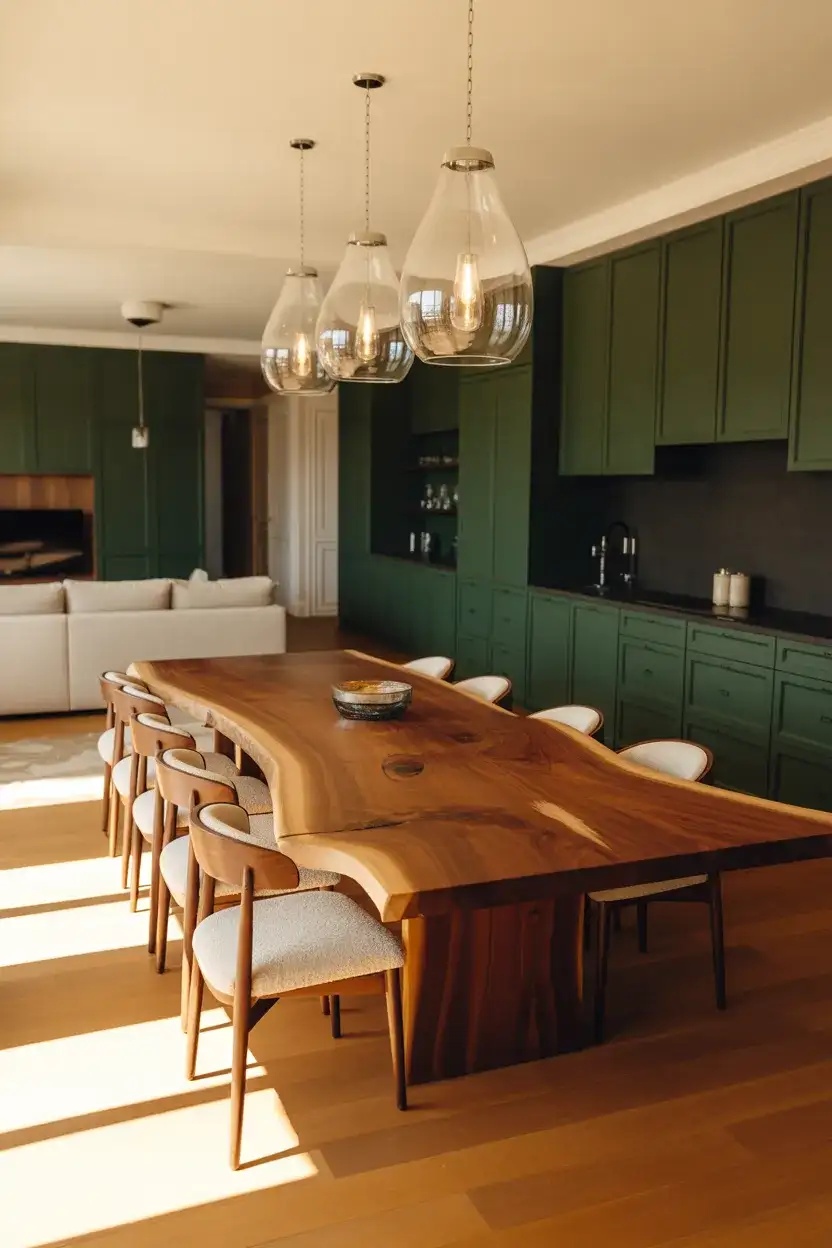
The practical insight here is scale. In a shared space, the dining table needs to be proportional not just to the dining area but to the entire visible room. Too small and it disappears; too large and it blocks circulation. A good rule of thumb from interior stylists: leave at least thirty-six inches of clearance on all walkable sides, and choose a shape that echoes the room’s geometry—rectangular tables for long rooms, round or oval for squarer footprints. Get that balance right, and the table does all the zoning work for you.
11. Moody Dark-Toned, Open Kitchen Lounge
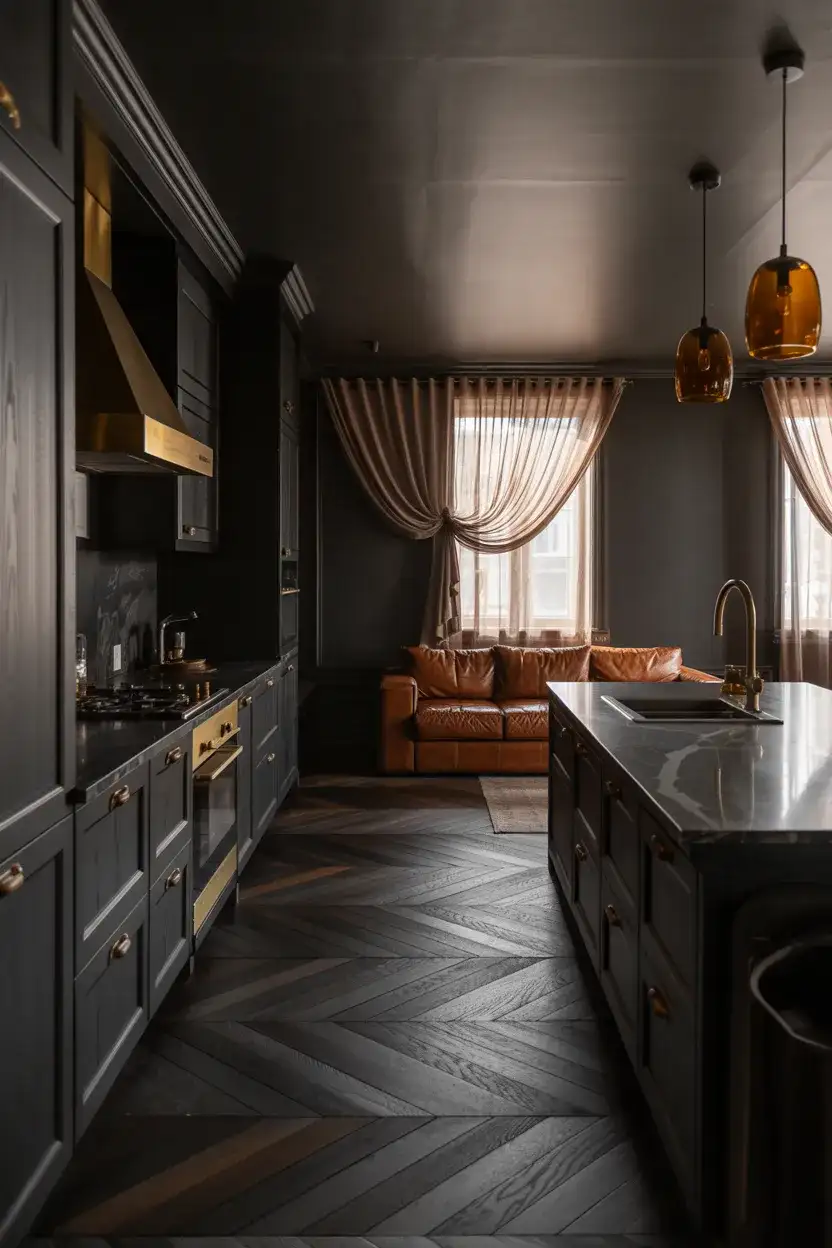
Dark kitchens have moved well past trend status—they’re a full-blown design category now. A moody, dark-toned open kitchen that bleeds into a lounge-like living space creates an atmosphere that feels cinematic and enveloping. Deep navy, charcoal, and black-green cabinetry paired with brass hardware and warm leather decor turn the open concept into something that feels more like a sophisticated cocktail bar than a family kitchen. It’s dramatic, and it works.
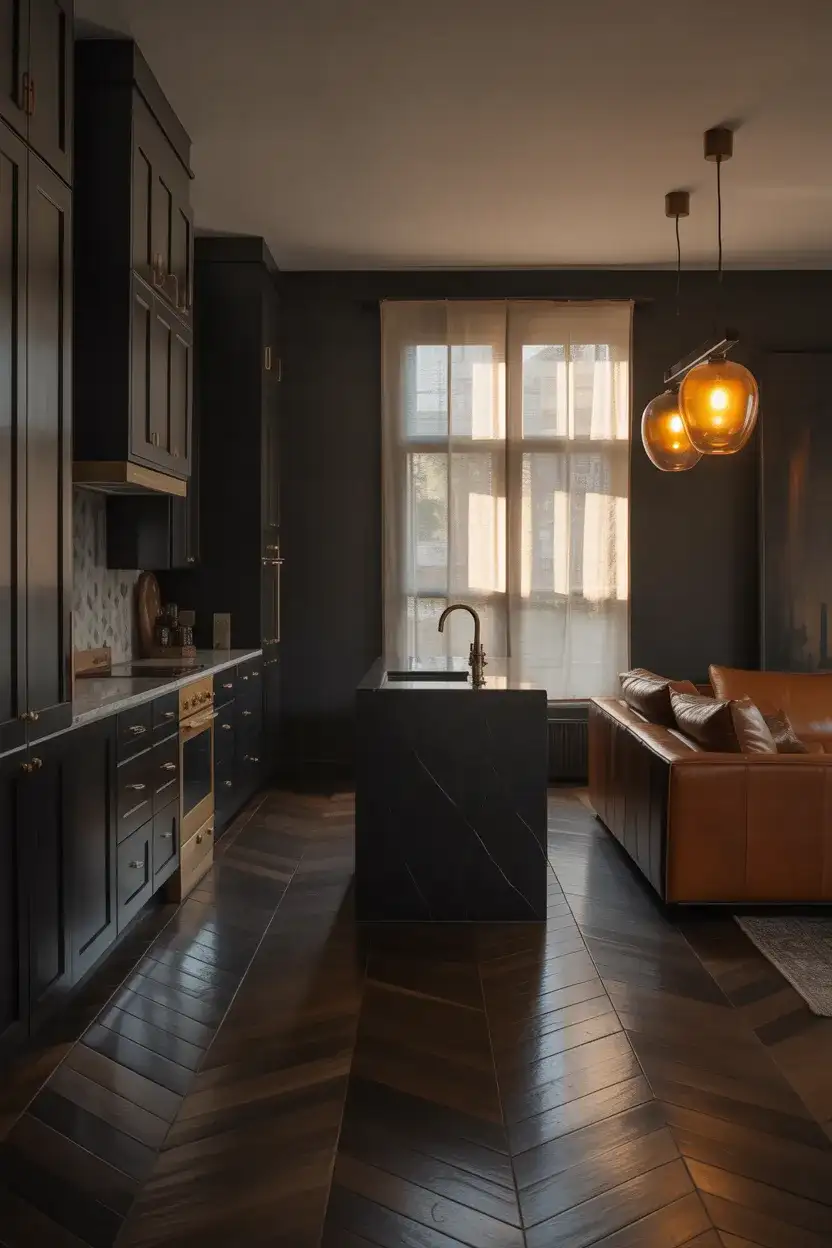
Where this look works best is in north-facing rooms or spaces that don’t get overwhelming direct sunlight. The low light actually enhances the moody atmosphere rather than fighting it. It’s also ideal for evening entertainers—couples who host dinner parties more than Sunday brunches. If your living pattern skews toward cozy nights in with wine and good conversation rather than bright Saturday mornings, a dark-toned open kitchen will feel like it was made specifically for the way you use your home.
12. Open Kitchen Living Room to Arrange for Entertaining
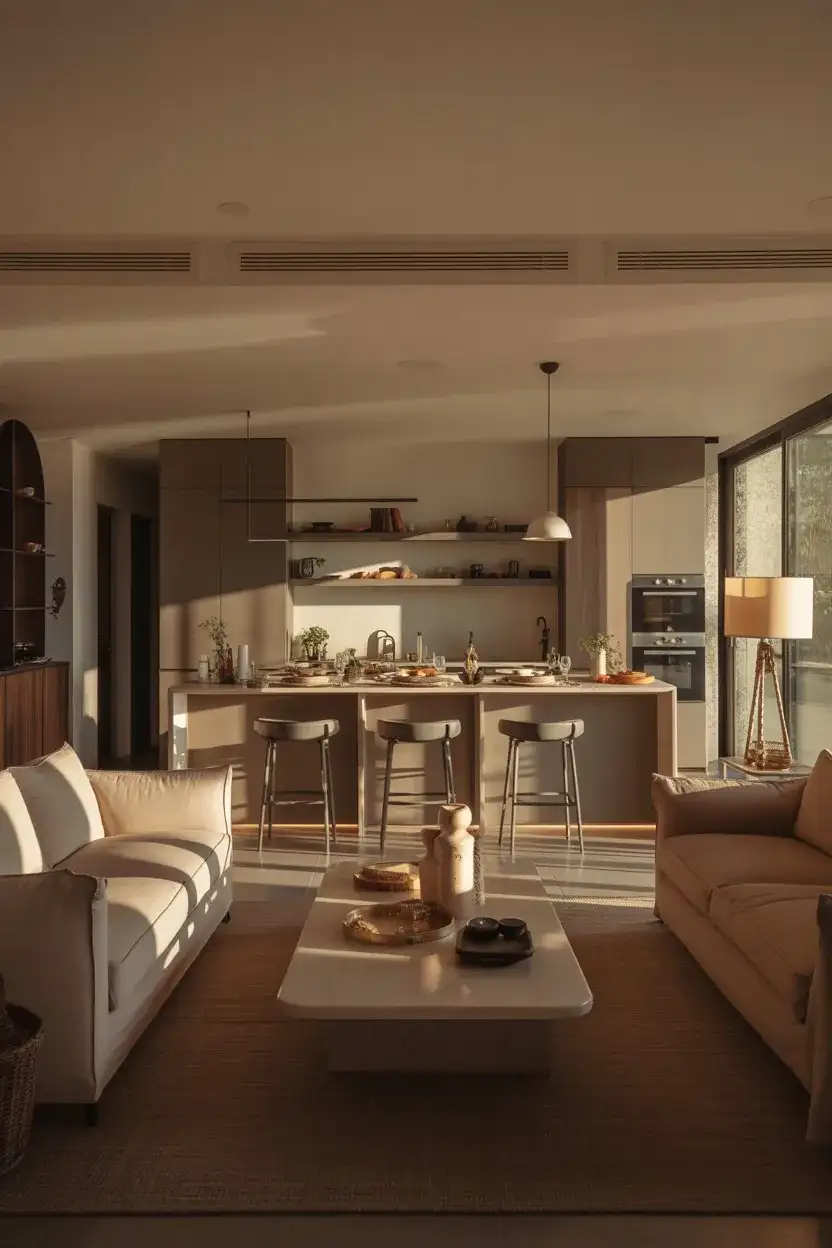
If you love hosting, the way you arrange your open kitchen and living room can make the difference between a party that flows and one where everyone awkwardly clusters around the fridge. This layout positions the island as a social hub—with seating on the guest side—while the sofa and accent chairs form a loose conversation circle just a few steps away. The dining table sits between the two, creating a natural buffet or cocktail station that keeps traffic moving.
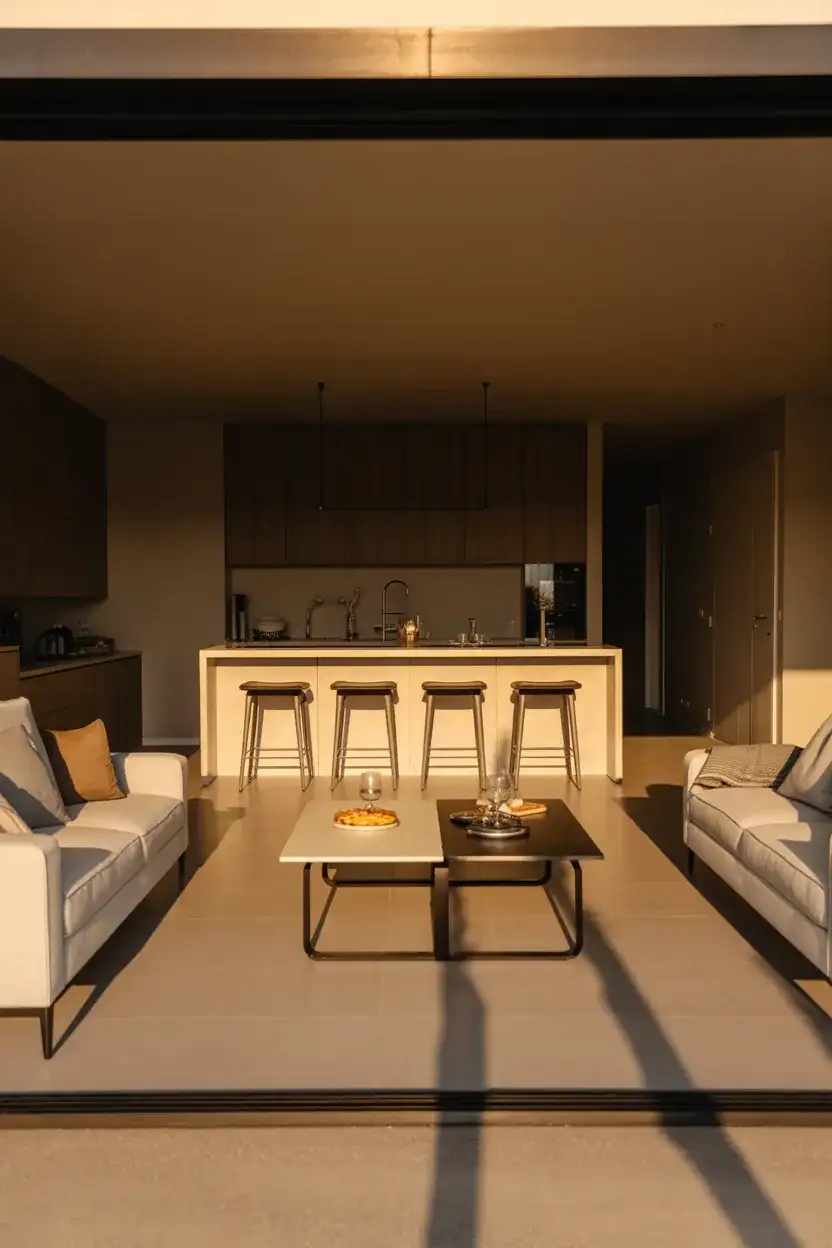
A common mistake hosts make is pushing all the furniture against the walls to “create space.” Counterintuitively, this makes the room feel emptier and conversation harder because everyone is too far apart. Instead, pull seating pieces toward the center and leave the perimeter for walking. Interior designers call this “floating” the furniture, and it creates those intimate pockets where three or four people can talk comfortably while others drift between the kitchen and the bar setup.
13. Coastal Open Kitchen With Relaxed Living Room
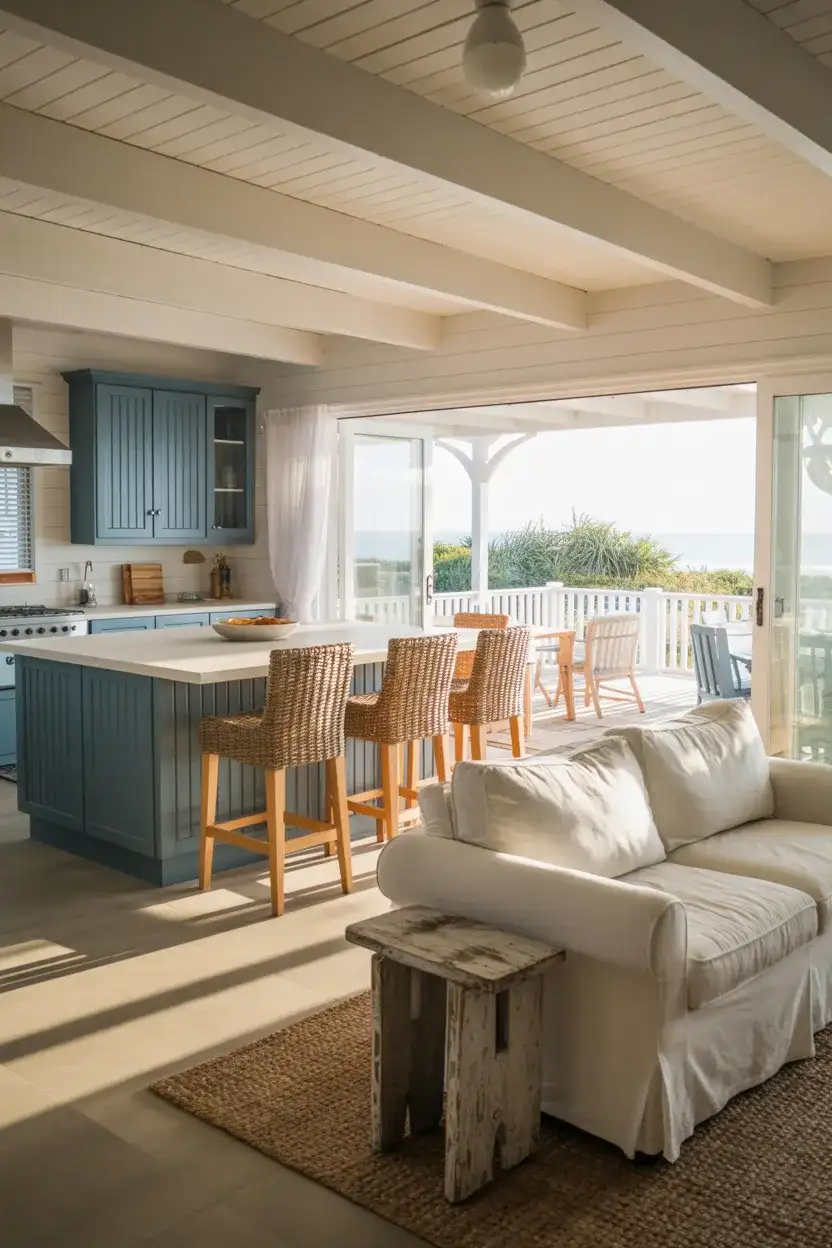
Coastal style has matured well beyond seashell mirrors and anchor-print pillows. The modern coastal open kitchen reads clean, airy, and grounded—whitewashed wood, soft blue-gray tones, natural stone, and an easy flow into a living room that feels like a permanent vacation. This design is especially popular in homes from the Carolinas to Southern California, though you absolutely don’t need an ocean view to make it sing. The ideas behind it are universal: light, air, and cased openings that frame each zone beautifully.
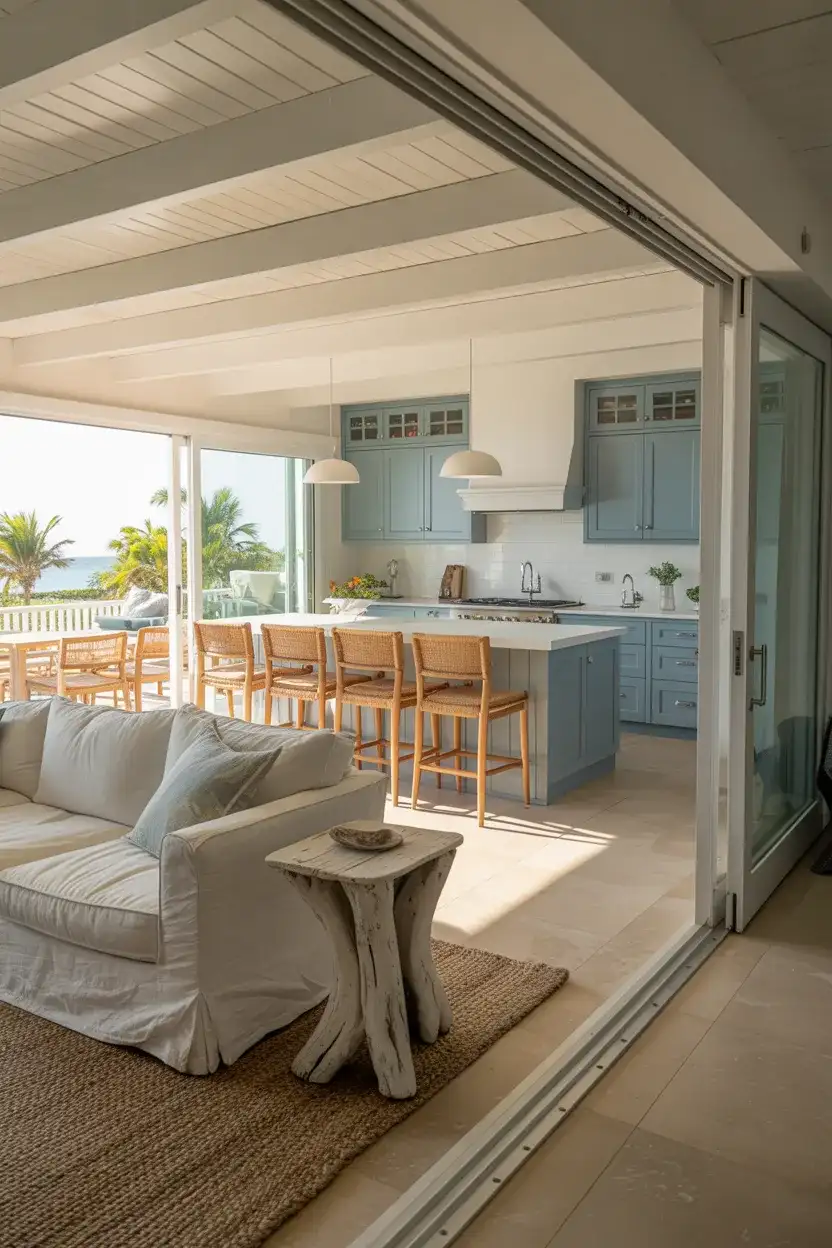
Across the American lifestyle spectrum, coastal design resonates because it promises relaxation—and that promise is baked into every material choice. Slipcovered sofas you don’t have to worry about, quartz counters that shrug off water rings, and sisal rugs that hide sand and crumbs. For families with kids, pets, or a revolving door of weekend guests, this style doesn’t just look easy—it actually is easy. That low-maintenance quality is the real reason it endures, season after season.
14. Open Kitchen Living Room for a Small Condo
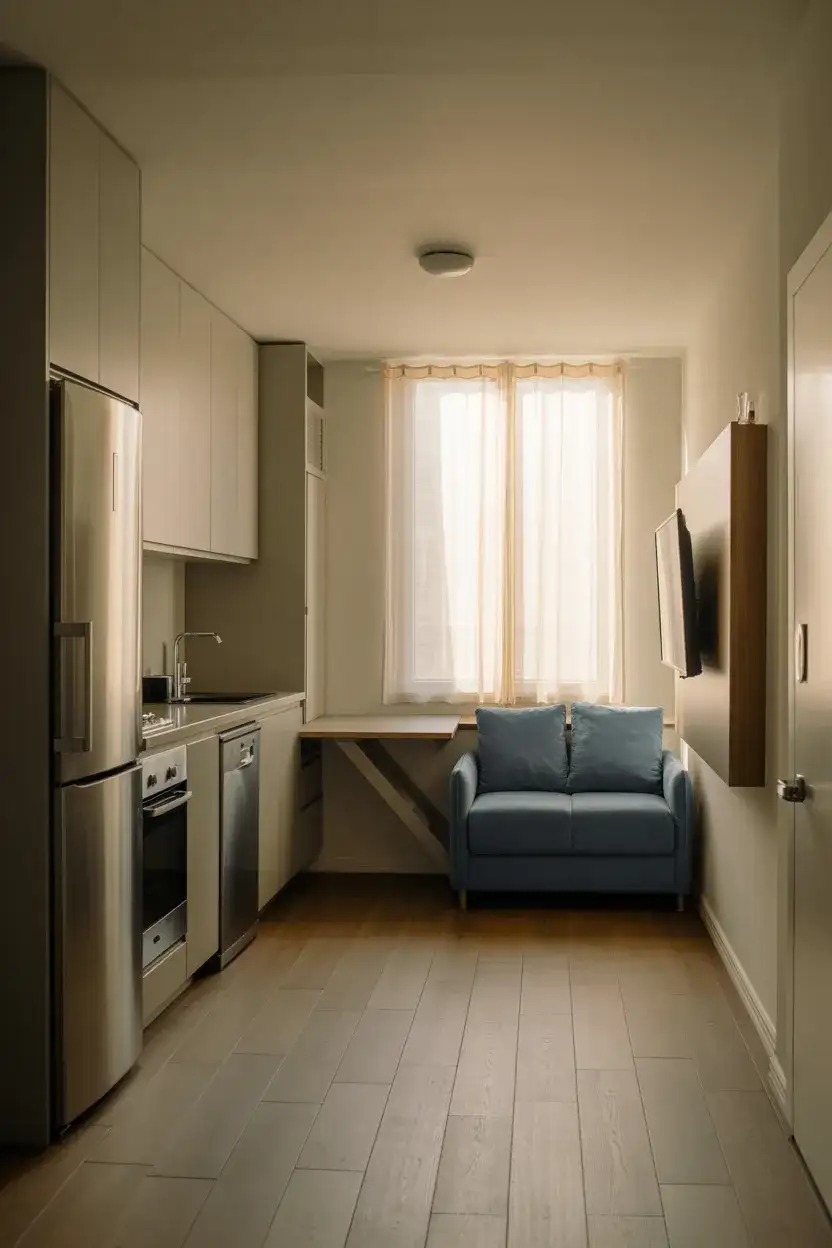
Condo living demands efficiency, and the open kitchen-living layout is practically the default in modern small space construction. But default doesn’t have to mean generic. This idea shows how a single-wall kitchen with integrated appliances can share a compact room with a loveseat, a wall-mounted media console, and a slim drop-leaf dining table without feeling cramped. Every element earns its square footage, and the visual trick is keeping the palette unified so the eye reads the entire room as one cohesive space.
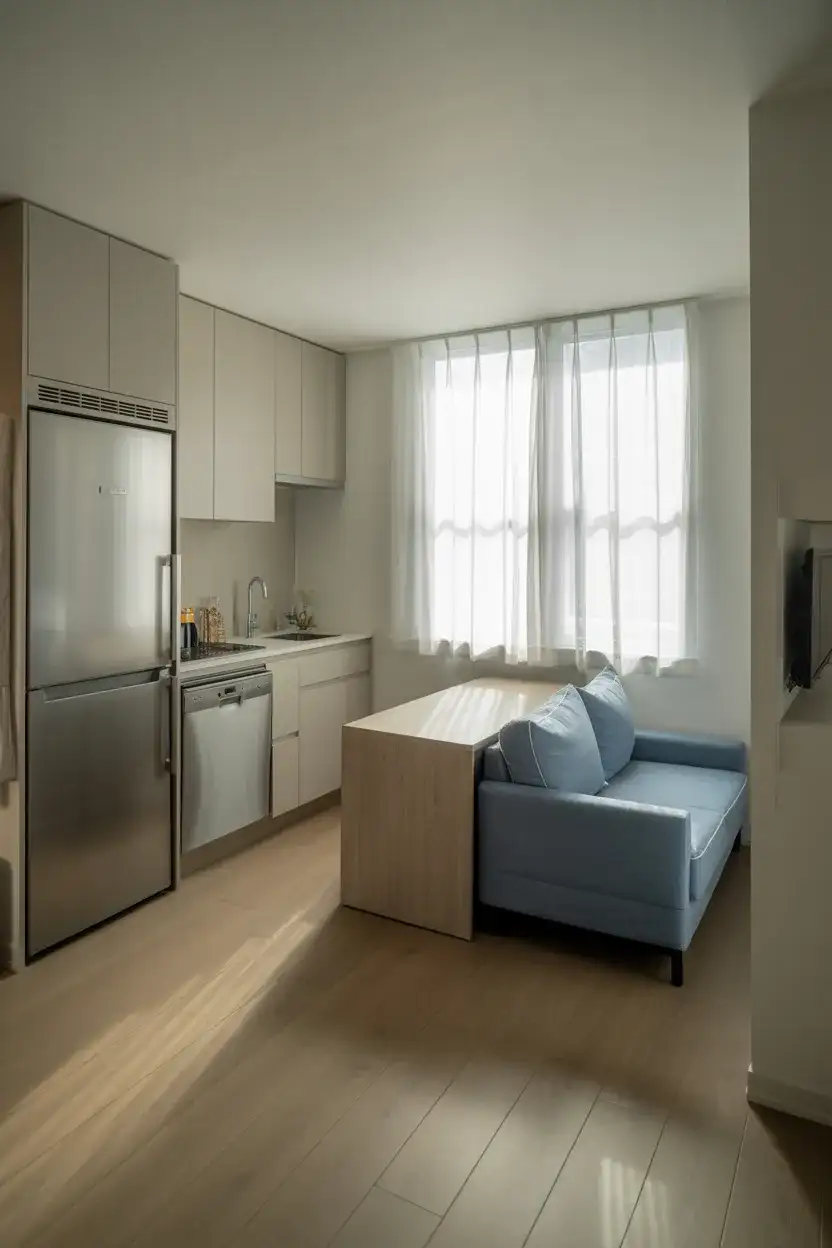
Expert designers working with condos under 600 square feet consistently recommend one rule above all others: choose furniture with visible legs. Sofas, tables, and storage pieces that sit on slender legs rather than flat bases let light pass underneath, which tricks the eye into perceiving more floor area. It sounds minor, but the cumulative effect in a tight open plan is significant. Combine that with a light, continuous floor material and no area-rug borders cutting the space, and even a modest condo starts to breathe.
15. Warm Minimalist Open Kitchen and Living Space
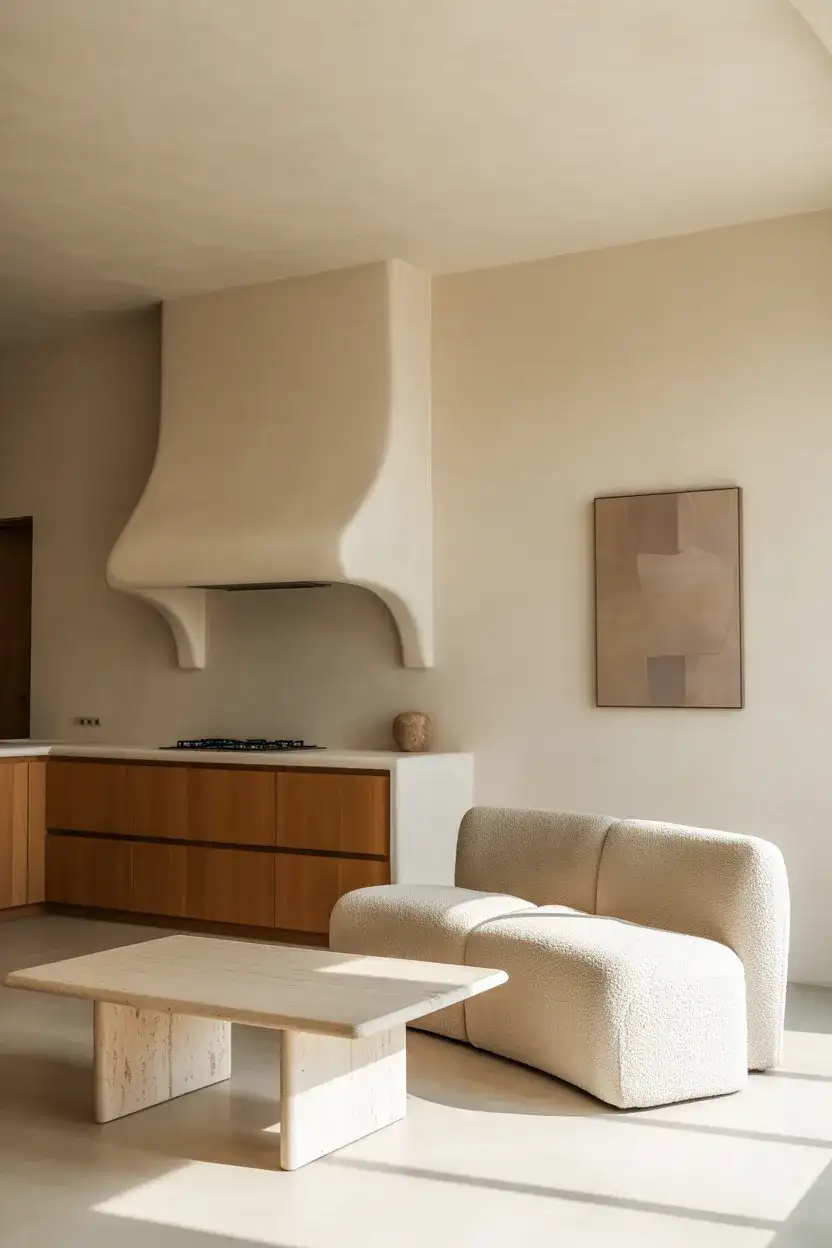
Warm minimalism has been steadily climbing Pinterest boards, and its application in open kitchens is particularly compelling. Unlike cold minimalism that strips a room to bare bones, this approach keeps things edited but deeply tactile—think plaster walls, curved interior design details, thick linen upholstery, and a kitchen island in warm Scandinavian oak. The living room side echoes the same restraint: a single sculptural couch, one art piece, and nothing more. Every object matters.
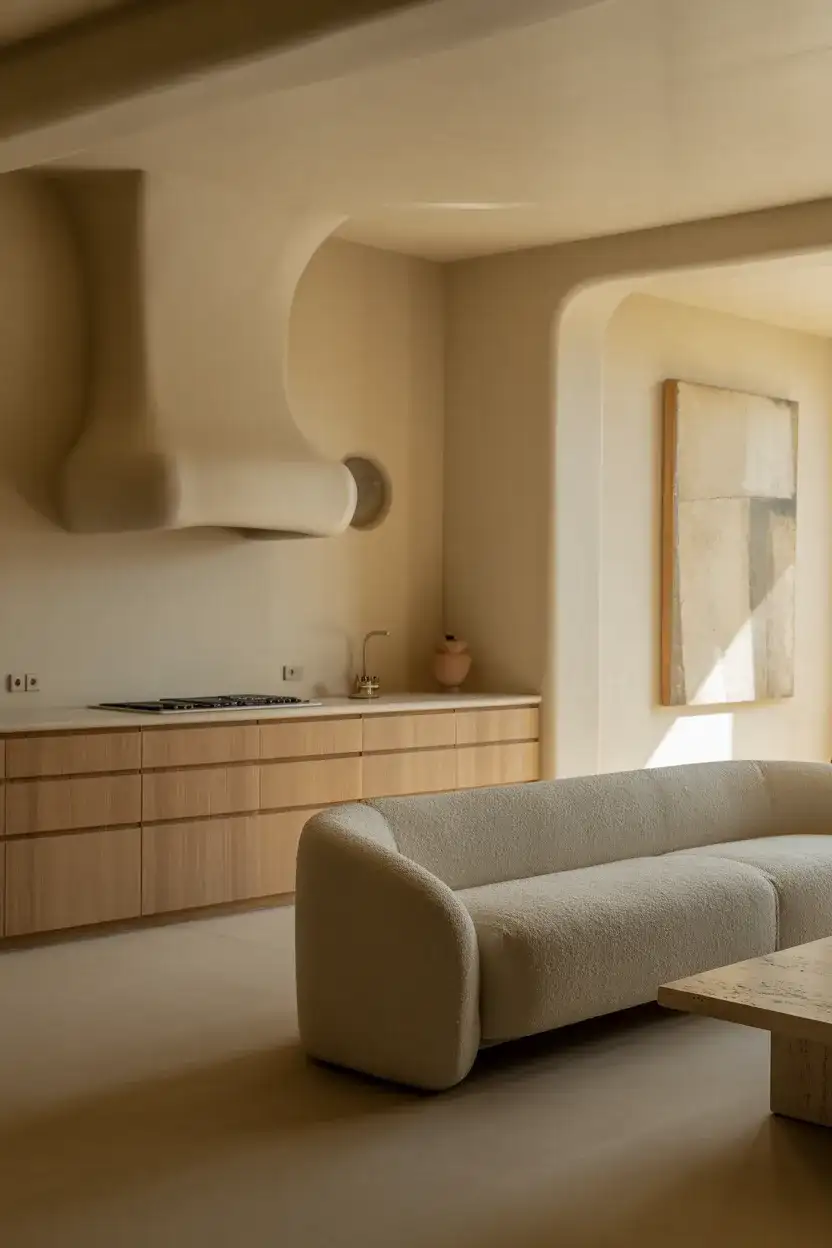
The biggest mistake people make when attempting warm minimalism is confusing it with “not finished yet.” A truly minimal space requires more design intention, not less—every surface finish, every edge radius, and every light source has to be considered because there’s nothing to hide behind. The plaster needs to be perfect, the joinery needs to be precise, and the few items you keep need to be genuinely beautiful. It’s the most demanding style to execute well, which is exactly why it photographs so strikingly.
16. Open Kitchen Living Room With Defined Zones Using Rugs
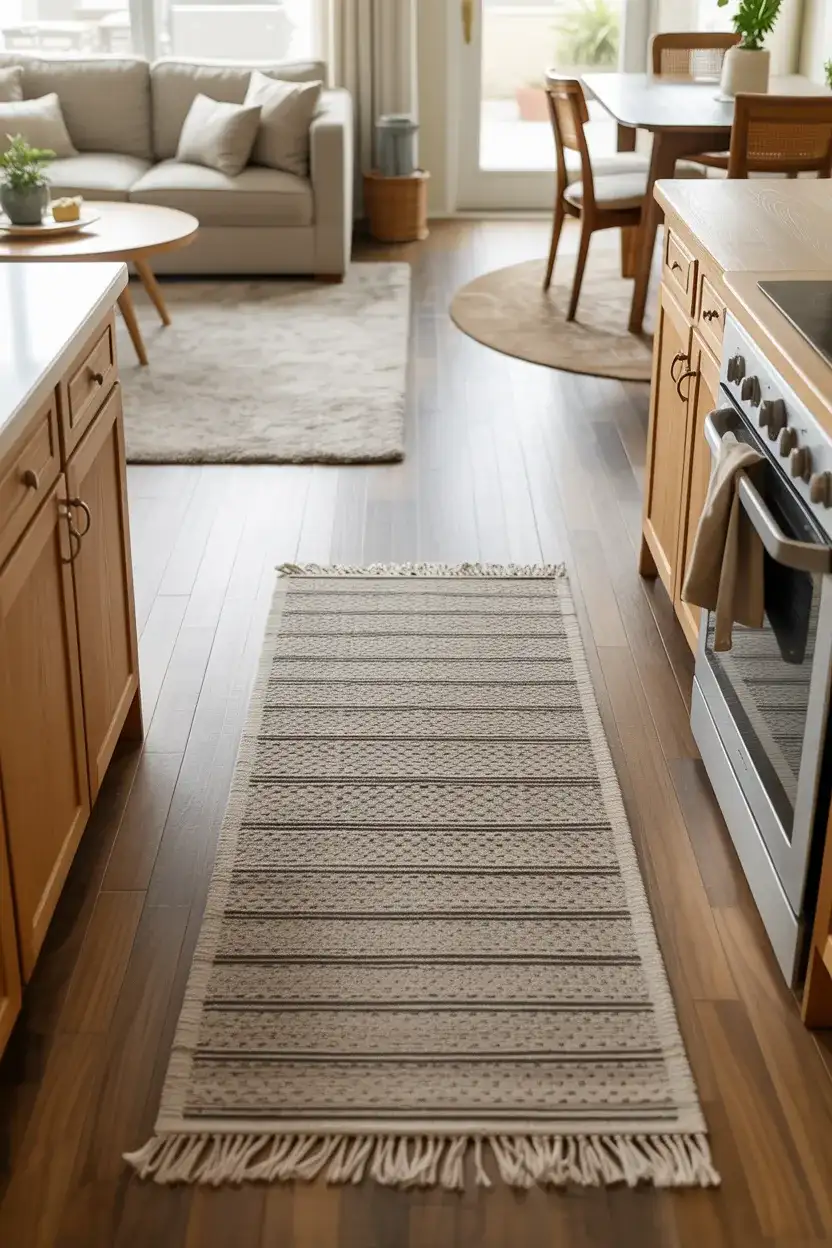
One of the simplest and most effective ways to arrange an open kitchen living room is with area rugs that define each zone without any physical barriers. A runner along the kitchen work triangle, a large rug anchoring the living room seating, and perhaps a smaller one beneath the dining table—these textile boundaries do the spatial work that walls used to do. The decor stays fluid and changeable, which is perfect for renters or anyone who likes to switch things up seasonally.
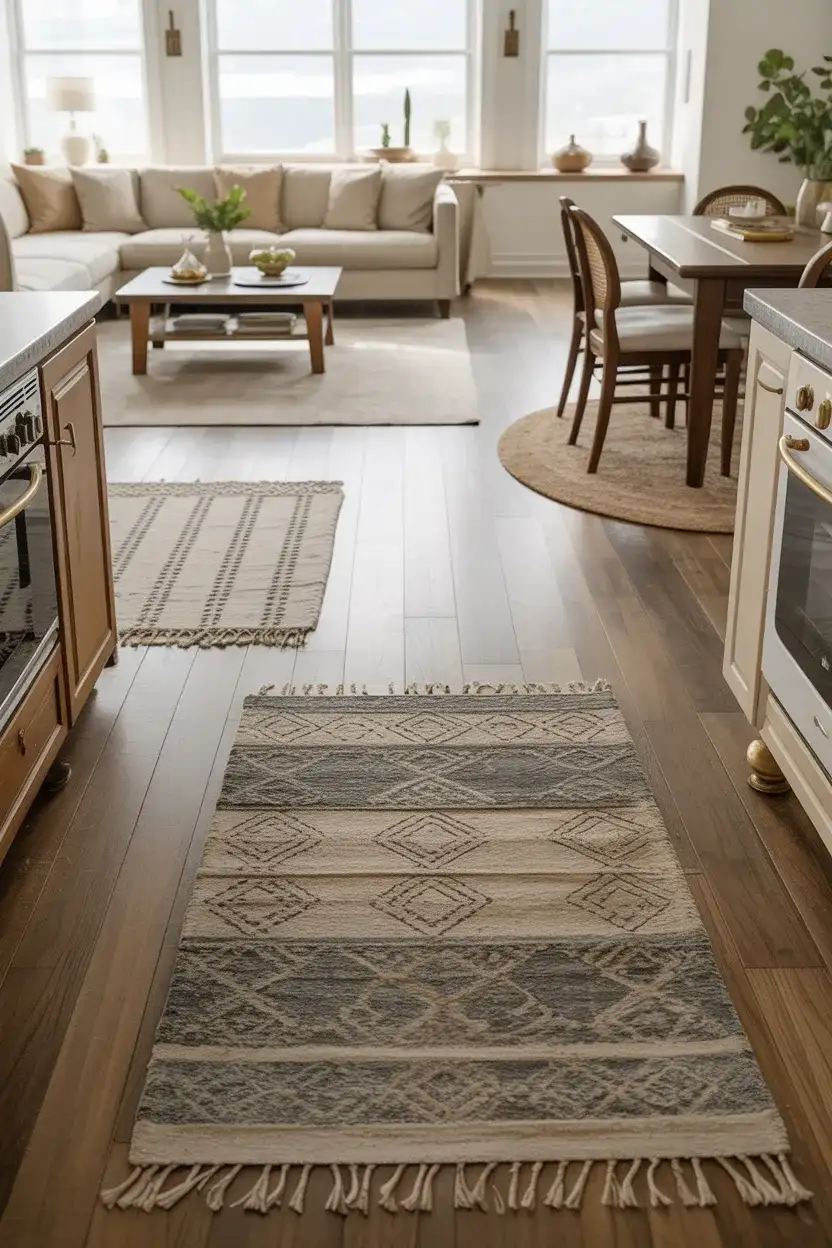
Budget-conscious decorators take note: rug zoning is the most reversible and affordable way to reshape an open plan. A quality 8×10 area rug from retailers like Rugs USA or Loloi runs between two hundred and six hundred dollars, and swapping it out completely changes the room’s energy. Compare that to building a half-wall or installing different flooring for each zone—which can cost thousands and requires a contractor—and the case for rugs as spatial architecture makes itself.
17. Modern Farmhouse Open Kitchen and Family Room
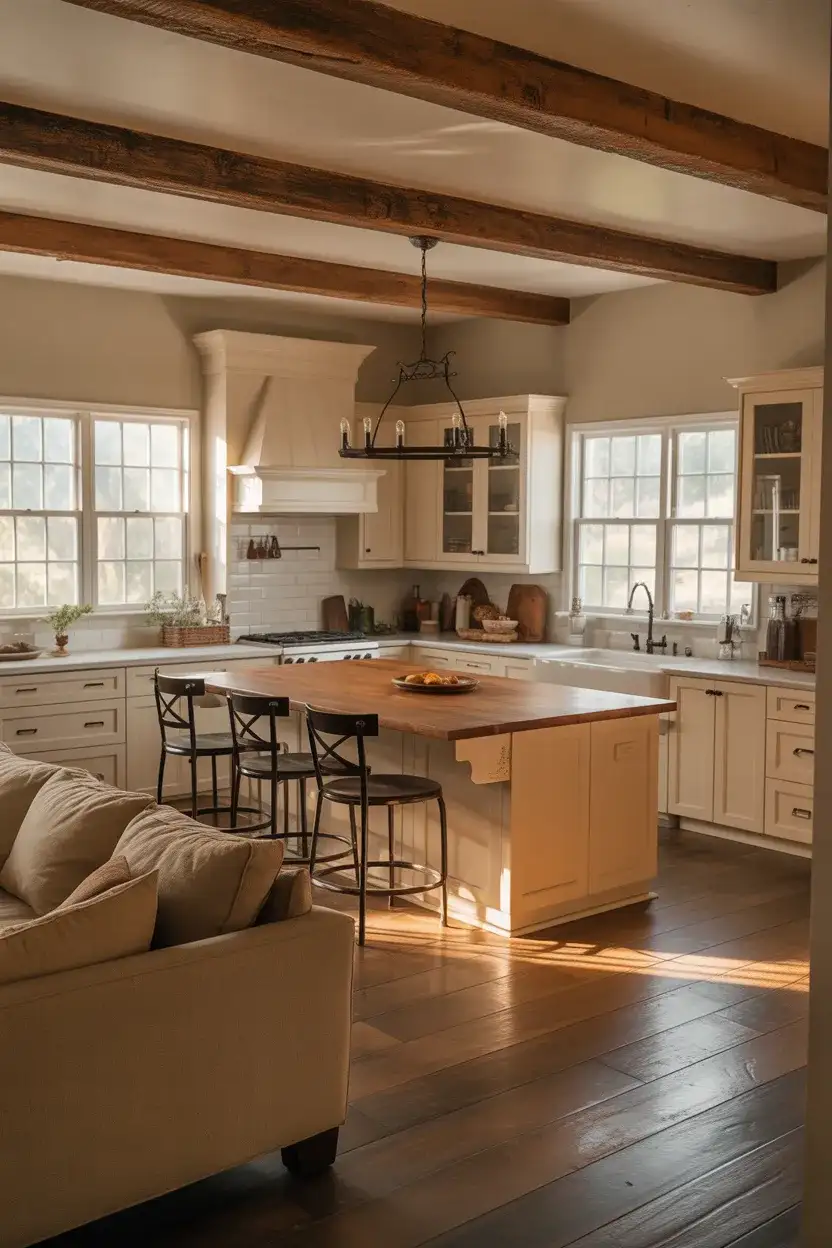
The modern farmhouse has evolved since its shiplap-and-subway-tile peak, and in 2026 the best versions feel warmer, less formulaic, and more layered. An open kitchen flowing into a family-sized living room is the signature move—a big island for homework and meal prep, a deep couch for movie nights, and a dining room table that handles everything from Tuesday tacos to Thanksgiving. The design leans on natural wood, matte black hardware, and creamy whites rather than stark cool tones.
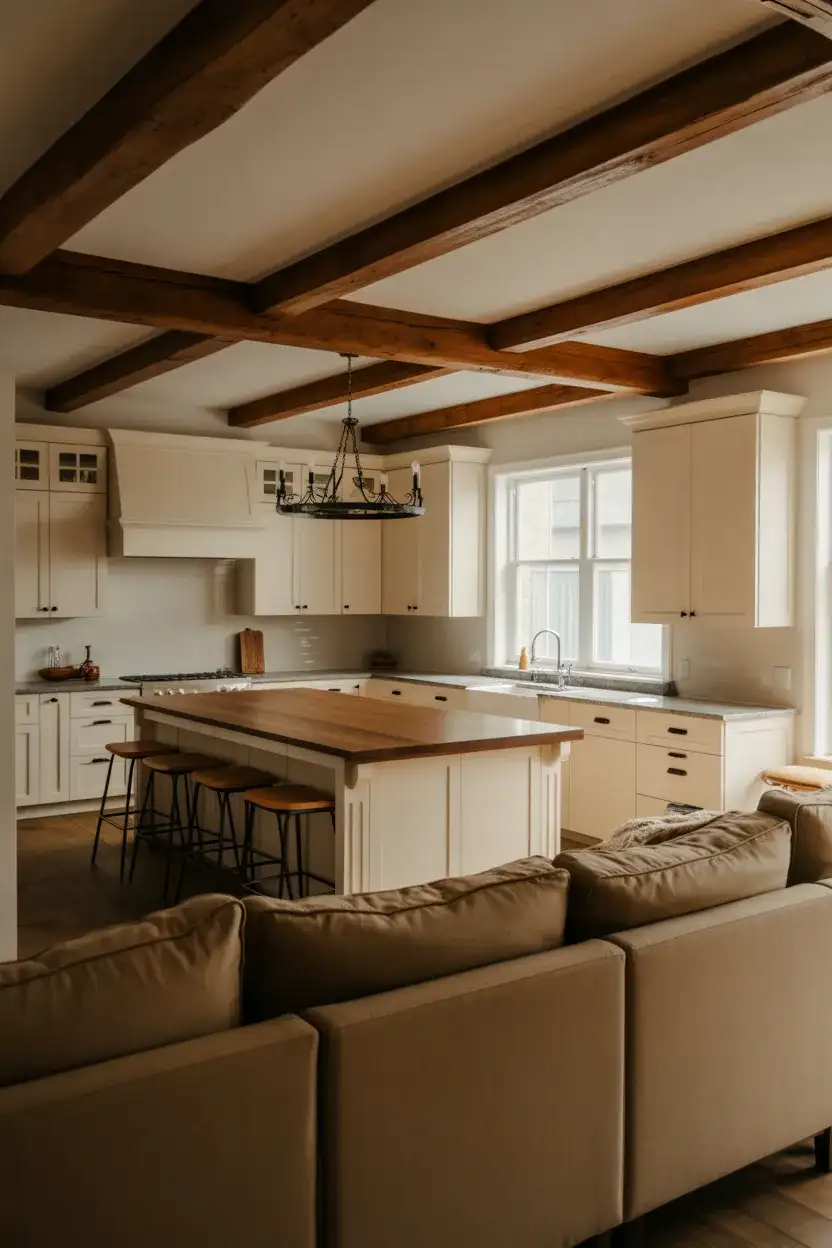
Real homeowner behavior tells the story here. Families who build or renovate with a modern farmhouse open plan almost always report that the island becomes command central—it’s where kids do homework while dinner simmers, where morning coffee happens standing up, and where guests inevitably congregate during every single party. Designers who push back on oversized islands are missing the way American families actually use their homes. Bigger is usually better here, within reason.
18. Compact Open Kitchen in a Studio Apartment
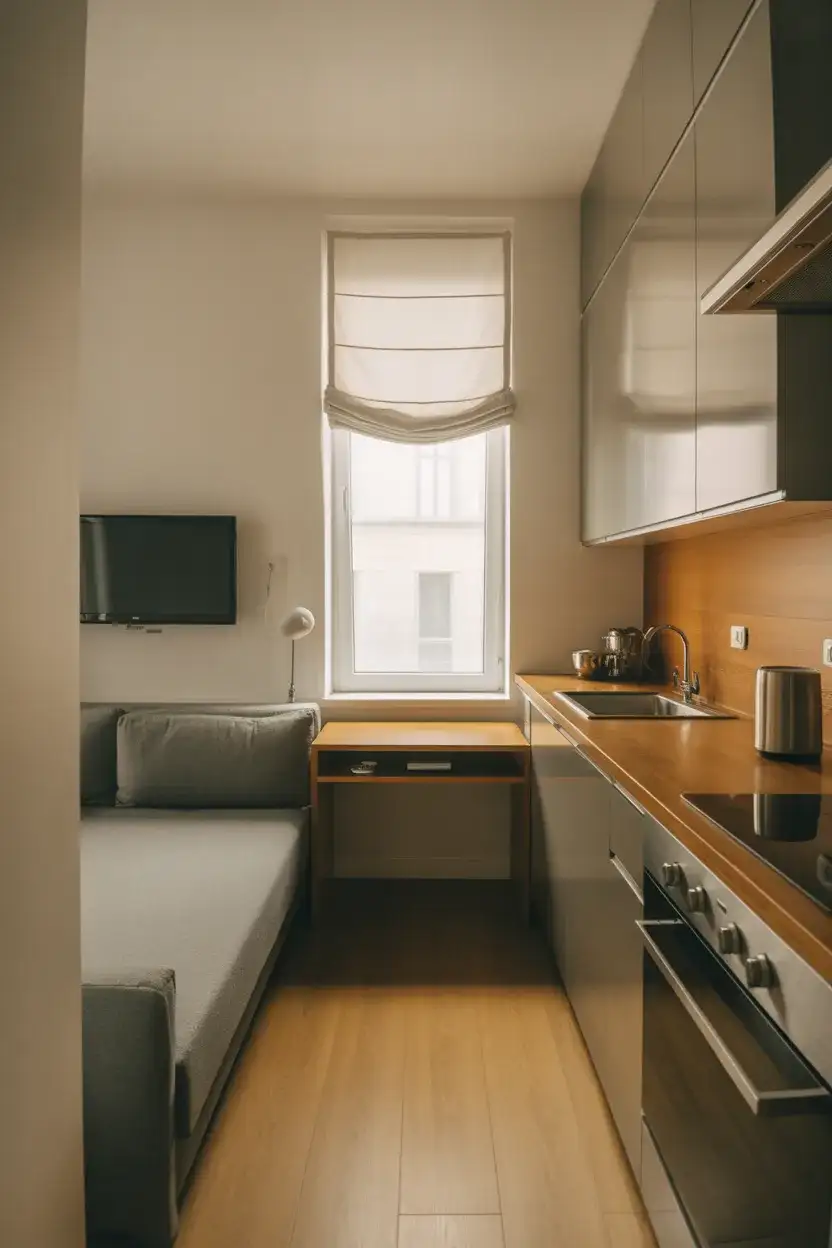
Studio living is the ultimate test of open-plan thinking because the kitchen, living room, bedroom, and sometimes office all exist in a single apartment volume. This idea uses a slim galley kitchen along one wall, paired with a convertible sofa bed and a fold-down desk, to create a surprisingly complete home in under 400 square feet. The small space demands discipline, but the reward is a space that feels curated rather than cramped—every inch earns its keep.
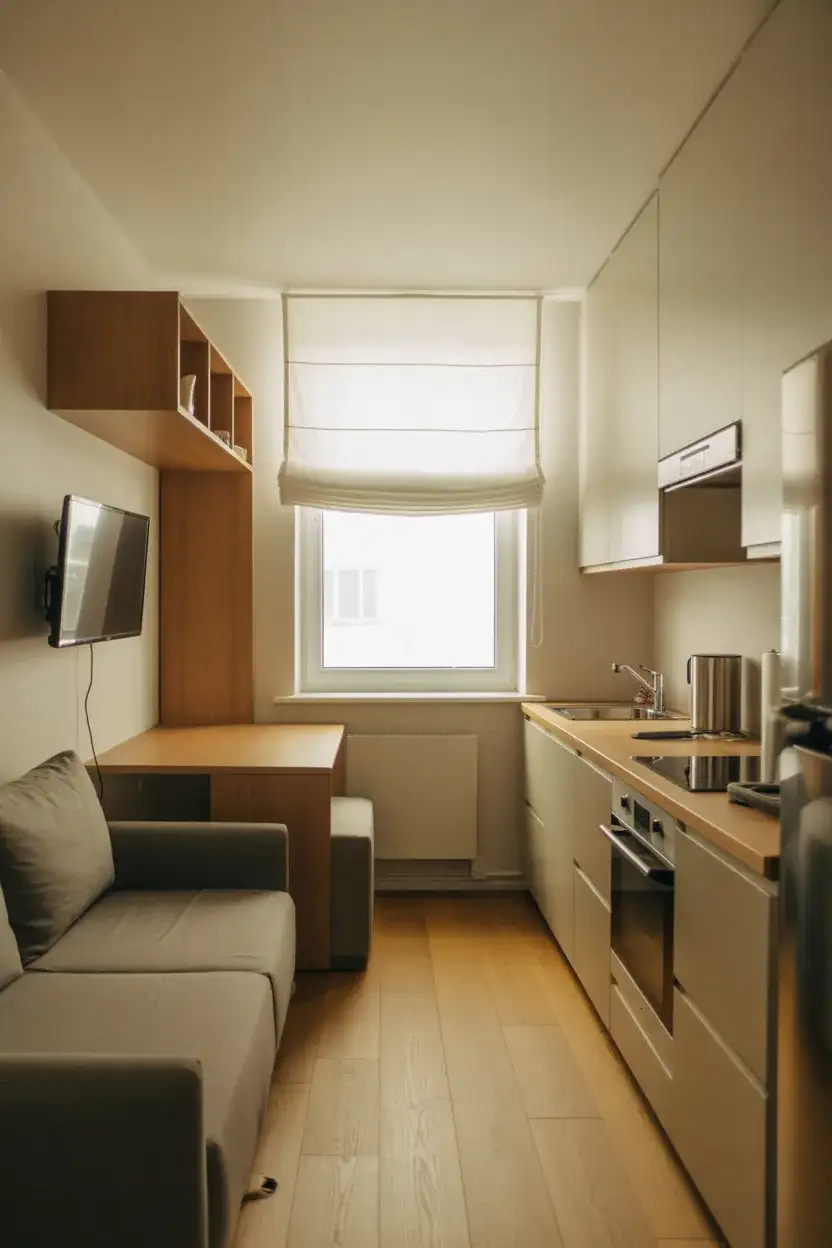
Across major American cities—New York, San Francisco, Seattle, and Chicago—studio apartments represent a growing share of the rental market, and young professionals are getting increasingly creative with how they design these single-room homes. The open kitchen isn’t optional in a studio; it’s a structural fact. What separates a depressing studio from an inspiring one is almost never the square footage itself—it’s the intentionality of the layout and whether the resident treated the space as a design challenge worth solving or just a box to fill.
19. Open Kitchen With Arched Cased Openings
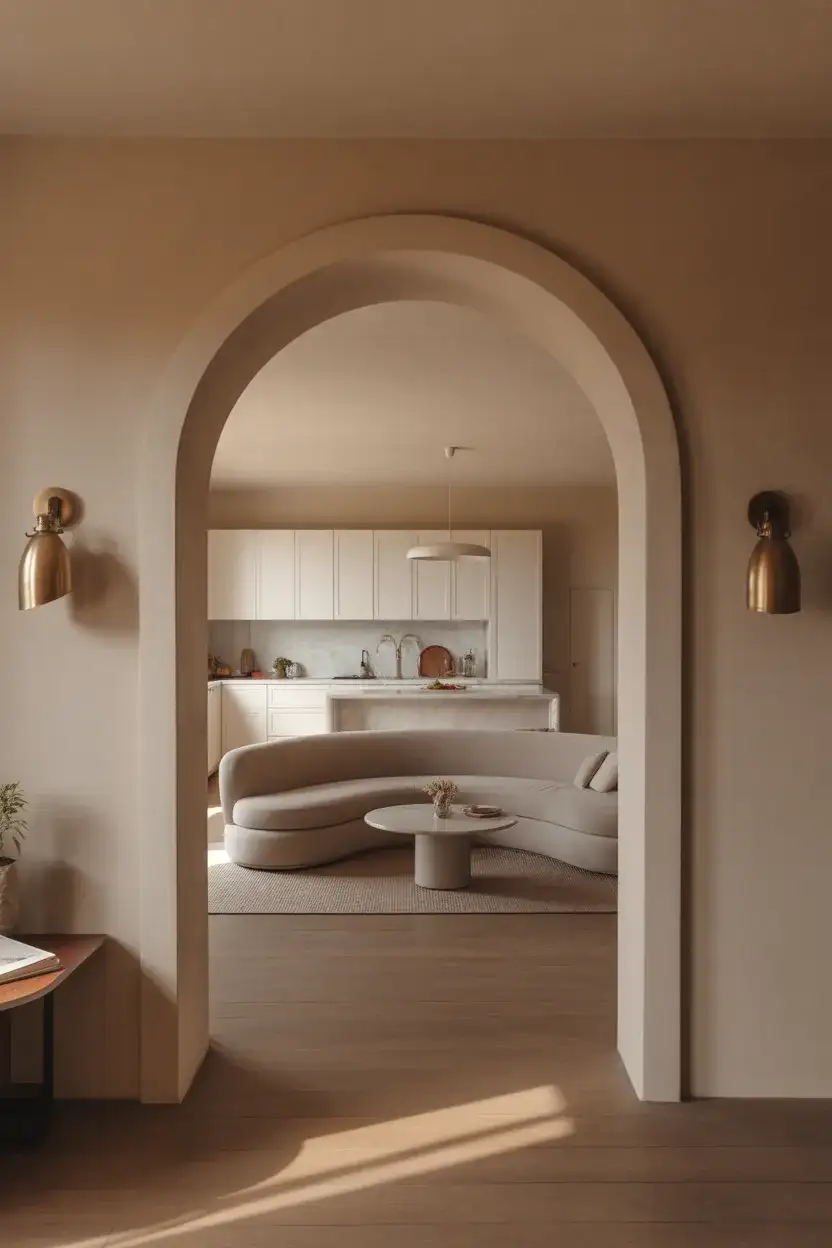
Arched cased openings have surged in popularity as a way to add architectural character to the transition between an open kitchen and living room. Instead of a plain rectangular pass-through, a gently curved arch introduces softness and a sense of craftsmanship that flat drywall simply cannot deliver. This interior design detail works beautifully in Mediterranean, transitional, and even modern spaces—and it costs surprisingly little when done during an existing renovation.
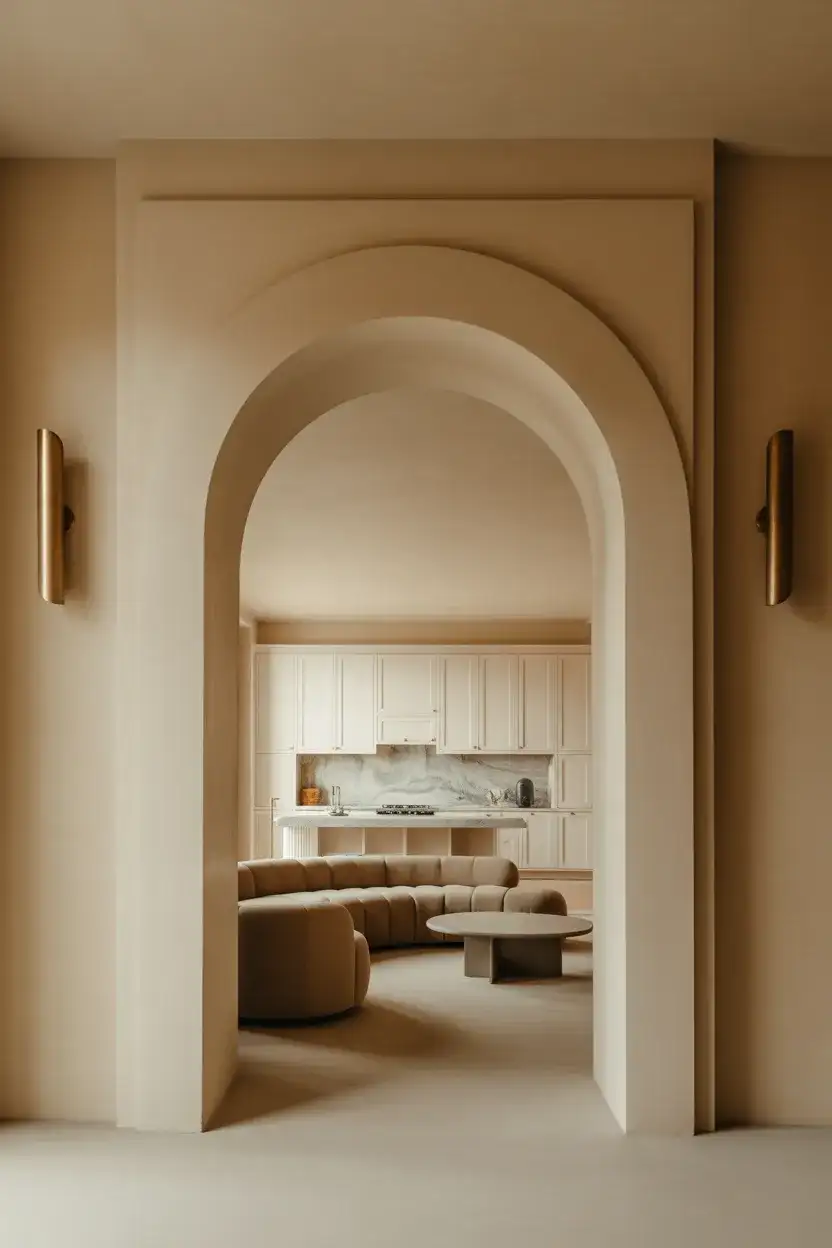
From a construction standpoint, adding an arch to an existing rectangular opening is one of the most cost-effective architectural upgrades you can make. A skilled carpenter can frame the curve with plywood and cover it in drywall or plaster for somewhere between five hundred and fifteen hundred dollars per opening, depending on your market. Compare that to the visual impact it delivers—suddenly a basic pass-through looks like something from a design magazine—and it becomes clear why arched cased openings are showing up everywhere from Nashville new builds to Phoenix remodels.
20. Japandi-Meets-Scandi Open Kitchen Living Room
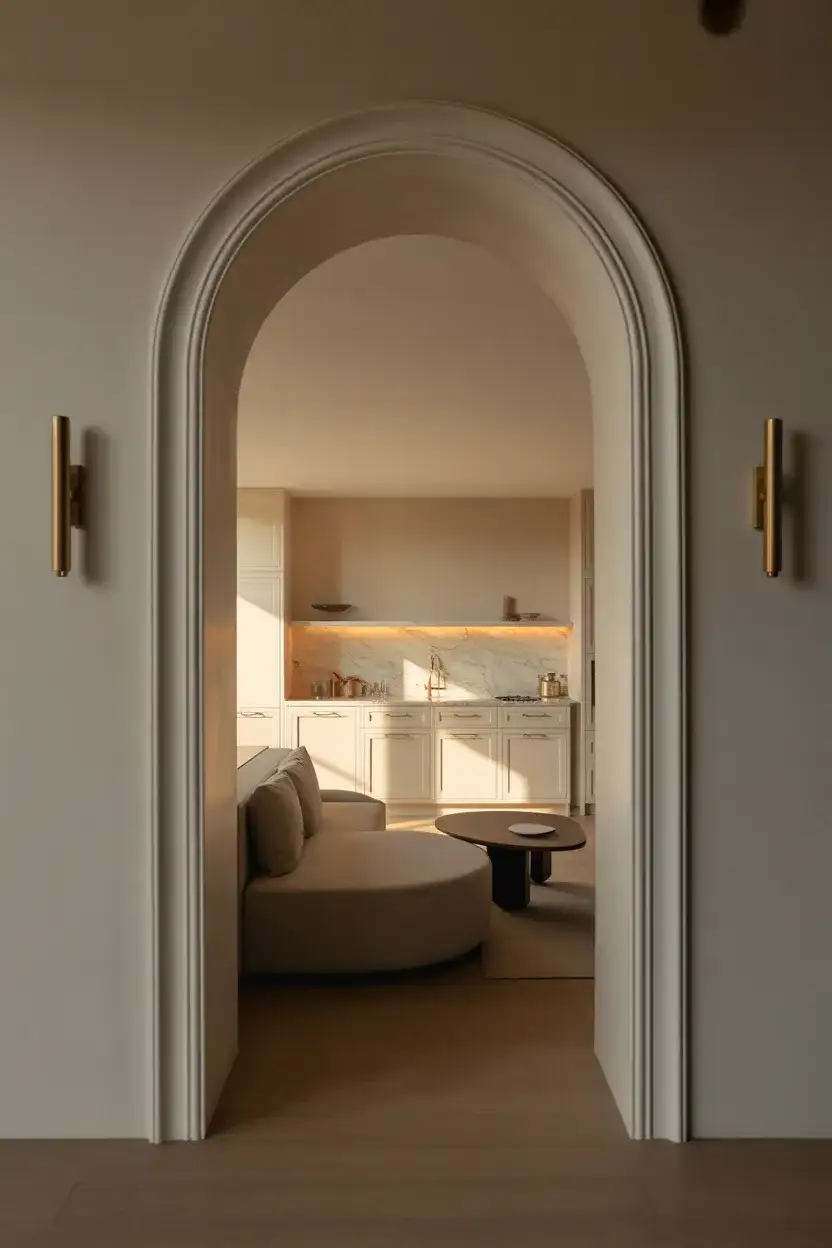
While Japandi and Scandinavian are often discussed as separate aesthetics, the most interesting open kitchens in 2026 blend the two into something that feels neither purely Nordic nor Japanese but entirely its own. Light ash cabinetry meets stone counters, paper-cord chairs sit beside a boucle couch, and the floor plan prioritizes flow and negative space in equal measure. The result is a space that manages to be both minimal and warm—sparse but never cold.
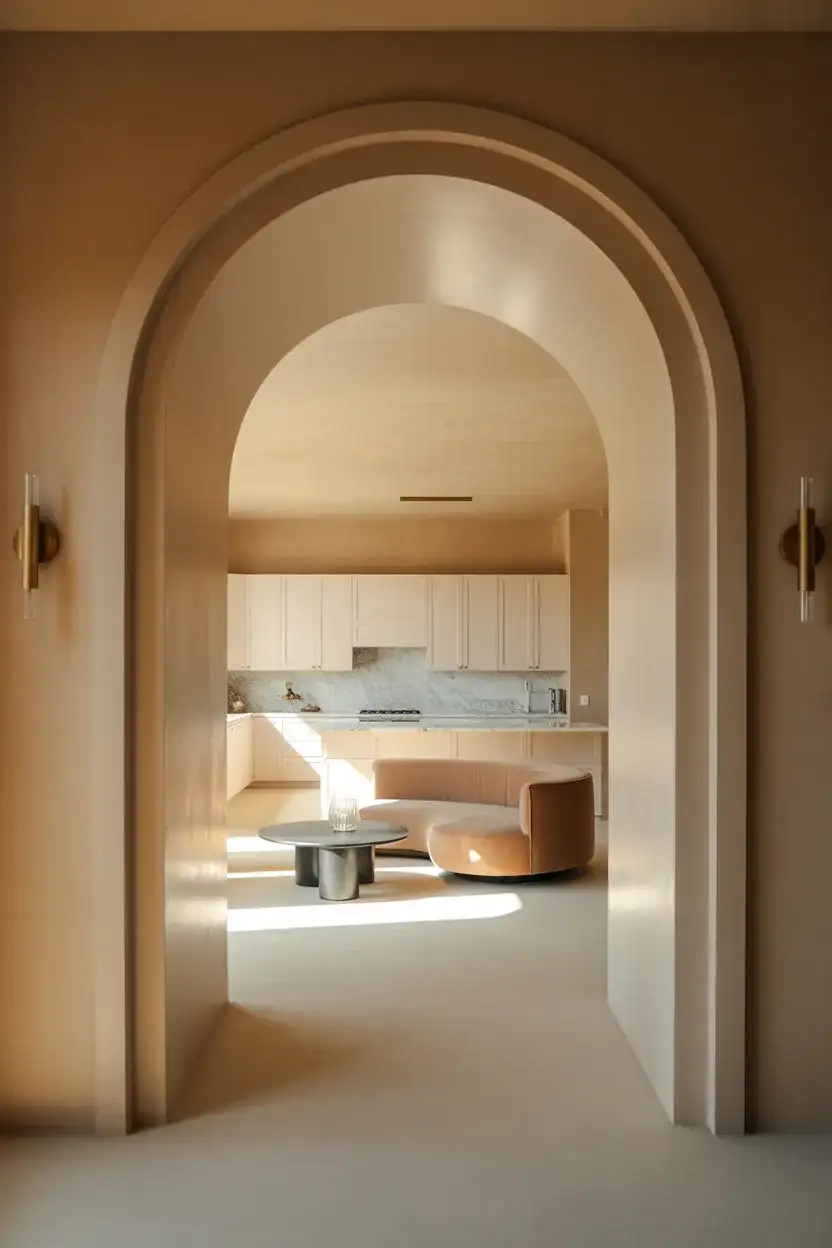
An expert-level note on pulling this hybrid off: the connective tissue between Japandi and Scandinavian design is their shared reverence for natural materials and honest craftsmanship. Where they diverge is in emotional temperature—Scandi leans hygge-cozy, while Japanese interiors favor wabi-sabi imperfection and restraint. The trick is to let one philosophy lead in each zone: Scandi warmth for the living room, where comfort matters, and Japanese discipline for the kitchen, where function rules. That tension is what makes the combination so visually rich.
21. Open Kitchen With a Floating Island and Living Room View
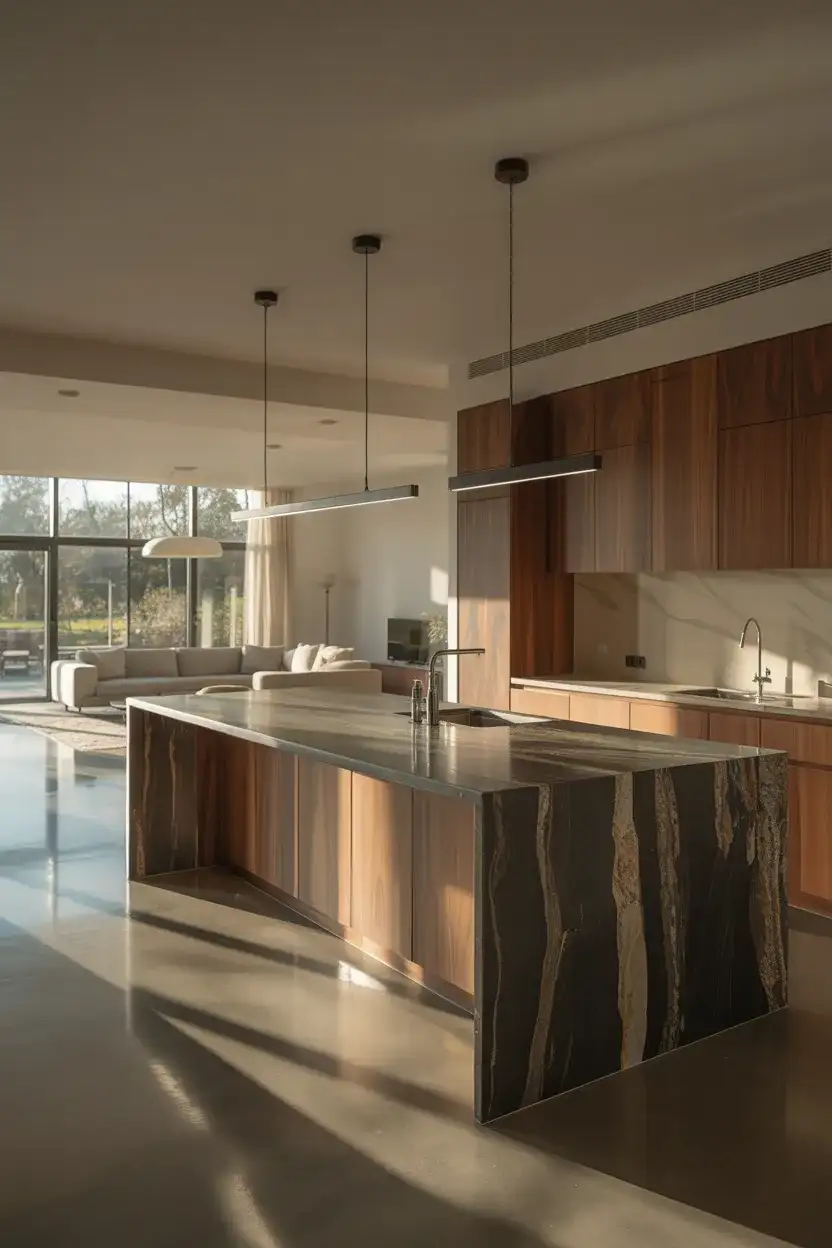
A floating island—one that sits away from all walls with clearance on every side—is the ultimate expression of the open kitchen concept. It turns the island into a freestanding piece of furniture rather than an extension of the cabinetry, and it creates a panoramic connection to the living room that no peninsula can match. This layout demands enough square footage to pull it off comfortably, but in the right plan, it’s a showstopper that redefines how the cook interacts with the rest of the household.
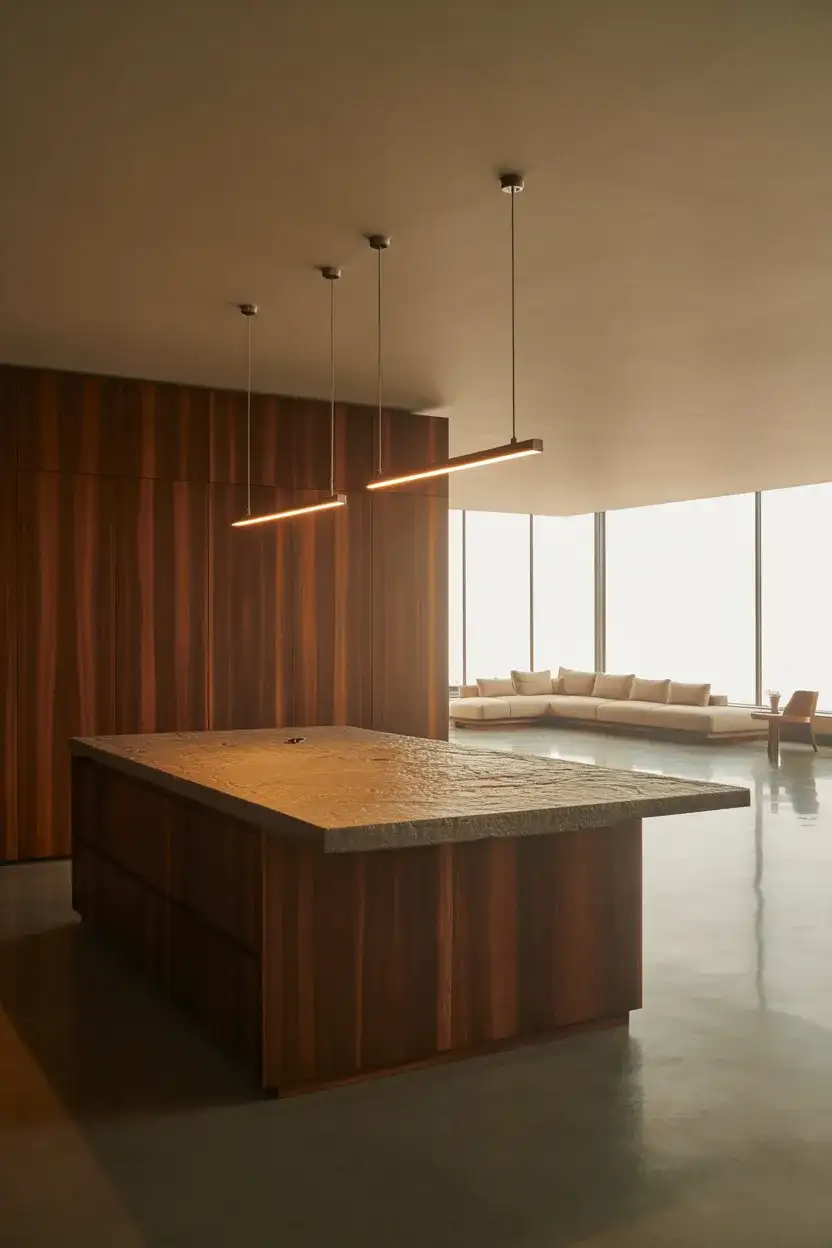
Here’s the regional context that makes this idea resonate: in newer American suburbs—particularly across the Sun Belt from Arizona to the Carolinas—new-construction homes are being built with open great rooms large enough to accommodate floating islands without sacrificing circulation. Builders in communities from Gilbert to Raleigh report that the floating island layout is now one of the top three most requested kitchen configurations, right alongside the L-shaped and U-shaped standards. It’s not just a luxury play anymore; it’s becoming mainstream.
22. Open Kitchen Living Room With a Couch as a Divider
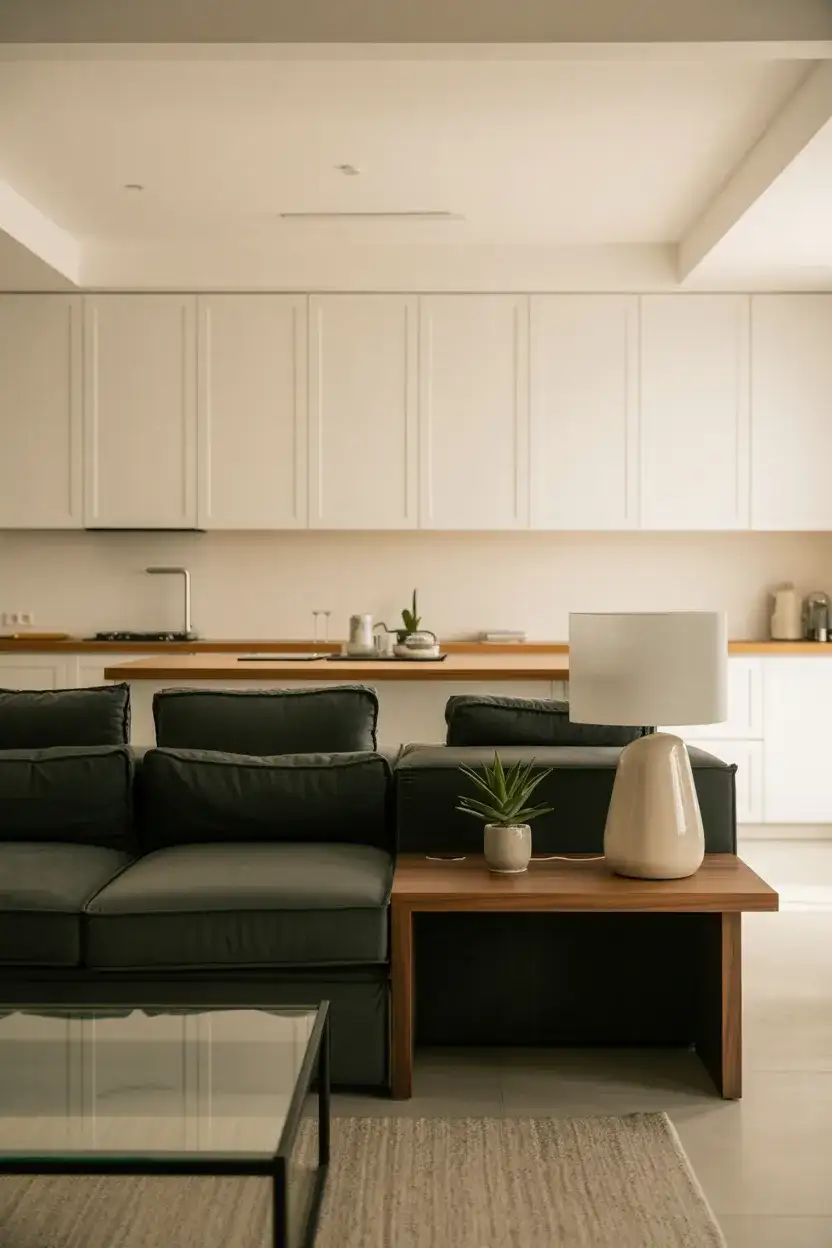
Sometimes the smartest room divider is a piece of furniture you already own. Turning the couch around so its back faces the kitchen creates an instant boundary between cooking and lounging without spending a dime on construction. This idea works beautifully in open-plan apartments, lofts, and any semi-open space where you want psychological separation without sacrificing sightlines. A console table behind the sofa adds a landing strip for keys, lamps, and a few decor pieces that dress up the back view.
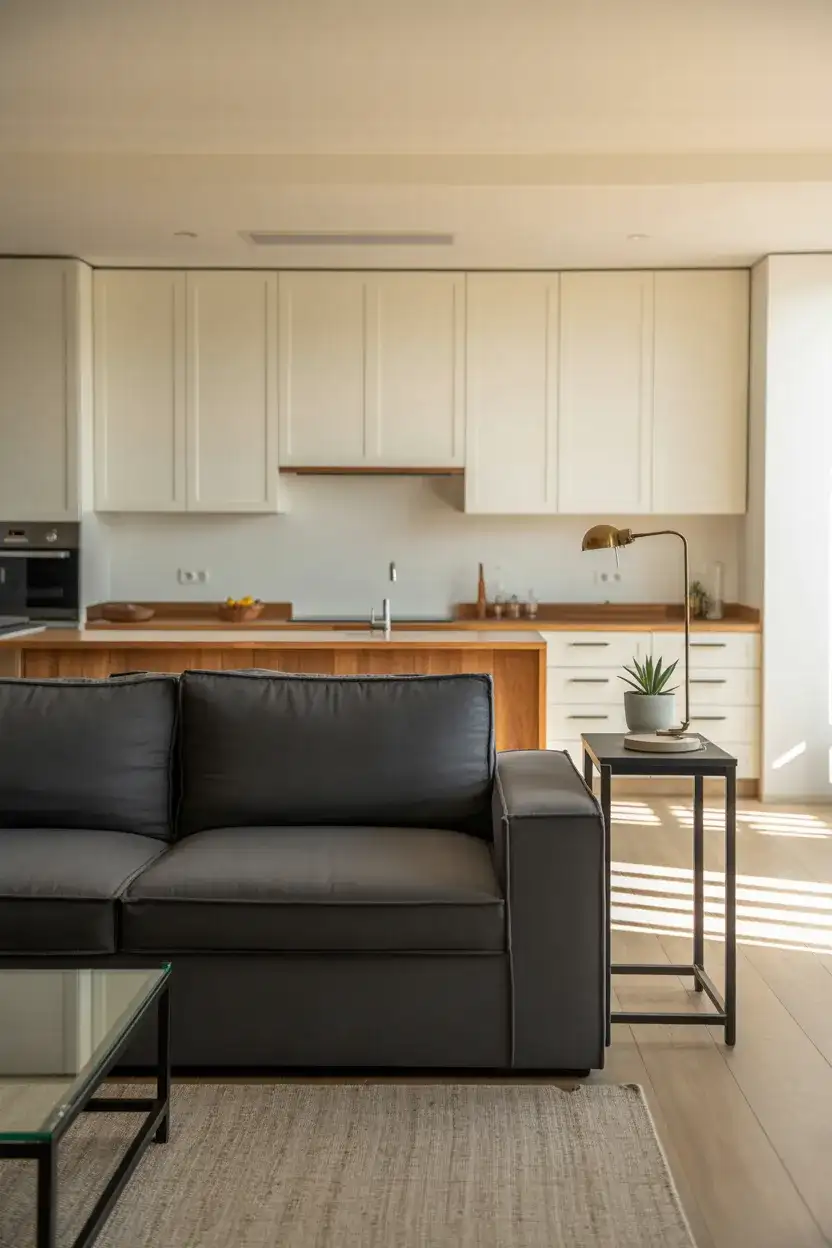
A word about the sofa back, which is the part most people overlook: not every couch looks good from behind. Sofas with a finished back panel, clean upholstery seams, or even a gently curved profile will read as intentional when viewed from the kitchen side. Avoid couches with exposed staple lines, sagging fabric, or an unfinished frame on the rear—they’ll make the whole arrangement look accidental. If you’re shopping specifically for this setup, sit in the store and then walk behind the sofa before you buy it. That five-second check makes all the difference.
Conclusion
Every open kitchen living room tells a story about how the people inside it actually live—whether that’s a young couple cooking together in a studio, a family sprawling across a farmhouse great room, or a solo homeowner savoring the calm of a Japandi-inspired retreat. The ideas here are meant as starting points, not prescriptions, so take what resonates and make it your own. If one of these sparked something for you, drop a comment below and tell us which direction you’re leaning—we’d love to hear what your open-plan dream looks like.