Living room shelves have quietly become one of the most searched design topics on Pinterest, and it’s easy to understand why. In 2026, Americans are leaning into personalized, curated spaces—rooms that feel collected over time rather than decorated all at once. Whether you’re rethinking a blank wall, building around a fireplace, or finally committing to that floating shelf you’ve been pinning for months, this article covers genuinely inspiring ideas to help you get there. From mid-century modern styling to cozy Christmas displays, built-in units to simple DIY fixes—there’s something here for every space, budget, and taste.
1. Floating Shelves Around the TV
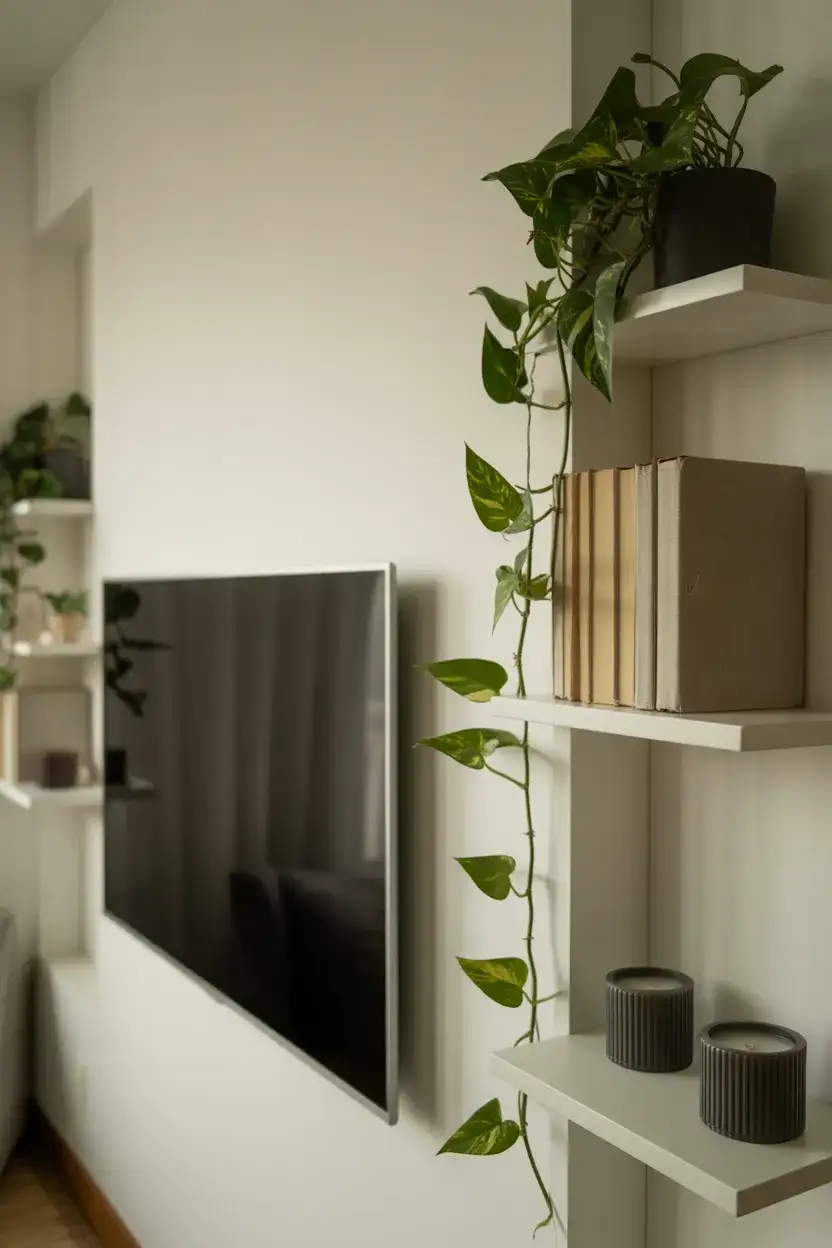
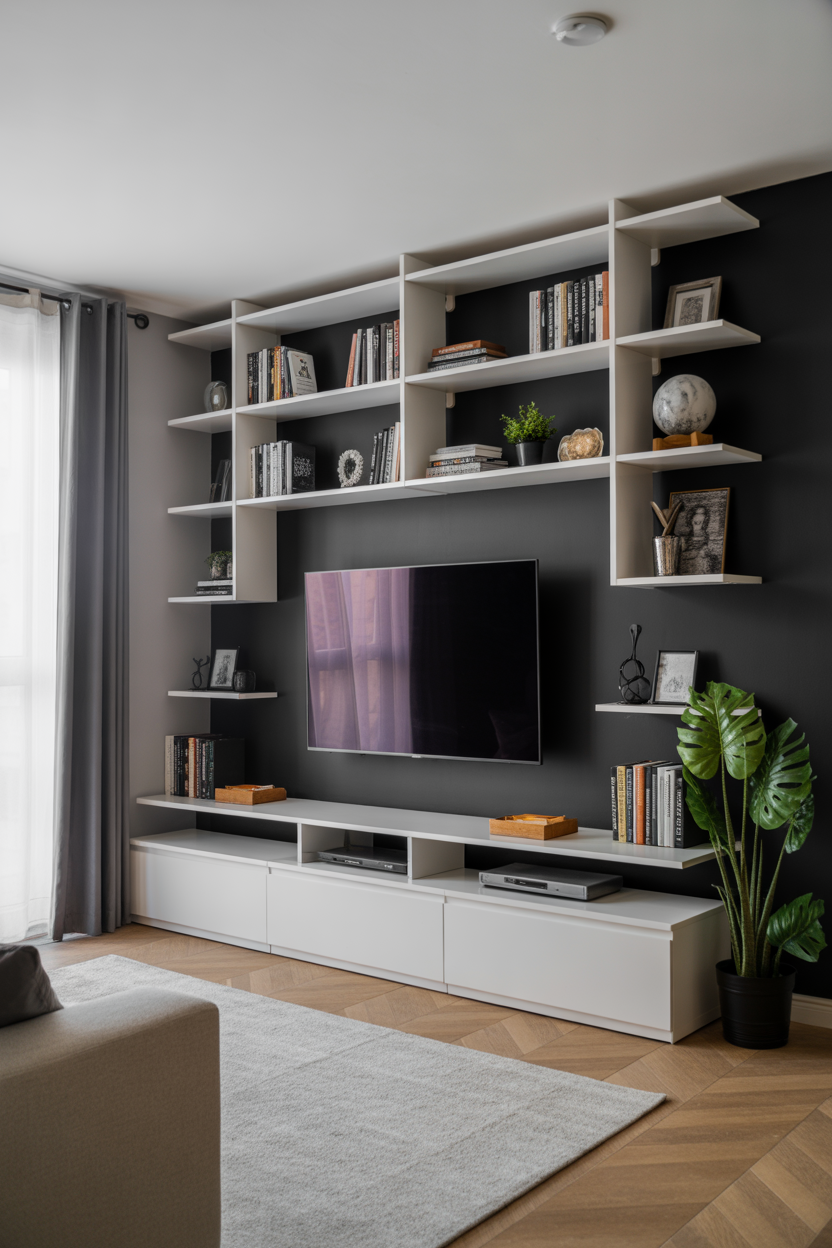
When you think about how to organize a living room that actually feels finished, floating shelves around the TV are one of the most rewarding solutions you can try. They frame the screen without the heaviness of a full entertainment unit, leaving your wall feeling open and intentional at the same time. The key is asymmetry—stagger shelf heights and vary the objects you place on them so the whole arrangement breathes like a gallery rather than a storage rack.
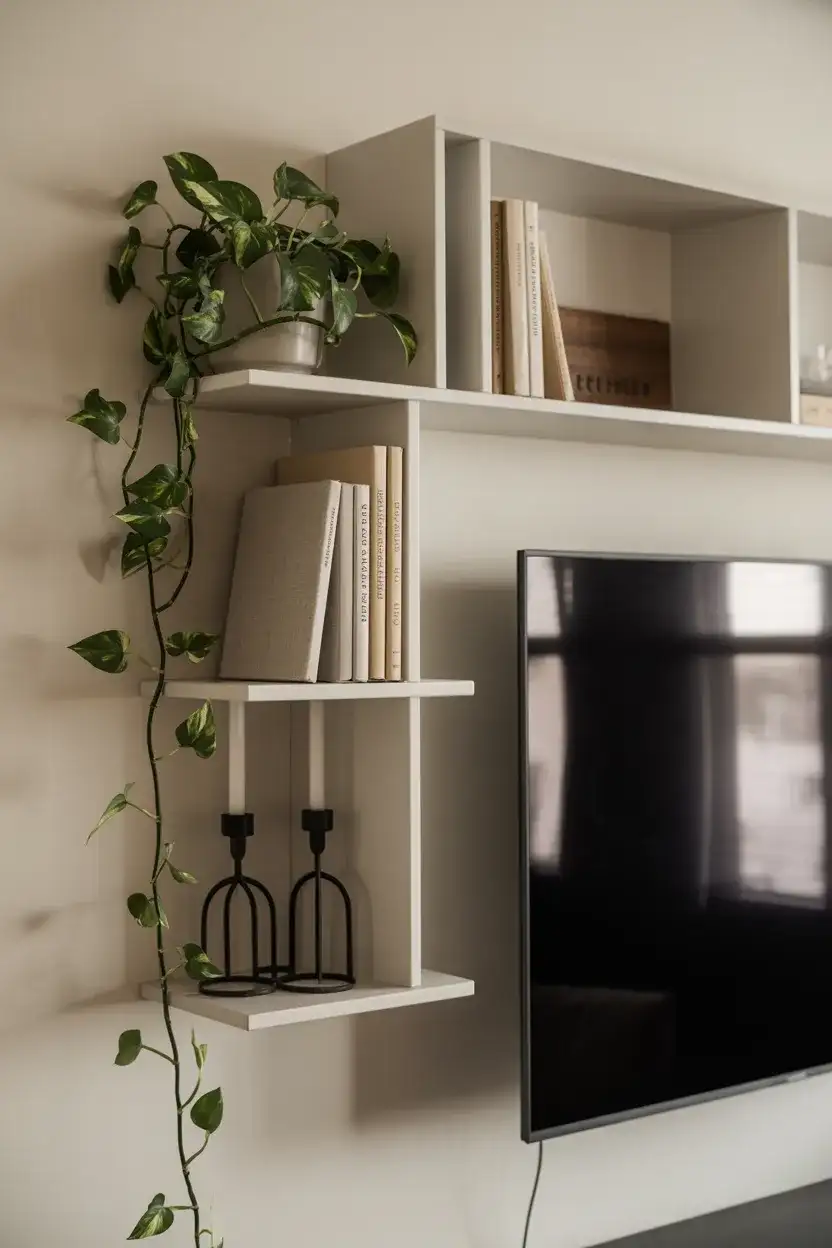
Budget-conscious decorators should know that floating shelves are one of the most affordable wall upgrades available—a solid set of three walnut-finish brackets from a big-box store typically runs under $80, and the visual payoff rivals setups that cost five times as much. The trick most people miss is mounting them slightly closer to the TV than feels instinctive, so the eye reads the whole wall as one cohesive installation rather than three separate elements.
2. Built-In Shelves with a Fireplace
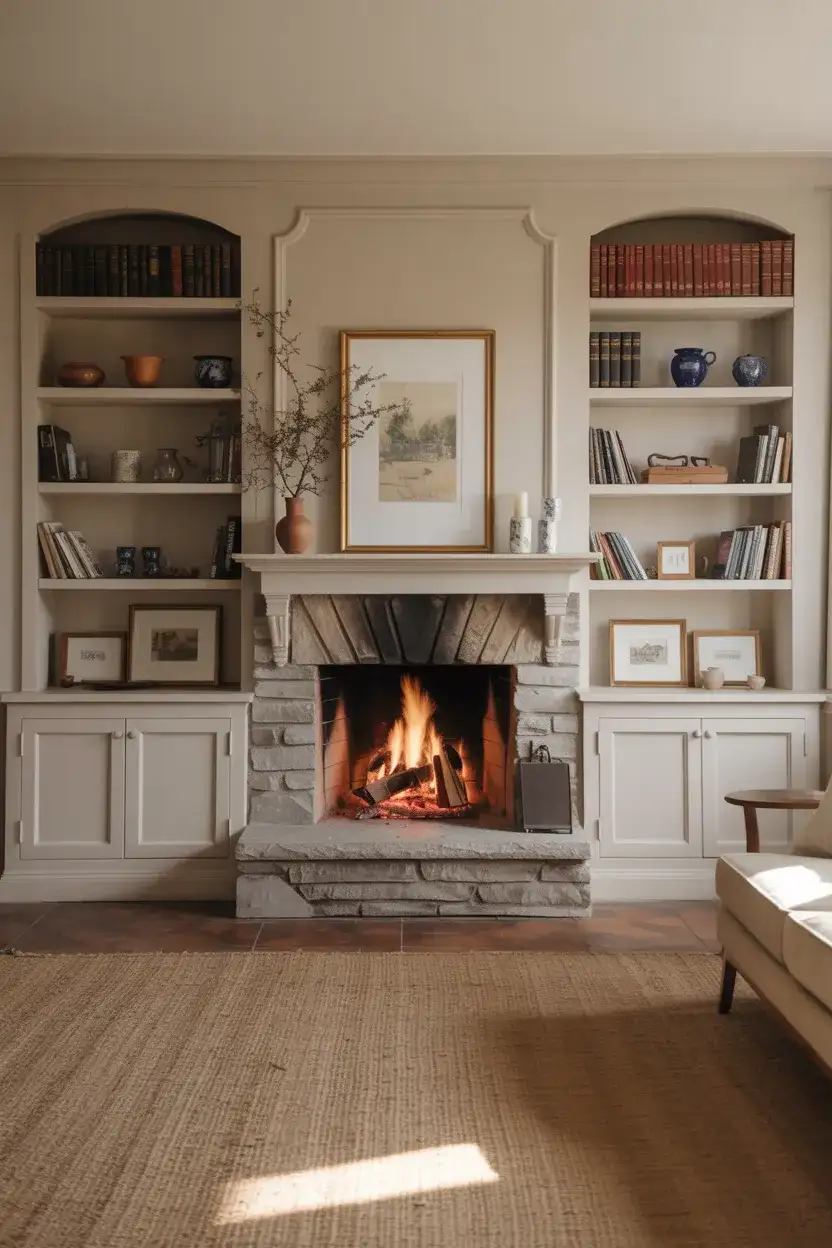
There are few living room layouts as timelessly satisfying as a fireplace flanked by built-in shelving on both sides. This combination does double duty—it grounds the room visually while solving your storage problem in the most elegant way imaginable. Deep lower cabinets hide media equipment, board games, or extra blankets, while the open upper shelves become the showcase for books, art objects, and anything that tells your story.
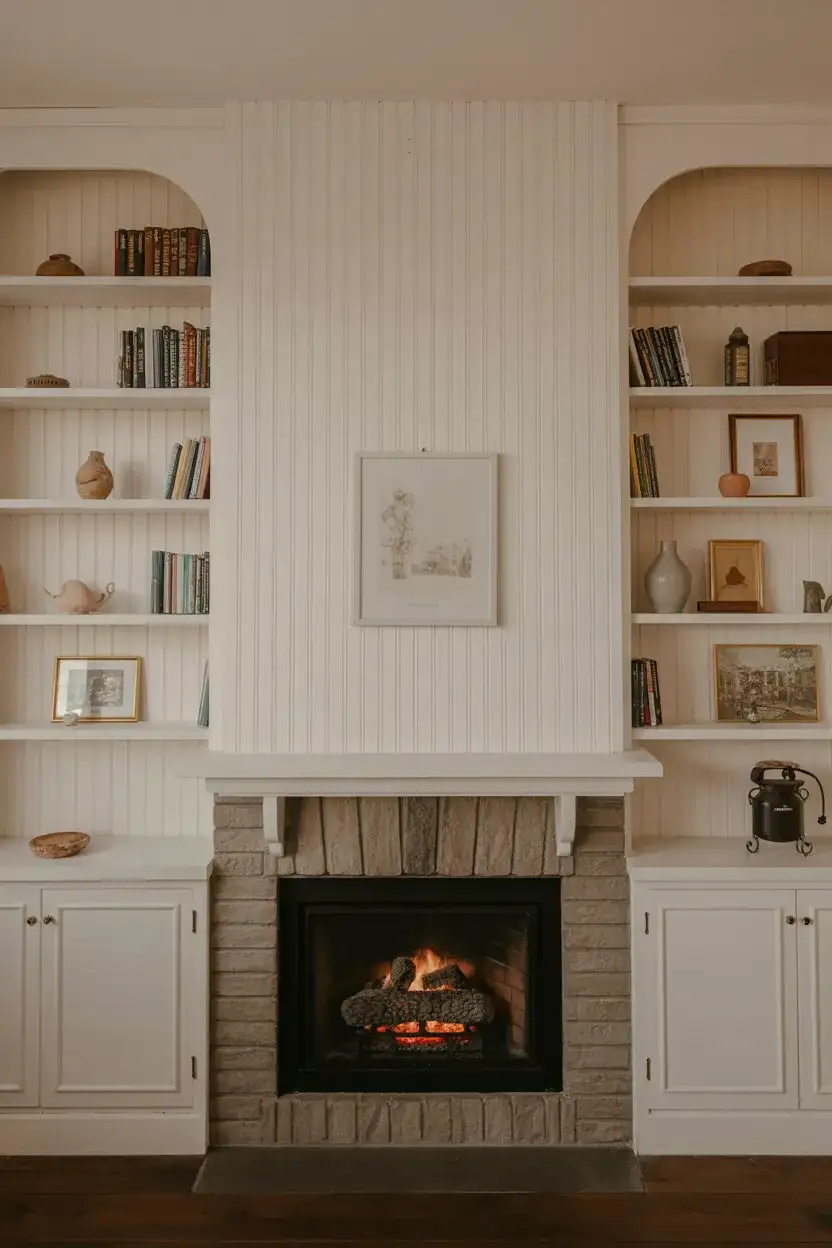
This is where a design professional will often tell you the same thing: paint the built-ins the same color as your walls if you want the whole wall to read as architecture rather than furniture. It sounds counterintuitive, but that single choice transforms a contractor-grade bookcase into something that looks custom and intentional—a move that works just as well in a craftsman bungalow in Portland as it does in a colonial outside of Boston.
3. Mid-Century Modern Shelving Unit
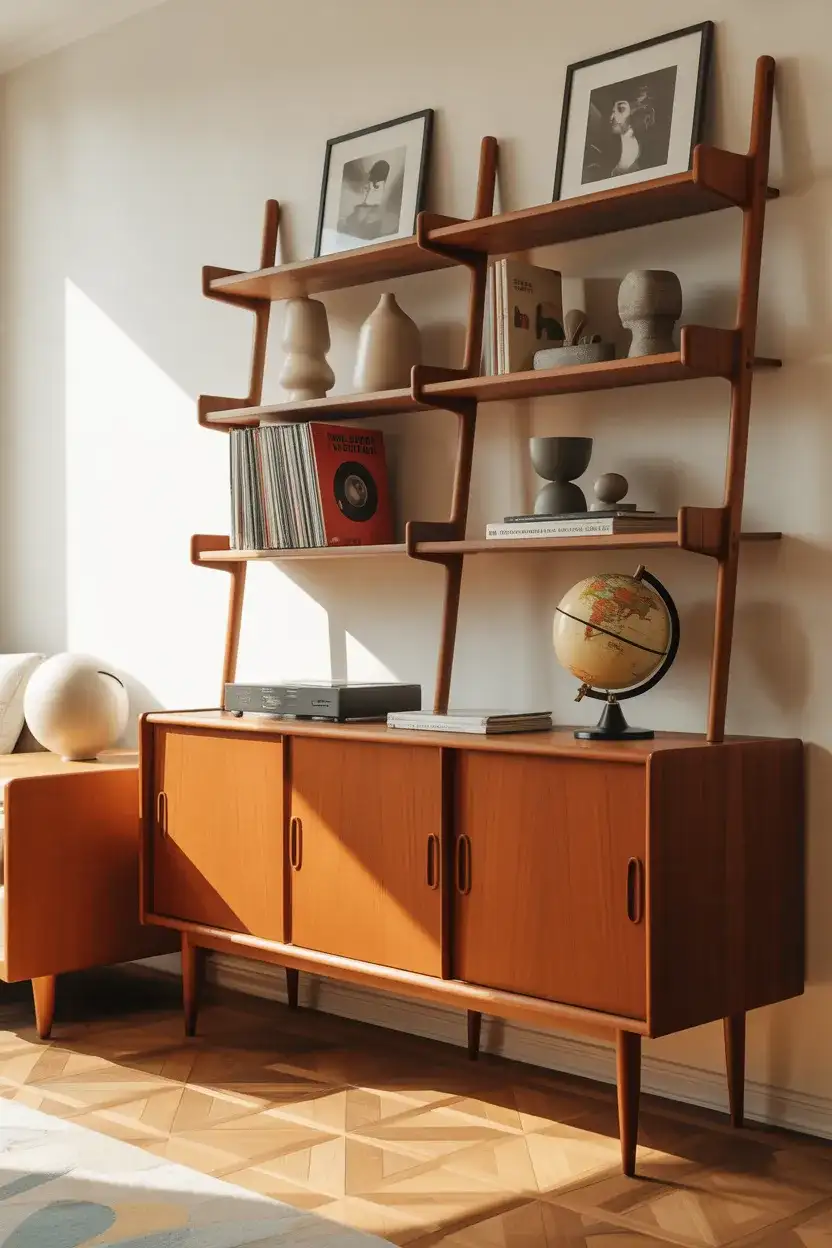
The mid-century modern aesthetic continues to dominate living room styling in 2026, and for good reason—its lines are clean, its materials are warm, and it somehow manages to feel both retro and completely current. A proper unit in this style typically features tapered legs that lift it off the floor, teak or walnut veneer, and an open structure that keeps the room from feeling weighed down. It’s the kind of piece that improves every other object you style around it.
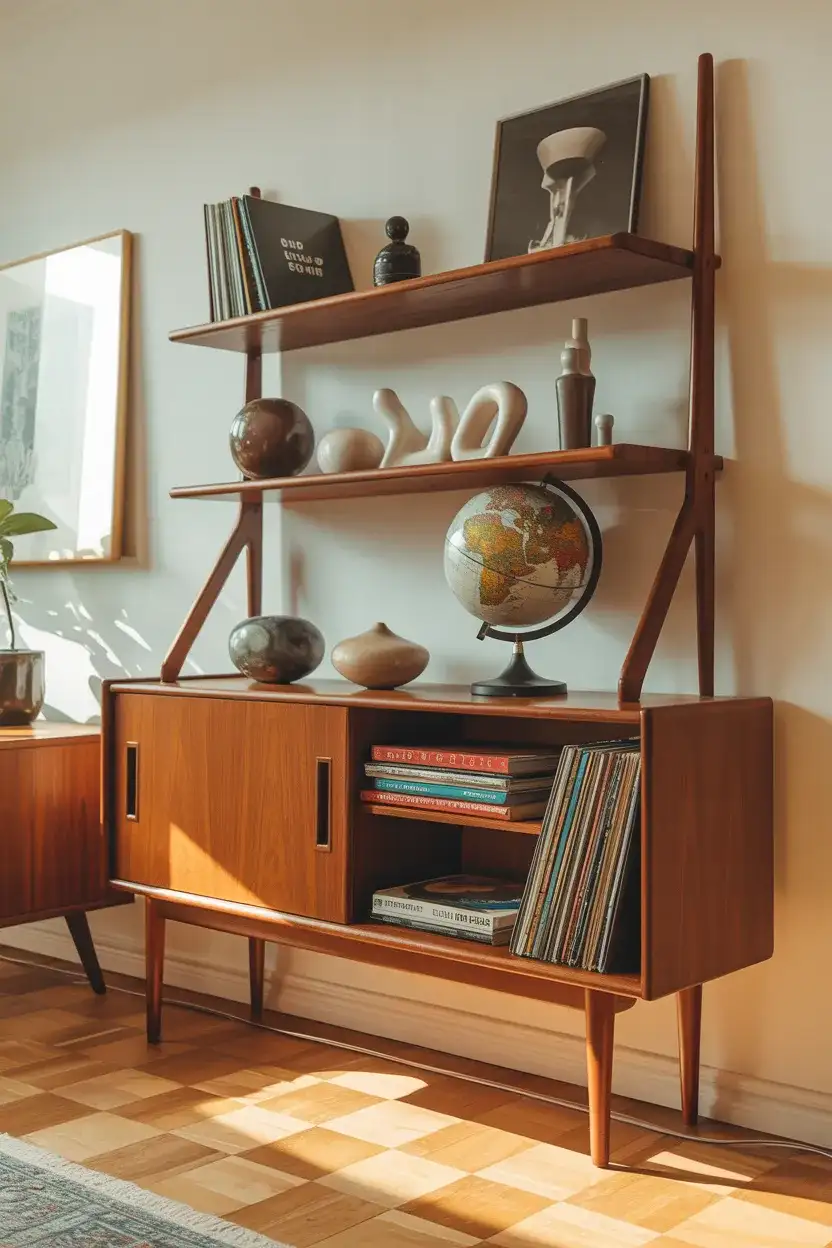
One real homeowner trick worth borrowing: lean a large art print or unframed canvas against the back of one of the open compartments instead of mounting it on the wall. It fills the shelf without permanently committing anything, which is especially useful in rentals or in rooms still finding their personality. The print behind the objects adds depth and a subtle sense of layering that feels curated without trying too hard.
4. Corner Shelves That Actually Work
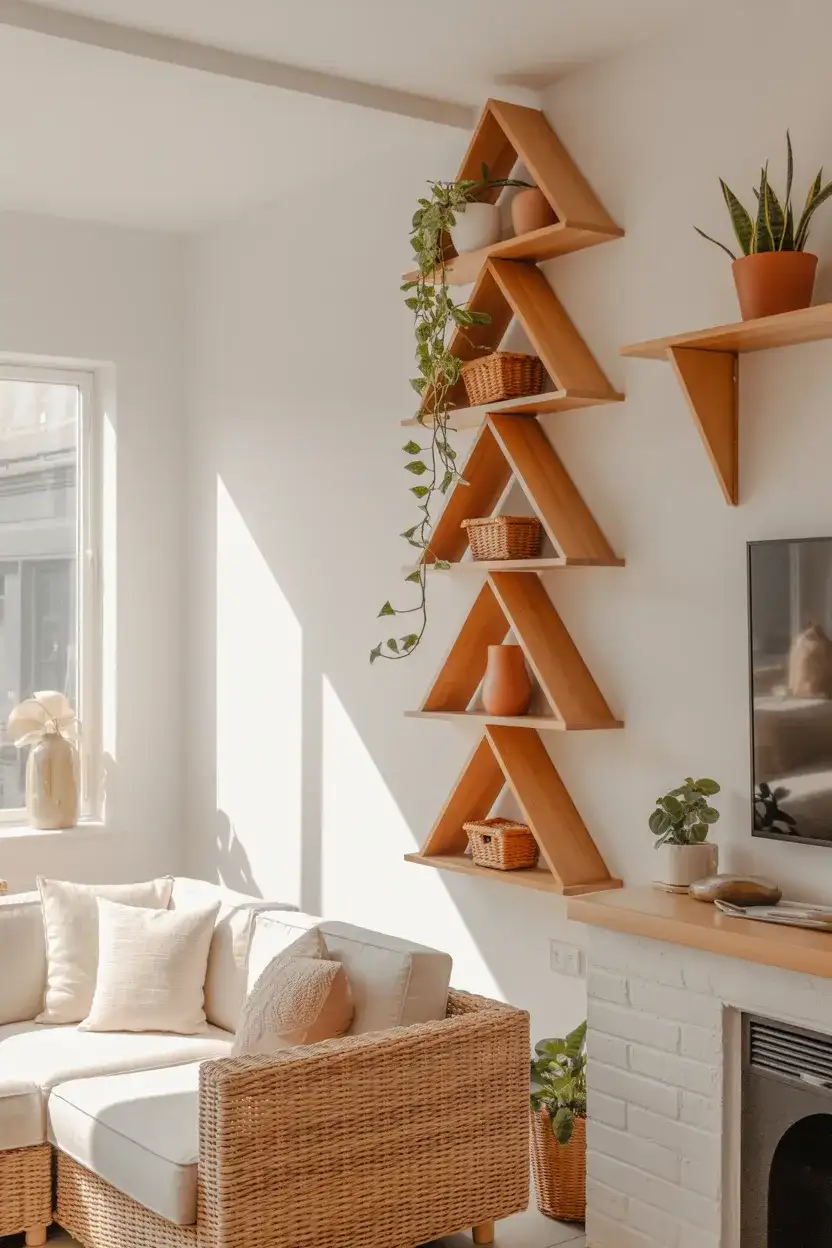
The corner of a living room is one of the most underutilized spaces in American homes, and it’s almost always an opportunity hiding in plain sight. Triangular floating shelves, angled bracket systems, or a purpose-built corner unit can transform an awkward dead zone into the most interesting spot in the room. The height variety you can create in a corner—starting low and climbing toward the ceiling—adds genuine drama that a flat wall simply can’t replicate.
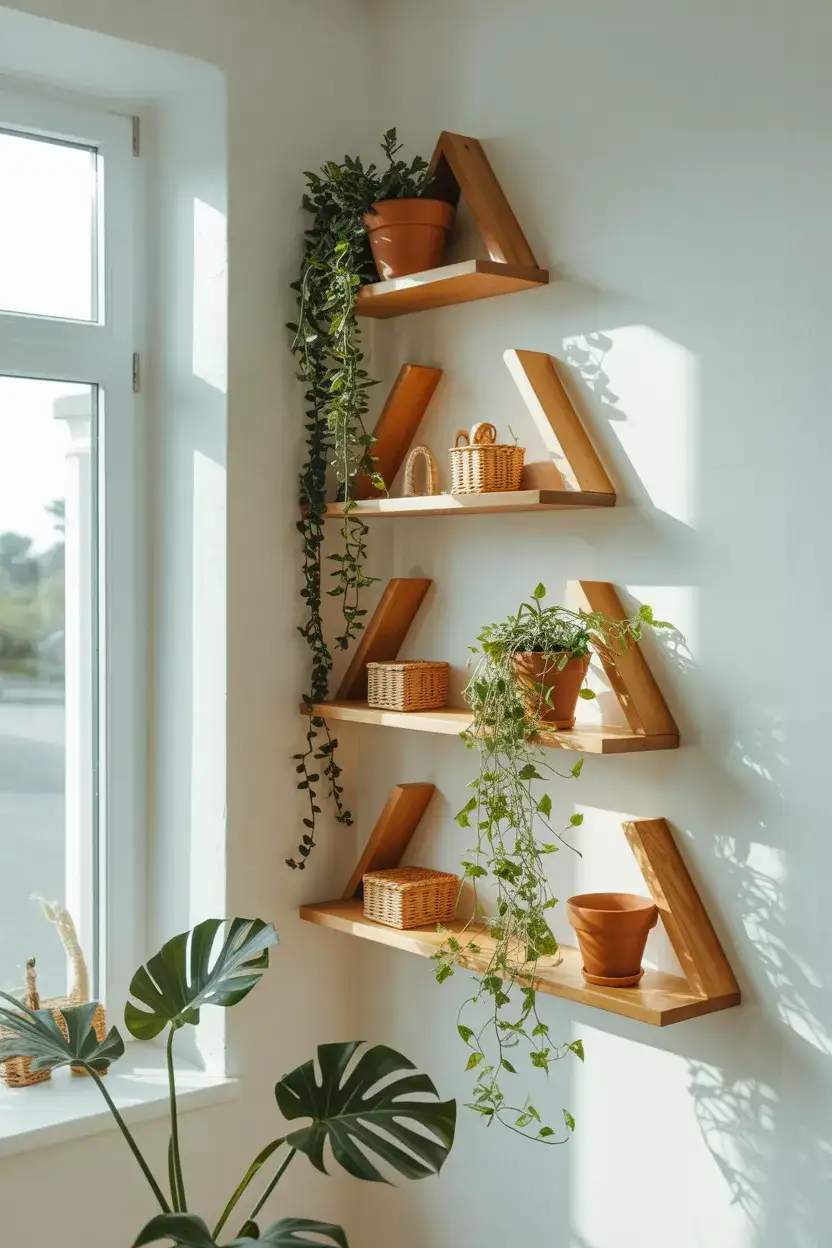
Where this idea works best: rooms with high or vaulted ceilings, where the vertical potential of a corner can actually be exploited. In a standard eight-foot-ceiling room, corner shelves still work—just cap them at five or six feet to keep things proportional and avoid the slightly cramped look that comes when shelving crowds the ceiling in smaller spaces.
5. Sofa-Backed Shelf Wall
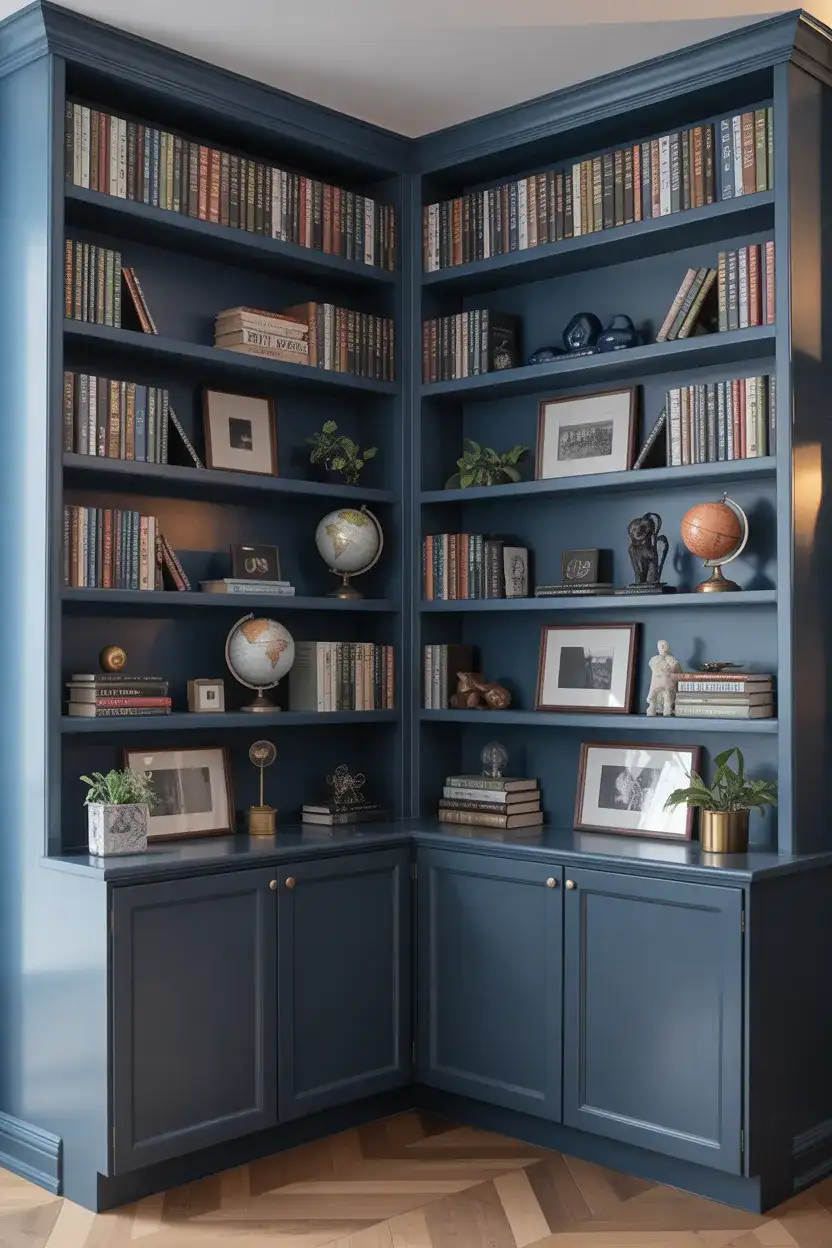
One of the more unexpected living room configurations gaining traction in 2026 is the idea of positioning your sofa in the middle of the room and then building a full shelf wall behind it. The couch essentially becomes a room divider, and the shelves behind it create a library-like backdrop that makes the seating area feel anchored and purposeful. It’s a particularly clever move in open-plan homes where the living room needs to define its own territory without any walls to help it.
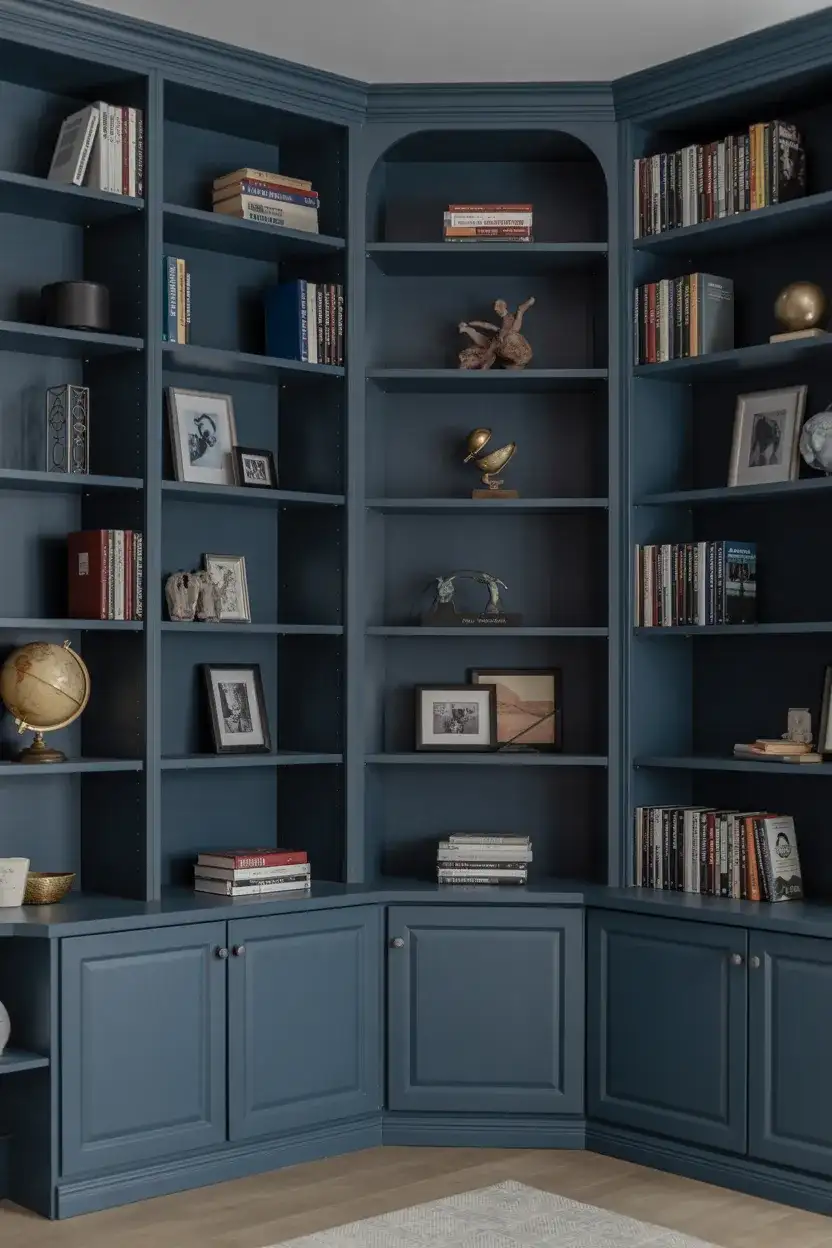
Prompt:
Realistic photo, natural light, soft shadows, no people. Clear focus on the described interior. Not a 3D render. do not use signs, and do not write the year. make the photo size 2. 3.
Open-plan living room with a gray linen sofa floating in the center, facing away from a full floor-to-ceiling bookshelf wall filled with books, plants, and art objects. Warm daylight, modern and inviting, airy loft atmosphere.
Prompt:
Realistic photo, natural light, soft shadows, no people. Clear focus on the described. Not a 3D render. do not use signs, and do not write the year. make the photo size 2. 3.
View from above and behind a cream bouclé sofa in the center of a room, with wide wooden floating shelves on the wall directly behind it. Symmetrically styled with books, small lamps, and ceramic bowls. Afternoon light, calm and editorial.
Think of it like this: the sofa becomes the foreground, and the shelf wall becomes the painting. Friends who come over will almost certainly comment on it before they comment on anything else in the room. One couple in Austin pulled this off with IKEA KALLAX units painted to match their wall color—the result looked like a high-end design feature that cost a fraction of what their guests assumed.
6. TV Wall with Fireplace and Floating Shelves
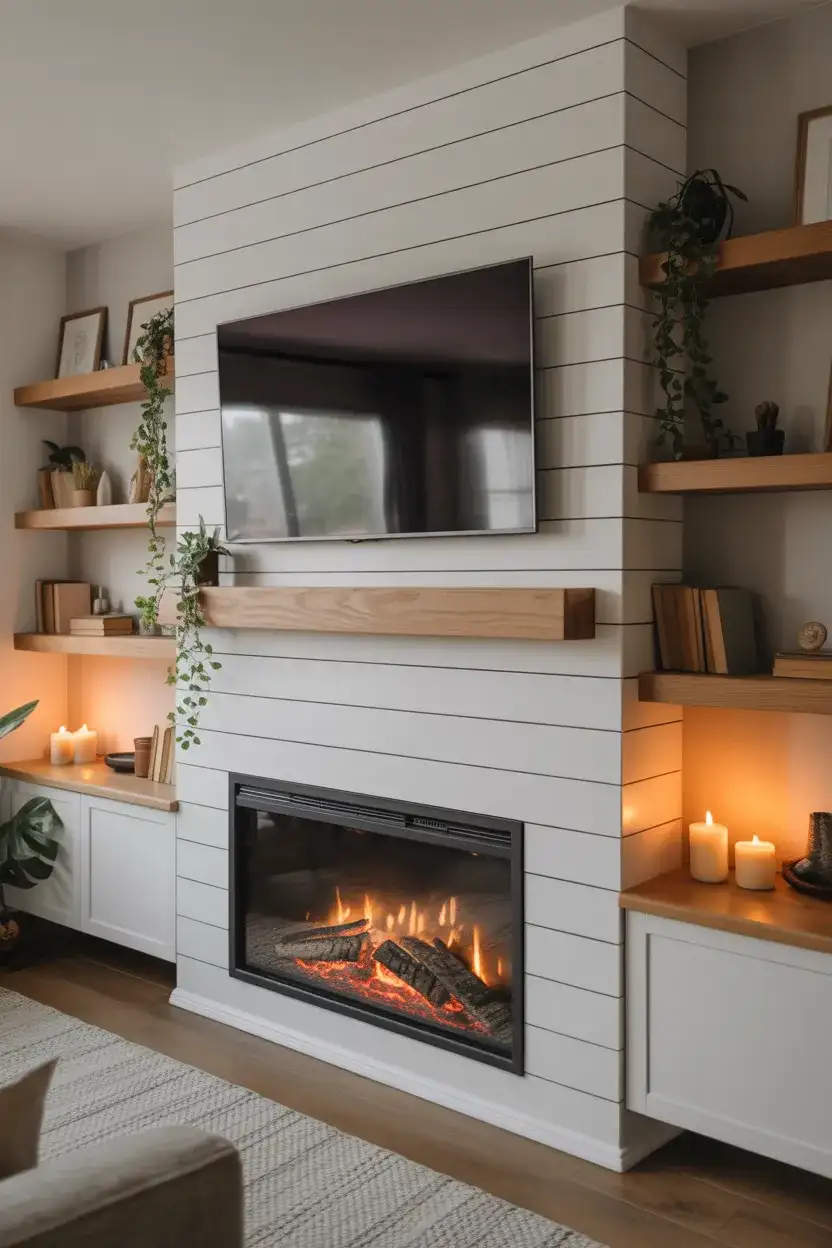
Combining a TV, a fireplace, and floating shelves into one cohesive wall design is one of the bolder living room commitments you can make—and one of the most rewarding when it works. The secret is treating the three elements as a single composition, not three separate problems to solve. The TV often sits above the fireplace (controversial, yes, but manageable with a tilting mount), while shelves on either side tie everything into one visual plane.
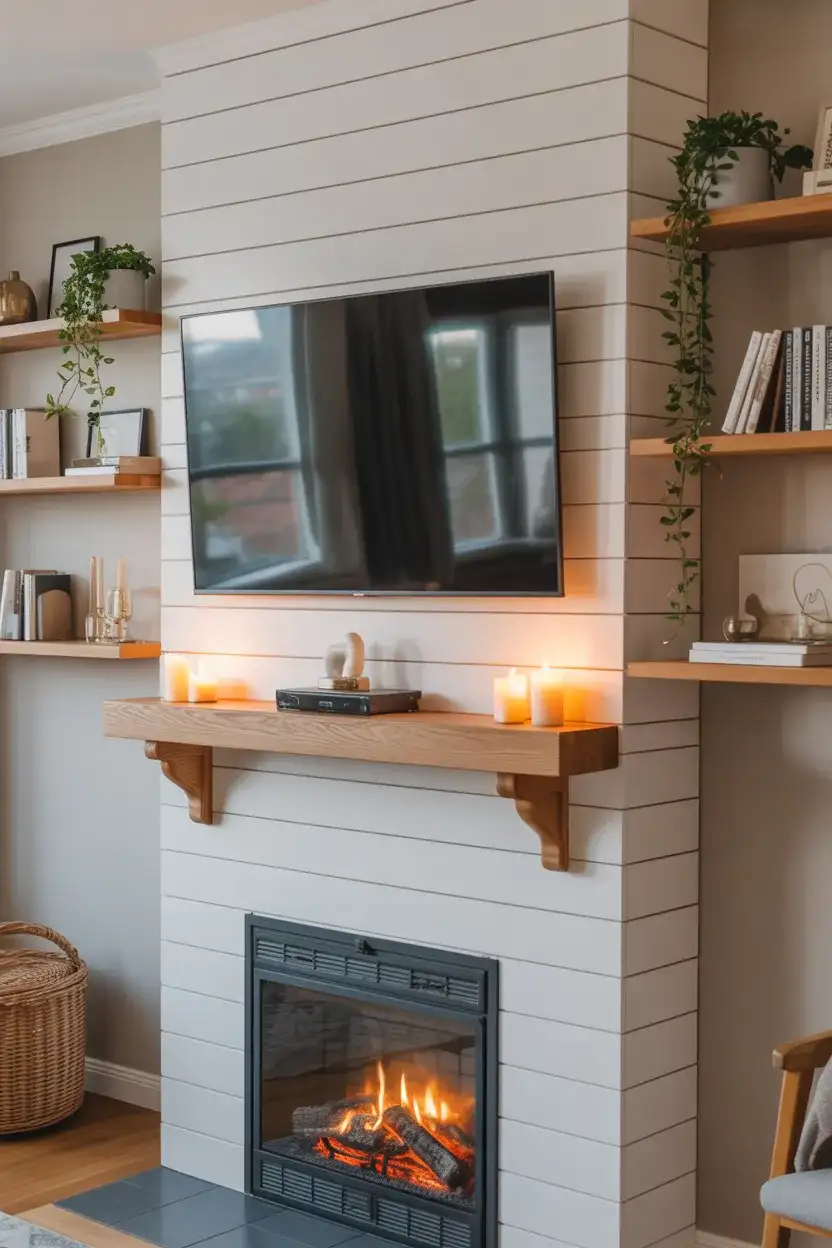
The most common mistake with this setup is mounting the TV too high, which happens precisely because the fireplace pushes it upward. Interior designers often recommend installing a fireplace insert that allows the hearth to sit lower—recessed into a niche rather than raised on a platform—to bring the TV down to a more comfortable viewing height. It’s a detail that separates the Pinterest versions that actually work from the ones that only look good in photos.
7. DIY Pipe and Wood Shelves
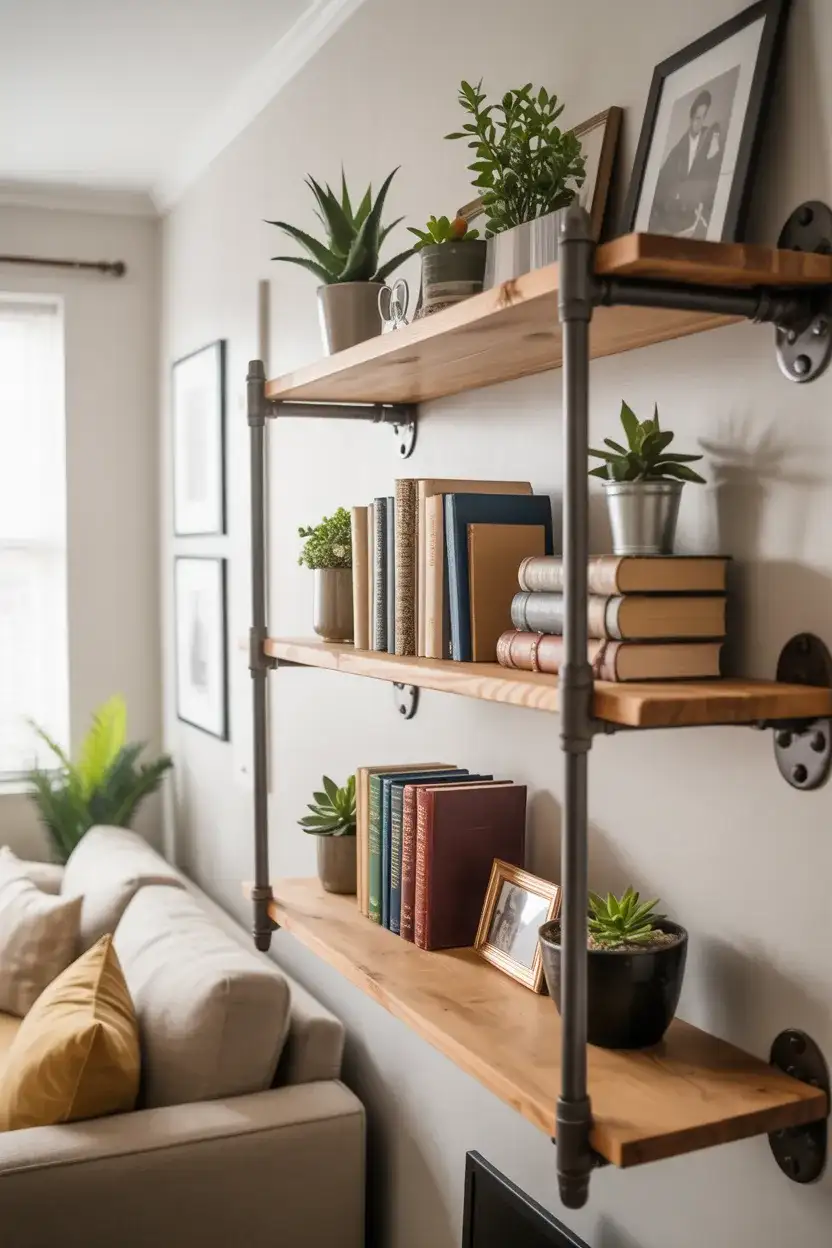
If you’ve been spending any time on Pinterest lately, you’ve almost certainly encountered the enduring appeal of DIY pipe-and-wood shelves. Industrial black pipe combined with solid wood planks—pine, poplar, or even reclaimed wood—creates a look that sits comfortably between rugged and refined. What makes this idea so compelling for American homeowners is the genuine accessibility of it: the materials are available at any hardware store, the assembly requires minimal skill, and the result feels custom-built.
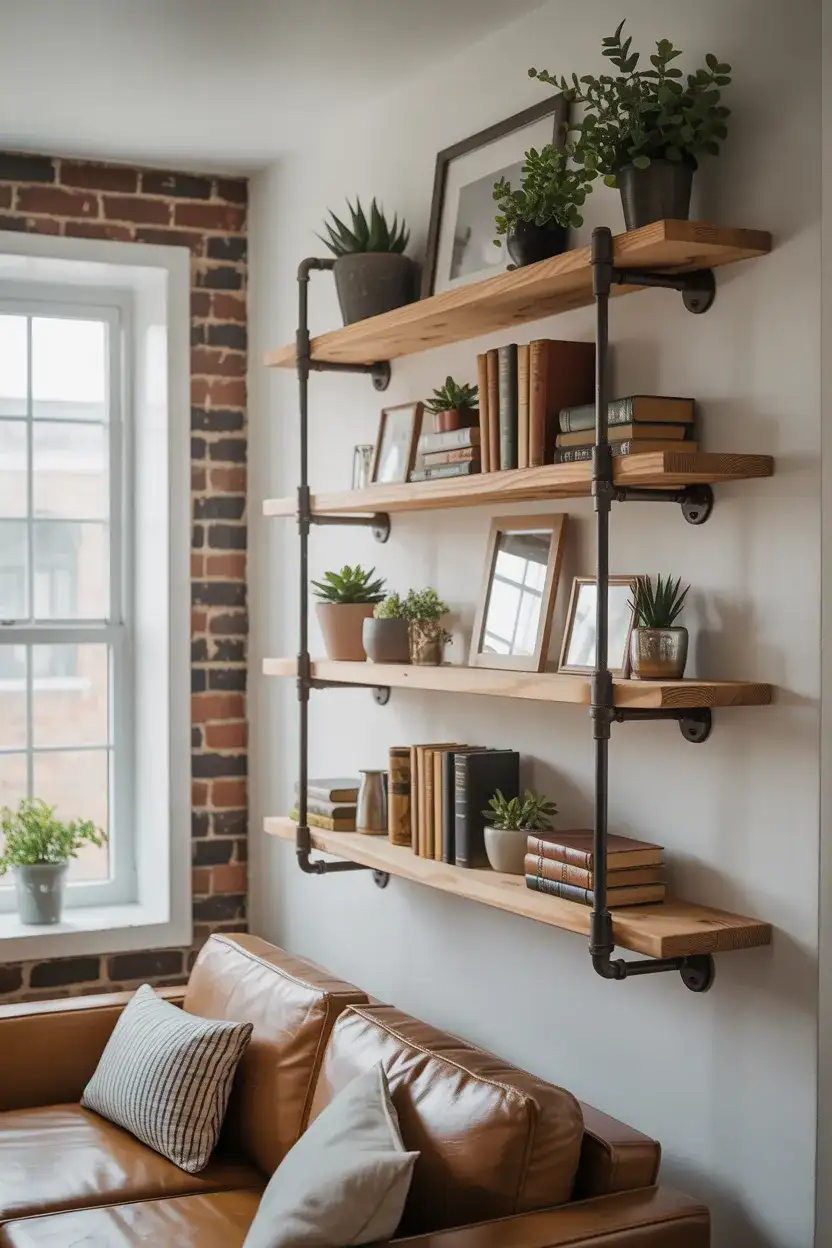
A full set of three shelves—six feet wide each—can typically be completed for under $150 in materials if you buy the pipe fittings individually and source your wood from a local lumberyard rather than a home improvement chain. The stain color you choose does most of the heavy lifting stylistically: dark espresso reads more urban and moody, while a natural honey finish feels more rustic and warm. Either way, the pipe hardware stays consistent, and that’s what gives the whole system its coherence.
8. Styling Shelves Around the TV with Artwork
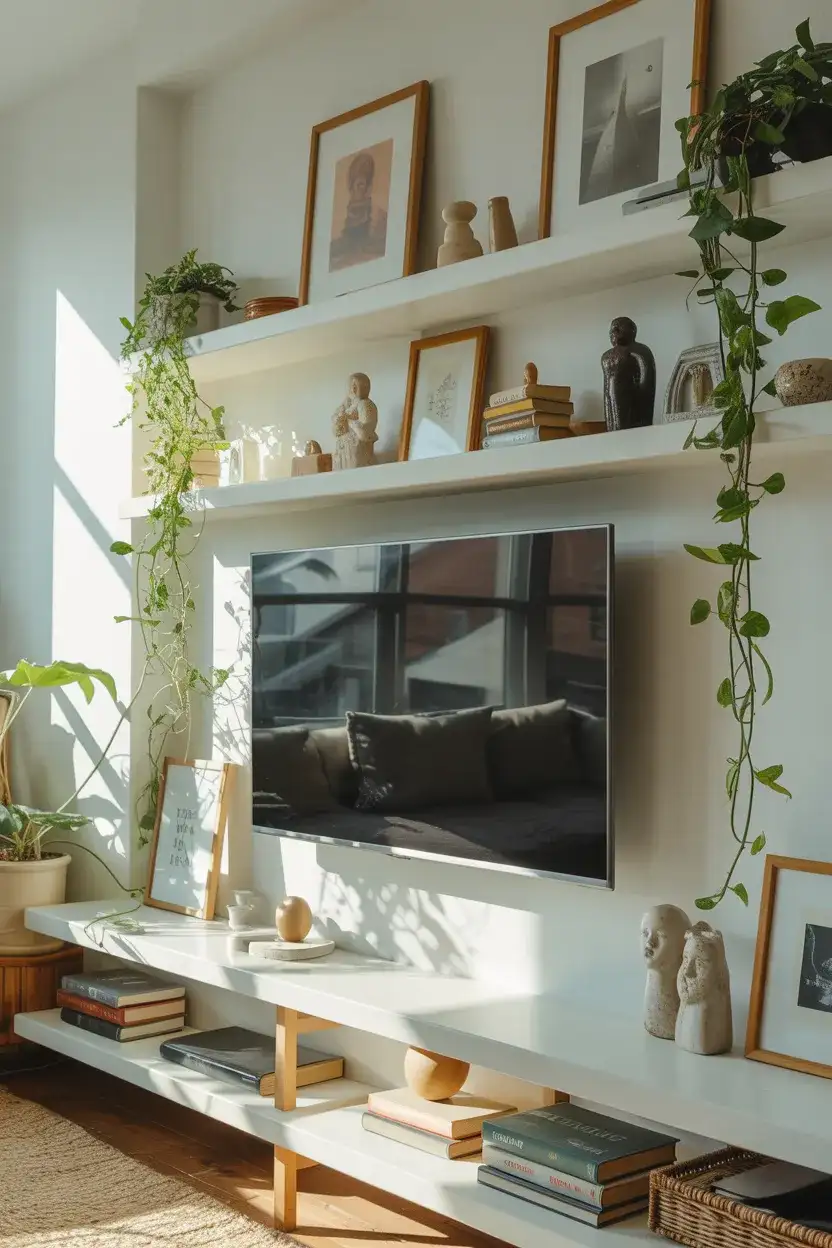
One of the smartest ways to decorate a TV wall is to weave artwork directly into the styling of the shelves surrounding it. Instead of treating art as something you hang separately and the shelf as a purely functional element, integrate them—lean framed prints against the back of shelves, mix gallery frames with three-dimensional objects, and let the collection grow organically over time. The result is a wall that feels personal and lived-in rather than like a showroom display.
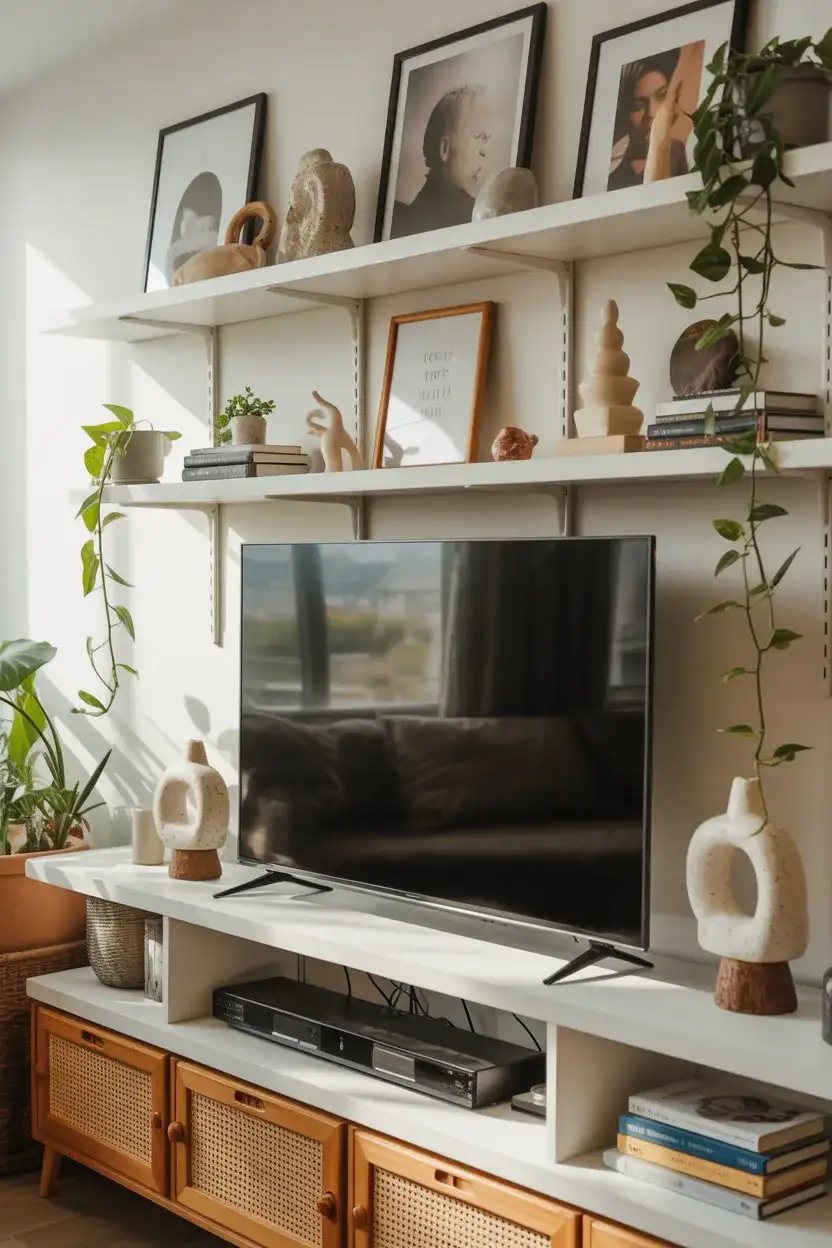
The practical insight here is one professional stylists rely on constantly: always work in odd numbers. Group objects in threes—one tall item, one medium, and one small—before introducing a second cluster. This prevents the shelf from feeling like a symmetrical, too-tidy arrangement that reads as staged. Mix textures deliberately: matte ceramic next to glossy glass, and rough linen spine books next to smooth painted frames. The contrast is what makes it interesting.
9. Modern Minimalist Shelf Decor
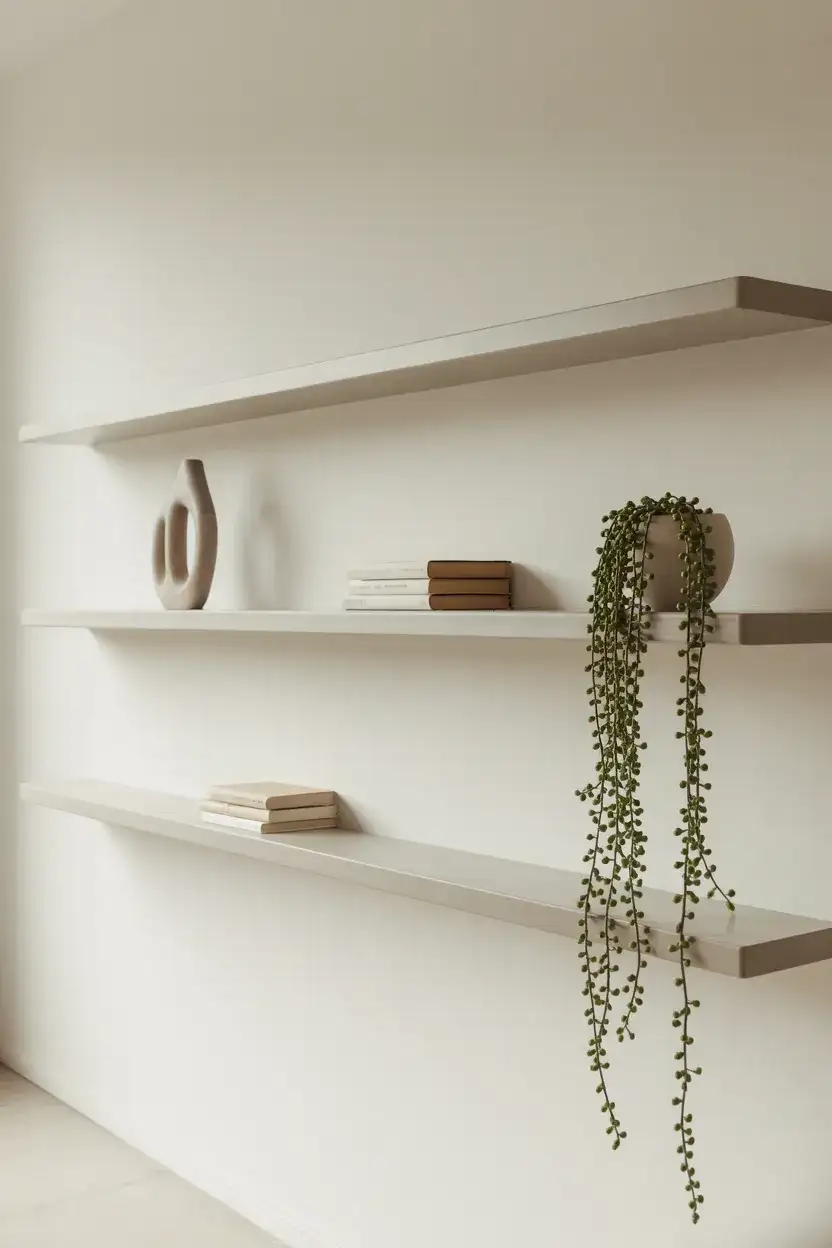
In the world of modern living rooms, decor that embraces negative space is having a serious moment. Rather than filling every inch of shelf real estate, the minimalist approach asks you to place fewer objects with greater intention—and then stop. A single architectural vase, a small stack of design books, and one trailing plant can do more for a room’s atmosphere than twenty objects crammed together. This approach photographs beautifully, which is partly why it dominates the more aspirational corners of Pinterest right now.
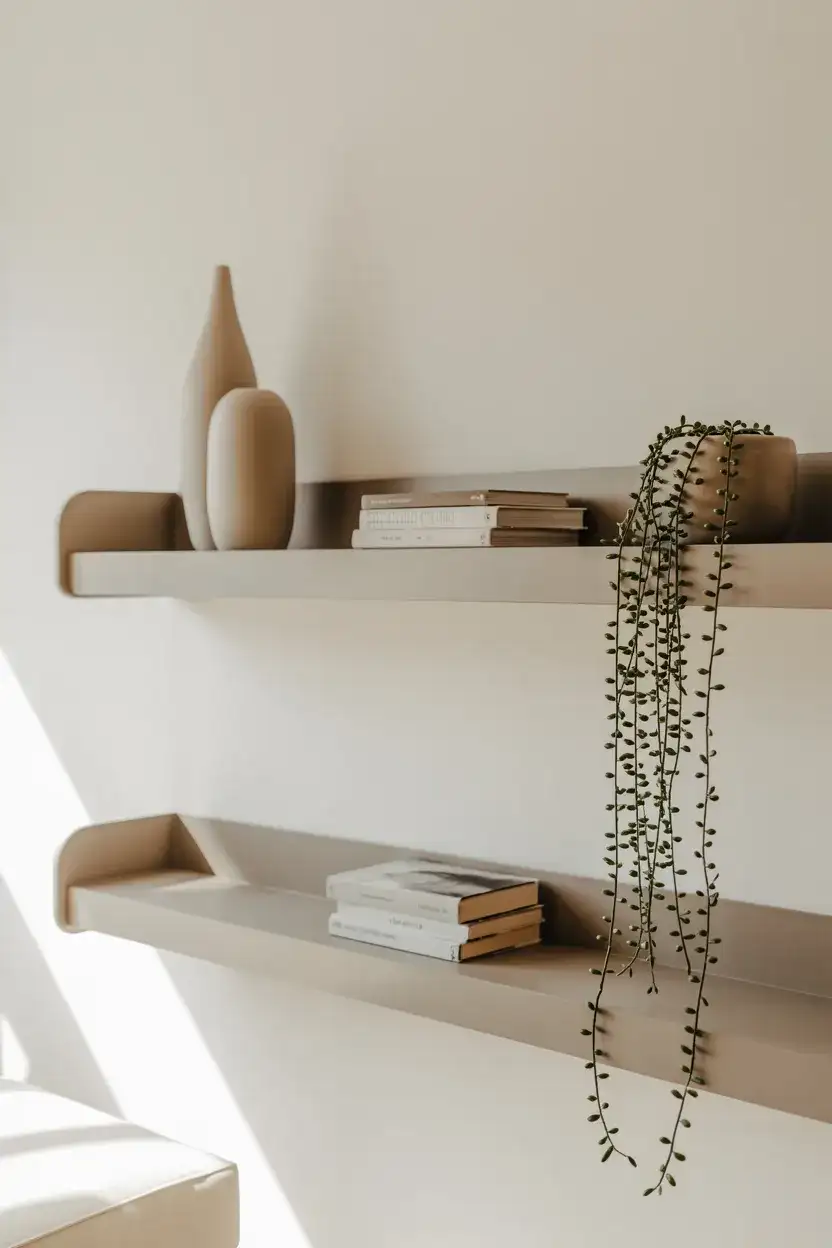
Real homeowner behavior consistently reveals the same pattern: people start with minimalist intentions and slowly accumulate objects until the shelf is cluttered again within six months. The fix that actually works is establishing a “one in, one out” rule specifically for the shelves—when you bring home a new object, something already on display has to be rotated out or donated. It keeps the selection fresh, prevents visual noise, and forces you to be genuinely selective about what earns a spot.
10. Shelves to Decorate Around a Gas or Electric Fireplace
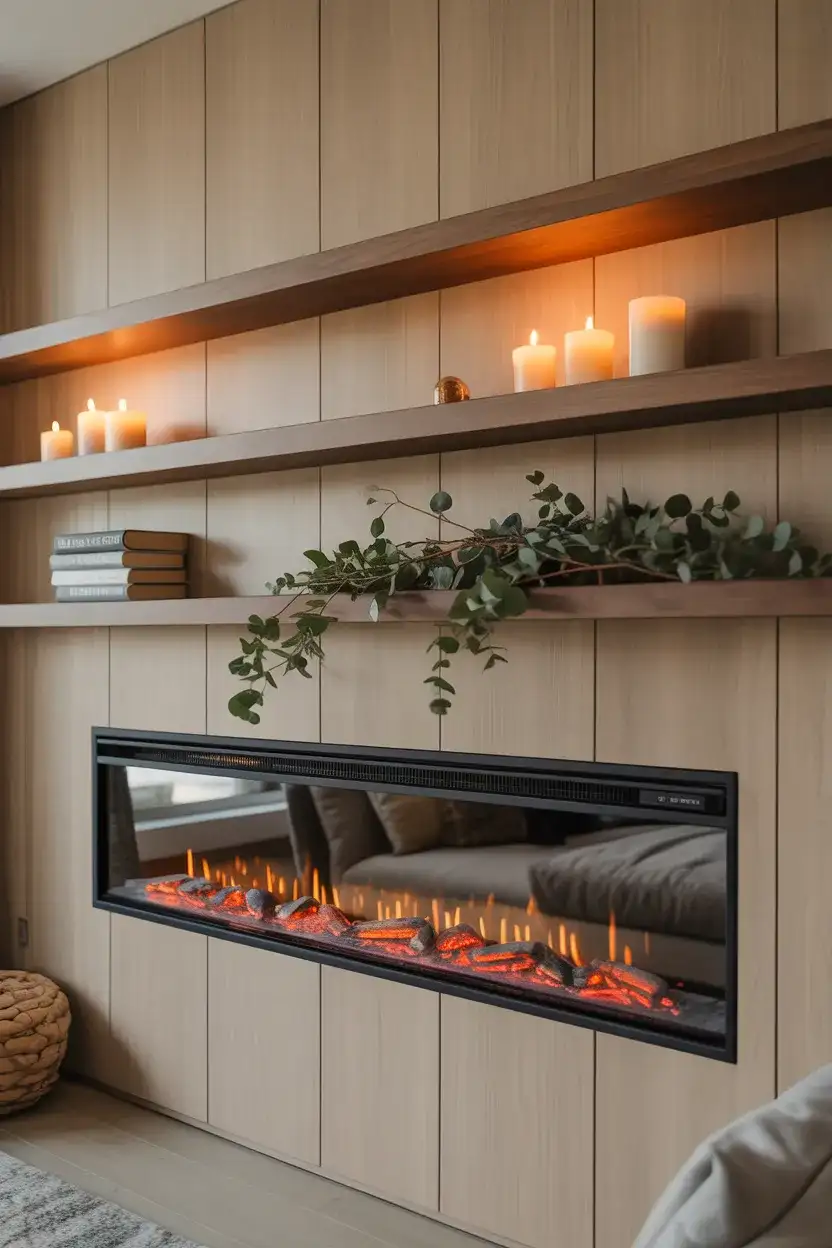
Gas and electric fireplace inserts have made it possible for apartment dwellers and newer-construction homeowners to enjoy a hearth—and with that comes all the styling opportunity of a traditional fireplace surround. Shelves positioned on either side of a linear electric fireplace don’t need to be deep or dramatic; even slim 8-inch floating shelves create enough of a frame to make the whole wall feel purposeful. The fireplace becomes the anchor, and the shelves become the wings.
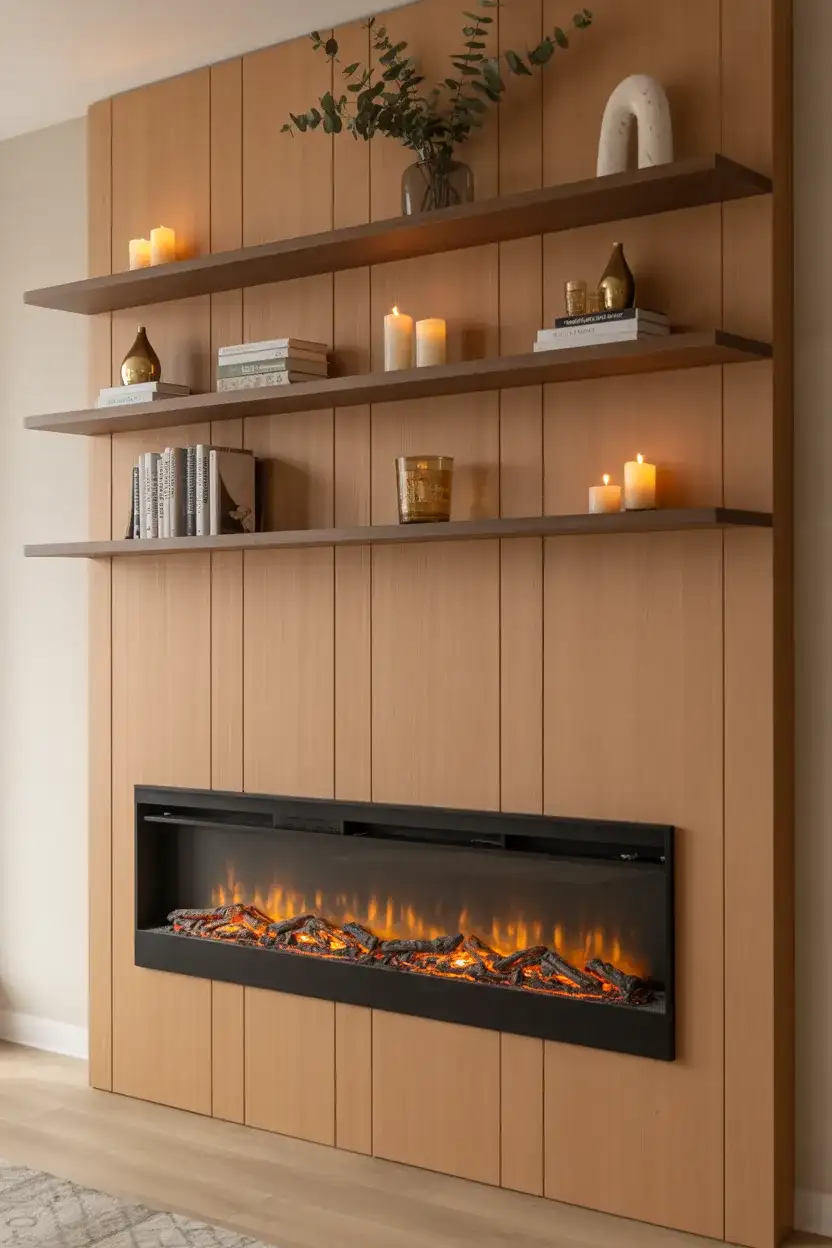
An expert-style point worth making: the heat from a real wood-burning fireplace limits what you can display immediately adjacent to it, but gas and electric inserts give you much more freedom. You can place wax candles, dried flowers, and paper-covered books right next to an electric insert without concern—something traditional fireplace owners can’t do as freely. That freedom opens up your styling palette considerably and is one of the underrated advantages of the electric option.
11. How to Decorate Living Room Shelves for Christmas
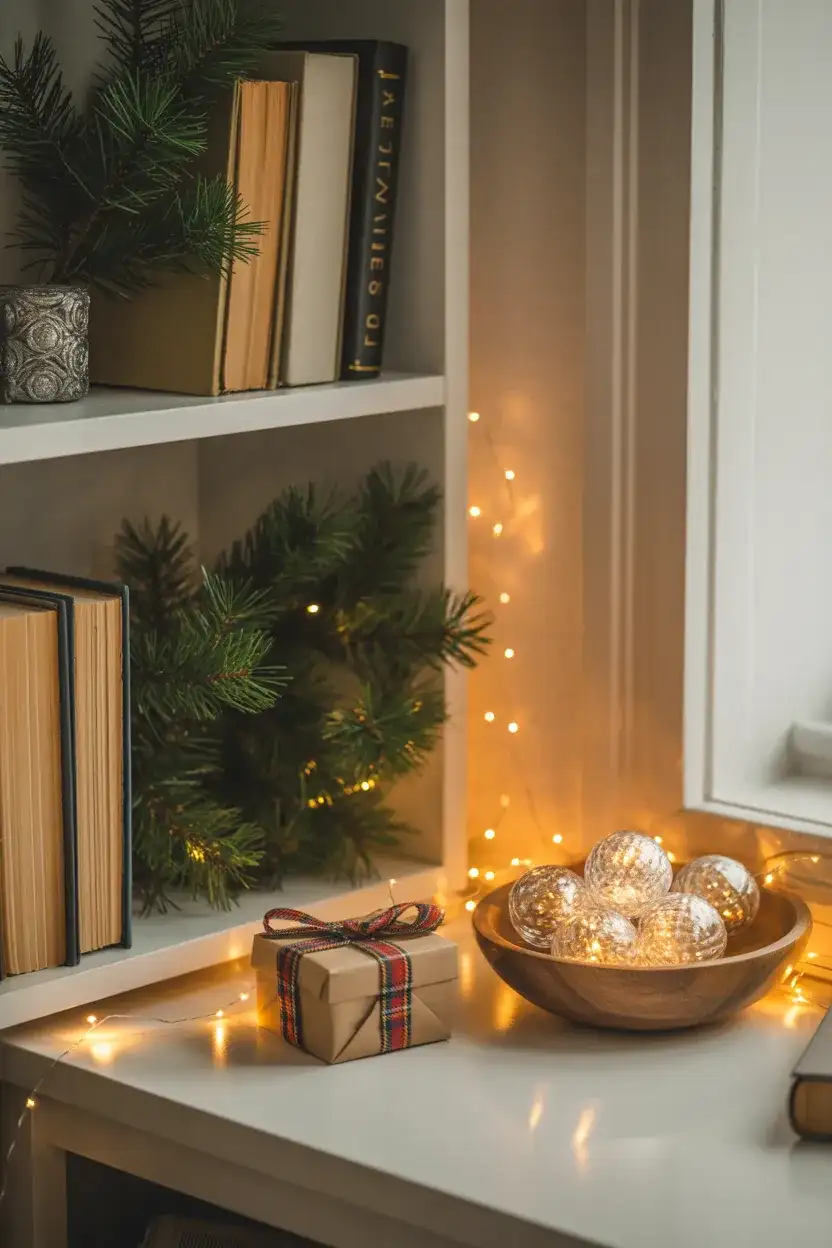
Your existing Christmas decor can completely transform living room shelves without requiring you to clear everything off and start from scratch. The most successful holiday shelf styling layers seasonal additions on top of what’s already there—adding pine sprigs between books, swapping in tartan ribbon, tucking in small glass ornaments, and letting a string of warm LED lights drape naturally across a shelf edge. It feels festive without looking like the holiday took over the entire room.
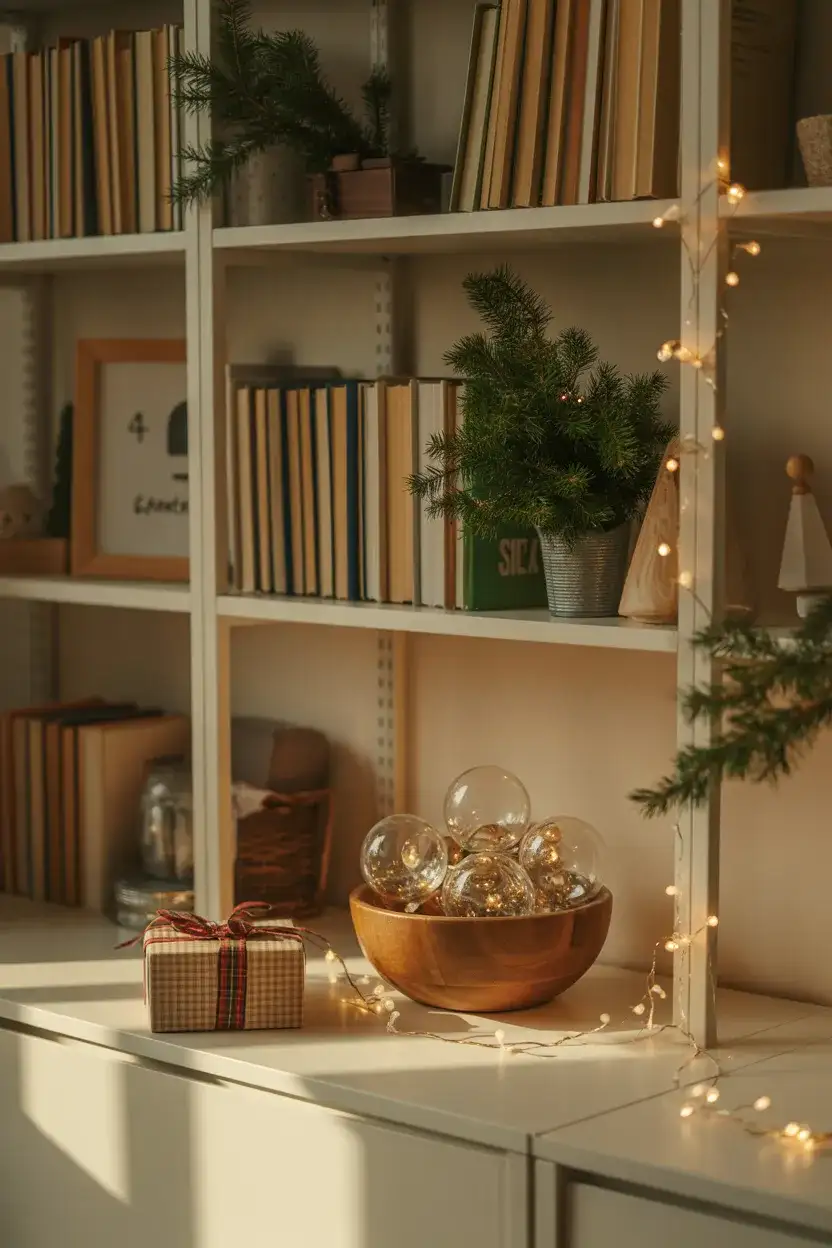
American households tend to approach holiday shelf styling in one of two ways—the maximalist route that leans into abundance, color, and collected charm, or the minimalist approach that swaps in just a few natural elements and lets negative space do the work. Neither is wrong, but the maximalist version photographs better on Pinterest (which explains why it gets more repins), while the minimalist version tends to actually look better in person throughout the entire season, especially in rooms with a lot of other visual activity happening.
12. How to Style a Shelf the Designer Way
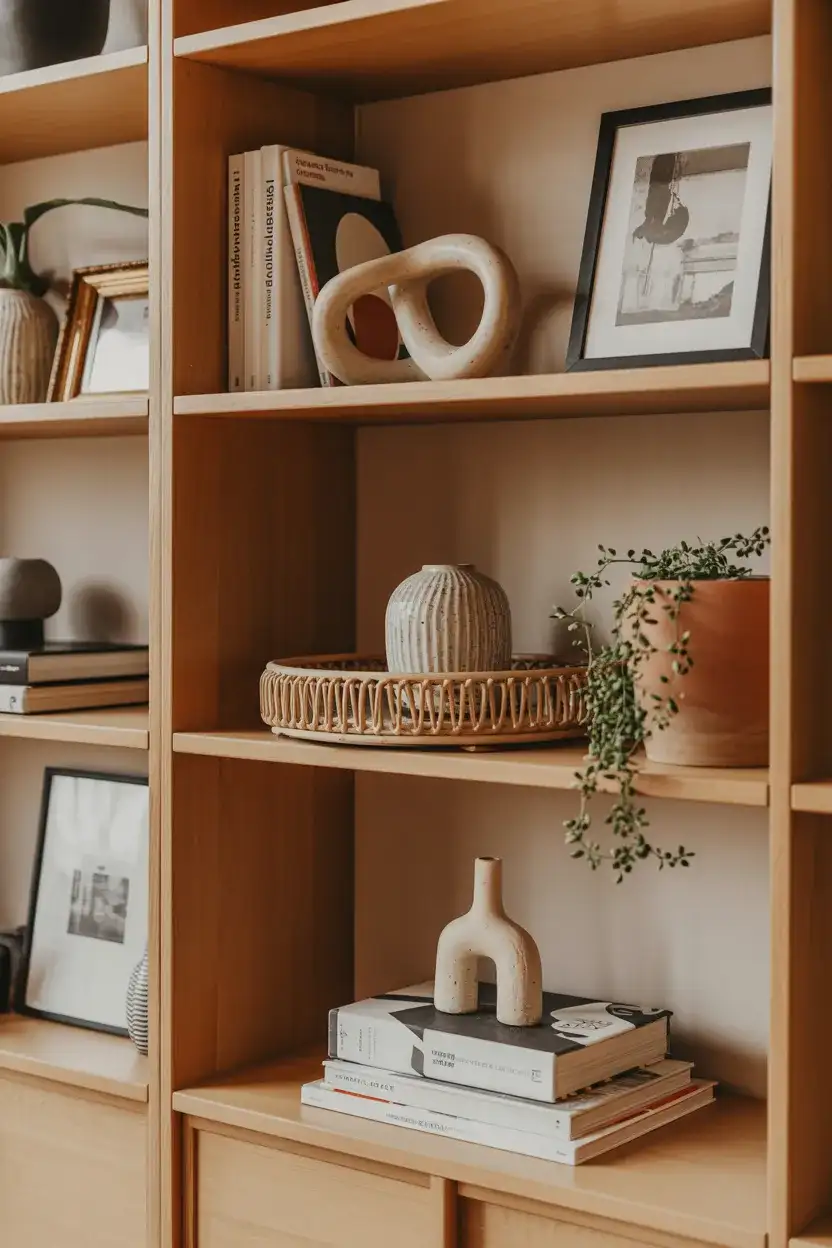
If you’ve ever looked at a shelf in a design magazine and wondered how it manages to look effortlessly curated while yours looks like a catch-all, the answer is almost always about two style principles that aren’t widely taught. Professional styling relies on a few consistent rules: vary object heights dramatically, always include something living (a plant, a branch, or fresh flowers), and anchor each grouping with one large or heavy-looking base object before building up from there.
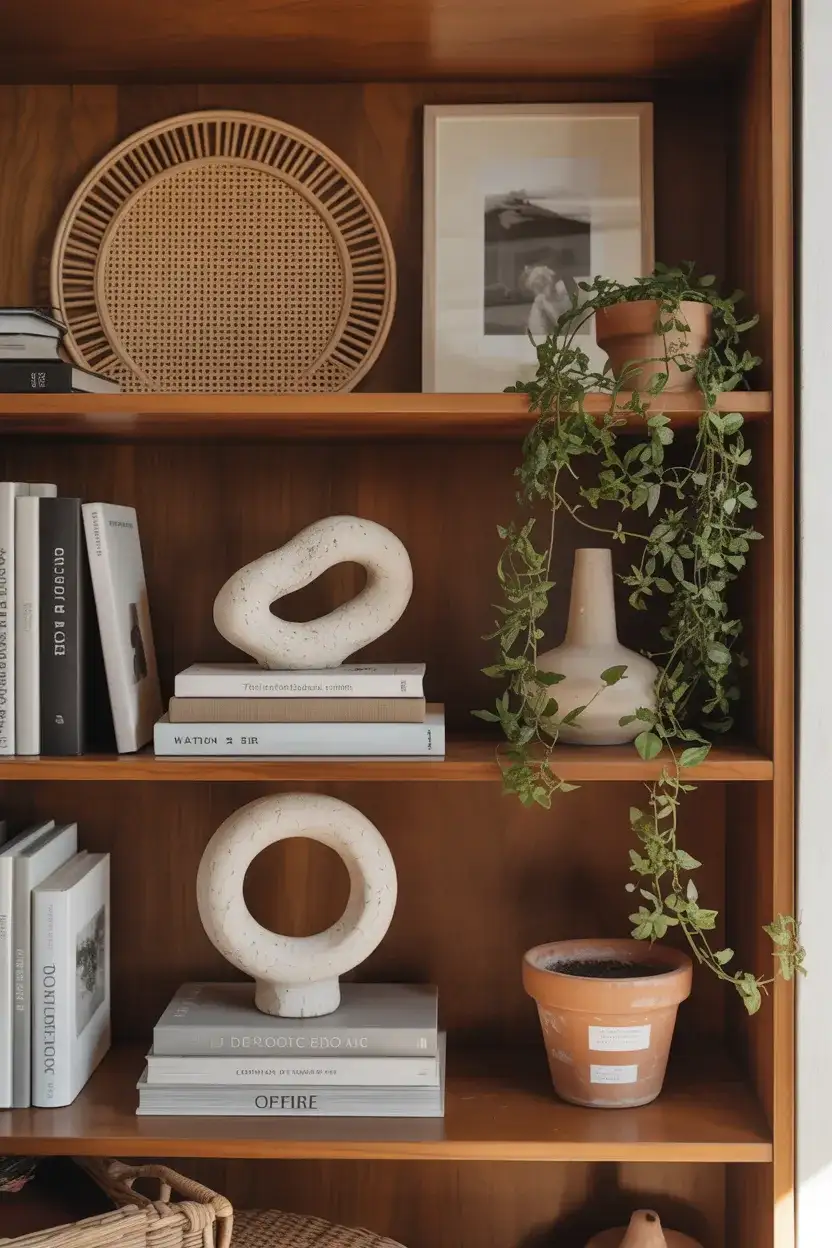
The single piece of advice that separates good shelf styling from great shelf styling: give objects room to breathe between groupings. Don’t treat it as one long lineup of stuff—treat it as three or four distinct vignettes, each with its own internal logic, separated by a moment of visual rest. That pause between clusters is actually doing as much design work as the objects themselves. It’s the shelf equivalent of white space on a page, and it’s what makes the whole thing feel considered rather than crowded.
13. Decor Ideas for the Wall Behind the Sofa
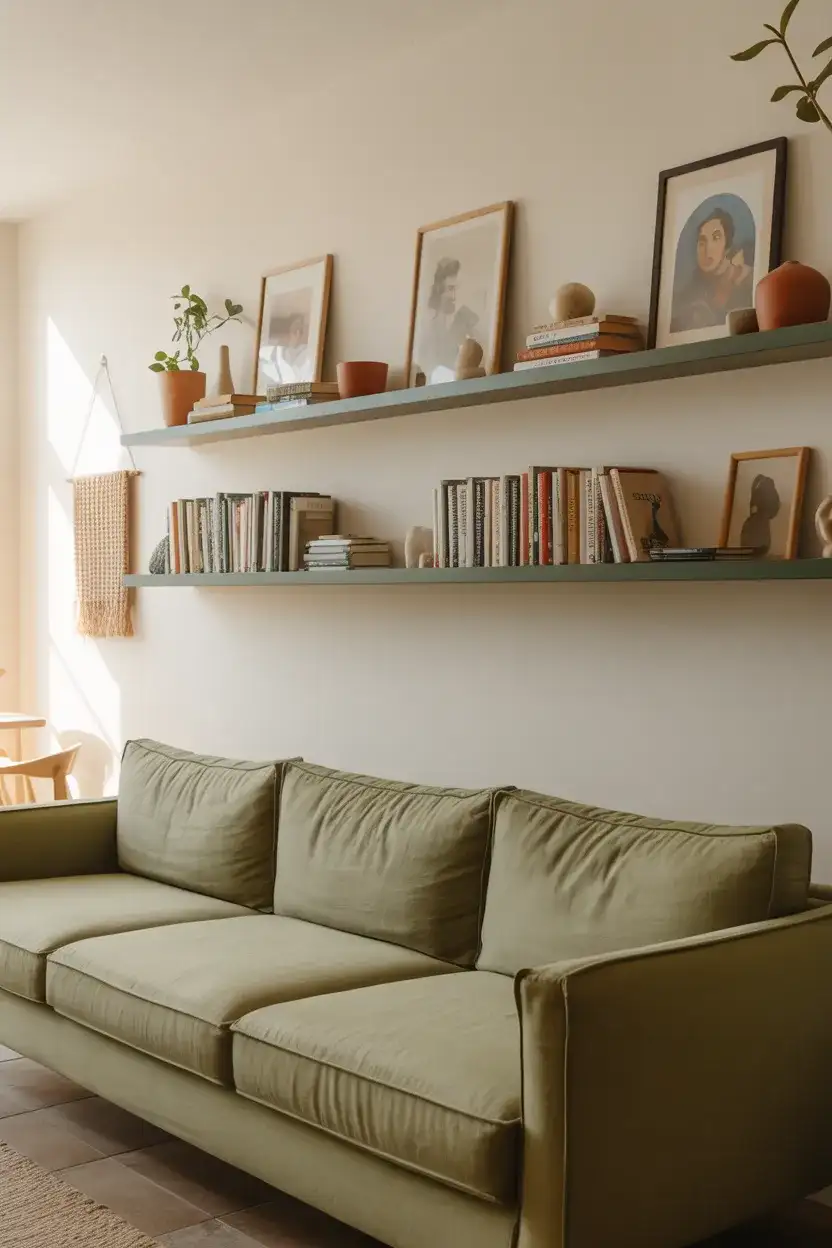
The wall behind your sofa is arguably the most visible surface in the living room—it’s what guests see the moment they walk in, and it’s the backdrop of every conversation you’ll ever have in that room. Shelves mounted in a horizontal line just above sofa height (typically 6 to 12 inches above the top of the back cushions) create an immediate sense of intention without dominating the space. It’s one of the most impactful and low-commitment changes you can make to a living room.
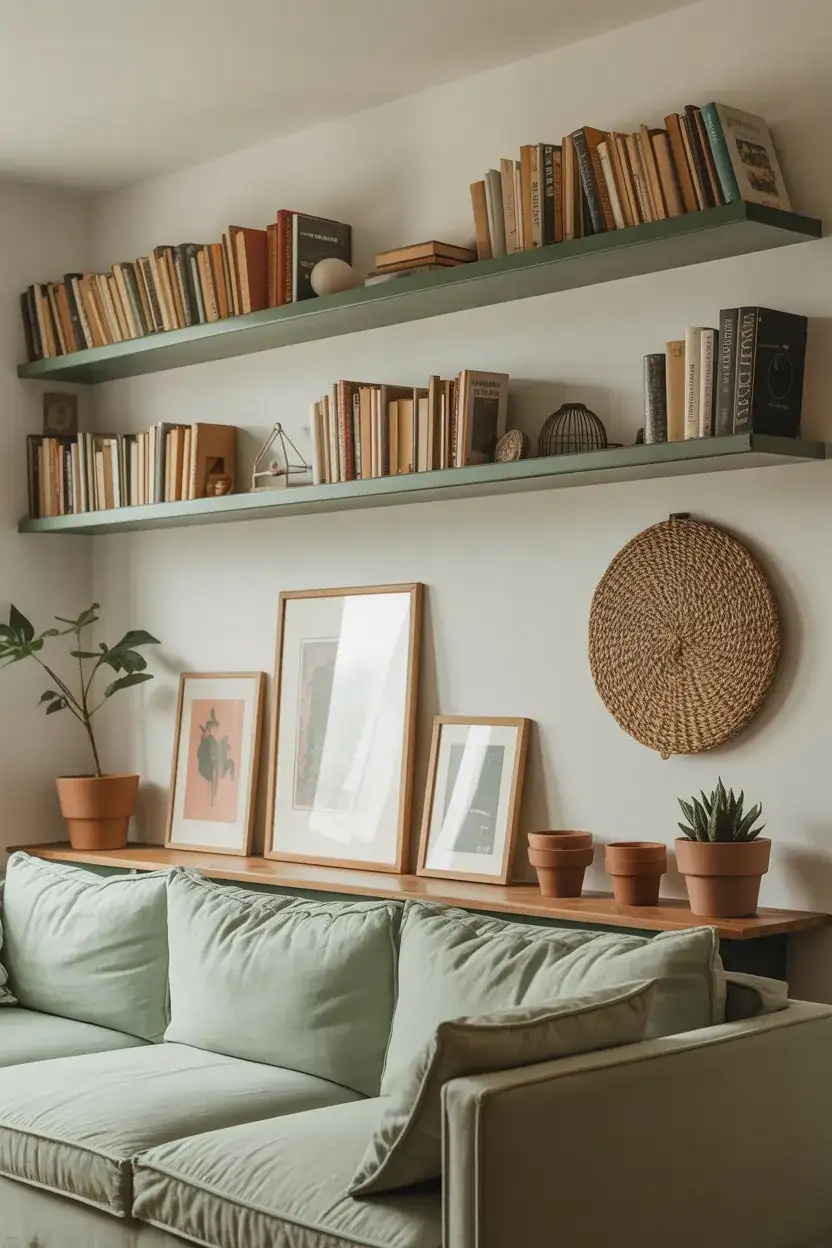
In terms of regional American context, this idea travels particularly well in smaller city apartments—think Chicago studio layouts, New York one-bedrooms, or San Francisco flats—where wall space above the sofa is one of the few large usable surfaces that doesn’t block light or take up floor area. In these settings, a pair of floating shelves above the couch can become the functional equivalent of an entire home office or bookcase, compressed into a form that doesn’t make the room feel any smaller.
14. Floor-to-Ceiling Shelf Wall
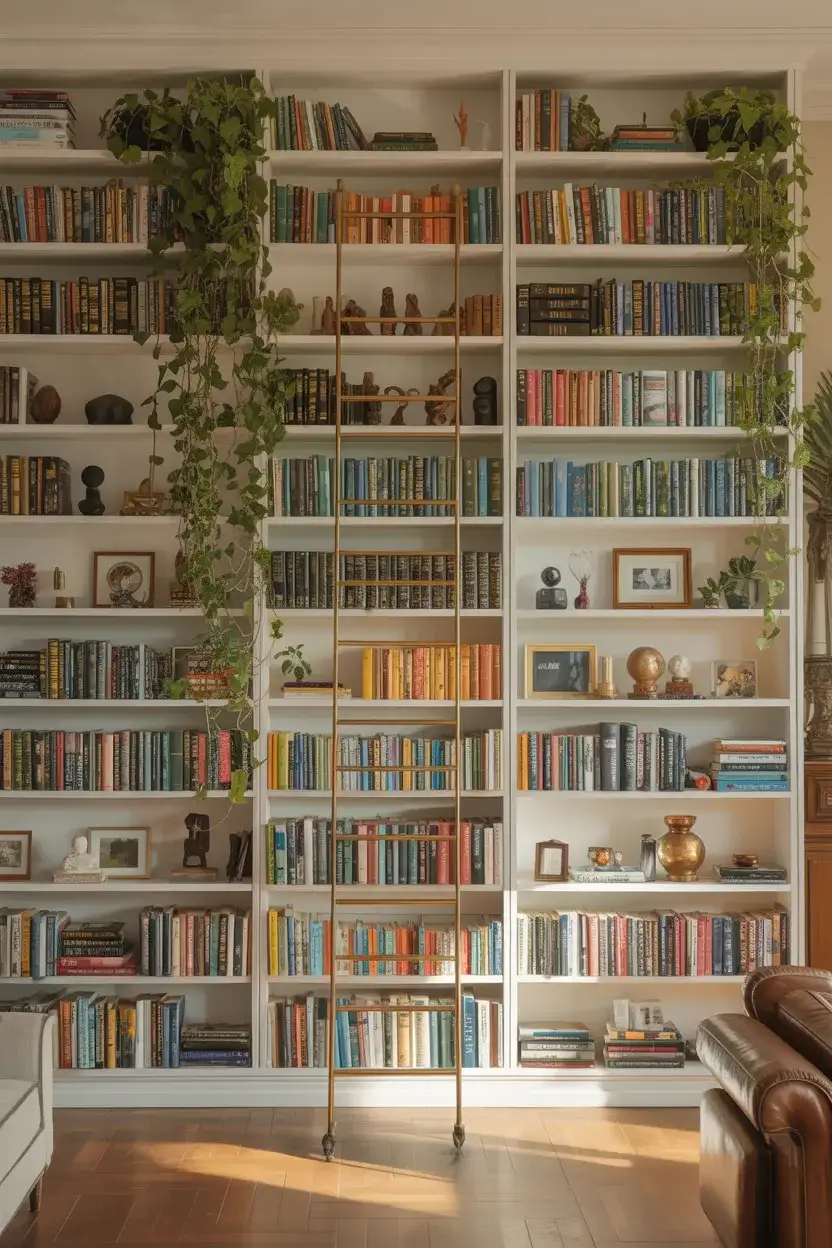
There’s a particular kind of ambition in deciding to fill an entire wall with shelving from floor to ceiling—it’s a statement that says something meaningful about how you feel about books, objects, and the idea that a home should reflect the life being lived inside it. This approach works in living rooms of virtually any size, though it reads differently depending on the context. In a large room it feels grand and library-like; in a smaller room it creates a wonderfully enveloping, cozy atmosphere that feels both smart and personal.
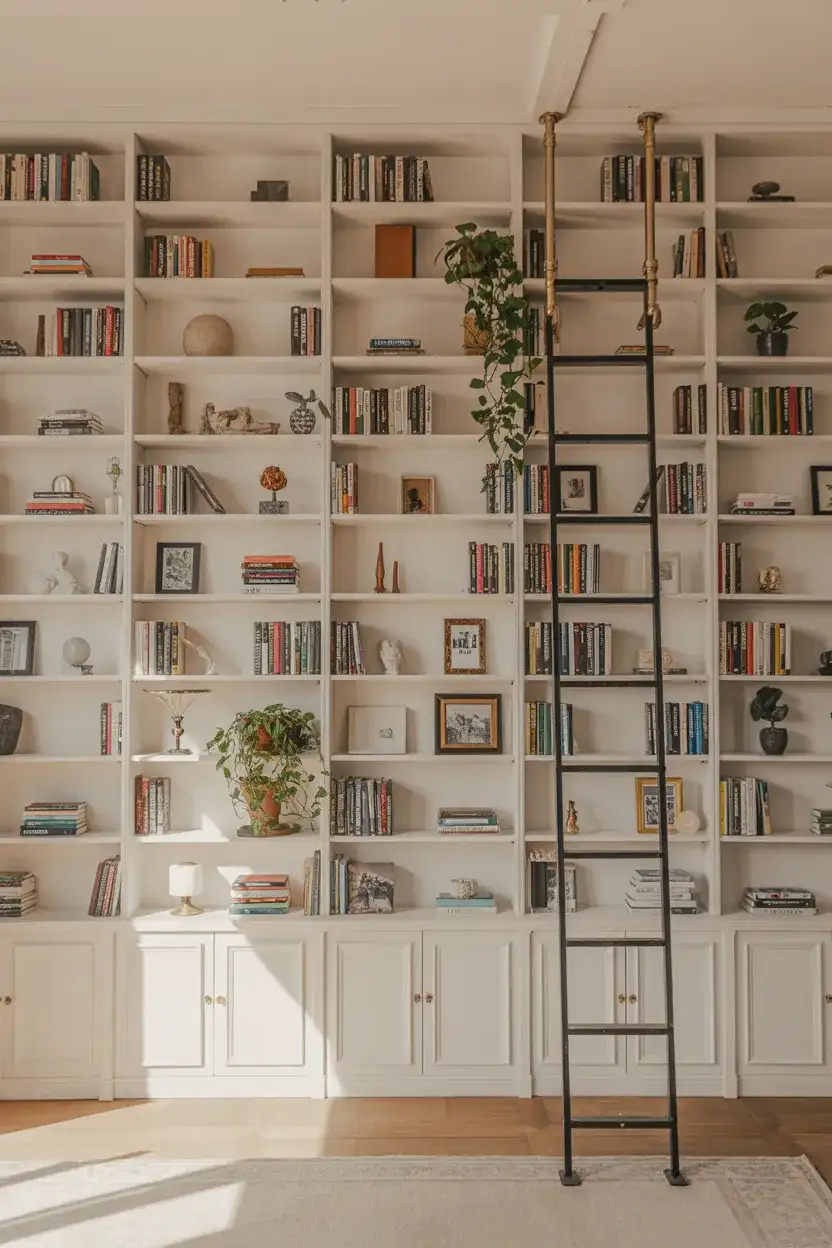
The common mistake most homeowners make when planning a floor-to-ceiling shelf wall is underestimating how much of a visual commitment the color choice is. If you paint the shelves a color different from the wall behind them, every gap and space between objects becomes visually “loud.” Painting the shelves and the back wall the same color—or lining the back of each shelf with wallpaper—is the move that makes this kind of installation look coherent rather than busy, regardless of how many objects you put on it.
15. Decorating Shelves Around the TV in a Modern Farmhouse
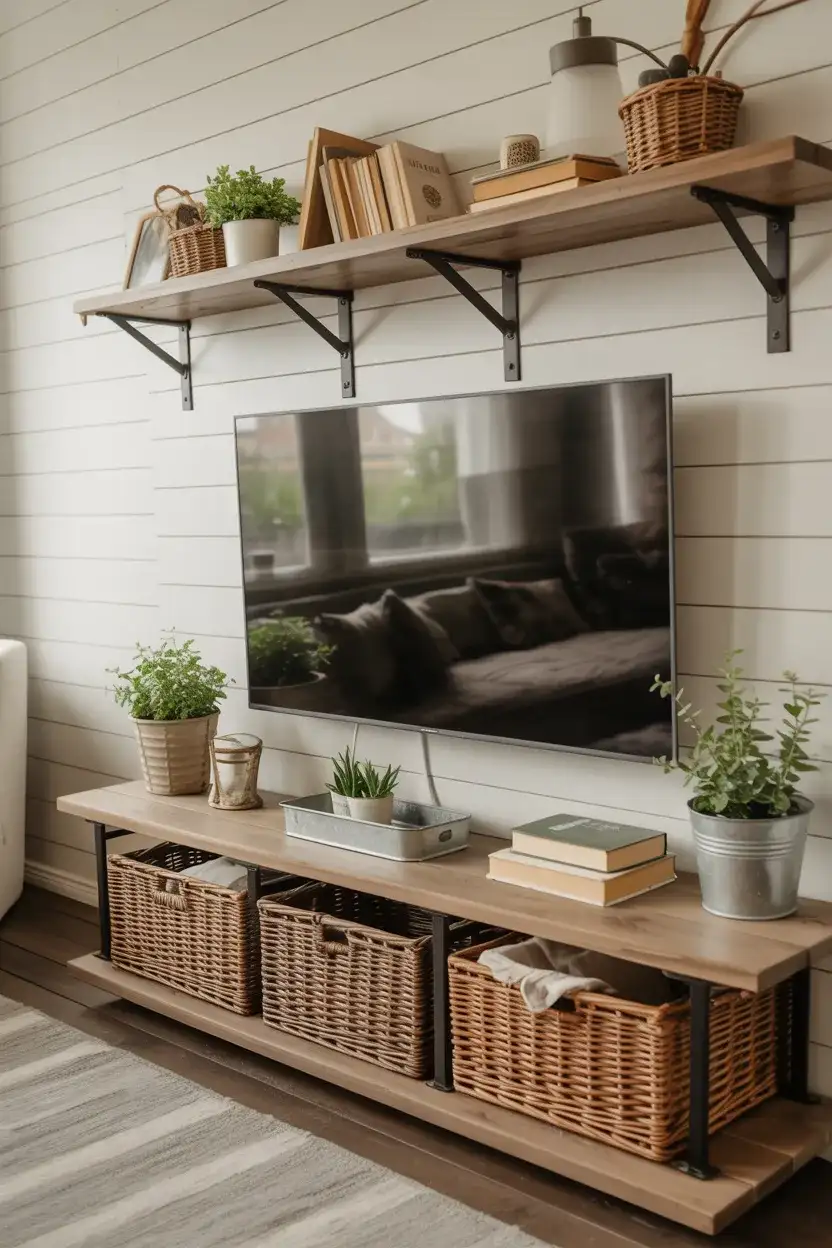
The modern farmhouse aesthetic has matured significantly since its shiplap-and-barn-door peak, and its current expression is more nuanced and genuinely livable than its earlier incarnation. Ideas around TVs in this style now favor chunky reclaimed wood shelves, black iron brackets, and a mix of baskets, greenery, and soft textiles rather than the overly curated “Fixer Upper” look. To decorate within this framework means embracing imperfection—slightly uneven textures, handmade ceramics, and objects with visible patina.
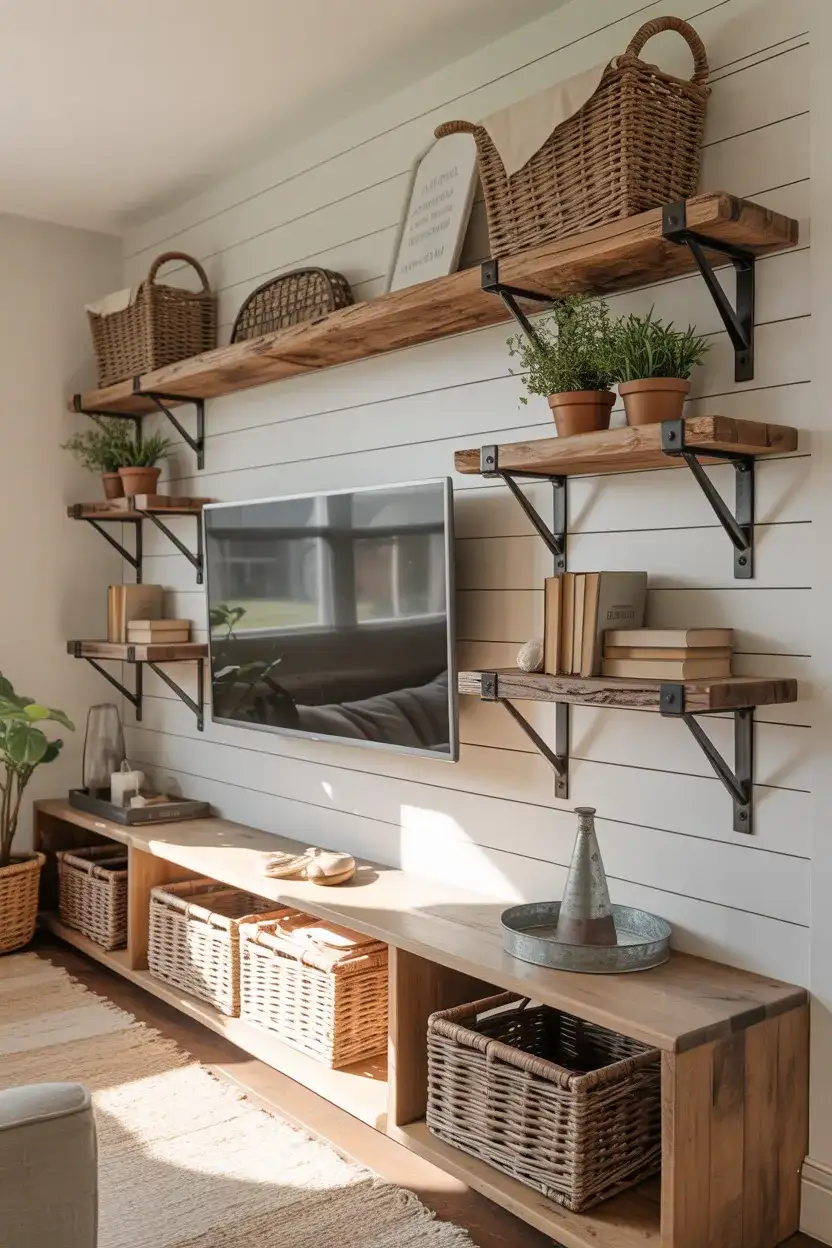
One micro-anecdote worth sharing: a family in rural Tennessee documented their DIY farmhouse shelf build—using barn wood rescued from a collapsed outbuilding on their property—and the before-and-after photos got over two million views on Pinterest in a single month. What made it resonate wasn’t the technique; it was the story behind the material. That’s the modern farmhouse in 2026 — authenticity is the aesthetic, and it can’t be purchased at a big-box store. It has to be earned or found.
16. Built-In Shelves with a TV Niche
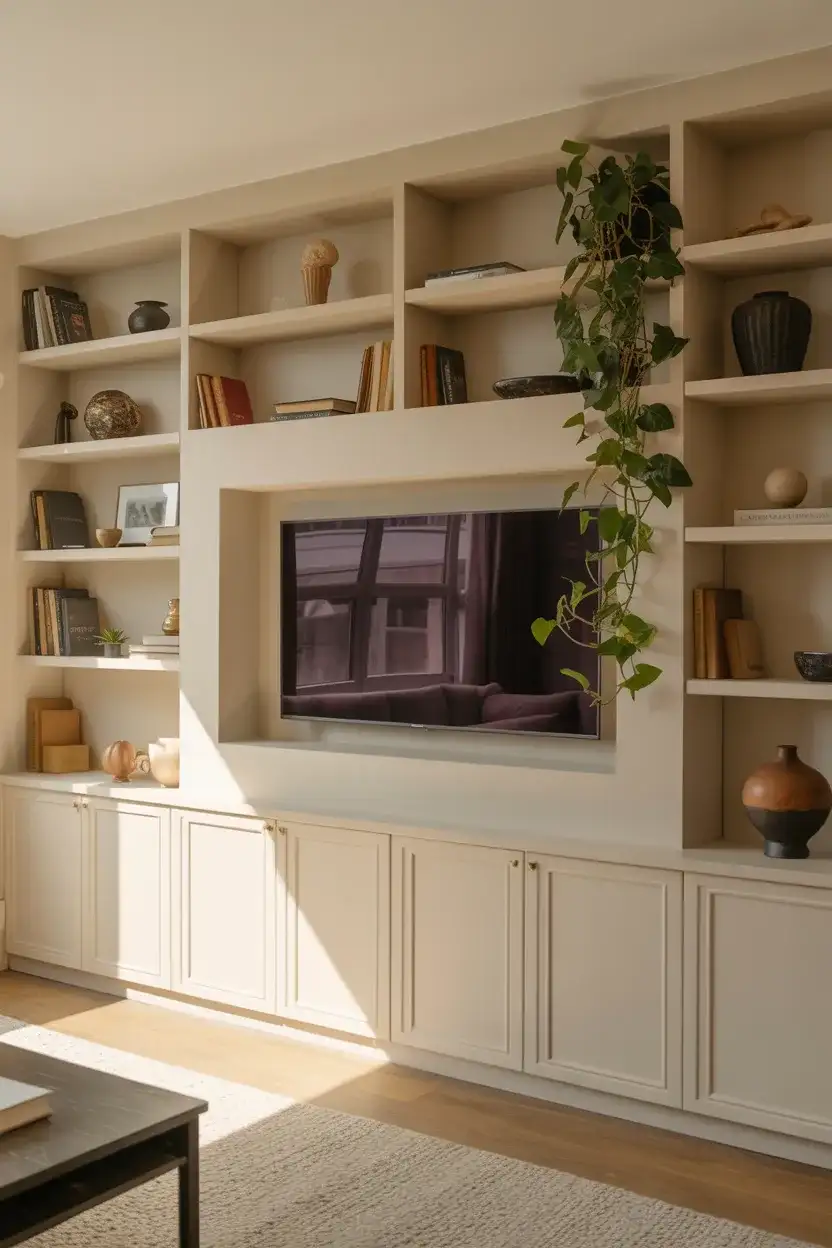
A purpose-built niche for the TV within a larger built-in shelving system is one of those design solutions that looks like it was always there—like the room was designed around it from the beginning. The television sits flush and recessed, surrounded on all sides by shelving that makes the screen feel like just one element among many rather than the dominant focal point of the room. It’s also one of the most practical configurations for cord management, since everything can be run behind the wall during construction.
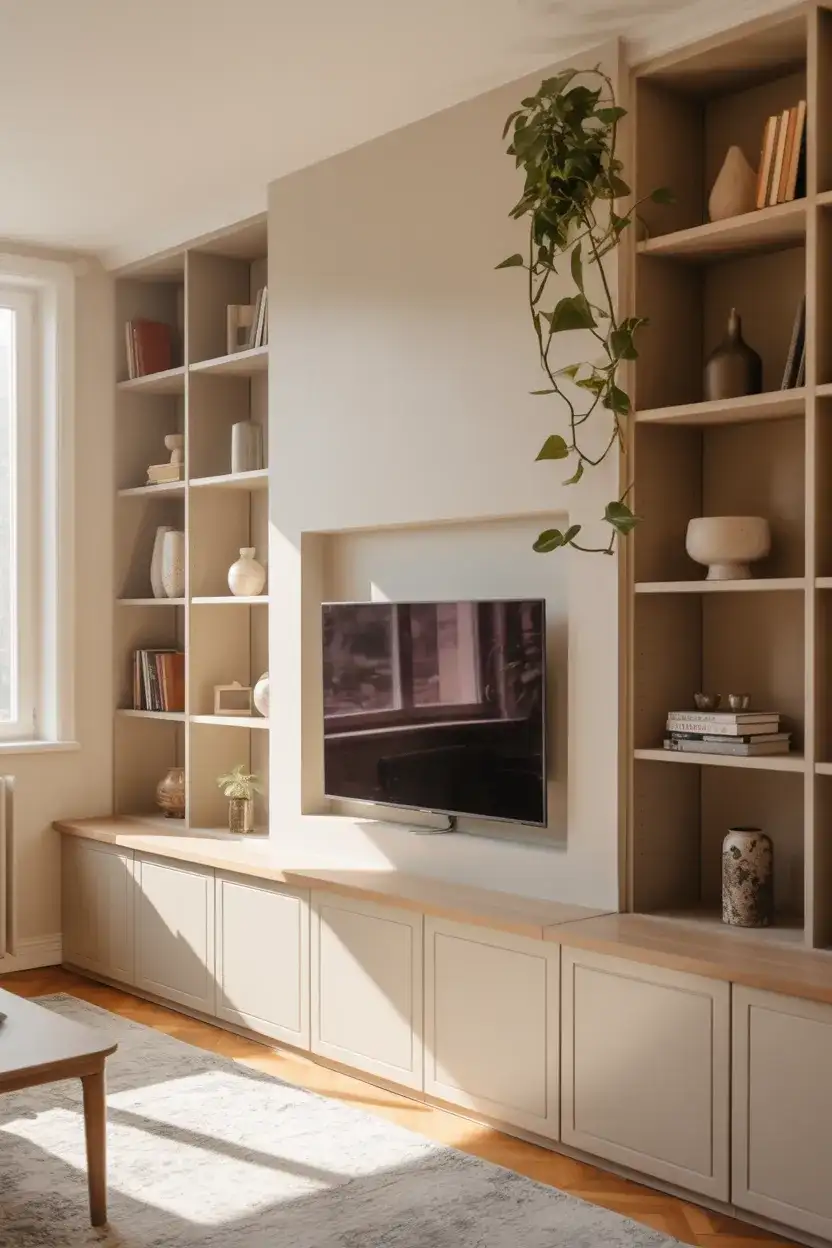
Budget-wise, a custom built-in TV niche installation by a professional carpenter typically runs between $3,000 and $8,000 depending on your market and the materials involved. The IKEA BILLY workaround—using modular bookcases on either side of a freestanding media console—can achieve 70% of the same visual effect for under $600. It won’t be as seamless, but with the right paint color and hardware upgrades, it can get remarkably close to the custom look without the custom-level commitment.
17. Ideas for Shelves on the Wall Next to a Fireplace
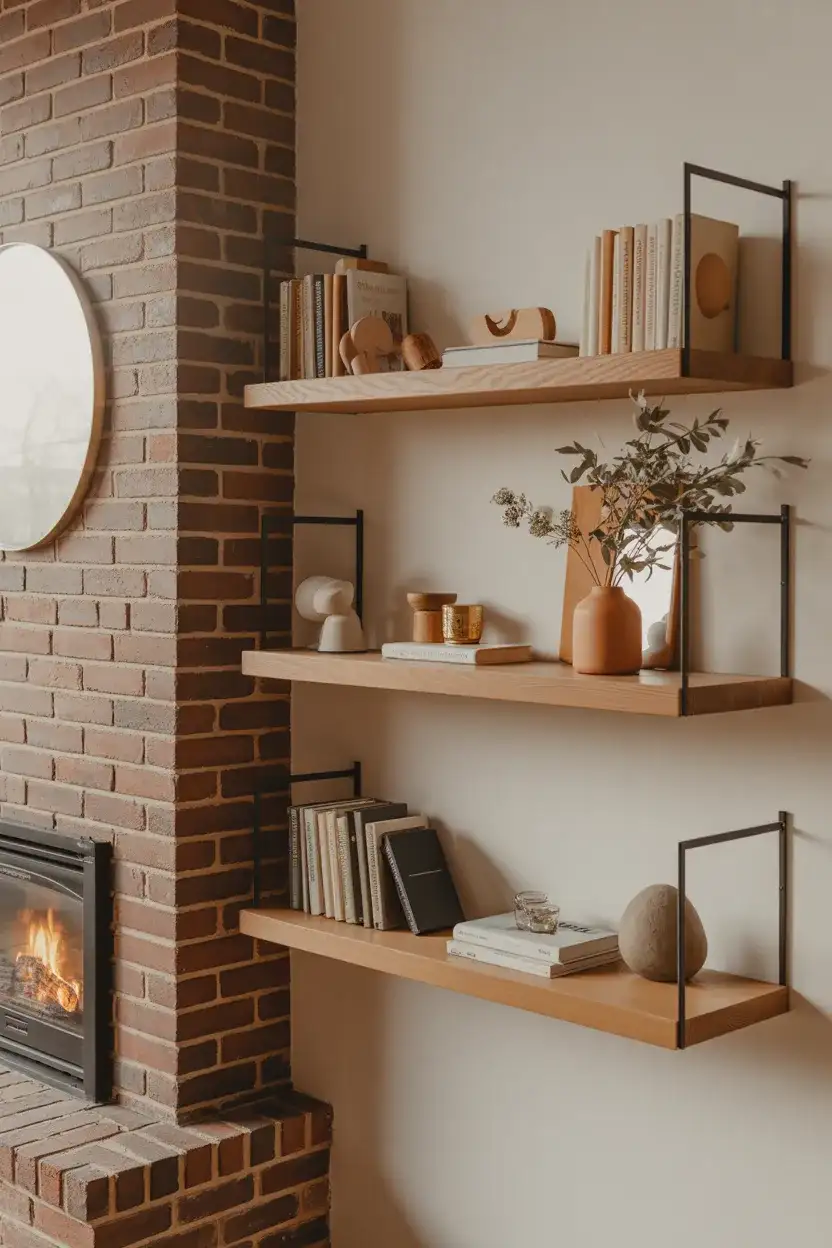
When the fireplace sits on one side of the room rather than centered on a wall, the ideas around TV fireplace approaches often don’t apply—and you need a different strategy. Shelves positioned on the adjacent wall can create a kind of visual conversation with the hearth, echoing its warmth without competing with it. The goal is extension rather than symmetry: let the shelves feel like a natural continuation of the fireplace’s energy, picking up materials like wood, brick, or stone in the objects you display.
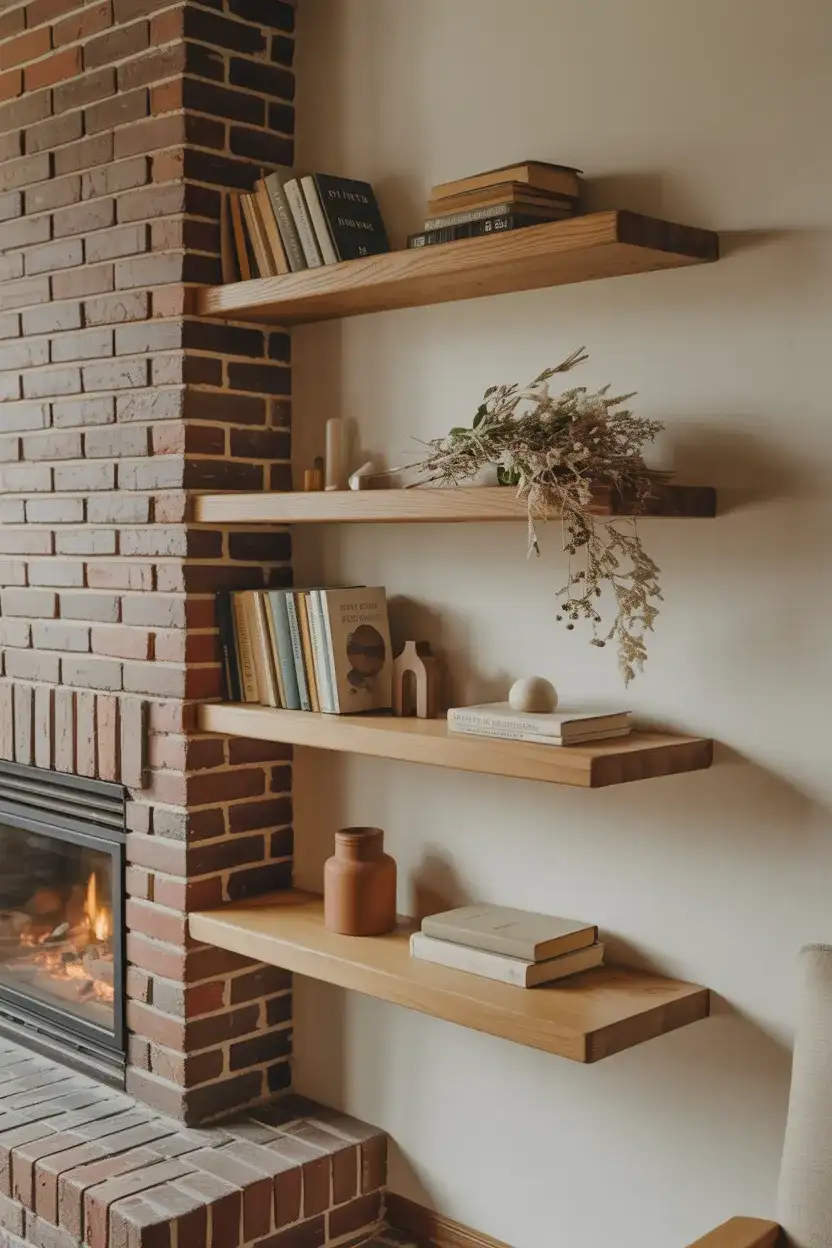
Where this idea works best is in rooms where the fireplace wall is already quite full—perhaps with a large mantel, a mirror, and flanking sconces—and there’s a natural blank wall immediately beside it that’s looking for purpose. Rather than hanging a single large piece of art, running three or four horizontal shelves down that adjacent wall creates a layered, gallery-like experience that feels connected to the fireplace while giving it its own identity and role in the room.
18. Shelf Decor Ideas That Use Plants Heavily
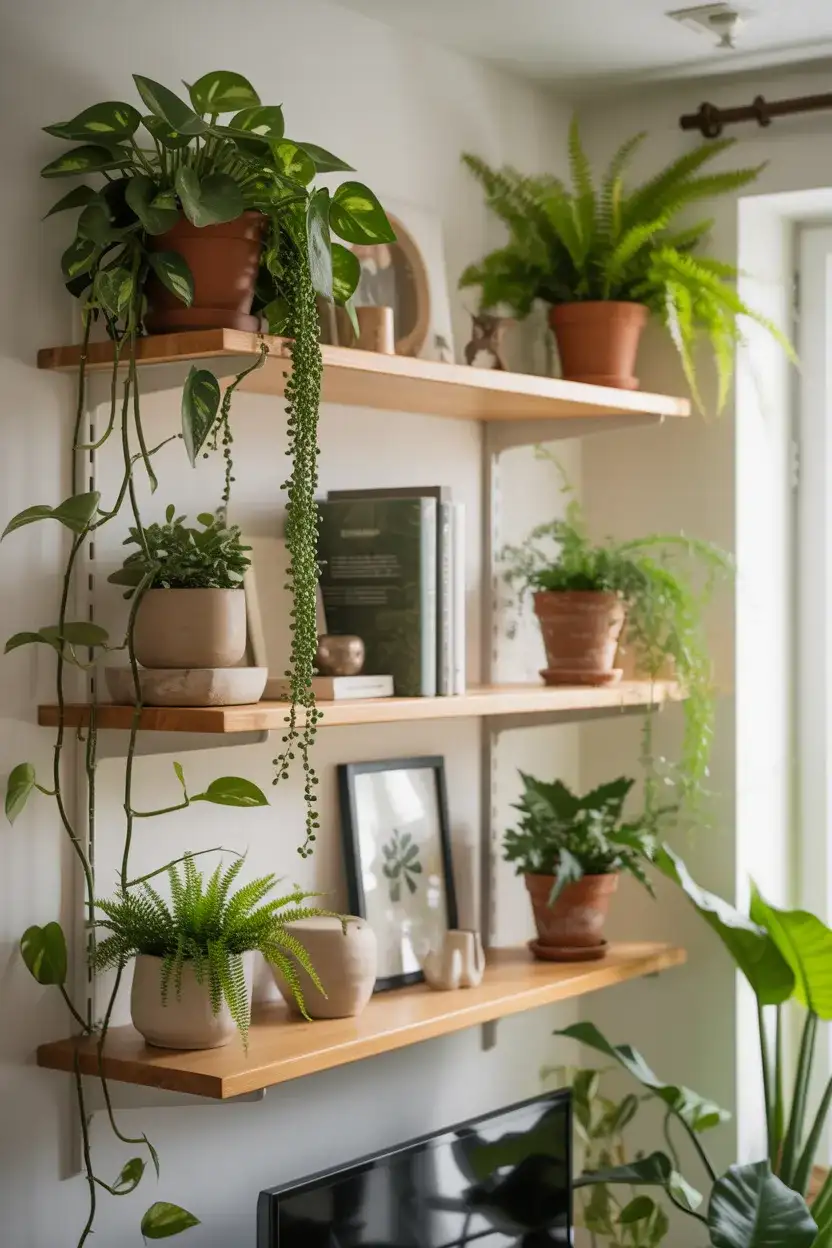
Among all the decor ideas circulating in 2026, plant-forward shelf styling has moved from trend to standard—it’s now almost expected that a well-styled shelf will include at least one living or dried botanical element. But there’s a difference between dropping a pothos on a shelf and actually building a plant-first styling strategy. The latter means choosing shelves partly based on their proximity to natural light, selecting plants whose trailing habits work with the shelf height, and thinking about the seasonal changes plants go through as part of your year-round design plan.
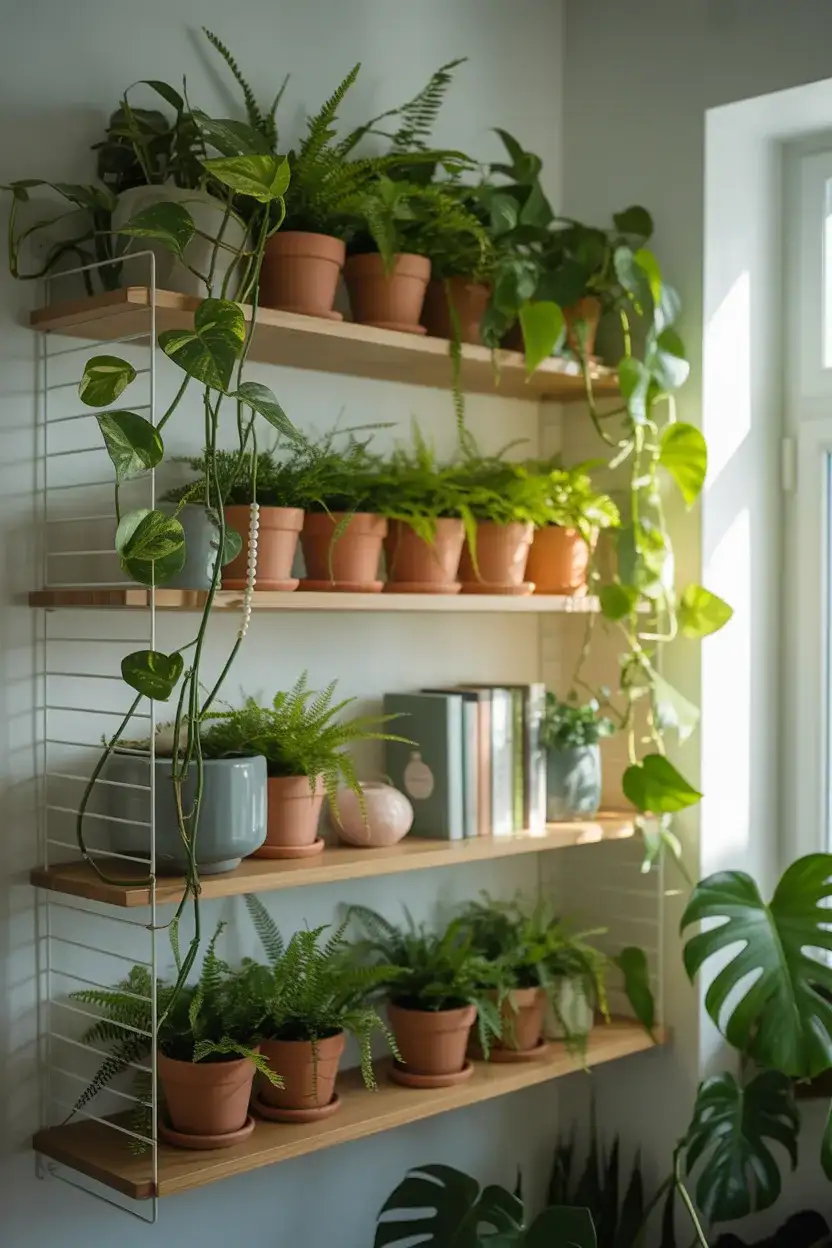
The most reliable trailing plants for shelf styling in American homes—especially in the lower natural light conditions of many living rooms—are pothos (nearly indestructible), heartleaf philodendron (fast-growing and dramatic), and string of pearls (gorgeous but slightly more demanding). All three reward the kind of benign neglect that most busy households practice. Pair any of them with a simple terracotta pot and a vintage macramé hanger, and you’ve got a shelf moment that doesn’t need anything else.
19. Dark and Moody Shelf Styling
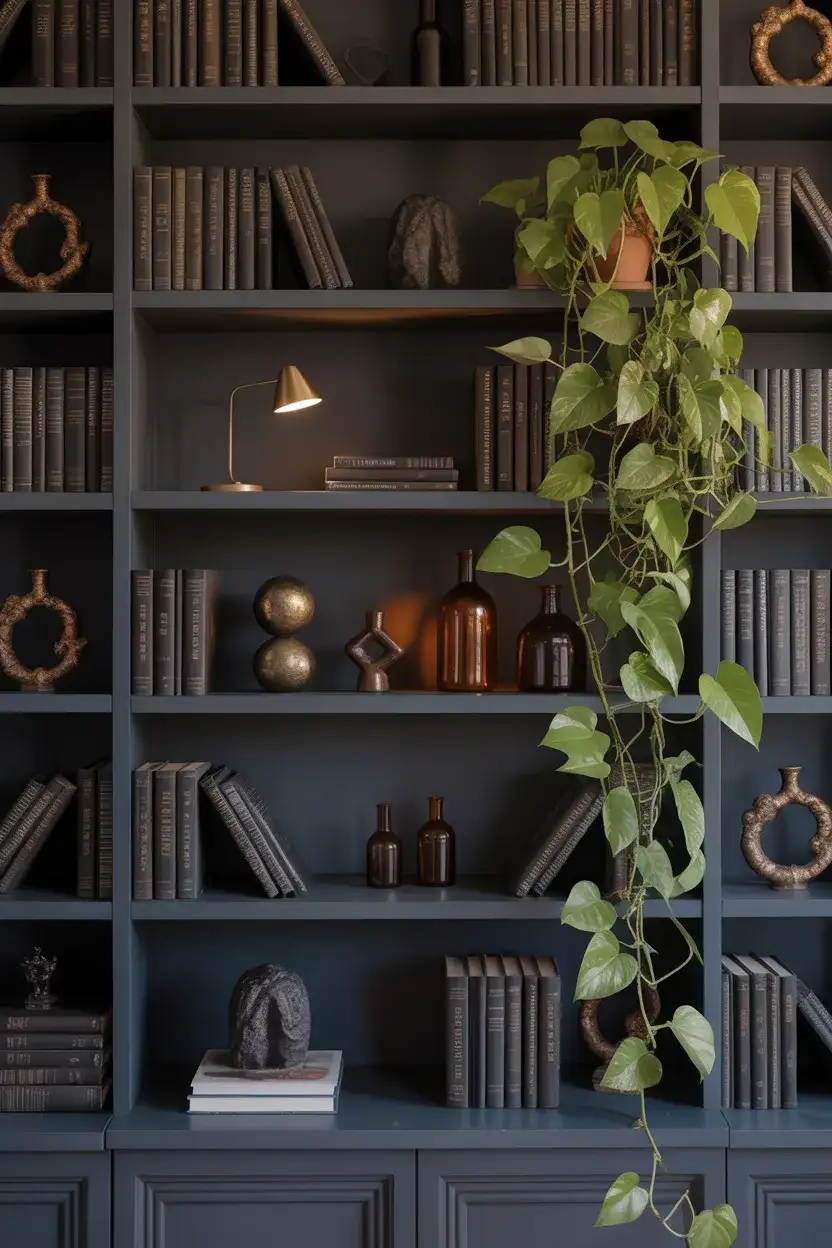
Dark shelf aesthetics have been quietly building momentum for a couple of years, and in 2026 they’ve fully arrived. The idea of painting shelves—or entire rooms—in deep charcoal, forest green, navy, or even black was once considered bold to the point of risky, but it’s now one of the most searched-for living room looks on Pinterest. A unit painted in Benjamin Moore’s Black Panther or Farrow & Ball’s Railings reads as dramatic, grounded, and surprisingly soothing—especially in rooms with good natural light to balance the depth.
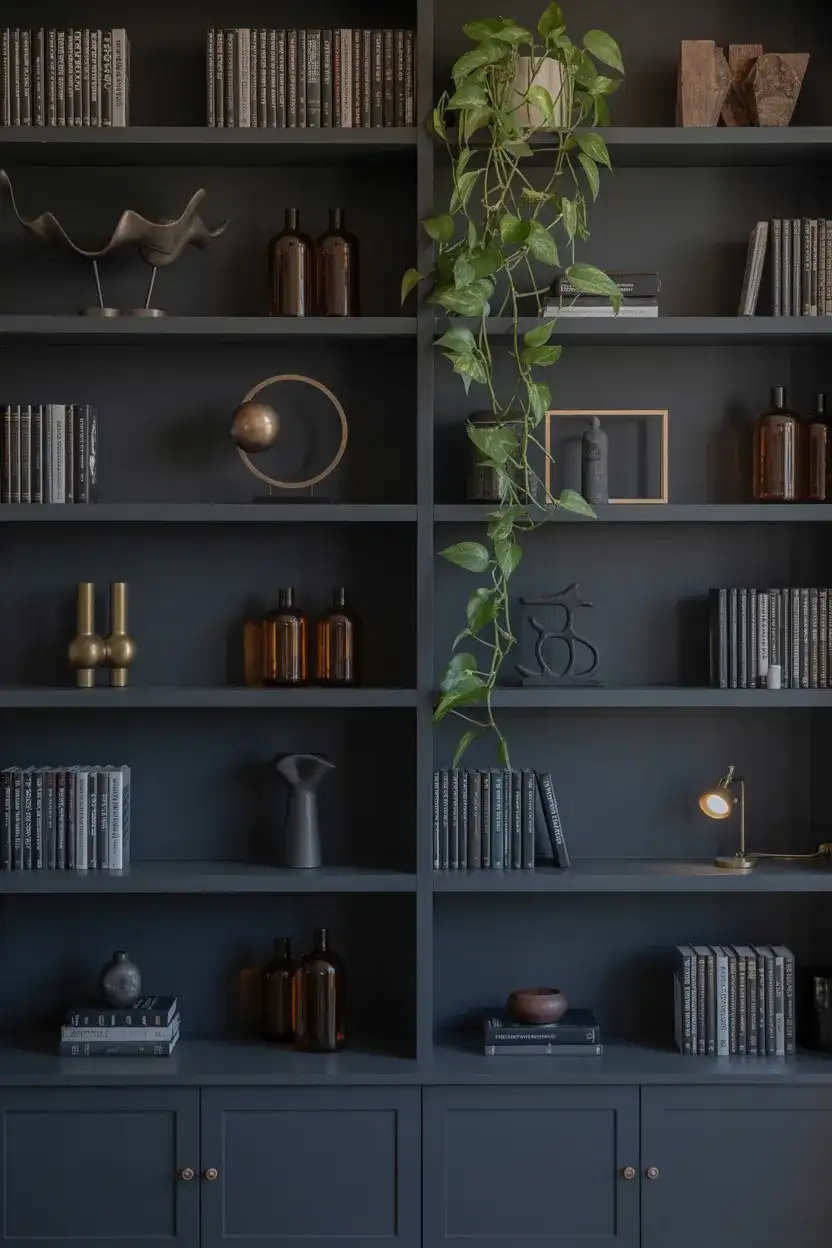
Expert-level styling advice for dark shelves: your objects need to be lighter, warmer, or more reflective than the shelves themselves to read properly against the dark background. White ceramics, warm amber glass, brass hardware, and natural woods all pop beautifully against charcoal or navy. Books with pale or colorful spines create natural rhythm. Avoid dark objects on dark shelves unless you specifically want the piece to recede—which can be a beautiful effect when used deliberately but a frustrating accident when it happens unintentionally.
20. Floating Shelves with Hidden Lighting
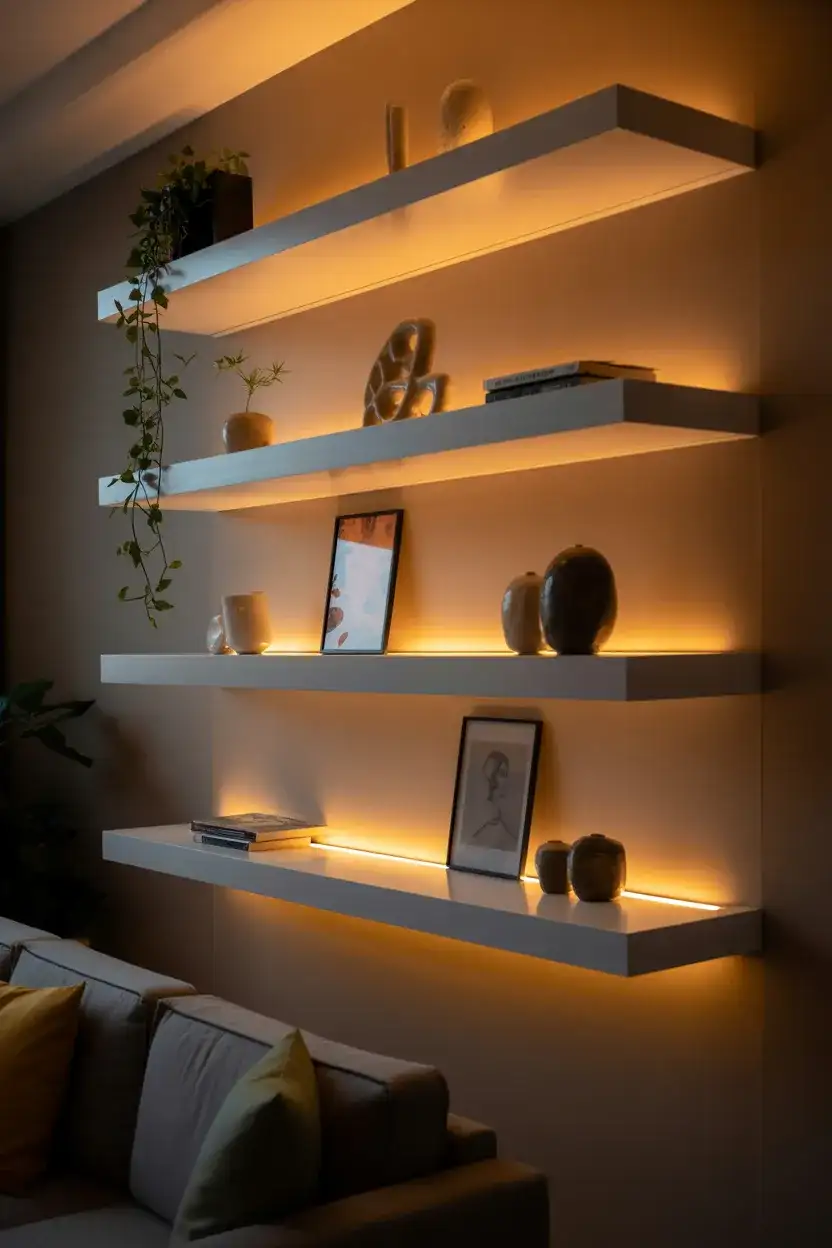
The upgrade that consistently gets the most dramatic reaction per dollar spent is adding concealed LED strip lighting beneath floating shelves. The effect—a warm glow washing down the wall from underneath each shelf—immediately elevates even the most basic display into something that looks like it was professionally designed. In the context of ideas the wall can bring to life, this is one of the most impactful and relatively affordable additions you can make without touching the shelves themselves.
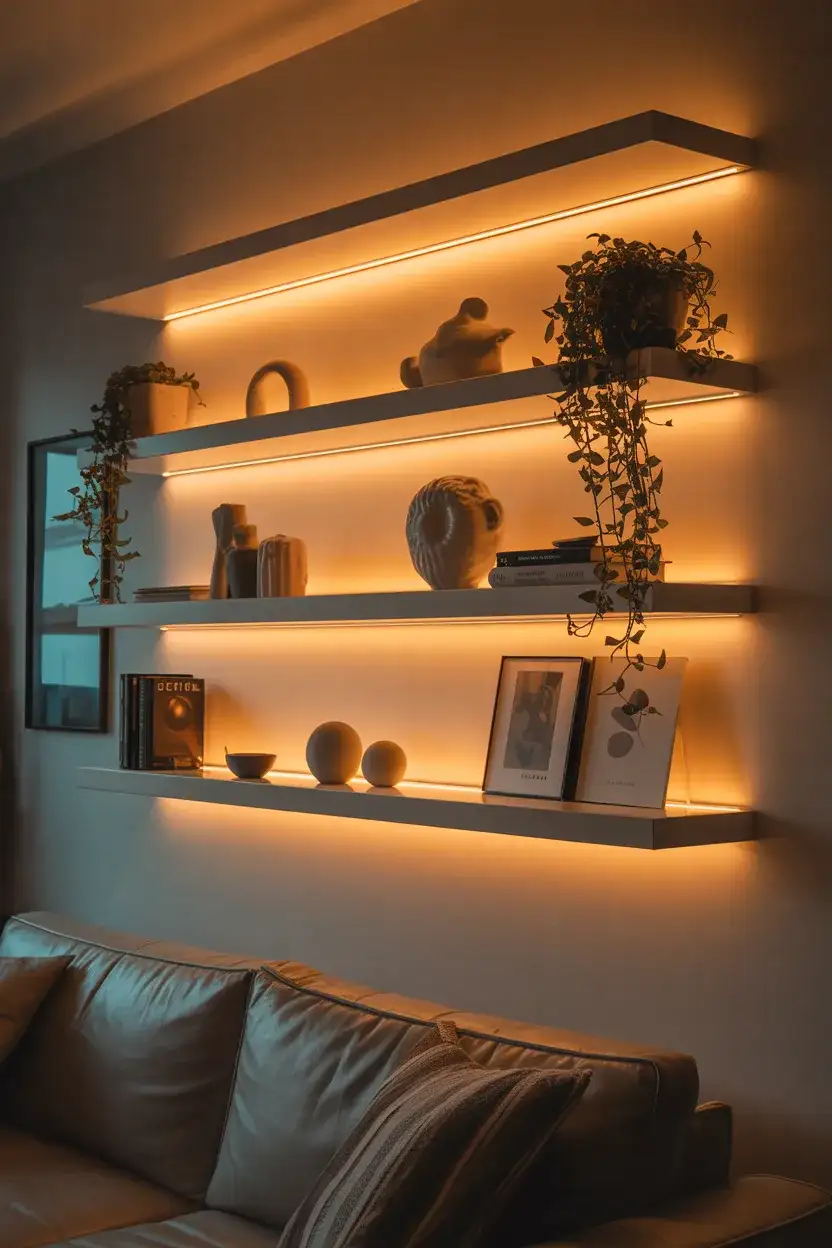
A strip of warm-white LED tape (2700K to 3000K color temperature—cooler than that and it starts to feel sterile and clinical) runs about $15 to $25 for a six-foot roll, and the installation is genuinely within DIY reach if your shelves are already mounted. The key is channeling the tape into a small routed groove on the underside of the shelf so the strip itself is invisible and only the glow is visible. Without the channel, you can see the hot spots of the individual LEDs, which ruins the effect entirely.
21. Open Shelving Above a Low Media Console
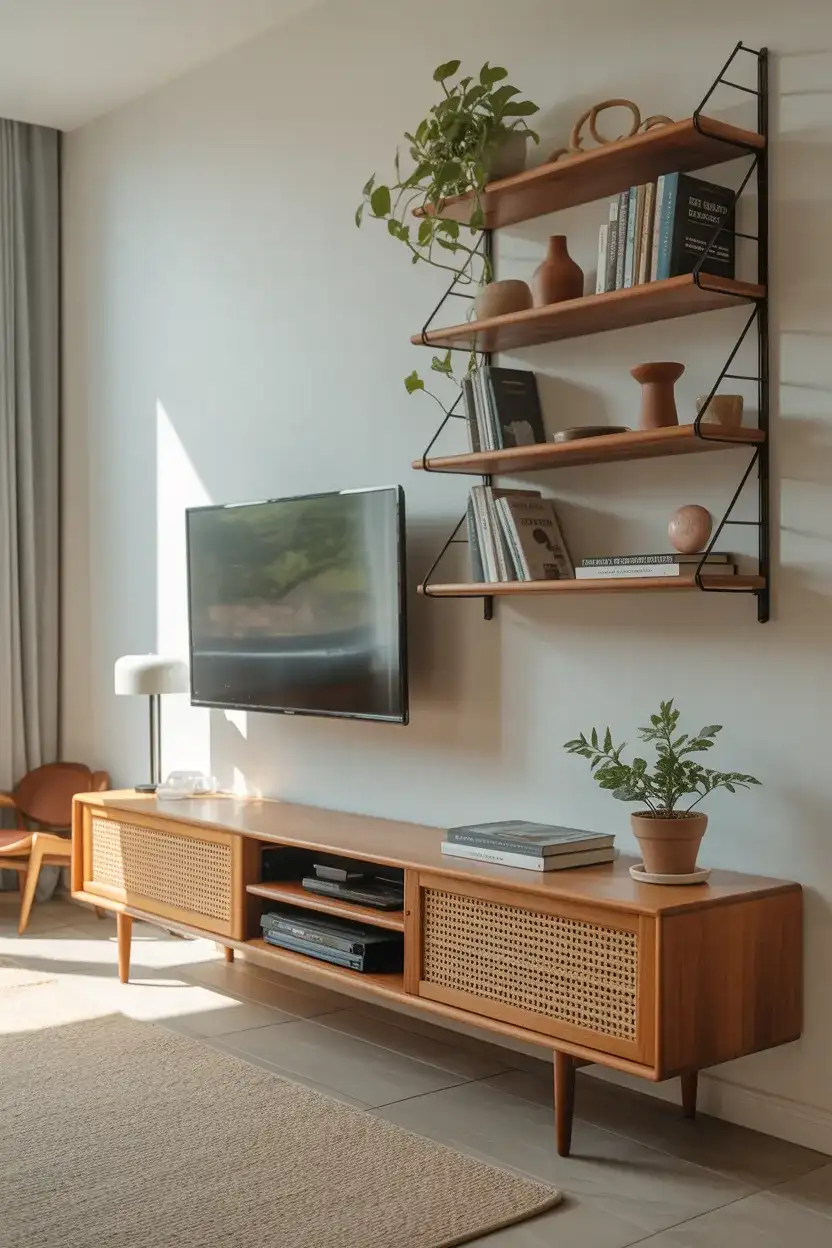
The combination of a low, floor-level media console with open floating shelves climbing the wall above it creates a layered vertical display that uses the full height of the room without committing to a full built-in system. This is especially appealing in living rooms where a TV sits on the console below while the shelves above carry the decorative weight—books, plants, and objects—freeing the console surface to stay relatively clean and functional.
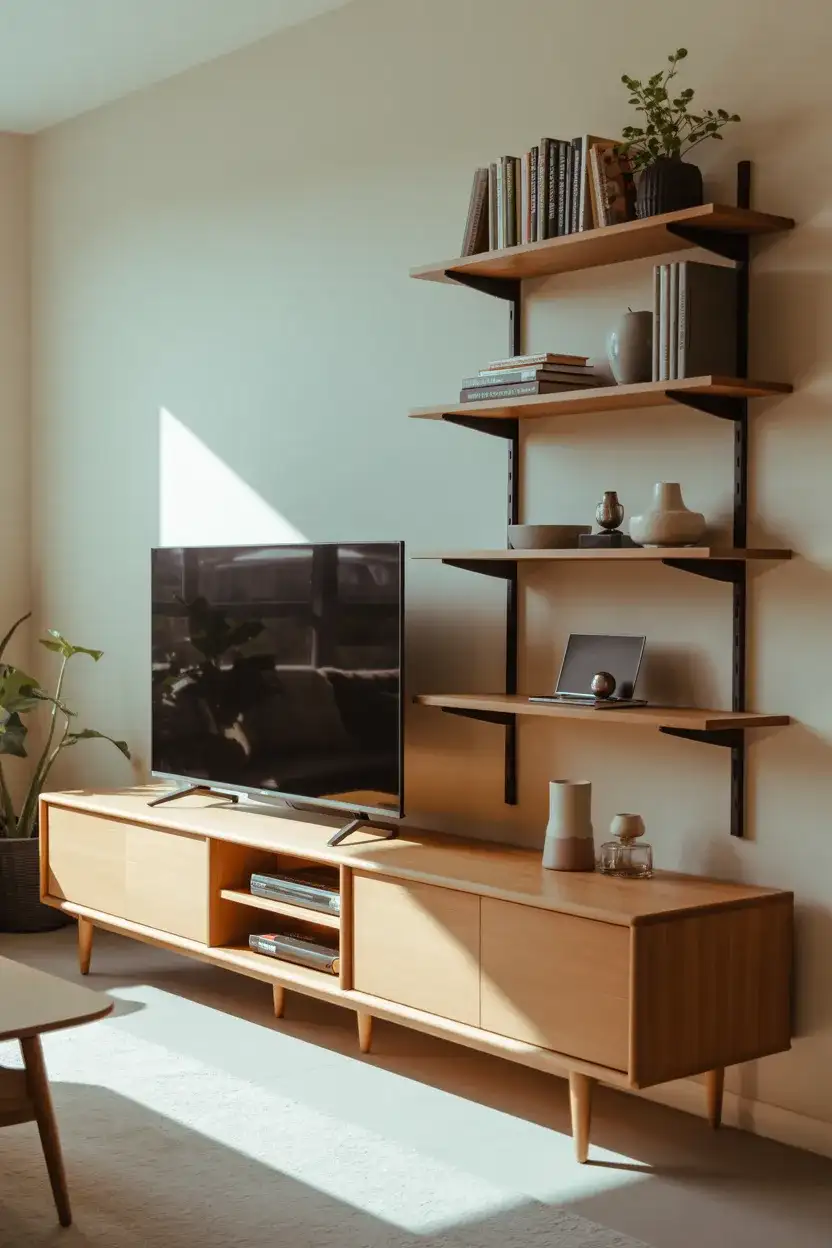
The practical insight here is about flexibility: because the console and the shelves are separate, freestanding pieces (or at least independently mounted), you can change or replace one without affecting the other. If your media needs change—you upgrade to a larger TV, or you decide you don’t need as much AV equipment—the console can evolve without the whole installation needing to be reconsidered. It’s a more adaptable system than a full built-in, and for renters or people who move frequently, it’s a genuinely smarter approach.
22. Wabi-Sabi Shelf Styling with Natural Materials
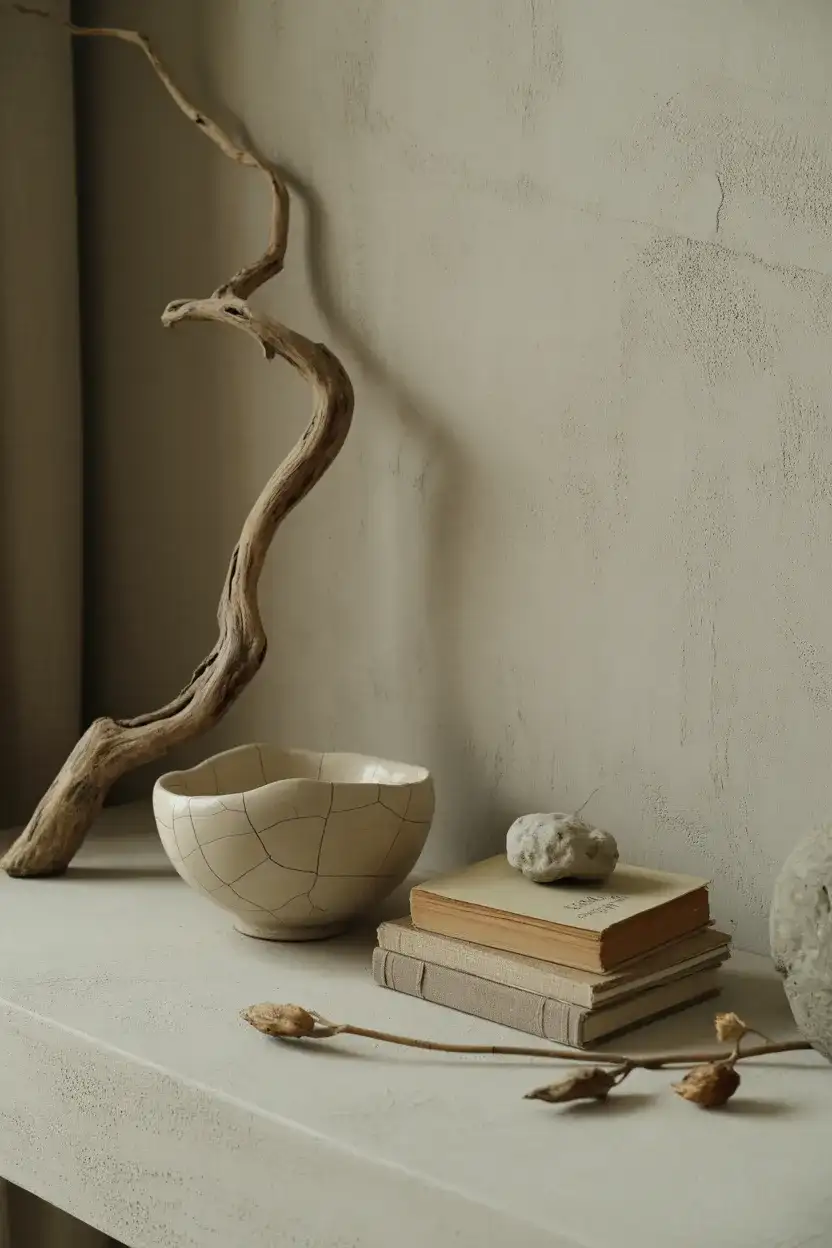
The Japanese philosophy of wabi-sabi—finding beauty in imperfection, impermanence, and the natural world—has become one of the most genuinely influential design philosophies in American living rooms, and nowhere does it express itself more freely than in shelf decor ideas. This approach means celebrating the crack in a pottery glaze, displaying a branch exactly as it fell, using an unpolished stone as a bookend, and resisting the urge to arrange things too precisely. The wall becomes a meditation on the beauty of time passing.
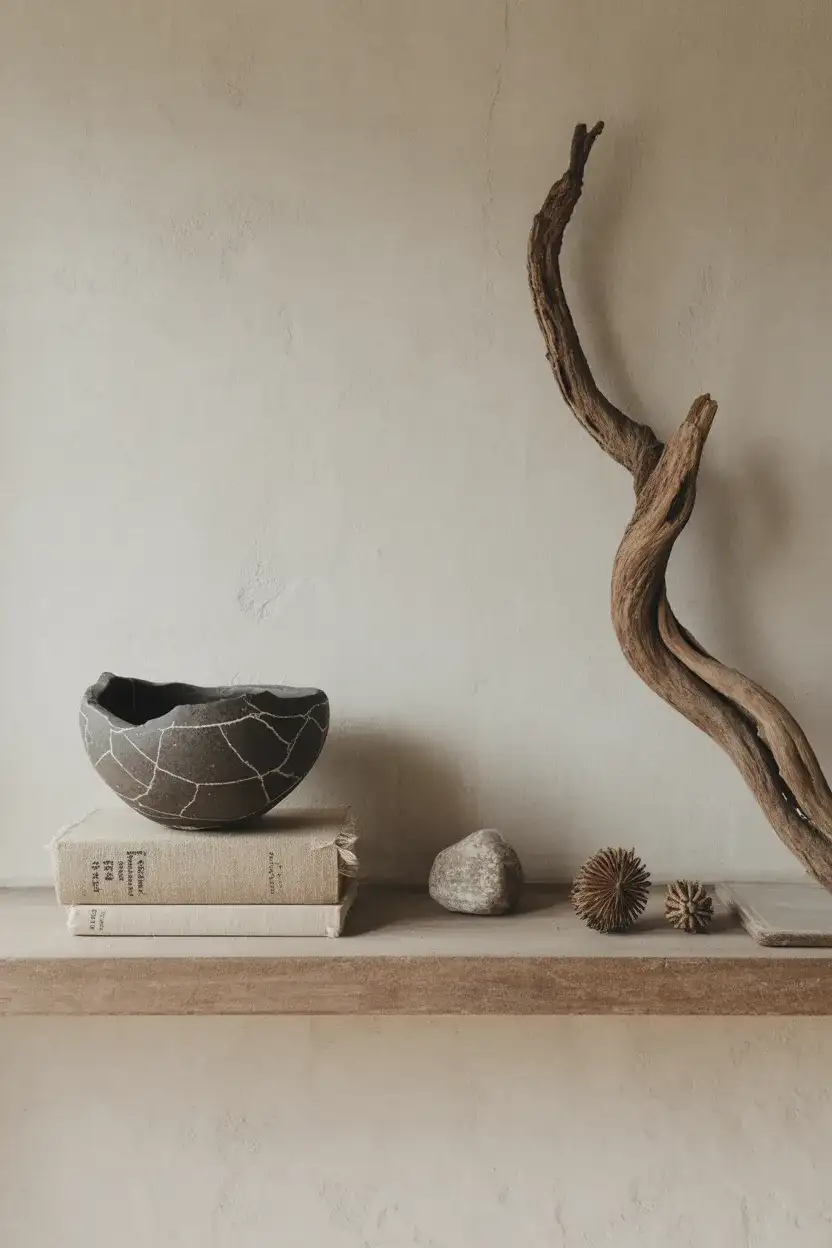
There’s an irony at the heart of wabi-sabi shelf styling that’s worth naming: it actually takes quite a bit of effort to make a shelf look effortlessly natural and imperfect. The objects need to be genuinely interesting in their own right—not just rustic-looking mass-produced items, but things with actual provenance, wear, or natural origin. The best places to source these objects in the American context are estate sales, local farmers’ markets, beach walks, forest floors, and small-batch ceramicists on Etsy. The effort is worth it, because the result has a quality no catalog can replicate.
23. Gallery Wall with Shelves—the Hybrid Approach
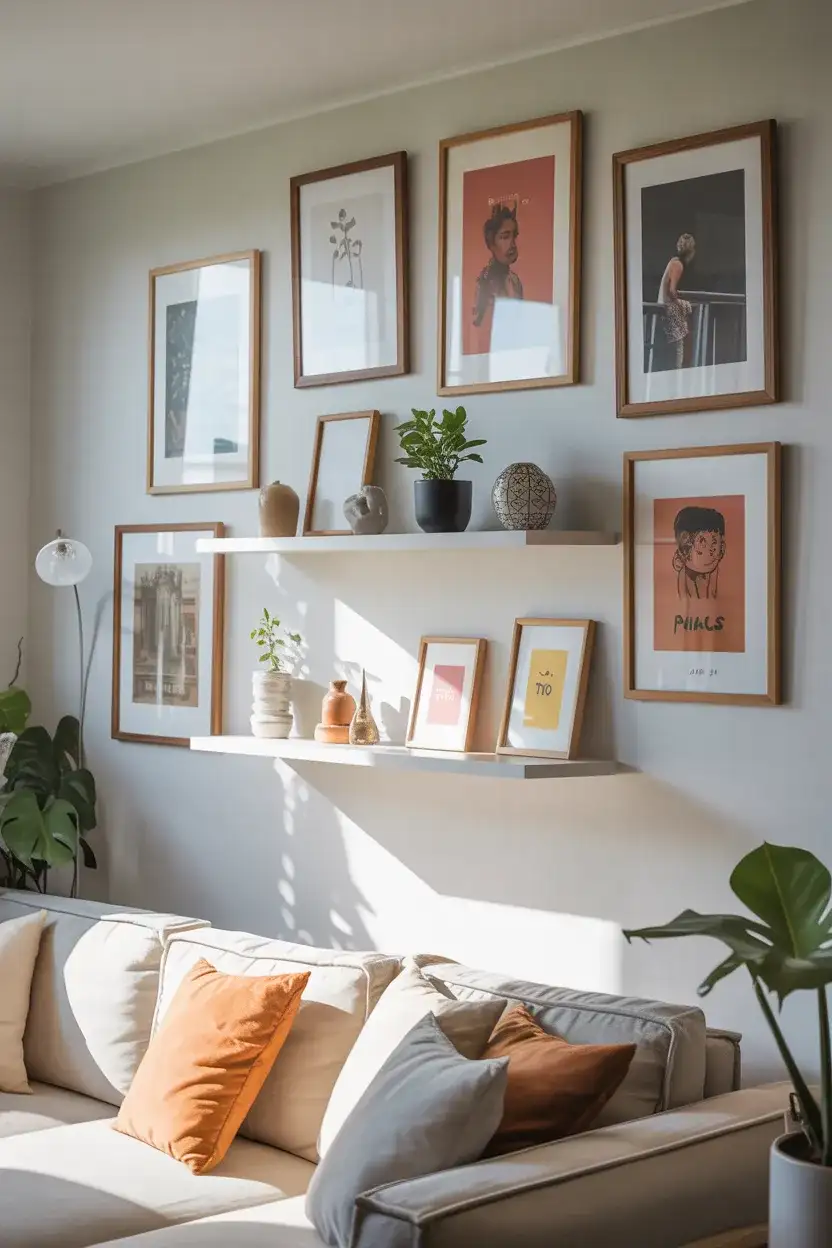
The gallery wall is a well-established American favorite, but the hybrid version that mixes hanging art with mounted floating shelves is newer and arguably more dynamic. Instead of filling every inch of wall with frames, you intersperse a few shelves at varying heights—some holding objects, some holding smaller framed prints leaned against the wall—so the display alternates between flat and three-dimensional. It’s a layered, evolving kind of wall that can be added to, edited, and refreshed without any tools or holes in the plaster.
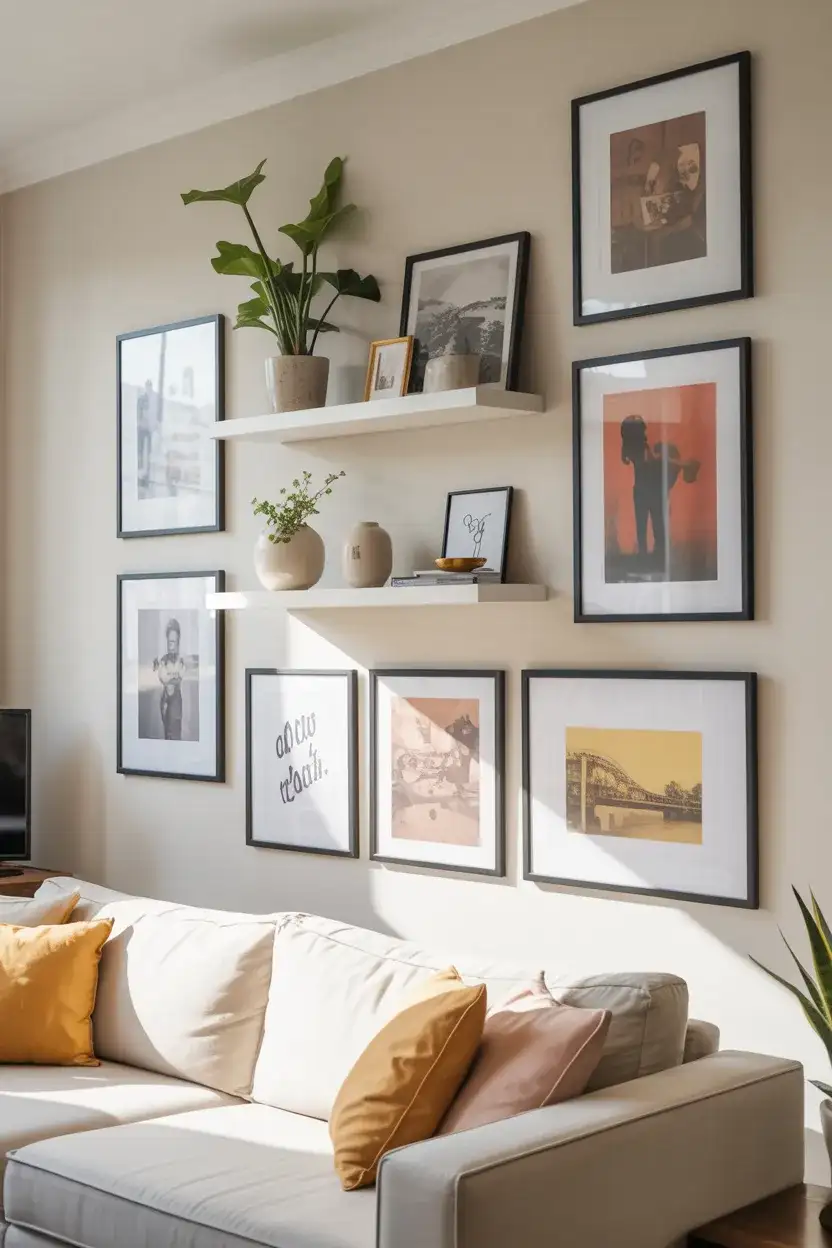
The common mistake with this hybrid approach is treating the shelves and the frames as two separate systems that happen to share a wall. They need to share a visual logic—similar color families, related materials, a consistent spacing rhythm—or the wall will feel chaotic rather than curated. Lay the whole composition out on the floor before mounting anything, photograph it from above, and live with the photo for a day before committing. That hour of planning saves you from patching a dozen unnecessary holes later.
Conclusion
Living room shelves in 2026 are less about storage and more about self-expression—they’re one of the few places in a home where you can be genuinely personal, spontaneous, and visually adventurous without a major renovation. Whether you’re drawn to the clean calm of a minimalist floating shelf or the warm ambition of a full floor-to-ceiling library wall, there’s an approach here that fits your space and your story. We’d love to know which of these 23 ideas speaks to you most—drop a comment below and tell us what you’re planning, what you’ve already tried, or a styling question you haven’t been able to answer yet. Your experience might be exactly what someone else needs to read.