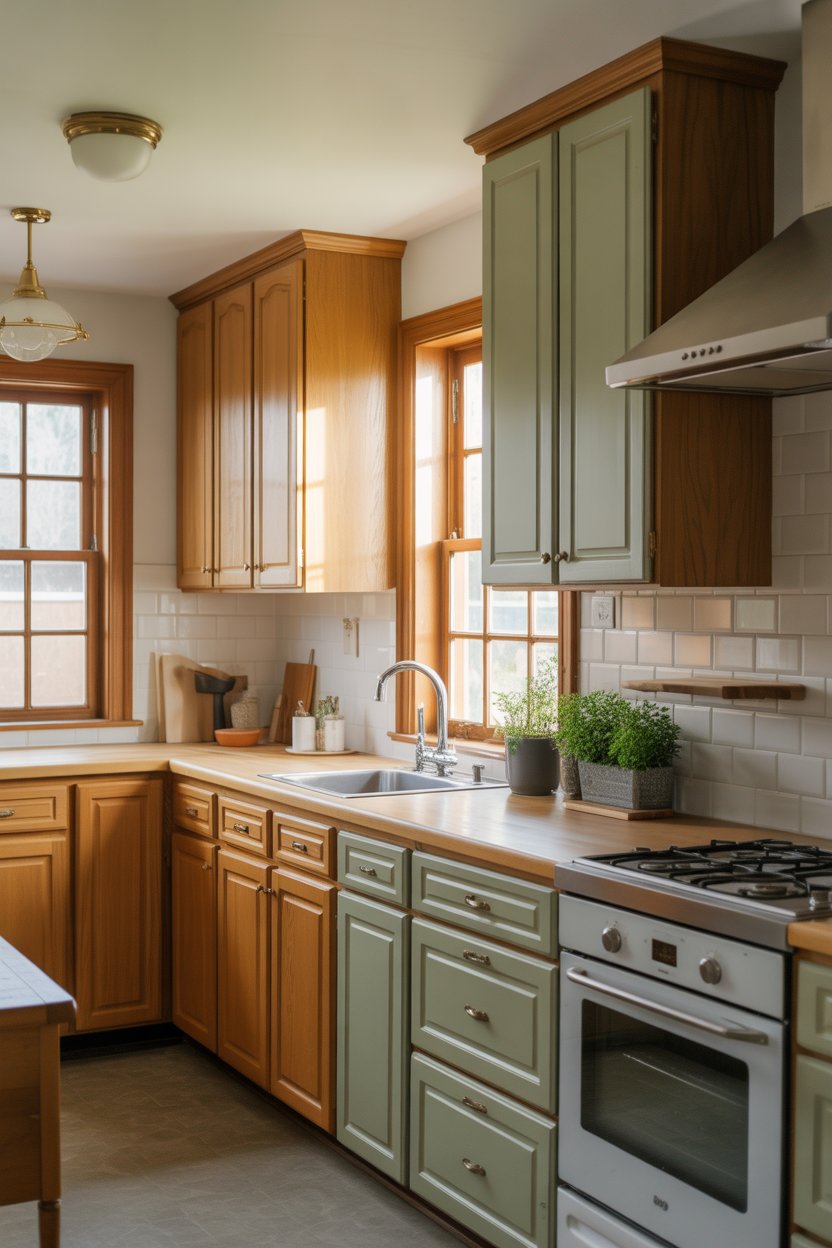
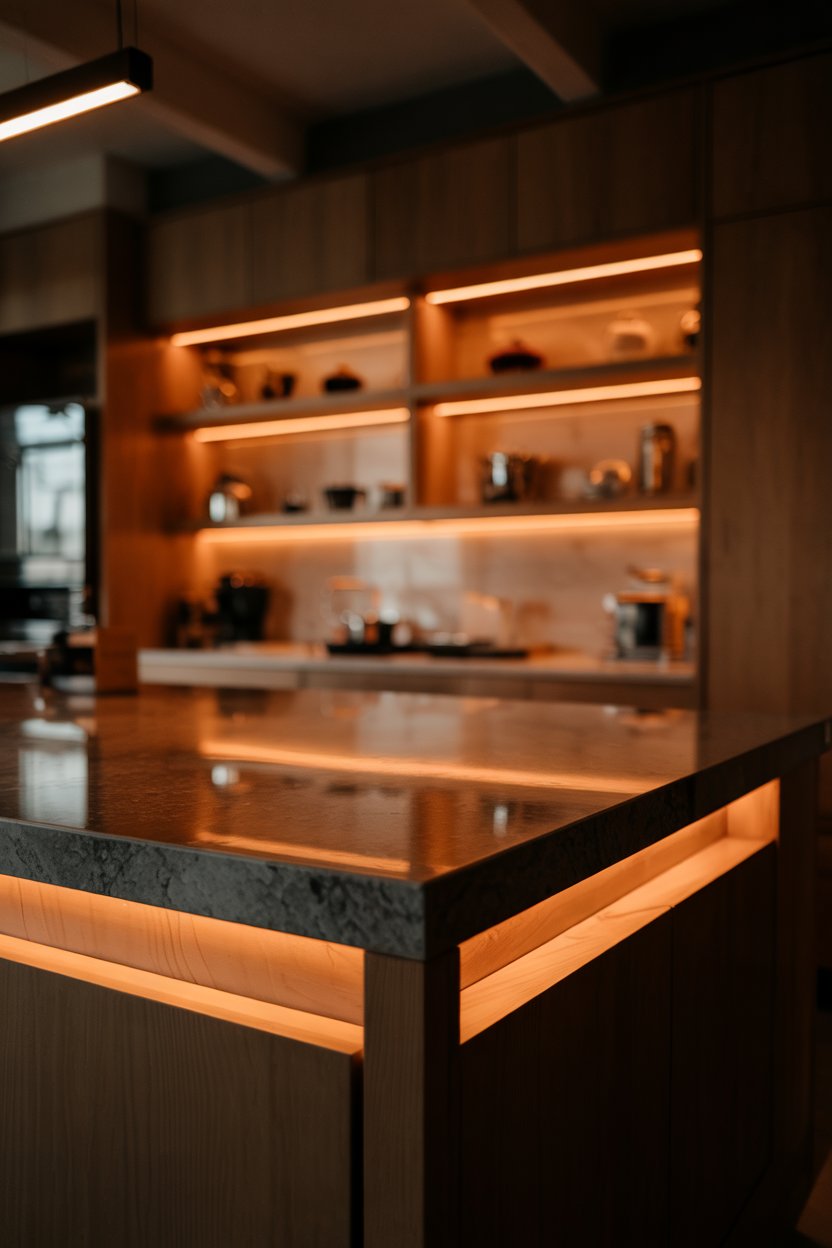
If you’ve been scrolling Pinterest lately, you’ve probably noticed that kitchen cabinets are having a serious moment—and the ideas pouring in for 2026 feel bolder, warmer, and more personal than anything we’ve seen before. Gone are the days when everyone defaulted to the same all-white shaker box. This year, homeowners across America are leaning into rich wood tones, moody hues, clever corner solutions, and finishes that actually say something about the people who cook in them. Whether you’re deep in a full renovation or just daydreaming about a weekend refresh, this roundup covers kitchen cabinet ideas that are defining the year—from sage green statements to smart organization tricks that make small kitchens feel twice their size.
1. Sage Green Shaker Cabinets With Brass Hardware
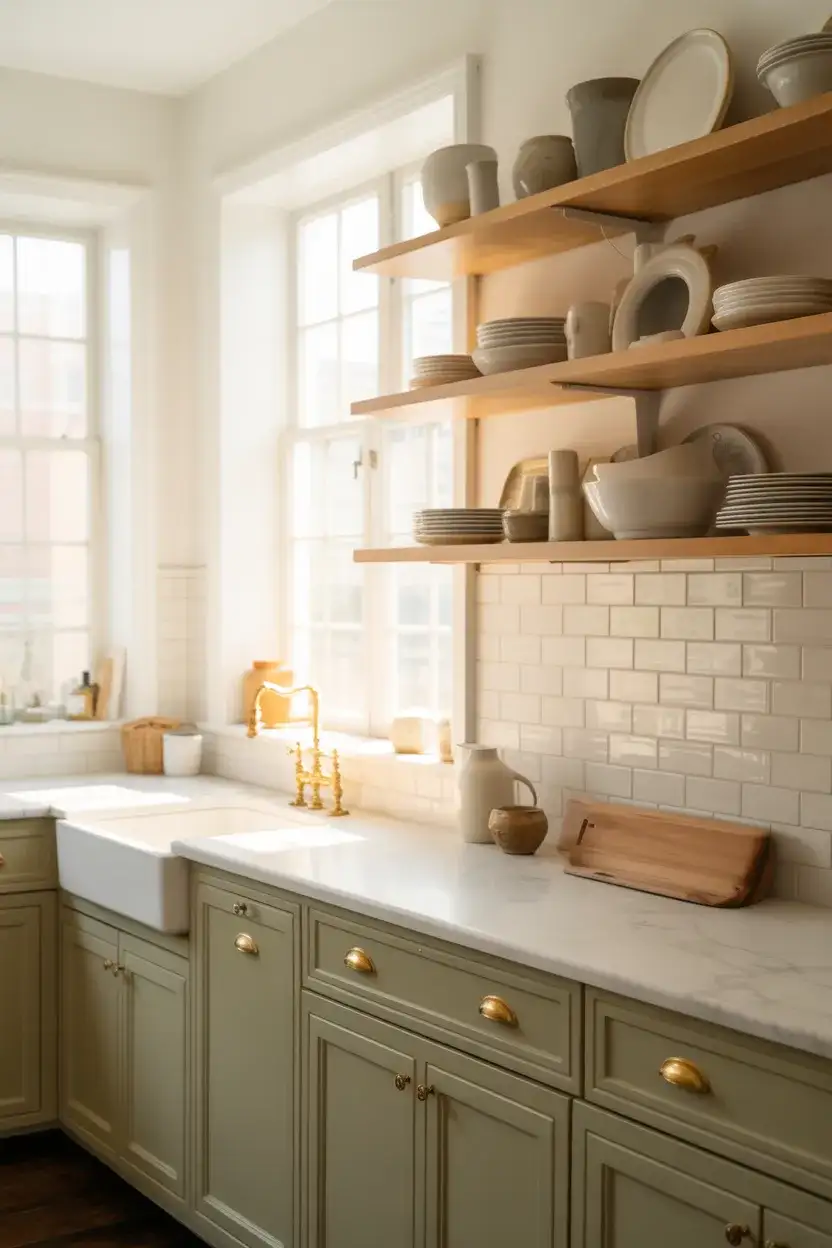
There’s a reason sage green keeps dominating mood boards—it’s that rare color that feels both fresh and grounded at the same time. Paired with simple shaker-style doors and warm brass pulls, these cabinets bring a collected, almost European quality to an American kitchen without trying too hard. The tone is soft enough to work as a neutral backdrop, yet distinctive enough that your kitchen won’t look like every other flip on the block. It’s an approachable entry point into color for anyone who’s been living in an all-white world and is ready for something with a little more soul.
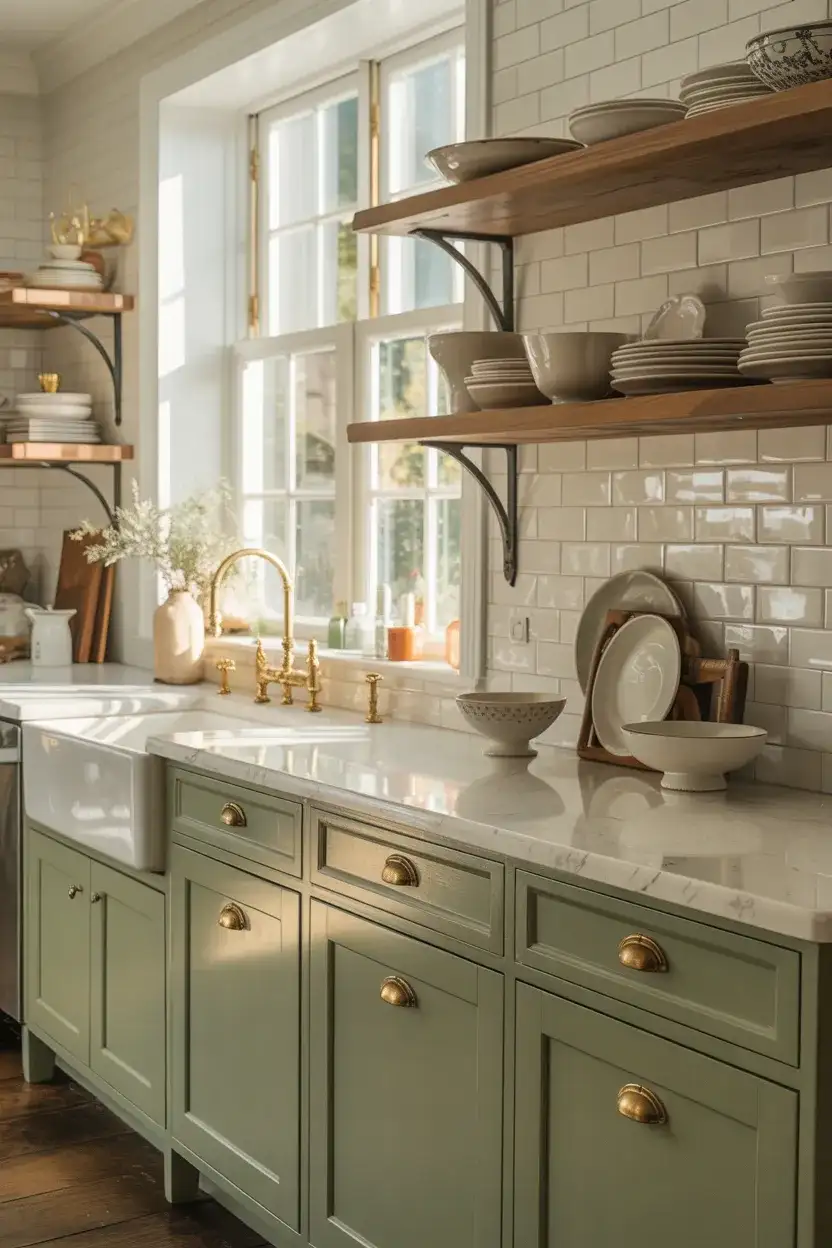
If you’re worried about committing to a full kitchen of green, start with just the lowers. Designers across the country have been recommending a two-tone approach—sage on the base, white or cream on the uppers—as a way to ease into it without overwhelming a smaller footprint. The brass hardware is key here; brushed nickel or chrome would flatten the warmth entirely. Budget-wise, repainting existing shaker boxes and swapping hardware can run as little as $800 to $1,500 for a standard-sized kitchen, making this one of the most impactful upgrades you can do without gutting the room.
2. Warm White Oak Slab-Front Cabinets
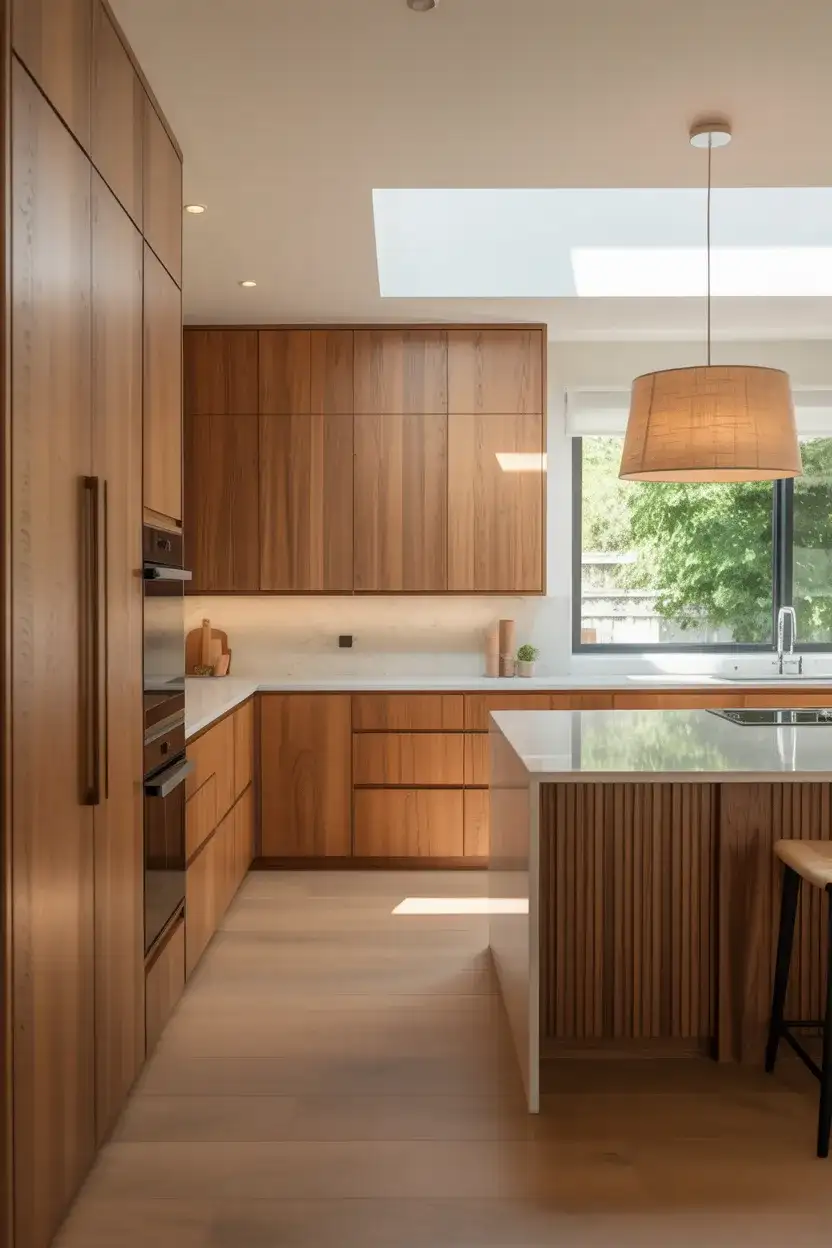
The love affair with white oak shows no signs of cooling down, and in 2026, slab-front doors are the way people are letting the wood grain do all the talking. Flat-panel oak cabinets have that quiet Scandinavian-meets-California energy—minimal but never cold. The natural golden hue of white oak warms up a space instantly, especially when paired with light stone counters and matte black or unlacquered brass fixtures. This design choice works whether your kitchen is a sprawling open-concept layout or a compact galley that needs every visual trick in the book to feel bigger.
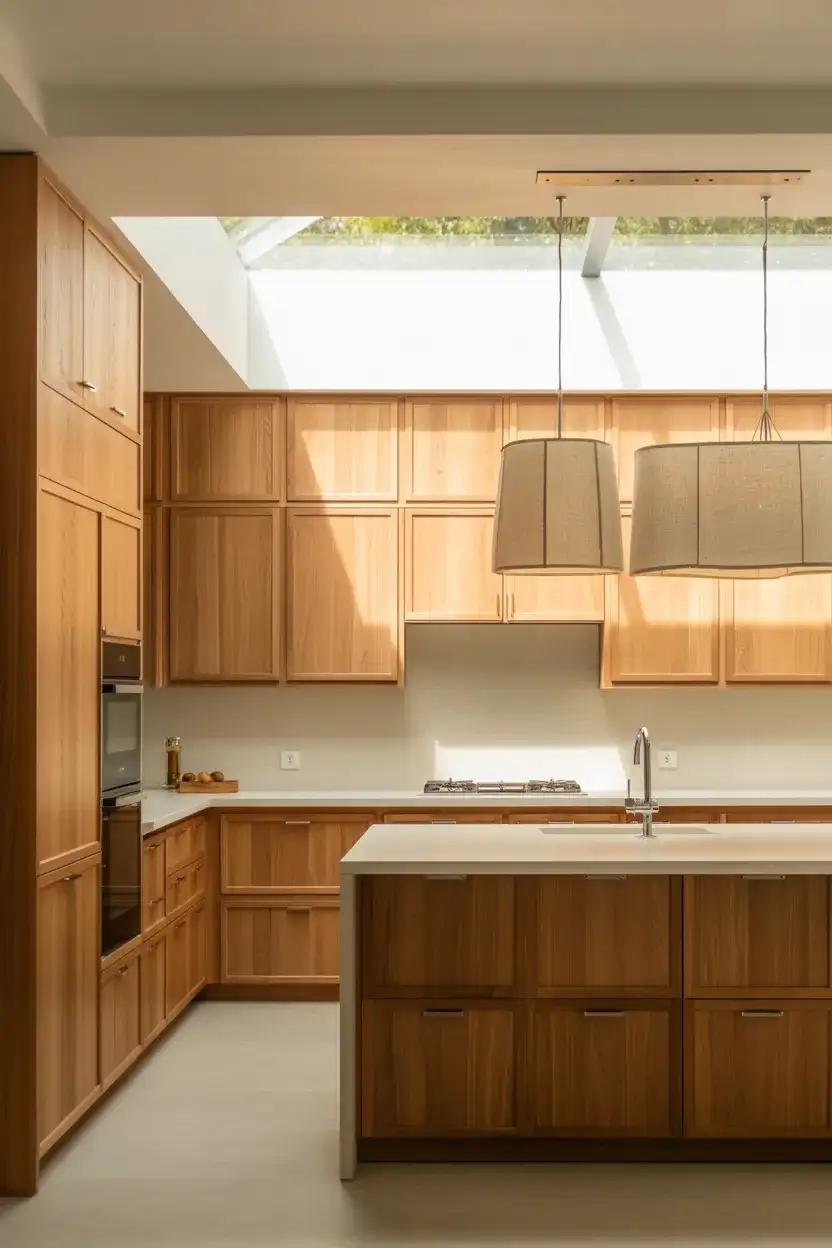
A friend of mine in Portland just finished a white oak kitchen remodel and told me the thing she didn’t expect was how forgiving the finish is—fingerprints, water spots, and everyday wear just kind of disappear into the grain. That’s one of the biggest advantages of choosing a natural wood cabinet over a painted one. You’re not going to spend your weekends wiping down smudges. For longevity, ask your cabinetmaker about a clear matte polyurethane or hardwax oil finish—both protect the oak while keeping that raw, tactile look people are after right now.
3. All-Black Kitchen With Matte Cabinets
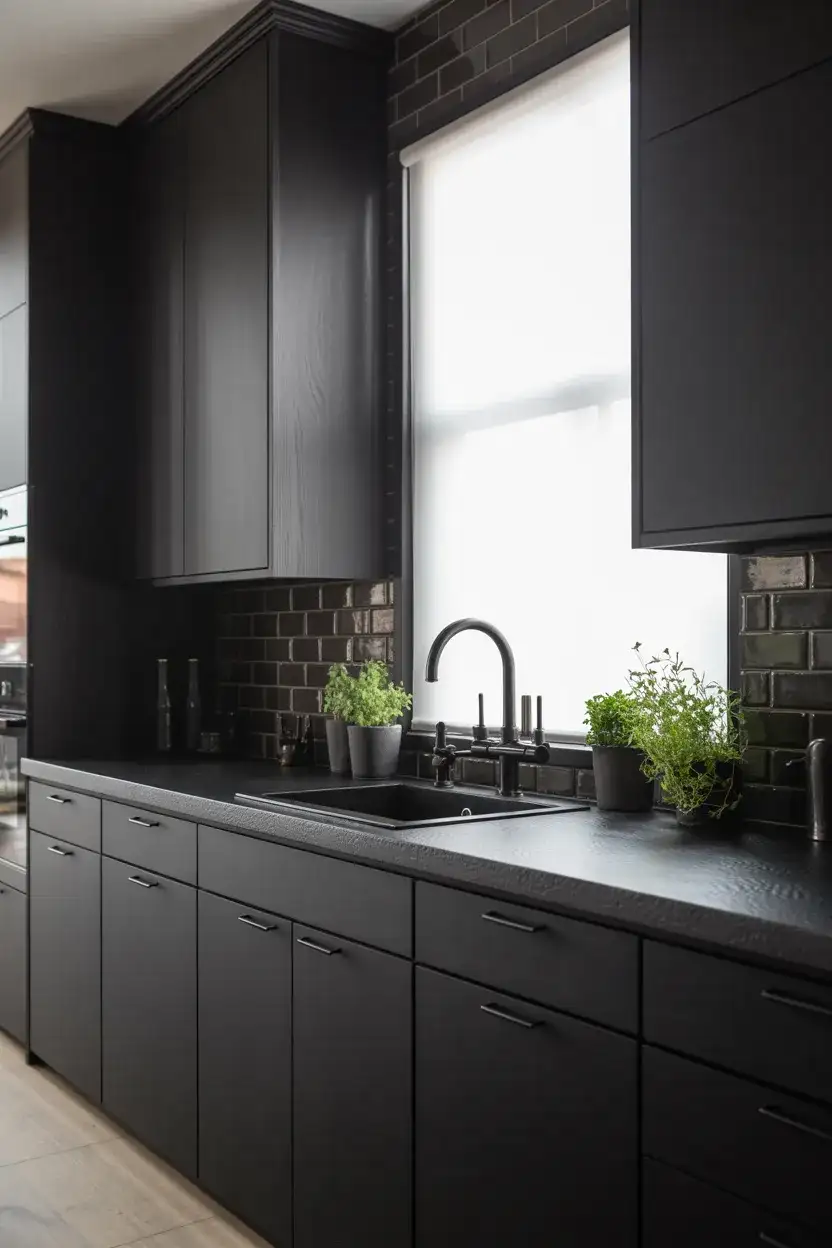
If you want drama, nothing delivers quite like an all-black kitchen—and in 2026, the matte finish is what separates a moody, editorial look from something that feels dated or overly glossy. Dark cabinetry in a true matte black reads sophisticated, especially when paired with black stone countertops and darkened metal fixtures. The effect is enveloping, almost like stepping into a high-end restaurant kitchen that happens to be in your house. These ideas tend to land best in kitchens with good natural light or generous ceiling height, where the darkness feels intentional rather than cramped.
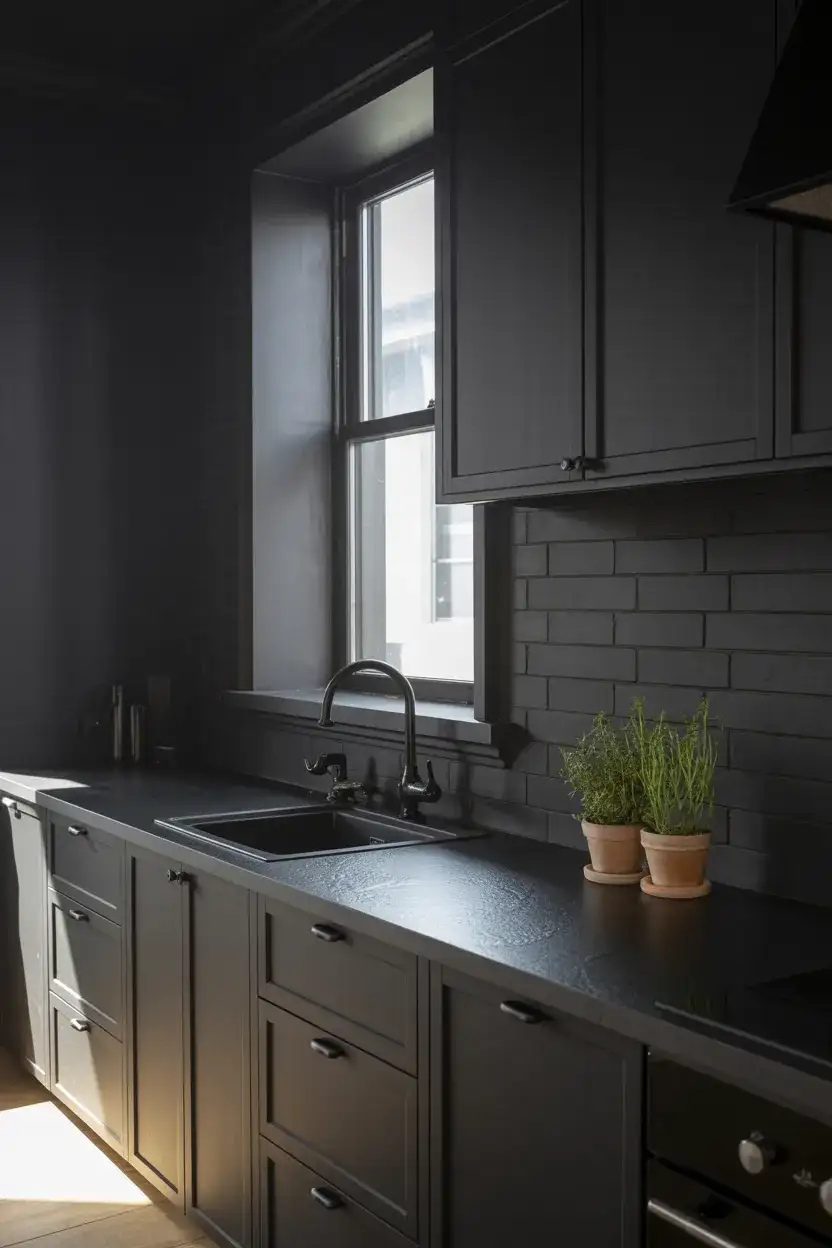
The most common mistake people make with a black kitchen is forgetting about texture. When everything is flat, matte, and the same shade, the space can read like a void. The fix is layering—think ribbed glass cabinet inserts, a backsplash with dimensional tile, or even a section of open shelving in a contrasting material like light wood or brushed steel. That interplay of surfaces keeps the eye moving and gives the room depth. Designers often call this “tonal layering,” and it’s what separates a moody kitchen from one that just feels dark.
4. Two-Tone Cabinets in White and Walnut
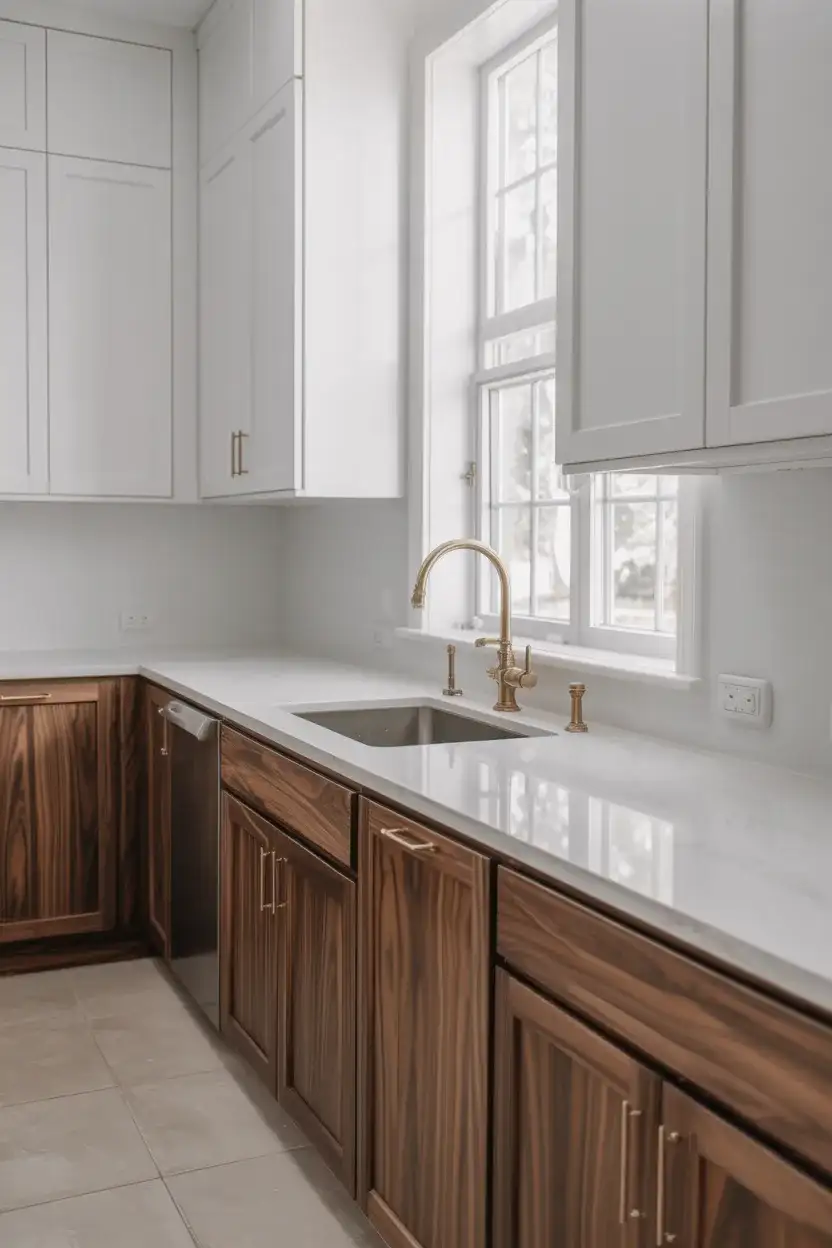
Two-tone kitchens have been gaining ground for a few years now, but the white and walnut pairing hitting Pinterest boards this year feels especially refined. The idea is simple—crisp white uppers to keep things airy and rich walnut lowers to anchor the room with warmth and weight. It’s a combination that balances the best of both worlds: the brightness homeowners crave and the wood character that keeps a kitchen from feeling sterile. The contrast is gentle enough to age well but bold enough to make anyone walking in notice right away.
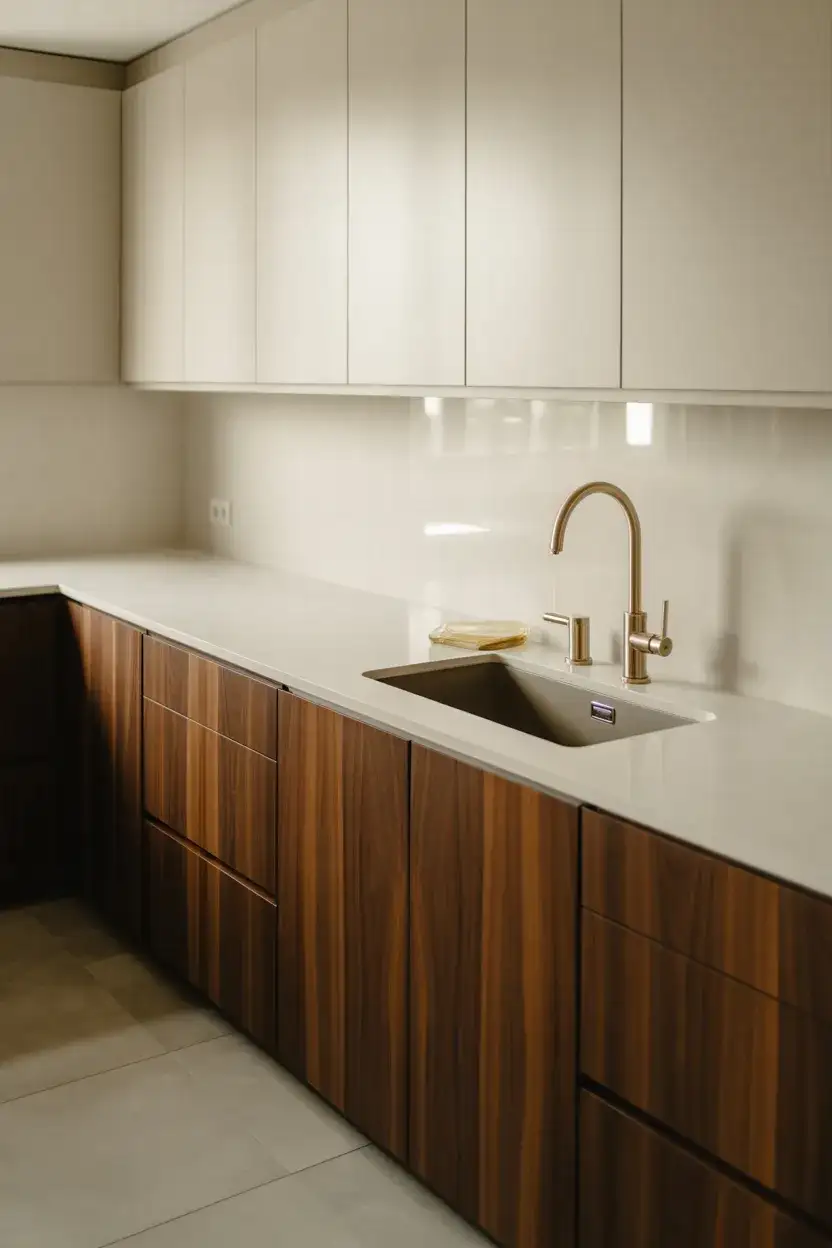
Where this combo really shines is in open-concept homes—especially those ranch-style and mid-century layouts popular across the Midwest and Pacific Northwest. The walnut lowers tie into adjacent wood flooring or living room furniture, while the white uppers keep the kitchen from feeling heavy when viewed from the sofa twenty feet away. It’s the kind of detail that architects think about, but any homeowner can replicate by simply choosing two coordinating cabinet finishes from the same manufacturer’s line. Most major brands now offer this as a standard option; no custom work is required.
5. Painted Cabinets in Soft Beige
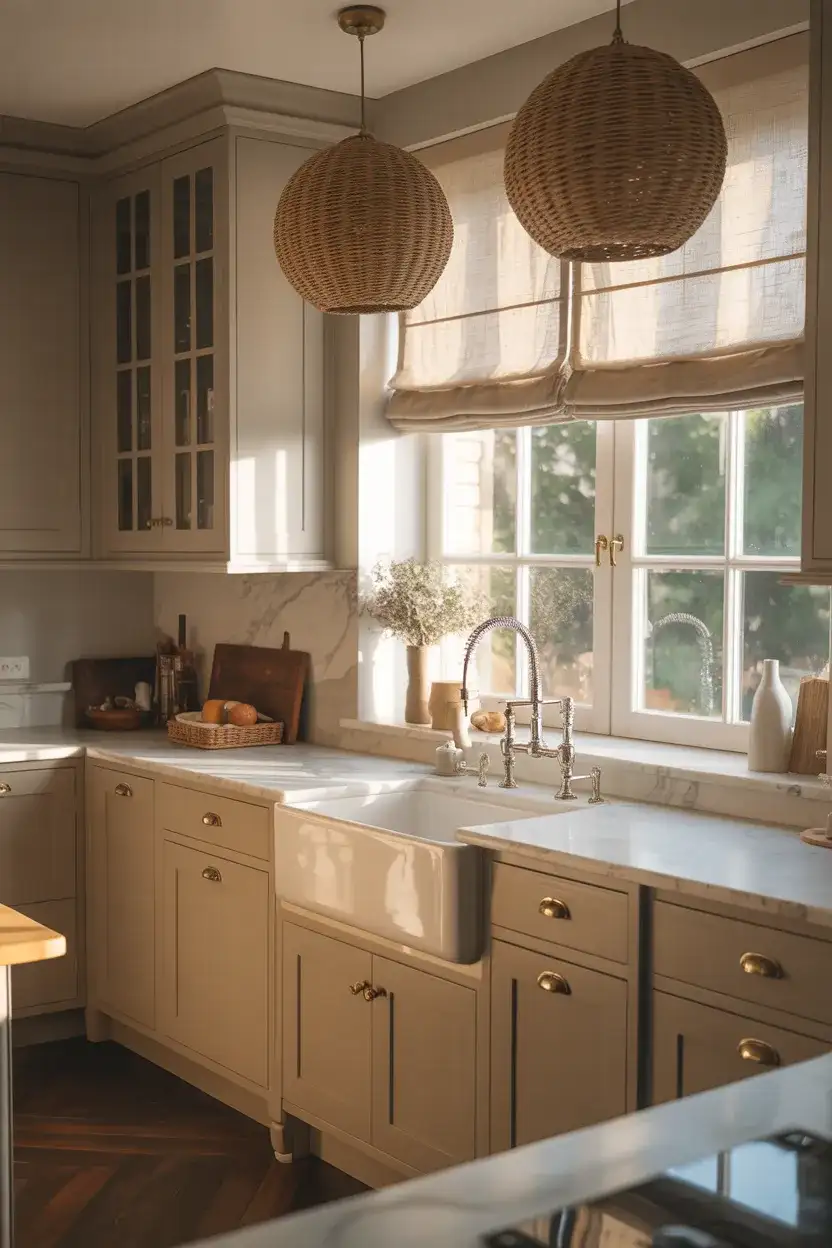
The era of stark, blue-white kitchens is quietly being replaced by something softer, and beige-painted cabinets are leading that shift. Think of it as white’s warmer, more relaxed cousin—a shade that reads clean without feeling clinical. The beauty of a soft beige is its ability to work with just about everything: natural stone, warm metals, cool marble, and even patterned tile. It’s the ultimate chameleon color for kitchens where the homeowner wants a neutral canvas but is tired of the stark white look that’s dominated the last decade of design magazines.
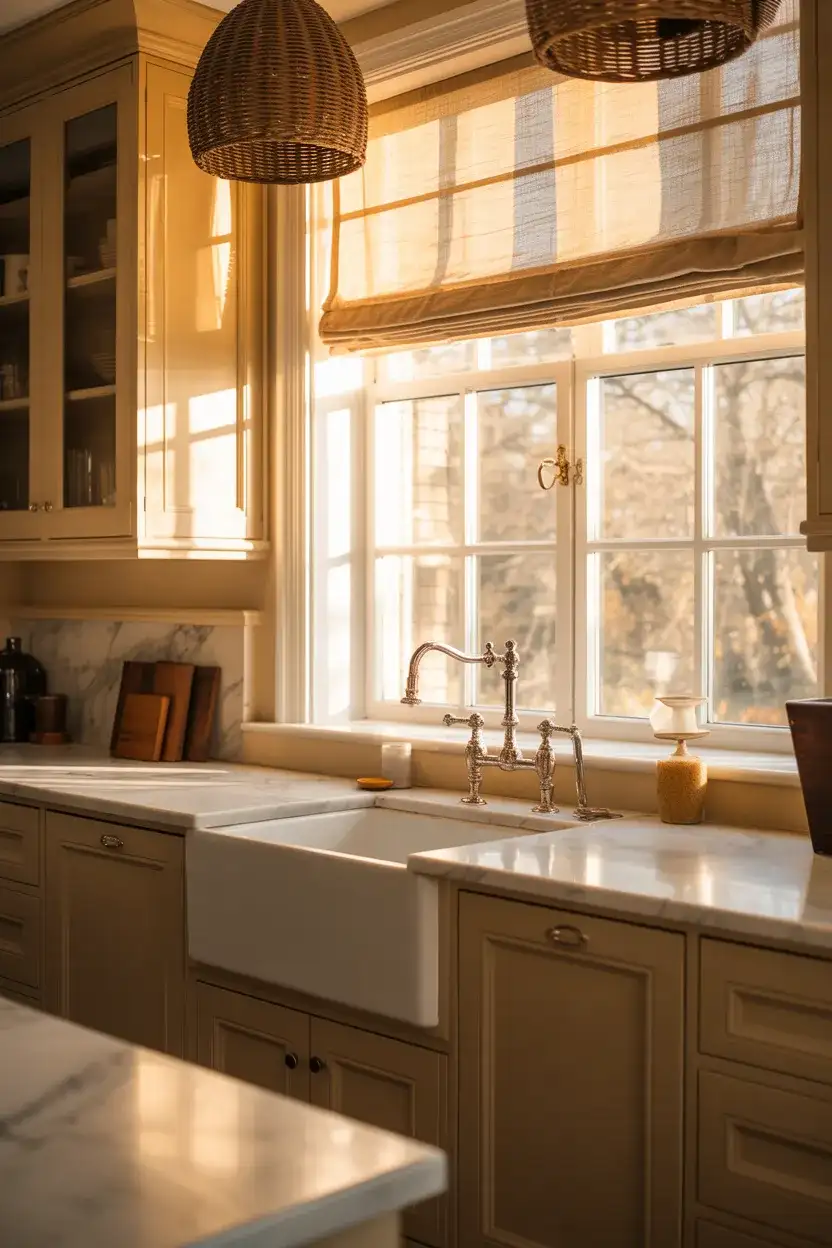
Here’s a practical insight worth tucking away: beige-painted cabinets hide wear and tear significantly better than pure white. Cooking grease, coffee splashes, the inevitable scuff from a kid swinging a backpack—they’re all less visible against a warm neutral than against a stark white surface. If you’re choosing a specific shade, Benjamin Moore’s “White Sand” and Sherwin-Williams’ “Accessible Beige” are two of the most-specified paints in the cabinet world right now, and both hold up beautifully under the water-based cabinet-grade finishes most painters use today.
6. Moody Blue Floor-to-Ceiling Pantry Wall
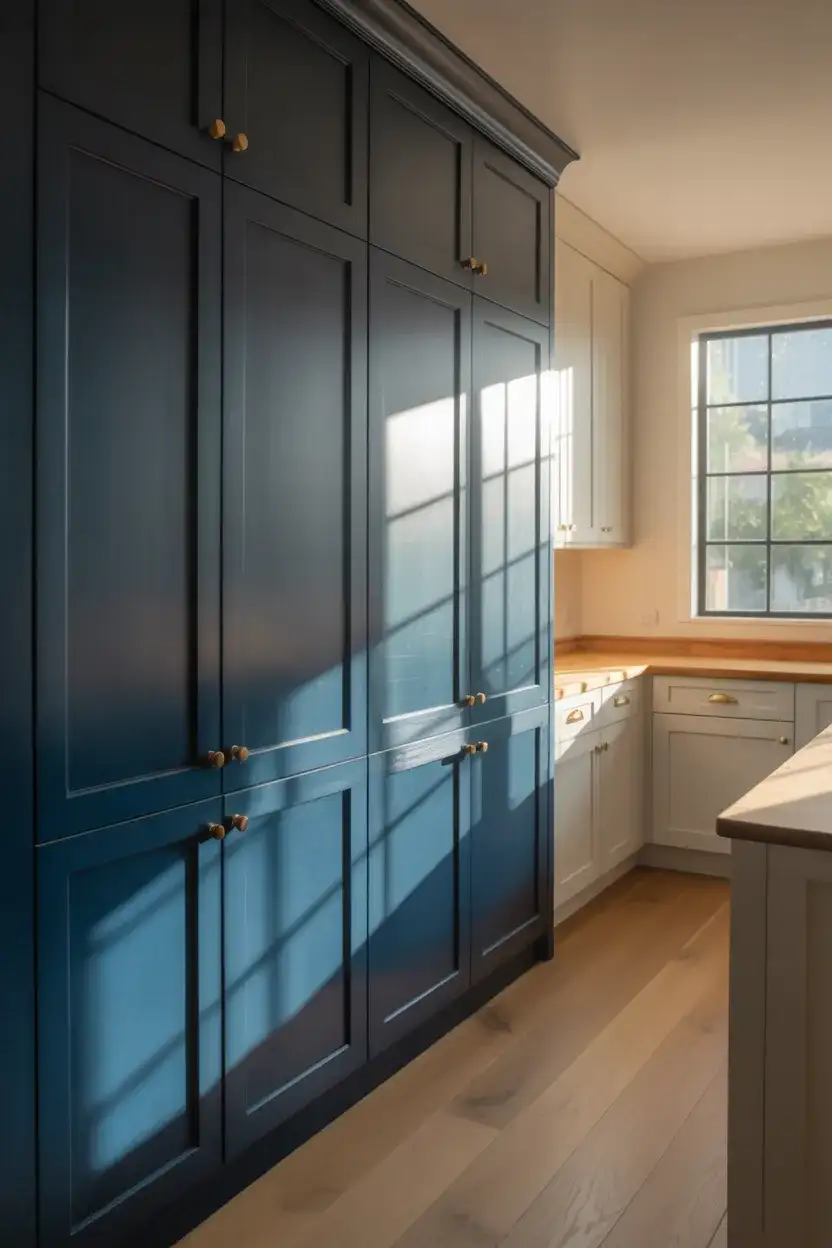
When done right, a full wall of blue cabinetry can transform a kitchen from ordinary to unforgettable. The ideas circulating this year lean heavily toward deep, muted blues—think naval, stormy slate, or inky denim—applied to a single pantry wall that stretches from floor to ceiling. This approach works because it creates a focal point without overwhelming the room; the remaining walls and cabinets stay neutral, letting the dark blue moment breathe. It’s theater without the chaos, and it photographs unbelievably well, which partly explains why Pinterest is absolutely flooded with saves on this look.
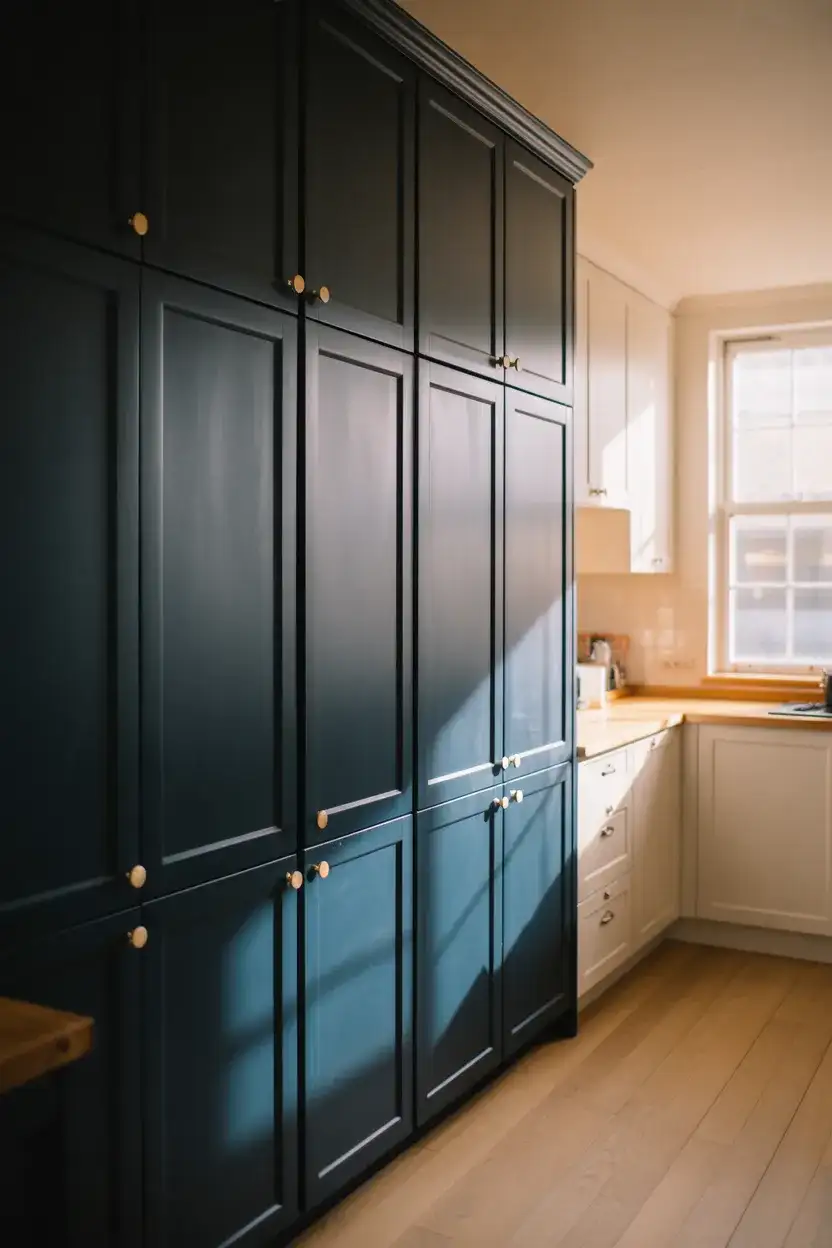
This look works best in kitchens that get decent natural light—south- or west-facing rooms in particular. Without that balance, a full wall of deep blue can make the space feel cavelike, especially in smaller apartments common in cities like Chicago, Boston, or San Francisco. If your kitchen skews dark, consider a slightly lighter iteration—a dusty denim or soft slate—and pair it with under-cabinet lighting to keep the countertops usable after sunset. The goal is atmosphere, not a room you need a flashlight to cook in.
7. Taupe Cabinets With Fluted Glass Inserts
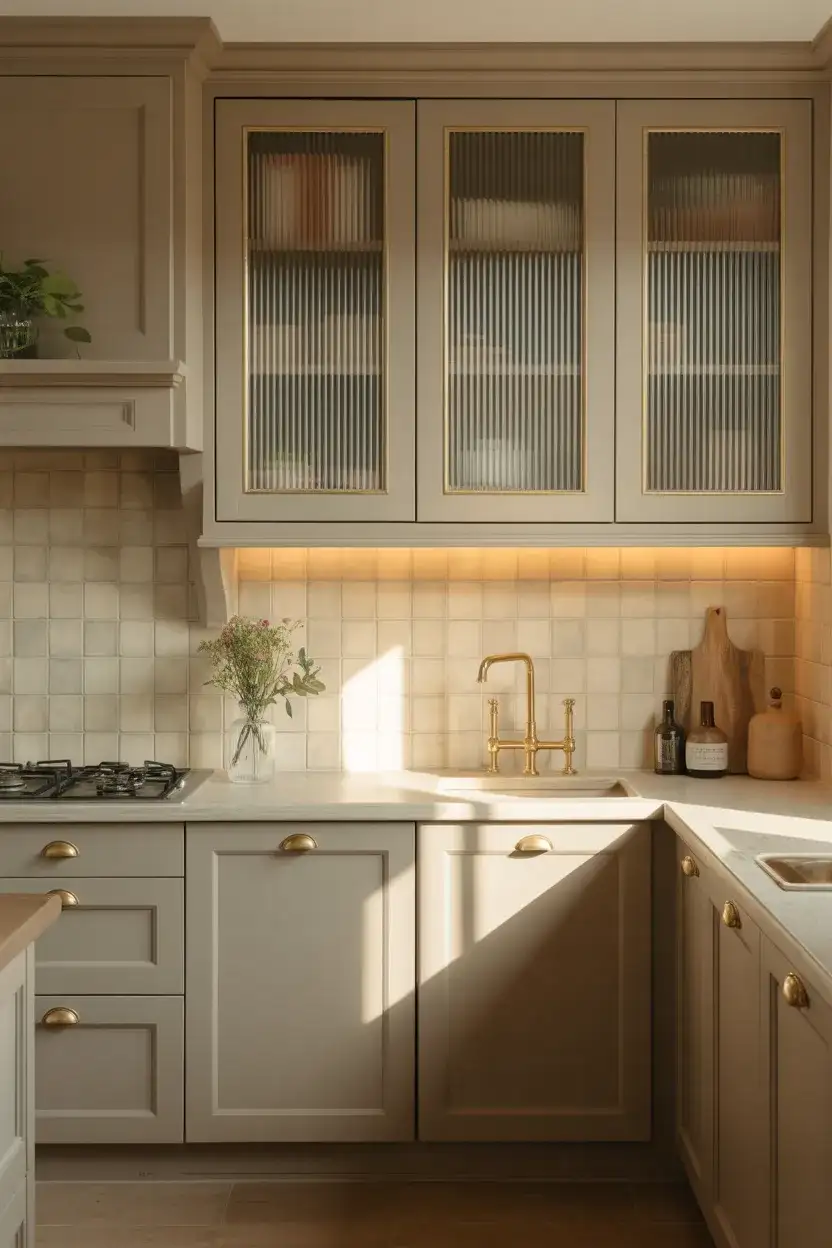
If there’s one tone that captures the 2026 kitchen mood perfectly, it’s taupe. Not quite gray, not quite beige—it lives in that elegant middle ground that feels effortlessly put together. Adding fluted glass inserts to the upper cabinets elevates the look further, giving the kitchen a subtle Art Deco nod without veering into costume territory. The ribbed glass obscures the contents just enough that you don’t need to keep your shelves perfectly styled, which is a gift for anyone who lives in their kitchen rather than just posing in it. This color combination reads polished in both traditional and modern settings.
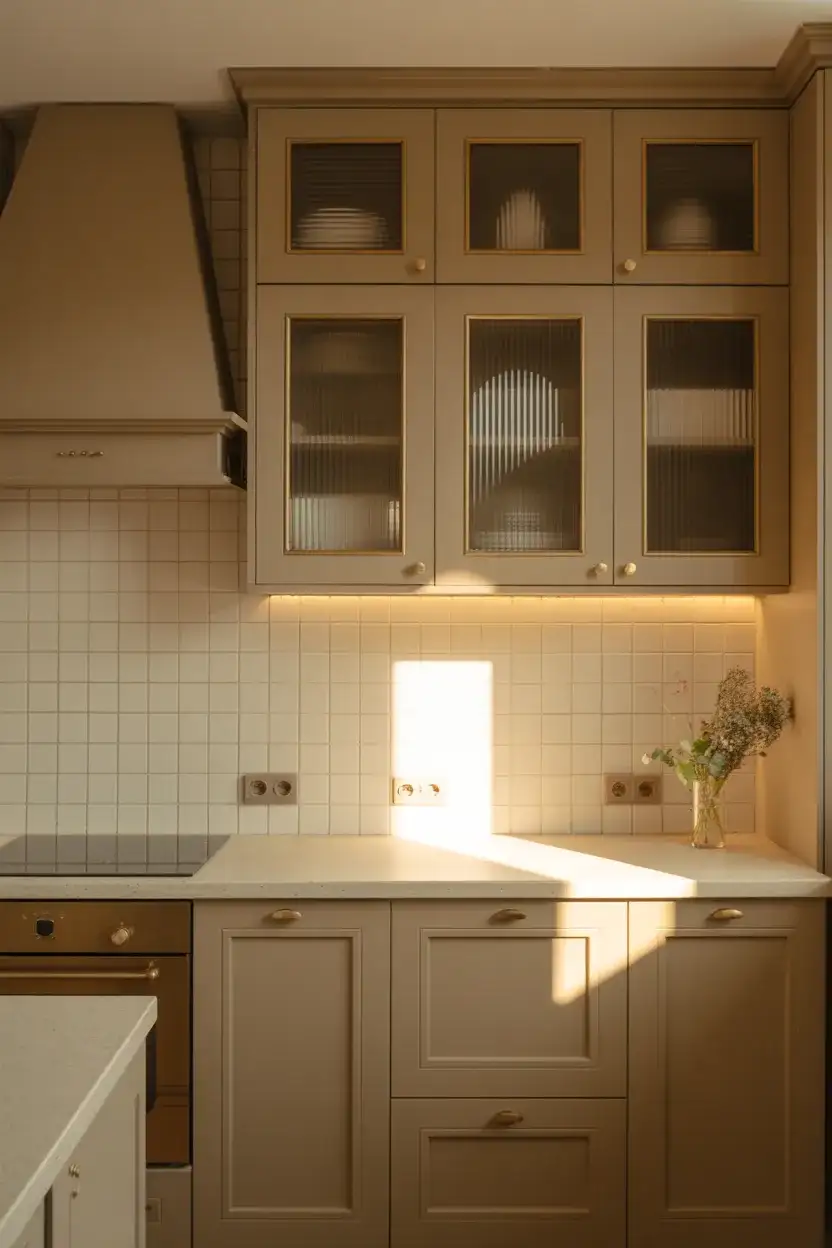
Real homeowner behavior tells a clear story here: people love the idea of glass-front cabinets, but the moment they install fully transparent ones, the pressure to maintain picture-perfect shelves becomes exhausting. Fluted or reeded glass solves that tension beautifully. You get the visual lightness of glass, the sense of depth it creates, and the ability to shove a mismatched mug behind the door without anyone being the wiser. It’s one of those rare design details that’s both beautiful and genuinely forgiving in daily life.
8. Dark Wood Cabinets With Integrated Appliances
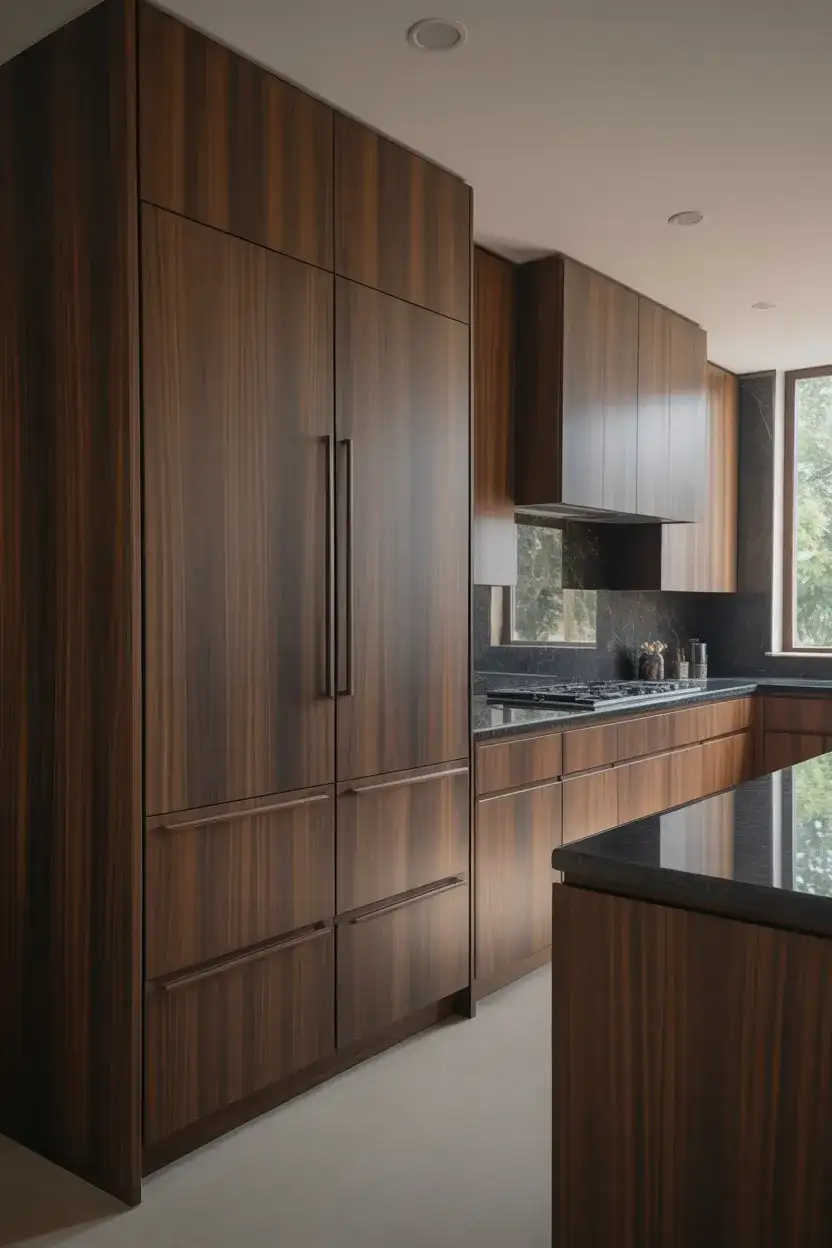
The return of dark wood is one of the most compelling shifts happening in kitchen design right now. But this isn’t a throwback to the heavy cherry kitchens of the early 2000s—the 2026 version is sleek, deliberate, and pairs rich brown tones with fully integrated appliances for a seamless, furniture-like effect. Refrigerator panels, dishwasher fronts, and even range hoods disappear behind matching wood veneer, creating a kitchen that reads more like a beautifully crafted room than a utilitarian workspace. The result is calm, sophisticated, and deeply grounding.
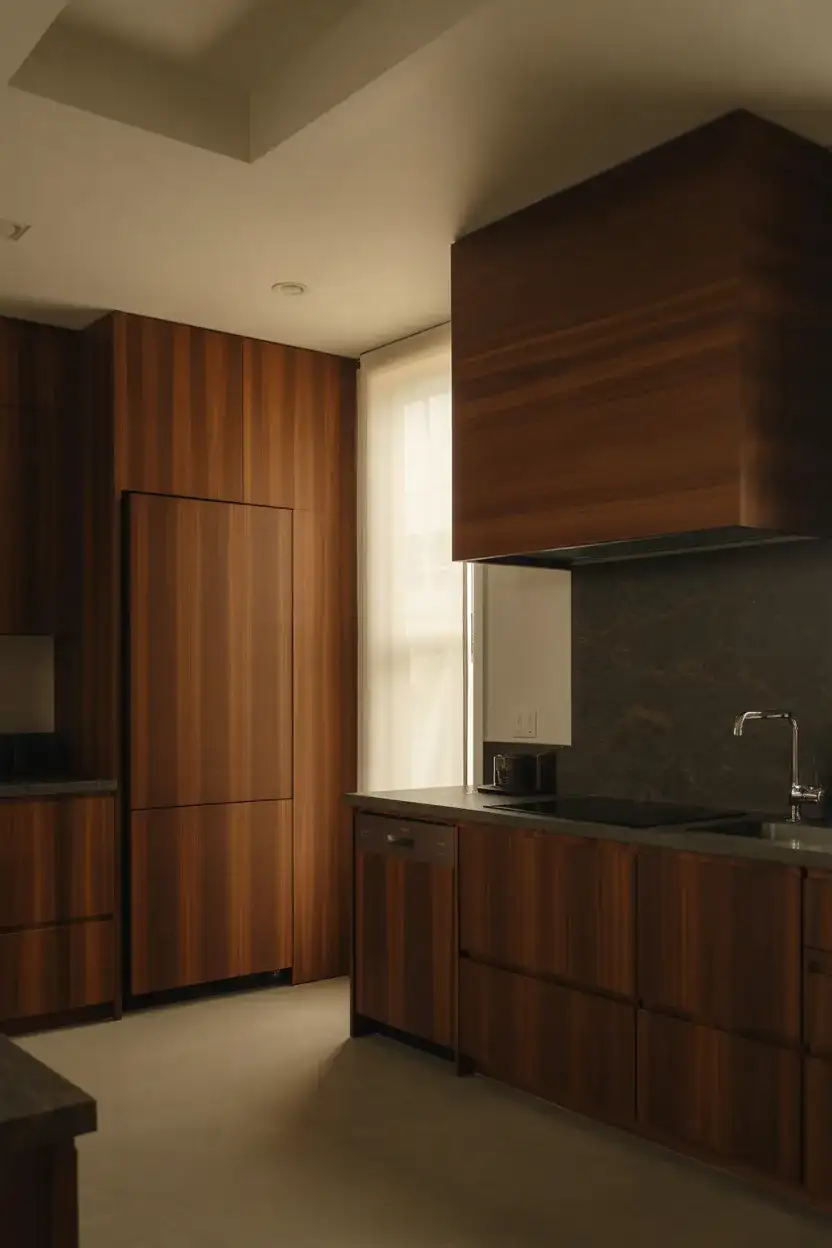
An interior designer I spoke with last fall put it perfectly: “The goal isn’t to hide the kitchen—it’s to make it feel like it belongs to the house.” That philosophy is driving this trend, especially in high-end renovations where the kitchen opens directly into living and dining areas. Integrated appliances do carry a premium—panel-ready refrigerators and custom fronts can add $3,000 to $8,000 to a project—but the visual payoff is enormous. For homeowners who prioritize a cohesive, uninterrupted look, this approach is hard to beat.
9. Gray Cabinets With Open Shelving Accents
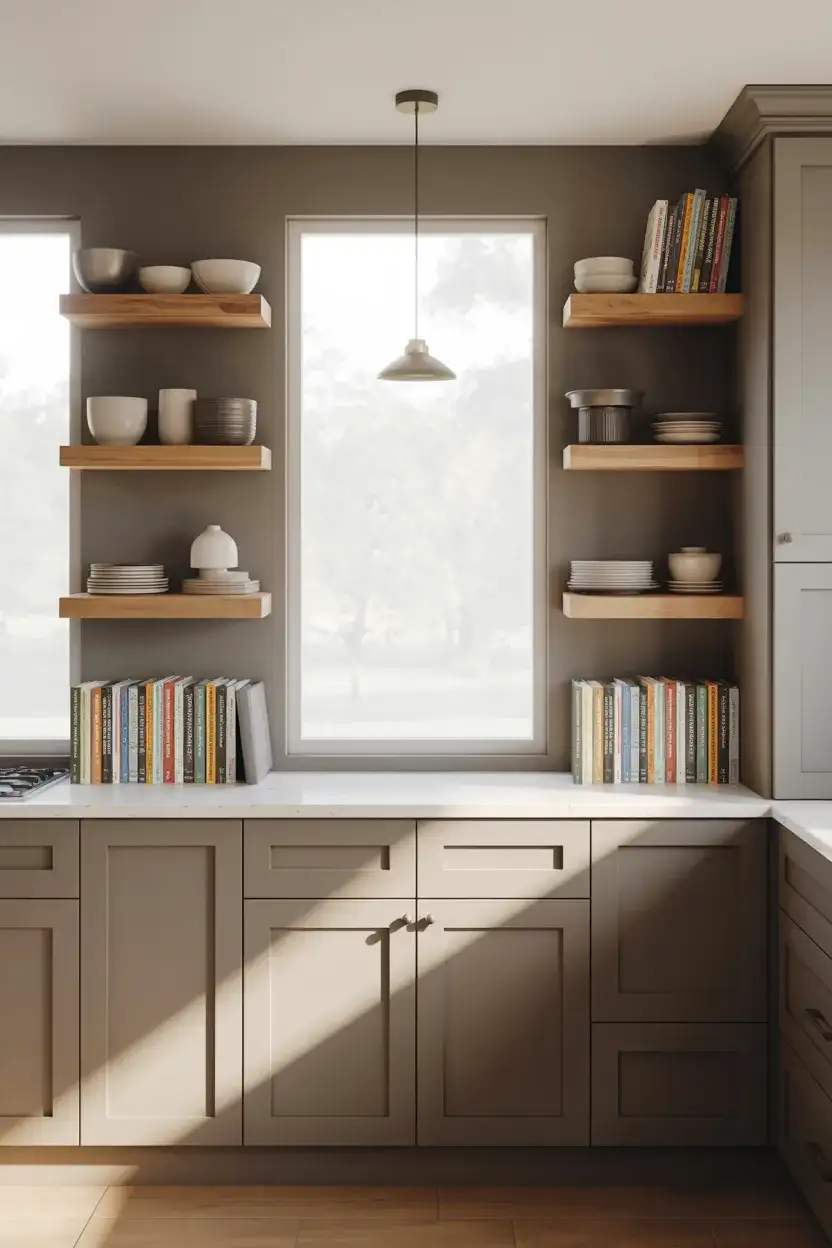
The grey kitchen never really left—it just got smarter. In 2026, the most appealing version pairs gray painted cabinets with a few strategic sections of open shelving, breaking up what might otherwise feel like a monolithic wall of doors. It’s a trick borrowed from European kitchen design, where open and closed storage have long coexisted, and it’s catching on quickly with American homeowners who want their kitchens to feel less like a showroom and more like a place where real life happens. The colors range from pale dove to warm greige, and each reads differently depending on the light.
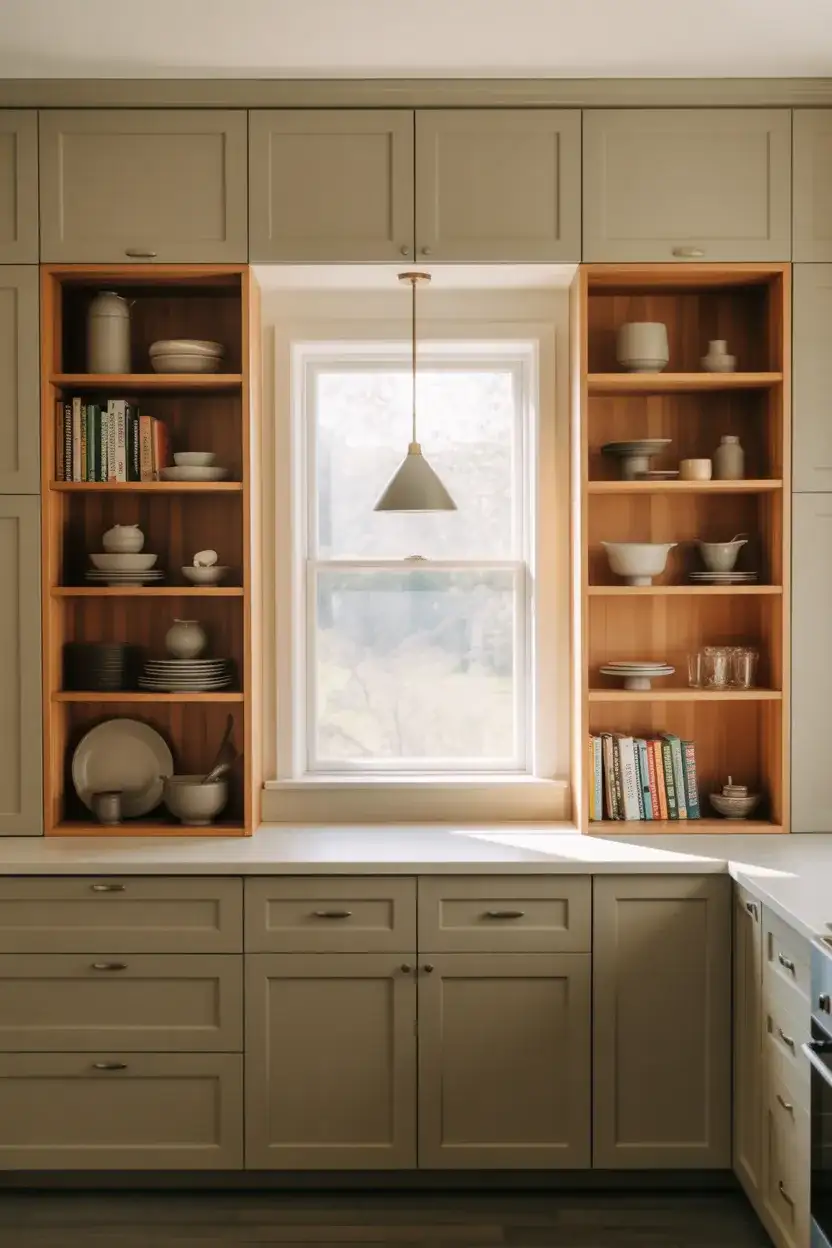
Where this combination works best is in medium-sized kitchens—the kind you find in most suburban homes built between the 1970s and today. A full run of upper cabinets in a smaller kitchen can feel oppressive, especially in a darker gray. Swapping two or three cabinet boxes for open shelves instantly lightens the visual weight and gives you a spot to display the pieces you actually love—the hand-thrown pottery from a vacation, the cookbook collection you’ve been building for years. It turns dead storage into personality, and it costs less than the cabinets it replaces.
10. Corner Cabinet Solutions With Pull-Out Trays
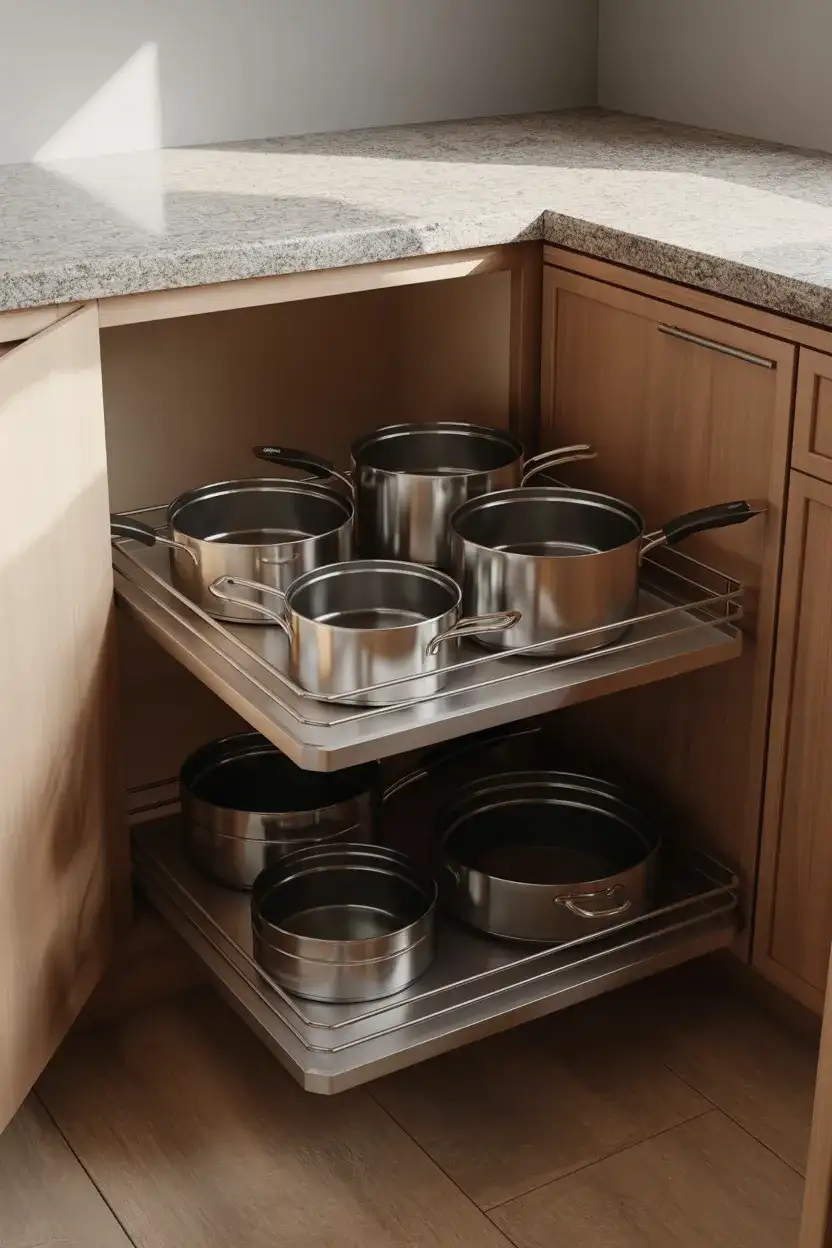
Every homeowner who’s ever lost a pot lid in the abyss of a corner cabinet knows the frustration. For 2026, the smartest organization upgrades are happening precisely in these forgotten zones, with pull-out trays, rotating carousels, and swing-out shelf systems that finally make corner cabinets earn their keep. It’s not glamorous—you won’t see these solutions pinned as often as a pretty paint color—but they represent some of the most meaningful ideas in kitchen functionality this year. A well-organized corner cabinet can reclaim up to 30% of previously wasted space.
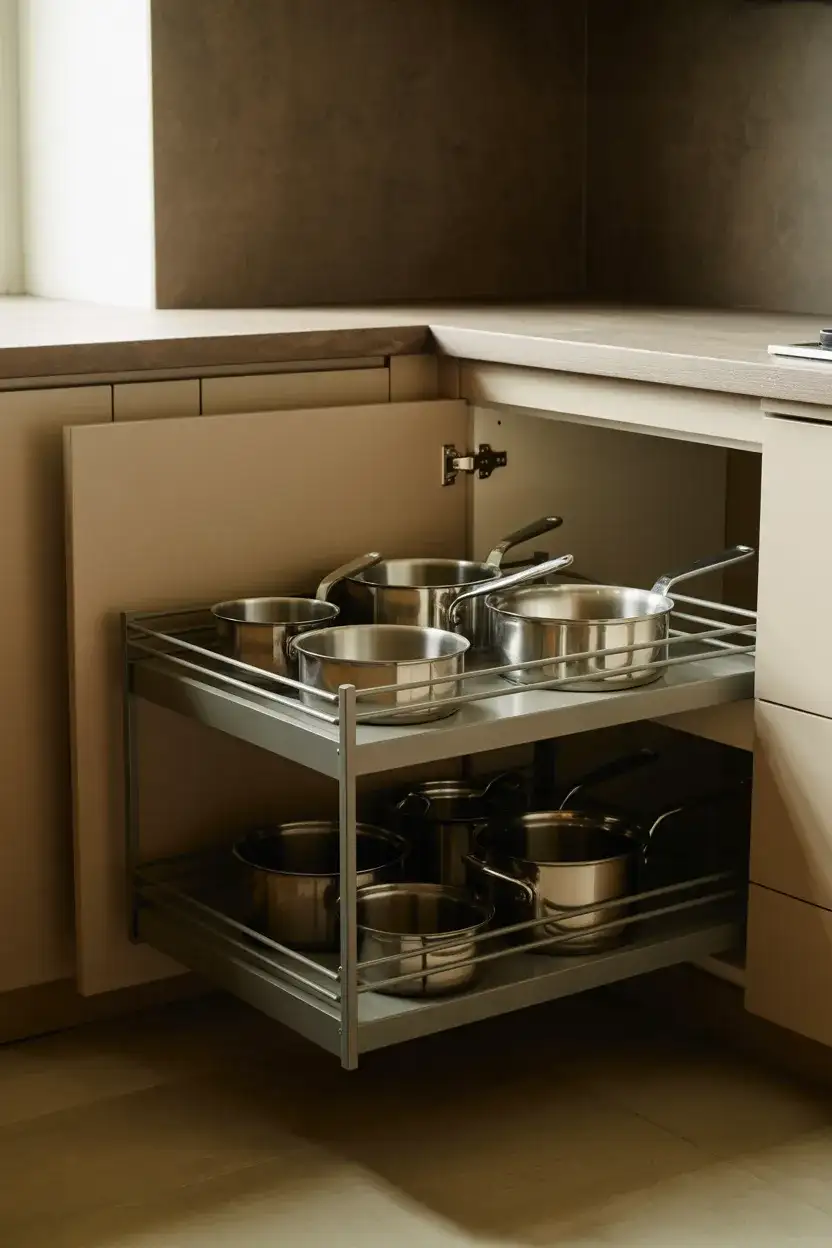
The biggest mistake homeowners make with corner cabinets is accepting the default lazy Susan and calling it done. Modern pull-out systems—brands like Rev-A-Shelf and Hafele offer excellent retrofit options—are a different experience entirely. They bring everything to you instead of requiring you to crawl in with a flashlight. Most can be installed in an afternoon with basic tools, and they typically run between $150 and $400 depending on the configuration. For the amount of daily frustration they eliminate, that’s one of the best returns on investment in any kitchen upgrade.
11. Warm Brown Cabinets With Leather Pulls
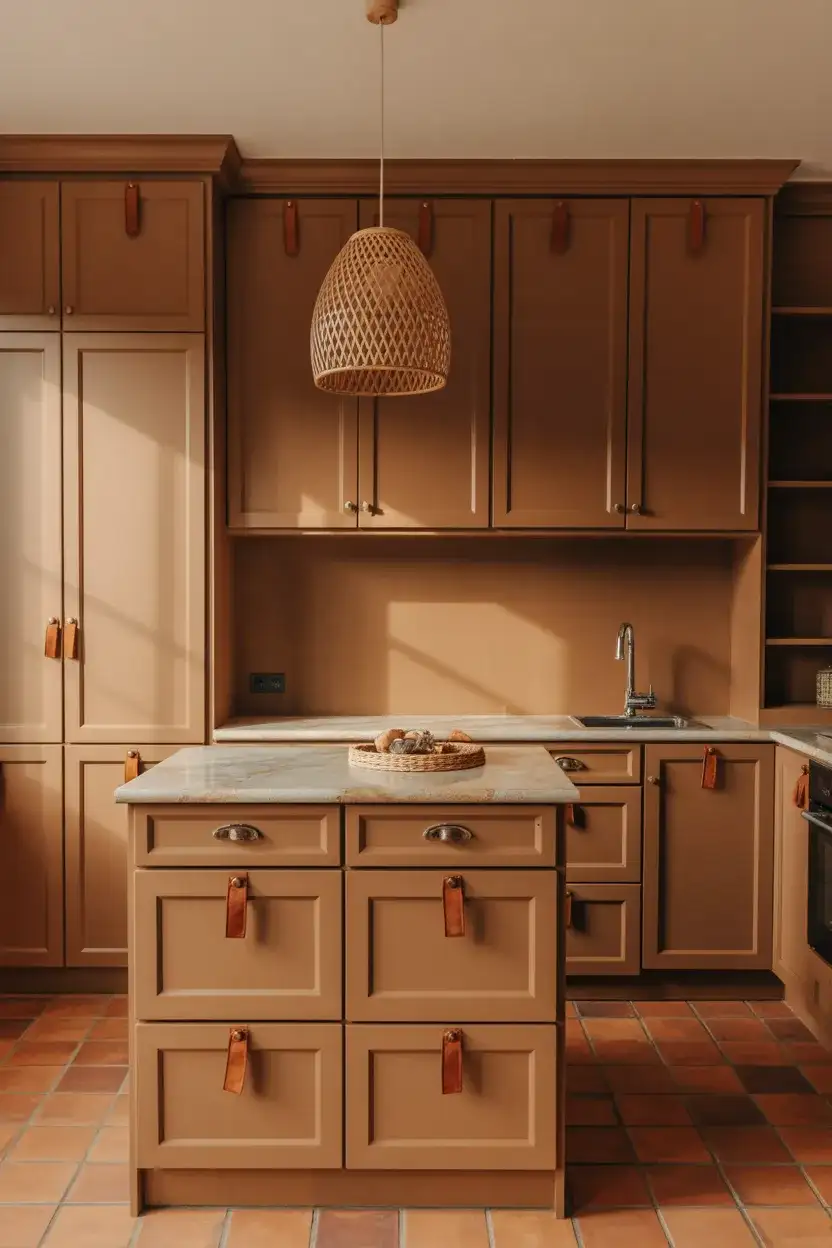
Soft, earthy brown cabinets are carving out a lane of their own in 2026 — distinct from both the honeyed look of oak and the richness of walnut. We’re talking warm cocoa tones and coffee-stained finishes that feel organic and inviting. Pair them with leather tab pulls, and the whole kitchen starts to channel that effortless, collected quality you’d find in a well-traveled home. This tone works especially well in spaces that lean toward natural materials—stone, linen, clay—and it sidesteps the trendiness trap because brown, at its core, is timeless.
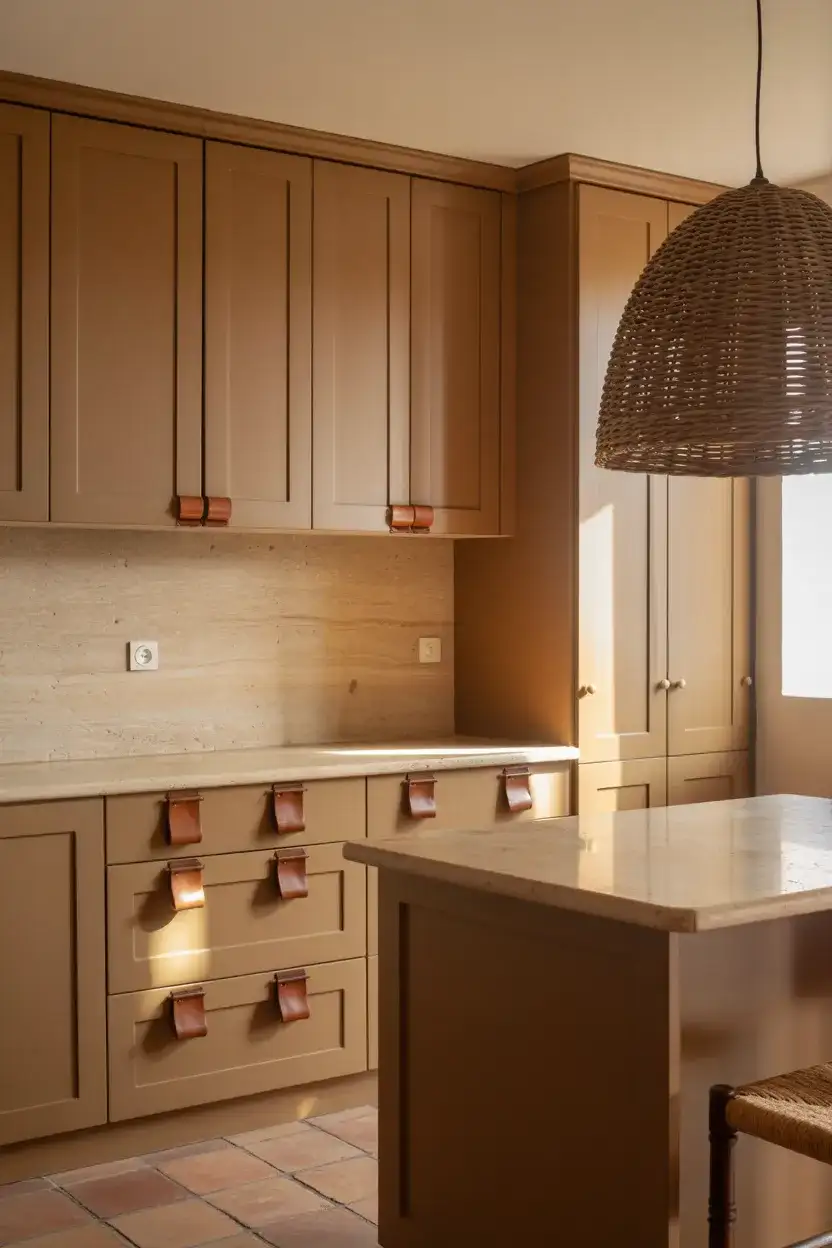
In the American Southwest and parts of Texas and California, this look lands with particular ease because it echoes the desert palette people already live with—clay, sand, dried grasses, and terracotta. But it translates anywhere you want your kitchen to feel warm and grounded. The leather pulls develop a gorgeous patina over time, especially the vegetable-tanned varieties that darken and soften with use. It’s one of those details that gets better the more you touch it, which is exactly what a cabinet handle should do.
12. Floor-to-Ceiling White Cabinets With Hidden Storage
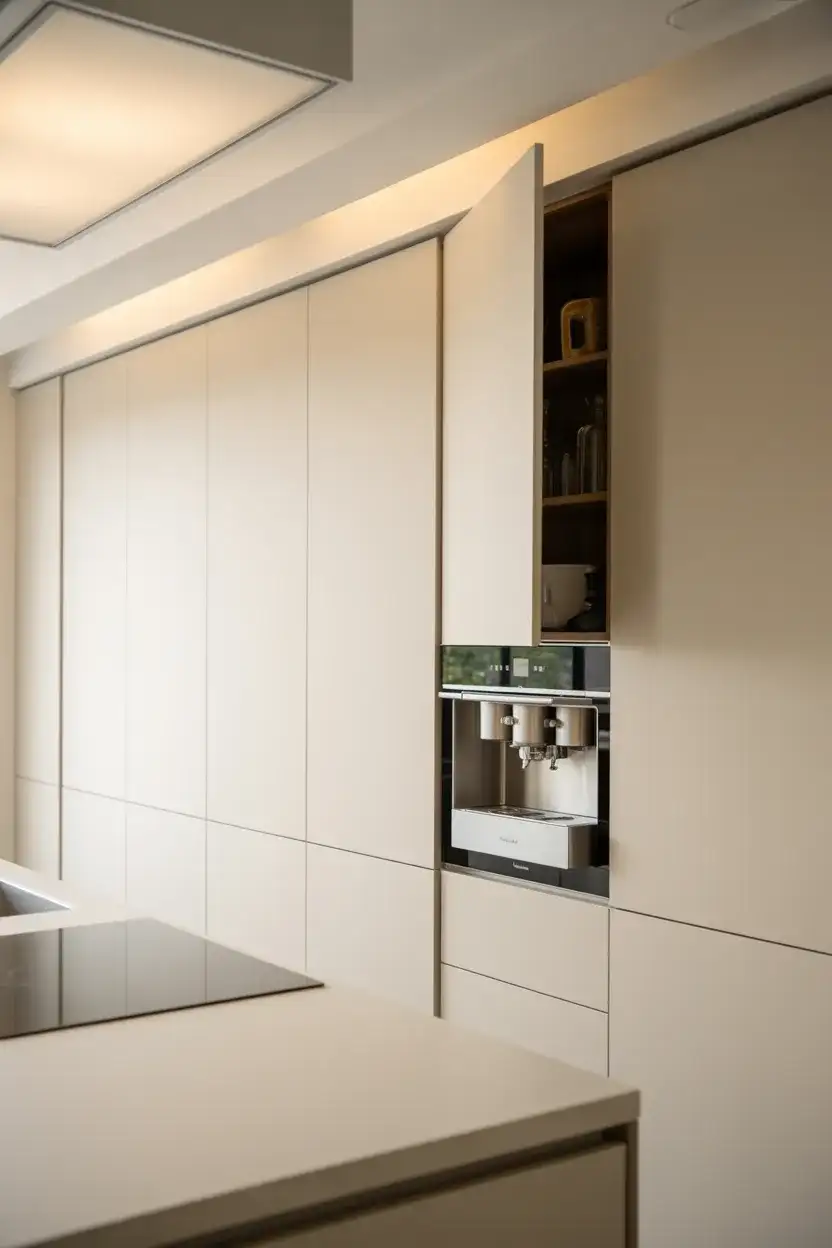
Maximizing every inch of wall space with white floor-to-ceiling cabinetry remains one of the most practical ideas for kitchens where square footage is at a premium. The 2026 twist is all about concealment—appliance garages, retractable doors, and push-to-open mechanisms that eliminate visible hardware for an ultra-clean facade. When closed, the wall reads as a single unbroken plane of white; when opened, it reveals a fully functioning kitchen with everything tucked neatly in place. Its organization is elevated to architecture, and it’s become a signature move in urban renovations across the country.
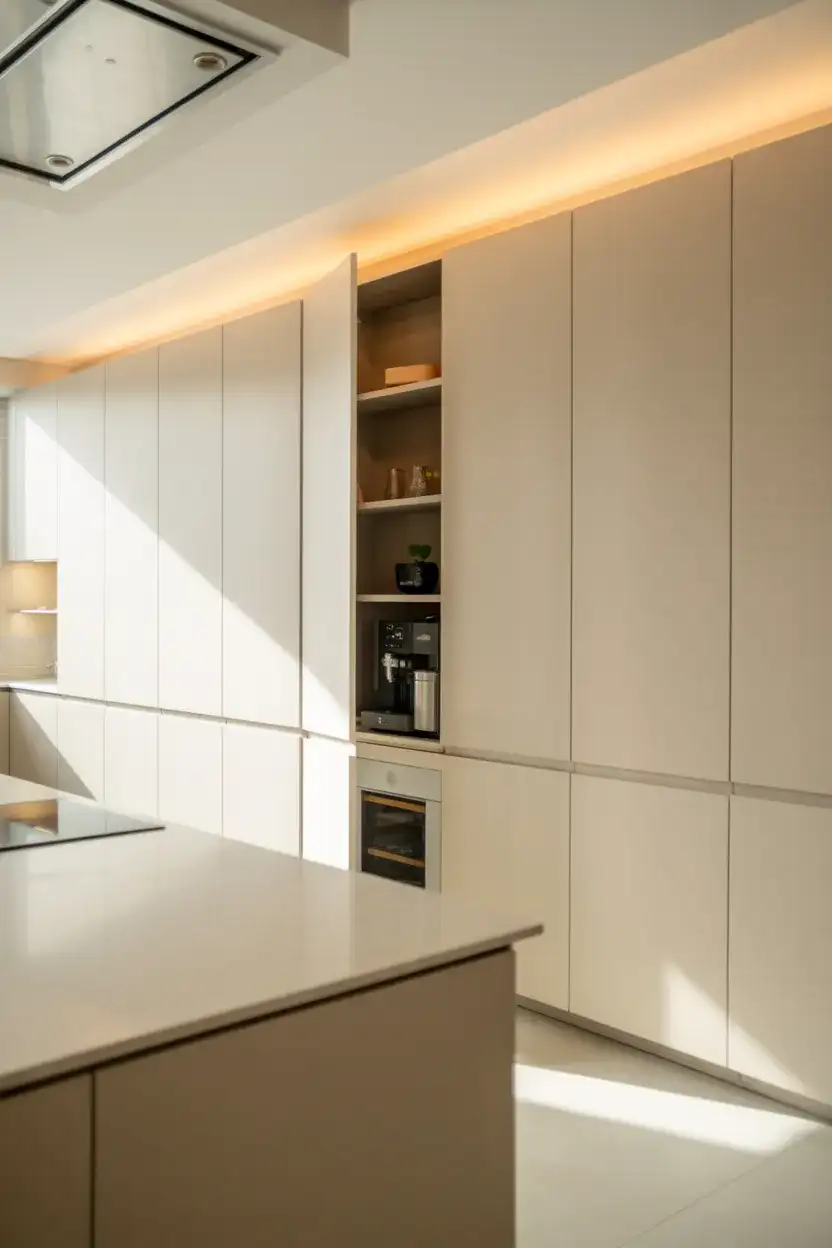
My neighbor in Brooklyn did this last year in her 90-square-foot kitchen, and the transformation was remarkable—what had been a cluttered, cramped galley suddenly felt like it belonged in a design magazine. The key was going all the way to the ceiling (ten feet in her prewar building) and using the top eighteen inches for rarely used items like holiday platters and the bread machine that comes out twice a year. Floor-to-ceiling cabinetry does cost more than standard upper-and-lower configurations, but for small kitchens, it’s the single most space-efficient investment you can make.
13. Oak Cabinets With a Modern Makeover
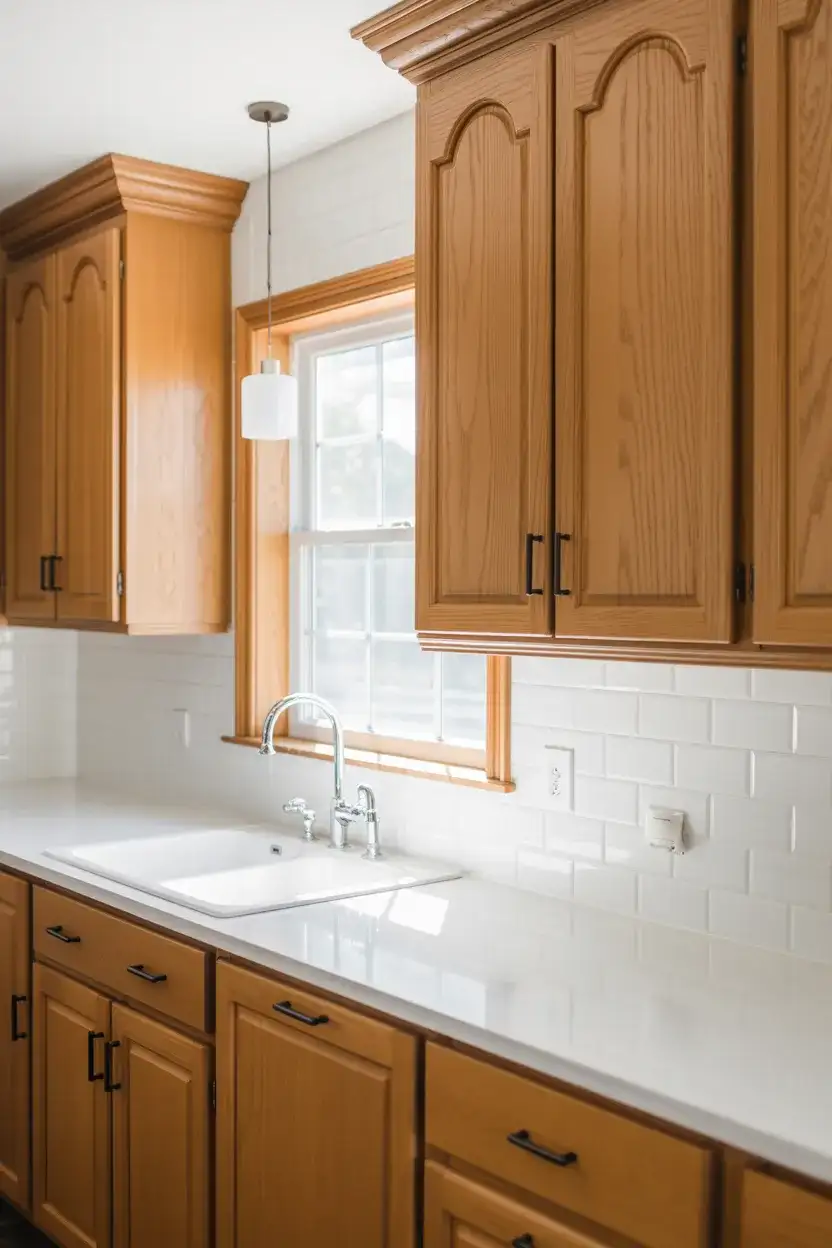
Millions of American kitchens still have their original oak cabinets from the 1980s and ’90s—and instead of ripping them out, a growing number of homeowners are giving them a makeover that works with the existing bones rather than against them. The trick is updating the hardware, swapping out dated countertops, and sometimes simply refinishing the wood in a lighter, more contemporary stain. A honey oak box with new matte black bar pulls and a quartz counter suddenly looks intentional rather than inherited. It’s a design approach that respects what’s already there while making it feel current.
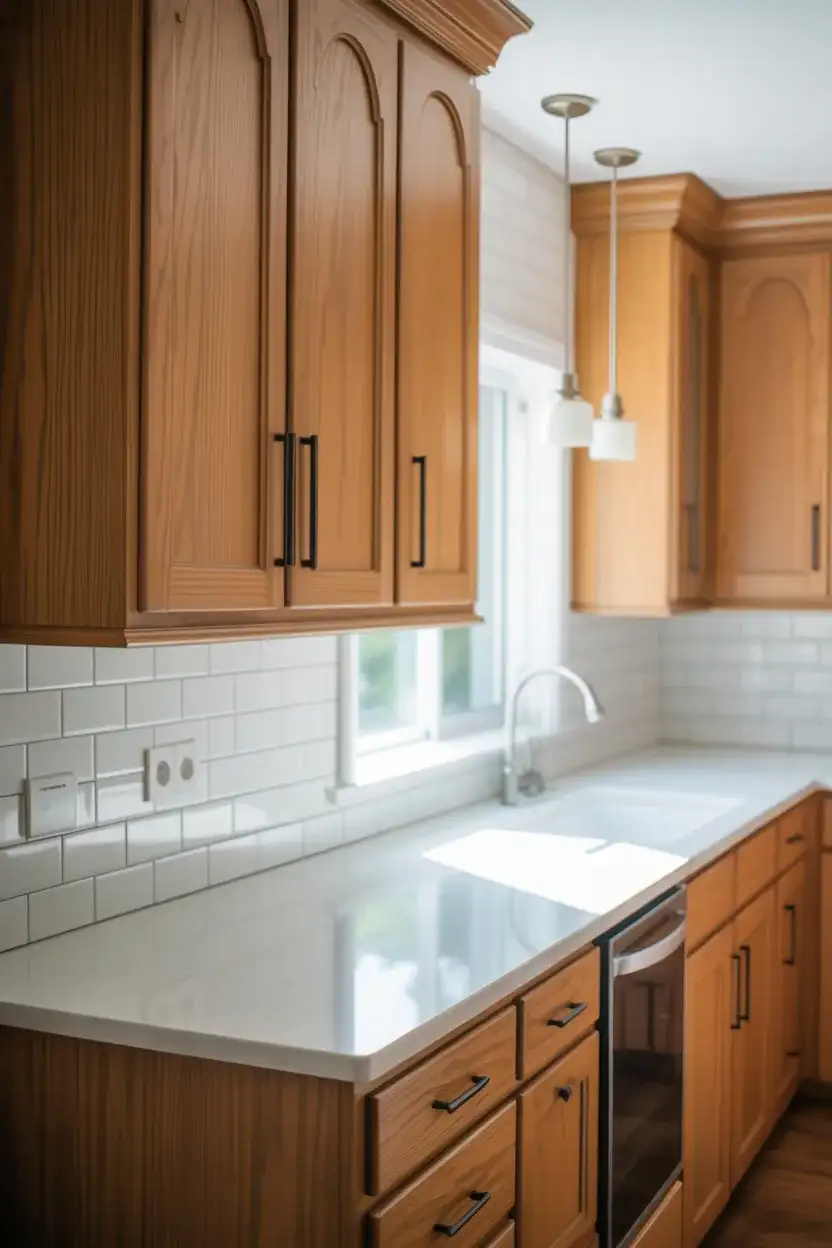
From a budget perspective, this is one of the smartest moves you can make. A full cabinet replacement for an average kitchen runs $15,000 to $30,000 or more, while refinishing existing oak cabinets, adding new hardware, and upgrading countertops can come in under $5,000 total. The environmental angle matters too—keeping solid wood cabinets out of the landfill while giving them a second life is exactly the kind of sustainable choice that resonates with homeowners who care about waste. Sometimes the greenest renovation is the one that works with what you already have.
14. Sage and Cream Cottage-Style Kitchen
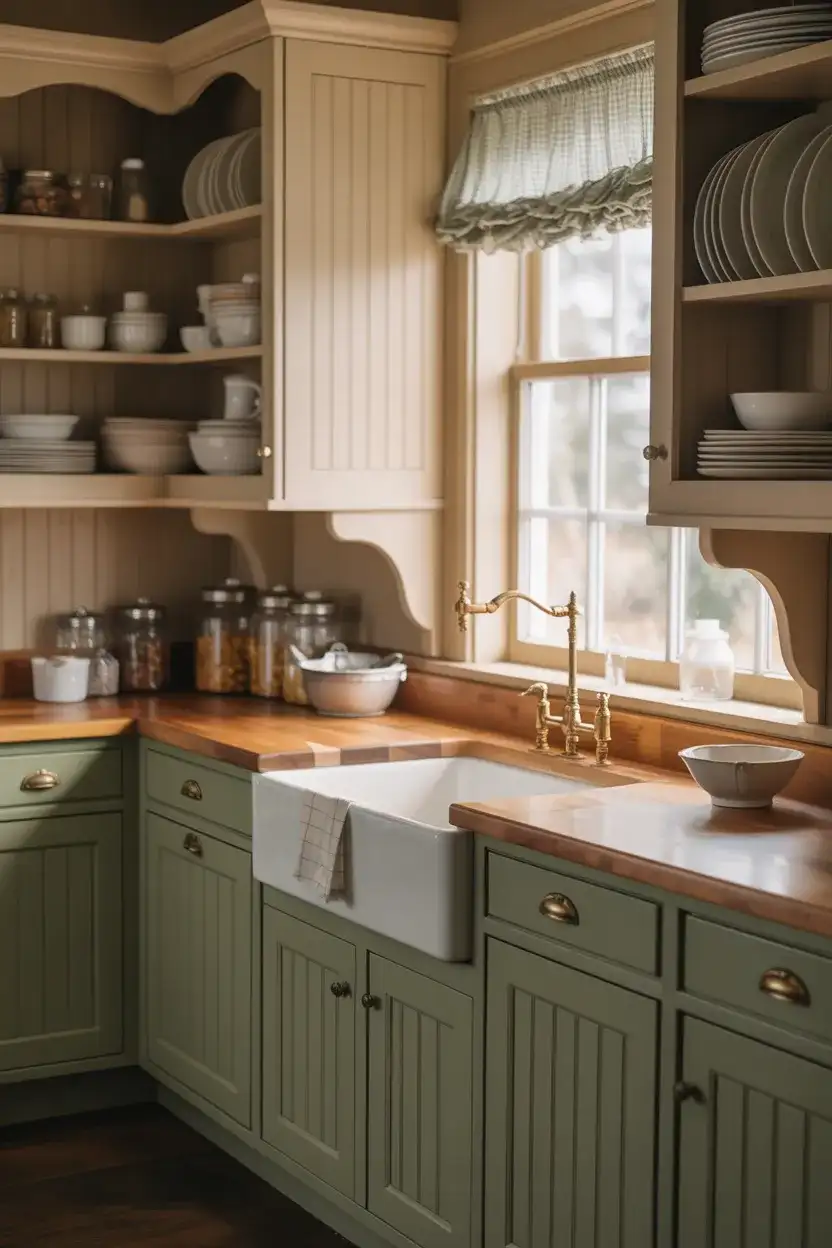
There’s a softness to the sage green and cream combination that feels almost nostalgic—like a kitchen you’d find in a well-loved farmhouse that’s been gradually updated over decades rather than designed all at once. Painted cabinets in muted sage with cream-colored walls and open shelving create a cottage atmosphere that’s warm without being fussy. Beadboard panels, bin pulls in antiqued brass, and butcher block counters round out the look. This is a kitchen that says “come in, sit down, I’ll pour you coffee,” and that approachability is precisely why these ideas keep getting pinned by the thousands.
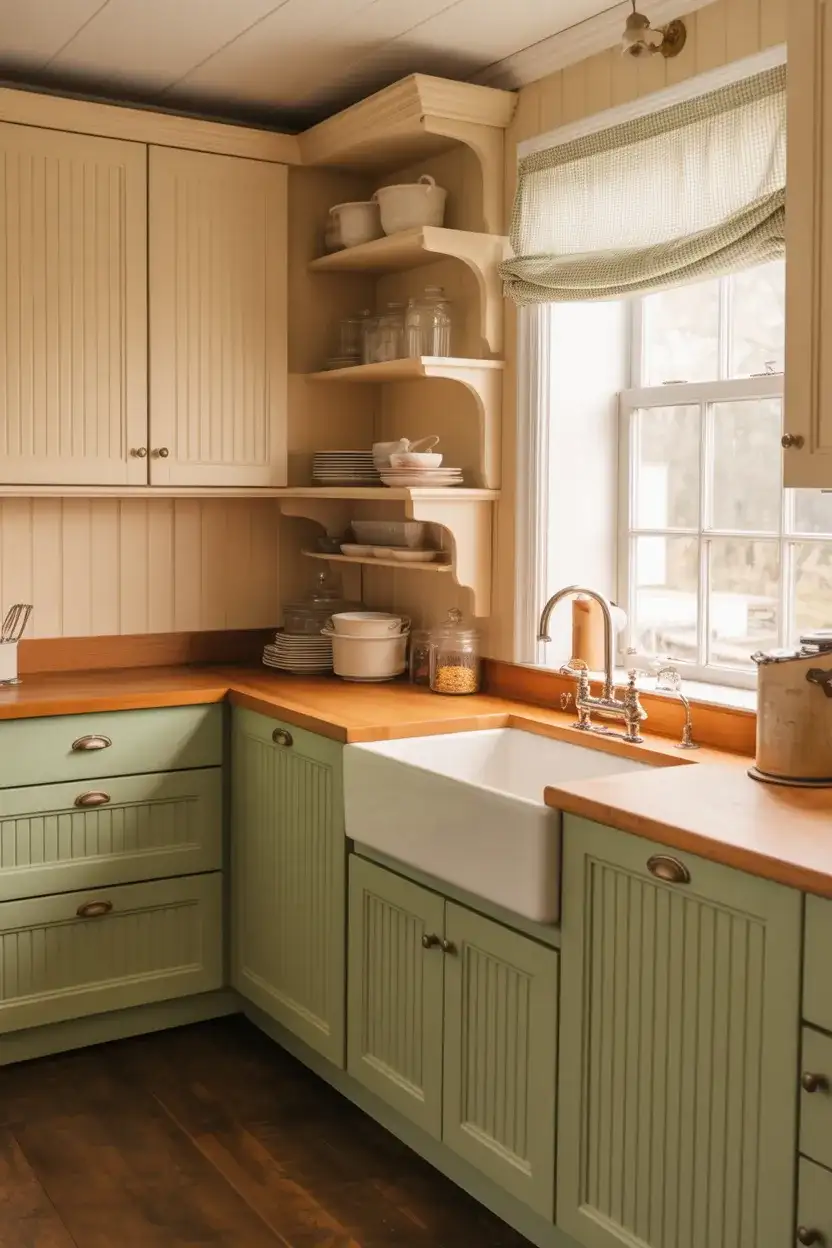
This aesthetic resonates strongly across the American South and New England, where cottage and farmhouse styles have deep roots—but it translates just as well in a suburban home outside Denver or a bungalow in the Pacific Northwest. The key is keeping the sage muted (think dusty, not minty) and letting the imperfections show. A few dings in the butcher block, a slightly uneven paint edge on a hand-brushed cabinet door—these aren’t flaws in a cottage kitchen. They’re the whole point. Perfection is the enemy of charm here, and that’s a liberating thing for anyone who stresses about getting every detail exactly right.
15. Minimalist Gray-Green Cabinets With Concrete Counters
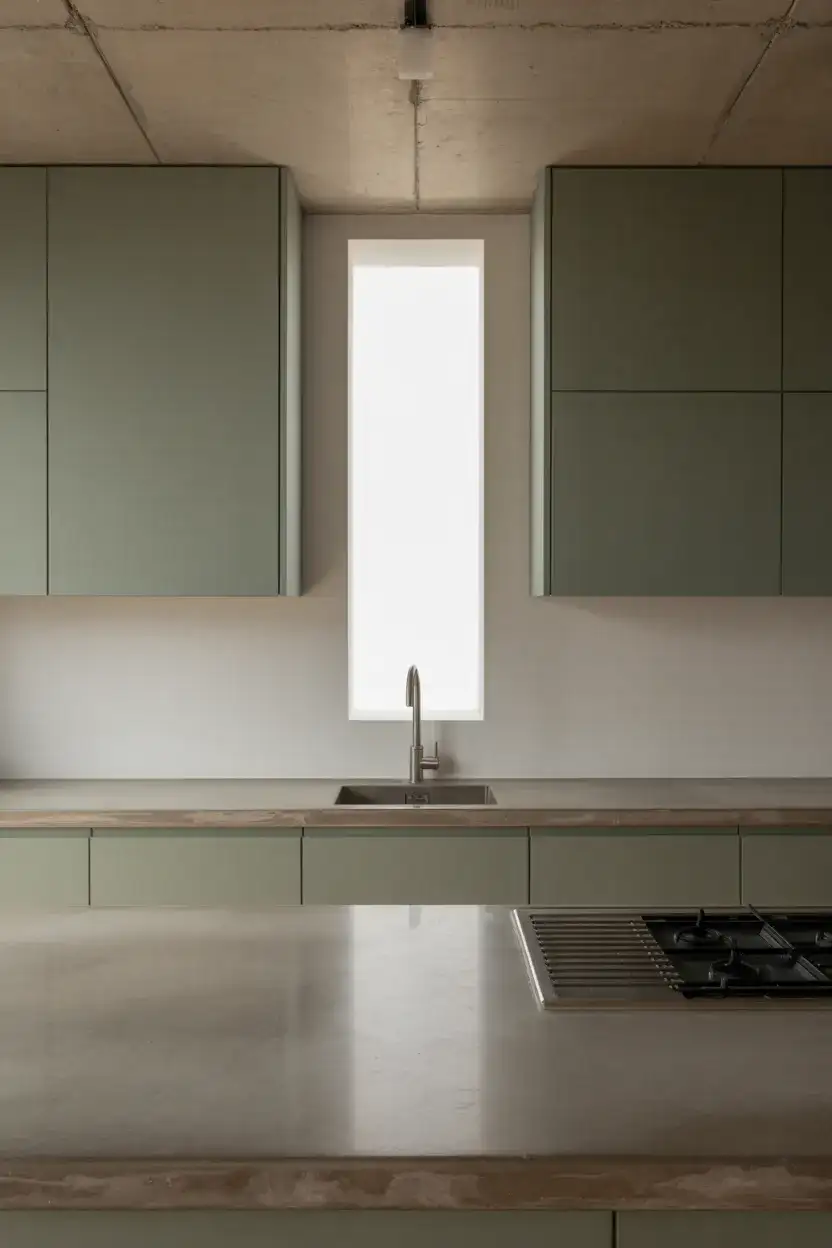
For kitchens that lean industrial or contemporary, a green that tips toward grey—somewhere between eucalyptus and cement—offers a striking middle ground. Paired with poured concrete or concrete-look countertops, this palette creates a kitchen that feels both natural and architecturally precise. The slab-front cabinet doors keep things clean, and the lack of visible hardware reinforces that pared-back sensibility. It’s a design move that works beautifully in loft conversions, new-build townhomes, and any space where raw materials share the stage with intentional minimalism.
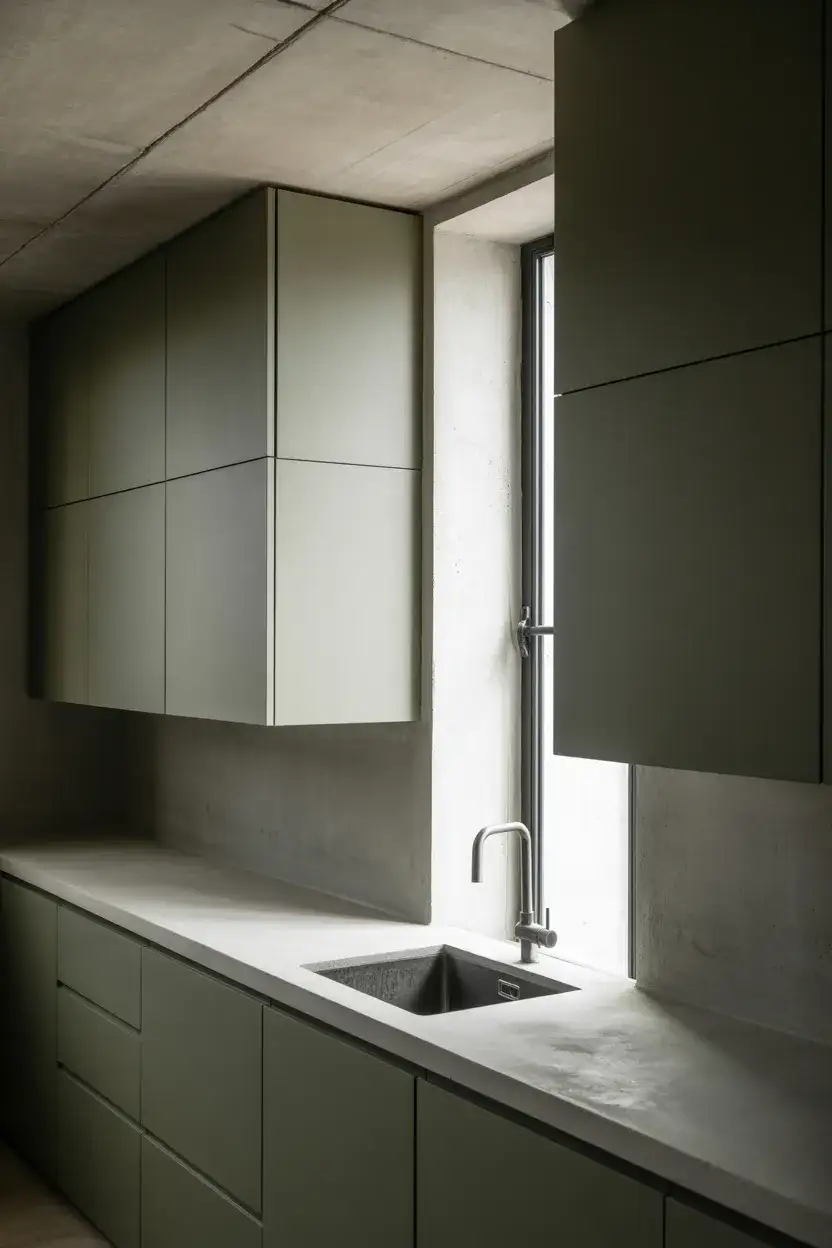
One expert-style note on concrete countertops: they require sealing—typically every one to three years—and they will develop patina. For some people, that evolving character is the entire appeal; for others, the first coffee ring sends them into a spiral. Know which camp you fall into before committing. If you love the look but not the maintenance, several quartz manufacturers now offer remarkably convincing concrete-look surfaces that deliver the aesthetic without any of the upkeep. It’s worth comparing samples side by side before making a final call.
16. Classic White Cabinets With Black Countertops
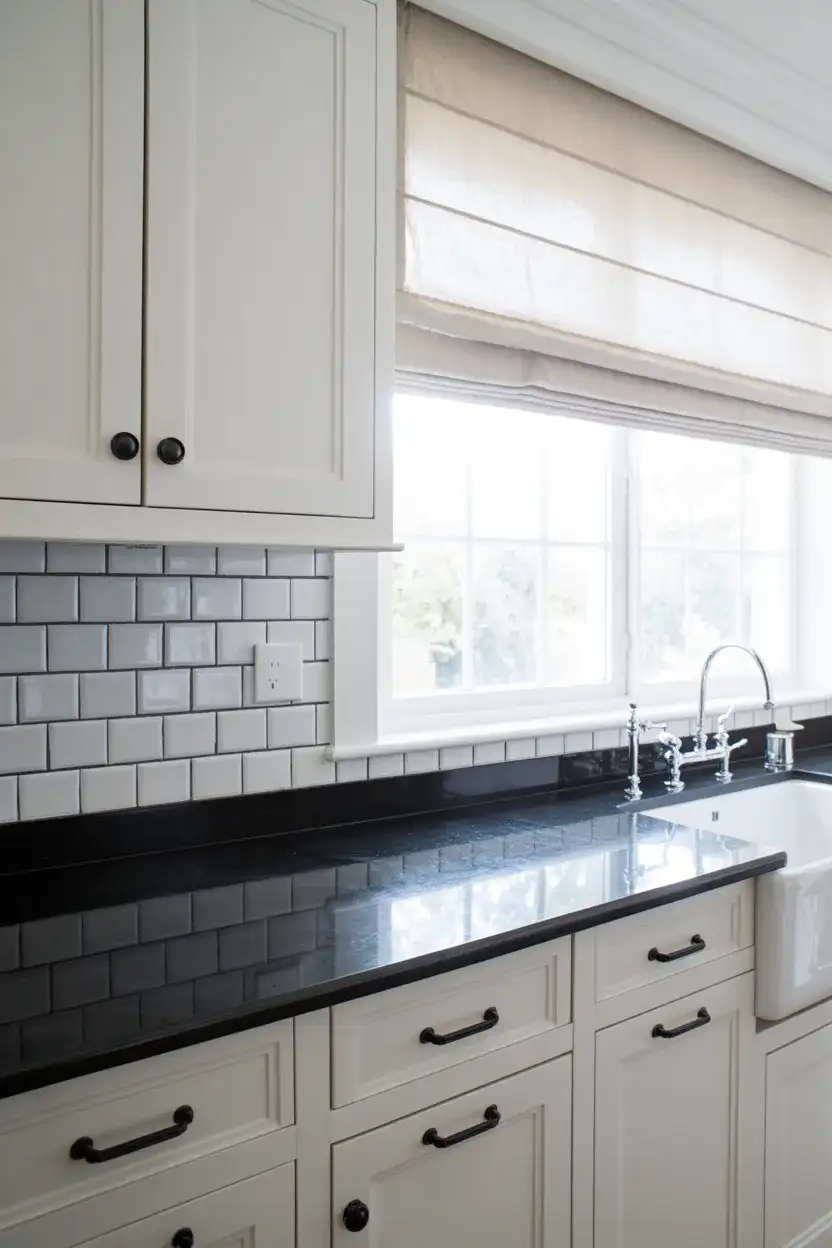
Some combinations endure because they simply work, and white cabinets with black countertops are about as reliable as kitchen design gets. In 2026, the execution has evolved—think honed black granite or leathered soapstone instead of polished surfaces, and shaker or flat-panel doors instead of raised-panel traditional styles. The high-contrast pairing gives a kitchen structure and definition, especially in open-plan homes where the kitchen needs enough visual weight to hold its own against larger living areas. These color ideas prove that timeless doesn’t have to mean boring when the materials are right.
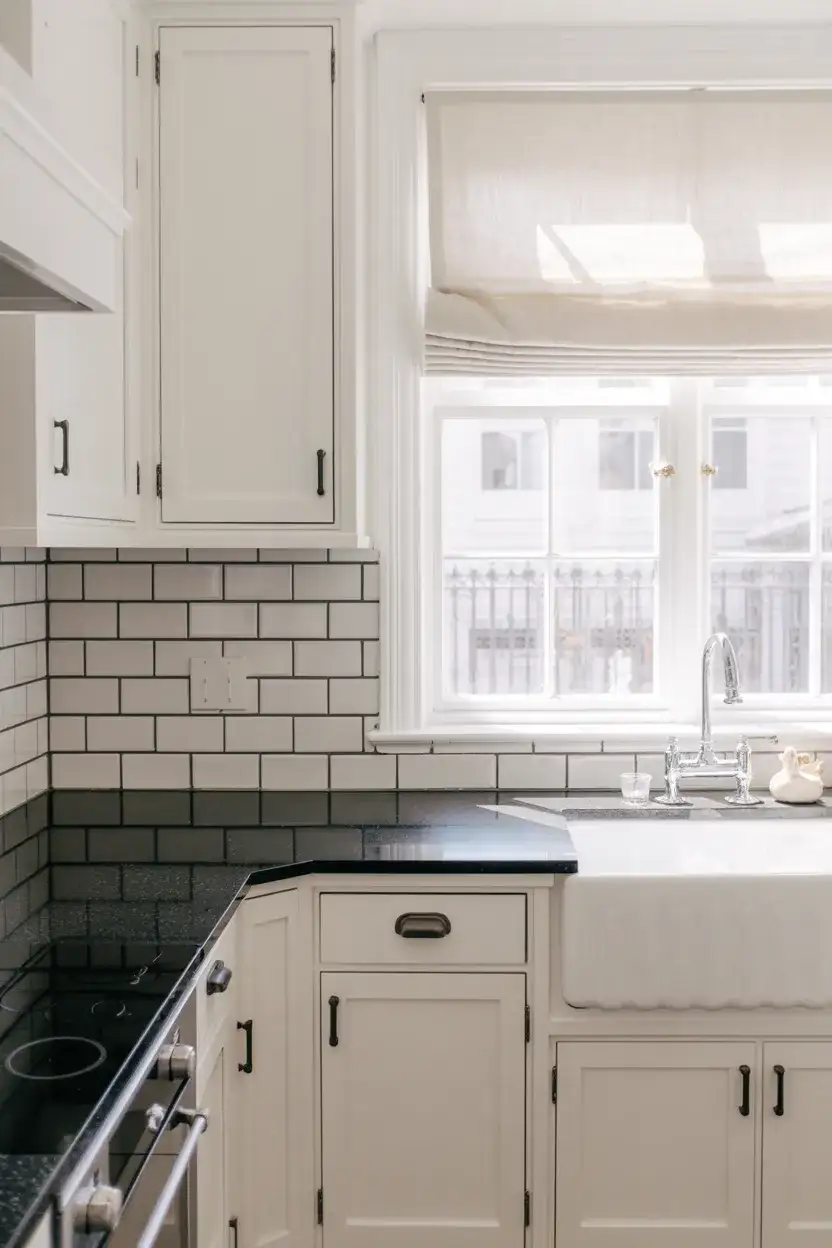
For anyone weighing soapstone versus granite versus quartz for the black counter, here’s a quick cheat sheet from a practical standpoint. Soapstone is softer and develops a gorgeous dark patina over time but scratches more easily—many owners learn to love the marks. Honed black granite is harder and lower-maintenance but can show water spots. Black quartz gives the most uniform appearance with the least fuss, though some people find it reads a bit flat compared to natural stone. Each has tradeoffs, and the right choice depends less on trends and more on how you actually cook and clean.
17. Walnut Island With Painted Perimeter Cabinets
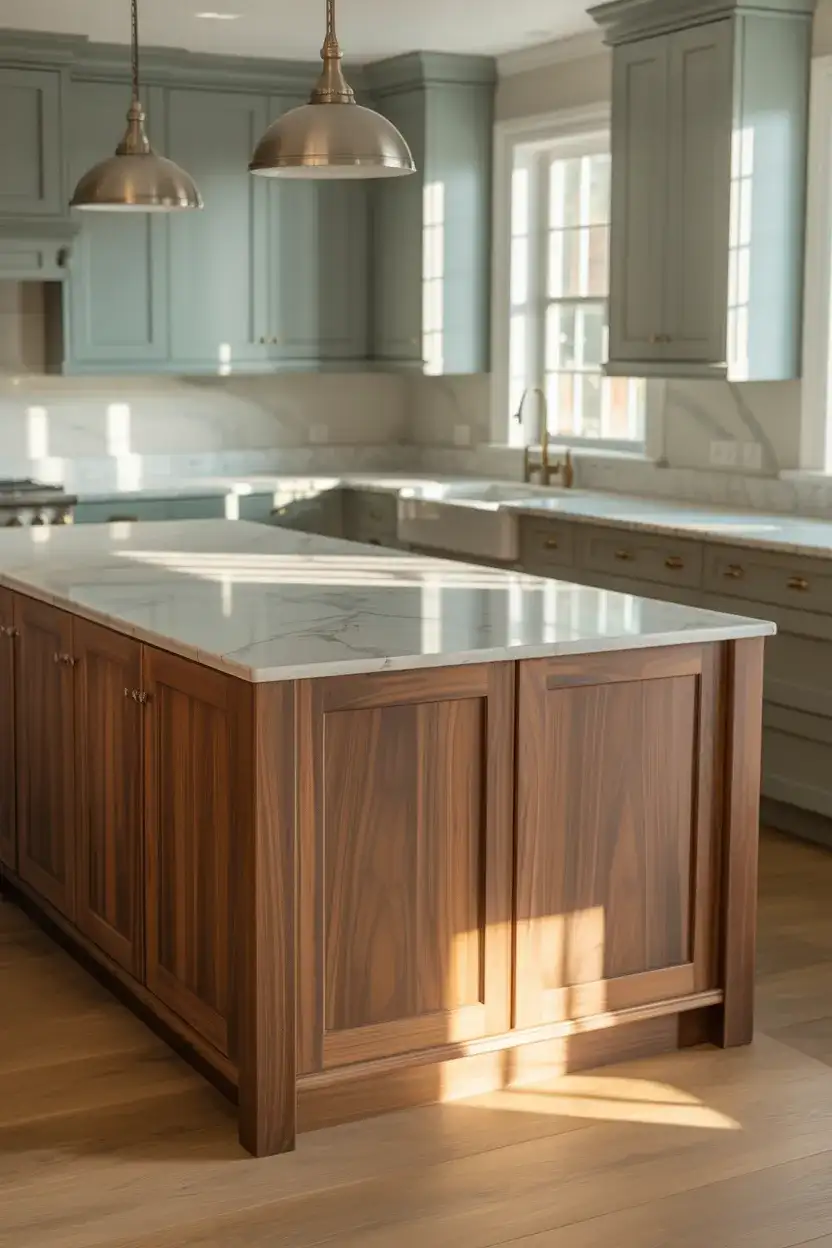
One of the smartest moves in kitchen design this year is treating the island as a standalone piece of furniture—and walnut is the wood that makes this idea sing. Surrounded by painted perimeter cabinets in a complementary neutral, a walnut island anchors the room with warmth and becomes the natural gathering point. The contrast between the painted surfaces and the exposed wood grain creates visual interest without the room feeling busy. It’s an approach that borrows from the European tradition of freestanding kitchen furniture and applies it in a way that feels completely at home in an American layout.
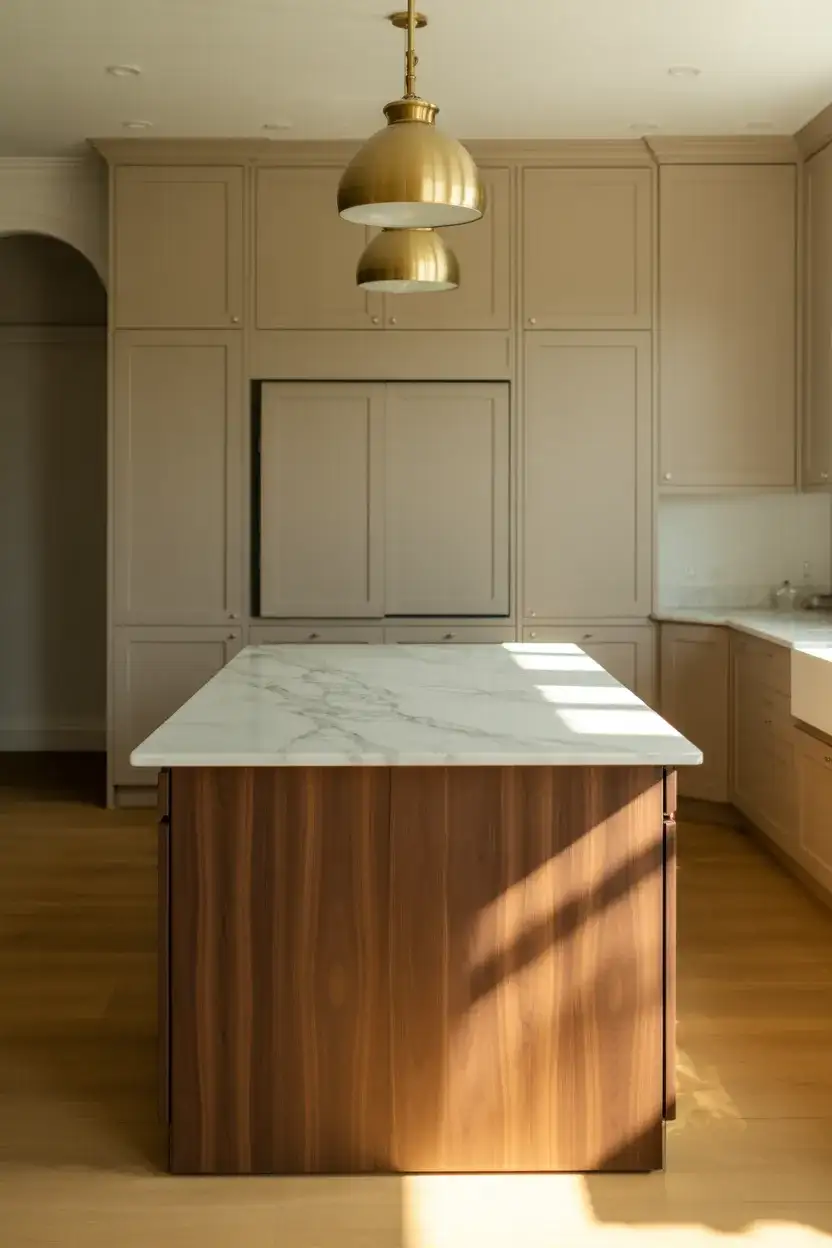
The pricing for a custom walnut island varies widely depending on where you are and who builds it, but expect to pay between $4,000 and $12,000 for the cabinetry alone, before countertop and plumbing. If that stretches beyond your budget, several semi-custom cabinet lines now offer walnut-veneer island options that deliver a very similar look at roughly half the cost. The key is choosing a veneer with consistent grain matching—ask to see the actual sheets that will be used, not just a sample chip. That attention to grain continuity is what separates a walnut island that looks intentional from one that looks like an afterthought.
18. Soft Blue-Gray Cabinets With Marble Backsplash
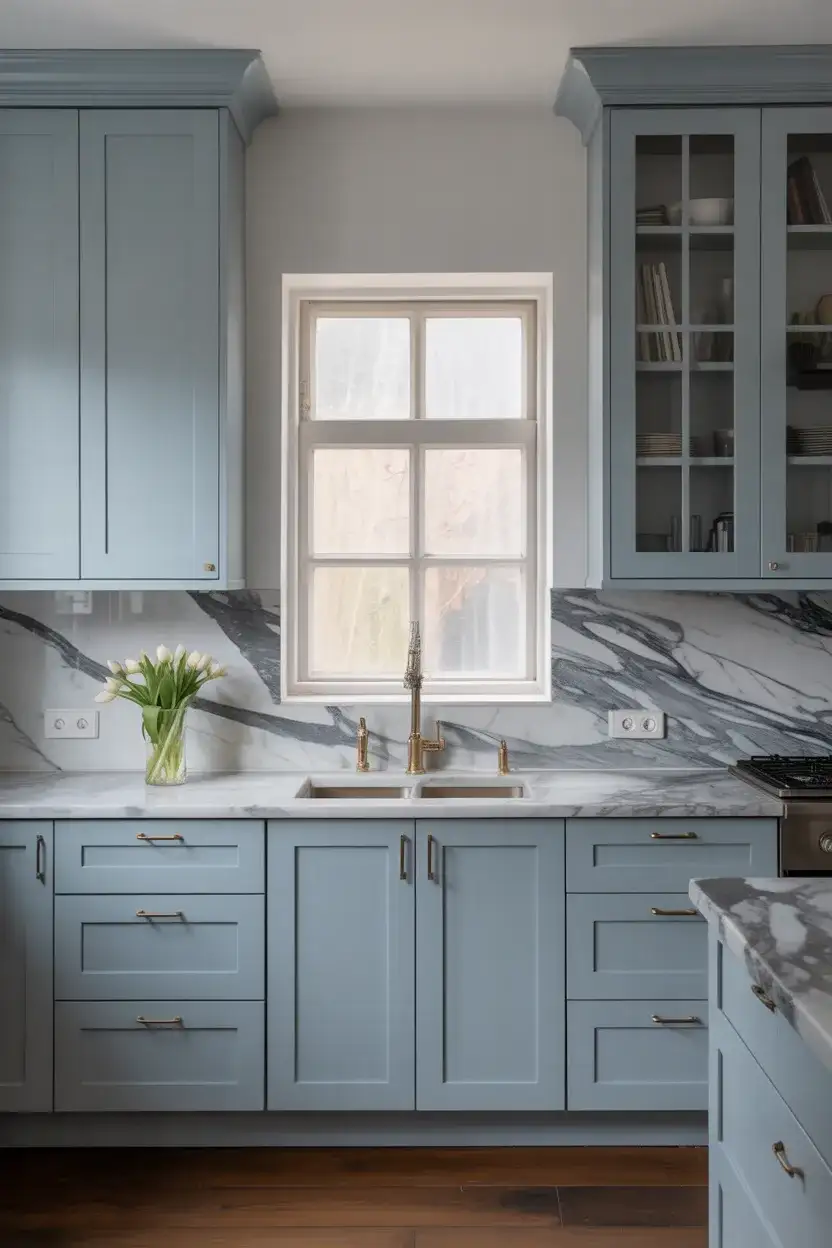
Right at the intersection of blue and gray sits a color that’s been quietly climbing the Pinterest charts—a soft, smoky blue-gray that feels serene without being sterile. It’s the kind of shade that shifts depending on the time of day and the light in your room, reading cooler in the morning and warmer as the sun drops. Paired with a classic marble slab backsplash, these painted cabinets create an atmosphere of restrained elegance. The marble’s natural veining provides movement and pattern, so the cabinets can stay flat and simple without the room feeling flat at all.
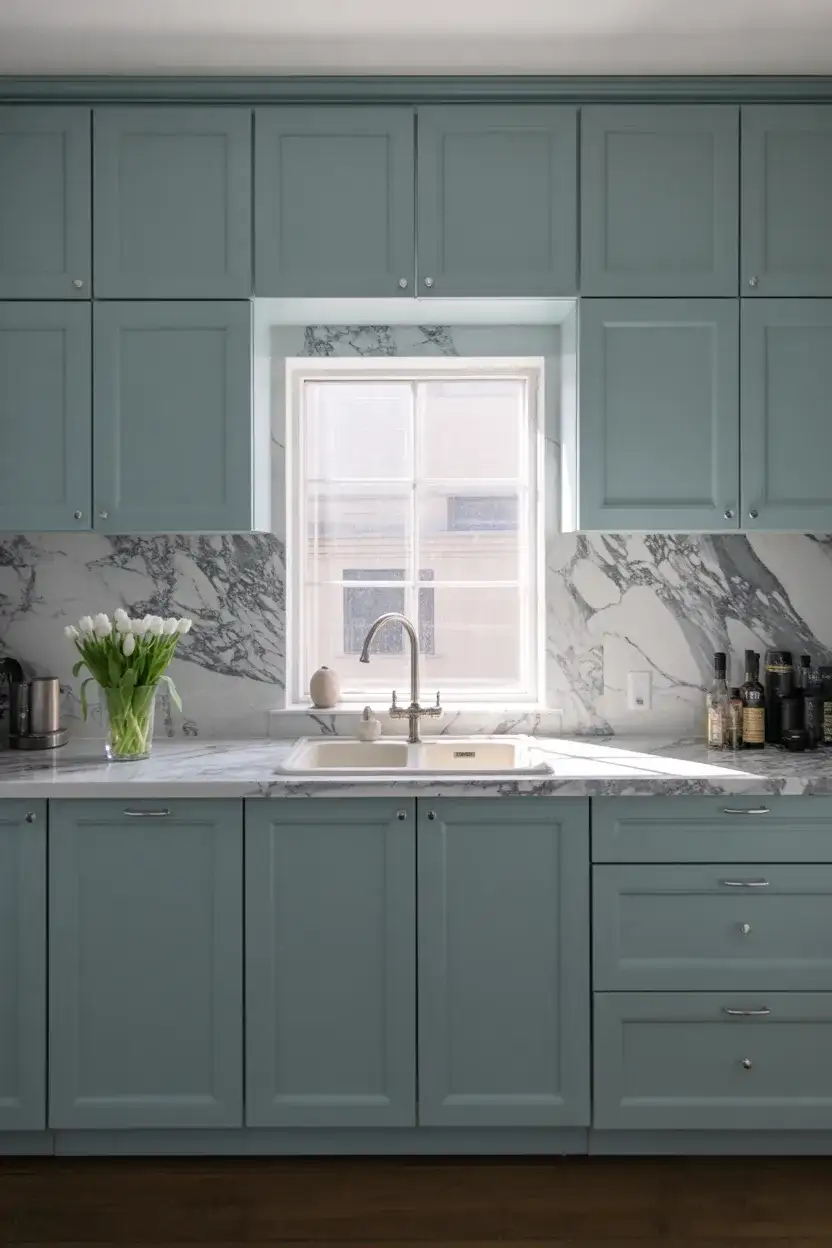
This palette works best in kitchens that face north or east—spaces where the cooler natural light enhances the blue undertones rather than washing them out. In a south-facing kitchen flooded with warm light, a blue-gray can sometimes lean more gray than blue, which may or may not be what you intended. Always test paint samples in your actual kitchen, on the actual cabinets or at least on large poster boards taped to them, and observe the color at multiple times of day before committing. That twenty-dollar experiment can save you a very expensive repaint down the road.
19. Dark Green Cabinets With Brass and Marble
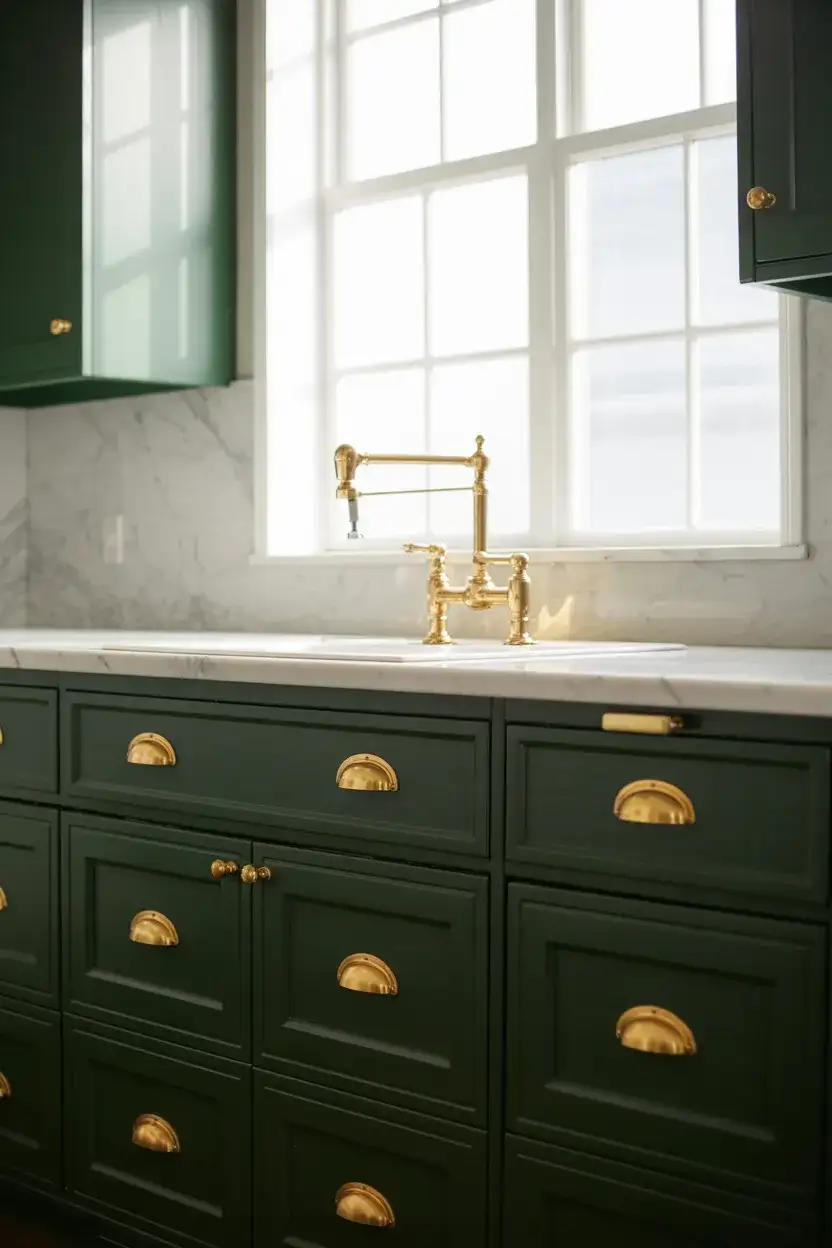
If sage green is the gentle whisper, dark green is the confident statement—and in 2026, forest and emerald tones are showing up on cabinets with unapologetic boldness. Layered with unlacquered brass hardware and white marble surfaces, a dark green kitchen feels both luxurious and grounded, pulling from nature without imitating it literally. The colors work because they follow a principle as old as interior design itself: pair a saturated hue with a natural material and a metallic accent, and the room practically styles itself. This is maximalism done with restraint.
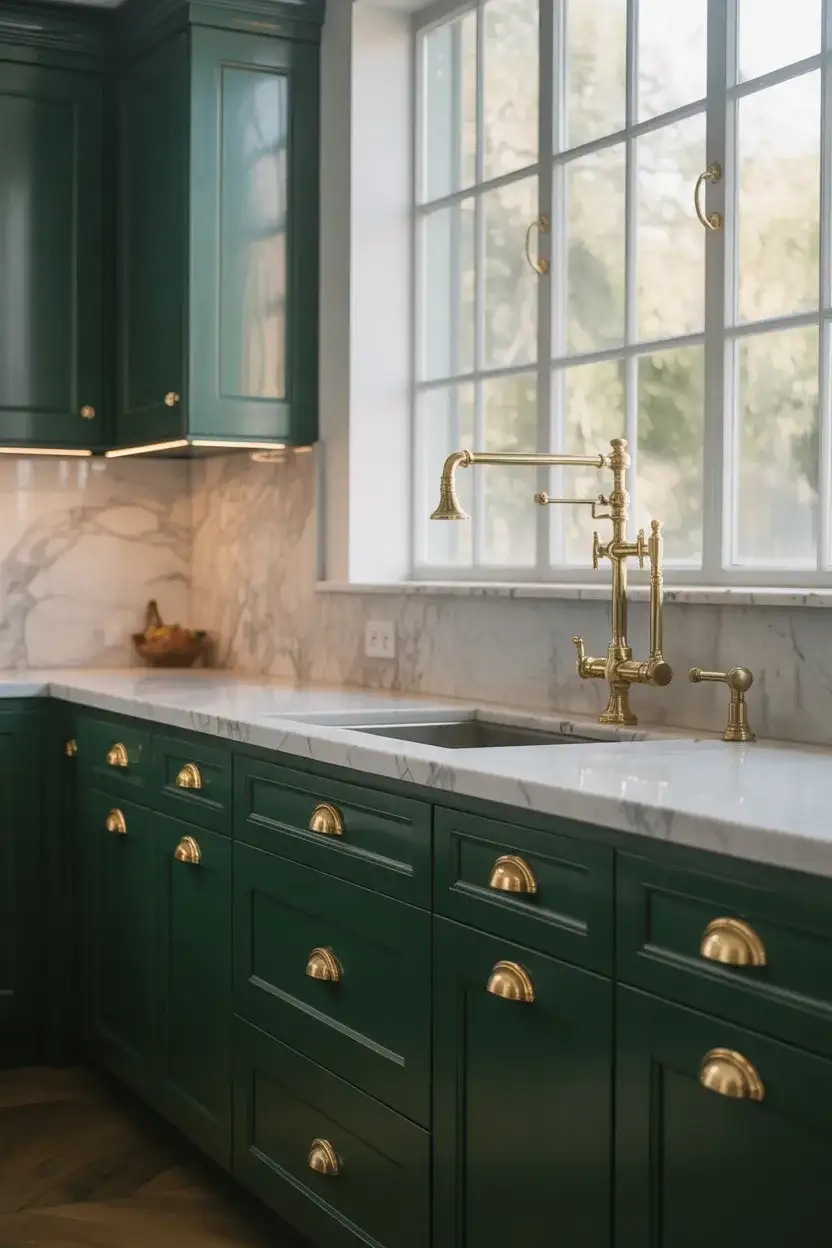
A conversation I had recently with a color consultant in Nashville stuck with me—she said dark green is the new navy, meaning it’s bold enough to feel daring but familiar enough that most people won’t tire of it in five years. That’s an important distinction because a cabinet color is a significant commitment. Her advice: if you’re nervous about going fully dark green on every surface, start with the island or a single bank of base cabinets and keep the uppers in a warm white or cream. You get the drama without the risk of a room that feels like a cave.
20. Rustic Reclaimed Wood Cabinets
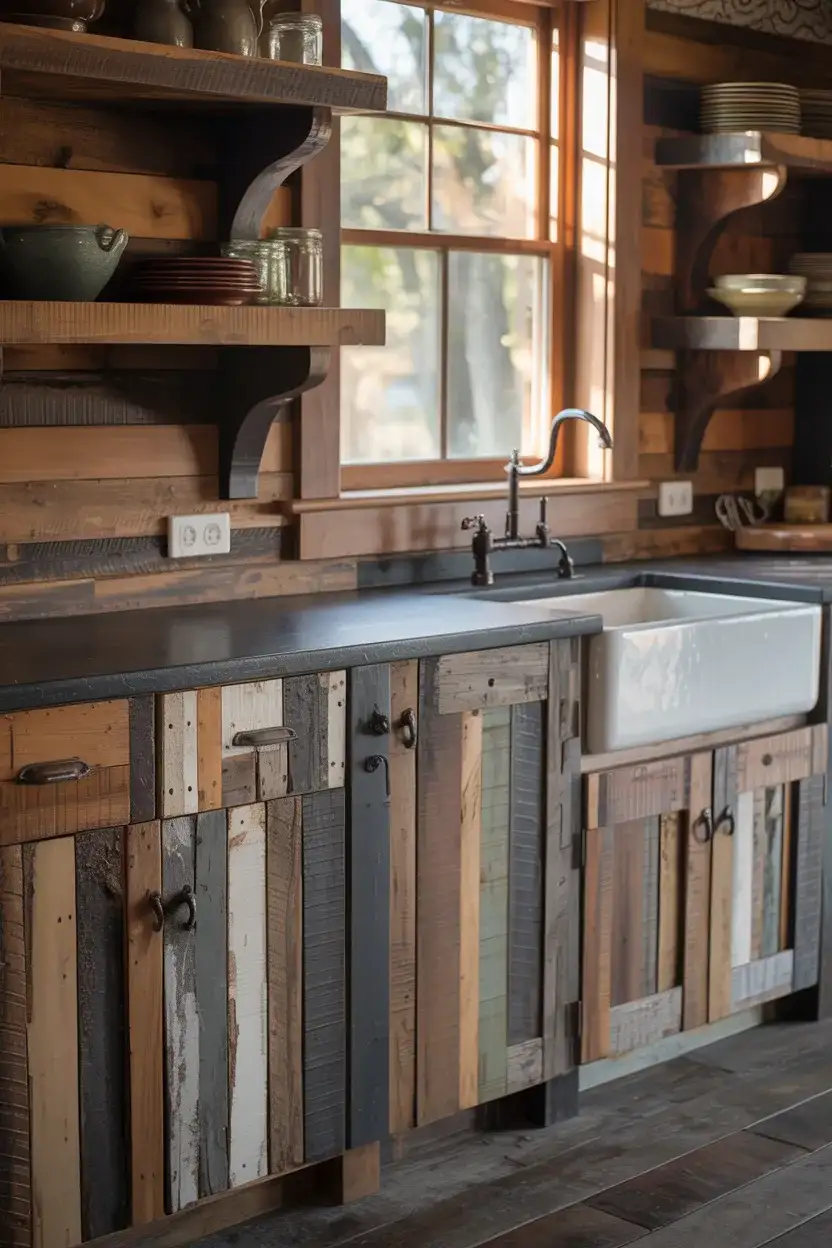
In parts of the Mountain West, the Appalachian region, and rural New England, reclaimed wood cabinets aren’t a trend—they’re a way of life. But in 2026, the aesthetic is finding a wider audience as homeowners everywhere seek materials with genuine history and imperfection. These cabinets are built from salvaged barn wood, old factory flooring, or deconstructed pallets, and every plank carries its own marks, knotholes, and patina. The dark wood tones range from silvered gray to deep tobacco brown, and no two kitchens look alike, which is exactly the point.
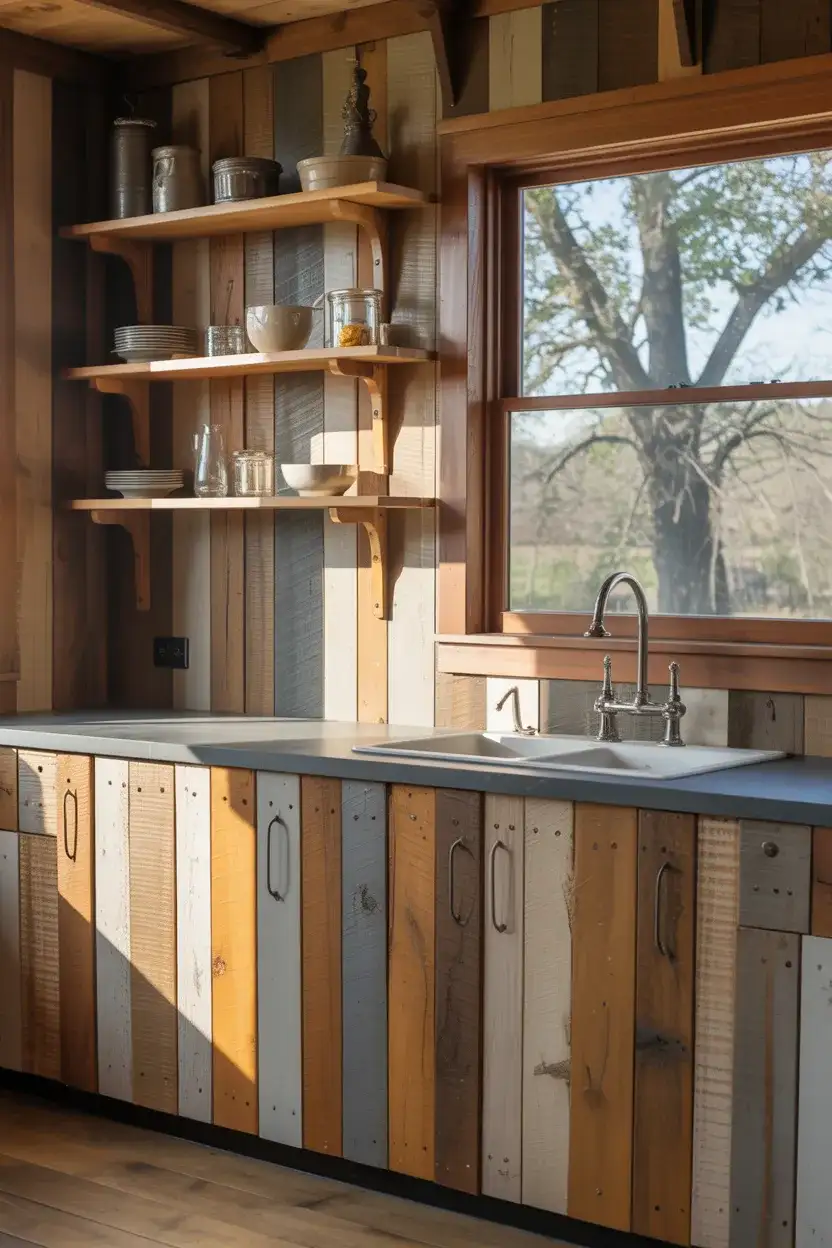
Here’s what a lot of first-time reclaimed wood buyers don’t realize: sourcing and preparing salvaged lumber is labor-intensive, which means reclaimed cabinets often cost more than standard new wood cabinetry—sometimes significantly more. A reputable reclaimed wood supplier will kiln-dry and de-nail every board, treat it for insects, and mill it to consistent dimensions, all of which adds time and cost. If the look speaks to you but the price doesn’t, consider using reclaimed wood on just the island or a single accent wall of cabinetry and matching the remaining cabinets with a complementary stained finish on new wood.
21. High-Gloss White Cabinets for a Contemporary Edge
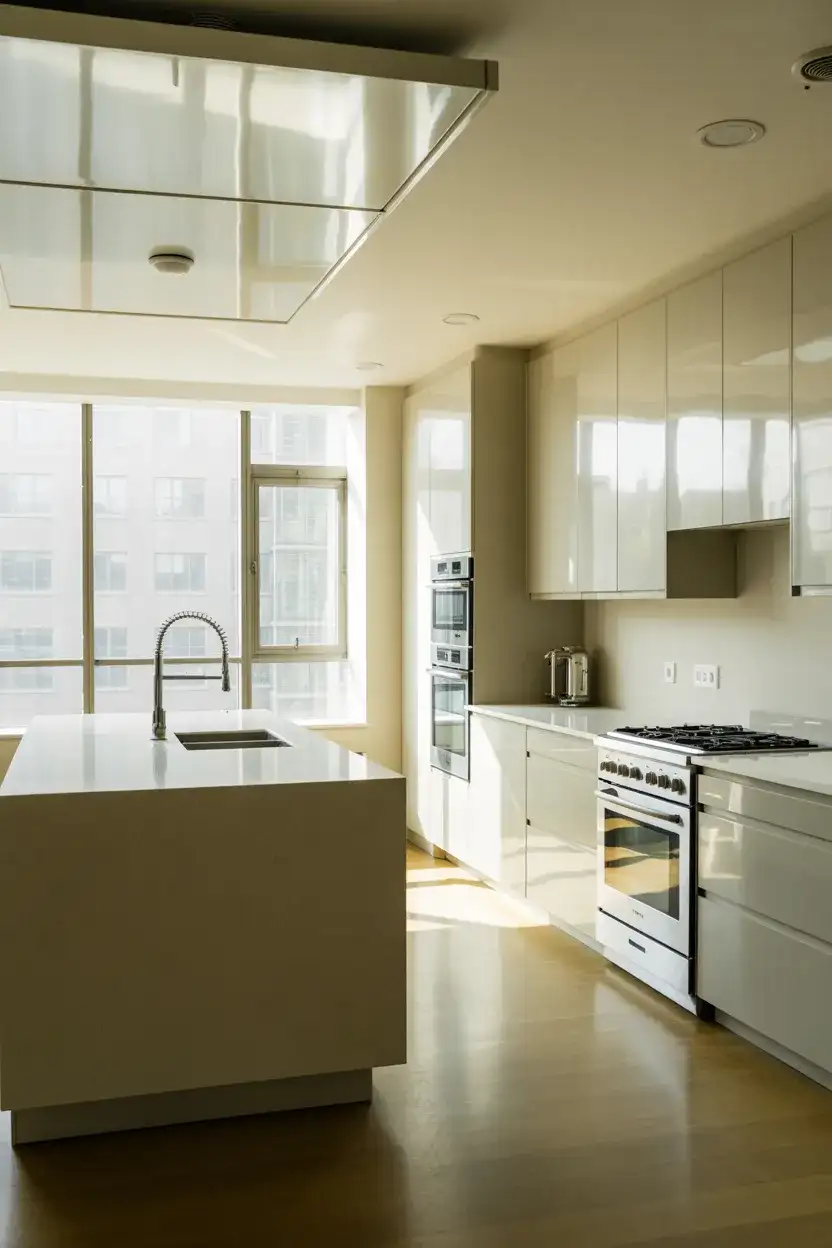
Matte finishes get most of the attention right now, but white cabinets in a high-gloss lacquer finish are making a sharp comeback among homeowners who want their kitchens to feel sleek, luminous, and unapologetically modern. The reflective surface bounces light around the room, which makes even a modestly sized kitchen feel larger and brighter. Paired with handleless push-to-open doors and a waterfall-edge island, the look is pure contemporary design—the kind of kitchen you’d find in a Miami high-rise or a newly built home in Scottsdale. It’s confident, polished, and not trying to be cozy.
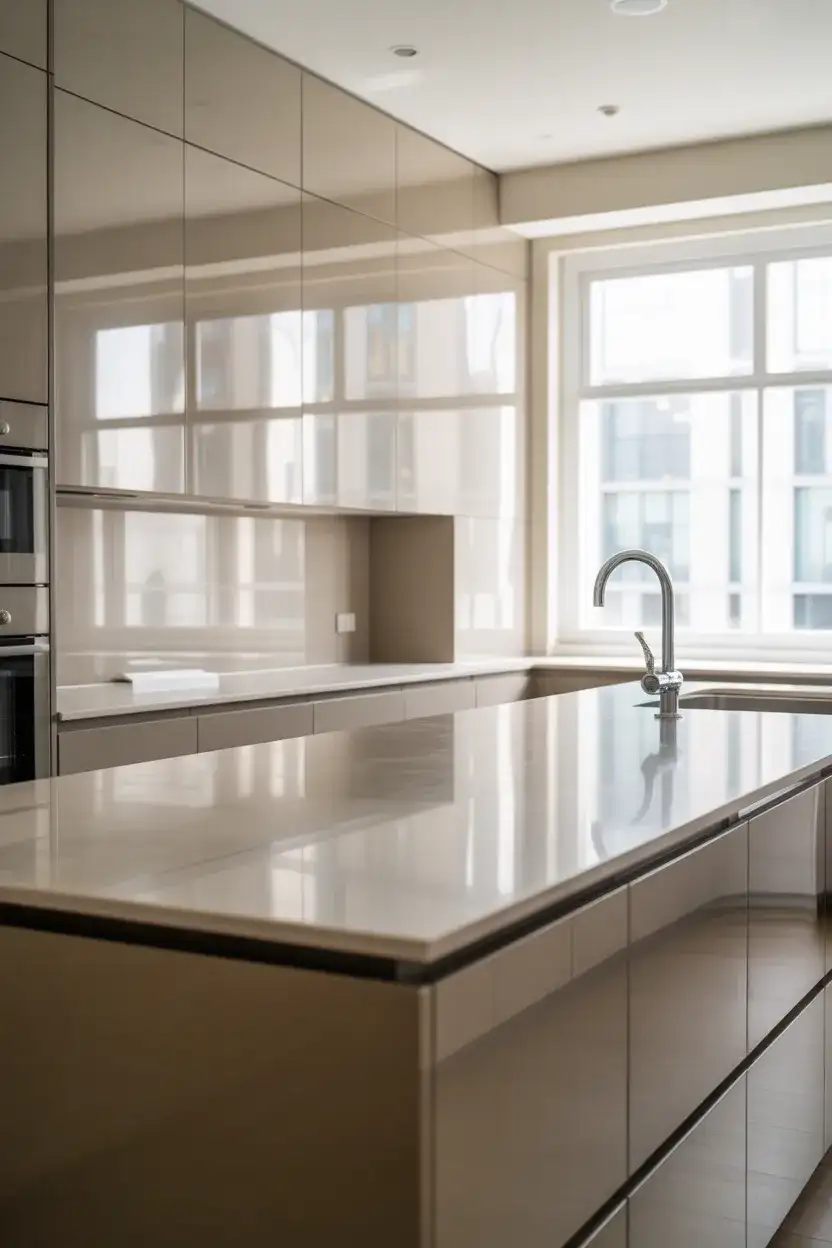
The practical tradeoff with high gloss is real: fingerprints, cooking grease, and water spots are visible on these surfaces in a way that matte finishes simply absorb. If you have small children or a household where the kitchen sees heavy daily use, you’ll be wiping cabinets down more often. That said, many homeowners find the tradeoff worthwhile because the visual payoff is so dramatic. A microfiber cloth and a gentle spray cleaner become your best friends. It’s a maintenance commitment, yes, but one that pays dividends in a kitchen that always looks like it’s ready for its close-up.
22. Built-In Bench Seating With Cabinet Storage Below
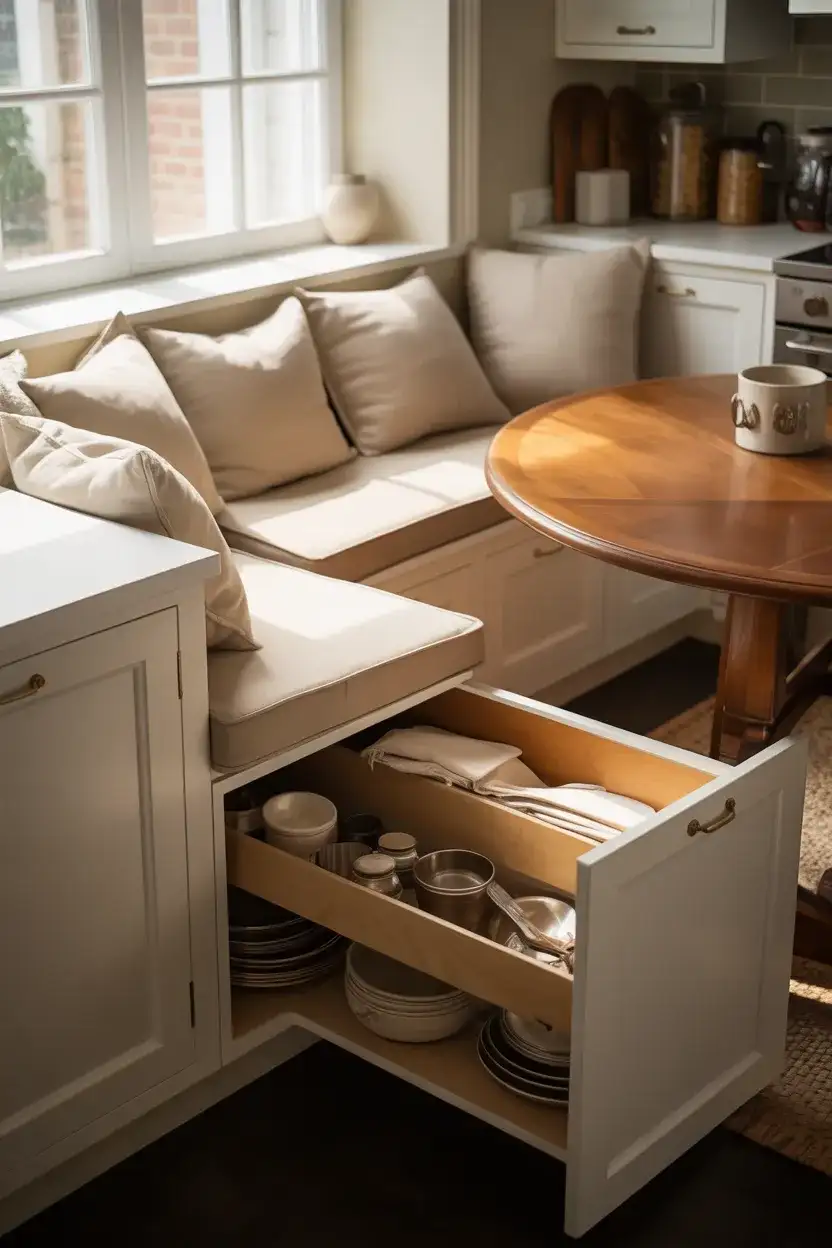
The kitchen banquette is having a full-blown renaissance, and the smartest versions double as serious organization powerhouses. A built-in bench with cabinet doors or lift-top compartments beneath the seat turns dead space into storage for linens, seasonal items, or bulky appliances you don’t use every day. The banquette itself can be wrapped in the same material as your kitchen cabinets—painted wood, oak, or a matching laminate—so it reads as an intentional extension of the kitchen rather than an afterthought. It’s forming a meeting function in the most practical way possible.
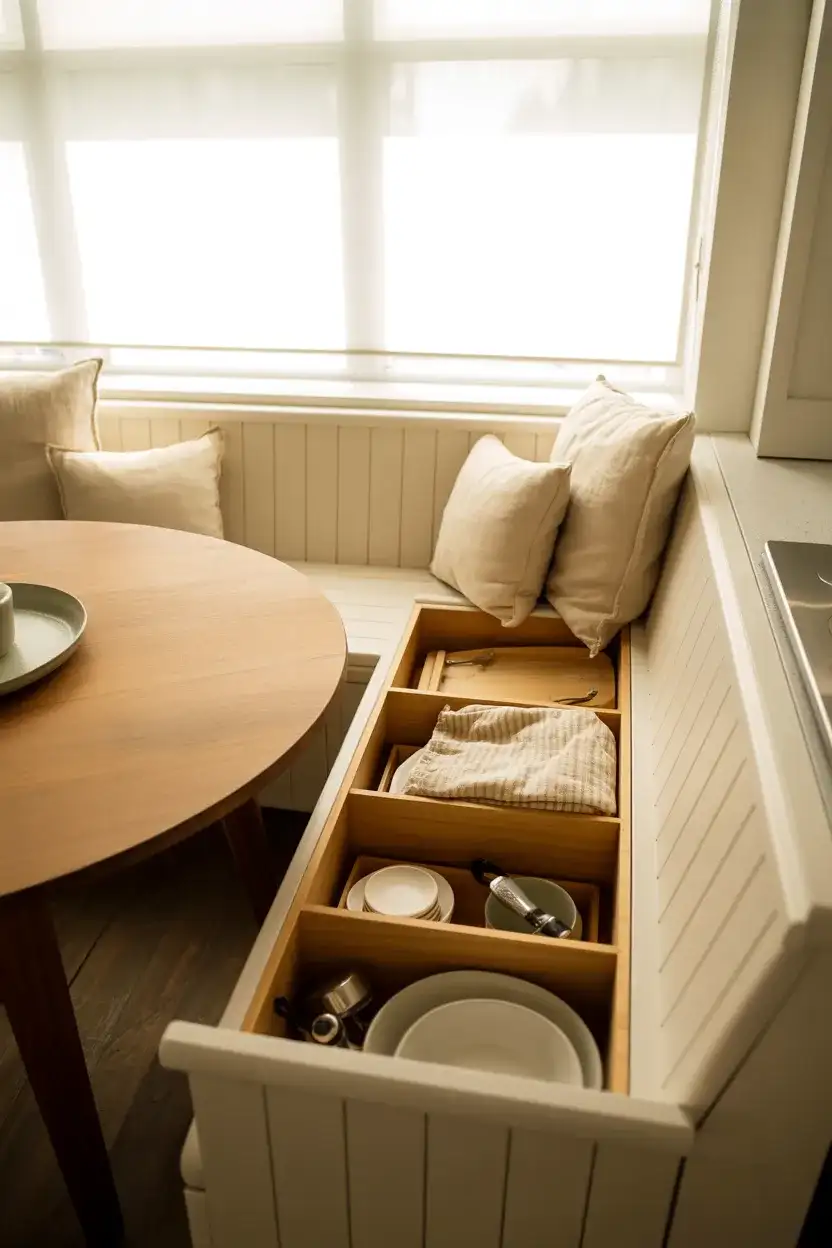
Where this idea works best is in eat-in kitchens—the kind common in suburban homes across the Midwest and Southeast, where the kitchen has a dedicated dining area that’s separate from a formal dining room. That awkward corner or bay window alcove becomes prime real estate for a built-in bench. The storage beneath is especially valuable for families—kids’ craft supplies, board games, extra grocery bags, and pet food are all tucked away but within arm’s reach. It’s a custom carpentry job for most installations, but the result is a fixture that adds both function and resale value to the home.
23. Mixed Material Cabinets With Metal and Wood
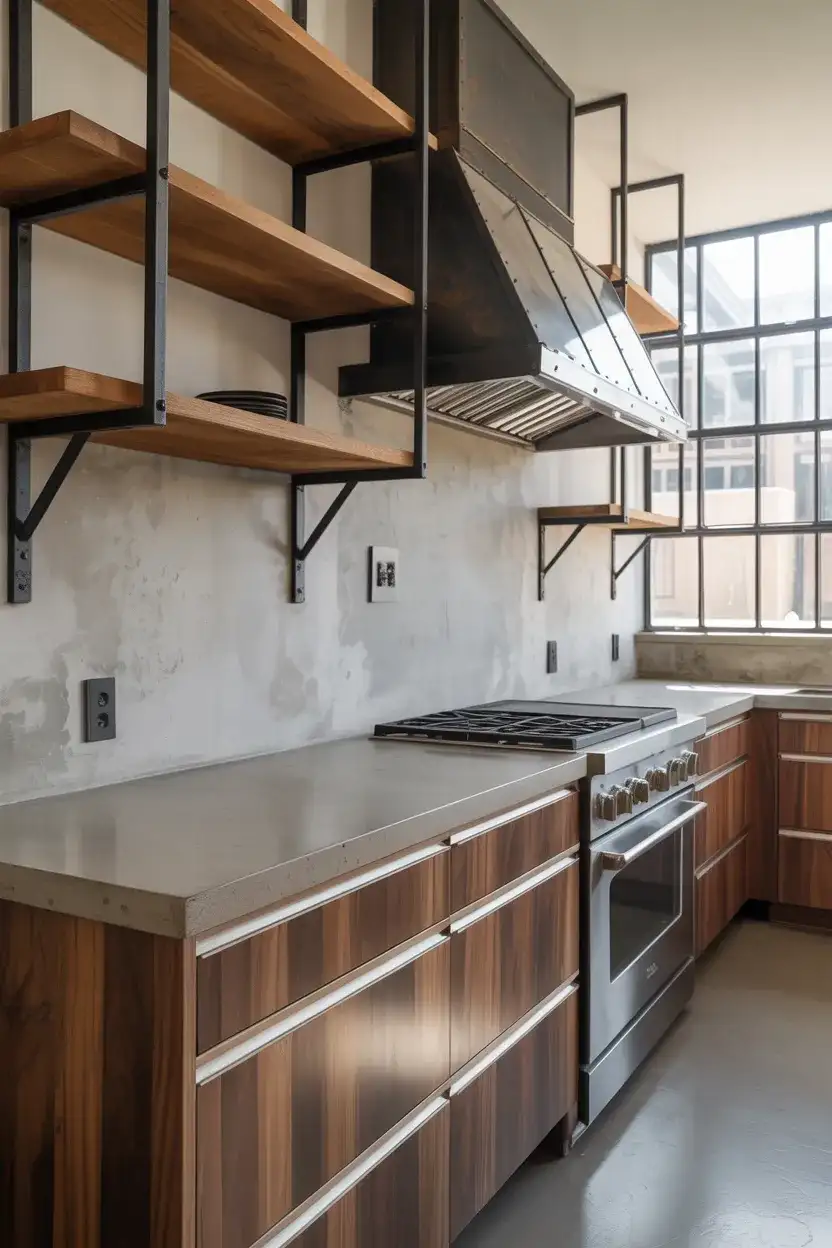
The most forward-thinking kitchens of 2026 aren’t committing to just one material—they’re mixing wood, metal, and sometimes glass or stone within the cabinetry itself for an effect that feels layered, collected, and rich with texture. Think walnut base cabinets with blackened steel open shelving above, or white oak uppers paired with a powder-coated metal island. These combinations push beyond the safe two-tone formula into territory that feels genuinely architectural. It’s a makeover mindset that treats the kitchen like a composition rather than a matching set.
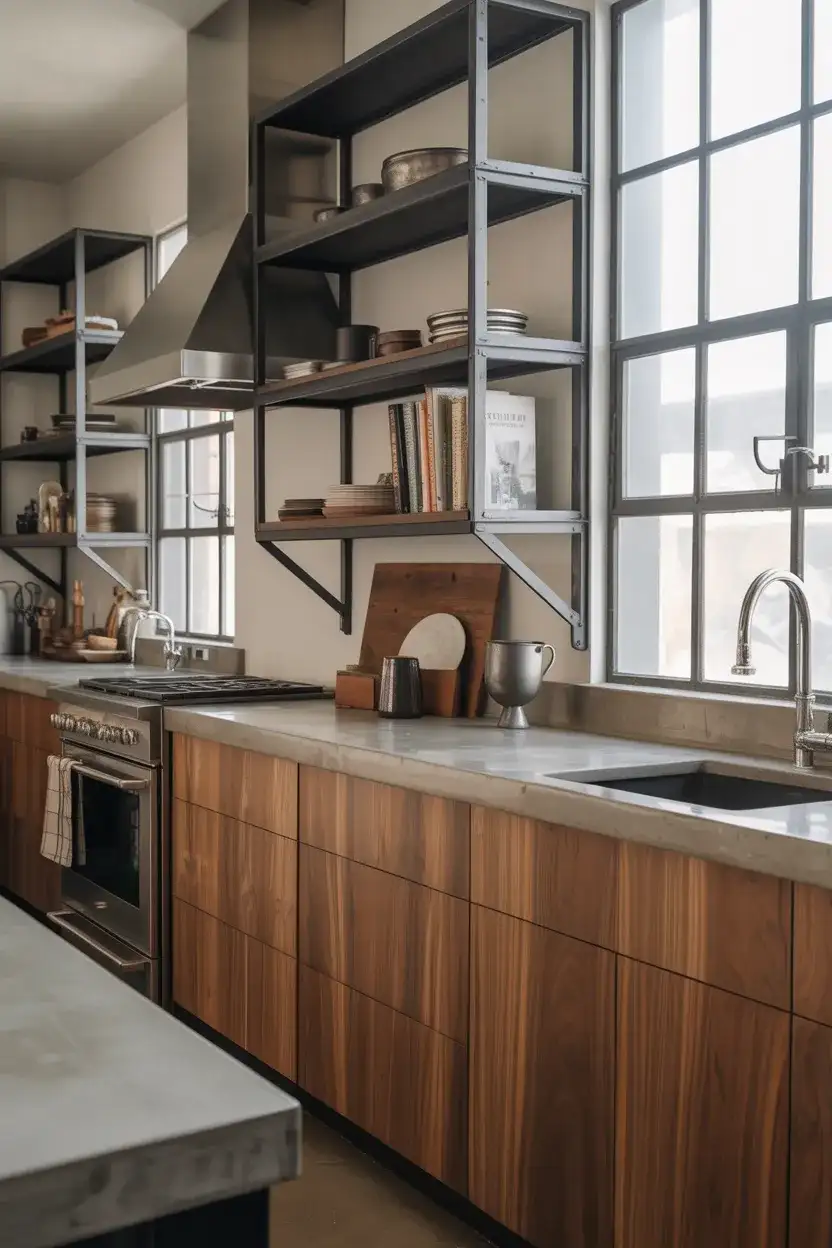
One thing to keep in mind with mixed-material kitchens: restraint is what separates an intentional design from a chaotic one. The rule of three is a good guide—pick no more than three primary materials and repeat them throughout the space. So if you’ve chosen walnut, blackened steel, and white marble, everything in the kitchen should draw from that palette. The moment you introduce a fourth or fifth material, the composition starts to fragment. Think of it the way a musician approaches a chord—the right three notes create harmony, but adding too many turns it into noise.
Conclusion
There’s never been a better time to rethink your kitchen cabinets—whether you’re dreaming about a full renovation, a strategic makeover, or just a hardware swap that shifts the whole vibe of the room. The ideas above are meant as starting points, not prescriptions; the best kitchens are the ones that reflect how you actually live, cook, and gather. We’d love to hear which direction you’re leaning—drop a comment below and tell us which of these cabinet ideas caught your eye, or share your own kitchen project in the works. The conversation is always better when it goes both ways.