There’s something quietly revolutionary happening in American homes right now—the personal library is making a full-blown comeback, and it looks nothing like the stuffy, off-limits rooms of decades past. Pinterest searches for home library spaces have surged heading into 2026, and it’s easy to see why: after years of screen fatigue, people are craving tactile, grounding spaces built around real books. Whether you’re working with a spare bedroom, an awkward hallway nook, or an entire dedicated room, this roundup covers ideas that range from moody dark academia vibes to bright, modern minimalism. Consider this your starting point for building the reading room you’ve been bookmarking.
1. Dark Academia Reading Room
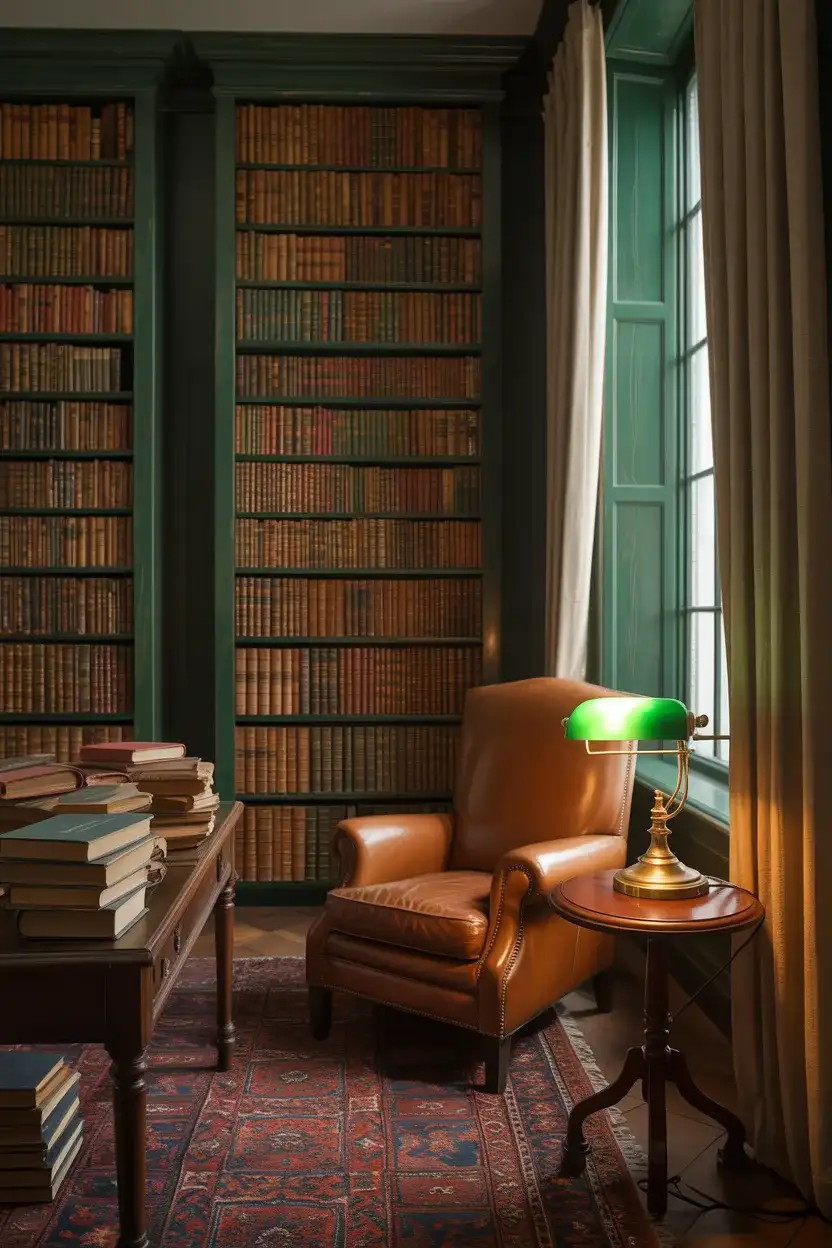
Few aesthetics have captured the American imagination quite like dark academia, and translating it into a full room design is easier than most people think. Start with walls in a deep forest green or oxblood, then layer in aged leather seating, brass reading lamps, and floor-to-ceiling wooden shelving stocked with cloth-bound volumes. The goal isn’t a museum—it’s a space that feels lived-in, slightly imperfect, and irresistibly bookish. A well-worn Persian rug and heavy linen curtains pull the whole thing together without trying too hard.
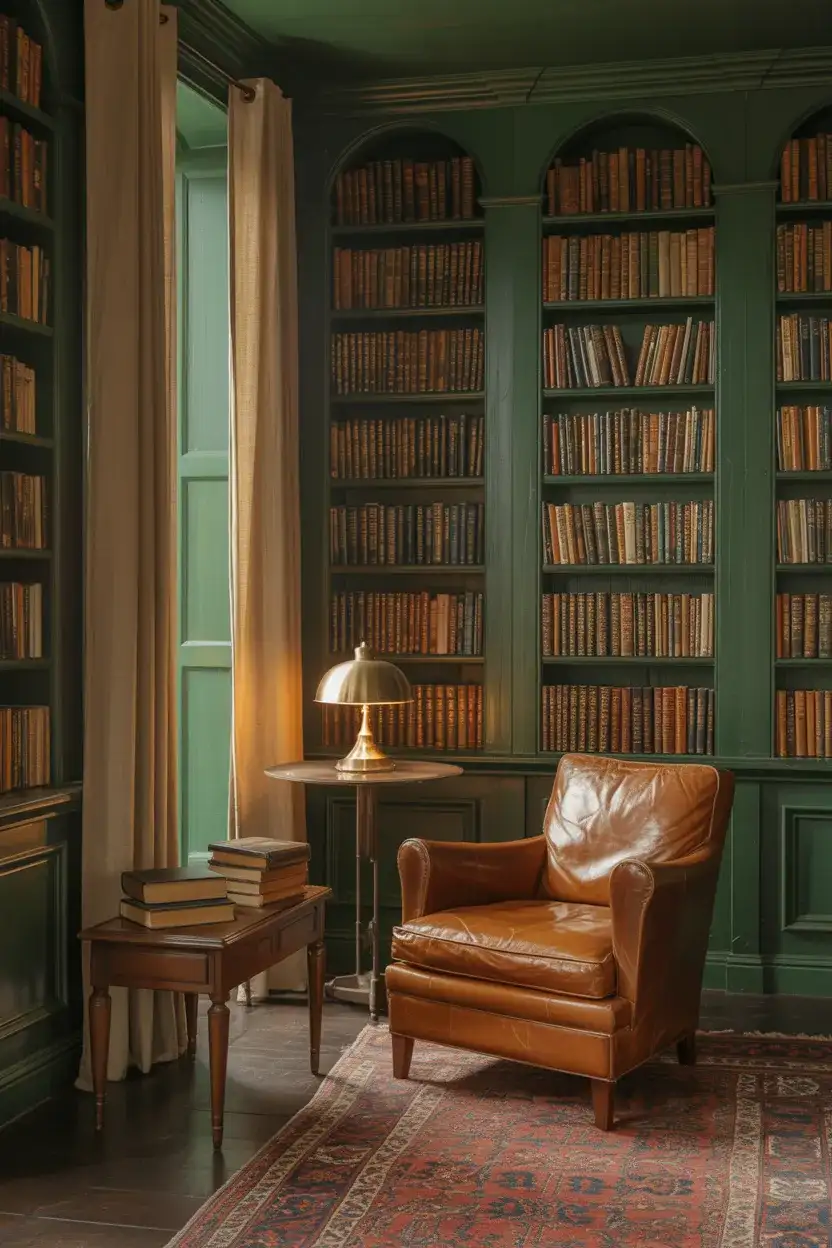
The most common mistake with this look is going too theatrical—think Halloween store rather than Oxford study. Keep the color palette restrained to two or three tones, and resist the temptation to add props that feel costumey. Real collections of books you’ve actually read, a scratched wooden desk you found at an estate sale, a throw blanket that’s genuinely soft—those details matter far more than any staged accessory. Authenticity is the whole point, and the room should feel like it evolved over years, not over a weekend.
2. Cozy Window Book Nook
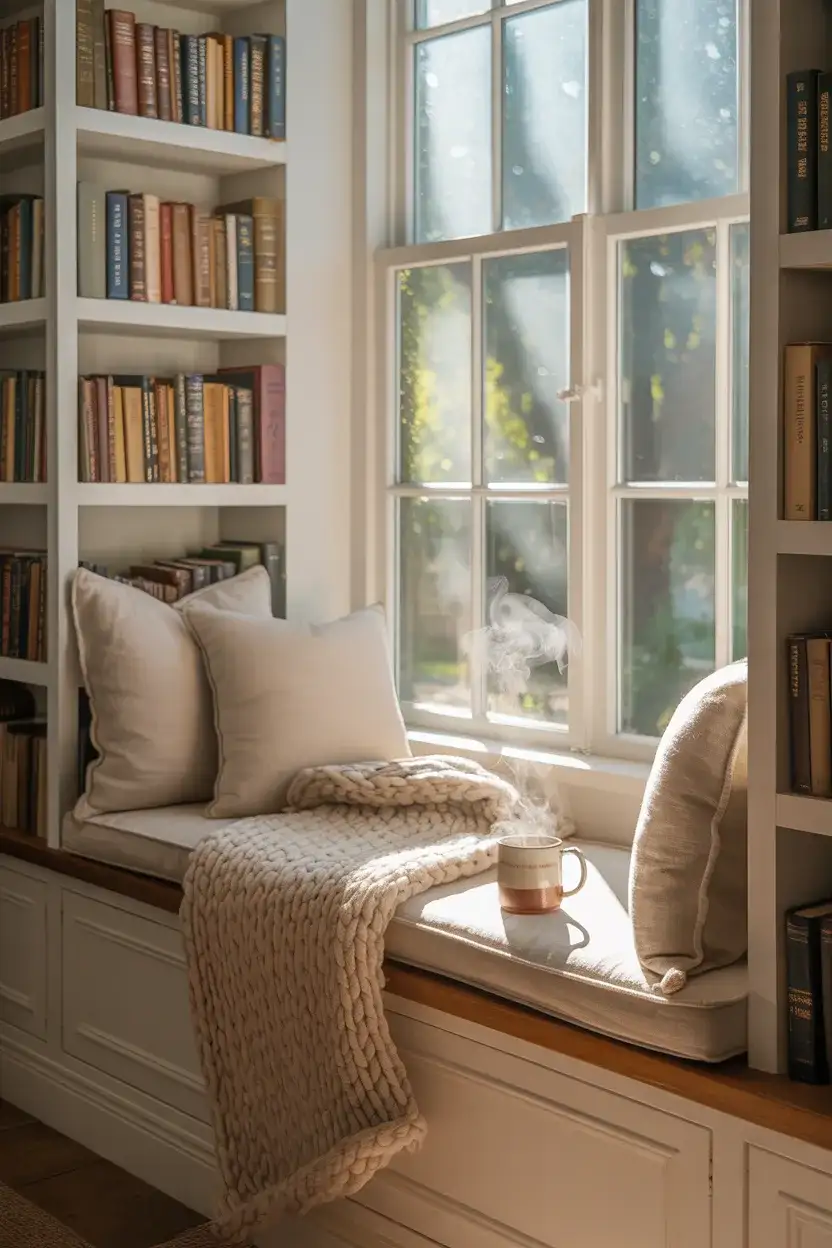
If you’ve ever scrolled through Pinterest longing for the perfect cozy book nook setup, this is the one to build first. A cozy window seat flanked by built-in shelving turns even the smallest dormer or bay window into a private retreat. Upholstered cushions in a nubby linen, a couple of lumbar pillows, and a reading light mounted above—that’s genuinely all it takes. The window itself does half the work, flooding the nook with soft natural light that makes every reading session feel like a small vacation from the rest of the house.
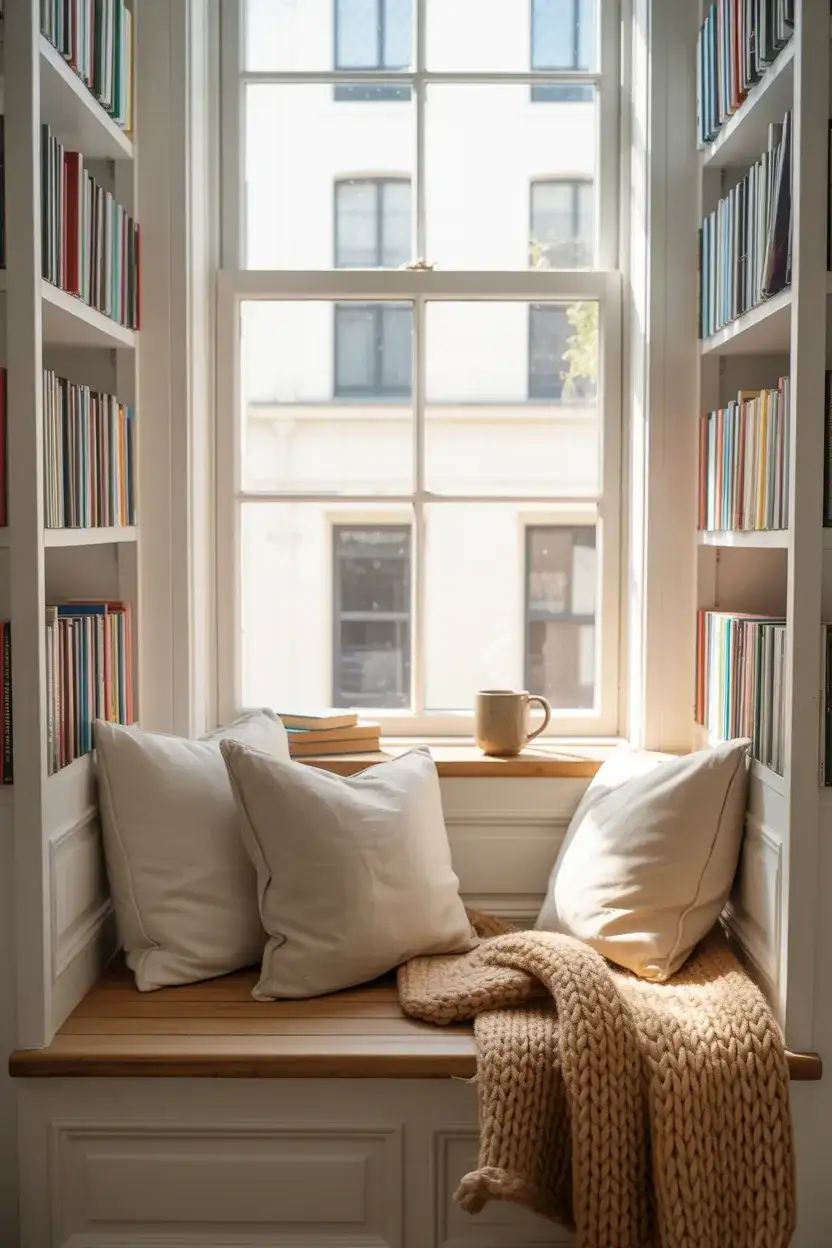
In homes across the Midwest and Northeast, these window nooks are particularly popular because they make the most of limited square footage during long winters. A family in Minneapolis told me they built one into their upstairs hallway landing, and it became the most-used spot in the entire house within a week. The key is storage underneath the seat—lift-top benches or deep drawers—so the nook earns its place practically as well as aesthetically.
3. Moody Library With Fireplace
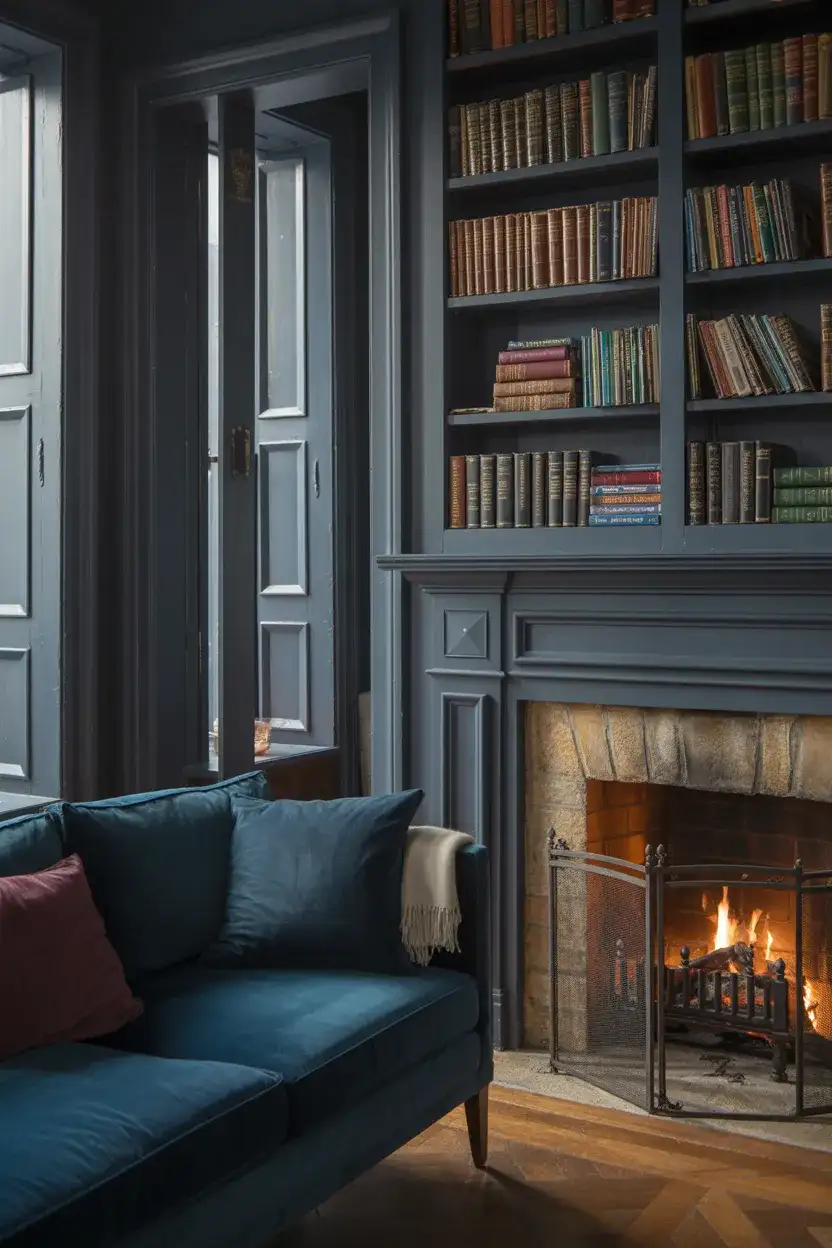
There’s a reason the combination of moody walls and a fireplace remains the single most pinned library look year after year—it works on a primal level. Deep charcoal, navy, or near-black paint on every surface creates an enveloping quality that turns a regular room into something almost cinematic. Pair it with a working or electric fireplace, and you’ve got a space that practically begs you to cancel plans and stay home. Built-in shelves on either side of the mantel give the room structure, while the fire itself becomes the natural focal point.
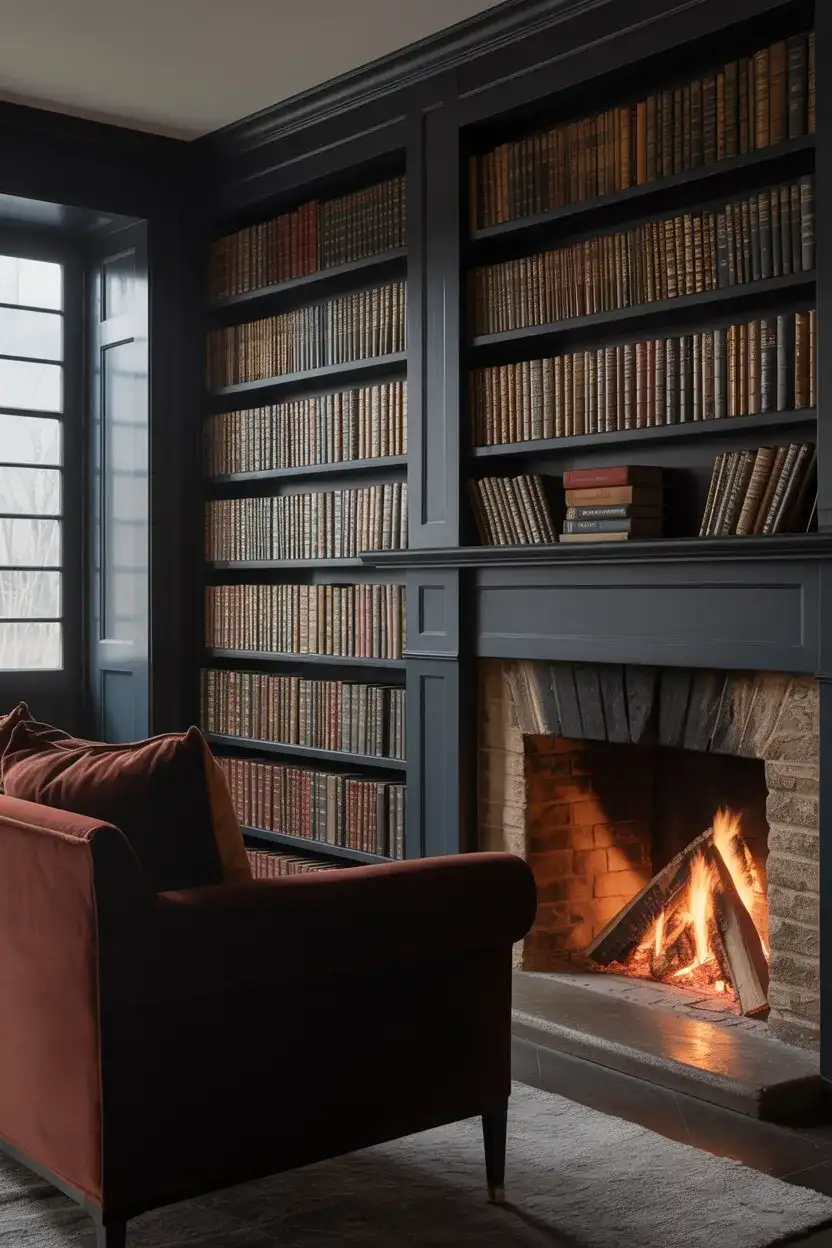
Budget-wise, this look is more achievable than it appears. A gallon of high-quality dark paint runs around forty to sixty dollars and transforms a room overnight. Electric fireplace inserts that look convincingly real start around three hundred dollars and need only a standard outlet—no chimney, no gas line, no contractor. The books themselves can be sourced from library sales and thrift stores for a few dollars a box. The moody library is proof that atmosphere doesn’t require a luxury budget.
4. Minimalist Modern Library Wall
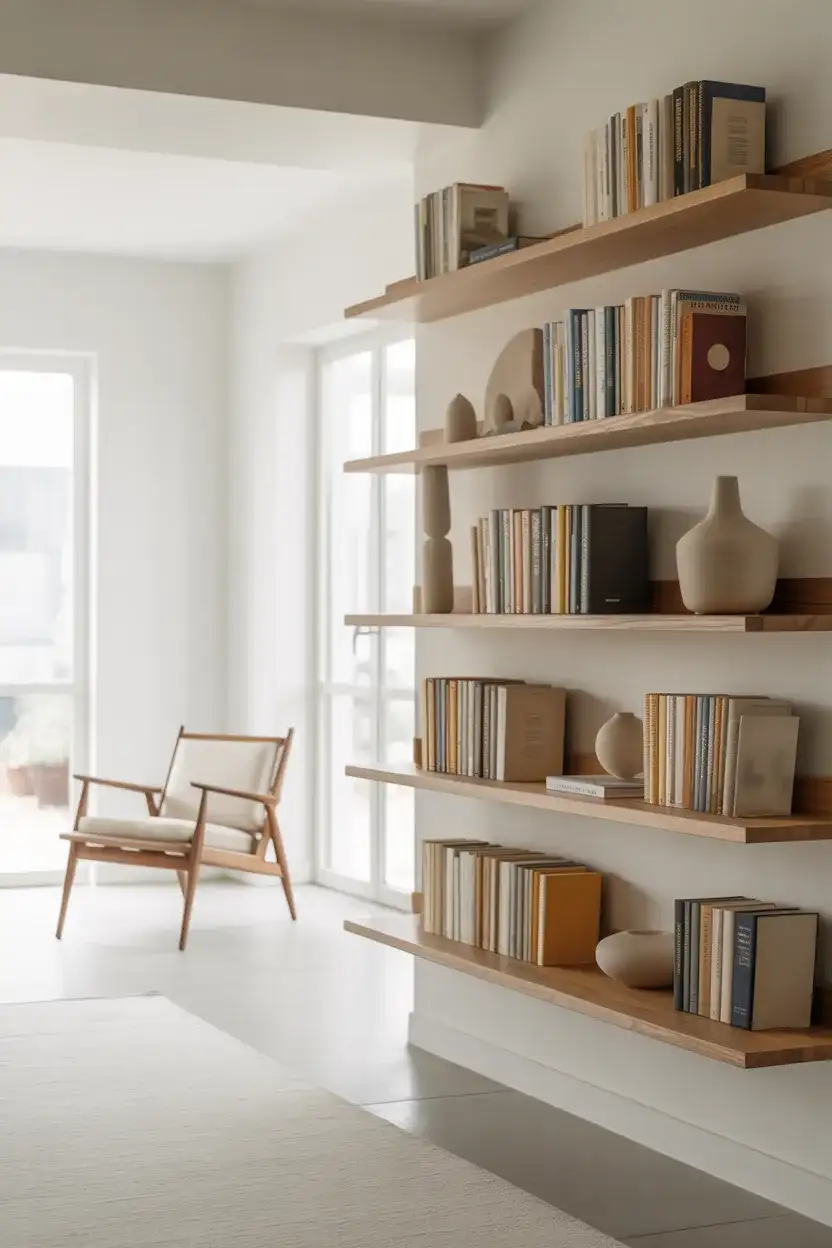
Not everyone wants velvet and candlelight. A modern library wall strips the concept down to essentials—clean shelving, a tight color palette, and careful curation rather than sheer volume. Floating shelves in matte white or light oak, spaced evenly across a single accent wall, give the room a gallery-like quality where every book and object earns its spot. This design ideas approach works brilliantly in open-plan apartments and contemporary homes where a full traditional library room would feel out of place.
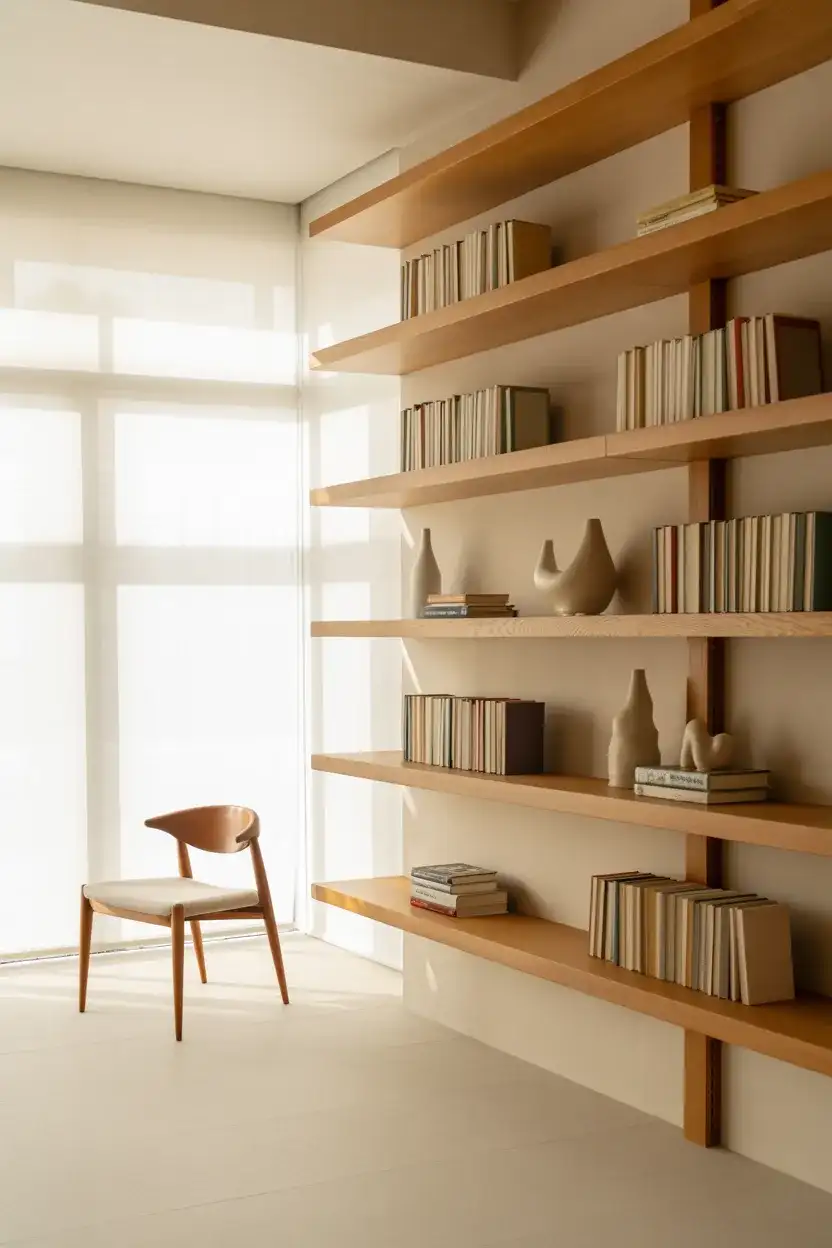
Where this look works best is in condos, lofts, and newer construction where built-ins aren’t practical or permitted. Renters especially love it because floating shelves install with minimal wall damage and come down clean when it’s time to move. A single accent wall of well-organized shelves can hold a hundred-plus books without overwhelming a small living area, and the visual effect—that sense of a considered, personal collection on display—makes any room feel more intentional.
5. Vintage Gentleman’s Study

The vintage study is having a genuine moment, fueled in part by period television and a broader nostalgia for spaces that feel unhurried and analog. Rich mahogany or walnut shelving, a heavy wooden desk, a green banker’s lamp, and leather-bound volumes set the scene. The aesthetic here isn’t about gender—anyone can build this room—but about a certain gravitas, a sense that the space is devoted to thinking, writing, and quiet concentration. Globe bars and vintage maps are optional but undeniably fun.
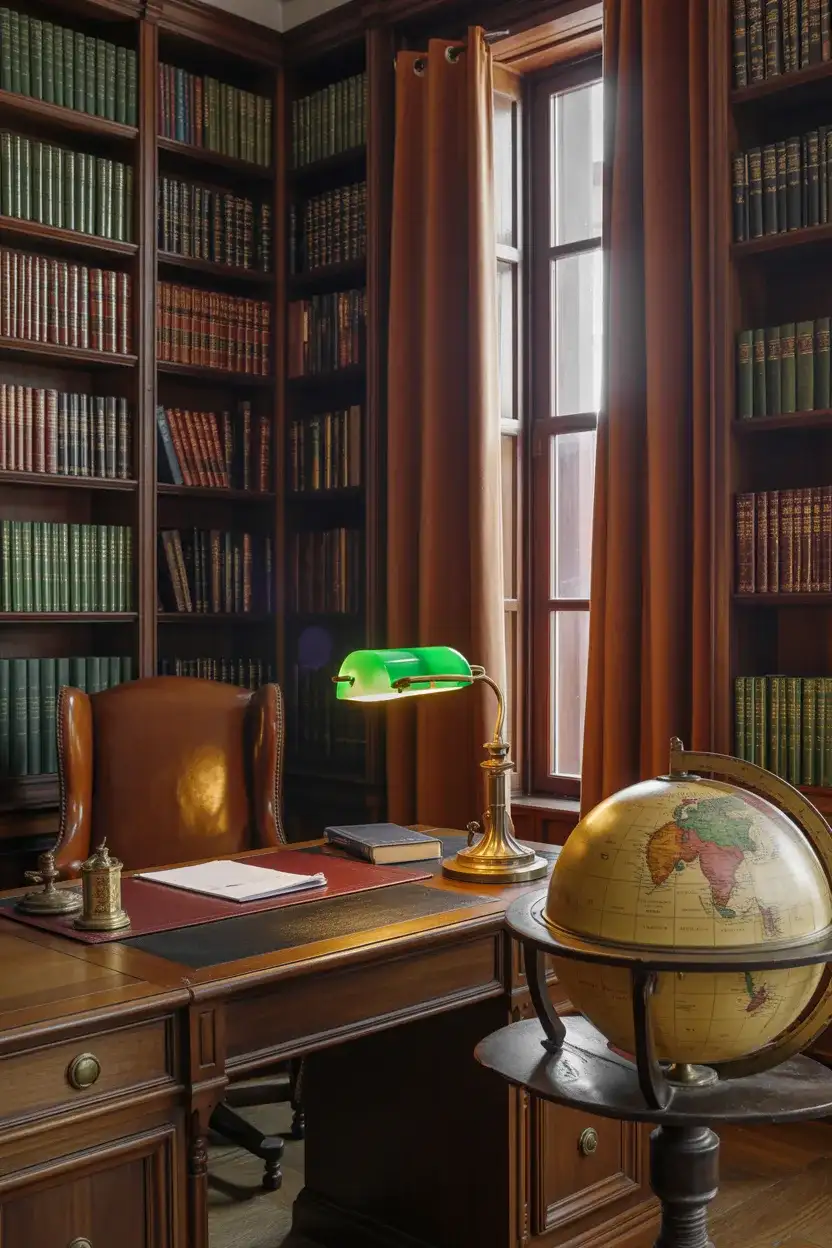
Interior designer Rachel Ashwell once noted that the best vintage rooms are the ones where nothing matches perfectly—and that principle applies here in full force. Mixing eras is the secret: a mid-century desk chair pulled up to a Victorian writing table, shelves that hold both antique encyclopedias and modern paperbacks. The curated-over-time quality is what separates a genuinely appealing vintage study from one that looks like a furniture showroom stage set.
6. Small Room Library Nook
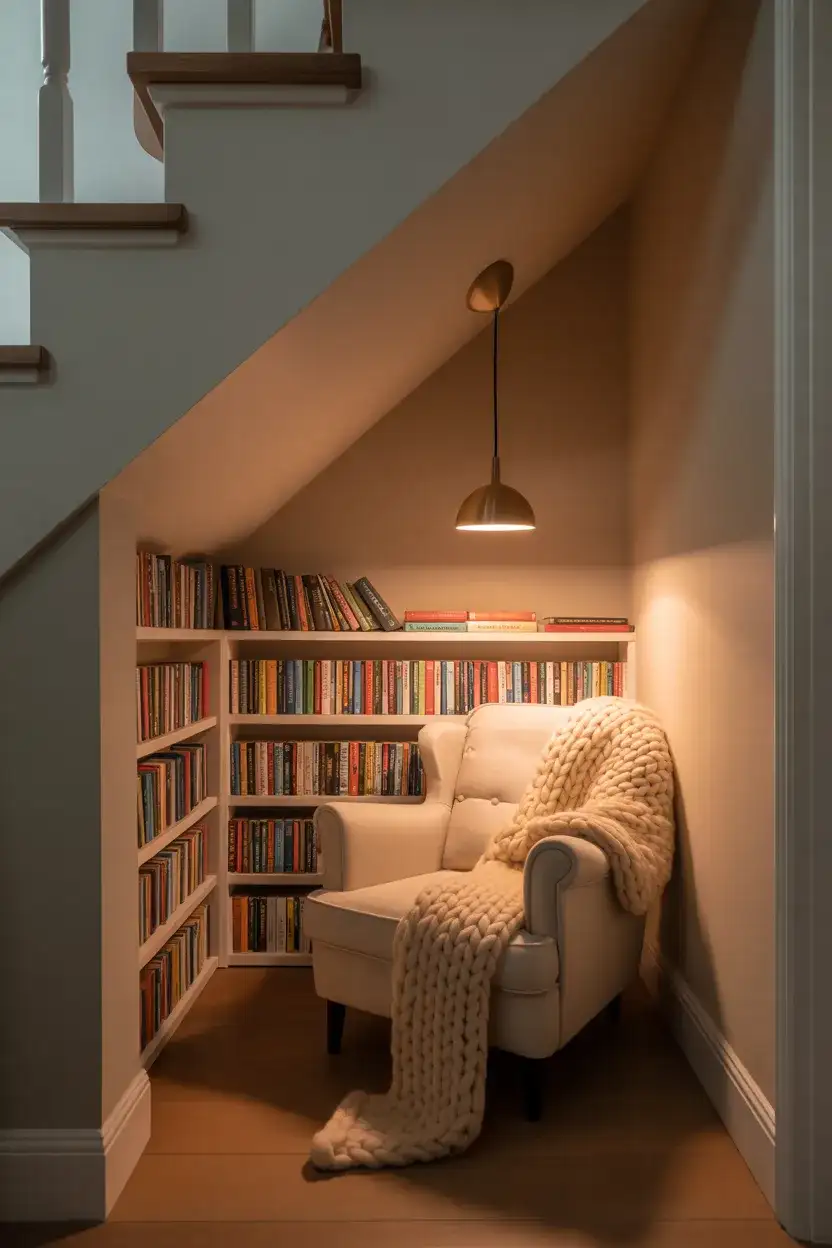
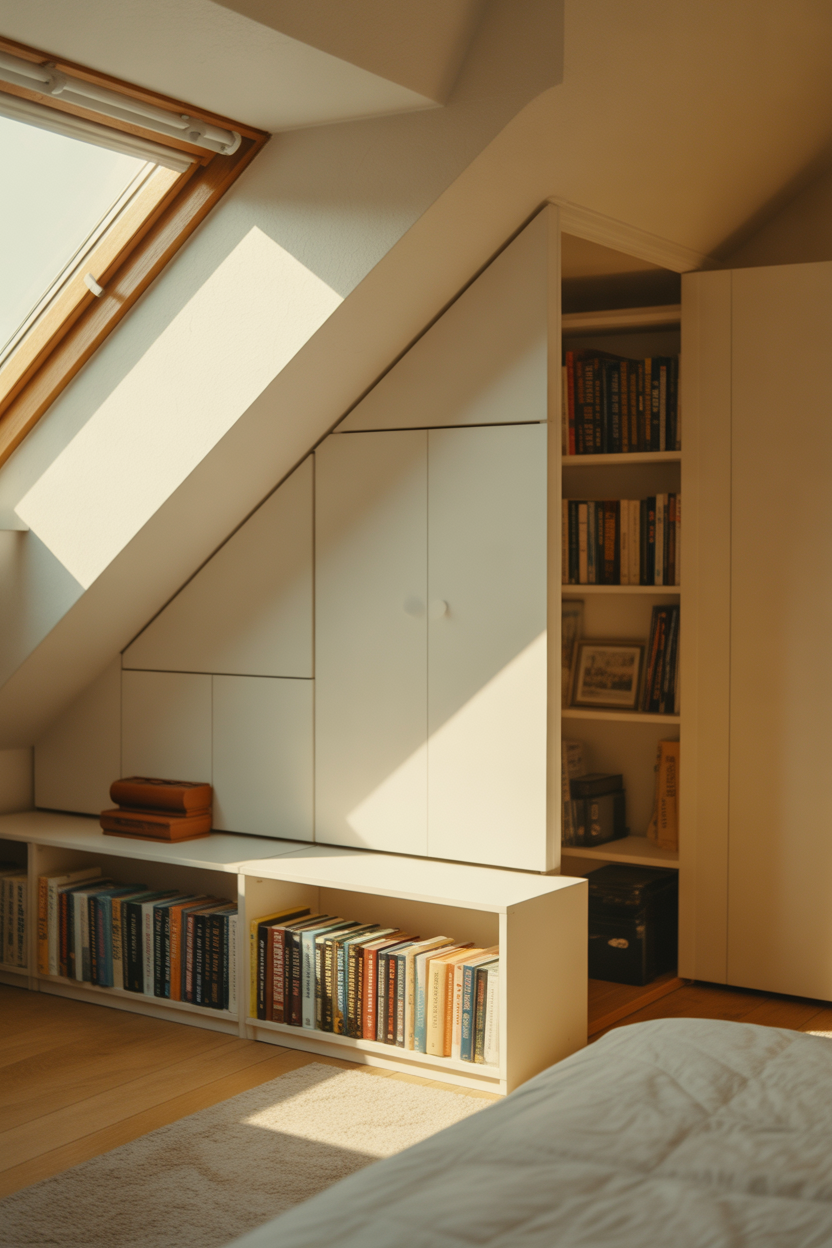
You absolutely do not need a spare room to have a home library, and that’s what makes ideas for small room solutions so popular on Pinterest right now. A single corner—behind a door, under a staircase, at the end of a narrow hallway—can become a fully functional cozy retreat with just a slim bookcase, a comfortable chair, and decent lighting. The constraint is actually a gift: a tiny footprint forces you to choose only the books and objects you truly love, which makes the space feel curated instead of cluttered.
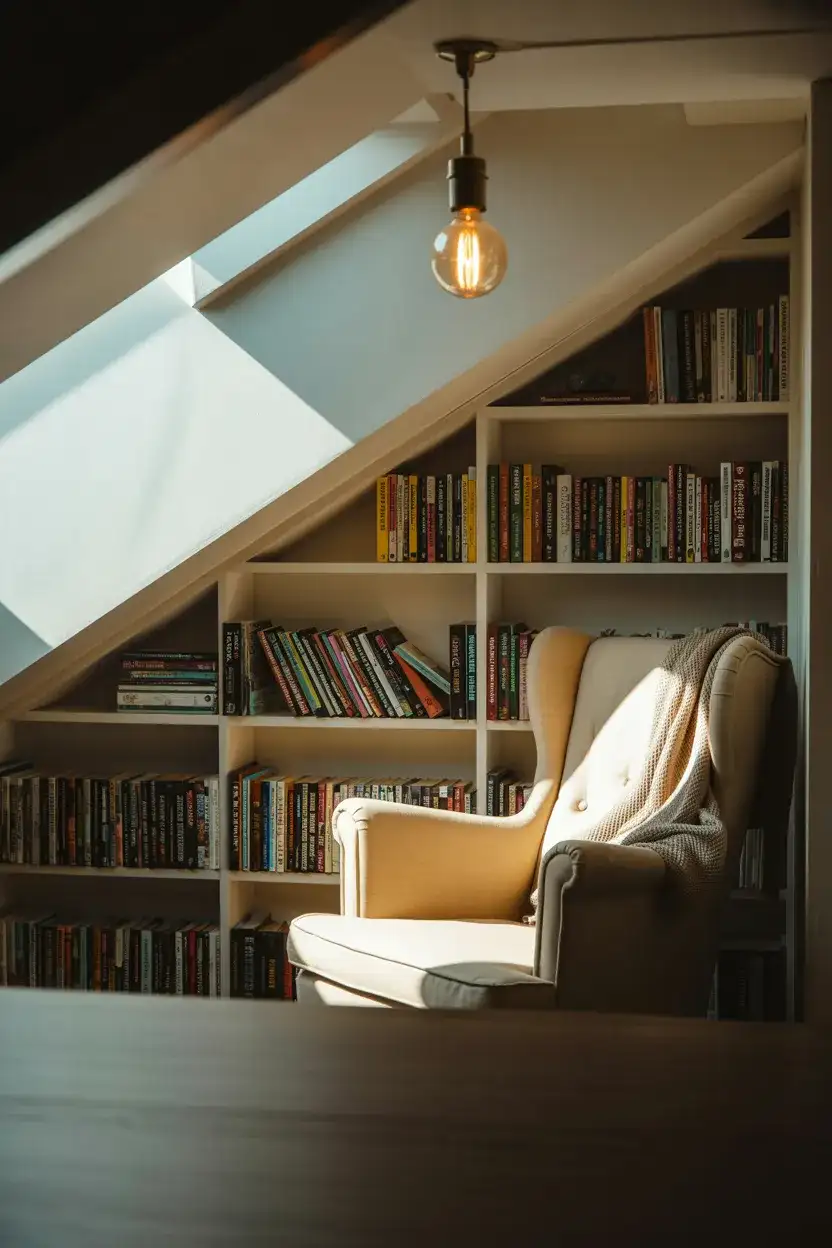
Most American homeowners dramatically overestimate how much space a library requires. A comfortable reading chair takes up roughly nine square feet. A standard bookcase is about six square feet of floor space and holds around a hundred books. That means you can build a legitimate personal library in roughly fifteen to twenty square feet—less than a walk-in closet. Once you stop thinking of a library as a room and start thinking of it as a zone, possibilities open up everywhere in the house.
7. Luxury Floor-to-Ceiling Library
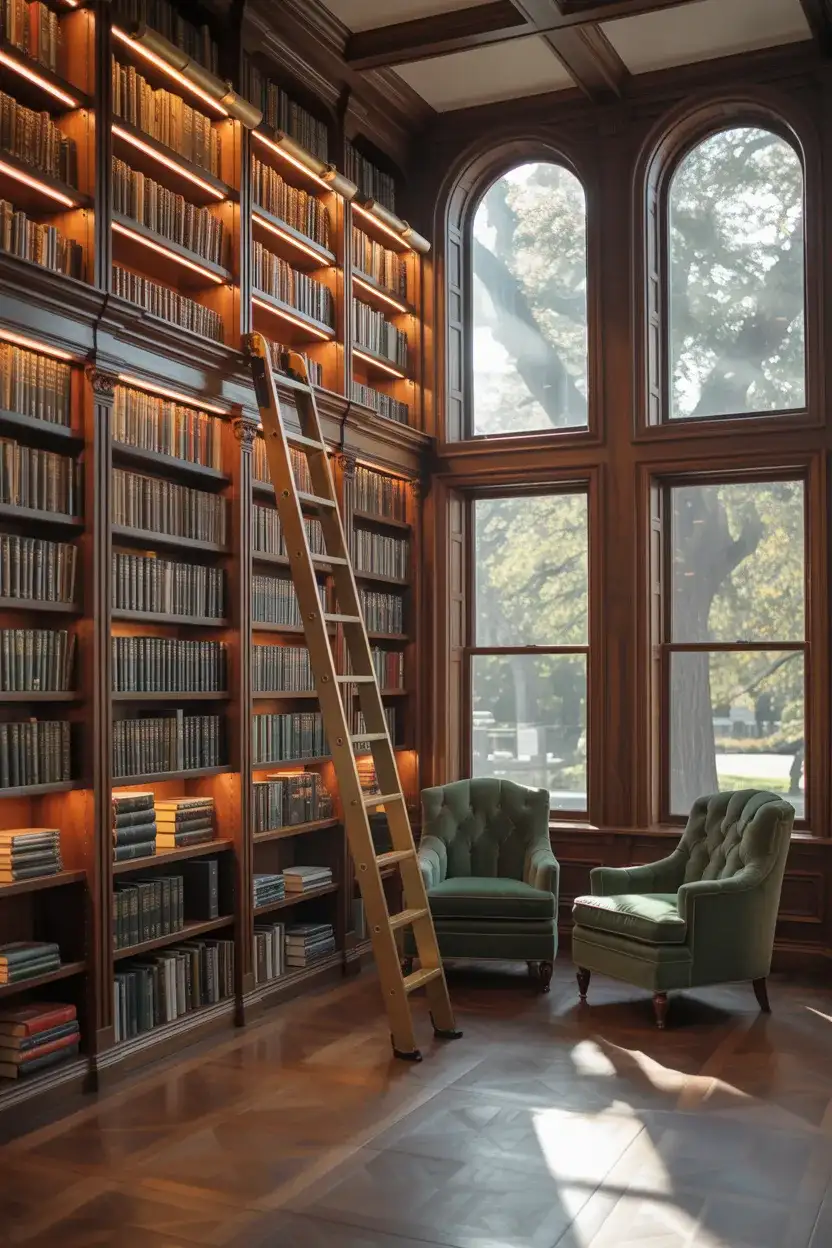
When budget and square footage allow, a luxury floor-to-ceiling library remains the ultimate dream for book lovers. We’re talking custom millwork from baseboard to crown molding, adjustable shelving to accommodate every book size, integrated lighting that washes each shelf in warm amber, and seating worthy of an afternoon-long reading marathon. This is the kind of room that stops guests in their tracks and immediately becomes the centerpiece of a home tour. It’s ambitious, yes—but it’s also the most requested home library design in the country.
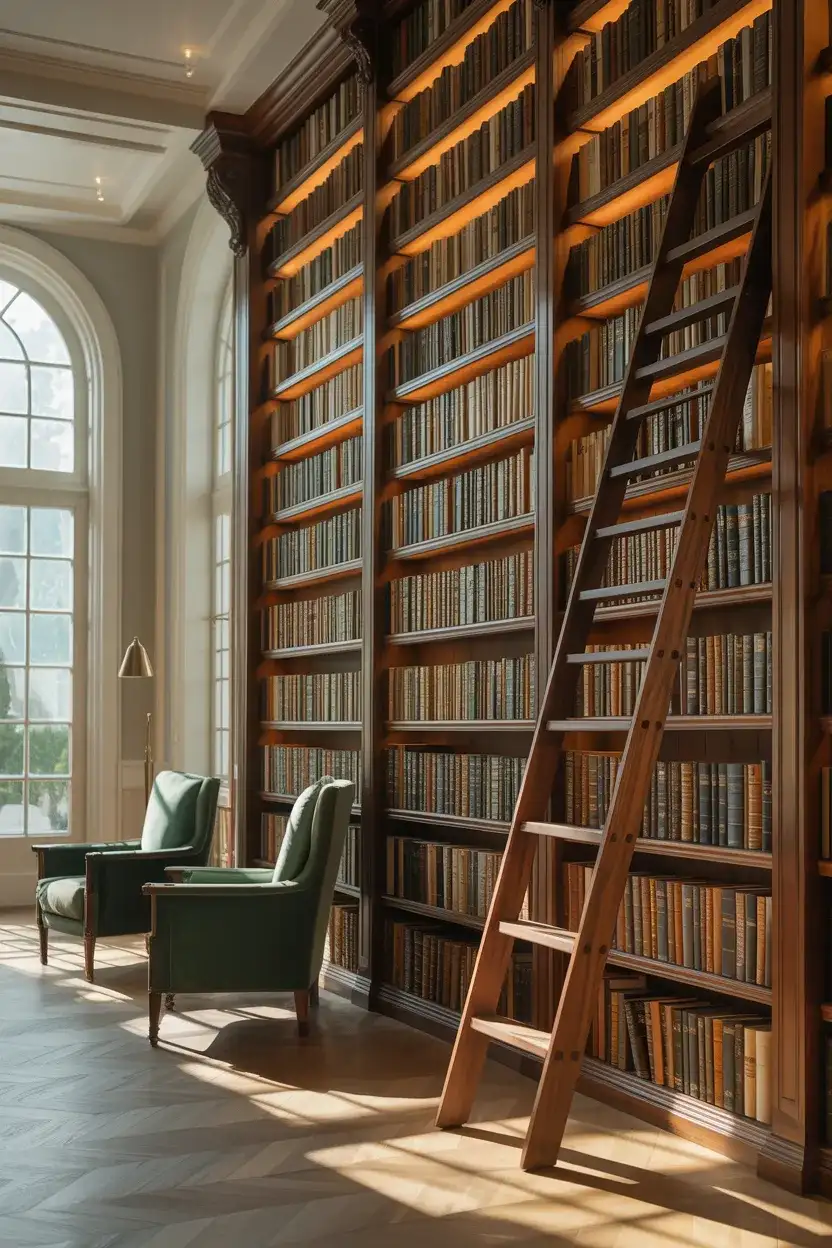
Custom built-in library walls typically run between eight thousand and twenty-five thousand dollars depending on materials, finish, and region, but the return on investment extends well beyond resale value. Real estate agents consistently report that homes with dedicated libraries or studies sell faster in suburban markets, particularly in the Northeast and Pacific Northwest. It’s one of the few home upgrades that functions as both a daily-use living space and a genuine selling feature when the time comes.
8. Library Ladder Statement Wall
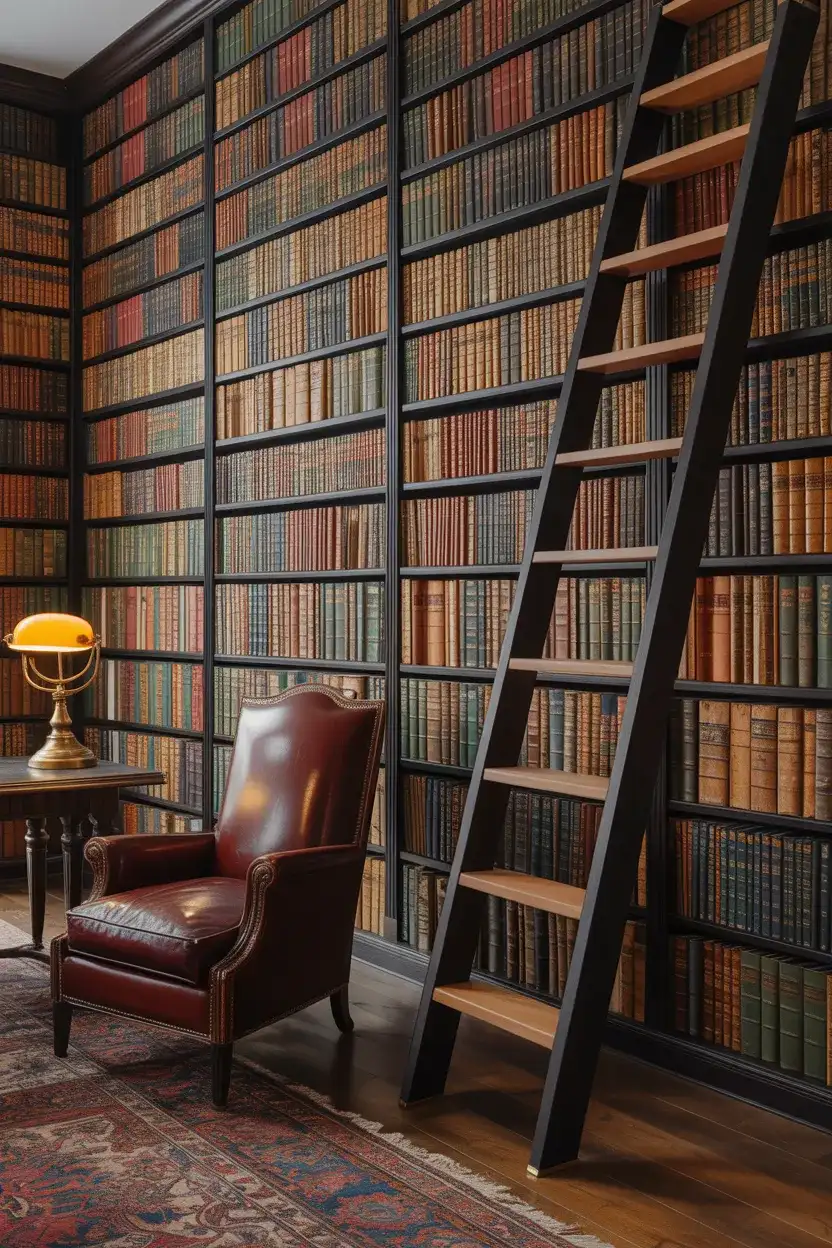
Nothing signals “serious book collection” quite like a rolling ladder mounted to a tall shelf wall. It’s the single most dramatic visual element you can add to a home library, and it serves a real purpose if your shelves extend above comfortable reaching height. A brass or matte black rail-mounted ladder turns a flat wall of books into something architectural—a statement that says this household reads, and reads a lot. Pair it with warm decor accents and a comfortable chair below, and the wall becomes a destination within the room.
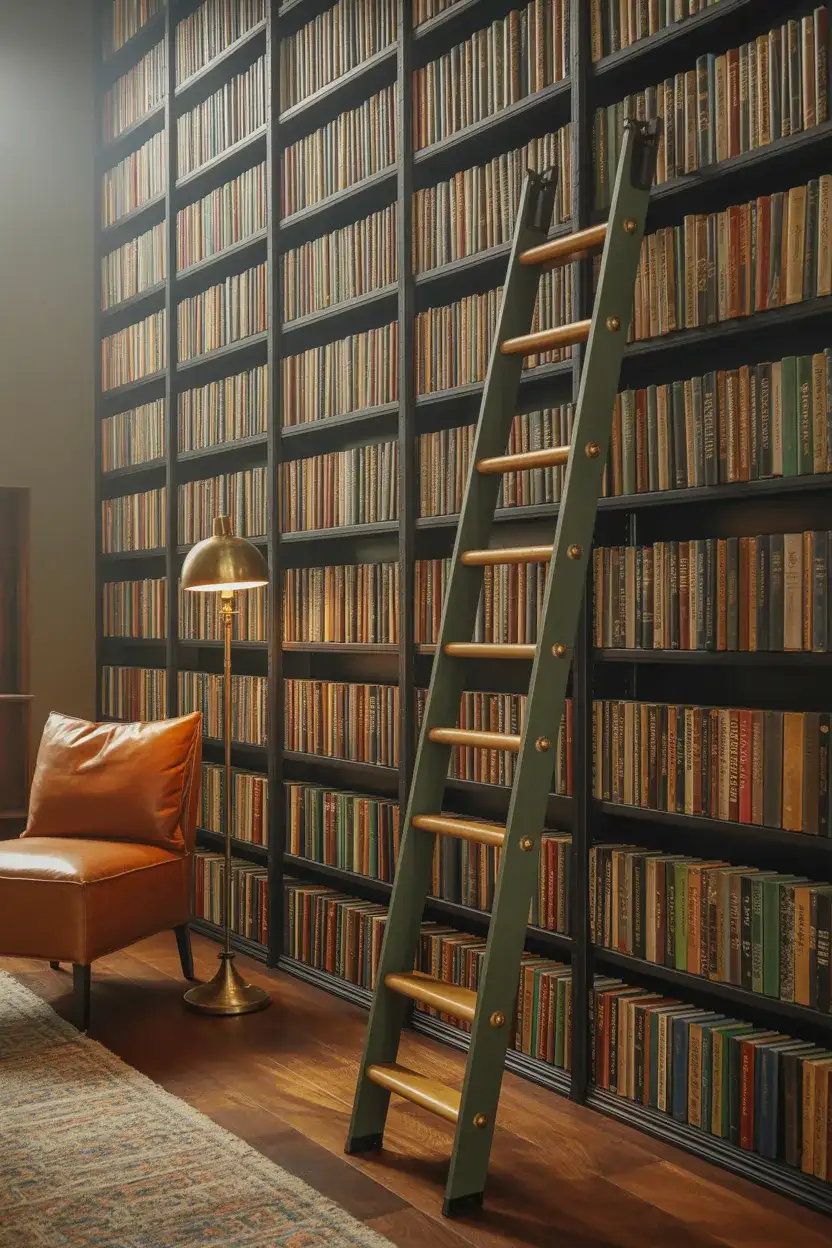
A homeowner in Portland shared with me that installing a rolling ladder was the single project that made their open living room finally feel “finished.” They’d tried art walls, accent paint, and various furniture arrangements—nothing clicked until the books went floor to ceiling and the ladder went up. Hardware kits for rail-mounted library ladders start around four hundred dollars for a basic steel setup, while custom wood-and-brass versions can run well over two thousand.
9. Home Office Library Combo
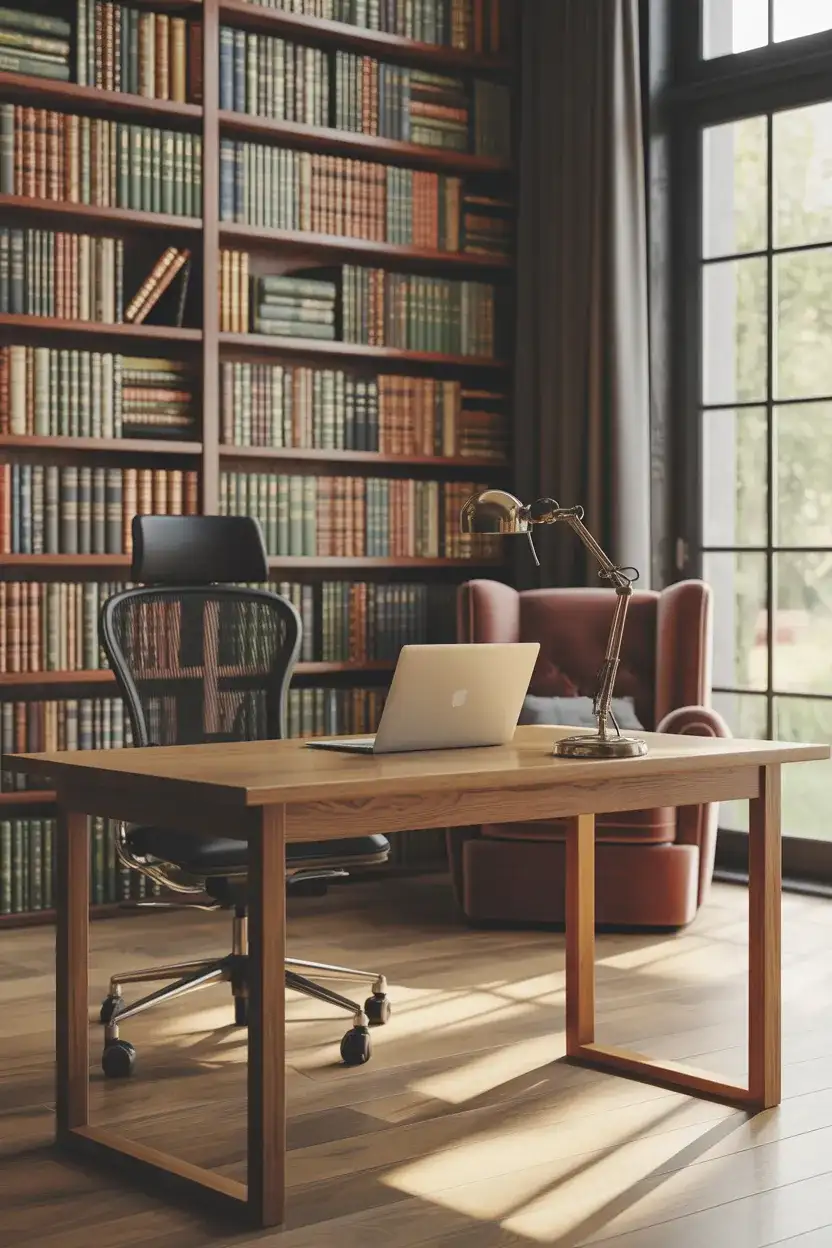
The line between home office and home library has effectively dissolved for millions of remote workers, and the smartest cozy design solutions embrace that overlap rather than fighting it. A dual-purpose room with a solid desk anchored against a wall of bookshelves combines workspace productivity with the grounding comfort of being surrounded by personal books. The trick is zoning: the desk area stays functional and clutter-free, while the shelving and seating side of the room invites you to lean back and think.
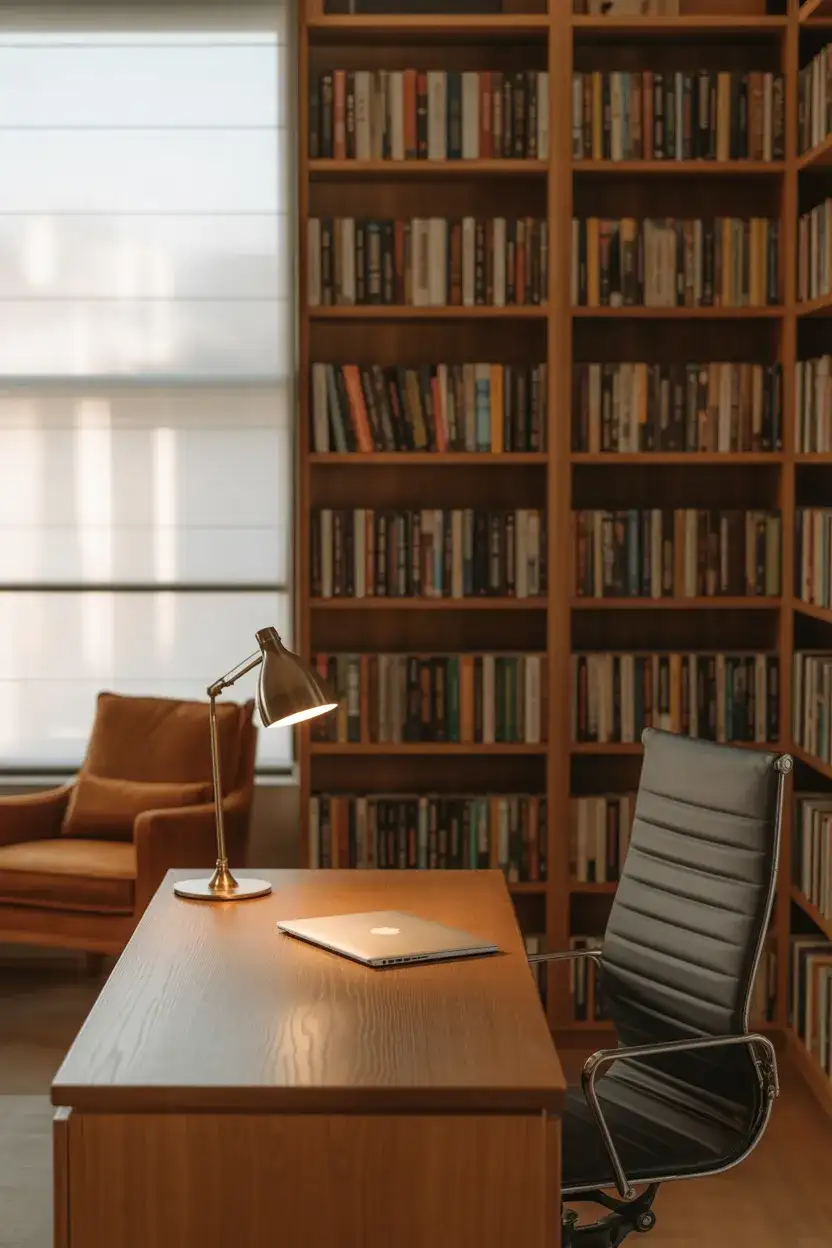
Where this works best is in homes where a dedicated library room isn’t feasible but a home office already exists or is being planned. By integrating bookshelves into the office design from the start—rather than adding them as an afterthought—you create a space that feels intentional rather than cobbled together. The office gets personality and warmth; the library gets daily use instead of sitting empty. It’s the most practical dual-use room in any modern American home.
10. Cozy Aesthetic Reading Corner
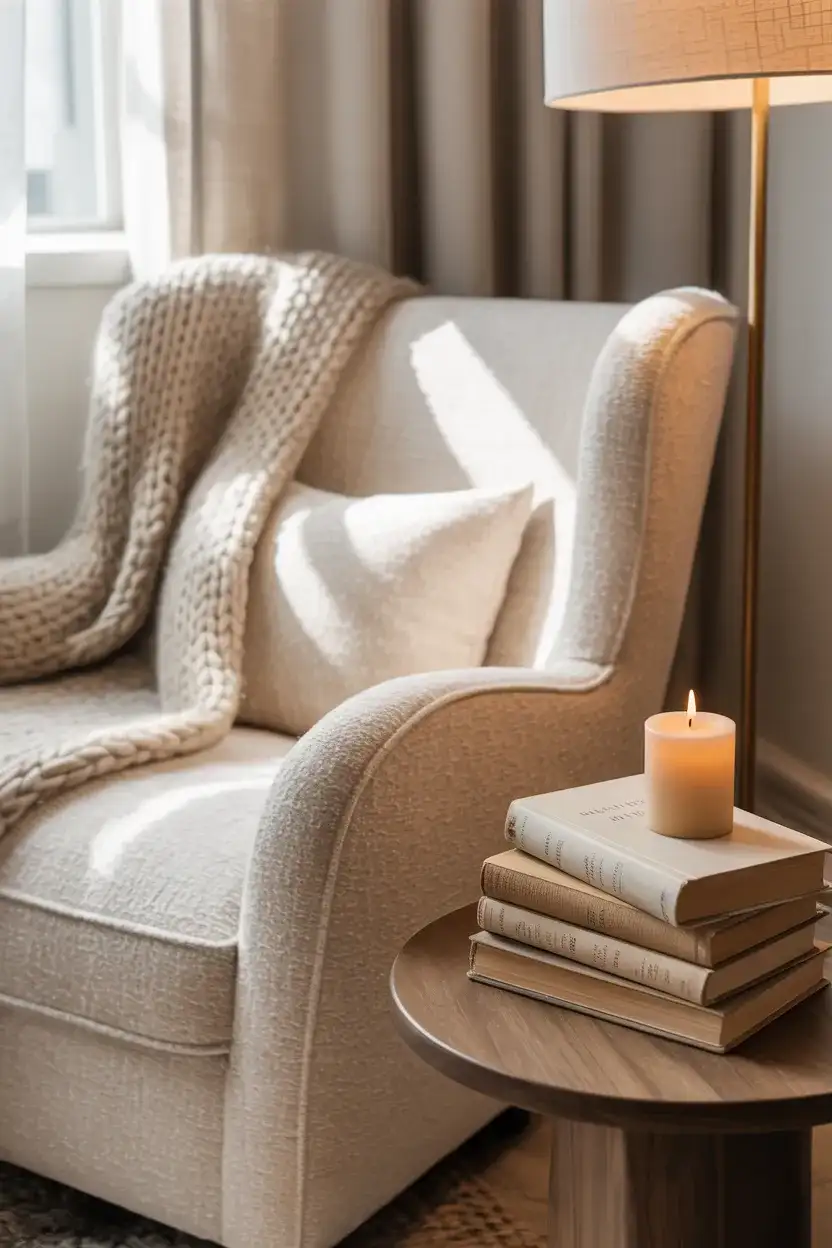
Sometimes you don’t want a whole room—you just want a corner that feels like a warm hug. The idea’s cozy aesthetic approach strips the concept down to its emotional core: a single oversized chair, a small side table, a soft throw, good light, and a short stack of whatever you’re reading right now. The beautiful part of this idea is its portability—you can build it in a bedroom, a living room, or even a wide landing, and it takes maybe an hour to set up from scratch.
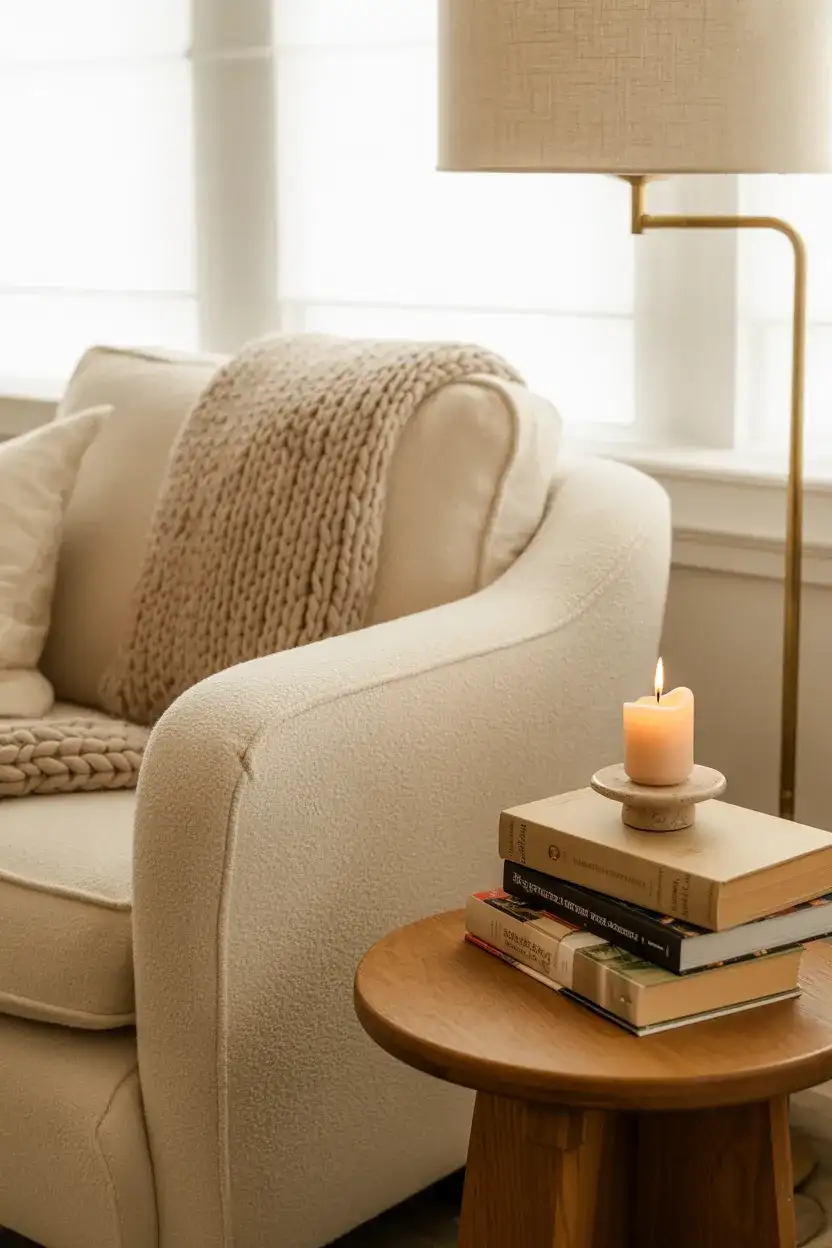
I set one of these up in my own apartment last fall using nothing but a secondhand armchair (sixty dollars from Facebook Marketplace), an IKEA side table, and a reading lamp I already owned. Total cost was under a hundred dollars, and it immediately became the spot where I spend my evenings instead of on the couch scrolling my phone. That’s the real power of a dedicated reading corner—it changes behavior, not just décor.
11. DIY Built-In Bookshelf Wall
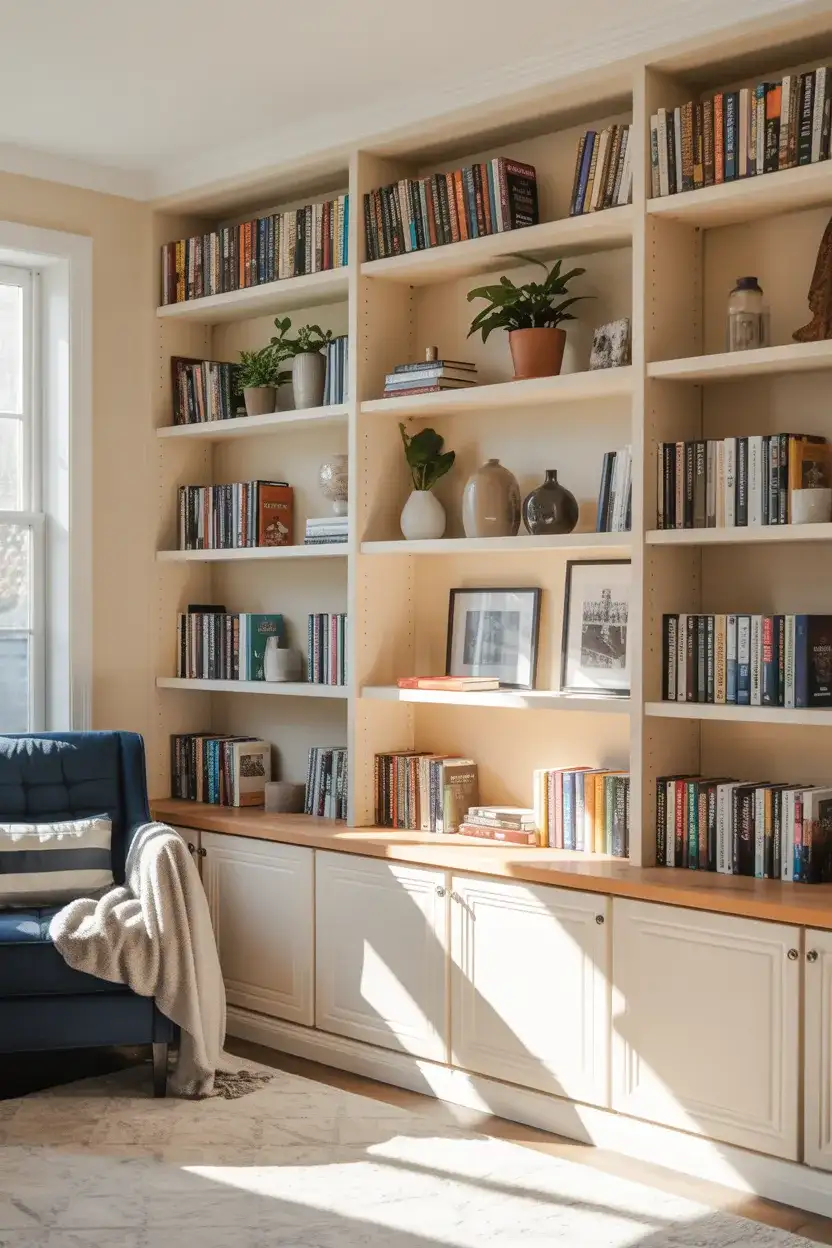
The diy built-in bookshelf is one of the most satisfying weekend projects a homeowner can tackle, and the results rival professional millwork at a fraction of the price. Using stock cabinets from a home improvement store as the base and adding plywood shelving, trim, and paint above, you can create a custom-looking library wall for under five hundred dollars in materials. This idea approach has exploded on Pinterest and YouTube because the transformation is so dramatic—a blank wall becomes the most photographed feature in the house.
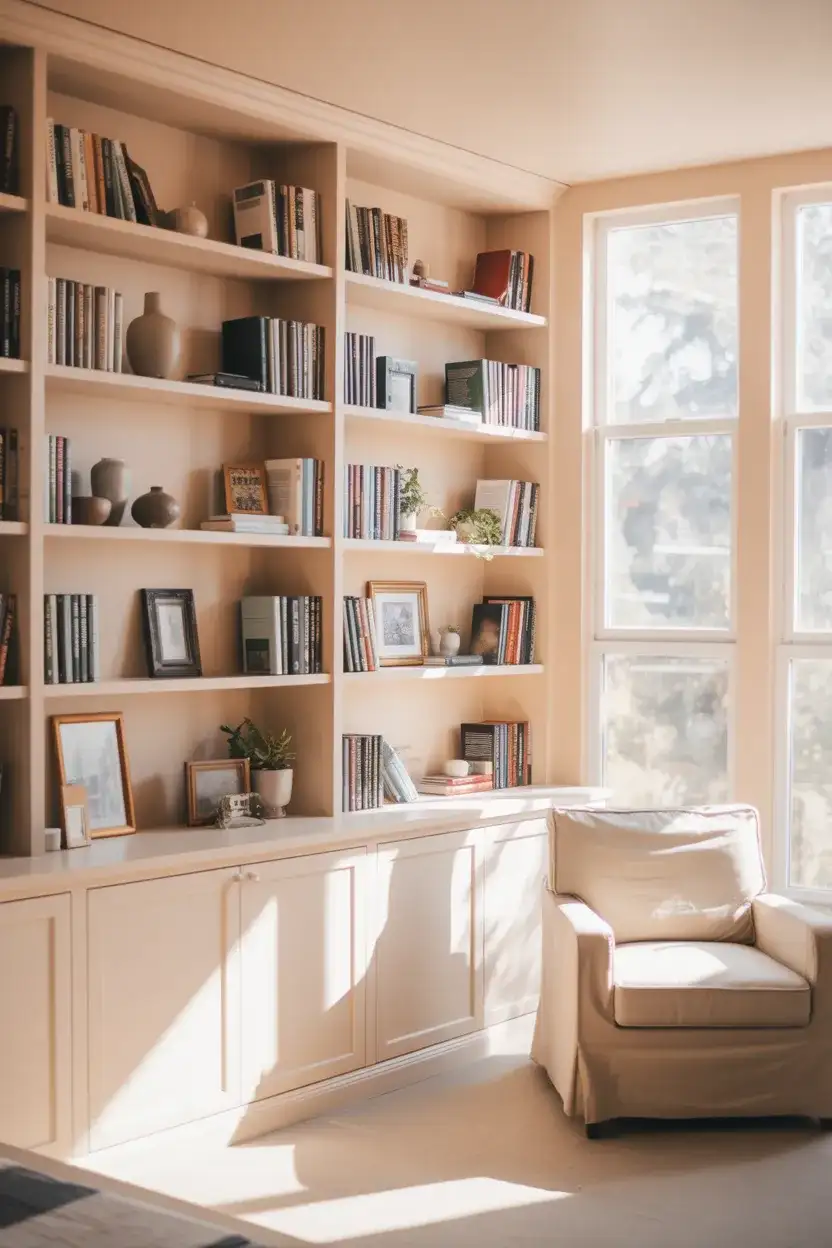
The biggest mistake DIYers make is skipping the trim work. Raw plywood shelves mounted to a wall look exactly like what they are—plywood shelves mounted to a wall. But add crown molding at the top, baseboards at the bottom, and thin facing strips along the shelf edges, then paint everything the same color as the wall, and suddenly the whole thing looks like it was built with the house. That finishing step takes an extra afternoon but makes the difference between “nice shelves” and “wait, are those custom?”
12. Romantic Candlelit Library
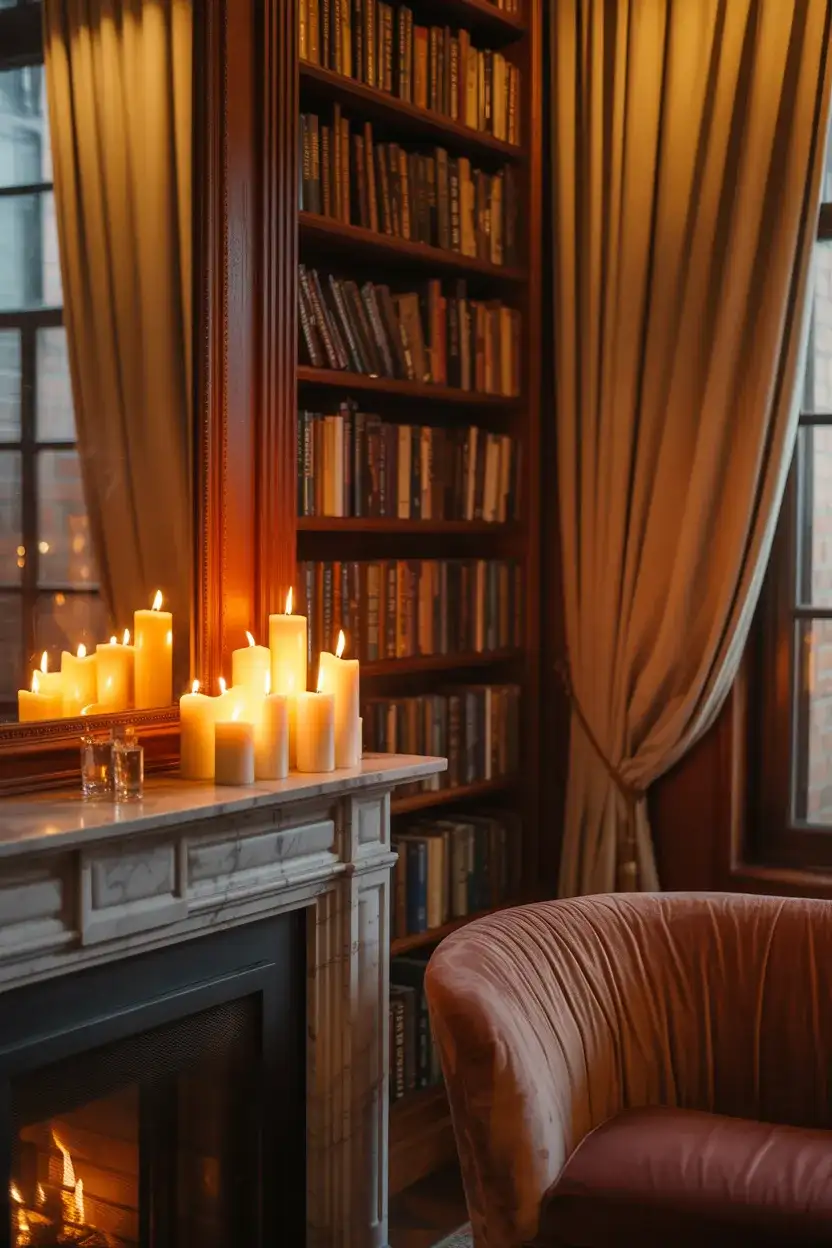
Candles and books have been companions for centuries, and a library designed around that warm, flickering glow has an atmosphere no overhead fixture can replicate. This inspo leans into soft room luxury—think clusters of pillar candles on the mantel, taper candles on a side table, and LED candles tucked safely onto shelves among the books. The palette stays warm and tonal: creams, ambers, soft roses, and antiqued gold. Every surface catches the light a little differently, and the whole room seems to breathe.
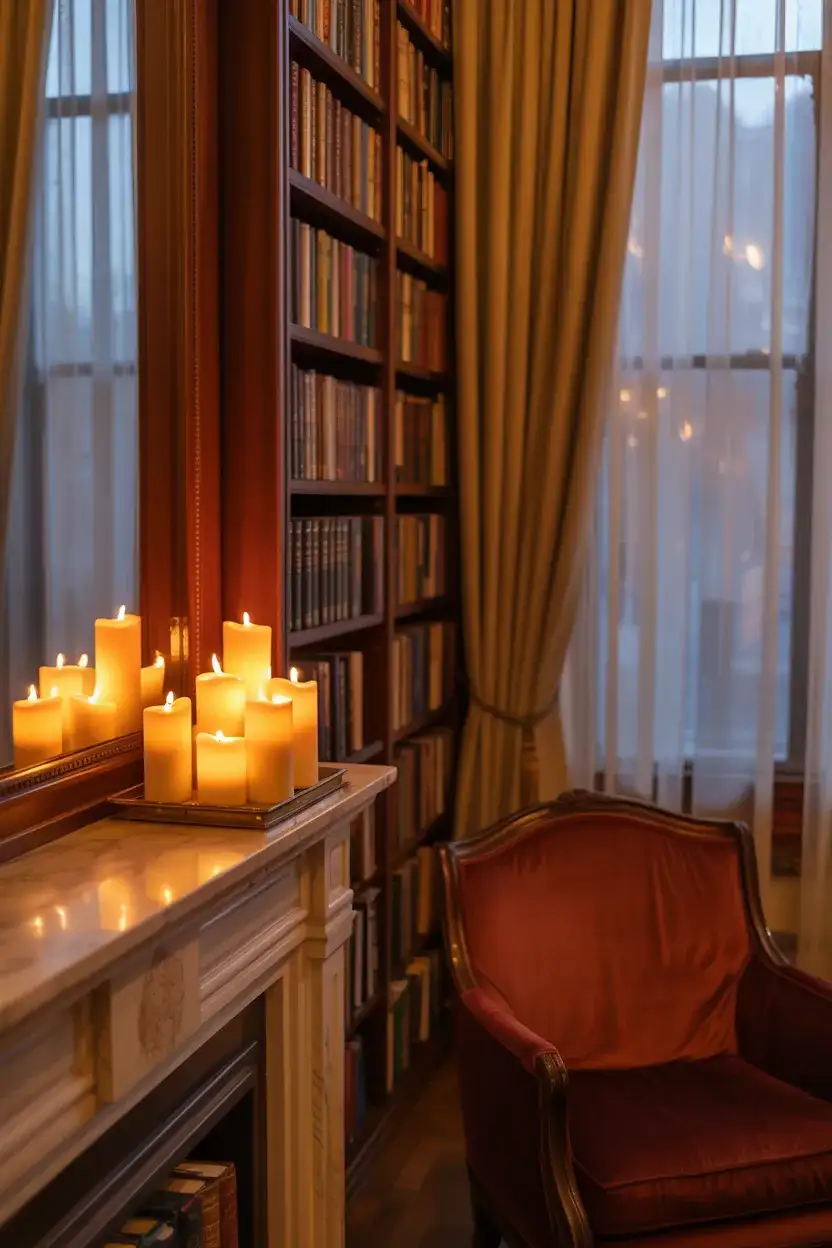
For anyone concerned about fire safety—and you should be—high-quality LED candles have become remarkably realistic. Brands like Luminara use a patented flickering wick that genuinely fools the eye, especially in a room where the ambient light is already low. Place real candles only on solid, non-flammable surfaces well away from shelves, and use LEDs everywhere else. You get the romance without the risk, and your book collection stays unscorched.
13. Bright Coastal Library
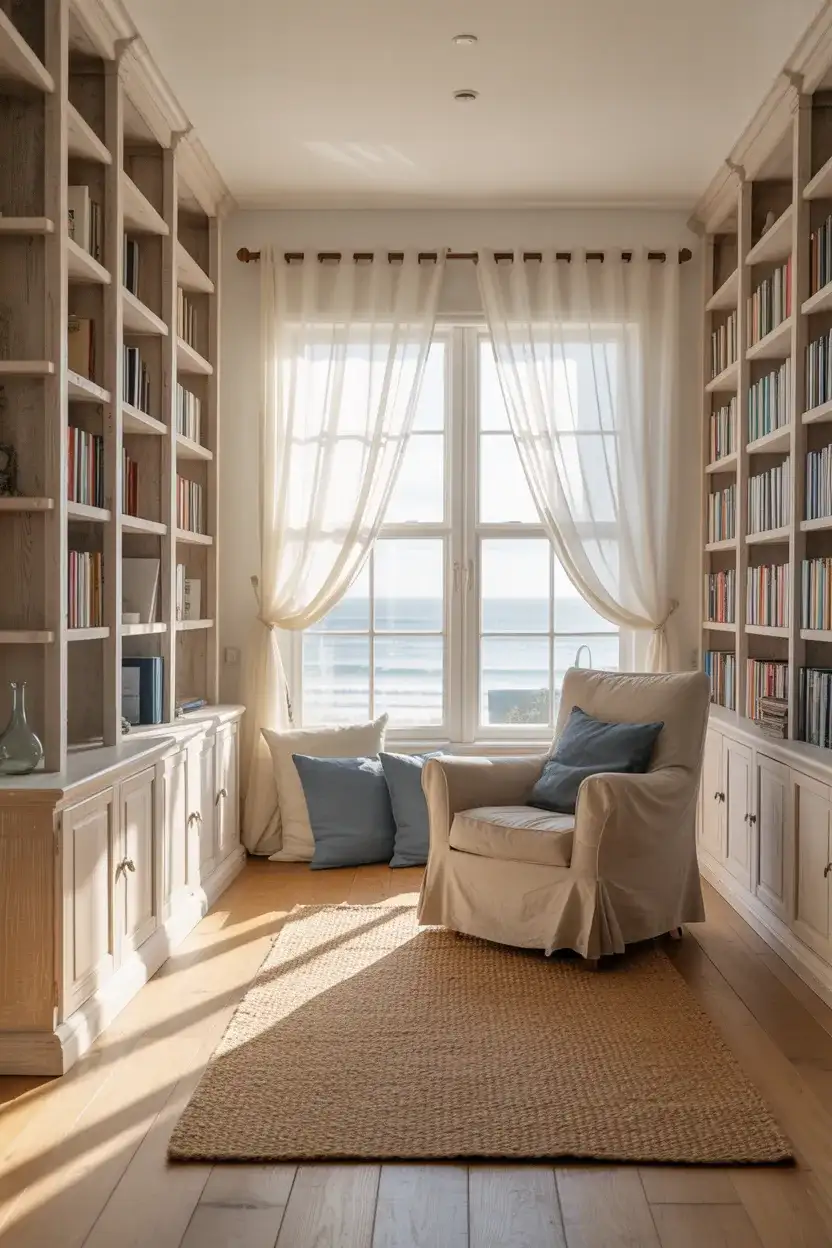
Home libraries don’t have to be dark to be beautiful. A coastal-inspired room approach floods the space with white, sandy neutrals, and ocean blues, creating a reading room that feels breezy and open. Whitewashed or pale oak shelving, linen slipcovers on the seating, woven baskets for corralling magazines, and the occasional nautical object—a piece of driftwood, a blue glass vase—give the room personality without heaviness. It’s the anti-dark-academia, and it’s just as compelling.
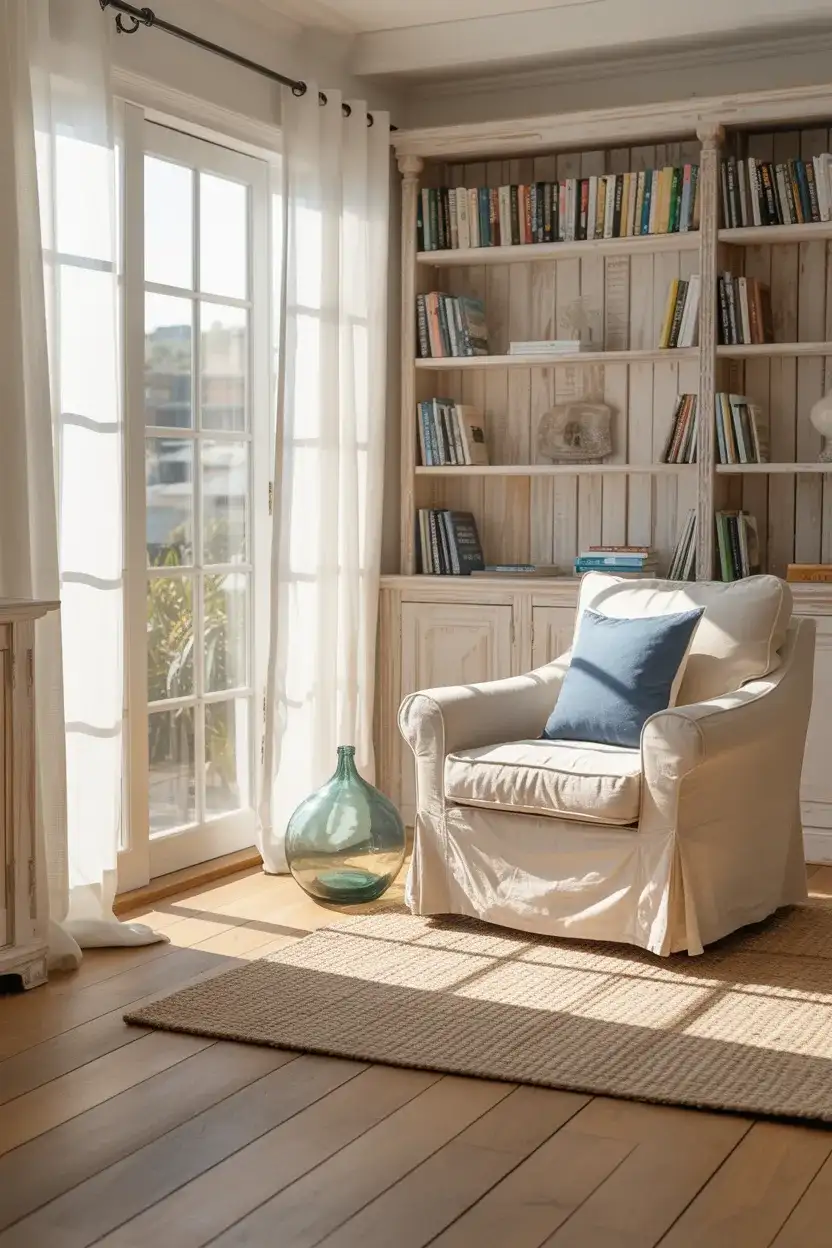
This style resonates especially in homes along the Gulf Coast, the Carolinas, and Southern California, where the surrounding landscape already speaks the same visual language. But it also works surprisingly well inland—a bright library in a landlocked suburb can feel like a mental escape to the coast, which is kind of the whole point of a reading room anyway. The brightness keeps the space from ever feeling heavy, even when fully loaded with books.
14. Two-Story Grand Library
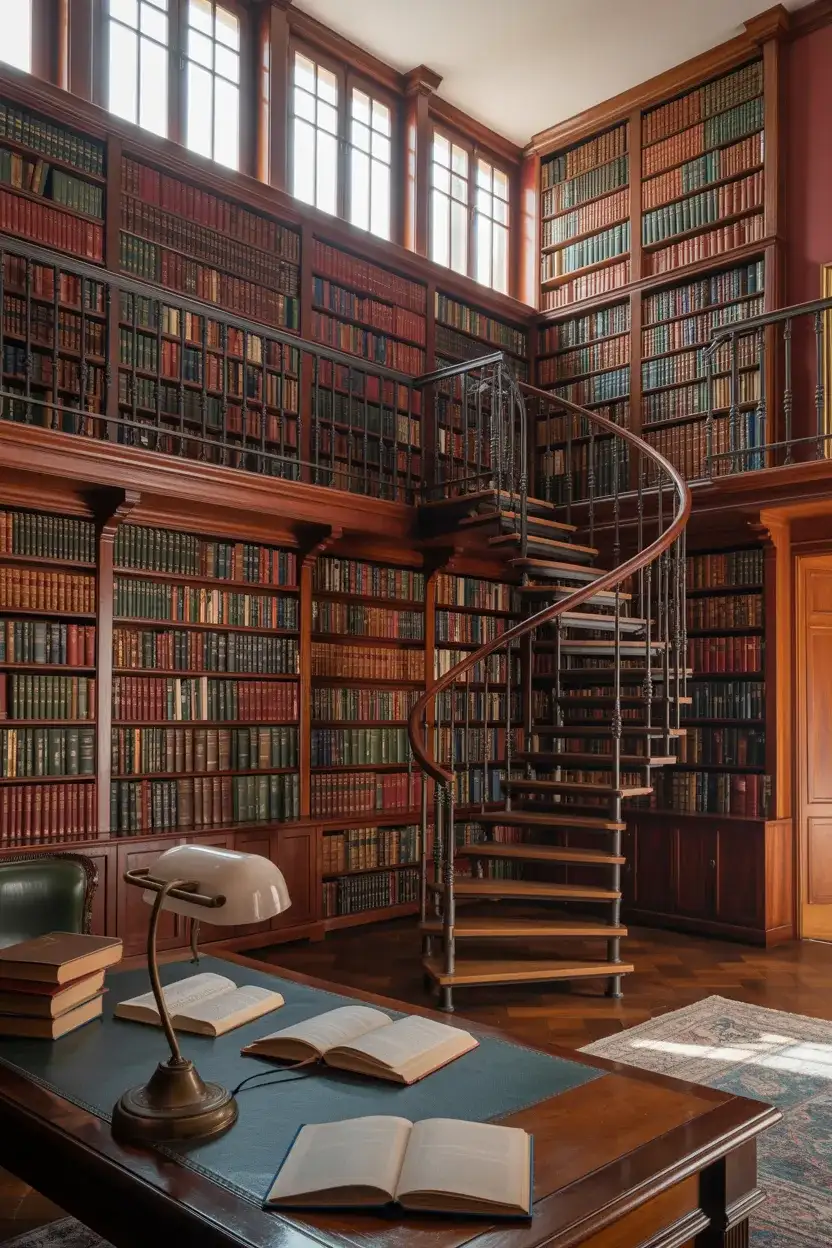
For the truly committed bibliophile, a dream two-story library with a mezzanine or balcony level is the pinnacle of home design. Double-height shelving, a spiral staircase or open gallery walkway above, and dramatic vertical proportions create a space that feels almost ecclesiastical in its reverence for the written word. Natural light from upper-story windows pours down into the room, illuminating thousands of book spines in a way that single-story rooms simply cannot replicate.
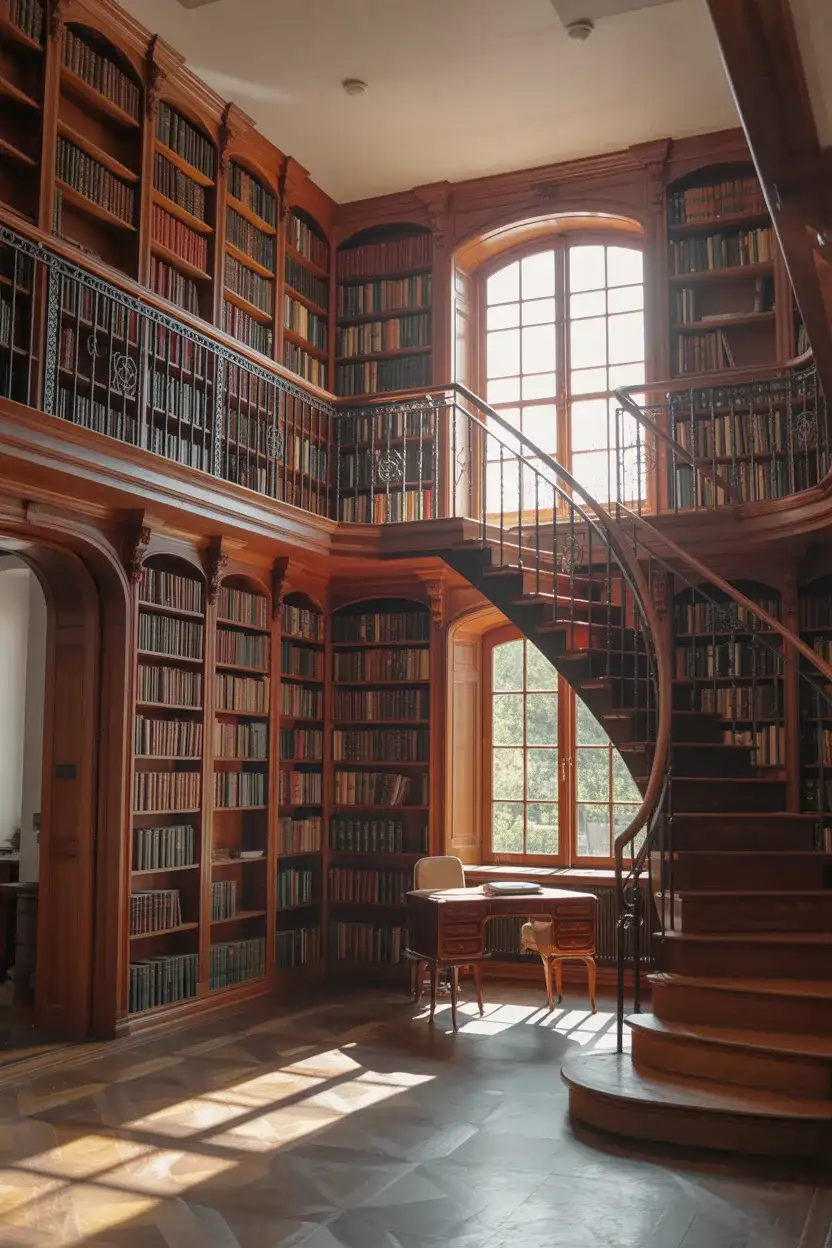
Architects who specialize in residential libraries say the most common regret with two-story designs is underestimating the acoustic impact. Books are excellent sound absorbers, which is a plus, but the open vertical space can create echoes if the floors are hard and the seating area is sparse. Upholstered furniture, thick rugs, and even a heavy curtain near the staircase opening can soften the sound and make the room feel as intimate on the ground floor as it is impressive from the balcony.
15. Eclectic Maximalist Book Room
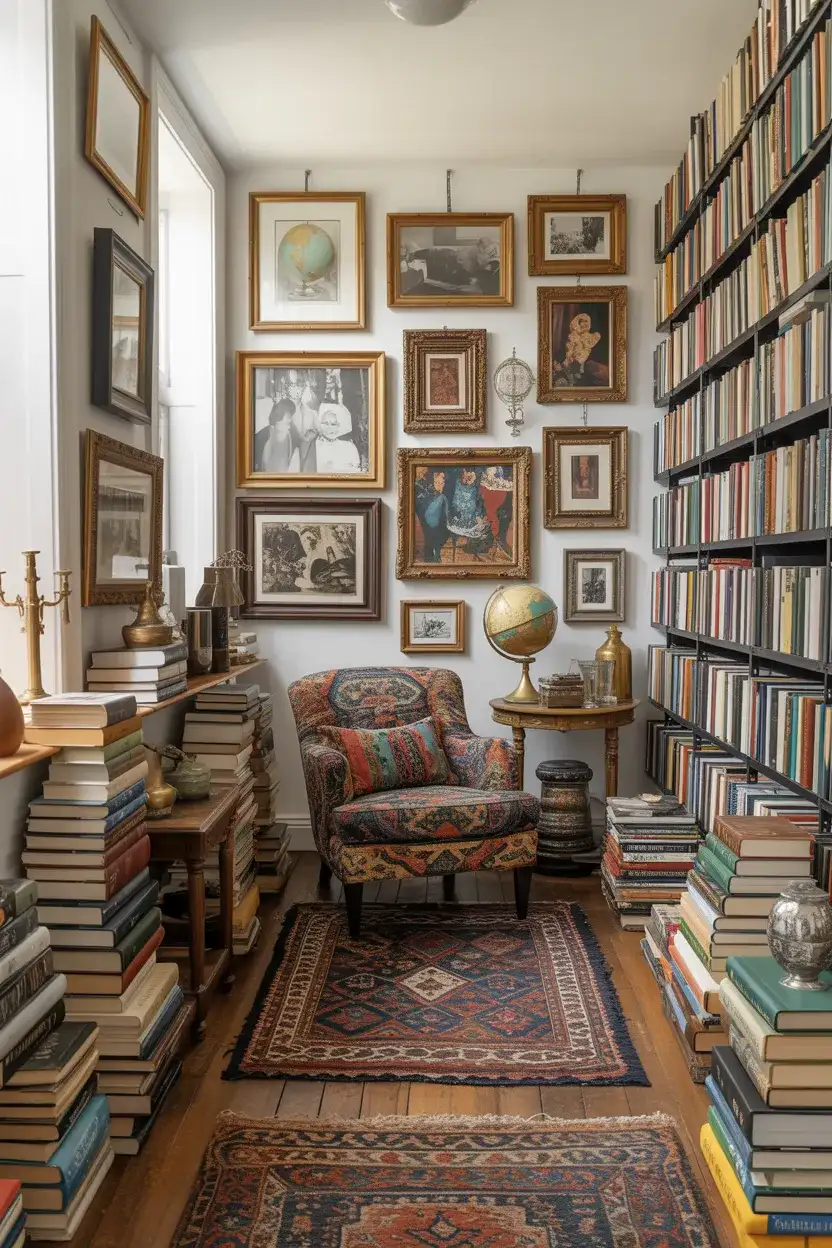
Minimalism has its place, but there’s a growing crowd of readers who want their library to feel like a cozy explosion of personality—and that’s exactly what the maximalist approach delivers. Every shelf is packed, every wall has something on it, patterns mix with patterns, and the color story is “yes, all of them.” The decor includes mismatched frames, travel souvenirs, stacked art prints leaning against book spines, and a chair upholstered in something bold. It should feel like walking into someone’s incredibly interesting brain.
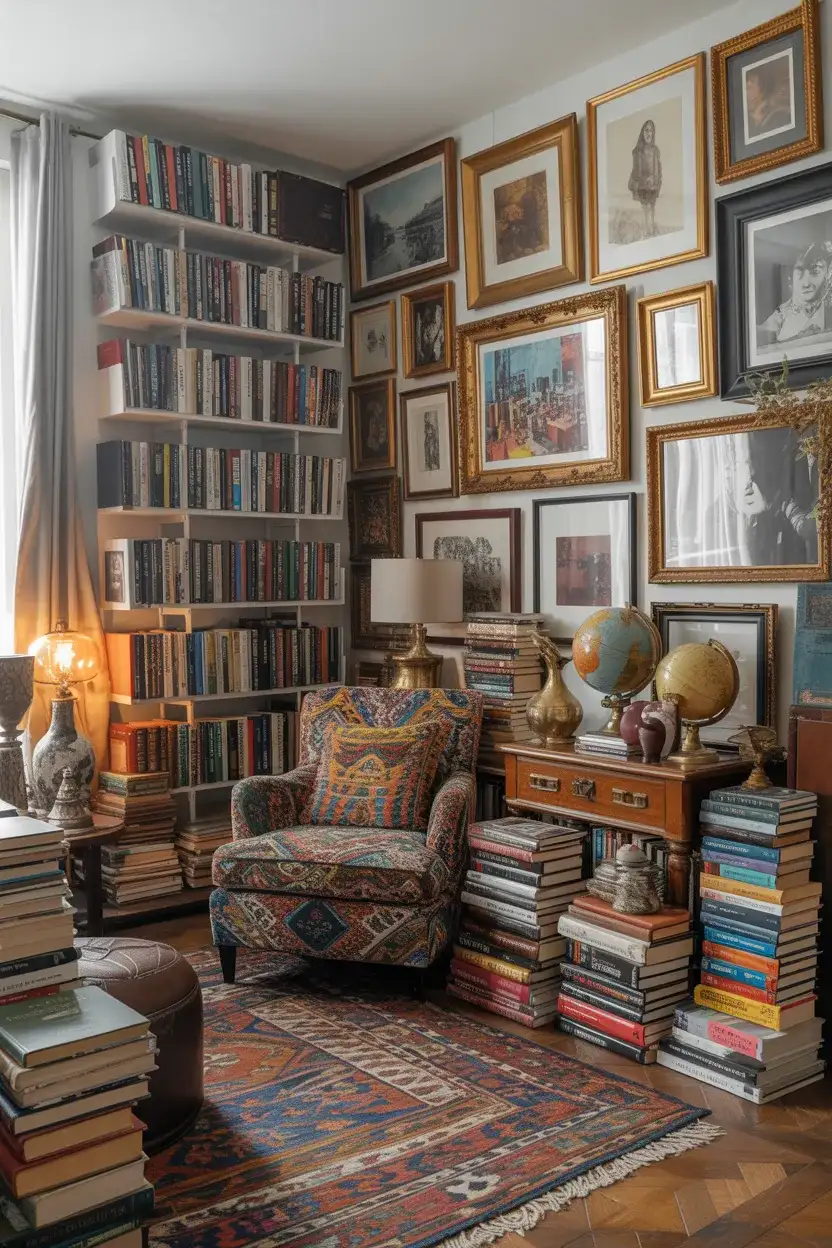
The real-world behavior that drives this trend is simple: people collect things over a lifetime and don’t want to edit ruthlessly just to match an aesthetic template. A reader who spent twenty years accumulating books, art, and objects from travels doesn’t need a Marie Kondo intervention—they need shelving that celebrates the accumulation. The maximalist library gives you permission to display everything you love at once, and it turns out that abundance, done with enthusiasm, has its own kind of beauty.
16. Library Hallway Passage

One of the most underused spaces in any home is the hallway, and lining it with bookshelves turns dead square footage into a beautiful design feature. Floor-to-ceiling shelving along one or both sides of a corridor creates a passage that feels like walking through a private collection every time you move between rooms. The hallway doesn’t need to be wide—even a standard thirty-six-inch passage can accommodate slim shelving on one side while leaving plenty of room to walk comfortably.
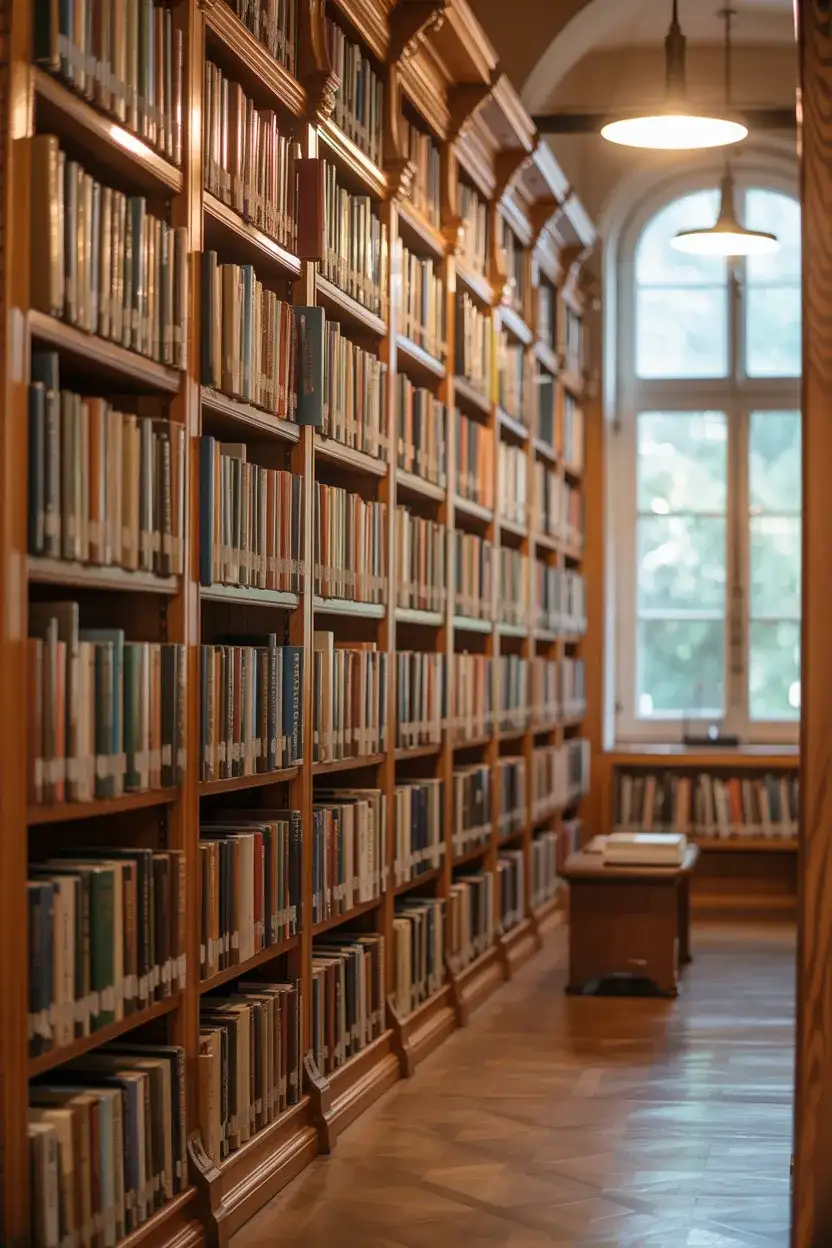
I talked to a couple in Austin who converted their upstairs hallway—roughly four feet wide and fourteen feet long—into a full library passage during a weekend project. They used four standard Billy bookcases from IKEA, anchored them to the wall studs, and painted everything the same warm greige as the corridor walls. Total materials cost came in under three hundred dollars, and they gained shelf space for roughly four hundred books in an area that previously held nothing but a smoke detector.
17. Sunlit Conservatory Library
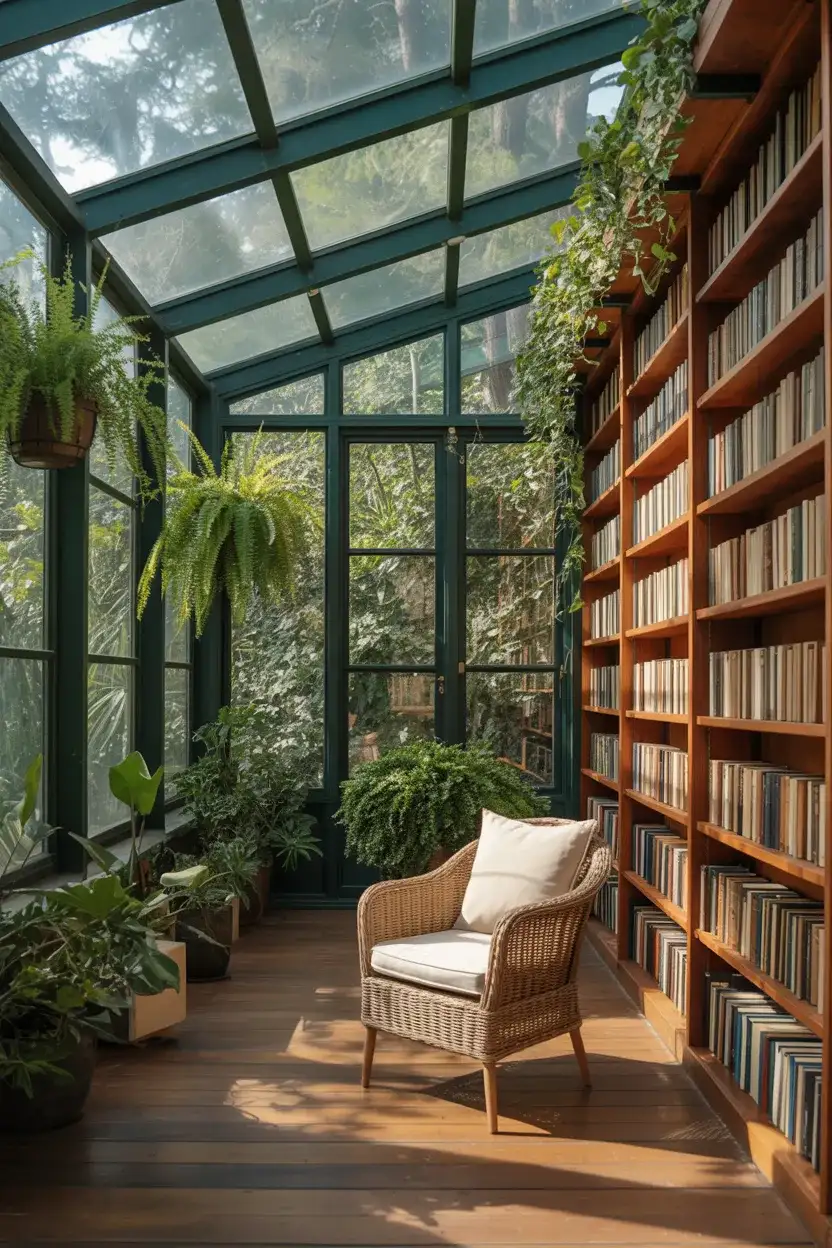
Merging a sunroom or conservatory with a personal library is one of the most luxurious moves you can make—a glass-walled reading room flooded with natural light and surrounded by greenery. The key is protecting your books from direct UV exposure with tinted or UV-filtering glass while still enjoying the brightness. Shelving goes on the solid walls, seating faces the windows, and potted plants blur the boundary between indoors and outdoors. The result is a room concept that feels alive in a way that enclosed libraries rarely achieve.
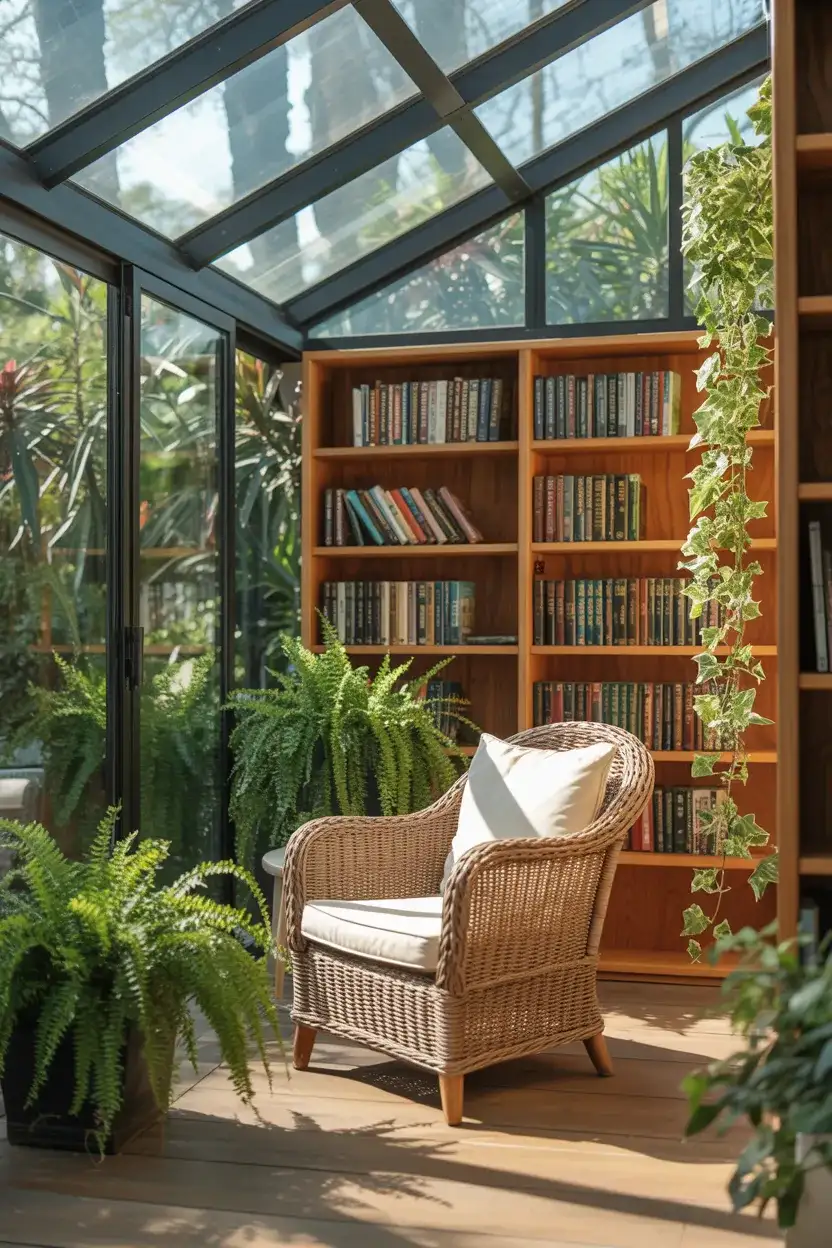
The practical insight worth knowing: direct, unfiltered sunlight will fade book spines and dry out leather bindings within a few years. UV-protective window film costs around eight to twelve dollars per square foot to apply professionally and blocks ninety-nine percent of damaging rays while barely affecting visible light. It’s a small investment that protects thousands of dollars’ worth of books, and it also reduces heat gain, which keeps the conservatory comfortable through summer afternoons in warmer states.
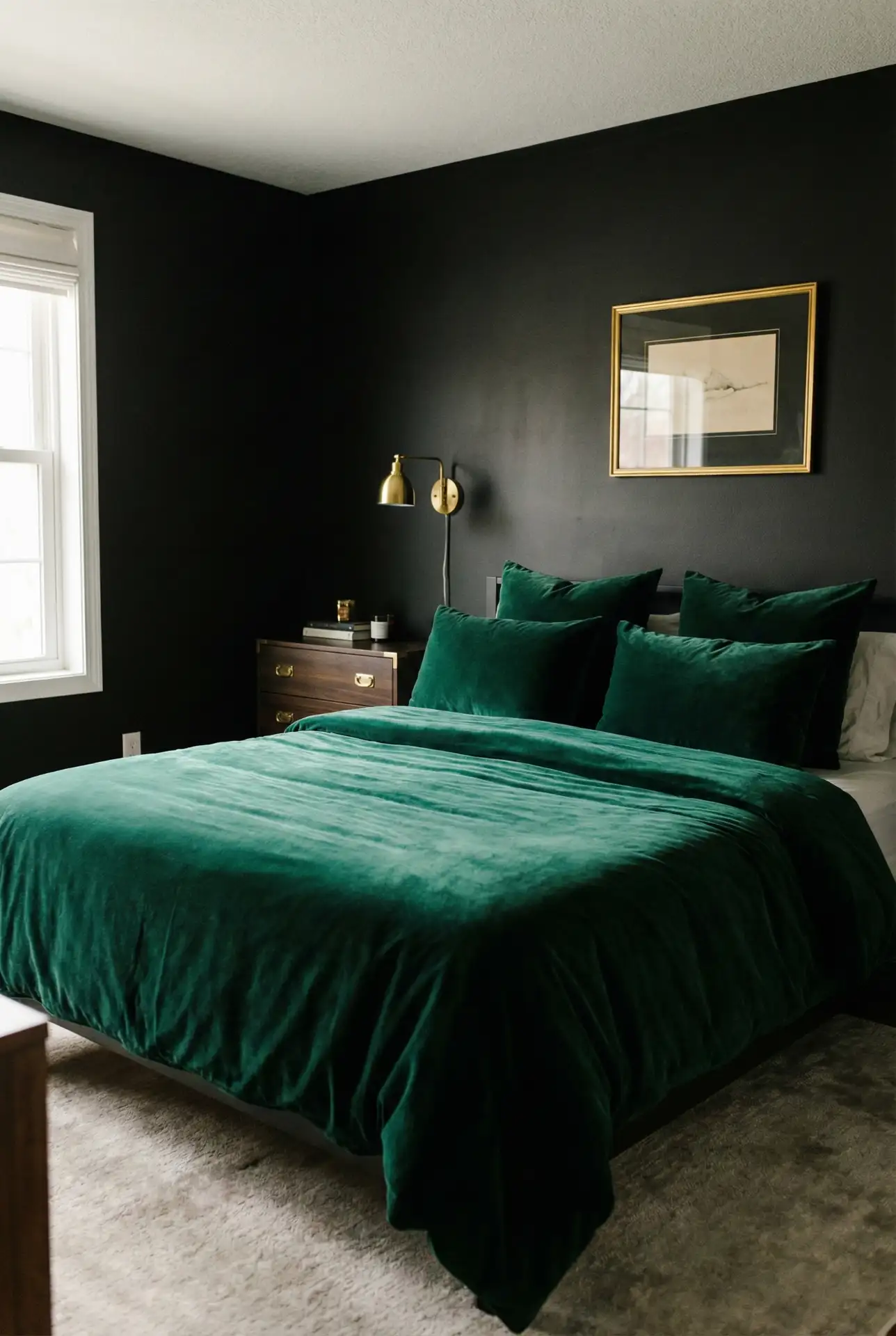
18. Moody Jewel-Tone Library
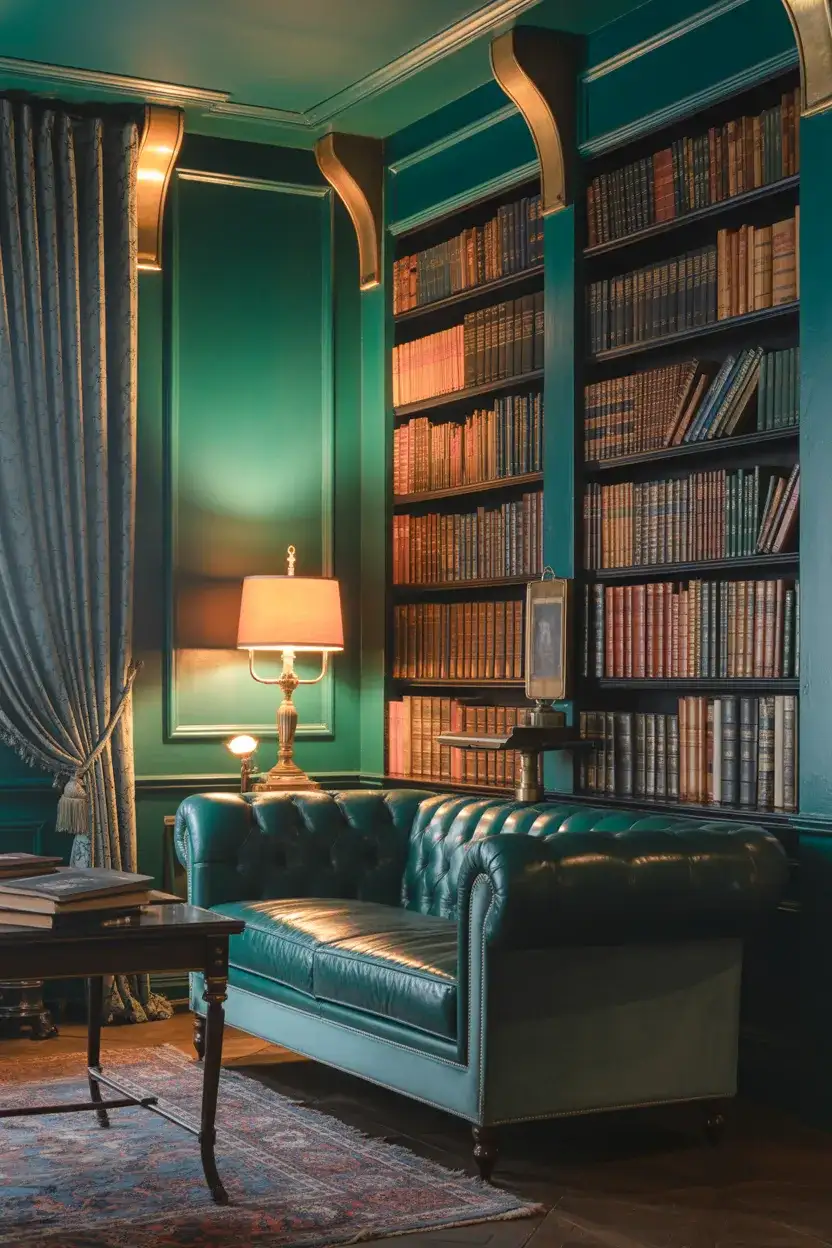
Deep emerald, sapphire blue, and rich plum—moody jewel tones are dominating the library inspo boards heading into the second half of the decade. Unlike safe neutrals, these saturated hues create an almost magnetic pull into the room. They make books pop against the walls, they hide scuffs and fingerprints gracefully, and they photograph incredibly well, which partly explains their Pinterest dominance. A jewel-toned library paired with brass hardware and warm wood shelving is peak drama without trying too hard.
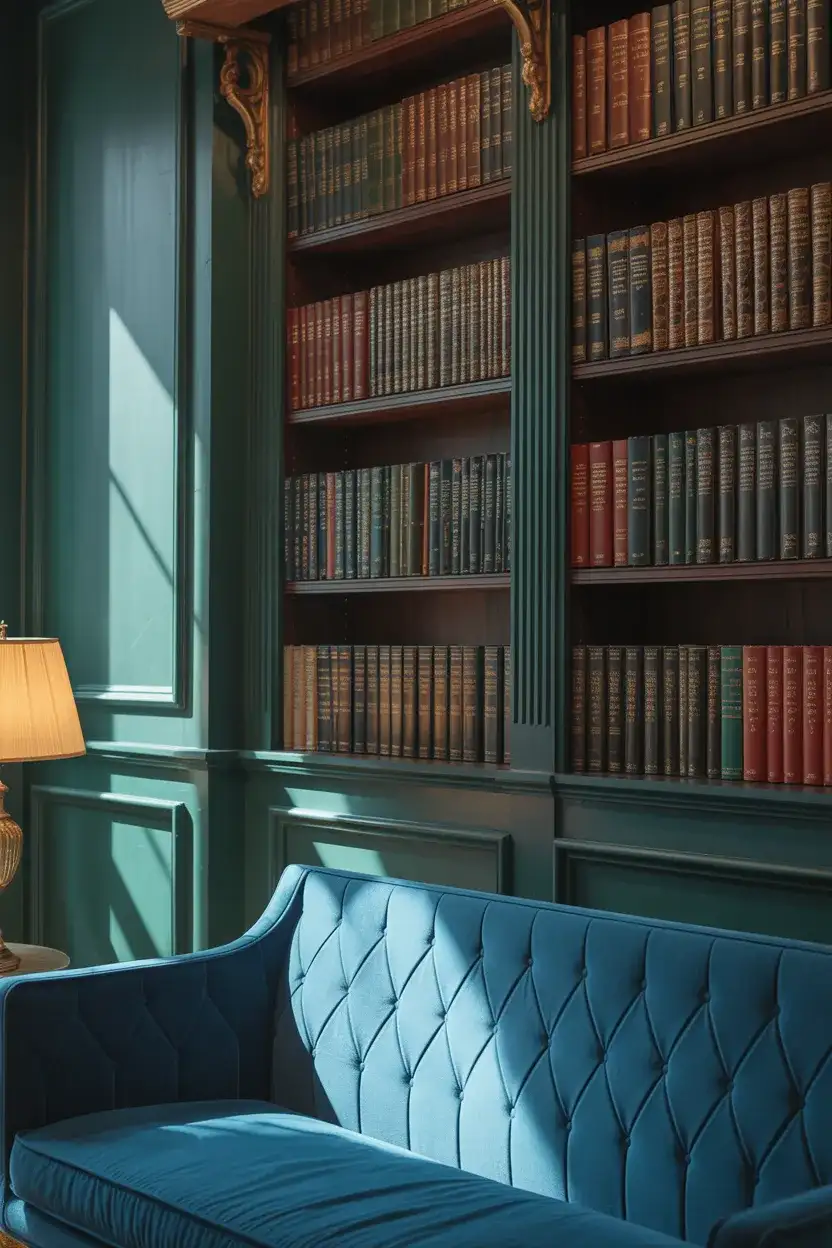
One thing experienced painters will tell you is that jewel tones demand excellent prep work and at least two coats of high-quality paint to look their best. Cheap paint in deep colors goes on streaky and fades unevenly over time. Benjamin Moore’s Aura or Farrow & Ball’s estate range are worth the premium here because the pigment depth is genuinely different—the wall looks like it has dimension rather than just color. Spending an extra fifty dollars on paint saves the frustration of a third coat and years of regretting a flat, chalky finish.
19. Rustic Cabin Library
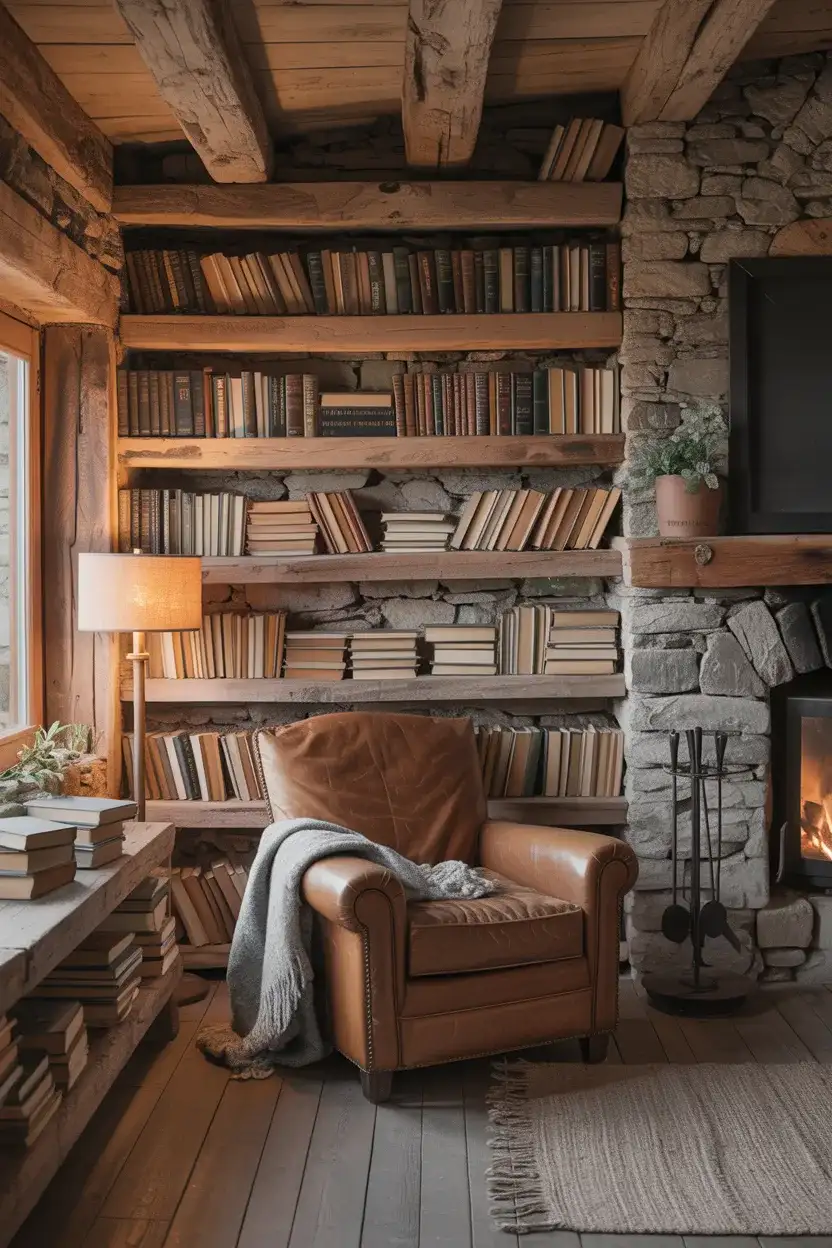
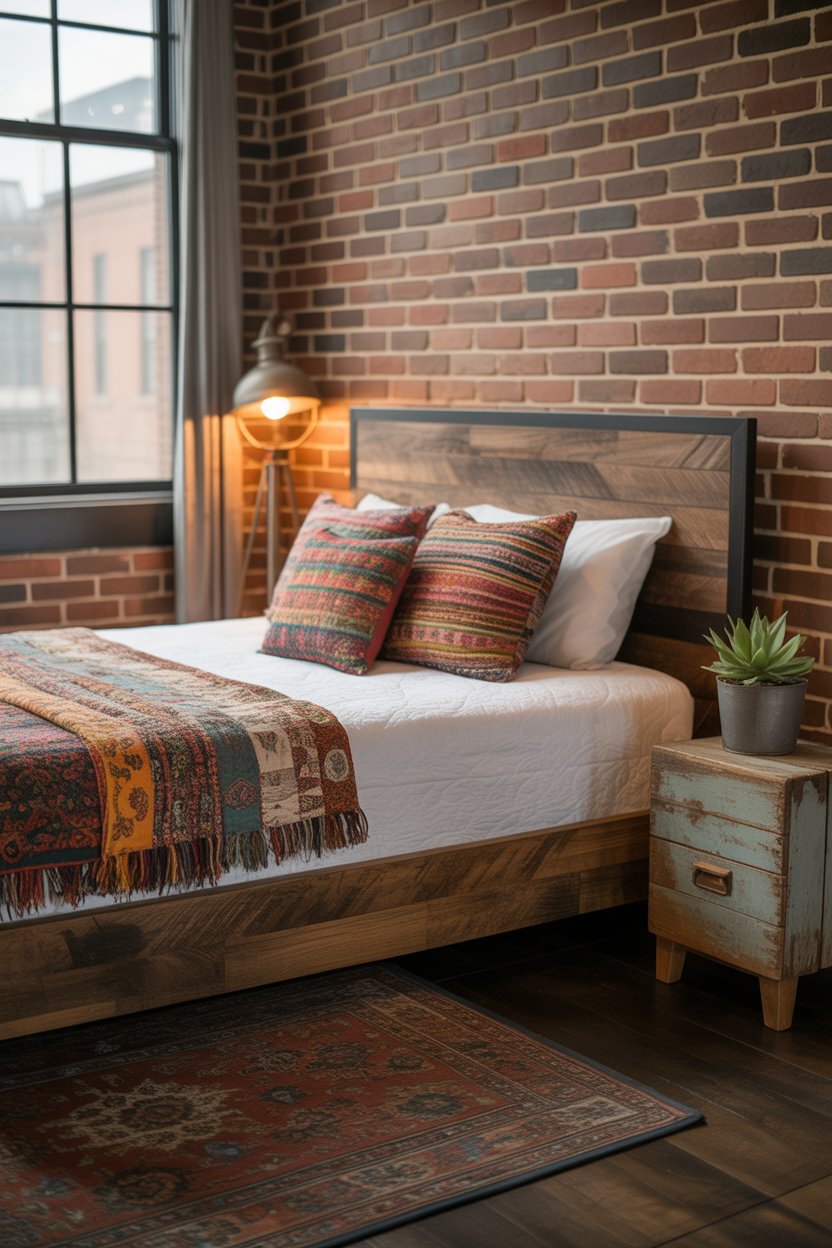
For homes with exposed beams, reclaimed wood, or a mountain-adjacent location, a rustic cabin-style library feels like the most natural thing in the world. Rough-hewn timber shelves, a stone or brick accent wall, a chunky wool throw over a leather chair, and a stack of well-loved paperbacks—this is the cozy library that asks nothing of you except to sit down and stay a while. The aesthetic celebrates imperfection: knots in the wood, uneven shelf heights, and books that look like they’ve actually been read on rainy afternoons.
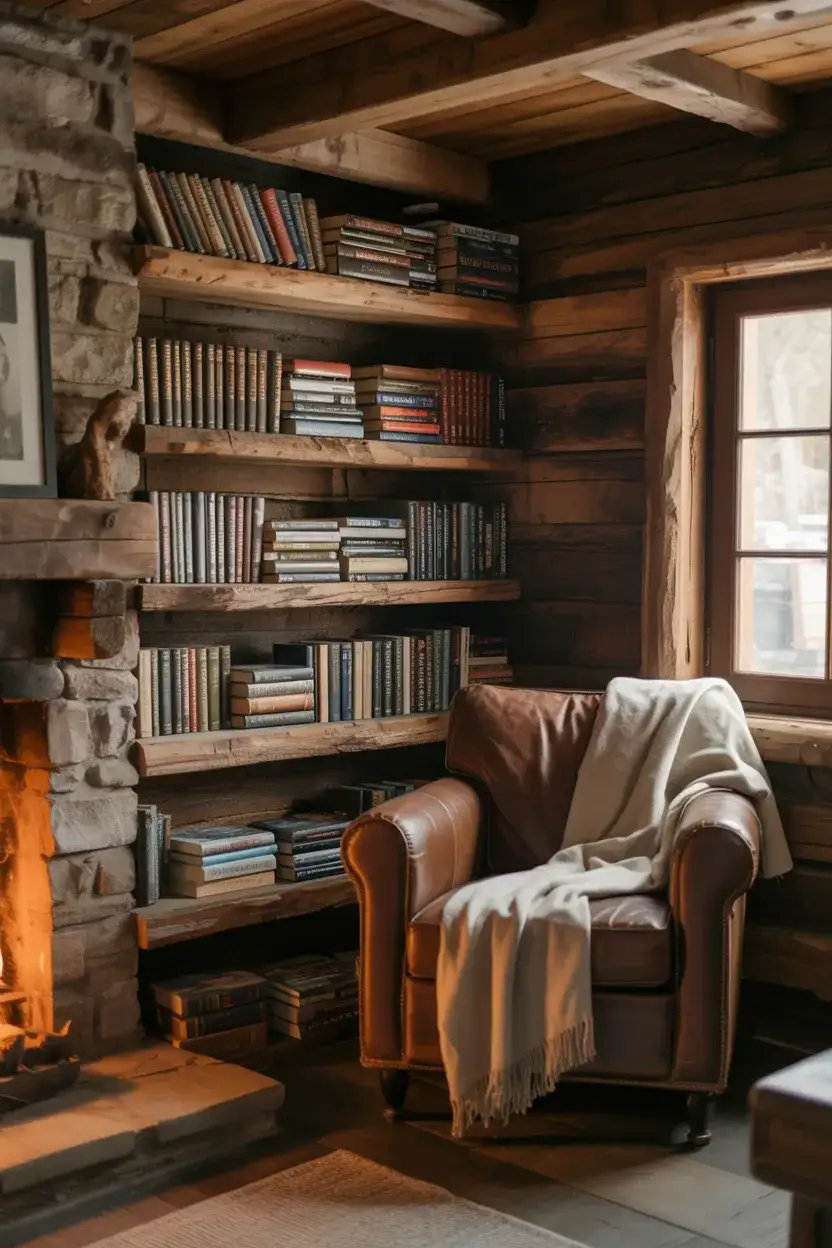
This style resonates deeply in the mountain communities of Colorado, Vermont, Montana, and the Pacific Northwest, but it translates to any home that already uses natural materials. A cabin library doesn’t require an actual cabin—a single reclaimed wood shelf wall in a suburban living room, paired with the right textures and warm lighting, captures the same spirit. The emotional effect is what matters: comfort, simplicity, and the sense that this room has been here longer than you have.
20. Secret Door Hidden Library
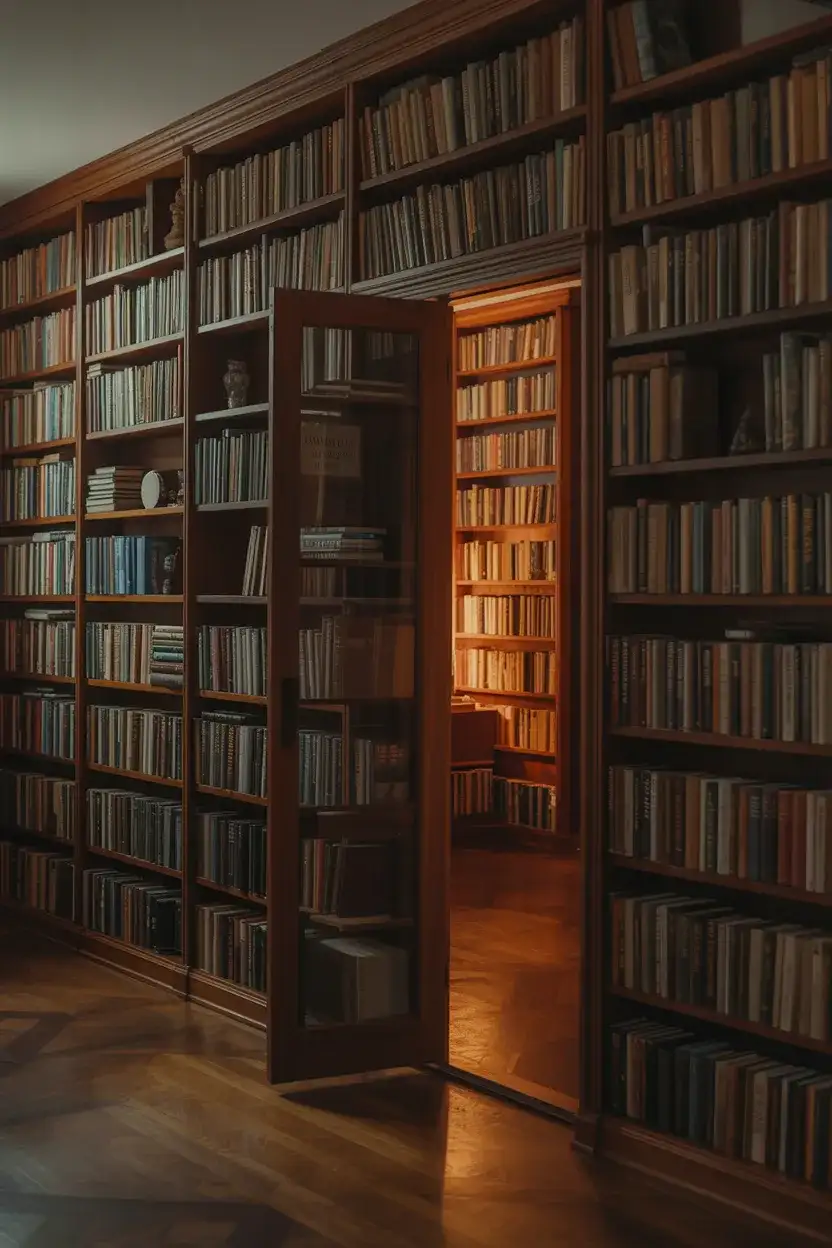
The hidden bookshelf door is the single most-shared home library feature on social media, and for good reason—it’s pure architectural magic. A section of shelving that swings open on concealed hinges to reveal a room behind it satisfies something childlike and wonderful in almost every adult who encounters one. These ideas work in any style of home, from modern new builds to older houses with quirky floor plans. The shelves look and function as real storage; the secret is invisible until you pull the right book or press the hidden latch.
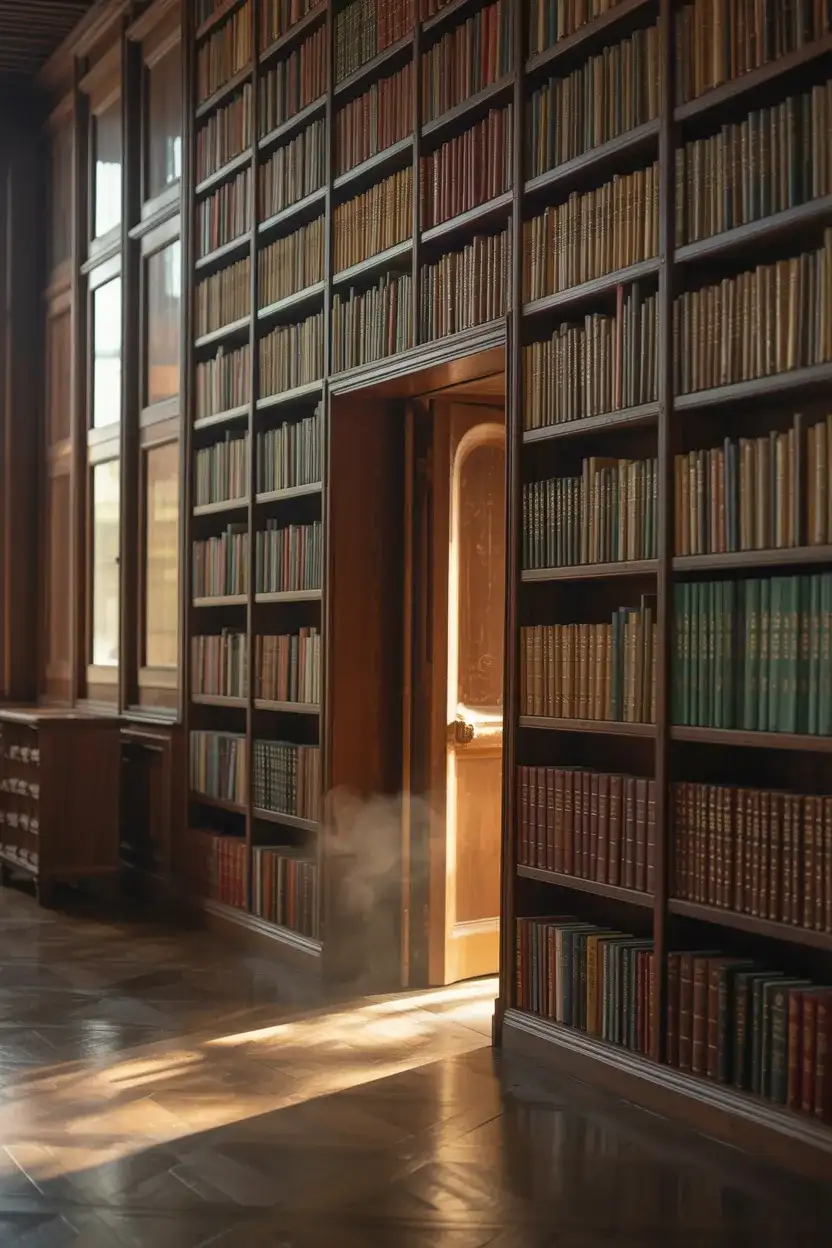
Companies like Murphy Door and Hidden Passages specialize in these units and offer both pre-built and custom options starting around fifteen hundred dollars for a standard-width door. The engineering is surprisingly robust—modern hidden doors use heavy-duty pivot hinges rated for hundreds of pounds, so fully loaded bookshelves swing smoothly without sagging. Installation typically takes a skilled carpenter one to two days. It’s not the cheapest project, but in terms of pure joy per dollar, few home improvements come close.
21. Library With Reading Loft
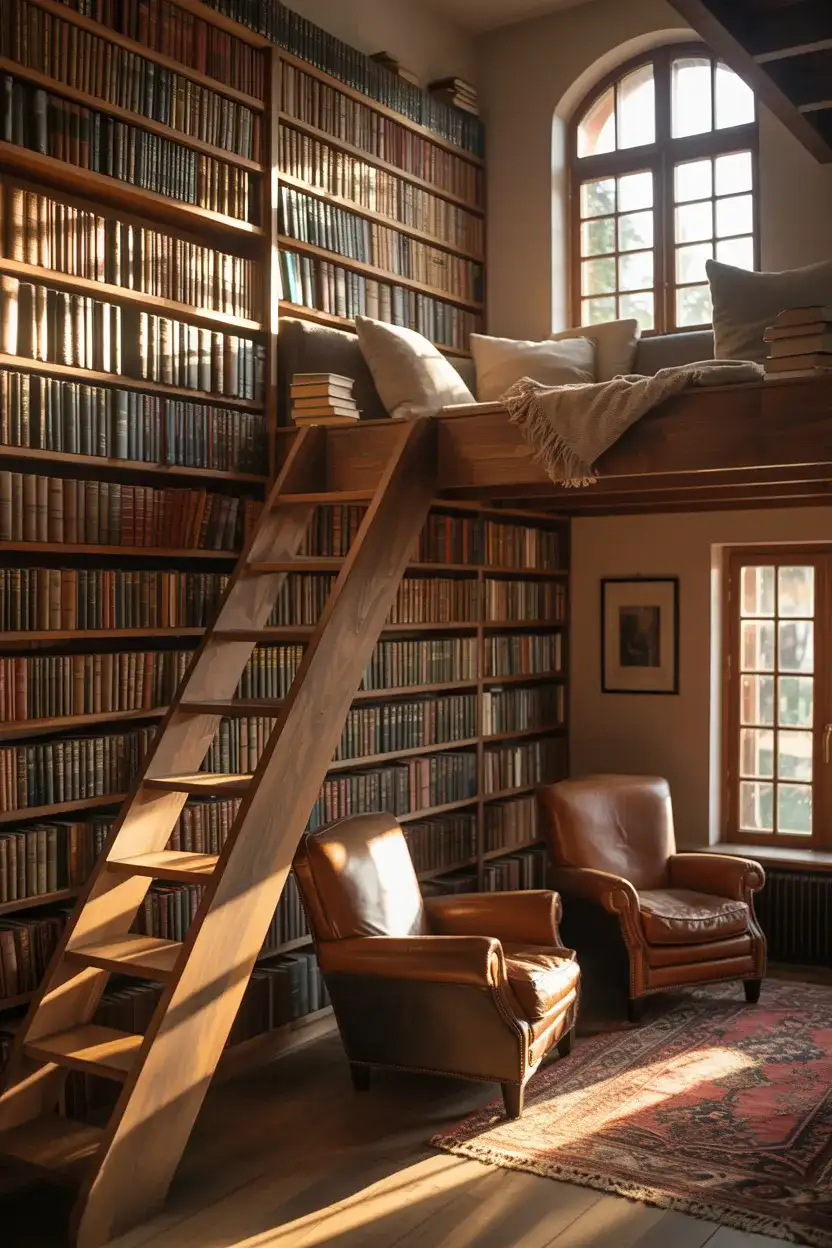
A reading loft tucked above the main shelving area takes the dream library concept and adds a vertical dimension that feels genuinely adventurous. Imagine climbing a few steps or a small ladder to reach a cushioned platform surrounded by books on all sides, with a view down into the room below. It’s the adult version of a childhood treehouse, and it satisfies that deep human desire to be nested in a safe, elevated perch. Homes with vaulted ceilings or double-height spaces are natural candidates for this setup.
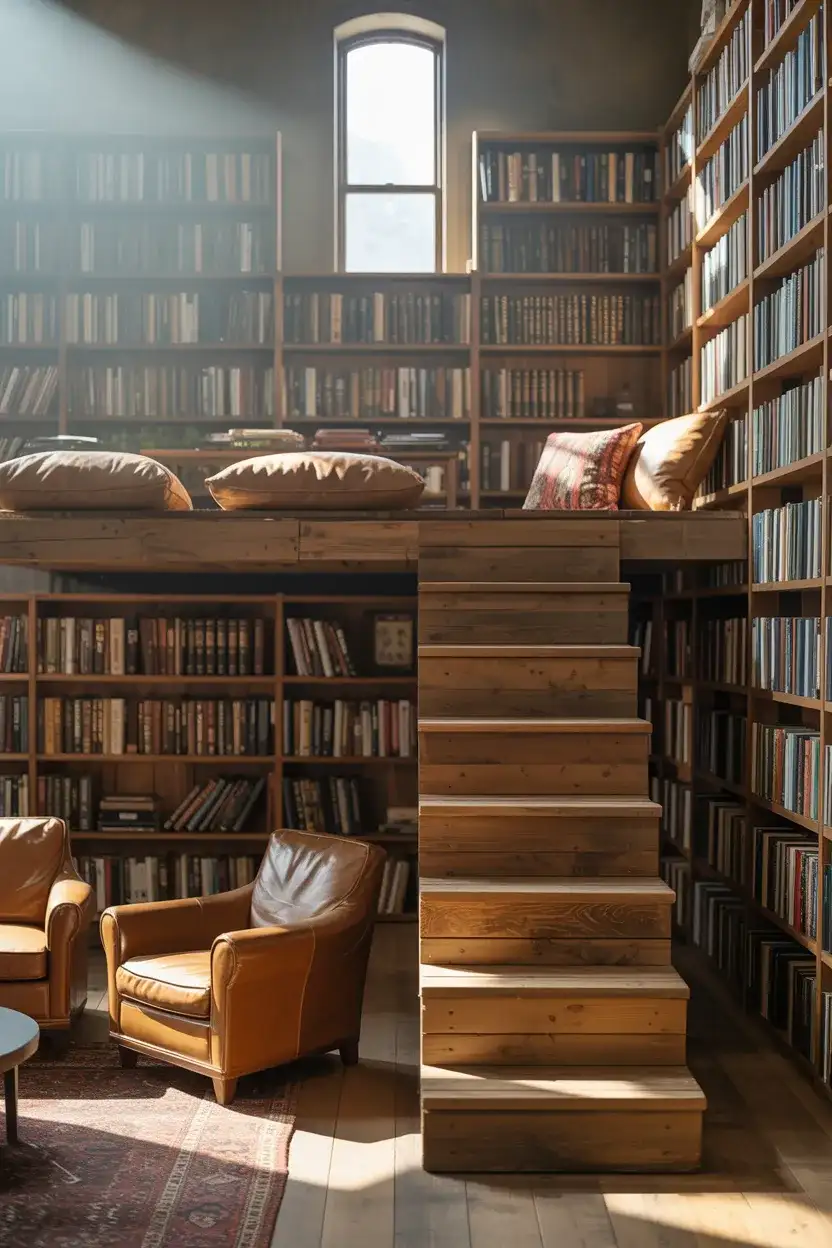
Building code is the practical consideration most people overlook with loft projects. In most American municipalities, any elevated platform above thirty inches requires a guardrail, and permanent loft structures in living spaces must meet ceiling height minimums—typically at least seven feet of headroom on the level below and enough clearance to sit comfortably on the loft itself. Consulting with a licensed contractor before construction ensures your dream loft is both safe and legally compliant, which matters immensely at resale.
22. Botanical Garden Library
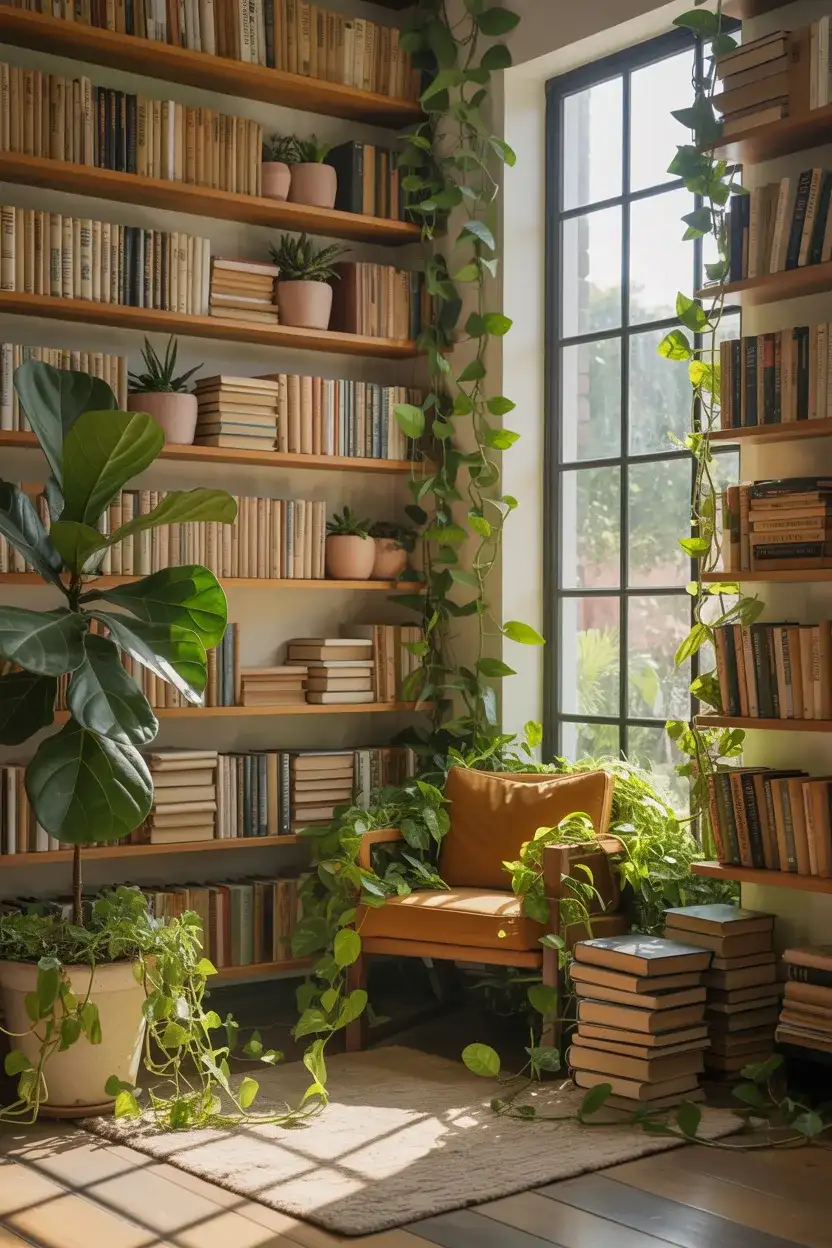
The final idea on this list might be the most alive—literally. A cozy library design woven through with real plants transforms a book-filled room into a living, breathing ecosystem. Trailing pothos cascading from upper shelves, a fiddle-leaf fig anchoring a corner, small succulents tucked between book stacks, and a hanging fern near the window bring oxygen, color, and texture into the space. It’s the vintage greenhouse library reimagined for modern life, and it photographs like an absolute dream for anyone building a Pinterest-worthy home.
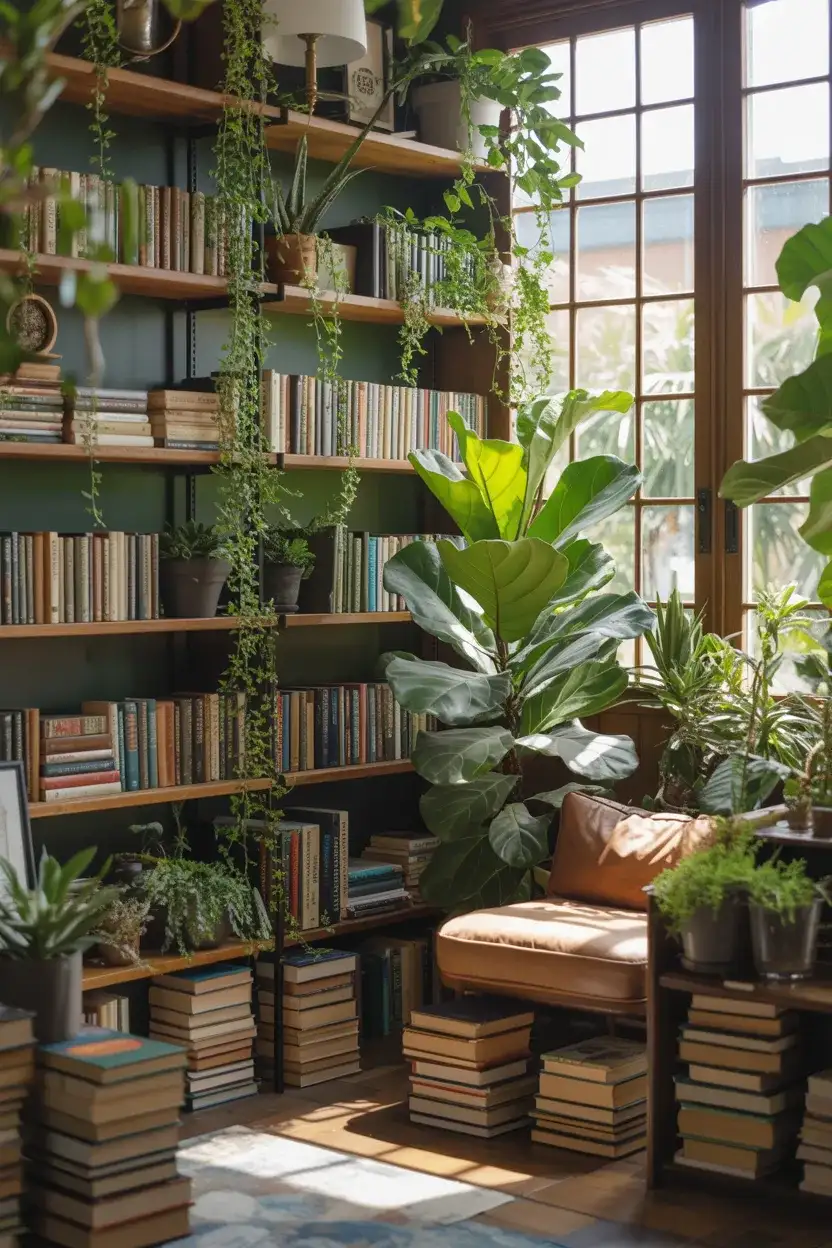
The common mistake here is overwatering, which ruins books far faster than any amount of dust. Use well-draining pots with saucers, water away from the shelves, and choose low-maintenance plants that tolerate some neglect—pothos, snake plants, and ZZ plants are almost indestructible and thrive in the indirect light that most library rooms provide. Keep a few inches of buffer between any planter and your books, and your botanical library will stay lush and your collection will stay safe for years to come.
Conclusion
Building a home library—whether it’s a full room, a hallway, or a single corner with a good chair—is one of the most personal things you can do to a space. Every idea here is meant to be adapted, remixed, and made your own. If something on this list sparked a vision, we’d love to hear about it—drop a comment below with which idea you’re planning to try, or share a photo of the reading space you’ve already built. The best home libraries are the ones people actually use, and yours is waiting to happen.