Hallways have quietly become one of the most design-forward spaces in American homes, and 2026 is proving that first impressions truly do start the moment you step inside. Whether you’re refreshing a narrow entryway, styling a long upstairs corridor, or transforming a short pass-through into a visual moment, the right wall decor can shift your hallway from overlooked to unforgettable. Pinterest boards are overflowing with fresh takes on everything from vintage gallery walls to minimalist mirror arrangements, and homeowners across the country are realizing that these transitional spaces deserve just as much creativity as any living room or bedroom. In this guide, you’ll find thoughtful, trend-aware ideas that blend style, function, and personality—designed to help you make every step through your home feel intentional.
1. Layered Gallery Wall with Vintage Frames
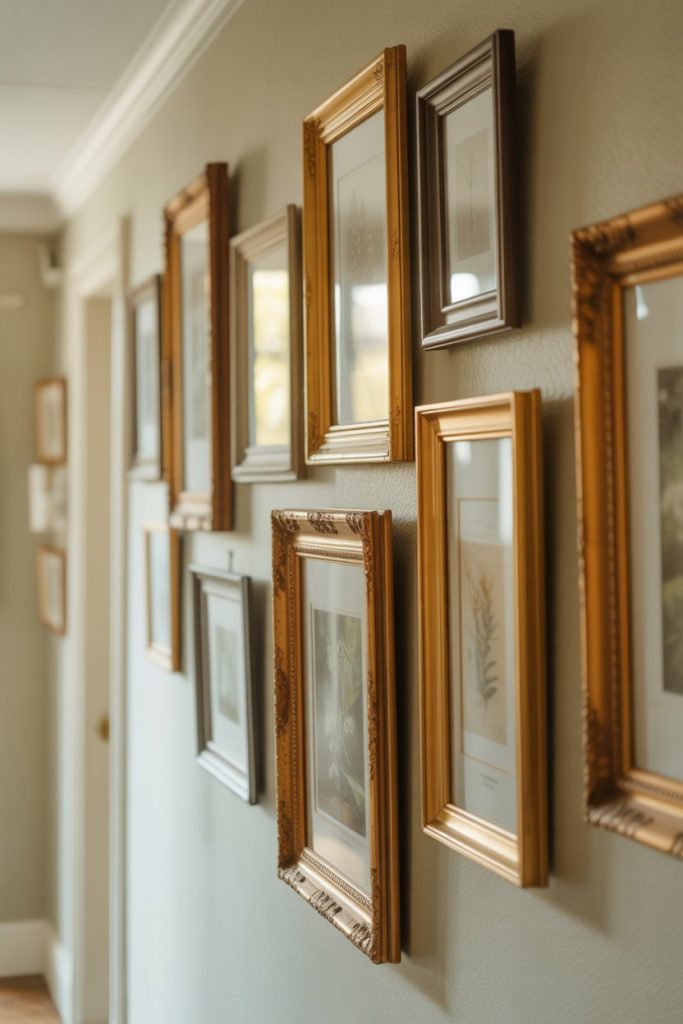
A curated collection of vintage frames in mixed metals and wood tones instantly adds character to any hallway, especially in narrow spaces where a single large piece might overwhelm. This approach works beautifully in farmhouse or eclectic interiors, where imperfection is part of the charm. Start with a central anchor piece—perhaps a botanical print or black-and-white photograph—then build outward with smaller frames in varying shapes. The key is to keep the palette cohesive while allowing the frames themselves to tell a story.
This style works best in homes with existing character—think older bungalows or renovated colonials—where the vintage aesthetic feels like a natural extension of the architecture. One common mistake is spacing frames too far apart, which can make the wall feel scattered rather than intentional. Aim for 2–3 inches between each frame, and don’t be afraid to lean a few pieces on a narrow console below for added dimension and flexibility.
2. Floor-to-Ceiling Vertical Mirrors
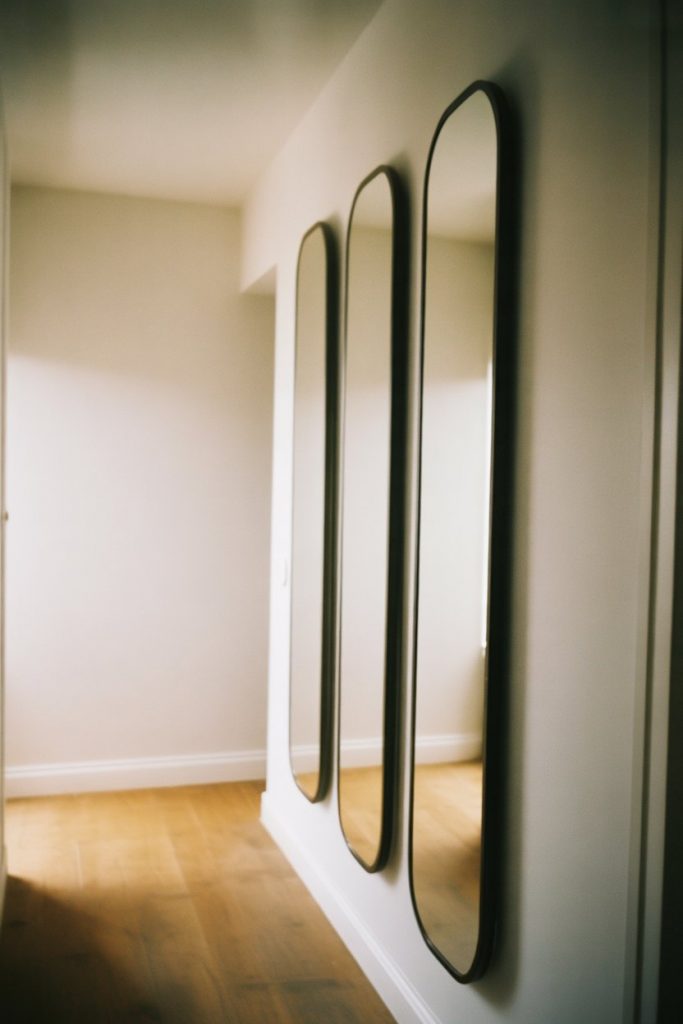
For tall or narrow hallways, a series of mirrors installed vertically can visually lift the ceiling and double the sense of space. This trick is especially effective in entry areas where natural light is limited. Choose mirrors with slim black or brass frames for a modern edge, or go frameless for a truly minimalist look. The reflective quality not only brightens the space but also creates an elegant rhythm as you move through it.
In coastal areas like Southern California and Florida, homeowners often use this technique to bounce natural light from nearby windows deeper into the home. It’s a budget-friendly way to make a big visual impact without major construction—most home improvement stores carry affordable mirror panels that can be mounted with adhesive or simple brackets. Just be sure to install them securely, especially in homes with kids or pets.
3. Bold Patterned Wallpaper as Art
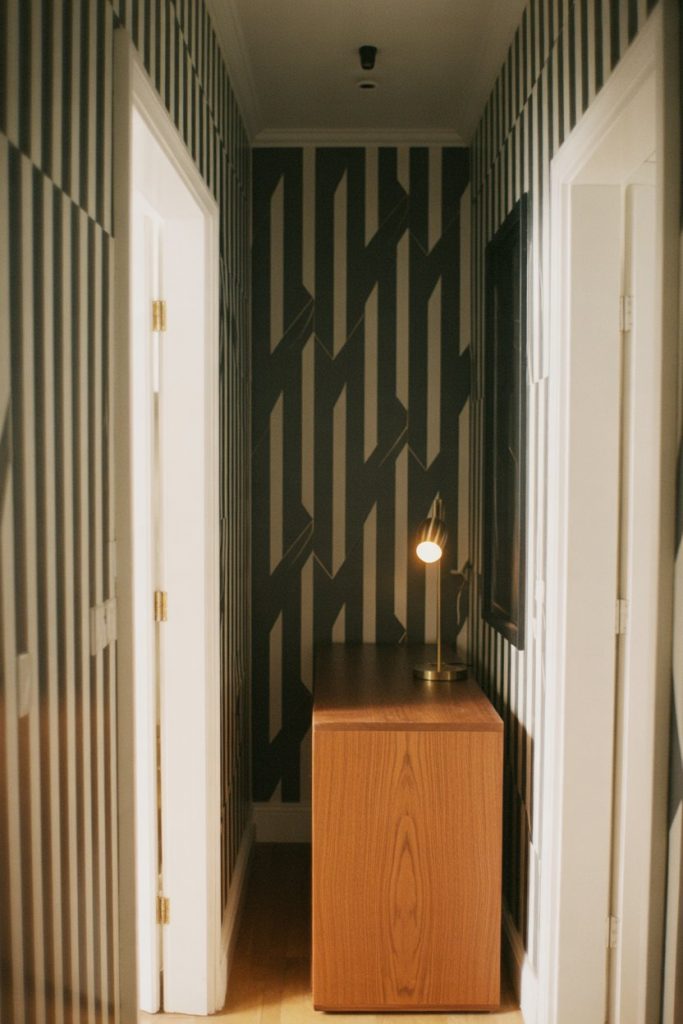
Sometimes the best hallway wall decor isn’t something you hang—it’s something you apply directly to the surface. A single accent wall covered in bold, patterned wallpaper can serve as the focal point in a short or narrow space, eliminating the need for additional art. Look for modern geometric prints, oversized florals, or abstract designs that reflect your personal style. This approach is particularly striking in entrance hallways, where it sets the tone for the rest of the home.
A designer friend once told me that wallpaper in a hallway is like wearing a statement necklace—it’s unexpected, but when done right, it completely elevates the look. The beauty of this choice is that you can go bold without overwhelming an entire room, and it’s far easier to swap out in a few years than repainting every wall in your house.
4. Floating Wooden Shelves with Rotating Decor
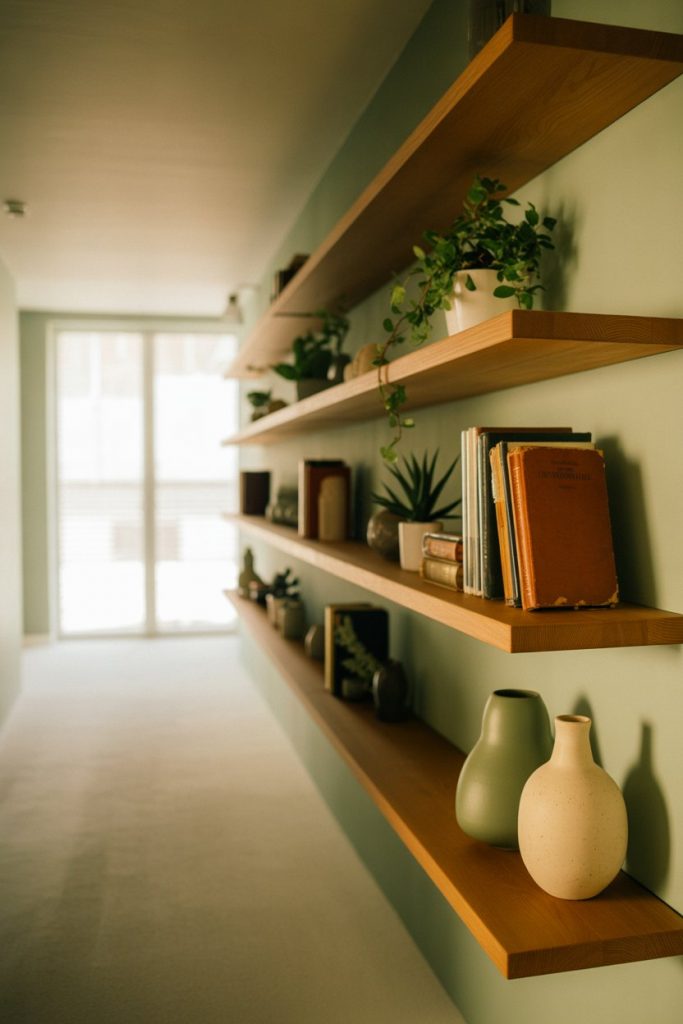
Functional and flexible, simple floating shelves offer a way to display seasonal decor, books, or small plants without committing to permanent wall art. In a long hallway, stagger shelves at different heights to create visual interest and break up the linear feel. This works especially well in boho or eclectic homes, where layering textures and personal objects is part of the aesthetic. Choose natural wood tones to keep things warm and inviting.
One practical insight: rotate your shelf styling with the seasons. In fall, swap in rust-colored ceramics and dried grasses; in spring, go for fresh greenery and lighter tones. This keeps your hallway feeling fresh without requiring a full redesign. It’s also a great way to display kids’ artwork or travel souvenirs in a way that feels curated rather than cluttered.
5. Oversized Abstract Canvas in Jewel Tones
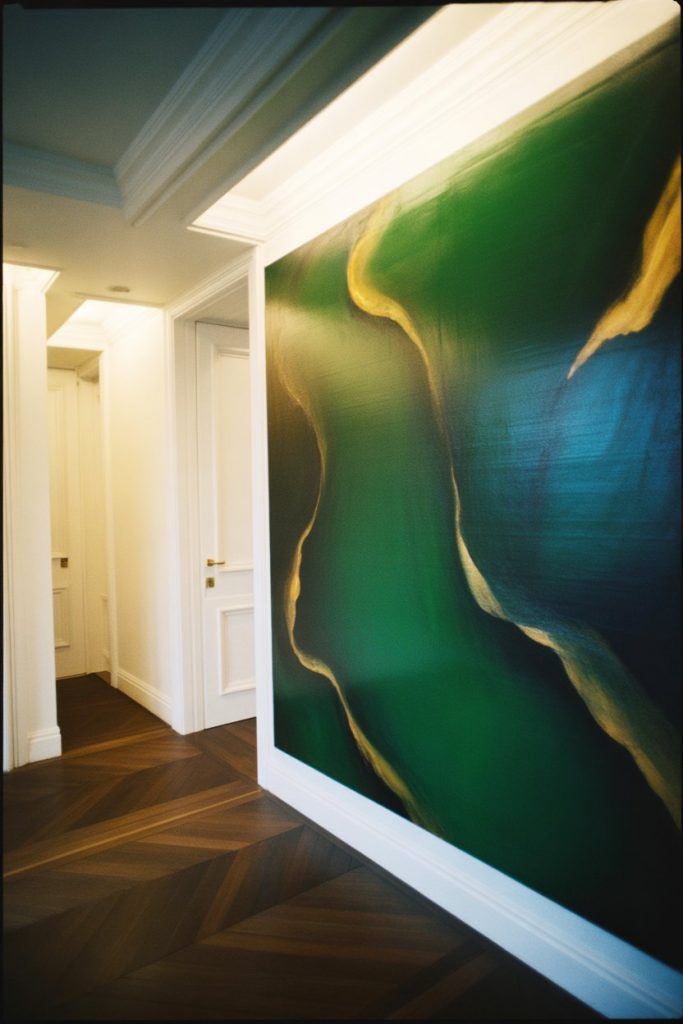
A single large-scale canvas can anchor a long entry or upstairs hallway, especially when it features rich jewel tones like emerald, sapphire, or deep burgundy. This approach is ideal for modern or transitional interiors where you want to make a statement without adding visual clutter. The boldness of the piece draws the eye forward and creates a sense of destination at the end of the corridor.
This works best in homes with high ceilings and longer sightlines—think mid-century ranches or new builds with open floor plans. Expert-style commentary: when selecting an abstract piece, choose one with at least three colors that appear elsewhere in your home. This creates visual cohesion and prevents the hallway from feeling disconnected from adjacent rooms.
6. Black and White Photography Series
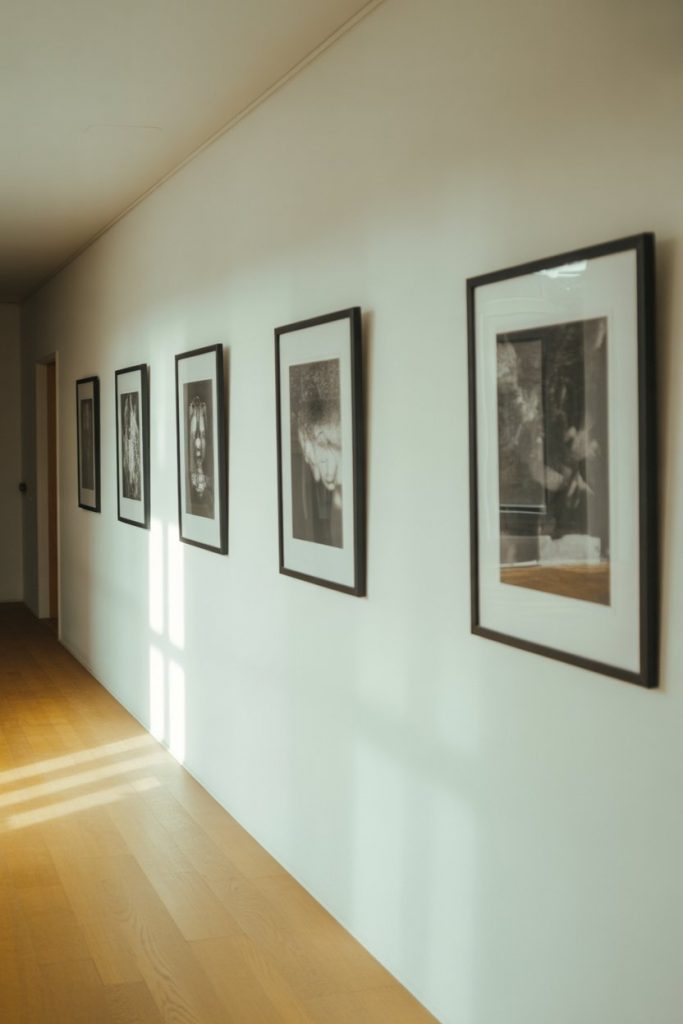
A series of pictures in matching black frames brings a gallery-like sophistication to any hallway, particularly in minimalist or Scandinavian-inspired homes. This style is timeless, easy to execute, and works in both narrow and wide corridors. Choose a unifying theme—architectural details, nature close-ups, or travel shots—and keep the matting consistent for a polished look. The monochrome palette ensures the images won’t compete with other decor.
In Northeastern cities like Boston and Philadelphia, where row homes and townhouses often have narrow hallways, this approach is a favorite among homeowners who want impact without taking up precious floor space. Budget-wise, you can print high-quality digital photos for under $20 each at most print shops, then invest in matching frames from big-box retailers. The total cost for a five-piece series usually runs under $150.
7. Woven Baskets as Three-Dimensional Wall Art
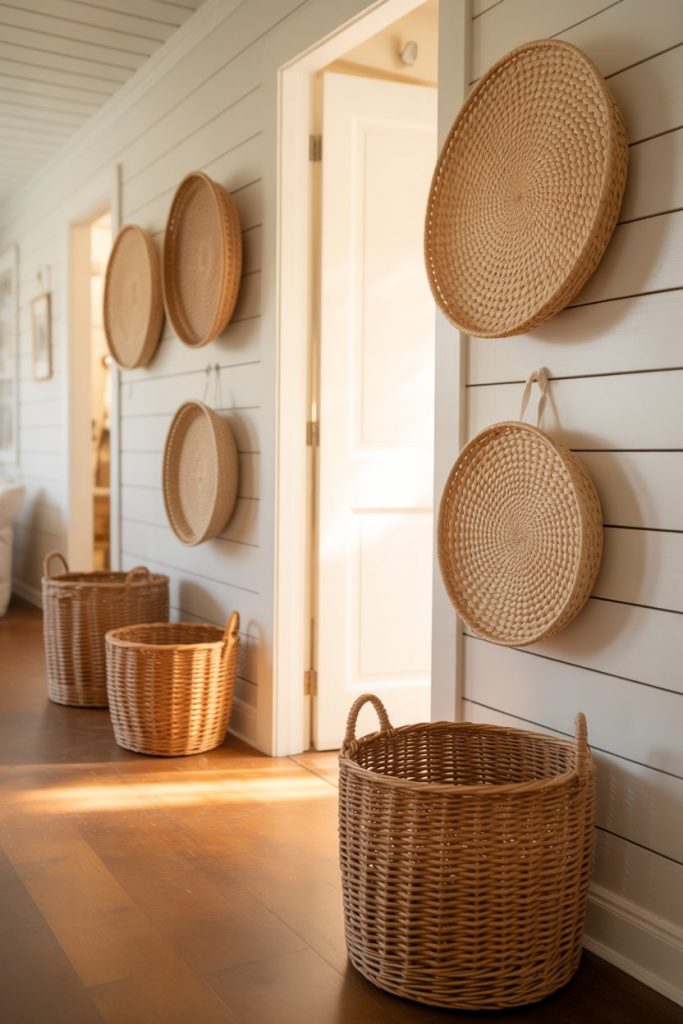
Bringing texture to a flat wall, woven baskets create a warm, organic look that’s perfect for boho or farmhouse hallways. Hang them in a cluster or a linear row along a narrow long space to add depth and visual rhythm. The natural materials—rattan, seagrass, jute—introduce an earthy element that contrasts beautifully with painted walls. This is one of the most tactile ways to decorate a hallway, and it feels especially fresh in 2026 as homeowners lean into handmade and artisan pieces.
Real homeowner behavior: many people source these baskets from local craft fairs, flea markets, or online artisan shops, which adds a personal story to the decor. They’re also lightweight and easy to mount with simple picture hooks, making them renter-friendly. If you’re worried about them looking too rustic, balance them with modern lighting fixtures or sleek furniture pieces nearby.
8. Architectural Molding with Subtle Paint Contrast
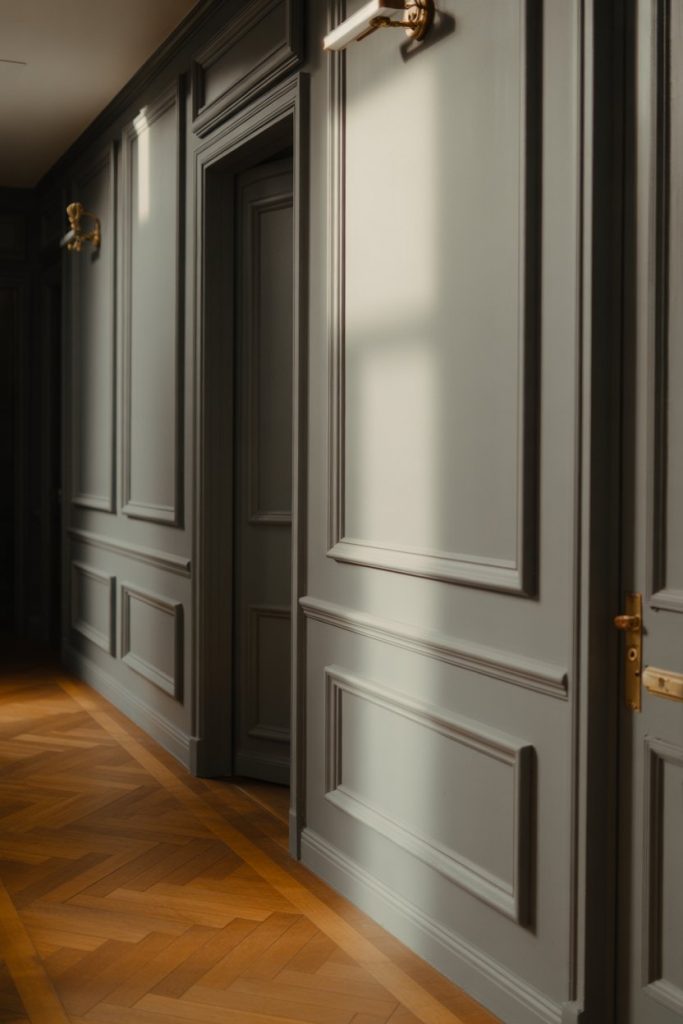
In homes with traditional architecture, adding decorative molding—think picture frame molding or wainscoting—and painting it a shade or two darker than the walls creates instant elegance. This works particularly well in entrance hallways or upstairs corridors in colonial or Victorian-style homes. The contrast adds dimension without requiring any additional decor, and it’s a classic look that never goes out of style. Pair it with a narrow console and a simple vase for a refined, understated effect.
Where it works best: older homes in the South and Mid-Atlantic, where crown molding and wainscoting are already part of the architectural language. This is also a project that increases resale value, as it’s seen as a permanent upgrade rather than just decorative styling. A common mistake is choosing paint colors that are too similar—aim for at least a two-shade difference to ensure the molding stands out.
9. LED-Backlit Art Panels
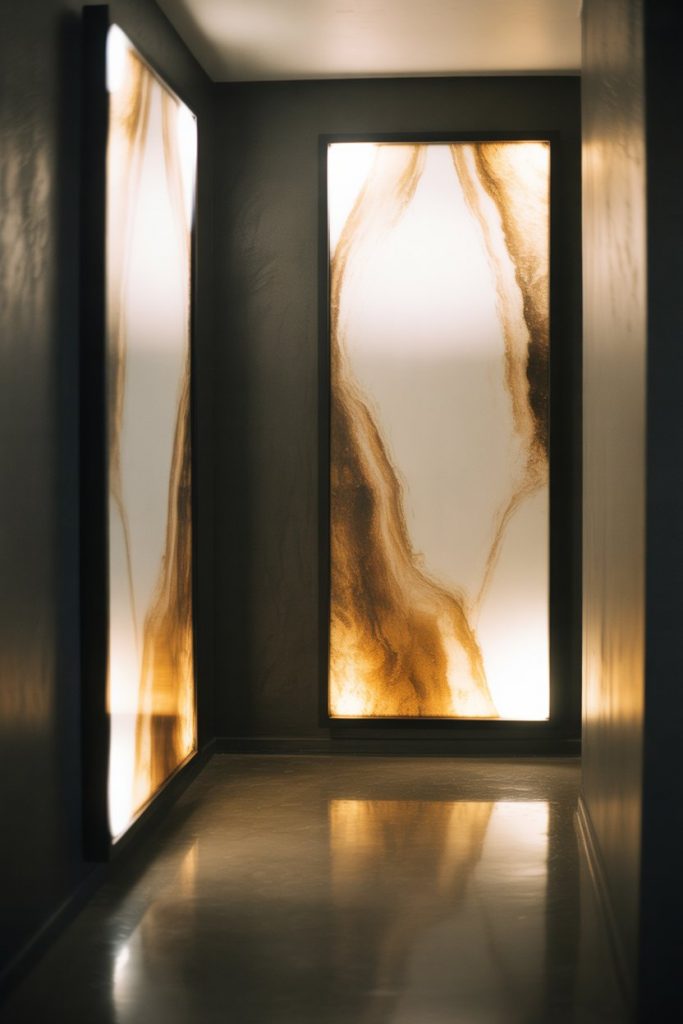
For a thoroughly modern and high-tech approach, consider backlit panels that double as both art and ambient lighting. These are especially effective in narrow hallways with little natural light, where they can illuminate the space while adding a sculptural element. Choose abstract designs, nature scenes, or even custom photography printed on translucent material. The soft glow creates a calming atmosphere and makes the hallway feel more intentional, especially in the evening.
This option has gained traction in urban condos and new builds, particularly in tech-forward cities like Seattle and Austin. The panels typically run between $200 and $600 depending on size and customization, but they eliminate the need for additional sconces or overhead lighting. Installation is straightforward—most plug into a standard outlet and can be hung like a regular frame.
10. Vintage Map Collection in Matching Frames
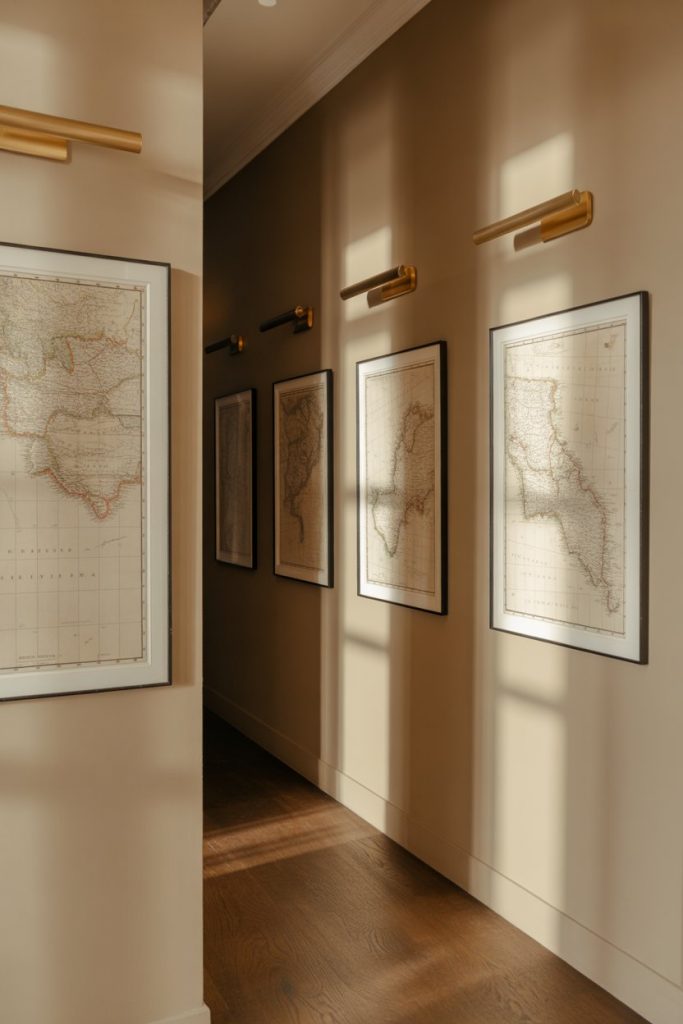
For history lovers and travelers, a collection of vintage maps brings both personality and conversation-starting detail to a hallway. This works beautifully in long corridors where you have the linear space to display multiple pieces in a row. Choose maps that reflect places you’ve lived or traveled, or go with a single region displayed across several frames for a cohesive narrative. The muted tones of aged paper pair well with both warm and cool wall colors.
A micro anecdote: a colleague once framed maps from every city his grandparents lived in during their 60-year marriage, turning his hallway into a visual family history. It’s a deeply personal approach that feels intentional and layered. You can find reproduction maps online for $10–$30 each, or hunt for originals at antique shops if you want true vintage texture.
11. Sculptural Metal Wall Hangings
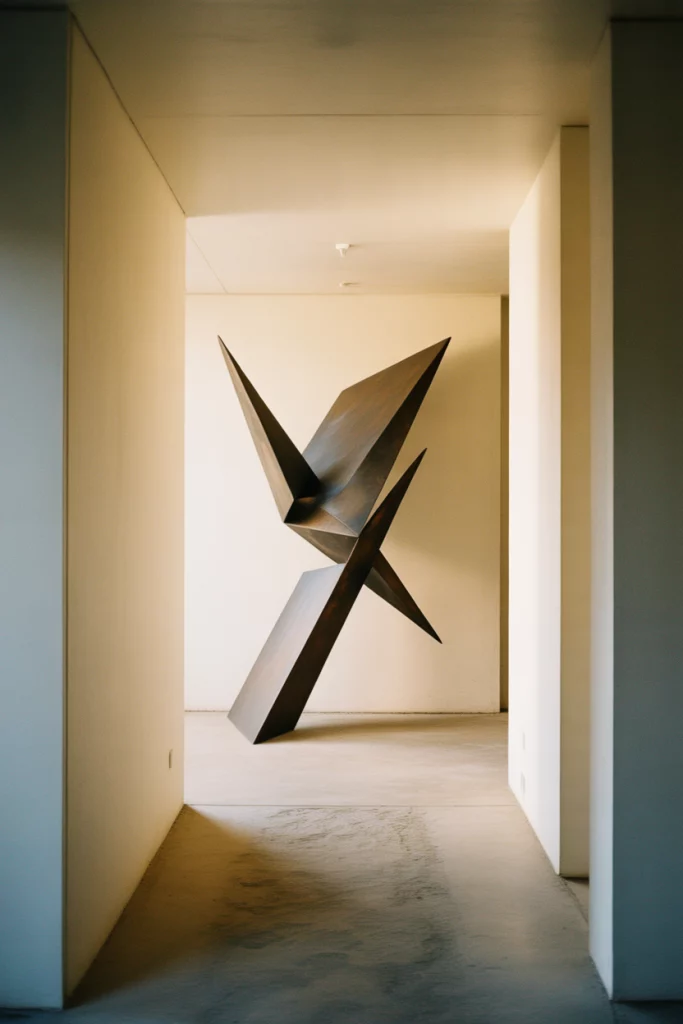
Three-dimensional metal art—whether geometric, floral, or abstract—adds an unexpected tactile quality to hallway wall decor. This works especially well in modern or industrial interiors, where the sleek lines and metallic finish complement other materials like concrete, steel, or polished wood. In a short narrow hallway, a single statement piece can fill the space without overwhelming it. Look for finishes like brushed brass, blackened steel, or copper to tie into your existing hardware and fixtures.
These pieces are often found at home goods stores, but higher-end options from independent artists can be sourced through platforms like Etsy or local art fairs. Budget-wise, expect to spend $80–$300 depending on size and complexity. One common mistake is choosing a piece that’s too heavy for your wall type—always check weight limits and use appropriate anchors, especially in drywall.
12. Chalkboard or Corkboard Feature Wall
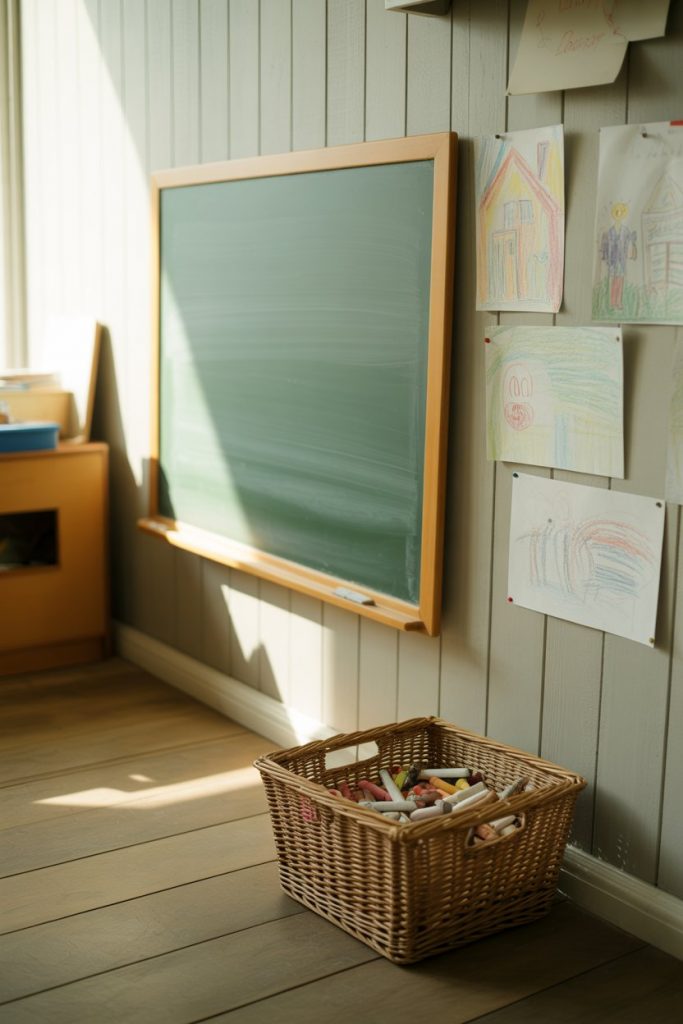
In family homes—especially those with kids—a functional chalkboard or corkboard wall in the hallway serves as both decor and a practical tool for notes, reminders, and rotating children’s art. This is particularly popular in school drop zones or entry areas where organization is key. Frame the board with simple wood trim to give it a finished look, and keep chalk or pins in a nearby basket for easy access. It’s a simple solution that evolves with your family’s needs.
Real homeowner behavior: many families use this space for weekly meal planning, birthday countdowns, or inspirational quotes that change monthly. It’s a low-cost project—chalkboard paint and corkboard sheets are both under $30—and it can be updated or removed easily, making it ideal for renters. Just be sure to seal chalkboard paint properly to avoid dust and smudging.
13. Macramé Wall Hanging with Trailing Plants
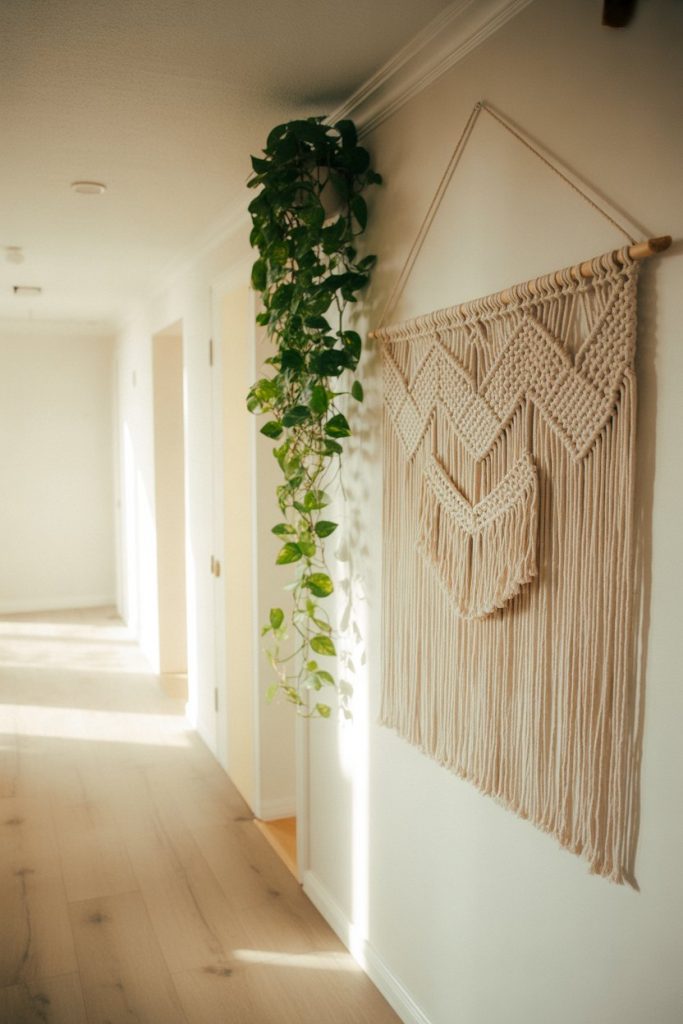
Bringing softness and organic texture, a large macramé piece paired with trailing plants like pothos or philodendron creates a calming, boho-inspired hallway. This style works best in homes with natural light, where the plants can thrive and the macramé’s intricate knotting is visible. In a narrow space, choose a vertical design that draws the eye upward rather than outward. The combination of fiber art and living greenery feels fresh and rooted in the current trend toward biophilic design.
In regions like the Pacific Northwest and Northern California, where indoor plants are part of everyday life, this look feels especially natural. The macramé itself can be sourced from small makers on Etsy for $60–$150, or you can DIY it if you’re crafty. One tip: use a moisture meter to ensure the plants aren’t overwatered, as hallways typically have less airflow than other rooms.
14. Framed Textile or Fabric Art
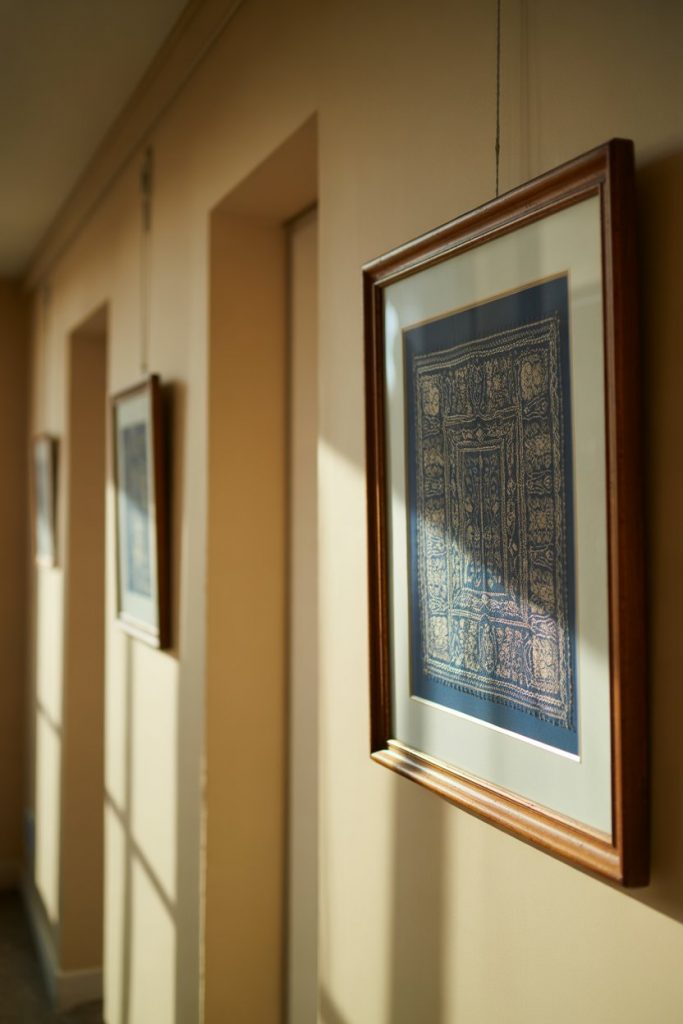
Framing a piece of vintage fabric—such as a quilt square, embroidered linen, or patterned textile—offers a unique alternative to traditional paintings prints. This approach is ideal for adding warmth and color to a narrow modern hallway, and it works beautifully in homes with a global or eclectic aesthetic. The texture of the fabric adds depth that flat paper or canvas can’t, and the framing process is straightforward with the right mat and shadowbox frame.
Where it works best: homes with a story to tell, whether through family heirlooms or curated vintage finds. I’ve seen this done beautifully with Japanese obi fabric, Mexican embroidery, and even repurposed scarves from flea markets. The cost is minimal if you’re using fabric you already own—just invest in a quality frame and UV-protective glass to preserve the textile over time.
15. Minimalist Line Art in Thin Frames
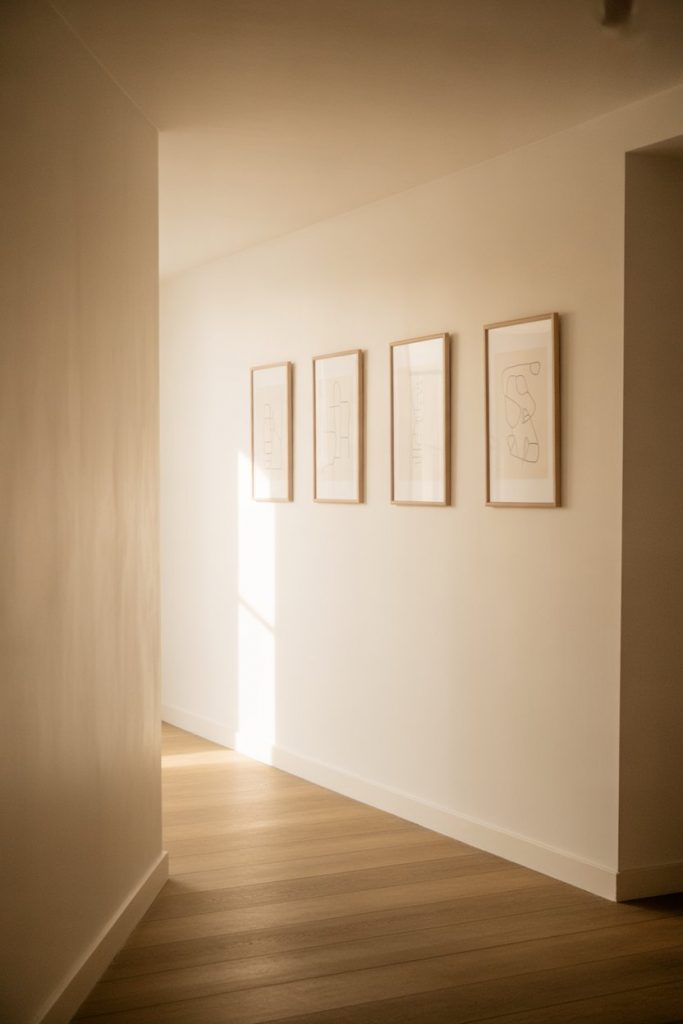
For a clean, contemporary look, minimalist line drawings in ultra-thin black or white frames bring sophistication without visual weight. This style is perfect for narrow or short hallways where you want decor that feels intentional but not overpowering. Choose simple subjects—faces, botanicals, abstract shapes—and keep the color palette neutral. The result is a hallway that feels curated and modern, with an art-gallery quality that elevates the entire space.
This approach is especially popular in urban apartments and minimalist homes, where less is truly more. Printable line art is widely available online, often for under $10 per design, and affordable frame options abound at IKEA or Target. A common mistake is hanging the frames too high—aim for center points at 57–60 inches from the floor, which is standard gallery height.
16. Pegboard Wall with Hooks and Accessories
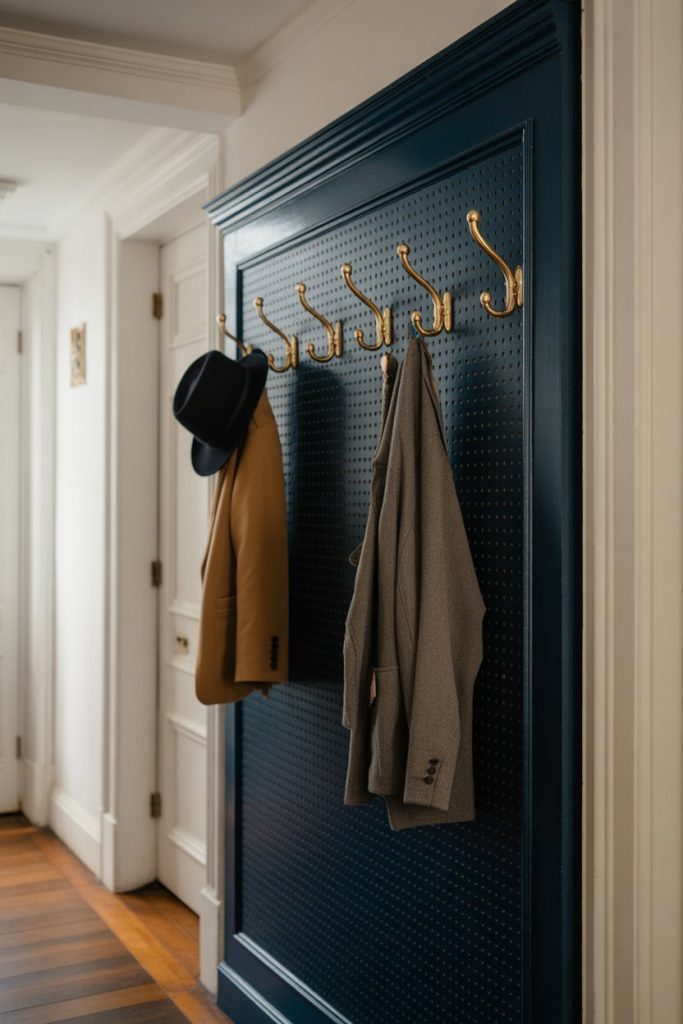
In a school or mudroom-adjacent hallway, a painted pegboard wall offers both function and visual interest. Use it to hang coats, bags, hats, or even small planters and keys. Choose a bold color like navy, forest green, or even black for a modern twist, or keep it neutral to blend with existing decor. The modular nature of pegboard means you can rearrange hooks and accessories as your needs change, making it one of the most adaptable hallway wall decor options.
Practical insight: pegboard is inexpensive (under $20 for a 4×8 sheet) and can be cut to size at most hardware stores. It’s also easy to paint and install with basic tools. Many families use this in entryways or near bedroom hallways to create drop zones for kids’ backpacks and sports gear, keeping clutter contained and organized.
17. Statement Mirror with Ornate Frame
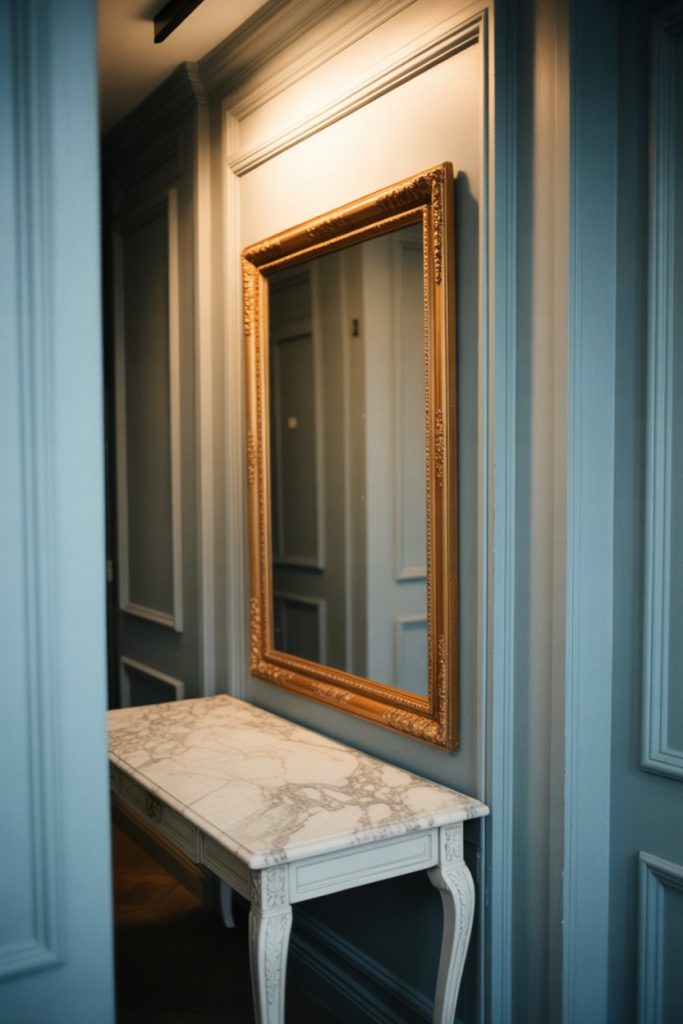
A single large mirror with an ornate or antique-style frame can serve as a dramatic focal point in a short or entry hallway. This works especially well in traditional or transitional homes, where the decorative frame adds a sense of grandeur. Choose finishes like aged gold, distressed white, or carved wood to tie into your home’s existing aesthetic. The mirror itself brightens the space and creates the illusion of depth, making even the smallest hallway feel more open.
In Southern states like Georgia and South Carolina, where traditional architecture is prevalent, this look is a staple. Budget-wise, you can find beautiful vintage mirrors at estate sales for $50–$200, or opt for new reproductions from home decor retailers. Just ensure the mirror is securely anchored—ornate frames can be heavy, and proper wall anchors are essential.
18. Vertical Greenery or Living Wall Panel
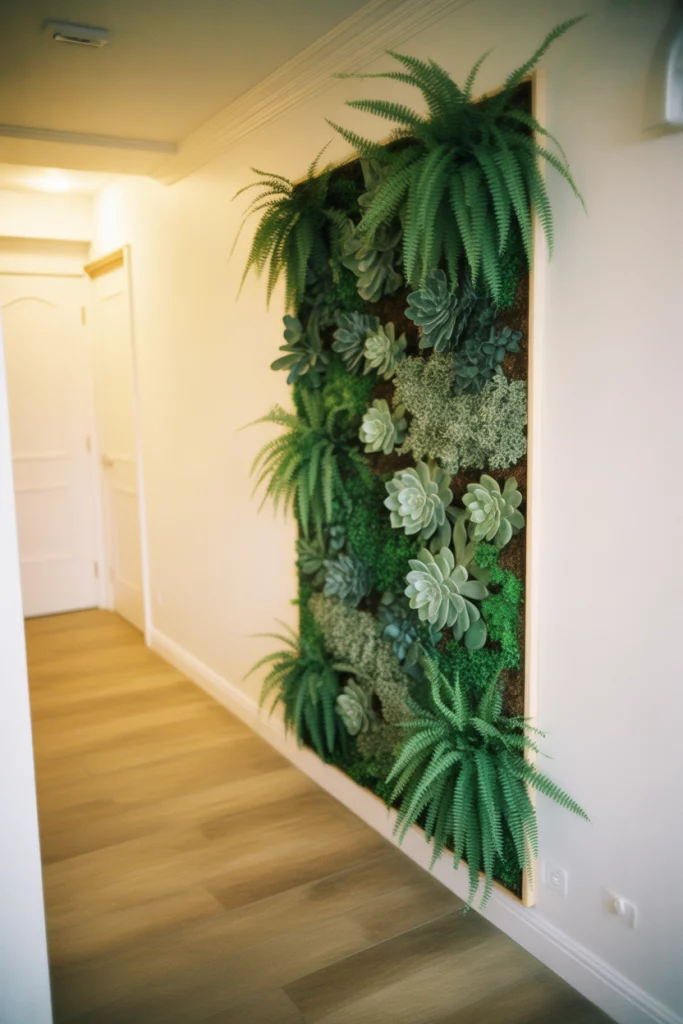
For homeowners committed to biophilic design, a vertical garden or living wall panel brings nature directly into the hallway. This is particularly striking in modern or minimalist spaces, where the greenery contrasts with clean lines and neutral tones. Small-scale systems are now available for residential use, featuring built-in irrigation and low-maintenance plants like ferns, succulents, or air plants. In a narrow hallway, this creates a lush focal point without taking up any floor space.
This trend has taken off in cities like Portland and San Francisco, where sustainability and indoor greenery are part of the lifestyle. Systems range from $150 to $1,000 depending on size and complexity. One key consideration: make sure your hallway has enough natural or grow light for the plants to thrive. If not, opt for faux greenery panels, which have become remarkably realistic in recent years.
19. Salon-Style Gallery Wall with Mixed Media
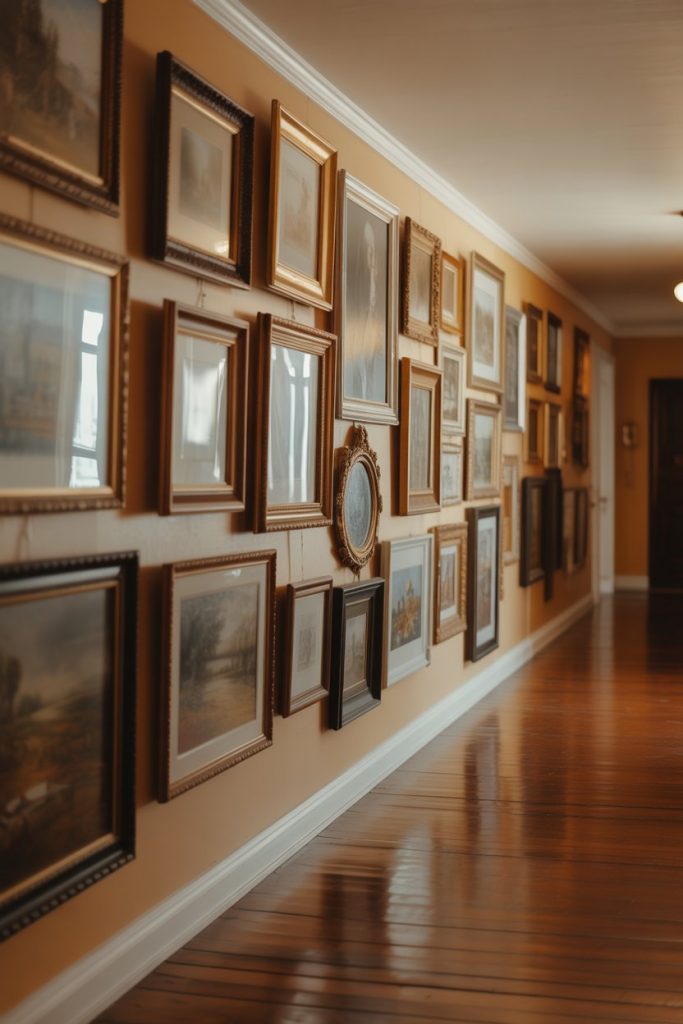
A salon-style arrangement—where paintings prints, photos, and other art are hung close together in an asymmetrical layout—creates a collected-over-time feel that’s warm and personal. This works in any length hallway, but it’s especially effective in long spaces where you have room to build out the collection. Mix frame styles, art types, and even small decorative objects like plates or mirrors to create a layered, eclectic look. The key is to start with a central anchor piece and build outward organically.
Expert-style commentary: lay out your gallery on the floor first, then take a photo and adjust until you’re happy with the composition. This saves you from unnecessary holes in the wall. In terms of spacing, aim for 1–3 inches between frames for a truly salon-style feel. This approach is timeless and allows you to add or swap pieces over the years without disrupting the overall look.
20. Illuminated Floating Shelves with Indirect Lighting
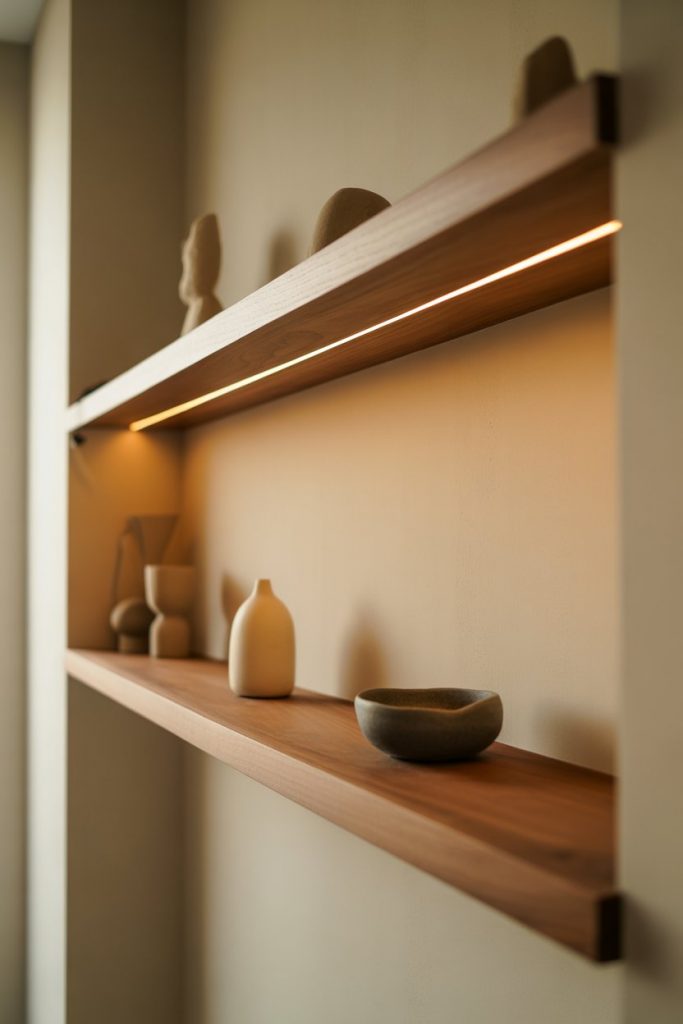
Combining function and ambiance, floating shelves with built-in LED strip lighting create a modern, almost architectural effect in a narrow modern or long entry hallway. The indirect lighting highlights objects on the shelves—books, ceramics, small sculptures—while providing a soft glow that makes the hallway feel welcoming, especially at night. This is a particularly smart choice in homes with limited overhead lighting or no windows in the corridor.
This setup is popular in new construction and modern renovations, where smart lighting and clean lines are prioritized. The LED strips are affordable (under $25 for a 15-foot roll) and easy to install with adhesive backing. They’re also energy-efficient, adding only pennies to your monthly electric bill. One tip: use warm white LEDs (2700–3000K) to keep the space feeling cozy rather than clinical.
21. Framed Pressed Botanicals in Shadow Boxes
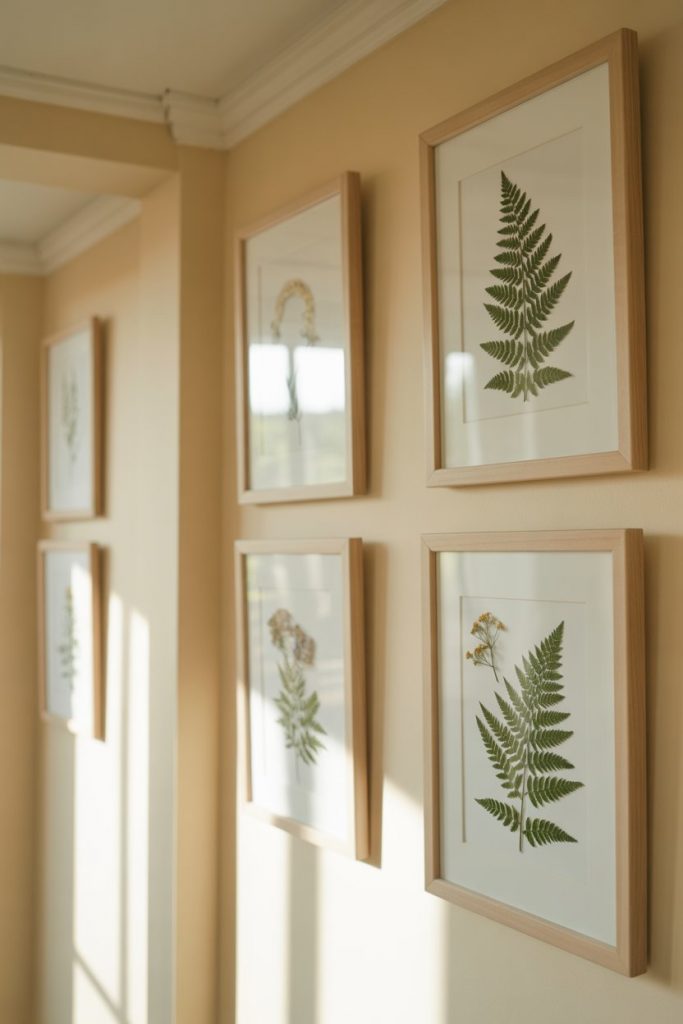
Delicate and nature-inspired, pressed flowers or leaves displayed in shadow box frames bring an organic, almost museum-quality feel to a hallway. This look is ideal for boho, farmhouse, or cottagecore interiors, and it works beautifully in narrow or upstairs spaces where you want something visually light. Choose a variety of botanicals—ferns, wildflowers, eucalyptus—and frame them individually or in a series. The depth of the shadow box adds dimension without bulk.
Real homeowner behavior: many people press their own botanicals from hikes or garden clippings, making this a deeply personal project. You can also purchase pre-pressed specimens online or from craft stores. The frames typically cost $15–$30 each, and the result is a timeless, elegant look that never feels dated. Just keep them out of direct sunlight to prevent fading over time.
22. Custom Family Photo Timeline
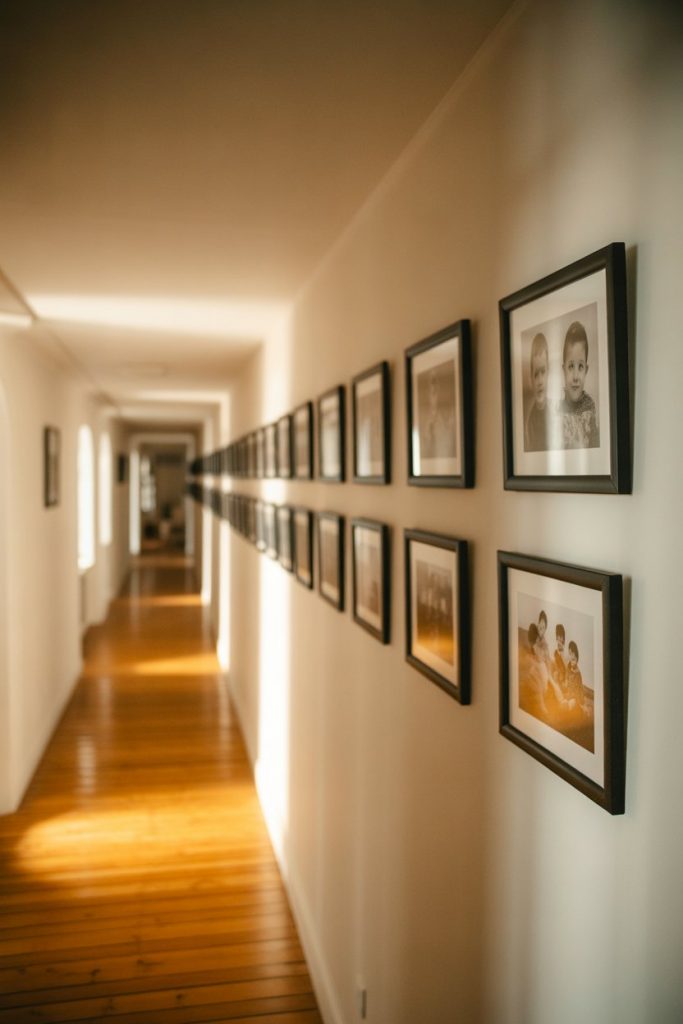
A chronological display of family photos—from wedding portraits to baby milestones to recent vacations—turns your hallway into a visual story. This is especially meaningful in entry or upstairs hallways, where family and guests naturally pass through. Use matching frames and keep the layout linear for a clean, organized feel. This approach works in any home style, from traditional to modern, and it’s endlessly customizable as your family grows and changes.
Where it works best: in homes where family is central to daily life, and where the hallway is a high-traffic area that connects main living spaces. It’s also a wonderful conversation starter when guests visit. A common mistake is using too many different frame styles, which can make the display feel chaotic—stick with one or two frame types and keep the matting consistent for a polished, cohesive look.
Conclusion
Whether you’re drawn to the timeless elegance of vintage maps, the modern edge of backlit panels, or the personal warmth of a family photo timeline, your hallway deserves to be more than an afterthought. These 22 ideas prove that even the smallest, most overlooked spaces can become moments of beauty and intention when approached with creativity and care. We’d love to hear which concept resonates with you—or if you’ve tried any of these in your own home. Drop a comment below and let’s keep the conversation going.