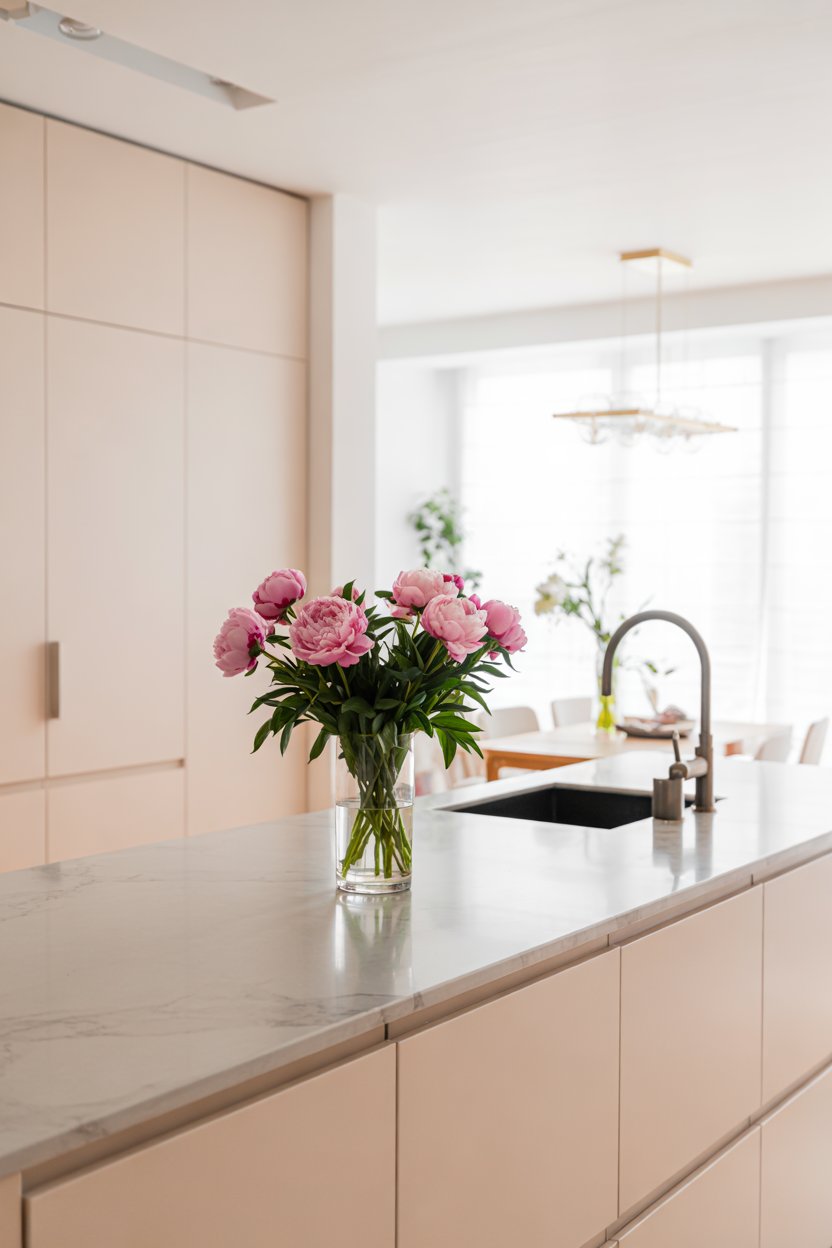
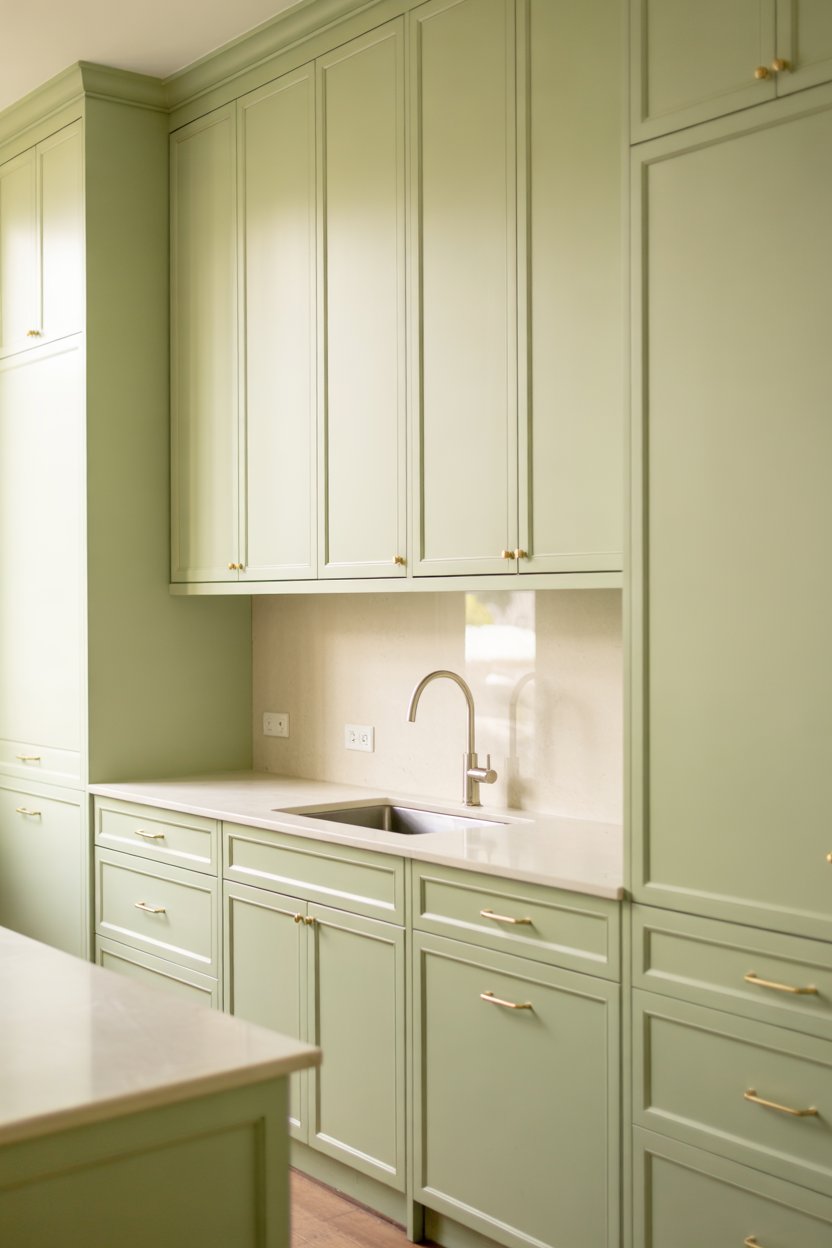
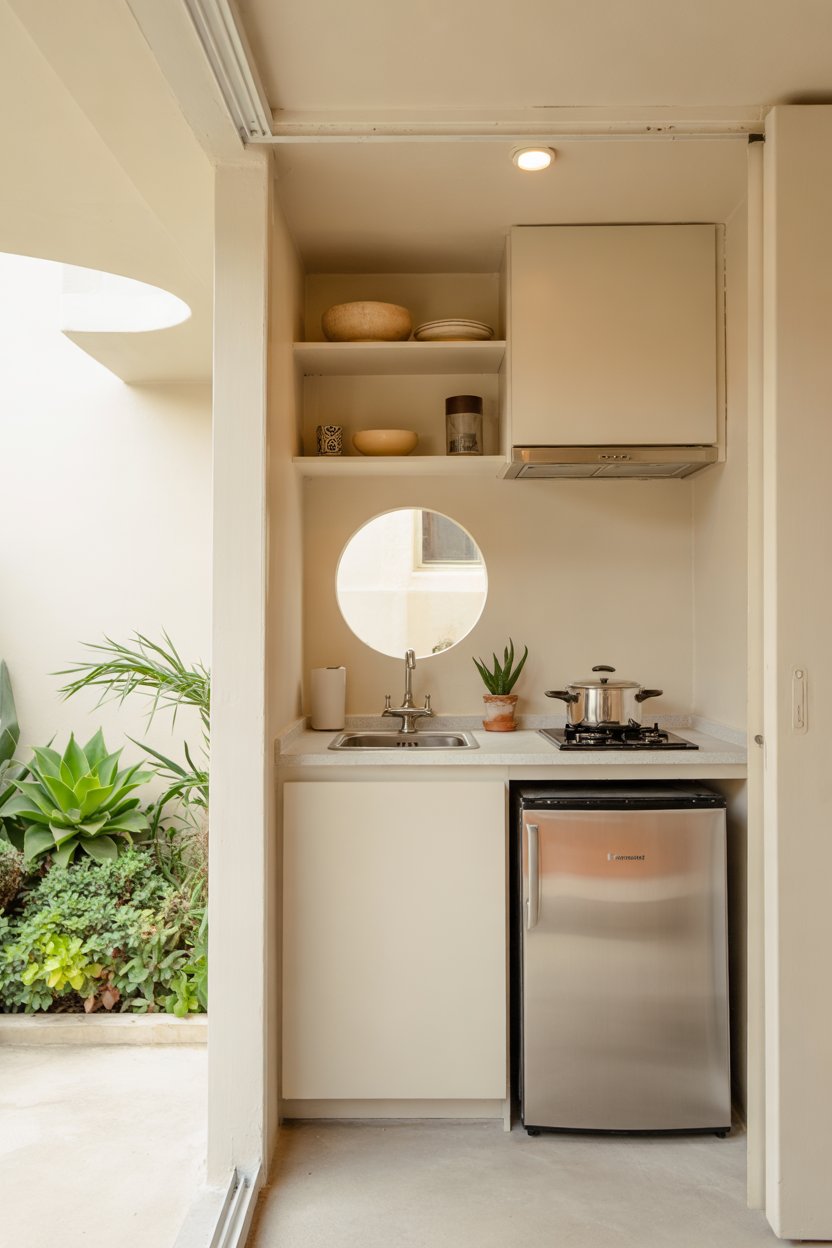
Green kitchens are having a major moment in 2026, and it’s easy to see why. From calming sage tones to bold emerald statements, green brings warmth, personality, and a connection to nature that feels both timeless and refreshingly modern. Americans are turning to Pinterest in droves for inspiration, seeking designs that balance beauty with livability—spaces that work as hard as they look good. Whether you’re drawn to vintage charm or sleek contemporary lines, this collection of green kitchen ideas will help you find the perfect shade, style, and layout to transform your space into something truly special.
1. Olive Green Cabinets with Brass Hardware

This year, olive green cabinetry is everywhere, and for good reason. It’s earthy without feeling heavy, sophisticated without being stuffy. Paired with warm brass pulls and knobs, olive tones create a kitchen that feels both grounded and elevated. This combination works beautifully in open-plan homes where the kitchen flows into living spaces, adding color without overwhelming the room. The muted green acts as a neutral backdrop that plays well with wood, stone, and textiles. 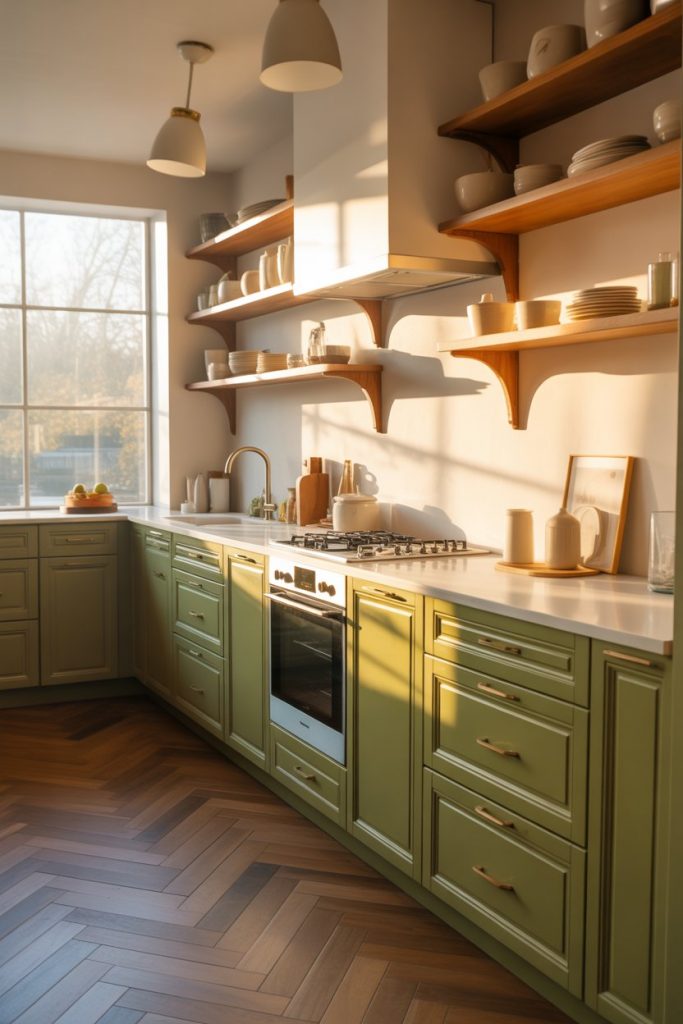
The beauty of this palette is its versatility across home styles. In a 1920s bungalow, it honors historical roots while feeling fresh. In a new build, it adds instant character. Consider pairing with a light marble or butcher block countertop to soften the look, and don’t be afraid to mix in warmer wood tones on floating shelves or a kitchen island. The brass hardware becomes jewelry for your cabinets—small details that make a big impact when light catches them throughout the day.
2. Pastel Green Backsplash with White Cabinetry
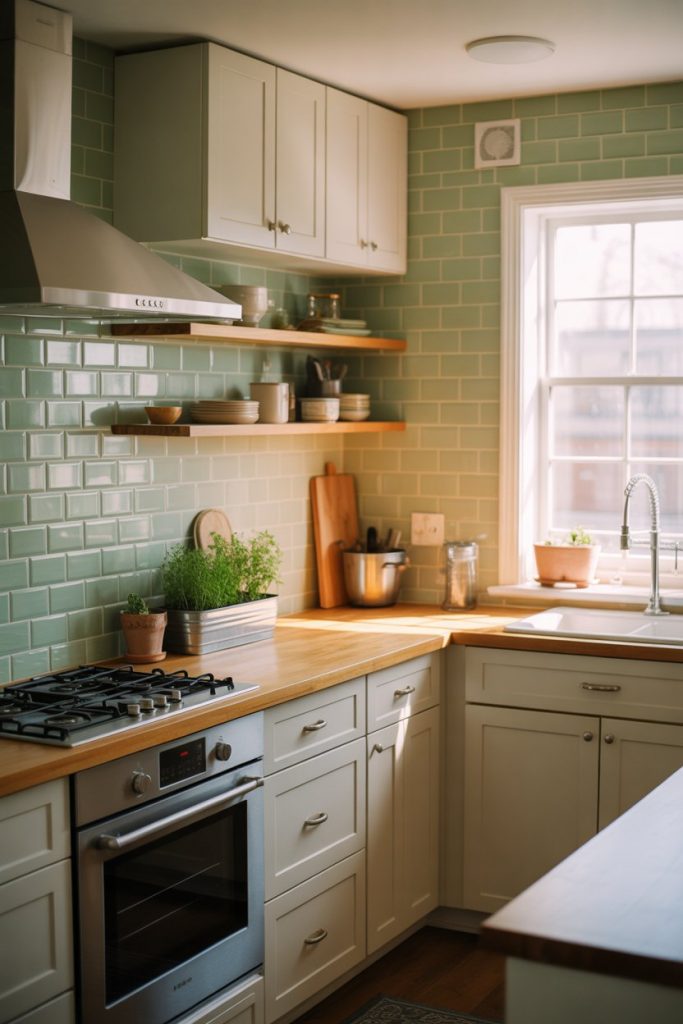
If you’re hesitant to commit to green cabinets, a pastel green backsplash offers the perfect compromise. Soft, almost minty tones bring color to eye level without dominating the space, creating a focal point that’s gentle rather than jarring. This approach works especially well in smaller kitchens where darker greens might close in the room. White cabinets keep things bright and airy, while the pastel tile adds personality and warmth that pure white alone can’t achieve. 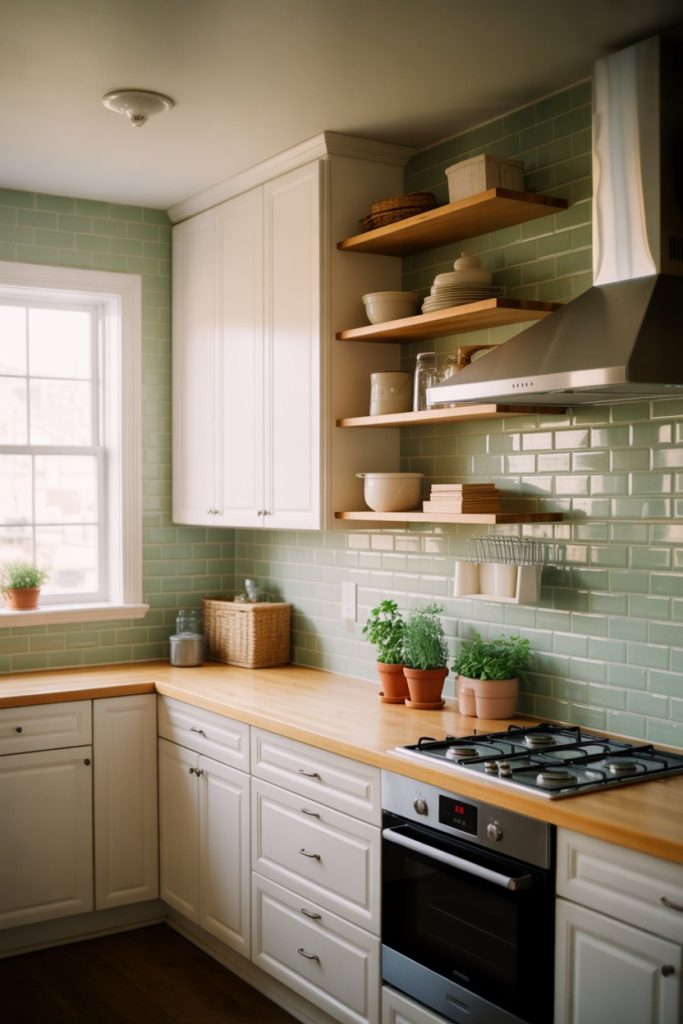
One common mistake here is choosing a green that’s too cool or too sweet—it can read juvenile or clinical. Look for pastels with a slight gray or sage undertone, which feel more sophisticated and timeless. In California and Florida homes, this color scheme resonates beautifully with the indoor-outdoor lifestyle, bringing garden tones inside. It’s also budget-friendly: backsplash tile is one of the least expensive ways to introduce color, and if trends shift, it’s easier to replace than cabinetry.
3. Sage Green Kitchen Island as Statement Piece
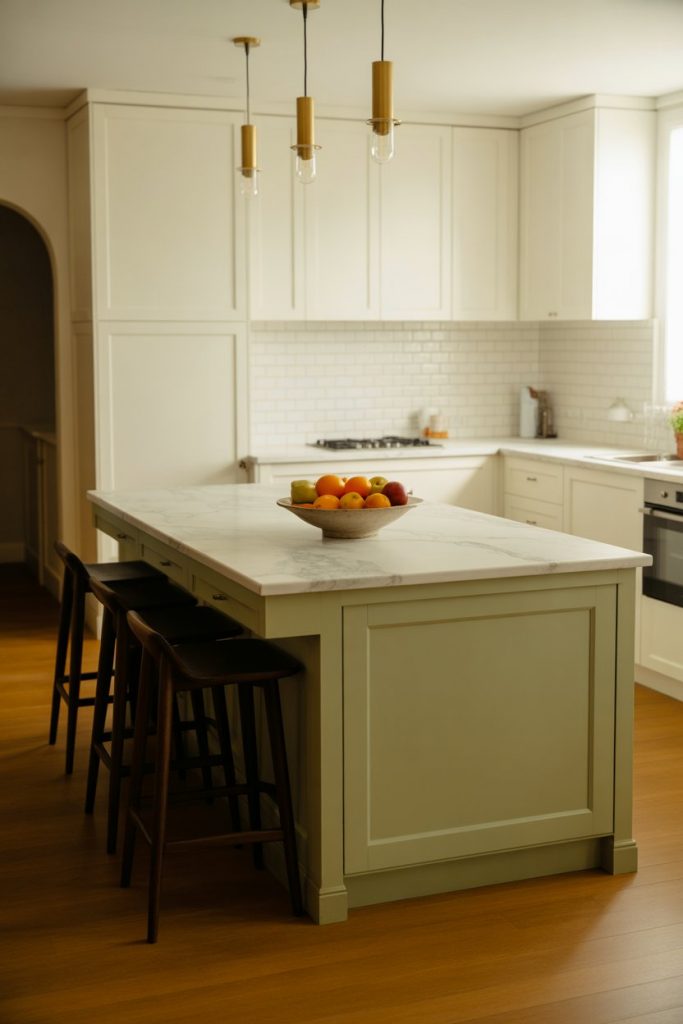
A sage green island against neutral perimeter cabinets creates instant architectural interest without the commitment of an all-green kitchen. This two-toned approach has become a favorite among designers because it defines zones in an open layout and adds depth that monochromatic kitchens lack. Sage is particularly forgiving—it reads sophisticated in traditional spaces and fresh in modern ones, making it a safe bet for resale value while still being on-trend. 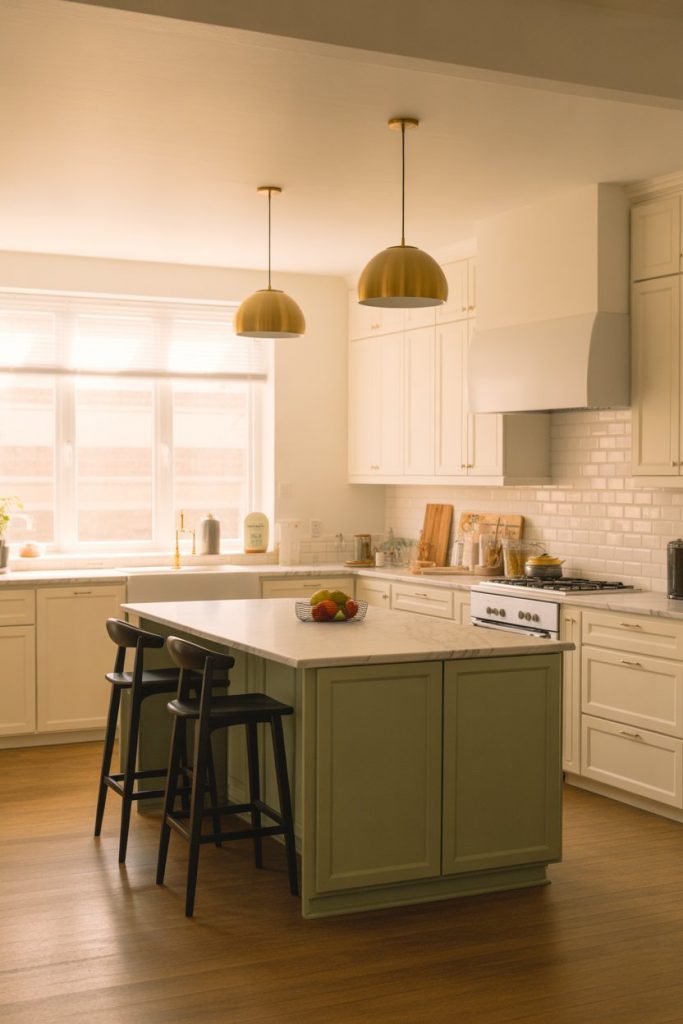
Where this works best: in kitchens with 10-foot ceilings or higher, where the island becomes a true centerpiece rather than getting lost in the room. Many homeowners make the mistake of painting only the island without considering hardware—matching or complementing the island’s finish with thoughtful pulls and knobs ties the whole kitchen together. Consider extending the green to a built-in bench or mudroom nearby to create visual continuity throughout your home’s main floor.
4. Dark Green Cabinetry with Marble Countertops
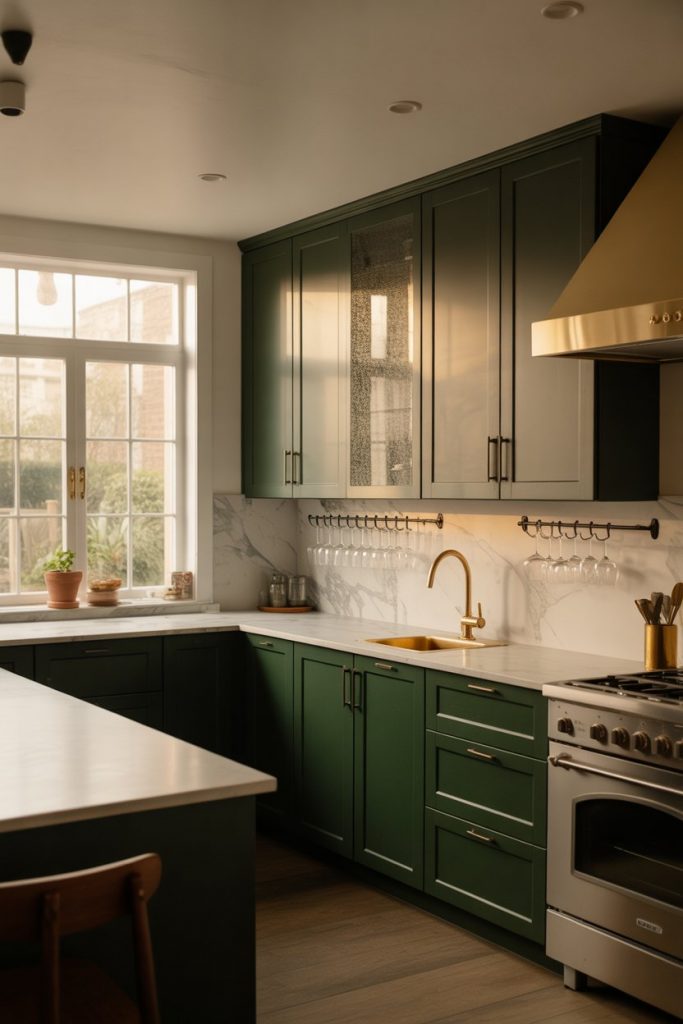
Dark green cabinets—think forest or hunter tones—bring drama and richness that lighter greens can’t match. This luxury approach works beautifully in large kitchens with ample natural light, where the depth of color creates an enveloping, jewel-box effect. Paired with white or gray marble countertops, the contrast is striking yet balanced. These kitchens feel curated and intentional, like spaces designed for serious cooking and gracious entertaining rather than quick weeknight meals. 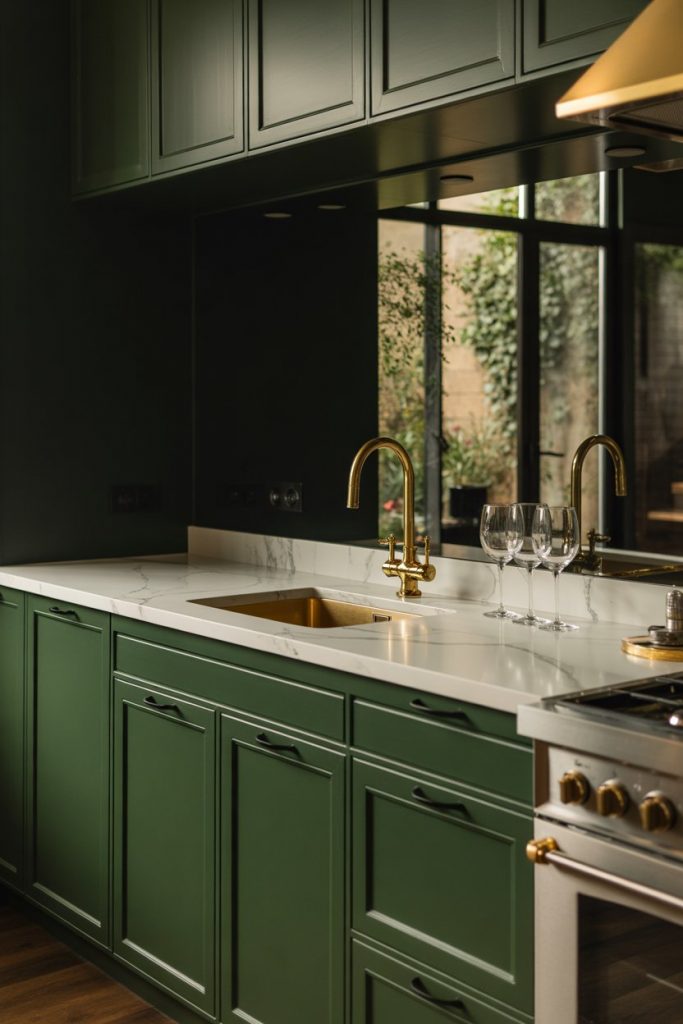
An expert insight: dark greens absorb light, so layered lighting is essential. Under-cabinet LEDs, pendant fixtures, and adjustable recessed lights keep the space from feeling cave-like. In the Northeast and Midwest, where gray skies are common, these kitchens create cozy refuges that feel especially welcoming in fall and winter. The marble countertops prevent the dark cabinets from feeling too heavy, reflecting light back into the room and providing a luminous surface that contrasts beautifully with the saturated color below.
5. Modern Olive Green with Minimalist Hardware
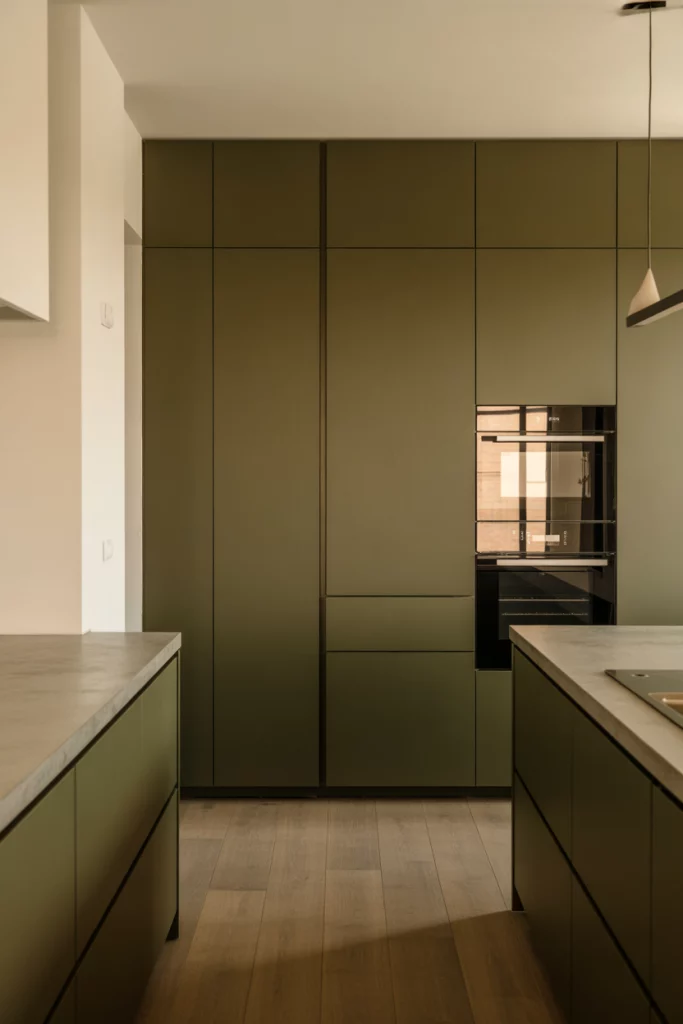
Modern olive kitchens strip away ornate details in favor of clean lines and streamlined forms. Flat-panel cabinets in muted olive tones, paired with integrated handles or slim metal pulls, create a look that’s contemporary without being cold. This aesthetic appeals to younger homeowners who want color but aren’t interested in traditional or farmhouse styles. The modern approach lets the green speak for itself, uncluttered by decorative moldings or busy backsplashes. 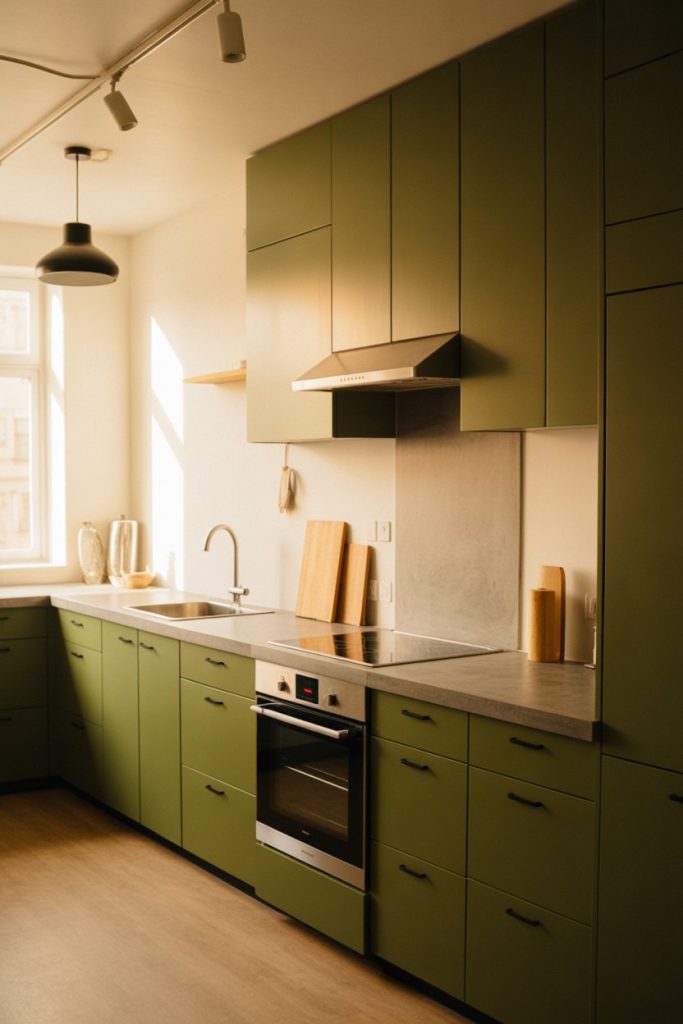
Real homeowner behavior shows that modern minimalist kitchens require more discipline to maintain their clean aesthetic—every item left on the counter becomes more visible without decorative elements to distract the eye. But that’s also part of their appeal: they encourage intentional living and careful curation of kitchen tools and décor. In urban lofts and new construction throughout cities like Austin, Denver, and Portland, this style has become shorthand for sophisticated, design-conscious living that prioritizes function and form equally.
6. Pista Green Accents with Natural Wood
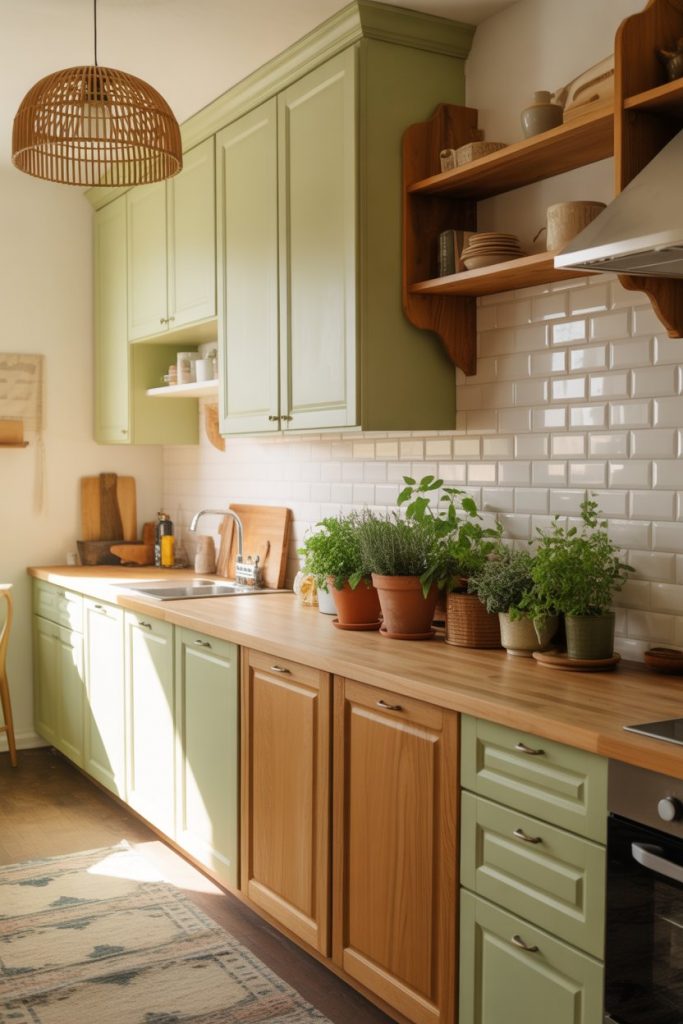
Pista green—a pale, warm shade named after the pistachio nut—brings unexpected freshness when used as accent color alongside natural wood cabinetry. Rather than painting all cabinets, consider pista on upper cabinets only, or on open shelving backing, allowing the warmth of wood to remain dominant. This creates a kitchen that feels organic and collected rather than designed, as if pieces were gathered over time. It’s particularly appealing in homes that embrace natural materials and earthy color palettes. 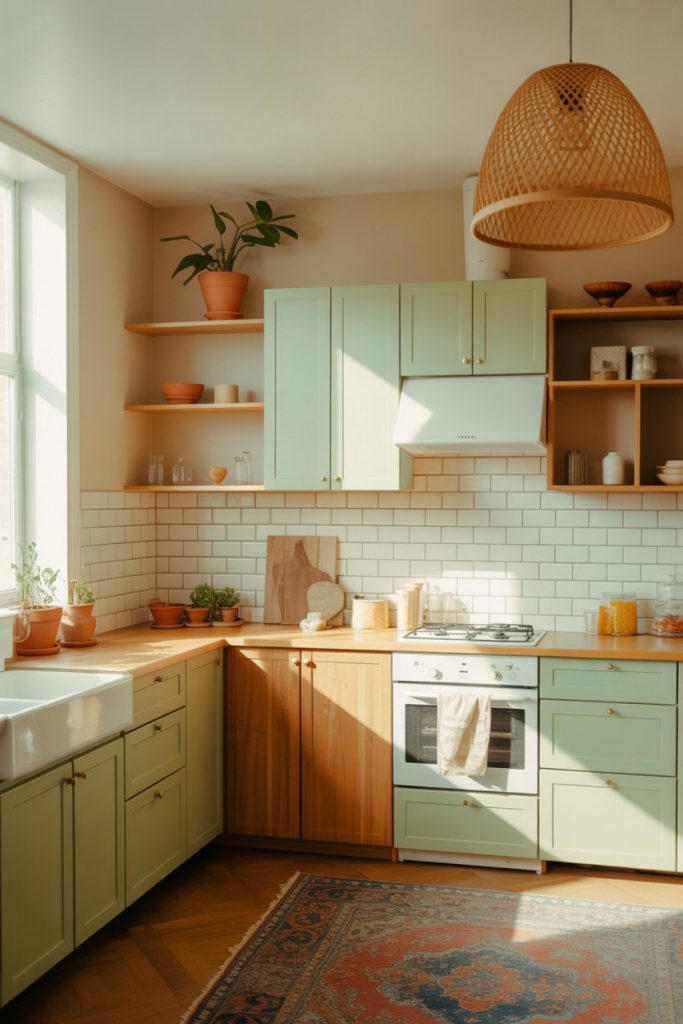
I spoke with a homeowner in North Carolina who initially worried pista green would feel too trendy, but three years later she still loves how it brightens her kitchen without overwhelming the warm wood tones she’d invested in. The key is keeping saturation low—this isn’t a bold statement color but a soft supporting player. It pairs beautifully with terracotta, cream, and warm gray, creating kitchens that feel like they belong in the pages of a European design magazine.
7. Modern Light Green with White Quartz
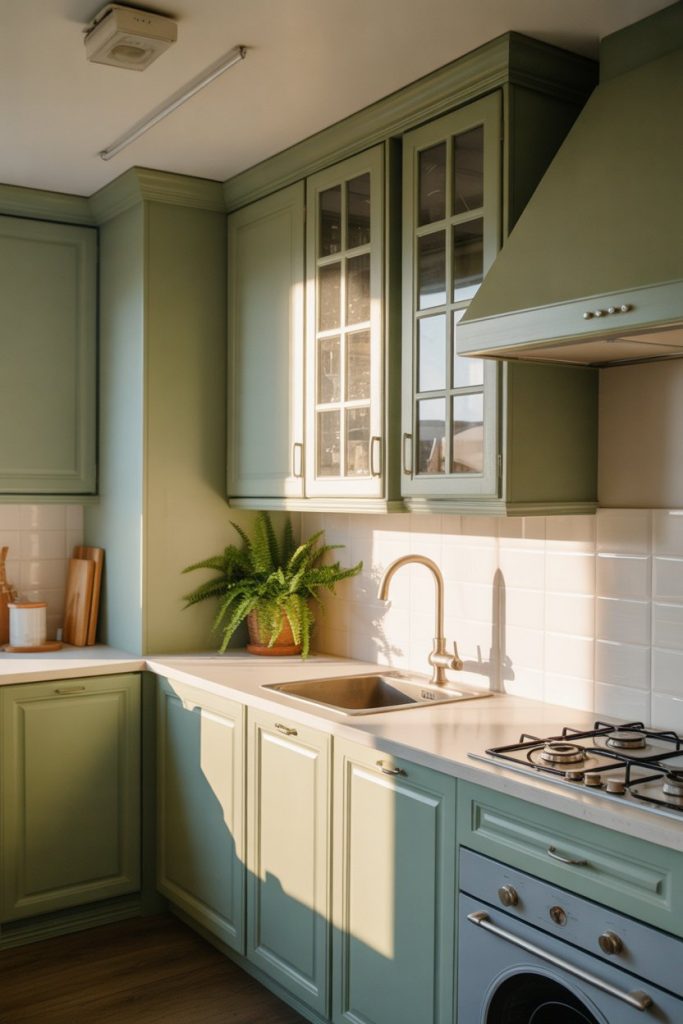
Modern light green cabinets offer all the charm of green without any visual weight. These airy, almost spa-like tones work exceptionally well in kitchens with limited natural light, where darker greens would feel oppressive. White quartz countertops amplify the brightness, creating a space that feels clean, calm, and collected. This palette appeals to those who love color but want their kitchen to feel open and serene rather than dramatic or moody. 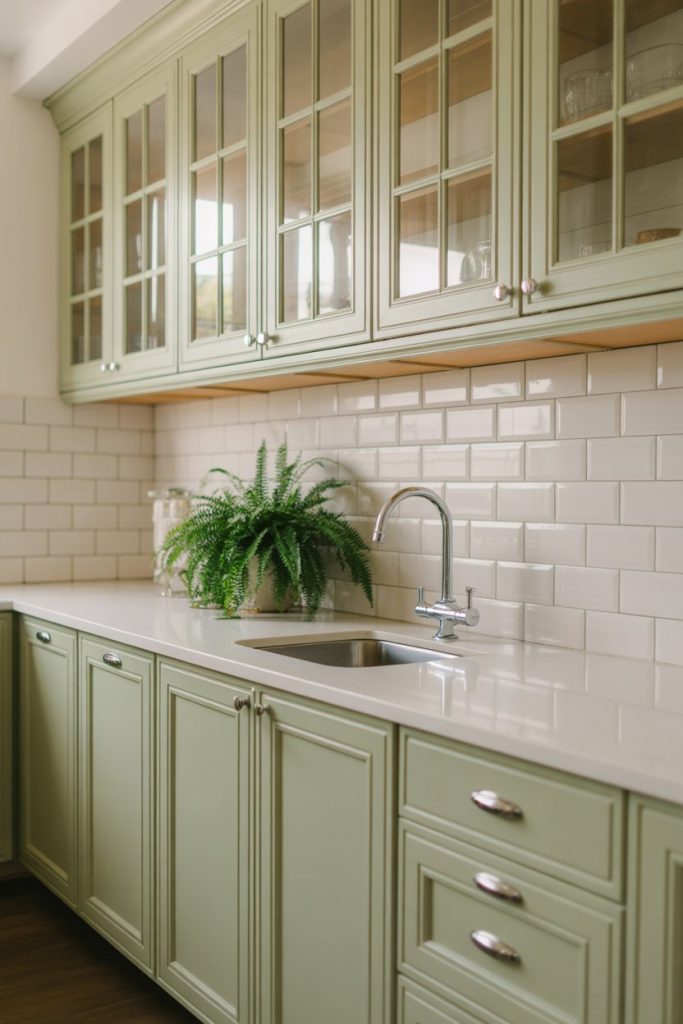
This style works particularly well in coastal communities along both coasts, where the light green echoes sea glass and beach vegetation. Common mistakes include choosing hardware that’s too ornate—stick with simple knobs and pulls in brushed nickel or chrome to maintain the modern, uncluttered feel. The beauty of this palette is its flexibility: it works with both warm and cool accent colors, allowing you to shift your kitchen’s mood seasonally with textiles, small appliances, and décor without ever repainting.
8. Green Kitchen Ideas with Open Shelving
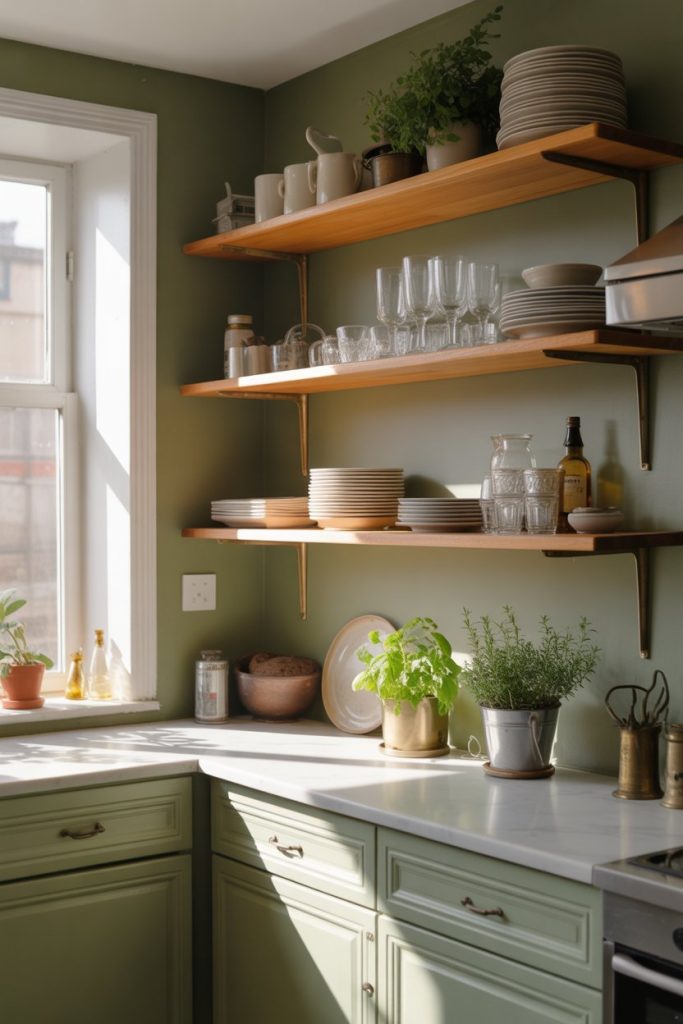
Open shelving has moved beyond trend into permanent fixture territory, and it’s particularly stunning in green kitchens. Whether you paint the wall behind the shelves in a complementary green or keep shelves themselves green while walls stay neutral, this approach creates visual interest and practical storage. The key is styling shelves thoughtfully—everyday dishes, glassware, and a few carefully chosen objects create a lived-in look. This is where green ideas meet practical function, proving beautiful kitchens can also be highly usable. 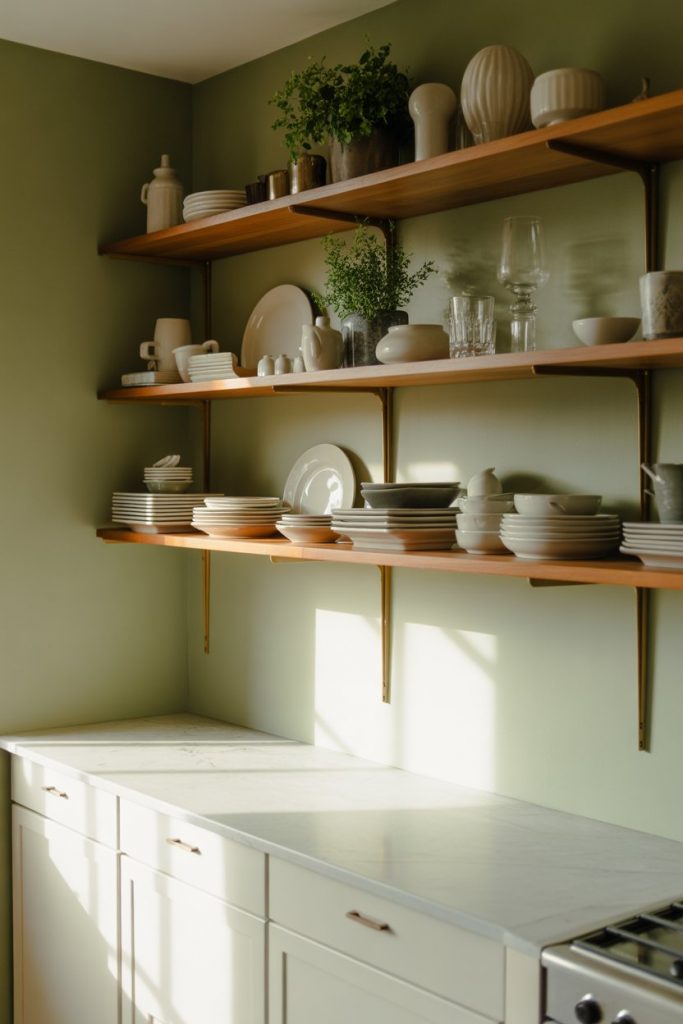
A practical insight: open shelving requires genuine commitment to keeping dishes organized and dust-free. It’s not for everyone, but those who embrace it often find it makes daily cooking more efficient—everything is visible and easily accessible. In smaller kitchens, removing upper cabinets and installing open shelves can make the space feel significantly larger by eliminating visual bulk. Consider this approach on just one wall if you’re uncertain, keeping closed storage elsewhere for items you use less frequently or prefer hidden.
9. Light Green Cabinetry with Gold Fixtures
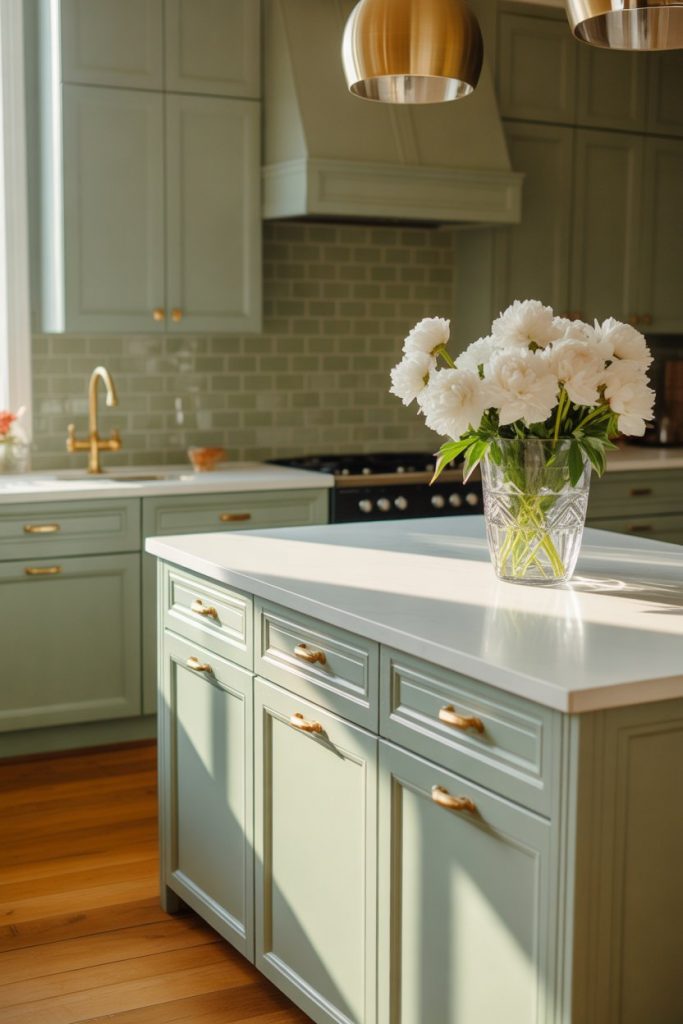
Light green cabinets paired with warm gold or brass fixtures create a kitchen that feels both elegant and approachable. The combination has roots in traditional design but feels fresh and current when executed with clean lines and contemporary proportions. This palette works beautifully in transitional homes—those that blend traditional architecture with modern amenities. The gold adds richness without the weight of darker metals, and it complements green’s natural undertones beautifully. 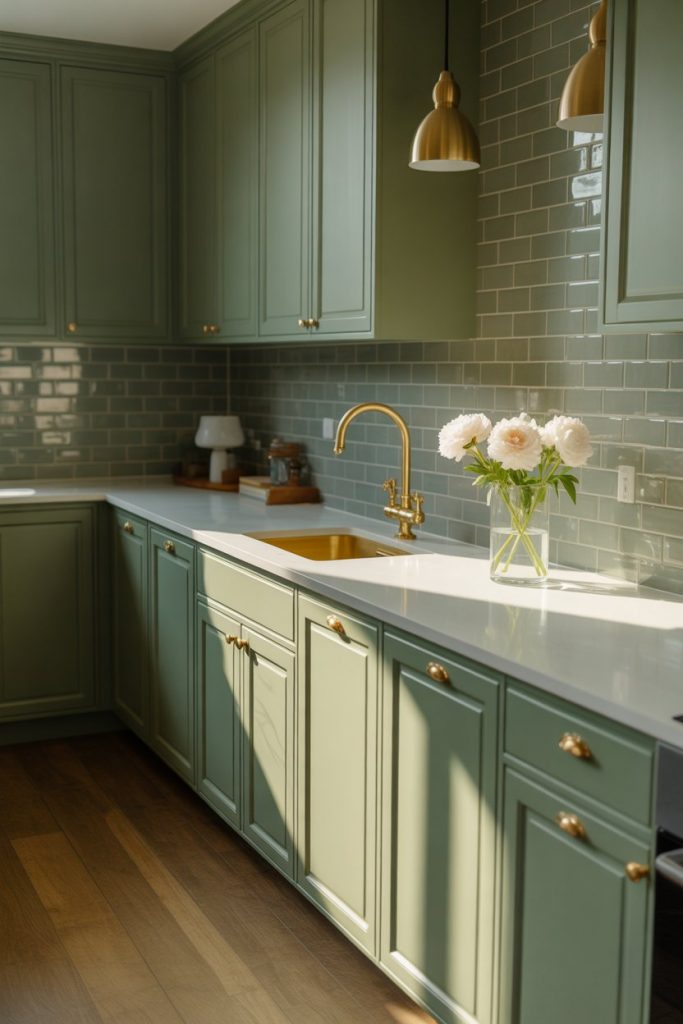
Budget considerations matter here: quality gold or brass fixtures run higher than standard finishes, but they’re worth the investment for longevity and appearance. Cheaper gold finishes can look brassy and wear poorly, revealing base metal underneath within a year or two. This is one area where spending more upfront pays off. In Southern states, where traditional design sensibilities remain strong, this combination resonates particularly well, honoring classic kitchen elements while embracing contemporary color choices.
10. Luxury Green Kitchen with Statement Lighting
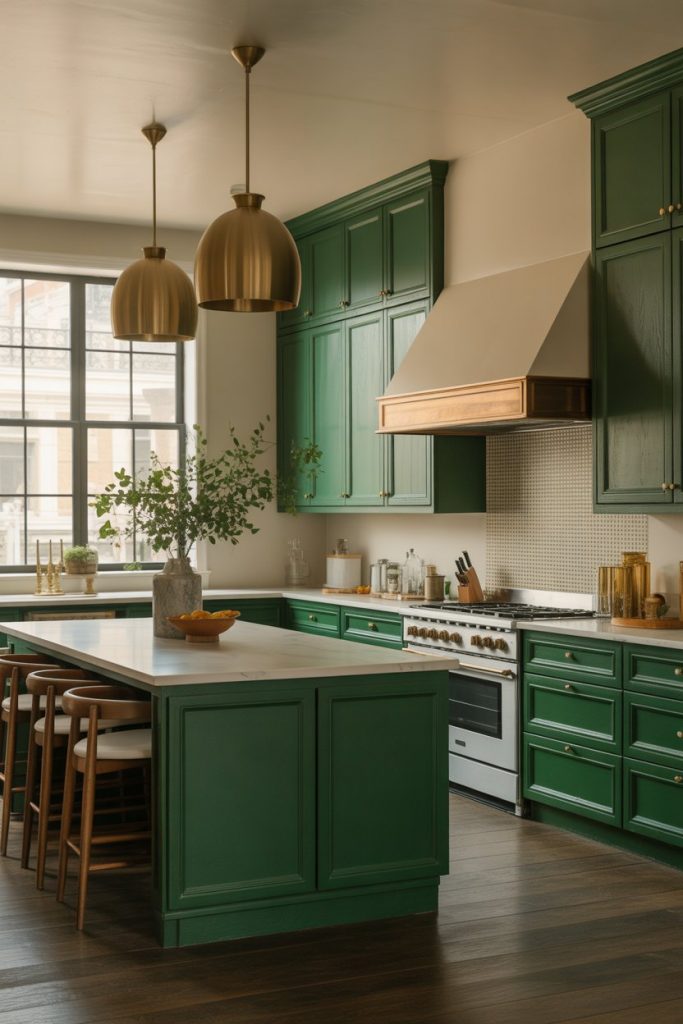
When budget isn’t a constraint, luxury green kitchens showcase how high-end materials and thoughtful lighting can elevate a color palette from pretty to extraordinary. Think custom green cabinetry with hand-rubbed finishes, natural stone countertops, and statement lighting fixtures that function as sculpture. These kitchens often feature mixed metals, textured tiles, and professional-grade appliances that signal serious cooking happens here. The green becomes a backdrop for layers of luxury rather than the sole focus. 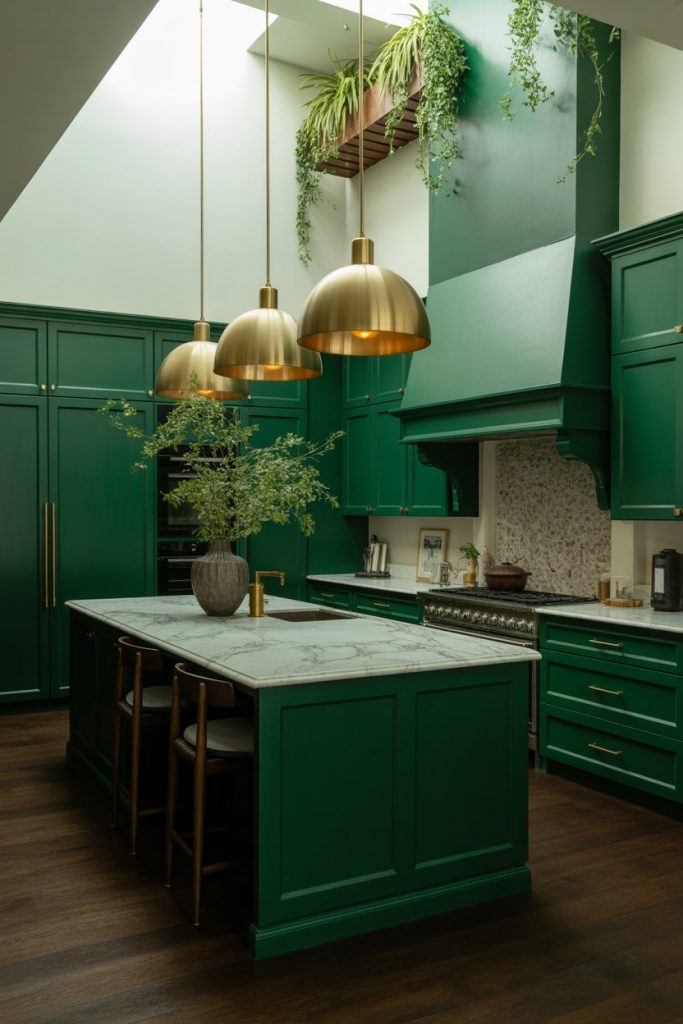
Statement lighting in luxury kitchens isn’t just functional—it’s jewelry for the room. Large-scale pendants, chandeliers, or custom fixtures become focal points that draw the eye upward and add drama. Expert designers note that in luxury green kitchens, the quality of the paint finish matters tremendously; hand-applied lacquer or specialty finishes create depth and character that standard paint can’t match. These details separate truly high-end spaces from those simply trying to look expensive, and they’re particularly valued in affluent markets throughout California, New York, and metropolitan areas nationwide.
11. White and Green Color Palette with Natural Textures

The classic white and green combination never goes out of style because it’s inherently balanced—green adds personality and warmth, white provides breathing room and light reflection. Layer in natural textures like wood, rattan, linen, and stone, and you’ve got a kitchen that feels collected and comfortable rather than designed. This palette works across virtually every architectural style, from farmhouse to contemporary, which explains its enduring popularity on Pinterest where users seek ideas they can adapt to their own homes. 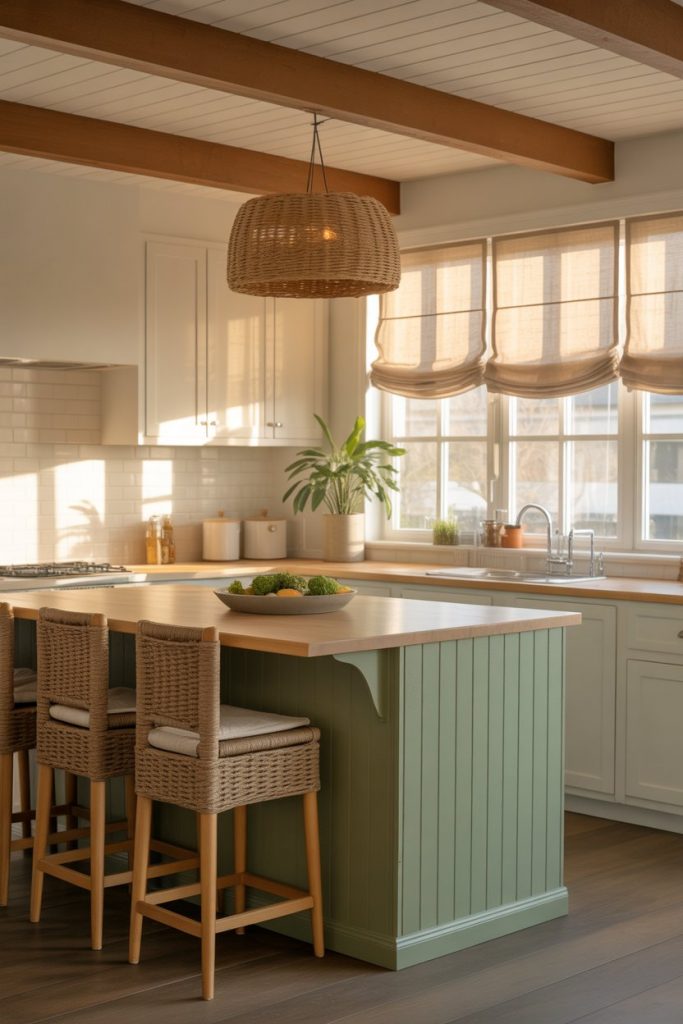
Where this works best is in homes where the kitchen opens to dining and living areas—the neutral palette creates visual continuity that makes the entire main floor feel larger and more cohesive. Many homeowners start with white cabinets and add green later through an island, painted pantry door, or accent wall, allowing them to test the color before committing fully. The beauty of this approach is its adaptability: swap out textiles, rugs, and accessories, and the same kitchen can feel farmhouse-cozy in winter and coastal-fresh in summer.
12. Green Kitchen Island with Seating Area
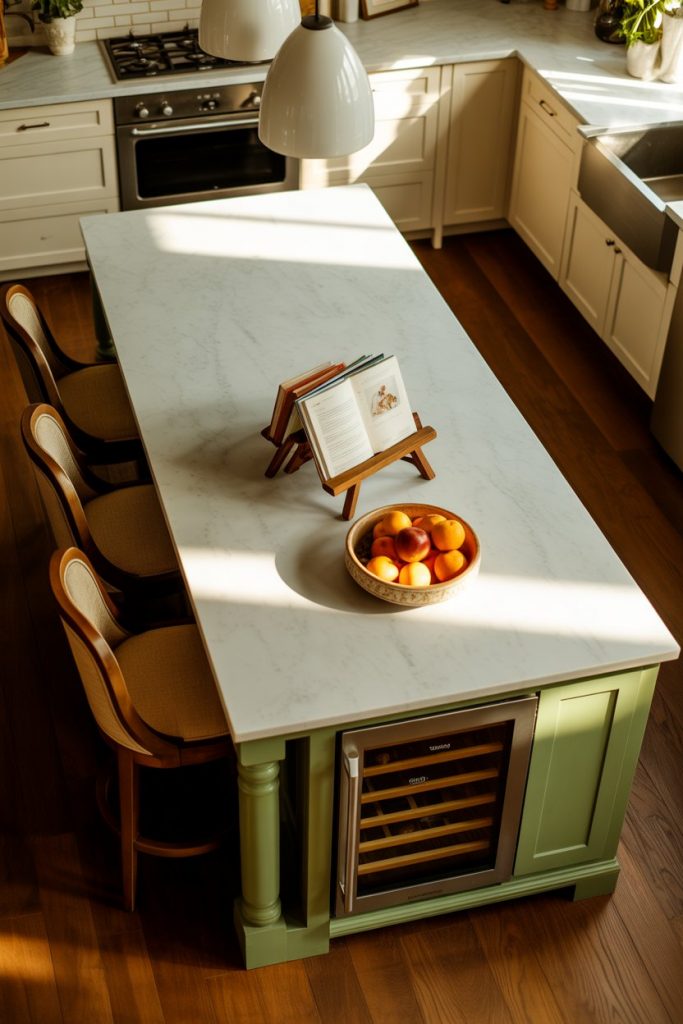
A green island with integrated seating transforms the kitchen from purely functional space into the home’s social hub. Whether you choose sage, olive, or a deeper tone, the island becomes furniture rather than cabinetry—a place to gather, work, eat casual meals, and keep the cook company. This setup has become essential in American homes where formal dining rooms see less use and kitchen islands serve as everything from homework station to cocktail bar to breakfast nook. 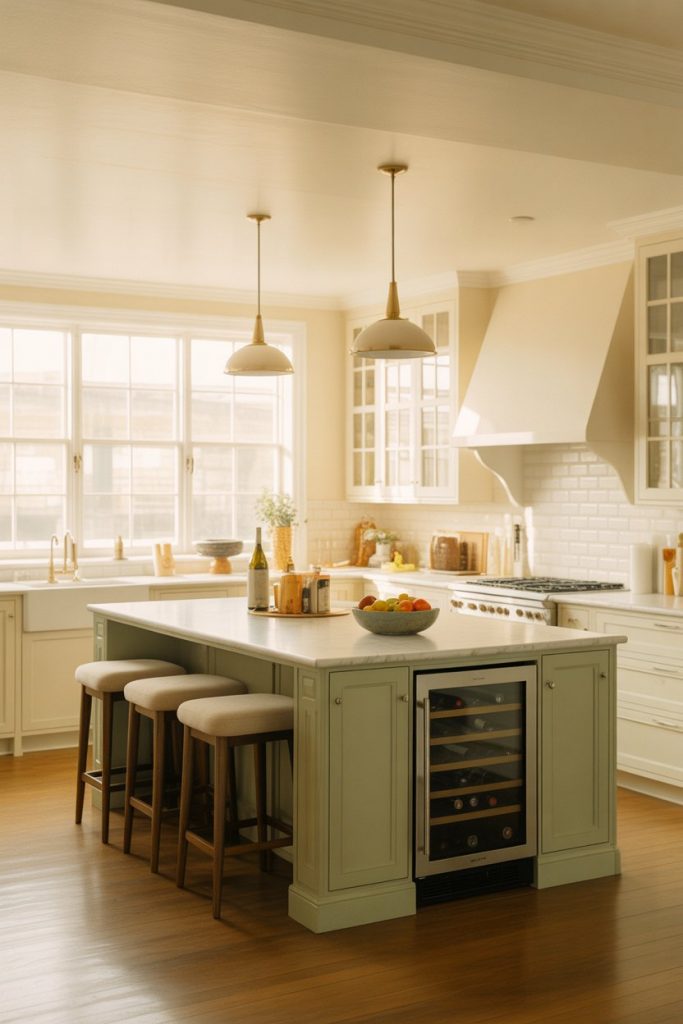
A micro anecdote: a friend in Tennessee added a green island with seating to her white kitchen, and she says it completely changed how her family uses the space. Her teenagers now do homework there, her husband reads the paper there on weekends, and guests naturally gravitate to the island during parties. The lesson? Islands with seating aren’t just about extra square footage—they’re about creating a magnetic gathering spot that makes your kitchen the heart of your home.
13. Mint Green Cabinets with Vintage Charm
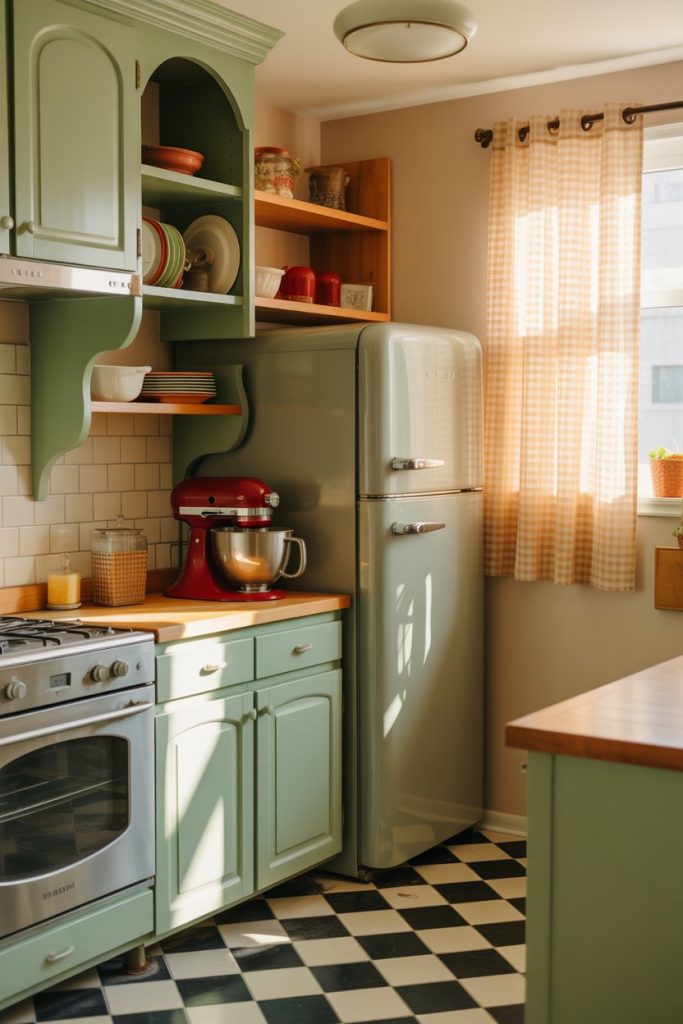
Mint green cabinets bring a playful, nostalgic quality that works beautifully in vintage-inspired kitchens. This shade evokes 1950s diners and midcentury modern homes, making it perfect for bungalows, cottages, and homes where retro charm is part of the appeal. Pair mint cabinets with checkerboard floors, chrome fixtures, and vintage-style appliances, and you’ve created a space that feels transportive—a kitchen that could exist in another era but functions perfectly for modern life. 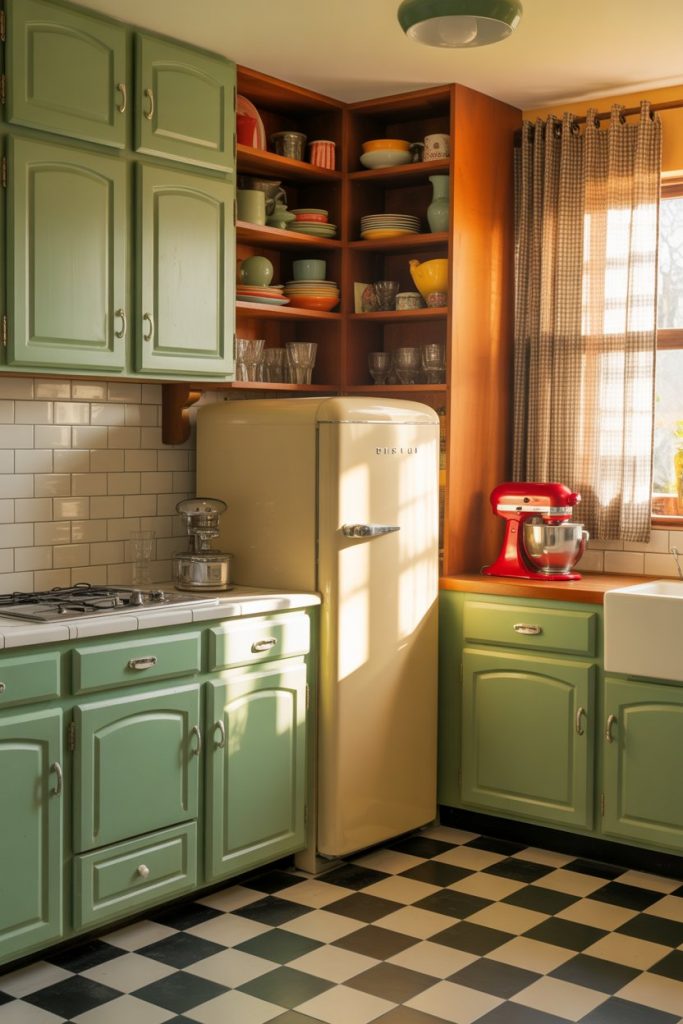
Real homeowner behavior shows that vintage-style kitchens require careful curation to avoid looking like themed restaurants rather than lived-in spaces. The trick is mixing eras—add modern lighting or a contemporary faucet to keep things from feeling too costume-like. Mint also works surprisingly well in small kitchens, where its lightness prevents the space from feeling cramped. Throughout the Southeast and in historic neighborhoods nationwide, mint kitchens honor traditional architecture while injecting personality that pure white never could.
14. Green Cabinetry with Black Countertops
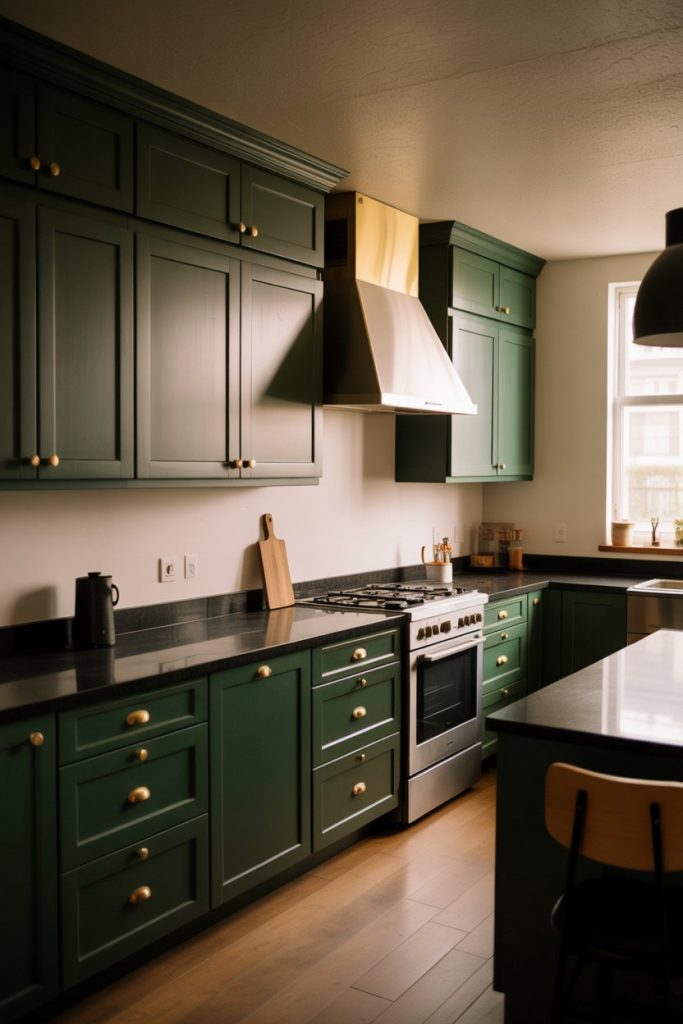
Green cabinets with black countertops create bold, graphic contrast that reads surprisingly sophisticated. Whether you choose dark forest green or a lighter sage, the black counters ground the space and provide a dramatic horizontal line that defines the kitchen’s geometry. This combination works particularly well in modern kitchens where clean lines and strong contrasts are valued, but it can also add contemporary edge to traditional spaces when executed with classic cabinet styles. 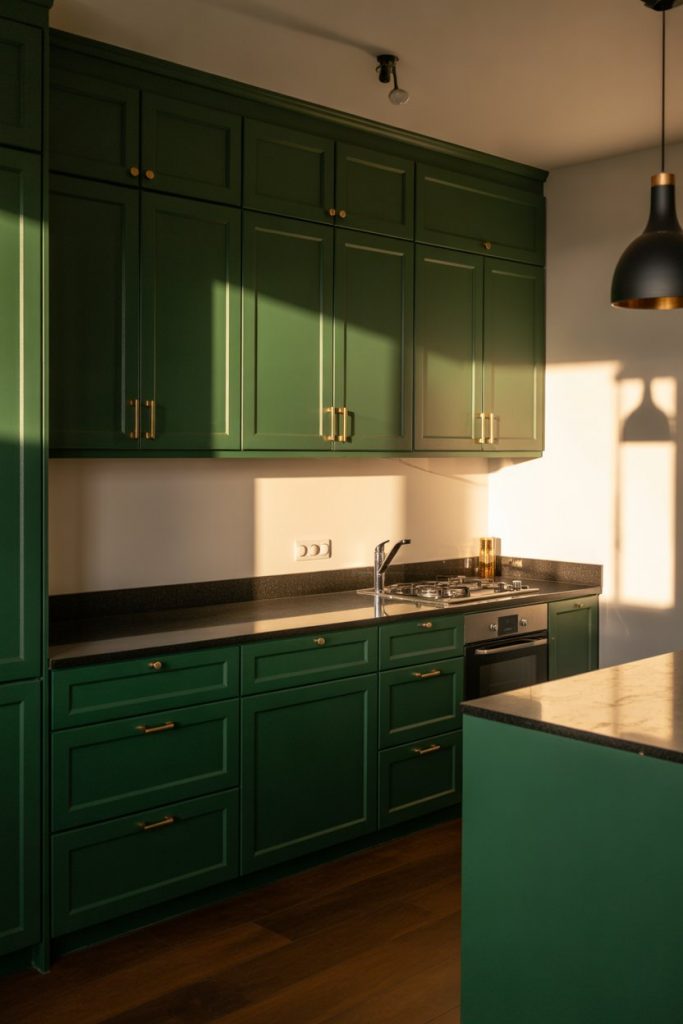
A practical insight: black countertops show every crumb and water spot, so daily maintenance is higher than with lighter surfaces. But for those who prioritize dramatic design over easy upkeep, the payoff is a kitchen with real visual impact. Honed or leathered finishes hide imperfections better than polished stone. In loft spaces and urban homes where dramatic interiors are part of the aesthetic, green and black kitchens make bold statements that signal confident design choices and willingness to embrace color in unexpected ways.
15. Vintage Green Kitchen with Farmhouse Sink
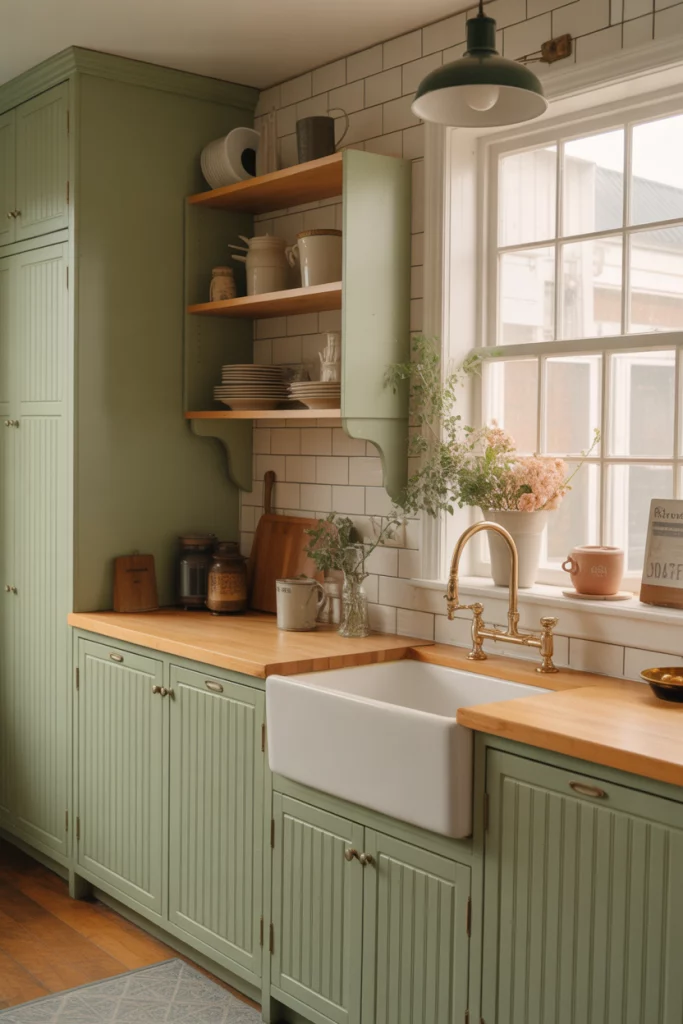
Vintage green kitchens pair beautifully with classic farmhouse sinks, creating a look that’s equal parts practical and romantic. Apron-front sinks in white or cream provide a clean, traditional focal point against green cabinetry in any shade. This combination feels rooted in American kitchen history—when sinks were furniture pieces as much as fixtures, and kitchens were designed to last generations rather than follow trends. The appeal is both aesthetic and emotional: these kitchens feel like home. 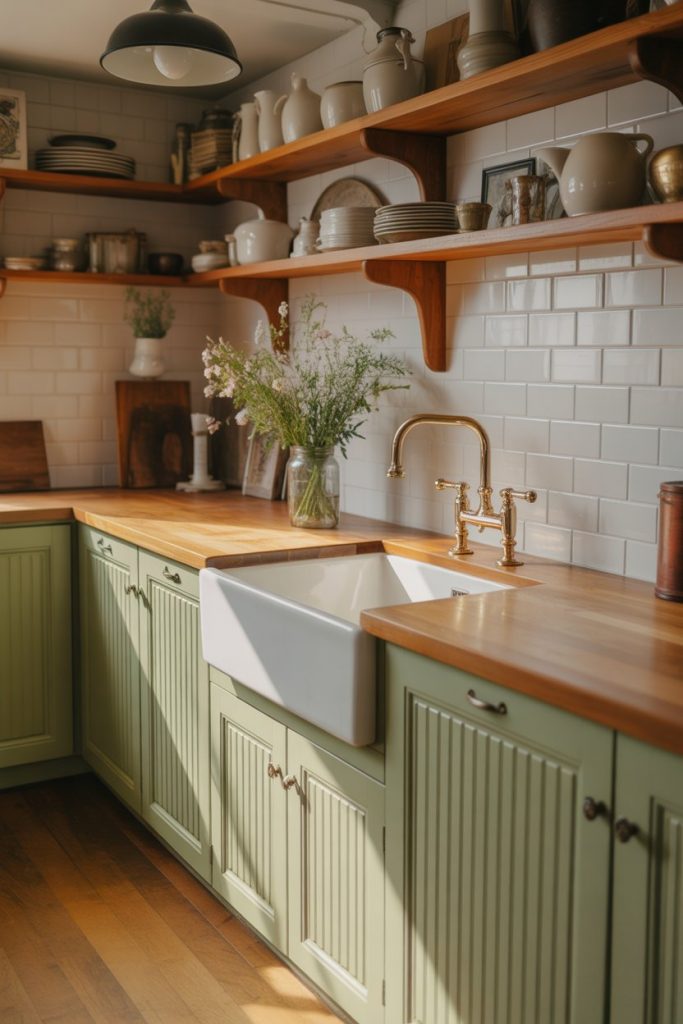
Where this works best: in rural areas and suburbs where traditional design sensibilities remain strong, and in older homes where vintage elements feel authentic rather than applied. Farmhouse sinks are deeper than standard sinks, making them practical for large pots and baking sheets, though their exposed fronts require different plumbing configurations. Many homeowners discover that once they cook in a kitchen with a farmhouse sink, standard sinks feel inadequate—a reminder that vintage-inspired choices often offer functional benefits beyond just good looks.
16. Green Kitchen Color Palettes with Brass and Copper
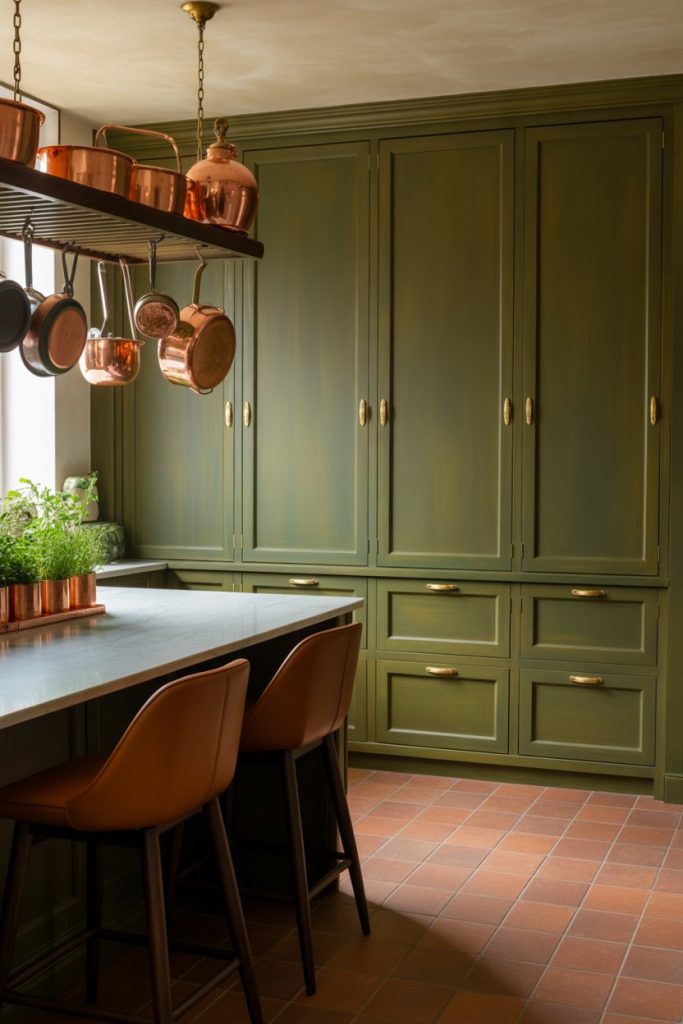
Building a color palette around green cabinetry becomes infinitely richer when warm metals enter the conversation. Brass and copper fixtures, hardware, and accessories add warmth that complements green’s natural undertones while introducing gleaming surfaces that catch and reflect light. These metals have moved beyond trend into classic territory, valued for how they develop patina over time and add character to kitchens. The combination of green, brass, and copper creates layered, collected spaces that feel curated over time. 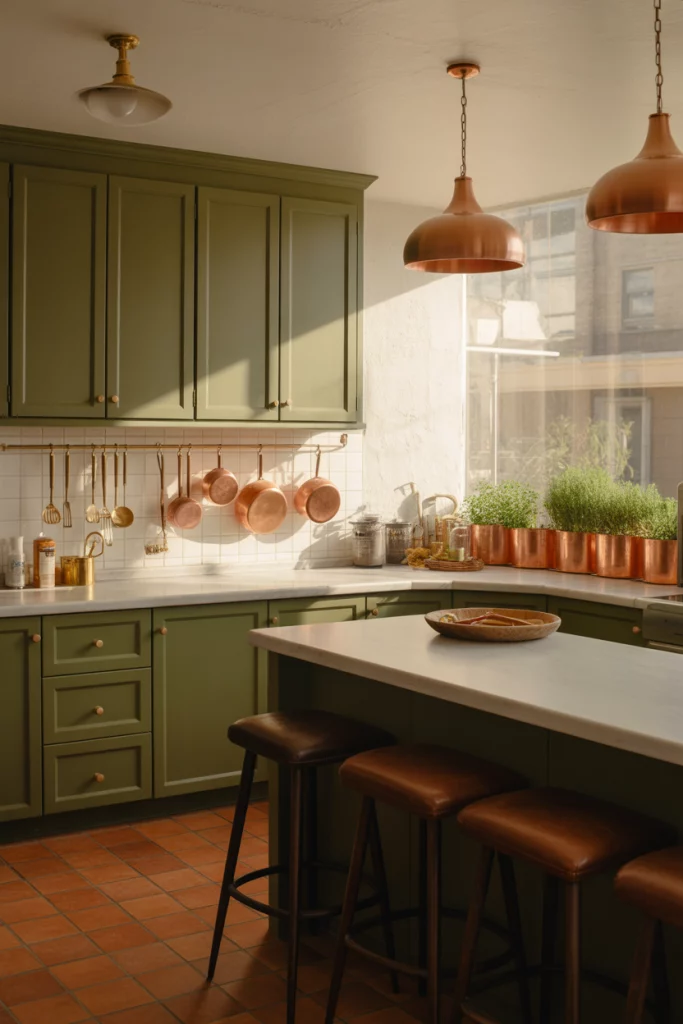
An expert commentary: designers increasingly recommend mixing metals within the same finish family rather than matching everything exactly. Brass hardware, copper lighting, and bronze faucet can coexist beautifully because they share warm undertones, while strict matching can feel overly coordinated and less authentic. This approach also relieves the pressure of finding identical finishes for every element. Throughout New England and the Pacific Northwest, where craftsman-style homes embrace natural materials, these warm metal and green combinations feel particularly at home.
17. Modern Green Kitchen with Integrated Appliances
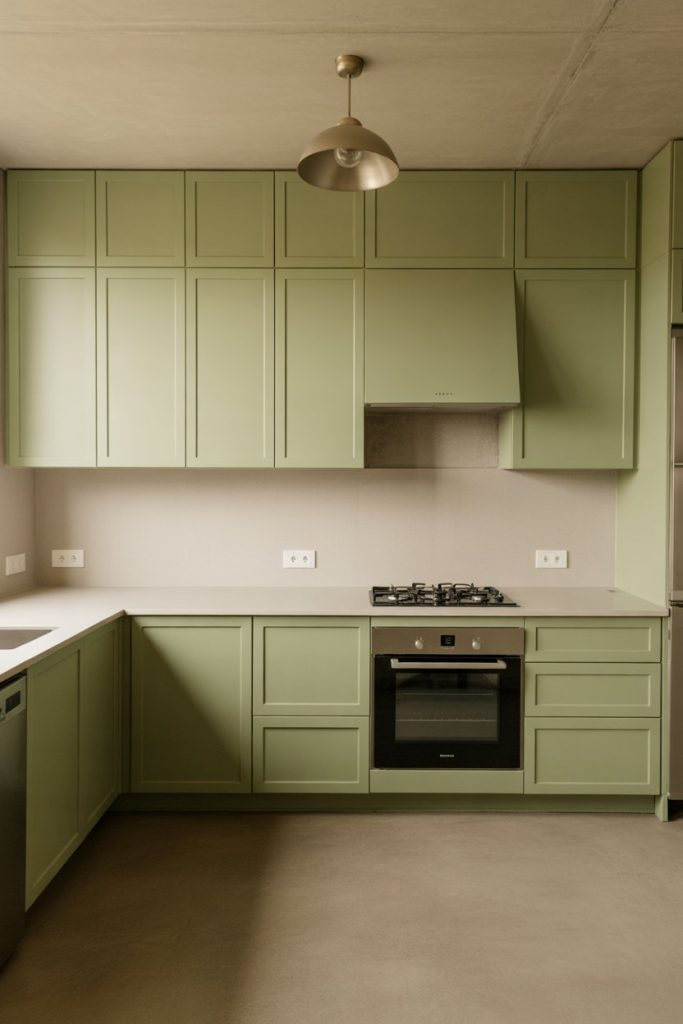
The ultimate modern green kitchen conceals appliances behind cabinet panels, creating seamless, uninterrupted lines of color. Integrated refrigerators, dishwashers, and even range hoods disappear into green cabinetry, allowing the architecture and color to dominate rather than stainless steel boxes. This approach requires careful planning and higher budgets, but it delivers a kitchen that looks more like a designed room than a traditional cooking space. The green becomes even more impactful when it’s not competing with appliances for attention. 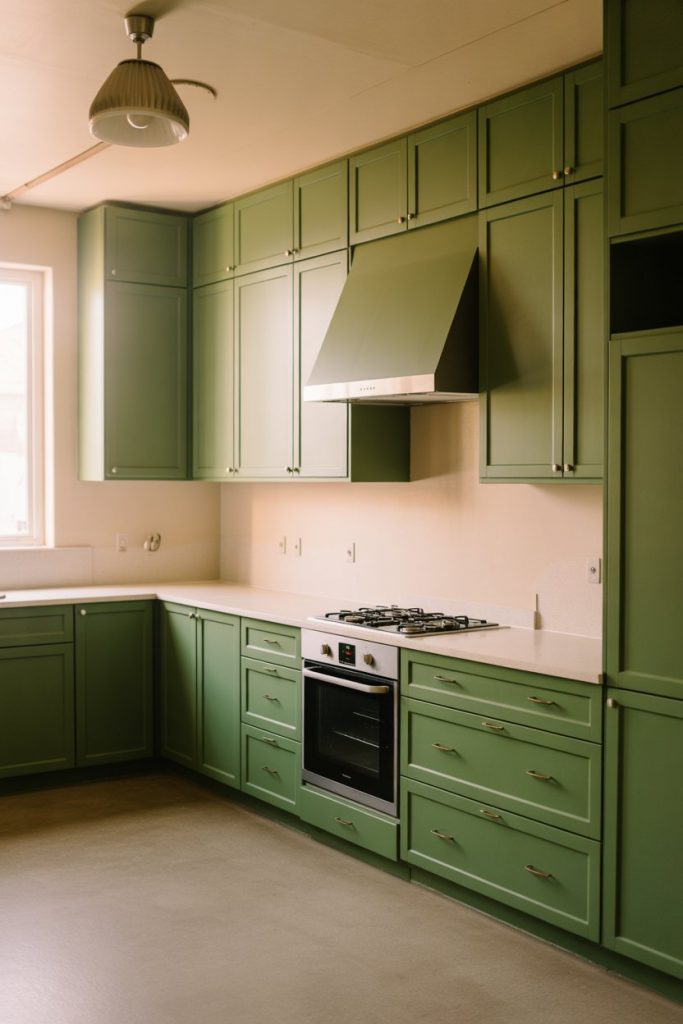
Real homeowner behavior reveals that while integrated appliances create stunning aesthetics, they can complicate repairs and replacements—panels must be removed to access appliances, and if you eventually change cabinet color, appliance panels must be refinished too. These are trade-offs worth considering. This approach works best in high-end new construction and full renovation projects where every detail can be custom-specified. In design-forward cities nationwide, these sleek green kitchens represent the cutting edge of contemporary residential design.
18. Light Green Kitchen with Natural Wood Flooring
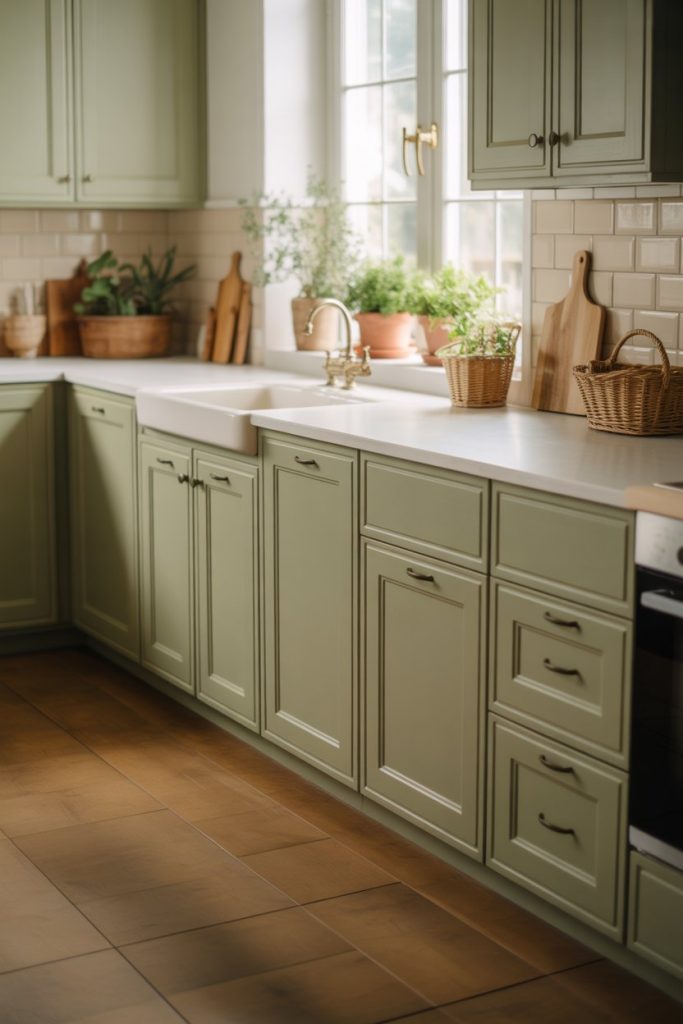
Light green cabinets above natural wood flooring creates a grounded, organic palette that brings the outside in. The wood adds warmth and texture that prevents light green from feeling too cool or spa-like, while the green keeps the space from skewing too brown or monotone. This combination is particularly popular in homes that embrace natural materials and earthy tones throughout—kitchens that feel connected to the rest of the home rather than designed in isolation. It’s a palette that ages gracefully as both materials develop character over time. 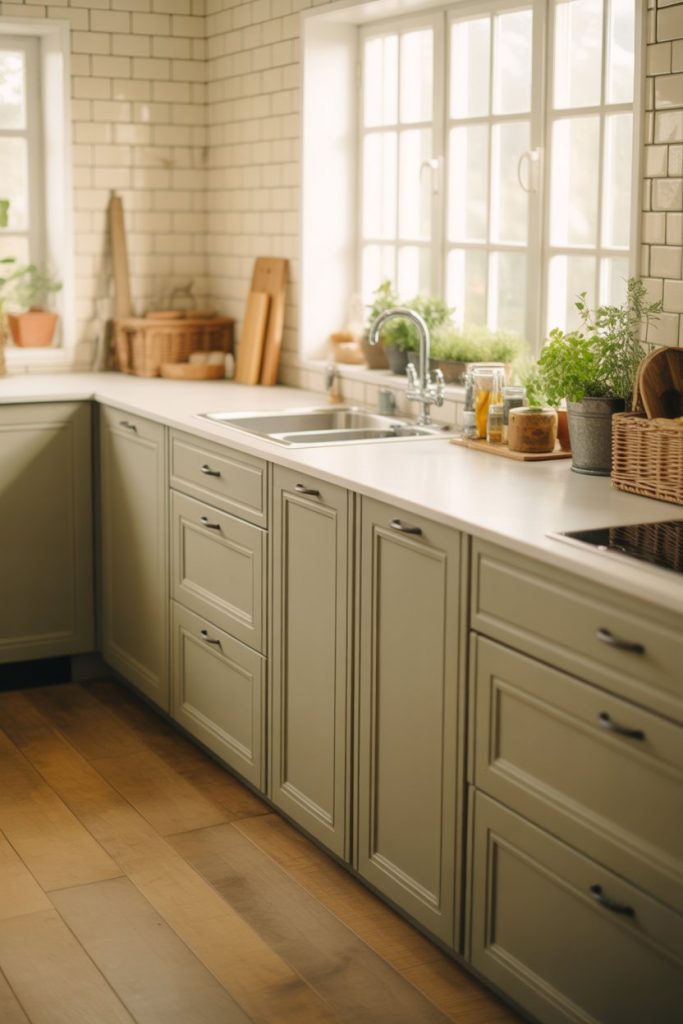
A common mistake is choosing a wood floor tone that fights with green rather than complementing it. Medium to light woods—oak, maple, ash—work beautifully, while very red-toned woods like cherry can clash. If you’re working with existing flooring, choose your green shade carefully, testing samples in the actual light conditions of your space. In mountain and lakeside homes throughout Colorado, Montana, and the Northeast, this natural palette feels especially authentic, honoring the surrounding landscape while creating kitchens that function as modern gathering spaces.
19. Sage Green Kitchen with White Subway Tile
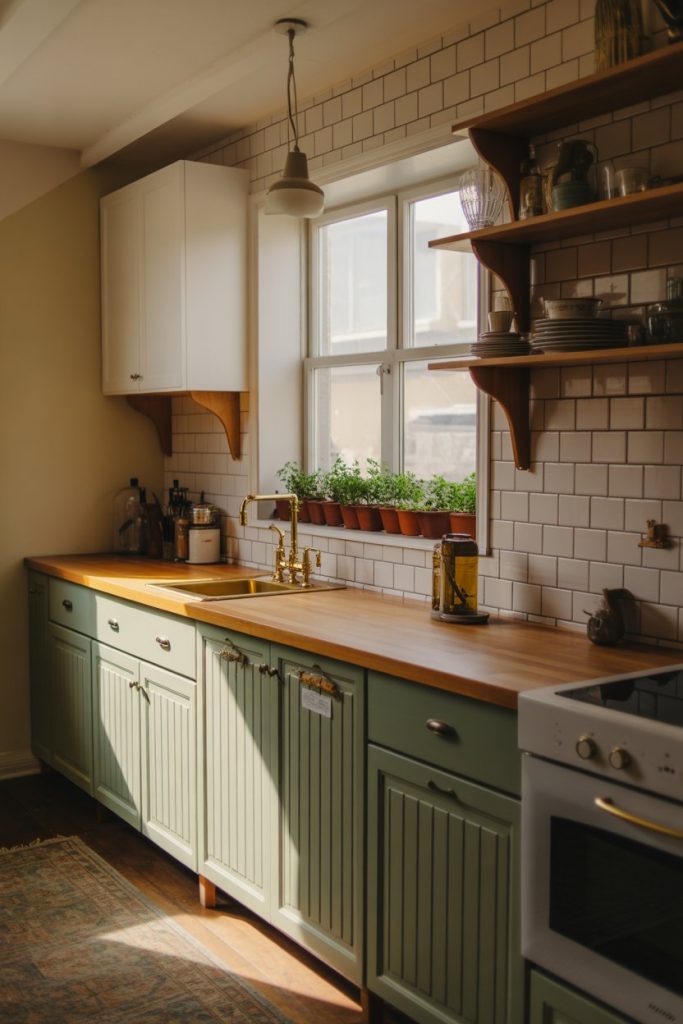
Sage green cabinets with classic white subway tile create a combination that’s both timeless and undeniably current. Subway tile’s clean geometry and glossy finish provide contrast to matte or satin cabinet paint, while the white keeps things bright and reflects light throughout the space. This pairing has staying power because it balances trend with tradition—sage is having a moment, but white subway tile has proven itself over more than a century. Together they create kitchens that feel fresh now but won’t look dated in ten years. 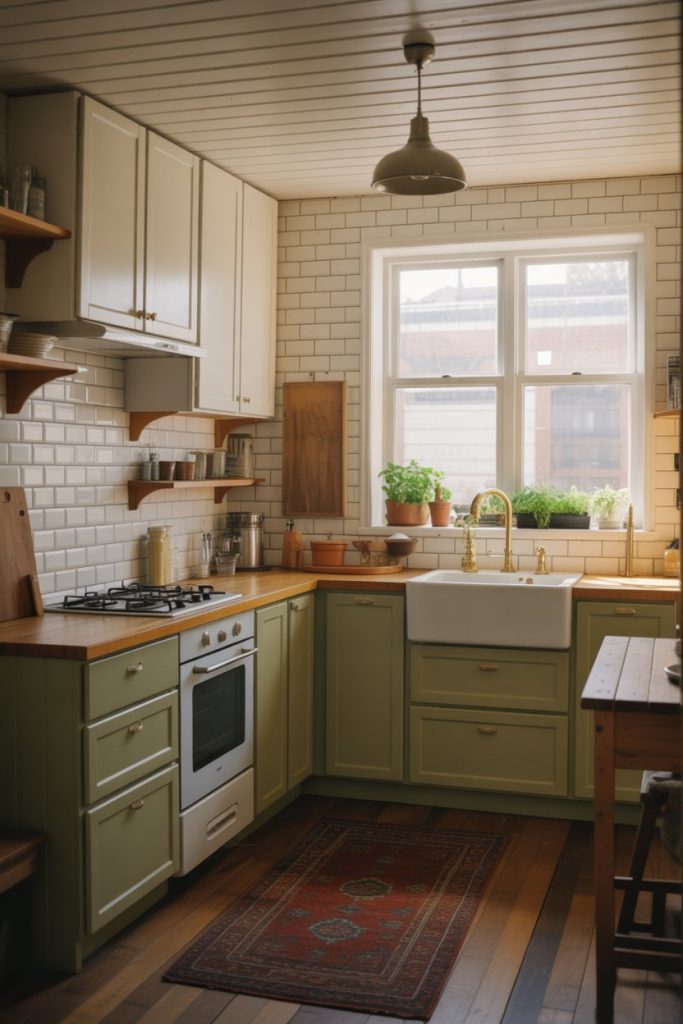
Budget considerations: subway tile remains one of the most affordable backsplash options, making this combination accessible across income levels. The labor cost for installation is reasonable too, as the straightforward pattern doesn’t require specialized expertise. Many homeowners choose contrasting grout—gray or black rather than white—to emphasize the tile grid and add subtle definition. This works particularly well in renovation projects where character must be added to builder-grade kitchens, proving that thoughtful color and material choices matter more than budget size in creating beautiful spaces.
20. Green Kitchen with Statement Range Hood
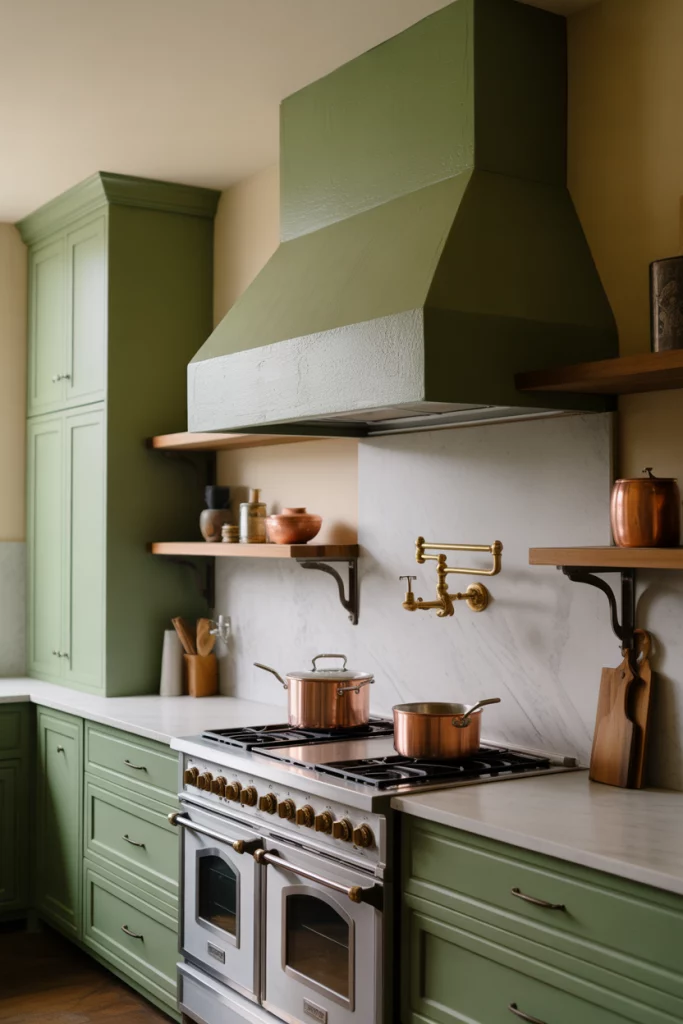
A custom range hood becomes sculpture when it’s executed in green or flanked by green cabinetry. Whether you paint the hood to match your cabinets or create contrast with a different material like plaster or wood, the range hood is the perfect place to make an architectural statement. In luxury kitchens, hoods often extend to the ceiling, creating dramatic vertical elements that draw the eye upward. In more modest spaces, even a simple painted hood can transform the kitchen’s focal point from appliance to design feature. 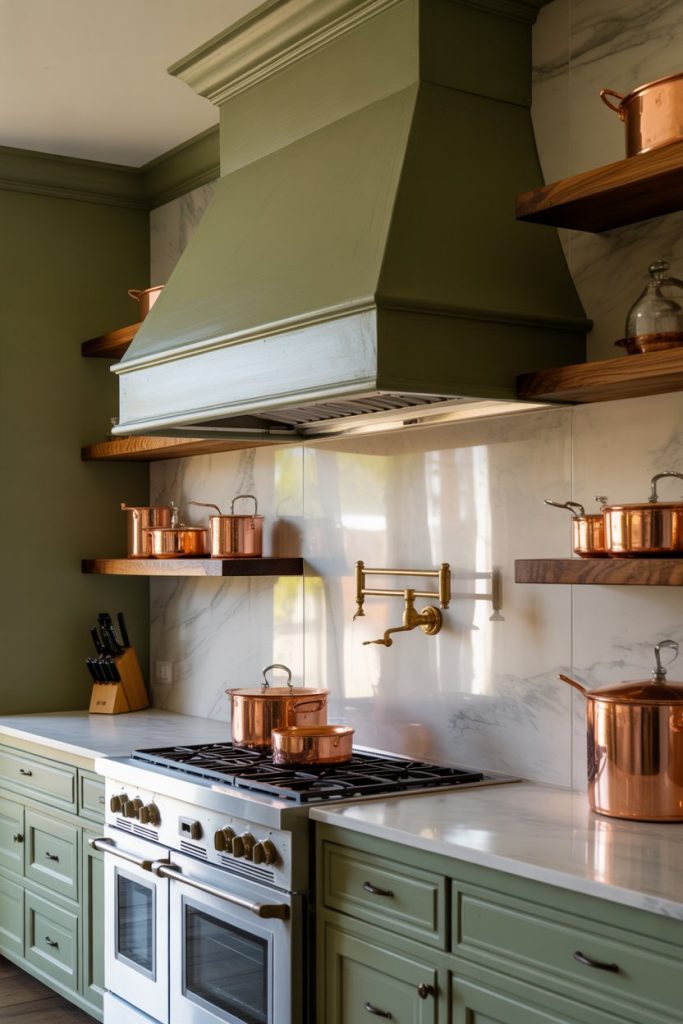
I visited a kitchen in Arizona where the homeowner had extended her green hood all the way to a vaulted ceiling, and the effect was dramatic—the hood became the room’s defining architectural feature. Expert designers note that hoods offer unique opportunities because they’re three-dimensional elements rather than flat planes, allowing for curves, textures, and materials that add depth. Whether your style is modern, traditional, or Mediterranean, a thoughtfully designed hood in green becomes the kitchen’s signature element, the detail people remember and photograph.
21. Emerald Green Cabinets with Gold Hardware
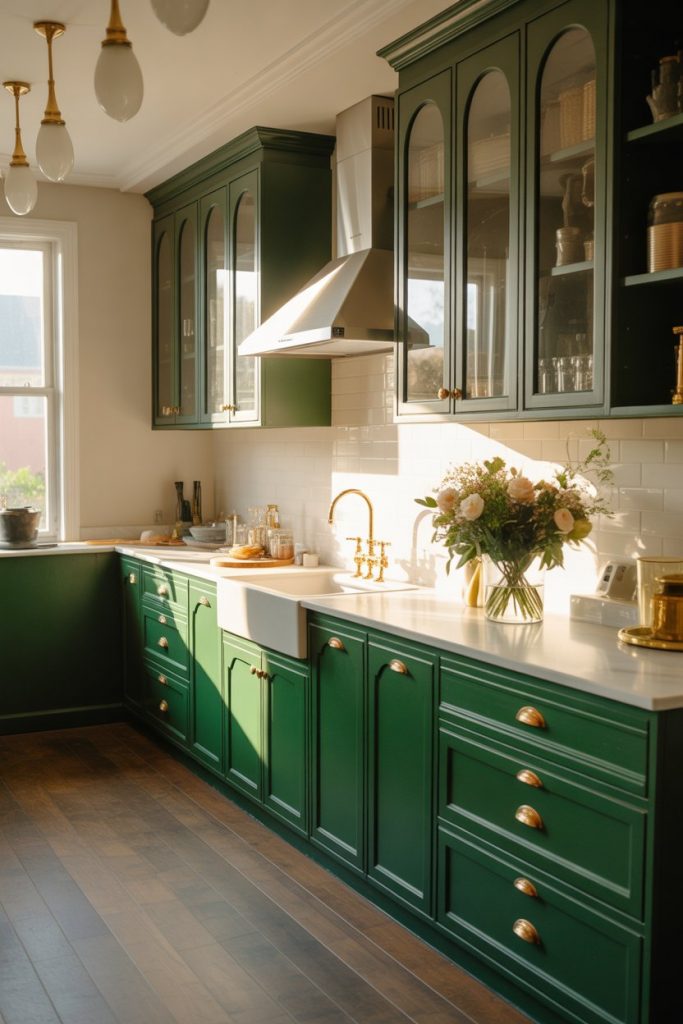
Emerald green represents the bold end of the green spectrum—rich, saturated, and unapologetically dramatic. Paired with warm gold hardware, emerald cabinets create kitchens that feel glamorous and intentional, spaces designed for those who embrace color confidently. This isn’t a safe choice, but that’s precisely its appeal. In the right home—one with good natural light and complementary architectural details—emerald green makes an unforgettable statement. The gold hardware isn’t just functional; it’s essential to the look, adding luxury touches that elevate the entire space. 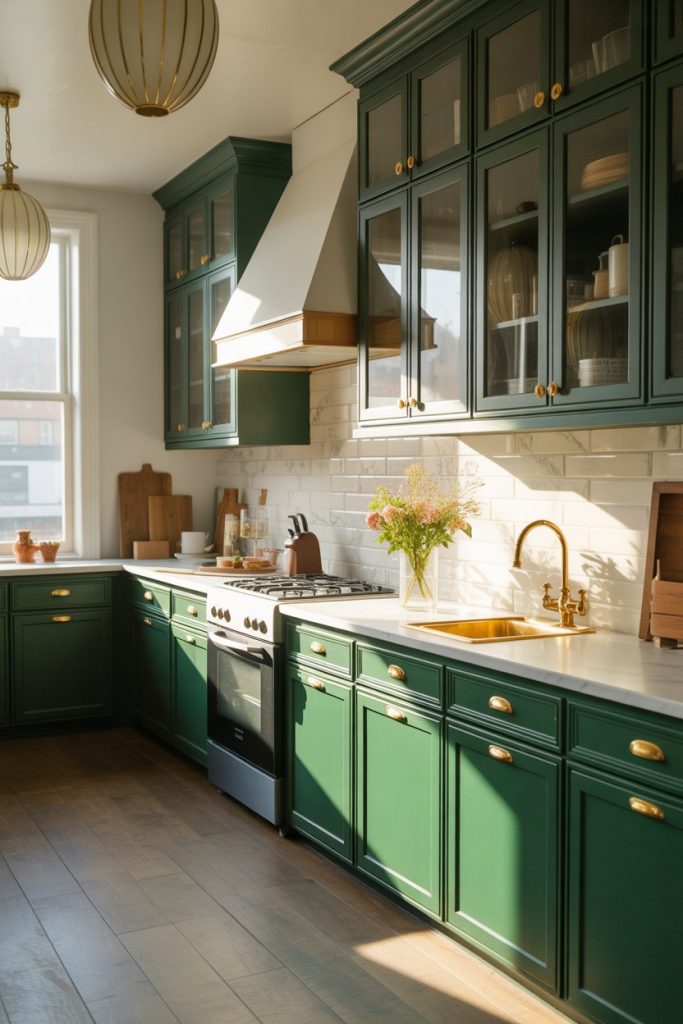
Where this works best: in homes with distinct architectural character—Victorian townhouses, art deco apartments, or even carefully detailed new builds where dramatic choices feel intentional rather than impulsive. One consideration is lighting: emerald needs abundant light to avoid feeling cave-like, so this works better in kitchens with multiple windows or excellent artificial lighting. The combination also requires commitment to keeping complementary colors in check—too many competing hues and the space becomes chaotic rather than cohesive. But when executed well, emerald and gold kitchens are showstoppers.
22. Two-Tone Green Kitchen with Natural Elements
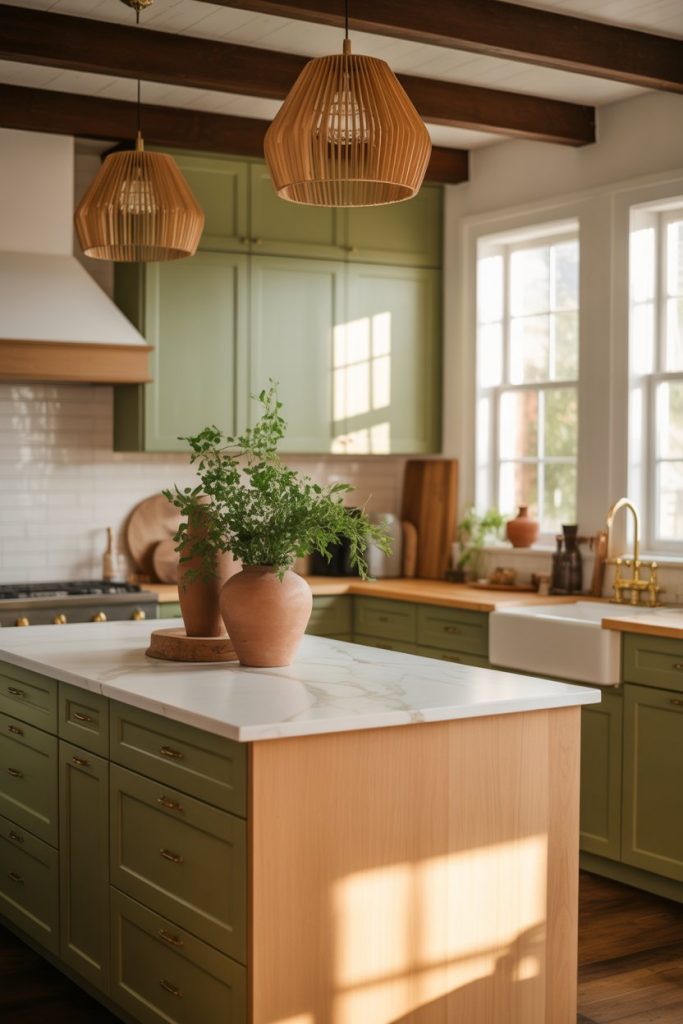
Closing with one of the most versatile approaches: two-tone green kitchens that mix light and dark green shades, or green with natural wood tones. Upper cabinets in a lighter sage or mint, lower cabinets in deeper olive or forest green, create visual interest and prevent the space from feeling too monochromatic. Adding natural wood on an island, open shelving, or floating shelves brings warmth and texture that prevents the green from dominating. This layered approach feels collected rather than designed, organic rather than forced. 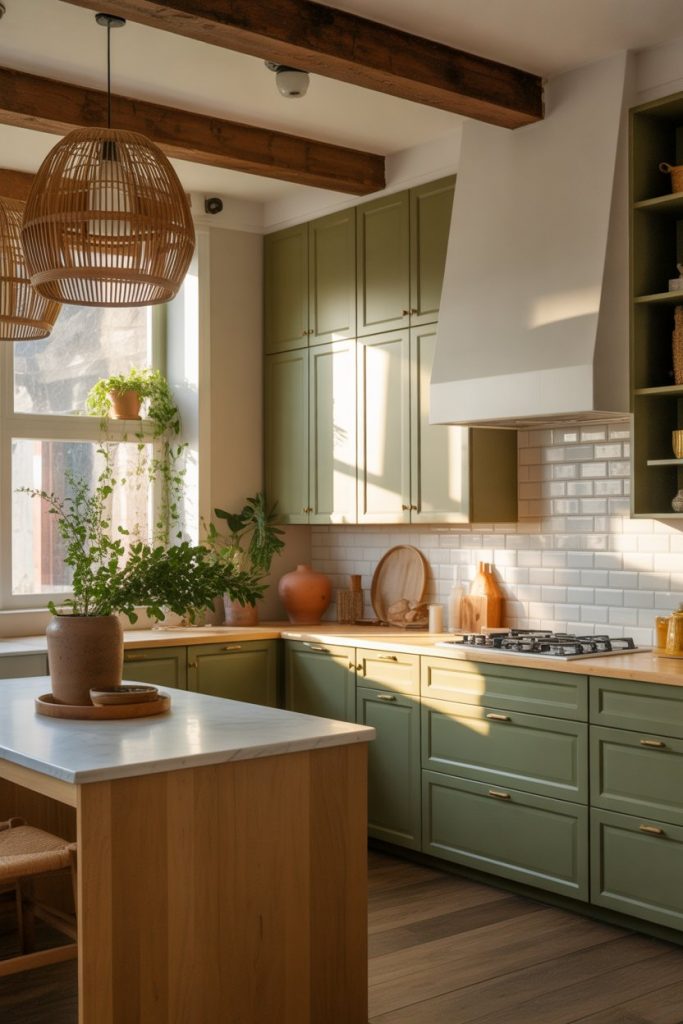
This approach solves a common design challenge: how to embrace green without overwhelming a space. By distributing color across multiple shades and pairing it with natural materials, you create depth and visual interest that single-color kitchens sometimes lack. It’s also forgiving in terms of décor and accessories—the varied palette means more colors and textures work within the space. Throughout American homes of every style and budget, two-tone green kitchens with natural elements represent a sweet spot: beautiful enough to inspire, practical enough to live with daily, and flexible enough to evolve as tastes change.
Conclusion
Green kitchens in 2026 offer something for everyone—from subtle sage whispers to emerald declarations, from vintage charm to contemporary sleekness. The beauty of green is its range: it can ground a space or lift it, create calm or make statements, honor tradition or push boundaries. As you consider these ideas for your own kitchen, think about which shade speaks to you, which style fits your home’s architecture, and how you want your kitchen to feel when you’re actually using it. We’d love to hear which of these green kitchen ideas resonates most with you—share your thoughts in the comments below and let us know if you’re planning a green kitchen transformation of your own.