There’s something about a kitchen that borrows from the coastline—the bleached tones, the easy materials, the way light seems to move differently through the space. It’s no accident that “coastal kitchen” remains one of the most-pinned categories on Pinterest year after year, and in 2026 the searches are surging again. This time around, though, the vibe has shifted. Homeowners want kitchens that feel lived-in and layered, not like a staged beach house listing. In this roundup, we’ve gathered fresh coastal kitchen ideas that range from breezy California open plans to moody nautical nooks—each one designed to help you build a kitchen that actually feels like home, just a little closer to the water.
1. Sun-Bleached White Shaker Kitchen
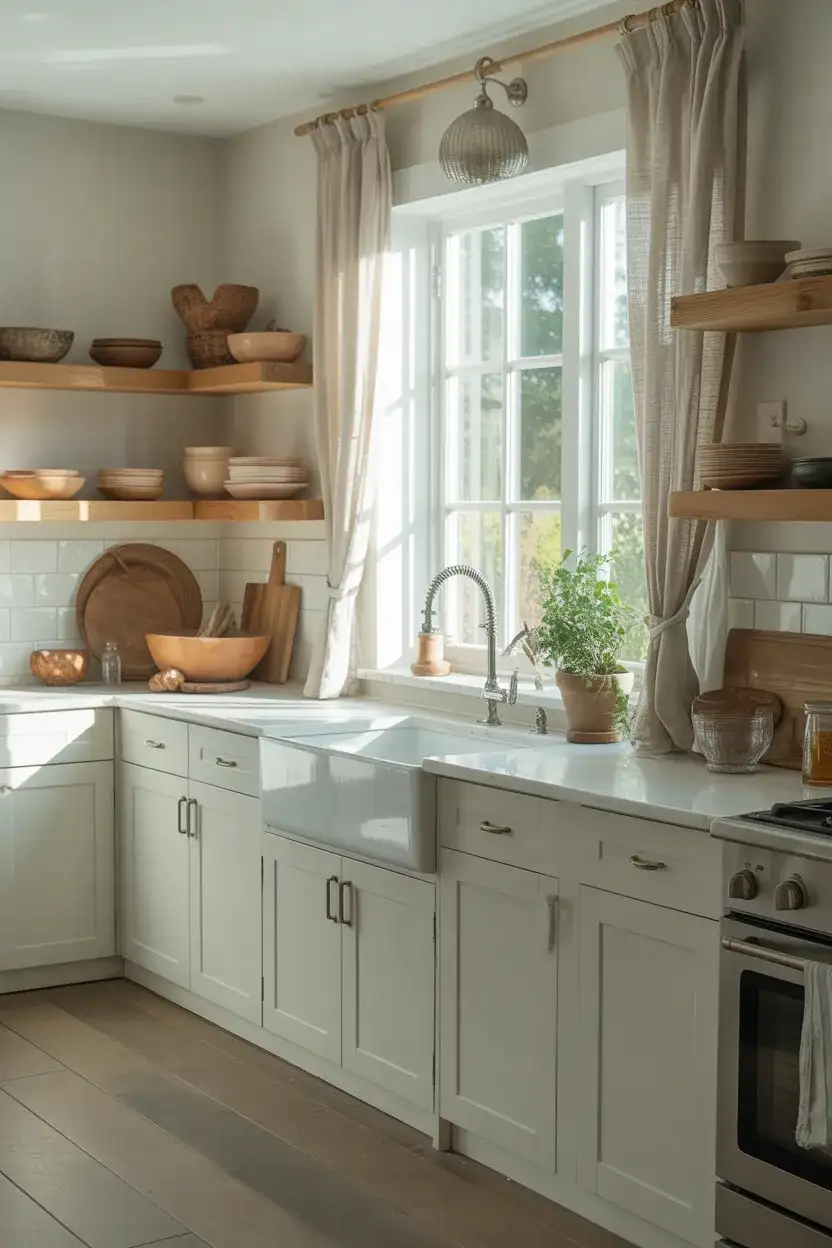
If you’ve ever walked into a seaside cottage and felt instantly calm, chances are the kitchen was anchored by white cabinets. This classic approach leans on bright shaker-style cabinetry, pale quartz countertops, and brushed nickel hardware to create a space that’s clean without feeling sterile. The trick is layering in warmth—think open shelving in natural oak, a few pieces of handmade pottery, and linen curtains that let sunlight pool across the floor. It’s the kind of kitchen that photographs beautifully and still feels human enough to cook a messy Sunday breakfast in.
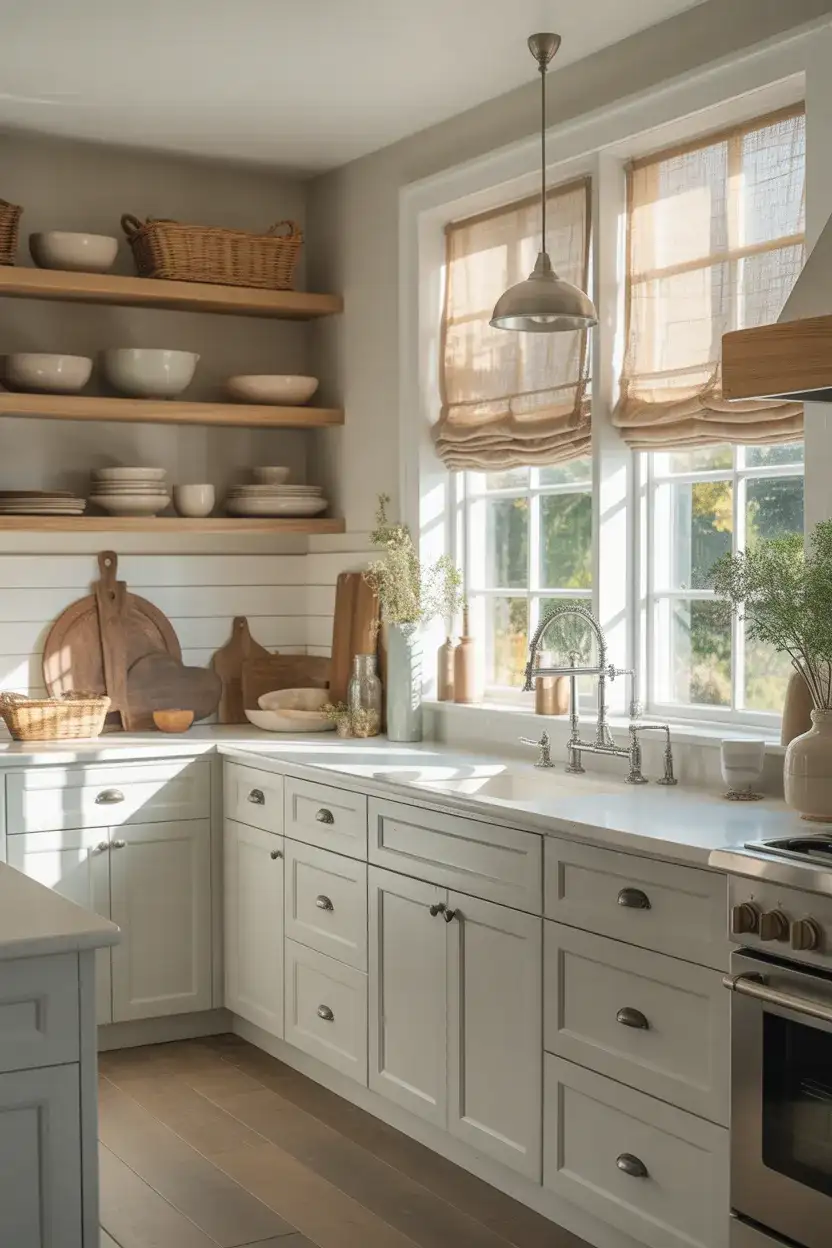
Where this works best is in smaller kitchens—apartments, bungalows, and older ranch homes where square footage is limited. White expands everything visually, and the shaker profile adds just enough architectural interest without overwhelming a compact layout. If you’re working with a galley kitchen or an L-shape under 120 square feet, this is probably your most reliable starting point before layering in personality with textiles and accessories.
2. Navy Blue and Brass Coastal Statement
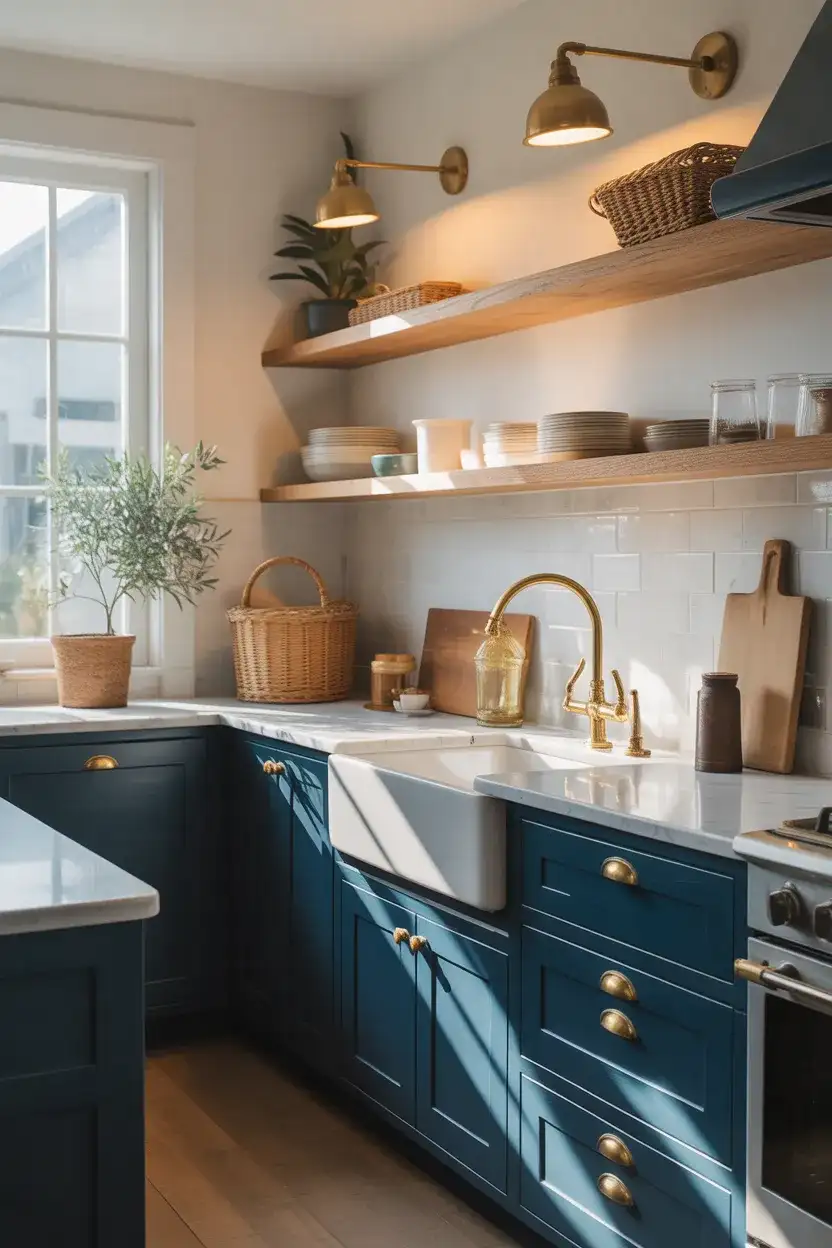
Deep blue cabinetry paired with warm brass fixtures is one of those combinations that never quite fades from the design conversation—and for good reason. This modern take on the coastal kitchen swaps the expected pastels for something richer and more grounded, creating a space that feels sophisticated without trying too hard. Navy lower cabinets anchor the room, while upper shelves in natural wood or white keep things from feeling heavy. Brass cup pulls and a statement faucet catch the light in a way that reads elegant, not flashy, and the whole thing comes together like a well-edited outfit.
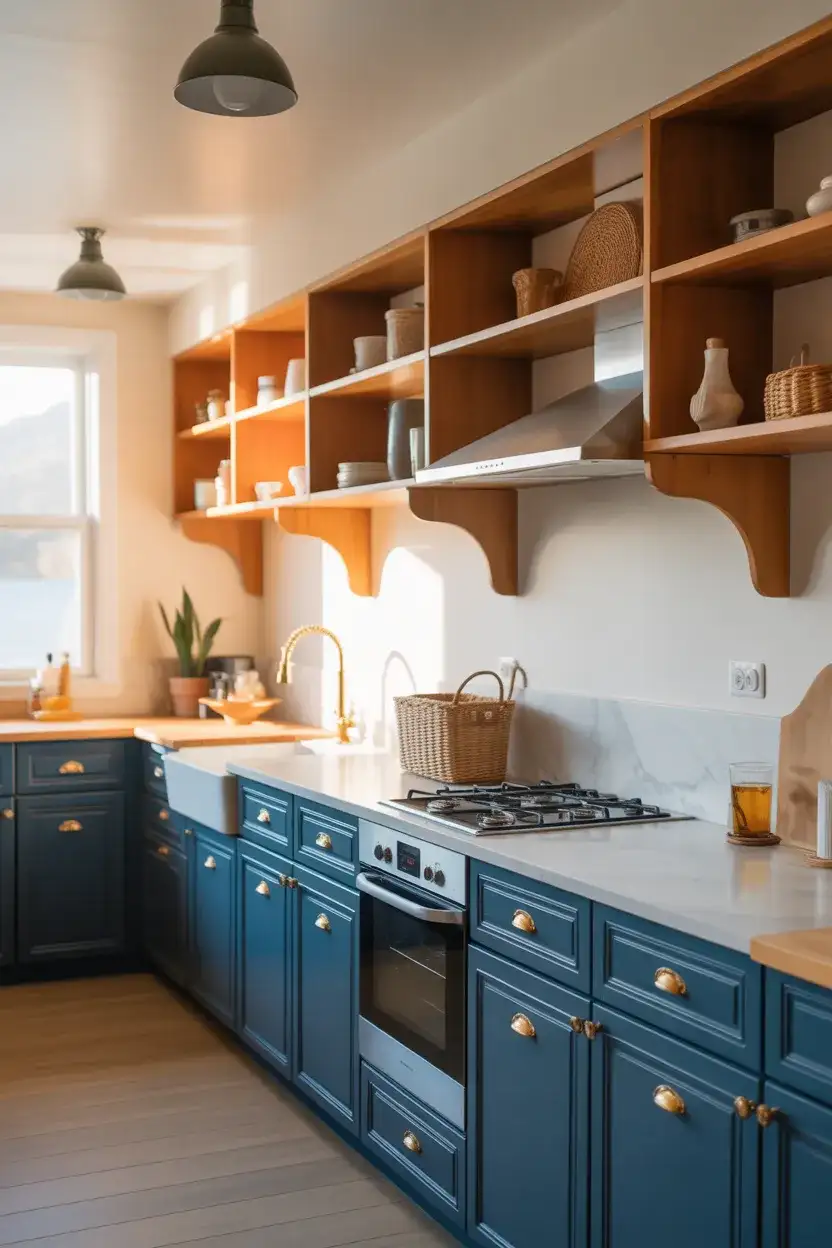
A quick budget note: brass hardware is one of the most cost-effective upgrades you can make. Swapping out pulls and knobs on existing cabinets runs roughly $150–$300 for an average-sized kitchen, and the visual payoff is enormous. If a full navy repaint feels like a commitment, start with the island or a single wall of lower cabinets and live with it for a few months before going all in.
3. California Indoor-Outdoor Flow Kitchen
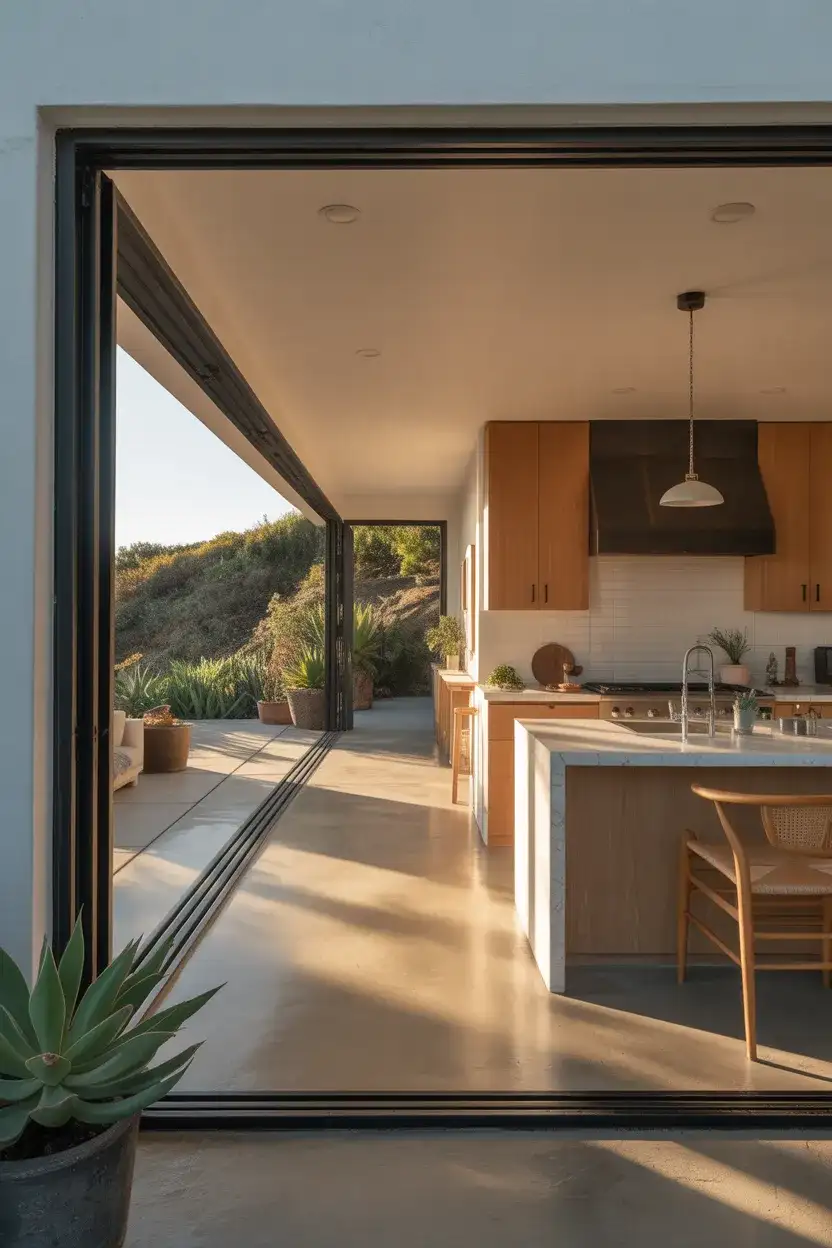
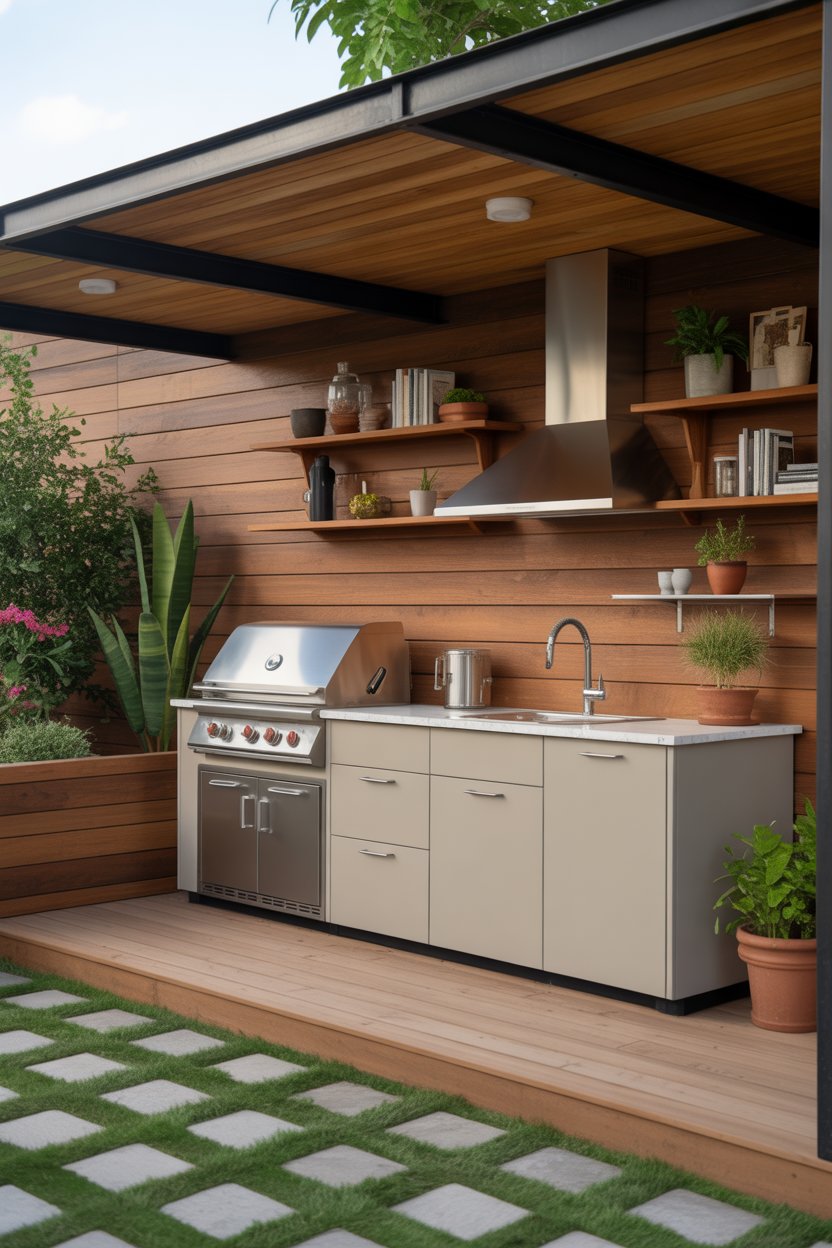
On the West Coast, the line between kitchen and backyard barely exists anymore. California-style coastal kitchens lean hard into the indoor-outdoor connection—folding glass walls, continuous flooring from the cooking zone to the patio, and island counters that double as pass-throughs for entertaining outside. The palette stays neutral and earthy: warm concrete, white oak, and matte black steel frames. It’s a look rooted in the state’s mid-century design inspiration, updated with sustainable materials and better insulation. If your climate allows it, this layout genuinely changes how you use your home.
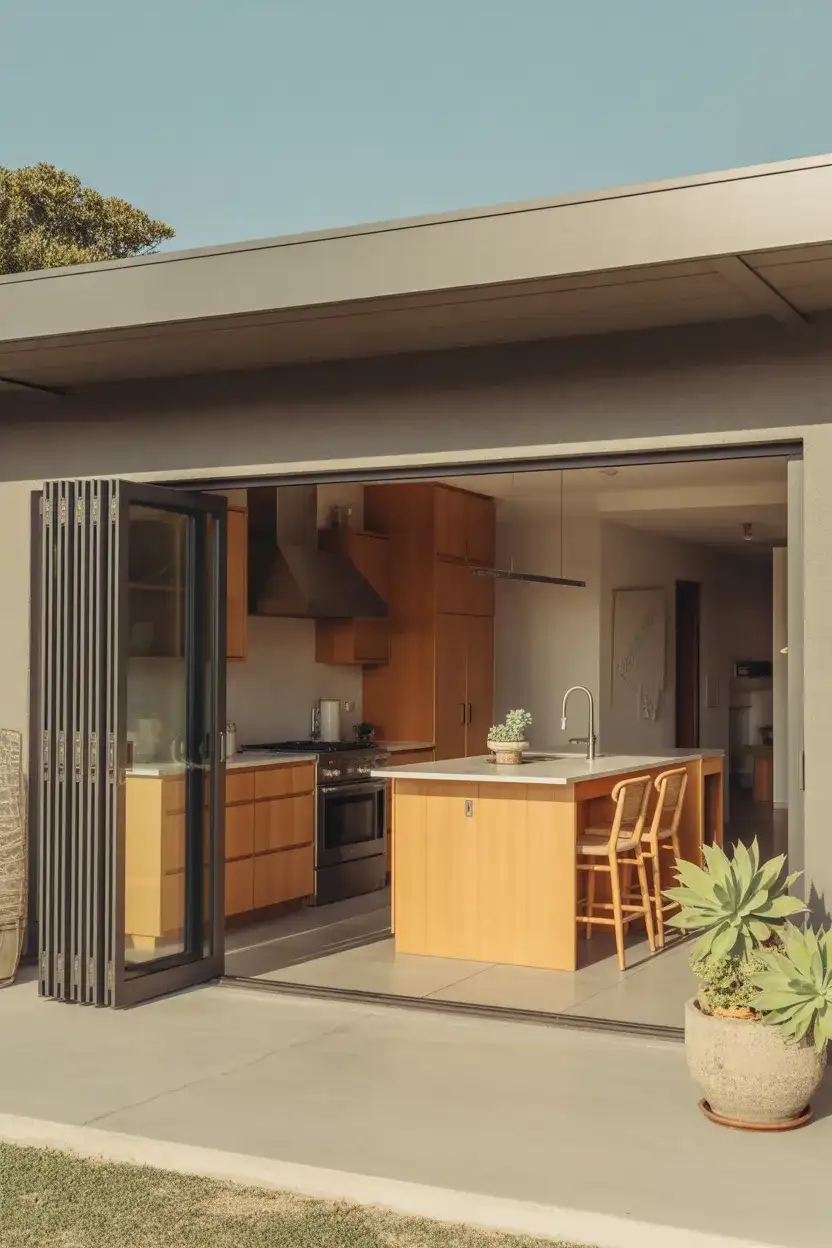
Real homeowner behavior tells the story here. A couple in Encinitas we spoke with said they cook outside roughly four nights a week between April and October—and their folding-wall kitchen made it seamless. They noted that the biggest surprise wasn’t the design itself but how much more they used the kitchen once the barrier disappeared. Guests naturally gravitate toward the island instead of clustering in the living room, which changes the entire social rhythm of the house.
4. Rustic Driftwood and Stone Kitchen
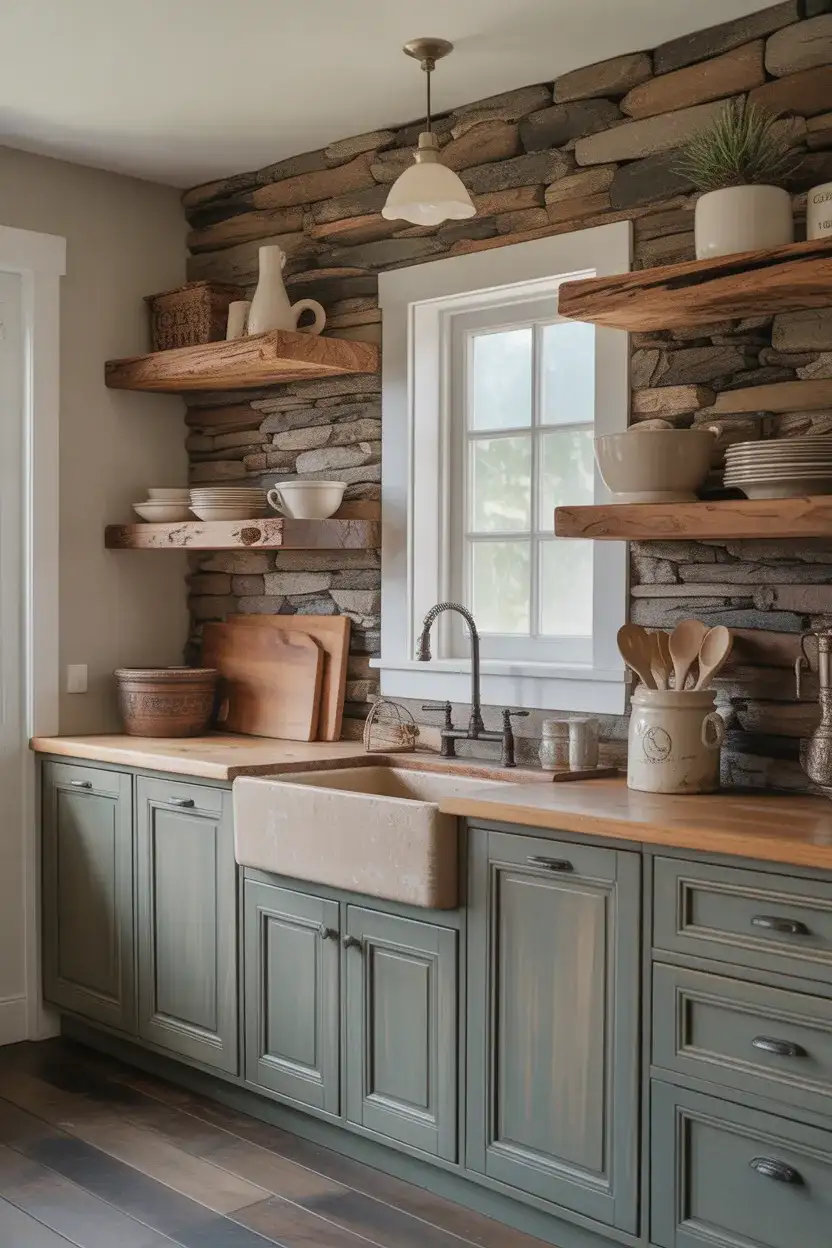
Not every coastal kitchen needs to be polished. The rustic approach draws from weathered shorelines—think reclaimed driftwood open shelving, a rough-hewn stone accent wall, and iron hardware with a patina that looks earned rather than manufactured. This style pairs beautifully with farmhouse sinks in fireclay and wide-plank flooring that’s been left unsealed or finished with a matte penetrating oil. The mood is closer to a Maine fishing village than a Malibu remodel, and that’s exactly the point. It’s grounded, textured, and completely unconcerned with being polished.
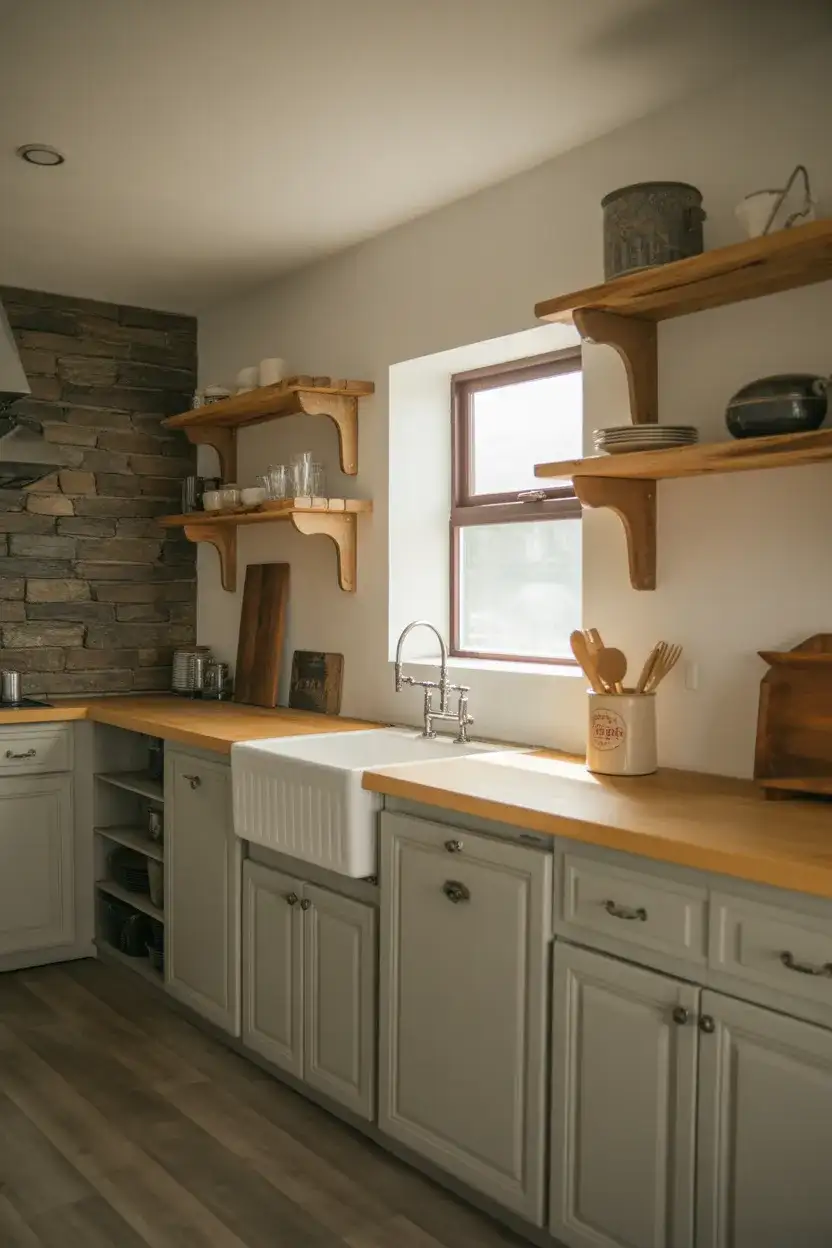
One common mistake with rustic coastal kitchens is going too heavy with the reclaimed materials. When every surface competes for attention—rough stone, distressed wood, hammered metal—the space starts to feel like a themed restaurant rather than a home. The fix is simple: pick one hero texture (the stone wall, for instance) and let the rest of the room breathe with smoother, quieter finishes. A matte-painted ceiling and simple cotton Roman shades can balance the whole thing out.
5. Boho Beach Kitchen with Open Shelving
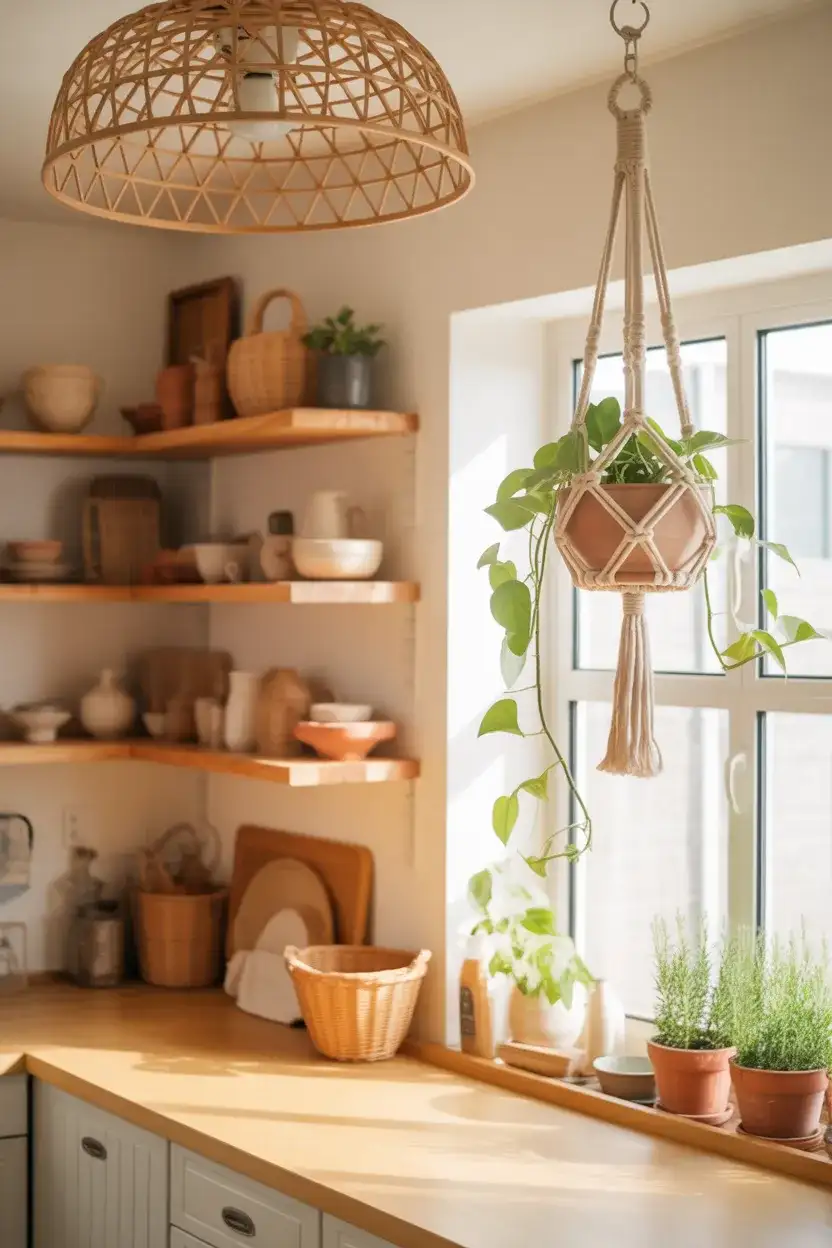
The boho coastal kitchen is for the person who collects things—pottery from weekend markets, woven baskets picked up on vacation, and a stack of mismatched plates that somehow works. Open shelving is non-negotiable here, because half the joy is in the display. The decor leans warm and eclectic: macramé plant hangers, rattan pendant lighting, and terra-cotta pots with trailing herbs. The base palette is usually cream and sand, with pops of sage, dusty rose, or ochre woven in through textiles and objects. It’s not minimalist, but it’s intentional—every piece earns its spot on the shelf.
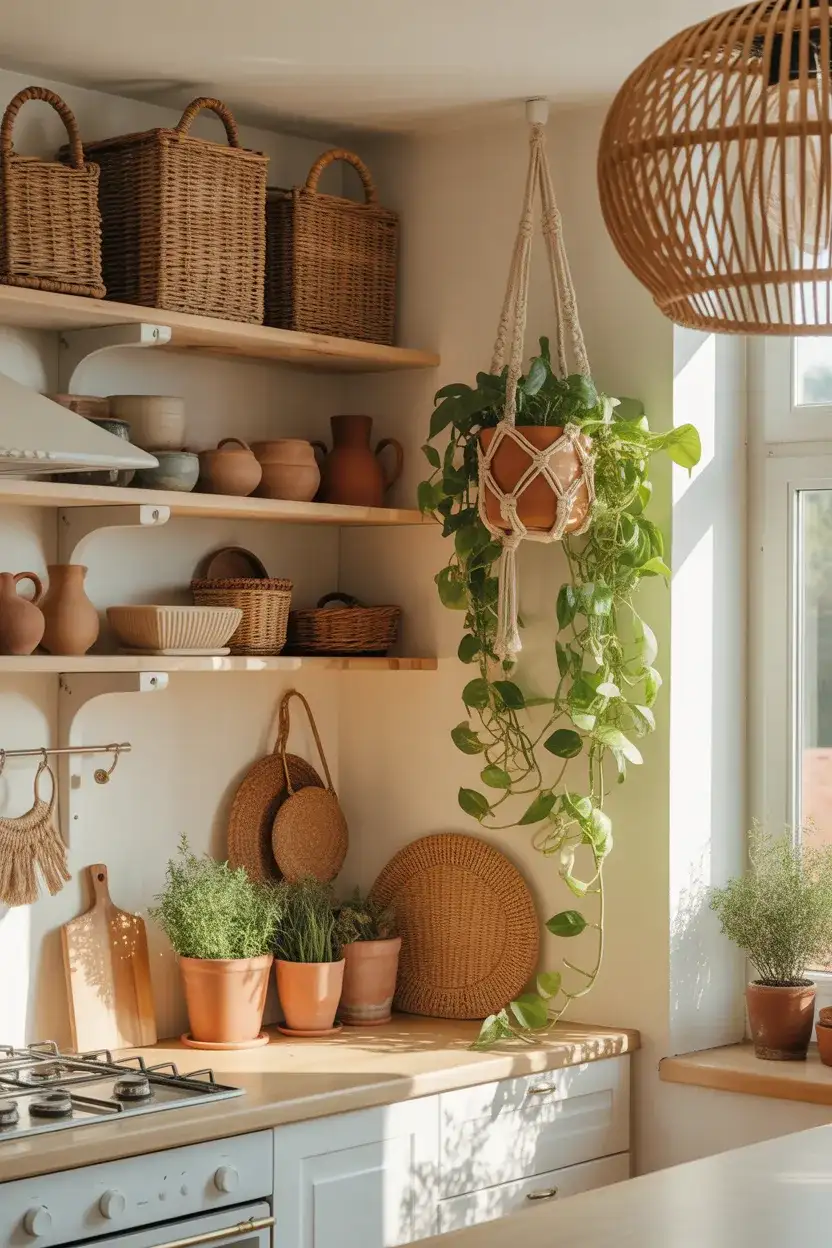
From a practical standpoint, open shelving in a kitchen you actually use every day requires a bit of discipline. Dust settles fast, especially near the stove, and anything displayed at eye level becomes visual noise if it’s not curated. The homeowners who pull this off best tend to rotate their displays seasonally and keep everyday items—the less photogenic stuff like plastic wrap and cereal boxes—behind a closed pantry door or inside a lower cabinet. It’s a lived-in look, but it still needs editing.
6. Coastal Farmhouse with Shiplap Walls
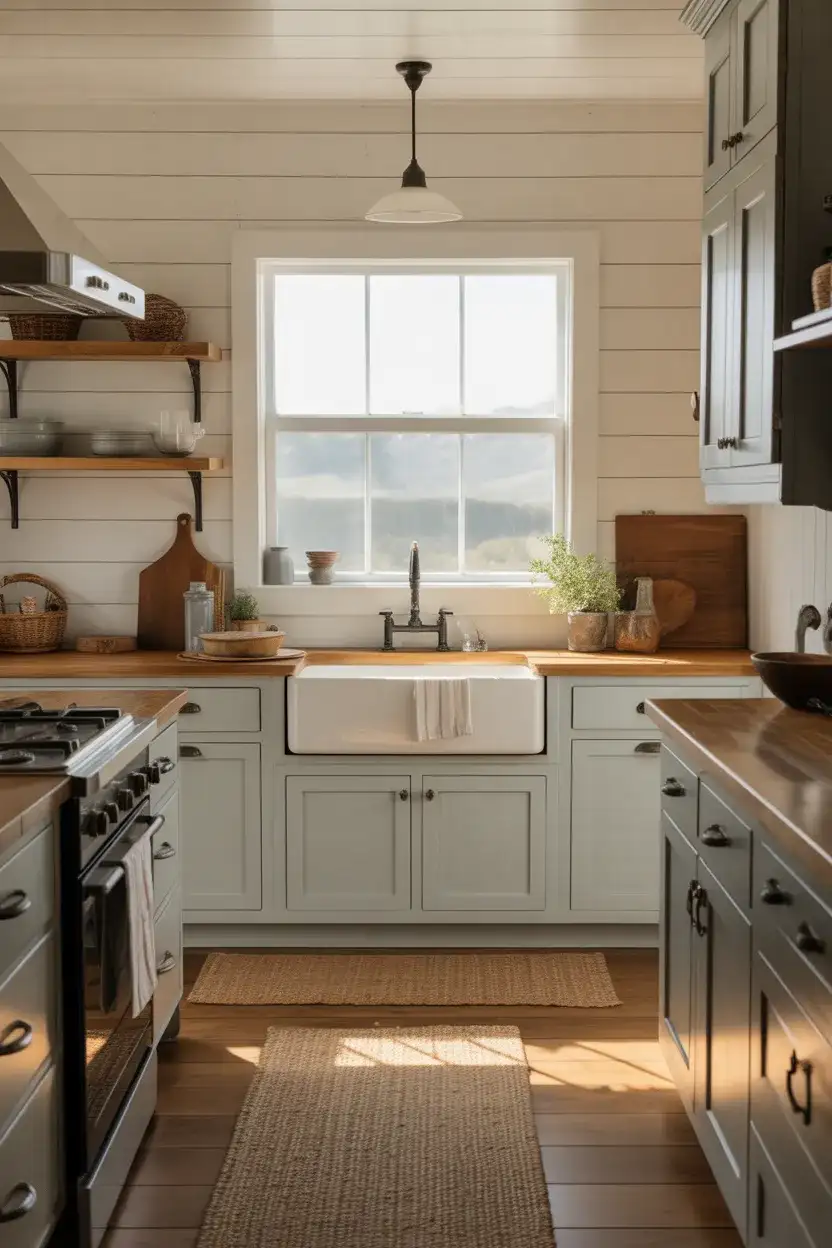
Shiplap has been through its trend cycle and emerged on the other side as something quieter and more permanent. In a farmhouse-coastal kitchen, horizontal planks painted in soft white or pale gray create a backdrop that’s textured without being busy. Pair that with a deep apron-front sink, simple country hardware in oil-rubbed bronze, and butcher-block countertops, and you’ve got a kitchen that feels like it’s been in the family for decades. It’s a style that resonates especially strongly in the South and along the Gulf Coast, where farmhouse architecture and coastal living naturally overlap.
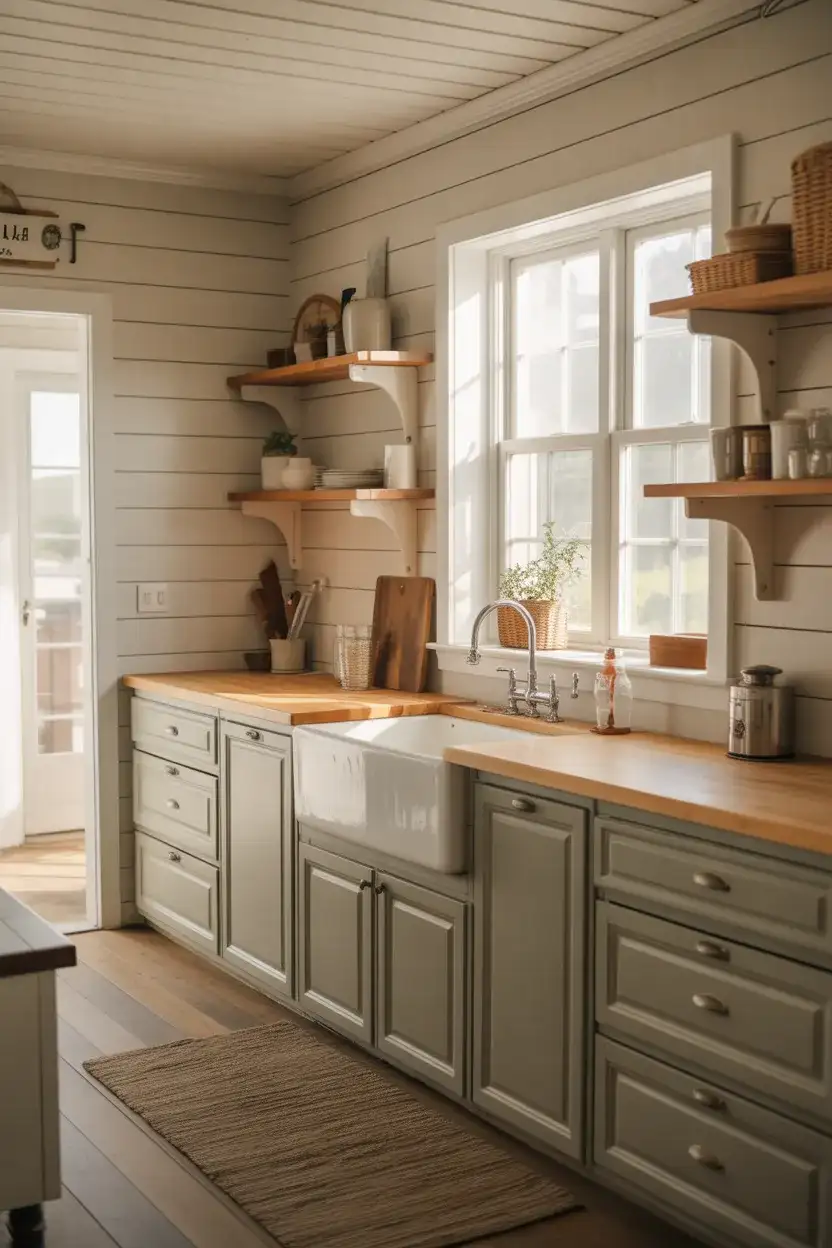
This look connects deeply with American regional identity. Along the Carolina coast, in the lowcountry communities between Charleston and Savannah, kitchens like this aren’t aspirational—they’re ancestral. The shiplap was originally functional, not decorative, used to line interior walls of coastal cottages because it could withstand humidity and be easily replaced. Knowing that history adds a layer of meaning that elevates the whole design beyond a Pinterest trend board.
7. Contemporary Waterfall Island Kitchen
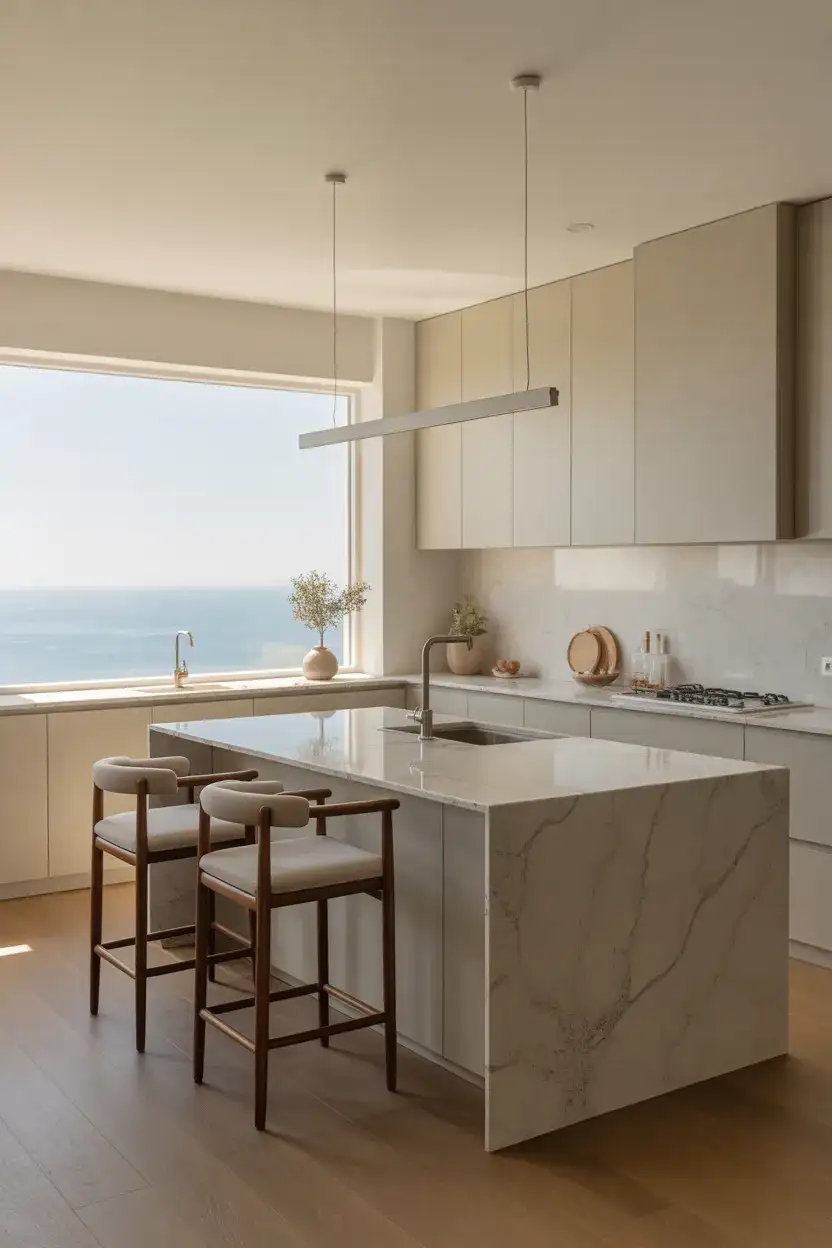
The waterfall-edge island has become a defining feature of the contemporary coastal kitchen, and the reason is partly visual and partly functional. When a slab of veined quartz or marble cascades down the side of the island, it creates a sculptural anchor that grounds the whole room. Pair it with flat-front cabinets in a muted tone—greige, soft taupe, or warm white—and minimalist hardware, and you get something that feels undeniably current. The best versions use the island as the main design event and keep everything else deliberately restrained.
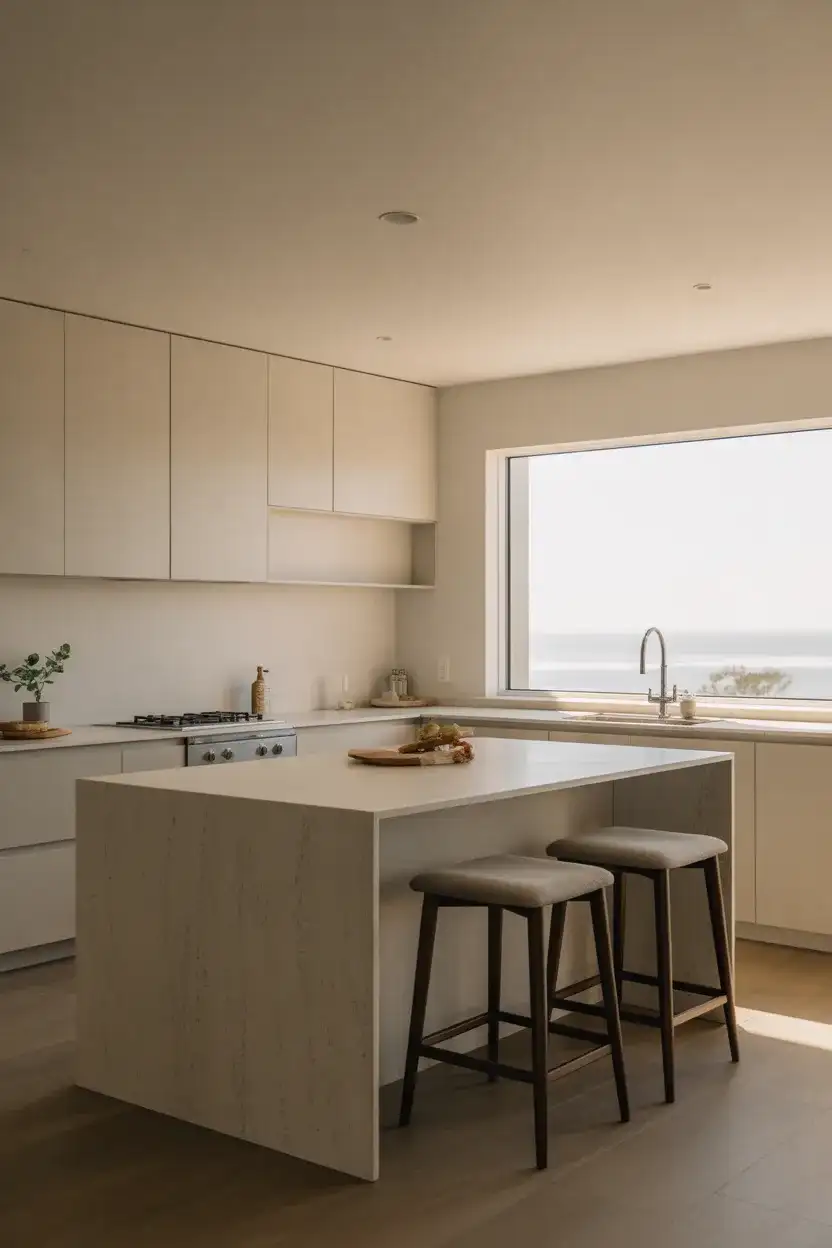
An expert-level tip from kitchen designers: the veining direction matters more than most homeowners realize. When the slab is bookmatched—meaning the counter and waterfall panel are cut from the same piece and the veining flows continuously over the edge—the result looks intentional and high-end. When the veining abruptly stops or shifts direction at the corner, it reads as an afterthought. Ask your fabricator about bookmatching early in the process, because it affects how the slab is ordered and cut.
8. Coastal Kitchen with Zellige Backsplash
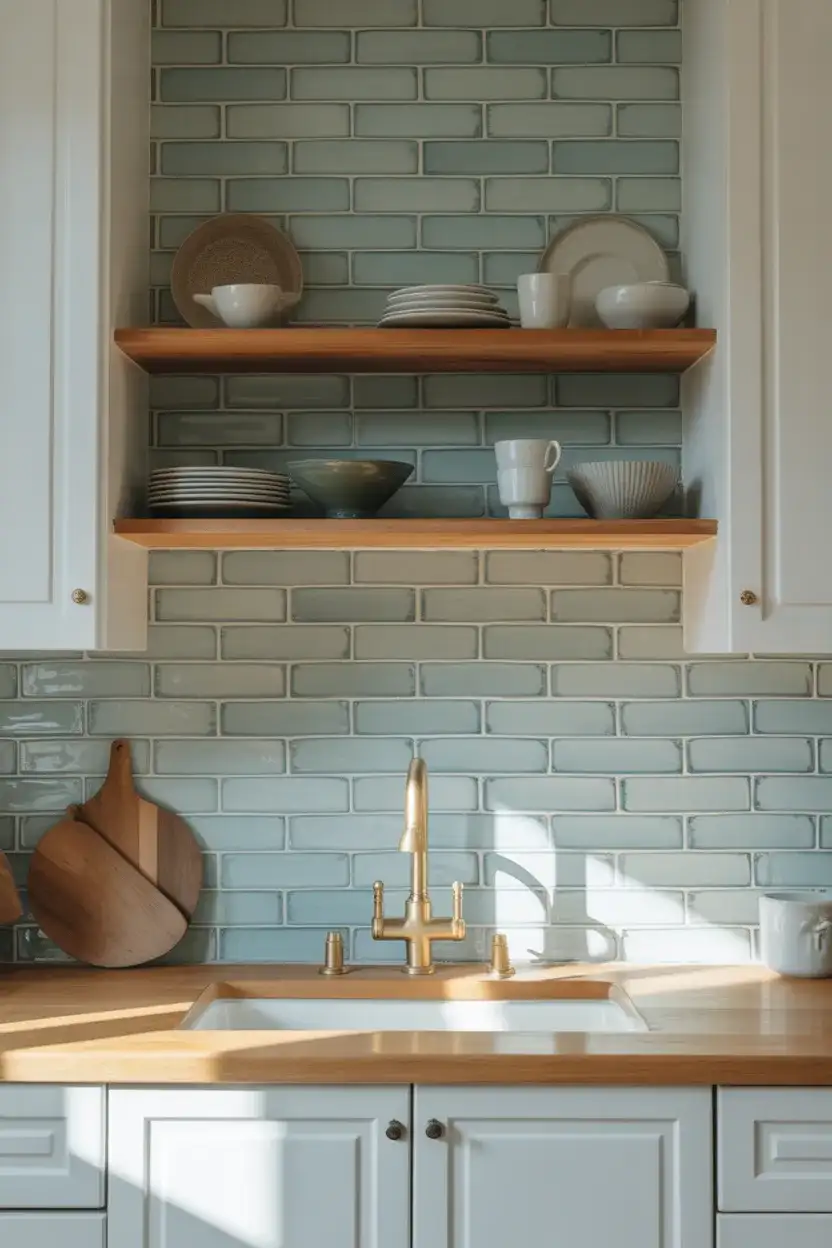
Zellige tile has quietly taken over the backsplash conversation in coastal kitchens, and the appeal is obvious once you see it in person. Each handmade tile has subtle variations in color, texture, and surface sheen—which means your backsplash ideas suddenly have depth and movement that factory-produced subway tile simply can’t match. In soft ocean tones—seafoam, pale aqua, and sandy cream—zellige becomes the visual heartbeat of the room. It pairs naturally with white or light wood cabinets and looks equally at home in a modern build or a renovated bungalow.
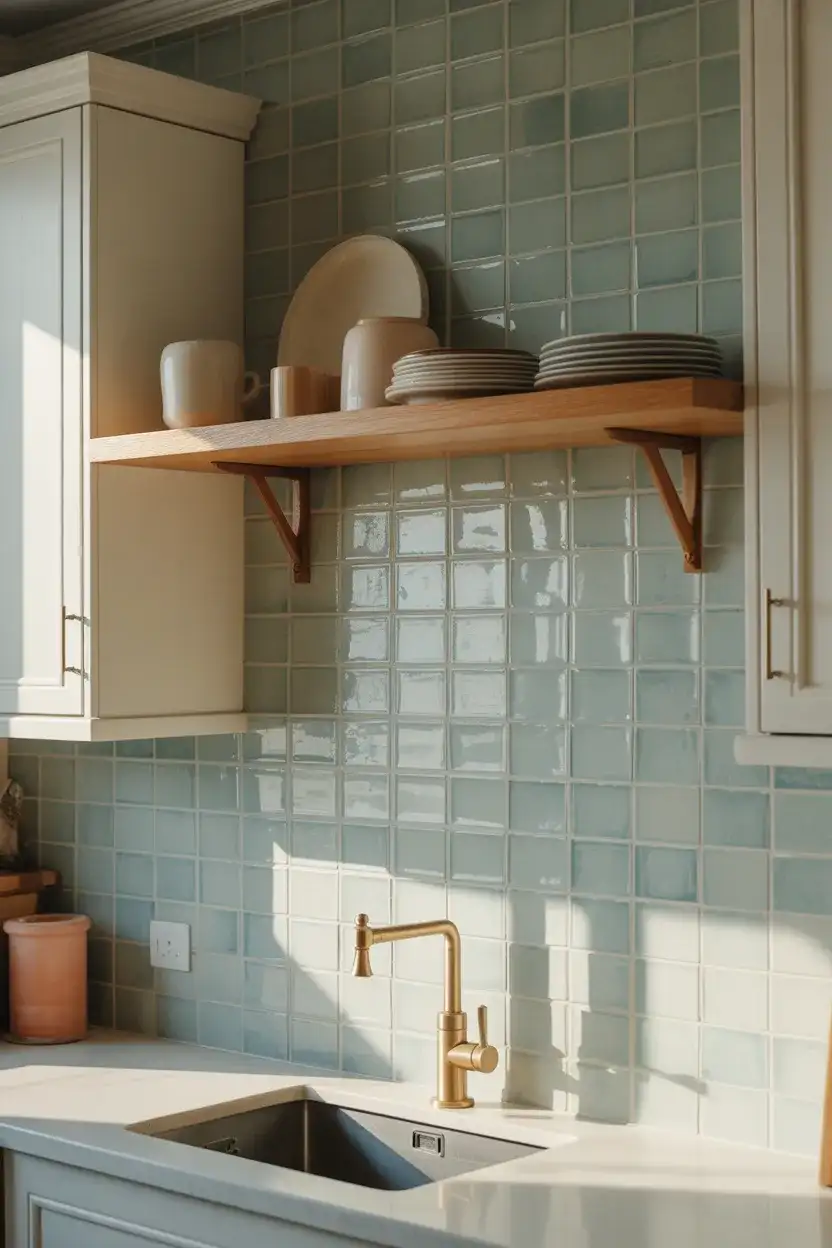
The price angle is worth knowing upfront: zellige tile typically runs $15–$30 per square foot for the material alone, which is notably more than standard ceramic subway tile at $2–$8 per square foot. Installation also costs more because the handmade irregularity requires a skilled setter. But a backsplash is relatively small—most kitchens need only 20 to 35 square feet—so the total premium for zellige over basic tile might land between $400 and $800. For the visual impact, many homeowners find it’s the single best investment in the room.
9. Beach House Breakfast Nook Kitchen
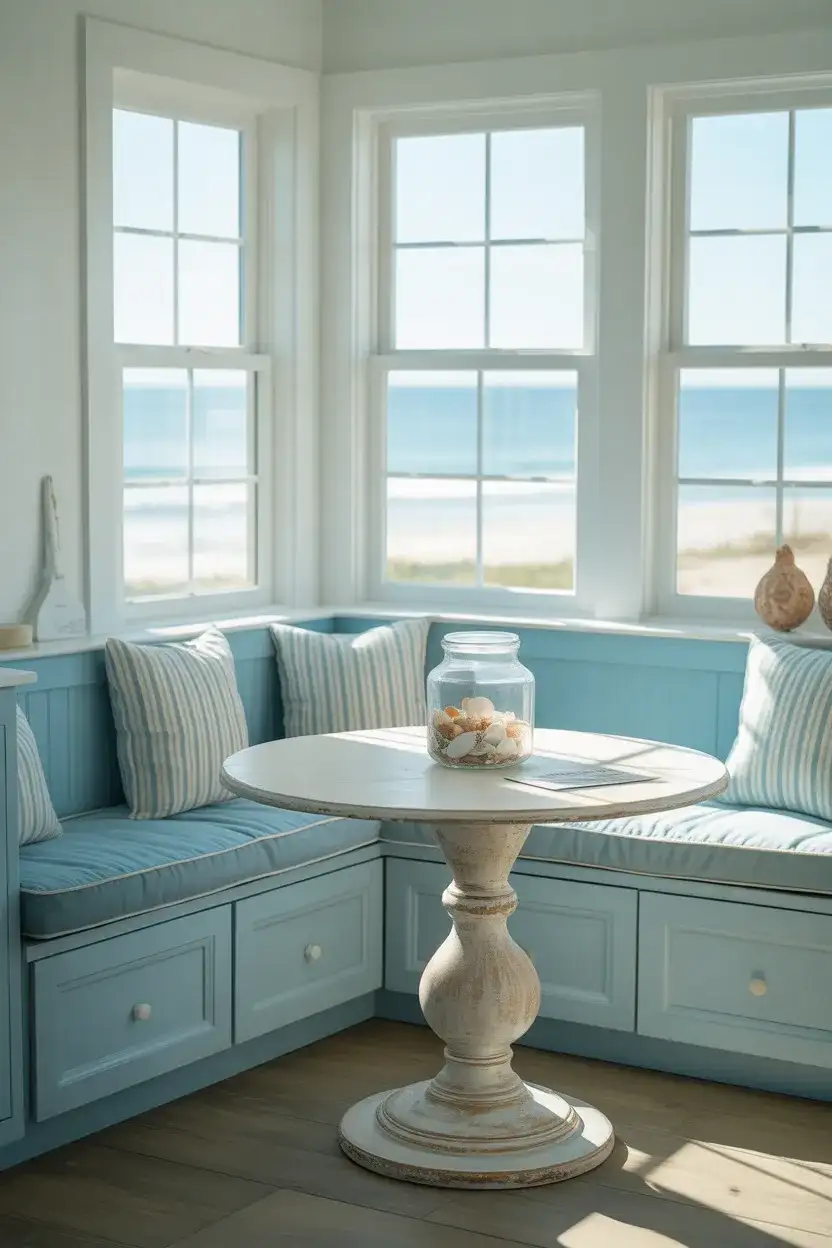
In beach houses, the kitchen and eating area often blend into a single relaxed zone—and a built-in breakfast nook is one of the most charming ways to make that happen. Picture a banquette upholstered in a washable indoor-outdoor fabric, a round pedestal table in whitewashed wood, and a corner window that frames the morning light. The decor ideas here tend toward simplicity: a couple of striped throw pillows, a glass jar of shells, maybe a framed coastal print propped casually on a ledge. It’s the kind of spot where you linger over coffee long after the toast is gone.
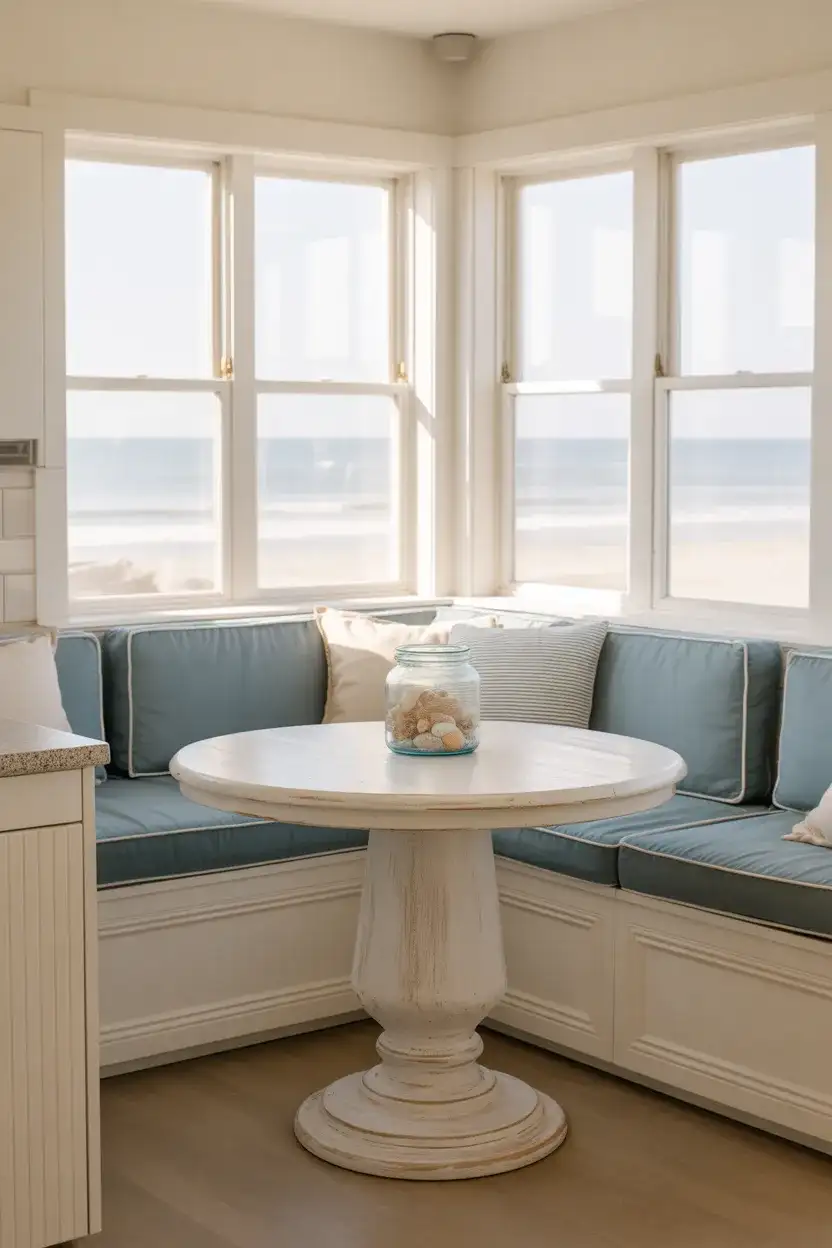
Where this works best is in kitchens that serve as the social hub of a vacation home or a family’s primary residence near the water. The built-in banquette tucks into corners that a standard dining set can’t use efficiently, reclaiming dead space and seating four to six comfortably. It’s also a practical call for families with young kids—the enclosed bench shape keeps toddlers corralled, and the washable fabric means spills are a non-event. Many coastal homeowners say the nook gets used more than any other spot in the house.
10. Moody Coastal Kitchen with Dark Walls
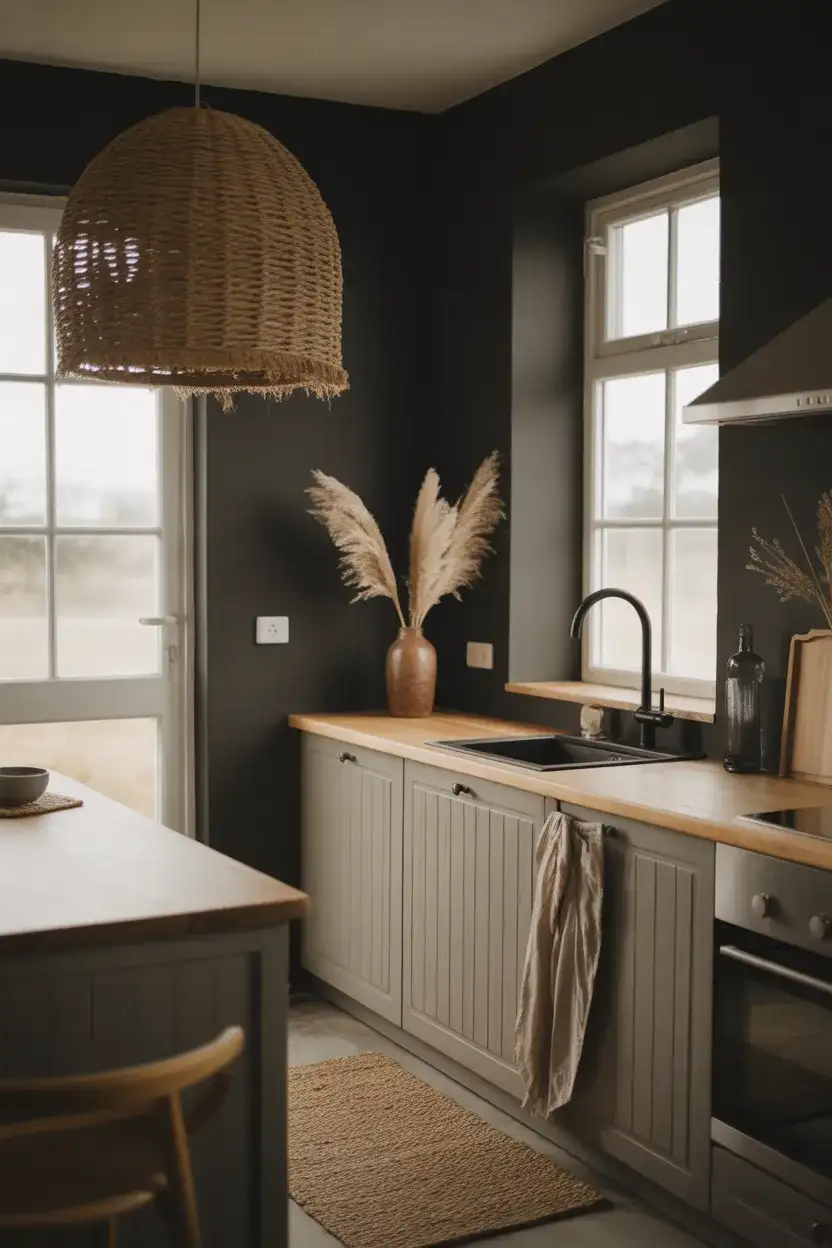
Not all coastal kitchens need to be light and airy. A growing number of homeowners are embracing deep charcoal, slate blue, or dark olive on their kitchen walls—creating a moody, cocoon-like space that still channels the coast through material choices and decor. Combine those dark walls with natural wood countertops, matte black fixtures, and woven textures like seagrass or jute, and the room feels like a stormy shore rather than a sunny one. It’s a contemporary move that photographs incredibly well and gives the kitchen real emotional weight, which is probably why it’s surging on Pinterest boards right now.
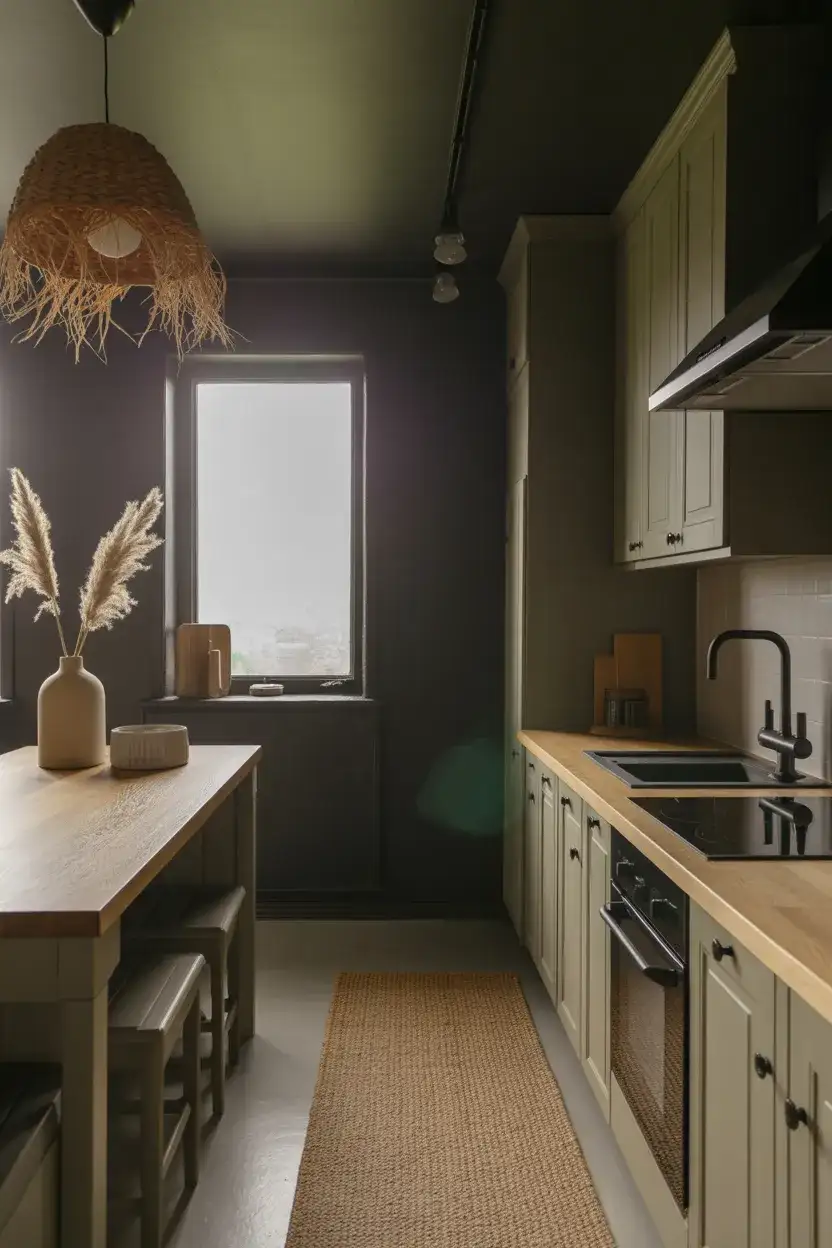
The common mistake here is not committing. Painting one accent wall dark while leaving the rest white creates a disjointed look that undercuts the moody atmosphere you’re going for. Designers say the move is to go dark on at least two adjacent walls—or the entire room—and then use lighter elements like a pale stone backsplash or light wood shelving to provide contrast within the dark envelope. Half-measures read as indecisive; full commitment reads as dramatic and intentional.
11. Pendant Light-Focused Coastal Kitchen
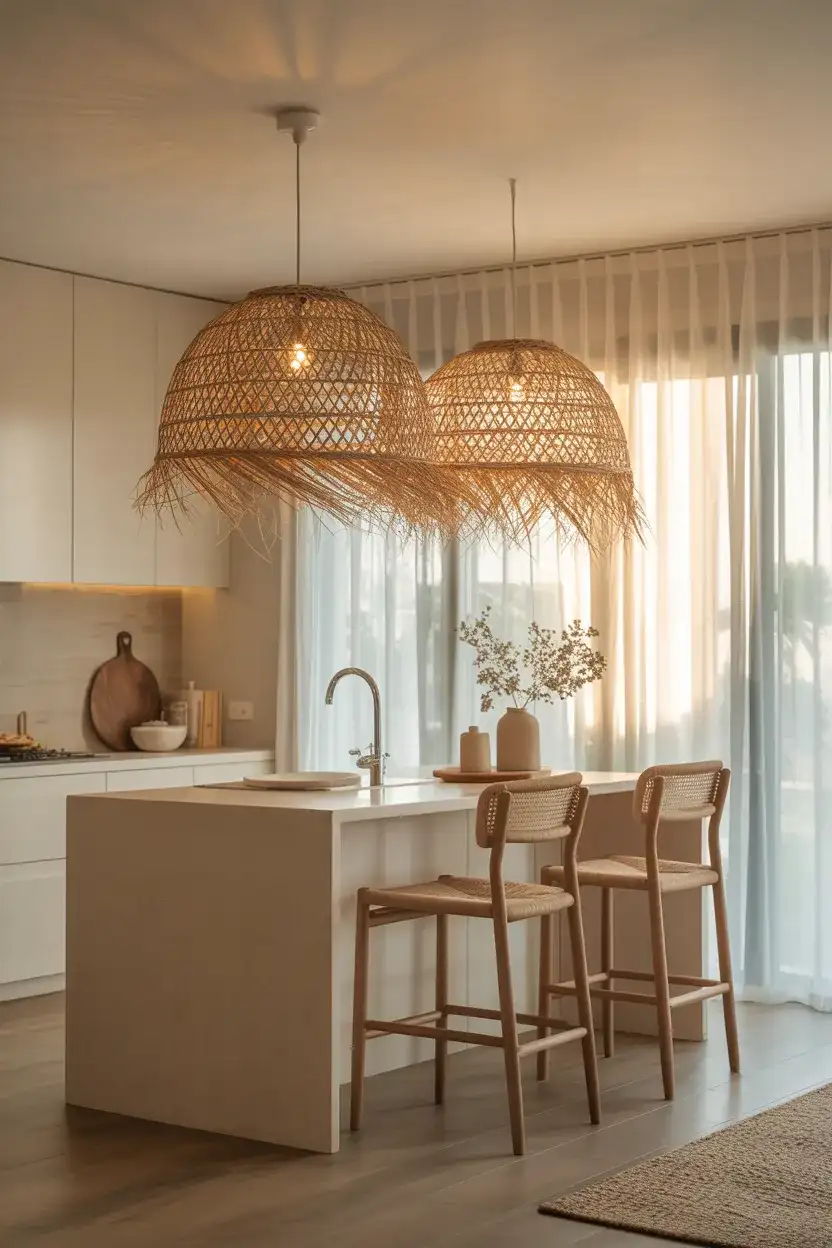
Sometimes one design decision carries the whole room, and in coastal kitchens, that decision is often pendant lights. A pair of oversized woven rattan pendants hanging over the island can transform an otherwise simple kitchen into something Pinterest-worthy overnight. The lighting becomes the jewelry of the space—and when you choose fixtures made from natural coastal materials like seagrass, bamboo, or whitewashed wood beads, they tie the whole theme together without needing a single piece of blue tile or nautical motif. The rest of the kitchen can stay clean and neutral while the pendants do all the talking.
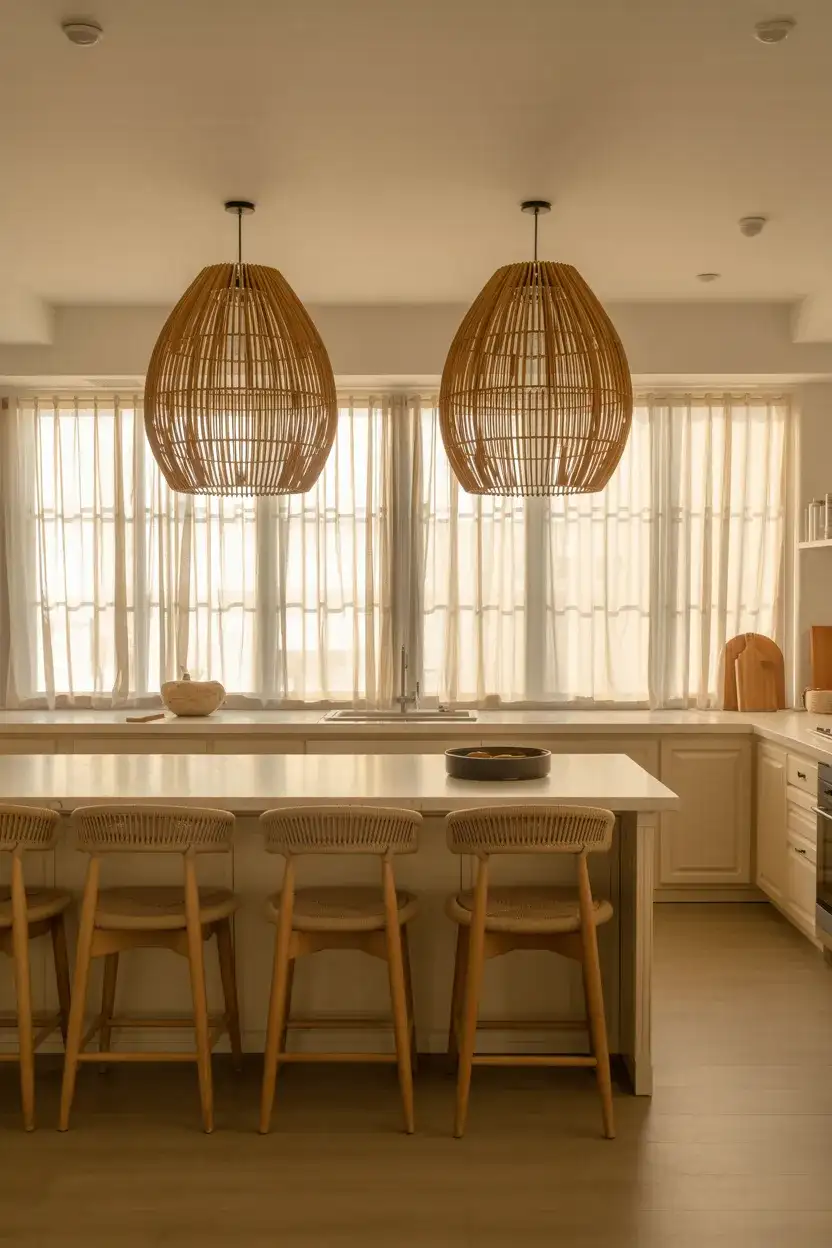
A veteran lighting designer once pointed out that the most common error in kitchen pendant selection is going too small. Over a standard 8-foot island, pendants should be at least 15 to 18 inches in diameter—and for the statement-scale look that dominates current coastal design, 20 to 24 inches is better. You also want the bottom of the fixture to hang roughly 30 to 36 inches above the counter surface. Getting both the scale and the height right is what separates a “nice kitchen” from one that stops people mid-scroll.
12. Bloxburg-Inspired Coastal Build
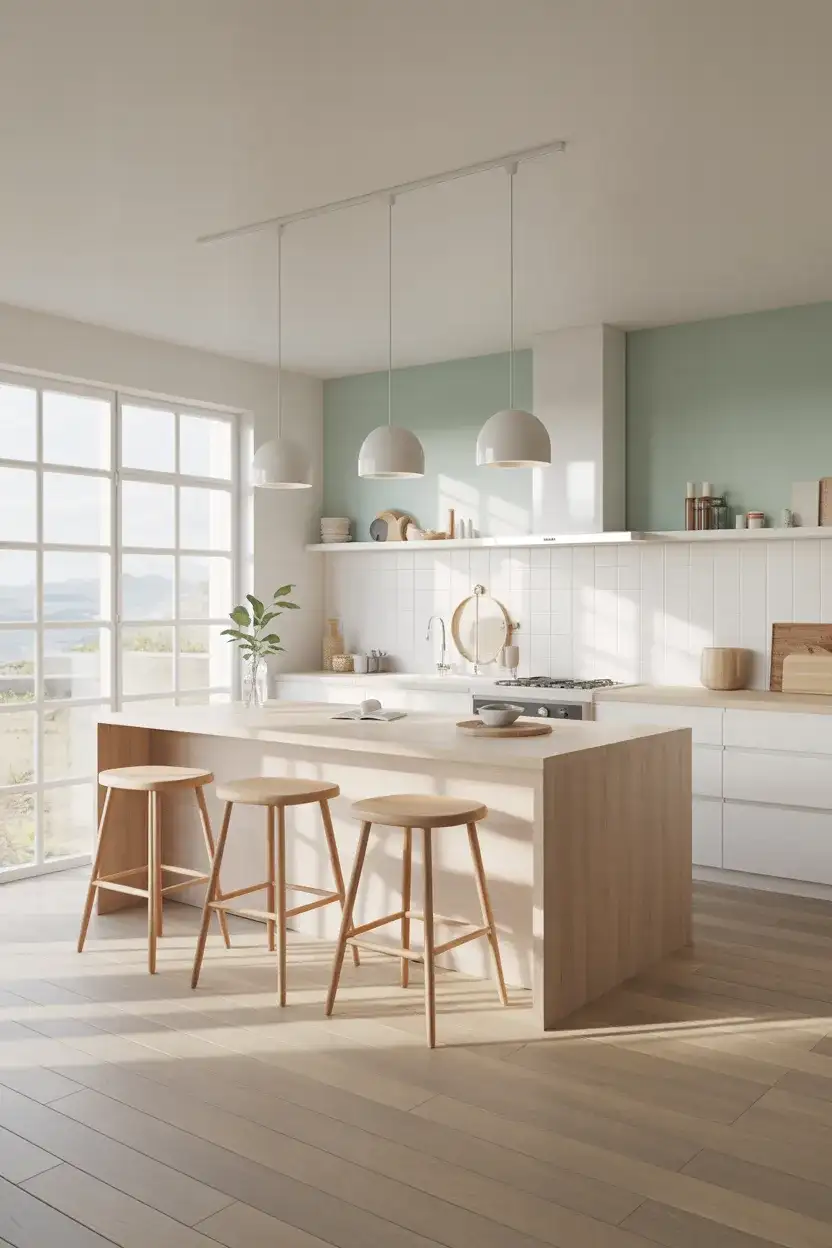
For a whole generation of younger designers, the first kitchen they ever “built” was in Bloxburg. The popular Roblox game has become an unexpected gateway to interior design—and its coastal kitchen builds are wildly popular on Pinterest and TikTok. The ideas Bloxburg players gravitate toward often translate beautifully to real life: open floor plans, pale wood tones, pastel accent walls, and clean-lined modern islands with bar seating. What makes these digital kitchens interesting is their instinct for proportion and flow, which mirrors many of the same principles professional designers use in real coastal homes.
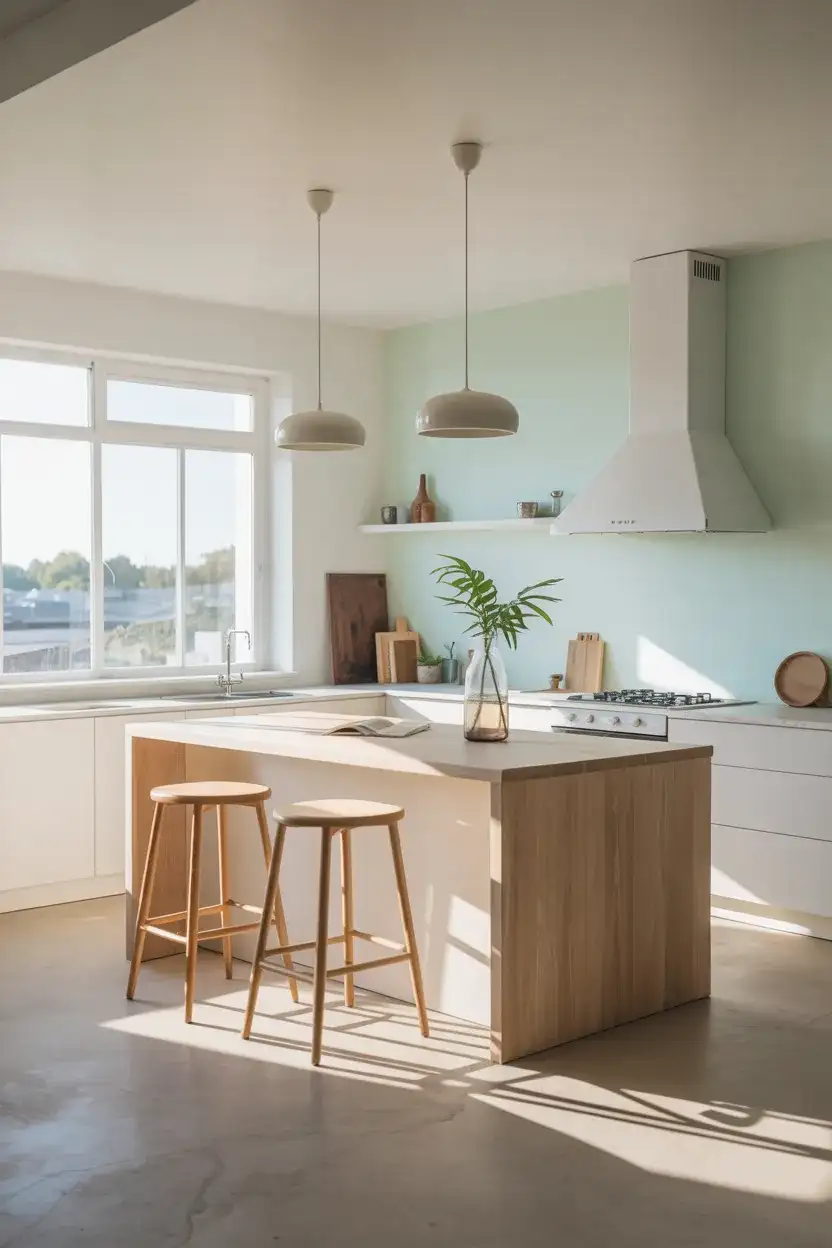
Here’s the practical insight worth noting: Bloxburg builds may start as a game, but they’re functioning as mood boards for an entire generation. Design professionals are increasingly seeing clients under 30 arrive at consultations with Bloxburg screenshots alongside traditional inspiration photos. The spatial reasoning these players develop—understanding scale, traffic flow, and visual balance—is surprisingly transferable. If you’re a parent watching your teen obsess over virtual kitchen layouts, know that it might actually be career training in disguise.
13. Coastal Kitchen with Patterned Cement Tile Floor
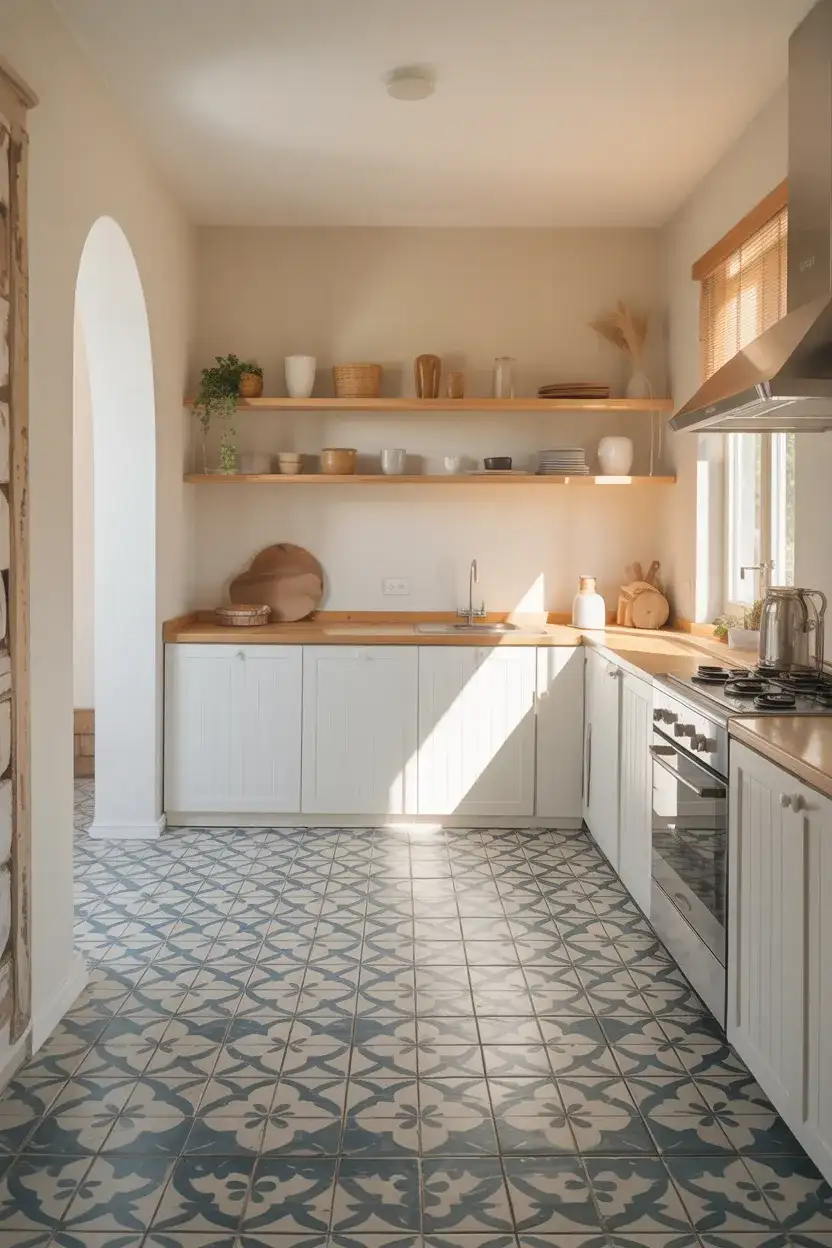
One of the boldest moves you can make in a coastal kitchen is putting the design underfoot. Patterned cement tile—in soft blues, sandy neutrals, or muted greens—gives the floor a Mediterranean-meets-coastal character that instantly elevates the room. When the base cabinets and walls stay simple and light, the floor becomes a work of art that grounds everything above it. These tiles are handmade, durable, and beautifully imperfect, which is exactly the quality that makes them feel right in a beach house kitchen or a coastal-inspired renovation anywhere in the country.
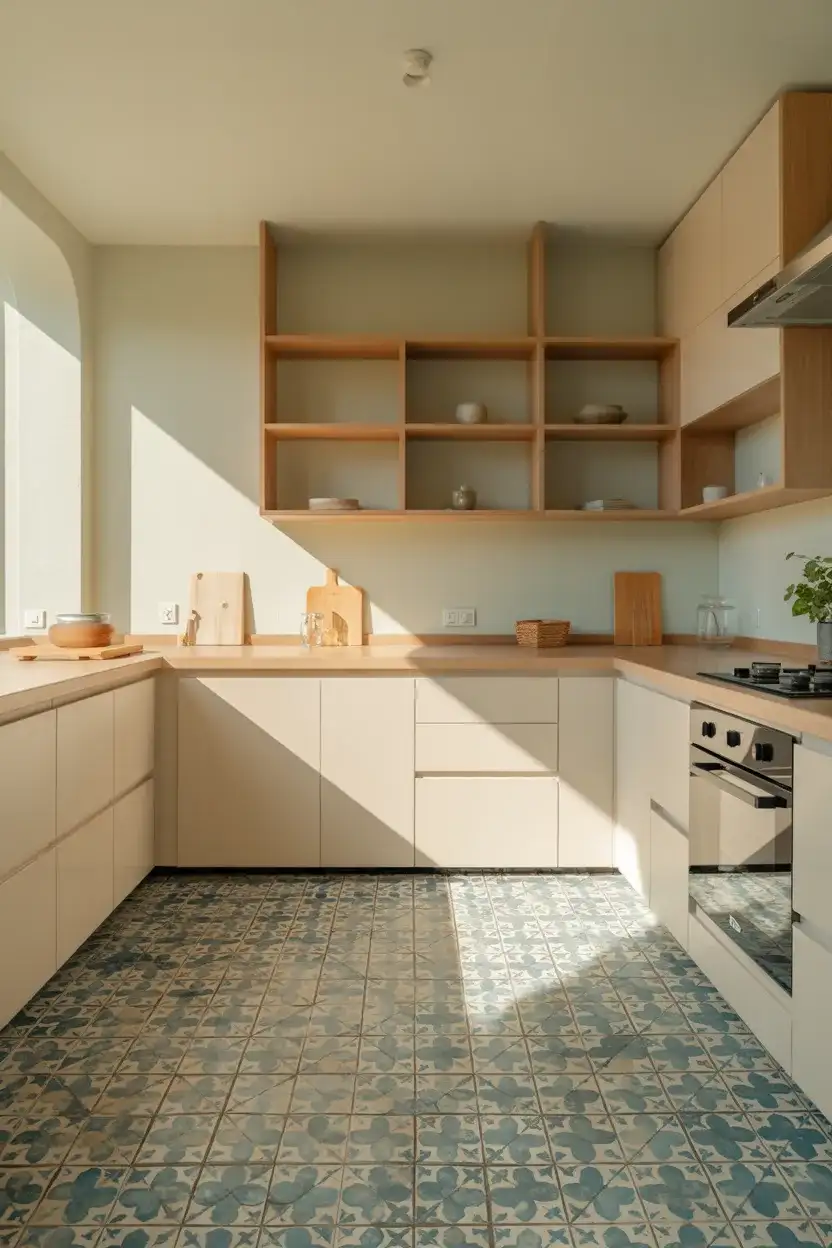
Cement tile does require a bit more care than porcelain—it’s porous and needs to be sealed properly upon installation and resealed every year or two. Spills should be wiped quickly to prevent staining, and acidic cleaners are a no-go. That said, many homeowners who’ve committed to cement tile say the patina it develops over time is part of the charm. It ages the way leather does—gracefully—and the slight wear adds to the coastal, lived-in character rather than detracting from it.
14. Coastal Kitchen with Reclaimed Wood Accents
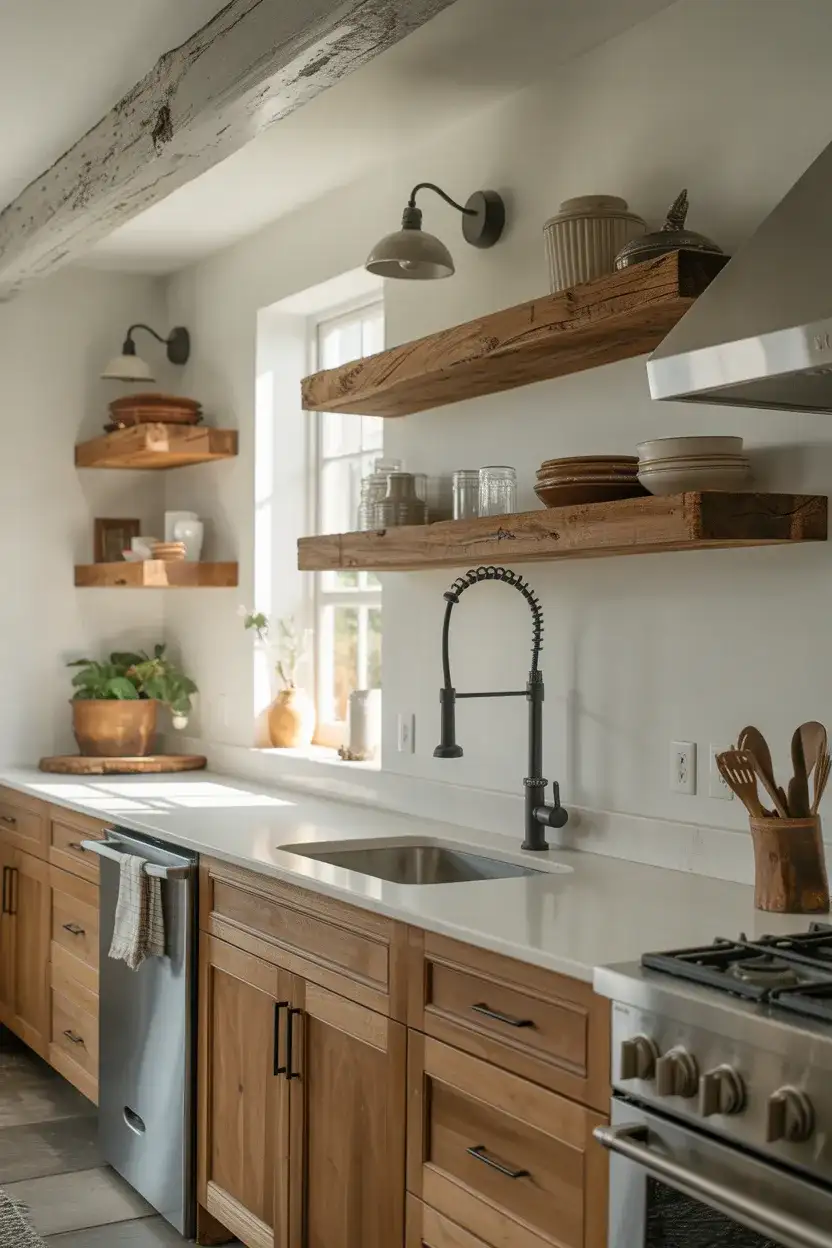
Reclaimed wood brings a warmth and a story that new materials simply can’t replicate. In a coastal kitchen, it works beautifully as a floating shelf, a range hood surround, or an accent beam overhead. The rustic character of old barn wood or salvaged dock planks pairs surprisingly well with modern fixtures—a sleek matte faucet, an undermount sink, and integrated appliances. This contrast between rough and refined is what keeps the space from feeling like a themed set piece. It also connects to a broader conversation about sustainability in design, which resonates with the Pinterest audience that’s increasingly drawn to mindful home choices.
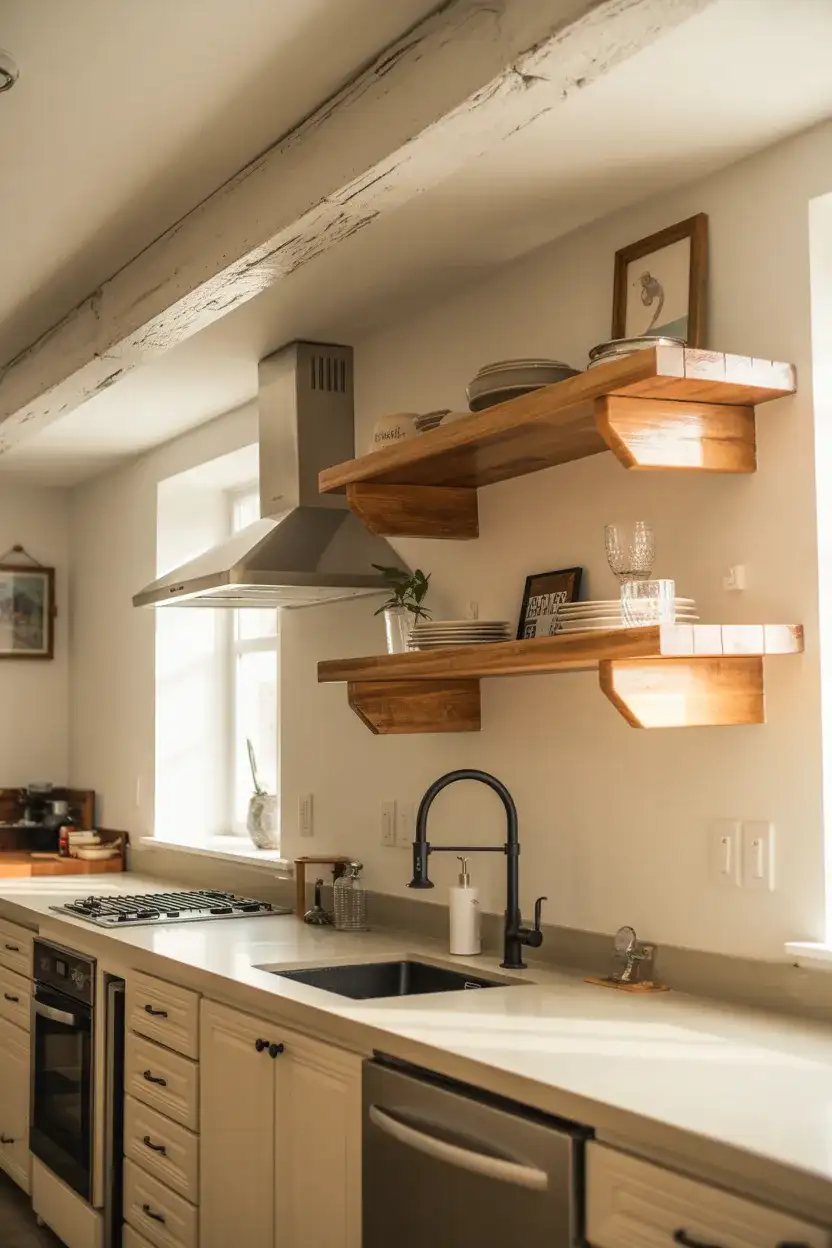
For the budget-conscious, salvaged wood doesn’t have to mean expensive reclamation-yard finds. Habitat for Humanity ReStores, local demolition sales, and even Craigslist often yield beautiful old-growth lumber for a fraction of retail pricing. A single reclaimed board cut into three floating shelves might cost $40–$80 total. The key is making sure the wood is properly cleaned, dried, and sealed—especially in a kitchen environment where moisture and food prep are constant. One coat of water-based polyurethane preserves the character while keeping the surface food-safe.
15. Soft Blue-Green Painted Cabinets
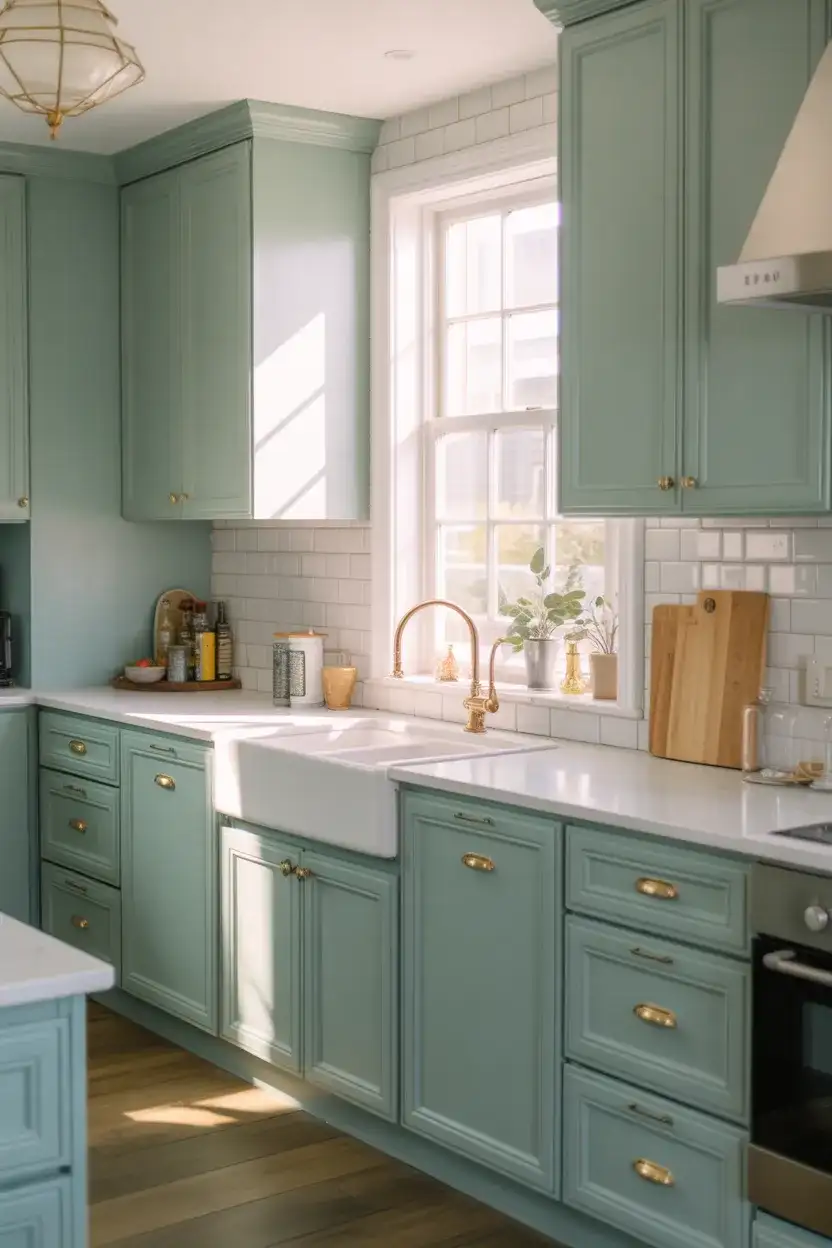
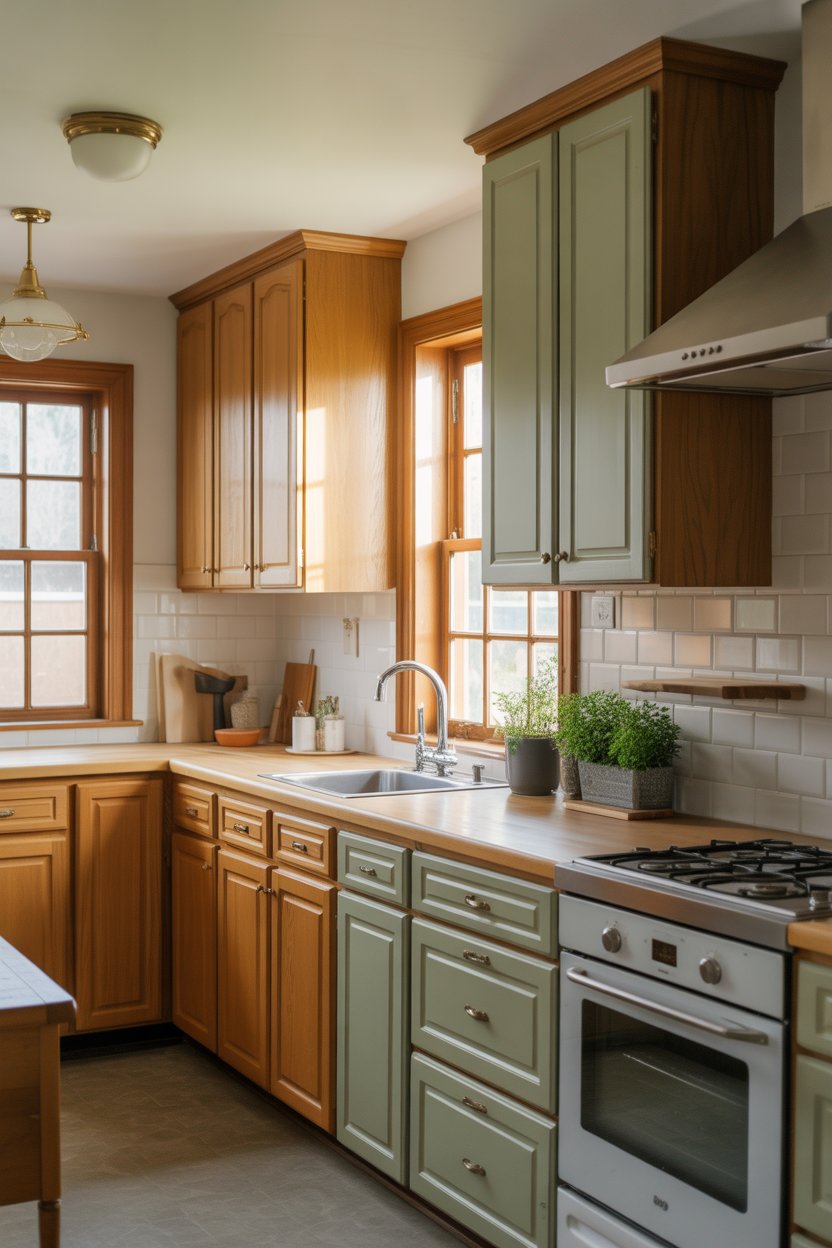
There’s a specific shade—somewhere between robin’s egg and seafoam—that captures the blue coastal kitchen better than almost anything else. Painting your cabinets in a soft blue-green instantly anchors the room in a beachside mood without committing to a full thematic overhaul. These tones play beautifully against white countertops, brass or brushed gold hardware, and natural wood elements. The result is fresh and calming, the kind of color that makes people pause in the doorway and say, “I love this kitchen.” It’s one of the simplest ways to inject coastal ideas into an otherwise neutral home.
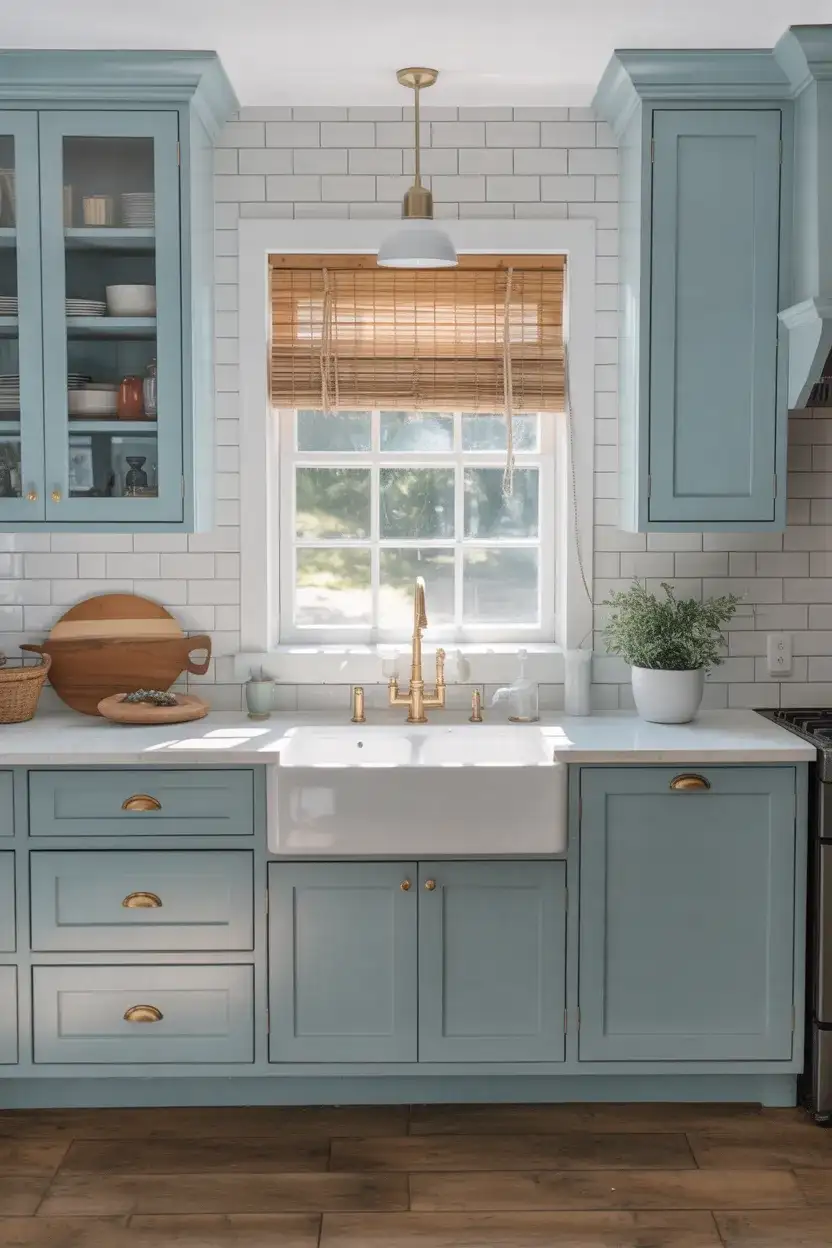
A micro anecdote says it all: a homeowner in Wilmington, North Carolina, spent six weeks testing paint samples for her kitchen cabinets. She taped a dozen swatches to the cabinet doors and lived with them through different lighting conditions—morning sun, overcast afternoons, and evenings with the pendants on. Her final choice was Benjamin Moore’s “Wythe Blue,” and she says it looks different every hour of the day, which is exactly what she wanted. The lesson? In a room with this much natural light variation, a color that shifts and breathes is far more interesting than one that stays flat.
16. Coastal Kitchen with Herringbone Backsplash
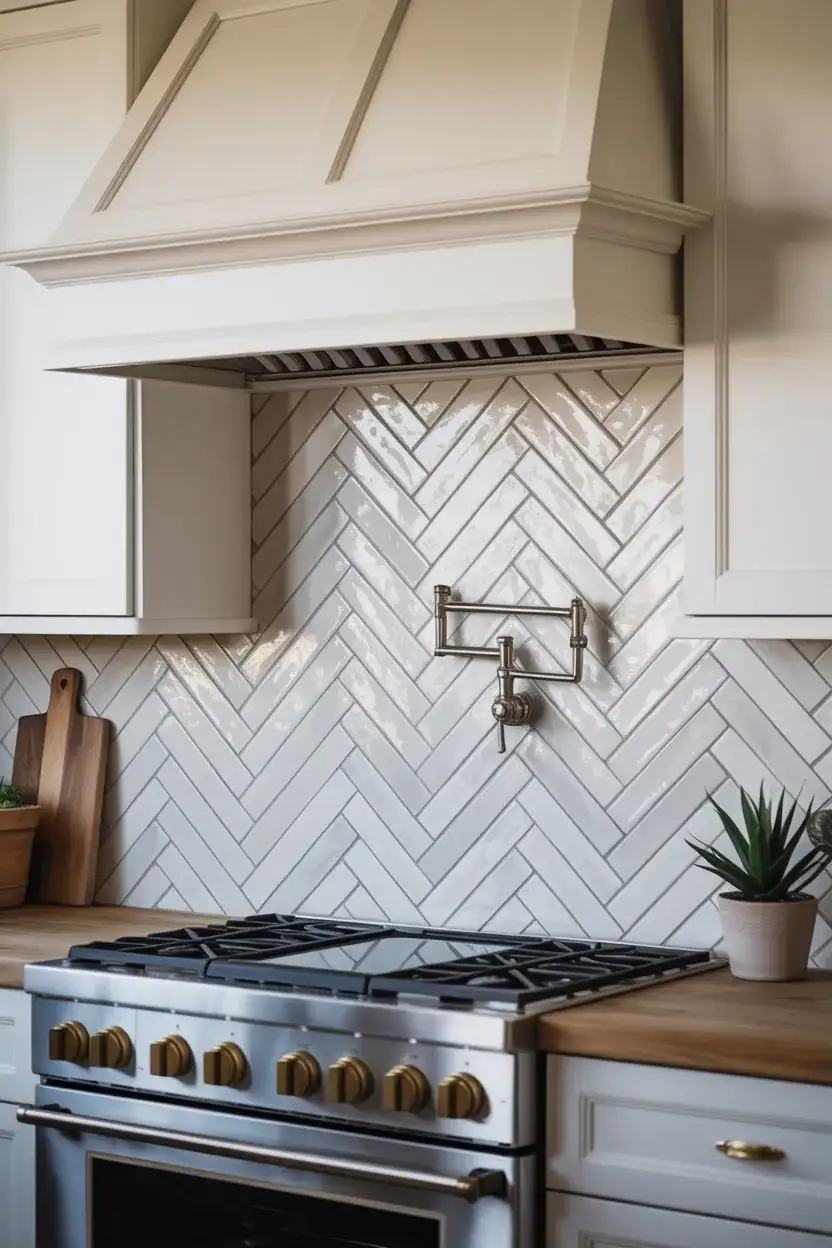
Herringbone is one of those patterns that adds movement and sophistication to a backsplash without overwhelming the space. In a coastal kitchen, long narrow tiles laid in a herringbone pattern—especially in white, pale gray, or soft blue—create a visual rhythm that mimics the chevron of waves or the weave of nautical rope. It’s a step beyond standard subway tile in terms of visual interest, but it plays well with virtually every coastal design inspiration direction, from minimalist modern to more layered and traditional. The pattern draws the eye without demanding attention, which is exactly what a good backsplash should do.
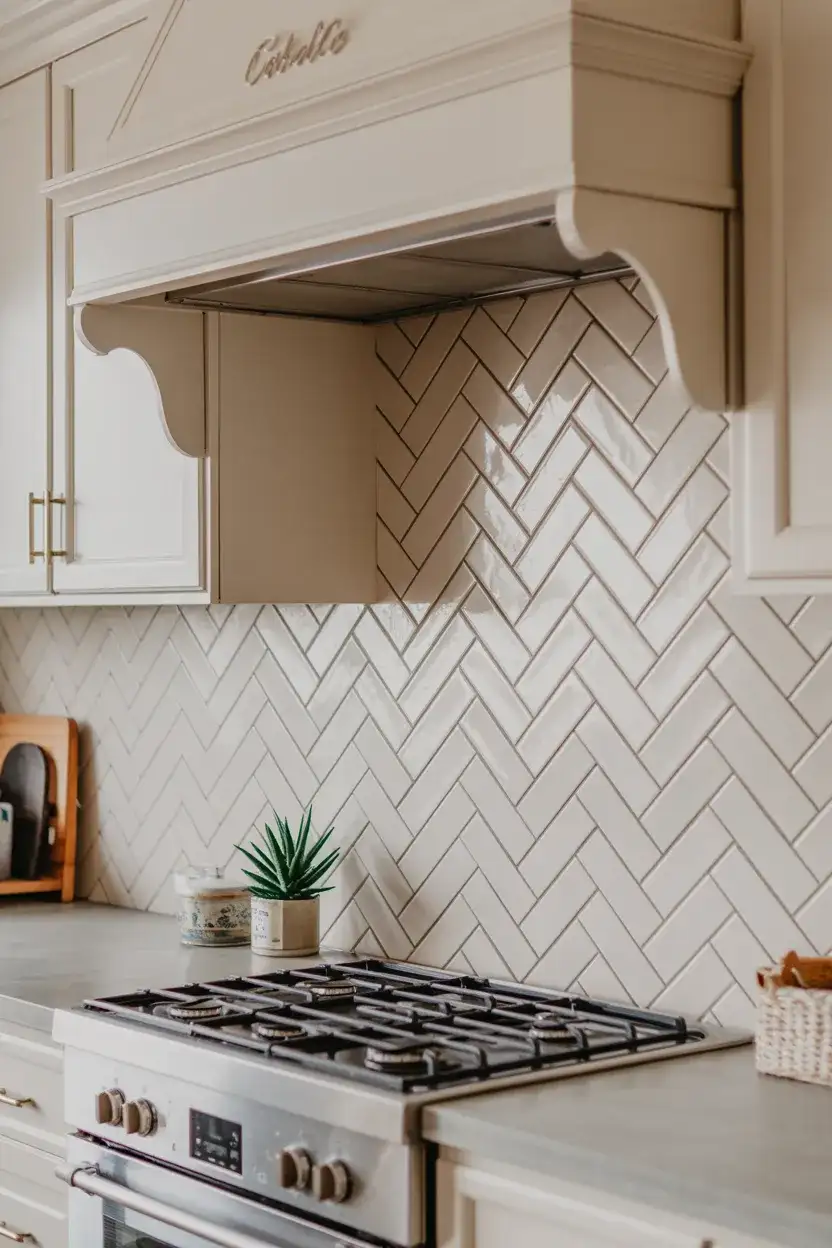
From an installation standpoint, herringbone is slightly more labor-intensive than a simple stack or subway pattern, which means your tile setter may quote 10–20% more for labor. The extra cost comes from the precise angle cuts at the edges where the pattern meets the cabinets or ceiling. But here’s the payoff: herringbone creates an illusion of height and movement that flat patterns can’t achieve, making it particularly effective in kitchens with shorter backsplash areas between the counter and upper cabinets. The visual return on that modest labor premium is significant.
17. Coastal Kitchen with Rattan Bar Stools
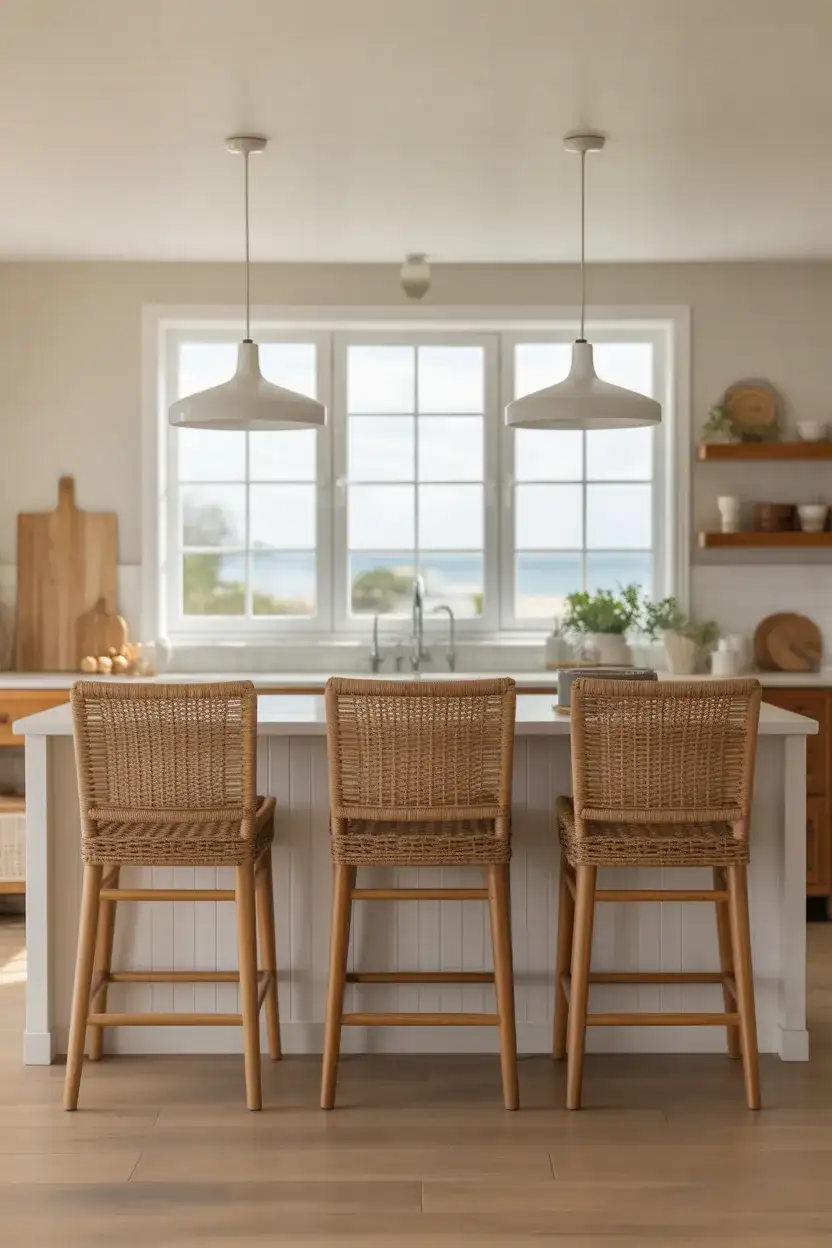
Sometimes the simplest addition carries the most weight. Swapping out standard bar stools for woven rattan counter seats can shift the entire atmosphere of a kitchen toward a coastal, resort-like ease. Rattan reads as relaxed and textural—the kind of material you’d find in a boho beach bar or a California poolside lounge. Pair them with a clean white island and simple pendant lights overhead, and the kitchen goes from generic to characterful without a renovation. It’s a swap you can make in an afternoon, which is part of what makes it such a popular move on design boards right now.
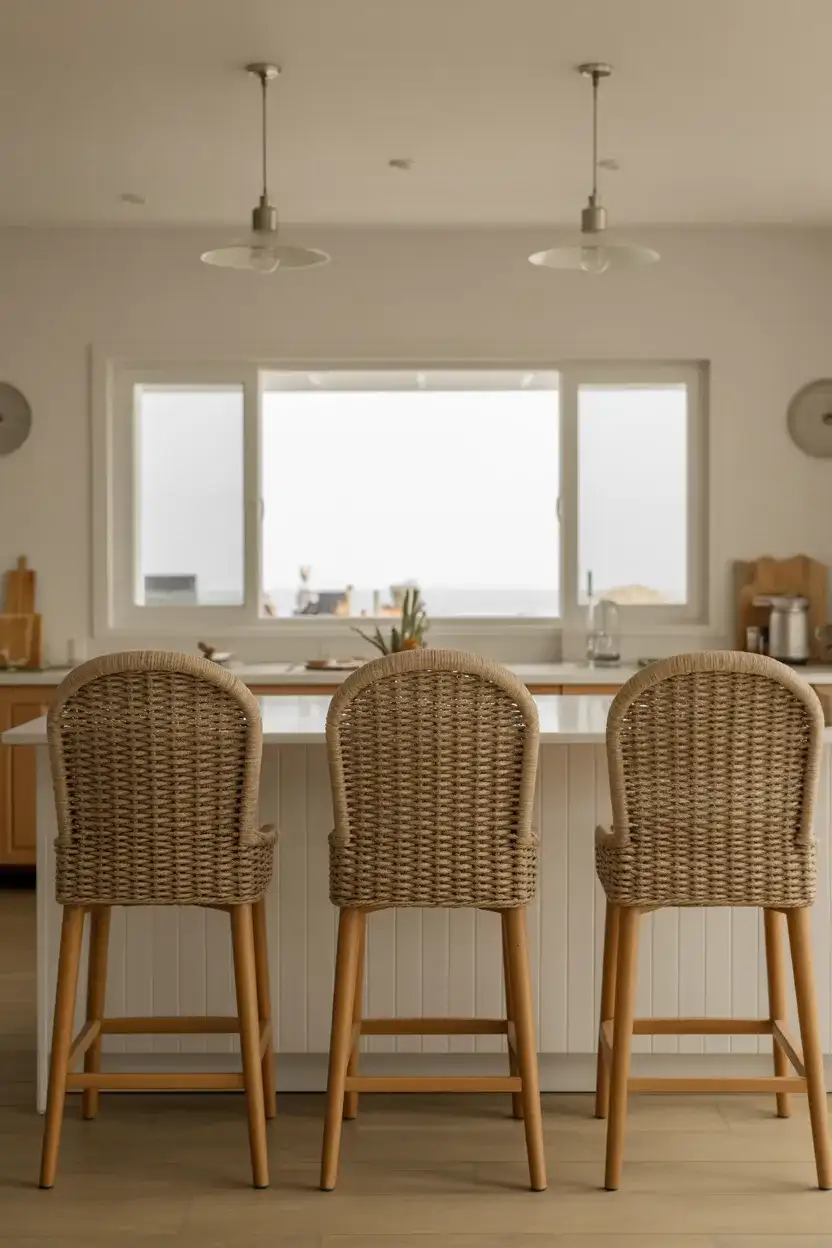
Real homeowner feedback on rattan stools tends to split on one issue: durability with kids. Families with children under eight often report that the woven material catches crumbs and is harder to wipe down than a smooth wooden or metal stool. The fix most experienced coastal homeowners recommend is choosing rattan stools with a synthetic wicker weave—visually almost identical but far easier to clean and more resistant to the kind of daily abuse a family kitchen dishes out. The look stays the same; the maintenance drops dramatically.
18. Sconce-Lit Coastal Galley Kitchen
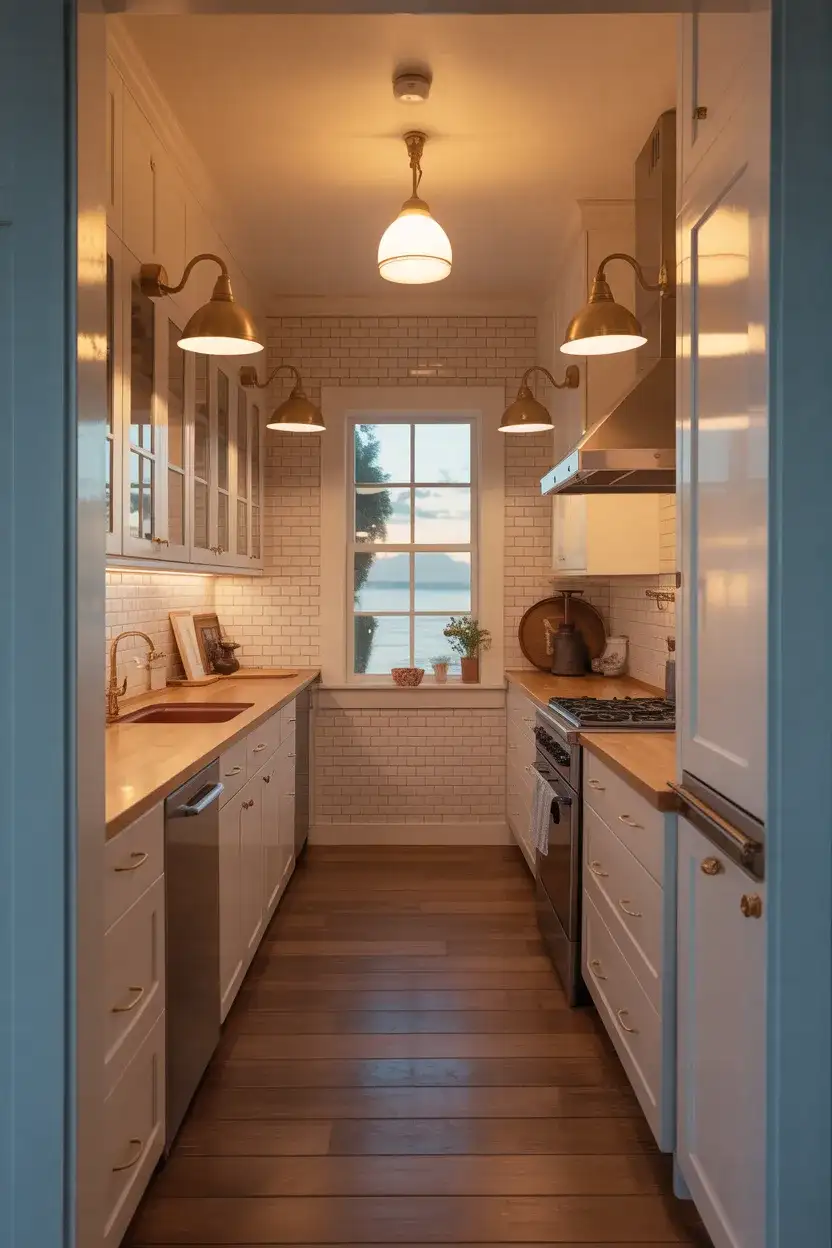
Galley kitchens get an unfair reputation for feeling cramped, but with the right lighting strategy, they can feel as warm and inviting as any open-plan layout. Wall-mounted sconces in brass, aged bronze, or white ceramic add ambient glow at eye level—a much more flattering and atmospheric approach than relying solely on harsh overhead fixtures. In a coastal context, sconce design options range from nautical-inspired cage lights to sleek modern cylinders. Pair them with a light backsplash that reflects the glow, and even the narrowest galley starts to feel like a charming ship’s kitchen you actually want to cook in.
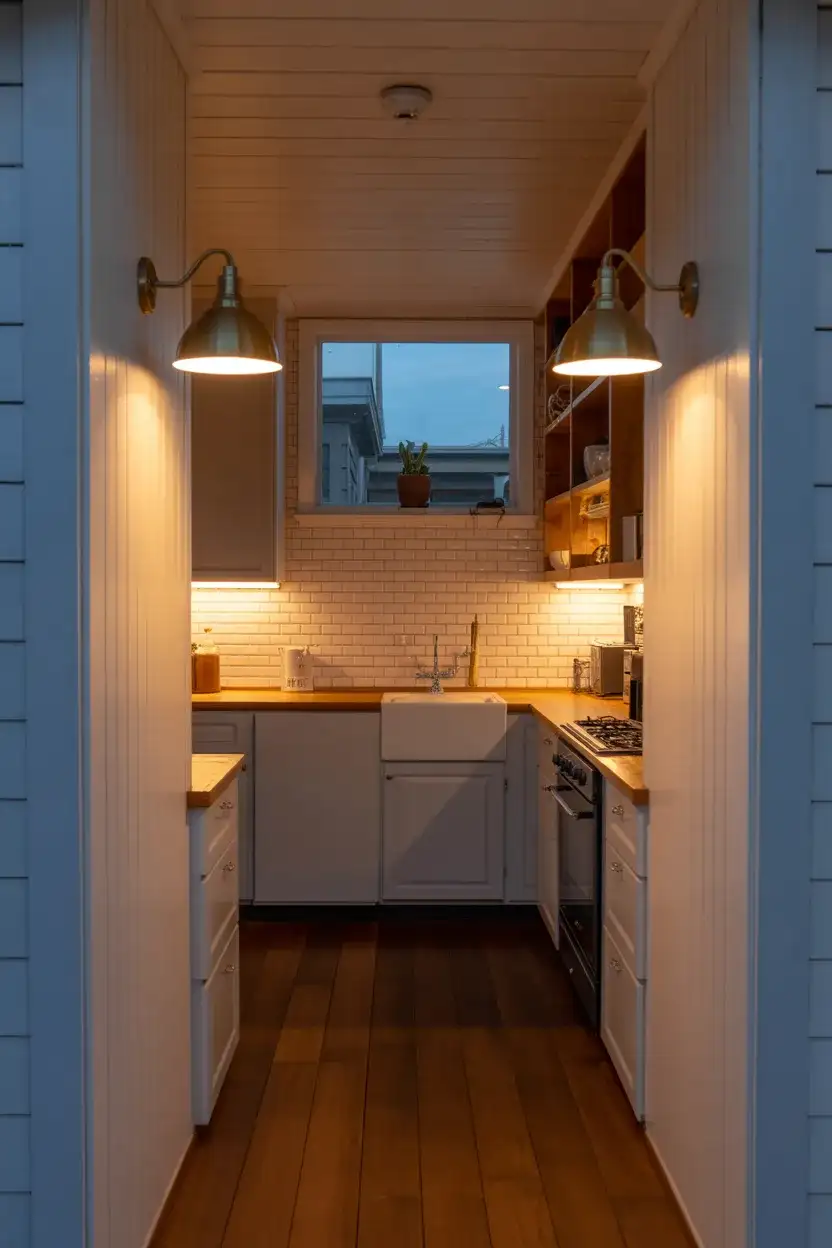
The regional context matters with galley kitchens. They’re extremely common in older East Coast homes—row houses in Baltimore and Philadelphia, pre-war apartments in New York, and triple-deckers in Boston. These layouts weren’t designed for today’s open-concept expectations, but that doesn’t mean they can’t be beautiful. Embracing the galley’s cozy proportions instead of fighting them, and using light strategically to expand the perceived space, is a distinctly American approach to making peace with the housing stock we actually have.
19. Coastal Kitchen with Woven Pendant and Wood Table
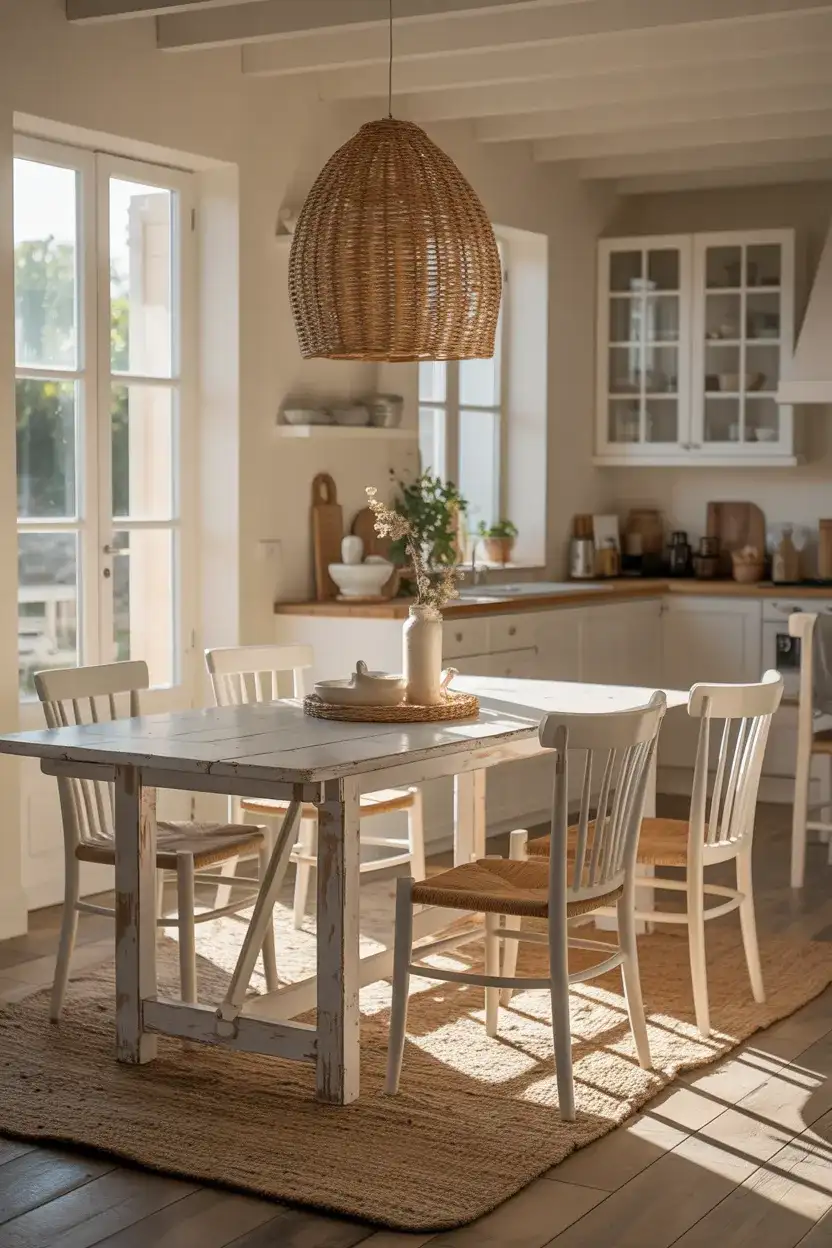
When the kitchen includes a dining zone—whether it’s a full eat-in layout or a smaller attached nook—the combination of woven pendant lights overhead and a solid wood table underneath creates an anchoring moment that pulls the whole space together. The table doesn’t need to be formal; a farmhouse trestle in whitewashed pine or a live-edge slab in light walnut works perfectly. Below it, a jute rug defines the dining zone. Above, the lighting casts a warm, dappled glow through its woven surface. This pairing has become something of a coastal kitchen signature, and for good reason—it’s simple, warm, and immediately recognizable.
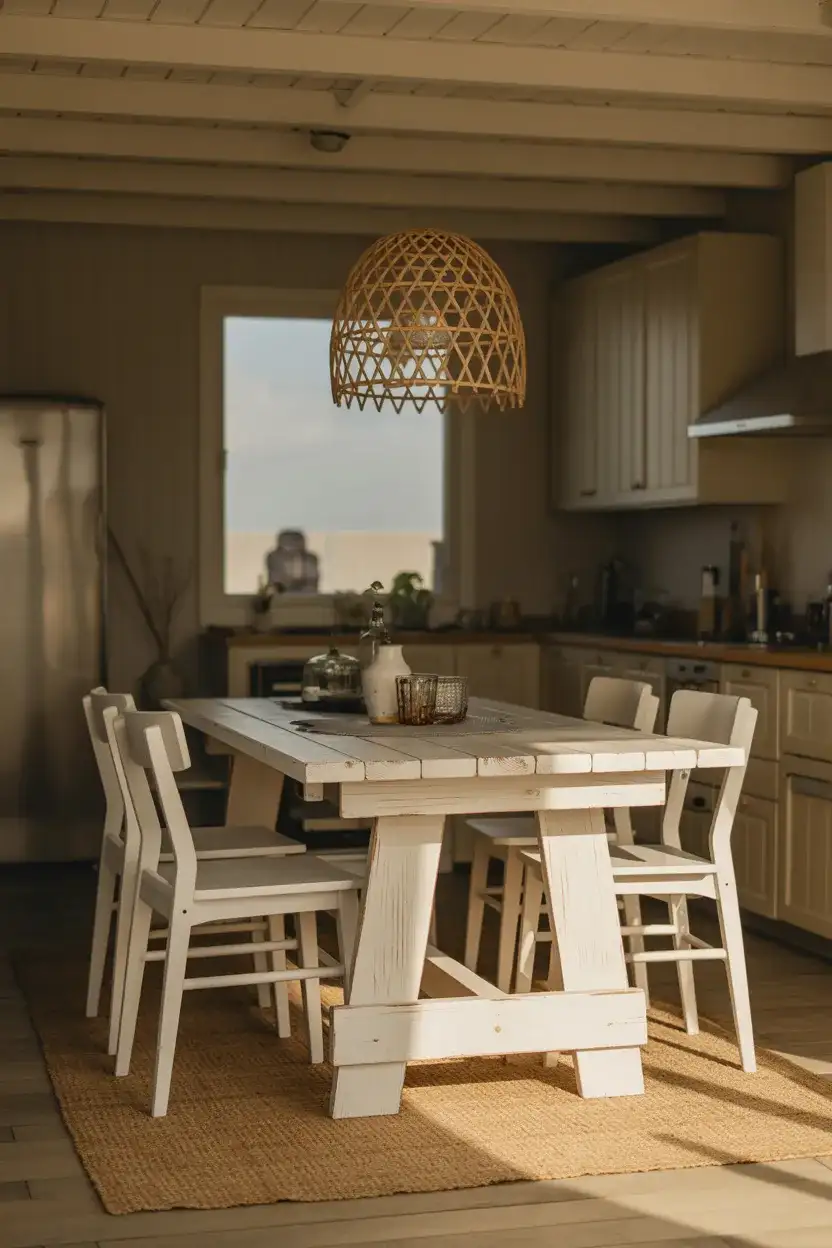
One expert-style observation: the height relationship between the pendant and the table is the detail that separates good execution from great. Most designers recommend hanging the bottom of the pendant 28 to 34 inches above the tabletop—close enough to create an intimate pool of light but high enough that seated guests can see each other across the table. A pendant hung too high floats away from the dining experience and becomes just another ceiling fixture. Getting this proportion right makes the entire vignette feel considered and deliberate.
20. Coastal Kitchen Island with Tongue-and-Groove Paneling
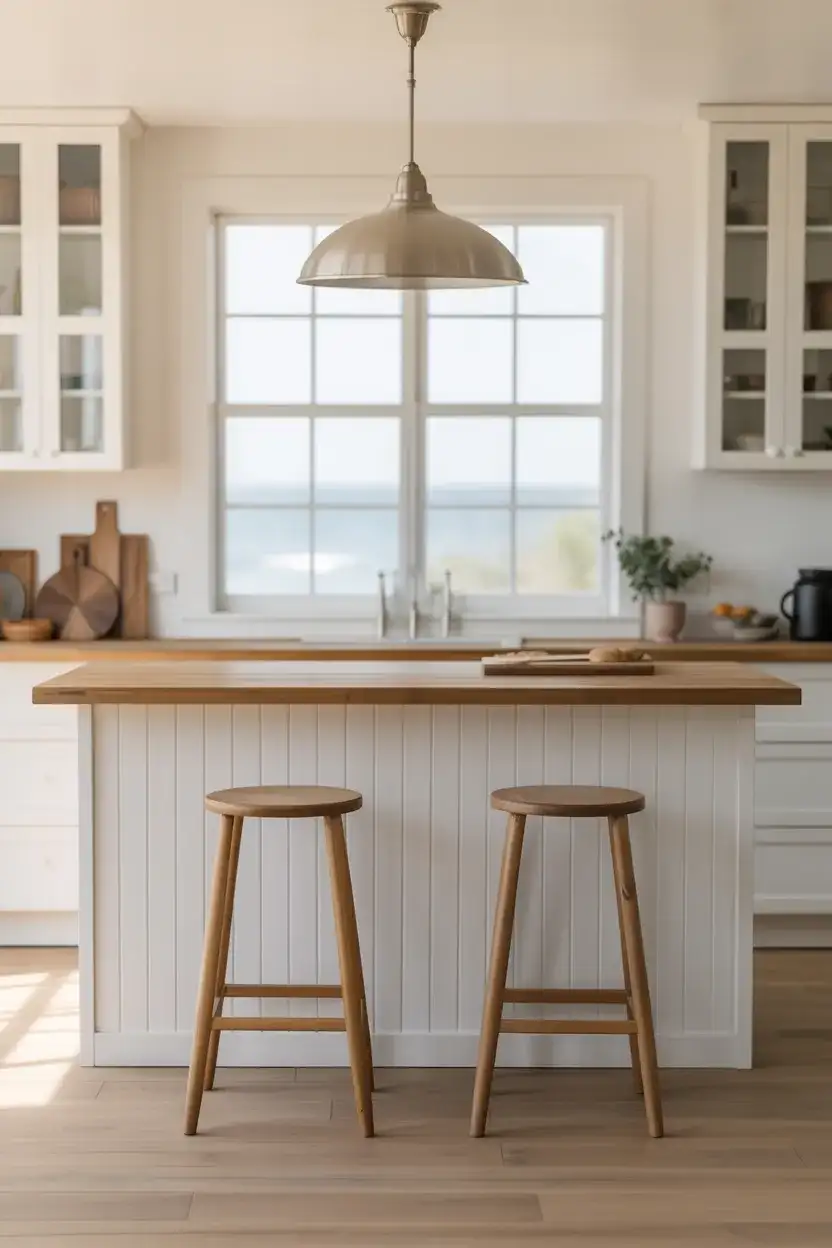
Adding tongue-and-groove paneling to the base of a kitchen island is one of the most effective ways to introduce coastal character without remodeling the entire room. The vertical lines of the paneling echo classic beach house architecture—porch ceilings, boathouses, seaside cottages—and when painted in white or a soft neutral, they give the island an architectural detail that flat panels simply don’t have. Pair the paneled island with a thick butcher-block or marble top, and you’ve got a centerpiece that feels both substantial and breezy. It’s a weekend-project upgrade with disproportionate visual impact.
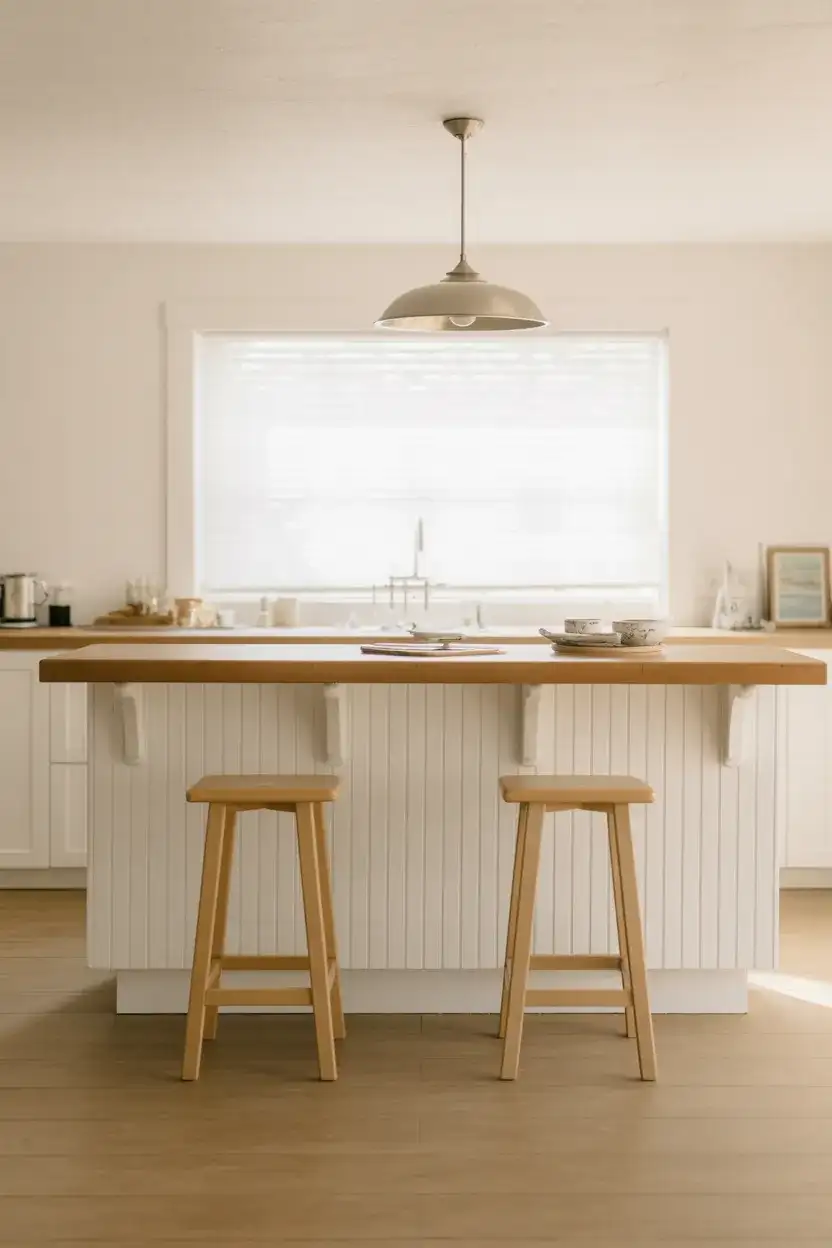
From a DIY-budget perspective, this is one of the most accessible upgrades in the entire coastal kitchen playbook. Tongue-and-groove boards run about $1.50–$3 per linear foot at most home improvement stores. For a standard 4-by-8-foot island, material cost, including adhesive, trim, and paint, typically lands between $75 and $150. The installation requires basic carpentry skills—a miter saw, nail gun, and level are the only tools you really need. Most handy homeowners can complete the project in a single Saturday, which makes this an extraordinary value for the visual return.
21. Tropical Coastal Kitchen with Indoor Plants
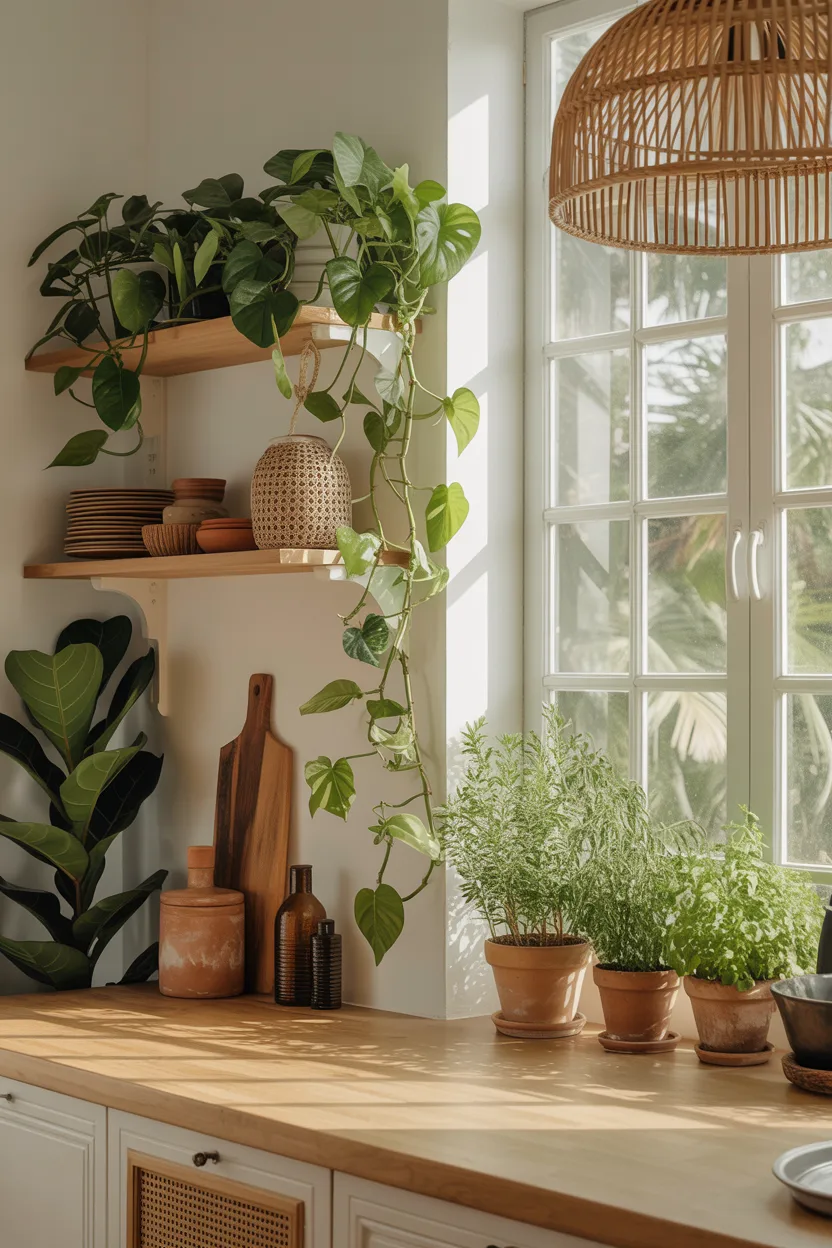
Greenery does something in a kitchen that no material or finish can replicate—it makes the space feel alive. A tropical-coastal kitchen leans into this by weaving plants throughout: trailing pothos on open shelves, a fiddle-leaf fig anchoring a corner, and herbs in terra-cotta pots along the windowsill. The decor ideas here borrow from island living—think loose, lush, and slightly wild. Combine the greenery with natural wood countertops, rattan accents, and simple white walls, and the kitchen starts to feel like it belongs somewhere warm and unhurried, even if it’s actually in suburban New Jersey.
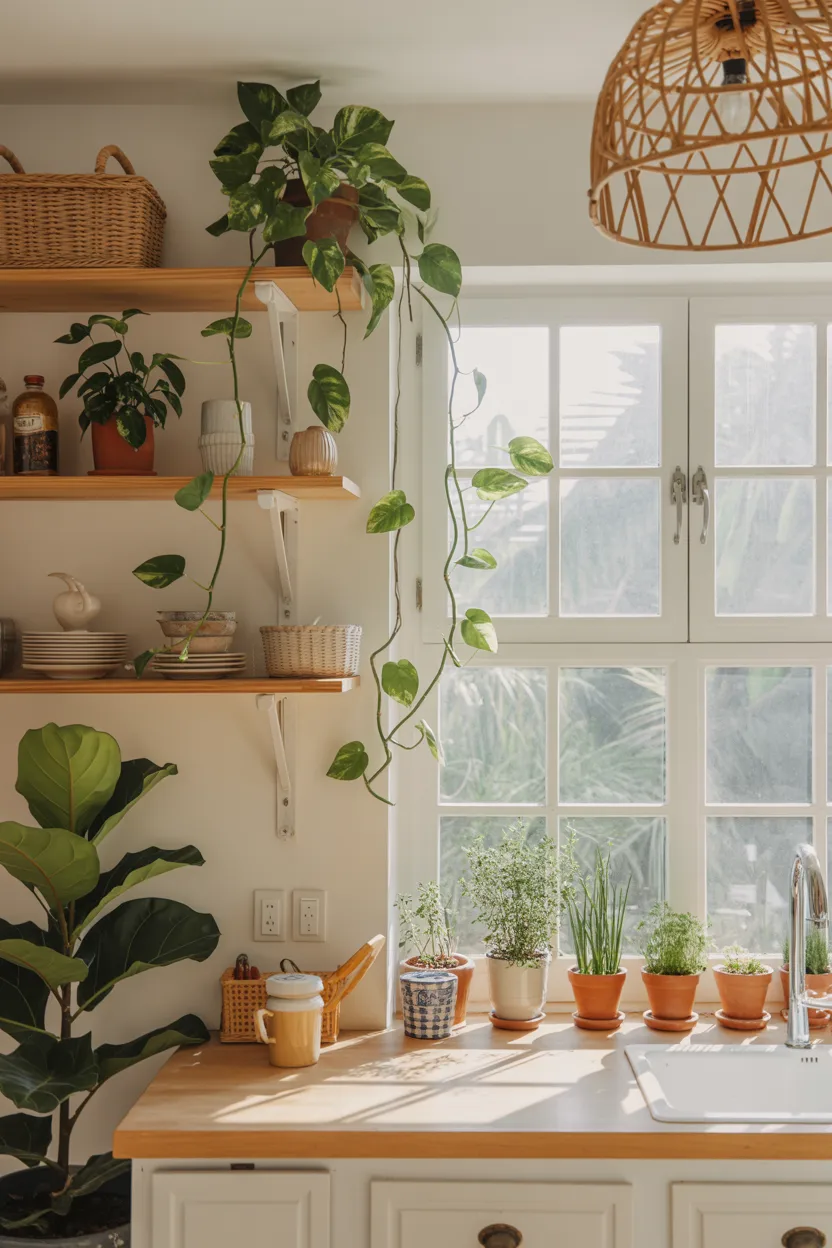
The practical concern with kitchen plants is real: cooking generates heat, grease particles, and fluctuating humidity, which not all plants tolerate well. The species that thrive best in kitchen conditions are pothos (nearly indestructible), spider plants (love humidity), and most common herbs if they get four or more hours of direct sunlight. Avoid placing anything delicate directly above or beside the stove. And if you’re not confident in your plant-care skills, start with just two or three—a single trailing plant on a high shelf and herbs on the sill can transform the mood without becoming a maintenance burden.
22. Minimalist Coastal Kitchen with Concealed Storage
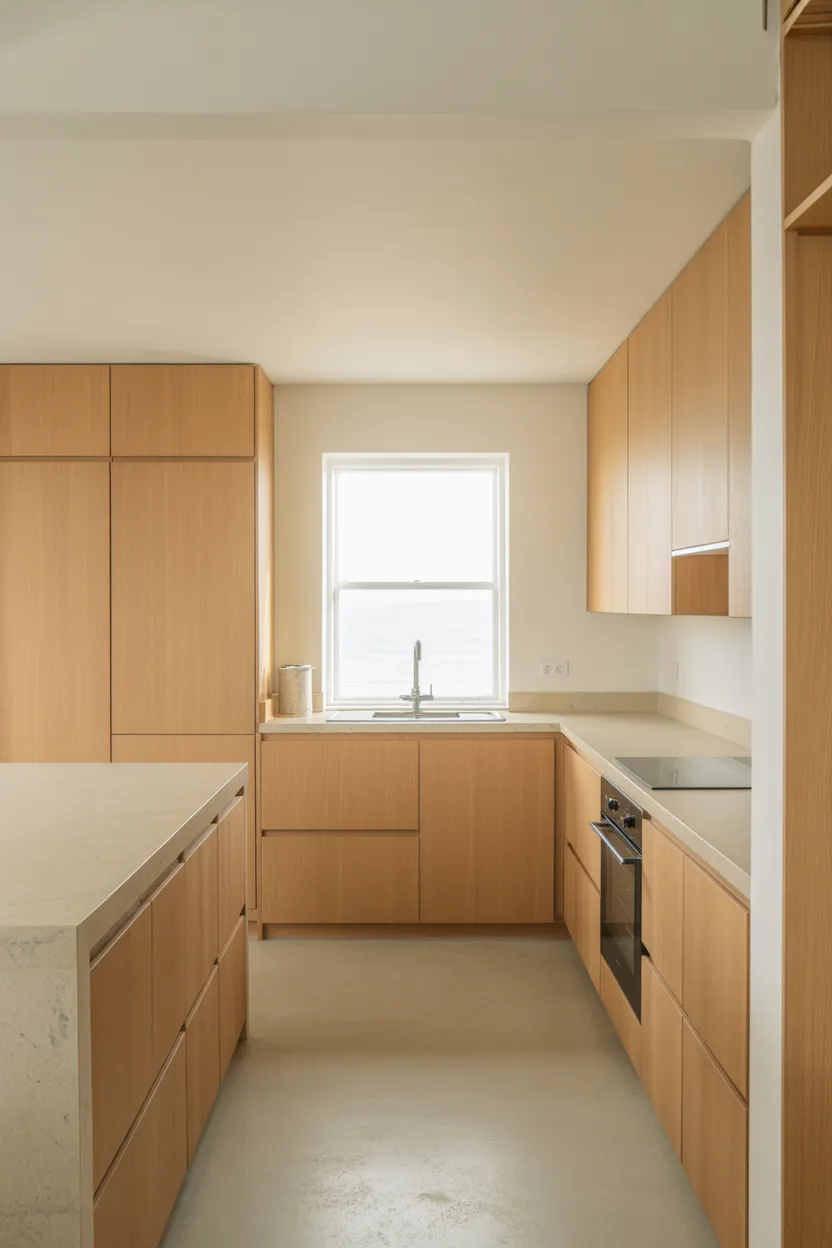
The quietest version of a coastal kitchen is also, in many ways, the most sophisticated. A minimalist approach strips everything back to essentials: handleless cabinets with push-to-open mechanisms, integrated appliances hidden behind panel-ready fronts, and a countertop surface kept almost completely clear. The coastal connection comes through material and color rather than decor—pale limestone counters, whitewashed oak, and a single window framing a view. It’s the contemporary evolution of the coastal kitchen, designed for people who find peace in empty space and clean lines rather than collected objects and layered textures.
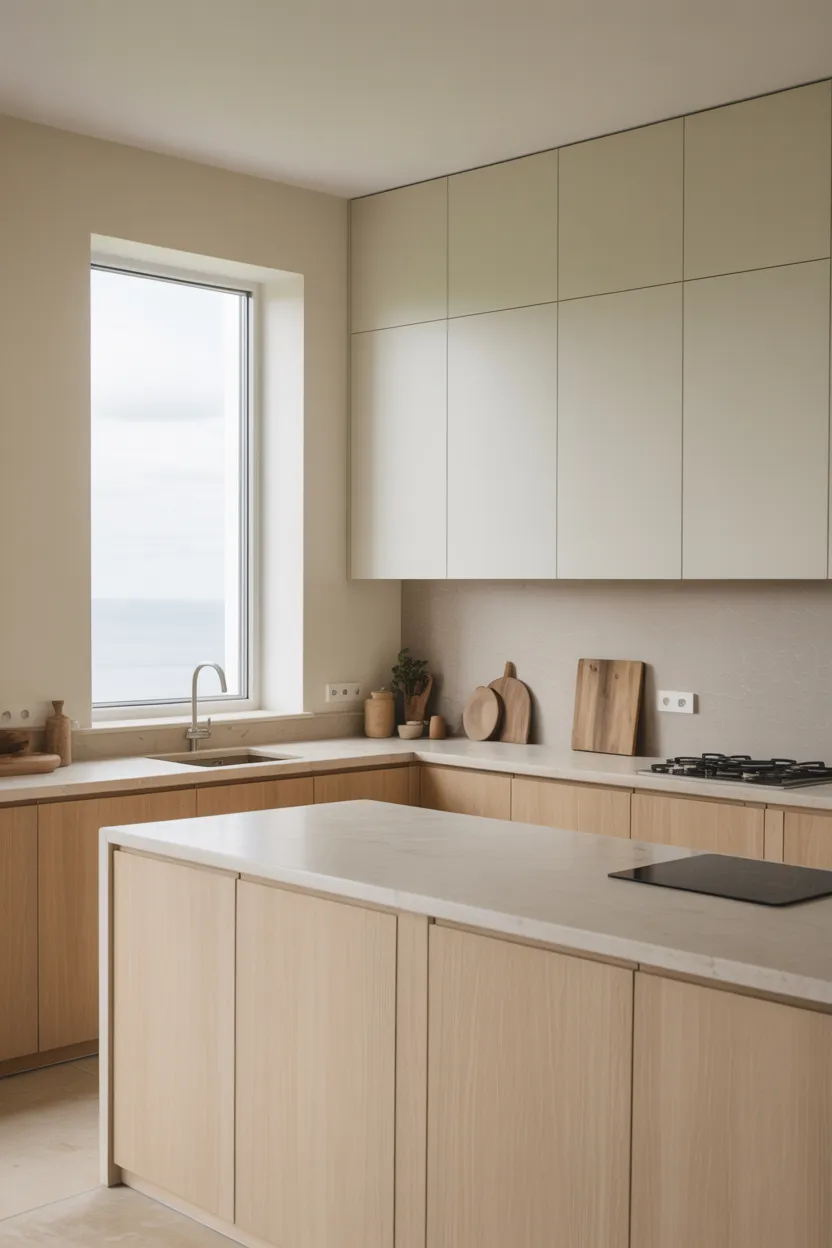
The real homeowner behavior that makes minimalist kitchens succeed—or fail—is the commitment to putting things away. A concealed-storage kitchen looks stunning in photos, but the moment mail, keys, fruit bowls, and coffee makers accumulate on the counter, the illusion breaks. Homeowners who pull this off long-term almost always have one thing in common: a designated “landing zone” just outside the kitchen—a mudroom bench, an entry console, or a hallway hook—that captures the daily clutter before it enters the kitchen. The minimalism works because the systems behind it work.
Conclusion
Whether you’re drawn to the moody drama of dark walls, the breezy ease of rattan and reclaimed wood, or the clean restraint of a fully minimalist build, coastal kitchens in 2026 offer something for every taste and budget. The best designs aren’t about copying a single look—they’re about finding the pieces that resonate with your life and layering them into a space that feels genuinely yours. We’d love to hear which of these ideas spoke to you, so drop a thought in the comments below and tell us what your version of the perfect coastal kitchen looks like.