Black kitchen cabinets have become one of the most sought-after design choices for American homeowners heading into 2026, blending drama with sophistication in ways that feel both timeless and refreshingly modern. Pinterest boards are overflowing with sleek black cabinetry paired with everything from warm wood tones to glittering gold accents, proving that this bold choice works in kitchens of every size and style. Whether you’re renovating a compact urban space or reimagining a sprawling suburban cook’s hub, black cabinets offer a versatile foundation that adapts to rustic farmhouse vibes, contemporary minimalism, and everything in between. In this article, you’ll discover inspiring ideas that showcase how to make black kitchen cabinets work beautifully in your home, complete with practical tips on hardware, countertops, and styling.
1. Rustic Farmhouse Black Cabinets with Butcher Block Warmth
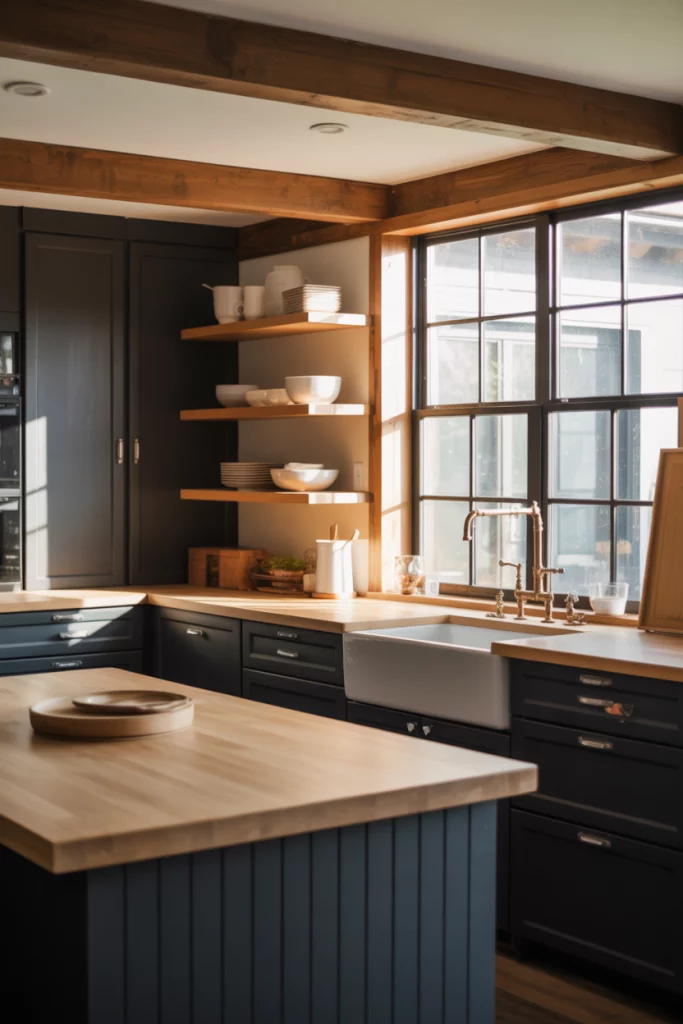
There’s something deeply inviting about pairing black kitchen cabinets with the warm, organic texture of butcher block countertops in a rustic setting. This combination brings together the moody sophistication of dark cabinetry with the lived-in charm of natural wood, creating a kitchen that feels both grounded and elegant. The contrast between the matte or satin black finish and the honey-toned grain of butcher block adds visual interest without overwhelming the space, making it perfect for open-concept homes where the kitchen flows into living areas. 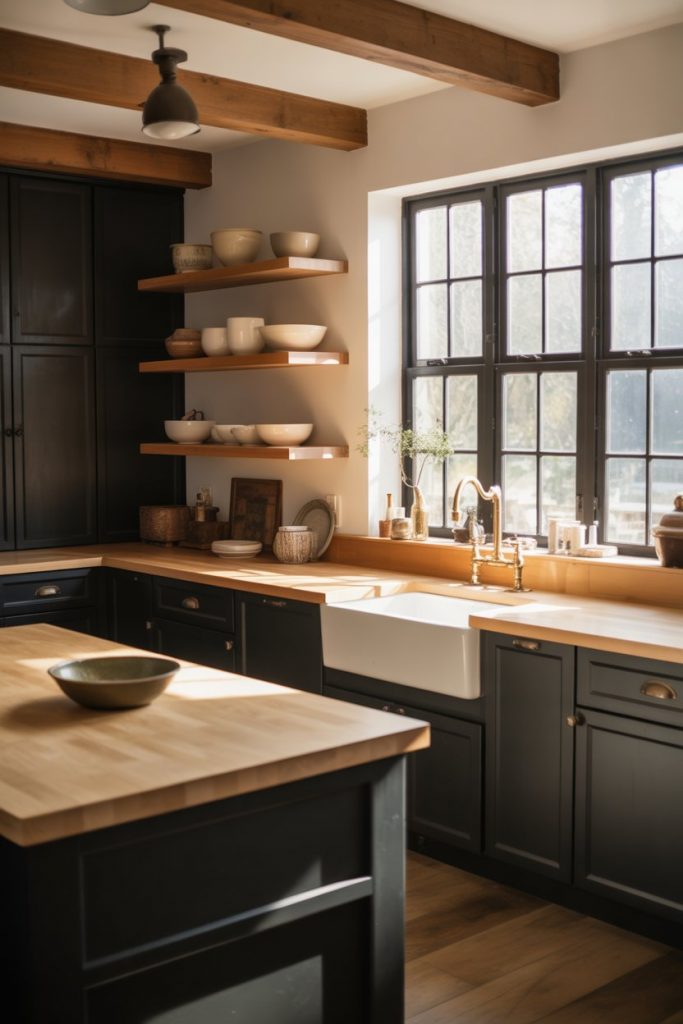
One common mistake homeowners make is choosing butcher block that’s too light or too dark for their black cabinets, which can throw off the balance. Look for medium-toned maple or oak with visible grain patterns that create movement and warmth. Keep the butcher block well-oiled to maintain its rich color and protect it from water damage, especially around the sink area. This pairing works exceptionally well in kitchens with exposed brick, shiplap walls, or vintage-inspired fixtures that reinforce the rustic aesthetic.
2. Contemporary Black and White Oak Contrast
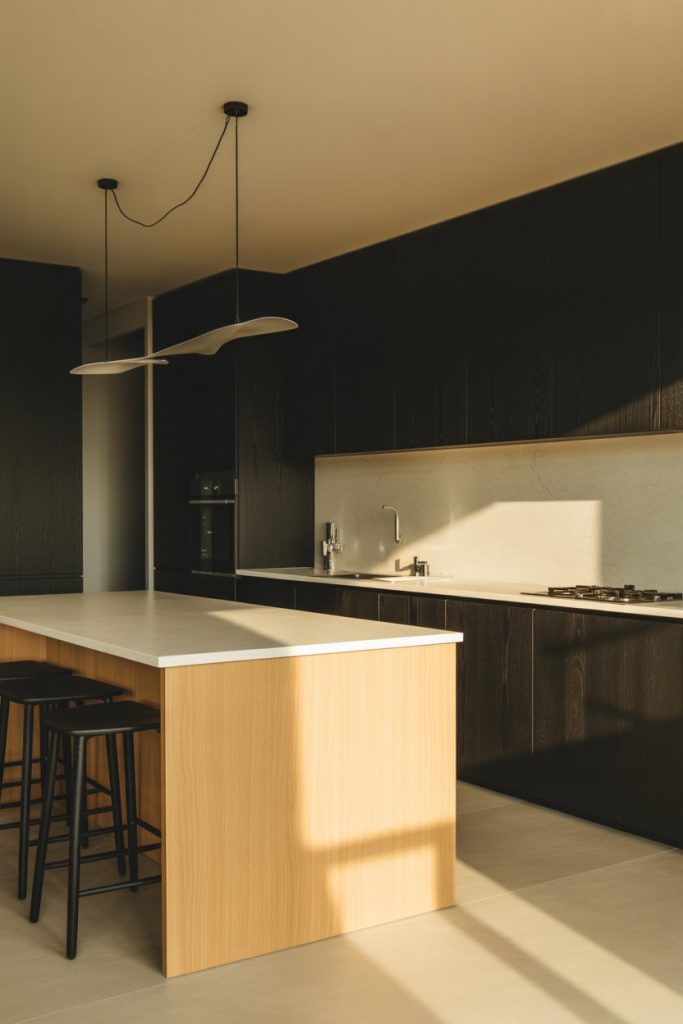
The marriage of black cabinetry with white oak elements creates a contemporary kitchen that feels both refined and approachable. White oak brings in a pale, neutral wood tone with subtle grain patterns that soften the intensity of black without competing for attention. This combination has become wildly popular across American suburbs, particularly in new construction homes where homeowners want a fresh, modern look that won’t feel dated in five years. Consider using white oak for floating shelves, a breakfast bar extension, or even as a full island base to break up expanses of black. 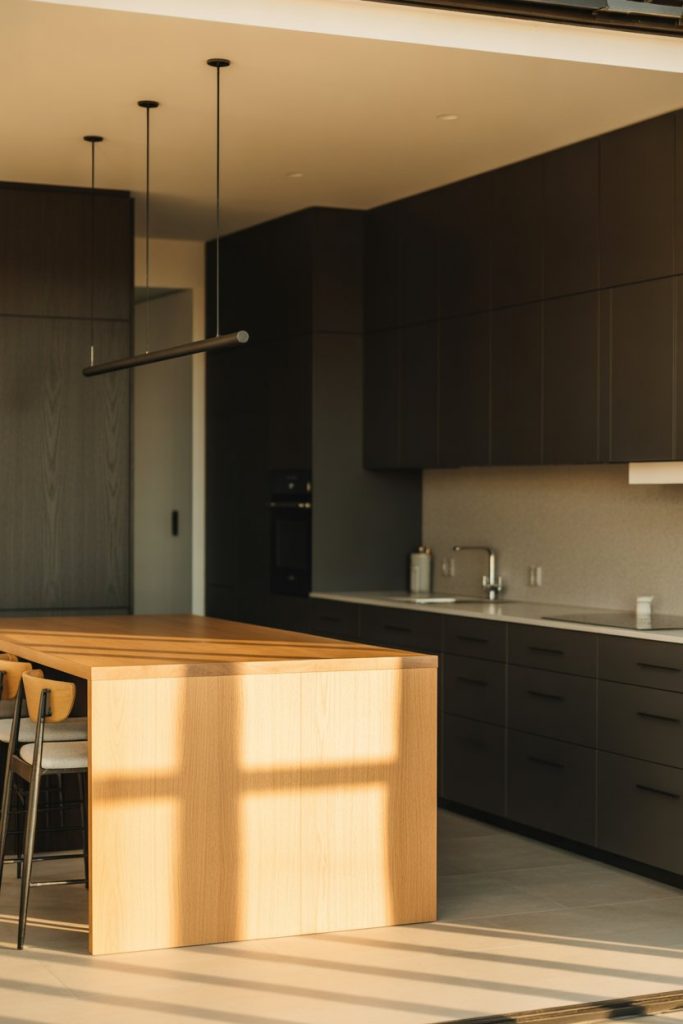
White oak’s naturally light color means it won’t yellow over time like some woods, which is crucial when you’re investing in a long-term kitchen design. It pairs beautifully with brushed nickel or matte black hardware and works best in spaces with plenty of natural light, where the wood can truly shine. Many homeowners in California and the Pacific Northwest have embraced this pairing because it echoes the region’s love for natural materials and clean, uncluttered design.
3. Bold Black Cabinets with Gold Hardware Drama

Few combinations command attention quite like black cabinets dressed up with gleaming gold hardware. This pairing transforms a kitchen from simply dark and moody into a space with genuine glamour and personality. Gold handles in particular have surged in popularity on Pinterest, where homeowners search for ways to add warmth and luxury without a full renovation. The key is choosing the right gold tone—brushed gold offers subtle elegance, while polished brass brings vintage charm, and champagne gold strikes a modern balance. 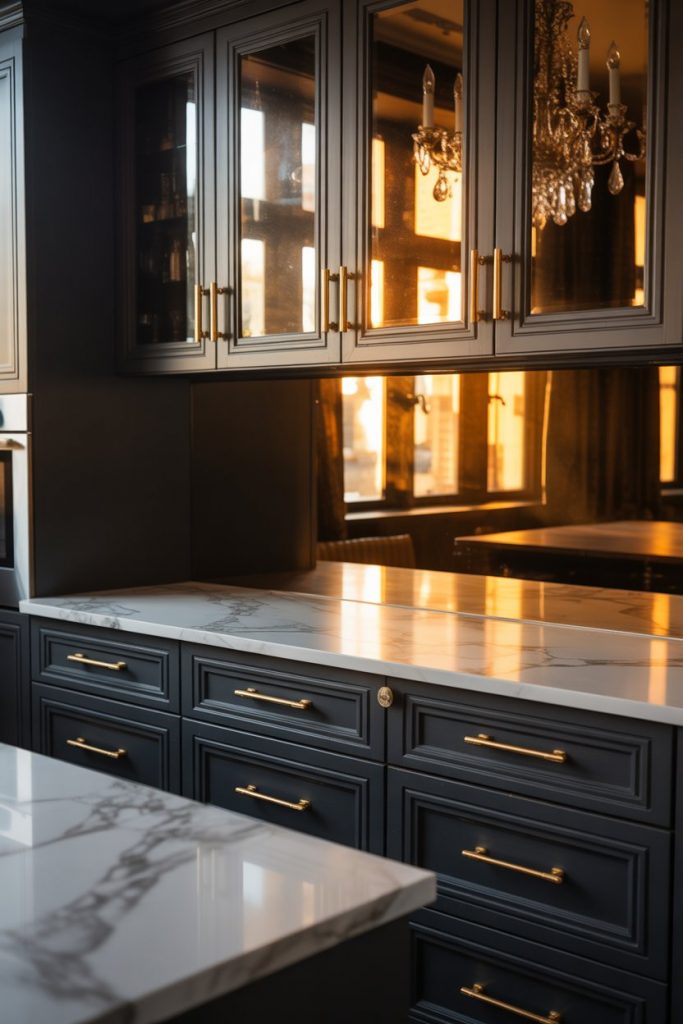
I once toured a Brooklyn brownstone where the designer had installed unlacquered brass hardware on black cabinets, and the patina that developed over time added character rather than looking worn. If you’re working with a modest budget, swapping out standard hardware for gold versions is one of the most cost-effective upgrades you can make—expect to spend $5 to $15 per pull or knob. This look works best in kitchens that already have some metallic accents, like a brass faucet or gold-framed artwork, creating a cohesive design story.
4. Wood Countertops Meet Black Cabinetry
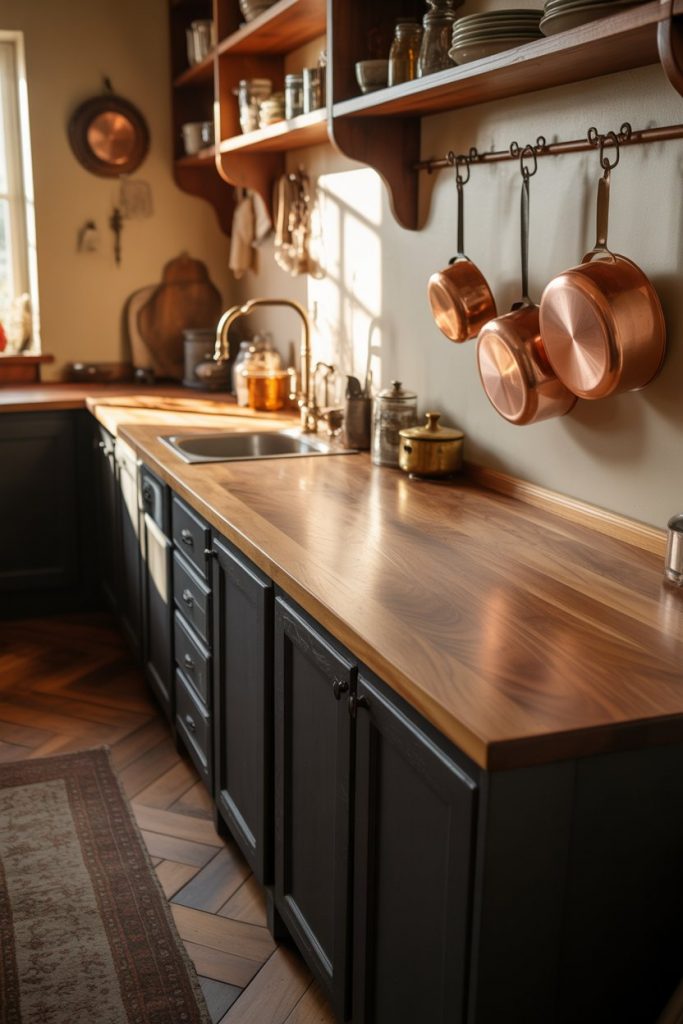
When you top black cabinets with wood countertops, you’re creating a kitchen that feels warm, inviting, and refreshingly unexpected. Unlike the cooler palette of stone or quartz, wood brings an organic softness that balances the boldness of black cabinetry beautifully. This combination works particularly well in kitchens with an eclectic or transitional style, where you want to mix modern elements with traditional warmth. Wood countertops come in species ranging from walnut to cherry to reclaimed barn wood, each bringing its own character and color depth. 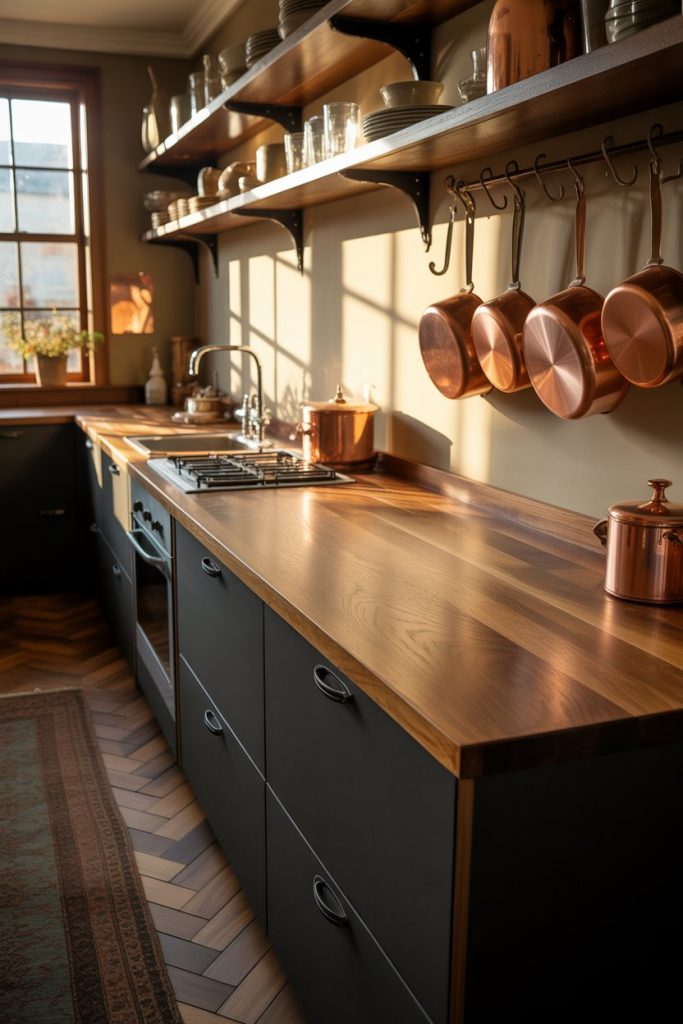
Wood countertops require more maintenance than stone—regular oiling and mindfulness about water exposure—but many American homeowners find the tradeoff worthwhile for the warmth and texture they provide. They’re especially popular in Vermont, Maine, and other New England states where natural materials and handcrafted details are deeply valued. If you’re concerned about durability, reserve wood countertops for less-trafficked areas like a coffee bar or desk nook, and use a more durable material around the sink and stove.
5. Sophisticated Green and Black Kitchen Harmony
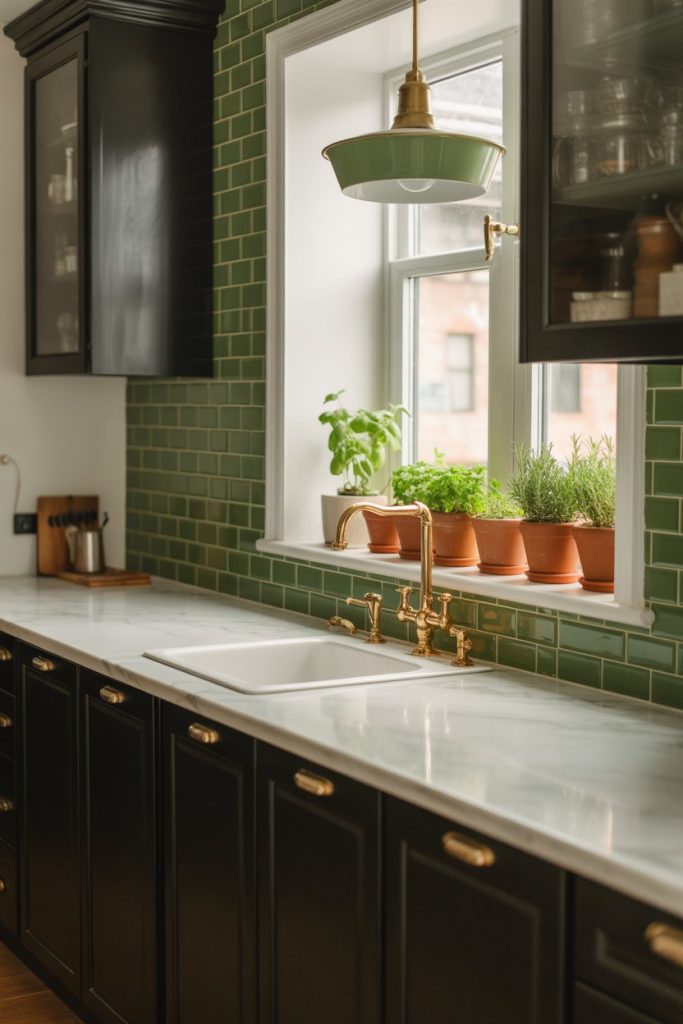
The combination of green and black creates a kitchen palette that feels both bold and surprisingly serene. Deep forest greens, sage tones, or even emerald accents pair beautifully with black cabinets, bringing in a connection to nature without sacrificing sophistication. This color pairing has taken off on Pinterest as homeowners move away from the stark black-and-white kitchens that dominated the past decade, seeking something with more personality and warmth. Consider green through tile backsplashes, painted islands, or even just in textiles and plants. 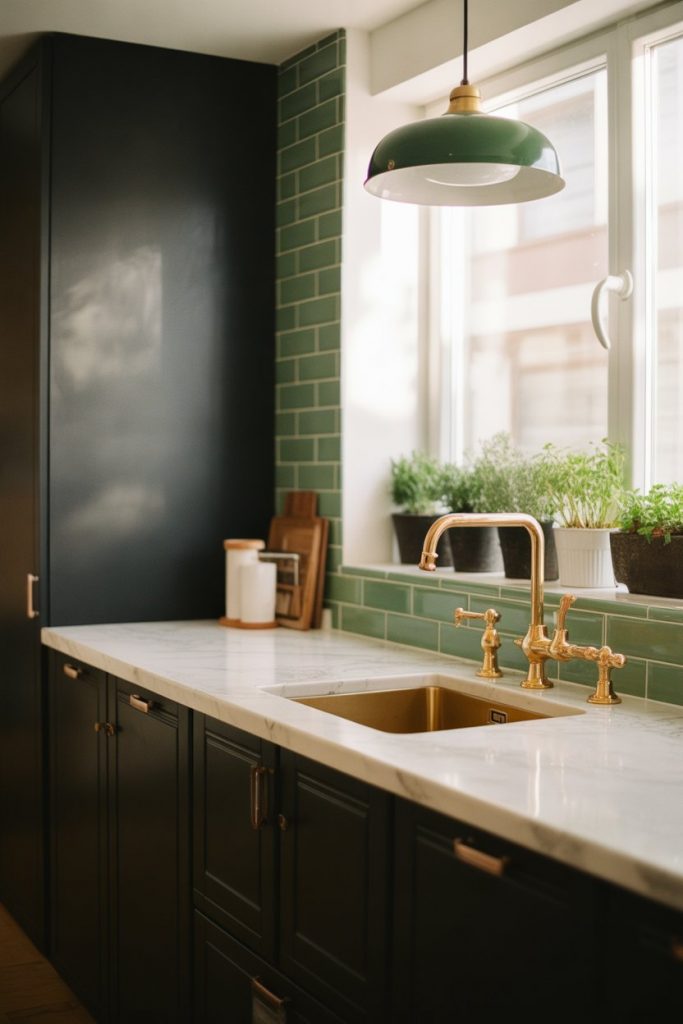
This palette works best in kitchens with good natural light, where the green elements can shift throughout the day from cool and calm in the morning to warm and inviting in the afternoon. In Midwestern homes with limited southern exposure, homeowners often opt for lighter sage greens rather than deep hunter tones to keep the space from feeling too closed in. The green-and-black combination is also forgiving with styling—both warm-toned wood and cool metallic accents work beautifully within this framework.
6. Sherwin-Williams Tricorn Black Cabinet Elegance
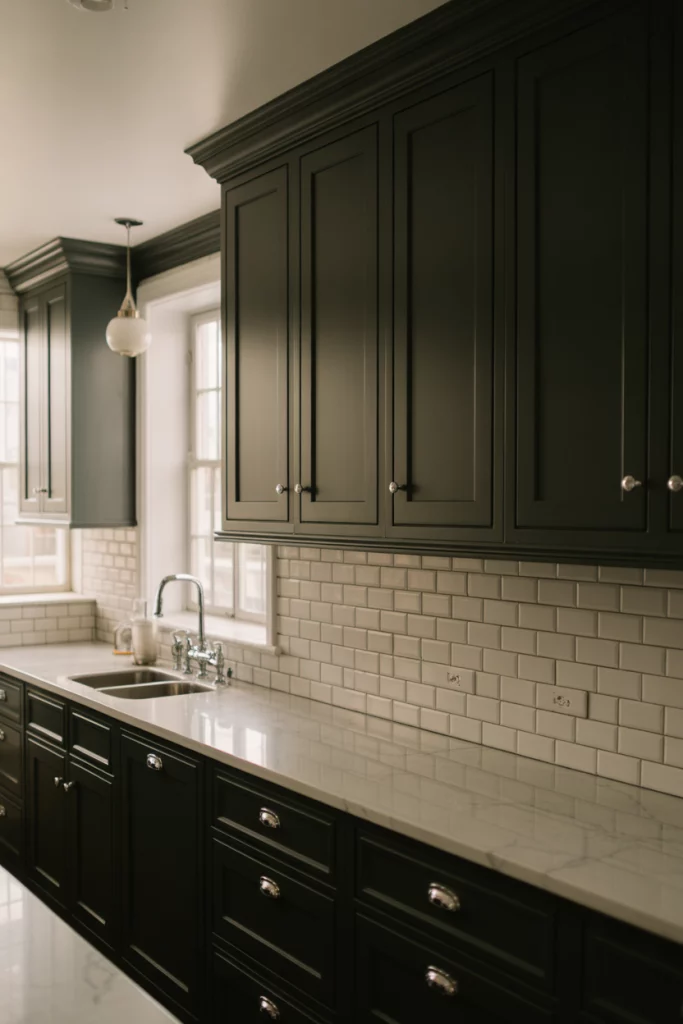
When designers and homeowners talk about the perfect black for kitchen cabinets, Tricorn Black by Sherwin-Williams often tops the list. This true, deep black has minimal undertones, meaning it won’t read as navy in some lights or charcoal in others—it’s consistently, confidently black. Tricorn has become the go-to choice for those who want a dramatic kitchen that photographs beautifully, which explains its popularity among Pinterest users seeking that magazine-worthy look. It works equally well on traditional raised-panel doors and sleek modern slabs. 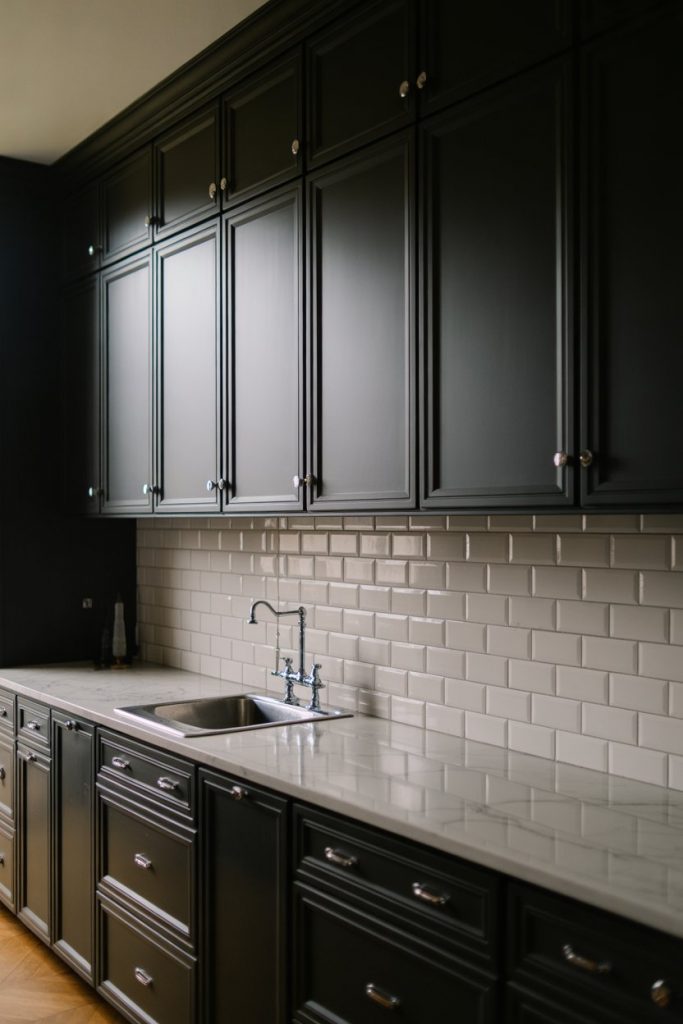
Where this works best is in kitchens with ample natural light or excellent artificial lighting—black cabinets in a poorly lit space can feel cave-like rather than cozy. Many Texas homeowners choose Tricorn Black for their kitchen islands while keeping perimeter cabinets in lighter tones, creating visual interest without overwhelming the space. The paint finish matters too; a satin or semi-gloss finish on Tricorn Black is easier to clean and reflects more light than a flat finish, which can show fingerprints and wear more readily.
7. Rich Stained Black Cabinets with Wood Grain

Unlike painted black cabinets, stained black finishes allow the natural wood grain to show through, creating depth and texture that solid paint can’t achieve. This approach brings the best of both worlds—the drama of dark cabinetry with the organic warmth of visible wood patterns. Stained black cabinets have a more traditional, crafted feel that works beautifully in Arts and Crafts homes, mountain cabins, or any space where you want to honor the natural material. Oak, hickory, and ash are particularly beautiful under a black stain because of their prominent grain patterns. 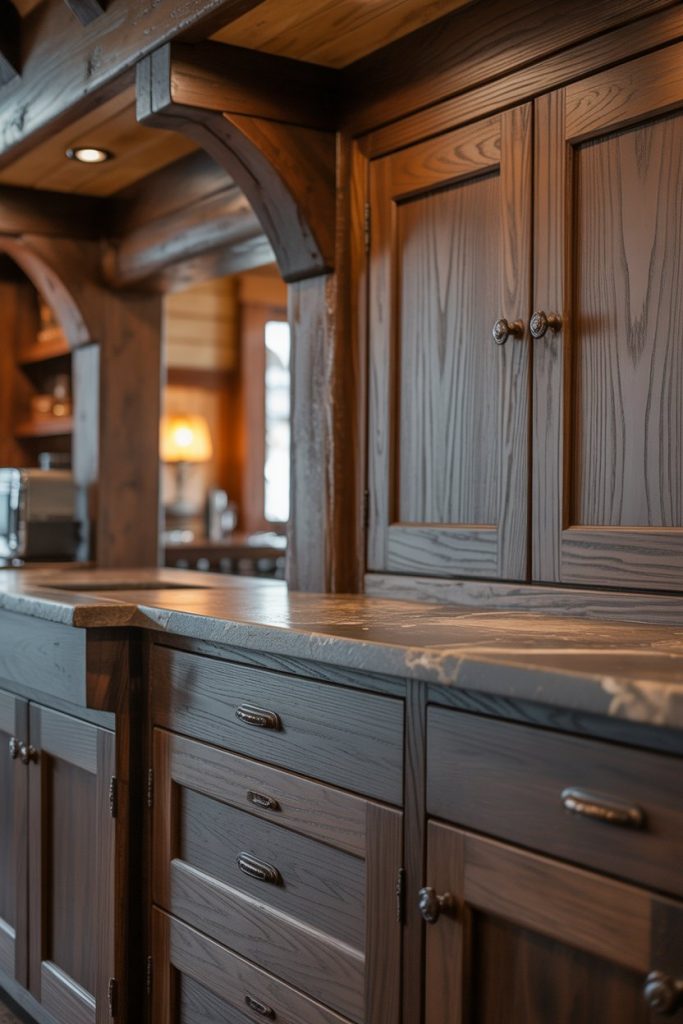
A practical insight: stained black cabinets are more forgiving than painted ones when it comes to minor scratches and dings, as the damage tends to blend with the grain rather than standing out as a bright spot. They’re also less prone to showing dust and fingerprints, making them a smart choice for busy family kitchens. This finish requires proper wood prep and multiple coats to achieve an even, rich color, so it’s worth investing in a skilled finisher rather than attempting it as a DIY project.
8. Black Cabinets Enhanced by Brown Countertop Warmth
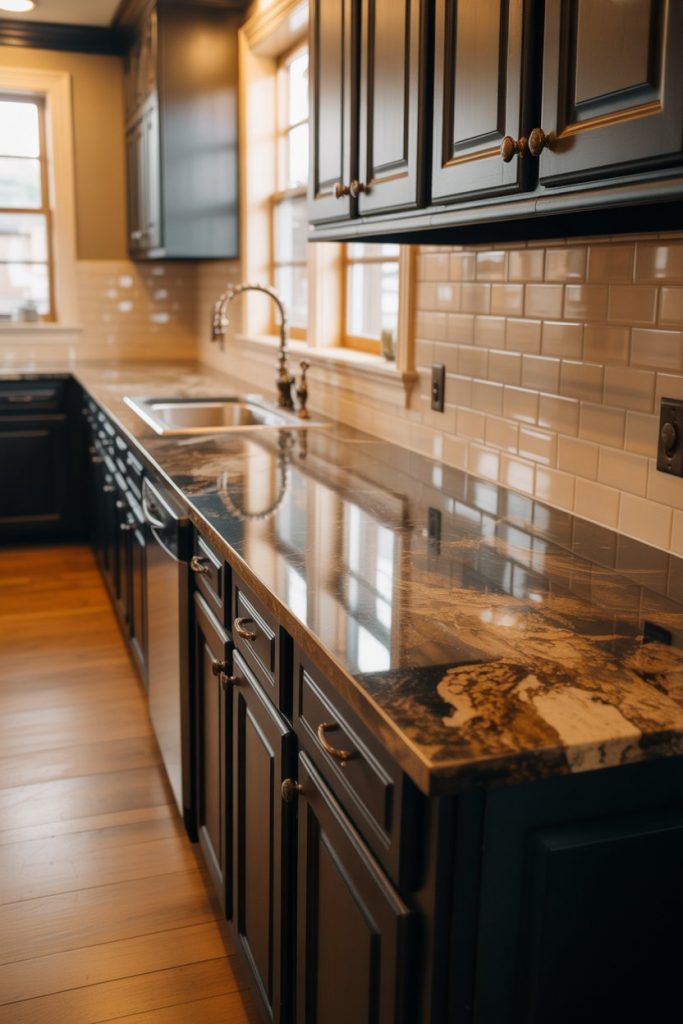
A brown countertop—whether in granite, quartzite, or even concrete with warm aggregates—creates a stunning partner for black cabinetry. This pairing feels grounded and organic, steering clear of the stark contrasts that some homeowners find too dramatic. Brown countertops with movement and variation bring visual interest to the horizontal surfaces while black cabinets provide the bold vertical statement. This combination works especially well in kitchens aiming for an earthy, naturalistic aesthetic that still feels current and sophisticated. 
Homeowners in Arizona and New Mexico often gravitate toward this palette because it echoes the desert landscape—deep shadows and sun-warmed earth. The brown tones don’t have to be uniform; in fact, granite with variation in browns, tans, and even hints of black or gold creates the most dynamic look. Budget-wise, granite remains one of the most cost-effective natural stone options, typically ranging from $40 to $100 per square foot installed, making this a realistic choice for mid-range renovations.
9. Small Kitchen Transformed with Black Cabinets
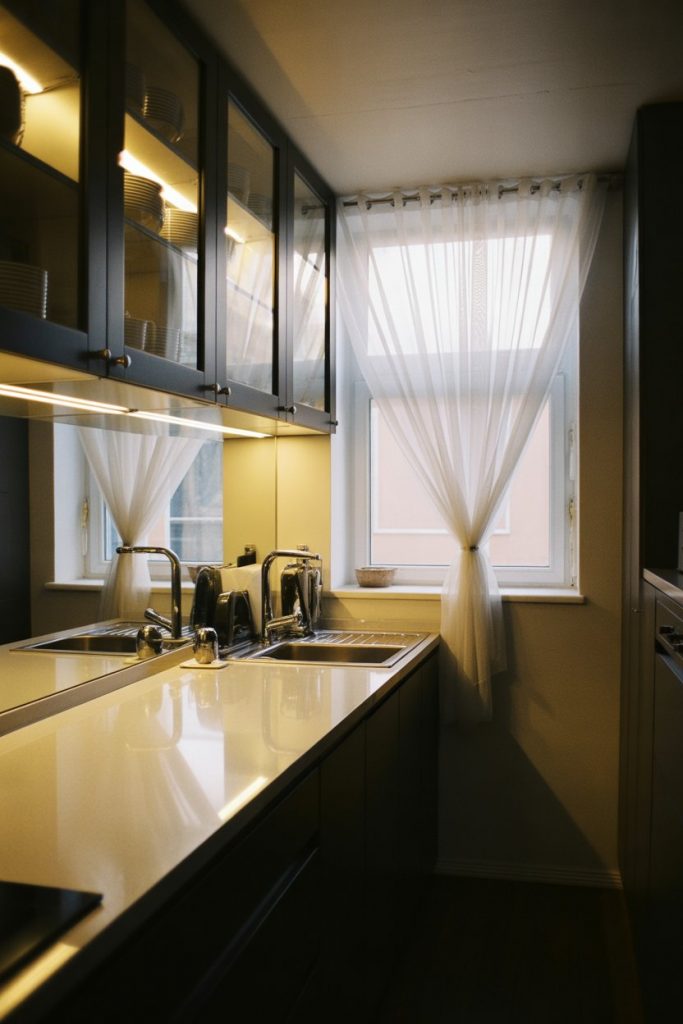
It’s a design myth that black cabinets will make a small kitchen feel cramped—when done thoughtfully, they can actually make compact spaces feel more sophisticated and intentional. The key is balancing the dark cabinetry with reflective surfaces, adequate lighting, and lighter elements that keep the room from feeling closed in. Small kitchens with black cabinets often benefit from glass-front uppers, open shelving, or even removing upper cabinets entirely on one wall to create visual breathing room. 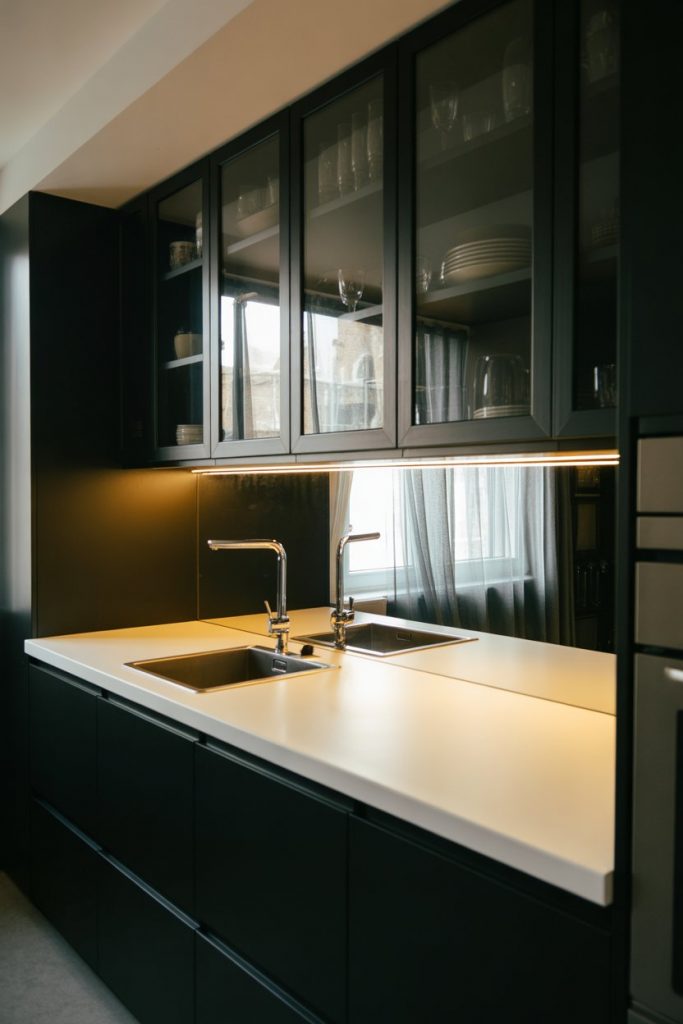
Real homeowner behavior shows that people living in urban apartments—particularly in cities like Chicago, Boston, and San Francisco—embrace black cabinets in small kitchens because it gives their space a high-end, gallery-like quality. To maximize light reflection, pair black lowers with white or very light gray countertops and consider a glossy or glass tile backsplash. Under-cabinet LED lighting is non-negotiable in small black kitchens, providing task lighting while preventing the space from feeling dim.
10. Elegant Taupe and Black Kitchen Blend
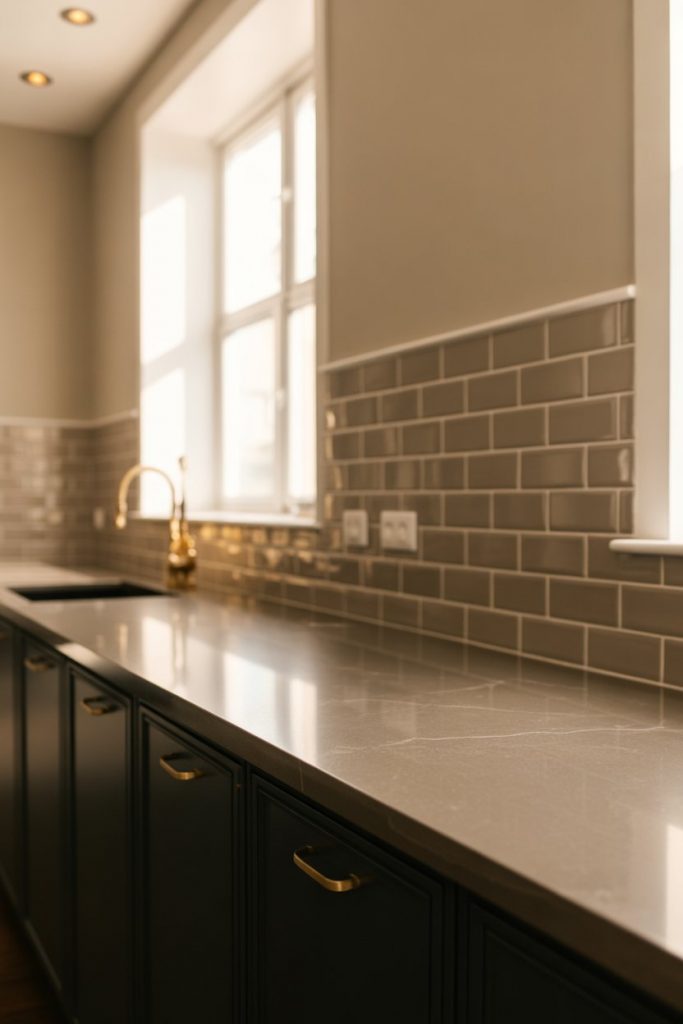
The combination of taupe and black offers a sophisticated alternative to the more common black-and-white palette, introducing warmth through neutral beiges and grays that complement rather than contrast. Taupe elements—whether in countertops, backsplash tiles, or wall paint—soften the intensity of black cabinets while maintaining an upscale, cohesive look. This pairing has gained traction among homeowners who want something elegant but not stark, contemporary but not cold. 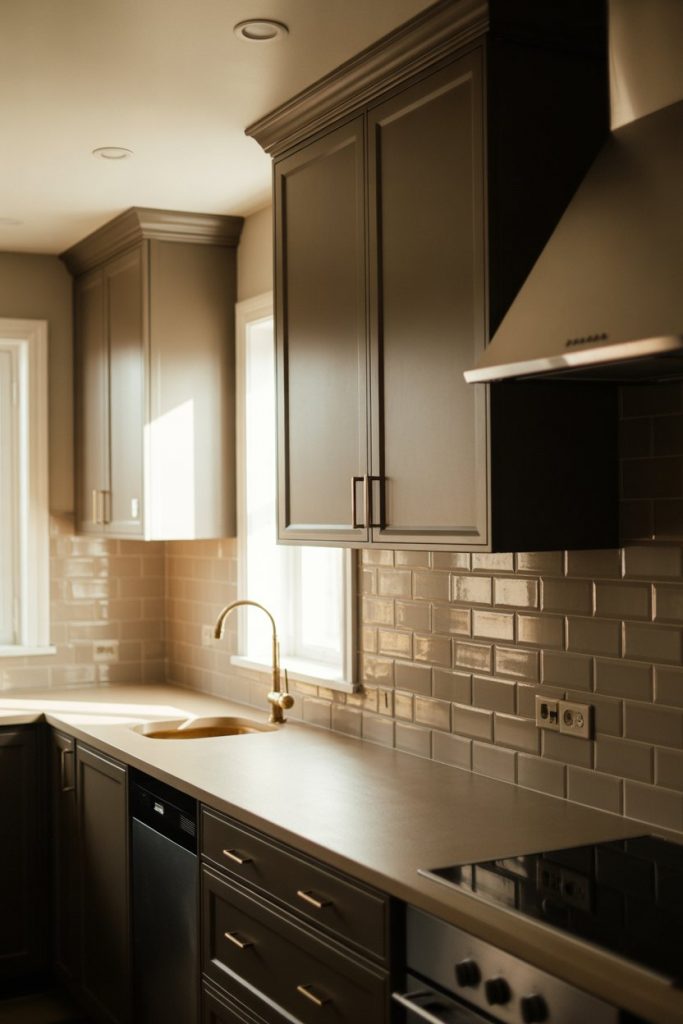
Expert-style commentary suggests that taupe works particularly well in kitchens where you’re trying to create a calming, spa-like atmosphere rather than high drama. The neutrality of taupe means it plays well with both warm and cool metallic finishes, giving you flexibility with hardware and fixtures. This color scheme is especially popular in suburban homes across Virginia, North Carolina, and Georgia, where homeowners tend to prefer softer, more transitional aesthetics over bold contemporary statements.
11. Modern Black Cabinets with Stainless Steel Appliances
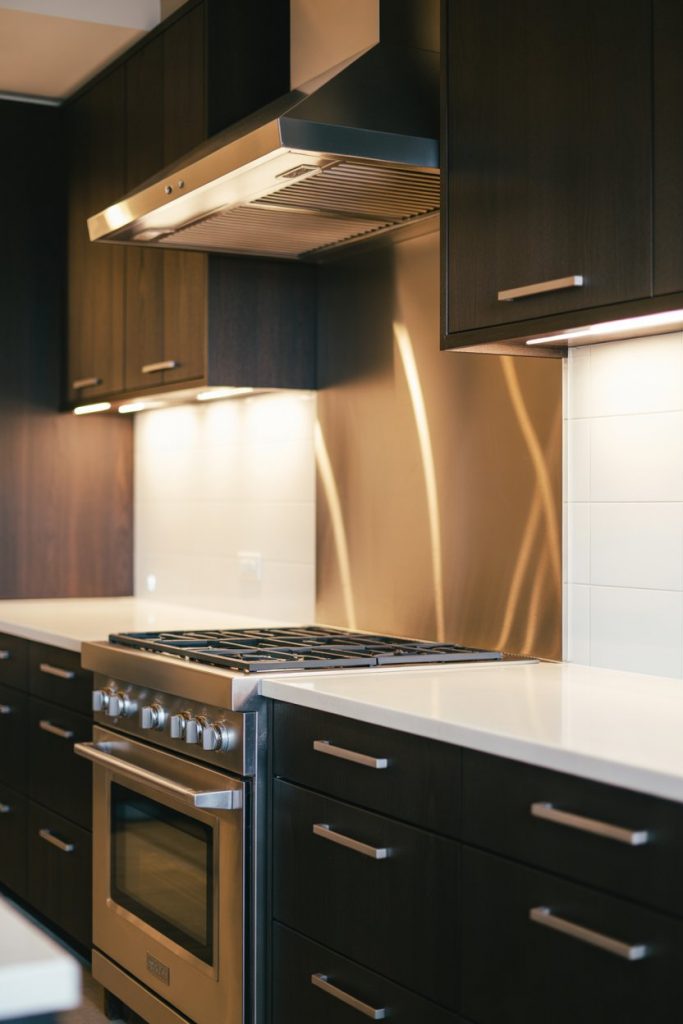
Black cabinets provide the perfect backdrop for stainless steel appliances, creating a kitchen that feels professional, clean, and decidedly modern. The cool metallic sheen of stainless steel contrasts beautifully with matte or satin black finishes, while the combination suggests a serious cook’s kitchen where function meets style. This pairing has remained consistently popular because stainless appliances are still the standard in most American homes, and black cabinetry elevates them from basic to intentionally designed. 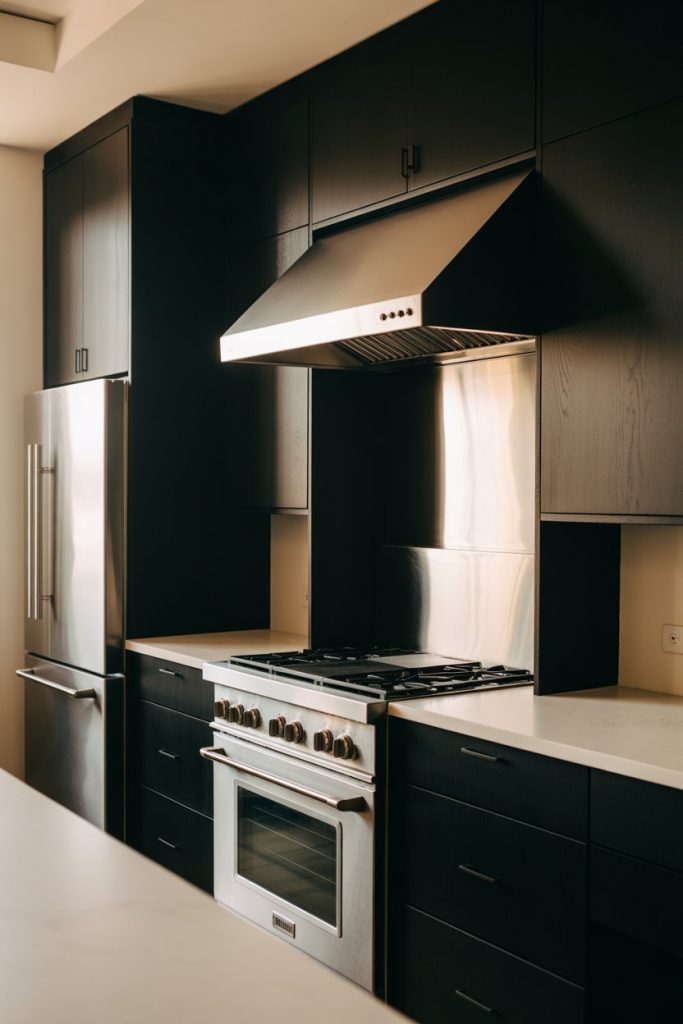
Where this works best is in open-concept homes where the kitchen is visible from living spaces—the sleek, unified look of black and stainless reads as intentional design rather than builder-grade standard. One common mistake is choosing too many different stainless finishes; make sure your appliances have matching finishes (all brushed or all with the same fingerprint-resistant coating) for a cohesive look. Some homeowners are now opting for black stainless appliances with black cabinets for a fully monochromatic, ultra-modern aesthetic.
12. Statement Backsplash with Black Cabinetry
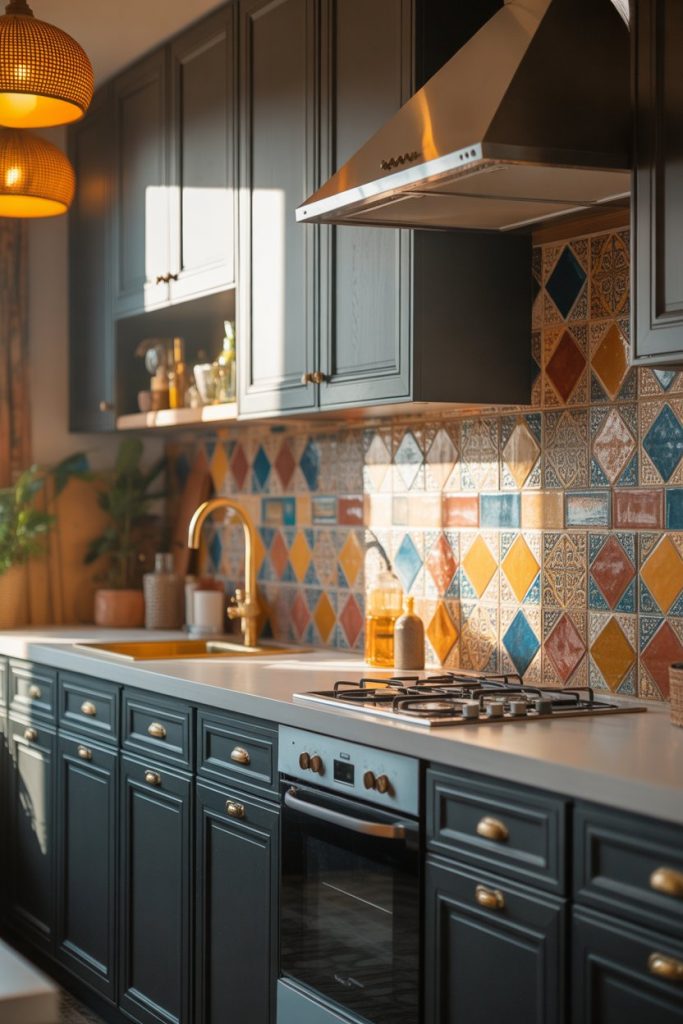
A bold backsplash becomes the star of the show when framed by black cabinets, which act as a sophisticated neutral canvas for pattern, color, or texture. Whether you choose zellige tile, patterned cement tiles, or a striking marble slab, black cabinets provide the visual grounding that allows your backsplash to truly shine without overwhelming the space. This approach has become incredibly popular on Pinterest, where users save thousands of images of dramatic backsplashes nestled between dark cabinetry. 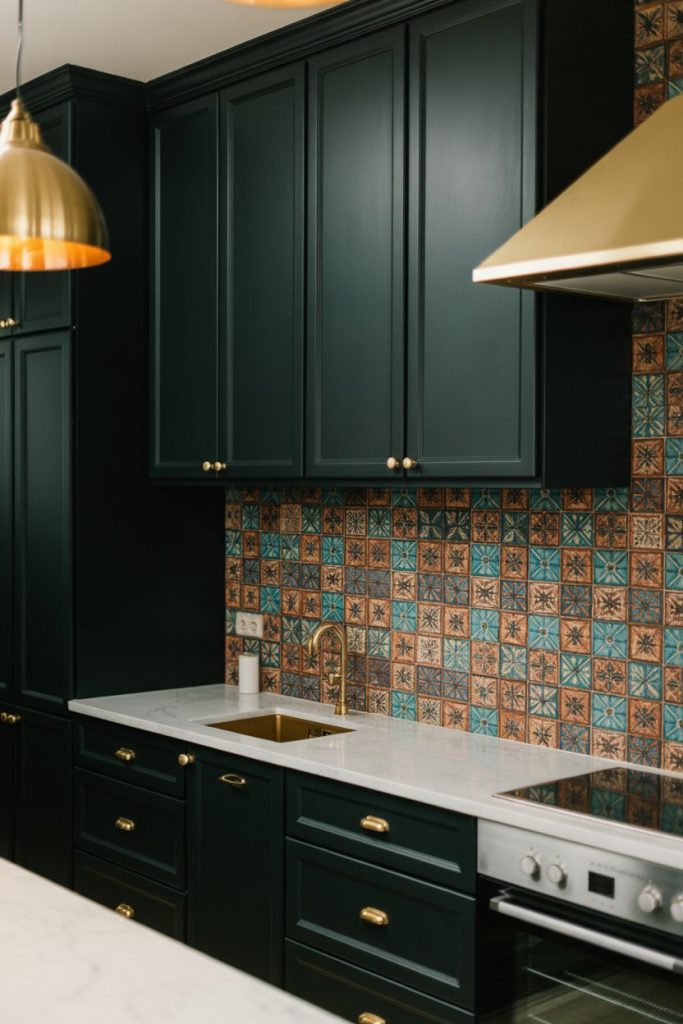
The beauty of this approach is that you can express personality and trend in your backsplash while keeping cabinets timeless—when you’re ready for a change in five years, retiling is far easier and less expensive than replacing all your cabinetry. In coastal areas like Florida and Southern California, homeowners often choose glass tile or iridescent backsplashes that catch and reflect natural light, preventing black cabinets from feeling too heavy. Budget between $15 and $150 per square foot depending on material, with installation adding another $10 to $40 per square foot.
13. Soft Cream and Black Kitchen Romance
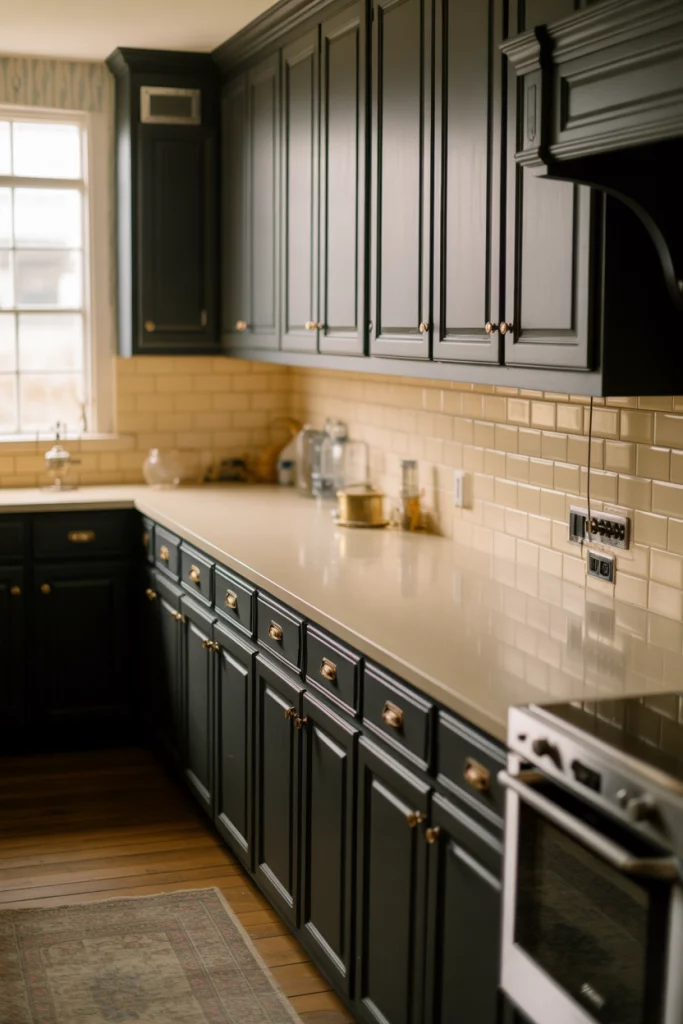
The pairing of cream and black creates a kitchen that feels both classic and fresh, offering warmth without the starkness of pure white. Cream countertops, backsplashes, or even painted upper cabinets against black lowers bring a softness that makes the space feel inviting rather than dramatic. This combination has a timeless quality that references traditional European kitchens while feeling thoroughly current, which explains its popularity among homeowners renovating historic homes or seeking a vintage-inspired aesthetic. 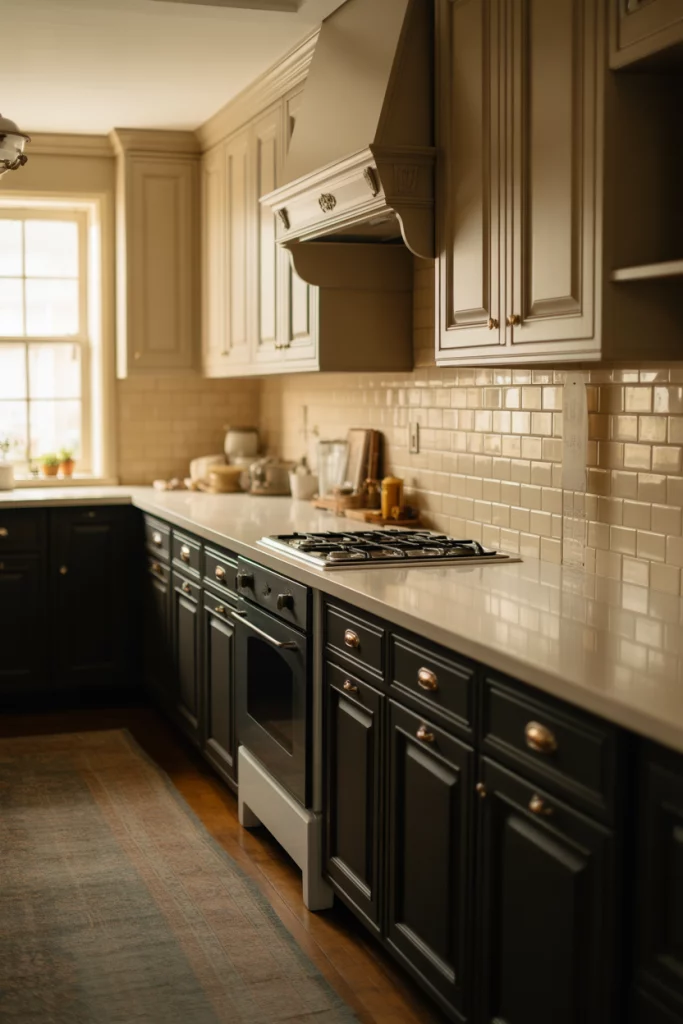
A micro anecdote: I visited a renovated farmhouse in Pennsylvania where the homeowner had paired matte black lowers with cream-glazed uppers, and the effect was both cozy and elegant. The cream tones brought warmth without the yellowing concerns that sometimes come with pure white in spaces without abundant natural light. This palette works beautifully with warm wood floors, brass or bronze fixtures, and traditional hardware styles like cup pulls or bin pulls.
14. Luxurious Granite Top Black Cabinet Design

A granite top brings natural beauty and serious durability to black cabinets, with the stone’s unique veining and color variation adding organic interest to the bold cabinetry. Granite comes in an incredible range of colors—from warm browns and golds to cool grays and blacks—giving you flexibility to either complement or contrast with your black cabinets. The combination of natural stone and dark cabinetry creates a kitchen that feels substantial and high-quality, a look that photographs beautifully and holds its value over time. 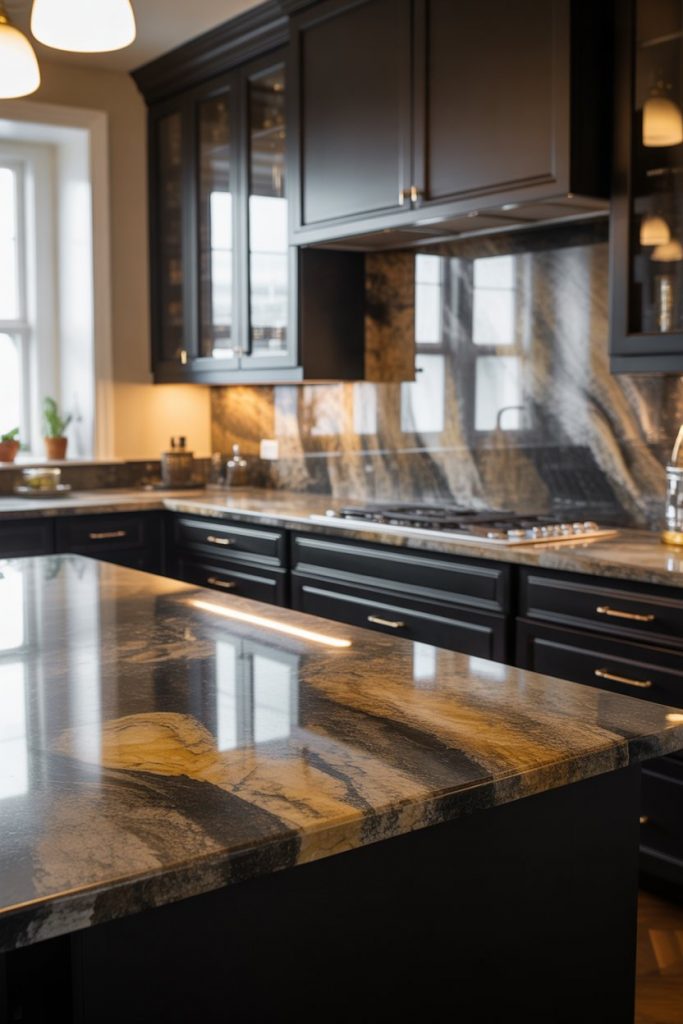
From a budget angle, granite has become more accessible than ever, with basic colors starting around $40 per square foot installed, while exotic varieties with dramatic veining can reach $150 or more. The practical benefit is that granite is heat-resistant, scratch-resistant, and incredibly durable—it’s hard to damage in daily cooking, making it ideal for busy family kitchens. Homeowners across Texas and Arizona particularly appreciate granite because it holds up well in hot climates and doesn’t require the same level of maintenance as some other natural stones.
15. Distressed Black Cabinets with Character
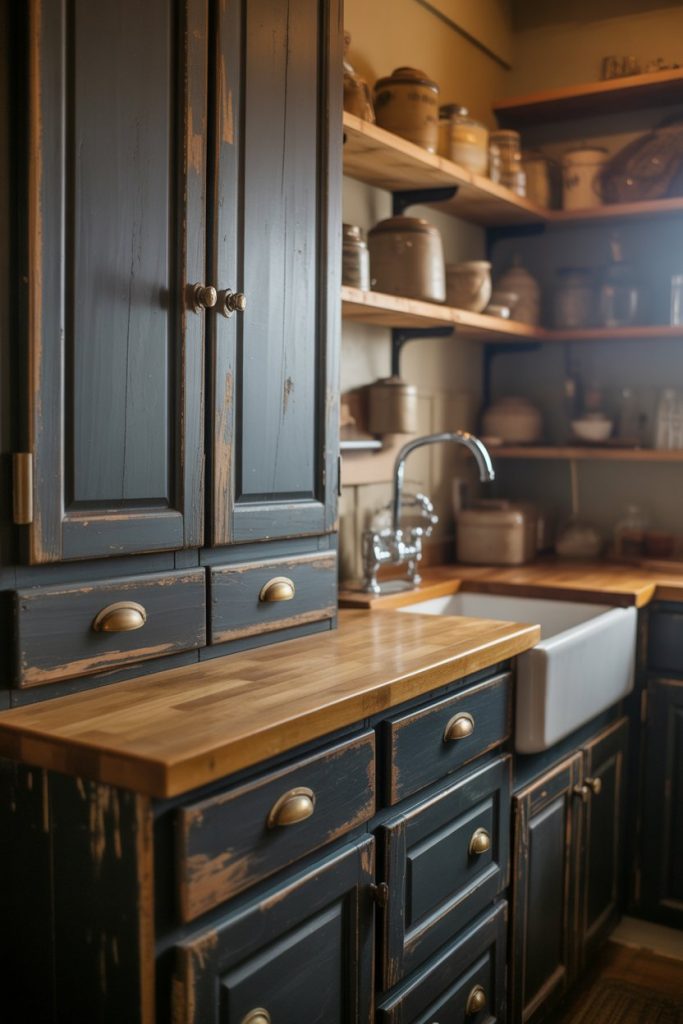
For those seeking a kitchen with soul and story, distressed black cabinets offer an aged, lived-in quality that feels collected over time rather than installed all at once. This finish technique reveals hints of wood or lighter paint colors beneath the black topcoat, creating subtle dimension and texture that catches light beautifully. Distressed finishes work particularly well in farmhouse, cottage, or eclectic kitchens where perfection would actually feel out of place, and where you want furniture-like cabinetry rather than sleek built-ins. 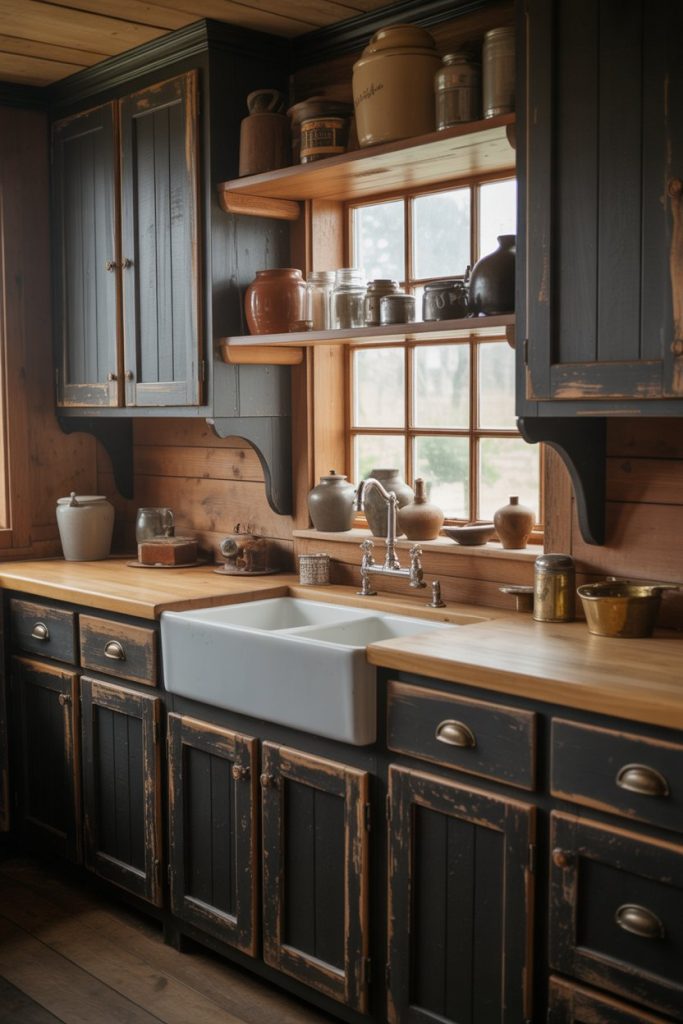
Real homeowner behavior in rural areas and smaller towns shows a strong preference for distressed finishes because they align with the surrounding aesthetic—weathered barns, vintage finds, handmade goods. The technique also has a practical benefit: in active kitchens with kids and pets, new dings and scratches blend right into the existing patina rather than standing out as damage. If you’re hiring a painter, expect to pay 20-30% more for a quality distressed finish compared to a standard paint job, as it requires additional steps and artistic skill.
16. Glamorous Gold Accents on Black Cabinets
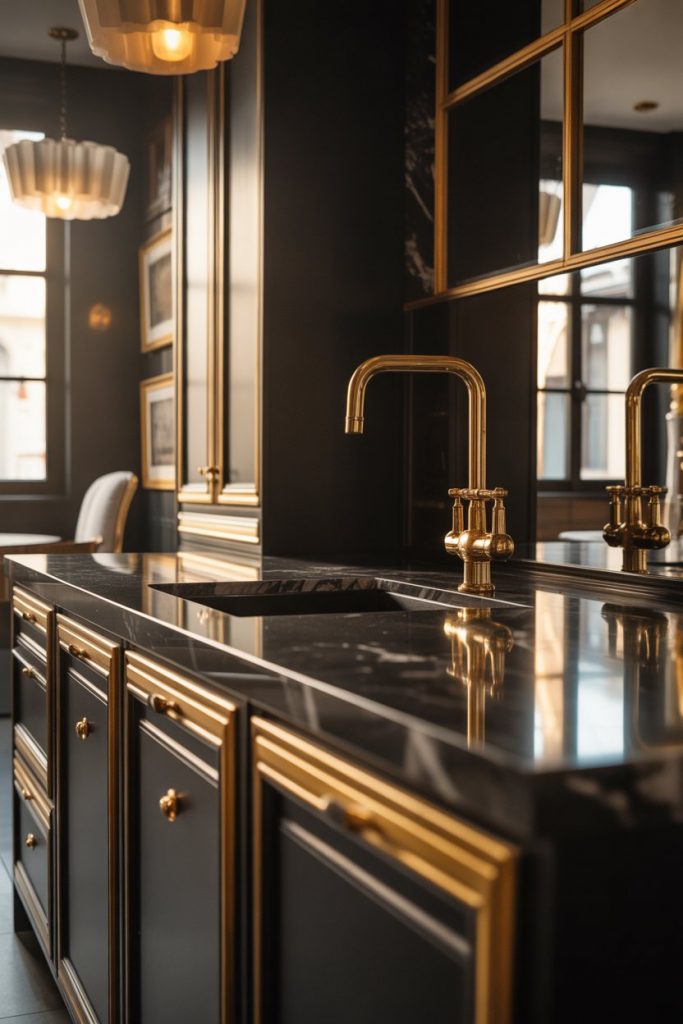
Beyond just hardware, gold accents throughout a black cabinet kitchen—in lighting fixtures, faucets, cabinet trim, or even toe kicks—create a cohesive luxe look that feels deliberately designed. These metallic touches catch and reflect light, adding warmth and visual interest that prevents an all-black kitchen from feeling flat or monotonous. Gold accents work across style spectrums, from art deco glamour to modern farmhouse charm, depending on the specific shade and finish you choose. 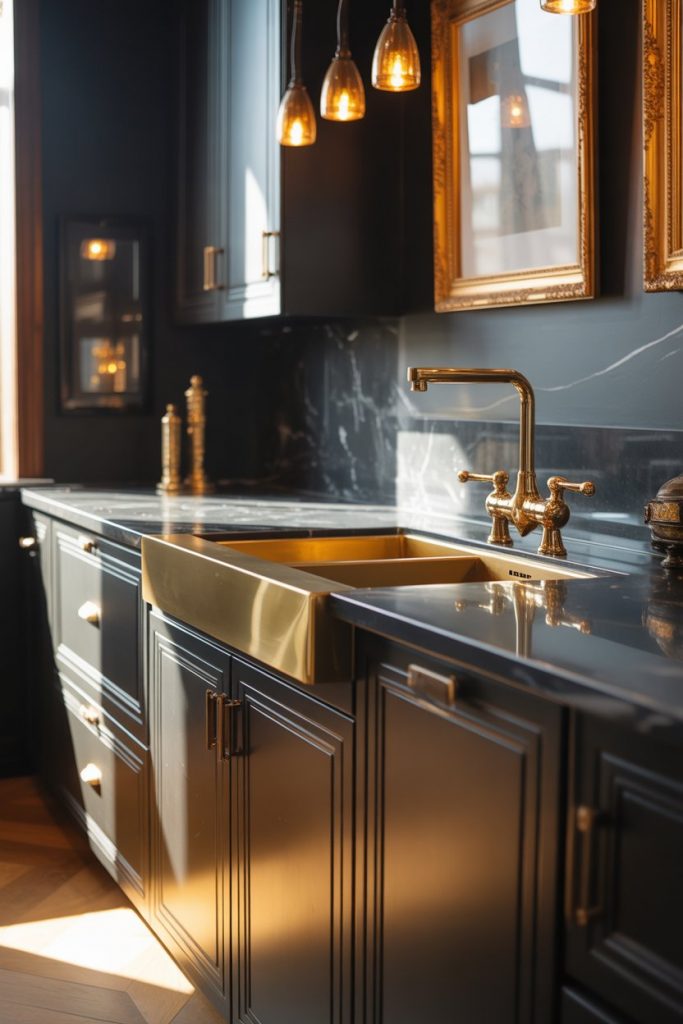
Where this works best is in kitchens that serve as entertaining spaces—the gold details create an upscale atmosphere that feels special for gatherings while still being livable for daily use. One common mistake is mixing too many gold tones in one space; stick with either warm brass, cooler champagne gold, or rosy rose gold throughout rather than combining them. The investment in gold accents can range from modest (just hardware and a faucet) to significant (custom metalwork and multiple light fixtures), allowing you to scale the look to your budget.
17. Chic Grey and Black Kitchen Harmony
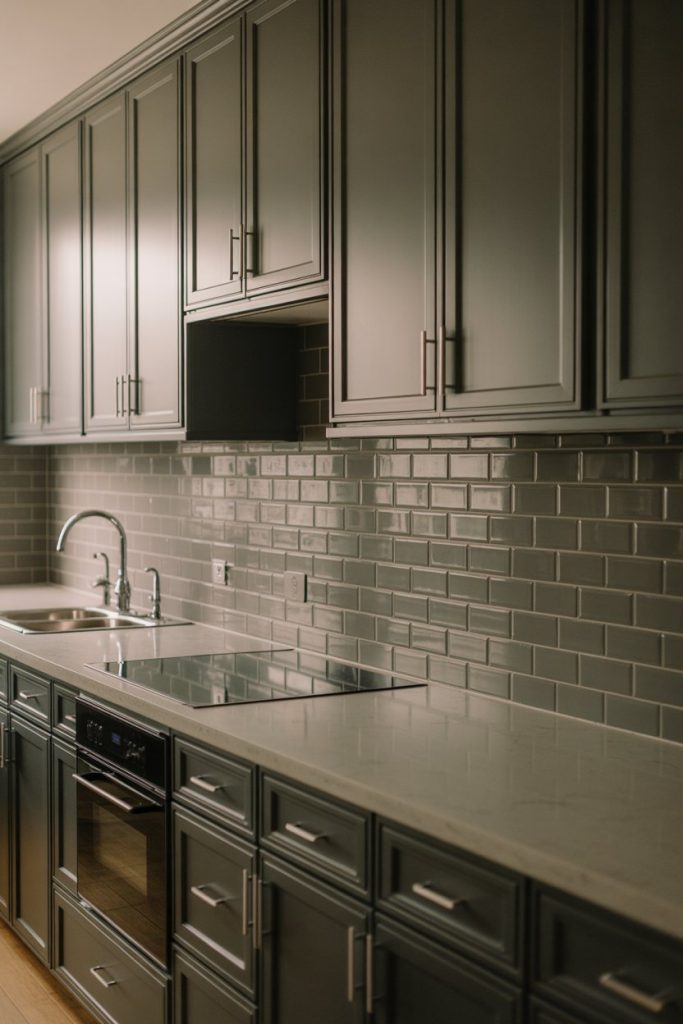
The combination of grey and black creates a kitchen with depth and sophistication, using tonal variation to add interest without introducing competing colors. Grey elements—whether in countertops, backsplash, walls, or even grey-stained cabinetry mixed with black—soften the drama while maintaining a contemporary, cohesive aesthetic. This monochromatic approach has become incredibly popular in modern and transitional kitchens, where homeowners want visual interest through texture and tone rather than color contrast. 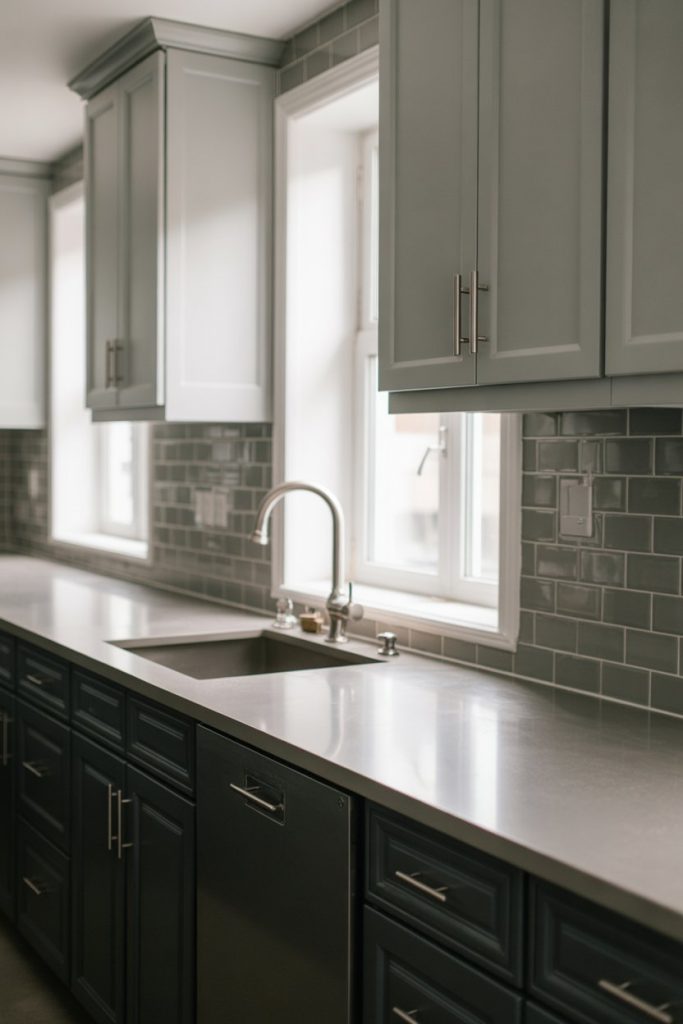
Expert-style commentary notes that this palette requires good lighting to prevent the space from feeling too dark or muddy—aim for a combination of natural light, recessed lighting, and task lighting under cabinets. The grey-and-black combination is particularly popular in Pacific Northwest homes where overcast days are common, as the tonal approach feels appropriate to the region’s aesthetic while the black cabinets add much-needed depth and richness. Consider varying the finish—matte black cabinets with honed grey counters create subtle textural interest.
18. Warm Walnut and Black Cabinet Contrast
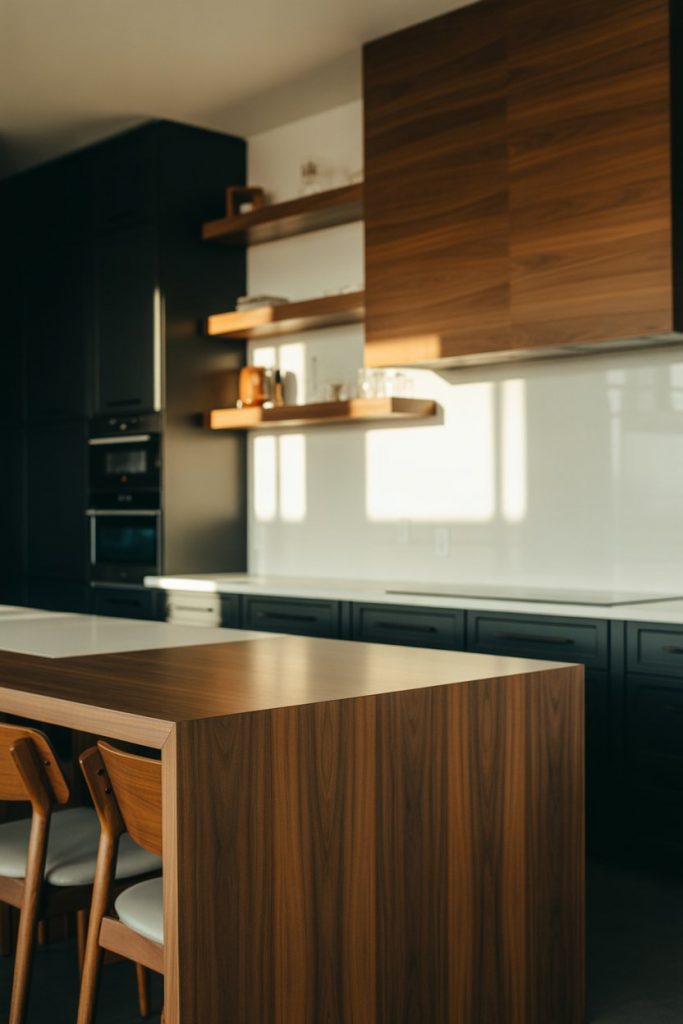
The pairing of black cabinets with walnut elements creates one of the most striking and sophisticated combinations in contemporary kitchen design. Walnut’s rich, chocolate-brown tones with darker grain patterns complement black beautifully while adding undeniable warmth and organic beauty. This combination works whether walnut appears as an island countertop, floating shelves, or even as walnut-stained cabinets mixed with painted black ones, creating a kitchen that feels both modern and inviting. 
I toured a newly built home in Portland where the kitchen featured this exact combination, and the way the walnut seemed to glow against the matte black cabinets was genuinely stunning. The natural variations in walnut—from lighter sapwood to deep heartwood—create visual movement that keeps the eye engaged. This is a higher-investment choice, with quality walnut running $80 to $150 per square foot for countertops, but many homeowners consider it worth the splurge for the singular beauty it brings to the kitchen.
19. Functional Black Cabinet Pulls Selection
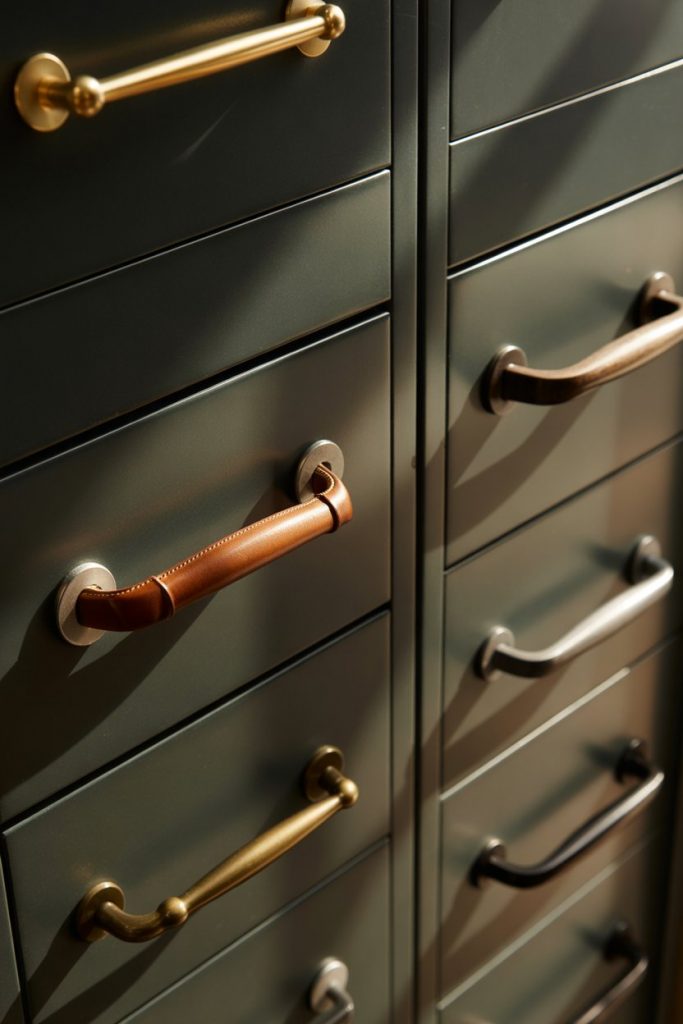
The pulls you choose for black cabinets can dramatically affect the overall style, from traditional to ultra-modern, and the decision deserves careful consideration. Cabinet pulls in finishes like brass, bronze, nickel, or even black-on-black create different moods—long bar pulls suggest contemporary style, cup pulls nod to traditional design, and leather pulls bring in unexpected texture. The scale of your pulls matters too; oversized hardware makes a bold statement, while delicate pulls keep the focus on the cabinetry itself. 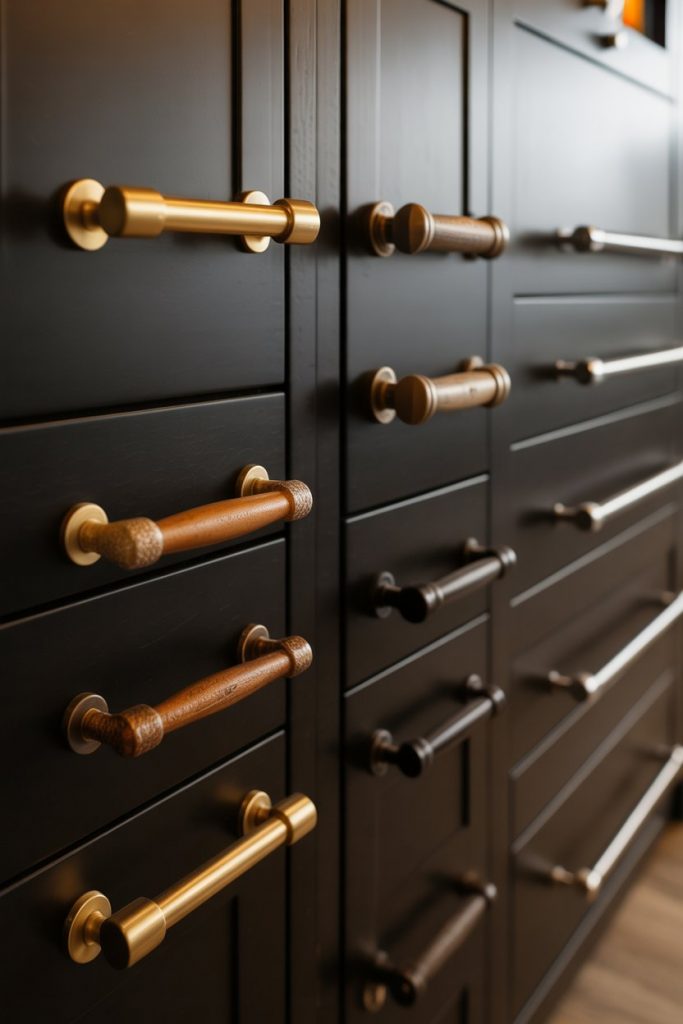
Practical insight suggests measuring your cabinet drawers and doors before ordering hardware—large drawers (36 inches or more) typically look best with pulls in the 12-18 inch range, while standard drawers work well with 5-8 inch pulls. The cost varies wildly, from $3 per pull for basic options to $50 or more for designer hardware, but since you typically need 30-50 pulls for an average kitchen, this can add up. Many designers recommend investing in quality hardware because it’s something you touch every single day, and the feel and weight of solid brass or bronze is noticeably better than hollow alternatives.
20. Inspiring Black Kitchen Decor Ideas
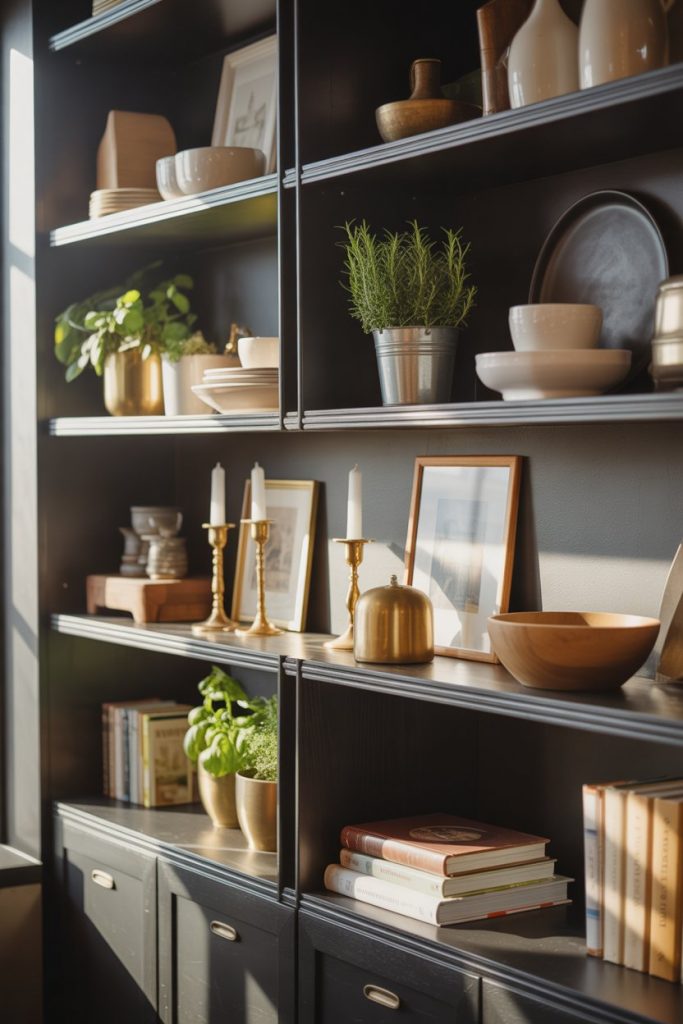
Styling black cabinets requires thoughtful decor ideas that bring warmth, personality, and visual interest without cluttering the sophisticated backdrop you’ve created. Natural elements like fresh greenery, wooden cutting boards, and woven baskets add organic texture that softens the black surfaces. Decor in warm metallics, ceramics in cream or white, and even colorful artwork or textiles can prevent the space from feeling too austere while allowing the black cabinets to remain the star. 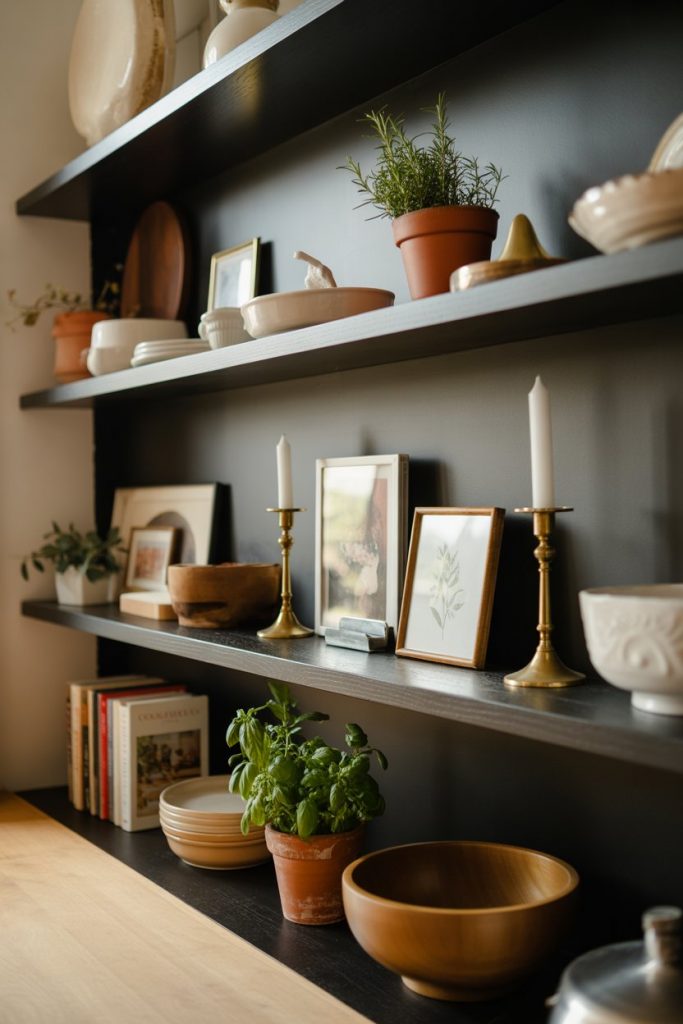
Real homeowner behavior shows that people with black kitchens tend to rotate their decor seasonally more than those with lighter kitchens—fall brings in copper and amber glass, while summer invites bright ceramics and fresh flowers. The key is restraint; because black provides such a strong backdrop, you need less decor to make an impact. Consider dedicating specific zones for styling—open shelving, a coffee bar area, or the space around your range hood—rather than trying to decorate every surface.
21. Refined Brushed Gold Hardware on Black
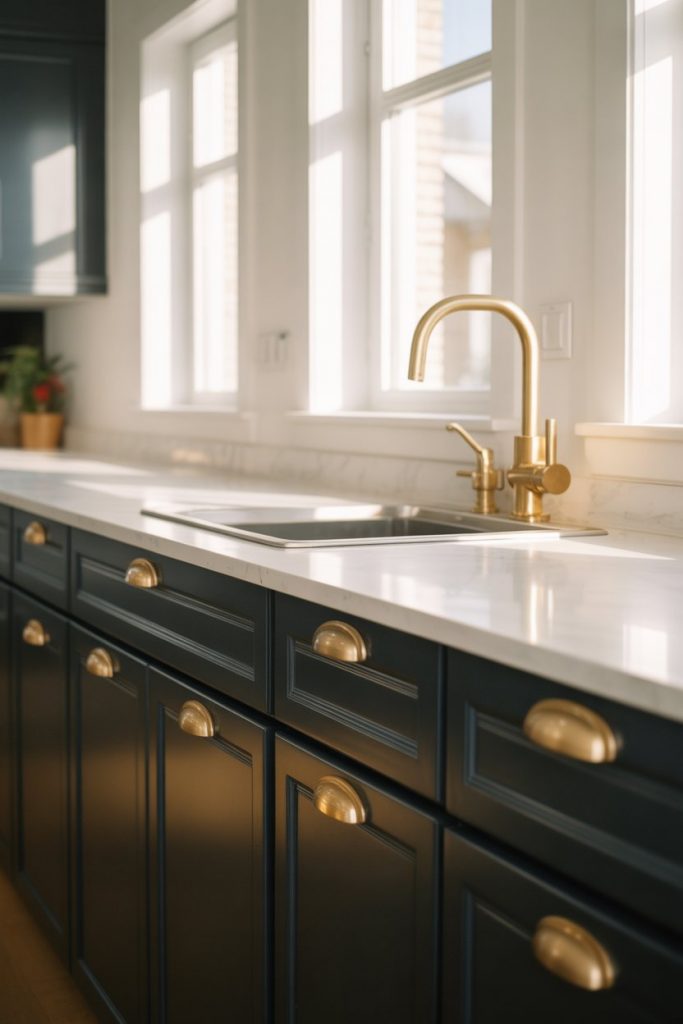
The specific finish of brushed gold hardware strikes the perfect balance between luxury and livability, offering warmth and elegance without the high-shine formality of polished brass. This finish has surged in popularity because it doesn’t show fingerprints as readily as polished finishes, making it practical for busy kitchens while still delivering the upscale look homeowners crave. Brushed gold on black cabinets creates a contemporary feel that’s sophisticated without being stuffy, working beautifully in everything from urban lofts to suburban colonials. 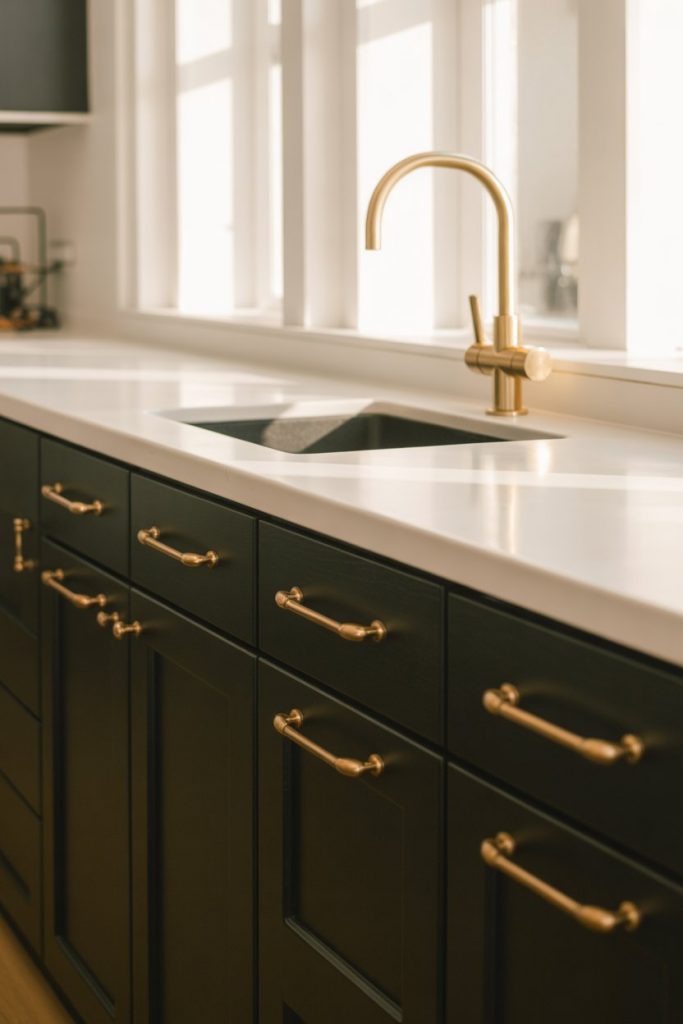
Where this works best is in kitchens that aim for a boutique hotel aesthetic—polished and luxurious but not overly ornate. The brushed finish has a matte quality that complements both matte and satin cabinet finishes beautifully, creating visual harmony across surfaces. From a budget perspective, expect to pay more for brushed gold than standard finishes—typically $8 to $25 per pull—but the investment transforms the look significantly. Many manufacturers now offer brushed gold in various warmth levels, so request samples to ensure the tone works with your other fixtures and finishes.
22. Clean Black Cabinets with White Countertops Open Shelving
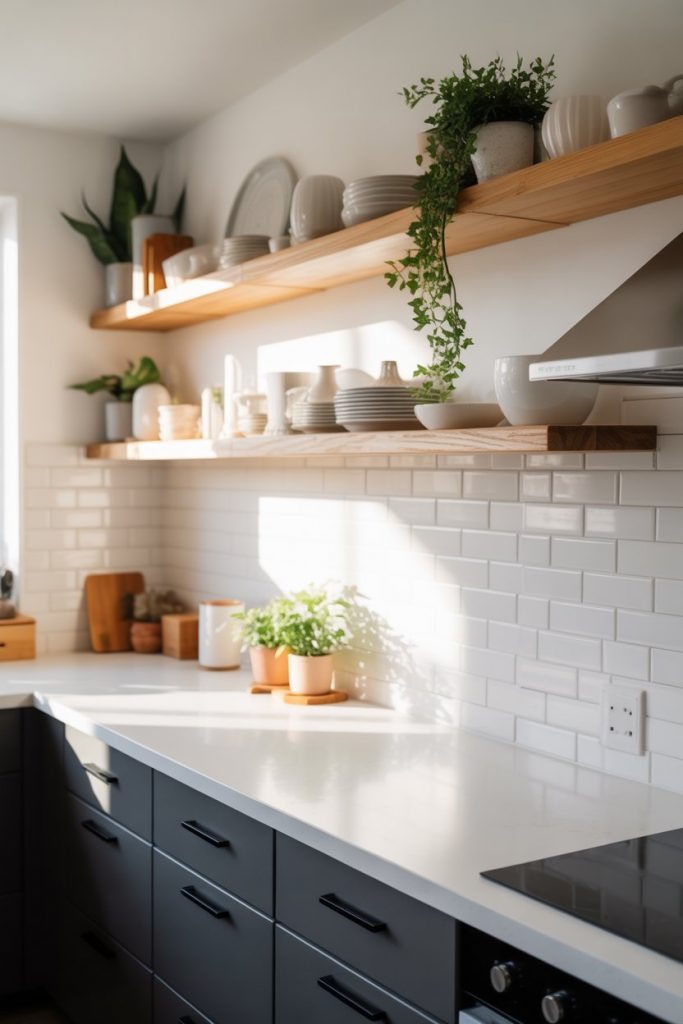
The combination of black cabinets, white countertops, and open shelving creates a kitchen that feels fresh, airy, and intentionally modern. The white counters provide essential contrast that prevents the black cabinets from feeling heavy, while open shelving breaks up the wall of cabinetry and introduces opportunities for styling and display. This trio has become a Pinterest favorite because it photographs beautifully and works in kitchens of all sizes, from compact galley layouts to sprawling chef’s kitchens. 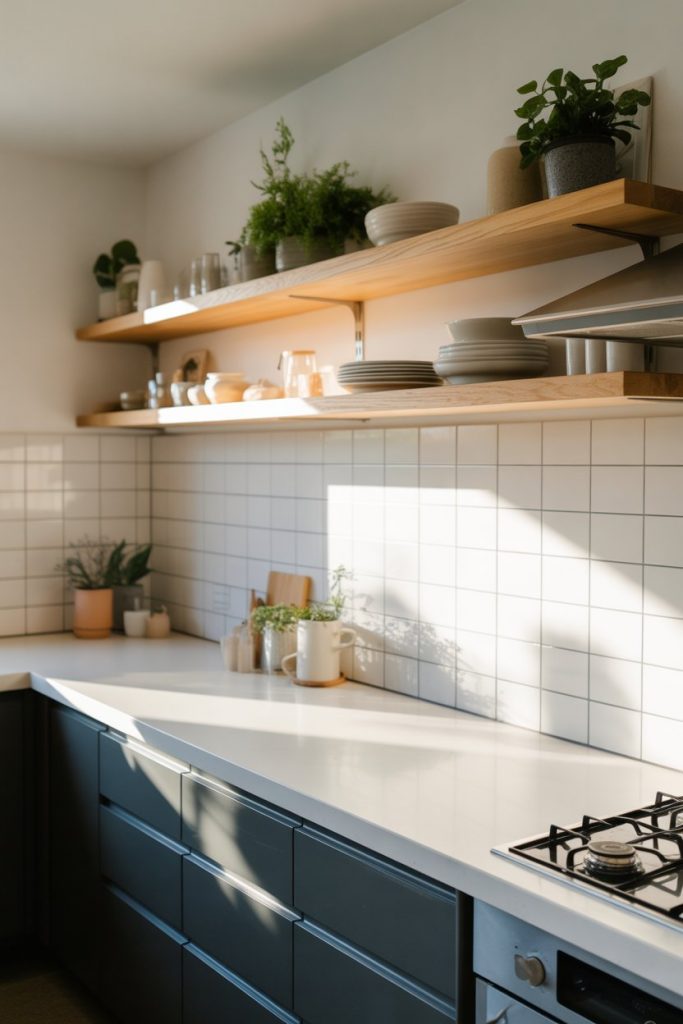
One common mistake is installing open shelving everywhere and then struggling to keep it styled and organized—it’s better to use open shelves strategically on one or two walls while keeping closed cabinetry for less-photogenic storage. American homeowners in smaller urban spaces particularly embrace this combination because the white and open elements make compact kitchens feel more spacious. Maintenance-wise, white countertops require regular cleaning to look their best, but modern quartz options resist staining better than historical materials like marble or concrete.
23. Complete Black Kitchen Ideas Portfolio
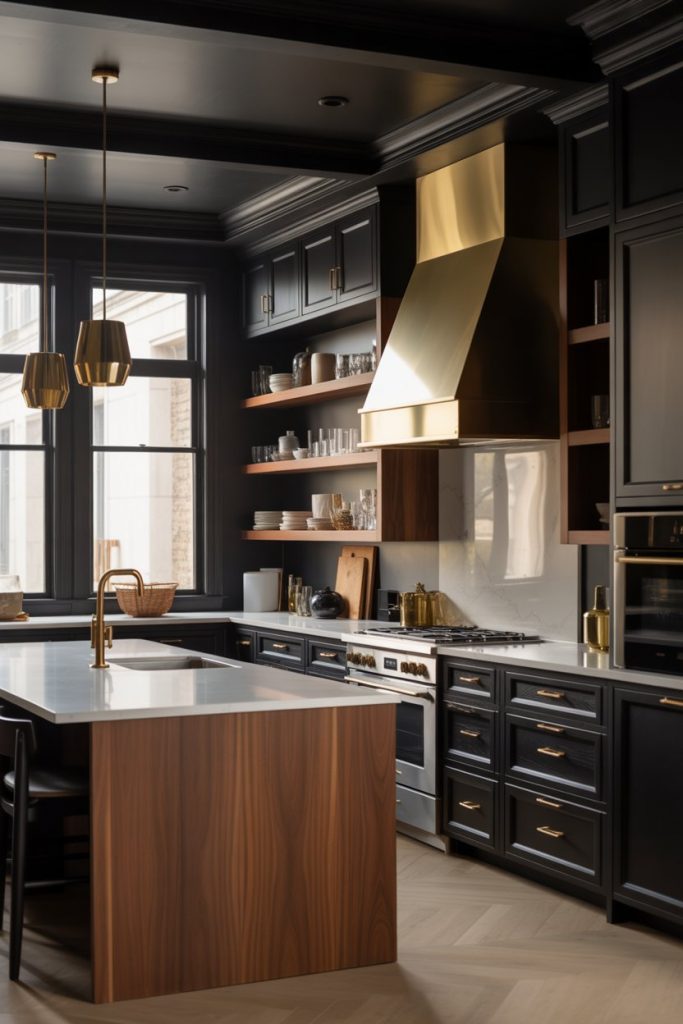
Bringing together all these ideas into a cohesive black kitchen requires balancing your priorities—whether that’s maximizing natural light, incorporating specific materials you love, or achieving a particular aesthetic. The beauty of black cabinets is their versatility; they adapt to traditional hardware and modern minimalism equally well, serving as a neutral foundation that works with warm woods, cool metals, bold colors, or soft neutrals. Looking at a range of ideas helps you identify which elements resonate with your lifestyle and space. 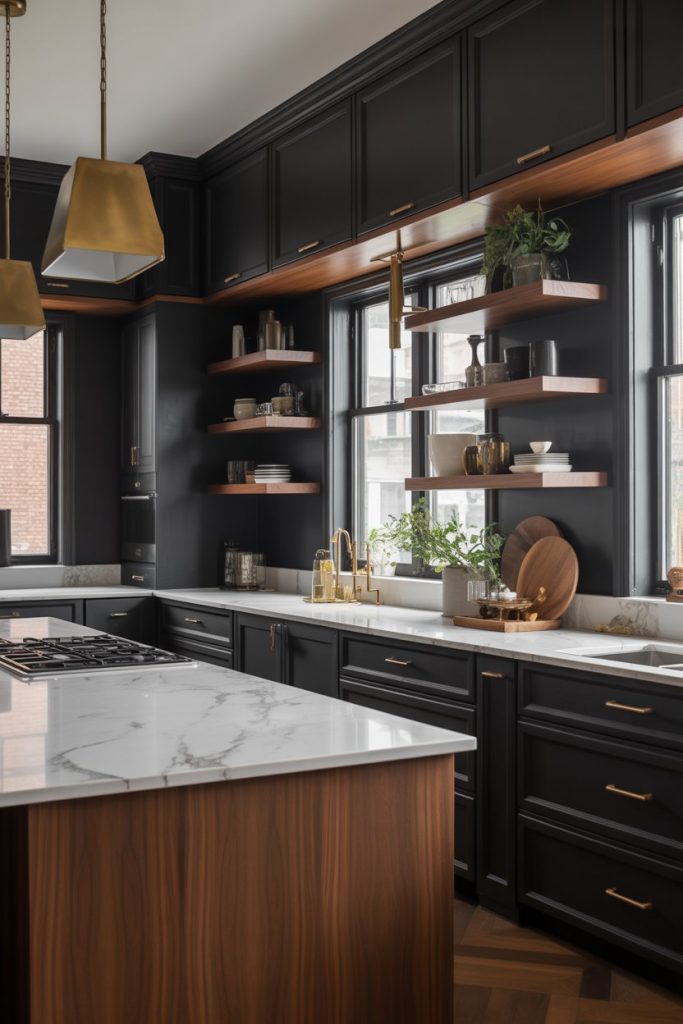
The most successful black kitchens are those where homeowners have thoughtfully considered lighting from the beginning—between natural light sources, recessed ceiling fixtures, pendant lights, and under-cabinet lighting, you need multiple layers to keep the space from feeling dim. Start by identifying your must-haves, whether that’s a specific countertop material, open shelving, or dramatic hardware, and build your design around those priorities. Remember that trends will come and go, but black cabinets have proven themselves timeless—focus on quality materials and finishes that you’ll love for years to come rather than chasing the latest Pinterest trend.
Conclusion
Now that you’ve explored these 23 inspiring approaches to black kitchen cabinets, we’d love to hear which ideas resonated with you most. Are you drawn to the warmth of wood countertops, the glamour of gold hardware, or the clean simplicity of black and white? Share your thoughts and your own black cabinet experiences in the comments below.