Bedroom curtains are having a serious moment in 2026, and it’s about time. After years of bare windows and minimalist vibes, American homeowners are rediscovering the transformative power of fabric—not just for privacy, but for warmth, texture, and that final layer of personality a room really needs. Pinterest boards are overflowing with searches for everything from breezy coastal linen to dramatic floor-to-ceiling velvet, and the trend shows no signs of slowing down. Whether you’re working with a tiny rental window or a sprawling master suite with high ceilings, the right curtains can completely change how a space feels. Here are fresh, inspiring ideas to help you find your perfect match.
1. Flowing White Linen for a Coastal Bedroom
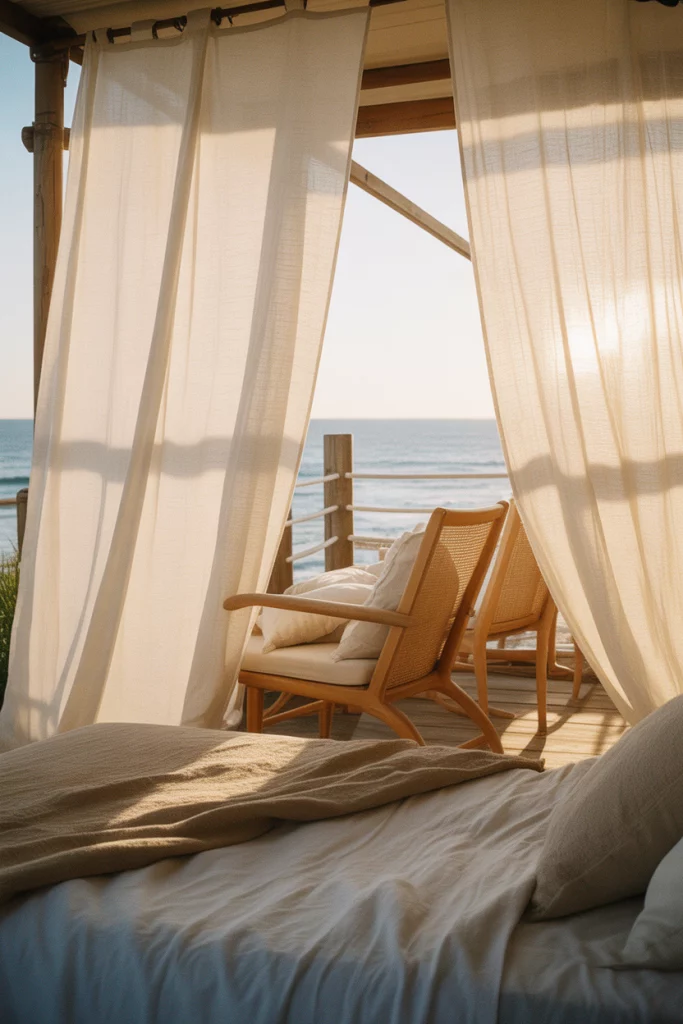
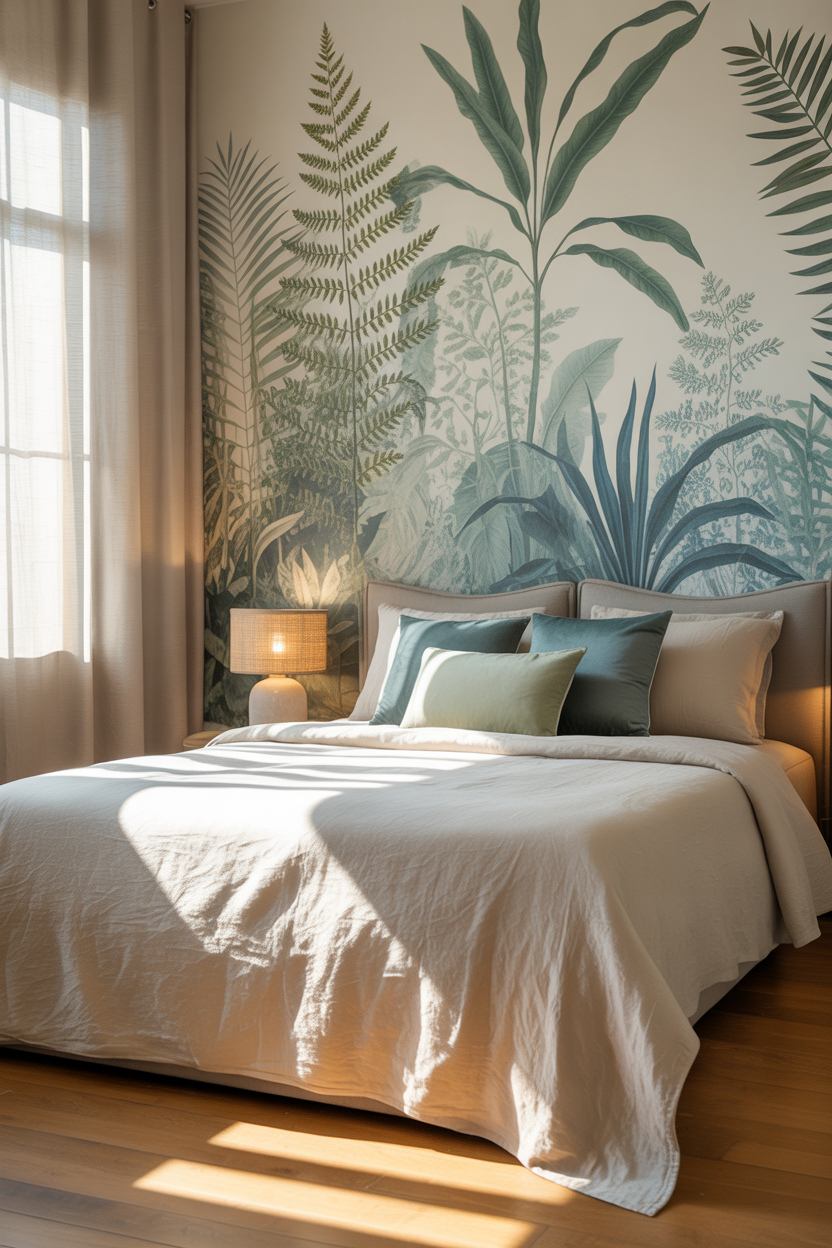
There’s something effortlessly calming about white linen curtains in a coastal bedroom, where the goal is to let in light while keeping the vibe soft and breezy. These curtains work beautifully in spaces that lean into natural textures—think whitewashed wood, woven rugs, and plenty of greenery. The fabric’s slight irregularity gives it character without feeling fussy, and when paired with neutral bedding, the whole room starts to breathe a little easier. 
Linen curtains are also incredibly forgiving when it comes to installation—no one expects them to hang perfectly pressed, so the relaxed drape is part of the charm. They’re especially popular in beach towns and Southern California, where the indoor-outdoor lifestyle calls for something that won’t block the view but still offers privacy when you need it. If you’re worried about opacity, consider doubling them up or adding a sheer layer underneath for more coverage at night.
2. Deep Green Velvet for a Moody Master Retreat
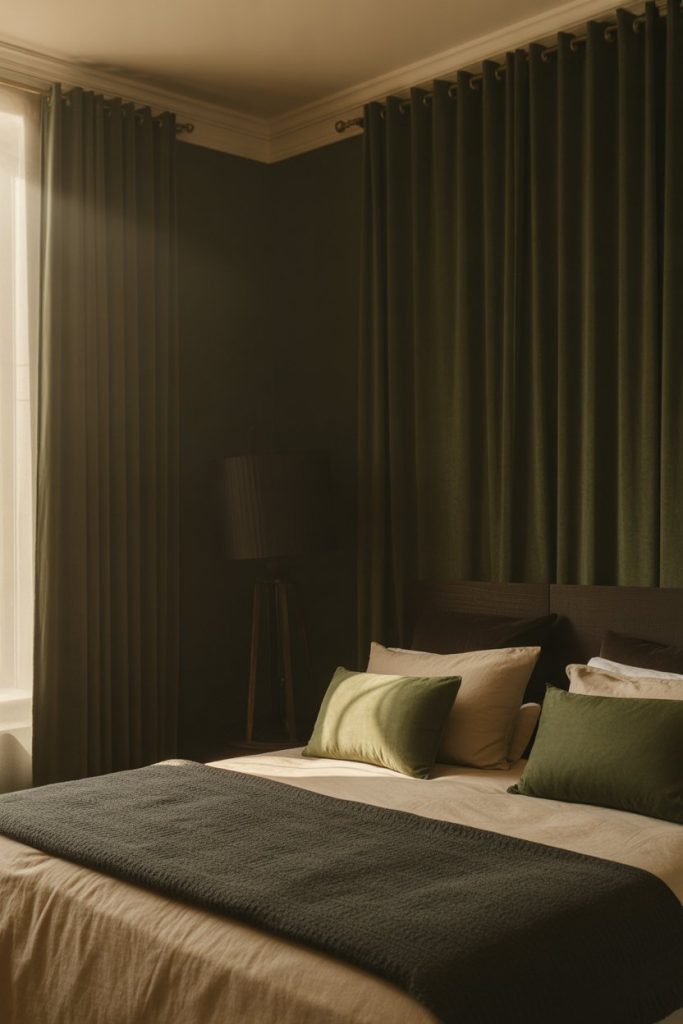
If you’re craving drama, green velvet curtains in a moody master modern bedroom deliver it in spades. The richness of velvet catches light in a way that feels almost alive, shifting from emerald to forest depending on the time of day. This choice works best in rooms with strong architectural details—crown molding, tall windows, or even just a bold headboard that can hold its own against the fabric’s weight. 
One thing to keep in mind: velvet curtains are an investment, both in cost and in maintenance. They’re heavier than cotton or linen, so you’ll need sturdy rods and brackets that can handle the weight. But the payoff is worth it—these curtains block out light and sound better than almost any other fabric, making them ideal for light sleepers or anyone who works night shifts and needs serious blackout power during the day.
3. Sheer Grey Panels for Small Windows
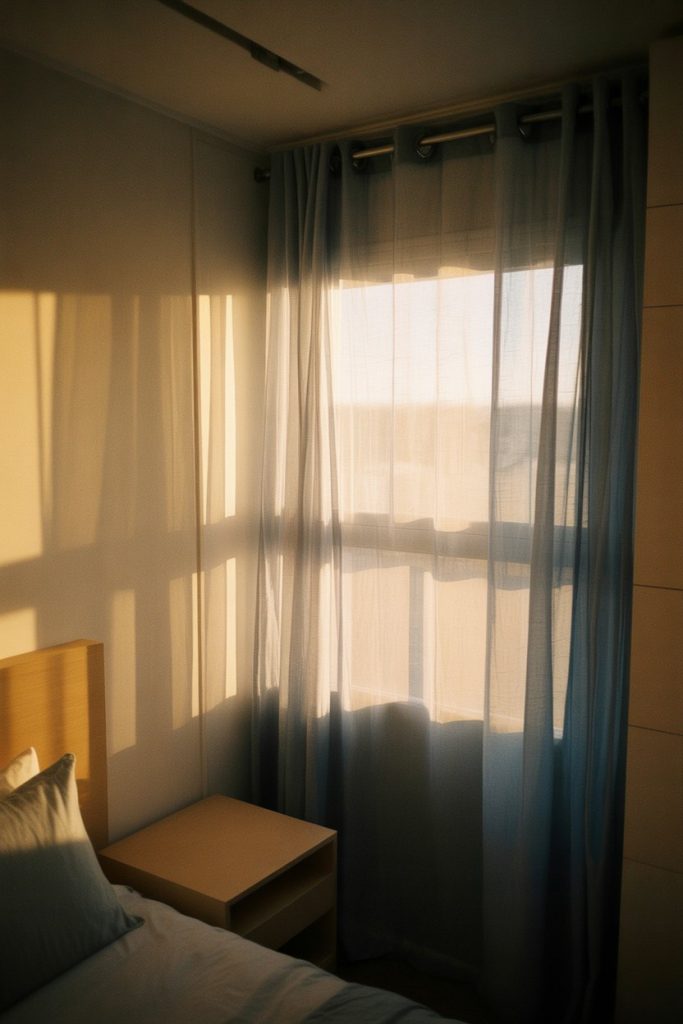
When you’re dealing with small windows, the last thing you want is heavy fabric that makes the room feel even tighter. Grey sheer panels are the perfect solution—they add softness and privacy without cutting off natural light, which is crucial in compact spaces. The neutral tone keeps things calm and modern, and because they’re so lightweight, they won’t overwhelm a narrow window frame. 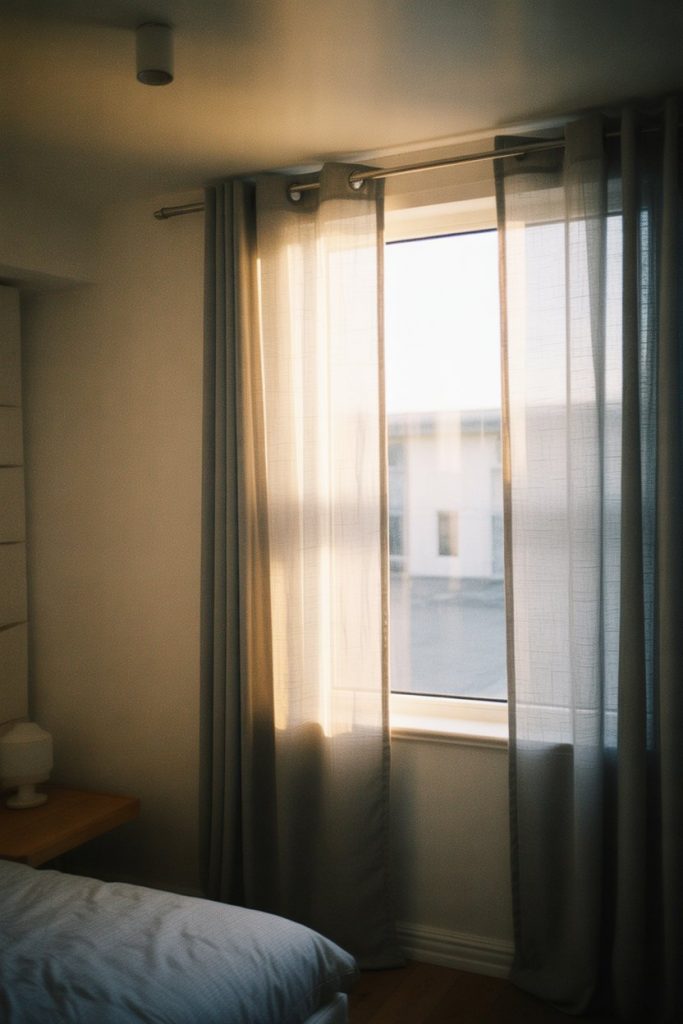
A designer once told me that sheer curtains are like a good skincare routine—they’re subtle, but once you commit, you can’t imagine going without them. In studio apartments or guest rooms with limited square footage, these panels soften the hard edges of a window without adding visual clutter. They also work beautifully layered under heavier drapes if you want the option to switch between airy and private depending on the time of day.
4. Bold Blue Velvet for a High Ceiling Statement
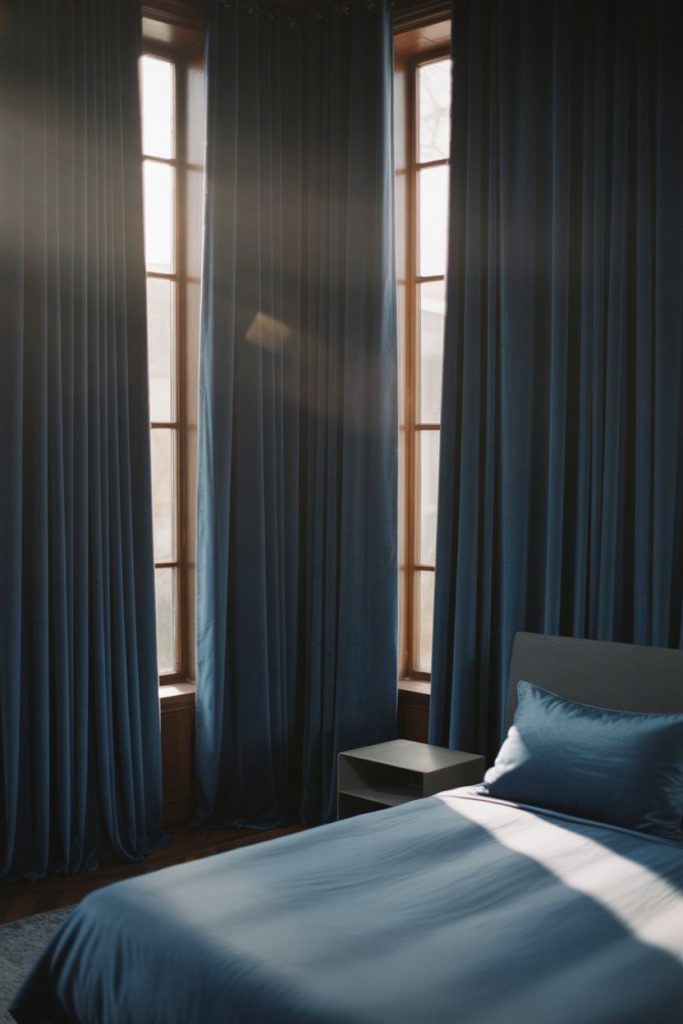
Rooms with high ceilings can sometimes feel cold or cavernous, but blue velvet curtains hung from ceiling to floor bring warmth and scale in one move. The vertical lines draw the eye up, emphasizing the room’s height while grounding it with rich color and texture. This works especially well in modern spaces where clean lines need a little softness to feel complete. 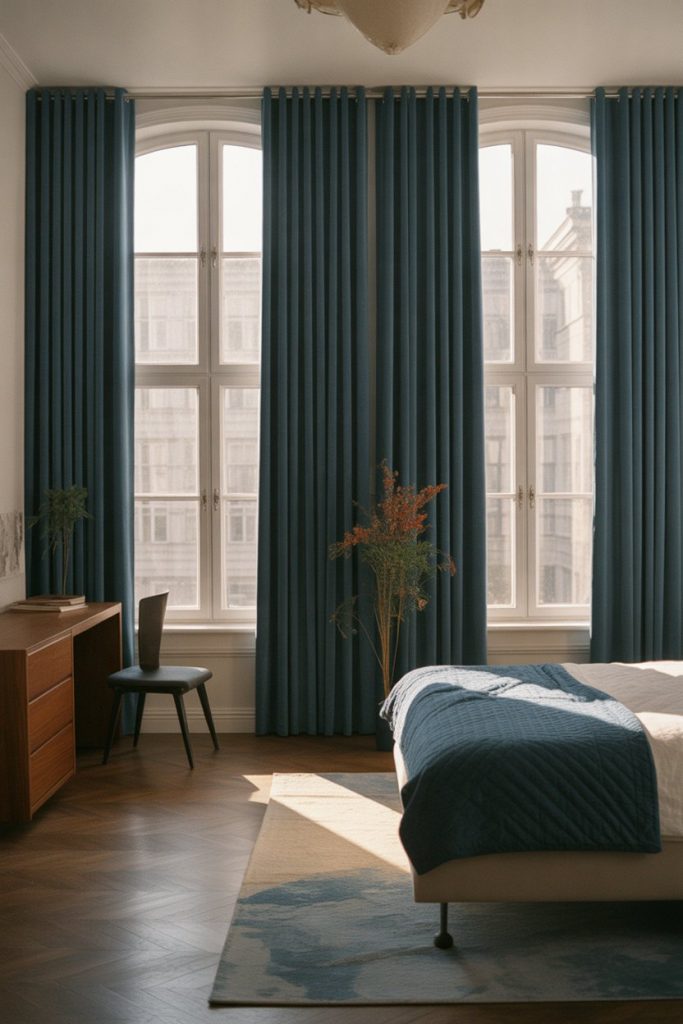
This approach works best in homes built before 1960 or in newer loft-style apartments where ceiling height is a major feature. The trick is to mount the rod as close to the ceiling as possible, even if the window itself starts lower—it makes the room feel taller and more cohesive. Just be prepared to invest in a stepladder or professional installation, because getting these right is half the impact.
5. Layered Boho Textures in Warm Tones
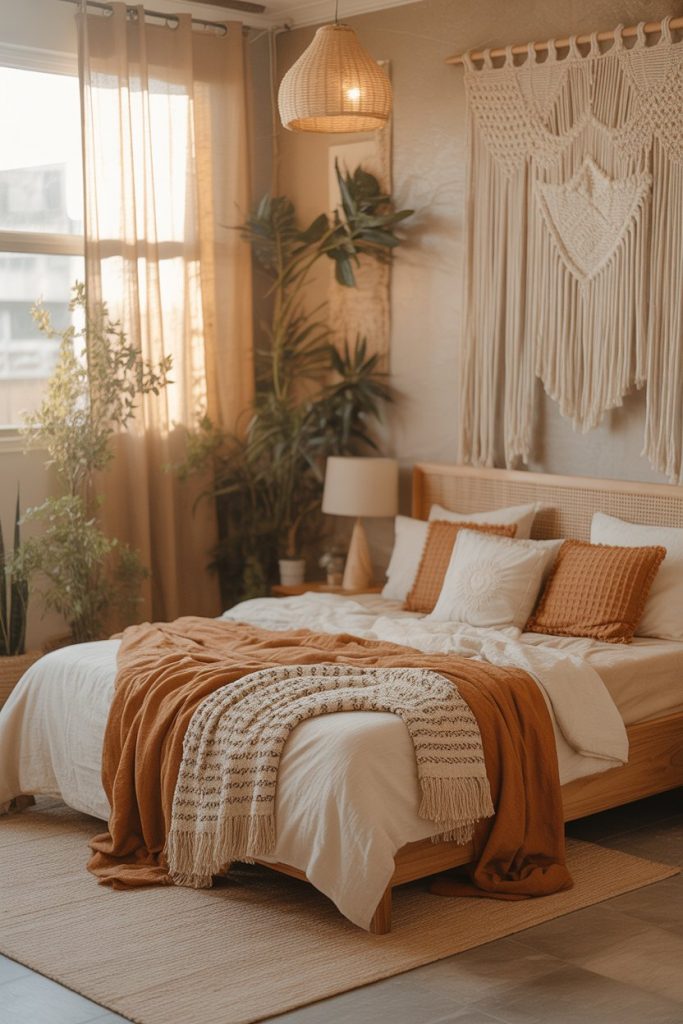
A boho bedroom thrives on layering, and curtains are no exception. Think macramé panels paired with gauzy cotton, or woven hemp curtains hung alongside printed fabrics in rust, terracotta, and mustard. The key is mixing textures and weights so the window becomes a focal point rather than an afterthought. This style loves imperfection, so don’t stress about everything matching perfectly. 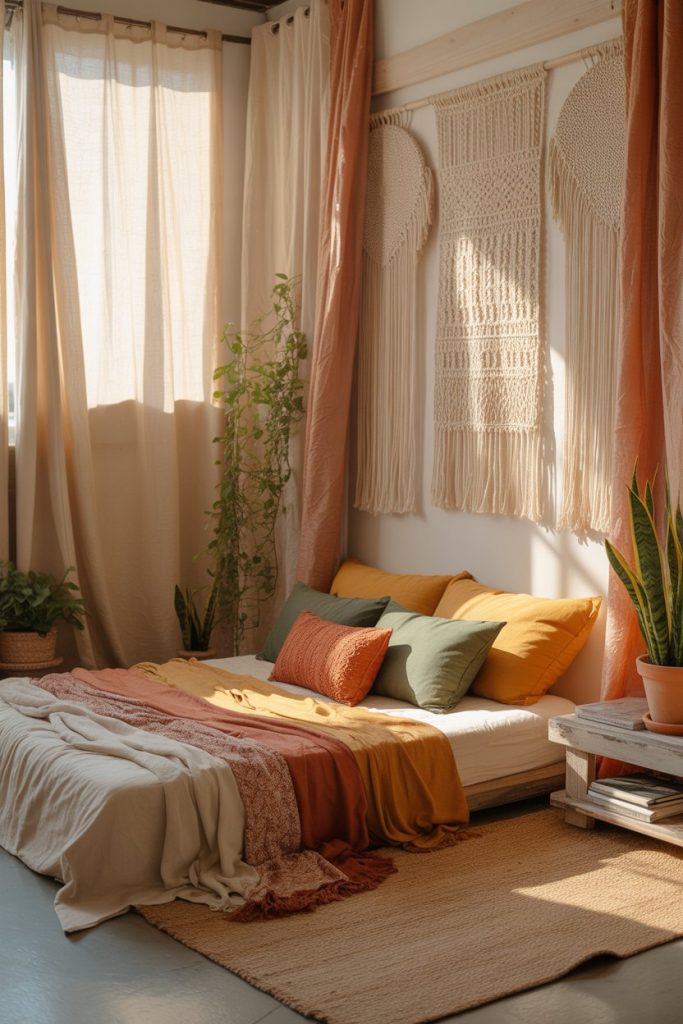
Where this works best: Southwest homes, California bungalows, or any space where natural materials like rattan, wood, and clay already dominate. The beauty of boho curtains is that they’re endlessly customizable—you can swap out layers seasonally, add tassels or beaded trim, or even DIY your own panels if you’re feeling crafty. It’s a style that rewards experimentation and personal touches over catalog-perfect precision.
6. Blackout Pink for a Soft Modern Nursery
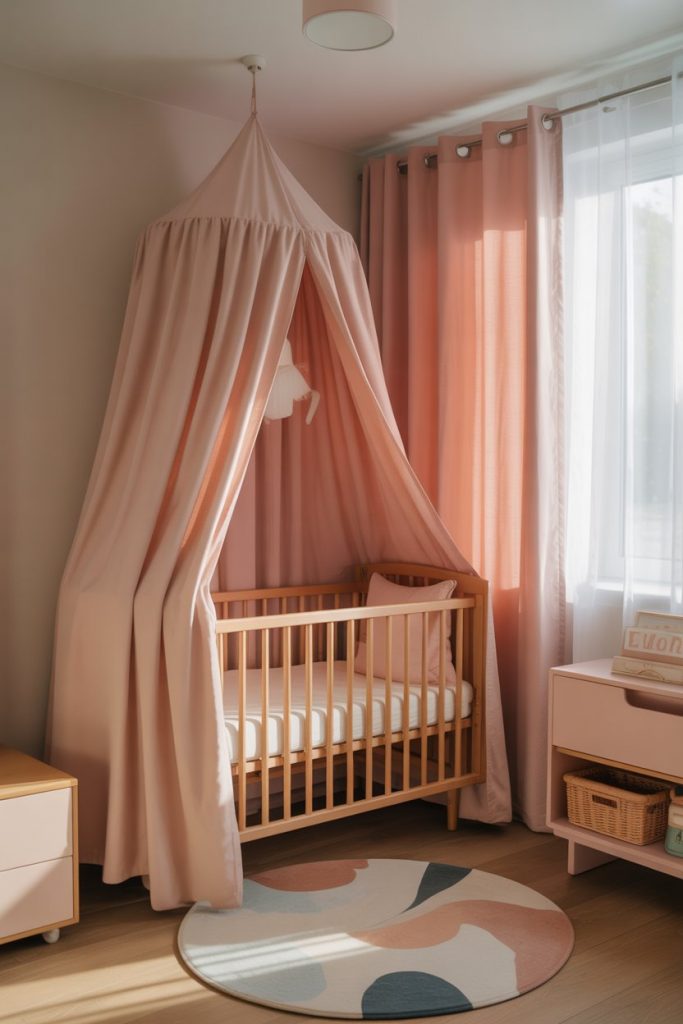
If you’ve ever tried to get a toddler to nap in broad daylight, you know why pink blackout curtains are a game-changer. They block nearly all light, which helps regulate sleep cycles, but the soft blush tone keeps the room from feeling too heavy or dark. In a modern nursery or kid’s bedroom, this combination of function and aesthetic makes life just a little bit easier. 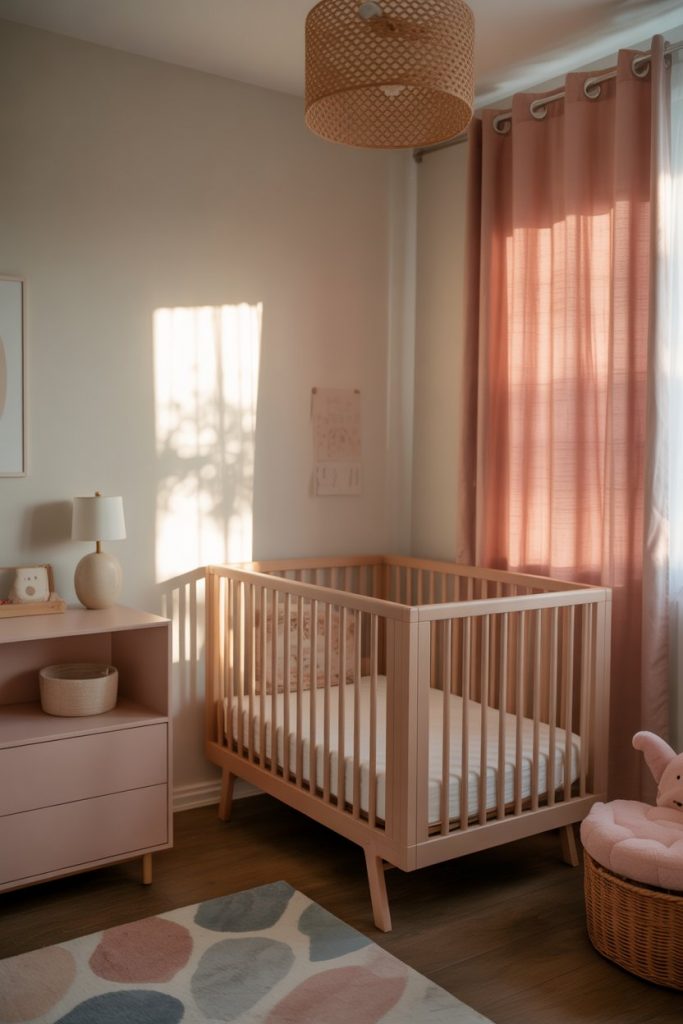
One common mistake is buying blackout curtains that are too short—they need to extend past the window frame on all sides to really work. If light seeps in around the edges, you lose most of the benefit. Also, consider the fabric weight: cheaper blackout liners can look stiff and plastic-y, while higher-end versions drape more naturally and still do the job. It’s worth spending a bit more for something that looks good and actually performs.
7. Natural Linen in Sage Green for an Organic Feel
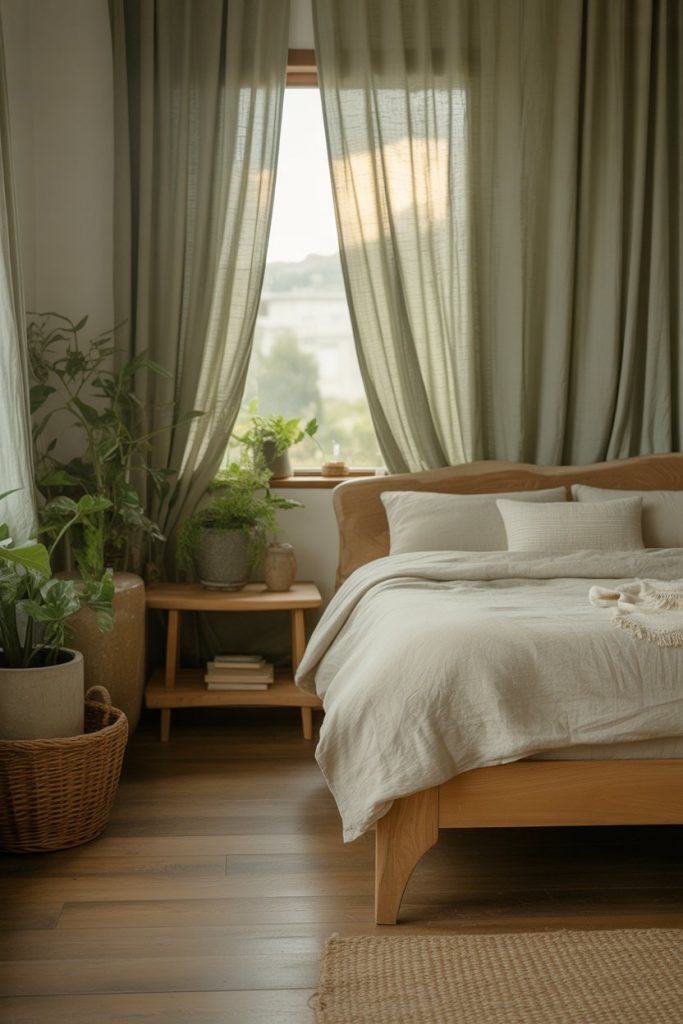
Sage green linen curtains bring an earthy, grounded energy to any bedroom, especially when paired with wood tones and neutral accents. The color reads as calm without being cold, and the linen texture adds just enough visual interest to keep things from feeling flat. This combination is perfect for anyone who wants a space that feels organic and restful without veering into full-on minimalism. 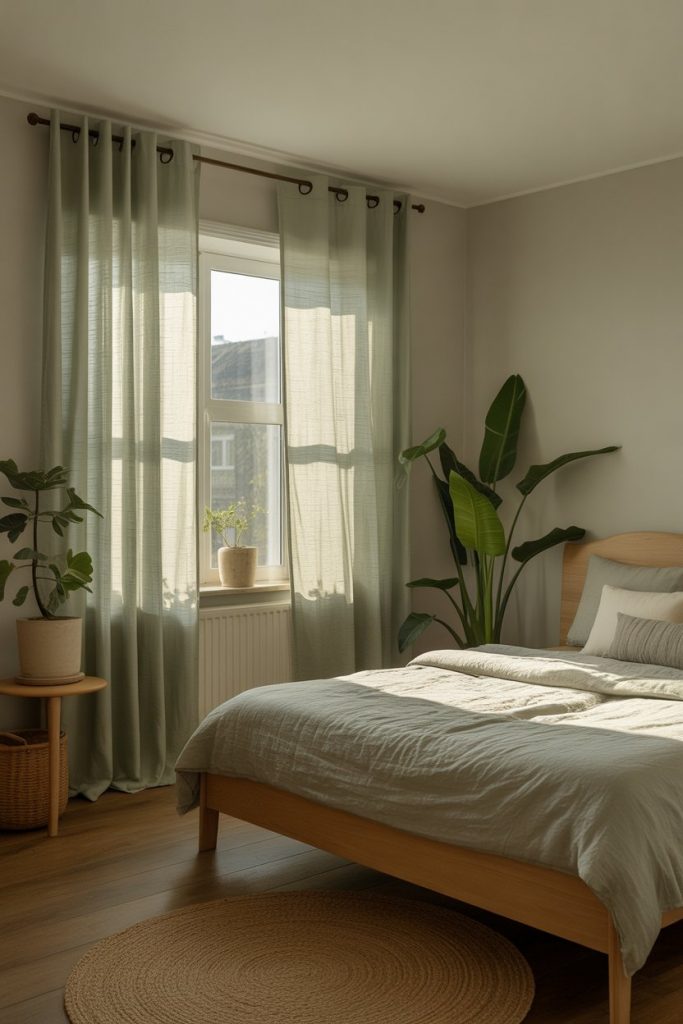
In terms of real homeowner behavior, sage green has become a go-to for people who want color but aren’t ready for bold jewel tones. It’s showing up in Midwestern farmhouses, Pacific Northwest cabins, and even urban apartments where a connection to nature is harder to come by. The linen fabric reinforces that natural vibe, and because it’s breathable, it works year-round without feeling too heavy in summer or too light in winter.
8. Vintage Floral Curtains with Ruffled Hems
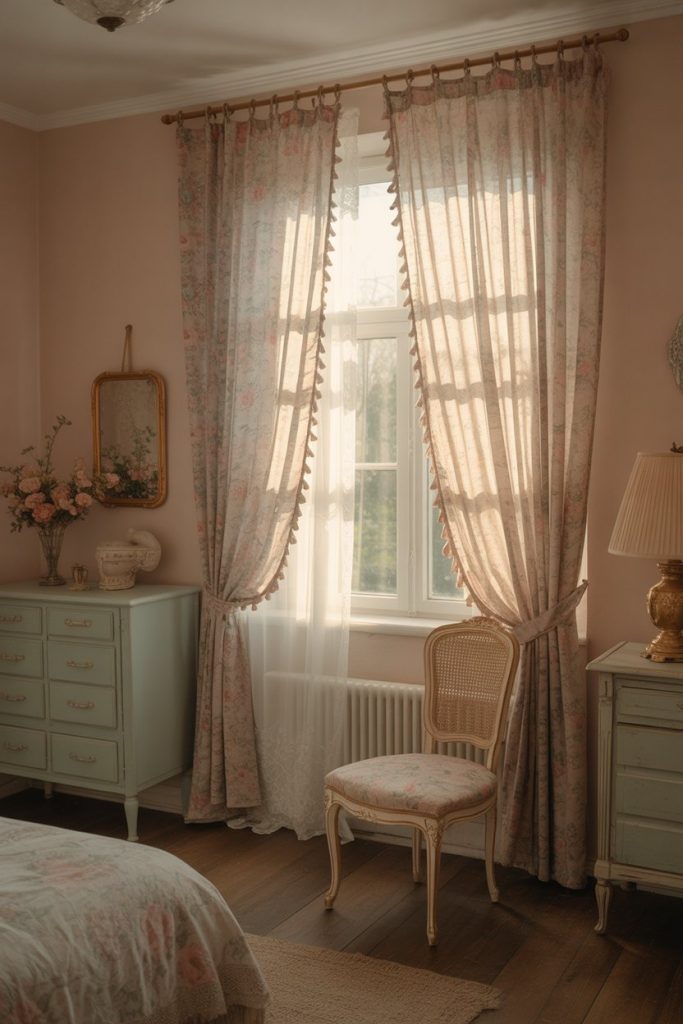
For a truly vintage bedroom, you can’t beat floral curtains with a ruffled hem—think cottage-core meets Grandma’s guest room, but in the best way. These work beautifully in spaces with antique furniture, quilts, and plenty of mismatched charm. The key is choosing a pattern that feels authentic, not reproduced, so look for muted colors and hand-blocked prints if you can find them. 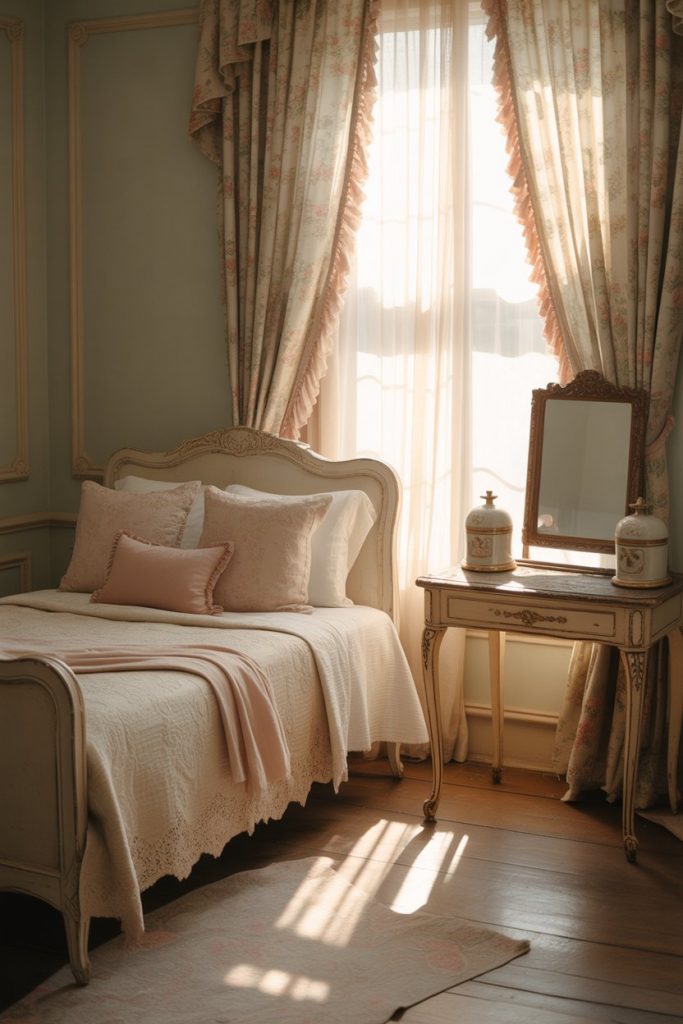
This style is making a comeback in rural areas and small towns across the Midwest and South, where vintage aesthetics never really went out of fashion. If you’re worried about it looking too precious, balance the florals with something unexpected—a modern metal bed frame, industrial lighting, or even a bold geometric rug. That tension between old and new keeps the room from feeling like a museum.
9. Charcoal Grey Curtains for a Dark, Cozy Retreat

A dark bedroom can feel incredibly cozy when done right, and grey charcoal curtains are a big part of that equation. They absorb light rather than reflecting it, which creates a cocoon-like atmosphere perfect for deep sleep or lazy Sunday mornings. Pair them with moody wall colors, layered bedding, and low-wattage lighting for a space that feels like a true escape. 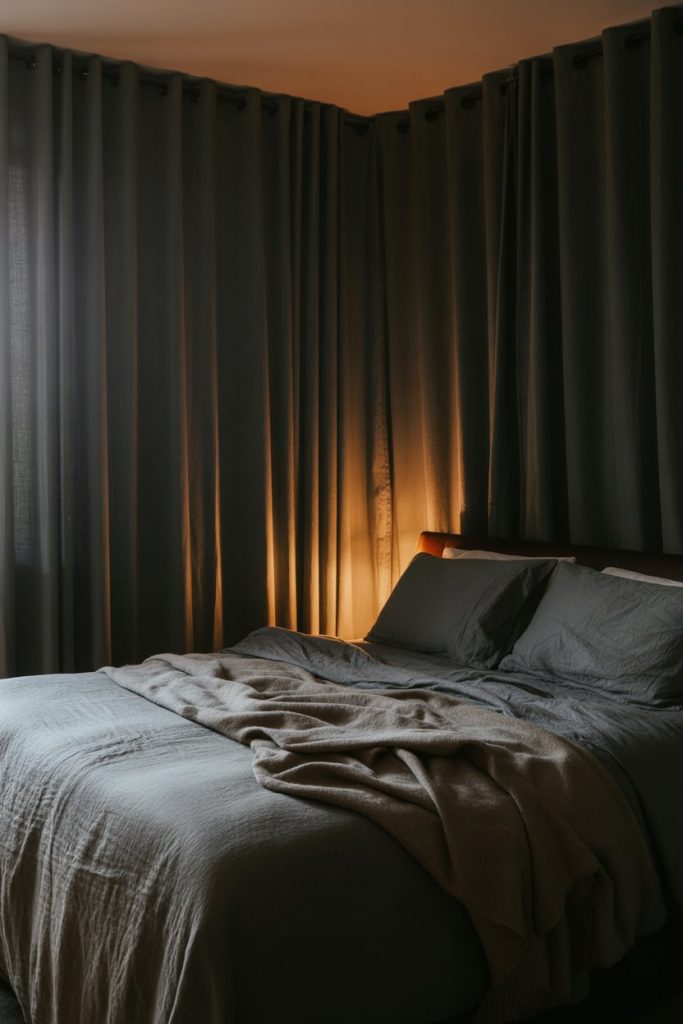
From a practical standpoint, dark curtains are excellent at blocking light and insulating windows, which can lower heating and cooling costs—especially in older homes with drafty frames. They also hide dust and pet hair better than lighter fabrics, which is a bonus if you’re not into constant maintenance. Just make sure the room has enough ambient light sources, or it can feel a bit cave-like during the day.
10. Black and White Striped Panels for Graphic Impact
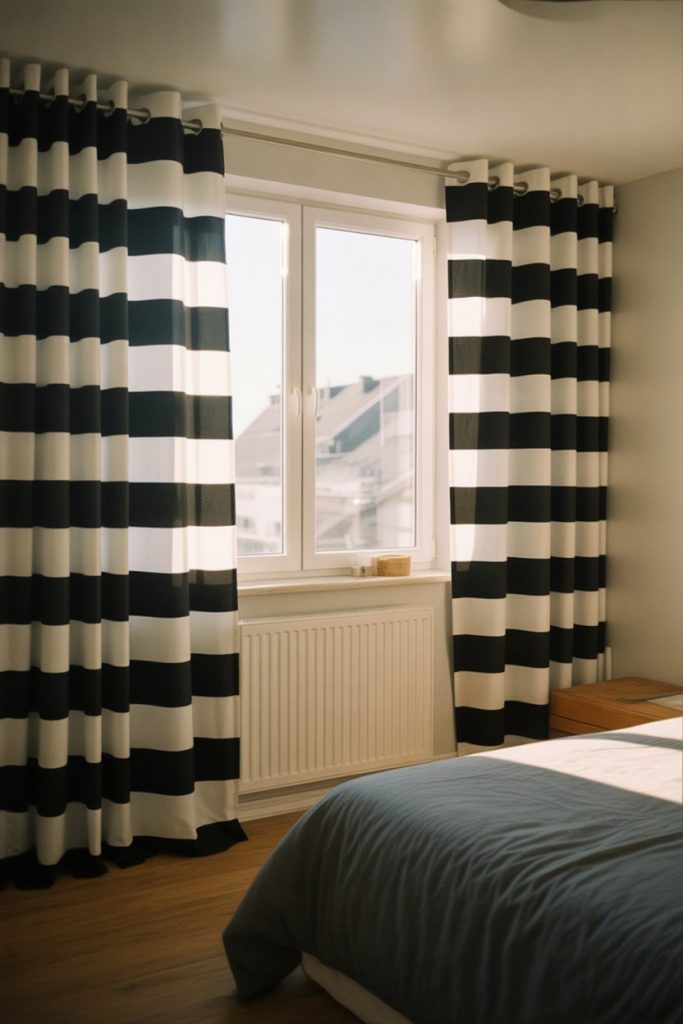
If you want your curtains to make a statement, black and white stripes deliver instant graphic punch. This pattern works especially well in modern or aesthetic bedrooms where clean lines and bold contrasts are already part of the design language. The stripes also have a way of making ceilings look higher and windows look wider, which is a nice bonus in smaller spaces. 
Expert designers often recommend using vertical stripes if you want to emphasize height, and horizontal stripes if you want to widen the room visually. The scale of the stripe matters too—wide stripes feel more casual and beachy, while narrow stripes read as more formal and tailored. If you’re on a budget, striped curtains are surprisingly affordable and can be found at most big-box home stores without sacrificing quality.
11. Farmhouse Gingham in Soft Cream and Taupe

There’s a reason farmhouse style never really goes away, and gingham curtains in neutral tones are a big part of that staying power. The gentle checkered pattern adds visual interest without overwhelming the space, and the cream-and-taupe palette keeps things warm and inviting. These work beautifully in country homes, but they’re also showing up in suburban bedrooms where people want a touch of nostalgia without going full rustic. 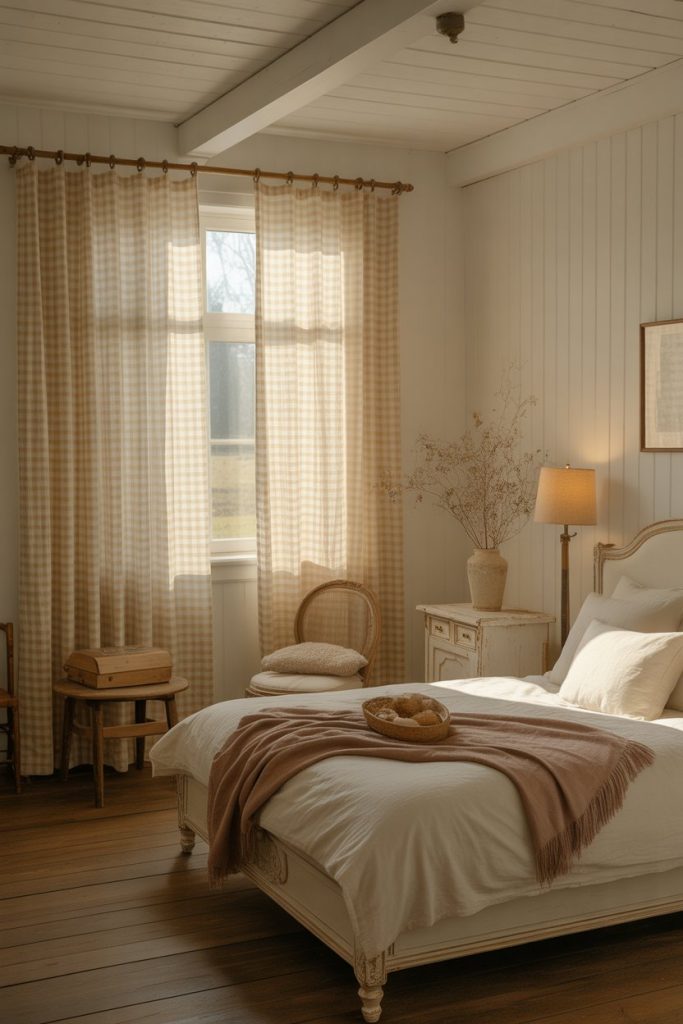
One thing to watch out for: gingham can read as overly cutesy if the rest of the room isn’t balanced with more grounded elements. Try pairing it with matte black hardware, natural wood, or even a leather accent chair to keep things from tipping into country kitsch. The pattern works best in spaces that already have some architectural character—exposed beams, shiplap, or even just a good wood floor.
12. Sheer White Curtains with Half-Window Café Style

If you love natural light but still need privacy, half window café curtains in white sheer fabric are the perfect compromise. They cover the lower half of the window while leaving the top open, which is ideal for ground-floor bedrooms or homes in close-knit neighborhoods. The aesthetic is fresh and practical, and it’s a nod to European design that feels both timeless and current. 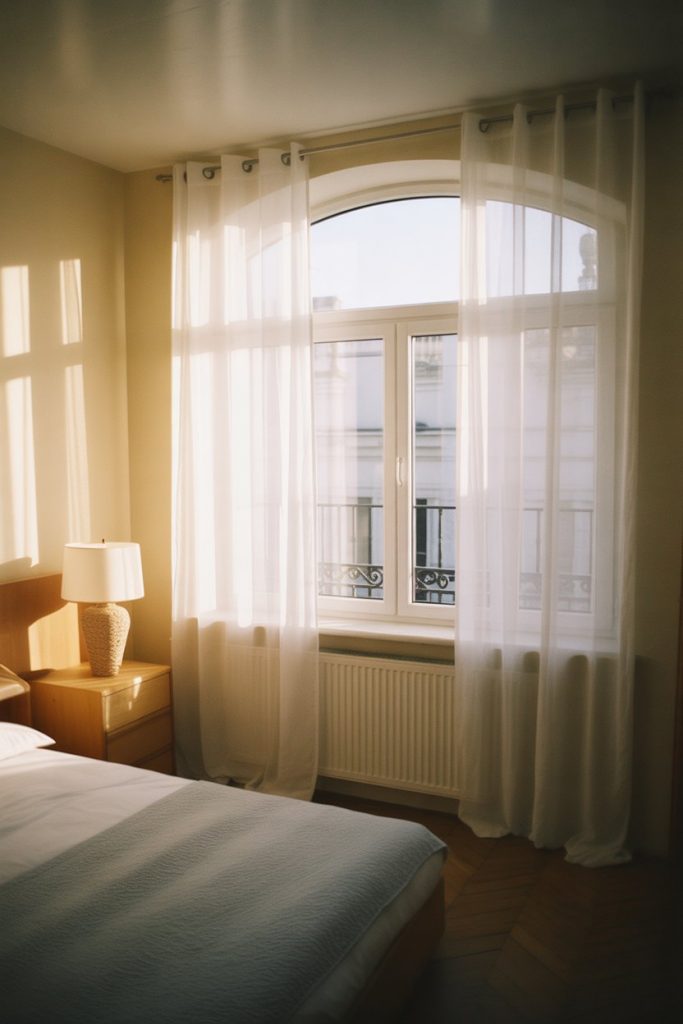
This setup works best in bedrooms where you want to maintain a view—think tree-lined streets, garden courtyards, or even just a pretty sky. It’s also a budget-friendly option since you’re using less fabric overall. Installation is straightforward: just mount the rod midway down the window and let the sheers fall to the sill. The only downside is that you’ll still get some light exposure at night, so it’s not ideal for serious blackout needs.
13. Luxurious Cream Silk for a Master Suite
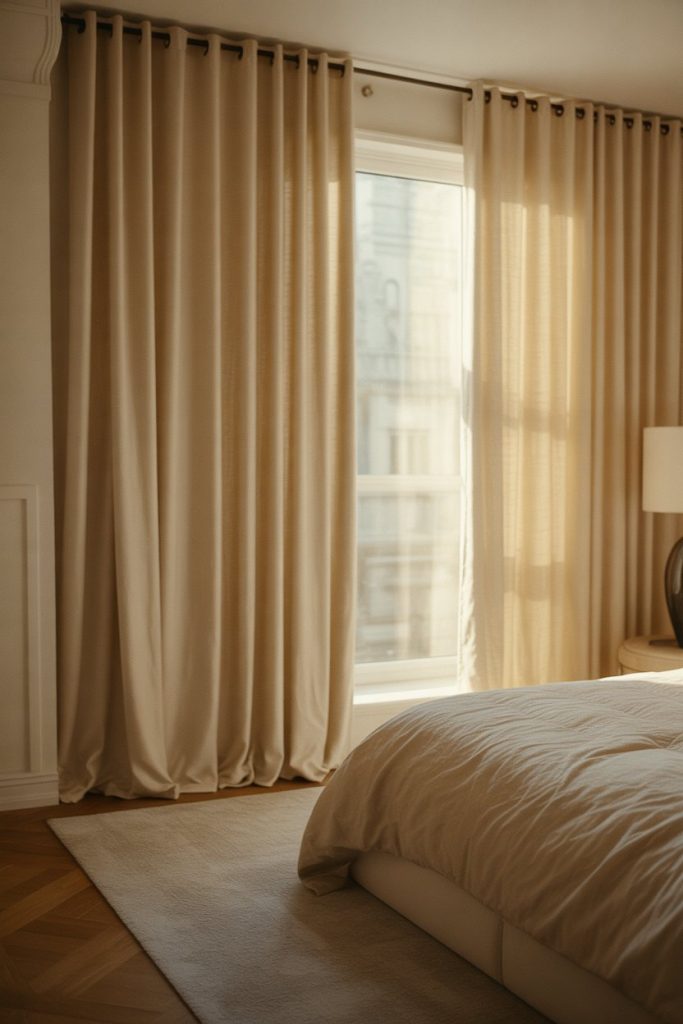
When you’re designing a master modern luxury bedroom, neutral silk curtains in cream or champagne are the ultimate indulgence. Silk has a subtle sheen that catches light beautifully, and the fabric drapes in a way that feels effortlessly elegant. This is the kind of detail that elevates a room from nice to truly special, and it’s worth the investment if you’re going for a high-end look.
Silk curtains do require some care—they’re more delicate than cotton or linen and can fade in direct sunlight over time. Many homeowners opt for a blackout lining to protect the fabric and add privacy, which also gives the curtains more body and structure. If you’re in a sunny climate like Arizona or Southern California, consider a UV-filtering window film to extend the life of the silk. It’s a small extra step that pays off in longevity.
14. Textured Grey Blinds Behind Sheer Curtains
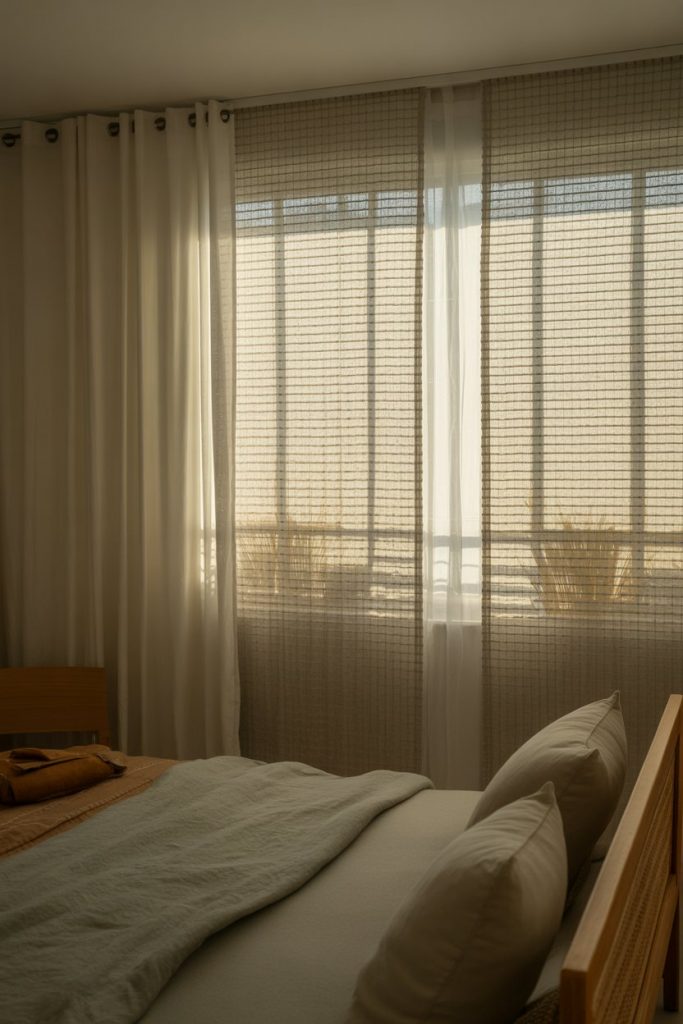
Layering blinds with sheer curtains gives you the best of both worlds: light control when you need it, and softness when you don’t. Grey textured blinds—like woven wood or bamboo—add a natural, organic element that pairs beautifully with flowing white or cream sheers. This combination is especially popular in modern homes where function and aesthetics need to coexist seamlessly. 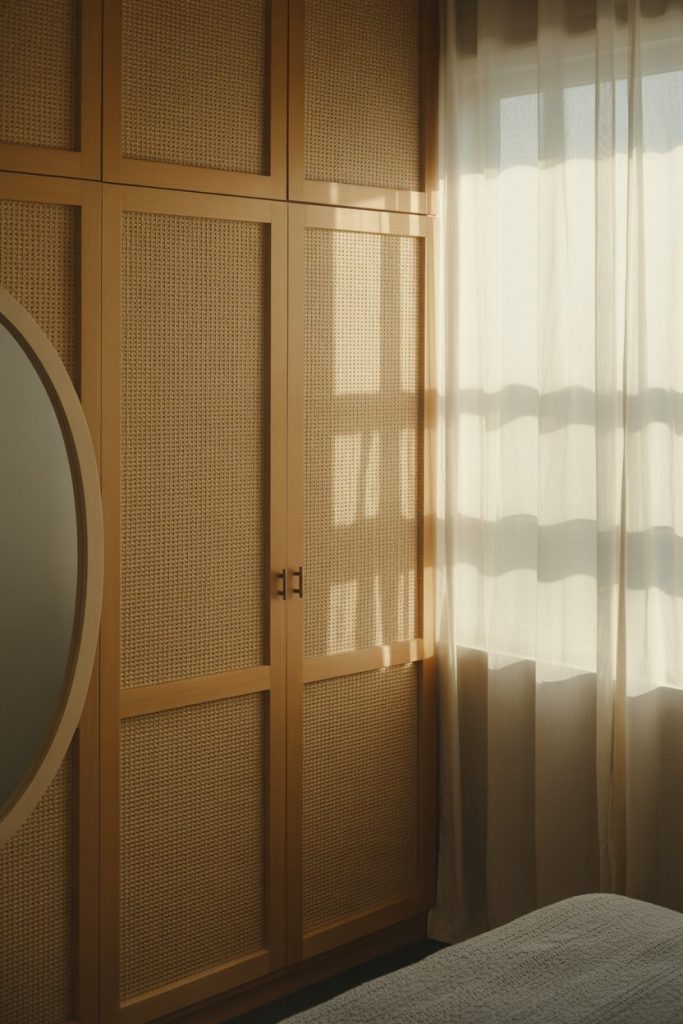
Where this works best: urban apartments, beachside condos, and contemporary suburban homes where privacy is a priority but you don’t want to sacrifice natural light. The blinds handle the heavy lifting when it comes to blocking views or harsh sun, while the curtains soften the overall look and add warmth. It’s a smart solution for renters too, since you can install the curtains without altering the blinds that might already be in place.
15. Dusty Rose Velvet for a Romantic Pink Bedroom

Dusty rose velvet curtains bring a romantic, grown-up take on pink that feels worlds away from bubblegum or baby nursery vibes. The muted tone pairs beautifully with neutral grays and creams, and the velvet texture adds depth and warmth. This is perfect for anyone who wants a luxury bedroom that still feels personal and inviting rather than hotel-generic. 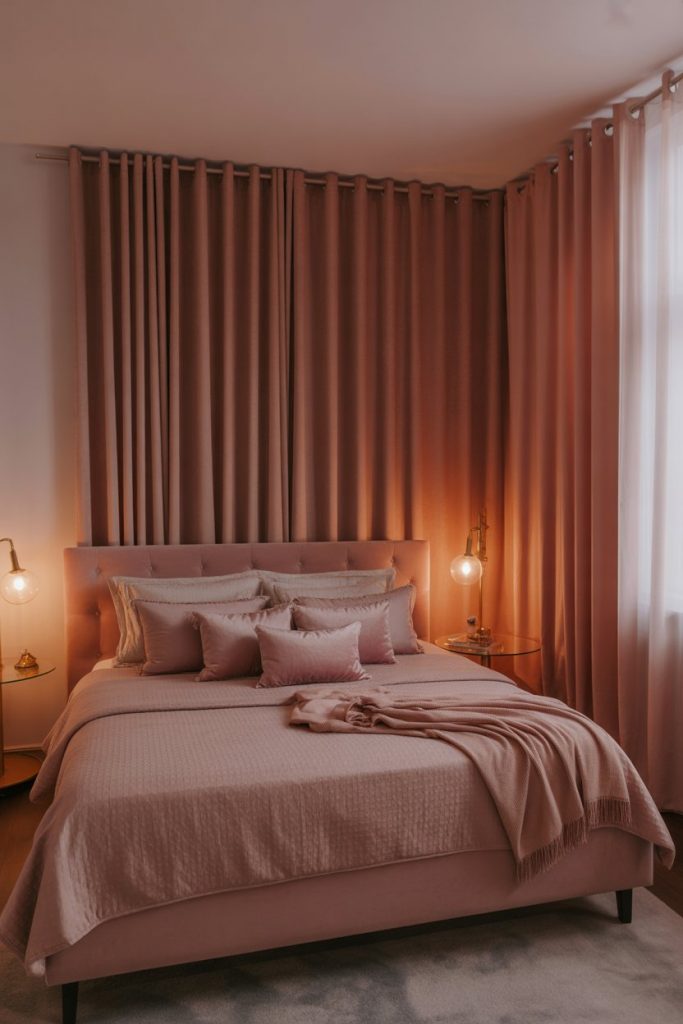
A common mistake with pink curtains is assuming they’ll only work in ultra-feminine spaces. But dusty rose is surprisingly versatile—it can anchor a moody bedroom with charcoal walls just as easily as it can soften an all-white minimalist room. The key is treating it as a neutral rather than a statement color, and letting the velvet texture do most of the talking. If you’re hesitant, start with just one panel on each side and see how it feels before committing to a full set.
16. Floor-to-Ceiling White Sheers in a Coastal Loft
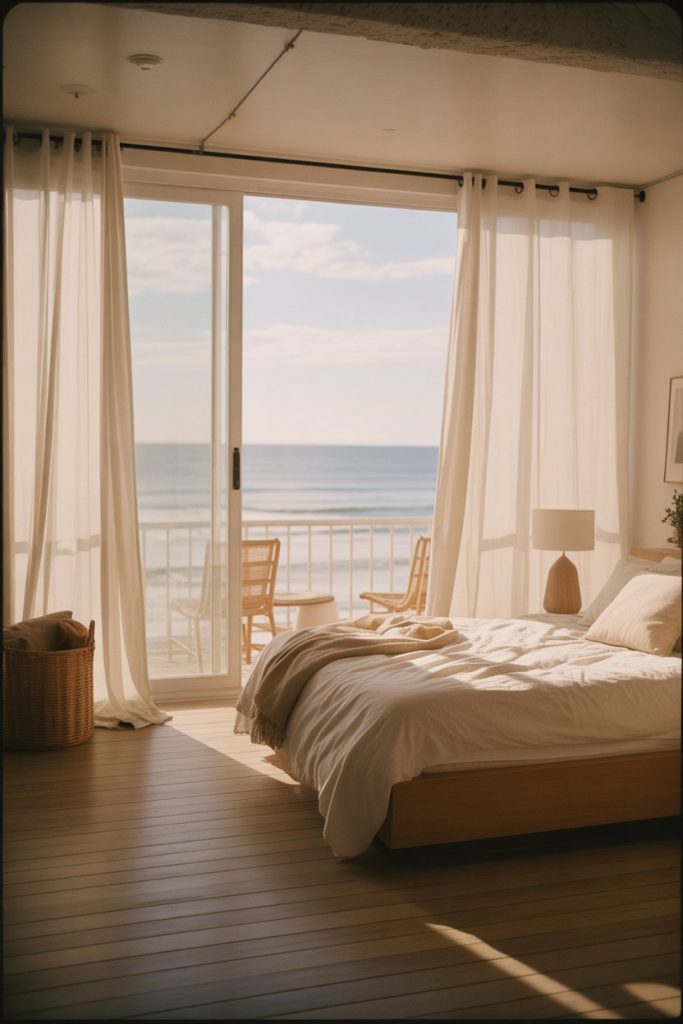
In a coastal loft with big windows and plenty of natural light, floor-to-ceiling white sheer curtains create an ethereal, almost dreamlike atmosphere. They move with the breeze, soften harsh sunlight, and make the space feel larger and more open. The sheers also provide just enough privacy without blocking the view, which is crucial when you’re paying for a water view or skyline. 
From a budget perspective, sheer curtains are one of the most affordable window treatments you can buy, especially if you’re covering a lot of square footage. Many homeowners in Miami, San Diego, and other coastal cities swear by this setup because it maximizes light while keeping the room cool and breezy. Just make sure the fabric is machine-washable—salt air and humidity mean you’ll need to clean them more often than in a landlocked bedroom.
17. Layered Neutrals in a Scandinavian-Inspired Bedroom
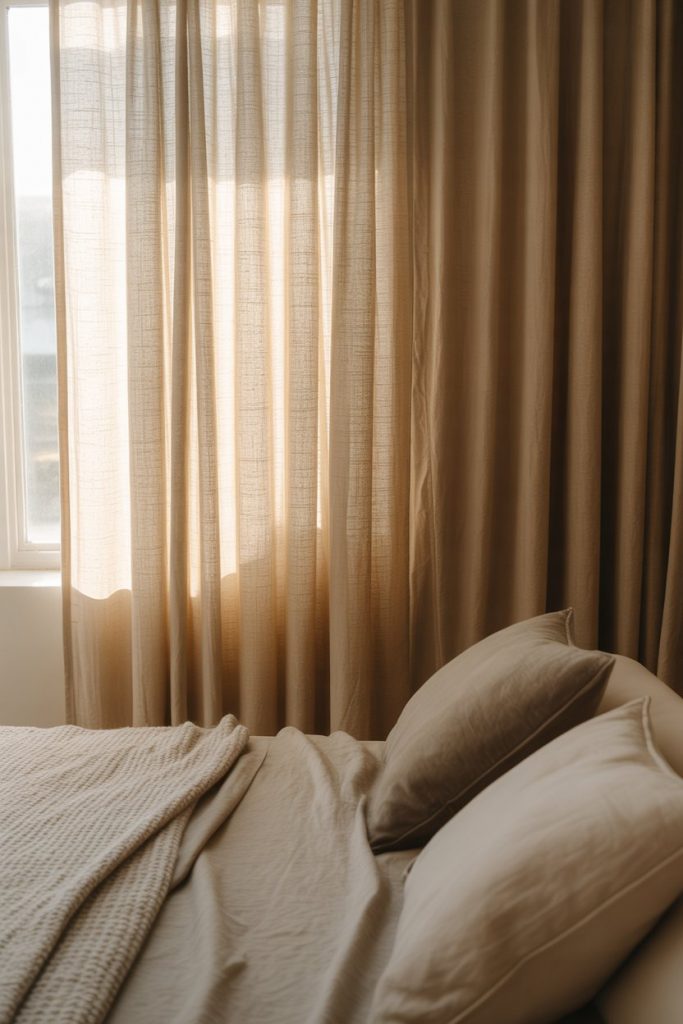
A Scandinavian bedroom thrives on simplicity, and layering neutral curtains in varying weights is the perfect way to add depth without clutter. Think a linen outer layer in oatmeal paired with a lighter cotton sheer in off-white. The effect is subtle but impactful, and it gives you flexibility to adjust light levels throughout the day. This approach is all about quiet aesthetic choices that prioritize comfort and function. 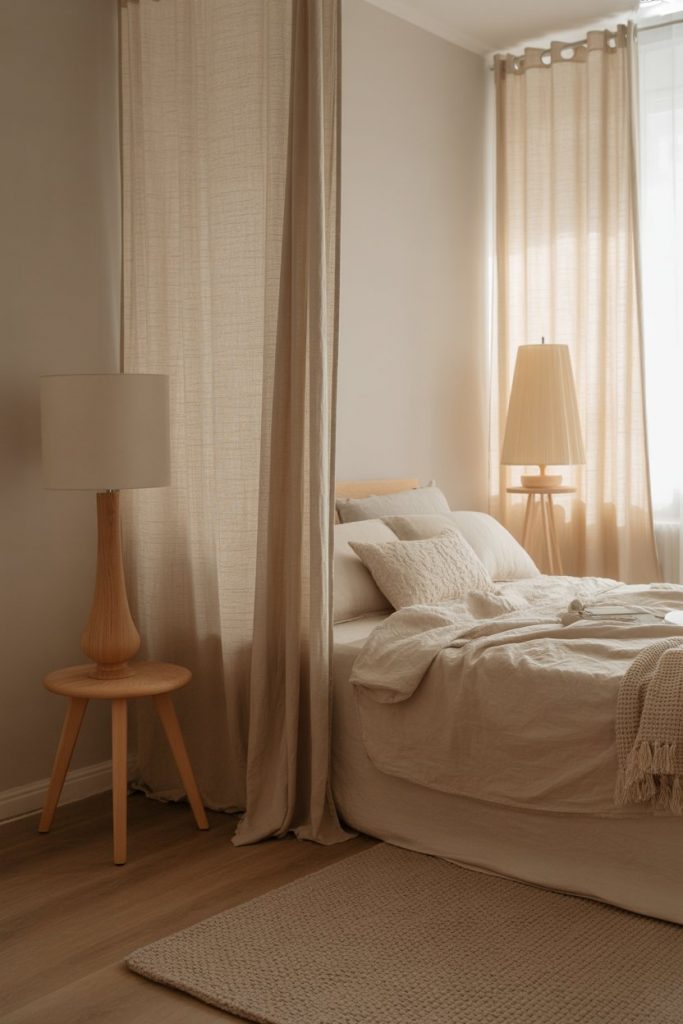
This style works best in northern climates—think Minnesota, Vermont, or the Pacific Northwest—where light is precious and the goal is to make the most of every beam that comes through. The layered approach also helps with insulation during cold months, which is a nice bonus if you’re trying to cut down on heating costs. And because the palette is so restrained, you can swap out pillows, throws, or art without worrying about clashing with the window treatments.
18. Jewel-Tone Green Velvet for a Moody Master
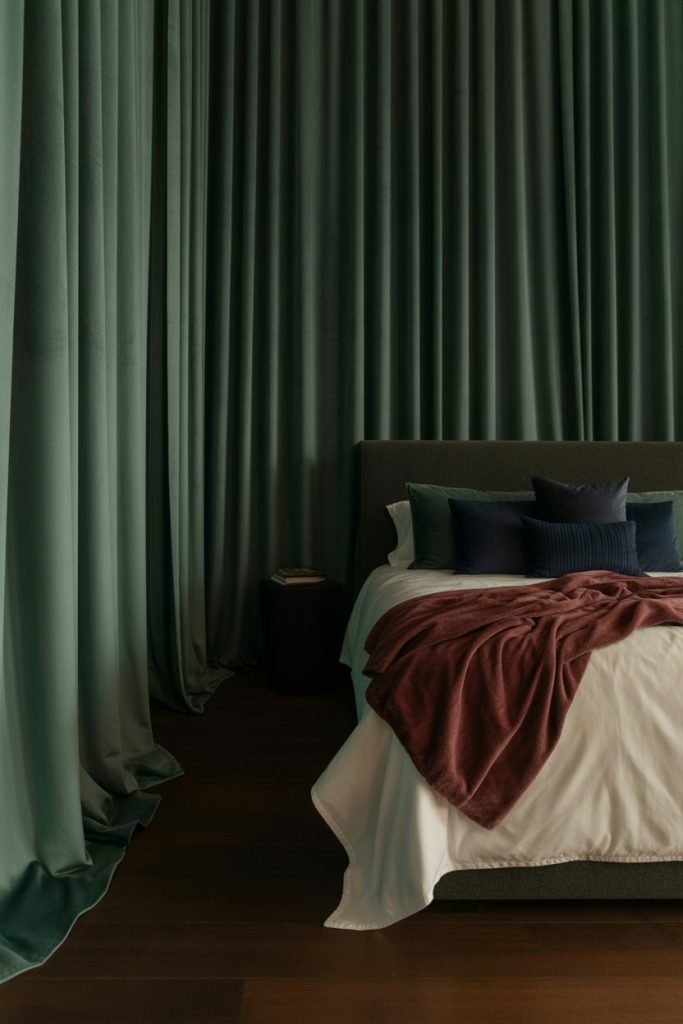
If you’re building a moody master modern bedroom, don’t shy away from deep jewel-tone green velvet curtains. Think emerald, hunter, or even a dark olive that reads almost black in low light. The richness of the fabric and color creates an enveloping, intimate space that feels miles away from the rest of the house. This is a bold move, but when executed well, it’s absolutely stunning. 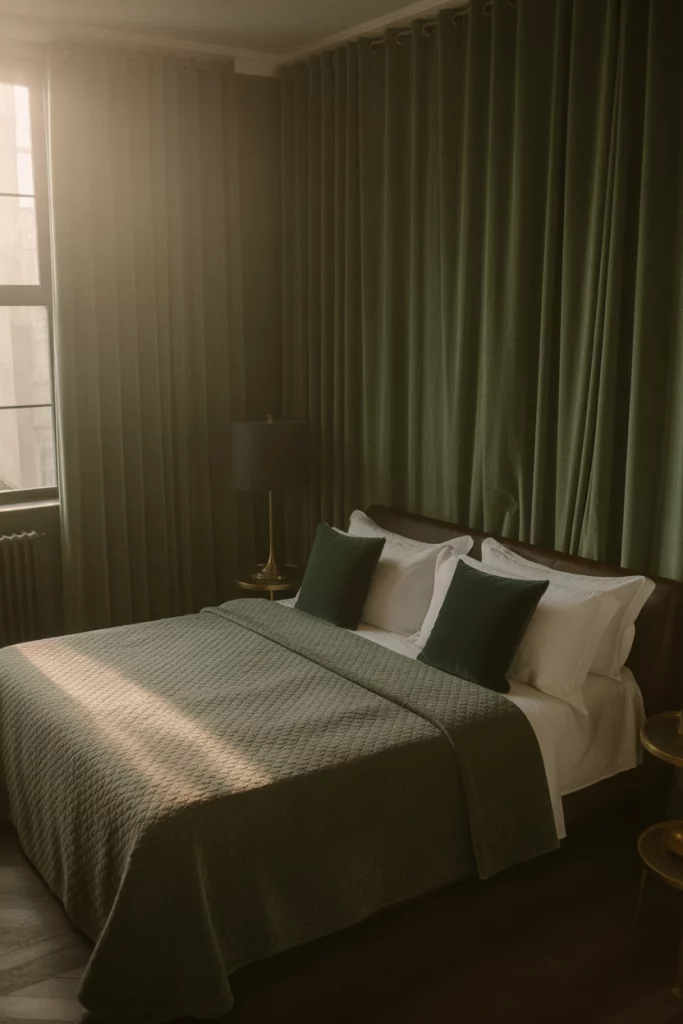
One expert tip: when working with such saturated color, balance it with plenty of lighter elements—white bedding, natural wood, or even metallic accents in brass or gold. Otherwise the room can feel too heavy. Also consider the direction your windows face: south-facing rooms get more light and can handle darker treatments, while north-facing rooms might feel too dim with heavy velvet. It’s all about knowing your space and adjusting accordingly.
19. Washed Linen in Warm Beige for a Farmhouse Bedroom
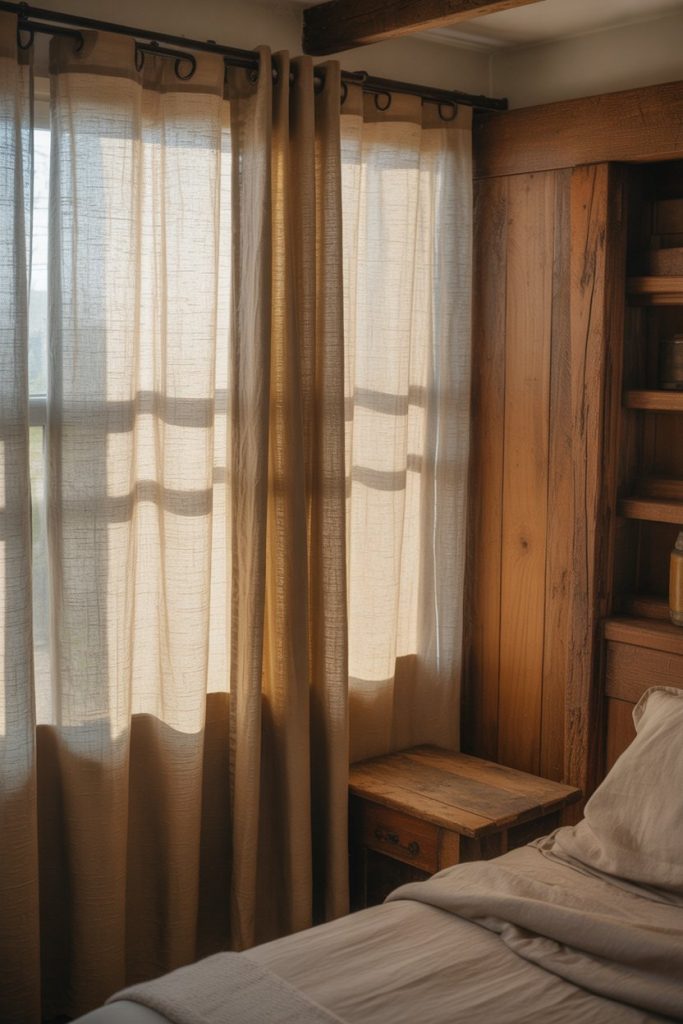
Washed linen curtains in warm beige are a staple of farmhouse design, and for good reason—they’re soft, durable, and age beautifully over time. The lived-in texture feels intentional rather than neglected, and the neutral tone works with virtually any color schemes you throw at it. This is the kind of curtain that makes a room feel instantly more relaxed and welcoming. 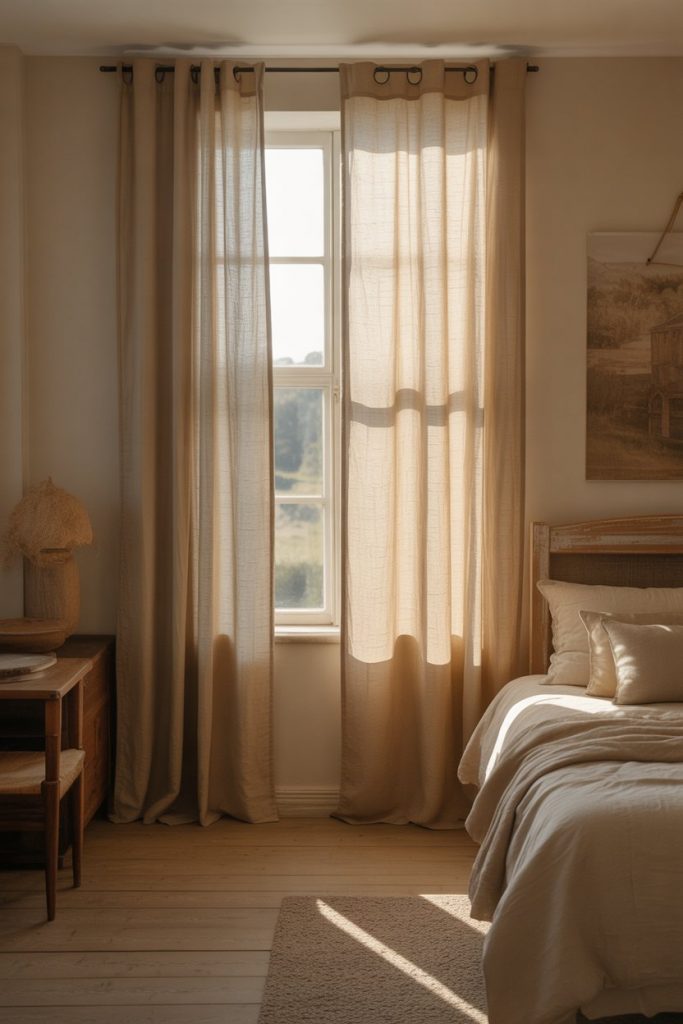
Real homeowner behavior shows that people love washed linen because it’s low-maintenance—wrinkles are expected, so there’s no need for ironing or steaming. It’s also a favorite among families with kids or pets, since the fabric is forgiving and easy to clean. If you’re in a rental or just starting out, washed linen curtains are a smart investment because they transition easily from space to space and never look out of place.
20. Bold Patterned Curtains in a Maximalist Bedroom
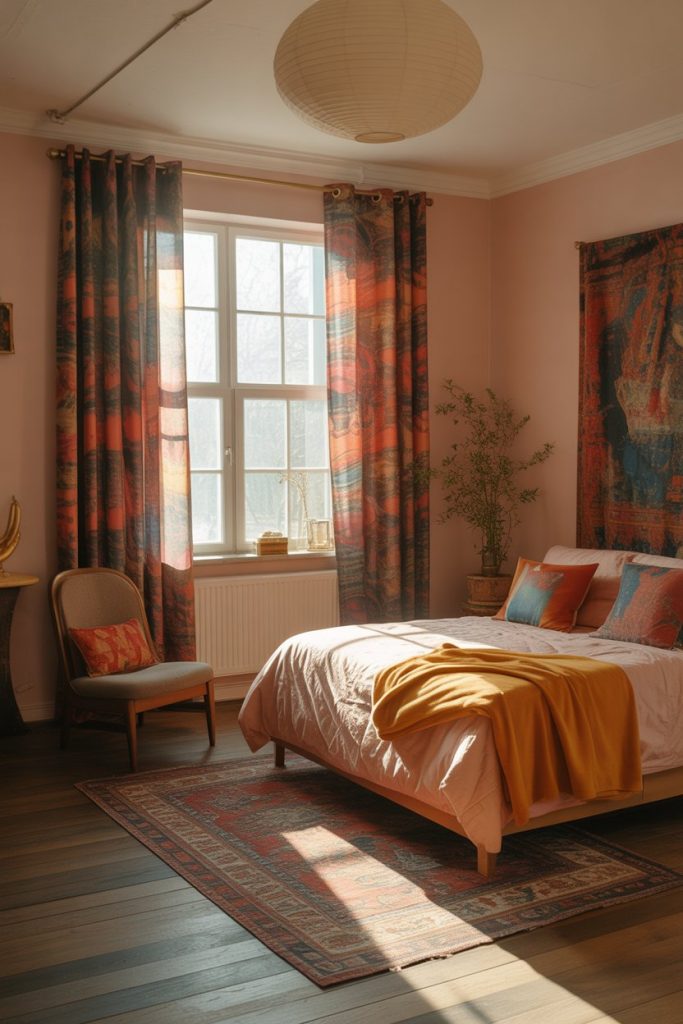
Maximalist bedrooms are all about layering, and bold patterned curtains can be the anchor that ties everything together. Whether it’s a large-scale floral, geometric print, or an unexpected animal motif, the curtains should feel like part of a curated collection rather than an afterthought. This style loves color, so don’t be afraid to mix pink, blue, green, and even metallics in one space. 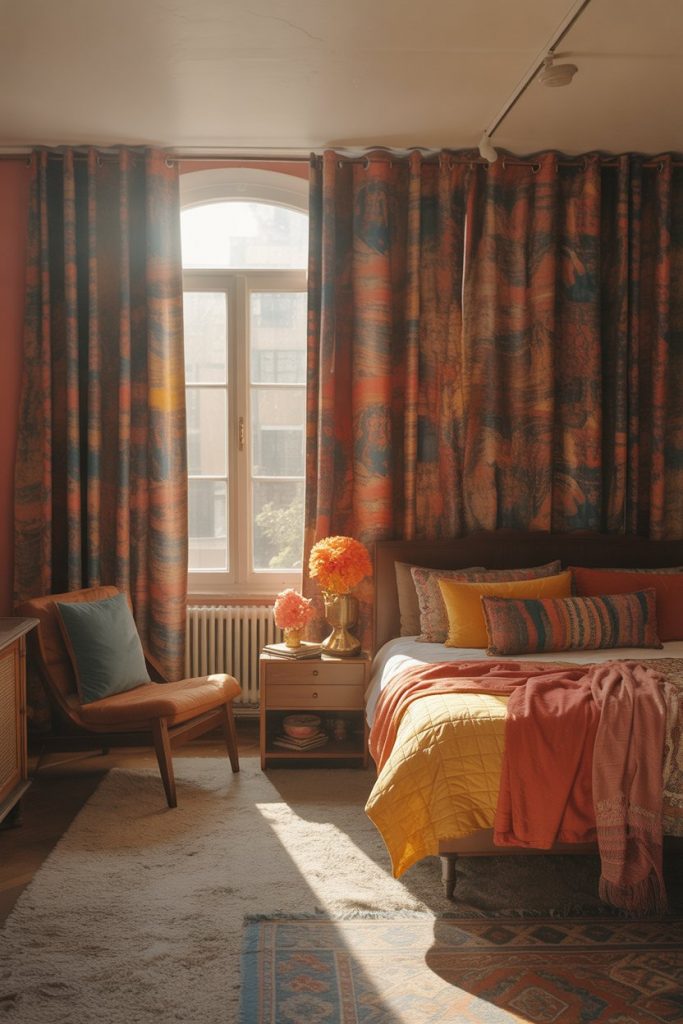
Where this works best: urban apartments, creative studios, and homes where personal expression takes priority over resale value. The trick is balancing the pattern with enough solid elements so the room doesn’t feel chaotic—think solid bedding, a neutral rug, or simple furniture. And if you’re worried about commitment, remember that curtains are one of the easiest things to swap out when you’re ready for a change.
21. Charcoal Linen for a Modern Minimalist Space
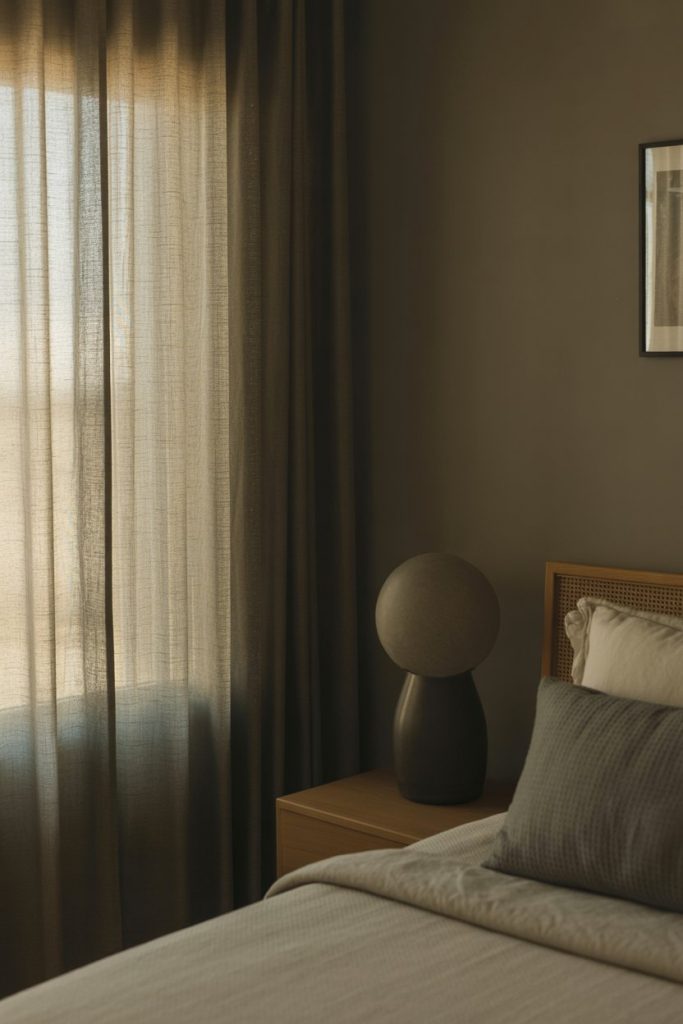
In a modern minimalist bedroom, grey charcoal linen curtains provide texture and warmth without adding visual noise. The matte finish keeps things understated, and the natural fiber reinforces the room’s connection to organic materials. This is a great choice for anyone who wants a sophisticated aesthetic that doesn’t rely on bold color or pattern to make an impact. 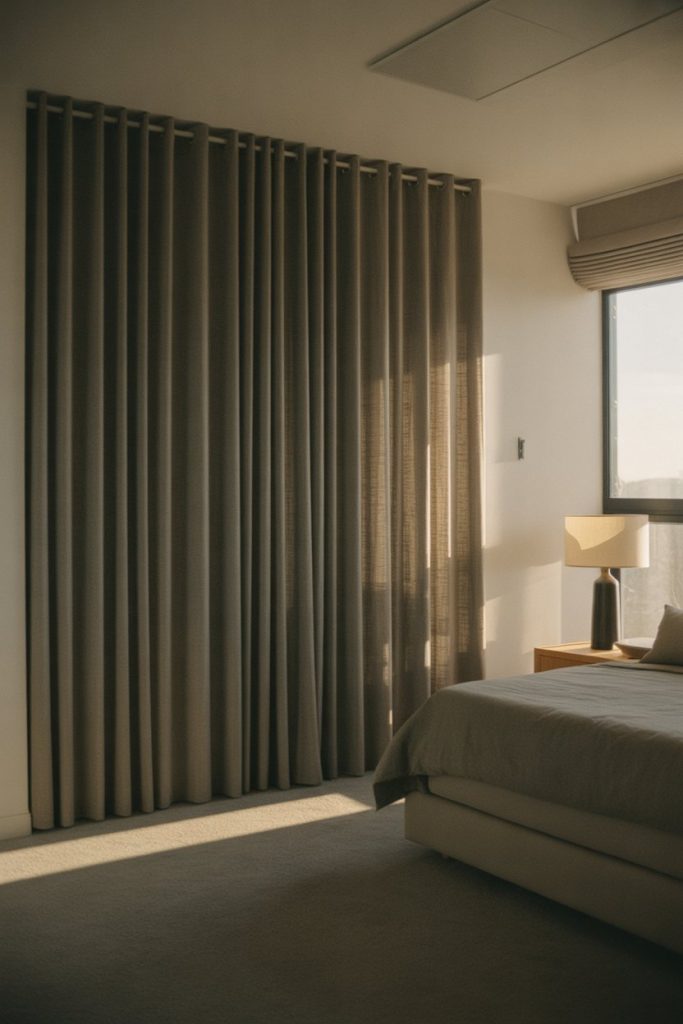
A practical insight here: linen curtains in darker tones are excellent at hiding stains and wear, which makes them ideal for bedrooms that double as home offices or workout spaces. They also block more light than you’d expect, especially if you choose a tightly woven fabric. If full blackout is a priority, consider adding a separate liner rather than opting for a coated blackout linen, which can lose some of that natural drape and texture.
22. Cream Velvet with Gold Hardware for Luxury Vibes
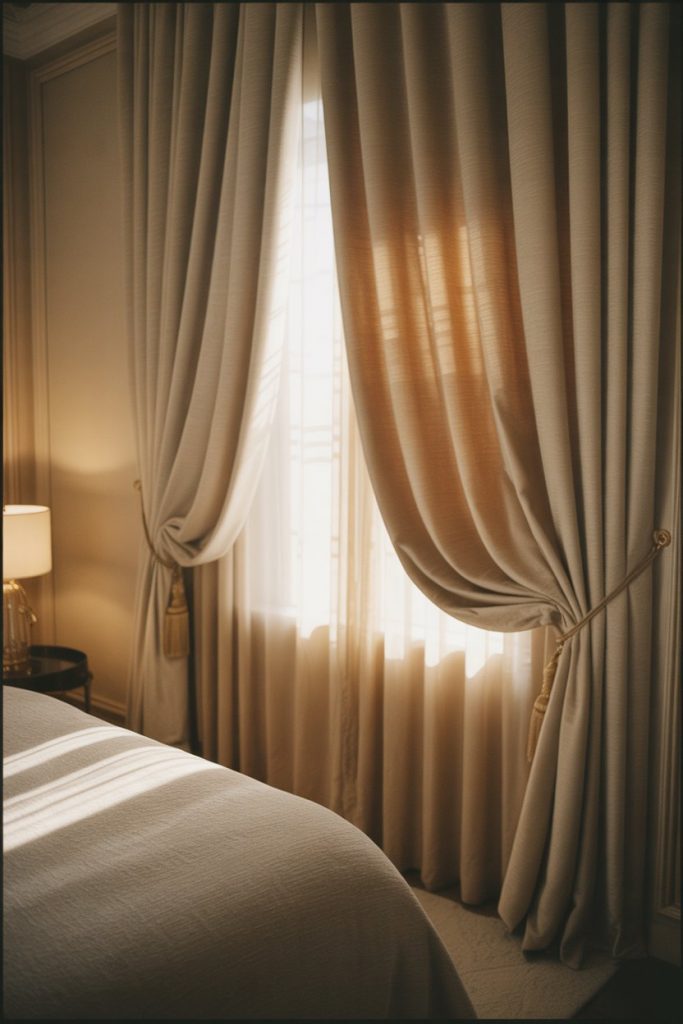
If you’re going for luxury in a master modern luxury bedroom, cream velvet curtains paired with brushed gold hardware make a serious statement. The combination feels opulent without being over-the-top, and the warm metallics add just enough shine to catch the light. This setup works beautifully in spaces with high ceilings or large windows where the curtains can really be appreciated. 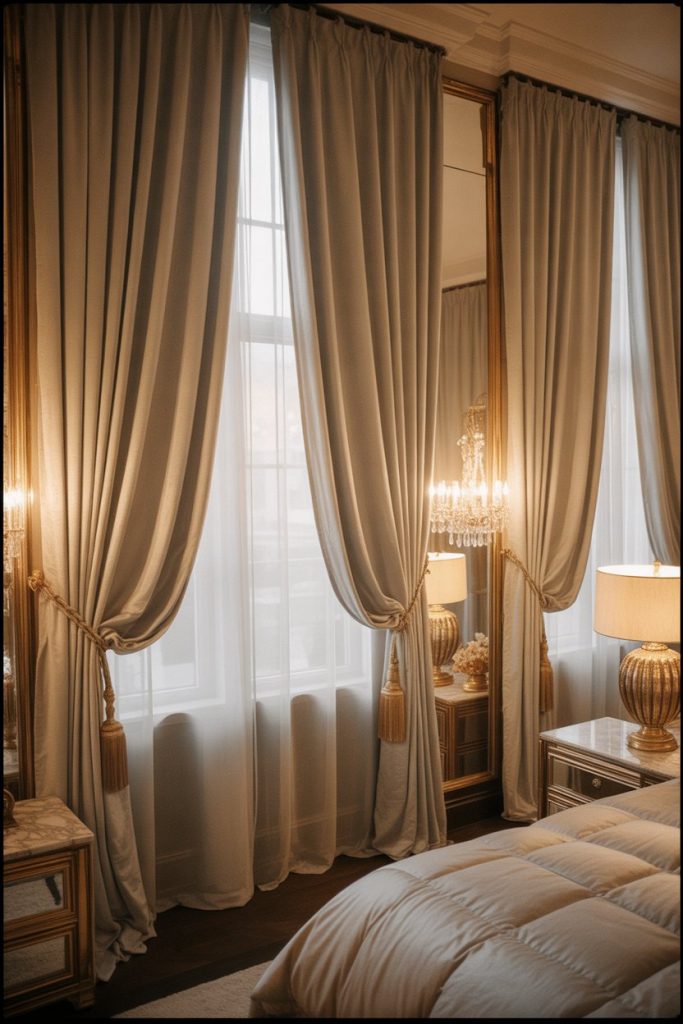
From a budget angle, velvet and quality hardware are both investments, but they’re the kind that age well and hold their value. If you’re working with a tighter budget, consider doing just one window in velvet and keeping the rest of the room simpler. The hardware matters more than you’d think—cheap plastic rods will sag under the weight of velvet, so it’s worth spending on something sturdy and well-made.
23. Soft Blue Cotton in a Coastal Cottage

Soft blue cotton curtains are a natural fit in a coastal cottage bedroom, where the goal is to evoke sky and sea without feeling too literal. The cotton fabric is breathable and easy to care for, which is key in humid coastal climates where moisture can be an issue. Paired with white trim and natural wood, these curtains create a serene, classic look that never goes out of style. 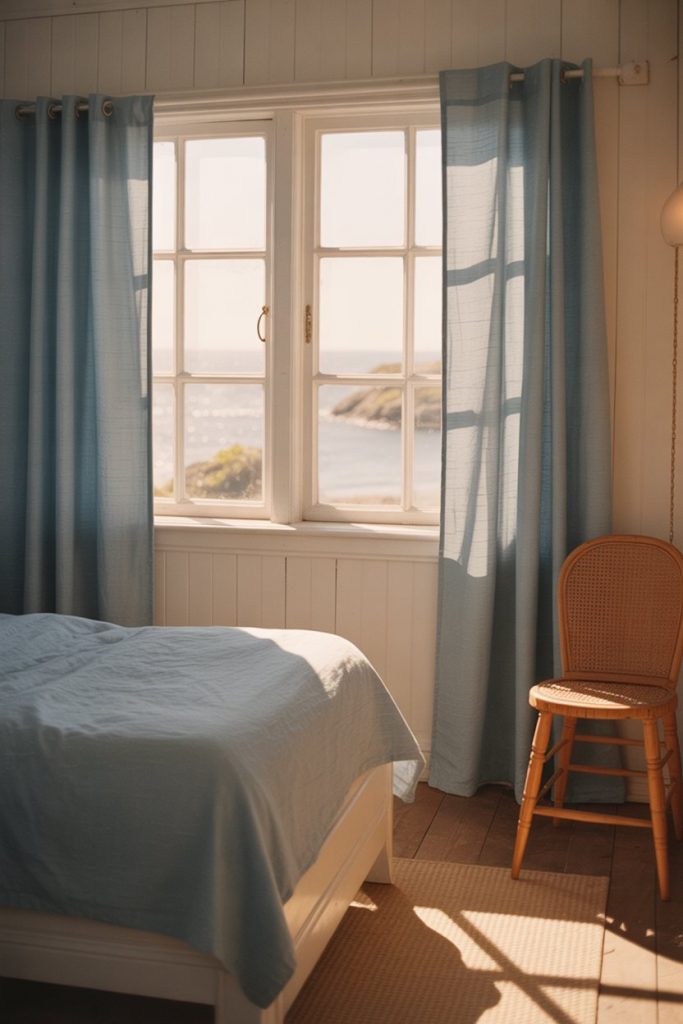
This style is especially popular in the Carolinas, New England, and the Pacific Northwest, where cottage aesthetics are deeply rooted in local architecture. One thing to note: blue fades faster than most colors when exposed to direct sunlight, so if your windows face south or west, consider adding a UV-filtering window treatment or rotating the curtains seasonally. It’s a small step that keeps the color looking fresh for years.
24. Blackout Panels in Neutral Taupe for Restful Sleep
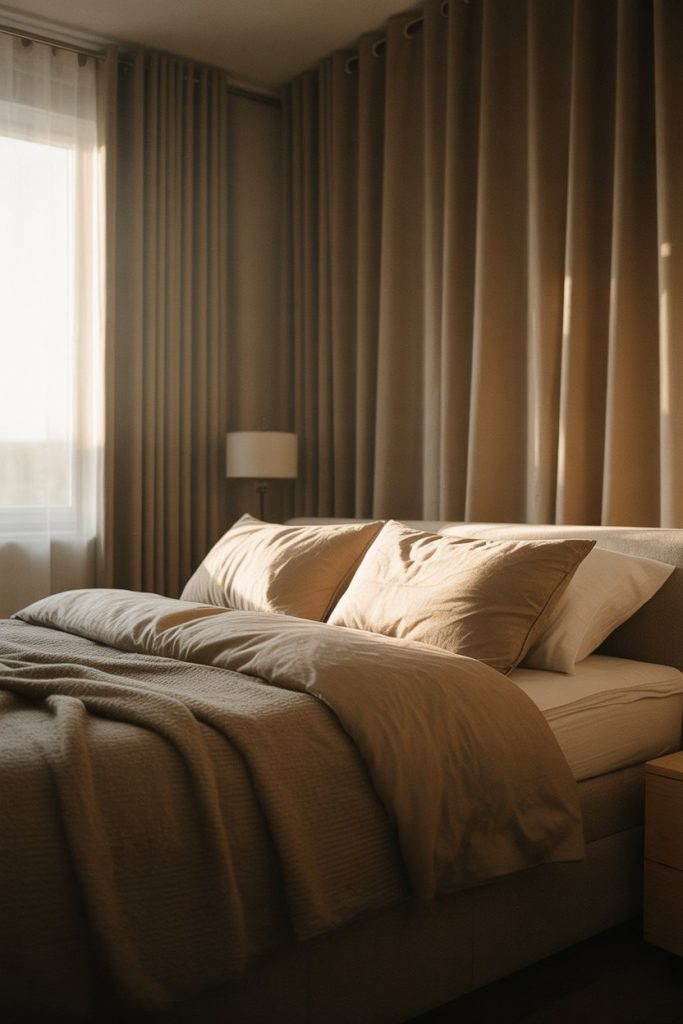
When good sleep is the priority, neutral taupe blackout panels are a no-brainer. They block nearly all light, help regulate room temperature, and do itall without looking institutional or cold. The taupe tone is warm enough to feel inviting but still modern enough to work in contemporary spaces. This is one of those practical choices that genuinely improves quality of life. 
Real homeowner behavior shows that people who invest in quality blackout curtains report better sleep, fewer middle-of-the-night wake-ups, and lower energy bills thanks to improved insulation. The key is making sure the panels are wide enough and long enough—measure generously and err on the side of too much fabric rather than too little. If light leakage is still an issue, consider a wrap-around rod or blackout tracks that seal the edges.
Conclusion
So which of these curtain ideas speaks to you? Whether you’re drawn to the drama of deep velvet or the ease of breezy linen, there’s no wrong choice—just what works best for your space and how you live in it. Drop a comment below and let us know which look you’re trying first, or share your own curtain wins and lessons learned. We’d love to hear what’s working in your bedroom.